Affirming the kaleidoscopic array of gender identities and sexual orientations: a forthcoming book

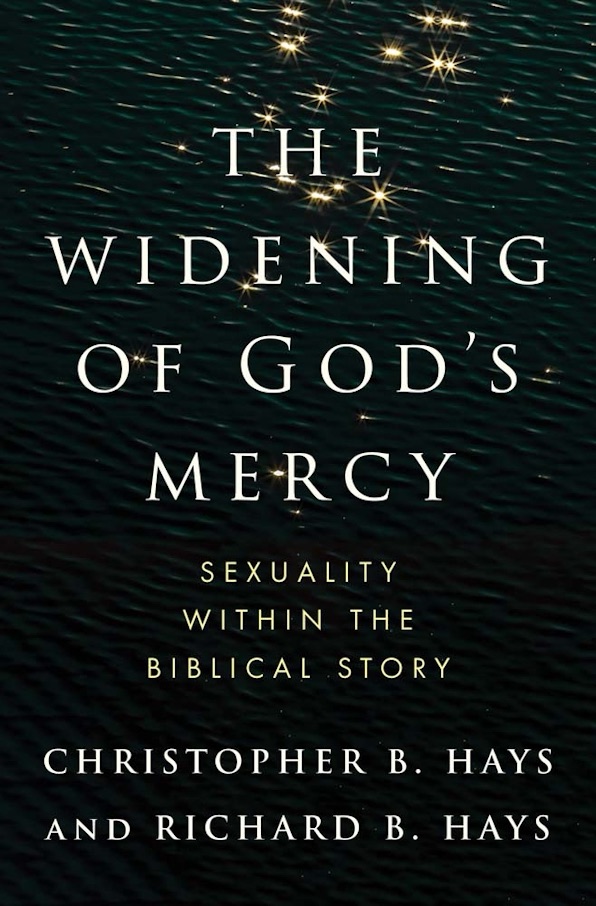
There’s an interesting new book to be published in September: The Widening of God’s Mercy. Sexuality Within the Biblical Story. It is written by two eminent, conservative-ish American professors, Richard Hays and his son Christopher Hays.

Richard Hays is one of the most well-respected NT scholars in the world. He famously argued *against* LGBTQ inclusion in his landmark ethics book, The Moral Vision of the New Testament, 30 years ago. He teaches at Duke Divinity School. He now is a proponent of affirming and inclusion. His son, Christopher Hays, is one of the most well-respected OT/Ancient Near Eastern scholars in the world. He teaches at Fuller Seminary, an institution founded as a strongly conservative seminary, which has become less “conservative” in recent years.

In 1996, Richard Hays wrote about a range of ethical matters in his work The Moral Vision of the New Testament. A number of biblical scholars, theologians and ethicists provided positive reviews of the work, and it has been an important work for students in each of these disciplines.

In chapter 16 of this book, Hays discusses relevant New Testament passages and comes to a conclusion that homosexuality cannot be affirmed by any New Testament text. Reviewing that chapter, American scholar Dr Anna Sieges notes, “His careful argumentation and generous posture toward LGBTQ individuals (by 1996 standards, at least) made the chapter a fan favorite among those who wanted to respectfully and biblically exclude LGBTQ people from public spaces (religious or political) for what they deemed sexual immorality.”

(See “An oft-quoted biblical scholar changes his mind on LGBTQ inclusion in the church”, https://baptistnews.com/article/an-oft-quoted-biblical-scholar-changes-his-mind-on-lgbtq-inclusion-in-the-church/)

Personally, I was surprised that Richard Hays had come to this conclusion about LGBTIQA+ people. I knew him in the 1980s when I was a doctoral student studying at Yale University, where he was a member of Faculty. I took a particularly lively seminar on “War and Peace in the Bible”, where we explored biblical texts and the full sweep of theological and ethical interpretations of this area.

Prof. Hays was consistently careful and compassionate as he explored key texts with critical acumen and a clear connection to contemporary thought. On that basis, as well as personal interactions with him in other contexts, the book was published, I had thought that he would have come to a different conclusion about the biblical texts relating to sexuality and gender. But he did not.

Thirty years later, he is publishing a work in which he argues differently. The book, we are told, will provide an argument for a theological and ethical position that supports, affirms, and encourages LGBTIQA+ people of faith as they exercise their ministries; and also in terms of how we relate to people of diverse secularities and gender indentures in society. It is an encouraging move.

The publisher’s blurb says:

“In this learned and beautifully written book, Richard and Christopher Hays explore a more expansive way of listening to the overarching story that scripture tells. They remind us of a dynamic and gracious God who is willing to change his mind, consistently broadening his grace to include more and more people. Those who were once outsiders find themselves surprisingly embraced within the people of God, while those who sought to enforce exclusive boundaries are challenged to rethink their understanding of God’s ways.

“The authors—a father and son—point out ongoing conversations within the Bible in which traditional rules, customs, and theologies are rethought. They argue that God has already gone on ahead of our debates and expanded his grace to people of different sexualities. If the Bible shows us a God who changes his mind, they say, perhaps today’s Christians should do the same. The book begins with the authors’ personal experiences of controversies over sexuality and closes with Richard Hays’s epilogue reflecting on his own change of heart and mind.”

“I think everyone in Hays’ circles in the 90s knew, to affirm gay people was career-suicide in their institutions. It still kinda is. I’m not suggesting it was deceptive or anything, but I think it’s very hard to imagine a theological conclusion when you subconsciously know you’re whole faith community will not go with you. Fear doesn’t inspire courageous thinking.”

Certainly, within the Uniting Church as a whole, and in formal decisions by councils of the church over the years, we have long accepted, affirmed, and encouraged LGBTIQA+ people within the life of the church.

See

And yes, I am aware that this has been seen as a slow and imperfect process by some, whilst others have fought tenaciously against each step with dogmatic aggression. But formally, and substantially, the Uniting Church has a position that would welcome the argument of Hays and Hays, when it is ultimately published.

*****

I need to note that Prof. Richard Hays was one of the examiners of my PhD thesis in 1988, while Karl Hand wrote a PhD under my supervision in the years 2008 to 2011.

*****

For my discussion of the “clobber texts” that feature so often in this area, see

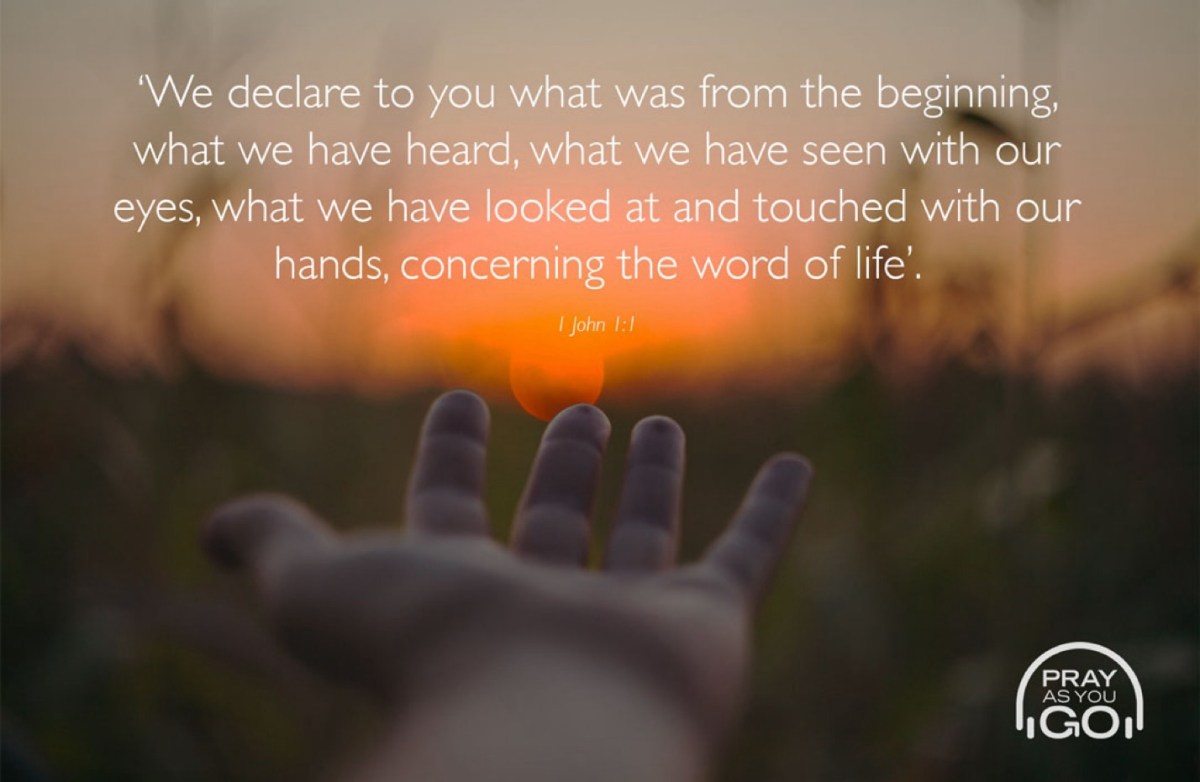
We declare to you what was from the beginning (1 John 1–2; Easter 2B)

This week, the lectionary starts a series, for the Epistle reading, of selections from the book known as 1 John. By tradition, this work is called a letter (or epistle)—a communication from a specific individual to another individual or to a community of people. But the form of this book raises immediate questions.

There is neither the kind of opening address expected in a letter, nor any form of epistolary conclusion at its end. The opening verses, instead of providing information about the context in which the document came into being, present with urgent rhetorical force the importance of the message which follows. The letter ends quite abruptly, with a stark admonition (5:21)— no discussion of travel plans or the sending of an emissary, no greetings, no final blessing. Is it a book, a letter, or a sermon?

The book clearly has the ethos of a letter, as found in the first person plural of the opening verses (“we declare…we declare…we are writing…”, 1:1–4), the direct address to “little children” (2:1; 3:18; 5:21) and “beloved” (2:7; 4:1, 7), and the repeated assertion that “I write these things” (2:1, 7, 12–14, 26; 5:13). Moral exhortation and doctrinal teaching, elements regarded as being classic component parts of early Christian letters, are interwoven throughout the book without clear distinction.

Yet there appears to be no marshalling of a case and no logical development of thought, such as is found in the carefully-shaped rhetoric of the letters of Paul. At first reading, the letter’s structure is somewhat circular and repetitive, more an extended meditation on “love” (the term appears around fifty times) than a tightly-argued instruction. The tone is often reflective—although there are moments of contention and dispute.

The author of the letter is never named, but the opening verse makes the claim that the letter comes from one who has “heard…seen…looked at and touched” for himself, the very “word of life” (1:1). The inference is that the author has had personal contact with Jesus himself; in the third century, Irenaeus made the definitive claim that the letter was written by “John, the disciple of the Lord” (Against Heresies 3.16.5).

This claim goes beyond any direct assertion within the letter itself; although such a claim might be reinforced by the author’s reiteration of his privileged status as eyewitness (and earwitness): “we have seen it” (1:2), “what we have seen and heard” (1:3), “the message we have heard from him” (1:5), as well as a later reminder: “just as he has commanded us” (3:23).

The frequent use of “from the beginning” (1:1; 2:7, 13, 14, 24; 3:11) might also be taken as a reference back to the teachings of Jesus, mediated through the writing of this author.

Likewise, from the text of the letter itself, its recipients cannot be specifically identified in any meaningful way. There are references to “little children…fathers…young people” (2:12–14) which are formulaic and generalised. They already know the message about Jesus, for they “know him who is from the beginning” (2:13, 14) and have already heard his commandment to “love one another” (2:7; 3:11).

Their situation involves a controversy about how to live in obedience to Jesus; the contrast between darkness and light, love and hate is marked throughout the work (1:5–10; 2:9–11; 3:11–15; 4:20–21). A key idea in this regard is the way that love reaches “perfection” (2:5; 4:12, 17–18) in the lives of believers. This is what the recipients of the letter are to set as their aim.

Set in stark contrast to the believers is “the world”, which is both personified and portrayed as a negative character. The world is full of desire (2:16); those in it do not help a person who is in need (3:17); it hates the believers (3:13) and does not know God (3:1; 4:3–6). The letter ends with the strong assertion that “the whole world lies under the power of the evil one” (5:20). This suggests high tension, even outright conflict, between the people addressed in this letter, and some indeterminate “opponents”.

The sectarian tendencies, already seen in John’s Gospel, appear to have intensified in the situation addressed in this letter. Yet, in the end, “the world” is only temporary (2:17); victory over the world is assured, for it has already come (4:4; 5:3–5). Indeed, the author of this document insists that God’s intention is to save the whole world (2:1–2; 4:9, 14).

Receiving and passing on a living tradition: died and buried, raised and appeared (1 Cor 15; Easter Sunday)

On Easter Sunday, we say: “Christ is risen! He is risen indeed!”, to celebrate that “God raised Jesus from the dead” (Gal 1:1; Rom 4:24; 10:9; Acts 2:32). Paul affirms this good news in this extract from his first letter to the saints in Corinth, which is the Epistle reading that the lectionary offers for Easter Sunday (1 Cor 15:1–11). Some verses in this passage have played a key role in the development of Christian tradition, which affirms in creeds and confessions a belief in “Jesus Christ … who was crucified, died, and was buried … who rose again from the dead on the third day”.

What is the nature of the confessional affirmation that Paul offers in this passage? The previous chapters of 1 Corinthians have alerted us to the disorganised ethos of the community in the cosmopolitan port city of Corinth. Those earlier chapters have indicated a number of problems that existed within the community of followers of Jesus. There was factionalism (chs.1–4), immorality (ch.5), resorting to civil lawsuits (ch.6), and dissension regarding marriage, celibacy, and sexuality (ch.7). There were differing attitudes towards consuming meat bought in the marketplace after it had been offered to idols (chs.8–10), and multiple issues that manifested in their gatherings for worship (chs.11–14).

Paul addresses each of these matters with the same intention, to bring about order in the midst of the chaos that he has been told about. His words in the midst of the lengthy discussion about marriage, celibacy, and sexuality state his purpose with clarity: “I say this for your own benefit, not to put any restraint upon you, but to promote good order and unhindered devotion to the Lord” (7:35).

The disorder and chaos evident in worship, in particular, led Paul, in the chapter immediately preceding this passage, to advise the Corinthians to seek to speak to others in worship “for their upbuilding and encouragement and consolation” (14:3). He advises them to exercise their spiritual gifts appropriately; to “strive to excel in them for building up the church” (14:12), to “not be children in your thinking … but in thinking be adults” (14:20). He advises them, “let all things be done for building up” (14:26), noting that “all things should be done decently and in order” (14:40), for “God is a God not of disorder but of peace” (14:33).

People speaking over the top of each other in worship, not attending to important words of prophecy and tongues, reflected the disordered chaos of the apparently quite libertine community. The infamous words ordering women to “keep silent” (14:33b—36), along with the adjacent commands to “keep silent” while one interprets tongues that are spoken (14:27–28) and “keep silent” to those seeking to offer a word of prophecy while others are still prophesying (14:29–31), are included in this letter precisely to address this chaotic disorder. And not for the first time in this letter, Paul invokes his higher authority to support his directions: “[you] must acknowledge that what I am writing to you is a command of the Lord” (14:37; see also 5:3–4; 7:40; 10:20–22; 11:27–28; 16:10; and cf. 7:25).

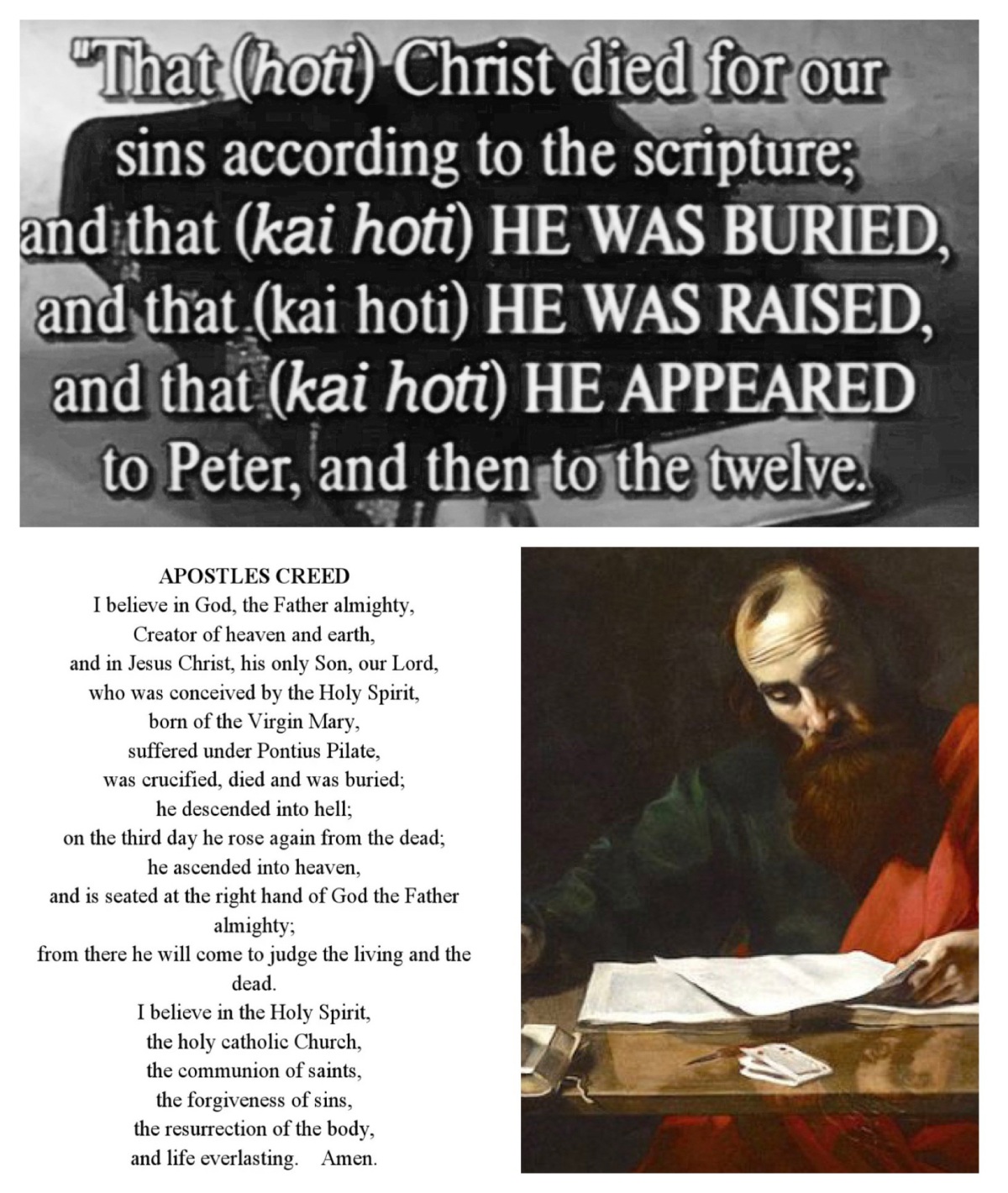
Immediately after this extensive discussion about worship, Paul turns to his foundational message about Jesus, in a four-part statement: Christ died—was buried—was raised—and then appeared to various people (15:3–5). He uses terms that denote the passing on of traditions: “I received … I handed on … which you received … in which you stand” (15:1); and he insists on the importance of what he passes on: “you are being saved, if you hold firmly to the message that I proclaimed to you” (15:2). These two verses provide a strong, insistent introduction to what follows in the ensuing verses.

We see this dynamic also in an earlier chapter, in the familiar words associated with the Last Supper: “I received from the Lord what I also handed on to you” (1 Cor 11:23), as well as in the commendation of the Corinthians as they “maintain the traditions just as I handed them on to you” (11:2).

The core tradition that Paul cites is the fourfold declaration that Jesus died, was buried, was raised, and appeared (vv.3–5). It may have already have been an existing formula; we know that Paul, in this letter and elsewhere, makes use of very short credal-like statements that it is likely had already been developed by others, some of which he cites in order to refute, such as: “is well for a man not to touch a woman” (7:1), “all of us possess knowledge” (8:1), “all things are lawful” (10:23), and “how can some of you say there is no resurrection of the dead?” (15:12).

There are other succinct sayings which Paul uses as the basis for further developments in his argument, such as “I decided to know nothing among you except Jesus Christ, and him crucified” (2:2), “knowledge puffs up, but love builds up” (8:1), “there is no God but one” (8:4), and “all things are lawful, but not all things build up” (10:24). The discussion of factions in chs.1–4 is built off “I belong to Paul … I belong to Apollos … [but] what then is Apollos? what is Paul?” (3:4–5), while Paul’s lengthy discussion of spiritual gifts (12:4—14:40) jumps off from the unspiritual “Jesus be cursed!” and the spirit-inspired response, “Jesus is Lord” (12:3).

Furthermore, Paul writes a number of longer credal-like statements, some of which seem shaped for liturgical usage: the words which became the “words of institution” in the church’s eucharistic practice (1 Cor 11:23–26), and others such as Rom 8:28; 2 Cor 4:14; Gal 1:3–5; Phil 2:6–11. The writers in the school of Paul who later wrote letters claiming to have his authority ( the “pastoral epistles”) followed this practice (see 1 Tim 2:5–6; 3:16; 2 Tim 2:11–13; Titus 2:11–14).

Two clauses in Paul’s tradition-based affirmation of 1 Cor 15:3–5 are buttressed by reference to scripture, another voice of authority alongside “the tradition”. What the specific scripture passages are, Paul does not state; this has left open the door for speculation by later interpreters.

Supporting arguments by reference to scripture is not unknown in Paul’s writings; as a Pharisee, he had attained a good awareness of Torah and its application to life (see Gal 1:14; Phil 3:5–6). He bases his magnum opus, Romans, on a scripture citation (Rom 1:17, citing Hab 2:4) and there is barely a chapter of this letter that does not contain scripture quotations and allusions in abundance.

Key moments in 1 Corinthians are likewise supported by verses from Hebrew Scripture (1 Cor 1:19, 31; 2:9, 16; 3:19–20; 14:21; 15:54–55), and the well-known “words of institution” themselves (11:23–26) reference the tradition which emerges in later decades in the Synoptic Gospels, recording the words of Jesus himself at the last supper (Mark 14:22–25; Matt 26:26–29; Luke 22:14–20).

By using the terminology of traditions being received and handed on, Paul is reining in the wayward Corinthians, recalling them to the fundamentals of their faith. So he sets out the dynamic of died—buried—raised—appeared (15:3–5) as the foundation for then discussing, in the remainder of the chapter, issues associated with the resurrection of Jesus (15:6–58).

Who saw the risen Jesus? First, Paul tells of an appearance to the early leaders, Cephas (Peter) (v.5) and James (v.7)—of which, neither appearance is reported in any Gospel. Then, Paul indicates that Jesus appeared to “the twelve” (v.5) and “all the apostles” (v.8)—apparently alluding to narratives found in the later texts of three Gospels Matt 28:16–20, Luke 24:33–48; John 20:19–23, 24–29; 21:1–14. (The appearances narrated in the shorter and longer endings of Mark, added after 16:8, are not relevant; these are later patristic additions based on the other three Gospels, designed to harmonise the ending of Mark with these others.) Acts 1:6–11 might also be relevant here.

An interesting question is, how did he distinguish between these two groups—“the twelve” on the one hand, and “all the apostles” on the other. Indeed, these terms appear to be inherited by Paul from earlier traditions. This is the only place in all Pauline letters which refer to “the twelve”; and besides, the Gospel narratives noted above do not have Jesus appearing to “the twelve”, as Judas was absent from all of them, and so was Thomas in John 20:19–23.

As far as the word “apostle” is concerned, in 16 of the 18 occurrences in the Pauline corpus (including those not authentic to Paul) Paul explicitly apply the term to himself. Paul acknowledges others as apostles: James (Gal 1:19), Peter (Gal 2:8), perhaps Barnabas (1 Cor 9:1, 5–6), an unspecified number of believers who were given gifts to be apostles (1 Cor 12:28–29; see also Eph 4:11), and most strikingly, Andronicus, a male, with Junia, a female (Rom 16:7). Are these the people that Paul has in mind at 1 Cor 15:8? Or is this simply a phrase inherited from the tradition, which Paul has repeated?

Next, Paul identifies an appearance to “more than five hundred brothers and sisters at one time” (v.6), which again has no place in any Gospel account. Last, Jesus appears to Paul himself (v.8), which he briefly reports at 1 Cor 9:1 and Gal 1:1. Strikingly absent from his list is the empty tomb and the appearances to Mary in the garden (John 20:14), to the women as they left the tomb (Matt 28:9–10), to the two travellers to Emmaus (Luke 24:15), or to the seven fishing by the Sea of Tiberias (John 21:1–4). What a perplexing inconsistency between the various testimonies to these appearances!!

This is an early collection of “witnesses to the resurrection”; Paul wrote to the Corinthians in the mid 50s. But there is no mention of what was important to all four evangelists, writing in later decades: the women at the empty tomb and the role that women played in bearing testimony to the risen one. Is this accidental? or deliberate? Given what we have noted about 1 Corinthians as a whole—and especially what ch.14 reveals about the disorderly behaviour of Corinthian women—we might well wonder, is Paul shaping the received tradition to “fit the context” already at this early stage? It is a tantalising suggestion.

There is a wonderful quote that is pertinent to this issue, which is attributed to Gustav Mahler, the late 19th century Austro—Bohemian composer: “Tradition is not the worship of ashes, but the preservation of fire.” These words indicate that if tradition stands still, it will run out of momentum and fizzle out of energy. Tradition always needs to be reinvigorated and renewed, in the way that fire sizzles and snaps as it continually changes its shape and form.

And that’s a fine thought for us to have as we consider the resurrection of Jesus. As the Apostles Creed affirms, echoing 1 Cor 15:3–5, “we believe in Jesus Christ … who was crucified, died, and was buried … who rose again from the dead on the third day”. We need to renew and rekindle that tradition, to find fresh ways to understand and proclaim that mysterious happening, which sits at the heart of classic Christian confessions.

I’ve offered my own initial reflections on precisely that task in this blog:

He is not here. He is risen (Mark 16; Easter Sunday year B)

The time is early in the morning – quiet, dark, peaceful; the same time of day as when we came to this place. The cast of characters is well-known; Mary Magdalene; Salome, Joanna, another Mary; we know these women. And the message is, likewise, a comforting, familiar refrain: The tomb is empty. He is not here. He is risen. In all that we have heard, we are on familiar ground.

It is most likely that each of us are also well-acquainted with the flow of the story—the women come, bearing their spices, to anoint the body; the stone is found rolled away; the tomb is seen to have no body; and the message is delivered in short, succinct phrases: The tomb is empty. He is not here. He is risen.

The place may be a little unusual, in our way of thinking: it is a tomb, carved out of the rock, large enough to enable a number of adults to be buried together. As people of Anglo heritage, we are used to individual plots, dug deep into the ground, where one person, or maybe a married couple, are laid to rest.

But this is different: it is a large cavity in the side of a rockface, carved out to enable space for a number of adults to enter; space enough for generations of a family to be laid to rest within the one very large tomb. This practice can be seen in phrases, frequently used in mentioning the Patriarchs and David, in Hebrew Scriptures: when such an eminent person died, he would be “gathered unto his fathers,” “sleeping with his fathers,” or “gathered unto his people.”

But these aren’t just euphemisms for death—like we say, ‘passed away’, or ‘went to their eternal rest’; no, this was a literal, physical description of what was done with the bodies of deceased people in ancient times: they were placed in the family tomb, alongside the resting-places of relatives and ancestors.

So the physical location, and the cultural custom, is rather unfamiliar to us today. But the rest of the story, we reassure ourselves, runs along familiar lines, following the well-trodden pathway.

Or does it?

Step back from the empty tomb; walk away, for a moment, from the Easter narrative. Consider the broad sweep of our Christian faith; the overarching drama of our Christian lives.

What do we expect to be central and essential to our Christian faith? What is it that we anticipate finding at the very heart of our faith? How does faith function in the lives of people today, in or time, amidst the stresses and pressures of 21st century living?

Psychologists—those who study the human mind—tell us that people in our times are more likely than ever before to be depressed. Our deepest yearning is to be happy, to feel appreciated, to have assurance that we are valued, that we are loved.

Sociologists—those who study human societies—tell us that people in our times feel disconnected, isolated, and cut off from one another. Our common yearning is to be a part of a group, to feel that we belong. We need to know that others need us.

What this analysis often leads to, is a sense that people today are looking for certainty—we want to be grounded in a group, we want to be part of the tribe, we want to be loved and appreciated, we want to know the assurance of the absolute.

And faith—Christian faith, or indeed any form of faith—can then be offered as the way for people, in their fear and anxiety, in their loneliness and uncertainty—faith can be offered as an answer to these ills. ‘Just take this pill (this pill of absolute faith) and you will be right.’ ‘Just switch your allegiance in one fell swoop, and all will be different.’

Let me invite you to think about these issues in the light of the story which we have heard retold today. For as we encounter and engage with the unfamiliar dimensions of the story, we will find a rather different response to our situation emerging from the interplay.

There are two striking and unfamiliar elements in the story of the empty tomb. The first has to do with who is there. And the second has to do with who is NOT there.

Who is there, that early morning, in the tomb where the body of Jesus had been laid, just a few days earlier? Who are the ones who see, and hear, and experience for themselves, the jarring reality of that early morning encounter?

In a society so dominated by males—male priests, male scribes, male teachers of the Law, male heads of each household—is it not striking and jarring that the great news of Easter is entrusted, first of all, and in all its fullness, to a group of women?

Women—who come to perform their traditional female role, of anointing the freshly-interred body. Women—who come in subservience and devotion, to enact the ritual which has been set aside for them to undertake, as befits their allocated role in society. Women—who, if the traditional pattern is to be followed, will come, unwind the covering on the body, anoint the body with spices, reroll the covering and replace the body, and reverently leave the tomb.

But these women are unable to carry out the male-determined ritual for the body of the recently deceased. The familiar pattern is interrupted; the servant role is removed; and it is these women to whom the striking news of Easter is given.

It is to these women that the responsibility is given, for declaring that the body of Jesus is no longer gripped by death. It is to these women that the role of being the first, the primary, witnesses, to the interrupting action of God: the one who was dead, Jesus, our Master, is no longer here.

The tomb is empty. He is not here. He is risen.

God is now working in ways that challenge, disturb, and overturn the well-worn, familiar, traditional patterns of society. The women cannot carry out the duties and responsibilities that they have long been given. The women, now, are to be witnesses to what God has done. They are to return and tell the men—the apostles, the pillars, the chosen ones—what God has been doing. He is not here. He is risen.

It is the women, and not the men, as expected, who are the ones to break the news: He is not here. He is risen. It is the women who become the first evangelists, the first to proclaim the good news of God. It is the women who become apostles, even to the apostles, the men waiting in the city, unaware of what has occurred at the tomb, and unacquainted with what God has been doing through Jesus. He is not here. He is risen.

If the first striking feature of this story is, who IS here; then the second arresting aspect, is who is NOT here. This is a story about Jesus, in which Jesus does not appear.

This is an account of the most dramatic and significant moment in the whole narrative about Jesus—but there is no Jesus to be seen!   No Jesus to be touched!
No Jesus with whom to talk!   No Jesus to stand, centre-stage, as demonstration of the realities of how God is now at work.

So here is the conundrum: this is the precise moment in the story when God acts in a new and surprising way. This is the pivot point upon which the whole of the narrative turns.

And yet, at the heart of the story, there is—nothing!   No central character. No resurrected Jesus, shining forth God’s glory for all to see. No dramatic, booming voice from the heavens, declaring the risen Jesus as the Lord of all. All that we have, are the words of the young men: He is not here. He is risen. There is nothing, but a startling absence, precisely at the moment when we expect a dramatic presence.

In my mind, this paradoxical turnaround is highly significant, hugely important. At the centre of our faith, there is an enticing invitation—to explore, to ponder, to imagine, to wonder.

There is no clear, black-and white, unequivocal proof. There is no definitive dogmatic assertion, no unquestionable, unambiguous deed, no unarguable proclamation—no resurrected Jesus standing in the tomb. There are simply the women, stunned; and the young men, explaining: He is not here. He is risen.

So, at the heart of the Easter story, we find absence; mystery; the glimpse of a possibility; the wisp of a wondering; the beginnings of a pondering: ‘how can this be’; ‘what does this mean?’; ‘what do we do next?’; ‘where is this all leading?’.

And in my mind, this central absence, at the heart of the story, reminds us of the essence of our faith. In our faith, we have no clearcut, unquestionable dogma; we have no unchangeable given, no unarguable declaration.  We have no absolute assurance, no certainty set in concrete.

Rather, we have an invitation to walk the way of faith, with openness; an invitation to delight in the mysteries which God unravels before our eyes, in our own lives; an invitation to search, to explore, to ponder; and perhaps then, to encounter, to marvel, and to rejoice.

He is not here. He is risen. So let us enter into the mystery, the enticement, and the joy, of faith!