Paul, the law of the Spirit, and life in the Spirit (Rom 8; Pentecost 7A)

Last week, we considered the section of Paul’s letter to the Romans which the lectionary offered: Paul grappling within “the sin that lives within me” (Rom 7:14–25a). In probing that state, Paul came to a rather pessimistic conclusion: “wretched man that I am! who will rescue me from this body of death?” (7:24), before immediately switching to a grateful “thanks be to God through Jesus Christ our Lord!” (7:25). See

This week, the lectionary continues the argument that Paul is developing, as he presses on to rejoice that “there is now no condemnation for those who are in Christ Jesus” (8:1). The passage proposed by the lectionary (8:1–11) marks a dramatic change in tone. Whilst he still recognises that “the mind that is set on the flesh is hostile to God; it does not submit to God’s law” (8:7), the primary focus that Paul now has is on the claim that “the law of the Spirit of life in Christ Jesus has set you free from the law of sin and of death” (8:2).

Paul considers the state of humanity: “to set the mind on the flesh is death … the mind that is set on the flesh is hostile to God; it does not submit to God’s law—indeed it cannot, and those who are in the flesh cannot please God” (Rom 8:6–8). He has already grappled with this in the previous chapter. Here, he presses on to celebrate that, as he tells the believers in Rome, “you are not in the flesh; you are in the Spirit, since the Spirit of God dwells in you” (8:9).

Because of what the Spirit effects in the lives of believers, Paul is embued with great hope—a quality that he expresses in other letters he wrote. He rejoices with the Thessalonians that they share with him in “hope in our Lord Jesus Christ” (1 Thess 1:3) and tells the Galatians that “through the Spirit, by faith, we eagerly waits for the hope of righteousness” (Gal 5:5).

He reminds the Corinthians that “faith, hope and love abide” (1 Cor 13:13), and then in a subsequent letter to believers in Corinth, he asserts that “he who rescued us from so deadly a peril will continue to secure us; on him we have set our hope that he will rescue us again” (2 Cor 1:10)

Paul has already reported to the Romans that “we boast in our hope of sharing the glory of God” (Rom 4:2) and that “we boast in our hope of sharing the glory of God” (5:2). He will go on to refer to “the law of the Spirit of life in Christ Jesus” (8:2), and explain how the work of the Spirit gives hope to the whole creation, currently “in bondage to decay”, which will “obtain the freedom of the glory of the children of God” (8:21). And so, Paul declares, it is “in hope that we were saved” (8:24).

Towards the end of the letter, Paul offers a blessing to the Romans: “may the God of hope fill you with all joy and peace in believing, so that you may abound in hope by the power of the Holy Spirit” (15:13). That the Spirit produces this hope is a fundamental dynamic in the process of “setting [believers] free from the law of sin and of death” (8:2).

The Spirit is rarely mentioned in the first seven chapters of this letter. Paul does note that it was “according to the spirit of holiness by resurrection from the dead” that Jesus was “declare to be Son of God with power” (1:4), and that it was “through the Holy Spirit that has been given to us” that “God’s love has been poured into our hearts” (5:5). And he notes that it was by being “discharged from the law” that believers entered into “the new life of the Spirit” (7:6).

But from 8:1 onwards, the Spirit becomes an active presence in what Paul writes about. The Greek word pneuma appears 33 times in the letter to the Romans; most of these are referring to the Holy Spirit. Strikingly, 19 of these occurrences are in chapter 8; a further eight instances then occur in chapters 9–15.

We might contrast this with the word that is often seen to be the key to this letter, dikaiosunē, which appears 57 times in Romans—including the programmatic key verse of 1:17, 13 times in ch.3, 11 times in ch.4, nine times in ch.5, and then nine more times in chs.9–11. Whilst righteousness is indeed an important word, the Spirit is also of crucial significance in Paul’s argument throughout Romans.

Rom 8:1–11 makes a strategic contribution to what Paul is explaining in this letter—that in the Gospel, “the righteousness of God is revealed through faith for faith” (1:17), that “the righteousness of God has been disclosed, and is attested by the law and the prophets, the righteousness of God through faith in [or of] Jesus Christ for all who believe” (3:21–22).

As he develops his argument, drawing on the story of Abraham (Gen 15), Paul affirms that this righteousness “will be reckoned to us who believe in him who raised Jesus our Lord from the dead, who was handed over to death for our trespasses and was raised for our justification” (4:24–25), concluding that “since we have been made righteous by faith, we have peace with God through our Lord Jesus Christ” (5:1), and asserting that “if Christ is in you … the Spirit is life because of righteousness” (8:10).

Incidentally, when we look at the statistics of word occurrences in the seven authentic letters of Paul, we see that “righteousness” occurs a total of 87 times (57 of them in Romans, 13 in Galatians), whilst “spirit” can be found 117 times: as well as the 33 times in Romans, there are 39 occurrences in 1 Corinthians and a further 15 occurrences in 2 Corinthians, and then 19 more appearances in Galatians. Spirit is a fundamental component in Paul’s theology.

Paul believes that it is by the Spirit that the gift of righteousness is enlivened and activated within the believer. He hammers this point with a series of clear affirmations in this week’s passage (8:1–11): “there is no condemnation” (v.1), “the law of the Spirit has set me free” (v.2), “God has done what the law, weakened by the flesh, could not do: by sending his own Son in the likeness of sinful flesh, and to deal with sin” (v.3), “the Spirit of God dwells in you” (v.9), “the Spirit is life” (v.10), and “he who raised Christ from the dead will give life to your mortal bodies also through his Spirit that dwells in you” (v.11).

Important for Paul is for the believer to know that “you are in the Spirit, since the Spirit of God dwells in you” (8:9) and that “his Spirit … dwells in you” (8:11). This is an idea that Paul also articulates in his first letter to a Corinth, when he poses the rhetorical question, “do you not know that you are God’s temple and that God’s Spirit dwells in you?” (1 Cor 3:16). The answer to this rhetorical question which is expected (but not stated) is, of course, “yes, we do know that God’s Spirit dwells in us”.

A similar rhetorical strategy can be seen as Paul draws this section (Rom 8:1–11) to a close. He poses a matched pair of conditional possibilities: “if Christ is in you” (v.10), “if the Spirit dwells in you” (v.11). The possibility, in each case, is crystal clear: since Christ is in you, “the Spirit is life because of righteousness” (v.10), and since the Spirit dwells in you, “he who raised Christ from the dead will give life to your mortal bodies also through his Spirit that dwells in you” (8:11).

For Paul, then, the role of the Spirit in enlivening and energising the believer is crucial. That is the important contribution that this passage makes to Pauline theology, and to our understanding of the Christian life.

See also
A fully-developed theology from just one psalm? (Psalm 119; Pentecost 7A) §1

I set myself a challenge: develop a fully-rounded theology from just one psalm. Easy, I thought; the shortest psalm, 117, has a number of key elements in its two verses: praise (“praise the Lord” twice, at the beginning and the end), adoration (“extol him”), a recognition of divine love (“great is his steadfast love towards us”), the universal orientation of that love (“all peoples”), and the assurance of divine fidelity (“the faithfulness of the Lord endures forever”).

There: done and dusted! … although, I think, on further reflection, that this looks more like the outline of a litany (praise—adoration—intercession —blessing) than a fully-developed theology. As a litany, it is succinct; as a theology, it is still quite deficient.

So, what about a challenge to develop a fully-rounded theology, not from the shortest psalm, but from the longest psalm? For just two psalms later, we have the 176–verse grand acrostic of the Hebrew Scriptures: Psalm 119—a small portion of which (119:105–112) is offered by the lectionary this coming Sunday. What would a theology look like, using only the verses in this psalm? And how full (or inadequate) would that theology be?

I love the way that this wonderfully artistic creation contains key elements of a theological understanding of the world. There are components regarding the nature of God, the human condition, and the divine response to that human condition. There is much to be gleaned regarding revelation and also salvation. And there are indications that touch on the character of living a faithful life, as well as signs of what the future is to be. All of these elements contribute to a fully-developed theology, surely?

This longest psalm of all, Psalm 119, is an acrostic series of 22 eight-verse stanzas (arranged alphabetically) in which the author(s) consistently affirm the value and importance of the teaching (Hebrew, torah) which sits at the centre of faith for the person singing this psalm. “I will delight in your statutes; I will not forget your word” (Ps 119:16). By contrast to “the arrogant”, whose “hearts are fat and gross”, the psalmist declares, “I delight in your law” (Ps 119:70).

The psalm includes the petition, “let your mercy come to me, that I may live, for your law is my delight” (Ps 119:77), noting that “if your law had not been my delight, I would have perished in my misery” (Ps 119:92). It also affirms, “I long for your salvation, O Lord, and your teaching (torah) is my delight” (Ps 119:74). Echoing these words many centuries later, Paul, in the midst of his agonising about Torah in Romans 7, is able to affirm, “I delight in the law of God in my inmost self” (Rom 7:22). Delight for the Law runs through Jewish history.

This longest of all psalms is a series of 22 meditations on teachings, or Torah, which is usually translated as “law”. It contains regular affirmations of the place of Torah in personal and communal piety: “give me understanding, that I may keep your law and observe it with my whole heart” (v.34); “Oh, how I love your law! it is my meditation all day long” (v.97).

The psalmist contrasts their devotion to Torah with those who neglect or ignore it: “I hate the double-minded, but I love your law” (v.113); “I hate and abhor falsehood, but I love your law” (v.163). They rejoice that “great peace have those who love your law; nothing can make them stumble” (v.165). From this long and persistent affirmation of Torah throughout all 22 stanzas, we can indeed devise a fully-fledged theology, canvassing many of the key issues that we have come to associate with theology.

(In what follows, I will refer to the psalmist as “they”, making no assumptions about who they were, even their gender. As psalms were collective songs, it is reasonable to suggest that they were developed within the community, by members of the community—so “ they” is a reasonable assumption, I feel.)

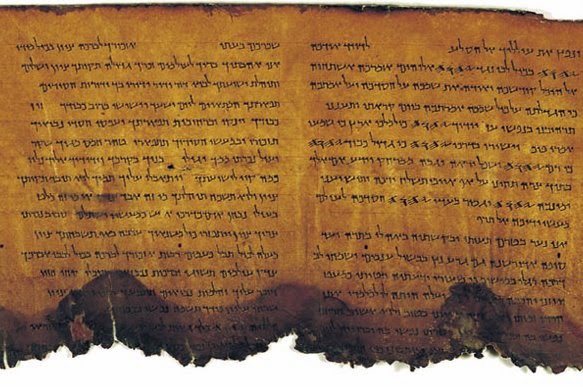
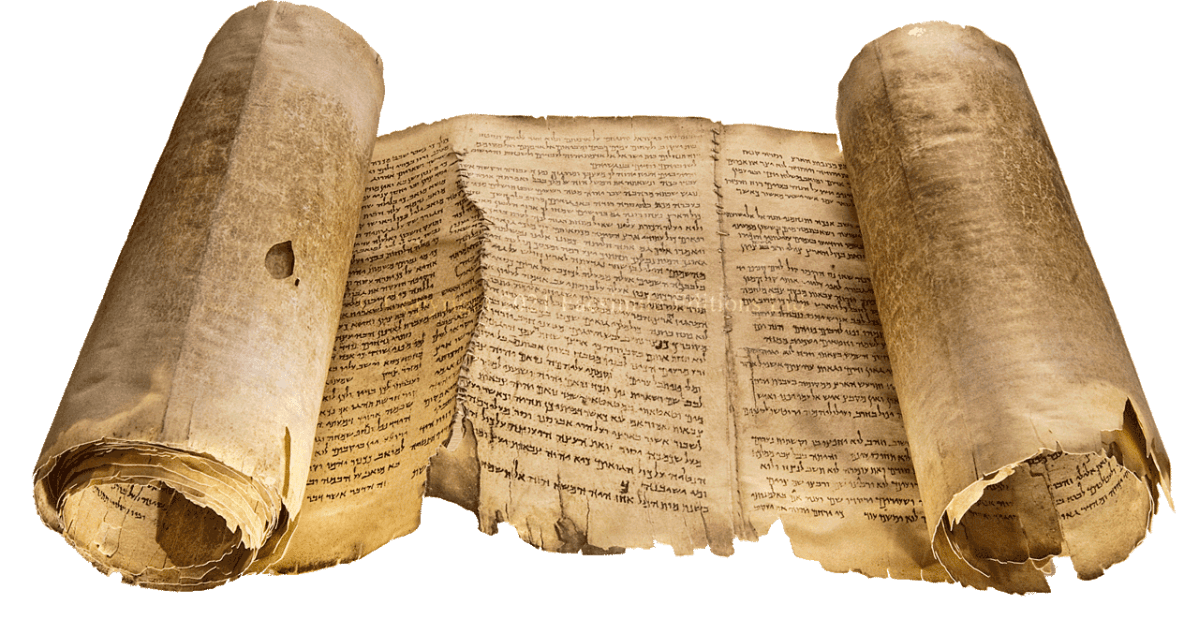
4QPs Dead Sea Scroll Psalm 119 from the First Century CE

1 God

Undergirding the joyful appreciation of Torah in the lengthy psalm is a consistent trust in God, who is consistently acknowledged as the author and giver of Torah, but is also celebrated as creator: “your hands have made and fashioned me” (v.73). That affirmation reflects famous words sung in another psalm, “I praise you [God], for I am fearfully and wonderfully made; wonderful are your works; that I know very well” (Ps 139:14).

God’s creative power is at the centre of Hebrew Scripture. It is celebrated in passing in many psalms (Ps 8:3–8; 33:6–7; 74:16–17; 95:4–5; 96:5; 100:3; 103:14; 115:15; 121:2; 124:8; 136:4–9; 146:5–6); in the majestic celebratory psalm, Psalm 104, which rejoices, “Lord, how manifold are your works! In wisdom you have made them all” (Ps 104:24); and in the carefully-crafted priestly account of creation that stands at the head of Hebrew Scripture (Gen 1:1–2:4a). It is noted with appreciation also in psalm 119 (v.73).

A second element in this psalm is that God’s mercy is valued; “great is your mercy, O Lord” (v.156), and so the psalmist prays, “let your mercy come to me, that I may live; for your law is my delight” (v.77). This is a common refrain in other psalms, where God is asked to show mercy (Ps 25:6; 40:11; 51:1; 123:2, 3). As one proverb says, “no one who conceals transgressions will prosper, but one who confesses and forsakes them will obtain mercy” (Prov 28:13). A similar sentiment is offered by Isaiah: “the Lord waits to be gracious to you; therefore he will rise up to show mercy to you, for the Lord is a God of justice; blessed are all those who wait for him” (Isa 30:18).

Then, we might note the love of God. A recurrent refrain in Hebrew Scripture is a celebration of “the steadfast love of the Lord” (Exod 34:6; 2 Chron 30:8–9; Neh 9:17, 32; Jonah 4:2; Joel 2:13; Ps 86:15; 103:8, 11; 111:4; 145:8–9). This affirmation presents God as “merciful and gracious, slow to anger, and abounding in steadfast love and faithfulness, keeping steadfast love for the thousandth generation”.

God is praised for showing love by redeeming the people in the Exodus (Exod 15:13) and then guaranteeing abundance in the land is promised to the people: “he will love you, bless you, and multiply you; he will bless the fruit of your womb and the fruit of your ground, your grain and your wine and your oil, the increase of your cattle and the issue of your flock, in the land that he swore to your ancestors to give you”, says Moses (Deut 7:13).

Solomon later praises God, saying “you have shown great and steadfast love to your servant my father David … and you have kept for him this great and steadfast love, and have given him a son to sit on his throne today” (1 Ki 3:6; also 2 Chron 1:8), and then as he dedicates the Temple, he prays “there is no God like you in heaven above or on earth beneath, keeping covenant and steadfast love for your servants who walk before you with all their heart” (1 Ki 8:23; 2 Chron 6:14).

When the foundations of the Temple are laid, after it has been destroyed by the Babylonians, the people sing, “praising and giving thanks to the Lord, ‘for he is good, for his steadfast love endures forever toward Israel” (Ezra 3:11). When a covenant renewal ceremony takes place under Nehemiah, he addresses God as “a gracious and merciful God” and continues, “the great and mighty and awesome God, keeping covenant and steadfast love” (Neh 9:31–32). A number of prophets refer to God’s enduring, steadfast love (Isa 16:5; 43:4; 54:8, 10; 63:7; Jer 9:24; 31:3; 33:11; Dan 9:4; Hos 2:19; 11:3–4; Jonah 4:2; Micah 7:18–19; Zeph 3:17).

Reference is made to the steadfast love of God on seven occasions in this psalm (verses 41, 64, 76, 88, 124, 149, and 159). Such love is often linked with Torah—“the earth, O Lord, is full of your steadfast love; teach me your statutes” (v.64); and again, “deal with your servant according to your steadfast love, and teach me your statutes” (v.124). An important function of Torah is thus to communicate the extent of divine live.

In tandem with God’s mercy and steadfast love, so divine justice is also noted. “Great is your mercy, O Lord; give me life according to your justice” (v.156); and “in your steadfast love hear my voice; O Lord, in your justice preserve my life” (v.149).

Justice, of course, is at the heart of the covenant that God made with Israel. Moses is said to have instructed, “justice, and only justice, you shall pursue” (Deut 16:20), the king is charged with exhibiting justice (Ps 72:1–2; Isa 32:1), whilst many prophets advocate for justice (Isa 1:17; 5:7; 30:18; 42:1–4; 51:4; 56:1; Jer 9:24; 22:3; 23:5; 33:15; Ezek 18:5–9; 34:16; Dan 4:37; Hos 12:6; Amos 5:15, 24; Mic 3:1–8; 6:8).

So God, says the psalmist, holds the people of the covenant to the standard set in Torah: “you rebuke the insolent, accursed ones, who wander from your commandments” (Ps 119:21). The assumption throughout this psalm is that the creator God is personal, approachable, relatable; just and fair, kind and loving.

See further posts at

Twins! (Gen 25; Pentecost 7A)

“Is it a boy or a girl?” For many years, that has been a standard question after a woman has just given birth. In more recent times, due to the advances in medical technology that have occurred, that question can no be put to pregnant couples: “Is it a boy or a girl?” Ultrasounds can now apparently reveal the gender of the foetus from about 11–13 weeks.

So it is always a surprise when the answer to that question is not “boy” or “girl”, but “both”—in the case of male-and-female twins—or “two boys” or “two girls”, as the case may be, in other instances.

“Isaac prayed to the Lord for his wife, because she was barren; and the Lord granted his prayer, and his wife Rebekah conceived”, we read in the Hebrew Scripture passage offered by the lectionary for this coming Sunday (Gen 25:19–34). Here, we meet another barren woman in the ancestral sagas of Israel. Years before, Isaac’s mother Sarah had been barren, and that state had lasted for many decades—and indeed “the Lord had closed fast all the wombs of the house of Abimelech because of Sarah, Abraham’s wife” (20:18).

And other barren women are yet to come in those ancestral sagas; the rabbis note that there are seven significant women who were infertile in scripture: Sarah (Gen 11:30), Rebekah (Gen 25:2), Rachel and Leah (Gen 29:31), Manoah’s wife (Judg 13:2), Hannah (1 Sam 1:2), and Zion (Isa 54:1). The eventual gifting of children to these seven is related by the rabbis to a textual variant in 1 Sam 2:5, reading “the barren has borne seven” as “on seven occasions has the barren woman borne”.

The seventh in this list, Zion, is not an individual who lived in the past but is the personified Israel of some future time, based on Second Isaiah’s characterization of Zion as a barren woman: “Sing, O barren one who did not bear, burst into song and shout, you who have not been in labour; for the children of the desolate woman will be more than the children of her that is married, says the Lord” (Isa 54:1).

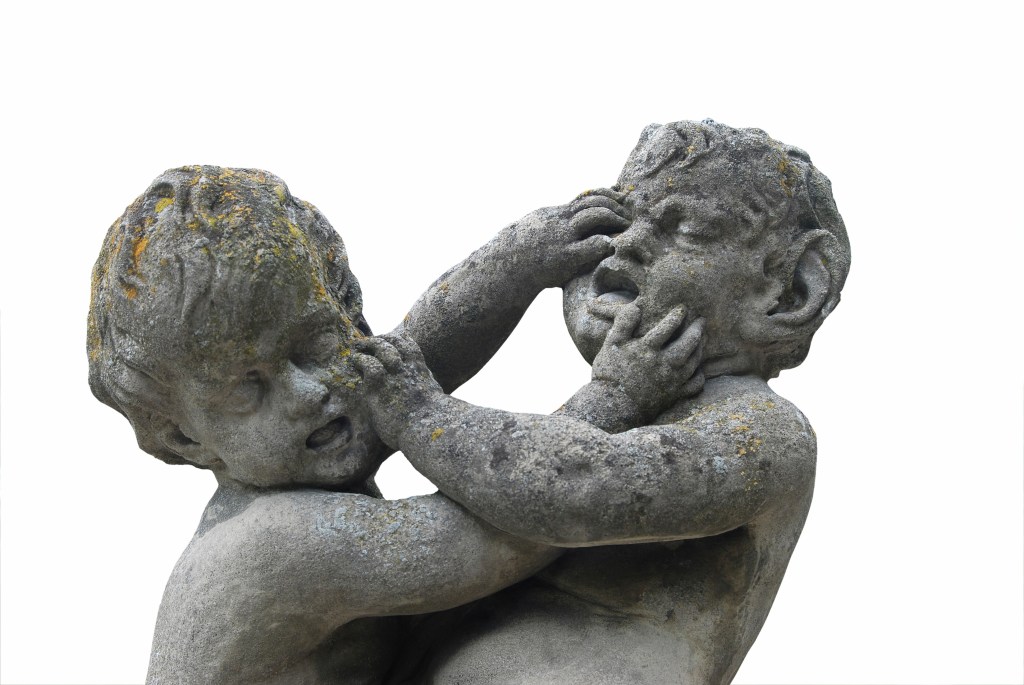
The result of God’s intervention, in Rebekah’s case, was a surprise: not one, but two, boys! But the time for shouting with joy is short, for poor Rebekah is given sobering news about her twin boys: “two nations are in your womb, and two peoples born of you shall be divided” (25:23a). Not only that, but “the one shall be stronger than the other, the elder shall serve the younger” (25:23b).

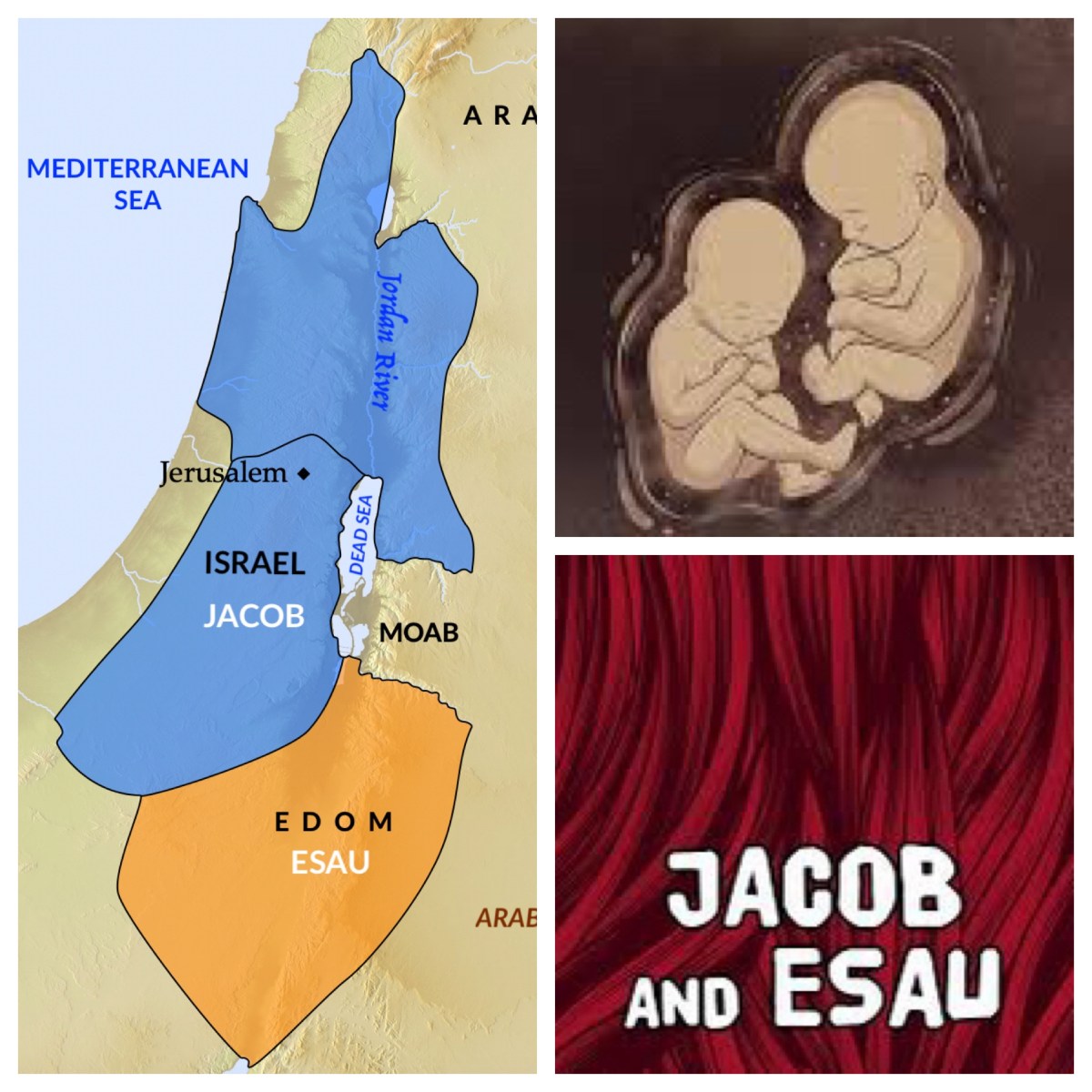
Isaac and Rebekah have brought into the world two boys—the older, who “came out red, all his body like a hairy mantle”, who was named Esau (meaning “hairy”), and the younger, hot on the heels of his brother (literally), who followed immediately “with his hand gripping Esau’s heel”, who was named Jacob (meaning “supplanter”).

The other twins that are (in)famous in Hebrew Scripture are Perez (“a breach”) and Zerah (“brightness”), twin sons of Tamar, daughter-in-law of Judah, who had liaised with her whilst visiting his sheepshearers (38:12–30). In the New Testament, “Thomas the Twin” is one of the named twelve disciples (John 11:16; 20:24; 21:2), although his sibling is never identified.

Who calls their child “the one who supplants” at the moment of birth? The names, identified in the narrative at the moment of birth (25:25–26), must surely be retrojections into the story, for the names prefigure events as they later transpired. This story, like many of the stories in the book of Genesis, is an aetiological narrative—a story told to explain how things are as they are.

I have noted previously that such narratives tell of something that is said to have occurred long back in the past, but the focus is on present experiences and realities, for “such explanations elucidate something known in the contemporary world by reference to an event in the mythical past”.

See https://oxfordre.com/classics/display/10.1093/acrefore/9780199381135.001.0001/acrefore-9780199381135-e-7050;jsessionid=3DB38C42C54D01E1CBFA8682FB55DA4C

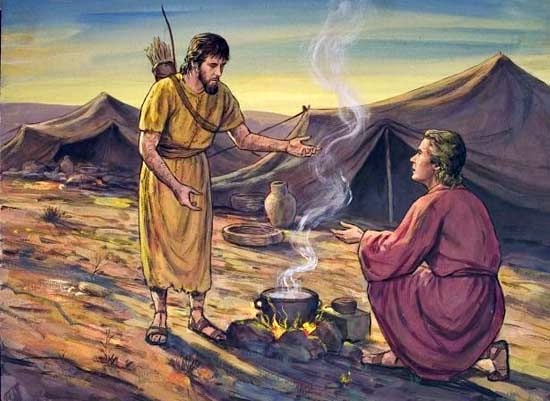
The name of Jacob is given to explain his role in the story that is unfolding: first, Jacob tricks his brother Esau to sell his birthright to him (25:29–34). As firstborn, Esau should have inherited from Isaac; now, Jacob has supplanted him (as his name indicates). In subsequent passages that the lectionary skips over, Jacob deceives his father in order to receive the blessing that was intended for the firstborn (27:1–29).

As Esau subsequently laments to his father, “Is he not rightly named Jacob? He has supplanted me these two times: he took away my birthright; and look, now he has taken away my blessing” (27:36). His fate as the one no longer relevant for the continuation of the family line, promised to Abraham and continuing through Isaac to Jacob, now, comes when he marries “Mahalath daughter of Abraham’s son Ishmael, and sister of Nebaioth, to be his wife in addition to the wives he had” (28:9). See my earlier reflections on Ishmael at

So Jacob lives up to his name. And we know well his name, through the seven places in the New Testament where we find formulaic references to the three patriarchs, Abraham, Isaac, and Jacob (Mark 12:26; Matt 8:11; 22:32; Luke 13:28; 20:37; Acts 3:13; 7:32), as well as the many references to them together in the Hebrew Scriptures (Gen 50:24; Exod 2:24; 3:6, 15, 16; 4:5; 6:3, 8; 33:1; Lev 26:42; Num 32:11; Deut 1:8; 6:10; 9:5, 27; 29:13; 30:20; 34:4; 2 Ki 13:23; Jer 33:26).

Yet the irony is that Jacob’s name is later changed, to a name that would become still more famous—and live on into the modern world as the name of the nation of people who see themselves as the chosen ones. After wrestling all night with a man at the ford of the river Jabbok, Jacob is told “you shall no longer be called Jacob, but Israel, for you have striven with God and with humans, and have prevailed” (32:28; see Pentecost 10A).

And that story, of course, is yet another aetiological narrative; for the name given, Israel, means “the one who strives with God”, which was the fate of Jacob on that night, and of the people of the nation over the centuries and millennia to follow. So the story of this change of names is an important one to remember and pass on.

In this story, however, the names of the boys born to Isaac and Rebekah are the key point: one is born hairy, the other is a supplanter. And the trick that he played to gain the inheritance of his father plays a crucial role in the self-understanding of the people who were telling this story, and passing it down the generations, and remembering it to this day. It is the second-born (even if just by a few seconds in time) who supplants the firstborn.

So Isaac was preferred over his older brother, Ishmael. Jacob gained the birthright of his (slightly) older twin brother Esau. Joseph gained ascendancy over his many older brothers. Jacob, at the end of his life, blessed the younger son of Joseph, Ephraim, rather than his older son, Manasseh. Moses was chosen as God’s spokesperson in Egypt, in preference to his older brother, Aaron. And instead of any of the seven older sons of Jesse, the ruddy, handsome youngest, David, received the blessing of the prophet Samuel to be anointed as king. In each case, it was the younger who was preferred over the older—a striking set of stories to be remembered!

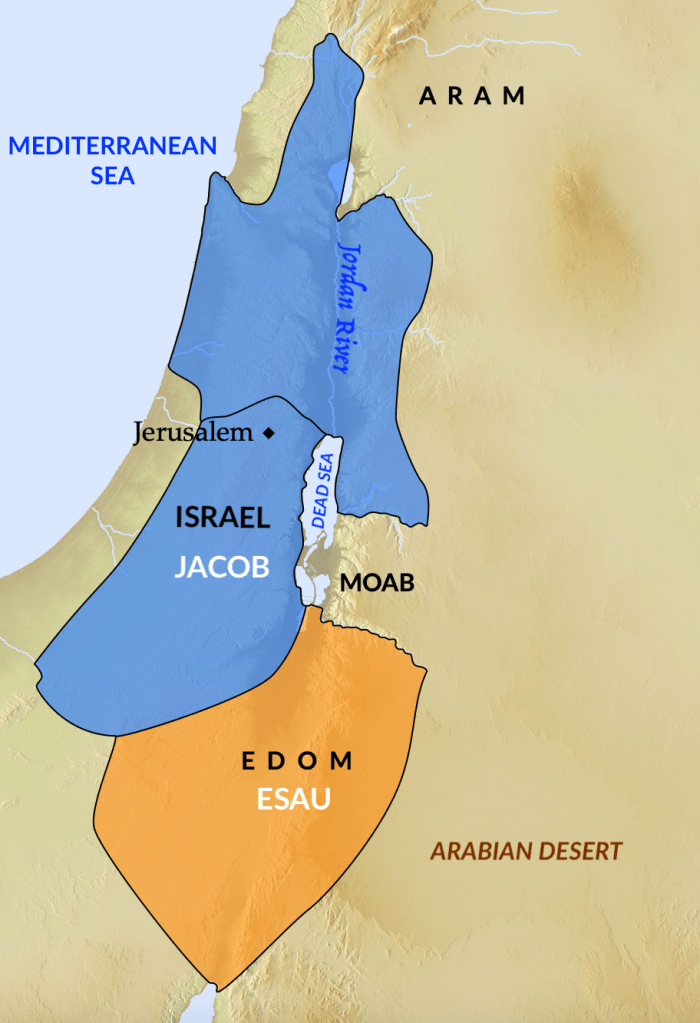
Esau, we are told, is the ancestor of the Edomites, to the south of Israel (Gen 36:1–43), whilst the descendants of Jacob (Gen 25:19–28), of course, populated the land of Canaan, known as Israel, after the name later given to Jacob (Gen 32:28; see Pentecost 10A).

For Our Elders: reflecting during NAIDOC WEEK 2023

A Sermon preached by the Rev. Dr John Squires at Tuggeranong UCA on 9 July 2023, the last day of NAIDOC WEEK 2023

Readings: Deuteronomy 30:11–16 and Matthew 11:16–19, 25–30

Note: this blog post contains images of Indigenous people who have passed away.

Today, the second Sunday in July, is the Sunday which, each year, brings to a close NAIDOC Week. This is a week which has a focus on the First Peoples of this continent and its surrounding islands. It has been held for over 50 years, under the auspices of the National Aborigines and Islanders Day Observance Committee (which forms the acronym NAIDOC).

NAIDOC Week itself continues on from National Aborigines Day, which was held from 1955 onwards; that day, in turn, was a development from the Day of Mourning, which first took place on Australia Day in 1938, when protestors marched through the streets of Sydney, followed by a congress attended by over a thousand people. After the congress, a deputation led by William Cooper presented Prime Minister Joseph Lyons with a proposed national policy for Aboriginal people. Needless to say, the Prime Minister received these representations, and then ignored them.

So NAIDOC Week continues a tradition, now 85 years old, of placing a focus on our Indigenous people. The theme for NAIDOC Week this year is For Our Elders; and that is a most relevant theme, given what has been taking place in our national life for some time now. We have been guided and led by a group of resilient, intelligent, and compassionate Elders from many First Nations communities; and this year, we stand at a very significant moment in that journey with those Elders.

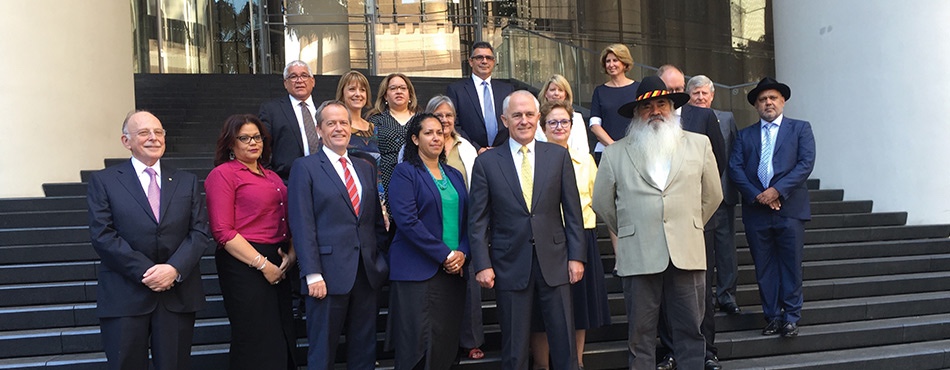
Almost a decade ago, in 2015, the then Prime Minister Malcolm Turnbull and the then Opposition Leader the Hon Bill Shorten worked together to establish a Referendum Council. That Council worked to build on the work of bodies established by previous governments: the Expert Panel, in 2010, established by Julia Gillard; and then the Joint Select Committee, established by Tony Abbott in 2012. (In true public servant style, of course, there had to be multiple committees, reports, proposals, and processes!!)

The Referendum Council reported in 2017, taking into account the political and legal responses to the earlier reports, as well as the views of Aboriginal and Torres Strait Islander peoples and the general public.

What resulted from that report was a series of First Nations Regional Dialogues, which were Indigenous designed and led consultations right across the country. Indigenous members of the Council formed an Indigenous Steering Group. Together, in consultation with Indigenous community stakeholders and with advice from constitutional experts, they designed the Indigenous consultation process called the First Nations Regional Dialogues.

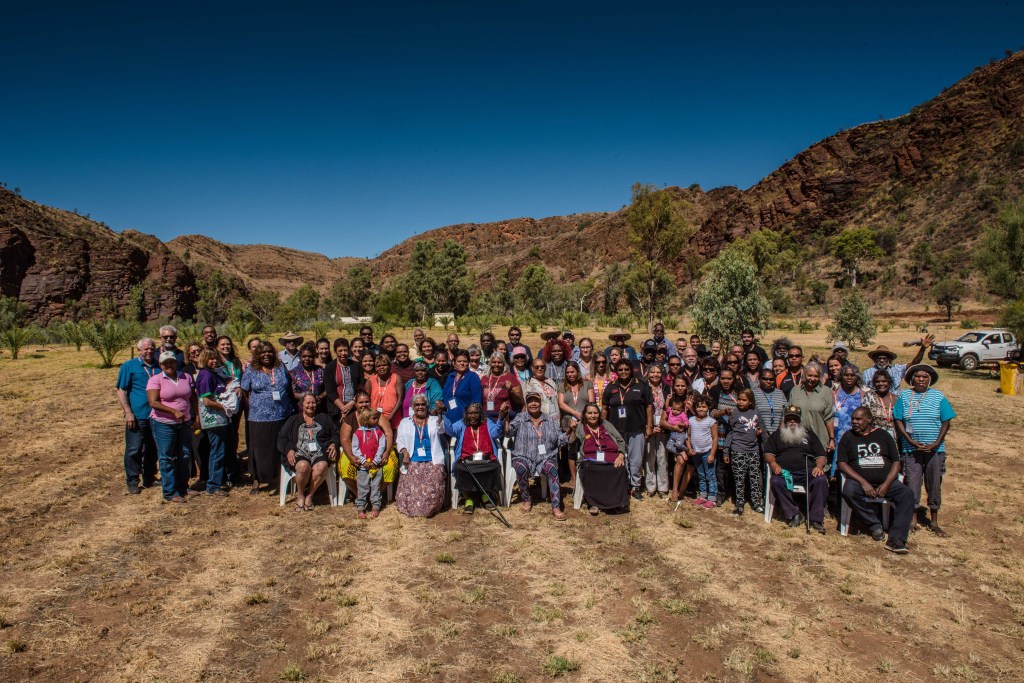
The Regional Dialogue held in Ross River, QLD, in 2017

As a result, thirteen Regional Dialogues were held across the country—in capital cities, regional towns, and with remote communities such as Broome in WA, Ross River in Queensland, and Thursday Island in the NT. In each case, local Elders were involved in the planning and running of the consultation.

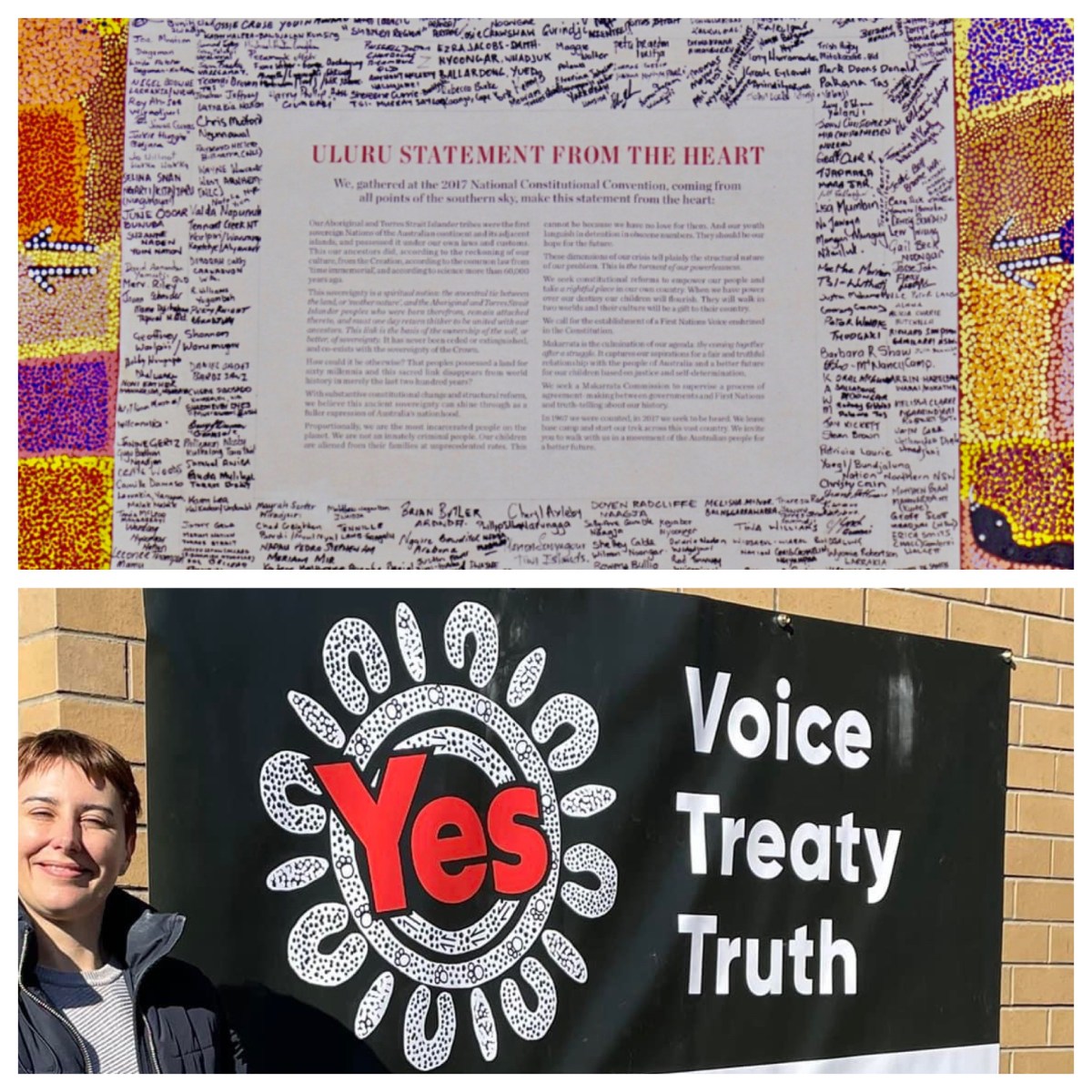
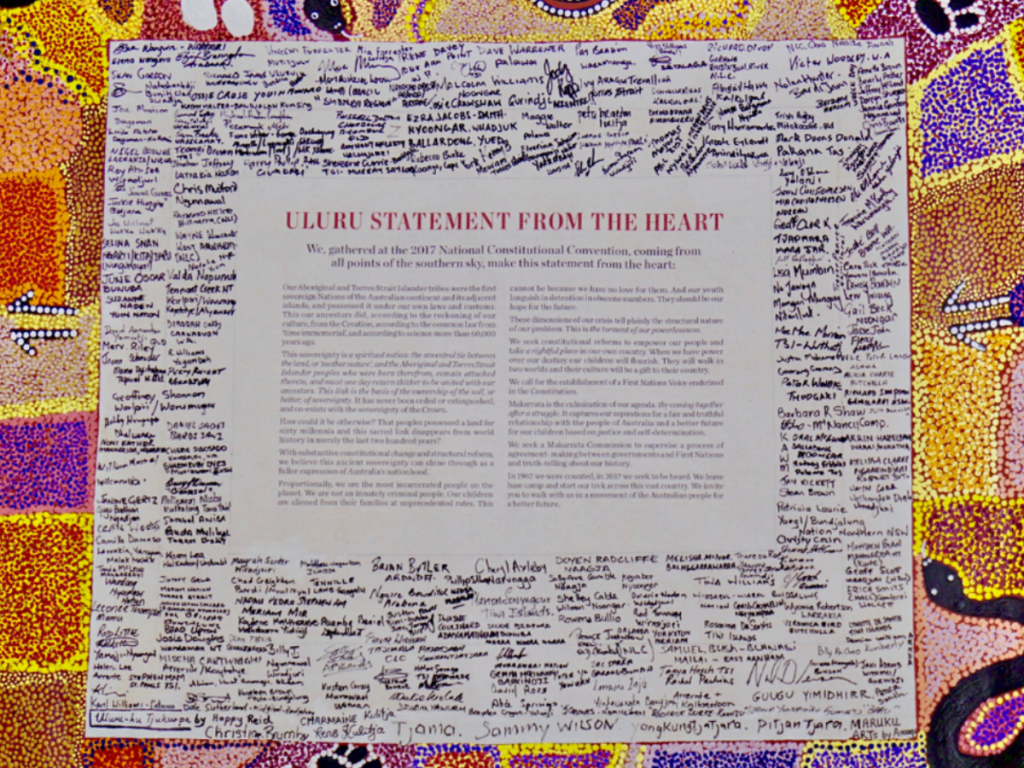
Each Regional Dialogue then chose Elders to send to a nation-wide Indigenous Constitutional Convention, which was held at Uluru in May 2017. That is the convention that, after three full days of discussion, produced the Statement from the Heart. This Statement has been the result of a long, careful process of consultation and discussion, under indigenous leadership, with bi-partisan political support.

It is this Statement which is asking for two things from the Australian people: for recognition of the First Peoples in the Australian Constitution, with a permanent Voice to Parliament, and for a Makarrata Commission to oversee the process of making treaties with Elders from the various First Nations of this continent. And that first request is what the referendum, to take place later this year, will be asking us to decide.

What I am talking about today, some will say is political. That is true, in the sense that it is about how we shape the life of our society—which is what politics is about. Governments make laws and oversee processes that ensure the way we live together in society is respectful and considerate of one another. That is the business of politics.

But what I am talking about is not partisan political, in the sense that there are people of all political parties who are supporting the YES case in a coming referendum. Whilst Labor and Green politicians, and many independent politicians, have spoken in support of a YES vote in the referendum, there are many people in the Liberal Party who are also supportive of a YES vote. Whilst the Federal leadership of the Liberal Party is indicating doubts about the proposal, most state Liberal parties are supportive, and a group called Liberals for YES are speaking out in support.

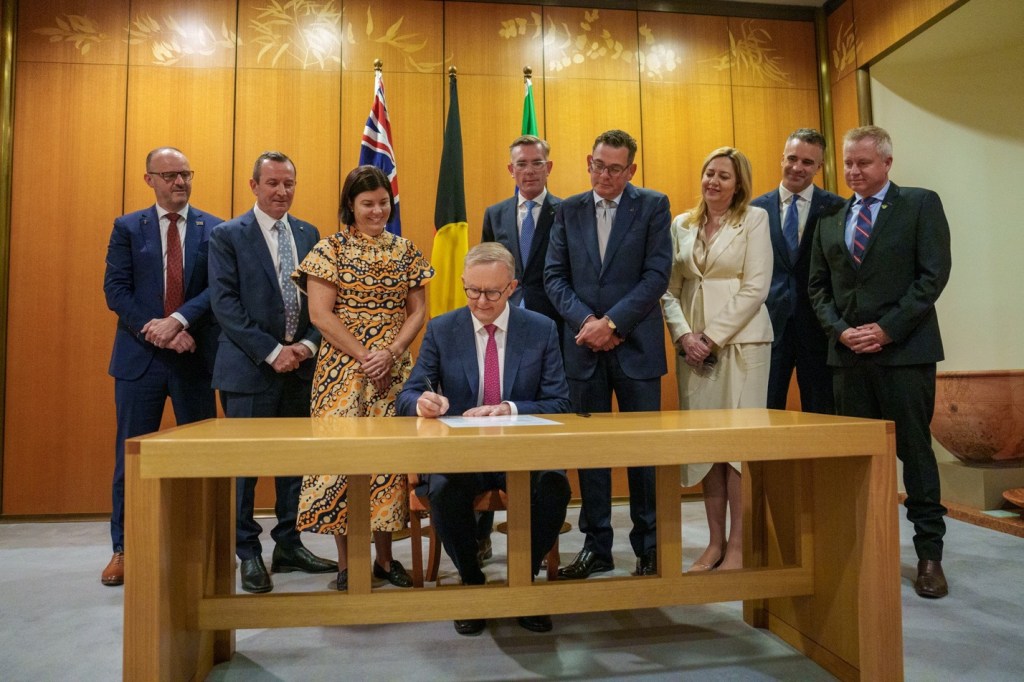
Indeed, in February this year, every First Minister in Australia—territory, state, and federal—agreed to support the Voice to Parliament. This was a highly significant bi-partisan step by a group of informed leaders who recognised the importance of taking this step.

Before that, in the middle of last year, a number of Australian religious leaders declared their support of the Uluru Statement from the Heart, which includes the request for just such a Voice to Parliament. There are Anglicans, Catholics, Buddhists, Jews, Muslims, Sikh, Quakers, Baptists, and others who support this, along with the Uniting Church. Our national President, the Rev. Sharon Hollis, was one of the signatories of this document.

In May this year, representatives of the peak bodies of many sporting organisations joined together to advocate a YES vote in the voting referendum: the AFL, the NRL, Rugby Union, Cricket Australia, Baseball Australia, Deaf Sport Australia, Football Australia, Basketball, Taekwondo, Golf, and more. There were 20 sporting organisation in all which signed a common statement of support.

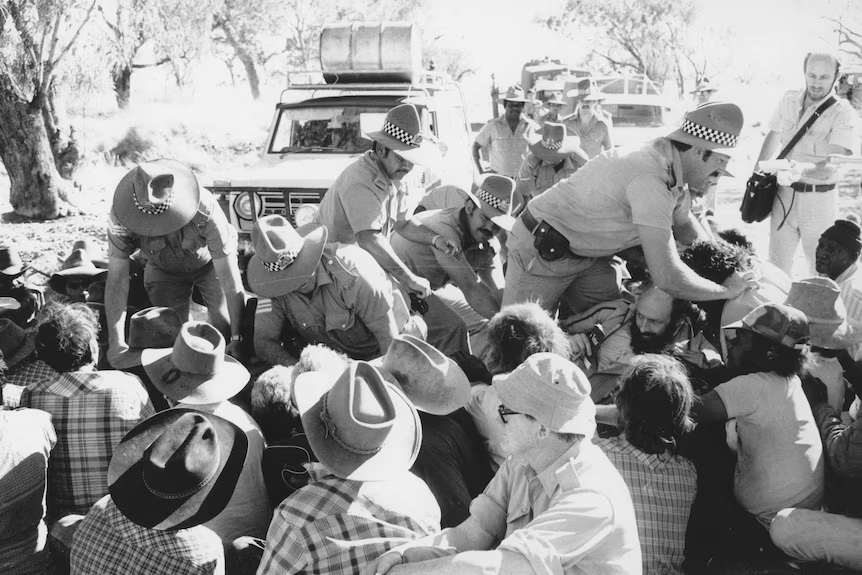
For people in the Uniting Church, voting YES in the proposed referendum is a clear way to express our long-held and enduring commitment to our covenant relationship with First Peoples. Voting in this way to support the referendum would be one more step along a pathway that has been clear for many decades, that the UCA stands in solidarity with First Peoples in Australia. In 1980, at Noonkanbah in Western Australia, Uniting Church members stood in solidarity with the traditional owners, the Yungngora people, against the mining of their land. (You can see the Rev. Robert Stringer in the bottom right of the photo—he is bald, with a beard.)

Noonkanbah land rights protest in 1980

The Uniting Aboriginal and Islander Christian Congress was established in 1985, and a Covenant between the UAICC and the UCA was formalised in 1994. This Covenant recognises that working for reconciliation amongst people is central to the Gospel. In 2009, the Preamble to the UCA Constitution was revised to recognise the difficult history of relationships between the First Peoples and the later arrivals, as Second Peoples. Our present relationship is one which seeks to ensure that we commit to the destiny together which we share as Australians.

Many of the various ethnic and cultural groups in our society have also spoken in support of the proposal that will be put to us in the referendum, including a number of Indian and Chinese community organisations, along with Sri Lankan, Italian, Irish, Iranian, Greek, Vietnamese, Filipino, and Pacific Islander community groups – to name just a few.

Leaders of Australian Muslim communities have expressed their strong support of the YES vote in the coming referendum. Indigenous Australian peoples have a long relationship with Muslims, dating back centuries before British colonisation, as Yolngu and other Indigenous peoples in the north of Australia traded and engaged in cultural exchanges with Makassans from Indonesia.

Kate Carnell, the national convenor of Liberals for YES, has said that “An Indigenous voice would be a standing body aimed at practical outcomes, with its existence mandated by the Australian people because they support recognition of Aboriginal and Torres Strait Islander as the original inhabitants of our continent. So it is fair, it is practical, it is workable and constitutionally safe.”

Many leaders in the Uniting Church have spoken in support of a YES vote. Supporting a vote for an Indigenous Voice to Parliament is yet another step along the pathway that the Uniting Church has been walking for over 40 years, of sharing a destiny together. It’s an expression of our central commitment to justice for First Peoples. It is an act that sits at the very heart of the Gospel.

So my advocacy, today, is for a YES vote in the referendum: not as a partisan political vote, but as an expression of the Gospel to which we are all committed. You would each have received the resource that the Assembly has prepared explaining why the Uniting Church is advocating for a YES vote. That provides helpful commentary on this important decision.

Alongside that, let us consider the words from scripture that we have heard today. Moses tells the people that what God requires of us is not “too hard”; for “that word is very near to you; it is in your mouth and in your heart for you to observe” (Deut 30:14).

Jesus tells us to “take my yoke upon you, and learn from me; for I am gentle and humble in heart, and you will find rest for your souls” (Matt 11:29). The word is near; the Voice calls to us. Today, the yoke that we are to take upon ourselves as a nation, is to ensure that First Peoples do have a Voice in our national life. That yoke, I am confident, will be constructive and productive.

The Anglican priest and hymn writer Elizabeth Smith, whose hymns we often sing (as we shall, to close this service today), has written a prayer about the forthcoming referendum. She has shared I online, offering it so that others could pray it too. So let us pray.

“God bless Linda Burney, Minister for Indigenous Australians, and all the Aboriginal and Torres Strait Islander leaders who are working towards a “Yes” vote in the coming Referendum.

Give them the words and the wisdom to make the case warmly. Give them perseverance in the face of hostility or indifference. Give them courage and resilience when they are met with casual, structural, or overt racism.

Give us the grace, in our own communities, to be the allies they need, by our listening, our learning, and our encouragement.

Confirm them in their vocation to lead all Australians towards a future where First Nations people are heard, seen, honoured and treasured across this land.

We pray through the Spirit who calls us to new ways of living together with justice and truth. Amen.”

Giving a Voice to First Peoples: the precedent within the Uniting Church

Note: this blog post contains images of Indigenous people who have passed away.

Giving a Voice to Aboriginal and Torres Strait Islander peoples is in the news. Recently we learnt that a referendum about this matter will be held (the talk is that mid-October is the preferred time). The Uniting Church Assembly has already indicated its strong support for a YES vote in this referendum, and our Presbytery decided this earlier this year at the March meeting at Melba.

But did you know that, within the Uniting Church, we have been giving a Voice to Aboriginal and Torres Strait Islander peoples for almost four decades? That Aboriginal and Torres Strait Islander peoples are guaranteed places as members of Synods and Assemblies whenever they meet? That an Aboriginal or Islander person will often sit beside the Moderator of a Synod or President of the Assembly, and serve as co-chair of that meeting? That Aboriginal and Islander voices have a permanent pathway to speak to the whole church, through the Uniting Aboriginal and Islander Christian Conference (Congress)?

In 1988—the year that Australia celebrated the Bicentenary of white settlement—the Assembly published a Statement to the Nation, which focussed on Aboriginal people, who had lived on and cared for the country we know as Australia for many thousands of years. You can read the full text of that 1988 Statement at https://www.assembly.uca.org.au/resources/introduction/item/133-statement-to-the-nation-australian-bicentennial-year-1988

That Statement noted that “the movements of history have brought together here in one nation … people of many cultures and races, both  Aboriginal and migrant”, and affirmed that within the Uniting Church, “Aboriginal and newer Australians have determined to stand together”. The Church was committing to a co-operative partnership with First Peoples—in 1988.

Before that Statement, in 1985, the Uniting Church had formed the Uniting Aboriginal and Islander Christian Conference (UAICC). The logo of the UAICC is depicted here. The Congress (as it is usually known) gave Aboriginal and Islander people a voice within the structures of the church—they are consulted about decisions and have a guaranteed number of members in the Synods and Assembly meetings of the church. The vision of the UAICC, in their own words, is:

  • We determine our own goals and objectives and decide policies and priorities;
  • We run our own programs and institutions;
  • We aim, in collaboration with other people, to bring to an end the injustices which hold Aboriginal and Islander people at the fringes of Australian society and to help Aboriginal and Islander people achieve spiritual, economic, social and cultural independence.

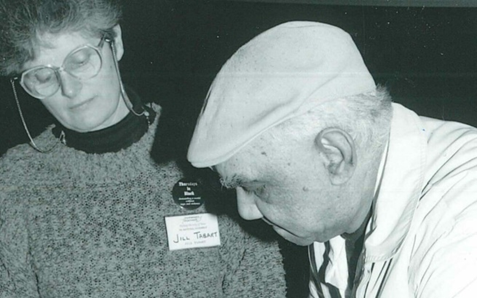
A decade later, in 1994, the President of the Uniting Church, Dr Jill Tabart, signed a Covenant Agreement with the Chairperson of the UAICC, Pastor Bill Hollingworth (pictured above). The Covenant expressed “our desire to work in solidarity … for the advancement of God’s kingdom of justice and righteousness in this land”. Since then, the church has really worked hard at putting this into practice.

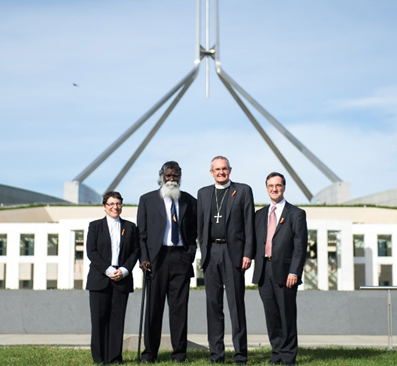
Then, in 2014, people from all over Australia travelled to Canberra to hold a prayer vigil for Our Destiny Together in front of Parliament House. Rev. Rronang Garrawurra, Chairperson of the Uniting Aboriginal and Islander Christian Congress (UAICC) and Assembly President, Rev. Prof. Andrew Dutney, led a service of worship. From remote communities in places like Arnhem Land and the Anangu Pitjantjatjara Yankunytjatjara (APY) Lands and from the centres of our big cities, people gathered to pray, pass the peace, and share in Holy Communion.

From left: the Rev. Elenie Poulus (Social Justice Director),
the Rev. Rronang Garrawurra, Chairperson of the Uniting Aboriginal and Islander Christian Congress (UAICC), the Rev. Prof. Andrew Dutney, President of the Assembly, and the Rev. Terence Corkin, General Secretary of the Assembly,
at Parliament House in 2014 for the A Destiny Together pilgrimage.

“It is enough for the disciple to be like the teacher”, Jesus says as he instructs his disciples about their mission (Matt 10:25). These developments within the Uniting Church show how we are striving to be like Jesus, sharing together with all people—especially the First Peoples of this continent (Aboriginal and Torres Strait Islander people).

And we know that it is possible—and, indeed, that it brings good value—for First Peoples to have a place in the councils of the church, discussing and deciding policy, and for their Voice, through the Congress, to be heard and responded to in appropriate ways.

That’s another good reason why we need to Vote YES in the referendum, surely. We need to ensure that, as well as recognising First Peoples in the Australian Constitution, we have a permanent Voice to Parliament in our ongoing structures.

Paul and the Law, sin and the self (Rom 7; Pentecost 6A)

“I delight in the law of God in my inmost self, but I see in my members another law at war with the law of my mind” (Rom 7:23). So Paul writes, in the section of the letter written “to all God’s beloved in Rome, who are called to be saints” which is offered by the lectionary for this coming Sunday (Rom 7:15–25a).

The lectionary wants us to end this reading with the words of gratitude, “thanks be to God through Jesus Christ our Lord!” (15:25a). But in my analysis, Paul’s argument reaches its conclusion with the stalemate of verse 23—a clash between “the law of God” and “the law of my mind”. “Wretched man that I am”, he explodes in exasperation (7:24), after a lengthy and complex consideration of the issues which has led him to this damning conclusion.

What Paul is writing about in this complex section (7:1–25) is about the battle of wills, as God’s will comes into conflict with human will. The argument throughout this chapter—as, indeed, the argument throughout much of Romans—is presented as a dialectic, in which one point of view is put, to be met by an opposite point of view; followed by a rebuttal by the first voice, and a further oppositional claim by the second voice.

The thesis for discussion has been set out in 7:1–6, using the marriage relationship between husband and wife and “another man” (7:1–3) as the basis for an analogy (“in the same way”, 7:4) for the relationship between humans, “living in the flesh” (7:5) whilst also having “the new life of the Spirit” (7:6).

The use of analogy, already developed in earlier Greek rhetoric and used extensively by philosophers and political orators, does reflect rabbinic practice. The deployment of analogy, gezerah shewah, was one of Hillel’s principles of interpretation, indicating the influence of hellenistic thought and ideas on Jewish teachers and writers. So Paul here may well be operating as a rabbi, in the way that he sets out and developed his case.

But the fundamental dualism which underlies this whole chapter—the law of sin and death, the holy law of God—is thoroughly Greek in origin and character. Plato’s view of the soul trapped in the prison of the material world, which he set out in his Allegory of the Cave and which marks so many of his Dialogues: a clear line of demarcation between the spirit and the flesh, the body and the mind, the idea and the particular object.

So Paul, trained as a Pharisee, being “far more zealous for the traditions of my ancestors” (Gal 1:14), brings into the discussion a “delight in the law of God in my inmost self” (Rom 7:22). He affirms that he upholds the Torah (Rom 3:31), alluding to various commands in The Ten Words which he insists are worth obeying (2:17–22), and affirming that, in its essential character, “the law is holy, and the commandment is holy and just and good” (7:12).

Yet his calling to be “apostle to the Gentiles” (Rom 11:23; Gal 2:8) led to his experience of eating at table with Jews and Gentiles together, in breach of kosher food laws (Gal 2:11–13)—an issue that is clearly in view decades later, as Luke writes his account of the early years of the Jesus movement, siding with Paul in the view that God has set aside the requirement for separate foods and separate tables (Acts 10:1–11:18; 15:19–20, 28–29).

This, in turn, leads Paul to his missionary goal of bridging the gap between Jews and Gentiles in practical ways (Rom 15:25–27), undergirded by the message that he preaches, affirming that salvation is offered “to everyone who has faith, to the Jew first and also to the Greek” (Rom 1:16; see also 2:10; 10:12; Gal 3:28; and the post-Pauline development in Eph 2:11–22). He is driven by the scriptural claim that “God shows no partiality” (Rom 2:11; Deut 16:19–20; 2 Chron 19:7; Sir 35:15–16).
So Paul brings a firm commitment of this universal availability of salvation into this discussion in Rom 7:1–25. The argument that he has set out in the thesis of 5:1, “since we are justified by faith, we have peace with God through our Lord Jesus Christ, through whom we obtained access to this grace in which we stand”, is argued throughout the ensuing verses, and given a ringing affirmation at the end in 6:23, that all humanity is able to know and access “the free gift of God [which is] eternal life in Christ Jesus our Lord” (6:23).

This sounds, to us today, like a formal debate: three speakers, alternating between the Government for the proposition, the Opposition against the proposition, and then short concluding remarks, before the adjudicator declares a result and announces a winner. In the ancient world, however, Paul is writing in the style of a diatribe—a form that was developed in Ancient Greece and which was widely practised by Greek rhetoricians, philosophers, and teachers during the Hellenistic period.

See my analysis of the diatribe style in Rom 4 at

In the diatribe that Paul develops in Rom 7, he needs to address what he now sees as the inadequacy of Torah, given his affirmation that “God shows no partiality” (2:11) and his commitment to Jews and Gentiles eating together, without scruples regarding the food being shared. This deficiency in the law runs throughout the argument of Romans; it is impossible to keep the law (2:17–3:20).

Since his calling to work amongst the Gentiles, Paul has come to see that the law brings wrath (4:15) and increases sin (5:20), and indeed he maintains that the law “brought death” (7:9). As a consequence, righteousness must be gifted by God “apart from law”(3:21).

Paul, as we have seen, uses the scriptural example of Abraham, who “believed God, and it was reckoned to him as righteousness” (4:3), to argue that “the promise may rest on grace and be guaranteed to all his descendants, not only to the adherents of the law but also to those who share the faith of Abraham” (4:16). See
And so, he declares that “you have died to the law through the body of Christ, so that you may belong to another, to him who has been raised from the dead” (7:4), and thus “we are discharged from the law” (7:6). Paul then demonstrates this in what immediately follows. The law is not sin in and of itself; and yet, “if it had not been for the law, I would not have known sin” (7:6). This is seen, first, through the educational function of the law, which teaches for example, about covetousness (7:7–8a).

Then Paul notes that, paradoxically, the essential nature of the law reveals and activates sin (7:8b—10), so that “the very commandment which promised life proved to be death to me”, before he intensifies this with the claim that “sin, finding opportunity in the commandment, deceived me and by it killed me” (7:11).

He concludes this section with affirmation of the law as “holy, just, and good” (7:12), before clarifying that it was not the Law which brought death to him, but rather “it was sin … working death in me through what is good … through the commandment” (7:13). Paul has worked hard to differentiate sin from the Law; the one is evil, the other is good.

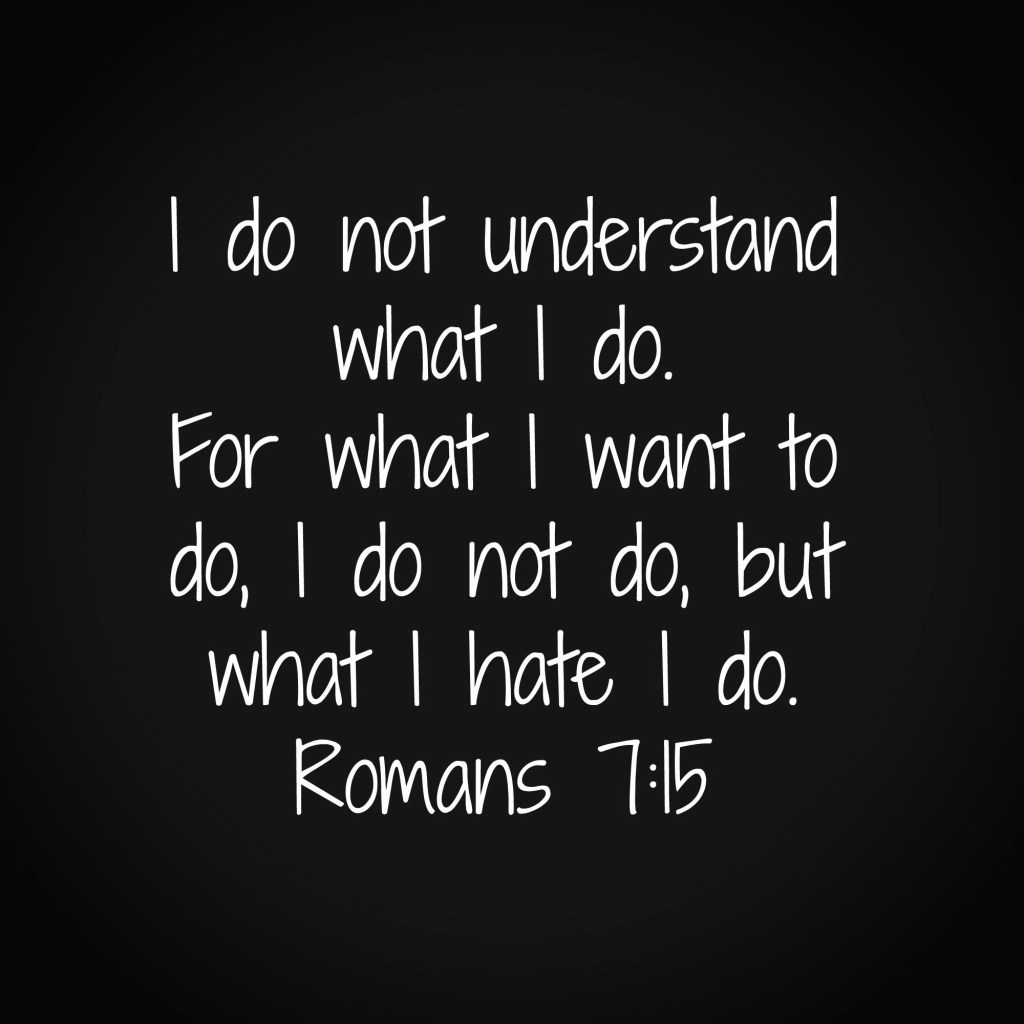
And yet, as he continues his diatribal discussion, more problems emerge (of course, since this is the nature of a diatribe!). Here is the dilemma: “we know that the law is spiritual; but I am of the flesh, sold into slavery under sin” (7:14). What follows is a foray into the murky mind of Paul, where, as he says, “I do not do what I want, but I do the very thing I hate” (7:15)—although he immediately attempts to excuse himself by stating that “it is no longer I that do it, but sin that dwells within me” (7:17).

That sits uncomfortably alongside Paul’s claim to the Galatians, that “it is no longer I who live, but it is Christ who lives in me”, and thus, Paul now “lives to God” (Gal 2:19–20). In writing to the Romans, Paul claims that “nothing good dwells within me, that is, in my flesh” (7:18), for it is “sin that dwells within me” (7:17, 20). The contradiction is confusing. What is the essential force that “lives within” Paul; it is Christ, as in Gal 2, or sin, as in Rom 7?

The confusion caused by “sin that dwells within me” (7:20) whilst still claiming that “I delight in the law of God in my inmost self” (7:22), drives Paul deeper into the hellenistic dualism, seeing “in my members another law at war with the law of my mind, making me captive to the law of sin that dwells in my members” (7:23). No wonder he throws his hands up in despair, exclaiming, “wretched man that I am! who will rescue me from this body of death?” (7:24).

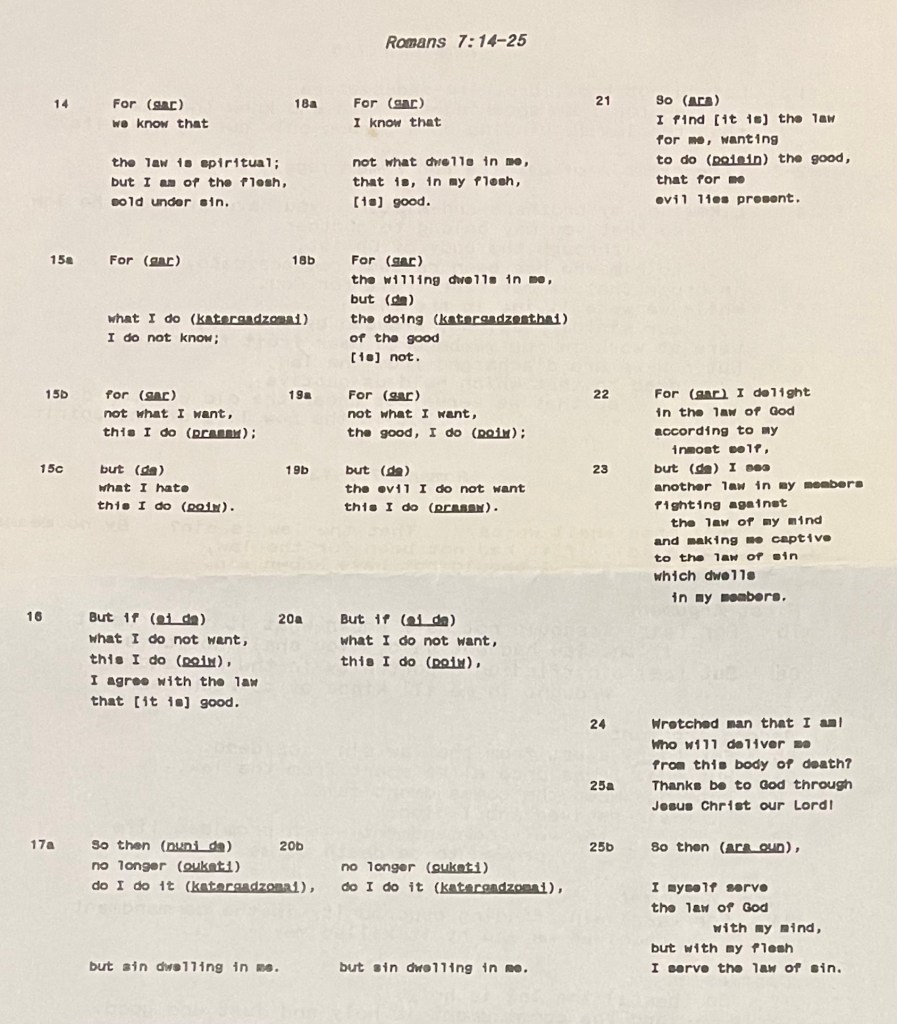
The argument runs a parallel course three times, as my schematic structuring (below) demonstrates. For each proposition that is put (introduced often by the Greek particle gar, “for”), a counter-proposition is offered (introduced by the Greek particle de, “but”).

Modern psychological insights have been used to dig deeper into what Paul writes in Romans 7. Paul appears to be fixated on his own self, using the Greek word egō many times (7:9, 10, 14, 17, 18, 20, 21, 24, and 25). And the language of “sin” and “death” which runs through this chapter exacerbates the tendency to adopt this approach. Declaring that these malicious forces are at work within his inmost being appears to present Paul as a figure consumed with internal contradictions and unresolved tensions. In short, he is a prime candidate for psychological investigation, if not psychiatric intervention!

Who is the person, the egō, who is referenced in these verses? Some interpreters consider that Paul here is talking about his “old self”—the person he was before he encountered the risen Jesus and was commissioned for the task he now undertakes, as “apostle to the Gentiles”. This chapter, reflecting Paul the pious and intense Jew, living under the Law, desperately seeking to obey it in every detail, is thus contrasted with the following chapter, portraying Paul the apostle, fervent and passionate for the mission he is undertaking, freed from the Law and living in the liberty of divine grace.

That simplistic analysis, however, owes more to the 19th century Pietism that was driving interpreters of that time, who considered the Christian life inevitably involved a fierce inner struggle with sin which fermented and eventually erupted into an existential crisis that would, hopefully, ultimately result in a decision to live a new, Christ-centered life. We can see how that dynamic can be extracted from Paul’s agonising words in Rom 7.

A second way of dealing with this chapter, by contrast, has been to claim that the struggle about which Paul here writes reflects precisely the struggle he was enduring after that dramatic encounter with Christ.

The commission that Paul received in that encounter is reported in graphic terms, many decades later, by Luke, who makes the moment into a grand call–and–commissioning scene (Acts 9:3–8; 22:6–11; 26:12–18). Of course, Luke was not present for this event, so he shaped in along the lines of classic call-and-commissioning narratives that existed in earlier Jewish writings. (I have explored this in detail in my commentary on Acts in the Eerdman’s Commentary on the Bible, 2003). In Paul’s own writings, by contrast, this mentioned only briefly, in passing (1 Cor 9:1 and Gal 1:1, 11–12).

Whatever took place in that encounter, it is clear that, as a believer, Paul was not exempt from the ongoing struggle between the desire to do what is pleasing to oneself, but is sinful (Rom 7), on the one hand; and on the other hand, the delight of living a life redeemed by grace (Rom 8). So the passage offered by this week’s lectionary (7:14–25a) is offered as a counterpoint to that which we have on the following Sunday (8:1–11).

This has been the line of interpretation advocated, to various degrees, by Augustine, Aquinas, Luther, and Calvin—but it has fallen into disfavour with contemporary interpreters, who see this as too simplistic and as presenting an unresolved and unintegrated egō. Surely Paul was not caught in that immature state?

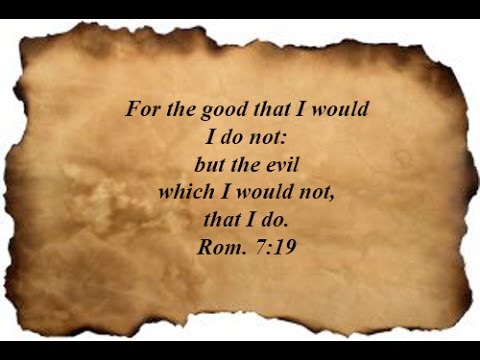
So a third line of interpretation has been that Paul here is setting forth the general, universal condition of the human being. The egō is Paul’s way to talk about “all of us”, for we are all still wrestling with that key characteristic of the human condition: we all, each one of us, “do not do the good [we] want, but the evil [we] do not want is what [we] do” (7:19).

This interpretation was proposed by Kümmel and has been followed by Bultmann, Käsemann, and Dunn, amongst others. Dunn argues that the struggle of Rom 7 provides the key to the argument developed by Paul throughout Rom 5—8 as a whole.

Beyond that, Kristen Stendhal has mounted a persuasive case, that the egō of Rom 7 should not be connected with Paul’s inner being, but rather with the broader issue to which Paul is addressing himself throughout the whole letter of Romans—what place does the Law have in the new community of faith, where both Jews and Gentiles are sharing together in fellowship? How might the demands of the Law function within such a context?

It’s a proposal that I find attractive and helpful, for indeed that broader question is what Paul comes back to in 8:1–8, and then in 9:30–33, 10:1–4, and 11:25–32; and finally in 13:8–10. The egō of Rom 7 is not the last word on this matter; Paul has “yet more light and truth to break forth” on this complex matter!

*****

You can look ahead to what I have to say about some of those passages, at

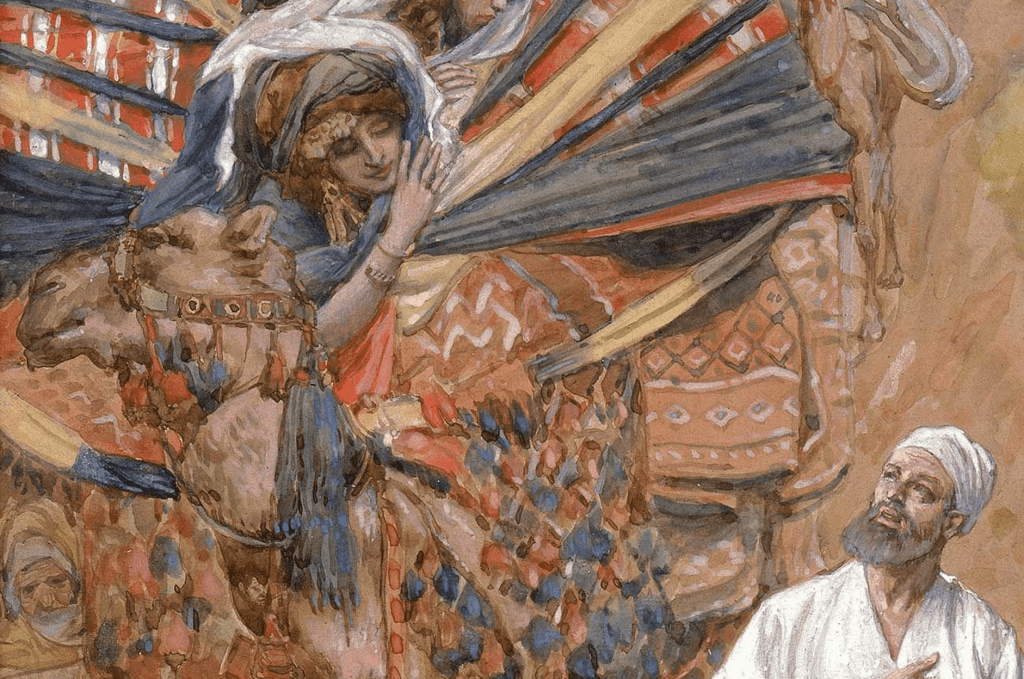
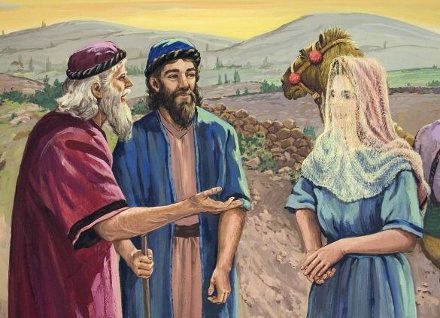
A ring on her nose, and bracelets on her arms (Gen 24; Pentecost 6A)

For this coming Sunday, the lectionary provides us with part of a larger story from the section of Genesis dealing with Abraham (Gen 24:34–38, 42–49, 58–67). As Abraham’s son Isaac comes to age, Abraham knows that there is a need to find him a wife.

Abraham now appears not to be living with his wife, Sarah—he is in Beersheba, with his servants (22:19) whilst Sarah remains at Hebron, where she dies (23:1–2). Was this because of the tension that grew between the patriarch and the matriarch after he had almost sacrificed his son? This is the story we read last week; see

Tensions were already evident earlier in the story, when Sarah had banished Hagar and Ishmael into the wilderness of Beersheba (21:10–14). To send them on their way, Abraham made sure that they had bread and water to sustain them in the wilderness (21:14). We do not see Abraham and Sarah together again in the story. In discussing this with my wife, Elizabeth Raine, last week, she proposed that Sarah was so upset with Abraham’s actions on Mount Mariah, threatening the life of their son Isaac (Gen 22:1–14), that she left him behind at Beersheba and moved to Hebron, some 42km to the north.

It is only on her death that Abraham travels to where Sarah had been living, in Hebron. Abraham sought to purchase a field there to serve as the burial place for Sarah. Ephron the Hittite, moved with compassion, wanted to gift him a field with a cave where Sarah’s body could be laid (23:7–12), but Abraham insisted and paid Ephron the value of the field, 400 shekels of silver (23:12–16). So he was doing the honourable thing for his wife after her death, even though there seems to have been a relationship breakdown prior to this.

Despite the fact that he willingly enters into these dealings with the Hittites in Beersheba, and the fact that he had earlier entered into a covenant with Abimelech, King of Gerar, a Philistine (21:22–34), Abraham is now concerned that Isaac not marry locally, to a Canaanite, but that a wife be found for him in “my country” and amongst “my people”, as he instructs his servant (24:4–5).

We may perhaps know of people who share that desire that their children not marry “foreigners”, but find a partner from amongst their own. So it is an ancient story with very modern resonances. Marlene Andrews, Church leader at Ngukurr, shares her perspective on this passage in the current issue of With Love to the World, a daily Bible study resource.

(Ngukurr is a town of about 1,000 people, located about 330 kilometres south-east of Katherine on the Roper Highway. Ngukurr is one of the largest Aboriginal communities in the Roper Gulf region.)

She says: “This story is about Abraham, his son. Abraham wanted the best for his son in marriage. Abraham knew that God was with him at the time of his decision-making. Abraham was faithful to God’s calling. Abraham knew how to go about finding a good wife for his son, Isaac. It was important that his son’s wife came from Abraham’s country. That is where Abraham came from, and where he wanted his son to connect to. Abraham knew the culture and the background of his people. Abraham knew in finding a wife for his son, she had to come from his homeland.”

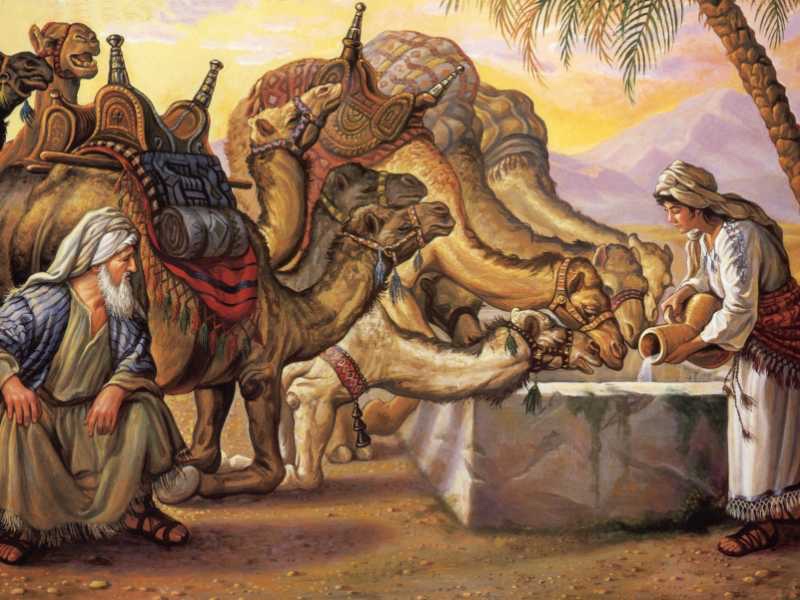
The marriage is arranged, at a distance, by Abraham. Isaac plays no part in the whole saga that is recounted in detail in Genesis 24. Abraham sends his servant all the way north to a well near the city of Nahor, which was back in Aramea, the homeland of Abraham. This was in the area we know as the Fertile Crescent, in between the two rivers of the Tigris and the Euphrates (24:10). The well near Nahor becomes the location for the match-making that Abraham undertakes, through the servant whom he sent there (24:10–14).

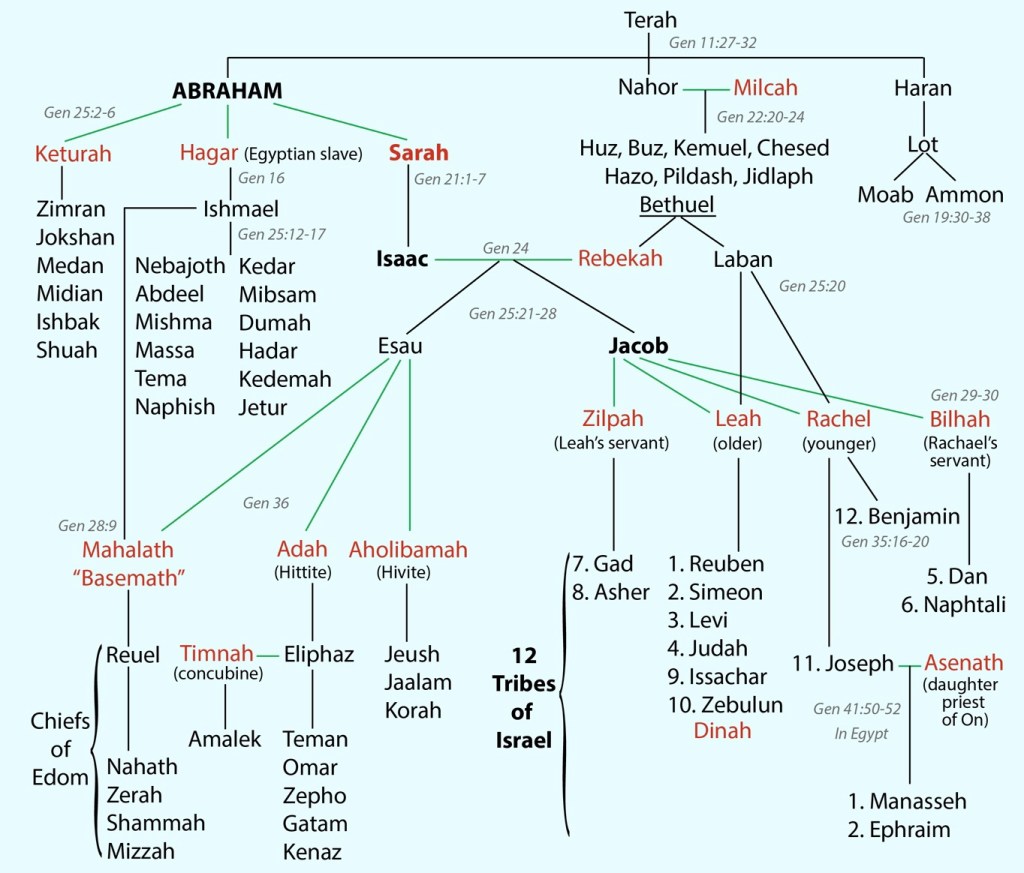
Isaac will, much later in time, notice Rebekah, the daughter of Bethuel, “son of Milcah, the wife of Nahor, Abraham’s brother” (24:15), but this is not until the story has almost come to its close (24:62–67). It is understandable that Isaac was agreeable to the arrangement that his father had made, for “the girl was very fair to look upon, a virgin, whom no man had known” (24:16).

This last comment is important, in the light of the drastic provision in the Torah that, if evidence of the young woman’s virginity is lacking, “they shall bring the young woman out to the entrance of her father’s house and the men of her town shall stone her to death, because she committed a disgraceful act in Israel by prostituting herself in her father’s house” (Deut 22:21).

Reckoning that the woman was able to be considered for marriage (we have to trust the insight of the narrator at this point), the servant was prepared for what he hoped would transpire; he had with him “a gold nose-ring weighing a half shekel, and two bracelets for her arms weighing ten gold shekels” (24:22).

After Rebekah has brought her brother Laban into the story (24:28–29), and he noticed the nose-ring and bracelets (24:30), he offered hospitality to the servant, which was duly accepted (24:31–33). The purpose of the nose-ring and bracelets is then revealed—although surely those who heard this story in antiquity would be well aware of their significance. Brokering a marriage is the clear intention (24:34–41).

The woman had had a ring placed in her nose, and bracelets put around her arms (24:47); the action presumably took place at 24:22–27, although it was not explicitly narrated there. The ring and bracelets were obviously the custom for women in the time when the story was initially told, and they held their place within the story as it was passed down from generation to generation, even if customs may have changed.

Marriage customs do vary across time and place, from one culture to another. What held in the days of the patriarchs (or, at least, in the days in ancient Israel when people told stories about how they imagined things were in the “olden days” of the patriarchs) does not necessarily hold good for our time, today. A story of a man who married a woman so that, after a prescribed period of time (seven years!) he could marry her sister, as was the case with Jacob, Rachel, and Leah (Gen 29–30), for instance, would not hold today! And whilst rings remain the most common sign of a marriage, they are placed around fingers, and not into noses, in most modern cultures!

So Isaac, eventually, enters the story (some 47 verses after Rebekah was first introduced!). He notices, first, the camels which had come all the way from Nahor to the Negeb (24:62–63); and then, “Isaac brought her into his mother Sarah’s tent; he took Rebekah, and she became his wife; and he loved her” (24:67). All is well, that ends well—thanks to the well!

However, even though Isaac had never been to the well at Nahor where the marriage agreement was made, this well was the first of a number of wells where marriages were negotiated and confirmed within the sagas of ancient Israel. Jacob met his wife-to-be, Rachel, beside a well in Canaan, later Samaria (Gen 29:1–3). Moses, when travelling in Midian, “sat down by a well”, where, in due time, the local priest Jethro gave one of his daughters, Zipporah, to Moses in marriage (Exod 2:15–21).

The well in Canaan, known as Jacob’s well, is much later on the location for another famous encounter, between Jesus of Nazareth and an unnamed woman of Samaria (John 4:4–30)—although no marriage resulted from this encounter!

The two marriages, of the son and grandson of Abraham, which resulted from encounters beside the two wells, are important, for they demonstrate that the promise made to Abraham, of many descendants who will be blessed by God (Gen 12:2–3), will be guaranteed. Sure enough, Isaac and Rebekah produce twin boys, Esau and Jacob; and Jacob, in turn, is the father of twelve sons, whose names provide the identification of the twelve tribes of Israel. So these wells are integral to the divine promise!

Isaac was the son of Abraham; Rebekah was the granddaughter of Nahor, the brother of Abraham; so they were cousins. Tracy M. Lemos, Associate Professor of Hebrew Bible and ancient Near Eastern language and literature in the Faculty of Theology of Huron University College at Western University in London, Ontario, writes in Bible Odyssey that “Biblical texts make clear that marriages between cousins were strongly preferred”. She continues, “different Israelite communities and authors had diverse viewpoints on marriage and that Israelite viewpoints evolved over time”. See

https://www.bibleodyssey.org/passages/related-articles/weddings-and-marriage-traditions-in-ancient-israel/

The conclusion of Prof. Lemos, that “many biblical customs would be unfamiliar or even objectionable to many people living in western societies today”, certainly stands with regard to the passage we are offered for this coming Sunday. The detailed story that is told in Gen 24 is a fascinating insight into another world, another time, another culture. Yet it is part of our shared heritage, as Jews and Christians, in the modern era. It is good to hear the story, once again, as the lectionary offers it to us this Sunday.

She laughed. But what else do we know about Sarah? (Gen 11–23, for Pentecost 6A)

We know that “she laughed”. And that she produced a miracle baby at the ripe old age of 90 (or so it is said). But what else do we know about Sarah? Before she disappears from view in the Hebrew Scripture passages that the lectionary is offering us, let’s spend some time thinking about Sarah.

During this season after Pentecost, the lectionary has been offering us stories selected from the ancestral sagas of Israel, tracing the way that the promise to Abraham—“I will make of you a great nation” (Gen 12:1), “look toward heaven and count the stars … so shall your descendants be” (Gen 15:5)—was able to come to fruition.

Over successive Sundays, we have read of the call to Abram (ch.12), the promise of a child to Sarah (ch.18), the banishment of Abraham’s son through his slave girl Hagar (ch.21), the near-sacrifice of the preferred son, Isaac (ch.22), and the manoeuvring by Abraham to ensure a wife for Isaac who is of “my country and my kindred” (ch.24).

In future Sundays, we move on to stories about the twin boys born to Isaac and his wife Rebekah (ch.25), Jacob’s dream at the Jabbok (ch.28), Jacob and his marriages to, first Leah, and then Rachel (ch.29), and then the story of Jacob at Penuel, which explains how he had his name changed to Israel (ch.32). The story then focusses on one of Jacob’s twelve sons, Joseph, who is taken to Egypt (ch.37) and later saves his brothers during a famine (ch.45).

These stories—have you noticed?—follow the male line of descent, and place the male at the centre of the story. It is Abram’s call, Abraham’s near-sacrifice of Isaac, Isaac who needs a wife, Jacob who has a dream, Jacob who obtains two wives, Jacob who wrestled with God, and Joseph who becomes the saviour of his brothers.

What role is played by the women in the story? We do know the names of the matriarchs—Sarah, Rebekah, Leah and Rachel—and they do figure in the stories; but the focus is quite patriarchal, as would befit the nature of ancient society.

Sarah, whom we meet initially as Sarai (11:29), is essential to the storyline at various points; and she has come to be venerated alongside Abraham in later traditions. Paul refers to her as the means by which God’s promise is fulfilled (Rom 9:9) and he even offers her and Hagar together as providing an allegory for “the present Jerusalem, in slavery … and the Jerusalem above [who is] free, our mother” (Gal 4:21–26).

In the letter to the Hebrews, Sarah is named (in contrast to many other women) and takes her place alongside Abraham as part of “so great a cloud of witnesses” (Heb 12:1)—although all that is said of her is the stark declaration, “Sarah herself was barren” (Heb 11:11). The miracle, it would seem, was that “from one person, and this one as good as dead, descendants were born” (Heb 11:12)—that is to say, it was the transformation of the “as good as dead Abraham” that is being celebrated here.

In 1 Peter, Sarah is put forward as one of the “holy women who hoped in God”—although, in this instance, what is said of her again mirrors the patriarchal dominance of society; “Sarah obeyed Abraham and called him lord. You have become her daughters as long as you do what is good and never let fears alarm you” (1 Pet 3:5–6).

It takes an exilic prophet, whose words were appended to the earlier scroll of Isaiah, to give Sarah (almost) equal billing with Abraham: “Listen to me, you that pursue righteousness, you that seek the Lord. Look to the rock from which you were hewn, and to the quarry from which you were dug. Look to Abraham your father and to Sarah who bore you; for he was but one when I called him, but I blessed him and made him many.” (Isa 51:1–2).

So, what do we know of Sarah from those ancestral narratives which were told by word of mouth, handed down the generations, and ultimately (sometime in the Exile in Babylon) written down in the form we now have them, in the scroll entitled Bereshit, which we know as the book of Genesis?

We meet Sarai (meaning “my princess”) in the list of descendants of Terah, the father of Abraham (Gen 11:29), although (as in the Hebrews reference) it is simply noted that “Sarai was barren; she had no child” (11:30). That’s a serious roadblock in a passage that is listing descendant upon descendant!

In that same passage, we are told that Sarai, daughter-in-law of Terra, accompanied the family when they journeyed from Ur of the Chaldeans to Haran, where they settled (11:31). The journey had been intended to go as far as Canaan; that would not take place until the Lord called Abram to “go from your country and your kindred and your father’s house to the land that I will show you” (12:1). Sarai is there, as well as Lot and his perpetually-unnamed wife, “and all the possessions that they had gathered, and the persons whom they had acquired in Haran” (12:5).

The next story involving Sarai is perplexing and disturbing. Because of a famine, Abram “went down to Egypt to reside there as an alien” (12:10). We know that Sarai accompanies him, because he forewarns her, “I know well that you are a woman beautiful in appearance; and when the Egyptians see you, they will say, ‘This is his wife’; then they will kill me, but they will let you live. Say you are my sister, so that it may go well with me because of you, and that my life may be spared on your account.” (12:11–13).

The story is repeated twice more in Genesis; once when Abraham repeats this ruse in Gerar, before King Abimelech (20:1–7), and again when Isaac tells the same Abimelech that Rebekah is his sister (26:6–11)! It seems that the fruit does not fall far from the tree; Isaac exactly replicates his father’s devious strategy.

In between those two instances of spousal deception in Gen 12 and Gen 20, Sarai has been the cause of plagues falling onto Pharaoh and his house (12:17), settled with her husband “by the oaks of Mamre, which are at Hebron” (13:1, 18), and presumably learnt from Abram about the covenant which the Lord made with him (15:1–21)—although the text is silent about where Sarai was as this revelation came to Abram.

Sarai is front and centre, however, in the next story told, as she offers her Egyptian slave-girl, Hagar, to Abram so that he might reproduce, and fulfil the divine promise (16:1–3). Tension between the servant girl and her mistress resulted, so “Sarai dealt harshly with her, and she [Hagar] ran away from her [Sarai]” (16:6). Eventually, an angel instructed Hagar to “return to your mistress, and submit to her” (16:9), so she did, and in time bore a child to Abram.

In the next story, the circumcision of Abram and “every male among you” (17:1–27), we might wonder what role was played by Sarai. Did she witness the ceremony? Did she and her women assist those who were subjected to this procedure? Certainly, in the midst of the conversation that Abram has with God at this time, both he and his wife are given new names: “no longer shall your name be Abram, but your name shall be Abraham” (17:5), and “as for Sarai your wife, you shall not call her Sarai, but Sarah shall be her name” (17:15).

Abram, whose name describes his status in the story as “exalted ancestor”, will henceforth be known as Abraham, “ancestor of a multitude”, in keeping with the promise of God that “you shall be the ancestor of a multitude of nations” (17:4), while Sarai, “my princess”, will henceforth be known simply as “princess”, without any inflection indicating that she is “owned” by anyone.

So Sarah takes her place at the centre of the story at this point. Her status as princess means that “she shall give rise to nations; kings of peoples shall come from her” (17:16), and the birth of a son, Isaac, is predicted (17:19) and his role in continuing the lineage is confirmed (17:20). That birth is again foreshadowed when three visitors stay with Abraham and Sarah at Mamre (18:10). Sarah’s sceptical laughter (18:12) was already prefigured in the name allocated to her son, Isaac—meaning “he laughs” (17:19).

Before Isaac is born, however, the terrible story of inhospitality and divine vengeance on Sodom and Gomorrah is told in some detail (18:16–19:29), and the origins of the southern neighbours of Israel, the Moabites and Ammonites, is told (19:30–38), as well as the deception of Abraham in Gerar, when he passes the pregnant Sarah off as his sister (20:1–7).

Then comes the birth of Isaac (21:2–3), after which she rejoices, “God has brought laughter for me; everyone who hears will laugh with me” (21:6)—after which Sarah again orders Hagar, and also Ishmael, to depart into the wilderness. Sarah instructs Abraham to “cast out this slave woman with her son” (21:10); “the matter was very distressing to Abraham on account of his son” (21:11).
And so the schism between Abraham and Sarah is opened up; the events of the next incident, when Abraham takes Isaac to a mountain in Mariah, to sacrifice him (22:1–3), appear to seal the split. As I was talking with my wife, Elizabeth Raine, about this difficult story last week, she pointed out to me that we do not see Abraham and Sarah together in the same place after this.

Abraham now appears not to be living with his wife, Sarah—he is in Beersheba, with his servants (22:19) whilst Sarah remains at Hebron, where she dies (23:1–2). Was this because of the tension that grew between the patriarch and the matriarch after he had almost sacrificed his son? This is the story we read last week; see

Tensions were already evident earlier in the story, when Sarah had banished Hagar and Ishmael into the wilderness of Beersheba (21:10–14). To send them on their way, Abraham made sure that they had bread and water to sustain them in the wilderness (21:14). As Elizabeth noted, we do not see Abraham and Sarah together again in the story.

It is only on her death that Abraham travels to where Sarah had been living, in Hebron, some 42km further north. Abraham sought to purchase a field there to serve as the burial place for Sarah. Ephron the Hittite, moved with compassion, wanted to gift him a field with a cave where Sarah’s body could be laid (23:7–12), but Abraham insisted and paid Ephron the value of the field, 400 shekels of silver (23:12–16). He dies at least honour her appropriately at the point of her death.

*****

Writing in My Jewish Learning, Jewish educator Rachael Gelfman Schultz notes that “Genesis contains the greatest concentration of female figures in the Bible (32 named and 46 unnamed women). The fact that Genesis consists of a series of family stories (including several genealogies) accounts for the remarkable concentration of female figures.” Sarah is an important figure in that list of women. Rabbinic tradition lists her among the seven women prophets, the others being Miriam, Deborah, Hannah, Abigail, Huldah, and Esther.

See https://www.myjewishlearning.com/article/sarah-in-the-bible/

Nissan Mindel, writing in Chabad.org, observes that “Sarah was just as great as Abraham. She had all the great qualities that Abraham had. She was wise and kind, and a prophetess. And G‑d told Abraham to do as she says.”

He describes the home that they made in Beersheba, noting that whilst Abraham received visitors, offered them hospitality, and conversed with them (following the pattern shown in Gen 18), “Sarai was busy with the women folk, and long after all visitors were gone, or had retired to sleep, Sarai would sit up in her tent, making dresses and things for the poor and needy.

“When everybody was fast asleep, there was still a candle burning in Sarai’s tent, where she was sitting doing some hand-work, or preparing food for the next day. So G‑d sent a special Cloud of Light to surround her tent. For miles and miles around, the Cloud of Glory could be seen hovering over Sarai’s tent, and everybody said, “’There dwells a woman of worth.’”

See https://www.chabad.org/library/article_cdo/aid/112057/jewish/Abraham-And-Sarah.htm

So there is much to value, and honour, about Sarah, princess, prophet, and matriarch supreme. We would do well not to overlook her, the matriarch of matriarchs, amidst the stories of the patriarchs.

Among egalitarian religious congregations of Jews throughout the world, the most popular addition to the traditional liturgy is the mention of the Matriarchs in birkat avot (the blessing of the ancestors), the opening blessing of the Amidah:

Praised are You, Adonai our God and God of our ancestors, God of Abraham, Isaac, and Jacob, God of Sarah, Rebekah, Rachel, and Leah, great, mighty, awesome, exalted God who bestows lovingkindness, Creator of all. You remember the pious deeds of our ancestors and will send a redeemer to their children’s children because of Your loving nature.

https://jwa.org/encyclopedia/article/matriarchs-liturgical-and-theological-category

Consultations of Elders that led to the Statement from the Heart

The referendum that will take place later this year is a response to the 2017 Statement from the Heart, which asked for recognition of First Nations people in the Constitution and a process of Makarrata, or treaty. The Statement was a result of a careful process of consultation amongst First Peoples for quite some time.

The Government established a Referendum Council, which set up a series of First Nations Regional Dialogues, which were Indigenous designed and led consultations across the country. Indigenous members of the Council formed an Indigenous Steering Group. Together, in consultation with Indigenous community stakeholders and with advice from constitutional experts, they designed an Indigenous consultation process called the First Nations Regional Dialogues.

After an initial Trial Dialogue at Melbourne University to ensure the proposed format worked well, 13 Regional Dialogues were held across the country, culminating in an Indigenous Constitutional Convention at Uluru in May 2017. Each was hosted by a regional Indigenous organisation:

Hobart, hosted by Tasmanian Aboriginal Corporation (9–11 December 2016)

Broome, hosted by the Kimberley Land Council (10–12 February 2017)

Dubbo, hosted by the New South Wales Aboriginal Land Council (17–19 February 2017)

Darwin, hosted by the Northern Land Council (22–24 February 2017)

Perth, hosted by the South West Aboriginal Land and Sea Council (3–5 March 2017)

Sydney, hosted by the New South Wales Aboriginal Land Council (10–12 March 2017)

Melbourne, hosted by the Federation of Victorian Traditional Owners Corporation (17–19 March 2017)

Cairns, hosted by the North Queensland Land Council (24–27 March 2017)

Ross River, hosted by the Central Land Council (31 March – 2 April 2017)

Adelaide, hosted by the Aboriginal Legal Rights Movement Inc (7–9 April 2017)

Brisbane (21–23 April 2017)

Thursday Island, hosted by Torres Shire Council and a number of Torres Strait regional organisations (5–7 May 2017).

An information session hosted by the United Ngunnawal Elders Council was held in Canberra on 10 May 2017.

Then, a final national Indigenous Constitutional Convention was held at Uluru on 23–26 May 2017. This Convention gave rise to a national Indigenous consensus position on how Indigenous people want to be constitutionally recognised. This was an unprecedented breakthrough.

Although seven out of 250 delegates dissented, it was still an extraordinary consensus and a historic moment in Indigenous peoples’ struggle for constitutional recognition. Most the of the Indigenous advocacy of the past tended to emanate from particular regions. Never before had a national Indigenous consensus position been achieved. The majority position was powerfully expressed in the poetic Statement from the Heart.

This Statement asked for two things: a constitutionally guaranteed First Nations voice (a constitutionally enshrined Indigenous body to enable Indigenous people a fairer say in decision- making with respect to their rights) and a Makarrata Commission to oversee agreement-making and truth-telling about history.

It is this long, careful process, culminating in the Statement from the Heart, that lies behind the proposal that will be put to the Australian public in a referendum later this year.

Material taken from https://law.unimelb.edu.au/__data/assets/pdf_file/0007/3230377/MF19-Australia-paper.pdf

On the mount of the Lord it shall be provided (Gen 22; Pentecost 5A)

“Abraham reached out his hand and took the knife to kill his son” (Gen 22:10). We read these chilling words in the passage that the lectionary offers for our reflection and consideration this coming Sunday (Gen 22:1–14). It’s hardly edifying reading material for worship, is it?

The Sacrifice of Isaac, by Caravaggio, c. 1603

It’s a horrifying story. Who is this God who calls Abraham to take his “only son” up the mountain and “offer him there as a burnt offering” (22:2)? How does this God relate to the God who, it is said, has shows “steadfast love” to the people of Israel (Exod 15:13), and before that to Joseph (Gen 39:21), to Jacob (Gen 32:9–19), and indeed to Abraham himself (Gen 24:27)? Why has God acted in a way that Is seemingly so out of character in this incident in Gen 22? Or is this the real nature of God, and later displays of “steadfast love” are simply for show?

Writing in With Love to the World, the Revd Sophia Lizares, a Uniting Church Minister originally from the Philippines, now serving in Perth, WA, says that this story is “an improbable and troubling reading: a God who demands a father to kill his beloved son, a father who questions not.” It is not just the knife in Abraham’s hand which is raised (22:10)—there are many such questions raised by these seemingly callous story.

My wife, Elizabeth Raine, has a cracker of a sermon in which she compares this story with the account of Jephthah and his daughter (Judg 11:29–40). Whilst the Lord commands Abraham to kill his son as a burnt offering, it is the vow made by Jephthah to sacrifice “whoever comes out of the doors of my house to meet me, when I return victorious from the Ammonites” as a burnt offering (Judg 11:30).

And whilst the Lord intervenes in what Abraham is planning to do at the very last moment, sending an angel to command him, “do not lay your hand on the boy or do anything to him” (Gen 22:11–12), Jephthah is held to the vow he has made—by his very own daughter, who knows that she will be the victim of this vow (Judg 11:39). There is no divine intervention in this story.

And worse, whilst Abraham had carefully prepared for the sacrifice, taking his donkey, two servants, and the wood for the fire up the mountain with him (Gen 22:3–6), Jephthah’s vow was made on the spur of the moment (Judg 11:30–31), and when his daughter insisted that he must carry through with this vow, he gives her, as requested, two full months for her to spend with her companions before he sacrificed her (Judg 11:37–39). Surely he might have had time in those two months to reconsider his vow and turn away from sacrificing his daughter?

It would seem, then, that the daughter was dispensable; the son, the much loved only son of Sarah and Abraham, was clearly indispensable. That would clearly reflect the values of the patriarchal society of the day, in which “sons are indeed a heritage from the Lord, the fruit of the womb a reward” (Ps 127:3).

And Abraham would have followed the same pathway, sacrificing his only son, had not the Lord intervened. Neither father is looking very appealing in these two stories! Which makes it hard to see how the story of the sacrifice told in Judg 11, and the story of the almost-sacrifice told in Gen 22, can be “the word of the Lord” for us, today, in the 21st century. Indeed, the story of Abraham and Isaac comes perilously close to being a story of child abuser—if not physical abuse, by the end of the story, at least emotional and spiritual abuse.

Situations of abuse destroy trust. After such an experience, how could Isaac ever trust his father again? And as we hear the story, how can we trust God? How could we ever believe that his commands to us are what we should follow?—if he follows the pattern of this story, and changes his mind at the last minute, after pushing us to the very brink of existence? How could we trust a God like this?

Or, if the story involving poor Isaac is really about God providing, as Abraham intimates early on (22:8), and then concludes at the end (22:14), then it is a rather malicious way for God to go about showing how he is able to “provide”. Provision, and providence, should be something positive—not perilous and threatening, as in this story.

Or yet again, if the story is about testing Abraham’s faith, as many interpreters conclude, then it is a particularly nasty and confronting way for God to do this—and that points to a nasty streak in the character of God. Is this really what we want to sit with? Was there not some other way for God to push Abraham to test his faith?

What do we do with such a story within our shared sacred scriptures?

A sixth-century CE floor mosaic from the Beth Alpha synagogue, in Israel’s Jezreel Valley. The mosaic lay near the door, so that anyone who entered was confronted by the scene. In this mosaic, Abraham and Isaac are identified in Hebrew. The hand of God extends from heaven to prevent Abraham from proceeding. Below the hand are the Hebrew words, “Lay not [your hand].” Next to the ram are the words, “Behold a ram.”

*****

The Jewish site, My Jewish Learning, states that “although the story itself is quite troubling, it does contain a message of hope for Rosh Hashanah. In the liturgy we ask God to “remember us for life.” The binding of Isaac concludes with his life being spared, and he too is “remembered for life.” Abraham’s devotion results in hope for life.”

How does the message of hope for life emerge from this story? Clearly, the life of Isaac is spared; but this is a terrible way to teach that message!

James Goodman, writing in My Jewish Learning, explains how he was taught to understand this story. “I learned that the story was God’s way of proclaiming his opposition to human sacrifice”, Goodman writes.

He refers to the way his Hebrew-school teacher explained this story: “God had brought Abraham to a new land. A good and fertile land, where it was common for pagan tribes, hoping to keep the crops and flocks coming, to sacrifice first-born sons to God. Then one day, God commanded Abraham to sacrifice Isaac, the beloved son of his old age.

“Abraham set out to do it, and was about to, when God stopped him. He sacrificed a ram instead. In the end, Abraham had ‘demonstrated his—and the Jews’—heroic willingness to accept God and His law,’ and God had ‘proclaimed’ that ‘He could not accept human blood, that He rejected all human sacrifices’.”

See https://www.myjewishlearning.com/2013/09/11/understanding-genesis-22-god-and-child-sacrifice/

Setting the story in the broader context of the practice of child sacrifice is a way of accepting that this terrible story might indeed have some value. Seeing the story is a dramatised version of God’s command not to sacrifice children can be a way to deal with it. “Do not lay your hand on the boy or do anything to him”, the angel says; so Abraham obeys, finds a ram, offers the ram as a burnt offering (22:12–13). And so, the name of the place is given: “the Lord will provide” (22:14).

Three kings of Israel, at different times in the history of Israel, are said to have practised child sacrifice, as they turned to practices found in nations other than Israel. Solomon in his old age is said to have turned to the worship of Molech (1 Ki 11:7); this practice was subsequently adopted by Ahaz, who “made offerings in the valley of the son of Hinnom, and made his sons pass through fire, according to the abominable practices of the nations whom the Lord drove out before the people of Israel” (2 Chron 28:3). Likewise, Manasseh “made his son pass through fire; he practiced soothsaying and augury, and dealt with mediums and with wizards” (2 Ki 21:6).

Direct commands not to sacrifice children are found in two books of Torah in the scriptural texts. Most direct is “you shall not give any of your offspring to sacrifice them to Molech, and so profane the name of your God: I am the Lord” (Lev 20:18). In Deuteronomy, other nations are condemned as they “burn their sons and their daughters in the fire to their gods” (Deut 12:31), so the command is “no one shall be found among you who makes a son or daughter pass through fire” (Deut 18:10). The prophet Jeremiah also asserts that this practice is not something that the Lord God had thought of (Jer 7:31).

So the passage we have in the lectionary responds to this practice by telling a tale which has, as its punchline, the command “do not lay your hand on the boy or do anything to him” (22:12). Might this be the one redeeming feature of this passage?
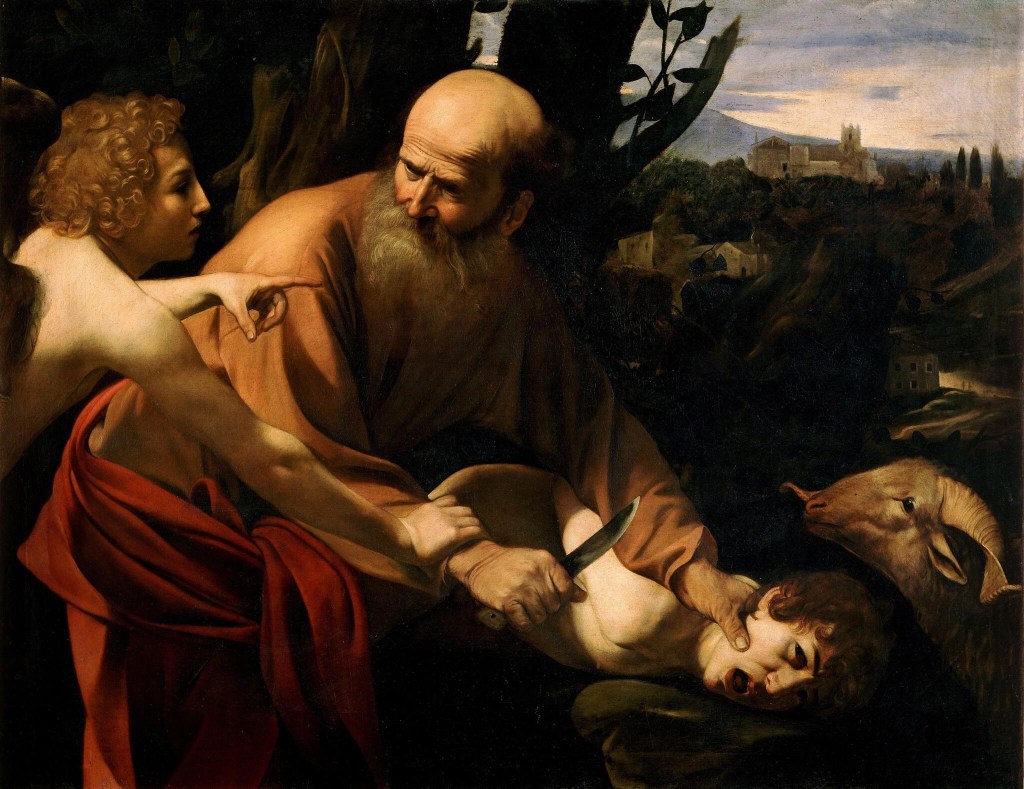
But if that is the case, the story belongs back in the days when child sacrifice was, apparently, widely practised. What, then, does it say to us today???

See also