Things That Matter: for the Fiftieth Anniversary of United Theological College (2025)

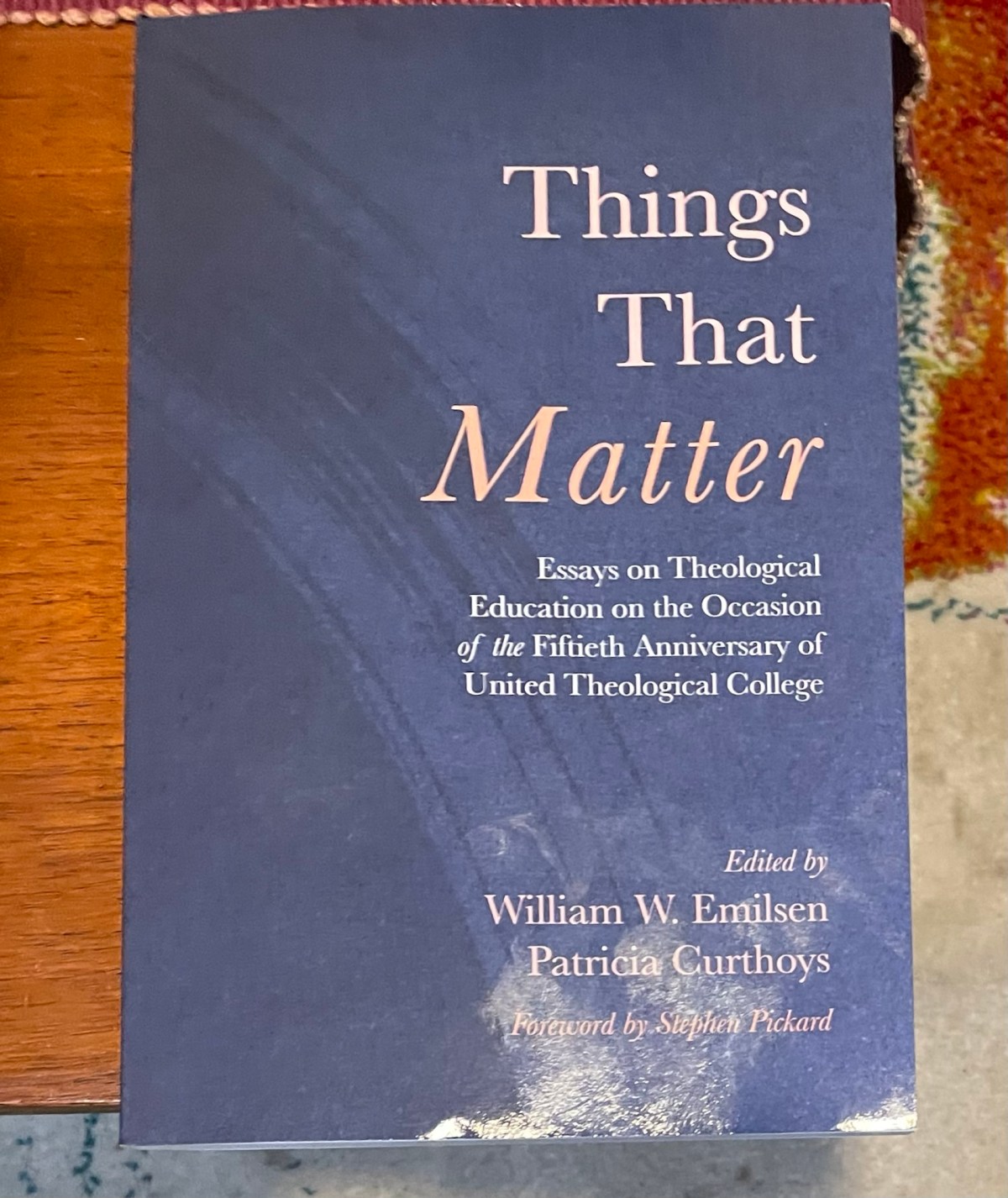
I’ve just received my copy of Things That Matter: Essays on Theological Education on the Occasion of the Fiftieth Anniversary of United Theological College. The college (UTC) was where I trained for ministry in the latter years of the 1970s, was a visiting lecturer in the later 1980s, and taught as a member of the Faculty from 1990 to 2010.

It is edited by my friend and colleague, William W. Emilsen (whom I’ve known since he was also a student at UTC in the 1970s) and  Patricia Curthoys. Both are historians of some repute within the Australian church and beyond, each having written and published a number of significant historical works, as well as collaborating on earlier historical volumes.
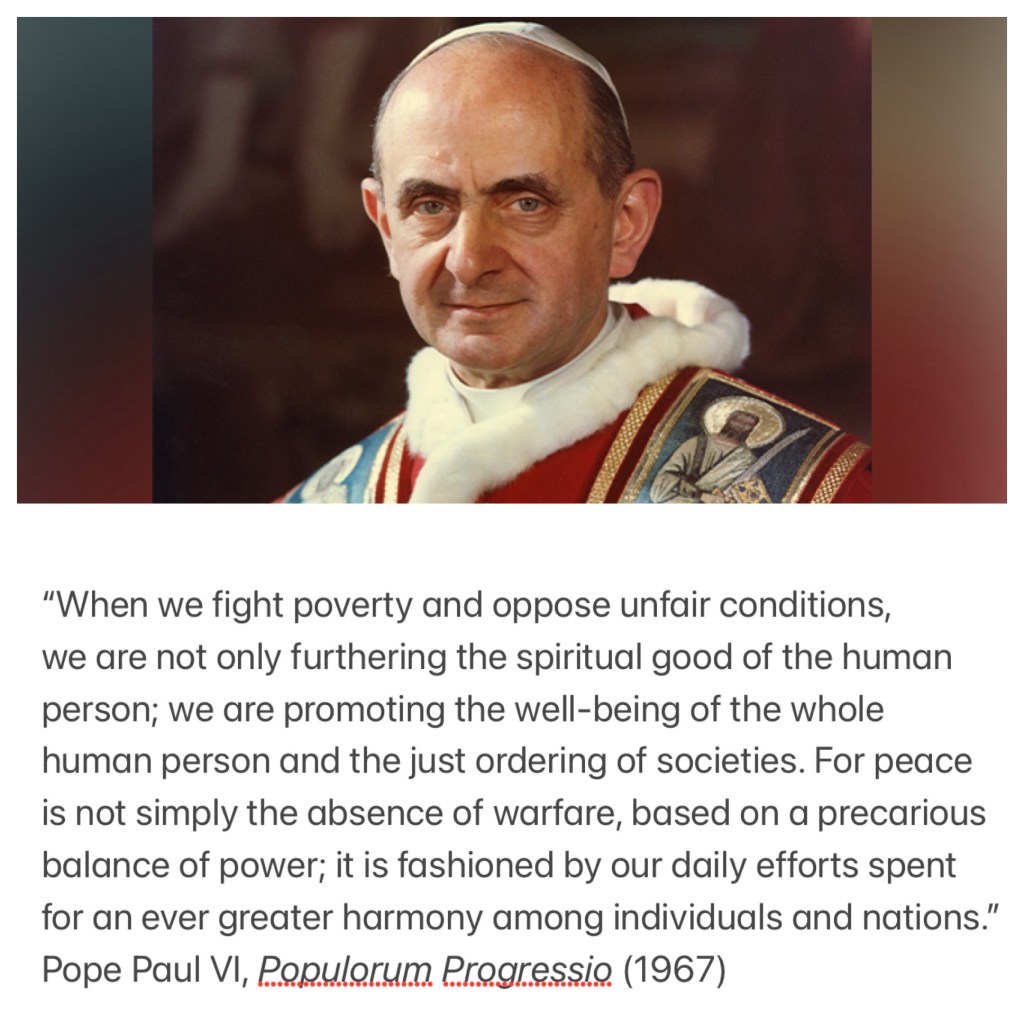
The UTC campus in North Parramatta, Sydney, NSW

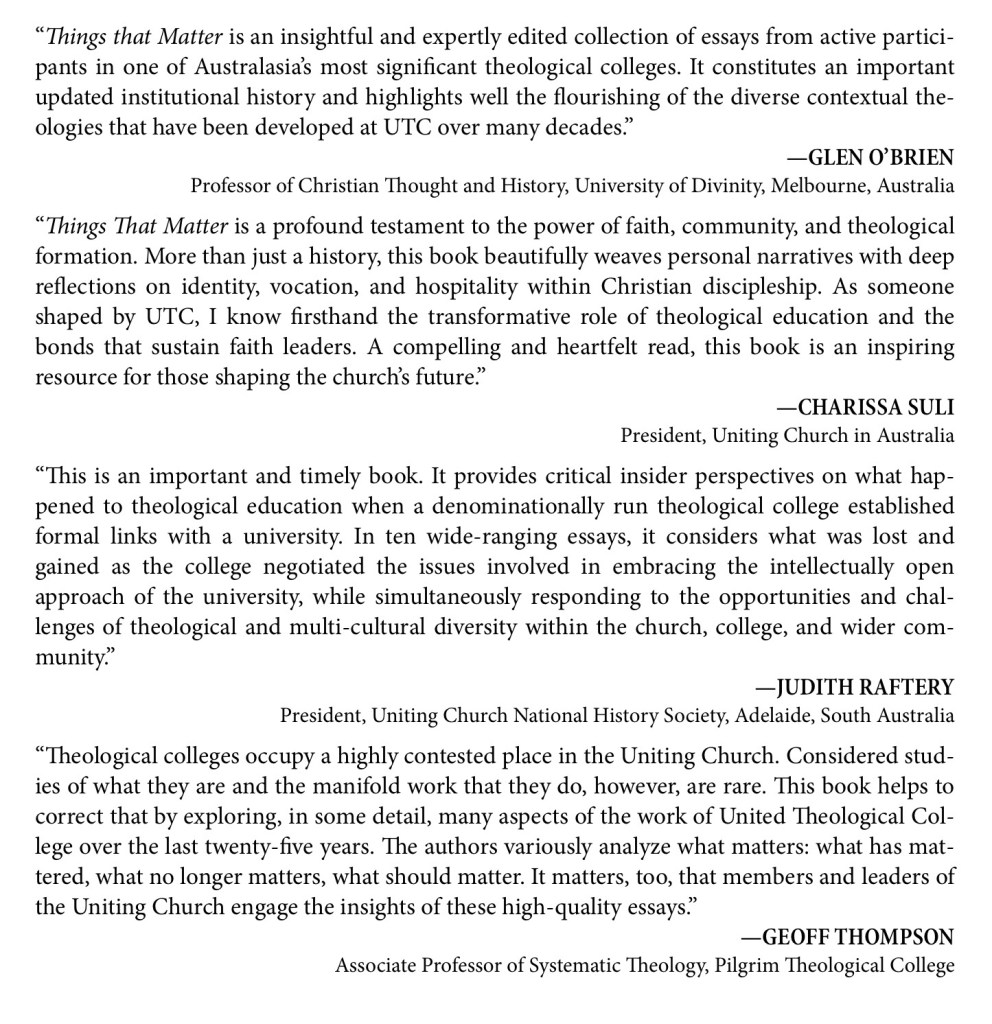
Prof. Glen O’Brien says that the book “highlights well the flourishing of the diverse contextual theologies that have been developed at UTC over many decades.” Assoc. Prof. Geoff Thompson, reflecting the title of the book, appreciates that the book explores “what has mattered, what no longer matters, what should matter.” And the President of the Uniting Church, the Rev. Charissa Suli (herself a graduate of UTC) offers appreciation for the way the book “beautifully weaves personal narratives with deep reflections on identity, vocation, and hospitality within Christian discipleship.”
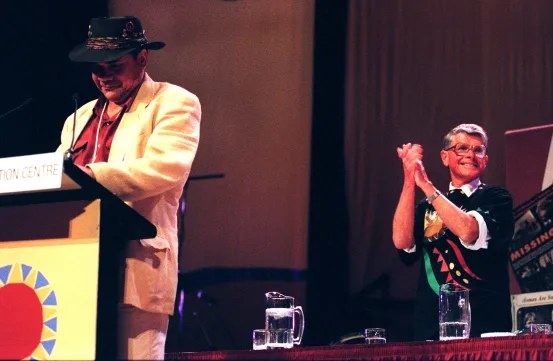
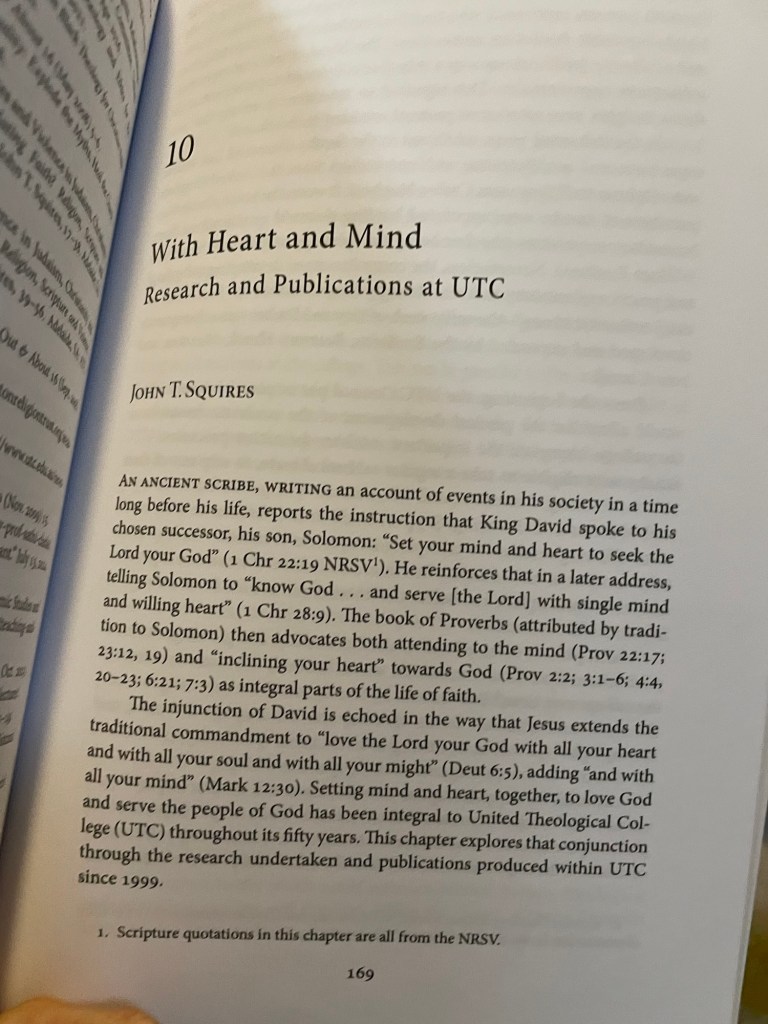
There are ten chapters in the book, each written by a different author. I was pleased to be able to contribute the final chapter, “With Heart and Mind”, exploring the research output produced within the college over the last 25 years—both publications by members of Faculty as well as the many doctoral dissertations that they supervised during those years. 

I’d had early involvement in the development of the research culture of the College when we offered bachelor and masters degrees through the Sydney College of Divinity in the 1990s. In those days we had a Research and Publications Committee, which I convened, and a regular masters-level seminar. It is most pleasing to see how from those early steps a strong research and publications culture has developed, with scores of doctoral dissertations having been produced in the first 25 years of this century, supported by the regular Friday postgraduate seminar where ideas are presented, critiqued, and refined.

In the end, my chapter in this book ran to twenty-two pages with 114 footnotes, followed by a bibliography of works published by Faculty and PhD dissertations completed under their supervision, which added another 8 pages. So it was quite a piece of work: variously fascinating, illuminating, daunting, and finally: achieved!

There are many reasons why I am looking forward to reading this book. In an opening chapter, Ross Chambers explores the relationship of the College (and through it, the Church) to the University of which we became a part, in the School of Theology of Charles Sturt University. This is a substantial reason that underlies the flourishing research culture that I wrote about; government funding to the University meant that the college gained financial contributions for each faculty publication and for supervision of research students.

Ross was instrumental in negotiating the involvement of UTC in CSU; he saw the value of bringing into the School a Faculty where each member themselves had a quality doctoral qualification as well as a growing experience in research supervision. (And, of course, this would undoubtedly look good for the University!) Ross is both a former Vice-Chancellor of CSU and a Chair of the UTC Council (which in earlier years, when I was then secretary of this council, was chaired by two previous Vic-Chancellors of Macquarie University: Bruce Mansfield and then Barry Leal).

There are chapters in this book which explore ministerial formation, the centrality of community, the varying approaches to teaching from those responsible for Systematic Theology, the wonderful Camden Theological Library under the brilliantly entrepreneurial stewardship of Moira Bryant, and the opportunities for continuing education (especially through the presence of overseas visiting scholars) for those already engaged in ministry.

There’s a chapter on the intersection between multiculturalism (a key commitment of the Uniting Church) and theological learning, as well as a chapter each devoted to the experiences of the many Korean students of UTC, and the equally numerous Pasifika students, many of whom have produced doctoral work that develops and extends the theology of their native countries (Tonga, Samoan, Fiji, Tuvalu, the Cook Islands, and more). 

It’s a delight to know that my co-contributors to this book are both those alongside whom I taught for many years, as well as some whom I had taught in their foundational theological studies. It augurs well for the College and the Church that the current Faculty includes UTC graduates Peter Walker (Principal), Sef Carroll (Cross Cultural Ministry and Theology) and Bec Lindsay (Hebrew Scripture/Old Testament). A number of previous faculty members (myself included) had also begun their theological studies at UTC. Whilst there is certainly value in having teachers from beyond this circle—indeed, in some cases, from beyond the Uniting Church—on the faculty, it’s important to have “home-grown” scholars-ministers as well.

As I say, I am looking forward to reading the other chapters. I understand that the publication of the book will be recognised at the forthcoming meeting of the NSW.ACT Synod, and then there will be a formal public launch on 12 September at UTC in North Parramatta.

The book is published by Wipf & Stock and is available to order at https://wipfandstock.com/9798385218813/things-that-matter/


Poor Politics, Poorer Theology (part one): The Conflict between the Trump Administration and The Vatican on Immigration and Mass Deportation 

This essay and the one which follows it in a subsequent blog is written by my friend and colleague, the Rev. Dr Geoff Dornan, offering a Christian ethical perspective on a recent controversy (one of so, so many) in the United States of America. Geoff has a PhD in Philosophy, Theology & Ethics from Boston University, USA. He is currently serving as Minister in Placement at Wesley Uniting Church in Canberra, ACT.

1. INTRODUCTION: JD VANCE ON ORDO AMORIS

In an interview by Fox News’ Sean Hannity, on January 30th this year, the U.S. Vice President. J.D. Vance offered a theological and moral defence of the Trump Administration’s policy of forced mass deportations.

This policy revokes the temporary legal status of potentially hundreds of thousands of people without due process, in defiance of the fifth and fourteenth amendments of the American constitution.

In the discussion, Vance declared that “the far left” in the United States tend to have “more compassion” for people residing in the country “illegally” (my apostrophes), including those who have committed crimes, than they do for American citizens. He opined that compassion should first be directed to fellow citizens, adding that this does not mean that people from outside of one’s borders, should be hated, but that one’s priority should be for those within.

Vance and Hannity

In support of his contention, Vance said:

“But there’s this old-school [concept] – and I think a very Christian concept, by the way – that you love your family, and then you love your neighbour, and then you love your community, and then you love your fellow citizens in your own country, and then after that you can focus and prioritize the rest of the world.”

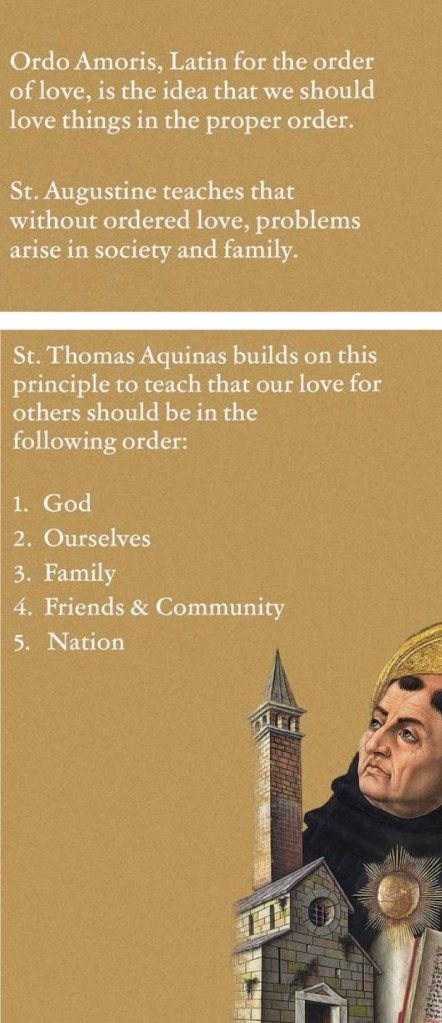
The idea to which Vance referred was that of St Thomas Aquinas, commentated upon in his great body of work, the Summa Theologica, known as ordo amoris – “rightly ordered love”.

Later that evening Vance responded on social media to a British professor and former conservative politician, Rory Stewart, who criticized Vance’s comments as a “bizarre take on John 15:12–13” and as “less Christian and more pagan tribal.” (The Bible verse referenced by Stewart reads “This is my commandment, that you love one another as I have loved you.”). 

Stewart’s reference to this verse, and its relevance to the point he was labouring to make, was not and is not altogether clear. Perhaps because of that fact, he then referred to the parable of the Good Samaritan (Luke 10:25–37), applying the story as a legitimation of foreign aid.

Vance curtly responded to Stewart’s confusing comments with, “just google ordo amoris”!

The reaction that has flowed from these two interviews has been discordant. On the one hand, there has been some approval, a positive nodding of the heads from some theological and political circles.

On the other there has been clear disapproval from the Catholic leadership. Some responses have on the other hand fallen in between, seeking to qualify Vance’s response. 

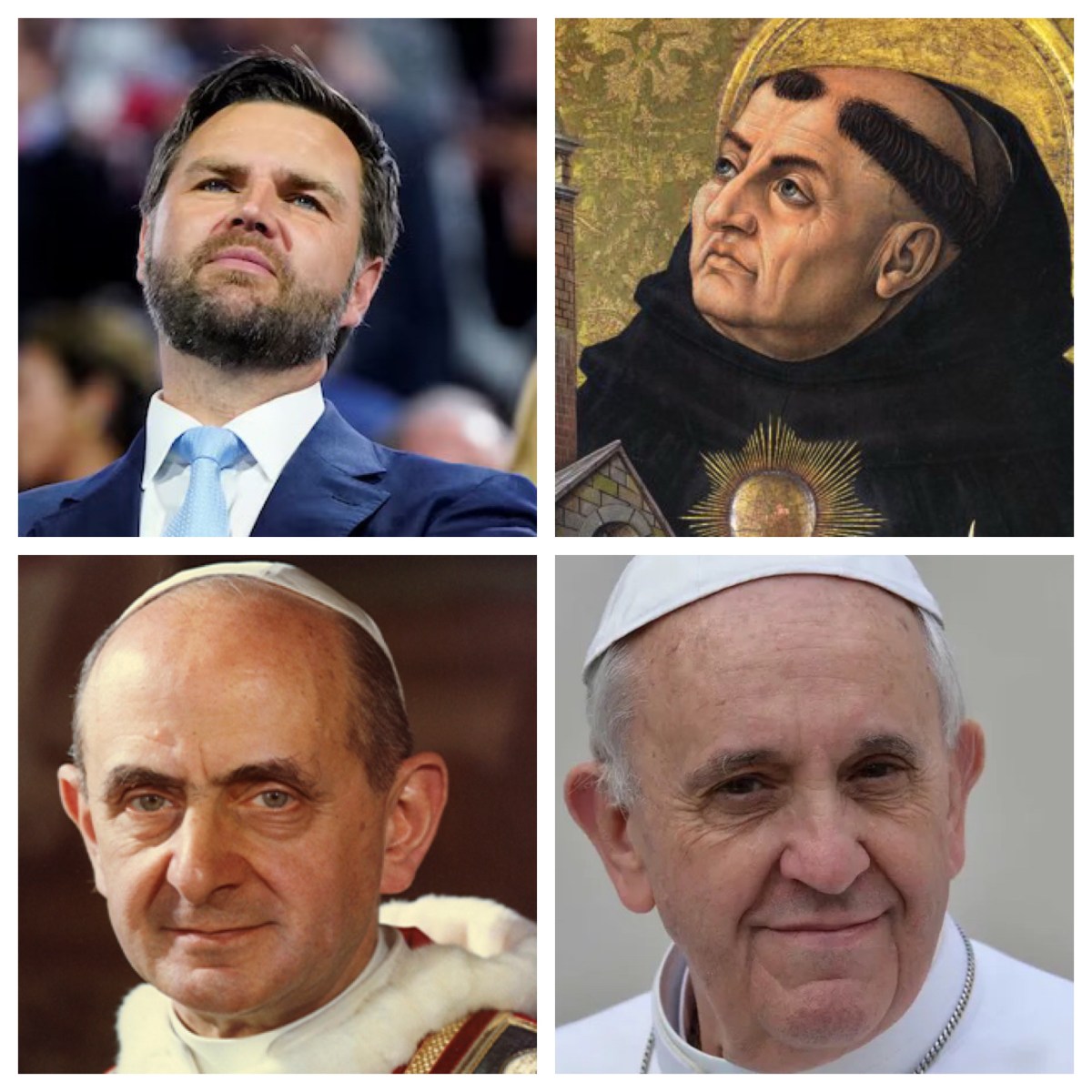
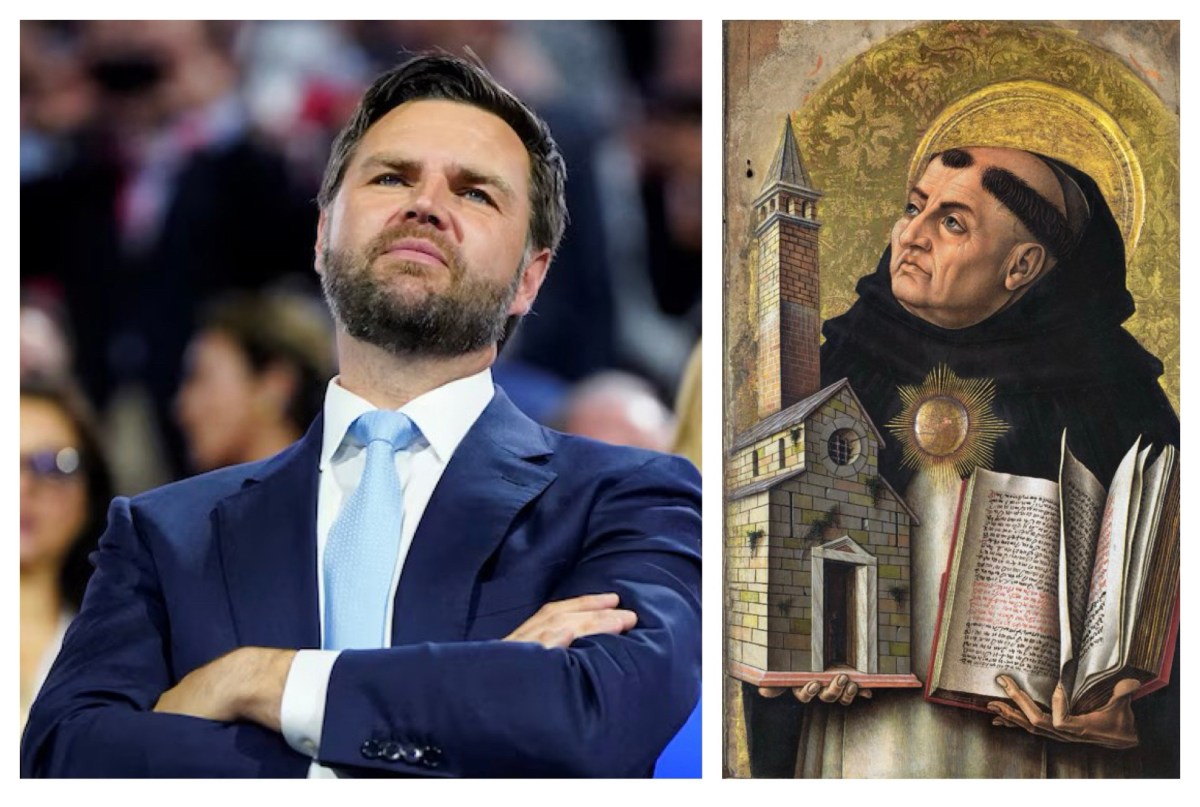
J.D. Vance, Vice-President of the USA

Regarding the first, the theological publication First Things included an article entitled “JD Vance States the Obvious about Ordo Amoris” by James Orr, Associate Professor of Religion at Cambridge, and notably, UK Chair of the conservative Edmund Burke Foundation. Orr argued that Stewart’s appropriation of the Good Samaritan was mistaken, in as much as its message is not that  one should help all victims wherever they may be, but that we must care for those who fall within the compass of our practical concern. 

In keeping with this take, he points out the Greek word for neighbour in the New Testament is πλησίον (plēsion), which is derived directly from πλησίος (plēsios), meaning “near” or “close by.” Apparently then, according to Orr, it is proximity that makes neighbours our objects of care and attention. 

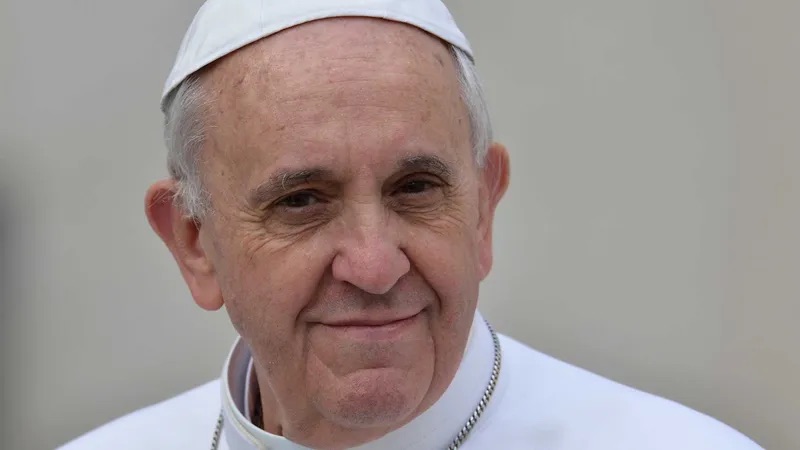
In contrast to Orr, the Catholic leadership has shown notable dissatisfaction with Vance’s interpretation. Pope Francis, attributing Vance’s motivation and appropriation of Ordo Amoris to the Trump Administration’s defensive armoury for deportation of non-citizens without due process, said to the US bishops on February 10th that “an authentic rule of law is verified precisely in the dignified treatment that all people deserve, especially the poorest and most marginalized”. He averred that such policy and practice “does not impede the development of a policy that regulates orderly and legal migration”. 

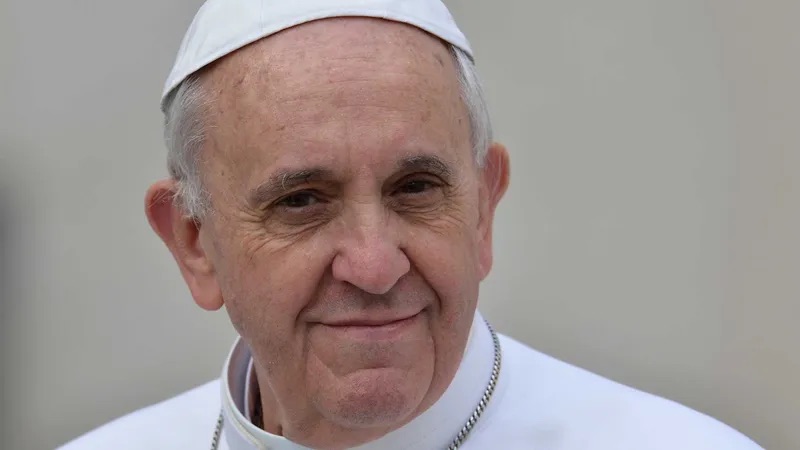
Pope Francis

In other words, good policy can and must include dignity for such people. Targeting Vance’s take on Aquinas within the context of Christian social ethics, he continued that “Christian love is not a concentric expansion of interests that little by little extend to other persons and groups. He proffered, “the human person is not just a mere individual, relatively expansive, with some philanthropic feelings”. As if to ensure the point could not be missed, he added, that the “true ordo amoris that must be promoted is that which we discover by meditating constantly on the parable of the ‘Good Samaritan’… that is, by meditating on the love that builds fraternity open to all without exception”. 

Pressing the point further, it is widely understood that Cardinal Pietro Parolin, the Vatican Secretary of State and confidant of Francis, was later tasked with speaking to Vance to ensure that there could be no ambiguity or misunderstanding as to the Holy Pontiff’s point. Moreover, Cardinal Robert Prevost, prior to his recent election as pope, posted a tweet on February 13th, sharing several links to articles critical of Vance’s take on Ordo Amoris. Prevost, now Pope Leo XIV, has had a long history of working among the poor in northern Peru, passionately supporting the rights of those who seek lives of dignity.

2. THINKING THROUGH THE CATHOLIC TRADITION

So, what to make of this?

On the one hand, the US administration lays hold of the writings of Thomas Aquinas, Doctor of the Catholic Church (referred to hereafter simply as Thomas, in keeping with Catholic academic tradition).

The US Administration took hold of the words of Thomas for its own purposes, seeking to legitimise its policy and practices regarding immigrants deemed illegals, while the Catholic leadership expresses its annoyance at what it considers the abuse of Church teaching, pressed intoservice in an attack upon the vulnerable. 

In the following paragraphs, I shall examine two things: first, Thomas’ theology: setting it in context, explaining its strengths and limitations. Second, I shall set out the developments in Catholic instruction since Thomas: the movement from neo-Thomism to modern Catholic theology, and particularly the Social Teachings of the Catholic Church, of which Vance seems unaware, despite their more recent genesis in Western theological and moral discussion.

A. THE WORLD VIEW OF THOMAS AQUINAS, 1225–1274: SOCIAL AND POLITICAL ETHICS AS A ‘RIGHT ORDERING’

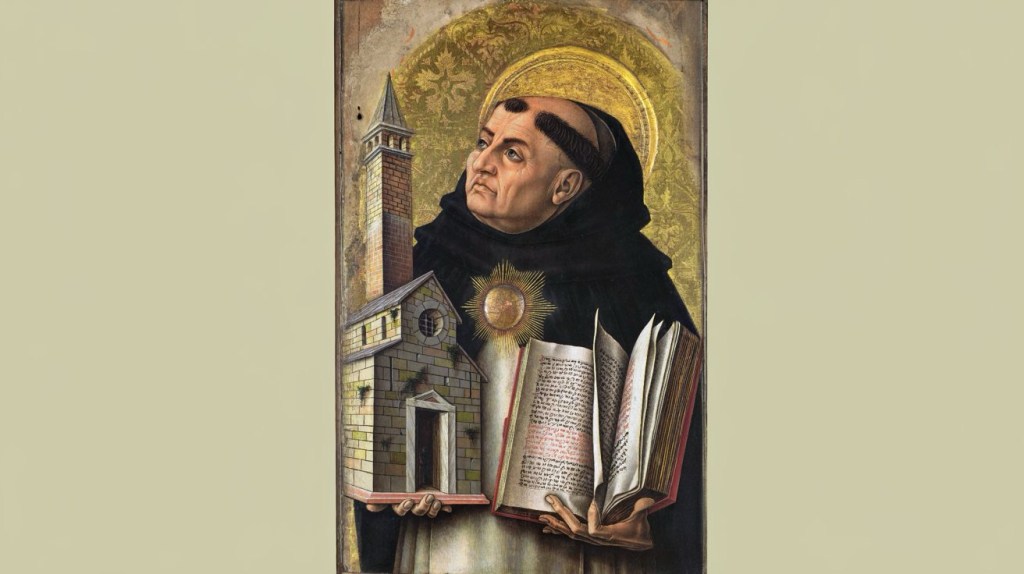
Thomas Aquinas (1225—1274), Dominican friar who was canonized in 1323, depicted in the panel of an altarpiece
from Ascoli Piceno in Italy, by Carlo Crivelli (15th century)

Thomas Aquinas’ world view unsurprisingly reflects the mediaeval age in which he lived but builds upon it in unique ways. His thinking was one of the greatest attempts of Mediaeval Scholasticism after the fall of the Roman Empire to unite in one body knowledge and revelation, philosophy and theology.

For Thomas, the human being is by nature a social animal. In speaking in this way, hedraws from the inspiration of Aristotle, most of whose writings had only been rediscovered by the western church a little earlier, between 1150 and 1250, stimulating an explosion of intellectual energy. Additional to Thomas’ appreciation of the social nature of the human being, he holds a view of society as firmly ordered and hierarchical; and this, according to his understanding of the Divine plan. The whole structure of things reflects what Thomas considered the natural order of humanity as created by God.

Ernst Troeltsch, an early sociologist of religion, in his classic Social Teaching of the Christian Churches (1911), interpreted Thomas’ way of seeing things – what we call the ‘Thomist ethic’ – as the ultimate expression of an “ecclesiastical unity of civilization”. Thomas’ ethic touched every element of mediaeval life, framed by its division between nature and supernature. It furnished a theoretical justification for social hierarchy, insisting upon an ethical purpose for each social role and place.

In essence, the church with its treasury of merit and sacraments, provided the means of grace through which the temporal life gained eternal meaning. From a sociological point of view, as J. Philip Wogaman puts it, “the system made it possible for there to be a unity of civilization (my italics), encompassing not only ‘ordinary’ Christians whose faith was inevitably corrupted by the world, but also those who sought the purer morality and spirituality of monastic life.” 

But was this social ethic, this hierarchy of living, a strict top-down affair, that ‘softly’legitimized injustice? On this question, opinion is split. Some subscribe to the view that Thomas’ ethic was a distinct advance upon hitherto mediaeval arrangements.

To the extent that all aspects of society served specified ends – the highest ranks serving those beneath them, and the lowest serving their superiors – a basic form of mutuality was envisaged, grounded in the common good. Such an arrangement it is argued, relieved the mediaeval system of its worst features. 

Others, however, subscribe to the opposite view: that Thomas does little more than defend the pattern of living of thirteenth century Europe, holding that pattern as proper for all societies and times. Both sides are probably correct. Thomas was no social radical, although he was a man of great intellectual acumen, as he created a synthesis of thought of the pagan philosopher Aristotle and the early Church Father, Augustine

Turning to Thomas’ political ethic, Thomas sees the state or political community as a “perfect” society, in the sense that it has all the means necessary to fulfil its appointed purpose of the common good, by which he means material development and the pursuit of virtue. It must be added that this includes coercive force to restrain vice and evil, to ensure the peace of the whole. 

But let us be clear about the power of state coercion! For Thomas is no simple authoritarian.

He pragmatically understands that not all vices can be expungedwithout at times generating more problems. As such, he holds that the state must never attempt to do what cannot be done effectively.

So, overall, both Thomas’ social and political ethics are grounded in a special ordering;certainly conservative when contrasted with western modernity, nevertheless, moderate in that Thomas sees that the state has its limits.

B. ORDO AMORIS: THE RIGHT ORDERING OF LOVE?

On the one hand, the US administration lays hold of the writing of Thomas Aquinas, Doctor of the Catholic Church, for its own purposes, seeking to legitimise its policy and practices regarding immigrants deemed illegals, while the Catholic leadership expresses its annoyance at what it considers the abuse of Church teaching, pressed intoservice in an attack upon the vulnerable. 

In the following paragraphs, I shall examine two things: first, Thomas’ theology: setting it in context, explaining its strengths and limitations. Second, I shall set out the developments in Catholic instruction since Thomas: the movement from neo-Thomism to modern Catholic theology, and particularly the Social Teachings of the Catholic Church, of which Vance seems unaware, despite their more recent genesis in Western theological and moral discussion.

And so, to Ordo Amoris, the right ordering of love within Thomas’ social and political ethics! The problem as I see it, is that his attempt to affirm this principle has its difficulties. In large part, this is so, because of his approach in assuming a hierarchy of obligation. Let us explore this.

For Thomas, love of and for God stands above all else in the hierarchy of love. From there in Ordo Amoris, Thomas orders or grades all other loves based on the just claims that a person may make upon another’s love for them. Here lies the seed for the idea that we owe a debt of love to those in closest proximity to us, for they are entitled to such an expectation. 

For Thomas, to neglect those nearest to us, on the pretext of loving more broadly and generously those who are afar, is not to really exercise love at all. As V.J. Tarantino explains through the story of Lazarus in the Gospel of Luke, “To skip over Lazarus on the doorstep [in order] to volunteer at the charity auction, is at least to some degree a matter of self-satisfaction”, [rather than love]”.

But what is the difficulty here? Let us name it! The point is that Thomas’ undertaking to establish theoretical rules for whom we are to prioritize in love, is tricky. Yes, Thomas does indeed maintain that a man should love his fellow citizens before the stranger; his father before his mother; both parents before his wife and children; and, before all non-family outsiders, his civic ruler. 

However, this rule-bound way of operating appears to be deficient: first as mentioned earlier, because love is explained in terms of what is owed, but second because his thought is so mechanistic, so duty driven, ignoring the very nature of human love, which is altogether a more spontaneous, impromptu, Spirit led thing.

Joseph Ratzinger, better known as Pope Benedict XVI (2005–2013) in his stand-out encyclical Deus Caritas Est (God is Love) makes exactly this point: that love is not about duty bound commandments, imposed from outside of the human person, but rather a freely bestowed experience beginning with God, which by its very character drives us to share itintuitively with others. 

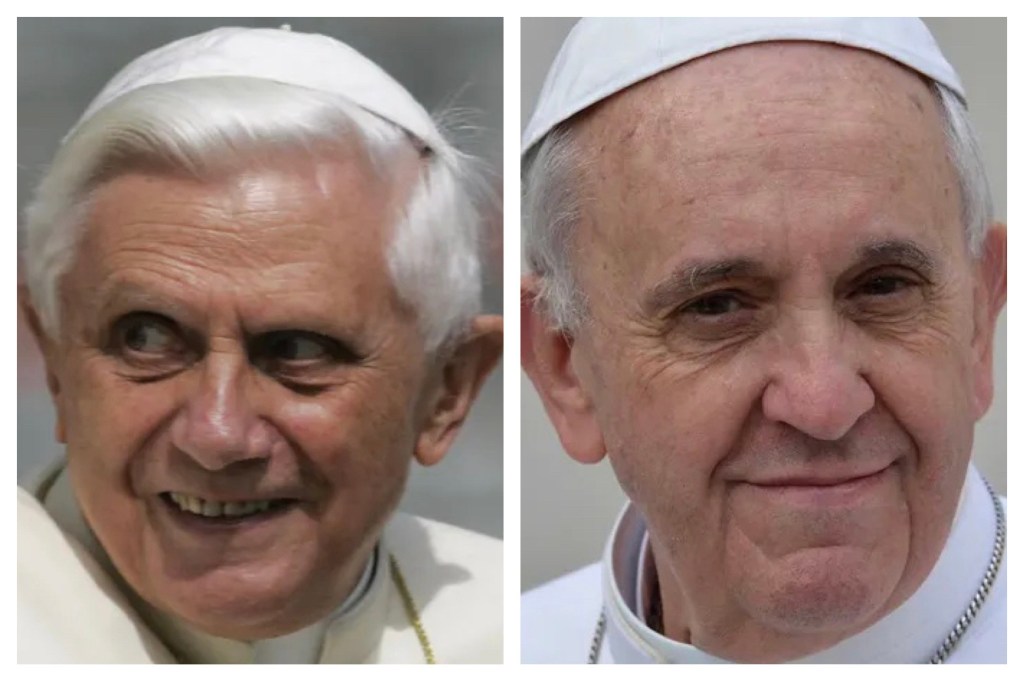
Pope Benedict XVI (left) and his successor Pope Francis (right)

Pope Francis (2013–2025) says something similar by way of application of Benedict’s insight. In his encyclical Fratelli Tutti (On Fraternity and Social Friendship), as he writes about the story of the Good Samaritan, he emphasizes that the priest and the Levite were most concerned with their duties as religious professionals.

Their structured social roles and their structured ethics, which determined who would enjoy a higher place as beneficiaries of their love, blinded them to the distraction of the man on the roadside, who simply did not fit. Love, as they understood it, was a duty owed to specific groups, not something to be freely, graciously, injudiciously lived out.

3. THOMAS: A TRIAL BALANCE

What then may we conclude about Thomas’ approach to the ethics of love? While love of and for God remains the genesis of everything, nevertheless the ordering of love which follows from it, is bound to and limited by the social and political structures of which Thomas was a part.

On the other hand, there is no sense in Thomas that love is simply a limited quantity that is to be parcelled out to those close to us, with little or nothing left for those in need; that there is only so much that can go around. He does understand order – after all he was a systematic theologian and carries his systematization into everything he writes – but to assume, as Vance does, that he would give his blessing to mass deportation, and this without legal due process, goes too far. 

So, is there anything missing in Thomas? I think there is: the extraordinary liberality, largesse, the remarkable prodigality of the Gospel. In the broad scheme of things, Thomas does not manage to reflect the richness of the Good News. Tarantino puts it so well: “the erring sheep…preferred to the ninety-nine obedient sheep; the worker who commences at the final hour…compensated in equal measure to the one who laboured from daybreak; the tax collectors and the prostitutes…entering Heaven; the last [being] first; and God himself [giving] his only Son”.

4. BACK TO J.D. VANCE AND HIS APPROPRIATION OF THOMAS

In this paper I have sought to answer the question whether the American Vice President J.D. Vance is justified in harnessing Thomas’ ordo amoris for his political purposes: namely forced mass deportations of people without due process from U.S. territory. 

My conclusion is that Thomas does not deliver such justification, but nor is Ordo Amoris adequate in and of itself to provide a definitive answer one way or the other for modern Christian ethics. Rather, to answer the question, one needs to turn to more recent moral theology of the Catholic tradition. I refer to Catholic Social Teachings, which I shall examine in the next essay.

In the sound of sheer silence (1 Kings 19; Pentecost 2C)

In the passage which the lectionary places before us this coming Sunday (from 1 Kings 19), we meet the first of a number of prophetic figures whose deeds are recounted in the books of the Kings or whose words are collected within the Hebrew Scriptures under the catch-all second section of Nevi’im (Prophets).

The first of these prophetic figures is the Elijah the Tishbite, who was introduced as coming from Tishbe in Gilead (1 Ki 17:1), a place whose precise location has occasioned some debate.  See https://www.biblegateway.com/resources/encyclopedia-of-the-bible/Tishbite

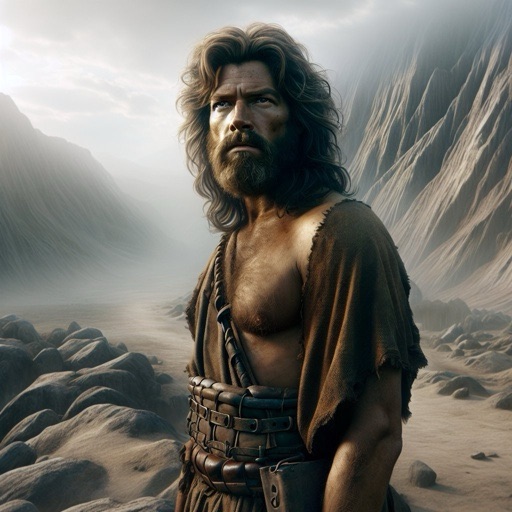
Elijah is later described as “a hairy man, with a leather belt around his waist” (2 Ki 1:8). This initial portrayal of Elijah is nested within the accounts of that long period of time when Israel was ruled by kings, when prophets functioned as the conscience of the king and the voice of integrity within society. The distinctive dress of Elijah perhaps sets him apart from the court of the kings, where a more “civilized” dress code was presumably operative. Nevertheless, Elijah does have some engagement with the kings who ruled at the time he was active: Ahab, and then Ahaziah. Indeed, his distinctive dress points to his emboldened attitude towards those kings.

Elijah operated during the period when Ahab ruled Israel; he figures in various incidents throughout the remainder of 1 Kings—most famously, in the conflict with the prophets of Baal which came to a showdown on Mount Carmel (1 Ki 18), and then later in his confrontation with Ahab and his wife Jezebel, over the matter of Naboth’s vineyard (1 Ki 21). Like Jesus, Elijah was no shrinking violet!

Elijah first appears in the narrative of the various kings, seemingly out of nowhere, just after King Ahab had taken as his wife Jezebel, daughter of King Ethbaal of the Sidonians, who presumably influenced him to begin his worship of Baal (1 Ki 17:31–33). In the same way, at the end of his time of prophetic activity, Elijah simply disappears from sight soon after Kong Ahaziah died. Elijah hands over his role to his successor, Elisha, and as “a chariot of fire and horses of fire separated the two of them”, Elijah ascends in a whirlwind into heaven (2 Ki 2:1–15).

In the book we know as 1 Kings, the compiler of the Deuteronomic History reports many incidents which attest to the courage and power of Elijah. The boldness of Elijah is evident in the confrontations that he has with made clear, centuries later, to the followers of Jesus, in the earliest account of his life, when John the baptiser is depicted as a fiery desert preacher, calling for repentance, just as Elijah had called the kings to account (Mark 1:1–8). In a later account of Jesus, there is a clear inference connecting John with Elijah when Jesus notes, “Elijah is indeed coming and will restore all things; but I tell you that Elijah has already come, and they did not recognize him, but they did to him whatever they pleased” (Matt 17:11–12).

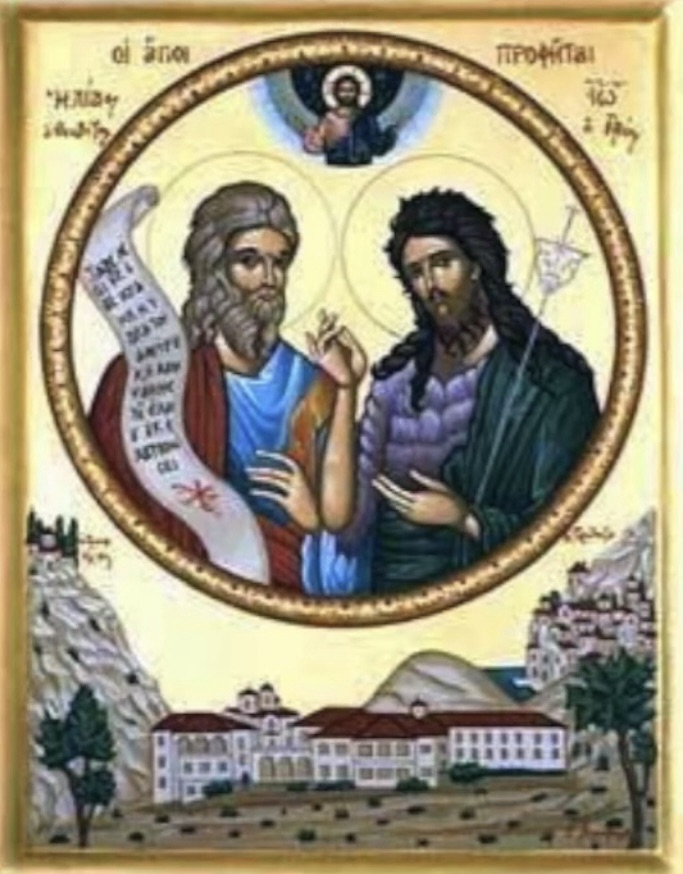
An icon of the Prophet Elijah and Saint John the Baptist from the Monastery of the Prophet Elias (Elijah) in Preveza, Greece

Then, in his sermon in Nazareth (Luke 4:16–30), Jesus refers to the first reported miracle of Elijah, when he provided a widow in Zarephath with food and oil that “did not fail”, even though the land was in drought (1 Ki 17:1–16). In subsequent incidents in 1 Kings, Elijah raises a dead son (17:17–24), directly confronts King Ahab with his sins (18:1–18), and famously stares down the prophets of Baal in a mountaintop showdown (18:19–40), leading to the breaking of the drought (18:41–46).

Elijah later condemns Ahab over his unjust seizure of the vineyard of Naboth (21:17–29) and then stands before Ahab’s son, King Ahaziah, to condemn him to death (2 Ki 1:2–16); a death “according to the words of of the Lord that Elijah had spoken” which is promptly reported (2 Ki 1:17). 

During the rule of Ahab, Elijah had also most famously heard the Lord God “not in the wind … not in the earthquake … not in the fire”—but rather in something else, which the NRSV renders as “the sound of sheer silence” (1 Ki 19:11–12). This incident is, as noted, the story set before us by the lectionary this coming Sunday. We need to ponder what is being conveyed through the symbols employed in this story. 

The three means by which God is said not to have appeared to Elijah reflect the very same means through which Moses, and the people of Israel, did experience the manifestation of the Lord God in their midst. When the escaping Israelites arrived at the Sea of Reeds, according to one version of this archetypal story, “the Lord God drove the sea back by a strong east wind all night, and turned the sea into dry land; and the waters were divided” (Exod 14:21). 

The people later celebrated the defeat of the Egyptians who were pursuing them: “you blew with your wind, the sea covered them; they sank like lead in the mighty waters” (Exod 15:10). The wind was a sign of God’s presence, and an agent of divine protection—indeed, it was the very same “wind from God” which “swept over the face of the waters” at the beginning of creation (Gen 1:2). But for Elijah, the Lord God was “not in the wind”.

Then, as they had travelled through the wilderness, the people were accompanied by a blazing fire, another sign of divine presence: “the Lord God went in front of them in a pillar of cloud by day, to lead them along the way, and in a pillar of fire by night, to give them light, so that they might travel by day and by night” (Exod 13:21). The fire signalled the divine presence.

Indeed, the very same flaming fire had been manifested to Moses when he was but a mere shepherd in Midian; “the angel of the Lord appeared to him in a flame of fire out of a bush; he looked, and the bush was blazing, yet it was not consumed” (Exod 3:2). What follows is the account of the call of Moses; God tells him “I will send you to Pharaoh to bring my people, the Israelites, out of Egypt” (Exod 3:10). The fire had been the assurance to Moses that it was the Lord God who was present.  But for Elijah, the Lord God was “not in the fire”.

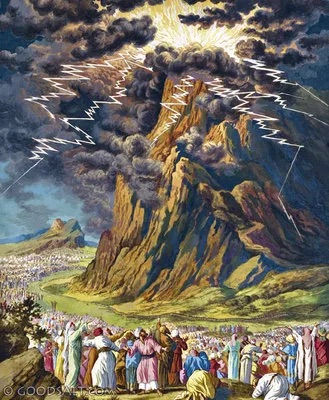
The same element of fire was present when Moses and the people ultimately arrived at Mount Sinai in the wilderness of Sinai (Exod 19:1–2). “Mount Sinai”, so the account goes, “was wrapped in smoke, because the Lord had descended upon it in fire; the smoke went up like the smoke of a kiln, while the whole mountain shook violently” (Exod 19:18). Associated with this there was “thunder and lightning, as well as a thick cloud on the mountain, and a blast of a trumpet so loud that all the people who were in the camp trembled” (Exod 19:16). 

The scene at Sinai surely reflects the experience of an earthquake; the same phenomenon that prophets would later interpret as a sign of divine presence—indeed, divine judgement. “You will be visited by the Lord of hosts”, Isaiah subsequently tells the people of his time, “with thunder and earthquake and great noise, with whirlwind and tempest, and the flame of a devouring fire” (Isa 29:6). 

Still later, Zechariah describes how “the Mount of Olives shall be split in two from east to west by a very wide valley”, and instructs the people, “you shall flee as you fled from the earthquake in the days of King Uzziah of Judah; then the Lord my God will come, and all the holy ones with him” (Zech 14:4–5).

Nahum reflects on the jealous and avenging nature of God, declaring that “his way is in whirlwind and storm, and the clouds are the dust of his feet; he rebukes the sea and makes it dry, and he dries up all the rivers; the mountains quake before him, and the hills melt; the earth heaves before him, the world and all who live in it” (Nah 1:2–5). 

This dramatic motif continues on into later apocalyptic writings (Isa 64:1; 1 Esdras   4:36; 2 Esdras 16:12). The prophets and their apocalyptic heirs  knew clearly that this whole dramatic constellation of events revolving around an earthquake was a sign of divine presence.  But for Elijah, the Lord God was “not in the earthquake”. He was heard in something quite different.

What did Elijah hear? The Hebrew phrase found in verse 12 is qol d’mamah daqqah.

The King James Version translated this as “still small voice”.  More recent translations have provided variants on how these words might be translated. Alternatives that are found include “the sound of a low whisper” (ESV), “a gentle whisper” (NIV, NLT), “a soft whisper” (CSB), or “the sound of a gentle blowing” (NASB). These reflect variations on the kind of nuance that the KJV was offering. 

However, the NRSV option of translating this phrase as “the sound of sheer silence” is more confronting: the presence of God is sensed in the absence of sound; any communication from the deity comes, not in audible sounds, but in the utter absence of any sound. It is a striking paradox!

And in the context of the developing story of 1 Kings, the paradox is strong. Earlier, the prophet had stood firm against the might of Baal, the foreign god whom Ahab and Jezebel had prioritized in the life of Israel (1 Ki 18:17–40). When “the four hundred and fifty prophets of Baal and the four hundred prophets of Asherah who eat at Jezebel’s table” gathered on Mount Carmel, they failed to obtain any response from their god, the god of storms. No matter how intensely they raised their frenzied pleas, all they heard was “no voice, no answer, no response” (18:29).

Elijah, by contrast, prays to the Lord God and the fire of his god fell on the sacrificial altar; it consumed “the burnt offering, the wood, the stones, and the dust, and even licked up the water that was in the trench” (18:38). The victory was absolute and complete; the storm god had been defeated. And yet, the deity who accomplished this would communicate most personally and intimately with his chosen prophet, “not in the wind … not in the earthquake … not in the fire”, but rather in “a sound of sheer silence” (19:11–12). What a deliciously powerful irony!

Elijah was his own, distinctive man, with his own, distinctive encounter with God. He experienced God in a way quite different from what was experienced by Moses and the people of Israel. He experienced God in a way that stood apart from his contemporaries who were priests and prophets of Baal. For that reason, whilst the Lord God of Elijah stands over and against the Baal of Ahab and Jezebel, so too Elijah stands alongside and apart from Moses as a different, but equally great, leader of the people.

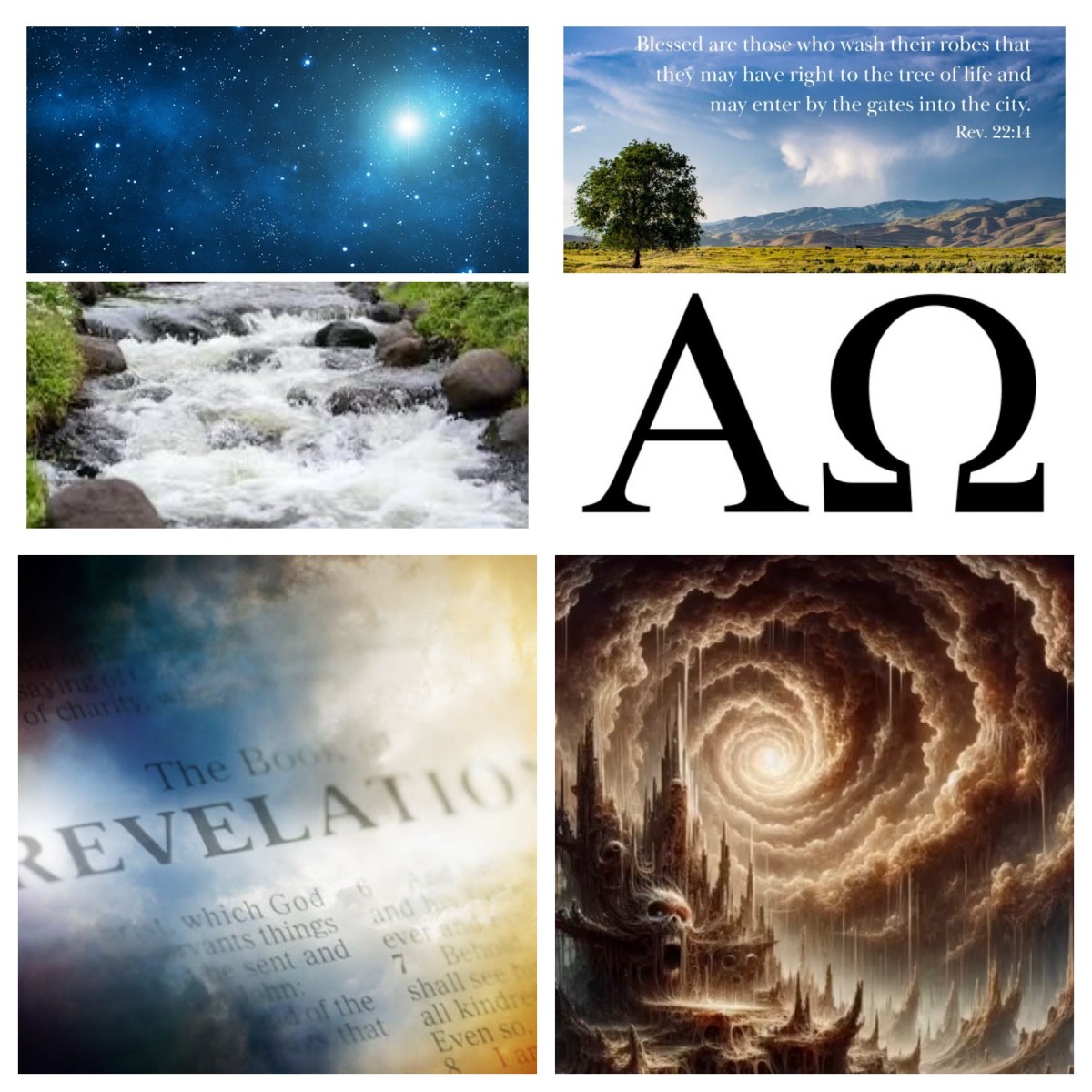
Alpha and Omega, bright morning star, water of life: final images in Revelation (Easter 7C; Rev 22)

During the season of Easter this year, we have read and heard passages from Revelation, the dramatic and vivid last book of scripture. We have encountered a number of creatively striking images: a white-haired, fiery-eyed figure like the Son of Man, a slaughtered lamb upon a throne, a multitude of white-robed people singing praises, a new heaven and new earth, and a city descending from the heavens. An amazing list, drawn from a book with even more amazing images in other chapters.

This Sunday, as the final Sunday in the seven-week season of Easter, we hear a passage which contains three striking images within the closing declarations and blessings that end the book (Rev 22:12–21). To give the creators of the lectionary their due, they have chosen not to excise a verse with a rather difficult message from the passage proposed—as they are wont to do at other times when dealing with other difficult verses.

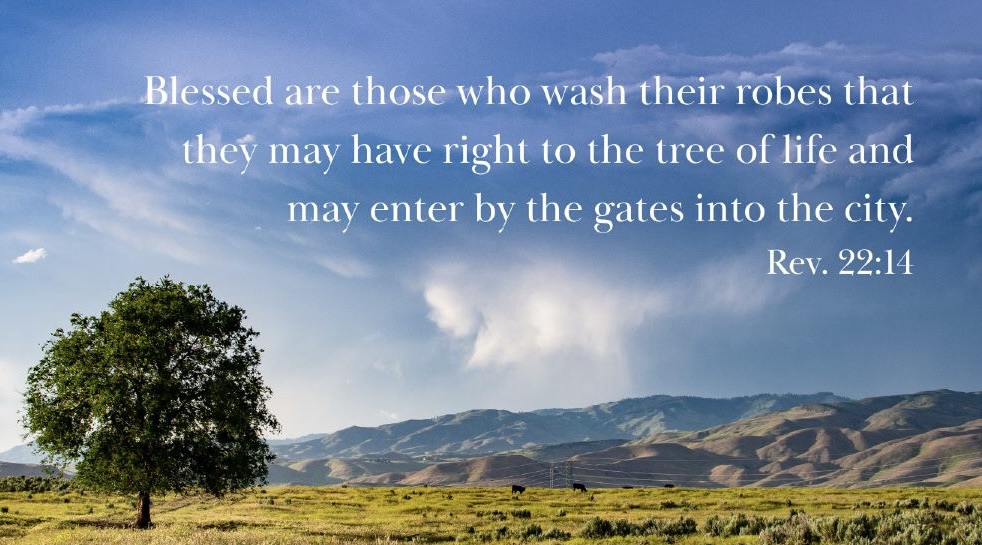
So we will hear this Sunday the statement by John, as he concludes his long series of images, that whilst those who “wash their robes” will be firmly included within the holy city that has descended to earth (22:14; see 21:2, 10–26), those who are “dogs and sorcerers and fornicators and murderers and idolaters, and everyone who loves and practices falsehood” will remain outside, debarred from entry (22:15; see 21:27). The holy city will remain as the place which has “the glory of God and a radiance like a very rare jewel, like jasper, clear as crystal” (21:11). It’s a vibrant picture to bring to a close this year’s season of Easter, as we celebrate the risen Jesus in our midst.

In the midst of this exultant final vision of the book, we also hear this dire warning to all who read this book: “if anyone takes away from the words of the book of this prophecy, God will take away that person’s share in the tree of life and in the holy city, which are described in this book” (22:19). They are evocative of the instruction to Daniel, that the words of that book “are to remain secret and sealed until the time of the end” (Dan 12:9).

The book of Revelation has included many gruesome scenes where punishment—and, indeed, torture—are envisaged. As each of seven seals are broken and seven angels each blow their trumpet in turn (8:6–11:19), repeated scenes of destruction and devastation unfold across the earth. After the fifth seal is broken, locusts are sent to inflict on those who do not bear the seal of God on their foreheads five months of torture “like the torture of a scorpion when it stings someone” (9:3–5). After the sixth seal, “a third of humankind was killed by the fire and smoke and sulfur coming out of [the] mouths” of the four angels rampaging across the earth on their horses (9:15–19).

In subsequent visions, because of the evil that has infiltrated the whole world in multiple manifestations, a great red dragon threatens to consume the child born to a pregnant woman (12:1–4); a beast with ten horns and seven heads wages war “over every tribe and people and language and nation” (13:1–10); ad a group of seven angels pours out the wrath of God on earth, sea, rivers, sun, the throne of the beast, the great river, and into the air (15:1, 16:1–21). 

These visions climax with the vision of “the great whore”, Babylon, and “the beast with seven heads and ten horns that carries her” (17:1–8), who gatherers up all the sins of the world, whose sins “are heaped high as heaven, and God has remembered her iniquities” (18:5). Judgement comes upon her as  “plagues will come in a single day—pestilence and mourning and famine—and she will be burned with fire” (18:8, celebrated in song from v.10 to v.24). 

Then, in due course, the beast and the false prophet “were thrown alive into the lake of fire that burns with sulfur” (19:20), and last of all, after a millennium has passed, “the devil who had deceived them was thrown into the lake of fire and sulfur, where the beast and the false prophet were, and they will be tormented day and night forever and ever” (20:10).

These scenes of judgement, plagues, punishments, and torture, come to dominate the whole book. Yet none of these scenes appear in the passages selected for inclusion in the lectionary. The only negative notes in the passages included in the lectionary relate to the description of the lamb as one who has been slaughtered, but who now sits triumphant on the throne (5:6–14). So it is somewhat striking that this final passage includes these particular  negative notes. 

*****

In association with the celebratory notes attached to his vision of this holy city—the river of the water of life, the dazzling jewels of the city, the eternally-shining light from God, the celebrations around the throne of God and of the Lamb—John also offers striking statements about the figure whom he first described at the start of his book, the one “coming with the clouds” (1:7) whose face “was like the sun shining with full force” (1:16). This imposing figure is the one who is yet “coming soon” (22:12, 20). 

Three striking images characterise him in these final verses. None of these images should come as a surprise; they have each appeared earlier in Revelation, and indeed they tap into imagery in other books of scripture, in both testaments.

ALPHA AND OMEGA

The first striking image is one that was sounded at the very start of the book, when John was testifying “to the word of God and to the testimony of Jesus Christ, even to all that he saw” (1:2). Included in that early testimony is the claim that “the one who is pierced” is “coming with the clouds; every eye will see him” (1:7). At this, God himself speaks: “‘I am the Alpha and the Omega’, says the Lord God, who is and who was and who is to come, the Almighty” (1:8). 

Then, in the second of the seven letters to be sent to the seven churches (2:1—3:22), this claim is adopted by the author of the letter, “one like the Son of Man, clothed with a long robe and with a golden sash across his chest” (1:13). This figure adopts the words spoken by the Lord God as he declares “these are the words of the first and the last, who was dead and came to life” (2:8). It is a clear reference to Jesus, already identified as “the faithful witness, the firstborn of the dead, and the ruler of the kings of the earth”, the one who “loves us and freed us from our sins by his blood” (1:5–6).

The same claim recurs in the climactic closing vision of the book, when “the one who was seated on the throne” (21:5)—that is, the great white throne on which sat the judge of all humanity (20:11–16)—declared, “It is done! I am the Alpha and the Omega, the beginning and the end” (21:6). And then, after the vision concludes, the angelic figure seen by John reminds him, “I am the Alpha and the Omega, the first and the last, the beginning and the end” (Rev 22:13).

The words spoken by the Lord God, the one like a Son of Man, the judge on his throne, and his angelic messenger rekindle the image of God which had been described, centuries before, by the unnamed exilic prophet whose words are included as the second section of the book of Isaiah (Isa 40—55). “Who has performed and done this, calling the generations from the beginning?”, the prophet asks.”I, the Lord, am first, and will be with the last”, is the response (Isa 41:4). In a later oracle, the Lord God declares “I am the first and I am the last; besides me there is no god” (Isa 44:6); and still later, “Listen to me, O Jacob, and Israel, whom I called: I am He; I am the first, and I am the last” (Isa 48:12).

The significance of this claim is outlined in another prophecy: “Remember the former things of old; for I am God, and there is no other; I am God, and there is no one like me, declaring the end from the beginning and from ancient times things not yet done, saying, ‘My purpose shall stand, and I will fulfill my intention’” (Isa 46:8–10).

In the Revelation of John, these words are heard from the mouth of the one like a Son of Man, identified as Jesus (1:5; 22:16). Jesus is both Alpha and Omega, first and last; as the letter to the Hebrews declares in its idiosyncratic language, “without father, without mother, without genealogy, having neither beginning of days nor end of life, but resembling the Son of God, he remains a priest forever” (Heb 7:3).

BRIGHT MORNING STAR

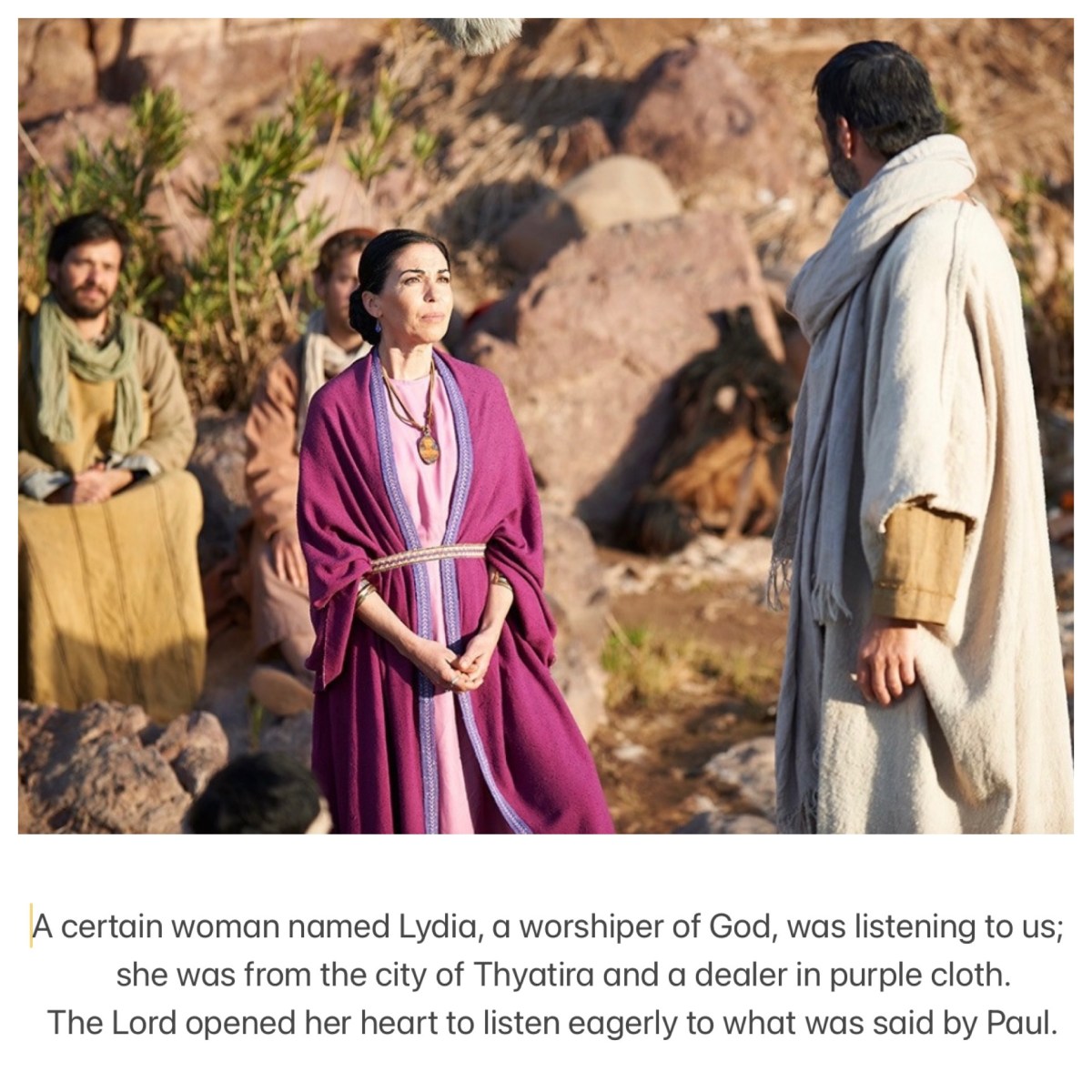
A second striking image is that of the morning star, in the words of Jesus, “I am the root and the descendant of David, the bright morning star” (22:16). That image was first expressed early in this book, in one of the seven letters to the churches. In each of the seven letters included in this book, “those who conquer” are given a specific gift to signal their special status. To those in Thyatira, to signal the authority that is given to them “to rule [the nations] with an iron rod, as when clay pots are shattered”, the specific gift is “I will also give the morning star” (2:26–28).

The morning star is referenced in the book of Ecclesiasticus (Ben Sirach), in a poem which praises Simon son of Onias (high priest in the early C3rd BCE). After celebrating his work in repairing and fortifying the temple, the joy that he brought is described through a series of images: “How glorious he was, surrounded by the people, as he came out of the house of the curtain. Like the morning star among the clouds, like the full moon at the festal season; like the sun shining on the temple of the Most High, like the rainbow gleaming in splendid clouds” (Sirach 50:5–7, and continuing on for some verses). A similar use of the phrase appears in the second letter attributed to Peter, where “the prophetic message” is compared with “a lamp shining in a dark place, until the day dawns and the morning star rises in your hearts” (2 Pet 1:19).

It is the bright, dazzling quality of the star that rises early in the morning, before sunrise—the planet we know as Venus—that is in view here. We should note that there is no intention to allude to the words of Isaiah, who refers in one of his prophecies about the punishment that was imminent for the King of Babylon. The prophet warns, “Sheol beneath is stirred up to meet you when you come … you pomp is brought down to Sheol” (Isa 14:9, 11), before depicting this decline in poetic language: “How you are fallen from heaven, O Day Star, son of Dawn! How you are cut down to the ground, you who laid the nations low!” (Isa 14:12).

In the 17th century King James Version, “O Day Star” is rendered as Lucifer—since that is how “light-bringer” is expressed in Latin. This was the term used in the Vulgate, a late-4th century Latin translation of the Bible. This verse has been picked up in later theological developments and applied to the figure of the devil; it is probably also influenced by words attributed to Jesus in Luke 10:18, “I watched Satan fall from heaven like a flash of lightning”. 

However, this sense of the term does not relate at all to the way the imagery of “the morning star” appears in Revelation. In this book, the devil is depicted as “a great red dragon, with seven heads and ten horns, and seven diadems on his heads” (Rev 12:3; 20:2) who is “the deceiver of the whole world” (Rev 12:9) who is ultimately “thrown into the lake of fire and sulfur …[to be] tormented day and night forever and ever” (Rev 20:10).

WATER OF LIFE 

The third striking image in this final chapter of Revelation is “the water of life”. John had indicated that this water would be gifted to those who are thirsty (Rev 21:6). This gift comes from “the Lamb at the centre of the throne” who is the shepherd of “a great multitude that no one could count, from every nation, from all tribes and peoples and languages, standing before the throne and before the Lamb, robed in white, with palm branches in their hands” (7:9). This shepherd, says John, “will guide them to springs of the water of life, and God will wipe away every tear from their eyes” (7:17).

The imagery appears returns as integral part of the final climactic vision of “the holy city Jerusalem coming down out of heaven from God” (21:10). John writes that the angel showing him the vision of this city “showed me the river of the water of life, bright as crystal, flowing from the throne of God and of the Lamb” (22:1). 

The river brings water to nourish life, just as another John (compiling a Gospel narrative) attributes to Jesus words in which he offers water as the basis for life: “those who drink of the water that I will give them will never be thirsty; the water that I will give will become in them a spring of water gushing up to eternal life” (John 4:14). These words evoke the reality that all human beings know, that “the necessities of life are water, bread, and clothing, and also a house to assure privacy” (Sirach 29:21; see a similar, but expanded, list at Sirach 39:26).

The scene at the end of Revelation evokes the vision described centuries earlier by the prophet Ezekiel, in the final chapter of his book. Ezekiel details the water flowing from the temple, the abundant trees growing beside the river, and the food sources for the people (Ezek 47:1–12). It is a wonderful ecologically vibrant scene, as is the vision in Revelation, where “on either side of the river is the tree of life with its twelve kinds of fruit, producing its fruit each month; and the leaves of the tree are for the healing of the nations” (Rev 22:2).

So the book ends with words of grace: “The Spirit and the bride say, ‘Come’; and let everyone who hears say, ‘Come’, and let everyone who is thirsty come. Let anyone who wishes take the water of life as a gift” (22:17). It’s a nice closing note.

Saying Sorry—beginning the process of Telling Truth

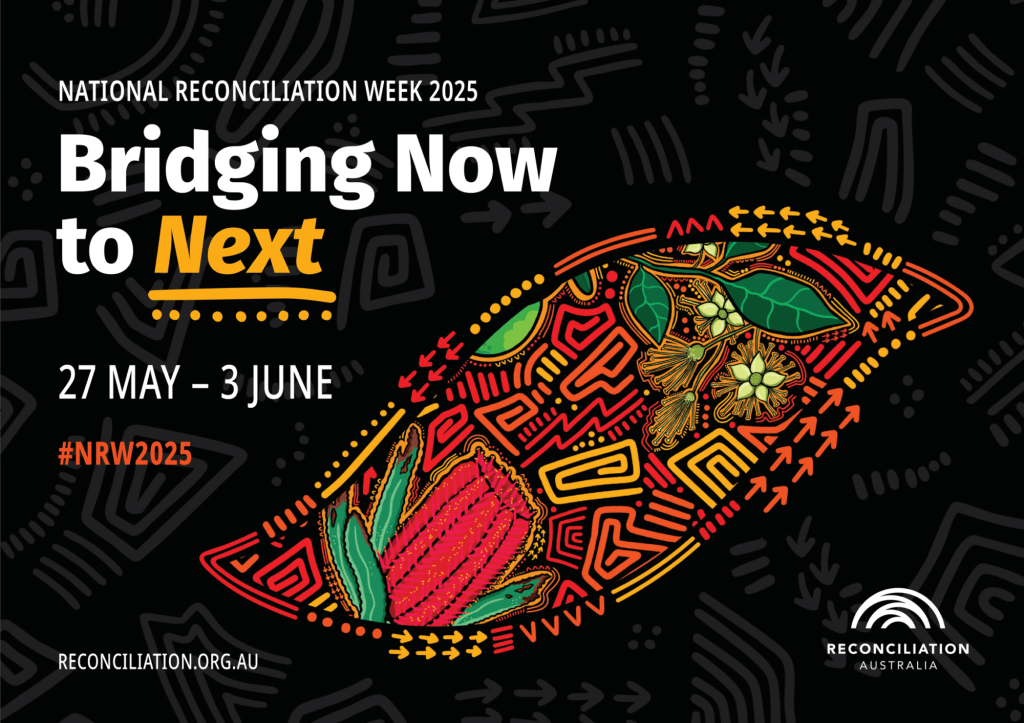
Today is National Sorry Day. It begins National Reconciliation Week, which runs from 27 May to 3 June each year. This week was initiated in 1996 by Reconciliation Australia, to celebrate Indigenous history and culture in Australia and promote discussions and activities which would foster reconciliation.

The dates of National Reconciliation Week hold special historical significance. On 26 May 1997, the Bringing Them Home report was tabled in Federal Parliament. This report addressed them impacts of the fact that in the late 19th century and throughout the 20th century, Australian government policies resulted in many Stolen Generations, in which thousands of Indigenous children were separated, often forcibly, from their families, with the aim of removing them from their culture and turning them into “white Australians”.

Because of this, the date 26 May carries great significance for the Stolen Generations, as well as for Aboriginal and Torres Strait Islander communities, and its supporters among non-indigenous Australians. The word sorry is used in First Nations cultures in relation to the rituals surrounding death—the process of grieving is often call Sorry Business. So sorry indicates an acknowledgement of loss and offers empathic understanding to those who grieve.

Sorry Day is an annual event that has been held around the continent on 26 May since 1998, to remember and commemorate the mistreatment of the country’s Aboriginal and Torres Strait Islander People.

Mick Dodson and Ronald Wilson,
Commissioners of the Bringing Them Home Report
at its launch date on 26 May 1997

27 May marks the anniversary of the 1967 referendum in Australia, which gave the vote to Aboriginal and Torres Strait Islander people, while 3 June marks the anniversary of the 1992 judgement by the High Court on the Mabo v Queensland case.

Sorry Day (26 May) and the National Apology (made in Federal Parliament on 13 February 2008), the 1967 referendum, the 1992 Mabo decision, along with the Wik decision on native title (delivered by the High Court on 23 December 1996), are considered to be key events in addressing the historic mistreatment of indigenous Australians, and in taking steps towards reconciliation and restorative justice.

But these were only steps. The path still lies ahead. We need to take more steps, walking together, to foster deeper relationships, advocate for a more embedded restoration of justice, work for wider and more lasting reconciliation within our communities. The current discussion is focussed on a process that will lead to a referendum on the proposal that the Australian Constitution recognise the First Peoples as custodians of the land from millennia before the British Invasion and colonisation of 1788, and the establishment of a permanent Voice to the federal parliament.

This step is but one on a pathway that stretches ahead of us, well into the succeeding generations still to come in Australia. We need to hear and understand the Truth that was set forth in the 1997 Report, and indeed to listen to the Truth that is being stated by First Peoples leaders in our own time, and be willing to respond with sorry and with actions that lead to justice for the First Peoples of this continent and it’s surrounding islands.

The theme for National Reconciliation Week 2025 is Bridging Now to Next. This theme reflects the ongoing connection between past, present, and future, urging us to look ahead and continue the push forward as past lessons guide us.

To seek reconciliation, we need to speak together, commit together, and act together. We are all in this together. May we tread that pathway with compassion and intent.

See https://www.reconciliation.org.au/national-reconciliation-week/

Click to access 150520-Sorry-Day.pdf

https://australianstogether.org.au/discover/australian-history/1967-referendum/

https://australianstogether.org.au/discover/australian-history/mabo-native-title/

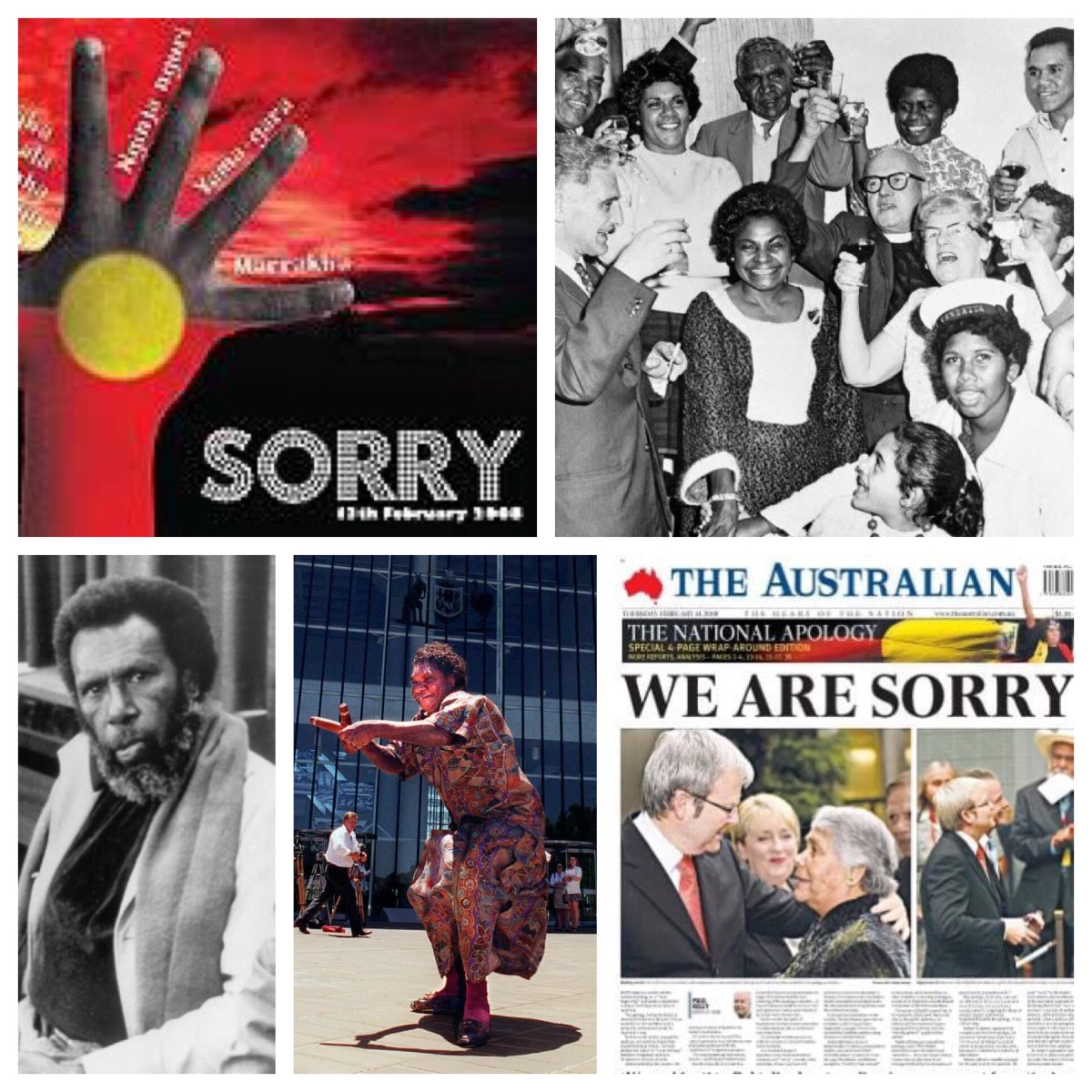
The picture montage shows a Sorry Day poster, celebrations after the 1967 referendum, Eddie Mabo who brought the High Court case that was resolved in 1992, Gladys Tybingoompa dancing outside the high court in Canberra on 23 December 1996 following the Wik people’s native title win, and the front page of a national newspaper reporting the National Apology in 2008.