The notion of a high priest, offering sacrifices for the sake of the people, was central to the religious practices of the people of Israel for many centuries, as the collection of laws in much of the Torah (Exodus, Numbers, Leviticus and Deuteronomy) reflect.
This is clearly summarised in the section of the letter offered for consideration in worship this coming Sunday (Heb 9:11-14); Jesus “entered once for all into the Holy Place, not with the blood of goats and calves, but with his own blood, thus obtaining eternal redemption” (9:12). This is fully consistent with the ancient Israelite understanding that “the blood of goats and bulls, with the sprinkling of the ashes of a heifer, sanctifies those who have been defiled so that their flesh is purified” (9:13).
We have also noted that constructive purpose of this language is to demonstrate that Jesus brings the process of sanctification to a head (13:12; see also 2:11; 9:13–14; 10:10, 14, 29) and enables believers to “approach [God] with a true heart in full assurance of faith” (10:19–22). This is “the eternal redemption” (9:12) that is celebrated in the excerpt offered for this Sunday by the lectionary (9:11–14). See
Nevertheless, it is clear that the way this understanding is developed in this book is argumentative and tendentious. The analysis of Jewish concepts of sacrifice provided serves to render Judaism as a whole as obsolete. The earlier Jewish system of offering sacrifices is now exposed as flawed, insufficient, and rendered redundant, through the argument that is prosecuted relentlessly throughout this book. This is a disturbing rhetorical trajectory.
To discern what constructive relevance this may have for us today, we need to understand the standpoint of the author of this word of exhortation in his own context.
It is clear that this word of exhortation has an underlying polemic running throughout. This is signalled in the opening exhortation of the work, which urges the audience to “pay greater attention” to teachings already delivered (2:1); the closing section reminds them not to be carried away “by all kinds of strange teachings” (13:9). This is reinforced when the writer asserts that the audience still needs basic teaching: “you need milk, not solid food” (5:12). The polemic is clear.
The imagery associated with this saying links the audience with infants, in contrast to others who are “the mature” (5:13–14; the Greek is teleiōn). The most urgent task they face is to “go on towards perfection” (6:1; the Greek is teleiotēta) in advanced teachings. There is no need to replicate what has already been given in the “the basic teaching about Christ” (6:1), “the basic elements of the oracles of God” (5:12), which are summarised in three pairs: “repentance from dead works and faith toward God, instruction about baptisms and laying on of hands, resurrection of the dead and eternal judgment” (6:1–2). More is needed than this.
Underlying these teachings is a belief that God remains faithful to what has already been promised (10:23). The audience is reminded that these promises can be known from God’s “powerful word” (1:3), which is described as being “living and active, sharper than any two-edged sword” (4:12), a “word of righteousness” (5:13) which contains an inherent goodness (6:5) and which has already been spoken to them by their leaders (13:7). The interpretation of scripture is thus of fundamental significance in this sermon. It is a right understanding of scripture that clarifies matters for the readers.
The central element in the teaching provided in this sermon is the establishment of a “new covenant” (8:8–13, citing Jer 31:31–34). Jesus is the mediator of this “new covenant” (12:24) who opens a “new and living way … through the curtain” (10:20) and offers an “eternal inheritance” (9:15). There is much of positive value in this teaching, particularly in its Christological aspects.
(And it is a puzzle to me to note that the main substantive sections of this argument about the new covenant are omitted from the selection of passages included in the Revised Common Lectionary!)
However, there are also highly problematic elements in the line of argument advanced in Hebrews. The teaching is developed by means of a comparison between the first and second covenants which degrades the former at the expense of the latter. Particularly difficult is the direct assertion that Jesus “has made the first one obsolete; and what is obsolete and growing old will soon disappear” (8:13).
Also problematic is the assertion that, as the “Son who has been made perfect forever” (7:28), Jesus has “has now obtained a more excellent ministry, and to that degree he is the mediator of a better covenant, which has been enacted through better promises” (8:6).
This assertion appears to legitimise the view that Judaism has been superseded—a teaching which flourished in later Christian history and was used to validate numerous pogroms and persecutions against Jews. This must not, however, be taken as the definitive stance of all Christians towards Jewish believers. Whilst this is the view which is espoused in this particular New Testament book, for the people who first received it, it is not determinative for all time.
What do we make of the word of exhortation that we encounter in this sermon to the Hebrews? The book spends a lot of time on the process of sacrifice, presenting it as a transaction undertaken between God and humanity. We might ponder the relevance of the terminology of sacrifice in the contemporary world; is it still a valid way to conceive the way that humans can relate to God?
We might choose to think about the different elements of sacrifice seen in the ancient world, which we no longer practice today. We might also give some thought to the way we talk about deaths in war in the contemporary world, as sacrifices for the sake of the country. The imagery still has a potency.
The focus on death, the shedding of blood, and the sacrifice of a human life, also raises ethical questions. What is the value of focussing on the necessity of death as the centrepoint of the divine-human transaction? Is this a helpful thing to do? Does it place cold-blooded murder and innocent suffering at the heart of this important relationship? Is this how I want to portray my relationship with God?
It is clear that Hebrews has provided something of the basis for the development of the classical doctrine of atonement. The above concerns, however, raise questions as to its importance within the canon, and within Christian doctrine. Is it still a book to be valued as “scripture”?
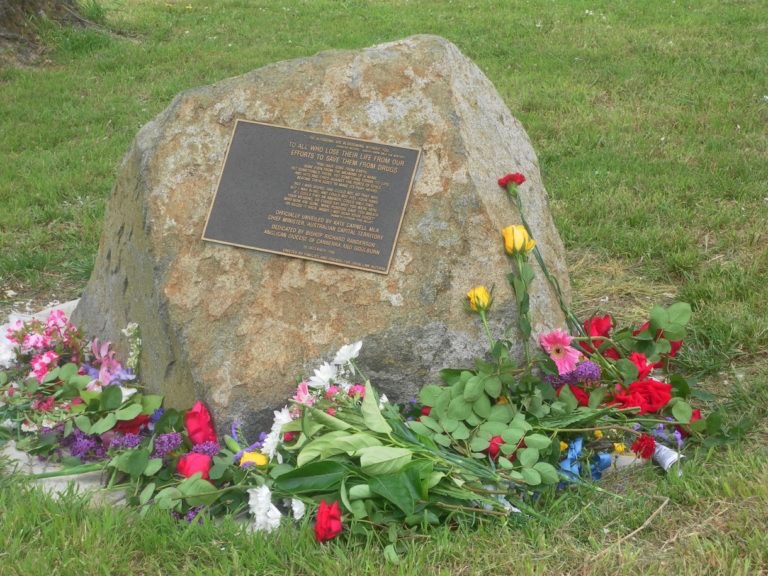
Every year in late October, the Families and Friends for Drug Law Reform hold a ceremony to remember loved ones who have died because of drugs. Since the ceremony was first held in 1996, it is estimated that over 20,000 people have died because of drug overdoses.
The ceremony takes place in springtime in beautiful Weston Park in Canberra. The location, beside a memorial on a stone under a locust tree (Robiniapseudoacacia), was chosen for the first ceremony in 1996, because of its particular associations for the family of one of the members of FFDLR, whose brother had died earlier that year.
The blossoming locus tree under which the memorial stone lies is a potent symbol for the event: an expression of hope in the midst of remembering and honouring those who have died.
Each spring, the locus tree is in blossom
Bill Bush, Chairperson of FFDLR, notes that “these avoidable deaths have ballooned out to at least 20,000 people since that first ceremony. Then, as now, opiate overdoses have been the main cause.”
“The make-up of those who have died”, Bill advises, “has changed from generally troubled young people trying to cope, pushing boundaries and risk-taking, as young people have always done, to include older Canberrans who, in desperate search for inadequately provided pain relief, have had recourse to illicit substances. There are those who in desperation to shed themselves from a dependency have taken their own life without the aid of any drugs.”
The ceremonies have brought out of the shadows the promise and worth of those who have died and enabled grieving families and friends to draw aside the curtain of shame and stigma with which an unfeeling society has shrouded their loved ones. You can read some of the addresses given over the years at https://www.ffdlr.org.au/remembrance/
Every year, a local politician speaks at the ceremony—this year it was Peter Cain, MLA for Ginnindera, who chairs the Select Committee considering the Decriminalisation Bill. In addition, a family member of someone who has died speaks—this year, Janine Haskins, whose 23 year old daughter, Brontë, was driven to believe that the only relief available to her was to take her own life. She bore witness to a tragic sequence of events leading to the death of Brontë.
This year, also, I was invited to preside over the roll call of names of people who are being remembered, and to speak as a representative of people of faith. Here’s the address that I gave.
*****
I thank you for the invitation to share some thoughts with you this day.
I acknowledge the Traditional owners of the land on which we are gathered, the Ngunnawal and Ngambri peoples, and I pay my respects to their elders, past and present, and to those emerging within community.
I also acknowledge those who have died and who we remember today and offer my condolences to those who loved them, particularly the newly bereaved.
(We then shared in a time of silent remembrance, as people recalled their loved one they were remembering.)
Today, as we remember, we recognise that we come to this ceremony from various walks of life, with various experiences, perspectives, and understandings. Our insights about life, our understandings of life in this realm and beyond, are varied. Some of us participate in rituals and in communities that help us to make sense of our lives, and of death, when it takes place. We recognise and value that diversity in our midst today. All are welcomed into this shared moment of remembering.
I join with you today as a representative of people of faith, for whom the loss of life of a loved one is a special moment. It stands as a moment for remembering, grieving, giving thanks for a life, mourning the loss of relationship and connection. No matter what faith tradition, each religion marks such a moment with a sensitive rite of passage, as the person deceased slips away from our reality, into another reality beyond. We gather to remember, grieve, recall with thanks, and comfort one another.
In this time of remembrance today, we mark again those moments of passage for our loved ones—those we have named, and countless others not here named—who have taken that pathway into the beyond. We bring out of the shadows the names and faces, the joys and griefs, the achievements and the unfulfilled hopes, of those who have gone from us.
I join with you as a Christian minister, from a faith community that holds firmly to the conviction that, whilst death is the end of mortal life, it marks a new beginning in our relationship with God. We do not know with clarity and assurance what form that new relationship takes; but we hold with hope to the belief that this life is not the totality of our human existence.
In this time of remembrance today, each of us, in terms of our own personal commitment of faith and hope, grieves the loss of a loved one, yet affirms our hope that their reality, now, has taken them away from the grip of whatever caught them, surrounded them, and led them to the point of death. Beyond those shadows, we hold to the belief that our loved ones live in the light.
And I join with you as a member of the Uniting Church, which has a commitment to stand in support of those who have been bereaved in this situation. In recent years, the Uniting Church has developed the Fair Treatment campaign, in which we join with over 60 partner organisations, and many concerned individuals, to affirm that our policies and our laws must not stigmatise and marginalise the most disadvantaged people in our community. This is a vitally important commitment. (See https://www.fairtreatment.org)
The man who shapes the perspective of the world that I adhere to and seek to follow in my life is the man from Nazareth who sat, befriended, listened, questioned, encouraged, challenged, enriched, expanded horizons. This man from Nazareth would not validate the harsh, uncaring, depersonalising course of action that many of your loved ones have experienced as they grappled with drug dependency, suicidal ideation, or the intensified pain that came with age and disability.
By trusting in the way of the man of Nazareth, I place my faith in the positive and hopeful dimension of humanity. That man, Jesus, affirmed what the sages of old had long declared: we human beings are made in the image of God. Our very beings “radiate the glory of God”, to use the ancient scriptural terminology.
At our own creation, the breath of God was breathed into us, infusing our being with all that God is, all that God offers. Our very beings contain within them the potential to be life-affirming, world-embracing, in hope-filled living, in loving relationships, in caring compassion. Each human being therefore needs to be accorded dignity and respect, as a person bearing the mark of the divine, with the breath of the divine inspiring and enabling our very being.
In my understanding, this high view of humanity undergirds the work of the Families and Friends for Drug Law Reform. A commitment to the value of each individual human life informs the advocacy, the research, the educational work, the relational support, and this annual remembering, of this so-important organisation. We are made in the image of God. We have within us the capacity to be our very best.
Let us continue to hope, to love, to work, to care; to advocate, to persuade, and to rejoice, in this work.
*****
*****
In 1999, the Rev. Gregor Henderson spoke at this event. He said then:
It is not right to treat drug users as criminals, as outcasts, as people who are beneath compassion and love.
It is not right that people die from drug dependency, in alleyways or parks, in living rooms or hospital casualty wards.
It is not right that people die from unintentional overdoses, from highly toxic mixtures of drugs, from shared needles.
It is not right that people die when new approaches and treatments are available but governments lack the courage to permit them.
It is not right that society has been unable to find better ways of caring for drug users and moving them towards rehabilitation.
It is not right that some, the real criminals, profit from the importation and sale of illicit drugs.
It is not right that people, especially young people, are exploited mercilessly by the Mr and Mrs Bigs of the drug trade.
It is not right that parents of young drug users have great difficulty in finding help for their sons and daughters who are using drugs and for themselves as they want desperately to help them.
It is not right that parents are forced to break the law by allowing their drug-using offspring to inject safely at home in preference to throwing them out on the streets.
Surely it is time for a much bigger dose of compassion in relation to illicit drugs.
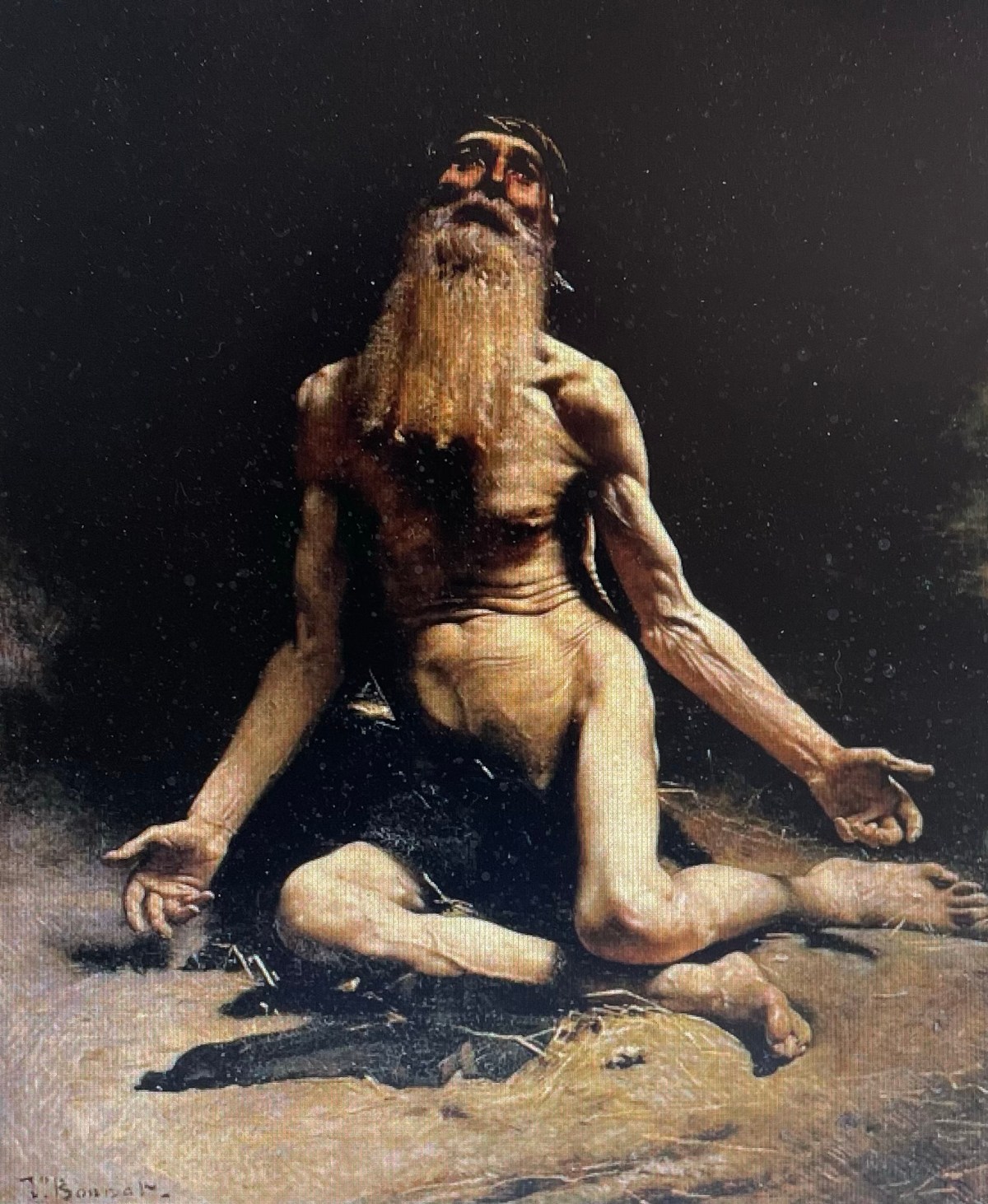
The book of Job is a challenging and disturbing book. It takes us to a central dilemma that we all face in our lives. It provides us with a stimulus to undertake an exploration that is eminently suited to the time that we have been experiencing over the past few months in lockdown—indeed, since early in 2020. The book poses the question: why is this happening?
That’s a question many are asking about the pandemic. Why has it come upon us? Or, to be more theological about it: why are innocent people suffering? why are we caught in this current spiral? do those without a moral compass appear to prosper? why do those who seek to do good find themselves beset by problem after problem?
The question is acute for us each personally, during this time of restrictions because of a global pandemic. After all, we had nothing to do with the cause of the pandemic. Why should we suffer the frustrations of lockdowns, if we are innocent of causing the virus to spread? Why should we endure the hardships of reduced interpersonal interactions, if we have been behaving with due care? Why should we not be able to gather for worship, since we have not been in places where infections have been found?
The question is also pertinent and pressing in our current global context. For a start, the pandemic has inflicted suffering and death on millions of people around the world—suffering far more invasive than what we are experiencing in the current lockdown. How many millions of people have died? And how many millions of family members have suffered the grief and despair of not being able to say farewell to their loved ones as they die in hospital wards? And how many medical and nursing professionals have been stressed beyond limit by the incessant demands they have faced during the pandemic? And how fair is all of this?
The question also presses in terms of the climate. We have long known that the climate is changing, the high temperature averages are claiming, the arctic glaciers are melting, the sea levels are rising, the intensity and frequency of catastrophic weather events are climbing—and people around the globe are suffering. All of this presents a challenge to the way we live. We may even think that we are suffering unfairly in such a scenario.
It is clear that the science has come to a conclusive decision: we human beings have been contributing in a major way to the changes in the climate for over two centuries, now. We actually can’t lament that we are suffering unfairly, since our comfortable lifestyles in the well-to-do Western world undoubtedly mean that our carbon footprints are much larger than they should be. We are contributing to climate change, so can’t expect to be exempt from its ravages.
But what of those whose carbon footprint is minuscule, in comparison to our own? There are 16 African countries whose CO2 emissions per year are 0.15 tons per person or less. As you trace the names of countries as the figure rises, there are many more African and Asian countries, long before any European countries are noted.
By contrast, the figure is 17.10 tons per person for Australia, 15.52 for the USA, and 18.58 for Canada. That is a completely inequitable output. Should we not be suffering more deeply, in the western world, than people in Africa and Asia are? And yet the reality is that the comfortable, even extravagant, lifestyle of the western world is what is driving the incessant rate of increased CO2 in the atmosphere. And the whole world—humans, animals, fish and bird, and vegetation—suffers as a result. The questions raised by Job are acutely relevant to this issue.
And the question remains hanging as we reflect on levels of malnutrition and access to food in the current world. The World Food Programme of the United Nations estimates that one in three people around the world. Even before the current pandemic, each and every day of the year, 820 million people were seriously underfed and hungry.
Children bear the brunt of this inequity. 149 million children under 5 are estimated to be stunted (too short for age), 45 million are estimated to be wasted (too thin for height), and 38.9 million are overweight or obese. That is a situation that is utterly unjust. The questions press even harder on us.
We have the means, we are told, to distributefood equitably around the world. And yet up to one third of food is dumped everyday in the USA—a shocking waste of resources and a completely inequitable state of affairs. So those who happen to have been born in certain areas of the world where circumstances beyond their control mean that they are suffering far more than is warranted. Injustice abounds. The questions from Job resonate—how is that fair?
And then, there are survivors of domestic violence, and—still—survivors of child sexual abuse, and those suddenly facing homelessness, and those in the long enduring grip of mental illness, and those fleeing violence and persecution in their home countries, seeking refuge and asylum in a welcoming place … and many other situations where the innocent are suffering unjustly. The list could be very long, indeed, if we give careful thought to it.
So, reflecting on these matters, in the light of the discussions that are recorded in the story of Job, we have much pause for thought. How do we reconcile our faith in God—God who is loving, God who is just, God who is overseeing all that takes place—given these terrible realities? Is the image of God that we have accurate? If God can act to change any of these terrible situations that we are facing, why does God not so act? Is God uncaring? Is God unable to act? Is God not concerned with justice?
These are the questions that Job explores. It is a book which provides us with deep resources for thinking about such matters. It is a tale that resonates with so much in the experience of contemporary people. It is a take for our times.
“Why is light given to one in misery, and life to the bitter in soul, who long for death, but it does not come, and dig for it more than for hidden treasures; who rejoice exceedingly, and are glad when they find the grave? Why is light given to one who cannot see the way, whom God has fenced in?” (Job 3:20–23). Why? is the question that Job asks incessantly, as he ruminates on what fate has befallen him.
Job, the righteous, upright person, struck with tragedy and blighted with grief, laments his situation. His story provides a good tale for us to consider during this time of global pandemic. It is a tale that explores the questions that we may be pondering.
As the story begins, we learn that Job had a good, prosperous life; but through no fault of his own, his life is turned upside down; he lost stock—500 oxen, 500 donkeys, 7,000 sheep, and 3,000 camels—and all of his children—seven sons and three daughters (1:13–19). His life, once blessed and enjoyable, was utterly destroyed.
Yet “in all this”, we are told, “Job did not sin or charge God with wrongdoing” (1:22). Indeed, after each round of festivities enjoyed by his children, his practice was to sanctify all his family. He would “rise early in the morning and offer burnt offerings according to the number of them all” (1:5). He was indeed “blameless and upright, one who feared God and turned away from evil” (1:1).
Job came under attack, he felt. Through no fault of his own, his life was turned upside down. He was deeply distressed. “Why did I not die at birth, come forth from the womb and expire?”, he cried (3:11). “Why were there knees to receive me, or breasts for me to suck?” (3:12). “Why was I not buried like a stillborn child, like an infant that never sees the light?” (3:16). The joy at the prosperity which he had enjoyed had crumbled, his very being was pierced with deep grief and despair.
He turns, in his anguish, to God, whom he accuses of having brought this suffering upon him. “Why have you made me your target? Why have I become a burden to you? Why do you not pardon my transgression and take away my iniquity?” (7:20–21) “Why did you bring me forth from the womb? Would that I had died before any eye had seen me, and were as though I had not been, carried from the womb to the grave”, he laments (10:17–18).
Job berates God, whom he sees as being negligent in not intervening to save him from his fate. “Why do you hide your face, and count me as your enemy?” (13:24), he asks. Then, some time later, he presses the point: “Why should I not be impatient? Look at me, and be appalled, and lay your hand upon your mouth. When I think of it I am dismayed, and shuddering seizes my flesh.” (21:4–6). He lays the blame at God’s feet: “Why are times not kept by the Almighty, and why do those who know him never see his days?” (24:1)
Why? Why?? Why??? is Job’s constant question.
Job reflects on the quest for Wisdom, which is what is advocated in Proverbs (Prov 1:2–7; 2:1–5; 3:13–18; 4:5–9; 9:10; 15:32–33; 16:16; 17:24; 19:20; etc) and sought by The Teacher (Eccles 1:13; 7:25). Yet the search for Wisdom, who is more precious than jewels (Prov 3:15; 8:10–11), is much more difficult than mining for those precious jewels (Job 28:1–11).
“Where shall Wisdom be found? Job asks (28:12). “Where does Wisdom come form?” (28:20). The answer is, “it is hidden from the eyes of all and concealed from the birds of the air” (28:21). Job despairs of ever finding Wisdom. God knows the way to Wisdom (28:23–27), but direct access to Wisdom remains elusive. All that is offered is “the fear of the Lord” (28:28–a verse attributed to Job, but which many scholars consider to be an authorial gloss on the whole speech).
Elihu rebukes Job, turning his incessant questioning back on him: “God is greater than any mortal. Why do you contend against him, saying, ‘He will answer none of my words’? For God speaks in one way, and in two, though people do not perceive it.” (33:12–14). “Far be it from God that he should do wickedness, and from the Almighty that he should do wrong”, Elihu contends (34:10). “Surely God does not hear an empty cry, nor does the Almighty regard it”, he maintains (35:13).
The claim that God is not just is an outrage to Elihu. He turns to the inscrutable nature of God: “Surely God is great, and we do not know him; the number of his years is unsearchable” (36:26). “The Almighty—we cannot find him”, Elihu maintains; “he is great in power and justice, and abundant righteousness he will not violate” (37:23).
Yet Job will not budge. Finally, after a blistering speech from the Lord himself, out of the whirlwind (38:1–41:34), in which the deity makes it clear that Job cannot pretend to have any comprehension of the ways that God operates, Job backs down. He responds, sarcastically: “I know that you can do all things, and that no purpose of yours can be thwarted” (42:2), and then delivers his coup-de-grace: “therefore I despise myself, and repent of dust and ashes” (42:6).
It should be noted that the common rendering of these final words of Job in so many translations have inevitably mistranslated a crucial word. The Hebrew here clearly states, “I repent OF dust and ashes”. The twist to repenting IN dust and ashes, found in most translations, portrays Job as meekly withdrawing his complaint and submitting to the inscrutable mysteries of God.
But he does not. In fact, his final word is another sarcastic barb, aimed directly at God: “I will give up on playing the meek-and-humble supplicant”. He has not had his questions of Why? Why?? Why???answered in any satisfactory way. So he remains defiant. He repents of repenting. He will not be sorry.
It should also be noted that the “happy ever after” ending we have in 42:7–17, in which Job is vindicated and his fortunes are restored twofold, is widely recognised as a later ending which was not part of the original saga. In the original story, Job’s probing questions remain relentlessly unresolved.
The book of Job is a challenging and disturbing book. It takes us to a central dilemma that we all face in our lives. It provides us with a stimulus to undertake an exploration that is eminently suited to the time that we have been experiencing over the past few months in lockdown—indeed, since early in 2020. The book poses the question: Why is this happening? That’s a question many are asking about the pandemic. Why has it come upon us?
Or, to be more theological about it: Why are innocent people suffering? why are we caught in this current spiral? Do those without a moral compass appear to prosper? Why do those who seek to do good find themselves beset by problem after problem?
I’ll explore these questions further in part II of this reflection in the next blogpost.
******
See also this series of sermons on Job by Elizabeth:
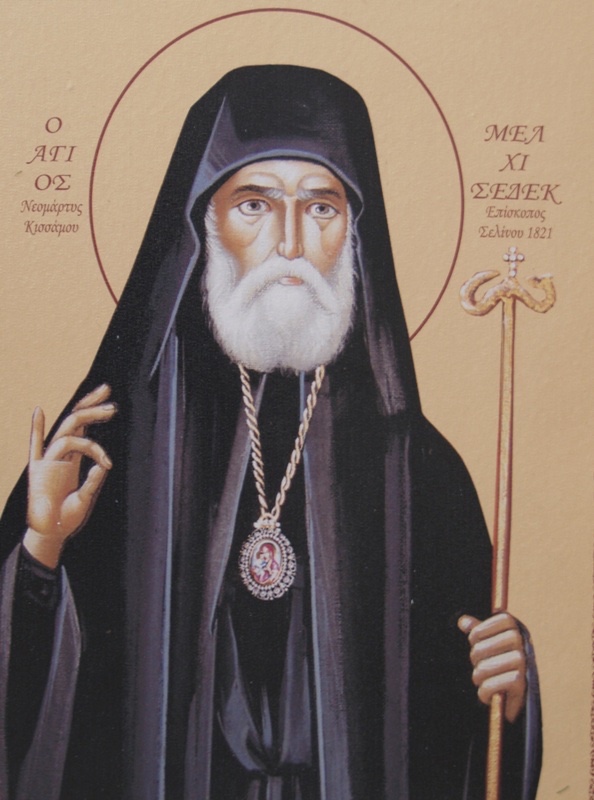
“You are a priest forever, according to the order of Melchizedek” (Heb 5:6 and 7:17, quoting Psalm 110:4). This is a distinctive teaching, found only here in the New Testament. What are we to make of it? Who is Melchizedek? How is he relevant to Jesus? Why is this relevant for us today?
The book we know as “the letter to the Hebrews” is a most distinctive work. It is regularly described as a letter, but it doesn’t follow many of the conventions of a Hellenistic letter. It claims to be a word of exhortation, but many long sections in the work are in fact didactic expositions, not pastoral encouragements.
Whilst Paul describes Jesus as a sacrifice, whose death offers us forgiveness of sins and reconciliation with God, only Hebrews portrays Jesus as the priest who makes the sacrifice, slaughtering the sacrificial beast (2:17; 3:1; 5:1–6; 6:20; 7:26–28; 8:3; 10:12) and simultaneously as the victim, lying on the altar as the one whose blood is being shed (9:11–14; 9:26; 10:19; 12:24; 13:20). And only Hebrews makes the declaration noted above, that the nature of the priesthood of Jesus is that he is priest “according to the order of Melchizedek”.
Melchizedek is a Semitic name which is comprised of two separate words: melek, meaning king, and zedek, from tsedeqa, the Hebrew word for righteousness. These terms bring together two key aspects of life and faith for the ancient Israelites. The king was the ruler and leader, through whom the people were in covenant with God (2 Sam 7). Righteousness was the central characteristic of God, which was to be the central commitment of the people of Israel (Gen 18:19). So the king was to rule by righteousness (Psalm 72:1-4).
We meet Melchizedek, the king of righteousness, early in Genesis, when Abram is making his way from Egypt, where he went during the famine (Gen 12:10), through the Negev (Gen 13:1). Abram meets Melchizedek in a place named as The King’s Valley (Gen 14:17). It occurs after God had called Abram and Sarai from their life in Ur of the Chaldees (Gen 11:31) and before God makes a covenant with Abram (Gen 15), which Abram (at the ripe old age of 99 years) seals through the rite of circumcision (Gen 17).
The encounter with Melchizedek is a short interlude in the saga, immediately after Abram has recused his son Lot from a coalition of kings in the Mesopotamian region (Gen 14). Salem, of which he is said to be king (Gen 13:18), is very probably Jerusalem—Psalm 76:2 places Salem in parallel with Zion, pointing to this identification. And Jerusalem was the seat for King David and his descendants, so it makes sense that The King’s Valley would be in this area.
Melchizedek offers Abram bread and wine, and prays over him, conferring a blessing on him (Gen 14:19–20). It is the blessing of “El ʿElyon,” which is a name of Canaanite origin, probably designating the high god of their pantheon. Abram responds by offering Melchizedek a tithe (Gen 14:21), and is insistent that Melchizedek accept all that is offered.
In Roman Catholic tradition, the offering of bread and wine by Melchizedek is regarded as a “pre-presentation of the Mass”—a prefiguring of the sacrifice of Jesus celebrated in their liturgy. He is mentioned in the First Eucharistic Prayer of the Mass, and is remembered as a martyr each year on 26 August. However, the offering of a meal to troops returning from battle was simply a common practice at the time; see, for instance, the lavish meal provided for the returning troops of David at 2 Sam 17:27–29.
The portrayal of Abram as the leader of an army (Gen 14:13–16) which was able to defeat the forces of a coalition of many kings (Gen 14:8–9) is recognised as an anomaly; elsewhere in the section of Genesis recounting the saga of Abraham (Gen 12–25), there is no indication at all that Abram had any any warmongering tendency or any capacity to fight battles.
Because of this, Old Testament scholar Joseph Blenkinsopp has suggested that the story of Melchizedek was inserted into the narrative about Abram to give validity to the priesthood and tithes connected with the Second Temple, after the Exile (which was the period when the book of Genesis was compiled). The links are made in that the King of Salem blesses and breaks bread with the ancestor of David, king in Jerusalem, and confers a priestly blessing from one of the gods of the land on the ancestor, Abram, from whom the Levites descended and amongst whom the sacrificial system and tithing requirements evolved.
The story has a clear validating purpose for the patterns that are being (re)established amongst the returned exiles in Jerusalem. It explains why David set up his headquarters in Jerusalem, and established a priesthood there which would receive offerings from all the people under his control. That validated the claims of the priests as the administered and oversaw the sacrificial system of the Temple cult, for they were seen to be adhering to the pattern established long ago under David—and, indeed, demonstrated long before that, by Abram.
There is nothing else known about Melchizedek, either in the Hebrew Bible, or in other ancient texts. We have no genealogy of Melchizedek; he simply appears, blesses Abram, and disappears from the story. He serves his single purpose, and then is heard of no more.
Certainly, the unique role and distinctive character of Melchizedek—and perhaps his mysterious origins—have made him a character of fascination. And that has been intensified within Christianity, because of the way that the book of Hebrews equates Jesus with Melchizedek and puts them into parallel with each other.
Thus, Jesus is decreed to be son of God (Psalm 2:7, cited at Heb 5:5) and then “a priest forever” (Psalm 110:4, cited at Heb 5:6). Both psalms which are cited are royal psalms, considered to provide messianic indicators, and thus are picked up within New Testament writings to claim the significance of Jesus, son of God, priest of the new covenant.
These psalms feed into the line of interpretation which sees Jesus in exalted terms—in this book, at least—as the great high priest, the superior high priest, the perfect high priest, the one who is pioneer and perfecter of our faith. And that line runs on beyond the New Testament, into other sects and cults that accord prominence to Melchizedek.
Viewed in this light, some interpreters press the point, making the analogy claim that, “just as Abraham, the ancestor of the Levites, paid a tithe to Melchizedek and was therefore his inferior, so the Melchizedek-like priesthood of Christ is superior to that of the Levites. Furthermore, just as the Old Testament assigns no birth or death date to Melchizedek, so is the priesthood of Christ eternal.” See https://www.britannica.com/biography/Melchizedek
But for myself, that is pressing the point too far, and wringing every tiny drop of significance out of something that I see more as an exotic reference to an ancient tale—a story that is not historical, but was crafted for its own apologetic purposes amongst the returned exiles in Jerusalem. It’s a little bit of New Testament exotica. Thanks, Hebrews!!
*****
See also ten facts about Melchizedek:
1. Only three books of the Bible mention Melchizedek
2. The New Testament says more about Melchizedek than the Old Testament
3. Melchizedek is a contemporary of Abraham’s
4. Melchizedek has no recorded family
5. Melchizedek was a priest of God Most High
6. Melchizedek gives blessings (or at least one)
7. Melchizedek is the king of Salem
8. Melchizedek’s name means “king of righteousness”
9. The order of Melchizedek is royal and everlasting
10. Melchizedek was greater than Abraham and Aaron
Every year in Australia, the month of October is designated as Mental Health Month. It encompasses World Mental Health Day, which is 10 October. This year, Mental Health Foundation Australia is running an Awareness Campaign with the very relevant theme of “Mental Health: Post Pandemic Recovery Challenges and Resilience”.
The focus for this month provides an opportunity to bring mental health out in the open, to improve understanding of mental health issues, and to remove the stigma associated with mental health. The aim is to showcase mental illness as a source of strength for people.
Each year 1 in 5 Australians experience a mental health issue. Approximately half of all individuals (45%) will experience issues with mental health in their lifetime. This could be anyone we know: a loved one, a family member, a friend, a colleague, a neighbour. It could well be ourselves.
People struggling with mental health issues often find themselves isolated, lonely and left to cope on their own. This month reminds us how important it is to reach out and support those in the community who suffer in silence. Simple things, like paying attention, listening carefully, and offering support, can mean much to someone having a mental health episode.
The best guidance for attending to someone struggling in this way is not to judge, not to dismiss their concerns as trivial, and not to try to cheer them up. Deep listening, quietly empathising, compassionate support, are the best things to offer such a person.
Curiously, recent data released by the Australian Bureau of Statistics indicates that suicide rates are the lowest they’ve been since 2016. This aligns with what is being observed in many countries around the world, reversing a climbing trend prior to COVID-19. It is thought that the pandemic has fostered a deeper sense of connectedness or shared societal worry about facing the pandemic together. Alongside that, the JobKeeper payment and other economic support measures provided by governments may well have had a protective effect.
A recent ABC report indicates that younger people have been disproportionately affected by many of the pandemic’s negative consequences, with declining mental health outcomes reported by an increasing number. They are more likely to be unemployed or in insecure work, given they account for a larger proportion of the casual or gig workforce. Younger people have also had to encounter mass upheavals to their education, social connection and future employment or study prospects. This trend was already evident before the pandemic. It has increased over the past 18 months.
The Black Dog Institute, in partnership with Mission Australia, reports that one in four young people reported experiencing psychological distress in 2020, with the prevalence of this twice as high for young women than young men.
We have known for a long time that more men take their life than women each year. However, the data indicates that women engage in self-harm at a higher rate and make more suicide attempts than men. While rates of suicide overall have declined in the 2020 data, sadly the number of Aboriginal and Torres Strait Islander people dying by suicide has increased in the past year.
Within the Uniting Church, we have a long partnership with Lifeline, which provides Australians experiencing emotional distress with access to 24 hour crisis support and suicide prevention services. In fact, Lifeline started as a ministry outreach from the Methodist Church, a precursor to the Uniting Church; it began in Sydney as an initiative of the late Alan Walker, superintendent minister of the then Central Methodist Mission. Lifeline (13 11 14) is always just a phone call away. See https://www.lifeline.org.au/
On their website, Lifeline states that when you ring them, you will talk with a person who will: “Listen without judgment — Provide a safe space to discuss your needs, worries or concerns — and Work with you to explore options for support”. That’s a model that we each can seek to implement in our own interactions with people we know who may be experience a mental health episode.
Miriam Parker-Lacey, Minister in placement at St Columba’s Braddon and Canberra City, and UCA Chaplain at ANU, is a Mental Health Matters trainer, and she has provided this training to people within the Presbytery in recent times. Being aware of how we can help friends or family who are facing the challenge of mental health is an important skill for us to learn.
A guest blog by theRev. Dr Geoff Dornan, minister with the Wesley Forrest Uniting Church Congregation in Canberra, ACT.
COVID-19 has turned the world upside down. Its impact upon the way we reason ethically has been immeasurable. There were the portentous signs in the first wave of infection of 2019-2020, especially in Italy, as clinical practice was tested as never before. I recall the Italian peak body for anaesthetics and critical care issuing a divisive guideline about the allocation of intensive care resources, suggesting an upper age limit for ventilator eligibility, the implicit condoning of ventilator withdrawal if necessary, and a ‘pragmatic’ focus upon maximizing clinical outcomes.
It could be said that there was little new in this. After all, much of it had been anticipated in longstanding clinical policy about the allocation of scarce healthcare resources, in what was known as the “fair innings” argument. The point, however, was not the clinical theory per se, but rather the shock of having to actually put such theory into practice on a wide scale.
Another clinical issue, as the virus spread across the world, was the relationship between patients and healthcare providers. Hospitals cancelled elective surgery to save on PPE supplies, beds, and human resources. Access to ICU level care was restricted and strict infection prevention controls were also put into place. Many patients faced prolonged precautionary isolation without the reprieve of visits from friends or family.
As if these challenges to clinical ethical practice, were not enough, COVID has also tested public health policy. As governments implemented biosecurity powers to ensure compliance with business closures and social distancing measures, available technologies were deployed to ensure adherence to new laws and contact tracing of those who contracted COVID-19. The use of phone metadata to locate and track individuals, occurred even in liberal democracies, as the seriousness of the pandemic intensified.
Phone applications were also introduced by governments in several countries to communicate with surrounding phones through Bluetooth, so as to record those with whom a person had been in close contact. In some cases, GPS tracking was also utilized: something generally restricted to police functions.[i] The public health emergency powers enacted in liberal democracies during the COVID-19 crisis have permitted to some extent a power imbalance between governments and citizens. Moreover, and most importantly, the framing of public health as a security issue, continues to allow exceptional actions to be taken, beyond what would be normally politically acceptable.[ii]
The Church’s Conundrum: Inclusion and Safety
While COVID-19 has ‘set the cat among the pigeons’ in the ethics of clinical practice and public health policy, the impact continues, raising new issues and challenges for many institutions, not least the church. Most recently, as countries open-up, and governments set policies which distinguish between the vaccinated and unvaccinated, denominations have made their own responses. Roman Catholic and Anglican leaders of Sydney have been quite clear about their reservations in following public policy.
The Roman Catholic Archbishop of Sydney, Anthony Fisher OP, in his message of September 9th, declared, “I would insist that ‘Jesus is Lord of all, and his gospel is a gospel for all. A ‘No Entry’ sign at the door of the church is wholly inconsistent with the Gospel preached inside.’ Race, gender, ethnicity, age, education, wealth or health status (including vaccination) must not be points of division within the Christian community or barriers to communion with Christ Jesus.”
The motivation for this stance is the high view that Catholicism harbours of the Church and the centrality of the Mass as the fundamental liturgical expression of being church. Moreover, speaking broadly, as evidenced in recent statements of ‘push-back’ from the Polish Catholic Bishops’ Conference, the Catholic Church is wary of the extension of state powers as a weakening of democracy and a slide into authoritarianism. Something we have seen as not entirely without foundation.[iii]
There have also been evangelical responses, such as the “Ezekiel Declaration” recently published by three pastors from Queensland, directed to the Prime Minister Scott Morrison, which states concern for those suffering mental and emotional stress from lockdowns, and which appeals to Morrison to resist the policy of vaccination passports on the basis that such a practice “risks creating an unethical two-tiered society”.
In spirit and mood, the declaration reflects not a high view of the Church in the Catholic sense, but a libertarian ethos with a strong inclination toward a priority for individual freedoms. More disturbingly, the document raises questions of soundness as it slides into a barely concealed ‘anti-vaxxer ethos’, and mistakenly implies that vaccination will be made mandatory. The declaration appears to be primarily ideological. [iv]
For the Uniting Church in Australia, thinking our way through the current challenge of the conundrum of the ‘vaccinated-unvaccinated’ as we prepare to ‘open up’ is confronting. Rather than seeing the issue in the singular terms of inclusion, for us, there is also the issue of safety.
John Squires, in an article ‘On Vaccinations, Restrictions and Fundamentalism”[vi]https://johntsquires.com/2021/09/20/on-vaccinations-restrictions-and-fundamentalism/, notes that there is a strong defence of the priority of vaccination, and by extension mandatory vaccination, plus the need for that priority to be exercised in deciding who attends worship and who does not. Of course, within the opinion piece, the author accepts that there may be good reasons for people not being vaccinated, especially underlying health issues.
He also argues for the continuation of on-line worship to serve the unvaccinated from the safety of their homes, so that the principle of inclusion can still be maintained in unison with that of safety. He concludes, “So, at the moment, I will advocate for complete adherence to government restrictions. My faith calls me to work for the common good, to care for the vulnerable, to love my neighbours, both near and far. Minimising risk of transmission as we gather is our first duty. Ministry takes place in many ways other than sitting in an enclosed space for an hour once a week!”
Considering the Problem through the Lens of our Ethical Traditions
Given the various Christian responses, which range from a priority for unrestrained inclusion of all comers to a physical place of worship, to a priority for safety, limiting physical presence at worship to the vaccinated alone, at least until the danger of COVID subsides, I think we need some help. My suggestion is to appeal to and examine the three major ethical traditions which have shaped and continue to shape the way we moderns think about ethics. My question is simply this: what would each have to say to us about this problem?
There are three traditions that I shall briefly examine: the Ethics of Duty, the Ethics of Consequence, and the Ethics of Virtue.
Ethics of Duty
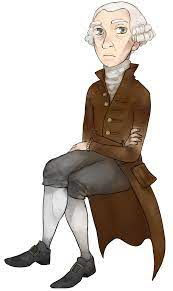
The ethics of duty are not concerned with the consequences or results of actions, but rather their inherent rightness. The point is do the right thing, do it because it is the right thing to do, irrespective of the results; after all results or consequences cannot be entirely foreseen or controlled. The father of the ethics of duty was Immanuel Kant, whose august figure you can see below.
Within the ethics of duty there are what are called categorical imperatives, one of which you would already know: “act so as to treat people never only as a means, but always as an end”. There is another categorical imperative which you may not know. In it, Kant points out that you should not do something if it cannot be done by everybody. Put another way, “you ought not act according to any principle that cannot be universalized”.
A simple example has to do with cheating. What a cheat wants is not that everyone else should do what they do, but that an exception should be made in their case.
Turning to the issue of the vaccinated and unvaccinated, of course people have a right to remain unvaccinated as a question of individual conscience, but it does not end there. The question must be, what if everyone were to do the same, to remain unvaccinated? Clearly the results would be catastrophic, with immeasurably more sickness, substantially more deaths, the collapse of medical systems and glaring economic damage. Moreover, communities and organizations have the duty to protect people from such a scenario. Short of mandating vaccination, the ethics of duty would tell us that it is both reasonable and necessary that a community differentiate between the vaccinated and those who choose in conscience to remain unvaccinated; and this for reasons of the community’s wellbeing and safety. That said, such measures should always be taken treating people, all people – to quote Kant – as ends not just means.
Ethics of Consequence
The ethics of consequence think about ethical issues, as the name suggests, from the perspective of what results from an action. Utilitarianism, a school established and shaped by Jeremy Bentham and John Stuart Mill, the latter caricatured below, embrace this idea. Central to its understanding is that good ethical policy should seek to maximize the good or utility in a society.
Bentham and Mill explained that good as “happiness”. In other words, the broader and greater the happiness, the better. This ethics that focuses upon results, correlates closely to the way Christianity thinks about ethical issues: for example, the Golden Rule – “do to others what you want them to do to you” (Matt 7:12, Luke 6:31).
As an ethics for maximizing happiness, the ethics of consequence is particularly important for thought and decision making about public welfare and social reform: pensions, benefits, health, education; fundamental dimensions of what we refer to as the common good. This idea of maximizing happiness through welfare, was significant in the post-World War II reconstruction of many societies, including the establishment of the welfare state.
In broad terms, the ethics of consequence which focus upon the welfare of a community, would support the comprehensive vaccination of a society as a means of protection for its members. On the other hand, it does not do especially well when considering the rights of minorities, simply because they are minorities. Because it focuses upon the bigger picture of collective gain, particular heed needs to be paid to what it is prone to ignore: as J.S. Mill put it, “the rights of freedom of expression”.
This deficit serves as a warning in our current circumstances, to understand that ethical policy and practice – to be ethical – requires a committed balancing of majority rights with those of a dissenting minority. In this sense, any church practice that brusquely favours safety over inclusion, meaning the ‘exclusion’ of the unvaccinated, needs to be rebalanced.
Ethics of Virtue
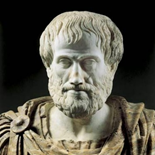
Virtue ethics is quite different to the ethics of duty or consequence in that they focus upon the individual character with the question, “what and who ought I be?” Going back to even before Aristotle – the gentleman we see below – virtue ethics dominated ethical thought for centuries. Thomas Aquinas was particularly important in developing a Christian ethics of virtue, in the light of his theology built upon the shoulders of Aristotelian thought.
In recent times there has been a return to virtue ethics as a way of completing the more modern approaches of rules-based ethics of duty and situational ethics of consequence. In a sense virtue ethics offers depth in that ethics are understood as a way of life.
Virtue ethics address two very human issues: the first, the emotions and the second, wisdom. In developing the virtues, the emotions are trained to serve the virtues, not undermine them. Likewise, in developing the virtues, practical wisdom (phronēsis) is cultivated, meaning that it is not sufficient to only do what a just person does, but to do it in a way that a just person does it. In other words, the emphasis lies with the how as much as the what.
Moreover, the content of the virtues changes depending upon the purpose (telos) that a person lives for. For the Christian, the primary virtues have been considered to be charity, patience and humility as pathways to living out the kingdom of God. For Aquinas, charity reigned supreme: “Charity is the form of all virtues”.
Finally, conscience constitutes a significant aspect of virtue and the moral knowledge entailed in living virtuously. That said, the virtue tradition insists that conscience can never be lazy, for we are bound to subject our conscientiously held views to rigorous analysis.
As we consider the question of how to proceed with the challenge of giving expression to the values of inclusion and safety in our services and liturgies, the ethics of virtue would counsel us to do so aware of the priority of charity and the need for an informed conscience.
Conclusions
What is it that these ethical traditions offer to us as we find ourselves on the horns of a dilemma, caught between two noble and necessary practices: inclusivity and safety? All suggest, either explicitly or implicitly, that a good decision will likely need to include a balance of each.
Unconstrained inclusivity alone, will open congregations to the possibility of infection. Safety alone, will open congregations to excluding those for whom they love and care. After all what good is safety if it cuts us off from each other?
Additionally, for those who refuse vaccination in conscience, the challenge is to ensure that their conscience is well informed, not determined by ideological bias or irrational partisanship.
Of course, there are multiple ways to balance these requirements. Each congregation, presbytery and synod will need to do just that, accessing and utilizing the knowledge of their specific contexts and the technologies to which they have access, keeping in mind that how we do things is every bit as critical as what we do.
Rev. Dr. Geoff Dornan, October 3rd, 2021
Geoff Dornan is minister in the Wesley Forrest Congregation in Canberra, ACT. He holds a PhD in Philosophy, Theology & Ethics from Boston University, USA.
[i] In March 2020, the government of Singapore, launched a smartphone application to assist in monitoring COVID-19 by enabling public health authorities to investigate infections and limit further transmission. In May 2020 the Australian government announced it would implement similar technology.
[ii] Kamradt-Scott, A., & McInnes C. (2012), The Securitization of Pandemic Influenza: Framing Security and Public Policy. Global Public Health, 7, 95-110, 106.
[iii] Jonathon Luxmoore, “Polish Archbishop criticizes anti-church Covid measures”, The Tablet, August 11th, 2021.
[v] McFarlane, R. “Vaccination, Inclusion and Exclusion: The Ethics of Regathering for Worship in a Part Vaccinated World”, Insights Magazine, September 17th, 2021.
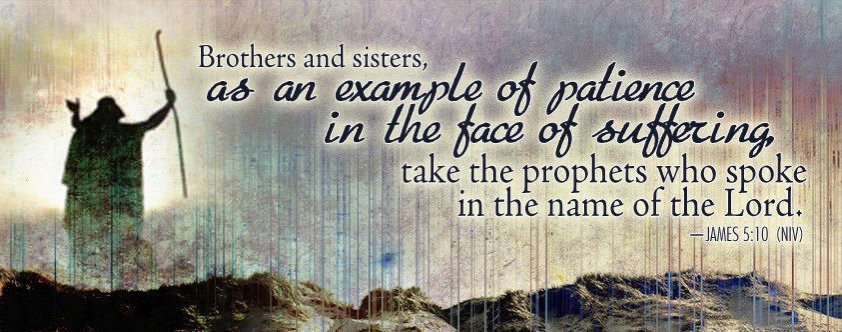
“Is anyone among you suffering? Let him pray.” So we read in this week’s selection from the treatise of James which is offered by the lectionary (James 5:13–20). As a further encouragement, a few verses earlier, we are enjoined, “as an example of suffering and patience, brothers, take the prophets who spoke in the name of the Lord” (5:10).
In this rhetorical question and proverbial statement, we find that the author of this treatise does something that we have seen to be quite familiar from other sections of the book; he makes reference to Hebrew scripture. In doing this, James, the author, was doing what his more famous brother—Jesus—so regularly did. Referencing scriptural traditions was a family trait; indeed, it was what any faithful Jewish man would do, and provide scriptural resonances in what he was saying.
A number of statements in the treatise of James resonate with the teachings of Jesus that we know so well in the Beatitudes (Matt 5:3–10). Most strikingly, the final beatitude spoken by Jesus, in which he exhorts joy in the face of persecution, in the manner of “the prophets who were before you”, is reflected in the opening exhortation of James, “whenever you face trials…consider it nothing but joy” (1:2), as well as the later reminder of James, “as an example of suffering and patience, take the prophets” (5:10). The two brothers are simply providing variations on a theme.
Other teachings in the book of James provide similarities to the teachings of Jesus spoken in the beatitudes, in the form found in Matt 5:3–12. The question posed by James, “has not God chosen the poor in the world…to be heirs of the kingdom?” (2:5) is similar to the first beatitude of Jesus, “blessed are the poor” (Matt 5:3).
The promise that James envisages, of “a harvest of righteousness…for those who sow peace” (3:18), is reminiscent of another beatitude of Jesus, “blessed are the peacemakers” (Matt 5:9). The instruction to “purify your hearts” (4:8) echoes “blessed are the pure in heart” (Matt 5:8).
Perhaps we should not be surprised about these resonances between the teachings of Jesus and the treatise of James; if this work was indeed written by James, the brother of Jesus, a leader of the church in Jerusalem (Gal 1:19), would we not expect him to know what Jesus was teaching? The two brothers are singing from the same songsheet.
These similarities between the teachings of Jesus and the writings of James are significant. The fact that they are preserved in different documents, shaped and then preserved by the followers of Jesus, is suggestive of an awareness of a common tradition of these ethical guidelines amongst Jewish members of the growing messianic movement.
James quotes Hebrew Scripture directly in verse 4:6, “God opposes the proud but gives grace to the humble” (Prov 3:34). This is the basis for his instruction, “humble yourselves before the Lord, and he will exalt you” (4:10).
The same scripture undergirds the words of Jesus which declare the same thing: “whoever exalts themselves will be humbled, and whoever humbles themselves will be exalted” (Matt 23:12; see also Luke 14:11, 18:14). It is also informs the prophetic words sung by his mother before his birth, “he has brought down the mighty from their thrones and exalted those of humble estate” (Luke 1:52). The two sons of Mary (Jesus and James) are singing from the same songsheet as their mother!
When James writes a warning about laying up treasure (5:3), we are reminded of Jesus’ parable about the same topic. (Luke 12:13-21). In these words, both Jesus and James are drawing from Hebrew scriptures. Speaking against the oppressive actions of the rich sounds very much like a number of oracles thundered by the ancient prophets (Amos 2, 4, Micah 6, Hosea 12, Ezekiel 7).
The details use snippets of pertinent prophetic denunciations. “The last days” evoke “the Day of the Lord” (Isa 34:7-8, Jer 25:33-34, Ezek 7:1-4, Joel 2:1-3, Amos 5:18-20). The withholding of the wages of the labourers (5:4) contradicts the Law (Lev 19:13, Deut 24:14-15) and echoes denunciations spoken by prophets (Jer 22:13, Mal 3:5).
The condemnation of “fattened hearts” (5:5) evokes Jer 5:27-28, Ezek 34:2-4. And murdering the righteous person reminds us, not only of the wrongheaded approach of wicked people (Wisdom 2:10-20) and the fate of the righteous servant (Isa 53:3-5, 7-9), but especially of the fate of Jesus, the Righteous One (John 15:20; Acts 3:14).
Then, the command of James, “be patient until the coming of the Lord” (5:7), sounds a note that we hear in the final teachings which Jesus gives to his disciples, not long before his arrest. The earlier version of these teachings infers that patience will be required as “the beginnings of the birth pains” are seen (Mark 13:5–8), before Jesus exhorts his disciples: “the one who endured to the end will be saved” (Mark 13:13).
Interestingly, “be patient” in the midst of these tumultuous happenings is a refrain found elsewhere in the New Testament. Paul advises, “let us keep awake and be sober” (1 Thess 5:6); John encourages, “little children, abide in him” (1 John 2:28); and Jesus himself is quoted as saying, “I am coming soon” (Rev 22:7).
It was a widespread belief amongst the followers of Jesus in the first century, that Jesus would soon return, and that God would establish the kingdom of heaven on earth. (That is the final, climactic vision, offered in Revelation 21:1-22:6). “The coming of the Lord is at hand” (5:8) is a recurring New Testament motif (Rom 13:12; Phil 4:5; 1 Pet 4:7).
Over twenty centuries later, we know that this did not eventuate in the timeframe that was imagined, and hoped for, in the first century. Does that invalidate all that those earliest believers thought, wrote, and prayed for? Or is there another way that we are to take their words for our times?
Certainly, the direct ethical instructions found in this passage of the treatise of James sound like they are timeless: cultivate patience (5:7-8), avoid complaining (5:9), remain steadfast (5:11), be as good as your word in all you do (5:12), prayer and sing praise (5:13), seek healing and forgiveness (5:14–15) after confessing your sins (5:16). This is what we are called to do as we await the coming of God.
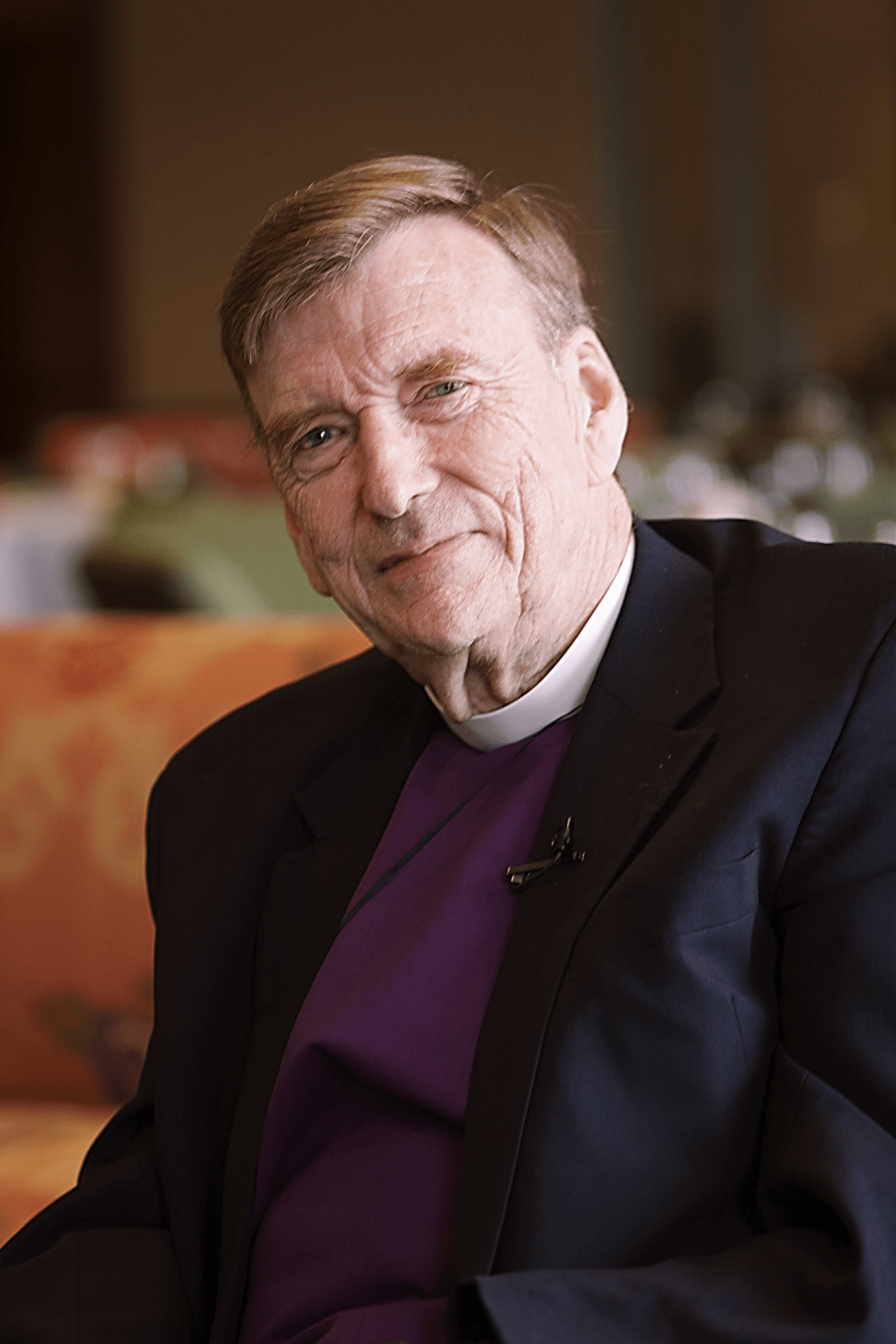
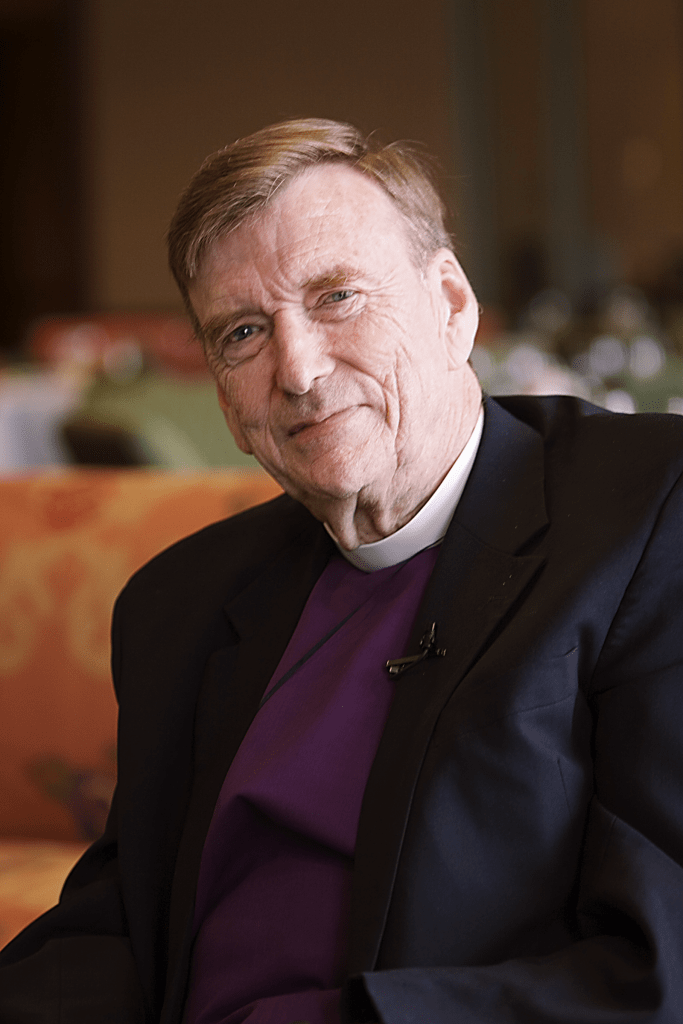
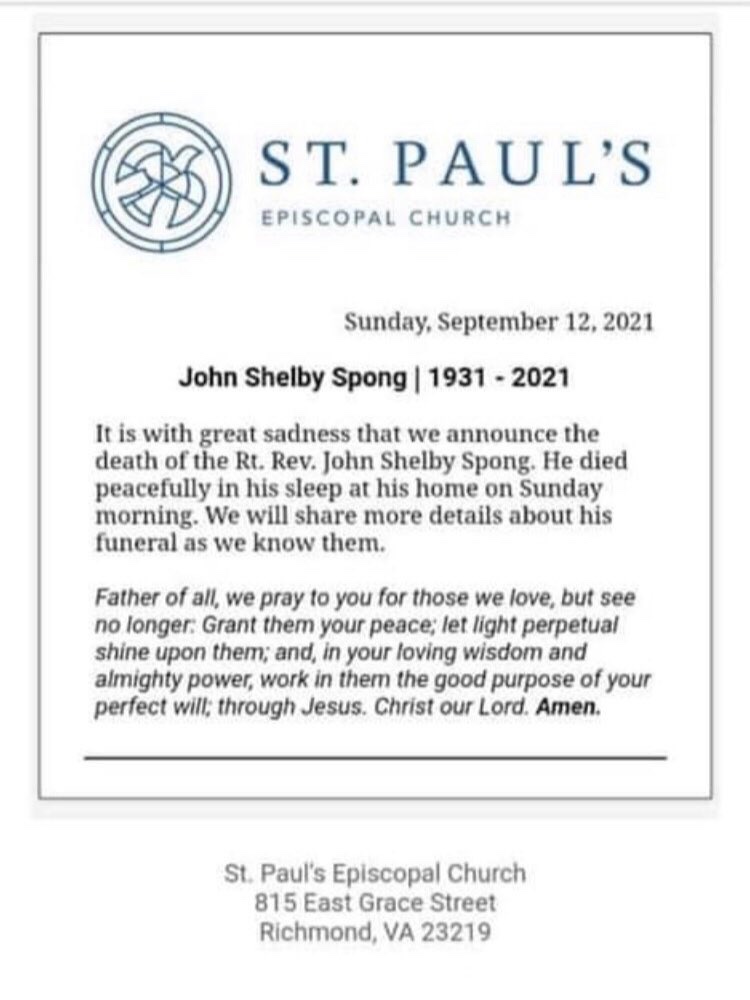
Bishop John Shelby Spong has died, at the end of his ninth decade of life. He has been an extraordinary figure in the life of the church in the 20th century. His legacy is large. Whilst a bishop in the Episcopalian Church in the USA, his influence has been across denominations and across continents, with countless thousands of thinking, exploring Christian believers, questioning received doctrines, exploring new ways of understanding what it means to be a person of faith, living out their discipleship in fresh and innovative ways.
Bishop Spong had his critics during his lifetime; every new book that he authored drew critical words from those who felt he had betrayed the Christian faith. He was regularly accused of hypocrisy, drawing a stipend from the Church yet speaking out against the beliefs of the Church. That kind of criticism is now being levelled once again against Bishop Spong, so soon after his death.
Critics of Spong should know that he advocated nothing that had not already been proposed and debated within biblical scholarship of the mid to later 20th century. Unlike many of the academics who in engaged in scholarly debate about details of exegesis and theology through articles and footnotes, Spong had the gift of speaking in ways that the headlines and opening paragraphs of newspaper articles could handle. He popularised a widespread and deeply debated series of discussions amongst academics.
Spong himself attributed great significance to the scholarly work of New Testament scholar Rudolph Bultmann and theologian Paul Tillich. We can’t avoid grappling with the important ideas that these scholars advocated and explained. Both demythologisation (Bultmann’s key idea) and existentialist theology (Tillich’s central contribution) need to be engaged with, explored, and critiqued—not just dismissively brushed aside with slogans and stereotypes.
Personally, I haven’t agreed with everything that Spong has published, either in written or spoken form. I have clearly benefitted from close reading and careful thinking about many of the issues that Spong himself has canvassed—both in terms of Spong’s publications and, more extensively, in the academic discussions about those issues in monographs and journal articles. His stimulus has been particularly important in the more popular arena.
Many people of faith who hold to what is called a “progressive theology” point to Spong as the person who first opened up their understanding about faith. He drew new visions, offered different understandings, provided viable options for people to hold to their faith in the increasingly complex and secularised world of the later 20th century. The miracles of Jesus, the resurrection of Jesus (and of believers), the Virgin Birth, the inerrancy of scripture—these, and more, he explained in his books in ways that “the ordinary believer” could understand.
Many then went on to discover, and rejoice in, the work of Dominic Crossan, Marcus Borg, the Jesus Seminar (to which both of these scholars belonged)—and locally, Australian voices such as Val Webb, Rex Hunt, and Greg Jenks. Many across the church have been enriched by the articulate, faithful writings and speaking of such people. Spong opened the door for them to experience a wider audience.
Bishop Spong visited Australia with his wife, Christine, in 2007. He spoke at the inaugural Common Dreams conference in Sydney and visited churches in a number of other cities whist downunder. His influence on the Progressive Christianity movement in Australia has been very significant. A number of my colleagues have testified that “Spong and his ideas helped my find my place (or recover my place) in the church”. We can be grateful for these testimonies.
Not only people with progressive viewpoints are in the debt of Spong. There are many evangelical scholars who have benefitted from the spadework done by more progressive scholars—adopting historical criticism, using it to illuminate the biblical text, and eventually enhancing understandings of scripture amongst evangelicals, even conservatives, and not just more progressive folks.
I think of the work of Don Carson, I. Howard Marshall, Ben Witherington, N.T. Wright, and many more—conservative biblical scholars who have faithfully grappled with the challenges posed by more progressive points of view, who have utilised the methods developed within so-called “liberal” circles of scholarship. Our academic understanding, and from this our practice of discipleship across the church, has been enhanced by this conversation, taking place in ways that reach across the stereotypes of separated schools of thought.
Spong played some part in that. Not a huge amount in the academic discussions, per se; but a very large role in the public discussions about faith. It is the faithfully determined work of people such as Spong that has shaped the articulation of academic discussions in ways that are understandable to the public, that communicate to ordinary people of faith.
At the end of his life, let’s acknowledge the fine work that John Shelby Spong did in popularising and making widely known an extensive set of insights about what it means to have an informed faith that “makes sense” in the contemporary world; and let’s give thanks for his ministry of deepening and broadening the whole Christian exploration of scripture, faith, and discipleship.
Colleagues in ministry leadership, and people of the Congregations of the Canberra Region Presbytery,
The news, late last week, of the return of lockdowns to all locations within our Presbytery did not come as a surprise. The Delta variant of the SARS-CoV-2 virus appears to be a potent variant, and the wisdom of locking down while it is spreading cannot be doubted.
We encourage you to think of the restrictions that we are currently experiencing as our contribution to the common good. We are avoiding social contact in order to lessen the risk of transmitting the virus. We are accepting deprivations for ourselves in order to lessen the number of people who might become ill, hospitalised, or die. As we act in this way to contribute to the common good, we are demonstrating the priority of loving our neighbours. This is how Jesus called us to live.
The impact on each and every one of us will be to the fore of our thinking in the coming days. No doubt each one of us has our own personal ways of dealing with the lockdown period. Special routines are helpful for the duration of lockdown. Special treats at designated times can assist to encourage us. We are experienced in caring for ourselves; we have done this before, we can do it again.
We can spend time praying for others who have needs greater and deeper than ourselves. The events in Afghanistan, the earthquake in Haiti, the floods in Japan and Turkey, the bushfires occurring in the northern hemisphere: these news items remind us that there are people in other places on the globe who are in terrible peril. We can pray for them. We should pray for them.
We can offer thankful gratitude for the blessings that we experience. We are able to connect with other people in so many ways other than in person—by phone, FaceTime, ZOOM, email, WhatsApp, Instagram, Facebook, Twitter … the list seems endless. We can gather-apart for worship using one of the platforms available (YouTube, Facebook, ZOOM) to reconnect as a community of faith.
We can give thanks for the doctors, nurses, cleaners, security guards, police officers, contact tracers, and others who ensure that hospitals, vaccination centres, walk-in clinics and COVID testing centres continue to operate well, despite the pressures they are experiencing.
We can know that “we are in this together” is not just a slogan—it can be the way that we gain strength from our encouragement of one another. We have friends to connect with at our point of need. We can give thanks for the existence of LifeLine, Beyond Blue, Headspace, YarnSafe, MindSpot, ACON, and many other agencies dedicated to ensuring that we have a safe, caring listening ear available to us when we need it.
And in our praying and reflecting, let us hold one another, the people whom we serve, and those for whom they care, in the bonds of compassion and care.
Ross Kingham and Judy McKinlay, Presbytery Co-Chairpersons Jared Mitchell, Presbytery Deputy Chairperson Robbie Tulip, Presbytery Secretary Elizabeth Raine, Pastoral Relations Committee Chairperson Andrew Smith and John Squires, Presbytery Ministers
*****
What if you thought of it as the Jews consider the Sabbath— the most sacred of times? Cease from travel. Cease from buying and selling. Give up, just for now, on trying to make the world different than it is. Sing. Pray. Touch only those to whom you commit your life. Center down.
And when your body has become still, reach out with your heart. Know that we are connected in ways that are terrifying and beautiful. (You could hardly deny it now.) Know that our lives are in one another’s hands. (Surely, that has come clear.) Do not reach out your hands. Reach out your heart. Reach out your words. Reach out all the tendrils of compassion that move, invisibly, where we cannot touch.
Promise this world your love– for better or for worse, in sickness and in health, so long as we all shall live.






















 An Informed Faith