Uniting Church reflections during NAIDOC Week 2024: thirty years of covenanting (1994), fifteen years recognising truth (2009)

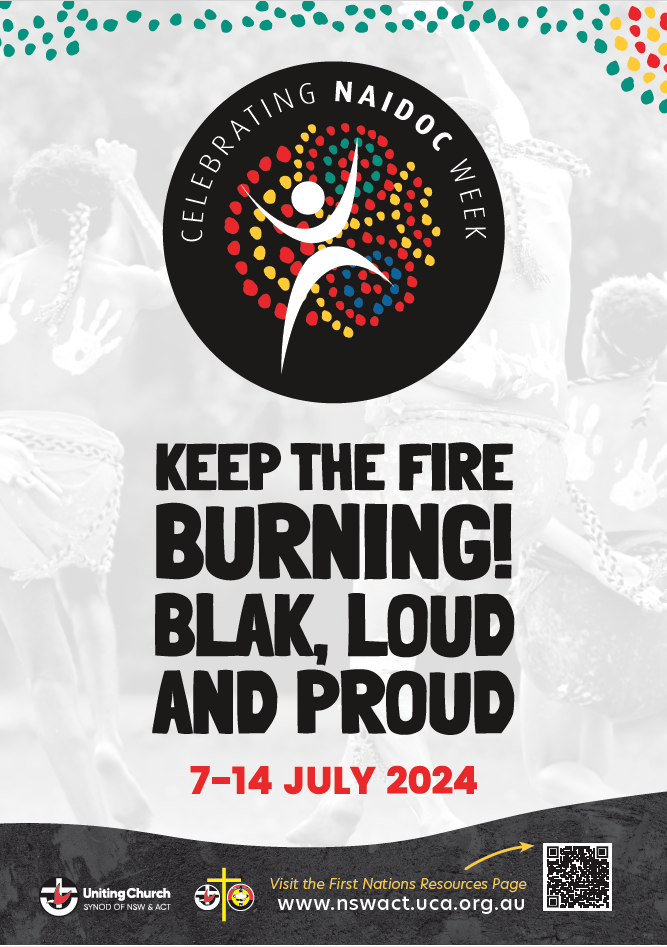
Every July, NAIDOC Week takes place. It runs from the first Sunday in July (this year, 7July) until the following Sunday (this year, 14 July). The week has a focus on the First Peoples of this continent and its surrounding islands—the Aboriginal and Torres Strait Islanders from the more than 250 nations that existed on this continent and its surrounding islands before the invasion of 1788.

NAIDOC Week has been held for over 50 years, under the auspices of the National Aborigines and Islanders Day Observance Committee (which forms the acronym NAIDOC). The origins of this week are attributed to Aboriginal Christian leader, William Cooper, who called churches to recognise and celebrate Aboriginal and Torres Strait Islander communities in worship services. For many years, congregations across the Uniting Church have recognised and celebrated NAIDOC Week in worship services.

The theme for 2024 is Keep the Fire Burning! Blak, Loud and Proud.

The NAIDOC WEEK website explains the theme:

“This year’s theme celebrates the unyielding spirit of our communities and invites all to stand in solidarity, amplifying the voices that have long been silenced.

“The fire represents the enduring strength and vitality of Indigenous cultures, passed down through generations despite the challenges faced. It is a symbol of connection to the land, to each other, and to the rich tapestry of traditions that define Aboriginal and Torres Strait Islander peoples. As we honour this flame, we kindle the sparks of pride and unity, igniting a renewed commitment to acknowledging, preserving, and sharing the cultural heritage that enriches our nation.

Blak, Loud and Proud encapsulates the unapologetic celebration of Indigenous identity, empowering us to stand tall in our heritage and assert our place in the modern world. This theme calls for a reclamation of narratives, an amplification of voices, and an unwavering commitment to justice and equality. It invites all Australians to listen, learn, and engage in meaningful dialogue, fostering a society where the wisdom and contributions of Indigenous peoples are fully valued and respected.

“Through our collective efforts, we can forge a future where the stories, traditions, and achievements of Aboriginal and Torres Strait Islander communities are cherished and celebrated, enriching the fabric of the nation with the oldest living culture in the world.”

This July during NAIDOC Week the Uniting Church will be marking two significant anniversaries in the life of the church and our relationship with First Peoples. 10 July marks the 30th anniversary of the Covenant between the Uniting Aboriginal and Islander Christian Congress (UAICC) and the Uniting Church in Australia, while mid-July marks the 15th Anniversary of the revised Preamble to the Uniting Church Constitution

The Covenant with the UAICC (Congress) was a result of years of discernment and planning from Aboriginal Christian leaders within the Uniting Church who held a prophetic vision for a more just and healed future. In the Christian faith, the term “covenant” is used to signal a commitment of two parties to each other. In the Bible, a covenant is initially made by the Lord God with Noah, “with you and your descendants after you, and with every living creature that is with you, the birds, the domestic animals, and every animal of the earth with you, as many as came out of the ark” (Gen 9:9–10).

The same covenant is then renewed with Abraham (Gen 17:1–7, 15–16), where Abraham is identified as “the ancestor of a multitude of nations” (Gen 17:4) who would then be party to that covenant in subsequent generations. The covenant is then renewed with Abraham’s son, Isaac (Gen 17:19, 21) and then with Jacob (Israel) (Gen 35:9–15). Later, it is extended to Moses and the whole people (Exod 19:1–4) and sealed in a ceremony involving “the blood of the covenant” (Exod 24:1–8).

Many centuries later, a prophet during the Exile proclaimed that God was promising, “this is the covenant that I will make with the house of Israel after those days, says the Lord: I will put my law within them, and I will write it on their hearts; and I will be their God, and they shall be my people” (Jer 31:31).

That renewed covenant is what Christians believe was enacted by Jesus, when he submitted to death on a cross; dying as a sacrifice, he shed “the blood of the covenant” (Mark 14:24; Matt 26:28; Luke 22:20; 1 Cor 11:25) and is recognised as “the mediator of a better covenant” (Heb 8:6) or “the mediator of a new covenant” (Heb 9:15; 12:24)—even though in terms of the declaration made by Jeremiah, this was actually yet another renewal of the one covenant that God had made and renewed with God’s people over the millennia.

So entering into a covenant in our current time reflects this strong biblical understanding of what a genuine partnership looks like; it is an expression of an intentional promise to seek mutual understanding, to listening and to serve together within a shared life. 

The Assembly of the Uniting Church has offered a reminder of the importance of what took place 30 years ago. The next few paragraphs come from that piece, “Save the Date: 30th Anniversary of the Covenant”, at https://uniting.church/save-the-date-covenant-anniversary/

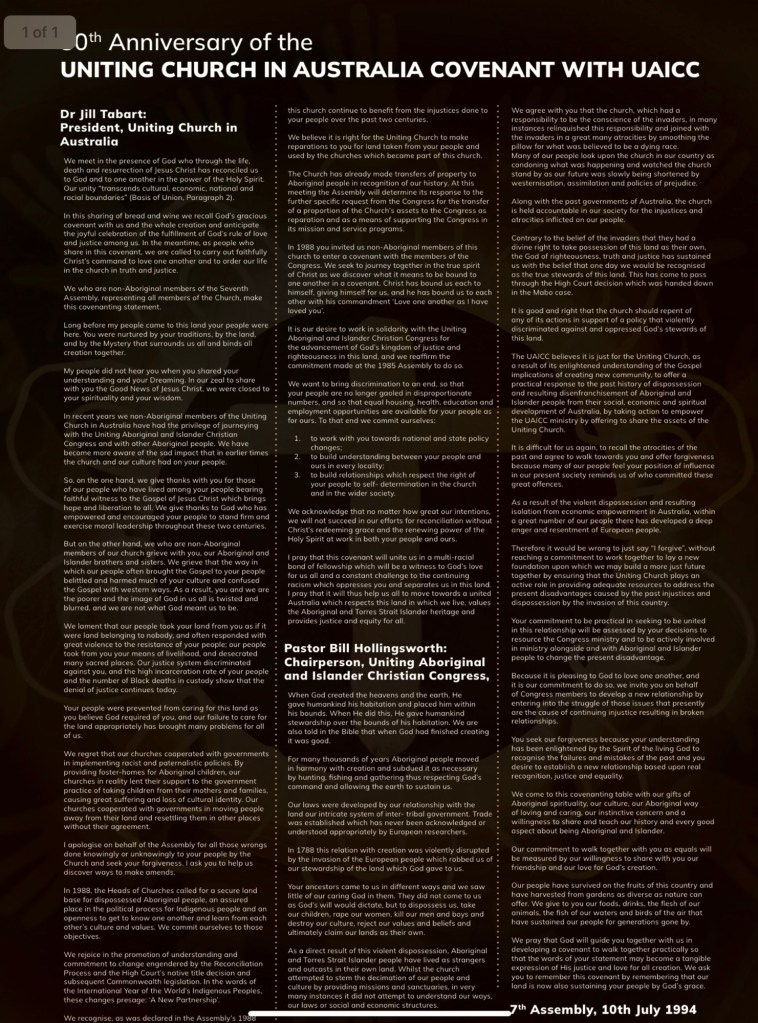
First, it recalls that in May 1988 when the 5th Assembly met, Rev Charles Harris and Rev Dr Djiniyini Gondarra with other UAICC leaders called for a Covenant to bind the UCA and the UAICC together in relationship. This was endorsed by the full Assembly by acclamation. Six years later, the Covenanting Statement was formally signed at the 7th Assembly, on 10 July 1994.

In the Covenanting Statement read at the meeting, then President Dr Jill Tabart formally apologised for the church’s role in colonisation and dispossession of Australia’s First Peoples and committed the church to a new relationship. In response Pastor Bill Hollingsworth, then National Chair of UAICC, offered an inspiring challenge to the church to honour this commitment. (The full text of both speeches is below.)

The statement continues to serve as a formational part of the Uniting Church’s commitments to walking together as First and Second Peoples and to self-determination for First Peoples. 

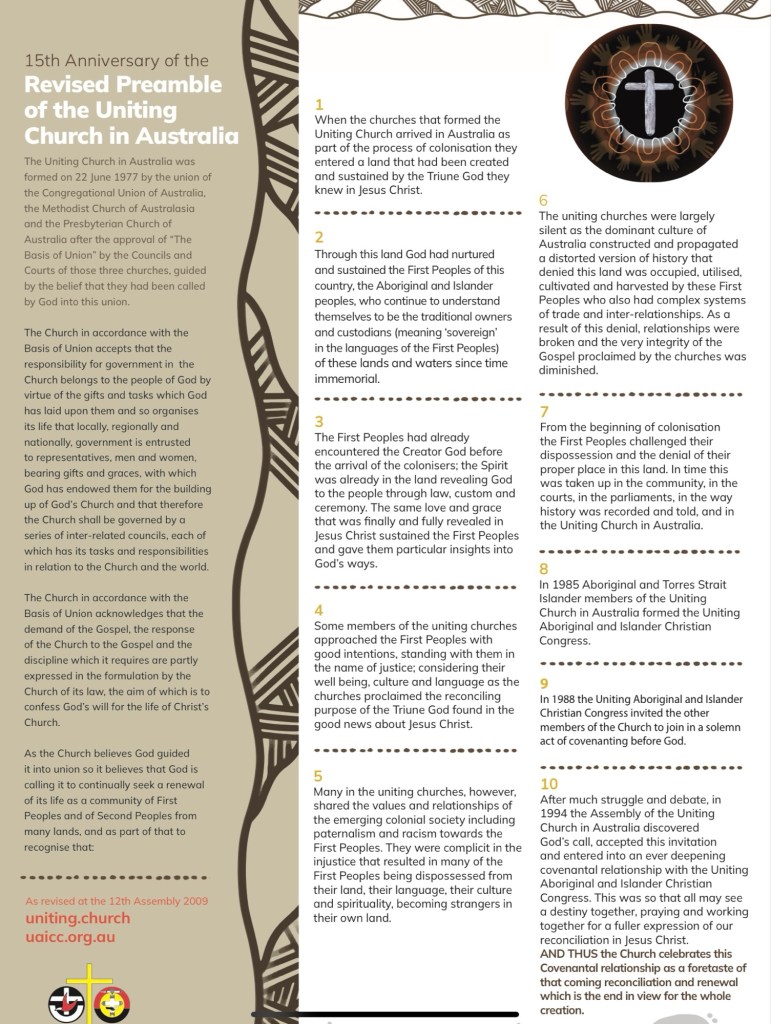
In a significant milestone in the covenant journey, the Uniting Church’s Constitution was revised to include a revised Preamble at the 12th Assembly (15–21 July 2009). The first half of this revised Preamble contains a number of significant statements of truth about the experience of the First Peoples over the past 240 years. (The full text of the revised Preamble is below.)

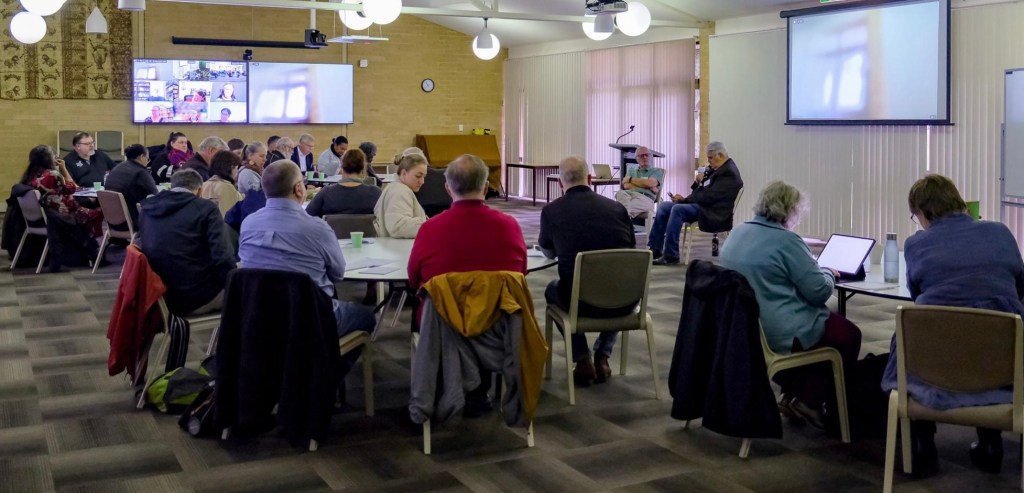
Significantly, the revised Preamble affirms that “The First Peoples had already encountered the Creator God before the arrival of the colonisers; the Spirit was already in the land revealing God to the people through law, custom and ceremony” (Preamble, para. 3). A conference reflecting on the Preamble has just been held in Sydney.

The declaration made in paragraph 3 of the revised Preamble provides a fundamental theological affirmation which undergirds both our present respect for First Peoples, and our understanding that a relationship with and an understanding of God are not limited to western Christian perceptions of the divine.

This has been an important step for the Uniting Church to take, moving out from the concept that God’s covenant love is offered to a narrow group of people with a particular way of expressing their commitment to God through Jesus (mediated by Western culture, Enlightenment thinking, and Protestant ethic), and that rather this covenant love is offered with grace and hope to people of all times, in all places, in many and varied ways, reflecting the wide diversity of human identities and experiences.

And so, just as we have accepted within Christianity that the God we know in Jesus was active in relationship with human beings for many centuries before the time of Jesus—through the covenant with the people of Israel, as the Hebrew Scriptures attest—so we can agree that God was in relationship with the peoples of the continent we call Australia and the islands which surround it, “in time beyond our dreaming”, in Daramoolen … in Tjukurrpa … in Alcheringa. This is the truth that we now recognise and affirm—and it’s an important affirmation to make!

The NSW.ACT Synod has various resources relating to NAIDOC WEEK 2024 at https://www.nswact.uca.org.au/resources/naidoc-week-resources-for-your-church/

For my thoughts from two years ago about the resonances between “Uniting Church theology” and the themes of NAIDOC WEEK over the years, see

The Uniting Church Statement to the Nation (1977)

A sermon preached by the Rev. Elizabeth Raine in Sunday worship of the Tuggeranong Uniting Church on Sunday 18 June, the Sunday before the 46th Anniversary of the UCA (22 June). (Passages in italics are taken from the 1977 Statement to the Nation issued by the First Assembly.)

In a few days time it will be the 46th birthday of the Uniting Church in Australia. At the time, it was certainly a risky and brave adventure, combining three denominations to make one uniquely Australian church.

It seemed to me that the journey of the Uniting church reflected our readings this week – like Abraham, this church stepped out in faith on a journey where a lot was unknown but also where faith in God committed people to the journey. Like the disciples in Matthew, this church sought to go into the communities surrounding them with the good news to make the world a better place.

At the time of the UCA inauguration, a statement was issued to all of the Australian nation, unsurprisingly called the Statement to the Nation. How many of you know it exists? Have read it? Know what’s in it?

After 46 years, sometimes we need to be reminded of the vision of the Uniting Church in Australia, and to recognise that witnessing to this vision is still vital and attainable. This vision called the church to act with love, live with hope, witness in faith, and work for justice.

Today as we celebrate the UCA’s birthday, we are going to read this statement as I think it is one of the greatest and most enlightened documents ever produced by a church.

People of the Congregational, Methodist and Presbyterian Churches have united. A new church has been born. We, who are members of the first Assembly of the Uniting Church in Australia address the people of Australia in this historic moment. The path to unity has been long and at times difficult, but we believe this unity is a sign of the reconciliation we seek for the whole human race.

We acknowledge with gratitude that the churches from which we have come have contributed in various ways to the life and development of this nation. A Christian responsibility to society has always been regarded as fundamental to the mission of the Church. In the Uniting Church our response to the Christian gospel will continue to involve us in social and national affairs.

We are conscious of our responsibilities within and beyond this country. We particularly acknowledge our responsibilities as one branch of the Christian church within the region of South-East Asia and the Pacific. In these contexts we make certain affirmations at the time of our inauguration.

We affirm our eagerness to uphold basic Christian values and principles, such as the importance of every human being, the need for integrity in public life, the proclamation of truth and justice, the rights for each citizen to participate in decision-making in the community, religious liberty and personal dignity, and a concern for the welfare of the whole human race.

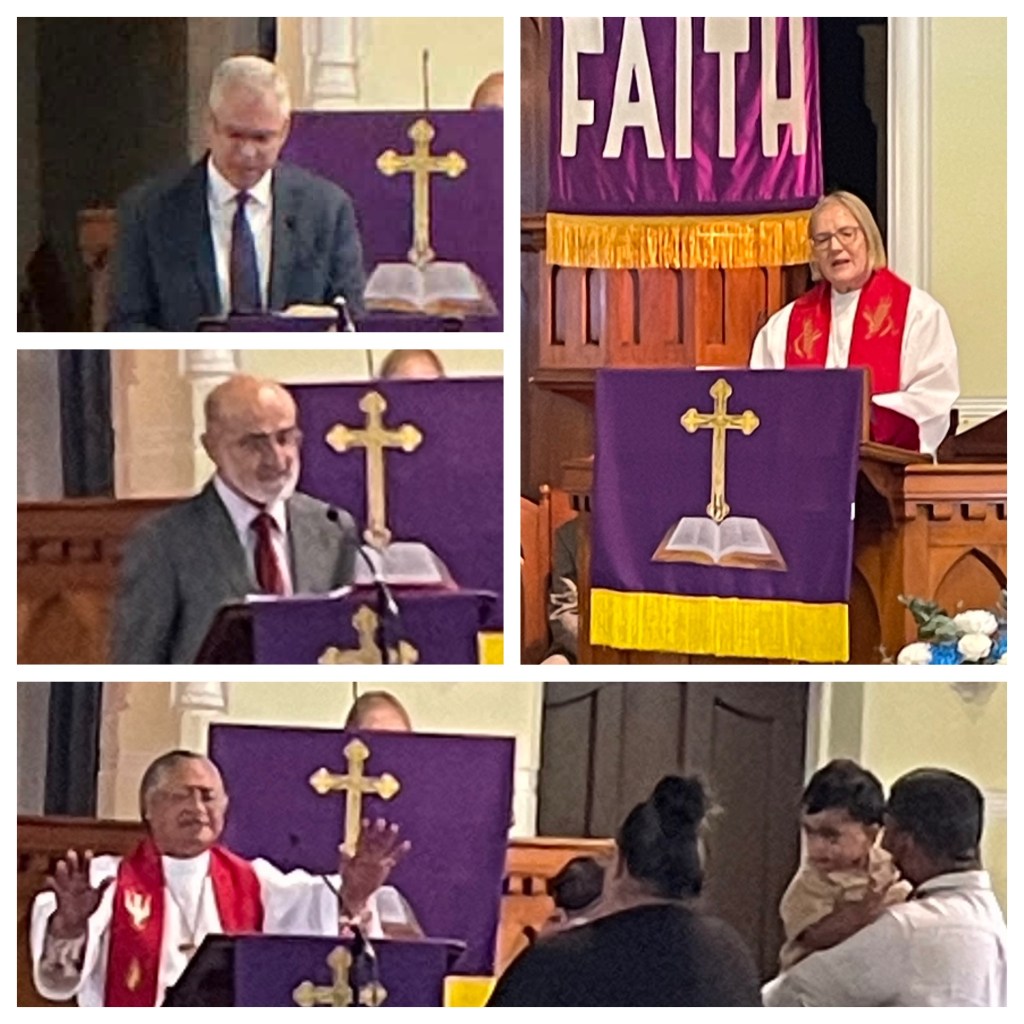
Assembly General Secretary, Colleen Geyer (bottom right),
along with Past President Dr Deidre Palmer (top left),
President (2022–2024) the Rev. Sharon Hollis (top right),
and President-Elect the Rev. Charissa Suli (bottom left)

Our Assembly General Secretary, Collen Geyer, has stated that every time [she] read[s] these words, she “feel[s] proud that, as a church, we had the guts to say these things, were courageous enough to set the bar high, and wanted there to be no doubt about what Australia could expect of us. Read these words and you will know how we’re intending to be true to who we are. Our unity, which is a sign of the reconciliation we seek for the whole human race, will look like this.”

What a wonderful aim for a church, to be an entity that embodies basic Christian values and principles, the importance of every human being, integrity in public life, truth and justice, democracy for all, religious freedom and personal dignity, and a concern for the welfare of the whole human race. Have we lived up to this? What do we need to do to make sure we do?

Did we realise as a church how extraordinary these words were? Did we understand what we were saying? These words tell of the great courage it took to make this announcement and embark on this journey of faith and justice. And since that time, we have seen that courage played out in the 46 years since Union as the Uniting church continues to stand with the voiceless, the marginalised and the poor, and continue to be activists for climate change reform. The Statement to the Nation commits us to acting in ways that are often considered political.

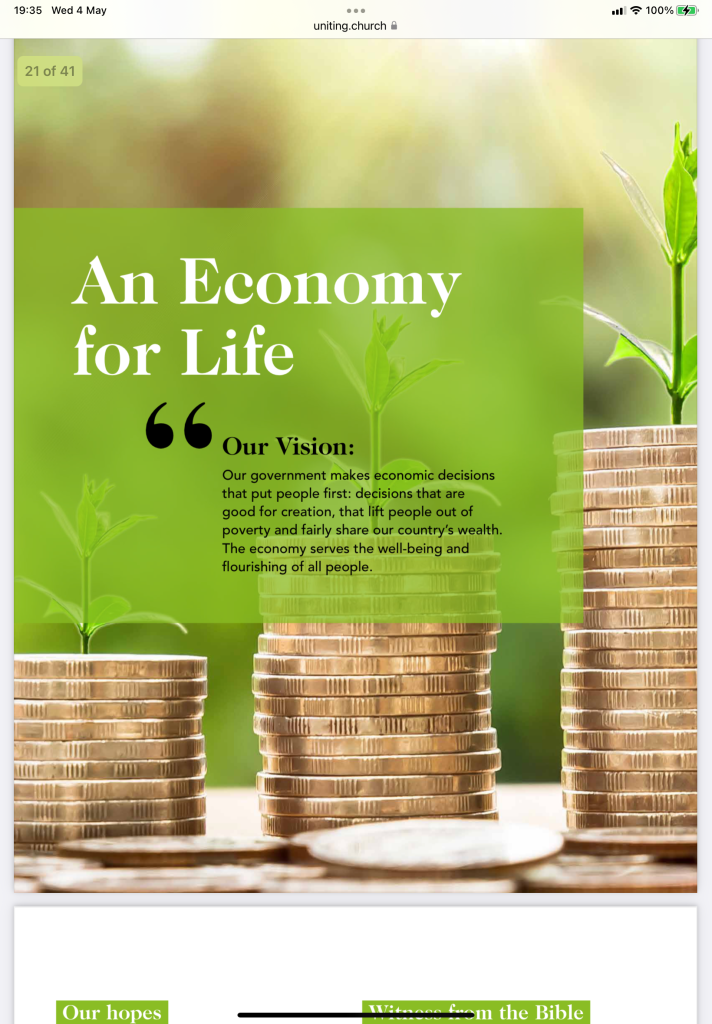
An Economy for Life is a later statement by the UCA Assembly which develops key themes that were articulated in the Statement to the Nation

We can see that such activities are built into the DNA in this church, yet sometimes we hesitate in implementing them. We lack the confidence in ourhomegrown models of mission and in ourselves. We can baulk at stepping out on new journeys. We have more trouble engaging around faith with our communities in an increasingly secular world. We shy away from being ‘political’ forgetting that Jesus also stood with the voiceless, the marginalised and the poor and was incredibly political.

We will challenge values which emphasise acquisitiveness and greed in disregard of the needs of others and which encourage a higher standard of living for the privileged in the face of the daily widening gap between the rich and poor.

In many churches, Western culture has created a culture of consumerism that permeates our congregations. Faith dwindles to “what’s in it for me” rather than homothumadon, discerning the common good. This leads to a reduced willingness to engage beyond the immediate and ourselves and look at ways in which various parts of the church can partner with others around us or how we can become the church of the future, a church still relevant, vital and life-giving not only to ourselves, but to the communities around us.

We are concerned with the basic human rights of future generations and will urge the wise use of energy, the protection of the environment and the replenishment of the earth’s resources for their use and enjoyment.

This small but direct statement let Australia know that as a church we weren’t just focused on the here and now but that we aim to be a future-focused church. We don’t want just to make a difference for the generations now, but we want to implement actions now that are “concerned with the basic human rights of future generations”. God’s love and commitment to humanity is not limited by time, space or matter and nor should ours be.

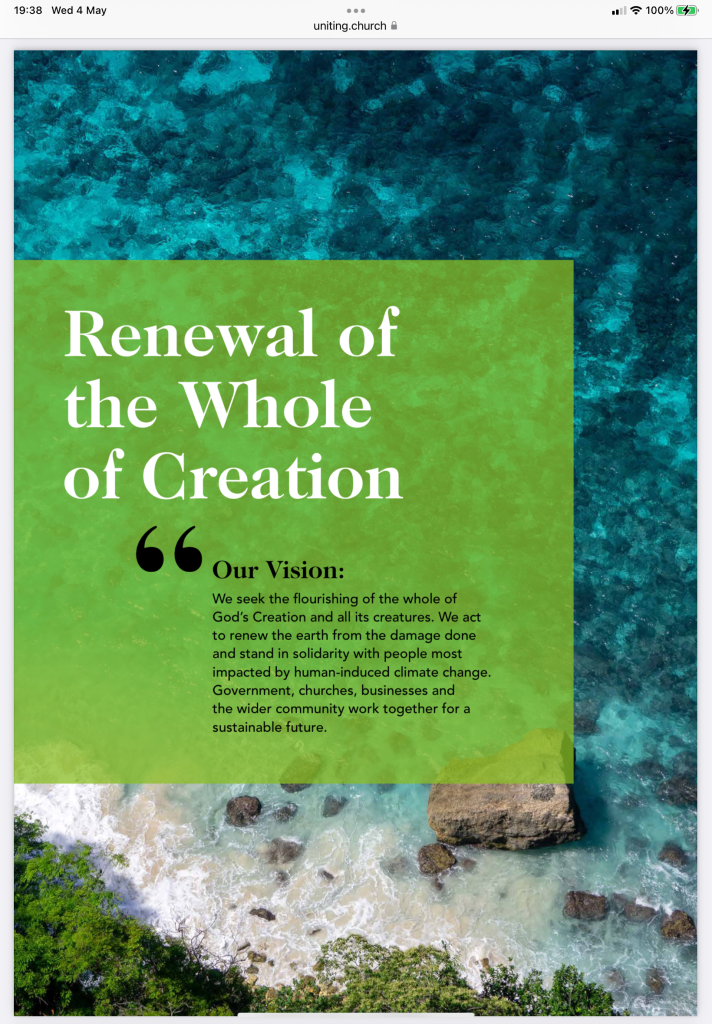
Renewal of the Whole Creation is a later statement by the UCA Assembly
which develops the brief sentence about the environment
that is found in the Statement to the Nation

This whole statement calls us to look now to identify injustices and at how we can influence change for the better and have improved outcomes for the future. It also acknowledges the impact of our actions for the future, particularly on our environment, God’s good creation that we are meant to be stewards of. Climate Change is a looming threat to most life on the planet, loss of biodiversity and loss of species are accelerating. This statement calls us into action now to prevent what may well be a very bleak future.

Finally we affirm that the first allegiance of Christians is God, under whose judgment the policies and actions of all nations must pass. We realise that sometimes this allegiance may bring us into conflict with the rulers of our day.

But our Uniting Church, as an institution within the nation, must constantly stress the universal values which must find expression in national policies if humanity is to survive.

We are clear about who we belong to – “the first allegiance of Christians is God”. As the Uniting Church, this is our foundation. It defines who we are and why we speak and act the way we do. Because of this belonging, we acknowledge that this may mean we could come into “conflict with the rulers of our day”, not because we want it, but because we will be speaking out for “the universal values which must find expression in national policies if humanity is to survive.” This isn’t a statement that holds back, and we should be proud of it as it leads us to live in the way of Jesus.

We pledge ourselves to hope and work for a nation whose goals are not guided by self-interest alone, but by concern for the welfare of all persons everywhere — the family of the One God — the God made known in Jesus of Nazareth the One who gave His life for others. In the spirit of His self-giving love we seek to go forward.

We pledge ourselves to hope … Can you think of anything better to pledge yourself to? Because of this hope, we pledge ourselves to work for our nation – a strong commitment which calls us to action. Our work however, is for a nation “whose goals are not guided by self-interest alone”. Everything that has come prior to this in the statement has been about being God’s church for others. Here, “all persons everywhere” are identified as “the family of the One God, through Jesus who “gave His life for others”. In this statement, we are called to be part of the work of God’s church in Australia.

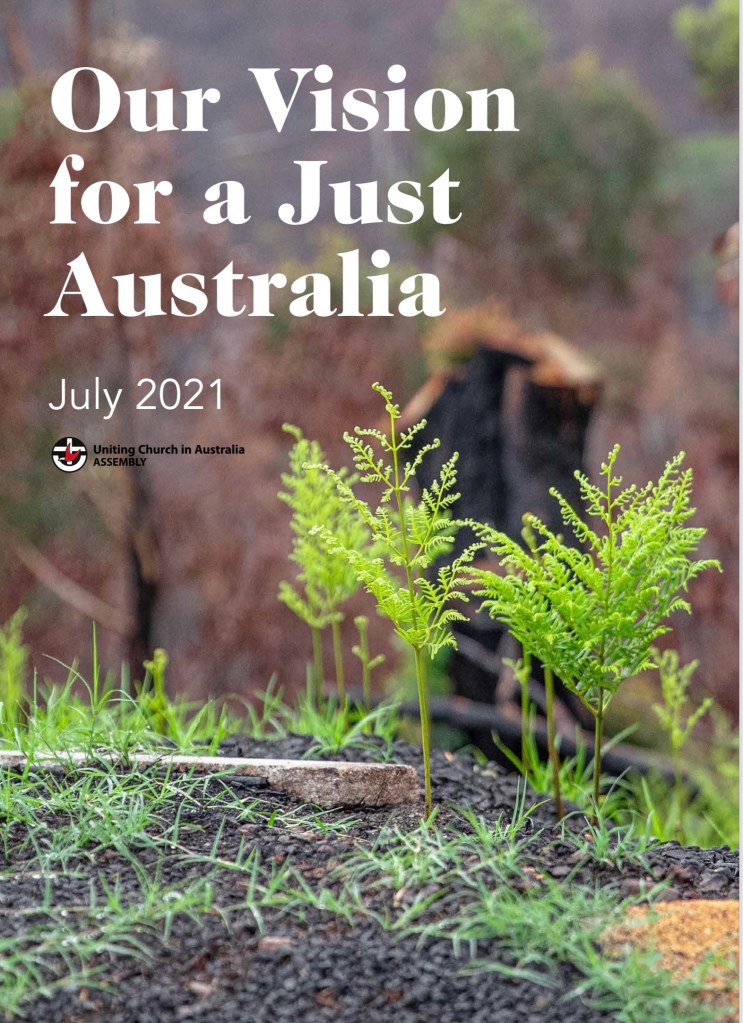
In 2021, the National Assembly of the UCA issued
Our Vision for a Just Australia, which develops and applies
many of the core commitments made in the Statement to the Nation

Today, how can we be more purposeful and intentional about how we achieve this vision? This is a question to ponder. We could start by reclaiming this statement, andbeing deliberate in our efforts to live into it.

As the Uniting Church, we can’t make these commitments and then be silent. Our voice has had to be loud and strong at points of justice, fairness and what is best for the common good. At times our voice has had to be a lone voice, a voice that isn’t popular, even amongst our own members and among other Christians.

I suggest this should remind you of someone, who also wasn’t popular within his own religion and who voice often howled across the wilderness of the white noise of religious self-interest and disregard for how others were treated, and championed the notion that the future kingdom embodied a place of justice and equity for all.

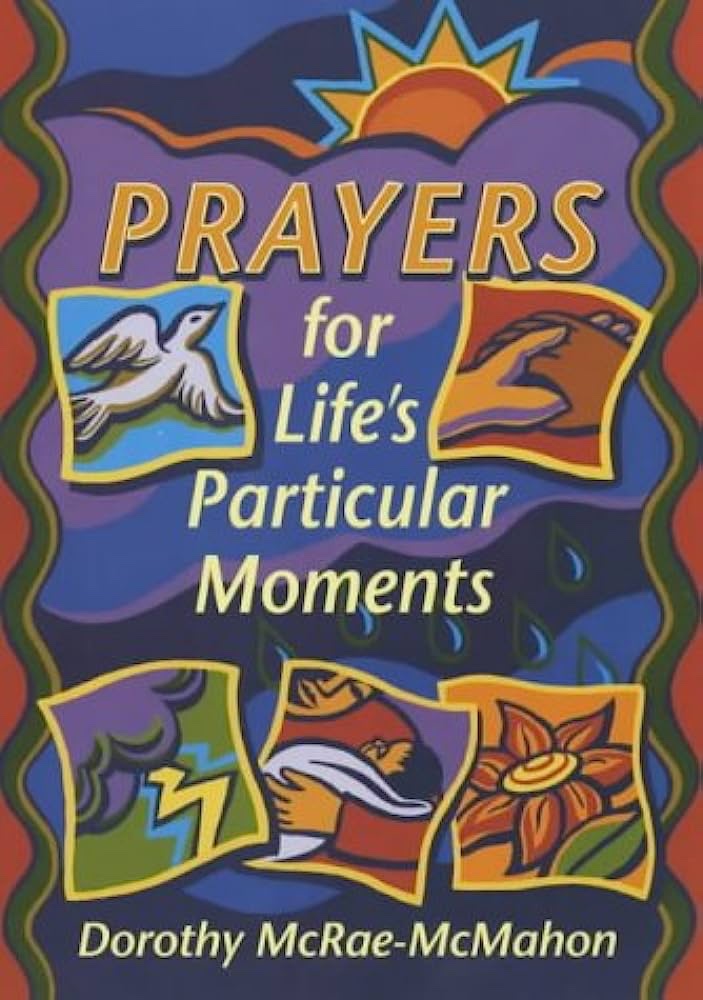
The Statement to the Nation draws us back to our foundations. It reminds us that like Abraham and the disciples, we too are sent by God in the now to prepare the futurefor all. To help us in this quest, I am closing with a prayer by the Rev. Dorothy McRae-McMahon.

Gracious God,
we believe in the wonder of life in you.
In every moment, we know that
you call us on towards creativity and hope,
never giving up on us, your church.

Christ Jesus, we celebrate
that you have journeyed with us
over these last 46 years together,
never leaving us alone in our humanness
and inviting us towards
fullness of life together.

Holy Spirit of Wisdom,
we believe that you will be discovered
in unexpected places around us,
your shining life emerging before us
and inspiring us to believe
that we can share in your power
to change the world
towards your goodness and grace.
This we believe, O God. Amen.


(Source: Dorothy McRae-McMahon, slightly adapted from a prayer for the WCC 70th anniversary)


“Fresh words and deeds”: for Reformation Day

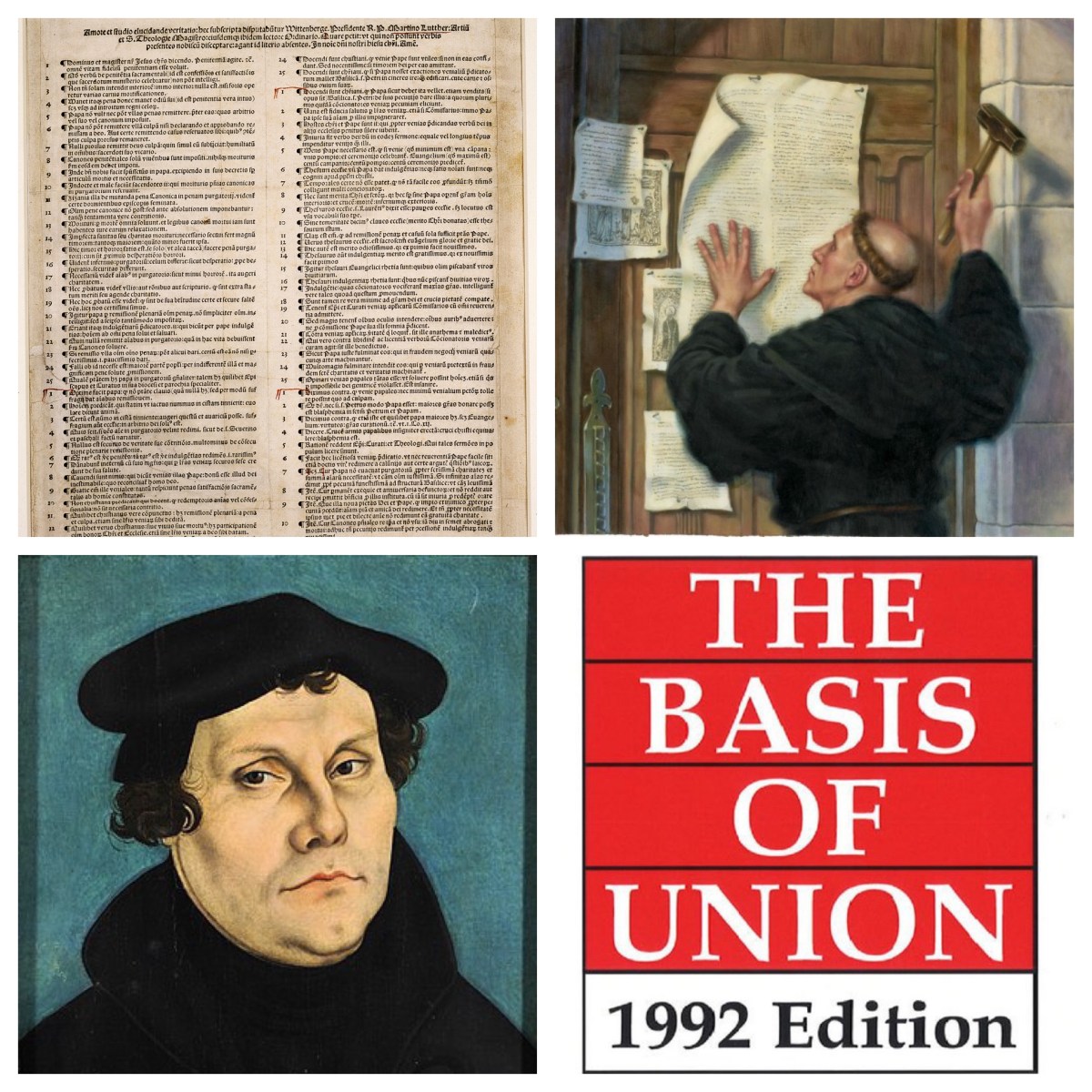
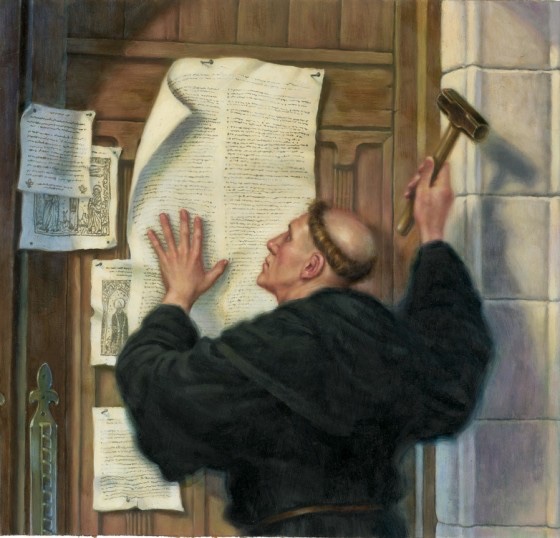
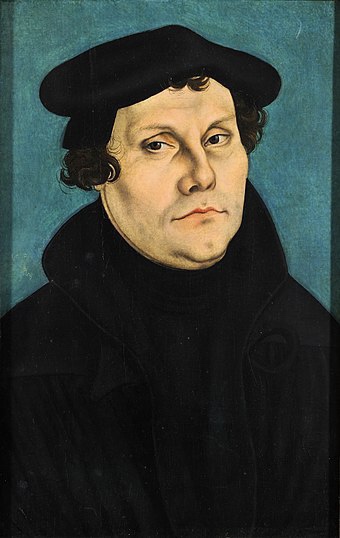
Over five centuries ago, allegedly on 31 October 1517, the Reformation began. That day, a German priest, Martin Luther, sent his Ninety-Five Theses on the Power and Efficacy of Indulgences his to the Archbishop of Mainz. In these theses, Luther criticised the common practice of his fellow priests, who sold indulgences to their parishioners.

He also disputed the teaching of the church about purgatory (an intermediate state after death, before entering heaven or hell), and criticised the authority which had been claimed by the Pope. As a result, he was excommunicated by the Pope and condemned as an outlaw.

Actions from that time unleashed a series of protests and changes across the church. This Reformation led to the formation of numerous Reformed churches. The Uniting Church stands with these churches, as a Protestant church, an heir of the Reformation. Our forebears held firm to the belief that the church was always to be seeking renewal; that supreme authority rested in the Bible; that salvation was possible only because of God’s abundant grace.

As we recall this event, on Reformation Day (31 October), we might well ask: is it time for a new Reformation? Have we come to a point in time when we need to kick off the shackles of old traditions and practices? Is it time to set forth on a new venture, as the people of God, to protest what we have left behind, to reform ourselves once more?

There are some very clear pointers in this direction, I believe, within my own denomination, which is a relatively young (45 years old) denomination. In the Basis of Union, the foundational document for the Uniting Church, for instance, I can find 12 occurrences of words like “new, anew, reform or renew”, as well as one “fresh” and one “afresh”.

Para 1 declares that the three denominations which united in 1977 “remain open to constant REFORM under his Word” and affirms that “they look for a continuing RENEWAL in which God will use their common worship, witness and service to set forth the word of salvation for all people”.

Foundational theological affirmations about Jesus which are included in Para 3 reiterate this perspective: Jesus is “the beginning of a NEW creation, of a NEW humanity”, “a pledge and foretaste of that coming reconciliation and RENEWAL which is the end in view for the whole creation”, and “a representative beginning of a NEW order of righteousness and love”. Para 4 concludes with a similar affirmation, that “in his own strange way Christ constitutes, rules and RENEWS them as his Church.

Para 15 locates us in “a period of RECONSIDERATION of traditional forms of the ministry, and of RENEWED participation of all the people of God” in the various aspects of ministry. And since the Basis was written, we have renewed the Diaconate and invited ongoing experimentation with other forms of ministry (Lay Pastor, Community Minister and Youth Worker—all now ended, and taken up in the umbrella Ministry of Pastor).

In para 11, the church declared that it “prays that it may be ready when occasion demands to confess the Lord in FRESH words and deeds”. Para 15 enjoined the councils of the church to “enter a period of self-examination in which members are asked to consider AFRESH their common commitment to the Church’s mission and their demonstration of its unity”. All of these phrases point to a hope for ongoing renewal, refreshment, and revitalisation.


There’s one reference to “history”, but it is in the phrase “the CHANGES of history”, and three uses of “tradition”, one of which is in the phrase “a period of RECONSIDERATION of traditional forms of the ministry”. So these excerpts are oriented towards change and reform.

“Inheritance” pops up twice: once, “the inheritance of the Kingdom” (hardly an advocate for the status quo) and once in “the inheritance of literary, historical and scientific enquiry which has characterised recent centuries”, which promotes a sense of exploration and discovery.

Then, of course, there are the widely-known references to being a “pilgrim people” (once) who are “on the way” (twice). This imagery clearly points to the hope for still more reforming and renewing within the church.

The closing sentence in the opening paragraph of the Basis sets the horizons of openness to the future: the church “awaits with hope the day of the Lord Jesus Christ on which it will be clear that the kingdom of this world has become the kingdom of our Lord and of the Christ”. It is this openness to whatever the future will bring which is most clearly to characterise the Uniting Church.

I think the primary orientation is very clear: as people of the Uniting Church, we are oriented towards the future with hope, and we are called to work for a different future. We are people with an inheritance from the Reformation and with a calling to continue to reform the church.

So, let’s protest, reform, and head on our way!!