The murky world of opposition to a YES vote: exposing the vested interests at work

I recently came across a fascinating thread on Twitter, from Dr Jeremy Walker, of the University of Technology Sydney. Dr Walker researches across the disciplines of political economy, geography, and science and technology studies. His current research focuses on “the history of neoliberal economic theory and government in relation to energy transition and climate justice”.

He had some very revealing things to say about the links between opposition to the Voice to Parliament and the fossil fuel industry. Those who are behind the scenes, funding the public opposition to the Voice, are right wing characters who have been active for many decades, now, in defending the industries of, first tobacco, and then fossil fuels, and in promoting climate denialism. They are a most unsavoury bunch; unfortunately, they are well-connected with regard to money, media, and conservatives with high public profiles.

They are precisely the sort of people that I do not wish to pay attention to, or to give any credence to what they say, coming from their own vested personal interest. But what Dr Walker has written, about those supporting the public advocates of the No cause, is disturbing. It is worth reading. With his permission, I have extracted and summarised from his postings on Twitter, in what follows:

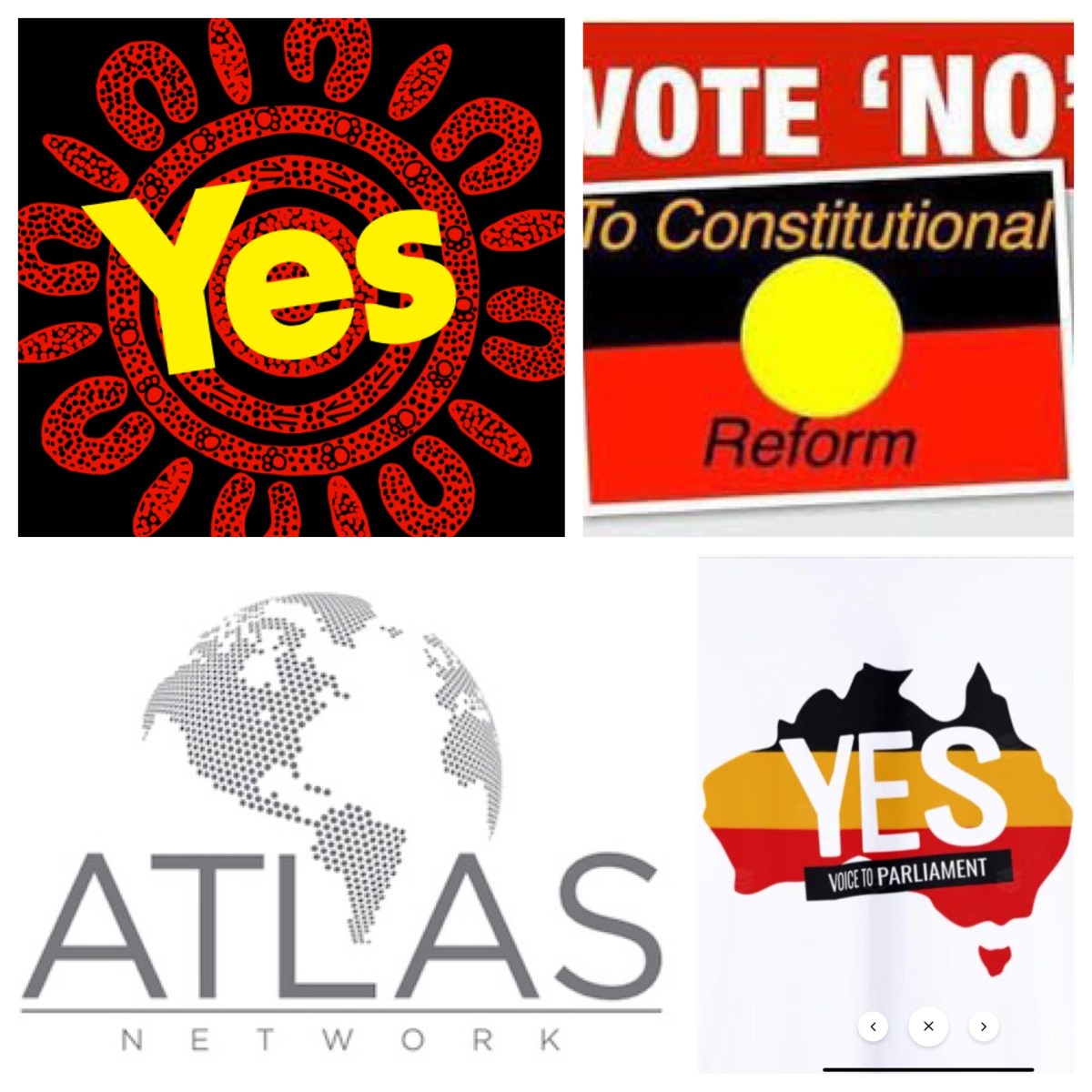
“The anti-Voice campaign is being run by the Australian branch of the global Atlas Network, comprised of 500+ neoliberal ‘research institutes’. One notable member of this Atlas Network is the “Centre for Independent Studies” (CIS), which fosters the careers of Warren Mundine and Jacinta Nampijinpa Price. Evidence suggests they speak not with the authority of any First Nations community but for fossil fuel/mining corporates.

“Big Oil ‘think thanks’ which are funded by the Atlas Network are usually run by the elite members of the invitation-only Mont Pelerin Society. John Howard is one such member. A key Australian Atlas organiser, and central to climate science denial and policy defeat in recent years in Australia, was mining lobbyist Hugh Morgan, who begins meetings “acknowledging the traditional owners of this country: King George III, his heirs and assigns.”
“The Atlas-affiliated “Institute of Public Affairs” (IPA) was established in 1943 by Keith Murdoch, with funding from RioTinto and BHP. Since then, the IPA, funded by Rupert and coal baron Gina, has had many oil, gas and mining execs on its board, and it also runs anti-climate & anti-Voice campaigns.

“In Canada, Atlas units defeated laws to recognise First Nations rights established under the United Nations Declaration on the Rights of Indigenous Peoples (UNDRIP), to protect their oils and their corporate profits. Very similar tactics are now in play in Australia. Atlas has also been implicated in the election of far-right, neofascist anti-Indigenous govts in South America—for instance, Balsonaro in Brazil.

“In the UK, climate protestors now face major jail sentences, which was unheard of only a year or two back. Apparently activists are forbidden from even saying in court why they protest—that is, there is to be no mention of a climate emergency allowed as a defence. This authoritarian turn in policing by the UK Tory government was prompted by an Exxon funded Atlas-linked unit called Policy Exchange.

“Listed among the registered owners of Policy Exchange are Howard’s foreign minister Alexander Downer, and David Frum, George W. Bush speechwriter. Another Atlas-linked organisation in the UK is the science denial and anti-climate policy unit, the Global Warming Policy Foundation. Look who is the new board director: ex-Australian PM Tony Abbott.”

These are the people and the organisations that are pushing people to vote No in the forthcoming referendum. It is outrageous! There have been decades of conspiracy and underhand dealings in relation to protecting fossil fuel. It is a shameful and tragic story which is continuing now in the anti-Voice agitation. All the more reason why we need to Vote YES!

Dr Jeremy Walker is acting director of the Climate, Society and Environment Research Centre (C-SERC) based in the Faculty of Arts and Social Sciences at UTS, and a member of the international Climate Social Science Network (CSSN) based at Brown University (USA). He is the author of More Heat than Life: the Tangled Roots of Ecology, Energy and Economics (2020, Palgrave).

*****

There is a comprehensive exposé of the Atlas Network at

https://www.desmog.com/atlas-economic-research-foundation/

From the Statement from the Heart to the Voice to advise Parliament and Government

At a meeting of the Canberra Region Presbytery of the Uniting Church, held at North Belconnen Uniting Church on Saturday 25 March 2023, Nathan Tyson was invited to address the Presbytery on issues relating to the upcoming referendum proposal to establish a Voice to advise the Federal Parliament and the Executive Government. There was a full house as Nathan spoke and then responded to questions from those present.

The Rev. Ivan Roberts introduced Nathan Tyson. Ivan has worked with Nathan in Synod roles since 2017. Nathan is currently the Manager, First Peoples Strategy and Engagement with the Uniting Church in Australia’s Synod of NSW and the ACT. He is an Aboriginal man of Anaiwon/Gomeroi descent, who has lived most of his life in Sydney.

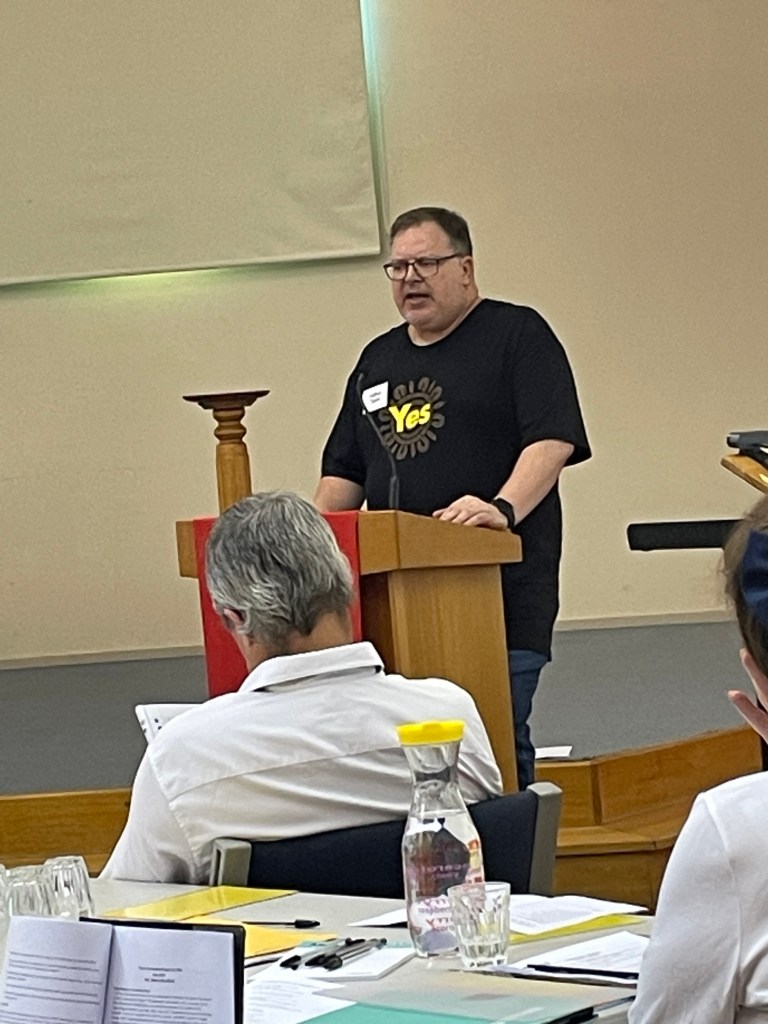
Nathan Tyson addressing the Presbytery

Nathan is a lawyer and long time advocate for the rights of Aboriginal peoples, having worked for organisations such as the NSW Ombudsman, the ICAC, the Australian Securities and Investments Commission, Western Sydney University, and Uniting, before commencing his role with the Synod in May this year. Nathan is currently undertaking a Graduate Diploma in Theology.

Nathan spoke to the Presbytery about the Statement from the Heart, and matters promoted in that Statement, namely, Truth, Treaty, and Voice.

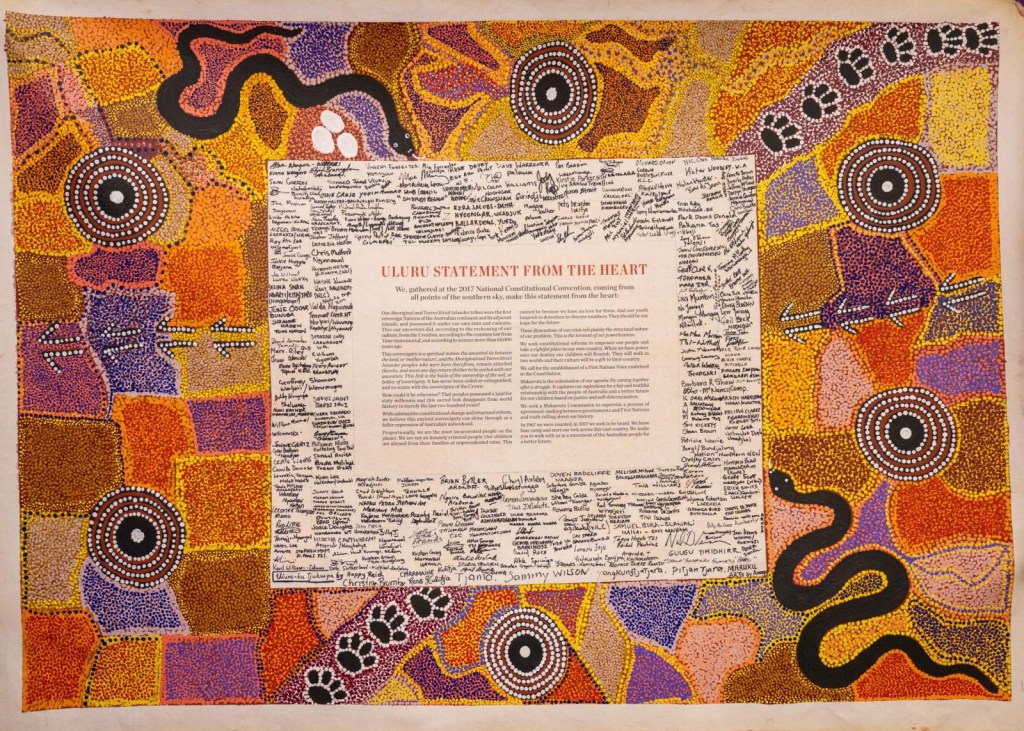
The Statement from the Heart, 2017

The Statement emerged after twelve regional dialogues, relating particularly to constitutional recognition, had occurred. The process drew together many conversations that had taken place amongst First Peoples in the previous decade. The Statement was crafted during a gathering at Yulara, close to Uluṟu in the heart of the continent of Australia. There was a diversity of views at the gathering, including a group that left the gathering before the Statement was finalised. This diversity reflects the reality of society in Australia, and of Aboriginal and Islander peoples.

Truth, Treaty, Voice

The Statement calls for a Makarrata Commission, following a model used in Canada. There needs to be a recognition of the terrible things that did take place in Australia in the past; Truth means acknowledging that history, and the impact that it has had on our society. There is no need for personal guilt amongst those of us living today; rather, it is simply acknowledging the Truth about that history.

The Statement asks for the Commission to oversee a process of forming Treaties with the First Peoples. (There would need to be multiple treaties, as there are multiple First Nations in Australia.) Such treaties exist in all the other Commonwealth countries; Australia is the only nation without such a Treaty. Having a Treaty—or Treaties—in place would enable constructive ways of addressing the past and its impacts into the present.

The Synod has supported Truth, Treaty, and Voice. (See the link below.) All three are equally important; they each need to be implemented, they each need to be in place. (The Assembly is likewise strongly supportive, have agreed to the repudiation of the Doctrine of Discovery in 2015 and recognised the prior sovereignty of First Nations in 2018. Again, see the links below.)

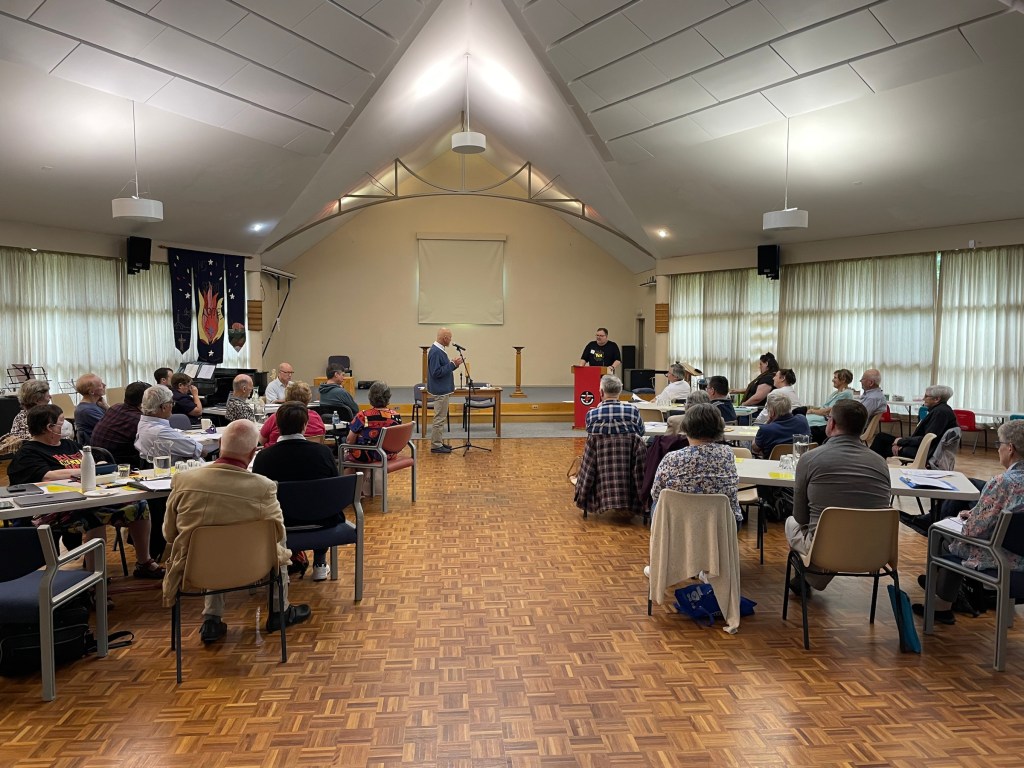
The Presbytery discussing the presentation by Nathan Tyson

The Voice

The question for the referendum has been made public. It is a straightforward proposition. There are key principles underpinning the proposal. There are also key criticisms that have been made in recent times.

Opponents to “Voice before Treaty” claim that this will cede the sovereignty of First Peoples. This is not the case. As a lawyer, Nathan recognises that any ceding of sovereignty would need to involve the free, prior, and informed consent of the First Nations people. Sovereignty will be addressed through the process relating to Treaty.

A second criticism relates to the order of things. “Treaty should come before Voice” is the claim. Applying the doctrine of terra nullius in 1788 meant that a Treaty was not required. Now that the Mabo decision has declared terra nullius null and void, a Treaty process is required. Nathan compared the situation in Australia with what is the case in New Zealand. There was never, here, any opportunity to cede sovereignty, as there has been in New Zealand.

A third area of criticism is, quite simply, “we don’t trust government”. The Stolen Generations feeds this, and there are legitimate concerns here. However, the present government does want to move things forward. It is a once in a lifetime opportunity. This is an opening we need to take. If not now, how long will we have to wait?

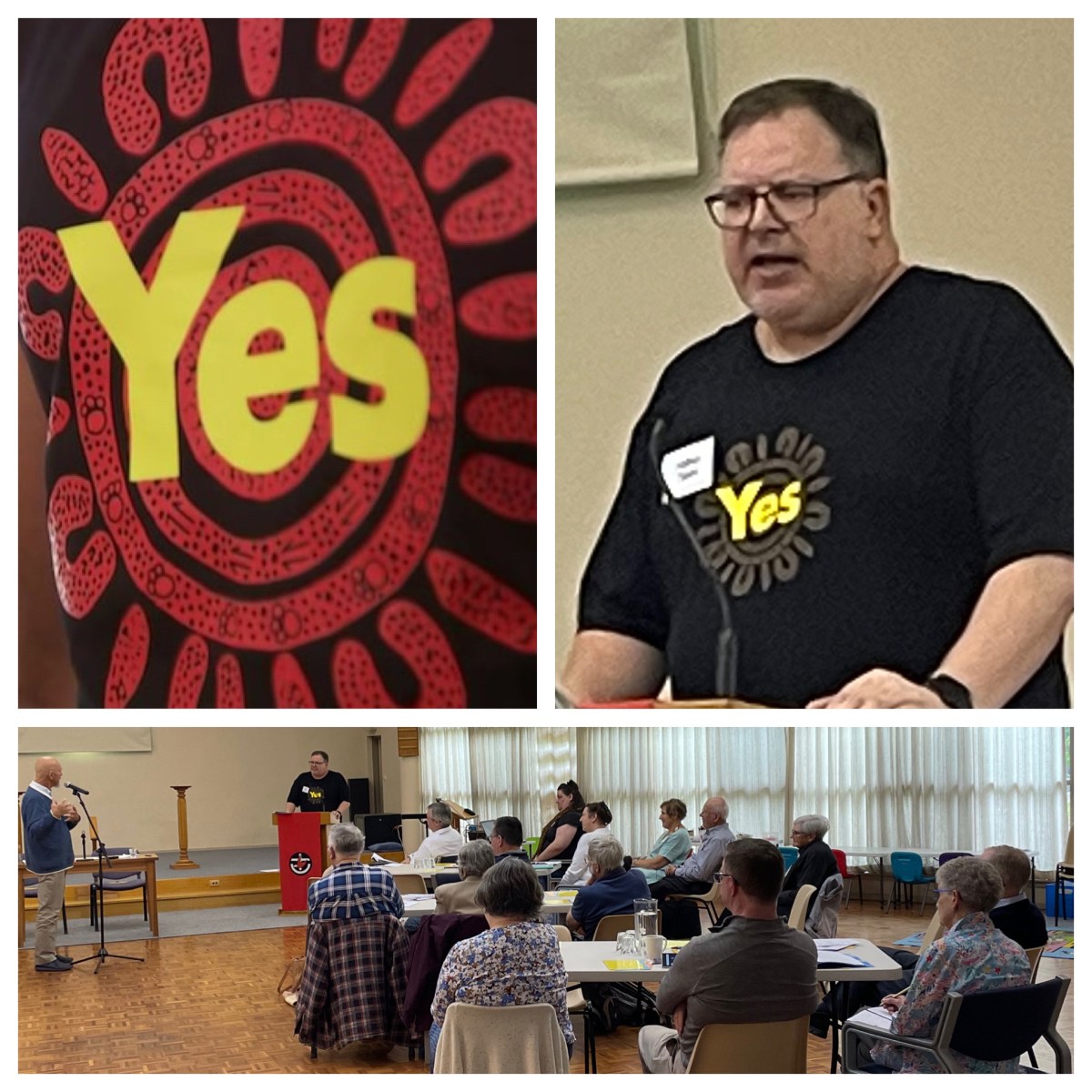
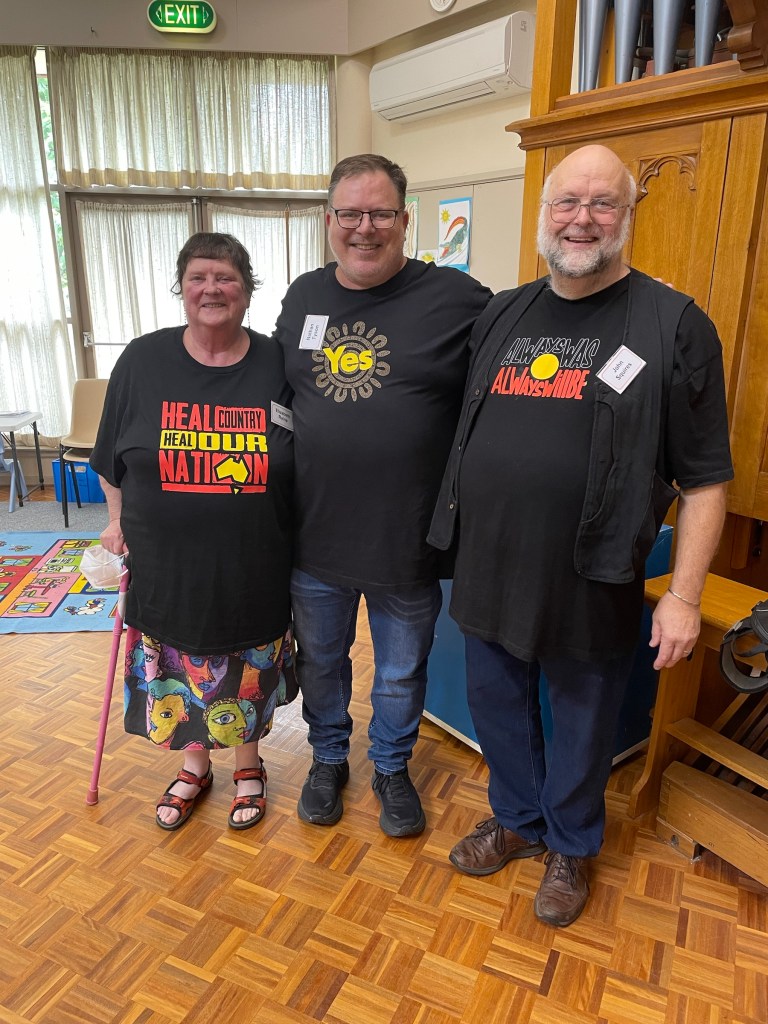
Solidarity through tshirts!!

The process is a legislative process—the politicians will be responsible for creating the detail of this matter as it is prepared, debated, and decided upon in the Federal Parliament. To say “we don’t have enough detail” is disingenuous, as those critics will be sitting in Parliament, deciding those details!

Nathan quoted from the documents already released which explain how The Voice will work. It will make representations to Parliament and the Executive Government; it can research, propose, and advocate through these representations. Membership will be by elected members, representative, and with fixed term limitations. Membership will rely on the three-part test that has been applied since 1983 (a person identifies as Aboriginal, is recognised by their community, and is Aboriginal by descent). It will have gender, age, and geographical diversity. Members will reflect the wishes of their communities.

A key task for the Voice will be to address the current situation of inequity experienced in Aboriginal communities, with direct access to advise and advocate. It will be accountable and transparent, subject to the usual processes of all governmental bodies. It will work alongside existing First Peoples organisations. It will not deliver services; it is only advisory. It will not be a third body in the parliamentary structures, despite what a former Prime Minister (mistakenly) claimed.

What is the point of a body that does not make decisions? Is that not creating a body with no power? Article 19 of the UN’s Declaration on the Rights of Indigenous Peoples provides that Indigenous peoples have the right not to consent to decisions that may impact on them. That is not reflected in the Voice. However, the advice provided to the Voice will be made public, for all to see. If the advice is counter to proposed legislation, that will be public. There is a level of public accountability, and the Voice will certainly have power within the current system. It will not be a powerless body.

Nathan suggested that it may be helpful to see the new Voice as an Indigenous lobby group, akin to the ACTU, the Business Council of Australia, the Farmers Federation, and other lobby groups. He then responded to a series of questions which sought further clarifications, and comments which expressed support for the case he had put.

In making a proposal to thank Nathan Tyson for his presentation, Presbytery Secretary Robbie Tulip noted that the UCA Assembly and the UAICC National body has supported a YES vote, as has the Board of Uniting and five of the six Synods of the UCA.

In response to the substantive matters in Robbie’s proposal, the Presbytery agreed by consensus that it would support advocacy for a YES vote in the referendum in the coming months; encourage Church Councils to consider the issues involved in the Voice and to facilitate local conversations about this issue; and to encourage all members of the church to give serious consideration to the way that they vote in that referendum.

(In the Uniting Church way of doing things, a consensus decision means that all who took part in the deliberation and decision process agreed to the proposal, and nobody participating in that indicated that they were unsure of, or opposed to, the decision.)

*****

For resources relating to First Nations people that Nathan Tyson has collected and developed, go to https://nswact.uca.org.au/first-nations-resources/

For Uniting Church decisions, see my reflections at

On relevant themes in recent years, see