Happy is the one who listens to me, watching daily at my gates, waiting beside my doors; for whoever finds me finds life!

A sermon on Wisdom in Proverbs 8

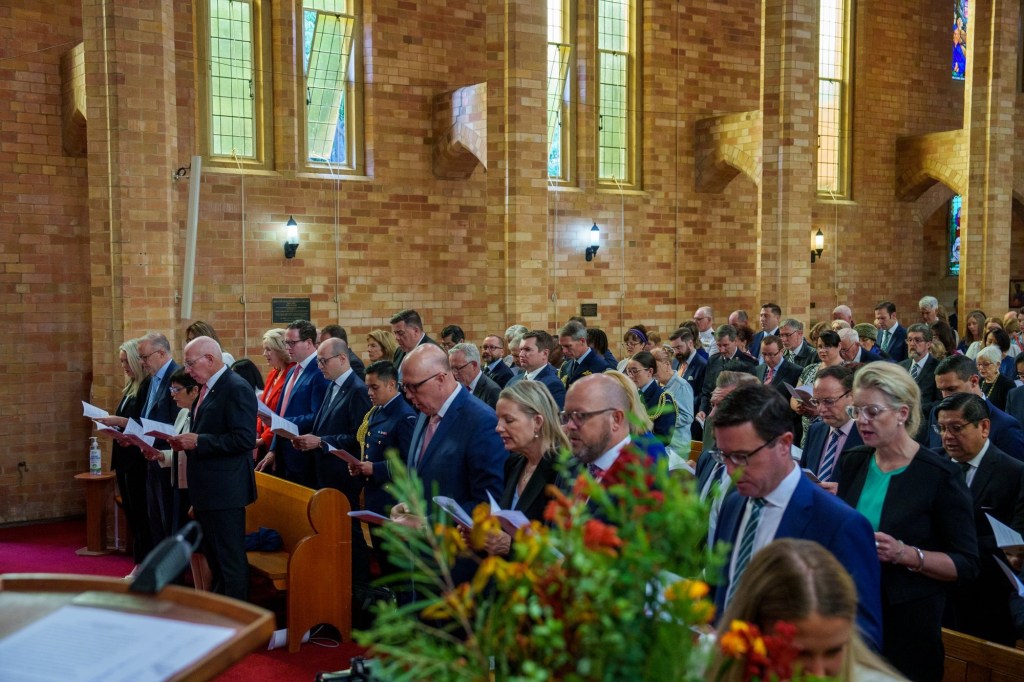
A sermon on Proverbs 8: 22–36, preached by the Rev. Elizabeth Raine in St Stephen’s Uniting Church, Sydney, at a service of Closure of Ministry for the Rev. Jane Fry, outgoing Secretary of the Synod of NSW.ACT, on Wednesday 29 October 2025.

When Jane asked me to preach at this event, I was very surprised. I expected that a former Moderator or Board Chair would be invited to preach at such an important event as the General Secretary of the NSW/ACT Synod retiring. But here I am!
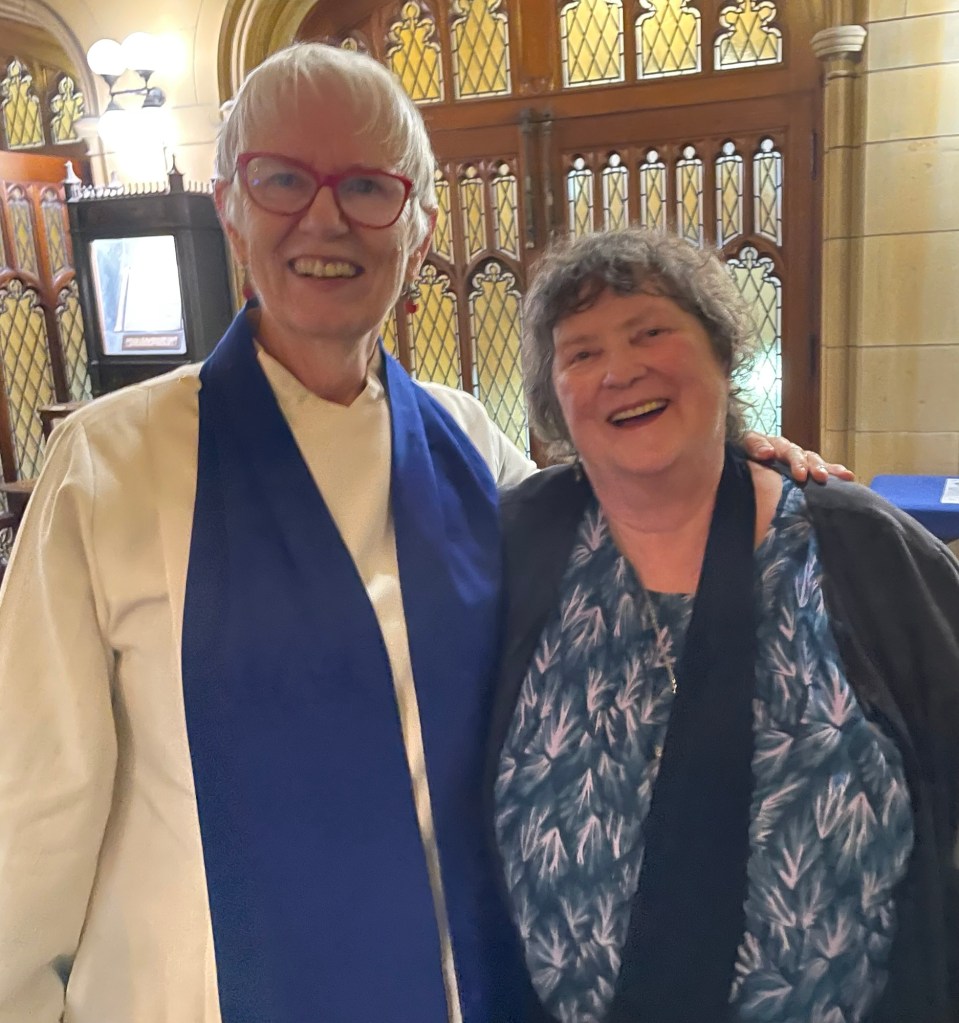
Jane (left), Elizabeth (right)

It is true that Jane and I go back many years, as we went through UTC together, bonded by the attitude of the sexist male colleagues who accused us from everything from ‘sleeping our way to high distinctions’ to being ‘feminists’, like it was some sort of virus. I confess this rather patriarchal attitude has informed this sermon, though it is also true that so many more women now occupy prominent positions in our church, which is a very good thing.

I did warn her that I was unsettling, potentially feral and capable of saying things that were unfiltered in my sermons. Was she sure she wanted to risk such a this? Apparently she did, so here I am.

I was grateful to Jane for her friendship and support then, and I am grateful to her now for her presence as General Secretary over the last 9 years. She has approached this position as she does most things, with integrity, thoughtfulness and a straightforward approach to dealing with what I call ‘faffing around’. Jane has a deep and abiding love for the church and hopes only for its successful transition into the future, and I wish her well for her future in retirement.

Wisdom, from the “Women of the Bible” series by Sarah Beth Baca; https://www.sarahbethart.com/products/p/full-image-women-of-the-bible

The book of Proverbs from which one of the readings we heard is drawn tells us a lot about Wisdom (hochma in Hebrew). She is a central character in chapters 1–9, and she appears as a mystical feminine aspect of God. “Lady Wisdom”, as she is known, is a central character in many chapters of Proverbs, and those who know her are seen asrighteous people. She calls to us and invites us on an unexpected journey. She is offered as a role model for us, her teachings are a template for life, and she a pioneer who opens up a pathway to faith and obedience.

Scholars have debated how the personification of Wisdom should be interpreted, especially as Wisdom is stated to be the first creation of God (“the Lord created me at the beginning of his work, the first of his acts of long ago”, Prov 8:22) and is involved in the creation process itself (“the Lord by wisdom founded the earth”, Prov 3:19). Is wisdom meant to be a specific aspect of God or even a separate being from God? Or should all such language be taken as mere metaphor?

She has been described in many ways—as an aspect of God, as a divine entity existing in her own right, even as something approaching a feminine deity, as Proverbs 8 states: Wisdom was present at the beginning of creation as a co-creator with God, who delighted in her presence.

The divine Wisdom has fascinated ecclesiasts and scholars since the inception of the Christian church. As we have heard, Wisdom has been described in many and various ways but Wisdom’s primary function was understood by the very early Christians to be a mediating force between God and the world, and was particularly associated with the work of creation.

The text from Proverbs 8:22 was important for this belief: here, Wisdom declares, “The Lord created me at the beginning of his work, the first of his acts of old”. Wisdom was believed to be a vehicle of God’s self-revelation, granting knowledge of God to those who pursue her through scripture and learning. 
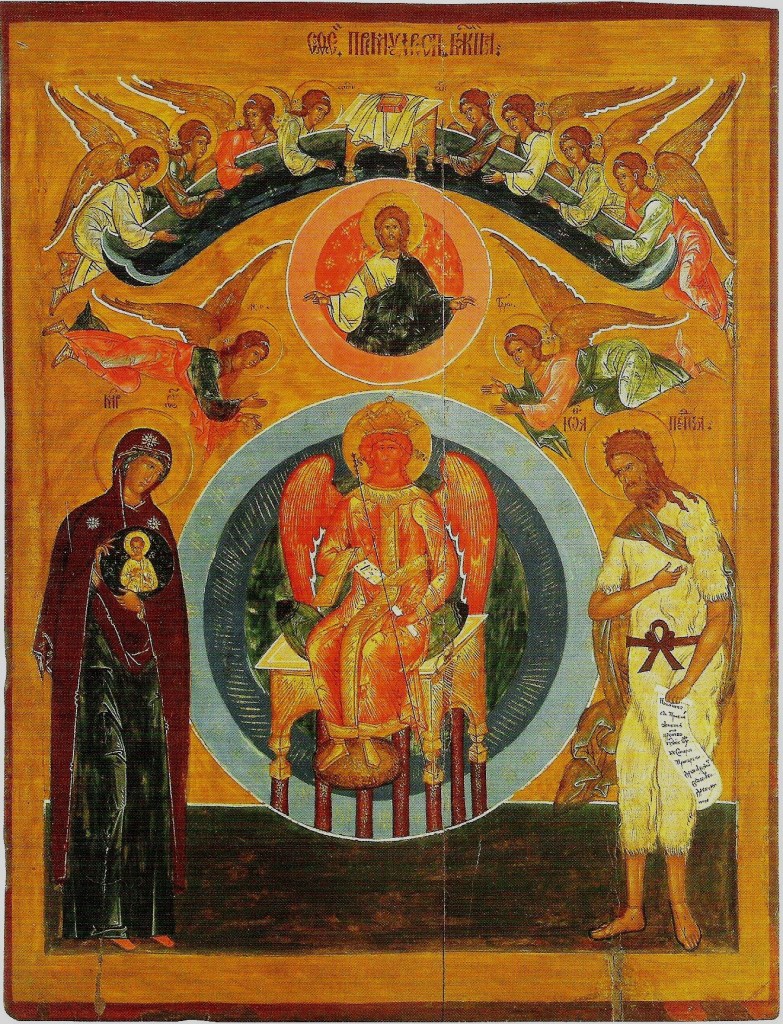

Wisdom (Sophia) on her throne supported by seven pillars
A 16th century Icon of Divine Wisdom
in the St George Church in Vologda, Russia

Despite this, the Christian tradition, for most of its life, cannot be said to be famous for finding the feminine aspect of the divine. Relentlessly masculine, the early Christian church systematically excised any sense of the feminine from the orthodox view of God, spirit and Jesus.

The ruach (Holy Spirit) became masculine through the language of Latin; the bat qol (the voice of God) of the rabbinic literature found a different, masculine grammatical construct in Greek, and hochma or sophia (wisdom) morphed into the figure of Jesus, as the New Testament writings firmly associated the attributes of Wisdom with the person of Jesus Christ. 

This last is most clearly seen in the letter to the Colossians. This document was originally attributed to the apostle Paul, but is now thought to have been written by a follower of Paul, soon after the apostle’s death in the early 60s. Some early verses in Colossians make it clear that Wisdom had been grafted onto Jesus:

“He is the image of the invisible God, the firstborn of all creation; for in him all things in heaven and on earth were created, things visible and invisible, whether thrones or dominions or rulers or powers — all things have been created through him and for him.”
The Divine Feminine through whom God created the world was replaced with the Divine Masculine. A good example of this can be found in the writings of Justin Martyr – he claimed that Jesus was Wisdom, Logos and the Glory, thereby removing the feminine Spirit (ruach), Wisdom (hochma), and Glory (shekinah) all in one stroke. 

Wisdom sadly morphed into a male saviour, who by assuming the divine characteristics Wisdom was meant to share with God, found himself inserted as the third person of a doctrine of trinity with a transgendered holy spirit, who crossed masculine, neuter and feminine across biblical languages.

Instead of recognizing Wisdom, this feminine aspect of the divine, early Christian male leaders instead have tried to satisfy women throughout the world by presenting them with role models of martyrs and virgins, thereby setting a standard that the vast majority of females cannot possibly aspire to.
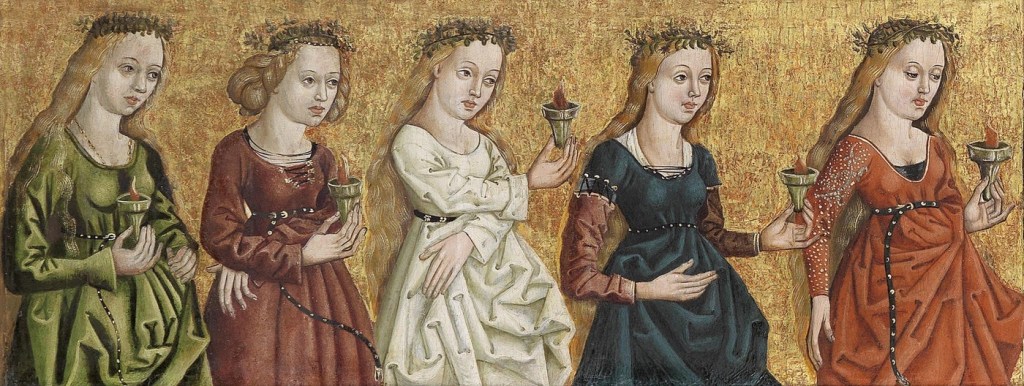
Wisdom fast lost her independence and feisty nature, and the meek, obedient woman, characterized by the mother of Jesus (another virgin), was held up as the model to which all women should strive to be.

However: far from being obedient and submissive, Wisdom occupies what is the domain of men, teachers and prophets. She stands on busy street corners, she is at the town gate; she sets her table at the crossroads where many pass by. Unlike her counterpart in Proverbs 31, there is nothing of the domestic goddess about her. She is radical, counter cultural and subversive. She teaches knowledge and leads her people on their way through history. In a most unfeminine way, unaccompanied by a male chaperone, she raises her voice in public places that are the domain of men and calls to everyone who would hear her. 

Wisdom offers us a radical example of faithfulness yet she remains a disturbing presence. She is a most unladylike figure, venturing outside the house, to stand beside the crossroads, crying out in full voice, surprising and startling and provoking with her words.

She transgresses boundaries by standing amidst the male elders at the city gates and presuming to teach them. She has a clear voice, a colourful personality, a dominant presence, and offers words of hope and the promise of life. She is a vehicle of God’s self-revelation, and grants knowledge of God to those who pursue her through scripture and learning. 

The prominent biblical scholar, Elisabeth Schüssler Fiorenza, has written this about Wisdom:

Divine Wisdom is a cosmic figure delighting in the dance of creation, a “master” crafts wo/man and teacher of justice. She is a leader of Her people and accompanies them on their way through history. Very unladylike, she raises her voice in public places and calls everyone who would hear her. She transgresses boundaries, celebrates life, and nourishes those who will become her friends. Her cosmic house is without wallsand her table is set for all.

In short, the biblical figure of Wisdom represents a spirituality of roads and journeys, of public places and open borders, of nourishment and celebration, of justice and equality – rather than a spirituality of categories, doctrines, closed systems and ideologies. Her dramatic modus operandi stands in striking contrast to the slow and methodical way of operating that we see in the classic formulations of Christendom, doctrines that have come to define the church in the eyes of those outside of it.

The church fathers, the male patriarchs of the church, and the myriad of male theologians who followed were, in my humble opinion, consumed with their categories; they articulated their doctrines by amassing the data, analysing the information, systematising the component parts and categorising the key dogmas. And they wrote down these dogmas and systems and turned them into the doctrines by which faith was measured.

By contrast to these closed systems of belief and knowledge, the biblical figure of Wisdom asks for a relational faith, and invites us to develop a wide openness in the way we approach others and God. She requires of us that we really listen to others, including those we don’t agree with … she calls us to listen, to understand, to speak in ways that connect with others and ways that build productive and fruitful relationships across the differences that separate us.

Wisdom calls us to work together, for the common good, with others in our society. She is not a figure bound to buildings, books and writing; she is an outdoor, community spirit, seeking relationships with people, engaging wholeheartedly in the public discourse, debating back and forth in the public arena the key elements of a faith-filled life.

What Wisdom presents is a radical democratic concept, in that anyone, whether illiterate or educated, whether without or with status, whether poor or wealthy, can acquire what she offers. 

She invites us to be life-long learners of the faithful and missional type, and calls us to be constantly open to challenge and change as we read, study, think, discuss, explore, debate, and decide. 

I think that Wisdom is precisely the kind of person who would have relished the invitation, once offered to his disciples by Jesus, to fish on the other side of the boat. She would value the opportunity to look in a different direction, to reconsider the task at hand and seek a new way of undertaking it. Rather then remonstrating with Jesus saying ’but we have always done it this way’, she would jump at the chance to set out in a new arena, to pioneer a new task, to reshape her missional engagement so that it was fresh, invigorating, and creative, open to new possibilities and exciting pathways. What a role model that is, for the church today!
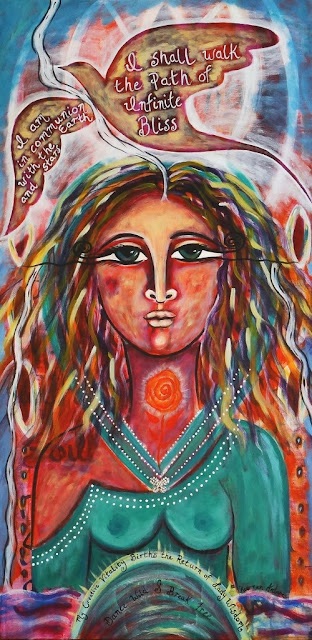
Lady Wisdom, by Canadian artist Kiernan Antares (2013)
https://womenspiritualpoetry.blogspot.com/2013/12/lady-wisdom-by-kiernan-antares.html

So, the question that I invite you to ponder at this moment is: How will we interact with Wisdom? Are we open to the exploration and discoveries that the biblical figure of Wisdom invites us to pursue? 

Are we content with just repeating our tried and true traditions from the past? Are we happy staying in our familiar comfort zones? Will our mission be simply no more than wishing people to walk through ourdoors, as we remain in our comfortable, self-contained spaces?

Or will we choose the way of the rather unladylike and subversive Wisdom, the radical at the street corner, crying out to all who pass by? Can we adopt Wisdom’s model invitation of radical hospitality as relevant to the church today? Should we be more concerned with ‘raising our voices’ in the public arena than confining ourselves to church buildings?

Hopefully as a church we will choose to follow the path of Wisdom into the future, which through its relational, radical and inclusive theology offers us the potential to transform contemporary situations of injustice, brokenness and violence in the communities we serve. By taking our stance in the marketplace, we can demonstrate the ways that show our deep and profound relationship with and love for God, and how that love is extended to all people. Hopefully all of us, not just a few, can follow Wisdom out of our enclosed gatherings to the space where such social and spiritual change can take place.

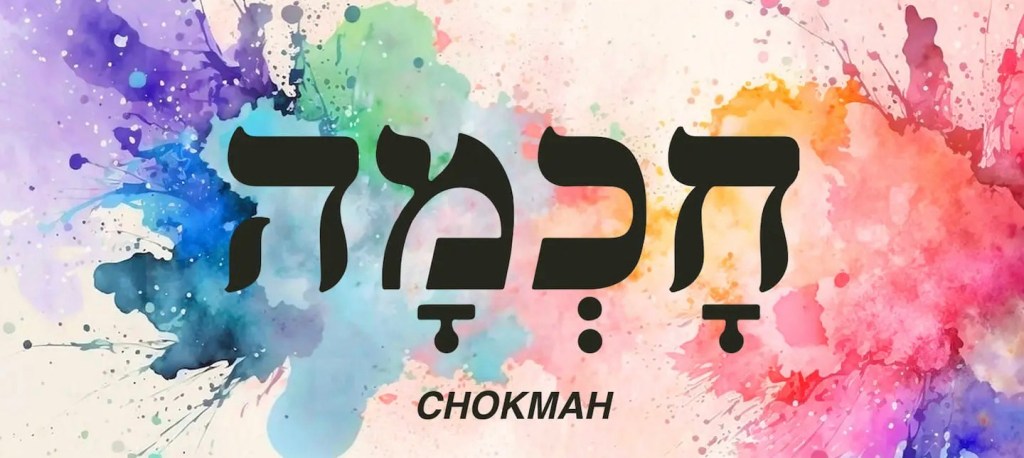
I trust that as a church, we will continue to encounter Wisdom, hochma, and learn from her, again and again in the coming years.
*****

You can read a report of the whole service of Closure of Ministry at
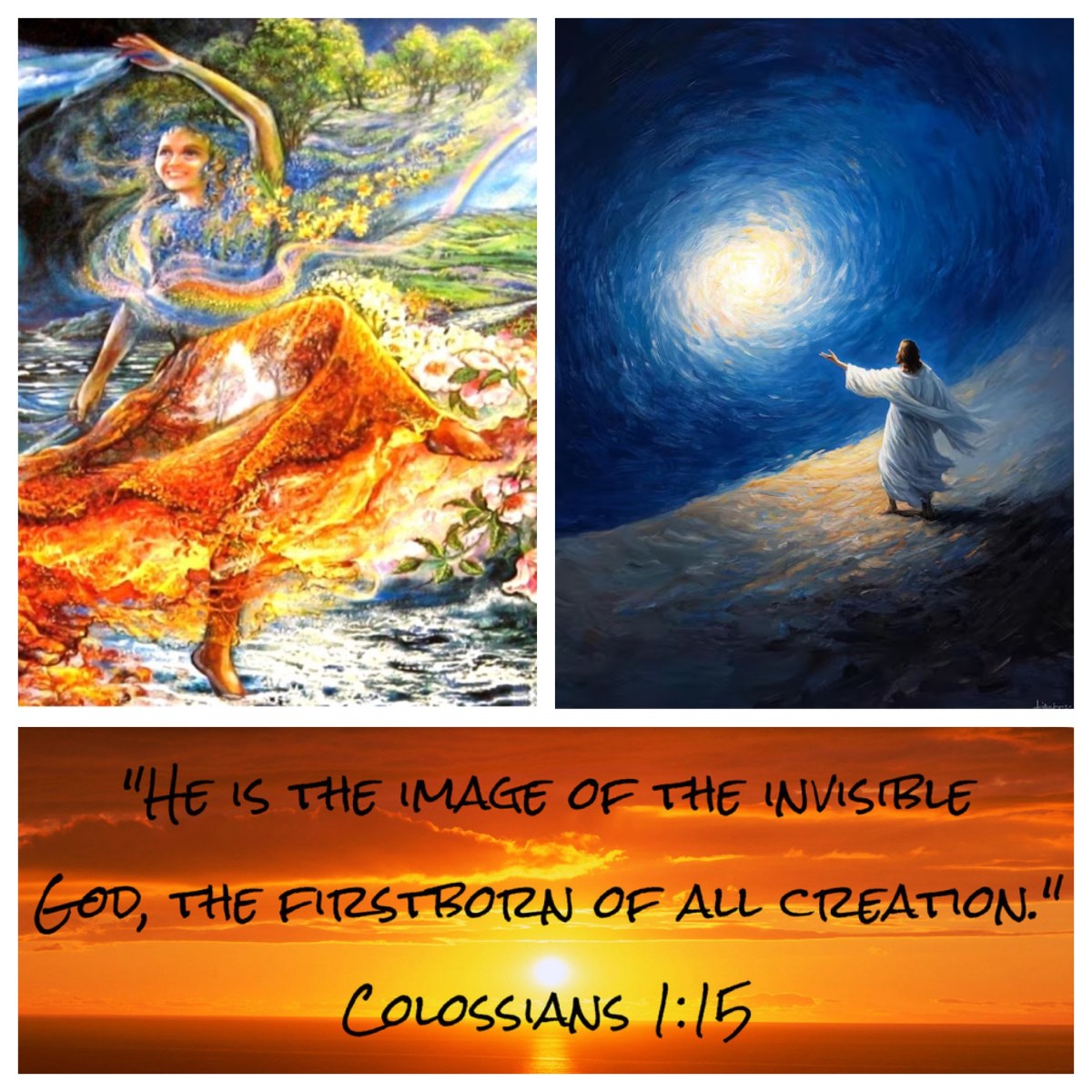
Image of the invisible God, firstborn of creation (Pentecost 6C; Col 1)

The lectionary continues to offer us passages from epistles attributed to Paul. After working our way through Galatians—which Paul, I believe, most definitely did write—this coming Sunday we continue the sequence of passages from Colossians, which I am not convinced was written by Paul, even though the letter claims that it was written by Paul (Col 1:1).

The passage for this coming Sunday (1:15–28) is one of the places in this letter where there are significant theological developments beyond the theology found in the seven “authentic” letters of Paul: Romans, 1 & 2 Corinthians, Galatians, Philippians, 1 Thessalonians, and Philemon (this order, by the way, moves from the longest to the shortest of these letters).

The letter has begun with the expected words of greeting (1:1–2) and prayer of thanksgiving (1:3–8). The prayer morphs into a prayer of intercession for the Colossians (1:9–12), cycling back into an expression of thanks to “the Father” (1:12) for what he has done through “his beloved Son” (1:13–14). All of this adheres to the pattern that is found in most of Paul’s letters (although Galatians has omitted any thanksgiving from the beginning of the letter—Paul is too angry with them!).

This thanksgiving for the Son then morphs seamlessly (in the original Greek, there is no sentence break) into an extended affirmation about Jesus, “the image of the invisible God, the firstborn of all creation … the head of the body, the church … the beginning, the firstborn from the dead …[in whom] all the fullness of God was pleased to dwell” (1:15–20).

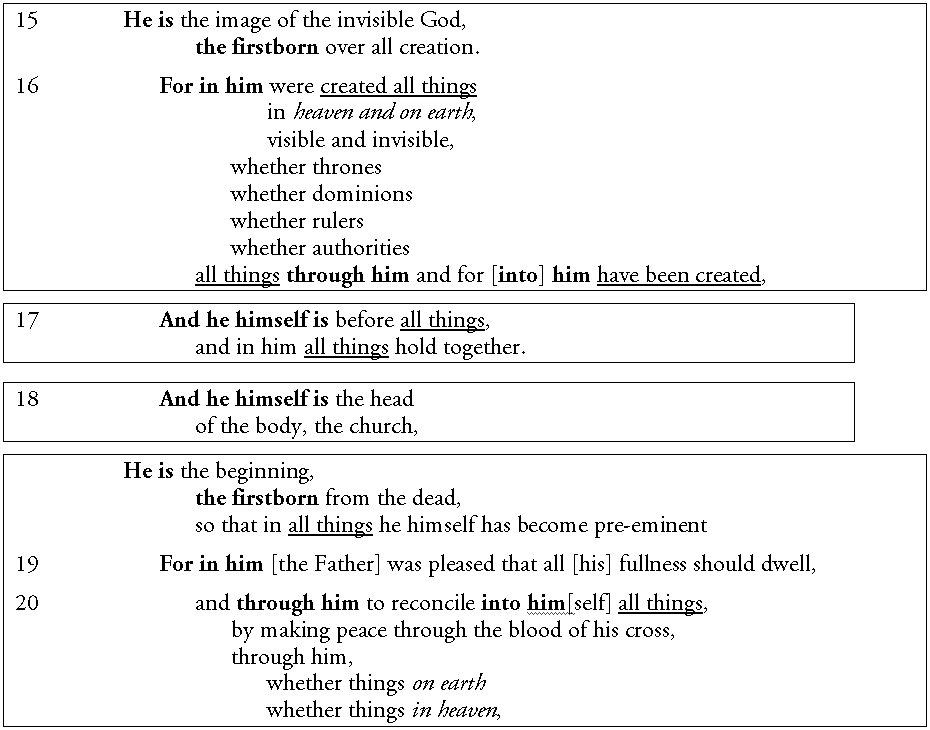
This is quite an extension to the expression of thanks; the sentence in Greek actually begins in v.9 and continues through multiple subordinate clauses to v.20! It has a lovely structure beauty, which is clearly evident in the Greek text; not so much, unfortunately, in most English translations. (Indeed, it is nigh-impossible to convey the structure in a poetic manner in a language other than the original.) The best structure exposition I have found of it looks like this:

The structure of Col 1:15–20, as outlined by Andrew Fountain
in “The song hidden in Colossians”, Newlife Church Toronto;
see https://nlife.ca/audio/colossians-pt4

This poetic passage also stands as significant theological affirmation. It offers a relatively early consideration of “the person and work of Jesus Christ”, a crucial theme which later systematic theology writers would explore and develop, using this and other passages of scripture as foundations for a complex and intricate affirmation of this key element of Christian faith.

The main thrust of this passage can best be understood by giving consideration to the way this it draws on Jewish elements—specifically, the Wisdom material found in parts of Hebrew Scripture. Jesus is portrayed very much in the manner of Lady Wisdom, as we encounter her in scripture in Proverbs 8, and then in the deuterocanonical works of Ben Sirach (Ecclesiaticus) and the Wisdom of Solomon. In Colossians, of course, the attributes of the female Wisdom are applied directly to the male Jesus.

Jesus is here described as the agent of God’s creative powers: “in him all things in heaven and on earth were created … all things have been created through him and for him” (Col 1:16). In the same way, in Proverbs Wisdom herself is said to have declared that “ages ago I was set up, at the first, before the beginning of the earth … when [the Lord] established the heavens, I was there … when he marked out the foundations of the earth, then I was beside him, like a master worker” (Prov 8:22–31). 
The creative power of Wisdom

In the Wisdom of Solomon, Wisdom is described as “the fashioner of all things” (Wisd Sol 7:22), “a breath of the power of God” who “pervades and penetrates all things”(7:24–25), who was “present when you [God] made the world” (9:9), whose “immortal spirit is in all things” (12:1). 

Jesus, son of Sirach, declares that “Wisdom was created before all other things” (Sir 1:4), that at the very first she “came forth from the mouth of the Most High, and covered the earth like a mist” (Sir 24:3), and “compassed the vault of heaven and traversed the depths of the abyss” (24:5) as she undertook her creative works, distinguishing one day from another and appointing “the different seasons and festivals” (33:7–8).
Jesus Christ, as the one who is “before all things” (Col 1:17), reiterates what Wisdom declared, that “before the mountains had been shaped, before the hills, I was brought forth—when [the Lord] had not yet made earth and fields, or the world’s first bits of soil” (Prov 8:25–26).

So Jesus is the one who has “first place in everything” (Col 1:18), just as the works of Wisdom can be traced “from the beginning of creation” (Wisdom Sol 6:22). The importance of these Wisdom writings for what is stated in Col 1 is clear. (The same writings underpin the theological affirmations made about Jesus in Heb 1:1–4 and John 1:1–18.)

The passage in Colossians also indicates that believers are “transferred … into the kingdom of [God’s] beloved son” (Col 1:13); they are rescued (1:13) and redeemed (1:14) by the work of Jesus. In similar fashion, the Wisdom of Solomon contains a long section praising Wisdom who was actively involved in human affairs from when “she delivered him [Adam] from his transgression” (Wisd Sol 10:1), saved the people at the Exodus, and guided the Conquest and settlement in the land. It was Wisdom who punished the Canaanites (12:3–11), sinful Israelites (12:19–22), and the Egyptians (12:23–27), as well as all idolators (13:1—14:31). A similarly lengthy poem praising the works of Wisdom occurs in chapters 44 to 50 of Sirach, extending all to the way to Simon, son of Onias (high priest in the early C3rd BCE). 

So Jesus brings to a high point much of what had been hoped for, and spoken about, in the figure of Wisdom. All of this is now seen to reside in him, “the image of the invisible God, the firstborn of all creation … the head of the body, the church … the beginning, the firstborn from the dead …[in whom] all the fullness of God was pleased to dwell” (1:15–20). It’s a remarkable testimony.

Wisdom, by Sara Beth Baca

This year we are to celebrate 1700 years since the Nicene Creed was created. The development in theological understanding of Jesus that is found in these verses in Colossians, drawing from Hebrew scriptures of past centuries, continues apace in the ensuing centuries, as Christian writers draw more and more from neo-platonic philosophy to develop what eventually becomes a full suite of Christian doctrines—including a series of affirmations about Jesus.

It is worth noting that, just as the creative work of Jesus is noted in the Nicene Creed (“through him all things were made”), so his salvific work is also briefly described (“for us [all] and for our salvation he came down from heaven“). These fleeting references draw on the way in which scripture has used the Wisdom literature— although, of course, all four Gospels and many Epistles note the forgiving, saving, delivering work of Jesus. Colossians plays its part in attesting to this. It is, in fact, part of the bedrock of the developing patristic theology which emerged over the centuries between the New Testament and the early Ecumenical Councils. 

I’m planning to write some more blogs about credal affirmations found within scripture, and how they inform (or not) the Nicene Creed, in the context of this global celebration of 1700 years since Nicaea. Stay tuned!

At the crossroads, beside the gates: Wisdom in the public places (Sunday after Pentecost; Proverbs 8)

“On the heights, beside the way, at the crossroads … beside the gates”. So Wisdom is located, in these opening verses of the section of Proverbs which the lectionary offers us for this Sunday, the first Sunday after the festival of Pentecost (Prov 8:1–4). Of course, this day is identified in the liturgical calendar as Trinity Sunday, and this passage from Proverbs is one of a number of Scripture passages which, over three years, are proposed for this particular Sunday. 

The others are Genesis 1, where God, God’s word, and God’s spirit are to be found, and Isaiah 6, which includes the tripartite song “holy, holy, holy”; and Psalms 8, a song in praise of creation, and 29, singing of “the voice of the Lord”. None of them, of course, make any specific claim that can be seen to be articulating a “doctrine of the Trinity”. It is up to later Christian interpreters to “read back” into the passage any inferences regarding a triune God.

In this post I am not going to attempt any exegetical gymnastics, to find aspects of the threefold nature of God in what is said about Wisdom. Rather, I want to highlight the importance of what is said about where Wisdom exercises her ministry (in this post) and the significance of the role that Wisdom plays in the creation of the world (in the following post). These are themes that are inherent in the passage itself; as we attend to these matters, we don’t need to squeeze, distort, or manipulate the text to make it conform with a much later dogmatic theory. 

Wisdom is positioned in the public places of her society—places where, normally, males would be found, transacting their business, arguing their views, maintaining the honour of their public status. Instead, in this poem, as also in the opening poem about Wisdom at 1:20–33, the female figure is placed firmly within those traditionally-male places. In the earlier poem, she was said to be crying out “in the street” (1:20), raising her voice “in the squares”, speaking forth “at the busiest corner” (1:20–21). 

The street is where the prophet Jeremiah is commissioned to proclaim his message in the pubic place of the streets (Jer 11:6); the squares are where this same prophet is to search, to see “if you can find one person who acts justly and seeks truth” (Jer 5:1). So here in Proverbs, Wisdom  is functioning in a very public place.

This claim is intensified with the further declaration that Wisdom takes her stand “at the crossroads” (8:2). This is reminiscent of the earlier assertion about Wisdom: “at the busiest corner she cries out; at the entrance of the city gates she speaks” (Prov 1:21). The street corner may well have been the location for public prayer by some, if the words of Jesus reflect the common practice of “the hypocrites [who] love to stand and pray in the synagogues and at the street corners, so that they may be seen by others” (Matt 6:5).

However, it is the mention of “the gates in front of the town” (8:3) that is most significant. The same claim, placing Wisdom “at the entrance of the city gates”, is made in the earlier poem (1:21). The gates were important parts of the protective structure surrounding towns and cities; built into the walls at strategic locations, they could be opened to allow for the coming and going of traders and visitors, or they could be closed to keep out enemies and invaders. “Fortress towns” are described in Deut 3:5 as having “high walls, double gates, and bars”. King Asa decreed “let us build these cities, and surround them with walls and towers, gates and bars” (2 Chron 14:7). 

In Jerusalem, the Chronicler claimed that it was the Levites who had responsibility for the gates, as Solomon appointed “gatekeepers in their divisions for the several gates” (2  Chron 8:14). When Judith calls out to be let into the city, the elders of the town “opened the gate and welcomed them, then they lit a fire to give light, and gathered around them” (Jud 13:12–13). Opening the gates is a clear sign of welcome to those acceptable to enter. 

Accordingly, the gates of the city became the place where various matters associated with the life of the city took place. When God’s angels arrived in Sodom, Lot was “sitting in the gateway,” apparently serving as a judge (Gen 19:1, 9). In association with the rape committed on Dinah, “Hamor and his son Shechem came to the gate of their city and spoke to the men of their city” (Gen 34:20). The “men of the city” are apparently often to be found in this location.

When David gathered his troops to fight against the uprising led by Absalom, “the king stood at the side of the gate, while all the army marched out by hundreds and by thousands” (2 Sam 18:4). After Absalom was killed, “the king got up and took his seat in the gate; the troops were all told, “See, the king is sitting in the gate”; and all the troops came before the king” (2 Sam 19:8). In a story from much later, Mordecai learned of plans to assassinate the king while “sitting at the king’s gate” (Esther 2:19).

Earlier in the narrative saga of Israel, when a soldier arrived at Shiloh and reported that Philistines had captured the ark of the covenant, Eli was sitting in the gate where “he had judged Israel forty years” (1 Sam 4:10–18). It was already known as a place for the judging of cases by the elders. That this took place at the city gates is clear from the story of Ruth, for Boaz went to the town gate to settle legal matters regarding his marriage to Ruth (Ruth 4:1–11). 

Moses instructs Israel to “appoint judges and officials throughout your tribes, in all your gates that the Lord your God is giving you, and they shall render just decisions for the people” (Deut 16:18). One of the laws decrees that parents of a rebellious son who would not submit to their discipline were to “take hold of him and bring him out to the elders of his town at the gate of that place” and there “all the men of the town shall stone him to death; so you shall purge the evil from your midst” (Deut 21:18–21). Such was the nature of justice rendered “ at the gates”.


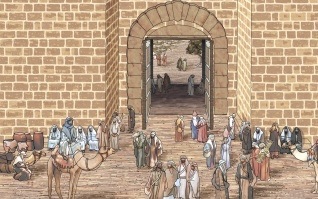
What the city gates may have looked like:
a place of entry, a meeting place

So finding Wisdom “beside the gates in front of the town, at the entrance of the portals” (Prov 8:3) is striking. This is the place where the men of the city would gather, debate, and render justice. In the normal course of events, women would not be found at the gates; their domain was inside the houses with their families. The acrostic poem at the end of the book of Proverbs clearly locates the “woman of valour” in the house, from daybreak, when “she rises while it is still night and provides food for her household and tasks for her servant-girls” (Prov 31:15), through the day as “she girds herself with strength, and makes her arms strong” (31:17) to complete the many tasks listed in this poem, right until the darkness comes, when “her lamp does not go out at night” (31:18b). See

See also

Wisdom cries out in the street, at the city gates (Prov 1; Pentecost 17B)

“Wisdom cries out in the street; in the squares she raises her voice; at the busiest corner she cries out; at the entrance of the city gates she speaks” (Prov 1:20–21). So begins the passage from Proverbs which the lectionary offers for this coming Sunday—the third passage from the “Wisdom Literature” that comprises much of the third section of the Hebrew TaNaK, the Kethuvim (“The Writings”).

We saw two weeks ago, in the Song of Songs, that the woman singing some of the songs may have been functioning as the vehicle for communicating wisdom to the king, her lover. The passage this week, from the opening chapter of Proverbs, introduces us to the figure of Wisdom herself. She is positioned in a very public place “in the street” (1:20), a location which may perhaps be echoed by the woman in Song of Songs, who declares that “I will rise now and go about the city, in the streets and in the squares; I will seek him whom my soul loves” (Song 3:2).

Many occurrences of “the streets” in Hebrew Scripture depict scenes of terror and anguish, as the Lord God executes his judgement “in the streets” (Isa 5:25; 10:5-6; Jer 6:10-12; 44:6; Lam 2:21; Isa 51:20; and more). Nevertheless, the prophet Jeremiah is commissioned to proclaim his message in the pubic place of the streets (Jer 11:6) and the prophet Zechariah foresees the rejuvenation of the abandoned streets, when “old men and old women shall again sit in the streets of Jerusalem, each with staff in hand because of their great age; and the streets of the city shall be full of boys and girls playing in its streets” (Zech 8:4–5). The streets were clearly public places.

In Proverbs, Wisdom speaks out “in the squares” (Prov 1:20); this also is a public location which is echoed at Song 3:2. Again, Jeremiah is commissioned to “run to and fro through the streets of Jerusalem, look around and take note! Search its squares and see if you can find one person who acts justly and seeks truth” (Jer 5:1). Other prophets note the public significance of the squares. Amos foresees that because he has proclaimed the Lord’s message to “hate evil and love good, and establish justice in the gate … in all the squares there shall be wailing; and in all the streets they shall say, ‘Alas! alas!’” (Amos 5:15–16). Nahum portrays the invasion of Nineveh as being publically signalled as “chariots race madly through the streets, they rush to and fro through the squares” (Nah 2:4).

So Wisdom here in Proverbs—like the woman in the Song—is functioning in a very public place, as the opening couplet of v.20 indicates. The significance of this location is intensified when we consider the second couplet of the next verse: “at the busiest corner she cries out; at the entrance of the city gates she speaks” (Prov 1:21). The street corner may well have been the location for public prayer by some, if the words of Jesus reflect the common practice of “the hypocrites [who] love to stand and pray in the synagogues and at the street corners, so that they may be seen by others” (Matt 6:5).

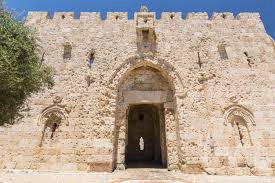
A city gate into Jerusalem

However, it is the mention of “the entrance of the city gates” (Prov 1:21) that is most significant. The gates were part of the protective structure surrounding towns and cities; built into the walls at strategic locations, they could be opened to allow for the coming and going of traders and visitors, or they could be closed to keep out enemies and invaders. “Fortress towns” are described in Deut 3:5 as having “high walls, double gates, and bars”. King Asa decreed “let us build these cities, and surround them with walls and towers, gates and bars” (2 Chron 14:7). 

In Jerusalem, the Chronicler claimed that it was the Levites who had responsibility for the gates, as Solomon appointed “gatekeepers in their divisions for the several gates” (2  Chron 8:14); their names, and their duties, are listed at length in 1 Chron 9:17–27. When the southern kingdom was under attack from the Assyrian king Sennacherib in 701, several towns in Judah were invaded (see 2 Kings 18–19; Micah 1:10–16).

Micah laments that “disaster has come down from the Lord to the gate of Jerusalem” (Micah 1:12); the wound inflicted on Judah “has reached to the gate of my people, to Jerusalem” (Micah 1:9). Some time later, the poet-author of Lamentations observes that “the kings of the earth did not believe, nor did any of the inhabitants of the world, that foe or enemy could enter the gates of Jerusalem” (Lam 4:12). The importance of the gates in providing security is clear.

In contrast, when Judith calls out to be let into the city, “the people of her town heard her voice, they hurried down to the town gate and summoned the elders of the town … they opened the gate and welcomed them, then they lit a fire to give light, and gathered around them” (Jud 13:12–13). Opening the gates is a clear sign of welcome to those acceptable to enter. 

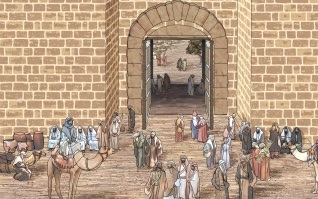
What the city gates may have looked like: a
place of entry, a meeting place

Accordingly, the gates of the city became the place where various matters associated with the life of the city took place. When God’s angels arrived in Sodom, Lot was “sitting in the gateway,” apparently serving as a judge (Gen 19:1, 9). In association with the rape committed on Dinah, “Hamor and his son Shechem came to the gate of their city and spoke to the men of their city” (Gen 34:20). The “men of the city” are apparently often to be found in this location.

When David gathered his troops to fight against the uprising led by Absalom, “the king stood at the side of the gate, while all the army marched out by hundreds and by thousands” (2 Sam 18:4). After Absalom was killed, “the king got up and took his seat in the gate; the troops were all told, “See, the king is sitting in the gate”; and all the troops came before the king” (2 Sam 19:8). In a story from much later, Mordecai learned of plans to assassinate the king while “sitting at the king’s gate” (Esther 2:19).

Earlier in the narrative saga of Israel, when a soldier arrived at Shiloh and reported that Philistines had captured the ark of the covenant, Eli was sitting in the gate where “he had judged Israel forty years” (1 Sam 4:10–18). It was already known as a place for the judging of cases by the elders. That this took place at the city gates is clear from the story of Ruth, for Boaz went to the town gate to settle legal matters regarding his marriage to Ruth (Ruth 4:1–11).

Boaz at the city gate

Moses instructs Israel to “appoint judges and officials throughout your tribes, in all your gates that the Lord your God is giving you, and they shall render just decisions for the people” (Deut 16:18). Both the NRSV and the NIV render the phrase “in all your towns” as “in all your towns” on the reasonable understanding that each town has its own walls and gates.

Soon after this, one of the laws decrees that parents of a rebellious son who would not submit to their discipline were to “take hold of him and bring him out to the elders of his town at the gate of that place” and there “all the men of the town shall stone him to death; so you shall purge the evil from your midst” (Deut 21:18–21). Such was the nature of justice rendered “ at the gates”.

So finding Wisdom “at the entrance of the city gates” (Prov 1:21) is striking. This is the place where the men of the city would gather, debate, and render justice. In the normal course of events, women would not be found at the gates; their domain was inside the houses with their families. The psalmist sings, “your wife will be like a fruitful vine within your house” (Ps 128:3). Luke has Jesus indirectly indicate this when he tells his followers, “there is no one who has left house or wife or brothers or parents or children, for the sake of the kingdom of God, who will not get back very much more in this age, and in the age to come eternal life” (Luke 18:29). The wife, along with the rest of the family, is based in the house.

The acrostic poem at the end of the book of Proverbs (which will be our lectionary reading next week) clearly locates the “woman of valour” in the house, from daybreak, when “she rises while it is still night and provides food for her household and tasks for her servant-girls” (Prov 31:15), through the day as “she girds herself with strength, and makes her arms strong” (31:17) to complete the many tasks listed in this poem, right until the darkness comes, when “her lamp does not go out at night” (31:18b). See

The town gate was the place where business was conducted, and judgment according to law was enacted by men in the ancient Hebrew world. Monetary and legal transactions took place here in the presence of other men—the jtown elders—and it is here that the power plays of this male-dominated society took place. Women’s domain was in the privacy of their home, and any excursions into the public arena would usually be chaperoned by a family male member or older woman.

So the presence of Wisdom, not sequestered in the private space of the house, but rather by herself out in the public space, “in the street … in the squares … at the busiest corner … at the entrance of the city gates” (1:20–21), is quite noteworthy. The prominent biblical scholar, Elisabeth Schüssler Fiorenza, has described Wisdom as “very unladylike, she raises her voice in public places and calls everyone who would hear her. She transgresses boundaries, celebrates life, and nourishes those who will become her friends.” 

What does Wisdom do in this very public space?  She cries out, berating the “simple ones”, demanding, “how long will you love being simple? … how long will scoffers delight in their scoffing and fools hate knowledge?” (1:22). These are strong words. Later, she describes how a “loud and wayward woman” used “smooth words” to seduce “a young man without sense”, one of “the simple ones” (7:6–27).

Like Wisdom, this woman is active in the public spaces, “now in the street, now in the squares, and at every corner she lies in wait” (7:12). Unlike Wisdom, who is “a tree of life to those who lay hold of her” (3:18), who offers “life to those who find them, and healing to all their flesh” (4:22), what this woman offers is “the way to Sheol, going down to the chambers of death” (7:27). 


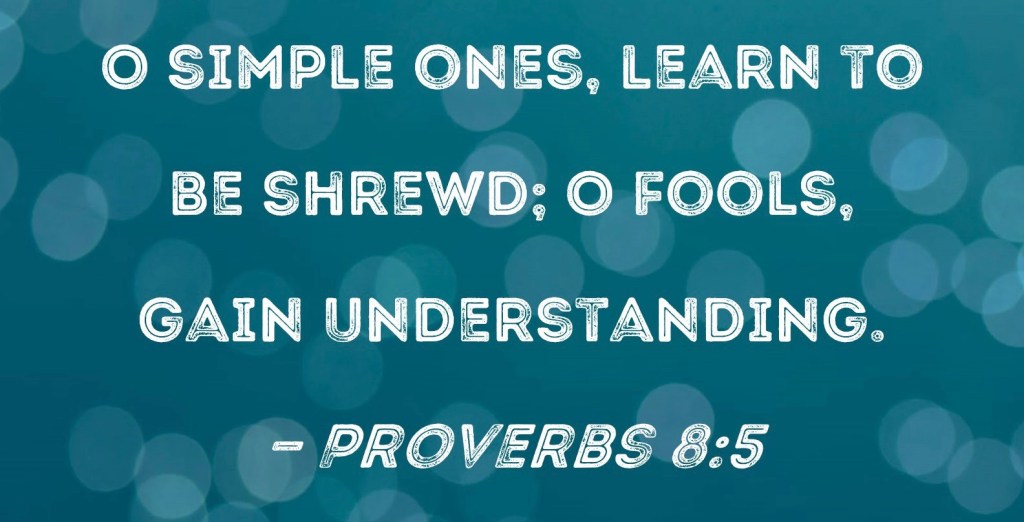
“Give heed to my reproof”, she continues; “I will pour out my thoughts to you; I will make my words known to you” (1:23). To the simple ones, she declares: “simple ones, learn prudence; acquire intelligence, you who lack it” (8:5). For too long, these scoffers “have ignored all my counsel and would have none of my reproof” (1:25, 30); they “hated knowledge and did not choose the fear of the Lord” (1:29). And so, she declares, “they shall eat the fruit of their way and be sated with their own devices” (1:31).

In like manner, one psalmist recognises that “those who carry out evil devices” shall “prosper in their way” in this life; but these people “shall be cut off, but those who wait for the Lord shall inherit the land” (Ps 37:7, 9), and so they implore the righteous person, “do not fret”, for “yet a little while, and the wicked will be no more … but the meek shall inherit the land, and delight themselves in abundant prosperity” (Ps 37:8, 10–11). 

This is the faith that sits at the base of the Deuteronomic assertions about blessings and curses in this life, as “those who obey the Lord your God by diligently observing all his commandments and decrees” will indeed receive the blessing, for “the Lord will make you abound in prosperity, in the fruit of your womb, in the fruit of your livestock, and in the fruit of your ground in the land that the Lord swore to your ancestors to give you” (Deut 32:1–14), whilst those who will not so obey God will be afflicted with all manner of illness, pestilence, and destitution, and they “shall become an object of horror, a proverb, and a byword among all the peoples” (Deut 32:15–68; the extended list of curses and their impacts is indeed gruesome!). 

Indeed, the wise words  found in the book of Proverbs declare that “misfortune pursues sinners, but prosperity rewards the righteous” (Prov 13:21); Wisdom herself declares that “riches and honour are with me, enduring wealth and prosperity; my fruit is better than gold, even fine gold, and my yield than choice silver” (8:18–19).

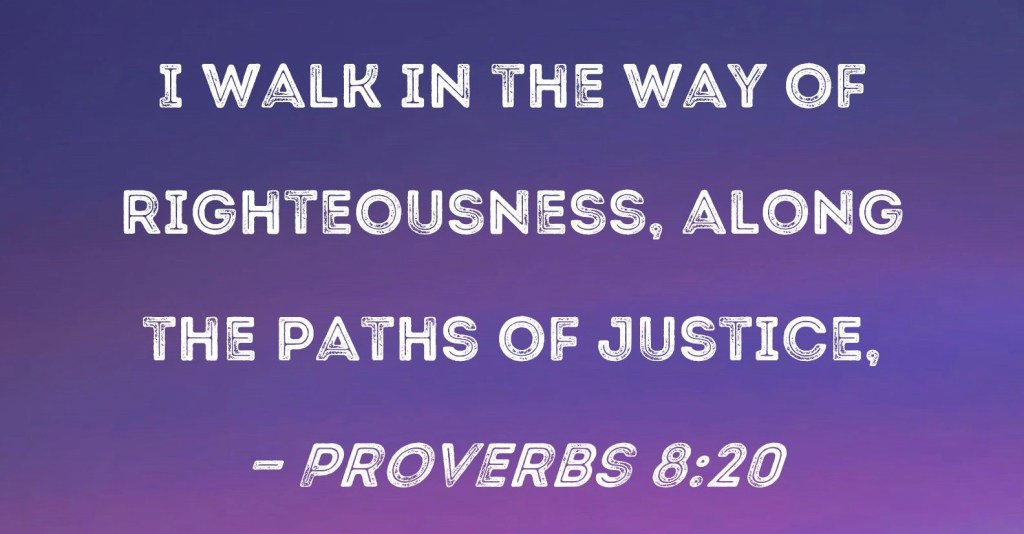
These are the blessings for those who “walk in the way of righteousness, along the paths of justice” (8:20)—the very same righteousness and justice that is conveyed through the teaching of Solomon (1:1–3) and of Wisdom (2:9),  the very same righteousness and justice which is “more acceptable to the Lord than sacrifice” (21:3).

This is the same righteousness and justice that the prophets have declared in the streets and on the corners of their society. Amos calls for “justice and righteousness” (Amos 5:22). Micah asks the question, “what does the Lord require of you but to do justice?” (Mic 6:8). Through the prophet Hosea, the Lord God promises to Israel, “I will take you for my wife in righteousness and in justice, in steadfast love, and in mercy” (Hos 2:19). Isaiah ends his famous love-song of of the vineyard by declaring that God “expected justice” (Isa 5:7).

In the exile, Ezekiel laments that “the sojourner suffers extortion in your midst; the fatherless and the widow are wronged in you” (Ezek 22:7). Jeremiah encourages the people of Jerusalem with a promise that God will allow them to continue to dwell in their land if they “do not oppress the sojourner, the fatherless, or the widow” (Jer 7:5–7). Second Isaiah foresees that the coming Servant “will bring forth justice to the nations” (Isa 42:1) and knows that God’s justice will be “a light to the peoples” (Isa 51:4).

Later, the words of Third Isaiah begin with a direct declaration, “maintain justice, and do what is right” (Isa 56:1); his mission is “to bring good news to the oppressed, to bind up the brokenhearted, to proclaim liberty to the captives, and release to the prisoners” (Isa 61:1), thereby demonstrating that “I the Lord love justice” (Isa 62:8).

In teaching about Wisdom in the book of Proverbs, Elizabeth Raine has written: “Wisdom functions in the same way as the prophets, standing where prophets and teachers would have stood, at the city gates, a busy place where all manner of business was transacted. However, Wisdom does not cry out in the temples or synagogues, but rather in the public squares, the city gates, at the crossroads where people from all nations are gathered or are passing through.

“She declares that those who incline their minds to her spirit and follow her words in their lives will receive knowledge and wisdom. She also suggests that those who ignore this invitation will be punished, much as the prophets decreed that ignoring the commands they carried from God would also result in punishment.

“The main difference here is that Wisdom speaks these things in her own voice—there is no ‘thus says the Lord’ as we find in the prophets. She does mention ‘the fear of the Lord’, and those who do not choose this, who hate knowledge, will be left to their own devices, something that is presented as very undesirable and inviting calamity.”

Wisdom is indeed a strong, persuasive, significant figure in the Hebrew Scriptures.

You can read the full sermon by Elizabeth at

A good name, a generous life, an upright ethic (Proverbs 22; Pentecost 16B)

This Sunday we continue reading passages from the “Wisdom Literature” of the ancient Israelites, with an excerpt from the book of Proverbs. The lectionary offers a set of three paired sayings from a later chapter (Prov 22:1–2, 8–9, 22–23). Perhaps these are chosen to be reflective of the kind of proverbs that are included in the book of the same name.

Curiously, we read or hear a passage from near the beginning of the book in the selection proposed for the Sunday after next (1:20–33). After that, over two Sundays, we will focus on Wisdom (ch.8) and “the woman of valour” (ch.31)—two passages that provide strong, positive female role models.

Although this book claims Solomon as its author, it is probably a work which collates the words of multiple anonymous people. Most proverbs start their life in unheralded ways; they eventually enter folklore, and that’s what this book has collated. It is thought that the book was completed in the post-exilic period, long after the lifetime of Solomon, although it may well have material that could be pre-exilic. The attribution to Solomon (1:1; 10:1; 25:1) derives from traditional accounts of his legendary wisdom (1 Kings 4:29-34) and lends authority to the book. The style and language of many proverbs suggests an origin much later than the 10th century BCE, the time when Solomon is alleged to have existed.

The purpose of the book of Proverbs is to make suggestions as to how one might learn to cope with life: “learning about wisdom and instruction, for understanding words of insight, for gaining instruction in wise dealing, righteousness, justice, and equity; to teach shrewdness to the simple, knowledge and prudence to the young—let the wise also hear and gain in learning, and the discerning acquire skill, to understand a proverb and a figure, the words of the wise and their riddles” (1:2–6). 

Its emphasis is on teachings gathered from tradition of the elders: “when I was a son with my father, tender, and my mother’s favorite, he taught me, and said to me, Let your heart hold fast my words; keep my commandments, and live” (4:2–4). The basic instruction that is offered by the father is “get wisdom; get insight: do not forget, nor turn away from the words of my mouth” (4:5).

That injunction, “get wisdom” is repeated later (4:7; 16:16; 19:8), with further exhortations to “be attentive to my wisdom” (5:1), “listen to advice and accept instruction, that you may gain wisdom for the future” (19:20), and “buy truth, and do not sell it; buy wisdom, instruction, and understanding” (23:23).

Other proverbs affirm the value of wisdom: “how much better to get wisdom than gold!” (16:16), “the discerning person looks to wisdom” (17:24), “the fountain of wisdom is a gushing stream” (18:4), and “by wisdom a house is built, and by understanding it is established” (24:3). The praise of wisdom recurs in saying such as “happy are those who find wisdom, and those who get understanding” (3:13), “wisdom is with those who take advice” (13:10), and of course “the fear of the Lord is the beginning of wisdom” (9:10; see also Ps 111:10). The poems of chapters 1–3 and 8, where Wisdom is personifies, and the woman featured in ch.31 who “opens her mouth with wisdom” (31:26), particularly exemplify the value of attending to wisdom.

In contrast to many other books of the Hebrew Bible, major themes such as the Mosaic and Davidic covenants are absent; Temple worship and sacrifice are rarely mentioned. Most of the sayings are meant to inspire moral ideals. Guided by the principle that “the fear of the Lord is the beginning of wisdom” (9:10; 1:7; 15:33), many proverbs  emphasise values such as honesty, diligence, trustworthiness, self-restraint, and appropriate attitudes toward wealth and poverty. 

There are various indications that the original audience of Proverbs was primarily young men preparing for adult responsibilities; so, a male-centred perspective prevails in the book. There is intense interest in finding a “good wife”; one saying suggests that “a good wife is the crown of her husband” (12:4), another that “he who finds a wife finds a good thing, and obtains favour from the Lord” (18:22).

In chs 1–9, within a sequence of sayings presented as the instruction of a father to his son, the centre of attention is a vibrant feminine personification of divine Wisdom. She is opposed to the foolish woman (ch.9) and to the complex, threatening figure of the “strange woman” (chs.2,5,7). So the book itself contains a delightful undercutting of the male orientation that runs throughout.

Proverbs invites the reader to an intellectual discipline as a life-giving pathway to ethical concern, righteousness and piety. Study of Torah undergirds the righteous life; “those who keep the law are wise children” (28:7), “happy are those who keep the law” (29:18), “the wise of heart will heed commandments” (10:8). The particular doublets chosen for this Sunday’s reading from ch.22 draw from the foundations of Torah to highlight the value of a good name (vv.1–2), a generous life (vv.8–9), and an upright ethic (vv.22–23).

“A good name is to be chosen rather than great riches”, the chapter begins, “and favour is better than silver or gold” (v.1). This resonates both with the affirmation that the person who listens to the teaching of Wisdom “will find favour and good repute in the sight of God and of people” (3:1,4), and, on the contrary, if a person discloses a secret in an argument, “someone who hears you will bring shame upon you, and your ill repute will have no end” (25:9–10). 

This reflects the fundamental ethos of an honour—shame society, such as ancient Israel was. A good reputation—a position of public honour—is to be desired and sought after. This honour is closely bound up with wisdom; “the wise will inherit honour, but stubborn fools, disgrace” (3:35), “whoever pursues righteousness and kindness will find life and honour” (21:21), for Wisdom holds honour in her left hand” (3:16; also 4:8;8:18). It is also connected with humility, for “a person’s pride will bring humiliation, but one who is lowly in spirit will obtain honour” (29:23), and just as “the fear of the Lord is instruction in wisdom”, so “humility goes before honour” (15:33). 

That the importance of honour and shame is carried through into the time of Jesus is evident in his words about “a prophet without honour” (Mark 6:4), those who choose “the best seats in the synagogues and places of honor at banquets” (Mark 12:39), and the dishonouring he experiences when he is called names in public (John 8:48–49). It is also clear through the way that Paul explicitly identifies the general expectations about honour in society (Rom 13:7), the ways that “the cross” brings shameful dishonour (1 Cor 1:26–29; 2 Cor 6:8–10), and the way that following Jesus turns a conventional attitude on its head (1 Cor 12:22–24).

For more on honour and shame, especially as it illuminates the story of Jesus, see 

and

Generosity is applauded in sayings such as “a generous person will be enriched, and one who gives water will get water” (11:25), “many seek the favour of the generous” (19:26), and the saying included in this Sunday’s selection, “those who are generous are blessed, for they share their bread with the poor” (22:9).

One of the psalmists notes that “the righteous are generous and keep giving” (Ps 37:21). Another psalmist connects generosity with ethical uprightness, singing that “all is well with those who deal generously and lend, who conduct their affairs with justice” (Ps 112:5).

Of course, sharing with “the poor” is a theme sounded by prophet after prophet. God’s care for “the poor” is announced by Hannah, as she sings how the Lord “raises up the poor from the dust; he lifts the needy from the ash heap” (1 Sam 28; also Ps 113:7). Amos famously berates Israel as they “trample the head of the poor into the dust of the earth, and push the afflicted out of the way” (Amos 2:7) before he turns his rhetoric towards “the cows of Bashan who are on Mount Samaria”, the ones “who oppress the poor, who crush the needy” (Amos 4:1). Judgement is coming upon both groups (Amos 2:13–16; 4:2–3).

Isaiah reports that God’s judgement will fall on the elders who are “crushing my people … grinding the face of the poor” (Isa 3:15; also 10:2) and Ezekiel berates those who “oppress the poor and needy” (Ezek 18:12; 22:29), for which they shall indeed die (Ezek 18:13). One psalm laments that “the wicked draw the sword and bend their bows to bring down the poor and needy, to kill those who walk uprightly” (Ps 37:14) 

Isaiah promised that a shoot from the stump of Jesse, embued with the spirit, “with righteousness … shall judge the poor, and decide with equity for the meek of the earth” (Isa 11:1, 4). In exile, Jeremiah remembered (perhaps rather idealistically) that it was the role of the king to “judge the cause of the poor and needy” (Jer 22:16); a psalmist also remined the king of his responsibility to “judge your people with righteousness, and your poor with justice … defend the cause of the poor of the people, give deliverance to the needy” (Ps 72:2, 4). The Lord, says psalmist, through David and his house “will abundantly bless [Israel’s] provisions [and] will satisfy its poor with bread” (Ps 132:15).

Then, as the exiles begin to return to Jerusalem, Zechariah reminded them of the Lord’s commands: “do not oppress the widow, the orphan, the alien, or the poor; and do not devise evil in your hearts against one another” (Zech 7:10). Various psalmists celebrated that “the poor shall eat and be satisfied” (Ps 22:26), that on “the day of trouble” the person who “considers the poor” will be delivered by the Lord (Ps 41:1), that “the Lord maintains the cause of the needy, and executes justice for the poor” (Ps 140:12). So it is that those “who fear the Lord, who greatly delight in his commandments” have “distributed freely, they have given to the poor” (Ps 112:1, 9).

We know that this theme is taken up with clarity and consistency by Jesus, who proclaims a message of “good news for the poor” (Luke 4:18; 7:22) and instructs his followers to “sell what you own, and give the money to the poor” (Mark 10:21). He advocates strongly that the kingdom of God belongs variously to the poor (Luke 6:20), the meek (Matt 5:5), and the humble (Luke  14:11; 18:14), to children (Mark 9:36–37; 10:15) and to sinners (Mark 2:15–17; Luke 15:1–2).

And so, this uprightness in life is advocated by the final two couplets included in this Sunday’s selection, instructing people “not [to] rob the poor because they are poor, or crush the afflicted at the gate”, and noting that, as a consequence, “the Lord pleads their cause and despoils of life those who despoil them” (22:22–23).

These instructions are fundamental to living by Torah, and they are reiterated by many prophets in Israel. So even within the wisdom literature, we find support for the coming punishment of the Lord of which the prophets spoke incessantly; this judgement is based on how faithfully a person adheres to the commandments of the Torah. Wisdom is integral to Torah; “those who keep the law are wise children” (28:7).

A smooth transition? or a sequence of cruel calculations? (1 Kings 1–3; Pentecost 13B)

David had many sons—there are 19 who are named in the Bible, and two others unnamed. There are consolidated lists at 2 Sam 3:2–5 (those born at Hebron) and 2 Sam 5:13–15 (those born in Jerusalem). In following the story of 2 Samuel, we have already met Solomon, Absalom, and Amnon. We do not know how many daughters David had, except for Tamar (2 Sam 13:1). After travelling through the various incidents involving David that the lectionary has offered, today we come to the last days of the life of this famous king.

The passage offered by the lectionary this week (1 Ki 2:10–12, 3:3–14) portrays a smooth transition from David to his chosen son, Solomon. The narrator simply reports, “when David’s time to die drew near, he charged his son Solomon”, reporting the words he spoke to him; and then “David slept with his ancestors, and was buried in the city of David” (1 Ki 2:1, 10). 

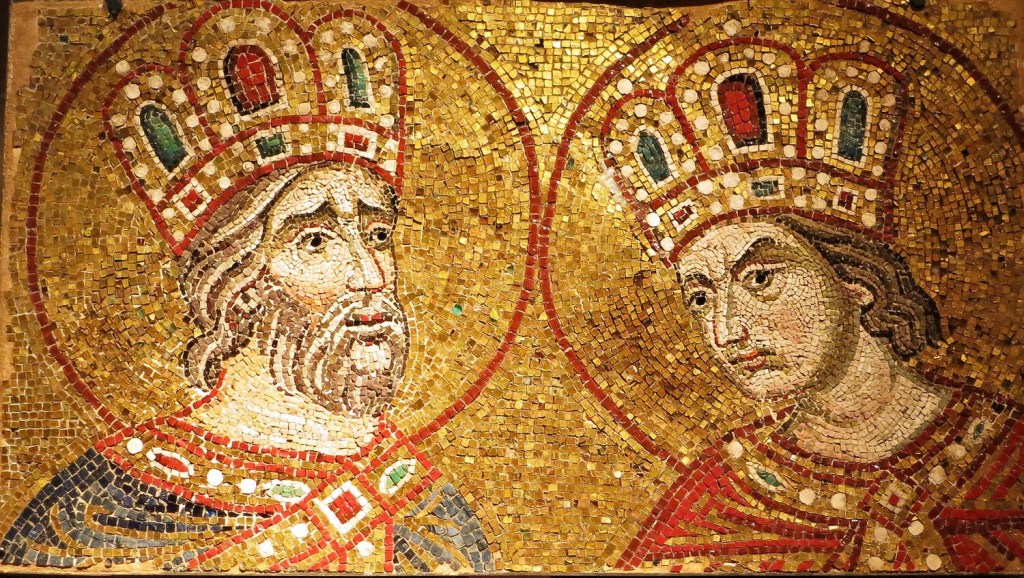
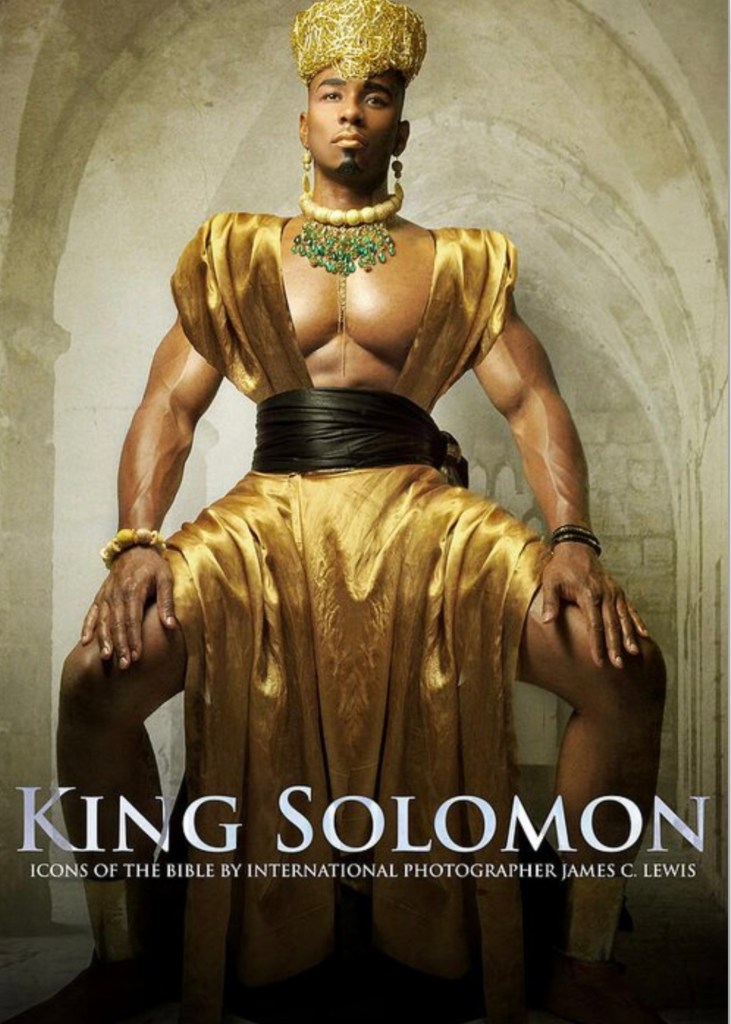
David and Solomon as depicted in a 14th century mosaic in the museum on the second floor of the Basilica di San Marco, Venice

However, the previous chapter tells of the plotting by Adonijah, and the next part of the story reports that David authorised the murders of his son Adonijah, his nephew Joab, and Shimei, a relative of Saul, to ensure that Solomon could reign! It’s a nasty story. (In what follows, I am drawing in part from a sermon preached by my wife, Elizabeth Raine.)

Living in a democracy where leadership is determined by popular vote, this narrative feels particularly unpleasant and unjust to us. Paradoxically, David charges Solomon to adhere to “the statutes, commandments, ordinances, and testimonies” that God has decreed (2:3). Subsequently, Solomon sensibly prays for “an understanding mind to govern your people” (3:9).

In the later rewriting of this long narrative saga, the Chronicler has David instruct his chosen successor, his son, Solomon, “set your mind and heart to seek the Lord your God” (1 Chron 22:19). He reinforces that in a later address, telling Solomon to “know God and serve [the Lord] with single mind and willing heart” (1 Chron 28:9).

The book of Proverbs (attributed by tradition to Solomon) then advocates both attending to the mind (Prov 22:17; 23:12, 19) and “inclining your heart” towards God (Prov 2:2; 3:1–6; 4:4, 20–23; 6:21; 7:3) as integral parts of the life of faith. And of course, much later, Jesus picks this up when he extends the traditional commandment to “love the Lord your God with all your heart, and with all your soul, and with all your might” (Deut 6:5), adding “and with all your mind” (Mark 12:30). 

A fully devoted heart (meaning, an all-of-person commitment) as well as an understanding mind (committed to critical reasoning about faith) is the essence of good leadership. It is a typical Hebraic parallelism that emphasises the importance of a whole-of-life commitment. See more on these terms at

However, it turns out that this is not really how Solomon lived in his life. His rule was littered with events that cast down on his great wisdom, and whether he did actually love God with all of his being.

Solomon was not first in line to ascend the throne; that would lie with the eldest of his brothers still living, Adonijah. Adonijah knows this; the first book of Kings opens with the revelation that, since “David was old and advanced in years … Adonijah son of Haggith exalted himself, saying, ‘I will be king’; he prepared for himself chariots and horsemen, and fifty men to run before him” (1 Ki 1:1,5).

However, Solomon plots with his mother Bathsheba and the palace prophet Nathan to arrange for the assassination of his older brother. In addition, a number of other people also had to be eliminated to establish Solomon’s firm grip on the monarchy, and to ensure there were no other possible legitimate claimants to the throne remaining. Such was the raw and vicious nature of “life at the top” those days. (Hastings anything much changed?)

In fairly quick succession, after Solomon had arranged for the death of his eldest brother Adonijah (2:13–25), he banished the high priest Abiathar who had supported Adonijah (2:26–27) and replaced him with another priest loyal to himself. Next he removed Joab, a cousin who was the commander in the former king’s army (2:28–34). He achieved this via a hit man, Benaniah, who became the general of his army (2:35). 

Then, Solomon had Shimei, who was a relative of Saul, the king before David, killed (2:36–46). In this way all potential contenders for the throne and their powerful supporters were removed, mostly by violent means. As the narrator curtly comments, “so the kingdom was established in the hand of Solomon” (2:46b).

In fact, Solomon meets all the criteria of the sort of king who was described by the prophet Samuel as one who would oppress Israel. Years before, Samuel had warned the people, “This is what the king who will reign over you will claim as his rights: He will take your sons and make them serve with his chariots and horses, and they will run in front of his chariots. Some he will assign to be commanders of thousands and commanders of fifties, and others to plow his ground and reap his harvest, and still others to make weapons of war and equipment for his chariots.” (1 Sam 8:11–12).

More than this, Samuel advised, “He will take your daughters to be perfumers and cooks and bakers. He will take the best of your fields and vineyards and olive groves and give them to his attendants. He will take a tenth of your grain and of your vintage and give it to his officials and attendants. Your male and female servants and the best of your cattle and donkeys he will take for his own use. He will take a tenth of your flocks, and you yourselves will become his slaves.” (1 Sam 8:13–17). 

So Samuel tells the people who were asking for a king, “when that day comes, you will cry out for relief from the king you have chosen, but the Lord will not answer you in that day” (1 Sam 8:18).

In addition to meeting these criteria, Solomon’s weakness for foreign women would lead him to abandon the God of Israel for other foreign gods. “Solomon loved many foreign women along with the daughter of Pharaoh: Moabite, Ammonite, Edomite, Sidonian, and Hittite women, from the nations concerning which the Lord had said to the Israelites, ‘You shall not enter into marriage with them, neither shall they with you; for they will surely incline your heart to follow their gods’; Solomon clung to these in love” (1 Ki 11:1–2). 

Solomon ignored this command and “clung to these in love; among his wives were seven hundred princesses and three hundred concubines; and his wives turned away his heart—for when Solomon was old, his wives turned away his heart after other gods; and his heart was not true to the Lord his God, as was the heart of his father David” (1 Ki 11:2b-4).

A stylized representation of Solomon and his “seven hundred princesses and three hundred concubines” whom he took to be his wives, who “turned away his heart” (1 Ki 11:3).

Eventually, in the view of the narrator of this long saga, this engagement with foreigners and their religious customs would lead to the breakdown of kingdom and would end in Israel being conquered by Assyria (2 Ki 17:5–12, 20) and then Judah being defeated by Babylon (2 Ki 17:19; 24:18–20). Their exile was precisely because, as the Lord tells Ezekiel, “you are living in the midst of a rebellious house, who have eyes to see but do not see, who have ears to they are a rebellious house; therefore, mortal, prepare for yourself an exile’s baggage, and go into exile by day in their sight; you shall go like an exile from your place to another place in their sight—perhaps they will understand, though they are a rebellious house” (Ezek 12:1–3).

Diana Edelman notes in the Jewish Women’s Archive that “Foreign women were considered a potential source of trouble because they might not always adopt the culture and values of their husbands and their new place of residence. If they chose to continue to practice their native customs and cults, they would pass these on to their children and might also influence their husbands to adopt some non-Israelite practices as well. Loyalty to and identity with Israelite tradition would be threatened.” See https://jwa.org/encyclopedia/article/women-of-solomon-bible

The story of Solomon is actually a bloody and violent narrative of infidelity, oppression, and sin. The path to the throne was a bloody and ruthless one for Solomon. But most often, people remember a heavily sanitised version of Solomon, one of Israel’s most famous kings.

******

How could this great king who had spoken with God go on to worship false gods? How could someone credited with so much wisdom ignore the basic laws of justice that his God required of him? Perhaps we might consider this long history, not so much a glorious account of the people flourishing under wise and good leadership, but rather a tragic story of oppressive leadership, split kingdoms, rivalry, and war, leading to the civil war that swirled around the last days of Solomon and the consequent division of the kingdom, with Israel being ruled by Jeroboam while Rehoboam ruled Judah.

So in considering how Solomon lived, we find a king who ruthlessly removed rivals, taxed his people heavily, and thought nothing of removing thousands of men to be his soldiers and his labourers. He thought nothing of loving many women who brought their foreign customs into the heart of Israel. He thought nothing of using the children of Israel as miners to procure the precious metals to make his gold cups. He thought nothing of taking food off the tables of his people. 

The narrator describes the daily provisions of Solomon in some detail: “thirty cors of the finest flour and sixty cors of meal, ten head of stall-fed cattle, twenty of pasture-fed cattle and a hundred sheep and goats, as well as deer, gazelles, roebucks and choice fowl” (1 Ki 4:23–24) and then claims that “during Solomon’s lifetime Judah and Israel, from Dan to Beersheba, lived in safety, everyone under their own vine and under their own fig tree” (4:25).

However, we know from Samuel’s earlier predictions that this is ‘spin’. How could such immense provisions and vast wealth be found in the ancient near east unless it was taken from the people? How would the families of those men who were taken for Solomon’s service fare, left to struggle on small land holdings without men to work the land?

While we might remember the wisdom and splendour of King Solomon’s rule to this day and admire it, we need to remember that there is another side to this story, that isn’t just or pretty or admirable. Solomon’s wisdom and rule was the wisdom and rule of the world. Solomon used his influence and power to acquire personal wealth and prestige. He thought nothing of splitting families, leaving women and children to struggle, and taking precious food resources for his own use. The mineral wealth of the land remained firmly under his control and he used it to decorate his vast palace – built at no expense by Hebrew men conscripted into what was essentially slavery. His immense army ensured he remained in power.

Who does this put you in mind of today? The Conversation has a page entitled “Articles on Dictatorship” which contains 81 articles—on Bangladesh, Venezuela, North Korea, Russia, Brazil, Argentina, Cambodia, Belarus, Saudi Arabia, China, Rwanda, Nicaragua, the Philippines, and more. Surely this is not the model of leadership that God desires? See https://theconversation.com/au/topics/dictatorship-1918

Writing in With Love to the World, Matthew Wilson reflects on this story. “Often our sense of justice is based more on retribution than on reconciliation. Mandatory sentencing, drug posession laws, racial profiling, and continuing failures in domestic violence and other abuse cases leave us wondering where justice really lies.” 

He notes an anecdote of his father, “He who has the deepest pockets wins”, and comments that, whilst God has a quite different sense of justice, sadly, “the God who forgives, who shows grace and mercy is, nevertheless, rather absent in today’s reading. Solomon will go on to be gifted with, and praised for, his wisdom. Here, political wisdom and the grace of a forgiving God seem a long way apart. In the love of Christ and the power of the Spirit, have we the strength to be different, to be Christ-like?”

*****

Some material in this blog was included in THE WAY OF WISDOM by Elizabeth Raine and John Squires (self-published 2012)

With Love to the World is a daily Bible reading resource, written and produced within the Uniting Church in Australia, following the Revised Common Lectionary. It offers Sunday worshippers the opportunity to prepare for hearing passages of scripture in the week leading to that day of worship. It seeks to foster “an informed faith” amongst the people of God.

You can subscribe on your phone or iPad via an App, for a subscription of $28 per year. Search for With Love to the World on the App Store, or UCA—With Love to the World on Google Play. For the hard copy resource, for just $28 for a year’s subscription, email Trevor at wlwuca@bigpond.com or phone +61 (2) 9747-1369.

Plants and buildings, folly and wisdom (1 Cor 3; Epiphany 6A)

In recent weeks, we have traced the argument in the opening chapters of what we know as Paul’s first letter to the Corinthians. The letter itself is positioned as a joint enterprise, written by Sosthenes, one of the leaders of the synagogue in Corinth (Acts 18:17), and Paul, a Pharisee who was well-trained in understanding Torah (Phil 3:5) and was known for being “advanced in Judaism” and “zealous for the traditions of my ancestors” (Gal 1:14).

So it should be no surprise that in this letter, they make regular use of scriptures drawn from their Jewish traditions and terms already familiar from their occurrence in the Hebrew Scriptures (at least, in the Greek translations that were available, such as the Septuagint). In fact, each section of the opening argument is shaped around Hebrew Scripture texts, as we have seen.

The opening message about “the word of the cross” (1 Cor 1:18–31) begins with scripture (1:19, citing Isa 29:14) and ends with scripture (1:31, quoting Jer 9:22–23). The second section with the declaration about “know nothing but Jesus Christ and him crucified” (2:1–16) cites Isa 64:4 (at 2:9) and later concludes with a quotation from Isa 40:13 (at 2:16). In both instances, the concluding quotation is the lynchpin for the argument—delayed, in typical rabbinic style, to provide the “proof text” that draws the whole rhetorical sequence to a head.

A similar kind of structure appears in chapter 3 of the letter, although sadly the lectionary has severed the start from the end. This coming Sunday, Epiphany 6, we are offered 1 Cor 3:1–9, a discussion about the leaders of the groups that had developed within the community, fracturing the unity that was desired (see 1 Cor 1:10–17). In that early section, Paul had identified Cephas, Apollos, himself, and indeed Christ, as the leaders of four different factions. He returns to two of those names, Apollos and his own, in this section of the letter (see 3:4–6, 22).

In addressing that sorry situation at the start of the letter, Paul and Sosthenes affirm that their mission was “to proclaim the gospel, and not with eloquent wisdom, so that the cross of Christ might not be emptied of its power” (1:17). The irony, of course, is that the letter uses precisely the finely-honed tools of rhetoric to convey that gospel truth; see my analysis at

and

Sadly, the second part of the argument in chapter 3, where the writers build on what has been stated in the earlier part, is allocated by the lectionary to Epiphany 7 (1 Cor 3:10–23); but in the current year, when Easter falls relatively early, there is no Epiphany 7. So a strict following of the lectionary means that we miss the concluding section, and the punchline, of this third extended argument.

The argument of this third chapter comes to a head with the quotation of two scripture texts: Job 5:12 (at 3:19) and then Psalm 94:11 (at 3:20). Both texts puncture any claim to importance or priority amongst “the wise”—the heart of the argument that has been advanced since the initial scripture quotation, of Isa 29:14, at 1 Cor 1:19. So the conclusion.

Whilst the beginning of the argument in chapter 3 has no explicit scripture quotation, nor even any defined allusion, to scriptural texts, there are elements that bear on Hebrew Scripture. The imagery of planting and watering, and fruit growing (3:6) would surely have been evocative to those familiar with the agricultural history of Israel. A common symbol for the people, the nation, was the vineyard (Exod 15:17; Psalm 80:8–15; Isa 5:1–7; 60:21; Jer 2:21; Ezek 17:5–10; 19:10; Amos 9:15). As was reiterated in these scriptural passages, God planted the nation, and God gave growth to the people as “the vine”—an affirmation that the letter to the Corinthians firmly maintains: “God gave the growth” (3:7).

The imagery of building (3:9–15) also has scriptural resonances. Hebrew Scripture contains a long history-like multi-book saga of Israel that the Deuteronomist constructed, drawing on various sources, to narrate the story of the creation and flourishing of the kingdom of Israel (including both Israel and Judah). There can be no doubt that a high point in this saga was reached with the construction of “a building” on Mount Zion. The house of the Lord was the pinnacle of the nation which had been promised (in Genesis), created (in the other books of Torah, and then in Joshua and Judges), and established (in the narratives of Samuel and Kings).

This building was the work of perhaps the greatest of all Kings of Israel, Solomon (see 1 Kings 3—8). It was the fulfilment of a promise made to David (2 Sam 7, especially verse 13). The house built was to the the Temple, where the Lord God dwelt in the Holy of Holies (Exod 24—27). The centrality of the Temple, the house of God, in the religious, political, and social life of the people of Israel was clear.

Paul and Sosthenes use these scriptural references to good effect in addressing the difficulties of the situation in Corinth. They affirm that they, together with others active in planting and nurturing communities of faith, as well as the people in Corinth who participate in such communities, are indeed “God’s field, God’s building” (3:9).

The imagery of plants in the field, watered and nurtured, growing together (3:6–8) both draws on the Israelite language of Israel as the vineyard, but also counters the situation of division and discord in Corinth. Rather than claiming “I belong to XX”, as was noted previously (1:12) and is repeated here (3:4), the Corinthians are challenged to look for a “common purpose” (3:8) and to be “God’s servants, working together” (3:9).

The language of a building (3:10–11) points to the central building structure in the kingdom of Israel, the Temple, and reminds the Corinthians that they have been carefully and deliberately placed on a form foundation, and “that foundation is Jesus Christ” (3:11). The language here recalls the central focus articulated earlier in the letter: “the message about the cross” (1:18), the singular focus on “Jesus Christ and him crucified” (2:2). The wisdom that God offers through this follow of crucifixion is what will build up the community (3:12–13).

So the conclusion is drawn with a typical rhetorical question: “do you not know that you are God’s temple?” (3:16), followed by a strengthening affirmation, “God’s temple is holy, and you are that temple” (3:17). The introduction of the age-old Israelite notion of holiness here thus sets up the argument for what follows in subsequent chapters, as instances of unholy behaviour are addressed.

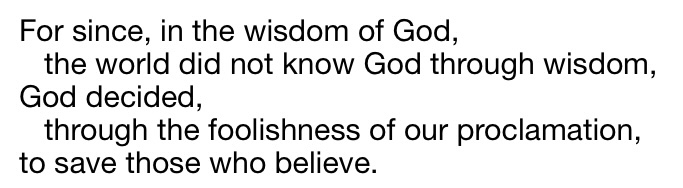
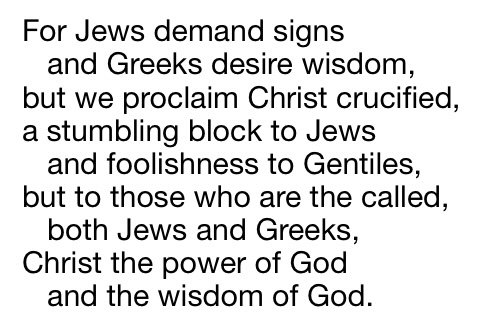
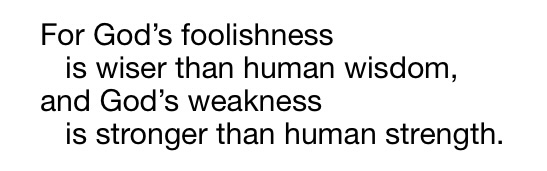
The argument of this chapter draws to a familiar close, with two scripture citations that underline the power of divine weakness (if that is what the crucifixion of Jesus might have shown), the folly of divine wisdom (again made evident through the cross). The advice is clear: “if you think you are wise … you should become fools” (3:18); and then, “let no one boast about human leaders” (3:21).

To substantiate this, the word of Job is first cited (Job 3:15 at 1 Cor 3:19)—God “catches the wise in their craftiness”—followed by the words of the psalmist, “the Lord knows the thoughts of the wise, that they are futile” (Ps 94:11 at 1 Cor 3:20). The argument proposed in principle at 1:18–25 comes to its culmination here through its application to the Corinthians. Wisdom is folly, power is weakness; yet in God’s weakness, power is manifested, and in God’s foolishness, wisdom is declared.

Eye of the Heart Enlightened: words for the opening of the Parliamentary Year (2023)

Australia is a democracy, governed by a series of parliaments—one for each state and territory, and one for the whole nation, drawing together representatives from across the continent, to meet, deliberate, and legislate. The Federal Parliament meets in the Australian Parliament House, in Canberra, the capital city of the nation.

Each time a new parliamentary sitting commences, one of the churches of Canberra hosts a service of worship, to which come the Prime Minister, the Leader of the Opposition, their parliamentary colleagues, and others connected with the workings of the Parliament. The service moves around churches on a rotating basis, and the liturgist and preacher are provided each time by leaders in those churches.

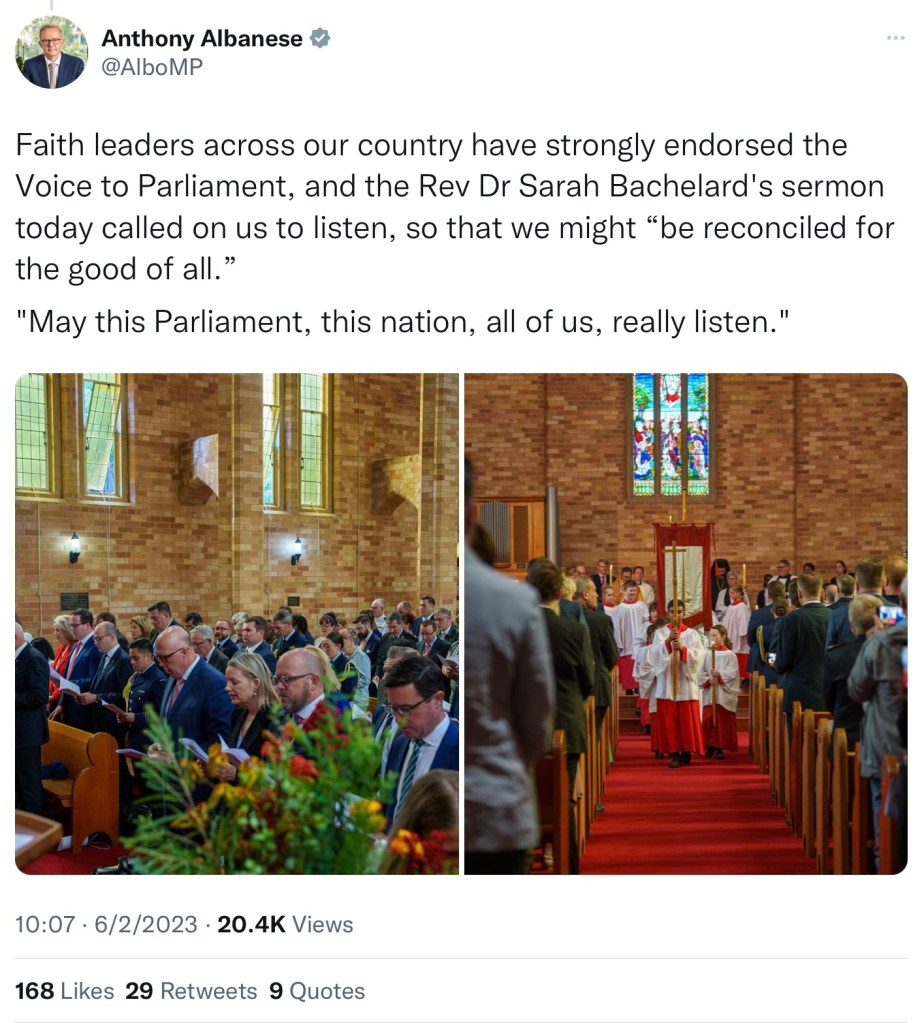
This year, at the start of the parliamentary year, the preacher was a friend and colleague, the Rev. Dr Sarah Bachelard, who is the Director of the Benedictus Community, which meets in Canberra and online. Sarah spoke words drawing from the scriptural heritage of Christianity and Judaism; the texts read in the service were Proverbs 8:1–4, 8–11; Psalm 24:1–5; and Matthew 5:1–10.

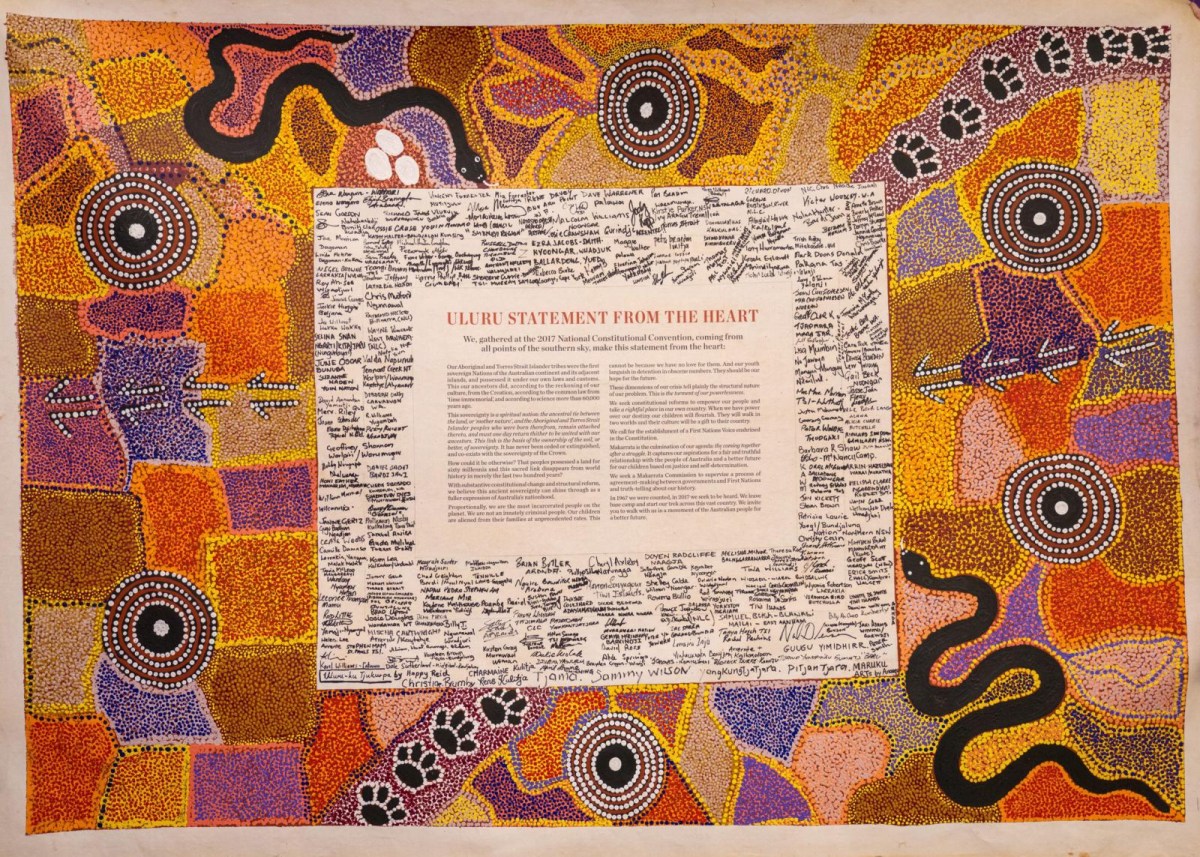
Sarah spoke directly, and clearly, to the parliamentary leadership, about an issue which deserves to have the central place in our public and political considerations during 2023: the Statement from the Heart, an offering written at Uluṟu in 2017 by leaders of the First Peoples of Australia, addressing the nation of Australia. With Sarah’s permission, I am reproducing what she said at that service of worship.

*****

Every week in religious communities around Australia, prayers are offered for those charged with leadership and the government of peoples. ‘Give wisdom to those who have responsibility and authority in every land’, so the Anglican version goes, ‘that we may share with justice the resources of the earth, and work together in trust’. It’s a theme as old as human community.

To those of you who commit to this service, these difficult responsibilities, on behalf of us all – thank you. For as I’m sure I don’t need to tell you, real leadership in the face of this complexity is demanding. It involves many elements – good intentions, good information, the willingness to nurture relationships and build consensus, and sheer hard work. There’s something else needed too, as the prayer I cited above suggests. Something absolutely vital. We call it wisdom.

The recognition that nurturing just and life-giving relationships between peoples, negotiating competing desires and interests in a world of gift and limit, while caring for the very conditions of existence, is no straightforward matter.

Wisdom is the quality of those we relate to as elders, of those who speak with authority, whether or not they have positional power. It has to do with judgement, discernment, seeing a bigger picture. Of course, like every human quality – wisdom can be corrupted or reduced by self-interest. Guile and cunning are its debased expressions.

True wisdom, though, is different. The wise perceive and connect to the depth dimension of reality and so enable creative, compassionate engagement with the fuller truth of things. Wisdom is a form of what the great Australian poet, Les Murray, called ‘whole-thinking’. (The phrase comes from his poem, ‘Poetry and Religion’ in Les Murray, Selected Poems; Melbourne: Black Inc, 2007, p.94. )

As one contemplative teacher has put it, ‘wisdom is not knowing more things. It’s knowing with more of ourselves’. (see Cynthia Bourgeault, https://www.cynthiabourgeault.org)

For the wisdom traditions of the world this capacity for ‘whole thinking’, fuller knowing, is connected to the ‘heart’ – where ‘heart’ refers not to feelings alone, but to the centre or soul of a person. Wisdom is an integrated, attentive, compassionate responsiveness. It embodies what Miriam-Rose Ungunmerr, former Senior Australian of the year, calls ‘dadirri’ – ‘inner deep listening and quiet still awareness’. (See Miriam-Rose Ungunmerr, ‘Dadirri: Inner Deep Listening and Quiet Still Awareness’, https://www.miriamrosefoundation.org.au/dadirri/, © 1988 Miriam-Rose Ungunmerr)

‘Give wisdom to those in authority’. But where does wisdom come from? How does any of us grow in it, amidst the messy, busy and often overwhelming circumstances of politics, work and life?

Strangely enough, experience teaches that our access to this integrated, heart’s knowing is usually by way of the heart’s breaking. And maybe you know this for yourself. A time, perhaps, when a disappointment, failure, betrayal or profound grief threw you out of the life you’d known and had tried to fashion for yourself. A time when your ways of making sense faltered, and you found yourself unable to go on as before.

Almost none of us undergoes heart-break willingly. Yet the great paradox is that if we can abide in this broken space without closing ourselves off by becoming bitter or repressed, we wake up at a different level. As the grip of our ego-ic illusions and fantasies of control loosens, we discover ourselves rooted in deeper ground. And gradually, we come to know ourselves more fully part of an interconnected, interdependent whole, capable of being responsible to the whole. Which is the beginning of wisdom.

This has nothing to do with valorising suffering or deprivation; licensing a society to neglect the vulnerable and dispossessed, or to fail to redress injustice. It’s simply the recognition that we don’t attain to ‘whole-thinking’ by cleverness, but through the integration of our wounds. We cannot acquire wisdom as a possession – it grows within us as we are opened at the level of the heart.

This is what Jesus means by poverty of spirit. And as he says in the text we heard read, it’s the poor in spirit … those who have touched the tears of things … those who walk humbly on the earth … who are blessed. For they are connected to the fullness of life and so are capable of truthful vision, of mercy and of making peace.

And this speaks directly to a matter which you, Prime Minister, have identified as central to the work of this current Parliament. Our nation has received the great gift of a Statement from the Heart of the first peoples of this land. This is a wisdom text. Born of heartbreak – of long and continuing suffering, yet marked by an extraordinary generosity of spirit open to the possibility that the wounds of our history might be reconciled for the good of all – the Statement from the Heart can only truly be heard and enacted when those to whom it is addressed make contact with and listen from their own heart

This is its gift and challenge to us all. The call for a First Nations Voice to be enshrined in the Constitution is thus not just another policy proposal, to be debated at the level of strategy and argument. As well as a condition of lasting justice for Australia’s first peoples, it’s an invitation to our nation as a whole to grow in wisdom’s way.

At a time when petty factionalism is tearing at the fabric of national and international communities, and the crises of our age escalate, the necessity for wisdom in the government and among the peoples of the world is urgent. May this Parliament, this nation – all of us – grow in wisdom that we may share with justice the resources of the earth, and work together in trust.

(A Sermon preached at St Paul’s Anglican Church, Manuka, in a Service for the Opening of Parliament, on 6 February 2023, by the Rev. Dr Sarah Bachelard)

*****

In a “doorstop” media interview after the service, two of the four questions asked of the Prime Minister related to the issue of a Voice. He was asked, “When do you think you will want to introduce legislation and set up the Voice? Would it be in this term of Parliament?”

Mr Albanese replied: “I’d be very hopeful that it would be, of course, in this term of Parliament. This is a task which we need to, of course, get the detail right. And there’d be a process as well of that parliamentary debate about the legislation. And I’d want to get as much agreement as possible, because I want this to be a long-term reform to benefit Indigenous Australians, to help close the gap. We’ll be talking about closing the gap, and the targets, and the fact that so many of them have not been met, when that is debated in Parliament over this sitting. And that is why this is a change that’s necessary.”

Then he was asked, “Will the Voice also advise National Cabinet?”, and he responded, “This is a Voice to Parliament, and it will be a Voice that will release its views publicly. Publicly, it will be available for all, is one of the principles that has been there. And of course, so many of the issues go across different levels of government. This is about consultation. It won’t have a right of veto, it won’t be a funding body, it’s very clear with the principles that have been put out.”

A little later, the Prime Minister tweeted, quoting Sarah Bachelard and affirming her words.

For information about Benedictus, see https://benedictus.com.au

Who has known the mind of the Lord? (1 Cor 2; Epiphany 5A)

The cross is the benchmark for understanding how believers are to behave, how they are to relate to one another, and how the community that they form is to be described. This is the thesis that Paul and Sosthenes propose near the start of their lengthy letter to “the church of God that is in Corinth, to those who are sanctified in Christ Jesus, called to be saints” (1 Cor 1:1–2), and also to “all those who in every place call on the name of our Lord Jesus Christ” (1:2).

As we have already noted, “the word of the cross” features prominently in the authentic letters of Paul. See

It also shapes the way that Sosthenes and Paul begin to work their way through the many issues that have been festering within the community in Corinth—issues which apparently have been brought to their attention by “Chloe’s people” (1:11) and which may well have been further developed in discussions in person with Stephanas, Fortunatus, and Achaicus, when they came to Ephesus (16:17). We have explored this initial argument (in 1:18–31) at

The thesis concerning “the word of the cross” continues to be advanced in the following section of the letter (2:1–16), which is offered by the lectionary as the Epistle for this coming Sunday. It is worth reading right through to the end of the chapter in v.16, rather than stopping at v.13, as the lectionary suggests, since (in my view) v.16 provides the capstone of the argument of the whole two chapters, with its citation of yet another scriptural text, from the prophet Isaiah (1 Cor 2:16, citing Isa 40:13).

It is, after all, only “Jesus Christ, and him crucified” (2:2), which is at the heart of the preaching undertaken by Paul, who “did not come proclaiming the mystery of God to you in lofty words or wisdom” (2:1), who preached not trusting in his own strength, but “with a demonstration of the Spirit and of power” (2:4). Paul is concerned to ensure that the faith of the Corinthians “might rest not on human wisdom but on the power of God” (2:5).

It is “Jesus Christ, and him crucified” who provides the foundation, also, for the letter which Paul writes in association with Sosthenes, in which they set out “the message of the cross” (1:18). The two authors expound this central message through a sequence of clearly-shaped sections (1:18–31; 2:1–12; 3:1–20). The part of the argument as presented by Sosthenes and Paul in this chapter (2:1–12) both continues in the rhetorically-shaped form that we have seen in 1:18–31, and follows the rabbinic pattern of drawing from scripture in the argument (2:9, citing Isa 64:4), finishing with a climactic quotation that “proves” the point (Isa 40:13 at 2:16).

The rhetorical shaping is evident particularly in the oppositions that are proposed in the letter in a sequence of antithetical parallelisms. First, the Corinthians hear the declaration, “I did not come to you … in lofty words or wisdom … [rather] I came to you in weakness and in fear and in much trembling” (2:1, 3). Then follows, “my speech and my proclamation were not with plausible words of wisdom, but with a demonstration of the Spirit and of power” (2:4).

The writers declare that they speak wisdom, “not a wisdom of this age or of the rulers of this age … [but rather] God’s wisdom, secret and hidden, which God decreed before the ages for our glory” (2:6–7). They continue, “we have received not the spirit of the world, but the Spirit that is from God” (2:12), and then, “we speak of these things in words not taught by human wisdom but taught by the Spirit” (2:13).

Finally, the argument draws towards its conclusion with this striking application to the Corinthian situation: “those who are unspiritual do not receive the gifts of God’s Spirit … [rather] those who are spiritual discern all things” (2:14–15). The antithetical parallelisms (not … but …, regularly repeated) have functioned throughout to throw the emphasis always on the second half of the pairing, for that is the point of each statement.

So the first half of each anthesis sets up the expectation with an offering that is negated, before the second half affirms what is actually being proposed by the letter-writers: they bring a demonstration of the Spirit, God’s wisdom, being taught by the Spirit, the Spirit from God, and able to discern all things through the Spirit. That’s really the short-hand summary of what the argument is, stripped of its rhetorical finesse.

*****

Sosthenes, we presume, was one of the leaders of the synagogue in Corinth (Acts 18:17). Paul had been well-trained in understanding Torah (Phil 3:5) and was known for being “advanced in Judaism” and “zealous for the traditions of my ancestors” (Gal 1:14). So it should be no surprise that in this letter, they make regular use of scriptures drawn from their Jewish traditions—and follow traditional rabbinic patterns in the way they use these passages.

The two prophetic citations they make in this chapter were spoken by prophets whose names we do not know. Their oracles were included in the scroll that bears the name of the eighth century BCE prophet, Isaiah, who provided advice to kings in Judah in the decades prior to the people being taken into exile in Babylon. These later oracles may well have been shaped by prophets who traced their allegiance to Isaiah, who may well have been trained within an ongoing “school of Isaiah”. Such a school is hypothesised on the basis of Isaiah’s instructions to “bind up the testimony, seal the teaching among my disciples” (Isa 8:4).

The first oracle cited in 1 Corinthians 2 comes from the time when Israel had been in exile in Babylon for some time, and was looking with hope to the promised return to the land (Isaiah 40–55). The second oracle cited was from an earlier time, when Israel was seeking to re-establish itself as a functioning nation in a land and city that had been devastated by the destruction of invasion some decades earlier (Isaiah 55–66).

The first text, cited earlier in the argument as the subsidiary passage, is “what no eye has seen, nor ear heard, nor the human heart conceived, what God has prepared for those who love him” (Isa 64:4). These words were spoken during a prayer of petition in which the unknown prophet at the time of restoration urges God to act: “O that you would tear open the heavens and come down … to make your name known to your adversaries, so that the nations might tremble at your presence!” (Isa 64:1–2).

This prophet confesses that “we are the clay, and you are our potter; we are all the work of your hand” and pleads, “do not be exceedingly angry, O Lord, and do not remember iniquity forever” (Isa 64:8–9), observing that “your holy cities have become a wilderness, Zion has become a wilderness, Jerusalem a desolation” (Isa 64:10). The prophet’s faith is expressed in the final phrase of the cited text, in that the Lord “works for those who wait for him” (Isa 64:4). It is this faith which is referenced during the argument of 1 Corinthians 2.

The second text, which provides the climax to the argument to the Corinthians, comes from the other unknown prophet, still in exile, who offers his people words of comfort, asking God to “speak tenderly to Jerusalem, and cry to her that she has served her term, that her penalty is paid, that she has received from the Lord’s hand double for all her sins” (Isa 40:2).

As the voice cries out in the wilderness to “prepare the way of the Lord, make straight a highway” 40:3) and to “lift up your voice with strength, O Jerusalem, herald of good tidings, lift it up, do not fear” (40:9), he prepares his people to receive the restorative presence of God, who “gives power to the faint, and strengthens the powerless” (40:29).

The oracle identifies the mystery of the way that the Lord works, pondering: “Who has directed the spirit of the Lord, or as his counselor has instructed him? Whom did he consult for his enlightenment, and who taught him the path of justice? Who taught him knowledge, and showed him the way of understanding?” (40:13–14).

This is the part of the text that Sosthenes and Paul deploy as their concluding “proof text”, as they remind the Corinthians that any claim to have access to “the depths of God” (1 Cor 2:10), to comprehend “what is truly God’s” (2:11), needs to be measured by “the gifts bestowed on us by God” (2:12), the “things God has revealed to us through the Spirit” (2:10), which is what is communicated through “the message about the cross” (1:18), the proclamation of “Christ crucified” (1:23; 2:2).

So the argument in this section strengthens the polemic that was already present in the critique of “the world” in 1:18-31. In that section, the criticism was levelled against “the wisdom of the world” (1:20-21, 25, 27) and also against worldly power (1:24-25). In this section, the positive contribution of the Spirit to God’s wisdom is set forth; and the way that the Spirit operates is through the foolishness of the cross, which is indeed a clear insight into “the mind of the Lord”.

In this way, the letter writers articulate “the message of the cross”, consistent with Paul’s decision to “know nothing among you except Jesus Christ, and him crucified”.

The paradox of “the word of the cross” in Corinth (1 Cor 1; Epiphany 4A)

The cross is the benchmark for understanding how believers are to behave, how they are to relate to one another, and how the community that they form is to be described. This is the thesis that Paul and Sosthenes propose near the start of their lengthy letter to “the church of God that is in Corinth, to those who are sanctified in Christ Jesus, called to be saints” (1 Cor 1:1–2), and also to “all those who in every place call on the name of our Lord Jesus Christ” (1:2). And as we have already noted, “the word of the cross” features prominently in the authentic letters of Paul.

The thesis is stated in a rhetorically balanced, theologically incisive two-part statement, the message about the cross is foolishness to those who are perishing, but to us who are being saved it is the power of God (1:18). The claim is worked out in the first two chapters of the letter, in passages that we will hear this week (1 Cor 1:18–31) and then next week (2:1–12). It then serves as the basis for much of the ethical and theological discussion that follows in later chapters of the letter.

In the two passages currently in view, Sosthenes and Paul remind the Corinthians that “we proclaim Christ crucified, a stumbling block to Jews and foolishness to Gentiles” (1:23), that they “decided to know nothing among you except Jesus Christ, and him crucified” (2:2), and that the paradoxical wisdom that is at the heart of the story of Jesus, “none of the rulers of this age understood this; for if they had, they would not have crucified the Lord of glory” (2:8).

The rhetorical structuring of this paradoxical argument is evident throughout the whole of the passage that the lectionary offers for this Sunday (1:18–31). There is a neat symmetry of clauses in each verse of the passage, with frequent use of balancing subsidiary phrases continuing the symmetrical structure. I’ve attempted to show this schematically as follows:

*****

To begin, Sosthenes and Paul ground their argument in prophetic declarations drawn from the Hebrew scriptures—in fact, explicit citations bookmark their argument at 1:19 (quoting Isaiah) and 1:31 (quoting Jeremiah). This is typical of rabbinic literature, where an initial citation (a subsidiary text) begins an argument, and then the primary text for the matter being addressed concludes the argument. This was the fourth of Rabbi Hillel’s seven principles for scripture interpretation (Aboth de Rabbi Nathan 37).

So there should be no surprise that we find such a technique employed in a letter written by Sosthenes, a leader of the synagogue (the place where scripture interpretation was taught and debates about scripture flourished), and Paul, trained as a Pharisee (at the feet of Gamaliel, if Acts 22:3 reflects historical reality) and well-versed in the Torah, the first five books of the Hebrew Scriptures (Phil 3:5; Rom 7:12, 22). As Jews immersed in the knowledge of Torah and the application of scripture to daily life, this way of speaking and writing was second nature to them.

After stating their thesis (1:18), Sosthenes and Paul cited the prophet Isaiah in support (Isa 29:14). In the typical rabbinic fashion of arguing a point, this first quotation is the subsidiary text for their argument. The words come from an oracle that the prophet delivers when Israel and Judah had been invaded by the Assyrian power to the north (2 Kings 17–19). This invasion of 721 BCE is characterised by Isaiah as an expression of God’s judgement (Isa 28:21–22). The northern kingdom had been conquered (2 Kings 17) and the southern kingdom was invaded (2 Kings 18). Two decades later, under Sennacherib, the city of Jerusalem itself was under siege (Isa 29:1–3). Ultimately Sennacherib withdrew his army back to Nineveh and was killed by his sons (2 Kings 19:36–37).

Whilst the experience of the people in the besieged city of Jerusalem was one of “moaning and lamentation” (Isa 29:2), the prophet presses the claim that this is brought about by God himself: “the Lord has poured out upon you a spirit of deep sleep; he has closed your eyes, you prophets, and covered your heads, you seers” (Isa 29:10). This, the prophet insists, “comes from the Lord of hosts; he is wonderful in counsel, and excellent in wisdom” (Isa 28:29).

Because the people claim allegiance to God but fail to live according to the covenant they have made with God—“their worship of me is a human commandment learned by rote” (Isa 29:13)–God’s intervention through the Assyrian encirclement of Jerusalem will mean that “the wisdom of their wise shall perish, and the discernment of the discerning shall be hidden” (Isa 29:14). Eventually, through this intense hardship, “those who err in spirit will come to understanding, and those who grumble will accept instruction” (Isa 29:24).

It is this message of the paradoxical inversion of the widely-accepted wisdom by divine intervention that the apostle and his co-author draw on, when they remind the Corinthians of God’s way: “I will destroy the wisdom of the wise, and the discernment of the discerning I will thwart” (1 Cor 1:19, quoting Isa 29:14b).

*****

In developing their argument in the following verses, Sosthenes and Paul explain this inversion to the Corinthians in three compact sequences. First, they pose a series of three rhetorical questions ending with a fourth question that expounds the paradoxical nature of how God acts:

The implied answer, of course, is “yes”.

Then follows a doublet with matching halves (wisdom of God, wisdom of the world; foolishness, salvation):

The pattern of wisdom-wisdom, folly-?? is broken with the declaration of salvation for believers; this is what “God decided”.

The third sequence contrasts Jews with Greeks (that is, Gentiles) but then places both of them in contrast to the proclamation of “Christ crucified”. The word of the cross functions as the definitive marker; this is the pivot on which the section turns.

The word of the cross—the proclamation of “Christ crucified”—might be understood as a stumbling block and a folly, but is actually a demonstration of divine power and wisdom. It is in the cross that the age-old dynamic of how God works is seen: it is an upheaval, a reversal, an overturning of received wisdom—just as Isaiah had been proclaiming to his fellow Judahites eight centuries earlier.

The conclusion is made clear in a punchy doublet in parallel paradox:

*****

In what follows next, attention turns to the actual community of believers in Corinth. The letter writers invite the believers in Corinth to “consider your own call, brothers and sisters”, followed by two triplets of rhetorically powerful statements:

That few were wise, powerful, or born as nobles in Corinth should come as no surprise. Certainly, a number of high-status names are mentioned in the letter (Stephanus, Fortunatus, and Acaicus at 16:17; and perhaps Chloe, if “Chloe’s people” at 1:11 are her servants), and other letters demonstrate a similar presence of high-status people, such as those who host “the church in the house of” Aquila and Priscilla (1 Cor 16:19; Rom 16:3), as well as a number of those mentioned in the string of names in Rom 16:3–16.

However, later in the letter we learn that when the community of believers comes together, some enjoy a rich meal and get drunk, while others starve (1 Cor 11:21). The condemnation is on those who “humiliate those who have nothing” (11:22); they are instructed, “when you come together to eat, wait for one another” (11:33). Here, as in a number of other places in the letter, the teaching is given that all members of the community are to be regarded as equal, for “in the one Spirit we were all baptized into one body—Jews or Greeks, slaves or free—and we were all made to drink of one Spirit” (12:13).

Indeed, in the second century, Pliny would describe Christians as being “of every age, of every rank, of both sexes” and “not only in the towns, but also in the villages and farms” (Pliny, Epist. 10.96.9). And social-scientific commentators on the early Jesus movement have published careful analyses that support the notion that early Christian communities contained a cross-section of society (see Gerd Thiessen, The First Followers of Jesus, on the rural origins of the movement, and Wayne Meeks, The First Urban Christians, on its consolidation in the cities of the Roman Empire).

So in the rhetorically powerful argument of 1:18–31, God’s paradoxical choice is emphasised; God chose fools, weaklings, and lowly despised people, not wise, powerful, noble-born. In the second triplet, the final affirmation is extended with another rhetorical intensifier, reinforcing “the wisdom from God” with three additional theological claims (righteousness, sanctification, and redemption).

*****

At the end of the argument, in typical rabbinic style, a closing citation clinches the case, with words from the prophet Jeremiah (Jer 9:23–24): “as it is written, ‘Let the one who boasts, boast in the Lord’” (1 Cor 1:31). This is the primary scripture passage which undergirds the argument that commenced in 1 Cor 1:19 with the citation of the subsidiary passage from Isaiah.

Jeremiah lived at a turning point in the history of Israel. The northern kingdom had been conquered by the Assyrians in 721 BCE; the elite classes were taken into exile, the land was repopulated with people from other nations (2 Kings 17). The southern kingdom had been invaded by the Assyrians in 701 BCE, but they were repelled (2 Kings 18:13–19:37). King Hezekiah made a pact with the Babylonians, but the prophet Isaiah warned that the nation would eventually fall to the Babylonians (2 Kings 20:12–19). Babylon conquered Assyria in 607 BCE and pressed hard to the south; the southern kingdom fell in 587 BCE (2 Kings 24–25) and “Judah went into exile out of its land” (2 Kings 25:21).

Jeremiah lived in the latter years of the southern kingdom, through into the time of exile. He was sent into exile in Egypt (Jer 43:1–8), even though most of his fellow Judahites were taken to Babylon. The difficult experiences of Jeremiah as a prophet colour many of his pronouncements. That is certainly the case for the long oracle from which the one-line quotation at 1 Cor 1:31 is drawn.

“My joy is gone, grief is upon me, my heart is sick”, the prophet laments (Jer 8:18), posing a question that has come into popular speech in later times: “Is there no balm in Gilead? Is there no physician there? Why then has the health of my poor people not been restored?” (Jer 8:22).

Jeremiah warns of the coming devastation that the Babylonians will bring, framing it as God’s righteous judgement: “I will make Jerusalem a heap of ruins, a lair of jackals; and I will make the towns of Judah a desolation, without inhabitant” (Jer 9:11). Accordingly, the prophet poses the question, “who is wise enough to understand this?” (Jer 9:12), calls for the people to mourn (Jer 9:17–23), and advises them that the Lord declares, “Do not let the wise boast in their wisdom, do not let the mighty boast in their might, do not let the wealthy boast in their wealth; but let those who boast boast in this, that they understand and know me, that I am the Lord; I act with steadfast love, justice, and righteousness in the earth, for in these things I delight, says the Lord” (Jer 9:23–24).

This is the declaration from which Sosthenes and Paul take the one line to draw the argument to a close, pressing the paradoxical way by which God overturns the power of the world and inverts the wisdom of the world. There can be no boasting in human wisdom. Trust can only be placed in the wisdom of God, which has its own logic and distinctive purpose. Boasting is feasible only in this context: “as it is written, ‘Let the one who boasts, boast in the Lord’” (1 Cor 1:31). That is what “the word of the cross” is, to the believers in Corinth–and to “all those who in every place call on the name of our Lord Jesus Christ”.

*****