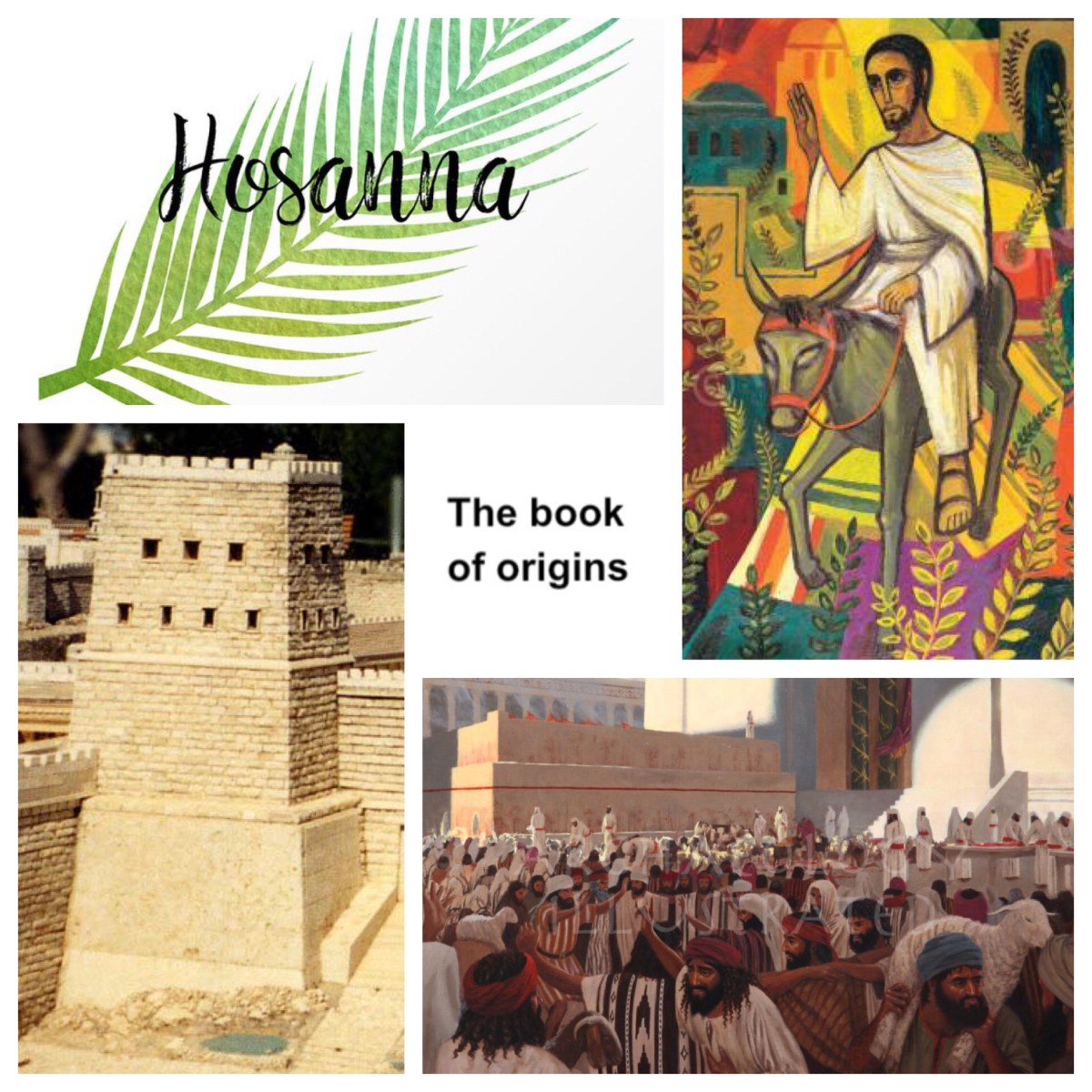
Sacrificial Death: to give his life. Good Friday Reflections

On Good Friday each year, we remember the death of Jesus. This event is interpreted as a fundamental theological event of significance for all Christian believers. “Christ died for us” is a key phrase found in a number of letters by Paul (Rom 5:6,8, 14:15; 1 Cor 8:11, 15:3; 2 Cor 5:14-15; Gal 2:21; 1 Thess 5:10). This affirmation forms the foundation for an intricate and complex system of sacrificial atonement theology—understanding the death of Jesus as a death made on behalf of, and in the place of, believers.

This area of Christian theology has become a debated and disputed arena. How do we understand this today? One concern that is often expressed concerns the way that a religious system has a focus on a violent action at the centre of its belief system. Can it be a good thing to celebrate the way that God causes, or at least approves of, the putting to death of Jesus? We have every right to ask critical and penetrating questions about this aspect of our faith.

Another element of the debate is the claim that can be paraphrased as “Jesus died in my place, he was sacrificed for my sins, to save me from hell”. This is the classic way that I hear this view expressed, and it is often described as the substitutionary atonement theory. Certainly, dealing with the sinful manifestations of human nature is at the heart of Christian doctrine, and theories of atonement regularly grapple with how this is effected.

In my mind, there are a number of points at which the kind of statement about the death of Jesus that I noted above, narrows the understanding of faith too much.

For a start, it focuses intensely on a personal dimension, to the detriment of the wider relational, societal, and political dimensions. Easter faith, to me, is broader, more expansive, more encompassing, than just the focus on my personal eternal destiny. I find this communal orientation expressed very strongly in scripture, both in relation to the atonement as well as in many other broader ways. The narrow expression of atonement is based on an understanding of God who is a wrath-filled, vengeance-seeking God, seeking to impact individual lives in a highly judgemental way. I don’t find that perspective in scripture.

Then, the narrow understanding of atonement plays off the will of God over against the actions of a devil figure. This is a problematic element because it contradicts the idea of an all-loving, all-just God. Is all evil in the world to be attributed to a personified devil? What has the allegedly all-powerful and all-loving God done about this?

Such simplistic dualism is problematic, if we just leave it at this. Hebrew scripture steadfastly resists any temptation to sit in a dualistic worldview, and the New Testament continues in that vein, despite pressures from the Hellenistic worldview, as direct heir of the Platonic dualistic schema.

Appreciating the sacrificial dimension of the story of Jesus dying on the cross is important. Jesus went willingly to his death. He did, in the end, offer his life as a sacrifice. The key verse often cited for this understanding is Mark 10:45 (“the Son of Man came not to be served but to serve, and to give his life a ransom for many). Other verses that relate include Rom 3:25-26, Eph 5:2,1 John 2:1-2, 4:10, as well as the whole argument of Hebrews (see especially Heb 2:17, 9:23-28, 10:12, 13:12).

Understanding the death of Jesus as a sacrifice remains at the heart of our Christian faith. The option of taking up a violent path was rejected by Jesus. He did not stir up an uprising against the imperialist Roman overlords, despite opportunities to do so (on Palm Sunday, for instance). He did knowingly offer his life as a sacrifice. After an inner struggle about this matter (Mark 14:32-35 and parallels in the Synoptics), it appears that Jesus went willingly to his death (Mark 14:36, and reflected in the whole prayer that the evangelist crafts in John 17).

The preaching of Jesus in the period prior to his arrest offered a vision of a kingdom in which righteous-justice is dominant and peace is evident (Matt 6:33, 7:21, 21:43, 25:34-36; Mark 12:32-34; Luke 4:16-19, 6:20-21, 12:31-34, 18:24-25). In this preaching, he signalled his key commitments, which are instructive as we consider what he thought he was doing, when he submitted to death. We need to consider these words as we think about the significance of Jesus for our faith, and for how the sinfulness of humanity is dealt with.

The way that Jesus calls us into faithful discipleship is central to this approach. To enter the kingdom means to live in accord with the righteous-justice that Jesus advocates. The greater picture beyond the events of the cross is hugely significant. The cross, the event of the death of Jesus, points beyond to this greater vision. It is the whole life of Jesus, along with his death, which is crucial as we grapple with how Jesus transforms us from “sinful humanity” to “justified and saved” (to use the biblical terms that have become the catchcries in this debate).

His manner of death was consistent with this vision; the complete commitment of Jesus to this vision meant that his death, unjust and violent as it was, provides a glimpse into the way of faithfulness for each of us in our lives. Following the way of Jesus is treading this path of nonviolent affirmation of the greater vision.

See also https://johntsquires.com/2020/04/03/towards-palm-sunday-matt-21-acclaiming-the-king-anticipating-the-kingdom/

https://johntsquires.com/2020/04/07/it-was-on-that-night-that-everything-came-to-a-head-maundy-thursday-reflections/

https://johntsquires.com/2020/04/07/liminal-space-waiting-and-not-knowing-holy-saturday-reflections/

https://johntsquires.com/2020/04/07/liberating-life-a-new-way-of-being-easter-sunday-reflections/

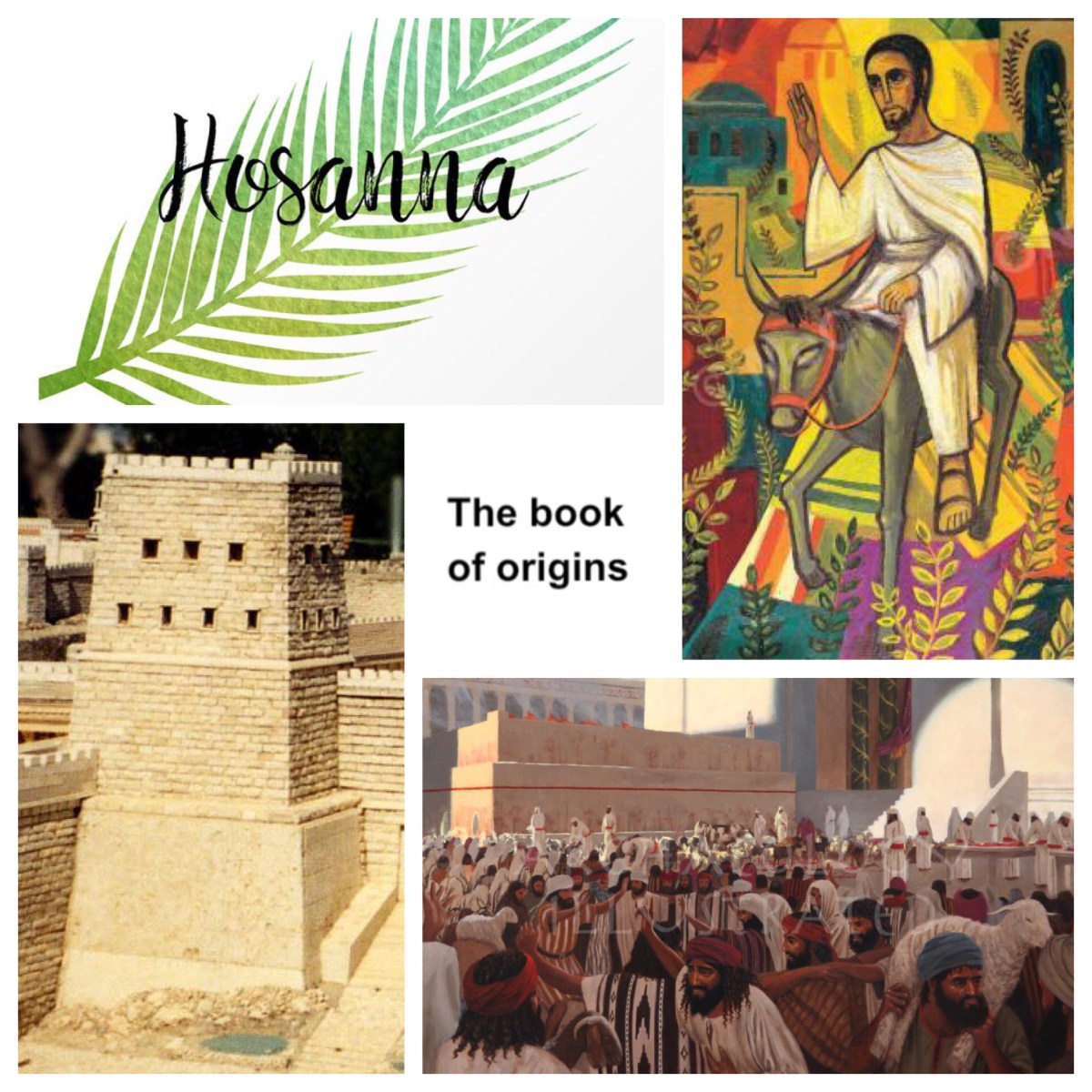
It was on that night that everything came to a head. Maundy Thursday Reflections.

This reflection is set in the first century. The voice is that of person who was raised in the Jewish faith and who became a committed follower of Jesus. Seven candles may be lit and then extinguished one by one as the reflection proceeds.


Gathering

It was on that night that everything came to a head.

A gathering of friends and family;
a joyful occasion, with the drinking of wine,
some singing, some laughing; a meal shared together;
but then, a kiss … a betrayal … a denial … a trial …

Yet it began in celebration.

For years, it was so; for decades, for centuries,
on this very night, we would gather, joined as family,
to remember, to rejoice, to recall the act of liberation.

So we praise you, Lord our God, King of the universe;
You who have chosen us and made us holy.
Yes, we praise you, Lord our God, King of the universe;
You who create the fruit of the vine.
Yes, we praise you, Lord our God, King of the universe;
You who bring forth bread from the earth.


SEVEN CANDLES MAY BE LIT


It was on that night that everything came to a head.

But first, we recall the story …
the story we remember each year on this night.

Recalling the Passover Meal

 We remember the way that God saves his people:
The lamb, the herbs, the bread without leaven;
The lamb, the blood, the Passover of God.

And we follow the instructions given to the priests:
“On the tenth of this month, the people are to take
a lamb for each family, a lamb for each household.” [Exod 12:3]

THE FIRST CANDLE MAY BE EXTINGUISHED

It began in celebration.
For years, it was so; for decades, for centuries,
on this very night, we would gather, joined as family,
to remember, to rejoice, to recall the great stories.

But as the meal progressed, the mood began to shift.
One by one, those gathered together began to look back,
to ponder what they had been a part of…
for the joy of recent times had a shadow side, a menacing feel.

THE SECOND CANDLE MAY BE EXTINGUISHED

Just a few days before the meal, they entered the city,
coming for the festival, riding on a donkey;
crowds were gathered to cheer him on,
singing psalms and waving palms.

Hopes were high that indeed he was the one—
Blessed is he who comes in the name of the Lord.

But days later, as the palms still lay strewn beside the road,
the signs were ominous.
Is this the one to redeem the people?
Silence, and fear, as the tensions rose … …

On that night, we remembered the festival of the Lord,
as we have remembered it throughout the centuries.

On the table, in the centre: the matzah bread.
“Our ancestors ate this bread in the land of Egypt.
All who are hungry, come in and eat! come and celebrate Passover!”

On the table, beside the matzah bread, were the cups for the wine.
Four cups: cups of judgement, a reminder of God’s punishments.
But the same four cups are also cups of celebration.
Reminders of the gracious saving actions of God.

So the table was set, with bread and wine,
for this festival of the Lord, the celebration of Passover.

We met around the table; a family extended,
with brothers and sisters, children and friends;
aunts … uncles … cousins … disciples;
a cacophony of colleagues, family and followers.

As we met around the table, we joined ourvoices,
with a psalm of celebration; a psalm of hallelujah.

What shall I return to the LORD for all his bounty to me?
I will lift up the cup of salvation and call on the name of the LORD,
I will pay my vows to the LORD in the presence of all his people.
[Psalm 116]

THE THIRD CANDLE MAY BE EXTINGUISHED

Recalling the Passover of the Lord

 It was on that night that everything came to a head.

For years, it was so; for decades, for centuries,
on this very night, we would gather, joined as family,
to remember, to rejoice, to recall the act of liberation.

And so, we praise you, Lord our God, King of the universe;
You who create the fruit of the vine.

Then he took the wine, as they had always taken the wine;
and lifting it high, he offered his prayers to God.
“May the one who blessed Abraham, Isaac, and Jacob,
May the one who blessed our mothers,
Bless this house, this table, and all assembled here;
And so may our loved ones share our blessing.”

And when he had given thanks,
he gave it to them, saying: “Drink this, all of you”;
and then he spoke of the fruit of the vine, of the kingdom of God.

THE FOURTH CANDLE MAY BE EXTINGUISHED

We praise you, Lord our God, King of the universe;
You who bring forth bread from the earth.

So he took the bread, as they had always taken the bread;
And lifting it high, he offered his prayers to God.

Then the shank of lamb for the Passover, in the centre of the table:
“It is the sacrifice of the Passover of the Lord, for he passed over
the houses of the children of Israel in Egypt”.          
        [Exod 12:27]

And then, the herbs of bitterness;
“for their lives were bitter, with hard labour,
and mortar, and brick, and work in the fields.
All the labour which the Egyptians had forced upon them was harsh.”      [Exod 1:14]

And when he had given thanks for the bread,
he broke it, and he gave it to them,
speaking words which bled from familiar, to disturbing:
“Take this, and eat it; this bread of the Lord, manna from heaven;
take, and eat. This is my body, given for you.
Eat this in the remembrance of me.”      So they ate.

THE FIFTH CANDLE MAY BE EXTINGUISHED     A period of silence is kept

Then Judas Iscariot, who was one of the twelve,
went to the chief priests in order to betray him to them.
When they heard it, they were greatly pleased,
and promised to give him money.
So he began to look for an opportunity to betray him.        [Mark 14]

The bitter moment of betrayal. Can it ever be retrieved?

It was on that night that everything came to a head;

And tonight, this year, as in every year, we remember.

THE SIXTH CANDLE MAY BE EXTINGUISHED

Recalling the Final Supper

For I received from the Lord what I also handed on to you, that the Lord Jesus on the night when he was betrayed took a loaf of bread, and when he had given thanks, he broke it and said, “This is my body that is for you. Do this in remembrance of me.” In the same way he took the cup also, after supper, saying, “This cup is the new covenant in my blood. Do this, as often as you drink it, in remembrance of me.” For as often as you eat this bread and drink the cup, you proclaim the LORD’s death until he comes. [1 Cor 11]

THE SEVENTH CANDLE MAY BE EXTINGUISHED

A period of silence is kept

It was on that night that everything came to a head;
and the shadows gathered, looming, menacing…

A gathering of friends and family;
a joyful occasion, with the drinking of wine,
some singing, some laughing; a meal shared together;
but then, a kiss … a betrayal … a denial … a trial …

It was on that night that everything came to a head:
a commandment to love; to love one another …
a call to discipleship; take up the cross, and follow …

It is on this night that everything comes to a head.


Adapted from a service devised by John Squires in 2008

Holy Week: a week set apart, in a time set apart.

Today we begin Holy Week. This is the final part of a longer period leading up to Easter, called Lent. We do this every year, as part of the annual cycle. It is a familiar and comforting ritual for many people of Christian faith.

This year, however, will be different. In the middle of a viral pandemic, with restrictions prohibiting gathering for worship, Christian people will be walking through Holy Week in their own homes, not in gatherings at church. This is a week set apart, for people of faith, in a time set apart, for all of society.

We are not able to gather together. This year, people of faith are not gathering together. Instead, we are gathering-apart, through virtual worship, online. (See https://johntsquires.com/2020/03/15/when-you-come-together-reflections-on-community-in-the-midst-of-a-pandemic/)

Holy Week culminates the season of Lent, which is an ancient practice for a Christian people. It lasts for 40 days, serving as a time of preparation for Easter. But whereas Lent is an ancient tradition, Holy Week is a more recent development. Designating the week leading up to Easter as Holy Week most probably comes from the narration of chapters 11 and 12 of Mark’s Gospel, in which Jesus is understood as being in Jerusalem from a Sunday until his last meal on a Thursday.

The week starts with Palm Sunday when Christians remember Jesus entering Jerusalem and the crowds waving palm leaves as he enters the city. Jesus stays near to the city for the remainder of the week. This year, we have not remembered that event with festive processions and cheerful hymns. Many of my colleagues have provided resources for Virtual Worship, Church At Home, Postcards for Reflection, and the like. People are gathering-apart.

On Maundy Thursday, Christians remember Jesus washing his disciples’ feet. His words are recorded in John 13:34, “A new command I give you: Love one another. As I have loved you, so you must love one another.” This gives rise to the name for the day. The Latin for “commandment” is mandatum—hence the name of the day, Maundy.

Some people believe that Lent officially ends at sundown on Maundy Thursday, so they celebrate that with Holy Communion, or with a meal known as an agapé or a “love feast”. It is a remembrance of the last meal that Jesus shared with his followers. Others maintain that Lent continues through into Easter Saturday, until the end of the day just before the empty tomb is discovered.

After Maundy Thursday comes Good Friday, remembering when Jesus was crucified. Why is this day called Good? It comes from the theological evaluation that, on this Friday, Jesus died on the cross “for our sins”, thereby securing our redemption. This is the basis for the “good news” which the Church has proclaimed for centuries.

Churches all around the world normally hold various rituals for people to attend. Roman Catholics have the Adoration of the Cross, the Mass of the Pre-Sanctified, the Stations of the Cross, and Evening Prayers. Anglicans have a three-hour service with reflections on the Last Words of Christ. Many people come for these times of gathering together. But not this year—we have to gather-apart.

The Stations of the Cross are focused around the events of Good Friday, recalling the various events which took place as Jesus made his way from his trial to his death on the cross. These Stations have been appropriated, in art or through personal creative responses, as ways of moving attention from the story as a singular ‘history’, to the significance of the story and the resonance of the events with universal human experiences.

This year, gathering together is not possible. As we gather-apart, there is the opportunity for personal reflection; perhaps, for instance, using this exhibition of contemporary art work that was specifically commissioned in 2015: https://www.youtube.com/playlist?list=UUDH-6NVr6aj6X6DAmzSKLvg

Next comes Holy Saturday or Easter Eve—a day of vigil, when believers watch, wait and pray. This is an in-between time, a day when time can be spent reflecting back on the traumatic events that have just taken place, and looking forward with hope to the new possibilities that might emerge from those event.

(I will make a post about Holy Saturday on that day.)

After Holy Saturday, the celebration of Easter Sunday bursts through the gloom and despair with a vibrant message: Jesus is risen, Jesus has conquered death. Counting inclusively, as was done at the time, beginning from Friday, means that Sunday is the third day. So the traditional affirmation is that Jesus rose “on the third day”. This leads into an expression of joy, that the trauma and grief, the uncertainty and fear, are now passed. Life is different; hope is renewed; the future, even if it looks different, will still be viable.

For the next period of time, the Church moves into a new season—the season of Easter, 40 days when the celebration of resurrection continues. And so the cycle continues, death turning into life, despair breaking out into hope, frustration moving into promise.

See also https://johntsquires.com/2020/04/03/towards-palm-sunday-matt-21-acclaiming-the-king-anticipating-the-kingdom/

It was on that night that everything came to a head. Maundy Thursday Reflections.

Sacrificial Death: to give his life. Good Friday Reflections

Liminal Space: waiting and not knowing. Holy Saturday Reflections

Liberating Life: a new way of being. Easter Sunday Reflections

Towards Palm Sunday (Matt 21): Acclaiming the king, anticipating the kingdom

Next Sunday is Palm Sunday. As we approach the day, we have opportunity (during this period of enforced social distancing and self-isolation), to survey the scene of the first Palm Sunday, and reflect on its significance. What do you see? What do you hear? How is God revealed to you in this story? How does God speak to you in this story? What is the word of God, the vision of the Lord, for you, today, from this well-known story from so long ago?

As you read the account in Matt 21, ask yourself: What do you see? What do you hear? We see pilgrims travelling the winding route to Jerusalem, and Jesus amongst them. We hear the crowd singing Hosanna! and we see them spreading their cloaks along the way, to honour him. And we hear their cries in the ancient hymn, “Blessed is the coming king, the one who comes in the name of the Lord, the one bringing the peace of heaven into this city here on earth”.

So the people cry, singing words from Psalm 118 about the king who comes to implement the kingdom willed by God—a psalm which is echoed in the song of the angels from early in Luke’s Gospel, declaring that, in Jesus, God is bringing “peace on earth, among those whom he favours” (Luke 2:14)

What do you see? What do you hear? Can you see the thoroughly political nature of the activity of Jesus? Can you hear the thoroughly political nature of the cries of the crowd? Hosanna—Save us! Blessed is the King—not Caesar, not ruler of the Romans, but Jesus, King of the Jews, the one Chosen by God to proclaim the kingdom. Can you hear these cries?

In this story, as throughout all of the Gospel accounts, the actions of Jesus have clear and strong resonances from the scriptures that he knew so well. He does not enter Jerusalem with a fatalistic acceptance of what lies ahead; instead, they are a call to this-worldly involvement, to action in our own time, serving the people amongst whom we live.

So it is in this story of the Passover pilgrims. The cries of the crowd, the actions of the people, the anticipation of the Roman soldiers and the symbolic statement made by Jesus as he rides into the city on a donkey—all of this points to the inherently political, thoroughly this-worldly orientation of the ministry of Jesus.

The kingdom is coming, the future kingdom is here and now in our midst, and the kingdom will overturn the expectations and practices of the political powers within this world. The Romans did well to notice, and anticipate, and respond to such a message. The Jewish leaders, so it seems, were anxious, also, about what was taking place.

Matthew ends his report by noting that “the whole city was in turmoil, asking, ‘Who is this?’” That was the critical question, for all four authors of the Gospels in the New Testament. The stories they tell are focussed on answering that question: ‘Who is this?’ Matthew has this questioned answered immediately, as the crowds were telling one another, “This is the prophet Jesus from Nazareth in Galilee.” His name and reputation were known. Certainly they perceived the significance of the way that he chose to enter the capital city. He was calling people to follow him in a clear, direct, and challenging way.

On the following Friday, we will remember that Jesus, ultimately, was condemned to death with a sign that declared that he was “the King of the Jews” (John 19:19–20). We see, very clearly, in the inscription nailed to the cross, the political nature of the message of Jesus. From the perspective of the Roman rulers, articulated by Pilate, Jesus was given a drastic political punishment, death by crucifixion, for the political insurgency that he was seen as undertaking, in claiming to be the King of the Jews.

That King is the one whom we follow. This is the path that he calls us to walk. When we pray, as Jesus instructed us, your kingdom come, your will be done, on earth as in heaven, we are praying that what we hope for, in heaven, is to be lived out, here, on earth, every day, in our life of discipleship. Our faith calls us to be faithful disciples of Jesus. It calls us to compassionate engagement with others in our society. It is a costly call, but a compelling call.

For us, today, that is the challenge: how do we show the merciful love and righteous-justice that Jesus spoke about and lived for in his life? Jesus ultimately was crushed by Roman imperial power; as he died, however, he showed that there was another way. A way of faithfulness to God’s calling. A way that truly leads to peace, to peace with righteous-justice.

And so, as we look to that time with hope and anticipation, we pray, as we always do: your kingdom come, your will be done, on earth as in heaven … and we wait, patiently, and work, persistently, with that end in view.

This series of blogs on Palm Sunday is based on research by Elizabeth Raine and John Squires, published in Validating Violence – Violating Faith? Religion, Scripture and Violence. Edited by W. Emilsen & J.T. Squires, ATF Press, Adelaide 2008. See https://assembly.uca.org.au/rof/images/stories/interfaithsep/25sept.pdf

See also https://johntsquires.com/2020/03/31/towards-palm-sunday-matt-21-passover-and-politics/ and https://johntsquires.com/2020/04/01/towards-palm-sunday-matt-21-riding-on-a-donkey-or-two-as-the-crowd-shouts-hosanna/ and https://johntsquires.com/2020/04/02/towards-palm-sunday-matt-21-waving-branches-spreading-cloaks/

and https://johntsquires.com/2023/03/27/why-jesus-never-did-and-never-would-ride-a-horse-for-palm-sunday-lent-6/

See more on righteous-justice at https://johntsquires.com/2020/02/06/an-excess-of-righteous-justice-matt-5/ and https://johntsquires.com/2020/02/13/you-have-heard-it-said-but-i-say-to-you-matt-5/

We have also turned it into a creative dialogue, which you can read at https://ruralreverend.blogspot.com/2019/04/palm-sunday-ps-1181-2-19-29-luke-1928.html

Towards Palm Sunday (Matt 21): Waving branches, spreading cloaks

Next Sunday is Palm Sunday. As we approach the day, we have opportunity (during this period of enforced social distancing and self-isolation), to survey the scene of the first Palm Sunday, and reflect on its significance. What do you see? What do you hear? How is God revealed to you in this story? How does God speak to you in this story? What is the word of God, the vision of the Lord, for you, today, from this well-known story from so long ago.

As you read the account in Matt 21, ask yourself: What do you see? What do you hear? We see pilgrims travelling the winding route to Jerusalem, and Jesus amongst them. We hear the crowd singing Hosanna! and we see them spreading their cloaks along the way, to honour him.

What do you see? What do you hear? Can you see the people, waving branches? Of course, this Sunday in the church year is traditionally called Palm Sunday. However, no palms are mentioned in the reading we have heard from Matthew’s version of the story, nor in Mark or Luke. That the branches are from palm trees is noted only in John’s version. Both Mark and Matthew refer to branches that the people cut and waved, even though they don’t specify that they are palm branches. Nevertheless, we see the palm branches, because they are front and centre in the tradition of today—it is Palm Sunday, as we call it!

This waving of palm branches was an activity intimately associated with the actions of the Maccabees, who were men from a priestly family who took up arms to fight back the Seleucid overlords and reclaim the Temple. The waving of palm branches became closely associated with this event; we can read the instructions in one of the Jewish books (2 Maccabees 10), which directs the people to “carry ivy-wreathed wands and beautiful branches and fronds of palms, and offer hymns of thanksgiving to [God] who had given success to the purifying of their own holy place”. So the palms evoke the famous military campaign of centuries earlier.

What do you see? What do you hear? Do you see the cloaks, spread on the ground, by those along the side of the road? A curious detail. What can this mean? Perhaps the more astute of the Jews along the side of the road, would have had some insight; perhaps they recalled the story of the time when a young prophet from Ramoth-gilead declared that God was anointing Jehu, the son of Jehoshaphat, as the next king of Israel.

The story is recounted in 2 Kings 9, and it contains this striking detail, as the prophet decreed, “Thus says the Lord, ‘I anoint you king over Israel’”, and so they took their cloaks and spread them for him on the bare steps, and blew the trumpet, and proclaimed, ‘Jehu is King’” (2 Kings 9:13). Can you hear the resonances in the story of the Passover pilgrims? The cloaks on the steps, when Jehu is King … the cloaks on the wayside, when Jesus comes as King.

So Jesus, the prophet from Nazareth in Galilee, entered the city in the midst of the pilgrims, for the festival of Passover. Did he come as King, in the minds of the crowd? He came preaching the coming kingdom of God—a kingdom to be marked by righteous-justice (Matt 6:33). He blessed those who sought that righteous-justice (Matt 5:6, 10). He urged people to walk the way that led to justice for all (Matt 12:18-21).

Jesus came into the city filled with zeal for God’s righteous-justice kingdom (Matt 23:23). The festival of Passover was a most appropriate time for him to enter the city and make his mark as God’s chosen King. The branches and the cloaks both point to the immediate political significance of this event.

This series of blogs on Palm Sunday is based on research by Elizabeth Raine and John Squires, published in Validating Violence – Violating Faith? Religion, Scripture and Violence. Edited by W. Emilsen & J.T. Squires, ATF Press, Adelaide 2008. See https://assembly.uca.org.au/rof/images/stories/interfaithsep/25sept.pdf

See also https://johntsquires.com/2020/03/31/towards-palm-sunday-matt-21-passover-and-politics/ and https://johntsquires.com/2020/04/01/towards-palm-sunday-matt-21-riding-on-a-donkey-or-two-as-the-crowd-shouts-hosanna/ and https://johntsquires.com/2023/03/27/why-jesus-never-did-and-never-would-ride-a-horse-for-palm-sunday-lent-6/

See more on righteous-justice at https://johntsquires.com/2020/02/06/an-excess-of-righteous-justice-matt-5/ and https://johntsquires.com/2020/02/13/you-have-heard-it-said-but-i-say-to-you-matt-5/

Tomorrow: Acclaiming the king, anticipating the kingdom

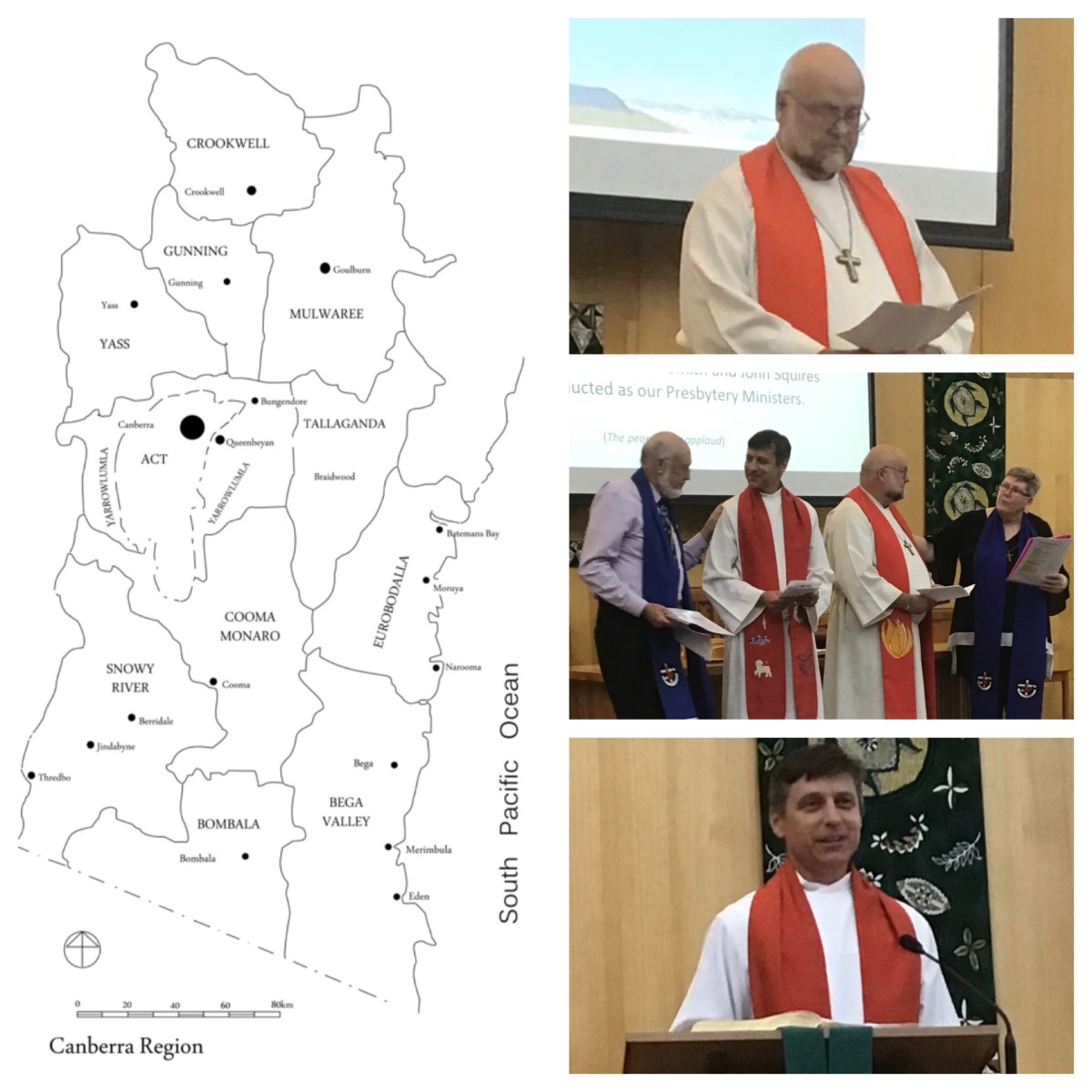
Pastoral Letter to the Canberra Region Presbytery of the Uniting Church in Australia. 31 March 2020

Dear friends across the Country and Coast, and in the Capital area of the Presbytery:

We write to express our gratitude to everyone who is working hard in the current challenging circumstances, and to offer encouragement to you as you offer ministry to the people in your communities of faith. We are experiencing a time of rapid transition and significant change, from week to week, from day to day. May you be strengthened as you continue to serve in this challenging context.

Like Christian communities right around the world, we are finding new and creative ways to worship, as we gather-apart. We are seeing that people in our congregations and faith communities are continuing to care for one another and stay connected with each other. Most of us are on a steep learning curve as we try to work out what is best for our own congregation in the light of the abundance of resources increasingly available.

As we connect online, we have an amazing opportunity to get to know one another in ways never possible before, as the distance between us vanishes with technology. Ministers, Pastors, and lay leaders in Congregations are now meeting up regularly via ZOOM to share concerns and learn from one another. From Bega to Crookwell, in Gungahlin and Braidwood, from Eden and Goulburn and Jindabyne, in Tuggeranong and Braddon, conversations have been flowing across the internet.

One exciting development in the Canberra Region Presbytery is the way in which our 28 Uniting Church congregations are willingly sharing the talent and expertise God has gifted us. Every congregation has been able to draw their people together in new ways. We have used YouTube, Facebook Live, ZOOM, Facebook groups, emails of PDFs and Word documents, the mobile phone, and Australia Post—an amazing array of options! (You can check out some of the creativity across our presbytery by looking at the Canberra Region Presbytery Facebook page.)

Last Sunday, members of Cooma and Alpine congregations shared in worship for the first time in many years. Rev. Noel Williams, taking the plunge with ZOOM, led the service from an otherwise empty St Andrews in Cooma. What resulted was a genuine worshipful experience, as Bible readers and musicians contributed from their own homes, and Noel preached a very relevant and meaningful message.

People who barely knew each other came into each other’s homes in a shared, good-humoured willingness to help make something new work well. An hour later we said cheerful goodbyes, enriched by a fellowship of the Spirit that knows no worldly boundaries.

The same happened with other groups meeting online for worship. Members of the Tuggeranong Congregation have told of their positive experience on ZOOM last Sunday (see the article contributed). Members of the Weston Creek Congregation worshipped in their own homes, using material sent to them, and then gathered on ZOOM for the after-worship morning tea time. Both groups valued the interactive element available by this platform.

There were a number of people from around our presbytery who shared in the Saltbush Sundays @9service (see the details at https://saltbushcommunity.uca.org.au/news/saltbush-sundays-9/).
Others are using the online resources at a time more convenient for themselves (https://saltbushcommunity.uca.org.au/the-word-around-the-bush/).

As our daily lives are changing to combat the COVID-19 virus, we have the opportunity to engage in new expressions of congregational life. Connecting online means we have new opportunities to study Scripture, listen to good teachers, encourage our children and youth, pray and develop our personal spiritual life, explore music, witness to our community.  

In the mist of the suffering and pain that the world is experiencing, our God has given us a way to prepare for being part of a much-changed world, which will have an unprecedented need for the healing and restorative message of the Gospel.

Maintaining an outward focus is tremendously important. We are called to continue serving the world, even—especially—in the midst of the current pandemic. Kippax Uniting Church is coordinating the Canberra Relief Network (CRN) to create the opportunity for congregations in strategic geographical locations in the urban area to become centres for food relief packages to the Canberra population.

The CRN will provide the food relief packages, and the congregations will be asked to staff the distribution following health protocols for safe distancing and hygiene. This is one of the practical ways that congregations with the needed capacity can be involved in blessing their local communities and beyond. Already Gungahlin and Tuggeranong have agreed to collaborate with the CRN and conversations are underway with more UCA congregations as well as community groups.

Even though our church buildings are closed for worship and other meetings, there are places in our Presbytery where church buildings are being used to provide essential emergency services to homeless and marginalized people. In each place, special protocols to facilitate safe social distancing are being followed very carefully. Monty’s Place in Narooma is still providing take-away meals with these strict protocols in place, both on site and at delivery, to safeguard at-risk members of the Narooma congregation. We thank volunteers like Merrick Willcocks who arranged the deliveries.

Let’s not forget, also, that whilst the COVID 19 Pandemic has captured our focus, many communities in our Presbytery are continuing the struggle to recover from Bushfires. At Narooma, “Flowers for Cobargo/Quaama” has resulted in large numbers of pots of colourful flowers to be gathered and planted to lift to the spirits of residents in these towns devastated by fire in January. We thank folk like Di White and her team.

In Eurobodalla, Duncan McDiarmid has recently commenced in part-time ministry with the Moruya and Batemans Bay Congregations. Thanks to a generous offer from two Congregations in the Sydney Central Coast Presbytery, Duncan will be funded to provide some further community chaplaincy in the region. We are currently exploring ways that other funding might support community chaplaincies in other bushfire-impacted communities on the South Coast.

There are more stories which could be told … but we will leave them for another day. We are greatly encouraged by the commitment and dedication, energy and persistence, faith and loving compassion, determination and sensitivity, that we see and hear and experience in each of the communities of faith across Country, Coast, and Capital. We hope that as we share these stories, you also are encouraged in faith, strengthened in hope, and renewed in love.

So let us continue to live the Gospel, serve one another, and offer compassionate care to our wider communities. In the name of Christ.

Judy McKinlay and John Williams, Presbytery Co-Chairpersons
Andrew Smith and John Squires, Presbytery Ministers
31 March 2020

Towards Palm Sunday (Matt 21): Riding on a donkey (or two) as the crowd shouts ‘Hosanna’

Next Sunday is Palm Sunday. As we approach the day, we have opportunity (during this period of enforced social distancing and self-isolation), to survey the scene of the first Palm Sunday, and reflect on its significance. As you read the account in Matt 21, ask yourself: What do you see? What do you hear? How is God revealed to you in this story? How does God speak to you in this story? What is the word of God, the vision of the Lord, for you, today, from this well-known story from so long ago?

What do you see? What do you hear? We see pilgrims travelling the winding route to Jerusalem, climbing the hills outside the city as they make their way to the capital of ancient Israel. And in their midst, can you see the figure of Jesus, surrounded by his followers, approaching the city?

Jesus, seated on the colt, riding on a donkey, was the centre of attention—at least for his own followers. Those in the crowd who knew their scriptures, would have immediately recognised the allusion. The account of this story that we find in Matthew’s Gospel and that we hear this Sunday, actually specifies the verse that interprets the significance of the donkey (Matt 21:4-5).

In Zechariah 9:9, the vision is clear: “your king comes to you, triumphant and victorious, humble and riding on a donkey”. That is what the prophet declares; in this story of Passover pilgrims, Jesus can be seen to be bringing that vision to fruition. And that vision declares that this coming ruler “shall command peace to the nations, and his dominion will be from sea to sea, from the river to the ends of the earth”. That is the vision that Jesus evokes as he rides into Jerusalem on this donkey.

What do you see? What do you hear? Can you hear the cries of the crowd: “Hosanna, hosanna!” they cry. What were they calling out? Hosanna is a foreign term, a word from the Hebrew language, not a common word in our English usage. The best way to translate Hosanna, is “save us”. It is a cry for salvation; a yearning for deliverance. The word appears in the Psalm we have heard today, in Psalm 118:25, where they people cry out, “save us, we beseech you, O Lord!” Save us, redeem us, liberate us.

Psalm 118 was one of the Hallel Psalms, the Praise Psalms, which were associated with celebrations on each of the three great festival days—the Feast of Tabernacles, or Booths; the Feast of Weeks, or Pentecost; and the Feast of Passover. These psalms of praise became particularly associated with the celebrations of the rebuilding of the Temple.

Rebuilding the Temple was an inherently political action. It was the foreign invasion of Palestine by the Hellenistic Seleucids some two centuries before Jesus which had led to the destruction of the Temple. It was the political activity of the Jewish Maccabees which had led to the reclaiming of the Temple two decades later.

“Praise you, O God, for we have our Temple, rebuilt, restored, renewed”. So the prayer might well have gone. And it was the political activity of the Maccabees which had brought this about. The Hallel Psalms had become Psalms of Praise for liberating political activity. And this is what the people were singing out!

They expected Jesus, the prophet from Nazareth in Galilee. He entered the city in the midst of the pilgrims, for the festival of Passover. He came preaching the coming kingdom of God—a kingdom to be marked by righteous-justice (Matt 6:33). He blessed those who sought that righteous-justice (Matt 5:6, 10). He urged people to walk the way that led to justice for all (Matt 12:18-21). He came into the city filled with zeal for God’s righteous-justice kingdom (Matt 23:23). The festival of Passover was a most appropriate time for him to enter the city and make his mark.

This series of blogs on Palm Sunday is based on research by Elizabeth Raine and John Squires, published in Validating Violence—Violating Faith? Religion, Scripture and Violence. Edited by W. Emilsen & J.T. Squires, ATF Press, Adelaide 2008. See https://assembly.uca.org.au/rof/images/stories/interfaithsep/25sept.pdf

See also https://johntsquires.com/2020/03/31/towards-palm-sunday-matt-21-passover-and-politics/ and https://johntsquires.com/2023/03/27/why-jesus-never-did-and-never-would-ride-a-horse-for-palm-sunday-lent-6/

See more on righteous-justice at https://johntsquires.com/2020/02/06/an-excess-of-righteous-justice-matt-5/ and https://johntsquires.com/2020/02/13/you-have-heard-it-said-but-i-say-to-you-matt-5/

We have also turned it into a creative dialogue, which you can read at https://ruralreverend.blogspot.com/2019/04/palm-sunday-ps-1181-2-19-29-luke-1928.html

Tomorrow: Waving branches, spreading cloaks