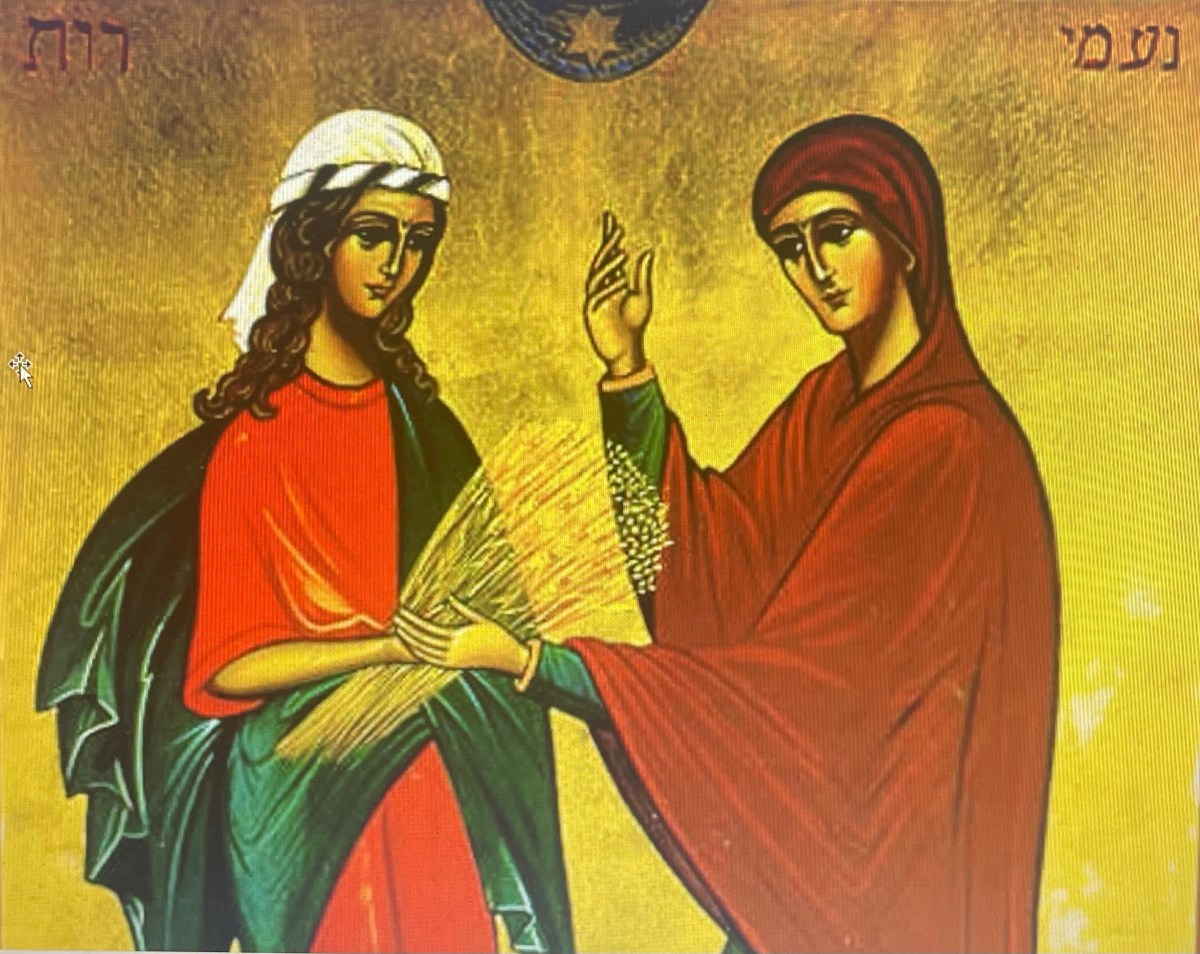
New outcomes, never imagined at the start (Ruth 3–4; Pentecost 24B)

A sermon preached by the Rev. Elizabeth Raine at Tuggeranong Uniting Church on Sunday 7 November 2021

*****

We rejoin Ruth and Naomi in chapter 3, where Naomi takes the initiative to securethe future for herself and Ruth, a future that centres around Boaz as a potential husband for Ruth. Naomi issues detailed instructions to Ruth in regard to staging an encounter with Boaz at the threshing floor, a place with a poor reputation in Hebrew scritpure, where Boaz is working late.
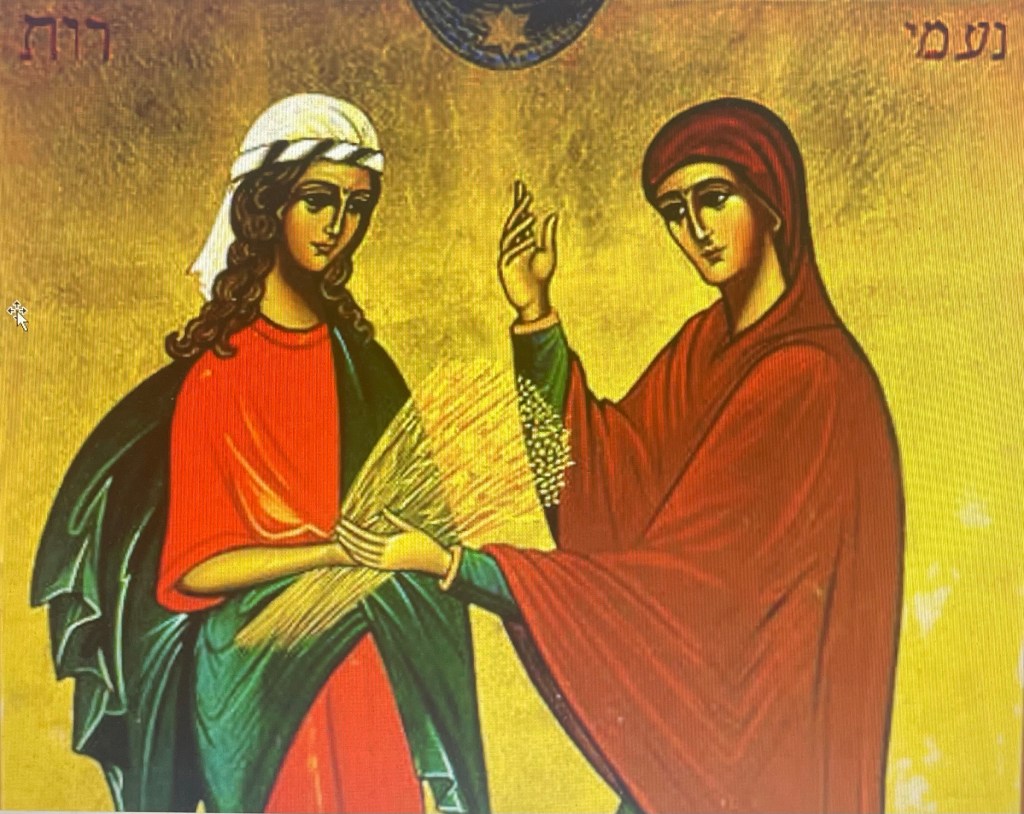
Ruth is instructed to bathe, put onher best clothes, and apply perfume, all which signifies romantic intent. Despite the risk, Ruth dutifully obeys, informing Boaz when she accosts him on the threshing floor that she is “Ruth, your servant; spread your cloak over your servant, for you are next-of-kin.” ‘Spread your cloak’ is a Hebrew euhphenism for sexual intercourse, and Ruth is not only signifying her availability for marriage but her desire that Boaz carry out his duty as next of kin according to the Levirite law.
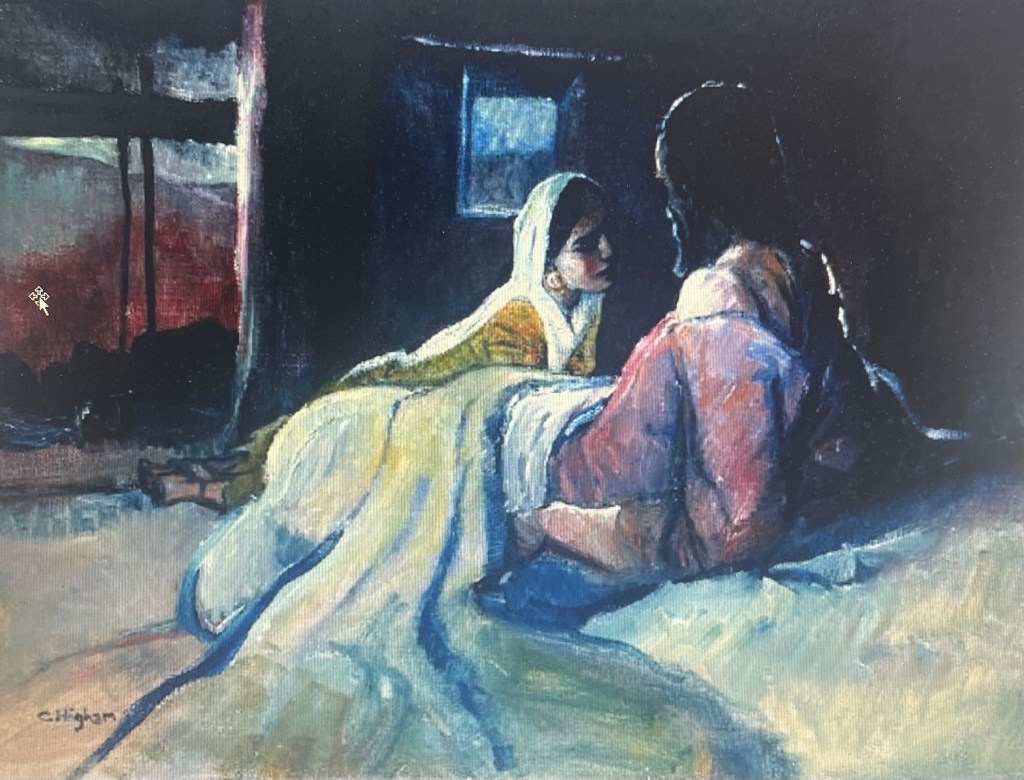
This law required the next of kin of a deceased husband to father a child for the deadman so that his lineage could continue. Boaz takes the hint, and tells Ruth that though there is a nearer next of kin, he will sort this out tomorrow with that closer family member.

In chapter 2 we noted a number of contrasts: male and female, foreigner and Israelite rich and poor, etc. In this chapter we also find contrasts. Boaz and Ruth had met during the day, in a public place, where the social custom for such encounters were maintained. Here they meet in private under the cover of darkness, and unrestrained by custom, their interaction is quite different. We are now in the private domain of women, signified by the night. Boaz’s prominence, riches and public profile are not as important here. It is both a time of danger and a time of potential promise and blessing.

Despite Ruth’s bold initiative, she and Naomi still live in a world that does not value its widowed women, and their fate rests in the hands of a man with wealth and status. Boaz needs now to fulfill his part of the plan in the public, male sphere of lifein chapter 4.
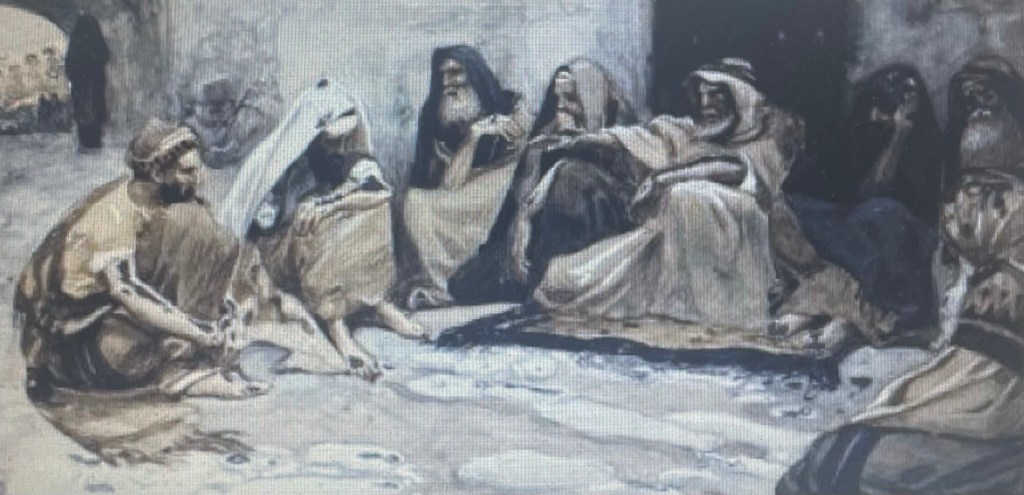
We now return to daylight and the male) domain. The focus shifts from Ruth to Boaz, and from the private to public sphere. Boaz is here to wait for the nearer next of kin, or goel. It is Boaz’s interests that dictate how the exchange between the two men will go, and we can tell this because the Hebrew passage here begins and ends with Boaz’s name. Further, despite the bible translation of ‘friend’, the other goel is called peloni almoni, Hebrew rhyming slang that basically means “old what’s his name”, or “Mr such and such”. Again we see the sense of humour of the author of this book at work.

Boaz is shown to have authority in this society as “Mr what’s his name” and the ten elders do what he tells them to. None of the men he addresses challenges his authority or his right to order them around.

In the ancient Hebrew world, decisions about law, property and finances were made at the town gates, where the men and elders would gather to discuss aspects of law and to enact judgment.
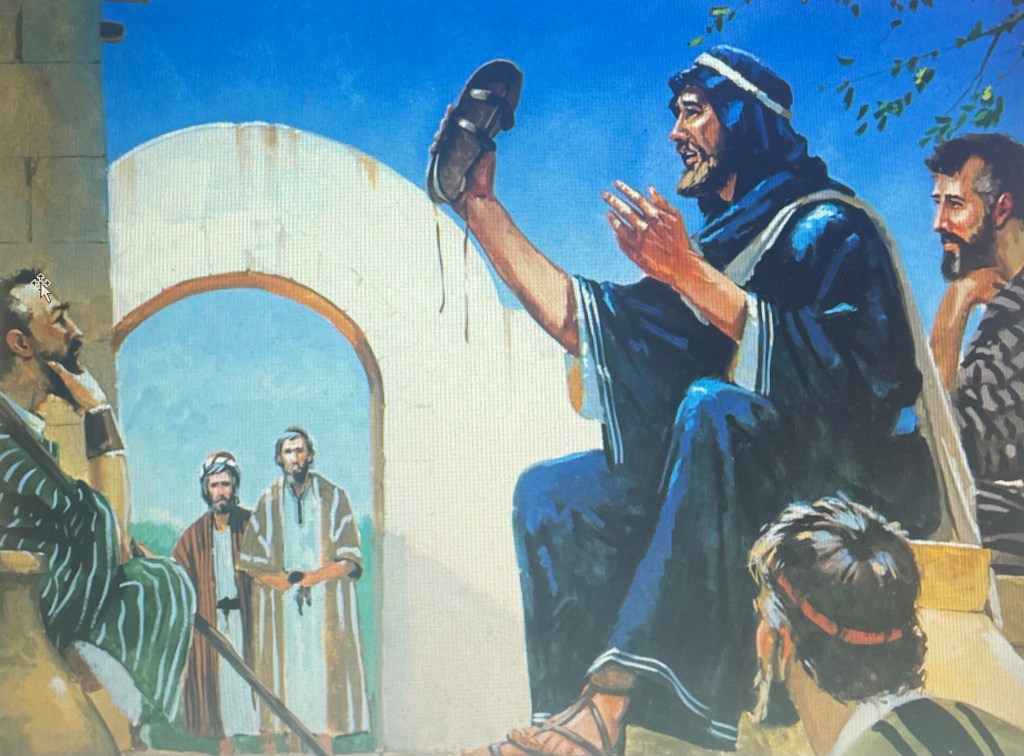
Boaz constructs an elaborate legal argument around an alleged piece of land we haven’t heard of before that Naomi apparently wants to sell. Her nearest kinsman has first right of refusal under Hebrew law. This begs the question: why did Naomi need Ruth to glean if she had land to redeem? Is Boaz resorting to an imaginery piece of land to cover his real aim – which is to acquire Ruth as a wife? It would certainly give him the legal cover he needs for such a proceeding – for even in this rather enlightened book, for someone of Boaz’s social standing to enter into marriage with a Moabite, a foreigner, would be risky if no legal duty is involved.

So while Boaz is apparently concerned with the noble duty of redeeming his kinswoman Naomi’s land, he can just slip in that Ruth is part of the deal as well. Mr “what’s his name” decide that the risk of redeeming the alleged land is too great to him, as if Ruth were to have a child that child could legally claim the land in the future, even if he had paid for it now. So he refuses, and Boaz is free to marry Ruth.

The outcome of this chapter presents a very different family picture from that in the first chapter. Life has replaced death, abundance has replaced famine, fullness of life and fertility has replaced emptiness and barrenness. Amidst the rejoicing of the community, God finally appears as an active character, causing Ruth to conceive a son to Boaz.
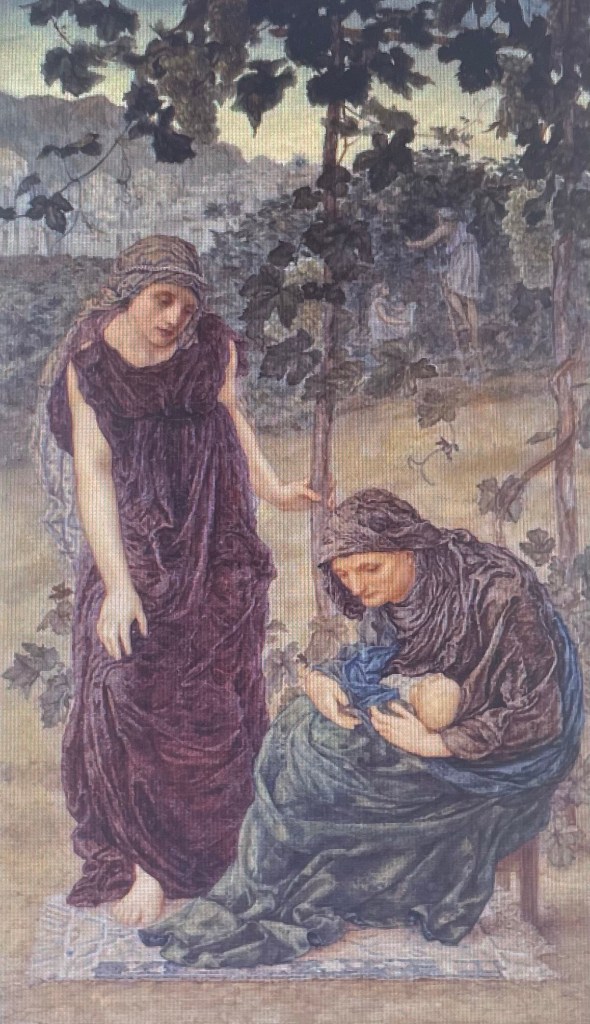
Despite this intervention of God, the story is not about divine manipulation or a system where God directly rewards and punishes. The important thing in this story is the role of human action and intervention. God’s grace is bestowed only when such action is taken by the people concerned, and when it concerns all people.

Ruth’s story ultimately has a happy ending because the community decide to accept and welcome her despite being a foreigner.

The book of Ruth challenges us to look more closely at our own cultural context, and how the poor and the foreigner are welcomed and provided for in our community. Even in a world where prosperity has become available for some on a ridiculous scale, many still die of starvation. Many flee countries where food supplies are insufficient, and where opression is rife.

It is clear that true community in our world is broken. Gleaning has been replaced by our welfare system, which is often inadequate to address the real issues facing the poor. If nothing else, the story of Ruth here should challenge us to work for cultural change, to transform the brokeness into a society where all are equally valued.

The little genealogy at the end probably strikes the modern reader as a rather oddaddition, but it has a special function. If further proof is needed by the reader of Ruth that God favours the inclusion of the foreigner, this is it. The gift of children was regarded as a sure sign that God’s blessing was resting upon a person. Ruth is the great grandmother of King David, the most famous of Israel’s kings in the biblical record. The genealogy shows that by accepting the foreigner, Israel goes on to beextraordinarily blessed.

Many generations later, some people in Israel became followers of the one whom they believed had been chosen by God to be the Messiah. They claimed that this man from Nazareth was a descendant of the great King David; this claim would be crucial to establishing his credentials amongst his Jewish contemporaries. And since the man from Nazareth was descended from David, he was also descended from Ruth, the Moabite and foreigner. Without this story of the refugee and the foreigner, who married across ethnic boundaries and became part of a new family, there would be no David – and thus, no Jesus.

From the simple act of welcoming and giving hospitality to the stranger and foreigner, and building a new life with new relationships and new hopes, new outcomes and consequences can happen that were never imagined at the outset.


Lead us, O God, 
in the way of Christ, the servant,
who opened his arms to the poor and the foreigner.

Lead us, O God, in the way of welcoming the stranger
caring for the neglected, feeding the hungry,
housing the homeless, and challenging the powerful,

Lead us, O God, 
in the foolish way of the Gospel,
which turns the world upside down to bring salvation to all.

Amen.

The superior high priest who provides “the better sacrifices” (Hebrews 9; Pentecost 24B)

In explaining the importance of Jesus as priest and sacrifice, the section of Hebrews that is provided by the lectionary for this coming Sunday (Heb 9:24–28) articulates an uncompromising criticism of the Jewish sacrificial system. There are four components to this criticism, drawn through a series of contrasts.

The first contrast drawn relates to the nature of the sanctuary in which the priest operates: “Christ did not enter a sanctuary made by human hands, a mere copy of the true one, but he entered into heaven itself, now to appear in the presence of God on our behalf”.

The second contrast deals with matters of time and repetition: “Nor was it to offer himself again and again, as the high priest enters the Holy Place year after year with blood that is not his own; for then he would have had to suffer again and again since the foundation of the world.”

The third point is made in a simple, direct affirmation: “But as it is, he has appeared once for all at the end of the age to remove sin by the sacrifice of himself.”

And then, another contrast, relating to judgment: “And just as it is appointed for mortals to die once, and after that the judgment, so Christ, having been offered once to bear the sins of many, will appear a second time, not to deal with sin, but to save those who are eagerly waiting for him.”

The author considers that the law “has only a shadow of the good things to come and not the true form of these realities” and therefore cannot provide those who seek to approach God with “perfection” (10:1; the Greek is teleiōsai).

The technique of typology is used to interpret scripture throughout this sermon. In this technique, the words of the text are considered to provide a pattern for a greater truth or a spiritual meaning which is not immediately evident in the literal words. Heb 8:5 cites Exod 25:40, a passage including the Greek word typos (literally, the mark made by a hammer in a soft piece of wood) which the NRSV translates “pattern”. Finding a key to unlocking the interpretation of the text is thus essential.

For the author of this sermon, the key lies in the superiority of Jesus (1:4; 7:7). This is worked out in a series of passages which take a scriptural text as the basis for claims made about Jesus. The scripture passages point to various aspects of Jesus; but more than this, the belief in the superiority of Jesus is the key which unlocks the true meaning of the scripture passages which are cited. We can see this interlocking hermeneutic at work in a series of teaching sections in this sermon “to the Hebrews”.

❖ Heb 1:5–13 cites seven passages, mostly from the Psalms, to support the claim of the superiority of Jesus, for he is God’s son, worshipped by angels, place over all, seated at God’s right hand.

❖ Heb 2:5–18 reinforces this claim, drawing on further passages, of which Ps 8:5–7 is prominent, asking “what are human beings that you are mindful of them?” Jesus is pictured as “now crowned with honour and glory” over the angels, who themselves rule over humanity (2:9).

❖ A brief exegesis of Num 12:7 (Heb 3:1–6), concerning the faithfulness of Moses, leads into a forceful exhortation (Heb 3:7–4:13) which revolves around the key scriptural text of Ps 95:7–8 (quoted at Heb 3:7, 3:15 and 4:7), “today, if you hear his voice, do not harden your hearts”. Obedience is crucial.

❖ Heb 4:14–5:10 combines two psalms (Ps 2:7 and 110:4) to identify Jesus as “designated by God as a high priest according to the order of Melchizedek” (5:10). Jesus is of a different, higher order.

❖ After an excursus in which the hearers are reminded of the importance of seeking perfection (5:11–6:12), the sermon to the Hebrews turns its attention back to the mysterious scriptural figure of Melchizedek (6:13–7:28). Melchizedek was not a Levite, but he received tithes from Abraham (Gen 14:18–20), as Heb 7:1–2 reports; this priestly role may explain why he provides a model for interpreting Jesus (another non-Levite) as a priest. This extended discussion returns to Ps 110:4 (at Heb 7:17 and 7:21) as it is the key text undergirding this section.

❖ A lengthy discussion of the priestly role of Jesus follows (8:1–9:28). This section deals with the inadequacies of the first covenant, revolving around the prophetic text about the gift of a “new covenant” (Jer 31:31–34, cited in full at Heb 8:8–12). The author builds an aggressive case against the first covenant, in order to persuade the audience of the many virtues of Jesus, the new priest who is “mediator of a new covenant” (9:15).

Part of this discussion contrasts the ritual of the Day of Atonement (described in Lev 26) with the sacrifice offered by Jesus (9:1–14). The former took place in “an earthly sanctuary” (9:1), but the latter takes place in “the greater and perfect tent” (9:11). The argument continues (9:15–28) by claiming that the sacrifices of priests must be offered “again and again” (9:25), but Jesus “has appeared once for all” (9:26) and thereby “entered into heaven itself” (9:24).

❖ Yet another extended discussion (10:1–39) continues this polemic by arguing that the sacrifices of the first covenant fail to achieve their goal, as Ps 40:6–8 claims (cited at Heb 10:5–6). What Jesus has done, in offering a single sacrifice through his death (10:12), is to enact the new covenant (Jer 31:31, cited at Heb 10:16) and thus provide believers with confident access to God (10:19–23).

This claim is, in turn, reinforced by another series of scripture citations (10:26–39), culminating in a famous prophetic assertion, “my righteous one will live by faith” (Hab 2:3–4, cited at Heb 10:37–38; we find it also at Rom 1:17 and Gal 3:11).

❖ Such faith is then expounded in another long section of the sermon (11:1–12:2). This faith is introduced by a concise and complex definition of “faith” (“the assurance of things hoped for, the conviction of things not seen”, 11:1–3) and concludes with an inspiring vision of Jesus as “the pioneer and perfecter of our faith” (12:1–2). The bulk of this section of the sermon refers to numerous “witnesses” to this faith, drawn from a plethora of scriptural stories.

❖ Further exhortations in the sermon derive their motivation from scriptural texts. Prov 3:11–12 is the focal point for Heb 12:3–11; and a cluster of reassuring words from scripture, cited at 13:5–6, fuel the string of exhortations in Heb 13:1–17.

From this survey, we can see that the argument of the sermon, as a whole, is intricately bound up with “the word of God”, as given expression in the Hebrew Scriptures. Both teaching and exhortation gain momentum from scriptural citations and allusions.

As well, it is clear that the author of this sermon has a definite and unbending perspective on the relative value of old and new covenants. The author is in no doubt that Jesus is the one who shows the way to God, and must therefore be followed as the supreme example for people of faith. It’s a clear, direct, confronting message.

*****

This language in Hebrews can lead from a sense of superiority in Christianity, to an attitude of supersessionism with regard to Judaism—“Jesus came to replace the old covenant; all of that is now obsolete, superseded, irrelevant”. By such an attitude, the living faith of Judaism is summarily dismissed. Of course, this is not the only text that provides warrant for such an interpretation; other parts of the New Testament can be, and have been, read in this manner.

For myself, I don’t see this as a valid way of interpreting these passages—taking a strand of the argument, isolating it from the literary and historical context in which it was written, and using it for ideological purposes in today’s context.

In my own denomination, the Uniting Church in Australia, we have adopted a statement concerning our relationships with Jewish people (see https://assembly.uca.org.au/rof/resources/learn-more/item/2658-jews-and-judaism)

This statement affirms that “Judaism is a living faith today, and was at the time of Jesus, possessed of its own integrity and vitality within its own developing traditions” (2), and that “historically, understandings of Judaism have been imposed from without, and that Judaism should be understood on its own terms” (3).

It goes on to assert that “antisemitism in all its expressions is an affront to the gospel of Jesus Christ” (8) and that “the Uniting Church does not accept Christian teaching that is derogatory towards Jews and Judaism; that belief that God has abolished the covenant with the Jewish people; [and] supersessionism, the belief that Christians have replaced Jews in the love and purpose of God” (16–18).

So that invites us to read Hebrews carefully, in context, with sensitivity to Jewish brothers and sisters , within our current context.

*****

See also https://johntsquires.com/2021/09/29/the-word-of-exhortation-that-exults-jesus-as-superior-hebrews-1-pentecost-19b/

A great high priest who “has passed through the heavens” (Hebrews 4; Pentecost 23B)

A priest forever, “after the order of Melchizedek” (Hebrews 5; Pentecost 21B)

The perfect high priest who mediates “a better covenant” (Hebrews 9; Pentecost 23B)

The superior high priest who provides “the better sacrifices” (Hebrews 9; Pentecost 24B)

Jesus, the widow, and the two small coins (Mark 12; Pentecost 24B)

This week, we draw near to the end of the stories told about Jesus which we have encountered most Sundays during the year past. Since early December last year, we have been in Year B, and the book we know as the Gospel according to Mark has provided the majority of the Gospel passages for reading and reflection each week.

The beginning of the good news of Jesus, the chosen one (which is how this work styles itself—see Mark 1:1) does not pull any punches. It begins with the rough and ready character of John, who was dunking people in the river to signify that they had repented of their sins (1:2–8). It ends with the sombre scene of two men laying the crucified body of their leader in a tomb (15:42–47), soon after he had cried in despair that his God had abandoned him (15:34).

In the intervening period of time (unspecified in this account—although by tradition we talk about “the three years of Jesus’s ministry”) we have seen Jesus encounter people in need and people who had a vendetta against him. We have heard him debating the details of Torah requirements with other scripture interpreters, and berating them for their hardness of heart and their wilful ignoring of the commands of God. We have heard him condemn his own followers as having little faith, of being incapable of understanding him, of not comprehending even when he performs miracles in front of them.

We have heard, perhaps with horror, his interaction with a foreign woman from Syrophoenicia, in which he called her a dog, and then listened on as he went for the jugular with one of his closet followers, Peter, calling him “Satan”. We have listened to harsh words of condemnation, when he told another follower, John, that it would be better if he were thrown into the ocean than get in the way of Jesus’ mission.

Jesus in Mark’s gospel does not suffer fools gladly—in fact, he does not suffer them at all! At so many points, it seems that he just doesn’t have time for people who don’t get what he is on about. It is a wonder, is it not, that he managed to maintain a loyal following for the amount of time that he did!

And yet, woven throughout those same stories in this very work, there are moments of tender compassion and unlimited grace, incidents which show that Jesus had deep insight into the situation of others and that he was willing to go the second mile—and more—in order to attend to people in need.

He confronted evil spirits and cast them out of people who were possessed. He healed multitudes of people who were ill. He taught, patiently, provocatively, with insight into the ways of God. He provided dramatic pictures in word-form (parables, he called them) which drew simple comparisons to demonstrate the nature of the realm of God. He provided for those who were hungering, both physically and spiritually. He spent himself in word and deed, sought his God in prayer, continued incessantly on his journeying, and in the end, set his face towards the fate that he somehow seemed to sense was sliding its tentacles around his very being.

It is this Jesus, complex and multi-faceted, whom we encounter in the reading from Mark’s account, this Sunday (12:38–44). Jesus is in Jerusalem, the place where fate awaits him. He has been debating one opponent after another in the outer courtyard of the Temple: chief priests, scribes and elders; Pharisees and Herodians; Sadducees; and then another group of scribes (11:27–12:34).

Jesus bests many of these opponents; he ends this sequence of encounters with a typically harsh denunciation of the last group he was debating. “Beware of the scribes”, he is reported as saying; their pretentiousness and pomposity is evident, their condemnation awaits (12:38–40). The vulnerability of widows in the face of the power exuded by the scribes is evident, and Jesus calls them out for this,.

We hear these striking words in the Gospel passage offered by the lectionary for this coming Sunday. They come as a climactic concluding moment in the long stream of adversarial encounters, debates, disputes, and arguments that have taken place along the way, from his public announcement beside the Jordan, through the towns and villages of Galilee, on the road towards Jerusalem, in the city beside the Temple. A fitting finale, perhaps.

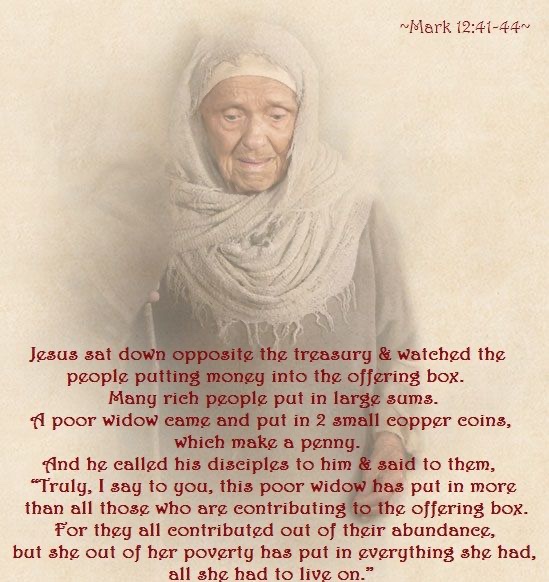
Yet this is not the final word. That final word, before we leave this Gospel for this year, belongs to another scene. A short, succinct, enigmatic scene. A scene in which Jesus utters no words of condemnation; by contrast, he offers affirmation, encouragement, and support for a poor widow (12:41–44).

It is a simple observation, a short reflection; not complex, not confronting, but a gently irenic end to a long sequence of interactions involving Jesus: healings and exorcisms, teaching by speaking sayings and telling stories in parables, engaging in public discussion and debate, as well as times of prayer and rest.

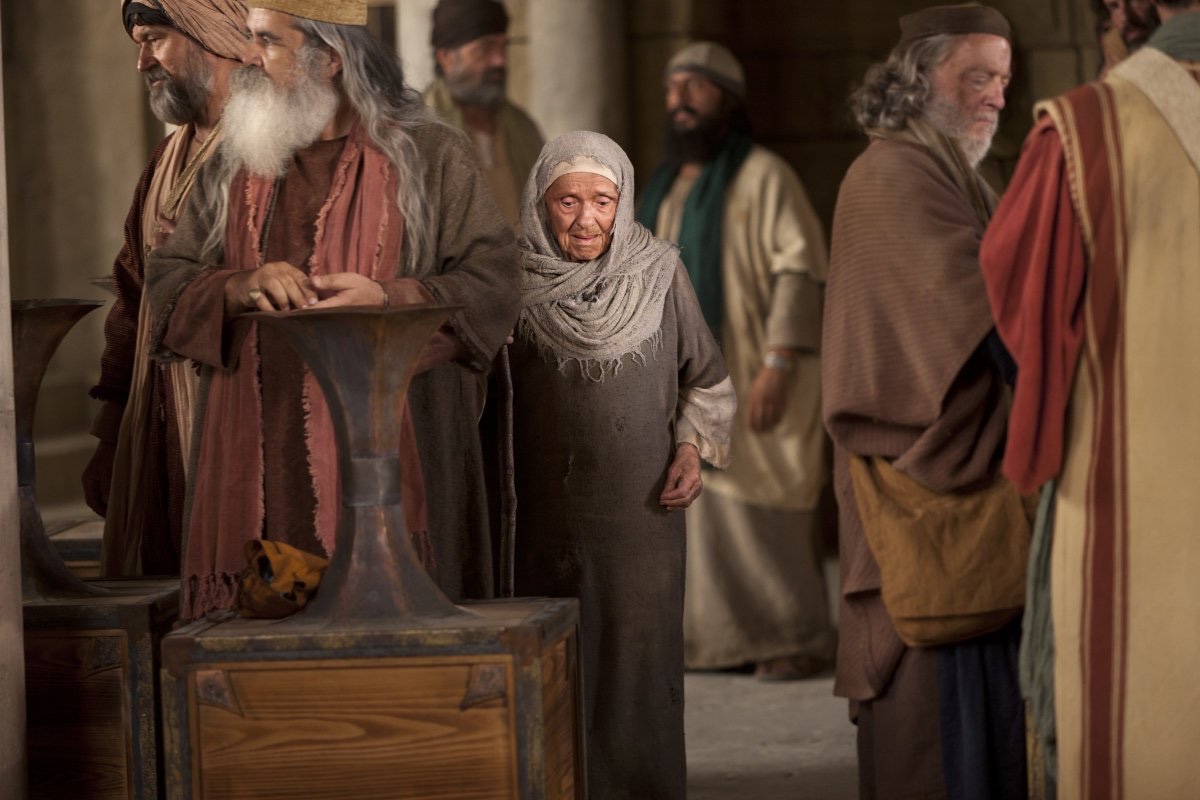
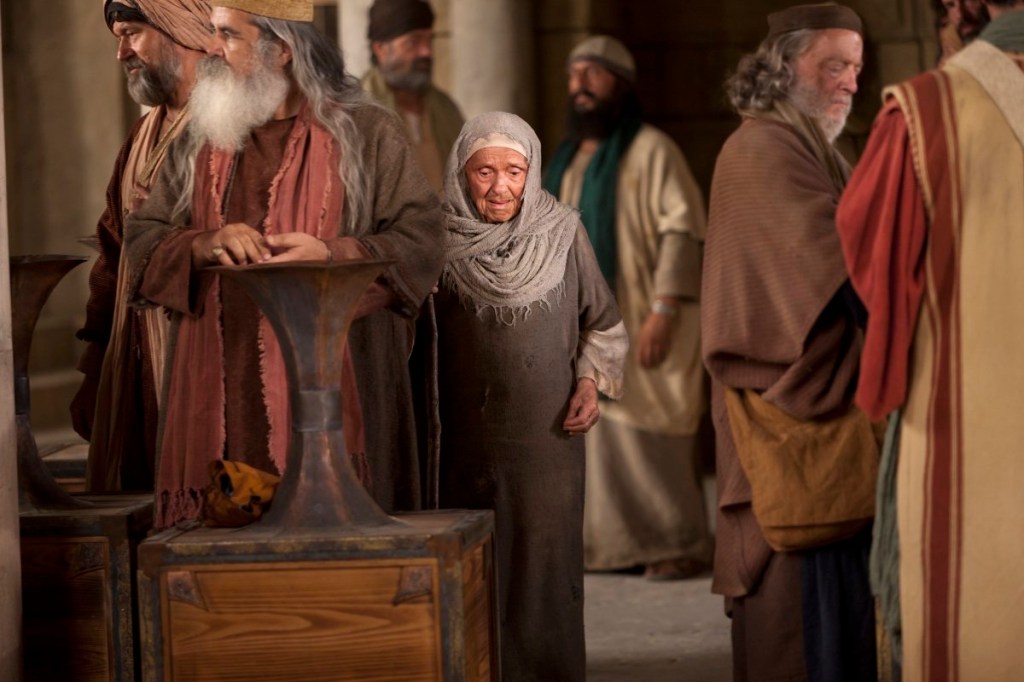
The widow was in the Temple; most likely in the Women’s Court of the Temple, just inside the structure, past the outdoors Court of the Gentiles. The widow was not in the Court of the Priests, where the actual liturgical processes of the Temple took place, for no females were allowed into that space. The “treasury” into which people were placing their money (12:41) refers most likely to the horn-shaped offering boxes in that courtyard.

By highlighting the widow, Jesus refers to the well-established strand within the legal and prophetic and strands of Hebrew Scriptures which underlined the importance of caring for widows, amongst others. According to Torah, the widow and the fatherless child were to included along with the sojourner in celebratory moments in Israel—when tithing (Deut 14:28–29), at the Feast of Weeks (16:9–12) and the Feast of Booths (16:13–15), when gleaning (24:19–22), and when tithing once more (26:12–13).

A widower’s brother was expected to marry a widow (Deut 25:5–10), for it was the duty of a widower’s kin to provide a widow with children if she didn’t have any. If it was not possible for a widow to remarry, it was the duty of the community to care for her (Exod 22:22–23; Deut 10:18; 24:17; Isa 1:17). The men harvesting fields were to leave a portion of the harvest behind to be gleaned and collected by the widows (Deut 24:18–21). Beyond the biblical period, in the Diaspora, a portion of the offering collected in the synagogues was be given to the widows and poor, on the analogy of the gleaning provision whilst living in the land.

The vulnerability of widows and the I,portable of providing for them is evident in many passages in the Hebrew Scriptures. Among the prophets, Isaiah proclaims God’s judgement on those who “turn aside the needy from justice … and rob the poor of my people”, including the way that they exploit the fatherless and widows (Isa 10:1–2).

Likewise, Ezekiel includes those who “have made many widows” in Israel amongst those who will experience the full force of God’s vengeance (Ezek 22, see verse 25). He observes that “the sojourner suffers extortion in your midst; the fatherless and the widow are wronged in you” (Ezek 22:7).

Jeremiah assures the people of Edom, to the south of Israel, of God’s care for them: “leave your fatherless children; I will keep them alive; and let your widows trust in me” (Jer 49:11). He encourages the people of Jerusalem with a promise that God will allow them to continue to dwell in their land if they “do not oppress the sojourner, the fatherless, or the widow, or shed innocent blood in this place … or go after other gods” (Jer 7:5–7).

In a later chapter, Jeremiah is instructed to tell the King of Judah, “do no wrong or violence to the resident alien, the fatherless, and the widow, nor shed innocent blood in this place” (Jer 22:1–3). The prophet Zechariah speaks similarly: “do not oppress the widow, the fatherless, the sojourner, or the poor, and let none of you devise evil against another in your heart” (Zech 7:10).

Accordingly, the people of Israel would regularly have sung, in the words of the psalmist, “the Lord watches over the sojourners; he upholds the widow and the fatherless, but the way of the wicked he brings to ruin” (Ps 146:9). Care for widows was central to the life of holiness required amongst the covenant people. Jesus knows this commitment amongst his people, and holds firm to it.

Here in the Temple, observing the action of the widow, Jesus reinforces this central aspect of covenant life. It has been a strong thread, running through the narrative from earlier chapters. Jesus is calling the people around him to care for the weak and vulnerable among them. He has told his disciples to give up their lives (Mark 8:35) and to welcome children (9:37; 10:14–15).

He instructs men that it is wrong to abandon their wives onto the community to care for (10:5–9) and informs those in power that they ought not to abdicate their responsibility to care for the powerless (10:42–45). He criticises those who distort the functions of the Temple (11:15–17) and advises continuing adherence to the two central commandments of Torah (12:28–31).

Immediately before affirming the action of the widow, he condemns the scribes who seek public honour and yet act to “devour widow’s houses” (12:38–40)—a clear demonstration of the kind of hypocrisy that he previously criticised so vehemently (7:6; 12:5; and see the succinct saying of Matt 7:5 and Luke 6:52, and the long diatribe of Matt 23:13-31). It is a potent counterpoint: glory-seeking scribes and humbly serving widows; the one falling from a great height, the other being raised up in the estimation of Jesus.

In this scene, Jesus condemns those who would tell the weak and vulnerable to pull themselves up by their own boot straps. His words remind those in authority that their power comes with an obligation to use it for good. He provides the widow as a clear example of the kind of care that is needed. It is a message that contemporary society would do well to heed.