The Afterlives of Jesus: historical, interfaith, and cultural perspectives

Jesus has been important ever since his earthly life. Through his teachings, his death, and the experience of resurrection, his early followers recognised his significance. They held together after the crucial events in Jerusalem that brought the earthly life of Jesus to an end. In a sense, Jesus lived on through what they said and did in the ensuing decades … and centuries.

Jesus had a life after his (earthly) life … or, perhaps we might say, Jesus had an afterlife; although, to be more accurate, we might better say, Jesus had many afterlives. In the preaching, serving, writing, singing, drawing, painting, and witness of many later followers of Jesus, he lived on … in ways that each person represented, contextualising Jesus to their own situation, their own experience, their own cultural practices.

So over the centuries there has been Jewish Jesus, Black Jesus, Asian Jesus, African Jesus, White European Jesus, Jesus in song, Jesus in art, Jesus in orthodox doctrine, Jesus in “heretical” understandings, Jesus in Islam, Jesus in Buddhism, Jesus represented and communicated in a myriad of ways.

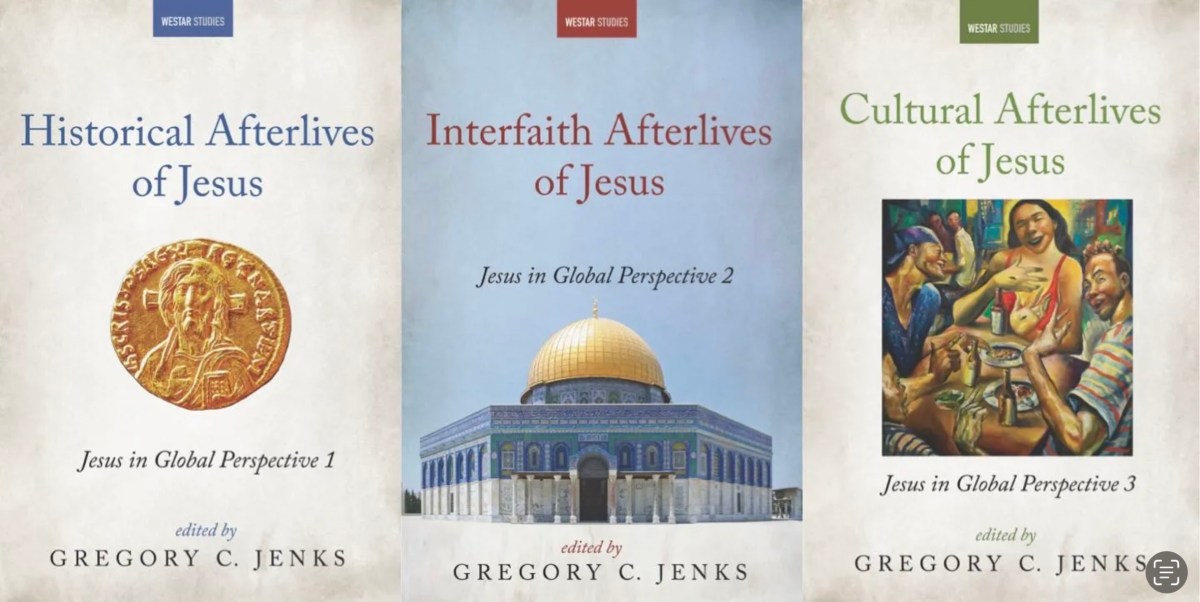
Australian Anglican priest and biblical scholar, Dr Greg Jenks, has been working for some time to collate a collection of writings which explores some of these “afterlives of Jesus”. The result is a set of three volumes, The Afterlives of Jesus, with contributions from a wide variety of people, providing fascinating insights into the way that Jesus has “lived on” through the centuries.

It is a collection of essays which explores the impact of Jesus within and beyond Christianity, including his many afterlives in literature and the arts, social justice, and world religions during the past two thousand years and especially in the present global context.

The first volume, Historical Afterlives, focusses on explicitly Christian afterlives, exploring how scripture passages relating to Jesus have been interpreted, as well as how patristic writers, Byzantine coins, mand contemporary social insights engage with Jesus.

In the second volume, Interfaith Afterlives, the focus is on the diverse ways that Jesus was understood in other faith traditions. Jesus has significant afterlives in Islam, Judaism, Hinduism, Ruism and Mormonism, as well as assorted secular afterlives in progressive Christianity.

In volume three, Cultural Afterlives, a range of writers reflect on how Jesus has been proclaimed, appropriated, and adapted into a range of cultures—Indigenous Australian, Māori, Pacific, and Asian Jesus; the “Jesus of King’s Cross”, Jesus in post-colonial art, in comedic film, in feminist understanding.

The contributors include religion scholars from the respective traditions, as well as faith practitioners reflecting on Jesus within their own religious context. While the essays are all grounded in critical scholarship, reflective practice, or both, they are expressed in nontechnical language that is accessible to interested nonspecialists.

Australian theologian Dr Val Webb says that the work offers “a wonderful sweep of ‘afterlives’ that free Jesus of Nazareth from the confines of Christian orthodoxy, a Jesus who has fed the imagination of people, cultures, and contexts far beyond the streets of Jerusalem and Rome.” Professor Monica Jyotsna Melanchthon, of the University of Divinity, observes that “the rich set of afterlives discussed here provoke conversation in terms of our continued life, faith, and reflection on the Jesus of History and the Christ of faith”.

Professor Arthur Dewey, of Xavier University, rejoices that, in reading these volumes, “we slowly begin to realise that Jesus is no longer embalmed in doctrinal winding sheets; he has slipped ecclesial controls and continues his walkabout on this fragile planet.” He continues, “whether reading the Jesus traditions anew through indigenous eyes or recognizing how the tradition itself emerged within the lethal atmosphere of patriarchy, the authors challenge us to nothing less than a radical revisioning of that elusive and alluring figure, dancing in the unnoticed gaps and crevices of our planet”.

Greg Jenks has done a fine job in commissioning and editing the 33 essays included in these three volumes. The contents of each volume and a link to order The Afterlives of Jesus in hardcopy can be found at https://afterlives.org

The Kingdom: showing the character of Christ—not a culture of celebrity

I recently watched the SBS documentary entitled The Kingdom. The story that was told in this documentary canvassed recent events relating to Hillsong, and included interviews and visits to other Pentecostal churches in both Australia and the United States of America.

The documentary had a clear thread running throughout, of how a person found acceptance and support within the Pentecostal world. Marc Fennell, who narrates the documentary, offers a very personal testimony of his involvement, throughout his childhood, in Hillsong and “a number of other Pentecostal churches”, until the point, 17 years ago, when he decided that this was no longer for him. He left—the first time he set foot back into a Pentecostal church was during the making of this documentary.

The honesty of the personal angst of Fennell runs through the documentary, giving it authenticity and integrity. He was exploring Hillsong from the vantage point of a person who had known very well what the experiences of worship and participation was like. He made it clear how important to him was the support and friendship of people within the churches he attended, especially since his family situation was apparently rather difficult. Fennell was loved and valued by people at Hillsong and other churches—even though, in his innermost being, he was not able to enter into the intense emotional experience of Pentecostal worship.

There are moments of pathos in the documentary, as Fennell offers personal revelations about his own spirituality. He showed great courage in what he decided to say in this very public national forum. (The documentary was broadcast by SBS and remains able to be viewed on SBS On Demand.)

*****

Woven in and through this personal thread is another, more dominant, thread, which becomes the reason for making the documentary. The failures of Hillsong have become known, piece by piece, over the past four years. Like any church—like any organisation run by, and for, human beings—there will always be problems, brought about by the deficiencies of people involved, and in some cases by the deliberate efforts of some to benefit personally. All human organisations are fallible.

In Hillsong’s case, however, those deficiencies were magnified by the way that key leadership operated. A particular culture was created, which exploited people. It is true that many people have been helped by the ministries of Hillsong, to a greater or lesser degree, over the years. Many (myself included) have enjoyed singing and playing some of their better songs. But many also have been hurt and exploited by leaders in Hillsong in that same period. The culture that was created was toxic and abusive for far too many people.

I was waiting, throughout the documentary, to hear how Fennell would describe the culture that was fostered within Hillsong. He touched on a number of bad elements in the way that Hillsong operated. Abuse of volunteers was canvassed early on. The “Prosperity Gospel” push to encourage participants to tithe—and to give beyond that tithing so that it hurt them financially—was examined. Accusations of fraud perpetrated by those with access to the finances of the organisation was discussed, including money laundering and tax evasion.

Eventually, the documentary came to identify the issue that had most strongly been reported by mainstream media: various sexual encounters by people in leadership, and the infidelity of key leaders, both in Sydney and elsewhere around the world. (Hillsong is a “global phenomenon”.) The paedophilic abuse perpetrated by Frank Houston, the founder of Hillsong (in the days when it was known as the Christian Life Centre) was also reported, and there is a court case involving his son, Brian, that is ongoing.

So the documentary gave some hints to what I consider to be the key to all of this: the culture of celebrity which permeated the organisation, from the onstage worship leaders, musicians, and preachers, through the pastoral workers, even to some the financial and administrative workers.

All that the leadership of Hillsong seemed concerned about was to focus on ensuring that “the experience” of Hillsong was fabulous, and that it grew month by month and year by year. Growth in numbers was the key metric, indeed (so it seems) the only metric. The way to ensure that growth was by providing ever-increasing endorphin hits of pleasure. And celebrity was the way to generate enthusiasm and maintain the growth trajectory. So a culture of celebrity was nurtured.

All of this, of course, is contradictory to the Gospel that Jesus preached and lived. He advocated humility; “blessed are the meek, for they shall inherit the earth”, not “build up your leaders to be seen as grand and exciting figures”. He instructed people not to store up wealth on earth; “sell all that you own and distribute the money to the poor”, not “call for tithes and more to fund an increasingly extravagant lifestyle of the leaders”.

Jesus encouraged his disciples by saying “whoever welcomes a child in my name welcomes me”, not “see children as potential targets for grooming and sexual abuse”. This is the character of Christ that we know from the Gospels. This is the culture that churches should seek to emulate.

*****

The documentary is being widely applauded as being “a pretty fair treatment”, as “balanced” in how it reports on Hillsong. I have seen it described as “thoughtful”, which it was; as “honest”, which I agree it was. But my sense is that it lacks a critical lense on the whole phenomenon, from the point of view of faith (and by this, I mean faith as Jesus taught and lived it, not how Hillsong portrayed it).

A critical theological assessment is really needed—and Marc Fennell is not able to provide this, because he is explicitly NOT a believer and certainly does not have theological training.

So my sense is that the title, The Kingdom, invites people of faith to reflect further. Whose Kingdom? Fennell posed this question in terms of “who inherits the Hillsong mantle?” What Pentecostal churches are manoeuvring to fill the gap that is opening up, as people leave Hillsong? Whilst that’s a worthwhile question to explore, that’s not what The Kingdom implies to me.

The Kingdom was what Jesus proclaimed. The Kingdom was what he taught in his parables. The Kingdom coming near was the message that he gave to his disciples, for them to spread far and wide. And what was that Kingdom? A realm in which God’s compassion and justice would be known and experienced and lived.

In this realm, outsiders are to be welcomed—children, those marginalised, those challenged by life, and people identifying somewhere within the LGBTIQA+ spectrum, and placed them at the centre. A place and a time where relationships would be genuine, empathic, and nourishing. A place and a time marked by the characteristics of Christ.

It’s in relation to this final observation that I have one more comment. Nothing in the documentary indicated the discriminatory way that Hillsong has dealt with LGBTIQA+ people. There have been high profile instances of such people being removed from leadership positions. The church is not “gay-friendly”. I can only presume that there are other instances of discriminatory behaviour directed towards LGBTIQA+ people which have not received publicity. Omitting mention of this is a deficiency in how Hillsong was presented in the documentary.

All in all, I join my voice with others who have said, about the documentary, The Kingdom: yes, watch this. It is worth devoting time to see it. But watch it with critical eyes. Watch it with the knowledge of who God is, how Jesus speaks about God, and what God’s Kingdom is like.

Watch it, and weep. Weep for those abused and ostracised. Weep for those conned by the culture of celebrity. Weep for those struggling to rebuild lives and faith after traumatic experiences. Watch it with eyes wide open, hearts reaching out, and faith in the Kingdom into which Jesus invites us all to share. For this Kingdom will exude the character of Christ.

We have obtained access to this grace (Romans 5, Pentecost 3A)

During Lent we heard a key passage from Romans, much of which is offered again as the Epistle reading for this coming Sunday. It is a passage replete with fundamental theological affirmations (Rom 5:1–11, Lent 3A; Rom 5:1–8, Pentecost 3A). In an earlier blog, we explored two of the key elements that Paul sets out in this passage: being made righteous by faith, a central affirmation for the apostle; and being at peace with God.

In this post, as we revisit this passage for the Third Sunday after Pentecost, we look at other theological aspects of Paul’s writing. Paul writes this letter to a group of faith communities which include both Jews and Gentiles; this is a fundamental commitment in his theology and practice (Rom 3:29; 4:11–12; 9:22–24; 11:11–14; 15:7–13) and the list of names in 16:3–16 indicate that people of both Jewish and Gentile origins were present. Nevertheless, the theological commitments that Paul articulates here have strong Jewish origins.

Access to God’s grace (v.2) is a fundamental element in Paul’s affirmation in Rom 5:1–11, as well as in his whole body of writings. (I am here canvassing just the seven letters generally accepted as authentic to Paul.) God’s grace is what gripped Paul, calling him to his work as apostle, preaching the Gospel, establishing new communities of faith, and nurturing them as new disciples.

It is through Jesus, says Paul, that “we have received grace and apostleship to bring about the obedience of faith among all the Gentiles for the sake of his name” (Rom 1:5; 1 Cor 3:10; 15:10; 2 Cor 1:12; Gal 1:15). That grace is evident in the lives of believers in Corinth (1 Cor 1:4) and Philippi (Phil 1:7); by contrast, the Galatians, in Paul’s eyes, “are so quickly deserting the one who called you in the grace of Christ and are turning to a different gospels (Gal 1:6).

Paul is drawing on his Jewish heritage and the understanding of God in Hebrew Scripture. God’s graciousness was repeatedly offered to the people of Israel (Exod 34:6; Num 6:25; 1 Sam 1:22; 2 Ki 13:23; 2 Chron 30:9; Ezra 7:9; 8:18, 22; Neh 2:8, 18; 9:17, 31).

Prophets declared that God yearned to be gracious (Isa 30:18–19; 63:7; Joel 2:13; Amos 5:15; Jonah 4:2; Zech 1:13), as do the psalmists (Ps 86:15; 103:8; 111:4; 116:5; 135:3; 145:8, 13;147:1). The prophets therefore implore the Lord to manifest that grace (Isa 33:2; Mal 1:9), as do the psalmists (Ps 4:1; 6:2; 9:13;25:16; 26:11; 27:7; 30:10; 31:9; 41:4, 10; 56:1; 67:1; 86:3, 16; 119:58, 132). Grace is a fundamental scriptural concept, integral to the nature of God.

*****

Sharing in the glory of God (v.2) follows; in this regard, Paul also draws from his Jewish heritage. The glory of God is present in the stories that recount the formation of Israel, through the years in the wilderness (Exod 16:6–10; Num 14:22), on Mount Sinai (Exod 24:16–17; Deut 5:22–24), in the Tabernacle (Exod 40:34–35; Lev 9:23; Num 14:10; 16:19, 42; 20:16), and in the temple (1 Ki 8:1–11; 2 Chron 7:1–4).

The psalmists reinforce the notion that the glory resides in the sanctuary (Ps 26:8; 63:2; 102:16; Hag 2:3) and in the land of Israel (Ps 85:9). In some psalms the realm of God’s glory is extended to be “over the waters” (Ps 29:1–4), “over all the earth” (Ps 57:5; 72:19; 97:6; 102:15; 108:5; also Isa 6:3; 24:15–16; 60:1–2; Hab 2:14) and even to “the heavens” (Ps 19:1; 113:4; 148:13; and Hab 3:3).

The concept of God’s glory plays an important role in Paul’s argument in Romans. “All have sinned and fallen short of the glory of God”, Paul brazenly declares (Rom 3:23); some who claim to know God “exchanged the glory of the immortal God for images resembling a mortal human being” (1:23), in contrast to “those who by patiently doing good seek for glory and honour”, to whom “glory and honour and peace” will be given (2:7, 10).

To Abraham, who “grew strong in his faith as he gave glory to God”, his faith would be “reckoned as righteousness” (4:20–22). In God’s time, “the freedom of the glory of the children of God” will given to the creation (8:21). Within the communities of faith in Rome, the imperative of “welcoming one another” is to be done “for the glory of God” (15:7). This glory is God’s gift to people of faith, and indeed to the whole creation.

*****

The next important theological claim, the connection of sufferings and endurance with hope (vv.3–5), is a link that is made elsewhere in Paul’s writings. Paul itemises the sufferings that he has experienced throughout his ministry (2 Cor 6:3–10; 11:24–29; see also 1 Cor 4:9–13; 15:30–32; 2 Cor 12:10; Phil 4:12; 1 Thess 2:2)—all of which fulfils the second element of the call which Luke claims that Paul received from God, “I myself will show him how much he must suffer for the sake of my name” (Acts 9:16).

The hope in God that Paul holds fast throughout those sufferings is also quite clearly expressed (Rom 8:22–25; and especially in 2 Cor 1:3–11). “Rejoice in hope, be patient in suffering”, he advises the Romans (12:12), and he informs them that “whatever was written in former days was written for our instruction, so that by steadfastness and by the encouragement of the scriptures we might have hope” (15:4).

Indeed, the long saga of Israel told in those writings is a story of hoping in the face of sufferings: hoping for the promise declared to Abraham, hoping for liberation whilst in the oppressive conditions of Egypt, hoping to reach the promised land throughout the years of wilderness wandering; and then, centuries later, hoping for release from the second captivity of Exile, and hoping for the restoration and rebuilding of city and land to last long into the future.

Just as story of Israel can be told in terms of hope, so faithful people through the ages sang of hoping in the steadfast love of the Lord (Ps 33:18; 147:11), in the ordinances of the Lord (Ps 119:43) and the word of the Lord (Ps 119:81, 114, 147; 130:5). The invocation to “hope in God” is a regular refrain in the psalms (Ps 42:5, 11; 43:5; 130:7; 131:3). “Happy are those whose help is the God of Jacob, whose hope is in the Lord their God”, says one psalmist (Ps 146:5); another sings “God of our salvation, you are the hope of all the ends of the earth and of the farthest seas” (Ps 65:5).

*****

After grace, glory, and hope, Paul next refers to the gift of the Holy Spirit (v.5), the means by which “God’s live has been poured into our hearts”. In his first letter to Corinth, the activity of the Spirit is a central focus (1 Cor 2:9–16; 3:16; 6:19;12:3–11) and is especially in view in the manifestation of spiritual gifts within the community (1 Cor 14:1–40).

To the Romans, Paul explains that it was “the spirit of holiness” who raised Jesus from death (Rom 1:4) and who now “dwells in you” (Rom 8:11), helping believers “in our weakness” and enabling them to “pray as we ought” (Rom 8:26). He exhorts them to “be ardent in spirit, serve the Lord” (Rom 12:11), to “abound in hope by the power of the Holy Spirit” (Rom 15:13), and “by the love of the Spirit, join me in earnest prayer to God on my behalf” (Rom 15:30).

The Spirit was active throughout Hebrew Scripture. Ezra recalls that “you gave your good spirit to instruct them, and did not withhold your manna from their mouths, and gave them water for their thirst” (Neh 9:20–22). It was the work of the Spirit to release the captives from Egypt, lead them through the challenges of the wilderness, and then bring them into the promised land..

The Spirit which had guided Moses and was then gifted to chosen elders (Num 11:16–25) was subsequently imparted to Joshua (Num 27:18; Deut 34:9) and then to a string of Judges: Othniel (Judg 3:10), Gideon (6:34), Jephthah (11:29), and Samson (13:24–25; 14:6,19; 15:14). Each of these men led their people through dangerous, challenging, and turbulent experiences, as they sought to impose Israelite domination on the peoples already living in Canaan.

And in Exile, as they reflected on the whole sweep of the story of Israel and placed it into a grand cosmic context, the priests gave the Spirit pride of place in their account of creation: “the earth was a formless void and darkness covered the face of the deep, while a wind [or a spirit] from God swept over the face of the waters” (Gen 1:2). The Spirit is present and active in the pages of Hebrew Scripture!

*****

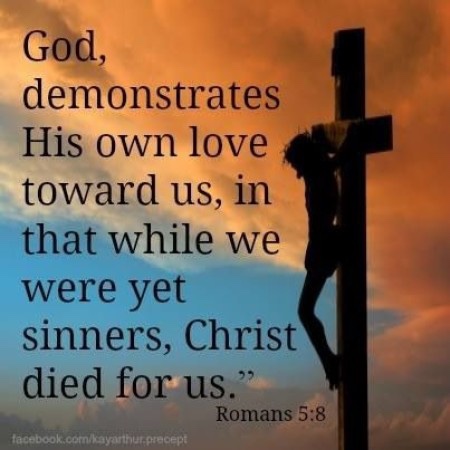
In the following verses, Paul offers a clear salvific interpretation of the death of Jesus when he declares that “Christ died for the ungodly” (v.6), that “while we were still sinners, Christ died for us” (v.8). This is another central element in the theological structure that Paul, throughout his letters, demonstrates. And it, to, can best be understood in the light of the development of thinking throughout the story of Israel.

What follows are two striking affirmations about Jesus. The first is that “we have been justified by his blood” (v.9). This appears to have been an early credal-like claim within the early Christian movement; it appears in various forms at Acts 20:28; Rom 3:25; Eph 1:7; 2:13; Col 1:20; Heb 9:14; 10:19; 12:24; 13:12, 20; 1 Pet 1:2, 19; 1 John 1:7; Rev 1:5; 5:9;12:11.

The claim made depends on ancient Hebraic understandings of life and the role that blood plays in that. “You shall not eat flesh with its life, that is, its blood”, Noah is commanded (Gen 9:4); “the life of the flesh is in the blood”, the Lord declares to Moses (Lev 17:11). This understanding undergirds the whole sacrificial system; when sacrifices are made, blood must be shed, for “I have given it to you for making atonement for your lives on the altar; for, as life, it is the blood that makes atonement” (Lev 17:11; also Deut 12:23). Thus, a much later priestly writer is able to claim, “under the law almost everything is purified with blood, and without the shedding of blood there is no forgiveness of sins” (Heb 9:22).

Paul then follows with the assertion that, through the shedding of this blood and the death which ensues, “we will be saved through him from the wrath of God” (v.9). This particular claim brings us to what is seen by many as the most difficult aspect of Christian belief; the heart of the doctrine of the Atonement is based on the premise of endemic human sinfulness which merits the unrelenting wrath of God as punishment. I’ve addressed the difficulties in this view of the human being at

Paul is well aware of the place that “the wrath of God” had in what the prophets spoke about (Isa 1:24; 13:9, 13; 51:17; 63:1–6; Jer 7:20; 18:3–7; 25:15; 32:30–41;42:18–19; 44:6; 50:25; Ezek 7:5–12; 8:18; 13:13–16; 20:8–32; 22:20–22; 36:18; 38:18–19; Dan 8:19; 11:36; Hos 5:10; Amos 1:11–12; Micah 5:10–15; Nah 1:6; Zeph 1:15–18; 2:1–3; Zech 7:12; 8:14). As Nahum succinctly declares,”a jealous and avenging God is the Lord, the Lord is avenging and wrathful” (Nah 1:2).

His argument in his letter to the Romans is premised on the need to find a way to deal with God’s wrath, which is “revealed from heaven against all ungodliness and wickedness” (Rom 1:18). On “the day of wrath … God’s righteous judgement will be revealed” (2:5), such that “for those who are self-seeking and who obey not the truth but wickedness, there will be wrath and fury” (2:8).

Paul asserts that it is not unjust for God to inflict wrath on us (3:5), and so the remedy that he proposes is that God “put forward [Jesus] as a sacrifice of atonement by his blood, effective through faith … to show his righteousness” (3:25). Jesus is the central means by which human sin is dealt with; this is a repeated motif in Paul’s letters, for in five of his seven letters he asserts that “Christ died for us” (Rom 5:6,8; 14:15; 1 Cor 8:11, 15:3; 2 Cor 5:14–15; Gal 2:21; and 1 Thess 5:10). This claim is reminiscent of Jesus’ saying that “the Son of Man came not to be served but to serve, and to give his life a ransom for many” (Mark 10:45).

Certainly, atoning for sin is a central ritual in the Torah (Exod 30:10 and the details set out in Lev 1, 4–5). Thus, “the blood of the covenant” sealed under Moses (Exod 24:8; Heb 9:20) is renewed through Jesus (Mark 14:24; Matt 26:28; Heb 7:22; 8:6–13; 9:15–17; 10:12–17;12:24). Paul is adopting, extending, and reinterpreting this language in the way that he explains the significance of the death of Jesus.

See more at

*****

Throughout the compressed argument of this very rich section, Paul uses multiple images to interpret the significance of the death of Jesus. The final image is reconciliation, drawn from interpersonal relationships: “having been reconciled, we will be saved by his life” (v.10), and that it is “through our Lord Jesus Christ [that] we have now received reconciliation” (v.11).

Reconciliation is to the fore in part of what we know as Paul’s second letter to the Corinthians. It was actually his fourth letter; 1 Cor 5:9 indicates a letter was sent prior to 1 Cor itself, while 2 Cor 2:3–4 and 7:8 indicate a further “painful letter” was sent in between the letters we know as 1 Cor and 2 Cor. He has obviously had a fractious relationship with the believers in Corinth; much of the first long section of this (fourth) letter to them is seeking to repair relationships.

In encouraging the believers in Corinth in the midst of their distress (2 Cor 1:6–7), Paul writes about being “treasure in clay jars” (4:7), not losing heart (4:16), and walking by faith, not sight (5:7). In this context, he sets out a detailed exposition of “the ministry of reconciliation” (5:11–21). What he offers the Corinthians is “the message of reconciliation” (5:19), that they should “be reconciled to God” (5:20), to “become the righteousness of God” (5:21).

This motif of reconciliation is taken up in later letters written by students of Paul. One, writing to “the saints and faithful brothers and sisters in Christ in Colossae”, declares that in Christ, “all the fullness of God was pleased to dwell”, and affirming that “through him God was pleased to reconcile to himself all things, whether on earth or in heaven, by making peace through the blood of his cross” (Col 1:19–20). The reconciliation effected by Jesus, in this view, had a cosmic scope and impact.

Another student, in creating a letter which most likely was originally a circular letter to a number of churches, took this motif as the key to understanding how Jews and Gentiles were both to be included within the people of God. (We know this letter, because of a textual variant in the opening verses, as Ephesians.)

Writing with Gentiles in mind, the author of this letter declares that “now in Christ Jesus you who once were far off have been brought near by the blood of Christ” (Eph 2:13). Accordingly, Christ “is our peace; in his flesh he has made both groups into one and has broken down the dividing wall, that is, the hostility between us” (2:14).

The writer declares that Jesus abolished the law (a statement that goes beyond what Paul ever wrote), “that he might create in himself one new humanity in place of the two, thus making peace, and might reconcile both groups to God in one body through the cross, thus putting to death that hostility through it” (2:15–16). Reconciliation, manifested in social relationships, is the central feature of the church. This is a clear and pertinent application of the view that Paul had expressed in Rom 5:10–11 and 2 Cor 5:11–21.

What a rich passage!

“Go nowhere among the Gentiles” (Matt 10:5): the mission of Jesus in the book of origins (Pentecost 3A)

Jesus had a mission to the Gentiles. The mission to the Gentiles was “the fundamental missionary dimension of Jesus’ earthly ministry”—so wrote the guru of modern missiological studies, David Bosch (Transforming Mission, p. 30). And thus, every theology of mission since that paradigm-shifting work of 1991 has echoed this claim as a given fact.

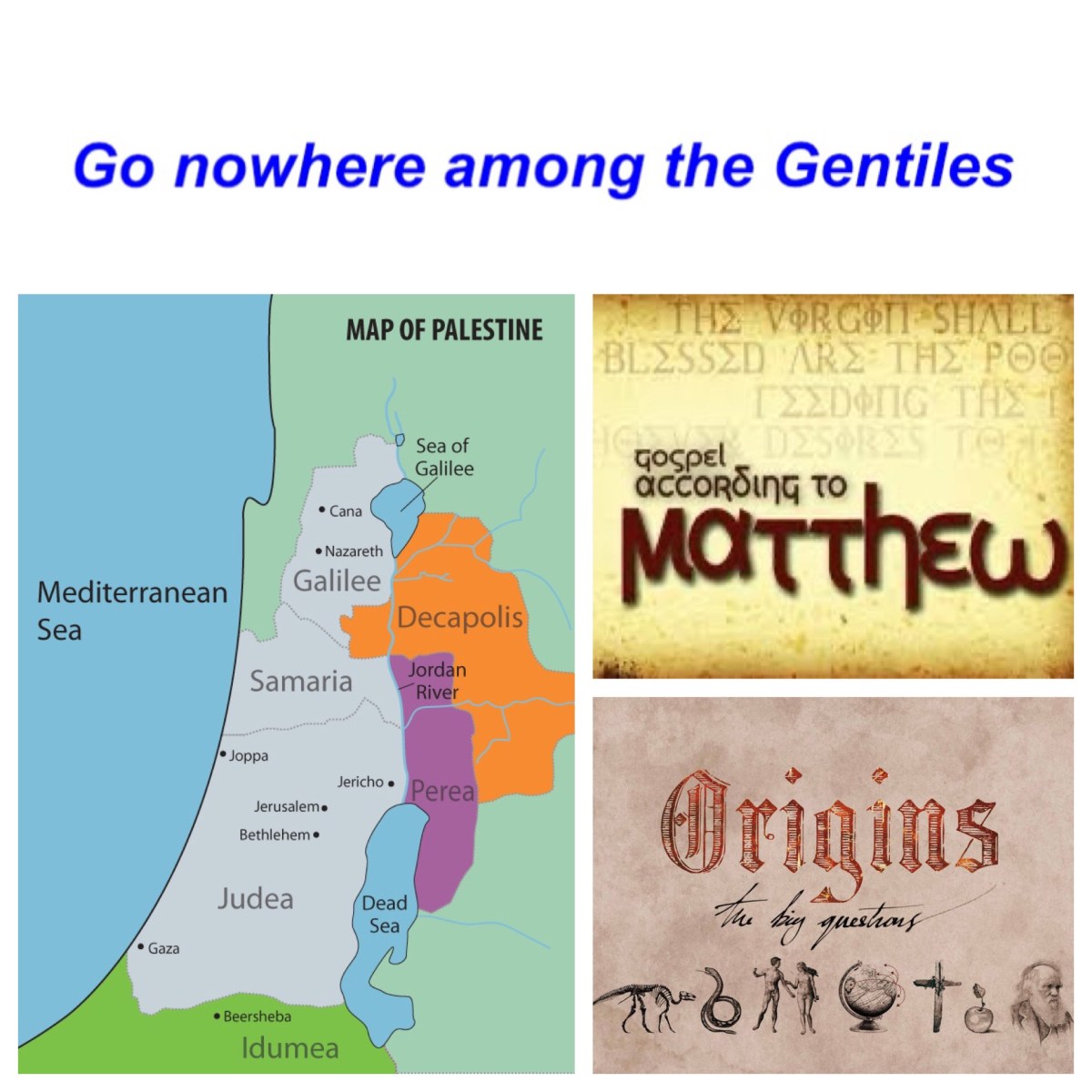
But when we turn to this week’s Gospel passage, we read that Jesus instructed his followers: “Go nowhere among the Gentiles, and enter no town of the Samaritans, but go rather to the lost sheep of the house of Israel” (Matt 10:5-6). What is going on?

This is a very distinctive claim to make. Other New Testament books have a different take—Jesus did engage with Gentiles, even with Samaritans, and did encourage a mission to the wider Gentile world. And plenty of New Testament texts can be pulled out to support this claim.

In Mark’s Gospel, in the story of the Gadarene demoniac (Mark 5:14–21), the healed man begs to be taken with Jesus. Jesus tells him to go home, and spread the story of the Lord’s mercy. This he does throughout the Decapolis—which was Gentile territory! The first evangelist, according to Mark, was a missionary to the Gentiles.

The Matthean Jesus, unlike the Lukan Jesus, never goes near Samaria (Luke 17:11–19), nor does he speak favourably about Samaritans, as he does in Luke (10:25–37), prefiguring the Lukan mission to Samaria (Acts 1:8; 8:4–25).

And in John’s Gospel, the first person who tells many others about Jesus is a woman whom Jesus meets when he is travelling through Samaria (John 4:5–26). After her discussion with Jesus, “the woman left her water jar and went back to the city, and said to the people, ‘Come and see a man who told me everything …he cannot be the Messiah, can he?’” (John 4:28–29). As a result of what she says, “many Samaritans in that city believed in him” (John 4:39); the first evangelist in John’s narrative is a Samaritan wo

Not in Matthew’s Gospel, however. Jesus does not go amongst Gentiles. Or Samaritans. Just as the disciples of Jesus are entirely drawn from Jewish people in Matthew’s Gospel, so also Matthew makes it very clear that Jesus’ mission is “only to the lost sheep of Israel”—that is, exclusively to the Jewish people.

My wife Elizabeth and I have had many conversations about this aspect of the Gospel according to Matthew. She has undertaken thorough research into the Jewish nature of this Gospel, and especially on how Jesus related to Gentiles. What follows is drawn from our conversations and particularly from the research of Elizabeth, as we have written this material together.

*****

The section of the book of origins that we are offered as the Gospel reading this coming Sunday (Matt 9:35–10:8) ought to be familiar. The first verse (9:35) is an almost-exact repeat of an earlier verse (4:23). The same three activities of Jesus are noted—teaching, proclaiming the good news, and curing disease. The earlier verse introduced the activity of Jesus in Galilee; this later version broadens the area where Jesus was active to “all the cities and villages”.

However, Jesus is still in Jewish territory; he had returned “to his home town” earlier (9:1) and emphasises that his followers are not to go into Gentile territory (10:5)—an instruction which he presumably maintains himself, for he tells them “go rather to the lost sheep of the house of Israel” (10:6) and later affirms that “I was sent only to the lost sheep of the house of Israel” (15:24).

This neat repetition of the whole verse that provides an inclusio—a literary device which bundles together all the material in between the two occurrences of the same sentence. The extended set of teachings that Jesus gave (5:—7:29), as well as the healings (8:1–17; 8:28–9:8; 9:18–34) are collated into a broader and comprehensive introduction to the mission of Jesus, which, as he indicates soon after, is to the Jews only (10:5).

Also included in this section is the call of Matthew (9:9), to match the earlier call of the first four disciples (4:18–22), and the warnings that Jesus issues about the difficulty of following him (8:18–21), which is followed by Jesus stilling the storm (8:22–27), which climaxes in the key question, posed by the disciples, “What sort of man is this, that even the winds and the sea obey him?” (8:27; the allusion is to a psalm praising the Lord that, amongst other things, “you silence the roaring of the seas, the roaring of their waves, the tumult of the peoples” (Ps 65:7).

Matthew finds a report of the mission of the twelve in one of his sources, the Gospel we attribute to Mark (Mark 6:8–11). The statement about going “only to the lost sheep of Israel” (10:5–6), in the mission directives to the twelve disciples, is clearly an addition to the original Markan passage. In this distinctive Matthean statement, Jesus directs that Gentile (and Samaritan) towns are to be avoided.

There is, as we have noted, a second statement to this effect in this Gospel, when Jesus encounters a Gentile woman on the northern borders of Galilee. This also is a clear redactional addition to an account already found in Mark (Mark 7:24–30). In Matthew’s version, he declares, “I was sent only to the lost sheep of the house of Israel” (Matt 15:24). There is nothing of this in Mark’s report of this encounter.

A third Matthean statement about mission, the “Great Commission” (28:16–20), is completely different, as the disciples are commanded to go out and actively “make disciples of all nations”. This command correlates with nothing at all in the body of the Gospel, during the earthly period of Jesus’ life. The mission to the Gentiles is an entirely post-resurrection phenomenon.

So the two major statements of mission to Israel in this Gospel, as well as other accounts of the activities and ministry of Jesus, contain a number of significant differences to that of Mark and Luke. The ministry of both Jesus and the disciples is geographically quite limited in Matthew’s account.

*****

Jesus rarely sets foot on any Gentile soil in this Gospel. In Matt 15:29–31, there is no tour through Sidon and the Decapolis as is reported in Mark (Mark 7:31–37), and no missionary activity undertaken by the demoniac after the demons have been exorcised from him (Mark 5:1–20; compare Matt 8:28–34).

The Matthean Jesus never goes near Samaria (contrast with Luke 17:11–19 and John 4:1– 42), nor does he speak favourably about Samaritans, as he does in Luke (Luke 10:25–37), prefiguring the Lukan mission to Samaria (Acts 1:8; 8:5-25). The activities of Jesus and the disciples are concentrated in the Galilean area, and on the Jewish people.

In Matthew‘s account, there are no Gentiles who are intentionally sought out by either Jesus or the disciples. Rather, there are just a select number of Gentiles who seek out Jesus. They come to him; he does not approach them or seek them out. (I am indebted to Elizabeth for this striking observation.) In two instances, it is their faith which includes them in the kingdom of God (the centurion in Capernaum, 8:10, 13; the Canaanite woman in Tyre and Sidon, 15:28).

Ultimately, Jesus says to the Jews, “the kingdom of God will be taken away from you and given to a people that produces the fruits of the kingdom” (21:43). He is not here saying that the kingdom will be opened to the Gentiles per se; his words are directed towards the chief priests and Pharisees (as 21:45 indicates).

It is those Jews who “produce the fruits of the kingdom” who will be given entry to the kingdom. Those who do “produce the fruits of the kingdom” include those normally considered as “unclean” by the Pharisees, and therefore outcasts or rejects from Judaism (9:10–13; 21:31, 32).

Jesus’ discourses and acts of healing, in general, involve only Jews. His contact with Gentiles, when it occurs in the Gospel, is always highly significant, and designed to illuminate some aspect of Jesus’ teaching or person regarding authority, inheritance of the kingdom, discipleship or messiahship.

It is noteworthy that those occasions when a person is asked whether they have faith before Jesus will heal them, are only when Gentiles are involved. Jesus readily heals Jewish people without requesting a prior faith statement (4:24; 8:3; 8:15; 12:13; 12:22; 14:36; 15:31; 21:14).

*****

More recent Matthean scholarship has recognised the Jewish character of this Gospel, and a consensus is emerging that this work was most likely written for a community that was still immersed within its Jewish tradition. It appears that members of this community had been ostracised and persecuted by other Jews (including their families) who did not believe Jesus to be the Messiah. They did not withdraw voluntarily from their local synagogues, but still operated as a group under Jewish authority (10:17; 23:34).

This community is still directly under Jewish law; the clear words of Jesus that are remembered and repeated are “the scribes and the Pharisees sit on Moses’ seat; therefore, do whatever they teach you and follow it” (23:1-3). That law is not to be abolished, but fulfilled (5:17); it remains “until all is accomplished” (5:18).

In the teachings of Jesus which are recalled in this community, their faithfulness in the midst of persecution is valued (5:10–12); they report that Jesus identifies this persecution as taking place “on my account” (5:11; see also 10:18, 39; 16:25; 19:29). Thus the difference between this community and many other Jews of the time was the belief that Jesus was the promised Messiah.

Judaism was in a state of flux in the middle to late decades of the first century. The pivotal moment looks, from the benefit of hindsight, to have been the a Jewish-Roman War of 66-74 CE, and particularly the destruction of the Jerusalem Temple which took place in 70 CE, in the middle of this war.

Things were different after the Temple was rendered unusable. That is often taken as a marker for understanding events in the period of the New Testament, certainly, it is a key marker for understanding the major shifts that took place within Judaism—with no Temple in place, the importance of synagogues as gathering places in towns and cities across Israel (and beyond) grew.

What little evidence we do have from this general period indicates that there were a number of sectarian groups within Judaism, which were contesting with each other for recognition and influence. During this period, the Pharisees were becoming increasingly important as an alternative to the Temple cult, and emerging as the dominant Jewish religious movement. Their power base was moved from Jerusalem and spread throughout the area. They were well-placed to take advantage, as it were, of the situation when the Temple no longer served as a focal point for Jews.

Nevertheless, many Jews, particularly in the Diaspora, were not yet “Pharisaic”—they did not see their faith in the same way as the Pharisees. There were many disputes amongst Jewish communities as to the correct way of seeing things, and some of these disputes were quite bitter.

Many groups claimed to be the ‘true Israel’ as distinct from other groups, who were false leaders and teachers, and who failed to follow the Law correctly. The Law became the most accessible means of revealing God’s will for Israel after the destruction of the Temple, and most of these groups focused on what they believed to be the true interpretation and application of it.

The synagogues were the places where the Law was studied and discussed, where it was preached and understood. The synagogue was where the scribes and Pharisees most naturally operated. The Pharisees thus grew in significance over time. They had established synagogues decades before Jesus was born. After 70 CE, synagogues became the key gathering place for Jews, both within Israel, and across the Dispersion.

*****

Matthew’s Gospel reflects one such debate, between the authorities in the synagogues and the followers of Jesus. Biblical scholars suggest that this Gospel should be read alongside of other literature from after the time of the destruction of the Temple—books such as 2 Baruch, 4 Ezra, and the Psalms of Solomon. This literature is trying to envisage what Judaism should be like in the aftermath of the destruction of the Temple. Understanding and living by the Law is central in each of these documents.

Thus, although Matthew’s Gospel has been seen to have played an important role in the formation of early Christian theology, a more natural interpretation is to locate this Gospel within the first century Jewish debates about how the Law is best to be understood and applied.

These debates took on even more intensity after 70 CE. The survival of Judaism without the Temple depended on the faithful practice of the Law: all of its commandments and instructions. The polemic in Jesus’ debates with the Pharisees, and the warnings that are uttered to Israel, show that Matthew still had hope that his ideas would become normative for all Jewish people.

If the author of this Gospel knew anything about what was happening elsewhere, he would have known about the gathering strength of the movement led by Saul of Tarsus, for whom strict obedience to Torah was of less importance than belief in Jesus as Messiah.

This arm of the movement was opening a door wide for Gentiles, who did not follow the Torah, to belong to such communities. This had been underway since the 50s. It had gained momentum by the late 60s and would become the dominant form of Christianity later in the second century.

It was perhaps with this awareness that Matthew’s Gospel was created—to insist on the centrality and priority of the traditional teaching of Jesus, the Torah-observant Jew, whom God had chosen as the anointed one. And the picture that he offers of Jesus is a resolutely Jewish one. Remembering that Jesus said “Go nowhere among the Gentiles” (10:5) makes perfect sense in this context.

(In fact, I think that this Gospel might more accurately reflect the activity of the historical Jesus during his earthly activities—he was a faithful Jew who observed Torah and advocated for his particular interpretation of how the commandments were to be kept. Staying away from Gentiles and Samaritans would be a perfectly respectable course of action for such a person.)

So, in reporting the words of Jesus about mission, and in insisting on the thoroughly Jewish nature of this movement, this really is “the book of origins”. This is how I translate the opening phrase (1:1). Usually this phrase is related to the story that follows, about the origins of Jesus (1:1–2:23). And that makes sense.

In a broader sense, however, the author of the book of origins is making a pitch about the true nature of the movement that was formed by Jesus.

Jesus instigated a prophetic movement to renew the people of Israel, to recall them to the prophetic heart of their traditions and restore the sense of righteous-justice that was fundamental to his understanding of Judaism. That is the real story of our origins, the author of this book is declaring.

******

This blog draws on material in MESSIAH, MOUNTAINS, AND MISSION: an exploration of the Gospel for Year A, by Elizabeth Raine and John Squires (self-published 2012)

See also

https://johntsquires.com/2019/11/28/leaving-luke-meeting-matthew/

https://johntsquires.com/2020/02/13/you-have-heard-it-said-but-i-say-to-you-matt-5/

https://johntsquires.com/2020/02/06/an-excess-of-righteous-justice-matt-5/

https://johntsquires.com/2020/01/30/blessed-are-you-the-beatitudes-of-matthew-5/

Visiting Abraham and Sarah by the oaks at Mamre (Gen 18; Pentecost 3A)

During the long season of “ordinary time” After Pentecost, the lectionary offers stories of some quite extraordinary people, drawn from the sagas that tell of the key moments in the story of Israel. These sagas are found in the narrative books, Genesis, Exodus, Deuteronomy, Joshua, and Judges. These stories run through until the Twenty-Fifth Sunday after Pentecost, in mid-November.

This coming Sunday, we hear a well-known story relating to the patriarch and matriarch whose adventures comprises significant part of Genesis (12:1—25:11). The story tells of how Abraham and Sarah undertook the long journey from Ur to Canaan (12:1–9), spent time in Egypt (12:10–20) and the Negeb (13:1–14:24), entered into covenant with God (15:1–21) and sealed this with a ceremony of circumcision (17:1–27).

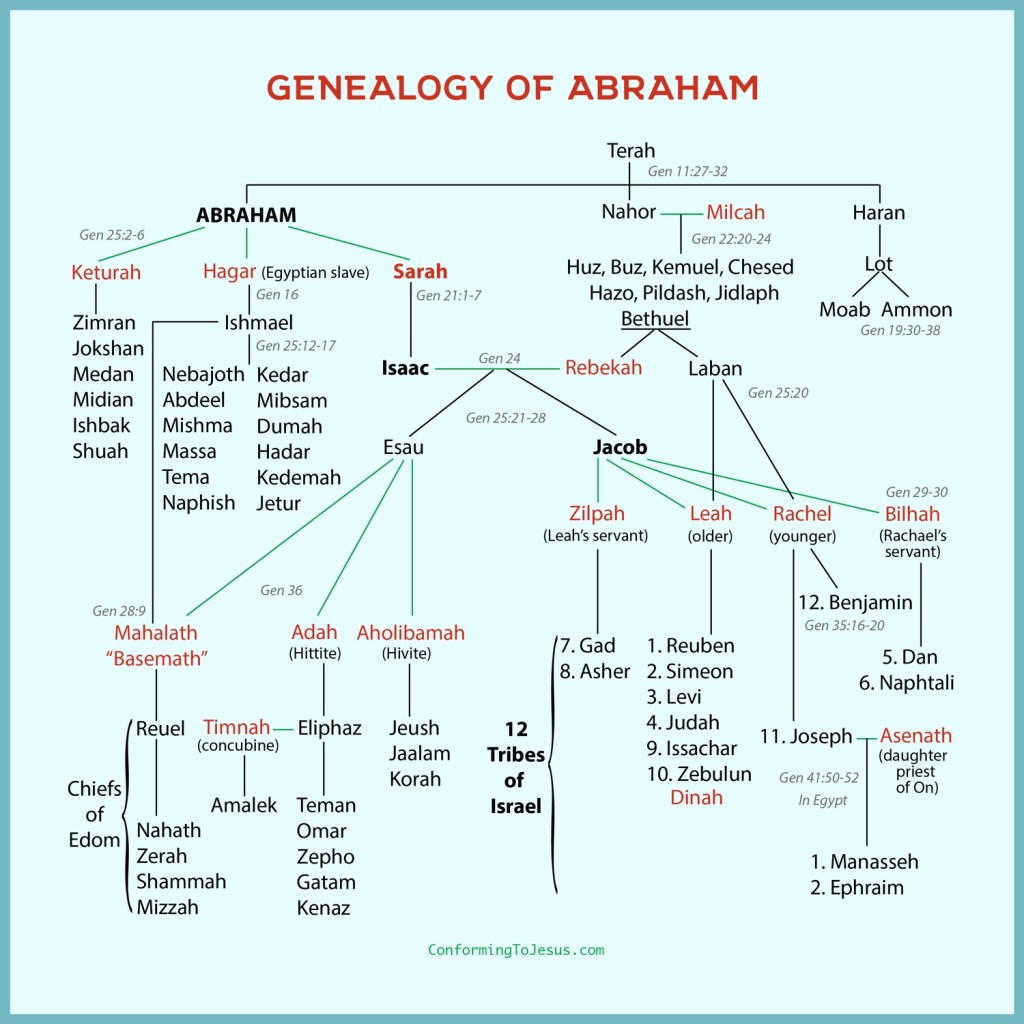
Abraham himself has also fathered a child with his servant, Hagar (16:1–16); that dimension of the story appears important as it signals that there would be a descendant of Abraham, to fulfil the promise made earlier (12:2; 15:12–21). Yet the child who arrives is the son of Hagar, not Sarah. So the passage which is offered by the lectionary for this coming Sunday (Gen 18:1–15) addresses the infertility of Abraham and Sarah, by telling of how this couple learnt that they would, indeed, become parents together.

Abraham was allegedly aged 100 years, while Sarah was aged 90 years (see 17:17). It is no wonder that Sarah, when she learns of her forthcoming pregnancy, laughs (18:12)—although when confronted about this, she denies having laughed (18:15). Yet the name of the son to be born to Sarah, Isaac, means “the one who laughs”. So the joke is on her!

In the next two weeks, the lectionary will offer stories from subsequent chapters of Genesis, that focus on the two sons of Abraham: first, Ishmael, banished to the desert by his father, where he and his mother were vulnerable (21:8–21); and then Isaac, called to his own sacrifice under the hand of his own father (22:1–14). Certainly, Abraham does not come out of either of these stories looking very good!

The news about Isaac comes to Sarah and Abraham after a visit from three men, one of whom looks forward to the birth of a son to Sarah (18:10). Abraham had welcomed the visitors, as was the custom, saying “let a little water be brought, and wash your feet, and rest yourselves under the tree; let me bring a little bread, that you may refresh yourselves” (18:4–5).

Quite tellingly—given the strongly patriarchal nature of ancient society—we next learn that “Abraham hastened into the tent to Sarah, and said, ‘Make ready quickly three measures of choice flour, knead it, and make cakes’”. There we have it: the man decides, the woman implements. Has this changed in today’s society? A little? A lot? The jury is still out …

But more than this; “Abraham ran to the herd, and took a calf, tender and good, and gave it to the servant, who hastened to prepare it” (18:7). The master selects the animal; the servant prepares the meal. Again, all in accord with the customs of the time. But the next verse has always jarred with me: “Then he took curds and milk and the calf that he had prepared, and set it before them” (18:8). The food that he had prepared??? The food that he had ordered others to prepare, surely!

In his commentary on this passage in With Love to the World, the Revd Dr John Jegasothy, a retired Uniting Church Minister who came to Australia some decades ago, seeking asylum from civil war in Sri Lanka, observes that “strangers and aliens were considered as enemies in the ancient times. We, today, warn our children not to talk to strangers, because they could be predators”. He notes that, in the experience of his own family, “we have met many strangers in our lives, like new neighbours or new migrants in this multicultural country, who have become friends and channels of blessings to us. We too have become good neighbours and friends to them.”

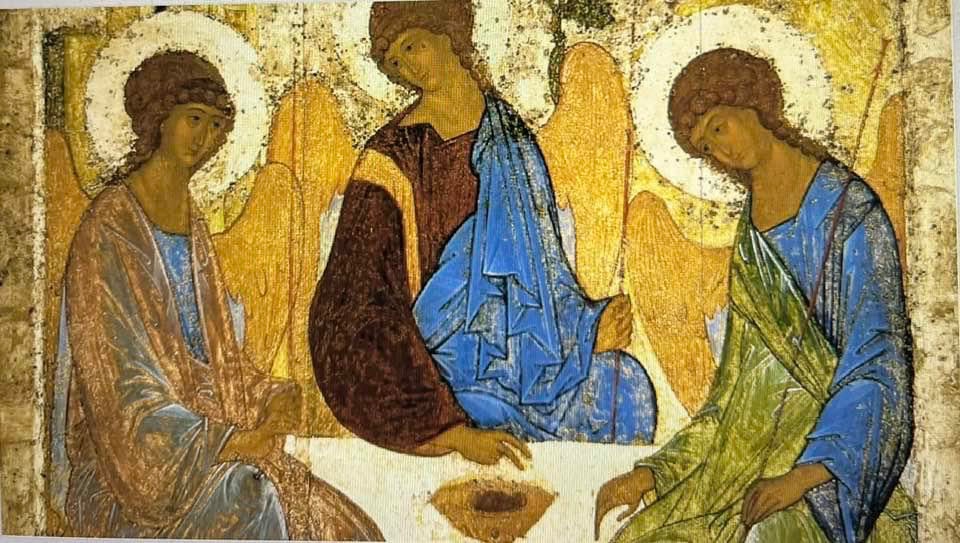
The visitors, offered hospitality by Sarah and Abraham, bring an important revelation to them. These three travellers are the means by which God speaks into the ongoing story. Later Christian interpreters have, unhelpfully and inaccurately, seen the “three men” as a visitation of the Triune God—an interpretation made famous through Andrew Rublev’s early 15th century icon (pictured).

The story, of course, is an ancient Jewish legend, which tells of hospitality and progeny; the Christian doctrine of the Trinity was shaped amidst the patriarchal polemics of the state-sponsored church of the later Roman Empire as church leaders argued about complex matters of speculative philosophical questions. (Was Jesus truly human? Was he truly divine? How are God and Jesus related? Do they share the same essence? Are they of like nature, or of exactly the same nature? and so on …)

The two are worlds apart. It’s another case where Christian interpreters, wanting to find “biblical proof” for that doctrine, have done great damage to a passage of Hebrew Scripture, forcing it to say something that clearly is not evident from a plain reading within the ancient Israelite context.

If we focus on the dynamic that is evident in the story, we see how it highlights the importance of hospitality. And that should encourage and inspire us, as we go about our daily lives, to offer that hospitality to others: to welcome the stranger, invite into our homes and our lives those in need of food, drink, and shelter; to reach out to those caught in the prisons of their minds, their poverty, their crimes, their inadequacies.

All of which sounds like sage words … now, where have we heard that before?

*****

See also

It was reckoned to him; it will be reckoned to us (Rom 4; Pentecost 2A)

This Sunday, we start into a series of readings offered by the lectionary from the longest and most theologically weighty letter written by Paul—that addressed “to all God’s beloved in Rome, who are called to be saints” (Rom 1:7). Although it has this specific, localised audience in view, the letter has become a declaration heard and taken up and studied carefully by Christians right around the world, across millennia of years.

A reading from Romans will be offered each week until the Sixteenth Sunday after Pentecost (this year, 2023, that falls on 17 September). So we will have many weeks to consider the theological exposition that Paul provides. This letter is generally regarded as the most explicit and detailed exposition of the theological commitments which had energised Saul of Tarsus to spend years of his life “to be a minister of Christ Jesus to the Gentiles in the priestly service of the gospel of God, so that the offering of the Gentiles may be acceptable, sanctified by the Holy Spirit” (Rom 15:16). For this enterprise, he is well-known as the “Apostle to the Gentiles”.

In the structuring of the lectionary, the sequence of excerpts from Romans should begin with a declaration of the central theme of the letter (1:16–17) and the rich passage that details how God death with human sinfulness through Jesus (3:21–28). These two short, but central, sections of the letter are offered on the Sunday known as Proper 4, the first Sunday after Pentecost.

However, because Easter was (relatively) later this year, Pentecost is also later, and so this reading is not offered by the lectionary this year. Proper 4 is to occur “on the Sunday in between May 29 and June 4 inclusive, if after Trinity Sunday”; as Trinity Sunday this year fell on 4 June, there is no Proper 4 in 2023.

So we begin with Proper 5, for “the Sunday between June 5 and June 11 inclusive”—this year, Sunday 11 June. Which means that we have missed the initial declaration of the Gospel which Paul proclaims in this long letter; the Gospel which is “the power of God for salvation to everyone who has faith, to the Jew first and also to the Greek”, the Gospel in which “the righteousness of God is revealed through faith for faith” (Rom 1:16–17).

This theological understanding is set forth, initially, through a quotation from a short book in Hebrew Scripture, that of the prophet Habakkuk. This prophet is a shadowy figure, known, really, for only one statement—just half of one verse. That is the short statement, “the righteous live by their faith [or faithfulness]” (2:4b), which stands as the text upon which Paul developed his important theological statement in Romans: “in it [the gospel] the righteousness of God is revealed through faith for faith; as it is written, ‘the one who is righteous will live by faith’” (Rom 1:17).

In the context of Habakkuk’s prophetic activity, the affirmation that “the righteous live by their faith [or faithfulness]” (2:4b) is the word that God gives to the prophet, responding to his complaints about what sufferings are taking place. Habakkuk’s complaints come because God is “rousing the Chaldeans, that fierce and impetuous nation, who march through the breadth of the earth to seize dwellings not their own” (1:6), and through their dreadful and fearsome activities, God is “destroying nations without mercy” (1:17).

You can read more of my take on the short book of Habakkuk at

The claim that God is using foreigners to deal with Israel is a striking theological development—one that is at odds with the traditions that emphasise Israel as a chosen nation, holy and set apart, dedicated to the Lord; the nation alone through whom the Lord God works. That this God will use foreigners is a theme found also in the later writings of Deutero-Isaiah (Isa 40–55), where Cyrus, the Persian ruler, is acclaimed as the one chosen by God, the Messiah, to allow the people of Judah to return to their land (Isa 44:24–45:13).

That God is at work amongst people who are not of Israel resonates, of course, with the activity that Paul and his fellow-workers had been undertaking amongst the Gentiles (those not of the people of Israel)—although Paul is not working in a context of oppression and threatening invasion. So this brief citation from Habakkuk is entirely apposite for Paul’s work and his writings. And as the later chapters of Roman clearly show, God has indeed been at work amongst the Gentiles in Rome.

On the overall theological argument developed in Romans, see

*****

So in the passage that the lectionary offers us for this Sunday (4:13–25), we have the second part of Paul’s discussion of the patriarch Abraham—“the father of all nations” (4:17, citing Gen 17:5) and the figure who stands as the archetype for the message of the Gospel, that “the one who is righteous will live by faith” (1:17, citing Hab 2:4).

In this discussion, Paul is insistent that Abraham stands as the example supreme for that Gospel, since “his faith was reckoned to him as righteousness” (4:3, quoting Gen 15:6, and repeating this at Rom 4:9 and 4:22–23). And more than this: what was done with Abraham “will [also] be reckoned to us who believe in him who raised Jesus our Lord from the dead” (4:24).

This second half of the discussion of Romans 4 comes after Paul has established the universal scope of God’s providential grace—for this is how God meets the universal spread of sinfulness amongst human beings. So Paul focusses on the faith that Abraham showed, and its importance for believers in Rome (and elsewhere). The thesis for this part of the argument is that the promise to Abraham (which he was given in Gen 12:1–3) was “not through the law but through the righteousness of faith” (4:13).

First, Paul indicates that the promise cannot be fulfilled only through “the adherents of the law”, for “the law brings wrath” (4:14–15; he expands on this in chapter 7). Then, he asserts that the promise must rest on faith, both to those who adhere to the law but also “to those who share the faith of Abraham” (4:16). Abraham is here described as “the father of all of us”, drawing on yet another scripture citation (Gen 17:5; Paul uses the same argument at Gal 3:15–18, and the phrase is also at play in the debate reported in John 8:41–59).

Then follows further explication of this scripture (Gen 17:5), particularly explaining how Abraham, “hoping against hope”, became “the father of many nations” (4:17b—21). Despite the barrenness of Sarah’s womb (4:19), Abraham “was fully convinced that God was able to do what he had promised” (4:21). To conclude this exegetical foray, Paul quotes, for the third time, the foundational text: “his faith ‘was reckoned to him as righteousness’” (4:22, quoting Gen 15:6).

Paul then explains that these words describe not only the situation of Abraham, long ago in the past, but also the immediate situation of those to whom he writes (4:23–24). This is a foundational aspect of Paul’s hermeneutic; he restates it at Rom 15:4, declaring that the scripture “written in former days was written for our instruction”. See

And so the argument draws to a close, moving back into the heart of Paul’s concern, to expound the Gospel concerning God “who raised Jesus Christ from the dead” (4:24–25). The final verse is most likely a traditional formulaic expression; we find a similar pattern at 1 Cor 15:3–4, a midrashic-style reflection on this pattern at 1 Cor 15:42–44, and a variant form at 2 Cor 5:14–15.

There is also an extended discussion later in the letter to the Romans using the pattern of “Christ, dead and raised”, as the model for believers: “we are buried with him by baptism into death, so that, just as Christ was raised from the dead by the glory of the Father, so we too might walk in newness of life” (Rom 6:4). Paul provides a fuller discussion of this paradigm at 6:3–11, and there is a similar discussion, albeit varied for the different context, at Col 3:11–15.

And so the extended argument set out in all of this chapter takes us from an initial question about Abraham, through an exploration of the story of Abraham and Sarah, to a conclusion about the life of those who place their trust in what God has done through Jesus Christ. That God “will justify [or, reckon as righteous] the circumcised on the ground of faith and the uncircumcised through that same faith” (3:30) is the foundation for then claiming that, in like manner, “it will be reckoned to us who believe in him who raised Jesus our Lord from the dead” (4:24). It is all about being reckoned as righteous on the basis of faith. Thanks be to God!

*****

On the diatribe style that Paul uses here and throughout much of the letter to the Romans, which is reflected in that pattern (“it was reckoned to him … it will be reckoned to us”), see

Matthew: tax collector, disciple, apostle, evangelist—and “scribe trained for the kingdom”? (Matt 9; Pentecost 2A)

At last! This coming Sunday, we return to Gospel passages in sequence, drawn from the book of origins—the Gospel attributed by tradition to Matthew. None of the four Gospels in the New Testament originally gave any indication as to who wrote those works; it was up to the evolving tradition within the early church to infer, claim, deduce, and assign specific authorship—either to apostles (Matthew and John) or to close followers of apostles (Mark, following Peter, and Luke, following Paul).

This year—Year A—we began with the early chapters of the Gospel according to Matthew (from 2:1 through to 5:37); but when the season of Lent began, the Gospel readings were taken largely from John, with John and Luke featuring during the Sundays after Easter. Only now, after Trinity Sunday, does the sequential pattern resume.

This coming Sunday, we will hear the story of the call of Matthew the tax collector (Matt 9:9–13) as well as the interlinked account of the healing of a haemorrhaging woman along with the raising of a young girl from death (9:18–26). The story of the call of Matthew is told with a somewhat astringent sparseness. “He said to him, ‘Follow me.’ And he got up and followed him.” (9:9). That’s it. No fuss, no fanfare. Just plain and simple, straight to the point: follow me—and he followed him.

This first Gospel, in the order that the four Gospels appear in the New Testament, bears the name of Matthew. It wasn’t the first written Gospel—that was Mark’s, which clearly was a source used by the author of Matthew’s Gospel. By tradition, the attributed author of this Gospel, Matthew, was a tax collector whom Jesus called to follow him. (Why a tax collector who followed Jesus would take the work of a junior and erratic follower as the basis for his work, remains unexplained.)

At any rate: after this tax collector became a disciple of Jesus, he was appointed as an apostle, and later he allegedly wrote an eye-witness account of the time he spent with Jesus. That account runs up until the crucifixion and burial of Jesus, and is wrapped around with some opening chapters about the beginnings of the life of Jesus, and a closing chapter relating to the body of Jesus, his resurrection and departure from his followers.

The tradition that this first Gospel was an eye-witness account by one of the twelve apostles has come under careful scrutiny from biblical scholars, exploring the language, structure, imagery, and ideas found in that narrative.

The consensus from this scholarly work is that the first Gospel in the New Testament was not an eye-witness account, but a carefully crafted account of Jesus, originating in a community of people who had maintained their Jewish culture and practices whilst affirming that Jesus of Nazareth was the long-awaited Messiah—a community that was, therefore, in conflict with the views and teachings of the synagogue leaders in their town, who did not see Jesus in that way.

Within ecclesial tradition, the picture of Matthew, tax collector—disciple—apostle, who subsequently wrote an eye-witness account of the time he spent with Jesus, holds sway. Within biblical scholarship, Matthew is simply a character who appears briefly in the story told by the first Gospel in the New Testament.

Matthew is identified in one short verse narrating his call by Jesus (Matt 9:9). He is also included in the list of twelve who were called to be apostles, with the added descriptor, “the tax collector” (Matt 10:3). He is also named in three other books, with nothing further said about him (Mark 3:18; Luke 6:15; and Acts 1:13). But little else about him is conveyed in the four books that name him. See

Those five fleeting references are the only times we see directly this person in the biblical narratives. He is surely there in other scenes, but he simply blends into the collection of “the disciples” (Mark 2:23; 3:7; 5:31: 6:1, 35, 41, 45; 7:17; 8:1–10, 14, 27, 34: 9:14, 28, 31; 10:10, 13, 23–24; 11:19; 12:43; 13:1; 14:12–16; and Synoptic parallels), “the twelve” (Mark 4:10; 6:7; 9:35; 14:20; and Synoptic parallels; and John 6:66–71; 20:24), or, even more anonymously, into “the crowd” (Mark 2:4, 13; 4:1; Matt 7:28; 13:2; Luke 5:1; 6:17; 7:11–12; 8:4; John 6:2; 12:9, 12; Acts 1:15; 2:6; etc.).

And yet, in the evolving church traditions, Matthew emerges from the shadows to take centre stage as disciple, apostle, saint, and author of the Gospel which is placed first in the New Testament. Some churches even maintain the patristic claim that Matthew wrote in Aramaic, and was later translated into the Greek version that forms the basis of the New Testament text.

The claim about Aramaic comes from a fourth century report by Eusebius of Caesarea that a second century bishop, Papias of Heirapolis, claimed that Matthew “put the logia in an ordered arrangement in the Hebrew language (Ἑβραΐδι διαλέκτῳ), but each person interpreted them as best he could” (Eusebius, Ecclesiastical History 3.39.16). We should note that this is a somewhat indirect witness at quite some remove, and also that the Greek word Ἑβραΐδι can be translated either as Hebrew or as Aramaic.

But this claim falls down from the clear evidence of the Greek text of Matthew’s Gospel, which mirrors very closely both the Gospel of Mark, at many points, and the Gospel of Luke, at other points, in passages found only in Matthew and Luke.

The two key conclusions drawn by many scholars are twofold: first, that Matthew (like Luke) used the Gospel of Mark as a basis for writing a narrative about Jesus—but modified and adapted both the order and wording of passages; and second, that Luke and Matthew had access to another source (whether oral or written) for many of the sayings of Jesus (the source is known as Q). This makes it completely unlikely that Matthew wrote, in Aramaic, or in Hebrew, the earliest account of Jesus.

And ascribing the authorship of this Gospel to the tax collector identified at Matt 9:9 is also a patristic move. The title of this (and the other) Gospels, identifying the alleged author, is found only in later manuscripts and patristic writings; the narrative itself fails to identify anyone as the author, let alone the tax collector named Matthew. This claim is a later apologetic move, most likely made to provide an “apostolic authorisation” to the Gospel.

See

So what do we say, then, of “Matthew”, the purported author of this Gospel, a work which the author declares at the start to be “the book of origins of Jesus, Messiah” (Matt 1:1)? For me, a key to the way that the author of this “book of origins” operated is provided at Matt 13:52, where Jesus concludes a sequence of parables with the statement that “every scribe who has been trained for the kingdom of heaven is like the master of a household who brings out of his treasure what is new and what is old”.

That description encapsulates very clearly, for me, who the author of this Gospel was—a scribe, “trained for the kingdom”, drawing on old resources, but reshaping them so that they are seen to be new. We can see this in many ways in the narrative that he constructs. We can especially see this in the way he presents Jesus as an authoritative teacher of Torah—the one whose words are to be heard, remembered, studied, and passed on. Thus, the reason for his writing of this Gospel.

In this Gospel, we are offered a distinctive, at times unique, portrayal of Jesus. Only in this Gospel does Jesus affirm that all of “the law and the prophets” stand, are not to be annulled, and indeed have been “fulfilled”, or given new life and meaning, by what Jesus teaches (Matt 5:17–20).

So the encounters between Jesus and his disciples, and the scribes and Pharisees, at various moments in the narrative (9:2–8, 10–13; 12:38–42; 15:1–20; 16:1–4; 19:3–9; 21:15–16; 22:34–46) inevitably revolve around differing interpretations of Torah prescriptions and include regular references to (Hebrew) scriptural passages.

Jesus debates the way that the scribes and Pharisees interpret Torah; he meets them on their terms, and engages in these debates in accordance with “the rules” of scripture interpretation. Far from abandoning the Torah, he rather keeps the commandments, valued as “what is old”, and provides distinctive insights and understandings, “what is new”, as he intensifies and radicalises them. (“You have heard it said …”, hard enough; “but I say to you …”, an impossible counsel of perfection?)

In this Gospel alone, Jesus affirms “the scribes and the Pharisees” as those who “sit on Moses’ seat” and teach well—but fail to live by that teaching in their lives (23:1–3). Accordingly, Jesus not only teaches how to live by the law, with a ferocious intensity (5:21–48; 23:13–36), but he puts his teachings into practice; he maintains the old but fills it with new meaning. All of this lies ahead in the passages that will be proposed by the lectionary over the coming months.

Our Father in heaven: a pattern for prayer (Luke 11, Matt 6) part III

In the series of Gospel readings offered by the Revised Common Lectionary, there is a break from the sequential readings from the Gospel of Matthew begun in early January each year. This year—Year A—we began with the early chapters of the Gospel according to Matthew (from 2:1 through to 5:37); but when the season of Lent began, that pattern was interrupted.

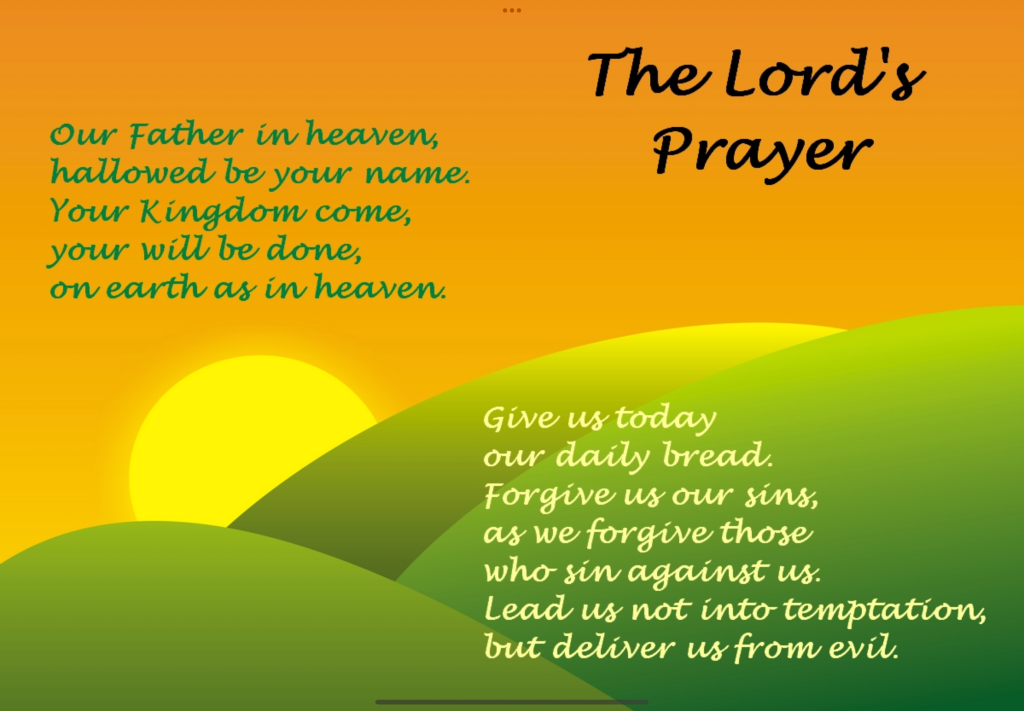
We return to Matthew with Matt 9 on the Second Sunday after Pentecost, jumping from where we had left the Gospel back in February, in the middle of the Sermon on the Mount. That means that we have omitted the passage where Jesus says “pray then in this way”, giving his disciples a set of words (6:9–13) that has come to be known as The Our Father (after its opening phrase) or The Lord’s Prayer (after the one who gave it to his disciples). So this week I am posting about this well-known and much-loved prayer. Previous posts were at

What of “the kingdom, the power, and the glory”? These terms are thoroughly scriptural, being found through the pages of Hebrew Scripture. Although not in the earliest manuscripts of either Matthew’s or Luke’s version of The Lord’s Prayer, the closing doxology is found in the text of the Didache (which I think was a second century document) and makes its way into later manuscripts of the canonical documents. That most likely signals that there was an oral tradition that this phrase was in use in later times, so later scribes felt the need to write it back into the words attributed to Jesus.

In scripture, it is not only the kingdom, the power, the glory which is prayed for—there is also the greatness, the majesty, and the victory which is sought, as well as riches and honour. The key text which draws all of these terms together, and places them into a prayer addressing God, is when David assembles “all the officials of Israel, the officials of the tribes, the officers of the divisions that served the king, the commanders of the thousands, the commanders of the hundreds, the stewards of all the property and cattle of the king and his sons, together with the palace officials, the mighty warriors, and all the warriors” (1 Chron 28:1) and addresses them as they prepare to commence work on building the Temple of the Lord in Jerusalem.

After delivering detailed plans for the building to his son Solomon (1 Chron 28:11–19)—plans which had been revealed to him by the Lord—David commissions Solomon for the task, presents him to the people, and then prays a prayer of blessing: “Blessed are you, O Lord, the God of our ancestor Israel, forever and ever. Yours, O Lord, are the greatness, the power, the glory, the victory, and the majesty; for all that is in the heavens and on the earth is yours; yours is the kingdom, O Lord, and you are exalted as head above all. Riches and honour come from you, and you rule over all. In your hand are power and might; and it is in your hand to make great and to give strength to all. And now, our God, we give thanks to you and praise your glorious name.” (1 Chron 29:10–13).

Kingdom, power, and glory are also collected together in Psalm 145: “All your works shall give thanks to you, O Lord, and all your faithful shall bless you. They shall speak of the glory of your kingdom, and tell of your power, to make known to all people your mighty deeds, and the glorious splendor of your kingdom” (Ps 145:10–12). It is God who holds the attributes of power and glory in overseeing God’s kingdom.

These terms were also terms used to honour (and, indeed, flatter!) human kings; the prophet Daniel addresses King Nebuchadnezzar in similarly extravagant terms: “You, O king, the king of kings—to whom the God of heaven has given the kingdom, the power, the might, and the glory, into whose hand he has given human beings, wherever they live, the wild animals of the field, and the birds of the air, and whom he has established as ruler over them all—you are the head of gold” (Dan 2:37–38).

However, the more common use of such flowery ascriptions of might and power are addressed to God, the king (as we have seen above). It is God who exercises power (Exod 15:6; 32:11; Num 11:23; Deut 4:34; 26:8; Ps 21:13; 130:7; 147:5; Isa 10:33; Jer 16:21; Dan 5:23; Nah 1:3).

It is also God in whom glory rests, as many stories on the narrative books attest (Exod 16:7, 10; 24:16–17; 40:34–35; Lev 9:6, 23; Num 14:10, 21; 16:19, 42; 20:6; Deut 5:24; 1 Ki 8:11; 1 Chron 16:28–29; 2 Chron 5:14; 7:1–3). The psalmists also acknowledge the glory of God (Ps 8:1; 24:8–10; 26:8; 29:1–3; 96:7–8; 102:15–16; 104:31; 113:4; 138:5; 148:13). The glory of the Lord is manifest to prophets (Isa 2:19–21; 6:3; 10:16–18; 24:23; 40:5; 42:8; 58:8; 59:19; 60:1–2; 61:3; Ezek 1:28; 3:12, 23; 9:3; 10:4, 18–19; 11:23; 43:4–5: 44:4; Hab 2:14; Zech 2:8).

In telling the story of Jesus, who preaches “the kingdom of God” and indicates that it has come near in him (Mark 1:14; Luke 17:20), the Gospels make note of the power of Jesus (Mark 5:30; 6:2; Matt 11:20; 13:54; Luke 4:14, 36; 5:17; 6:19; 8:46; 19:37; John 10:18) as well as his glory (Luke 2:32; 9:32; John 1:14; 2:11; 8:54; 12:41; 17:5, 22–24).

So the concluding doxology in the longer version of the prayer, ascribing the kingdom, the power, and the glory to God, is both a fitting scriptural conclusion as well as consistent with Jesus’s own perceptions of his role in God’s overarching plan of salvation.

Our Father in heaven: a pattern for prayer (Luke 11, Matt 6) part II

In the series of Gospel readings offered by the Revised Common Lectionary, there is a break from the sequential readings from the Gospel of Matthew begun in early January each year. This year—Year A—we began with the early chapters of the Gospel according to Matthew (from 2:1 through to 5:37); but when the season of Lent began, that pattern was interrupted.

We return to Matthew with Matt 9 on the Second Sunday after Pentecost, jumping from where we had left the Gospel back in February, in the middle of the Sermon on the Mount. That means that we have omitted the passage where Jesus says “pray then in this way”, giving his disciples a set of words (6:9–13) that has come to be known as The Our Father (after its opening phrase) or The Lord’s Prayer (after the one who gave it to his disciples). So this week I am posting about this well-known and much-loved prayer. The first post is at

“Give us bread for the day” has often been seen to be evoking the story embedded within the foundational myth (establishing the central identity) of the people of Israel, when the Lord provided manna to the people whilst they journey in the wilderness (Exod 16; Num 11); further reference is made to this manna in additional books of Hebrew scripture (Deut 8:3, 16; Neh 9:20; Ps 78:24).

That gift of manna, striking in the wilderness experience, was also provided to the Israelites when they camped at Gilgal, on the verge of entering into the land of Canaan (Josh 5:10–12). The story has a potency that makes it an essential element in the identity of Israel: it is a nation which trusts in the gracious provisions of God.

Jesus continues that attitude; God is the one who will provide when something is asked for (Mark 11:24; Matt 7:7, 11; 9:38; Luke 10:2; 11:9, 13; John 14:13; 15:7, 16; 16:23). Consistent with that, asking for “bread for the day” is an appropriate prayer to offer.

The next petition raises other questions. Differences in the Greek terms used in the early versions of this prayer point to the matter; is it “forgive us our sins” or “cancel the debts we owe”? On the different words used, see

Of course, forgiveness is part of the “gospel” of Hebrew Scriptures; the claim that God forgives is found in numerous places. Abraham wrangles with God to forgive Sodom (Gen 18:16–33); Moses pleads, successfully, with the Lord to forgive Israel after their rebellion in the wilderness (Num 14:1–25), and less successfully after the incident involving the golden statue of a calf (Exod 32:30–35). Jeremiah foresees that within the new covenant given by God, forgiveness will be offered (Jer 31:34).

A refrain in a number of places is that “the Lord is slow to anger, and abounding in steadfast love, forgiving iniquity and transgression” (sin” (Exod 34:6–8; Num 14:18; Neh 9:17b; Ps 145:8–9; Joel 2:13; Jonah 4:2; see also 2 Kings 13:23; 2 Chron 30:9). King Solomon prays for God to forgive the people (1 Ki 8:33–40; 2 Chron 6:18–40), the psalmist prays for forgiveness (Ps 25:18; 79:9), and so do some prophets (Ezek 16:63; Dan 9:19; Amos 7:2). Jesus’ prayer petition for God to forgive, in the central prayer he taught, continues this motif.

The associated clause of the prayer, instructing us to follow the example of God and forgive the sins of others, also reflects enduring Israelite understandings. Joseph forgives his brothers (Gen 50:15–21), David forgives Abigail (1 Sam 25:26–28, 32–35). Jesus exhorts his followers to forgive seven times (Luke 17:1–4) or seventy times seven (Matt 18:21–22), and is remembered as the one who came to forgive sins (Mark 2:10; Matt 9:6; Luke 5:24; 23:34), and so this clause of the pray is consistent with that.

If the prayer is about asking God to cancel debts,rather than forgive sins, then another theme in Hebrew Scripture is drawn in by Jesus. The release of slaves and the cancelling of debts was meant to be practised in society every fifty years during the year of Jubilee (Lev 25:8–17; see esp. v.13). Luke explicitly signals this theme in the opening speech of Jesus that he alone reports: “the Spirt of the Lord is upon me … to proclaim release to the captives and recovery of sight to the blind, to let the oppressed go free, to proclaim the year of the Lord’s favour” (4:18–19). The reference to “the year of the Lord’s favour” is commonly taken to be an indication of the Jubilee.

The practice of the Jubilee is, however, dubious. The levitical prescriptions appear to be the ideal that the priests hoped for; actual evidence that this was ever implemented in Israelite society is lacking. Indeed, it is suggested that while the people were in Exile, the land of Israel would “lie desolate”, and “enjoy its sabbath years” (Lev 26:34), providing recompense for all those years when “it did not have on your sabbaths when you were living in it” (Lev 26:35).

Nevertheless, Jesus may well be instructing his followers to pray that this will be a reality in society; that the people “shall proclaim liberty throughout the land to all its inhabitants”, and that those who had been taken to work elsewhere would return “to your property and every one of you to your family” (Lev 25:10). His prayer indicates that he wanted his followers to implement this practice in their lives.

The phrases “save us” and “deliver us” introduce the next two petitions. “Save me” or “save us” is the cry of psalmists (Ps 6:4: 7:1; 22:21; 31:2, 16; 44:6; 54:1; 55:16; 57:3; 59:2; 69:1; 71:2–3; 80:2; 86:16; 106:47; 109:26; 119:94, 146; 142:6; 143:9), and most famously in the Hallel psalm, Psalm 118, in the context of various phrases repeated in Christian worship on a regular basis: “This is the day that the Lord has made; let us rejoice and be glad in it. Save us, we beseech you, O Lord! O Lord, we beseech you, give us success! Blessed is the one who comes in the name of the Lord.” (Ps 118:24–26).

Prophets also cry out for God to save them (Isa 25:9; 33:22; 36:18; 37:20; Jer 17:14), as do the elders of Israel (1 Sam 4:3), the people of Israel (1 Sam 7:8), and the kings David (1 Chron 16:35) and Hezekiah (2 Ki 19:19).

“Deliver me” or “deliver us”, likewise, is a prayer addressed to God by Jacob (Gen 32:10), the people of Israel (Judg 10:15), the friends of Daniel (Dan 3:17), and time and time again by the psalmists (Ps 3:7; 6:4; 7:1; 25:20; 31:1, 15; 39:8; 40:13; 43:1; 51:14; 59:1–2; 70:1–2; 79:9; 106:4; 109:21; 119:170; 120:2; 140:1; 144:11). As Ben Sirach prays in the latter stages of his closing poem, “may he he entrust to us his mercy, and may he deliver us in our days!” (Sir 50:24).

“The time of trial” is a phrase found only in this prayer (Matt 6:13; Luke 11:4) and in the prayer which Jesus is said to have prayed in the Garden of Gethsemane (Mark 14:38; Matt 26:41; Luke 22:40, 46). However, the notion of being tested or put on trial is common in scripture. Moses reminds the Israelites of “what the Lord God did to Pharaoh and to all Egypt, the great trials that your eyes saw” as they wandered in the wilderness (Deut 7:18–19; 29:2–3).

Speaking about the righteous, the psalmist asserts that “the Lord will not abandon them to their power, or let them be condemned when they are brought to trial” (Ps 37:33), whilst the poet who wrote Lamentations reflects that in the invasion of Jerusalem the wrathful God “has besieged and enveloped me with bitterness and tribulation” (Lam 3:5), and Jib poetically reflects, “what are human beings, that you make so much of them, that you set your mind on them, visit them every morning, test them every moment?” (Job 7:17–18).

Several commentators point to the similarity between the request in the prayer taught by Jesus for God to “save us in the time of trial” and that found in later rabbinic teaching in the Babylonian Talmud. In the tractate Berakot, one is encouraged to ask the Lord, “Lead me not into error, nor into iniquity, nor into temptation nor into disgrace” (b. Ber. 60b).

Various prophets describe what took place in Israel, as they were invaded and conquered, and what they foresee in the future, when the Day of the Lord comes, in graphic terms that depict intense trials and tribulations. That is picked up in apocalyptic passages in New Testament texts. Being saved from such trials is in view when Jesus indicates that God will ensure that the apocalyptic trials that he foresees will come to an end (Mark 13:20; Matt 24:22). The seer of Patmos assures the church in Philadelphia that “because you have kept my word of patient endurance, I will keep you from the hour of trial that is coming on the whole world to test the inhabitants of the earth” (Rev 3:10).

Likewise, the phrase “the evil one” is absent from Hebrew Scripture, but the notion of evil is present throughout—from the garden of Eden, where Adam and Eve flaunt the ban on their eating fruit from “ the tree of the knowledge of good and evil” (Gen 2:15–17; 3:1–7), through the forty years when Israel,was condemned to “wander in the wilderness for forty years, until all the generation that had done evil in the sight of the Lord had disappeared” (Num 32:13), and the generations under the Judges when “the Israelites did what was evil in the sight of the Lord” (Judg 2:11; 3:7, 12; 4:1; 6:1; 9:23; 10:6; 13:1).

In their debate with Samuel regarding the need for a king in Israel, the people confess “the evil of demanding a king for ourselves” (1 Sam 12:19); this comes to fruition again and again in the following centuries. Under Jeroboam, son of Solomon, his wife prophesies against him, declaring that “you have done evil above all those who were before you” (1 Ki 14:9); under his brother Rehoboam, the people of Judah “did what was evil in the sight of the LORD; they provoked him to jealousy with their sins that they committed, more than all that their ancestors had done” (1 Ki 14:22).

The same formulaic denunciation then condemns almost all of the northern kingdom kings who follow: Nadal at 1 Ki 15:25–26; Baasha at 1 Ki 15:33–34; Zimri at 1 Ki 16:15–20; Omri at 1 Ki 16:25–28; Ahab at 1 Ki 16:29–30, 22:37–40; Ahaz at 1 Ki 22:51–53; Jehoram at 2 Ki 3:1–2; Ahaziah at 2 Ki 8:26–27; Jehoash at 2 Ki 13:10–13; Jeroboam II at 2 Ki 14:23–29; Zechariah at 2 Ki 15:8–12; Menahem at 2 Ki 15:17–22; Pekahaiah at 2 Ki 15:23–26; Pekah at 2 Ki 15:27–31; and Hoshea at 2 Ki 17:1–4. In other words, almost all of the kings of Israel! (Of course, the work comes from those telling the story in the southern kingdom.)

The notion of a personified “evil one” does not emerge until much closer to the time of Jesus. Satan was originally “an adversary” to Balaam (Num 22:22–23), David (1 Sam 29:4; 2 Sam 19:22; 1 Chron 21:1), Solomon (1 Ki 11:14, 23–25) and the high priest Joshua in the time of return from Exile under Darius of Persia (Zech 3:1–10). In Jewish literature in the ensuing centuries—1 Enoch, Jubilees, 2 Enoch—the adversary develops into an evil personage.

Most famously, the accuser from the heavenly court, delegated by God to prosecute the case against Job (Job 1:6–12; 2:2–8), would eventually become Satan, tester of Jesus (Mark 1:13), a fallen heavenly being (Luke 10:18) who is “deceiver of the whole world” (Rev 12:9; 20:2–3), and “the evil one” from whom Jesus instructed that we should pray to be delivered. He thus draws deep from the wells of his Jewish heritage in these petitions—“deliver us … save us”.

“In you all the families of the earth shall be blessed” (Gen 12; Pentecost 2A)

Each year during the Sundays which follow after the festival of Pentecost, the Gospel readings offer a series of stories, encounters, and parables from the Gosepl attributed to Matthew. In parallel to those stories, in the Hebrew Scripture readings, the lectionary offers a sequence of passages telling some of the key moments in the story of Israel, from the narrative books, Genesis, Exodus, Deuteronomy, Joshua, and Judges. These stories run through until the Twenty-Fifth Sunday after Pentecost, in mid-November.

This sequence of passages offers us stories which were told, retold, and probably developed over quite some time by the elders in ancient Israel. They are stories which define the nature of the people and convey key values which were important in ancient Israel. These faithful people from the past stand, for us today, as role models to encourage us, centuries later, in our own journey of faith. They are stories which are worth holding up for our reflection and consideration.

These stories each have the function of an aetiology—that is, a mythic story which is told to explain the origins of something that is important in the time of the storyteller. The online Oxford Classical Dictionary defines an aetiology as “an explanation, normally in narrative form (hence ‘aetiological myth’), of a practice, epithet, monument, or similar.”

Whilst telling of something that is presented as happening long back in the past, the focus is on present experiences and realities, for “such explanations elucidate something known in the contemporary world by reference to an event in the mythical past”.

See https://oxfordre.com/classics/display/10.1093/acrefore/9780199381135.001.0001/acrefore-9780199381135-e-7050;jsessionid=3DB38C42C54D01E1CBFA8682FB55DA4C

The ancestral narratives of Israel (Gen 12–50), as well as the series of books known as “the historical narratives” (Exodus to 2 Kings, Ezra—Nehemiah) are all written at a time much later that the presumed events which they narrate. The final form of the books as we have them most likely date to the Exile or post-exilic times, although pre-existing sources would have been used for many of these stories. (There are specific references to earlier written documents—now lost to us—scattered throughout 1—2 Kings.)

Those older stories were remembered, retold, and then written down, because they spoke into the present experiences of the writers. Common scholarly belief is that the stories found in Gen 12–50 were originally oral tales, that were collected together, told and retold over the years, and ultimately written down in one scroll, that we today call Genesis.

*****

For this coming Sunday (the Second Sunday after Pentecost), we are offered the account of the calling of Abram, who journeys into a new future (Gen 12:1–9). This has been a key passage for Jews throughout the centuries; Abram is remembered and honoured as “the father of the nation”—indeed, as “the father of all nations”; and this passage claims that it was God’s intention to grant the blessing of abundant descendants to Abram and his wife, to fulfil this promise.

The passage is found after the opening 11 chapters, which are often labelled the “Primeval History”, since they recount the creation of the world and the sequence of events which were fundamental for understanding human existence (such as human sinfulness and conflict, the expansion of humanity, the great flood, the growth of tribal entities, and the diversification of languages).

The passage also stands at the head of those stories, originally oral, which were collected because they revealed much about the nature of Israel as a people and as a nation. These chapters tell stories about the patriarchs and their wives (Abram and Sarai, Isaac and Rebekah, Jacob and Leah and Rachel). This particular passage introduces key themes for the people of Israel.

The passage indicates that Abram took his wife Sarai and his nephew Lot with him, “and all the possessions that they had gathered, and the persons whom they had acquired in Haran; and they set forth to go to the land of Canaan” (Gen 12:5). They would also have had the (always unnamed) wife of Lot with them, for their companions would undoubtedly have included both males and females within the extended family grouping. We need to read this ancient aetiology with a contemporary critical awareness. Certainly, the faith of Abram and Sarai and their extended family is a key message conveyed by this passage.

The story explains four important aspects of life and faith for the people of ancient Israel and on into contemporary Judaism: the land is given to this people, the people (of Israel) will become “a great nation”, the name (of Abram) will be blessed, and the descendants of Abram, “all the families of the earth”, will likewise be blessed. These four points—land, pepople, name, descendants—loom large throughout the history of Israel. Indeed, they maintain their potency into the present age—and need to be read and understood with political and cultural sensitivity today.

*****

This passage sounds the initial claim of the people of Israel to the land of Canaan. This was promised by God to Abram and his descendants, we are told. They set out towards that land; “when they had come to the land of Canaan, Abram passed through the land to the place at Shechem, to the oak of Moreh. At that time the Canaanites were in the land. Then the Lord appeared to Abram, and said, ‘To your offspring I will give this land.’ So he built there an altar to the Lord, who had appeared to him.” (Gen 12:5–7). The claim recurs at various points throughout the ensuing narratives, culminating in the conquest narrated in the book of Joshua.

See more on this aspect of the passage at

and on the difficulties involved in the story of invasion and violent colonisation, see

In his commentary on this passage in With Love to the World, the Revd Dr John Jegasothy, a retired Uniting Church Minister originally from Sri Lanka, reflects on this story of journeying to a new land, from his own perspective as an asylum seeker some decades ago. “As a family we had to decide to leave Sri Lanka and migrate to Australia on Special Humanitarian Visa as I was a human rights advocate and death came close. God had a plan for me to be an advocate for refugees here.”

Dr Jegasothy continues, “I look at our journey as a journey like Abram and Sarai undertook. They absolutely trusted in God’s promises and because of their faith they were counted as righteous.” There is an invitation here for each of us to ponder this story, in terms of our own journey of faith. How and when has God called us on to journey into new places or new experiences?

*****

Alongside the claim to the land of Canaan, the story of Gen 12 portrays Abram (and Sarai) as the origin of a multitude of descendants; through them, “all the families of the earth shall be blessed” (12:3). Initially, this claim appears to be quite precarious; after all, the first mention of Sarai indicates that “Sarai was barren; she had no child” (11:29–30).

Later, when Sarai advises Abram, “see that the Lord has prevented me from bearing children; go in to my slave-girl; it may be that I shall obtain children by her” (16:1–2), Abram diligently obeys; he “went in to Hagar, and she conceived; and when she saw that she had conceived, she looked with contempt on her mistress” (16:4). Tensions between the wife, Sarai, and the slave-girl, Hagar, lead to Hager’s flight into the wilderness, where she gave birth to Abram’s son, Ishmael (16:7–16).

Still later, when Abram (now Abraham) sealed the covenant with the Lord God through the ritual of circumcision (17:1–14), he is told that Sarai (now Sarah) will now be blessed by the Lord, for “I will give you a son by her; I will bless her, she shall give rise to nations; kings of peoples shall come from her” (17:16). And in due time—despite the laughter of Sarah (18:12)—Isaac is born (21:1–3).

The lectionary studiously avoids the story of the birth of Ishmael, but provides us with a sequence of passages that recount the promise to Sarah (18:1–15, Pentecost 3A), the banishing of Hagar and Ishmael (21:8–21, Pentecost 4A), and the near-sacrifice of Isaac (22:1–14, Pentecost 5A), before turning to the story of Isaac and his wife Rebekah (Pentecost 6A) and then on to Jacob (with excerpts from chs. 25 to 37, Pentecost 7A to 11A).

After Sarah died, Abraham married Keturah and had six sons with her (25:1–4). He also “gave gifts to the sons of his concubines while he was living” (25:6), so there were other (unnamed) progeny of Abraham. In due time, Abraham and Sarah’s son Isaac and his wife Rebekah gave birth to twins, Jacob and Esau (25:19–26), whilst Ishmael, the son of Abraham and Hagar, was the father of twelve sons who had many descendants (25:12–18), as well as a daughter who was the ancestor of the Edomites. Abraham’s brothers Nahor fathered twelve sons (22:20–24) whilst Haran was the father of Lot (11:27), who himself fathered Moab and Ammon. Many of these descendants continued reproducing, and so the line of Abraham grew and expanded, generation by generation.

Collectively, this family was responsible for a multitude of descendants, which brings to fulfilment God’s promise to Abraham, “I have made you the ancestor of a multitude of nations; I will make you exceedingly fruitful; and I will make nations of you, and kings shall come from you” (17:5–6). The tenuous moments in the story leave us, as readers, wondering whether this promise would come to fruition; in time, of course, that fulfilment is reported in the Genesis narrative. Abraham does indeed become “father of all nations”, and a key figure in the sagas about Israel that were told and retold throughout the ages.