
In an earlier post, we noted that the book of Genesis is dominated by people whose stories shaped the self-understanding and identity of the nation of Israel. Written in the form that we now have them by the priests who had held the stories of Israel through the decades of Exile, those stories comprise oral tales, told and retold over centuries before that Exile, remembered and passed on because they offered insights into who the people of Israel had become—committed, resilient, crafty, and faithful.
We heard these stories, from the second Sunday after Pentecost (Gen 12) through now to the twelfth Sunday after Pentecost (Gen 45). The stories are dominated by the men—Adam and Noah, Abraham and Isaac, Jacob and his twelve sons, most notably Joseph. In these stories, as we have noted, the men dominate. There are, to be sure, women who also play key roles in the stories that are collected into this first narrative book, as we have noted—Sarah and Hagar, Rebekah, Leah and Rachel, as well as others with lesser prominence in the stories (or, indeed complete absence from the story).
This blog focusses on women in Genesis 38 and onwards. On the women who were overlooked by the lectionary in the earlier chapters, see
4 Tamar
In this blog, we turn first to Tamar, the wife of Er, whom Judah, son of Jacob, had conceived with his Canaanite wife, Shua (Gen 38:2–6). Tamar was sister-in-law to Onan and Selah, the two brothers of Er. With Er being struck dead for his sinfulness, Onan is urged by Judah to fulfil the responsibility of the Levirate law (Deut 25:5–10) by marrying Tamar and producing heirs (Gen 38:7–8).
Onan is remembered, however, for disobeying this instruction of his father-in-law; “since Onan knew that the offspring would not be his, he spilled his semen on the ground whenever he went in to his brother’s wife, so that he would not give offspring to his brother” (37:9). As this displeased God, Onan is struck dead (37:10)—a harsh penalty!
Judah then wants to reserve Tamar “until my son Shelah grows up”, when they can marry, in accordance with the Levirate law (37:11). Through a series of misunderstandings, Judah ends up impregnating Tamar, whom he appeared to believe was a temple prostitute (38:12–19). Nobody said that the men of this family were all upstanding moral exemplars!
However, Tamar was canny. She asserts herself when she lies with Judah, asking him for his signet, cord, and staff—so that she can later identify the father of the child and call him to account. Professor Tikva Frymer-Kensky, of the University of Chicago, writing in the Jewish Women’s Archive, notes that this liaison was not illicit; it was in accord with the Levirate law. She also describes Tamar as “assertive of her rights and subversive of convention” and as “deeply loyal to Judah’s family”.
Months later, on learning that Tamar was pregnant, and not realising that he was responsible, Judah wanted her to be burned (38:24)—at which point “the big reveal” occurs, as Tamar shows the signet and the cord and the staff that she had taken from the man who impregnated her (38:18, 25). Judah, to his credit, accepts responsibility (38:26). Tamar gives birth to twins, Perez and Zerah (38:27–30).
Perez has a claim to fame in that the male line of descent from him arrives, eight generations later, at Jesse, father of David (Ruth 4:18–22) and thus of Jesus (Matt 1:3–6; Luke 3:32–33). So the origin of this ancestor of Jesus is a fascinating tale, consistent with a number of other enticing tales related to others amongst his ancestors.
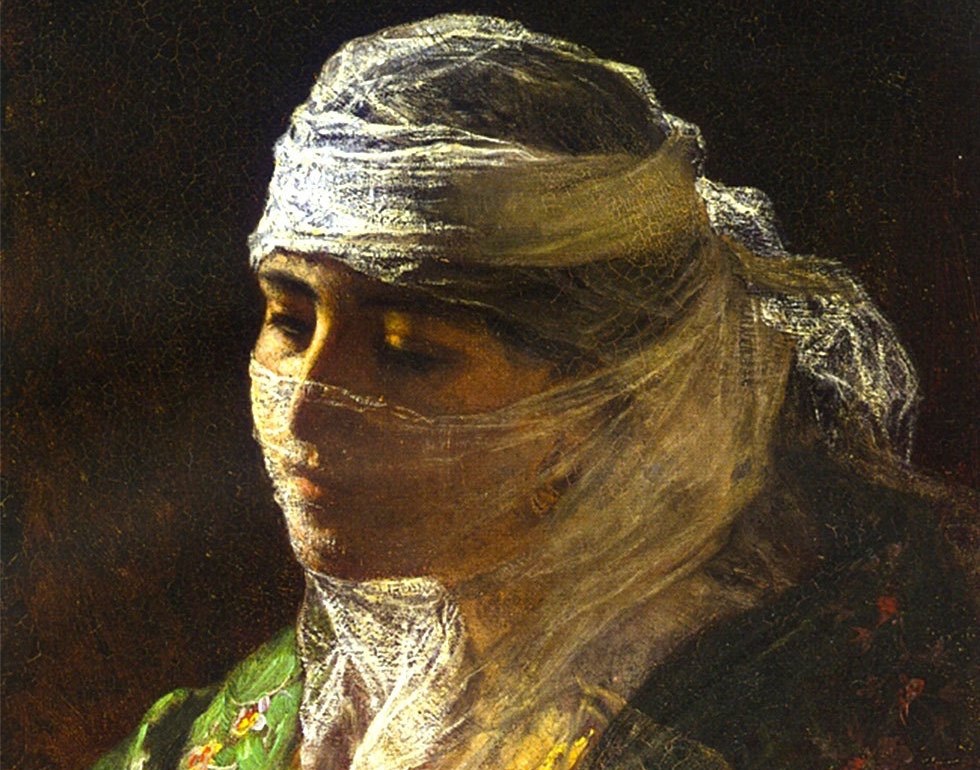
Professor Tikva Frymer-Kensky notes that the assertive and loyal qualities of Tamar also show up in Ruth. “The blessing at Ruth’s wedding underscores the similarity in its hope that Boaz’s house ‘be like the house of Perez, whom Tamar bore to Judah’ (Ruth 4:12). These traits of assertiveness in action, willingness to be unconventional, and deep loyalty to family are the very qualities that distinguish their descendant, King David.”
Less well known amongst the descendants of Perez is Jashobeam, son of Zabdiel, “chief of all the commanders of the army” at the time that David was preparing to build the Temple, who had charge “of the first division in the first month; in his division were twenty-four thousand” (1 Chron 27:2–3). Years later, on return from exile in Babylon, “all the descendants of Perez who lived in Jerusalem were four hundred sixty-eight valiant warriors” (Neh 11:6).
The story of Onan, Tamar, and Judah is disturbing. Tamar was a faithful woman, obeying instructions to be married, to obey the Levirate law, and to wait for the appropriate time for another marriage. She asserts her rights and remains faithful in adversity. Yet Tamar is surrounded by men who misbehave badly—a sinful husband (Er),struck dead; his disobedient brother (Onan), also struck dead; and their opportunistic father (Judah), who at least, in the end, appears to recant of his deeds. Poor Tamar!
Writing elsewhere on the Jewish Women’s’ Archive about her namesake, Dr Tamar Kadari notes that whilst “the Rabbis spare no criticism of Judah and his sons, pointing out the sins that were responsible for their bitter fate”, they display a different attitude toward Tamar, praising her as “a woman with sterling qualities, who maintained the strictures of modesty and faithfully observed the laws of niddah”. (The laws of niddah govern the behaviour of menstruating women.)
Nevertheless, noting that Judah obeys the Levirate laws, she comments further that “the Rabbis find Judah’s conduct praiseworthy: even though the Torah had not yet been given, he nonetheless took care to observe all the commandments (Lev. Rabbah 2:10)”. One midrash claims that Tamar prayed: “May it be Your will that I not leave this house empty” (Gen. Rabbah 85:7), which indicates that her true aim “was to cleave to the house of Judah and provide a successor for his line”.
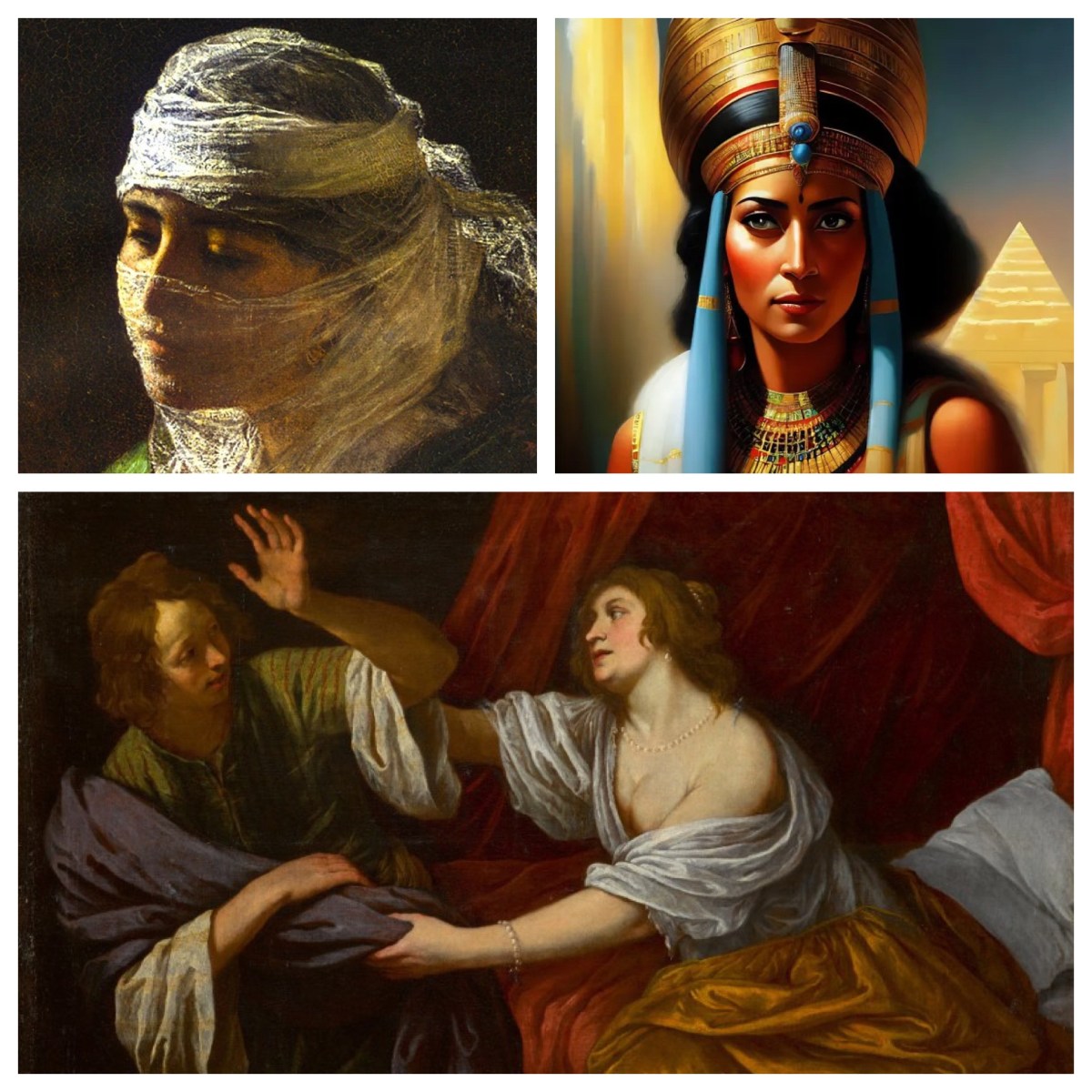
Dr Kadari reports that another midrash argues that it was “inconceivable that Judah thought [Tamar] to be a harlot because she covered her face, since, if anything, prostitutes show their faces. Rather, out of modesty, Tamar had always covered her face in her father-in-law’s home. Thus, when she disguised herself as a harlot and revealed her face, Judah did not recognize her (BT Sotah 10b).”
She further notes that “Another midrashic account has Judah saying: ‘This one is a harlot; of what concern is she to me?’ and continuing on his way. Once he had passed by, Tamar raised her eyes to God and said: ‘Master of the Universe, am I to go forth with nothing from the body of this righteous one?’ Then God immediately sent the angel Michael to bring Judah back (Tanhuma [ed. Buber], Vayeshev 17).” It was Tamar’s persistence in prayer that ensured the lineage of Judah.
And finally, amongst numerous other fascinating midrashic explanations that Dr Kadari reports, we note that it was seen that, because of his honesty in admitting he was the father and excusing Tamar from blame, Judah is blessed with the full line of the thirty kings of Judah, from David through to Zedekiah (Gen. Rabbah 97:8).
5 The wife of Potiphar
The wife of Potiphar is an intriguing presence in the section of Genesis that focusses on Joseph, one of Jacob’s twelve sons, while he was in Egypt (Gen 37—50). Potiphar was “one of Pharaoh’s officials, the captain of the guard” to whom the Midianites had sold Joseph (Gen 37:36). Potiphar’s wife is never named, but she plays a key role in Joseph’s story while he is serving as overseer to the household of Potiphar.
First, this woman attempts to seduce Joseph (39:7, 11–12), then she accuses Joseph of trying to seduce her (37:14–18). Of course this enraged Potiphar, who put Joseph in prison (37:19–20). No due process and fair trials in ancient Egypt, it seems! However, “the Lord was with Joseph and showed him steadfast love”; he enjoyed the favour of the chief jailer and “whatever he did, the Lord made it prosper” (37:21–23).
Some years ago, my wife Elizabeth Raine did a study of this particular woman (in a series that she wrote and taught about “ Women in the Bible”). She found that artists and commentators alike across the centuries have had a field day with the promiscuous nature of this unnamed woman—she was a shrewd villain, a seductress, a deceiver, the embodiment of temptation.
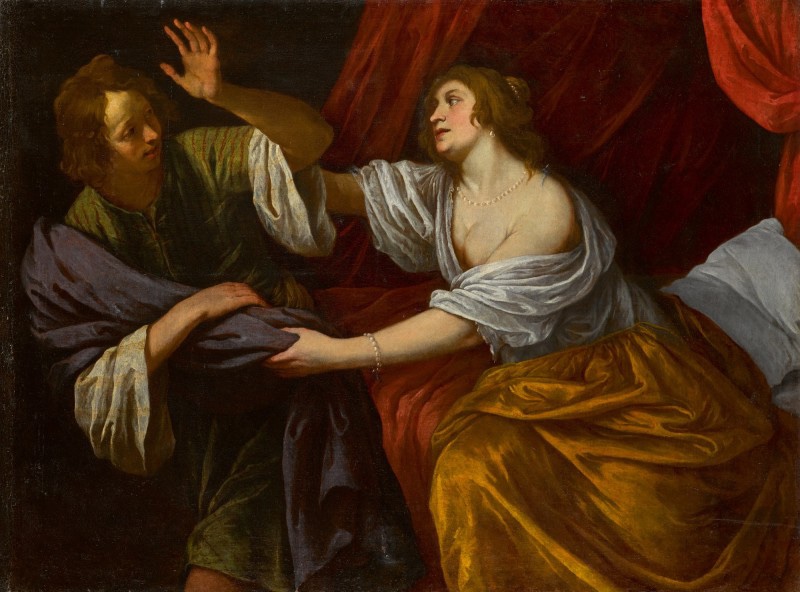
Giovanni Andrea de Ferrari (1598–1669)
A third century text (attributed to the late 1st century bishop, Clement of Rome) railed against her: “did not a woman conceive an excessive passion for the beauty of this chaste and upright man? and when he would not yield and consent to gratify her passionate desire, she cast the righteous man into every kind of distress and torment, by bearing false witness”.
She found an online PowerPoint display that said, “no doubt she went on with her immoral behaviour; perhaps one day her husband found out the truth of her character, perhaps not; but certainly, one day, she will pay the ultimate penalty of her sinful life, separation from God, in a place of torment”.
However, we do not know whether Potiphar’s wife did want a sexual liaison. Perhaps she was jealous of Joseph when he replaced her as head of the household? Perhaps she did long for the emotional intimacy that Potiphar was not providing? The text is silent.
Jewish interpretation of this story seeks to be sympathetic about this woman. The Testament of Joseph, a 2nd century Jewish text, relates that Potiphar’s wife initially embraced Joseph like the son she lacked, and only gradually did she become seductive with him. Her nakedness before Joseph occurs when she is beset by grief at not being able to draw close to Joseph.
A little earlier, the Jewish scholar Philo of Alexandria sees Potiphar as a eunuch—he was an official in the court, so this was not an unusual supposition. His wife wished to “be with a man”, but as he tells the story, Philo presents the story as an allegory: the woman represents the physical pleasure of the body, but Joseph, committed to celibacy, represents the soul.
The Rabbis, of course, have various explanations: Joseph was attracted to the woman, but cooled off when an image of his parents appeared before him; or the woman wanted to seduce him in order to produce a son, which Potiphar had not given her, and that she saw a vision in which the stars showed that she would have children with Joseph; or Joseph is compelled by a vision from God to resist at all costs.
As is the case with a number of unnamed female figures in scripture, this particular woman is bequeathed a name as later tradition develops. The medieval commentator Sefer HaYashar, in his commentary on the Torah, gave her the name Zuleika.
In the Quran, this story is told in chapter 12. The woman Zulaikha overhears a group of women speaking about the incident involving Yusuf, verbally shaming Zulaikha for what she did. Wikipedia offers a helpful summary: “Zulaikha, angered by this, gives each woman a knife and calls for Yusuf. Upon his arrival, the women cut themselves with their knives, shocked by his beauty. Zulaikha, boosted by proving to the women that any woman would fall for Yusuf, proudly claims that Yusuf must accept her advances, or he will be imprisoned. Yusuf prays to Allah, begging Allah to make them imprison him, as Yusuf would rather go to jail than do the bidding of Zulaikha and the other women. Allah, listening to Yusuf’s request, makes the chief in power believe Yusuf should go to prison for some time, and so Yusuf does.”
6 Asenath
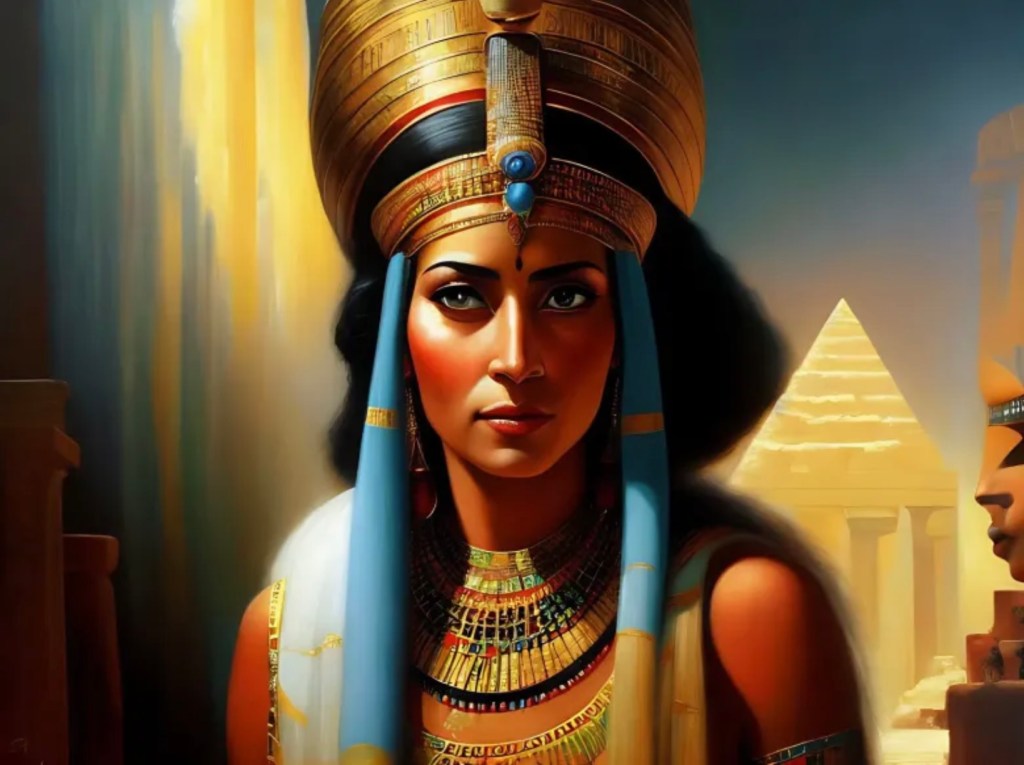
Whilst in Egypt, Joseph gained a reputation for his interpretations of dreams; he rose to power when he interpreted a dream of the Pharaoh (Gen 41:14–37). Pharaoh installed him into an office in his court and “set him over all the land of Egypt” with all the trappings of high office (Gen 41:41–43). Further, “Pharaoh gave Joseph the name Zaphenath-paneah; and he gave him Asenath daughter of Potiphera, priest of On, as his wife. Thus Joseph gained authority over the land of Egypt” (Gen 41:45).
So it is that Asenath, daughter of an Egyptian priest, wife of Joseph, enters the story. (As we noted in an earlier post, there is a rabbinic midrash that says that Asenath was the product of the union of Dinah and Shechem who was given to Potiphar’s wife to be raised.) She gives birth to two sons: Manasseh, meaning, “God has made me forget (nashani) completely my hardship and my parental home”, and Ephraim, meaning, “God has made me fertile (hiprani) in the land of my affliction”. These sons, grandsons to Jacob, would later have a key role (but the lectionary doesn’t include this part of the story). See Gen 41:50–52; 46:20.
Dr Kadari notes that “there are two approaches to the issue of Asenath’s descent in the Rabbinic texts”. One view sees Asenath as “an ethnic Egyptian who converted in order to be married to Joseph”, which is a plain reading of the text. The second approach argues that “Asenath was not an Egyptian by descent, but was from the family of Jacob, directed by God to end up in Egypt so that Joseph would find a suitable wife from among the members of his own family.”
In either case, Dr Kadari notes that Asenath is “accepted as part of the family and her sons are accepted as worthy descendants by Jacob.” The midrash that Asenath was the result of the rape of Dinah, as noted above, provides such an explanation. See
https://jwa.org/encyclopedia/article/asenath-midrash-and-aggadah
Dr Kadari notes that “the traditions that maintain that Asenath was a convert present her as a positive example of conversion, and include her among the devout women converts”. She cites Hagar, who was Egyptian, Zipporah the Midianite, Shiprah and Puah, Egyptian midwives, and the Egyptian wife of Pharaoh in the story of Moses, and the Rahab the Canaanite, Ruth the the Moabite, and Jael the Jenite. Asenath stands in fine company!
The closing chapters of Genesis contain a series of poetic blessings on the twelve sons of Jacob—those twelve men who are remembered as “the twelve tribes of Israel” (Gen 49)—before recounting a key familial reconciliation, the death of the great partriarch Jacob, and then the death of his son Joseph (Gen 50). The story ends with this long poetic set of blessings and then with these two key men of the sagas reconciled. And still, the women are missing from the story.
7 Asherah?
To conclude, we might note that there is another female who has been completely absent from the narrative of Genesis. She a figure that we know was present throughout the period when Israel was ruled by kings, a period when these stories were shaped and crafted to serve as as aetiological explanations for the nature of Israel. This woman is the goddess Asherah, whose presence is signalled in later narrative books (1 Ki 15:13; 18:19; 2 Ki 21:7; 23:4–14; 2 Chron 15:16).
Writing in the Jewish Women’s Archive, Dr Susan Ackerman observes that there is evidence from a “late-thirteenth-century B.C.E. Lachish ewer” dedicated to Asherah which is “decorated with images of sacred trees”. See
https://jwa.org/encyclopedia/article/asherahasherim-bible
She continues: “The Canaanite association of Asherah with sacred trees is also found in Israelite tradition. For example, one of the Canaanite epithets of Asherah, elat, “goddess,” is etymologically identical to the Hebrew word for the terebinth tree (ela). Another word for “terebinth” (alla) and two words for “oak” (elon and allon) are also closely related.”
As a result, Ackerman notes that “Gen 2:4b—3:24 may further suggest the association of Asherah with sacred trees, since the way that Eve, “the mother of all living” (3:20), is described in the Eden story mimics in certain respects the role of the Canaanite mother goddess Asherah. If a correspondence holds, then the trees of life and of knowledge in the Eden narrative may also reflect Asherah imagery.”
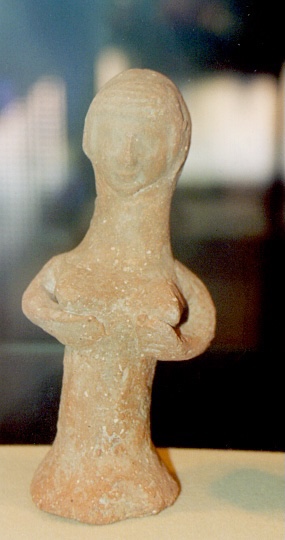
But beyond that story, it is not until the narrative quasi-historical texts which follow after the Pentateuch that we find reflections of “Israelite worship of “sacred poles or stylised trees associated with Asherah were erected by the Israelites” under the judges (Judg 6:25–26, 28, 30), the kings in the northern kingdom of Israel (1 Ki 14:15; 16:33; 2 Ki 13:6; 17:10, 16; 23:15; and parallel references in 2 Chronicles) and kings in the southern kingdom of Judah, in the south (1 Ki 14:23; 15:13; 2 Ki 18:4; 21:3, 7; 23:6, 14; and parallel references in 2 Chronicles).
Since the books of the Pentateuch—and Genesis in particular—were compiled and written during and after that long period of time, as the exiles returned to Israel, might there be nuances and hints in these ancient sagas concerning Asherah?

 An Informed Faith