Let such a one be to you as a Gentile and a tax collector (Matt 18; Pentecost 15A)

The Gospel we ascribe to the authorship of Matthew the tax collector, the first of the four in the canon of the New Testament, is distinctive for a number of reasons. One of those is that it contains a collection of the sayings of Jesus which relate to life in the community of faith—a kind of a miniature “community rule” for the people for whom the author was writing.

Those sayings are collected together in chapter 18, which is the fourth of five teaching blocks in the arrangement made by the author of this Gospel. We will hear and read some of those words this coming Sunday (Matt 18:15–20, Pentecost 15A), and then a parable relating to these teachings next week (Matt 18:21–35, Pentecost 16A). And this week’s reading contains some stridently harsh words from Jesus: if a person who has “sinned against” refuses to be reconciled, then “let such a one be to you as a Gentile and a tax collectors” (18:17)!

These five teaching blocks canvass ethical imperatives (5:1–7:29), missional guidelines (10:5–11:1), parables of the kingdom (13:1–53), relationships within the community of faith (18:1–19:1), and apocalyptic predictions about the coming kingdom along with strengthened indications of what righteousness is required in that kingdom (23:1–26:2). These teachings are demanding and comprehensive.

In each block of material, the author has drawn together teachings of Jesus that have been assembled from various sources, and arranged in a manner that presents these collected sayings and teachings as a cohesive, sermon-like presentation. The hand of the author is clear, just as the voice of Jesus is strong.

So the first fourteen verses of this chapter comprise words which are found at various places in the Gospel of Mark, one of Matthew’s sources, as well as in the sayings material which is believed to have been collected earlier, in the hypothetical source known as Q. (Material in Q, according to this theory, was known to and used by both Matthew and Luke, but in different ways and in different places in their works.)

The first five verses (18:1–5) report the words of Jesus about the child and the kingdom of heaven, which are included in all three Synoptic Gospels. When a child is placed before him, Jesus declares that “unless you change and become like children, you will never enter the kingdom of heaven; whoever becomes humble like this child is the greatest in the kingdom of heaven” (18:3–4). The same saying is found in slightly varied forms at Mark 10:14–15 and Luke 18:16–17.

The conclusion to this short scene, “whoever welcomes one such child in my name welcomes me” (Matt 18:5), is a variant on an earlier Matthean saying, “whoever welcomes you welcomes me, and whoever welcomes me welcomes the one who sent me” (Matt 10:40; and the subsequent variations, 10:41–42).

This, in turn, is derived from Mark’s own earlier account of when Jesus “took a little child and put it among them; and taking it in his arms, he said to them, ‘Whoever welcomes one such child in my name welcomes me, and whoever welcomes me welcomes not me but the one who sent me’” (Mark 9:36–37). Luke replicates this at Luke 9:47–48.

So the first section of this chapter already shows the dependence of the author on an earlier source, and his willingness to appropriate and reshape the material for his own purposes.

The next four verses (18:6–9) deal with skandala, a group of sayings that Mark reports in his account: “if any of you put a stumbling block [a skandalon] before one of these little ones who believe in me, it would be better for you if a great millstone were hung around your neck and you were thrown into the sea” (Mark 9:42). Mark himself then extends this saying with reference to having a hand or foot cut off, if it is a skandalon, as well as an eye plucked out if it, also, is a skandalon (Mark 9:43–48).

Matthew includes all the material that he finds in his Markan source—the little ones, the errant hand and foot, and the eye—and expands it, adding some words that intensify the warning: “Woe to the world because of stumbling blocks! Occasions for stumbling are bound to come, but woe to the one by whom the stumbling block comes!” (Matt 18:7).

Luke reports the initial words of Jesus (Luke 17:1–2), but then places the word about forgiving another member of the community (Luke 17:3) and the command to “forgive seven times seven” (Luke 17:4)—a word which provides the basis for the last section in Matthew’s fourth teaching block (Matt 18:15–35). So Luke and Matthew have each collated diverse words of Jesus, but in different combinations.

Before that, however, Matthew has Jesus tell the parable of the lost sheep (Matt 18:10–14), which is found also in Luke 15. In Luke’s recounting of the story, it is the first of three parables focussed on seeking the lost and welcoming them home with joy.: a list sheep, a list coin, and then two sons, each list for very different reasons

In Matthew’s narrative, however, the parable stands on its own, as a hinge between the warnings about skandala and instructions about dealing with conflict. The orientation is clear: stumbling blocks present problems, but the Gospel includes a call to seek reconciliation and embrace the return of a repentant one—for “it is not the will of your Father in heaven that one of these little ones should be lost” (18:14).

So the theme is set for passage which is offered by the lectionary this Sunday (18:15–20), which deals with conflict within the community. There is a short and direct statement about such a situation that is made by Jesus in Luke’s account: “if another disciple sins, you must rebuke the offender, and if there is repentance, you must forgive; and if the same person sins against you seven times a day, and turns back to you seven times and says, ‘I repent,’ you must forgive” (Luke 17:2–3).

It seems that this word comprises a reflection that sits neatly alongside an independent Markan saying: “whenever you stand praying, forgive, if you have anything against anyone; so that your Father in heaven may also forgive you your trespasses” (Mark 11:25). That word provides the undergirding for the instruction to forgive: God offers forgiveness.

Divine forgiveness is a theme that the Hebrew prophets of old surely knew (see Isa 33:24; Jer 31:34; 33:8; 36:3; Ezek 16:62–63; Dan 9:9, 17–19; Amos 7:1–3; Hos 4:4–7) and which the psalmists regularly sought (Ps 25:18; 32:1; 65:3; 79:9). They know that, “if you, O Lord, should mark iniquities, Lord, who could stand? But there is forgiveness with you, so that you may be revered” (Ps 130:3–4). And so Jesus instructs his disciples, when praying, to ask God to “forgive us our sins, for we ourselves forgive everyone indebted to us” (Luke 11:4; and compare Matt 6:12).

In Matthew’s reworking of this Q material, it takes no less than twenty verses to get from the presenting problem—“if another member of the community sins against you” (18:15)—to the final resolution, that we are to show mercy and forgive—for “if you do not forgive your brother or sister from your heart”, neither will God forgive you (18:35). Matthew does this through some direct instructions (18:15–20), which we hear in this week’s lectionary readings, and then an extended parable (18:21–35), which we will hear in the following week’s lectionary offerings.

The construction of this instructional section is clear and informative. There are four “if” clauses, setting out a hypothetical situation: “if another member sins” (v.15a), “if the member listens” (v.15b), “if you are not listened to” (v.16), and “if the member refuses to listen” (v.17). We know that this is a hypothetical situation, because the syntax of the Greek at this point does not use the simple construction for a “real present condition”, ei followed by the verb in the indicative mood, with a resolution also in the indicative.

Here, the syntax is ean followed by the verb in the subjunctive mood, followed by a resolution in the indicative. That pattern appears four times in these three verses. Jesus (via Matthew) is setting out a possible scenario, with clear guidance as to what course of action is to be taken in that scenario.

For the first three times, the response is clear and compassionate. If a sin occurs, “go and point out the fault” (v.15a). If the person listens, “you have regained that person” (v.15b). If the person does not listen, “take one or two others with you” (v.16). And as the situation increases, the inclusion of others in the process broadens the responsibility for possible resolution.

It is thought that the “one or two others” in the third step reflects the need for “two or three witnesses” in the prescriptions of Torah (Deut 17:6, and especially 19:15). Indeed, the author of this Gospel, as a pious Jew immersed in the details of Torah, would have known well the process that is outlined in Deut 19:15–21, which provides that “a single witness shall not suffice to convict a person of any crime or wrongdoing” (Deut 19:15).

It is this passage, famously, that proceeds through a process of clarification—particularly in relation to identifying a false witness (Deut 19:16–19)—before the culminating sentence is pronounced: “so you shall purge the evil from your midst … show no pity: life for life, eye for eye, tooth for tooth, hand for hand, foot for foot” (Deut 19:19, 21). Justice is clear; justice is hard; justice is demanded.

Seen in the light of this Torah provision, we can therefore understand the sequence that Jesus, via Matthew, envisages: a private conversation, then a conversation with witnesses , and then, if required, a full, public declaration of the sin—and the punishment, “let such a one be to you as a Gentile and a tax collector” (Matt 18:17).

The process that Matthew envisages is oriented towards “regaining” the one who has sinned. The Greek word in verse 15 which is translated in this way was used by Paul to indicate success as he seeks to convince people to follow Jesus as Messiah (1 Cor 9:19–23; notice the reacting “so that I might win”). It may be that Matthew has this in mind in his use of the word in verse 15; the aim is to “win” or “regain” a person back into the community, through a process of intensified persuasion.

I confess that I once wrote a detailed exegesis of this passage which argued that this word provided the key to the passage: the aim was to regain a person, to have reconciliation. I even went on to claim that “like a Gentile or a tax collector” in verse 17 did not mean, banish this person from the community, but consider them to be providing a new opportunity for them to be “converted”, persuaded of the value of the Gospel. My professor said it was very well argued, even though he did not agree with my somewhat optimistic conclusion. (I got a good grade, though!)

In the decades since then, a number of conversations with my wife Elizabeth—who has spent more time focussing on Matthew’s Gospel than I have, even though I have taught courses on Matthew for 20 years now—convinced me that the clue lies in the words used in verse 17. After all, neither a Gentile nor a tax collector is highly regarded in this Torah-informed Gospel.

Jesus, in Matthew’s account, instructs his disciples “do not heap up empty phrases as the Gentiles do” (6:7), noting that “if you greet only your brothers and sisters, what more are you doing than others? do not even the Gentiles do the same.” (5:47), and also that “it is the Gentiles who strive for these things” that are of passing value—food and drink, the length of life and our clothing—on contrast to “the kingdom of God and God’s righteous-justice” (Matt 6:32–33). The Gentiles do not get a good rap from the Matthean Jesus.

Indeed, in this Gospel, Jesus quite distinctively commands his disciples, “go nowhere among the Gentiles, and enter no town of the Samaritans, but go rather to the lost sheep of the house of Israel” (10:5-6), and dismissively informs a Canaanite woman, “I was sent only to the lost sheep of the house of Israel”, and so “it is not fair to take the children’s food and throw it to the dogs” (15:24, 26). Keep away from the Gentiles is his persistent message! (Until that is reversed by the risen Jesus, in a great turnaround, at 28:19–20).

And as for tax collectors: the first thing to say ist hat whilst the traditional understanding is that this Gospel was written by a tax collector (the one identified at 9:9), scholarly interpreters regularly dismiss this as later tradition, and note that working from the text leads us to conclude that the author was more likely a fervent, pious Jew, Torah-abiding and also deeply committed to regarding Jesus as rabbi, teacher, and Messiah.

Of course, Jesus was known for eating with tax collectors (Mark 2:15–16 and parallels)—but not so much with Gentiles (especially in Matthew’s Gospel!). Here, however, the tax collectors to whom the errant community member are to be dispatched (18:17) are those linked with sinners (9:10–11; 11:19) and with prostitutes (21:32), those who, rather than loving their enemies (5:44), “love those who love you”. “Do not even the tax collectors do the same?”, Jesus asks (5:46), placing them on par with the Gentiles, as we have already noted (5:47). So in this Gospel, it seems that to be with tax collectors and Gentiles is to be amongst those, outcast from God, who are determined to live in a way that does not reflect how Jesus understands God wants his people to live.

So the Matthew passage results in the Sam end as the Deuteronomy passage” “purge the evil from your midst” (Deut 19:19), let the sinful one “be to you as a Gentile and a tax collector” (Matt 18:17). In both cases, the need for a clear boundary, marking off the faithful from the evil ones who surrounded them, was paramount. No gentle Jesus, meek and mild, here!!

The decision is undergirded by words about binding and loosing which harken back to the authority given to Peter (16:19). It is a decision reinforced by divine authority—what is decided on earth “will have been bound (or loosed) in heaven”.

Love is the fulfilling of the law (Romans 13; Pentecost 15A)

“Love is the fulfilling of the law”, Paul asserts in the passage that we are offered by the lectionary for consideration this coming Sunday (Rom 13:8–14). “Christ is the end of the law”, he has boldly asserted in an early part of the letter (Rom 10:4). How do these two seemingly contradictory statements stand alongside each other? What is the status of the law—the Torah, the foundation of Jewish life and faith—for Christians?

In making his statement about Christ and the Law (10:4), Paul has used an important Greek word: telos. This is regularly translated as “Christ is the end of the Law”; but we might well ask, what is the sense of the word “end” in this verse? On the one hand, this word might does infer a meaning of “the end as and abolition”, doing away with the Law. Apart from the fact that this directly contradicts what Jesus said about his intention not to abolish any single part of the Law (Matt 5:17–18), it is a most an unsatisfactory supercessionist reading, which completely does away with all the Old Testament.

On the other hand, there is the sense (which I prefer) that this means “the end as in bringing to the height of fulfilment”. In which case, Christ is bringing the Law to its logical and natural end, or goal: the complete expression of the Law through love. In other places where the word telos is used, it has this sense of bringing to fulfilment or bringing to perfection.

Indeed, this latter sense accords with the use of the term in other Pauline texts, where it is used to refer to those with spiritual maturity. He encourages the Corinthians, “in your thinking, be adult (teleioi)” (1 Cor 14:20). He confesses to the Philippians, “not that I have already obtained this or have already reached the goal (teteleiōmenoi)” (Phil 3:12) and exhorts “those of us then who are mature [to] be of the same mind” (Phil 3:15).

In later letter claiming Paul as author, the term signifies those “mature in Christ (teleioi en Christō)” (Col 1:28; see also Eph 4:13). It is perhaps similar to the meaning in Hebrews, which makes the claim that Jesus is the means of offering a perfect sacrifice (Heb 2:10; 5:9) through which “by a single offering he has perfected (teteleiōken)for all time those who are sanctified” (Heb 10:14).

Of course, the idea of being perfect is integral to the appreciation of God that is expressed at various places in Hebrew Scripture. “This God—his way is perfect”, the psalmist sings (Ps 18:30; echoed also at Deut 32:4; 2 Sam 22:31; Job 37:16), and in another psalm, “the law of the Lord is perfect, reviving the soul” (Ps 19:7).

So the temple that Solomon built was to be perfect (1 Ki 6:22), the sacrifice of wellbeing to be offered there, “to be acceptable it must be perfect, there shall be no blemish in it” (Lev 22:21), and no person with a blemish is able to serve as a priest (Lev 21:16–24).

Perhaps this is the sense of telos, perfection, complete fulfillment, that sits underneath the use of this word by Paul at Rom 10:4? That would mean that he is proposing that Christ brings the Law to a state of perfection in which it is filled to overflowing with God’s goodness.

Certainly, this would explain why Paul is able to affirm that “the whole law is summed up in a single commandment, ‘You shall love your neighbour as yourself’” (Gal 5:14). Law and love are here seen in close interrelationship with one another, not in opposition to one another. Love is the essence of the Law, bringing fulfillment what the Law set forth.

And that would also explain the words we have in this coming Sunday’s reading from Rom 13, that “the one who loves another has fulfilled the law” and so “love is the fulfilling of the law” (Rom 13:8, 10).

The key words used in Rom 13:8–10 are equally strong with regard to the ongoing validity and relevance of the Law, for Paul. He uses two words derived from the verb plēroō, meaning “to fill up”, and thus, “to fulfill”. In 13:8, he says that “love has fulfilled the law”, using the perfect form of the verb, peplērōken. The perfect has the sense of an action completed in the past which has consequences which continue on into the present time. So the fulfilling of the Law in the past by deeds of love has ongoing consequences—that Law, those acts of love, impinge on the present time.

Then, in 13:10, Paul reiterates that “love is the fulfilling of the law”, using a noun formed from this verb, plērōma. That conveys the idea that the Law has been filled right up to overflowing, fully and completely, by acts of love. The Law remains relevant and potent, because of those fulfilling acts of love.

Alongside these two words, Paul uses another word to make a similarly strong statement. Quoting for of the Ten Commandments, he affirms that these laws are “summed up” in another set of words, taken from Hebrew Scripture itself: “love your neighbour as yourself” (13:9, quoting Lev 19:18). The verb translated “summed up” is anakephalaioutai, a compound word combining the idea of “the head” (kephalē) and “brought up to” (the preposition ana).

This word contains the sense, then, that everything is gathered together and taken up into the head; obedience to each and every one of the commandments of the Law is gathered together and taken up into the head, that is, in the act of loving the neighbour.

Paul could not be clearer, and could not be stating things more strongly: the Law is filled to overflowing in love. The Law continues to have power. It is not abandoned as irrelevant or outdated.

Paul’s attitude to the Law, however, is quite complex. He trained as a Pharisee, and he notes at he was “far more zealous for the traditions of my ancestors” (Gal 1:14), and so he has a “delight in the law of God in my inmost self” (Rom 7:22). He affirms that he upholds the Law (Rom 3:31), alluding to various commands in The Ten Words which he insists are worth obeying (2:17–22), and affirming that, in its essential character, “the law is holy, and the commandment is holy and just and good” (7:12).

Yet his calling to be “apostle to the Gentiles” (Rom 11:23; Gal 2:8) led to his experience of eating at table with Jews and Gentiles together, in breach of kosher food laws (Gal 2:11–13)—an issue that is clearly in view decades later, as Luke writes his account of the early years of the Jesus movement, siding with Paul in the view that God has set aside the requirement for separate foods and separate tables (Acts 10:1–11:18; 15:19–20, 28–29).

This, in turn, leads Paul to his missionary goal of bridging the gap between Jews and Gentiles in practical ways (Rom 15:25–27), undergirded by the message that he preaches, affirming that salvation is offered “to everyone who has faith, to the Jew first and also to the Greek” (Rom 1:16; see also 2:10; 10:12; Gal 3:28; and the post-Pauline development in Eph 2:11–22). He is driven by the scriptural claim that “God shows no partiality” (Rom 2:11; Deut 16:19–20; 2 Chron 19:7; Sir 35:15–16).

So his letter to the Romans is a long and complex argument in which he explains how he understands that the good news is that “the righteous-justice of God [is] through faith in Jesus Christ for all who believe” (3:22), that there is “justification and life for all” (5:18). The argument builds and develops, demonstrating how God has chosen to make righteous-justice available to all human beings, through Abraham as through Jesus, by means of the indwelling Spirit.

So this leads Paul to write in negative terms about the Law. Although he maintains that having faith in Jesus does not “overthrow the law”, and he insists that “we uphold the law” (3:31), he goes on to note that “the law brings wrath” (4:14), for where “the law came in … the trespass multiplied” (5:20). “If it had not been for the law”, he asserts, “I would not have known sin” (7:7), and so “I am a slave to the law of sin” (7:25), and in Jesus, “God has done what the law, weakened by the flesh, could not do” (8:3).

Accordingly, “Israel, who did strive for the righteousness that is based on the law, did not succeed in fulfilling that law” (9:31). Or, as he portrays things in writing to the Galatians, “a person is justified not by the works of the law but through faith in Jesus Christ” (Gal 2:16), “through the law I died to the law” (2:19), “if justification comes through the law, then Christ died for nothing” (2:21), “no one is justified before God by the law” (3:11), and even, “if you are led by the Spirit, you are not subject to the law” (5:18).

However, to the proposition that he poses, “Is the law then opposed to the promises of God?”, Paul immediately replies, “Certainly not!” (3:21), and then argues that “the law was our disciplinarian until Christ came, so that we might be justified by faith” (3:24). This looks like Paul is ready to contend that the Law is superseded, and should be put aside. But not so fast; “I testify to every man who lets himself be circumcised that he is obliged to obey the entire law” (5:3). He is not prepared to let it go entirely. The Law still stands for Jews—but not for Gentiles.

Indeed, in the most complex midrashic section of his letter to the Romans, Paul plunges into a complex reading of scriptural texts in order to sanction the claim that God’s sovereign mercy offers a universal righteous-justice, both to Jews and to Gentiles alike (Rom 9:1–11:32).

This section of the letter contains the greatest concentration of scripture citations and allusions of the whole of this letter to the Romans—and, indeed, of all of the seven authentic letters of Paul. In the argument that is advanced by a Paul, whilst he signals the limits and inadequacies of the Law, he holds fast with the view that the Law is not rendered obsolete, but rather is brought to fulfilment (10:4; see the discussion above).

Paul,asks pointed questions: “does this mean that “the word of God had failed”? (9:6) and “has God rejected his people?” (11:1). “By no means!” is once again the Pauline riposte. “Through the stumbling [of Israel] salvation has come to the Gentiles, so as to make Israel jealous” (11:11), yet “as regards election they are beloved, for the sake of their ancestors; for the gifts and the calling of God are irrevocable” (11:28–29).

The complex midrashic argumentation of these three chapters comes to a climax in a string of joyously prayerful affirmations concerning God’s “riches and wisdom and knowledge”, leading to the attribution of glory to God forever (11:33–36). This is the ultimate response to the singular grace of God’s gift of righteous-justice to all human beings. And that gracious gift fulfils, or brings to culmination, the Law that Israel was given.

Voice, then Truth—and Treaties (4) #YestotheVoice

The Voice to Parliament is not a partisan political issue; it is a national matter that draws together a wide range of Australian society in support of the First Nations people of this continent and its surrounding islands.

Over 110 ethnic and cultural community organisations have committed their “steadfast support” for a YES vote in the upcoming Voice referendum. Signatories includes multiple Indian and Chinese community organisations, along with Sri Lankan, Italian, Irish, Iranian, Greek, Vietnamese, Filipino, Sikh, Islamic, Hindu, Buddhist and Pacific Islander community groups – to name just a few.

The Joint Resolution describes a constitutionally guaranteed Voice as “modest, practical and fair”. In their press release, multicultural community leaders say, “as leaders of diverse multicultural community organisations, we endorse the Uluru Statement and its call for a First Nations voice guaranteed by the Constitution”. They further say, “We commit our steadfast support, and urge all Australians to work together to ensure referendum success. Let us co-operate across differences of politics and diversities of culture and faith, to heal our country and unify the nation.”

*****

Leaders of Australian Muslim communities have expressed their strong support of the YES vote in the coming referendum. Indigenous Australian peoples have a long relationship with Muslims, dating back centuries before British colonisation.

Yolngu and other Indigenous peoples in the north of Australia traded and engaged in cultural exchanges with Makassans from Indonesia. Islamic references identified in Yolngu mythology and ritual include “the ‘Dreaming’ creation figure, Walitha’walitha, also known as Allah.”

Many Indigenous Australian women married Afghan cameleers who were brought to Australia in the 1800s to help traverse the country’s interior arid and desert regions. Others intermarried with early Muslim Australians, particularly Indian ‘hawkers’, also who came to Australia as ‘guest’ workers in the late 1800s.

Many Indigenous Australians are reconnecting with their Muslim heritage. Today, Islam is the only religion that is increasing among Indigenous Australians, while other categories of religion are unchanged or have declined according to the Australian Bureau of Statistics 2021 Census data.

The Islam in Australia survey conducted in 2019 found 94 percent agree or strongly agree that Indigenous Australians should be recognised in Australia’s Constitution.

*****

Australian Jewish community leader Mark Leibler thinks an Indigenous Voice to Parliament is important. Whilst he recognises there will always be a diversity of views within any community, he believes that the Australian Jewish community broadly supports the Voice as a just and reasonable step towards righting past wrongs.

He refers to a famous quote from the prophet Jeremiah that references a voice, and it comes to mind as we contemplate this step: “A voice is heard, crying, weeping. It is a mother, Rachel, crying about her children; inconsolable because her children are gone.” The Aboriginal and Torres Strait Islander Voice needs to be heard because our Indigenous children are suffering also, says Mark Leibler. And the words of the prophet tell us why: calm your weeping – as there is hope for your future.

He wisely notes that “we are privileged as Australians that our history encompasses the most ancient, enduring culture on earth. Surely, our founding document should recognise and celebrate this richness.”

He also notes that “while Australians of today are not responsible for past wrongs, we are responsible for recognising the impact of intergenerational trauma and for supporting Indigenous fellow citizens to heal from this trauma so that it doesn’t negatively impact generations to come.”

*****

Not all members of the Liberal Party are reluctant to support the YES vote in the proposed referendum. Liberals for Yes is a group of Liberals from around Australia, from branch members to federal politicians, who support a yes vote on the Indigenous voice to parliament.

Kate Carnell is national convener of Liberals for Yes. She is a serving member of the board of BeyondBlue, a former CEO of the Australian Chamber of Commerce and Industry, and a former chief minister of the ACT.

She says, “We want to ensure that Liberals across Australia feel empowered and comfortable to vote yes and even advocate for it in their communities. We acknowledge that our federal parliamentary leadership has chosen to oppose the proposed constitutional amendment. But the Liberal party’s greatest tradition is that it is a broad church that accommodates a diverse range of views.

“An Indigenous voice would be a standing body aimed at practical outcomes, with its existence mandated by the Australian people because they support recognition of Aboriginal and Torres Strait Islander as the original inhabitants of our continent.

So it is fair, it is practical, it is workable and constitutionally safe; this makes it well aligned with Liberal values.”

Using the Clifton Strengths Inventory in Church Council strategic planning

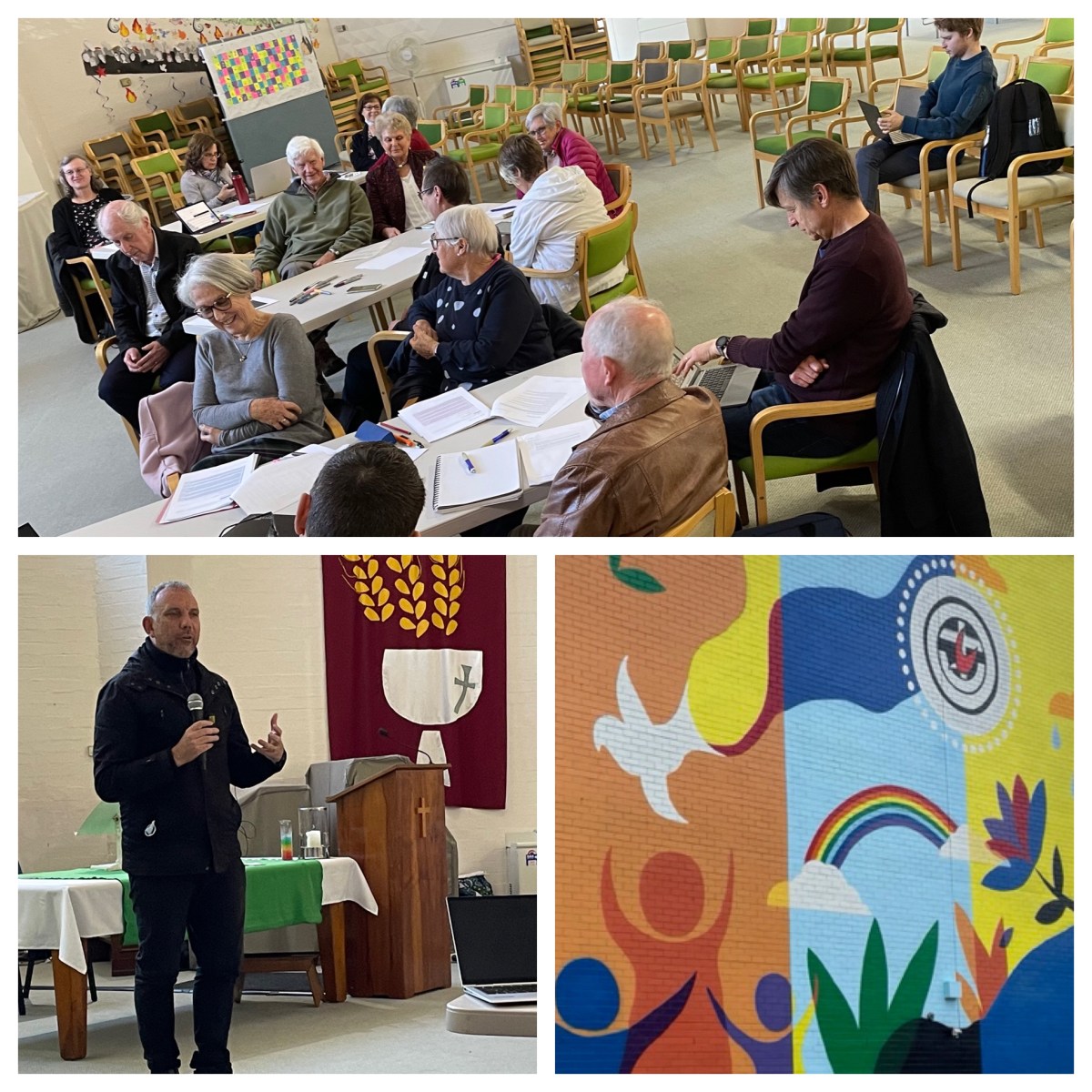
Members of the Tuggeranong Uniting Church Council and a group of leaders from within the Congregation met recently in a workshop based around the CliftonStrengths Inventory. It was a most enjoyable and productive day, and something that other Church Councils could well consider doing when they come to the place that Tuggeranong finds themselves in, looking to call a new minister into placement with them.

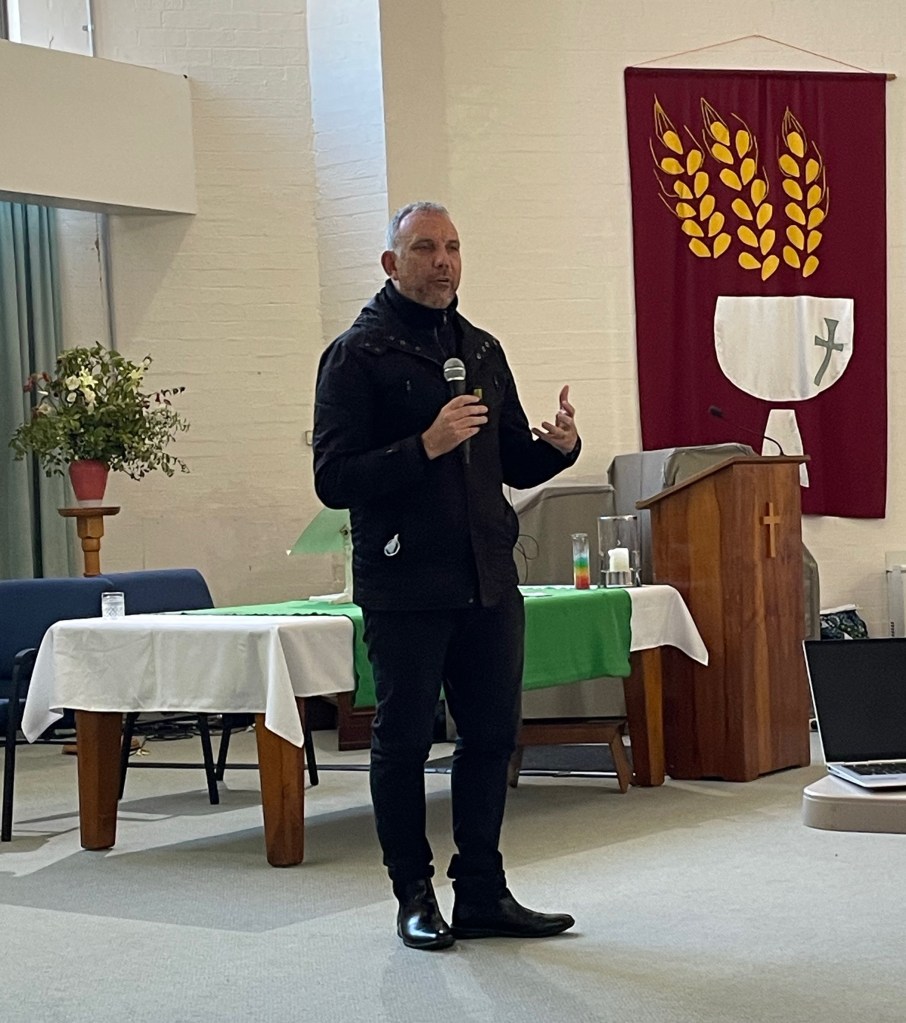
Ben Gilmour, Director of Vital Leadership in the Synod of NSW.ACT of the Uniting Church in Australia, led the group through a process of discussion, designed to assist with the task of discerning “the gifts and graces” that would be needed in the minister who would be called to follow Elizabeth Raine in ministry at Tuggeranong, as she retires later this year. Presbytery members of the Joint Nominating Committee who would be involved with representatives of the Congregation in that task were also participating on the day. There were eight discrete sections to the workshop.

Ben is trained in the use of the Inventory in various situations, and he is able to adapt the programme to suit the specific needs of a Congregation, be it team building, leadership development workshops, or coaching of an individual or a leadership team. 

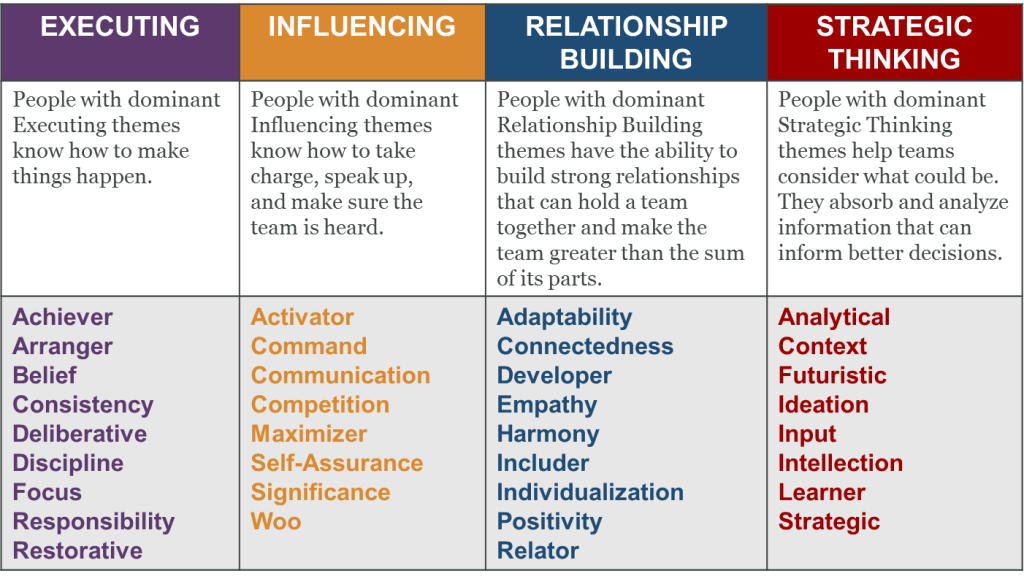
Those present for the Tuggeranong workshop had completed the CliftonStrengths Inventory ahead of the meeting, enabling Ben to prepare an overview of the relative strengths of the combined leadership in each of the four areas measured by this Inventory: Strategic Thinking, Relationship Building, Influencing, and Executing. This was a revelatory exercise in itself. Ben then had collated a comprehensive statement of the practices and vision of the Congregation, as seen through the collated leadership reports.

Personally, as a longterm sceptic about psychological-type assessment tools, I was cautious. I know that Myers-Briggs and the Enneagram offer some value, but I don’t like the way that people can be “boxed” into certain categories by the way they are used. (You’re a Number Four? With a Seven Wing? Oh! A Thinking Introvert? With a tendency to Perception? Really?)

But this was a more detailed tool, open to greater complexities and subtleties, than anything I had previously experienced. The online assessment tool is capable of describing 34 themes that make up the user’s personality. The results of the test “are intended to help individuals understand their unique strengths and how they can use them to achieve their goals and improve their performance.”

Collated together, the results of the twenty people who completed the inventory provided a rich description of the active leadership within the Congregation. When I read my own report, it felt like I was “looking into a mirror”—the person described was me! Others who took part had similar experiences. The reports are realistic and honest (and detailed).

The 34 themes are divided into 4 domains. First, Strategic Thinking covers Analytical, Context, Futuristic, Ideation, Input, Intellection, Learner, and Strategic strengths. Next, Relationship Building encompasses Adaptability, Connectedness, Developer, Empathy, Harmony, Includer, Individualization, Positivity, and Relator.

Then, Influencing details Activator, Command, Communication, Competition, Maximizer, Self-assurance, Significance, and something charmingly called “Woo”. Finally, in the area of Executing, the test dealt with Achiever, Arranger, Belief, Consistency, Deliberative, Discipline, Focus, Responsibility, and Restorative.

The “payout” at the end of the day was a strong awareness amongst the Congregation’s leadership of what the community values, where their strengths of the collective leadership lie, what might be done to build on these strengths, and what areas could benefit from attention in the future.

The workshop has assisted the JNC to form a clear picture of what they would be looking for in a minister who might be called to Tuggeranong in 2024. That JNC has a strong base for the discernment conversations that they will have, and the wider leadership team of the Congregation has a firm foundation for developing and extending the already fruitful ministries that the Congregation is undertaking in its mission to the people of the Tuggeranong Valley.

CliftonStrengths® by Gallup® – Start the Assessment TodayGalluphttps://www.gallup.com › strengths › assessment

On TUC, see

and

For the “Our Story” video, go to

Voice, then Truth—and Treaties (3) #YestotheVoice

The Voice to Parliament is not a partisan political issue; it is a national matter that draws together a wide range of Australian society in support of the First Nations people of this continent and its surrounding islands.

In early 2023, Common Grace launched the national Listen to the Heart campaign, calling Christians to vote yes in the referendum for a constitutionally enshrined Indigenous Voice to Parliament.

Common Grace describes itself as “a movement of individuals, churches and communities pursuing Jesus and justice together for the flourishing of all people and all creation”. Its campaign, Listen to the Heart, is led by Aboriginal and Torres Strait Islander Christian Leaders, including Aunty Jean Phillips, Uncle Ray Minniecon, Uncle Vince Ross, Adam Gowan, Sabina Stewart, Bianca Manning, and Aunty Sue Hodges.

The campaign invites Christians across Australia to deeply listen to the calls of Indigenous peoples for justice, through Voice, together with Treaty and Truth-Telling, reflecting the three key commitments sought by the Statement from the Heart. See https://www.listentotheheart.org.au

The Voice to Parliament will be Voice structured to allow local, regional, state and territory voices to be heard through this National Voice.

*****

In 2015, the Social Justice Committee of The Hunter Presbytery made a submission to the Joint Parliamentary Inquiry into Constitutional Recognition in 2015. The three key elements in their submission still hold good some eight years later:

1. Australian people are ready for change; there is agreement the Constitution should be changed as soon as possible.

2. Practical Recognition is required, not just Symbolic Recognition. One way to implement practical recognition in the Constitution is through a Voice to Parliament.

3. The recognition of Aboriginal and Torres Strait Islander people in the Australian Constitution is important and long overdue.

See https://voice.niaa.gov.au/sites/default/files/submissions/977d1a4feb65e-The%20Hunter%20Presbytery%20%20sbm17ea86ebffeafe689558a_Cleaned%20%26%20Redacted.pdf

*****

For people in the Uniting Church, voting YES in the proposed referendum is a clear way to express our long-held and enduring commitment to our covenant relationship with First Peoples. Voting in this way to support the referendum would be one more step along a pathway that has been clear for many decades, that the UCA stands in solidarity with First Peoples in Australia. In 1980, at Noonkanbah in Western Australia, Uniting Church members stood in solidarity with the traditional owners, the Yungngora people, against the mining of their land.

The Uniting Aboriginal and Islander Christian Congress was established in 1985, and a Covenant between the UAICC and the UCA was formalised in 1994. This Covenant recognises that working for reconciliation amongst people is central to the Gospel. In 2009, the Preamble to the UCA Constitution was revised to recognise the difficult history of relationships between the First Peoples and the later arrivals, as Second Peoples. Our present relationship is one which seeks to ensure that we commit to the destiny together which we share as Australians.

Supporting a vote for an Indigenous Voice to Parliament is yet another step along that pathway of sharing a destiny together. It’s an expression of our central commitment to justice for First Peoples. It is an act that sits at the very heart of the Gospel.

*****

The Statement from the Heart is a consensus statement which was born out of extensive discussions across the nation and finalised at a Constitutional Convention at Uluru in May 2017. The Statement offers a way forward for Australia that is practical, not merely symbolic. It advocates for the three key elements: Treaty, Truth, and Voice.

Last year, a number of Australian religious leaders declared their support of the Uluru Statement from the Heart, which includes the request for just such a Voice to Parliament. There are Anglicans, Catholics, Buddhists, Jews, Muslims, Quakers, Baptists, and others who support this, along with the Uniting Church.

Aboriginal and Torres Strait Islander Christian Leaders, including Aunty Jean Phillips, Uncle Ray Minniecon, Uncle Vince Ross, Adam Gowan, Sabina Stewart, Bianca Manning, and Aunty Sue Hodges, are supporting the YES campaign for the Voice to Parliament.

A Joint Resolution of Australian religious leaders in support of the Uluru Statement from the Heart, which includes the request for just such a Voice to Parliament, was signed in May 2022, on the fifth anniversary of the Statement from the Heart. Anglicans, Catholics, Buddhists, Jews, Muslims, Quakers, Baptists, and others support this, along with the Uniting Church.

Last month, representatives of another batch of “religious” organisations have come out in support, as the peak bodies of many sporting organisations joined together to advocate a YES vote in the coming referendum: the AFL, NRL, Rugby Union, Cricket Australia, Baseball Australia, Deaf Sport Australia, Football Australia, Basketball, Taekwondo, Golf, and more.

All of which means, it makes sense for people of faith to Vote YES!!!

Voice, then Truth—and Treaties (2) #YestotheVoice

When they met in early February this year, every First Minister in Australia—territory, state, and federal—agreed to support the Voice to Parliament. This is a highly significant bi-partisan step by a group of informed leaders who recognise the importance of taking this step. It is only one step—there is still the matter of Truth Telling to be implemented, as well as Treaty (or, more accurately, Treaties) to be concluded. But the Voice is a key step forward.

The Prime Minister said that “the Voice will recognise Aboriginal and Torres Strait Islander people in our constitution, and consult on matters affecting them”. The statement from the joint meeting indicated that the Voice “provides independent advice … is accountable and transparent, does not have a program delivery function, and does not have a veto power”. These are all important details that the Australian electorate should consider, when making a decision on this matter in the proposed referendum later this year.

*****

The structure of the proposed Voice to Parliament was set out in a report issued in 2021, co-authored by University of Canberra chancellor and now Senior Australian of the Year Professor Tom Calma and University of Melbourne Professor Marcia Langton. This report envisages a network of local and regional Voice bodies covering 35 areas Australia-wide, which would deal with issues raised by local communities and contribute members to form the national Voice.

Under the Calma–Langton proposal – the result of extensive consultation – each local region would determine for itself how it should be formed. The national body would have 24 members. They would comprise 18 base members, two each from every state and territory and two from Torres Strait. Another five members would represent different remote regions and one would represent Torres Strait Islanders living on the mainland.

The membership would be gender-balanced, with an option to include two more with specialist skills as required, jointly appointed by the federal government and the Voice itself. Members would serve no more than two four-year terms and two of them, of different genders, would be selected to serve full time as co-chairs.

*****

A few months before the First Ministers had signed their declaration of support for the Voice to Parliament, earlier this year, the Uniting Church had joined with many other religious organisations in Australia to sign a Joint Resolution of Australian religious leaders in support of the Uluru Statement from the Heart, which includes the request for just such a Voice to Parliament.

The Joint Resolution was signed in May 2022, on the fifth anniversary of the Statement from the Heart, by representatives of nine Australian religious bodies. They called for immediate bipartisan action to hold a referendum on a First Nations voice to Parliament. Uniting Church President Rev Sharon Hollis was the signatory to the Joint Resolution on behalf of the Uniting Church Assembly. See https://uniting.church/supporting-uluru-statement/

The Statement from the Heart is a consensus statement which was born out of extensive discussions across the nation and finalised at a Constitutional Convention at Uluru in May 2017. The Statement offers a way forward for Australia that is practical, not merely symbolic. It advocates for the three key elements: Treaty, Truth, and Voice.