Born of a woman, born under the law (Gal 4; Christmas 1B)

At this time of the year, as we celebrate the birth of Jesus at Christmas, the beloved story from Luke’s Gospel, with census, donkey, manger, shepherds, and angels, is the dominant biblical text that most churchgoers will hear. Perhaps it is closely followed by the highly-developed theological interpretation that begins John’s Gospel. The Matthean account of the wrath of King Herod and the visit of the Magi has its place, twelve days after Christmas, at Epiphany.

Other biblical passages come a long way behind these Gospel texts. Yet, as I have noted in other posts, the Revised Common Lectionary does provide a series of additional passages, drawn from the psalms and the prophets, as well as the epistles, for worship on and around Christmas. These passages are offered for the Nativity of the Lord as Proper I, Proper II, and Proper III. See

Each of these passages provides another way for us to celebrate the Christmas event; they are clearly supplementary rather than primary in their function. As I have sought to explain, the psalms provide celebratory songs, while the prophetic passages offer hope and promise. Alongside these, the epistle passages proposed by the lectionary serve a different function.

It is well-known that Paul makes very little reference to the life of Jesus in his letters. His focus is intently on the death and resurrection of Jesus, rather than the teachings and miracles, parables and exorcisms, debates and disputations, that we read about in the canonical Gospels.

For Paul, it is the twofold statement that “Christ Jesus, who died, yes, who was raised” (Rom 8:34), the claim that Jesus “gave himself for our sins to set us free from the present evil age” (Gal 1:4), the affirmation of “the redemption that is in Christ Jesus” (Rom 3:4), and the hopeful declaration that “Christ, being raised from the dead, will never die again; death no longer has dominion over him” (Rom 6:9), which is the heart of the message he proclaims. This death-resurrection movement also forms the basis of his credal exposition at 1 Cor 15:3–8.

One of the few places where Paul clearly describes something in the life of Jesus other than this death-resurrection complex is in the Epistle passage that is provided by the lectionary for the first Sunday after Christmas (Gal. 4:4–7). Here, Paul acknowledges that Jesus was “born of a woman, born under the law” (Gal 4:4). This is a slightly more developed claim than is made in Romans, where he acknowledges that Jesus “was descended from David according to the flesh” (Rom 1:4).

This passage from Galatians is offered because it provides the earliest confessional statement about the birth of Jesus (since Paul wrote this letter to the Galatians decades before the Gospels were written). What he says is concise and clear: Jesus was “born of a woman, born under the law”. The first phrase indicates that Jesus was a human being—born of a woman, like all of us. That is an affirmation made explicit in the fourth Gospel (John 1:14) and which undergirds the narratives of the three Synoptic Gospels.

The second phrase indicates that he was a Jew—born into a society that valued and appreciated the law that long had shaped the practices and customs of the Jews. The Jewishness of Jesus is described with clarity at so many points in each of the Gospels, in which he attends synagogue on the sabbath, demonstrates his detailed knowledge Torah, and takes part in festivals in Jerusalem. The Johannine Jesus affirms that “salvation is of the Jews” and the Synoptic Jesus lays claim to the command to “love God … and love your neighbour” as the key element of his teaching.

This is a fundamental element in our Christian confession; in the Apostles’ Creed, we affirm that we believe in Jesus, “born of the virgin Mary”. Paul says nothing here about Mary’s status, other than she was a Jewish woman. Apart from the passing reference in verse 4, Paul’s focus is not so much on the fact that Jesus was born a Jew, but on the significance of the birth of this child.

So he writes that Jesus was born “in order to redeem … so that we might receive adoption” (Gal 4:5), and goes on to say more about adoption, inheritance, and the receiving of the Spirit as a child of God (Gal 4:6–7). For Paul, the creation of the human family that is presumed by his statement (infant and mother; and father, although not mentioned here) also means the creation of a wider, larger family of faith, of each one of us who is “an heir through God”. Which is, of course, why believers celebrate with joy each Christmas.

In the resources offered by the lectionary for Christmas, in the three sets of readings for the Nativity of the Lord I, II, and III, we have three excerpts from Epistles which provide similar insights—fleeting, incomplete, not fully developed—about the coming of Jesus and the significance of this event. (None of these passages refer to the “birth” of Jesus, nor do they refer directly to Jesus by name; each of them offers allusion and inference, rather than direct description.)

For Proper I, a brief affirmation is offered: “the grace of God has appeared, bringing salvation to all” (Titus 2:11). The allusion to the birth of Jesus may well be deduced; the precise wording is generalised and remote from “the birth of Jesus”. That Jesus is “the grace of God” might well be argued from other scriptural texts (John 1:17; Rom 1:5; 5:2, 15; 1 Cor 1:4; Eph 1:6–8; 1 Tim 1:14; 2 Tim 1:9) but is not made explicit in this brief statement in Titus 2.

For Proper II, another excerpt from the same epistle notes that “when the goodness and loving kindness of God our Saviour appeared, he saved us, not because of any works of righteousness that we had done, but according to his mercy, through the water of rebirth and renewal by the Holy Spirit” (Titus 3:4–5). Strikingly, the appearance of the kindness of God is here portrayed as an act of the Spirit; Jesus is nowhere named or identified!

And for Proper III, an excerpt from Hebrews declares, “in these last days he has spoken to us by a Son, whom he appointed heir of all things, through whom he also created the worlds” (Heb 1:2), and then goes on to articulate a grand vision of this Son (not explicitly named as Jesus).

The author is drawing from language in the Wisdom tradition to state that “[the Son] is the reflection of God’s glory and the exact imprint of God’s very being, and he sustains all things by his powerful word” (Heb 1:3). (Of course, Wisdom was feminine in Hebrew Scripture; here, as in other New Testament books, the key features of Wisdom are masculinised as they are applied to the man, Jesus.)

Reflecting God’s glory and being the exact imprint of God, as set forth in this passage, are striking claims. Although they appear in a letter addressed to “the Hebrews”, in which scriptural citations undergird the theological argument proposed, these phrases take us far and away from the Jewish baby born to Mary, into speculative philosophical musings about the eternal nature of the Son.

In these three texts, as in the short excerpt from Galatians 4, claims are made about the consequence of what Jesus achieved. In each case they take us far from the story of the birth of the child

In the first except from Titus, after stating that “the grace of God has appeared”, a standard Pauline catchphrase follows (“who gave himself for us”; see Gal 1:4; 2:20; and see Eph 5:2) followed by references to redemption from iniquity (still Pauline; see Rom 3:24; 8:23; 1 Cor 1:30), before adding “and purify for himself a people of his own who are zealous for good deeds” (Titus 2:14). The reference to purification and the affirmation of “good deeds” has moved us far from Paul, and tells us nothing additional about Jesus, the Jewish infant.

The next excerpt from Titus (3:7), noting “when the goodness and loving kindness of God our Saviour appeared”, describes the consequences of this appearance. The author here uses terms that are thoroughly Pauline. First, “he saved us” (see Rom 1 Cor 1:18; Rom 1:16; 10:1; 13:11; Phil 2:22); second, “having been justified by his grace” (see Rom 3:24; 5:1–2; Gal 2:15–21); and third, “that we might become heirs” (see Rom 8:15–17; Gal 3:28–29). Then the writer adds “according to the hope of eternal life”. Paul himself does refer to “eternal life” (Gal 6:8; Rom 2:7; 5:21; 6:22–23), although this is a very Johannine idea. But once again, we are far from the infancy born to Mary “under the law”.

In the excerpt from Hebrews, after offering the Wisdom-inspired cosmic vision of the Son, the writer declares, “when he had made purification for sins, he sat down at the right hand of the Majesty on high” (Heb 1:3). Again, such a statement redirects attention away from the birth of the infant, and his Jewish origins, into the heavenly realm, far away from earth (according to the ancient cosmological understanding).

My sense is that these three Epistle readings offer elements which have been taken up into the development of Christological thinking; but they offer little in the way of deepening our appreciation of the actual “story of Christmas” which is, inevitably, the focus in worship services at Christmas.


Promise and proclamation: passages from the Prophets at Christmas

There is a richness of scriptural resources for reflecting on our faith at Christmas. These resources come from the developing traditions of Christmas worship in the early centuries of Christianity. This post concerns especially some passages from the prophet Isaiah that are proposed by the Revised Common Lectionary for our Christmas worship celebrations.

In the ancient Roman church, a Christmas Mass was originally celebrated as a vigil service at the manger of St Mary Major in Rome. It was a small service originating under Pope Sixtus III, and was known as The Angel’s Mass, as the story was told of the angels appearing to the shepherds in the fields (Luke 2:1–14).

In time, a large public service was added at the church of St Peter on the morning of Christmas Day, presided over by the Pope. This practice continues to this day. This service was known as The Shepherd’s Mass, for the story of the shepherds coming to visit the newborn child (Luke 2:8–20).

A third service, The Mass of the Divine Word, was added in the fifth century, originally to celebrate St Anastasia, whose body, it was said, rested in the palace church of the Byzantine Governor in Rome. The focus of this service shifted, over time, from a veneration of the saint’s remains, to a celebration of the Incarnation. The Gospel read at this service was John 1:1–14.

These three Gospel passages were retained in the Common Lectionary when it was created in 1983, drawing on the ancient Roman practices, and continued on in the Revised Common Lectionary of 1992. To the three Gospel passages were added nine additional readings—three psalms, three from the prophets, and three from the epistles. The three options are identified as Nativity of the Lord Proper I, Proper II, and Proper III.

Alongside the Gospel passage and the prophetic passage for each of the three traditional services for Christmas (Nativity of the Lord I, II, and III), there is a psalm offered for each service, as well as a passage from the book of Isaiah. We would do well to use them to guide our response at Christmas, as we hear the story and celebrate the birth of Jesus.

The three psalms (Psalms 96, 97, and 98) come from a sequence of songs offering praise—a note that is entirely suitable for the Christmas season! The three passages from the book of Isaiah come from the three different sections of that large prophetic book, each offering words of hope.

The book of Isaiah comprises three sections, which most scholars believe originated in three different periods during the history of Israel. The first section (chs. 1–39) is located in Judah in the eighth century BCE, as the Assyrians conquered the northern kingdom of Israel and attempted to gain control of the southern kingdom, but that effort failed.

The second section of Isaiah (chs. 40–55) dates from the time of exile for the southern kingdom, after the people of Judah had been conquered by the Babylonians in 587 BCE; it offers words of hope as the people look to a return to the land. Then, the third section (chs. 56–66) is dated to a time when the exiles had returned to Judah, sometime after 520 BCE. By convention, the three parts are known as First Isaiah, Second Isaiah, and Third Isaiah.

The first of these three passages from the book of Isaiah proposed as Christmas readings is an oracle in the early part of the first section (chs.1—39). Here, the prophet is looking forward to the birth of a child (Isa 9:6). This, of course, is a most appropriate theme for Christmas. Yet the child of whom Isaiah of Jerusalem spoke was not Jesus, but rather, a royal child, already announced at Isa 7:14.

This child would be born in difficult circumstances (Isa 9:4–5), for the people were under attack by the Assyrians to the north (as reported in 2 Kings 16). The hope that the prophet holds out is of darkness in light, joy in the midst of hard work, release from oppression, and the establishment of justice and righteousness.

Is not that what we hope for, pray for, and work for, through the coming of Jesus which we celebrate at Christmas? Although the prophet did not “predict Jesus”, yet we can see how Jesus invites us to work with him for this desired result.

The second reading from Isaiah comes from the third section of the book (chs. 56—66). It comprises a set of prophecies delivered many decades after the prophet Isaiah of Jerusalem himself lived. As the people returned to the land of Israel, hopes were high. The anonymous prophet whose words are collected in the book of Isaiah speaks about justice and deliverance (56:1), with light illuminating the darkness (60:1–3) and the Spirit inspiring leaders “to proclaim the year of the Lord’s favour” (61:1–2). The security that is foreseen (Isa 62:8–9) and the celebration that takes place (v.10) is marked with names that signal to the people how God has been at work (v.12).

In the same spirit of hope, we prepare for the annual celebration of the coming of Jesus, in whom we surely find the Spirit at work, bringing salvation, proclaiming God’s way “to the end of the earth” (v.11). Once again, the prophet is not specifically forthtelling the coming of Jesus; but as we have experienced Jesus and know him in our lives, we can see how he brings to fruition these hopes, held firm from centuries ago, still alive for our own times.

The third reading from the book of Isaiah offered for Christmas is a rather short reading (Isa 52:7–10). It comes from the middle section of the book (chs. 40—55). a set of prophecies delivered to people from Judah who had been in exile in Babylon for some decades. This section of the book begins with a clear signal of the great hope of the time: “prepare the way of the Lord … every valley shall be lifted up, and every mountain made low” (40:3–4).

A key figure at that time was the Servant, called to lead the people with teaching and example. (The resonances with Jesus are frequently noted; but the prophet was not speaking directly about Jesus.) This passage speaks about those who “announce peace, bring good news, announce salvation” (52:7); all activities that we associate with Jesus, through the Christmas story and the Gospel narratives.

However, this particular herald, some eight centuries before Jesus, would bring comfort to the exiled people, assuring them of their redemption when they return to the land. This good news must surely be made known “before the eyes of all the nations”, so that “all the ends of the earth shall see the salvation of our God” (v.10). These sentiments surely correlate with how we, joyfully and hopefully, regard Jesus, in our Christmas celebrations.

See

Justice and joy: a sequence of Psalms for Christmas

There is a richness of scriptural resources for reflecting on our faith at Christmas. These resources come from the developing traditions of Christmas worship in the early centuries of Christianity. This post concerns especially the psalms that are proposed by the Revised Common Lectionary for our Christmas worship celebrations.

In the ancient Roman church, a Christmas Mass was originally celebrated as a vigil service at the manger of St Mary Major in Rome. It was a small service originating under Pope Sixtus III, and was known as The Angel’s Mass, as the story was told of the angels appearing to the shepherds in the fields (Luke 2:1–14).

In time, a large public service was added at the church of St Peter on the morning of Christmas Day, presided over by the Pope. This practice continues to this day. This service was known as The Shepherd’s Mass, for the story of the shepherds coming to visit the newborn child (Luke 2:8–20).

A third service, The Mass of the Divine Word, was added in the fifth century, originally to celebrate St Anastasia, whose body, it was said, rested in the palace church of the Byzantine Governor in Rome. The focus of this service shifted, over time, from a veneration of the saint’s remains, to a celebration of the Incarnation. The Gospel read at this service was John 1:1–14.

These three Gospel passages were retained in the Common Lectionary when it was created in 1983, drawing on the ancient Roman practices, and continued on in the Revised Common Lectionary of 1992. To the three Gospel passages were added nine additional readings—three psalms, three from the prophets, and three from the epistles. The three options are identified as Nativity of the Lord Proper I, Proper II, and Proper III.

Alongside the Gospel passage and the prophetic passage for each of the three traditional services for Christmas (Nativity of the Lord I, II, and III), there is a psalm offered for each service. We would do well to use them to guide our response at Christmas, as we hear the story and celebrate the birth of Jesus. The three psalms (Psalms 96, 97, and 98) come from a sequence of songs offering praise—a note that is entirely suitable for the Christmas season!

Collectively, these psalms call us to “sing a new song to the Lord” (Ps 96:1; 98:1), to rejoice (96:11–12; 97:8, 12; 98:8), and to celebrate that “the Lord, he is coming, coming to judge the earth … with righteousness and with truth” (96:13; 97:2; 98:9). Justice and joy mark each of these songs.

The first psalm of the three, Psalm 96, invites us to “worship the Lord in the splendour of holiness” (v.9), a message that I have seen painted in many church buildings, often over the front sanctuary area. The last verse reminds us also that God’s desire for the people of the earth is righteousness and truth; an ideal that we would do well to remember daily in our lives away from the sanctuary, enmeshed in our ordinary activities.

For the middle of the three traditional medieval services for Christmas (Nativity of the Lord II), Psalm 97 was sung. It sounds a tone of celebration in the first verse, but then paints what feels like a dark, menacing picture of God (vv.2–5). The clouds, fire, lightning, darkness, and seismic tremors in these verses are intended to convey the exalted majesty of God, “the Lord of all the earth” (v.5). This may be an alien set of images for us, perhaps. Yet Israel is called to respond with joy; this portrayal of the glory of God lifts the people out of their mundane lives and transports them to “high over all the earth” (v.9).

Light and joy are associated with God, because God strengthens those who are righteous and supports those who are “upright in heart” (v.11). This is the essence of who God is; God is characterised by righteousness and glory (v.6). We might think of Israel’s God as evoking fear and terror when divine judgement is made; this psalm, and many others, show a different picture. There is no sense of being cowed or ground down by a menacing God; rather, it is cause for celebration. The response which is sought is joy and gladness (v.8).

Psalm 98 was sung in the third of the three traditional medieval services for Christmas (The Mass of the Divine Word). It is offered today by the lectionary as part of the readings for Nativity III. That third service was a joyful celebration of the Incarnation, which is the climactic affirmation of the Gospel (John 1:14). So the recurrent songs of praise and joyful noise throughout verses 4–8 are most pertinent; this is a fine way to celebrate the good news of how God comes to us in Jesus, which is what we celebrate at Christmas.

The orchestra that is playing includes both instruments played by humans (lyre, voice, trumpets, horn) as well as the flooding seas and the surrounding hills; it is a full, cosmic celebration. The psalm is introduced with a common invocation, “sing to the Lord a new song” (Ps 96:1; also 33:3; 144:9; 149:1). It closes with a recurrent affirmation of God’s “judgement with righteousness” (Ps 96:13; also 50:6; 72:2; 96:13).

The linking of judgement and joy is striking, and may feel unusual for us; but see Heb 12:22–24, where the same link is made as the author of this letter exhorts their readers, “you have come to Mount Zion and to the city of the living God, the heavenly Jerusalem, and to innumerable angels in festal gathering, and to the assembly of the firstborn who are enrolled in heaven, and to God the judge of all, and to the spirits of the righteous made perfect, and to Jesus, the mediator of a new covenant, and to the sprinkled blood that speaks a better word than the blood of Abel”. Justice based on clear judgement and joy generated by celebratory gatherings belong together.

See

To the only wise God, be glory forever! (Rom 16; Advent 4B)

For some reason, the Epistle reading that is set for this coming Sunday, the Fourth Sunday in Advent, is the last few verses of Paul’s long and complex letter to the Romans. This short passage is just one sentence in length; it offers a benedictory closure to this long and complex letter: “now to God who is able to strengthen you … to the only wise God, through Jesus Christ, to whom be the glory forever! Amen” (Rom 16:25–27).

It is a somewhat flowery benediction which is quite similar to the closing verses of the letter of Jude: “now to him who is able to keep you from falling … to the only God our Savior, through Jesus Christ our Lord, be glory, majesty, power, and authority, before all time and now and forever; Amen” (Jude 24–25).

Some commentators observe that the wording of this benediction is somewhat alien to the theological argumentation that Paul sets forth in the body of the letter. “The revelation of the mystery that was kept secret for long ages but is now disclosed” and reference to “the eternal God” are the key terms in view. Perhaps this benediction was added after the letter itself was completed, they suggest, arguing that these words were likely written by another hand who did not like the way the series of greetings (Rom 16:21–23) ends quite abruptly.

In fact, the Roman closure reads like an extension of a typical Pauline blessing found in some other letters he wrote. “Grace to you and peace from God our Father and the Lord Jesus Christ”, he begins his early letter to the Galatians, continuing “who gave himself for our sins to set us free from the present evil age, according to the will of our God and Father, to whom be the glory forever and ever; Amen” (Gal 1:3–5).

“To our God and Father be glory forever and ever; Amen” he writes in a later letter, as he prepares to conclude his words to the Philippians (Phil 4:20). And still later, an unknown writer claiming the authority of Paul writes a slightly extended blessing in similar form, “Now to him who by the power at work within us is able to accomplish abundantly far more than all we can ask or imagine, to him be glory in the church and in Christ Jesus to all generations, forever and ever; Amen” (Eph 3:20-21).

From another perspective, these three verses look straightforward; they bring to a fine conclusion “the proclamation of Jesus Christ” that Paul has offered in his long letter to the Romans, especially noting that the Gospel has been “made known to all the Gentiles” and that this has been evident “through the prophetic writings”. Each of these phrases pick up key elements in the theological argument that Paul has developed in Romans.

However, although we will read them here, at the very end of the letter, in all current versions of our Bibles, these verses are missing from a number of important early manuscripts of this letter. Further, some other manuscripts place them after 14:23; still others after 15:33; and some even add a short blessing after this longer benediction. This reminds us that the finely-crafted Bibles that we have today are a long way from the ragged manuscripts that circulated in the early centuries of the church.

Still, there are gems in these words of benediction, which it would be a shame to miss. That the story of Jesus is “made known to all the Gentiles” is a significant statement. Paul himself had a firm commitment to bringing the good news to the Gentiles (1:5, 13; 3:29; 9:24; 11:11–13; 15:9–12, 15–21). He declares that “I am an apostle to the Gentiles” (Rom 11:13) who had been “entrusted with the gospel for the uncircumcised” (Gal 2:7–9; see also 1 Tim 2:7).

That the letter has aimed “to bring about the obedience of faith” is a second affirmation worth remembering. This affirmation links back with a very early statement by Paul, as he introduced himself to the believers in Rome, where he indicates that “we have received grace and apostleship to bring about the obedience of faith among all the Gentiles for the sake of his name” (Rom 1:5).

There is a peculiar textual variation in the closing section of this benediction. Some manuscripts include the phrase “to whom”, but others omit it. Its inclusion seems to place a bump in what would be the usual conclusion to a benedictory sentence, which would read, “to the only wise God be the glory through Jesus Christ forever. Amen”. That flow of words brings the letter to a most fitting climax of praise.

Finally, the last hope expressed in this letter is that God might strengthen those who read it. This has been part of Paul’s intention in writing to the Romans, and in planning to visit them; as he declares in the opening phrases of the letter, “I am longing to see you so that I may share with you some spiritual gift to strengthen you” (1:11).

This has been Paul’s practice in relation to other communities. “May [the Lord] so strengthen your hearts in holiness”, he prays for the Thessalonians (1 Thess 3:13; see also 2 Thess 2:17). He assures the Corinthians that the Lord “will also strengthen you to the end, so that you may be blameless on the day of our Lord Jesus Christ” (1 Cor 1:8) and exhorts them, “stand firm in your faith, be courageous, be strong” (1 Cor 16:13).

Others writing later letters in the name of Paul echo this prayer: “may you be made strong with all the strength that comes from his glorious power” (Col 1:11), “be strong in the Lord and in the strength of his power” (Eph 6:10), and “you then, my child, be strong in the grace that is in Christ Jesus” (2 Tim 2:1).

Why is this closing benediction included as the Epistle reading for this fourth Sunday in Advent? Perhaps because “the mystery that was kept secret for long ages” is “now disclosed” by a “revelation” in the story of Jesus, whose birth we are soon to celebrate? Perhaps because it is in Jesus that Christians most clearly perceive “the glory of God” to be evident? I can’t be sure; but there it is, for us to hear and ponder, this coming Sunday.

I will be a father to him, and he shall be a son to me (2 Sam 7; Advent 4B)

During this season of Advent, the lectionary offers a selection of biblical passages designed to help us in our preparations, building to the climactic moment of Christmas Day, when we remember that “the Word became flesh and lived among us, and we have seen his glory, the glory as of a father’s only son, full of grace and truth” (John 1:14).

These scripture passages have include a sequence of excerpts from the Hebrew Scriptures—largely from the book of Isaiah—which orient us to the saving work of God, experienced by faithful people in Israel through the ages. These scripture passages inform us as to how God might be understood to be at work in the story of Jesus. For my part, I don’t read these Hebrew Scripture passages as “predictions” pointing to Jesus. Rather, I consider that the prophets and psalmists of ancient times were addressing their own situations, not peering into the distant future.

How I read these passages is not in a simplistic prophecy—fulfilment pattern. That is too crass, and it pays no respect at all to the wisdom of faithful people in ancient Israel. Rather, I read these passages as testimonies to the way that faithful people of old understood and experienced God to be at work in their own times, in their own lives. What they wrote—the word of the Lord for their own time—has been repeated and remembered, retold by word of mouth and written onto scrolls which, over time have become recognised as important, influential, even inspired words of wisdom.

So whilst the Hebrew Scripture passages tell us of how God had been at work in years past, they are retained as relevant words which provide guidance and direction for understanding how God would presumably be at work in later times, in the times of Jesus, and indeed in our own times today. When we read and hear and ponder these ancient words, we are opening our hearts and minds to the guidance of God’s Spirit, instructing us in our lives of faith today.

For the fourth Sunday in Advent, we are offered a well-known passage from 2 Samuel; the message that the prophet Nathan receives from the Lord God, which he is instructed to convey to King David (2 Sam 7:1–11, 16). Curiously, the lectionary omits the final comment of the narrator, “in accordance with all these words and with all this vision, Nathan spoke to David” (2 Sam 7:17).

It is worth understanding where this passage comes in the narrative flow of events, for it occurs at a critical time in the story of the people of Israel. In earlier chapters, the prophet Samuel had (somewhat reluctantly) anointed Saul as king in Israel (1 Sam 10:1). This was done in obedience to a direct word of the Lord to Samuel: “I will send to you a man from the land of Benjamin, and you shall anoint him to be ruler over my people Israel. He shall save my people from the hand of the Philistines; for I have seen the suffering of my people, because their outcry has come to me.” (1 Sam 9:16).

However, in the midst of his battles with the Philistines, Saul eventually kills himself, when he sees how hopeless the situation has become (1 Sam 31). The early chapters of 2 Samuel recount the antagonism and chaos of the ensuing days, as “the people of Judah … anointed David king over the house of Judah” (2 Sam 2:4). However, “there was a long war between the house of Saul and the house of David”; during the course of this war “David grew stronger and stronger, while the we Bw ww c house of Saul and and became weaker and weaker” (2 Sam 3:1).

At this point in the story, David recognises an incongruity: “I am living in a house of cedar, but the ark of God stays in a tent”, he tells Nathan (2 Sam 7:2). The implication is that David is now about to redeploy the carpenters and masons whom King Hiram of Tyre had earlier provided for him to build his own house (2 Sam 5:11), and commission them now to build a house for God to live in (2 Sam 7:5).

So the Lord God directs the prophet Nathan to intervene, reminding him that “I have not lived in a house since the day I brought up the people of Israel from Egypt to this day, but I have been moving about in a tent and a tabernacle” (2 Sam 7:6). Samuel is to inform David that God does not need a house to be built for his residence. Rather, God will create a “house” for David; but that house will not be a cedar lodge of multiple rooms, but a royal dynasty with a lineage of monarchs.

The wordplay on “house” is at the heart of this passage. In Hebrew, the word bayith can equally refer to a structure built for people to live in, or to a collection of people living together as a household or related as a family group. That is the same as the English word “house”, which can refer to a domestic structure or a family group. While David yearns to build a structure to house the Lord God—a temple—the intentions of God for David are rather that he will build a family—a dynasty—which will ensure the security of the nation in future generations.

God promises David that he will make him the first in a line of men to rule over Israel—indeed, God promises that “I will establish the throne of his kingdom forever” (2 Sam 7:13). So confident is the Lord God about this promise that he repays it; “your house and your kingdom shall be made sure forever before me; your throne shall be established forever” (7:16).

I think the thrice-repeated claim “forever” is hyperbolic grandstanding; the united kingdom that David inherited from Saul and bequeathed to Solomon did not last “forever”. In less than a century, the kingdom was divided; in another two centuries, the northern kingdom had been defeated and there were no rulers in the line of David, and within another one-and-a-half centuries the southern kingdom had met the same fate.

Later generations would cling to that promise and interpret it in various ways. The narrator of 1–2 Samuel and 1–2 Kings tells of the continuation of this promise over the centuries. Whoever edited the final version (sometime in the Exile, is the best guess) would have known that the promise did not actually last “forever”; yet they retained that claim in the narrative of 2 Sam 7. The promise had been made; even knowing that it was not carried through in history, that story still was to be told.

Various psalms follow suit, celebrating that God “shows steadfast love to his anointed, to David and his descendants forever” (Ps 18:50), bestowing blessings on David forever (Ps 21:6; 45:2), ensuring that “your throne, O God, endures forever and ever” (Ps 45:6), and offering prayers for the king, “may he be enthroned forever before God” (Ps 61:7), “may his name endure forever” (Ps 72:17).

Similarly, even whilst in exile, the prophet Jeremiah celebrates the promise that “David shall never lack a man to sit on the throne of the house of Israel” (Jer 33:17). However, as the prophet surveys “the towns of Judah and the streets of Jerusalem that are desolate, without inhabitants, human or animals” (Jer 33:10), he considers, at least fleetingly, the consequence that David “would not have a son to reign on his throne” (Jer 33:21).

(Nevertheless, the oracle ends with a reversion to the hope that God “will restore their fortunes, and will have mercy upon them”, v.26; earlier, Jeremiah had spoken of the “righteous Branch” who would “spring up for David”, v.15. Indeed, all the exilic prophets hold strongly to the hope of a restored and renewed kingdom.)

However, the definitive break of the line is clearly envisaged at the same time, during the exile, by one of the psalmists, in Psalm 89. Initially, in this psalm, the psalmist declares that “your steadfast love is established forever” (v.2), notes that God’s “hand shall always remain” with David (v.21), and affirms that “his line shall continue forever” (v.36).

And yet, that psalmist continues, “you have spurned and rejected him; you are full of wrath against your anointed” (v.38), “you have removed the scepter from his hand and hurled his throne to the ground” (v.44). The psalm ends with lament: “Lord, where is your steadfast love of old, which by your faithfulness you swore to David?” (v.49).

Clearly, “forever” did not mean for all time, in some aspects of the developing Jewish understanding. The period of exile was indeed the catalyst for consideration of how a Jewish nation might continue; from this time onwards, many Jews continued to practice their religion in the Diaspora, right through to the present. But their practices and customs changed, developed, adapted. And as the sages of the people grappled with ways to live out their faith in a healthy way in those dispersed contexts, they developed various reassessments of the previously strong links between the king, the covenant, and the Lord God. “Forever” did not mean “forever”.

And yet in Christianity, the promise was seen to be still valid; indeed, the Christian claim is that it was continuing in Jesus. The angel Gabriel tells the pregnant Mary that the child she will bear “will reign over the house of Jacob forever, and of his kingdom there will be no end” (Luke 1:33). The writer of the letter to the Hebrews quotes Psalm 45:6 and applies it directly to the Son: “your throne, O God, is forever and ever” (Heb 1:8), while the author of Revelation foresees that when the seventh angel blew his trumpet, “there were loud voices in heaven, saying, ‘The kingdom of the world has become the kingdom of our Lord
and of his Messiah, and he will reign forever and ever’” (Rev 11:15).

So the inclusion of this story in the readings for Advent 4 is, no doubt, because of the Christian understanding that Jesus stands in the line of David, as the shepherd of his sheep, and as the one who rules over the house of God in an eternal kingdom that will never end. (Quite uncharacteristically for me, I have here combined ideas from a number of biblical texts into one harmonised theological statement. This is what systematic theology often does.)

David, the shepherd boy, is anointed as King and designated as the head of a house that will provide leaders stretching into the future in a kingdom that will “be made sure forever before me” (2 Sam 7:16). Jesus is claimed to be of the house of David (Luke 1:27; Matt 1:20) and is acclaimed as “Son of David” (Mark 10:47–48; Matt 20:30–31; Luke 18:38–39), a title that is especially emphasised elsewhere in Matthew’s Gospel (Matt 9:27; 12:23; 15:22; 21:9, 15). The title, for Jewish hearers of those early Gospels, signals the belief that God is at work through this person, Jesus, to guide and lead the people of God.

This Hebrew Scripture passage, like others we have read and heard during Advent, thus orients us to the saving work of God, experienced by faithful people in Israel through the ages, which is later claimed by followers of Jesus to have been manifested in his life. For that reason, we hear it during this Advent season; not as a prophecy which was fulfilled by Jesus, but as a testimony to the ways of God which continue from aeons ago into the present time.

Considering Jesus as an historical person

I’ve shared my posts recently about the Christmas story, and why much of it cannot be verified historically. That is, when we hear the story, we are not listening to “an account of what actually happened”; no, we are hearing “a story told to help us understand our origins, the one whom we follow, the God whom we worship”.

However, as we ponder the story, and appreciate the richness of symbolism it holds, we also need to bear in mind that the baby whose birth is recounted did indeed grow to become a real adult person—Jesus of Nazareth, son of the carpenter, born of Mary, born under the law, living in the closing century of Second Temple Judaism.

The Gospels each provide narratives which locate Jesus clearly in such a context; they each elaborate and develop the story in ways that are be fitting to the situation and needs of their own community of faith, for whom, we might assume, they were writing these narratives. They each tell the story that their people need to hear.

So we need to read and understand these stories with a strong critical appreciation of their literary nature, their apologetic purpose, their faith orientation. Yet that does not mean that we can dismiss all historical aspects, pushing them aside because “this is just a story, after all”. The story does have an historical grounding, even if it has many features of literary and theological development at every point along the way.

The bedrock of historicity in these stories is that Jesus was an actual historical figure. From writers outside the New Testament—people who did not hold to faith in Jesus—we can see that there was a clear recognition, in the ancient world, that Jesus was an actual historical figure and that his followers were known in various places.

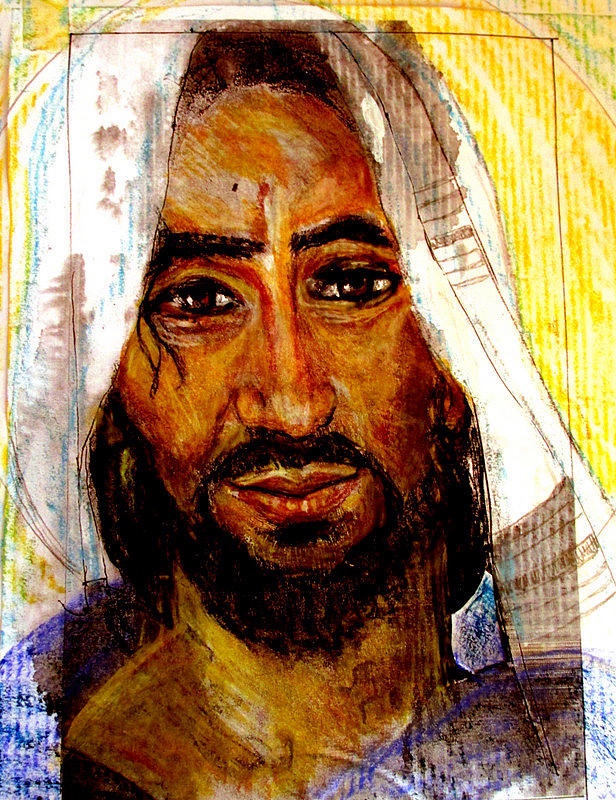
One of my favourite images of Jesus, the first century Jew

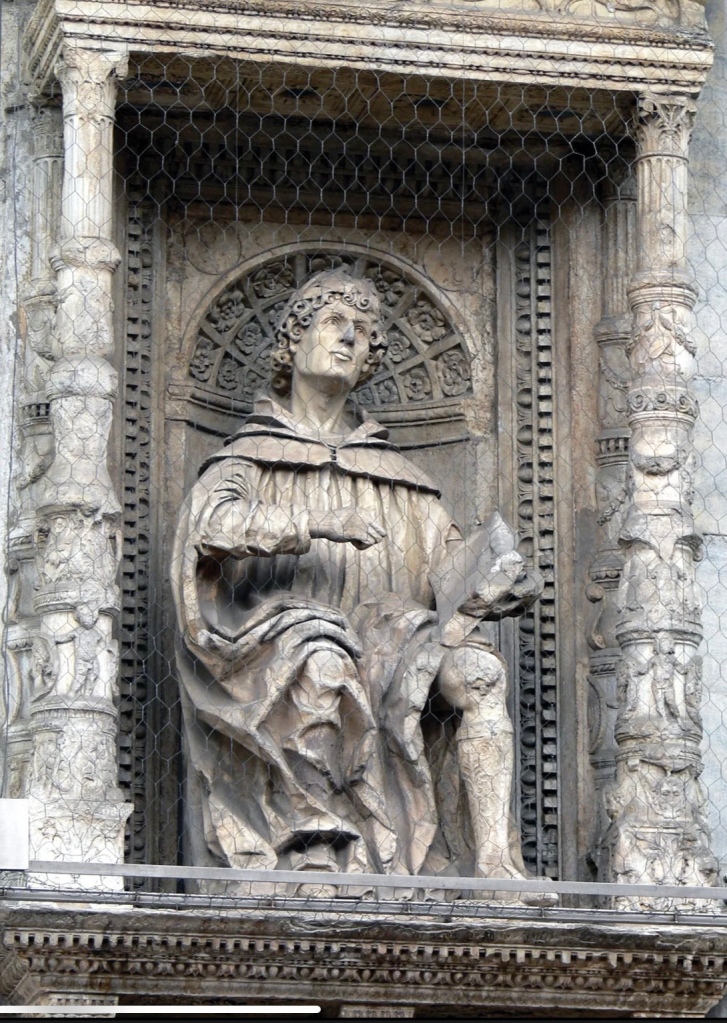
Perhaps the earliest of these references was in a letter written early in the second century by Pliny the Younger, a lawyer and magistrate, who refers not to Jesus, directly, but to a group of his followers. In letter 96, included in Book 10 of his works, he writes: “They were in the habit of meeting on a certain fixed day before it was light, when they sang in alternate verses a hymn to Christ, as to a god, and bound themselves by a solemn oath, not to any wicked deeds, but never to commit any fraud, theft or adultery, never to falsify their word, nor deny a trust when they should be called upon to deliver it up.” (Pliny, Letters 10.96).

Pliny the Younger, statue on the facade
of the Cathedral of Santa Maria Maggiore, Como, Italy.

Whilst we learn very little about Jesus himself, we do have here a good “character reference”, from a pagan Roman, as to the virtue of the followers of Jesus in Bithynia, the province where he was Governor. Pliny was to oversee trials of suspected Christians who appeared before him as a result of anonymous accusations; he writes to ask for the Emperor’s guidance on how they should be treated.

A little later than the time when this letter was written, another Roman politician, who is best known in our times as the historian Publius Cornelius Tacitus, made reference to Jesus and his followers. After the Great Fire of Rome in July 64CE, word had it that the conflagration was started by order of Nero. Tacitus (writing in the second decade of the second century CE) observes that “to get rid of the report, Nero fastened the guilt and inflicted the most exquisite tortures on a class hated for their abominations, called Christians by the populace” (Tacitus, Annals, 15.44).

Tacitus, statue at the Parliament building in Vienna.

Thus, a second Roman in the second century knows of the followers of Jesus, and of the name by which they were known since they were given that name, according to Acts, in Antioch (Acts 11:29). His assessment of their moral character differs from that offered by Pliny, however. He refers to them as “exitiabilis superstitio”, translated as “a most mischievous superstition”, and locates them in Judæa, which he describes as “the first source of the evil”.

However, Tacitus gives us more information, this time providing historical data which aligns specifically with the Gospel narratives. He states that “Christus, from whom the name had its origin, suffered the extreme penalty during the reign of Tiberius at the hands of one of our procurators, Pontius Pilate”. That’s a neat linkup with the references to Pilate in the canonical Gospels—and in the second part of the Apostles’ Creed, which states that Jesus “suffered under Pontius Pilate, was crucified, died, and was buried”.

A third Roman writer who is relevant to this discussion is Gaius Suetonius Tranquillus, who reports the persecution and suffering of early Christians. Suetonius served as the director of Imperial archives under Emperor Trajan in the 110s, and then as the official secretary to the Emperor Hadrian in the 120s. He documented that followers of Jesus were expelled from Rome in 49CE by Claudius: “because the Jews at Rome caused constant disturbances at the instigation of Chrestus (Christ), he expelled them from Rome” (Suetonius, Divus Claudius, 25.4). Although writing about the followers of Jesus, Suetonius refers to Chrestus as a real, known person.

Suetonius also notes that “Nero inflicted punishment on the Christians, a sect given to a new and mischievous religious belief” (Suetonius, The 12 Caesars, Nero Claudius Ceasar, XVI). The same comment is found in the Annals of Tacitus: “Nero fastened the guilt and inflicted the most exquisite tortures on a class hated for their abominations, called Christians by the populace” (Tacitus, Annals 15.44). From the point of view of these Roman writers, the early followers of Jesus held a “mischievous belief” and practised “abominations” because they abjured the many gods and goddesses worshipped across the Greco-Roman world, and worshipped only the Lord God.

Statue of Gaius Suetonius Paulinus
on the terrace of the Roman Baths in Bath, Somerset.

A similar note about the fate of Jesus is made by Flavius Josephus, a complex character who was a Jewish man, born into a priestly family, trained in the skills of Pharisaic Torah-interpretation, a freedom-fighter during the war with the Romans, who was captured and transported to Rome—where, unlike many of his fellow-rebels, his life was spared, and he lived for the next three decades. (He is a complex character; the following discussion is complex, too!)

Writing an account of Jewish history for his Roman patron Epaphroditus, “a man who is a lover of all kind of learning; but is principally delighted with the knowledge of history”, Josephus makes a brief mention of the fate of Jesus which accords with both the note of Tacitus and the claims of the Gospels: “Pilate condemned him to be crucified and to die” (Josephus, Antiquities of the Jews, 18.3.3).

This note is found within a paragraph in which Josephus provides the longest and presumably earliest non-Christian description of Jesus: “About this time there lived Jesus, a wise man, if indeed one ought to call him a man. For he was one who performed surprising deeds and was a teacher of such people as accept the truth gladly. He won over many Jews and many of the Greeks. He was the Christ. And when, upon the accusation of the principal men among us, Pilate had condemned him to a cross, those who had first come to love him did not cease. He appeared to them spending a third day restored to life, for the prophets of God had foretold these things and a thousand other marvels about him. And the tribe of the Christians, so called after him, has still to this day not disappeared.” (Josephus, Antiquities of the Jews, 18.3.3).

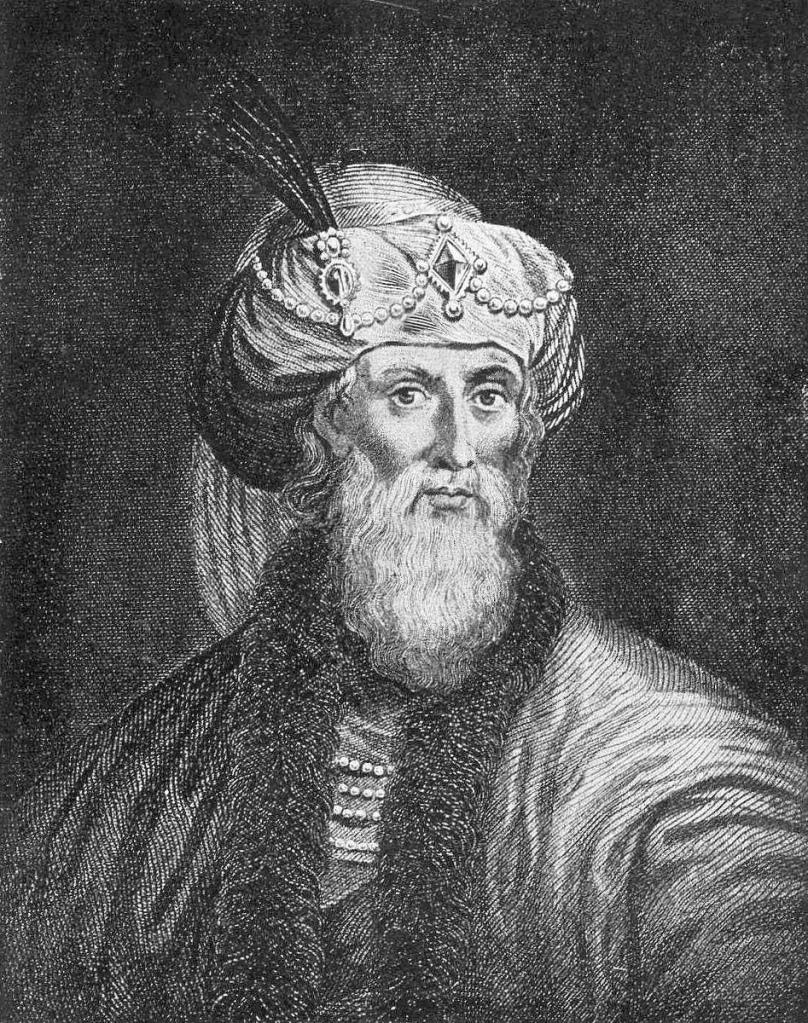
An imaginary depiction of Flavius Josephus
by Walter Whiston, 19th century.

The details provided here are fascinating; there is much correlation with scriptural claims about Jesus—including the affirmation that “he was the Christ”. That is striking, being written by a Jew, not a Christian. However, there are problems. The earliest extant text of this description is not in Greek, the language in which Josephus wrote. The earliest Greek manuscript of the whole work is an eleventh century work; there are some Latin translations of the Antiquities which are dated to the sixth century. But this particular description of Jesus, known as the Testimonium Flavianium, occurs only in a Slavonic text, discovered in Russia in the late 19th century, which scholars believe was written in the eleventh century. The passage is not found in the Greek, or earlier Latin, texts.

So the description of Jesus in this work is most likely influenced by Christian writings over the centuries, and finds its way into a medieval manuscript of the writings of Josephus. Of relevance here is that the writings of Josephus were not held by Jews—because he “went over” to Rome, he was regarded as a heretic. Only Christian medieval libraries contain manuscripts of works by Josephus.

So we can’t claim this attestation about Jesus as a late first century Jewish view of him. Nevertheless, scholars have attempted to recover “the earliest version” of what Josephus wrote—a kind of minimalist historical reference. The fact that Eusebius notes that Josephus refers to Jesus in his fourth century writing undergirds this perspective.

British scholar James Dunn proposes this text as the most likely original version that was known to Eusebius: “Now there was about this time Jesus, a wise man. For he was a doer of startling deeds, a teacher of such men as receive the truth with pleasure. And he gained a following both among many Jews and many of Greek origin. And when Pilate, at the suggestion of the principal men amongst us, condemned him to the cross, those that loved him at the first did not forsake him. And the tribe of Christians, so named from him, are not extinct at this day.” It is shorter, and is missing the explicitly confessional affirmations about Jesus—more befitting an historian of the time, rather than a believer in Jesus, we would think.

In the last book of his 20-volume work, Josephus makes another reference—very brief—to Jesus, in the context of his discussion of James: “he assembled the sanhedrin of judges, and brought before them the brother of Jesus, who was called Christ, whose name was James, and some others; and when he had formed an accusation against them as breakers of the law, he delivered them to be stoned” (Josephus, Antiquities of the Jews, 20.9.1). There is strong scholarly consensus that Josephus did, in fact, write these words. So he knew about Jesus, but perhaps knew very little beyond his existence.

(If your head hurts after this discussion, I understand. The list of scholars who have debated these texts is huge, and the number of competing manuscripts and reconstructions is also large!)

****

Other writers who were not Christians attest to the existence of Jesus as an historical figure. Stories that he performed miracles led one writer to propose an explanation: “Jesus, on account of his poverty, was hired out to go to Egypt. While there he acquired certain powers which Egyptians pride themselves on possessing. He returned home highly elated at possessing these powers, and on the strength of them gave himself out to be a god”.

This last comment sounds much like the accusation made by the Jerusalem authorities about Jesus: “he was not only breaking the sabbath, but was also calling God his own Father, thereby making himself equal to God” (John 5:18). That accusation is reported by the author of John’s Gospel, a follower of Jesus. The accusation that Jesus “gave himself out to be a god” was also reported by a Christian, Origen of Alexandria. Origen was a prolific writer; amongst those many works was a whole treatise about the person who allegedly made this claim—Celsus, a philosopher who had written a work titled The True Word (Logos Alēthēs).

This work no longer survives, but Origen reported, and refuted, many criticisms made by Celsus against the Christians, in his work Against Celsus. The quote above comes from Book 1, section 28 of that work, which Origen wrote in 248 CE. Celsus had lived decades earlier, writing his work in the mid-to-late second century.

From a speculative portrait of Lucian
by William Faithorne (1616–1691)

Another critic of Christianity, whose work does survive, is Lucian of Samosata, who says: “The Christians, you know, worship a man to this day—the distinguished personage who introduced their novel rights, and was crucified on that account … it was impressed on them by their original lawgiver that they are all brothers, from the moment that they are converted, and deny the gods of Greece, and worship the crucified sage, and live after his laws.” (Lucian, The Death of Peregrine, 11–13).

Like Celsus, Lucian was writing in the mid-to-late second century. The existence of Jesus is thus attested in a number of pagan writers of that time. Lucian’s observations depict Jesus as a man, who gave his followers laws, who was a “sage”, and who was crucified. That’s a good collection of basic historical data, indeed.

So this Christmas, as our attention turns to Jesus, we can hold together the fact that Jesus did exist as a first century Jew—and that various writers in the ensuing centuries noted this—as well as reading “the story of Christmas” (and, indeed, all biblical texts) with critical awareness of their nature as myths. The two claims are not contradictory.

See earlier posts at

and

and

The year of the Lord’s favour (Isa 61; Advent 3B)

As we move on in the new year in the church’s calendar, this coming Sunday we celebrate the third Sunday in the season of Advent, and continue our preparations for Christmas—the coming of Jesus, Saviour, chosen one, and Lord (Luke 2:11). During Advent, the lectionary offers a selection of biblical passages designed to help us in our preparations, building to the climactic moment of Christmas Day, when we remember that “the Word became flesh and lived among us, and we have seen his glory, the glory as of a father’s only son, full of grace and truth” (John 1:14).

These scripture passages include a sequence of excerpts from the Hebrew Scriptures—largely from the book of Isaiah—which orient us to the saving work of God, experienced by faithful people in Israel through the ages. These scripture passages inform us to sense how God was at work in the story of Jesus.

The passage proposed by the lectionary for this third Sunday in Advent (Isa 61:1–11) is another very well-known one. It comes from the third main section of Isaiah (chs.56—66), recording the words spoken by an unnamed during the return to the land after exile in Babylon. This prophet is often called Third Isaiah.

This passage is best known because the opening few verses are the words read by Jesus when he was handed the scroll to read in his hometown synagogue (Luke 4:16–19). Following that story offered by Luke, we read that Jesus “rolled up the scroll, gave it back to the attendant, and sat down, and the declared, “Today this scripture has been fulfilled in your hearing” (Luke 4:20–21). That statement shapes the interpretive approach of Christians to the words in Isaiah 61; we are guided to read them as a prophetic declaration about Jesus.

However, we need to take care not to override and exclude the intention of the message (to the extent that we can assess it) of the original speaker and the faithful scribe in that ancient post-exilic context. To do so would be to perpetuate a supersessionist reading of scripture, which claims that “the old” is no longer relevant because “the new” has superseded it. This is poor interpretive practice and bad theology.

How might we best understand this passage? Understanding the dynamics at play at the time the words were spoken and then written down is instructive. For the returning exiles, preparing to re-establish their distinctive society in their much-loved land, the call of the prophet, through the gifting of the Spirit, was orienting them clearly to face the ethical issues of that society. Oppression and captivity had been the experience of past decades; liberty and joyful encouragement were now to be the markers of life in the land.

So central to the task of rebuilding society was the age-old commitment of care for the vulnerable and support for the needy. Prophets of times past had expressed this in terms of care for the widow, the orphan, and the foreigner in the land. Isaiah proclaims God’s judgement on those who “turn aside the needy from justice … and rob the poor of my people, that widows may be your spoil, and that you may make the orphans your prey!” (Isa 10:1–2).

Other prophets join their voices to Isaiah’s declaration. Ezekiel laments that “the sojourner suffers extortion in your midst; the fatherless and the widow are wronged in you” (Ezek 22:7). Jeremiah encourages the people of Jerusalem with a promise that God will allow them to continue to dwell in their land if they “do not oppress the sojourner, the fatherless, or the widow” (Jer 7:5–7).

The words of Third Isaiah continue in this prophetic stream. They also resonate with the psalmist, who praises “the God of Jacob … who executes justice for the oppressed; who gives food to the hungry … [who] sets the prisoners free, [who] opens the eyes of the blind, [who] lifts up those who are bowed down [and] loves the righteous, [who] watches over the strangers [and] upholds the orphan and the widow” (Ps 146:5, 7–9). See

https://johntsquires.com/2023/05/14/father-of-orphans-and-protector-of-widows-psalm-68-easter-7a/

The distinctive contribution of this particular prophet is to frame the task through the story of the Jubilee, “the year of the Lord’s favour” (v.2). That Jubilee year had, as its flip side, the ominous “day of vengeance of our God” for those who failed to follow the way of Jubilee justice. The Jubilee entailed the release of slaves and the cancelling of debts; it was meant to be practised in society every fifty years during the year of Jubilee (Lev 25:8–17; see esp. v.13).

Whilst these levitical prescriptions appear to be the ideal that the priests hoped for, actual evidence that this was ever implemented in Israelite society is lacking. Indeed, it is suggested that while the people were in Exile, the land of Israel would “lie desolate”, and “enjoy its sabbath years” (Lev 26:34), providing recompense for all those years when “it did not have on your sabbaths when you were living in it” (Lev 26:35).

The return to the land, as far as Third Isaiah is concerned, meant that these levitical prescriptions should indeed be adhered to, as the people promised “to walk in God’s law, which was given by Moses the servant of God, and to observe and do all the commandments of the Lord our Lord and his ordinances and his statutes” (Neh 10:29). In the way that Jesus cited this prophetic passage in his hometown synagogue (Luke 4:16), implementing the Jubilee prescriptions in his own time was also what he envisaged.

The prophet lays claim to the work of the Spirit in setting forth this programme for the people. “The spirit of the Lord is upon me”, he declares (Isa 61:1), placing himself in a long line of spirit- inspired leaders in Israel. The Spirit had guided Moses and was then gifted to chosen elders (Num 11:16–25). That Spirit was subsequently imparted to Joshua (Num 27:18; Deut 34:9) and then to a string of Judges: Othniel (Judg 3:10), Gideon (6:34), Jephthah (11:29), and Samson (13:24–25; 14:6,19; 15:14).

In later years, the Spirit guides Saul (1 Sam 10:6–7), David (2 Sam 23:2), Solomon (Wisd Sol 7:7), the line of prophets (Neh 9:30), the servant of the Lord (Isa 42:1), Ezekiel (Ezek 3:12, 14; 8:3; and many subsequent references), Daniel (Dan 5:12), Micah (Mic 3:8), and Zechariah (Zech 4:6). The activity that the Spirit undertook in these instances was invariably to provide guidance regarding the conduct of Israelite society, through these anointed leaders and inspired prophetic voices.

The oracle of the post-exilic prophet thus blends notes of celebration and justice, such that “righteousness and praise [will] spring up before all the nations” (v.11). There will be “a garland instead of ashes, the oil of gladness instead of mourning” (v.3), “everlasting joy” (v.7), with rejoicing and exultation akin to a wedding celebration (v.10). Society will be marked by righteousness (vv.3, 10, 11), to demonstrate that “I the Lord love justice, I hate robbery and wrongdoing” (v.8).

Jesus stands firmly in this line. His connection of Spirit with justice in society is drawn directly from Third Isaiah. The Jubilee he announces in his hometown (Luke 4:19) is explained in his series of blessing and woes (Luke 6:20–26), his welcome of and advocacy for poor and outsiders (Luke 7:34; 10:8–9; 15:1–2), and in a number of parables which prefigure reversals in society (for instance, 14:7–24; 16:19–31).

Alongside these sounds of justice, a note of joy runs through the public activities of Jesus (Luke 6:23; 8:13; 10:17; 15:6, 7, 9, 10, 32). It is in this sense that we can affirm that Jesus has “fulfilled this scripture”, and that this prophetic passage is a helpful guide for us during Advent.

The Lord has done great things for us (Psalm 126; Advent 3B)

During this season of Advent, the lectionary offers a selection of biblical passages designed to help us in our preparations, building to the climactic moment of Christmas Day, when we remember that “the Word became flesh and lived among us, and we have seen his glory, the glory as of a father’s only son, full of grace and truth” (John 1:14).

These scripture passages include a sequence of psalms which orient us to the saving work of God, experienced by faithful people in Israel through the ages. In the psalms, faithful people over the ages have sung of their trust in God and their joy at what God has been doing. These psalms thus bring us to the point of anticipation that we can sense God’s work in the story of Jesus.

It is the seventh of the fifteen Songs of Ascent (Psalm 126) that is suggested by the lectionary for this coming Sunday, Advent 3. This short song celebrates that “when the Lord restored the fortunes of Zion, we were like those who dream”, rejoicing that “our mouth was filled with laughter, and our tongue with shouts of joy” (Ps 126:1–2), offering the prayer “restore our fortunes, O Lord, like the watercourses in the Negeb” (Ps 126:4).

*****

Each one of these 15 songs (Psalms 120—134) are identified as shir hammalowt, “a song of ascents”. They are so called because it is believed they were sung by faithful Israelites as they made their pilgrimage, ascending to Jerusalem, on one of the three annual festivals—the Feast of Unleavened Bread (Passover), the Feast of Weeks (Pentecost), and the Feast of Tabernacles (as listed in Deut 16:16).

The series begins, “in my distress I cry to the Lord” (Ps 120:1), moving on to “I lift up my eyes to the hills” (Ps 121:1). I like to imagine that this was being sung as the outline of the city built on and around Mount Zion appeared in the far distance. We can imagine the pilgrims drawing closer to the walls of the city as the psalmist sings, “I was glad when they said to me, ‘Let us go to the house of the Lord!’” (Ps 122:1), then sings of lifting up their eyes to “you who are enthroned in the heavens” (Ps 123:1).

Next, the pilgrims offer expressions of trust in God (Ps 124:8; 125:1–2), celebrating “when the Lord restored the fortunes of Zion” (Ps 126:1), and yearn that the Lord God might “restore our fortunes … like the watercourses in the Negeb” (Ps 126:4).

By this time, I imagine the pilgrims viewing both the city from outside its walls and the Temple on its highest point, singing “unless the Lord builds the house, those who build it labor in vain; unless the Lord guards the city, the guard keeps watch in vain” (Ps 127:1). This psalm then celebrates the gift of sons (Ps 127:4–5) and the following psalm celebrates “your wife [who] will be like a fruitful vine within your house; your children will be like olive shoots around your table”, concluding “thus shall the man be blessed who fears the Lord” (Ps 128:3–4).

I also like to imagine that, as the pilgrims were entering the city, the pilgrims sang to celebrate, “the Lord is righteous; he has cut the cords of the wicked” (Ps 129:4), followed by a heartfelt cry to God from “out of the depths” (Ps 130:1) and an affirmation that “with the Lord there is steadfast love, and with him is great power to redeem” (Ps 130:7).

Next, the psalmist simply observes, “I have calmed and quieted my soul” (Ps 131:2); and then, as the Temple is immediately before them, the pilgrims sing, “Let us go to his dwelling place, let us worship at his footstool” (Ps 132:7).

Then follows the two shortest of all the Songs of Ascent, to bring the series to a close. One song celebrates the unity of the people, with oil running down the head “like the dew of Hermon, which falls on the mountains of Zion” (Ps 133:3), and then in the final song the pilgrims are “stand[ing] by night in the house of the Lord”, concluding with the prayer, “may the Lord, maker of heaven and earth, bless you from Zion” (Ps 134:3). It is a beautiful blessing to conclude the whole sequence.

*****

The particular song offered for Advent 3 (Psalm 126) is filled with upbeat notes. There are dreams of good things to come (v.1), with laughter (v.1) and three rousing “shouts of joy” (vv.1, 5, 6). There are sheaves of wheat, signalling a bountiful harvest (v.6). There are fortunes restored, like running streams (v.4) and stories of “the great things” that have been experienced (v.3). These joyful notes sit well in the Advent season, when joyful anticipation of the coming good news of Christmas is building.

Of course, we need to take care that when we read and hear passages from Hebrew Scripture in a season that has strong Christian overtones, such as Advent, that we do not override the earlier meaning with a reading that relates everything to Jesus. So when we hear this psalm, we need to have in mind the hope and expectation of the pilgrims as they approach the city and anticipate bringing their offerings to the Temple.

As the three pilgrim festivals (Pesach, Shavuot, and Sukkoth) were originally agricultural festivals, the reference to “going out weeping, bearing the seed for sowing … [and] coming home with shouts of joy, carrying their sheaves” (v.6) resonates with these times, as does the briefer note about “sowing in tears … reaping with shouts of joy” (v.5).

We might also hear in this psalm something of the hope that the exiles had as they were returning home to the land of Israel. The reference to “restoring the fortunes of Israel” (v.1, and again in v.4) might hint at this. If so, then the “coming home” in v.6 might have the double sense of coming in from the fields after harvest, and coming back the land after five decades (or more) or exile. The joy of vv.2–3 and vv.5–6 might well represent how they feel as they come to do something that had high value and worth in ancient Israelite society.

For Christians, today, singing this psalm in the season of Advent, the notes of hope and anticipation, joy and celebration, resonate with our expectations as we prepare to celebrate to coming of Jesus during the season of Christmas. Let us, like those of old, fill our mouths with laughter, shout out loud for joy, and rejoice!