Have mercy on me … wash me thoroughly … blot out my iniquities (Psalm 51; Pentecost 11B)

Last Sunday we heard the story of David’s adultery with Bathsheba (2 Sam 11:1–15). In the passage that we hear this Sunday (2 Sam 11:26—12:13), the prophet Nathan regales him with a tale of a rich man with “very many flocks and herds” and a poor man with “nothing but one little ewe lamb” who was much loved and was “like a daughter to him” (12:1–3).

See

Nathan’s story ends with a powerful punchline: “he took the poor man’s lamb, and prepared that for the guest who had come to him” (12:4). The point is clear; the rich man has acted unjustly. David immediately erupts in anger at the selfish acts of the rich man. “As the Lord lives”, he exclaims, “the man who has done this deserves to die” (12:5). And yet, after a lengthy diatribe from the prophet, speaking forth the word of the Lord to the king (12:7–14), David changes his tune.

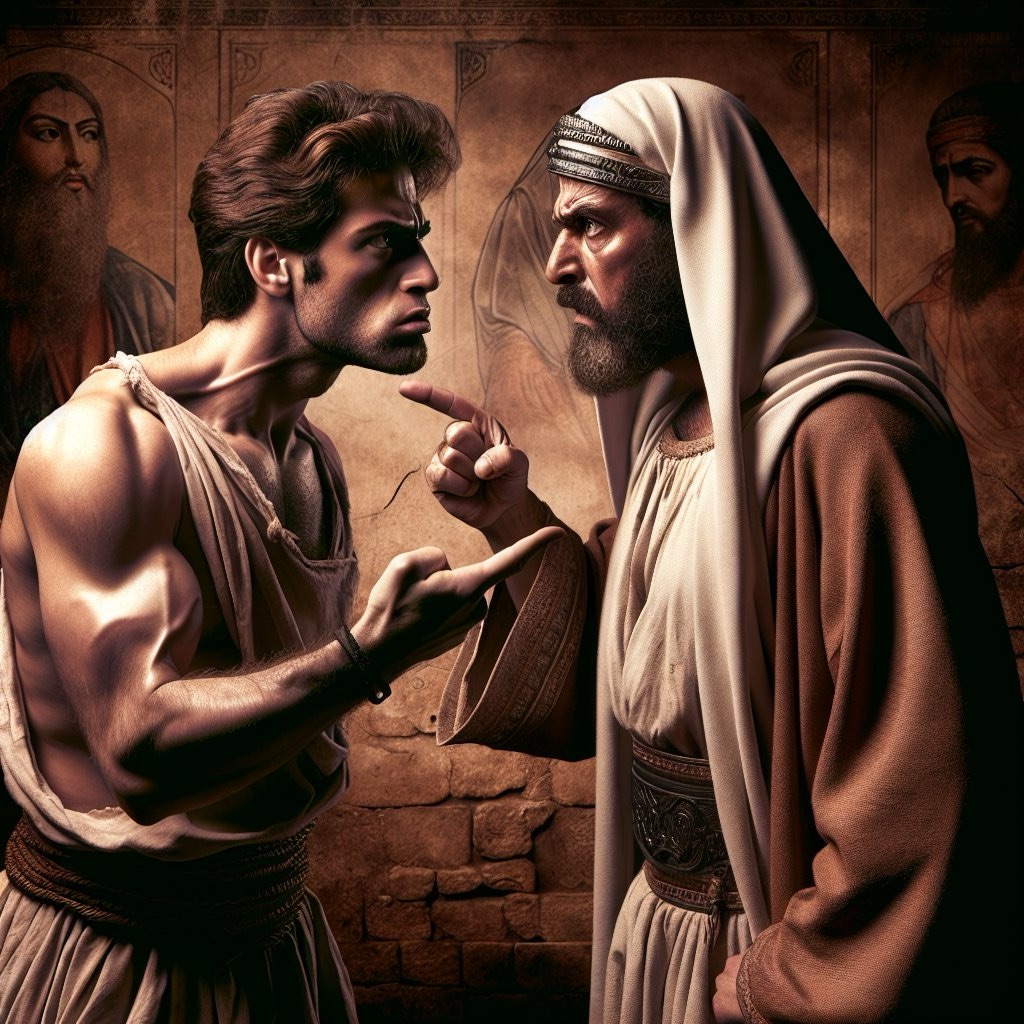
Nathan confronts David

“I have sinned against the Lord”, David says to Nathan, who then reassures him, “now the Lord has put away your sin; you shall not die” (12:13). Nathan has executed his prophetic role with power: calling David to account. At least the king recognises his sin and repents. God both punishes and forgives him.

Reflecting on the nature of repentance, and forgiveness, we are led to ponder Psalm 51: “have mercy on me, O God, according to your steadfast love; according to your abundant mercy blot out my transgressions”, the psalmist sings. The first half of this song (Ps 51:1–12) is offered by the lectionary as the Psalm for this coming Sunday.

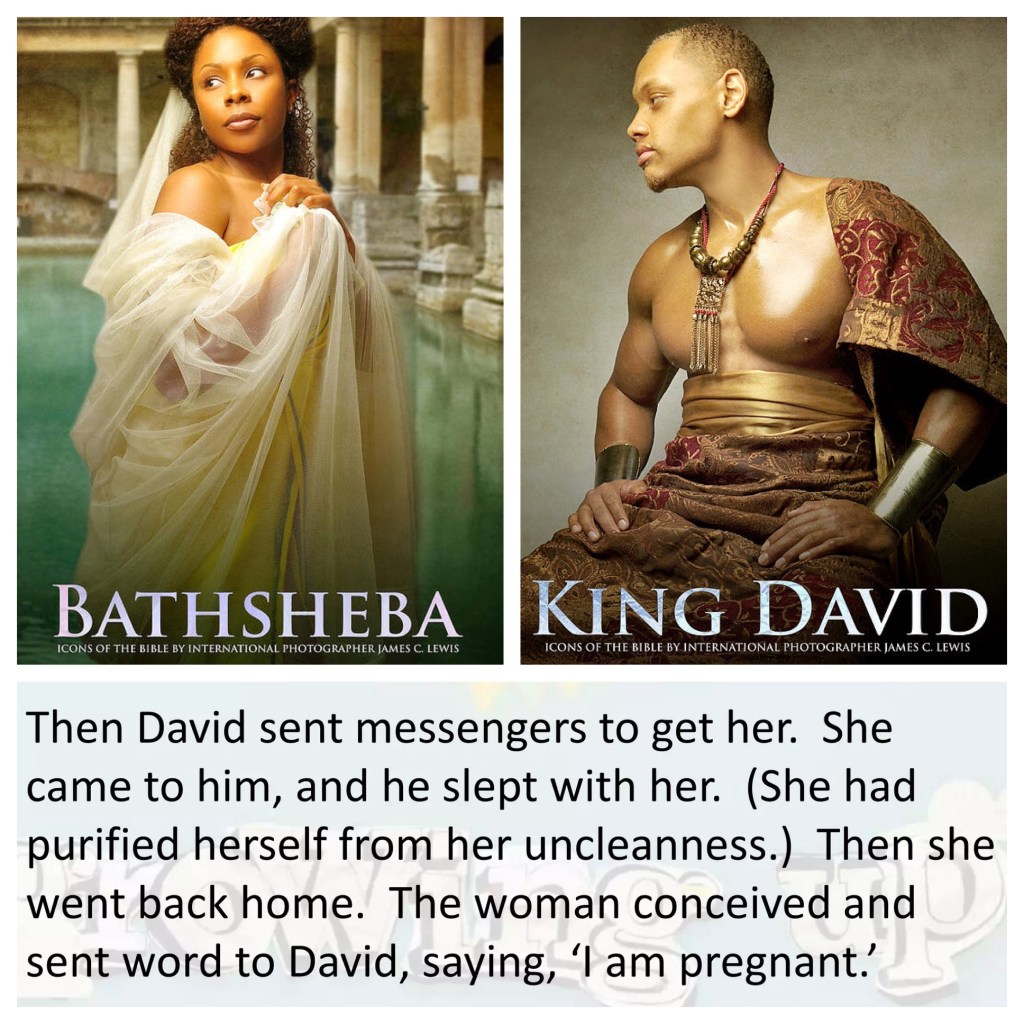
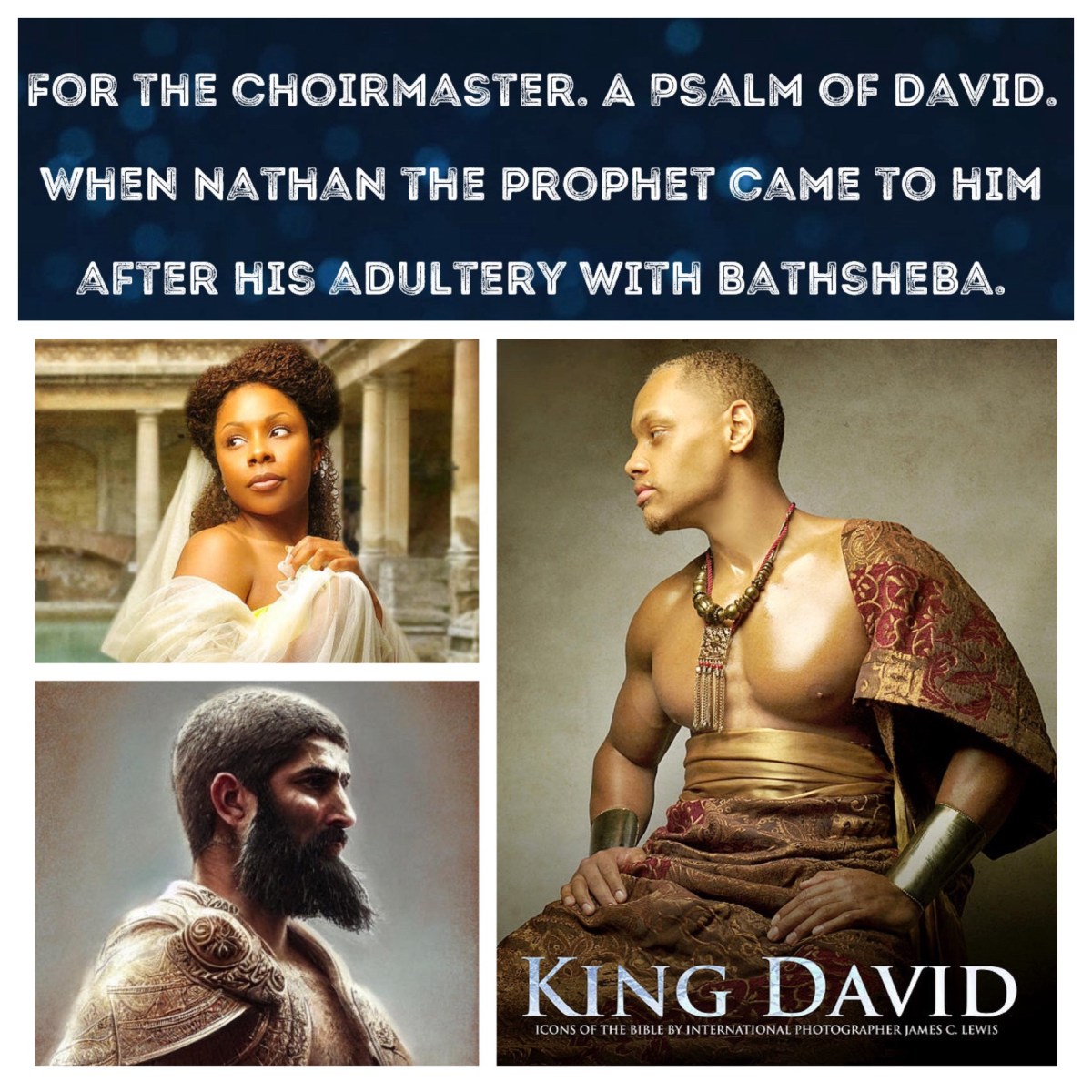
The ascription at the head of this psalm makes the traditional connection with David (as is also the case with 72 other psalms in the book), and provides a specific occasion for the writing of this psalm: “when the prophet Nathan came to him, after he had gone in to Bathsheba”. It would seem that the psalm first this occasion quite neatly.

This is one of a dozen psalms that each has an ascription which relates the particular song to an incident in David’s life: “when he fled from his son Absalom” (Ps 3; 2 Sam 15); “when the Lord delivered him from the hand of all his enemies and from the hand of Saul” (Ps 18; 2 Sam 22); “when he pretended to be insane before Abimelech, who drove him away, and he left” (Ps 34; 1 Sam 21); “when Doeg the Edomite had gone to Saul and told him, ‘David has gone to the house of Ahimelech’” (Ps 52; 1 Sam 22); “when the Ziphites had gone to Saul and said, ‘Is not David hiding among us?’” (Ps 54; 1 Sam 23); “when the Philistines had seized him in Gath” (Ps 56; 1 Sam 21); “when he had fled from Saul into the cave” (Ps 57; 1 Sam 22); “when he fought Aram Naharaim and Aram Zobah, and when Joab returned and struck down twelve thousand Edomites in the Valley of Salt” (Ps 60; 2 Sam 8); “when he was in the Desert of Judah” (Ps 63; 1 Sam 22–23); and “when he was in the cave” (Ps 142; 1 Sam 22).

Whether any of these ascriptions do report the actual incident that motivated the psalm—or whether the historical note was added subsequently by a later person, on the basis that “this seems to fit”—we cannot definitively say. So whether this particular ascription for Ps 51 is historically accurate or not, it does provide an appropriate insight into the emotions that the writer presents, on an occasion when deep grief and profound contrition appears to have been stirred up.

If this psalm was written by David after he had raped Bathsheba, it could well indicate a profound transformation, from the all-powerful monarch to the humbly repentant sinner. If it is (as many scholars believe, on the basis of language and style) a later exilic creation, it still expresses the inner this formation that can come to a person of faith when they understand the extent of their sin and seek the loving forgiveness of the Lord. In this latter case, it is a psalm for all of us, when confronted with our sinfulness, and challenged to repent. It is a song that envisages a thoroughgoing moral transformation.

Personally, I am sceptical about the historical value of this ascription. Aside from the specific linguistic criticisms that have been advanced, it does not sit well with the character of David as revealed elsewhere in the historical narratives of 1–2 Samuel. The scheming of the king and the aggression of David’s men in battle after battle, both before and after this incident, do not indicate someone with a deep reflective capacity or a totally transformed personality.

David rose to power, maintained his power, and consolidated his kingdom through brute military force in many battles over the years. His kingship was a reign of sheer power; he was a warrior king. I have surveyed the battles that David was engaged in throughout his time as king in an earlier blog; see

After his confrontation with Nathan, David continues in this vein; he goes on to conclude his war against the Ammonites (2 Sam 12:26–31), refuses to punish Amnon for his rape of Tamar (ch.13), did battle against Absalom when he usurped the throne (chs. 15—18), put down an uprising led by Sheba son of Bichri (ch.20), and fought various battles against the Gibeonites and the Philistines (ch.21) before he dies (1 Ki 2:10). His character as warrior king remains unabated.

It is true that after his confrontation with Nathan, David does show mercy to various men: first, to his third son, Absalom (ch.14), and then to Shimei son of Gera, Mephibosheth the grandson of Saul, and Barzillai the Gileadite (ch.19).

However, it is quite telling that the final remembrance of King David is the list of “the warriors of David” with recounting of some of their exploits (ch.23) and then the census that he ordered (24:1–9)—although this latter act was something that he immediately regretted (24:10). Nevertheless, it seems that his character remains consistent with the warrior king David who raped Bathsheba and ordered the death of Uriah the Hittite.

So is Psalm 51 an authentically Davidic expression of remorse and repentance? J. Richard Middleton believes that, whilst there are some indications that do link this psalm with the narrative of 2 Sam 11–12, there are a number of disjunctures. He outlines his case in a carefully-argued article that compares the two passages of scripture.

“A Psalm against David? A Canonical Reading of Psalm 15 as a Critique of David’s Inadequate Repentance in 2 Samuel 12” (ch.2, pp.26 in Explorations in Interdisciplinary Reading. Theological, Exegetical, and Reception-Historical Perspectives, ed. Robbie F. Castleman, Darian R. Lockett, and Stephen O. Presley; Pickwick, 2017). See https://jrichardmiddleton.com/wp-content/uploads/2017/08/middleton-a-psalm-against-david-explorations-in-interdisciplinary-reading-20171.pdf

First, Middleton notes that the psalmist pleads to be delivered from death (Ps 51:16), yet David is explicitly told he will not die (2 Sam 12:13). Second, the psalmist envisages that the process of forgiveness will be lengthy and repetitive (Ps 51:1–2, 7, 9), whilst David receives immediate forgiveness (2 Sam 12:13).

Third, the psalmist offers petitions for many different things, but David only “pleaded with God for [his] child; David fasted, and went in and lay all night on the ground” (2 Sam 12:16). Finally, whilst the psalmist confesses “against you, you alone, have I sinned, and done what is evil in your sight” (Ps 51:4), David’s sins (as I have noted in previous blogs) are against Bathsheba and Uriah, as well as “against the Lord” (2 Sam 12:13).

Middleton adds to this the observation that there is a noticeable dissonance between the prose narrative and the poetic song in terms of the extent of moral reformation that follows on from the confession of sin. The psalmist prays “in verse 10 for a pure heart and a steadfast spirit and in verse 12 for a willing spirit—a request that is related to God’s desire for faithfulness in the inner person (which was articulated in verse 6)”.

In contrast to this, Middleton argues (on p.39) that “not only is this request never voiced by the David of the Samuel narrative, it is (more importantly) never fulfilled in David’s life”. He notes that “the David of the narrative certainly has the broken spirit and broken and crushed heart that the psalmist says is a true, godly sacrifice in verse 17”, he nevertheless “does not get beyond this to the moral reformation of character presupposed in the psalm”.

Middleton deduces from this that “while the psalmist is broken and crushed in spirit prior to receiving forgiveness, and so pleads desperately for cleansing and restoration, the David of 2 Samuel is broken and crushed in spirit after receiving forgiveness and remains an ambivalent character for the rest of the Samuel” (p.40). So what the narrator has conveyed in the account of David’s rather knee-jerk (and perhaps superficial) response to Nathan’s confronting words indicates that he falls far short of the personal angst that led the author of Psalm 51 to a deep personal transformation.

Which means both, that we treat with caution the way that David is so lauded and exalted and painted in such a positive way in much of the 1–2 Samuel narrative; and that we appreciate the profound nature of the thoughts and feelings expressed by the psalmist (most likely NOT King David) in Psalm 51. It could well be a psalm that each one of us could pray, at an appropriate occasion.

See also

You are that man! (2 Sam 11–12; Pentecost 11B)

Last Sunday we heard the story of David’s adultery with Bathsheba (2 Sam 11:1–15). It’s a story that has been known and remembered through the ages—although it has often been badly misinterpreted, in explanations that “blame the woman” for what, in the text, is clearly a series of actions undertaken explicitly by the man who has power, the man who decides to “take” the woman.

As we have seen in previous blogs, the person who emerges with most integrity from the story of David’s adultery and murder is Bathsheba. In the custom of the day, she had no choice but to obey the King and allow him to “lie with her” and make her pregnant (11:4–5). Bathsheba fittingly mourns for her husband (11:26). She will remain faithful to David, as king, over the years, as well as to her child, Solomon, who later becomes king (from 2 Sam 11:27 through until 1 Kings 2).

David, by contrast, continues his unseemly behaviour. In the passage that we hear this Sunday (2 Sam 11:26—12:13), the prophet Nathan regales him with a tale of a rich man with “very many flocks and herds” and a poor man with “nothing but one little ewe lamb” who was much loved and was “like a daughter to him” (12:1–3). Nathan’s story ends with a powerful punchline: “he took the poor man’s lamb, and prepared that for the guest who had come to him” (12:4). The point is clear; the rich man has acted unjustly.

David immediately erupts in anger at the selfish acts of the rich man. “As the Lord lives”, he exclaims, “the man who has done this deserves to die” (12:5). As was to be expected of the king—who was execute justice in Israel (Ps 72:1; 99:4; 1 Ki 10:9)—punishment for this selfish deed was rightly to be implemented.

What provoked this strong response? The prophet has told the king a story which cut right to his heart. We recognise this story as a parable, perhaps the best-known of all parables in the Hebrew Scriptures. Jesus, we know, used parables as the chief means of his story-telling. A parable is a story told in a specific way, often to make a single clear point. Parables are conundrums. They contain unresolved tensions. They invite multiple understandings. They press for exploration and investigation.

The parable form used by Jesus has deep roots in Hebrew traditions. In Hebrew Scripture, there are examples of the short, sharp, pithy parables, often identified as a ḥidah, or riddle. A classic short, simple riddle is that spoken by Samson, “out of the eater came something to eat; out of the strong came something sweet” (Judg 14:14). The narrative comment that follows is delightful: “for three days they could not explain the riddle”!

Another example is the proverb quoted by two prophets, about the impact of the Exile: “the parents have eaten sour grapes, and the children’s teeth are set on edge” (Jer 31:29; Ezek 18:2). The point of this saying is clear and telling. Likewise, the point is conveyed directly when Hosea laments the rebellion of the people, describing them as “like a dove, silly and without sense”, and noting how the Lord will discipline them; “I will cast my net over them; I will bring them down like birds of the air” (Hos 7:11–12).

This is the classic form of a comparison, a mashal, in which one item is compared with another item. A parable, at its heart, is a comparison: “this is like that”.

There are also more extended parables, with multiple characters and an extended storyline, such as in the parable that Nathan tells David in 2 Sam 12. Often, the simple comparison that is intended is developed into an allegorical tale. In an allegory, particular individual features can play an independently figurative role, so that the story told becomes a kind of riddle which invites a response from the listener. “What do you think?” becomes the implied way that the allegory-riddle ends. Listening to the story is not enough—the listener needs to engage, enter the conundrum, make up their mind!

In Hebrew Scripture, the allegory of the Eagles and the Vine (Ezek 17:3–10) is described as both ḥidah (“riddle”) and mashal. The parable first describes “a great eagle, with great wings and long pinions”, who carried seed far away where it took root and became a vine (a classic symbol of Israel). It then offers a further description of “another great eagle, with great wings and much plumage”, which the teller of the parable fears may seek to uproot the vine. “When it is transplanted, will it thrive”, the parable ends (v.10)—will Israel, transplanted into exile, manage to survive that experience?

Further parable-riddles occur in subsequent chapters in Ezekiel. There is the Lamenting of the Lioness (Ezek 19:2–9) and the Transplanted Vine (Ezek 19:10–14), and the stories of the Harlot Sisters (ibid. 23:2–21). There is also one of my favourites, the very vivid—and gruesome—parable of the Cooking-Pot (Ezek 24:3b—5).

In this parable, the prophet warns the people of judgement: “set on the pot … pour in water … put in the pieces, the thigh and the shoulder … fill it with choice bones” (that is, the meat and bones of the Israelites being punished). The prophet concludes with a booming denunciation: “woe to the bloody city … the blood is shed inside it … to rouse my wrath, I have placed the blood she shed on on a bare rock” (Ezek 24:6–8, and then the metaphor extended still further in 24:9–14).

Each of these parables are clearly allegorical, in that the overall point is clear, and yet also the details in the story invite connection with specific people or events. Ezekiel is a powerful speaker, who utilises this dramatic story-form with great flair, and effect. So, too, is Nathan, in the passage we hear this Sunday; the simple comparison is advanced through the story, in which various elements correlate with the situation involving David and Bathsheba.

For more on parables, see the links at the end of this post.

Nathan’s confronting story cuts to the heart of David. As the prophet declares, the king has acted in exactly the way that the man in the story has acted. He is privileged and well-to-do, and yet he seeks more through his selfish actions; there is pure evil in what he has done. Nathan berates David at length (2 Sam 12:7–10), climaxing with the warning of the Lord, “I will raise up trouble against you from within your own house” (12:11–12).

So David retreats from his anger and backs down in repentance: “I have sinned against the Lord”, he says to Nathan, who then reassures him, “now the Lord has put away your sin; you shall not die” (12:13). Nathan has executed his prophetic role with power: he speaks forth the word of the Lord into the immediate situation, calling David to account. At least the king recognises his sin and repents. God both punishes and forgives him.

Writing in With Love to the World, Sarah Williamson characterises this as “a classic revenge tale”. She notes that “David has ruined a family by killing Uriah and taking Bathsheba as his wife” and that “the prophet Nathan helps David see what he has done and as he comes to face his actions, he is told that his first born child will suffer the consequences.”

“This reflects the punitive nature of ancient Israelite thinking”, Sarah writes; and yet, “it is possible to understand this story with a different angle”. She explains: “It shows that, even though we may be ‘forgiven’, as was David for his actions, so our choices are not without consequence.”

This then raises questions to consider: “Could God deliberately harm a child for the actions of a parent? What sort of understanding do we have about the forgiveness of God? Is forgiveness free or does a price need to be paid?” Her reflection is that “our poor judgments can have a generational power; that which the parents do can affect the children and generations to come”.

And so she concludes that this reading may be “an invitation to reflect on our own theology of forgiveness and the consequences of our actions. Perhaps we may invite the notion of grace into this space and ask, what sort of a God do I see in this story, and how does it fit with my own faith?”

With Love to the World is a daily Bible reading resource, written and produced within the Uniting Church in Australia, following the Revised Common Lectionary. It offers Sunday worshippers the opportunity to prepare for hearing passages of scripture in the week leading to that day of worship. It seeks to foster “an informed faith” amongst the people of God.

You can subscribe on your phone or iPad via an App, for a subscription of $28 per year. Search for With Love to the World on the App Store, or UCA—With Love to the World on Google Play. For the hard copy resource, for just $28 for a year’s subscription, email Trevor at wlwuca@bigpond.com or phone +61 (2) 9747-1369.

The Jewish Virtual Library article on “Parable” can be found at https://www.jewishvirtuallibrary.org/parable

For further reading on parables in the rabbinic tradition, see

Click to access rabinnic-parables.pdf

https://www.jewishencyclopedia.com/articles/11898-parable

https://www.jerusalemperspective.com/2721/

See also

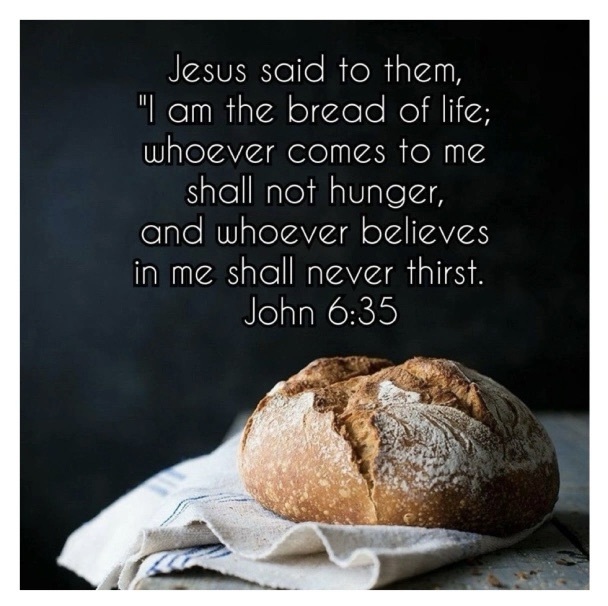
The Bread of Life: take one (John 6; Pentecost 11B)

Last Sunday, the lectionary took us away from the Gospel of Mark, with an awkward detour into the Gospel of John that will see preachers being invited to grapple for another four weeks with a long, extended discourse of Jesus revolving around the first of seven I AM statements found in this Gospel. The statement that “I am the bread of life” has been motivated by the account of Jesus miraculously feeding a large crowd with only “five barley loaves and two fish”, which is told in the passage heard last Sunday (John 6:1–21).

This coming Sunday, this awkward detour leads us into the opening section of this long discourse, as John 6:24–35 is the passage that the lectionary proposes as the Gospel reading. This passage ends with the first declaration by Jesus, “I am the bread of life” (6:35). After this week, we are in store for further sections of that discourse, dealing with an elaborated exposition of that “bread of life” (6:35–51), the disputes that this teaching generated with the Judaean authorities (6:51–58), and the final section of the discourse where Jesus then has to deal with dissent from his own disciples (6:56–69).

I have often heard preachers grumble about the repetitive nature of these selections—“not another week on ‘the bread of life’”—but I think that this underestimates the intricacy of this chapter, and the complexity of the issues that are signalled as Jesus pursues his teaching about “the bread of life”. So the challenge I am taking up is to offer a series of four blogs in which a number of those issues are explored and explained.

Perhaps the first stumbling block in dealing with this chapter is that it does appear to be incredibly repetitive. The phrase “the bread of life”, for instance, appears four times (6:33, 35, 48, 51), with the stylistic variant “the bread from heaven” another five times (6:31, 32a, 41, 50, 58), the intensified phrase “the true bread from heaven” (6:32b), and “the living bread that came down from heaven” also in 6:51. That does, to be fair, seem like overkill. But other discourses in this distinctive Gospel exhibit a similarly repetitive style (as, indeed, does the first letter attributed to John). It is a particular style which characterises this Gospel—one of the many features that set it apart from the three Synoptic Gospels.

Each discourse in the series of discourses found in the first half of John’s Gospel displays some standard features. Each discourse arises out of a specific incident; in this case, the feeding of the large crowd (6:1–21) is the stimulus for discussing “the bread of life”. The discourse picks up a key word or idea from the report of the incident and develops that idea by relentless repetition. That is an integral part of its style. So there are eleven references to bread in ch.6, just as there had been seven references to water in ch.4, seven references to life or living in ch.5, and later there are twelve references to sheep in ch.10.

In typical Johannine style, the thesis of the discourse is driven by questions and misunderstandings. Questions invite an answer; misunderstandings require an explanation. And so the argument in this whole chapter proceeds by means of a series of questions.

First, after the feeding of the large crowd and the crossing of the lake (vv.22–25), the crowd asks Jesus, “ Rabbi, why did you come here?”(v.25). This opens the way for Jesus to explain that his work is not “for the food that perishes [a reference to the loaves of bread that they had recently eaten], but for the food that endures for eternal life” (v.27). And so the theme for the discourse that follows is set; and the irony that is embedded in the language of “bread” becomes foundational for what follows.

Next, they ask Jesus, “what must we do?” (v.28), allowing Jesus then to define the nature of “the works of God” as “that you believe in him whom he has sent” (v.29)—that is, in Jesus himself. Next, the crowd asks a third question: “what sign are you going to give us? … what work are you performing?” (v.30). They continue by quoting scripture—a move that will prove to be fundamental for the nature of what follows.

By quoting scripture (a variant of Exod 16:4 and 15; also Psalm 78:24) the crowd is gives Jesus his “text” for the teaching that follows. And, of course, as they are Jews, and as Jesus was a Jew, the argument is developed by means of a typical midrashic “playing with the text” in the words that follow. We will come back to the midrashic nature of this discourse in a later blog.

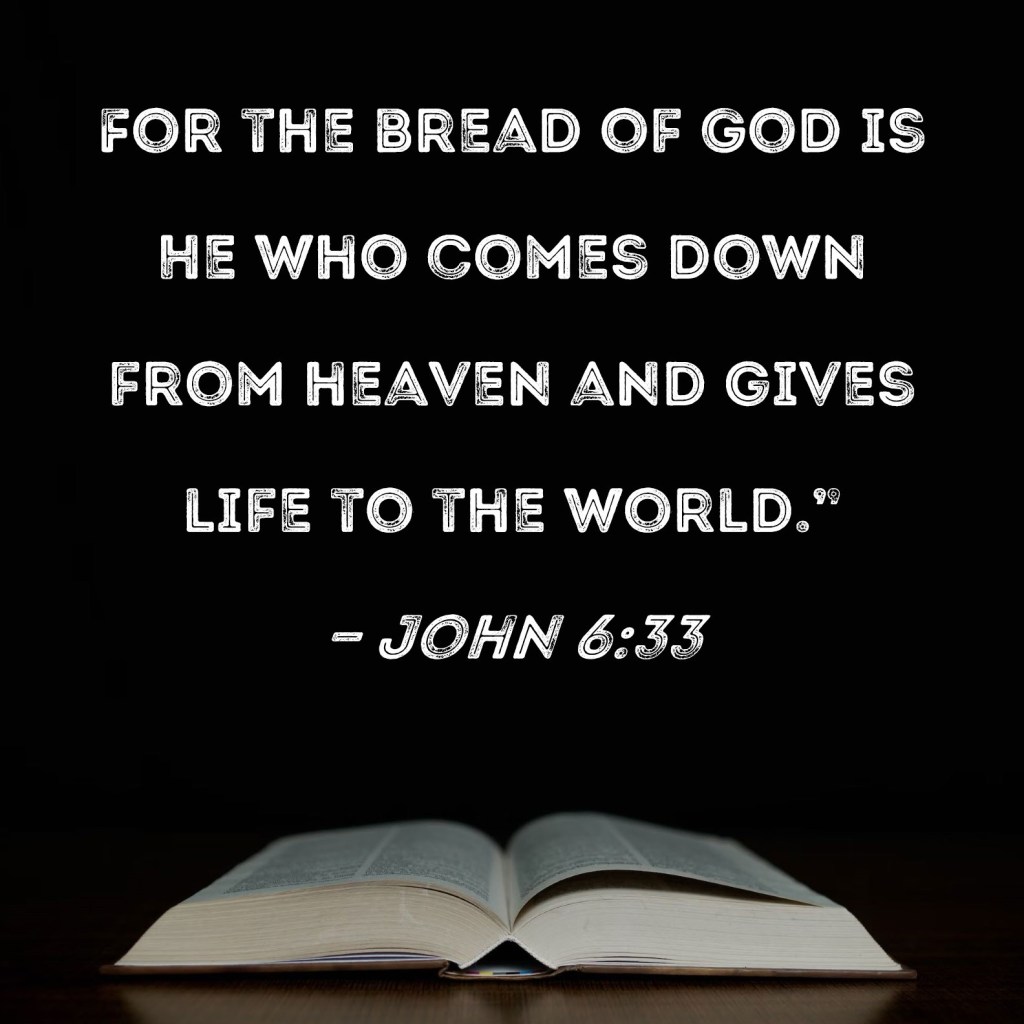
Jesus offers an interpretation of this scripture; it is “not Moses … but my Father in heaven” who provided the bread (v.32). At this point, he pivots from speaking about the bread that God gave from heaven, to speaking about “the true bread from heaven”, himself. He is the bread which “gives life to the world” (v.33).

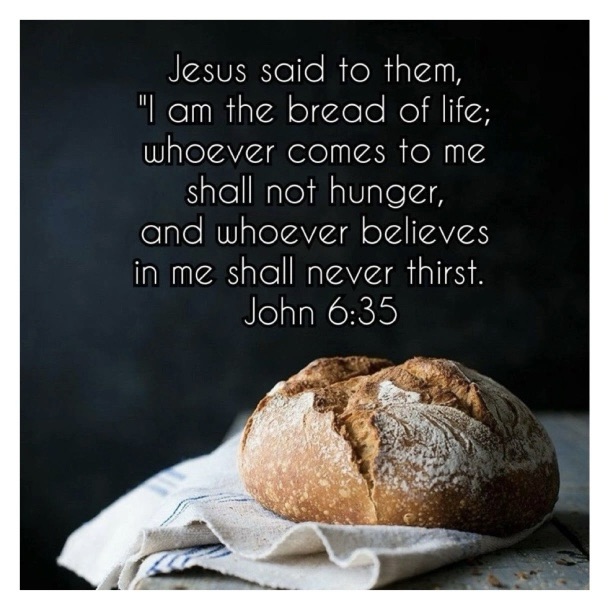
So this section of the discourse ends, not with a question, but with a request from the crowd; “Sir, give us this bread always” (v.34). Which means that Jesus can now make very clear what his thesis is: “I am the bread of life” (v.35). And so, at last, we get to the point! And at this point, the lectionary passage for this Sunday stops—but we will return next week!

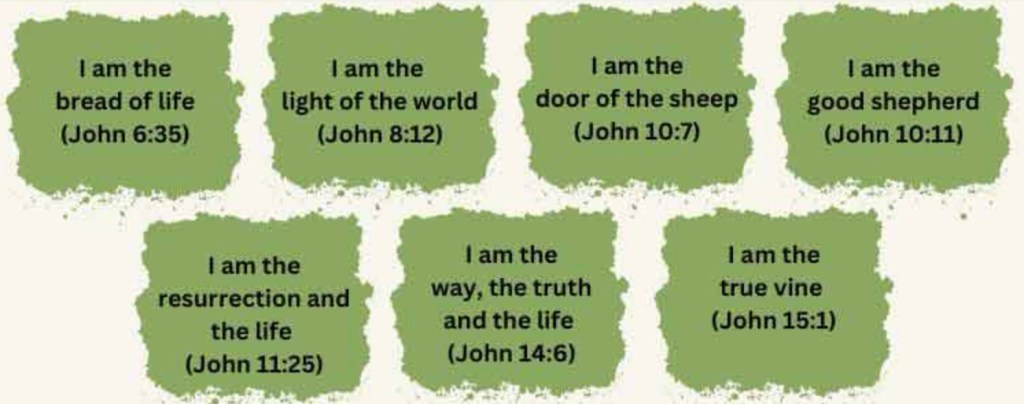
This statement is one of a number of “I Am” statements that are placed on the lips of Jesus in the book of signs, which we know as the Gospel according to John. These sayings comprise a verb (“I am”) followed by a predicate (the entity which Jesus claims to be). The predicates in most of these sayings are drawn from traditional Jewish elements.

When Jesus calls himself “the bread of heaven” (6:25–59), he is clearly evoking the scriptural account of the manna in the wilderness (Ex 16:1–36; Num 11:1–35; Pss 78:23–25; 105:40). The discourse which develops from this saying includes explicit quotations of scripture, as well as midrashic discussions of its meaning.

When Jesus presents himself as “the vine” (John 15:1–11), he draws on a standard scriptural symbol for Israel (Ps 80:8; Hos 10:1; Isa 5:7; Jer 6:9; Ezek 15:1–6; 17:5–10; 19:10–14). Likewise, when Jesus calls himself “the good shepherd” (10:1–18), he evokes the imagery of the good shepherd as the true and faithful leader in Israel (Num 21:16–17; Ezek 34:1–31; Jer 23:4), and the people as the sheep who are cared for (Pss 95, 100; Ezek 34:31).

The statement that Jesus is “the light of the world” (8:12; 9:1–5) evokes the story of the creation of light (Gen 1:3–5) and the light which the divine presence shone over Israel (Exod 13:21–22). The Psalmist uses the imagery of light to indicate obedience to God’s ways (Pss 27:1; 43:3; 56:13; 119:105, 130; etc.), and it is a common prophetic motif as well (Isa 2:5; 42:6; 49:6; Dan 2:20–22; Hos 6:5; Mic 7:8; Zech 14:7; cf. the reversal of the imagery at Jer 13:16; Amos 5:18–20).

Although it is not part of an “I am” statement, the references to the “living waters” which flow from Jesus (4:7–15; 7:37–39) are reminiscent of the water which were expected to flow from the eschatological temple (Ezek 47:1; Joel 3:18; Zech 14:8), and, more directly, refer to the description of God used by the prophet Jeremiah (Jer 2:13).

In addition, biblical scholars have noted that rabbinic symbolism has affinities with Johannine symbols; for example, the terms bread, light, water and wine are all used by the rabbis in connection with the Torah. The author of John’s Gospel stands in the stream of Jewish writers who have used multiple images to convey their faith in the Lord God.

Thus, the distinctive set of Christological claims made for Jesus in the Gospel according to John seek to enter into this stream of writing. They are both thoroughly grounded in scriptural images and familiar from the ongoing traditions taught by the rabbis. The author of this Gospel is using a number of ways to declare his faith in Jesus as “the Word of God”, “the Way”, and indeed as being at one with God. It is a high claim.

Amidst the variety of Jewish voices at the end of Second Temple Judaism clamouring to be holders of “the truth”, using a wide variety of rhetorical means, this author seeks to position his community—a sectarian Jewish group—as the holder of the true faith, the ones who adhere most clearly to what the Lord God requires amongst his faithful people. And for this group, it is Jesus of Nazareth who most clearly and faithfully leads them along that pathway of understanding and living.

See more on this understanding of the community of John at

So this discourse addresses what we might assume to have been a well-known and widespread understanding of the nature of God amongst Jews of the time; he is the one who provides the bread to nourish and sustain lives of faith. When Jesus lays claim to being “the true bread”, it is yet another moment when he says, quite poetically, what he later declares in a very prosaic manner: “the Father and I are one” (10:30).

*****

Still to come in considering the lectionary passages from John 6 that lie ahead:

Jesus offers a midrashic exposition on “the bread of life” (6:35–51): how does Jesus operate in his Jewish context?

Disputing the claim of Jesus to be “the bread of life” (6:51–58): the characters in the story John tells, the sectarian nature of his community

The Johannine remembrance of Eucharistic communion and the community’s distinctive “structure of reality” (6:56–69)

and on the various I AM statements

Controversy, Context, and Creativity in the Paris 2024 Olympic Games Opening Ceremony

There has been Controversy over the last day or so about elements in the long Opening Ceremony for the 2024 Olympic Games, being held in Paris. One focus of Controversy has been a scene which critics have said was disrespectful to “the Last Supper”. But was it?

Context is important. That could not have been made clearer from the controversy around this scene. First, the Context was one of Creativity. The whole long sequence of singers, dancers, and musicians was one that creatively represented things which were important in French life. There were some fascinatingly creative takes on many aspects of French life; the whole sequence proceeded through a consideration of Liberté (liberty), Égalité (equality), Fraternité (fraternity), Sororité (sorority, and obvious contemporary addition) and, for the context, Sportif/Sportive (sportsmanship).

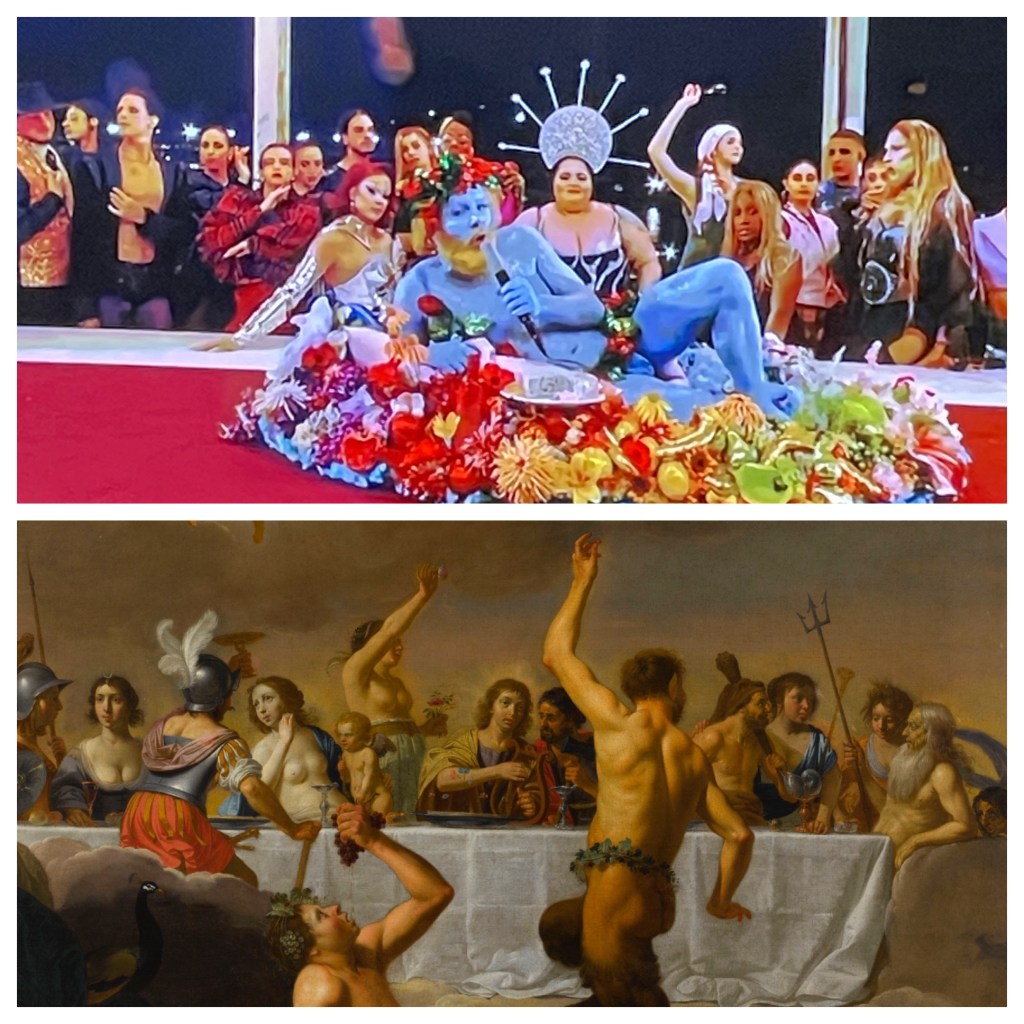
Amongst the scenes was one which was seen by some to be poking fun at the famous portrayal of The Last Supper by Leonardo da Vinci. But Context is important. The string of characters allegedly sitting along a table were actually spectators at a fashion parade—they are standing (at a lower level) on one side of the catwalk. Later in the sequence, models dressed in various clothes do actually walk along the catwalk. There are more than a dozen characters there. And, in fact, there are people on both sides of the catwalk, watching the models as they walk up and down. There’s no way it was a table setting,

And the person at the centre who allegedly had a halo, in the mode of Jesus, was actually the disc jockey, all dolled up for the occasion with a spectacular costume, spinning the discs as the models walked by. A careful examination of a still focussed on this character reinforces this view. It’s an expression of Creativity!

And besides all that, Context is important—for the alleged scene painted by da Vinci, with the apostles surrounding Jesus, seated at a table, along one side of the table, dressed in medieval garb, is a Creative take, paying attention to the Context in which it was painted, of that central scene. In fact, historically the scene would have been of Jesus (sans halo), surrounded by male and female followers (not only the twelve men), reclining (not sitting) around a table (not just on one side of the table), dressed in first century Jewish garb (not medieval dress), with children also present (since the Passover meal, assuming that was what was happening, was a big family gathering).

Context is important. Historically, da Vinci’s scene is rubbish. Creatively, it gripped the imagination of people around the world, through the centuries. That’s what a good Creative work does!

And later, when the characters gathered around the catwalk group together around a figure clearly intended to be Dionysus, the recollection of an Ancient Greek Bacchanalia could not be clearer. There is a classic painting of a Bacchanalian Feast, a gathering of the gods, which is worthy of comparison.

There are similar arm placements, similar cavorting in front of the table. At this point, the Parisian scene had morphed into a direct reference to the feast of the gods. In the centre was Apollo, with his crown—that is mirrored in the Parisian scene. So, yes, there is a direct allusion to this scene!

And Context is the key here: for the ceremony opens the Olympic Games, a modern restitution of an ancient practice. And those Olympic Games, in antiquity, did include bacchanalian feats. People had travelled (by foot) from numerous cities, coming together to engage in athletic contests. Of course, they had to eat, and of course, those occasions were celebratory, freeflowing, and even libertine, in the grand tradition of ancient feasts. Once again, Context is important—although, obviously, Creativity was at work in this recreation.

So Controversy: take a back seat.
The moment belongs to Context
and, especially, to Creativity!!!

*****

Here in Australia, some years ago, a number of artists were commissioned to paint a picture of the Last Supper which showed the historical reality that women were present. The winning artwork was by Margaret Ackland:

For years in my office, I had an artwork with a most creative “take” on the Last Supper on the wall. The work, by Australian artist Sam Waterhouse, is now on the wall above our dining room table in Dungog.

Addendum: As far as I can work out, the Scène de la Cène à Paris sur la Seine description was the creative inspiration of a headline writer in the French magazine Le Soir, wanting to draw the comparison with the Last Supper.

Thomas Jolly, the creative producer of this most controversial section of the extravaganza, has been very clear about his intentions. My Facebook friend Lance Lawton has provided an English translation of what Jolly said (in French) on a French tv interview spot when asked if he was referencing “la cène” (the last supper). Here it is:

https://www.fullofgraceandtruth.net/Wired-to-write/Entries/2024/7/all-at-sea-en-seine.html

David: “bring her to me, set him in the front of the fighting” (2 Sam 11; Pentecost 10B)

This coming Sunday, we read the story of David’s adultery with Bathsheba (2 Sam 11:1–15). This story is known and remembered through the ages—although it is often misinterpreted, in explanations that “blame the woman” for what, in the text, is clearly a series of actions undertaken explicitly by the man who has power, the man who decides to “take” the woman.

In this regard, this ancient story resonates strongly with the experience of millions, if not billions, of women in the modern world. The #MeToo movement attests to the ongoing occurrence of sexual exploitation and abuse of women by men with power. It continues to take place every day, in every country, around the world. Abusive behaviour, abusive words, sexual pressures, rape and domestic violence—the list goes on and on. It is a sad indictment of the overwhelming numbers of males who continue to perpetrate this sad way of being.

Estimates published by the World Health Organisation indicate that “globally about 1 in 3 (30%) of women worldwide have been subjected to either physical and/or sexual intimate partner violence or non-partner sexual violence in their lifetime. Most of this violence is intimate partner violence. Worldwide, almost one third (27%) of women aged 15-49 years who have been in a relationship report that they have been subjected to some form of physical and/or sexual violence by their intimate partner.”

The report concluded that “The social and economic costs of intimate partner and sexual violence are enormous and have ripple effects throughout society. Women may suffer isolation, inability to work, loss of wages, lack of participation in regular activities and limited ability to care for themselves and their children.” See https://www.who.int/news-room/fact-sheets/detail/violence-against-women

In my previous post, I explored the figure of Bathsheba. In this post, attention turns to David. I have already flagged my support for the view that it was the sin of David, rather than any sinfulness by Bathsheba, which lies at the root of this story. Yet we need to note that it is not just one sin of David which the narrative reports; there are two different (albeit related) and equally serious sins that he committed. See

The first sin involves Bathsheba. David has sexual relations with her; “he sent messengers to get her, and she came to him, and he lay with her” (2 Sam 11:4). This resulted in the birth of a child (11:5); sadly, the child later died (12:15–19). What was the nature of this liaison David engineered with Bathsheba? Was it “a fling”? “an affair”? an abuse of his power? Was it adultery? Was it, even, as some maintain, rape?

Richard Davidson has written a fascinating article, “Did King David Rape Bathsheba? A Case Study in Narrative Theology”, published in the Journal of the Adventist Theological Society, 17/2 (Autumn 2006): 81–95. It is also accessible online (see link below). Davidson opens his careful analysis of the story by reporting ways that interpreters have sought to minimise the sin that David committed.

He notes that various commentators have claimed that Bathsheba is “a willing and equal partner to the events that transpire” (Randall Bailey), there is a possible element of “feminine flirtation” (H.W. Hertzberg), Bathsheba showed “complicity in the sexual adventure” (Lillian Klein), or “the text seems to imply that Bathsheba asked to be ‘sent for’ and ‘taken’” (Cheryl A. Kirk-Duggan).

Davidson will have nothing of this minimising of what David has done, from those who claim that Bathsheba was somehow complicit. The narrative, he concludes, “represents an indictment directed solely against the man and not the woman, against David and all men in positions of power (whether civil or ecclesiastical or academic) who take advantage of their ‘power’ and victimize women sexually. Power rape receives the strongest possible theological condemnation in this narrative.” See https://digitalcommons.andrews.edu/cgi/viewcontent.cgi?article=1174&context=jats

Indeed, the text could not be clearer; the chapter ends with the definitive conclusion, “the thing that David had done displeased the Lord” (2 Sam 11:27b). The two key factors that Davidson cites in support of this “displeasing thing” actually being a rape are based on his reading of the Hebrew text.

First, he notes that “the fact that the narrator still here calls her ‘the wife of Uriah’ implies her continued fidelity to her husband, as does the reference to Uriah as ‘her lord/husband’. By using the term ba’al [lord] to denote her husband, the narrator intimates that if ‘Uriah is her lord’, then David is not”.

Davidson supports this by noting that the narrator “carefully avoids using the name of Bathsheba throughout the entire episode of David’s sinning” and suggesting that this “makes her character more impersonal, and thus perhaps further conveying the narrator’s intention of suggesting that Bathsheba wasn’t personally responsible.”

This anonymising of Bathsheba in the story is not unusual in terms of other biblical narratives, where women in the story go unnamed. But the reference to Uriah as her ba’al [lord] does suggest a distancing from David, even though he is king,with seemingly unfettered power.

Second, he observes that at the conclusion of the story, after Uriah had been killed and Bathsheba had completed her mourning rites, “David again sent for Bathsheba and ‘harvested’ her”. He comments on the Hebrew word used here, asap; he maintains that it was usually used “for harvesting a crop or mustering an army”, and here it “further implies King David’s capacity for cold and calculating ruthlessness, which was exercised in his power rape of Bathsheba and subsequent summoning (“harvesting”) of her to the palace.”

That might be pushing the point too far. The word asap is indeed used many times to refer to picking crops and taking them home, and also to gathering men for an army. But it is used on some occasions simply to refer to gathering a person to take them to another person, without any sense of duress or force being involved.

We find such a “neutral” sense on the death of Jacob (Gen 49:33), when Saul recruits soldiers for his army (1 Sam 14:52), in the command to care for a neighbour’s lost animal (Deut 22:2), in the psalmist’s words that “if my father and mother forsake me, the Lord will take me up” (Ps 27:10), and in Huldah’s comforting words to King Josiah, “you shall be gathered to your grave in peace; your eyes shall not see all the disaster that I will bring on this place” (2 Ki 22:20).

And there is certainly no direct indication of physical force or emotional abuse in the report of the initial act of intercourse between David and Bathsheba. David sent messengers and “she came to him, and he lay with her” (2 Sam 11:4). But, as already noted, she really had no choice in the matter.

Today, we would call what David did coercive control, and would consider there are implicit “red flags” which the text does not make explicit. Certainly, we cannot argue for any lessening of David’s responsibility by any suggestion of any complicity on the part of Bathsheba. She was forced to have sex; she was raped by the most powerful man in the kingdom.

The second sin committed by David is not “up close and personal” like his rape of Bathsheba. It is perpetrated “at arm’s length” by others, acting at his command. Indeed, whilst the death of Uriah occurs some 150 kms or more away on the battlefield, at Rabbah, where David’s forces were besieging the Ammonites in that city, it is the command that David makes in Jerusalem, over 150km away, that reveals his sin.

And as noted in the previous blog post, David should have been on the front line with his troops; it was spring, “the time when kings go out to battle” (2 Sam 11:1), yet David is leisurely strolling on his roof, looking down to see the happenings in the nearby houses below.

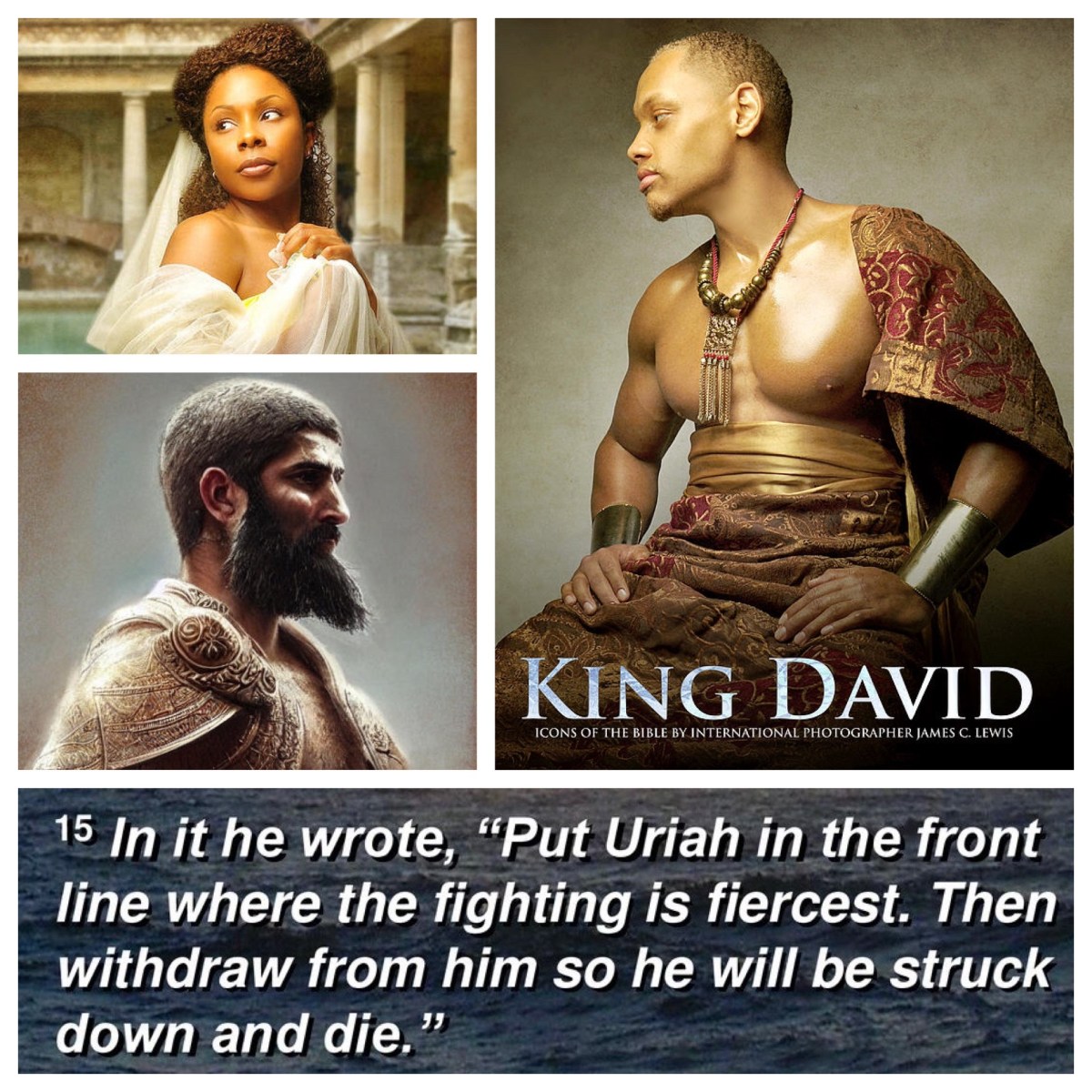
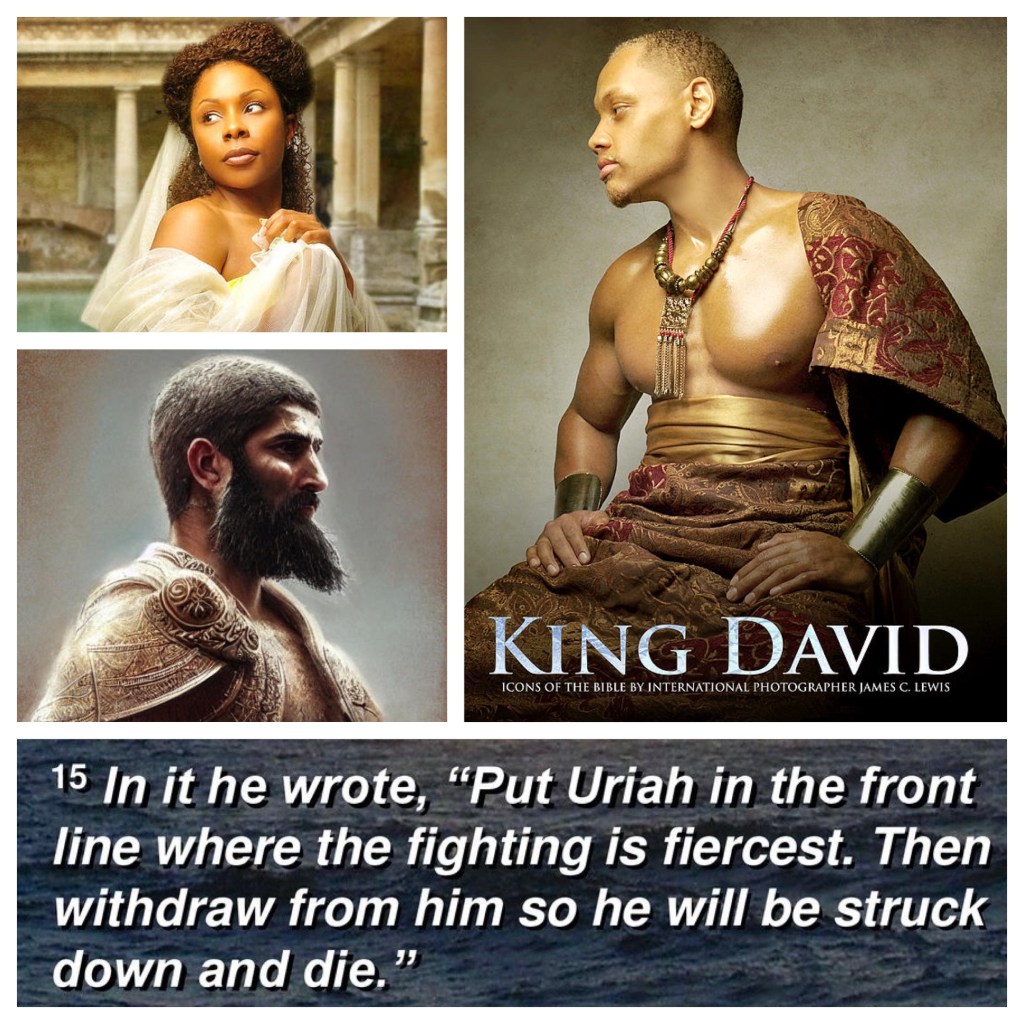
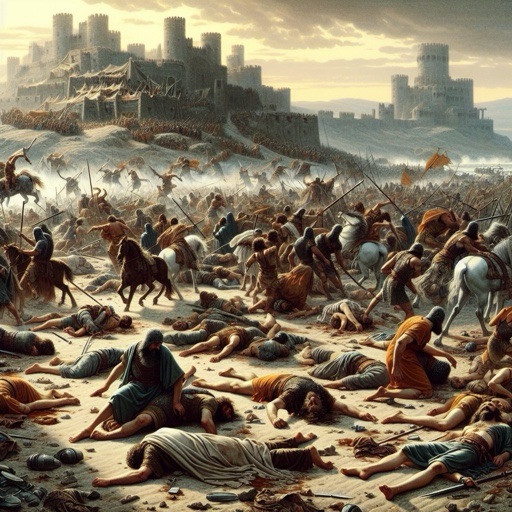
The text is, once again, crystal clear about the initiative that David took and the plot that he himself had concocted: “David wrote a letter to Joab, and sent it by the hand of Uriah. In the letter he wrote, ‘Set Uriah in the forefront of the hardest fighting, and then draw back from him, so that he may be struck down and die.’ As Joab was besieging the city, he assigned Uriah to the place where he knew there were valiant warriors. The men of the city came out and fought with Joab; and some of the servants of David among the people fell. Uriah the Hittite was killed as well.” (2 Sam 11:15–17).

Whilst David does not physically murder Uriah, he issues the order, faithfully transmitted by his general, Joab, and executed by “the men of the city” (11:17). He bears ultimate responsibility. No commentator attempts to extricate him from this. And curiously, we note that the lectionary stops before the death of Uriah is reported; it ends with David’s command in his letter (v.15). It seems a strange marking of the passage. We need to read and hear the story at least through to the denouement of David’s plan: “Uriah the Hittite was killed as well” (v.17).

The situation regarding the clinical way that David carries out his plan is intensified—made worse, or made perfectly clear—by the fact that, in between his rape of Bathsheba and the murder of Uriah, David deliberately courts Uriah in a show of friendship. He asked for Uriah to leave the battlefield and come to him (v.6), enquired about the progress of the war (v.7), granted him a time of leave and sent a gift to him (v.8), and wined and dined him with a feast (v.13).

David’s intentions are clear; he wants Uriah to “go down to his house”—presumably in order for him to sleep with Bathsheba, and thus explain her pregnancy. However, Uriah twice does not do so (vv.9, 13). On the first occasion, he sleeps rough in solidarity with his men on the battle field (v.11). He explicitly states that he does not intend to sleep with his wife. On the second occasion, David has made him drunk, so he sleeps it off “on his couch with the servants of his lord” (v.13).

That Uriah “did not go down to his house”, stated twice, declares his resolute character. He will not take advantage of this unexpected call back to the comfort of the city; he maintains his integrity as one of David’s “warriors”. This is in stark contrast to David’s clinical, self-interested scheming—first, to gain Bathsheba, when she catches his eye, and then to dispatch Uriah, to have him out of the way.

We all know about David’s illicit liaison with Bathsheba—even if, as I have noted, not everybody accepts his total responsibility for what he did, and not everybody accepts that he did actually rape her. He is clearly remembered for this sin; as well as this story, the superscription to Psalm 51 reinforces this. (See more in next week’s blog.)

David’s arrangement of the murder of Uriah ought also to be known and remembered through the ages. He acted with cunning, deception, cruelty, and self-interest. It is a scathing indictment of a powerful male figure—sadly, he is just one of so, so many throughout history.

Writing in With Love to the World, Amel Manyon considers the character of David: “David was a man of faith, but he was not acting responsibly as the leader of his army when he decided to stay in Jerusalem. He was expected to do his duty—at least meditating on the law of Moses, praying, or writing psalms. Perhaps he was bored, with nothing to do?” (That’s a rather generous assessment of David’s character, I think.)

Manyon rightly notes that David “used his positional power to force Bathsheba into immorality. At the time, Bathsheba would have had no choice but to obey her leader, the King—but that is not an excuse for the leader to justify his actions. When David sent for Uriah, husband of Bathsheba, he had an opportunity to learn about leadership. Uriah had not allowed himself to enjoy time with his wife when his fellow soldiers were exposing their lives to danger for their country; David under such circumstances indulged in sinful lust and criminal actions.” The contrast is indeed striking.

Manyon relates what she says about David to contemporary leaders, noting that “we should not use our power to take what does not belong to us.” It’s a simple, succinct application. Indeed, this is what is conveyed in next week’s lectionary passage (2 Sam 12), where Nathan confronts David with the extent of his sin—he used his power to grasp what belonged to another man.

A very generous assessment of David is offered later in the long narrative history telling of the Kings of Israel and Judah. During the assessment of the reign of Abijam, a great-grandson of David and the second King of Judah after the kingdom was split in two at the death of Solomon, the narrator assesses the poor character of Abijam as one who “committed all the sins that his father did before him; his heart was not true to the Lord his God, like the heart of his father David” (1 Ki 15:3).

The narrator notes that, despite this flawed character, Abijam was able to rule for three years only because the Lord looked favourably upon David, of whom it is said, “he did what was right in the sight of the Lord, and did not turn aside from anything that he commanded him all the days of his life, except in the matter of Uriah the Hittite” (1 Ki 15:5). How interesting—and telling—that it is the sin against Uriah that is mentioned, and not the sin against Bathsheba.

What model of leadership is offered by this tale? The initial compilers of the sagas of Israel could have skimmed over this episode, allowing David to be painted in a resolutely positive light. Indeed, this is what the compiler(s) of 1–2 Chronicles does. (There is no story about David and Bathsheba in these books; it is as if it didn’t happen!) But the story is included in 2 Samuel; and David the Adulterer and David the Murderer sit alongside David the Harpist and David the Psalmist in Jewish and Christian traditions. He exemplifies the complexities of every human being. He is Everyperson. We should listen carefully, and learn from the stories told about him.

*****

Once again, I am grateful to Elizabeth Raine for her comments on this post, informed by her careful study of the text.

With Love to the World is a daily Bible reading resource, written and produced within the Uniting Church in Australia, following the Revised Common Lectionary. It offers Sunday worshippers the opportunity to prepare for hearing passages of scripture in the week leading to that day of worship. It seeks to foster “an informed faith” amongst the people of God.

You can subscribe on your phone or iPad via an App, for a subscription of $28 per year. Search for With Love to the World on the App Store, or UCA—With Love to the World on Google Play. For the hard copy resource, for just $28 for a year’s subscription, email Trevor at wlwuca@bigpond.com or phone +61 (2) 9747-1369.

Bathsheba: “she was very beautiful” (2 Sam 11; Pentecost 10B)

This coming Sunday, we read the story of David’s adultery with Bathsheba (2 Sam 11:1–15). This story is known and remembered through the ages—although it is often misinterpreted, in explanations that “blame the woman” for what, in the text, is clearly a series of actions undertaken explicitly by the man who has power, the man who decides to “take” the woman. In this regard, this ancient story resonates strongly with the experience of millions, if not billions, of women in the modern world. The #MeToo movement attests to the ongoing occurrence of sexual exploitation and abuse of women by men with power.

So the man, David, is depicted as exercising a shameful demonstration of sheer power, expressed through sexual violence. He was the King of Israel, and so had become accustomed ordering people around and getting what he wanted.

And it was, after all, “the spring of the year, the time when kings go out to battle” (2 Sam 11:1). He should have been with his troops as they were fighting the Ammonites, but instead he was walking on the rooftop, looking down into the bathing room of a nearby house where Bathsheba was bathing.

Let’s note that it was David who was up on the roof; Bathsheba was not bathing on the roof; he was looking down on her. The text is explicit: “David rose from his couch and was walking about on the roof of the king’s house, [when] he saw from the roof a woman bathing” (11:2). We’ll come back to him in a subsequent post.

In what follows, I am grateful to my wife, Elizabeth Raine, for what she has shared with me as we have explored this story. Elizabeth has spent much time with the texts relating to Bathsheba, and I have benefitted from her knowledge—and, of course, from the female perspective on this story which males need to hear and understand and appreciate.

The woman, Bathsheba, by contrast to the man, is apparently compliant in their coming together; well, what choice did she have, as David was the king, ruler supreme, with courtiers and soldiers ready to do his bidding? She had no chance, it would seem, of avoiding the trap set by David. And it is noteworthy that we hear nothing, in this narrative, of her thoughts about the whole incident. She is completely without voice in the story.

When we first meet Bathsheba in this passage, she is described as “very beautiful” (2 Sam 11:2). Let’s remember that David himself was first revealed to the readers and hearers of the ancient narrative saga as “ruddy, he had beautiful eyes and was handsome” (1 Sam 16:12). The same had been said of handsome Joseph (Gen 39:6), “a handsome young man” named Saul (1 Sam 9:2), and the same would later be said of Adonijah, a son of David (1 Ki 1:6), and much later of Daniel, with his companions in the Chaldean court (Dan 1:4). Commenting favourably on the physical appearance of a character was part of the craft of the ancient storyteller.

Bathsheba stands in a line of even more women who are introduced into the story as “beautiful”: Sarai (Gen 12:11), Leah and her sister Rachel (Gen 29:17), Abigail (1 Sam 25:3), Tamar, the daughter of David (2 Sam 13:1; 14:27), Abishag the Shunnamite (1 Ki 1:3–4), as well as Hadasseh, known as Esther (Est 2:7), the daughters of Job Job 42:15), and the “black and beautiful” lover in the Song of Songs (Song 1:5, 15–16; 4:1, 7), praised as being “as beautiful as Tirzah” (Song 6:4).

Alongside this, Bathsheba is identified in the typical terms of the day, through her relationships with key men: “Bathsheba, daughter of Eliam, the wife of Uriah the Hittite” (11:3). However, although Bathsheba has married a foreigner, a Hittite, she did have an Israelite lineage. Her father, Eliam, is identified as the son of “Ahithophel the Gilonite” (2 Sam 23:33)—that is, he was from Giloh, a town in Judah (2 Sam 15:12) which is listed amongst the towns in “the hill country” that were taken under Joshua’s command and allocated to Judah (Josh 15:51). So she should not be regarded as foreign; she is of David’s own people.

A contemporary depiction of Uriah the Hittite

Although we know that the lineage of Uriah was Hittite, from the area to the north of Israel, he nevertheless served in the army of the Israelites, as one of “the servants of David” (2 Sam 11:17). Indeed, we subsequently learn that both Eliam and Uriah were among the chiefs, many of them from foreign tribes, who are numbered amongst “The Thirty” who had joined David’s troops in battle (2 Sam 23:24–38). They were renowned as “mighty warriors” who served David’s cause in these battles (2 Sam 23:8). So Bathsheba’s family had been important for David in gaining and retaining his powerful position.

So the man, David, is depicted as exercising a shameful demonstration of sheer power, expressed through sexual violence. He was the King of Israel, and so had become accustomed ordering people around and getting what he wanted. And it was, after all, “the spring of the year, the time when kings go out to battle” (2 Sam 11:1). He should have been with his troops as they were fighting the Ammonites, but instead he was walking on the rooftop, looking down into the bathing room of a nearby house where Bathsheba was bathing. Let’s note that he was up on the roof; she was not bathing on the roof; he was looking down on her. The text is explicit: “David rose from his couch and was walking about on the roof of the king’s house, [when] he saw from the roof a woman bathing” (11:2). We’ll come back to him in a subsequent post.

As well as this story of Bathsheba’s first encounter with David, she features at two key moments later in the narrative. In 2 Sam 12, we learn the sad news that “the Lord struck the child that Uriah’s wife bore to David, and it became very ill … [then] on the seventh day the child died” (12:15, 18). David, having been physically attracted to Bathsheba and having had intercourse with her, was deeply affected: “he pleaded with God for the child … fasted, and went in and lay all night on the ground” (12:16).

Curiously, once David had learnt that the child had died, he immediately resumed regular life, telling his servants, “while the child was still alive, I fasted and wept … but now he is dead; why should I fast? Can I bring him back again?” (12:21, 23). Strikingly, by contrast, we hear nothing of what Bathsheba felt or thought on this sad occasion. Was she also deeply affected? We might presume so, but the narrator does not choose to convey that.

Did Bathsheba resume normal life as soon as the child died? We might recoil in horror at this thought, and imagine her as carrying out the prescribed period of mourning; but again, the narrator says nothing at all about her reaction. She mourns in silence, unheard, unseen. The woman who was so badly mistreated by the king in her first encounter with him, who learnt that she needed to be subservient to him, has no agency in this later scene. She has been muted.

To his credit, however, the narrator does reveal that David then took care of Bathsheba—although the narrative is sparse at this point, reporting simply that “David consoled his wife Bathsheba, and went to her, and lay with her; and she bore a son, and he named him Solomon” (12:24). Was this to console her, or to satisfy his need for the woman he had chosen to bear him a son and heir? Was his grief for the dying child all about his lineage, rather than for the people involved?

At any rate, amidst the many offspring that David eventually produced (18 sons and one daughter, that we know of), from various wives and concubines, this child, Solomon, was already marked from the start as special; “the Lord loved him, and sent a message by the prophet Nathan; so he named him Jedidiah, because of the Lord” (2:25). Jedidiah means, simply, “beloved of the Lord”.

Bathsheba reappears in the narrative in 1 Kings 1—2, where she speaks as his wife to the king, intervening in matters of the state. First, she attends to the aged, dying king, intervening into the matter of succession. She is introduced here in relation to another male, to whom she was related; this time, she is identified as “Bathsheba, Solomon’s mother” (1 Ki 1:11). Already, as the reign of King David wanes, the star of the future King Solomon was rising.

Her involvement is because she has learnt from Nathan that Adonijah was positioned to succeed David. So Nathan uses Bathsheba to intercede for her son, reminding David of his desire for Solomon to succeed him (1:11–21). David confers with Nathan (1:22–27), and again with Bathsheba (1:28–31), before he orders the action to be taken: “have my son Solomon ride on my own mule, and bring him down to Gihon; there let the priest Zadok and the prophet Nathan anoint him king over Israel” (1:33–34). And so the deed was done. The voice of Bathsheba, at last expressed, was heard. And yet: she only speaks on the urging of Nathan. Her voice is appears conditional, tentative.

Bathsheba is involved in matters of state a second time, after the death of David (2:10), when “Solomon sat on the throne of his father David; and his kingdom was firmly established” (2:12). Here, Adonijah son of Haggith approaches her with a request that she advocate with her son on his behalf (2 Sam 2:13–18). Bathsheba submissively acquiesces to his request, and petitions her son, now the king. Adonijah, it must be noted, was smitten with Abishag the Shunammite, previously described as “very beautiful”, who had served David in his last months (1:1–4).

The intervention of Bathsheba backfires, however; on hearing of Adonijah’s request, King Solomon explodes: “Adonijah has devised this scheme at the risk of his life!” (2:23), and issues the order, “today Adonijah shall be put to death” (2:24). And so, according to the narrator, “King Solomon sent Benaiah son of Jehoiada; he struck him down, and he died” (2:25). Bathsheba has sought exercise her relational influence in these two scenes, seeking to persuade the King on particular courses of action. The first was successful, but not the second. Her attempts to gain a voice in the story of Israel and its kings—one her husband, another her son—seem to be a failure.

After this, there is no further mention of Bathsheba; her son Solomon proceeds to remove other possible contenders for the throne, so that “the kingdom was established in the hand of Solomon” (2:46) and he rules with power and wisdom for decades to come. We remember him primarily for his wisdom. We remember Bathsheba primarily for what David did with her and to her.

The role of Bathsheba in the encounter with David has regularly been misrepresented. In popular (mis)understanding, she is thought to have seduced David. This is not, however, the case. Nothing in the text of 2 Samuel indicates this in any way.

I spent a *happy* eight minutes googling conservative websites to see what they said about Bathsheba’s sin. On setapartpeople.com, we read, “David’s sin was very great, and Bath-sheba’s very small. David’s sin was deliberate and presumptuous; Bath-sheba’s only a sin of carelessness. David committed deliberate adultery and murder; Bath-sheba only carelessly and undesignedly exposed herself before David’s eyes. We have no doubt that David’s sin was great, and Bath-sheba’s small. Yet it remains a fact that Bath-sheba’s little sin was the cause of David’s great sin.” Yoiks.

On gloriouschurch.com, “Anonymous” writes, “Yet the fact remains that it was Bathsheba’s small sin that instigated David’s great sin. It was her minor act of indiscretion, her thoughtless little exposure of her body, that was the spark that kindled a great devouring flame. ‘Behold how great a matter a little fire kindleth!’ On the one side, only a little carelessness, only a little thoughtless unintentional exposure of herself before the eyes of David.”

This website continues, “But on the other side, [she instigates] adultery and guilt of conscience; murder and the loss of a husband; the death in battle of other innocent men; great occasion for the enemies of the Lord to blaspheme; the shame of an illegitimate pregnancy and the death of the child; the uprising and death of Absalom; the defiling of David’s wives in the sight of all Israel; the sword never departing from David’s house (2 Samuel 12:11-18).” Yes, I would remain anonymous, too, after that little diatribe seeking to place the weight of blame for all of David’s sins on Bathsheba!

And various websites, too many to cite and too terrible to actually quote (CBE International, Fossil Creek Church of Christ, My Only Comfort, Elmwood Baptist, the Gospel Broadcasting Network, Moving Towards Modesty … and more), provide careful and specific advice for women and girls on “dressing modestly” (drawing first of all, of course, from 1 Pet 3:1–4) in which the sin of Bathsheba being naked in full sight of the King is cited. (But just try bathing while you are still dressed and taking care of your modesty and still getting properly cleaned !!)

So did Bathsheba seduce David by being naked and stimulating his lust? In fact, the narrative of 2 Sam 11 says no such thing, nor does it provide any warrant at all for suggesting this. Bathsheba is presented as entirely innocent—indeed, as completely passive—in what takes place. Bathsheba is simply taking a bath (v.2).

Yes, Bathsheba was “very beautiful” (v.3), but it was up to David to manage himself appropriately when he happened to see Bathsheba bathing. The common misinterpretation of the incident follows the standard misogynistic practice of blaming the woman for seducing the man, and excusing the man because he was caught by the wiles of the wicked woman. That is not what the text says!

Writing in With Love to the World, Amel Manyon notes that “David used his positional power to force Bathsheba into immorality”, and then observes, “As a leader, we should not use our power to take what does not belong to us. At the time, Bathsheba would have had no choice but to obey her leader, the King—but that is not an excuse for the leader to justify his actions.”

Reflecting on this story in the light of the teachings of Jesus (Mark 9:42–48), James McGrath says, “I’ll take the opportunity to express appreciation for Jesus’ teaching that tells men to pluck out eyes and cut off organs if they are sure they cannot keep from sinning. He doesn’t say to remove someone or something else because it is not the thing that is found tempting that is to blame.” See

The rabbis have much to say about Bathsheba. In the Jewish Women’s Archive, Prof. Tamar Kadari indicates that the Rabbis were well aware of Bathsheba’s innocence and David’s sinfulness. She writes that Bathsheba “had been appointed for David during the six days of Creation, but ‘he enjoyed her as an unripe fruit’, that is, he married her before the proper time, when the fruit [the fig] was still unripe. He rather should have waited until she was ready for him, after the death of Uriah (BT Sanhedrin 107a). This exposition is based on a wordplay, since, in the Rabbinic period, bat sheva was the name of an especially fine type of fig (see Mishnah Ma’aserot 2:8).”

See https://jwa.org/encyclopedia/article/bathsheba-midrash-and-aggadah

In the Jewish Virtual Library, it is noted that Bathsheba “was not guilty of adultery since it was the custom that soldiers going to war gave their wives bills of divorce which were to become valid should they fail to return and Uriah did fall in battle (Ket. 9b)”. The article also notes that rabbis later held Bathsheba in high regard: “She was a prophet in that she foresaw that her son would be the wisest of men.”

Then the article claims that Bathsheba “is numbered among the 22 women of valor (Mid. Hag. to Gen. 23:1)”—although I can’t find any such list of 22 “women of valour”. There are seven matriarchs—Sarah, Hagar, Rebekah, Leah, Rachel, and Bilhah and Zilpah—and (with one overlap, Sarah), seven prophets—Sarah, Miriam, Deborah, Hannah, Abigail, Huldah, and Esther—but no list of 22 women. Nevertheless, it is clear that Bathsheba was valued and honoured in rabbinic writings.

And so should we, too; from a most unpropitious start, she ended up an apparently significant character in David’s life, if the stories in 1 Kings 1—2 are to be accepted. And then, of course, in Christian scripture and tradition, this woman is (anonymously) given a place in the lineage of Jesus that Matthew reports in his “account of the origins of Jesus”, when he notes that “David was the father of Solomon by the wife of Uriah” (Matt 1:6b). She is a part of the reason that the (fictive) descent of Jesus from David is claimed; she is one of just four women identified in this genealogy as ancestors of the Messiah himself.

So here’s to Bathsheba! Long may we remember, honour, and value her.

My thanks to Elizabeth Raine for her insights into the character of Bathsheba and the narratives about her.

With Love to the World is a daily Bible reading resource, written and produced within the Uniting Church in Australia, following the Revised Common Lectionary. It offers Sunday worshippers the opportunity to prepare for hearing passages of scripture in the week leading to that day of worship. It seeks to foster “an informed faith” amongst the people of God.

You can subscribe on your phone or iPad via an App, for a subscription of $28 per year. Search for With Love to the World on the App Store, or UCA—With Love to the World on Google Play. For the hard copy resource, for just $28 for a year’s subscription, email Trevor at wlwuca@bigpond.com or phone +61 (2) 9747-1369.

The one coming after me: a review of “Christmaker”, a fresh look at John the Baptist

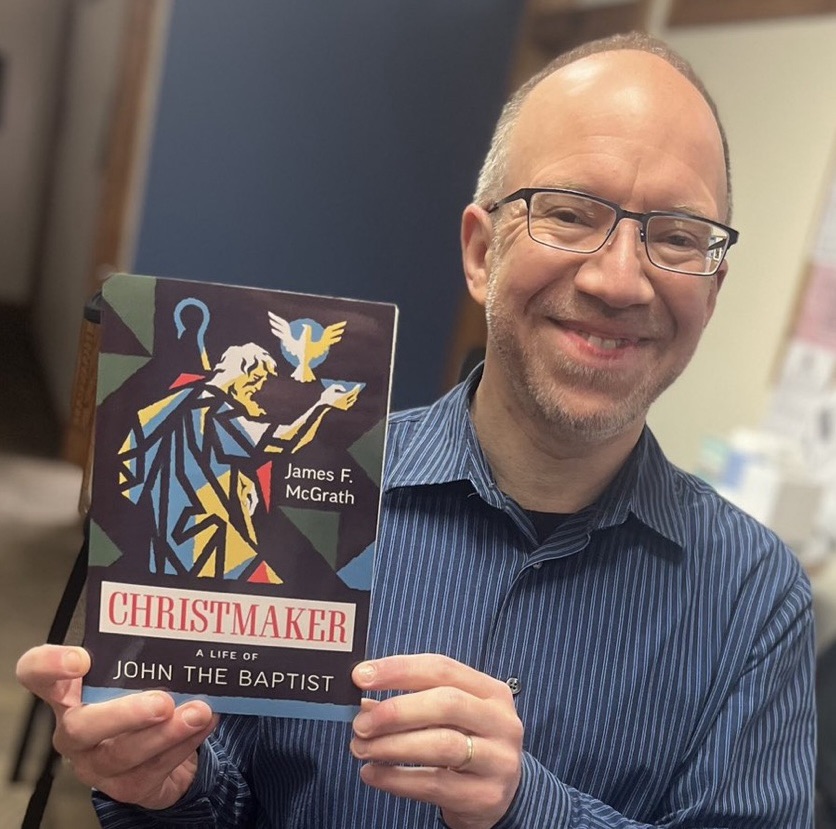
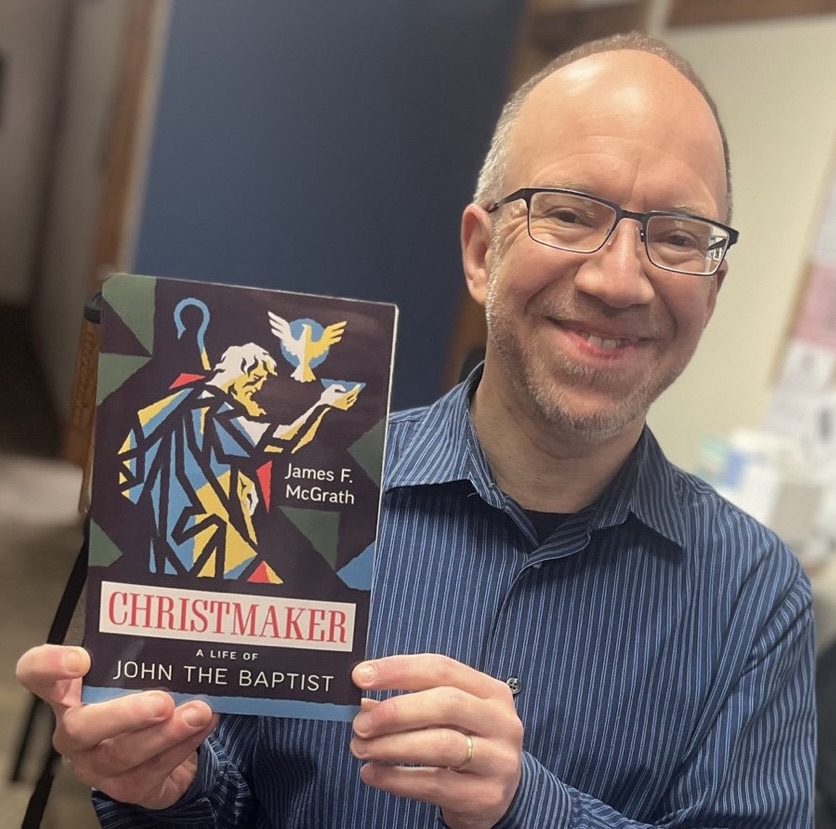
Yesterday Elizabeth and I had the opportunity to attend a lecture at Macquarie University given by our friend and colleague, Prof. James F. McGrath of Butler University, Indiana, who is on a short visit downunder at the moment. James has recently completed two books on John the Baptist, and as part of his visit he is speaking about some of the research involved in producing those books. The first is Christmaker: A Life of John the Baptist (Eerdmans, 2024); the second is John of History, Baptist of Faith: The Quest for the Historical Baptizer (Eerdmans, 2024).

His other personal and professional interest is in the intersection of religious studies and science fiction—he has written other works in relation to this area of interest: Time and Relative Dimensions in Faith (Dayton, Longman and Todd, 2013) and Theology and Science Fiction (Cascade, 2016). James is also speaking tonight at Sci-Fi Church in northern Sydney.

Elizabeth and I met James in 1997, when we were all a part of the research community in the Theology Department at Durham University in the UK. Both James and Elizabeth were undertaking postgraduate research under the supervision of the late Prof. James D.G. Dunn—James, into the Christology of John’s Gospel, and Elizabeth, into mission in the Gospel of Matthew.

The two books that McGrath has written complement each other. Christmaker is unapologetically “popular”, in that is was written for a generalist audience. I can confirm that it is easy to read as it invites us along the journey of discovery that McGrath himself has taken. The second book (a clever riff off the oft-heard statement about Jesus, “the Jesus of history, the Christ of faith”) promises to take us deep into the scholarly explorations of the ancient texts that provide the foundation for Christmaker. In his recent lecture at Macquarie University, James McGrath has provided a glimpse of those scholarly discussions in his typical engaging style.

The small book Christmaker (just 172 pages) opens with typical McGrath-esque snappy commentary: “everybody thinks they know John the Baptist; he has good name recognition”, and yet, “I bet most readers of this book would know him the way they know a homeless man they pass on their way to work each day … [with] an astonishing lack of detail, little apart from vague impressions” (p.1).

The book proceeds to explore “the splash John made” (pp.3–8) and then to set out how a reconstruction of the life of John will be built, using both familiar and less familiar sources. The best-known sources come from Hebrew Scripture—the infancy narratives of 1 Samuel 1—2 and Judges 13—and the New Testament—the conception and birth of John in Luke 1; the Gospel accounts of the baptising activity and preaching/witnessing of the adult John, and the Synoptic accounts of his death. The other sources he uses, barely known outside a small academic circle, are the Infancy Gospel of James from within second century Christianity, and the Mandaean Book of John, from the traditions of another living religion, Mandaeism.

There is, obviously, solid and groundbreaking scholarly work lying beneath the surface of this accessible “fresh look at the life of John the Baptist”. One element of this is that McGrath has co-authored the only English translation of the Mandaean Book of John, published in a critical edition (de Gruyter, 2019) which takes the readers on a wondrous journey into the poetry and imagery of this 7th century Aramaic text.

See the translation at http://www.gnosis.org/library/The_Mandaean_Book_of_John_Open_Access_Ve.pdf

Since late antiquity, the Mandaeans have followed the baptismal practice of John and have revered him as the key figure in their religion. Communities of Mandaeans are to be found in many places around the world today, still practising their faith. One significant characteristic of McGrath’s work is that he has connected with, and interacted with, Mandaean communities in a number of countries.

By discussing his views with them, he has ensured that he is best understanding (from the vantage of an “outsider” to the religion) how John is today understood within that faith tradition. Indeed, there were a number of Mandaeans present at the lecture that Elizabeth and I attended, and they offered helpful insights into the thesis that McGrath was proposing.

Another contribution to the fine scholarly work that is evident in this book is the careful critical reading of the Infancy Gospel of James, a second century Christian text replete with miracles and extravagant tales relating to the birth of Jesus (chs. 1–20) and the death of Zecharias, father of John the Baptist (chs. 22–24).

See a translation at https://www.newadvent.org/fathers/0847.htm and my own discussion at

By reading these two unfamiliar texts alongside the biblical passages already noted, McGrath is able to posit quite a lot about the quite overshadowed—and largely misunderstood—figure of John the Baptist. He wasn’t an unkempt and unruly figure, wandering the desert, angrily denouncing his fellow-Jews, for one; rather, he travelled the rural areas, proclaiming his vision for Israel. McGrath has visited many of the sites traditionally associated with John in person—beyond the all-too-predictable River Jordan spot where John’s baptisms were said to have taken place. So this adds another dimension to his discussion of the traditions.

John was not, as might have been expected of the son of a priest, devoted to service in the temple; rather, he was “an antiestablishment rebel and activist”, challenging the hegemony of the Temple through the practice of baptism, for which he is best-known. Such baptism “invited people to have a mystical spiritual experience of rebirth”—leading, eventually, to a Gnostic-type movement (Mandaeism) which embraced his practice as the key to religious fulfilment.

John did, indeed, look to the coming of “one who is to come”, to rectify the classism of ancient Israelite society—although it is not necessarily so clear-cut that John himself actually envisaged any particular one of his followers (let alone the man from Nazareth, Jesus) as the one to fill that role.

And, in a surpassing twist, it may well have been the overenthusiastic action of this particular disciple, Jesus of Nazareth, who sought physically to overturn the practices of the Temple in his famous “Temple tantrum” (a catchy phrase that McGrath has used in conversation with me). So it was John’s stimulus of Jesus which provoked controversy about his movement through this act, leading to the arrest of John and his eventual death. That Jesus might have borne primary responsibility for the death of John is a twist, indeed!

See my recent discussion of the death of John at

So, what can we take from this fascinating tour through ancient texts and modern religious practices? Jjj, that Christianity started within a very specific social and religious context—the Baptist movement—and not just within an undifferentiated amorphous mass of “Judaism of the time”. Jesus, as a disciple of John, adopted his teachings, his practices, his vision. The introduction that Luke provides to his Gospel, focussing on Zechariah, Elizabeth, and John, needs then to be reconsidered in this light.

Second, that piecing together a life of John the Baptist can and should be done by judiciously critical use of the later Mandaean sources. Scholars have learnt, in the last half-century, to utilise material from rabbinic writings in Mishnah, Midrash, and Talmud—works from late antiquity—with appropriate care and critical acumen, to inform our discussions of the foundational documents of Christianity (especially the Gospels). In similar manner, a critical appreciation of the Mandaean Book of John offers a range of applicable insights.

Third, scholars have become aware of “editorial fatigue” in their treatment of various ancient texts. This refers to the practice of including source material without paying careful attention to the need to adapt and contextualise it for the later writing in which it is used. Evidence for this “editorial fatigue” can be found in works by historians, evangelists, and apologists alike. McGrath cites instances in the Infancy Gospel of James which throw light on the figure of John the Baptist—especially the jagged change in ch.22 from a story about Jesus, to a story about John.

On this basis, he proposes that the author of this second century Gospel was using an existing account of the infancy of John and adapting it as a story about the origins of Jesus. An editorial lapse (forgetting to change the names of mother and child!) provides the key to unlocking this reading. We may well, then, have access to an early tradition about John, separate from the apologetic way that he is portrayed in the New Testament Gospels (where he is portrayed as “second-fiddle” to Jesus).

So a readily-accessible “life of John the Baptist” (set out with clarity in Christmaker) becomes possible, by tracing and examining the interlocking and overlapping threads across three religious traditions—Judaism, Christianity, and Mandaeism—through the various source documents already noted. What results is a creative, insightful, and groundbreaking book. I recommend it as worth purchasing and reading.

See also https://www.insights.uca.org.au/what-can-mandaean-sources-teach-christian-scholars/

James F. McGrath with Christmaker

A king forever (2 Sam 7; Pentecost 9B)

“A king forever”. That is the promise of these well-known words in 2 Samuel 7, which we will hear and reflect on in worship this coming Sunday. They are significant words for Jews; they are also significant words for Christians, for they have informed the way that followers of Jesus would talk about him. The words are given initially to David, only the second king of Israel, but the one who would provide descendants to sit on the throne for half a millennium.

The words of the prophet Nathan, given to him (as he says) by the Lord God, are reported and remembered over those centuries as validation of the power of those kings, even though so many of them “did evil in the sight of the Lord” (as later verses in the historical narratives of Israel report). God stood by those leaders over many generations, consistently reminding the people of their responsibility to adhere to the covenant, affirming them at moments when their faith is evident, and rebuking them at times when that is not the case.

These words have been remembered further by Christians, who see that in Jesus, God has sent “the King of the ages” (1 Tim 1:17), to whom “belong the glory and the power forever and ever” (1 Pet 4:11; also Rom 16:26; Eph 3:21). This is in accord with the “eternal purpose that [God] has carried out in Christ Jesus our Lord” (Eph 3:11), to lead believers to “eternal life” (Luke 10:25; John 17:3; Rom 5:21; 6:23).

Of course, in those words which Nathan speaks to David, we recognise the play on words that occurs. David understands God to be promising a “house” which is “a house of cedar” (v.7), but God actually intends to establish “offspring after you … his kingdom” (v.12).

Writing in With Love to the World, Mel Pouvalu observes that “The word “house” is used fifteen times in 2 Samuel 7, where it has three different meanings. It refers to David’s palace (vv.1–2), to the temple of the Lord God (vv.5–7, 13), and then to David’s dynasty (vv.11, 16, 18–19, 25–27, 29).” She continues, “It is important to see that our ways are not God’s ways, even if we mean well. The story promises a stable future for generations to come, and these narratives are reminders that God will always be seeking us.”

The motif of a kingdom that lasts “forever” is linked both with the affirmation that there will be a king “forever”, and also with the belief that the covenant with Israel will last “forever”. That there will be a king “forever” is integral to God’s promise to David that “your throne shall be established forever” (2 Sam 7:16), repeated by the Chronicler, “when your days are fulfilled to go to be with your ancestors, I will raise up your offspring after you, one of your own sons, and I will establish his kingdom … and I will establish his throne forever” (1 Chron 17:11–12).

The kingdom that will last “forever” is introduced by God’s words in 2 Samuel 7, where God promises David that “your house and your kingdom shall be made sure forever before me” (2 Sam 7:16). The Chronicler also repeats this promise, quoting God as saying of David, “I will confirm him in my house and in my kingdom forever, and his throne shall be established forever” (1 Chron 17:14).

Affirmation of a covenant that will last forever is found in a number of psalms. “The Lord our God … is mindful of his covenant forever, of the word that he commanded, for a thousand generations, the covenant that he made with Abraham, his sworn promise to Isaac, which he confirmed to Jacob as a statute, to Israel as an everlasting covenant” (Ps 105:7–10).

The covenant is noted in a number of psalms. “The friendship of the Lord is for those who fear him, and he makes his covenant known to them”, sings the psalmist (Ps 25:14). “I have made a covenant with my chosen one, I have sworn to my servant David”, God sings in another psalm; “I will establish your descendants forever, and build your throne for all generations” (Ps 89:3–4).

In this same psalm, God affirms that, even if the children of David “forsake my law and do not walk according to my ordinances”, God will punish them, but “forever I will keep my steadfast love for him, and my covenant with him will stand firm … I will not violate my covenant, or alter the word that went forth from my lips” (Ps 89:28, 34). That covenant is to last “forever” (Ps 111:9).

The ultimate message, then, is that God will stand by the leaders of Israel, punishing them, forgiving them, loving them at each step along the way. A promise to sustain a king and a kingdom “forever”, by virtue of a covenant that lasts “forever”, undergirds this reality for the people of Israel. The modern nation state of Israel has adopted this confident assertion, although without any critical appreciation of the context and the purpose of this promise in antiquity. The dreadful results of this unthinking adoption of the mantra that “God is always with us” is playing out in the many deaths, injuries, and sadness that is taking place in Gaza, even today.

Of course, in the traditional understanding of Christianity, the “forever” component has been taken up in the application of 2 Samuel 7 to Jesus of Nazareth. Jesus is acclaimed as “Son of David” in the Synoptic Gospels (Mark 10:47–48; 12:35; Luke 3:31; 18:38–39; and especially in Matt 1:1, 20; 9:27; 12:23; 15:22; 20:30–31; 21:9, 15; 22:42). This claim is also noted at John 7:42; Rom 1:3; 2 Tim 2:8; Rev 3:7; 5:5; 22:16). The heritage of David lives on in these stories.

This particular son of David, as Christian understanding develops, was understood to be king “forever”; “he will reign over the house of Jacob forever, and of his kingdom there will be no end” (Luke 1:31–33). The covenant that he has renewed and enacted with the people of God is “forever” (Heb 9:15; 12:20); and the kingdom that he proclaimed and for which we hope will also be “forever” (2 Pet 1:11).

In the late first century document that we know as letter to the Ephesians, for instance, the resurrected Jesus is seen as seated at the right hand of God “in the heavenly places, far above all rule and authority and power and dominion, and above every name that is named” (Eph 1:20–21). That place of authority for Jesus is envisaged as stretching into eternity, “not only in this age but also in the age to come” (1:20), and as encompassing all places, for God “has put all things under his feet and has made him the head over all things” (1:22).

The global and eternal rule of Christ is here clearly articulated. The statement by the writer that God “seated [Jesus] at his right hand in the heavenly places, far above all rule and authority and power and dominion” (1:20–21) has inspired the development of the imagery of Christ as Pantocrator (Greek for “ruler of all”) in Eastern churches, both Orthodox and Catholic.


Jesus Christ Pantocrator; from a mosaic in the Hagia Sophia mosque (formerly a church), in Istanbul

This line of thinking has culminated in the festival of the Reign of Christ, which has been celebrated in the Roman Catholic Church since it was introduced by Pope Pius XI in 1925. It has since been adopted by Lutheran, Anglican, and various Protestant churches around the world, and also, apparently, by the Western Rite parishes of the Russian Orthodox Church Outside Russia.

1925 was a time when Fascist dictators were rising to power in Europe. I have read that “the specific impetus for the Pope establishing this universal feast of the Church was the martyrdom of a Catholic priest, Blessed Miguel Pro, during the Mexican revolution”; see Today’s Catholic, 18 Nov 2014, at

The article continues, “The institution of this feast was, therefore, almost an act of defiance from the Church against all those who at that time were seeking to absolutize their own political ideologies, insisting boldly that no earthly power, no particular political system or military dictatorship is ever absolute. Rather, only God is eternal and only the Kingdom of God is an absolute value, which never fails.”

The scriptures puncture the pomposity of powerful kings, and subversively present Jesus as the one who stands against all that those kings did. This festival provides a unique way of reflecting on the eternal kingship of Jesus. It offers a distinctive way for considering how the kingship bestowed upon David has been understood to last “forever”.

With Love to the World is a daily Bible reading resource, written and produced within the Uniting Church in Australia, following the Revised Common Lectionary. It offers Sunday worshippers the opportunity to prepare for hearing passages of scripture in the week leading to that day of worship. It seeks to foster “an informed faith” amongst the people of God.

You can subscribe on your phone or iPad via an App, for a subscription of $28 per year. Search for With Love to the World on the App Store, or UCA—With Love to the World on Google Play. For the hard copy resource, for just $28 for a year’s subscription, email Trevor at wlwuca@bigpond.com or phone +61 (2) 9747-1369.

What’s in, and what’s out (Mark 6; Pentecost 9B)

At this time of the year, every Year B, the lectionary strays away from choosing the Gospel readings from the beginning of the good news of Jesus, the Gospel of Mark. Next week, we will launch into a series of five weeks of readings drawn from John 6. That chapter revolves around the motif of Jesus as “the living bread which came down from heaven” (John 6:51). Because of this looming focus, the Gospel passage provided by the lectionary for this Sunday is curiously shaped. It takes two separate sections of Mark’s Gospel, and omits a large section that sits in between these two passages.

The story of the feeding of the crowd of “about 5,000 in all” (John 6:1–14) which we will read next Sunday replicates the story omitted from this Sunday’s reading, where the Jesus was able to feed a crowd comprising “5,000 men” (Mark 6:44).

The lectionary provides the surrounding sections (Mark 6:30–34, 53–56) and omits the feeding narrative (Mark 6:35–44). It also omits the account of Jesus walking on the water (Mark 6:45–52)—a story paralleled in Matt 14:22-33). Thus, we have a curiously disrupted passage for consideration.

We need, then, to consider, both what’s in, and what’s out, in this week’s lectionary selection.

What’s in: three key terms

The selection offered by the lectionary includes reference to Jesus taking his followers aside, to rest (6:31). We know well the words that Jesus spoke, offering rest to his followers (Matt 11:28–30). But we perhaps give little thought to the need that Jesus had, along with this followers, to rest from the bustling business that he engaged in. Mark states it well: “many were coming and going, and they had no leisure even to eat” (6:31).

Jesus moves away to a deserted place with his followers. He goes into the wilderness. The Greek word used here, eremon, is significant. This is where Jesus goes when he is tested by God (1:12), immediately after he had been completely immersed in the water by John the baptiser, resident in that wilderness (1:3, 4).

It was in the wilderness that Israel came to know its essential identity: a people, beloved by God, rescued from slavery, called into covenant, equipped for the battles of entry into the land, as the great myth from the past declared. It was, likewise, in the wilderness that Jesus came to know his mission in life, and where he came to know his identity as the Son of God, chosen for that mission. So it is fitting that he moves to a deserted place, seeking respite from the crowds.

Yet the crowds will not let the healer and his followers rest; they continue to press on Jesus, and as they saw him, with his followers, in the boat, they hurried on foot to that deserted place, “and arrived ahead of them” (6:33). This had been going on since early in the Gospel; large crowds had followed Jesus since early in Galilee (2:13; 3:20, 32; 4:1; 5:21; 24, 30–31) and would continue on in Galilee (7:14; 8:1–2, 34; 9:14–15, 25; 10:1, 46) and into Jerusalem (11:18; 12:37).

The response of Jesus is instructive. Here we find a second significant term. He “had compassion for them”, the NRSV reports (6:34). The distinctive Greek term used (esplangnisthē) appears here, and in the parallel of Matt 14:14 (as well as an editorial comment at Matt 9:36).

The term refers to that deep-seated churning in the gut that takes place when an emotional cord is struck. It is a profound and penetrating feeling. The same term is found in the paired story of the feeding of the 4,000, where Jesus tells his followers, “I have compassion on the crowd” (Mark 8:2, par Matt 15:32).

Such compassion is characteristic of Jesus on many occasions. The term has already appeared in Mark’s report of the leper who came to Jesus, seeking to be made clean, where it describes the way that Jesus responds to him (“moved with pity” in the NRSV, reflecting a textual variant in Mark 1:41, par Matt 10:6). It’s also used to characterise the way Jesus deals with two blind men near Jericho (“Jesus in pity touched their eyes”, NRSV Matt 20:34).

Other places where the word appears are in the story of the mute boy who suffers convulsions (Mark 9:14–29). The father of the boy begs Jesus to cast out the spirit which possesses the boy, imploring him, “if you can do anything, have compassion on us and help us” (9:22). Jesus responds by rebuking the spirit, which leaves the boy (9:25–27).

In the orderly account which we attribute to Luke, the compassion of Jesus is noted when he interacts with a widow who is mourning her dead son (Luke 7:13), and is also found within two of the parables told by Jesus, reported only in this Gospel. The Samaritan has compassion (Luke 10:33), as does the father when he sees his prodigal son returning home (Luke 15:20).

A third important idea is found when the author implicitly draws an analogy between Jesus, and a shepherd (6:34). In the book of signs, Jesus explicitly calls himself “the good shepherd” (10:1–18). This evokes the scriptural imagery of the good shepherd as the true and faithful leader in Israel (Num 21:16–17; Ezek 34:1–31; Jer 23:4). The phrase also alludes to the people as the sheep who are cared for (Pss 95, 100; Ezek 34:31).

People who are “sheep without a shepherd” recall the description of Israel in Hebrew Scriptures (Num 27:17; 1 Kings 22:17, par 2 Chron 18:16; and Judith 11:19). The narrator’s reference in Mark 6:34 contains these deep scriptural resonances. The compassion demonstrated by Jesus fits with his role as shepherd of the sheep.

A third key idea is contained in the brief statement that the compassion of Jesus is expressed as “he began to teach them many things” (Mark 6:34). The teaching activity of Jesus runs through this Gospel. Jesus teaches beside the sea (4:1), in the synagogue (1:21–27; 6:2), beside the lake (2:13; 4:1–2; 6:34), in the villages (6:6), and as he and his followers walk along the way towards Jerusalem (8:31; 9:31).

When Jesus reaches Jerusalem, he is said to be teaching the crowd in the courtyard of the Temple (11:15–18). A little later, some Pharisees and Herodians approach him, observing that “you are not swayed by appearances, but truly teach the way of God” (12:14). “Day after day I was with you in the Temple teaching”, he says to the armed crowd sent from the Jewish authorities to arrest him (14:43–49).

The same emphasis on his teaching is found on the other Synoptics. Matthew reports that “Jesus went throughout Galilee, teaching in their synagogues and proclaiming the good news of the kingdom” (Matt 4:23; see also 7:28–29; 9:35; 21:23; 22:33; 26:55), while Luke notes that when Jesus went to Capernaum, “he was teaching them on the sabbath; they were astounded at his teaching, because he spoke with authority” (Luke 4:31–32; see also 5:17; 6:6; 10:39; 13:10; 13:22; 19:47; 20:1; 21:37; 23:5).
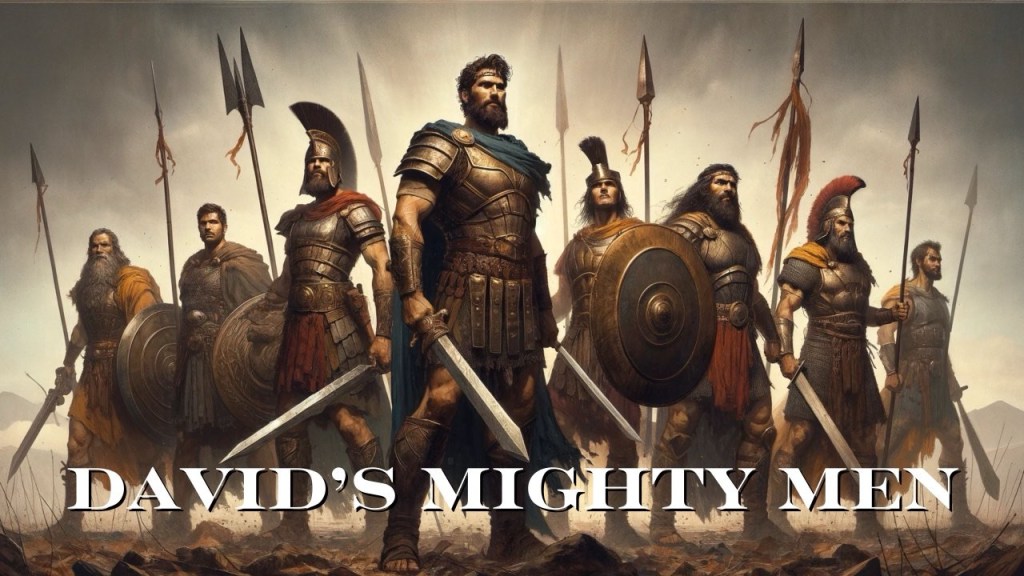
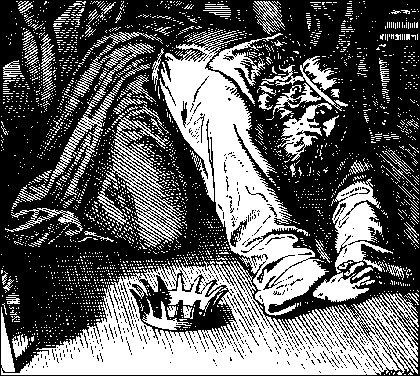
What’s out: two substantial scenes

So much for what’s in this week’s selection. What about what’s out?

First, the Gospel offering provided by the lectionary includes the surrounding sections (Mark 6:30–34, 53–56) but omits what it surrounds—the feeding narrative (Mark 6:35–44). I think this is because the lectionary picks up that incident next Sunday, but it uses the account found in the fourth Gospel (John 6:1–21) before tracing the long (and repetitive) speech of Jesus in the rest of the chapter John 6:24–69).

This feeding story is also retold by the other two synoptic evangelists. In the book of origins (Matt 14:15–21), the crowd comprises “about five thousand men, besides women and children (Matt 14:21). In the orderly account of things fulfilled (Luke 9:12–17), the crowd is recorded, as in the Markan source, as being “about 5,000 men” (Luke 9:14).
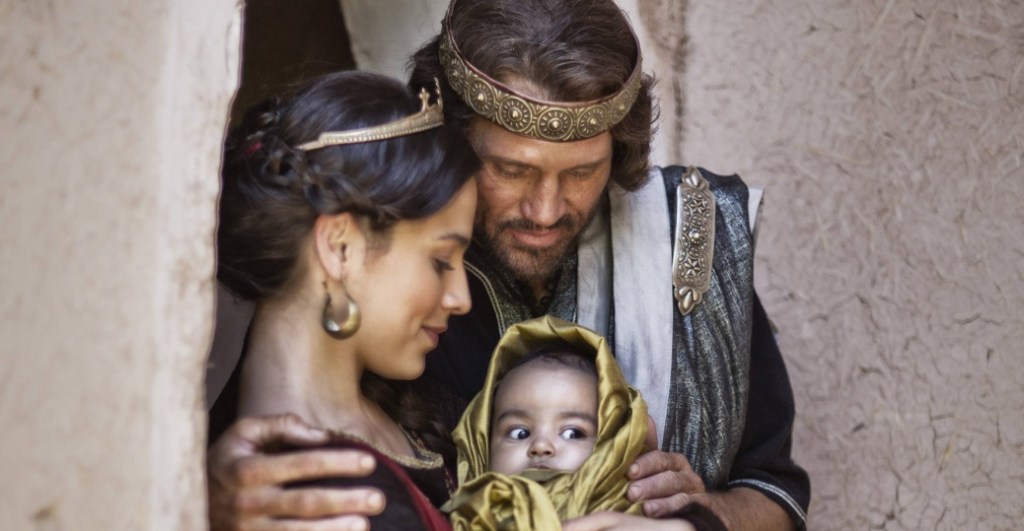
The scene is reminiscent also of the parallel scene of feeding “4,000 men” recounted at Mark 8:1-10 and also at Matt 15:32-39; although Matthew indicates that there were “4,000 men, besides women and children”. (Luke omits this story.)


In each of those cases, the accounts provide the opportunity for Jesus to model the traditional pattern of a Jewish meal, as he “looked up to heaven, and blessed, and broke the loaves, and gave them to the disciples to set before the people” (Mark 6:41; Matt 14:19; Luke 9:16; and again at Mark 8:6 and Matt 15:36). This prefigures the familiar pattern from the last supper (Mark 14:22; Matt 26:26; Luke 22:19; 1 Cor 11:24; and see also Acts 20:7, 27:35).

So Mark recounts the scene: “And taking the five loaves and the two fish, he looked up to heaven and said a blessing and broke the loaves and gave them to the disciples to set before the people. And he divided the two fish among them all. And they all ate and were satisfied. And they took up twelve baskets full of broken pieces and of the fish. And those who ate the loaves were five thousand men.” (Mark 6:41–44).
And the resonances with the central Christian ritual, the remembrance of the last supper, are surely strong and deep.

Second, the lectionary omits the account of Jesus walking on the water (Mark 6:45–52) which plays an important role in Mark’s account. By omitting this, the lectionary has excised the important reference to Jesus crossing over “to the other side”, from the Decapolis across to Bethsaida (Mark 6:45).

In this earliest Gospel, Jesus had left Jewish territory earlier, when he crossed “to the other side of the sea, to the country of the Gerasenes” (5:1), then returned “to the other side” (5:21), where he visited “his own country” (6:1) before venturing again across “to the other side” (6:45–52).

This maritime movement makes an important symbolic point for the the author: the ministry of Jesus incorporated not only territories in Jewish areas (to 4:41, then 5:21 to 6:44) as well as the Gentile territories. Jesus firstly crosses into the Decapolis (5:1–20), where he cast out multiple demons from the tomb-dwelling man, sending them into the nearby pigs. (This story is also omitted by the lectionary during this particular year.)

One of the striking aspects in this story is that this man, possessed by an unclean spirit, fettered in chains, dwelling beside tombs, self-harming and acting inappropriately (5:2–6), becomes the first active missionary in this Gospel; after the encounter with Jesus, “he began to proclaim in the Decapolis how much Jesus had done for him, and everyone marvelled” (5:20). A pity we missed that this year.

Jesus is active on “the other side” again from Mark 6:53, when he enters the regions of Gennesaret (6:53). Subsequently, Jesus is located at Tyre and Sidon (7:24), and then “the region of the Decapolis” (7:31), before returning to Bethsaida (8:22) and Caesarea Philippi (8:27), in Jewish territory.

These geographical references are treated variably in the later accounts which used Mark as a source. Matthew retains Genessaret (Matt 14:34) and Tyre and Sidon (15:21), but removes the reference to the Decapolis (15:29). The geographical references from Caesarea Philippi onwards then appear in his ongoing narrative. Luke omits the whole section containing these earlier references (Mark 6:53–8:26), removing the clear indication that Jesus spent quite some time on Gentile soil.

Omitting the “crossing over” movement in the narrative lessens the significance of this observation: much of what takes place in the ensuing four chapters, takes place on Gentile soil. This is very important for our understanding of the stories that Mark reports. We need to hear that in mind as we read the later stories in this section of the Gospel: Jesus is “on the other side”, moving amongst the Gentiles of the Decapolis.

David and Michal, Uzzah and the Ark (2 Sam 6; Pentecost 8B)

For the passage from Hebrew Scripture this coming Sunday, the lectionary offers us selected verses from 2 Sam 6:1–19. Last week, we heard the brief account of how David, the king of Judah, took the city of Jerusalem from its inhabitants, the Jebusites, and was anointed as king of “all Israel” (5:1–10). Next week, we will hear of the promise that God makes to David, that “I will make for you a great name … your throne shall be established forever” (7:1–14).

In between these two pivotal events, establishing beyond doubt that David was both the conqueror supreme of the earlier inhabitants and the progenitor of a dynasty—“the house of David”—that would hold power for centuries to come, we have a curious, yet significant, account relating to The Ark of the Covenant (6:1–19). See

David uses the Ark to reinforce and undergird his authority; his intention in bringing into the city, Jerusalem, was to confirm absolutely that he was God’s anointed, in Jerusalem, ruling over all Israel.

However, the lectionary (as it is wont to do) omits some verses from the middle of this narrative (6:6–11), as well as the closing section of the chapter (6:20–26). The middle section (6:6–11) reports the death of Uzzah, one of the sons of Abinadab, because he touched the holy ark with his hand. Before this omitted account is the report of David, with “all the house of Israel”, vigorously dancing “with all their might” as he led the Ark into the city (6:1–5), “with songs and lyres and harps and tambourines and castanets and cymbals” (6:5b). After the omitted verses we find David, continuing to dance “with all his might”, offering sacrifices to the Lord God and distributing food to the people in celebration (6:12–19).

Michael Brown, writing in With Love to the World, continues his reflections on this story: “The celebrations ended abruptly. This story of Uzzah’s death by touching the ark—with the best of intentions to steady it as the oxen stumbled—may be strange to us. Yet it is told as a reminder that it is not within anyone’s power to control, guide or steady the divinity to whom the sacred symbols point. Rather, it is we who are guided, steadied or even shaken by the sacred. David, shaken to the core, angry and afraid, stopped the procession in its tracks and left the ark at a nearby house for three months. An awe-filled experience of the sacred may be a chance to pause and recalibrate.”

Uzzah touches the Ark directly

The death of Uzzah occurs because of the holiness of the ark, as the dwelling place of God. Touching it directly—breaching the boundary between the holy and the everyday—would be enough to incur death. “God struck him there because he reached out his hand to the ark”, the text advises (2 Sam 6:7); this contravenes the earlier instruction of the Lord to Moses, “you shall put the poles into the rings on the sides of the ark, by which to carry the ark; the poles shall remain in the rings of the ark; they shall not be taken from it” (Exod 25:14–15).

The holiness of the Ark is evident in the set of directions regarding the Tabernacle (from Exod 25 onwards), when Moses had been instructed, “you shall put the mercy seat on the ark of the covenant in the most holy place” (Exod 26:34). Likewise, decades after David, as Solomon dedicates the Temple, “the priests brought the ark of the covenant of the Lord to its place, in the inner sanctuary of the house, in the most holy place, underneath the wings of the cherubim” (1 Ki 8:6; also 2 Chron 5:5–7; and see Heb 9:1–5).

The way that David welcomed the ark into the city underlines the reverence and awe that was due towards God. A wonderful festival is held. From that time onwards, the ark remains in Zion, where the Temple is the focus of piety. Another transition has taken place, from a holy artefact that was mobile, to a fixed, permanent house for God. Now “the most holy place” of the mobile Tabernacle (Exod 26:33–34; 1 Chron 6:49) would be come “the most holy place” of the temple (1 Ki 6:16; 7:50; 8:6; 2 Chron 3:8–10), or “the Holy of Holies” (as it is labelled in Heb 9:3).

Holiness was certainly central to the religious and social life of ancient Israel. Those who ministered to God within the Temple, as priests, were to be especially concerned about holiness in their daily life and their regular activities in the Temple (Exod 28—29; Lev 8–9). The priests oversaw the implementation of the Holiness Code, a large section of Leviticus (chapters 17—26), which explained the various applications of the word to Israel, that “you shall be holy, for I the Lord your God am holy” (Lev 19:2; also 20:7,26).

As well as overseeing the various offerings and sacrifices that were to be brought to the Temple, the priests provided guidance and interpretation in many matters of daily life, including sexual relationships and bodily illnesses, as well as the annual festivals and other ritual practices.

In the towns and villages of Israel, by contrast, the scribes and Pharisees provided guidance in the interpretation of Torah and in the application of Torah to ensure that holiness was observed in daily living. They undertook the highly significant task of showing how the Torah was relevant to the daily life of Jewish people. It was possible, they argued, to live as God’s holy people at every point of one’s life, quite apart from any pilgrimages made to the Temple in Jerusalem.

Flowing on into the time of Jesus, we see that the followers of Jesus are instructed to consider themselves as God’s holy people (1 Cor 3:17; 6:19; Eph 5:25–27; Col 1:22; 3:12; Heb 3:1; 1 Pet 1:13–16; 2:5, 9) and to live accordingly. Holiness continues to be central in the Jesus movement—albeit, in the manner in which it has been redefined by Jesus (Mark 7:18–23; Matt 15:17–20).


James J. Tissot, David Dances before the Ark (1896–1902),
gouache on board, The Jewish Museum, New York

The lectionary also omits the report of what Michal, the wife of David, said and did as she witnessed this spectacle (6:20–23). It includes the observation that, as Michal look at what David was doing, “she despised him in her heart” (6:16). This is a striking contrast to the earlier affirmation that “Michal loved David” (1 Sam 18:20, 28) and to the care that Michal took to save David from her father, Saul (1 Sam 19:8–17).

Michal is clearly offended that David was “uncovering himself today before the eyes of his servants’ maids, as any vulgar fellow might shamelessly uncover himself” (2 Sam 6:20), even though the earlier report had simply noted that “David was girded with a linen ephod” (6:14). We also don’t read the sad note that concludes this chapter, that “Michal the daughter of Saul had no child to the day of her death” (2 Sam 6:23). The alienation between the two seems complete; we hear nothing more of Michal in the later chapters of 2 Samuel, nor in the book of Chronicles.

Writing in the Encyclopedia of Jewish Women, Dr. Tamar Kadari notes that later Rabbis proposed that “she had no children until her dying day, but on her dying day she bore a son. The midrash speaks of three women who had difficult deliveries and died in childbirth: Rachel, the wife of Phinehas, and Michal daughter of Saul. Michal bleated like a sheep when giving birth and died, and therefore she was called “Eglah” (Gen. Rabbah 82:7).” (The Hebrew word eglah means “heifer”.) This midrash links Michal with “the wife of David” mentioned at 2 Sam 3:5 and 1 Chron 3:3, who was the mother of Ithraem.

Kadari also notes that Rabbis in a later time—when the Talmud was finalised in the fifth or sixth century CE—elevated Michal in status, noting that they comment that “this righteous woman that Michal would put on tefillinn every day, and the sages of the time did not protest, even though there is no halakhah requirement for a woman to do so (JT Eruvin 10:1, 26a).”

Michal

In an article in the online Biblical Theology Bulletin: Journal of Bible and Culture (vol.51 no.1, 2021), David. J. Zucker explores “Four Women in Samuel Confront Power”. He alert us to the stories of four occasions in the books of 1–2 Samuel when “women put their lives at risk as they dare to confront power … Abigail of Maon to rebellious David; the Medium of Endor to King Saul; the Wise Woman of Tekoa to King David; and the Wise Woman of Abel to Joab, King David’s general.”

Sadly, none of the stories relating to these women are included in the passages suggested by the Revised Common Lectionary. As is often the case, the focus is on the men in the narratives proposed.

Zucker notes that “The details surrounding their specific situations differ considerably from case to case. Likewise, from what little the Bible tells about their backgrounds, it is likely that they all came from different social classes. Nonetheless, each example fits within a broad definition of speaking truth to power.”

See https://journals.sagepub.com/doi/10.1177/0146107920980931?

The four women dealt with by Zucker are Abigail of Maon, the wife of Nabal (1 Samuel 25); the Medium of Endor (1 Samuel 28); the Wise Woman of Tekoa (2 Samuel 14); and the Wise Woman of Abel (2 Samuel 20). None of these chapters are included in the sequence of lectionary offerings. Zucker explains how these women speak truth to power.

“Abigail of Maon interacts with pre-monarchic David, then a rebel on the run since he is distanced from King Saul. The Medium of Endor is visited by King Saul, who is seeking Divine counsel via the recently deceased prophet Samuel. The Tekoite has come to King David ostensibly to seek resolution to her family’s blood vengeance problem. The Abelite representing her community which is threatened with immediate destruction is in dialogue with Joab, King David’s foremost general.”

He notes that “these stories vividly capture some of the very different ways in which women in the [Hebrew Bible] are resisting the violence of war that has the potential to utterly destroy their families and the communities in which they live.” What a pity we are not offered the opportunity to consider them in what we read in public worship.

*****

With Love to the World is a daily Bible reading resource, written and produced within the Uniting Church in Australia, following the Revised Common Lectionary. It offers Sunday worshippers the opportunity to prepare for hearing passages of scripture in the week leading to that day of worship. It seeks to foster “an informed faith” amongst the people of God.

You can subscribe on your phone or iPad via an App, for a subscription of $28 per year. Search for With Love to the World on the App Store, or UCA—With Love to the World on Google Play. For the hard copy resource, for just $28 for a year’s subscription, email Trevor at wlwuca@bigpond.com or phone +61 (2) 9747-1369.