All are activated by the same Spirit (1 Cor 12; Epiphany 2C)

This coming Sunday and the following Sunday, the lectionary suggests that we read and hear a well-known section of Paul’s letter to the believers in Corinth. In this chapter (1 Cor 12:1–31), Paul addresses the nature of the community that has been formed by those who formerly were “pagans … led astray to idols” (12:2) and have now have come to believe that “Jesus is Lord” (v.3) and desire to follow his way in their lives through offering their gifts in service (vv.4–7). 

What follows in this chapter—and in the subsequent ones that the lectionary proposes on the Sundays ahead—provides a good basis for considering fundamental matters of faith and discipleship throughout the season of Epiphany. It is, after all, a season focussed on revelation; and Paul’s words are quite revealing!

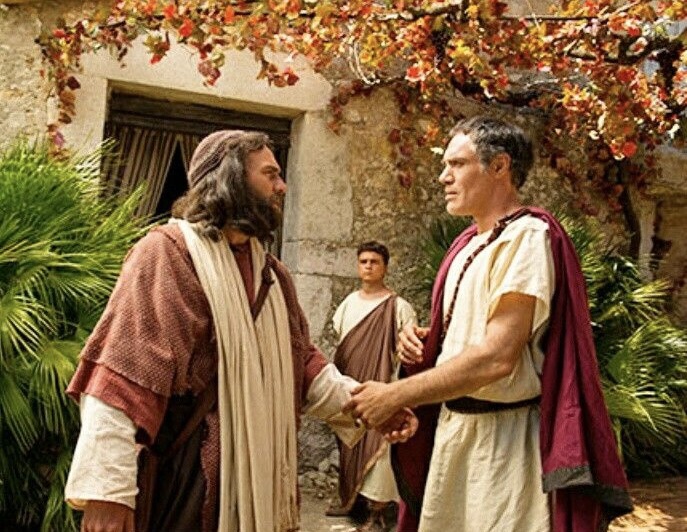
Actually, they are not just Paul’s words (although that is how we usually refer to them). Paul collaborated in the writing of many of his letters—of the seven agreed authentic letters, only two are written by Paul alone. The others are written in association with Timothy (2 Cor, Phil, 1 Thess and Phlm), Silvanus (1 Thess), and Sosthenes (1 Cor). So it is words from this last letter, co-written with Sosthenes, that the creators of the lectionary are offering us during the season of Epiphany. 

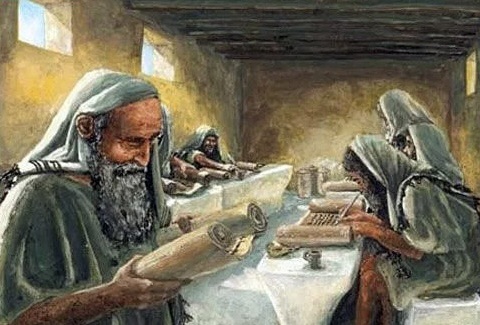
A depiction of Paul and Sosthenes

In opening this letter, Sosthenes and Paul tell the Corinthians that they write to “give thanks” (1:4) and also to “appeal to you” (1:10); and later, to “admonish you as my beloved children” (4:14). The constructive approach that they bring is made clear in the opening prayer of thanksgiving (1:4–9). Writing in chapter four, the author (here, presumably Paul) exhorts the Corinthians: “I appeal to you, then, be imitators of me” (1 Cor 4:16; see also 1 Thess 1:6). The letter contains many points of appeal, exhortation, encouragement—and also challenge, correction, and criticism!

This coming Sunday we focus on verses 1–11 of chapter 12. This is an instance of exhortation and encouragement (in the later part of the chapter, which we read and hear on the following Sunday, challenge and correction will occur). In these verses, Paul considers the diversity of expressions of faith that can be found in the faith community in Corinth—as, indeed, there are in many other communities of faith. He notes the diversity of gifts, the various ways of providing service, and the range of activities undertaken by “those who are sanctified in Christ Jesus, called to be saints” (1 Cor 1:2). 

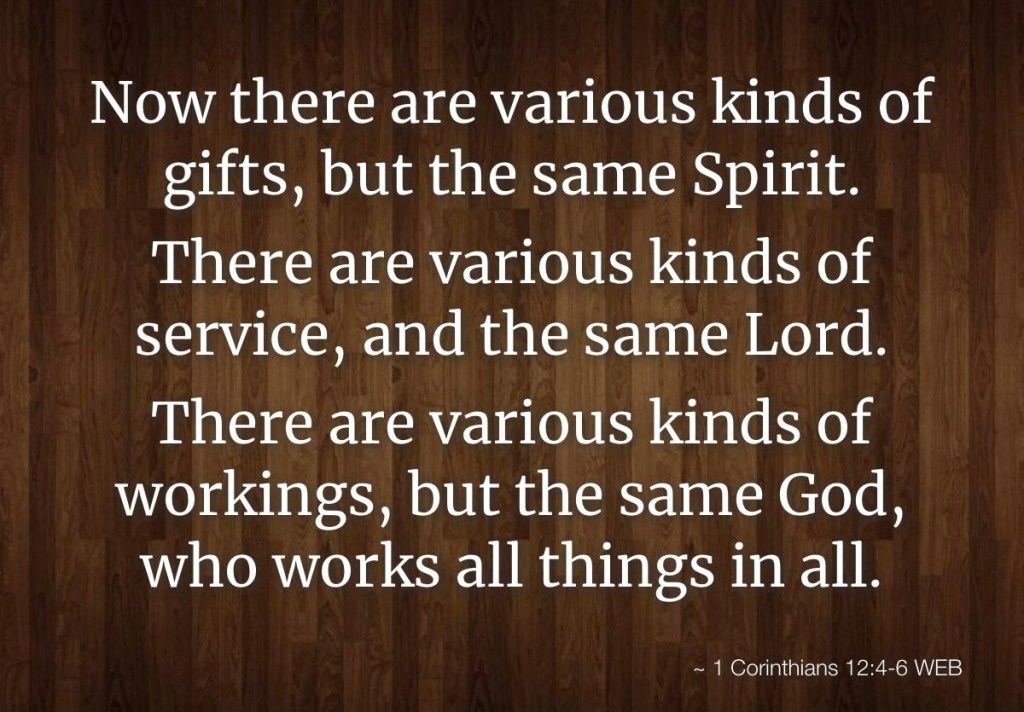
Each gift, service, or activity, however, has a common origin. It is “the same Spirit” who grants the diversity of gifts evident in the community (12:4), “the same Lord” who is the motivator for the array of offering service by those believers (v.5), and “the same God” who activates all of the activities that is evident in Corinth (v.6).
It is worth noting that an alternative way to translate this might be “the same God who energizes all of the expressions of energy”. The Greek words being translated as “activate” and “activities” relate to the central idea of energy; indeed, the foundational word is ἐνεργήμα, which when transliterated letter-for-letter results in “energēma”, from which we get the English word “energy”. So the Spirit is presented as an active, dynamic force, which is at work in a lively, tireless, and vital fashion. 

In this passage, Paul places a particular emphasis on the unity that is—or at least, should be—a key feature of the group of people who are joined together by the common affirmation, “Jesus is Lord” (v.3). He affirms that the gifts, acts of service, and activities expressed by those people “are activated by one and the same Spirit” (v.11a). It is that Spirit who “allots to each one individually just as the Spirit chooses” (v.11b).
The irony, however, is that in the eleven chapters preceding this passage, there have been multiple signs of the many ways in which disagreement, conflict, division, and factionalism mark the community of believers in Corinth. There have been ethical breaches, instances of sexual misbehaviour, diverse views regarding marriage and related issues, and mistreatment of fellow members of the community who are seen as “weak” by some who perhaps regard themselves as “strong”. Has the Spirit be so energizing that the disruptions caused by the Spirit’s activity have promulgated all of these problems?

Further, the critical issues which Paul addresses in the chapters immediately following, in the later part of the letter (1 Cor 12–14), arise out of the highly spontaneous, seemingly chaotic situation that characterised worship in Corinth. How the Spirit was active—energizing—those who worship in this gathering! It was anything but a reverent gathering of people unified by their faith; it was a chaotic frenzy of activity and words, if Paul’s severe wording is to be believed.

Such worship had more the nature of a dialogue between conversation partners, rather than a monologue delivered by one person to a group of silent listeners. We can see this in a simple way, with the references to “interpreters” in what Paul writes to the Corinthians. Whilst there are people who contribute words of prophecy, pray in tongues, or speak in tongues (1 Cor 14), in each case there is the need for someone to interpret these phenomena. It seems that many things were happening simultaneously, creating a frenzied cacophony during worship. If we see the energizing of the Spirit as a disruptive force, then much disruption has occurred!

For my reflections on the disruptive work of the Spirit in Corinth, see

So in 1 Cor 12, Paul adapts an image which was extensively used in political discussions about the city state (“the body is one and has many members”, 12:12) as well as what may be a reference to a developing baptismal liturgy within the early church (“we were all baptised into one body”, 12:13) and a very early creedal statement (“Jesus is Lord”, 12:3).

The work of the Spirit was supposed to provide a range of gifts for the mutual benefit of all involved in the community. Paul provides a list of just such gifts in verses 8–10. He notes wisdom, knowledge, faith, healing, miracles, prophecy, discernment, tongues, and interpretation of tongues. This should not be taken as an exhaustive list; in other places, Paul refers to other gifts, such as teaching, exhorting, giving,leading, and offering compassion (Rom 12:7–8), as well as power and assistance later in this chapter (1 Cor 12:28). 

He also identifies some offices exercised by people alongside gifts already noted, as he concludes this same discussion of gifts: “Are all apostles? Are all prophets? Are all teachers? Do all work miracles? Do all possess gifts of healing? Do all speak in tongues? Do all interpret?” (1 Cor 12:29–30). Similar offices are noted in a later letter written in the name of Paul: “apostles … prophets … evangelists … pastors … teachers”, all,of which are said to be “to equip the saints for the work of ministry” (Eph 4:11–12).

Nor should this list of 1 Cor 12:8–10 be regarded as a prioritising of such gifts by the order in which they are listed. In fact, the concluding comment of v.11 specifically places all of the gifts noted on the same level, each equally “activated by the one and the same Spirit” and “allocated … just as the Spirit chooses”. We should affirm that today; all gifts for service come from the same source.

Ominous clouds overshadowing a joyous celebration (John 2; Epiphany 2C)

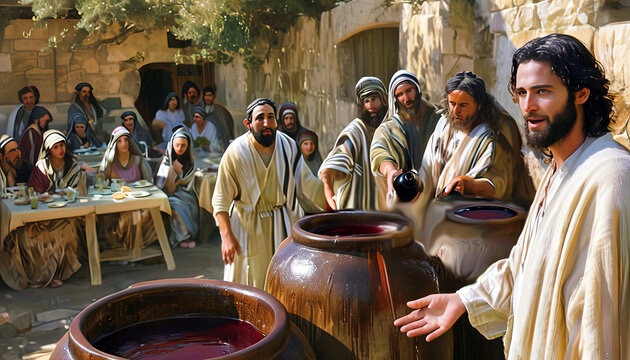
For the second Sunday in Epiphany, we are offered a passage from early in the book of signs—the work that we know as the Gospel according to John. It is the first sign performed by Jesus, when he was attending a wedding in the town of Cana in Galilee (John 2:1–11).

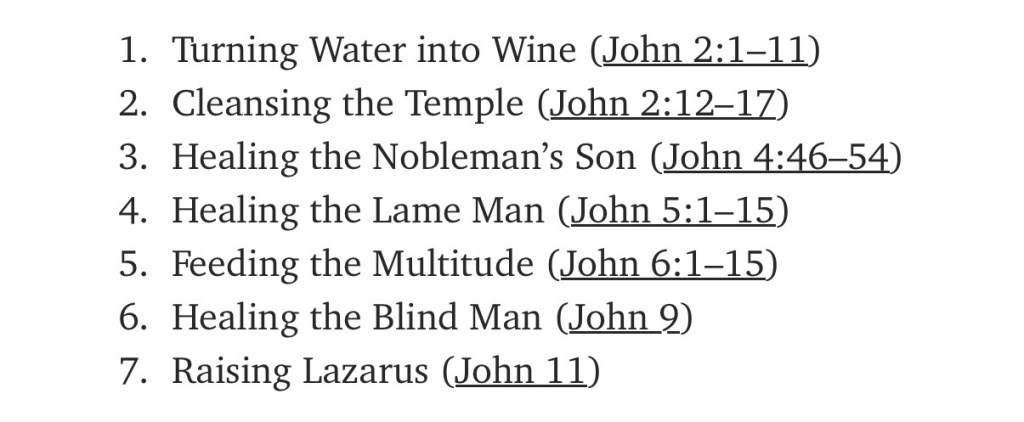
I call this Gospel the book of signs because it includes seven clearly narrated signs, or miracles, performed by Jesus. Most of them are inserted in the midst of an evolving narrative, in which followers of Jesus grow in their understanding of who he is, whilst at the same time a movement of those opposed to Jesus gains strength. Both of those features are evident in this first sign.

The author of this Gospel makes it clear that there were more signs performed by Jesus than what is narrated (20:30), and that the signs actually narrated are told in order to strengthen the faith of those hearing or reading them (20:31).

The first and second signs take place in Galilee (2:1–11, 4:46–54). Subsequent signs are located in Jerusalem (5:2–9), the Sea of Galilee (6:1–14), on the Sea of Galilee near Capernaum (6:16–21), back in Jerusalem (9:1–7) and then, for the seventh, and final, sign of those narrated, in Bethany, where Lazarus had recently died (11:17–44).

This final sign provides a clear climax to the Book of Signs, the first half of the whole Gospel. This is the miracle supreme—raising a dead person back to life takes some beating! It is told at some length, with many details, leading to the climactic moment of the appearance of the once-dead man, now alive. “The dead man came out, his hands and feet bound with strips of cloth, and his face wrapped in a cloth. Jesus said to them, “Unbind him, and let him go.” (11:44).

In the literary framework of the whole Gospel, however, this building to a climax through the seven signs is paralleled by the growing tension as leaders in the Jewish community marshal forces in plotting against Jesus. Initially, there were positive responses to Jesus (2:23, 4:42, 4:45). Then, an engagement in debate and controversy with “the Jews” (5:13) quickly escalated into persecution (5:16) and indeed an attempt to kill Jesus (5:18).

This early opposition then continues unchecked throughout the narrative. Whilst Jesus remained popular in Galilee (6:14, 34) and amongst some in Jerusalem (7:31, 40-41a, 46: 8:30; 9:17, 38; 10:21, 41) and Bethany (11:27, 45), hostility towards Jesus continued, being expressed both in verbal aggression (6:41, 52; 7:15, 20; 8:48; 9:18-19; 10:20), threats of his arrest (7:32, 44; 11:57), direct physical threats (stoning at 8:49, expulsion from the synagogue at 9:22, and stoning once more at 10:31) and threats against his life (7:1, 25, 32).

Then, at the climactic moment, after Lazarus appears, the Jewish leadership plans a strategy to put Jesus to death (11:45-53). The plot is hatched, the fate of Jesus is sealed. That section of the narrative also includes the famous, yet ironic, comment by Caiaphas: “it is better for you to have one man die for the people than to have the whole nation destroyed” (11:50). And so the inevitable process begins, moving towards the death of Jesus (11:53, 57). 

For the author of the book of signs, affirming the identity of Jesus shapes the whole narrative of this Gospel. Each sign points to the significance of Jesus. The first sign, in Cana of Galilee, manifests his glory (2:12); the next sign, also in Cana, fosters belief in Jesus (4:48, 53). What Jesus does beside the Sea of Galilee identifies him as “the Prophet who is to come into the world!” (6:14), whilst the sign performed in Jerusalem signal that he is  the Son of Man (9:35–38). Later, in Bethany, Jesus raises Lazarus from death, and Martha articulates the faith of others when she confesses Jesus to be Son of God and Messiah (11:27). Alongside these seven signs, the various interpersonal encounters that are narrated illuminate the identity of Jesus.

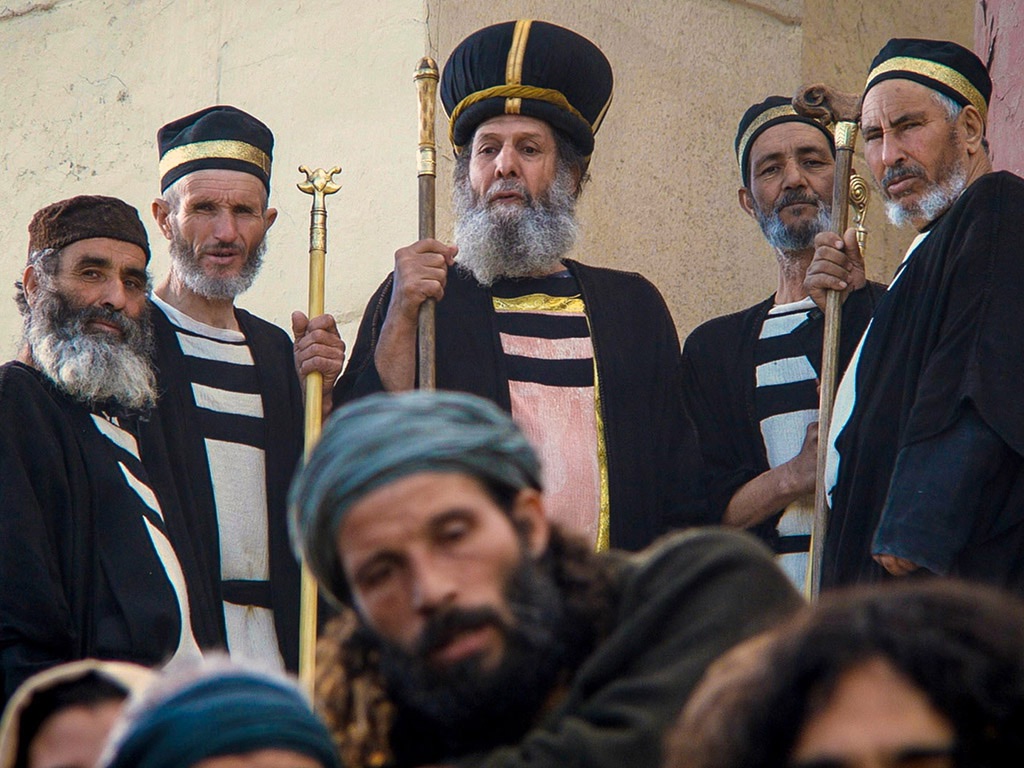
I read the whole sequence of scenes in this Gospel, from the wedding in Cana, with its implicit criticism of “the Jewish rites of purification” (2:1–11), through the heated debates of chs. 5—8, the high drama of the multi-scene conflict with Jewish leaders and “expulsion from the synagogue” in ch.9, on into the plot of ch.11, as a story that reflects the position of the followers of Jesus who comprised the community in which this book was eventually written. 

This group of people (what Raymond Brown called “the community of the beloved disciple”) had been rejected by their fellows, expelled from their community of faith, because of their views about Jesus. They had become yet another sectarian group in the mixture of late Second Temple Judaism, which then bled into early Rabbinic Judaism. 

It is this “Johannine sectarianism”, as Wayne Meeks called it, which explains the bruising debates in this Gospel; Jesus is being remembered as “standing up for the truth” by a group of people who had been pillaged and persecuted for standing up for what they say as “the truth”. They had become outsiders; some of them had met death for the stand they took. This was what it meant for them to be faithful to Jesus. 

This tragic development is a natural development, at least as the author tells it, from that initial sign, where Jesus is already portrayed as being in tension with others of his own faith. Although it was a wedding—a time of joyous celebration—there were ominous clouds overshadowing what transpired in Cana that day.

Wayne Meeks, “The Man from Heaven in Johannine Sectarianism”, JBL 91 (1972) 44–72)

Raymond E. Brown, The Community of the Beloved Disciple (Paulist, 1978)

A fine man, a great scholar: giving thanks for Richard Hays

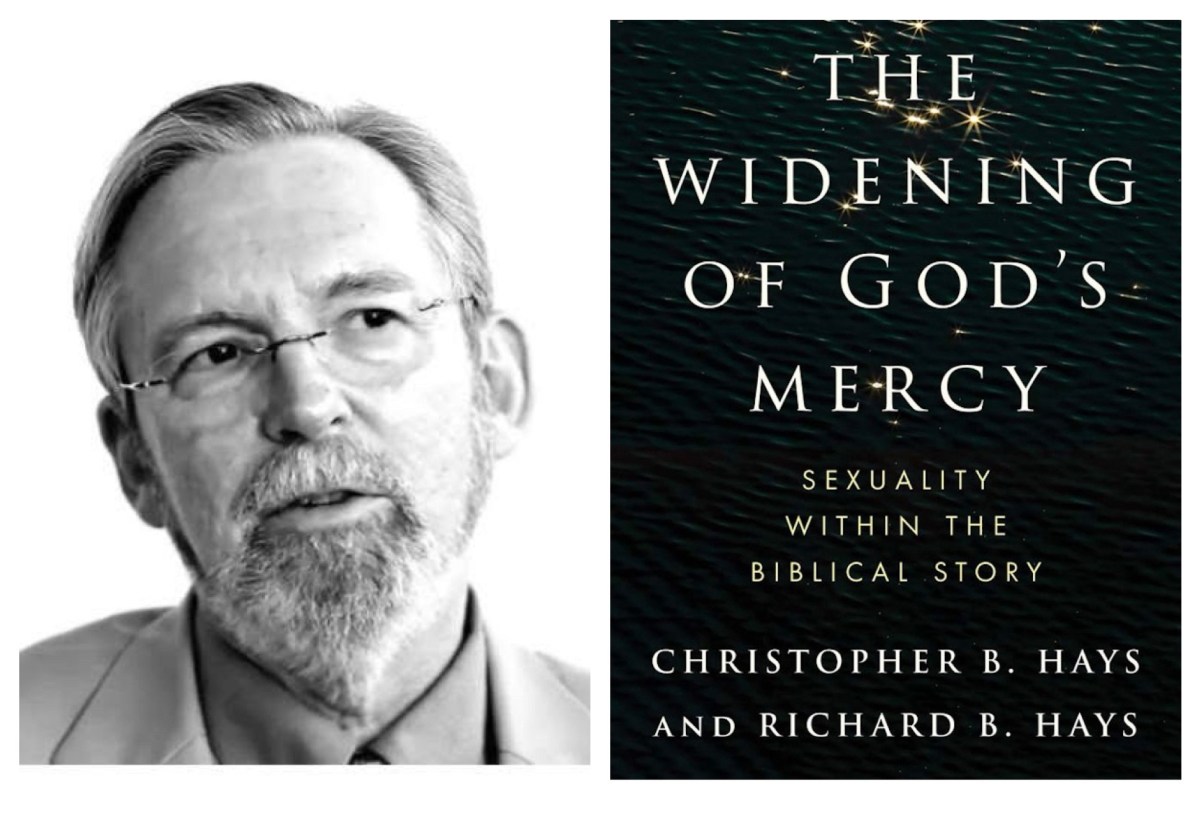
I’ve heard the sad news that New Testament scholar Prof. Richard Hays has died this week. He recently had a recurrence of an earlier pancreatic cancer and just last week entered hospice care. I remember him as a compassionate, insightful, and articulate person, and am sad to hear of his death.

Richard was a member of the Faculty at Yale University when I started my doctoral studies there in 1983. I got to know him through our mutual participation in the NT seminar each semester, and in 1984 I took a seminar course on “War and Peace in the Bible” with him one semester. We grappled with many relevant biblical texts and ethical issues as we engaged with interpreters through 2000 years of Christian history and tradition, across a range of perspectives, from “just war” advocates to Mennonite pacifists, including Reinhold Neibuhr and Roland Bainton, former Yale professors and eminent contributors to the debate. It was a vigorous semester-long exploration of ethics and hermeneutics in relation to the matter of war and peace. It was immensely stimulating! 

The major paper that I wrote in this seminar (“Hermeneutical Issues in the Search for the Historical Political Jesus”) was most helpful for me in establishing and consolidating some key elements of my own hermeneutical practice. Then, in 1988, Richard was one of the three examiners of my PhD dissertation—and provided a number of pages of detailed commentary and critique of what I had written about. (He agreed that I should be awarded the degree, however!) 

It’s sobering for me to reflect that all three of my examiners, Wayne Meeks, Richard Hays, and Rowan Greer, and my doctoral supervisor, Abraham Malherbe, are now deceased. I am grateful for the important roles that each had (along with other teachers) in preparing me for my subsequent years of teaching, research, and writing.

Just after the turn of the millennium, Richard visited Australia for a conference and spent some time at United Theological College, leading a seminar for interested members of the college community. Elizabeth and I were scheduled to take him out to dinner was, but she was then in her period of extended hospital stays, fighting recurrent lung infections, and so we couldn’t do that. In his typically gracious way, he came with me to RNSH and met with her and me for a meal in the private hospital cafeteria. We had a long, long exegetical discussion as Elizabeth had most recently been immersed in her controversial doctoral research into Matthew’s Gospel. It was not the kind of conversation that usually occurs in a hospital café! We were both very grateful for, and much energised by, this conversation!

Richard has been one of the most well-respected NT scholars in the world. He was the George Washington Ivey Professor Emeritus of New Testament at Duke University in the USA—a prestigious and important post. In an early work, he developed a technical argument that Paul was referring, not to our “faith IN Jesus Christ”, but rather to “the faith OF Jesus Christ” as the basis for salvation. It was a technical linguistic argument with huge theological consequences, and was debated, explored, for it grounded our salvation in Jesus, not in our own actions of believing. This understanding has been largely taken up by a number of leading scholars in subsequent years.

A decade after I had studied with him, Richard had famously argued *against* LGBTQ inclusion in his landmark ethics book, The Moral Vision of the New Testament (1996). In the book, he was seeking to develop a wider framework for ethical decision-making that was not simply pegged onto “proof texts”, but which was developed from the broad sweep of biblical and theological understandings. I realised on reading it that the 1984 seminar had provided the basis for one of the chapters in this book. 

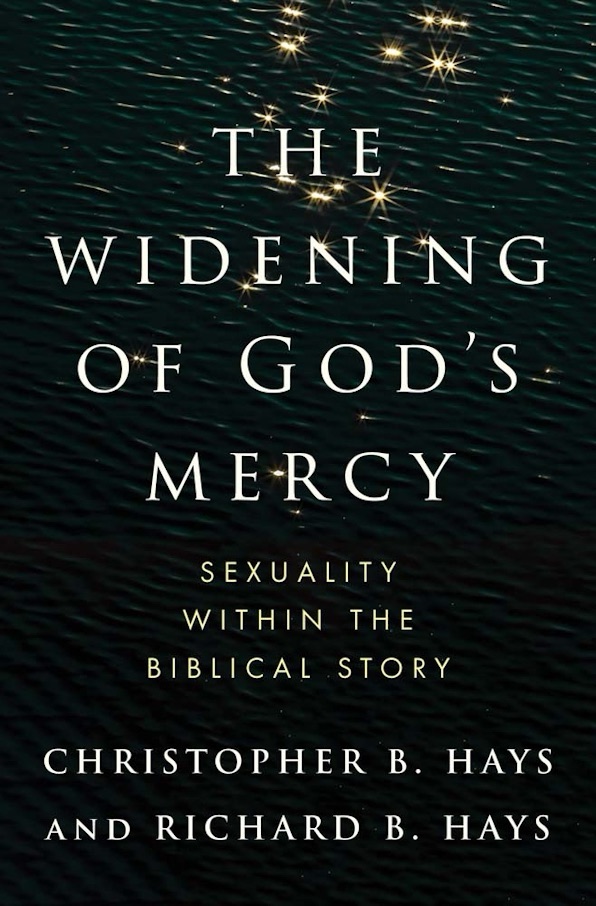
The search for a broad biblical-theological basis for ethics eventually led him, more recently, to become a proponent of affirming and inclusion of LGBTG people within the church. With his son, Christopher Hays, a well-respected OT/Ancient Near Eastern scholar at Fuller Seminary, he co-wrote The Widening of God’s Mercy: Sexuality Within the Biblical Story (2024).

The publisher’s blurb says that in this book, the authors write about “a dynamic and gracious God who is willing to change his mind, consistently broadening his grace to include more and more people. Those who were once outsiders find themselves surprisingly embraced within the people of God, while those who sought to enforce exclusive boundaries are challenged to rethink their understanding of God’s ways.” 

In closing the last chapter, the father and son authorial team write, “This book is therefore not just an argument about the meaning of the Bible in the past, but an invitation to readers to make new meaning in the present by listening to the Spirit and joining God now in saying, “I will gather others to them besides those already gathered” (Isa 56:8) … We hope that this book offers encouragement to see that the inclusion of sexual minorities is not a rejection of the Bible’s message but a fuller embrace of its story of God’s expansive mercy.” Richard in particular offered his own declaration of repentance for his earlier writing. 

It was an act of deep humility; and a wonderful “last word” from this great scholar and fine man. 

See also https://johntsquires.com/2024/04/07/affirming-the-kaleidoscopic-array-of-gender-identities-and-sexual-orientations-a-forthcoming-book/

Carols for the Season of Christmas (11) The Eleventh Day of Christmas, 4 January

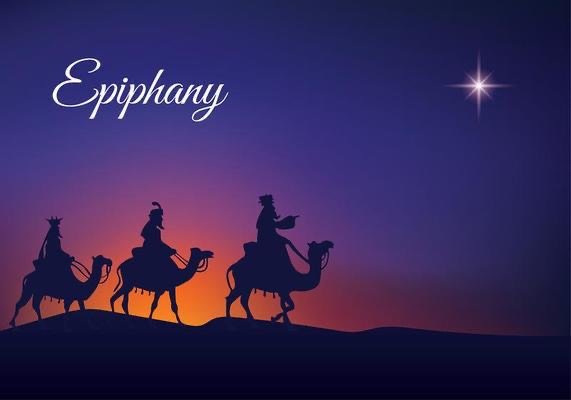
We are drawing to the end of The Twelve Days of Christmas, and closer to the celebration of Epiphany, which takes place on 6 January. Traditionally, this special day commemorates the visit to Mary, Joseph, and Jesus, of “the three wise men” (or as one carol has it, the “three Kings” who came “a-sailing by”). But we are not quite there yet; it is only the eleventh of the twelve days. And so this is your cue, James Coombs: pipe away!!

I’ve already explored the part of the biblical story dealing with “the slaughter of the innocents” ordered by King Herod in posts earlier in this series. Today our attention turns to these characters who came “from the east”, following a star all the way to Bethlehem. To take our attention away from the cacophony of piping pipers, leaping lords, milking maids and mooing cows, along with a growing large assortment of birds, each contributing their own distinctive sounds into the musical melee, I offer two fairly contemporary pieces for Epiphany: first, a sonnet, and then, a carol.

The carol uses the story of the journey of the wise ones that is celebrated at Epiphany as the basis for considering our own journey of discipleship, following Jesus.  It is another gem from the pen of Shirley Erena Murray and, as always, her words suggest ways that we can connect into the story in our own time, two millennia later.

Wise men came journeying

Wise men came journeying, once, long ago,

       camel hooves swirling the sand dune and snow,

       gold in the saddlebag, myrrh in the jar,

incense to honor the Child of the star.

Wise are the travelers led to move on

       following signs where the Christ light has shone,

       facing the deserts and crossing the lines,

heeding no limits that culture defines.

Wise are each one of us looking for change,

       stargazer people, respecting the strange,

       inner and outer worlds open to light,

centered on seeing the real and the right.

Wise ones keep journeying all through their days

       bringing their gifts to the source of their praise,

       risking the Promise with all they hold dear,

seeking God’s peace at the door of the year.

http://www.hopepublishing.com/html/main.isx?sitesec=40.2.1.0&hymnID=2956

And here is a poem in classic sonnet form, by Arthur Shippee, a friend and fellow-student I met while studying in the USA four decades ago. He writes sonnets for various times of the ecclesial year; this one is for the current time.

A Scribe at Herod’s Court, the Magi Having Left

 The King rages — they’re gone off home, he’s heard.

That star puzzled, till foreign sages came

With reading they called fair — to us a word

Ill-starred and dark, obscure, a threatening claim.


So, worried Herod sought out guidance from

Us priests and scribes and shaped an answer shrewd:

“To Bethlehem!  And send for me to come.”

His plan awry, he’s in a violent mood.


Herod!  God bears with kings, as prophets knew.

Whate’er God’s plan, we do our work, keep whole

The Law, and offer sacrifices true,

Atoning for our sins of flesh and soul.


Yet, I’m perturbed, far more than I can say.

Shall all night’s lamps be doused at dawn of day?

Arthur Shippee, 2019, rev. 2021, 2023, 2024

Carols for the Season of Christmas (10) The Tenth Day of Christmas, 3 January

Contextualising our Carols: the work of Shirley Erena Murray

Shirley Erena Murray, of Aotearoa New Zealand, has been one of the most prolific and important hymn writers of the 20th century. One of my favourite quotes from her is “I’m despairing of outdated hymns and songs that are irrelevant to contemporary life and the way we live it”. As you may have guessed, I am right on the same wavelength as Shirley Murray!

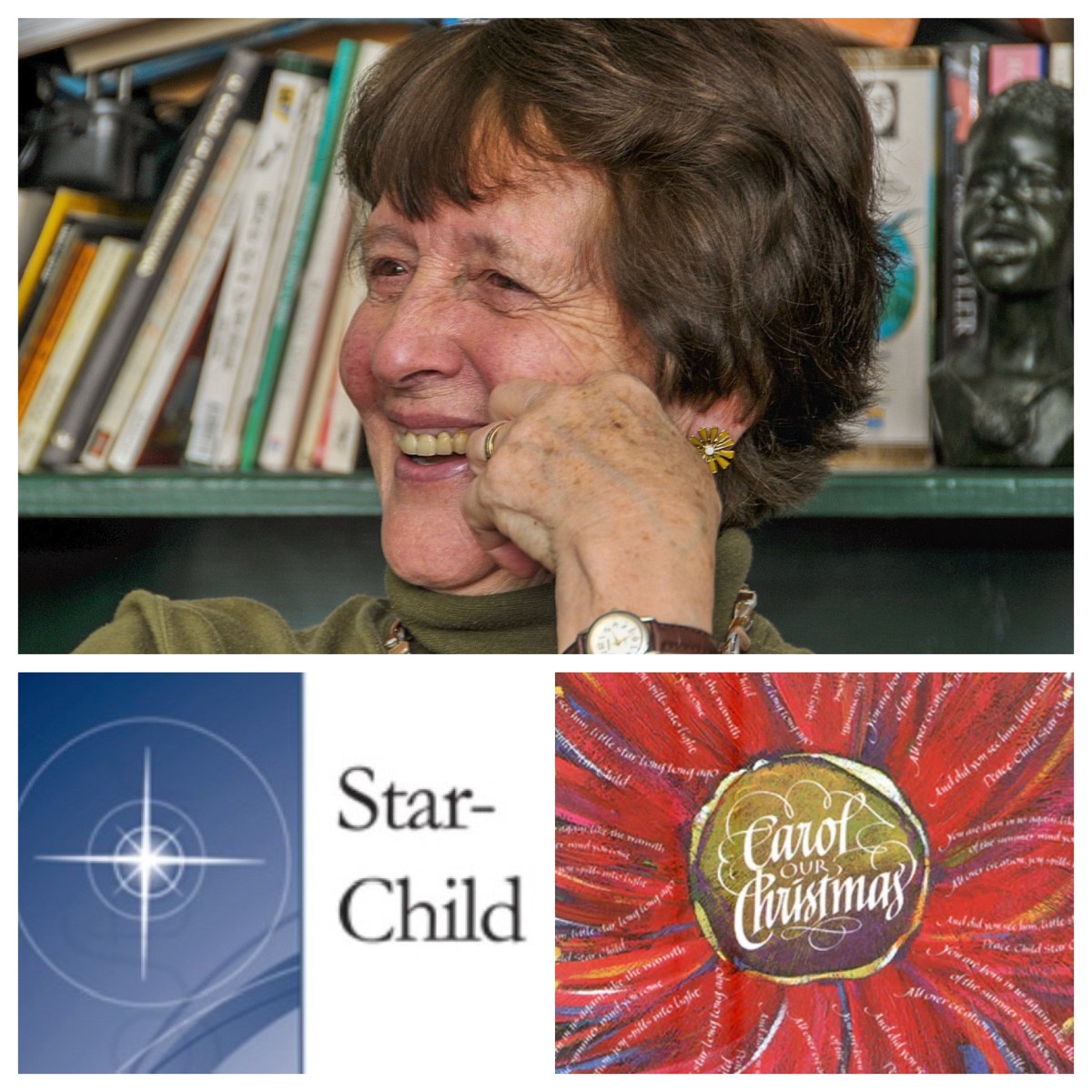
Shirley Erena Murray, pictured in 2009

“I choose to write with liberal intent, persuading people to look again at what the Gospels actually say and what new truths can come out of them”, she said. With over 400 hundred hymns written by her over her life, and many of them published in more than 140 collections across denominations, countries and continents—including Together in Song—she is well-qualified to speak about this. “What has nudged and provoked me”, she continued, “are the people I admire who have gone to the edge in terms of taking the gospels seriously and followed the Jesus principles.”

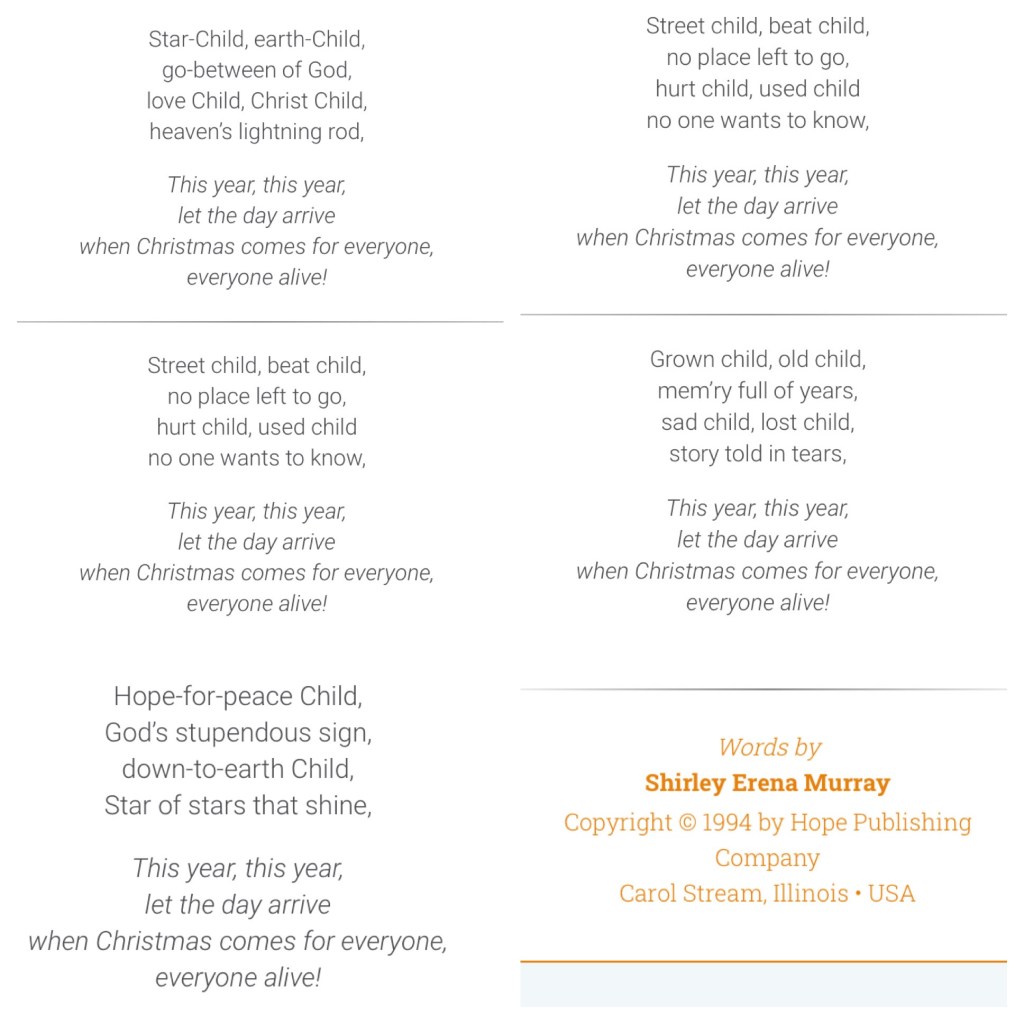
Perhaps her best-known Christmas hymn is surely Star-Child, earth-Child:

See https://musiklus.com/product/star-child/

Another insightful carol reflects the “upside-down” nature of Christmas in the southern hemisphere. It begins:

Carol our Christmas, an upside-down Christmas: /snow is not falling and trees are not bare. / Carol the summer, and welcome the Christ Child, / warm in our sunshine and sweetness of air.

See https://folksong.org.nz/nzchristmas/upside_down_xmas.html

Commenting on how she approaches such seasonal carolling in a 1996 interview, Shirley said: “All our theology in New Zealand is upside down. We don’t have springtime at Easter. Instead, we think of burning leaves and planting bulbs for the spring. We can’t talk about robins and reindeer and snow at Christmas time, which is why I wrote Upside Down Christmas. This explores the images that make sense to us in summertime.” (Peace is Her Song p.137).

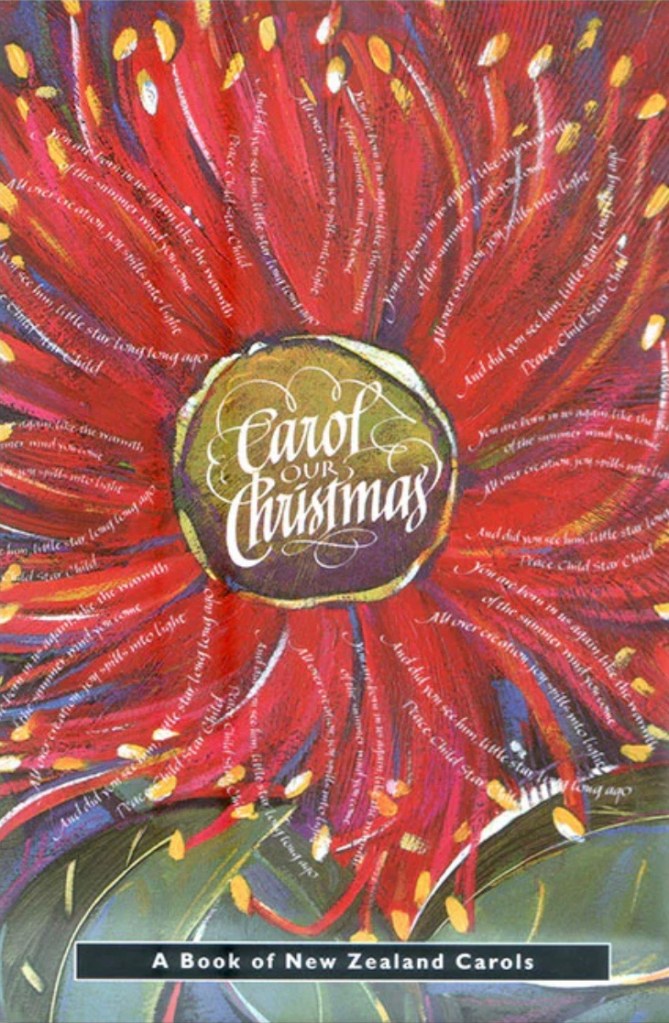
Joy Cowley, in her introduction to the 1996 collection that was entitled Carol Our Christmas, wrote: “For this country and its people, the prevailing symbol of the Christmas season is not snow but light. The star that heralds the Christ child in our midst is the sun, and even the sound of its name is symbolic blessing … In this volume of New Zealand carols … not only do the words and the music here reflect Christmas in Aotearoa, they offer us a wide experience of music and rejoicing.” (Peace is Her Song p.115)

In a 2004 interview, Shirley Murray said: “Carols are one of my favourite areas of work, because they are so challenging, not just because I am a southern hemisphere person when Christmas comes. They are the most theologically challenging part of the story for me. Incarnation is much more important than arguing about resurrection; being embodied is more important than talking about where we go hereafter.”

So in “Summer sun or winter skies”, she writes a carol with many of the “classic” carol elements (Christmas, shepherds, angels, silent night, lullabies) but with a potent message for the contemporary world: “silent night a violent night, hawks are in control of a nation’s soul … goodness will outclass the gun, evil has no tooth that can kill the truth”. 

See https://www.hopepublishing.com/find-hymns-hw/hw8388_44.aspx

She continued: “Carols have always posed a lot of questions. How do you relate to what might be called the gaiety and festivity of what Christmas is meant to be and how do you say something about the child in the manger? … I have written about 20 carols and every Christmas, I struggle again to deal with humanity and God and this amazing baby. Carols have kept hustling me, annoying me, making me work on them.” (Peace is Her Song p.114)

So in 2013 she published The Christmas Child is a Troublesome Child, containing the insightful words that this child was “as troublesome as the Word that stirred the waters from the deep … who questions given rule, who flouts convention’s pious face … whose vision takes a thorny path whose cross may be our own”.

See https://musiklus.com/product/troublesome-carol/

Commenting on this carol, Murray observed: “The childhood of Jesus … was surely like any other kid’s. Jesus became very annoying to the system. When you remember that, carols cease to be throw-away, jolly songs, and start to dig at you, to make you worry and wonder what God is saying through this. I sometimes introduce imagery from my own country but generally I write songs that will apply to almost anybody wanting to talk about the Jesus person, not just the Jesus baby.” (Peace is Her Song p.114)

I am going to include the words of a wonderful Epiphany hymn that she wrote in tomorrow’s post in this series. But for today, perhaps a novel way to end this exploration of Murray’s Christmas carols is to offer the words of her Lullaby for Judas (2001). In Peace is Her Song, her grandson Alex specifically notes this hymn, and reflects on how his grandmother “wanted to picture the human experience in its highs and lows, humans as fallible beings, with weaknesses and strengths. She dealt with the light and the dark of human experience—she didn’t gloss over things. She had the courage to confront the difficult topics, I find this particularly inspiring, and it is what makes her reputation so great.” (p.167) 

The child is sleeping sound whose star is yet to rise.
Like any baby born, an innocent he lies,
this Judas child, a happy child, with laughter in his eyes.

The child can never dream the wonders he will meet:
the hungry filled with bread, the bitter lives made sweet,
the friend, forgiving to the end, who sees his heart’s deceit.

The child is sleeping sound who knows no horoscope:
his kiss that will betray, his hand to grasp, in hope,
the money bag, the silver swag, and then, the knotted rope.

An extensive list of the Christmas carols written by Shirley Murray can be accessed at https://www.hymnsandcarolsofchristmas.com/Hymns_and_Carols/Notes_On_Carols/christmastide_carols_of_shi.htm

Unfortunately the hyperlinks no longer appear to be active.

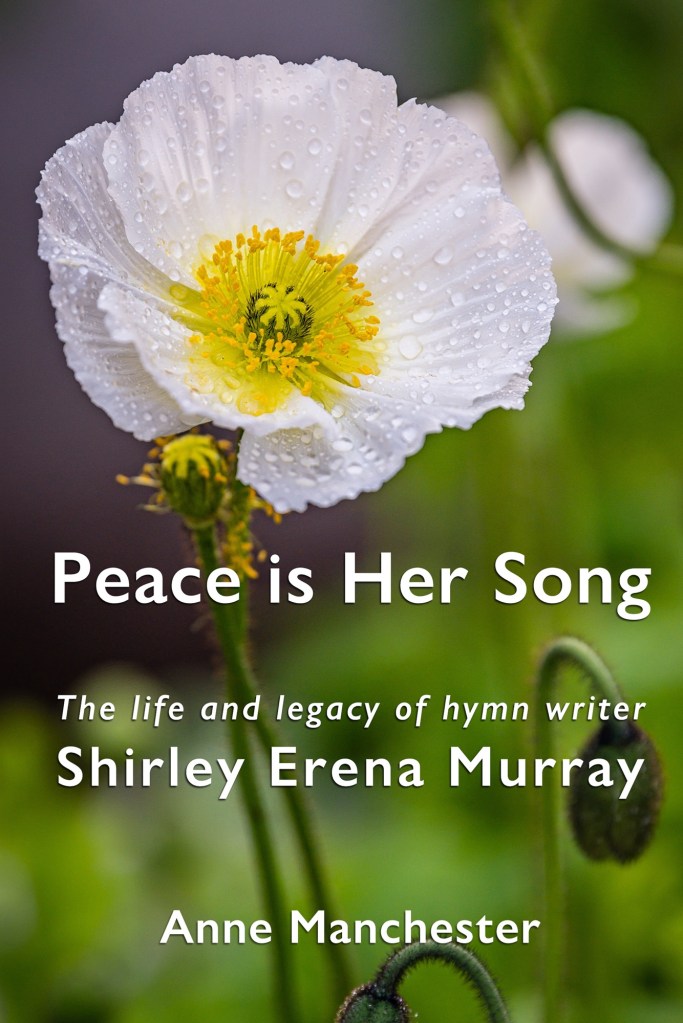
Shirley’s life and contribution to the worldwide church are now told in a biography, Peace is Her Song: The life and legacy of hymn writer Shirley Erena Murray. Written by journalist Anne Manchester, the book draws on rich sources of material, particularly Shirley’s own words as recorded in several audio and video interviews, and published articles.

The book can be ordered directly from New Zealand via the website www.philipgarsidebooks.com or you can order it via Amazon (Kindle $28 or Paperback $60) at https://www.amazon.com.au/Peace-Her-Song-Legacy-Shirley/dp/1991027826

Carols for the Season of Christmas (9) The Ninth Day of Christmas, 2 January

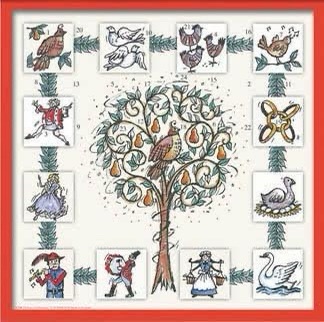
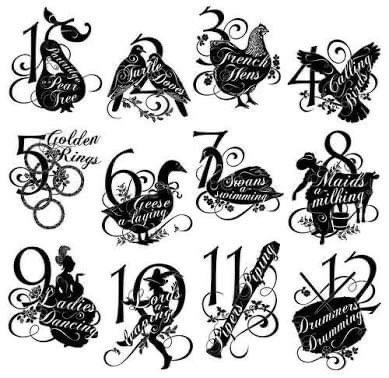
While we are looking into carols for the season of Christmas: what about The Twelve Days of Christmas? This English Christmas Carol, some have claimed, had a pietistic purpose: a kind of sung catechism about the central features of the Christian Faith, put into code by Roman Catholics in England when their faith was outlawed. (One is Jesus, two symbolises the two testaments, three indicates faith, hope and love, four refers to the Gospels, five to the Books of Moses, and so on …)

Nice theory, but there is no evidence at all that this was the case … and the origins of the theory go back no further than a speculation by a Canadian hymn writer in an article published in 1979. (And snopes.com agrees; you can read the detailed rebuttal at http://www.snopes.com/holidays/christmas/music/12days.asp )

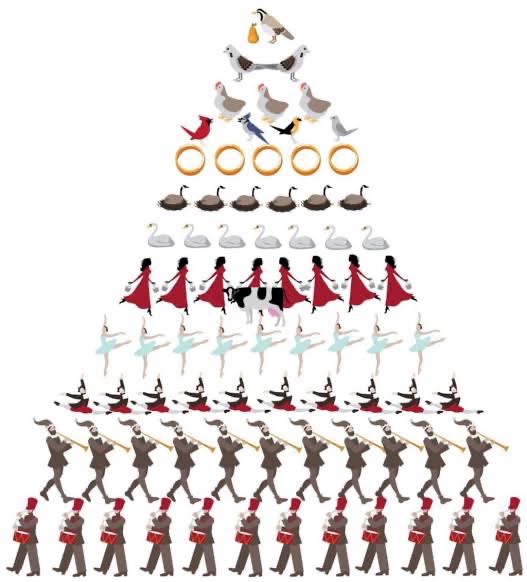
The Twelve Days of the #twelvedaysofchristmas technically refer to the days from Christmas Day, the first day of Christmas, through to Epiphany, Twelfth Night. So the song should be sung from Christmas Day onwards. And the gifts that are given each day accumulate until the twelfth night, the evening before Epiphany, when gifts were given to Jesus by the Magi visiting from the east. 

Professor Bruce Forbes writes that “In 567 the Council of Tours proclaimed that the entire period between Christmas and Epiphany should be considered part of the celebration, creating what became known as the twelve days of Christmas, or what the English, called Christmastide. On the last of the twelve days, called Twelfth Night, various cultures developed a wide range of additional special festivities. The variation extends even to the issue of how to count the days.” (Christmas: A Candid History, 2008, p.27).

Forbes also notes that there are divergent chronologies at work in different parts of the church: “If Christmas Day is the first of the twelve days, then Twelfth Night would be on January 5, the eve of Epiphany. If December 26, the day after Christmas, is the first day, then Twelfth Night falls on January 6, the evening of Epiphany itself.”

There’s a suggestion that The Twelve Days of Christmas song was originally sung in French . . . or, at least, that the line for the First Day originally included both French and English terms for the bird; thus, “partridge” (in English, and then in French, “perdrix” (pronounced per-dree) . . . which makes no sense, really; but this is a Christmas Carol, and such songs don’t really have to make sense, do they?

On the Second Day, two turtledoves are to be given. But for what purpose? Since this song relates to Christmas, can we assume that there is some religious or spiritual significance with this gift??

Turtle doves could be offered as a sin-offering (Lev 5:7). Is this why they were given? Or perhaps, as the alternate offering for a poor woman, seeking  purification after giving birth (Lev 12:8)? This at least links in to the Christmas story (at Luke 2:24), which is what the song is supposed to be about! But it does seem like a long shot …

So, what about as a guilt-offering when cleansing a leper (Lev 14:22)? Or maybe for a Nazirite who has touched a corpse (Num 6:9)? Or as a means of cleansing after sexual discharge (Lev 15:14)? Or maybe the text is multivalent, and we are supposed to bring all of these allusions to mind. Because we know our Bible so well. And we know this is meant to be symbolic. Eh?

Next, on Day Three, the gift to be given is three French hens. Some suggest they are Faith, Hope and Charity, the key Theological Virtues. But only three? There are actually four types of French Hens (Faverolles, La Fleche, Crevecoeurs and Marans). So do we know which one of the four missed out on its moment of glory in this Christmas carol? It’s a worry.

On Day Four, four birds form the gift. Ah, but what type of birds? Calling birds? So you might think. But older versions of the song identify them as Colly Birds. Which are … …??? A colly bird is a black bird. A coal mine is called a colliery, so ‘colly’ or ‘collie’ is a derivation of this and means black like coal. So, no  more whitewashing, let’s sing “four black birds”, and be clear about it, eh?

And … while we are at it … Day Five: Five Golden Rings? But they are surrounded by flocks of birds (swans, geese, colly birds, hens de la France, turtle doves, and a partridge). Rings are out of place.  So, it is believed that this verse originally referred not to jewellery but to ring-necked birds such as the ring-necked pheasant. So, let’s now sing: “five ring-necked birds”! Context is everything!

The sixth of the #twelvedaysofchristmas is the midpoint of the 12 days, when we can look back on the story of Christmas (the birth and the shepherds), and forward to the story of Epiphany (the visit of the Magi). The gift for the Sixth Day focusses on new life: six geese a-laying.

It is said that, while chickens lay eggs regularly (usually each day ), geese only lay 30-50 eggs a year. This means they are a less productive bird to keep. It takes longer to increase the size of the flock for meat production. And their eggs are very high in cholesterol. Was this a wise gift? (Of course, you may well score the goose that lays the golden egg.)

On Day Seven, the gift is seven swans a-swimming. Well, yes; that’s what swans do.  But who in their right might give this as a gift? Where would they all be put so that they could keep swimming? In a huge bathtub? This is quite unrealistic. Anyway, I guess it proves that the carol was not written by a football-mad fanatic. (They would have had swans kicking goals.)

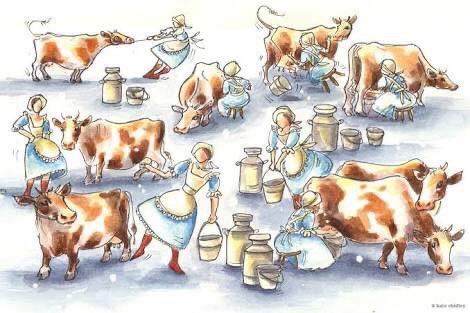
On Day Eight, we are exhorted to give eight maids a-milking. In older English, to “go a-milking” could mean to ask a woman for her hand in marriage; OR to ask a woman to go “for a roll in the hay”, as it were. Is this Christmas carol concealing a reference to illicit sexual encounters? And does that make it more interesting than just getting some milk in order to make some cheese?

Today is Day Nine. The gift is nine ladies dancing. Liturgical dances, I presume? In explore the significance of these ladies, I am somewhat stumped. Any clues, anyone?

Meanwhile, I am starting to compile my list of ‘not relevant downunder’ secular Christmas carols. Because here, in Australia, we are in the midst of summer—not winter, as all the upover northern hemisphere Christmas songs assume. So, not relevant to downunder would include: Anything with snow, for a start.  And bells.  And holly.  And fir trees. And … well, the possibilities are endless.

Tomorrow, on Day Ten, the gift is to be ten Lords a-leaping.  Alliteration, indeed; but why leaping? Perhaps there is a textual transmission problem here. Maybe it should be: Lords a-leasing? (what to do with their huge old castles and manors)? Or Lords a-sleeping? (in the upper chamber of the British parliament)? Or perhaps Lords a-weeping? (at the decline of their much- loved aristocratic powers). Who knows?

Then comes the eleventh day of (the season of) Christmas. With eleven pipers piping. So perhaps this comes from a Scottish variant (like day one comes from the French version). Perhaps the Scots packed their song full of food? In this, the gifts would include twelve alka seltsers, eleven Blue Lagoons, ten creme de menthe, nine vodka and limes, eight nips of whisky, seven rum and cokes, six Carlsberg specials…you get the picture? (Yes, I know, this is becoming quite speculative!!)

Or — does the Scottish reference (bagpipes) mean that I should refer to the crackpot theory that this whole carol was a coded reference to the right of Bonny Prince Charlie to regain the British throne? Yegods … … 

But I do note that, in other versions, there are eleven ladies spinning, eleven ladies dancing, eleven lads a-louping, eleven bulls a-beating, and eleven badgers baiting!! Make of them, what you will. 

Finally, we will arrive at the ultimate (last) of the #twelvedaysofchristmas. Day Twelve. Twelve drummers drumming. Since the gifts are cumulative, and repeated on each day, on Day Twelve we actually have drummers drumming, along with piping pipers, leaping lords, bleating cows, tapping toes, shuffling shoes, a horde of aviary escapees, and the whole schemozzle. It’s all too loud, I think — and the incessant fights amongst all those squawking birds! Oh dear; time for a doze, instead.  

The evening of this twelfth day will, quite obviously, be Twelfth Night. What follows that is Epiphany, a day to celebrate the coming of the magi to the infant Jesus. Time, indeed, to rest.

Carols for the Season of Christmas (8) The Eighth Day of Christmas, 1 January

Today (1 January) is the eighth day in the Season of Christmas. Some may up early, be preparing to collect their eight maids a-milking in order to mdeliver them to their true love, but many others (I suspect) will be enjoying a late start, sleeping off the effects of a long evening of celebrations, topped off by welcoming in “the New Year”.

In the calendar of saints that is followed in Roman Catholic and Orthodox churches around the world, today is the day to remember the Cappadocian Fathers:

  • Basil the Great: Bishop of Caesarea, lived from 330–379
  • Gregory of Nyssa: Bishop of Nyssa, lived from 335–395
  • Gregory of Nazianzus: Patriarch of Constantinople, lived from 329–389 

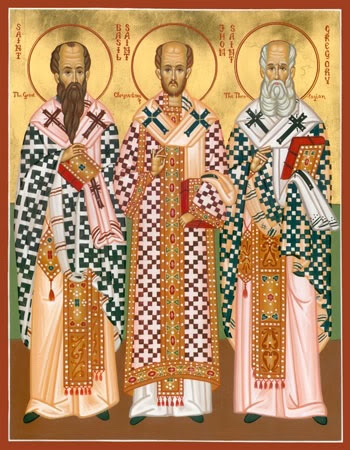
Today is the feast day of Saint Basil the Great in the Eastern churches. Basil wrote many theological works and is remembered (along with the two Gregorys, of Nyssa and Nazianzus—pictured below) as one of the Cappadocian Fathers, who played an influential role in the development of patristic thinking about the triune God.

It is said that Basil was tall, thin, partly bald, with a long beard. (He is the one on the left in the icon above.) He ate no more than was absolutely necessary for his survival; he never ate meat. It is said that he had only one worn undergarment and one overgarment.

Basil said that prayer was the seasoning for our daily work, as we season food with salt; that sacred and holy songs can only inspire us and give us joy and not grief. His philosophy fits well into the Christmas Season, when we season our lives with carols!

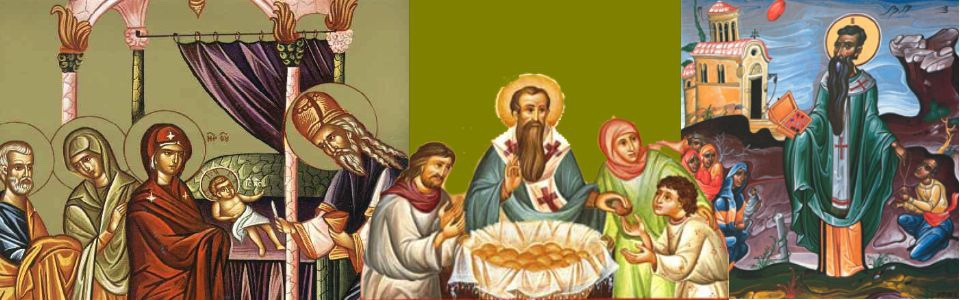
At the age of 28, Basil “left the world” and became a monk; at 35 a priest, then at 41, the Bishop of Caesarea. It is said that Basil, being born into a wealthy family, gave away all his possessions to the poor, the underprivileged, those in need, and children.

For Greeks and others in the Orthodox tradition, St Basil is the saint associated with Santa Claus. In Greek tradition, he brings gifts to children every January 1 (St Basil’s Day). It is traditional on St Basil’s Day to serve vasilopita, a rich bread baked with a coin inside.

It is also customary on his feast day to visit the homes of friends and relatives, to sing carols for the New Year, and to set an extra place at the table for Basil.

The celebration of St Basil on 1 January marks the day of his death. In the Western Church, because 1 January commemorates the Solemnity of Mary, Mother of God, Basil shares his saintly commemoration on the next day, 2 January, with Gregory of Nazianzus.

St Basil’s Hymn is one of many traditional Greek carols (often referred to as calanda) that are still sung by children on St Basil’s feast day (New Year’s Day). In the tradition still practiced to some extent in modern times, Greek children roam the neighborhoods from house-to-house on St Basil’s Day, playing instruments and singing songs, bidding New Year’s tidings to everyone, and receiving gifts of sweets and pastries from householders.

Here is the hymn (in a quirky and rather stilted translation):

It’s the beginning of the month
beginning of the year
High incense tree
Beginning of my good year
Church with the Holy Seat
It’s the beginning of our Christ
Saint and spiritual
He got out to walk on earth
And to welcome us
St. Basil is coming from Caesarea
And doesn’t want to deal with us
May you long live, my lady
He holds an icon and a piece of paper
With the picture of Christ our Saviour
A piece of paper and a quill
Please look at me, the young man

(I’m not sure it’s going to make it onto any supermarket Christmas playlist any time soon …)