“You have established equity; you have executed justice and righteousness in Jacob” (Ps 99:4). So the psalmist sings, in the psalm offered by the lectionary for this coming Sunday, The Feast of the Transfiguration. Perhaps it has been selected for this festival because it depicts the Lord sitting “enthroned upon the cherubim” as the earth quakes (v.1), that he spoke to Israel “in the pillar of cloud” (v.7)—images that resonate with the stories of Moses and Jesusnthatnwe have heard this week.
Noting that leaders of the past have called out to God and been answered—Moses, Aaron, and Samuel (99:6)—the psalmist praises God, “you answered them; you were a forgiving God to them, but an avenger of their wrongdoings” (99:8).
In this psalm it is the king, the “Mighty King, lover of justice [who has] established equity” (99:4), whose “royal scepter is a scepter of equity” (Ps 45:6), modelled on the Lord God himself, who “judges the world with righteousness [and] judges the peoples with equity” (Ps 9:8; see also 67:4; 75:2; 96:10; 98:9). Accordingly, King David is remembered as the one who “administered justice and equity to all his people” (2 Sam 8:15; 1 Chron 18:14), and the opening words of the book of wisdom attributed to King Solomon are “love righteousness, you rulers of the earth, think of the Lord in goodness and seek him with sincerity of heart” (Wisd Sol 1:1).
Divine justice is regularly noted in tandem with God’s mercy forgiveness. “Great is your mercy, O Lord; give me life according to your justice” (Ps 119:156); and “in your steadfast love hear my voice; O Lord, in your justice preserve my life” (Ps 119:149). The prophet Isaiah tells the rebellious people of his day, “the Lord waits to be gracious to you; therefore he will rise up to show mercy to you—for the Lord is a God of justice; blessed are all those who wait for him” (Isa 30:18).
Likewise, through the prophet Hosea, the Lord God promises to Israel, “I will take you for my wife in righteousness and in justice, in steadfast love, and in mercy” (Hos 2:19), whilst centuries later, Ezekiel reminds the exiles of God’s pledge: “I say to the righteous that they shall surely live, yet if they trust in their righteousness and commit iniquity, none of their righteous deeds shall be remembered; but in the iniquity that they have committed they shall die” (Ezek 33:13). Justice and mercy belong hand-in-hand, as yet another prophetic voice declares as the exiles are returning to the land: “in my wrath I struck you down, but in my favour I have had mercy on you” (Isa 60:10).
God’s mercy sat at the heart of the covenant made with Israel; the Lord affirms to Moses, “I will be gracious to whom I will be gracious, and will show mercy on whom I will show mercy” (Exod 33:19). So in the longest psalm, declaring persistent praise of the Law, the psalmist offers the petition, “let your mercy come to me, that I may live, for your law is my delight” (Ps 119:77). A number of other psalms likewise contain petitions God to show mercy (Ps 25:6; 40:11; 51:1; 69:16; 123:3).
Jesus, centuries later, brings together mercy and justice when he accuses the scribes and the Pharisees of hypocrisy, as they “neglect the weightier matters of the law: justice and mercy and faith” (Matt 23:23).
Justice, of course, is at the heart of the covenant that God made with Israel. Moses is said to have instructed, “justice, and only justice, you shall pursue” (Deut 16:20), the king is charged with exhibiting justice (Ps 72:1–2; Isa 32:1), whilst many prophets advocate for justice (Isa 1:17; 5:7; 30:18; 42:1–4; 51:4; 56:1; Jer 9:24; 22:3; 23:5; 33:15; Ezek 18:5–9; 34:16; Dan 4:37; Hos 12:6; Amos 5:15, 24; Mic 3:1–8; 6:8).
That God is righteous is likewise declared in scripture (Deut 32:4; Ps 145:7; Job 34:17). The psalmists regularly thank God for God’s righteousness (Ps 5:8; 7:17; 9:8; 33:5; 35:24, 28; 36:6; 50:6; etc) and note the importance of humans living in that same way of righteousness (Ps 18:20, 24; 85:10–13; 106:3, 31; 112:1–3, 9).
The book of Proverbs advises that the wisdom it offers is “for gaining instruction in wise dealing, righteousness, justice, and equity” (Prov 1:3) and the prophets consistently advocated for Israel to live in accordance with righteousness (Hos 10:12; Amos 5:24; Isa 1:22; 5:7; 28:17; 32:16–17; 54:14; Jer 22:3; Ezek 18:19–29; Dan 9:24; 12:3; Zeph 2:3; Mal 4:1–3; Hab 2:1–4).
This psalm thus focusses some important elements in the Israelite understanding of God, summarising notes from many places elsewhere in Hebrew Scriptures. These recurring notes of the nature of God then form the basis for a Christian understanding of Jesus, who affirms mercy (Matt 23:23), teaches righteousness (Matt 5:6, 10, 20; 6:33), offers forgiveness (Mark 2:10; Luke 23:34; 1 John 1:9), and exudes grace (John 1:14–18). The affirmation made in this ancient Jewish psalm is one that we Christians can joyfully sing and affirm this Transfiguration!
*****
The situation in the Middle East continues to be volatile. My reflections in the early stages of the present inflammation of that conflict is at
The letter which we call 2 Corinthians is comprised of three main sections, each of which has its own distinctive focus. In the first section of the letter (1:1–7:16), Paul and Timothy write to offer consolation and hope to the people who are part of the community of followers of Jesus in Corinth. It is clear that members of the community have undergone some difficult times; Paul empathises with them, drawing on his own experiences, as a way of offering a message of hope to the believers in Corinth.
In a second main section (8:1–9:15), Paul addresses a very practical matter—the collection of money which he was making amongst the churches of Achaia and Macedonia, which he was planning to take to Jerusalem for the benefit of the believers there who had been experiencing difficulties. Then, in a third main section (10:1–13:13), Paul’s tone is markedly apologetic, as he writes in severe tones to defend himself in the face of criticisms which have been levelled against him in Corinth.
The lectionary offers us an excerpt from the first main section (3:12—4:2) for the Festival of the Transfiguration, this coming Sunday. It is obvious why this excerpt is suggested, since the argument includes a reference to the passage from Exodus which will also be read and reflected upon this Sunday. “The people of Israel could not gaze at Moses’ face”, Paul and Timothy note, “ because of the glory of his face” (3:7).
They go on to contrast this with the consequences of that one scene in the life of Jesus that the Synoptic Gospel writers later tell in narrative detail, arguing that “all of us, with unveiled faces, seeing the glory of the Lord as though reflected in a mirror, are being transformed into the same image from one degree of glory to another” (3:18). That is, whilst the transformation of Moses was not able to be witnessed by the people of Israel, the transformation of Jesus is shared in abundance with the followers of Jesus. It’s a stark contrast.
The fundamental point in what Paul and Timothy argue here is thoroughly polemical. They press, again and again, on the difference between the Exodus scene and the scene that we know as the Transfiguration of Jesus. They use the typical juxtaposition of two opposites that characterized the rhetorical style of the diatribe (and which we find in a number of other letters of Paul).
The juxtapositions have begun in the preceding verses. In full polemical flight, Paul presents himself and Timothy as a “ministers of a new covenant”, which defines as “not of letter but of spirit”, continuing with the explanation “the letter kills, but the Spirit gives life” (3:6). He then contrasts “the ministry of death” with “the ministry of the Spirit” (3:7–8). The former is “chiseled in letters on stone tablets”, whilst the latter brings “glory”. It is clear where Paul’s preference lies.
This leads to two new, snappy slogans: “the ministry of condemnation” and “the ministry of justification”, which are then contrasted (3:9–11). The former did have its element of glory—the face of Moses shone with God’s glory—but “what once had glory has lost its glory”. Paul and Timothy advance the argument through a series of direct contrasts.
How this “loss of glory” occurred, it seems, was “because of the greater glory; for if what was set aside came through glory, much more has the permanent come in glory!”. The argument, somewhat convoluted, seems to be that the former, seemingly inadequate, glory is completely overshadowed by the later, far more powerful glory.
Paul launches then into an attack on that former ministry which becomes quite vindictive. Moses is criticized for covering his face so that the people of Israel could not “gaze at the glory” that he was concealing (v.13). The minds of the people thus were “hardened”; indeed, even “to this very day”, he says, that hardening of heart remains when they hear “the reading of the old covenant” (3:14). In contrast to this deadly scenario, “in Christ” that veil is lifted, that hardening of heart is softened “when one turns to the Lord” (3:16). The exultant conclusion is that “all of us, with unveiled faces, seeing the glory of the Lord as though reflected in a mirror, are being transformed into the same image from one degree of glory to another” (3:18).
There is great danger in these words. The danger is that we absolutise them as validating any criticism, all criticism, of Judaism as a religion; that we value Christianity by demeaning and dismissing Judaism. To do this would mean that we would ignore the reality that these words were written in a context quite different from our own, addressing a situation which may (or may not) have had little do with our own situation. That wider context and that specific situation are very important as we interpret this passage (and, indeed, any passage in the Bible).
We are witnessing today, both in Australia and in many places around the world, a rise in antisemitic words and actions. To be sure, the violent and illegal actions ordered by the current Israeli government against the residents of Gaza (the most recent in a long and tragic sequence of similarly illegal and aggressive actions over decades) has probably inflamed such antisemitism.
But criticism of the policies of one nation state should not be used to foment hatred against a whole people, whether they live in that nation or in other places around the world. Yet antisemitism is growing. (So, too, is Islamophobia—for other reasons, relating both to the Middle East and to other factors. It is equally unacceptable.)
So to the specific context of the passage from 2 Cor. Paul, of course, was a Jew; he writes that he was “circumcised on the eighth day, a member of the people of Israel, of the tribe of Benjamin, a Hebrew born of Hebrews” (Phil 3:5) and boast that “I advanced in Judaism beyond many among my people of the same age, for I was far more zealous for the traditions of my ancestors” (Gal 1:14). Luke reports him as telling Jews in Jerusalem that “I am a Jew, born in Tarsus in Cilicia, but brought up in this city at the feet of Gamaliel, educated strictly according to our ancestral law, being zealous for God, just as all of you are today” (Acts 22:3).
Paul’s writings and his faith are permeated with his Jewish heritage; in almost every letter he quotes Hebrew Scripture and the argument in his most significant letter, to the Romans, is grounded in a prophetic verse from scripture (Hab 2:4a, cited at Rom 1:17b). He is able to declare that “the law [Torah] is holy, and the commandment is holy and just and good” (Rom 7:12) and in great anguish he writes, “my heart’s desire and prayer to God for them [i.e. Israel] is that they may be saved”, noting that “they have a zeal for God” (Rom 10:1–2).
Yet each time he affirms his Jewish heritage and the faith of his fellow Jews, he places a critical comment against this affirmation. Of his own heritage and upbringing, “I regard everything as loss … I regard them as rubbish” (Phil 3:8; the translation of the last word is a very polite rendering of a crass swear word). Of the law, he says “I was once alive apart from the law, but when the commandment came, sin revived and I died, and the very commandment that promised life proved to be death to me” (Rom 7:9).
Of the fate of Israel, a “disobedient and contrary people” (Rom 10:21, citing Isa 65:2), he declares, “Israel failed to obtain what it was seeking; the elect obtained it, but the rest were hardened” (Rom11:7)—and yet, “they have now been disobedient in order that, by the mercy shown to you, they too may now receive mercy” (Rom 11:31). There is a glimmer of hope.
Yet still his rhetoric can be violently abusive: “beware of the dogs, beware of the evil workers, beware of those who mutilate the flesh!” (Phnil 3:2, referring to circumcision); and “anyone proclaims to you a gospel contrary to what you received, let that one be accursed!” (Gal 1:9); and even, “the Jews, who killed both the Lord Jesus and the prophets, and drove us out; they displease God and oppose everyone … they have constantly been filling up the measure of their sins; but God’s wrath has overtaken them at last” (1 Thess 2:14–16).
Paul is nothing if not polemical in his letters. And as a Jew, when he writes such criticisms of other Jews, we cannot describe him as being antisemitic; rather, he is being critical of those who hold to Jewish traditions and resist adapting to the changes and modifications that the good news brings. We have seen Paul use this kind of polemical argumentation in other letters, when he uses stridently aggressive statements to articulate his opposition to a view. (Look at Gal 3:1–14, or parts of 2 Cor 10–13, or Rom 5:12—6:23.)
Such polemic was used in ancient rhetoric to refine and develop an understanding of a matter; the back-and-forth of the argument serves to sift and sort ideas, so that the kernel that remains at the end can be rigorously held. Paul knew this style of argument, and used it to good effect in his letters.
So when he writes disparagingly about Moses to the Corinthians, he is not being antisemitic, and we have no justification for using these words to criticize and attack Jewish ideas, or even Jewish people. Paul is using the techniques of his day to argue a point. We should not extract his words from their context and use them to validate criticisms of “all Jews” or of Judaism per se. What he says should be used with care and respect.
As we read on beyond 2 Cor 3:12–4:2, we find Paul writing about the transformation that takes place “from one degree of glory to another” (3:18), explaining that “this extraordinary power belongs to God and does not come from us” (4:7). It results in “an eternal weight of glory beyond all measure” (4:17), such that “we regard no one from a human point of view” (5:16). It is, in the end, “the God who said, ‘Let light shine out of darkness,’ who has shone in our hearts to give the light of the knowledge of the glory of God in the face of Jesus Christ” (4:6).
So Paul concludes this extended message of hope about this promised glory with a reminder that God has “reconciled us to himself through Christ”, and accordingly God “has given us the ministry of reconciliation” (2 Cor 5:18). It is in this spirit that we should reflect on the passage proposed by the lectionary for this Transfiguration Sunday.
For more on glory in Paul and elsewhere in scripture, see
As the coming Sunday is the Festival of the Transfiguration, the passages offered by the lectionary cluster around the theme of the revelation of God’s glory. That is what happened for the three disciples on the mountain, when Jesus was transfigured (Luke 9:28–36). That was also the experience for Israel, in a story that is much older. When Moses came down from the mountain, Aaron and all the Israelites saw that “the skin of his face shone because he had been talking with God” (Exod 34:29–35).
I’ve reflected on the Gospel in another blog. To better understand the significance of this statement in Exodus, we need to see this Hebrew Scripture passage in its larger narrative context. See
This incident comes after a very significant moment in the story of Israel, when the people had sinned by making a golden calf to worship (32:1–6). This story most likely relates to the god who was regarded as the head of the gods amongst the Canaanites—El, who was often depicted as a bull. The bull was the strongest animal in the ancient farmyard, and thus a fitting symbol for a powerful god. The Israelites chose to imitate that god through their golden construction. The story told in Exodus 32 mocks the Canaanite god, depicting him as more like a calf.
By adopting a Canaanite symbol, the Israelites had turned from God (32:21). It seems they would deserve their fate—although Moses interceded and saved them from divine wrath (32:23). Moses is the hero who stands in the breach, to convince God to change God’s mind. He had negotiated with God for forgiveness (32:11–14, 30–34), and had also sought clarification from God as to what “God’s ways” entailed (33:16–17).
In response, God promises that “my presence will go with you, and I will give you rest” (33:14), but Moses presses his case: “show me your glory, I pray” (33:18). Not just the divine presence, but the glory of God is what Moses seeks. God does not respond exactly as Moses hoped for, saying that “I will make all my goodness pass before you, and will proclaim before you the name, ‘The Lord’; and I will be gracious to whom I will be gracious, and will show mercy on whom I will show mercy” (33:19).
These words that the Lord offers to Moses are subsequently echoed in the prayer that Moses offers Aaron and his sons: “the Lord bless you and keep you … and be gracious to you” (Num 6:22–27)—a ancient prayer which lives on in Christian spirituality and liturgy!
However, the Lord God stops short of full self-revelation, declaring, “you cannot see my face; for no one shall see me and live” (Exod 33:20). Moses is granted a view of God’s “back”, but is not able to see the face of God (33:23). Now, the Hebrew word here translated as “back” refers to the “hindquarters”—a polite way of saying that Moses saw only God’s exposed buttocks, rather than his smiling face. Almost every translation chooses the polite wording, “my back”. The King James Version comes closest to an honest translation with “my back parts”. We might best translate this verse as “you will see my backside, but not my face”.
Yet the request for God’s face to shine upon people is made in a number of psalms. “There are many”, says the psalmist, “who say, ‘O that we might see some good! Let the light of your face shine on us, O Lord!’” (Ps 4:6). In Psalm 31, the psalmist sings, “Let your face shine upon your servant; save me in your steadfast love” (Ps 31:16). Again in Psalm 67, the psalmist echoes more explicitly the Aaronic Blessing, praying, “May God be gracious to us and bless us and make his face to shine upon us—Selah—that your way may be known upon earth, your saving power among all nations” (Ps 67:1–3).
So although Moses asks God to “show me your glory” (33:18), he is permitted to see back(side) of God, but not the full glory of God (33:21–23). This encounter is enough to make “the skin of [Moses’s] face shine because he had been talking with God” (34:30, 35). Of course, this story, located within the mythic sagas of ancient Israel, is not presented as an historical account. Rather, as myth (a story with a deep meaning) it is rich with symbolism—encountering the divine is a deeply transformative experience.
The Lord God had assured Moses that “you have found favour in my sight, and I know you by name” (33:17). And so, after the breach of the covenant that took place in the creation of the idolatrous image of the Canaanite Bull, Moses and the Lord God renew the covenant with Israel (34:1–28). This reinforces that God’s favour remains with the nation. As the people remain faithful to the various requirements that are stipulated (34:11–26), including pilgrimage by all adult males three times a year to the temple (34:23), so the Lord God promises “I will cast out nations before you, and enlarge your borders; no one shall covet your land when you go up to appear before the Lord your God three times in the year” (34:24). That is how God’s favour is shown.
Throughout the worship of the Lord God in the temple, psalmists have prayed for God’s favour to be shown to the faithful people of Israel (Ps 90:17; 106:4; 119:58). As well as in this covenant renewal ceremony (Exod 34:9), the ancestral sagas of Israel record that God showed favour to Noah (Gen 6:8), Joseph (Gen 39:4), Moses (Exod 33:12–17), the people in the wilderness (Lev 26:9), Samuel (1 Sam 2:26), Manasseh (2 Chron 33:12–13), and the remnant who returned to the land (Ezra 9:8). God’s gracious favour endures through the generations.
The favour of the Lord is manifested most often in “the glory of the Lord” which shines over Israel. Moses had experienced this on the top of Mount Sinai, when “the appearance of the glory of the Lord was like a devouring fire on the top of the mountain in the sight of the people of Israel” (Exod 24:16–18). That glory had already been seen by the Israelites in the wilderness of Sin (Exod 16:10), and that glory filled the tabernacle when the people had finished constructing it (Exod 40:34–35).
The closing verse of the book of Exodus notes that “the cloud of the Lord was on the tabernacle by day, and fire was in the cloud by night, before the eyes of all the house of Israel at each stage of their journey” (Exod 40:38). A number of other references to this are made throughout the books of the Torah (Lev 9:6, 23; Num 14:10; 16:19, 42; 20:6; Deut 5:24). This appears to have continued on until the ark of God was captured by the Philistines, for at that moment “the glory has departed from Israel” (1 Sam 4:21–22).
Centuries later, at the time that Solomon prayed his lengthy prayer of dedication of the newly-built Temple in Jerusalem, “when the priests came out of the holy place, a cloud filled the house of the Lord, so that the priests could not stand to minister because of the cloud; for the glory of the Lord filled the house of the Lord” (1 Kings 8:10–11; 2 Chron 7:1–3).
The glory of the Lord was then closely associated with the Temple in ensuing centuries, as various psalms attest (Ps 24:3–10; 96:7–8). “O Lord, I love the house in which you dwell, and the place where your glory abides”, one psalmist sings (Ps 26:8); yet other psalms extend the location of God’s glory, exulting that it extends “over all the earth” (Ps 57:5, 11; 72:19; 102:15; 108:5) and even “above the heavens” (Ps 8:1; 19:1; 57:5, 11; 97:6; 108:5; 113:4; 148:13).
By the time of the prophet Isaiah, this wider scope of the glory of the Lord was sung by the seraphim in their song, “Holy, holy, holy is the Lord of hosts; the whole earth is full of his glory” (Isa 6:3), whilst a little later another voice sang that “the earth will be filled with the knowledge of the glory of the Lord, as the waters cover the sea” (Hab 2:14). During the Exile, another prophet, looking to the return of the people to the land of Israel, declared that “the glory of the Lord shall be revealed, and all people shall see it together” (Isa 40:5).
Another exilic prophet had a series of visions in which “the glory of the Lord” was seen (Ezek 1—39), culminating in a declaration by God that “I will display my glory among the nations; and all the nations shall see my judgment that I have executed, and my hand that I have laid on them” (Ezek 39:21), followed by a vision in which “the Lord entered the temple by the gate facing east”, and at that time “the spirit lifted me up, and brought me into the inner court; and the glory of the Lord filled the temple” (Ezek 44:4–5).
Later still, a prophetic voice during the time of return to the land declared to the people that “the Lord will arise upon you, and his glory will appear over you; nations shall come to your light, and kings to the brightness of your dawn” (Isa 60:2–3). And well after that, another prophet attributes to “one like a human being, coming with the clouds of heaven”, the gift of “dominion and glory and kingship, that all peoples, nations, and languages should serve him” (Dan 9:13–14). So God’s presence had continued with the people through his glory over the years, and it was still expected to be seen in their hoped-for future.
Another way that this vision of God’s presence was sought was through yearning for the ability to “see God face to face”. That’s what Moses experienced at Sinai (Deut 5:1–4), and what he experienced when he went out of the camp, to where the tent was pitched, for “whenever Moses entered the tent, the pillar of cloud would descend and stand at the entrance of the tent, and the Lord would speak with Moses … thus the Lord used to speak to Moses face to face, as one speaks to a friend” (Exod 33:7–11).
That’s what Jacob had experienced at the ford of the Jabbok (Gen 32:30). That’s what Moses continued to experience through the wilderness years (Num 12:7–8), as Moses reports: “you, O Lord, are seen face to face, your cloud stands over them and you go in front of them, in a pillar of cloud by day and in a pillar of fire by night” (Num 14:14). Moses is remembered as unique amongst the prophets because he was one “whom the Lord knew face to face” (Deut 34:10; see also Sir 44:5).
Gideon was also privileged to see the angel of the Lord face to face (Judg 6:22), while Ezekiel tells Israel that God declares to them, “I will bring you out from the peoples … and I will bring you into the wilderness of the peoples, and there I will enter into judgment with you face to face” (Ezek 20:34–35).
And most strikingly and strategically of all, it was on the top of Mount Sinai that Moses had the most direct encounter with God of any in the ancestral sagas: “Moses came down from Mount Sinai; as he came down from the mountain with the two tablets of the covenant in his hand, Moses did not know that the skin of his face shone because he had been talking with God” (Exod 34:29). It was said that “the Lord used to speak to Moses face to face, as one speaks to a friend” (Exod 33:11).
Paul draws on the scriptural idea of the divine glory when he writes to the Romans that “we boast in our hope of sharing the glory of God” (Rom 5:2), and that it is through the work of the Spirit which gives hope to the whole creation that it will “obtain the freedom of the glory of the children of God” (Rom 8:21). He tells the Thessalonians that “God … calls you into his own kingdom and glory” (1 Thess 2:12) and speaks of the life of believers as being “sown in dishonour … raised in glory” (1 Cor 15:43).
So Paul advises the Corinthians, “whether you eat or drink, or whatever you do, do everything for the glory of God” (1 Cor 10:31), and later on—in the passage that forms the Epistle reading this Sunday—he tells them that “all of us, with unveiled faces, seeing the glory of the Lord as though reflected in a mirror, are being transformed into the same image from one degree of glory to another; for this comes from the Lord, the Spirit” (2 Cor 3:18). So this glory is a means of transformation for believers.
So Paul celebrates that God “has shone in our hearts to give the light of the knowledge of the glory of God in the face of Jesus Christ” (2 Cor 4:6), rejoicing that Jesus “will transform the body of our humiliation that it may be conformed to the body of his glory, by the power that also enables him to make all things subject to himself” (Phil 3:21).
Later writers pick up on this motif of believers sharing in the glory of God. Writing in the name of Paul, one affirms that “God chose to make known how great among the Gentiles are the riches of the glory of this mystery, which is Christ in you, the hope of glory” (Col 1:27), while another declares that that God “called you through our proclamation of the good news, so that you may obtain the glory of our Lord Jesus Christ” (2 Thess 2:14). Another writer speaks of God “bringing many children to glory” through Jesus (Heb 2:10), yet another celebrates that God will “make you stand without blemish in the presence of his glory with rejoicing” (Jude 24).
This, of course, leads into the notion in later Christian theology that heaven can be described as the place of glory—the place where James and John wish to be seated alongside Jesus (Mark 10:37), the place where believers are raised (1 Cor 15:43), the place where faithful elders will “win the crown of glory that never fades away” (1 Pet 5:4), the place where the place where Jesus himself is ultimately “taken up in glory” (1 Tim 3:16).
And that glory was most clearly seen, one writer maintains, in Jesus, when “the Word became flesh and lived among us, and we have seen his glory” (John 1:14). For the author of John’s Gospel, the full manifestation of heaven (glory) was made on earth, in Jesus, who was God’s only son, “who is close to the Father’s heart, who has made him known” (John 1:18).
So it is that this Sunday, we celebrate the festival in which that glory is most clearly seen in Jesus. Luke reports that “while he was praying, the appearance of his face changed, and his clothes became dazzling white” (Luke 9:29). As Moses and Elijah appeared, talking to him, Luke continues that “they appeared in glory and were speaking of his departure, which he was about to accomplish at Jerusalem” (9:31), and then that Peter and those with him “saw his glory and the two men who stood with him” (9:32). In Jesus, the offering of divine favour and the manifestation of divine glory, seen already many times in the long story of Israel, is now brought to a higher level of more satisfying fulfilment. And so, we celebrate.
The lectionary invites us this week to hear the final section of 1 Cor 15, which has offered a lengthy consideration of the “resurrection of the dead ones” (a raising of many believers) and the “resurrection of Jesus”. Resurrection was a Jewish belief that had developed in preceding centuries; not all Jews accepted it (see Acts 23:6–8) and amongst some Gentiles there was scepticism about the idea (see Acts 17:32).
There was also dispute about this matter in Corinth, resulting in a number of debates about particular aspects of this belief. In the verses of 1 Cor 15 dealt with in recent weeks, a number of matters have been explored, debated in fine rhetorical style, and dispatched. To conclude their reflections on this matter (15:50–58), Paul and Sosthenes offer a final glimpse into the eschatological drama that awaits at “the end of time”. “What [we] are saying”, they declare, “is this: we will all be changed, in a moment, in the twinkling of an eye, at the last trumpet” (15:51–52).
The argument now is no longer logic-based, as they move through a sequence of vividly-imagined images in a dramatic rhetorical style. The whole long discussion of this matter ends with a simple, concise ethical exhortation: “be steadfast, immovable” (15:58). The eschatological language used in getting to this point, in these last few verses, is poetic, not realistic; it is evocatively-inspiring, not argumentatively-logical. The argument is brought to a conclusion with a sequence of images, not with any list of legal definitions.
What do we make of the concept of resurrection? Earlier in this chapter, the letter writers have asserted quite forcefully that “if Christ has not been raised, your faith is futile and you are still in your sin” (15:17). Are we therefore not at liberty to interrogate this concept, of the resurrection of Jesus and thus the resurrection of the dead, beyond affirming that it is essential to the faith? My mind recoils at such a stricture! I am committed, as this blog’s name indicates, to “an informed faith”, a faith in which the exercise of “all your mind” is integral to its full understanding and full expression.
So what, then, do we make of resurrection? Contemporary debate has canvassed a number of options as to the nature of the resurrection: Must it be in a bodily form? Was Jesus raised “in the memory of his followers”, but not as a physical body? Is resurrection a pointer to a transcendent spiritual dimension? What was meant by the reference to an “immortal state” in 1 Cor 15:53-54?
Some believers aggressively promote the claim that we must believe in the boldly resurrection of Jesus, that we must adhere to a literal understanding of what the biblical texts report. I prefer to advocate for ways of responding to the story which are creative, imaginative, expanding our understandings and drawing us away from age-old doctrinal assertions which are grounded in obsolete worldviews, on into new explorations of how this metaphor can make sense for us in our lives in the 21st century.
My basic position (as I hinted at towards the end of my previous blog on 1 Cor 15) is that resurrection is a claim that does not direct us away from this world, into a heavenly or spiritual realm. The resurrection offers us both an invitation to affirm our bodily existence in this world, and to explore fresh ways of renewal and recreation in our lives, in our society. It is about liberating life for renewal in our own time and place, here in this world.
It is the apostle Paul who, most of all in the New Testament, provides evidence for the way that early believers began to think about the central aspects of the Easter story—death on the cross, newness in the risen life (Rom 6:3-4:23, 8:6,13; 1 Cor 15:21-23; 2 Cor 4:8-12; Phil 2:5-11, 3:10-11). Paul probably did not begin such ideas; indeed, in both arenas, there are clear Jewish precedents. These were ideas that were live at the time.
However, the application of these ideas to Jesus—and their insertion into the story of his life—has moved them into a different dimension. They seem, to some, to be “historical events”. I think this pushes things too far. Certainly, Jesus died; but the evaluation of his death as a sacrifice is an interpretive move. In same fashion, the story of Jesus being raised from death was an interpretive move made within a context where “resurrection” was a live idea. In our context, it is a contested idea which sits uneasily within our scientific understandings.
I maintain that other writers in the New Testament provide important keys for understanding the function that “resurrection” plays in our faith. In Luke’s Gospel, the notion that Jesus may be appearing to the disciples as “a ghost” (the Greek is pneuma, usually translated as “spirit”) is dismissed when Jesus instructs the disciples to “look at my hands and my feet; see that it is I myself; touch me and see; for a ghost (pneuma) does not have flesh and bones as you see that I have” (Luke 24:38–39). Here, the emphasis is on the fact that the risen Jesus bears the marks of the crucified Jesus; in his resurrected form, the scars and burdens of his human life continue to be manifest.
In like fashion, when John recounts what may well be his version of the same scene, he puts to the fore the claim by the initially-absent Thomas that Jesus will only be identifiable by “the mark of the nails in his hands” and the wound on his side (John 20:25). So, a week later, when Jesus appears again, he instructs Thomas to “put your finger here and see my hands; reach out your hand and put it in my side” (John 20:27). It is on this basis—the tangible evidence of the crucifixion markings on the body of the resurrected Jesus—that Thomas can move from doubt to belief.
So, in these stories, the primary function of the appearance of the risen Jesus is not to point away from life on earth to some imagined heavenly realm—rather, it is to point back immediately to the scars of the cross, carried for eternity in the resurrected body of Jesus. It is an evocative, poetic presentation.
I return to 1 Cor 15, and the claim that the language used here is also poetic, proceeding in a series of images. Paul and Sosthenes do not conclude their rhetorical dissertation on resurrection with logic-based argumentation, but with a poetic doxology. What concludes the detailed argument of this long chapter is a simple outburst of thanksgiving: “thanks be to God, who gives us the victory through our Lord Jesus Christ” (15:57).
Indeed, such doxologies characterise a number of the letters of Paul. In Romans, they punctuate the complex theological argumentation of this longest letter at key moments. “Thanks be to God”, he rejoices at the end of the tortured discussion of Law, sin, and death (Rom 7:25a). “I am convinced that … nothing in all creation will be able to separate us from the love of God in Jesus Christ our Lord”, a chapter later (8:38–39). Then, after three complex midrashic chapters about Israel, the exultant “O the depths of the riches and wisdom and knowledge of God … to him be the glory forever; Amen” (11:33–36).
Finally, in drawing to a close, Paul offers the Romans a prayer of hope (15:13), a brief blessing (15:33), and a reiteration of the offering of grace (16:20b). In a final redaction of the letter, a later scribe then added a most flowery doxology as the conclusion to the whole letter (16:25–27).
The phrase used at 1 Cor 15:57, “thanks be to God”, appears also in Romans (6:17; 7:25) and 2 Corinthians (2:14; 8:16; 9:15); and see also 1 Thess 1:2; 2:13. Paul peppers his letters with notes of praise and adoration addressed towards God. This is poetry that evokes emotions—not words that wrangle doctrines. Such is the nature of his final word on resurrection at 1 Cor 15:57.
The brief word that follows this doxology is a word of hope-filled assurance to the Corinthians, whom he has criticised so mercilessly at many places throughout the letter: “you know that in the Lord your labour is not in vain” (15:58). The letter writers have earlier reminded the saints in Corinth what they know in a string of affirmations, most introduced with the rhetorical “do you not know?”. These affirmations include “you are God’s temple and God’s Spirit dwells in you” (3:16; similarly, 6:19), “a little yeast leavens the whole batch of dough” (5:6), “the saints will judge the world” (6:2), “wrongdoers will not inherit the kingdom of God” (6:9), “your bodies are members of Christ” (6:15), and “‘no idol in the world really exists’ and “there is no God but one” (8:4).
In the discussion of the rights of an apostle, they are reminded that “those who are employed in the temple service get their food from the temple, and those who serve at the altar share in what is sacrificed on the altar” (9:13) and “in a race the runners all compete, but only one receives the prize” (9:24). In the introduction to the discussion of “the body”, they are reminded that “when you were pagans, you were enticed and led astray to idols that could not speak” (12:2), and I the extended discussion of the use of gifts in worship, there are regular reminders about their knowledge (14:7, 9, 11, 16; and most controversially, v.35).
Here the reminder of what the saints “know” is the encouraging word, “in the Lord your labour is not in vain” (15:58). It is a typical teaching technique, drawn directly from the heart of the traditions of paraenesis (exhortation, or encouragement) which characterizes all of the letters of Paul. So the chapter ends both with praise directed to God and (despite their conflicts and scepticism) encouragement offered to the Corinthians. It is an uplifting conclusion.
The “resurrection of the dead ones” (the Greek word translated as “the dead” is plural, reflecting a raising of many believers) was a Jewish belief that had developed in preceding centuries; not all Jews accepted it (see Acts 23:6–8) and amongst some Gentiles there was scepticism about the idea (see Acts 17:32). There was also dispute about this matter in Corinth, resulting in a number of debates about particular aspects of this belief. In the section of 1 Cor 15 dealt with last week, two such matters have been explored, debated, and dispatched.
Thus week the lectionary picks up at v.35, where a third pastoral situation might possibly be indicated. The form employed (a rhetorical question attributed to an indefinite person) was commonly used by a skilled rhetorician to raise an objection which he knew could be raised, allowing it to be dealt with in advance (the same technique is found in Rom 2–6 and 9–11). The question provides an opportunity for further eschatological teachings about the nature of the resurrection body (15:35–50) and a further display of Paul’s rhetorical prowess.
The issue at stake here is the nature of the resurrection body, identified in an opening pair of questions: “how are the dead raised? with what kind of body do they come?” (15:35). These are not mere rhetorical questions; Paul and Sosthenes fully intend to address such enquiries with a detailed exposition. The weight of the argument, in my mind, lies in a set of contrasts by juxtaposition, advanced in a sequence of logical steps in vv.42–49:
What is sown is perishable / what is raised is imperishable.
It is sown in dishonour / it is raised in glory.
It is sown in weakness / it is raised in power.
It is sown a physical body/ it is raised a spiritual body.
If there is a physical body / there is also a spiritual body.
Thus it is written, “The first man, Adam, became a living being”/
the last Adam became a life-giving spirit.
But it is not the spiritual that is first /
but the physical, and then the spiritual.
The first man was from the earth, a man of dust; /
the second man is from heaven.
As was the man of dust, so are those who are of the dust; /
and as is the man of heaven, so are those who are of heaven.
Just as we have borne the image of the man of dust, /
we will also bear the image of the man of heaven.
The symmetry is certainly poetically and rhetorically satisfying. The argument is a straightforward typology, in which one thing is seen to correspond to another thing on a different plane, or in a different dimension—but also to differ from them: the first man correlates with the second man, but while the first is “the man of dust”, the second is “the man of heaven; and while “the living being” shares the same living existence with “the life-giving spirit”, this being also differs from that spirit.
The language found here draws on terms used by the authors of the letter in earlier chapters. A contrast between “perishable” and “imperishable” has already been made in the discussion of the race in which “all runners compete” in the statement that “athletes exercise self-control in all things; they do it to receive a perishable wreath, but we an imperishable one” (9:25). The perishable reward is the winner’s wreath (9:25), while the imperishable reward is clearly the salvation referred to in an earlier verse (9:22). This language will return in the concluding couplet at the end of the discussion of this particular issue (v.50).
The clear contrast of the saying about the wreath carries over into the discussion in ch.15 where “the perishable” is contrasted with “the imperishable”, and “what is sown” is juxtaposed alongside “what is raised”. This contrast would seem to draw strongly on the Platonic distinction between spirit and flesh, in which the spirit is the realm of ultimate reality, but the flesh represents the prison in which human beings are trapped during this life.
The letter proposes that the former is sown “in dishonour, in weakness”—features characterising sinful humanity—while the latter is raised “in glory, in power”—attributes of the divine. These are the characteristics of “the man of dust”, Adam, who encompasses those who are set to experience death (15:21–22). It is through “the life-giving spirit”, the “last Adam”, that resurrection life is granted (15:45). We might thus consider that the argument here is thoroughly dualistic; the Platonic influence is undoubted.
So a similar contrast is drawn between “spiritual” and “physical”; this has been an important factor in the argument of the early chapters of this letter. In their opening thanksgiving, Sosthenes and Paul noted that the saints in Corinth “are not lacking in any spiritual gift” (1:7). However, a little later they lament that they could not address them as “spiritual people”, for they still need milk, not solid food, as befits “infants in Christ” (3:1–2). And the exercise of “spiritual gifts” in Corinth, canvassed in quite some detail in ch.12—14, reveals a chaotic exuberance in which the “building up of the assembly” is almost entirely lacking. Perhaps the note in the opening thanksgiving was ironic, then?
Indeed, in one section of the letter (in ch.2), the spiritual / physical contrast is very strong; the contrast is set in stark fashion. First, the human heart is unable to conceive “what God has prepared for those who love him” (2:9, introduced as scripture, most likely paraphrasing Isa 52:15 or Isa 64:4). Accordingly, God’s wisdom is “secret and hidden”, for “no one comprehends what is truly God’s except the Spirit of God” (2:7, 11).
Thus, there is a clear distinction between “those who are unspiritual”, who “do not receive the gifts of God’s Spirit … and are unable to understand them”, and “those who are spiritual [who] discern all things” (2:14–15). It is the believers in this latter group who have been granted “the Spirit that is from God, so that we may understand the gifts bestowed on us by God” (2:12). The closing word in this section is, “we have the mind of Christ” (2:16, riffing off the affirmation of Isa 40:13).
This spiritual / physical contrast is bound up with the contrasts between wisdom / folly (1:18–25) and weakness / power (1:26–31) that formed the basis for the clarion declaration, “when I came to you, brothers and sisters, I did not come proclaiming the mystery of God to you in lofty words or wisdom; for I decided to know nothing among you except Jesus Christ, and him crucified” (2:1–2). That is the foundation for the message articulated throughout this letter.
Although Paul maintains that “my speech and my proclamation were not with plausible words of wisdom” (2:4), the message that he brought the Corinthians was indeed imbued with wisdom—although he maintains that “it is not a wisdom of this age or of the rulers of this age, who are doomed to perish”; rather it is “God’s wisdom, secret and hidden, which God decreed before the ages for our glory” (2:6–7). In like fashion, whilst Paul declares that he came to the Corinthians “in weakness and in fear and in much trembling” (2:3), there was nevertheless “a demonstration of the Spirit and of power” when he was with them (2:4).
So there is a deep paradox in this language, for in any one word there can be two related, but quite distinct, meanings. Wisdom is both human and divine; power is both absent and yet present. It is perhaps this paradox, in which qualities overlap and inter-relate, rather than a simplistic dualism of spheres, keeping the two entities far apart, that we might best see in these words of chapter 15.
Although the language appears sharp and polemical, the contrast is rhetorical rather than existential: wisdom is made foolish in order to convey wisdom, power is rendered weak in order to express power, and spiritual matters are gifted to those whom we might regard as thoroughly physical, fleshly, material, in order that the Spirit might be at work in and through human beings. It’s a paradox.
So here is the paradox at play: it is the expression of spiritual things—the gifts of wisdom, knowledge, faith, healing, miracles, prophecy, discernment, tongues, and interpretation (12:8–10), or the gifts granted to “apostles … prophets … teachers”, as well as “deeds of power, gifts of healing, forms of assistance, forms of leadership, various kinds of tongues, [and] interpret[ation]” (12:28–30)—which are manifested amongst the human beings in the community of faith in Corinth, and indeed in other such communities in other places and other times. There is no fundamental dualism; rather, the spiritual infuses and works in and through the physical. That is the key to the paradox.
So the “man of dust” is but a type for the “man of heaven”; and those who believe, who are “called to be saints” (1:2; see also 6:1–2) share in both images. The “man of dust”, of course, evokes the second version of the creation story, in which “the Lord God formed humankind (ha-adam) from the dust (aphar) of the ground” (Gen 2:7a). And in that verse lies also the seed of the idea that the “man of heaven” would be “a living being” (1 Cor 15:45), for the creation narrative continues, “and [God] breathed into his nostrils the breath of life (nishmat hay-yim); and the man became a living being (nephesh hay-yah)” (Gen 2:7b). The wordplay in Hebrew is delicious!
So the argument presented in 1 Cor 15:42–49 is in fact, in its form, a midrashic exposition of scripture. Its foundation is this twofold portrayal of the “man of dust” and the “living being” (Gen 2:7). Its climax draws from another scripture—this time, from the first creation narrative, which itself reaches its narrative climax in the poetic affirmation that “God created humankind (ha-adam) in his image, in the image of God (betselem elohim) he created them; male and female he created them” (Gen 1:27).
One final note is that it is Paul’s use of the reference to “the last Adam” (that is, Jesus) as “a life-giving spirit” (1 Cor 15:45) that ties the whole argument into this discussion of resurrection. Spirit and resurrection are closely linked. The same connection is stated quite explicitly by Paul in the letter that he, alone, wrote to the Romans. When he is discussing “those who live according to the Spirit” (Rom 8:5), he declares “the Spirit of him who raised Jesus from the dead dwells in you, he who raised Christ from the dead will give life to your mortal bodies also through his Spirit that dwells in you” (Rom 8:11). The indwelling of the Spirit in the lives of believers is equivalent to the act of “giv[ing] life to your mortal bodies”.
Then, however, the authors conclude their discussion of the resurrection body with a pair of contrasts that make it perfectly clear that resurrection life exists in an altogether different plane from this earthly life: “flesh and blood cannot inherit the kingdom of God, nor does the perishable inherit the imperishable” (1 Cor 15:50). We will think more on this in next week’s blog.
Suffice to say that, in my mid, this conclusion has lapsed back into the Platonic dualism inherent in the language; but as I have noted, I don’t think this was entirely what Paul (and Sosthenes) actually meant to do. Theologically, in my mind, the kingdom of God is precisely evident in the flesh and blood that characterises ice as we currently know it. Is this not what Jesus meant in his most provocative sayings about the kingdom?
How many stories about Jesus are told in all four Gospels? Apart from the trials and crucifixion of Jesus (Mark 14–15 and parallels), not very many. The passage which is put forward in the Narrative Lectionary for this coming Sunday is one such story—an account of a woman who anoints Jesus during a meal (Luke 7:36–50).
The earliest version of this incident is in the Markan account of the beginning of the good news of Jesus, chosen one (Mark 14:3–9). This version is repeated almost the same in Matthew’s book of origins (Matt 26:6–13). A similar account is included in the fourth Gospel, the book of signs (John 12:1–8).
All three accounts are placed at a key place in the narrative arc of each Gospel; the story forms the hinge between the public activities of Jesus and the events that take place in the last week of his life. All three accounts offer a symbolic looking-forward to the fate that lies in store for Jesus—his betrayal, arrest, trials, crucifixion, and burial.
Two Synoptic accounts specifically state that the anointing of Jesus prefigures the anointing of his dead body (Mark 14:8; Matt 26:12). The unnamed woman in the Markan account is honoured for her symbolic action: “what she has done will be told in remembrance of her” (Mark 14:9; so also Matt 26:13). She performs a valuable and deeply spiritual role, signifying in advance the death of Jesus.
As this unnamed woman expends “an alabaster jar of very costly ointment of nard” in anointing the head of Jesus, she is doing in advance what a group of women will later attempt to do early on the morning after the Sabbath, as they “bought spices so that they might go and anoint [Jesus]” in the tomb where his body lay (Mark 16:1). The women likewise “prepared spices and ointments” in Luke’s account (Luke 23:56–24:1). The parallel in Matt 28:1 simply states that the women “went to see the tomb” (28:1); there is no mention of perfumes for anointing the body in this account.
The Johannine account of this anointing at a household meal is more subtle; Jesus indicates that the perfume had always been intended for “the day of my burial” (John 12:7); it would appear that this day now draws near. In fact, in John’s narrative, rather than the women, it is curiously Joseph of Arimathea and Nicodemus who “took the body of Jesus and wrapped it with the spices in linen cloths, according to the burial customs of the Jews” (John 19:38–41). They perform the actions traditionally ascribed to females by Jewish custom.
The story of the anointing of Jesus is substantially reworked by the author of the orderly account of the things being fulfilled, to produce a quite different account—the one we hear this coming Sunday. In this version (Luke 7:36–50), it is a different woman (unnamed, but identified as “a woman in the city, who was a sinner”), who anoints the feet of Jesus, rather than his head (as in Mark and Matthew).
In Luke’s version, rather than pointing towards his death, the anointing of the feet of Jesus appears to express the respect and deep veneration that the “sinful woman” has for him (Luke 7:38). The point of the story is not to prefigure the death of Jesus, but to focus on the gracious forgiveness of sins which characterises the ministry of Jesus (Luke 7:39–50).
The story is set in a different location, in the house of “Simon the Pharisee” rather than “Simon the leper” of the Mark and Matthew version. And the story, set in Bethany in Judea by Mark, Matthew, and John, is placed in a different location in the narrative flow of Luke’s story—much earlier, in Galilee (Luke 4:14 appears to set the general geographical location for all of chapters 4 to 9).
The woman, anonymous in the other three accounts, is named in the book of signs as Mary, sister of Martha and Lazarus. (There is nothing here, or in other Gospel accounts, that in any way identifies her as Mary Magdalene.) In John’s telling of the story, the meal is linked with the previous story of the raising of Lazarus (11:1–44). That was the incident, according to John, which propelled the opposition to Jesus to crystallise into a fully-fledged plot to arrest and kill Jesus (11:45–57). So the narrative flow is clear: Jesus raises Lazarus, the chief priests and Pharisees order the arrest of Jesus, the woman anoints Jesus, the chief priests plan to kill Lazarus also, and Jesus then enters Jerusalem to the shouts of “Hosanna!” (John 11–12).
This is in contrast to the Synoptic narratives, in which dissension regarding Jesus, evident from early times (Mark 3:6) is later crystallised into a full scale plot to arrest him and have him put to death. The camel that broke the straw’s back in those narratives was the politicised way Jesus entered the city and caused havoc in the Temple courtyard (Mark 11:18; Luke 19:47–48; Matthew softens this immediate impact at Matt 21:15, but describes the full plot at 26:3–5). The debates that Jesus undertakes with various Jewish figures whilst teaching in the Temple precincts (Mark 11:27–13:1; Matt 21:23–24:1; Luke 19:47–21:38) simply aggravates the dissension and accelerates the plot to arrest and kill him (Luke 21:37–2:2).
Perhaps the extravagant amount of perfume used to anoint the feet of Jesus, as was also the case in Luke’s account (not his head, as in Mark and Matthew) reflects the joy of the household in Bethany, as Mary and Martha rejoice that their recently-deceased brother, Lazarus, was now once more alive? Surely extravagant celebration was acceptable after such an event.
But that is not the focus in the Lukan version of this story. In fact, there is no reference at all to the large amount or the lavish expense of the ointment being used. Rather, the Lukan version turns our attention to the matter of the forgiveness of sins—an important theme that has already been sounded in this Gospel in words of Jesus (5:24, 31–32), the proclamation of John (3:3), and the song of Zechariah (1:76–77). That message of forgiveness becomes an integral part of the message that the followers of Jesus were commissioned to share “to all nations” (24:45–47).
The theme is highlighted in the middle of the scene, when Jesus responds to the criticism of the host, Simon the Pharisee, about the woman who has anointed Jesus. He tells, as is typical, a short parable-story about a creditor dealing with two debtors—one who owed owed five hundred denarii, the other who owed fifty. The creditor, presumably modelling the unlimited grace of God, cancelled both debts. The parable then ends, typically, with a pointed question: “which of them will love him more?” (7:42).
The parable uses significant language in discussing the cancelling of debts. First, the verb ὀφείλω (7:41) which appears also in the wording of the prayer which Jesus gave to his followers (11:4), is a clear statement of owing something to someone else. It has a specific material sense. Second, the verb ἀφίημι (7:47,48), which also appears in that prayer (11:4), refers to the forgiving, remitting, or cancelling of such a debt.
Whilst this language can be applied in a “spiritualised” sense to apply to the “forgiveness of sins”, it also has a far more “realist, material” sense in applying to the “cancelling of debts”. So whilst the initial use of the language is in a realist context of the cancelling debts, the conclusion to the story is that Jesus applies it in the spiritualised sense of forgiving sins. And it is this climactic saying of Jesus to the woman, “your faith has saved you; go in peace” (7:50), which sets the scene for viewing “forgiveness of sins” as a key motif in the ministry of Jesus (1:77; 5:24; 11:4; 24:53).
The lectionary is currently offering sections from the latter chapters of the letter written by Paul and Sosthenes to “those who are sanctified in Christ Jesus, called to be saints” (1 Cor 1:2). In the earlier chapters of the letter, the authors have canvassed a wide range of matters. First, they spend time addressing the serious divisions emerging within the Corinthian community. The letter notes that this matter “has been reported to me by Chloe’s people” (1:11); the singular suggests that Paul has already taken the primary role in writing this letter. It is thought that this must have been a verbal report passed on to Paul and Sosthenes when they met with a group from Corinth, perhaps slaves, sent by Chloe (about whom nothing else is revealed).
A second matter is introduced by a similar phrase, “it is actually reported…” (5:1), although the informant is not named. Some scholars think that the similarity of wording suggests that this news may also have been conveyed by “Chloe’s people”. A little later on, another matter is introduced with the phrase, “now concerning the matters about which you wrote” (7:1). Clearly, there had been written correspondence with Paul, at least, as well as the verbal report already indicated.
Towards the end of the letter, the authors refer to “the coming of Stephanas and Fortunatus and Achaichus” (16:17). This might suggest that they visited Paul and anyone else with him; a few verses later, there is the note that “Aquila and Prisca, together with the church in their house, greet you warmly in the Lord”, as well as “all the brothers and sisters” who send greetings (16:19–20).
Perhaps these three emissaries bore a letter from the community (or a section of it), asking for Paul’s opinions about these matters? The fact that their names are Roman names reflecting an educated status, would lend support to this hypothesis. Alongside this, we can also note that Paul personally concludes the letter by writing “I, Paul, write this greeting with my own hand” (16:21). This suggests that a scribe—perhaps Sosthenes?—had actually been writing the letter to this point, most likely using pen and ink to commit the words dictated to them by Paul onto the papyrus. How much (or how little) the scribe would have had input into the letter is not clear.
Regardless of who actually brought this news, Paul and Sosthenes are willing to deal with the matters raised, introducing them in turn by the shorthand formula, “now concerning”. Such matters include “food sacrificed to idols” (8:1), “spiritual matters” (12:1), “the collection for the saints” (16:1), and “our brother Apollos” (16:12).
The final theological issue which they address in this first (extant) letter to the Corinthians, at quite some length, concerns the resurrection of believers. A rather strong formula is used to introduce a major theological issue at 15:1: “now I would remind you, brothers and sisters, of the good news that I proclaimed to you…”.
The letter considers this matter at length; many scholars regard it as the fundamental problem in the Corinthian community of faith, underlying other issues already explored. From comments later in this chapter (15:12, 15:29, and possibly 15:35), it is clear that divergent views about resurrection were held within the community of faith in Corinth. The response found in this chapter deals with each of them in a theological and rhetorical fashion.
Paul begins dealing with the issue with a series of affirmations concerning the crucifixion and resurrection of Jesus. There is an apologetic tone at the start, as Paul insistently underlines the validity and authority of what he says (15:1–3a). The “good news” which “I proclaimed” is described in technical terms indicating the passing-on of pre-existing tradition: “I received”, “I handed on”, “you received”. It is a matter of “first importance”.
Associated with this is an insistence that the Corinthians “stand” in this news, and must “hold firmly” to it, as the basis for “being saved”. The foundational tradition which is then reported (15:3b–7) is based on an early four-part affirmation of faith: “Christ died … he was buried … he was raised … he appeared …”.
The first and third elements are elaborated with the formulaic “in accordance with the scriptures”. The fourth element, the appearances of the risen Jesus, is extended beyond the list received by Paul (to Cephas, the twelve, more than 500, James, all the apostles; 15:5–7) to include Paul himself (“as to one untimely born”, 15:8), leading on to an assertion of Paul’s apostolic credentials and divinely-assisted activities (15:9–11).
All of this forms a solid foundation for the extended theological discussion that develops in the remainder of this chapter, as Paul explores various aspects of “the resurrection of the dead”. His personal experience of the risen Jesus presumably qualifies him, in his eyes, to develop the argument that unfolds.
This foundation reaches back to the “theology of the cross” at the start of the letter, where references to the crucifixion and death of Jesus provided a basis for the opening theological discussion of his letter (1:17–18, 22–25; 2:1–2, 7–10). However, Paul does not develop this connection beyond the opening 11 verses of chapter 15. Instead, he moves straight to a consideration of various pastoral situations in Corinth that have arisen regarding the resurrection (15:12–58).
The “resurrection of the dead” (the Greek word is plural, reflecting a raising of many believers) was a Jewish belief that had developed in preceding centuries; not all Jews accepted it (see Acts 23:6–8) and amongst some Gentiles there was scepticism about the idea (see Acts 17:32).
The community in Corinth contained sceptics (15:12); as a counter-argument to their scepticism the argument which is advanced in this chapter attempts to refute their opinion by setting out a series of logic-based steps. It begins by noting that people question the reality of the resurrection of the one person, Jesus (15:13–16). This leads to the accusation that “your faith is futile” (15:17). Paul and Sosthenes cannot countenance this, so they launch into an exposition of what they see as eschatological realities (15:20–28), explaining the places allocated, at the end, to humans, Jesus, and God.
Unfortunately, the lectionary omits these verses and jumps next week to v.35, where Paul raises questions which, he says, “someone will ask”, namely: “How are the dead raised? With what kind of body do they come?” In preparing to deal with these questions, Paul employs a rhetorical structure in the first part of this argument (15:21–22) which returns to the pattern of juxtaposing two different entities, which has already appeared in earlier sections of the letter.
We can see this pattern as follows:
for since death came through a human being / the resurrection of the dead has also come through a human being;
for as all die in Adam / so all will be made alive in Christ.
An expanded version of this argument takes place in Rom 5:12–21.
The argument countering Corinthian scepticism continues with an explanation that Christ is “the first fruits”, who has “all things put in subjection under his feet” (15:23–27). But Christ himself is subjected to God; finally, God is “all in all” (15:28). Paul has not proven the resurrection as such, but has explained how it fits into his view of the end days.
This deals with one factor in the Corinthian situation. There follows consideration of a second pastoral situation, raised through the question, “what will those people do who receive baptism on behalf of the dead?” (15:29). Paul abruptly dismisses this with two counter-punching rhetorical questions. First, “if the dead are not raised at all, why are people baptized on their behalf?” (v.29), inferring that such baptism could be completely ineffective. Second, “why are we putting ourselves in danger every hour?” (v.30), diverting attention to the claim that “I die every day!” (v.31). The clear inference is that there is no validity at all in the viewpoint held by those who practice “baptism on behalf of the dead”.
Then follows a poetic reflection (15:30–34) which includes sayings found in both Jewish and pagan sources, deployed to denounce those who “have no knowledge of God” (15:34). First, there is a reference to Hebrew scripture where the words “let us eat and drink, for tomorrow we die” are found (Isa 22:13). In the context of the prophet, this saying refers to the sinners among “my beloved people” who are doomed for destruction (Isa 22:4) in the “day of tumult and trampling and confusion in the valley of vision” (Isa 22:5). Their fate is sealed; they can be only fatalistic.
The way it is used in 1 Cor 15, however, is that it conveys the nihilistic attitude of those who believe that “the dead are not raised”. They, too, exude a fatalistic attitude to life—perhaps echoing the fatalism of the Preacher, who reiterates the declaration that “there is nothing better for mortals than to eat and drink” (Eccles 2:24; 3: 3; 5:18; 8:15; 9:7), as befits his overarching view, “vanity of vanities … all is vanity” (Eccles 1:2; 12:8). This existential nihilism is where Paul places those in Corinth who refuse to accept the notion of resurrection.
Then, in 1 Cor 15:33, a saying is found in Greek poetry is quoted. The King James Version rendered this saying “evil communications corrupt good manners”, inclining us to understand that those who received these words from Paul were being warned to be careful with their words, for the constant repetition of an immoral saying might well,condemn a person to an immoral life.
However, the NRSV more accurately renders this saying as “bad company ruins good morals” (1 Cor 15:33); the Greek word here translated as “company” is homilia, which can simply mean communicating with someone, being associated with someone such as a close companion; or a more complex sense of exchanging intimate ideas, thoughts, and feelings through communion with another.
The words quoted are taken from the works of Menander, in a play called Thais which exists today in only a few small fragments. Thais was the companion of Ptolemy and held a powerful position in his court; in delivering a powerful speech to Alexander the Great during a drunken banquet, she convinced him to burn down the palace of Persepholis. (The story is told by Plutarch in his Life of Alexander book 38, and by Diodorus Siculus in his Universal History 17.72.)
Perhaps by quoting just a line from the play, Paul and Sosthenes were intending to evoke the scene of the drunken banquet at which Thais spoke. The affirmation that good morals are ruined by associating with bad company sits well with the licentious ethos conveyed by the saying “eat and drink, for tomorrow we die”. This is precisely the trap that some in Corinth have fallen into. So this section ends with the exhortation, “come to a sober and right mind, and sin no more” (15:34), and with the clear inference that, to their shame, there are some within the community who “have no knowledge of God”. Paul and Sosthenes are not willing to back down on their criticism of the Corinthians!
The passage which is proposed by the Narrative Lectionary for this coming Sunday contains material concerning the relationship between John and Jesus. Luke has indicated, in the first chapter of his Gospel, that these two figures were related. As the angel Gabriel tells the young Mary that “you will conceive in your womb and bear a son” (Luke 1:31), he also informs the young girl that “your relative Elizabeth in her old age has also conceived a son” (1:36).
The Greek word used there, συγγενίς, was translated as “cousin” in the King James Version. However, the NIV recognizes that it has a broader sense of “relative”, while the NRSV translates it as “kinswoman”, without necessarily specifying the nature of the relationship. Nevertheless, it is clear that Jesus and John are related. In the passage for Sunday (Luke 7:18–35), this relationship underlies the enquiry that two disciples of Jesus make of Jesus: “are you the one who is to come, or are we to wait for another?” (7:19). The question its important, so it is repeated (7:20), before Jesus answers it (7:21–23).
This response does not directly answer the question. Instead, Jesus uses scriptural language to describe a set of activities that resonate with Jewish expectations and hopes for “the one who is to come”. He speaks of how “the blind receive their sight, the lame walk, the lepers are cleansed, the deaf hear, the dead are raised, the poor have good news brought to them” (7:22). His answer draws on Isaianic descriptions of the restorative deeds of the Lord. Isaiah himself had looked to a time when “the deaf shall hear … the eyes of the blind shall see; the meek shall obtain fresh joy in the Lord, and the neediest people shall exult in the Holy One of Israel” (Isa 29:18–19).
He later rejoices that when those who have been banished from Israel return, “the eyes of the blind shall be opened, and the ears of the deaf unstopped; the lame shall leap like a deer, and the tongue of the speechless sing for joy” (35:5–6). It is this hope-filled vision that inspires the later post-exilic prophet, whose words are collected in Isa 56—66, to declare that “the spirit of the Lord God is upon me … the Lord has anointed me [and] sent me to bring good news to the oppressed, to bind up the brokenhearted, to proclaim liberty to the captives, and release to the prisoners” (61:1). These are the words, of course, that Jesus has read in the synagogue in Nazareth (Luke 4:16–21); they are the words that undergird the blessings that Jesus gives to “those who are poor … those who hunger … those who weep” (Luke 6:20–21).
Jesus, in turn, then speaks to his disciples about John, the one “proclaiming a baptism of repentance for the forgiveness of sins” (Luke 3:3), instructing the crowds on “what we should do” (3:10–14), and awaiting “one who is more powerful than I [who] is coming” (3:16). “I tell you”, he declares, “among those born of women no one is greater than John; yet the least in the kingdom of God is greater than he” (7:28).
John ranks high in the estimation of Jesus. Indeed, it is quite likely that Jesus had initially been a disciple of John, learning from him (along with others who later became disciples of Jesus himself; see John 1:35–42), submitting to the baptism that John offered (Luke 3:3, 21–22), echoing the call to repent that John sounded (3:3, 8–9; see 5:32; 13:3, 5; 15:7, 10; 17:3) as well as the ethical teachings that John offered (3:10–14; see 6:29–31, 36).
A creative new way of envisaging the relationship between John and Jesus has been proposed in two recent books by James McGrath: Christmaker: A Life of John the Baptist (Eerdmans, 2024) and John of History, Baptist of Faith: The Quest for the Historical Baptizer (Eerdmans, 2024). See my review of Christmaker at
After reporting the interactions between the disciples of John, Jesus, and the disciples of Jesus, Luke then adds his own editorial commentary to the scene. He notes that “all the people who heard this, including the tax collectors, acknowledged the justice of God, because they had been baptized with John’s baptism” (7:29). As a counterpoint to this explanation of the correct response offered by many, Luke then contrasts the negative response of others: “by refusing to be baptized by him, the Pharisees and the lawyers rejected God’s purpose ( τὴν βουλὴν τοῦ θεοῦ) for themselves” (7:30).
The phrase found here to describe the divine purpose (τὴν βουλὴν τοῦ θεοῦ) is a key element in the theological framework that Luke uses to shape his narrative. The two volumes he writes tell of the deliberate and intentional working out of the plan of God (τὴν βουλὴν τοῦ θεοῦ) in the life of Jesus.
Everything that Jesus does and says indicates that his ministry is carrying out the will and purpose of God: Jesus is guided by the spirit, fulfilling the ancient prophecies, working in accord with God’s plan for all people, to bring salvation, hope, healing and joy into the world. His followers continue and develop that mission under the guidance of the spirit, in fulfillment of the prophecies, in accord with what Jesus has foreseen.
What follows reflects my own research into this theme, which has been published in The plan of God in Luke—Acts (CUP 1993); “The plan of God in Acts” in The Witness of the Gospel: the Theology of Acts (ed. I.H. Marshall and D. Peterson; Eerdmans, 1998); a commentary on “The Acts of the Apostles” in the Eerdmans Commentary on the Bible (ed. J.D.G. Dunn and John Rogerson; Eerdmans, 2003); and the chapter on “The Gospel of Luke” in the Cambridge Companion to the Gospels (ed.Stephen C. Barton and Todd Brewer; CUP, 2006).
This Gospel particularly emphasizes how God is active in all the twists and turns of events. There is an early emphasis in this book that “the Lord God of Israel” is at work among “the house of his servant David” (1:68–9). This is seen in miracles (1:22, 24, 34–7, 57–8, 64–5; 2:7), the appearance of angelic messengers (1:11–20, 26–38; 2:8–14), the activity of the Spirit (1:15, 35, 41, 67; 2:25–7), and the proclamation of prophetic oracles (1:67; 2:36–8). In response, God’s actions are praised in the series of scripture-like songs (1:46–55; 1:68–79; 2:14; 2:29–33).
The context of God at work among the people of Israel frames the story. Jesus was “the message [God] sent to the people of Israel” (Acts 10:36). As Jesus is active in Galilee and Judea, people regularly acclaim that God has been at work (5:21, 25; 7:16; 8:39; 9:43; 11:20; 13:13; 17:15, 18; 18:43; 19:37). Jesus proclaims the standard Jewish message of God’s ultimate sovereignty (“the kingdom of God”, 4:43; 8:1; 16:16; 17:20–1; 22:16, 18) and instructs his followers to do likewise (9:2, 60; 10:9, 11).
The attitude to life that Jesus demonstrates is grounded in the certainty of God’s providential care (12:22–31), which presents the assurance of the promised kingdom (12:32; 22:28–30). Even his death reveals God at work (23:47)—it takes place in accordance with what the prophets of Israel had foretold (18:31; 22:37; 24:26–7, 44–6).
As the story of Jesus is subsequently proclaimed in Acts, at the heart of Peter’s preaching stands the simple declaration: “God was with him” (Acts 10.38). God’s plan is manifest both in Jesus’ death (Acts 2:23) and when “God raised him from the dead” (Acts 2:24; 3:15; 4:10; 5:30; 10:40; cf. 13:30). The divine vindication experienced by Jesus provides believers who encounter opposition with hope and strength in their sufferings. Overall, the emphasis on God’s sovereignty aims to encourage those who hear (or read) Luke’s gospel that the community to which they belong is integral to the divine plan.
God’s sovereignty is declared in actions which bring salvation, or redemption. These terms had long been used to describe God’s way of relating with the people of Israel (Lk 1:68–71, 77). The particularly Lukan emphasis that “this salvation of God has been sent to the Gentiles” (Acts 28:28) is derived from the prophetic tradition that Israel is set as “a light for the Gentiles . . . to bring salvation to the ends of the earth” (Acts 13:47, quoting Isa 49:6; see also Lk 2:32; Acts 1:8).
The story of Jesus is set in the heart of this story of universal salvation. Jesus is the faithful agent, chosen by God, to carry out God’s actions, bringing salvation, or redemption, to all people. Jesus is God’s agent, restoring the fullness of the covenant to Israel and beginning the process of incorporating the Gentiles into this covenant community. Jesus inaugurates the kingdom long promised by the prophets. This provides guidelines for the church as it continues his mission in subsequent years.
So, it is a very rich theme that is identified in the editorial commentary that Luke provides as he recounts the relationship of John to Jesus, and the role that Jesus plays. I am glad that the Narrative Lectionary invites us to reflect on this larger theological framework of the Gospel (and Acts), starting from this particular passage.
As we work our way this year through the Gospel of Luke, we will encounter a number of references to “the poor”. Early in his public activity as an adult, Jesus declares that he intends to fulfil the ancient prophetic words to “bring good news to the poor” (Luke 4:18, citing Isa 61:1). Addressing his disciples, he speaks words of blessing on “you who are poor, for yours is the kingdom of God” (6:20), and then tells messengers from John to “go and tell John what you have seen and heard: … the poor have good news brought to them” (7:22). And at the very end of this public activity, he praises a poor widow placing her gift in the Temple treasury, for “out of her poverty [she] has put in all she had to live on” (21:3–4). Concern for the poor is a theme running throughout the Gospel.
Performing acts which assist “the poor” is in the teaching that Jesus gives in the earliest version of his life, the Gospel of Mark (Mark 10:21). It is intensified in Luke’s later account. “Give to everyone who begs from you”, he teaches (6:30), while on another occasion he exhorts his followers to “sell your possessions, and give alms” (12:33). This word is then repeated with a deeper intensity when Jesus tells them, “none of you can become my disciple if you do not give up all your possessions” (14:33).
On one occasion while he was eating “in the house of a leader of the Pharisees … on the sabbath” (14:1), Jesus instructs his host, “when you give a banquet, invite the poor, the crippled, the lame, and the blind” (14:13). He then tells a parable in which a person giving “a great dinner” instructs his slave to “go out at once into the streets and lanes of the town and bring in the poor, the crippled, the blind, and the lame” (14:21).
He also tells a story in a parable about a rich man who ignored a poor man lying at his gate; the rich man dies and is sent to be tormented in Hades (16:19–23). Sometime after that, Jesus meets a rich man, commending him for his obedience to Torah, but then commanding him to “sell all that you own and distribute the money to the poor” (18:22). As he approaches Jerusalem, Jesus encounters Zacchaeus of Jericho and visits his home for a meal; Zacchaeus, taken by this act of grace, promises to change by pledging to Jesus that “half of my possessions, Lord, I will give to the poor; and if I have defrauded anyone of anything, I will pay back four times as much” (19:8).
In fact, Luke would have us understand that the followers of Jesus attended to these words with serious diligence. Peter, speaking for all the disciples, declares that “we have left our homes and followed you” (18:28). Later, Luke characterises the community of believers that formed in Jerusalem after Jesus had been crucified, and then raised from the dead, as one in which “they had all things in common” (Acts 2:44), “they would sell their possessions and goods and distribute the proceeds to all, as any had need” (2:45), “no one claimed private ownership of any possessions, but everything they owned was held in common” (4:32).
Although Luke declares that “there was not a needy person among them, for as many as owned lands or houses sold them and brought the proceeds of what was sold” (4:34), we might reasonably assess that this is a “gilding of the lily” which romanticises the fidelity of the early community in a text written at least half a century later. The purpose was to encourage those who had means and possessions to be generous with what they had, to share with “the poor”.
One matter that merits attention in considering this theme is the question about the socio-economic level of Jesus and of the disciples to whom he was delivering these instructions. Was he one of “the poor”, advocating for their rights? Or did his family have some means at their disposal? Were his disciples “poor” or (in our terms) “middle class”?
After all, in his letter to the Corinthians, Paul wrote that “not many [of you] were of noble birth” and that “God chose what is low and despised in the world, things that are not, to reduce to nothing things that are” (1 Cor 1:26, 28). And in writing to the Galatians, Paul talked about the “acknowledged pillars” asking that Paul and Barnabas “remember the poor, which was actually what I was eager to do” (Gal 2:9–10). Such references might well suggest that the early Jesus movement was a movement amongst “the poor”.
Some interpreters have claimed that Jesus was born in poverty, deriving this from the “born in a manger … no room at the inn” element of “the Christmas story” (Luke 2:7), as well as Luke’s later comment that when Mary brought the offering for her purification (Luke 2:22), it was the lesser option prescribed for one who could not afford to offer a sheep (Lev 12:8). Further, that he was known as “the carpenter” (Mark 6:3) or as “the carpenter’s son” (Matt 13:55) is seen to be evidence of his lowly status.
More careful analysis, however, indicates that this is too simplistic. British Anglican scholar Ian Paul has posted a detailed consideration of this matter, in which he draws on very helpful research by historians and economists who have turned their attention to the ancient world. (Ian Paul can be aggressively dismissive of arguments that do not align with his clear-cut conservative-evangelical-Anglican perspective, especially when it comes to the debate about sexuality and gender in the. Church of England; but in this post—as in many others on his page—his careful scholarly analysis is most helpful.)
Paul notes what others before have observed—that a tiny minority of people in the Hellenistic world had power and wealth, but a substantial proportion of people were at the other end of the social stratum. At the very bottom, in the most precarious position, were those who were desperately poor: orphans, widows, unskilled workers, beggars, prisoners, and disabled people—perhaps 25 to 30% of the population. Above them were those who were dependent on their labour to meet their day-by-day needs—perhaps 30 to 40% of the population; and then above them, a further 20 to 25% of the population who generally lived just above the minimum level required to sustain a reasonable life: most merchants and traders, skilled artisans, freedpersons (formerly slaves), and families living on larger farms.
This breakdown is based on estimates by biblical scholar Bruce Longenecker in his analysis of social levels in Pauline churches (Remember the Poor, Eerdmans, 2010). Longenecker in turn draws on the work of historian Peter Oakes, who had undertaken careful analysis of demography and housing in Pompeii (Reading Romans in Pompeii, SPCK, 2009).
The Gospels provide a number of clues as to where the disciples might have fitted into this schema. The toll collector Matthew (or Levi) was a small business man operating to collect tolls from travellers along the roads (Mark 2:14; Matt 9:9); the four Galilean fisherman ran their own fishing businesses with their “hired men” (Mark 1:20). As for Jesus, Paul observes that “as a tekton, a general builder (Matt 13:55; Mark 6:3) working with stone and wood (though not metal), it is more than likely that Joseph (and therefore Jesus) … was above either 55% or 82% of the population not including slaves, across the Empire as a whole”.
So we can see that the teachings of Jesus that instruct his followers on the matter of wealth and possessions are designed to stimulate the consciences of his followers, who were not beggardly poor, to alert them to their responsibilities towards those in the lowest socio-economic levels of society. They are to act towards them remembering that God has long had good news for the the poor and liberty for the oppressed (Isa 61:1–2, quoted at Luke 4:18), knowing that Jesus blesses those who are poor, hungry, and weeping (Luke 6:20–21), and recalling how Mary sang that God has “lifted up the lowly [and] filled the hungry with good things” (Luke 1:52–53), which itself evoked the ancient song of Hannah that God “raises up the poor from the dust [and] lifts the needy from the ash heap” (1 Sam 2:8, repeated at Ps 113:7).
In order to make sense of this thread running throughout the Gospel—and into the early chapters of Acts—we need to remember key elements of life in ancient times. First, that society was not individualist (like modern Western society), but thoroughly communal (as many cultures around the world still are today). Second, that the fundamental economic dynamic at work was that of patronage; everyone had their place in society, and they related “up” to people with greater means and power than they had, as well as “down” to those with less power and means.
Third, that society was an honour—shame culture, in which everyone knew what was appropriate and what was not, and which acts performed out of place would damage the honour of a man, or the shame of a woman. Such acts of care and support for those lowly and impoverished would gain honour in the public sphere.
Screenshot
And finally, within ancient societies there was an acceptance that there were limited goods in society. Unlike the modern idea that “progress” could create more )more goods, more wealth, more power) in ancient societies it was accepted that what there was needed to do for everyone; there’s no “more” to be made.
So these dynamics shape the way that these teachings of Jesus functioned in his society; and they agitate us to live in socially responsible ways in our society today. Christians have a responsibility to ensure the material wellbeing of all in society, including (and especially!) a commitment to support and advocate for those most at risk and most impacted.
Indeed, my own denomination, the Uniting Church in Australia, published a Statement to the Nation when it was formed in 1977, which made clear this responsibility and affirmed this commitment in very clear terms. This Statement declares that the Gospel cannot be reduced simply to personal piety or sexual morality or doctrinal disputation or practical ethics. The Church is most fully on mission when its people are engaged in society, not only tending to the needs of vulnerable and impoverished members of society, but also advocating for their rights, lobbying for changes in the law, pressing for justice in daily life. See
In the verses proposed by the lectionary for this coming Sunday, we come to a central claim of Christian faith. As the fourth century Apostles Creed puts it: we believe in Jesus Christ … who suffered under Pontius Pilate, was crucified, died, and buried, descended into hell, rose again on the third day, ascended into heaven, and is seated at the right hand of God. Four of those claims (crucified, died, buried, rose again) are articulated in the passage from this first letter to the Corinthians that we will hear on Sunday (1 Cor 15:1–11).
What is the nature of the confessional affirmation that Paul and Sosthenes offer in this passage? The previous chapters of 1 Corinthians have alerted us to the disorganised ethos of the community in the cosmopolitan port city of Corinth. Those earlier chapters have indicated a number of problems that existed within the community of followers of Jesus. There was factionalism (chs.1–4), immorality (ch.5), resorting to civil lawsuits (ch.6), and dissension regarding marriage, celibacy, and sexuality (ch.7). There were differing attitudes towards consuming meat bought in the marketplace after it had been offered to idols (chs.8–10), and multiple issues that manifested in their gatherings for worship (chs.11–14).
The letter proceeds by addressing each of these matters in turn, all undertaken with the same intention, to bring about order in the midst of the chaos that existed in Corinth. His words in the midst of the lengthy discussion about marriage, celibacy, and sexuality state his purpose with clarity: “I say this for your own benefit, not to put any restraint upon you, but to promote good order and unhindered devotion to the Lord” (7:35).
The disorder and chaos evident in worship, in particular, led Paul and Sosthenes, in the chapter immediately preceding this passage, to advise the Corinthians to seek to speak to others in worship “for their upbuilding and encouragement and consolation” (14:3). The letter writers advise them to exercise their spiritual gifts appropriately; to “strive to excel in them for building up the church” (14:12), to “not be children in your thinking … but in thinking be adults” (14:20). Their advice is, “let all things be done for building up” (14:26), noting that “all things should be done decently and in order” (14:40), for “God is a God not of disorder but of peace” (14:33).
People speaking over the top of each other in worship, not attending to important words of prophecy and tongues, reflected the disordered chaos of the apparently quite libertine community. The infamous words ordering women to “keep silent” (14:33b—36), along with the adjacent commands to “keep silent” while one interprets tongues that are spoken (14:27–28) and “keep silent” to those seeking to offer a word of prophecy while others are still prophesying (14:29–31), are included in this letter precisely to address this chaotic disorder. And not for the first time in this letter, Paul invokes his higher authority to support his directions: “[you] must acknowledge that what I am writing to you is a command of the Lord” (14:37; see also 5:3–4; 7:40; 10:20–22; 11:27–28; 16:10; and cf. 7:25).
Immediately after this extensive discussion about worship, Paul and Sosthenes turn to the foundational message about Jesus, in a four-part statement: Christ died—was buried—was raised—and then appeared to various people (15:3–5). He uses terms that denote the passing on of traditions: “I received … I handed on … which you received … in which you stand” (15:1); and he insists on the importance of what he passes on: “you are being saved, if you hold firmly to the message that I proclaimed to you” (15:2). These two verses provide a strong, insistent introduction to what follows in the ensuing verses.
We see this dynamic also in an earlier chapter, in the familiar words associated with the Last Supper: “I received from the Lord what I also handed on to you” (1 Cor 11:23), as well as in the commendation of the Corinthians as they “maintain the traditions just as I handed them on to you” (11:2).
The core tradition that Paul and Sosthenes cite is the fourfold declaration that Jesus died, was buried, was raised, and appeared (vv.3–5). It may have already have been an existing formula; we know that Paul, in this letter that he wrote with Sosthenes, as well as in other letters, was willing to make use of very short credal-like statements that it is likely had already been developed by others, some of which he cites in order to refute, such as: “is well for a man not to touch a woman” (7:1), “all of us possess knowledge” (8:1), “all things are lawful” (10:23), and “how can some of you say there is no resurrection of the dead?” (15:12).
There are other succinct sayings which appear as the basis for further developments in the argument being made, such as “I decided to know nothing among you except Jesus Christ, and him crucified” (2:2), “knowledge puffs up, but love builds up” (8:1), “there is no God but one” (8:4), and “all things are lawful, but not all things build up” (10:24). The discussion of factions in chs.1–4 is built off “I belong to Paul … I belong to Apollos … [but] what then is Apollos? what is Paul?” (3:4–5), while Paul’s lengthy discussion of spiritual gifts (12:4—14:40) jumps off from the unspiritual “Jesus be cursed!” and the spirit-inspired response, “Jesus is Lord” (12:3).
Furthermore, Paul writes a number of longer credal-like statements, some of which seem shaped for liturgical usage: the words which became the “words of institution” in the church’s eucharistic practice (1 Cor 11:23–26), and others such as Rom 8:28; 2 Cor 4:14; Gal 1:3–5; Phil 2:6–11. The writers in the school of Paul who later wrote letters claiming to have his authority ( the “pastoral epistles”) followed this practice (see 1 Tim 2:5–6; 3:16; 2 Tim 2:11–13; Titus 2:11–14).
Two clauses in this tradition-based affirmation of 1 Cor 15:3–5 are buttressed by reference to scripture, another voice of authority alongside “the tradition”. What the specific scripture passages are, Paul and Sosthenes do not state; this has left open the door for speculation by later interpreters.
Supporting arguments by reference to scripture is not unknown in Paul’s writings; as a Pharisee, he had attained a good awareness of Torah and its application to life (see Gal 1:14; Phil 3:5–6). He bases his magnum opus, Romans, on a scripture citation (Rom 1:17, citing Hab 2:4) and there is barely a chapter of this letter that does not contain scripture quotations and allusions in abundance.
Key moments in 1 Corinthians are likewise supported by verses from Hebrew Scripture (1 Cor 1:19, 31; 2:9, 16; 3:19–20; 14:21; 15:54–55), and the well-known “words of institution” themselves (11:23–26) reference the tradition which emerges in later decades in the Synoptic Gospels, recording the words of Jesus himself at the last supper (Mark 14:22–25; Matt 26:26–29; Luke 22:14–20).
By using the terminology of traditions being received and handed on, Paul and Sosthenes are reining in the wayward Corinthians, recalling them to the fundamentals of their faith. So he sets out the dynamic of died—buried—raised—appeared (15:3–5) as the foundation for then discussing, in the remainder of the chapter, issues associated with the resurrection of Jesus (15:6–58).
Who saw the risen Jesus? First, Paul and Sosthenes tell of an appearance to the early leaders, Cephas (Peter) (v.5) and James (v.7)—although none of these appearances are reported in any Gospel.
Then, they indicate that Jesus appeared to “the twelve” (v.5) and “all the apostles” (v.8)—apparently alluding to narratives found in the later texts of three Gospels Matt 28:16–20, Luke 24:33–48; John 20:19–23, 24–29; 21:1–14. (The appearances narrated in the shorter and longer endings of Mark, added after 16:8, are not relevant; these are later patristic additions based on the other three Gospels, designed to harmonise the ending of Mark with these others.) Acts 1:6–11 might also be relevant here.
An interesting question is, how did he distinguish between these two groups—“the twelve” on the one hand, and “all the apostles” on the other. Indeed, these terms appear to be inherited by the letter writers from earlier traditions. This is the only place in all Pauline letters which refer to “the twelve”; and besides, the Gospel narratives noted above do not have Jesus appearing to “the twelve”, as Judas was absent from all of them, and so was Thomas in John 20:19–23.
As far as the word “apostle” is concerned, in 16 of the 18 occurrences in the Pauline corpus (including those not authentic to Paul) Paul explicitly apply the term to himself. Paul acknowledges others as apostles: James (Gal 1:19), Peter (Gal 2:8), perhaps Barnabas (1 Cor 9:1, 5–6), an unspecified number of believers who were given gifts to be apostles (1 Cor 12:28–29; see also Eph 4:11), and most strikingly, Andronicus, a male, with Junia, a female (Rom 16:7). Are these the people that Paul has in mind at 1 Cor 15:8? Or is this simply a phrase inherited from the tradition, which Paul has repeated?
Next, Paul and Sosthenes identify an appearance to “more than five hundred brothers and sisters at one time” (v.6), which again has no place in any Gospel account. Last, Jesus appears to Paul himself (v.8), which he briefly reports at 1 Cor 9:1 and Gal 1:1. Strikingly absent from his list is the empty tomb and the appearances to Mary in the garden (John 20:14), to the women as they left the tomb (Matt 28:9–10), to the two travellers to Emmaus (Luke 24:15), or to the seven fishing by the Sea of Tiberias (John 21:1–4). What a perplexing inconsistency between the various testimonies to these appearances!!
This is an early collection of “witnesses to the resurrection”; Paul and Sosthenes wrote to the Corinthians in the mid 50s. But there is no mention of what was important to all four evangelists, writing in later decades: the women at the empty tomb and the role that women played in bearing testimony to the risen one. Is this accidental? or deliberate? Given what we have noted about 1 Corinthians as a whole—and especially what ch.14 reveals about the disorderly behaviour of Corinthian women—we might well wonder, are Paul and Sosthenes shaping the received tradition to “fit the context” already at this early stage? It is a tantalising suggestion.
There is a wonderful quote that is pertinent to this issue, which is attributed to Gustav Mahler, the late 19th century Austro—Bohemian composer: “Tradition is not the worship of ashes, but the preservation of fire.” These words indicate that if tradition stands still, it will run out of momentum and fizzle out of energy. Tradition always needs to be reinvigorated and renewed, in the way that fire sizzles and snaps as it continually changes its shape and form.
And that’s a fine thought for us to have as we consider the resurrection of Jesus. As the Apostles Creed affirms, echoing 1 Cor 15:3–5, we believe in Jesus Christ … who was crucified, died, and was buried … who rose again from the dead on the third day. We need to renew and rekindle that tradition, to find fresh ways to understand and proclaim that mysterious happening, which sits at the heart of classic Christian confessions.
I’ve offered my own initial reflections on precisely that task in this blog:

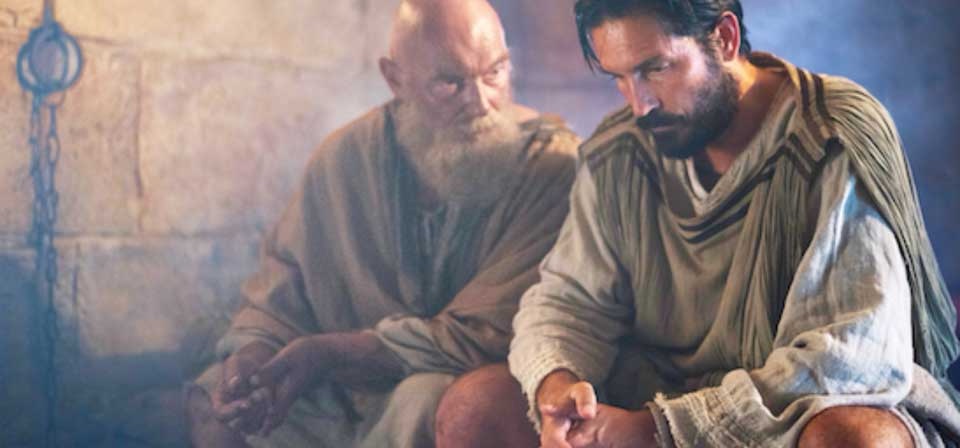

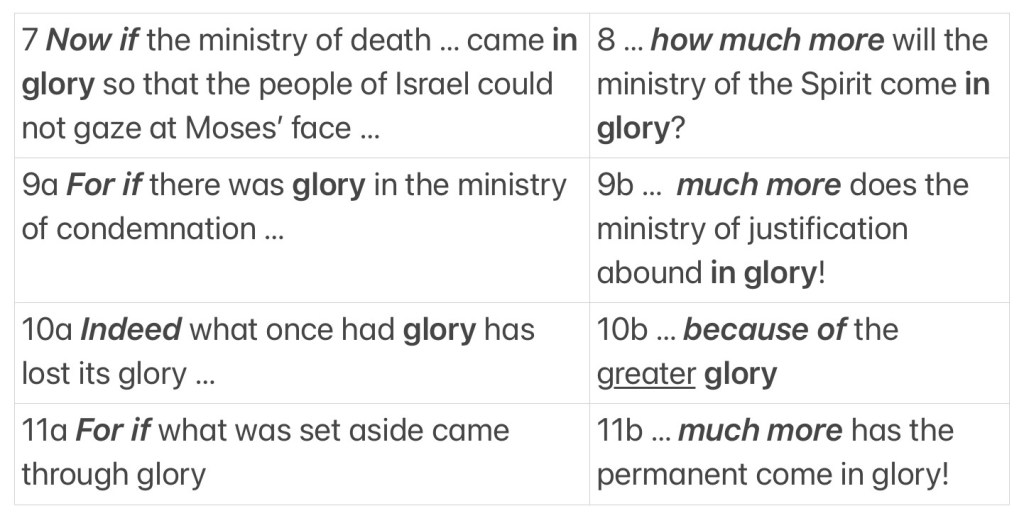

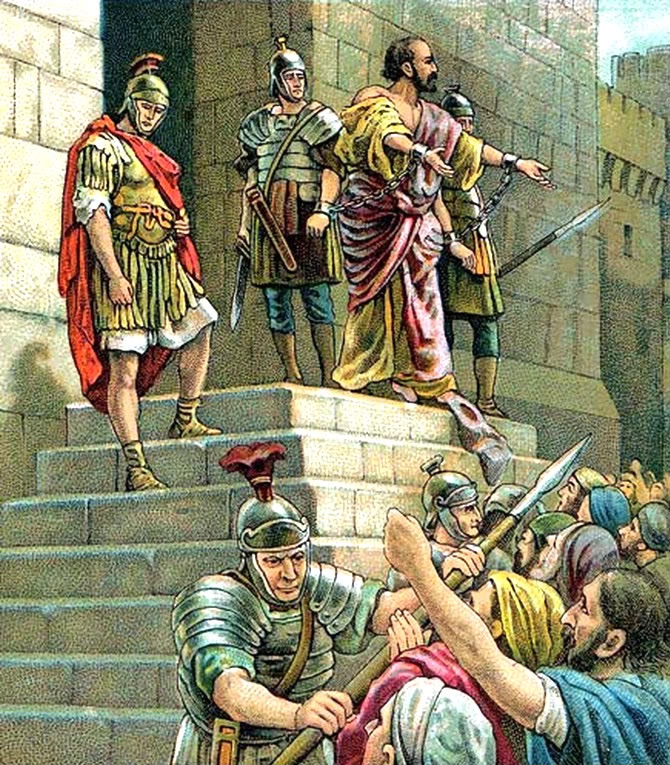
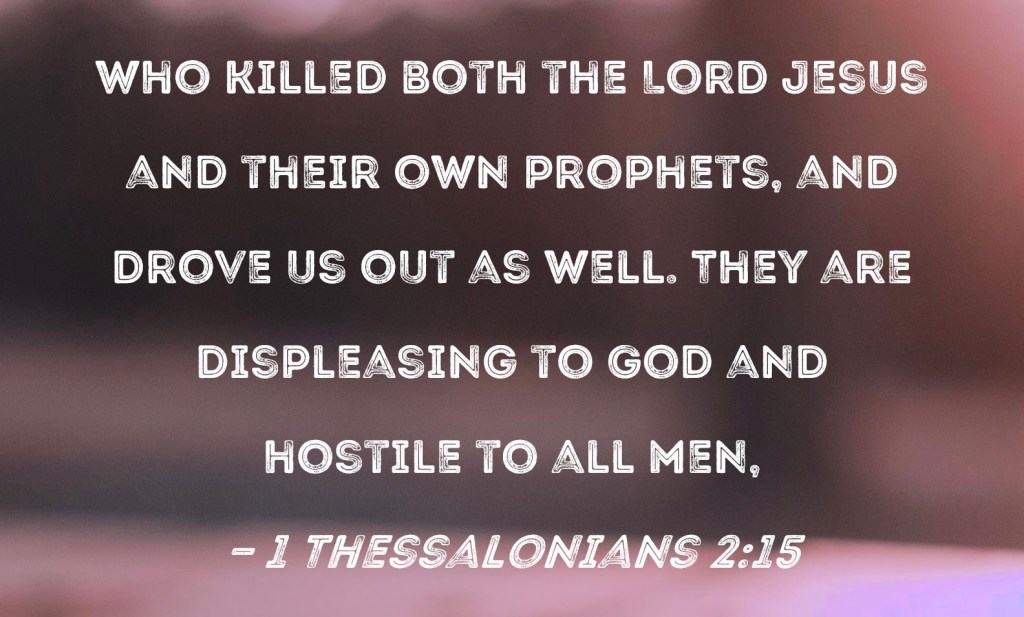
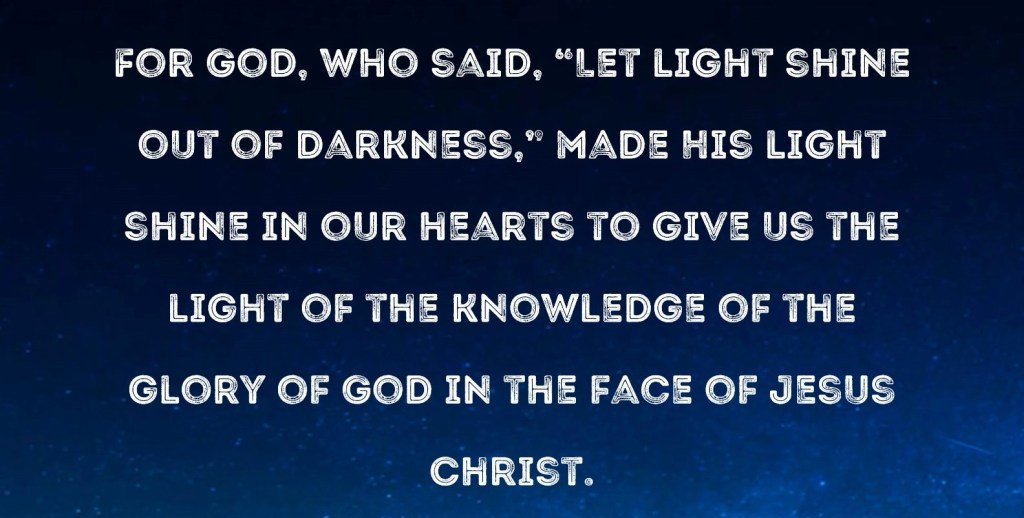






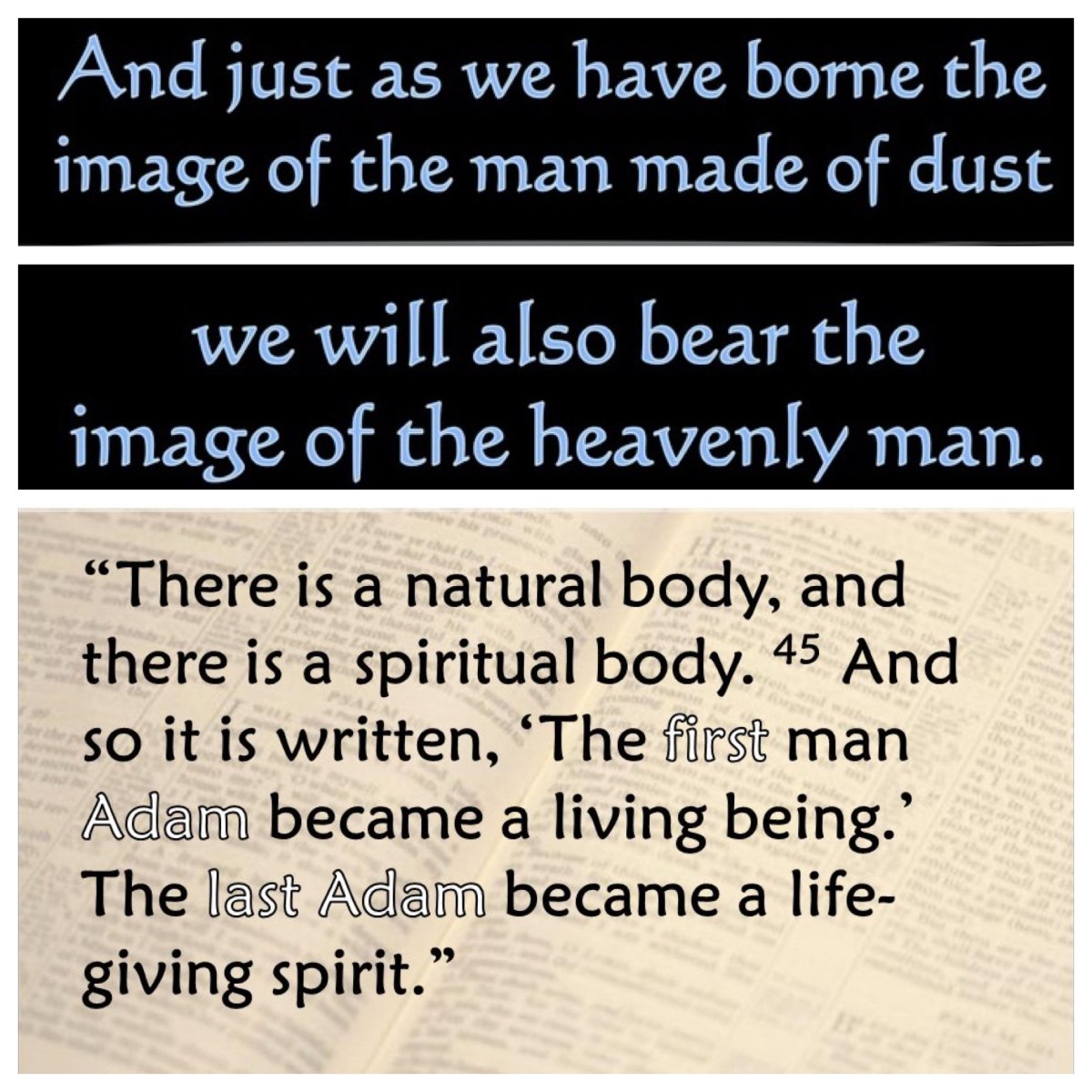
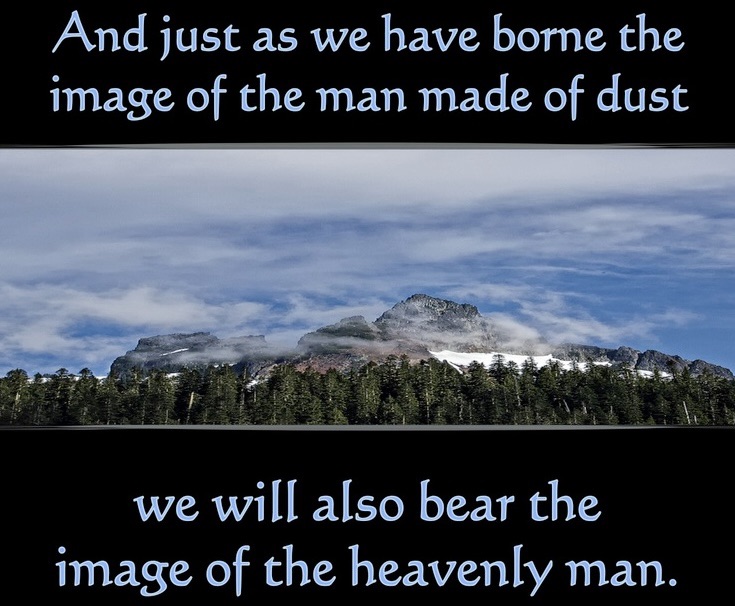
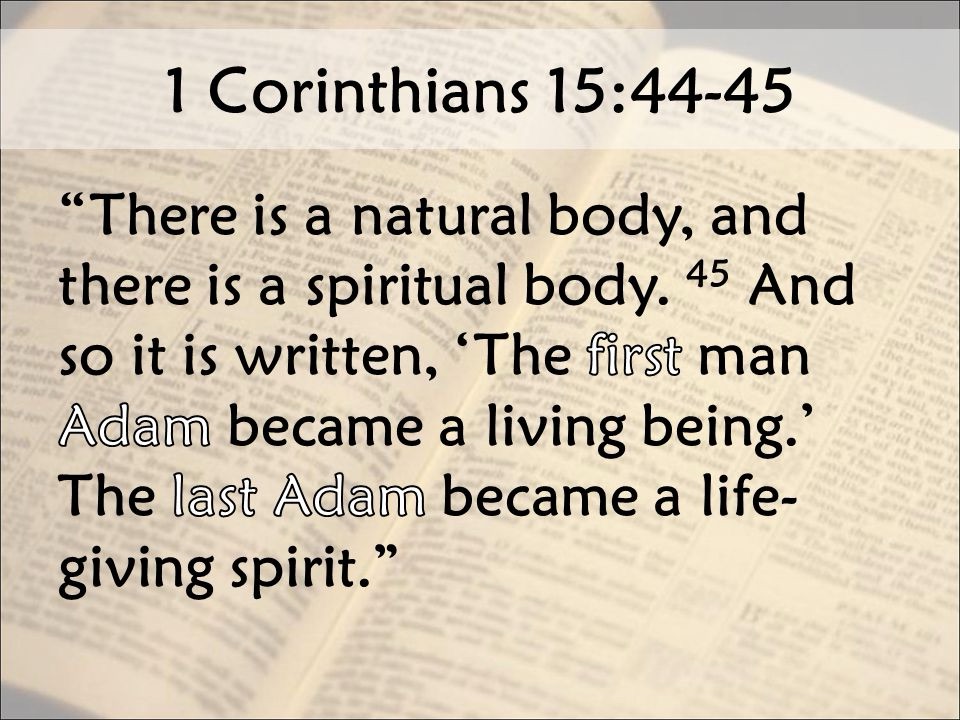

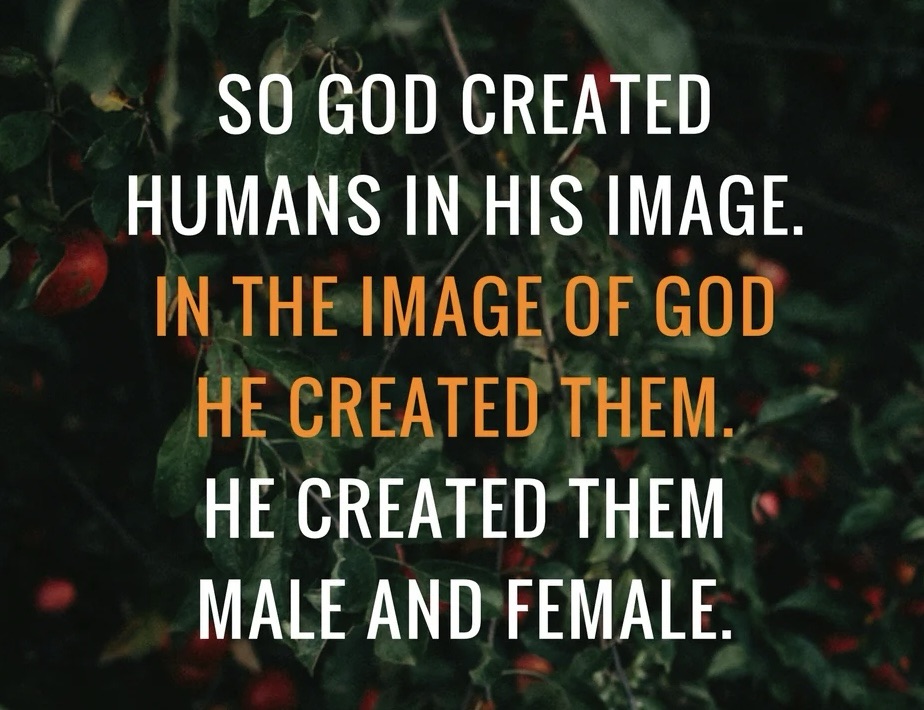



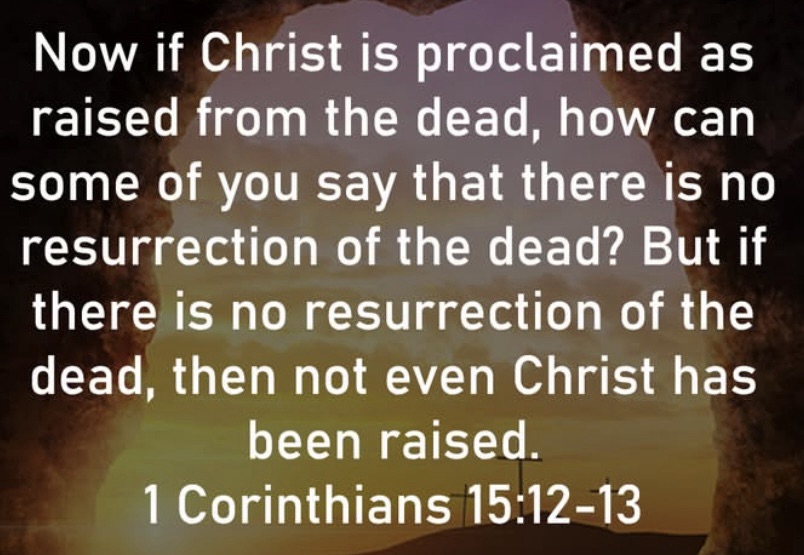

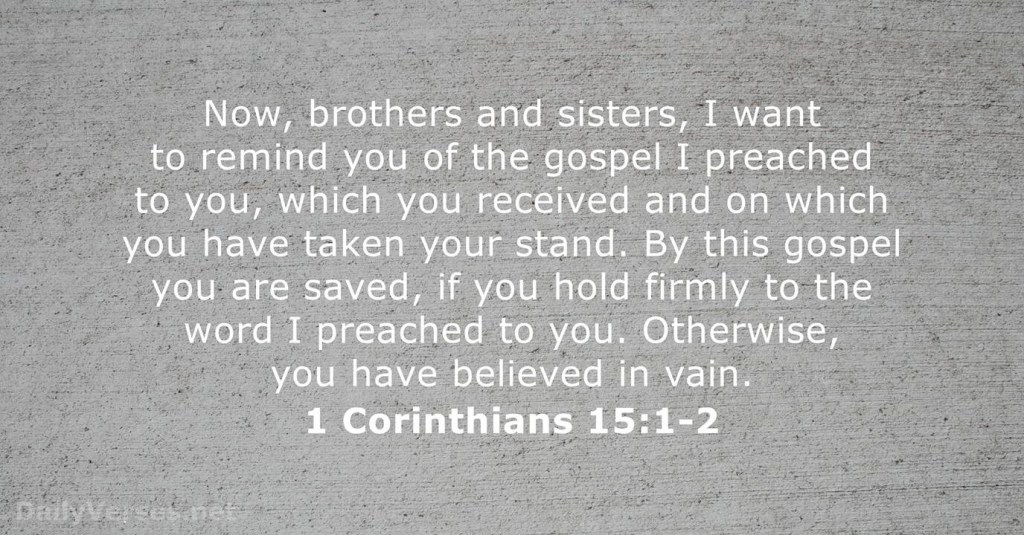

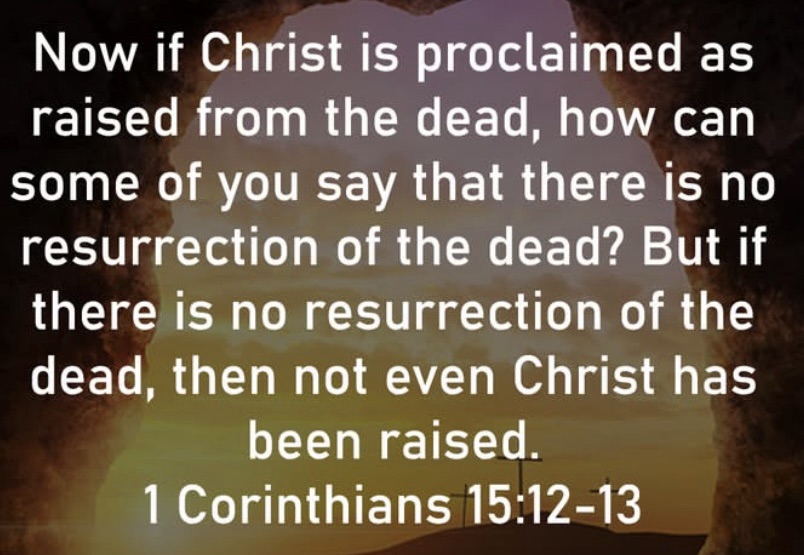
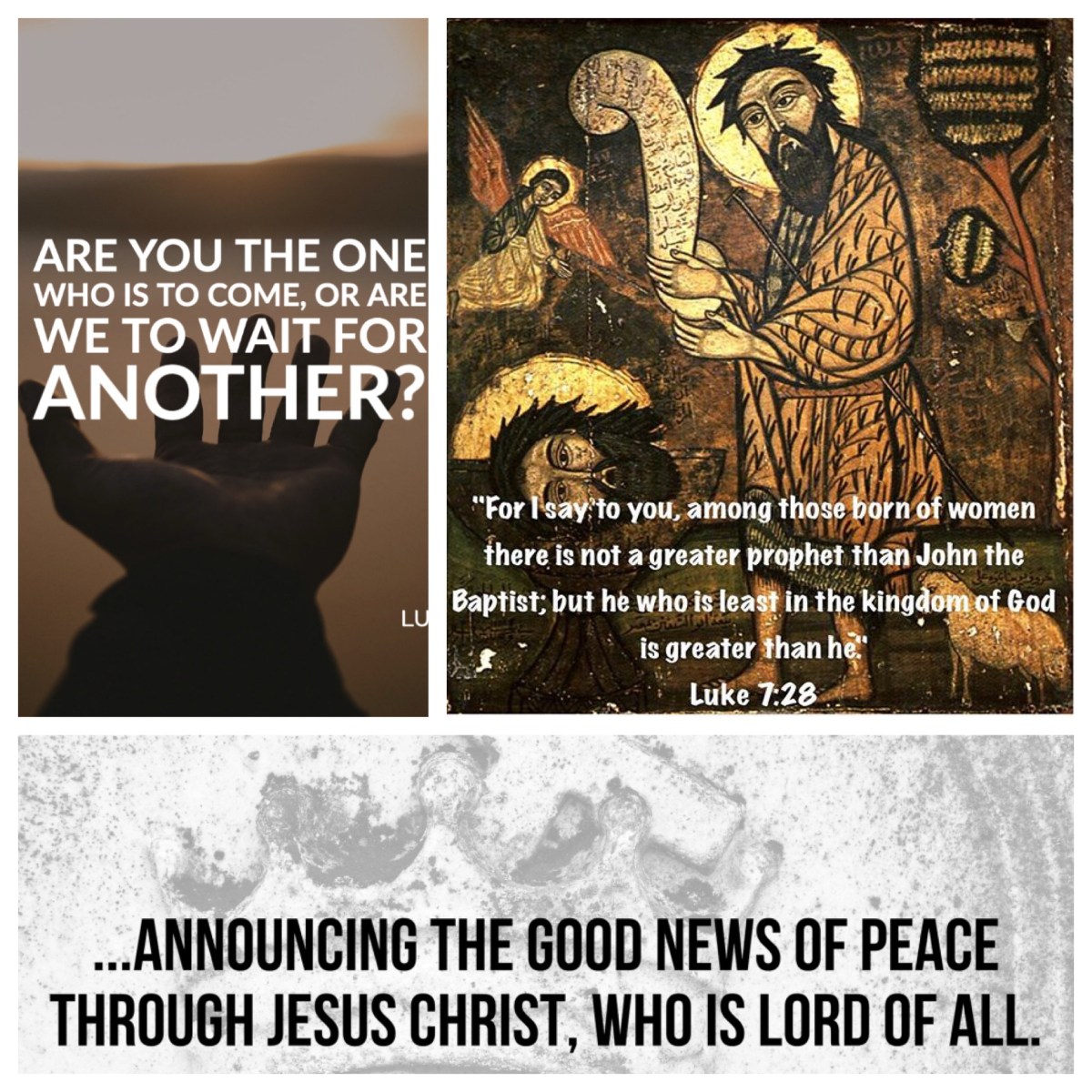

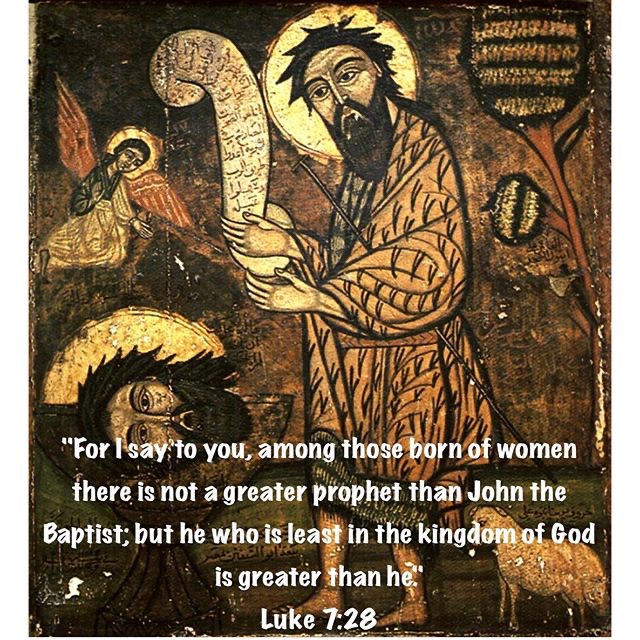





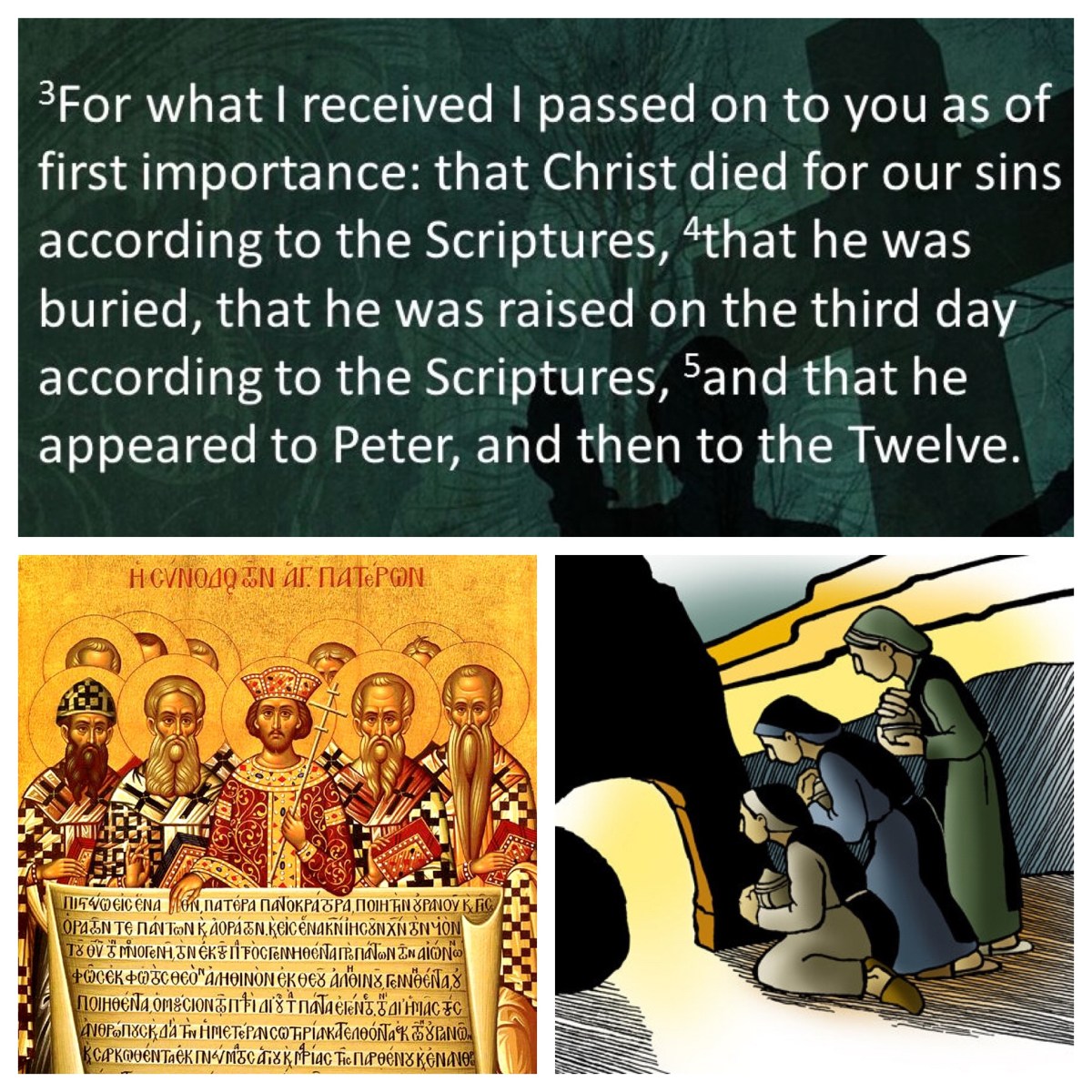
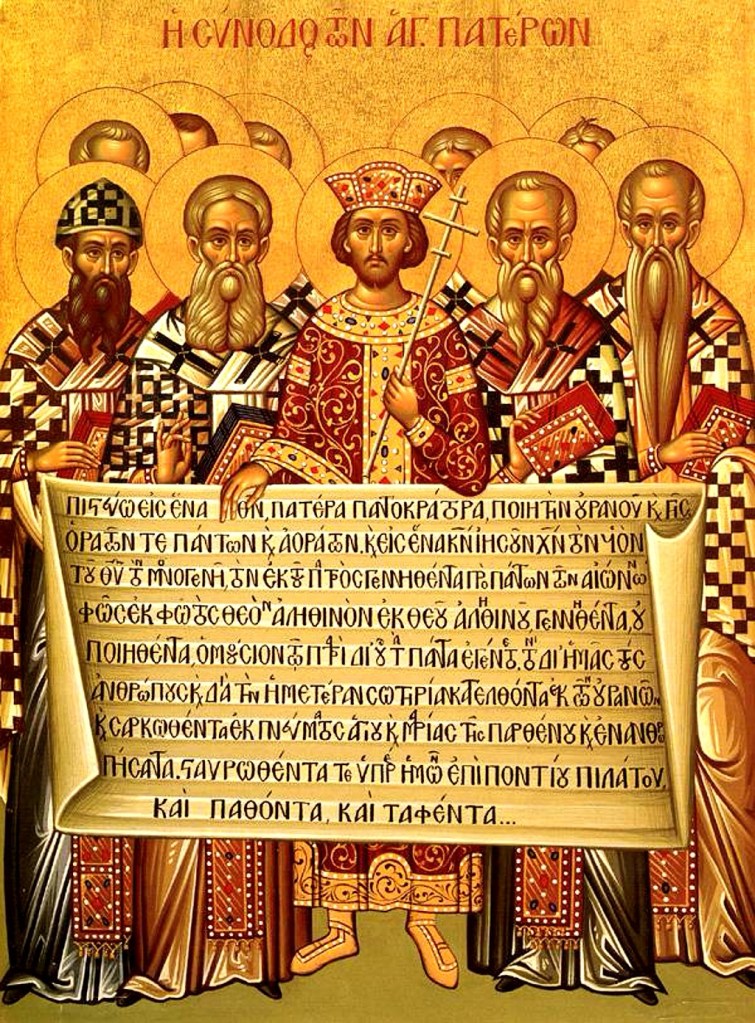
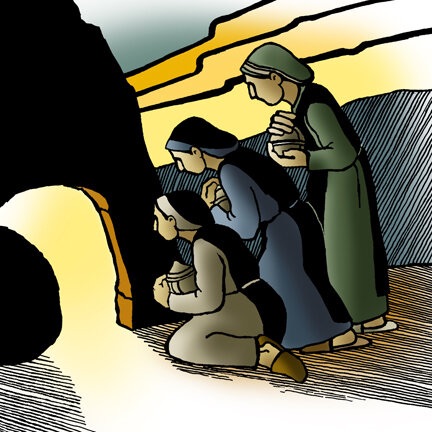
 An Informed Faith