The origins of Jesus in the book of origins: Matthew 1 (Advent Year A)

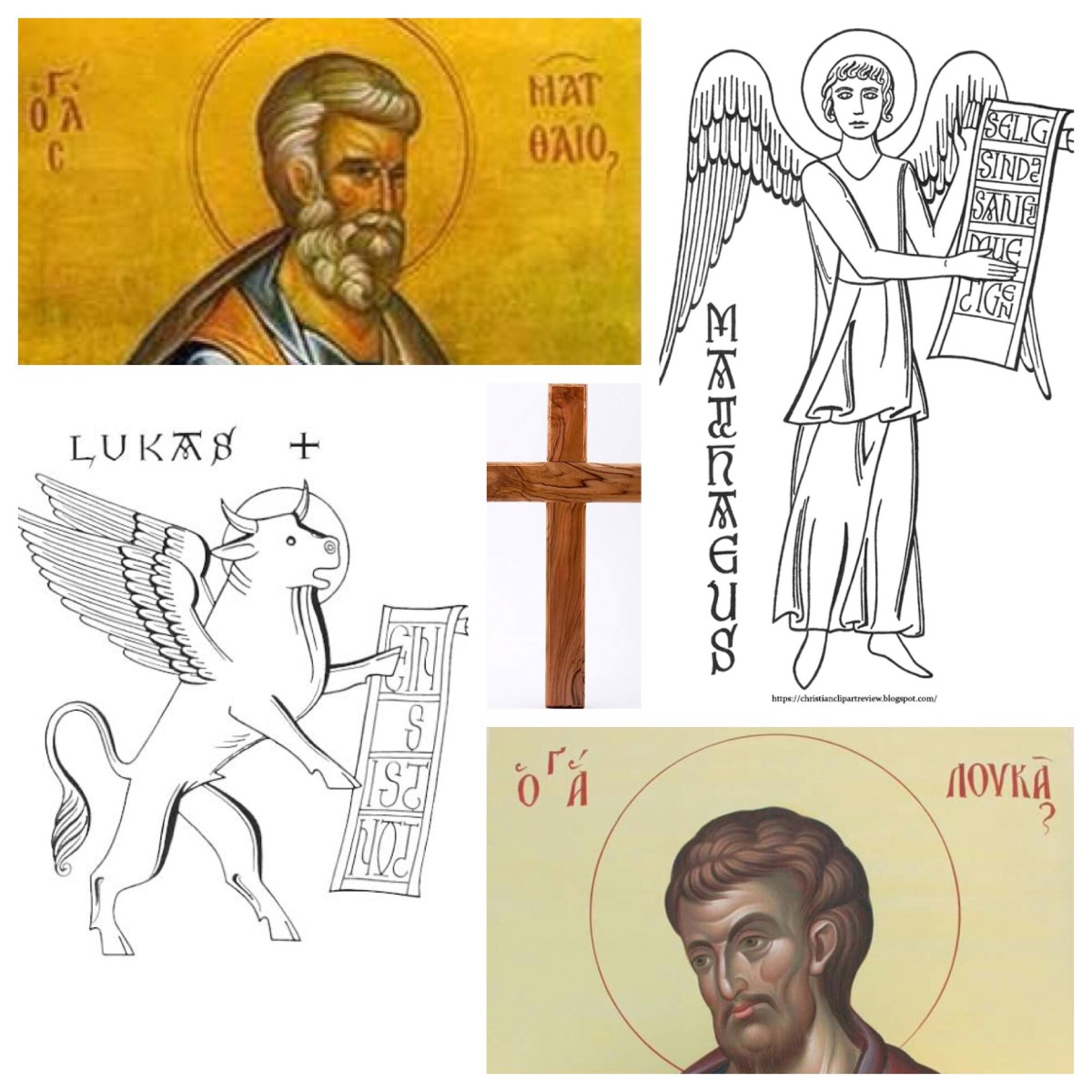
The book of origins of Jesus the chosen one, descendant of David, descendant of Abraham. So begins the first book in the New Testament (in my own translation from the Greek). We know this book as The Gospel according to Matthew.

This book has long been regarded as a keystone of Christian doctrine and has enjoyed a pre-eminent place within the church. Because early believers considered it to be the earliest gospel, it was placed at the very beginning of the New Testament canon and came to be known as “the first gospel”. It thereby sets out some key aspects of the origins and significance of Jesus.

This book starts with an account of the ancestry of Jesus. (In the days before DNA testing, this information was retained and passed on by word of mouth from one generation to the next.) It mimics the Old Testament passages that are sometimes called “the begats” … so-and-so begat such-and-such, such-and-such begat another one … and so on.

You can find extensive lists of “begats” in Genesis, Numbers, and 1 Chronicles, and more briefly in Ruth and Nehemiah. These multiple “begat” passages indicate that a person’s heritage was an important part of Jewish tradition.

The author of Matthew, being himself a faithful Jew, is anxious to establish the credentials of Jesus’ ancestry, so he begins his work with a genealogy (1:1–17) in which he lays out some important signs as to the true nature of Jesus, following the age-old pattern of the Hebrew people.

First, he indicates that Jesus fulfils the promises of scripture by establishing that Jesus was descended from the Davidic kings (1 Chron 28; Ps 18:50), whose house was to rule over Israel forever, as God’s chosen.

Matthew structures the genealogy in three groups of 14 generations; this is quite different from the structure of the genealogy in Luke. In Hebrew numerology, each letter stands for a number; thus, DVD, the three consonants of David, add up to 14. So, the structure of the genealogy in Matthew underlines the claim that Jesus is a descendant of David (1:1).

Matthew also notes that Jesus is descended from Abraham, the first man to receive the covenant (1:2). Abraham was the one whose descendants would fulfil the blessings that God had promised for all the earth (1:2): David, the founder of the royal line and ancestor of the promised Messiah (1:6); and Zerubbabel, leader of the post-exilic community (1:12).

Even more interestingly, Matthew includes five women in the list: Tamar, who posed as a temple prostitute (1:3; Gen 38); Rahab, a prostitute from Jericho (1:5; Josh 2, 6); Ruth, a Moabite who married Boaz after a dubious meeting with him at night on the threshing floor (1:5; Ruth 1–4); the wife of Uriah (Bathsheba), who married David after an adulterous encounter (1:6; 2 Sam 11–12); and Mary, who became pregnant before her marriage to Joseph (1:16).

While the inclusion of the male ancestors is not surprising, the addition of these women is most unexpected. Different reasons have been put forward as to why they are there. Some scholars see them as foreshadowing the redemption of Gentiles, others as a more general symbol of the redemption of sinners. Others have felt they vindicate the pre-marital pregnancy of Mary.

One thing does stand out about all five, and that is they were independent of the traditional patriarchal system of Israel. Each one flouted convention in some startling way to ensure the fulfilment of God’s divine plan. All had humble beginnings. All were obedient to their faith and willing to submit to what they felt was the will of God. They are striking figures, each one of them!

Thus, Matthew’s genealogy is not just a list of names, but a theological statement about Jesus as the fulfilment of God’s promises to Israel through Abraham and David from its inception and throughout its history of prosperity and exile. Through Jesus, this plan for the salvation of Israel will indeed be fulfilled, and fulfilled in a most unexpected way. We should be reading the opening of this Gospel, not as a historical treatise or a family tree per se, but as a theological exposition signalling key motifs of the work that follows.

Matthew also includes many special events around the birth of Jesus (1:18– 2:23), events which we would expect to find attending the birth of a great prophet or the Messiah. The announcement of the name of Jesus follows a standard pattern as found in the Hebrew Scriptures for prominent figures: “bear a child … name him … what it means” (see 1 Sam 1:19; Gen 16:11; 17:19; Judg 13:3, 5).

The title given to Jesus in 1:23, “Emmanuel” (from Isaiah 7:14–16), is intended to show that in the coming of Jesus, God’s spirit became present among people through the messiahship of Jesus. In its original context, the text foretold the imminent birth of a child from the Davidic line, who would demonstrate that God continued to care for his people and was thus still “with us”. For Matthew, the verse emphasises further the Davidic origin of Jesus, and declares that the purpose of God was to save Israel at the coming of this child, Jesus.

In these ways, then, Matthew sets out the key elements of the origins and significance of Jesus: descendant of David, descendant of Abraham, chosen one of God. We will be following the story that Matthew offers us, throughout the coming year. It is a book of origins rich with resources for us as we seek to follow the way of Jesus today.

See also https://johntsquires.com/2019/11/28/leaving-luke-meeting-matthew/

https://johntsquires.com/2018/12/19/what-can-we-know-about-the-birth-of-jesus/

****

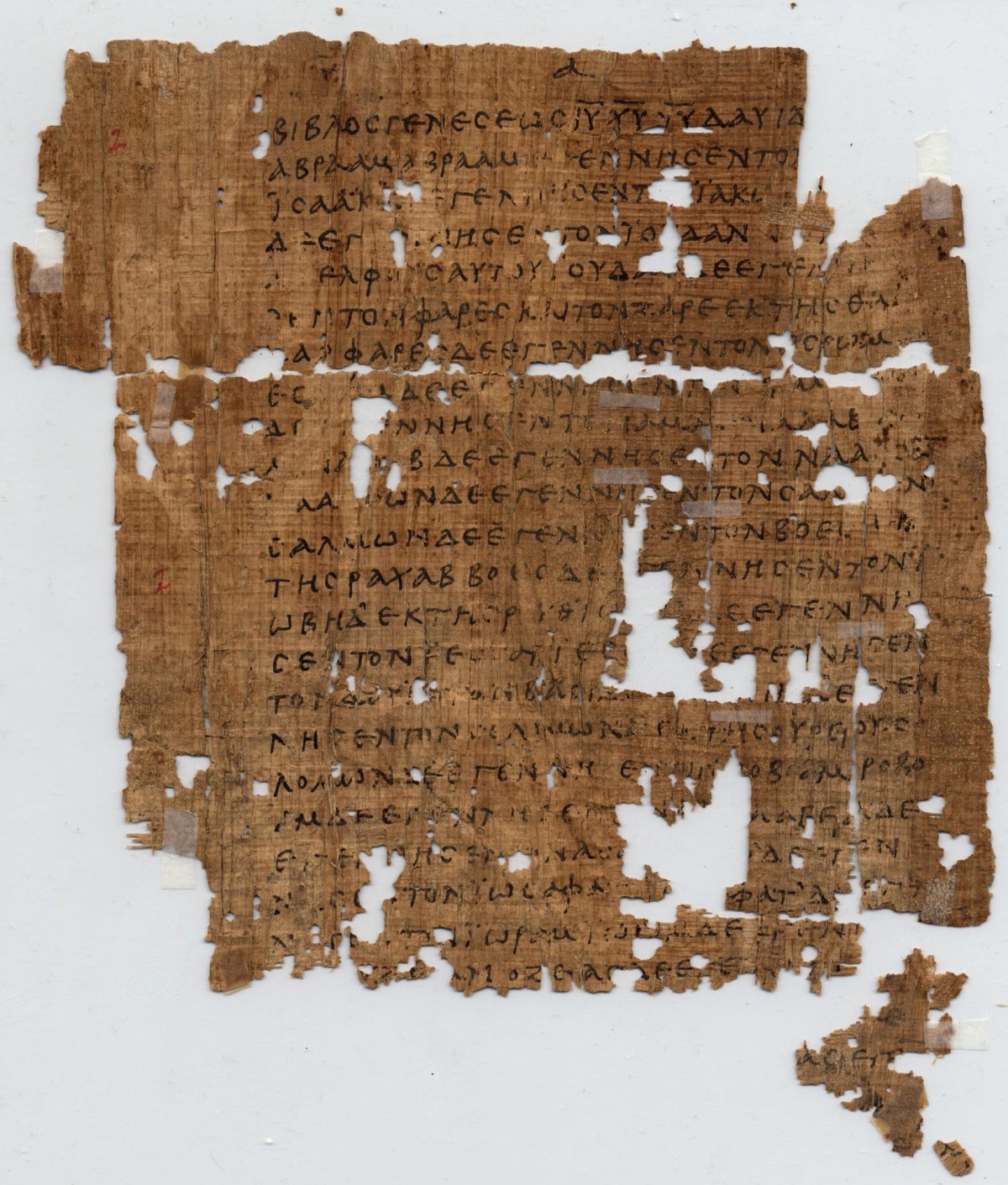
The image is of an early version of the genealogy of Jesus provided in Matthew 1:1-9,12 found on the recto side (the front side) of Papyrus 1, dated to about 250 CE

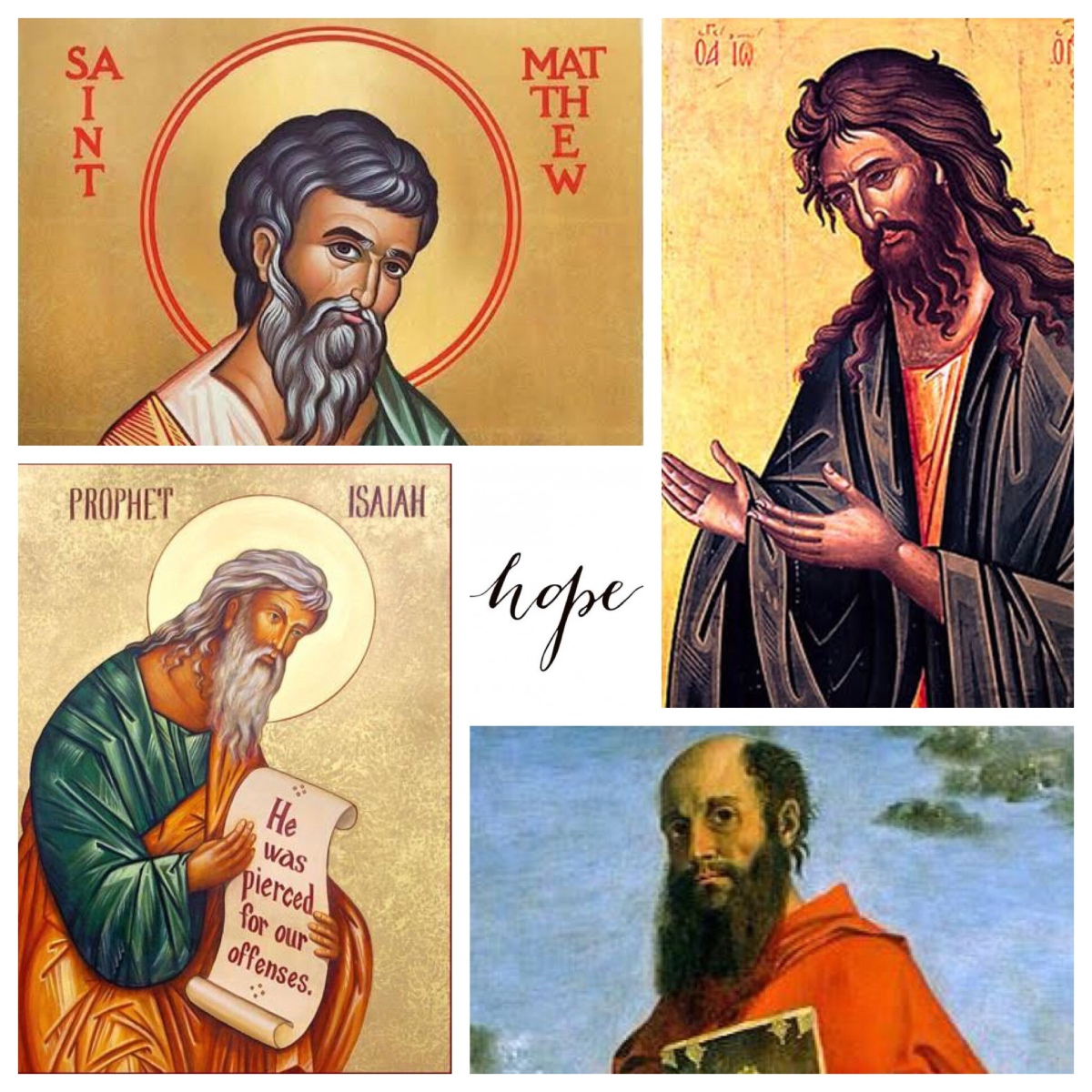
For our instruction … that we might have hope (Rom 15, Isa 11, Matt 3; Advent 2A)

As Paul comes to the end of his letter to the Romans—a letter in which he quotes, time and time again, from the scriptures of his people, the Hebrew people, the books we know as the Old Testament—he makes a passing comment which, in my mind, is a penetrating insight into how he operates.

Whatever was written in former days was written for our instruction,

so that by steadfastness and by the encouragement of the scriptures

we might have hope, he writes (Rom 15:4).

We have that section of the letter included in our readings this coming Sunday, the second Sunday in Advent. I suspect that the reason that this section is included is because Paul here goes on to quote from a collection of scriptures, each of which, in his mind, justifies what he is doing as he writes to the Romans.

My understanding of this letter is that Paul writes to persuade the Jewish Christians that they are to be welcoming, hospitable, and inclusive of the Gentile Christians who are part of the various house churches in Rome; as he says,

by grace, through faith, all are saved; there is no distinction, since all have sinned and fall short of the glory of God; they are now justified by his grace as a gift, through the redemption that is in Christ Jesus, whom God put forward as a sacrifice of atonement by his blood, effective through faith. (Rom 3)

And so, the letter moves towards its close with this quotation:

I tell you that Christ has become a servant of the circumcised on behalf of the truth of God in order that he might confirm the promises given to the patriarchs, and in order that the Gentiles might glorify God for his mercy.

As it is written, “Therefore I will confess you among the Gentiles, and sing praises to your name”;

and again he says, “Rejoice, O Gentiles, with his people”;

and again, “Praise the Lord, all you Gentiles, and let all the peoples praise him”;

and again Isaiah says, “The root of Jesse shall come, the one who rises to rule the Gentiles; in him the Gentiles shall hope.” (Rom 15)

This passage grounds the reality of the church in the gathering of disparates, Jews and Gentiles; it also grounds our faith in the advent of Jesus, the one who draws Jews and Gentiles together; and it provides us with this seasonal word, during the season of Advent, as it points us to hope.

In the prophetic oracle set in the lectionary alongside the apostolic letter, Isaiah offers a wonderful vision of cosmic peace and universal co-operation:

The wolf shall live with the lamb,

the leopard shall lie down with the kid,

the calf and the lion and the fatling together,

and a little child shall lead them.

The cow and the bear shall graze,

their young shall lie down together;

and the lion shall eat straw like the ox.

The nursing child shall play over the hole of the asp,

and the weaned child shall put its hand on the adder’s den.

They will not hurt or destroy on all my holy mountain;

for the earth will be full of the knowledge of the LORD

as the waters cover the sea. (Isaiah 11)

However, this vision of peace appears in our lectionary alongside some harsh striking words, about the judgement that is associated with this vision. As the evangelist writes about the coming of the promised one—the one who will,presumably bring about this era of peace—he reports words spoken by John the Baptiser, which offer this sense of judgement:

His winnowing fork is in his hand, and he will clear his threshing floor and will gather his wheat into the granary; but the chaff he will burn with unquenchable fire. (Matt 3)

And again, in the Gospel for today, this message of judgement and punishment is vividly conveyed:

Even now the ax is lying at the root of the trees; every tree therefore that does not bear good fruit is cut down and thrown into the fire. (Matt 3)

This is a stern word. It seems strange for us, during Advent, as we prepare for Christmas, to be hearing such clanging, jarring sounds. Although, as one of my colleagues said to me earlier this week, as we talked about the offerings on hand in the lectionary during this season:

The soundtrack of Advent is not jingle bells;

It is the sound of a hammer on an anvil.

For the incessant message of the prophets is one which calls us to account. The hammer strikes the anvil, once, twice, repeatedly, marking the surface, forging the shape, creating the essence of the person. And the message of the prophets places before us an insistence that we need to act ethically, live responsibly, with justice and equity, as we wait with hope for the coming of the one who will bring in the promised time of peace.

Indeed the prophet, as he envisages the presence of this one, so long hoped for, as he considers how “a shoot shall come out from the stump of Jesse, and a branch shall grow out of his roots”, describes him in this way:

Righteousness shall be the belt around his waist,

and faithfulness the belt around his loins. (Isaiah 11)

The one to come will exemplify righteousness, and will assess the fruit produced by those he encounters. He will execute judgement by swinging the axe, cutting down the tree, and burning the branches in the fire; and, as the prophet declares,

He shall strike the earth with the rod of his mouth,

and with the breath of his lips he shall kill the wicked.

The soundtrack of Advent is not jingle bells;

It is the sound of a hammer on an anvil.

As we reflect on these words during this season, we do so with prayerful anticipation, with resolute hopefulness, with persistence and openness to God’s way in our midst, for we yearn to encounter afresh this chosen one:

The spirit of the LORD shall rest on him,

the spirit of wisdom and understanding,

the spirit of counsel and might,

the spirit of knowledge and the fear of the LORD.

His delight shall be in the fear of the LORD.

He shall not judge by what his eyes see,

or decide by what his ears hear;

but with righteousness he shall judge the poor,

and decide with equity for the meek of the earth;

he shall strike the earth with the rod of his mouth,

and with the breath of his lips he shall kill the wicked.

Righteousness shall be the belt around his waist,

and faithfulness the belt around his loins.

Report on Queanbeyan Intentional Interim Ministry to Congregational Meeting on 24 November 2019

The Intentional Interim Ministry (IIM) placement at Queanbeyan Uniting Church (QUC) was established by Presbytery in consultation with QUC, for 2019, to address this time of transition in ministry and enable QUC to discern and embrace positive future ministry. IIM is a short term placement to address the Five Developmental Tasks of the Congregation:

A. Coming to terms with the Congregation’s history

B. Discerning the Congregation’s purpose and identity

C. Supporting leadership change and development

D. Reaffirming and strengthening denominational links

E. Committing to new leadership and new ministry

There are various matters that I have been involved with during the year: meetings with individuals, committee meetings, preaching and leading worship, leading study groups, convening workshops for the whole Congregation, reflecting intentionally on the process with skilled people, overseeing the process of discernment, nomination and election of new leaders, and participating in the wider life of the church (as is expected of all ministers in placement).

I have identified some key themes that have run throughout the course of this year.

In the liminal space

QUC had been in a transitional mode for some time before the IIM commenced. I saw my role in the early stages as naming this transitional space and providing ways for people to think about the experience and work towards hopeful outcomes through the process. Both studies and sermons throughout Lent and Holy Week related specifically to this. I have occasionally referred back to the idea of the liminal space, the transitional mode, in subsequent months; this sense will continue on into the period when new leadership develops and a new minister is placed into Queanbeyan.

The importance of story

Listening to the stories that people have told me, about “how it has been for me”, formed an important element in the earlier stage. Telling stories about our experiences is a fundamental need that every person has. Being validated for our views and our experiences is necessary. Talking things through so that we are able to identify, understand, appreciate, and let go, is a valuable process. That, too, will need to continue into the future across the congregation.

However, the stories that we tell each other, now, need to be, not only reflections of the past, but also projections into the future. So talking about our hopes for the future, the plans we would like to come to fruition, the dreams we have and the strategies we need to see those dreams become a reality—these also need to be part of the stories that we tell each other.

The centrality of core beliefs

We had a workshop that encouraged us to identify our core values and key commitments. Out of that process, we identified a commitment to being a Good Neighbour Church and alongside that a willingness to live as a Good News Church that was actively Discipling people. That vision is what the congregation needs to keep to the fore and work towards into the future.

Considering how we operate in conflict

In a second workshop led by Elizabeth Raine, we explored the ways that we operate when we find ourselves in conflict. We learnt the importance of understanding the various ways that people operate, and adjusting our own way of operating in the light of that. The challenge from such a workshop is taking up such new behaviours and bedding them down in the way that we operate. That’s also an ongoing process.

Identifying future possibilities

In the third workshop, we mapped our assets and began to explore how we might best utilise those assets. This work still stands ahead of the congregation. Knowing that we have a group of people with commitment and dedication, a suite of buildings on a prime location within the town, and an intention to reach out as good neighbours with a message of good news, needs to inform and shape all future planning.

A weakness that I can see at the present time is that we have not pushed through to specific planning and working for the kind of future that we hope for and envisage.

Strengthening leadership capacity for the future

The process of discernment, nominations, elections, and commissioning (still to come) of new leaders has pointed to the strengths and commitments that are alive within the Congregation. We need to find ways of working together that will leverage off these strengths and that will build a strong future. The formation of a Joint Nominating Committee (JNC) and conversations with prospective ministers still lies ahead.

The task of equipping and supporting lay leaders for the tasks of ministry continues on, as the interim period between longer placements continues. Lay people are needed to provide leadership within the Congregation, lead worship, look after the property, provide pastoral care, explore missional opportunities, continue existing viable ministries, pursue planning for Plan Agora, and relate intentionally to organisations and groups in the neighbourhood with a view to future collaboration. The multiple challenges and opportunities of ministry and mission continue!

The key moments throughout the year include:

Induction into placement in February 2019

Listening process over initial months

Lent-Holy Week-Easter journey, worship and study groups on Wilderness Journey

Working with Transition Team to explore History and Identity of the Congregation

19 May Service celebrating, letting go, looking forward

Second round of studies with two small groups

23 June Workshop I on “what sort of church are we?”

Sermons regarding Good Neighbour Church, Good News/Discipleship Church

Pastoral involvements with individuals, BS Group

4-7 July Synod meeting

6 August Workshop II on Constructive Conversations that transform relationships

8 September Workshop III on Mission Planning and Strategic Directions for QUC

Membership within QUC: position paper

29 September Membership commitment Service

Working with Plan Agora planning group

Leadership within QUC: consideration of future ministry configuration and future lay leadership

Nominations for leadership roles in September and conversations with people nominated

Discernment and Elections on 24 November

Commissioning new leadership group on 8 December

JNC and Profile, for seeking a minister in 2020

Conclusion of placement in February 2020

In addition, throughout this period, I have been involved in:

Monthly Church Council meeting, weekly meetings with Pastor Amy, preaching and leading Sunday worship on a 75% basis

My ongoing reflection on QUC situation with Transition Team, Reference Group, Professional Supervisor

John Squires, November 2019

See also https://johntsquires.com/2019/07/17/report-on-queanbeyan-intentional-interim-ministry-to-congregational-meeting-14-july-2019/

Celebrating Transitions: into a strange and graceful ease … (part two)

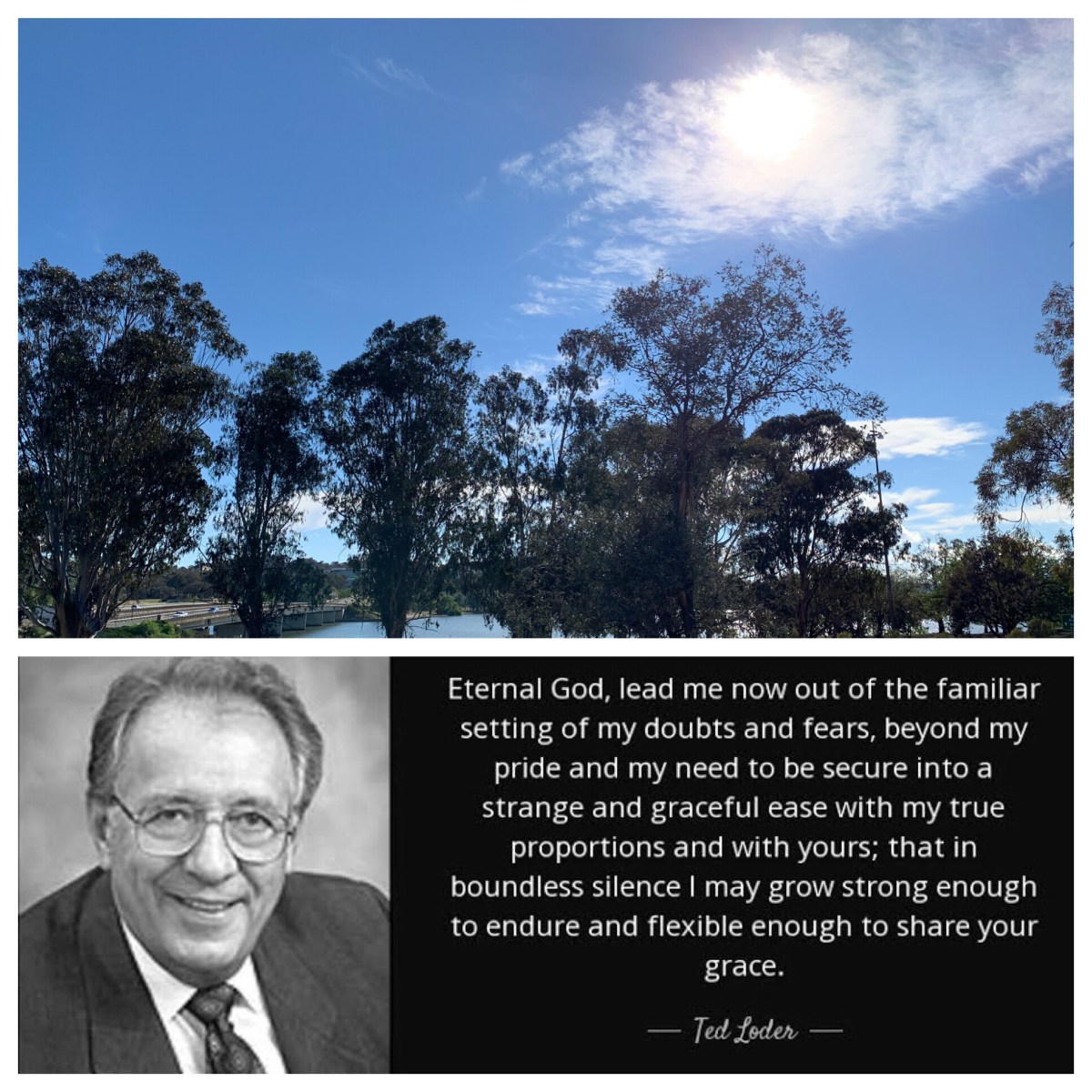
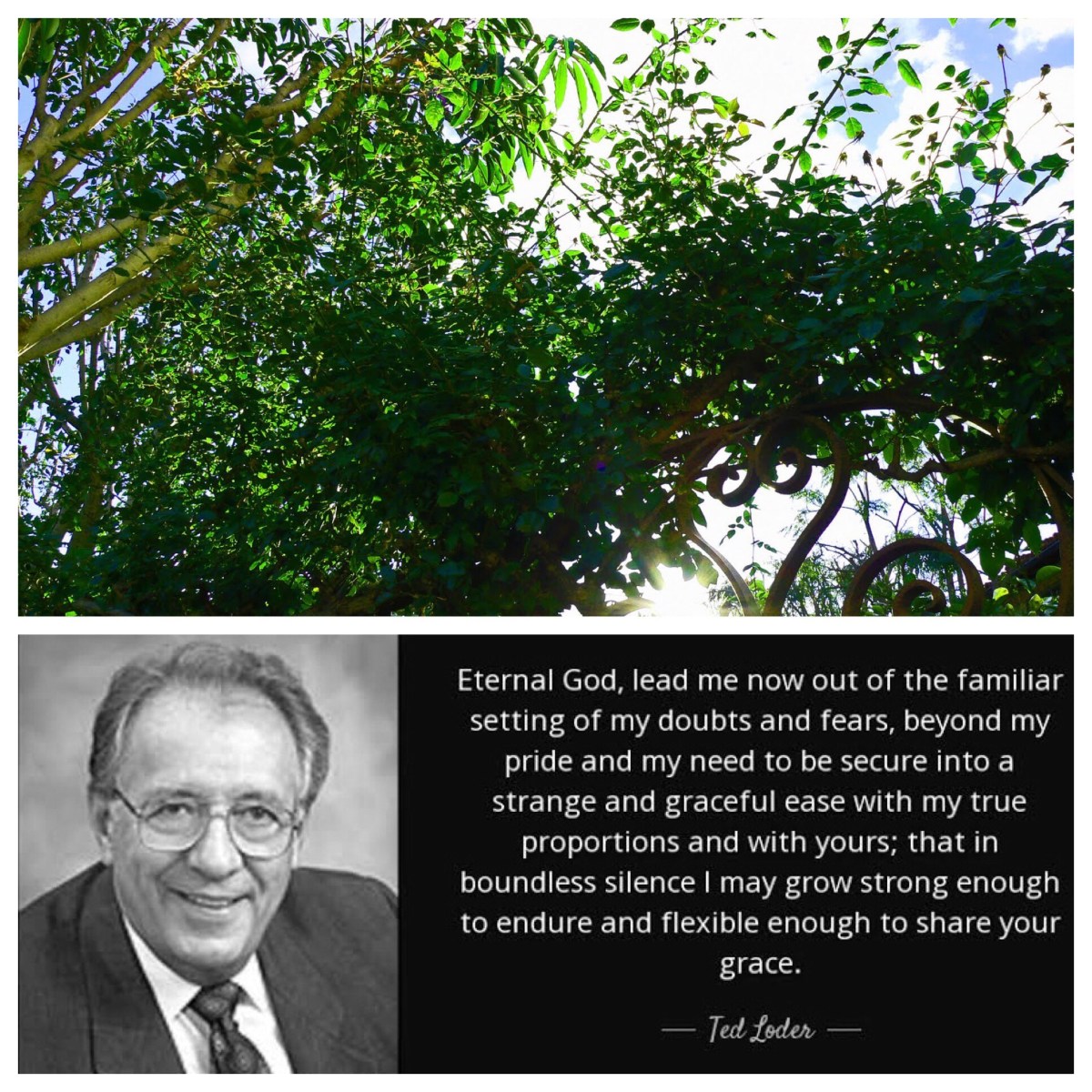
Into a strange and graceful ease is a phrase from a prayer by Ted Loder, from Guerillas of Grace (1984)

The theme of the November meeting of my Presbytery (Canberra Region) is Celebrating Transitions. As people of faith, we know that at the heart of our faith sits a dynamic of transition that was lived out to the fullest by Jesus of Nazareth. The life, death, burial, and resurrection of Jesus—the story which we remember every Easter, which undergirds every Sunday gathering—this is a story of transition. We are called, as people of faith, to celebrate transitions.

This year, Elizabeth and I have spent time with various cohorts of ministers who are undertaking training in the Foundations of Transitional Ministry, with a view to being accredited as an Intentional Interim Ministry (IIM). We took part as co-teachers in the course, along with Rob McFarlane, a colleague who has taught this course now for almost two decades. It was a rich experience of learning in community.

One of the prayers included in the IIM resources offered these words: eternal God, lead me now out of the familiar setting of my doubts and fears, beyond my pride and my need to be secure, into a strange and graceful ease with my true proportions and yours …

The prayer is by Ted Loder, from his book Guerillas of Grace (1984). It is a fine prayer for all ministry practitioners to pray, on a regular basis, throughout their ministry. The prayer invites us to find our true selves in the midst of change and traction. It calls us to sit, at ease with ourselves, in new ways of being, working, and living.

Alongside the prayer, the course offered many resources, designed to help Ministers think about their ministry and work in ways that embrace transition. A number of these resources are also applicable to anyone who takes responsibility for pastoral care, proclamation of the Gospel, missional engagement, or loving and compassionate service, within their local community of faith. Each of these resources will help to equip all of us in faithful ministry within that context of transition.

In a time of transition, people will find themselves in a liminal space, that in-between space, the place of not yet being where we hope to arrive at, still in a place where the last holds sway, but in a place of transition, of being not settled.

First, I note the importance of story for ministry, and especially for people engaged in transitional ministry. Story is what grounds our experiences in our lives. Story is the way that we make sense of the experiences we have in life. Story is how we share our deeper selves with others. And story is foundational to the whole dynamic of the Gospel calling and forming the Church, and the Church living out the Gospel as it takes part in the Mission of God.

Second, when we consider leadership styles, we need to be aware of the range of styles exist, and discern what is most suited to a certain situation, what another style of leadership might offer in that situation. In the course, we used the story of Moses and Aaron, and the people of Israel, to connect leadership styles with scriptural reflections at various points. Participants focussed on leadership for transition, leadership in the midst of turmoil, and the application of spiritual gifts to leadership positions. The figures of Moses and Aaron have some things to offer about each of these areas.

Within the church, it is important for us to grasp the way that our core beliefs shape our primary values. Our values manifest themselves in specific attitudes we foster, which then can be observed and experienced in tangible behaviours we undertake. Drilling down through the levels, from the behaviours at the surface to the deepest level of primary values, is critical to the way that we interact with other people in the exercise of our ministries.

Stories of conflict are endemic throughout the church. Everyone in ministry has experienced conflict. Everyone in ministry will experience conflict in the foreseeable future, on into the distant future, as long as we are in ministry. The way that human beings interact will guarantee this. And transition provides a hotbed or potential conflicts, which need to be identified, and dealt with, appropriately.

It is vital for Ministers and Pastors, Officers of Congregations and Church Council members, to know how we operate in situations of conflict—both in situations of relative calm, and then on those occasions when a storm shift happens and we are thrust into the the middle of a conflict, with raging turbulence all around us. Knowing how we operate, and what options there are for operating differently, in such situations, is an important learning to have.

Taking responsibility for the dynamics that are at work in conflict requires us to be determined not to ignore the conflict but to address the issues head on. We need to deal with the conflict in ways that are respectful, not demonising or stereotyping the other party in the conflict. We ought to seek to invite engagement with others in the conflict, rather than scaring people off from a way to address it.

Conflict resolution should be both constructive (ensuring that more damage is not done through the process employed), and productive (moving to an outcome that is mutually acceptable for the parties involved). And we need to know ourselves, to know how we operate, in the midst of these situations. Transitions inevitably occur with associated conflicts. Knowing ourselves, and managing others, is critical to being able to navigate successfully through those conflicts.

Much of the course was premised upon the analysis of systems, and how churches work as systems. This is the final, and most challenging, dimension of working constructively in the situation of transition. Strategic interventions into the system are central to providing effective leadership in ministry when transition is clearly at work.

To this effect, there are some wonderful stories contained in Friedman’s Fables, one of the creations of American rabbi, therapist, and ultimately management consultant, Edwin Friedman. “No living part of the system was unaffected by this action”, one story recounts. That is always the case in a situation of transition.

A time of transition provides a wonderful opportunity for leaders to effect constructive change—if they are able to identify, plan, and implement a strategic intervention, encouraging people to let go of the past, and then committing together follow on through the process, making sure that it sticks.

I hope you, like me, are seized with joy at the abundance of possibilities that lie before us in this time of transition. I hope you will be able to enter into the theme of our Presbytery, that you will rejoice in Celebrating Transitions, as you pray, eternal God, lead me now out of the familiar setting of my doubts and fears, beyond my pride and my need to be secure, into a strange and graceful ease with my true proportions and yours …

You can read about the Interim Ministry Network at https://imnedu.org

See also

https://johntsquires.com/2019/11/15/celebrating-transitions-into-a-strange-and-graceful-ease-part-one/

https://johntsquires.com/2019/11/14/ministry-and-mission-in-the-midst-of-change-and-transition-luke-2113/

https://johntsquires.com/2019/09/29/gracious-openness-and-active-discipleship-as-key-characteristics-of-church-membership/

https://johntsquires.com/2019/07/09/advocacy-and-climate-change-growth-and-formation-treaty-with-first-peoples-synod-2019/

https://johntsquires.com/2019/05/17/discovering-new-futures-letting-go-of-the-old/

http://discoversacredspace.blogspot.com/2011/03/lead-me-out-of-my-doubts-and-fears.html

Celebrating Transitions: into a strange and graceful ease … (part one)

Into a strange and graceful ease is a phrase that comes from a prayer by Ted Loder, from Guerillas of Grace (1984)

Look around you, when you gather this coming Sunday for worship. What looks familiar? The people beside you? The person (or persons) out the front, leading worship? The pictures or plaques on the wall? And what sounds familiar? The music from organ, or piano,,or guitar, or voice? The voices reading, the voices praying, the voices responding? What tastes familiar? Perhaps the plates of food and cups of drink available after worship?

And what looks different? New people, new images? What sounds different? New music, new voices?

Now, step outside into your local community. Recall what you see as you move around your community. What changes do you notice as you move around the shops, the streets, the parks? What things remain relentlessly the same?

Now, reflect on how much is still the same, and how much is quite different, in your church—and in your community.

How we, as church, respond to the changes that are taking place around us, and within us, is a critical issue. How we respond to the inevitable changes and transitions that are taking place, is a key factor in our being faithful, as church, in the present time.

This year, much of my focus on ministry has been on transitions. Elizabeth and I have moved interstate. We have changed our place of residence (we are in a house that Presbytery has recently purchased) and we are both in new Ministry positions—Elizabeth, at Tuggeranong, and myself, at Queanbeyan.

Indeed, the Presbytery where we are now serving is at a significant moment of transition, as leadership changes, ministers move on to new placements, congregations consider new futures, and we look to a full complement in Presbytery staff in 2020, as I move into a fulltime role with Presbytery, alongside of a new colleague, Andrew Smith.

Life is always comprised of transitions. And how we deal with those transitions, is critical. Do we resent transition and change? Or do we celebrate transitions when they come?

All ministry, these does, is taking place in contexts where changes are afoot (or need to be afoot!), where transitions are taking place, where the ground seems to be shifting under our feet as we walk the pathway ahead of us. Every ministry context these days reflects our post-Christendom context, with a growing multifaith mix in society. We live in a world which has an increasingly vocal secularised or anti-faith element, where the church is both smaller than in its heyday, and also occupying a very different place in (or on the edges of) society. We are all in a context of transition.

The theme of the November meeting of my Presbytery (Canberra Region) is Celebrating Transitions. As people of faith, we know that at the heart of our faith sits a dynamic of transition that was lived out to the fullest by Jesus of Nazareth. The life, death, burial, and resurrection of Jesus—the story which we remember every Easter, which undergirds every Sunday gathering—this is a story of transition. We are called, as people of faith, to celebrate transitions.

This year, Elizabeth and I have spent time with various cohorts of ministers who are undertaking training in the Foundations of Transitional Ministry, with a view to being accredited as an Intentional Interim Ministry (IIM). We took part as co-teachers in the course, along with Rob McFarlane, a colleague who has taught this course now for almost two decades. It was a rich experience of learning in community.

One of the prayers included in the IIM resources offered these words: eternal God, lead me now out of the familiar setting of my doubts and fears, beyond my pride and my need to be secure, into a strange and graceful ease with my true proportions and yours …

The prayer is by Ted Loder, from his book Guerillas of Grace (1984). It is a fine prayer for all ministry practitioners to pray, on a regular basis, throughout their ministry. The prayer invites us to find our true selves in the midst of change and traction. It calls us to sit, at ease with ourselves, in new ways of being, working, and living.

It is also a prayer that is most applicable for all in leadership within churches, whether they be ordained, commissioned, or appointed, to pray and meditate upon. Lead us out of the familiar and known. Lead us into a strange and graceful ease with ourselves. May it be so!

See also

https://johntsquires.com/2019/11/14/ministry-and-mission-in-the-midst-of-change-and-transition-luke-2113/

https://johntsquires.com/2019/09/29/gracious-openness-and-active-discipleship-as-key-characteristics-of-church-membership/

https://johntsquires.com/2019/07/09/advocacy-and-climate-change-growth-and-formation-treaty-with-first-peoples-synod-2019/

https://johntsquires.com/2019/05/17/discovering-new-futures-letting-go-of-the-old/

http://discoversacredspace.blogspot.com/2011/03/lead-me-out-of-my-doubts-and-fears.html

Faith in Action: a religious response to the Climate Emergency (Part Three)

Continuing my reflections on the first national conference in Canberra of the Australian Religious Response to Climate Change (ARRCC) …

Dr James Whelan, lecturer, researcher and longterm environmental activist, spoke about creating a faith network to tackle the climate emergency, advocating that we need to play to our strengths, ask the clarifying questions, “What are our strengths?”, “What are we lacking?”—and advocate that we need to be strategic!

He argued that we can learn from social movements that have come before—in areas as diverse as anti-apartheid, land rights, whaling, smoking, AIDS/HIV, breast cancer, anti-uranium, public transport, urban sanitation, workers’ rights, or domestic violence.

He then invited the participants to identify the strengths of ARRCC and its people; participants identified creativity, courage, a moral voice, the use of positional authority to persuade, energy from young people, shared values across a wide diversity, existing networks that can be engaged, a clarity of commitment to change, a commitment to respectful conversations as the basis for enabling change, a thoughtful, broad-based progressive religious voice in the public arena, and the fact that ARRCC is an intergenerational and transcontinental movement.

The afternoon was spent in small group workshops ranging across a range of issues exploring how people of faith might respond to the climate emergency. One group heard strategies used to convince religious groups to divest from companies that support fossil fuels; another explored a case study in “switching to sunshine” by installing solar panels.

In one group there was a focus on strategies for developing a climate-conserving lifestyle, noting both the opportunities and the challenges involved. A fourth group heard stories of nonviolent resistance “from the frontline”, whilst another group heard stories of developing local networks across religious faiths (and beyond), sharing the triumphs and the struggles of such work.

The afternoon continued with feedback of learnings and a consideration of how these learnings might best inform the ongoing work of ARRCC, as they focus on four areas: preventing the extraction of fossil fuels (no new coal mines)—transitioning to sustainable regional economies (retraining the labour force)—increasing clean energy uptake by local faith communities—and encouraging responsible lifestyle changes (through programs such as Living the Change, Switch to Sunshine, Eat Less Meat, and Climate Action Kits).

ARRCC President, Thea Ormerod, reminded us of the practical steps that people of faith (and others, too) can take: flying less and driving more; cycling more and taking public transport; eating less meat, shopping locally, and growing your vegetables; all of these (and more) contribute to a more sustainable lifestyle.

The scourge of our society is that we think that increased comfort and convenience, and abundant choice as consumers, makes us appreciate life more and feel happier and more contented. Not so, the research shows; more is not better, comfort does not always generate happiness, convenience does not help us flourish as human beings.

Quoting Prof. Mark Howden of the ANU, Thea noted that “each choice matters, each year matters, each half a degree matters”. Living the Change is a project that ARRCC now offers to educate and encourage such transitions in people’s lives. This project upholds two deep theological convictions: the Earth is a sacred gift, and each person has the responsibility to live in a way that supports and sustains our common home. You can read about this project at https://www.arrcc.org.au/living_the_change and download a climate action kit with practical strategies at https://www.arrcc.org.au/climate-action-kits

The conference continues on Sunday with further workshops on moving to a pant-based diet, making the most of one-on-one conversations, and building the climate movement in a local faith community—but I won’t be there as I will be leading worship in my local faith community and speaking about the importance of caring for creation and living sustainability.

It’s certainly been a most intense but very useful experience to have been involved in this conference.

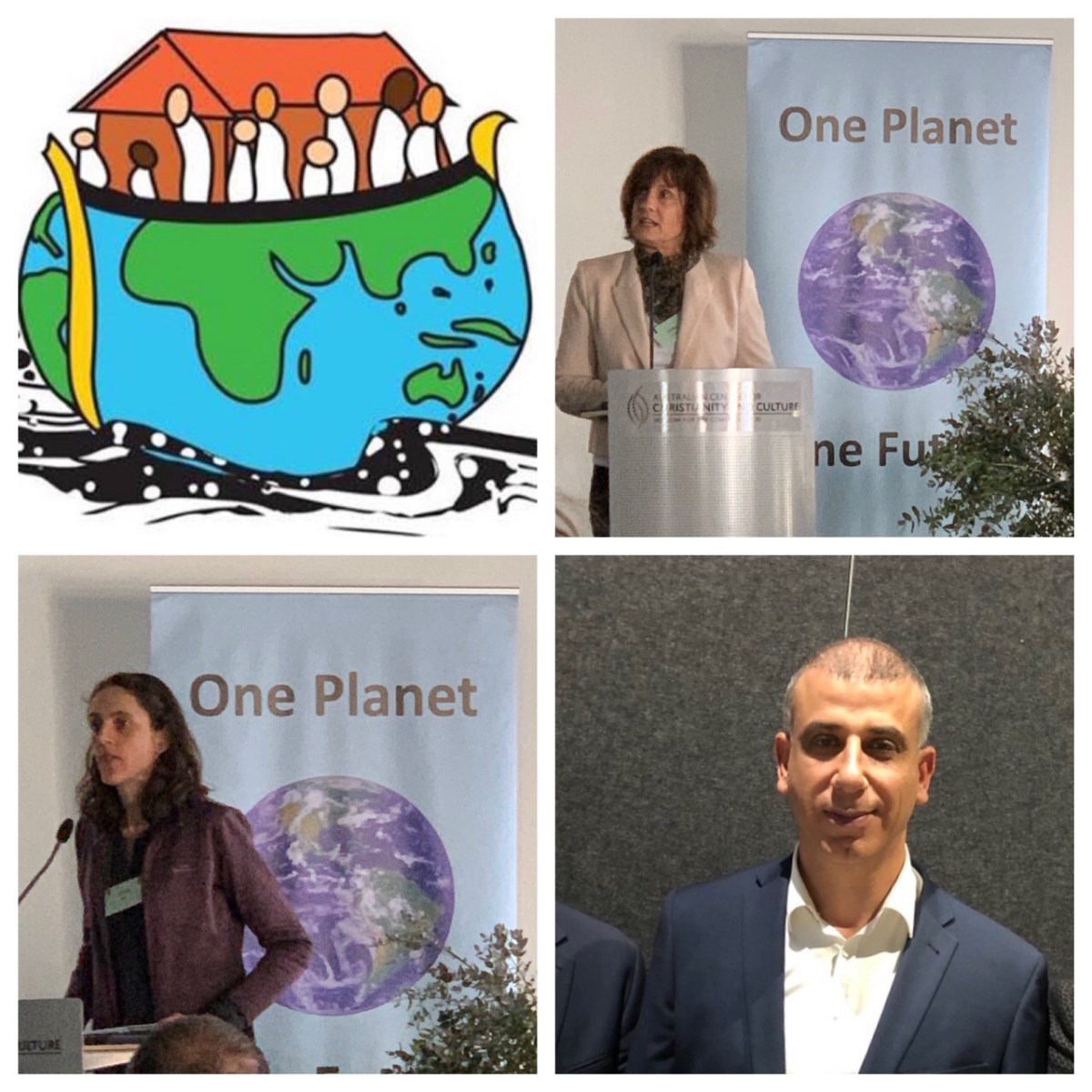
(The photo montage shows key ARRCC people, Dr Miriam Pepper at top left, Thea Ormerod and Tejopala Rawls at bottom right, along with the large cross and the meeting place of the Australian Centre for Christianity and Culture in Barton.)

See also

https://johntsquires.com/2019/11/09/faith-in-action-a-religious-response-to-the-climate-emergency-part-two/

https://johntsquires.com/2019/11/09/faith-in-action-a-religious-response-to-the-climate-emergency-part-one/

and related blogs at

https://johntsquires.com/2019/11/08/look-up-to-the-sky-look-down-to-your-feet-luke-20/

https://johntsquires.com/2019/09/18/supporting-the-climate-strike/

https://johntsquires.com/2019/06/25/873/

https://johntsquires.com/2019/05/05/to-care-for-honour-and-respect-the-creation-we-need-to-stopadani-k/

https://johntsquires.com/2019/03/09/laudato-si-mi-signore-1/

https://johntsquires.com/2019/03/09/laudato-si-mi-signore-2/

https://johntsquires.com/2019/03/09/laudato-si-mi-signore-3/

https://johntsquires.com/2019/03/09/laudato-si-mi-signore-4/

Faith in Action: a religious response to the Climate Emergency (Part Two)

Today I am with people from a wide range of faith traditions from across the Australian continent and Aotearoa New Zealand, at the first national conference in Canberra of the Australian Religious Response to Climate Change (ARRCC).

During the morning, a series of keynote speakers addressed the Conference: a scientist, followed by a Muslim scholar and a Christian researcher and activist.

Prof. Lesley Hughes of the Climate Council and Macquarie University (top right in the photo montage) gave an overview of the impacts that are being felt right around the world in this climate emergency. Significant changes in the climate are clearly documented; the rate of change is alarming and disturbing in so many areas: temperatures are rising, heatwaves are growing, snow coverage is declining, water levels are rising.

Emissions in 18 countries have been declining in recent years; Australia is not one of those countries. Globally, there is less use of coal and more dependence on renewable sources of energy. However, Australia remains the largest exporter of coal in the world, and we have the 12th highest emissions per capita. Figures demonstrate that the introduction of a Carbon Price under Gillard had a clear impact, but there has been a strong reversal since the time of Abbott.

A number of articles by Prof. Hughes setting out the details of these factors can be read on The Conversation at https://theconversation.com/profiles/lesley-hughes-5823/articles, whilst the Climate Council has recently published a landmark report, This is what climate change looks like. It offers sobering reading. You can download and read the report from https://www.climatecouncil.org.au/wp-content/uploads/2019/09/This-is-What-Climate-Change-Looks-Like.pdf

Prof. Hughes concluded by quoting the inspiring slogan, We are the ones we have been waiting for!

Prof. Mehmet Ozalp, of Charles Sturt University (bottom right in the photo montage) spoke about an Islamic response to the climate emergency, arguing that within Islamic theology there is a clear ethical obligation to respond in practical ways. On the scale of assessment regarding ethical matters (allowed, recommended, neutral, not recommended, prohibited), this clearly sits within the realm of allowed (halal). He bases this on the premise that, where harm and benefit co-exist, alleviation of harm is the priority.

In 2015, the Islamic Declaration on Climate Change was issued. It sets out the theological and ethical imperatives, but is not strong on offering practical strategies. See https://unfccc.int/news/islamic-declaration-on-climate-change

What motivates change? Prof. Ozalp outlined four factors: awareness through education, activism and media reports; relationships with friends, acquaintances and organisations; religious teachings in worship; and individual consciences which generate a concern for the earth and its creatures.

Prof. Ozalp referred to a range of initiatives: questions relating to the hajj and the use of plastic bottles for water; green makeovers of 600 mosques in Morocco and 2000 mosques in Jordan; the Greening the Desert project in Jordan is one of many projects in the Middle East; and the partnership of Greenpeace and the Indonesian Government to avoid plastic during Ramadan.

Trees for Change in Tanzania is one of a number of African tree planting projects; a proposed gold mine in the Kaz Mountains near Gallipoli in Turkey has been stopped by mass protest; an Eco Mosque is being built in Cambridge, UK; and a strong Green Muslim movement has emerged in the USA.

In Australia, Monash University held a Greener Iftar whilst a recently-opened Eco Mosque in Punchbowl has won an architectural award. Australian Muslim leaders have supported the Stop Adani campaign and signed the letter prepared by ARRCC. ISRA has been active in holding public education events in the Muslim community, including the 2019 Living the Change Workshop.

Dr Miriam Pepper, from the Uniting Church (bottom left in the photo montage), then spoke about Engagement and mobilisation on climate change in Christian churches, both to outline the responses and help participants to discern opportunities for future mobilisation.

In Australia, 1.6 million people attend Christian worship on any given Sunday, providing a significant opportunity for networking, influencing, and acting. However, church participants are generally socially and politically conservative, and takeup of climate activism, despite the clear evidence about the climate emergency, has been low and slow across all Christian denominations. (Some have been more active than others.)

Attitudes towards the climate emergency and activities taken in response to it can be schematised as citizen, reformer, rebel, or change agent. Each has a place in the overall movement. Dr Pepper spoke of a range of actions undertaken in Australian Christian churches. Community gardens, solar panels and climate signs outside churches are increasingly found associated with churches. Christian participation in marches, rallies and strikes remains consistent—especially from Uniting Church members, but spread across many denominations.

Divestment from companies supporting fossil fuels is a strategy employed by a growing number of religious organisations. Some Christians have participated in nonviolent direct actions—following the example of Jesus himself! Organisationally, churches work through Congregations and Parishes, denominational agencies focussed on environmental issues, influential positional leaders (most notably, Pope Francis), national and regional church bodies, church schools, university student groups, theological and bible colleges, religious orders, as well as in partnership with parachurch organisations and ecumenical networks.

Drawing on data from the NCLS, Dr Pepper reported that the majority of church people do accept that climate change is happening, but taking action on environmental issues does not rate high on the list of social and religious issues that churchgoers believe should be prioritised by their churches. That places a challenge before all ministers and leaders in the churches to press the point concerning this vital set of issues. See a series of NCLS papers on the environment at http://www.ncls.org.au/topic/environment

In summary, she noted that congregational engagement remains low; however, a sign of hope is provided through an increasing Roman Catholic commitment to caring for the earth, which has grown since the release of the encyclical Laudato si’.

The three presentations we followed by a lively panel discussion, responding to a range of questions and comments form conference participants. A clear role was seen for church communities to press for changes in lifestyle as well as the policy framework of society—through individual and communal actions, through public education and activism, and through political lobbying.

The importance of naming environmental issues in worship, inviting lament and grieving in prayers, offering practical strategies in sermons and study groups, and pointing to a hope for the future through specific actions, was also noted. The scientist on the panel, Prof. Hughes, made a strong statement about the importance of hope amongst everyone involved in responding to the climate emergency—both people of faith and people of no faith working together to a shared and hoped-for outcome.

Prof. Hughes also spoke about the interrelationship between environment, society, lifestyle and civilisation itself. We need to stop talking about “the environment” as an isolated entity, and frame it, rather, in terms of what impact the changes in climate will have on our way of living and our very existence as the human race. That is the extent of the challenge we face!

See related blogs at

https://johntsquires.com/2019/11/09/faith-in-action-a-religious-response-to-the-climate-emergency-part-one/

https://johntsquires.com/2019/11/08/look-up-to-the-sky-look-down-to-your-feet-luke-20/

https://johntsquires.com/2019/09/18/supporting-the-climate-strike/

https://johntsquires.com/2019/06/25/873/

https://johntsquires.com/2019/05/05/to-care-for-honour-and-respect-the-creation-we-need-to-stopadani-k/

https://johntsquires.com/2019/03/09/laudato-si-mi-signore-1/

https://johntsquires.com/2019/03/09/laudato-si-mi-signore-2/

https://johntsquires.com/2019/03/09/laudato-si-mi-signore-3/

https://johntsquires.com/2019/03/09/laudato-si-mi-signore-4/

Faith in Action: a religious response to the Climate Emergency (Part One)

A good number of Uniting Church people from the ACT and NSW, and beyond, joined with people from a wide range of faith traditions from across the continent and Aotearoa New Zealand, at the first national conference in Canberra of the Australian Religious Response to Climate Change (ARRCC).

The Friday evening began with the Kiddush, a welcome to the Sabbath, with blessings and sharing of wine and bread, as is the Jewish custom for the Friday evening start of Sabbath. This was led, and explained, by Rabbi Jonathan Keren-Black from the Leo Baeck Centre in Melbourne.

A Welcome to Country was offered by Uncle Wally Bell, of the Buru Ngunawal Aboriginal Corporation, who sang and spoke in language as he explained the spiritual importance of land for the First Peoples of the country. This was followed by an introduction to the Conference by the President of ARRCC, Thea Ormerod, and a welcome to participants from Bishop Stephen Pickard, Director of the Australian Centre for Christianity and Culture, which was the location for the conference.

Spirituality is at the centre of the ethos of ARRCC, so prayers were led by people of faith from the Hindu, Muslim, Brahma Kumaris, and Buddhist faith traditions.

This was followed by a powerful reflection on how Indigenous spirituality informs the work of caring for and protecting the environment. The reflection was offered by Murrawah Johnson, a young Wirdi woman from Wangan and Jagalingou country, the land of the Galilee Basin where it is proposed to build the monstrous Adani coal mine. She is an activist, inspired by Eddie Mabo and others of his era, who has worked hard towards the goal of stopping the Adani mine. “When you love your people, amazing things can happen”, she observed, bringing a strong sense of optimism into the conference deliberations,

The Muslim speaker quoted a verse of the Quran which appears to provide a direct commentary on the climate emergency that we are currently experiencing, not shying away from the contribution that human beings have made to that emergency: Corruption has appeared in the land and the sea on account of what the hands of men have wrought, that He may make them taste a part of that which they have done, so that they may return. (Quran, 30:41)

That seems, to me, to be a powerful statement in our current context. It does not seek to excuse human beings for the scenario we are facing; in fact, it centres the ecological crisis deep in the heart of the spiritual dis-ease of human beings. It also signals some hope: is it possible that we might return (repent, change, transform) as a result of what we are currently experiencing. That means it is as much a spiritual, or religious, matter, as it is a political, legal, economic, and social matter.

For links to people and organisations noted above, see

http://www.buru-ngunawal.com/426483484

https://grist.org/grist-50/profile/murrawah-johnson/

https://www.arrcc.org.au/about

https://www.arrcc.org.au/arrcc_national_conference

https://about.csu.edu.au/community/accc/about

For some of my other blogs on the environment, see

https://johntsquires.com/2019/11/08/look-up-to-the-sky-look-down-to-your-feet-luke-20/

https://johntsquires.com/2019/09/18/supporting-the-climate-strike/

https://johntsquires.com/2019/06/25/873/

https://johntsquires.com/2019/05/05/to-care-for-honour-and-respect-the-creation-we-need-to-stopadani-k/

https://johntsquires.com/2019/03/09/laudato-si-mi-signore-1/

https://johntsquires.com/2019/03/09/laudato-si-mi-signore-2/

https://johntsquires.com/2019/03/09/laudato-si-mi-signore-3/

https://johntsquires.com/2019/03/09/laudato-si-mi-signore-4/