My name is John Squires. I live in the Hunter Valley in rural New South Wales, on land which has been cared for since time immemorial by the Gringai people (one of the First Nations of the island continent now known as Australia). I have been an active participant in the Uniting Church in Australia (UCA) since it was formed in 1977, and was ordained as a Minister of the Word in this church in 1980. I have had the privilege to serve in rural, regional, and urban congregations and as a Presbytery Resource Minister and Intentional Interim Minister. For two decades I taught Biblical Studies at United Theological College at North Parramatta in Sydney, and more recently I was Director of Education and Formation and Principal of the Perth Theological Hall. I've studied the scriptures in depth; I hold a number of degrees, including a PhD in early Christian literature. I am committed to providing the best opportunities for education within the church, so that people can hold to “an informed faith”, which is how the UCA Basis of Union describes it. This blog is one contribution to that ongoing task.
Australian citizens go to the polls to elect a federal government on 21 May. The 17 million people eligible to vote will be electing both a local member to sit in the House of Representatives for the next three years; and a number of senators, to sit in the Senate for the next six years.
To assist voters in considering how they might vote, the Uniting Church has prepared a resource that identifies a number of issues, in seven key areas, that should inform the way that we vote, if we take seriously how the Gospel. calls us to live.
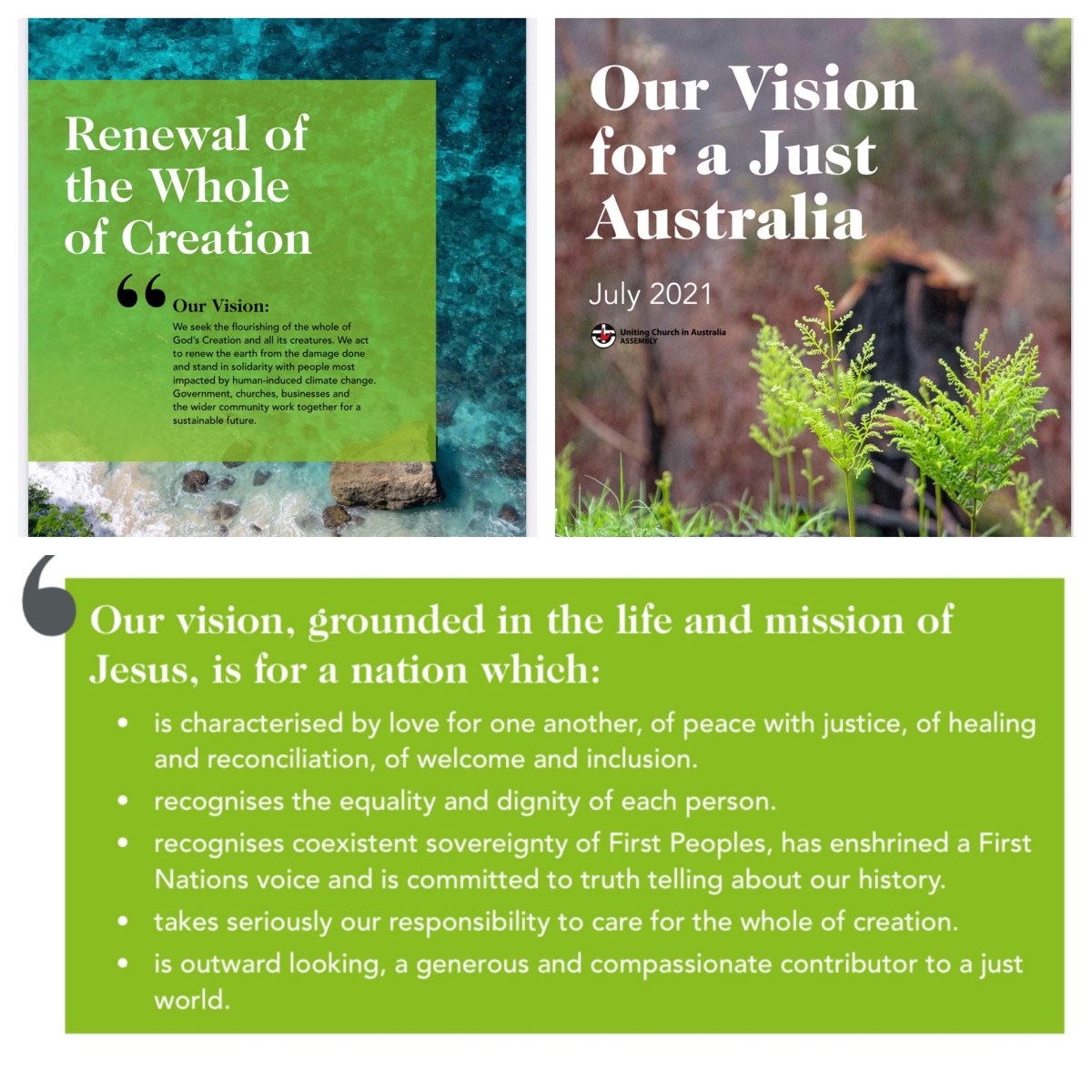
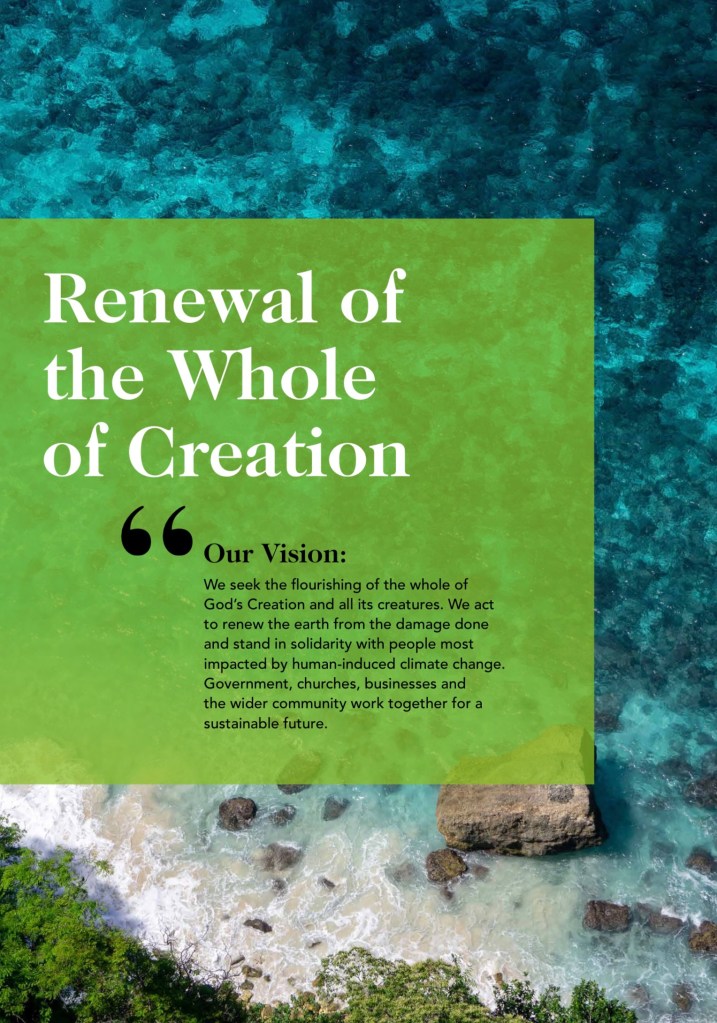
The second area reflects the vision of the Uniting Church for living sustainably and responsibly as an integral part of the global environment. The Renewal of the Whole Creation is a vision and a commitment that was articulated in the Uniting Church’s Basis of Union, adopted in 1977, and which has continued to inform policies and practices over the ensuing decades.
The church seeks the flourishing of the whole of God’s Creation and all its creatures, in which “we act to renew the earth from the damage done and stand in solidarity with people most impacted by human-induced climate change”. To achieve this, government, churches, businesses and the wider community need to work together for a sustainable future.
The UCA resource acknowledges the current Government commitment to net zero carbon emissions by 2050, but notes that “we need to do more, and sooner. Global temperatures are rising as human activity continues to pollute the atmosphere with greenhouse gases. Australia faces significant climate change impacts: rising sea levels, extreme heat and flooding, longer droughts and bushfire seasons and the loss of coral reef. Our neighbours in the Pacific and elsewhere are suffering the impacts of climate change, to their lands and waters, their livelihoods, their culture and identity.”
The key issues to inform our voting in this regard are what each candidate or their party says about:
• Setting more ambitious targets for 2030 – committing to a 45-50% carbon reduction as a minimum but working towards a target closer to 70%. • A strong renewables target – which embraces the potential for Australia as a global leader. • Just transitions for impacted communities currently dependent on fossil fuels. • Australia must play a significant role in our region and globally in addressing the causes and impacts of climate change, responding to the call from Pacific countries, including the Pacific Conference of Churches, for our country to act more decisively to reduce carbon emissions.
Australian citizens go to the polls to elect a federal government on 21 May. The media, in true form, has dumbed things down, making us think that it’s about voting directly for a Prime Minister, and that it’s all about the mistakes the candidates make and the economic impact of their policies.
Our system, of course, is not simply a two- person contest; the 17 million people eligible to vote will be electing both a local member to sit in the House of Representatives for the next three years; and a number of senators, to sit in the Senate for the next six years.
And it’s not just about personalities; it’s actually about policies. We need to think about each party is promising to do, in relation to a wide array of policy areas—not just economics, but a whole array of matters.
To assist voters in considering how they might vote, the Uniting Church has prepared a resource that identifies a number of issues, in seven key areas, that should inform the way that we vote, if we take seriously how the Gospel. calls us to live.
The seven areas are drawn from a fine 40-page document that was prepared and published last year, Our Vision for a Just Australia, expressing the Uniting Church vision for a just Australia and why our Christian faith calls us to work towards its fulfilment. It can be read in full at https://uniting.church/wp-content/uploads/2021/07/Our-Vision-For-a-Just-Australia_July2021.pdf
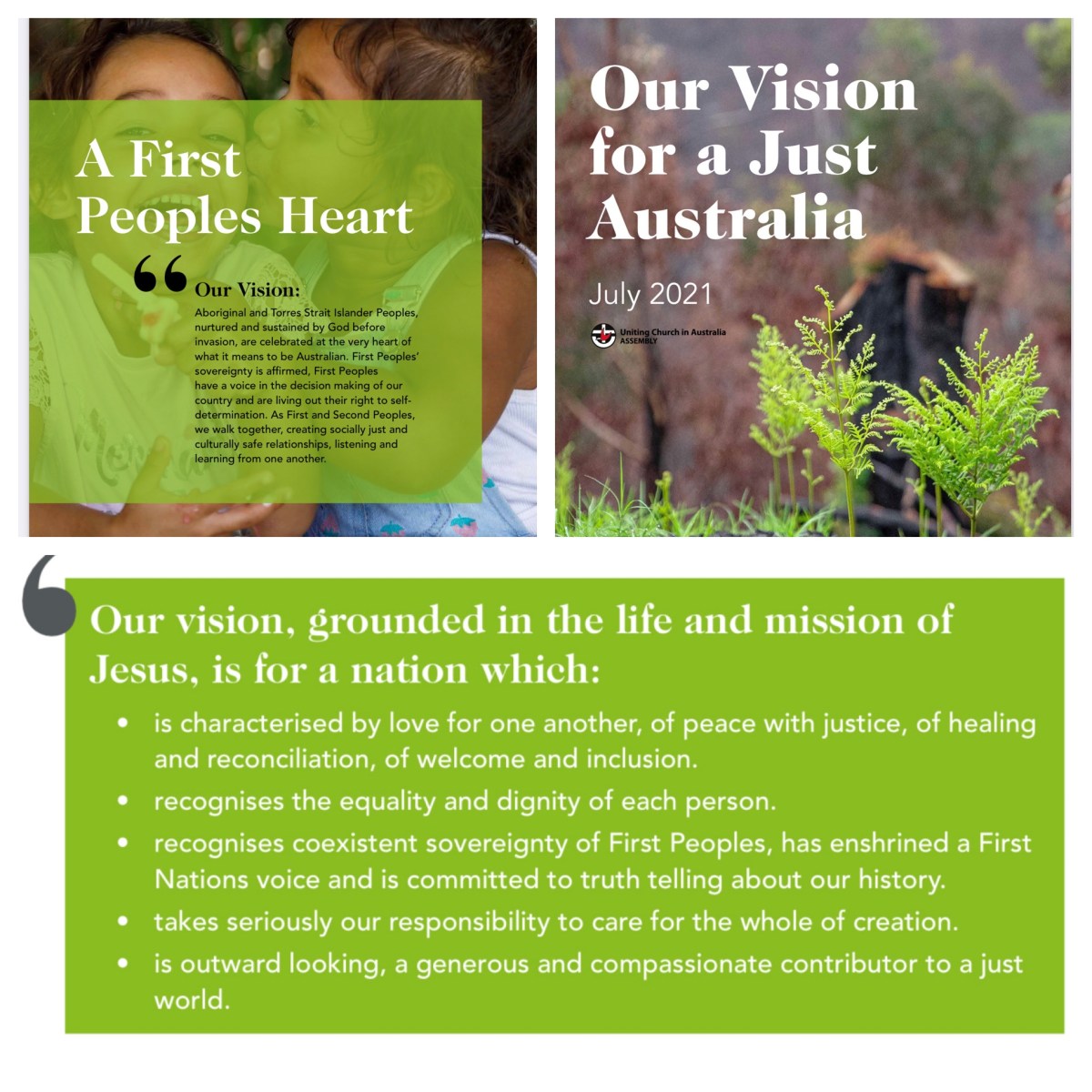
The first area featured in this resource reflects the vision of the Uniting Church for Aboriginal and Torres Strait Islander Peoples. It acknowledges that these people were nurtured and sustained by God before invasion, and so are to be celebrated at the very heart of what it means to be Australian.
The Uniting Church affirms First Peoples’ sovereignty, and believes that First Peoples have a voice in the decision making of our country and in how they live out their right to self-determination. “As First and Second Peoples”, the resource states, “we walk together, creating socially just and culturally safe relationships, listening and learning from one another”.
The Statement from the Heart developed at Uluru has been given to us by First Peoples as the basis for how we can work together to build a better future, but governments have not followed their lead. First Peoples communities, whether remote, regional or urban, experience heightened levels of disadvantage, including a lower life expectancy and worse health, education and employment outcomes than other people in Australia.
The key issues to inform our voting in this regard are what each candidate or their party says about:
• Constitutional change to enshrine a First Nations Voice to Federal Parliament.
• Recognising the sovereignty of First Nations People and establish a commission for treaty making, truth telling, justice and reconciliation.
• Sufficient funding to achieve the Closing the Gap targets, prioritising Aboriginal and Torres Strait Islander community-controlled organisations to deliver services wherever possible.
Last year, the Uniting Church adopted a statement, Our Vision for a Just Australia, which articulates in detail the values that we hold as people of faith, following the way of Jesus.
This statement includes an affirmation that “we live together in a society where all are equal and free to exercise our rights equally, regardless of faith, cultural background, race, ability, age, sexual orientation and gender identity”. The statement asserts that “we defend those rights for all.”
It also makes the key claim that “A person’s sexual orientation and gender identity does not impact on their ability to live, work and contribute to society.”
On that basis, the Uniting Church has been working consistently towards valuing, accepting, and affirming “rainbow people”—those who identify with one of the letters in the now-familiar shorthand way of referring to people who are lesbian, gay, bisexual, transgender, intersex, queer, asexual, or identify their gender and/or sexuality in other ways.
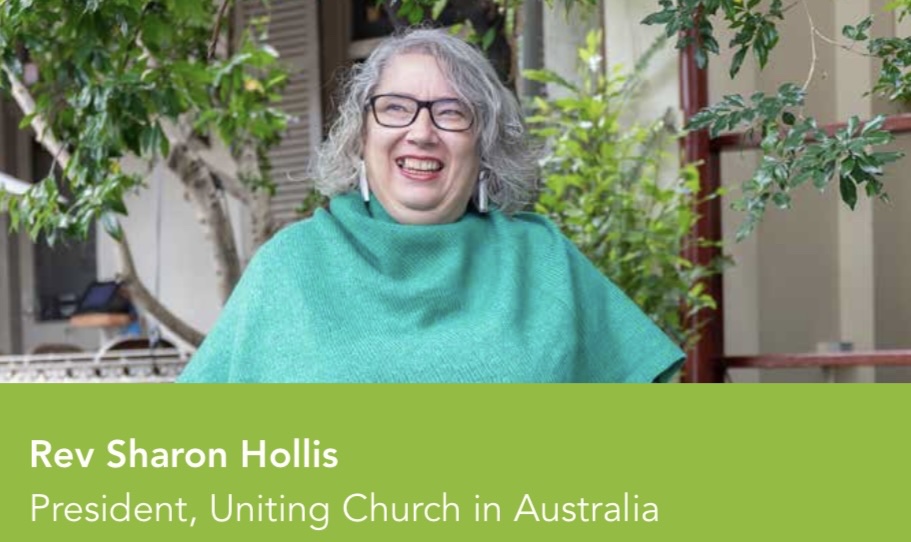
In the recent pastoral response to the debate surrounding the proposed Religious Discrimination Bill earlier this year, President Sharon Hollis wrote, “We believe every person is entitled to dignity, compassion and respect, and that the community flourishes when all people are included and accorded the dignity and respect they deserve.” That fundamental commitment undergirds all that the Uniting Church seeks to do.
President Hollis continued, “I note with sadness not all LGBTIQA+ people feel fully welcome and safe across the Uniting Church. I encourage members of the Uniting Church and people of faith to offer prayer and support to those around them who are feeling particularly vulnerable because of the political and public debate taking place.”
It is, indeed, a sadness that we do not yet have consistent practices right across the church, in how we accord dignity and respect to LGBTIQA+ people. Within the Uniting Church we are continuing to learn how best to do this, and to avoid what causes distress and anguish to “rainbow people”. Many Congregations have become explicit about their acceptance and welcome of such people, even as some communities of faith double down and refuse to make this gracious openness a marker of their life.
In recent times, governments in Australia have given consideration to banning practices which seek to alter the sexual orientation and/or gender identity of the minority of people who fall into the category of LGBTIQA+. Popularly (but unhelpfully) known as “conversion therapy”, such practices have been conducted by people of faith, in the name of Christ—attempting by persuasion, by prayer, by coercion, even by physical intervention, to “change” the attraction that an individual feels towards people of the same gender. Such “conversion” is valued by these people as a clear marker of “repentance” and “commitment” to the faith that they hold.
It is widely recognised, however, that such practices are harmful; the use of coercion, emotional manipulation, medical intervention, even physical acts, cause damage that has ongoing affects for decades. Survivors of sexual orientation or gender identity change efforts (often referenced as SOGICE) attest to the many ways by which such practices have harmed them.
*****
Jones, T, Brown, A, Carnie, L, Fletcher, G, & Leonard, W. Preventing Harm, Promoting Justice: Responding to LGBT Conversion Therapy in Australia. Melbourne: GLHV@ARCSHS and the Human Rights Law Centre, 2018.
A 2018 study, entitled “Preventing Harm, Promoting Justice – Responding to LGBT conversion therapy in Australia”, drew on the lived experiences of “15 LGBT people with experiences of conversion therapy, documented through social research”. These participants had engaged with various conversion therapy practices between 1986 and 2016 “as part of their struggle to reconcile their sexuality or transgender identity with the beliefs and practices of their religious communities”.
This study found that “responding to conversion practices in Australia requires a multi-faceted strategy”, and proposed “a number of legislative and regulatory reforms, with a particular focus on young people given their vulnerability”. It is hoped, say the study’s authors, “that this research will raise awareness of the severity of the harms occasioned through conversion therapy, and support the development of more appropriate pastoral care for LGBT people of faith.”
*****
A study published in 2021, by the Australian Research Centre in Sex, Health and Society of LaTrobe University, concluded that “many people who experience attempts to change or suppress the LGBTQA+ elements of their selves are severely harmed by those attempts.”
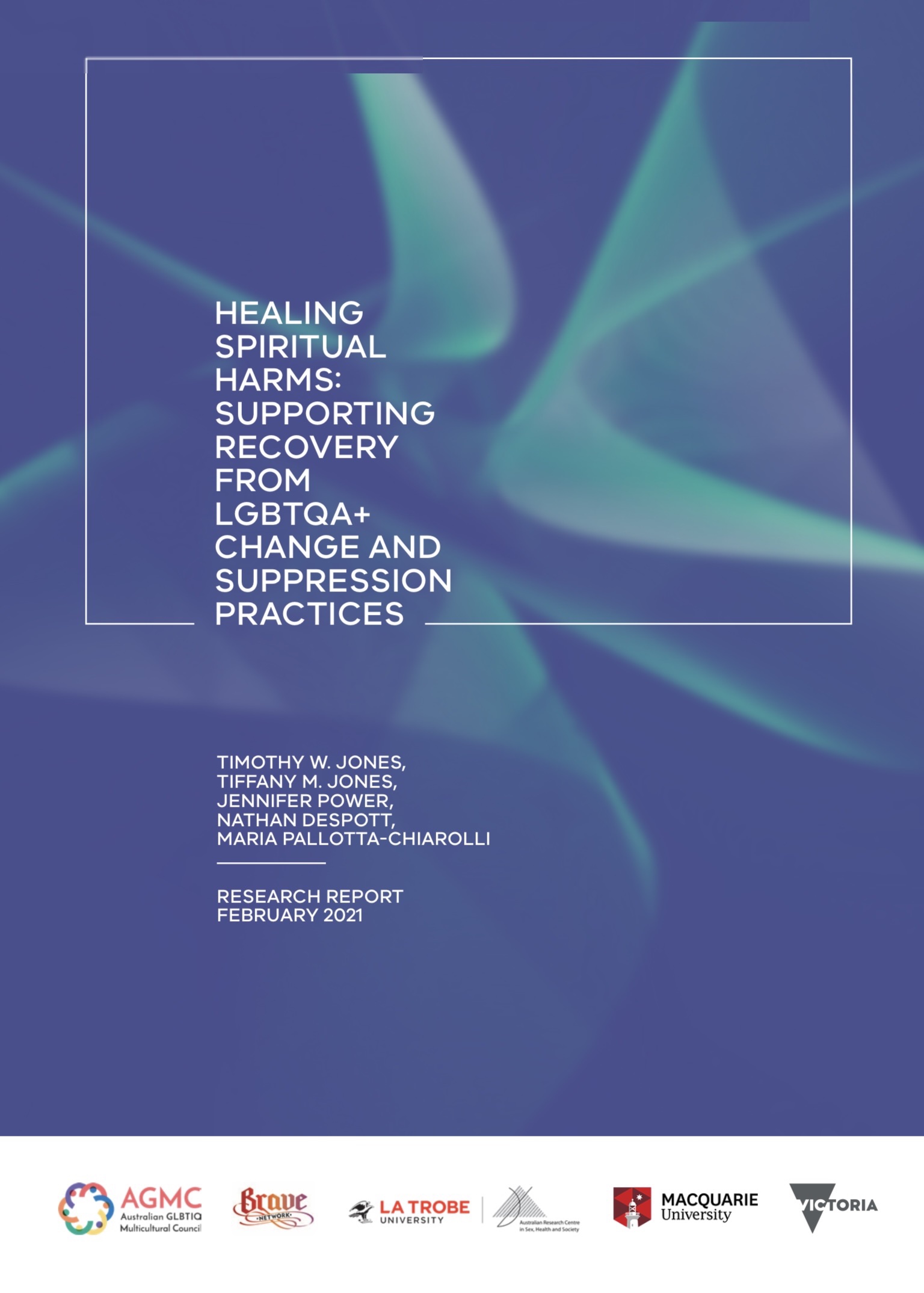
Jones, T.W., Jones, T.M, Power, J., Despott, N., & Pallotta-Chiarolli, M. (2021). Healing Spiritual Harms: Supporting Recovery from LGBTQA+ Change and Suppression Practices. Melbourne: The Australian Research Centre in Sex, Health and Society, La Trobe University.
The study, Healing Spiritual Harms: Supporting Recovery from LGBTQA+ Change and Suppression Practices, was a joint project involving the Brave Network, the Australian GLBTIQ Multicultural Council (AGMC), the Victorian Government and researchers at La Trobe University and Macquarie University. The project was funded by the Victorian Government and the Australian Research Council.
The study made some significant findings. First, it found that “at least one in ten LGBTQA+ Australians are vulnerable to religion-based pressures and attempts to change or suppress their sexuality”. Second, it noted that such practices “may involve formal conversion programs or ‘counselling’ practices, but more often involve less-formal processes including pastoral care, interactions with religious or community leaders, prayer groups and other spiritual or cultural practices initiated within particular communities.”
Sadly, a third key finding is that “core to both these formal and informal change and suppression practices is the message conveyed to LGBTQA+ people that they are ‘broken’, ‘unacceptable’ to God, and need spiritual or psychological healing.” That is certainly of great concern to people of faith, especially in the Uniting Church, given what our President has articulated regarding the “dignity, compassion and respect” to which every person is entitled.
The study further reports that “psychological research has demonstrated that LGBTQA+ change and suppression efforts do not reorient a person’s sexuality or gender identity and an increasing body of literature has documented the negative impacts that these pressures and attempts have on LGBTQA+ people’s lives.”
The imperative to act in relation to instances of SOGICE, as well as the importance of providing supportive pastoral care to survivors of SOGICE, cannot be underestimated.
*****
In 2021, whilst advocating to the ACT Government to pass legislation that would outlaw such activities, a group of UCA ministers in the ACT wrote about the biblical understanding of human beings as created by God, infused with the spirit, and perfectly acceptable to God just as exactly as they are—whatever gender identity or sexual orientation each individual possesses.
We quoted from research undertaken by Elizabeth Raine, who has argued that “all creatures are ‘nephesh’, or sentient beings.
We have a soul, a state of being, a life that is fully formed and given by God. All human beings are created with the spirit of God within us (Gen 1:20, 21, 24, 30, 2:7; Job 12:7-10). There are no exceptions to this in biblical understanding. All human beings exist within this understanding. Our human identity is grounded in the creative work of God’s spirit. Who we are is how God has made us to be—each human being is made in God’s image (Gen 1:27; Sir 17:3).”
It’s my view that this fundamental biblical insight should guide our actions as the church today—accepting people for who they are, placing no value judgements on how they understand themselves or how they express themselves in loving, committed relationships. That is a key way by which we live out our faith in our lives and our relationships.
The 16th Assembly of the Uniting Church, meeting this coming weekend, has before it a proposal that is a direct response to this call, and sits firmly in line with the research findings from the studies noted above.
It’s an important proposal which merits careful and prayerful consideration. Its a direction that is well-supported, both by individual stories told by survivors of SOGICE, and by careful academic research in this area. It’s a proposal that should inform our pastoral care practices as well as our public advocacy and our local community engagement.
It’s a matter that people right across the Uniting Church (and beyond) would do well to consider—to ensure that we do not contribute to the (sadly) continuing harm being caused to our “rainbow” brothers and sisters.
The book of Revelation is currently appearing as the “second reading” in the Revised Common Lectionary. That’s the spot where we usually find excerpts from the various New Testament Letters, mostly by Paul, occasionally by James or John or Peter. This coming Sunday, we will read and hear some verses from the section of the book that describes the opening of the seven seals (6:1–8:5); specifically, a vision of a great multitude of people, “robed in white, with palm branches in their hands”, praising the Lamb who is seated on the throne (7:9–17).
The book of Revelation has probably become the most misunderstood book of the New Testament—because of the enigmatic nature, and the dramatic power, of the graphic visionary descriptions it contains. There are numerous theories seeking to ‘explain’ the meaning of the visions and to ‘prove’ the identity of the various figures who appear in these visions.
In particular, this most misused book of the New Testament has been misinterpreted by groups of fervent believers throughout the centuries as evidence that the end of the world was at hand.
If we turn to scripture with an expectation that we will find clear doctrinal statements, this book could be mined as a source for teachings about “the last days”. But I don’t think this was the intention of the book’s author.
Or perhaps we hope to encounter stories which help us to understand what has transpired in history? In which case, we will look for evidence that pins down the content of this book and grounds it in real-life events. But that is somewhat fraught.
Both of these approaches require us to develop an extensive system of interpretation for reading this book. This is not a simple or straightforward task.
An alternative (and often employed) way of reading this book is to consider that it is prophecy which provides a set of predictions about the future. Sometimes this is seen to relate to the times immediately in the future of the writer, in the late 1st century. Other interpreters claim that the book is pointing forward in time, to events that will take place beyond the time of the reader, in our own times (that is, the 21st century). Even more fraught, I reckon.
Some people will want to read the book simply as literature in its own right; as a work of art, it has the power to generate ideas and responses without necessarily tying these down to what is “true” or “accurate”. Ideological critics might wish to engage in dialogue with the book in relation to the violence which runs throughout the visions.
Some readers have considered this book to be an expression of patriarchal power, caught up in the masculine enterprise of solving disputes through coercion and violence. Others have undertaken a search for an alternative vision of peacemaking in the midst of human warfare, as the lamb who was slaughtered is the one who ultimately triumphs.
How do you come to this book? What is the lens, the perspective, that you employ, to read this dramatic and different book?
Whatever the way is that we seek to approach our reading of this book, it will influence the kind of understanding that results. Because the work does not lay down one simple narrative line; because it is so rich and intricate in its symbolism; because it places layer upon layer, image upon image, it will produce multiple readings with multiple appreciations. Such is the complex nature of interpreting biblical texts.
It is clear to me that, as we read the book of Revelation, we can identify certain literary features which are quite characteristic of apocalyptic literature. The authority of the author is a key concern (1:9–10; 22:8–9) and the declaration is made that what is now being revealed is a mysterious secret (1:20; 10:7; 17:5, 7). This revelation comes direct from God through his authorized messenger (1:1–2, 11–20; 22:8–10).
The warning not to change the text (22:18–19) is characteristic of apocalyptic, as is the regular reminder of the author’s expectation that the present era is coming to an end (2:26; 21:1, 4) and his description of a vision of the beginning of a new era (1:1; 7:9–17; 11:19; 21:1–22:7; 22:12, 20). The role of angels and visions reflects typical apocalyptic features.
Also typical of apocalyptic are the many coded depictions which are conveyed in numbers: four (4:6–8; 5:6, 14; 6:1–8; 7:1–3, 11; 9:14; 14:3; 15:7; 19:4; 21:16); ten (2:10; 12:3, 18; 17:3, 12–16); twelve (12:1; 21:12–14, 21; 22:2); twenty-four (4:4, 10; 11:16; 19:4); 144,000 (7:4–8; 14:1–4); the intriguing 666 (13:18); and, of course, seven, which recurs in numerous places throughout the book (seven letters, 1:11; golden lampstands, 1:12, 20; stars, 1:16, 20; 2:1; angels, 1:20; 3:1; 15:7; spirits, 1:4; 3:1; seals, 5:1; horns and eyes, 5:6; trumpets, 8:2; thunders, 10:3–4; diadems, 12:3; plagues, 15:1, 6; golden bowls, 15:7; 16:1; and seven heads, 17:3, 9–10). Finally, as we have noted, there is the appearance of Babylon as a symbol of Rome (17:5, 18).
The passage from Revelation set for this Sunday (7:9–17) is one of these passages which plays with symbolism in numbers. Just before this passage, the foreheads of 12,000 people from each of the twelve tribes of Israel are sealed by the lamb (7:1–8). This crowd of 144,000 who had been sealed by the lamb reappear in a later vision (14:1–4). However, the vision of 7:9-17 concerns “a great multitude that no one could count, from every nation, from all tribes and peoples and languages, standing before the throne and before the Lamb, robed in white, with palm branches in their hands.”
This huge, uncountable crowd, drawn from all cultures and nations, surely reflects what we declare in our preaching of the Gospel: the wide expanse of divine grace and love which extends far beyond our immediate, parochial context. And that vision is one that ought to inspire us to be ever-generous and ever-faithful in our ways of relating to other people, for we are all part of this “great multitude that no one could count”.
Each year, on the fourth Sunday of the season of Easter, the Revised Common Lectionary provides a section of John 10 as the Gospel reading for the Sunday. That chapter is where Jesus teaches about his role as “the good shepherd” who lays down his life for the sheep. The chapter is divided over the three years: 10:1–10 in Year A, then 10:11–18 in Year B, and 10:22–30 in the current year, Year C. For this reason, this particular Sunday is sometimes called the Good Shepherd Sunday.
The section offered in Year A concludes with the classic claim of Jesus, “I came that they may have life, and have it abundantly” (10:10). The passage set for Year B begins with the famous affirmation, “I am the good shepherd; the good shepherd lays down his life for the sheep” (10:14-15).
Both passages develop the image of Jesus as the shepherd of the sheep, in intimate relationship with the sheep; the shepherd knows his own (10:15), calls them by name (10:3), shows them the way of salvation (10:9), and lays down his life for the sheep (10:11, 15, 17–18).
The third section from John 10, offered in Year C, is set at a different time. The earlier sections (10:1–10, 11–18) had followed on from the story of the man born blind (9:1–41), which itself has emerged out of the conflicts between Jesus and Jewish authorities (7:10—8:59), reported as taking place in Jerusalem during the Festival of Booths (7:2). That sequence of conflicts had culminated with the Jewish authorities picking up stones to throw at Jesus (8:59).
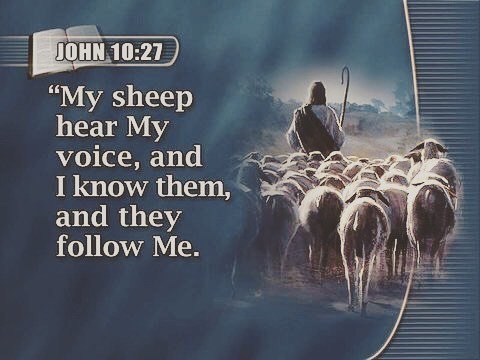
The second moment when Jewish authorities in Jerusalem prepare to stone Jesus (10:31) is at the end of the later part of John 10, in this Sunday’s reading (10:22–31). This section, still in Jerusalem, is set during the Festival of the Dedication (10:22), some time later than the earlier Festival of Booths (7:2). It includes a further statement about the shepherd: “my sheep hear my voice. I know them, and they follow me. I give them eternal life, and they will never perish. No one will snatch them out of my hand.” (10:27–28).
However, the focus on this section is less on the shepherd and the sheep, and more on Jesus and his relationship with the Father. Indeed, the lectionary ends the section before the climax of the conflict, when Jewish authorities pick up stones (10:31). Rather, the final verse places the emphasis in quite another direction: “The Father and I are one” (10:30). This is one of a number of key verses in this Gospel where important claims about Jesus are placed onto his lips.
Wayne Meeks (in his classic article, “The Man from Heaven in Johannine Sectarianism”, JBL 91 (1972) 44–72) notes that the claims made about Jesus in the fourth Gospel function as reinforcements of the sectarian identity of the community. As this community had come into existence because of the claims that it had made about Jesus, so the reinforcement of the life of the new community took place, to a large degree, through the strengthening and refining of its initial claim concerning Jesus.
Claims made about Jesus, the Messiah (Christ) thus function as markers of the emerging self–identity of the new community, over against the inadequate understandings of Jesus which continue to be held in the old community (the synagogue), still under the sway of the Pharisees. This function can be seen in a number of other terms which are used of Jesus in the Gospel according to John.
As Meeks notes, one of the most common self–designations of the Johannine Jesus is that he is “the one sent from God”. This is another phrase which is unique to the Gospel according to John; the nearest Synoptic equivalent is found in the parable of the vineyard (Mark 12:1–8 and parallels).
The phrase may well originate in the Jewish notion of the shaliach, or messenger (for the wordplay involved in this word, see 9:7). A recognisable form of this phrase occurs 42 times in this Gospel (for instance, at 1:33; 3:34; 4:34; 10:36; 11:42; 20:21).
This claim consolidates the link between Jesus and God, binding his mission to the mission of the Father, and making a claim for Jesus which transcends the kind of claim which could be made of a chosen messenger figure.
Jesus is clear that he belongs to the world “above”, the heavenly realm, where— according to the worldview of the time—God is to be found. He declares, “I am from above…I am not of this world” (8:23); this is in contrast to the Pharisees, who are “from below” and “of this world”.
As king, he informs Pilate, he rules over a kingdom which is “not from this world” (18:36). The distinction between Jesus and the earthly authorities of the day is firmly held; Jesus belongs with God. He comes to earth in order to bring into effect the judgement of God over “the ruler of this world” (12:30–33).
Another characteristic which dominates the Christology of this Gospel is the Father-Son relationship (3:35–36; 5:19–23, 26; 6:37–40; 8:34–38; 10:32–38; 14:8–13; 17:1–5). At the conclusion of the Prologue, the importance of this relationship is established: “it is God the only Son, who is close to the Father’s heart, who has made him known” (1:18).
In one of his disputes with the Jewish authorities, Jesus declares that he does his works “so that you may know and understand that the Father is in me, and I am in the Father” (10:38). This mutual interrelationship is brought to the pinnacle of its development in the lengthy prayer of chapter 17. The purpose of describing this relationship in this way is to strengthen the claims made for Jesus, to validate him as authoritative, in the context of debates with the Jewish authorities.
Finally, Jesus is perceived as being “equal with God” (5:18). At the narrative level, this is a polemical view of Jesus, attributed to the Jews. However, the author of the Gospel clearly wants the readers to agree with the claim. This is supported by further comments such as: it is clearly evident that he is the Messiah, for he is “doing the works of God” (10:24–25); he is one with the Father (10:30); he is “making himself a god” (10:33); “he has claimed to be the Son of God” (19:7); and he is acclaimed as “Lord and God” (20:28).
This is the strongest claim made about Jesus; it lifts him above the realm of human debate and, as a consequence, it also lifts the claims made by his disciples, in his name, above that human realm. By this means, the community of his followers lay claim to a dominant, privileged position, vis–a–vis the Jewish authorities.
The Christology which is proclaimed in the written Gospel has thus been developed and refined in the controversies and disputes of the community over the preceding decades, as each of these markers of the identity of Jesus were debated amongst Jewish groups, and as the community formed around Jesus differentiated itself in various ways from the dominant stream of Pharisaic Judaism (especially in the period after the destruction of the Temple in 70 CE).
Later Christian theology developed the doctrine of the Trinity, in which God, Jesus and the Spirit relate to one another as equals. Whilst the Gospel of John provides biblical warrant for the equality of Father and Son, the role of the Spirit is less prominent. Jesus is endowed with the Spirit at his baptism (1:32– 33) and gives the Spirit to others through the words he speaks (3:34).
However, the Spirit is clearly subordinated to the Son in this Gospel. It is not until after Jesus is glorified that the Spirit is given (7:39; 20:22). The role of the Spirit is to be the Advocate of the Son (14:16, 26; 15:26; 16:7), sent by the Son to testify on his behalf (15:26) and to represent what has already been spoken by Jesus (14:26; 16:13–15). As the Son testifies to the truth (1:14, 17; 8:32, 45–46; 14:6; 18:37), so the Spirit is “the spirit of truth” (14:17; 15:26; 16:13).
So the long, extended scene in Jerusalem ends as “they tried to arrest him again, but he escaped from their hands” (10:39). Jesus moves “across the Jordan to the place where John had been baptizing earlier” (10:40), where many expressed their belief in him. The next, more intense, conflict still lay ahead of Jesus—by raising Lazarus from the dead (11:38–44), Jesus placed himself firmly in the sights of the Jerusalem leadership; his own death was brought firmly into view (11:45–53; 12:10–11).
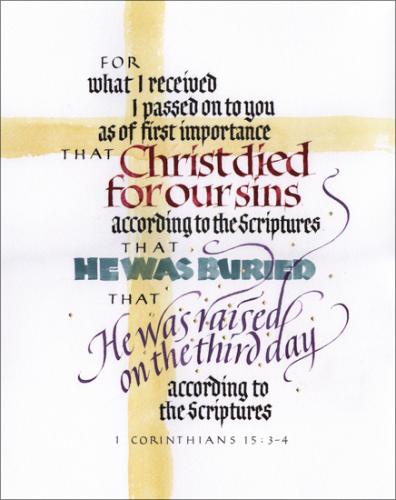
Easter is the time to celebrate the resurrection of Jesus. The claim that Jesus was raised from the dead was part of the earliest preaching of his followers. Paul includes the affirmation ”that he was raised on the third day in accordance with the scriptures” in his credal-like recitation of what he had received from earlier witnesses (1 Cor 15:3).
Stories about how Jesus appeared after his death and burial are told in the Gospels of Matthew (28:16–20), Luke (24:13–53), and John (20:11–29).
Later on, scribes copying Mark’s Gospel obviously felt dissatisfied with the apparently inconclusive ending of Mark’s Gospel; a number of attempts were made to conclude the work appropriately: a “shorter ending” with a brief reference to an appearance of “ Jesus himself”, and then a “longer ending” in which the various resurrection appearances of Jesus from Matthew, Luke, and John are included (Mark 16:9–20).
The resurrection of Jesus plays a dominant role in drawing the narrative flow of all four Gospels to a climactic conclusion. But there are other stories about resurrection included in the New Testament. The most famous, of course, is the story found in John’s book of signs, about Jesus raising Lazarus from the dead. This story, told in some detail, is very well-known and clearly entrenched in the regular lectionary cycle (see https://johntsquires.com/2020/03/25/holding-out-for-hope-in-the-midst-of-turmoil-john-11/)
*****
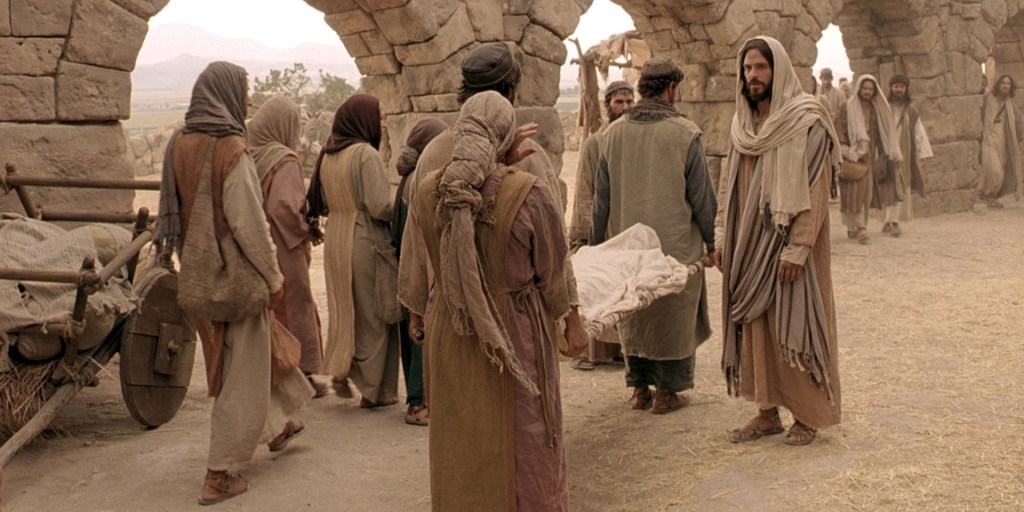
As well as the central narrative of the resurrection of Jesus, Luke has two other stories of resurrection in his two-volumed orderly account of the things coming to fulfilment amongst us. First, there is the story of the widow of Nain (Luke 7:11–17). Having already lost her husband, this woman now finds that her son is dead. The story comes straight after the account of Jesus healing the servant of a centurion who was “ill and close to death” (Luke 7:1–10). The two accounts focus attention on the remarkable healing powers of Jesus.
The exclamation of the people of Nain, after witnessing the miracle of Jesus raising the dead man, forms a suitable conclusion to both stories: “A great prophet has risen among us!” and “God has looked favorably on his people!” (7:16).
The key point of this story is to establish Jesus as a prophet who enacts the visitation of God for the people of Israel (7:16). It is strange that the NRSV renders this statement as “God has looked favourably”, but it is the same verb (episkopeo) which appears at 19:44, where it is more accurately translated as “the time of your visitation from God”. And in that passage, Jesus comes to pronounce judgement up the sinful city.
It is clear that Jesus, by raising this man from the dead, demonstrates his credentials as a prophet—and also signals that the divine is drawing near to the people of Israel. It is curious that this story sits so deeply within the shadow cast by that other story of raising a man (Lazarus): from the dead. This is a striking and dramatic story, as is attested in the response of the people, of whom Luke reports, “fear seized all of them, and they glorified God” (7:16). Fear, or awe, is the appropriate response to such an amazing act (see 1:12–13; 1:30; 1:75; 2:10; 5:10; 8:37, 50; 9:34; 21:25–26).
*****
For this coming Sunday, the First Reading offered by the lectionary is another biblical story about resurrection. It comes from the book of Acts, which features every year during the season of Easter, as the first reading, in place of the Old Testament passage which occupies that place throughout the rest of the year. The book of Acts tells a version of the story of the early church, as the followers of Jesus first regrouped in Jerusalem, and then began sharing their faith, travelling to places beyond the capital city, stretching out into Samaria, Syria, and across what is modern-day Turkey, into Greece, and eventually into Rome.
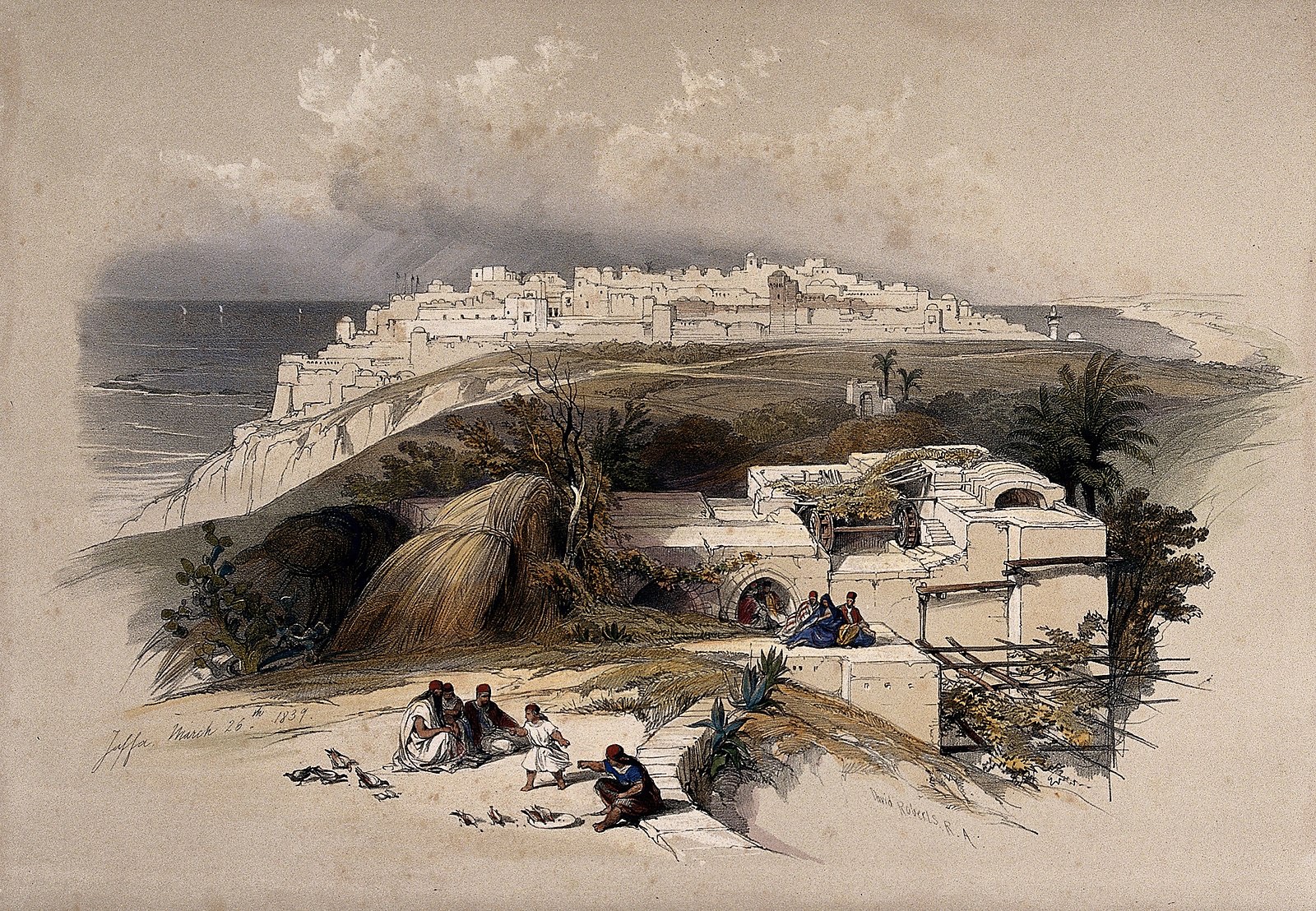
Jaffa, ancient Joppa, looking north. Coloured lithograph by Louis Haghe after David Roberts, 1843.
The story we have heard is set in Joppa, which was the Greek name for the town named Jaffa in Arabic. We know this place, today, as the southern suburbs of Tel Aviv, a large and growing port city in modern Israel, a city with a vibrant multi-cultural and multi-religious life. Tel Aviv-Jaffa is also the place where most nations base their embassies to the country of Israel.
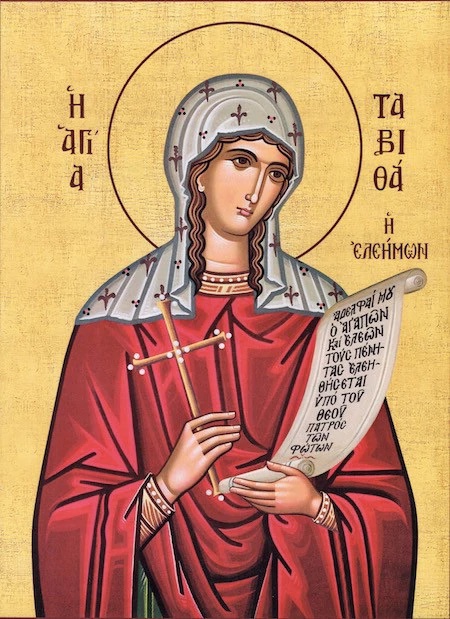
This story in Acts, set in Joppa, sits within the season of Easter and recounts a resurrection, told along the lines of the way that the resurrection of Jesus is told. Tabitha, the woman in the story, becomes ill and dies. There is no doubt about this; she is dead.
As the story proceeds, the apostle Peter commands Tabitha to rise; and then, “she opened her eyes, and seeing Peter, she sat up. He gave her his hand and helped her up. Then calling the saints and widows, he showed her to be alive.” (Acts 9:40-41) There is also no doubt, that the one who was dead, is now alive.
As a result, Luke informs us, “this became known throughout Joppa, and many believed in the Lord” (Acts 9:43). What happened was striking, noteworthy, remarkable—miraculous!
Tabitha, or Dorcas, is introduced in this short narrative as a woman “full of good works and acts of charity” (9:36). The array clothing that she produced is noted (9:39). She is one of a number of significant women in Acts who are presented as positive models of faithfulness. These include Lydia in Philippi, who provides hospitality to Paul and his companions (16:15); Priscilla, who with her husband, Aquila, teaches Apollos in Ephesus (18:26); and the four female prophets in Caesarea (21:9). Each of these women exercise a leadership role in the early church.
The flow of the narrative in Acts 9 is the same as what we read in the accounts of the resurrection of Jesus, moving from death, to life. We have this story in our readings during the season of Easter, to help us maintain our focus on the resurrection, and to invite us to consider how the story of new life shapes our life of discipleship.
As Jesus died and was raised, as Tabitha died and was raised, so we are called to move from death to life within our own discipleship. The paradigm which is provided by the death and resurrection of Jesus provides a model for the way that we are to be, as disciples of Jesus in our own time. And this might very well be how “many believe in the Lord” in our own time. It is not so much the promise of some future life beyond death; it is the transformation of life here, and now, in this present reality, that is the promise of the risen Lord.
*****
This blog is based on a section of my commentary on Acts in the Eerdmans Commentary on the Bible, ed. Dunn and Rogerson (Eerdmans, 2003). I have also explored the theme of the plan of God at greater depth in my doctoral research, which was published in 1993 by Cambridge University Press as The plan of God in Luke-Acts (SNTSM 76).
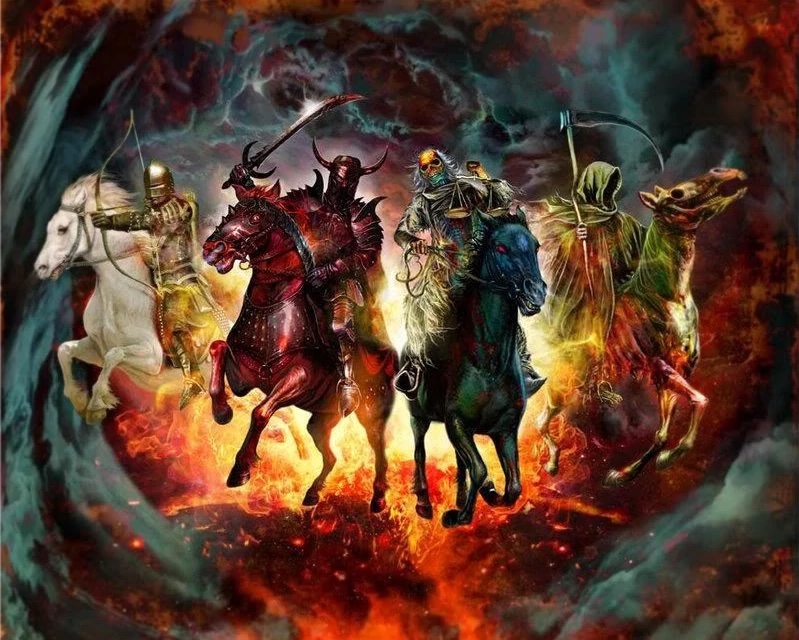
The book of Revelation is currently appearing as the “second reading” in the Revised Common Lectionary. These readings invite us into a world of unfettered imagination, with evocative imagery, enticing language, and disturbing rhetoric. There are a number of visions within the book, each one containing graphic descriptions and dramatic happenings.
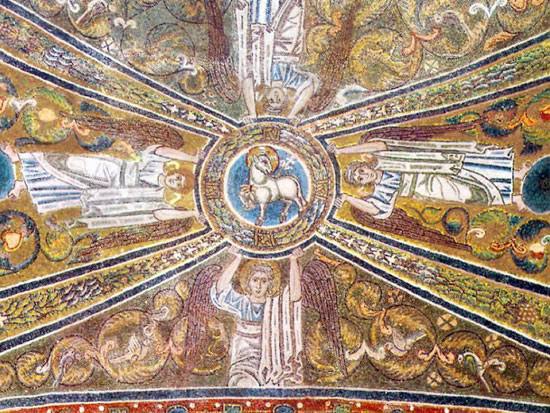
The first of these visions sets the scene set for what will later be revealed as a colossal, cosmic battle between good and evil. It opens with the striking claim that the door into heaven is opened (4:1). A disturbing and increasingly detailed dramatization of “what must take place after this” is revealed. The vision comes to a climax with an image of a slaughtered lamb, and this is the passage set in the lectionary this coming Sunday (5:11-14).
Gazing into heaven, the author views a magnificent scene of worship (4:2–5:14). The importance of this scene is signalled by gleaming jewels and a shining rainbow, golden crowns and white robes, thrones and torches of fire, a sea of glass, grumbling thunder and flashes of lightning (4:3–6).
Thunder and lightning were characteristic of the God of Israel (Job 37:1–5; Ps 29) and were associated with the foundational event of Israel, in the Exodus from Egypt (2 Sam 22:15–16; Ps 18:13–19; Ps 77:16–20). The biblical nature of the imagery is very clear.
Twenty-four elders and four six-winged creatures sing praises to “one seated on the throne” (4:2–11), and to a slaughtered lamb “with seven horns and seven eyes” (5:1–14). The hymns they sing appear to combine attributes of God which feature in scriptural songs of praise (holy, worthy, glory, honour, power, creator) as well as elements familiar from other New Testament texts in which early Christian thinking is developing.
Jesus is depicted in this book as the supreme authority, the one who has risen from the dead and is at one with God. Yet there is a stark counterpoint running throughout the whole book. Jesus is the one who has been pierced (1:7); perhaps this evokes the piercing of Jesus’ side as he hung on the cross (John 19:34–37, citing this as a fulfillment of Zech 12:10).
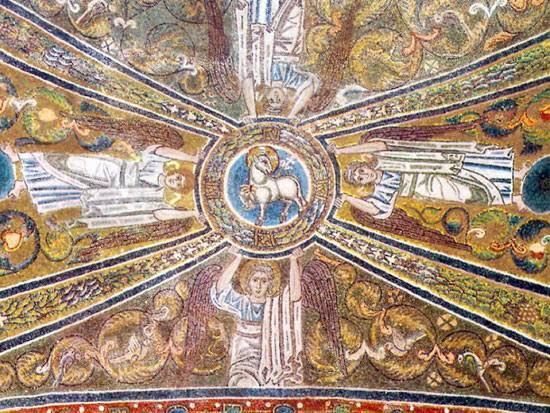
In this initial vision, the Lord God Almighty is seated on the throne, surrounded by four six-winged creatures (4:2–11), holding a scroll with seven seals, which no one was able to open (5:1–4). The author then introduces the one who has power to open the scroll: “the Lion of the tribe of Judah, the Root of David” (5:5)—phrases which clearly evoke the Davidic lineage of Jesus which the Gospel writers have so carefully claimed. (The same Davidic lineage is noted at 22:16.) Immediately, this “Lion” is described as a “Lamb standing as if it had been slaughtered” (5:6).
This paradoxical description of Jesus as “the Lamb that was slaughtered” recurs in hymns later in the book (5:9, 13; 13:8). His victory has been won, not through the power of force, but by submission to death. It seems that it is the fact that he has been slain which qualifies him to open the scroll. His power lies in his avoidance of violence, his submission to death.
The opening doxology affirms the redemptive power of the blood which Jesus has shed (1:5); this affirmation, of Jesus as the lamb who is sacrificed in order to effect redemption, is a common refrain (5:10; 7:14; 12:11; 14:3–4; 19:13). In the regulations for temple sacrifice, the purity of the sacrificial lamb was essential (Num 28:3; Lev 1:10).
The purity of this Lamb and his followers is symbolized in the white robes which they wear (3:5, 18; 4:4; 6:11; 7:9, 13–14; 19:14). The 144,000 who “follow the Lamb wherever he goes” are identified as virgins (14:4), another indication of purity.
Followers who maintain purity are linked closely with Jesus in the final scenes. When heaven rejoices at the fall of Babylon, preparations are made for the marriage supper of the Lamb (19:6–8) and it is the servants of the Lamb who are specifically and unequivocally invited (19:9–10).
When the vision of the new Jerusalem is proclaimed, and the Lord God the Almighty and the Lamb stand in place of the temple (21:22), the people who enter are “those who are written in the Lamb’s book of life” (21:27).
Yet the pathway into this heavenly celebration is daunting. The servants of the Lamb, in an earlier vision when the fifth seal is opened, are described as “those who had been slaughtered for the word of God and for the testimony they had given” (6:9).
When Michael slays the dragon and his angels, the victory of the Messiah and his comrades is won “by the blood of the Lamb and by the word of their testimony, for they did not cling to life even in the face of death” (12:11). They must be prepared to be taken into captivity and killed by the sword (13:10). Faithful discipleship requires a willingness to submit to death. This is the way of Jesus, according to Revelation.
This message is reinforced at the end of the laments over the fall of Babylon, in the declaration, “in you was found the blood of prophets and of saints, and of all who have been slaughtered on earth” (18:24). It was those who stood up to the might of Babylon who were killed for their faith.
Here is the key to the situation addressed by this book, and the key to the form of discipleship which it most values. For all its speculative visions, the work is a potent tract of political strategy. Discipleship can mean conflict with Empire. There are sufficient hints throughout that it is failure to offer due worship to the Roman Emperor which has brought persecution and death to the followers of Jesus. The book is both a call to faithful discipleship and a vision of hope in the midst of persecution.
The Gospel of John seems to come to a clear cut end with a summary and conclusion at the end of chapter 20: “Now Jesus did many other signs in the presence of his disciples, which are not written in this book; but these are written so that you may come to believe that Jesus is the Messiah, the Son of God, and that through believing you may have life in his name” (John 20:30–31).
The addition of another chapter, featuring the scene beside the Sea of Tiberias in which Simon Peter figures prominently (21:7, 11), and the subsequent focus on Peter as Jesus affirms and commissions him (21:15-17), are curious. My view is that, together, they provide a later “corrective” to the Johannine focus on the Beloved Disciple, over and above Simon Peter. We have already noted this as being a distinctive perspective within this Gospel. See https://johntsquires.com/2022/04/28/the-third-time-that-jesus-appeared-to-the-disciples-john-21-easter-3c/
That is one reason for viewing this scene as a later addition to the Gospel, which has already come to a clear and definitive conclusion (20:30-31). Why was this chapter added?
In Mark’s earliest narrative, Peter is one of four disciples called at the start of Jesus’ activities in Galilee (Mark 1:16-20). Luke transforms this call narrative so that it both focusses almost exclusively on Peter, and also highlights his calling to a special vocation (Luke 5:1-11). This account briefly notes the presence of two other disciples (“James and John, sons of Zebedee, who were partners with Simon”, 5:10), and omits any mention of Peter’s brother Andrew, in maintaining a clear focus on Peter as the counterfoil to Jesus in what takes place.
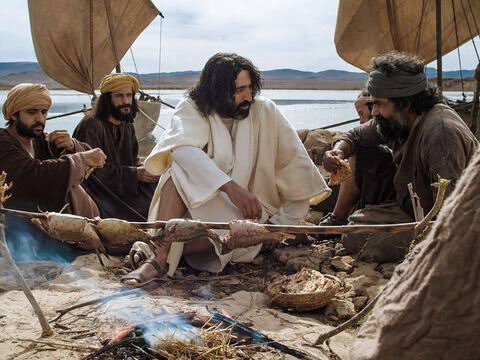
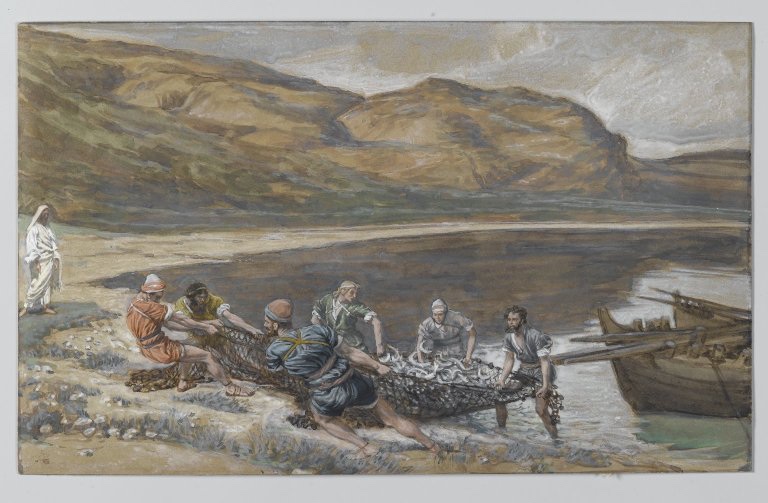
John’s Gospel includes a story that is remarkably similar to this Lukan call narrative, but locates it at the very end of the narrative, rather than in the earlier stages of the story. The many similarities within the story include: the location, by the Sea of Tiberias (John 21:1) or beside the lake of Gennesaret (Luke 5:1); Simon Peter as a key character (John 21:3, 7, 11, 15–17; Luke 5:3–8, 10); a lack of fish after a night of fishing (John 21:3; Luke 5:5); an appearance of Jesus (John 21:4; Luke 5:3); a command to try again to catch fish, to cast the net to the other side (John 21:6) or to “put out into the deep water and let down your nets for a catch” (Luke 5:4); a miraculous catch of many fish (John 21:6–8; Luke 5:6); and a confession of faith in Jesus as “the Lord” (John 21:7, 12; Luke 5:8).
Whereas for Luke, it is Peter who makes the confession of faith in Jesus (Luke 5:8), in John’s narrative it is “the disciple whom Jesus loved said to Peter, ‘It is the Lord!’” (John 21:7). This is reminiscent of the way that John reshapes the high christological confession of Peter, “you are the Messiah” (Mark 8:30), so that this high claim is spoken by Martha, sister of Lazarus: “yes, Lord, I believe that you are the Messiah, the Son of God, the one coming into the world” (John 11:27). If the author of the book of signs knew the Synoptic traditions, he has apparently intentionally removed these confessional statements from Peter’s mouth.
The scene on the sea in Luke ends with the command, “from now on you will be catching people” (5:10), maintaining the earlier Markan report of the words of Jesus, “follow me and I will make you fish for people” (Mark 1:17). By contrast, the Johannine scene is extended with a potent vignette; the invitation to follow is delayed until the end of this extended scene (John 21:19).
In the extended vignette in John’s version, a threefold “rehabilitation” of Peter takes place (John 21:15–17). Three times, Jesus asks a question of Peter, to which he responds in the affirmative; each time, Jesus issues a command to Peter: “feed my lambs … tend my sheep … feed my sheep”.
This triple sequence of question—affirmation—command is often linked to the threefold denial of Jesus by Peter found in all three Synoptics (Mark 14:68, 70, 71; Matt 26:70, 72, 74; Luke 22:57, 58, 60) and also John (18:15, 25, 27). Indeed, the Synoptic accounts explicitly note that Jesus says to Peter, “you will deny me three times” (Mark 14:72; Matt 26:75; Luke 22:61), and each narrative indicates that this has fulfilled a prediction made by Jesus (Mark 14:30; Matt 26:34; Luke 22:34).
This precise prediction is missing from the Johannine narrative; nor does this version make anything of there being three denials. This account simply ends, “again Peter denied it, and at that moment the cock crowed” (John 18:27). There is nothing explicit in the account of John 21:15–17 to suggest that it is explicitly looking back to “three denials” by Peter and seeking to redeem him with the threefold question—response—command of the Johannine account.
If the source of chapter 21 of John’s Gospel is other than the context in which the body of the Gospel (chapters 1–20) was formed, then it could well be that the insertion of this short scene does intend to refer back, not to the way that the book of signs portrays the denial of Jesus by Peter, but to the Synoptic account with its explicit noting of the “three times”. The “primacy of Peter” is laid over the narrative which has accorded that place to the Beloved Disciple.
Nevertheless, it is striking, I think, that after this interaction between Peter and Jesus, we are offered commentary on the way in which Peter would die (21:18) and a final invitation, “follow me” (21:19). “Follow me” is what Jesus says to various people during his active public ministry: Peter and Andrew (Mark 1:17), Levi the tax collector (Mark 2:14), an unnamed rich man (Mark 10:21), an unnamed traveller on the road (Luke 9:59), and, in the initial scenes in John’s book of signs, to Philip (John 1:43). Indeed, in John’s account, Jesus explicitly tells Peter, “Where I am going, you cannot follow me now; but you will follow afterward” (13:36–37).
Immediately after this comes the prediction of his betrayal by Peter (13:38). Peter is unable to follow Jesus at any point in the story that follows—he denies him (18:15–18, 25–27) and then disappears from the story until he is drawn back into the narrative by Mary (20:2). His “redemption” is not complete until the explicit invitation from Jesus, “follow me”, beside the Sea of Tiberias (21:19). John has reworked and reshaped traditions that we can see in one form in the Synoptic tradition; his reshaping serves his own agenda in terms of the leadership of the Beloved Disciple.
It is that disciple who has the last word in this Gospel, with the curious interaction about his own death (21:20–23) and then the ultimate concluding claim by the author: “this is the disciple who is testifying to these things and has written them, and we know that his testimony is true” (21:24). The claim provides a neat segue into the claims made by the author of the letter we know as 1 John: “we declare to you what was from the beginning, what we have heard, what we have seen with our eyes, what we have looked at and touched with our hands, concerning the word of life” (1 John 1:1).
And the final, final word (John 21:25) hearkens back to the initial claims about God acting in and through Jesus as Word (1:1); concerning the full extent of what God does in and through Jesus, “the world itself could not contain the books that would be written” (21:25). The all-knowing author has knowledge beyond even what the present Gospel conveys.
During the season of Easter this year, we are following a short sequence of readings from the book of Revelation. The first such reading (Rev 1:4–8) was last Sunday, setting out the writer and the audience, as well as the key focus of the book: “Jesus Christ, the faithful witness, the firstborn of the dead, and the ruler of the kings of the earth” (1:5).
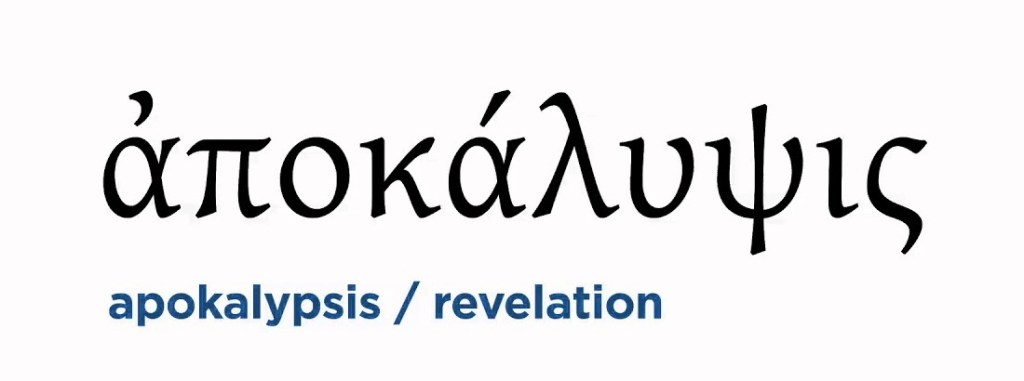
The book begins with a striking opening phrase—in Greek, it reads apokalypsis Iesou Christou (1:1). The first word in this phrase can be translated in two ways, resulting in the two most common titles for the book—“Revelation” or “Apocalypse”.
The word revelation is related to a Latin word which means to disclose or make known; the word apocalypse is the Greek term which means to uncover or expose. This word sums up the distinctive nature of the book right at the start—this is an exposé of the highest degree!
The content of this exposé is declared to be “the word of God and the testimony of Jesus Christ” (1:2, 9). The book ends with a reminder that Jesus sent his angel to John with “this testimony for the churches” (22:16). All of this is being done in a context of some urgency: “the time is near” (1:3), for Jesus is coming soon (1:7; 22:7, 12, 20; see also 2:16; 3:11; 22:6).
The book was written to be read aloud (1:3; 22:18); it seems to invite the people listening to the story to envisage what is being described by using their own imaginations. This is already evident in the way that the dramatic tone builds in the opening sections of the work. First, in the section of the book set for last Sunday, there is a hymn in praise of Jesus, reminiscent of poetic sections in other New Testament books as well as in Hebrew Scripture (1:5–8).
Next comes a description of the author and the process of creating the book (1:9–11). This was apparently initiated by “a loud voice like a trumpet” (1:10) —a voice which belonged to a distinguished figure with an ominous presence (1:12–16), whose appearance caused the writer to “fall at his feet as though dead” (1:17). The scene is thoroughly biblical, in keeping with the pattern of portentous announcements in Hebrew Scripture as well as in the early chapters of some Gospels. This will be the first of a number of visions, in which startling creatures declare unnerving messages in vividly dramatic ways.
The Revelation of John was not the first book of this kind ever written; in fact, Jewish writers had been producing literature like this for some centuries, recounting visions of the heavenly realm and reporting teachings which have been passed on by ancient figures from the heavens. In the Hebrew Scriptures, there are sections of the prophetic works which have the same kind of tone, as prophets report the visions they have seen and the oracles they have heard from the Lord.
Indeed, within other parts of the New Testament, there are indications of similar interests and ways of viewing the world—a view that is often characterized as “apocalyptic”. The figure of John the Baptist can best be appreciated as an apocalyptic figure, declaring that the Messiah has come and the kingdom is at hand (Mark 1:7–8; Matt 3:2).
Jesus continued the apocalyptic message of John by announcing that the kingdom of God was near (Mark 1:15; Matt 4:17) or, indeed, present (Luke 17:20). Many of the parables of Jesus and not a few of his teachings reflect an apocalyptic view of reality (for instance, Mark 13:14–37; Matt 24:45–25:46, Luke 17:20–37).
The letters of Paul contain clear pointers to the way that Paul viewed the world through an apocalyptic lens, in which the return of Jesus would take place soon and the kingdom of God would be ushered in (1 Thess 4:13–5:11; 1 Cor 7:29– 31, 15:20–28; Rom 8:18–25). The view that “the last days” were to come was also held by other writers (Heb 1:2; James 5:3; 2 Tim 2 Pet 3:1–5; Jude 17–19).
The apocalyptic worldview had been developing in Israel for some centuries. From their origins, prophets had delivered oracles in the name of the Lord; over time, they also began to incorporate accounts of visions in their messages (Isa 6; Jer 24; Ezek 1, 2–3, 8–11, 37, 40–44; Dan 2:19; Joel 2:28–32; Amos 7–9; Obad 1; Hab 2; Zech 1–8).
In the later stages of the prophetic movement in Israel, this form of communication becomes dominant. The last half of two prophetic books (Daniel 7–12; Zech 9–14) contain interrelated sequences of visions in which contemporary events, and perhaps also future events, appear to be depicted in symbolic form.
This trend continues on in a number of books written through the second and first centuries BCE, many of which still survive today. In this period we find various works which use heavenly messengers to reveal insights about mysteries and provide predictions about the future.
Most widely-known are 1 Enoch, 4 Ezra, and 2 Baruch; in addition, a number of works in the Dead Sea Scrolls are apocalyptic in nature. All these works contain literary features typical of apocalyptic works, as well as certain theological elements relating to the end of the ages.
As we read the book of Revelation, we can identify certain literary features which are quite characteristic of apocalyptic literature. The authority of the author is a key concern (1:9–10; 22:8–9) and the declaration is made that what is now being revealed is a mysterious secret (1:20; 10:7; 17:5, 7). This revelation comes direct from God through his authorized messenger (1:1–2, 11– 20; 22:8–10).
The warning not to change the text (22:18–19) is characteristic of apocalyptic, as is the regular reminder of the author’s expectation that the present era is coming to an end (2:26; 21:1, 4) and his description of a vision of the beginning of a new era (1:1; 7:9–17; 11:19; 21:1–22:7; 22:12, 20). The role of angels and visions reflects typical apocalyptic features.
Also typical of apocalyptic are the many coded depictions which are conveyed in numbers: four (4:6–8; 5:6, 14; 6:1–8; 7:1–3, 11; 9:14; 14:3; 15:7; 19:4; 21:16); ten (2:10; 12:3, 18; 17:3, 12–16); twelve (12:1; 21:12–14, 21; 22:2); twenty-four (4:4, 10; 11:16; 19:4); 144,000 (7:4–8; 14:1–4); and the intriguing 666 (13:18).
Of course, the number seven, which recurs in numerous places throughout the book, is very significant: there are seven letters, 1:11; seven golden lampstands, 1:12, 20; seven stars, 1:16, 20; 2:1; seven angels, 1:20; 3:1; 15:7; seven spirits, 1:4; 3:1; seven seals, 5:1; seven horns and eyes, 5:6; seven trumpets, 8:2; seven thunders, 10:3–4; seven diadems, 12:3; seven plagues, 15:1, 6; seven golden bowls, 15:7; 16:1; and seven heads, 17:3, 9–10.
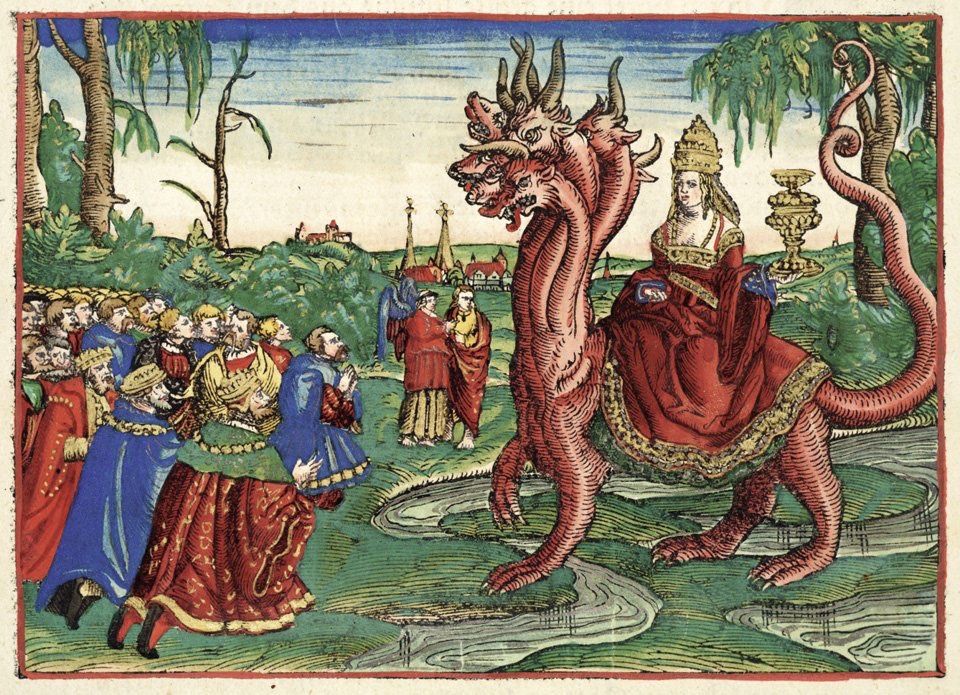
Finally, there is the crucial appearance of Babylon as a coded symbol of Rome (17:5, 18). This is a code used also in Jewish apocalyptic works.
The reader (or listener) of this work is invited into a world of unfettered imagination, with evocative imagery, enticing language, and disturbing rhetoric. The book appears to be describing the events that will take place in the immediate future; these chapters set the scene set for what will later be revealed as a colossal, cosmic battle between good and evil.
However, the style of the work is never straightforward and the message is never declared in direct propositional form. Many of the scenes contain words, images, and ideas which are already familiar from the Hebrew Scriptures— although they appear to be arranged in inventive new ways. Making sense of this book requires an act of creative imagination alongside a process of careful exploration, investigation, and interpretation.
The visions that are included in this spectacularly dramatic book evoke biblical language and imagery in various ways, as the author envisages the future by drawing from the scriptures of the past and reworking the images and ideas found within them as a message for the present.
The Gospel passage which the lectionary offers for this coming Sunday (John 21:1–19) includes some distinctive features worthy of comment. The scene, like many of the scenes of the resurrection of Jesus, is found in this one place only. This contrasts with the empty tomb account, which is found in all four Gospels (Mark 16:1–8; Matt 28:1–10; Luke 24:1–12; John 20:1–18), albeit with variations and differences in each version.
Other resurrection accounts are one-off reports: to the eleven disciples in Galilee (Matt 28:16–20); to two disciples on the road to Emmaus (Luke 24:13–32); to “the eleven and their companions in Jerusalem” (Luke 24:33–49); to a group (unnamed) of disciples meeting behind locked doors, presumably in Jerusalem (John 20:19–23); and to the disciples, including Thomas, a week later, behind closed doors (John 20:26–29). (This collection of appearances is bundled up into the Longer Ending which was added to Mark’s Gospel in a later century, as Mark 16:9–20.)
There are also claims, made by Paul, about appearances of the risen Jesus, “to Cephas, then to the twelve … then to more than five hundred brothers and sisters at one time … then to James, then to all the apostles; last of all, as to one untimely born, he appeared also to me” (1 Cor 15:5-8). None of these correlate precisely with the appearances noted in the Gospels.
The location for this particular appearance of Jesus is “by the Sea of Tiberias” (John 21:1). It is only the book of signs that identifies Tiberias as a region which Jesus visits, and then only once, when he feeds to 5,000 (6:1–14, 23). In introducing that story, the author explicitly equates the Sea of Galilee with the Sea of Tiberias (6:1). This sea appears often as the location for stories in the Synoptic Gospels (Mark 1:16; 7:31, both paralleled in Matt 4:18; 15:29; see also Luke 5:1, where it is called the “Lake of Gennesaret”). The story told in Luke 5 is important, as we shall explore below, in considering the John 21 narrative.
La seconde pêche miraculeuse by James Tissot (1836–1902)
Seven Disciples by the Lake
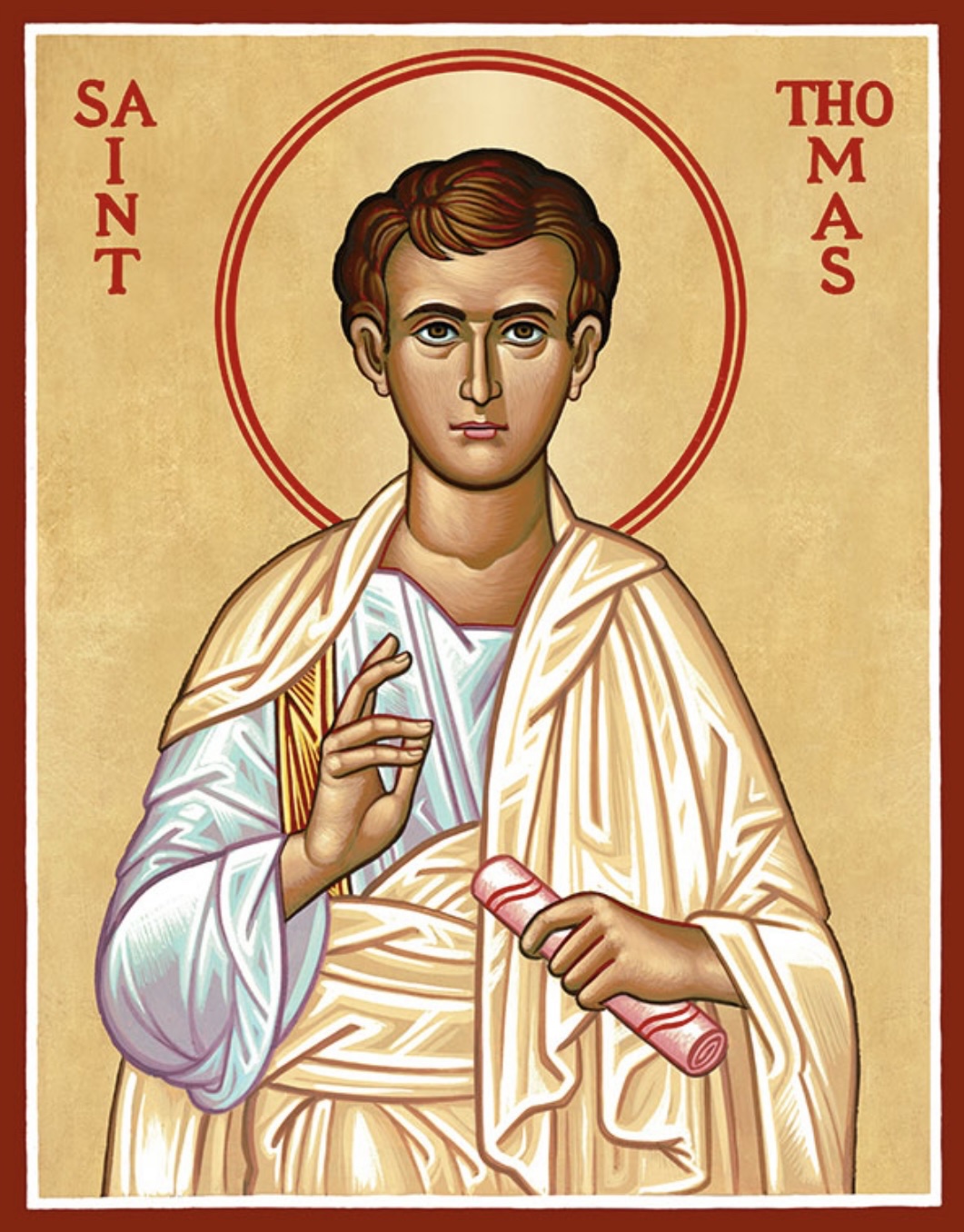
The group of seven disciples present when Jesus makes his appearance are identified as “Simon Peter, Thomas called the Twin, Nathanael of Cana in Galilee, the sons of Zebedee, and two others of his disciples” (21:2). This list of those gathered beside the sea is interesting for who is present, and who is missing.
The author of the book of origins has begun his account with an idiosyncratic list of the earliest followers of Jesus. The first named is Andrew, brother of Simon Peter, who is introduced as one of two disciples of John the baptiser (John 1:35–40). The other one with Andrew is unnamed. Andrew draws his brother, Simon, into the story (1:40–41), providing the first confession of Jesus as Messiah (1:41); although it is Andrew who makes this confession, Jesus bestows a new name upon Simon—to be known henceforth as Cephas, that is, Peter, the “rocky one” (1:42).
Peter figures in many stories in the Synoptic Gospels; Andrew, less often. By Paul’s own admission, “James and Cephas and John” were the “acknowledged pillars” of the Church in Jerusalem (Gal 2:9); James and Peter were key voices amongst “the apostles and the elders” in the gathering often known as the Jerusalem Council (Acts 15:13–19).
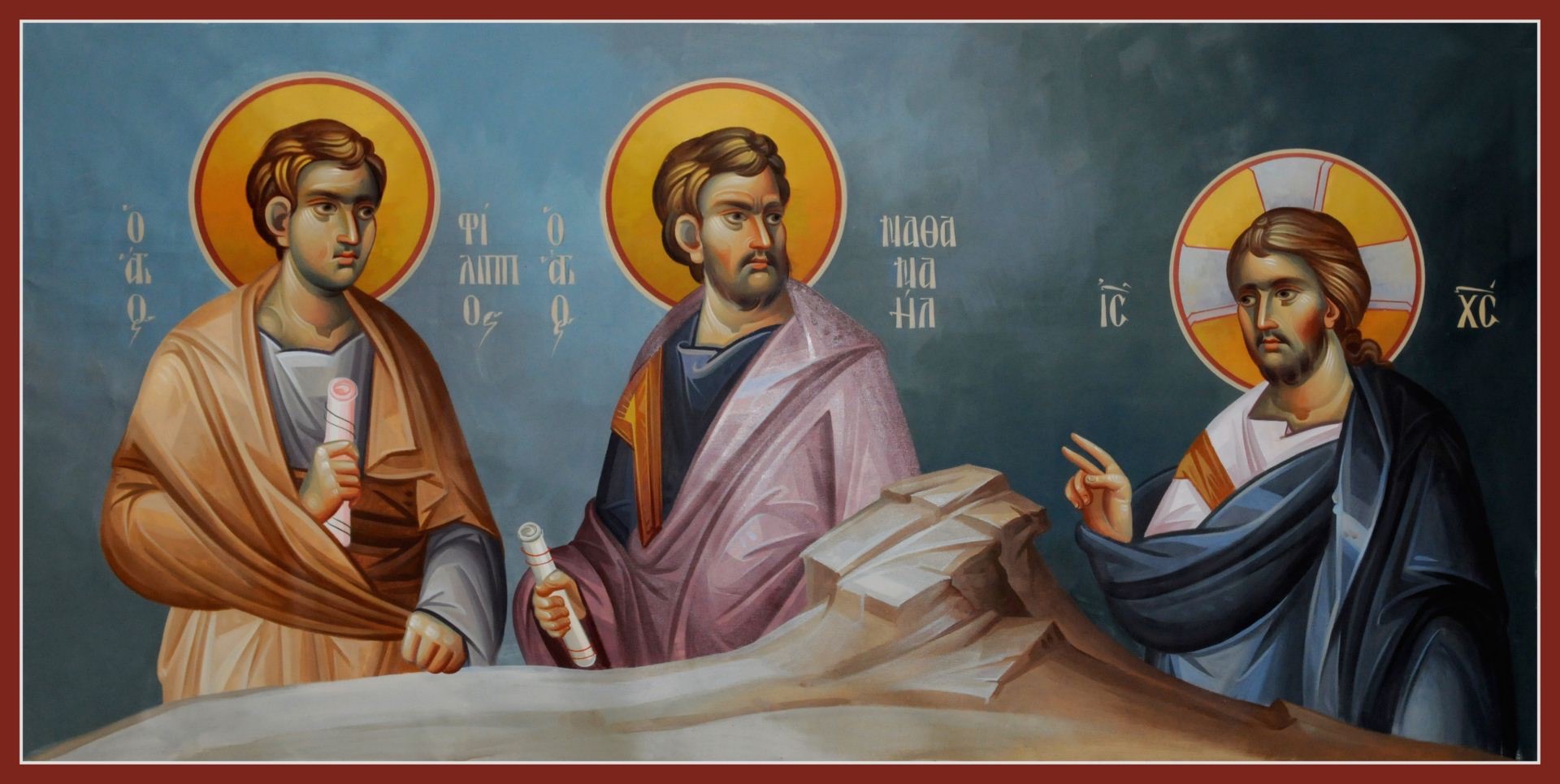
Also amongst the earliest followers of Jesus in the book of origins are Philip, “from Bethsaida, the city of Andrew and Peter” (1:43–44) and Nathanael, whom Jesus declares to be “truly an Israelite in whom there is no deceit!” (1:45–47). Nathanael provides a triple declaration that Jesus is “Rabbi … the Son of God … the King of Israel” (1:49). Curiously, these earliest followers of Jesus have already made the key confessional affirmations about Jesus in their initial encounters with him—more a literary device than an historically-plausible event.
Icon of Philip and Nathanael with Jesus
Peter, of course, figures in the Johannine version of the story about Jesus—only once in the earlier narrative section (John 6:68) but a number of times in the final sections of the story (13:1–11, 21–30, 36–38; 18:10–11, 15–18, 25–27; 20:1–8). The lesser role of Peter, and the way he is contrasted a,onside “the disciple whom Jesus loved”, will be further explored below.
Philip and Andrew are noted as being present both in the story of the feeding of the 5,000 (6:8–14) and when “some Greeks” worshipping in Jerusalem ask Philip, “Sir, we wish to see Jesus” (12: 20–22). This request evokes a significant response from Jesus, speaking about “my hour”, the seed falling into the ground, and the familiar teaching, “whoever serves me must follow me” (12:23–26). Philip also poses one of the requests put to Jesus during his “farewell discourse”, “Lord, show us the Father, and we will be satisfied” (14:8–14). Nathanael, by contrast, is absent from the story until this final post-crucifixion narrative (21:1–3).
So five of the seven who gather by the sea in this post-crucifixion time are clearly identical with individuals named in the Synoptic Gospels. Simon Peter was the earliest disciple called, along with his brother, Andrew (Mark 1:16–18; Matt 4:18–20) and always heads up the list of The Twelve whom Jesus “appointed as apostles” (Mark 3:14; see the list at Mark 3:18 and parallels, and Acts 1:13).
In Synoptic tradition, the sons of Zebedee were the next two disciples called by Jesus (Mark 1:19–20; Matt 4:21–22), where they are named as James and John; they also figure in the list of The Twelve (Mark 3:18 and parallels; Acts 1:13). These two sons are never named in John’s book of signs; nor do they appear anywhere else in the earlier stories of Jesus.
Philip, introduced by John in company with Nathanael (1:43–51) is linked with Bartholomew in Synoptic traditions (Mark 3:18 and parallels; Acts 1:13). Bartholomew is not mentioned at all in the book of signs; could the Synoptic Bartholomew be the same as the Johannine Nathanael? The identification is often made by interpreters.
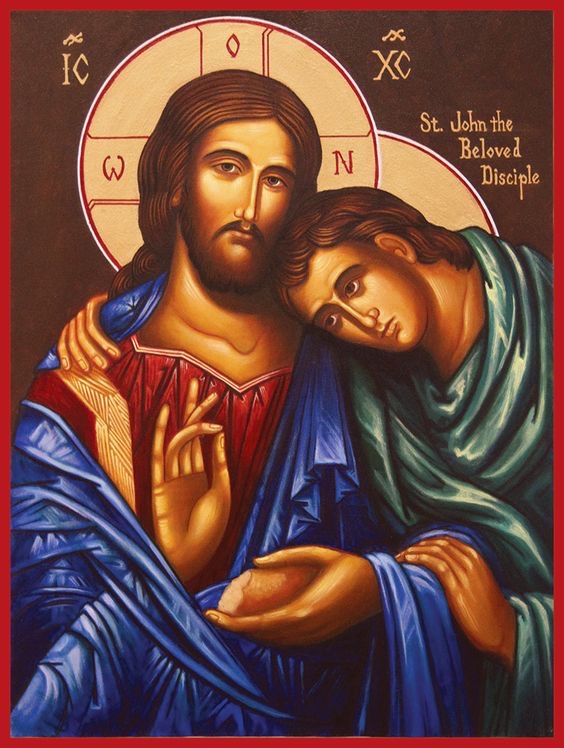
The Beloved Disciple and Simon Peter
Who were the other two, unnamed, disciples in that group of seven beside the Sea of Tiberias that early morning? The verses immediately after the section offered by the lectionary provide a clue. The narrative continues, “Peter turned and saw the disciple whom Jesus loved following them; he was the one who had reclined next to Jesus at the supper and had said, ‘Lord, who is it that is going to betray you?'” (21:20).
The disciple whom Jesus loved has appeared earlier in the book of signs at two key moments: at the meal with the disciples that included the footwashing (13:23), and beside the cross (19:25–27). There is some question, also, that he may have been “the other disciple” with Simon Peter in the courtyard of the high priest (18:15–16; “the other disciple” is identified as “the one whom Jesus loved” at 20:2).
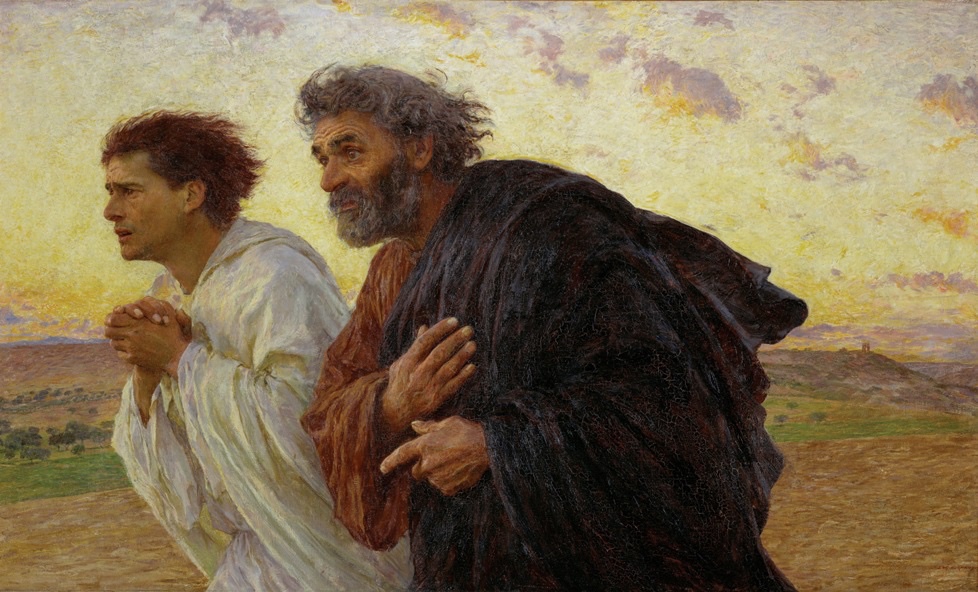
This disciple actually occupies a more prominent place in the book of signs than Simon Peter, who predominates in the Synoptic accounts. The Johannine narrative of the empty tomb places Simon Peter and the Beloved Disciple at the tomb (20:1–10). Whilst the two disciples run to the tomb, the Beloved Disciple arrives first, ahead of Peter, and makes the first confession of faith (20:3–8).
The disciples Peter and John running to the tomb on the morning of the resurrection Painting by Eugène Burnand (1898)
There is a similar dynamic at work in the Johannine account of the final supper, as the Beloved Disciple reclines next to Jesus; at the request of Simon Peter, he asks Jesus about his prediction of betrayal (13:21–25). In both scenes, Peter appears to be in a subservient position to the Beloved Disciple: arriving second at the tomb, asking the Beloved Disciple to ask a question of Jesus.
This contrast is heightened in the Passion Narrative, as the Synoptic accounts of the threefold denial of Jesus by Peter (Mark 14:66–72 and parallels) are replicated in John’s book of signs (John 18:15–18, 15–17), whilst the Beloved Disciple stays close by Jesus, standing at the foot of the cross with his mother, in John’s narrative (19:15–17).
The “competition” between these two early disciples is one clue as to the origins of John’s book of signs. Raymond Brown has developed a complex hypothesis about multiple stages of development of this Gospel, with the figure of the Beloved Disciple providing a focal point of leadership and identity (and perhaps also serving as the earliest source for the distinctive Johannine traditions?). This is a counterpoint to the leadership accorded to Peter in Mark’s account (Mark 1:16-18; 8:29; 10:28; 14:29; 16:7) and the subsequent strengthening of his leadership role by Matthew (Matt 16:13-20).















 An Informed Faith