Save us, we beseech you: singing a Hallel psalm (Psalm 118; Lent 6A, Palm Sunday)

“Save us, we beseech you, O Lord!” This is the cry we hear in the psalm which is offered by the lectionary for this coming Sunday, Palm Sunday, the Sunday in Lent. Psalm 118 is one of the Hallel Psalms—six psalms (113 to 118) which are sung or recited on high festival days, such as Passover (Pesach), the Festival of Weeks (Shavuot), and the Festival of Booths (Sukkot), as well as Hanukkah and the beginning of each new month. This final Hallel Psalm, like the other five, is intended to be an uplifting, celebratory song, suitable for the congregation to hear and to sing as a way to inspire and rejoice.

See

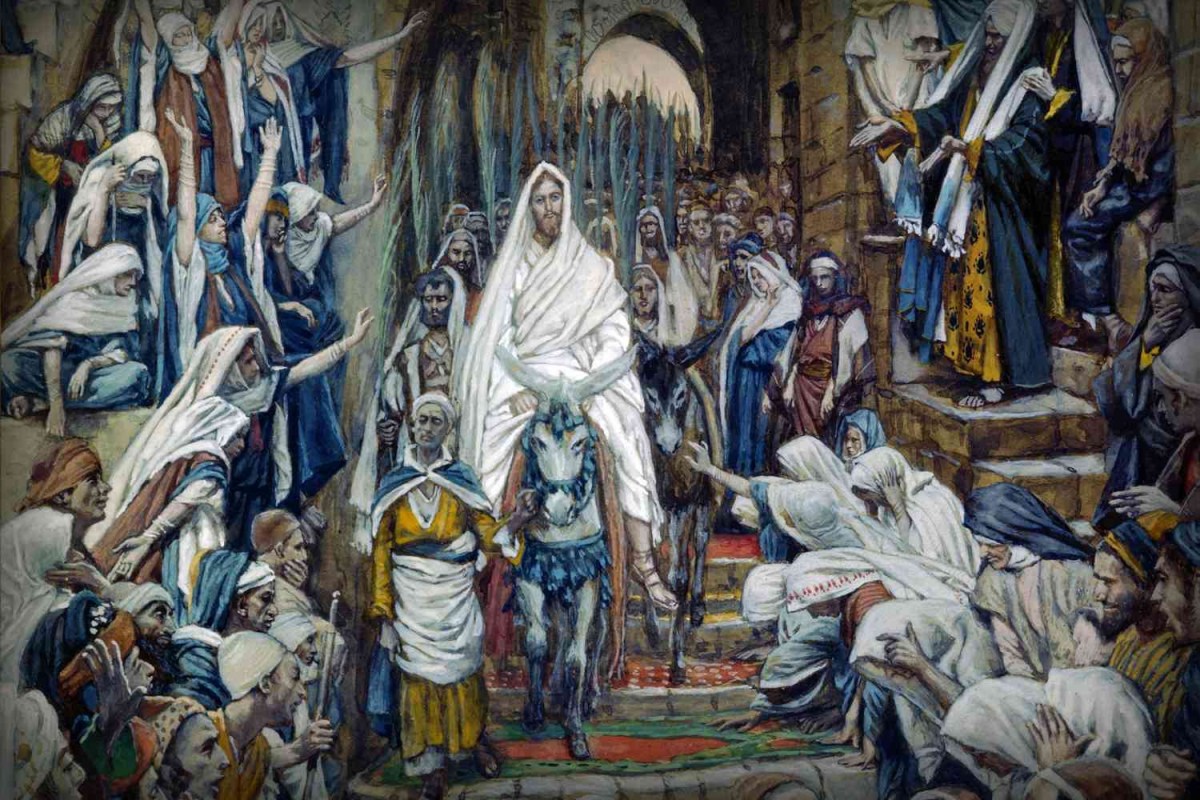
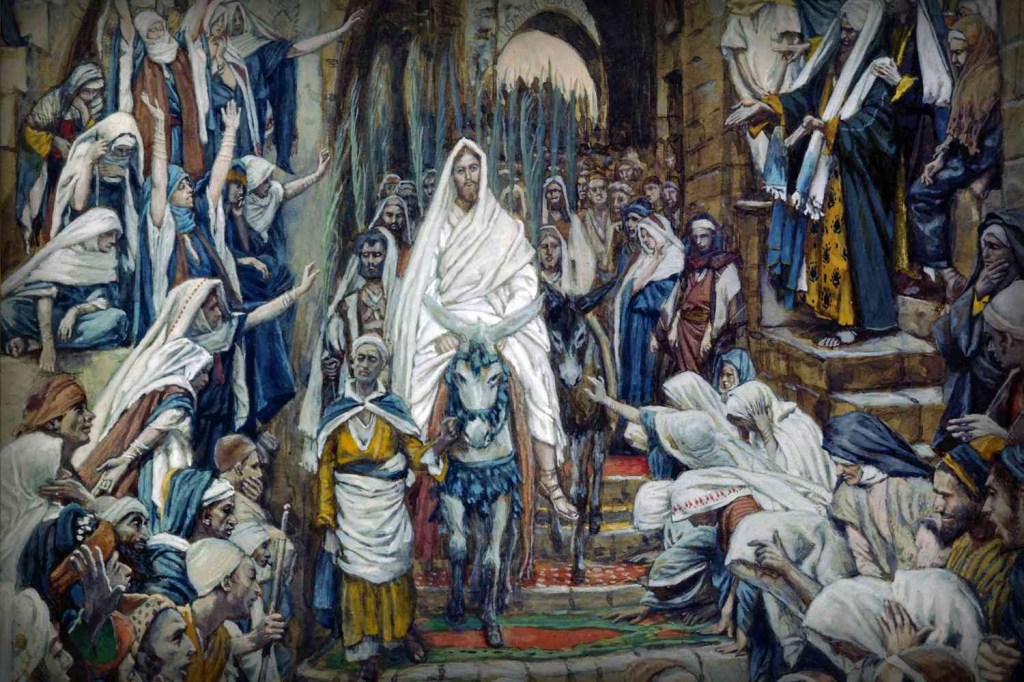
It is no surprise that this psalm is offered by the lectionary for this coming Sunday, Palm Sunday—because the Gospel story for this day, of Jesus entering the city of Jerusalem to the acclaim of the crowd (Matt 21:1–11), is certainly one of celebration and joy. It is also, equally unsurprisingly, offered as the psalm for a week later, on Easter Sunday, which celebrates something much greater and more enduring: the raising of Jesus from the dead (Matt 28:1–10).

But clearly the psalm has a good fit with the Palm Sunday story that we will hear on Sunday; indeed, the Gospel writers report that the crowd cheering Jesus was singing, “Blessed is the one who comes in the name of the Lord”—which is, of course, a verse from the final Hallel Psalm (Ps 118:26).

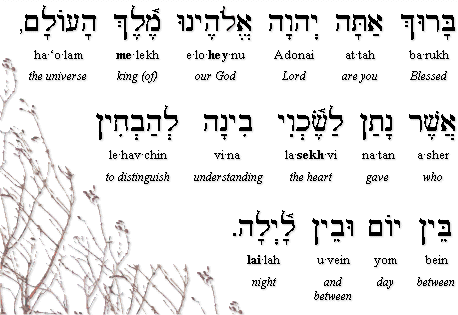
Blessing God is a favourite Jewish activity—indeed, so many prayers still used by Jews today begin with a phrase of blessing: “Blessed are you, O Lord our God …”. Blessed are You, O Lord our God, Ruler of the universe, Who brings forth bread from the earth is prayed before a meal. Blessed are You, O Lord our God, Ruler of the universe, who creates the fruit of the vine is prayed before drinking wine. And a favourite blessing which I learnt from Jews is Blessed are you, O Lord our God, Ruler of the Universe, who has kept us alive, sustained us, and brought us to this moment. It’s a prayer to mark momentous occasions in life.

All of these prayers of blessing begin with the Hebrew words, Baruch atah Adonai Elohenu melekh ha’olam, the same formula of approaching, acknowledging, and blessing God.

We can see that formula used in blessings spoken by David (1 Chron 29:19 and the psalmist (Ps 119:12), as well as in later Jewish texts such as Tobit 3:11; 8:5, 15–17; Judith 13:17; 14:7; the Prayer of Azariah (six times), and 1 Maccabees 4:20. It appears also in New Testament texts such as Luke 1:68; Rom 9:5; 2 Cor 1:3; Eph 1:3; and 1 Pet 1:3.

More familiar, perhaps, is when Jesus uses a prayer of blessing, but speaks it to human beings; “blessed are you, Simon son of Jonah” (Matt 16:17), or “blessed are the eyes that see what you see”, to his disciples (Luke 10:23), or “blessed are those who have not seen and yet have come to believe” (John 20:29), and most famously of all, in a set of blessings spoken to a crowd on a level place (Luke 6:20–22) or to his disciples on a mountain top (Matt 5:3–12).

So the cry of the crowd as Jesus enters Jerusalem, “Blessed is the one who comes in the name of the Lord” (Ps 118:26) is a typical Jewish exclamation at a moment of joyful celebration.

*****

A further reason for linking this psalm with the Gospel narrative might well be that the cry of the crowd, “Hosanna!” (Mark 11:9–10; Matt 21:9; John 12:13). The word transliterated as “Hosanna” might actually be better translated as “save us”—another quote from the previous verse in that same psalm (Ps 118:25). The Hebrew comprises two words: hosha, which is from the verb “to save”, and then the word na, meaning “us”. Hosanna is not, in the first instance, a cry of celebration; rather, it is a cry of help, reaching out to God, pleading for assistance—and yet with the underlying confidence that God will, indeed, save, for “his steadfast love endures forever” (vv.1, 29).

See

Whilst the psalm, overall, sounds thanks for a victory that has been achieved, the petition, “save us” (v. 25) lies behind the first substantial section of this psalm (vv.5–14), which is largely omitted by the lectionary offering for this coming Sunday (which is Ps 118:1–2, 14–24). That section begins “out of my distress I called on the Lord” (v.5), claims that “the Lord is on my side to help me” (v.7), and concludes with rejoicing, “I was pushed hard, so that I was falling, but the Lord helped me; the Lord is my strength and my might; he has become my salvation” (vv.13–14).

Save us” is a prayer offered in other psalms (Ps 54:1; 80:2; 106:47); the petition appears more often in the singular, “save me” (Ps 7:1; 22:21; 31:16; 54:1; 55:16; 59:2; 69:1; 71:2; 109:26; 119:94, 146; 142:6; 143:9). “Save us” when faced with danger is the prayer of the elders of Israel as they faced the Philistine army (1 Sam 4:3) and the all the people a little later (1 Sam 7:8), David when the ark was put in place in Jerusalem (1 Chron 16:35), Hezekiah when Judah was being threatened by the Assyrians (2 Ki 19:19), as well as the prophet Isaiah at the same time (Isa 25:9; 33:22; 37:20).

This prayer in the context of festive celebrations—the context for which Psalm 118 appears to have been written—expresses the firm confidence of the people, trusting in the power of their God. That viewpoint is perfectly applicable to the Palm Sunday story (and even more so to the Easter Sunday narrative!).

But this psalm is not only a prayer of celebration; it is also a strong statement about the resilience and trust of the people, expressing their belief that God will give them redemption, even in the face of their Roman overlords, who had held political and military power for many decades. If this is what the crowd intended with their cry as Jesus enters the city—and I have no reason to see otherwise—then this is a striking, courageous political cry embedded in the story! It is a cry that affirms that salvation is at hand.

*****

Salvation is what is in the mind of the people as they cry, “save us” (v.25) and the earlier affirmation, “I thank you that you have answered me and have become my salvation” (v.21). As we have noted, “save us” was a recurring cry amongst the Israelites. In the song sung after the Exodus, the people acclaim God, singing “the Lord is my strength and my might, and he has become my salvation” (Exod 15:2). In his song of thanksgiving after battles with the Philistines, David praises God as “my rock, my shield and the horn of my salvation” (2 Sam 22:3; also vv.36, 47, 51; and 1 Chron 16:23, 35).

The same language, of salvation, appears in the psalms (Ps 13:5; 18:2, 35, 46; 24:5; 25:5; and another 40 times) and the prophets (Isa 12:2–3; 25:9; 33:2, 6; 45:8, 17; 46:13; 51:5–6; 52:7, 10; 56:1; 59:11; 61:10; 62:11; Mer 3:23; Mic 7:7; Hab 3:18). From the psalms, we remember “the Lord is my light and my salvation” (Ps 27:1); from Isaiah, “I will give you as a light to the nations, that my salvation may reach to the end of the earth” (Is 49:6).

There are a dozen occasions in Hebrew Scripture when God is identified as Saviour (2 Sam 22:3; Ps 17:7; 106:21; Isa 43:3, 11; 45:15, 21; 49:26; 60:16; 63:8; Jer 14:8); as the Lord God declares through Hosea, “I have been the Lord your God ever since the land of Egypt; you know no God but me, and besides me there is no Saviour” (Hos 14:4).

Salvation is linked with righteousness; “the salvation of the righteous is from the Lord … he rescues them from the wicked and saves them” (Ps 37:39–40). Being righteous is a quality of the Lord God (Ps 11:7; 35:28; 50:6; 71:16; 85:10; 89:16; 97:2, 6; 103:17; 111:3; 116:5; 119:137, 152; 129:4; Isa 45:21; Jer 23:6; 33:16; Dan 9:16; Zeph 3:5) which is thus desired of those in covenant with God (Gen 18:19; 1 Sam 26:23; 2 Sam 22:21, 25; 1 Ki 10:9; 2 Chron 9:8; Job 29:14; Ps 5:8; 9:8; 11:7; 33:5; Prov 1:3; Isa 1:27; 5:7; 28:17; 42:6; 61:11; Jer 22:3; Ezek 18:5–9; Hos 10:12; Amos 5:24; Zeph 2:3; Mal 3:3).

It is no surprise, then, that this psalm celebrates that “[God] has become my salvation” (Ps 118:21) by holding a “festal procession with branches” (v.27), entering through “the gates of righteousness” (v.19) and proceeding all the way “up to the horns of the altar” (v.27), singing “save us, Lord” (v.25) and “blessed is the one who comes in the name of the Lord” (v.26). This is a high celebratory moment!

So the closing verses take us back to the opening refrain, “O give thanks to the Lord, for he is good, for his steadfast love endures forever” (v.29; see also vv.1–4). The celebration is lifted to the highest level, with praise and thanksgiving abounding. And that makes this a perfect psalm for Palm Sunday!

****(

On the indications of the political nature of the Palm Sunday scene, see

Your king is coming, sitting on a donkey (Zech 9; Matt 21; Lent 6A, Palm Sunday)

“Go into the village ahead of you, and immediately you will find a donkey tied, and a colt with her; untie them and bring them to me. If anyone says anything to you, just say this, ‘The Lord needs them.’ And he will send them immediately.” So reports the Gospel of Matthew, in the Gospel offered by the lectionary for this coming Sunday (Matt 21:1–11). The same story is told at Mark 11 and Luke 19.

John’s account is much more succinct; that Gospel simply notes, “Jesus found a young donkey and sat on it” (John 12:14), before explaining that this fulfils what was written in a scripture passage, “Do not be afraid, daughter of Zion. Look, your king is coming, sitting on a donkey’s colt!” (John 12:15, quoting Zech 9:9).

The narrator in Matthew’s Gospel explains that “this took place to fulfill what had been spoken through the prophet, saying, ‘Tell the daughter of Zion, Look, your king is coming to you, humble, and mounted on a donkey, and on a colt, the foal of a donkey’” (Matt 21:15). The prophet who is referred to in both John and Matthew is Zechariah, a post-exilic figure whose work is found as the eleventh of the twelve Minor Prophets in Hebrew Scripture.

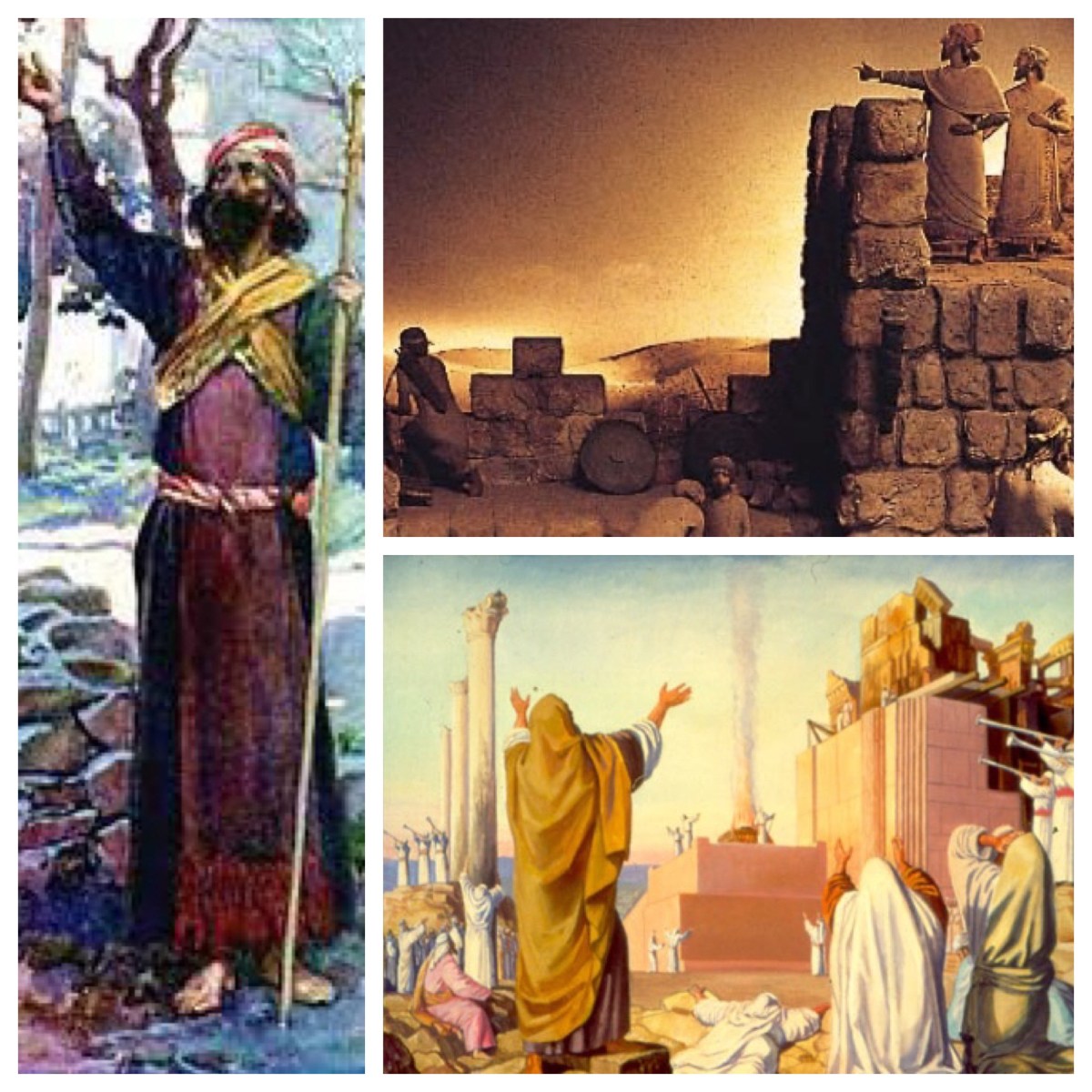
Zechariah was active in the period when the exiles in Babylon were returned to Judah late in the 6th century BCE, by a decree of the Persian King, Cyrus (whom Second Isaiah described as God’s “Messiah”; see Isa 45:1). We are told that in his decree, Cyrus acknowledges “the Lord, the God of heaven” and states that “any of those among you who are of his people … are now permitted to go up to Jerusalem in Judah, and rebuild the house of the Lord, the God of Israel” (Ezra 1:2–4).

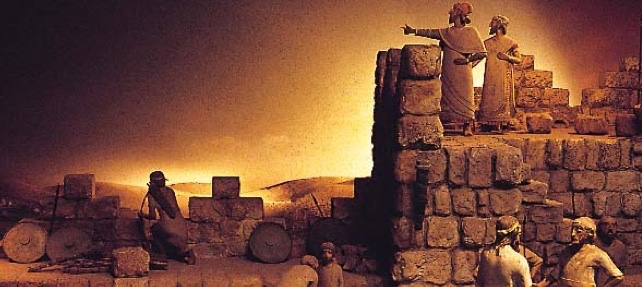
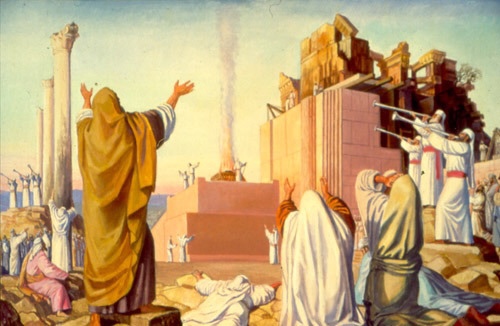
Under Nehemiah as Governor, worship had been reinstituted in Jerusalem (Ezra 3:1–7), the walls around the city of Jerusalem were rebuilt (Neh 2—6, 12), and the Temple was rebuilt and rededicated (Ezra 5–6). After this, the Law was read in the city under the guidance of Ezra, a priest who is also described as a scribe (Neh 8) and the covenant with the Lord is renewed (Neh 9–10).

Initially, there was opposition to the rebuilding works from “the enemies of Judah and Benjamin” (Ezra 4:1–16), and with intervention from King Artaxerxes, work on the temple ceased (Ezra 4:17–24). The narrative in Ezra reports that “the prophets, Haggai and Zechariah son of Iddo, prophesied to the Jews who were in Judah and Jerusalem, in the name of the God of Israel who was over them” (Ezra 5:1), and then work on restoring the temple recommenced (Ezra 5:2).

Further opposition emerged (Ezra 5:3–17), resulting in intervention from King Darius that decreed “let the house be rebuilt … let the Governor of the Jews and the elders of the Jews rebuild this house of God on its site … let it be done with all diligence” (Ezra 6:1–12).

The end result is that the prophets of the Lord and the rulers of the Persian Empire collaborated together to ensure that the temple would be restored: “So the elders of the Jews built and prospered, through the prophesying of the prophet Haggai and Zechariah son of Iddo. They finished their building by command of the God of Israel and by decree of Cyrus, Darius, and King Artaxerxes of Persia” (Ezra 6:14).

*****

Zechariah dates his opening prophecy to “the eighth month, in the second year of Darius” (Zech 1:1), which places him as a contemporary of Haggai and perhaps around the same time that the anonymous prophet whose words are known as Third Isaiah (Isaiah 56—66). Zechariah begins witha familiar prophetic refrain: “return to me, says the Lord of hosts, and I will return to you, says the Lord of hosts” (1:3), noting that when this message was presented to earlier Israelites, “they repented and said, ‘the Lord of hosts has dealt with us according to our ways and deeds, just as he planned to do’” (1:6).

What follows this opening salvo is a report of eight visions (1:7—6:8). They are dated to “the twenty-fourth day of the eleventh month, the month of Shebat, in the second year of Darius” (2:7), two months after the final prophecy of Haggai. The visions combine glimpses of hope with reminders of the need to remain faithful to the covenant: “if you will walk in my ways and keep my requirements, then you shall rule my house and have charge of my courts” (3:7). The fourth vision (3:1–10) includes the figure of “the accuser” (ha-satan in Hebrew) standing at the right hand of Joshua, to accuse him (3:1).

At the conclusion of the eighth vision there follows words of condemnation (7:1–7) and punishment (7:8–14), citing classic prophetic notes: “render true judgments, show kindness and mercy to one another; do not oppress the widow, the orphan, the alien, or the poor; and do not devise evil in your hearts against one another” (7:9–10).

Then come words of promise (8:1–23): “I will return to Zion, and will dwell in the midst of Jerusalem; Jerusalem shall be called the faithful city, and the mountain of the Lord of hosts shall be called the holy mountain” (8:3). Once again, prophetic injections are offered: “speak the truth to one another, render in your gates judgments that are true and make for peace, do not devise evil in your hearts against one another, and love no false oath” (8:16–17).

An oracle pronouncing judgement on other nations then follows (9:1–8), followed by a joyful celebration of the restoration of Judah (9:9–11:3), introduced by a rousing shout of joy: “rejoice greatly, O daughter Zion!Shout aloud, O daughter Jerusalem! Lo, your king comes to you; triumphant and victorious is he, humble and riding on a donkey, on a colt, the foal of a donkey.” (Zech 9:9). This verse is well-known, of course, from its quotation in the story of Jesus’s entry into the city of Jerusalem, which we will hear this Sunday (Matt 21:5).

A quirky feature is that some interpreters have taken the words of Zechariah so literally, that they imagine Jesus actually had two animals with him as he entered the city. Of course, the original oracle was formed in typical Hebraic parallelism, a pattern whereby an idea is expressed one way, then immediately repeated using other words. Thus, “riding on a donkey” was the first expression of the idea, followed immediately by “on a colt, the foal of a donkey”. One animal, two ways of expressing that.

The remaining chapters of Zechariah continue the note of exultation about the future, reworking the motif of “the day of the Lord” so that it signals joy for Jerusalem and terror for other nations (12:3, 4, 6, 8, 9, 11; 13:1, 2, 4; 14:1, 4, 6, 8, 9, 13, 20, 21). A triumphant note of universalism is sounded: “on that day “the Lord will become king over all the earth” (14:9) and “all who survive of the nations that have come against Jerusalem shall go up year after year to worship the King, the Lord of hosts, and to keep the festival of booths” (14:16).

The quotation from Zechariah in the story is a reminder that there is always hope; in the difficult situation of rebuilding the beloved ruins, reconstituting the fractured society, reconstituting the religious practices and customs that had lapsed, hope remains strong. Little did those travelling with Jesus into the city know what lay ahead of him, and them, in the coming days. Their hopes were high, very high, on this day. Joy came easily to them.

It was a day for celebration. This could well be the time when “the Lord will become king over all the earth”—even over the mighty Romans, they may well have felt. Joy was the dominant emotion, as the singing, waving of branches, and celebration demonstrated.

*****

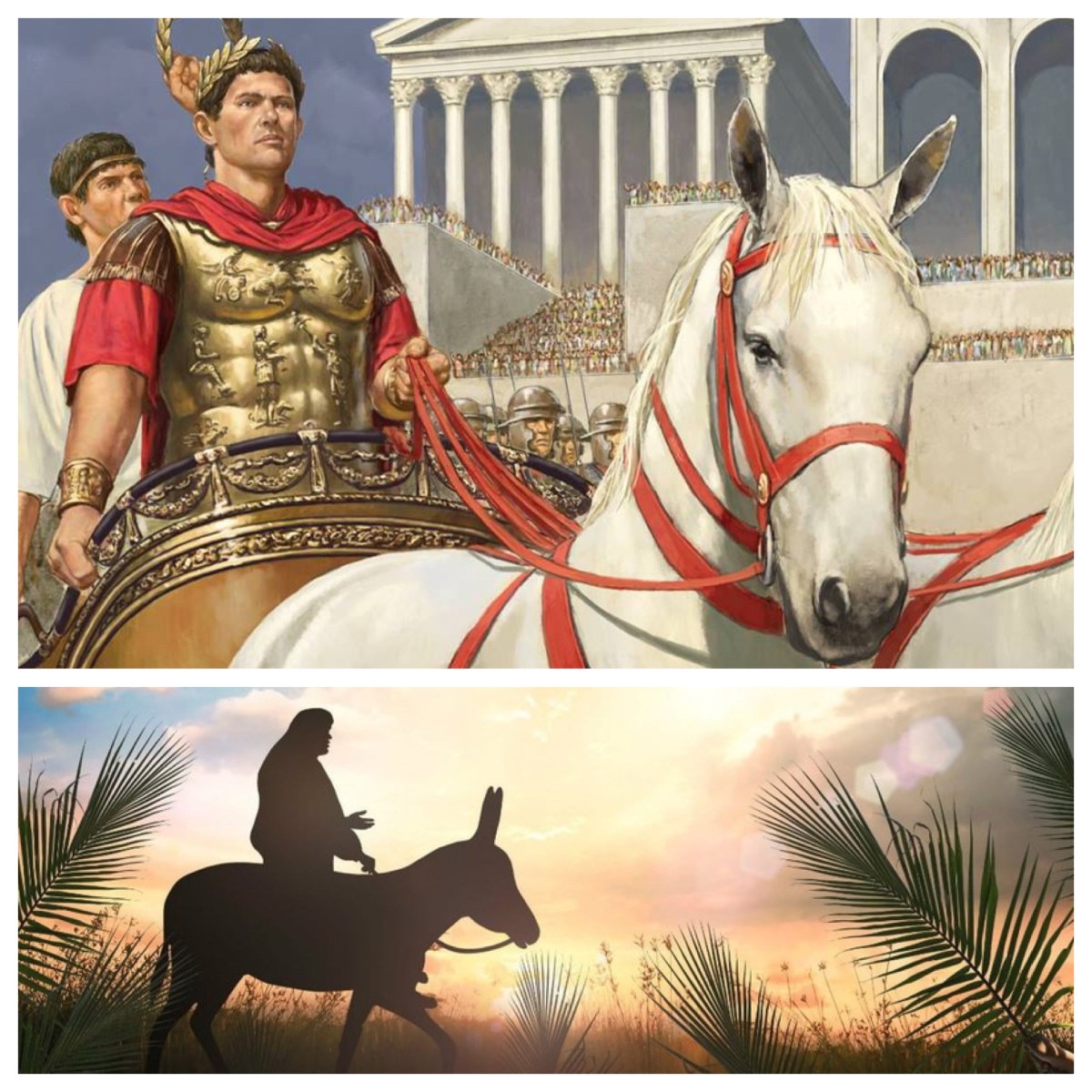
On why Jesus was riding a donkey, and not a horse (definitely NOT a horse!), see https://johntsquires.com/2023/03/27/why-jesus-never-did-and-never-would-ride-a-horse-for-palm-sunday-lent-6/

Scripture debate and disputation in the wilderness (Matt 4; Lent 1A)

My earlier contention was that the story we are offered by the lectionary for this coming Sunday, the first Sunday in Lent (Matt 4:1–1), should be read as a story of testing, not tempting. See

***

Which leads to the question, what is it, that Jesus is being tested about? How does this story contribute to our understanding of what God was wanting, and planning, to do through the public activities of Jesus, in Galilee and then in Jerusalem?

The devil, as “the tester”, utilised scripture as the basis for the trial that Jesus is undertaking. And this, it must be said, is thoroughly predictable—given that we are dealing with a text from the first century of the common era, emerging out of the context of faithful Judaism, telling the story of a faithful Jewish man, Jesus, and his earliest circle of followers, all Jewish men and women. They all express the piety and faith of the Judaism of the time, for that was their religion and their culture.

Scripture sits at the heart of Jewish life and faith. Young Jewish boys, like Jesus, were taught to read the Hebrew text of scripture, and to memorise it. They were grounded in Torah, the books of the Law, which set out the way of life, the way of faithful living, that they were to follow. They needed to know this, to have it deep within their hearts. That would have been the upbringing experienced by Jesus.

As they grew older, these Jewish boys were taught the next stage, the midrashim, the teachings which provided explanation and application of the laws and stories embedded in Torah. There were two types of midrashim. The first was haggadah, which was telling stories; the Jewish teachers, the Pharisees, who became acknowledged over time as the rabbis, were excellent at telling stories, and Jesus learnt well from their examples.

The second was halakah, which was discussion and debate about how best to interpret and apply the laws found in Torah. It is this latter form of teaching that we encounter, in the story of the forty days in the wilderness. The back and forth between the person on trial—Jesus—and the person charged with testing and probing his case—the accuser—is couched entirely in terms of sacred scripture. Each time an accusation is put before Jesus, the accuser quotes a passage of scripture. And each time the person on trial—Jesus—responds, another text from sacred scripture is quoted.

Think about that for a minute: both the accuser and the accused are citing scripture, arguing on the basis of what is found in the tradition and heritage and sacred story of the people of Israel. They are both engaged in this task, to get to the heart of the matter; to penetrate to the essence of the issue, through exploration of scripture and its relevance to Jesus and his mission.

This is typical Jewish midrashic argumentation. This is the way that, throughout the centuries, Jews have sought to encounter the truths of scripture—through discussion and debate, by one person posing a proposition and then another person arguing back in counter-proposition, through the adding of additional scripture passages into the argument, in a process of refining, sharpening, and clarifying the intent of the initial scripture text.

This was par for the course for ancient Jews. This is still the way that faithful Jews engage with scripture. My years as a member of the Uniting Church Dialogue with the Jewish Community immersed me into precisely this culture on a regular basis. It was quite an experience! To us polite, constrained Westerners, it seems like an unruly mess. To Jews, schooled in this process since their early years, it is natural, and results in deep and profound understandings of scripture.

*****

The specific scripture texts that are cited in the course of this testing are significant. They are the same in each extended version that we have (Matt 4, and Luke 4), albeit cited in a different order. And each of the three testing moments, with the associated scripture texts that are cited, relate to key moments in the story of Israel in the wilderness during their forty years of wandering. (I am indebted to my wife, the Rev. Elizabeth Raine, for this insight.)

Understanding the significance of each testing comes when we look more closely at the passages to which Jesus refers, and explore the resonances and connections that those texts have with other biblical passages. Just as Israel (the child of God) is tested during their forty years in the wilderness, so Jesus (the son of God) revisits those testings in his forty days in the wilderness.

The first moment of testing relates to bread: “command these stones to become loaves of bread”. The story evoked is that concerning the gift of manna which was given to the people of Israel as they sojourned in the wilderness. It is told in Numbers and referred to quite directly in Deut 8:3, the verse which is part-quoted by Jesus in the testing narrative, people do not live by bread alone. Could the mission of Jesus be diverted into concerns about sustenance and immediate survival, rather than longer-term strategies?

The second moment of testing, on the top of a mountain, relates to worship, and the recognition of the special and supreme place of the Lord God. The offer, “all these [kingdoms] I will give you”, is met by another quotation, by Jesus, from the same book: it is the Lord your God you shall fear; him you shall serve (Deut 6:13).

The story of the Golden Calf, told in detail in Exodus 32, sits behind this particular test. It is alluded to, perhaps not quite so directly this time, in Deut 6:14-15, the verses which come immediately after the verse quoted by Jesus. The incident involving the Golden Calf was when Israel “went off the rails”, developing an idol for the focus of their worship, rather than being focussed on God alone. The testing faced by Jesus was for him to gain power and authority in his own right, at the expense of serving the greater call that God had placed on his life.

The words of the tester in this second testing evoke the belief that God is able to allocate power and authority. The words of the tester explicitly resound with the claim made twice about the supreme authority of the Lord God, as reported in Jeremiah: “It was I who made the earth, human being and beast on the face of the earth, by my great power, with my outstretched arm; and I can give them to whomever I think fit” (Jer 27:5); and “Ah, my Lord God! You made the heavens and the earth with your great power and your outstretched arm; nothing is too difficult for you” (Jer 32:17).

The tempter has taken on the persona of God in this test. Jesus forcefully denies this test: it is the Lord your God you shall fear; him you shall serve.

The third and final test, placed on the pinnacle of the Temple, pits the possibility of testing God against the alternative of trusting absolutely in God. The tester’s challenge to Jesus, to “throw yourself down”, and the implication that God would save him (quoting Psalm 91) evokes the response from Jesus, quoting Deut 6:16, you shall not put the Lord your God to the test.

Test God … or Trust God? That was the age-old dilemma for Israel, noted at a number of points in the wilderness stories (for instance, Exod 17:2; Deut 6:16; Ps 106:14). It is one that Jesus himself encounters as the climax, in the Lukan version, of his wilderness testing.

The third Deuteronomy passage cited by Jesus, you shall not put the Lord your God to the test (Deut 6:16), comes immediately after the recital of The Ten Words which were given to Israel, through Moses, on Mount Sinai (Deut 5:1–21). As the scripture reports, Moses instructed the people to trust God by living in accordance with these words, for this was the way to life for them (Deut 5:27, 32–33).

So, to assist them in this enterprise, The Ten Words are then boiled down to One Great Commandment, love the Lord your God (Deut 6:5). This was a commandment which Jesus himself quoted and highlighted in debates with Jewish teachers (Mark 12:28–30; Matt 22:34–37; Luke 10:27). Indeed, in Matthew’s version of such a debate, Jesus identified this Word as “the greatest and first commandment” (Matt 22:38) on which “all the law and the prophets hang” (Matt 22:40).

This prime commitment, to God first and foremost, is what is alluded to by the citation that Jesus makes in his third testing. It is a test to see if he will divert from this singular focus.

This story of testing in the wilderness presents a communal challenge, and requires a communal commitment. The personal identity of Jesus, in the mission to which he is called, is found in the context of the communal identity of the people of Israel, who faced precisely these tests—and failed, in the accounts we have in Hebrew Scripture. The testings of Jesus are a reworking of those ancient testings; he is faced with the same tests—and passes them, in the accounts we have in Christian scriptures. That is the model we are offered through this story.

Testing (not temptation) in the wilderness (Matt 4; Lent 1A)

We start into the season of Lent, this Sunday, with the story of Jesus being “tempted in the wilderness” (Matt 4:1–11). This story is told early on in three canonical Gospels. The shortest and most focussed version is in the earliest of these Gospels—the account of “the good news of Jesus, the anointed one, the Son of God”, which we attribute to the evangelist Mark (Mark 1:12-13)

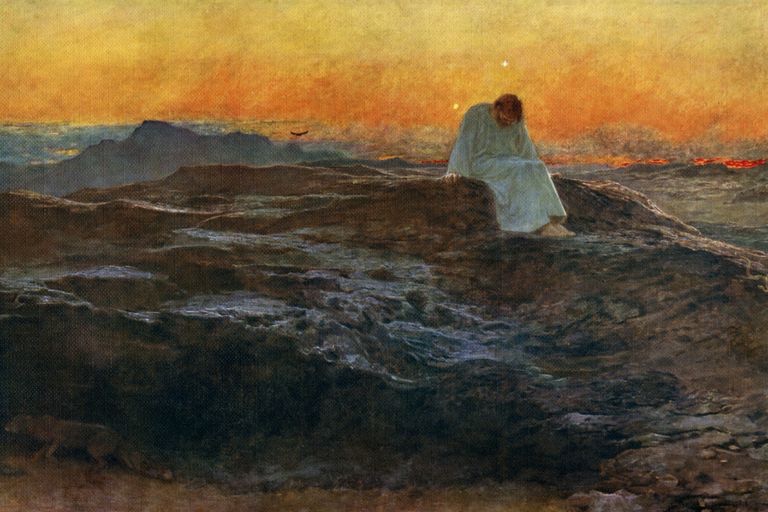
That account simply notes the bare minimum. The location is “the wilderness”. The duration is “forty days”. Present with Jesus throughout these days were both “wild beasts” and “angels”. What was the purpose of this challenging, difficult experience? Mark says that Jesus was there to be “tempted by Satan”. Under whose auspices did this all take place? The first line of the Markan account is, “the Spirit drove him out into the wilderness”.

So this short, succinct, concentrated version already gives us key pointers to the significance of this story. The forty days in the wilderness stand at the start of the public activity of Jesus, as a declaration of what he is on about. And these days are part of the intention that God has, for Jesus, to prepare for his role.

The story also appears in the “book of the origins of Jesus, the anointed one, the son of David, the son of Abraham”, which we attribute to Matthew, and is placed as the first Gospel in canonical order in our scriptures. But this wasn’t the first Gospel written; the author (by tradition, Matthew) quite clearly knew, and made use of, the earlier account of “the good news of Jesus” which we link with Mark.

So in this later work, the details of the story are expanded and the plot line is filled out (Matt 4:1-11). The forty days in the wilderness becomes a time when Jesus fasted (Matt 4:2; something not mentioned in the earlier Markan account). Here, Jesus engages in a disputation with “the tempter” (Matt 4:3, which uses the language already found in the Markan version). The back-and-forth of this disputation is recorded by Matthew.

Of course, the role that is enacted by this figure—the tempter, the devil, the tester, the Satan—is the role of divine advocate, the one we know from the book of Job as the prosecuting attorney, the accuser, the one who puts the case that Job needs to answer. The whole of that book demonstrates how such a courtroom setting plays out, as the argument is investigated, the evidence is explored, the case for a verdict is painstakingly built.

*****

Matthew’s account is the version that we are offered by the lectionary this coming Sunday, the first Sunday in Lent (Matt 4:1–11). Matthew also sets the encounter in the wilderness (4:1). In the biblical tradition, the wilderness plays a pivotal role in the story of the Israelites, freed from captivity in Egypt, yearning for the promise of land and safety still ahead of them. The wilderness is the place where Israel spends forty years—not forty periods of 365 days, measured precisely and carefully, but, in the way of the ancients, forty was the way of saying, a heaps long time, a lot of weeks and years, a period extending out into the unseeable future.

The wilderness experience, for Israel, was long, seemingly unending, and challenging. Yet, it was also the place where the character of Israel was forged. It was in the wilderness, throughout that long period of wandering, that they had encounters with the divine, that their identity was shaped, that their foundations as a nation were laid.

Indeed, so central is this period, that we find many references to it in Hebrew scripture, and lengthy narratives recounting incidents during that period. The story of Moses and the Israelites is narrated in Exodus 13:17–19:2 and 40:34–38, through the book of Numbers (where it is mentioned 44 times), and in Deuteronomy 1–2. There, we read of thirst and hunger in the wilderness, encounters with snakes and other trials—as well as the giving of the law, on Sinai, a mountain in the middle of the wilderness.

The journey through the wilderness figured in the songs of Israel. It is regularly recalled in the Psalms (68:7, 78:15–20, 40, 52; 95:8; 106:14–33; 136:16) as well as in various prophetic oracles and other narrative references. The exodus from Egypt and the subsequent wilderness wandering, provided the foundational story for Israel, from long ago, and still through into the present.

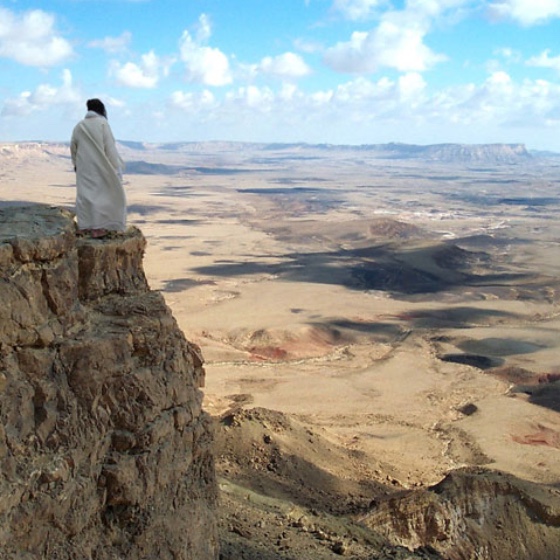
The wilderness was where Israel met God; where Israel’s commitment was tested; where Israel’s faith was shaped. So it is, also, for Jesus. In Hebrew Scriptures, the wilderness was not a god-forsaken place, full of temptations, but it was the place where God encounters the people, tests them, nurtures them, and equips them for their future. And so it, also, for Jesus.

*****

The forty days in the wilderness was undoubtedly an intense experience for Jesus. The role of “the tempter” in this story is not actually to tempt Jesus to stray into immoral or unethical or unrighteous actions. On the contrary, the role of “the tempter” is actually to test Jesus, to probe and analyse his understandings, in to hypothesise and offer alternative strategies, to help Jesus to clarify and focus on what is central for him. It is a test of his character, his core qualities, and of his commitment to the mission to which he has been called.

Indeed, the devil here fills the role more of “the tester” than “the tempter”—and the Greek word used here (peirasmos) is quite capable of this alternative translation. It is most often used in Greek literature to describe the process of testing as to whether something is viable or possible, and that is the way it is intended elsewhere in the Gospels when it occurs. It only gains the secondary sense of “tempting” or soliciting something that is sinful, in relatively few instances, mostly within the letters of Paul and James.

So this is what was happening in the story that our Gospels recount: a time of testing, a testing which was designed to cut through to the centre of the issue, to engage deeply with the heart of the matter. It wasn’t an attempt by the devil to get Jesus to go off the rails, to misbehave badly, to succumb to unrighteous behaviour, to sin. Rather, this was the way that ancient Jews sought to crystallise the issue and define key matters of faith and life. That’s what was going on for Jesus during those forty days in the wilderness.

Most versions of the Bible, today, put a heading at the beginning of this story: “The Temptation of Jesus”. I wouldn’t label it as such. I would prefer to call it, “The Testing of Jesus”. What is his mission all about? Is he clear about how he will carry out that mission? What strategy does he have, as he enters into the public proclamation of his good news about God’s kingdom? These are the issues that are at stake in this particular story.

*****

The Gospel writers believed that the forty days in the wilderness was a time for Jesus to face testing, and that this testing was mandated by God. This way of understanding the story is underlined when we look at the top-and-tail of each account. The shortest and earliest account states that “the Spirit drove him into the wilderness” (Mark 1:12). There is a violence, an aggression, in the term used here. But it is an action of the Spirit, forcing Jesus to enter this trial. It is something that he had to do, under the impulse of God’s direction.

One later account modifies this, and softens the verb to say that “Jesus was led up by the spirit into the wilderness” (Matt 4:1). We find this in Matthew; and that version ends with “the devil left him, and suddenly angels came and waited on him” (Matt 4:11). That picks up on what Mark had said, that “the angels waited on him” (Mark 1:13). So the story ends with an implicit approval, by the divine, through the vehicle of the angels, regarding what has transpired in the wilderness.

Another later account makes this quite clear and explicit. The version we attribute to Luke begins “Jesus, full of the Holy Spirit, returned from the Jordan, and was led by the Spirit in the wilderness” (Luke 4:1). That intensifies the sense of divine guidance and approval in what is about to take place. And the account ends with a similar note: “The devil departed from him … then Jesus, filled with the power of the Spirit, returned to Galilee” (Luke 4:13-14). Could it be any clearer?

Indeed, a still later account, which is not in the canon of New Testament books, but was revered by some in the early church, includes a section that reports on something from this story, placed onto the mouth of Jesus: “even so did my mother, the Holy Spirit, take me by one of my hairs and carry me to the great Mount Tabor”—a reflection of the section of the story that talks about Jesus being taken up to a high mountain (Matt 4:8). [That comes from the Gospel according to the Hebrews, and is quoted by Origen in his Commentary on John 2:12.] So in this version, the testing of Jesus is actually carried out, not by the devil, but by the Spirit!

My proposal is that, as we read this story, we need to banish thoughts of “temptation” and the notion that Jesus might choose a false and unrighteous pathway. What is actually taking place, is a strenuous and engaged encounter, in which Jesus is challenged to clarify his divine calling and better equipped to live out the mission that he has been given, by God, during his adult life.

In that sense, this story is not a remote, back-then, archaic account … it is a living, here-and-now, immediate insight into how we, ourselves are to live out our faith in the hustle and bustle of our own lives. That is precisely the pathway that we are encouraged to enter, as we stand at the start of the season of Lent, and as we experience our own time of re-evaluation and reassessment of our own walk of faith today. What is God calling us to do? Who is God calling us to be? How can we best live that out in our lives?

*****

See more at

Tracing the saga of faithful people during Lent (Year A)

This year during the season of Lent, the Gospel readings offer a series of narratives which describe encounters that Jesus had (largely from the Gospel according to John). We hear of Jesus in dialogue with the devil in the desert (Matt 4, Lent 1), a Pharisee in Jerusalem (John 3, Lent 2), and a woman by a well in Samaria (John 4, Lent 3).

We then learn of a blind man to whom Jesus brings the gift of sight (John 9, Lent 4) and a dead man whom Jesus brings back to life (John 11, Lent 5), before we come to the annual retelling of the familiar story of Jesus, riding a donkey, entering the city of Jerusalem, to the cheers of the crowd (Matt 21, Lent 6 or Palm Sunday).

These stories tell of people who mostly, as a result of their encounters with Jesus, have their faith in God strengthened—the Pharisee, Nicodemus, at John 7:50 and 19:39; the woman of Samaria at 4:29, 39; the healed blind man at 9:17, 33; Martha, the sister of Lazarus at 11:27, and presumably Lazarus, as 12:10–11 may indicate; and the joyful crowd, at Matt 21:9–11. I am posting blogs on each of these readings as they come, in sequence, throughout Lent.

Alongside these well-known readings from the New Testament, the lectionary offers another sequence of rich readings from Hebrew Scripture. Starting with the story of the first man and first woman (Gen 2-3, Lent 1), we read in turn of four key moments in the story of Israel. This sequence begins with God’s call to Abram (Gen 12, Lent 2), followed the gift of water given to the Israelites as Moses leads them in the wilderness (Exod 17, Lent 3), and the story of the anointing of David as king (1 Sam 16, Lent 4).

The next moment is set during the Exile in Babylon (Ezek 37, Lent 5), when Ezekiel speaks a prophecy which assures Israel of a hopeful future: “I will put my spirit within you … and I will place you on your own soil” (Ezek 37:14). This reading sits neatly with the account of the raising of Lazarus (John 11) which appears alongside it on Lent 5.

For the celebration of Palm Sunday on Lent 6, there is only one Hebrew Scripture reading—Psalm 118, the psalm which the crowd is singing as Jesus enters Jerusalem: “blessed is the one who comes in the name of the Lord” (Ps 118:26; Matt 21:9). If, on the other hand, the Liturgy of the Passion is the focus of that Sunday, then the Hebrew Scripture passage is Isaiah 50:4–9a, the third of four songs attributed to The Servant, who declares that “the Lord has given me the tongue of a teacher, that I may know how to sustain the weary with a word” (Isa 50:4).

The sequence of key moments in the story of Israel offers a series of vignettes of faithful people from the last—our ancestors in the faith who stand as role models to encourage us, centuries later, in our own journey of faith. They are figures which are worth holding up for our reflection and consideration. These stories each have the function of an aetiology—that is, a mythic story which is told to explain the origins of something that is important in the time of the storyteller.

The online Oxford Classical Dictionary defines the term as follows: “Aetiology in religion and mythology refers to an explanation, normally in narrative form (hence ‘aetiological myth’), of a practice, epithet, monument, or similar.” Whilst telling of something that is presented as happening long back in the past, the focus is on present experiences and realities, for “such explanations elucidate something known in the contemporary world by reference to an event in the mythical past”.

See https://oxfordre.com/classics/display/10.1093/acrefore/9780199381135.001.0001/acrefore-9780199381135-e-7050;jsessionid=3DB38C42C54D01E1CBFA8682FB55DA4C

The ancestral narratives of Israel (Gen 12–50), as well as the series of books known as “the historical narratives” (Exodus to 2 Kings, Ezra—Nehemiah) are all written at a time much later that the presumed events which they narrate. The final form of the books as we have them most likely date to the Exile or post-exilic times, although pre-existing sources would have been used for many of these stories. Those older stories are remembered, retold, and then written, because they speak into the present experiences of the writers.

[Evidence for this is found, for instances, in references throughout the two books of Kings to “the Books of the Chronicles of the Kings of Israel” (1 Kings 14:19; 15:31; 16:5, 14, 20, 27; 22:39; 2 Kings 1:18; 10:34; 13:8, 12; 14:15, 28; 15:11, 15, 21, 26, 31), “the Books of Chronicles of the Kings of Judah” (1 Kings 14:29; 15:7, 23; 22:45; 2 Kings 8:23; 12:19; 14:18; 15:6, 36; 16:19; 20:20; 21:17, 25; 23:28; 24:5), and “the Book of the Chronicles of Solomon” (1 Kings 11:41). Many stories in other books may well be derived from oral tellings in past times.]

*****

The sequence of Hebrew Scripture readings in Lent begins with an aetiology which attempts to explain the place of humanity within God’s good creation, as well as offering an explanation for the presence of evil in the world (Gen 2:15–17; 3:1–7, Lent 1A). We need to read such a narrative with critical care; it is not an historical narrative, but it is a myth in the best sense of that word, a story told with creativity to explain aspects of contemporary life (for the writer) which may well hold good for later generations—but which need to be read with awareness of emerging insights in human knowledge over time.

Second in this sequence is the account of the calling of Abram, who journeys into a new future (Gen 12:1–4a, Lent 2A). We need to read beyond the point where the lectionary ends this passage; that selection indicates that Abram took Lot with him, but the narrative actually continues, indicating that Abram travelled with his wife Sarai and his nephew Lot, “and all the possessions that they had gathered, and the persons whom they had acquired in Haran; and they set forth to go to the land of Canaan” (Gen 12:5).

The lectionary is, sadly, blatantly sexist at this point: it includes the names of the two leading males, but omits noting that they travelled with their spouses, and indeed the reference to the presence of many others with them in their journey. We need to read this ancient aetiology with a contemporary critical awareness. Certainly, the faith of Abram and Sarai and their extended family is a key message conveyed by this passage.

The story explains four important aspects of life and faith for the people of ancient Israel and on into contemporary Judaism: the land is given to this people, the people (of Israel) will become “a great nation”, the name (of Abram) will be blessed, and the descendants of Abram, “all the families of the earth”, will likewise be blessed. These four points—land, people, name, descendants—loom large throughout the history of Israel. Indeed, they maintain their potency into the present age—and need to be read and understood with political and cultural sensitivity today.

After Abram and Sarai comes Moses and the people he is leading in the wilderness (Exod 17, Lent 3A). The long saga of the Exodus, the wanderings in the wilderness, the giving of the Law, and the understandings of the details of that Law, receives attention throughout four of the five books of the Torah (Exodus to Deuteronomy).

This particular incident in that long saga focusses on the providential care that the Lord God gives to the people of Israel during those “forty years in the wilderness”. The giving of water in the wilderness at Massah and Meribah (Exod 17) sits alongside the giving of manna and quails in the wilderness of Sin (Exod 16; Num 11). The model to emulate here is the faithful Moses, holding fast to the promise given to him by the Lord God, in the face of the complaining of the people (Exod 16:3, 6–7; 17:2–3, 7; Num 11:1–6; 14:27).

Next in the sequence of faithful people is David, chosen and anointed as king (1 Sam 16, Lent 4A). The passage offered by the lectionary tells of how David, the youngest of Jesse’s eight sons, was chosen by the prophet Samuel for the role of King, even while Saul was occupying that position. David will feature as a key player in the stories about the ensuing years, as “the house of David” is established and Jerusalem is developed as his capital city; and of course his place as the nominal author of the book of Psalms also ensures his leading role on Jewish tradition.

Next in order is the best-known prophecy of Ezekiel, the priest called to be prophet (Ezek 1:3). Ezekiel had been exiled to Babylon during the siege of Jerusalem by King Nebuchadnezzar II of Babylon (599 BCE; see 2 Kings 24:10–17). His prophetic activity was thus undertaken entirely in exile. He addresses both those in exile with him in Babylon, and also those left behind in Judah. His prophecies continue through the period when the people in Judah were conquered and taken to join Ezekiel in exile (587 BCE; see 2 Ki 25:1–21), and then for some time after that.

Ezekiel had declared that “the spirit entered me” (3:24), a process which he promises will be experienced by Israel as a whole (36:26–28)—for the Lord says he will “pour out my spirit upon the house of Israel” (39:29). This emphasis on the renewing spirit of God is seen, most dramatically, by Ezekiel when he is taken by the spirit into “the middle of a valley … full of bones” (37:1) and sees a vision that he conveys in what must be his most famous oracle (Ezek 37:1–14, Lent 5A). What Ezekiel sees in this valley of dry bones is the work of God, as God puts sinews and flesh and skin on the bones, and breathes into the bodies so created, so that they live (37:5–6, 8, 10).

The vision indicates what God will do: “I will put my spirit within you, and you shall live, and I will place you on your own soil” (37:14). The end of the exile, it seems, is in sight. This passage is often interpreted in a Christian context as a pointer both to the resurrection of Jesus, and also to the general resurrection; for Ezekiel, however, it is not a far-into-the-future prediction (foretelling), but a word of hope to the people in their immediate situation (forthtelling).

The sequence ends, of course, with the example of Jesus, riding steadfastly towards the city of Jerusalem (Matt 21:1–11, Lent 6A). That is the city where Jesus knows, and has already revealed, the fate in store for him: “see, we are going up to Jerusalem, and the Son of Man will be handed over to the chief priests and scribes, and they will condemn him to death; then they will hand him over to the Gentiles to be mocked and flogged and crucified; and on the third day he will be raised” (Matt 20:18–19).

Why did Jesus continue into the city, knowing this in advance? That’s a fascinating question, worthy of later consideration. For the moment, in this series of passages, we simply note his determined faithfulness and commitment to the task to which he had been called. He is the final figure of faithful commitment in the series that the lectionary takes us through during the season of Lent.

Between a rock and a hard place: a reflection for Ash Wednesday Year A

So here we are, caught between a rock and a hard place. The rock and the hard place are provided, in the lectionary which we follow, by the Sunday readings which bookmark this day, from the last Sunday of Epiphany, before today, and the first Sunday of Lent, after today.

Matthew 17

This is the rock. It is encountered on the top of the mountain. The mountain, of course, was made of rock. And yet, this is not the hard igneous rock, or the more malleable sedimentary rock, which presses against us, from the story. For it was on this mountain, the traditional place of encounter with the Holy One, blessed be he, the place where revelation of the Divine would take place, that the rock of belief in Jesus was shaped, and made manifest, and imprinted on the minds and hearts of the disciples who were there.

For on the top of the rock, Jesus was seen to be a great one, comfortably at home alongside the existing greats of the faith, Elijah the prophet and Moses the Lawgiver. On the mountain was the place of glorious revelation, as a magically translucent light shone forth, from Jesus, over the disciples, conveying penetrating insight, illuminating a divine truth, revealing the essence of Jesus: “This is. my Son, the Beloved; with him I am well pleased; listen to him!” He was, then not only among the great ones; he was the great one.

But such revelation, as gloriously indulgent as it might seem, also brings a sharp edge: the confrontation of standing in the very presence of the glory of the Holy One, blessed be He, the challenge of knowing that, once you have seen this reality, your life will be different. There is no turning back. You are now a follower of the man of Nazareth; a man who has the capacity to bring you closer than you ever imagined into the awesome and awful presence of the holy one, blessed be his name. You are marked, charged, and equipped for the life of discipleship by virtue of the vision in the rock which has claimed you as God’s.

That is the rock. What of the hard place?

Matthew 4

The hard place is out in the wilderness, away from the towns, in the desert area which appears, to all intents and purposes, to be harsh, stringent, and utterly challenging to life. It is the place where Israel struggled, complained, and debated, for “a heaps long, long time” (that’s my translation of forty years). And it’s the place where Jesus struggled, debated, and resisted, for “a mighty long time” (that is, in biblical-speak, for forty days).

Of course, it was in the wilderness that Israel came to know its essential identity: a people, beloved by God, rescued from slavery, called into covenant, equipped for the battles of entry into the land, as the great myth from the past declared. “You shall be my people, and I shall be your God”, and so the terms of the covenant were sealed.

And it was in the wilderness that Jesus came to know his destiny and the integrity of his life: as the one who was not the showman, turning stones into bread; as the one who was not the magician, able to levitate, float, defy gravity; and as the one who was not invested with power and authority to trump his greatness over the peoples of the earth. It was in the wilderness that Jesus came to know his identity as the Son of the Holy One, blessed be he; and to know of his mission as the one specifically chosen by that Holy One, blessed be he.

From this time on, says Matthew, Jesus preached his ominous clarion call: “Repent, for the kingdom of heaven has come near.” And the pressing urgency of this message, the confrontation of this call, scratches at our ears and agitates our hearts. How can we not be disturbed by this Gospel? “Repent, for the kingdom of heaven has come near.”

How can we not feel hard pressed, faithfully following the man of Nazareth, yet dazzled by his demanding call, joyously celebrating his transfigured glory, yet humbled by the mission of repentance, to which he insistently invites us.

So Lent offers a time of reflection, perhaps of sacrificial abstinence. A call to follow, knowing that this is no ordinary journey, this is no ordinary man. Each one of us has been stirred, provoked, perhaps upended, by just such a call. We are caught in between a rock and a hard place, between the joy of being in the presence of the transfigured one, and the dawning reality of just what it will mean to repent, to turn around, to engage in the mission. And that is what Lent will offer us, each day, each week, through this period of preparation.

May you be faithful to respond to the call, to experience and endure and appreciate what it means to be squeezed between the rock and the hard place, to dedicate yourself to service as a disciple and to follow the pathway set out by the man of Nazareth.

*****

This reflection was offered to candidates for ministry in the Perth Theological Hall in March 2017.

See also

Practising righteous-justice: alms, prayer, and fasting (Ash Wednesday)

In the Gospel reading provided for Ash Wednesday each year (Matt 6:1–6, 16–21), the lectionary offers us a part of the long discourse that Jesus gave, on top of a mountain, to his disciples (5:1–7:29). The text infers that he was seeking to avoid “the crowds” (5:1), although by the end of the discourse (known popularly as The Sermon on the Mount) it is clear that this escape had not worked, for “when Jesus had finished saying these things, the crowds were astounded at his teaching” (7:28).

In the middle section of this long discourse, the section from which this reading comes, the Matthean Jesus instructs his listeners on righteous-justice (6:1–18). The Greek word used in the first verse is dikaiosunē, which some contemporary English translations render as “piety”. The Greek word is rich in meaning (it is a key word both for Jesus and for Paul); in the Septuagint, it often translates tzedakah, a Hebrew word used to describe the quality of God’s just and fair dealings with human beings.

The prophets, for instance, consistently advocated for righteous-justice. “Let justice roll down like waters, and righteousness like an ever-flowing stream”, Amos declares (Amos 5:24). Isaiah laments the state of the city: “How the faithful city has become a whore! She that was full of justice, righteousness lodged in her—but now murderers” (Isa 1:21), and tells a parable ending with the despairing words that God “expected justice, but saw bloodshed; righteousness, but heard a cry!” (Isa 5:7).

Jeremiah reiterates the instruction of the Lord, “act with justice and righteousness, and deliver from the hand of the oppressor anyone who has been robbed” (Jer 22:3) and Ezekiel warns, “the righteous turn away from their righteousness and commit iniquity, they shall die for it” (Ezek 18:26). In a vision in which Gabriel appears to Daniel, a period of seventy weeks are given for the people “to finish the transgression, to put an end to sin, to atone for iniquity, to bring in everlasting righteousness” (Dan 9:24).

In his final vision (in the last chapter of the Old Testament, in the order in which it appears in Christian scriptures), Malachi prophesies that “for those who revere my name the sun of righteousness shall rise … and you shall tread down the wicked” Mal 4:2). An emphasis on righteous-justice is also found in other prophetic works (Hos 10:12; Isa 28:17; 32:16–17; 54:14; Ezek 18:19–29; Dan 9:24; 12:3; Zeph 2:3; Mal 4:1–3; Hab 2:1–4). Righteous-justice was a key factor for the prophets. See also

Many psalms evoke the righteous-justice of God (for instance, Ps 5:8; 7:17; 9:8; 17:15; 33:5; 50:6; 72:1–3; 89:14, 16; 103:17; 119:142; 145:7). Some psalms note that God “watches over the way of the righteous” (Ps 1:6), and “blesses the righteous” (Ps 5:12), and “upholds the righteous” (Ps 37:17). Those who practise righteous-justice “shall be kept safe forever” (Ps 37:28), they “shall inherit the land” (Ps 37:29).

Because “the salvation of the righteous is from the Lord” (Ps 37:39), the psalmist calls for celebration: “rejoice in the Lord, O you righteous, praise befits the upright” (Ps 33:1). “Surely the righteous shall give thanks to your name; the upright shall live in your presence” (Ps 140:13; likewise, 64:10; 68:3; 119:7, 62, 164). And so, the psalmist prays that the righteous-justice of God might be evident in the lives of the people: “judge me, O Lord, according to my righteousness, and according to the integrity that is in me” (Ps 7:8).

In a psalm that looks hopefully to a time when God will withdraw his wrath and bring salvation (Ps 85:1–9), we hear the words, “steadfast love and faithfulness will meet; righteousness and peace will kiss each other; faithfulness will spring up from the ground, and righteousness will look down from the sky” (Ps 85:10–11). These are the qualities of God, which the psalmist yearns to see exhibited also in the lives of the faithful: “righteousness will go before him [the Lord] and will make a path for his steps” (Ps 85:13).

“The Lord rewarded me according to my righteousness” (Ps 18:20, 24); amongst “those who fear the Lord”, “righteousness ensures forever” (112:3, 19). So, “happy are those who observe justice, who do righteousness at all times” (Ps 106:3); “let your priests be clothed with righteousness and let your faithful sing for joy” (Ps 132:9). The psalms overflow with celebrating the righteous-justice of God and calling for actions of righteous-justice to be undertaken by the people.

*****

In the context it is being used in Matt 6, this word indicates the means by which human beings might give expression to the righteousness which is inherent in God’s being. How do we live in the world in a way that shows we are committed to being the people of God? So its use here refers to how faithful followers of Jesus are to undertake just actions in their lives, not just in performing “acts of piety”. I’m going to use the translation “doing acts of righteous-justice” to convey that sense.

Jesus has already given a strong statement advocating for the importance and priority of doing acts of righteous-justice in the lives of his followers. He declares that God seeks a righteous-justice which “exceeds that of the scribes and Pharisees” (5:20)—a passage which we read just a few weeks back. See

The term also appears in the teachings of Jesus in the Matthean version of two beatitudes about those who “hunger and thirst for righteousness” (5:6) and those who are “persecuted for righteousness’ sake” (5:10); the parallel beatitudes in Luke have no reference to righteous-justice. The term also appears in the well-known exhortation to “strive first for the kingdom of God and his righteousness” (6:33), and in the comment concluding the parable of the two sons, that John “came to you in the way of righteousness and you did not believe him” (21:32). (The “you” in question here must be those Jewish leaders referred to at 21:23.)

Here, in these instructions, the emphasis that Jesus brings is to reinforce that such deeds of righteous-justice are to be undertaken without any expectation of reward or admiration. “Beware of practicing your piety before others in order to be seen by them; for then you have no reward from your Father in heaven” (6:1); and then, “when you give alms, do not let your left hand know what your right hand is doing, so that your alms may be done in secret” (6:3–4).

This followed by “whenever you pray, go into your room and shut the door and pray to your Father who is in secret” (6:6), and finally “when you fast, put oil on your head and wash your face, so that your fasting may be seen not by others but by your Father who is in secret” (6:17–18). These deeds have value in and of themselves, for they show a person’s inner commitment to the way that Jesus teaches. There is no need of external acknowledgement or reward, for in each case, “your Father who sees in secret will reward you” (6:4, 6, 18).

By focussing on alms (6:2–4), prayer, (6:5–15), and fasting (6:16–18), Jesus does no less than instruct on three forms of traditional Jewish righteous-justice. Texts from the hellenistic period indicate the importance of these actions. Tobit 12:8 states, “Prayer with fasting is good, but better than both is almsgiving with righteousness”. Jesus, as always in Matthew’s book of origins, maintains steadfast and intense commitment to Torah. He is a deeply faithful Jew.

In the Letter of Aristeas, also from the hellenistic period, we find the observation that “nothing has been enacted in the Scripture thoughtlessly or without due reason, but its purpose is to enable us throughout our whole life and in all our actions to practice righteousness before all people, being mindful of Almighty God … the whole system aims at righteousness and righteous relationships between human beings” (Ep. Arist. 168–169). We shall see that this scriptural basis is the case for each of the three forms of doing righteous-justice that Jesus instructs.

*****

Alms. The first expression of righteous-justice is to give alms (6:2–4). Whilst the precise terminology that we find here appears only in later, hellenistic texts, the fundamental concept involved in giving alms to the poor is very clearly expressed in the Hebrew Bible. “If there is anyone in need among you”, the Deuteronomist has Moses declare, “do not be hard-hearted or tight-fisted toward your needy neighbour; you should rather open your hand, willingly lending enough to meet the need, whatever it may be” (Deut 15:7–8; likewise, 24:14–15). The law of gleaning made secure provision for feeding the poor of the land (Lev 19:10; 23:22; Deut 24:21; and see Ruth 2 and the later rabbinic discussion in tractate Pe’ah of the Mishnah).

The psalmist affirms, “it is well with those who deal generously and lend, who conduct their affairs with justice; for the righteous will never be moved; they will be remembered forever” (Ps 112:5–6), whilst the sage declares in a proverb, “whoever is kind to the poor lends to the Lord, and will be repaid in full” (Prov 19:17).

And Job declares his commitment to giving alms, helping to poor, when he says, albeit with a rhetorically exaggerated style, “if I have withheld anything that the poor desired, or have caused the eyes of the widow to fail, or have eaten my morsel alone, and the orphan has not eaten from it … if I have seen anyone perish for lack of clothing, or a poor person without covering, whose loins have not blessed me … then let my shoulder blade fall from my shoulder, and let my arm be broken from its socket” (Job 31:16–22).

Prayer. The second way that righteous-justice can be expressed is prayer (6:5–15). This section is perhaps best known because, whilst instructing his disciples how to pray, the Matthean Jesus offers a distinctive formula for prayer (6:9–13). Although this prayer has become known as the distinctive Christian prayer, a close study of Hebrew Scriptures shows that the concept in each clause (and in almost every case, the precise terminology of each clause) has originated in Jewish thought.

Prayer, of course, was a regular and central practice amongst the Israelites over the centuries. One tractate of the Mishnah, Berakhot (meaning “blessing”) was devoted to instructions for prayer. Hebrew Scripture contains many instances of prayers offered by key figures in Israel. In the wilderness, people ask Moses to pray to the Lord (Num 21:7). When her son in born, Hannah prays with praise and thanksgiving (1 Sam 2:1–10), and then at Mizpah, her son Samuel (now an adult) prays to God on behalf of the people (1 Sam 7:5), and the people ask him to pray to God on their behalf (1 Sam 12:19, 23).

David finds “courage to pray [a] prayer” to God after having been chosen “to build a house” for God (2 Sam 7:27; 1 Chron 17:16–27), and then when the Temple had been built, Solomon prays a long, extended prayer to dedicate the building (1 Kings 8:22–53). Prayer is integral to the life of the people of Israel. At the end of the Exile, Nehemiah fasts and prays for the people (Neh 1:4–11). The prophet Daniel prayed three times a day whilst he was in Babylon, despite orders to the contrary (Dan 6:10–13)—a practice that appears to have been kept by Peter (Acts 3:1; 10:3, 30).

The section on prayer is omitted from the lectionary selection for Ash Wednesday. (Neither does it appear anywhere else in the Revised Common Lectionary.) Why might this be? Perhaps to ensure the focus on this day of penitence stays on almsgiving and fasting—actions which require specific external activity, not simply the internal activity of prayer?

Fasting. The third way of acting with righteous-justice that Jesus teaches is fasting (6:16–21). A fast was a way to signal fidelity to the covenant with God, in the face of personal distress (2 Sam 12:22–23) or when the nation was under attack (2 Chron 20:1–4). Jezebel called for fasting in her scheming to obtain the vineyard of Naboth (1 Ki 21:9–12) and Ezra decreed a fast whilst still in exile, prior to returning to the land (Ezra 8:21–23).

In exile, Queen Esther ordered fasting, which Mordecai carried out (Esther 4:15–17); before he is sent into exile, Jeremiah reported that King Jehoiakim proclaimed a fast for “all the people in Jerusalem and all the people who came from the towns of Judah to Jerusalem” as preparation for hearing the scroll read by Baruch (Jer 36:9–10).

When the people of Nineveh repented in response to the preaching of Jonah, they held a fast (Jonah 3:1–5), while the prophet Joel calls the priests to put on sackcloth and “sanctify a fast” (Joel 1:13–14) and then for all the people to “sanctify a fast” (Joel 2:15–16). These fasts were intended to recall the people to the covenant that they had with the Lord God, and lead them to focus on his they might best live in accordance with lives of righteous-justice that were expected from that covenant.

The call which we hear on Ash Wednesday in the Gospel that is offered (Matt 6:1–6, 16–21) is thus a call that Jesus draws from deep within the wells of his Jewish faith and tradition: a call to be intentional, focussed, and committed in acting in ways that demonstrate the righteous-justice of God, lived out in the lives of faithful believers, especially care for the needy and focussing on our relationship with God. It is a call that sounds with clarity for us at the start of this Lenten season.

*****

See also

It’s Transfiguration Sunday again!

A sermon by the Rev. Elizabeth Raine, given in worship at Tuggeranong Uniting Church on Sunday 19 February 2023.

*****

It’s Transfiguration Sunday again! We hear this story every year on the last Sunday of Epiphany, before we head into Lent—this year, from the version that we have in Matthew’s Gospel (Matt 17:1–9).

The Transfiguration is about a vision. It tells a story where the power of the divine broke into the ordinary world to give hope and inspiration. It is a complex story, with lots of things going on. The true nature of Jesus’ identity, his relationship to the Jewish tradition, God, his relationship with his disciples, and what is going to happen when they come down off the mountain are all in this story. Then there is the question of what this means for us at the church today. So there is lots to think about.

To give the context, just prior to this, Jesus had revealed to the disciples that he is to suffer, be rejected, killed and resurrected. The disciples do not understand, and arehorrified. Jesus reminds them of the cost of discipleship: if any want to follow Jesus, let them renounce their self-centeredness. Those who play it safe will perish; those who give their lives for him and the gospel will be saved. These would have been hard words to hear, let alone live out.

But just six days later, something changes. Jesus takes Peter, James and John up a mountain. There he is “transfigured”, that is, his clothes become dazzlingly white in Luke, and he is “metamorphosed” in Mark and Matthew, where his face shines just as Moses’ did when he had been “talking with God” (Exodus 34:29), a sure sign of God’s presence. 

Let us pause and consider the phrase “he was transfigured before them”.The word “transfigured,” is very important. It comes from a familiar Greek word that is known to us today: “metamorphosis.” It means to completely change or transform such as a cocoon transforms into a butterfly or a tulip bulb transforms into a flower.Jesus was transformed into something closer to God, and along with the appearance of Elijah and Moses, the disciples experienced a glimpse of the divine. A cloud, traditionally symbolic of God’s presence, appears and a proclamation is spoken by the divine voice, echoing the words of Jesus baptism, “This is my son, the chosen one, listen to him”. It is an epiphany moment. But the vision ends suddenly, and what then?

There has been a lot of debate about what really happened and what the disciples saw. To quote C.S. Lewis, “What you see . . . depends a good deal on where you are standing: It also depends on what sort of person you are.” (C. S. Lewis, The Magician’s Nephew, in The Chronicles of Narnia [New York: HarperCollins, 2001], 75). As we might anticipate, what the disciples see is a vision that put Jesus at the heart of Jewish tradition alongside the great prophets, Moses and Elijah, and establishes his authority as the messianic one. It transcends the ordinary space-time dimensions of Matthew’s narrative, creating a “thin place” where the veil is momentarily lifted and the divine enters the earthly realm.

The Rev. Dr. Leah Schade in her article on the Patheos website describes it very well: “There in that thin place, divinity touches humanity. Transcendence touches immanence. Love touches fear.” (Rev. Dr. Leah D. Schade is the Associate Professor of Preaching and Worship at Lexington Theological Seminary in Lexington, Kentucky)

I like to think that the disciples were touched by this vision, a vision that gave them to courage to abandon their former dreams of a Messiah who would reestablish Israelite rule over the land and instead keep going along the road to Jerusalem and death out of love for their master. It would keep them going in the days of the early church, continuing to nourish their firm belief in Jesus as messiah.

As well as an uplifting experience, Peter’s words show it was a disorienting experience and a frightening one. Matthew writes that upon hearing God’s voice theyfall on their faces in terror. Jesus has to touch them and tell them to rise and says the time-honoured statement of most heavenly beings when they encounter humans – “Do not be afraid.” Jesus’ presence reassures them and they get up and descend back to their mission and ministry.

What is the relevance for this is story from two thousand years ago? What can we draw out from its message of divine transformation?

Firstly, it reminds us that we all have those moments when something was transformed for us. Our wedding day, the birth of a child, the recovery of a loved one from illness, beautiful places in nature and the spaces inside soaring cathedrals can all be thin places where we become aware of the presence of God and find a glimpse of eternity. We find the memory of these things uplifting and inspiring and draw upon them to remind ourselves of hope and joy when things seem mundane or don’t go so well in our lives. Such things remind us we are loved by God who presence is available to us in our fear and gives us courage.

Secondly, this story reminds us that Jesus is with us, not just in a thin place or transformational moment, but also in our everyday moments, that divinity is always within the reach of humanity. The story affirms that in our normal lives, Jesus’ reassuring presence is still there, walking down or up the mountain with us, telling us not be afraid and to take heart and go on with our tasks and our work.

And the story reminds us of our long tradition of holy people, people whose stories inspire us and who we can draw upon for inspiration and courage. Jesus is not alone in his work in this story. He is with Elijah and Moses, the great prophets of Israel, and his transformation implies he is one with them at that moment. His words to his disciples imply that he is at one with them as well, as they share in the moment where God’s approval is bestowed on Jesus and addressed to them all. Jesus is notalone in the universe, nor are we.  He doesn’t just offer himself, but the deep hope and light of those who preceded him and those who will come after him. He is the human manifestation of the divine, where transcendence touches immanence.

Such is the power of God’s transformative processes that the cross, once an instrument of death, became the source of hope for all Christians. Through the cross, pain and sorrow were transformed into a luminous vision of hope and confidence in the future. Not only that, Christians believe Jesus’ resurrected presence lives on through the spirit and his words and the stories about him, undergirding our ordinary world with the resurrection hope of renewal.

At some point or another in our lives, all of us, like the disciples, will fall flat on our faces after the highs of life, too afraid to do anything or not knowing how to move forward. This story encourages us not to keep staring at the ground, which can only lead to despair, but to take heart and pick ourselves up to continue what we are called to do.

This story encourages us to know the presence of Jesus and take in our hands the power of this luminous vision of hope and renewal to not only inspire ourselves, but inspire those who currently see no bright future. Whether it is through feeding hungry people, providing a safe place to meet and socialize, or inspiring someone to keep on going, we can make the vision of God’s kingdom a real and infectious thing.

Reflective Prayer (from Spill the Beans)

May our imaginations inspire us, lift us from the mundane that we might rise above the clay and find ourselves within touching distance of what is eternal and sacred.

May our eyes unfold for us the shift on the horizon that reveals how thin a place this is, only a whisper away from the breath of God.

May our minds be unbound and dare see beyond the rules of religion that we might invite the One who is beyond all things to call us into your story.

May our prayers deepen us not with familiar and comforting words but with silences that call us beyond doctrine and dogma.

May our faith stretch us, calling us from moribund traditions towards the journey into God where we have not yet been and where the church dares us not to go.

And in such a place, may we wait, pause, linger, and wonder … and ponder what is yet to be revealed. Amen.