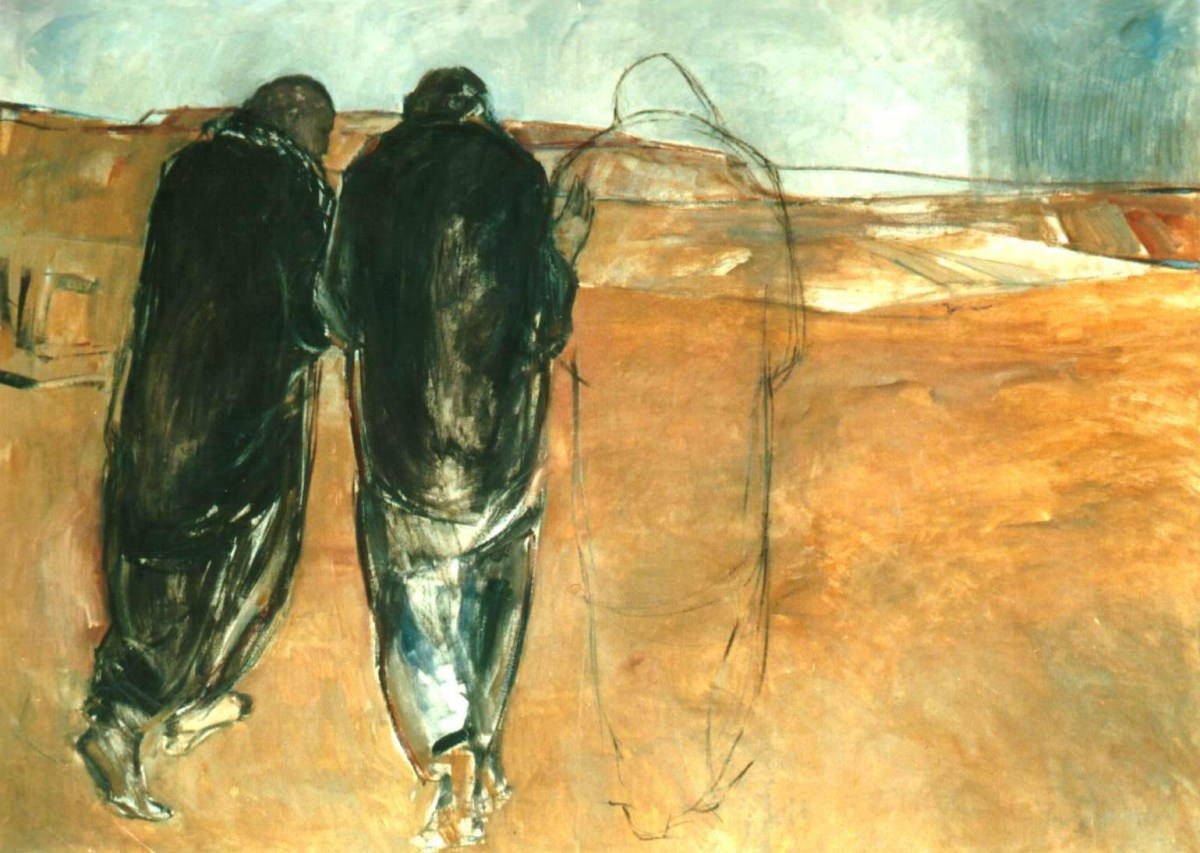
Now on that same day two of them were going to a village called Emmaus, about seven miles from Jerusalem, and talking with each other about all these things that had happened.
While they were talking and discussing, Jesus himself came near and went with them, but their eyes were kept from recognizing him. And he said to them, “What are you discussing with each other while you walk along?”
Yes, we all have done that … walking with a friend, chatting amiably, and nodding in a friendly way to an acquaintance as they join us. Being friendly; being neighbourly.
They stood still, looking sad. Then one of them, whose name was Cleopas, answered him, “Are you the only stranger in Jerusalem who does not know the things that have taken place there in these days?”
But how could he not know what has happened? The world has been turned upside down. From jubilation to catastrophe, in just a week. Everyone knows. Everyone we know. Where has he been?
He asked them, “What things?” They replied, “The things about Jesus of Nazareth, who was a prophet mighty in deed and word before God and all the people, and how our chief priests and leaders handed him over to be condemned to death and crucified him. But we had hoped that he was the one to redeem Israel.”
Hopes. Ah, yes, hopes. How we had hoped. All for nothing, now. Shattered. Destroyed. Lost, never to be retrieved. We have no hopes remaining. None.
“Yes, and besides all this, it is now the third day since these things took place. Moreover, some women of our group astounded us. They were at the tomb early this morning, and when they did not find his body there, they came back and told us that they had indeed seen a vision of angels who said that he was alive. Some of those who were with us went to the tomb and found it just as the women had said; but they did not see him.”
It is evidence-based, you see. The evidence is clear. No body. Gone. Not a sign to be seen. And a message that confirmed what they had clearly seen. Believe the women. They don’t lie. He has gone. It is devastating. There is no hope. Just devastating.
Then he said to them, “Oh, how foolish you are, and how slow of heart to believe all that the prophets have declared! Was it not necessary that the Messiah should suffer these things and then enter into his glory?” Then beginning with Moses and all the prophets, he interpreted to them the things about himself in all the scriptures.
The scriptures. Our scriptures. Stories and songs, oracles and omens, commandments and commissionings … yes, all of that, but nothing about a suffering Messiah … a Messiah entering into glory … no, when the Messiah comes, the world will be transformed, and we will all know it. It will be perfectly evident. But what difference is there now? Noting. Only shattered hopes, broken dreams, frustrated yearnings … just dark, dark gloom. … … What will the scriptures say to us about that?
As they came near the village to which they were going, he walked ahead as if he were going on. But they urged him strongly, saying, “Stay with us, because it is almost evening and the day is now nearly over.” So he went in to stay with them. When he was at the table with them, he took bread, blessed and broke it, and gave it to them.
So sitting at table, sharing in bread, mulling over the events, drinking the wine, talking about dashed hopes, seeing where slivers of hope might glimmer before us … at least, we can try this … weary, dejected, uncertain as we are. A moment of recognition? Surely not?? Could it be? I wonder … … …
Then their eyes were opened, and they recognized him; and he vanished from their sight.
The scriptures … the table … he took and blessed, he broke and shared … he spoke words familiar, his actions so familiar … explanations making sense, opening the scriptures, opening our minds and understanding, opening our eyes … could it be? was it true? is this real? what to think???
That same hour they got up and returned to Jerusalem; and they found the eleven and their companions gathered together. They were saying, “The Lord has risen indeed, and he has appeared to Simon!” Then they told what had happened on the road, and how he had been made known to them in the breaking of the bread.
Such an experience — never to be expected — opening up new possibilities — such an experience!!
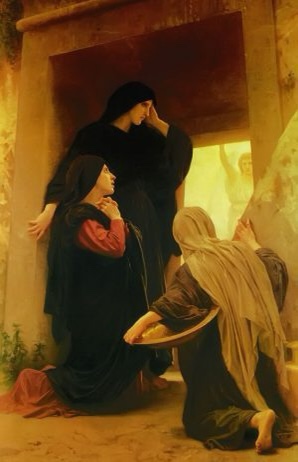
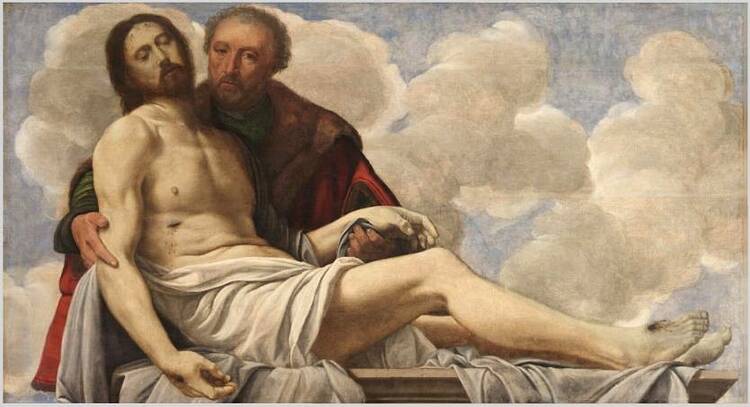
Jesus has died. His body has been handed over to followers, placed in a tomb, and left for the Sabbath. By tradition, the body would next be anointed with spices. Normally, the role of anointing a body of a deceased person is undertaken by women. Perhaps the reference to washing the body of Tabitha after her death (Acts 9:37) refers to this?
Josephus describes the rites relating to the body of the young Jonathan III Aristobulus, a High Priest who was murdered in 35 BCE. After his death, there was “great preparation for a sepulchre to lay his body in; and providing a great quantity of spices; and burying many ornaments together with him (Antiquities 15.4). This was a lavish provision for a high status person; we can deduce, by analogy, that similar funeral rites were offered to the bodies others of lesser status on their death.
Indeed, two of the Synoptics note this practice: when the women came to the tomb, they “bought spices, so that they might go anoint him” (Mark 16:1); they came, “taking the spices that they had prepared” (Luke 24:1; see also 23:55–56). Matthew, by contrast, simply states that the women “went to see the tomb” (Matt 28:1); there is no mention of spices in this version, where the focus is more on the claim that the disciples stole the body (Matt 27:64–66; 28:13–15).
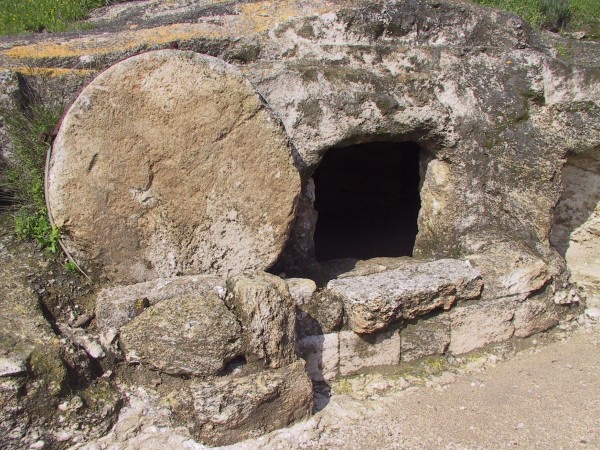
This anointing of the body was to be done, at the first possible opportunity, after the Sabbath. Yet, although the women come to the tomb, prepared to anoint the body (Mark 16:1–2), they are curiously unprepared with any plan to roll away the stone that had been placed over the mouth of the tomb (Mark 16:3; perhaps this inferred at Luke 24:1–2 ?).
Matthew, of course, tells of the exact moment that “an angel of the Lord, descending from heaven, came and rolled back the stone and sat on it” (Matt 28:2). This is one of two dramatic apocalyptic events that Matthew recounts. When the curtain in the temple is torn in two, the scene evokes the apocalypse: the earth shook, the rocks were split, the tombs were opened, the saints were raised (27:51–53).
So, when the women arrive at the tomb, and the angel rolls back the stone, there is another such moment; “his appearance was like lightning, his clothing white as snow” (28:3); the guards at the tomb “shook and became like dead men” (28:4). Both scenes evoke the apocalyptic scenario that Matthew has had Jesus point to before his arrest (24:29–31, referencing Isa 13:10–13).
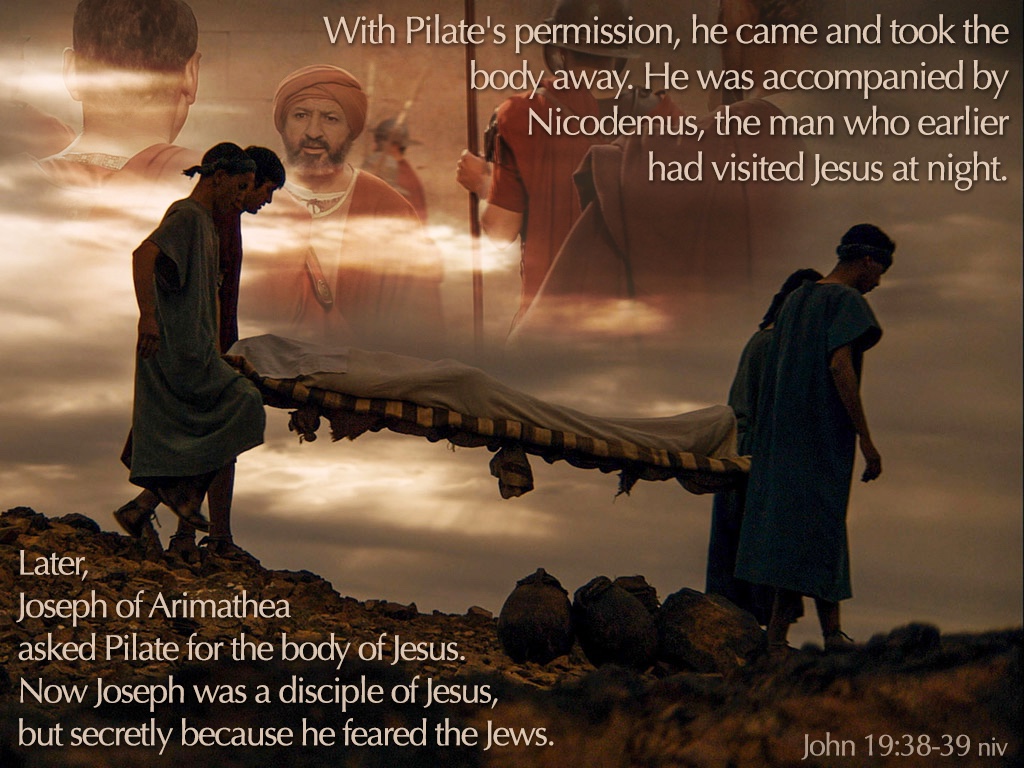
In John’s Gospel, by contrast, there is an interesting twist. John reports that the anointing of the body was undertaken immediately by the two men who had taken custody of the body of Jesus—Joseph of Arimathea, “who was a disciple of Jesus, though a secret one because of his fear of the [Jewish authorities]” (John 19:38), and Nicodemus, “who had at first come to Jesus by night” (19:39).
The two men had a large amount of “myrrh and aloes, weighing about a hundred pounds”, which they wrapped “in linen cloths, according to the burial custom of the Jews” (19:40). I can’t find a specific reference that substantiates what those burial customs were in the first century (the relative dearth of historical sources for this time is a regular problem encountered in biblical studies). There are laws relating to this from later centuries. Did they apply in the first century?
James McGrath, in his book on “The Burial of Jesus: History and Faith”, 2008 (see https://www.amazon.com/Burial-Jesus-History-Faith/dp/1439210179) argues that “the account in Mark’s Gospel itself seems to suggest that some of the concerns of later Jewish laws preserved in rabbinic sources existed at the time of Jesus”—laws such as not leaving the body exposed overnight, not giving the body of the deceased to the family immediately, and placing the body in a nearby tomb used for the bodies of those executed. He thinks that later changes to the story reflect the discomfort and embarrassment of the earliest followers of Jesus regarding the burial of Jesus; an hypothesis that has much merit.
The story of the anointing of the body of Jesus this grows over time; the respect accorded to Jesus has been overlaid across the bare narrative of the earliest account. The notion that the body of Jesus could be left out for the vultures, or thrown into a communal grave, is anathema to the faithful Jewish followers of Jesus.
Powerful figures step into the story, to request the body and deal reverently with the body. The story grows in each telling, with another small element being added, to ensure that the holiness of the body of Jesus is maintained. Even in the despair of death, the story claims the importance of Jesus. Such is the power of the storytelling amongst the earliest followers of Jesus.
There are many scenes, and much close description, of the events that took place in Jerusalem in the days leading up to the death of Jesus, in the year 33CE) by most scholarly reckoning). We have already seen some differences in the way that the very last moments of Jesus, on the cross, are reported. But what happened after Jesus died?
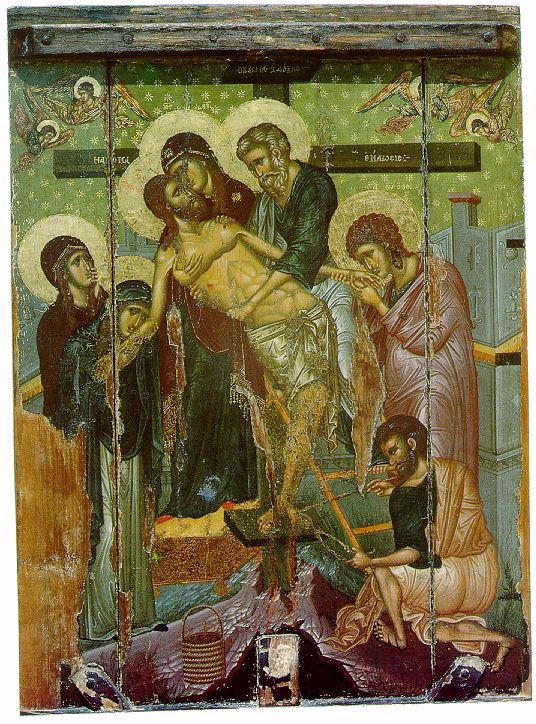
What takes place immediately after Jesus utters his last words, and dies, is reported with reasonable consistency across all four canonical Gospels. All four canonical Gospels report that a request for the body of Jesus is made of Pilate by Joseph of Arimathea; Pilate permits Joseph to take the body, the body is handed over, and it is reverently placed in a tomb. See https://johntsquires.com/2022/03/18/joseph-of-arimathea-rich-and-righteous-devout-and-a-disciple-of-jesus/
By contrast, the Gospel of Peter (a second century document, written to counter some emerging “heresies”) claims that “the Lord screamed out, saying: ‘My power, O power, you have forsaken me.’ And having said this, he was taken up.” (Gosp. Peter 19). This was presumably his soul departing into heaven, for the body of Jesus was given to Joseph and placed in a tomb (Gosp. Peter 23–24). For the text of this Gospel, see http://www.earlychristianwritings.com/text/gospelpeter-brown.html
The earliest account of the actions of Joseph is found in Mark’s account. “Then Joseph bought a linen cloth, and taking down the body, wrapped it in the linen cloth, and laid it in a tomb that had been hewn out of the rock; he then rolled a stone against the door of the tomb” (Mark 15:46).
The action of Joseph would accord with the instruction in the Hebrew Torah: “When someone is convicted of a crime punishable by death and is executed, and you hang him on a tree, his corpse must not remain all night upon the tree; you shall bury him that same day, for anyone hung on a tree is under God’s curse. You must not defile the land that the LORD your God is giving you for possession.” (Deut 21:22-23). Joseph, by requesting the body, demonstrates his fidelity to Torah.
I am indebted to James McGrath for drawing this text to my attention; he has canvassed many of these issues in his book on “The Burial of Jesus: History and Faith”, 2008; see https://www.amazon.com/Burial-Jesus-History-Faith/dp/1439210179. Dr McGrath notes that Mark’s account tells us that “Jesus’ disciples were not in a position to accord Jesus an honourable burial … a pious Jewish leader named Joseph of Arimathea made sure that Jewish law was observed”. He cites a note in Josephus’ Jewish War that indicates this was a practice known elsewhere. As Josephus puts it, “the Jews are so careful about burial rites that even malefactors who have been sentenced to crucifixion are taken down and buried before sunset” (Jewish War, 4.317).
Whether the governor, Pilate, would have been amenable to this specific request, is dubious—given that the bodies of criminals who died by crucifixion were regularly cast into a communal pit outside the city, or there bodies were left out in the open for vultures to pick over. There was no honouring of the lives of criminals for the Romans. However, as the Torah prescribes an early burial of a dead body, it may well be that Joseph, a righteous man, and Nicodemus, a member of the Sanhedrin, would have been pressing Pilate to ensure that they were able to adhere to that commandment (Deut 21:22–23, cited above).
The first thing that we know about the tomb, in Mark’s earliest account, is that it was a tomb hewn out of rock (Mark 15:46). When Matthew takes this account and retells it, he adds two striking details: first, the tomb belonged to Joseph; and second, it had not yet been used. Matthew reports that “Joseph took the body and wrapped it in a clean linen cloth and laid it in his own new tomb, which he had hewn in the rock; he then rolled a great stone to the door of the tomb and went away” (Matt 27:59–60).
That Joseph owned the tomb may well have been inferred in Mark’s account, but Matthew makes it explicit. That it was a previously unused tomb is new information. Again, James McGrath argues that this added detail was an apologetic argument added because of difficulties with the story; the addition is “an attempt by later followers of Jesus to honour Jesus in their depiction of the burial, in a way his disciples had been unable to in historical reality”. The tomb, he maintains, in contradiction to the explicit claim in the text, was actually not owned by Joseph.
Luke includes this detail in his account: when Pilate permits Joseph to claim the body of Jesus, “he took it down wrapped it in a linen cloth, and laid it in a rock-hewn tomb where no one had ever been laid” (Luke 23:53). Luke, like Mark, makes no direct statement as to whether Joseph owned the tomb. It is the pristine, unused character of the tomb that he highlights. Could this be a reference to the significance of Jesus? He is accorded an honour, as God’s holy one, of being interred in a pure, unused tomb. Matthew makes sure we know that he was wrapped in a clean linen cloth and placed in a new tomb; both details undergird this apologetic claim about Jesus.
Luke does not indicate that Joseph was doing this because he was a disciple of Jesus; he is simply “a good and righteous man” (Luke 23:50), perhaps in the same way that Elizabeth and Mary “were righteous before God, living blamelessly according to all the commandments and regulations of the Lord” (Luke 1 6)—that is, a faithful and devout Jew.
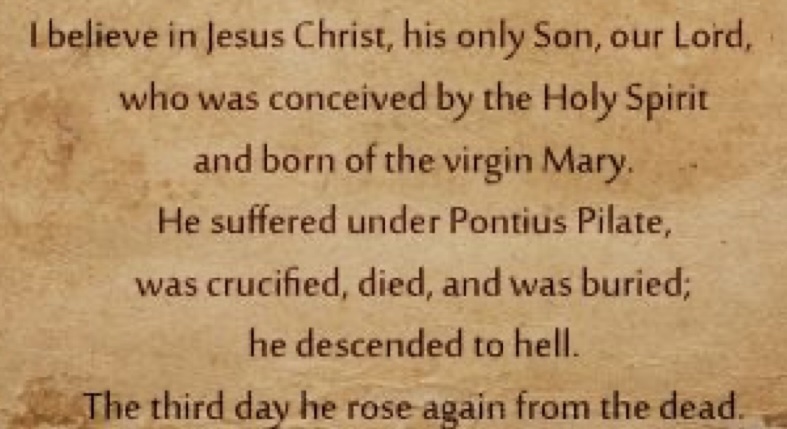
Of course, in the Apostles Creed (shaped not by the original apostles but in a later time), there is a statement that Jesus “was crucified, died, and was buried; he descended to the dead”.
This affirmation was presumably included on the basis of the claim in the first letter attributed to Peter, that Jesus, as a spirit, “went and made a proclamation to the spirits in prison” (1 Pet 3:19), the later statement that “the gospel was proclaimed even to the dead” (1 Pet 4:6), and the reference in Ephesians, a later circular letter attributed to Paul, that Jesus “descended into the lower parts of the earth” (Eph 4:6).
There is, however, no reference to this journey to the underworld (the so-called Harrowing of Hell) in any of the Gospel narratives. The symbolism that these anonymous apostles develop is not evident in any way in the Gospels. The implication is, rather, that the spirit of Jesus goes to be with God in a heavenly realm, even as his body is dealt with in the earthly sphere.
There are many scenes, and much close description, of the events that took place in Jerusalem in the days leading up to the death of Jesus, in the year 33CE (by most scholarly reckoning). The scene of his death is portrayed by all four evangelists.
Mark reports that, when Jesus was drawing near to his death, “darkness came over the whole land until three in the afternoon” (Mark 15:33) and, after he had uttered his last words, “the curtain of the temple was torn in two, from top to bottom” (15:38).
Luke repeats this, bringing the two happenings together into one moment of time, before Jesus utters his final words: “darkness came over the whole land until three in the afternoon, while the sun’s light failed; and the curtain of the temple was torn in two” (Luke 23:44–45). For both evangelists, the death of Jesus was a moment of high drama, underlined by these unnatural happenings.
Matthew repeats the words and the order found in Mark (Matt 27:45, 51) but adds a graphic happening—“the earth shook, and the rocks were split; the tombs also were opened, and many bodies of the saints who had fallen asleep were raised” (27:51–52).
The narrator continues, breathlessly, jumping ahead in the story: “after his resurrection they came out of the tombs and entered the holy city and appeared to many” (27:53). It’s a striking element, more noteworthy because it is neither explicitly told nor hinted at by any other canonical evangelist. But for Matthew, the moment of death brought to the fore the apocalyptic turmoil of God’s direct intervention in history, signalled by the earthquake, the seismic fissure, and a premature resurrection of saints.
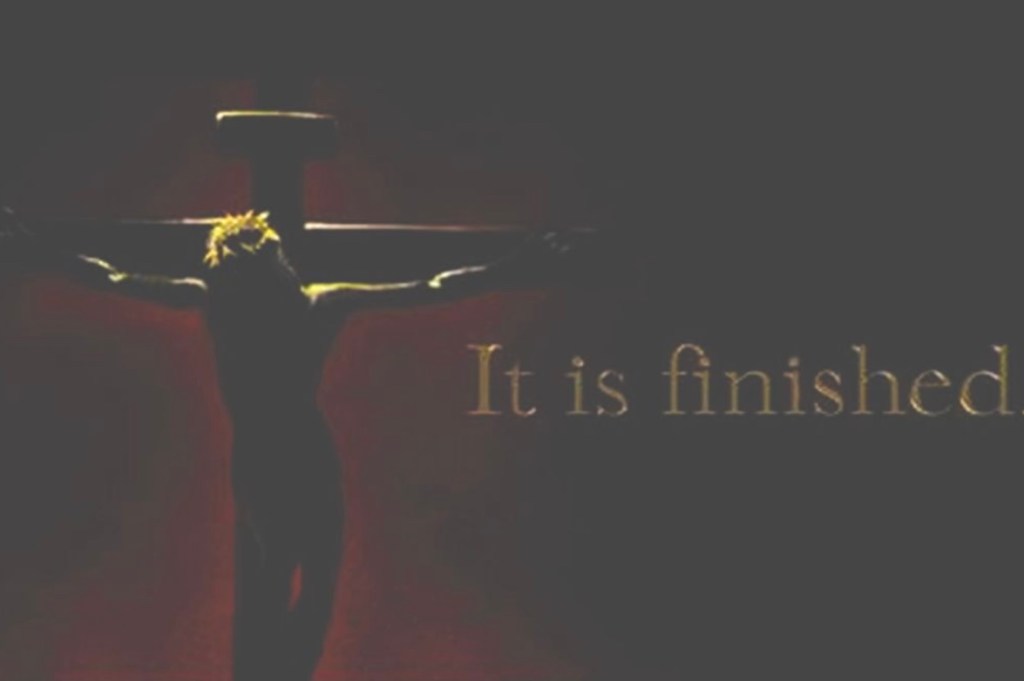
Quite by contrast, the Johannine version reports no darkness over the land, no tearing of the temple curtain, no earthquake, and certainly no opening of to,bs and no resurrected saints walking the streets! John simply reports that Jesus, thirsting, was given wine, and “when Jesus had received the wine, he said, “It is finished.” Then he bowed his head and gave up his spirit.” (John 19:30). It is a most serene ending.
Each writer indicates that Jesus spoke words moments before his death; just as there are differences relating to the way Jesus died, so there are three rather different versions of the last words spoken by Jesus just before he died. Mark says that Jesus “cried out with a loud voice, “Eloi, Eloi, lema sabachthani?” which means, “My God, my God, why have you forsaken me?”” (Mark 15:34); soon after this, he “gave a loud cry and breathed his last” (15:37).
The words on the lips of Jesus come from Psalm 22, which is one of a group known as the psalms of the righteous sufferer (a group often identified as also including Psalms 27, 67, and 109). Jesu, in his pain and anguish, is drawing on his religious tradition; the psalm he quotes is most apposite for what he is experiencing at that moment.
The version of Jesus’ last words, reported by Mark, is followed almost exactly by Matthew, writing his book of origins some years after Mark had completed his writing. (One relatively minor difference is that Mark quotes the psalm in Hebrew, the formal language of scripture, whereas Matthew renders it in Aramaic, the vernacular of Jesus.)
Luke also has Jesus quoting a psalm, but it has a very different tone. “Father, into your hands I commend my spirit” (Luke 23:46, quoting Ps 31:5) has a very different feel—it depicts a man going to his death with certainty, knowing his fate, assured that he will be received by God. It has a heroic feel, with the key figure almost choosing his time of death at the climactic moment in the story.
Indeed, Luke portrays this scene as a moment of theatre (the NRSV refers to “the crowds who had gathered there for this spectacle”, 23:48). Immediately after Jesus utters his last words, says Luke, “having said this, he breathed his last” (23:46). His manner of dying evokes praise to God from the centurion standing watch by his cross (23:47).
John places just one solitary Greek word on the lips of Jesus at his last moment; it needs three words to render it in English (“it is finished”, or “it is completed”, or “it is fulfilled”; John 19:30). This, too, has a sense of acceptance, a recognition by Jesus that all the he had been undertaking had now been completed.
“The hour has come for the Son of Man to be glorified” (John 12:24); it was “his hour … to depart from this world and go to the Father” (13:1), the hour when the Father would “glorify your Son so that the Son may glorify you … by finishing the work that you gave me to do”, as Jesus prays just before his arrest (17:1, 4). The hour had come; the work was done; all was complete. The moment was calm and serene; Jesus “bowed his head and gave up his spirit” (19:30).
Three different perspectives on the significance of the work of Jesus, placed into his mouth at the moment of death, by three different authors, providing their own accounts of his life and importance.
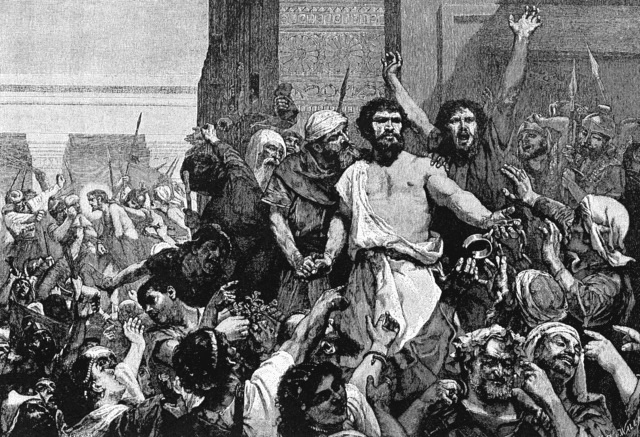
“So Pilate, wishing to satisfy the crowd, released Barabbas for them; and after flogging Jesus, he handed him over to be crucified” (Mark 15:15). Each of the four canonical Gospels report that there was a chance that Jesus of Nazareth might have been released, and not sent to his death on the cross; and that Barabbas was released in his place.
Is this factual reporting? Did this actually happen in real historical time? Or was it a fable, a myth, a story “made up” in the telling? Barabbas appears in all four Gospels (Matt 27:15–26; Mark 15:6–15; Luke 23:13–25; John 18:39–40). What are we to make of him?
Certainly the actual death of Jesus was an event that happened in real historical time. Although some critics have disputed this, the evidence is clear that Jesus did exist, and that he did actually die. The year 33 is the year that is normally identified as the year of his death. See https://www.patheos.com/blogs/keithgiles/2022/04/did-jesus-even-exist/
I
In thinking about this story, there are a number of elements to consider. The name Barabbas is the first of these. It is an Aramaic name, combining two nouns: bar, meaning son, and abba, meaning father. So he is “the son of the father”—a name replete with symbolism, especially when he is placed alongside Jesus of Nazareth, son of God.
Indeed, the third century writer, Origen, in his Commentary on Matthew (ch 27, para 17), indicates that he had access to versions of Matthew’s Gospel that identified Barabbas as “Jesus Barabbas”. This strengthens the symbolic power of this figure and suggests that he might have functioned as an “alternative Jesus”, a literary device, to invite the reader to see the choice available to the crowd, and by extension, to consider their own choice in relation to Jesus: a kind of ancient altar call, “whom do you choose: Jesus, son of the father, or Jesus, the Son of God?”
Some interpreters suggest that perhaps there might be an allusion to the Israelite ritual of the scapegoat, in which one sacrificial goat is released whilst another bears the weight of sin as an atoning substitute (Lev 16:8-10; 23:27–32). In the Gospels, one son is released on behalf of the people; but this person is not the true “son of the [F]ather”; rather, the true son of God is forced to his death, which is later interpreted as a death that does carry the weight of Israel’s sin, in the manner of the scapegoat. It’s an ironic, dramatic depiction of the scapegoat process. Perhaps.
II
The status of Barabbas is a second factor to consider. Mark describes him as “a man [who] was in prison with the rebels who had committed murder during the insurrection” (Mark 15:7). The word used to describe this “insurrection”, stasis, has the sense of a violent uprising. A word from the same root is used to describe those in prison with Barabbas—“rebels”.
The word stasis had long been used to describe the civil wars that broke out within the Greek city-states, often because of economic inequalities, social conflicts, and class struggle. Barabbas, it would seem, had been implicated in such an uprising; he was imprisoned with others (rebels) who had taken part in such an uprising, and he had committed murder in the course of this insurrection.
Matthew describes him, more succinctly, as “a notorious prisoner” (Matt 27:16); the word used here, desmion, has a less dramatic force, for it is the usual term for a prisoner, with no sense of political agitation attached (for instance, it is applied to Paul when he is in prison at Acts 16:25, 27; 23:8; 25:14, 27; 28:17; Phlmn 1:1, 9; Eph 3:1; 4:1; 2 Tim 1:8). Matthew has reduced the tension and removed the dimension of political agitation in his version.
John is similarly succinct, describing Barabbas as “a bandit” (John 18:40). However, the word used here, lēstēs, is loaded with political weight. It can refer to a robber, or a bandit; or it can have a more focussed sense of a rebel, a revolutionary. The former meaning is conveyed by the word in the parable of the Good Samaritan (Luke 10:30, 36) and in the words of denunciation that Jesus speaks to the money changers and buyers and sellers in the temple forecourt (Mark 11:17; Matt 21:13; Luke 19:46). Such people are robbers who steal by surprise attack or by their unscrupulous practices.
It is, however, the more political sense of the word lēstēs that is more clearly in view in John’s narrative. Josephus, writing his account of the war that took place between the Romans and the Jews in 66–74 CE, uses this word forty two times; most of these instances describe either men who lay in wait beside the roadside to rob passing travellers (like in the familiar parable), or, more often, individuals who took part in the counter-insurgency against the Romans.
Their actions are violent and threatening; such men would work in groups, attack individuals (often in a crowd, which gave a protective cover to the perpetrator), acting with brutal violence. A number of times, in the reports of Josephus, these are violent actions undertaken for political purposes, by members of the group known collectively as the Zealots. The political overtones of the word are strong.
In such company, then, we find Barabbas (John 18:40) and, by implication, Jesus; certainly, the inscription that is placed over Jesus on the cross (Mark 15:26; Matt 27:37; Luke 23:38; John 19:19) refers to him as “King of the Jews”, a political attribution without doubt. Even when (as John reports) the chief priests questioned this wording, Pilate insisted: “what I have written, I have written” (John 19:20–22).
Indeed, those crucified alongside Jesus are described with the same term for the political insurgents described by Josephus, lēstēs, in two Gospel accounts: “with him they crucified two bandits (lēstas), one on his right and one on his left” (Mark 15:27; so also Matt 27:38, repeated at 27:44). Luke modifies his description of these two (Luke 23:23:33, 39; they are kakourgoi (literally, those who do wrong). Nevertheless, the NRSV and NIV both render this as “criminals”.
In fact, Jesus had already opened the door to a politicised interpretation of his mission, when he was approached by Temple soldiers in the garden, kissed in betrayal by Judas, and handed over to be taken to the authorities. Seeing the soldiers arrive, he said, “Have you come out with swords and clubs to arrest me as though I were a bandit (lēstēn) ? (Mark 14:48; the same word is also used at Matt 26:55; Luke 22:52). Jesus had already indicated that he knew that the Roman and Jewish authorities were perceiving that he was a political agitator.
Luke intensifies the negative portrayal of Barabbas, alongside of the way that he strengthens the innocence of Jesus. He depicts Barabbas as “a man who had been put in prison for an insurrection that had taken place in the city, and for murder” (Luke 23:19, repeated in 25). The word translated as insurrection is the Greek term stasis, already noted above as referring to a political uprising. Barabbas, in this account, is clearly a political agitator, prepared to commit murder in the course of his violent activism.
Luke provides this description in the context of the accusation that the chief priests made to Pilate against Jesus, that “he stirs up the people by teaching throughout all Judea, from Galilee where he began even to this place” (23:5), and the later indication by Pilate, that they had presented him as “one who was perverting the people” (23:14). This sounds clearly political; Jesus was being accused of being an activist, an agitator, at the very least.
Both times that this claim is raised, Pilate declares Jesus innocent; yet the same declaration is never made in relation to Barabbas. Luke’s apologetic intent is to lessen the blame placed on the Romans for the the death of Jesus, and to divert attention towards the Jews, as the prime instigator of this action against Jesus. This is yet another indication of political intent in the way that Jesus is perceived.
Did this incident involving Barabbas actually take place? The historical implausibility of this incident is a third important factor. The fact is that there is no evidence of such a custom in other ancient sources. Certainly, some conservative scholars have searched carefully and drawn from other texts incidents that they claim provide an analogy to the Barabbas incident.
An incident retold by Josephus is cited to indicate that the liberation of a prisoner did once take place (Antiquities 20.9.3); but this one-off occurrence did not reflect an annual custom. There are far too many dissimilarities to the Gospel narrative. It fails to support the Barabbas story. Another incident recounted by Livy (History of Rome 5.13) does tell of a temporary release of prisoners from their manacles; but this was done, under difficult conditions, in an attempt to appease the gods, to bring a change in the weather. It’s quite different from the Barabbas situation.
A third alleged parallel, from Roman law, is in the Papyrus Florentinus (61, 59ff). However, the prisoner who is released in this scene, after pleas from the crowd, had not yet been declared guilty (as Barabbas had), and it was not at a Jewish festival or even a Roman feast day (as Barabbas was). The parallels are feeble. There is also a complex argument mounted in relation to a single phrase in the tractate of the Mishnah dealing with Passover (Pesahim 8:6), but the parallels claimed and the way in which the text needs to be treated both mitigate against there being any relevance to the Barabbas story.
So I think that the ways that these incidents are claimed to provide a demonstration of the existence of a Paschal pardon such as the Gospels report are not at all clear. The more such scholars trawl the evidence and mount their arguments to say that this could really have happened, the more I recall the famous words, “methinks they doth protest too much” (adapted from Shakespeare’s Hamlet).
There is a clear political improbability to the account found in all four Gospels. Pilate was a ferocious and fearless leader whose strength of character is made clear by the numerous times that, according to Josephus, he sent in his troops to quell an uprising, to scatter a crowd, to squash a rebellion.
American scholar Bart Ehrman writes that Pilate “was a brutal, ruthless ruler with no concerns at all for what the people he governed thought about him or his policies. He was violent, mean-spirited, and hardheaded. He used his soldiers as thugs to beat the people into submission, and he ruled Judea with an iron fist.” (See https://www.patheos.com/blogs/rationaldoubt/2019/05/pilate-released-barabbas-really/)
Pilate would not have been cowed by the crowd in Jerusalem for Passover; had he wanted to act, he would simply have ordered his troops to attack, scatter the crowd, and disperse the built-up tension. The Gospel accounts of Pilate, across all four narratives, are improbable; the apologetic purpose (to show the Romans in a better light, to avoid being seen as an agitator or rebel, and to place the blame on the Jewish authorities) becomes clear, when we read in this way. We need to bear all of this in mind, as we read and listen to the familiar narrative this Easter, and each Easter.
All four Gospels report the arrival of Jesus in the city of Jerusalem, at the festival of Passover (Pesach), one of the three great Jewish festivals. Jesus enters the city along with countless other pilgrims travelling the winding route to Jerusalem, climbing the hills outside the city as they make their way to the capital of ancient Israel.
All four Gospels report this scene. This year, as we are in Year C of the Revised Common Lectionary, we hear the account offered in the orderly account of the things coming to fulfilment amongst us (Luke 19;28-40). As we hear this account, we can well imagine that he air was filled with the noisy, bustling sounds of these pilgrims, excited with anticipation as they make their way to offer their sacrifices to the Lord God, residing in the Holy of Holies, the inner court of the Temple.
Passover was a central religious celebration. Passover, the festival of unleavened bread, recalled the hurried departure of the people, long ago, from captivity in Egypt (Exodus 13). This was the foundational myth at the heart of Jewish identity: a story of the liberating actions of God, in the face of the military might of the Egyptians, the liberation of the people from their time of enforced slavery, as they set out, across the wilderness, to the land they had been promised (Exodus 14–17 and beyond).
Passover was also a thoroughly politicised procession of pilgrims, wending their way to the holy city, the city of peace. At Passover, lambs were roasted and eaten as a sign of the liberation of the people; bitter herbs were sprinkled eaten as a reminder of the bitterness of the slavery that they were escaping. Passover celebrated the intervention of God into the social and political situation of those ancient Israelites. So, the Passover pilgrims celebrate this ancient political action of God as the fundamental paradigm for what their faith means for them: “Yes, God is for us! Yes, God will save us!”
Passover was therefore a time of high alert for the Roman soldiers, looking out from the Antonia Fortress next to the temple, watching with care every move that was taking place in the approaches to the city. They knew, from many years’ experience, that the city swelled with the influx of pilgrims each year at this time, as the pilgrims made their way towards Jerusalem. They knew of the potential for dispute and conflict that simmered underneath the crowds. They knew that the pilgrims, would be attuned to the charged political consequences of this festival.
So the prophet from Nazareth in Galilee entered the city. Luke reports that he had long been preaching the good news of the kingdom of God (Luke 4:43; 8:1; 9:11), a kingdom for the poor and hungry (6:20–21), a kingdom that was coming soon (9:27) and was even in their midst (9:2; 10:9, 11; 11:20; 17:20–21).
This kingdom would be marked by God’s justice (13:28-30); those on the edge or cast out of society would be welcomed into the kingdom (14:13, 22). Jesus came into the city as the king, bringing peace in heaven, and glory in the highest heaven (19:38). The festival of Passover was a most appropriate time for him to enter the city and make his mark.
Contemporary re-enactments of this scene, taking place every year in worship services around the globe, depict it as a time of unbridled joy. That is faithful to the original scene–it was a time of high jubilation, as the people of Israel remembered their history. Children are often involved in re-enacting the “procession of palms”, walking alongside adults, waving their carefully-cut palm branches in the air. In churches with a commitment to high liturgy, those palm branches are carefully collected and stored for the following year, when they are burned to provide the ashes for the next Ash Wednesday service.
Some brave worship leaders even recruit animals to take part in the procession. To the joyful exuberance of the children, they may well add an element of unplanned chaos to the event! At any rate, there is often mention made of the striking juxtaposition of the high joy of Palm Sunday, to the sombre scene of the last meal on Maundy Thursday, and the devastating grief of the story retold on Good Friday. All of which is fair, and good.
What is perhaps not often addressed, either in the Liturgy of the Palms, or in the homilies and sermons on the story, is the deep sense of political intention that is embedded within the storyline. A number of elements in the story reflect this political dimension: the shouts of the crowd, the waving of branches (palm branches are specifically mentioned only in John’s account), the laying of cloaks on the ground, the choice of the animal on which Jesus rides: all of these would have had clear political resonances to the Jewish crowd (and perhaps would have been known to the commanders of the Roman soldiers).
I have written a series of blogs that canvass these aspects, which can be read as follows:
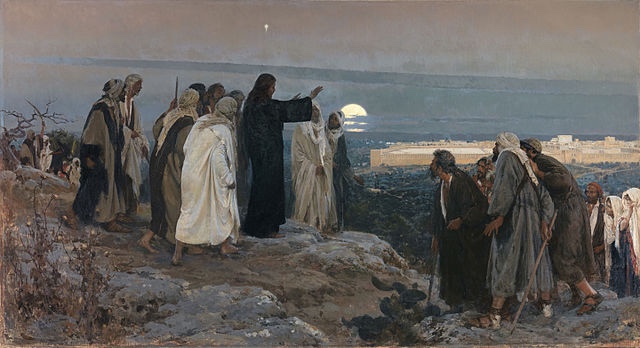
Today, tomorrow, and the next day, I must be on my way”, Jesus declares, “because it is impossible for a prophet to be killed outside of Jerusalem” (Luke 13:33). This is the central statement in the short but powerful Gospel passage offered by the lectionary this coming Sunday.
Jesus goes to Jerusalem. Before that, the earliest account of his life, the Gospel of Mark, devotes nine chapters to the time that Jesus spent travelling around Galilee. By tradition, that was a period of three years; although that timing actually derives from the three references to the annual festival of Passover in John’s Gospel (John 2:13; 6:4; 11:55).
During those nine Markan chapters, Jesus teaches and heals, tells parables and casts out demons. The section comes to a head with the report of Peter’s confession, that Jesus is the one chosen by God (Mark 8:27–29) and the account of Jesus being transfigured on the mountain, in the presence of Elijah and Moses (Mark 9:2–8).
After those nine chapters, Mark provides a succinct report of Jesus’s sole journey to Jerusalem in Mark’s account: Jesus “left that place and went to the region of Judea and beyond the Jordan; and crowds again gathered around him; and, as was his custom, he again taught them” (Mark 10:1).
The journey is noted—Jesus is suddenly “in the region of Judea, beyond the Jordan”, back where he was first baptised (Mark 1:5). The journey is swiftly left behind, as it is also in Matthew’s account (Matt 19:1). Jesus enters the city in short time (Mark 11:11; Matt 21:10).
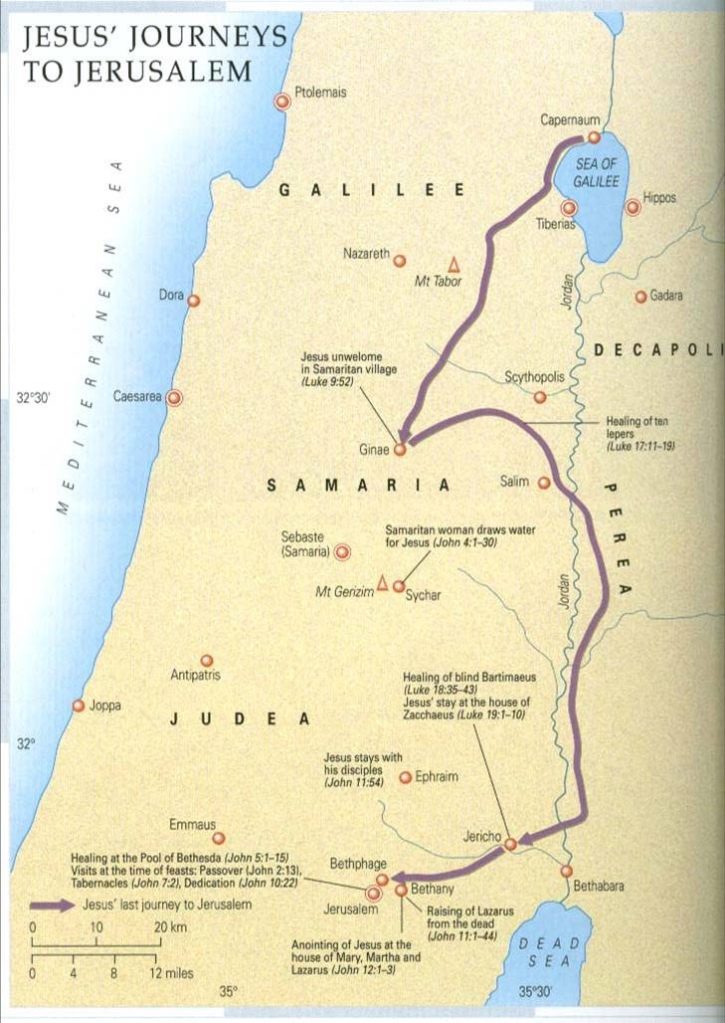
Not so in Luke’s orderly account of the things that have been fulfilled amongst us (1:1–4); the journey to Jerusalem begins at 9:51 (“when the days drew near for him to be taken up, he set his face to go to Jerusalem”), but takes ten full chapters to narrate. Jesus does not actually begin to approach Jerusalem until 19:11. Even then, his entry to the city is drawn out; Jesus tells a parable (19:11–27), rides down from the Mount of Olives on a donkey (19:28–38), weeps over the city (19:39–44), then when he enters the city, he goes immediately to the temple (19:45).
In the almost ten full chapters that he takes to narrate the journey that Jesus took, with his disciples, Luke includes much material that is found only in his narrative. Jesus continues to teach his followers and heal the sick, telling parables and casting out demons. He continues his practice of eating at table with others and broadens his group of disciples who are commissioned to cure the sick and proclaim that “the kingdom of God has come near to you” (10:9).
His decision to travel to Jerusalem is reported in terms of weighty theological significance (9:51-56). “When the days drew near for him” might literally be rendered, “in the filling up to completion of the days”; the verb is an intensifying compound of pleroō, meaning to come to fruition or to be filled up.
Pleroō is the same verb used at the start of Luke’s narrative, at 1:1, where it also has a heavy theological sense (the things that God was bringing to fulfilment or completion). It also appears at the end of the narrative, when Jesus refers everything written about him “in the law of Moses and the prophets and the psalms” being fulfilled in accord with divine necessity (24:44).
The word appears also within the body of Luke’s narrative in relation to the fulfilment of scripture (4:21), the fulfilment of the time of the nations (21:24), and the fulfilment of the kingdom (22:16). And quite significantly, the exact same phrase introduces Luke’s account of the day of Pentecost (Acts 2:1). It is a signal that something very important is taking place.
The phrase “to be taken up” translates one word, analēmpsis, which could also be translated as “ascension”; the verb is used of Jesus rising into the clouds at Acts 1:2, 11, 22. This, of course, is the climactic moment at the end of the Gospel (Luke 24:50–51) and the opening scene of the second volume (Acts 1:6–11). It is already in view here, much earlier in the story.
When we read that Jesus “set his face to go to Jerusalem” (9:51), the language indicates a steely resolve, a fixed determination, to head towards the city. The verb used here stēridzō, is found in the LXX to refer to God’s determination (Lev 17:10; 20:3–8; 26:17; Isa 50:7; Ezek 14:8; 15:7) and it forms a consistent refrain in God’s directions to the prophet Ezekiel (Ezek 4:3, 7; 6:2; 13:17; 20:46; 21:2; 25:2; 28:21; 29:2; 35:2; 38:2). Jesus turns to Jerusalem with a fixed prophetic intent; when he arrives in the city, it is “a visitation from God” (19:44).
The reason for this unflinching resolution is provided in references along the journey. The ominous words that Jesus had spoken after he was transfigured on the mountain, “the Son of Man is going to be betrayed into human hands” (9:44), is expanded in a fuller teaching about the fate in store for Jesus (18:31–33). It is necessary for him to head to Jerusalem, for the fate that waits there for him; “it is impossible for a prophet to be killed outside of Jerusalem” (13:33).
Curiously, there are relatively few references to Jerusalem along the way (9:53; 13:22, 32–35; 17:11; 19:11). Luke is content to remind us, from time to time, of the destination; but the main focus is on the journey itself, the encounters and instructions, the table talk and story telling along the way. The purpose is to embed the importance of faithfulness, even as his disciples become aware of the cost involved in following Jesus.
Whilst journeying on the way to Jerusalem, Jesus tells parables about the responsible use of resources (12:13–21; 16:1–13; 16:19–31) and focusses on this in his encounters with an unnamed wealthy ruler (18:18–30) and a wealthy chief tax collector, Zacchaeus (19:1–10). He tells his followers about God’s extravagant compassion (15:1–32) and instructs them that they are to show this in their lives (10:29–37; 14:7–14, 15–24; 15:1–32).
These and other scenes wrap around a central passage providing direct teachings about the cost of discipleship: “whoever does not carry the cross and follow me cannot be my disciple … none of you can become my disciple if you do not give up all your possessions” (14:25–35). This is the heart of the journey for the disciples, just as the lament at the midpoint of the journey reveals its meaning for Jesus: “it is impossible for a prophet to be killed outside of Jerusalem” (13:33–35). The journey is a deeply difficult undertaking, both for Jesus, and for his followers.
So there is to be no looking back when the kingdom of God beckons (9:59–62). Jesus regularly reminds his followers of the need to be prepared (12:35–46, 49–56; 17:7–10; 17:20–37; and see 21:34–36). He returns again and again to his message of the kingdom (10:8–12; 11:14–23; 12:31–42; 13:18–21; 13:24–30; 16:16; 17:20–21; 18:15–17, 24–25, 29–30; 19:11).
On the journey, Jesus maintains his insistent focus on this central element of his message, emphasised from the very beginning—the coming kingdom of God (cf. 4:43; 6:20; 8:1–3, 10; 9:11). The charge to proclaim this kingdom, issued first to the twelve (9:1–2), is then extended to the seventy (10:8–12). The message is urgent; the kingdom is imminent (9:27; 11:20; 17:20–21; 21:31).
The journey requires deep wells of faith (12:22–31; 17:5–6; 18:1–8), exemplified by the healed Samaritan leper, no less (17:19), as well as the healed blind man outside Jericho (18:35–53). Jesus expects nothing less than a firm commitment to follow (9:57–62; 13:36–38). Yet even though the ominous fate in store for him in Jerusalem had been clearly articulated (6:22; 9:22; 9:44; 11:30; 18:31–33), the disciples, sadly, remained resolutely ignorant of the matter; notice the triple conviction in Luke’s summation: “they understood nothing … what he said was hidden from them … they did not grasp what was said” (18:34).
Has the journey been worth it? Or has it all been futile? Luke’s storytelling skills offer layer upon layer for our understanding of what it means to follow Jesus on the journey.
This is the sixth and final post in a series offering a number of imaginary letters from the ancient world, only recently “discovered”. The letters, we might imagine, reflect what the recipient of the “orderly account of the things that have come to fulfilment” (what we know as the Gospel of Luke), the man named Theophilus, might have written to the author of that work, as he received sections of the “orderly account” in sequence.
Theophilus to Luke, greetings. I am returning soon.
I was astonished to receive your brief note to the effect that you had in fact been raised a Jew. I had no idea! This explains your own depth of understanding of things Jewish. And to think that you have laboured so hard and long to acquire a knowledge of the great writers and thinkers of our Greek civilisation—I am filled with awe.
I must now think harder about the various people who come to the regular gatherings of our group, where we hear the good news of Jesus proclaimed. I wonder just how diverse a group we actually are? The fact that I have come only of late to this gathering has meant that there is much that I do not know.
I look forward to being able to talk with you face to face about the things that we have touched on in our letters to one another.
I am happy to hear that you have continued writing so productively, and I will of course be keen to read your second volume once I have returned.
Greetings to all.
*****
Questions for discussion: The use which Theophilus makes of Luke’s Gospel changes in the course of these six letters. What different stages can you identify in the way that he uses the Gospel?
These letters suggest one way that the story of Jesus became known to those outside of the Jewish culture and religion. Can you think of other ways that this may have happened?
Do you think that Luke was a Jew? What would support this idea? What might count against it?
This is the fifth post in a series offering a number of imaginary letters from the ancient world, only recently “discovered”. The letters, we might imagine, reflect what the recipient of the “orderly account of the things that have come to fulfilment” (what we know as the Gospel of Luke), the man named Theophilus, might have written to the author of that work, as he received sections of the “orderly account” in sequence.
I give thanks to God, etc., etc. But I must turn swiftly to the matter at hand!
After the success of my earlier reading from your narrative at table with my companions, I am happy to report that we have held another reading. I was of the opinion that we ought to pick up at the point where we had stopped last time, but two of my companions indicated that they were about to leave the city, and they strongly desired to hear the conclusion of your story before they left.
I, of course, was grateful for the opportunity to convey more of the story to my fellow-diners; and I was anxious that they hear the good news about how, even after Pilate sentenced Jesus to death, God was able to raise him from the dead. So together the company of diners agreed that I would read two selections from the later part of your work.
The first selection was of the teachings of Jesus in the temple (Luke 20:1– 21:4). I chose this so that my audience might appreciate the wisdom of God which was manifested in the words of Jesus, and hear how he was able to refute all objections placed in front of him. How I admired this capacity to better any opponent!
The second selection was of the death and burial of Jesus (23:26–56) and of the way the good news of the risen Lord became known (24:1–53). By this means, I was able to avoid difficult questions about some of the final teachings of Jesus, when he predicted the destruction of the temple and spoke about the cosmic catastrophes yet to come; and about the precise status of Jesus, for he was crucified as a rebel under the Roman authority of Pilate.
Instead, I was able to focus on the valiant and stoic manner in which he faced death, as you especially emphasise in your narrative of that sombre moment. And, of course, I was able to convey the essence of the good news about Jesus, that God raised him from the dead in a sovereign act of grace.
However, I must recount to you the striking turn which was taken in the course of our discussion. I had not realised at the start of our meal that there was a person at table who was present with us for the first time in this group. I suspect that he had been properly introduced to the group before I arrived; to my shame, I confess, I had been delayed and did not arrive until the group was already eating.
It was by sheer grace that my host welcomed me to the table and that those present agreed to the reading from your work, as we had earlier agreed. I was afraid that my late arrival might have prejudiced this agreement. But I digress. It turns out that this visitor was not only a learned man (as was soon evident from his contributions to the discussion) but also a man very familiar with the scriptures of the Jewish people.
Here I must make another confession. In your narrative, you make many references to such scriptures (as I now recognise). Sometimes these are direct references, which you occasionally signal as such; elsewhere, as I have learned, you subtly allude to portions of these scriptures. Indeed, I now appreciate the depth of your learning; for not only do you show a profound understanding of Greek history writing, but also a fine knowledge of the prophecies of the ancient Jews.
Of course, I had always understood that it was natural for Jesus to make reference to these scriptures, for they were his sacred books. He was, as you so clearly demonstrate, a Jew. But now, I am happy to say, I also have an appreciation (I believe) of how you have made appropriate use of these scriptures in your work.
What I learned from our visiting scholar can be traced to the explicit references to these scriptures in the final section of your work: your description of the conversation about the scriptures which Jesus had at table with the travellers in Emmaus (Luke 24:25–27), and especially the words of Jesus spoken to the group of his followers who were gathered in Jerusalem: “everything written about me in the law of Moses, the prophets and the psalms must be fulfilled” (24:44). Aha—there it is again, that potent little word, “must be fulfilled”! At any rate, our discussion this past evening ventured into new fields for me.
The learned visitor was struck with these references to the prophets, and asked me no end of questions about this matter. As I had the whole of your manuscript with me, I was able, with only a little difficulty, to find other instances where Jesus, in your narrative, had referred directly to the prophecies in those scriptures, and also to the prophecies which he himself uttered. I must say, I was surprised just how many such instances there were throughout your work!
What was of fascination to myself, and I hope to others at the meal, was the way in which this scholar drew comparisons with the scriptures of Israel. Apparently, the idea that a prophecy such as an oracle bought from an oracle monger, or the reading of entrails, or the explanation of an omen, might be fulfilled. This idea is not at all strange to us; it is also to be found in the narratives of the Jews.
This information was not known to the company as a whole, and so the visitor found that he had acquired a platform for explaining the history of the Jewish people to an interested audience. This was not what many of us would have anticipated at the start of the evening! Indeed, what struck me as the man expounded his theme, was just how familiar some of this was to me.
Strange, for I am not known as one who religiously reads the Jewish scriptures! Yet I realised that the patterns and structures of the stories told and analysed by our learned companion were very close to some of the patterns and structures that I had encountered in my reading of your narrative.
The way that Jesus uttered prophecies and they came to pass later in the narrative—this is very close to the Jewish pattern. So too, the explicit note of scriptural prophecies coming to fulfilment in the narrative itself—this formulaic patterning of events is also akin to the Jewish pattern. I began to wonder just how much of this you might have been aware of. Were you consciously writing in the style of the Jewish historians?
Towards the end of the evening, the visitor spoke of the work of an acquaintance of his, who is presently writing in Rome, in an attempt to tell us gentiles about the Jewish people. Apparently this writer, one Flavius (Josephus) by name, makes abundant use of this pattern of prophecy and fulfilment in the course of his narrative.
And, I should tell you, he also deploys the motif of divine providence to interpret the story of the Jewish people to the learned Romans. What a striking coincidence; the very same features that we find in your work! Do you, perchance, know of this Flavius? Or is it simply that you and he have both been trained in the same manner, with due attention to the essential features of Greek history writing and Jewish scripture interpretation? A fascinating question, I dare say, even if I have posed it myself!
Incidentally, it must be noted that it was with no little surprise that I learned, at the conclusion of our dinner and discussion, that the visiting scholar at our table was himself a Jew. I had imagined that he was, like you, a gentile scholar who had made a special study of the Jewish scriptures; but apparently he was raised himself as a Jew, and he bears the bodily marks to prove this. (I must assure you that this last statement is made on the basis of a statement made by the man himself, not on any personal inspection which I carried out!)
Although I had long heard of such a phenomenon, this was in fact the first time that I had encountered a Jew who displayed no clear sign of his religion in the way that he behaved. To all intents and purposes, he acted like one of us—until the discussion turned to prophecies from scripture, I must add. Back home, the Jews in our city are much more distinctive; and even those of Jewish origin in our own group are quite noticeably so, I believe.
Well, I must conclude. I confess that I had not before thought so hard about the matters which I have canvassed above. I am glad, now, that we were able to discuss these things around the table in the house of Themistocles. It has shed a new light on your work.
I wonder, now, just how much of this was your intention as you wrote your story of Jesus? Perhaps we should add this to our list of things to discuss when we are able to meet face to face in Achaia.
Greetings to all.
*****
Question for discussion: what is the importance, for you, of the parts of scripture that say, “this fulfilled the scriptures”?
This is the fourth post in a series offering a number of imaginary letters from the ancient world, only recently “discovered”. The letters, we might imagine, reflect what the recipient of the “orderly account of the things that have come to fulfilment” (what we know as the Gospel of Luke), the man named Theophilus, might have written to the author of that work, as he received sections of the “orderly account” in sequence.
I give thanks to God for all good things granted to you.
I write briefly, so that this letter might accompany the rather more lengthy report and request, concerning my business affairs. I will not bore you with those details. But I do want you to know that now I understand what was meant by the words which you wrote that Jesus spoke: “you are witnesses of these things” (Luke 24:48).
Eumenes is thinking deeply about Jesus, whilst some others are at least interested to hear more about him. For myself, I am thinking much more about things than I have ever done before—even, I must say, to the point of feeling that I am able to mount a defence, an apologia, of what it is that I believe. I am most grateful that your narrative of Jesus has had this effect in me, and in those whom I have already mentioned. I will tell you more at a later date.









 An Informed Faith