Skip to content

An Informed Faith

John T Squires

An Informed Faith

Category: An Orderly Account: Gospel of Luke

Questions about Christmas: interrogating the biblical story 2

Questions about Christmas: interrogating the biblical story 2

For questions 1–4, see https://johntsquires.com/2021/12/19/questions-about-christmas-interrogating-the-biblical-story-1/

5 Was Mary riding on a donkey?

In the traditional Christmas story it is a dutiful donkey, a faithful beast of burden, which provides the means of transport for the pregnant Mary on its back. However, nowhere in any Gospel does it say that Mary rode a donkey on that journey. The whole journey is given in three short verses: “All went to their own towns to be registered. Joseph also went from the town of Nazareth in Galilee to Judea, to the city of David called Bethlehem, because he was descended from the house and family of David. He went to be registered with Mary, to whom he was engaged and who was expecting a child.” (Luke 2:3-5).

One of the main reasons why a donkey is associated with the Christmas story is because of the way the story is told in The Protoevangelium of James, an ancient account of Mary’s life that probably originated in the 2nd century, but was not included in the Bible. That text reads: “And there was an order from the Emperor Augustus, that all in Bethlehem of Judæa should be enrolled. And Joseph said: “I shall enroll my sons, but what shall I do with this maiden? How shall I enroll her? As my wife? I am ashamed. As my daughter then? But all the sons of Israel know that she is not my daughter.” “The day of the Lord shall itself bring it to pass as the Lord will.” And he saddled the ass, and set her upon it; and his son led it, and Joseph followed.”

So although this story is an early part of Catholic and Orthodox Church tradition, it does not have the same authority for Protestant believers because it is not in the Bible. Nevertheless, it is quite plausible that Joseph may have obtained a donkey to carry Mary. Donkeys were a common form of transportation (see Matt 21:1–8; John 12:14–15); there are many references to travelling by donkey in Hebrew Scriptures (such as Gen 22:3–5; 44:13; Num 22; Josh 15:17–19; Judges 1:14; 19:28; etc).

Perhaps the strongest influence might have been the story of Moses, travelling from Midian back to Egypt: “So Moses took his wife and sons, put them on a donkey, and went back to the land of Egypt; and Moses carried the staff of God in his hand” (Exod 4:20). So, did Mary travel on a donkey? Quite possibly.

However, most modern biblical scholars say that it is more likely that the Holy Family traveled in a caravan of people. Chris Mueller, in an article for Ascension Press, paints a much different picture. He writes: “Mary and Joseph were not the only ones taking the journey. More than likely, the routes between cities were crowded with travelers. Nobody would consider taking a trip like this alone. It would not have been safe, as the territory between towns was not policed and bandits would have been a real concern. The people probably traveled in great caravans for convenience and safety. Mary and Joseph would have been among the vast migration of people.”

6 Was there really no room left at the local motel?

Reading Matthew’s account, we have no clues at all about what happened when Jesus was born. Luke gives just a few details, informing us that Mary “laid him in a manger, because there was no place for them in the inn” (Luke 2:7). But that, still, is a rather sparse account. We don’t have the length and weight of the baby and the precise time of birth, like so many proud parents today post on social media!

What was this “inn” that was the birthplace, as Luke maintains, for the infant Jesus? The Greek word used here, κατάλυμα (kataluma), is relatively rare in the New Testament, but appears in many places in ancient Greek literature. It refers usually to a guest chamber or lodging place in a private home. The same term appears in Luke 22:11 with the meaning “guest room,” and the verb derived from this noun appears in Luke 9:12 and Luke 19:7, where it means something like “find lodging” or “be a guest.”

Moreover, in the story of the Good Samaritan, when Jesus refers to the place where the injured traveller rests—clearly a commercial inn—a specific word meaning an inn frequented by travellers is used (pandokian; see Luke 10:34).

So Joseph and Mary were most likely hoping to find shelter with a family member in Bethlehem. That would make sense, given what we know of ancient life; in Jewish society (indeed, in all ancient Mediterranean societies), hospitality was very important. Travel to a town where members of the extended family lived would usually mean staying with them. Unfortunately for them, in the story, once they arrived, they found many other family members had arrived before them. So there was no room in the kataluma, the guest house in the family member’s home.

So banish thoughts of the local Best Western being overflowing, with its flashing neon “No Vacancy” sign. Luke’s story probably suggests that Joseph and Mary were planning to stay at the home of friends or relatives; but the home where they arrived was so full, even the guest room was overflowing, and so they had to be housed with the animals in a lower in the lower part of the house. That was the custom (to house animals in a special section of the house), and that, of course, would be where the manger was to be found.

7 Was Jesus really placed in an animal’s feeding trough?

If we continue to follow the story that Luke tells, then the newborn Jesus is placed into a manger, a trough normally used for feeding household animals. Joel Green believes that Mary and Joseph would have been the guests of family or friends, but because their home was so overcrowded, the baby was placed in a feeding trough. (Green, Luke, NITCNT, 128-29)

Sharon Ringe suggests that “others from a higher rung on the social ladder and in the hierarchy of obligations and honor that characterized Palestinian society had already claimed the space. Not even Mary’s obvious need could dislodge such a firmly implanted order of rights and privileges. Instead of having a guest room, then, Mary, Joseph, and the baby are left to spend their nights in Bethlehem in the manger area where the birth has taken place.” (Ringe, Luke: Westminster Bible Companion, 42)

There is even an old tradition going back to Justin Martyr (who lived 100–165CE), who says it occurred in a cave where animals were housed (Dialogue with Trypho 78). “But when the Child was born in Bethlehem, since Joseph could not find a lodging in that village, he took up his quarters in a certain cave near the village; and while they were there Mary brought forth the Christ and placed Him in a manger, and here the Magi who came from Arabia found Him. I have repeated to you what Isaiah foretold about the sign which foreshadowed the cave.”

Justin claims that by being born in a cave, Jesus fulfils the prophecy of Isaiah 33:16, “he shall dwell in the lofty cave of the strong rock; bread shall be given to him, and his water [shall be] sure”. However, although this verse refers to a cave, there is nothing at all about any birth in that cave.

Nevertheless, the story stuck; Origen refers to it in his work Against Celsus (“there is shown at Bethlehem the cave where He was born, and the manger in the cave where He was wrapped in swaddling-clothes. And this sight is greatly talked of in surrounding places”, 1.51). The cave as the place where Jesus was born is included in the narratives of the Protoevangelium of James (Joseph “found a cave there, and led her into it; and leaving his two sons beside her, he went out to seek a midwife in the district of Bethlehem”, 17–18) and the Gospel of Pseudo-Matthew (an angel “commanded the blessed Mary to come down off the animal, and go into a recess under a cavern, in which there never was light, but always darkness, because the light of day could not reach it”, ch.13).

Was the manger a feeding trough in a cave? or in an outhouse? Robert Tannehill returns to the story of the kataluma, noting that “moving to the manger might take only a few steps, if we assume a one-room farmhouse where the family quarters might be separated from the animal quarters only by being on a raised platform.” (Tannehill, Luke: Abingdon New Testament Commentaries, 65).

Darrell Bock writes that “in all likelihood, the manger is an animal’s feeding trough, which means the family is in a stable or in a cave where animals are housed.” (Bock, Luke: IVP New Testament Commentary, 55). Bock notes the rhetorical ploy of drawing a clear contrast between “the birth’s commonness and the child’s greatness”; perhaps this influenced Luke to provide this particular narrative detail?

So it is plausible that there were animals in near proximity when Jesus was born; the feeding trough suggests an animal shelter. The most commonly pictured animals in traditional nativities, the ox and donkey, are introduced in later apocryphal texts, and most likely draw from the statement by Isaiah that “the ox knows its owner, and the donkey its master’s crib” (Isa 1:3), even though this statement was spoken in a very different context.

*****

There are some longer and more technical discussions at https://www.psephizo.com/biblical-studies/jesus-wasnt-born-in-a-stable-and-that-makes-all-the-difference/ and http://www.hypotyposeis.org/papers/Carlson%202010%20NTS.pdf

*****

See also https://johntsquires.com/2021/12/21/questions-about-christmas-interrogating-the-biblical-story-3/

and https://johntsquires.com/2021/12/22/questions-about-christmas-interrogating-the-biblical-story-4/

Unknown's avatarAuthor John T SquiresPosted on December 20, 2021December 22, 2021Categories A Book of Origins: Gospel of Matthew, An Orderly Account: Gospel of Luke, Scripture and TheologyTags Christmas, Luke, Matthew, scripture, theologyLeave a comment on Questions about Christmas: interrogating the biblical story 2

Questions about Christmas: interrogating the biblical story 1

Questions about Christmas: interrogating the biblical story 1

1 Who was the first person to be told the news about the coming of the child Jesus? And where were they?

Was it Joseph? Or Mary? And were they in Nazareth? Or in Bethlehem?

According to Luke, it was in Nazareth, in the northern region of Galilee, that an angel named Gabriel appeared to Mary, to inform her that she would bear a child (Luke 1:26). That is different from the story told in Matthew’s Gospel, where an unnamed angel delivers the same message, not to Mary, but to Joseph, to whom she was engaged (Matt 1:18).

The location of the announcement in Matthew’s account is not specified, but it is reasonable to assume from the flow of the narrative that this took place in the southern region of Judah, in Bethlehem (Matt 2:1, 6). Matthew, having located the family initially in the southern city from the beginning, has no need of the story of a census and a forced trip from Nazareth to Galilee (Luke 2:1-4). The family is already in Bethlehem, another small village, but in the south, in Judea.

So we have two versions, with significant differences.

2 Were Joseph and Mary travelling while she was heavily pregnant?

The story told by Luke reports a widespread movement of the population that meant a pregnant Mary from Nazareth, accompanied by Joseph, had to travel afar and find lodging in the crowded town of Bethlehem just at the most inconvenient time—because “a decree went out from Emperor Augustus that all the world should be registered” (Luke 2:1).

There are historical problems with this story. Identifying the census as an actual historical event, and locating it accurately in time, both present challenges. There is no other record of such a Roman census at that time. King Herod, noted as ruling at Luke 1:5, and also at Matt 2:1, died in 4BCE, but Quirinius, who ordered the census noted in Luke’s account, began as Governor in 6 CE.

Even though the combined story has entered the popular mindset as a real event and provides a clear and compelling picture of the holy family as travelling far when Mary was at term, because of decisions made by political authorities, whether Herod or Quirinius, we can’t say that it actually took place. So the answer is, a very hesitant, maybe.

3 Was it actually a “silent night”?

No: it is not the case that “all was calm, all was bright”, that it was a “silent night”, that the cattle were gently lowing and “the little Lord Jesus … no crying did make”. Lots of travellers and inns that were full would surely mean the town was abuzz? This was no irenic scene, such as we see on Christmas cards and sing of in Christmas carols.

Mary giving birth would surely have meant that it was not, in fact, a silent night. Labour without any modern medication would have been primal and harsh. The arrival of the child was surely signalled by that first hearty cry of a newborn, piercing the other sounds of the noisy night.

Although the Bible is silent on the matter, the Quran reports of Maryam (Mary), “The labor-pains came upon her, by the trunk of a palm-tree. She said, ‘I wish I had died before this, and been completely forgotten’” (19:23). The Bible does not mention any labour pains or any physical pain in the birth narratives. But let us not think that it was a silent night—in all probability, it was very noisy!

See https://johntsquires.com/2019/12/18/no-crying-he-makes-get-real-puhhh-leeeease/

4 Was Jesus born in Bethlehem?

Matthew and Luke claim that Jesus was born in Bethlehem, in Judaea. No other biblical reference agrees with this, however. In fact, in his adult life, Jesus was known as “Jesus of Nazareth”, a town in Galilee (Matt 21:11; Mark 14:67; Luke 24:19; John 1:46; Acts 2:22). He is identified as a Galilean (Matt 26:69; Luke 23:5–7). There is no mention of his birth in Bethlehem outside the accounts of Matthew and Luke. His home is in Nazareth, and he spends almost all of his life in Galilee. The answer to this question is No.

So why do two writers claim that he is a Judean? One clue can be found in John 7:40–43, which indicates that Jewish people expected the Messiah to be born in Bethlehem, of the line of David. This view is based on the prophetic word of Micah 5:2, “from you, O Bethlehem Ephrathah, shall come forth one who is to be ruler in Israel”. This is precisely the way Matthew and Luke tell it. Jesus is born in Bethlehem. However, no other biblical writers know anything of this story.

It appears that Matthew and Luke have shaped their versions of Jesus’ birth so that it accords with traditional Jewish expectations. They do not recount precise historical information. Rather, they tell a story in such a way that it implicitly meets expectations about Jesus. And so, because he allegedly comes from Bethlehem in Judea, they can claim that he is the Messiah.

*****

See also https://johntsquires.com/2021/12/20/questions-about-christmas-interrogating-the-biblical-story-2/

https://johntsquires.com/2021/12/21/questions-about-christmas-interrogating-the-biblical-story-3/

https://johntsquires.com/2021/12/22/questions-about-christmas-interrogating-the-biblical-story-4/
Unknown's avatarAuthor John T SquiresPosted on December 19, 2021December 22, 2021Categories A Book of Origins: Gospel of Matthew, An Orderly Account: Gospel of Luke, Scripture and TheologyTags Christmas, Luke, Matthew, scripture, theology1 Comment on Questions about Christmas: interrogating the biblical story 1

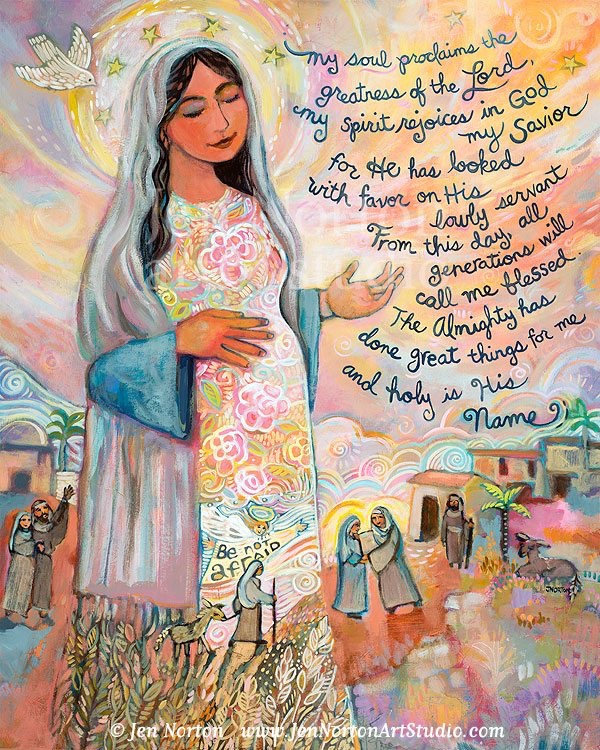
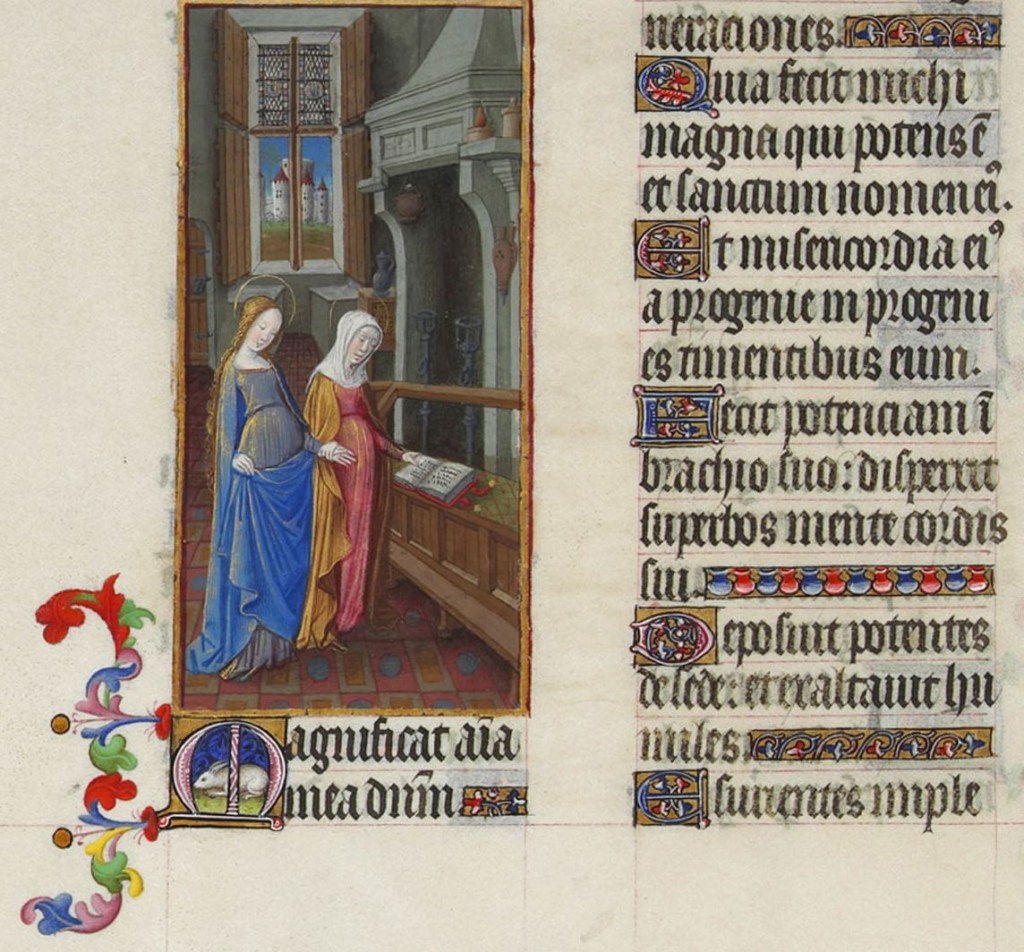
Magnificat: the God of Mary (Luke 1) is the God of Hannah (1 Sam 2) (Advent 4C)

Magnificat: the God of Mary (Luke 1) is the God of Hannah (1 Sam 2) (Advent 4C)

Last year, in following the passages for the fourth Sunday in Advent offered by the Revised Common Lectionary, I wrote about the scriptural resonances in the Annunciation—that scene when Mary is informed by an angel that she is pregnant and will bear a son (Luke 1:26–38). This is such a classic “Old Testament” scene. See

https://johntsquires.com/2020/12/14/advent-four-the-scriptural-resonances-in-the-annunciation-luke-1/
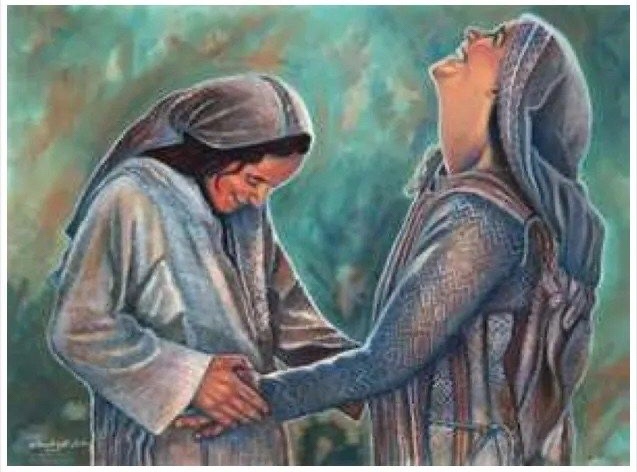
This year, for the fourth Sunday in Advent, the lectionary offers the Visitation—a scene that take place after the pregnant Mary travels to visit a town in the hill country of Judaea, in the house of Zechariah and his wife Elizabeth, an elderly relative of Mary (Luke 1:39–45). This scene also is rich with scriptural resonances.

More than this, the lectionary offers as the Psalm, the song which Mary sang after meeting Elizabeth—a song known by tradition as the Magnificat (1:46–55). It makes sense, of course, for a song that Mary most likely sang in Aramaic, and which is known to us from a Greek text, to be given a Latin title (not!). Such is the power of the western Roman Catholic Church, whose liturgy was in Latin for many centuries.

I

Providing the Magnificat as the Psalm for the week has a certain poetic justice. Although this is part of the New Testament, this hymn is certainly a song in the mode of the psalms, as they are found in the book of that name in Hebrew Scripture. Indeed, such psalms are found not only in the book of Psalms, but in other places in those scriptures. Songs in the manner of psalms are scattered throughout the stories of the lives of the people of Israel—including into the century we identify as “the first century” (CE).

Included in these psalms are some striking songs. The Song of Miriam and the Song of Moses, both sung after the crossing of the Red Sea, are psalms of thanksgiving (Exod 15:21, and 15:1–18), whilst the Song of Moses at the end of his life recounts the story of the people (Deut 32:1–43). The Song of Deborah celebrates the defeat of Sisera of Canaan (Judges 5), whilst there are two Songs of David outside the book of Psalms: a psalm of thanksgiving after a series of battles with the Philistines (2 Sam 22) and another thanksgiving psalm after the ark was set inside the Tabernacle in Jerusalem (1 Chron 16:8–36).

Some prophetic books include psalms, such as a psalm of Hezekiah after he had recovered from illness (Isa 38:9-20), a psalm sung by Jonah from the belly of the fish that had swallowed him (Jon 2:1–10), and a prayer of praise sung by Habakkuk (Hab 3).

And then, at the beginning of the story of Samuel, his mother, Hannah, offers a long prayer in the manner of psalms of thanksgiving (1 Sam 2:1–10). We heard this song just a few weeks ago, on the penultimate Sunday of Year B (Pentecost 33). This particular psalm is most important when we come to consider the song sung about a later prophet, Jesus, by his mother, Mary (Luke 1:46–55).

II

We know that Jesus is intensely Jewish in the Synoptic Gospels. The story about Jesus begins in the heart of Jewish piety, and continues apace within the life of the people of Israel through his lifetime.

The opening scene of the orderly account of the things fulfilled among us (Luke’s Gospel), set in Jerusalem in the Temple precincts, reveals a pair of righteous Jews who faithfully keep the commandments of God (Luke 1:5–6). The first person we meet, Zechariah the priest, is devoted to the service of God in the Temple (1:8–9).

His wife, Elizabeth, expresses an attitude of deep faith in God, accepting her surprise pregnancy as “what the Lord has done for me” (1:25). They are both described as “righteous before God” (1:6). Elizabeth’s relative, Mary, demonstrates a similar faith as she submits to a similar fate, bearing a child, with the words, “here am I, the servant of the Lord” (1:38).

In turn, the traditional hopes and expectations of the people are articulated in spirit-inspired hymns sung by Mary (1:46–55, known as the Magnificat), Zechariah (1:67–79, known as the Benedictus), and Simeon the righteous (2:29–32, known as the Nunc dimittis, or the Song of Simeon). These songs set the strongly Jewish tone of the opening chapters.

The key characters operate as people of deep faith. God’s Spirit is active in these scenes; Mary is “overshadowed” by the Spirit (1:35), whilst Elizabeth and Zechariah are both “filled” with the Spirit (1:41, 1:67). It is presumably that same Spirit which generates Elizabeth’s blessing of Mary and her unborn child (1:42, 45) as well as the prescient movement of the unborn John in Elizabeth’s womb, on meeting with Mary (1:44). In a subsequent scene, Simeon is “righteous and devout” (2:25); the Spirit “rested on him” (2:25), then “revealed to him” the words he then speaks (2:26) before “guiding him … into the temple” (2:27).

This is the same Spirit that has been active since the moment of creation (Gen 1:2), that was breathed into human beings (Gen 2:7), and that infuses every one of the creatures brought into being in God’s wonderful creation (Ps 104:24–30). It is this Spirit that has endowed individuals with leadership (Exod 31:2–3; Num 11:25–26; Deut 34:9; and a number of judges) and which has inspired prophets to proclaim the word of the Lord (Isa 61:1; Ezek 2:2; Joel 2:28–29).

See https://johntsquires.com/2020/12/27/a-light-for-revelation-to-the-gentiles-and-for-glory-to-your-people-israel-luke-2/

III

Mary stands in the long Jewish tradition of female singers. The story of the Exodus culminates in a short song from Miriam (Exod 15:21). Other females who sing of salvation at key moments in the story include Deborah (Judges 5:1–31), Hannah (1 Sam 2:1–10), and Judith (Judith 16:1–17). These are the victory songs of the oppressed.

The two scenes involving Hannah and Mary have a number of parallels. The language and the events resonate with each other across the centuries. It seems to me that the author of this orderly account (by tradition, Luke) is well-read and very capable in his writing style. This whole section is shaped to read like a Hebrew Scripture narrative. So, in my understanding of Luke 1–2, the author has been influenced by the story of Hannah as he tells the story of Mary.

Indeed, we note this in the way the two songs begin. Hannah commences by singing out “my heart exults in the Lord; my strength is exalted in my God” (1 Sam 2:1). This is deliberately echoed in Mary’s song, where she begins “my soul magnifies the Lord, and my spirit rejoices in God my Saviour” (Luke 1:46).

Hannah describes God as the Holy One (2:2) and the Most High (2:10). Holy One is a term applied to God in the Writings (Ps 71:22; 78:41; 89:18; Prov 9:10; Job 6:10; Sir 4:14; 23:9; 53:10; 47:8; 48:20) and by the Prophets (Is 1:4; 5:19, 24; and a further 24 times; Jer 50:29; Ezek 8:13; Hos 11:9, 12; Hab 1:12; 3:3). Of course, Holiness was a central element of piety in ancient Israel, exemplified by the Holiness Code of Leviticus (Lev 11:44–45; 19:2; 20:7–8; see also Deut 7:6; 14:2, 21; 28:9). The followers of Jesus are instructed to consider themselves as God’s holy people (1 Cor 3:17; 6:19; Eph 5:25–27; Col 1:22; 3:12; Heb 3:1; 1 Pet 1:13–16; 2:5, 9) and to live accordingly.

Most High is also a very common way that God is described and addressed—23 times in the Psalms (Ps 7:17; 9:2; 18:13; etc) and a number of times elsewhere (Gen 14:17–24; Num 24:16; Deut 32:8; 1 Sam 2:10; 2 Sam 22:14; Isa 14:14; Lam 3:35, 38; Dan 3:26; 4:2, 17, 24, 25 and more; Hos 11:7; and also Wis Sol 5:15; 6:3; and 45 times in Sirach—4:10; 7:9, 15; 9:15, etc). It appears as a description of God in early Christian writings (Mark 5:7; Luke 1:32, 35, 76; 6:35: 8:28; Acts 7:48: 16:17).

Mary uses a similarly-familiar term, the Mighty One (1:49), which also is a biblical name for God (Gen 49:24; Ps 45:3; 50:1: 52:1; 132:2, 5; Isa 1:24; 49:26; 60:16; Sir 46:5–6, 16; 51:12), and then she goes on to affirm, “holy is his name”, alluding directly to the title of Holy One that Hannah has used.

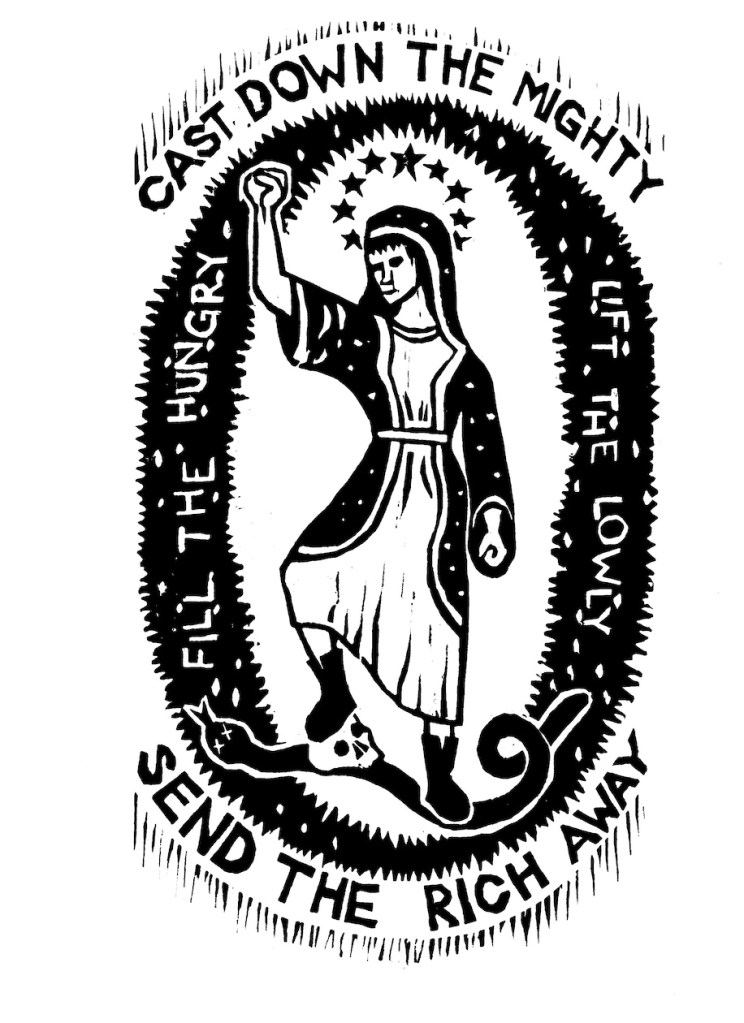
Hannah’s declaration that “my strength is exalted in my God” (2:1) is echoed in Mary’s affirmation that “he has shown strength with his arm” (1:51). That strength is demonstrated in a series of claims made by Mary, regarding the proud, the powerful, and the rich, in contrast to the lowly and the hungry (1:51–53).

The clear juxtaposition of these categories, and God’s obvious preference for the latter group, is another way in which Mary’s song echoes and replicates Hannah’s song. Hannah’s “he brings low, he also exalts” (2:7) is expanded by Mary, “he has brought down the powerful, he has lifted up the lowly” (1:52). “He raises up the poor from the dust, lifts the needy from the ash heap, to make them sit with princes and inherit a seat of honour” (2:8) is reworked by Mary into her note that God “has filled the hungry with good things and sent the rich away empty” (1:53).

In these ways, it is clear that the righteous-justice desired by God for the people of God will in fact be evident; “the Lord will judge the ends of the earth” (2:10), sings Hannah; “he has helped his servant Israel in remembrance of his mercy” (1:54) is how Mary sings it. Both justice and mercy are fundamental aspects of the being of God which are worked out in the ways that God engages with the people of Israel. God is envisaged and experienced in the same way in each of these songs. The God of Hannah continues to be the God of Mary. These two songs strongly confirm that reality.

IV

What Hannah is celebrating is that God will be at work in the events of her time. In particular, despite her barren state (1 Sam 1:2, 5–8), Hannah prayed regularly for a son (1 Sam 2:10–18) and was blessed with just such a child: “in due time Hannah conceived and bore a son” (1 Sam 2:20, 27). Likewise, what Mary anticipates is that God will demonstrate the ongoing fulfilment of the promises made to Israel in the birth of her child given to her, despite her state as a virgin (Luke 1:27, 34).

Both newborn sons are dedicated to the Lord: Hannah’s son was dedicated as a nazirite (1 Sam 2:11, 22, 24–28), Mary’s son is recognised as the one who will have “the throne of David given to him” and who will “reign over the house of Jacob forever” (Luke 1:32–33). The son of Hannah is dedicated in “the house of the Lord at Shiloh” (1 Sam 2:24); the son of Mary is circumcised (Luke 1:21) and then taken “to Jerusalem to present him to the Lord” (Luke 1:22). The two stories mirror each other in the same way that the two songs run in parallel to each other.

So Mary affirms that “all generations will call me blessed” (1:48), in the same way that Leah exclaimed, “blessed am I! for the women will call me blessed”. (Gen 30:13). Her song ends with the claim that the promise being fulfilled is made “to Abraham and to his descendants forever” (1:55), evoking the prayer of David, that the Lord “shows steadfast love to his anointed, to David and his descendants forever” (2 Sam 22:50). The exalting of the anointed is also noted at the very end of the song sung by Hannah (1 Sam 2:10).

V

Dietrich Bonhoeffer, a German pastor and theologian who was executed by the Nazis, declared that the Magnificat, this song of Mary, “is at once the most passionate, the wildest, one might even say the most revolutionary advent hymn ever sung. This is not the gentle, tender, dreamy Mary whom we sometimes see in paintings… This song has none of the sweet, nostalgic, or even playful tones of some of our Christmas carols. It is instead a hard, strong, inexorable song about the power of God and the powerlessness of humankind.” (From a sermon during Advent on December 17, 1933; see http://cdn.bakerpublishinggroup.com/processed/esource-assets/files/1780/original/8.40.Luke_1.46-55__The_World%27s_First_Advent_Hymn.pdf?1524151427)

Martin Luther declared, “the mightier you are, the more must you fear; the lowlier you are, the more must you take comfort.” Pope John Paul II noted the scholarly view that this song, as well as the songs by Zechariah and Simeon, are songs of the anawim (the faithful poor), whose songs offer “glorious praise of God … thanksgiving for the great things done by the Mighty One, the battle against the forces of evil, solidarity with the poor and fidelity to the God of the Covenant” (in a general audience on Psalm 149 on Wednesday 23 May 2001; see https://www.vatican.va/content/john-paul-ii/en/audiences/2001/documents/hf_jp-ii_aud_20010523.html)

Sister Elizabeth Johnson sums it up well,

“The Magnificat is a revolutionary song of salvation whose political, economic, and social dimensions cannot be blunted. People in need in every society hear a blessing in this canticle. The battered woman, the single parent without resources, those without food on the table or without even a table, the homeless family, the young abandoned to their own devices, the old who are discarded: all are encompassed in the hope Mary proclaims”.

See https://uscatholic.org/articles/201101/mary-mary-quite-contrary/ and http://compassreview.org/summer14/3.pdf

*****

My colleague Sarah Agnew has written this fine reflective poem on Mary’s Song: https://praythestory.blogspot.com/2018/12/marys-song-holy-is.html

Another colleague, Glen Powell, has just composed and recorded this wonderfully fresh version of this ancient song: https://youtu.be/S1ypHkyZvU0

Unknown's avatarAuthor John T SquiresPosted on December 7, 2021December 18, 2021Categories An Orderly Account: Gospel of LukeTags scripture; theology; Luke; Advent; justiceLeave a comment on Magnificat: the God of Mary (Luke 1) is the God of Hannah (1 Sam 2) (Advent 4C)

John the baptiser’s call for ethical, faithful living (Luke 3; Advent 3C)

John the baptiser’s call for ethical, faithful living (Luke 3; Advent 3C)

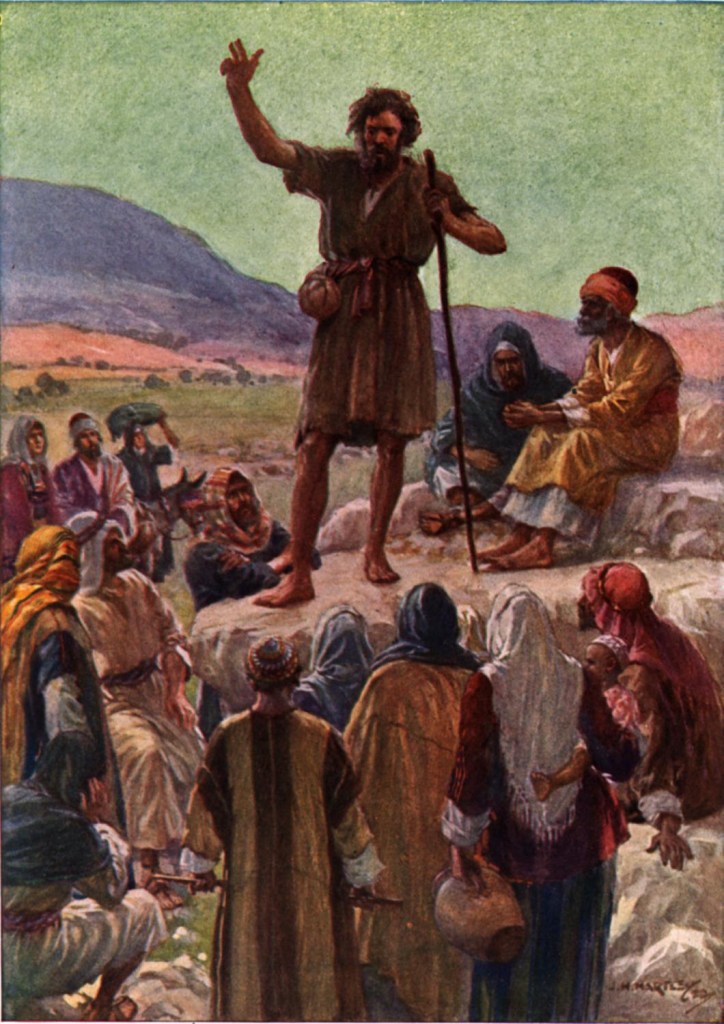
The Gospel passage offered by the lectionary this coming Sunday (Luke 3:7–18) continues the narrative about John the baptiser, who attracted crowds of people to listen to his proclamation of “a baptism of repentance for the forgiveness of sins” (3:3) and to be dunked into the river in response to that message (3:7, 21).

This passage from the orderly account of the things being fulfilled among us (the Gospel of Luke) reports the message of John, as he makes clear the pressing need to take responsibility for living an ethical and faithful life. Insight comes as we compare the words attributed to John in this narrative, with the parallel accounts in the beginning of the good news of Jesus (the earlier narrative attributed to Mark) and the book of origins (a later work attributed to Matthew).

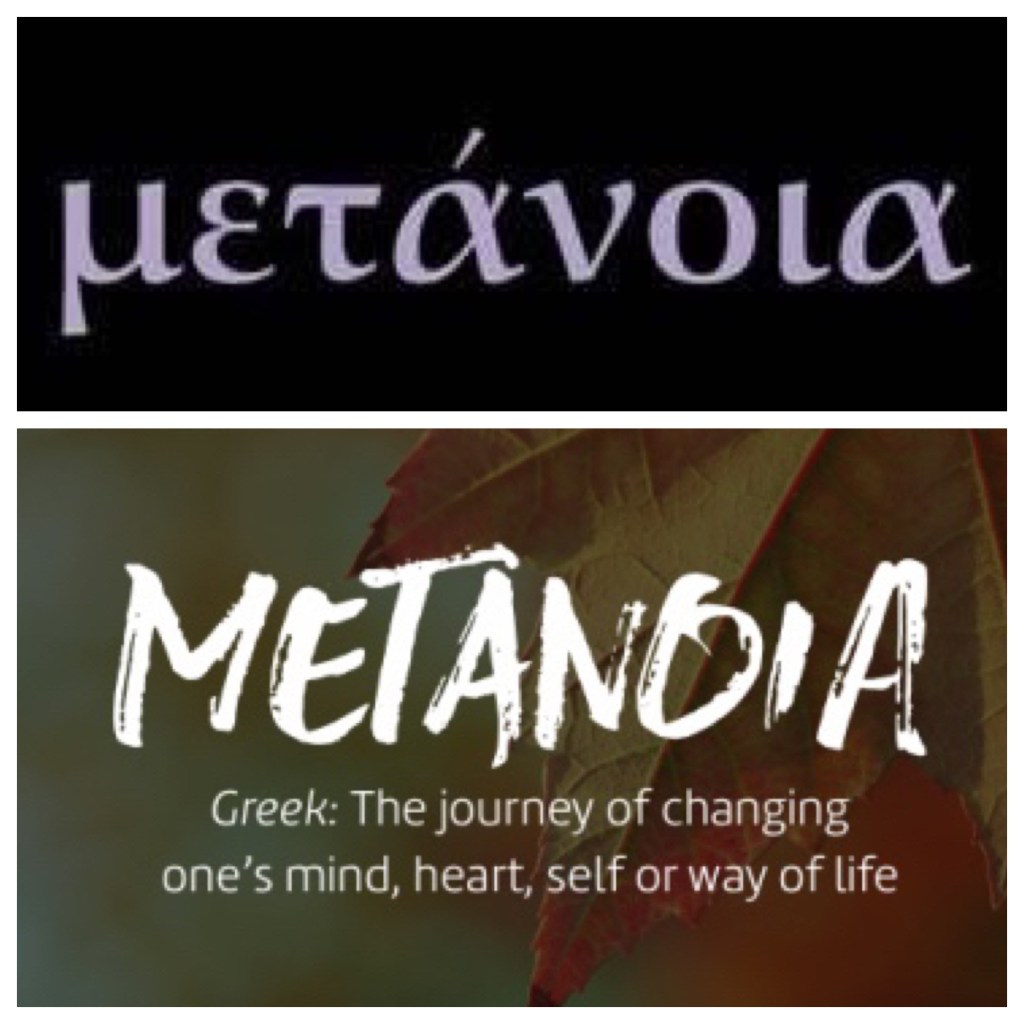
In Luke’s narrative there are three major sections in what John is reported as having said: a call to metanoia, instructions about what that metanoia looks like, and then a description of what faithful living will require in the future.

I The necessity of metanoia

Luke reports the first part of what John says as follows: John said to the crowds that came out to be baptized by him, “You brood of vipers! Who warned you to flee from the wrath to come? Bear fruits worthy of repentance. Do not begin to say to yourselves, ‘We have Abraham as our ancestor’; for I tell you, God is able from these stones to raise up children to Abraham. Even now the axe is lying at the root of the trees; every tree therefore that does not bear good fruit is cut down and thrown into the fire.” (3:7–9)

This is a significant expansion of the earlier Markan report, that “John the baptizer appeared in the wilderness, proclaiming a baptism of repentance for the forgiveness of sins” (Mark 1:4). The words of John in Luke’s account fill out the content of that call for repentance.

Matthew provides some substance to that message, in words that almost to the letter replicate what is reported in Luke (Matt 3:7–10). The variations to be noted are twofold. First, the audience. In Luke, John addresses “the crowds”; in Matthew, he specifically addresses “many Pharisees and Sadducees”. Second, there is a tiny—perhaps insignificant—variation, in that “bear fruits (plural) worthy of repentance” in Luke are “bear fruit (singular)” in Matthew.

At this point, it would seem, these two separate Gospel compilers had access to a memory, a tradition—perhaps even a written source—that they have repeated almost exactly verbatim. That source (whether oral or written) is what scholars call Q, abbreviating the German word Quelle—which simply means, “source”. (How imaginative!)

The message of John, in this section, is fierce in its intensity and challenging in its orientation. It is a call to action that is impelled by the looming moment of judgement—strikingly symbolised in the image of “the axe lying at the root of the tree”. The trunk of the tree will be severed at any moment, it seems; and then, in the next dramatic image, the useless branches (that did not “bear good fruit”) will be burned to ashes.

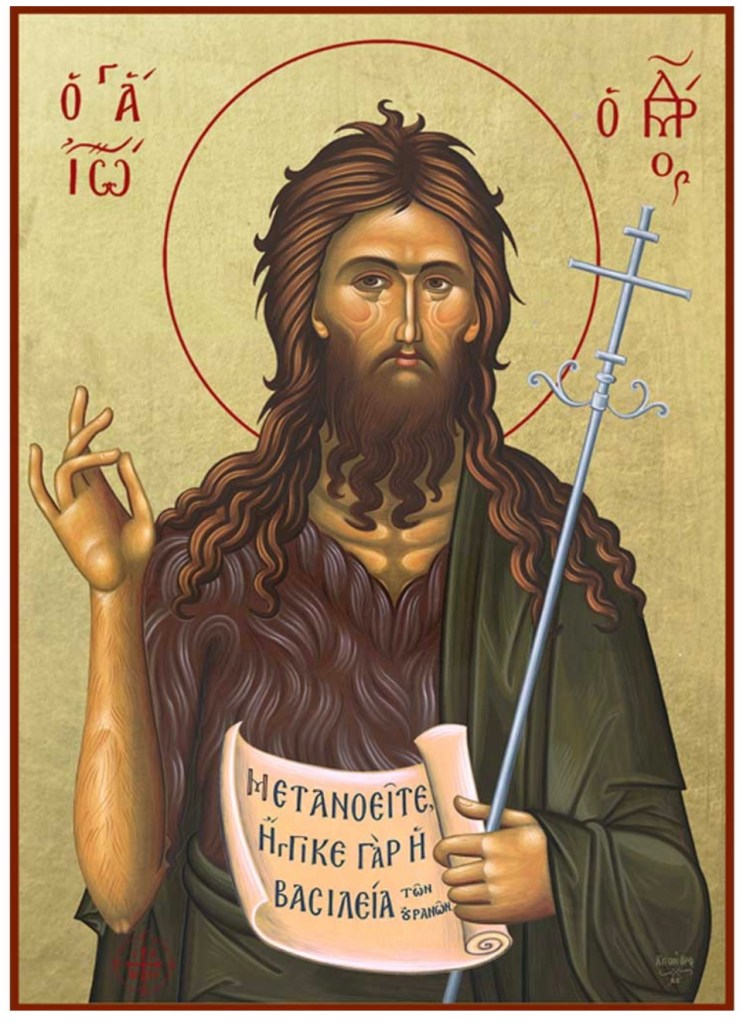
The action that John seeks is contained in the potent Greek word, metanoia. This has a literal sense of replacing one’s mind. When we translate it as “repentance”, we need to bear in mind that it comprises a number of elements—which John articulates in these verses. To repent is to “flee from the wrath to come”, to re-orient life away from what will condemn, towards what will give life. It also requires people to “bear fruit”—that is, to demonstrate in their lives how this complete reorientation has taken place. So it is about a complete transformation of being. There are specific ethical actions that are expected to follow from this, to indicate the extent of transformation that has taken place.

The imagery of fire in the words of John (3:9) is drawn from a strong tradition in earlier prophetic texts, which give warn of the judgement to come in fierce apocalyptic terms. This judgement to come is regularly envisaged as taking place by burning in fire. We will return to this trajectory of fiery judgement passages when we come to the third section, where this is developed and expanded in what John says.

II Instructions regarding ethical responsibility: three case studies

Luke continues his narrative, with a distinctive paragraph (found only in his Gospel), in which he reports: The crowds asked him, “What then should we do?” In reply he said to them, “Whoever has two coats must share with anyone who has none; and whoever has food must do likewise.” Even tax collectors came to be baptized, and they asked him, “Teacher, what should we do?” He said to them, “Collect no more than the amount prescribed for you.” Soldiers also asked him, “And we, what should we do?” He said to them, “Do not extort money from anyone by threats or false accusation, and be satisfied with your wages.” (3:10–14)

Here, the three groups which pose the same question to John—what then should we do?—provide opportunity for three short case studies in what is required by the call to metanoia—a call to a complete transformation of being.

The instruction about sharing coats is similar to words of Jesus, reported by Matthew in the so-called Sermon on the Mount: “You have heard that it was said, ‘An eye for an eye and a tooth for a tooth.’ But I say to you, Do not resist an evildoer. But if anyone strikes you on the right cheek, turn the other also; and if anyone wants to sue you, give your cloak as well; and if anyone forces you to go one mile, go also the second mile. Give to everyone who begs from you, and do not refuse anyone who wants to borrow from you.” (5:38–42)

These actions of apparent generosity signify the metanoia, the change of mind, the complete reorientation of one’s person. Sharing the second cloak, walking the second mile, and turning the other cheek, are each metanoia in action: loving a life in accord with ethical principles. The same instruction is delivered by John. The addition of the sharing of food likewise resonates with the words of Jesus regarding giving water to the thirsty (Mark 9:41; Matt 10:42; 25:35–37) and sharing food with the hungry (as is demonstrated in the various narratives reporting the feeding of multitudes by Jesus).

Of course, in the second volume of the orderly account of Luke’s Gospel, the community in Jerusalem is marked by such sharing in its common life: “all who believed were together and had all things in common” (Acts 2:44), “day by day, as they spent much time together in the temple, they broke bread at home and ate their food with glad and generous hearts (2:46), and “the whole group of those who believed were of one heart and soul, and no one claimed private ownership of any possessions, but everything they owned was held in common” (4:32).

The instruction to tax collectors, not to collect more tax than what is owed, resonates with the story of Zacchaeus, much later in Luke’s narrative. Zacchaeus is a fine example of metanoia in practical terms: “half of my possessions, Lord, I will give to the poor; and if I have defrauded anyone of anything, I will pay back four times as much” (Luke 19:8).

There is debate as to whether this statement reflects an intention for acting in the future by Zacchaeus, which signals his repentance in the presence of Jesus; or whether this is a statement of actions already being implemented, which means that Jesus is recognising how Zacchaeus has changed. (The two verbs in the declaration of Zacchaeus are both in the present tense.) Either way, the message is clear: ethical standards are important when dealing with money or conducting business.

And that is precisely what John is instructing the crowds: a life of faith means a life of ethical behaviour; discipleship is shaped by deep-seated metanoia, a thorough-going transformation of being.

III The call to faithful living in the future

The third section in Luke’s expanded narrative about John links back to the earlier Markan narrative, which is widely assumed to have been a primary source for Luke. It shows strong similarities, once again, with Matthew’s report of John’s words:

As the people were filled with expectation, and all were questioning in their hearts concerning John, whether he might be the Messiah, John answered all of them by saying, “I baptize you with water; but one who is more powerful than I is coming; I am not worthy to untie the thong of his sandals. He will baptize you with the Holy Spirit and fire. His winnowing fork is in his hand, to clear his threshing floor and to gather the wheat into his granary; but the chaff he will burn with unquenchable fire.” (Luke 3:15–17)

In Mark, John had simply proclaimed, “The one who is more powerful than I is coming after me; I am not worthy to stoop down and untie the thong of his sandals. I have baptized you with water; but he will baptize you with the Holy Spirit.” (1:7–8)

In Matthew’s version, John has more to say: “I baptize you with water for repentance, but one who is more powerful than I is coming after me; I am not worthy to carry his sandals. He will baptize you with the Holy Spirit and fire. His winnowing fork is in his hand, and he will clear his threshing floor and will gather his wheat into the granary; but the chaff he will burn with unquenchable fire.” (Matt 3:11–12)

Luke has the crowd pose the question about John: are you the Messiah? We hear that same question being asked at John 1:19–22, and the same answer being provided by John: “I baptize with water. Among you stands one whom you do not know, the one who is coming after me; I am not worthy to untie the thong of his sandal.” (John 1:26–27). We also have the question flipped around, when disciples of John later come to the adult Jesus, and ask him, “Are you the one who is to come, or are we to wait for another?” (Matt 11:3).

In this passage in Luke, John identifies Jesus as “one who is more powerful than I is coming; I am not worthy to untie the thong of his sandals” (Luke 3:16). He uses language drawn from familiar practices to describe the function that Jesus will fulfil. In bringing in God’s kingdom, Jesus will execute judgement.

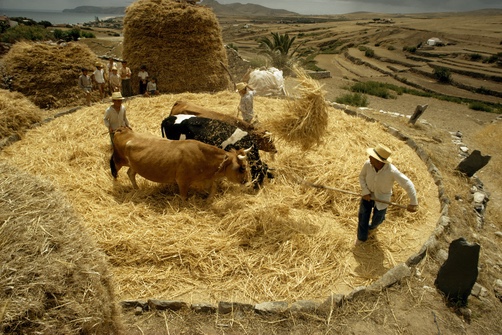
The language of the threshing floor and the granary, wheat and chaff, is familiar language in agricultural societies such as ancient Israel. The threshing floor was both a place of work for farmers (Num 18:27, 30; Deut 15:14; 16:13; Job 5:26; 39:12; Jer 51:33) and of ceremonial events for royalty (Gen 50:10; 1 Kings 22:10; 2 Chron 18:9). The threshing floor of Araunah the Jebusite was the place where David erected an altar to the Lord (2 Sam 24:18–25; he is named Ornan at 1 Chron 21:18–30) and also a favoured place for illicit sexual liaisons (Hos 9:1–2; Ruth 3).

It is, of course, the primary agricultural use which John has in mind in his preaching beside the Jordan; the winnowing that takes place there was essential to farming life. Usually it is the wind which blows away the winnowed chaff (Ps 1:4; 35:5; 83:13; Isa 17:13; 41:15; Jer 13:24; Hos 13:3; Zeph 2:2). The sense of judgement upon evildoers is imported into these references to the basic agricultural activity of the threshing floor.

Likewise, the function of the winnowing fork as integral to judgement is noted by the prophets (Isa 21:10; 41:6; Jer 15:7; 51:2), and the application of the activities of threshing floor to God’s judgement is made by the prophet Micah (Mic 4:11–13; and see 2 Esdras 4:31–32), whilst the burning of unwanted grass is part of God’s judgement at Isa 5:24.

In both Matthew and Luke, John extends the Markan reference to Jesus “baptizing with the Holy Spirit” (Mark 1:8) to become “he will baptize you with the Holy Spirit and fire” (Matt 3:11; Luke 3:16). Reference to fire can be found regularly in the prophetic words about the coming times—The Day, The End—when God will call people to account and judge them in terms of their lives of righteous-justice. See https://johntsquires.com/2021/11/09/the-beginnings-of-the-birth-pangs-mark-13-pentecost-25b/

The fiery furnace scene in Daniel (chapter 3) indicates the use of fire as a mechanism for punishment in the ancient world. The Exodus from Egypt is portrayed as a time of liberation from a fiery furnace: “the LORD has taken you and brought you out of the iron-smelter, out of Egypt, to become a people of his very own possession” (Deut 4:20), along with similar references in 1 Kings 8:51 and Jer 11:4.

Accordingly, many prophets declare that the Lord will burn the enemies of Israel (Isa 9:5; 26:11; 30:27–33; 33:14; 47:14; 66:14–16; Jer 43:11–13; 49:1–2; 49:23–27; 50:29–32; 51:24–33; 51:58; Ezek 21:28–32; 22:17–22; 30:13–19; 38:17–39:6; Amos 1:2–2:3; Micah 1:2–7; Nahum 1:2–8; Zech 9:1–4) and also burn wickedness in Israel (Isa 9:18; Jer 4:3–4; 5:14; 11:16–17; Lam 1:11; Ezek 15:6–8; 19:10–14; 20:45–49; 24:9–13; Dan 7:9–14; Hos 8:14; Joel 1:15–2:5; 2:30; Amos 2:4–5; Obad 1:17–18; Nahum 3:12–15; Zech 13:7–9; Mal 3:1–4).

Indeed, Zephaniah reports the word of the Lord, that the whole earth will be consumed by fire (Zeph 1:17–18; 3:8).

This imagery recurs in the teachings of Jesus, who declared ““I came to bring fire to the earth, and how I wish it were already kindled!” (Luke 12:49) and readily portrayed the fiery fate awaiting lawless ones (Mark 9:42–49: Matt 18:8–9). Amongst the parables found in Matthew’s Gospel, Jesus concludes with images of weeds burning (13:30, 40), reflecting the “furnace of fire” awaiting lawless ones (13:52) and “the eternal fire prepared for the devil and his angels” (25:41).

In Luke’s account, Jesus notes the role played by fire in the judgement of Sodom and Gomorrah (Luke 17:28–30; see Gen 19:24–25; Deut 29:22–23; Ps 11:6). In like manner, when the disciples want to signal judgement on the Samaritans, they ask Jesus, “Lord, do you want us to command fire to come down from heaven and consume them?” (Luke 9:54).

John stands in this tradition—a fearsomely intense tradition in which fire is the agent of divine of judgement and destruction. In the face of this threatened fiery judgement, metanoia is essential. The tradition of the prophets, John the baptiser, and Jesus of Nazareth is then focussed in the Revelation of John, with multiple references to “the lake of fire that burns with sulphur” (Rev 19:20; 20:10, 14–15; 21:8). In this work, this is the fate that awaits those who do not demonstrate metanoia (Rev 2:5, 16, 21–22; 3:3, 19; 9:20–21; 16:9–11).

IV To conclude: exhortations

Luke concludes this narrative of John beside the Jordan with the concise summation: “So, with many other exhortations, he proclaimed the good news to the people” (3:18). This is typical of Luke’s narrative style; there are similar summary sentences punctuation the narrative of both volumes (Luke 4:14–15; 5:15–16; 6:12; 8:1–3; 13:22; 19:47–48; 21:37–38; Acts 1:14; 2:42, 46–47; 4:32–35; 5:12–16; 6:7; 8:1–3; 8:40; 9:31; 11:19; 12:24; 19:20; 24:27; 28:30–31).

In the end, the characterisation of the preaching of John as exhortation indicates that the emphasis of all of this fierce judgement language is directed towards achieving metanoia: to re-orient life, to replace mind, to repent, and to bear fruit worthy of that repentance. The message impels us to a complete transformation of being that is manifested in ethical living.

Unknown's avatarAuthor John T SquiresPosted on December 6, 2021December 10, 2024Categories An Orderly Account: Gospel of LukeTags scripture; theology; Luke; judgement; discipleship; repentance; John the baptiserLeave a comment on John the baptiser’s call for ethical, faithful living (Luke 3; Advent 3C)

“To give knowledge of salvation”: Luke’s portrayal of John the baptiser (Luke 3; Advent 2C)

“To give knowledge of salvation”: Luke’s portrayal of John the baptiser (Luke 3; Advent 2C)

In this post, I’m exploring the Gospel reading for this coming Sunday (Luke 3:1–6), as well as the continuation in the following Sunday’s reading (Luke 3:7–18), and looking at the person and the preaching of John the baptiser in this Gospel as a whole (with some helpful comparisons with the earlier Gospel of Mark as well as the Gospel of Matthew).

I

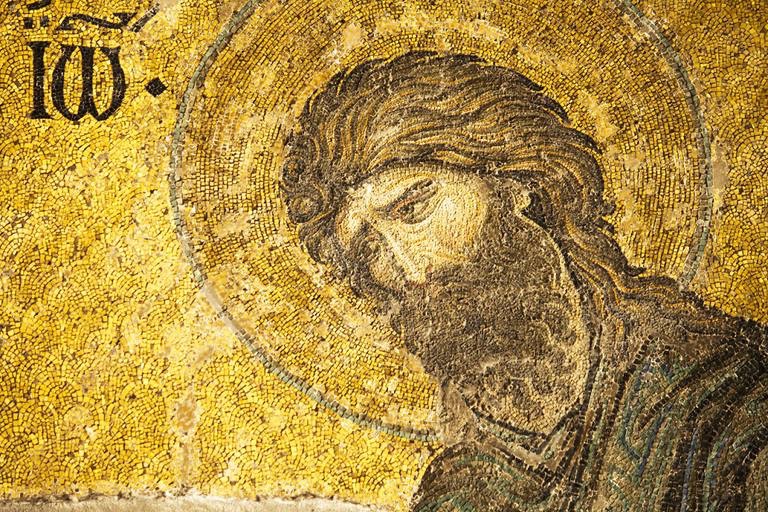
John the baptiser occupies a prominent place at the start of each canonical gospel. He is there in the very first scene of the beginning of the good news of Jesus, the chosen one (Mark 1:2–8), dunking into the river Jordan those who had heard his message of repentance.

Yes, that’s right: he dunked people into the river! Whilst there is interminable debate about the means by which baptism should take place in the church today (sprinkle, pour, or immerse; once or three times), there is not dispute that the basic meaning of the regular Greek word baptizō is to immerse, to submerge—to dunk!

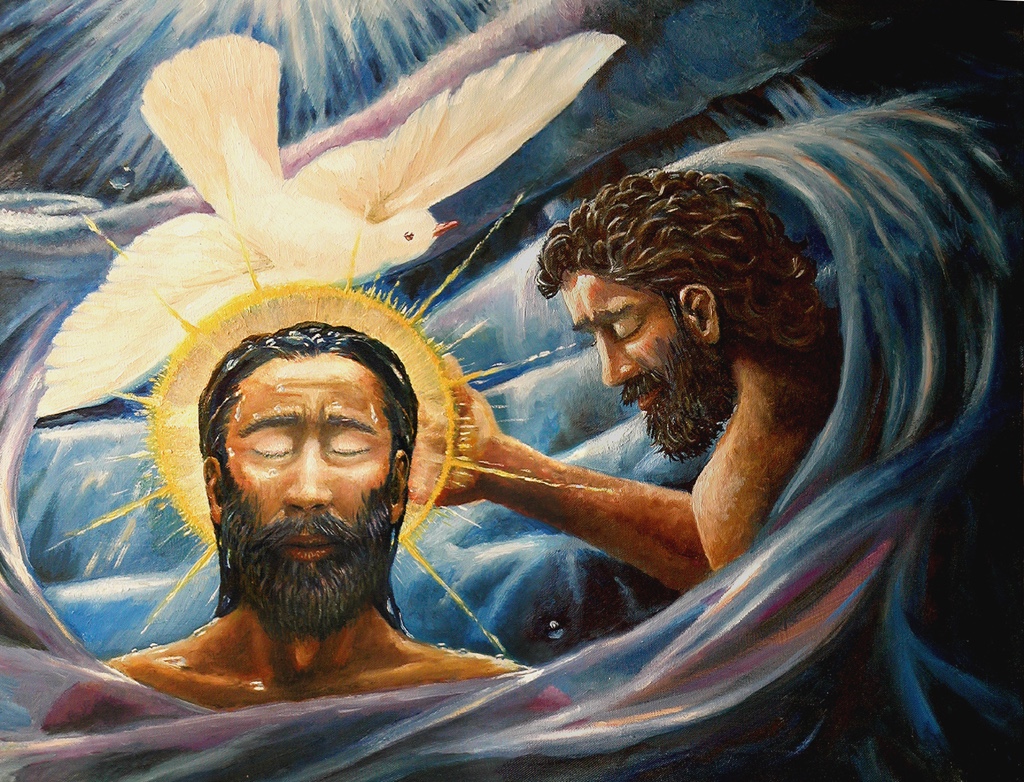
Of course, those being dunked into the river included Jesus, who “came from Nazareth of Galilee and was baptised by John in the Jordan (1:9–11). And that’s why John occupies an important place in the story of Jesus, for he performed the action that symbolised the deepening faith of Jesus, and crystallised the mission that Jesus was called to exercise.

The activity of John is interpreted by the author of this account with reference to the words of the prophet Isaiah: “a voice crying in the wilderness, ‘prepare the way of the Lord’” (1:2–3; Isa 40:3). The figure of John perhaps evoked comparisons, amongst the people flocking to hear him, with the great prophetic figure of Elijah, as described by the prophet Malachi: “I will send you the prophet Elijah before the great and terrible day of the Lord comes” (Mal 4:5).

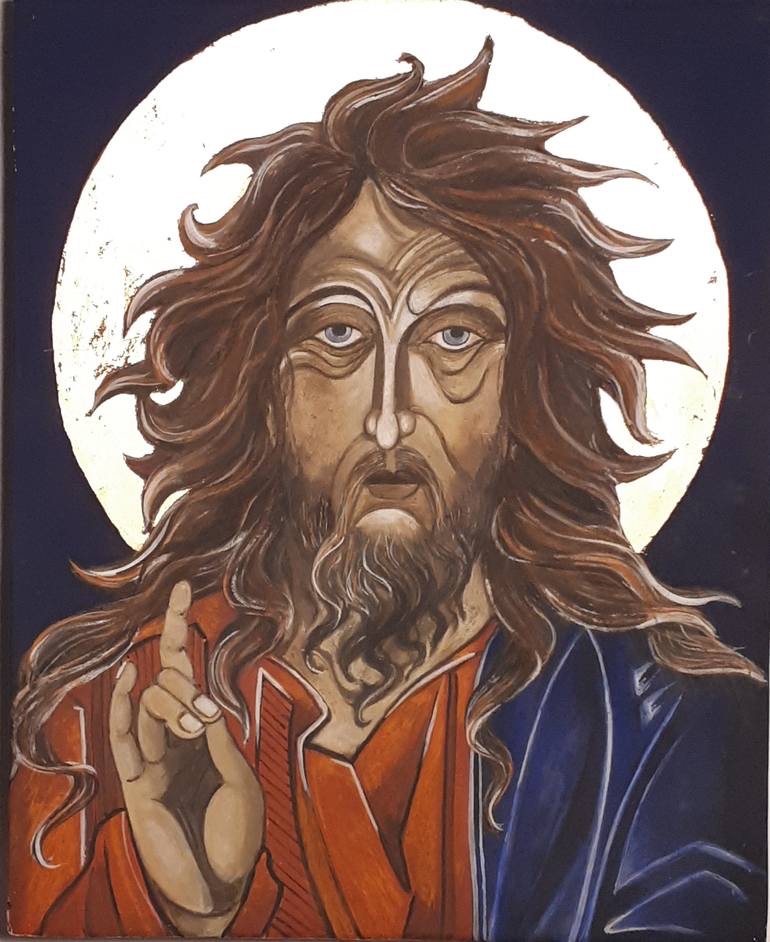
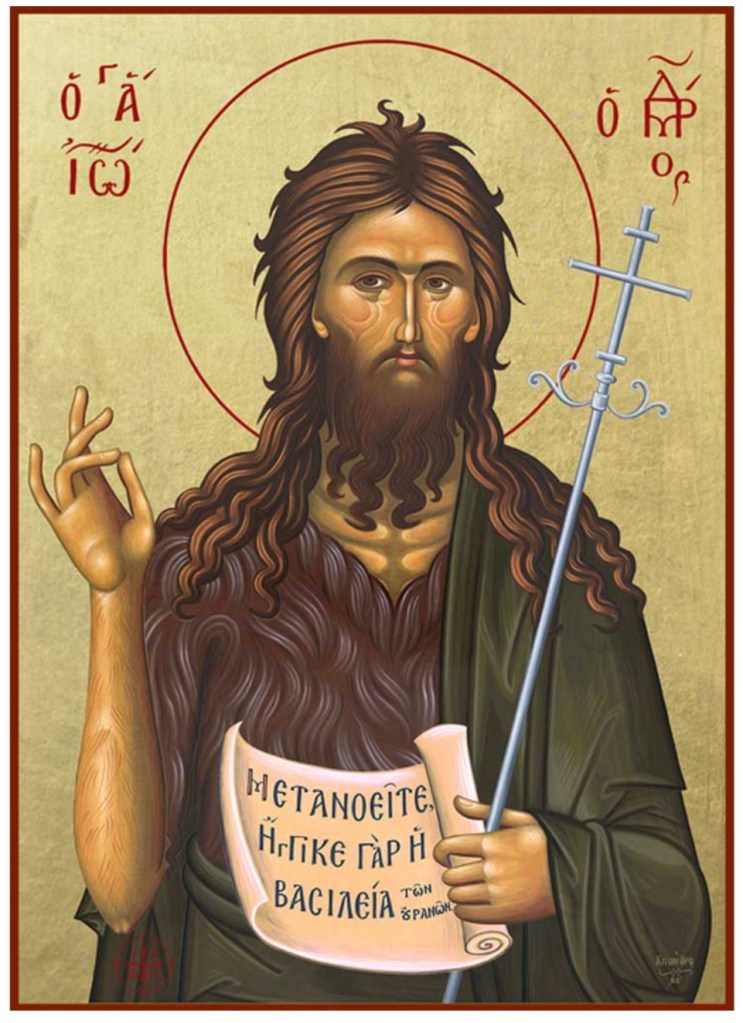
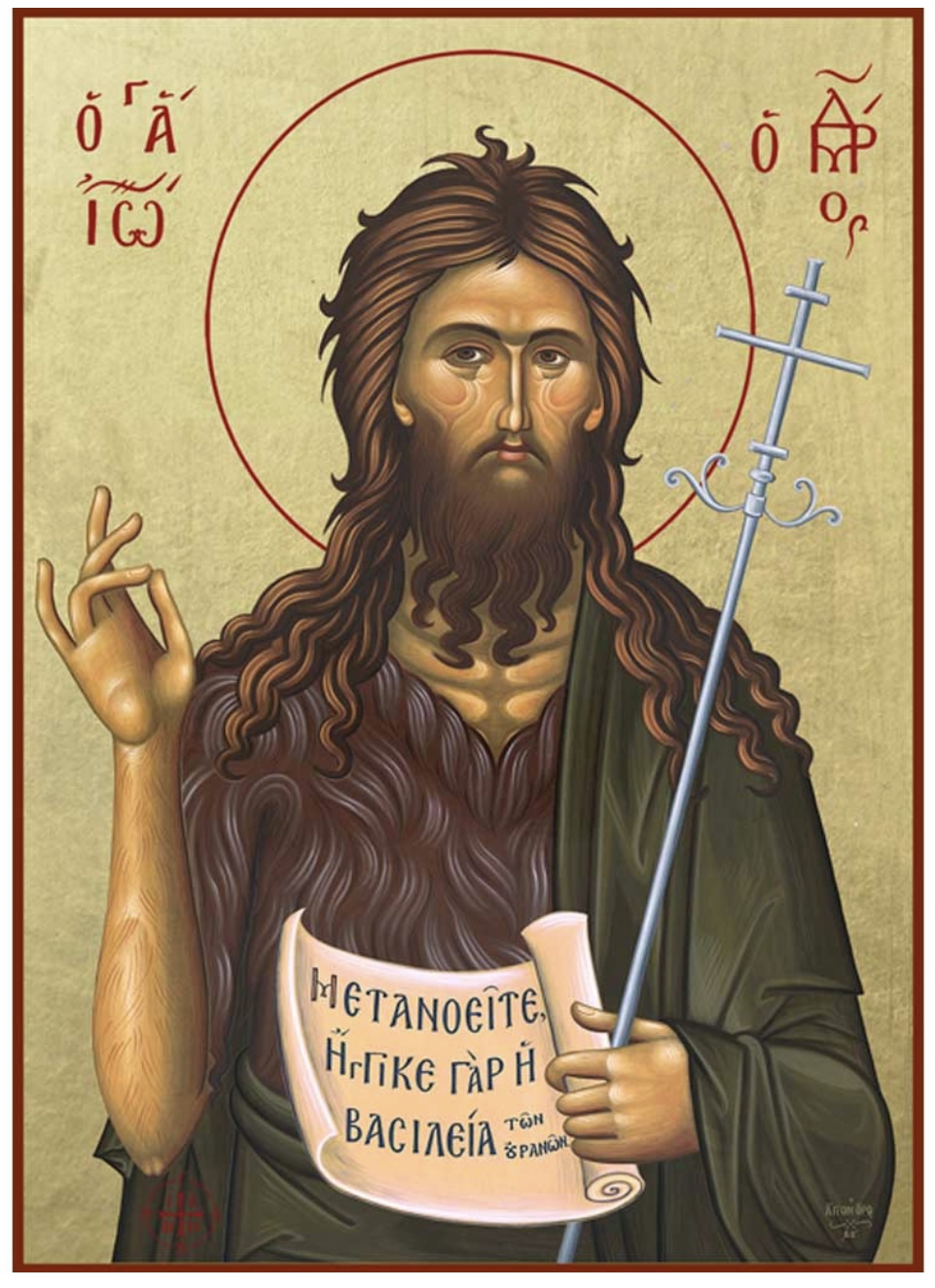
Certainly, John appeared to claim this Elijah-like role for himself, in his manner of dress and his customary diet. He was “was clothed with camel’s hair, with a leather belt around his waist” (1:6). According to Zech 13:4, “a hairy mantle” was the sign of a prophet. John is clearly reminiscent of Elijah, described by the messengers of the king of Samaria as “a hairy man, with a leather belt around his waist”—a figure immediately recognised by the king: “It is Elijah the Tishbite”, he said (2 Kings 1:8). He was most certainly not “a man dressed in fine clothes” (or “soft robes”), as Jesus later declared (Matt 11:8).

Likewise, John had a distinctive diet: “he ate locusts and wild honey” (1:6). This diet was kosher; the eating of locusts is expressly permitted in Lev 11:22, and the honey most likely came from a date tree, which was also permissible as a food source. The regular characterisation of the land of Israel at its best was of “a land flowing with milk and honey” (Exod 3:8, 17; 3:5; 33:3; Lev 20:24; Num 13:27; 14:8; 16:13–14; Deut 6:3; 11:9; 26:9, 15; 31:20; Josh 5:6; Jer 11:5; 32:22; Ezek 20:6, 15; Sir 46:8). John, quite clearly, “lived off the land”, with his rough clothing and basic diet.

II

John occupies the same place in the story in the book of origins (Matt 3:1–12) and is described as wearing the same clothing and eating the same diet (3:4). His message of “a baptism of repentance for the forgiveness of sins” (Mark 1:4) is given stronger voice, in Matthew: “you brood of vipers … bear fruit worthy of repentance” (Matt 3:7–10). In Mark, John had referred to baptism “with water … and with the Holy Spirit” (Mark 1:8); in Matthew, he speaks of the “water for repentance” that he offers and the coming baptism of Jesus “with the Holy Spirit and fire” (Matt 3:11).

John refers to the one coming after him, “more powerful than me”, who comes after him (Mark 1:7); in Matthew’s account, this is expanded with reference to “his winnowing fork in hand … to gather the wheat … and burn the chaff” (Matt 3:12). John in this account declares that “the axe is lying at the root of the trees”, preparing to cull the unproductive trees (Matt 3:10). In classic apocalyptic—prophetic style, his message clearly has in view “the wrath to come” (Matt 3:7; see Isa 1:24; 13:6–22; Jer 4:3–5; 7:20; Ezek 7:5–27; 38:17–23; Dan 11:36; Hos 5:10; Mic 5:10–15; Nah 1:2–11; Zeph 1:14–18; 2:1–4; Sir 5:7).

See further on apocalyptic in https://johntsquires.com/2021/11/09/the-beginnings-of-the-birth-pangs-mark-13-pentecost-25b/ and https://johntsquires.com/2021/11/10/faithfulness-in-the-turmoil-of-the-time-the-historical-context-of-mark-13-pentecost-25b/

So Matthew strengthens the apocalyptic dimension of John’s message. He also places a prelude before this, explaining the origins of Jesus as an infant, which contains clear pointers to the dangerous dimension of the coming of Jesus—the murderous inclinations of Herod regarding the infant Jesus prefigure the apocalyptic cataclysm spoken of by the adult Jesus (Matt 24:1–25:46). See further in https://johntsquires.com/2020/11/04/discipleship-in-an-apocalyptic-framework-matt-23-25/

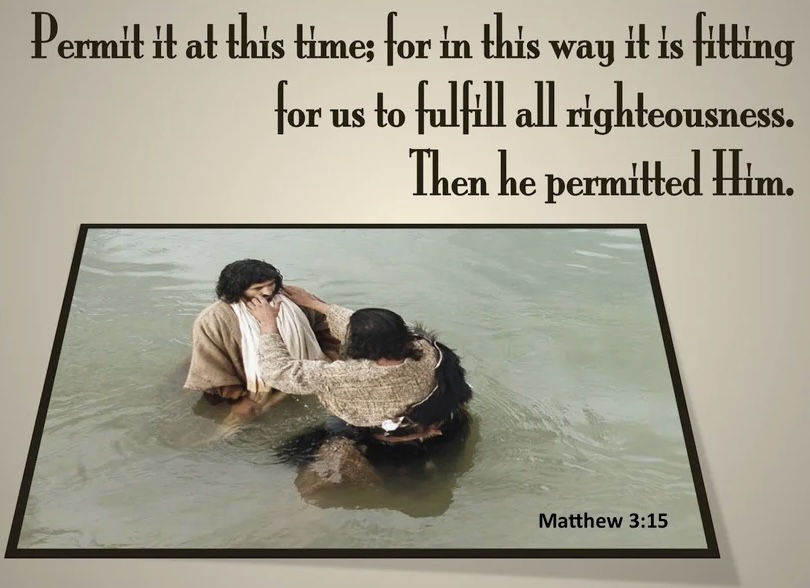
In telling of his baptising activity, only Matthew (3:14–15) reports the conversation between Jesus and John the Baptist, in which Jesus states that for John to baptise him “is proper for us in this way to fulfil all righteousness”. In this way, Jesus begins his public ministry by demonstrating a central theme of this particular Gospel—that of obedience to the will of God. At this moment, he exemplifies the righteous-justice that is a central concern in this Gospel. See https://johntsquires.com/2020/02/06/an-excess-of-righteous-justice-matt-5/

III

By contrast, there is quite a different figure of John the baptiser presented in the orderly account of the things being fulfilled amongst us (as the Gospel of Luke portrays itself). First, in the chapters prior to the encounter of the adult Jesus and the adult John, Luke tells a different story. In this lengthy prelude (Luke 1:5–2:52) before the adult Jesus comes to be baptised by the adult Jesus (3:21–22), devotes substantial space in the story to telling of the already-exisiting relationship between Jesus and John.

They would have known each other, we presume, because their mothers were related, as Luke informs us (1:36). They had met when both were pregnant (1:39–40)—and, we might presume, before that and after that as well. See https://johntsquires.com/2020/12/22/on-angels-and-virgins-at-christmastime-luke-2/

In this prelude, there is no murderous rampage, as in Matthew’s story, but rather a joyful encounter between the two pregnant women, sitting at the heart of a series series of joyful songs in which the coming visitation of God is praised and anticipated in hope. (Jesus, in Luke’s Gospel, characterises his whole ministry as a “time of visitation from God” at 19:44.)

That visitation will be a time when God will “look favourably on his people and redeem them” (1:68), when a prophet will emerge “to give knowledge of salvation to his people by the forgiveness of their sins” (1:76–77). The coming time will exhibit “the tender mercy of God” (1:78), a time of “peace on earth among those whom he favours” (2:14), the coming of “a light for revelation to the Gentiles and glory to your people Israel” (2:32), the bringing of “the redemption of Israel” (2:38).

In the coming of the one who is promised, God will do “great things” (1:49); God will scatter the proud and lift up the lowly, feed the hungry and send the rich away empty (1:51–53), in actions which fulfil “the promise he made to our ancestors” (1:55). This is a time of blessing, as Elizabeth acknowledges (1:42), Zechariah foresees (1:68), and Simeon enacts (2:34). Jesus later will convey those blessings, to the poor and the hungry, to those weeping and those being reviled (6:20–23). See https://johntsquires.com/2020/12/14/advent-four-the-scriptural-resonances-in-the-annunciation-luke-1/

IV

In the midst of these uplifting and inspiring hymns, the angel declares to Zechariah that he will be the father of the one who, “with the spirit and power of Elijah he will go before him, to turn the hearts of parents to their children, and the disobedient to the wisdom of the righteous, to make ready a people prepared for the Lord” (1:17). This son, of course, is John who is later introduced as baptising people “in the region around the Jordan”, where he was “proclaiming a baptism of repentance for the forgiveness of sins” (3:3).

In Luke’s account, John also fulfils the prophetic pronouncement as the one preparing the way of the Lord in the wilderness (3:4–6, citing Isa 40:3). Through his activity, “all flesh shall see the salvation of God” (3:6). In his preaching, the “brood of vipers” are still warned to “flee the wrath that is coming” (3:7) and “bear fruits worthy of repentance” (3:8).

The preaching attributed to him here (Luke 3:7–9) is almost verbatim the same as in Matt 3:7-10, although it is further extended by additional teachings about this repentance, in response to questions from the crowds, tax collectors, and soldiers (Luke 3:10–14). The teaching about “the one to come” (Luke 3:16–17) also mirrors the words in Matt 3:11-12, including the reference to the winnowing fork and the threshing floor. Inserted in the midst of this, however, is the reference to the people being “filled with expectation, and all were questioning in their hearts concerning John, whether he might be the Messiah” (Luke 3:15).

Luke strikingly characterises all of this preaching as “with many other exhortations, he proclaimed the good news to the people” (3:18). The “wrath to come” (3:7) will bring opportunity for all to see “the salvation of God” (3:6) in these constructive exhortations. The Elijah-like dress of John, and his desert-like diet, is completely absent from the Lukan account—there is no hint of this idiosyncratic dimension at all. And in introducing all of this relatively more respectable activity of John, Luke provides a precise and details historical reference point for this activity (3:1–2). Luke has really “tidied up” the person of John in his account.

V

The work of John prepares the people; it also prepares Jesus, as the heavens open, a voice from heaven describes him to be “my Son, the Beloved”, and “the Holy Spirit descended on him in bodily form” (3:21–22). The Spirit then continues, leading Jesus into the wilderness (4:1), back into Galilee (4:14), and into Nazareth, where Jesus boldly claims that “the Spirit of the Lord is upon me” as being scripture which “has been fulfilled in your hearing” (4:21). Jesus confronts unclean spirits (4:31–37), deals with fevers and demons (4:38–41), and proclaims good news throughout Judea (4:44; a textual variant here reads Galilee, which would make more sense).

John is a much more constructive and positive figure in the Lukan narrative. He has lost almost all of his fiery apocalyptic appearance and nature. He still preaches the apocalyptic message, mentioning “the wrath to come”; but he provides more detail about the ethical way of living in response to the word of judgement, and prepares the way in positive ways for the message of good news to flourish.

Alone in Luke’s account, Jesus declares that “among those born of women no one is greater than John; yet the least in the kingdom of God is greater than he” (7:28). Those who accepted the baptism of John “acknowledged the justice of God”, whilst those “refusing to be baptized by him … rejected God’s purpose for themselves” (7:30). Aligning the baptism of John with the purpose of God is a strong Lukan claim; “the plan of God” is a central theological interpretive principle for the author of this work.

VI

Sadly, the Lukan narrative about John’s baptising (3:1–20) ends with the note that Herod “added to all the evil things that Herod had done … by shutting up John in prison” (3:19–20). Herod in this reference was Herod Antipas, son of Herod the Great (who appeared in Matt 2:1–12). This Herod ruled the region of Galilee from 4BCE to 39CE as a puppet king in the service of the Romans, whom Jesus later contemptuously described as “that fox” (Luke 13:32).

His beheading and death, reported in great detail in other narratives (Mark 6:17–29 and Matt 14:3–12), is all but passed over in Luke’s narrative; there is the brief recognition by Herod that is reported in chapter 9: “Herod said, ‘John I beheaded’; but who is this about whom I hear such things?” (Luke 9:9).

There is a similarly brief mention of the death of John in the later work of Josephus, who refers simply to the fact that “John was sent as a prisoner, out of Herod’s suspicious temper, to Machaerus, the castle I already mentioned, and was put to death” (Josephus, Jewish Antiquities 18.119; see https://www.livius.org/sources/content/josephus/jewish-antiquities/josephus-on-john-the-baptist/)

Later in Luke’s account, John is portrayed as one who came “eating no bread and drinking no wine, and you say, ‘He has a demon’” (7:33)—in striking contrast to the Son of Man, who came “eating and drinking, and you say, ‘Look, a glutton and a drunkard, a friend of tax collectors and sinners!’” (7:34).

John lived life in the right way, and still was not recognised for his virtue. Jesus came with generous and open engagement with people across the spectrum of society, and was harshly judged. In this regard, both met a similar fate. And, indeed, both were put to death in an unjust manner under foreign authority.

VII

To complete our survey of John, we note that the figure of John the baptiser is different, once again, in the fourth Gospel, the book of signs; see https://johntsquires.com/2020/01/16/john-the-baptizer-and-jesus-the-anointed-in-the-book-of-signs-the-gospel-of-john/.

He’s also mentioned in Acts, when that book refers to Apollos of Alexandria, who taught “the baptism of John” and was then subsequently informed further about “the Way of God” by Priscilla and Aquila (Acts 18:24–26). In this passage, also, knowledge of John provides the basis for moving to a fuller understanding of the messianic role of Jesus (Acts 18:27–28).

Unknown's avatarAuthor John T SquiresPosted on November 29, 2021November 26, 2021Categories An Orderly Account: Gospel of LukeTags apocalyptic, scripture; theology; Luke; John the baptiser; redemptionLeave a comment on “To give knowledge of salvation”: Luke’s portrayal of John the baptiser (Luke 3; Advent 2C)

“Be alert at all times, praying that you may have the strength … to stand before the Son of Man” (Luke 21; Advent 1C)

“Be alert at all times, praying that you may have the strength … to stand before the Son of Man” (Luke 21; Advent 1C)

At time around, as we move into the first week of the church’s year, we move from The Year of Mark into The Year of Luke, we read Luke 21:25–36, the final apocalyptic speech of Jesus, which climaxes with the striking claim, “when these things begin to take place … your redemption is drawing near”.

This long speech that Jesus gives (reported with slightly different variations in Mark 13, Matt 24, and Luke 21) is a striking speech, with vivid language and dramatic imagery, drawn from the traditions and patterns that are found in the increasingly apocalyptic fervour of prophetic oracles delivered through the history of Israel. The apocalyptic character of the speech means that it certainly makes a mark!

See https://johntsquires.com/2021/11/21/when-these-things-begin-to-take-place-your-redemption-is-drawing-near-luke-21-advent-1c/

So, as Jesus is in the forecourt of the magnificent Jerusalem Temple (Luke 21:1, 5), he sets out the way that his disciples should respond. During this apocalyptic discourse, Jesus has indicated that the situation still to come will be one of persecution: “they will arrest you and persecute you” (21:12), there will be betrayal and death (21:16), “you will be hated by all” (21:17), and false preachers will arise (21:8).

In this context, the fundamental act of discipleship will be to bear witness to the way of Jesus: “this will give you an opportunity to testify” (21:13) and “the words and wisdom” for this testimony will be given by Jesus himself (21:15). The role of the disciple will be to remain faithful throughout these trials: “by your endurance you will gain your souls” (21:19).

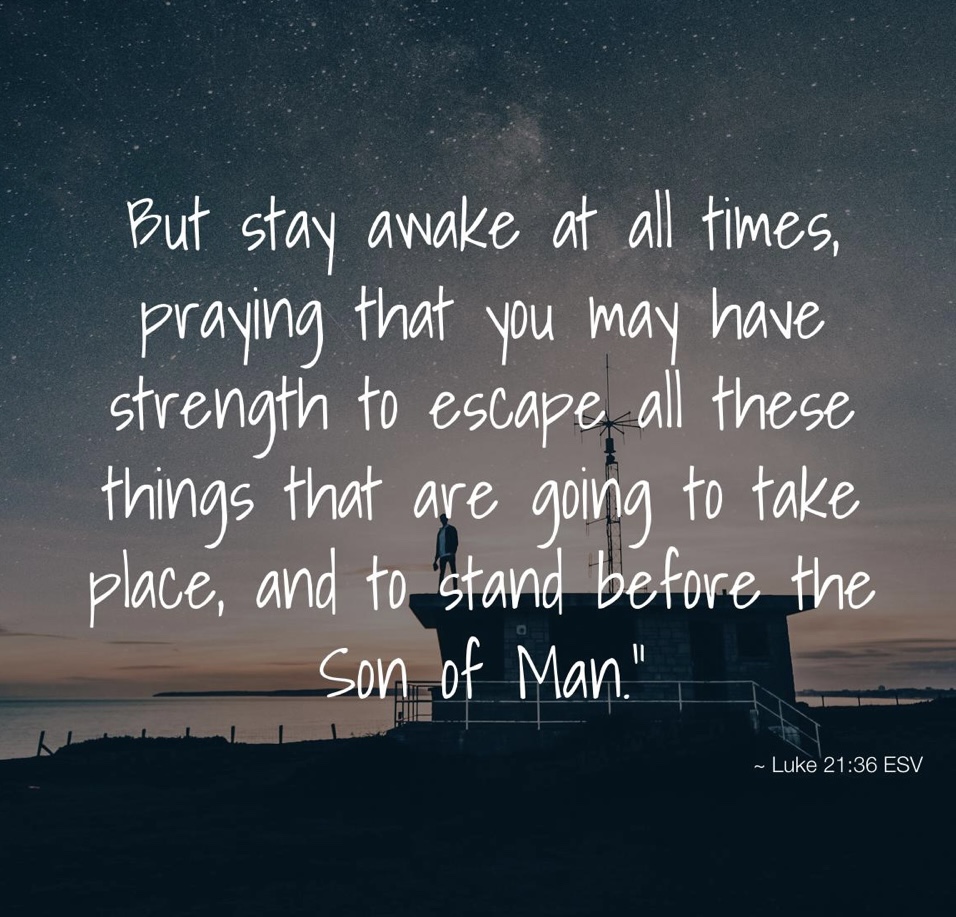
The need for such faithfulness is underscored by the closing words of Jesus’ teachings: “be on guard … be alert” (21:34, 36). Jesus had not advocated joining in the armed uprising; he counselled faithful following of his way of service. Mark’s report affirmed this; Luke’s account underlines and emphasises the importance of this response. “Be alert at all times, praying that you may have the strength to escape all these things that will take place, and to stand before the Son of Man” (21:36).

In reading apocalyptic material (such as Mark 13 and Luke 21), we also need to consider their typical literary characteristics. There are a number of common features in apocalyptic texts, which are striking in their impact and powerful in their capacity to invite attention. What is central to all apocalyptic writings is a clear portrayal of a stark conflict between good and evil, which often comes to a head in a grand cosmic battle. To put it in populist terms, apocalyptic texts “spin a good yarn”. They use the techniques of dramatic storytelling, or of good action films. They are vivid and compelling accounts.

Jesus is, by and large, adhering to the conventions of the genre, as he presents his graphic portrayal of what lies on store for his followers in this speech, which Mark says was delivered on the Mount of Olives, opposite the Temple (Mark 13:3)—although in Luke’s account, he is still within the Temple itself (Luke 21:1, 4; see also 21:37–38). In making use of this genre, Jesus demonstrates that speaking in apocalyptic terms is actually doing political theology within a specific socio-historical context. This is the third key element in seeking to understand apocalyptic.

Apocalyptic is “political theology” because it explores faith in the context of the realities of life in the polis, the city. It often provides a counter-narrative to the dominant story of the rulers and those in power, exposing the evil of their ways and proposing an alternative world in which righteous-justice will reign supreme.

The people of Israel, even from the time before they were taken into exile, had lived under the shadow of the dominant world power of the time—the Assyrians, who conquered the northern kingdom; then the Babylonians, who took the southern kingdom into exile; then, after a return under the Persians, an apparently more benign power, there came the crushing power of the Macedonian empire as Alexander the Great and his troops swept into the Jewish homeland.

Tellers of apocalyptic tales invited their listeners, living in times of crisis, to suspend disbelief, watch the vision unfolding, hear the angelic interpretation, even undertake the heavenly journey that the author retells; and to do this with expectation and hope.

Apocalyptic is always written in the midst of despair; despair fuelled by foreign invasion, murder and rape during the pillaging of that invasion, enforced slavery, religious repression, cultural imperialism, and societal oppression, with the loss of much-loved traditional practices and customs, disconnection from the homeland (the place where God resided), and a continuing sense of having been abandoned by God.

In the midst of all of this, apocalyptic texts invite their readers or listeners to have hope: hope that God would act; hope that despair would be dispelled and life would flourish once now; hope that the familiarity of traditions would be reinstated; hope that the evils perpetrated by the invading oppressors would be rectified by acts of divine revenge; hope that life, even in their own time, would be transformed into a realm where righteous-justice was in force, where the evils of lawlessness were dispelled.

There are clear, sharp pointers to the political situation of the time in which many works of apocalyptic are written—from the time of the Seleucid rulers (from the 180s BCE) through to the Roman conquest of Judaea (63 BCE) and on into the period we call the first century CE, when Jesus lived and then the Gospels were written. These works are political.

All of this, this, it should now be clear, is what Jesus was looking to in his parables of the kingdom, in his teachings about living with fidelity to the covenant with God, in his invitations to his followers to walk the way he walks, leading to the realm of God’s kingdom. His visions of cataclysmic times, in the apocalyptic speech of Luke 21, provide a hope-filled declaration that, despite the turmoil of the times, God is indeed acting to intervene in events, overturn evil, and institute the righteous-justice of God.

And all of this is intensely contextual, thoroughly political, firmly directed towards the injustices perpetrated under the religious and economic system of the Temple and the cultural and religious oppression of the Roman colonisers. In Mark’s account, Jesus refers to the “birth pangs” that are just beginning (13:8). They herald the coming good times when “the great power and glory” of the Lord is evident (Mark 13:26; Luke 21:26). In Luke’s version, this is the time when “summer is near” (21:30). That is the kingdom of God, in which much fruit is borne (Luke 8:15), much growth occurs (13:19), new life will emerge (9:22; 9:44; 18:33; 20:38); righteous-justice is enacted by God (20:15–17); and love of God and neighbour is practised by those in that kingdom (10:26).

Out of the darkness and despair, the agony of the birthpangs point to the hope of abundance that has been persistently proclaimed by Jesus. And so, we might pray: may that time come, may that kingdom be a reality, even in our time, even in our place; or, as Jesus taught us to pray, in thoroughly apocalyptic terms: “your kingdom come, your will be done, on earth, as in heaven”.

*****

See further discussion at https://johntsquires.com/2020/11/24/towards-the-coming-the-first-sunday-in-advent-mark-13/

The beginnings of the birth pangs (Mark 13; Pentecost 25B)

https://johntsquires.com/2021/11/10/faithfulness-in-the-turmoil-of-the-time-the-historical- context-of-mark-13-pentecost-25b/

https://johntsquires.com/2021/11/10/the-political-function-of-the-apocalyptic-speech-of-jesus-in- mark-13-pentecost-25b/

Unknown's avatarAuthor John T SquiresPosted on November 22, 2021November 23, 2021Categories An Orderly Account: Gospel of LukeTags apocalyptic, discipleship, Luke, scripture; theology;Leave a comment on “Be alert at all times, praying that you may have the strength … to stand before the Son of Man” (Luke 21; Advent 1C)

“When these things begin to take place … your redemption is drawing near” (Luke 21; Advent 1C)

“When these things begin to take place … your redemption is drawing near” (Luke 21; Advent 1C)

At this time of the year, every year, the Revised Common Lectionary offers us some passages from the Gospels that are strikingly vivid and dramatic. Each year we end “the church’s year” with an excerpt from the long apocalyptic speech that Jesus delivered to his disciples, some time after they had arrived in the city of Jerusalem. This year, a couple of weeks ago, we read Mark 13:1–8, with the striking line, “this is but the beginnings of the birthpangs”.

Also, each year, the church’s “new year” begins with an excerpt from the same speech—usually from later in the speech—and from another Gospel (whatever is the Gospel for that new year). This time around, as we move from The Year of Mark into The Year of Luke, we read Luke 21:25–36, with the equally striking claim, “when these things begin to take place … your redemption is drawing near”, in the first week of the new church year.

This long speech that Jesus gives (reported with slightly different variations in Mark 13, Matt 24, and Luke 21) is a striking speech, with vivid language and dramatic imagery, drawn from the traditions and patterns that are found in the increasingly apocalyptic fervour of prophetic oracles delivered through the history of Israel. The apocalyptic character of the speech means that it certainly makes a mark!

Indeed, this speech confirms the thoroughly apocalyptic character of the teaching of Jesus, right through the Gospel accounts. His parables about the kingdom are apocalyptic, presenting a vision of God’s promised future. The call to repent is apocalyptic, in the tradition of the prophets. The demand to live in a way that exemplifies righteous-justice stands firmly in the line of the prophetic call. Such repentance and righteous-just living is as demanding and difficult as giving birth can be.

“Apocalyptic” comes directly from the Greek language—the language in which the words of Jesus are first recorded, in the Gospels. It means an uncovering, a revealing, a making clear—in other words, a revelation. In Greek, the title of the book of Revelation is “Apocalypsis”. So an apocalyptic message is one that uncovers or reveals what lies ahead, in the plan of God.

Jesus was, indeed, a prophet of apocalyptic intensity. But how do we make sense of this dramatic language in the context of the post-Enlightenment scientifically-aware world of the 21st century? How do visions of turmoil and warfare, oracles about fiery destruction and fierce retribution, relate to our contemporary world?

One way of understanding this kind of language and these kinds of speeches, whether by Jesus or any number of the prophets, is to claim that these words were spirit-inspired predictions, from long ago, of the turmoil and conflict that was to take place in the future. These words may relate to the times immediately in the future of the writer (in the late 1st century in the case of this Gospel passage). Or they may point forward in time, to events well beyond the time of the reader, even into our own times (that is, the 21st century).

Like the final book in the New Testament, Revelation, this speech of Jesus in Mark 13 has been interpreted by fervent believers throughout the centuries as providing evidence that the end of the world was at hand. “Repent, now” is the message that is proclaimed—repent, before the end comes, and it is too late.

Another line of interpretation holds that this kind of language needs to be understood as inspired scripture, which provides us with clear doctrinal statements about what is called “eschatology” (the study of the end times, the last days). If this were the case, the words of Jesus could be mined as a source for teachings about “the last days”, instructing us so that we are aware and informed. It may not be that we are right in the midst of those “last days”, but we are able to interpret and understand what is happening—to know exactly where we are, now, in the alleged timetable of events leading up to “the last days”.

However, there are difficulties with both lines of interpretation. Neither understanding actually reflects the nature of the literature, nor the purpose for which each of the apocalyptic oracles and speeches were given in their own time. It is important to understand the literary nature of apocalyptic writings, as well as the social-historical context in which such works came into being. The same applies for Mark 13.

There are three key apocalyptic elements that help us to “make sense” of the intensely dramatic, vivid language that Jesus uses. The first is that we need to be clear about the historical context within which this Gospel was written. The author of this work was writing in a context fraught with tension, conflict, and bloodshed. Israel had been under foreign occupation for centuries. From the time that Roman troops had occupied Palestine, in 63 BCE, tension and conflict had grown.

In the year 66 CE the governor, Florus, demanded money from the Temple treasury in Jerusalem. This was too much for some Jews; hostilities broke out in various places across Palestine. The war which resulted lasted eight years; in 70 CE, the Temple in Jerusalem would be burnt to the ground, and by 74 CE, all active Jewish resistance to the Romans would be quashed.

In this setting, amidst the battles fought in Galilee, Samaria and Judaea, apocalyptic hopes were inflamed. Many of the Jews actively fighting the Romans believed that their actions would help to usher in the long-promised kingdom, in which God would reign over Israel and foreign troops would be banished. Perhaps a significant number of the followers of Jesus also believed that the kingdom of God was drawing near, as Jesus had proclaimed some decades earlier, in the events of their own day.

Should the followers of Jesus, then, join with the rebel groups in rising up against Rome? Was the way to the kingdom to be won through conflict, martyrdom, and military victory? Or was there another way? In this context, one writer chose to answer these questions by writing a whole story in which he remembered what Jesus said about how people were to follow him. We call this work the Gospel of Mark.

Some decades later, it had become clear that this uprising did mark the end of Jewish practices in Jerusalem (the Romans had expelled Jews from the city and renamed it with a Roman name). The Romans had won the war, and their grip on,power was unshakeable. (Their Empire would continue to expand for some centuries to come.)

So as Luke writes his account of Jesus, a few decades after Mark, he has to come to grips with the fact that “the end” did not, indeed, come with these events. God did not intervene. Life continued on under Roman rule. So whilst Jesus is remembered for his apocalyptic fervour—Luke maintains the structure and content of the speech found in Mark, with a number of variations—the message of Jesus is put into a different context, with an emphasis on the fact that ongoing faithfulness, and bearing witness to that faith, was to be a key marker.

Luke, even more than Mark, backs away from having Jesus call for a radical uprising. Luke intensifies the Markan call to discipleship, and throughout this Gospel he provides still more examples that indicate that Jesus is calling for faithful following of the way that leads to the cross. The initial apocalyptic fervour of Jesus is somewhat muted in this later account; but the cost of discipleship and the urgency of the call to follow remains strong.

… to be continued in a subsequent post; see https://johntsquires.com/2021/11/22/be-alert-at-all-times-praying-that-you-may-have-the-strength-to-stand-before-the-son-of-man-luke-21-advent-1c/

*****

See further discussion at https://johntsquires.com/2020/11/24/towards-the-coming-the-first-sunday-in-advent-mark-13/

https://johntsquires.com/2021/11/09/the-beginnings-of-the-birth-pangs-mark-13-pentecost-25b/

https://johntsquires.com/2021/11/10/faithfulness-in-the-turmoil-of-the-time-the-historical- context-of-mark-13-pentecost-25b/

https://johntsquires.com/2021/11/10/the-political-function-of-the-apocalyptic-speech-of-jesus-in- mark-13-pentecost-25b/

https://johntsquires.com/2021/11/21/when-these-things-begin-to-take-place-your-redemption-is-drawing-near-luke-21-advent-1c/

Unknown's avatarAuthor John T SquiresPosted on November 21, 2021November 25, 2021Categories An Orderly Account: Gospel of LukeTags apocalyptic; discipleship, Luke, scripture; theology;Leave a comment on “When these things begin to take place … your redemption is drawing near” (Luke 21; Advent 1C)

World Rivers Day (27 September)

Today is World Rivers Day. This guest post explores one of the most important rivers in New South Wales.

World Rivers Day is a time to remember the importance of rivers for human life amd indeed for the health of the planet as a whole. Rivers are particularly important on the continent of Australia, where much of the land is desert. The river system ensures that the distinctive features of desert, mountain, plains, and coastal areas are fed and nourished.

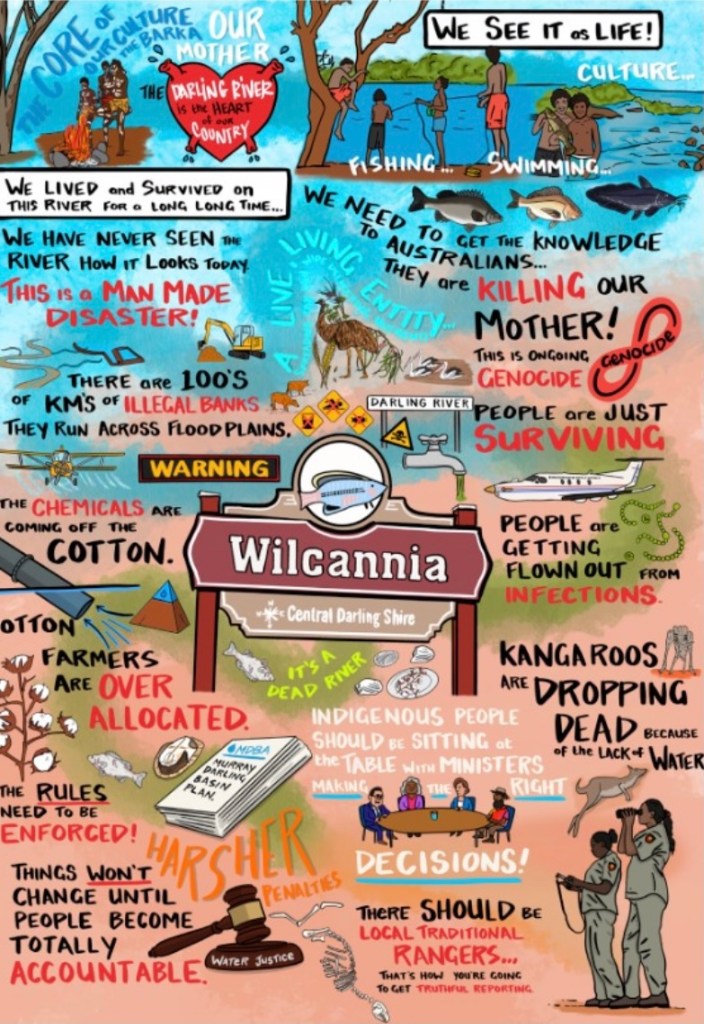
One of Australia’s most significant rivers, the Barka (Lower Darling), is in crisis. People and ecosystems are suffering, and situation seems only to deteriorate further with every passing season. The principal problem is overextraction of water upstream.

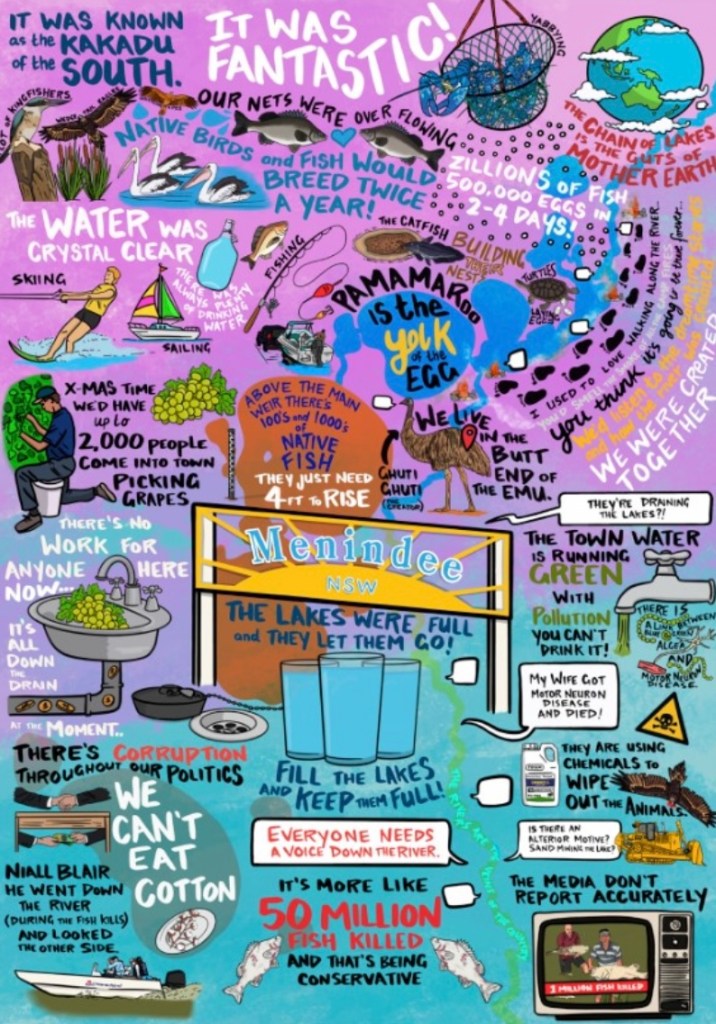
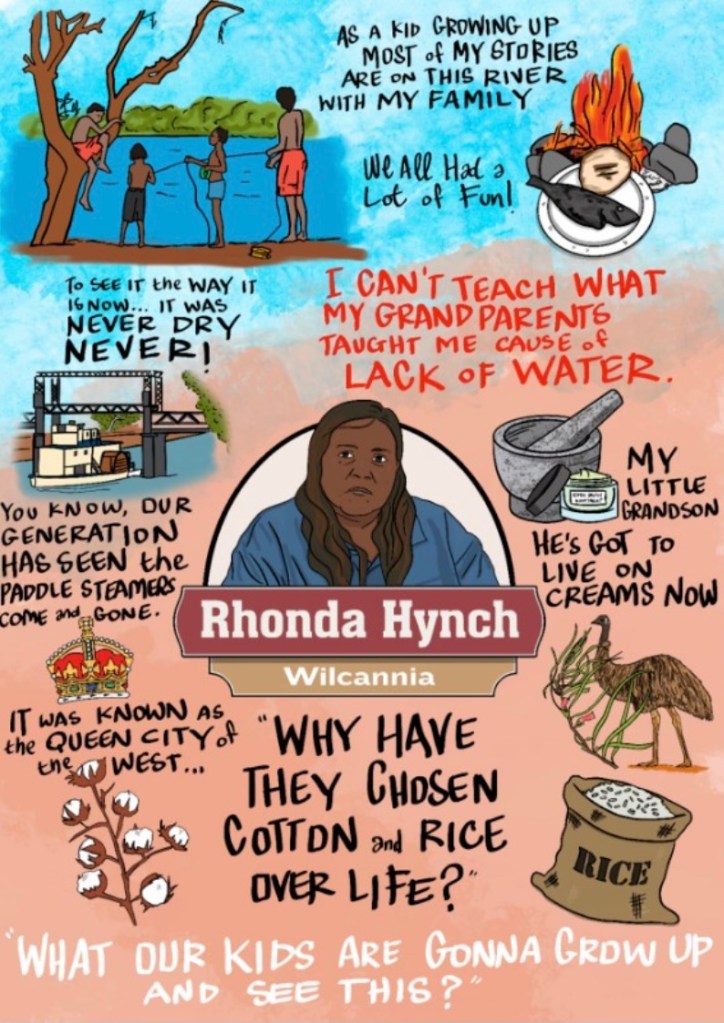
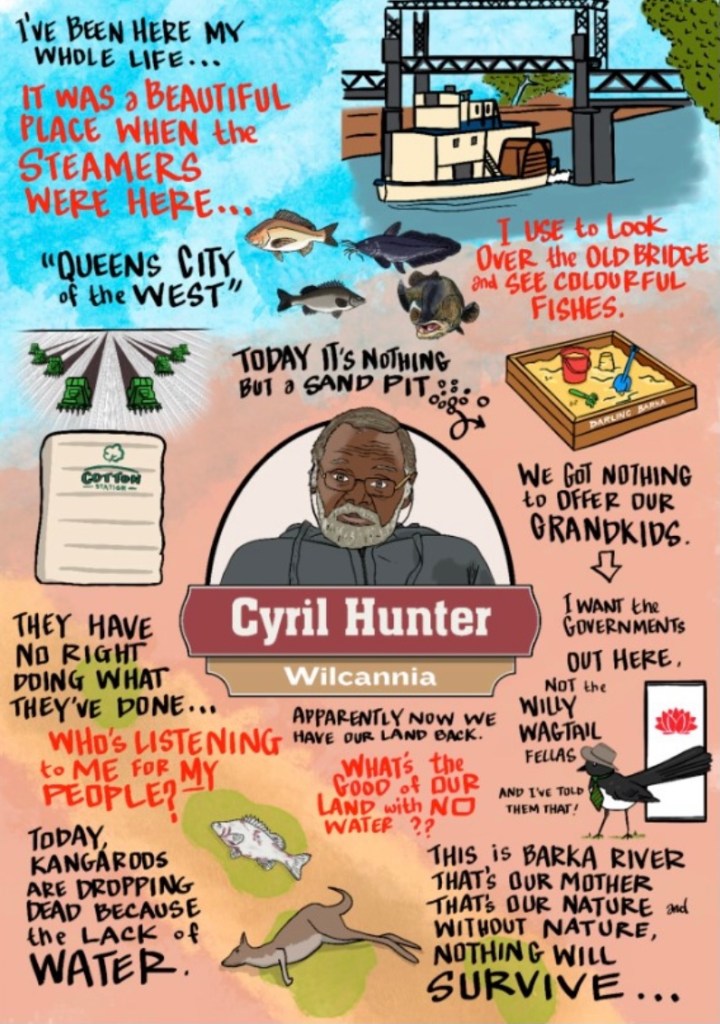
This year, the Global Water Forum in conjunction with the Water Justice Hub of the Australian National University is focusing on the Barka and the many stressors facing it. They argue that it is time to listen to what the Traditional Owners are saying about the plight of the Barka.

They argue that the way forward is already being shown by river communities like Menindee and Wilcannia. That involves supporting the Traditional Owners’ voices for the river, and listening g carefully to those voices.

In 2019, a combination of overextractions of water upstream, below-normal rainfall and high temperatures resulted in one of Australia’s most important rivers, the Darling River (also known as the Barka or Baaka River along its lower reaches) to run dry. While the Barka River has run low before, dry spells are becoming increasingly severe and more frequent with multiple and serious negative ecological impacts from increasing still-water events exacerbated by weir pools and greater ‘run-of-the-river’ water extractions.

Adding to the problems of the Barka River are water theft, ‘missing flows’, floodplain harvesting (possibly illegal), and water planning that has its priorities ‘back to front’, namely, water for communities and basic needs should come before irrigation, but has not. Worse yet, these well-documented failures are occurring in the State of New South Wales where water management operates under a key principle that “water quality of all water sources should be protected and, wherever possible, enhanced” (as set out in the Water Management Act 2000).

The relevant water sharing plan for the Barka River, still in force today, was modified in 2012. The changes removed some pumping restrictions, allowed irrigators to extract water from rivers with much larger diameter pipes and to extract water, in any one year, up to three times the annual allowable maximum on their water license. These changes contributed to an increase in upstream extractions for irrigation over the period 2014-17 that, in turn, caused an ‘anthropogenic’ drought.

This has reduced water availability and water quality for downstream communities, and also for the water-dependent eco-systems along the Barka River and its wetlands.

People of the Barka

Extractions from surface waters, which can account for as much 80% of annual flows in times of drought, impose a big cost on the river and downstream users. For instance, there areover 700 residents living in the town of Wilcannia, located on the banks of the Barka River. They saw their town run out of water in 2018. In response to this water emergency that lastedmany months, and in the absence of a co-ordinatedgovernment response, drinking water was supplied by the community coming together and with volunteers trucking in tens of thousands of water cartons.

The town of Menindee’s water supply is retained behind a weir on the river. This supply suffered from blooms of blue-green algae that continued long after the drought ended. At Menindee, and its nearby culturally significant lakes, there was also a major ecological disaster that included a series of devastating fish kills at the end of 2018 and early 2019. According to a scientific panel established by the Australian Academy of Science to investigate this disaster, the fish kills were caused by insufficient stream flow; primarily a result of too much water extraction upstream.

Locals in Far Western NSW had been warning State and Federal members of parliament about these issues since the early 2000’s. At a state parliamentary inquiry in 2016, locals explicitly stated that if current management practices were not improved there would be a return to devastating conditions.

The voices of the people of the Barka were captured in posters graphically portraying their testimony at the ‘Citizens’ Inquiry’. The two posters above focused on themes relating to Wilcannia and Menindee. The posters below contain the testimonies of Rhonda Hynch and Cyril Hunter, captured as art for the exhibition ‘Aquawhen?’

Barkindji Woman, Rhonda Hynch featured in the exhibition. She posed the ultimate question about the Barka River: “Why have they chosen cotton and rice over life?”

Citizens speak

As a result of the unfolding river disasters, and with due respect for the local and traditional knowledge holders of Barka River communities, a small group of volunteers came together to establish an Australian Peoples’ Tribunal 2019 Citizens’ Inquiry in to the Health of the Barka Darling River and Menindee Lakes. This Citizen’s Inquiry visited several towns along the river and invited their residents to give their testimony about the river. Those who gave witness were asked to respond to key questions such as: What is the current state of the Barka-Darling River? And what are the prime causes for the current state of the river?

Testimonies were given by 17 residents from Menindee and 15 from Wilcannia. The lived experiences of these Menindee and Wilcannia residents, given at the Citizen’s Inquiry, came together in a virtual exhibition on 15-22 September 2021. Convened by the Water Justice Hub, the ‘Aquawhen?’ exhibition was delivered via an online platform that amplifiedthe Voices of the Barka to the world. This exhibition included pictorials created by artists Rix Lee and Tom Horne for each testimony and two short films created by Dan Schulz and Otis Filley; one filmed in 2019-20 when the river was dry and another in 2021 that coincided with high stream flows.

“This is Barka River. That’s our Mother.”

In the words of Barkindji Elder, Cyril Hunter, featured in the exhibition: “This is Barka River. That’s our Mother, that’s our nature and without nature nothing will survive”. 

Today, on World Rivers Day 2021, isn’t it time that Rhonda Hynch’s question received a response? And isn’t it time to listen to the Voices of the River and its peoples?

More information: quentin.grafton@anu.edu.au

*****

Acknowledgement: This article was prepared by members of the Water Justice Hub and initiated on the unceded Country of the Ngunnawal and Ngambri people that includes the upper Murrumbidgee(Big Water) River. It responds to the mismanagement of the Barka (Lower Darling) River that is in the Country of the Barkindji (People of the Barka).

The Water Justice Hub acknowledges the traditional custodians of Australian rivers who have sustainably managed their own Country since time immemorial. The Water Justice Hub pays it respects to allpeoples, Indigenous and non-Indigenous, who continue to struggle for water justice and to promote the health and the life of the world’s rivers.

Quentin Grafton,Virginia Marshall, Ana Manero, John Williams, Caroline McFarlane, Dan Schulz, Kat Taylor, Paul Wyrwoll, Carina Wyborn, Mai Nguyen, William Nikolakis and Libby Larsen, from the Water Justice Hub.

See https://globalwaterforum.org/2021/09/27/voices-of-the-barka-river-world-river-day-2021/

Unknown's avatarAuthor John T SquiresPosted on September 27, 2021September 27, 2021Categories An Orderly Account: Gospel of LukeLeave a comment on World Rivers Day (27 September)

On care for orphans and widows (James 1; Pentecost 14B)

On care for orphans and widows (James 1; Pentecost 14B)

“Religion that is pure and undefiled before God, the Father, is this: to care for orphans and widows in their distress, and to keep oneself unstained by the world” (James 1:27). So affirms the brother of Jesus, James, in the letter attributed to him; so we hear in this week’s lectionary. And passages from this letter will appear as the epistle offering for the next month.

So what is the nature of this letter? It begins with the standard opening address expected in a letter: “James … to the twelve tribes … greetings” (1:1). However, it lacks every other common feature of a letter written during the hellenistic period: there is no thanksgiving, no sharing of news, no travel plans, no emissaries, no closing greetings or benediction.

Instead, the work plunges immediately into a series of general exhortations: “consider it all joy … if any of you lack wisdom, ask God … ask in faith … let the lowly one boast in being raised up … blessed is the person who endures temptation … do not be deceived … be quick to listen, slow to speak, slow to anger … rid yourselves of all sordidness … welcome the implanted word … be doers of the word” (excerpts from 1:2–22).

Moral instruction—known as “paraenesis”—is the major thrust throughout the work; it ends in a loosely-connected string of commands and instructions (5:7–20) with no concluding summation. This is not so much a letter, as a moral treatise designed to provide instruction and training in religious and ethical matters. So I prefer to refer to this book as the treatise of James.

In this regard, this work is like other New Testament books that we describe as letters which don’t, in fact, exhibit many characteristics of a letter. 1 John lacks both the address and the conclusion of a letter. Hebrews likewise lacks a letter opening, and it describes itself as “a word of exhortation” (Heb 13:22). Some of the letters appear to be very situation-specific, as regularly letters usually are; others, by contrast, are generic and seem not to be grounded in any particular life setting.

The structure of the treatise of James appears relatively unsystematic, with a string of exhortations, dealing with somewhat related matters, yet without an integrated arrangement. The central concern is to persuade the audience that “friendship with the world is enmity with God” (4:4) and thus “to keep oneself unstained by the world” (1:27).

Accordingly, a number of moral qualities are urged on the readers, and pointers for practical action are given in many of the sections of the treatise. The treatise thus stands in the tradition of generalised moral exhortation, as practised throughout the Hellenistic world.

There is nothing that provides any clue as to the specific situation that might be addressed by the author of the treatise; it is, rather, a general work for a widespread audience. In this regard, it may be compared with sections of some New Testament letters (Rom 12:9–21; 13:8–14; Gal 5:13–6:10; Phil 4:4–9; 1 Thess 5:12–22; Col 3:5–17; Eph 4:17–5:20; 1 Pet 2:11–3:12; 4:7–11; and parts of Hebrews) as well as the book of Proverbs. This technique was also employed by numerous pagan teachers in the Hellenistic world (for instance, Plutarch).

The description of the author of this treatise is short and to the point: “James, a servant of God and of the Lord Jesus Christ” (1:1). James was a well-known figure; he is named amongst the brothers of Jesus (Mark 6:3; Matt 13:55; Gal 1:19) and seems to have been the leader of the church in Jerusalem (Acts 12:17; 15:20; 21:20).

Was the treatise written before James was put to death in 62CE? (Josephus reports his death in book 20 of his Jewish Antiquities—not to be confused with James, the son of Zebedee, whose death in the year 44CE is noted at Acts 12:2.) The knowledge of Jewish scripture and traditions shown in this work, as well as its extensive set of allusions to the teachings of Jesus, support the possibility that James himself wrote it —or, more likely, preached it, with someone else writing it down.

There are many features to support the view that this treatise originated within the early Palestinian (even Jerusalem) part of the Jesus movement. For instance, the way that religion is defined, as we noted above, as being “the care of orphans and widows” (1:27), draws on a central motif in Hebrew scripture. Care for the vulnerable, such as widows and orphans, was a central element in ancient Israelite society.

In the Hebrew scriptures, God is described as “Father of the fatherless and protector of widows” (Ps 68:5), who “executes justice for the fatherless and the widow” (Deut 10:18).

As a result, the Law is clear about what this means for Israel, directing that “you shall not mistreat any widow or fatherless child” (Exod 22:22), and instructing that the widow and the fatherless child are to included along with the sojourner in celebratory moments in Israel—when tithing (Deut 14:28–29), at the Feast of Weeks (16:9–12) and the Feast of Booths (16:13–15), when gleaning (24:19–22), and when tithing once more (26:12–13).

The curses of Deuteronomy 27 include the declaration, “Cursed be anyone who perverts the justice due to the sojourner, the fatherless, and the widow” (Deut 27:19). Isaiah proclaims God’s judgement on those who “turn aside the needy from justice … and rob the poor of my people”, including the way that they exploit the fatherless and widows (Isa 10:1–2). Likewise, Ezekiel includes those who “have made many widows” in Israel amongst those who will experience the full force of God’s vengeance (Ezek 22, see verse 25). He observes that “the sojourner suffers extortion in your midst; the fatherless and the widow are wronged in you” (Ezek 22:7).

Jeremiah assures the people of Edom, to the south of Israel, of God’s care for them: “leave your fatherless children; I will keep them alive; and let your widows trust in me” (Jer 49:11). He encourages the people of Jerusalem with a promise that God will allow them to continue to dwell in their land if they “do not oppress the sojourner, the fatherless, or the widow, or shed innocent blood in this place … or go after other gods” (Jer 7:5–7).

In a later chapter, Jeremiah is instructed to tell the King of Judah, “do no wrong or violence to the resident alien, the fatherless, and the widow, nor shed innocent blood in this place” (Jer 22:1–3). The prophet Zechariah speaks similarly: “do not oppress the widow, the fatherless, the sojourner, or the poor, and let none of you devise evil against another in your heart” (Zech 7:10).

The book of Psalms includes a prayer for God to rise up against the wicked, who “kill the widow and the sojourner, and murder the fatherless” (Ps 94:6). That psalm ends with an assurance that “the Lord … wipe them out for their wickedness; the Lord our God will wipe them out” (Ps 94:23). The prophet Malachi includes this in his vision of the coming day of the Lord: “I will draw near to you for judgment. I will be a swift witness … against those who oppress the hired worker in his wages, the widow and the fatherless, against those who thrust aside the sojourner, and do not fear me” (Mal 3:4).

What is wished for the wicked who persecute the faithful is expressed with vitriol in Psalm 109: “May his children be fatherless and his wife a widow” (Ps 109:9). Another psalm expresses similar hopes, but in a less aggressive manner: “The Lord watches over the sojourners; he upholds the widow and the fatherless, but the way of the wicked he brings to ruin” (Ps 146:9).

So in this key phrase, referring to children with no parents and women with no husband, which the treatise includes in the definition of “true religion”, the Jewish origins and ethos of the document is clearly signalled. It clearly reflects the motif of “the fatherless and the widow” that we have seen throughout Hebrew scripture. It also resonates strongly with the emphasis that Jesus offers in his care and concern for “the little ones” (Mark 9:42; Matt 10:52; Luke 17:2; Matt 18:6, 10, 14), “the least of these” (Matt 25:40, 45) who are those most disadvantaged in society (Matt 25:35– 36). Whoever “is least among you all is the one who is great”, he teaches (Luke 9:48).

So true religion is “to care for orphans and widows in their distress, and to keep oneself unstained by the world” (James 1:27)”. The second aspect of this definition, to remain “in stained by the world”, relates to the sense of purity that was central to the priestly conception of Israelite society (Lev 10:3, 8–11; 11:44–45; 19:1–2; 20:26; 22:31–33). The people of Israel were to be holy, set apart, pure.

This purity was integral to the teachings of Jesus (Matt 5:8; 8:1–4; 10:1, 8; 11:4–5; 12:22–45; 15:1–2, 10–20; 23:25–26). This purity is the nature of true wisdom (James 3:7) and is what believers should strive for (4:8).

Nevertheless, the refined style and extensive vocabulary of the Greek employed throughout the treatise of James suggest it may have been written by one schooled in Greek rhetoric and literature. It is unlikely to have been a Jewish person like the brother of Jesus, largely unschooled in the ways of hellenistic rhetoric. So, could it be that the book might have been written in the form we have it after the death of James? If so, perhaps it functioned as a statement of the authority of James and a compilation of his teaching within the Jerusalem church, written in order to encourage other congregations with Jewish members.

One verse describes these congregations as “your synagogues” (2:2), suggesting an origin in the time when Jewish synagogues were still permitted and active in Israel, before the war of 66–74 CE and the consequent dispersion of Jews from the land of Israel by the Romans. Some scholars have claimed that it must have been written much later, even in the second century, by a person writing in the name of James, as a way of claiming his authority for the teachings proposed in this letter. This view seems less persuasive these days. Its origins and dominant ethos are clearly Jewish.

And the key definition of religion, in its best form, as being “to care for orphans and widows in their distress, and to keep oneself unstained by the world”, is thoroughly Jewish.

Unknown's avatarAuthor John T SquiresPosted on August 25, 2021August 24, 2021Categories An Orderly Account: Gospel of LukeLeave a comment on On care for orphans and widows (James 1; Pentecost 14B)

Pentecost, the Spirit, and the people of God (Acts 2; Pentecost B)

Pentecost, the Spirit, and the people of God (Acts 2; Pentecost B)

Pentecost is about the Spirit. That is the focus in the Christian Church, where this festival day provides the most concentrated occasion for celebrating the work of the Holy Spirit. However, often this focus on the spirit leads people to think that this was the first appearance of the spirit—on the day of Pentecost, the beginning of the church.

And let us not forget that Pentecost itself was already a well-established Jewish festival day, for the Feast of Weeks, or the Feast of Ingathering (Exod 23:16). Provisions for this festival are set out in Leviticus 23:15-22, Numbers 28:26-31, and Deuteronomy 16:9-12. The name Pentecost (meaning the fiftieth day) is used at Tobit 2:1 and 2 Maccabees 12:32, two books included in the Old Testament in the Roman Catholic Deuteroncanonical books.

The spirit was not a new entity arriving for the first time on the first day of Pentecost. The spirit had been active throughout the life of the people of Israel. In fact, the spirit is mentioned very early in Hebrew Scripture, in the opening verses. The Priestly writer attributed the spirit with a key role in creation. The story of creation which opens the scriptures of the Hebrew people affirms that creation took place when “the spirit moved over the face of the waters” (Gen 1:1-2; see also Job 33:4).

Later, the Psalmist envisioned the spirit as playing an eschatological role at the end of time (Ps 104:30). The spirit bookends history, as understood in the biblical texts, being noted both at the very beginning and at the very end. So, the spirit joins with “the bride” (that is, Jesus), to utter the closing invitation at the end of the scriptures of the Christians: “the spirit and the bride say, ‘Come’ … let everyone who is thirsty, come; let anyone who wishes take the water of life as a gift” (Rev 22:17).

The spirit was an important element in the ancient Jewish worldview. Moses and the elders whom he appointed as judges were filled with the spirit (Num 11:25), and subsequently the spirit was given to Joshua (Deut 34:9). Various prophets were anointed by the Spirit to declare “the word of the Lord” for the people of their time; the former prophets (Zech 7:12); the prophets Micah (Micah 3:8) and Zechariah (Zec 4:6); the prophet Ezekiel (Ezek 2:2, 3:24, 11:1, 36:26-27, 37:1, 14); and the later prophet speaking in the name of Isaiah (Isa 61:1-3), who most famously declares “the spirit of the Lord is upon me”.

The promise is given that the spirit will rest upon the future Davidic leader (Isa 11:2-5), the servant whom God has chosen (Isa 42:1), and still later, on Daniel (Dan 4:8-18). Wisdom promises to give the spirit to those who listen to her (Prov 1:23) and Joel prophesies that the spirit will be poured out on “all flesh … your sons and your daughters … your old men … and your young men … even on the male and female servants” (Joel 2:28-29).

In a time of difficulty, Isaiah declares that the spirit will be poured out on the people of Israel, to turn their wilderness into a fruitful field (Isa 32:15, 44:3). So the promise that God makes through the prophets is striking: “my spirit abides among you; do not fear” (Haggai 2:5); and “my spirit that is upon you, and my words that I have put in your mouth, shall not depart out of your mouth, or out of the mouths of your children, or out of the mouths of your children’s children, says the Lord, from now on and forever” (Isa 59:21).

The spirit was an important element in the ancient Jewish worldview. In the process of creating “the heavens and the earth”, God “gives breath to the people upon [the earth] and spirit to those who walk in it” (Isa 42:5). All human beings are created with the spirit of God within us (Gen 1:20, 21, 24, 30, 2:7). Job affirms this belief unreservedly and extends it to all creatures, not just human beings: “in [God’s] hand is the life of every living thing, and the breath of every human being” (Job 12:7-10).

That is an incredibly important affirmation for human beings to make. Perhaps the sense of this divine in-breathing has led humans to reinforce our sense of human beings as being at the pinnacle of the order of animals, birds, and fish. However, we need to remember that we share this creative force with all of them; we sit on the spectrum of existence alongside all of them, each of us equally God-breathed at our conception.

Certainly, our human identity is grounded in the creative work of God’s spirit. Who we are is how God has made us to be—each human being is made in God’s image (Gen 1:27; Sir 17:3). The breath we breathe is an expression of the divine spirit implanted within us at creation. These words also provide every human being with an affirmation of each of us as exactly who we are, however we identify within the spectrum of LGBTIQA+ identities, for instance. We are as we are, just as God made us and intended us to be. We can each rejoice in our unique individual identity.

The same goes when we consider ethnicity. The Black Lives Matter movement has reminded us that we need to especially value the lives of people who have experienced intense persecution, marginalisation, and oppression, over many centuries. The colour of a person’s skin and the cultural patterns of their ethnicity do not diminish their worth. God has made each of us just as we are, and we can celebrate that fact.

*****

When the story is told of the spirit coming on the Day of Pentecost (Acts 2:1-4), any Jew who had listened carefully to the stories in their scriptures would have known that “the coming of the spirit” had happened before, and that it would happen again, as the story of Acts continues. This is not the first manifestation of the spirit; nor would it be the last. The spirit of Hebrew scriptures continues as a dynamic force at work amongst the earliest followers of Jesus.

Yet, there is something striking and significance about this Pentecost story of the coming of the spirit. This spirit has already twice filled the messianic community gathered in the Jewish capital, Jerusalem. The first occasion is the best-known of all the times that the spirit came: on the day of Pentecost (2:1-4), and subsequently (4:31). The spirit gifts people with the capacity to hear and understand across the barriers of human language (2:5-13), enabling the followers of Jesus to speak with unfettered boldness (4:31).

Later, it was the spirit who had been gifted to believers in Samaria (8:17), and then the spirit who took Philip from Samaria to Caesarea (8:40). This latter city, of course, is where Peter preaches and the Spirit moves amongst Gentiles (10:44-48; 11:15-18). When the spirit is poured out on the Gentiles in Caesarea, the gentile capital (10:45), it is clear that this is an act of God (2:17; 11:15-18).

Caesarea is a pivotal location in the overarching story of Acts. This is where God provokes the leadership of this movement to reach out and encompass new people, different people, into the community of faith. The sequence of events narrated in Acts 10:1-48 (and immediately reported to the believers in Jerusalem, 11:1-18) is replete with many important consequences for this fledgling movement.

Being filled with the spirit, or having the spirit poured out, to enable particular activities, had been a regular biblical refrain in the stories of the Hebrews. That emphasis comes to the fore, particularly, in the two-volume narrative that Luke constructs. He signals the strategic role of the spirit in the lives of Jesus (Luke 4:1) and John the baptiser (Luke 1:15), as well as of John’s parents (Elizabeth, Luke 1:41; Zechariah, Luke 1:67).

The traditional hopes and expectations of the people are articulated in spirit-inspired hymns sung by Mary (1:46–55, known as the Magnificat), Zechariah (1:67–79, known as the Benedictus), and Simeon the righteous (2:29–32, known as the Nunc dimittis, or the Song of Simeon). Mary is “overshadowed” by the Spirit (1:35), Zechariah and Elizabeth are both “filled” with the Spirit (1:41, 1:67). Simeon is “righteous and devout” (2:25); the Spirit “rested on him” (2:25), then “revealed to him” the words he then speaks (2:26) before “guiding him … into the temple” (2:27).

The words of Anna, although unreported in detail by Luke (2:38), are likewise spirit-inspired (as are all prophetic utterances). The children who are born—Jesus and John—bear the weight of these traditional hopes and expectations as they come into being. They, too, are “filled with the Spirit” (John, 1:15; Jesus, 4:1, 14). This is the same Spirit which, according to old traditions in the Hebrew Scriptures, has been active since the time of creation (Gen 1:2) and which is still at work in the creation of every living creature (Ps 104:30).

The giving of the spirit at Pentecost thus stands in continuity with God’s actions in Israel; it also prefigures the state of many individuals later in the narrative of Acts. Peter is the first individual who is so filled (4:8); after him will come Stephen (6:3,5; 7:55), Saul (9:17; 13:9) and Barnabas (11:24).(4:8; 6:3,5; 7:55; 9:17; 11:24; 13:9; and cf. 18:25). Indeed, all the members of this community in Jerusalem were “filled with the spirit” (4:31). That comment, along with the Pentecost narrative (2:1-4), signals that the spirit is to be an integral factor in leadership of this messianic movement of followers of Jesus.

Being “filled with the Spirit” is then referenced in a number of the letters attributed to Paul that are collated in the New Testament: Rom 5:5; 1 Cor 2:9-13, 12:1-13; Gal 4:6, 5:22-26; 1 Thess 1:5; Eph 5:18. The anonymous author of Hebrews indicates that the spirit has distributed gifts to those who follow the way of Jesus (Heb 2:1-4). “Life in the spirit” receives detailed attention for Paul (Rom 8:1-17) and his discussion of “all creation groaning” along with the groaning of the spirit (Rom 8:18-27) is a crucial passage.

So the celebration of the coming of the spirit on the Day of Pentecost is indeed a “filling up to overflowing” of the promises of God, coming to expression as fulfilment of ancient hopes. (That is my translation of the single Greek word in Acts 2:1, sumplerousthai, which the NRSV rather lamely renders as “when the day had come”. It needs to convey the sense of rich, deep fulfilment, coming to pass in this narrative.)

The same Spirit which has been active since the time of creation (Gen 1:2), been active throughout the stories recounted about the people of Israel, and which is still at work in the creation of every living creature (Ps 104:30), continues to enliven and enrich the lives of the faithful people of God.

See also https://johntsquires.com/2020/05/27/what-does-this-mean-wind-and-fire-tongues-in-the-temple-on-pentecost-sunday-acts-2/

https://johntsquires.com/2020/05/29/pentecost-the-spirit-is-for-anyone-for-everyone/

https://johntsquires.com/2019/06/03/ten-things-about-pentecost/

Unknown's avatarAuthor John T SquiresPosted on May 19, 2021May 19, 2021Categories An Orderly Account: Gospel of LukeTags Acts, Pentecost, scripture, spirit, theology1 Comment on Pentecost, the Spirit, and the people of God (Acts 2; Pentecost B)

Posts pagination

Previous page Page 1 … Page 13 Page 14 Page 15 … Page 22 Next page

The Book of Origins

  • Leaving Luke . . . Meeting Matthew
  • Matthew: tax collector, disciple, apostle, evangelist—and “scribe trained for the kingdom”? (Matt 9; Pentecost 2A)
  • For our instruction … that we might have hope (Rom 15, Isa 11, Matt 3; Advent 2A)
  • The origins of Jesus in the book of origins: Matthew 1 (Advent Year A)
  • Now the birth of Jesus the Messiah took place in this way (Matthew 1; Advent 4A)
  • Descended from David according to the flesh (Rom 1; Advent 4A)
  • A young woman? A virgin? Pregnant? About to give birth? (Isa 7:14 in Matt 1:23; Advent 4A)
  • More on Mary (from the Protoevangelium of James)
  • Tales from the Magi (the Revelation of the Magi)
  • Herod waiting, Herod watching, Herod grasping, holding power (Matt 2; Christmas 1A)
  • Herod was infuriated, and he sent and killed all the children (Matt 2; Christmas 1A)
  • Repentance for the kingdom (Matt 4; Epiphany 3A)
  • Proclaiming the good news of the kingdom (Matt 4; Epiphany 3A)
  • Teaching in “their synagogues” (Matt 4; Epiphany 3A)
  • Teaching the disciples (Matt 5; Epiphany 4A)
  • Blessed are you: the Beatitudes of Matthew 5 (Epiphany 4A)
  • An excess of righteous-justice (Matt 5; Epiphany 5A)
  • You have heard it said … but I say to you … (Matt 5; Epiphany 6A)
  • The missing parts of the Sermon on the Mount (Matt 6 and 7; Epiphany Year A)
  • Our Father in heaven: a pattern for prayer (Luke 11, Matt 6) part III
  • Our Father in heaven: a pattern for prayer (Luke 11, Matt 6) part II
  • Our Father in heaven: a pattern for prayer (Luke 11, Matt 6) part I
  • “Go nowhere among the Gentiles” (Matt 10:5): the mission of Jesus in the book of origins (Pentecost 3A)
  • “Even the hairs of your head are all counted.” (Matt 10:30; Pentecost 4A)
  • Come to me, take my yoke, I will give you rest (Matt 11; Pentecost 6A)
  • Parables: the craft of storytelling in the book of origins (Matt 13; Pentecost 7A)
  • The righteous-justice of God, a gift to all humanity (Romans; Year A)
  • Let anyone with ears, hear! (Matt 13; Pentecost 8A)
  • Chopping and changing: what the lectionary does to the parables of Matthew (Pentecost 7–9A)
  • Nothing but five loaves and two fish (Matt 14; Pentecost 10A)
  • Liminal experiences and thin places (Matt 14; Pentecost 11A)
  • It’s all in the geography. Jesus, the Canaanite woman, and border restrictions (Matt 15; Pentecost 12A)
  • A rock, some keys, and a binding: clues to the identity of Jesus (Matt 16; Pentecost 13A)
  • An invitation that you just cannot … accept! (Pentecost 19A)
  • Towards Palm Sunday (Matt 21): Passover and politics
  • Towards Palm Sunday (Matt 21): Riding on a donkey (or two) as the crowd shouts ‘Hosanna’
  • Towards Palm Sunday (Matt 21): Waving branches, spreading cloaks
  • Towards Palm Sunday (Matt 21): Acclaiming the king, anticipating the kingdom
  • Producing the fruits of the kingdom (Matt 21; Pentecost 19A)
  • Darkness, weeping, and gnashing of teeth: the scene of judgement (Matt 22; Pentecost 20A)
  • The greatest and first commandment … and a second, like it (Matt 22)
  • On these two commandments hang all the law and the prophets (Matt 22; Pentecost 22A)
  • Sitting on the seat of Moses, teaching the Law—but “they do not practice what they teach” (Matt 23; Pentecost 23A)
  • Discipleship in an apocalyptic framework (Matt 23–25; Pentecost 23–26A)
  • A final parable from the book of origins: on sheep and goats, on judgement and righteous-justice (Matt 25; Pentecost 26A)
  • Scripture debate and disputation in the wilderness (Matt 4; Lent 1A)
  • Testing (not temptation) in the wilderness (Matt 4; Lent 1A)
  • Practising righteous-justice: alms, prayer, and fasting (Ash Wednesday)
  • Forcing scripture to support doctrine: texts for Trinity Sunday (2 Cor 13, Matt 28; Trinity A)

An Orderly Account: Luke and Acts

  • “An orderly account”: a quick guide to Luke and Acts
  • Costly discipleship, according to Luke
  • Did Luke write the first “orderly account” about Jesus?
  • With one eye looking back, the other looking forward: turning to Luke’s Gospel I (Year C)
  • Leaving out key moments, so they can appear later in the story: turning to Luke’s Gospel III (Year C)
  • “A light for the Gentiles, salvation to the ends of the earth”: turning to Luke’s Gospel II (Year C)
  • The scriptural resonances in the Annunciation (Luke 1; Advent 4B)
  • Magnificat: the God of Mary (Luke 1) is the God of Hannah (1 Sam 2) (Advent 4C)
  • “To give knowledge of salvation”: Luke’s portrayal of John the baptiser (Luke 3; Advent 2C)
  • On angels and virgins at Christmastime (Luke 2; Christmas Day B)
  • A light for revelation to the Gentiles and for glory to your people Israel (Luke 2; Christmas 1B)
  • John the baptiser’s call for ethical, faithful living (Luke 3; Advent 3C)
  • A Testing Time: forty days in the wilderness (Luke 4)
  • Sacred place and sacred scripture: forty days in the wilderness (2)
  • Scripture fulfilled in your hearing (Luke 4:16-30; Epiphany 3C, 4C)
  • Jesus and conventional Jewish piety (Luke 4:16; Epiphany 3C)
  • Jesus, scripture and experience (Luke 4:17, 21; Epiphany 3C)
  • The holistic spirit-inspired mission of Jesus (Luke 4:18–19; Epiphany 3C)
  • Jesus, the widow of Sidon and the soldier of Syria: representatives of the community of faith (Luke 4:25–27; Epiphany 4C)
  • Two prophets of Israel, the widow of Sidon and the soldier of Syria: an inclusive community of Jews and Gentiles (Luke 4:25–27; Epiphany 4C)
  • Leave everything, follow Jesus (Luke 5:1-11; Epiphany 5C)
  • On a level place, with a great crowd (Luke 6; Epiphany 6C)
  • Blessed are you … poor, hungry, weeping … (Luke 6; Epiphany
  • The plain, the synagogue, and the village (Luke 6, 4 and 1; Epiphany 6C)
  • Bless—Love—Forgive—and more. The teachings of Jesus (Luke 6; Epiphany 6C, 7C)
  • The beloved physician, the lover of God, and loving our enemies (Luke 6; Epiphany 7C)
  • Perfect, or merciful? The challenge Jesus poses (Matt 5, Epiphany 7A; Luke 6, Epiphany 7C)
  • Jesus and his followers at table in Luke’s “orderly account”
  • Before Transfiguration Sunday, the stories of the dying slave and the grieving widow (Luke 7; Epiphany 9C; Proper 4C)
  • What have you to do with me, Jesus? (Luke 8; Pentecost 2C)
  • Bringing his ‘exodos’ to fulfilment (Luke 9; Transfiguration C)
  • Setting his face to go to Jerusalem (Luke 9:51, 13:33, 17:11, 19:11; Lent 2C)
  • Through Samaria, heading to Jerusalem (Luke 9; Pentecost 3C)
  • Sent out in Samaria, proclaiming the kingdom (Luke 10; Pentecost 4C)
  • Listening and learning at the feet of Jesus (Luke 10; Pentecost 6C)
  • Mary and Martha: models of women following and learning from Jesus (Luke 10; Pentecost 6C)
  • There is need of only one thing. Or, maybe, two. (Luke 10; Pentecost 6C)
  • Where have all the women gone? Women in the movement initiated by Jesus (Luke 10; Pentecost 6C)
  • On earth, as in heaven: the key to The Lord’s Prayer (Luke 11; Pentecost 7C)
  • Sins or trespasses? Trial or temptation? Thine or yours? The prayer that Jesus taught (Luke 11; Pentecost 8C)
  • “Where your treasure is, there your heart will be also” (Luke 12; Pentecost 8C)
  • Coming to grips with the judgement of God (Luke 12 and Isaiah 5; Pentecost 10C)
  • She stood up straight and they were put to shame (Luke 13; Pentecost 11C)
  • Jerusalem, Jerusalem: holy city, holy calling (Luke 13; Lent 2C)
  • Disturbing discipleship: exploring the teachings of Jesus in Luke 14 (Pentecost 12C to 13C)
  • Disreputable outsiders invited inside: parables in Luke 14 (Pentecost 12C, 13C)
  • The discomfort of ambiguity (Luke 15; Lent 4C)
  • Human sinfulness and divine grace (Jeremiah 4; Luke 15; 1 Timothy 1; Pentecost 14C)
  • Shrewd? dishonest? manipulative? or contributing to the common good? (Luke 16; Pentecost 15C)
  • Lazarus and the rich man (Luke 16; Pentecost 16C)
  • Faith the size of a mustard seed (Luke 17; Pentecost 17C)
  • Was none of them found to return and give praise to God except this foreigner? (Luke 17; Pentecost 18C)
  • Unjust judge, shameless widow (Luke 18; Pentecost 19C)
  • In defence of the Pharisees: on humility and righteousness (Luke 18; Pentecost 20C)
  • Zacchæus: patron saint of change and transition (Luke 19; Pentecost 21C)
  • “When these things begin to take place … your redemption is drawing near” (Luke 21; Advent 1C)
  • “Be alert at all times, praying that you may have the strength … to stand before the Son of Man” (Luke 21; Advent 1C)
  • Look up to the sky? Look down to your feet! (Luke 20; Pentecost 22C)
  • Don’t take it at face value: on former things and new things
  • Don’t take it at face value: on what lies behind and what lies ahead (Lent 2C)
  • The death, resurrection and ascension of Jesus in Luke’s “orderly account”
  • What do you see? What do you hear? (Luke 19; Palm Sunday C)
  • Holy Week: the week leading up to Easter
  • Sacrificial death and liberating life: at the heart of Easter
  • Ministry and Mission in the midst of change and transition (Luke 21:13; Pentecost 23C)
  • Easter in Christian tradition and its relation to Jewish tradition
  • A time in-between the times, a space in no-space.
  • The tomb is empty. He is not here. He is risen. (Luke 24; Easter Sunday)
  • He Is Not Here Day
  • Discovering new futures … letting go of the old
  • The moment of recognition: walking … talking … listening … understanding … (Luke 24; Easter evening; Easter 3A)
  • Ten things about Pentecost (Acts 2)
  • The cross-cultural nature of the early Jesus movement
  • From Learners to Leaders: deepening discipleship in Luke’s “orderly account”
  • Constantly devoting themselves to prayer (Acts 1; Easter 7A)
  • You will be my witnesses (Acts 1; Easter 7A)
  • Judas: reconsidering his part in the Easter story (Acts 1; Easter 7B)
  • Pentecost, the Spirit, and the people of God (Acts 2; Pentecost B)
  • What God did through him: Peter’s testimony to Jesus (Acts 2; Easter 2A)
  • What God did through him: proclaiming faith in the public square (Acts 2; Easter 2A)
  • Repent and be baptised: Peter’s Pentecost proclamation (Acts 2; Easter 3A)
  • The church in Acts: Times of refreshing (Acts 3; Easter 3B)
  • Boldly proclaiming “no other name” (Acts 4; Easter 4 B)
  • The church in Acts: Unity, testimony, and grace (Acts 4; Easter 2B)
  • We must obey God rather than human authority (Acts 5; Easter 2C)
  • Edging away from the centre (Acts 8; Easter 5B)
  • What happened after Philip met the Ethiopian? (Acts 8; Easter 5B)
  • The calling of Saul and the turn to the Gentiles: modelling the missional imperative (Acts 8—12; Easter 3C)
  • People of ‘The Way’ (Acts 9; Easter 3C)
  • You will be told what you are to do (Acts 9; Easter 3C)
  • Resurrection life, economic responsibility, and inclusive hospitality: markers of the Gospel (Acts 9)
  • Another resurrection! (Acts 9; Easter 4C)
  • Even to the Gentiles! (Acts 10; Easter 6B)
  • Even to the Gentiles (Acts 11; Easter 5C)
  • On literary devices and narrative development (Acts 16; Easter 7C)
  • The unknown God, your own poets, and the man God chose: Paul on the Areopagus (Acts 17; Easter 6A)
  • Paul, Demetrius and Damaris: an encounter in Athens (Acts 17:16-17,22–34)
  • Lydia, Dorcas, and Phoebe: three significant strategic leaders in the early church
  • An Affirmation for Our Times
  • I make prayers on your behalf (Letters to Luke #1; Year C)
  • I rejoice in the gift of writing (Letters to Luke #2; Year C)
  • How exciting it was! (Letters to Luke #3; Year C)
  • I write briefly (Letters to Luke #4; Year C)
  • I am happy to report that we have held another reading (Letters to Luke #5; Year C)
  • I was astonished to receive your brief note (Letters to Luke #6; Year C)
  • Leaving Luke . . . Meeting Matthew

Scripture and Theology

  • The Word of God, Scripture, and Jesus Christ
  • Marrying same-gender people: a biblical rationale
  • Discernment
  • Interpreting the creeds “in a later age”
  • Affirming the Teachings of Jesus
  • To articulate faith contextually
  • Let your gentleness be known to everyone
  • What can we know about the birth of Jesus?
  • “An orderly account”: a quick guide to Luke and Acts
  • Costly discipleship, according to Luke
  • In the wake of the verdict about Pell …
  • Another Time, Another Place: towards an Australian Church
  • Holy Week: the week leading up to Easter
  • Sacrificial death and liberating life: at the heart of Easter
  • The death, resurrection and ascension of Jesus in Luke’s “orderly account”
  • Easter in Christian tradition and its relation to Jewish tradition
  • The cross-cultural nature of the early Jesus movement
  • Jesus and his followers at table in Luke’s “orderly account”
  • Once again: affirming our diversity, celebrating joyous marriages
  • Ten things about Pentecost (Acts 2)
  • The Paraclete in John’s Gospel: exploring the array of translation options (John 14, 15, 16)
  • “Do you believe in the Triune God?”
  • The DNA of the UCA (part I)
  • The DNA of the UCA (part II)
  • Harness the passion, but restrain the rhetoric. Musing on the role model which Paul offers in Galatians.
  • Providing for the exercise by men and women of the gifts God bestows upon them: lay people presiding at the sacraments in the Uniting Church
  • Freedom and unity: themes in Galatians
  • Australian Religious Leaders support renewable energy
  • Human sexuality and the Bible
  • Dividing the unity, splintering the connections: more ACC agitation
  • Giving Voice, Telling Truth, Talking Treaty: NAIDOC 2019
  • Advocacy and Climate Change, Growth and Formation, Treaty with First Peoples: Synod 2019
  • Climate Change: a central concern in contemporary ministry
  • On earth, as in heaven: the key to The Lord’s Prayer (Luke 11; Pentecost 7C)
  • Ramping up the rhetoric, generating guilt and provoking panic: the failed strategy of conservatives in the UCA (part I)
  • Ramping up the rhetoric, generating guilt and provoking panic: the failed strategy of conservatives in the UCA (part II)
  • Ramping up the rhetoric, generating guilt and provoking panic: the failed strategy of conservatives in the UCA (part III)
  • International Day of the World’s Indigenous Peoples
  • In the wake of the verdict (and appeal decision) relating to Pell …
  • Where will we find hope? When will we see justice?
  • Supporting the Climate Strike
  • Gracious openness and active discipleship as key characteristics of church membership
  • Please Leave ?? No — Please Stay !!
  • Stones singing and rivers vibrating … a liturgy for Holy Communion
  • Faith in Action: a religious response to the Climate Emergency (Part One)
  • Faith in Action: a religious response to the Climate Emergency (Part Two)
  • Faith in Action: a religious response to the Climate Emergency (Part Three)
  • Celebrating Transitions: into a strange and graceful ease … (part one)
  • Celebrating Transitions: into a strange and graceful ease … (part two)
  • We wait, and hope, and grieve, anticipating …
  • On the move. A reflection on Christmas.
  • Reflecting on faith amidst the firestorms
  • This is the world we live in, this is the Gospel we believe in
  • Giving up? Or going deep? The opportunity of Lent
  • Passing the peace, sharing the elements, greeting the minister
  • When you come together … reflections on community in the midst of a pandemic
  • Holy Week: a week set apart, in a time set apart.
  • It was on that night that everything came to a head. Maundy Thursday Reflections.
  • Sacrificial Death: to give his life. Good Friday Reflections
  • Liminal Space: waiting and not knowing. Holy Saturday Reflections
  • Liberating Life: a new way of being. Easter Sunday Reflections
  • It’s been just over a month—but there have been lots of learnings!
  • Not this year. So what about next year?
  • The times, they are are a-changin’.
  • When we come together (2) … values and principles in the midst of a pandemic
  • It’s been two months under restrictions—what will our future look like? (1)
  • It’s been two months under restrictions—what will our future look like? (2)
  • Saying sorry, seeking justice, walking together, working for reconciliation
  • Worship like the first Christians. What will our future look like? (3)
  • Pentecost: the spirit is for anyone, for everyone.
  • Racism and Reconciliation
  • Paul’s vision of “One in Christ Jesus” (Gal 3:28) and the Uniting Church
  • In memory of James Dunn (1939–2020)
  • Black Lives Matter. Now—and Then.
  • Hiroshima and Nagasaki (1945), and the commitment to seek peace (2020)
  • Sexuality and Gender Identity Conversion Practices Bill: A Christian Perspective
  • Always Was, Always Will Be. #NAIDOC2020
  • The Lectionary: ordering the liberty of the preacher
  • Women in the New Testament (1): the positive practices of Jesus and the early church
  • Women in the New Testament (2): six problem passages
  • Reflections on a significant anniversary
  • What do we know about who wrote the New Testament Gospels? (1)
  • What do we know about who wrote the New Testament Gospels? (2)
  • What do we know about who wrote the letters attributed to Paul? (3)
  • What do we know about who wrote the letters in the name of the apostles? (4)
  • Revelation: a complex and intricate world of heavenly beings and exotic creatures
  • Why the Christmas story is not history (1): the “nativity scene” and the Gospels
  • Why “the Christmas story” is not history (2): Luke 1-2 and Matthew 1-2
  • Advent Greetings from Canberra Region Presbytery
  • Honours. Honestly?
  • Celebrations in Canberra (in the Uniting Church Presbytery)
  • Enough is Enough!
  • Earth Day 2021
  • From BC (Before COVID) to AD (After the Disruption)
  • The identity of the Uniting Church
  • #IBelieveHer: hearing the voice of women (Easter Day; John 20)
  • An Affirmation for Our Times
  • The missional opportunity of Trinity Sunday
  • The Murugappans of Biloela
  • World Refugee Day 2021: “when I was a stranger, you welcomed me”
  • The climate is changing; the planet is suffering; humanity is challenged.
  • 20 years on, and the shame continues: the Palapa, the Tampa, and “children overboard”
  • Rosh Hashanah: Jewish New Year
  • Remembering John Shelby Spong (1931–2021)
  • International Day of Indigenous Peoples
  • A Safe Place for Rainbow Christians
  • Working with First Peoples and advocating for them
  • Jesus, growing, learning: a review of ‘What Jesus Learned from Women’
  • “The exercise by men and women of the gifts God bestows upon them”: celebrating women in leadership in the Uniting Church
  • On vaccinations, restrictions, and fundamentalism
  • We are buying more debt, pain, and death: a case against nuclear-powered submarines
  • World Rivers Day (27 September)
  • Affirming and inclusive passages from scripture
  • The challenge of COVID-19 to Social Ethics as we know them
  • Mental Health Day, 10 October
  • The shame continues: SIEV X after 20 years
  • What does it mean to be Protestant in the Contemporary World?
  • Eye of the Heart Enlightened: words for the opening of the Parliamentary Year (2023)
  • Saltiness restored: the need for innovation. An Ordination Celebration.
  • God of all the tribes and nations
  • A Day of Mourning, ahead of Invasion Day (26 January)

Life during COVID 19

  • Passing the peace, sharing the elements, greeting the minister
  • When you come together … reflections on community in the midst of a pandemic
  • Pastoral Letter to Canberra Region Presbytery on COVID-19 pandemic
  • Pastoral Letter to the Canberra Region Presbytery of the Uniting Church in Australia. 31 March 2020
  • Liminal Space: waiting and not knowing. Holy Saturday Reflections
  • It’s been just over a month—but there have been lots of learnings!
  • Not this year. So what about next year?
  • The times, they are are a-changin’.
  • When we come together (2) … values and principles in the midst of a pandemic
  • It’s been two months under restrictions—what will our future look like? (1)
  • It’s been two months under restrictions—what will our future look like? (2)
  • Worship like the first Christians. What will our future look like? (3)
  • Pastoral Letter to Canberra Region Presbytery: June 2020
  • “Greet one another” (2 Cor 13). But no holy kissing. And no joyful singing. (Trinity Sunday A)
  • When you come together (3) … wait for one another (1 Cor 11)
  • Going “back” to church—what will our future look like? (4)
  • Minimising risks in the ongoing reality of COVID-19
  • Pastoral Letter to Canberra Region Presbytery—September 2020
  • Reimagining—the spirit of our times
  • Coping in the aftermath of COVID-19: a global perspective, a local response
  • From BC (Before COVID) to AD (After the Disruption)
  • Values and Principles in the context of a pandemic (revisited)

The First Peoples of Australia

  • The sovereignty of the First Peoples of Australia
  • Affirming the Sovereignty of First Peoples: undoing the Doctrine of Discovery
  • On Covenant, Reconciliation, and Sovereignty
  • Learning of the land (1): Eora, Biripi, Whadjuk Noongar
  • Learning of the land (2): Ngunnawal, Namadgi and Ngarigo
  • The profound effect of invasion and colonisation
  • “Endeavour by every possible means … to conciliate their affections”
  • “We never saw one inch of cultivated land in the whole country”
  • “They stood like Statues, without motion, but grinn’d like so many Monkies.”
  • “Resembling the park lands [of a] gentleman’s residence in England”
  • On Remembering: Cook and Flinders (and Trim), Bungaree and Yemmerrawanne
  • “They are to be hanged up on trees … to strike the survivors with the greater terror.”
  • So, change the date—to what?
  • Learning of the land (3): Tuggeranong, Queanbeyan, and other Canberra place names
  • Learning from the land (4): Naiame’s Nghunnhu—fishtraps at Brewarrina
  • We are sorry, we recognise your rights, we seek to be reconciled
  • Reconciliation on the land of Australia: learning from the past
  • Reconciliation on the land of Australia: Bennelong and Yemmerrawanne
  • Reconciliation on the land of Australia: Bungaree and Mahroot
  • Reconciliation on the land of Australia: Cora Gooseberry and Biddy Giles
  • Reconciliation on the land of Australia: “these are my people … this is my land”.
  • Reconciliation on the land of Australia: living together with respect
  • Dark deeds in a sunny land: the exposé offered by John B. Gribble
  • This is the proper way: no climbing
  • “They appear’d to be of a very dark or black colour”. Cook, HMS Endeavour, and the Yuin people and country.
  • “Three canoes lay upon the beach—the worst I think I ever saw.” James Cook at Botany Bay, 29 April 1770
  • Saying sorry, seeking justice, walking together, working for reconciliation
  • Racism and Reconciliation
  • “We weigh’d and run into the Harbour”. Cook, the Endeavour, and the Guugu Yimithirr
  • Black Lives Matter. Now—and Then.
  • James Cook, the Endeavour, twelve turtles and the Guugu Yimithirr (3)
  • James Cook: Captain? Discoverer? Invader? Coloniser? Cook, the Endeavour, and Possession Island.
  • Always Was, Always Will Be. #NAIDOC2020
  • Invasion and colonisation, Joshua 3 and contemporary Australia (Pentecost 23A)
  • This whispering in our hearts: potent stories from Henry Reynolds
  • A vision, a Congress, and a struggle for justice
  • What’s in a name? Reconciliation ruminations
  • NAIDOC WEEK 2021
  • Heal Country: the heart of the Gospel (for NAIDOC WEEK 2021)
  • The Spirit was already in the land. Looking back on NAIDOC WEEK (2017–2021)
  • Working with First Peoples and advocating for them
  • World Rivers Day (27 September)
  • Eye of the Heart Enlightened: words for the opening of the Parliamentary Year (2023)
  • God of all the tribes and nations
  • A Day of Mourning, ahead of Invasion Day (26 January)

Paul

  • The calling of Saul and the turn to the Gentiles: modelling the missional imperative (Acts 8—12; Easter 3C)
  • The unknown God, your own poets, and the man God chose: Paul on the Areopagus (Acts 17; Easter 6A)
  • Freedom and unity: themes in Galatians
  • Paul’s vision of “One in Christ Jesus” (Gal 3:28) and the Uniting Church
  • Descended from David according to the flesh (Rom 1; Advent 4A)
  • Reckoning what is right (Romans 4; Lent 2A) part one
  • Reckoning what is right (Romans 4; Lent 2A) part two
  • Original Sin? or Innate Goodness? (Genesis 2, Romans 5; Lent 1A)
  • We have obtained access to this grace (Romans 5, Pentecost 3A)
  • Dead to sin and alive to God (Romans 6; Pentecost 4A)
  • The best theology is contextual: learning from Paul’s letter to the Romans (Year A)
  • The righteous-justice of God, a gift to all humanity (Romans; Year A)
  • Paul and the Law, sin and the self (Rom 7; Pentecost 6A)
  • Paul, the law of the Spirit, and life in the Spirit (Rom 8; Pentecost 7A)
  • Paul, the spirit of adoption, and the “Abba, Father” prayer (Rom 8; Pentecost 8A)
  • Sighs too deep for words: Spirit and Scripture in Romans (Rom 8; Pentecost 9A)
  • Praying to be cursed: Paul, the passionate partisan for the cause (Rom 9:3; Pentecost 10A)
  • A deeper understanding of God, through dialogue with “the other” (Romans 10; Pentecost 11A)
  • God has not rejected his people. All Israel will be saved. (Rom 11; Pentecost 12A)
  • The rhetoric of the cross (1 Cor 1; Epiphany 3A)
  • The paradox of “the word of the cross” in Corinth (1 Cor 1; Epiphany 4A)
  • Who has known the mind of the Lord? (1 Cor 2; Epiphany 5A)
  • “We do not lose hope” (2 Corinthians; Pentecost 3B—6B)
  • For our instruction … that we might have hope (Rom 15, Isa 11, Matt 3; Advent 2A)
  • When you come together (3) … wait for one another (1 Cor 11)
  • A new creation: the promise articulated by Paul (2 Cor 5; Pentecost 6B)
  • “Greet one another” (2 Cor 13). But no holy kissing. And no joyful singing. (Trinity Sunday A)
  • Paul the travelling philosopher (1 Thessalonians; Pentecost 21–25A)
  • The sincerest form of flattery? Or a later, imperfect imitation? (2 Thessalonians; Pentecost 21C to 23C)
  • To the saints [not just in Ephesus] who are faithful (Ephesians 1; Pentecost 7B)
  • Declare boldly the gospel of peace, put on the armour of God (Ephesians 6; Pentecost 13B)
  • To the saints [not just in Ephesus] who are faithful (Ephesians 1; Pentecost 7B)
  • Making (some) sense of the death of Jesus (Colossians 2; Pentecost 7C)
  • No longer as a slave: Paul, to Philemon, about Onesimus (Pentecost 13C)
  • An example to those who come to believe (1 Timothy 1; Pentecost 14C)
  • Human sinfulness and divine grace (Jeremiah 4; Luke 15; 1 Timothy 1; Pentecost 14C)
  • A ransom for all: a formulaic claim (1 Tim 2; Pentecost 15C)
  • On godliness, dignity, and purity: the life of faith in 1 Timothy (Epiphany 16C)
  • In the name of the apostle … (2 Timothy, Pentecost 17B to 21B)
  • Rightly explaining the word of truth (2 Tim 2:15; Pentecost 18C)
  • Guard the good treasure entrusted to you (2 Tim 1; Pentecost 17C)
  • What does it mean to say that the Bible is inspired? (2 Tim 3:16; Pentecost 19C)
  • On care for orphans and widows (James 1; Pentecost 14B)
  • Fulfilling the Law (James 2; Pentecost 16B)
  • Wisdom from ages past for the present times (Leviticus, Jesus, James, and Paul) (Pentecost 15B, 23B)
  • The wisdom from above (James 3; Pentecost 18B)
  • The ‘word of exhortation’ that exults Jesus as superior (Hebrews 1; Pentecost 20B)
  • A great high priest who “has passed through the heavens” (Hebrews 4; Pentecost 23B)
  • A priest forever, “after the order of Melchizedek” (Hebrews 5; Pentecost 21B)
  • The perfect high priest who mediates “a better covenant” (Hebrews 9; Pentecost 23B)
  • The superior high priest who provides “the better sacrifices” (Hebrews 9; Pentecost 24B)
  • The assurance of hope in “the word of exhortation” (Hebrews 10: Pentecost 25B)
  • Strangers and foreigners on the earth (Hebrews 11; Pentecost 9C)
  • Jesus, the pioneer and perfecter of faith (Hebrews 11–12; Pentecost 10C)
  • Jesus, justice, and joy (Hebrews 12; Pentecost 11C)
  • I will not be afraid; what can anyone do to me? (Hebrews 13; Pentecost 12C)
  • A new birth into a living hope (1 Peter 1; Easter 2A)
  • The living and enduring word of God (1 Peter 1; Easter 3A)
  • ‘Christ died for us’: reflections on sacrifice and atonement
  • Christ suffered for you, leaving you an example (1 Peter 2; Easter 4A)
  • On suffering as a virtue (1 Peter 3; Easter 6A)
  • The spirit of glory is resting on you (1 Peter 4–5; Easter 7A)

The Beginning of the Good News: Mark

  • The Lectionary: ordering the liberty of the preacher
  • Forty days, led by the Spirit: Jesus in the wilderness (Mark 1; Lent 1B)
  • The kingdom is at hand; so follow me. The Gospel according to Mark (Year B)
  • The more powerful one who is coming (Mark 1; Advent 2B)
  • The whole city? (Mark 1; Year B). Let’s take that with a grain of salt
  • “Let’s get down to business”: beginning the story of Jesus (Mark 1; Epiphany 3B)
  • Textual interplay: stories of Jesus in Mark 1 and the prophets of Israel (Year B)
  • 1: Where has Mark gone ?
  • 2 Mark: collector of stories, author of the passion narrative
  • 3 Mark: placing suffering and death at the heart of the Gospel
  • 4 The structure of the passion narrative in Mark
  • Reading the crucifixion as a scene of public shaming
  • In his house, out of his mind (Mark 3; Pentecost 2B)
  • The kingdom, God’s justice, an invitation to all (Mark 4; Pentecost 3B)
  • Mark: a Gospel full of questions (Mark 4; Pentecost 4B)
  • On ‘twelve’ in the stories of the bleeding woman and the dying child (Mark 5; Pentecost 5B)
  • On not stereotyping Judaism when reading the Gospels (Mark 5; Pentecost 5B)
  • Just sandals and a staff—and only one tunic (Mark 6; Pentecost 6B)
  • Shake off the dust that is on your feet (Mark 6; Pentecost 6B)
  • What’s in, and what’s out (Mark 6; Pentecost 8B)
  • Stretching the boundaries of the people of God (Mark 7; Pentecost 15B, 16B)
  • Wash your hands (Mark 7; Pentecost 14B)
  • On Jesus and Justa, Tyre and Decapolis (Mark 7; Pentecost 16B)
  • Disturbance, disruption, and destabilising words (Mark 8; Lent 2B)
  • Transfigured lives—in the here and now (Mark 9 and 1 Kings 2; Epiphany 6B)
  • The paradoxes of discipleship (Mark 8; Pentecost 17B)
  • Giving priority to “one of these little ones” (Mark 9; Pentecost 19B)
  • Boundary lines and the kingdom of God (Mark 9–10; Pentecost 18B to 20B)
  • Not to be served, but to serve: the model provided by Jesus (Mark 10; Pentecost 21B)
  • A ransom for many: a hint of atonement theology? (Mark 10; Pentecost 21B)
  • Seeing and believing as Jesus passes by (Mark 10; Pentecost 22B)
  • Love God, love neighbour: prioritising the Law (Mark 12; Pentecost 23B)
  • Love with all that you are—heart and soul, completely and entirely (Deut 6 in Mark 12; Pentecost 23B)
  • Jesus, the widow, and the two small coins (Mark 12; Pentecost 24B)
  • The beginnings of the birth pangs (Mark 13; Pentecost 25B)
  • Towards the Coming (Mark 13; Advent 1B)

The Book of Signs

  • In the beginning … the Prologue and the book of signs (John 1; Christmas 2B)
  • Living our faith in the realities of our own times … hearing the message of “the book of signs”
  • John (the baptizer) and Jesus (the anointed) in the book of signs (the Gospel of John; Epiphany 2A)
  • Righteous anger and zealous piety: the incident in the Temple (John 2; Lent 3B)
  • Raise up a (new) temple: Jesus and “the Jews” in the fourth Gospel (John 2; Lent 3B)
  • The serpent in the wilderness (John 3, Num 21; Lent 4B)
  • The complex and rich world of scriptural imagery in ‘the book of signs’ (John 3; Lent 4B)
  • The Pharisee of Jerusalem and the woman of Samaria (John 3 and 4; Lent 2–3A)
  • “How can anyone be born after having grown old?” The questions of Nicodemus (John 3; Lent 2A)
  • On the Pharisees: “to help the people to understand the Law”
  • From the woman at the well to a Byzantine saint: John 4, St Photini, and the path to enlightenment (Lent 3A)
  • A well, two mountains, and five husbands (John 4; Lent 3A)
  • Speaking out for equality: a sermon for Lent 3A
  • Misunderstanding Jesus: “they came to make him a king” (John 6; Pentecost 9B)
  • Claims about the Christ: affirming the centrality of Jesus (John 6; Pentecost 9B—13B)
  • In the most unlikely company: confessing faith in Jesus (John 9; Lent 4A)
  • In the most unlikely way … touching the untouchable (John 9; Lent 4A)
  • We do not know how it is that he now sees (John 9; Lent 4A)
  • Perception is everything: a sermon on John 9 (Lent 4A)
  • I am the gate for the sheep (John 10; Easter 4A)
  • The Father and I are one (John 10; Easter 4C)
  • Reading scripture with attention to its context (John 11, Year A)
  • Flesh and bones, spirit and life (Ezek 37, Psalm 130, Rom 8, John 11, Lent 5A)
  • Holding out for hope in the midst of turmoil (John 11; Lent 5A)
  • Yes, Lord, I believe—even in the midst of all of this! (John 11; Lent 5A)
  • We wish to see Jesus (John 12; Lent 5B)
  • Love one another: by this everyone will know (John 13; Easter 5C)
  • “I am the way” (John 14): from elitist exclusivism to gracious friendship? (Easter 5A)
  • The Paraclete in John’s Gospel: exploring the array of translation options (John 14, 15, 16)
  • Father, Son, and Disciples (I): the *real* trinity in John’s Gospel (John 17; Easter 7A,B,C)
  • Father, Son, and Disciples (II): the *real* trinity in John’s Gospel (John 17; Easter 7A,B,C)
  • #IBelieveHer: hearing the voice of women (Easter Day; John 20)
  • In defence of Thomas: a doubting sceptic? or a passionate firebrand? (Easter Sunday)
  • Hands and fingers: the work of God (John 20; Easter 2A)
  • The third time that Jesus appeared to the disciples (John 21; Easter 3C)
  • Back to the lake, back to fishing: a late resurrection story (John 21; Easter 3C)
  • “See what love the Father has given us”: the nature of 1 John (1 John 3; Easter 3B)
  • “We know love by this, that he laid down his life for us” (1 John 3; Easter 4B)
  • “In this is love: that God sent his son” (1 John 4; Easter 5B)
  • “The one who believes that Jesus is the Son of God” (1 John 5; Easter 6B)
  • Images drawn from the past, looking to the future, as a message for the present (Revelation; Easter, Year C)
  • “Worthy is the lamb that was slaughtered”: a paradoxical vision (Rev 5; Easter 3C)
  • With regard to Revelation … and the “great multitude that no one could count” in Rev 7 (Easter 4C)
  • With regard to Revelation … and the “great multitude that no one could count” in Rev 7 (Easter 4C)
  • A new heaven and a new earth … musing on Revelation 21 (Easter 5C, 6C)
  • I will offer a sacrifice and call on the name of the Lord (Psalm 116; Easter 3A)

The Basis of Union

  • What I really like about the Basis of Union
  • What is missing from the Basis of Union?
  • Alongside the Basis of Union, there was the Statement to the Nation
  • Fresh words and deeds
  • The Word of God, Scripture, and Jesus Christ
  • The sovereignty of the First Peoples of Australia
  • Affirming the Sovereignty of First Peoples: undoing the Doctrine of Discovery
  • On Covenant, Reconciliation, and Sovereignty
  • Forty four years on …

Marriage and the Uniting Church

  • Marrying same-gender people: a biblical rationale
  • A diversity of religious beliefs and ethical understandings
  • Marriage and the matter of being vital to the life of the church
  • Seven Affirmations
  • Recognising Pain, Working for Reconciliation
  • The “additional marriage liturgy” for Uniting Churches
  • An Explainer, in nine easy steps
  • Marriage of same gender people: a gift to the whole Church
  • Let your gentleness be known to everyone
  • The Uniting Church is not a political democracy
  • So, what just happened? (An Explainer, Updated)
  • A Prayer for the Uniting Church in Australia
  • “When you suffer, the whole body of Christ suffers”
  • Affirmations we can make together
  • Once again: affirming our diversity, celebrating joyous marriages

Archives

  • January 2026
  • December 2025
  • November 2025
  • October 2025
  • September 2025
  • August 2025
  • July 2025
  • June 2025
  • May 2025
  • April 2025
  • March 2025
  • February 2025
  • January 2025
  • December 2024
  • November 2024
  • October 2024
  • September 2024
  • August 2024
  • July 2024
  • June 2024
  • May 2024
  • April 2024
  • March 2024
  • February 2024
  • January 2024
  • December 2023
  • November 2023
  • October 2023
  • September 2023
  • August 2023
  • July 2023
  • June 2023
  • May 2023
  • April 2023
  • March 2023
  • February 2023
  • January 2023
  • December 2022
  • November 2022
  • October 2022
  • September 2022
  • August 2022
  • July 2022
  • June 2022
  • May 2022
  • April 2022
  • March 2022
  • February 2022
  • January 2022
  • December 2021
  • November 2021
  • October 2021
  • September 2021
  • August 2021
  • July 2021
  • June 2021
  • May 2021
  • April 2021
  • March 2021
  • February 2021
  • January 2021
  • December 2020
  • November 2020
  • October 2020
  • September 2020
  • August 2020
  • July 2020
  • June 2020
  • May 2020
  • April 2020
  • March 2020
  • February 2020
  • January 2020
  • December 2019
  • November 2019
  • October 2019
  • September 2019
  • August 2019
  • July 2019
  • June 2019
  • May 2019
  • April 2019
  • March 2019
  • February 2019
  • January 2019
  • December 2018
  • November 2018
  • October 2018
  • September 2018
  • August 2018
  • July 2018

Archives

Recent Comments

Michelle's avatarMichelle on Why Jesus never did, and never…
John T Squires's avatarJohn T Squires on Why Jesus never did, and never…
Michelle's avatarMichelle on Why Jesus never did, and never…
Karen M Brown O.A.M.'s avatarKaren M Brown O.A.M. on Wisdom from ages past for the…
John T Squires's avatarJohn T Squires on Controversy, Context, and Crea…

Posts

February 2026
M T W T F S S
 1
2345678
9101112131415
16171819202122
232425262728  
« Jan    

Recent Posts

  • A Reflection for A Day of Mourning 2025
  • “The young woman will conceive and bear a son”: a sign that is vague, nebulous, and longterm
  • Antisemitism: yes, it’s about legislation—but more, it’s about our culture
  • They are part of the whole of us
  • Truly God and truly human: the reason for the season

Recent Comments

Michelle's avatarMichelle on Why Jesus never did, and never…
John T Squires's avatarJohn T Squires on Why Jesus never did, and never…
Michelle's avatarMichelle on Why Jesus never did, and never…
Karen M Brown O.A.M.'s avatarKaren M Brown O.A.M. on Wisdom from ages past for the…
John T Squires's avatarJohn T Squires on Controversy, Context, and Crea…

Archives

  • January 2026
  • December 2025
  • November 2025
  • October 2025
  • September 2025
  • August 2025
  • July 2025
  • June 2025
  • May 2025
  • April 2025
  • March 2025
  • February 2025
  • January 2025
  • December 2024
  • November 2024
  • October 2024
  • September 2024
  • August 2024
  • July 2024
  • June 2024
  • May 2024
  • April 2024
  • March 2024
  • February 2024
  • January 2024
  • December 2023
  • November 2023
  • October 2023
  • September 2023
  • August 2023
  • July 2023
  • June 2023
  • May 2023
  • April 2023
  • March 2023
  • February 2023
  • January 2023
  • December 2022
  • November 2022
  • October 2022
  • September 2022
  • August 2022
  • July 2022
  • June 2022
  • May 2022
  • April 2022
  • March 2022
  • February 2022
  • January 2022
  • December 2021
  • November 2021
  • October 2021
  • September 2021
  • August 2021
  • July 2021
  • June 2021
  • May 2021
  • April 2021
  • March 2021
  • February 2021
  • January 2021
  • December 2020
  • November 2020
  • October 2020
  • September 2020
  • August 2020
  • July 2020
  • June 2020
  • May 2020
  • April 2020
  • March 2020
  • February 2020
  • January 2020
  • December 2019
  • November 2019
  • October 2019
  • September 2019
  • August 2019
  • July 2019
  • June 2019
  • May 2019
  • April 2019
  • March 2019
  • February 2019
  • January 2019
  • December 2018
  • November 2018
  • October 2018
  • September 2018
  • August 2018
  • July 2018

Categories

  • 15th Assembly
  • A Book of Origins: Gospel of Matthew
  • An Orderly Account: Gospel of Luke
  • Australian society
  • Convicted: Convict Ancestors
  • Environment
  • Family History
  • First Peoples in Australia
  • Hebrew Scripture
  • Hebrews
  • James
  • Living in Canberra
  • Narrative Lectionary
  • Paul
  • Peace with Justice
  • Psalms
  • Scripture and Theology
  • The Beginning of the Good News: Mark
  • The Book of Signs: the Gospel of John
  • The Hebrew Prophets
  • Uncategorized

Meta

  • Create account
  • Log in
  • Entries feed
  • Comments feed
  • WordPress.com
An Informed Faith Start a Blog at WordPress.com.
An Informed Faith
Start a Blog at WordPress.com.
  • Subscribe Subscribed
    • An Informed Faith
    • Join 259 other subscribers
    • Already have a WordPress.com account? Log in now.
    • An Informed Faith
    • Subscribe Subscribed
    • Sign up
    • Log in
    • Report this content
    • View site in Reader
    • Manage subscriptions
    • Collapse this bar
 

Loading Comments...