The man sits on the ground, beside the road leading into Jericho. Sensing what was happening, who was passing by, what was being spoken about; unable to use his eyes, he was undoubtedly attentive through his listening ears, through the sounds he could hear, as well as the fragrances he could smell. Because of this, he knew the identity of the person passing by, so he calls out with confidence, “Jesus, Son of David, have mercy on me” (Luke 18:38).
Jesus pauses, engages with the man, and responds to his plea. “Receive your sight; your faith has saved” (18:42). The man, all of a sudden, could see; all was clear, so he took his place among those following Jesus on the way (18:43).
This incident takes place towards the conclusion of the lengthy journey that Jesus undertook with his disciples, from Galilee in the north (4:14, 31; 5:17; 8:1, 26, 40), through Samaria (9:51–56; 17:11–19) and into Jericho (18:35; 19:1) en route to Jerusalem (19:11, 28, 41). That journey had I commenced soon after Jesus had been transfigured on the top of a mountain (9:28–36). This striking event, at which Moses and Elijah appeared, pointed towards the exodon (NRSV, “departure”) which Jesus “was about to accomplish at Jerusalem” (9:31).
The essence of that exodon is revealed by Jesus in the words he speaks to his disciples both immediately prior to, and soon after, his transfiguration. Before, he declares “the Son of Man must undergo great suffering, and be rejected by the elders, chief priests, and scribes, and be killed, and on the third day be raised” (9:22). After, he provides a brief summary: “the Son of Man is going to be betrayed into human hands” (9:45). The journey to Jerusalem would be a journey to his death. When this journey is almost at an end, Jesus returns to this teaching, reminding them “we are going up to Jerusalem, and everything that is written about the Son of Man by the prophets will be accomplished” (18:31).
At the start of the journey, the disciples had exhibited a thorough and complete lack of understanding at the teaching of Jesus. Luke provides a succinct threefold declaration that “they did not understand this saying; its meaning was concealed from them, so that they could not perceive it”, before noting that “they were afraid to ask him about this saying” (9:45).
Over the course of the journey, Jesus has taught, healed, told parables, and cast out demons, all of which (we might imagine) could have alerted the disciples to the true nature of the mission of Jesus. So, when the group approaches Jericho, Jesus reminded them of his earlier words, giving more extensive details about what this entails: “he will be handed over to the Gentiles; and he will be mocked and insulted and spat upon; after they have flogged him, they will kill him, and on the third day he will rise again” (18:32–33).
Whilst the disciples were completely ignorant at the start of the journey—at the end, sadly, they were apparently none the wiser. Luke again offers a succinct threefold exposé of the continued ignorance of this group: “they understood nothing about all these things; in fact, what he said was hidden from them, and they did not grasp what was said” (18:34).
So the healing of the blind man functions as an enacting of the teaching of Jesus; it is a moment of revealing that Jesus was, no doubt, hoping would become evident to his followers. As the blind man hear the noise of a nearby crowd, he enquires and is told, “Jesus of Nazareth is passing by” (18:37). The man, it seems, does not share the ignorance or hesitancy of the disciples; he immediately reaches out to the man passing by, calling out “Jesus, Son of David, have mercy on me!” (18:38), and then repeating the plea when he was told to be quite (18:39).
The request, “have mercy on me”, sounds much like a prayer to God; it exactly echoes the prayer in a psalm attributed to the penitent adulterer-murderer, David (“have mercy on me, O God, according to your steadfast love”; Ps 51:1) as well as the cry of the pilgrim travellers heading towards Jerusalem (“have mercy upon us, O Lord, have mercy upon us”; Ps 123:3) and another psalm ascribed to the time “when David fled from Saul in a cave” (“be merciful to me, O God, be merciful to me, for in you my soul takes refuge”; Ps 57:1). This phrase has, of course, become the basis of a much-repeated prayer amongst pious Christians: “Lord, have mercy on me”.
Indeed, God’s mercy is acknowledged in many psalms—most notably in the well-known affirmation, “surely goodness and mercy shall follow me all the days of my life” (Ps 23:6), but also in another dozen places (Ps 25:6; 40:11; 69:16; 79:1; 86:15; 103:4; 111:4; 116:5; 119:77, 156; 123:2–3; 145:8). God’s mercy is integral to the repeated biblical affirmation, “the Lord is merciful and gracious, slow to anger and abounding in steadfast love” (Ps 103:8; see also Exod 34:6; Neh 9:17; Ps 86:15; 145:8; Joel 2:13; Jon 4:2).
The man by the road knows of this divine mercy, and believes he will receive it from Jesus. He stands as a striking contrast to those walking with Jesus along the road who, despite an extended time of learning from Jesus, fail to understand him. This man knows exactly what Jesus offers, and he pleads for it. And the immediate response from Jesus was to restore his sight, affirming “your faith has saved you”(18:42)—the same affirmation given to the woman who, before he had set out on this journey, had anointed his feet (7:50).
The conclusion to the story is clear and impactful: “he regained his sight and followed him, glorifying God; and all the people, when they saw it, praised God” (18:43). This man responds to the actions of Jesus as he “followedm him”; he joins those already following him, his committed disciples (5:11, 27–28; 7:9; 9:11, 23, 57–62; 14:27; 18:22, 28), as they walk into Jerusalem.
The man’s response of “glorifying God” shows that he knows the source of the power that Jesus had to heal. It replicates the response of the paralytic man who had been healed by Jesus (5:25). The response of the crowd, “praising God”, echoes the words of Simeon over the infant Jesus soon after his birth (2:28), and anticipates the response of the centurion at the very moment of the death of Jesus (23:47). It also resonates with the responses of the crippled woman (13:13) and the Samaritan leper (17:15), each of whom recognises the divine source of the power manifested by Jesus.
This blog relates to the parable in Luke 15 offered in the Narrative Lectionary this coming Sunday, Lent 3. It also appears in the Revised Common Lectionary for the following Sunday, Lent 4.
At the beginning of the season of Lent, some 26 days ago, we heard again of the time that Jesus spent in the wilderness. Sometimes, when I have been in a placement where I was responsible for leading worship each Sunday throughout Lent, I have shaped the weeks around the theme of a Wilderness Journey. As well as the Sunday services, there were offerings of Bible Study groups that meet each week, designed to focus, specifically, on aspects of that theme, Wilderness Journey. It is a good way—one way among many ways—to foster an intentional Lenten discipline.
This theme continues, this coming Sunday, as the Gospel passage proposed by the lectionary invites us to consider the notion of being lost—an entirely understandable element in a Wilderness Journey! In this passage (Luke 15:11–32) we hear a much-loved and very familiar story. It’s a story about losing; but also about finding. About the wandering away of a much loved son; but also about the wondrous returning home of that once-was-lost son.
Often, taking this particular focus of “the one who was lost is now found” (v.24), this story is called The Parable of the Prodigal Son. (The adjective “prodigal” seeks to capture the “dissolute living” on the younger son, as described in vv.13–16.) The focus is on the character regarded as central—the younger of the two sons, whose decisions in life are seen to reflect the innate human sinfulness that a dominant stream in orthodox theology has attributed to all human beings. The younger son is a symbol for every one of us.
However, this is a story that has more than one character in it; more than just this one “prodigal son” who so often gives his name to the parable. Sometimes, I wonder whether it might be better to rename The Parable of the Prodigal Son, and call it The Parable of the Two Prodigal Sons, recovering the emphasis on both sons in the latter part of the parable.Or perhaps, The Parable of the Gracious Father, reorienting the focus to the acts of kindness and compassion displayed by the father as he welcomes one son back home. How would you name it?
Of course, this parable sits in a chapter where there are three stories in a row, focussed on the same dynamic: what was once lost, is now found. The sheep, once lost, now found (v.6). The coin, once lost, now found (v.9). And the son, once lost, now found (v.24). Or, is that, the two sons, each lost: one, a runaway who came to his senses and returned; the other, a stay-at-home that came to his senses without ever having to leave home (v.32). In each case, joy is the central motif of the parable that is told (vv.7, 10, 32).
Whatever you call it, this parable is a story that invites us to reflect on our own journeys. In those journeys, there are moments of being lost, as well as moments of being found, within our own lives. Moments when we ventured afar; moments when we realise that we are lost; moments when we set out back home to be with the family; and (hopefully) moments of joyful reconciliation on our return.
Can you remember a time when you wandered off from your faith? And a time when you returned to the community of faith? Perhaps a time when you felt alone, rejected, sitting in poverty in the midst of a pen of swine, as it were? Or perhaps the time when you were met by the loving embrace and joyous celebration of the community, rejoicing as you returned into the family, to share in the feast that had been prepared?
This parable invites us to think about the experiences of losing, and finding—or being found—not only within our own lives, but also within this community of faith. Think about the community of faith to which you belong. What have you lost as a community, together? And what have you found, together, in that community? Found, for the very first time—or perhaps a rediscovery of something that was once lovingly held?
A little while ago I ministered for an agreed period of time (12 months) as an Intentional Interim Minister (IIM). It was a community which had been through a process of loss. I knew that, within such a community, a group of people gathered around a common cause, there would be many who have felt the experience of loss quite acutely. But there would also have been some for whom the loss was less-intensely felt. The experiences of loss felt by individuals would be quite varied. That is certainly what I encountered in the particular community where I was ministering.
Some had experienced the loss of a beloved and respected minister. Their thinking was along the lines of “We had an opportunity to move in new directions, but we haven’t done so. We had the experience of many new people joining us to participate in our common life, but they have now gone. We were given different ways of understanding our faith, but that is no longer offered to us each Sunday. We have experienced loss”
Others, I found, had experienced loss in a different way: the disruptions of previous years had led, in their view, to a loss of a familiar pattern of worship, a familiar way of understanding God, a familiar set of practices and customs on a week-by-week basis. I suspect they were thinking: “We have lost a sense of reverence in church. We no longer have a large and flourishing youth group. We seem more oriented to doing particular works in our community, less oriented to praying and studying scripture together. We have experienced loss.”
But although there were different ways in which that loss was felt and understood, it was an experience held in common across virtually all the congregation. I spent some time encouraging people to name their loss, and to know that “if you are experiencing this sense of loss, you are not alone; you, and your neighbour, and the people who regularly sit on the other side of the church, are also experiencing that sense of loss. It may be in relation to different issues. But you are all experiencing loss.”
Bear with me. I will come (back) to the story of the gracious father and his two sons, for that is the focus of this post. But first, a little more theory.
An important factor that helped to guide me in the situation in which I was ministering, a few years ago, was a theory was something known as Transition Theory. This had formed an integral part of the training I had received in preparation for serving as an Intentional Interim Minister (IIM); it was one plank in the foundation that undergirded the work I undertook with the people of the congregation in the transitional process that I guided them through during the course of the year.
The particular form of Transition Theory that I used was developed by William Bridges, in a book he wrote, entitled Managing Transitions (2009). In this book, Bridges talks about transitions in terms of three stages: first, there is the letting go; then there is the neutral zone of being in-between; and finally, the connection into a new place, a new way of being. In that neutral, in-between zone, there is a need for us to nurture and develop a capacity to live within the discomfort of ambiguity which arises during the experience of loss, as we move away from the familiar.
What Bridges calls the neutral zone, is actually akin to what appears in the biblical story, time and time again, as the wilderness. Moving through the neutral zone, is the journey that is undertaken through the wilderness. That is what Jesus did for those “forty days” in the wilderness, that we reflected on in the first Sunday of Lent. That is what the people of Israel had done for those “forty years” in the wilderness, which ended with the story told in Joshua 4, which is offered by the lectionary as the Hebrew Scripture passage for this coming Sunday, Lent 4.
In Hebrew, the word we translate as wilderness (midbar) means literally, “land uninhabited by humans”, or “land in between the places where human beings live”. It can be a dangerous, threatening place to be. Remember that when Jesus was tested in the wilderness, he was without human company, but the wild beasts were present with him in that wilderness.
(And let’s also note that the length of time—40 days, or 40 years—is not an exact chronological period. Rather, it reflects the ancient Israelite way of expressing “a long, long period of time” in each case. Jesus spent a long time in the wilderness. Israel had spent a heaps long time in the wilderness!)
Bridges proposes that, if we are able to sit within the neutral zone, the wilderness, and engage with the discomfort of ambiguity, then it need not be a threatening, dangerous place. If we engage with the wilderness constructively, as Jesus did when he was tested, then we can experience change and transition as a constructive and life-giving experience. If we can emerge from the wilderness with a plan and a hope for the future, as Israel did, that ambiguous place will have prepared us well. The wilderness can become a pivot away from the past, into the future. That is the best outcome of a process of transition.
If we are not able to sit within that zone of ambiguity, feeling completely dislocated and wanting to move out of that wilderness zone, then we will experience change and transition as threatening, disruptive, and even destructive. We will be stuck in the wilderness, moving neither forwards nor backwards, hankering for the past, yet unable to move on into the future. Or, worse, we will retreat back into the past, seeking security in familiarities which may not any longer be realities.
The Return of the Prodigal Son (1773) by Pompeo Batoni (1708–1787)
So, then: back to the Gospel passage. How might this insight of a Bridges relates to the story told in the Parable which forms our Gospel reading for the week (Luke 15:11–32)? In the parable of the prodigal son—or should that be the parable of the two prodigal sons—or perhaps even the parable of the gracious father—there are a number of key, pivotal moments; moments where characters enter that neutral, in-between zone; the wilderness; moments that can well be described as having the discomfort of ambiguity for one or more of the characters involved.
The younger son, unhappy at home, launches out on his own—proud, confident, self-assured; yet perhaps he has some anxiety, some ambiguity, about what lies ahead for him? Some slight discomfort, perhaps.
The father, seeing his younger son departing, undoubtedly considers whether, or not, he will provide him with his share of the property; but this is a fleeting moment of ambiguity, a brief sense of discomfort, which he apparently readily resolves in the affirmative.
The younger son, some time later on, having run through all that he had been given and in the midst of a serious famine, looks at his impoverished state and considers: “am I doomed to this life of poverty, or do I put my tail between my legs, and return home in humility?” Uncertain, highly anxious, this is the place of deep discomfort in ambiguity. That is the wilderness experience.
The Prodigal Son (1618) by Peter Paul Rubens (1577–1640)
The son decides to remove this discomfort, and resolve the ambiguity, by turning to head home. He wants to leave the wilderness behind. He does not know how he will be received when he returns. But he commits to the journey back home, and looks to transition into a new place, a new status.
The elder son is happy to stay at home, enjoying all the benefits … and yet, perhaps he is wondering, “what if I asked for my share of the property, like my brother did? Could I make it good out there in the big wide world?” More ambiguity, some measure of discomfort, for him.
But that bursts into full-on, large-scale ambiguity, and intense discomfort, at the moment he sees his brother returning. “What will I do? Should I be glad to see him? Will he be welcomed back? Will I be happy that he comes back into his privileges as a son, even though he has spent his inheritance? Or will he be put with the servants, accepted back, but put into his place? Will I be happy to have him back here, again? Will he be a son, or a servant?” In this moment, he feels with intensity the discomfort of ambiguity.
And the father, now consumed by the swirling, seething rush of hope, experiences his own moment of the discomfort of ambiguity: “should I ignore him? Should I rush to welcome him? Will he expect to return as a son? Could I simply offer him a role, here, as a servant? What should I do.” The discomfort of ambiguity. The in-between, uncertain and destabilising experience, of being in an emotional wilderness.
The Return of the Prodigal Son (Le retour de l’enfant prodigue) by James Tissot (1836–1902)
And so the father runs, joyously, to greet his son. He remains in the zone of discomfort and ambiguity; there is no certainty about what will happen next; but he is able to step into the future, to rebuild his relationship with his son, because he has embraced the ambiguity and recognised the discomfort that he was feeling, as an opportunity to grow, change, and transform. The pressure of ambiguity is not completely resolved, but the father is able to move on with hope into this future. He is stepping out of the wilderness, into the future.
Accepting and valuing the ambiguity is a key element in the transition into the future zone. It is the key as to how we move on in our wilderness journey.
And yet, at this moment, the discomfort intensifies for the older son. “Now that my brother is back, I cannot abide this. Stand firm. Stay put. Do not greet him, do not celebrate with him, let them have their fatted calf without me!” And surely there is ambiguity, discomforting ambiguity, in this moment, for him? The future is uncertain. What will it hold? What will his relationship be with his brother? What will it be with his father? The ambiguity remains. The parable ends with the elder son still caught, discomforted, in the wilderness of uncertainty and ambiguity.
This is a story of being lost, and being found. The parable contains a sense of discomfort in multiple moments of decision. The ambiguity of belonging, detaching, reconnecting; farewelling, welcoming, reconnecting; deciding.
We all face moments that are filled with the discomfort of ambiguity. William Bridges, as I have noted, writes about the capacity that we each have—and that we need to nurture and develop—the capacity to live within the discomfort of ambiguity. We need to embrace the wilderness. We cannot escape it by running away. We need to explore our wilderness experience to the fullest.
If we stay within the wilderness, the zone of ambiguity, then we can experience change and transition as a constructive and life-giving experience. If we are not able to sit within that zone of ambiguity, and are always wanting to move out of that zone, then we will experience change and transition as threatening, disruptive, and even destructive.
Perhaps the most widely-known depiction of the parable: The Return of the Prodigal Son (1662–1669) by Rembrandt Harmenszoon van Rijn (1606–1669)
I am left with many questions from this parable of Jesus. How might we move through our own sense of being lost, in whatever way that is manifesting, to the assurance of being found? What steps do we need to take? Whose path are we following in this process?—the younger son, or the older son?
How can we take our steps towards the God who runs to meet us, “filled with compassion ([who] puts his arms around [us] and kisses [us] … [and cries out] bring out a robe—the best one—and put it on him; put a ring on his finger and sandals on his feet; and get the fatted calf and kill it, and let us eat and celebrate; for this [child] of mine was dead and is alive again; [they were] lost and is [now] found!”?
*****
I close with a prayer for the week, from the mystic, Thomas Merton, which appears on a regular cycle in my daily devotions (with the Northumbria Community), and which is pertinent to these reflections.
My Lord God, I have no idea where I am going.
I do not see the road ahead of me.
I cannot know for certain where it will end.
Nor do I really know myself,
and the fact that I think that I am following your will
does not mean that I am actually doing so.
But I believe that the desire to please you does in fact please you.
And I hope I have that desire in all that I am doing.
I hope that I will never do anything apart from that desire.
And I know that if I do this you will lead me by the right road,
though I may know nothing about it.
Therefore will I trust you always,
though I may seem to be lost and in the shadow of death.
I will not fear, for you are ever with me,
and you will never leave me to face my perils alone.
This blog relates to a part of the passage from Luke 13 offered in the Narrative Lectionary this coming Sunday, Lent 2. It also appears in the Revised Common Lectionary for the following Sunday, Lent 3.
In John’s Gospel, there is an extended narrative that concerns a resident of Jerusalem who was born blind, and lived his life into adulthood as a blind man. John reports that this man sat every day, begging for assistance, beside the pool of Siloam (John 9:1-41).
In this story, when Jesus encounters the man, he spat onto the ground to make mud, rubbed it on the man’s eyes, and told him to “wash in the pool of Siloam (which means ‘sent’)” (9:6–7a). The man obeyed Jesus, “he went and washed and came back able to see” (9:7b). This healing formed the basis for the controversy that ensued.
The site believed to be of the Pool of Siloam, in a recently-opened site in Jerusalem
The Pool of Siloam is said to have had a significant history dating back to King Hezekiah’s reign in the late 8th century BCE. Hezekiah was worried that the water supply to Jerusalem would be interrupted during the seige of the city that was expected from the Assyrians that were pressing south (2 Ki 18:13; Isa 36:1). Hezekiah needed to act. He did so by commissioning a long tunnel (over 500 metres) to take water underground from the Gihon Spring, the main source of water for the city, all the way to the city’s southern end.
At the end of his life, his death is recorded in this manner: “The rest of the deeds of Hezekiah, all his power, how he made the pool and the conduit and brought water into the city, are they not written in the Book of the Annals of the Kings of Judah?” (2 Ki 20:20). This conduit and the pool that it fed were his crowning achievement. The pool is the Pool of Siloam.
The Pool of Siloam takes its place in Christian tradition because of the story of John 9. It was neglected, however, after the Romans destroyed Jerusalem in 70 CE. Centuries later, Byzantine-era Christians built a commemorative church at what they believed was the pool’s location, near the City of David’s southern end. Yet, in 2004, sewer construction unexpectedly revealed the actual Second Temple period pool, about 200 meters south of the Byzantine site. The whole structure was “225 feet long, with corners that are slightly greater than 90 degrees, indicating a trapezoidal shape, with the widening end oriented toward Tyropoeon valley”, according to the Biblical Archaeology Society. See
We find in Luke’s Gospel a reference to a Tower of Siloam (Luke 13:4). This is the only reference in the New Testament—indeed, the only reference in any ancient document—to this tower. Speculation as to its location, height, and function have abounded: was it part,of the aqueduct built to,transport the water? a pillar supporting a porch beside the pool? a fortress built by the Romans as part of their defensive network around the city? I suspect the definitive answer will never be known.
Other elements mentioned by Jesus in the passage, however, are plausibly historical: the existence of Pontius Pilate, of course, and his mistreatment of people under his charge—in this case, the Galileans whom he had slaughtered and whose blood was then mixed with the sacrifices they were offering (Luke 13:1). Pilate’s regular cruelty towards the Jews places him in the company of other Roman governors of the region who consistently acted against any local discontent with imperial military force. Josephus provides evidence for the actions of various governors.
Coponius acted against an uprising led by Judas in 6 CE; CuspiusFadus was involved in an incident involving the vestments of the high priest (in the mid-40s CE). VentidiusCumanus was embroiled in a series of incidents (48–52 CE) while Antonius Felix regularly deployed his soldiers to disperse Jewish gatherings because of the emergence of the Sicarii (52–60 CE). Of Albinus (62–64 CE) Josephus declared “there was no form of wickedness which he omitted”, Jewish War 2.272; 62–64 CE). This sequence of Jewish—Roman antagonism culminated under GessiusFlorus (mid-60s CE), with Josephus scathingly noting that Albinus seemed “a most excellent man by comparison” with Florus (Jewish War 2.277).
Because Pilate was governor for a full decade (26–36 CE), he was involved in a number of documented actions against Jewish people. On Pilate and the incident with the ensigns, see Josephus, Jewish War 2.169–174; Antiquities of the Jews 18.55–59. On Pilate’s refusal to remove some dedicated gilt shields, see Philo, Legatioad Gaium, 38. On the time when Pilate appropriated Temple funds for the construction of an aqueduct, see Josephus, Jewish War 2.175–177; Antiquities of the Jews 18.60–62.
American scholar Bart Ehrman argues that Pilate “was a brutal, ruthless ruler with no concerns at all for what the people he governed thought about him or his policies. He was violent, mean-spirited, and hardheaded. He used his soldiers as thugs to beat the people into submission, and he ruled Judea with an iron fist.” (See https://www.patheos.com/blogs/rationaldoubt/2019/05/pilate-released-barabbas-really/) The claim that on one occasion he mixed the blood of murdered Galileans with sacrificial blood thus appears to be quite plausible.
The other historical element in this passage is surely the warning of Jesus: “unless you repent, you will all perish just as they did” (13:3,5). Although the popularised caricature of Jesus today is that of “gentle Jesus, meek and mild”, the historical reality was surely that Jesus was a fierce apocalyptic-style preacher, calling people to repentance in the light of the imminent coming of the kingdom of God.
This portrayal of Jesus is clear from the start of Mark’s Gospel (“the time is fulfilled, and the kingdom of God has come near; repent, and believe in the good news”, Mark 1:15) to its end (“they will see ‘the Son of Man coming in clouds’ with great power and glory; then he will send out the angels, and gather his elect from the four winds, from the ends of the earth to the ends of heaven”, Mark 13:26–27; and then “beware, keep alert; for you do not know when the time will come”, Mark 13:33).
It is picked up with persistence through Luke’s narrative. Jesus declares “I have come to call not the righteous but sinners to repentance” (Luke 5:32) and rejoices that “there is joy in the presence of the angels of God over one sinner who repents” (15:10). He tells a powerful parable about the importance of repenting (16:19–31; see v.30) and shares in table fellowship with a prominent sinner, Zacchaeus, who publicly declares exactly how he has repented and changed his ways (19:1–10; see v.8).
Preaching repentance and calling the people to seek forgiveness from the Lord is the central task in the commission given to so many prophets. “Come, let us return to the Lord”, cries Hosea (Hos 6:1), “put on sackcloth and lament, you priests”, Joel demands (Joel 1:13). “You did not return to me” is the consistent accusation raised against Israel by Amos (Amos3:6,8,9,10,11), and so he called the people to “seek good and not evil … hate evil and love good, and establish justice in the gate;” (Amos 5:14–15).
“Zion shall be redeemed by justice, and those in her who repent, by righteousness”, says Isaiah (Isa 1:27), declaring that “[the Lord] expected justice, but saw bloodshed; righteousness, but heard a cry!” (Isa 5:7). The same message of repentance is echoed by Jeremiah (Jer 3:12–14; 22:1–5), Ezekiel (Ezek 14:6–8; 18:30–32), and Zechariah (Zech 1:1–6). And the whole farcical story of Jonah is told to underline the importance of the prophet holding fast to the charge to “cry out against [the city], for their wickedness has come up before me” (Jonah 1:2; and see 3:3–5).
Jesus stands in this long line of prophetic voices. He declares the need for repentance, and says that forgiveness will be offered to those who repent. Repentance, in turn, brings salvation. This is the heart of the mission of Jesus; “the Son of Man came to seek out and to save the lost” (Luke 19:10).
The declaration that salvation has come to the house of Zacchaeus (19:9) indicates how what we prophesied of Jesus before his birth is now being fulfilled: “the Lord God of Israel … has looked favorably on his people and redeemed them”, the people has been “saved from our enemies”, they have been given “the knowledge of salvation … by the forgiveness of their sin”, and so “the dawn from on high [has broken] upon us” (1:68–79).
So this passage of the two incidents—mingled blood and a collapsed tower—although found only in Luke’s Gospel, nevertheless sounds some key elements in the story of Jesus. The call to repentance is highlighted by these two dramatic stories. It is a clear warning to those following Jesus and listening to him: “unless you repent, you will all perish”. It is a warning to us, today, as well. Preaching on this passage requires fortitude; hearing and receiving it in faith requires obedience and commitment.
The Tower of Siloam by C19th French artist James Tissot (from the Brooklyn Museum collection)
How many stories about Jesus are told in all four Gospels? Apart from the trials and crucifixion of Jesus (Mark 14–15 and parallels), not very many. The passage which is put forward in the Narrative Lectionary for this coming Sunday is one such story—an account of a woman who anoints Jesus during a meal (Luke 7:36–50).
The earliest version of this incident is in the Markan account of the beginning of the good news of Jesus, chosen one (Mark 14:3–9). This version is repeated almost the same in Matthew’s book of origins (Matt 26:6–13). A similar account is included in the fourth Gospel, the book of signs (John 12:1–8).
All three accounts are placed at a key place in the narrative arc of each Gospel; the story forms the hinge between the public activities of Jesus and the events that take place in the last week of his life. All three accounts offer a symbolic looking-forward to the fate that lies in store for Jesus—his betrayal, arrest, trials, crucifixion, and burial.
Two Synoptic accounts specifically state that the anointing of Jesus prefigures the anointing of his dead body (Mark 14:8; Matt 26:12). The unnamed woman in the Markan account is honoured for her symbolic action: “what she has done will be told in remembrance of her” (Mark 14:9; so also Matt 26:13). She performs a valuable and deeply spiritual role, signifying in advance the death of Jesus.
As this unnamed woman expends “an alabaster jar of very costly ointment of nard” in anointing the head of Jesus, she is doing in advance what a group of women will later attempt to do early on the morning after the Sabbath, as they “bought spices so that they might go and anoint [Jesus]” in the tomb where his body lay (Mark 16:1). The women likewise “prepared spices and ointments” in Luke’s account (Luke 23:56–24:1). The parallel in Matt 28:1 simply states that the women “went to see the tomb” (28:1); there is no mention of perfumes for anointing the body in this account.
The Johannine account of this anointing at a household meal is more subtle; Jesus indicates that the perfume had always been intended for “the day of my burial” (John 12:7); it would appear that this day now draws near. In fact, in John’s narrative, rather than the women, it is curiously Joseph of Arimathea and Nicodemus who “took the body of Jesus and wrapped it with the spices in linen cloths, according to the burial customs of the Jews” (John 19:38–41). They perform the actions traditionally ascribed to females by Jewish custom.
The story of the anointing of Jesus is substantially reworked by the author of the orderly account of the things being fulfilled, to produce a quite different account—the one we hear this coming Sunday. In this version (Luke 7:36–50), it is a different woman (unnamed, but identified as “a woman in the city, who was a sinner”), who anoints the feet of Jesus, rather than his head (as in Mark and Matthew).
In Luke’s version, rather than pointing towards his death, the anointing of the feet of Jesus appears to express the respect and deep veneration that the “sinful woman” has for him (Luke 7:38). The point of the story is not to prefigure the death of Jesus, but to focus on the gracious forgiveness of sins which characterises the ministry of Jesus (Luke 7:39–50).
The story is set in a different location, in the house of “Simon the Pharisee” rather than “Simon the leper” of the Mark and Matthew version. And the story, set in Bethany in Judea by Mark, Matthew, and John, is placed in a different location in the narrative flow of Luke’s story—much earlier, in Galilee (Luke 4:14 appears to set the general geographical location for all of chapters 4 to 9).
The woman, anonymous in the other three accounts, is named in the book of signs as Mary, sister of Martha and Lazarus. (There is nothing here, or in other Gospel accounts, that in any way identifies her as Mary Magdalene.) In John’s telling of the story, the meal is linked with the previous story of the raising of Lazarus (11:1–44). That was the incident, according to John, which propelled the opposition to Jesus to crystallise into a fully-fledged plot to arrest and kill Jesus (11:45–57). So the narrative flow is clear: Jesus raises Lazarus, the chief priests and Pharisees order the arrest of Jesus, the woman anoints Jesus, the chief priests plan to kill Lazarus also, and Jesus then enters Jerusalem to the shouts of “Hosanna!” (John 11–12).
This is in contrast to the Synoptic narratives, in which dissension regarding Jesus, evident from early times (Mark 3:6) is later crystallised into a full scale plot to arrest him and have him put to death. The camel that broke the straw’s back in those narratives was the politicised way Jesus entered the city and caused havoc in the Temple courtyard (Mark 11:18; Luke 19:47–48; Matthew softens this immediate impact at Matt 21:15, but describes the full plot at 26:3–5). The debates that Jesus undertakes with various Jewish figures whilst teaching in the Temple precincts (Mark 11:27–13:1; Matt 21:23–24:1; Luke 19:47–21:38) simply aggravates the dissension and accelerates the plot to arrest and kill him (Luke 21:37–2:2).
Perhaps the extravagant amount of perfume used to anoint the feet of Jesus, as was also the case in Luke’s account (not his head, as in Mark and Matthew) reflects the joy of the household in Bethany, as Mary and Martha rejoice that their recently-deceased brother, Lazarus, was now once more alive? Surely extravagant celebration was acceptable after such an event.
But that is not the focus in the Lukan version of this story. In fact, there is no reference at all to the large amount or the lavish expense of the ointment being used. Rather, the Lukan version turns our attention to the matter of the forgiveness of sins—an important theme that has already been sounded in this Gospel in words of Jesus (5:24, 31–32), the proclamation of John (3:3), and the song of Zechariah (1:76–77). That message of forgiveness becomes an integral part of the message that the followers of Jesus were commissioned to share “to all nations” (24:45–47).
The theme is highlighted in the middle of the scene, when Jesus responds to the criticism of the host, Simon the Pharisee, about the woman who has anointed Jesus. He tells, as is typical, a short parable-story about a creditor dealing with two debtors—one who owed owed five hundred denarii, the other who owed fifty. The creditor, presumably modelling the unlimited grace of God, cancelled both debts. The parable then ends, typically, with a pointed question: “which of them will love him more?” (7:42).
The parable uses significant language in discussing the cancelling of debts. First, the verb ὀφείλω (7:41) which appears also in the wording of the prayer which Jesus gave to his followers (11:4), is a clear statement of owing something to someone else. It has a specific material sense. Second, the verb ἀφίημι (7:47,48), which also appears in that prayer (11:4), refers to the forgiving, remitting, or cancelling of such a debt.
Whilst this language can be applied in a “spiritualised” sense to apply to the “forgiveness of sins”, it also has a far more “realist, material” sense in applying to the “cancelling of debts”. So whilst the initial use of the language is in a realist context of the cancelling debts, the conclusion to the story is that Jesus applies it in the spiritualised sense of forgiving sins. And it is this climactic saying of Jesus to the woman, “your faith has saved you; go in peace” (7:50), which sets the scene for viewing “forgiveness of sins” as a key motif in the ministry of Jesus (1:77; 5:24; 11:4; 24:53).
The passage which is proposed by the Narrative Lectionary for this coming Sunday contains material concerning the relationship between John and Jesus. Luke has indicated, in the first chapter of his Gospel, that these two figures were related. As the angel Gabriel tells the young Mary that “you will conceive in your womb and bear a son” (Luke 1:31), he also informs the young girl that “your relative Elizabeth in her old age has also conceived a son” (1:36).
The Greek word used there, συγγενίς, was translated as “cousin” in the King James Version. However, the NIV recognizes that it has a broader sense of “relative”, while the NRSV translates it as “kinswoman”, without necessarily specifying the nature of the relationship. Nevertheless, it is clear that Jesus and John are related. In the passage for Sunday (Luke 7:18–35), this relationship underlies the enquiry that two disciples of Jesus make of Jesus: “are you the one who is to come, or are we to wait for another?” (7:19). The question its important, so it is repeated (7:20), before Jesus answers it (7:21–23).
This response does not directly answer the question. Instead, Jesus uses scriptural language to describe a set of activities that resonate with Jewish expectations and hopes for “the one who is to come”. He speaks of how “the blind receive their sight, the lame walk, the lepers are cleansed, the deaf hear, the dead are raised, the poor have good news brought to them” (7:22). His answer draws on Isaianic descriptions of the restorative deeds of the Lord. Isaiah himself had looked to a time when “the deaf shall hear … the eyes of the blind shall see; the meek shall obtain fresh joy in the Lord, and the neediest people shall exult in the Holy One of Israel” (Isa 29:18–19).
He later rejoices that when those who have been banished from Israel return, “the eyes of the blind shall be opened, and the ears of the deaf unstopped; the lame shall leap like a deer, and the tongue of the speechless sing for joy” (35:5–6). It is this hope-filled vision that inspires the later post-exilic prophet, whose words are collected in Isa 56—66, to declare that “the spirit of the Lord God is upon me … the Lord has anointed me [and] sent me to bring good news to the oppressed, to bind up the brokenhearted, to proclaim liberty to the captives, and release to the prisoners” (61:1). These are the words, of course, that Jesus has read in the synagogue in Nazareth (Luke 4:16–21); they are the words that undergird the blessings that Jesus gives to “those who are poor … those who hunger … those who weep” (Luke 6:20–21).
Jesus, in turn, then speaks to his disciples about John, the one “proclaiming a baptism of repentance for the forgiveness of sins” (Luke 3:3), instructing the crowds on “what we should do” (3:10–14), and awaiting “one who is more powerful than I [who] is coming” (3:16). “I tell you”, he declares, “among those born of women no one is greater than John; yet the least in the kingdom of God is greater than he” (7:28).
John ranks high in the estimation of Jesus. Indeed, it is quite likely that Jesus had initially been a disciple of John, learning from him (along with others who later became disciples of Jesus himself; see John 1:35–42), submitting to the baptism that John offered (Luke 3:3, 21–22), echoing the call to repent that John sounded (3:3, 8–9; see 5:32; 13:3, 5; 15:7, 10; 17:3) as well as the ethical teachings that John offered (3:10–14; see 6:29–31, 36).
A creative new way of envisaging the relationship between John and Jesus has been proposed in two recent books by James McGrath: Christmaker: A Life of John the Baptist (Eerdmans, 2024) and John of History, Baptist of Faith: The Quest for the Historical Baptizer (Eerdmans, 2024). See my review of Christmaker at
After reporting the interactions between the disciples of John, Jesus, and the disciples of Jesus, Luke then adds his own editorial commentary to the scene. He notes that “all the people who heard this, including the tax collectors, acknowledged the justice of God, because they had been baptized with John’s baptism” (7:29). As a counterpoint to this explanation of the correct response offered by many, Luke then contrasts the negative response of others: “by refusing to be baptized by him, the Pharisees and the lawyers rejected God’s purpose ( τὴν βουλὴν τοῦ θεοῦ) for themselves” (7:30).
The phrase found here to describe the divine purpose (τὴν βουλὴν τοῦ θεοῦ) is a key element in the theological framework that Luke uses to shape his narrative. The two volumes he writes tell of the deliberate and intentional working out of the plan of God (τὴν βουλὴν τοῦ θεοῦ) in the life of Jesus.
Everything that Jesus does and says indicates that his ministry is carrying out the will and purpose of God: Jesus is guided by the spirit, fulfilling the ancient prophecies, working in accord with God’s plan for all people, to bring salvation, hope, healing and joy into the world. His followers continue and develop that mission under the guidance of the spirit, in fulfillment of the prophecies, in accord with what Jesus has foreseen.
What follows reflects my own research into this theme, which has been published in The plan of God in Luke—Acts (CUP 1993); “The plan of God in Acts” in The Witness of the Gospel: the Theology of Acts (ed. I.H. Marshall and D. Peterson; Eerdmans, 1998); a commentary on “The Acts of the Apostles” in the Eerdmans Commentary on the Bible (ed. J.D.G. Dunn and John Rogerson; Eerdmans, 2003); and the chapter on “The Gospel of Luke” in the Cambridge Companion to the Gospels (ed.Stephen C. Barton and Todd Brewer; CUP, 2006).
This Gospel particularly emphasizes how God is active in all the twists and turns of events. There is an early emphasis in this book that “the Lord God of Israel” is at work among “the house of his servant David” (1:68–9). This is seen in miracles (1:22, 24, 34–7, 57–8, 64–5; 2:7), the appearance of angelic messengers (1:11–20, 26–38; 2:8–14), the activity of the Spirit (1:15, 35, 41, 67; 2:25–7), and the proclamation of prophetic oracles (1:67; 2:36–8). In response, God’s actions are praised in the series of scripture-like songs (1:46–55; 1:68–79; 2:14; 2:29–33).
The context of God at work among the people of Israel frames the story. Jesus was “the message [God] sent to the people of Israel” (Acts 10:36). As Jesus is active in Galilee and Judea, people regularly acclaim that God has been at work (5:21, 25; 7:16; 8:39; 9:43; 11:20; 13:13; 17:15, 18; 18:43; 19:37). Jesus proclaims the standard Jewish message of God’s ultimate sovereignty (“the kingdom of God”, 4:43; 8:1; 16:16; 17:20–1; 22:16, 18) and instructs his followers to do likewise (9:2, 60; 10:9, 11).
The attitude to life that Jesus demonstrates is grounded in the certainty of God’s providential care (12:22–31), which presents the assurance of the promised kingdom (12:32; 22:28–30). Even his death reveals God at work (23:47)—it takes place in accordance with what the prophets of Israel had foretold (18:31; 22:37; 24:26–7, 44–6).
As the story of Jesus is subsequently proclaimed in Acts, at the heart of Peter’s preaching stands the simple declaration: “God was with him” (Acts 10.38). God’s plan is manifest both in Jesus’ death (Acts 2:23) and when “God raised him from the dead” (Acts 2:24; 3:15; 4:10; 5:30; 10:40; cf. 13:30). The divine vindication experienced by Jesus provides believers who encounter opposition with hope and strength in their sufferings. Overall, the emphasis on God’s sovereignty aims to encourage those who hear (or read) Luke’s gospel that the community to which they belong is integral to the divine plan.
God’s sovereignty is declared in actions which bring salvation, or redemption. These terms had long been used to describe God’s way of relating with the people of Israel (Lk 1:68–71, 77). The particularly Lukan emphasis that “this salvation of God has been sent to the Gentiles” (Acts 28:28) is derived from the prophetic tradition that Israel is set as “a light for the Gentiles . . . to bring salvation to the ends of the earth” (Acts 13:47, quoting Isa 49:6; see also Lk 2:32; Acts 1:8).
The story of Jesus is set in the heart of this story of universal salvation. Jesus is the faithful agent, chosen by God, to carry out God’s actions, bringing salvation, or redemption, to all people. Jesus is God’s agent, restoring the fullness of the covenant to Israel and beginning the process of incorporating the Gentiles into this covenant community. Jesus inaugurates the kingdom long promised by the prophets. This provides guidelines for the church as it continues his mission in subsequent years.
So, it is a very rich theme that is identified in the editorial commentary that Luke provides as he recounts the relationship of John to Jesus, and the role that Jesus plays. I am glad that the Narrative Lectionary invites us to reflect on this larger theological framework of the Gospel (and Acts), starting from this particular passage.
As we work our way this year through the Gospel of Luke, we will encounter a number of references to “the poor”. Early in his public activity as an adult, Jesus declares that he intends to fulfil the ancient prophetic words to “bring good news to the poor” (Luke 4:18, citing Isa 61:1). Addressing his disciples, he speaks words of blessing on “you who are poor, for yours is the kingdom of God” (6:20), and then tells messengers from John to “go and tell John what you have seen and heard: … the poor have good news brought to them” (7:22). And at the very end of this public activity, he praises a poor widow placing her gift in the Temple treasury, for “out of her poverty [she] has put in all she had to live on” (21:3–4). Concern for the poor is a theme running throughout the Gospel.
Performing acts which assist “the poor” is in the teaching that Jesus gives in the earliest version of his life, the Gospel of Mark (Mark 10:21). It is intensified in Luke’s later account. “Give to everyone who begs from you”, he teaches (6:30), while on another occasion he exhorts his followers to “sell your possessions, and give alms” (12:33). This word is then repeated with a deeper intensity when Jesus tells them, “none of you can become my disciple if you do not give up all your possessions” (14:33).
On one occasion while he was eating “in the house of a leader of the Pharisees … on the sabbath” (14:1), Jesus instructs his host, “when you give a banquet, invite the poor, the crippled, the lame, and the blind” (14:13). He then tells a parable in which a person giving “a great dinner” instructs his slave to “go out at once into the streets and lanes of the town and bring in the poor, the crippled, the blind, and the lame” (14:21).
He also tells a story in a parable about a rich man who ignored a poor man lying at his gate; the rich man dies and is sent to be tormented in Hades (16:19–23). Sometime after that, Jesus meets a rich man, commending him for his obedience to Torah, but then commanding him to “sell all that you own and distribute the money to the poor” (18:22). As he approaches Jerusalem, Jesus encounters Zacchaeus of Jericho and visits his home for a meal; Zacchaeus, taken by this act of grace, promises to change by pledging to Jesus that “half of my possessions, Lord, I will give to the poor; and if I have defrauded anyone of anything, I will pay back four times as much” (19:8).
In fact, Luke would have us understand that the followers of Jesus attended to these words with serious diligence. Peter, speaking for all the disciples, declares that “we have left our homes and followed you” (18:28). Later, Luke characterises the community of believers that formed in Jerusalem after Jesus had been crucified, and then raised from the dead, as one in which “they had all things in common” (Acts 2:44), “they would sell their possessions and goods and distribute the proceeds to all, as any had need” (2:45), “no one claimed private ownership of any possessions, but everything they owned was held in common” (4:32).
Although Luke declares that “there was not a needy person among them, for as many as owned lands or houses sold them and brought the proceeds of what was sold” (4:34), we might reasonably assess that this is a “gilding of the lily” which romanticises the fidelity of the early community in a text written at least half a century later. The purpose was to encourage those who had means and possessions to be generous with what they had, to share with “the poor”.
One matter that merits attention in considering this theme is the question about the socio-economic level of Jesus and of the disciples to whom he was delivering these instructions. Was he one of “the poor”, advocating for their rights? Or did his family have some means at their disposal? Were his disciples “poor” or (in our terms) “middle class”?
After all, in his letter to the Corinthians, Paul wrote that “not many [of you] were of noble birth” and that “God chose what is low and despised in the world, things that are not, to reduce to nothing things that are” (1 Cor 1:26, 28). And in writing to the Galatians, Paul talked about the “acknowledged pillars” asking that Paul and Barnabas “remember the poor, which was actually what I was eager to do” (Gal 2:9–10). Such references might well suggest that the early Jesus movement was a movement amongst “the poor”.
Some interpreters have claimed that Jesus was born in poverty, deriving this from the “born in a manger … no room at the inn” element of “the Christmas story” (Luke 2:7), as well as Luke’s later comment that when Mary brought the offering for her purification (Luke 2:22), it was the lesser option prescribed for one who could not afford to offer a sheep (Lev 12:8). Further, that he was known as “the carpenter” (Mark 6:3) or as “the carpenter’s son” (Matt 13:55) is seen to be evidence of his lowly status.
More careful analysis, however, indicates that this is too simplistic. British Anglican scholar Ian Paul has posted a detailed consideration of this matter, in which he draws on very helpful research by historians and economists who have turned their attention to the ancient world. (Ian Paul can be aggressively dismissive of arguments that do not align with his clear-cut conservative-evangelical-Anglican perspective, especially when it comes to the debate about sexuality and gender in the. Church of England; but in this post—as in many others on his page—his careful scholarly analysis is most helpful.)
Paul notes what others before have observed—that a tiny minority of people in the Hellenistic world had power and wealth, but a substantial proportion of people were at the other end of the social stratum. At the very bottom, in the most precarious position, were those who were desperately poor: orphans, widows, unskilled workers, beggars, prisoners, and disabled people—perhaps 25 to 30% of the population. Above them were those who were dependent on their labour to meet their day-by-day needs—perhaps 30 to 40% of the population; and then above them, a further 20 to 25% of the population who generally lived just above the minimum level required to sustain a reasonable life: most merchants and traders, skilled artisans, freedpersons (formerly slaves), and families living on larger farms.
This breakdown is based on estimates by biblical scholar Bruce Longenecker in his analysis of social levels in Pauline churches (Remember the Poor, Eerdmans, 2010). Longenecker in turn draws on the work of historian Peter Oakes, who had undertaken careful analysis of demography and housing in Pompeii (Reading Romans in Pompeii, SPCK, 2009).
The Gospels provide a number of clues as to where the disciples might have fitted into this schema. The toll collector Matthew (or Levi) was a small business man operating to collect tolls from travellers along the roads (Mark 2:14; Matt 9:9); the four Galilean fisherman ran their own fishing businesses with their “hired men” (Mark 1:20). As for Jesus, Paul observes that “as a tekton, a general builder (Matt 13:55; Mark 6:3) working with stone and wood (though not metal), it is more than likely that Joseph (and therefore Jesus) … was above either 55% or 82% of the population not including slaves, across the Empire as a whole”.
So we can see that the teachings of Jesus that instruct his followers on the matter of wealth and possessions are designed to stimulate the consciences of his followers, who were not beggardly poor, to alert them to their responsibilities towards those in the lowest socio-economic levels of society. They are to act towards them remembering that God has long had good news for the the poor and liberty for the oppressed (Isa 61:1–2, quoted at Luke 4:18), knowing that Jesus blesses those who are poor, hungry, and weeping (Luke 6:20–21), and recalling how Mary sang that God has “lifted up the lowly [and] filled the hungry with good things” (Luke 1:52–53), which itself evoked the ancient song of Hannah that God “raises up the poor from the dust [and] lifts the needy from the ash heap” (1 Sam 2:8, repeated at Ps 113:7).
In order to make sense of this thread running throughout the Gospel—and into the early chapters of Acts—we need to remember key elements of life in ancient times. First, that society was not individualist (like modern Western society), but thoroughly communal (as many cultures around the world still are today). Second, that the fundamental economic dynamic at work was that of patronage; everyone had their place in society, and they related “up” to people with greater means and power than they had, as well as “down” to those with less power and means.
Third, that society was an honour—shame culture, in which everyone knew what was appropriate and what was not, and which acts performed out of place would damage the honour of a man, or the shame of a woman. Such acts of care and support for those lowly and impoverished would gain honour in the public sphere.
Screenshot
And finally, within ancient societies there was an acceptance that there were limited goods in society. Unlike the modern idea that “progress” could create more )more goods, more wealth, more power) in ancient societies it was accepted that what there was needed to do for everyone; there’s no “more” to be made.
So these dynamics shape the way that these teachings of Jesus functioned in his society; and they agitate us to live in socially responsible ways in our society today. Christians have a responsibility to ensure the material wellbeing of all in society, including (and especially!) a commitment to support and advocate for those most at risk and most impacted.
Indeed, my own denomination, the Uniting Church in Australia, published a Statement to the Nation when it was formed in 1977, which made clear this responsibility and affirmed this commitment in very clear terms. This Statement declares that the Gospel cannot be reduced simply to personal piety or sexual morality or doctrinal disputation or practical ethics. The Church is most fully on mission when its people are engaged in society, not only tending to the needs of vulnerable and impoverished members of society, but also advocating for their rights, lobbying for changes in the law, pressing for justice in daily life. See
As the Narrative Lectionary continues to offer passages from Luke’s Gospel, this coming Sunday we will hear two stories from Luke 7: a story of a dying slave (7:1–10) and a story of a grieving widow (7:11–17). As is often the case in this orderly account of the things being fulfilled among us, the two scenes are intended to be complementary and interrelated.
There are two parallels to Luke’s account of the story of the healing of the centurion’s servant. One is in Matthew’s book of origins (Matt 8:5–13), the other in John’s book of signs (John 4:46–54). It’s a story that points to some important Lukan themes.
The figures at the centre of this story are the centurion and his slave (doulos) who was ill, “at the point of death” (7:2); these characters appear also in Matthew’s account, where the ill person is his servant (pais). In John, Jesus engages with “a royal official”, whose son (huios—not servant or slave) was ill. The story is obviously the same, even though the characters are slightly different.
Only Luke reports that Jewish elders were sent by the centurion to Jesus, to function as intermediaries (7:3). There are no such intermediaries in the versions found in Matthew and John. It is been hypothesised that this avoids having Jesus come into direct contact with a Gentile—although, as we have seen, Gentiles were surely already present listening to Jesus and being healed by him (6:17–20). Nevertheless, Jesus himself follows the protocols expected of a faithful Jew, by not entering the house of a Gentile.
This is in accord with the statement placed in the mouth Peter, when he met with Cornelius some years later: “it is unlawful for a Jew to associate with or to visit a Gentile” (Acts 10:28). This position, of course, was overturned by the vision that Peter saw in Joppa (10:11–12), and led to his desire and intention to share in table fellowship with Cornelius (as is implied by 10:23a and 10:48). This is the big, climactic moment in Luke’s two-volume account of “the events that have been fulfilled among us” (Luke 1:1), when the Jew—Gentile barrier is broken down and the fully inclusive nature of the church is revealed.
To have Jesus deliberately adhere to traditional Jewish protocols in his engagement with the centurion in Capernaum allows for the dramatic build-up to this pivotal scene in Acts. We might note also that Luke omits the section of Mark (7:1–20) in which Jesus explicitly “declares all food clean” (7:19), which also points to the climactic intent in the Peter—Cornelius narrative. Leaving out that section of Mark ensures that Luke doesn’t spoil the impact of the later scene in Acts.
A later text, the Mishnah, from the 3rd century, states that “the houses of Gentiles are unclean” (m.Oholeth 18.7). However, it is not clear either that this dictum was in force in the time of Jesus, or that Jesus felt compelled to adhere to it as a sign of his keeping “pure” in terms of the holiness system of the day. Indeed, his later practice—paradoxically—is to share at table with tax collectors or sinful people, which indicates a willingness to breach the strong boundaries of that system. See https://johntsquires.com/2019/05/22/jesus-and-his-followers-at-table-in-lukes-orderly-account/
Only Luke reports that the centurion—a Gentile authority figure—had a relationship with the Jewish synagogue in Capernaum. Indeed, the Jewish elders give accolades to this man, stating that “he loves our people, it is he who built our synagogue for us” (7:5). That reveals an interesting relationship, positive and supportive, between a Gentile (the centurion) and the local Jewish community. So the barrier which Jesus allegedly maintains by not visiting the Gentile house is breached by the patronage (and, we presume, the visits) of a Gentile to a Jewish synagogue.
The Theodotus Inscription
Gentile patronage of Jewish synagogues is known from outside the New Testament; an inscription found in Jerusalem, which is dated from before the fall of the Temple in 70CE, indicates that a certain Theodotus “built the synagogue for the reading of the law and the teaching of the commandments, and also the guest chamber and the upper rooms and the ritual pools of water for accommodating those needing them from abroad, which his fathers, the Elders and Simonides founded.” See https://www.worldhistory.biz/ancient-history/52996-the-theodotus-inscription.html
“Only speak the word”, the elders beg Jesus, “do not trouble yourself” to come all the way to the house (7:6–7). In this way, they maintain the protocols, and try to ensure that that Jesus is kept from defiling himself. This is an interesting positive perspective on the Jewish leadership—a positive assessment that Luke often provides. (See, for instance, how positively he depicts the Pharisees in various scenes: 7:36; 11:37; 13:31; 14:1; and also Acts 5:34; 23:9).
Jesus affirms the man with the words, “not even in Israel have I found such faith” (7:9). This affirmation is given also in the account of this incident in Matthew’s book of origins (Matt 8:10), but not in John’s version of the encounter.
In these words, Jesus sounds a theme which recurs in his subsequent affirmations of the faith of the woman who anointed his feet (Luke 7:50), the woman who had suffered from haemorrhages for twelve years (8:48), the returning Samaritan leper (17:19), and the blind man outside Jericho (18:42), all of whom were characters on the edge, or outside, the central purity group. These affirmations sit uncomfortably alongside Jesus’ recurring lament over the lack of faith of his own followers (8:25; 12:28; 17:5–6; and see also 18:8; 22:31–34).
It’s also noteworthy that the statement of judgement found at Matt 8:11–12, where the characteristic Matthean theme of judgement over the sinful people of Israel is found, is omitted from the Lukan version of the story—although Luke does include this saying in his orderly account at a later point (13:28–30), in the context of his lament over the fate that lies in store for Jerusalem (13:31–35). That different context gives it a narrower focus than the Matthean setting, in which appears to be a (typically Matthean) global condemnation of the people of Israel.
Luke ends this incident with a simple report that the slave was found to be well once again (7:10), as does Matthew (8:13).
The story that follows, recounting how Jesus raises from the dead the son of a widow in the town of Nain (7:11–17), is also a key passage. It narrates the raising of a person from the dead, yet is nowhere near as well-known as the story in John’s book of signs, about Jesus raising Lazarus from the dead (see
I consider that the key point of this story is to establish Jesus as a prophet who enacts the visitation of God for the people of Israel (7:16). It is strange that the NRSV renders this statement as “God has looked favourably”, but it is the same verb (episkopeo) which appears at 19:44, where it is more accurately translated as “the time of your visitation from God”. And in that passage, Jesus comes to pronounce judgement up the sinful city.
It is clear that Jesus, by raising this man from the dead, demonstrates his credentials as a prophet, as the people cry that “a great prophet has risen among us!” (7:16)
The cry of the people also signals that the divine is drawing near to the people of Israel. It is curious that this story sits so deeply within the shadow cast by that other story of raising a man (Lazarus): from the dead. This is a striking and dramatic story, as is attested in the response of the people, of whom Luke reports, “fear seized all of them, and they glorified God” (7:16).
Fear (or better, awe) is the regular response in the presence of an angel (Zechariah, 1:12–13; Mary, 1:30; the shepherds, 2:10). It is also evoked by a miracle, as is seen in the responses of the neighbours of Zechariah and Elizabeth (1:65); Peter, James, and John after the huge catch of fish (5:10); the people of the Gerasene countryside (8:37); a messenger from the house of Jairus (8:50); and Peter, James, and John at the Transfiguration (9:34). Fear is also, understandably, manifest before the divine activity in the days of distress when “the powers of the heavens will be shaken” (21:25–26) when the Son of Man appears in power and great glory (21:27). It’s a climactic end of to a striking story, found only in Luke’s work.
The Narrative Lectionary proposes a passage for this coming Sunday containing three distinct events. First, Jesus is engaged by some Pharisees while he “was going through the grainfields” (Luke 6:1–5). Next, after he “entered a synagogue and taught”, he healed “a man whose right hand was withered” (6:6–11). Then, after spending a night on a mountain in prayer, Jesus “called his disciples and chose twelve of them, whom he also named apostles” (6:12–16).
I have already reflected at length on the first two sections of this passage; see
In this blog I focus on the third section, in which Jesus chose twelve disciples “whom he named as apostles”, presumably in recognition of their role in representing his message to those whom they encounter.
“The disciples” in Luke’s account is a broad, inclusive group of followers. It’s a term applied to those who began following Jesus from early on.The Pharisees refer to “your disciples” (Luke 5:33); they are “going through the grainfields” (6:1); and it is from this group that Jesus specifically nominates twelve “who he also named as apostles” (6:13). Jesus evidently attracts “a great crowd of disciples” (6:17) and they follow Jesus where he journeys (7:11; 8:1, 22; 9:18, 43; 11:1; 12:1; 16:1; 17:1), hearing the parables and teachings of Jesus and witnessing the miracles he performs.
Time spent with Jesus involves not just learning from him—although this is the bedrock of the relationship—but also putting his ethic into practice. First, the group of twelve are commissioned by Jesus “to proclaim the kingdom of God and to heal” (9:1–2). Then, a larger group of seventy, having spent time with Jesus learning, are challenged to exercise leadership within the Jesus movement. They are sent out “like lambs into the midst of wolves” (10:3) to proclaim peace and declare that “the kingdom of God has come near” (10:4–11).
Eventually, the disciples follow Jesus into Jerusalem (19:29). As they enter the city, the noise made by “the whole multitude of the disciples” (19:37) caused the Pharisees to tell Jesus to order them to stop (19:39). There, the disciples share a final meal with Jesus (22:11). As it was a Passover meal, it would have been a larger group, presumably including the women who were with Jesus in Galilee (8:1–3), who shared in this meal; although Luke, surprisingly, says only that “the apostles” were present (22:14).
The reason for this may be that a few verses later, Jesus tells the disciples, “I confer on you, just as my Father has conferred on me, a kingdom, so that you may eat and drink at my table in my kingdom, and you will sit on thrones judging the twelve tribes of Israel” (Luke 22:29–30; a similar saying can be found at Matt 19:28). On the four occasions when “the twelve apostles” are designated (Mark 3:14; Luke 6:13; Matt 10:2; Rev 21:14) they are intended to mirror and replicate the twelve sons of Jacob, whose names were given to the twelve tribes of Israel.
In the traditions of the church, “The Twelve Apostles” has come to be a standard phrase. A non-canonical work setting out teachings of Jesus styles itself “The teaching of the Lord to the Gentiles by the twelve apostles” (Didache 1.1). This group appears to have ben known at some stage in the early period of the movement.
But there questions about who, exactly, makes up those twelve. Is Judas in “the twelve”? And if so, what about Matthias also (Acts 1:21–26)? Or is Matthias there in place of Judas? And what of poor Joseph Barsabbas, who like Matthias witnessed everything in the ministry of Jesus but missed out replacing Judas by a whisker? Are they not both apostles?
Paul indicates that Jesus appeared to “the twelve” (v.5) and “all the apostles” (v.8)—apparently alluding to narratives found in the later texts of three Gospels Matt 28:16–20, Luke 24:33–48; John 20:19–23, 24–29; 21:1–14. The appearances narrated in the shorter and longer endings of Mark, added after 16:8, are not relevant; these are later patristic additions based on the other three Gospels, designed to harmonise the ending of Mark with these others. Acts 1:6–11 might, however, be relevant here, for Jesus appears for the last time over the forty days since his resurrection (Acts 1:3) to an unnamed and uncounted group; Luke simply recounts that “they had come together” (1:6).
An interesting question is, how did Paul distinguish between these two groups—“the twelve” on the one hand, and “all the apostles” on the other. Indeed, these terms appear to be inherited by Paul from earlier traditions. This is the only place in all Pauline letters which refer to “the twelve”; and besides, the Gospel narratives noted above do not have Jesus appearing to “the twelve”, as Judas was absent from all of them, and so was Thomas in John 20:19–23.
As far as the word “apostle” is concerned, in 16 of the 18 occurrences in the Pauline corpus (including those not authentic to Paul) Paul explicitly apply the term to himself. Paul also acknowledges others as apostles besides himself: James (Gal 1:19), Peter (Gal 2:8), perhaps Barnabas (1 Cor 9:1, 5–6), and an unspecified number of believers who were given gifts to be apostles (1 Cor 12:28–29; see also Eph 4:11). Most strikingly of all , Paul describes Andronicus, a male, and Junia, a female, as “most esteemed amongst the apostles” (Rom 16:7). (And Jesus himself is called “the apostle and high priest of our confession” by the unknown writer to the Hebrews, at Heb 3:1).
Are any of these the people that Paul has in mind when he refers to “all the apostles” at 1 Cor 15:7? Or is this simply a phrase inherited from the tradition, which Paul has repeated? That seems the likely conclusion, to me. And did Paul have a picture of “the twelve apostles” in his mind? Again, I think that unlikely. He is simply using phrases from the tradition in what he writes to the Corinthians. And the origins of those phrases are now, to us, quite unclear.
So the conclusion that I hold to is that “the twelve apostles” was a theological construction devised at an early stage of the movement, that did not bear any relationship to any historical reality of which we are definitely aware.
The Twelve Apostles, a striking rock formation off the coast of Victoria, Australia, seen from The Great Ocean Road
The following “transcript” reports an imagined interview that I conducted with “Luke”, the person claimed to be the author of the third Gospel and its sequel, Acts. (Of course, what the “Luke” of this “interview” articulates is what I have come to think about him and how he saw things.) Wouldn’t it be great if we did have the transcript of an actual interview with the author of this Gospel? Well, for the moment, we will just have to settle for this. Enjoy ………
What motivated you to write about Jesus?
I thought I had something to offer, in short. Lots of stories about Jesus have been passed on by word of mouth for some years now; there have been collections made of his best sayings and parables, as well as sets of well-known miracles. There is also an account of how he met his death (some call it “the passion of Jesus”) which has obviously been put together by someone who knew the psalms, especially the psalms of the righteous sufferer.
But beyond hearing these oral accounts, I have become aware more recently that some others have written about Jesus. I wanted to provide an extended version of the story of Jesus that highlighted both his connection to his Jewish heritage, and also how what he said and did provided the foundation for the development of the church. To achieve this I actually had to write a second volume, which some have called “the acts of the apostles”. But because I am convinced that the whole life of Jesus was guided by the Spirit, and that has continued on into the church, I prefer to think of it as “the acts of the holy spirit”.
At any rate, I wanted to provide my personal understanding of this important figure and the movement that he instigated. For everything that took place, I believe, is on accord with the predetermined plan of God. This plan involves both the very good things that took place, as Jesus drew people to him and as the movement spread across the world, as well as things that seemed to be quite a setback, such as the crucifixion of Jesus, the stoning of Stephen, and the trials of Paul. They are all part of this overall plan. We know that God confirmed all of this by raising Jesus from the dead—and by blessing the spread of the movement as the number of disciples grew—why, even some priests became followers!
So I think that my account, which is orderly and accurate, will stand well alongside these other works that I know of. Indeed, it is presented as a consistent work with an overarching theme of divine providence, which has been a favoured theme of numerous historians in the past, and much considered by philosophers in every age. So I am quite sure that the corrections and expansions that I offer in my work, as well as the deepened theological understandings that it contains, are all important to put on the public record.
Finally, I must express again my thanks to my patron Theophilus, whom I have acknowledged in the prefaces to each volume of my work. I am indebted to him for his provision of lodging, access to his wonderful library, and material support during the months when I was researching and writing my two volumes. I am most grateful to him for all of this. He has served me well as a fine patron.
Where did you get your information from? How well did you know Paul, for instance?
Well, I stated right at the start of my work that I was drawing from people who were actually with Jesus and were eyewitnesses of what took place, right from the very first. These people subsequently made sure that the words of Jesus and stories about him were remembered and passed on by word of mouth. The remembrances that they provided were very helpful, because I didn’t actually see anything in person of what I wrote about.
As well as stories from these eyewitnesses, I also drew from the recollections and writings of those who were part of the growing movement that developed in the years after the time of Jesus, as word spread around the various provinces of the Roman world—and beyond, down to Ethiopia, even. It has been important for me to receive and assess a whole host of stories from these “servants of the word”, as I call them. Even if some of them were, well, a little rough and unformed. So, I have worked diligently to put them in an order that conveys the truths that Jesus and the apostles each in turn spoke. All inspired by the Holy Spirit, of course.
Paul? Well, I’ve heard of him, of course; who hasn’t? Quite a character he was, it seems. Rather divisive, it is said; people either loved him or hated him. But I have never met him. Never travelled with him. Never heard him speak. Just heard about him, where he went, what he did, who he travelled with, what he said; and what eventually happened to him when the might of the Roman Empire caught up with him, despite his best efforts to defend himself. So I have tried to capture this in my second volume.
I have heard that Paul was quite a letter writer—although for myself, I haven’t seen many of his letters. What I have read seems to have been quite sharp and polemical. Perhaps that reflects his rabbinic upbringing at the feet of Gamaliel; he learnt how to argue hard! But I am not sure how helpful his polemical stance has been for the development of the movement.
I know that Paul was a faithful follower of Jesus in the years after his conversion, so I have given him the benefit of the doubt, making sure that any of his words that I included were consistent with what the apostles in Jerusalem had preached in earlier years. Harmony and consistency across the movement is important, I believe, despite the conflicts we have experienced over the years. That’s why I provided a careful account of the council held in Jerusalem in my second volume, when a major tension within the movement was resolved by the leaders coming together—and the spirit, of course.
It is said that you are a doctor. Where did you learn your medical skills?
Ah, yes, this old chestnut. So let’s be clear: I have no medical qualifications. I have never provided trained medical assistance to anyone. I do, however, know about medical things—like anyone who takes the time to read and think about these things does. I know technical medical terms. I know how healers operate. Indeed, I had to learn about this in order to give an accurate portrayal of Jesus as he went about healing people.
However, the medical insights you can see in my work don’t come from my own particular training or experience. No, it’s because I have read widely in literature that includes technical discussions of ailments and illnesses and healings, that I know about these things. As would any well-read person, I assume.
But this whole matter has not been helped, no doubt, by the fact that there are references to a person with the same name as me in letters associated with Paul. Although I haven’t seen these letters, I am told that in one letter written while he was imprisoned in Rome, Paul sends greetings from “Luke the beloved physician” to Nympha and Archippus, and those in their household gatherings.
That’s all well and good, but I can assure you that this particular person is not me. It’s simply a case of sharing the same name—a common-enough occurrence. I mean, how many people do you know named Paul? Or John? Or Mary? As I said before: I have never travelled anywhere with Paul. So I am not a physician, as this particular companion was. Although I am quite happy to be known as “beloved”. Someone amongst the followers of Jesus surely deserves this appellation!
Your story about Jesus is often called “the Gospel for the Gentiles”. What do you think about this description?
It’s true that I really wanted to offer an explanation to the wider world in which we live—beyond the Judaism of the land of Israel itself—about the relevance and the importance of the movement that Jesus initiated for everyone in that wider world. He fulfils the prophetic word that “all flesh” shall see the salvation that God is bringing through Jesus.
So I am undertaking the process that some call “apologetics”; writing a work that “speaks out” the meaning of the faith (that’s what “apologetics” means), reaching across the divisions of language and culture to explain a message from one context in a way that makes sense in another context. Like others who have done this before. I try to anticipate the difficulties and objections that might be raised, and try to provide ways that people of the Way can respond to these objections.
Yes, it is true that Jesus was a Jewish man, from Galilee, who taught in parables and debated Torah interpretation with the scribes, and went on pilgrimage to the Temple in Jerusalem—presumably to offer sacrifices to the Lord God. There’s no doubting his Jewishness. Nevertheless, I am certain that his teachings about the reign of God are applicable to people who do not know the God of Israel. So my two volumes show how the words of this Galilean prophet offer hope and salvation to Gentiles across the world.
And, you know, for a long time now, Jews have lived in many places beyond Jerusalem. There are many Jews that live in diaspora (in the Dispersion), and they have done so ever since the time of the Exile, when the people of Judea were taken away into captivity by the Babylonians. Many of them stayed where they were taken, married locals, learnt the language, planted vineyards, and established family businesses. And they emigrated elsewhere around the Mediterranean Sea—not just back to Israel, but to Egypt and to many other provinces which are under Roman rule.
So those of us who follow the Torah while we live in Diaspora have a particular interest in the teachings and the vision of this Galilean prophet.
Wait a minute: you said “those of us who follow the Torah while we live in Diaspora”, did you? But I thought you were a Gentile!
Yes, that’s a common misunderstanding. Just because I speak and write Greek, live outside Israel, in a strongly hellenised city amongst people who continue to worship many gods, and participate in public ceremonies along with other well-to-do citizens, does not mean that I am not one who keeps Torah. I believe in the one God, I follow the high ethical standards set out in Torah, and I take part in gatherings in the synagogue as often as I can, given my other civic duties.
Some people say that I am a “godfearer”, thinking that I am a Gentile who is attracted to the synagogue because of its high ethical standards. And that makes for a fairly easy transition to follow the way of Jesus, I must admit. I actually included a number of such characters in my second volume, you know: Cornelius, Lydia, some men attached to the synagogue in Antioch, Titius Justus and Crispus in Corinth, some leading women in Thessaloniki, and a group of some significant women and men in Beroea, for instance.
However, I was born, in diaspora, into a Jewish household. I was taught Torah as well as reading the literature of Greece and Rome. I have read from the scroll in the synagogue, just as I report Jesus doing—although I have never said “today this scripture has been fulfilled”, as he did! And yes, since you undoubtedly want to know, I am circumcised. I can read Hebrew, obviously, and can also speak our local language of Aramaic, just as Jesus did. And I am so pleased that I could report how Jesus, speaking in the synagogue after he read from the scroll, affirmed that God wants “release to the captives, recovery of sight to the blind, [and] to let the oppressed go free”, just as the prophet declared.
But all of this has not stood in the way of my reading and learning from Greek philosophers and historians, enjoying plays and poems by Greeks and Romans, as well as studying Torah and the teachings offered in the synagogue. I am a Jew, but I suppose you would say a very hellenised Jew. In fact, if there’s anyone in the work that I have written that I admire, and who I identify with—apart from Jesus himself—is Apollos of Alexandria. He’s quite cosmopolitan, well educated, and has a way with words. He was raised a Jew but has known about the Way of Jesus since the early days of John. I’d like to think I am rather like him.
If you had your time over again, what would you do differently with the story that you wrote?
There’s a couple of minor glitches that eagle-eyed readers of my work have drawn to my attention. The reference made by the Pharisee, Gamaliel, to the revolutionary Theudas was a slip of the pen: Gamaliel was speaking in the early 30s, but Theudas was active in the 40s. His uprising, which did not last long, was some years after the speech that I placed on the lips of Gamaliel! And I would remove the reference to the census that took place in Syria under Quirinius, as this confuses the matter. Some of my critics have said, wasn’t Jesus born when Herod was still alive? So I regret that error.
I think I should also clarify that the description of the Temple being surrounded and destroyed by the Roman army that I placed on the lips of Jesus was actually informed by my own knowledge of those events, as I have learnt about it from others closer to that event itself. I shouldn’t have had Jesus speak in such detail. I know that he was a prophet, and that he saw the ways that our people had become disobedient, but I don’t think his prophetic insight stretched quite as far as the specific details I provided.
And in contrast to those who say that I have confused the order of things in the account of the last supper that Jesus had with his disciples, I maintain that I got it right. A blessing over a cup of wine comes before a blessing over the bread—and then other blessings follow, including another blessing over another cup. At least, that’s the practice that I am used to.
In the same vein, to those who have criticised me for retaining the saying by Jesus about how “this generation will not pass away until all things have taken place”: I simply note that he said it! I think I have made it clear in other speeches of Jesus just how this expectation has already been modified and altered within the movement. Such reinterpretation is going on all the time!
Any final comments?
Thanks for giving me the chance to talk about my work, to explain some key things, and to set a few things right. I appreciate that. I hope everyone who reads it enjoys it and learns from it.
*****
What did “Theophilus” think about the work that “Luke” wrote? I have also written a series of Letters to Luke in which I imagine how his writings might have been received. You can find the links to these six letters at
I have written series of posts offering imaginary letters from the ancient world, only recently “discovered”. The letters, we might imagine, could reflect what the recipient of the “orderly account of the things that have come to fulfilment ” (what we know as the Gospel of Luke), the man named Theophilus, wrote to the author of that work, as he received sections of the “orderly account” in sequence.

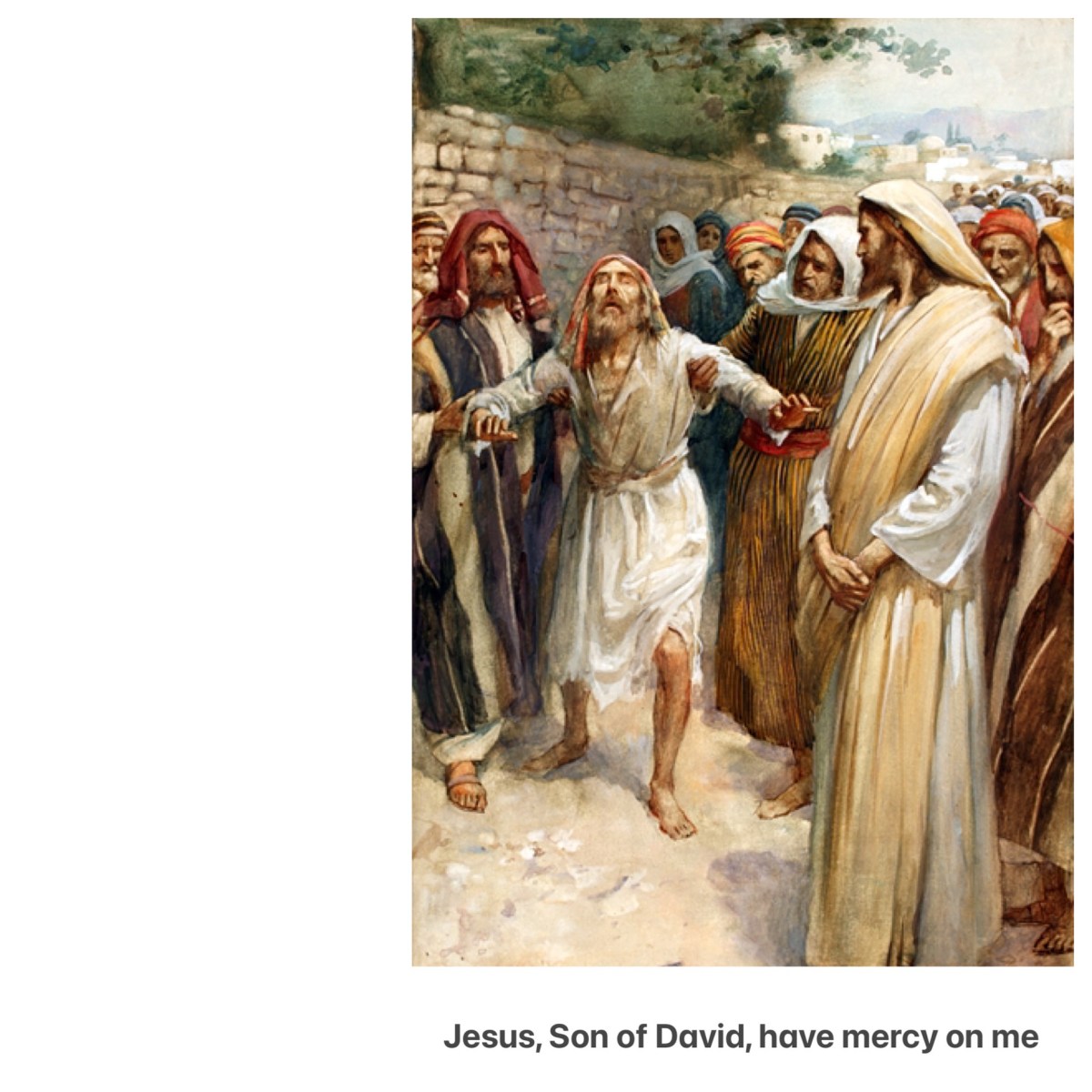

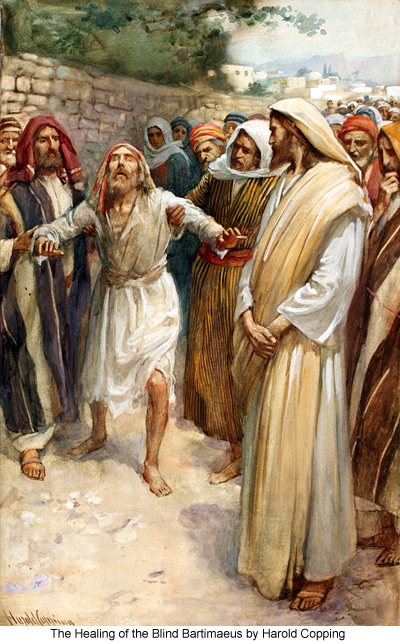

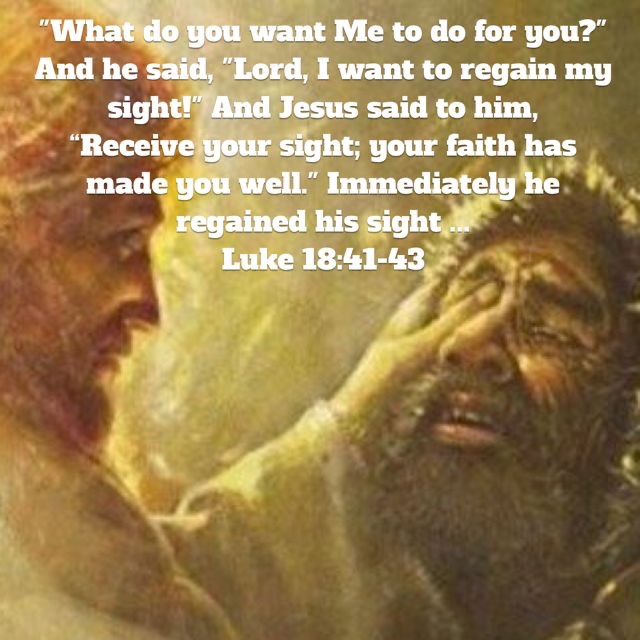
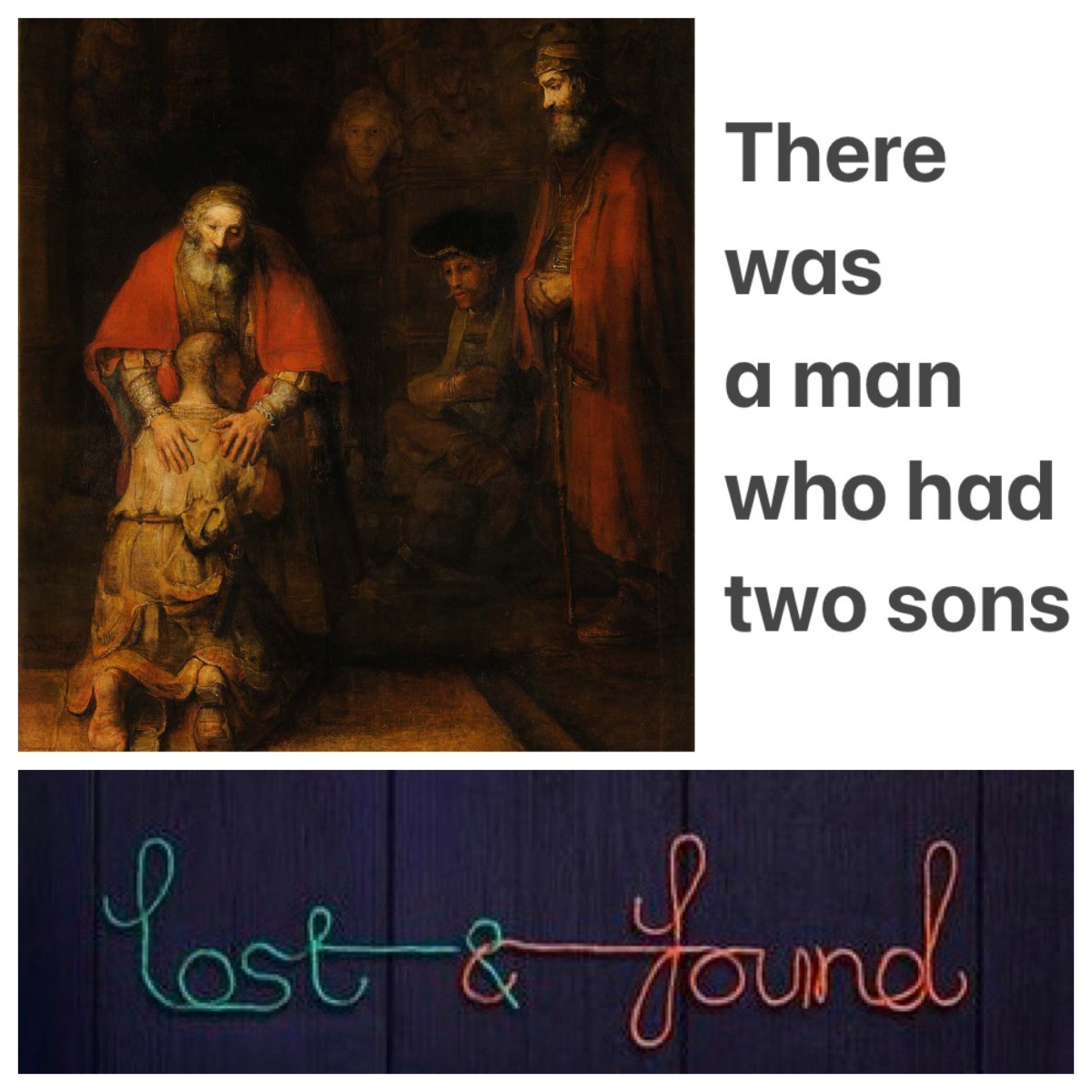



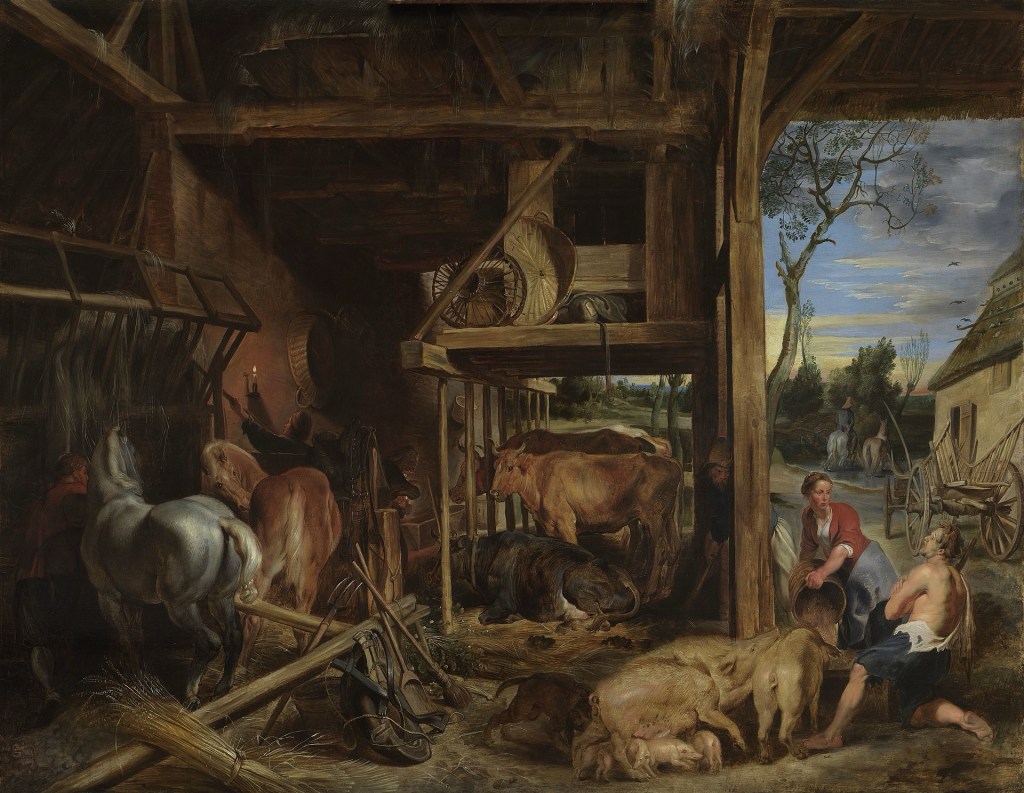
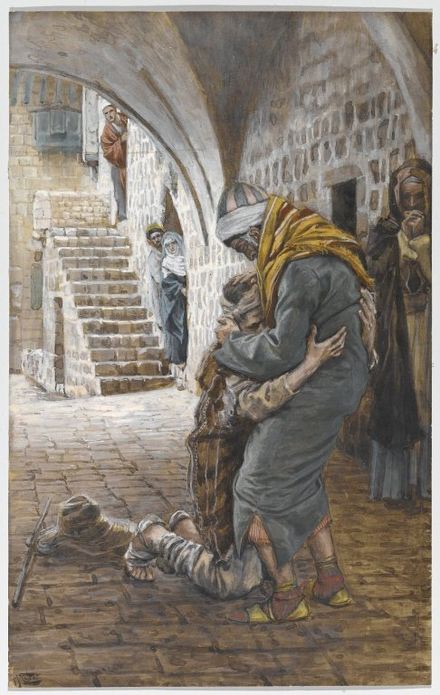
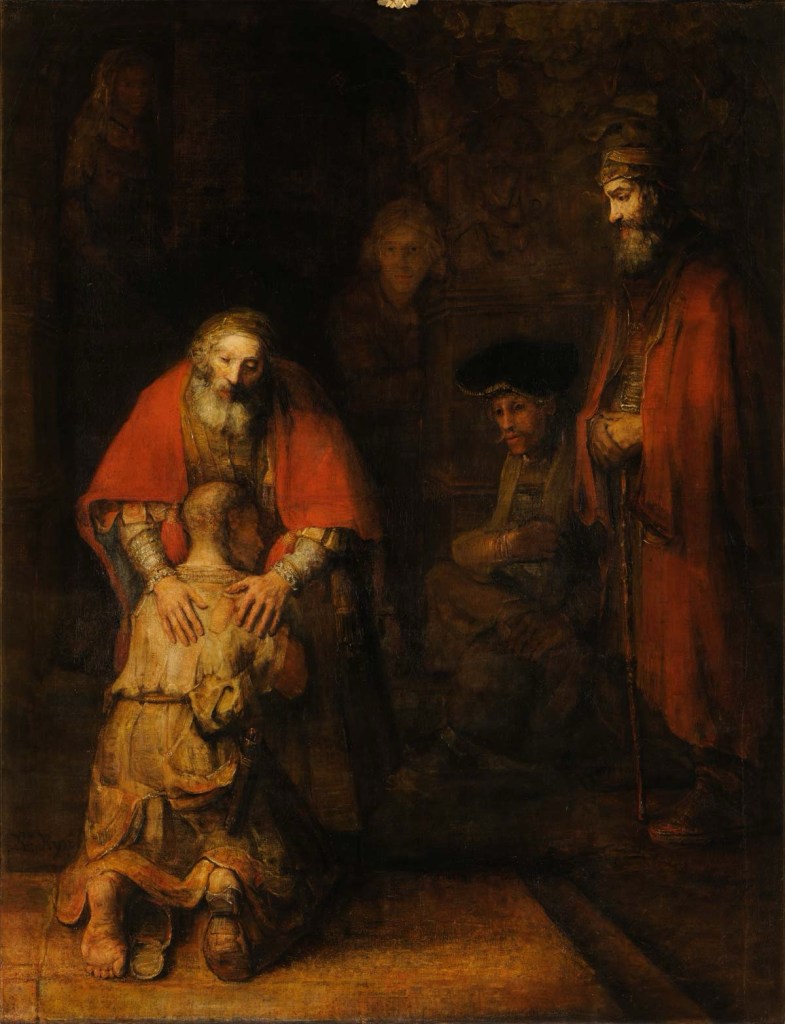

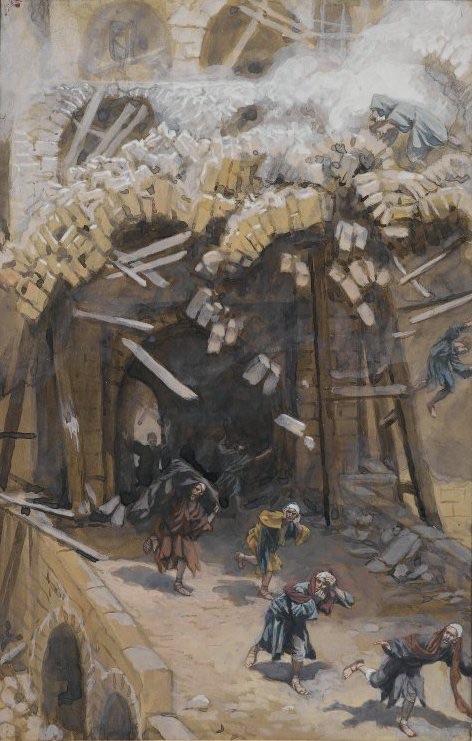
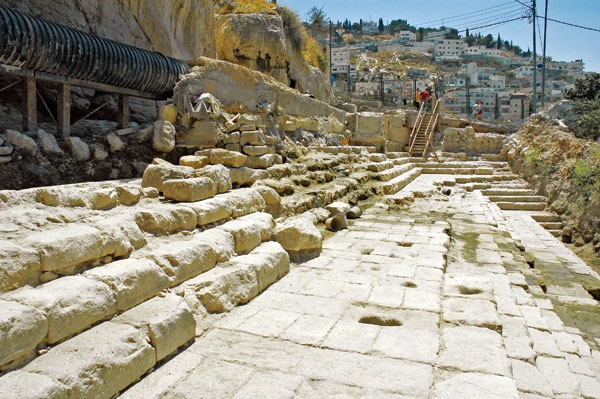

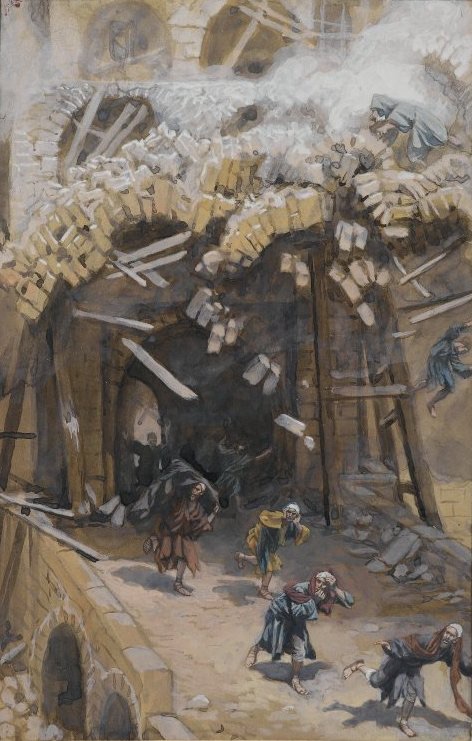


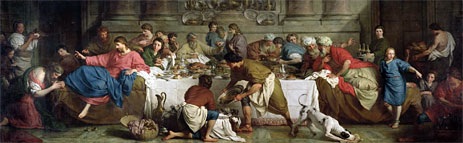

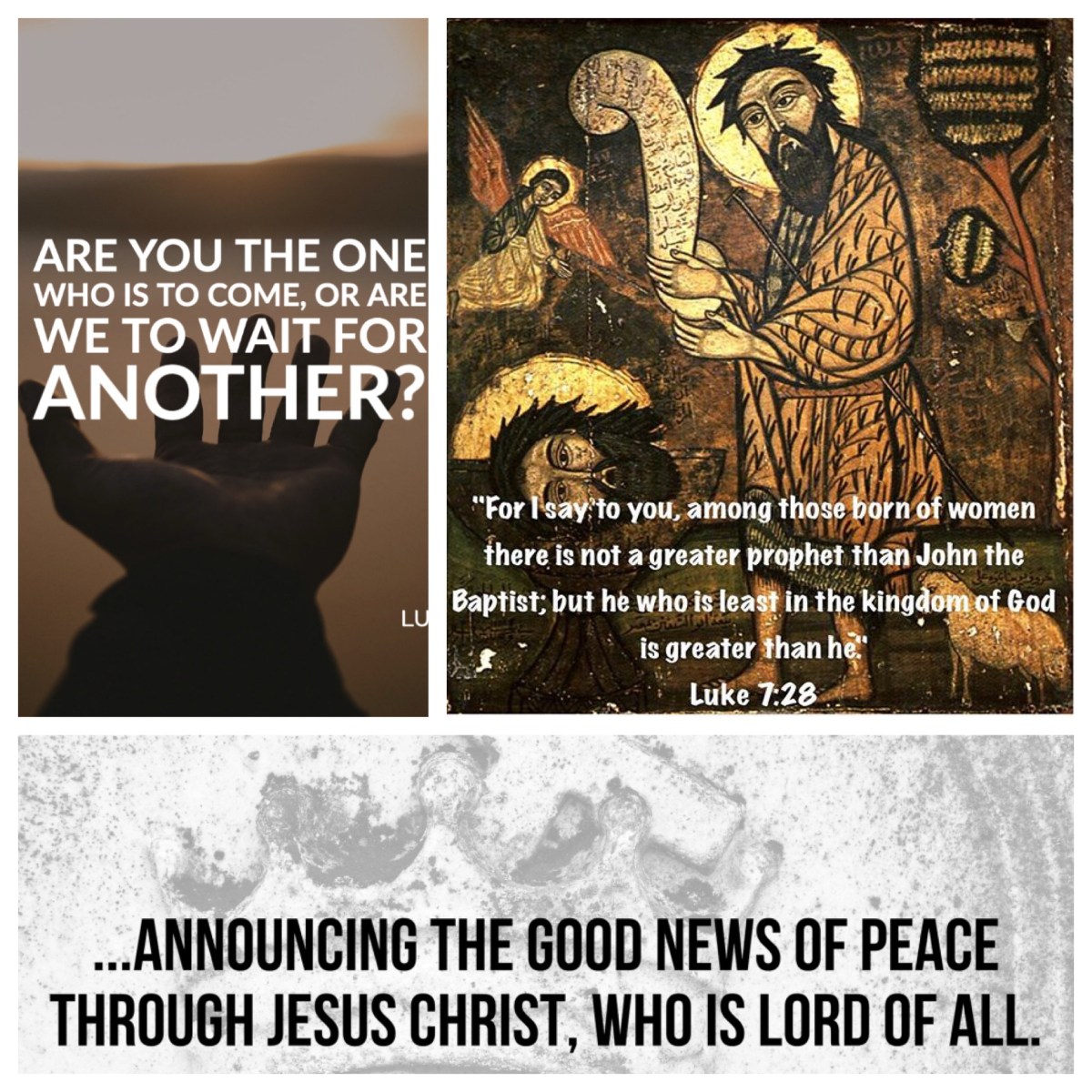

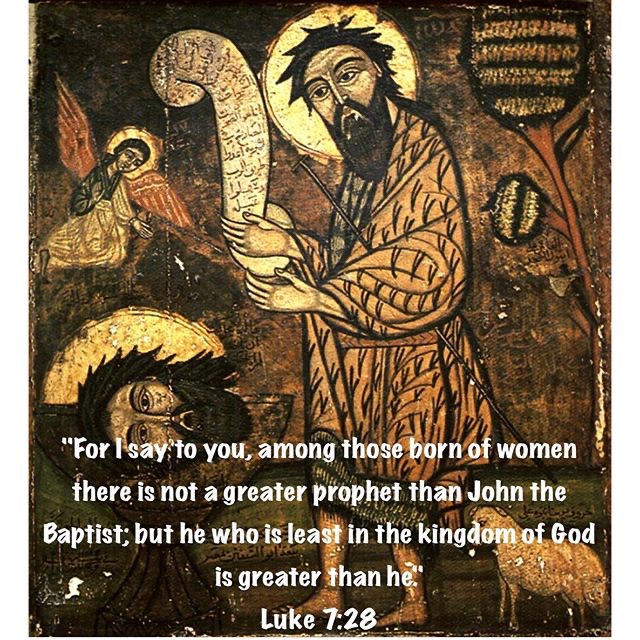


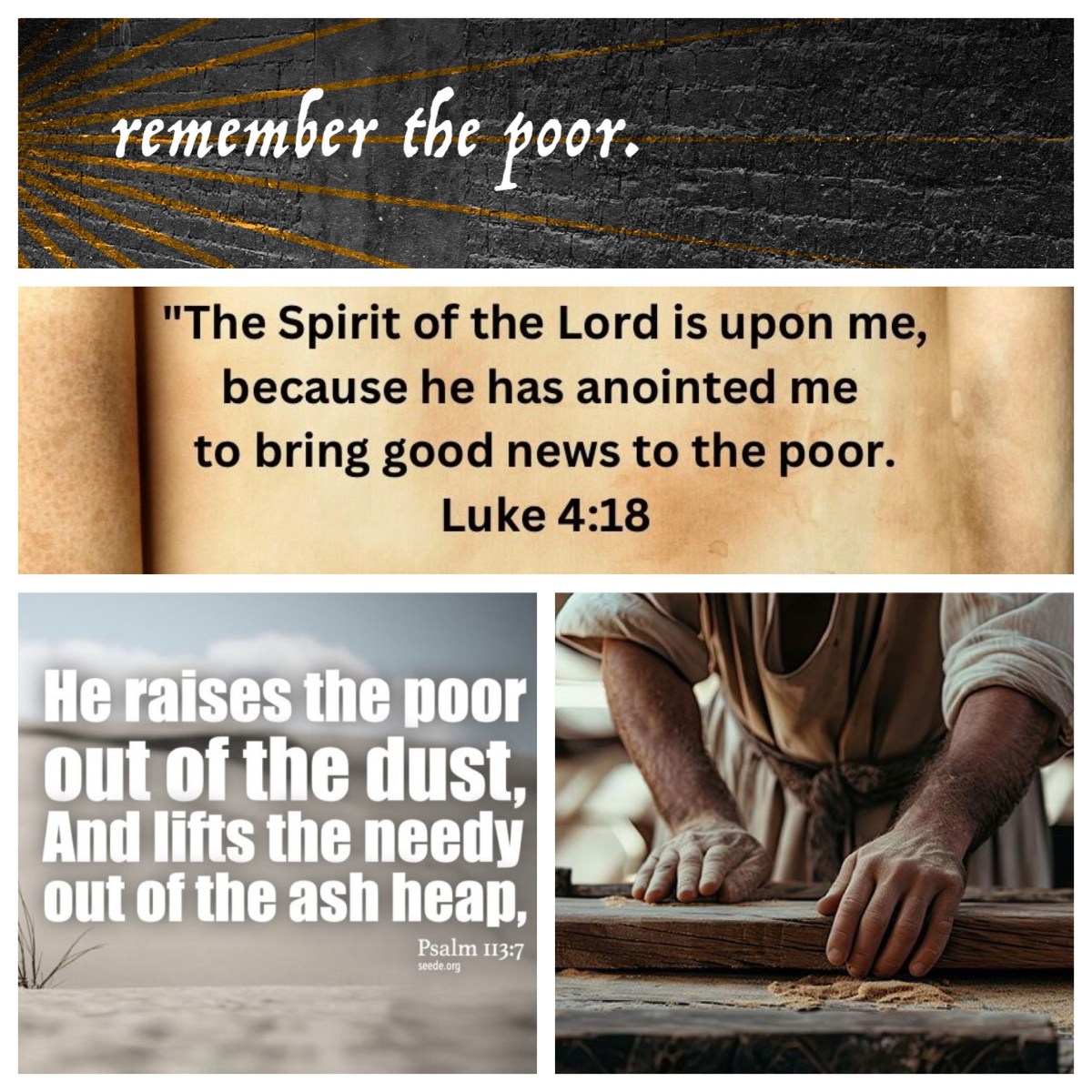

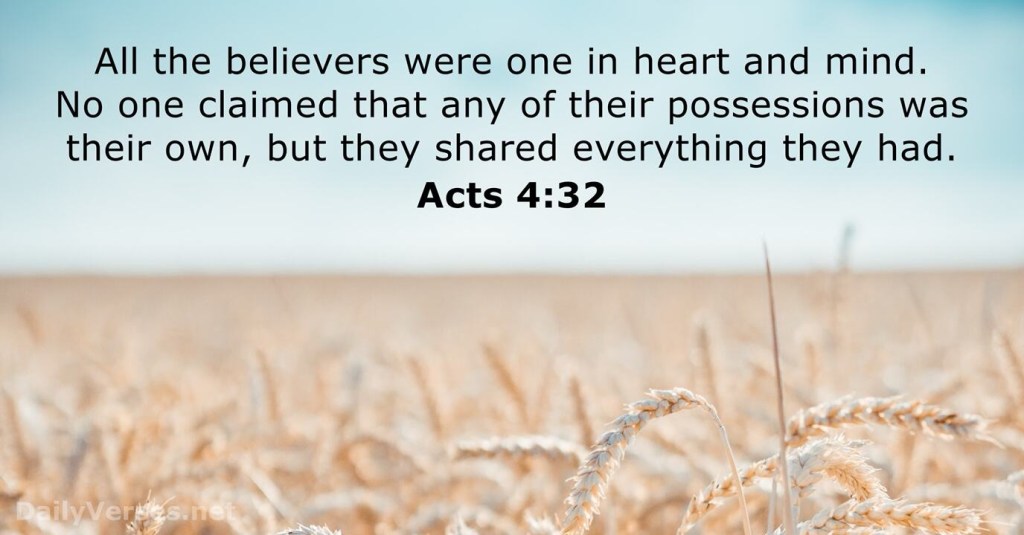

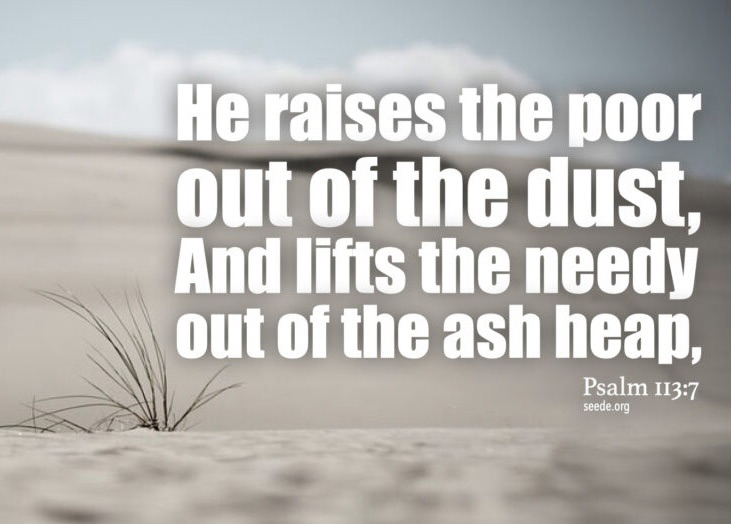

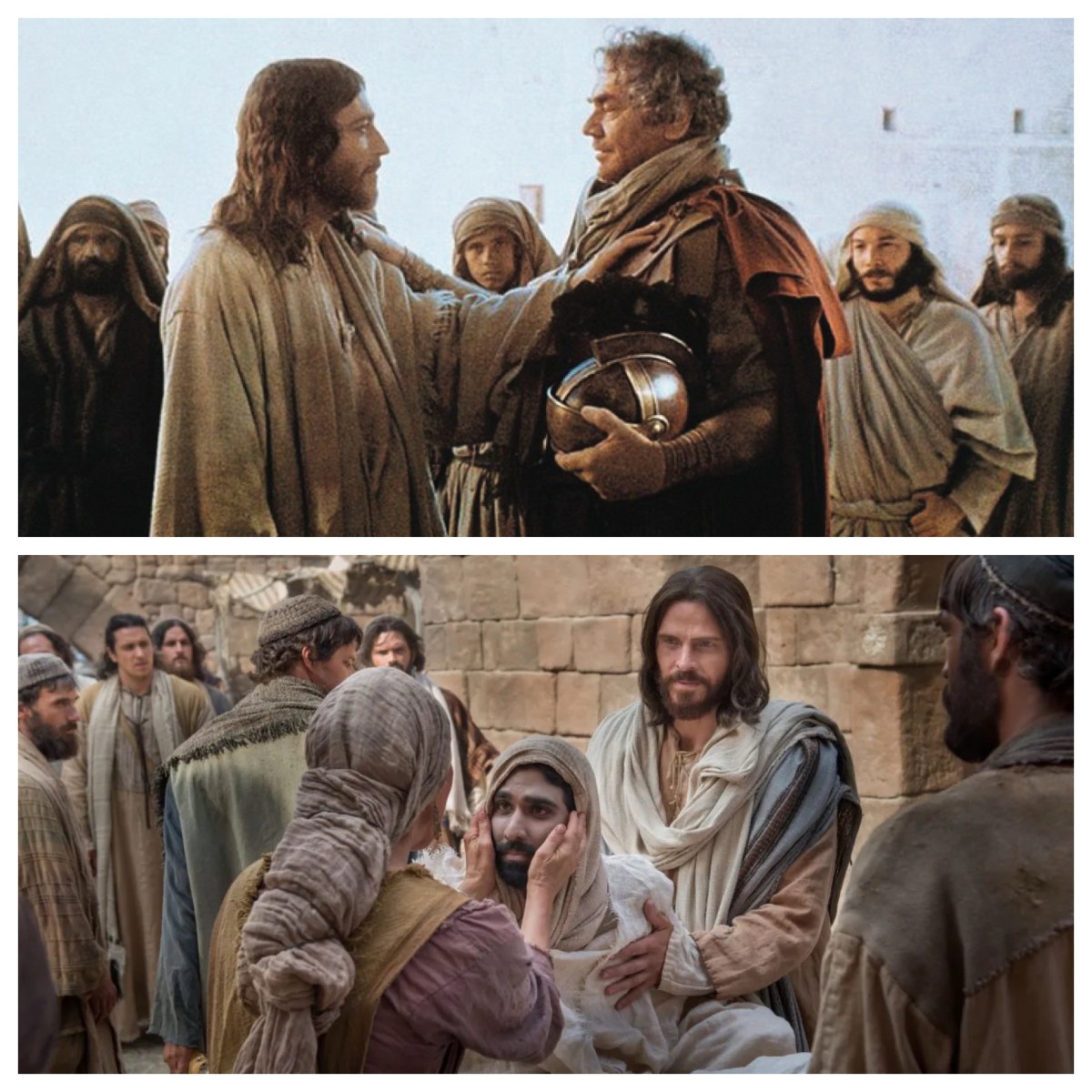
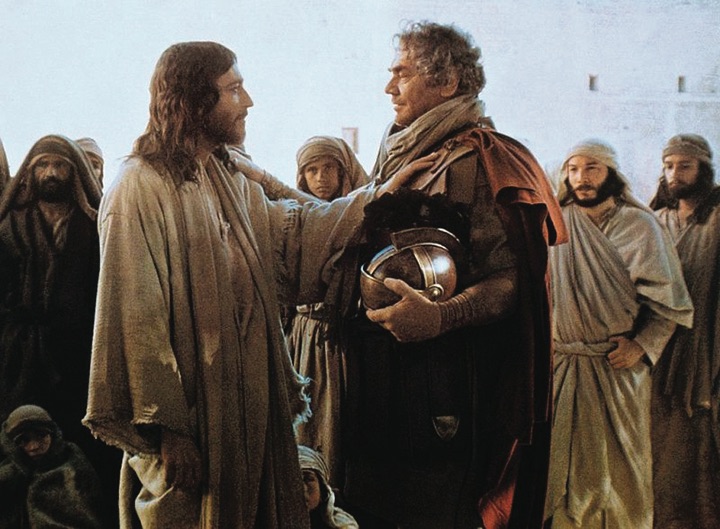
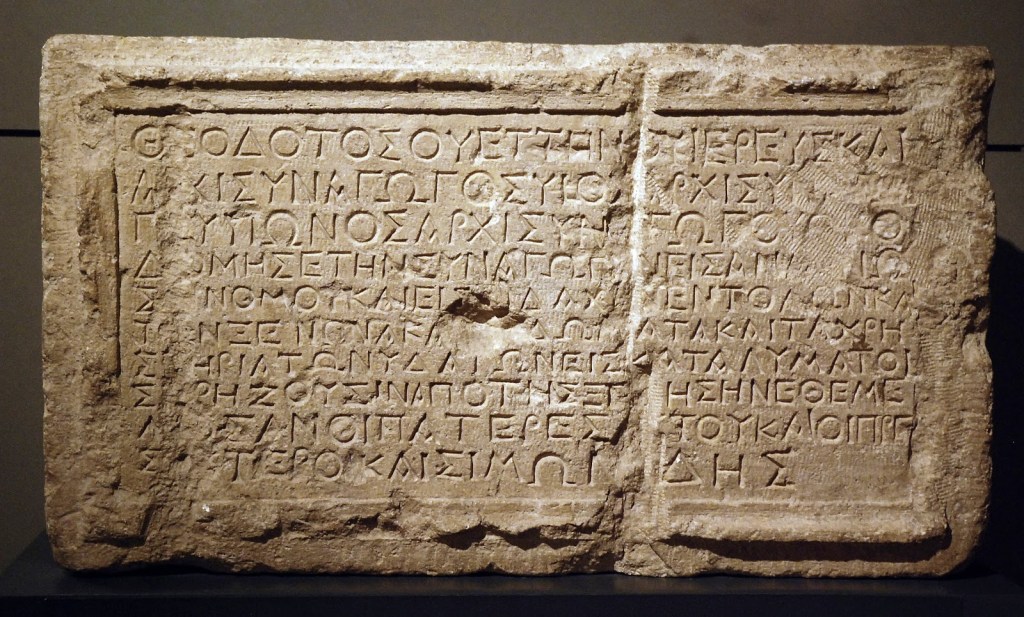
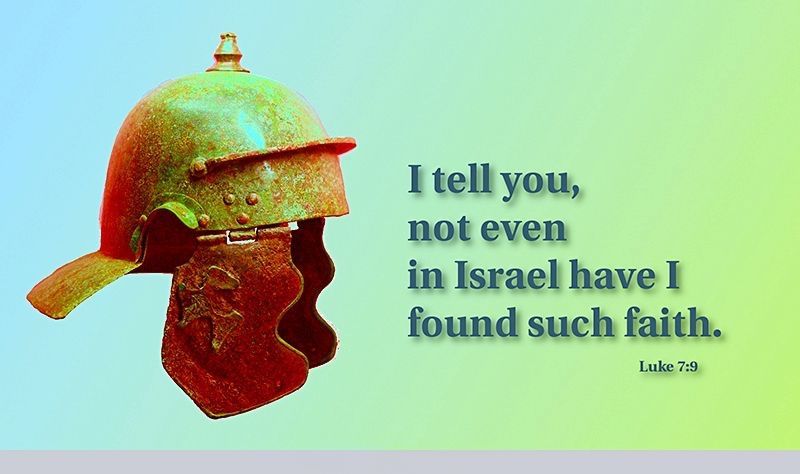
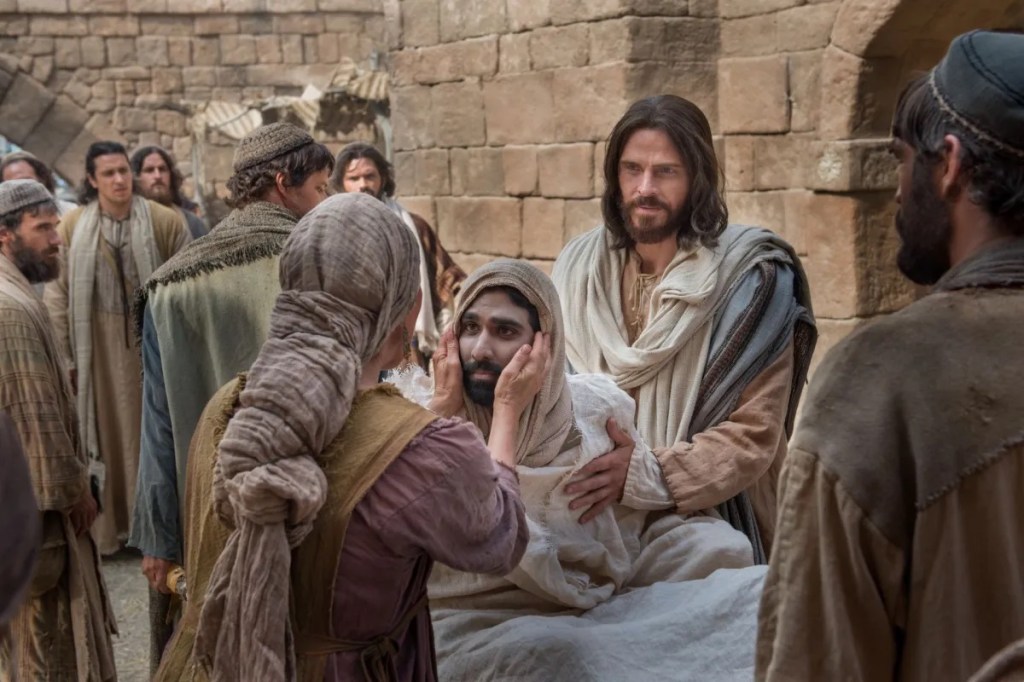






 An Informed Faith