“If you or anyone you know needs help, call Lifeline on 13 11 14”

It’s a familiar mantra that we hear on TV news bulletins and read at the end of online news items: “If you or anyone you know needs help, call Lifeline on 13 11 14”. And this month marks sixty years since Lifeline began.

Lifeline describes itself as “Australia’s leading suicide prevention service”, which is “a national charity providing all Australians experiencing a personal crisis with access to 24-hour crisis support”. It began as a small-scale local enterprise in Sydney, and now has branches right across Australia, where 1,000 staff and 10,000 volunteers work together to provide a caring, compassionate response to people who are in crisis.

In the early 1960s, the Rev Alan Walker took a phone call from a distressed man who was very distressed. The Rev Walker was the Superintendent Minister of the Central Methodist Mission in Sydney, a part of the then Methodist Church. The CMM, as it was known, had a long and valued ministry to vulnerable people in the inner city of Sydney—including a number of hostels and day programmes for such people. The ministers and staff of the Mission had regular contact with a wide range of people in distressing and difficult circumstances.
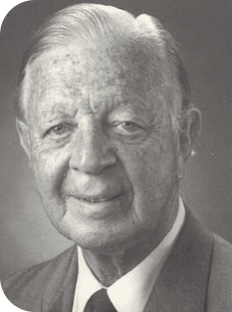
The Rev Alan Walker during his time as the Superintendent Minister
of the Central Methodist Mission in Sydney

Three days after taking that phone call, the Rev Walker learned that the man had taken his own life. Determined that he would do something to assist other people who were lonely, anxious, depressed, or suicidal, the Rev Walker instigated a planning process that eventually led to the establishment of Lifeline, on 16 March 1963, as a crisis line operated by people associated with the CMM.

The website of Lifeline Australia states that “Lifeline Sydney was two years in planning and preparation, with 150 people attending a nine-month training course to work at the centre. A century old, dilapidated building owned by the Mission, on the fringes of downtown Sydney was renovated for the purposes of this new support centre. A staff of full-time employees was appointed to direct the work of these new telephone crisis support ‘workers’. The Director General of Post and Telephone Services authorised that this crisis support service should be listed on the Emergency Page of the Telephone Directory and the phones were installed.”

You can read more at https://www.lifeline.org.au/

In 1994, Lifeline transitioned the 24-hour telephone crisis support line, with local counsellor dealing with local phone calls in each location, to a single national priority 13 number (13 11 14). Then in 2007, Lifeline introduced national call flow to the 24-hour service, which allowed Lifeline to begin flowing calls nationally over a wide area network, to be answered by the next available telephone support volunteer, anywhere in the country. It has been a wonderful development that has taken place over these six decades.

My own connection with Lifeline took place in 1975. I was working at the Central Methodist Mission as the Youth Director (a grand title for what was actually a very lowly job). I ran a variety of weekly programmes that brought me into contact with younger people that were vulnerably housed, or living below the poverty line; people who faced mental health challenges, but who found comfort in the community of the church on Pitt St in Sydney.

Looking to develop my own (meagre and basic) skills in relating to such people, I did the Telephone Counsellor Training Course that Lifeline offered—three hours, once a week, for six months, with practical sessions as a trainee counsellor, taking phone calls and learning how to deal with people in crisis. (The limited success, or rather the ultimate failure, of my attempts to develop good skills in listening, intervening, and referring, I leave to the judgement of those who know me now!) I served in that role for a couple of years, by which time I was a candidate for ministry, undertaking other training to prepare me for my lifetime in ministry.

The Rev Dr Sir Alan Walker, as he became, is rightly remembered and honoured for the creative and practical way that he responded to what was becoming, even in the 1960s, a widespread and difficult societal problem. Well known for his strong public stands against gambling and alcohol, and for his opposition to the Vietnam War, the Rev Walker’s initiative to establish Lifeline points to the way that he lives, and preaches, and acted, in response to the Gospel: both pastoral and prophetic responses were required.

The Rev Walker shows that the Gospel is as much about a person’s individual life and their relationship with God, as it is about how society was structured and how it provided equity and justice for all. I have always appreciated my opportunity to learn this at close quarters, from the 13 months that I spent working at the CMM. (The CMM is now Wesley Mission, one of Australia’s largest benevolent organisations, as well as one of the largest Uniting Church organisations.)

In substantiating their claim that “Lifeline is Australia’s largest suicide prevention service provider”, the website of Lifeline Australia reports:

• Each year, over 1 million Australians reach out to Lifeline for support.

• Lifeline’s 13 11 14 crisis support line receives a call every 30 seconds.

• Lifeline’s network of 41 centres, 10,000 volunteers, and 1,000 employees provide a lifesaving national infrastructure for those experiencing immense pain and anguish.

• There are 3,500 Crisis Supporters working with Lifeline so that no person in Australia has to face their darkest moments alone.

It is sobering to read the breakdown of suicides reported in Australia. The following statistics, reported by Lifeline Australia, are taken from the Australian Bureau of Statistics (https://www.abs.gov.au/statistics/health/causes-death/causes-death-australia/latest-release#intentional-self-harm-deaths-suicide-in-australia)

• 8.6 Australians die every day by suicide; that’s more than double the road toll

• 75% of those who take their own life are male

• An unknown number of Australians attempt suicide every year, with some estimates suggesting this figure may be over 65,000

• Suicide is the leading cause of death for Australians between the ages of 15 and 44

• The suicide rate in Aboriginal and Torres Strait Islander peoples is twice that of their non-Indigenous counterparts

• People in rural populations are 2 times more likely to take their life by suicide by suicide

In addition, they report that LGBTIQ+ community members report having attempted suicide in the past 12 months at a rate 10 times higher than the general Australian population. Despite the advances made in recent years relation to this sector of society, they still experience much stress and live in high risk environments.

All of this remains a cause for deep concern. It is a fine thing that people in Australian society do have the support of Lifeline Australia—and, indeed, other organisations such as Beyond Blue, the Black Dog Institute, both Headspace and Reachout for young people, Open Arms for veterans and their families, and 13Yarn for First Nations people; and more. See https://mhaustralia.org/need-help

I am grateful today for the energy, initiative, and compassion of Alan Walker, six decades ago, in seeing a need and working to implement a practical response. I am also grateful to the many staff and especially the thousands of volunteers, on the phone and behind the scenes, that enable this service to operate right around the clock, every day of the year—no annual breaks, no public holidays, no time out at all (collectively).

“If you or anyone you know needs help, call Lifeline on 13 11 14”.

Gather—Dream—Amplify: World Pride 2023

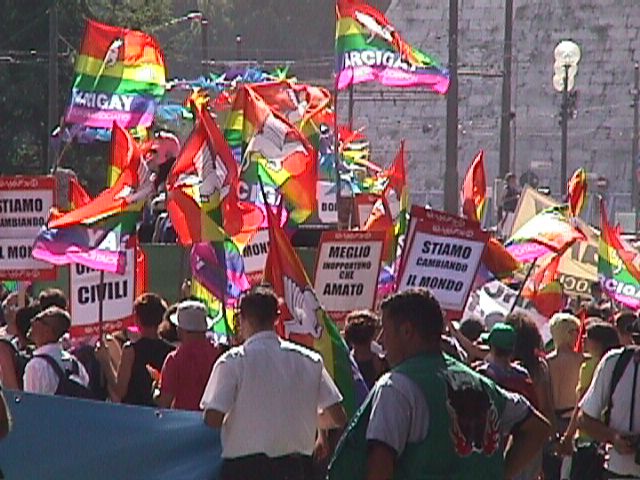
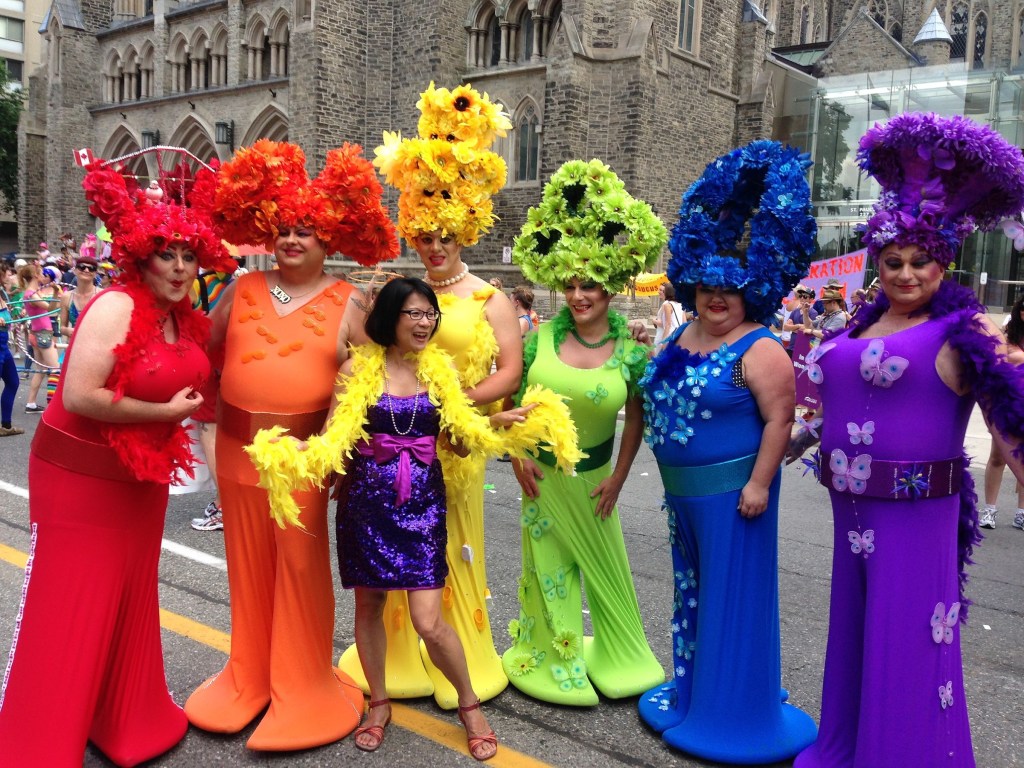
World Pride 2023 is taking place in Sydney at the moment. It started on 17 February and runs through to 5 March, with a concentration of Pride-related events in Sydney, including a fine Pride Concert last night and the annual Gay and Lesbian Mardi Gras Parade that is taking place later today, Saturday 25 February. This is the first time that World Pride has taken place in the southern hemisphere.

The theme for World Pride 2023 is Gather—Dream—Amplify. The website describes the event as “A time to listen deeply, learn, take action, protest and party … A time to dream. Imagine the future we want and demand it … A time to step aside, making sure there is an abundance of space for everyone. New voices. New dreams. A time for new perspectives and possibilities.” It is a positive, optimistic, affirmation.

World Pride has been held since 2000, when it took place in Rome. It was next held six years later, in Jerusalem (2006), and then a further six years later, in London (2012). Momentum grew, as subsequent gatherings took place in Toronto (2014) and then Madrid (2017).

Two years later, in 2019, World Pride was held in New York City, commemorating the 50th anniversary of the Stonewall uprising, with five million spectators attending in Manhattan over the central Pride weekend. The Stonewall uprising is widely considered to mark the start of the modern Gay Rights Movement (now more commonly referred to as the fight for LGBTQIA+ rights).

In 2021, World Pride was shared between Copenhagen, Denmark, and Malmo, Sweden. The Crown Princess of Denmark was patron of the event, making her the first ever royal to serve as patron for a major LGBTQ event.

This year, in Sydney, the key events include a Fair Day on Sunday 19 Feb, the formal Opening Ceremony and Concert in the Sydney Domain on Friday 24 Feb, the annual Mardi Gras Parade and Party on Saturday 25 Feb; a Human Rights Conference from Wednesday 1 to Friday 3 March; a First Nations Gala Concert and a Mardi Gras International Arts Festival and Film Festival; and on the last day, Sunday 5 March, a Pride March over the Sydney Harbour Bridge and a grand Closing Ceremony.

Faith communities are actively involved in World Pride 2023, with a full listing of events at https://www.worldpridefaith.com.au/?mibextid=S66gvF&fbclid=IwAR15hAd9eTPZqO1QlU_o_XyEBD7n8-dtFSChxoMGLr3ILkEBgjHvG2kdar8

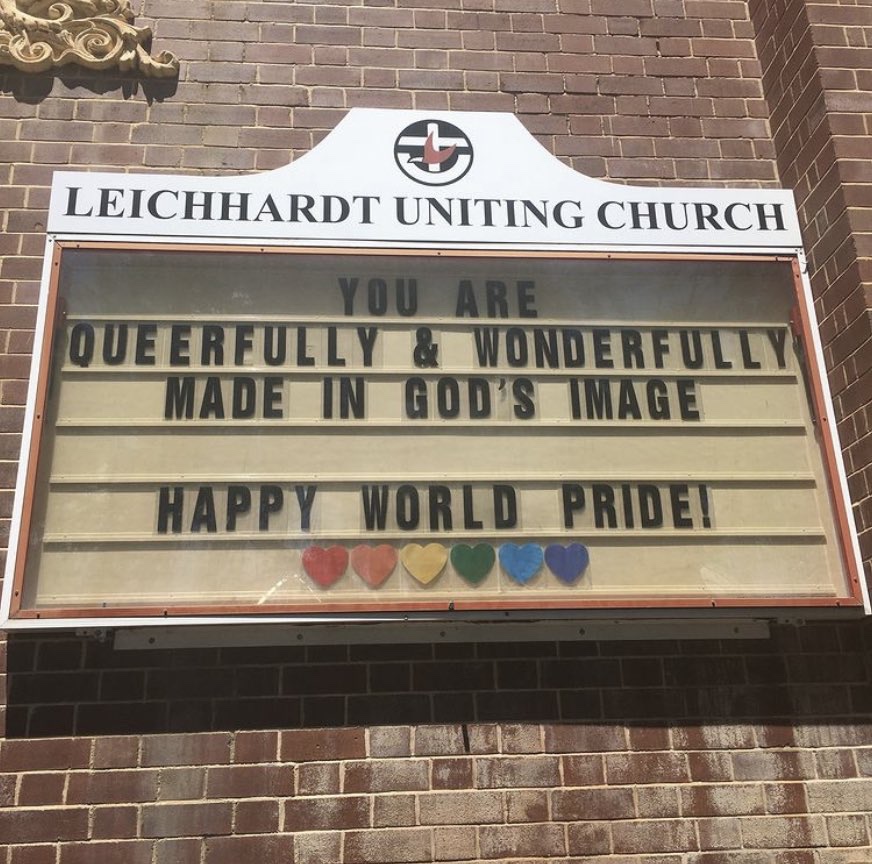
The Uniting Church is strongly supportive of the event, and a number of Sydney churches are involved. See https://uniting.church/uniting-churches-welcome-world-pride/

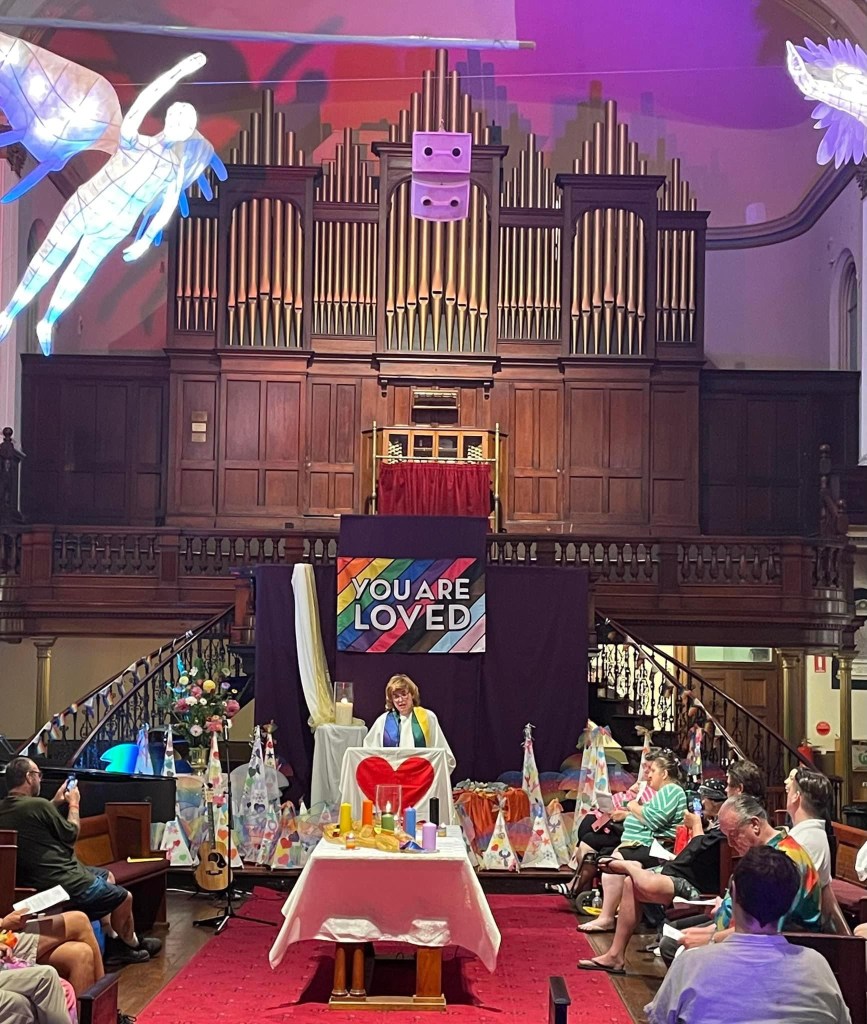
The Pitt St Uniting Church, located in the heart of Sydney, is actively involved in World Pride 2023, bringing a strong faith voice into the event. Pitt St is holding a photo exhibition, Queer Faces of Faith and providing a rehearsal space for the Out&Loud&Proud Choir rehearsals, as well as providing a safe and celebratory faith space and pastoral support to World Pride people in the heart of the CBD. A full program of prayer support for World Pride is operating as well. See https://pittstreetuniting.org.au/wp-content/uploads/2023/02/Diary-of-Praise-and-Prayer-for-World-Pride-2023.pdf

*****

Christians have had an unhappy relationship with LGBTIQA+ people. Sadly, far too many Christians hold a judgemental and discriminatory attitude towards people whom they regards as sinners, and many of these carry those negative attitudes through into discriminatory, oppressive, and damaging actions.

These negative attitudes were born long ago, in societies with different understandings of sexuality and gender. Many such societies of the past were centred around what they perceived as normality. “Normality” is what is most commonly found. “Normality” is also what is needed to ensure the ongoing survival of society. So regular reproduction of the species was essential in such societies, especially given the rate of deaths was much higher than in most modern societies.

The communities reflected in the Bible are no exceptions to this. Humanity is defined in Hebrew Scripture as needing to strive for perfection, so we see those who cannot see or hear, with missing limbs or those unable to speak, excluded from worship and community on the basis of how they differ from “perfection”. They are perceived as a threat to the good order and flourishing of society, because of their inherent “difference” from the norm. This is reflected in ancient Israelite law, and this continued on into in the understandings of the New Testament writers.

In modern times, our understanding of “normality” has broadened from such a binary understanding, to include now a spectrum of what is seen as “normal”. No longer do we exclude people on the basis that their physical appearance does not conform to the physical appearance of the majority of people, for instance. The understanding that the human brain operates on a spectrum has been well established, and we are now used to hearing regular references to the fact that neurodiversity in human beings has placed people at various points along a spectrum of neurological functioning.

The same applies to human sexuality. As further research is done, it has becoming increasingly clear that the way that people experience and express their sexuality, like the way that the brains of different people function differently, exists on a spectrum and is not confined to a binary state. Gender identity and sexual orientation both sit on such spectrums rather than existing in oppositional binary states.

Within such spectrums, there are “standard deviations” which we expect to find in any human population. This is a perfectly “normal” phenomenon. So, today we recognise that there is a range of gender identity along a spectrum of identities, and a range of sexual orientation along a range of sexual orientation.

Our Bible is an ancient document. It was written at a time when “normality” was seen as living within the divine favour and existing in a way that accords with the divine statutes. Those who failed to conform to the “normality” of those statues were seen as “abnormal”, incomplete and perhaps, at times, sinful. They occupied what we today call “the tails of the bell curve”. They were not seen as “normal”, since they were unable to promote the future of community.

In ancient times, sexual behaviour that fell into the expected variation of the tails of the bell curve was frequently perceived as “not normal” and threatening to the community, and an aberration that threatened the survival of the community. That is no longer the case for us, today.

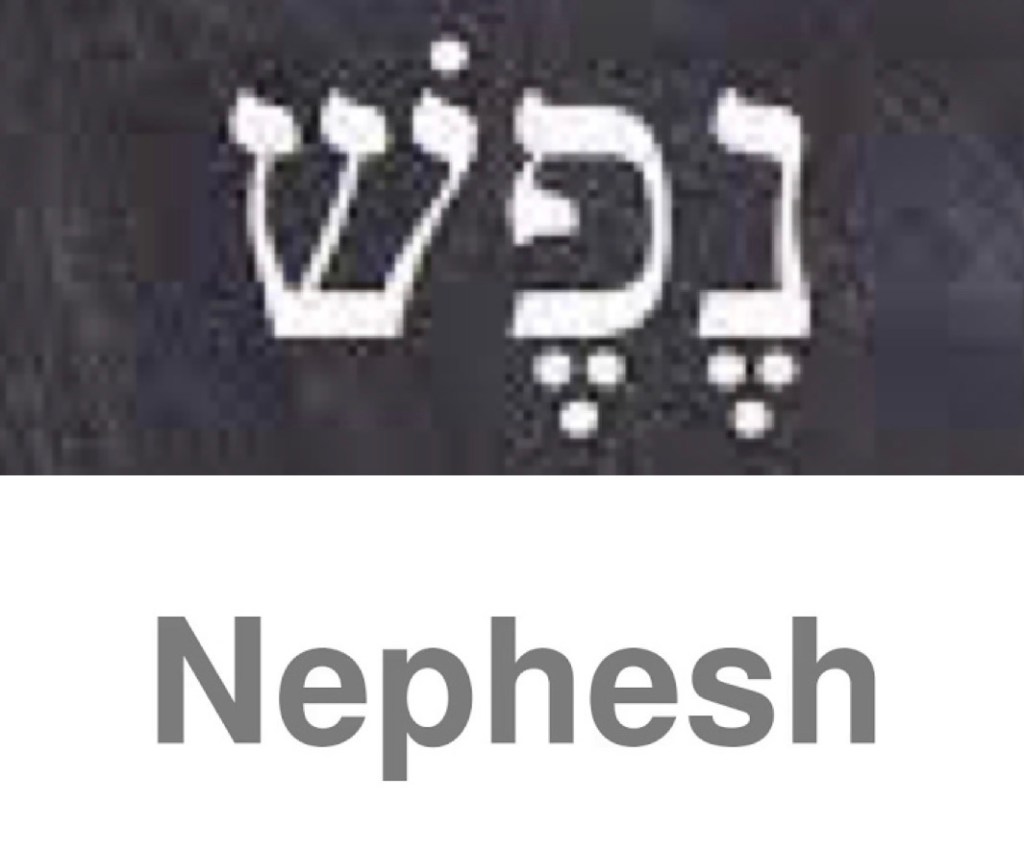
The Hebrew Scriptures use the word nephesh (נֶפֶש) to describe human beings (and, indeed, all other living creatures). It is a common Hebrew word, appearing 688 times in Hebrew Scripture. It is most commonly translated (238 times) as “soul”; the next most common translation is “life” (180 times). The word is a common descriptor for a human being, as a whole. (I have learnt much about nephesh in my discussions with my wife, the Rev. Elizabeth Raine.)

However, to use the English word “soul” to translate nephesh does it a disservice. We have become acclimatised to regarding the soul as but one part of the whole human being—that is the influence of dualistic Platonic thinking, where “body and soul” refer to the two complementary parts of a human being. In Hebrew, nephesh has a unified, whole-of-person reference, quite separate from the dualism that dominates a Greek way of thinking.

Nephesh appears a number of times in the first creation story in Hebrew scripture, where it refers to “living creatures” in the seas (Gen 1:20, 21), on the earth (Gen 1:24), and to “every beast of the earth, and to every bird of the air, and to everything that creeps on the earth, everything that has the breath of life (nephesh hayah)” (Gen 1:30).

It is found also in the second creation story, where it likewise describes how God formed a man from the dust of the earth and breathed the breath of life into him, and “the man became a living being (nephesh hayah)” (Gen 2:7). The claim that each living creature is a nephesh is reiterated in the priestly Holiness Code (Lev 11:10, 46; 17:11). So we human beings are part of a wide spectrum of creatures, all created by God, all seen to be “good”, a wonderful kaleidoscopic variety of beings.

Our theology of the human being needs to underline the claim that all people, no matter where they are located on the bell curve, are “nephesh” and are filled with the sprit of God. We are all part of the creation that, in Christian and Jewish mythological, God declared “very good” (Gen 1:31). We are, each and every one of us, “fearfully and wonderfully made”, as the psalmist sings (Ps 139:14a)—like the intricate, complex, and beautiful created world in which we live, each human being is, exactly as they are, one of the “wonderful works” of the Lord God (Ps 139:14b).

And that is exactly what World Pride 2023 is celebrating!

*****

See also

and for Canberra people, there is a safe space every Sunday morning at 9:30am and once a month on Sunday at 6:00pm (the 2nd Sunday of the month) at Tuggeranong Uniting Church, where Elizabeth Raine and Sharon Jacobs lead the ministry team. See

and for further biblical discussion, see

Eye of the Heart Enlightened: words for the opening of the Parliamentary Year (2023)

Australia is a democracy, governed by a series of parliaments—one for each state and territory, and one for the whole nation, drawing together representatives from across the continent, to meet, deliberate, and legislate. The Federal Parliament meets in the Australian Parliament House, in Canberra, the capital city of the nation.

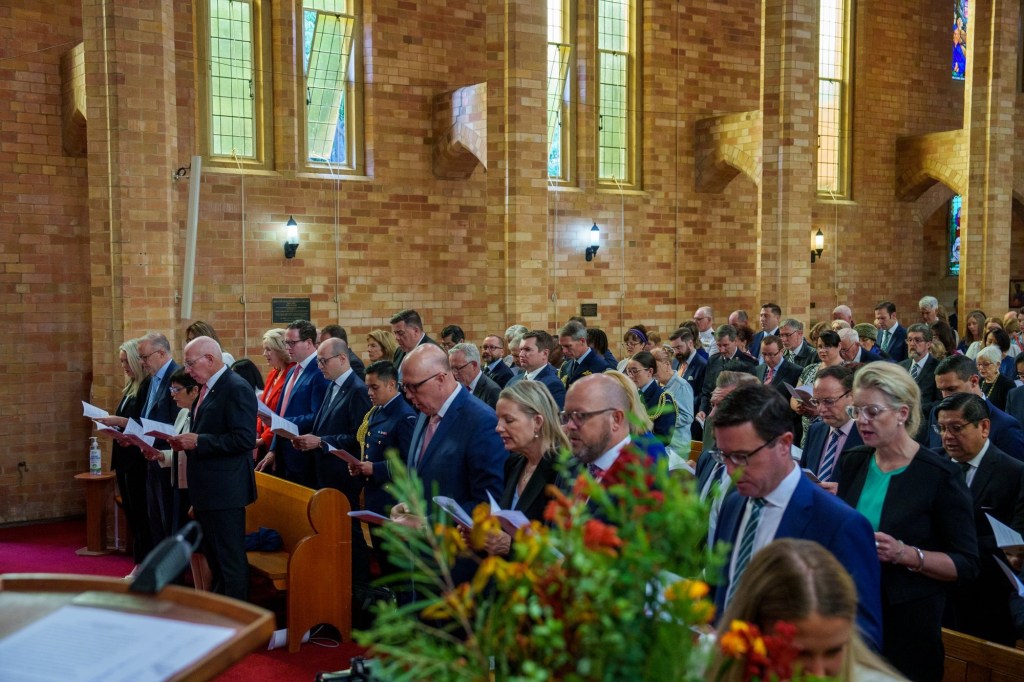
Each time a new parliamentary sitting commences, one of the churches of Canberra hosts a service of worship, to which come the Prime Minister, the Leader of the Opposition, their parliamentary colleagues, and others connected with the workings of the Parliament. The service moves around churches on a rotating basis, and the liturgist and preacher are provided each time by leaders in those churches.

This year, at the start of the parliamentary year, the preacher was a friend and colleague, the Rev. Dr Sarah Bachelard, who is the Director of the Benedictus Community, which meets in Canberra and online. Sarah spoke words drawing from the scriptural heritage of Christianity and Judaism; the texts read in the service were Proverbs 8:1–4, 8–11; Psalm 24:1–5; and Matthew 5:1–10.

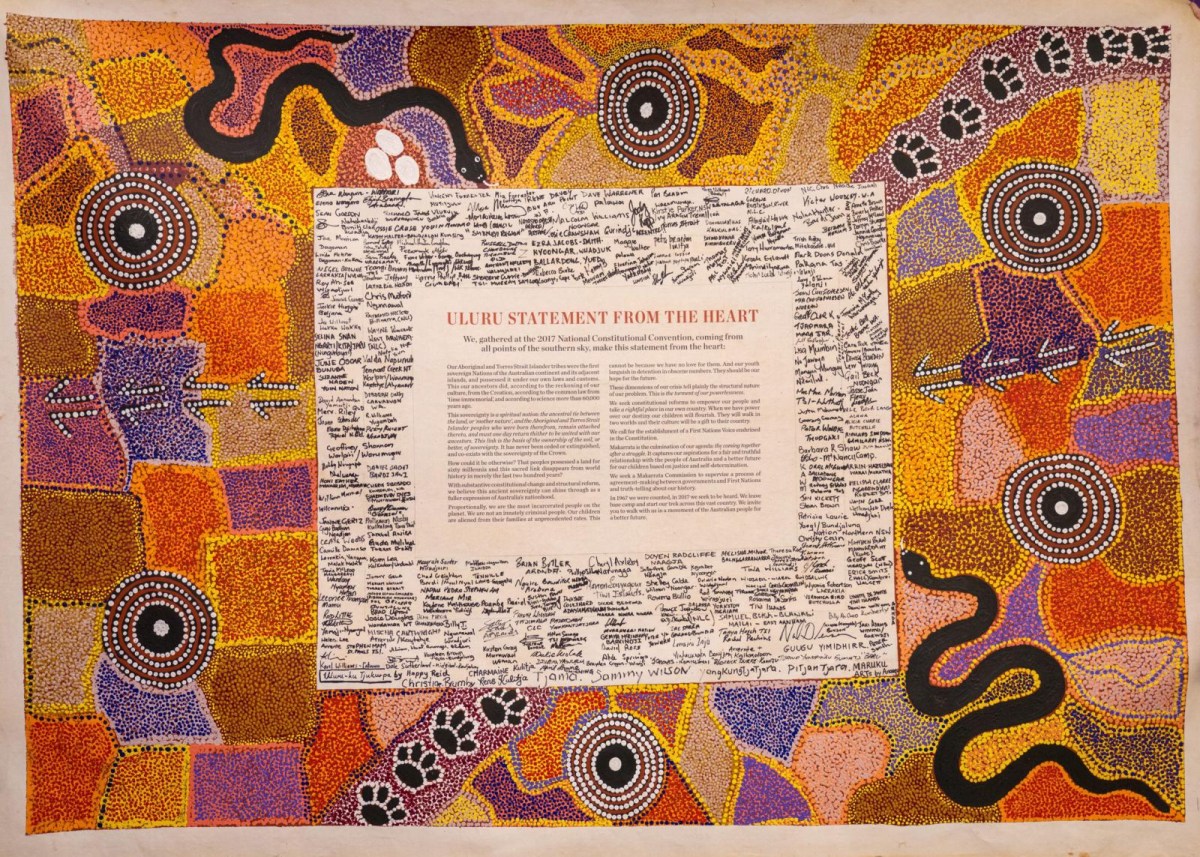
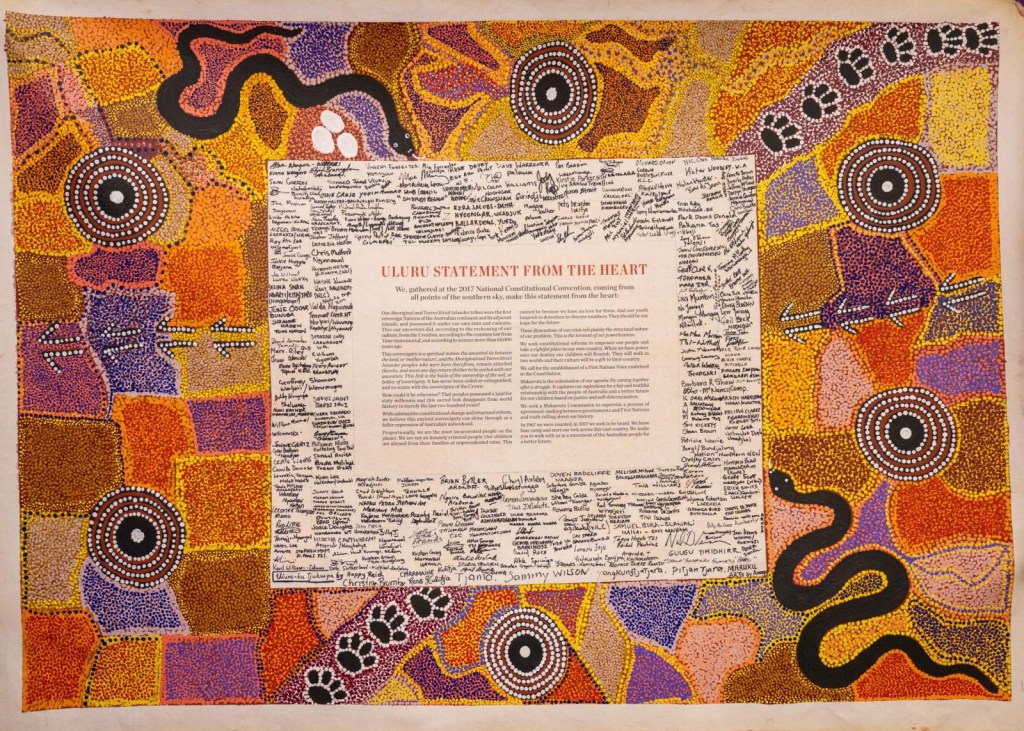
Sarah spoke directly, and clearly, to the parliamentary leadership, about an issue which deserves to have the central place in our public and political considerations during 2023: the Statement from the Heart, an offering written at Uluṟu in 2017 by leaders of the First Peoples of Australia, addressing the nation of Australia. With Sarah’s permission, I am reproducing what she said at that service of worship.

*****

Every week in religious communities around Australia, prayers are offered for those charged with leadership and the government of peoples. ‘Give wisdom to those who have responsibility and authority in every land’, so the Anglican version goes, ‘that we may share with justice the resources of the earth, and work together in trust’. It’s a theme as old as human community.

To those of you who commit to this service, these difficult responsibilities, on behalf of us all – thank you. For as I’m sure I don’t need to tell you, real leadership in the face of this complexity is demanding. It involves many elements – good intentions, good information, the willingness to nurture relationships and build consensus, and sheer hard work. There’s something else needed too, as the prayer I cited above suggests. Something absolutely vital. We call it wisdom.

The recognition that nurturing just and life-giving relationships between peoples, negotiating competing desires and interests in a world of gift and limit, while caring for the very conditions of existence, is no straightforward matter.

Wisdom is the quality of those we relate to as elders, of those who speak with authority, whether or not they have positional power. It has to do with judgement, discernment, seeing a bigger picture. Of course, like every human quality – wisdom can be corrupted or reduced by self-interest. Guile and cunning are its debased expressions.

True wisdom, though, is different. The wise perceive and connect to the depth dimension of reality and so enable creative, compassionate engagement with the fuller truth of things. Wisdom is a form of what the great Australian poet, Les Murray, called ‘whole-thinking’. (The phrase comes from his poem, ‘Poetry and Religion’ in Les Murray, Selected Poems; Melbourne: Black Inc, 2007, p.94. )

As one contemplative teacher has put it, ‘wisdom is not knowing more things. It’s knowing with more of ourselves’. (see Cynthia Bourgeault, https://www.cynthiabourgeault.org)

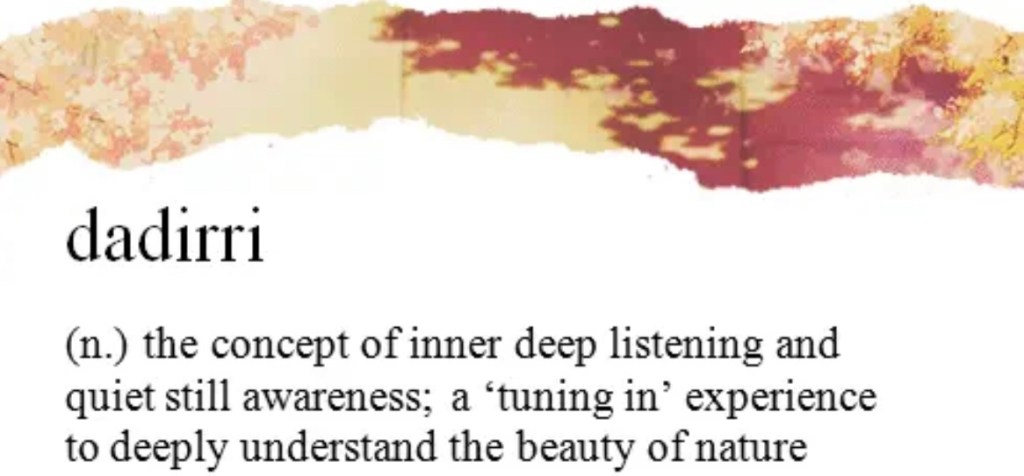
For the wisdom traditions of the world this capacity for ‘whole thinking’, fuller knowing, is connected to the ‘heart’ – where ‘heart’ refers not to feelings alone, but to the centre or soul of a person. Wisdom is an integrated, attentive, compassionate responsiveness. It embodies what Miriam-Rose Ungunmerr, former Senior Australian of the year, calls ‘dadirri’ – ‘inner deep listening and quiet still awareness’. (See Miriam-Rose Ungunmerr, ‘Dadirri: Inner Deep Listening and Quiet Still Awareness’, https://www.miriamrosefoundation.org.au/dadirri/, © 1988 Miriam-Rose Ungunmerr)

‘Give wisdom to those in authority’. But where does wisdom come from? How does any of us grow in it, amidst the messy, busy and often overwhelming circumstances of politics, work and life?

Strangely enough, experience teaches that our access to this integrated, heart’s knowing is usually by way of the heart’s breaking. And maybe you know this for yourself. A time, perhaps, when a disappointment, failure, betrayal or profound grief threw you out of the life you’d known and had tried to fashion for yourself. A time when your ways of making sense faltered, and you found yourself unable to go on as before.

Almost none of us undergoes heart-break willingly. Yet the great paradox is that if we can abide in this broken space without closing ourselves off by becoming bitter or repressed, we wake up at a different level. As the grip of our ego-ic illusions and fantasies of control loosens, we discover ourselves rooted in deeper ground. And gradually, we come to know ourselves more fully part of an interconnected, interdependent whole, capable of being responsible to the whole. Which is the beginning of wisdom.

This has nothing to do with valorising suffering or deprivation; licensing a society to neglect the vulnerable and dispossessed, or to fail to redress injustice. It’s simply the recognition that we don’t attain to ‘whole-thinking’ by cleverness, but through the integration of our wounds. We cannot acquire wisdom as a possession – it grows within us as we are opened at the level of the heart.

This is what Jesus means by poverty of spirit. And as he says in the text we heard read, it’s the poor in spirit … those who have touched the tears of things … those who walk humbly on the earth … who are blessed. For they are connected to the fullness of life and so are capable of truthful vision, of mercy and of making peace.

And this speaks directly to a matter which you, Prime Minister, have identified as central to the work of this current Parliament. Our nation has received the great gift of a Statement from the Heart of the first peoples of this land. This is a wisdom text. Born of heartbreak – of long and continuing suffering, yet marked by an extraordinary generosity of spirit open to the possibility that the wounds of our history might be reconciled for the good of all – the Statement from the Heart can only truly be heard and enacted when those to whom it is addressed make contact with and listen from their own heart

This is its gift and challenge to us all. The call for a First Nations Voice to be enshrined in the Constitution is thus not just another policy proposal, to be debated at the level of strategy and argument. As well as a condition of lasting justice for Australia’s first peoples, it’s an invitation to our nation as a whole to grow in wisdom’s way.

At a time when petty factionalism is tearing at the fabric of national and international communities, and the crises of our age escalate, the necessity for wisdom in the government and among the peoples of the world is urgent. May this Parliament, this nation – all of us – grow in wisdom that we may share with justice the resources of the earth, and work together in trust.

(A Sermon preached at St Paul’s Anglican Church, Manuka, in a Service for the Opening of Parliament, on 6 February 2023, by the Rev. Dr Sarah Bachelard)

*****

In a “doorstop” media interview after the service, two of the four questions asked of the Prime Minister related to the issue of a Voice. He was asked, “When do you think you will want to introduce legislation and set up the Voice? Would it be in this term of Parliament?”

Mr Albanese replied: “I’d be very hopeful that it would be, of course, in this term of Parliament. This is a task which we need to, of course, get the detail right. And there’d be a process as well of that parliamentary debate about the legislation. And I’d want to get as much agreement as possible, because I want this to be a long-term reform to benefit Indigenous Australians, to help close the gap. We’ll be talking about closing the gap, and the targets, and the fact that so many of them have not been met, when that is debated in Parliament over this sitting. And that is why this is a change that’s necessary.”

Then he was asked, “Will the Voice also advise National Cabinet?”, and he responded, “This is a Voice to Parliament, and it will be a Voice that will release its views publicly. Publicly, it will be available for all, is one of the principles that has been there. And of course, so many of the issues go across different levels of government. This is about consultation. It won’t have a right of veto, it won’t be a funding body, it’s very clear with the principles that have been put out.”

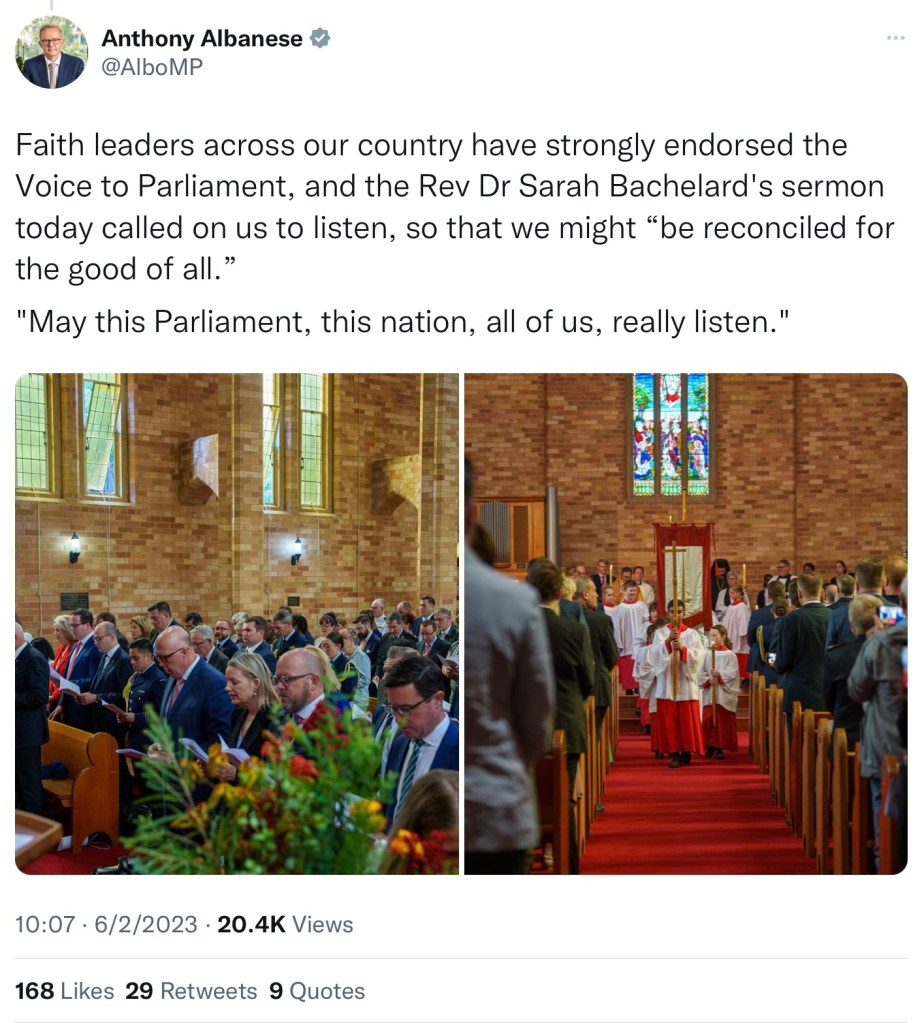
A little later, the Prime Minister tweeted, quoting Sarah Bachelard and affirming her words.

For information about Benedictus, see https://benedictus.com.au

Saltiness restored: the need for innovation. An Ordination Celebration.

“The church does not need inventors; rather, we need innovators.” This was the heart of the message delivered by the Director of Education and Principal of United Theological College, the Rev. Dr Peter Walker, at a joyful celebratory service last Sunday evening in the Tuggeranong Uniting Church in the ACT.

Dr Walker was speaking at a service to ordain Sharon Jacobs as a Minister of the Word and to induct her into placement in the Tuggeranong Congregation as the Relationships and Growth Minister, a newly-created position funded substantially by the Synod Growth Fund. The ordination was presided over by the recently-elected Co-Chairperson of the Canberra Region Presbytery, Ms Janet Kay.

Dr Walker was addressing a capacity congregation in the building, with more people connecting online, from Canberra, as well as Melbourne, Aotearoa—New Zealand, and Scotland—the places where the Rev. Jacobs has lived in the past. Speaking under the title of “saltiness restored”, derived from Matthew 5, Dr Walker noted that “whilst inventors create new things, innovators know what they have to offer, and work to ensure that others can appreciate this”.

We have the Gospel, he said; we know what we have to offer others; and we need to work to find ways in which this good news comes alive in the lives of others. Our charge is to be “salt of the earth”; the church in our time is to discover how to be “saltiness restored”.

His words were particularly appropriate for the Tuggeranong Congregation, which has been innovating its life and witness in recent years, under the energetic leadership of the Rev. Elizabeth Raine and a strong team of lay leaders. The Congregation has refreshed its worship life, and continues its online worship alongside the in-person gathering each week. The Rev. Raine has developed the Congregation into an intentional learning community, providing leadership in three weekly online BIble Studies throughout the pandemic lockdowns. These studies are also continuing, as they draw participants from across the Presbytery and beyond, even interstate and overseas!!

The Church Council has charted a deliberate course to make a difference in the wider Tuggeranong community—to be the “salt of the earth” in southern Canberra. Deliberate connections have been fostered with a number of community groups; the Congregation has participated in Floriade Reimagined, reinvigorated its Red Dove pop-up Op Shop, continued providing its weekly Emergency Food and Lunchtime Conversation group, and offered the wider community innovative events such as Christmas Reimagined and SpringFest. A partnership with SeeChange Tuggeranong has seen regular events with a focus on sustainability.

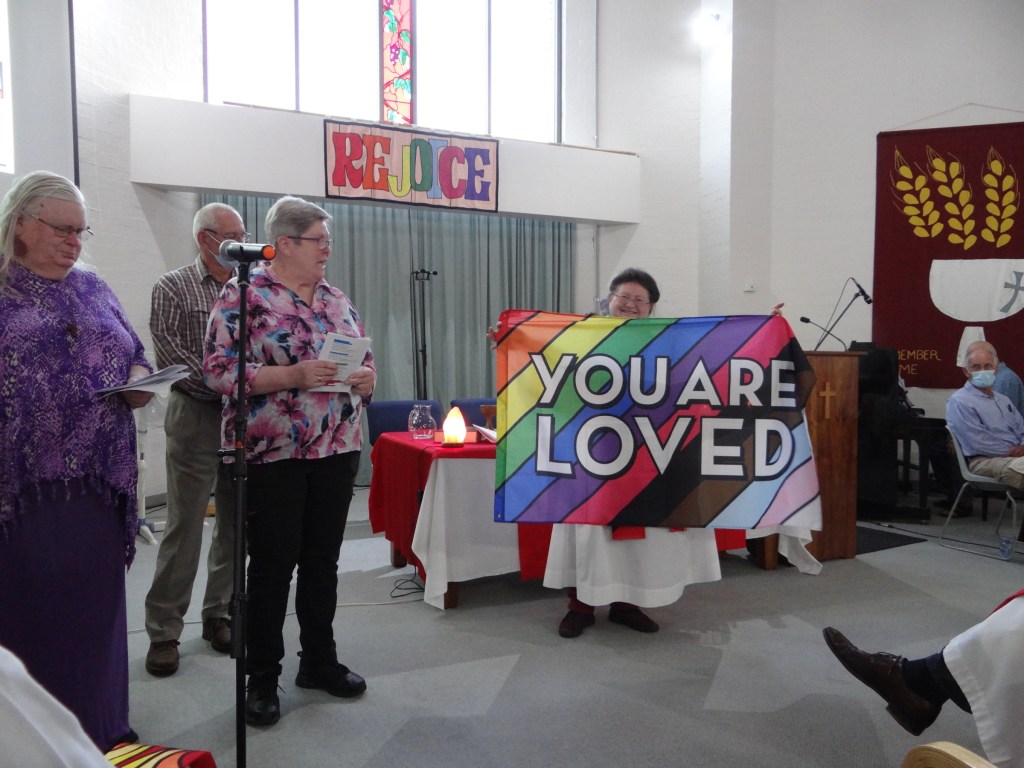
Members of the Congregation, Sally-Anne, Iain, and Delia, with Sharon as she holds the Rainbow Christian Alliance affirming that “you are loved”

The monthly Rainbow Christian Alliance now meets in the church and has broadened its membership beyond LGB people to include growing numbers of TIQ members. A monthly Messy Church under the name of Fam@4 now meets at 4pm on the 4th Sunday of the month. Regular intergenerational worship services are scheduled for key moments on Sunday mornings, and inevitably the church is filled with people of all ages, craft activities, vibrant music, with lots of colour, energy, and caring relationships growing.

Sharon will focus her 50% role on developing the Congregation’s work with families and children, as well as supporting and growing the leadership and membership of the Rainbow Christian Alliance. She brings experience and giftedness in pastoral care, working creatively with children, and generating enthusiasm—qualities that fit her well for this role.

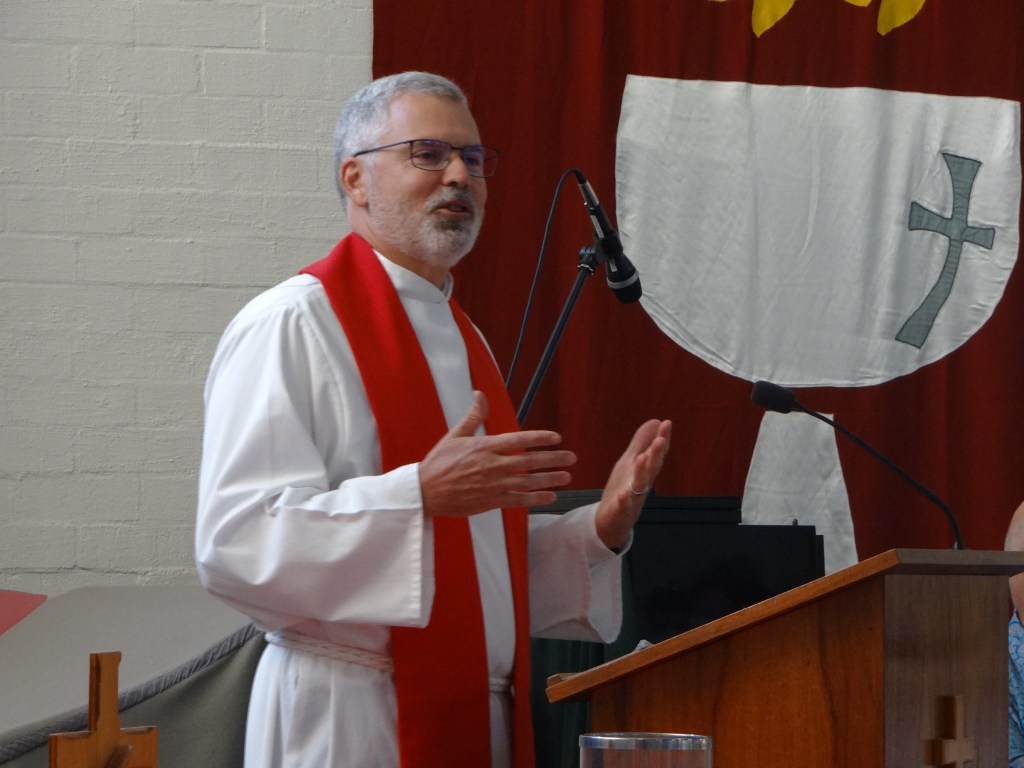
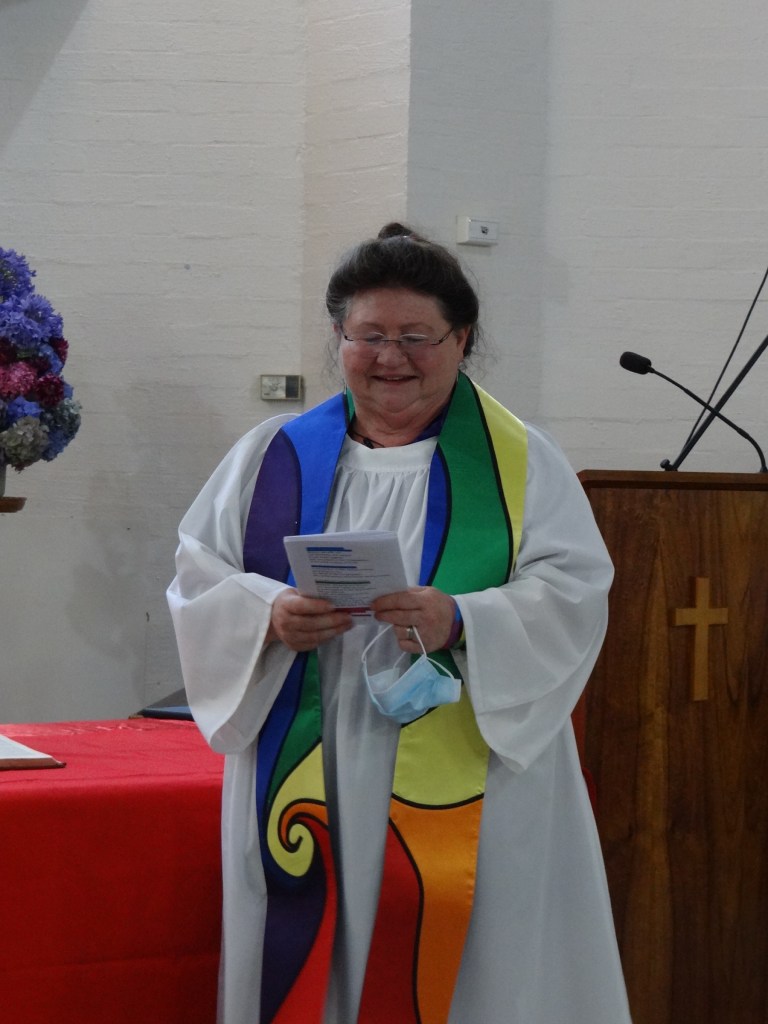
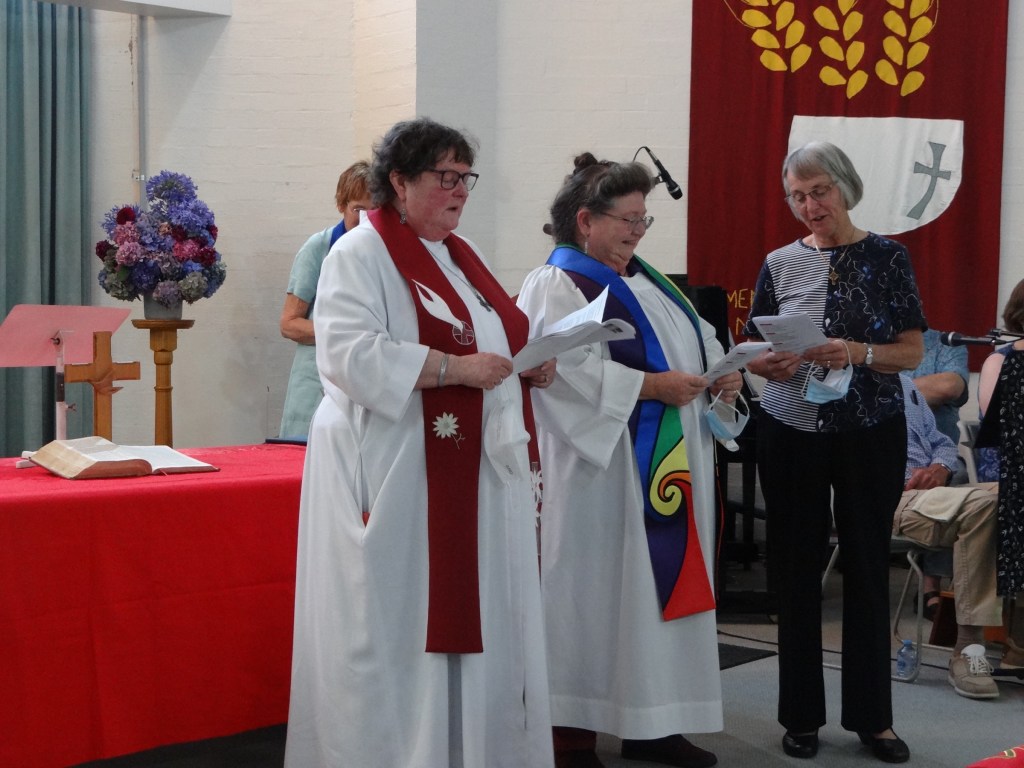
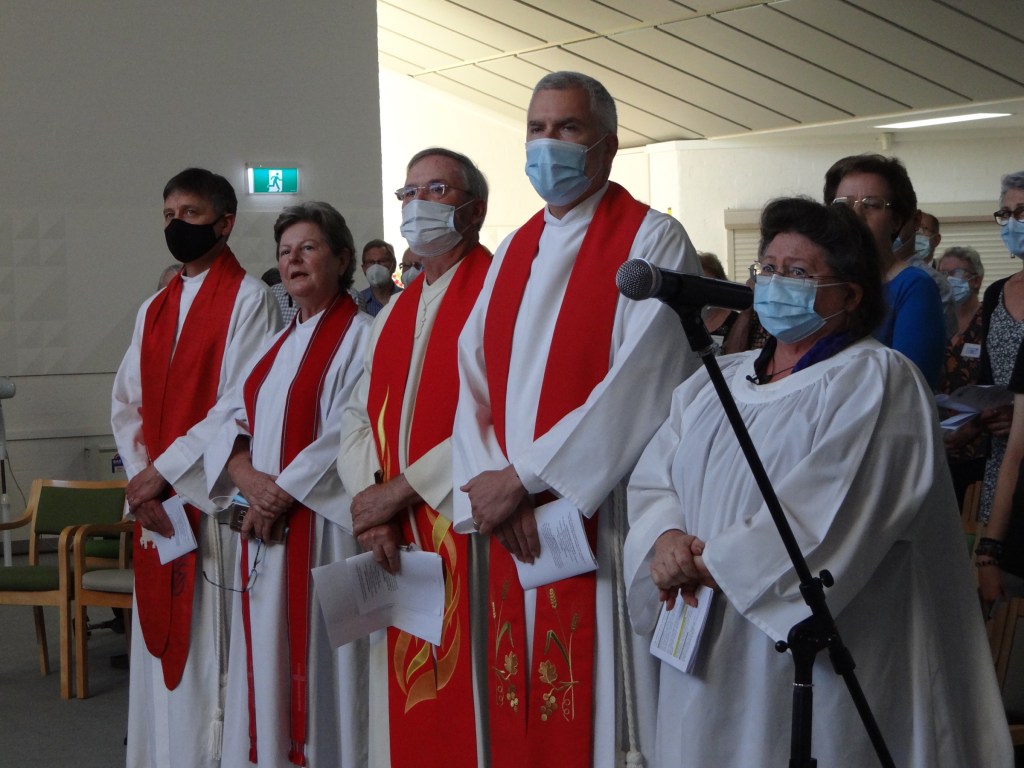
During the service, Sharon was welcomed as she joins the team of the Rev. Elizabeth Raine, Minister in placement, and the Rev. Margaret Middleton, the Tuggeranong Minister-in-Association. She was charged for her life as an ordained minister by her former minister, the Rev. David Thiem, and presented with a colourful rainbow stole by the congregation.

The Revs. Andrew Smith, LizMcMillan, David Thiem,
and Dr Peter Walker, with Sharon Jacobs

Also participating in the service were Canberra Region Presbytery Ministers, the Rev. Andrew Smith, and the Rev. Liz McMillan, recently arrived from Melbourne. Many members of the Presbytery greeted Sharon after her induction, and members of the Tuggeranong Congregation offered their trademark hospitality of a generous supper, as friendships were rekindled amongst those present after the service concluded.

Keep watching Tuggeranong, as innovation continues, its salty contribution to the local community in southern Canberra develops, and the vibrant life of the Congregation grows!

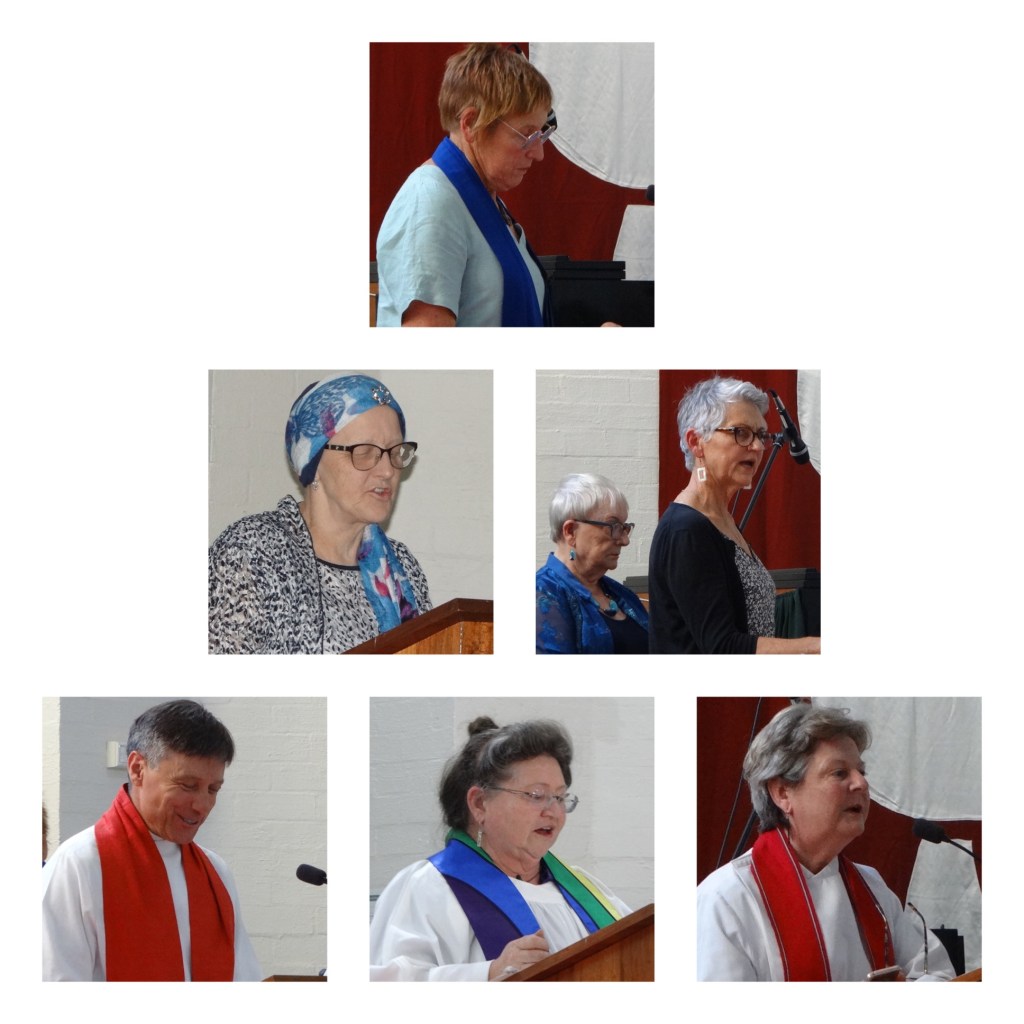
Presbytery Co-Chair, Girls Brigade Captain, Scripture readers,
Andrew Smith, Sharon Jacobs, Liz McMillan

*****

See also

A focus on discipleship in With Love to the World

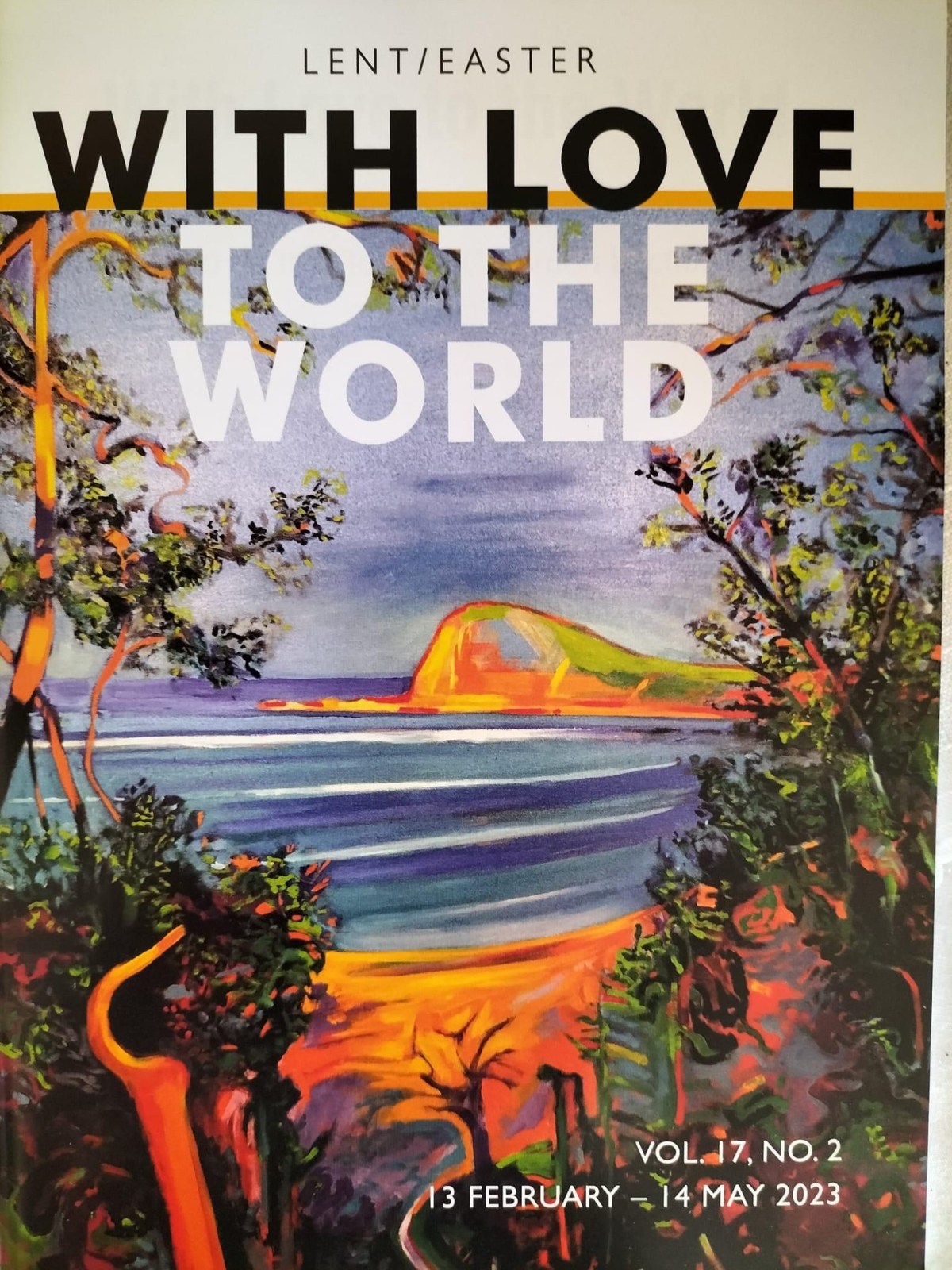
The next issue of the Bible-reading resource With Love to the World is now available. The issue covers the seasons of Lent and Easter (from mid-February to mid-May).

I edit this resource, which is produced by the Uniting Church in Australia and follows the Revised Common Lectionary. That lectionary provides four readings for each Sunday. These are the readings which are heard in worship each Sunday in many churches around the world. The resource includes short devotional commentaries on these four Bible passages, as well as an additional three readings each week.

That means that there is a passage with commentary each day of the week. In addition, for each passage there is a short prayer, a relevant song or hymn, and a discussion question relating to that passage. Whilst designed for personal use, many small groups also use the resource for their weekly discussion group.

The resource helps people who are preparing to lead worship and preach. My own view is that proclamation in sermons should encompass both the good news of the Gospel and the cares and concerns of our daily life. It’s about how we live out our discipleship each day. That’s the focus in the issue which has just been published.

This issue has contributions from writers in Western Australia, Victoria, the Australian Capital Territory, New South Wales and Tasmania. During Lent, a number of cherished stories told in John’s Gospel are read and considered each week, whilst in the season of Easter many stories of the early church from Acts are in focus.

One week of commentaries reflects on the passages from a First Nations perspective, contributed by Alison Overeem. The cover is a striking Australian coastal scene painted by artist, art historian and Uniting Church minister Rod Pattenden. The issue includes a reflection on the artwork by Rod.

Subscriptions for With Love to the World are easy to arrange. The printed resource is available for just $24 for a year’s subscription (see http://www.withlovetotheworld.org.au/wp-content/uploads/2020/07/Ordering-and-paying-for-Website-7.vii_.2020.pdf) or the resource can be accessed on phones and iPads via an App, for a subscription of $24.49 per year (go to the App Store or Google Play).

Artworks by Rod Pattenden can be viewed at https://www.rodpattenden.id.au

I have some copies available at no cost if you would like to sample the current issue of this resource in the coming weeks. Send me a direct message, or contact me on 0408 024 642 or editorwlw@bigpond.com and I can arrange postage.

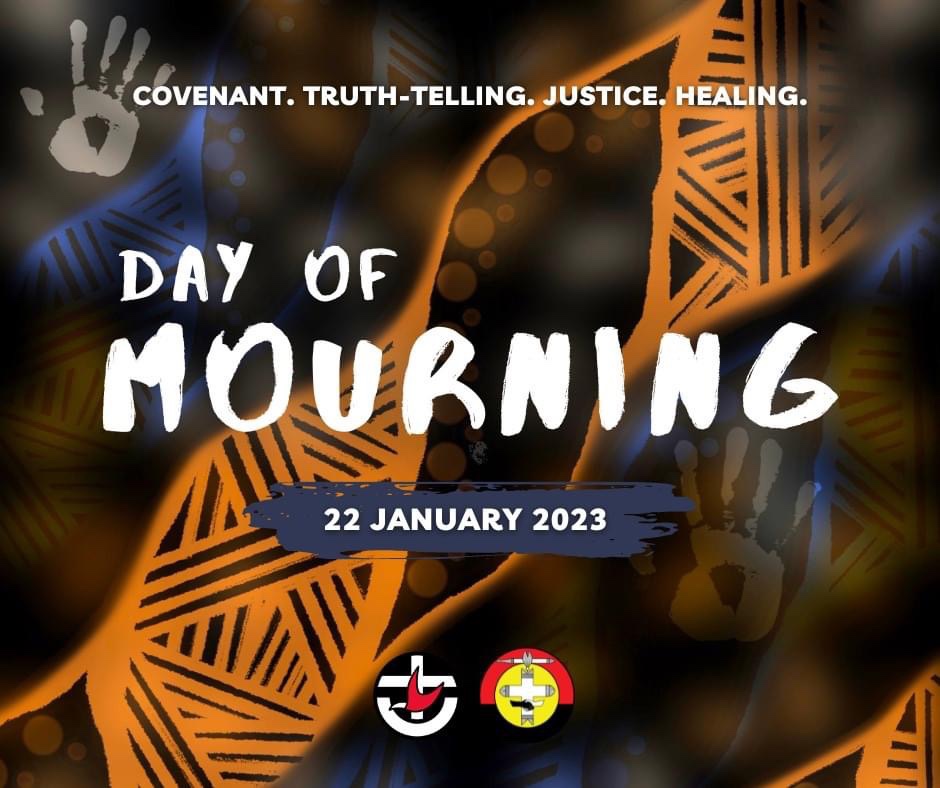
A Day of Mourning, ahead of Invasion Day (26 January)

Since 2019 the Uniting Church has marked a Day of Mourning to reflect on the dispossession of Australia’s First Peoples and the ongoing injustices faced by First Nations people in this land. For those of us who are Second Peoples from many lands, we lament that we were and remain complicit.

The observance of a Day of Mourning on the Sunday before 26 January arises from a request from the Uniting Aboriginal and Islander Christian Congress (UAICC) which was endorsed by the 15th Assembly in 2018. Since then, many Congregations have held worship services that reflect on the effects of invasion, colonisation and racism on First Peoples. This year, that will take place on 22 January.

The Uniting Church acknowledges that our predecessors in the denominations which joined in 1977 to form the Uniting Church have been “complicit in the injustice that resulted in many of the First Peoples being dispossessed from their land, their language, their culture and spirituality, becoming strangers in their own land”. That itself is a cause for lament and mourning.

The Uniting Church also recognises that people in these churches “were largely silent as the dominant culture of Australia constructed and propagated a distorted version of history that denied this land was occupied, utilised, cultivated and harvested by these First Peoples who also had complex systems of trade and inter-relationships”.

The quotations above come from the Revised Preamble to the Constitution of the Uniting Church in Australia, adopted in 2009, which can be read in full at https://resources.uca.org.au/images/stories/Regulations/2018/2018_Constitution__Regulations.pdf

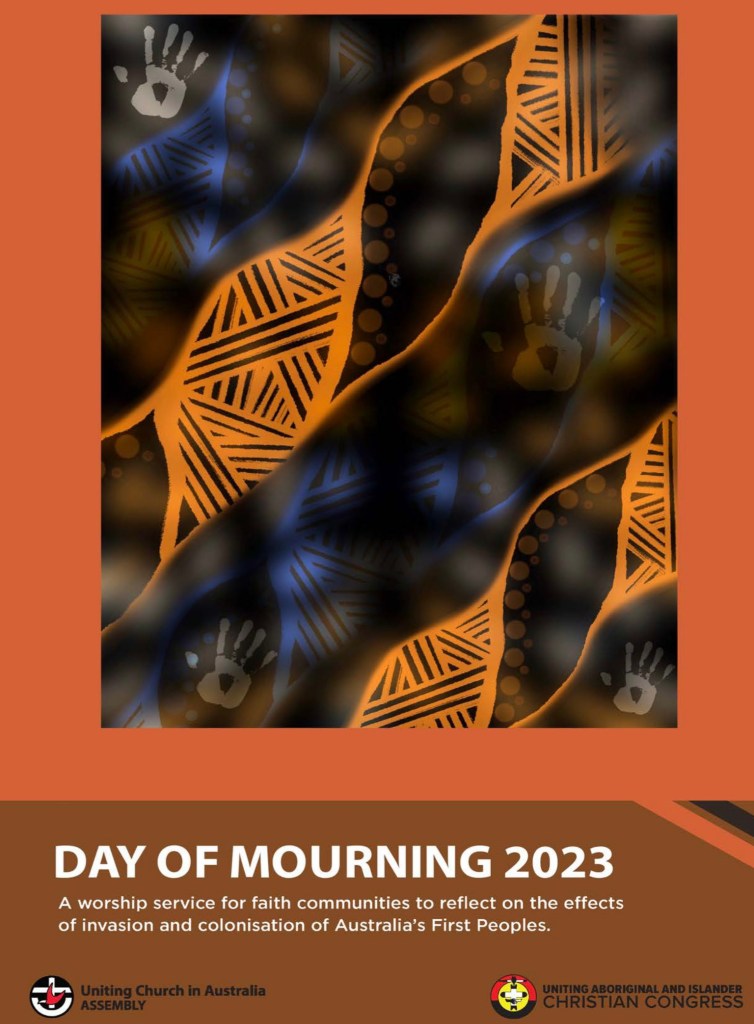
Resources prepared for worship on 22 January 2023 include a statement by the Rev. Sharon Hollis, President of the UCA, and the Rev. Mark Kickett, the Interim National Chair Uniting Aboriginal and Islander Christian Congress. In this statement, they observe that “The Day of Mourning invites us to listen to the truth of the effects of colonisation and racism on First Peoples and to hope that in confronting this truth we will discover ways to create communities of justice and healing.”

They continue, “In marking the Day of Mourning, we live into our covenant relationship to stand together with, and listen to, the wisdom of First Nations people in their struggle for justice. We affirm the sovereignty of First Peoples and honour their culture and their connection to country.”

This quotation, and others following, come from https://uniting.church/wp-content/uploads/2022/12/Day-of-Mourning-2023_finalmin.pdf

The covenant referred to by the President and the Interim Congress Chair was made by the National Assembly in 1994. It signals the Uniting Church’s commitment to stand with our First Nations brothers and sisters in Christ in their struggle for justice. The story of entering into this relationship with First Peoples and ongoing developments that have occurred since 1994 is told at https://uniting.church/covenanting/

The Uniting Church is firmly committed to Giving Voice, Telling Truth, Talking Treaty, which was the theme of the 2019 NAIDOC WEEK, picking up from the 2017 Statement from the Heart. This theme was the focus of a consensus decision of the 2019 meeting of the Synod of NSW and the ACT, to enact a series of proposals to give support to the theme of Giving Voice, Telling Truth, Talking Treaty; see

The Synod now has a comprehensive Reconciliation Action Plan and a webpage with links to many resources to support this commitment; see https://nswact.uca.org.au/first-nations-resources

The 2023 worship resources invite worshippers to begin with an Acknowledgement of First Peoples which draws from the Revised Preamble, affirming that “God nurtured and sustained the First Peoples of this country, the Aboriginal and Islander peoples” and that “the Spirit was already in the land, revealing God to the people through law, custom and ceremony”. The Acknowledgement invites worshippers to respond by affirming that they “honour [First Peoples] for their custodianship of the land on which we gather today” and that they “rejoice the reconciling purposes of God found in the good news about Jesus Christ”.

These are fundamental theological affirmations which undergird both our present respect for First Peoples, and our understanding that a relationship with and an understanding of God are not limited to western Christian perceptions of the divine. Indeed, as we have accepted within Christianity that the God we know in Jesus was active in relationship with human beings for many centuries before the time of Jesus—through the covenant with the people of Israel—so we can agree that God was in relationship with the peoples of the continent we call Australia and the islands which surround it.

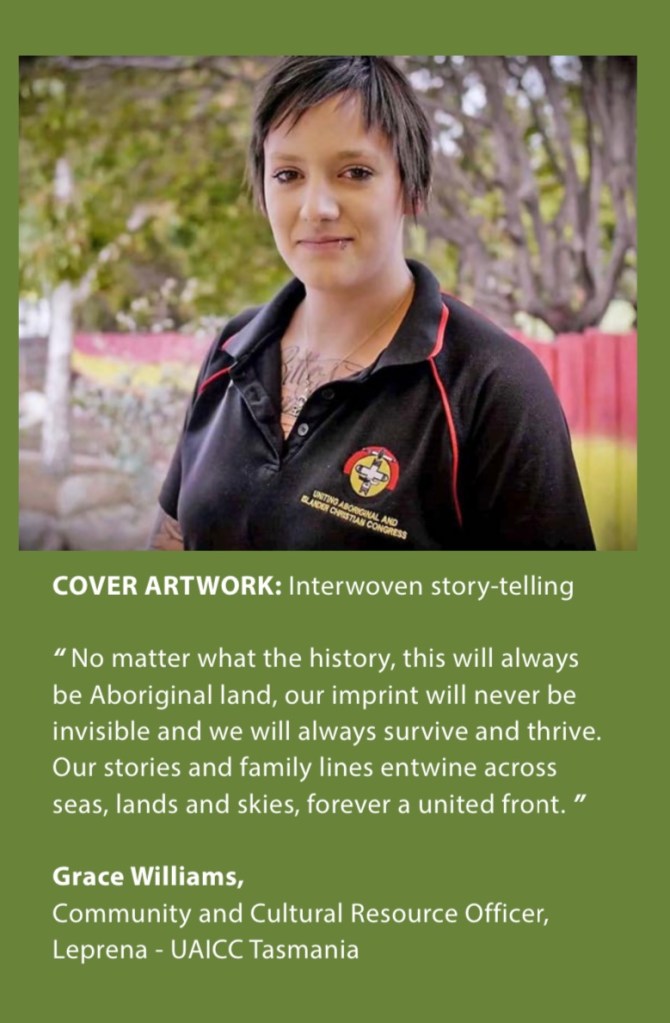
The worship resources include an Invitation to Truth-Telling—something that is now recognised as integral to the process of reconciliation that is essential within Australian society. In words written by Alison Overeem, Manager of Leprena—UAICC in Tasmania: “We are called to justice in the mourning, not just for today but all that weeps from today. All that sits in the layers of mourning, embedded in the trail of injustice … of removal … of dispossession … of stolen land … of stolen children … of stolen identity”. The Invitation continues by encouraging us, “in the mourning, let us look to the love that calls us to seek out and speak out against injustice”.

That truth-telling was at the heart of decisions at the 2015 Assembly, to repudiate the Doctrine of Discovery, and at the 2018 Assembly, to recognise the sovereignty of the First Peoples. See

A Prayer of Lament in the worship resources recognises “the way in which their land was taken from them and their language, culture, law and spirituality despised and suppressed”, and laments “the way in which the Christian church was so often not only complicit in this process but actively involved in it”.

The Prayers of the People begins with the petition, “give us the courage to accept the realities of our history so that we may build a better future for our nation”—for that is the purpose of the Day of Mourning, of the annual Reconciliation Week, and of the ongoing commitment of the Uniting Church to “live out the covenant into which we, the First and Second Peoples of this land, have entered with one another.”

The closing Word of Mission in the 2023 worship resources continues: “Confront and challenge injustice wherever you see it. Act justly yourselves and insist that others do the same. Rejoice in the richness of our diverse cultures and learn from them. Celebrate and demonstrate the unity we share in Jesus our Lord. Commit to worship, witness and serve as one people under God, Until God’s promised reconciliation of all creation is complete.”

The resource ends with links to appropriate contemporary songs and children’s stories, and suggestions for craft activities within worship on 22 January.

See also

We Three Kings: exegeted, explained, and exposed

A carol-commentary for the Festival of Epiphany
(a little weird, a little forced, perhaps a little sin-ical ?)

WE: the first person plural subject of the song, suggesting this comes straight from the horse’s mouth, so to speak

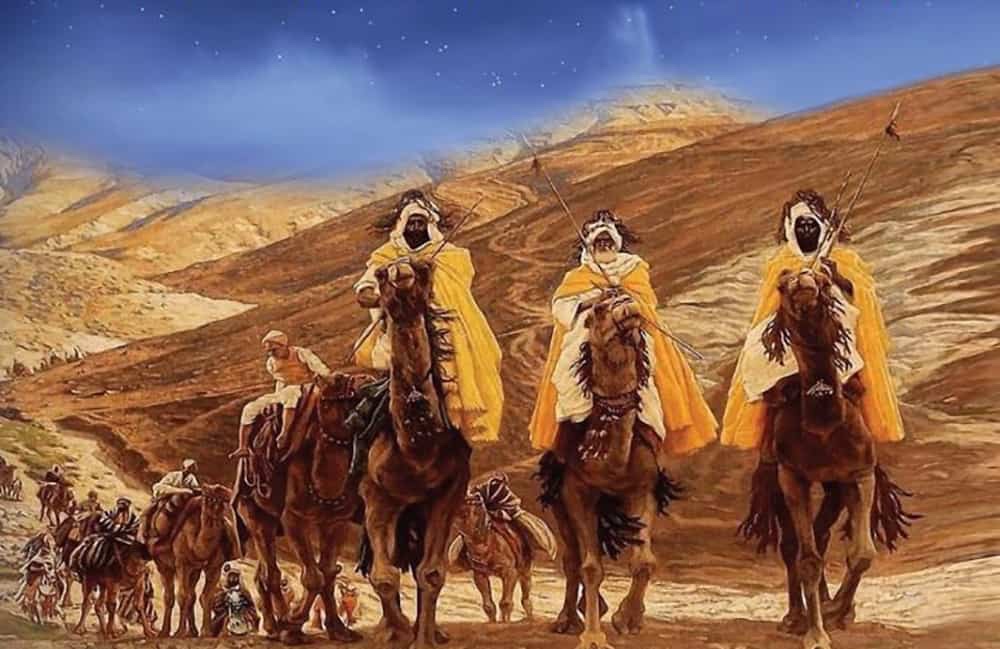
THREE: or perhaps four, or maybe seven, or even twelve, or some other indeterminate number, since the initial story does not specify the precise number of subjects in the story

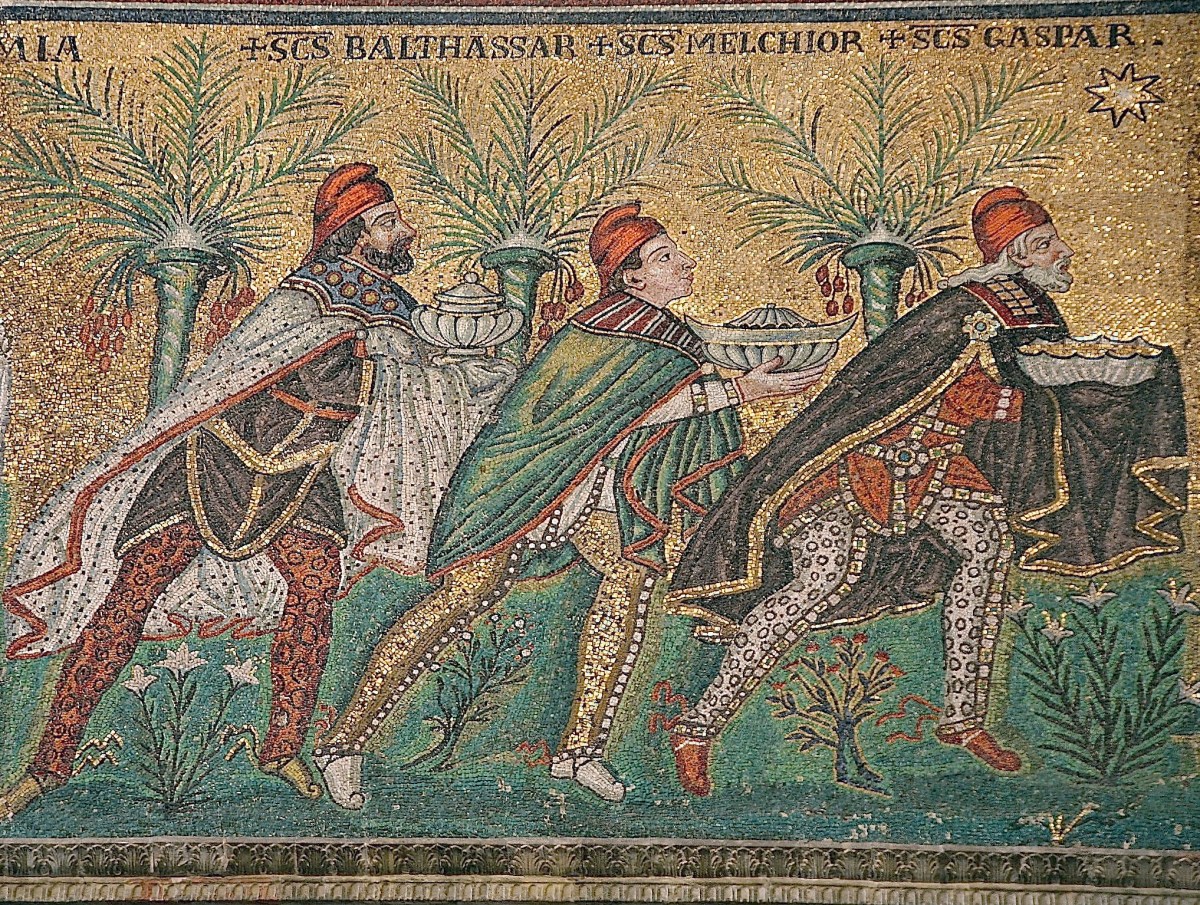
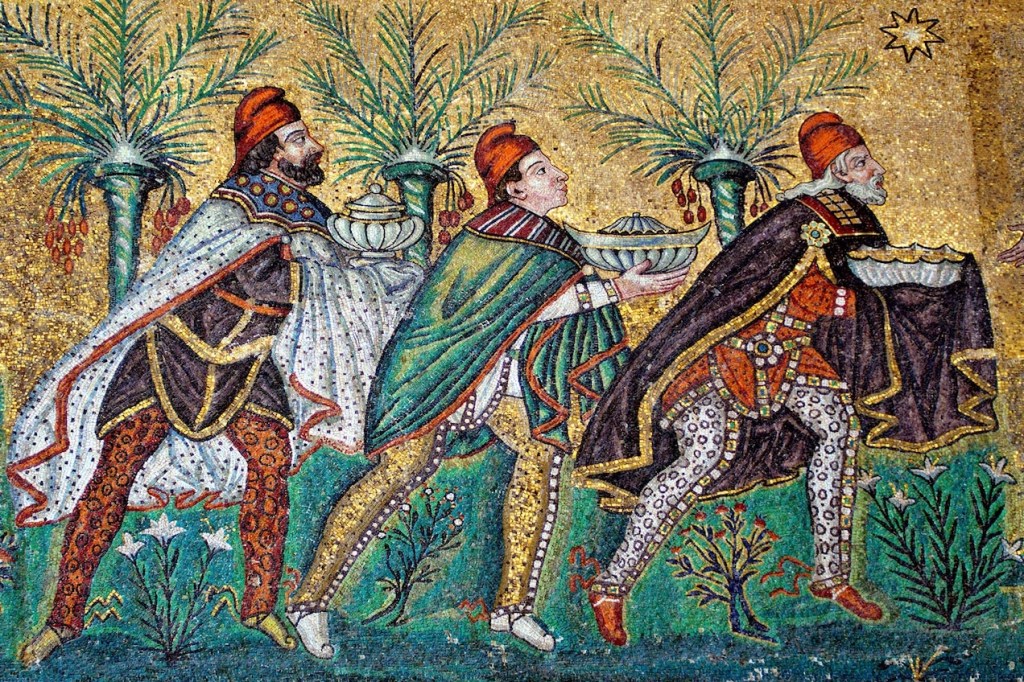
KINGS: or some say wise men, or others say sages, which they offer as an interpretation of the term magus, used in the initial narrative … so perhaps the subjects of the song are Zoroastrians, for whom star-watching was a highly-developed skill.

OF ORIENT: or, lands east of Israel, so perhaps Babylon, or even further to the east, in Parthia, where the Zoroastrian faith was dominant

ARE: the main verb, denoting the existential state of being of the subjects

BEARING: adverbial participle, descriptive of the activity of the aforesaid subjects of the song

GIFTS: by tradition, three of them [see below], which goes to explain why you might think there are three of the subjects [see above] … and providing grist for the mill for the idea that these subjects were kings, since Psalm 72:10-11 speaks about kings bringing gifts to the King of Israel

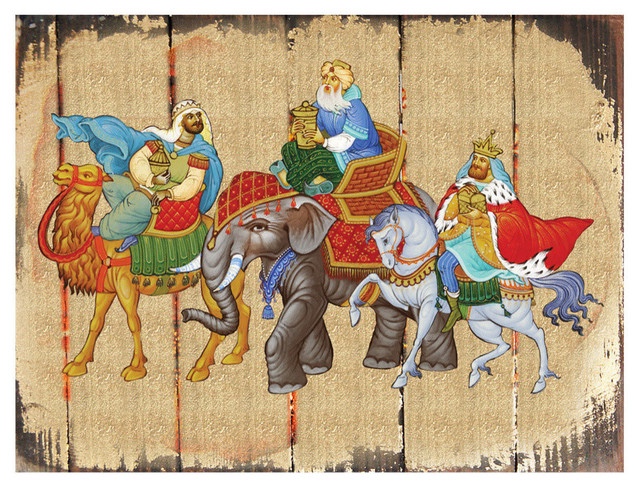
WE TRAVERSE AFAR: presumably on camels, the deluxe form of transportation of the time … although ………

FIELD AND FOUNTAIN, MOOR AND MOUNTAIN: a little bit of poetic excursus, a selective account of the natural phenomena encountered on the journey, arranged in alliterative couplets (it feeds the creative imagination of the listener/singer, you see)

FOLLOWING: another adverbial participle, providing a second description of the activity of the subjects

YONDER STAR: a bright celestial phenomenon, shining in the eastern sky but apparently moving or pointing in the direction of Israel, which was dutifully followed by the subjects

star on a dark background

O Star of wonder, star of night / Star with royal beauty bright /
Westward leading, still proceeding / Guide us to thy Perfect Light:
more poetic extrapolation, as befits the season

*****

Born a King on Bethlehem’s plain / GOLD I bring to crown Him again /
King forever, ceasing never / Over us all to reign:
which explains the claim that the subjects of the song are kings, as the gift of gold was what the kings of the nations bring to the Lord God when they travel to Jerusalem, according to Isaiah 60 verses 3 and 6–bearing in mind the injunction of Exodus 20:23, that this gift of gold not be in the form of any idol

O Star of wonder, etc …

*****

FRANKINCENSE to offer have I / Incense owns a Deity nigh /
Prayer and praising, all men [oops!] raising / Worship Him, God most high:
in relation to the gift of frankincense, as already noted above, the kings of the nations bring this to the Lord God when they travel to Jerusalem, according to Isaiah 60 verses 3 and 6 … and, ahhh, presumably there has been a divine change of mind since Isaiah 1:13, where the Lord God declared that “bringing offerings is futile; incense is an abomination to me” ?

***

MYRRH is mine, its bitter perfume / Breathes of life of gathering gloom /
Sorrowing, sighing, bleeding, dying /Sealed in the stone-cold tomb:
curiously, there is no scriptural tradition about kings bringing myrrh to the Lord

Nevertheless, myrrh certainly featured as a gift in the religious practices of Israel, according to Exodus 30:23–27 (The LORD spoke to Moses: “Take the finest spices: of liquid myrrh five hundred shekels, and of sweet-smelling cinnamon half as much, that is, two hundred fifty, and two hundred fifty of aromatic cane, and five hundred of cassia—measured by the sanctuary shekel—and a hin of olive oil; and you shall make of these a sacred anointing oil blended as by the perfumer; it shall be a holy anointing oil’ — an oil to anoint “the tent of meeting and the ark of the covenant, and the table and all its utensils, and the lampstand and its utensils, and the altar of incense, and the altar of burnt offering with all its utensils, and the basin with its stand”)

As the song signifies, it points forward to a moment in the passion of Jesus as narrated at Mark 15:23, where it is mixed with wine [but in that case, the gift was not accepted] and to the burial scene as reported at John 19:39, where it is mixed with aloes.

And let’s not make any link to the scene in Revelation 18:11-13, where the merchants of the world lament the fact that nobody is purchasing their goods any longer … goods which include, amongst many options, gold, and frankincense, and myrrh …

O Star of wonder, etc …

*****

Glorious now behold Him arise / King and God and Sacrifice /
Alleluia, Alleluia / Earth to heav’n replies:
adhering to the Golden Evangelical Rule of always taking the opportunity to smuggle Easter and the Cross and the Sacrifice of Jesus into any song or sermon or worship service or, even, Christmas/Epiphany Carol!

O Star of wonder, etc …

*****

So: Merry EndofChristmas and HappyEpiphany!!!

And for more exotica on the Magi, see

The twelfth day of Christmas

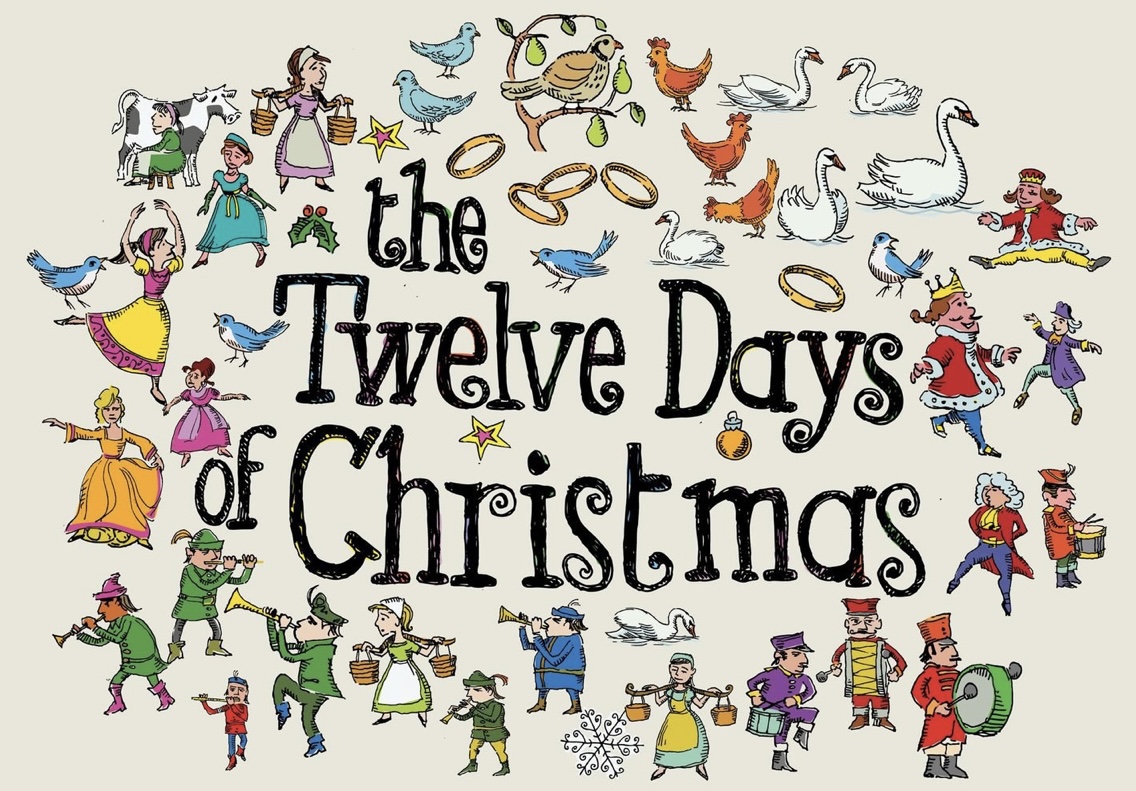
And so we come to the twelfth day of Christmas, 5 January—the day that ends with Twelfth Night, the Eve before Epiphany. And what a gift-giving bonanza it has been! Birds of various kinds, jewellery, milkmaids, dancing ladies, leaping lords, and a bunch of pipers, have been marshalled and then gifted by “my true live” to a deserving recipient. And celebrated in song! It has been quite an extravaganza.

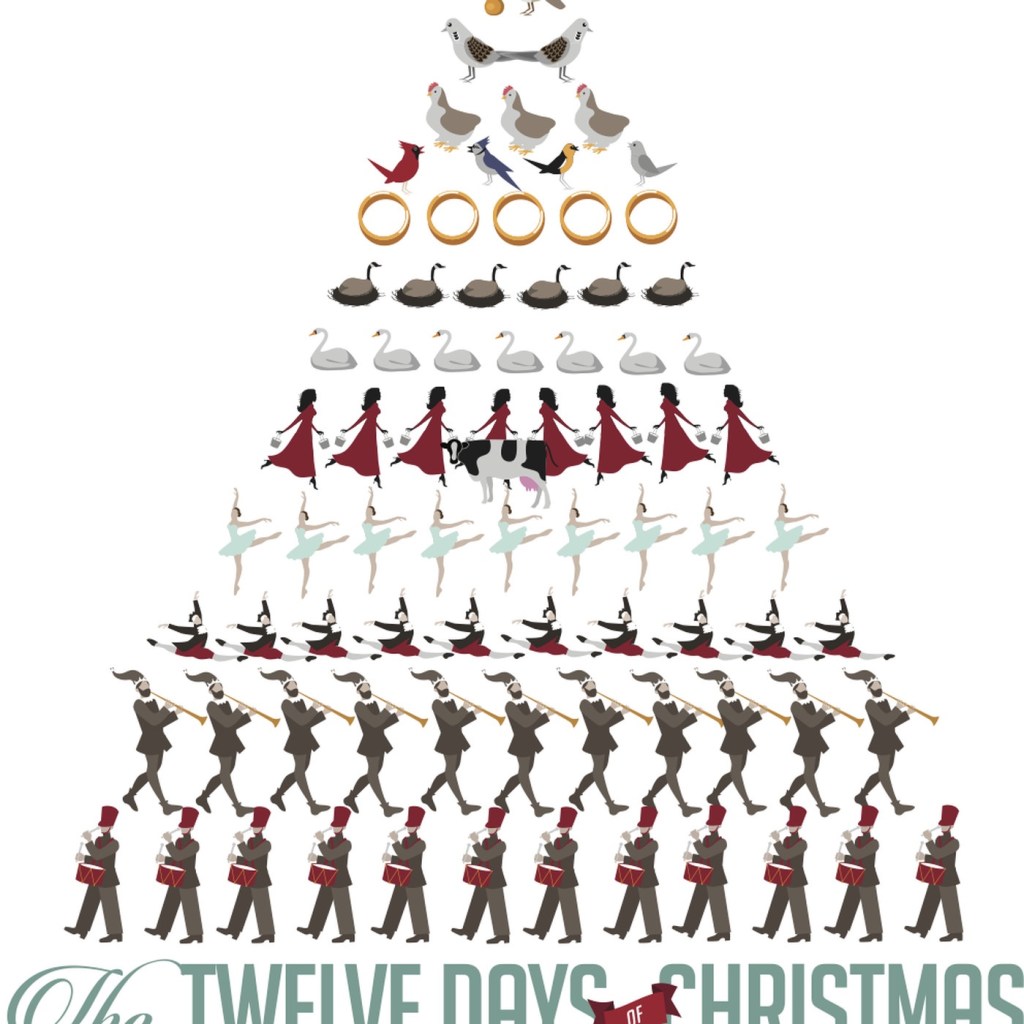
We sing about this every year in “The Twelve Days of Christmas”. That popular song itemises the giving of gifts over those twelve days, mounting cumulatively day by day. The total number of gifts given is quite amazing—it actually totals 364! Each day’s gift is given, not only on that day, but on each of the subsequent days.

To calculate the total number of gifts, we need to multiply each gift by the number of times it recurs in a full round of the song. If we do this, we will soon realise that the gifts’ recipient would have to rent a storage unit and gain access to a lake, to contain the bounty, including 12 partridges (one each day for 12 days), 22 turtledoves (2each day for 11 days), 30 French hens (3 each day for 10 days), 36 colly birds, 40 gold rings, 42 laying geese, 42 swimming swans, 40 milking maids, 36 dancing ladies, 30 leaping lords, 22 pipers piping, and 12 drummers drumming.

And just think, how much all of this would cost! In fact, the cost each year has been calculated by the Christmas Price Index, published by the US bank PNC Wealth Management (only in America would a bank be called a “wealth management” company 😳). See https://en.wikipedia.org/wiki/Christmas_Price_Index

The Christmas Price Index chose the items in this popular Christmas carol as its market basket, calculating their cost by using local sources of information—purchasing the pear tree from a local Philadelphia nursery, assessing the costs of the partridge, turtle dove, and French hen prices as determined by the Cincinnati Zoo and Botanical Garden.

The price for the gold rings was guided initially by Gordon Jewelers (subsequently taken over by the Zale Corporation), and an assumption was made that the maids were unskilled laborers earning the federal minimum wage. The ten “lords a-leaping” are valued by using the cost of hiring male ballet dancers instead of real lords, since “lordships are a title of nobility not recognised in the United States”!

In 2012, the “true love” would have to spend $107,300 to buy all 364 presents. PNC Wealth Management has calculated the cost of the gifts every year since 1984–in that year, the same gift assortment would have cost $61,300. Those determinedly mobile swans were the most expensive item, at $1,000 each in 2012.

By 2019, the total cost would have been $38,993.59, but the next year, the cost dipped, because of the pandemic and associated restrictions. In 2020, the index did not include nine Ladies Dancing, ten Lords-A-Leaping, eleven Pipers Piping, or twelve Drummers Drumming due to COVID-19 restrictions on live performances. The total cost was $16,168.14. But in 2021, with performances in the USA once again possible, it rose to $41,205.50, and then to $45,523.27 in 2022.

So: as well as being a noisy enterprise (all those birds squawking, pipers piping, and drummers drumming) requiring large storage facilities, it’s an expensive business for the “true love” to keep this up, each and every year!

See also

Further critically-informed assessments of Pope Benedict XVI

Following on from Noel Debien’s Obituary/Evaluation of the late Pope Emeritus Benedict XVI that I posted yesterday, I have collated some further comments that I’ve found in the media relating to the legacy of Benedict.

Former priest and media commentator Paul Collins assesses the papacy of Benedict as follows: “Benedict’s most important act was his resignation because in one fell-swoop he relativised the papacy and drained it of its ‘mystery’. It showed him as a normal man who admitted that he had ‘come to the certainty that my strengths, due to advanced age, are no longer suited to an adequate exercise of the Petrine ministry.’ That required humility; the last pope to have resigned was Celestine V in 1294.”

Theologian Ben Myers explores the theology of Ratzinger-the-academic who became Benedict-the-pope:

“For over half a century Ratzinger has challenged the subordination of truth to communal belonging. From his academic career in the 1950s and 60s to his papal ministry as Benedict XVI, one of Ratzinger’s most consistent themes has been the priority of reason and truth over communal identity. In his analysis, the most urgent theological task is the recovery of reason. It is, he thinks, the most urgent social and political task too.

“Ratzinger sees the split between faith and reason as inimical to both religion and secular society. Religion becomes pathological when its claims are reduced to private exhortations to insiders with no link to a universally accessible rationality or a shared conception of the human good. And reason, for its part, becomes pathological when it is confined to the sphere of fact, measurement, and technical manipulation with no accountability to moral considerations of justice, goodness, and the ends of human life.

“Ratzinger calls for faith to be animated by rationality and for reason to be open to its transcendent foundations as revealed to faith. Faith and reason alike, he argues, arise from the manifestation of the divine Logos, who is ultimately revealed as Love: a rationality that is living, personal, and directed toward us for our good.”

https://d1wqtxts1xzle7.cloudfront.net/96669999/Ratzinger_essay-libre.pdf?1672637577=&response-content-disposition=attachment%3B+filename%3DTruth_Not_Custom_Joseph_Ratzinger_on_Fai.pdf&Expires=1672721748&Signature=eYNE84gl~z74oLfO8i2k5J9HGJxtdE79XJg5aGy2nxrREmenszJxZwWx18fFqX0sEp5pU847JqOSfUp~t0glj8WTTy563aHZBdG~Qq6hOaZuQQyzQPV44WSbj36sCyJ7p0MaOu3ESQ3it0moekmJYL1zguaAlf3l5qc1WLSLu7gRbL30YI4wSqky5b3fP0lsDOwndq-vwTT9HzMKcrA664lIpJWVdcaLUmXwsfjYV9C3wPWVikjNQ71iznWvWYWGe6RRlmkgkW7vaX63wO5anL6tDx2zDZeMbReimG4vyUi6zf0Lp4C6nY2lkvxct1Xg179nAZkPf3VDLJuweMrRHw__&Key-Pair-Id=APKAJLOHF5GGSLRBV4ZA

Writing in the National Catholic Reporter, Jamie Manson (president of Catholics for Choice) notes that “over the course of nearly 50 years, Benedict produced more than 65 books in theology, Christology and liturgy, as well as three papal encyclicals and three papal exhortations.”

However, she continues, “whatever contributions he made in his prolific and distinguished career may ultimately be overshadowed by the years he spent monitoring, and sometimes suppressing and silencing, the work of other Catholic theologians and ethicists. Though Benedict resigned from his papal,office in 2013, many theologians in the U.S. still struggle to separate the pope from his tenure as the Vatican’s doctrinal watchdog.”

The uncovering of the extensive sexual abuse committed by religious in the Roman Catholic Church (and many other churches, community organisations, and institutions around the world) has been a major factor in the leadership of the church for a number of years now. A year ago, in January 2022, a report on sexual abuse in Germany’s Munich diocese on Thursday faulted retired Pope Benedict XVI’s handling of four cases when he was archbishop in the 1970s and 1980s.

The law firm that drew up the report said Benedict strongly denies any wrongdoing. Writing for APNews, Geir Moulson wrote that “The findings were sure to reignite criticism of Benedict’s record more than a decade after the first, and until Thursday only, known case involving him was made public. … Benedict’s legacy as pope had already been colored by the global eruption in 2010 of the sex abuse scandal, although as a cardinal he was responsible for turning around the Vatican’s approach to the issue.”

Moulson continued, “Benedict gained firsthand knowledge of the global scope of the problem when he took over at the Congregation for the Doctrine of the Faith in 1982, after his time in Munich. Ratzinger took the then-revolutionary decision in 2001 to assume responsibility for processing those cases after he realized bishops around the world weren’t punishing abusers but were just moving them from parish to parish where they could rape again.”

https://apnews.com/article/pope-francis-pope-benedict-xvi-reinhard-marx-germany-europe-c75f721f469f969d05348703c093e53d

Writing immediately after the news of his death was announced, Journalist Nicole Winfield has advocated for a favourable assessment of Benedict’s actions, noting that “it was the then-Cardinal Ratzinger who took the revolutionary decision in 2001 to assume responsibility for processing those cases after he realized bishops around the world weren’t punishing abusers but were just moving them from parish to parish where they could rape again.

“And from 2004 to 2014, the Vatican defrocked 848 priests and sanctioned another 2,572 to lesser penalties, a get-tough approach to remove predators outright that went unmatched by Francis. Benedict met with victims across the globe, wept with them and prayed with them. Under his leadership, the Vatican updated its legal code to extend the statute of limitations for cases and told bishops’ conferences around the world to come up with guidelines to prevent abuse.

“And most significantly, Benedict reversed his beloved predecessor by taking action against the 20th century’s most notorious pedophile priest, the Rev. Marcial Maciel. Benedict took over Maciel’s Legionaries of Christ, a conservative religious order held up as a model of orthodoxy by John Paul, after it was revealed that Maciel sexually abused seminarians and fathered at least three children.”

https://apnews.com/article/pope-benedict-xvi-a-life-remembered-ed6ddf20f696d84ffe0680e1ef0bab0f

However, an article in The Conversation (first published in October 2021, updated after Benedict’s death in January 2022) collates many articles examining the crisis over the years – both its roots and the potential routes for reform. The perspective of the five authors is that this is work-in-progress for the Roman Catholic Church—whilst Benedict and Francis have taken various steps towards addressing the situation, it is still not clear that the Roman Catholic Church as a whole has fully reformed its practices as a global institution most highly implicated in this matter.

https://theconversation.com/amp/pope-benedict-accused-of-mishandling-sex-abuse-cases-4-essential-reads-175430?fbclid=IwAR0Jd5d_CWOyH888BDoWN1N3QqkHmV695Lu-IMVzoxvKnMF8hhCWC3xXeoI

This matter will continue to figure prominently in all assessments of Benedict as Pope—and, indeed, Ratzinger in his Vatican role prior to this. And whoever follows Francis will need to take further, decisive steps—a call that will be hard to meet in the complex institutional framework of the church. Yet this will be the litmus test for how faithful the church as a whole, and its key leadership, holds to the scriptural injunctions to seek righteousness, practice justice, care for the vulnerable, and uphold the two great commandments, to love others as well as to love God.

See also

An informed Roman Catholic perspective on the death of Pope Benedict XVI

The following Obituary for the recently-deceased Pope Benedict XVI was written by Noel Debien, a theologically-astute, practically-involved, faithful practising Roman Catholic Christian, who works as a Religion and Ethics Specialist for the ABC.

As a Protestant, I don’t share the same understanding of Roman Catholicism or hold to the same perspective on the Pope that Noel demonstrates in what he has written. It seems to me that the late Pope Emeritus was a complex character, in a difficult leadership role, in a larger, diverse, unwieldy institution that (like all churches, and all organisations) was facing multiple challenges, to which it responded in various ways, both helpful and unhelpful, both constructive and reactive.

But what Noel writes is worth our reading and our consideration. I do appreciate the clear insights and thoughtful analysis that he offers in this piece, and am sharing this with his permission. I think that this piece would merit its own nihil obstat as a good explanatory piece to those of us outside Roman Catholicism 😁

OBITUARY: Joseph Aloisius Ratzinger
Born: 16/4/27 Marktl am Inn, Diocese of Passau, Germany
Benedict XVI (19/04/2005–28/02/2013)

He was the first pope to step down in 600 years.

He had chosen his papal name to honour both Pope Benedict XV who led the church through World War I, and St Benedict of Nursia, European monastic leader. He said the name Benedict reminds us “to hold firm Christ’s central position in our lives”. He was deeply critical of the European union when, in its 2008 50th anniversary it failed to include Europe’s Christian heritage in its declaration.

The same pope Benedict XVI canonised our first Australian saint, Mary MacKillop in 2010. During his 2008 World Youth Day visit to Australia he reached millions, establishing him firmly in Australian awareness. He also consecrated the new permanent altar of St Mary’s Cathedral in Sydney. It was also during this visit that he made more world news with his first public apology to victims of child sex abuse by Catholic priests and religious. Over 4,444 survivors in Australia from Catholic religious leaders alone. Many more from other religious institutions.

He said his 8-year long pontificate was all about ensuring continuity and avoiding disruption. This was indeed a “continuity” with his predecessor John-Paul II. He was a traditionalist, yet his resignation and retirement marked him as a genuinely modern pope. A man who was generally averse to “novelty” ended up establishing that the retirement of modern popes is normal. He chose to serve as pope only while his health allowed.

As a smoker, he’d had an embolism in the eye in 1984, recovered from a stroke in 1991 – and was eventually completely blind in his left eye. While he was accused of “secularising” the papacy by stepping down “as if someone in public office”, he firmly rejected this allegation. He remarked that “Even a father’s role stops… he does not stop being a father, but he is relieved of concrete responsibility”. After he retired, he decided to be known as “Pope Emeritus”.

On clerical sexual abuse, he was relatively decisive. His interpretation of the abuse crisis was also “outside the usual model” of church response, as something that came from the outside secular culture. In a “culture war” perspective, he included the views of the broader world, not just internal church views.

More bishops were required to resign under Benedict than any previous pope. One of his first actions was to accelerate the investigation into Fr Maciel Degolado. Degolado, founder and head of the Legionaries of Christ was a drug-addicted sexual predator. Pope John Paul II had refused to believe horrendous allegations about Degolado, and even as this previous pope lay dying, the future Benedict XVI was already moving on Degolado. Still, critics point out that despite Benedict’s determination, Degolado was never arrested and charged.

As a 35 year-old professor of theology, Joseph Ratzinger participated in the 2nd Vatican Council. He was actively there, and lived right through it. He helped German Cardinal Josef Frings prepare for it. He accompanied Frings to the council as a “peritus” (expert). Along with famous names like Yves Congar, Hans Urs Von Balthasar, Jean Daniélou and Henri de Lubac, Ratzinger was deeply engaged in that momentous church reform. But his criticism of Vatican II started already when he took distance (like Rahner and de Lubac) from the theology of GAUDIUM ET SPES. He became Archbishop of Munich-Freising in 1977 at age 50, and a Cardinal in the same year.

Born in 1927, Benedict was the longest-lived person ever to have been pope. As pope, he was an absolute monarch, yet he had also known starvation during World war II. His family were anti-Nazi. His own 14 year old cousin (with Downs syndrome) had been murdered by the Nazis in 1941 in their “eugenics” program. He spent time as a reluctant German soldier (he deserted!), and then as a prisoner of war in a US camp at Ulm. He resumed his studies for priesthood as soon as World War II ended. This was in the midst of a devastated Germany.

Over his long life, he observed the repression of Christianity in China, the Cold War, the Cuban Missile crisis, man on the moon, the collapse of Soviet Communism and the American sub-prime mortgage crisis . He also presided over the increasingly shocking clerical sexual abuse crisis that brought large parts of his church to its knees.

He did try to deal with interfaith relations, and had some success, but the relative disaster of the speech he made in Regensburg on Islam (September 2006) was not particularly helpful for his overall record. His words sparked international controversy (to be fair, he accurately quoted the besieged Byzantine Emperor Manuel II Palaiologos) “Show me just what Muhammad brought that was new and there you will find things only evil and inhuman, such as his command to spread by the sword the faith he preached”.

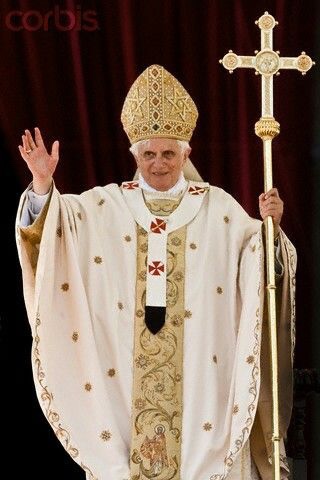
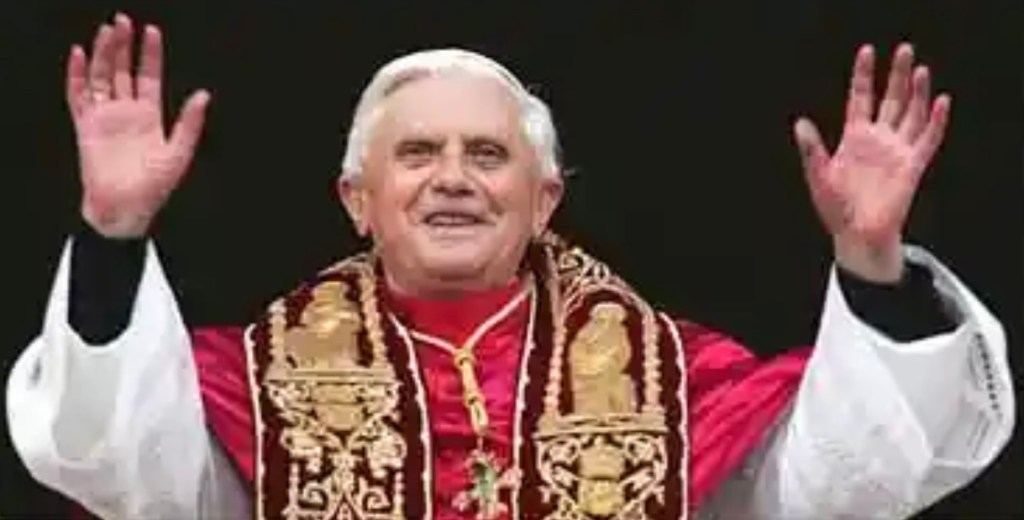
German cardinal Joseph Ratzinger, waving to the crowd
from the central balcony of St Peter’s Basilica, at the Vatican,
after his election as Pope in April 2005

German Cardinal Joseph Ratzinger had been elected pope on April 19th, 2005 at the age of 78. He said this was to his great surprise. “The falling of the guillotine” he called it. But it was his later decision to step down from the papacy at age 85 that helped define the type of active leadership he offered. He had seen his predecessor’s shocking mental and physical decline right to the end, and determined he himself would never die slowly and dramatically in office while leaving others to govern. As the conservative he was, he emphasised precedent from previous resignations of popes.

His theological contribution was immense – especially throughout Vatican Council II. He was a genuine intellectual. At age 39, he became the chair for dogmatic theology at the University of Tübingen in 1966. He wrote and spoke German, French and Latin fluently- so much so that he preferred Latin to Italian- a language he was less comfortable in academically. While describing himself as “shy” and “less emotional”, he was deeply influenced by the intellectual rigour, spiritual teaching and emotional struggle of Augustine of Hippo, the 4th Century North African Bishop and Doctor of the Church. He was a genuine “Augustinian”, who told of his wish to move past classical Thomism, the foundational Catholic theological contribution of St Thomas Aquinas. Thomism had been criticised as “frozen” and “manual-bound”.

Among many other things, St Augustine of Hippo defined “original sin” as Christian doctrine. Baptism was required to cleanse this world-sin though God’s gift of grace. Pope Benedict was deeply conscious of this original sin-of-the-world, and deeply cautious that human passions ought to be ordered and managed. His answer was doctrinal purity and adherence to Christian teaching. His experience of Nazi Germany and its post-war destruction left him in no doubt of the consequences of the “ways of the world”. By strategic appointments, he re-structured the worldwide membership of Catholic bishops to reflect his own views, and this can be seen (for example) among the conservative majority among the current members of the American Episcopal conference.

The “Vati-leaks” scandal that began in 2012 did nothing to allay Pope Benedict’s mistrust of “the world”. His own personal butler, Paolo Gabriele, later admitted (and was convicted) of stealing documents from within the papal household and leaking them. Those documents revealed Vatican intrigue, corruption and in-fighting. Pope Benedict was deeply distressed by this betrayal from one so trusted. He remarked the events “brought sadness in my heart”. It is impossible to know how seriously this personal betrayal affected him, but it is true that he resigned just a year later.

He drove forward many corrections of undesired Vatican Council II outcomes, including (with the help of Cardinal George Pell) a retranslation of the Roman Missal (the church’s key prayer book). Particularly in the English translation, its language was made much more literal to the Latin original – and correspondingly less English in idiom. German Catholics had rejected similar reforms, but they were nevertheless carried out for other language groups including English.

The English retranslations were controversial, and reflected his conservative approach. In January 2009, he had lifted the previous excommunication for renegade “Latin Mass” (“Tridentine”) bishops, one of them a Holocaust denier. It was not a particularly helpful moment for the wider church.

He also re-introduced the old Latin Tridentine rite of mass, the one he celebrated as a young priest. It had been banned by Pope Paul VI in an attempt to modernise worship. He liberalized the use of the Latin Mass in the pre-Vatican II rite alongside the existing one in the vernacular, and in this way he boosted the neo-traditionalist movement against Vatican II especially in the English-speaking world.

Benedict characterised his papacy by stressing “continuity”. He determined that the church in his time should be continuous with the church before the Second Vatican Council, and not ruptured from it. The Liturgy was one of his great loves, and in particular the Mass. Among others, his election as pope delighted traditional Catholic liturgists and musicians around the world. Progressives, and many Catholic bishops not ideologically labelled, were less enthusiastic. He once remarked that the reason he knew Pope John Paul II so well was not through his books, but by observing him celebrate the Eucharist. John Paul II was widely regarded as a mystic, and Josef Ratzinger was attuned to this.

Usually a bit tedious to read, Papal Encyclicals changed. These Papal letters to the world became masterful under Benedict. “CARITAS IN VERITATE” (on global development and progress towards the common good) was a particular success. His were accessible, clear and moving. Many expressed surprise that such an intellectual could hone language so simply and speak so clearly. Million and millions actually read his encyclicals – in itself a papal triumph of public relations. For a renowned University lecturer and writer of academic tomes, he also knew how to write for the people.

He played keyboard and sang, and he deeply enjoyed music. Although he was modest about his own voice (“pitch” he commented once). He had a deep knowledge and abiding interest in sacred music. Under his pontificate his own Sistine Chapel Choir was improved greatly. He was proud that his priest-brother Georg directed the world-famous “Cathedral Sparrows” choir in Regensburg (Germany)– and went to worship with them whenever he was able. Church musicians around the world took delight in his informed encouragement. However, the shadow of abuse later fell over even his beloved Regensburg Choir school.

As a Cardinal, he had been nicknamed the “Enforcer”. This was during his time heading the Congregation for the Doctrine of the Faith” (once known as the “Inquisition”). He was a man of rules. The career of many a Catholic theologian ended under his supervision. He was key to the deeply controversial teaching document “Dominus Jesus” in the year 2000. Critics described it as a ‘Public Relations Disaster’ for Ecumenism because it made clear that his Vatican did not consider Protestant churches to be authentic churches, yet supporters of “DOMINUS JESUS” praised it for its Catholic “clarity”. Overall, his was not a particularly ecumenical career, especially in terms of Protestant churches.

In 2009, he alarmed many Anglicans when he created an “Anglican Ordinariate”, designed to receive disaffected Anglicans into the Catholic church while keeping many of their own traditions. It had limited success, receiving many clergy who objected to the ordination of women. Nevertheless, his state visit to the United Kingdom one year later, the first such UK state visit of a Roman Pontiff, was hugely successful. During that visit he beatified the former Anglican Divine (and convert), Blessed John Henry Newman.

As a Cardinal he was also central in the drafting of the Catholic Catechism of 1992 – the worldwide standard source for Catholic teaching. Concerning his enforcer role, he saw it as “service”, and was satisfied someone had to admonish and to warn the church. He was not afraid of unpopularity, and there was a contrarian spirit in him typical of an academic more than a pastor. But his enforcement was not always decisive in outcome, such as with United States nuns in 2012. Pope Francis ended the investigation into the USA Leadership Conference of Women Religious relatively discreetly in 2015.

As a Cardinal, Joseph Ratzinger was known as the “enforcer”. As Pope and bridge-builder, Benedict XVI was required to be the “unifier”. His was a pontificate of intended continuity, but yet may prove to have been strained by competing factions, both within the church, and by the more general culture wars of the West.

(Noel James Debien, 2 January 2023)