It was yet another Passover meal—or was it? (Maundy Thursday, Year C)

The following liturgy was written in April 2022 and conducted at Tuggeranong Uniting Church on Maundy Thursday, 14 April 2022. The liturgy was conducted around a labyrinth, laid out in the worship area. There were six tables, each forming the focus of one section of the liturgy.
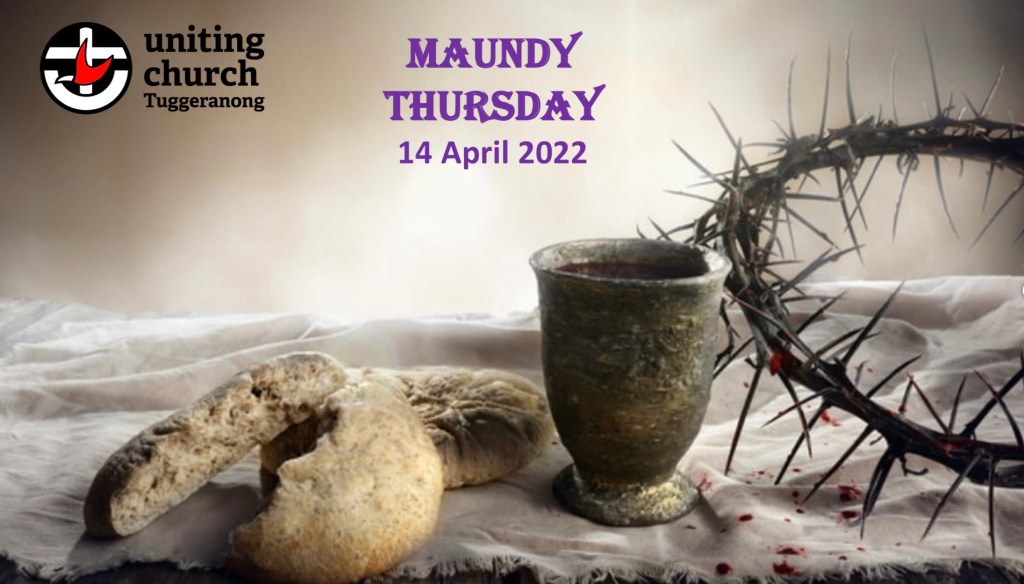
Seven candles were lit at the end of the first section, as reflective music played. Participants were invited to remove their shoes for the service, to sit and meditate or gently walk the labyrinth whilst the reflective music was playing.

After the words for each following section, a candle was extinguished, and reflective music was played, during which participants could sit and meditate, or walk a section of the labyrinth. Participants were encouraged to stay in their place on the labyrinth, or move to a nearby chair, as the words of each section were spoken.

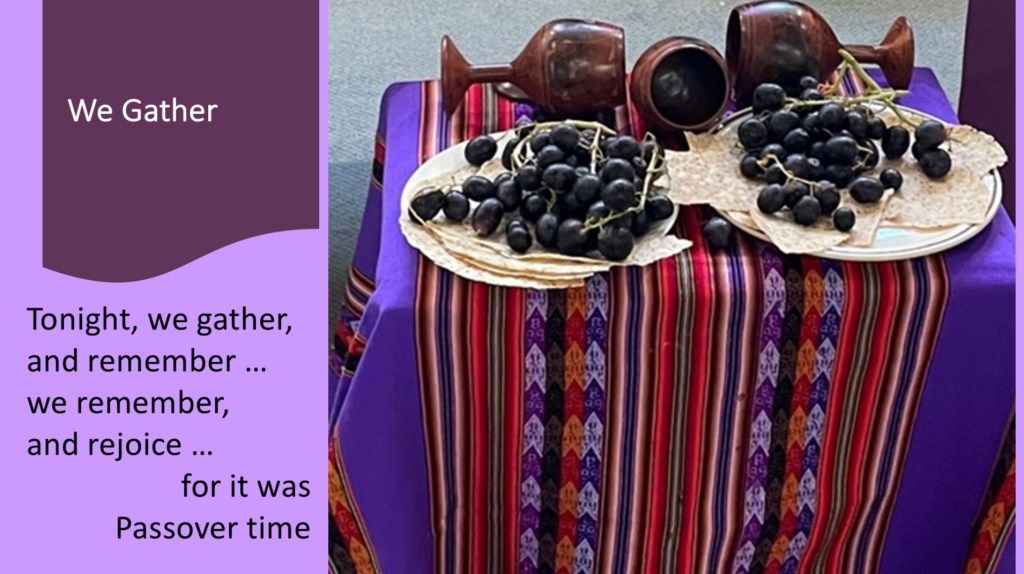
The first and last sections took place focused around a table on which some cups, grapes, and bread were set, forming the elements for communion in the last section.

***** *****

A LITURGY FOR MAUNDY THURSDAY in the YEAR OF LUKE (Year C)

1 The Room
(Please remove your shoes)

Tonight, we gather, and remember;

we remember, and rejoice …

for it was Passover time.

Now of course, it began in celebration;

a gathering of friends and family;

a joyful occasion, with the drinking of wine,

some singing, some laughing; a meal shared together;

but then, a kiss … a betrayal … a denial … a trial …

Yet it began in celebration.

For years, it was so; for decades, for centuries,

on this very night, we would gather, joined as family,

to remember, to rejoice, to recall the act of liberation.

So we praise you, Lord our God, King of the universe;
You who have chosen us and made us holy,

a nation of priests, a people set apart.


Yes, we praise you, Lord our God, King of the universe;
You who create the fruit of the vine.
Yes, we praise you, Lord our God, King of the universe;
You who bring forth bread from the earth.

We praise you in the lighting of the candles,

signs of your presence amongst us tonight;

in these sparkling, enlivening lights,

we remember that we are a light to the nations.

THE CANDLES ARE LIT

SONG: Bless the Lord, my soul (Taize)

*****

2 The Road
It was yet another Passover meal — or was it?

We began like every other Passover meal;

we began by recalling the story …

and yet, although we did not know it,

this time it would be different;

a different Passover celebration;

a different time entirely.

It probably began with what he said

as he went on ahead, going up to Jerusalem.

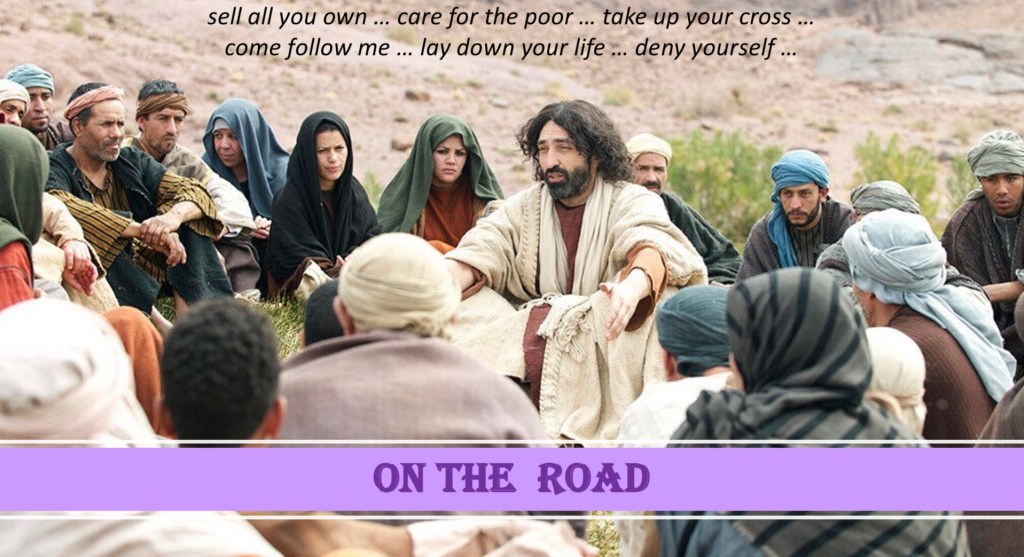
“Sell all you own, care for the poor;

Take up your cross, come follow me;

Lay down your life, deny yourself.”

Looking back, we can hear the resonances;

the hints were there; but we were deaf.

We couldn’t grasp these words;

for the journey was the moment,

the crowds that surged as he healed,

the crowds that marvelled as he taught,

the crowds that continued with him on the way,

enthralled, persuaded, believing.

You see, the journey was the moment,

destination Jerusalem, holy city,

city of the prophets, city of the kings,

the holy place where God still dwells.

Hosanna, blessings, celebration;

“Bless the king, sound hosannas;

peace in heaven, the promise is near,

glory abounds”, the crowd cries out;

the day of salvation is at hand.

“Sell all you own, care for the poor;

Take up your cross, come follow me;

Lay down your life, deny yourself.”

We cared not for those hard words now;

the swirl of the crowd, the shouts of acclamation,

the spreading of cloaks and waving of branches,

reminders of the times of triumph,

anticipation of the coming glory.

Blessed is the king;

he comes in God’s name.

He comes in God’s glory,

he comes bearing peace.

When would we see it?

A CANDLE IS EXTINGUISHED on table 2

SONG: Hosanna, hosanna, hosanna to the king of kings

*****

3 The Room
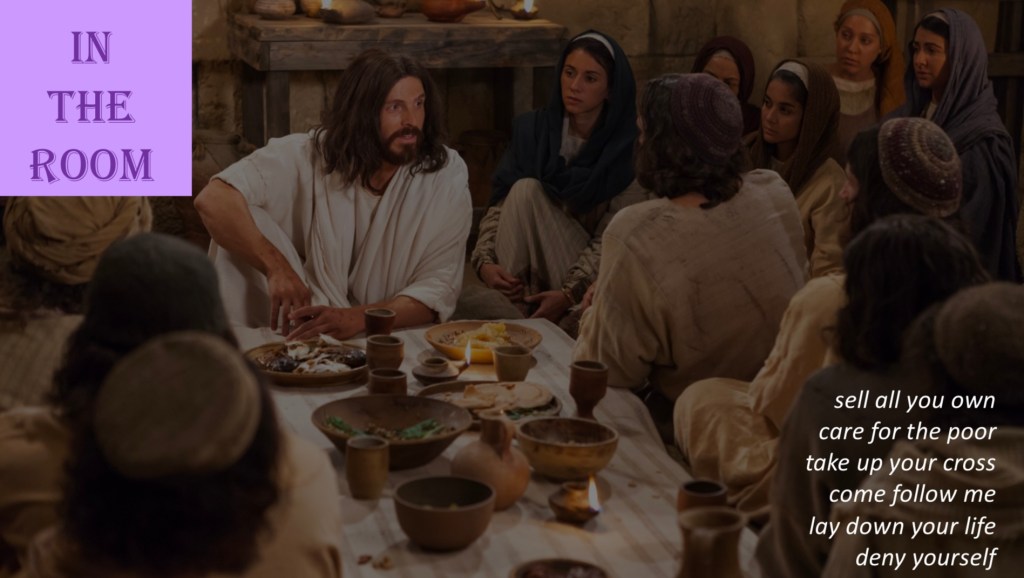
Now the festival drew near:

unleavened bread, called the Passover,

the celebration of redemption,

the time of God’s salvation.

God came, God saved us,

we hurried to respond;

no time to prepare, no time to bake the bread;

we gathered what we could, left hurriedly,

in haste, intent on being ready—

it was the Passover of God,

when God saved the people.

So we gathered, now, to remember,

retell the ancient story,

relive the present promise.

The table was set, with bread and wine,

for this festival of the Lord,

the celebration of Passover …

We met around the table; a family extended,
with brothers and sisters, children and friends;
aunts … uncles … cousins … disciples …
a cacophony of colleagues, family and followers.

As we met around the table, we joined our voices,

with a psalm of celebration; a psalm of hallelujah.

We gathered as a family,

with roasted lamb and bitter herbs,

unleavened bread, four cups of wine;

we gather now, to celebrate,

and as we do, we anticipate:

God, you saved us then;

O God, save us now.

A CANDLE IS EXTINGUISHED on table 3

SONG: Laudate Dominum

*****

4 The Room
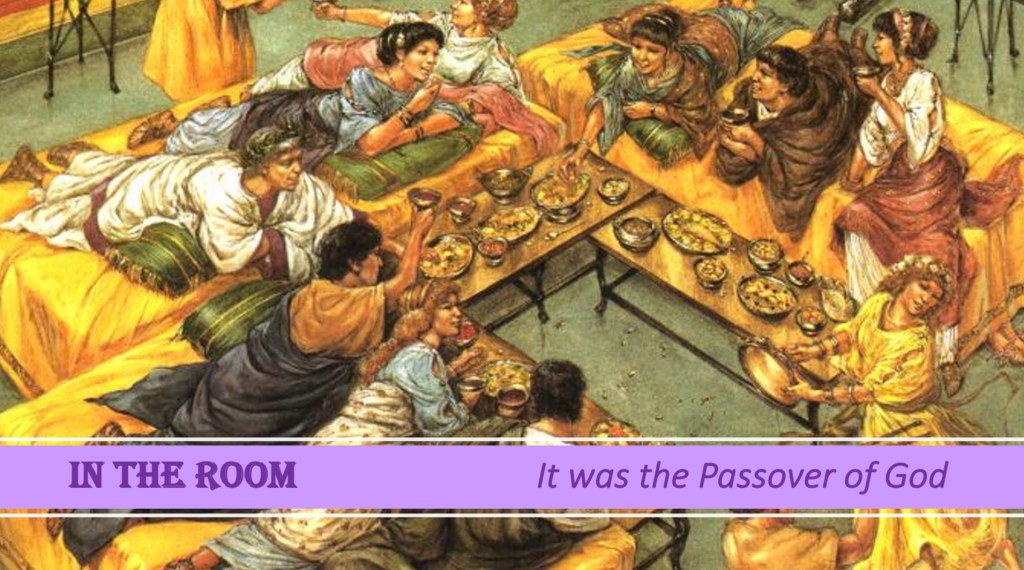
You know the Passover is coming,

when God will save the people;

“and the Son of Man will be handed over;

they will mock him, they will whip him,

they will nail him to the cross, to die.”

For the Passover is coming,

when God will save the people.

“I have eagerly desired to share this time,

to celebrate this Passover, with you, my friends.”

First, the cup which signals the kingdom to come;

“take it, drink from it, remember as you drink”;

then the bread, “this is my body”,

words that strained our incredulity.

Then yet again a cup, the covenant renewed;

familiar ground? yet curiously,

“the cup poured out, a new covenant,

sealed in my blood, shed for you”.

Then words of betrayal; woe to that one,

one we had trusted, one we had honoured.

What was going on in his mind?

We could not know:

of the gathering of leaders, we knew not,

of the plot to seize him quietly, we knew not,

of the thirty pieces of silver, we knew not.

Unthinkable, it turns out, what he was doing:

unimaginable, the consequence of this squalid deal.

But we were at a meal that was filled with celebration;

the somber notes he sounded were lost amidst the joy.

It was the Passover of God,

when God has saved the people.

It was a gathering of friends and family;

a joyful occasion, with the drinking of wine,

some singing, some laughing; a meal shared together.

A CANDLE IS EXTINGUISHED on table 4

SONG: Jesus, remember me, when you come into your kingdom (Taize)

*****

5 The Garden
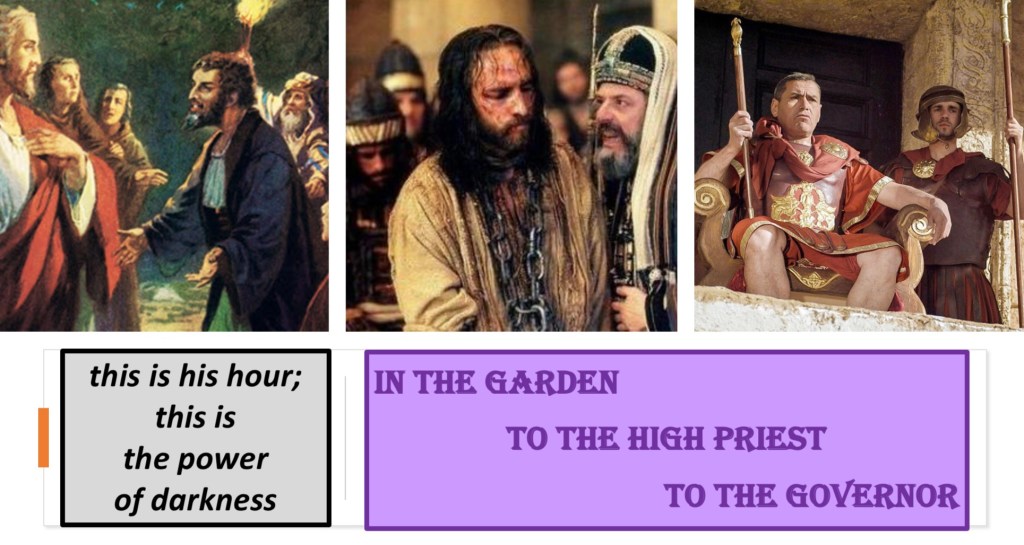
Not too long after the betrayer left him,

not too long after, they came for him.

Not just the crowd in the garden,

not just the priests from the temple,

not just the elders who had formed an unholy alliance,

scribes and priests together, on the hunt;

but they came with their thugs, the temple police,

intent on arresting him, as if he were a criminal.

“I was with you, day after day, in the temple,

and you didn’t come for me there. But now—

but here, in this dark moonlit moment,

under cover of night, you seize me?

This is your hour; this is the power of darkness.”

So began this cruel, twisted fate,

from Gethsemane to Golgotha.

With brute force they manhandled him;

to the High Priest, mocking him on the way.

The mocking continued in the assembly,

priests and scribes, elders of the people,

taunting, baiting, condemning.

And then to Pilate, accusing him of crimes

that made no sense to our listening ears.

“Sell all you own, care for the poor;

Take up your cross, come follow me;

Lay down your life, deny yourself.”

That’s what we remembered him saying.

They said, however, that he perverts the nation,

forbids the paying of taxes,

claiming to be Messiah,

claiming to be king.

So Pilate sends him to Herod;

and Herod sends him back to Pilate;

and Pilate insists there is no charge to answer.

Of course there was no charge to answer!

His words cut to the heart of what it means

to be a disciple, to be committed to the covenant,

to share generously with those in need,

to put the concerns of others before oneself,

to open the eyes of the blind

and enable the lame to walk,

to proclaim good news for the poor

and liberation for the captives …

… then again, then perhaps,

that can sound somewhat …

confrontational …

revolutionary …

no wonder that they say he came

to turn the world upside down.

But we had no notion of this

as we walked the road, while he healed and taught,

or as we entered the city, surrounded by jubilations,

or as we sat with him at table, remembering with joy.

Yet there he stood:

charged, condemned;

sentenced to be crucified,

the punishment of slaves,

the fate in store for rebels,

perhaps, even, the inevitable outcome

of a predetermined plan?

Lord, have mercy;

Lord, have mercy …

A CANDLE IS EXTINGUISHED on table 5

SONG: Stay with me (Taize)

*****

6 The Hill

So they led him away, to the top of the hill,

the place of punishment for rebels and criminals.

There were no echoes, now,

of the jubilant cries of the crowd;

there was no sound that fitted

with family celebrations at Passover;

there most certainly was no longer the basis

for acclaiming him as King,

for announcing him as Saviour,

for decreeing he was Lord.

Naked, bloodied, scourged, humiliated,

brought down to common status

as the wooden beam was lifted high;

the mocking words of the soldiers,

the scornful tongues of the leaders,

the taunting cry of the disbelieving thief;

the silent sobbing of companions on the way,

the eerie overshadowing, the turmoil of darkness.

This, to be sure,

was a cruel, twisted fate.

So he died.

What cry pierced the air?

Distraught rejection, some would say;

a cry of sheer abandonment.

Others claim it was far more serene;

“Abba, Father, into your hands

I commend my being, I place my spirit.”

“Sell all you own, care for the poor;

Take up your cross, come follow me;

Lay down your life, deny yourself.”

Who remembers those words now?

A CANDLE IS EXTINGUISHED on table 6

SONG: Be still, and know that I am God

*****

7 The Room
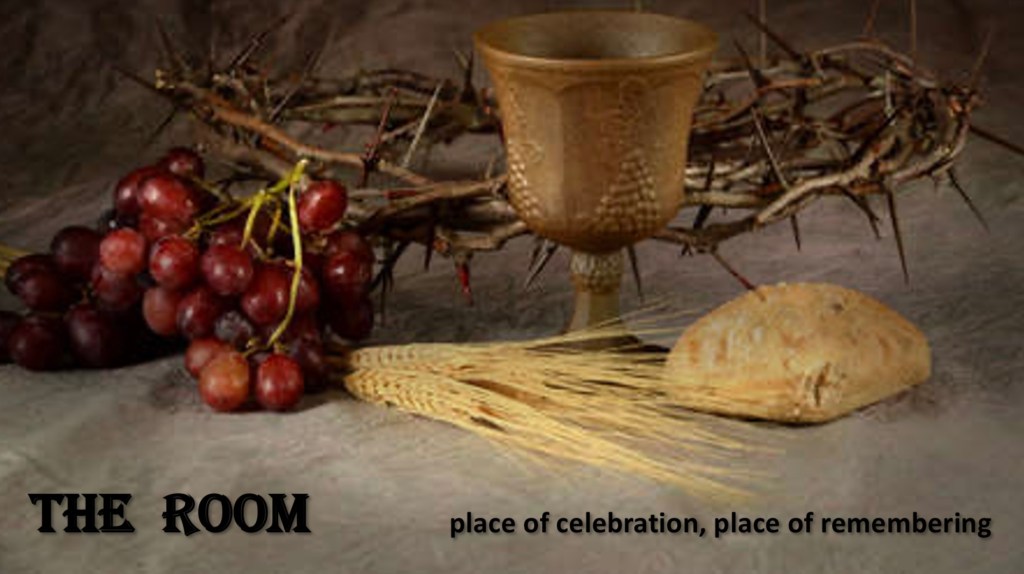
We returned to the room;

the place of celebration;

the place of remembering.

There is no doubt that we would remember;

the events of the past few days

are seared into memory,

caught in the web of recollection,

every year, every month, every day.

But how could we celebrate?

The Passover of God,

the time of salvation,

the deed of redemption,

in the days of Moses.

That surely would continue;

we would most certainly recall,

we would indeed remember,

embedding the story for our children

and their children.

Would this passing of the master

be a Passover for God?

How could this untimely ending

be the cause of celebration?

So we gather, we remember.

It began in celebration;

a gathering of friends and family;

a joyful occasion, with the drinking of wine,

some singing, some laughing; a meal shared together;

but then, a kiss … a betrayal … a denial … a trial …

“Sell all you own, care for the poor;

Take up your cross, come follow me;

Lay down your life, deny yourself.”

SONG: Eat this bread (Taize) as we exit the labyrinth

(Around the final table)

So he took the bread,

as they had always taken the bread;

and lifting it high, he offered his prayers to God.

And we take the bread, and break it:
and we praise you, Lord our God, King of the universe;
You who bring forth bread from the earth.

WE EAT THE BREAD

Then he took the cup,

as they had always taken the cup;

and lifting it high, he offered his prayers to God.

And we take the cup, and drink it,

and we praise you, Lord our God, King of the universe;
You who create the fruit of the vine,

You who bring forth hope from anguish,

You who bring forth what was promised,

You who bring forth life from death.

WE DRINK THE CUP

A CANDLE IS EXTINGUISHED

For it was the Passover of God,

when God redeemed the people,

when God saved his chosen people.

And it is the Passover of God,

when God still redeems his people,

when God still saves his faithful people.

And the shouts of acclamation

and the silent shedding of tears

join mysteriously in celebration,

join as one across the years.

In this cruel, twisted fate

is the Passover of God;

for God still redeems his people,

for God saves his faithful ones.

THE FINAL CANDLE IS EXTINGUISHED

We step out in faith

we walk forth in hope

treading the path before us

walking into life as his follow ers …

WE LEAVE TO THE MUSIC of Wait for the Lord

***** *****

Song playlist

0 As people gather, a selection of quiet meditative songs and chants

1 Bless the Lord my soul

2 Hosanna, hosanna

3 Laudate dominum

4 Jesus, remember me

5 Stay with me

6 Be still and know

7 Eat this bread

8 Wait for the Lord

Tables

1 In the Foyer, with communion elements. White

2 The Road. Green. Branches, cloaks

3, 4 The Room. Purple. Each has a cup and plate

5 The Garden. Red. Sword.

6 The Hill. Black. Cross.

7 In the Foyer. White. Broken cups and plates with elements

Sensitivity to “the Jews” as we celebrate Easter (for Holy Week)

As we draw near to the annual celebration of Easter, we find that we have a story that is driven by antagonism and conflict, with scenes of aggression and violence. We need to think carefully about how we tell the story found in the Gospels, and reflect prayerfully about how we preach the good news from these narratives.

We know the main characters in the story: Jesus and his followers, and the key authority figures of his day, lined up against him: the Jewish Sanhedrin; Pontius Pilate, the Roman Governor of Judea; and Herod Antipas, tetrarch of Galilee and Perea.

The way that the story unfolds, invites those who hear it—and those who preach on it—to make one party into “the villain”, even as others in the story receive (implicit) excusing. We side with Jesus, and that makes us view the other characters as “the baddies”.

So the danger sits before us, at Easter most especially: we might be tempted to target “the Jews”, to make negative or derogatory comments about Judaism and Jewish people, even (although I would hope not) to blame “the Jews” for the death of the Messiah. How close does this come to anti-Judaism, or even antisemitism?

We can be helped in our task by careful reflection on the nature of the texts, which we read, hear, explain, and reflect on, as we approach Easter, and especially as we move through Holy Week, from Passion Sunday to Good Friday.

Of the three key characters—the Jewish Sanhedrin, the Governor Pilate, and the tetrarch Herod Antipas—Herod has a somewhat tangential role: he appears only in Luke’s story (Luke 23:6-12) and simply rubber-stamps the decision of Pilate. Despite what Luke claims, there is no historical evidence that provides any reason why Jesus had to be presented to Herod, so the historicity of this scene is highly dubious.

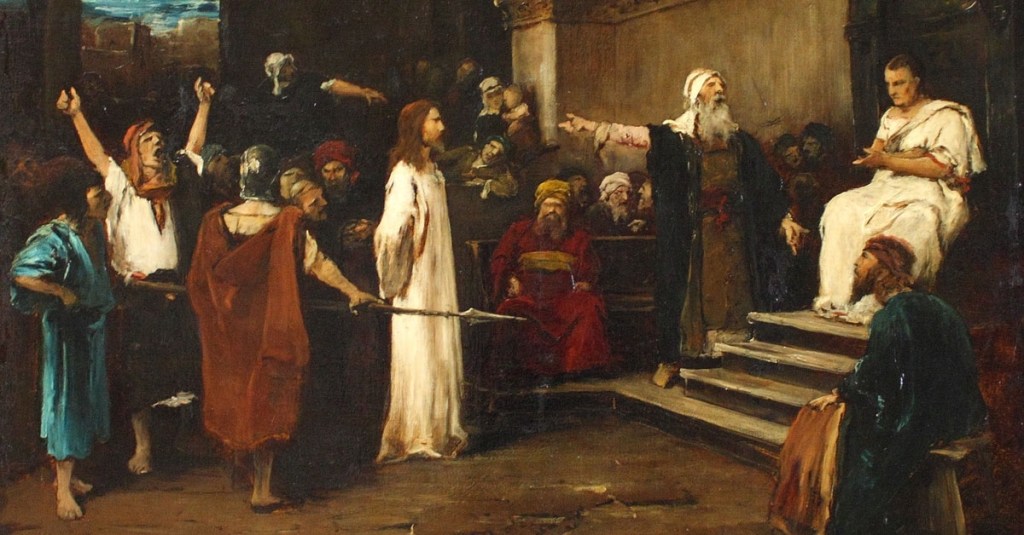
‘Christ before Pilate’, by Hungarian painter Mihály Munkácsy (1881)

The Roman Governor, Pontus Pilate, is given a very big “exemption pass” in the Gospel narratives. In the earliest account, he questions the crowd as to whether he should sentence Jesus (Mark 15:5, 14). The same question is noted in Matt 27:23. By the time of Luke’s Gospel, there is a clear threefold affirmation of the innocence of Jesus (Luke 23:4, 13-16, 22).

By the fourth Gospel, the scene where Jesus is brought to Pilate is changed from a trial to a philosophical discussion (John 18:29-31, 38). In Mark’s account, Pilate (quite uncharacteristically) backs down in the face of a baying crowd (Mark 15:6-15, and parallels). In Matthew’s account, Pilate enacts the potent symbol of washing his hands of the whole affair (Matt 27:24).

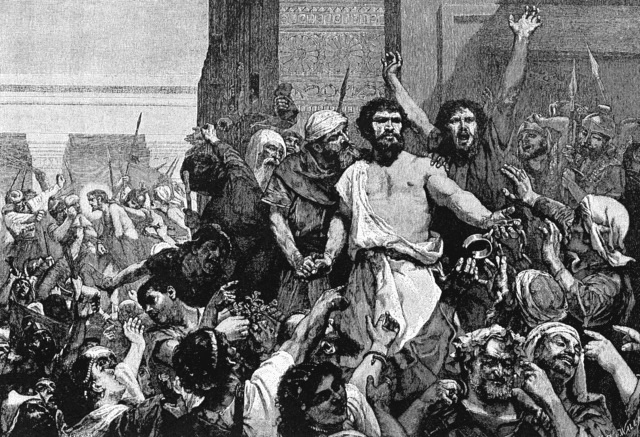
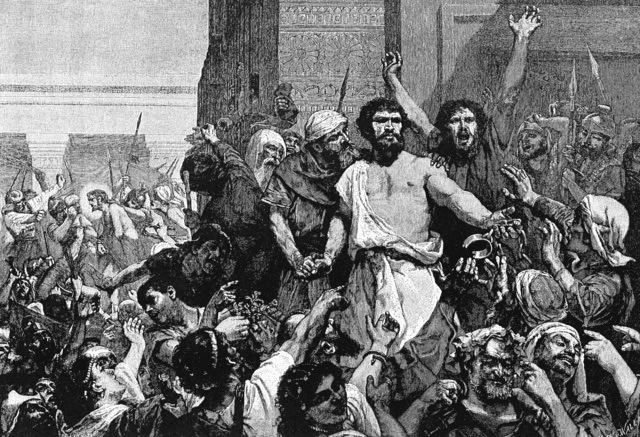
The Jewish Sanhedrin, by contrast, is placed firmly in the firing line. All four Gospels tell the story in the same way: the central factor that leads to Jesus being condemned to death is the decision of the Jewish Sanhedrin (Mark 14:63-64, and parallels), and their agitation amongst the crowd (Mark 15:11; Matt 27:20; Luke 23:13-16; John 18:38b-40).

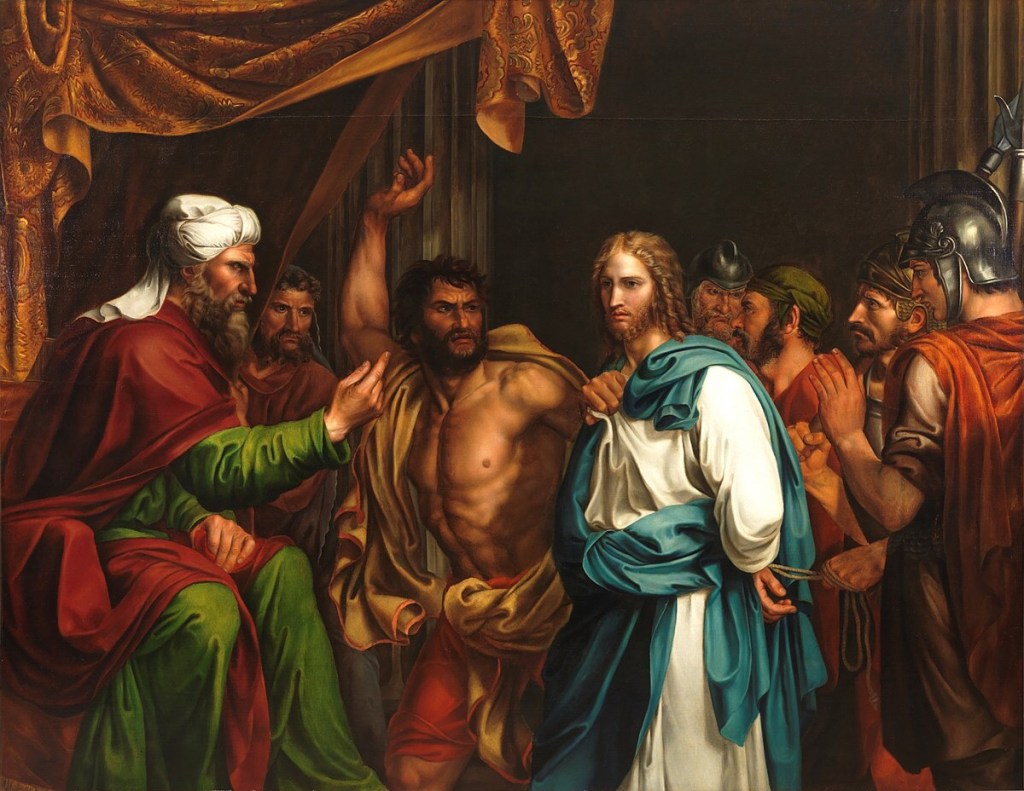
Jesus about to be struck in front of former High Priest Annas
(Madrazo, 1803)

Matthew intensifies this by reporting that “the people as a whole answered, ‘His blood be on us and on our children!’“ (Matt 27:25). John’s Gospel reports that “the Jews cried out, ‘If you release this man, you are no friend of the emperor. Everyone who claims to be a king sets himself against the emperor.’” (John 19:12), reinforced by the later statement by the chief priests, “we have no king but the emperor” (John 19:15).

This telling of the story is, in my view, a rhetorical strategy which is employed by all four evangelists. It may well have been a common stance across the early church. The central problematic for the earliest followers of Jesus must have been that their leader, Jesus of Nazareth, was crucified by the Romans, who held great power at the time.

Crucifixion was a Roman punishment, and Jesus was crucified as a political rebel, on the basis of the notion that he was claiming to be “King of the Jews”. The phrase recurs as a regular refrain throughout all four accounts of the crucifixion (Mark 15:2,9,12,18,26; Matt 27:11,28–29,37,42; Luke 23:2–3,37-38; John 18:33,37,39; 19:3,12,14,15,19–22).

To identify as a follower of Jesus would be to stand in solidarity with him as a rebel, an unwanted criminal who was rightly (in Roman eyes) punished with death. That would be a very dangerous (and foolish!) place to want to stand. So a different strategy was required.

At the same time as the early church was considering how to continue living without being seen as a rebellious movement in the Roman Empire, a slow and growing struggle for this movement was taking place—initially, in just a few places, then spreading to many other places. The struggle was with the leadership of the local synagogue.

The Pharisees, in the decades after the destruction of the Temple in 70 CE, had been gaining a dominant position amongst Jews of the time. The tensions between the followers of Jesus and the Pharisees grew and developed over time. The way the Gospels report on the interactions between Jesus and the Pharisees reflects the intensification of this relationship.

So, the Pharisees placed demands on the followers of Jesus, especially when made claims that Jesus was the Messiah. The earliest followers were all Jews, and they remained the dominant group in the movement for some decades. The followers of Jesus became increasingly discontented with their lives in the Jewish community, under the rule of the Pharisees. Accusations grew; tensions increased; conflict burst out into the open.

So, in retelling the story of how Jesus met his end, the followers of Jesus began, not only to downplay the role played by the Roman Governor (a very practical strategy, to be sure!), but also to increase the culpability of the Jewish authorities. And so grew the narrative of the last days, the arrest, trial, and sentencing of Jesus, that we are familiar with from the Gospels in the Bible.

The trap we must avoid, then, is this: do not read the Gospel narratives as straightforward, unadorned historical narratives. Do not accept “at face value” all that is recorded in those chapters. Apply careful, reasoned criticism as you approach the text. Consider the narrative of the passion, not only in its literary context, but in the context of the religious, social and political streams that were swirling in the later first century.

And invite those who reflect with you, or listen to your words, or read the stories in the text, to do the same—not to blame “the Jews” for what happened to Jesus; but rather, to consider how the story may well have been shaped, over the decades, in the face of the pressures and stresses of life for the early followers of Jesus, in the Roman Empire, with growing antagonism from (and towards) the Jewish authorities.

This is certainly quite consistent with the policy adopted by the Uniting Church National Assembly in 2009, which declares that “The Uniting Church acknowledges with repentance a history of interpretation of New Testament texts which has often failed to appreciate the context from which these texts emerged, viz. the growing separation of Christianity and Judaism with attendant bitterness and antagonism, resulting in deeply rooted anti-Jewish misunderstandings” (para. 9).

The Statement on Jews and Judaism also affirms that “The Uniting Church does not accept Christian teaching that is derogatory towards Jews and Judaism” (para. 16). We need to hold to this in what we preach at Easter.

See https://assembly.uca.org.au/resources/key-papers-reports/item/download/1022_7d707d6a8cd8a2fe2188af65d6f0454

See also https://johntsquires.com/2021/03/25/the-passover-seder-a-jewish-religious-festival-which-christians-should-not-appropriate-at-easter/

Amy Jill Levine has produced a helpful guide to the ways we might deal,with these texts, noting what is helpful and what is not helpful in the various approaches; see https://www.abc.net.au/religion/holy-week-and-the-hatred-of-the-jews/

For other blogs which canvass aspects of what is explored above, see

https://johntsquires.com/2019/04/18/easter-in-christian-tradition-and-its-relation-to-jewish-tradition/

https://johntsquires.com/2021/03/03/raise-up-a-new-temple-jesus-and-the-jews-in-the-fourth-gospel-john-2-lent-3/

https://johntsquires.com/2020/08/04/a-deeper-understanding-of-god-through-dialogue-with-the-other-romans-10/

A community of prayer; a community of care; a community to share

“Oh, no—not another ZOOM meeting!” How often have you heard this lament? I confess, it has been uttered with some frequency in my household, over the last two years—with increasing frequency in the past 6–8 months!

Committee meetings. Worship services. Catch-ups over coffee. Bible study groups. Seminars. Why, even full conferences have been held online, by means of ZOOM. ZOOM meetings of Presbytery. ZOOM meetings of Church Council. Even the state-wide 2021 Synod was held online (although on a different platform from ZOOM).

Early on in the pandemic, the Synod organised for all Congregations to have a ZOOM account at a reduced rate, especially for church organisations. It meant that we were able to maintain connections with friends, family, people in our Congregation, people across the Presbytery, despite all the restrictions and lockdowns. There have been lots of online gatherings. People have been grateful for the continuation of connection that online gatherings have provided. And yet, people are getting weary of it. “Not another ZOOM meeting!”

However, there has been one opportunity for meeting online that has a different feel about it. It has only recently started. It has just begun to gain momentum in the past few weeks. At the beginning of Lent, opportunity was provided for people to gather, briefly, online, at the start of each day, and towards the end of the afternoon, for Daily Prayers. The offer was for something that lasted 8–10 minutes, a regular pattern of prayer, each weekday. It was an initiative of Elizabeth Raine, minister of the Tuggeranong Congregation, and was advertised across the Presbytery as well as on the TUC Facebook page.

Over five weeks, now, the online community has been meeting. There are about 20 people who participate—although, in true church style, “you never see them all together at the one time”, just like most Sunday morning worshipping communities! Over the weeks, the community of prayer has formed; the pattern and routine are becoming familiar. Each time, there are 8, 10, sometimes 12 or 13 people online. It changes each time.

The centering of heart and spirit for the day is now an expected part of each weekday morning. The slowing and gathering together at the end of the day is also a regular routine. And the invitation to reflect back on the past seven days, on Friday at 6pm, brings a sense of completion to the week. Each day the resources of the Northumbria Community (a dispersed monastic community) are used, providing reflective prayers, short scripture passages, and an opportunity to reflect in silence and then with gentle music.

But more than this has been taking place. The community of prayer has become a community of care. Some folks log in a few minutes early, chat with each other, share their news, and exchange plans for the day. More recently, one person reported that their partner was moving into palliative care. Those present, hearing this news, have ensured that this person and their partner are remembered in prayer; one participant has ensured that practical help and support is provided. Those gathering make gentle enquiries before prayers begin. The community of prayer has become a community of care.

And even more: the community of prayer, now a community of care, has become a community to share with still more people. Those participating are largely members of the Tuggeranong Congregation. A few people from elsewhere participate in the weekly online Bible Study of the Tuggeranong Congregation; some folks from elsewhere in Canberra, someone 300kms north, another person 250kms west, are joining in regularly for prayer.

Facebook advertising has drawn the group to the attention of a person in a large rural town; they are now “part of the group”, participating regularly. A welcome voice, an assurance of gratitude that they have joined, a clear expression that “we are glad you are here; you belong!” is all that it takes. The community is there, to share with others.

This is how the Church is meant to function! An open community, focussed around our spiritual needs; an invitational community, welcoming people in and actively ensuring that they are made to feel comfortable, valued, a part of the group. And offering food for the soul, a prayer gathering, can be a doorway into community as much as offering food for the body, a soup kitchen, or food for the mind, a Bible study group, or food for our relationships, a community worship service. For this Lenten experience, I am most grateful.

To join the Daily Prayer, go to the TUC website ( https://tuc.org.au ) and click on the Church Services icon.

To sample the worship resources of the Northumbria Community, go to https://www.northumbriacommunity.org/offices/morning-prayer/

Boaz and Phoebe, on Mary and Jesus (John 12; Lent 5C)

A dialogue between two slaves at the house of Lazarus, Martha and Mary, written by Elizabeth Raine, presented at Tuggeranong Uniting Church on Sunday 3 April.

Boaz is a strict Jew and has a firm idea of custom and law. Phoebe is of Jewish Hellenistic origin, more liberal in her views and very interested in the message of Jesus. They have been serving dinner to the guests, including Jesus, after Lazarus’ was mysteriously raised from the dead.

*****

Boaz: It still find it creepy, I confess, being at the home of a dead man who somehow isn’t dead any more. Oh, I can understand the gratitude that Martha and Mary must have felt, and why they wanted to thank Jesus for restoring their brother to them. But you have to admit, the whole thing was strange. And that Jesus fellow, he is rather strange as well, don’t you think?

Phoebe: I thought it very kind of Martha and Mary to honour Jesus. I don’t find it strange at all. Everyone knows he is a holy man withwonderful powers from God. Lazarus’ raising was a miracle, a blessing from God. How can you think holiness in someone is a problem?

Lots of reasons. Holy men have a habit of coming to sticky ends. And I thought Mary’s gratitude was a little excessive. Fancy wasting all that expensive perfume. Where did she get the money from?

Well, I thought Mary’s anointing Jesus with that perfume was a beautiful demonstration of gratitude, and devotion. And surely you are not suggesting that she came by the perfume dishonestly.

No, of course not. But with a household to run, it seems an unnecessary expense to incur. And you must have heard the argument between Jesus and one of his disciples about it. You know, the one who keeps their accounts. Judas, I believe his name is. Judas wasn’t impressed by Mary’s action.

Well, I don’t think it is any business of Judas, or ours, or anyone else’s if Mary wished to thank Jesus in this way. How she spends her money is surely her concern and her business only.

I suppose so. But Judas had a good point. A whole jar of that perfume would be worth a year’s wages. Imagine how much good all that money could do for the poor. After all, we were commanded as Jews to give relief to the poor. Deuteronomy specifically states that we should ‘Open your hand to the poor and needy neighbour in your land’”. And look at the teachings of Jesus himself. He is always on about helping the poor. I heard he even advised one wealthy young man to sell everything he had and give it to the poor. Yet here he is accepting perfume worth a king’s ransom be wasted on his feet!

I can see what you are saying. But Jesus and the disciples have given lots of money to the poor over the last few years. You know they have. And inspired others to do the same. And Mary has a right to spend her money as she wishes. She clearly offered this gift out of her gratitude and great love for Jesus. After all, what price her brother’s life?

Well, I am not sure Jesus should have allowed a whole year’s wages to simply evaporate into thin air. Yes, it was a nice gesture and it did make the house very fragrant and pleasant. But what business has Jesus got to ask other people to be giving away or selling their things in aid of the poor when he allows such waste on himself? I still think Judas had a good point. All those denarii could feed a lot of hungry people. How can you be sure that Mary was doing the right thing? 

I say if you are going to be generous, then do it properly. And this is also an important part of all our traditions, to be generous in hospitality to our guests and to take care to show our appreciation for the favours of others. After all, the proverb says, “Some give freely, yet grow all the richer; others withhold what is due, and only suffer want.” Mary has given freely and didn’t withhold the appropriate thanks due to Jesus.

You sound just like that Rabbi Hillel with your liberal notions. I am sure this was not the intent of that proverb. But it wasn’t just the expense. It was what Jesus said in response to Judas, you know, about the poor always being around. You must admit that it was a very odd response for someone who says they are all for the poor and alleviating their suffering. He said that the poor would always be with us, but that he would not. This is not the attitude of a holy man. A holy man would think first of the poor.

I just told you that no one can accuse Jesus of ignoring the poor. Look at his recent actions. Apparently he managed to feed a whole crowd recently with only five loaves and two fish. In addition, I have heard some of the other followers of Jesus speak poorly of Judas. They say that Judas was not really concerned about the poor at all but was a thief who used to steal money from their common purse. Surely we cannot take his remarks seriously. Mary was motivated by love and gratitude,and Judas by selfishly wanting the money for himself. Mary, however, has surely given away a most precious possession with total selflessness.

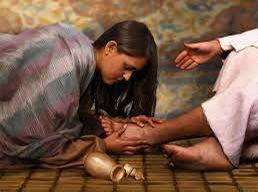
Oh, you make it all sound very noble indeed. But just think about the way she went about it. Anointing his feet instead of his head. This isn’t customary. And letting her hair down in public like that, just like she was a prostitute. Whatpossessed her to do such a thing? She acted like she was repenting of something, not thanking the saviour of her brother. Or worse, making an offer of herself.

Oh, surely not. But I agree, it wasn’t the best image she presented of herself. I was a little shocked myself to see her kneeling at the feet of a man who wasn’t related to her, hair all over the place, wiping herself on his feet. I know they are good friends and all, but still – yes, there certainly was a breach of proprietary there. I just assumed she had forgotten herself in her great outburst of gratitude.

Well, though there is some truth in what you say, I wouldn’t want to make such an exhibition of myself. Wouldn’t a simple and heartfelt thank you in addition to the dinner be enough?

But you are forgetting just how great a miracle had been performed here – no wonder she knelt in worship at his feet. Jesus speaks about being humble and serving others. I am sure he wouldn’t be above anointing or washing feet himself. And only prophets anoint the heads of the great.

Hang on a minute. You are making it sound like Mary was recognising Jesus as the Messiah! Surely you are not suggesting this. Such ideas could be seen as blasphemous in certain circles. There have been whispers about this very thing.

Yes, I have heard the rumours as well. Apparently the chief priests are not happy at all with all the attention that Jesus has drawn to himselfsince the raising of Lazarus from the dead. I heard that they were trying to say that Lazarus wasn’t really dead; it was a stunt to suggest to the common folk that Jesus was the Messiah. You know, to drum up support from the peasants and get a movement going.

Yes, after Lazarus came alive, I did hear that the chief priests had called an emergency meeting of the Sanhedrin. They wanted to discuss what had happened, I suppose. After all, everyone is talking about the many signs that Jesus has performed. I guess they would be thinking that if they let him keep going on like this, that soon everyone will be believing he is the promised kingand messiah. And any mention of ‘king’ and the Romans would be sure tocome and destroy both the temple and us. 

I did hear that Caiaphas, the high priest, had made some sort of plan. Someone did whisper to me that he got fed up with all the debate, and told the Sanhedrin they were all fools. I heard that they decided it was better to sacrifice Jesus. You know, better to just have one man killed to appease the Romans rather than the whole nation be destroyed.

Hmmmmm, do you think Jesus has heard about this? Might explain the very strange remark he made at the time Mary was wiping his feet. He said to Judas that the perfume was for his burial. I thought to myself at the time, ‘Who is he to be planning such an expensive burial ritual? And he is only young. Why would Mary be getting ready for his burial now?’ But if he had heard the rumours too, then that remark suddenly makes sense.

Do you really think that the priests have made up their mind to actually have Jesus put to death?

I think it possible, and what’s more, I heard that they had let it slip that anyone who might know where Jesus was should let them know, so that they could arrest him. Even heard there was a reward. If you are right about Judas being a money grubbing thief, then maybe he will try and claim it.

Oh, surely not. He and Jesus are so close. Don’t even think that. But Jesus needs to be careful. I thought I heard him say at the dinner that he was going to Jerusalem soon, and Jerusalem is a hotbed of unrest with Passover coming up. There was also some talk that the priests were planning to kill Lazarus as well, because everyone keeps coming to have a look at him. It isn’t every day that you can look at someone who has come back from the dead.


Well, Jesus wants to hope that the priests don’t hear of this latest extravagance and interpret Mary’s gesture and Jesus’ acceptance of it as some sort of symbolic anointing of Jesus as a royal Messiah. Otherwise he will be looking for a tomb, not a throne.

*****

See also https://johntsquires.com/2022/04/01/jesus-anointed-as-a-sign-of-his-fate-john-12-lent-5c/

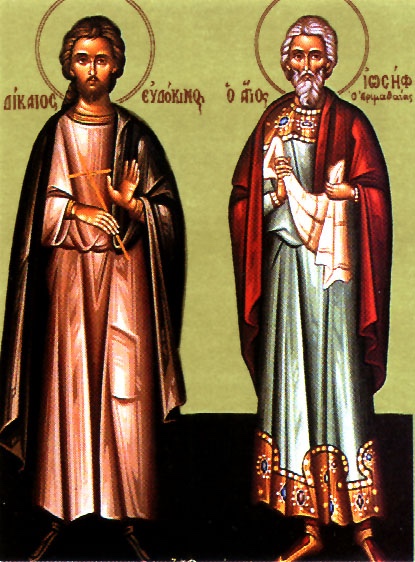
Joseph of Arimathea: rich and righteous, devout and a disciple of Jesus.

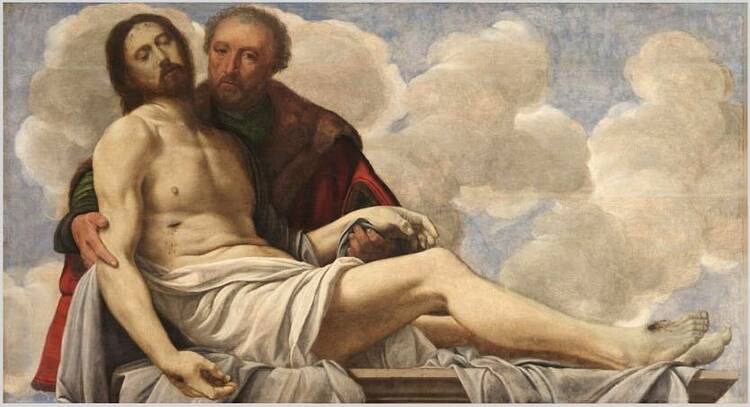
In the Uniting Church’s resource provided for worship leaders, Uniting in Worship, there is a Calendar of Commemorations, based on the cycle of annual feast days for saints in the Anglican, Catholic, and Orthodox churches—but broadened out to be much wider than this. Many days of the year are designated to remember specific people. Today (19 March) is the day to remember Joseph of Arimathea—a figure best known for the scene, reported by all four Gospels, when he takes the body of Jesus from the cross and places it in a tomb.

Joseph was a common biblical name—son of Isaac, father of Jesus, amongst others. This Joseph is distinguished by his home town, Arimathea. All we know is that it was a town in Judea (Luke 23:51). It is thought it may be Ramathaim Sophim, the birthplace of Samuel (1 Sam 1:1, 19), which appears in the LXX as Greek Armathaim Sipha.

In the earliest Gospel, this Joseph is described as being both “a respected member of the council” and as one who was “waiting expectantly for the kingdom of God” (Mark 15:43). The kingdom of God is what Jesus was preaching, according to Mark (1:15; 4:11) and that is what the crowd lining the streets into Jerusalem understood him to be bringing (11:10). Mark’s report indicates that Joseph, who shares this expectation with Jesus, “bought a linen cloth, and taking down the body, wrapped it in the linen cloth, and laid it in a tomb that had been hewn out of the rock; he then rolled a stone against the door of the tomb” (Mark 15:46).

Matthew reworks this description; he is “a rich man” (rather than a member of the council) who was “a disciple of Jesus” (Matt 27:57). By contrast, Luke introduces Joseph as “a good and righteous man” (Luke 23:50), echoing the much earlier descriptions of Elizabeth and Zechariah (1:6) and Simeon (2:25).

Luke explains that Joseph, “though a member of the council, had not agreed to their plan and action” (Luke 23:50–51). Differentiating Joseph from the others in the council seems important for Luke; after all, in Luke’s account, the council had brought Jesus to Pilate, saying that “we found this man perverting our nation, forbidding us to pay taxes to the emperor, and saying that he himself is the Messiah, a king” (23:2).

When Pilate demurs, council members press the point: “he stirs up the people by teaching throughout all Judea, from Galilee where he began even to this place” (23:5). After sending Jesus to Herod (a curiously unhistorical action, given the actual governance arrangements at the time), Pilate states his belief, for a second time, that Jesus is innocent (23:4, 14), before the “the chief priests, the leaders, and the people” together agitate for the release of Barabbas (23:13, 18). Luke’s more detailed description of Joseph places him at odds with this whole sequence of events; “though a member of the council, had not agreed to their plan and action” (23:50–51).
Luke further indicates that Joseph “was waiting expectantly for the kingdom of God” (23:51), picking up on Mark’s description. In the context of Luke’s two volumes, however, this description aligns Joseph very closely with the enterprise that Jesus was engaged in; “I must proclaim the good news of the kingdom of God to the other cities also; for I was sent for this purpose”, Jesus declares (4:43); “he went on through cities and villages, proclaiming and bringing the good news of the kingdom of God” (8:1).

Jesus sends out both the twelve, and then the seventy, to proclaim the kingdom of God (9:1–2; 10:1, 9–11); he instructs his followers to pray, “your kingdom come” (11:2) and to “strive for [God’s] kingdom” (12:31); he tells. parables of the kingdom (8:10; 13:18, 20); and teaches that “the kingdom of God is among you” (17:20–21).
As Jesus draws near to Jerusalem, those travelling with him “supposed that the kingdom of God was to appear immediately” (19:11); indeed, as he enters the city, people acclaim him as “the king who comes in the name of the Lord” (19:38). At the last meal he shares with his disciples, Jesus looks to the fulfilment of the kingdom (22:14–18, 28–30), and one crucified alongside Jesus shares this hope, saying to him, “Jesus, remember me when you come into your kingdom” (23:42).

Jesus continues this after his death and resurrection, “appearing to them during forty days and speaking about the kingdom of God” (Acts 1:3); subsequently, key followers of Jesus proclaim the kingdom in key locations— Phillip in Samaria (8:12), Paul and Barnabas in Antioch (14:22), and Paul in Ephesus, (19:8). This was Paul’s common activity everywhere (20:25); the final picture of Paul is that he lived under house arrest in a Rome, “proclaiming the kingdom of God and teaching about the Lord Jesus Christ with all boldness and without hindrance” (28:31).

So Joseph, “waiting expectantly for the kingdom of God” (Luke 23:51), is firmly aligned with Jesus and with his followers in Luke’s Gospel. He is clearly, as Matthew reports, “a disciple of Jesus” (Matt 27:57).

In the fourth Gospel, Joseph performs the same task, requesting the body of Jesus from Pilate, and securing a safe place as the resting place for the body. He does this in conjunction with Nicodemus, “who had at first come to Jesus by night” (John 19:39). We first meet Nicodemus earlier in John’s narrative (3:1–21); at this time, he engages in what might be characterised as an appreciative enquiry with Jesus, under the cover of night (3:2), presumably so that he didn’t “out” his interest in what Jesus was teaching. It’s perhaps worth noting that Jesus spoke about “the kingdom of God” in his conversation with Nicodemus (3:3, 5)—the very same phrase that is key to the preaching of Jesus in Mark and Luke.

Some chapters later in John’s narrative, as Jesus experiences intensified opposition whilst in Jerusalem for the Festival of Booths (7:1–13), and the Pharisees and temple authorities join forces to send the temple police to arrest him (7:32), Nicodemus appears once more. The temple police return the temple, saying that they will not arrest him (7:45–46).

Nicodemus steps in; he is introduced as the one who “had gone to Jesus before, and who was one of them”—that is to say, one of the disciples (7:50). He speaks boldly: “our law does not judge people without first giving them a hearing to find out what they are doing, does it?” (7:51). The dismissive reply of the Pharisees further aligns him with Jesus; “surely you are not also from Galilee, are you?” is their rejoinder (7:52). His allegiance is clear, at least in the minds of the Pharisees, if not also the narrator of the Gospel.

Nicodemus returns a third time, after the death of Jesus, when the body of Jesus is requested by Joseph of Arimathaea, who is here,clearly identified as being “a disciple of Jesus, but secretly, for fear of the Jews” (19:38).

Joseph of Arimathea is here described as being “a disciple of Jesus, but secretly, for fear of the Judean authorities” (19:38). The fear of the Judean authorities has been a recurrent motif in John’s narrative (5:1; 7:13; 9:22; here, and 20:19). (The term I translate as “Judean authorities” is most commonly rendered as “Jews”, but this translation is too wide and does not accurately reflect the way the term is used in John’s Gospel.)

Once again, Joseph is identified as a disciple of Jesus (John 19:38; so also Matt 27:57, and, as we have argued above, that is the implication in both Mark 15 and Luke 23). Both Joseph and Nicodemus, we might presume, were numbered among the “many, even of the authorities, [who] believed in him”, but who, “because of the Pharisees, did not confess it, for fear that they would be put out of the synagogue” (12:42).

The manner in which the body of Jesus is removed from the cross into the grave, anointed with an extravagantly large amount of spices, myrrh and aloes and wrapped in linen cloths “according to the burial custom of the Jews”, and placed in a previously unused tomb (19:38–40), reflects the tender, respectful approach of these two of Jesus’s disciples.

The body of a crucified person would normally be thrown into a communal grave outside the city; all four Gospels take pains to report that this as not the fate of Jesus. The historicity of this claim must surely, however, be significantly doubted. The point of the narrative is not historical verification. The intention is to continue to attest to the significance of Jesus, acknowledged as king, given exactly the kind of extravagant funerary rites that were befitting for a king.

And that is the gift that Joseph of Arimathea offers to followers of a Jesus, even to this day: a compassionate, respectful treatment of the body of Jesus. It’s good to remember him for this, today.

Mission, Evangelism, Bearing Witness, and Dialogue: some theological reflections

What are we doing when we engage in ”mission planning”? What do we mean when we talk about “mission”?

The Canberra Region Presbytery of the Uniting Church is exploring such questions this year. Our previous Strategic Plan, with its Five Key Pillars, came to a conclusion last year. This year, in conjunction with the Mission Enablement Team from Synod, the Presbytery is developing a new mission plan, to serve as the guiding document for the Presbytery for the next few years. We are taking time in each meeting of Presbytery to focus on this process, drawing on wisdom from right across the Presbytery (country, coast, and capital).

This is my contribution to the initial conversation that is taking place.

*****

In approaching these questions, it may be helpful to explore a series of related ideas, and distinguish them from one another. Often, when people refer to mission, they mean one of these related ideas : evangelism, testifying (or bearing witness), converting (or proselytising), or perhaps engaging in dialogue. Mission is related to each of these words, but mission is not simply one or more of these words alone.

Mission is what God is doing in the world. It began long ago with the people of Israel, when God sent (missionised) messengers, prophets to speak guidance to the people. In Christian understanding, this mission came to a head when God sent (missionised) Jesus into the world. (The word mission comes from the Latin word missio, which simply means “to send”). We are called to join with this missional initiative, to find where God is already at work in the world.

Evangelism is work that is related to the good news (the evangel, originally a Greek word) … work that is carried out through words, through actions, through being a presence. We are called to undertake this work in the ways that are most appropriate and most fruitful in each particular circumstance. The aim is to make that good news known as a reality for other people. That can be by words, by actions, in personal relationships, in working groups, in communal undertakings.

Testifying or Bearing Witness is offering our words to explain how we have experienced God, how we have been swept up in the mission that God is undertaking in the world, how we have experienced the good news (evangel) in our lives. We are called to communicate our personal experience of this good news carefully, in contextually relevant ways, and in respectful relationship with others. The story is ours to tell!

Conversion is an effort made to change someone’s mind, to turn someone FROM something and TOWARDS something else, to turn them so that they join WITH you in your understanding of things. It necessarily involves persuasion, a focus on convincing, an intention to arrive at a clearly-defined goal. It can all-too-easily teeter over the edge of respectful relationships into unhealthy pressurising behaviour. It needs to be undertaken (if it is seen as important) in a very careful, measured way.

Proselytism is a term that has gained a hard edge over time. It appears in scripture, when new converts to the Jesus movement are called proselytes in Acts. It literally means “coming towards”. But in modern usage it has a harsh edge, often indicating the following of a prescribed formula, involving the use of pressure tactics, sometimes with verbal force that goes beyond mere conversation. It’s not something that I personally see as important—or even valid—in undertaking mission.

Dialogue is another word that needs to be considered when we think about mission. Dialogue means to “speak across”; to speak another person and appreciate them in their own right, valuing who they are and what they have to offer, engaging them in conversation that seeks mutual growth and deepened understanding of each other. Inevitably, in my experience, such conversations, when they facilitate genuine mutual encounters, can lead to new understandings, renewed commitments, and revitalised faith. And that is at the heart of mission!

So there is a cluster of activities that need to be considered when considering mission:

evangelism and witnessing to your faith (telling and showing the good news from your personal perspective)

developing respectful relationships with other people (building respectful relationships that enable deep sharing)

community engagement with local groups (working in practical ways on a common cause, and in so doing, deepening relationships)

the ministry of presence in the community (simply “being there”, indicating that you are open to engagement and conversation with others)

developing faithful disciples (working intentionally to deepen understanding, enliven passion, broaden commitment, strengthen capacity)

growing your church (working with others to develop the worship, witness, service, and fellowship of the local community of faith)

advocating for the least (taking a stand on issues of justice, seeking the common good for all)

Each of these aspects has a place when we think about “doing mission”. For when we focus on mission, we start with a very simple premise: God is present and active in the world. From that premise, we can begin to see that people around us are engaged in activities that God has inspired. There are stories from people all around us, about how God is at work—in our congregations, in our families, in our communities, in any part of the world.

We join in the mission that God is already carrying out when the spirit leads us to find these people and join with them in partnership. The gospel then becomes declaring what God is already doing in our midst, in our time; interpreting the actions that we undertake together as expressions of God’s loving care for the world.

In the midst of all of this, we will know that the church is formed in its fullness through this process of partnering with others. The community is the place where being disciples and being church is lived out. The mission that God is already undertaking in the world through these assorted people is the enterprise in which we participate, enthusiastically, hopefully, energetically.

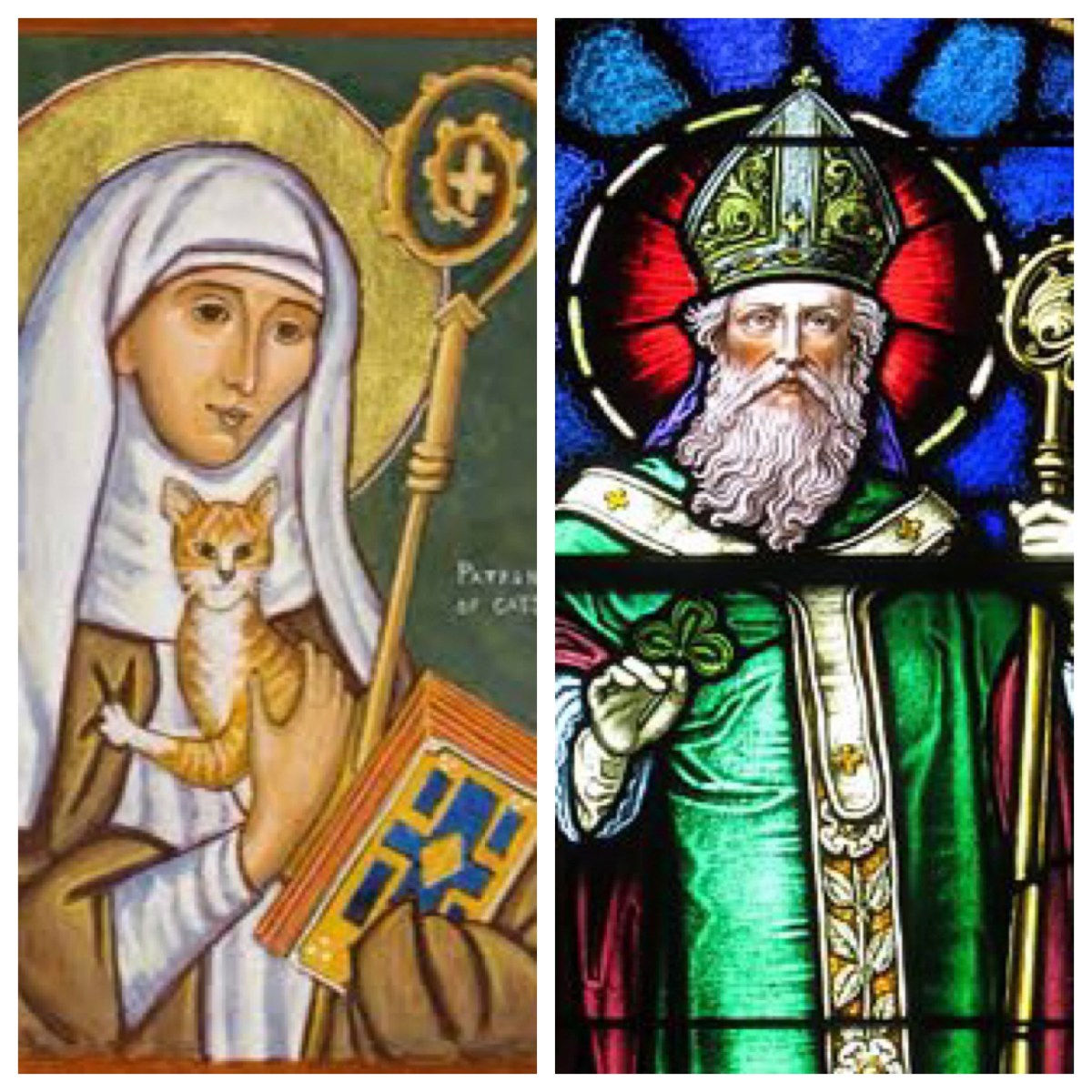
Patrick (and snakes) … and Gertrude (and cats) on 17 March

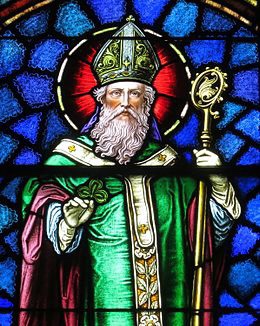
We have all heard of Patrick, a fifth century missionary and patron saint of Ireland, who is touted as being the cause for the lack of snakes on the island of Ireland. The legend is that the snakes that were on the island had all been banished by Patrick, chasing them into the sea after they attacked him during a 40-day fast he was undertaking on top of a hill. 😫 Shades of Jesus, the Gerasene demoniac, and the poor pigs, who took the legion of demons into the sea (Mark 5).

But what about Gertrude? She shares the same day—17 March—with Patrick; it is the feast day for both of them in the calendar of the Roman Catholic Church, for 17 March was the day that both Gertrude, as well as Patrick, was said to have died.

So, while all of Ireland and all of the Irish diaspora vigorously celebrates Patrick today (wearing green clothes, drinking lots of Guinness, with hair dyed green, walking in street parades and telling predictable jokes with incomprehensible accents), spare a thought for Gertrude of Nivelles, who shares her patronal festival with Patrick the Confessor.

Gertrude lived in the seventh century in the nation we now call Belgium. Her father was a powerful Frankish nobleman in the court of the king, Dagobert I. It is said that, at the age of ten, Gertrude refused a marriage proposal from the son of a duke, “saying that she would have neither him nor any earthly spouse but Christ the Lord.”

When her father died a few years later, her mother Itta shaved her head into a monkish tonsure to deter would-be suitors from marrying into her wealthy family by force. Itta and Gertrude established a monastery at Nivelles and retired to a religious life. So here’s the first reason to admire Gertrude (and her other Itta): a monastery for females was one of the few options for females in antiquity to preserve their intellectual, economic and sexual autonomy.

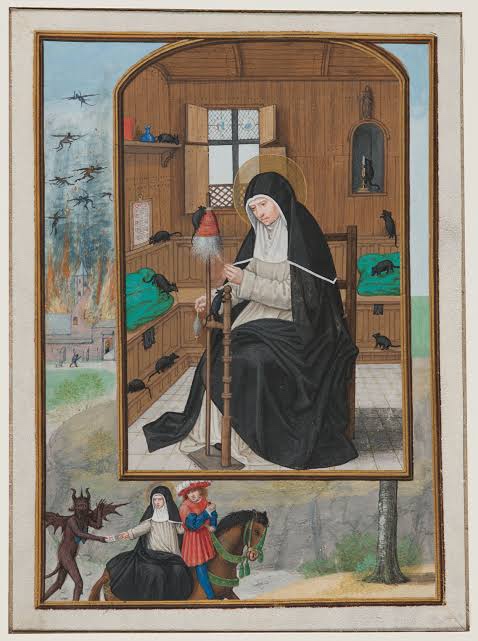
It is said that Gertrude kept cats in the monastery to keep rats and mice under control — a wise and sensible move, so a second reason to like Gertrude.

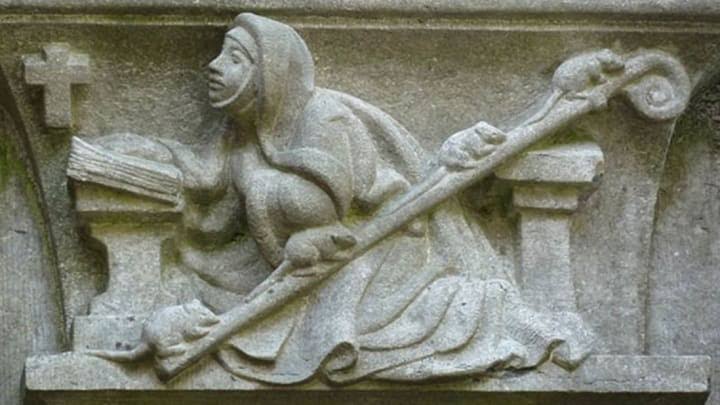
There are some illuminated manuscripts, church fresco paintings and stained glass windows which depict Gertrude in a garden setting, surrounded by cats, rats and mice (often with a mouse running up her staff). However, there is no ancient written claim that is explicit about Gertrude and cats; it seems that this connection is a late 20th century invention! Nevertheless, we can roll with the newish evolution of the tradition, and honour Gertrude for her care of cats, can’t we?

Gertrude, and her feline friends, are important in my household. We have three cats, all ragdolls, all quite handsome, aged 14, 11, and 8; they are all well-fed and cared for, able to roam into any room of the house (but not outdoors, unless in the special enclosure). They are living the good life every day with their two full-time live-in servants; and every so often, they go on vacation to Curtin Cat Care to be spoiled 😁.

Gertrude’s mother Itta died in 650, so the 24-year-old Gertrude took on sole governance of the monastery, and was known for her hospitality to pilgrims. She died in 659 – worn out in her early thirties, says the Cambridge Medieval History, “because of too much abstinence and keeping of vigils”.

Mel Campbell reports that the story is told, that a visiting Irish monk, whose brother Gertrude had sheltered, predicted she would die on St Patrick’s Day, and that “blessed Bishop Patrick with the chosen angels of God … are prepared to receive her”. Begorrah, it was so!

Mel Campbell also writes, “On a day that has become unfortunately associated with public displays of boorish masculinity, wouldn’t it be nice to honour a saint whose domains of patronage have traditionally been belittled as feminised and domestic? Gertrude was an independent woman who refused to be treated as a chattel.”

And THAT, above all else (even above our feline friends!) is cause for remembering and honouring Gertrude of Nivelles.

I have taken much of the information about Gertrude from https://junkee.com/today-is-also-st-gertrudes-day-celebrate-the-patron-saint-of-cats/53228

There’s a page honouring her as a saint at https://catholicsaints.info/butlers-lives-of-the-saints-saint-gertrude-virgin-and-abbess-of-nivelle/