Hiroshima and Nagasaki (1945), and the commitment to seek peace (2020)

Today, on this 75th anniversary, we remember past events … we mourn the lives lost and grieve for the lives damaged and distorted … and we hear the invitation to commit to seeking peace in our own times.

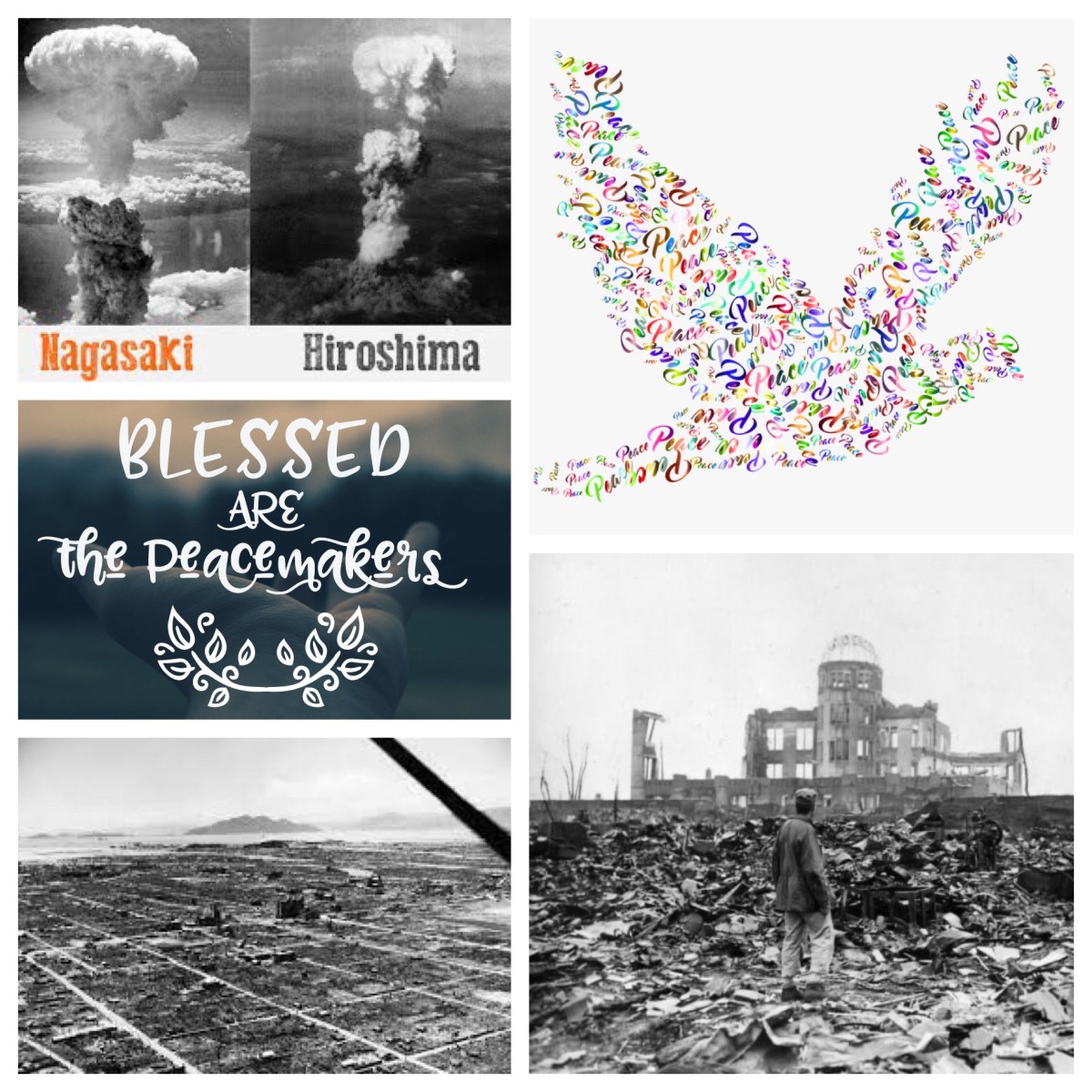
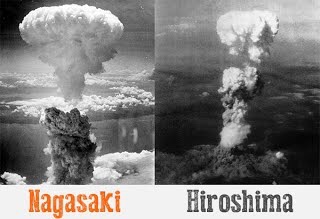
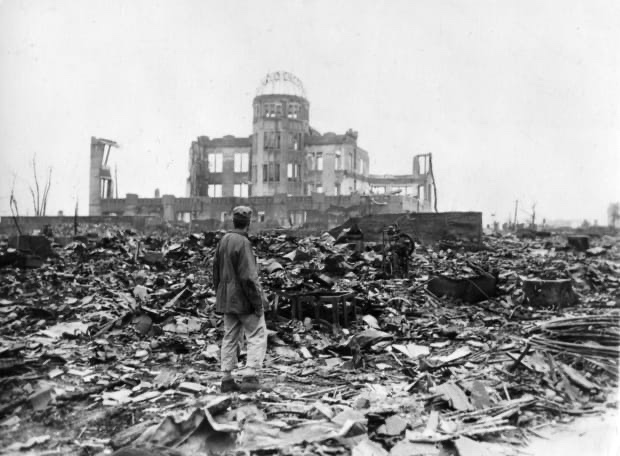
75 years ago, on Monday, August 6, 1945, at 8:15 am, a nuclear weapon which had been given the ironic name “Little Boy” was dropped on the Japanese city of Hiroshima. The bomb was dropped from an American plane, the Enola Gay.

Three days later, on Thursday August 9, 1945, at 11:01 am, another nuclear weapon was dropped from another American plane, the Bokscar, onto another Japanese city, Nagasaki.

The two bombings killed a number of people, variously estimated between 129,000 and 226,000 people, most of whom were civilians, and impacted the lives of hundreds of thousands of people for decades. It is estimated that between 90,000 and 146,000 people died in Hiroshima and 39,000 and 80,000 people died in Nagasaki; roughly half of the deaths in each city occurred on the first day.
Despite the high military presence in Hiroshima, fewer than 10% of the casualties were military personnel. In Nagasaki, only 150 Japanese soldiers died on the day of the bombing. Over 90 percent of the doctors and 93 percent of the nurses in Hiroshima were killed or injured—most had been in the downtown area which received the greatest damage.

Many people lived with the traumatic memory of those days, and grieved for relatives and friends who died. Many suffered terrible illness, physical disfigurement, or mental illness, for decades after those bombs were dropped. The personal and social impact was huge. Had this been considered before the bombs were dropped?
The United States was not solely responsible for these bombings. Under the Quebec Agreement, the US had to seek the consent of the United Kingdom for such an action. The Quebec Agreement was a secret agreement between these two nations, setting the terms for the coordinated development of the science and engineering related to nuclear energy and nuclear weapons.

The Quebec Agreement was signed by Winston Churchill and Franklin D. Roosevelt on 19 August 1943, in Quebec City, Canada. These bombings had been intentionally planned and deliberately prepared for over the course of the two years prior to August 1945.

Hiroshima was a supply and logistics base for the Japanese military. It was a logical target for American aggression, as it was a centre for communications center, a key shipping port, and an assembly area for Japanese troops. It contained manufacturing plants in which were made parts for planes, boats, bombs, rifles, and handguns.
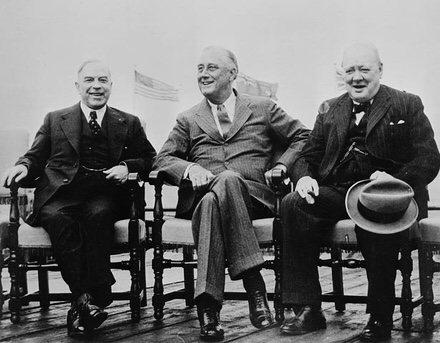
Winston Churchill (right) and Franklin D. Roosevelt (centre) in Quebec
in 1943, hosted by the Canadian prime minister William King (left)

Nagasaki was one of the largest seaports in southern Japan, and was of great wartime importance because of its wide-ranging industrial activity. It had manufacturing plants which produced ships, military equipment, weapons, ammunition, and other war materials. The four largest companies in the city employed 90% of the workforce: Mitsubishi Shipyards, Electrical Shipyards, the Arms Plant, and the Steel and Arms Works.

The strategic logic in targeting these two cities is clear. The city of Kokura had been the primary target for the 9 August bombing, but clouds and smoke drifting in from the Allied bombing of nearby Yahata, resulting in much of the city Kokura being covered, obscuring the aiming point.
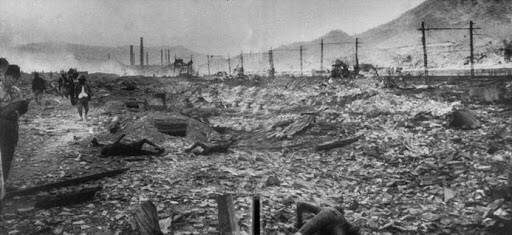
The bombings had the desired strategic effect within the war that was being waged; on 15 August Japan surrendered to the Allies, and on 2 September the Japanese government signed the formal instrument of surrender.

Was the terrible cost from these two bombings worth it? In terms of military strategy, undoubtedly so. In terms of the overall picture across the world, torn asunder by a vicious war, it may well be possible to see the benefits of ending the conflict, even in such a dramatic way.

But the personal and social impacts of these two bombings set up severe consequences for hundreds of thousands people over the ensuing decades. The social fabric of Japan was shredded. The military hubris of the Allied powers was nourished and encouraged.

And the political consequences of these two bombs was that nations continued to distrust each, and to relate to each other in antagonistic ways, fostering secrecy, promoting public dissembling and posturing, generating a game of threats and power plays across the ensuing decades. The US threatened many times to make use of the superior nuclear firepower that they claimed—although, thank goodness, they did not ever act on that. But the public threats and bluffs continued apace for years.

Perhaps the one enduring benefit form these tragic events was that the nations of the world, despite this public braggadocio, did become very cautious about how nuclear power was used. No similar nuclear bombing or other large scale nuclear weapon has been used in warfare since then, probably because the devastating impact of these bombs was registered around the world, and a firm commitment was made to avoid such large scale and widespread devastation.
What lessons can we take, 75 years later, from these events? We can seek ways to interrupt the course of injustice, without adopting the means of injustice that is being experienced. We can seek to combat evil without adopting the patterns of evil. We can nurture a response that is neither fight not flight, but rather, seeking reconciliation and justice in all we do.

As we do this, we follow the way of Jesus, the prophet of old who speaks words for the present, blessing those who live out the qualities that he most valued:

Blessed are the poor in spirit. Blessed are those who mourn.

Blessed are those who are hungering for righteousness.

Blessed are the pure in heart. Blessed are the peacemakers. (Matt 5:3-12)

And as we follow this way, we seek to live as his followers proclaimed, pursuing what makes for peace (Rom 14:19; Heb 12:14; and see Gal 5:22; Eph 6:15; 1 Pet 3:11).

My colleague Chris Walker writes: ‘Let us then be peacemakers following the way of Jesus. Jesus himself rejected the way of the sword. At his arrest he told his disciples to put away their swords. He followed the way of suffering love and did not resort to violence. Even on the cross he cried out, “Father forgive them; for they do not know what they are doing” (Luke 23:34).’ (See https://johntsquires.com/2018/11/22/being-peacemakers/)

War causes such pain, such turmoil, such hurt, such dislocation. It has ongoing and enduring consequences. It might solve an immediate problem, but it inevitably sets up longer term dilemmas, difficulties, and discords. War can never bring deep, enduring peace.

To be sure, going to war is seen by many as a legitimate way to resolve disputes and solve arguments, on a large scale. There have even been, through the ages, sophisticated arguments mounted to justify warfare. Fighting evil is seen as essential. War is reckoned as the way to do this.

But war has many consequences. It damages individuals, communities, societies, and nations. It has many more innocent victims than the casualty lists of enrolled personnel indicate. And there is abundant evidence that one war might resolve one issue, but often will cause other complications which will lead to another war. Look at the outcome of the Armistice at the end of World War One: we can trace a direct sequence of events that led from World War One to World War Two.

Sometimes, pitched battle warfare seems to be the only possible way forward. Yet, overall, a commitment to peace is surely what we need to foster. An aversion to war is what we need to develop. A culture of respectful disagreement and honest negotiation, rather than pitched rhetoric and savage violence, is surely what we ought to aspire towards.

Can that be the commitment that we make, today, as we remember the tragedies of 75 years ago?

For this anniversary, the Uniting Church has joined with many other religious organisations, calling for a full nuclear weapons ban—for Australia to sign and ratify the 2017 UN Treaty on the Prohibition of Nuclear Weapons. See https://icanw.org.au/united-religious-call-for-australia-to-join-nuclear-ban/

See also https://johntsquires.com/2018/11/11/blessed-are-the-peacemakers/

https://johntsquires.com/2018/11/09/pondering-peace-worrying-about-war/

https://unitingforpeacewa.org/2018/11/28/perth-peacemaking-conference-statement/

https://johntsquires.com/2018/11/22/being-peacemakers/

On Peacemaking and the Uniting Church, see https://assembly.uca.org.au/blogs/item/download/508_0a66ead117d444388aac26cb064ff14c

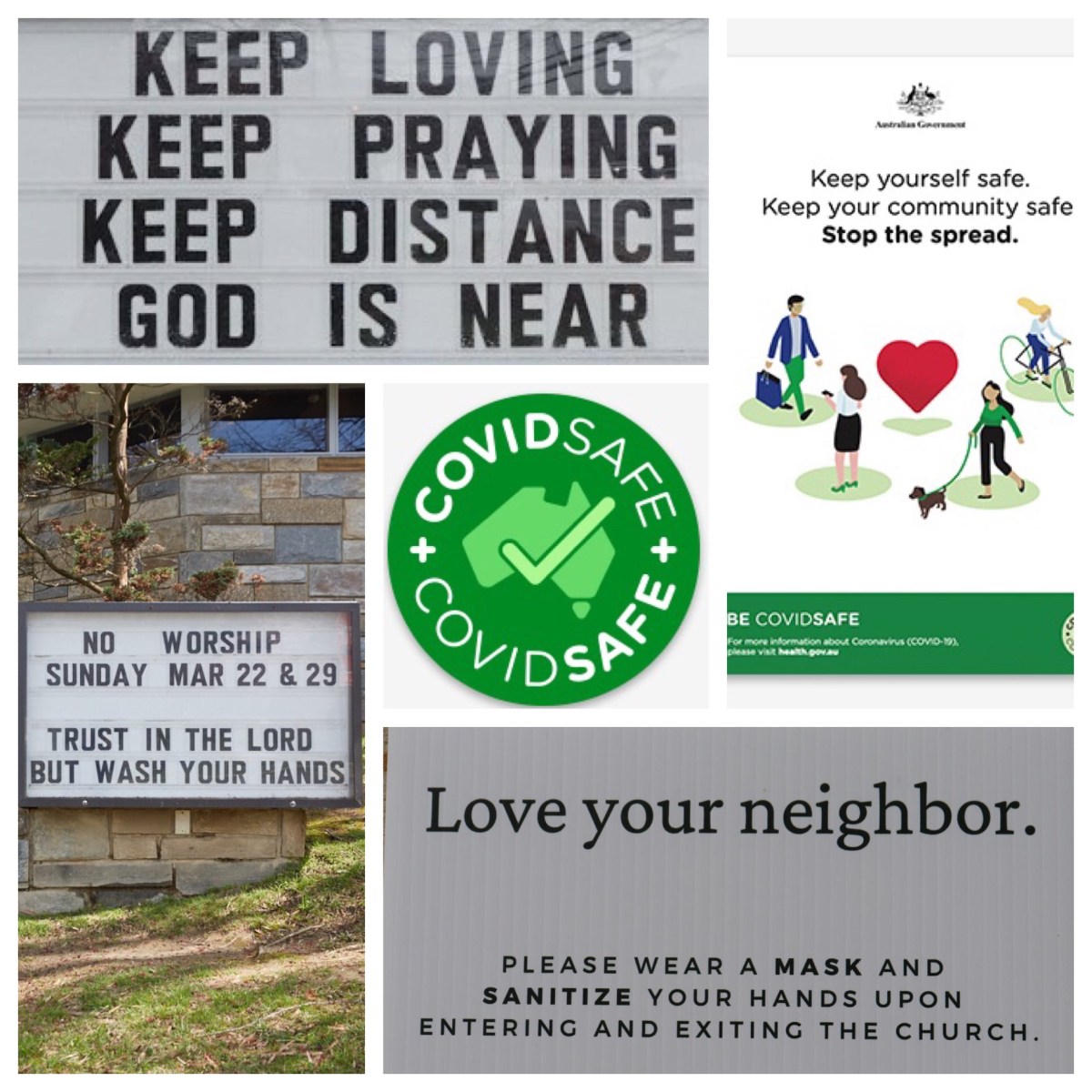
Minimising risks in the ongoing reality of COVID-19

Over the past four months, as a society, we have experienced various periods of restrictions: the most severe restrictions in response to the first wave of infections, requiring us to isolate in our homes except for essential matters; then gradual steps in easing those restrictions. And now, in the light of what looks like a second wave, a tightening of restrictions, with perhaps more of that still to come. It has been like a roller coaster ride.

And as a church, we have experienced the change from worshipping and meeting in person, to doing many things by phone, by email, and especially by ZOOM and YouTube. It has been a very significant time of transition—personally challenging, emotionally confronting, and draining of our energy. Yet we are all still moving on in the face of all that we encounter.

In the firm belief that it is helpful for us to keep up with the latest scientific research on COVID-19, I have been collating information about various matters that have drawn the attention of researchers, and produced clear guidance for how we function as we live with the ongoing reality of COVID-19.

A. On the importance of air circulation

Recently, 239 scientists from 32 different countries and many different areas of science (including virology, aerosol physics and epidemiology) penned an open letter urging the World Health Organisation (WHO) to change their advice relating to the ways that the corona virus spreads. “We ignore COVID-19 airborne spread indoors at our peril,” the scientists wrote.

In summary, the scientists who signed the letter have recommended three key ways to mitigate the risk of airborne transmission of COVID-19:

  1. Ventilation (maximise clean outdoor air, minimise recirculating air) particularly in public buildings, workplaces, schools, hospitals, and aged care homes
  2. Airborne infection controls such as local exhaust, high efficiency air filtration, and germicidal ultraviolet lights
  3. Avoid overcrowding, particularly in public transport and public buildings

These are practical and can be easily implemented and many are not costly.

https://www.abc.net.au/news/2020-07-06/aerosol-transmission-of-covid-19/12425852

This video from a couple of months ago provides a striking demonstration about the way that aerosols operate:

https://m.youtube.com/watch?v=H2azcn7MqOU&feature=share

B. On the value of wearing masks

The ABC reports that scientific experts say masks are one of the best ways to stop aerosols in their tracks. “Masks stop the virus-laden aerosols exhaled by an infected person entering the indoor space and also protect others from inhaling it,” Professor Lidia Morawska of the Queensland University of Technology said.

Professor Guy Marks, an epidemiologist and respiratory physician at the University of New South Wales, agrees. “If you must spend time in a static environment with a lot of people, consider wearing a mask”, he says.

Physical distancing is insufficient by itself in a crowded, poorly ventilated space where there is rapid air mixing, says aerobiologist Professor Euan Tovey of the University of Sydney. A recent study from an outbreak on the USS Theodore Roosevelt has shown that the best protection from infection in close quarters is a combination of distancing and masks.

However, the type of mask has an effect on protection. While a home-made cotton face mask significantly blocks large droplets, research UK research shows it only blocks a proportion of those tiny aerosolised particles.

Links to specific studies can be found in the article at

https://www.abc.net.au/news/health/2020-07-11/the-who-says-airborne-spread-of-covid-19-possible-what-now/12443268

C. An overview of what is involved in taking good precautions

The World Health Organisation has recently published an up to date guide for how we minimise the risk of infections spreading, in a paper entitled Transmission of SARS-CoV-2: implications for infection prevention precautions (WHO, 9 July 2020)

To prevent transmission, WHO recommends a comprehensive set of measures including:

  • Identify suspect cases as quickly as possible, test, and isolate all cases (infected people) in appropriate facilities;
  • Identify and quarantine all close contacts of infected people and test those who develop symptoms so that they can be isolated if they are infected and require care;
  • Use fabric masks in specific situations, for example, in public places where there is community transmission and where other prevention measures, such as physical distancing, are not possible;
  • Use of contact and droplet precautions by health workers caring for suspected and confirmed COVID-19 patients, and use of airborne precautions when aerosol generating procedures are performed;
  • Continuous use of a medical mask by health workers and caregivers working in all clinical areas, during all routine activities throughout the entire shift;
  • At all times, practice frequent hand hygiene, physical distancing from others when possible, and respiratory etiquette; avoid crowded places, close-contact settings and confined and enclosed spaces with poor ventilation; wear fabric masks when in closed, overcrowded spaces to protect others; and ensure good environmental ventilation in all closed settings and appropriate environmental cleaning and disinfection.

https://www.who.int/news-room/commentaries/detail/transmission-of-sars-cov-2-implications-for-infection-prevention-precautions

*****

See also https://johntsquires.com/2020/03/15/when-you-come-together-reflections-on-community-in-the-midst-of-a-pandemic/

https://johntsquires.com/2020/03/05/passing-the-peace-sharing-the-elements-greeting-the-minister/

https://johntsquires.com/2020/06/03/pastoral-letter-to-canberra-region-presbytery-june-2020/

https://johntsquires.com/2020/03/19/pastoral-letter-to-canberra-region-presbytery-on-covid-19-pandemic/

Black Lives Matter. Now—and Then.

#BlackLivesMatter. The importance of this hashtag has been highlighted in recent weeks.

First, it gained attention in the USA, where yet another incident of the unwarranted treatment of a black man and the resulting unjust death of that man, George Floyd, led to widespread protests, resistance, and riots across the country.

The hashtag #BlackLivesMatter originated in 2013, after Trayvon Martin, an unarmed African-American teenager, was killed in an argument in Florida. The man charged with his order was acquitted, resulting in the community response that saw #BlackLivesMatter gain traction.

See https://www.adl.org/education/educator-resources/lesson-plans/black-lives-matter-from-hashtag-to-movement

The hashtag has also had prominence in Australia, especially in recent weeks. After the death in America of George Floyd, a black man killed while in police custody in Minneapolis in early June, the BLM movement became active once again. The widespread unrest in the USA was clearly evident.

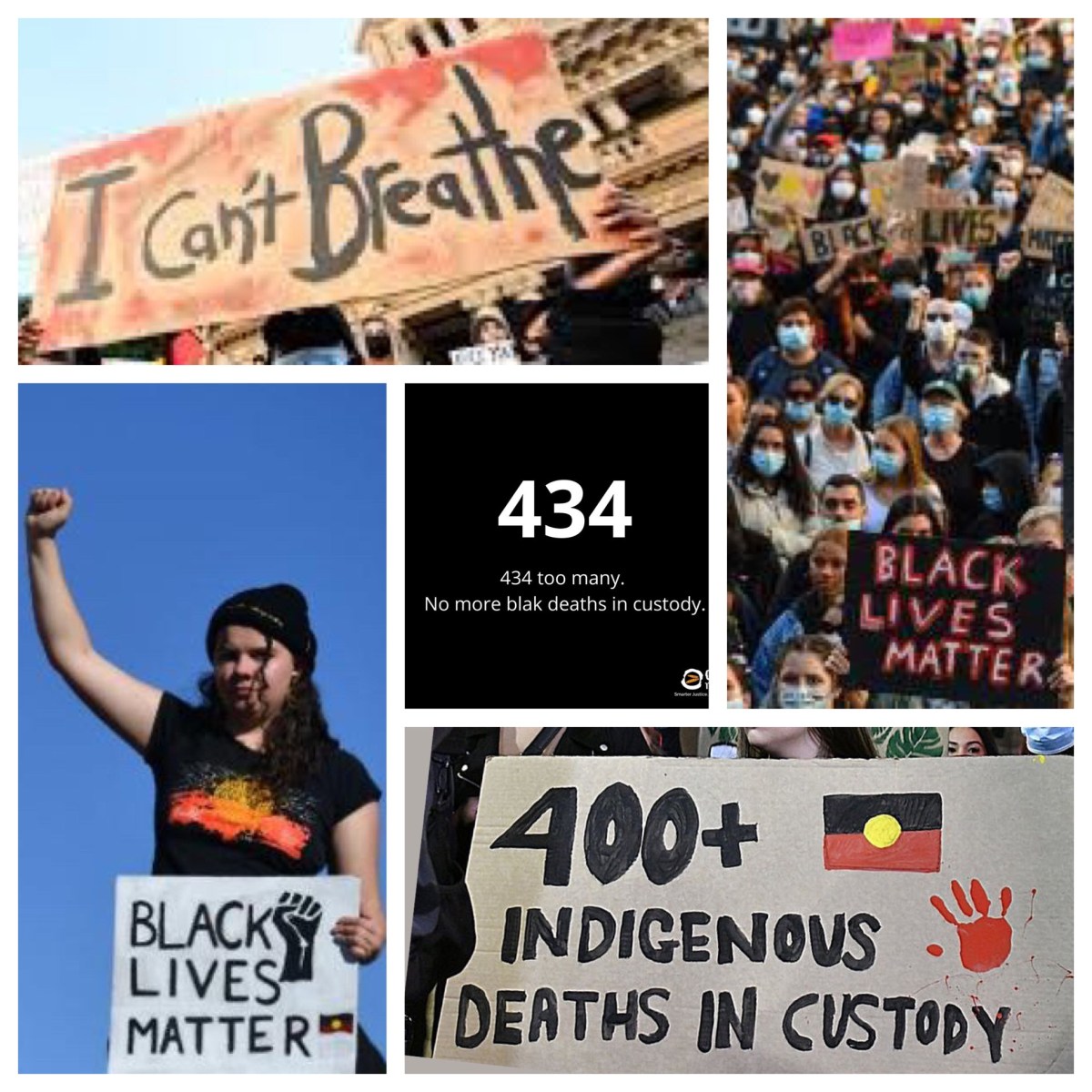
Around the same time, reports in Australia were indicating that there were 434 people—black men and women, indigenous Australians—who have died whilst in police custody, since 1991. (That was the year when the Royal Commission into Aboriginal Deaths in Custody ended.) And there had been no conviction of anyone responsible for any of those deaths over all that time.

See my blog on this at https://johntsquires.com/2020/06/09/racism-and-reconciliation/

So #BlackLivesMatter. We know this now, in our own time. This movement has generated widespread public support. The Pew Research Centre in the USA has reported their recent findings, noting that “two-thirds of U.S. adults say they support the movement, with 38% saying they strongly support it”.

See https://www.pewsocialtrends.org/2020/06/12/amid-protests-majorities-across-racial-and-ethnic-groups-express-support-for-the-black-lives-matter-movement/

All of this points to the need for ongoing, continuing, relentless lobbying, advocating for First Peoples, protesting injustices and working towards a more just situation in our society, today. Without question, this is a critical priority.

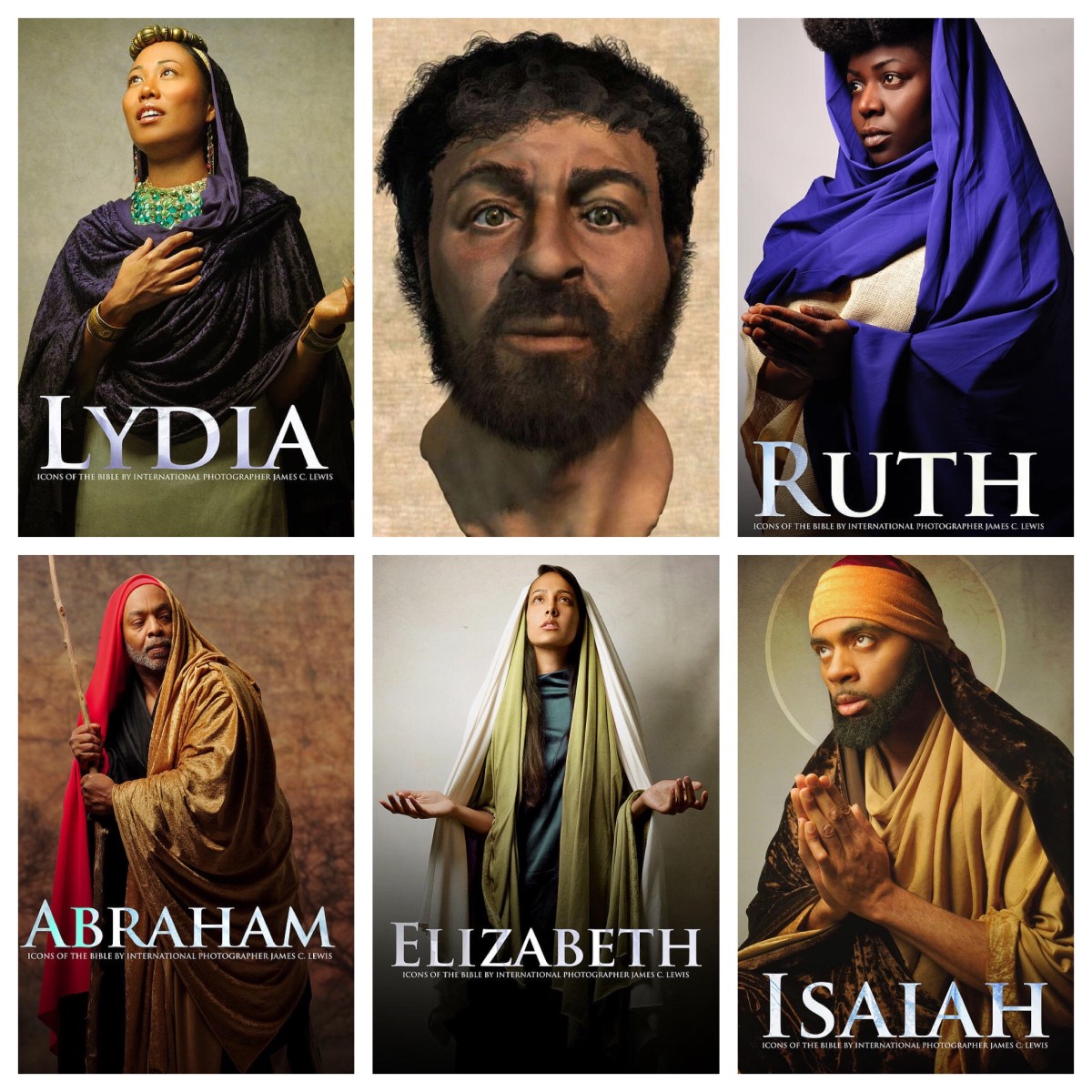
Alongside that, let me suggest the importance of remembering that #BlackLivesMatter when we turn to scripture, when we listen to the Bible being read in church or in Bible study groups, or when we open its pages ourselves and read the stories it contains. Do we imagine the skin colour of the people who are in these stories? Do we remember that the vast majority of them are dark-skinned?

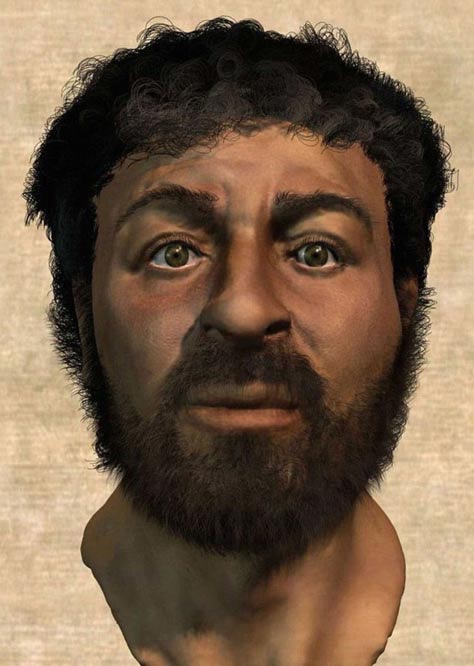
Some years back, an enterprising forensic artist, Richard Neave, created a model of a Galilean man for a BBC documentary, “Son of God”. Neave took an actual skull found in the region (not claiming that it was actually the face of Jesus) and built a model of what the person might have looked like.

The end result was not the blue-eyed, blonde-haired, “gentle Jesus meek and mild” of traditional Sunday School storytelling. The darker colouring of the skin (historically accurate) caused controversy at the time (and still does, whenever I use it with groups). The aim was to prompt people to consider how Jesus was a man of his time and place—a darker-skinned Middle Eastern man.

See https://www.ancient-origins.net/news-general/reconstructing-jesus-using-science-flesh-out-face-religion-004942

There’s a more detailed discussion of “what did Jesus look like?” by Dr Joan Taylor, of Kings College London, at https://www.bbc.com/news/magazine-35120965

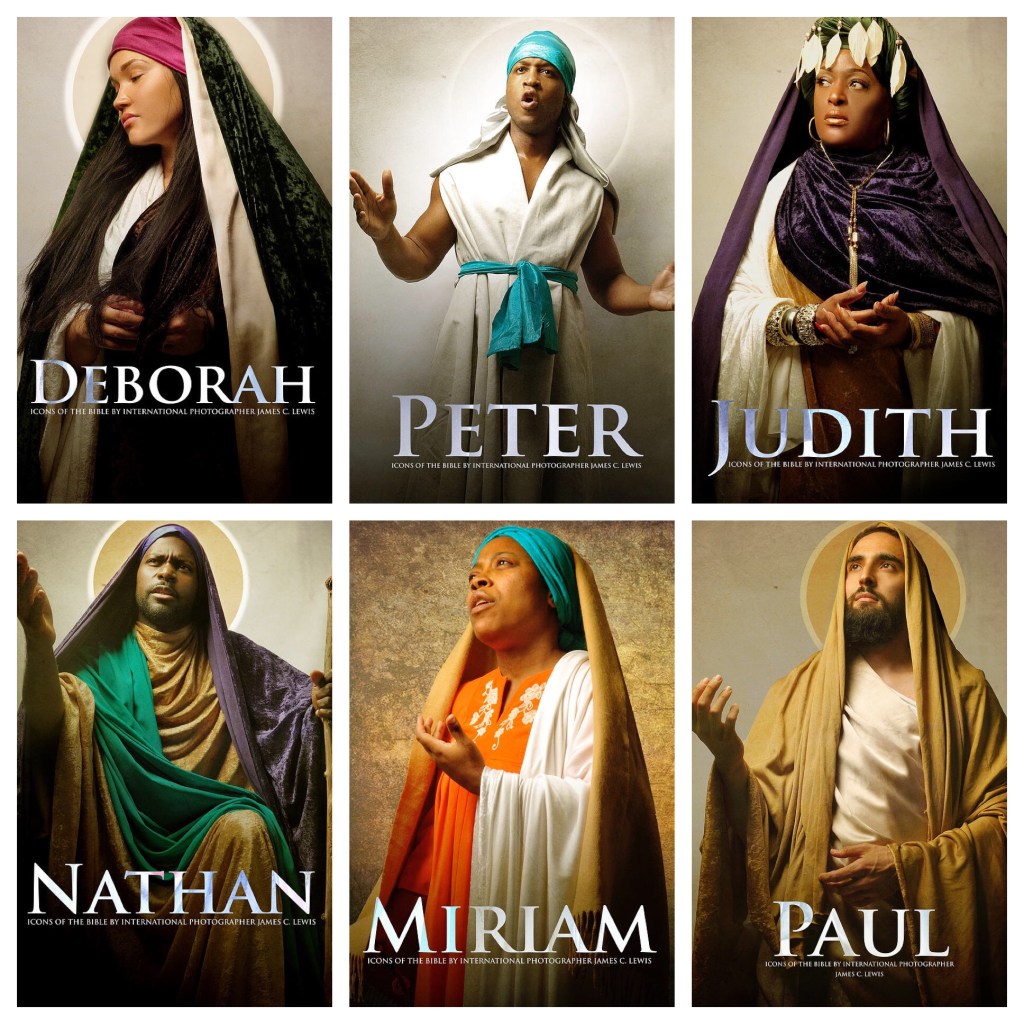
Just this week I came across a fascinating art project, seeking to depict the well-known characters of the Bible as the black-skinned Middle Easterners that they were. You can see the full gallery of art created by photographer James C. Lewis in the “Icons of the Bible” gallery at

https://fineartamerica.com/profiles/2-cornelius-lewis

Take some time to explore these images. As you do, remember that just as we know that #BlackLivesMatter now, today, so as we travel back in time, in our imaginations, into the world of the Bible, #BlackLivesMatter in those stories. We learn from these tales about these ancient black people. We gain guidance for living as faithful disciples today from these dark-skinned people of these ancient stories.

#BlackLivesMatter. Now—and Then.

When you come together (3) … wait for one another (1 Cor 11)

So then, my brothers and sisters, when you come together to eat, wait for one another. If you are hungry, eat at home, so that when you come together, it will not be for your condemnation. 1 Cor 11:33-24

In these words, Paul instructs the Corinthians—that raggle taggle group of disordered participants in an unruly worship gathering—to wait for one another, to ensure that they are all on the same page, to be committed to constructive group gatherings. Every member is important. Every voice is valued. Every need must be understood and responded to.

In the Uniting Church, we have adopted a process known as the consensus model. In that model, according to the Manual for Meetings, we value

listening skills: help us understand what another person is saying and develop new ways of responding.

conflict-resolution skills: enable us to deal with the emotional turbulence that typically accompanies conflict … these skills are likely to foster closer relationships.

collaborative problem-solving skills: help to resolve conflicting needs in such a way that all parties are satisfied.

(Manual for Meetings 1.6)

In the overview guidelines provided to people who chair meetings of the councils of our church (Appendix B), the guidance is clear:

“Treat everyone’s contribution as valuable, and be expectant that the Spirit is guiding the Church”.

I have heard many complaints about the consensus model, which although we have used it for some decades now, is still seen in a negative light by some people. Elizabeth and I have spent much time talking about such complaints over the years, exploring why that may be so.

One of the factors that plays a role in feeding these complaints, we believe, is gender. Have we paused to reflect on the role that our gender plays in our meetings process? What unspoken, unexplored assumptions might we have, about the place we have, as a female, or as a male, in the dynamics of a meeting? What expectations do we have about how we contribute to those meetings in which we participate?

A recent study that Elizabeth found online has some potent messages for us.

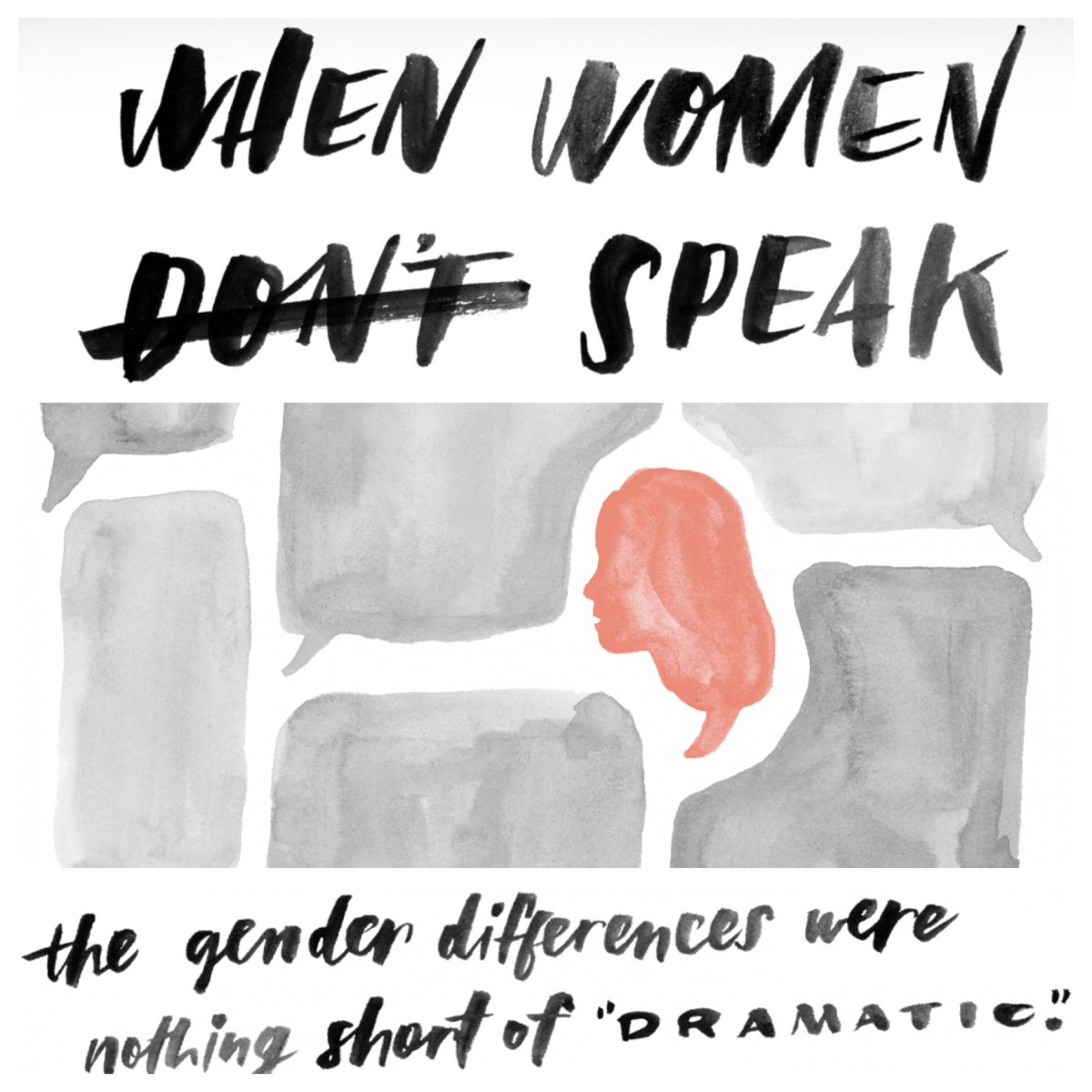
https://magazine.byu.edu/article/when-women-dont-speak/

The study analysed “the female experience in a top-10, predominately male collegiate accounting program—a program where the women, overall, matriculated with higher Grade Point Averages and more leadership experience than their male peers. The students move through the program on teams, and administrators wanted to know how best to build them.”

The students were put into mixed gender groups. Some had equal numbers of men and women. Some had only one woman. Some had only one man. The researchers observed the dynamics in each of the groups. They found clear problems:

1. Unequal talking time. At best, outnumbered women in the study spoke three-quarters of the time a man spoke; on average, women spoke just two-thirds as much as a man.

2. Routine interruptions. Put a woman alone with four men, and 70 percent of the interruptions she receives from men are negative. Compare that with having four women in the room: here, just 20 percent of the interruptions women receive from men are negative.

3. Limited influence. The same conditions that create disproportionate silence by women also create disproportionate authority by men.

They then explored what took place when groups employed a consensus model that worked to build unanimous support of all participants for any decision made. They determined that this meant:

Female talking time increased for women in the minority—a lone woman participated nearly as much as a man.

Positive interruptions—interjections that affirm and validate, like “Yeah” and “I agree”—were significantly increased. Such positive interruptions tripled for women in the minority. If the group sends signals that build confidence, women tend to participate more.

The influence gap narrowed for a lone woman—she had almost as much of a shot as a man at being voted the most influential member by her group.

How do we hear these results? How do they inform our practices? What must we commit to doing as a result of exploring this research?

What should be done then, my friends? When you come together, each one has a hymn, a lesson, a revelation, a tongue, or an interpretation. Let all things be done for building up. 1 Cor 14:26

Building up the body is the bottom line in what Paul instructs those raggle taggle Corinthians. Valuing what each individual contributes to the whole is important. Ensuring that we function as a cohesive groupis the clear focus—whether that be as Church Council, as Elders, as Pastoral Relations Committee, as Standing Committee, as Presbytery-in-Council, or as a Congregational meeting.

The bottom line that the study proposes, is that men need to listen more, women need to speak more, men need to practice positive support for women’s voices, groups need to work hard to operate by consensus, participants need to avoid stereotyping (“you’re a woman, what do you know about this?”), and group leaders need to focus on positive participation processes.

This is what it takes to develop a constructive, cohesive, respectful environment for decision-making.

May we work to ensure processes that honours the voice of every participant, that respects female contribution and participation, and that develops consensus outcomes.

*****

[Of course, the irony is that as I have juxtaposed this study on the importance of women’s voices with words from the latter part of 1 Corinthians, which is precisely where the text informs us that women are to “keep silent in church” (1 Cor 14:34-35). We always need to bring a critical perspective into that we approach texts in scripture. We always need to deconstruct the ideology and discover the fundamental values at work. As in scripture interpretation, so also in meeting dynamics.]

******

A prayer

As we meet

Help us to listen with care and patience

Help me to remain quiet and attentive

Help us to speak in appropriate and helpful ways

Help me not to interrupt, but to wait

Help us not to feel intimidated, but rather valued

Help me to focus on discerning a common mind

Help us to participate in positive ways

Help us to be your people, O God.

Amen.

See also https://johntsquires.com/2020/05/11/when-we-come-together-2-values-and-principles-in-the-midst-of-a-pandemic/ and https://johntsquires.com/2020/03/15/when-you-come-together-reflections-on-community-in-the-midst-of-a-pandemic/

In memory of James Dunn (1939–2020)

Elizabeth and I heard the sad news this morning, of the death of James Dunn, at the age of 80 years. To those who read the fruits of his professional work in biblical scholarship, he was the pre-eminent New Testament scholar, J.D.G. Dunn. To those who had the fortune to know him in person, he was the gregariously ever-cheerful Jimmy Dunn.

This sad news rekindled memories for us of some times in the past when we had encounters with Jimmy and his wife, Meta. Because he was willing to take on the daunting task of supervising Elizabeth as a doctoral student, we travelled across the globe to spend the calendar year 1997 in Durham, in the north of England. It was a wonderful year for us, in so many ways.

Meeting Jimmy in person and getting to know him and Meta was an enriching experience. Participating in the weekly New Testament seminar for postgraduate students and the biblical faculty of Durham University, under the genial chairing of Jimmy, with his distinctive Scots accent and his rapier-sharp mind, was an equally enriching experience.

Having his eagle eye scrutinise our work in biblical studies (both of us—Elizabeth in her regular supervisory sessions, myself on the few occasions when I presented in the seminar) was a wonderfully deepening and expanding experience.

The controversial nature of Elizabeth’s chosen thesis topic (on Matthew’s Gospel) could have led to difficult supervisory sessions, especially as the Dunn interpretation and the Raine interpretation were not at all the same! Instead, Elizabeth had enriching and stimulating sessions with him as supervisor—a great model of how to engage in discussion across differences.

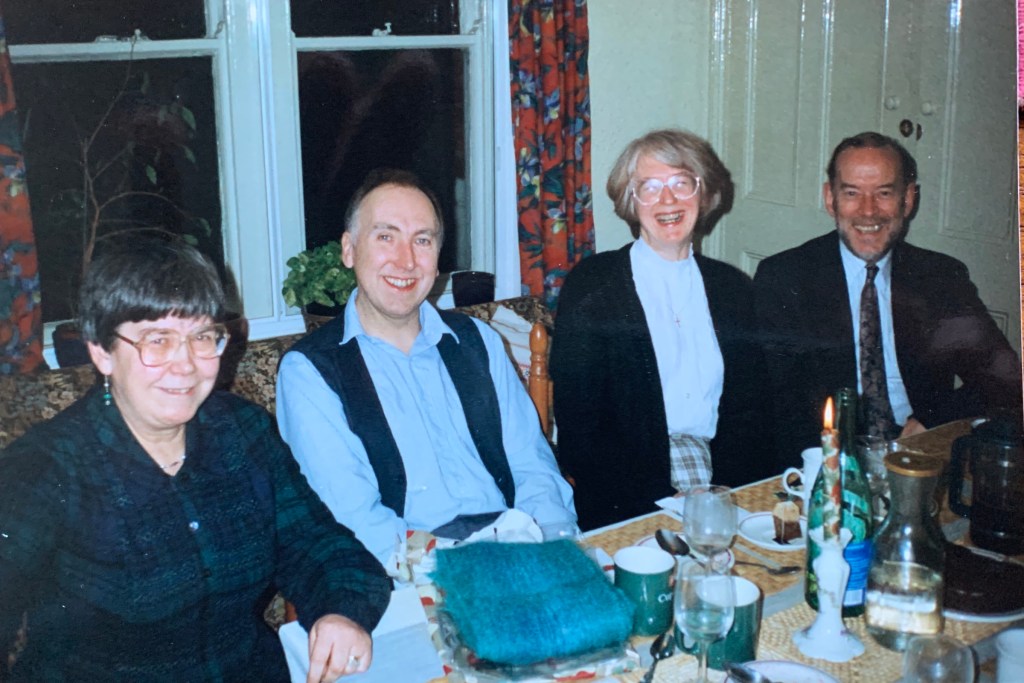
Meta Dunn, Rev Dr Philip Luscombe, Rev Elizabeth Oliver,
and Professor Jimmy Dunn, Durham, 1997

It was because Elizabeth had worked intensively with him during that year in Durham, that Jimmy agreed to include Sydney on his trip to “the Far East”, as he called it, in 2003. He planned his tour, lasting a couple of months, so that he spent a week or so in various locations in this part of the world, visiting his “Far East” students. Sydney was his only Australian stop—and that was because his student, Elizabeth Raine, was there!

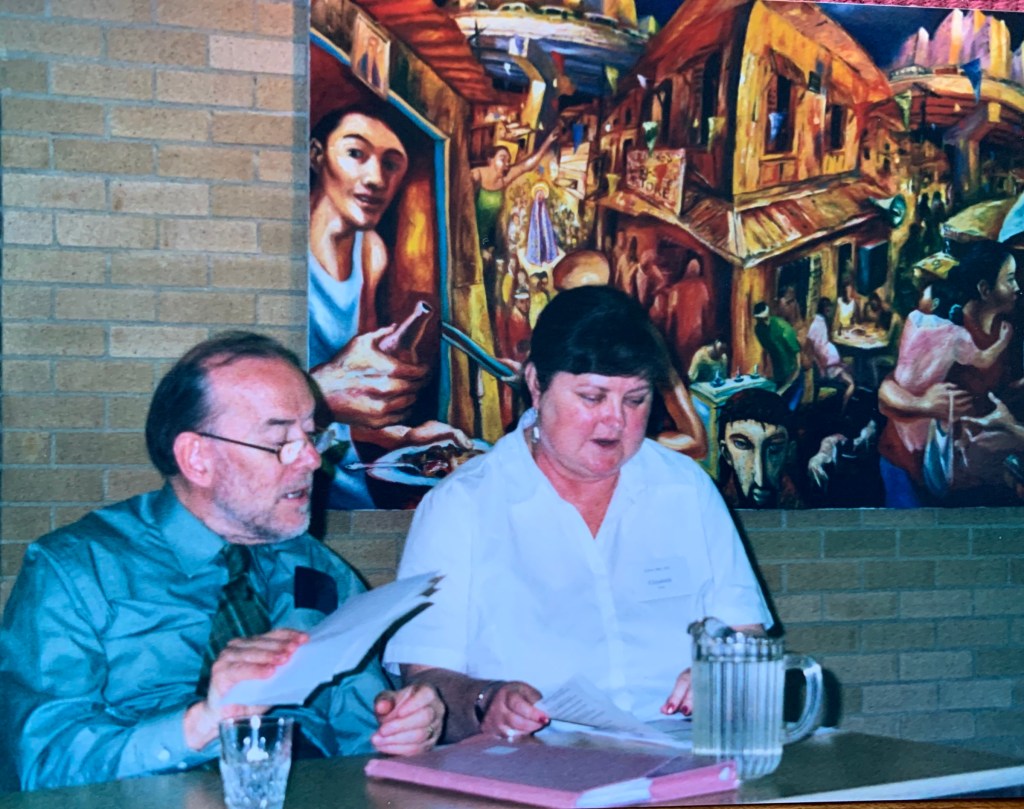
Jimmy and Elizabeth, sorting “questions from the floor”
during the UTC–SCE Seminar Week 2003

So United Theological College and the School of Continuing Education benefited from Elizabeth’s connection and thus Jimmy’s presence. He gave a series of lectures on the oral traditions about Jesus, during the annual Seminar Week of the college. Rob McFarlane, Elizabeth, Jione Havea and I worked to ensure that we had a creative and productive week. Other biblical and theological minds joined in the panel discussions. Elizabeth had scored a magnificent coup for the college!

That year, 2003, Seminar Week attracted the largest number of people for many years, and probably the attendance numbers have not been matched in subsequent years. People of cautiously conservative, liberally oriented, and thoroughgoing critical perspectives, gathered each day, to listen, discuss, debate, and learn, as Professor Dunn lectured, responded to questions, and engaged in banter with people during the breaks.

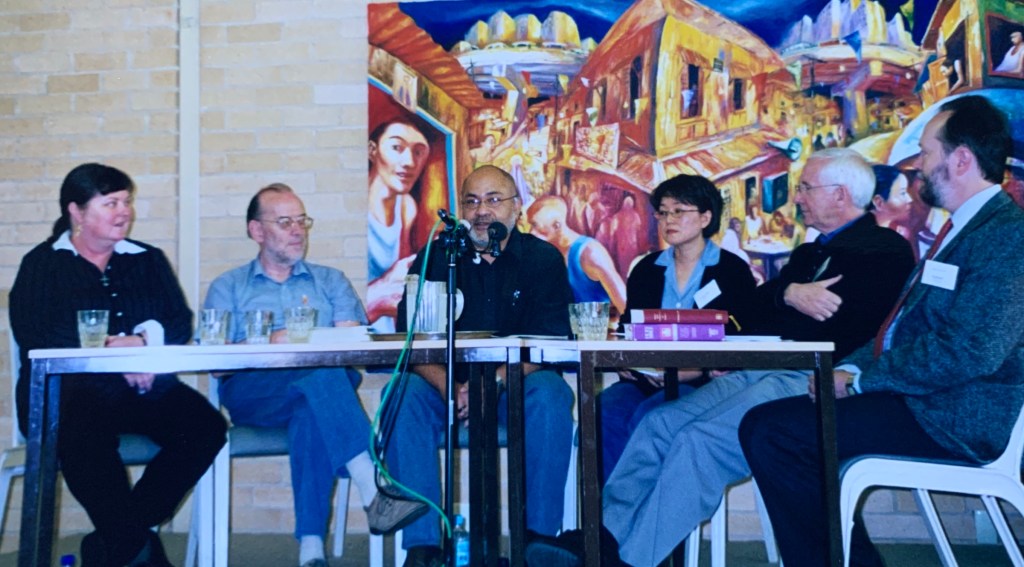
Elizabeth Raine, Jimmy Dunn, Jione Havea, Jungmin Soo,
Dean Drayton, and Rob McFarlane, panel discussion
at North Parramatta, Seminar Week 2003

My earliest awareness of J.D.G. Dunn the scholar was when I was a theological student, in the late 1970s, at UTC. The people in my cohort of students candidating for ministry were, with only one exception, much more conservative than me in their theology. The charismatic renewal movement had influenced quite a number of them. Their focus was on the work of the Holy Spirit—tongues and prophecies, choruses and exorcisms, joyful and exuberant freedom in worship—these were what my fellow students appreciated. And exposure to the rigours of critical theological and biblical scholarship was hard for a number of them.

I remember that, for a time, the name of James Dunn was to the fore in many student common room discussions at that time. His work on the Spirit was gaining much attention. Here was a rigorously critical biblical scholar who took seriously the experiences of charismatic renewal and highlighted the place of the Sprit, bringing giftings and enthusiasms, in the Christian life. He was able to bridge the gulf between charismatic experience and thoughtful scholarship. That was a fine gift to possess.

Jump forward around 15 years, and I was back at UTC, as a member of the faculty, with responsibility for teaching New Testament subjects. In the intervening years, I had studied in America, been exposed to Jewish thinking, started a local Jewish-Christian dialogue group, and gained a strong interest in interfaith relationships. From those experiences, I set out to develop a new subject, grounded in the study of biblical texts, exploring the origins of the movement we know as Christianity, and tracing the ways it became a discrete entity separate from Judaism.

I gave the subject the name “The Partings of the Ways”—a deliberate choice to include two plurals, for the ways by which the emerging movement diverged from the parent body were multiple, diverse, and complex. The book by J.D.G. Dunn (with the same title) proved to be the foundation for the whole subject. If I recommended to,students that they buy any book, this was the one. Jimmy Dunn had provided the detailed exegetical and theological foundation for a subject that I loved teaching for the next 15 years.

So it was an experience with multiple levels of delight when Elizabeth and I lived in Durham, spending each day in the Theology Department of Durham University, getting to know the wonderful biblical faculty with Jimmy Dunn, Stephen Barton and Loren Stuckenbruck as New Testament professors.

How glad I was that Jimmy Dunn took on Elizabeth as student—meaning that I could spend the year researching Luke-Acts as she worked on her thesis on Matthew under his guidance. And that led, in due course, to a later invitation to me—a surprise phone call from England, quite out of the blue!—to contribute the commentary on Acts to the Eerdmans Commentary on the Bible, for which Jimmy Dunn was co-editor.

And it was a double delight when Jimmy and Meta travelled down under six years later, spending the week at UTC and then seeing the sights of Sydney with Elizabeth and myself, before heading back home to the UK. Knowing him personally, and professionally, has enriched both of our lives. It is with great sadness that we heard the news of his death.

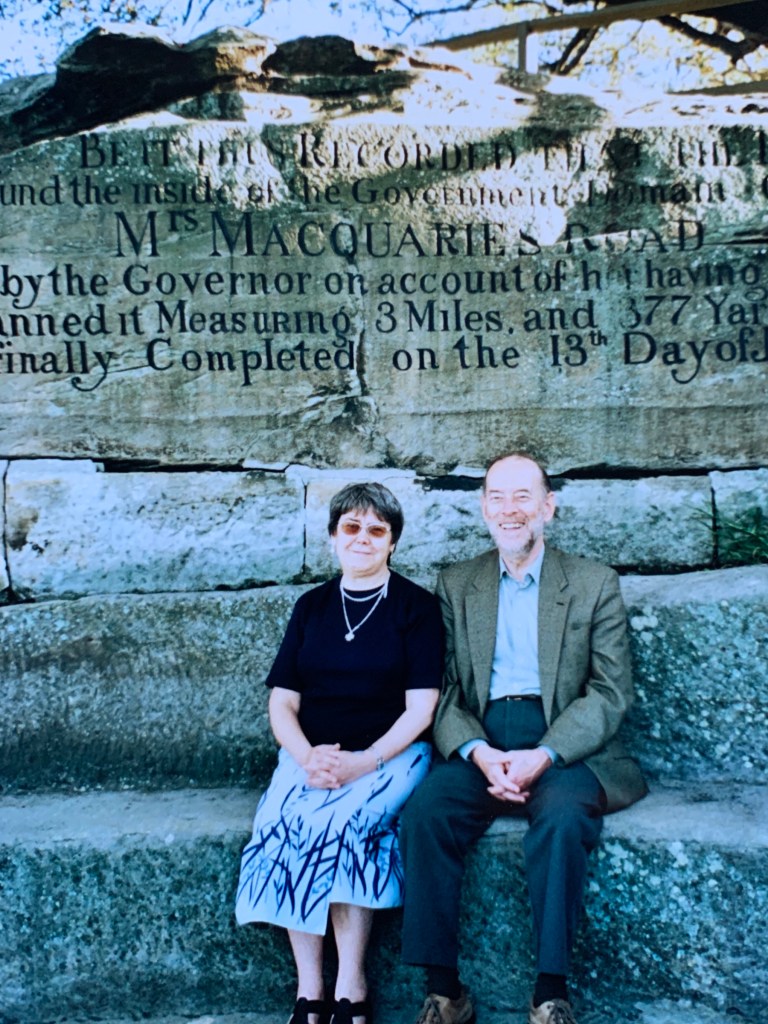
Meta and Jimmy at Mrs Macquarie’s Chair, Sydney, in April 2003

Baptism in the Holy Spirit, 1970

Jesus and the Spirit, 1975

Christology in the making, 1980

Romans 1-8, 9-16, 1988

Unity and Diversity in the New Testament, 1990

The Partings of the Ways between Christianity and Judaism, 1991

The Epistle to the Galatians, 1993

The Epistles to the Colossians and to Philemon, 1996

The Acts of the Apostles, 1996

The Theology of Paul the Apostle, 1998

The Cambridge Companion to St. Paul (ed.), 2003

Eerdmans Commentary on the Bible, 2003

Christianity in the Making: Vol. 1, Jesus Remembered, 2003

A New Perspective On Jesus: What The Quest For The Historical Jesus Missed, 2005

The New Perspective On Paul, 2007

Christianity in the Making: Vol. 2, Beginning from Jerusalem, 2008

Jesus, Paul, and the Gospels, 2011

Christianity in the Making: Vol. 3, Neither Jew nor Greek: A Contested Identity, 2015

Paul’s vision of “One in Christ Jesus” (Gal 3:28) and the Uniting Church

A sermon on the anniversary of the Uniting Church (for the Project Reconnect resource)

Galatians 3:23–27

On 22 June every year, across this continent, people gather to celebrate the formation of the Uniting Church in Australia. Today, rather than address the passages set in the lectionary, I want to turn to a section of one of Paul’s letters, from our New Testament. It’s from the latter part of chapter 3 of his letter to the church in Galatia.

It is good to have this passage as our focus. It speaks to who we want to be, together, as the church. It is a word for our times. In fact, I think that this passage could well express the fundamental calling of the Uniting Church.

Paul’s letter to the Galatians was written in the midst of an intense and ferocious debate within the early movement that had been started by Jesus. It was a time of great transition. Things were changing. Old practices were being challenged. New practices were being proposed.

In Galatians, those who advocated Circumcision came under criticism. In that place, as in many other places where the good news of the Jesus movement had been proclaimed, baptism was being proposed as a new ritual, to mark the new faith of the growing numbers of the followers of Jesus.

The argument about circumcision has behind it the issue as to how much, or how little, of the Jewish Law should apply to believers within that movement – those whom we now call the early Christians. This was an incredibly contentious issue at the time, which caused much dispute. Galatians is a letter that was created in the heat of this intense debate; so, at many points, it bears more evidence of rash fury than it does of considered reflection.

Paul’s language in Galatians is ferocious. He accuses the Galatian believers of being fools who have been bewitched by deceivers; he accuses them of biting and devouring one another; he criticises them for urging Gentile converts to be circumcised and to adopt full adherence to the Torah. This is no gentle, reflective spiritual meditation; this is full-on partisan polemics!

And yet, right within the midst of this turbulent flow of argument and disputation, we come across comments that provide cause for reflection; ideas that do invite deeper consideration; insights that do offer the opportunity for spiritual growth to those who would read, ponder, and reflect.

One of these passages is just two well-known verses from the third chapter of this letter: “As many of you as were baptized into Christ have clothed yourselves with Christ. There is no longer Jew or Greek, there is no longer slave or free, there is no longer male and female; for all of you are one in Christ Jesus” (Gal 3:27–28).

Here, Paul sets out a vision for people of faith; a vision for believers within community; we would say, a vision for the church. It could well be our central mission statement, as the Uniting Church in Australia, for we so much value grace-filled inclusiveness, we so strongly reject divisive and judgemental stances, we so yearn to live in accord with this grand vision, where all belong to a welcoming and loving community.

The vision of the church for Paul is one of harmony, concord, unity. Paul envisages great changes within the community of faith, because of Jesus. If the reality failed to achieve this change, nevertheless the vision stood firm; Paul envisaged a community that would bring together strikingly disparate opposites.

In this community, the religious differences of Jew and Gentile would matter no more; the different levels of social status, of people living in freedom and those serving as slaves, would become irrelevant; and the societal roles and expectations associated with the gender of a person —  male or female – would no longer function as dominant. These three conditions of difference would melt away, within the community of faith, into a cohesive unity of co-operation and interconnection. This was a huge change to took place all those centuries ago.

Indeed, as we ponder these three key instances of the way in which difference would disappear, we might even push it further: is this vision not simply one for the church, but even one for society as a whole? Might it be that the vision, the hope, which Paul set out in his letter to the Galatians, could be brought about within the patterns of living and relating right across his society? Was Paul passionate, not only about partisan points of religious practice, but also – and more significantly – about visionary ideals for human society as a whole?

“There is no longer Jew or Greek, there is no longer slave or free, there is no longer male and female; for all of you are one in Christ Jesus” – this unity within the church might well become a model for harmony within society. Certainly, that is the way that the church has interpreted this statement in the centuries since Paul wrote it.

The church of the late first century continued the battle begun in the time of Paul; over time, Jews and gentiles were equally welcomed within most of the faith communities of the ancient world.

The church of the Enlightenment was at the forefront of the movement to end the slave trade, to enable black Africans to live unhindered by white masters seeking to profit from selling them as slaves.

And the western church from the later part of the 20th century has been active alongside many other community organisations to ensure that the opportunities available to women were not less than those available to men.

In each of these battles, the church at large has understood Paul’s words to the Galatians to be words for both the church, and for the society as a whole. It is a grand vision. May it be a reality for you, in your community of faith, and amongst the people of the place where you live, sleep, eat, work, and rest.

“There is no longer Jew or Greek, there is no longer slave or free, there is no longer male and female; for all of you are one in Christ Jesus” (Gal 3:27–28).

+++++++

Some questions to consider:

What did you find to be the most significant idea in this message?

Can you describe a time when you experienced the “unity in Christ” that Paul wrote about?

In what way does your congregation today model the vision of inclusive acceptance for all that Paul wrote about?

In what way might you be able to show that vision to the people where you live, sleep, eat, work, and rest?

To read more on the distinctive contributions of the Uniting Church to Australian society, you may wish to read my blogs at https://johntsquires.com/2019/06/18/the-dna-of-the-uca-part-i/ and https://johntsquires.com/2019/06/18/the-dna-of-the-uca-part-ii/

See also https://johntsquires.com/2018/08/15/what-i-really-like-about-the-basis-of-union/ and https://johntsquires.com/2018/08/20/alongside-the-basis-of-union-there-was-the-statement-to-the-nation/

Going “back” to church—what will our future look like? (4)

We got an email from the church office last week. It said that “worship services are resuming” in our church building. There was much excitement! It has been so many months since we have been able to be in our lovely church building, with all our wonderful friends, for times of worship.

It would be great to see our friends again in person—and to share in the prayers and the singing when we all gather together—and to hear our minister in the flesh once again. It seems like it has been such a long time since we have been able to do this.

Don’t get me wrong, it has been great to hear her speak each week online; but there is nothing quite like being there, in person, with all the others in the building, to soak up the atmosphere. It’s like a weekly “hit” that keeps me going for the next week. It’s not the same, online. Not quite the same vibe, the same buzz. Ah well …

Anyway, after cheering was heard throughout the household about this great news, we read on through the rest of the email. “Back to normal”, we had thought. “Back to what we used to do.” Hmmm. Maybe—maybe not.

It seems that worship will not be quite like it used to be. No single service, for a start. There are going to be three services each Sunday morning, staggered by 45 minutes. So we need to book in advance for the one we want. 8:30 for the early birds. 9:15 for those who want the regular time slot. And 10:00am for those willing to have a slow start. OK, not a bad idea. But we won’t all be together. That’s a bit sad.

And each service will be just 30 minutes long. That feels like a rip-off. What, not a full hour? This will take some adjusting to get used to, I reckon. Anyway, we registered for the 9:15 slot. Trying to get back, as much as possible, to “normal”. It will be great to be there, back in church!

Except then another email came back, saying that the 9:15 service was already full. How could that be? Our church easily seats over 200 people (well, if you make sure you fill up each pew and set out some extra seats down the aisles.)

Seems that we can’t have more than 30 people in the building at any one time. There’s talk about 4 square metres and 1.5 metres apart and social distancing and so on. You know, the stuff that the PM and his chief honcho medical advisor guy have been talking about. In church. In our church. Who would have thought it?

So we are now going to the 8:30am service. Harumph. But better than waiting until 10am, I guess.

And the email also said, please arrive 10 minutes before the scheduled time, and queue outside the east door. What is that? I have been going to this church for years now, and have always used the south door, the one that opens right onto the street. Something about not confusing those arriving with those leaving, making them use separate doors. Oh well, if that’s what it takes ….

And, then, the email said, when you get the the east door, you will be allocated seat numbers, and you will need to go directly to those seats—do not stop to talk to anyone else, do not mill about in the foyer. And that we will find that the seats are arranged in a different way inside, so we will not be able to sit in our usual spot. Wow! Now that will be quite different! Sitting in a different place! That will be hard. And I can’t imagine church without all the catching up with people beforehand. That’s a bit of a downer, really.

And the email also said, “no singing”. Seriously: “no singing”! How will church be church, if we can’t all sing together? It is going to be one weird experience, I reckon, in that building, all sitting apart from one another, not singing—not even hugging our friends when we see them, no chance to say hello. It will be weird.

And then, the last straw: “when the service ends, please remain in your seats until you are asked to leave, then move straight to the south door to exit the building”. To keep people entering separate from people departing. How anti-social is that!

And there is more: “Please do not congregate on the footpath, or in the car park, after the worship service. Please leave the site as quickly as possible.” No morning cuppa. No chat with friends in our small group. No hanging around in the kitchen to scab extra goodies for the week. No socialising. None at all!

It won’t be church, will it? Not really church. I fear that we are in for a rather sterile experience. And we will have to use the hand sanitisers when we come in, and when we go out. Aargh! I hate the smell of that stuff! But no hand sanitising, no entry permitted, we are told. So there’s no question about it. That’s just the way of things everywhere, these days.

So, off we go. In to church. Then back out again. Will it be worth it? We’ll give it one go. And then, if it is not any good—back to looking at services online, I guess. Ah well. Such is life.

(… the views expressed in this piece come from a fictional character, solely the product of my imagination …)

See also

https://johntsquires.com/2020/06/03/greet-one-another-2-cor-13-but-no-holy-kissing-and-no-joyful-singing/

https://johntsquires.com/2020/05/29/worship-like-the-first-christians-what-will-our-future-look-like-3/

https://johntsquires.com/2020/05/24/its-been-two-months-under-restrictions-what-will-our-future-look-like-2/

https://johntsquires.com/2020/05/22/its-been-two-months-under-restrictions-what-will-our-future-look-like-1/

https://johntsquires.com/2020/04/22/its-been-just-over-a-month-but-there-have-been-lots-of-learnings/

https://johntsquires.com/2020/05/05/the-times-they-are-are-a-changin/

https://johntsquires.com/2020/05/04/not-this-year-so-what-about-next-year/

https://johntsquires.com/2020/05/11/when-we-come-together-2-values-and-principles-in-the-midst-of-a-pandemic/

https://johntsquires.com/2020/03/15/when-you-come-together-reflections-on-community-in-the-midst-of-a-pandemic/

Racism and Reconciliation

“I can’t breathe.” Three short words. Three words that shot around the world. “I can’t breathe.”

We all know who said that, and the circumstances that drew these words from his mouth. We all know that soon after he said this, George Floyd died. Another black man, dead, at the hands of a white police officer.

“Ah well, that was in America”, you might think. Yes, it was. And many other Afro-American people have died in similar circumstances, victims of what appears to be, quite simply racism. A shameful story. A shameful record. But in America. Not here. Not in Australia.

Except—not so fast! Because here, in Australia, we have recently been reminded, there are 434 people—black men and women, indigenous Australians—who have died whilst in police custody, since 1991. (That was the year when the Royal Commission into Aboriginal Deaths in Custody ended.)

And one of the more recent people to die in such circumstances in Australia also uttered those words: “I can’t breathe.” (David Dungay, in 2015. And he said this phrase twelve times, before he died.)

So we Australians are not exempt from the shame of this racist record. Our very own nation has not yet found a way to address the systemic bias, the systematic persecution, of indigenous Australians. They are only 3% of our population, but they are represented amongst the prison population in numbers out of proportion to their presence in society.

And from all of those 434 deaths, after multiple enquiries, there have been—how many convictions? The sum total remains at zero.

What does this have to do with our faith? How does this impact on us as we go about our lives as followers of Jesus?

Last week, Dr Deidre Palmer, the President of the National Assembly of the Uniting Church, wrote:

“In the Bible, our sacred text, we hear God’s cry for justice for those who are living in poverty, those who are oppressed by unjust systems, those who are excluded and discriminated against.”

She went on to say:

“The Jesus we know from the Gospel stories, calls leaders to use their power in service to others, to call forth in others compassion, justice and kindness, unity and community. These are the leaders, we are called to be and that we need in the world today.”

Pastor Mark Kickett, the Interim National Chairperson of the Uniting Aboriginal and Islander Christian Congress, joined his voice on this issue, saying:

“It boggles the mind as to how such inhumanity continues to exist in the modern world in which we live, yet it still does.” He quoted the Prophet Amos: “Amos speaks very clearly in relation to this matter where he says; ‘But let justice roll down like waters, and righteousness like an ever flowing stream’” (Amos 5:24).

Our faith includes a clear call, for us to work so that we avoid perpetuating such injustices in our society. Our President said, in her Pastoral Letter for National Reconciliation week:

“We need to strengthen our actions for justice, healing and reconciliation. This is not an abstract call – it is seen expressed daily in our relationships with one another in this country.

It is seen when we:

• call out racism;

• tell the truth about the history of colonisation, dispossession and the undermining of First People’s culture, language and spirituality;

• advocate for First People’s voice to be heard in determining their future;

• respect and appreciate the culture and stories of First Peoples, and work together to deepen our relationships based on reconciliation that arises from justice, and leads to healing; and.

• live in harmony with the sacred land that we share.”

That is the challenge that sounds forth from our church leaders. That is the challenge that sits at the heart of the Gospel. As we live our lives by faith, following the way of Jesus, might we know also the claim that these words have on us.

We are called to stand firm for justice, to stand firm against injustice. We have a charge to call out racism, to call for reconciliation.

If that means that no black person in custody will then have to utter those tragic words, “I can’t breathe”—it will be worth taking that stand, making that call.

https://www.abc.net.au/religion/how-should-christians-respond-to-black-lives-matter/11173976

https://www.eternitynews.com.au/opinion/black-lives-matter-a-message-from-chris-mcleod-national-aboriginal-bishop/

https://www.theguardian.com/australia-news/2020/jun/06/aboriginal-deaths-in-custody-434-have-died-since-1991-new-data-shows?CMP=Share_iOSApp_Other

See the links to the two pastoral letters from Uniting Church leaders at https://assembly.uca.org.au/news/item/3196-pastoral-statement-racism-and-police-brutality

“Greet one another” (2 Cor 13). But no holy kissing. And no joyful singing. (Trinity Sunday A)

“Finally, brothers and sisters, farewell. Put things in order, listen to my appeal, agree with one another, live in peace; and the God of love and peace will be with you. Greet one another with a holy kiss. All the saints greet you.” So the second (extant) letter to the Corinthians ends (2 Cor 13:11-12).

“Greet one another with a holy kiss” is also how Paul instructs the Corinthians in his first letter (1 Cor 6:20), as well as the Thessalonians (1 Thess 5:26) and the Romans (Rom 16:16). (The same instruction appears at 1 Peter 5:14). These five verses all indicate that first century worship was not just sitting formally and watching what went on at the front; it was interactive, engaging, personal.

What do we make of this instruction to kiss one another? Many people in churches that I know have interpreted “holy kiss” to mean “warm handshake”—so the “passing of the peace” has been shaking hands with as many people as possible in the Congregation. In some smaller gatherings, even, making sure that you shake hands with everybody present!

Well, not any longer. No more handshakes—not in church, not at the door after the service, not anywhere in society. COVID-19 has put paid to shaking hands for quite some time yet.

Other people have take a more literalist line of interpretation. A kiss means, well, a kiss! If not a lip-to-lip kiss, then, at least, a lip-to-cheek kiss. Yes, I have been in church gatherings where my hairy unshaven cheeks have been kissed. And even, when my hairy-encircled lips have planted a kiss on the cheek of another worshipper. I confess.

But not any longer. No more person-to-person contact; especially not any contact that involves the lips! COVID-19 has put paid to the socially-approved form of public kiss, for quite some time yet—if not forever.

One of my colleagues, Sarah Agnew, suggests that the best way to translate the reference to a “holy kiss” in these five verses, is by referring to a “holy embrace”. That understanding is premised on the fact that the Greek word which is translated as “greet” in these texts, contains elements of making personal contact which are both interpersonal (greetings) and also physical (the word can be used to signify hugging or embracing). See https://www.academia.edu/28243257/A_call_to_enact_relationships_of_mutual_embrace_Romans_16_in_performance

Given that, then, on each of the sixteen times that Paul instructs for greetings to be given to named individuals in Romans 16, he may well be saying something like, “give them a hug from me”. Such relationships were personal and intimate.

This rendering takes us to the heart of community—and to the centre of our practices during the current situation with COVID-19. The ancient practice clearly envisaged that physical contact was involved. The current situation proscribes any form of physical contact. It is just too risky.

Physical contact, in the intimacy of either a kiss (on the cheek) or an embrace (with the upper body), is now, we are told, not advisable, given the way that infectious diseases such as COVID-19 (or, indeed, the common cold—which is itself a form of a coronavirus) are spread.

How do we reconcile these current guidelines with the scriptural injunctions? Do we ignore current guidelines (and keep on meeting together) because “the Bible says…” ? Or, do we turn away from strict biblical teaching (and stop our gatherings), because of contemporary concerns about the pandemic?

Of course, we do not put our heads in the sand. We acknowledge the sense in the guidelines being proclaimed across society. We listen to those with expertise in infectious diseases and medicine. We refrain from physical contact. No kissing. No hugging. No handshakes. We look for alternatives to signify that we are greeting one another.

We aren’t yet meeting in person for worship. It will be some time before most Congregations are able to do this. But when we eventually do begin to worship in person, and it comes time to pass the peace, we might face the other person, place our right hand over our own heart, and say, “peace be with you”. That avoids direct physical contact, but incorporates a direct visual interaction.

Another option would be to clasp our hands together and place them in front of our chest, in the “praying position”, and then, as we face each other, bow in greeting.

A third option—one perhaps only utilised in a very distinctive liturgical setting—could be to “bump elbows”, using the recommended social alternative to “shaking hands”. But that option would need to be employed with care! And it may not be to everybody’s liking, to be sure.

Which brings me to singing. “Make a joyful noise to the Lord!”, the psalmist instructs us (Psalms 66:1, 95:1-2, 98:4, 6, 100:1). Sing “psalms and hymns and spiritual songs”, an early Christian writer exhorts (Col 3:16). “Be filled with the Spirit, as you sing psalms and hymns and spiritual songs among yourselves, singing and making melody to the Lord in your hearts, giving thanks to God the Father at all times and for everything in the name of our Lord Jesus Christ”, another letter writer directs (Eph 5:18-20).

So how do we interpret these passages? Do we adopt the same literalist approach—the Bible says we must worship, the Bible says we must song, so that’s what we must do! (Yes, I have heard this said, even in current times.) That is not really a satisfactory approach.

Of course, the same dilemma confronts us here. Just as direct physical contact is not advised in the current pandemic situation, so singing in a group of people is also deemed to be out of order, in the understanding of health professional and medical advisors.

Research clearly indicates that singing contributes to the spread of infectious diseases. Singing spreads droplets in aerosols which are expelled from a person’s mouth as they sing. They can carry the virus a significant distance and remain suspended in the air for some time after they have been expelled from a person’s mouth. A cloth mask is unlikely to be enough to provide protection as people sing together. This article canvasses the issues:

https://www.ctvnews.ca/health/coronavirus/does-singing-spread-coronavirus-choir-outbreaks-raise-concerns-1.4943265

So in the case of singing, as with physical touch, we need reinterpret our scripture in keeping with what we know about the spread of infectious diseases. We might have to be content with listening to a recording or watching a video of a favourite hymn or song being sung. One suggestion I have seen is to invite people to listen, then to share with a couple of other people what you have heard, what has connected with you, as you listen.

Another suggestion is to invite people to tap into their own wells of creativity, and after listening to the song, write or draw their own response. That could be in the form of a prayer, a modern psalm, an impressionistic artwork, a poem, a sketch drawing. The possibilities are endless.

Some other ideas are canvassed in this post:

https://godspacelight.com/2020/05/23/five-ways-to-worship-with-music-beyond-singing/?fbclid=IwAR07U327jYyIu8PKq3xmBnDSE3wDD56ySbiRlRxpT1Foc42o4ucgZOnHhJg

There’s another central aspect of worship that will need significant attention and careful consideration in the time ahead. Before we actually start meeting in person for worship, a decision will need to be made, in each local community of faith, with regard to holy communion.

We know that any action that involves direct physical contact is risky. We know that multiple touching of the same object is highly risky—it provides many more opportunities for a virus (any virus, not just COVID-19) to be passed from person to person. When we regather for worship, we will not be “passing the offering plate around”; it is too risky.

In the same way, we need to,consider carefully what we do when it comes to offering the bread, passing a plate of bread, drinking from the cup, or passing the small cups.

That’s a matter for future consideration. If anyone has any clear ideas or knows of useful guidelines in this regard, I would love to hear from you!

A prayer from Sarah Agnew https://praythestory.blogspot.com/

See also https://johntsquires.com/2020/05/29/worship-like-the-first-christians-what-will-our-future-look-like-3/

https://johntsquires.com/2020/05/24/its-been-two-months-under-restrictions-what-will-our-future-look-like-2/

https://johntsquires.com/2020/05/22/its-been-two-months-under-restrictions-what-will-our-future-look-like-1/

https://johntsquires.com/2020/04/22/its-been-just-over-a-month-but-there-have-been-lots-of-learnings/

https://johntsquires.com/2020/05/05/the-times-they-are-are-a-changin/

https://johntsquires.com/2020/05/04/not-this-year-so-what-about-next-year/

https://johntsquires.com/2020/05/11/when-we-come-together-2-values-and-principles-in-the-midst-of-a-pandemic/

https://johntsquires.com/2020/03/15/when-you-come-together-reflections-on-community-in-the-midst-of-a-pandemic/

Pastoral Letter to Canberra Region Presbytery: June 2020

3 June 2020

Dear friends across the Presbytery,

It has been many months since we have been able to “live as normal”. For some people, the extended period of drought was already providing challenging circumstances last year. Then, for many people, the bushfires came tearing into their lives six months ago. Their lives were turned upside down and that turmoil has continued. Life has not been the same since then.

We watched as the fires spread across many of the regions in our Presbytery, and even threatened the southern suburbs of Canberra. Many, many people have been impacted—in the lives lost, in the destruction of homes and properties, in the fears and anxieties that grew as the fires spread, in the disruptions to the lives and livelihoods of many communities, and as the memories of past experiences swam back into view.

Then we all experienced the horror of watching the early reports of people around the world who were suffering, and some dying, from a new, previously unknown virus. In swift succession, we saw the WHO declare a global pandemic, the death rates in a number of countries rise exponentially, the first cases of death from COVID-19 in our own country, and then our Government issuing orders restricting gatherings.

We have not been able to live “life as normal” during these months of restrictions on gathering. It has been a time of change, and challenge. Many people have learnt new skills, as we began to realise the possibilities that ZOOM, YouTube, Facebook, WhatsApp, and other online platforms can provide. Many congregations began gathering-apart through one of these means. At the same time, we have continued to worship and care for one another.

Many of us have lamented the loss of face-to-face meetings. We have not been able to have coffee and catch up with friends, or family. We have not been able to go to our favourite cafes, museums or picnic spots. We have not been able to visit those whose mobility restricts them to their homes or rooms and we have not been able to gather together on Sunday morning, to worship.

It is now clear that the early movement to impose restrictions right across society has helped Australia to have fewer deaths in the pandemic. We are certainly saddened by the deaths that have taken place, and aware of the spread of suffering that has been experienced by those who have had their health impacted significantly because of COVID-19. We are relieved that there has not been more deaths, that we did “flatten the curve”, and that we have “slowed the spread” of the virus.

It is also clear that the restrictions of past weeks have had a heavy economic impact—on individuals and small businesses which have lost their income, as well as on the overall economy of our country. It is clear that political leadership wishes to address this matter, and is doing so by easing restrictions, in a staged process. We need to be mindful of what is now permitted—and what still remains restricted.

It is also clear that this easing of restrictions has kindled flames of hope amongst many people—hope that life can “get back to normal”, hope that “life will be easier”, hope that we can “go back to church”. Every one of us shares those hopes, to a greater of lesser degree. And yet, we know, deep within our hearts, that life will not soon be “back to normal”. Things have changed, and that’s the way they will stay, for some length of time yet.

With regard to the last of these hopes—to “go back to church”—there are some important factors for us to consider. It is not just a matter of sending out the emails, ringing up the folks, opening up the doors, and welcoming people back into the church building. Before we can do that, there will be planning and preparation—and prayerful reflection—that needs to take place.

Leaders of our church, from across every Presbytery, and in the Synod, have been meeting each week for the past ten weeks. This week, the leadership group approved a set of resources which have been prepared to assist each Church Council, as they discuss, plan, and prepare to resume church activities on church property.

Those resources are detailed, comprehensive, and carefully conceived. They will help each of our Church Councils to develop a set of COVID Safety Plans, one for each activity taking place in our church. Together, these Safety Plans will provide us with a COVID Safe Roadmap to re-gathering.

There is a very helpful collection of FAQs at https://nswact.uca.org.au/covid19saferoadmap/faqs/

We encourage Church Councils to begin by reading through this webpage and discussing together the questions that are posed here. After this, Church Councils can then begin to develop specific COVID Safety Plans, one for each activity taking place in their church property.

You can find resources to assist in the preparation of these COVID Safety Plans at https://nswact.uca.org.au/COVID19SafeRoadmap

We encourage you to go to the website and read these resources. They are comprehensive, so this will take time. Church Councils will need to take that time to give careful consideration to the responsibilities that they have. We need to ensure that we do not rush back into holding activities in our church buildings, before we are certain that we have done all the planning that is required.

We also need to take care to ensure that in all our planning, we prioritise the needs of those who are vulnerable—Aboriginal and Torres Strait Islander peoples, those with chronic medical conditions, people with impaired immune systems, and people aged over 70. Their health and safety needs to be the first consideration in any decision to commence worship gatherings in person.

We cannot simply assume that it would be wise for all of these people (including our Ministers and Pastors) to “come to church” when we start holding worship in person once more. In fact, it most likely is wise that they do not join with those who will be gathering in the church building. We need to plan and prepare with this in mind.

As we move along the path of stages taking society forward, let us be patient and compassionate. We need to be compassionate to one another, ensuring that when we start to gather again in person, all precautions have been taken, and the risks have been minimised as much as we can.

We need, especially, to be compassionate towards those whose vulnerabilities mean that they remain at home, waiting still for that safe place for gathering in church to come. They will need our particular care and attention. This is a central calling for us, as a church, at this time. We need to attend, today and in the months to come, to the hard work that will be required, to ensure that all of our buildings and activities are safe, for everyone who attends.

Further still, we are to be mindful of those who may have begun to make connections with our Congregations through this time of meeting and worshipping differently online, or by other means. We want the arrangements to which we now move also to be inclusive of them and their needs.

And let us be patient with each other; may our frustrations fall away, our anxieties dissipate, as we wait, pray, and prepare. As Daniel Mossfield recently wrote to his Congregation:

“In a culture where people are forced to rush back to work, and potentially risk their lives due to economic hardship, we the church dare to claim there is a different way the world could be. We dare to believe that our society can and must look after all its members in the coming weeks and months, because we believe the value of each of us does not rest in how much we earn but in the fact that we are all children of God. We believe not gathering yet is the very call of God upon our lives: to witness to the patience of the Gospel.”

Please be assured of ongoing prayers from each of us, as we all work our way through the challenges and opportunities of this time, and as we pray and plan for the future that we hope for, as Congregations, as a Presbytery, and as part of the whole people of God.

Judy McKinlay, Presbytery Co-Chairperson

Jared Mitchell, Presbytery Deputy Chairperson

Andrew Smith, Presbytery Minister—Congregation Futures

John Squires, Presbytery Minister—Wellbeing