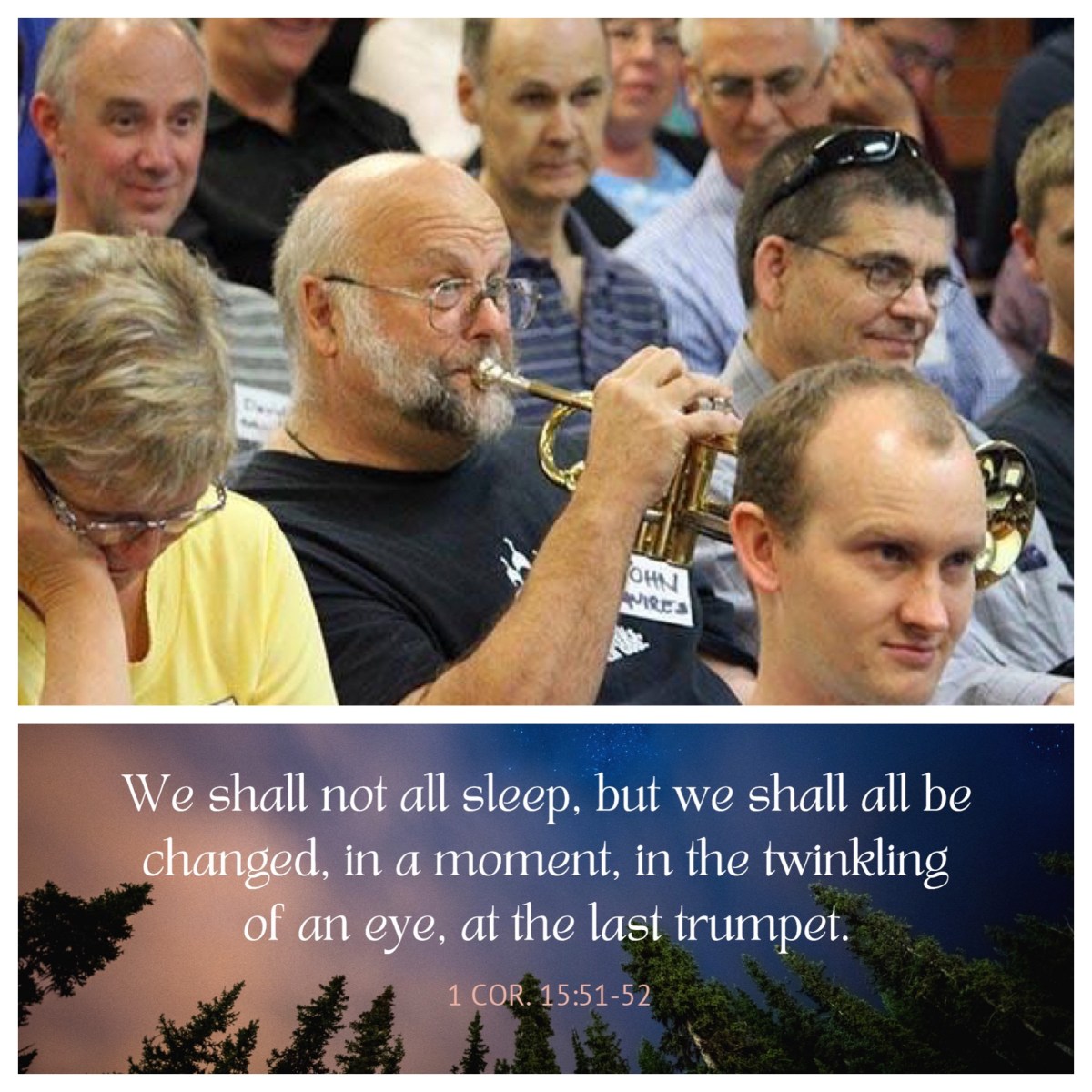
Perishable and imperishable, physical and spiritual, of the dust and of heaven (1 Cor 15; Epiphany 7C)

The “resurrection of the dead ones” (the Greek word translated as “the dead” is plural, reflecting a raising of many believers) was a Jewish belief that had developed in preceding centuries; not all Jews accepted it (see Acts 23:6–8) and amongst some Gentiles there was scepticism about the idea (see Acts 17:32). There was also dispute about this matter in Corinth, resulting in a number of debates about particular aspects of this belief. In the section of 1 Cor 15 dealt with last week, two such matters have been explored, debated, and dispatched.

Thus week the lectionary picks up at v.35, where a third pastoral situation might possibly be indicated. The form employed (a rhetorical question attributed to an indefinite person) was commonly used by a skilled rhetorician to raise an objection which he knew could be raised, allowing it to be dealt with in advance (the same technique is found in Rom 2–6 and 9–11). The question provides an opportunity for further eschatological teachings about the nature of the resurrection body (15:35–50) and a further display of Paul’s rhetorical prowess. 

The issue at stake here is the nature of the resurrection body, identified in an opening pair of questions: “how are the dead raised? with what kind of body do they come?” (15:35). These are not mere rhetorical questions; Paul and Sosthenes fully intend to address such enquiries with a detailed exposition. The weight of the argument, in my mind, lies in a set of contrasts by juxtaposition, advanced in a sequence of logical steps in vv.42–49:

What is sown is perishable / what is raised is imperishable. 

It is sown in dishonour / it is raised in glory. 

It is sown in weakness / it is raised in power. 

It is sown a physical body/ it is raised a spiritual body. 

If there is a physical body / there is also a spiritual body. 

Thus it is written, “The first man, Adam, became a living being”/

the last Adam became a life-giving spirit. 

But it is not the spiritual that is first /

but the physical, and then the spiritual. 

The first man was from the earth, a man of dust; /

the second man is from heaven. 

As was the man of dust, so are those who are of the dust; /

and as is the man of heaven, so are those who are of heaven. 

Just as we have borne the image of the man of dust, /

we will also bear the image of the man of heaven.

The symmetry is certainly poetically and rhetorically satisfying. The argument is a straightforward typology, in which one thing is seen to correspond to another thing on a different plane, or in a different dimension—but also to differ from them: the first man correlates with the second man, but while the first is “the man of dust”, the second is “the man of heaven; and while “the living being” shares the same living existence with “the life-giving spirit”, this being also differs from that spirit.

The language found here draws on terms used by the authors of the letter in earlier chapters. A contrast between “perishable” and “imperishable” has already been made in the discussion of the race in which “all runners compete” in the statement that “athletes exercise self-control in all things; they do it to receive a perishable wreath, but we an imperishable one” (9:25). The perishable reward is the winner’s wreath (9:25), while the imperishable reward is clearly the salvation referred to in an earlier verse (9:22). This language will return in the concluding couplet at the end of the discussion of this particular issue (v.50).

The clear contrast of the saying about the wreath carries over into the discussion in ch.15 where “the perishable” is contrasted with “the imperishable”, and “what is sown” is juxtaposed alongside “what is raised”. This contrast would seem to draw strongly on the Platonic distinction between spirit and flesh, in which the spirit is the realm of ultimate reality, but the flesh represents the prison in which human beings are trapped during this life.

The letter proposes that the former is sown “in dishonour, in weakness”—features characterising sinful humanity—while the latter is raised “in glory, in power”—attributes of the divine. These are the characteristics of “the man of dust”, Adam, who encompasses those who are set to experience death (15:21–22). It is through “the life-giving spirit”, the “last Adam”, that resurrection life is granted (15:45). We might thus consider that the argument here is thoroughly dualistic; the Platonic influence is undoubted. 

So a similar contrast is drawn between “spiritual” and “physical”; this has been an important factor in the argument of the early chapters of this letter. In their opening thanksgiving, Sosthenes and Paul noted that the saints in Corinth “are not lacking in any spiritual gift” (1:7). However, a little later they lament that they could not address them as “spiritual people”, for they still need milk, not solid food, as befits “infants in Christ” (3:1–2). And the exercise of “spiritual gifts” in Corinth, canvassed in quite some detail in ch.12—14, reveals a chaotic exuberance in which the “building up of the assembly” is almost entirely lacking. Perhaps the note in the opening thanksgiving was ironic, then?

Indeed, in one section of the letter (in ch.2), the spiritual / physical contrast is very strong; the contrast is set in stark fashion. First, the human heart is unable to conceive “what God has prepared for those who love him” (2:9, introduced as scripture, most likely paraphrasing Isa 52:15 or Isa 64:4). Accordingly, God’s wisdom is “secret and hidden”, for “no one comprehends what is truly God’s except the Spirit of God” (2:7, 11). 

Thus, there is a clear distinction between “those who are unspiritual”, who “do not receive the gifts of God’s Spirit … and are unable to understand them”, and “those who are spiritual [who] discern all things” (2:14–15). It is the believers in this latter group who have been granted “the Spirit that is from God, so that we may understand the gifts bestowed on us by God” (2:12). The closing word in this section is, “we have the mind of Christ” (2:16, riffing off the affirmation of Isa 40:13).

This spiritual / physical contrast is bound up with the contrasts between wisdom / folly (1:18–25) and weakness / power (1:26–31) that formed the basis for the clarion declaration, “when I came to you, brothers and sisters, I did not come proclaiming the mystery of God to you in lofty words or wisdom; for I decided to know nothing among you except Jesus Christ, and him crucified” (2:1–2). That is the foundation for the message articulated throughout this letter.

Although Paul maintains that “my speech and my proclamation were not with plausible words of wisdom” (2:4), the message that he brought the Corinthians was indeed imbued with wisdom—although he maintains that “it is not a wisdom of this age or of the rulers of this age, who are doomed to perish”; rather it is “God’s wisdom, secret and hidden, which God decreed before the ages for our glory” (2:6–7). In like fashion, whilst Paul declares that he came to the Corinthians “in weakness and in fear and in much trembling” (2:3), there was nevertheless “a demonstration of the Spirit and of power” when he was with them (2:4). 

So there is a deep paradox in this language, for in any one word there can be two related, but quite distinct, meanings. Wisdom is both human and divine; power is both absent and yet present. It is perhaps this paradox, in which qualities overlap and inter-relate, rather than a simplistic dualism of spheres, keeping the two entities far apart, that we might best see in these words of chapter 15. 

Although the language appears sharp and polemical, the contrast is rhetorical rather than existential: wisdom is made foolish in order to convey wisdom, power is rendered weak in order to express power, and spiritual matters are gifted to those whom we might regard as thoroughly physical, fleshly, material, in order that the Spirit might be at work in and through human beings. It’s a paradox.

So here is the paradox at play: it is the expression of spiritual things—the gifts of wisdom, knowledge, faith, healing, miracles, prophecy, discernment, tongues, and interpretation (12:8–10), or the gifts granted to “apostles … prophets … teachers”, as well as “deeds of power, gifts of healing, forms of assistance, forms of leadership, various kinds of tongues, [and] interpret[ation]” (12:28–30)—which are manifested amongst the human beings in the community of faith in Corinth, and indeed in other such communities in other places and other times. There is no fundamental dualism; rather, the spiritual infuses and works in and through the physical. That is the key to the paradox.

So the “man of dust” is but a type for the “man of heaven”; and those who believe, who are “called to be saints” (1:2; see also 6:1–2) share in both images. The “man of dust”, of course, evokes the second version of the creation story, in which “the Lord God formed humankind (ha-adam) from the dust (aphar) of the ground” (Gen 2:7a). And in that verse lies also the seed of the idea that the “man of heaven” would be “a living being” (1 Cor 15:45), for the creation narrative continues, “and [God] breathed into his nostrils the breath of life (nishmat hay-yim); and the man became a living being (nephesh hay-yah)” (Gen 2:7b). The wordplay in Hebrew is delicious!

So the argument presented in 1 Cor 15:42–49 is in fact, in its form, a midrashic exposition of scripture. Its foundation is this twofold portrayal of the “man of dust” and the “living being” (Gen 2:7). Its climax draws from another scripture—this time, from the first creation narrative, which itself reaches its narrative climax in the poetic affirmation that “God created humankind (ha-adam) in his image, in the image of God (betselem elohim) he created them; male and female he created them” (Gen 1:27). 

One final note is that it is Paul’s use of the reference to “the last Adam” (that is, Jesus) as “a life-giving spirit” (1 Cor 15:45) that ties the whole argument into this discussion of resurrection. Spirit and resurrection are closely linked. The same connection is stated quite explicitly by Paul in the letter that he, alone, wrote to the Romans. When he is discussing “those who live according to the Spirit” (Rom 8:5), he declares “the Spirit of him who raised Jesus from the dead dwells in you, he who raised Christ from the dead will give life to your mortal bodies also through his Spirit that dwells in you” (Rom 8:11). The indwelling of the Spirit in the lives of believers is equivalent to the act of “giv[ing] life to your mortal bodies”.

Then, however, the authors conclude their discussion of the resurrection body with a pair of contrasts that make it perfectly clear that resurrection life exists in an altogether different plane from this earthly life: “flesh and blood cannot inherit the kingdom of God, nor does the perishable inherit the imperishable” (1 Cor 15:50). We will think more on this in next week’s blog. 

Suffice to say that, in my mid, this conclusion has lapsed back into the Platonic dualism inherent in the language; but as I have noted, I don’t think this was entirely what Paul (and Sosthenes) actually meant to do. Theologically, in my mind, the kingdom of God is precisely evident in the flesh and blood that characterises ice as we currently know it. Is this not what Jesus meant in his most provocative sayings about the kingdom? 

See also 
The last enemy to be destroyed is death (1 Cor 15; Epiphany 6C)

The lectionary is currently offering sections from the latter chapters of the letter written by Paul and Sosthenes to “those who are sanctified in Christ Jesus, called to be saints” (1 Cor 1:2). In the earlier chapters of the letter, the authors have canvassed a wide range of matters. First, they spend time addressing the serious divisions emerging within the Corinthian community. The letter notes that this matter “has been reported to me by Chloe’s people” (1:11); the singular suggests that Paul has already taken the primary role in writing this letter. It is thought that this must have been a verbal report passed on to Paul and Sosthenes when they met with a group from Corinth, perhaps slaves, sent by Chloe (about whom nothing else is revealed).

A second matter is introduced by a similar phrase, “it is actually reported…” (5:1), although the informant is not named. Some scholars think that the similarity of wording suggests that this news may also have been conveyed by “Chloe’s people”. A little later on, another matter is introduced with the phrase, “now concerning the matters about which you wrote” (7:1). Clearly, there had been written correspondence with Paul, at least, as well as the verbal report already indicated. 

Towards the end of the letter, the authors refer to “the coming of Stephanas and Fortunatus and Achaichus” (16:17). This might suggest that they visited Paul and anyone else with him; a few verses later, there is the note that “Aquila and Prisca, together with the church in their house, greet you warmly in the Lord”, as well as “all the brothers and sisters” who send greetings (16:19–20). 

Perhaps these three emissaries bore a letter from the community (or a section of it), asking for Paul’s opinions about these matters? The fact that their names are Roman names reflecting an educated status, would lend support to this hypothesis. Alongside this, we can also note that Paul personally concludes the letter by writing “I, Paul, write this greeting with my own hand” (16:21). This suggests that a scribe—perhaps Sosthenes?—had actually been writing the letter to this point, most likely using pen and ink to commit the words dictated to them by Paul onto the papyrus. How much (or how little) the scribe would have had input into the letter is not clear.

Regardless of who actually brought this news, Paul and Sosthenes are willing to deal with the matters raised, introducing them in turn by the shorthand formula, “now concerning”. Such matters include “food sacrificed to idols” (8:1), “spiritual matters” (12:1), “the collection for the saints” (16:1), and “our brother Apollos” (16:12). 

The final theological issue which they address in this first (extant) letter to the Corinthians, at quite some length, concerns the resurrection of believers. A rather strong formula is used to introduce a major theological issue at 15:1: “now I would remind you, brothers and sisters, of the good news that I proclaimed to you…”.

The letter considers this matter at length; many scholars regard it as the fundamental problem in the Corinthian community of faith, underlying other issues already explored. From comments later in this chapter (15:12, 15:29, and possibly 15:35), it is clear that divergent views about resurrection were held within the community of faith in Corinth. The response found in this chapter deals with each of them in a theological and rhetorical fashion.

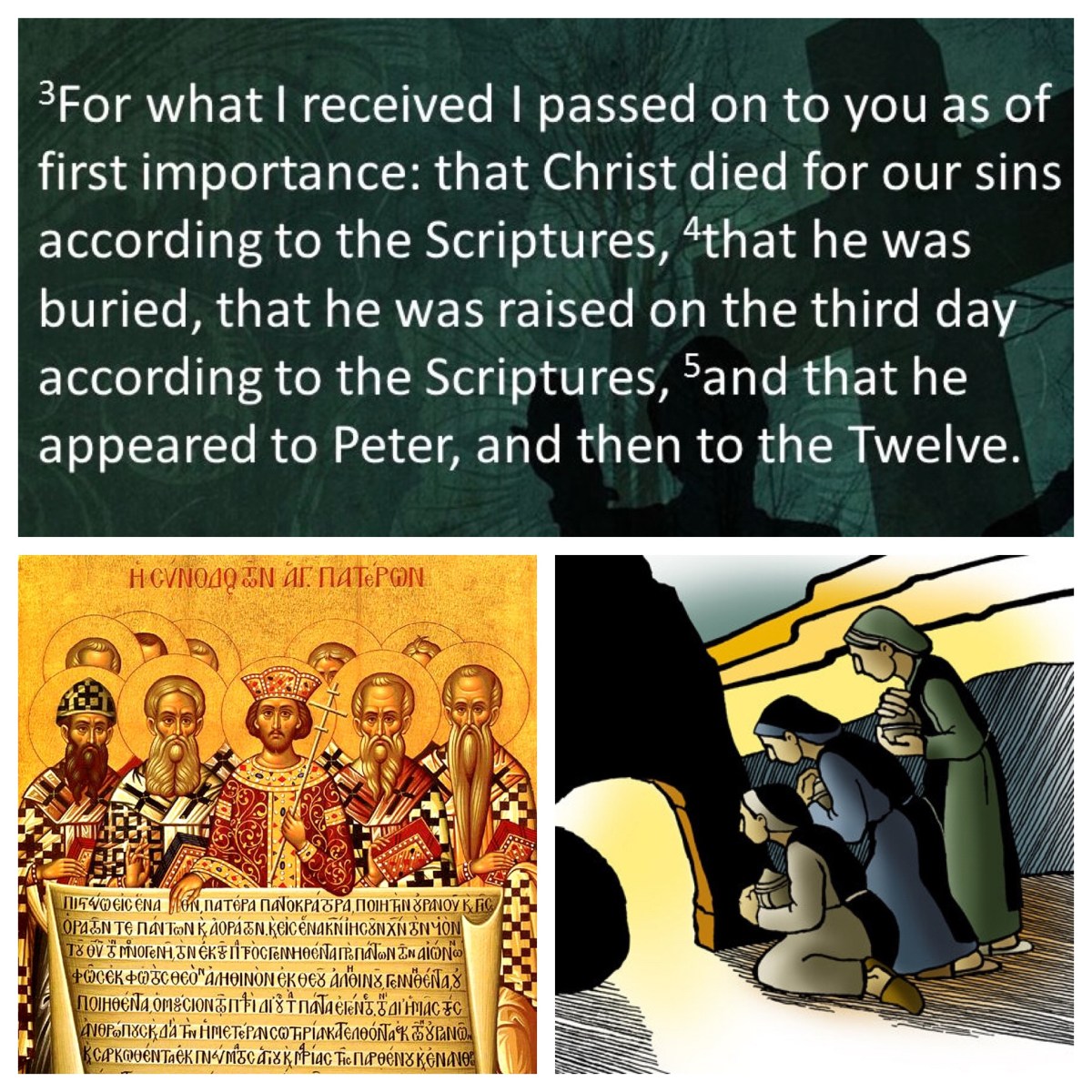
Paul begins dealing with the issue with a series of affirmations concerning the crucifixion and resurrection of Jesus. There is an apologetic tone at the start, as Paul insistently underlines the validity and authority of what he says (15:1–3a). The “good news” which “I proclaimed” is described in technical terms indicating the passing-on of pre-existing tradition: “I received”, “I handed on”, “you received”. It is a matter of “first importance”.

Associated with this is an insistence that the Corinthians “stand” in this news, and must “hold firmly” to it, as the basis for “being saved”. The foundational tradition which is then reported (15:3b–7) is based on an early four-part affirmation of faith: “Christ died … he was buried … he was raised … he appeared …”.

The first and third elements are elaborated with the formulaic “in accordance with the scriptures”. The fourth element, the appearances of the risen Jesus, is extended beyond the list received by Paul (to Cephas, the twelve, more than 500, James, all the apostles; 15:5–7) to include Paul himself (“as to one untimely born”, 15:8), leading on to an assertion of Paul’s apostolic credentials and divinely-assisted activities (15:9–11).

All of this forms a solid foundation for the extended theological discussion that develops in the remainder of this chapter, as Paul explores various aspects of “the resurrection of the dead”. His personal experience of the risen Jesus presumably qualifies him, in his eyes, to develop the argument that unfolds. 

This foundation reaches back to the “theology of the cross” at the start of the letter, where references to the crucifixion and death of Jesus provided a basis for the opening theological discussion of his letter (1:17–18, 22–25; 2:1–2, 7–10). However, Paul does not develop this connection beyond the opening 11 verses of chapter 15. Instead, he moves straight to a consideration of various pastoral situations in Corinth that have arisen regarding the resurrection (15:12–58).

The “resurrection of the dead” (the Greek word is plural, reflecting a raising of many believers) was a Jewish belief that had developed in preceding centuries; not all Jews accepted it (see Acts 23:6–8) and amongst some Gentiles there was scepticism about the idea (see Acts 17:32). 

The community in Corinth contained sceptics (15:12); as a counter-argument to their scepticism the argument which is advanced in this chapter attempts to refute their opinion by setting out a series of logic-based steps. It begins by noting that people question the reality of the resurrection of the one person, Jesus (15:13–16). This leads to the accusation that “your faith is futile” (15:17). Paul and Sosthenes cannot countenance this, so they launch into an exposition of what they see as eschatological realities (15:20–28), explaining the places allocated, at the end, to humans, Jesus, and God. 

Unfortunately, the lectionary omits these verses and jumps next week to v.35, where Paul raises questions which, he says, “someone will ask”, namely: “How are the dead raised? With what kind of body do they come?” In preparing to deal with these questions, Paul employs a rhetorical structure in the first part of this argument (15:21–22) which returns to the pattern of juxtaposing two different entities, which has already appeared in earlier sections of the letter. 

We can see this pattern as follows:

for since death came through a human being / the resurrection of the dead has also come through a human being;

for as all die in Adam  / so all will be made alive in Christ.

An expanded version of this argument takes place in Rom 5:12–21. 

The argument countering Corinthian scepticism continues with an explanation that Christ is “the first fruits”, who has “all things put in subjection under his feet” (15:23–27). But Christ himself is subjected to God; finally, God is “all in all” (15:28). Paul has not proven the resurrection as such, but has explained how it fits into his view of the end days.

This deals with one factor in the Corinthian situation. There follows consideration of a second pastoral situation, raised through the question, “what will those people do who receive baptism on behalf of the dead?” (15:29). Paul abruptly dismisses this with two counter-punching rhetorical questions. First, “if the dead are not raised at all, why are people baptized on their behalf?” (v.29), inferring that such baptism could be completely ineffective. Second, “why are we putting ourselves in danger every hour?” (v.30), diverting attention to the claim that “I die every day!” (v.31). The clear inference is that there is no validity at all in the viewpoint held by those who practice “baptism on behalf of the dead”. 

Then follows a poetic reflection (15:30–34) which includes sayings found in both Jewish and pagan sources, deployed to denounce those who “have no knowledge of God” (15:34). First, there is a reference to Hebrew scripture where the words “let us eat and drink, for tomorrow we die” are found (Isa 22:13). In the context of the prophet, this saying refers to the sinners among “my beloved people” who are doomed for destruction (Isa 22:4) in the “day of tumult and trampling and confusion in the valley of vision” (Isa 22:5). Their fate is sealed; they can be only fatalistic. 

The way it is used in 1 Cor 15, however, is that it conveys the nihilistic attitude of those who believe that “the dead are not raised”. They, too, exude a fatalistic attitude to life—perhaps echoing the fatalism of the Preacher, who reiterates the declaration that “there is nothing better for mortals than to eat and drink” (Eccles 2:24; 3: 3; 5:18; 8:15; 9:7), as befits his overarching view, “vanity of vanities … all is vanity” (Eccles 1:2;  12:8). This existential nihilism is where Paul places those in Corinth who refuse to accept the notion of resurrection.

Then, in 1 Cor 15:33, a saying is found in Greek poetry is quoted. The King James Version rendered this saying “evil communications corrupt good manners”, inclining us to understand that those who received these words from Paul were being warned to be careful with their words, for the constant repetition of an immoral saying might well,condemn a person to an immoral life.

However, the NRSV more accurately renders this saying as “bad company ruins good morals” (1 Cor 15:33); the Greek word here translated as “company” is homilia, which can simply mean communicating with someone, being associated with someone such as a close companion; or a more complex sense of exchanging intimate ideas, thoughts, and feelings through communion with another. 

The words quoted are taken from the works of Menander, in a play called Thais which exists today in only a few small fragments. Thais was the companion of Ptolemy and held a powerful position in his court; in delivering a powerful speech to Alexander the Great during a drunken banquet, she convinced him to burn down the palace of Persepholis. (The story is told by Plutarch in his Life of Alexander book 38, and by  Diodorus Siculus in his Universal History 17.72.) 

Perhaps by quoting just a line from the play, Paul and Sosthenes were intending to evoke the scene of the drunken banquet at which Thais spoke. The affirmation that good morals are ruined by associating with bad company sits well with the licentious ethos conveyed by the saying  “eat and drink, for tomorrow we die”. This is precisely the trap that some in Corinth have fallen into. So this section ends with the exhortation, “come to a sober and right mind, and sin no more” (15:34), and with the clear inference that, to their shame, there are some within the community who “have no knowledge of God”. Paul and Sosthenes are not willing to back down on their criticism of the Corinthians!

See also
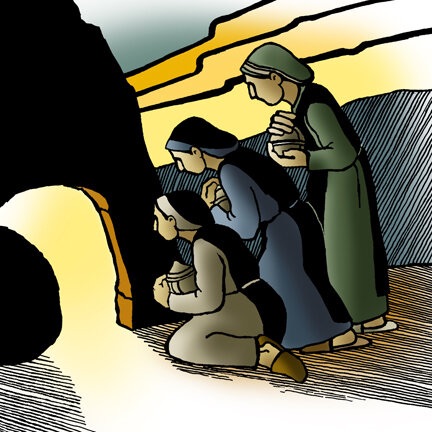
Receiving and passing on a living tradition (1 Cor 15; Epiphany 5C)

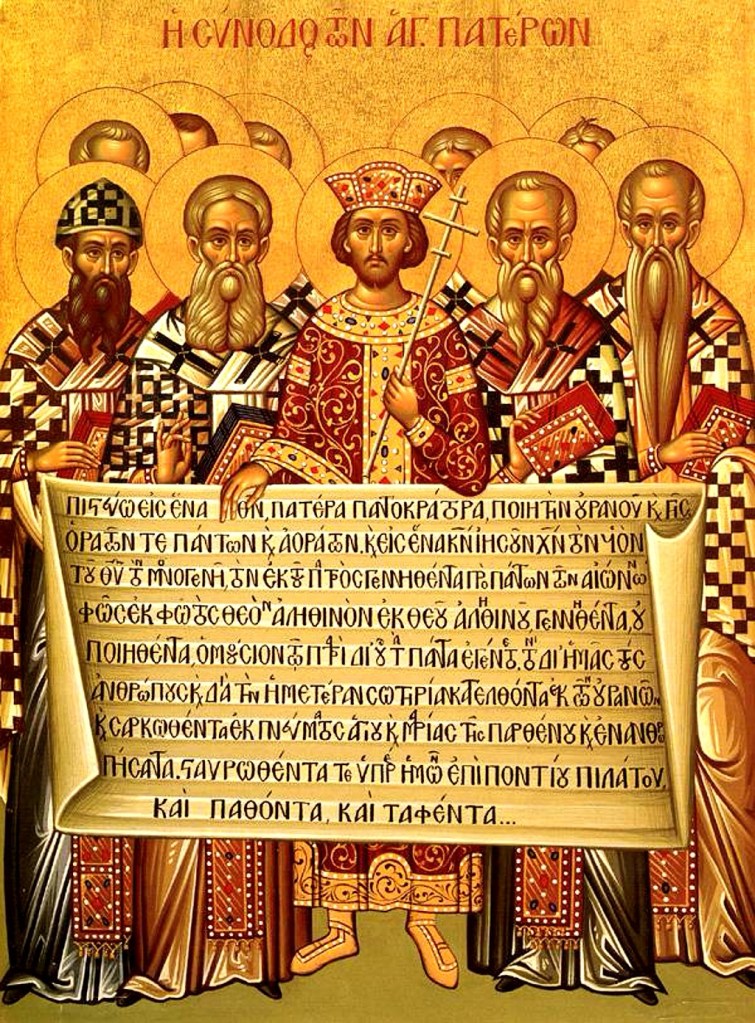
In the verses proposed by the lectionary for this coming Sunday, we come to a central claim of Christian faith. As the fourth century Apostles Creed puts it: we believe in Jesus Christ … who suffered under Pontius Pilate, was crucified, died, and buried, descended into hell, rose again on the third day, ascended into heaven, and is seated at the right hand of God. Four of those claims (crucified, died, buried, rose again) are articulated in the passage from this first letter to the Corinthians that we will hear on Sunday (1 Cor 15:1–11).

What is the nature of the confessional affirmation that Paul and Sosthenes offer in this passage? The previous chapters of 1 Corinthians have alerted us to the disorganised ethos of the community in the cosmopolitan port city of Corinth. Those earlier chapters have indicated a number of problems that existed within the community of followers of Jesus. There was factionalism (chs.1–4), immorality (ch.5), resorting to civil lawsuits (ch.6), and dissension regarding marriage, celibacy, and sexuality (ch.7). There were differing attitudes towards consuming meat bought in the marketplace after it had been offered to idols (chs.8–10), and multiple issues that manifested in their gatherings for worship (chs.11–14). 

The letter proceeds by addressing each of these matters in turn, all undertaken with the same intention, to bring about order in the midst of the chaos that existed in Corinth. His words in the midst of the lengthy discussion about marriage, celibacy, and sexuality state his purpose with clarity: “I say this for your own benefit, not to put any restraint upon you, but to promote good order and unhindered devotion to the Lord” (7:35).

The disorder and chaos evident in worship, in particular, led Paul and Sosthenes, in the chapter immediately preceding this passage, to advise the Corinthians to seek to speak to others in worship “for their upbuilding and encouragement and consolation” (14:3). The letter writers advise them to exercise their spiritual gifts appropriately; to “strive to excel in them for building up the church” (14:12), to “not be children in your thinking … but in thinking be adults” (14:20). Their advice is, “let all things be done for building up” (14:26), noting that “all things should be done decently and in order” (14:40), for “God is a God not of disorder but of peace” (14:33). 

People speaking over the top of each other in worship, not attending to important words of prophecy and tongues, reflected the disordered chaos of the apparently quite libertine community. The infamous words ordering women to “keep silent” (14:33b—36), along with the adjacent commands to “keep silent” while one interprets tongues that are spoken (14:27–28) and “keep silent” to those seeking to offer a word of prophecy while others are still prophesying (14:29–31), are included in this letter precisely to address this chaotic disorder. And not for the first time in this letter, Paul invokes his higher authority to support his directions: “[you] must acknowledge that what I am writing to you is a command of the Lord” (14:37; see also 5:3–4; 7:40; 10:20–22; 11:27–28; 16:10; and cf. 7:25).
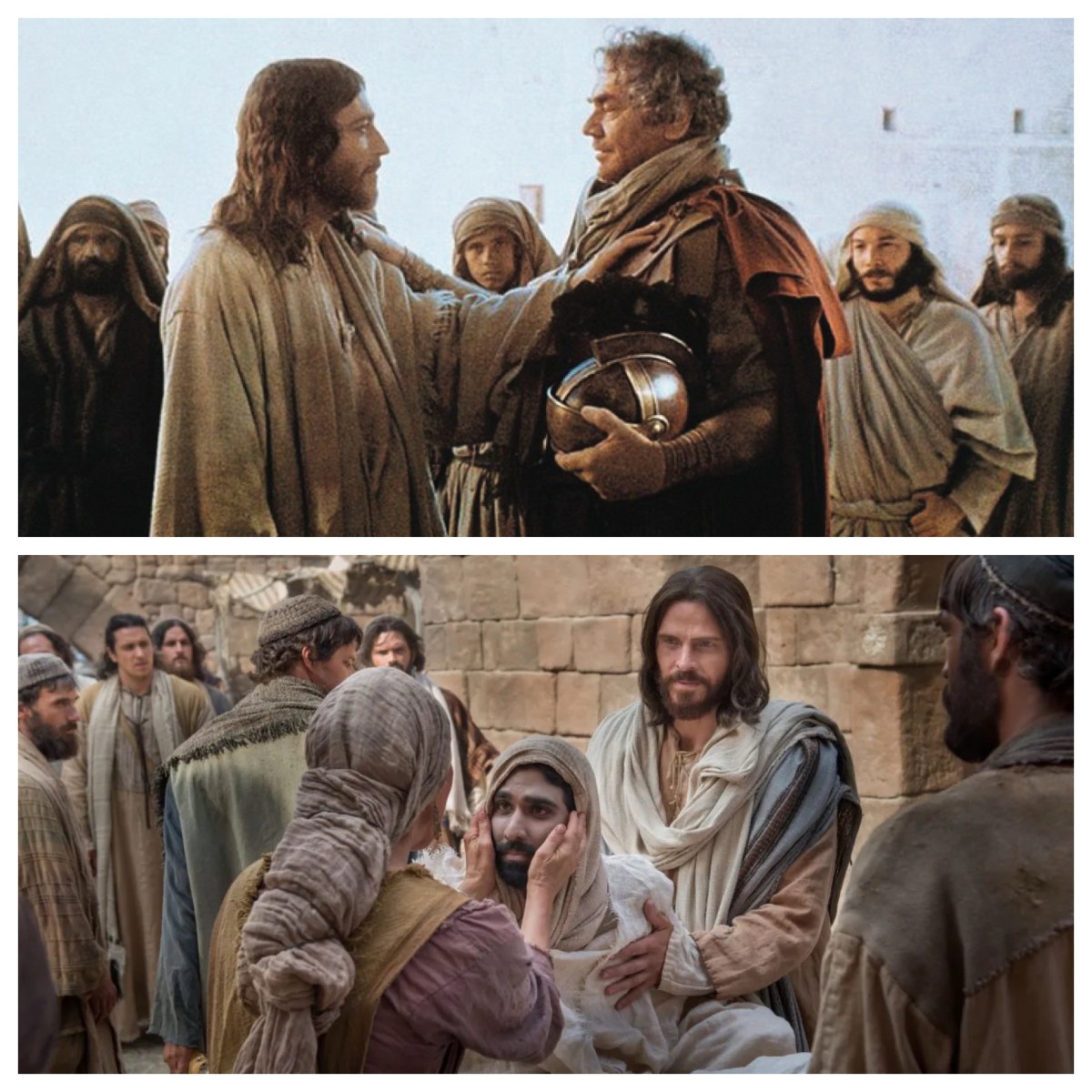
Immediately after this extensive discussion about worship, Paul and Sosthenes turn to the foundational message about Jesus, in a four-part statement: Christ died—was buried—was raised—and then appeared to various people (15:3–5). He uses terms that denote the passing on of traditions: “I received … I handed on … which you received … in which you stand” (15:1); and he insists on the importance of what he passes on: “you are being saved, if you hold firmly to the message that I proclaimed to you” (15:2). These two verses provide a strong, insistent introduction to what follows in the ensuing verses.

We see this dynamic also in an earlier chapter, in the familiar words associated with the Last Supper: “I received from the Lord what I also handed on to you” (1 Cor 11:23), as well as in the commendation of the Corinthians as they “maintain the traditions just as I handed them on to you” (11:2).

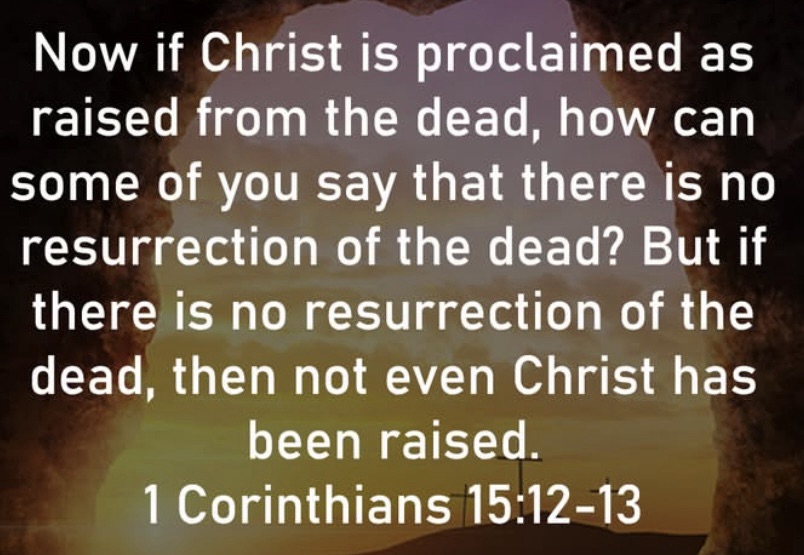
The core tradition that Paul and Sosthenes cite is the fourfold declaration that Jesus died, was buried, was raised, and appeared (vv.3–5). It may have already have been an existing formula; we know that Paul, in this letter that he wrote with Sosthenes, as well as in other letters, was willing to make use of very short credal-like statements that it is likely had already been developed by others, some of which he cites in order to refute, such as: “is well for a man not to touch a woman” (7:1), “all of us possess knowledge” (8:1), “all things are lawful” (10:23), and “how can some of you say there is no resurrection of the dead?” (15:12).

There are other succinct sayings which appear as the basis for further developments in the argument being made, such as “I decided to know nothing among you except Jesus Christ, and him crucified” (2:2), “knowledge puffs up, but love builds up” (8:1), “there is no God but one” (8:4), and “all things are lawful, but not all things build up” (10:24). The discussion of factions in chs.1–4 is built off “I belong to Paul … I belong to Apollos … [but] what then is Apollos? what is Paul?” (3:4–5), while Paul’s lengthy discussion of spiritual gifts (12:4—14:40) jumps off from the unspiritual “Jesus be cursed!” and the spirit-inspired response, “Jesus is Lord” (12:3).

Furthermore, Paul writes a number of longer credal-like statements, some of which seem shaped for liturgical usage: the words which became the “words of institution” in the church’s eucharistic practice (1 Cor 11:23–26), and others such as Rom 8:28; 2 Cor 4:14; Gal 1:3–5; Phil 2:6–11. The writers in the school of Paul who later wrote letters claiming to have his authority ( the “pastoral epistles”) followed this practice (see 1 Tim 2:5–6; 3:16; 2 Tim 2:11–13; Titus 2:11–14).

Two clauses in this tradition-based affirmation of 1 Cor 15:3–5 are buttressed by reference to scripture, another voice of authority alongside “the tradition”. What the specific scripture passages are, Paul and Sosthenes do not state; this has left open the door for speculation by later interpreters. 

Supporting arguments by reference to scripture is not unknown in Paul’s writings; as a Pharisee, he had attained a good awareness of Torah and its application to life (see Gal 1:14; Phil 3:5–6). He bases his magnum opus, Romans, on a scripture citation (Rom 1:17, citing Hab 2:4) and there is barely a chapter of this letter that does not contain scripture quotations and allusions in abundance. 

Key moments in 1 Corinthians are likewise supported by verses from Hebrew Scripture (1 Cor 1:19, 31; 2:9, 16; 3:19–20; 14:21; 15:54–55), and the well-known “words of institution” themselves (11:23–26) reference the tradition which emerges in later decades in the Synoptic Gospels, recording the words of Jesus himself at the last supper (Mark 14:22–25; Matt 26:26–29; Luke 22:14–20).

By using the terminology of traditions being received and handed on, Paul and Sosthenes are reining in the wayward Corinthians, recalling them to the fundamentals of their faith. So he sets out the dynamic of died—buried—raised—appeared (15:3–5) as the foundation for then discussing, in the remainder of the chapter, issues associated with the resurrection of Jesus (15:6–58).

Who saw the risen Jesus? First, Paul and Sosthenes tell of an appearance to the early leaders, Cephas (Peter) (v.5) and James (v.7)—although none of these appearances are reported in any Gospel.

Then, they indicate that Jesus appeared to “the twelve” (v.5) and “all the apostles” (v.8)—apparently alluding to narratives found in the later texts of three Gospels Matt 28:16–20, Luke 24:33–48; John 20:19–23, 24–29; 21:1–14. (The appearances narrated in the shorter and longer endings of Mark, added after 16:8, are not relevant; these are later patristic additions based on the other three Gospels, designed to harmonise the ending of Mark with these others.) Acts 1:6–11 might also be relevant here.

An interesting question is, how did he distinguish between these two groups—“the twelve” on the one hand, and “all the apostles” on the other. Indeed, these terms appear to be inherited by the letter writers from earlier traditions. This is the only place in all Pauline letters which refer to “the twelve”; and besides, the Gospel narratives noted above do not have Jesus appearing to “the twelve”, as Judas was absent from all of them, and so was Thomas in John 20:19–23. 

As far as the word “apostle” is concerned, in 16 of the 18 occurrences in the Pauline corpus (including those not authentic to Paul) Paul explicitly apply the term to himself. Paul acknowledges others as apostles: James (Gal 1:19), Peter (Gal 2:8), perhaps Barnabas (1 Cor 9:1, 5–6), an unspecified number of believers who were given gifts to be apostles (1 Cor 12:28–29; see also Eph 4:11), and most strikingly, Andronicus, a male, with Junia, a female (Rom 16:7). Are these the people that Paul has in mind at 1 Cor 15:8? Or is this simply a phrase inherited from the tradition, which Paul has repeated?
Next, Paul and Sosthenes identify an appearance to “more than five hundred brothers and sisters at one time” (v.6), which again has no place in any Gospel account. Last, Jesus appears to Paul himself (v.8), which he briefly reports at 1 Cor 9:1 and Gal 1:1. Strikingly absent from his list is the empty tomb and the appearances to Mary in the garden (John 20:14), to the women as they left the tomb (Matt 28:9–10), to the two travellers to Emmaus (Luke 24:15), or to the seven fishing by the Sea of Tiberias (John 21:1–4). What a perplexing inconsistency between the various testimonies to these appearances!!

This is an early collection of “witnesses to the resurrection”; Paul and Sosthenes wrote to the Corinthians in the mid 50s. But there is no mention of what was important to all four evangelists, writing in later decades: the women at the empty tomb and the role that women played in bearing testimony to the risen one. Is this accidental? or deliberate? Given what we have noted about 1 Corinthians as a whole—and especially what ch.14 reveals about the disorderly behaviour of Corinthian women—we might well wonder, are Paul and Sosthenes shaping the received tradition to “fit the context” already at this early stage? It is a tantalising suggestion.

There is a wonderful quote that is pertinent to this issue, which is attributed to Gustav Mahler, the late 19th century Austro—Bohemian composer: “Tradition is not the worship of ashes, but the preservation of fire.” These words indicate that if tradition stands still, it will run out of momentum and fizzle out of energy. Tradition always needs to be reinvigorated and renewed, in the way that fire sizzles and snaps as it continually changes its shape and form. 

And that’s a fine thought for us to have as we consider the resurrection of Jesus. As the Apostles Creed affirms, echoing 1 Cor 15:3–5, we believe in Jesus Christ … who was crucified, died, and was buried … who rose again from the dead on the third day. We need to renew and rekindle that tradition, to find fresh ways to understand and proclaim that mysterious happening, which sits at the heart of classic Christian confessions.

I’ve offered my own initial reflections on precisely that task in this blog:

See also
 

Appropriating prophetic passages in the season of Epiphany (Epiphany 4C to 7C)

Every Sunday throughout the Christian year (save for the six Sundays in the season of Easter), the Revised Common Lectionary provides a passage from Hebrew Scripture as the First Reading in the set of four readings for that Sunday. (During Easter, a passage from Acts stands as the First Reading, providing stories from the early years of the movement which Jesus founded.)

Each year, during the season of Epiphany, the First Readings relate to the prophetic figures of ancient Israel. In Year C (this year), they are drawn from the books of Isaiah and Jeremiah. I think we need to be wary how we hear and interpret these prophetic passages. There is often a temptation to hearvthesemoldermreadings and argue that, because of what the Gospel passage says, they have now been “ fulfilled” in Jesus. 

That’s a danger that we should work carefully to avoid—for if we simply take Hebrew Scriptures as providing the “set up” which is being “fulfilled” in Jesus, we are running the risk of an inappropriate appropriation of the older texts. It’s a path that can lead us to a supercessionist attitude towards Hebrew Scriptures and, by extension, to Judaism. (By supercessionism I mean “the belief that Christians have replaced Jews in the love and purpose of God”.) This post is designed to steer us in a different direction.

Each year, the Feast of Epiphany includes Isaiah 60:1–6 as the First Reading. In this passage, the prophet foresees that “nations shall come to your light, and kings to the brightness of your dawn” (Isa 60:3); he specifies that when they come to the light of the Lord, “they shall bring gold and frankincense, and shall proclaim the praise of the Lord” (Isa 60:6). The reason for reading this on Epiphany is obvious—it correlates well with the story in Matthew of when the magi came to visit Jesus, and “they offered him gifts of gold, frankincense, and myrrh” (Matt 2:11).

The first Sunday after the Feast of Epiphany is always the day on which the Baptism of Jesus is recalled. One year (Year B) places the beginnings of the priestly creation account (Gen 1:1–5) alongside this Gospel story. In the other two years, passages from Second Isaiah are offered; for this year, Year C, this is Isaiah 43:1–7, which includes the affirmation, “do not fear, for I have redeemed you; I have called you by name, you are mine; when you pass through the waters, I will be with you” (Isa 43:1b—2). The presence of water in both of these passages seems to be the reason for their linking with the baptism of Jesus.

The sequence of passages will continue with selections from Third Isaiah (Isa 62:1–5, Epiphany 2C), First Isaiah (Isa 6:1–13, Epiphany 5C), and two excerpts from Jeremiah (Jer 1:4–10, Epiphany 4C, and Jer 17:5–10, Epiphany 6C). A section of Nehemiah 8 is offered on Epiphany 3C, while the sequence concludes with a story recounting the moment when Joseph revealed himself to his brothers when they had come to Egypt (in Gen 45) on Epiphany 7C.

I think it is noteworthy that two of these passages relate specifically to “call”. For Epiphany 4C, the call of the young prophet Jeremiah is placed alongside the Lukan account of the reception accorded to the young(ish) Jesus when he spoke at the synagogue in his home town.  Jeremiah is told by the Lord that the message he will speak to his people will be about “to pluck up and to pull down, to destroy and to overthrow, to build and to plant” (Jer 1:10). It won’t be a straightforward task for Jeremiah—as the rest of the book reporting his oracles confirms.

In like manner, Jesus is initially met with amazement “at the gracious words that came from his mouth” (Luke 4:22). However, after he recounts older stories in which he commends the faith of outsiders (a widow of Zarephath, a leper of Syria), the people turn on him, “drove him out of the town, and led him to the brow of the hill on which their town was built, so that they might hurl him off the cliff” (Luke 4:29). The duality of positive and negative responses, evident throughout the ministry of Jesus, is signalled in this early, programmatic incident.

For Epiphany 5C, when the Gospel moves on the recount the call of Simon Peter and those who were fishing with him (Luke 5:1–11), the Hebrew Scripture passage placed alongside this is the narrative of the call of Isaiah (Isa 6:1–13). Simon and his fellow fishermen were beside the lake of Genessaret, while Isaiah was in the Temple in Jerusalem.  Both men, however, recognize that they are in the presence of an awesome power. Isaiah cries out, “Woe is me! I am lost, for I am a man of unclean lips, and I live among a people of unclean lips; yet my eyes have seen the King, the Lord of hosts!” (Isa 6:5). Simon Peter “fell down at Jesus’ knees, saying, ‘Go away from me, Lord, for I am a sinful man!’” (Luke 5:8). 

Isaiah’s commissioning alerts him to the reality that those to whom he speaks will be struck with incomprehension; they will “not look with their eyes, and listen with their ears, and comprehend with their minds, and turn and be healed” (Isa 6:10). His role will be to call for repentance from a sinful people. Simon Peter is given the charge, “from now on you will be catching people” (Luke 5:10).  That imagery also refers to the reality that in the prophetic rhetoric of years past, the metaphor of fishing for a human being has indicated the means of carrying out the judgement of God (Jer 16:16–18; Hab 1:14–17; Ezek 29:4–5). See 
The two Hebrew Scripture call narratives thus inform and enrich the Gospel passages that are heard alongside them on those days. A similar dynamic is at work on Epiphany 6C, when the Gospel offers a set of blessings and curses spoken by Jesus (Luke 6:20–26). Alongside this is a pair of sayings, a curse and a blessing, that Jeremiah spoke  to Israel: “cursed are those who trust in mere mortals … blessed are those who trust in the Lord” (Jer 17:5–8). Both Jeremiah and Jesus address their contemporaries with a challenge through their words. The challenge is to meet the testing of the Lord (Jer 17:10) and to receive the “great reward” awaiting in heaven (Luke 6:23).

And perhaps the tale of reconciliation told in Genesis 45 dramatically illustrates the central theme of the words of Jesus which are offered on Epiphany 7C: “love your enemies, do good, and lend, expecting nothing in return … be merciful, just as your Father is merciful” (Luke 6:35–36). Joseph exemplifies what Jesus teaches.

As I noted above,  I think there is always a temptation to hear a passage from the older scriptures, inherited from the ancient stories of Israel, as being “fulfilled” in a story told in the later scriptures, formed by the early Church. This pattern draws on a flat reading of the statement by Jesus that “everything written about me in the law of Moses, the prophets, and the psalms must be fulfilled” (Luke 24:44). It fosters a perspective that sees everything in Hebrew Scriptures as material that Jesus “brought to fulfilment”. It contains an implicit ideology that anything that took place in Judaism was “incomplete” and “in need of fulfilment”. The pathway into supercessionism is clear. For further discussion of supercessionism, see https://johntsquires.com/tag/supercessionism/

By contrast, I think that each of these paired passages can be read in a way that accords greater value to the Hebrew Scripture texts. I am reminded of what Richard B. Hays has written about in his book Echoes of Scripture in the Gospels (Baylor, 2017). Hays describes what he labels as figural reading, which is to read back from the Gospel into the older texts and see patterns and figures at work that may not have been evident at the time they were created.

The later texts in the New Testament can throw light on the passages in Hebrew Scripture, without insisting that hey “predict Jesus” and are “fulfilled” in Jesus. We can notice, not only how the NT writers shaped their words in ways that drew from Hebrew Scripture passages, but also how the internal dynamics in the later texts both utilise and illuminate those earlier passages, drawing forth from them new levels of meaning.
As the blurb for this book states, “He shows how each Gospel artfully uses scriptural echoes to re-narrate Israel’s story [and] to assert that Jesus is the embodiment of Israel’s God.” I think that is a really helpful way to think about how the paired passages work together, informing and enlightening each other. And that’s an appropriate thing to be looking for in those season of Epiphany—mutual understanding and enlightenment!
The greatest of these is love (1 Cor 13; Epiphany 4C)

For the passage to be read and heard this coming Sunday, the Lectionary has proposed what is perhaps the most well-known part of the first letter to the Corinthians that Paul wrote together with Sosthenes: the chapter on love (1 Cor 13:1–13). Paul and Sosthenes wax lyrical about love, telling the Corinthians that love “bears all things, believes all things, hopes all things, endures all things; love never ends” (13:7–8), and builds to a wonderful rhetorical climax in which he affirms that “faith, hope, and love abide, these three; and the greatest of these is love” (13:13).

As well as being a rhetorical tour de force, and the most beloved part of this letter of Paul, this chapter is also, in my view, the most misunderstood and misused chapter of this letter—as I will attempt to explain below.

It is clear from the description that is offered by Sosthenes and Paul that, when the community in Corinth gathered for worship, there was a high degree of disorder manifested. They devote four chapters of their letter to this issue (11:1—14:40). Throughout this section of the letter, Paul and Sosthenes write with a single focus in mind; they write to bring order and decency to this situation (14:40). 

The two letter writers begin their consideration of the disorder evident in the community by asserting the importance of maintaining “the traditions just as I handed them on to you” (11:2), reminding them of words that “I received from the Lord” and duly “handed on to you” (11:23). They instruct the Corinthians to seek to speak to others in worship “for their upbuilding and encouragement and consolation” (14:3). 

They advise them to exercise their spiritual gifts appropriately; to “strive to excel in them for building up the church” (14:12), to “not be children in your thinking … but in thinking be adults” (14:20). They continue, “let all things be done for building up” (14:26), noting that “all things should be done decently and in order” (14:40), for “God is a God not of disorder but of peace” (14:33). 

The hymn in chapter 13 is an integral part of that overarching purpose. As well as his reminder of “the traditions just as I handed them on to you” (11:1), Sosthenes and Paul assert that they must acknowledge that “what I am writing to you is a command of the Lord” (14:37). Drawing from various authorities, they allude to scriptural ideas (11:3, 7–9, 10; 14:4), directly cite Hebrew scripture (14:21, 25), refer to the words of Jesus (11:24–25), claim the precedent of nature (11:14) and church custom (11:16), and in a controversial passage, they refer to what takes place “in all the churches of the saints” (14:33b–34). 

Chapter 12 contains an adaptation of an image which was extensively used in political discussions about the city state (“the body is one and has many members”, 12:12) as well as what may be a reference to a developing baptismal liturgy within the early church (“we were all baptised into one body”, 12:13) and a very early creedal statement (“Jesus is Lord”, 12:3).


Throughout these chapters, those who are inclined to diverge from the commands given by Sosthenes and Paul are portrayed in negative terms: they are “contentious” (11:16), showing “contempt” (11:22), acting “in an unworthy manner” (11:27) and with “dissension” (12:25); their behaviour conveys dishonour (12:22–26) and shame (14:35). 

The selfish behaviour of some at the common meal warrants their condemnation (11:32) and justifies the illness and death that has occurred within the community (11:30). The individualistic participation of others in communal worship builds up themselves, but not others (14:4, 17); they are not intelligible in speech (14:9), but are unproductive in their minds (14:14) and childish in their thinking (14:20), leaving themselves open to the risk, “will they not say that you are out of your mind? (14:23).

In the centre of this section stands the famous “hymn to love” (12:31–13:13), now often treated in isolation and over-romanticised. In context, the passage provides a sharp, pointed polemic against the Corinthian community. The qualities they possess are consistently inadequate when measured against love. 

The speech of the Corinthians is like “a noisy gong or a clanging cymbal” (13:1), an allusion to the mayhem brought about by speaking in tongues in worship (1:5; 12:10, 28–30; 14:6–8). Whilst they readily express their “prophetic powers” in worship (11:4–5; 12:10, 28–30; 14:1, 4–5, 23–24, 29–32, 37, 39), for Paul and Sosthenes, these abilities are nothing without love (13:2). 

Likewise, they claim that they are able to understand mysteries (2:7; 4:1; 14:2, 23) and have knowledge (1:5; 8:1–3, 7, 10, 11; 12:8; 14:6) as well as faith (2:5; 12:9; 15:14, 17; 16:13); but Paul and Sosthenes insist that all of these are nothing in isolation from love (13:2). 

Elsewhere in this letter there are direct accusations to the Corinthians that they are precisely what love is not. Love does not boast (13:4), but the Corinthians are regarded as being boastful (1:29; 3:21; 4:7; 5:6). Love is not arrogant (13:4), but in the eyes of Sosthenes and Paul the Corinthians are arrogant or “puffed up” (translating the same Greek word in 4:6, 18–19; 5:2; 8:1). 

Love does not rejoice in wrongdoing (13:6), but Paul and Sosthenes berate the Corinthians for taking fellow-believers to court to seek redress for wrongs; indeed, “you yourselves wrong and defraud—and believers at that” (6:7–8). Love means that people do not insist on their own way (13:5), but they consider that the way that some behave in relation to meat offered to idols in the marketplace advantage; “do not seek your own advantage”, they advise them, “but that of the other” (10:24). 

In like manner, when they gather to celebrate the supper of the Lord, “when the time comes to eat, each of you goes ahead with your own supper, and one goes hungry and another becomes drunk” (11:21). Selfishness and acting without regard for the other characterises their common life. 

Love “hopes all things” (13:7), but some in the community at Corinth are accused of failing to share in the hope of the resurrection (15:12–19). The assertion that “we know only in part” (13:9–10) is directed squarely against the Corinthian claim to have full knowledge (8:1, 10–12) whilst the image of the child, not yet adult (13:11), reflects criticism levelled by Sosthenes and Paul against the Corinthians, whom they see as infants, not yet ready for solid food (3:1–2; 14:20). 

So the hymn alleged to be in praise of love is, more accurately, a polemical censure of the Corinthians’ shortcomings, in which every word used and every phrase shaped by Paul and his co-writer Sosthenes cuts to the heart of the inadequacies of the Corinthian community. Try preaching that at a wedding!!