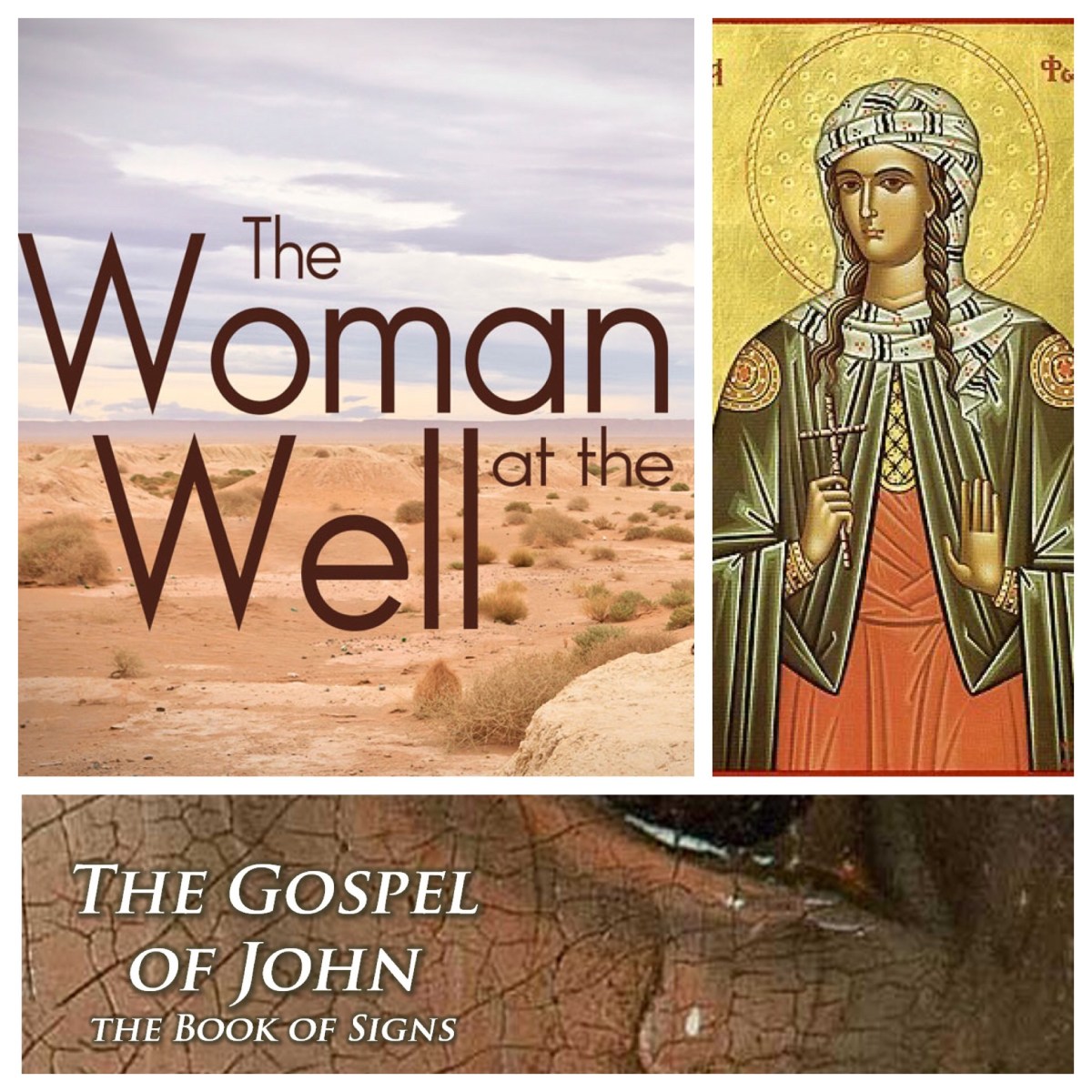
In the most unlikely way … touching the untouchable (John 9; Lent 4A)

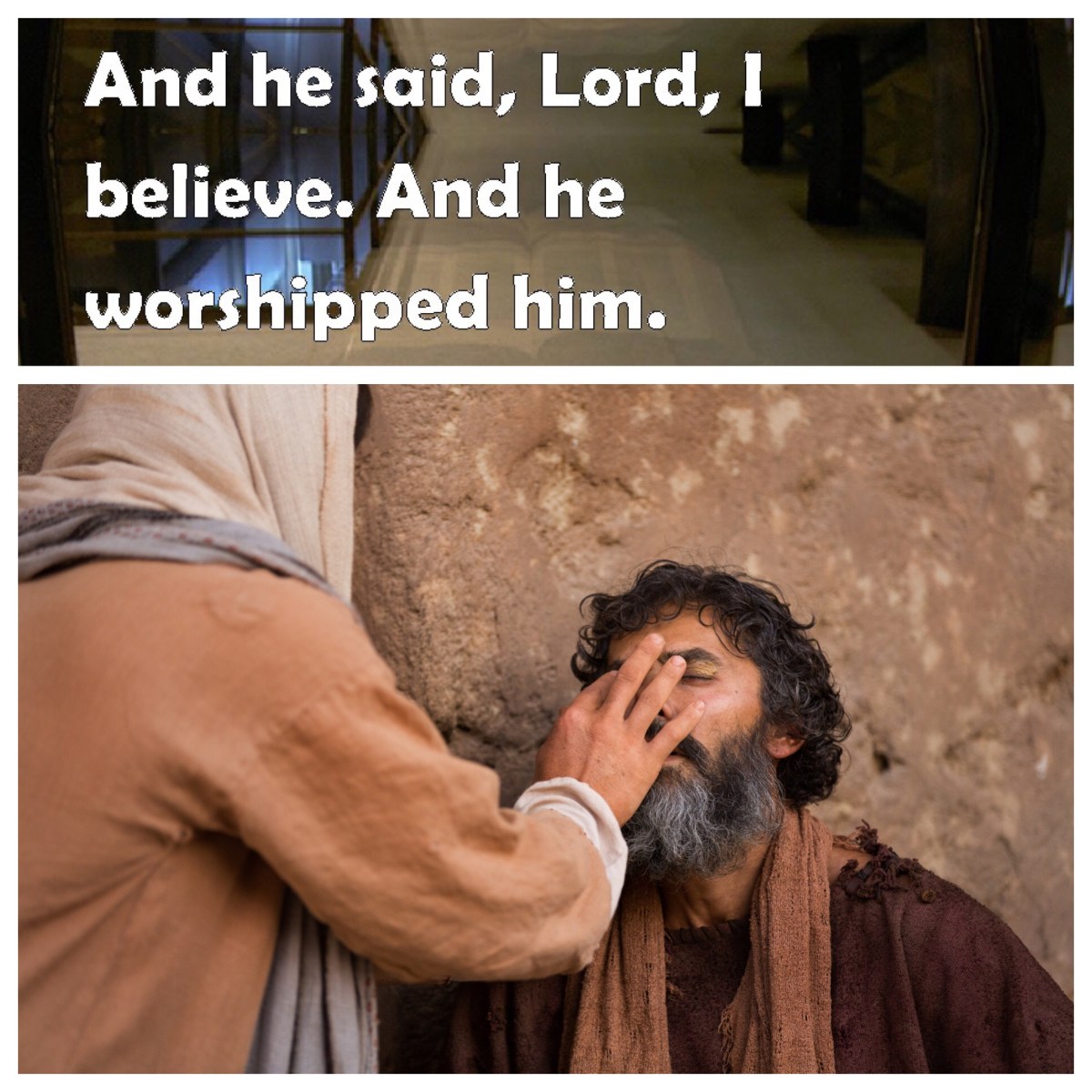
“Lord, I believe.” And he worshipped him. (John 9:38)

So said the man born blind, whom Jesus encountered, and healed, in Jerusalem (John 9:1-41).

What causes this man to make his bold public confession of faith in Jesus? The book of signs recounts the way that his turnaround took place, when he encountered Jesus. The disciples of Jesus want to quibble about the cause of his blindness: was he a sinner? was he being punished for the sin of his parents? (9:2).

Jesus, however, is not diverted by this theological consideration; he moves quickly and directly to heal the man (9:3-7). It is this healing which leads him to confess faith in Jesus.

In so doing, he stands in the most unlikely company, amongst other unlikely characters who confess faith in Jesus. For my reflections on the significance of this man’s confession of faith in the context of the book of signs as a whole, see https://johntsquires.com/2020/03/17/in-the-most-unlikely-company-confessing-faith-in-jesus-john-9/

Further than this, the man is healed in a most unlikely way. Other healings performed by Jesus and reported already in this Gospel have taken place simply by his word of command (4:47-52; 5:6-9).

This one is different; it involves two distinctive features, both of which push against the boundaries of expected behaviour within the ancient Jewish context. Jesus uses spittle mixed with dirt to make mud, and then he physically touches the blind man as he applies that mud to his eyes (9:6).

Were these actions of Jesus seen as breaching ancient Jewish protocols relating to holiness? The man was blind; traditionally, that made him unclean under the prescriptions of the Law. Blind people were amongst the groups identified as prohibited as acting as priests in the Jerusalem Temple (Lev 21:17-21). Likewise, no blind animals could be presented as offerings for sacrifice in the temple (Lev 22:22; Deut 15:21). Blindness signalled incompleteness. Conversely, one of the promises involved in the vision of eschatological hope, at the end of time, is the removal of blindness (Isa 29:18; 35:5; 42:7).

When Jesus touches this blind man, we may consider that he is identifying himself with the man in his state of incompleteness. If that is so, Jesus appears to be deliberate in breaching that boundary by directly touching the eyes of the blind man. At the very least, he is enacting, in the present time, the eschatological hope, that the blind will see (compare Matt 11:2-6; Luke 7:18-23).

There are twelve times across the four Gospels when Jesus touched a person that he healed (and four times when people reached out to touch Jesus as they sought his healing powers). This occasion, in John 9, is the one and only time in this Gospel that Jesus touched a person when he healed them. In this regard, it is a distinctive story.

What is even more distinctive in this incident is the use of spittle: it appears only here in this Gospel—although Jesus is also reporting as having used it in healings on two occasions in Mark (Mark 7:33 and 8:23).

It is noteworthy that Luke omits any reference to either incident, whilst Matthew omits the second and reduces the first to a brief summary statement in passing (Matt 15:30-31), with no reference at all to the manner by which Jesus heals in this case. This suggests quite strongly that these two evangelists saw the use of spittle by Jesus as a problematic aspect in these stories. Better to say nothing at all about them!

(Thanks to Elizabeth Raine for these insights from her research into the ways that Matthew redacted Mark’s Gospel, and also for her research in the next matter canvases, the Greek magical papyri.)

Spittle was a substance regarded, much later in Jewish tradition (in a couple of place in the Talmudic writings of the 6th century) as having healing properties in some circumstances—however, we have no evidence from Jewish sources of the time of Jesus, or before him, as to whether that view was current during the first century. It would seem not.

We do know that, in the first century, magicians and healers in the ancient hellenistic world utilised touch as one of the techniques in their repertoire. We know this from many Greek papyri which attest to the techniques of magicians and healers (the so-called Greek magical papyri). Touch was often employed by such people, along with the utterance strange words from foreign languages, or indeed simply gibberish words, and ecstatic states, as the means of effecting healings in others.

(You can read some examples at https://hermetic.com/pgm/index and explore a technical academic analysis of these papyri at https://archive.org/details/TheGreekMagicalPapyriInTranslation/page/n9/mode/2up)

So this element of the story is not strikingly unusual in the larger context of the society of that time. Wandering healers were common in the world of the day, and there are a number of records of their using spittle in their healings. Pliny recommended it for use in treating epileptics (Nat. Hist. 28.7). Two Roman historians reported that Vespasian used spittle to heal blindness (Tacitus, Hist. 4.81; Suetonius, Life of Caesar 8.7.2-3).

Because of this, some rabbis from a later time period, such as the famous Akiba (who was born two decades after the death of Jesus), were not favourably disposed at all towards spittle. Akiba is cited in a tractate of the third century work, the Mishah (Sanhedrin 10:1), as prohibiting its use because of its popular connection with the practices of pagan magicians.

Could it be argued that the reason that spittle was viewed negatively by Jewish teachers of the Law was because it was a substance which rendered someone unclean? The Law was given, in traditional Jewish understanding, to instruct as to what is holy, and what is unholy or unclean. To be rendered unclean meant to be placed outside the holy realm which is where God intends the people of Israel, the holy nation, would be. God’s desire was for Israel to be a holy nation, just as God is a holy God (Exod 19:6; Lev 11:44-45, 19:2, 22:31-33).

In the midst of detailed instructions as to how to maintain this holy state, Lev 15 deals with the ways to manage bodily charges which make a person unclean (semen from a male, menstrual blood from a female). Spittle, however, is not specifically identified here; so this is an hypothesis which relies on an argument by analogy. Could it gain some support from the observation that animals with discharges are grouped with blind, maimed, or skin-diseased animals as being unfit for offering as sacrifices (Lev 22:22)? The argument cannot be sustained with any strength.

There is other evidence that relates to spittle in daily life in the ancient Jewish world, however, which shows that spitting was linked with shaming. Spitting at somebody was regarded as an offensive act, a public shaming of the person spat at. If a man did not marry his dead brother’s childless widow, in accordance with the Law, she was to remove his sandal and spit in his face (Deut 25:9). Spitting in somebody’s face was considered a great disgrace (Num 12:14; Job 17:6; 30:10; Isa 50:6).

At Qumran, there was a prescription in one of the Dead Sea Scrolls (1QS 7.13) that a thirty-day punishment was given if somebody in the assembly spit in the presence of others. The same prohibition is reported by Josephus (Jewish War 2.147).

However, what is noteworthy in the story recounted in the book of signs, is that there is no indication in any way that Jesus was shaming to man. On the contrary, the author of this book takes a known symbol of shame, and turns it into a symbol of hope. Jesus spits—but does not shame. He spits, makes mud, and rubs the blind eyes—and gives hope and new life to the man. John turns this symbol upside down.

Jesus uses spittle, mixed with dirt, to create mud as a healing substance. It seems a strange, almost objectionable, action for him to undertake. And yet, through this challenging process, Hope is born, the gift of sight is given—and faith in Jesus is affirmed.

Later patristic interpretation relates this action in John 9 to the action of the divine, in Genesis 2:7, of creating the human being out of the dust of the earth. I don’t want to head in that direction, as I can’t see any clear signal in the text that invites us to consider this pathway.

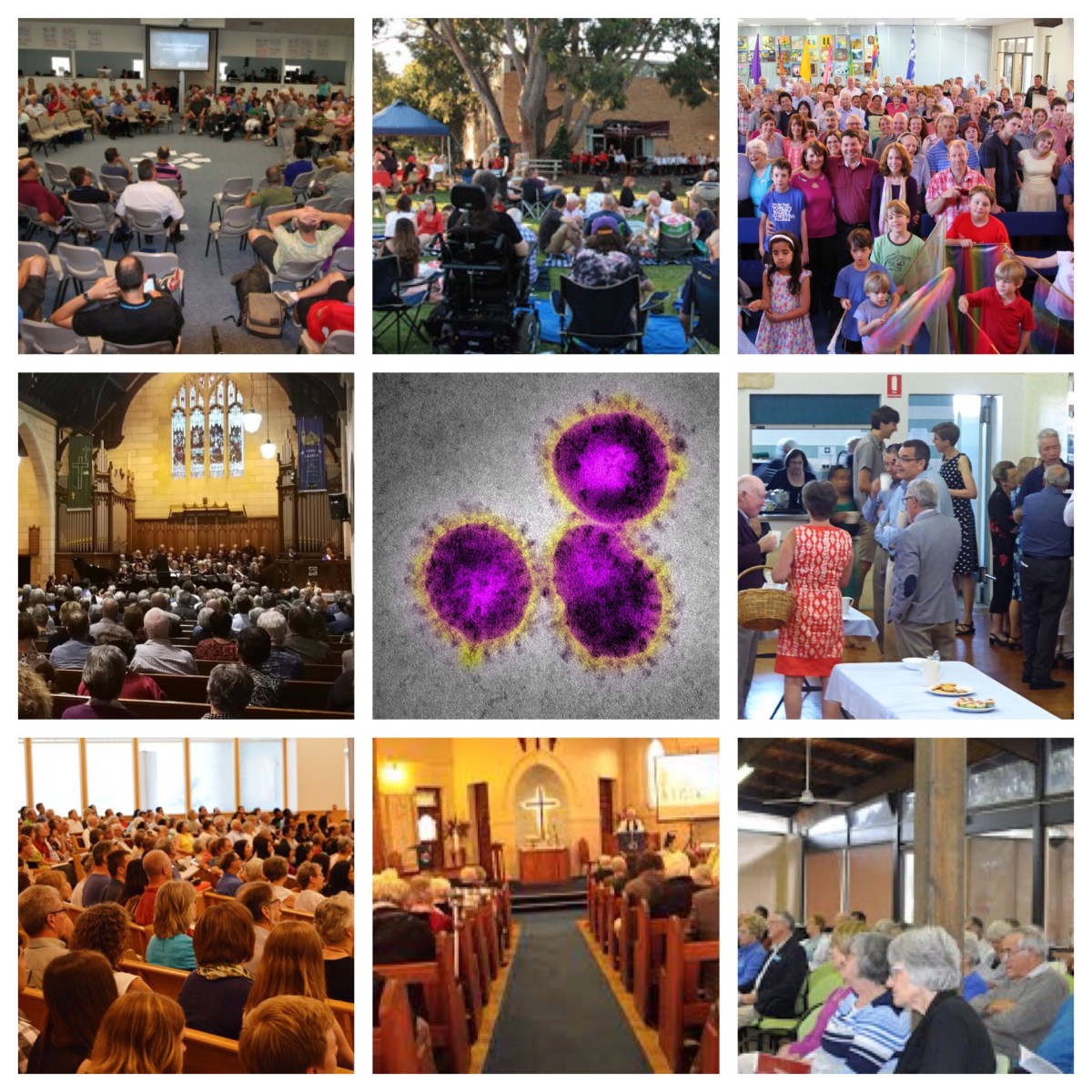
And I know also that this focus on physical touching and, worse, the use of a bodily discharge, spittle, in the process of healing, sits quite at odds with the immediate contemporary context. The world is wracked by stories of the rapid spread of the COVID-19 virus, as the pandemic streaks across the globe and permeates every corner of every country.

Looking for the healing of illness in the midst of a viral pandemic is a vain hope. People are dying, and more people will, sadly, die, in this pandemic. Prayers for healing will not turn back the tide of infection and reduce the rate of illness and death that has been unleashed by this potent virus. Perish the thought that we might even think that we could emulate Jesus, and go around spitting on sick peoples, touching them in order to heal them. Let’s not be that literalist—please!!

In our current context, we are being urged not to make physical contact with people (no handshakes, no hugging, etc), to maintain a clear physical distance between ourselves and other people, and even, now, to adopt a regime of self-isolation, not attending any group activities, until the pandemic has significantly subsided.

So this story, set in this Sunday’s lectionary, needs to be understood and applied with great care.

What is clear, however, is that there was a striking and unusual element in the story—for us, and even for people of the ancient world. Jesus heals this man in a most unlikely way. That leads him to be able to see the world, for the first time, through his own eyes; and to see Jesus in a new way, in the light of this new vision.

Perhaps it calls us to be open to unlikely engagements with people (albeit in a socially-distant nature) in different ways, in the rapidly changing context that we find ourselves in today.

*******

This blog draws on material in JOURNEYING WITH JOHN: an exploration of the Johannine writings, by Elizabeth Raine and John Squires (self-published 2014)

See also https://johntsquires.com/2020/03/17/in-the-most-unlikely-company-confessing-faith-in-jesus-john-9/

https://johntsquires.com/2020/03/12/from-the-woman-at-the-well-to-a-byazantine-saint-john-4-st-photini-and-the-path-to-enlightenment/

https://johntsquires.com/2020/03/10/the-pharisee-of-jerusalem-and-the-woman-of-samaria-john-3-and-4/
https://johntsquires.com/2020/03/04/living-our-faith-in-the-realities-of-our-own-times-hearing-the-message-of-the-book-of-signs/

https://johntsquires.com/2020/01/16/john-the-baptizer-and-jesus-the-anointed-in-the-book-of-signs-the-gospel-of-john/

Pastoral Letter to Canberra Region Presbytery on COVID-19 pandemic

This morning a pastoral letter was sent to all people within the Canberra Region Presbytery of the Uniting Church in Australia, as follows:

Dear sisters and brothers in Christ,

On Wednesday morning the leadership of the Synod of NSW and the ACT and all the Presbyteries in this Synod met to make plans for our future as the Uniting Church, in the current context of the growing COVID-19 pandemic.

On Wednesday evening the Moderator and General Secretary issued a statement which strongly urged all Church Councils to immediately suspend worship services and any other group meetings on Uniting Church property.

See https://nswact.uca.org.au/communications/newsroom/covid-19-update-for-presbyteries-and-congregations/

We are in complete agreement with this guidance. We recognise that this is a difficult decision. This situation will remain in force for some time, over some months, until we are advised that it is again safe to hold gatherings of people.

This is essentially a pastoral decision for the well-being of people in our congregations and faith communities, and in the wider communities where we live. It is an expression of love and care for our neighbours and community, as together we try to slow the spread of infection so that our health system is able to cope.

By making this decision before our community feels the full impact of this health crisis, it is our hope that we can establish and learn new, creative, alternative ways to worship and sustain community connection from home and online.

To support us during this difficult time, Synod and Presbytery leadership is working to provide worship resources via various means including: e-mail, text messaging, Facebook and a Synod-hosted website, so that we can continue to pray, sing and reflect together. Adrian Drayton, of Synod Communications, and Matt Pulford, of Assembly Communications, are working to provide access to multiple resources.

Saltbush is offering a regular weekly “9am Sunday church with Saltbush” that will be a viable option. Project Reconnect provides weekly DVD resources, on a subscription basis. Some tech-savvy colleagues will provide online resources such as sermons and prayers, as well as reflections and devotions, for all to use.

We will send emails in the days ahead that will link you in to these resources. You do not have to do all of this by yourself.

As leaders within our local communities of faith, the highest priority we can have is to ensure that we provide meaningful pastoral care for one another during this time of physical separation. There are big challenges in this. We need, firstly, to be sure to support and encourage each other in our leadership roles.

Presbytery leadership will be looking to put in place opportunities for regular, online “check-in” opportunities for pastors, ministers, and lay leaders in each of the communities of faith across our Presbytery.

We are one body in Christ, even when that body is not together in the flesh. There are many ways to stay connected in spirit, and care for each others’ spiritual and practical needs. We trust that the people of our congregations and faith communities will reach out with hearts, words and practical compassion. We are capable, resilient people. The current situation invites us to explore new ways of connecting, supporting, and caring.

As we walk this wilderness journey, there will be real grief and loss in letting go of the things that usually bring us together. There will be real fear and anxiety that comes with physical distancing. This may take on added dimensions for people who already live with anxiety. We know that we are walking into difficult times. We know, also, the promise of God’s presence in the midst of this.

As you receive this news, and communicate it to others, we expect that you will encounter a range of responses: some may feel disappointed or frustrated by a perceived over-reaction, others may feel relief and cared for. We pray that all will know themselves to be held in love and prayer.

We want to be sure that Presbytery supports and equips you as you work with people in your community of faith to meet the challenges ahead.

Please do not hesitate to contact either of your Presbytery Ministers if you wish to discuss any pastoral matters relating to this situation (John on 0408 024 642, Andrew on 0437 011 338).

Canberra Region Presbytery Leadership Team;
John Williams and Judy McKinlay
(Co-chairpersons)
John Squires and Andrew Smith (Presbytery Ministers)
Elizabeth Raine (PRC Chairperson)
John Sutton (Presbytery Treasurer)
Janise Wood (Operations Manager)

The Moderator of the NSW.ACT Synod has written this pastoral letter https://nswact.uca.org.au/communications/newsroom/a-pastoral-message-from-the-moderator-about-covid-19/

The President of the National Assembly has written this pastoral message https://assembly.uca.org.au/news/item/3144-a-pastoral-response-to-the-pandemic

I have blogged on the importance o placing care for one another as a higher priority than gathering for worship, at https://johntsquires.com/2020/03/15/when-you-come-together-reflections-on-community-in-the-midst-of-a-pandemic/

In the most unlikely company: confessing faith in Jesus (John 9; Lent 4A)

“Lord, I believe.” And he worshiped him.

Who said this? Peter, the leader of the apostles? James and John, the sons of thunder, key leaders in the early Jesus movement? Paul, the self-proclaimed apostle of apostles?

None of these. These words come from a story told only in the book of signs (the fourth Gospel in our New Testament, usually identified as the Gospel according to John). The story concerns a resident of Jerusalem who was born blind, and lived his life into adulthood as a blind man who sat every day, negging for assistance, beside the pool of Siloam (John 9:1-41). This is the reading set in the lectionary for this coming Sunday.

And the person who utters these words of confession and faith? It was that very man, the man born blind (John 9:38). He makes this high confession of faith—a confession which stands alongside a number of other confessions of faith in this distinctive book of origins. And many of these confession are made by the most unlikely characters throughout this Gospel.

In the reading we had last Sunday, the woman who engaged in conversation with Jesus beside a well in Samaria, moves towards an understanding of Jesus as a prophet (4:19) and possibly the Messiah (4:25). The irony is that it is a woman, rather than a man, and a Samaritan, rather than a Galilean or Judean, who makes this confession.

This latter confession of Jesus as Messiah had already been declared by Andrew, a lesser-known apostle, a Galilean, the brother of Simon Peter (1:41). The former confession of Jesus as prophet is subsequently affirmed by a crowd of Galilean people (6:14). So the woman joins these characters in making confessions about Jesus.

As a result of the witness which this woman made to the people of her city (4:28-29), she led her fellow Samaritans to make the ultimate confession of Jesus: “we know that this is truly the Saviour of the world” (4:42). The irony is intensified; the first instance of widespread faith in Jesus comes from a group of Samaritans—those despised and regarded as outcasts, by the Judean and Galilean Jews.

The disciples of Jesus, by contrast, having heard the testimony of these Samaritans (4:42), as well as that of the Galilean crowd (6:14), can only complain about the words of Jesus: “This teaching is difficult; who can accept it?” (6:60).

That offers an interesting contrasting: these unnamed Samaritans recognise Jesus, but his disciples, known to us by name, cannot grasp what he is offering.

There is clear insight into the identity and significance of Jesus which continues to be offered by a collection of unlikely characters in the Johannine story. On one trip to Jerusalem, people in the crowd have a better insight into Jesus than the Pharisees. The Pharisees join with the temple authorities in a growing antagonism towards Jesus, but the crowd wonders, “When the Messiah comes, will he do more signs than this man has done?” (7:31).

Later, some in the crowd recognise Jesus as the prophet (7:40), and others, as the Messiah (7:41). The temple police recognise that Jesus is different (7:46), but the Pharisees dismiss this, saying to them, “Surely you have not been deceived too, have you?” (7:47). The difference in understanding is clear.

As the narrative continues, the antagonism of some in the crowd grows, to the point that they accuse Jesus: “Are we not right in saying that you are a Samaritan and have a demon?” (8:48). Then, they prepare to stone Jesus (8:59). Who he is provokes antagonism and opposition. To align with him is to step into that dangerous place.

That is the immediate context for the encounter that is then narrated, involving the man born blind, his parents, the Jewish authorities, Jesus, and his followers. Confessing faith in such a context is a fraught, risky, dangerous enterprise.

And yet, this anonymous man, blinded and beggared, does precisely this. And he stands with a most unlikely collection of people who recognise something special in Jesus: a Samaritan woman, a mourning sister (Martha), various crowds in Samaria, in Galilee, and in Jerusalem; and even, to some degree, the temple police in Jerusalem. How ironic.

“Lord, I believe”, he said. And he worshiped him. (John 9:38)

*************

This blog draws on material in JOURNEYING WITH JOHN: an exploration of the Johannine writings, by Elizabeth Raine and John Squires (self-published 2014)

See also https://johntsquires.com/2020/03/12/from-the-woman-at-the-well-to-a-byazantine-saint-john-4-st-photini-and-the-path-to-enlightenment/

https://johntsquires.com/2020/03/10/the-pharisee-of-jerusalem-and-the-woman-of-samaria-john-3-and-4/

https://johntsquires.com/2020/03/04/living-our-faith-in-the-realities-of-our-own-times-hearing-the-message-of-the-book-of-signs/

https://johntsquires.com/2020/01/16/john-the-baptizer-and-jesus-the-anointed-in-the-book-of-signs-the-gospel-of-john/

When you come together … reflections on community in the midst of a pandemic

“When you come together, each one has a hymn, a lesson, a revelation, a tongue, or an interpretation. Let all things be done for building up” (1 Cor 14:28). So writes Paul to the followers of Jesus in the city of Corinth.

In these words, Paul indicates the importance—some would say, the highest priority—of gathering together in communal worship. The body of Christ, meeting together, in one place at the one time, sharing fellowship as we share in worship, is accorded central importance in the life of the church, back then in Corinth, as now in our own times.

How do we understand that imperative, now, in the midst of a growing sense of anxiety and uncertainty, as the pandemic of COVID-19 gradually makes it presence felt more clearly and definitively? And what will we doing as communities of faith, as we face the reality that gathering together as a community of faith might become limited or prohibited?

I When you come together …

It is clear from various New Testament passages, that communal worship was regular, expected, and valued, right across the movement that arose amongst the earliest followers of Jesus. This is evident, at face value, in the fact that all but one of the authentic letters of Paul were written to gathered communities: one to Rome, two to Corinth, one to Philippi, one to Thessalonica, and one to the region of Galatia.

There is only one authentic letter which we say was sent to an individual, Philemon—but even at the start of that letter, after naming Philemon and two other individuals, Paul continues, “and to the church in your house” (Phlm 2). And even in the later letters, attributed to Paul but not directly authored by him, the individuals addressed (Timothy and Titus) are given clear instructions regarding the ordering of life within the community of faith.

Elsewhere in his first (extant) letter to the Corinthians, Paul reflects what took place in those communal gatherings (1 Cor 14:26). It sounds like many of the elements we find in our communal worship today, as Paul lists the various elements that the Corinthians brought into worship: “a hymn [singing songs or choruses], a lesson [from scripture], a revelation [sharing our experience of faith with each other], a tongue [offering prayers], or an interpretation [the function of a sermon]” (1 Cor 14:26).

It is also evident that interpersonal interaction was integral to what took place when those communities of faith gathered. “Greet one another with a holy kiss”, Paul instructs the Corinthians (1 Cor 6:20 and 2 Cor 13:12), as well as the Thessalonians (1 Thess 5:26) and the Romans (Rom 16:16). (The same instruction appears at 1 Peter 5:14). These five verses all indicate that first century worship was not just sitting formally and watching what went on at the front; it was interactive, engaging, personal.

II Greet one another …

One of my colleagues, Sarah Agnew, suggests that the best way to translate these five verses is by referring to a “holy embrace”, rather than a “holy kiss”. That understanding is premised on the fact that the Greek word which is translated as “greet” in these texts, contains elements of making personal contact which are both interpersonal (greetings) and also physical (the word can be used to signify hugging or embracing). See https://www.academia.edu/28243257/A_call_to_enact_relationships_of_mutual_embrace_Romans_16_in_performance

Given that, then, on each of the sixteen times that Paul instructs for greetings to be given to named individuals in Romans 16, he may well be saying something like, “give them a hug from me”. Such relationships were personal and intimate.

This rendering takes us to the heart of community—and to the centre of the controversy swirling around the current situation with COVID-19 (which is the technical way of referring to “the novel coronavirus disease 2019”). The ancient practice clearly envisaged that physical contact was involved.

Physical contact, in the intimacy of either a kiss (on the cheek) or an embrace (with the upper body), is now, we are told, not advisable, given the way that infectious diseases such as COVID-19 (or, indeed, the common cold—which is itself a form of a coronavirus) are spread.

How do we reconcile these current guidelines with the scriptural injunctions? Do we ignore current guidelines (and keep on meeting together) because “the Bible says…” ? Or, do we turn away from strict biblical teaching (and stop our gatherings), because of contemporary concerns about the pandemic?

See my reflections, from a week ago, on this, at https://johntsquires.com/2020/03/05/passing-the-peace-sharing-the-elements-greeting-the-minister/

III Be separate from them

Alongside the texts cited above, there are other biblical references that we ought to consider. One cluster of passages to consider relates to keeping separate from the community in certain circumstances. Paul himself advocates keeping a certain level of separateness in his advice to the Corinthians, quoting a Hebrew scripture passage, “Therefore come out from them, and be separate from them, says the Lord, and touch nothing unclean; and I will welcome you” (2 Cor 6:17).

(I note there is scholarly debate as to whether this section of 2 Corinthians was actually written by Paul himself, or added by a later scribe or compiler. Nevertheless, the passage he quotes is in our scripture, and we need to make sense of it in our context.)

Paul is here quoting Isaiah 52:11, verses immediately before the famous song of the Suffering Servant (Isa 52:13-53:12), which sets forth the means for the redemption of Israel through the work of the Servant. Israel, the holy nation, is to be set apart, sanctified, separated from the nations which surrounded it. That is why the holy (clean, sanctified and redeemed) people of Israel are to remain separate from the common (unclean, sinful and unrighteous) peoples of the nations.

But it is entirely possible that we could (if we pursue a certain hermeneutical approach) adopt 2 Cor 6:17 into our current context, and use it as a text for advocating the kinds of distancing and separation advised by government health departments and religious institutions: do not shake hands, do not embrace, do not share a common cup, do not let there be anyway of passing on the virus to others, do not do any of the things that we value in our coming together as a community of faith—even, do not come together to worship and share together.

I am not advocating this line of interpretation, let me clear; I am just noting that some might be attracted to going down this pathway. But I think that is too simple: staying apart because we are set apart, consecrated, holy. That is sectarian thinking, and that is not how I think the church needs to be. We need to think further about “how to be church” in the crisis situation of a global pandemic.

IV Care for the needy

Alongside these biblical injunctions, there are other instructions and admonition that are found in scripture. These are equally valid and equally binding upon us, as we think about how to be church. I am thinking, at this time, particularly of the responsibilities that we have towards those who people within our midst are most in need of care and support.

In Hebrew Scriptures, the Law advocates this as a priority: take care of the needy: “If there is among you anyone in need, a member of your community in any of your towns within the land that the LORD your God is giving you, do not be hard-hearted or tight-fisted toward your needy neighbour”. (Deut 15:7).

This commandment is precisely what Jesus was alluding to, in the scene set in Bethany, where Mary anoints his feet, when he says, “You always have the poor with you, but you do not always have me” (John 12:8), where he was referring to Deut 15:11, “Since there will never cease to be some in need on the earth, I therefore command you, ‘Open your hand to the poor and needy neighbour in your land.’”

The command to care for the needy is replicated in other places in the Bible the Psalmist exhorts is to “rescue the weak and the needy” (Psalm 82:3-4), amd in Proverbs we are exhorted to “defend the rights of the poor and needy.” (Prov 31:8-9). These instructions to the people of Israel are based upon the understanding that the Lord God “executes justice for the orphan and the widow, and shows his love for the alien by giving him food and clothing” (Deut 10:18).

The ancient instructions to care for the needy are replicated in the New Testament, in instructions spoken by Jesus (Mark 10:21), in the blessings he spoke (Luke 6:20), in his signature synagogue sermon (Luke 4:18-19), and in the description of his ministry as fulfilling prophecy (Matt 11:4-5). Jesus demonstrated the priority of caring for people at their point of need.

Such an orientation is also found in directions in the epistles (Eph 4:28; James 2:1-7; 1 John 3:17), as well as in the summary description of the early community of believers who gathered in Jerusalem (Act 4:34-35, “there was not a needy person among them, for as many as owned lands or houses sold them and … it was distributed to each as any had need”).

My colleague Chris Goringe has written in a very helpful way about how we could, in fact, take the opportunity of the moment, in the pandemic crisis, to refocus and intensify our efforts to care for one another, paying particular attention to those who are in need. See

https://roseville.unitingchurch.org.au/2020/03/covid-19-and-the-church/

In the UK, a useful resource encouraging us to care for one another has been published by the Anglican Bishop of St Albans, at https://www.stalbans.anglican.org/coronavirus/

In my mind, helping the person in need is as central to our faith as it is to gather together in fellowship and worship. That, it seems to me, is the word for our times, a time of global pandemic, where the number of affected needy people is increasing on a regular—and frightening—basis.

We would do well to remember, in this instance, the words of Jesus in the last parable he spoke in the Gospel of Matthew: “just as you did it to one of the least of these my sisters or brothers, you did it to me” (Matt 25:40).

V Community in the midst of a pandemic

The context that the whole world now finds it in, is that of a pandemic. The alarmingly rapid spread of this virus is leading to a disturbingly rapid increase in instances of people who are significantly impacted by the virus. The rate of growth in cases is exponential, meaning that it is doubling each day. That is very worrying.

In this context, we need to ask: who are the needy? The best medical advice indicates that there a number of factors which predispose certain people towards being seriously affected by this virus. Age and health are two key factors; people aged 65 and over are more likely to contract the virus, and people with one or more of the co-morbidity factors are likewise at a higher risk of contracting the virus.

Co-morbidity factors include hypertension (high blood pressure), cardiovascular disease (heart problems), chronic respiratory disease (breathing difficulties), diabetes, and cancer. Anyone with one or more of these can be viewed in terms of their being one of “the needy”, who are to receive particular care from other believers. Avoiding situations where such people are exposed to a greater risk of contacting the virus, is surely a responsibility that we have, as a community of faith.

See this accessible discussion of co-morbidity factors at https://www1.racgp.org.au/newsgp/clinical/examining-factors-that-worsen-coronavirus-severity

Occasions when large groups of people are gathered together are precisely the situations when the passing of the virus to other people can occur. People with a number of the factors that predispose them to be significantly impacted by the virus are at greater risk in such situations. Our responsibility in this situation is, not only to those in our community of faith, but, more widely, to those in the society of which we are a part. We are committed, after all, to “the common good” (see Neh 2:8 and Gal 6:10).

That raises, for me, the question as to how we balance the desire, and the felt importance, of gathering together for worship and fellowship, with the responsibility of the community of faith to care for the needy, and particularly, for the elderly and medically unhealthy individuals who are found, inevitably, across all of the Congregations of the church. What is the responsible way forward?

The worship service that I attended today was scheduled to be a service of Holy Communion. During the week, after considering the medical advice available and the evidence concerning the spread of the virus, the elders decided to hold a service without communion. An empty plate and goblet stood at the front, as the minister—my wife, Elizabeth Raine—led a time of lamenting and remembering, in place of a full communion. See https://ruralreverend.blogspot.com/2020/03/a-lament-for-communion.html

However, there are further questions to explore. Should we suspend our regular worship gatherings, until the peak of the pandemic has passed? Caring for the needy—ensuring that we do not place them in a situation of greater risk—would seem, to me, to mitigate the need, and the desire, to gather each week for worship. We may well be better served to suspend our gatherings for the moment. That would be a good way to show that we are serious about “opening our hands to the poor and needy neighbour in our land” (Deut 15:7).

Gathering together on a Sunday for worship and fellowship is precisely the thing about “being church” that is valued by the group most exposed to risks in the current pandemic. People over 65 make up the majority of church attenders in any denomination, as, indeed, in many denominations. Older people attending are what keeps many Sunday worship services continuing. They have a strong commitment (so they keep on telling me) to keeping the doors open, making a witness to the community, by worshipping each Sunday.

So closing worship on Sunday in the face of such intense commitment will be difficult. But it might now be the issue that we need to confront, and the decision that we need to take, if we want to ensure that the incidence if illness and, indeed, the death rate, amongst elderly and inform church members is minimised. It is that serious, that dangerous, and that pressing.

Up to date statistics on the spread of the virus in Australia can be found at https://www.covid19data.com.au/

The NSW.ACT Synod of the Uniting Church has published guidelines for how we act during the pandemic, at https://nswact.uca.org.au/communications/newsroom/letter-from-the-general-secretary-regarding-the-prevention-of-novel-coronavirus-covid-19/

In the USA, the Wisconsin Council of Churches has a very helpful and comprehensive set of resources available at https://www.wichurches.org/2020/02/28/flu-season-the-coronavirus-and-the-church/?utm_source=rss&utm_medium=rss&utm_campaign=flu-season-the-coronavirus-and-the-church

From the woman at the well to a Byzantine saint: John 4, St Photini, and the path to enlightenment (Lent 3A)

Recently, I reflected on the story of Jesus and his encounter with the woman by the well in Samaria (John 4). See https://johntsquires.com/2020/03/10/the-pharisee-of-jerusalem-and-the-woman-of-samaria-john-3-and-4/
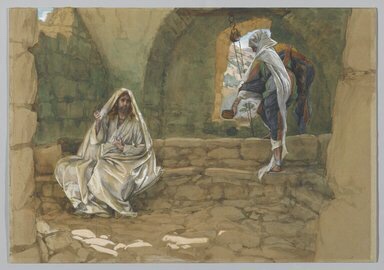
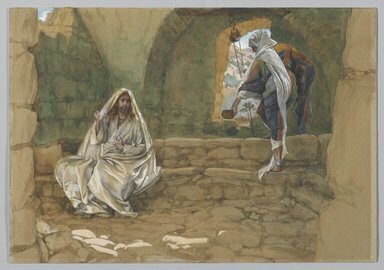
There is a wonderful classic picture of this scene, drawn by the 19th century French artist, James Tissot.

James Tissot (French, 1836-1902). The Woman of Samaria at the Well (La Samaritaine à la fontaine), 1886-1894. Opaque watercolor over graphite on gray wove paper, Image: 10 5/16 x 14 13/16 in. (26.2 x 37.6 cm). Brooklyn Museum, Purchased by public subscription, 00.159.69 (Photo: Brooklyn Museum, 00.159.69_PS2.jpg)

https://www.brooklynmuseum.org/opencollection/objects/4469

In contrasting this story (in the open, in broad daylight) with the previous story of Jesus and his encounter with a Pharisee of Jerusalem (indoors, in the dark of night), I noted that we know the name of the Pharisee—Nicodemus—but the woman remains anonymous, without a name.

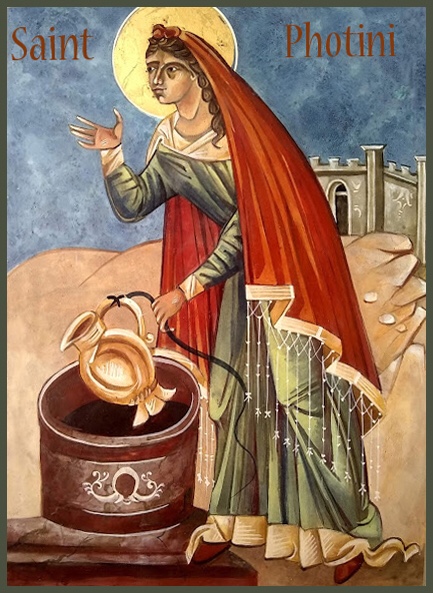
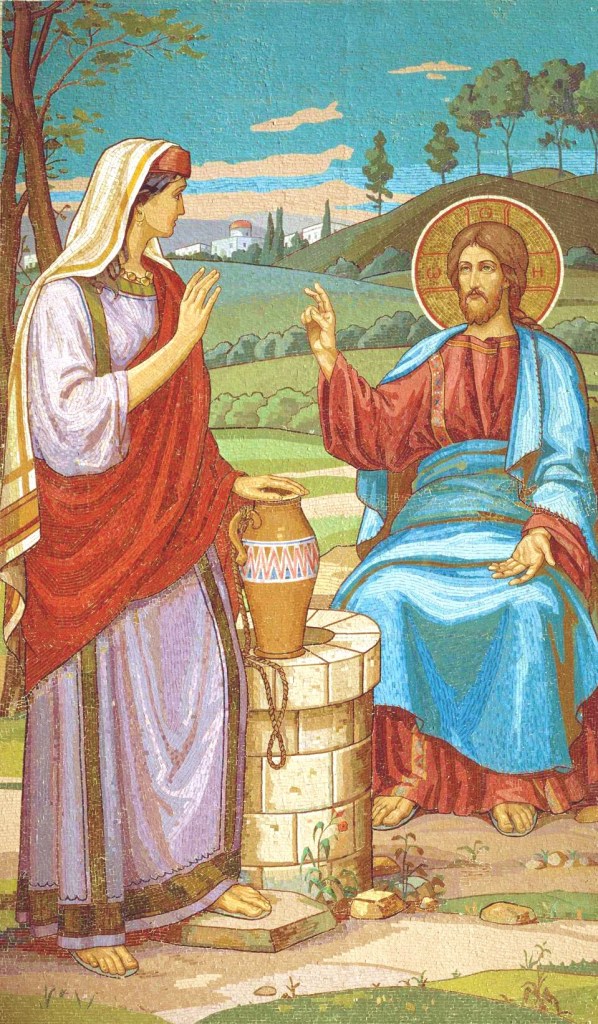
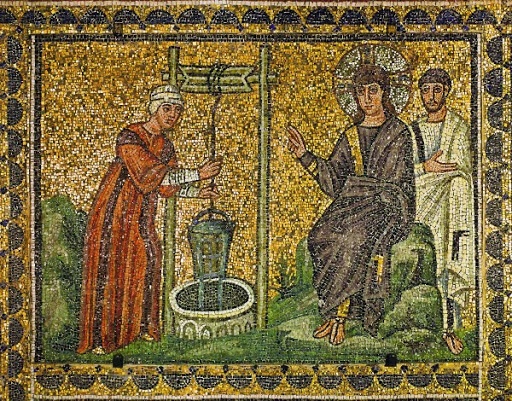
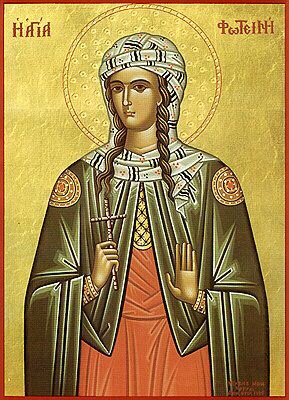
The tradition of the church, as it has evolved over the years, has named this woman, and even canonised her: in Eastern Orthodox churches, she is Saint Photini. The name is derived from the Greek term for “enlightenment”. By tradition, Saint Photini is dressed in red, as the pictures in this post demonstrate.

This name encapsulates the key dynamic of the story recounted in John 4. The woman moves from a (seemingly) chance encounter with Jesus, to become fully aware (enlightened) as to his status: he is prophet, Messiah, and (in the words of the people to whom she subsequently testifies), Saviour of the world.

Because of the last section of the scene beside the well, as told in the book of origins (John 4:27), the witnessing that the woman made to the people of her city (4:28-30, 39), and the resulting confession of Jesus as Saviour of the world (4:40-42), the woman was honoured in the preaching of church fathers as an evangelist, alongside the better-known apostolic figures (largely male).

As the Christian tradition evolved, more was claimed about this woman. She, along with her five sisters and two sons, were baptised. It is at this point, according to tradition, that she adopted the Christian name of Photini. The Russian Church, which also remembers her in the equivalent Russian name Svetlana, has honoured her in this hymn:

By the well of Jacob, O holy one,
thou didst find the Water of eternal and blessed life;
and having partaken thereof, O wise Photina,
thou wentest forth proclaiming Christ, the Anointed One.
(Megalynarion for St. Photina, according to the Byzantine usage.)

The developing traditions about Photini in the Byazantine period placed her, at one point in her life, in Carthage in North Africa, where she converted many people. Hearing the news of the persecution of believers in Rome under Nero, Photini and many of her converts sailed to Rome, where she witnessed to her faith as she stood before the Emperor. Nero had her and her family beaten and imprisoned.

Nero then sent his daughter, Domnina, to speak with Photini. As a result, Domnina was converted, baptised, and adopted the name Anthousa. Nero tried many ways to punish Photini, Anthousa, and their group, but the spirit enabled them to resist them all. Eventually, so the story goes, Photini have her life over to God, who called her to her heavenly reward.

Since then, generations of Orthodox Christians have prayed to this saint in these words:

Illuminated by the Holy Spirit, All-Glorious One,

from Christ the Saviour you drank the water of salvation.

With open hand you give it to those who thirst.

Great-Martyr Photini, Equal-to-the-Apostles,

pray to Christ for the salvation of our souls.

On the Greek Calendar, Saint Photina is commemorated on February 26.

I have summarised the above from

http://www.orthodoxchristian.info/pages/photini.htm

So many of the women in the Bible are known to us only in passing. Many of them, like the woman of Samaria, are accorded no name at all. There are many women in the Bible who are identified by their relationship with a named man (the wife of Noah, the daughter of Jephthah, the mother of Sisera, the wife of Job, the daughter of Jairus, or the daughters of Philip, for instance) or by their geographic location (the Shunnamite woman, the witch of Endor, the woman of Tekoa, the Queen of Sheba, the widow of Nain, and so on). Even the sisters of Jesus (unlike some of his brothers, James and Jude) remain nameless in the New Testament.

See the full list at https://www.biblegateway.com/resources/all-women-bible/Chapter-3-Nameless-Bible-Women

The tradition has sought to rectify the anonymity of the woman of Samaria in this instance. She has become Photini. Let us honour her for he pathway towards enlightenment, the full understanding of who Jesus is, and the wholehearted practice of discipleship, as evangelist, in her life. This, to be sure, is consistent with the story told in John 4.

See also

https://www.oca.org/saints/lives/2009/03/20/100846-martyr-photina-the-samaritan-woman-her-sons-and-those-with-them

The Pharisee of Jerusalem and the woman of Samaria (John 3 and 4; Lent 2–3A)

The Gospel reading last Sunday (John 3) is set in a house in the dark at night, as a prominent named male member of the Jerusalem Sanhedrin engages in conversation with a teacher from Nazareth, discussing faith and life.

The Gospel reading this coming Sunday (John 4) is set in the blaze of light at midday in the open air, as an unnamed woman from a village in Samaria engages in conversation with the same teacher of Nazareth, also discussing faith and life.

The contrasts between the two scenes are regularly noted: different genders, different locations, different social status of the people involved, and so on. Often the importance of symbolism in this Gospel, the book of signs, is emphasised. All of this is important, not to be overlooked.

And because of the high-status position of the male, a prominent Pharisee in the capital city, the on-the-edge location of the woman and her uncertain marital status (4:16-18) is often used to push her into a position that the text does not actually state, as a pariah, an outcast on account of her (presumed) immorality. The Pharisee—pariah contrast is enticing. But that is not what I want to support or reinforce.

What I want to offer in this blog, is a reflection on the similarities between these two scenes. Both of the individuals who encounter Jesus engage with him in conversations that move through a series of phases, going deeper into the issues raised. Both conversations proceed by means of a standard narrative technique: a question is posed, an answer is offered, leading to a further question, another response, and still further question-answer interchanges.

This is an age-old technique used in teaching and in story-telling. It was also a standard aspect of the way that teachers of the Law operated in ancient Israel. So the Pharisee of Jerusalem poses the question to the teacher from Nazareth: “How can anyone be born after having grown old?” and follows this immediately with a second question, “Can one enter a second time into the mother’s womb and be born?” (3:4).

After the response from the teacher, the Pharisee asks a further question, “How can these things be?” (3:9)—to which the teacher from Nazareth responds, in the time honoured fashion (answer a question with another question), “Are you a teacher of Israel, and yet you do not understand these things?” (3:9-10).

After this, the teacher launches into a longer explanation in response to the questions posed by the Pharisee—an explanation which continues on for some time, leaving many commentators to wonder, just where does the conversation with the Pharisee from Jerusalem end, and where does the interpretive narrative of the evangelist take over? The Pharisee of Jerusalem has managed to draw from the man from Nazareth a teaching of some substance and significance.

When we move on into the next extended story in the Gospel, the conversation between the woman of Samaria and the teacher from Nazareth, we find the same dynamic in play. This conversation also proceeds by means of question and answer.

That, in itself, is significant: the anonymous woman employs the same technique that was demonstrated by the named Pharisee—both of them are functioning as intelligent, thoughtful people of faith, using the regular methods employed by the teachers of the Law in ancient Israel. The woman is implicitly placed on the same level as the man. They are both engaging in the typical rabbinic-style of back-and-forth question-and-answer.

The conversation that the teacher from Nazareth has with the woman is reported in far more length than the earlier one with the Pharisee. The evangelist has maintained the role of the woman as an equal in the conversation. She asks a series of thoughtful questions which lead the conversation in the direction it takes.

The matter of water is the presenting issue. The Samaritan woman asks the man from Nazareth, “How is it that you, a Jew, ask a drink of me, a woman of Samaria?” (4:9). The evangelist here intersperses an editorial comment about the tensions between Jews and Samaritans.

That question leads to a deeper level, reflecting on traditions about water. The woman observes, “Sir, you have no bucket, and the well is deep”, and then asks, “Where do you get that living water?” She cites traditions common both to Jews and Samaritans: “Are you greater than our ancestor Jacob, who gave us the well, and with his sons and his flocks drank from it?” (4:11-12)

After the man from Nazareth responds, the focus turns to the pastoral need, the matter of water quenching thirst. The woman asks the man to give him this water “so that I may never be thirsty or have to keep coming here to draw water” (4:15). What then ensues is a deepening of the conversation once more, as the ensuing interchange (4:16-18) leads to a clear affirmation, by the woman, of the status of the man in society: “Sir, I see that you are a prophet” (4:19a).

It is the woman, through the process of question-and-answer, dialogue and discussion, who comes to this affirmation of faith in the man.

But this is not the end of the conversation, and the dialogue that ensues will delve into a significant theological issue, with a strong communal dimension—that of worship. This lifts the conversation out of the strictly interpersonal dimension of woman-to-man, into a broader realm of Samaritan-to-Jew. This next phase of discussion (4:19b-24) deepens the conversation considerably. And the woman, this anonymous person from the much-despised northern group of Samaritans, is holding her own,with the teacher from Nazareth.

To my mind, there are two critical affirmations in what is said to her here: “salvation is from the Jews”, and “the true worshipers will worship the Father in spirit and truth”. The woman has drawn these statements froth from the teacher of Nazareth.

Yet there is a still-deeper level into which the conversation moves; one which culminates in a confession of faith, articulated with caution by the woman (“I know that Messiah is coming”), which is met by a clear affirmation by the man of Nazareth, “I am he, the one who is speaking to you” (4:25-26). This is the first of a number of key affirmations made in this Gospel, each of which is introduced by the key phrase, “I am”. (See the later declarations, “I am … bread, light, shepherd, door, resurrection, way, truth, life”—all highly significant affirmations.)

It is the woman of Samaria who has drawn forth this first signal affirmation by the teacher of Nazareth.

The conversation ends at this point; but the story continues, with a couple of additional scenes, involving, first, the disciples of the teacher from Nazareth, and then the people of the city where the woman of Samaria lives. What happens in that final scene is of critical importance in understanding the extended dialogue, the ever-deepening question-and-answer, between the woman and the man in John 4.

At this point, we need to consider how the key characters in each of these conversations with the teacher from Nazareth (John 3 and John 4) evolve. The two characters in these conversations demonstrate a movement from their starting point, through a process that, for each of them, leads to a clear statement of faith in that person. Both the Pharisee and the woman are, at the end, clearly depicted as disciples of the teacher from Nazareth.

The Pharisee of Jerusalem, we are told later in this Gospel, followed through after his initial conversation with the teacher (John 3)—in fact, he supported him in a debate in the Jerusalem council (John 7), and after the teacher had died, he publicly joined in the task of anointing his body and laying it to rest (John 19). His belief in what this teacher had taught, was now clear for all to see.

The Pharisee of Jerusalem had taken risks, explored his faith, and made significant changes in his life. He is a named high-status follower of Jesus, at least according to this particular Gospel, and his name is remembered throughout Christian history, by believers across the world: Nicodemus.

The woman of Samaria, we learn as we follow the intricacies of the discussion in just one chapter (John 4), moves from being a curious discussion partner, to someone who recognises something deeper about the teacher and prophet from Nazareth, to making a clear connection with the enduring Hebraic hope for a Messiah—and then, in the final scene, to be the first evangelist to bear witness to this belief (at least, according to this Gospel).

This woman goes back to her city, where she testifies to the one who she had encountered. Sadly, however, she remains without a name, at least as far as the biblical witness attests. She is always “the Samaritan woman”.

Yet this impressive woman leads the people of her city to make the highest confession of faith: “we know he is the Saviour of the world” (4:42).

This week, and this Sunday, let us give thanks for this woman: thoughtful, enquiring and questioning, engaging in conversation, deepening in understanding, growing in faith, practising her discipleship by testifying to Jesus, and standing as the first evangelist in this particular Gospel record.

*****

I am grateful to my wife, the Rev. Elizabeth Raine, for the many conversations that we have had about these passages which have deepened my understanding of both characters.

*****

See also https://johntsquires.com/2020/03/04/living-our-faith-in-the-realities-of-our-own-times-hearing-the-message-of-the-book-of-signs/

https://johntsquires.com/2020/01/16/john-the-baptizer-and-jesus-the-anointed-in-the-book-of-signs-the-gospel-of-john/

https://johntsquires.com/2019/06/07/the-paraclete-in-john-15-exploring-the-array-of-translation-options/

https://johntsquires.com/2019/04/23/in-defence-of-thomas-a-doubting-sceptic-or-a-passionate-firebrand/

Celebrating Canberra Day

Today I am enjoying a public holiday. This is because of the peculiarities of our history as a federation of states (and those lesser beasts known as territories), and the vagaries of border demarcations from various times in the history of this country over recent centuries.

Our state boundaries evolved over many decades. Our federation was originally intended to include New Zealand, but they invoked the Tasman Sea and remained a separate nation. Five states agreed to join the federation through referenda held in 1898 and 1899. Western Australia, naturally, came to the party only late, joining up with a last minute yes vote on 31 July 1900, just in time for the declaration of Australia on 1 January 1901.

I live, as you probably known, in the #anonymousterritory amongst the #undifferentiatedeasternstates (at least, that is how #overeast is seen from #overwest). And the capital of this territory is the city of Canberra—whose day, Canberra Day—is being celebrated today.

Accordingly, all the employees and public servants and local (territory) politicians here are on holidays, for the day. Over the weekend, there have been early morning balloon flights and evening light shows, and the weekend is surrounded by a ten-day festival with concerts and all manner of festivities on offer.

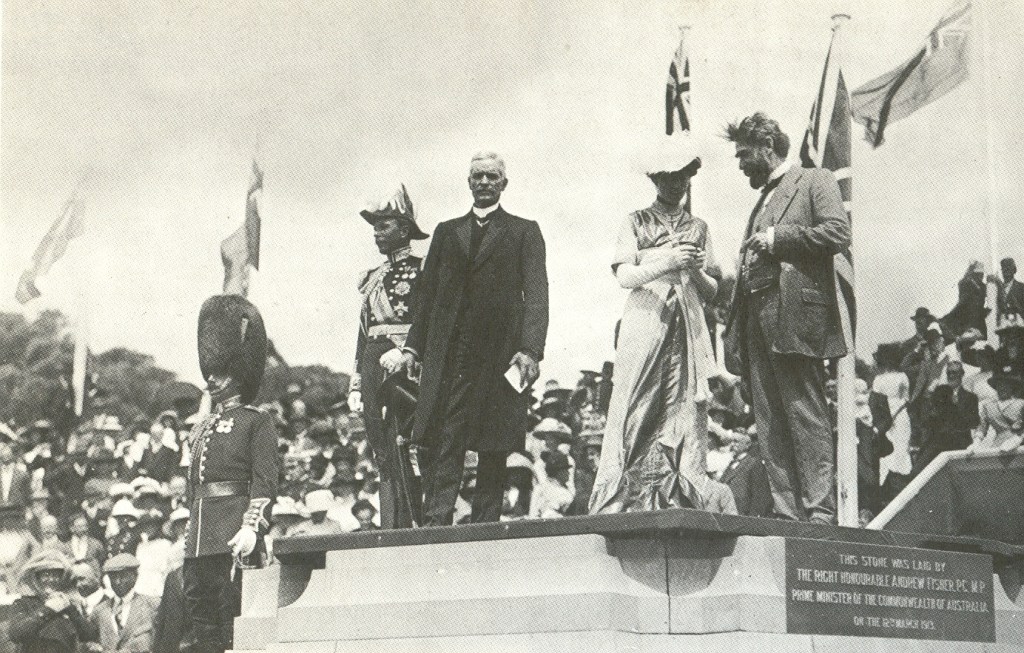
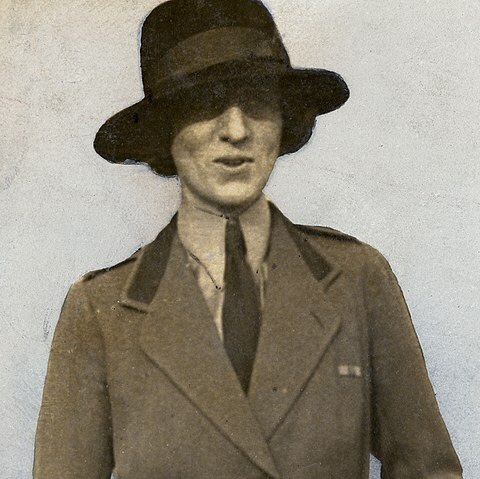
The city of Canberra was named at a ceremony on 12 March 1913 by the wife of the Governor-General, Gertrude Mary Denman, known formally as Lady Denman and informally as Trudie.

The name Canberra, as I have previously blogged, is believed to have been derived from a local Indigenous word which identifies the location as a meeting place, where the Ngunnawal, Ngambri, Ngarigo, Walgalgula, amd Wiradjuri people would meet each year, for a gathering focussed around the bogong moth.

See https://johntsquires.com/2019/01/30/learning-of-the-land-3-tuggeranong-queanbeyan-and-other-canberra-place-names/

So that’s what all the celebration and festivities are about today—remembering the naming of this place by the daughter of an engineer, who married a minor British aristocrat who was sent to the colonies to represent the British monarch in the fledgling federation.

So today, while people in New South Wales, Queensland, the Northern Territory and Western Australia are hard at work, we Territorians are enjoying a day off—along with folks in South Australia (for Adelaide Cup Day), Tasmania (celebrating Eight Hour Day) and Victoria (celebrating the same thing as the Taswegians, but there it is called May Day—go figure!).

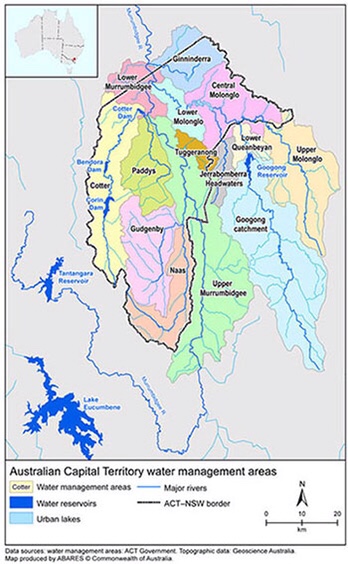
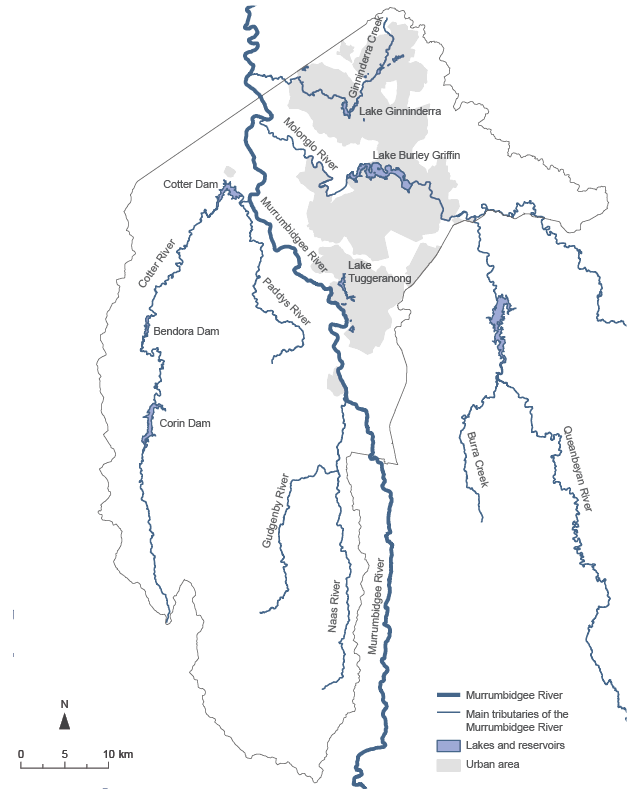
Canberra sits in the area around the Molongolo River, near its junction with the Murrumbidgee River, to the east of the Brindabella Ranges. The area was named Canberra, after much posturing and politicking by assorted leaders, in 1911, when the NSW government ceded the district to the federal government and the Federal Capital Territory was formed. Its name was changed to the present name two decades later.

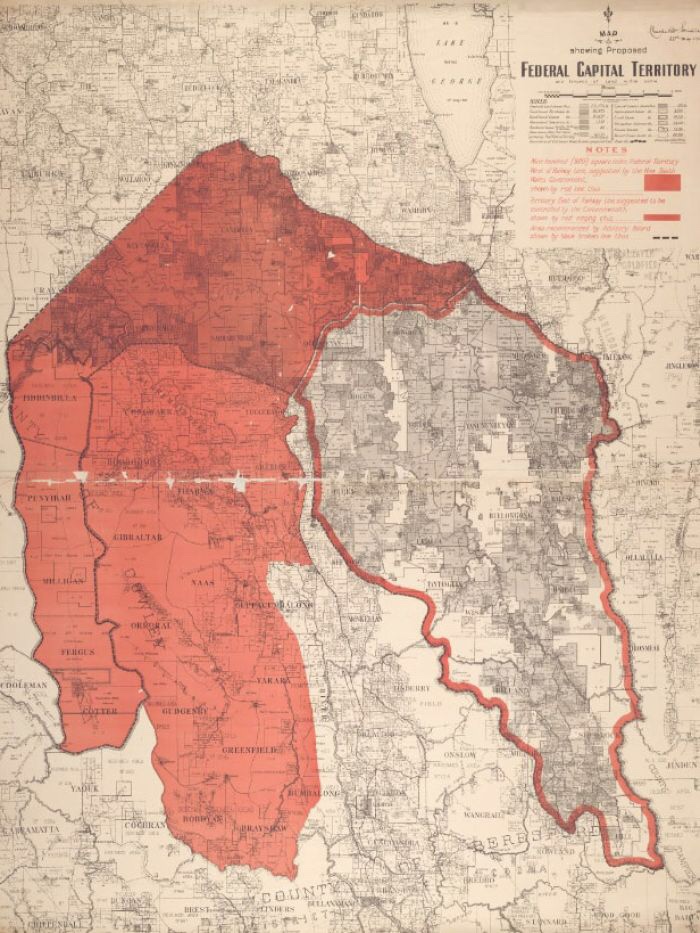
Canberra is the only city in the Australian Capital Territory. If you look at a map, you will see that the shape of the ACT is quite distinctive. The way the borders were agreed to offers a very interesting story. They produce a territory with a very strange shape. Some might say, this quite befits the place where politicians gather from all over the continent, to work in the very strange environment of the APH (the Australian Parliament House) and to make decisions which also have some very strange aspects!

There is one section of the ACT borders that is a straight line; the rest is far from straight. The shape of the ACT is quite asymmetrical, and Canberra is bunched into just one end of the elongated shape that forms the territory. The rest of the ACT is set aside as a series of nature reserves and the Namadgi National Park.

The story of how the borders were decided, and then surveyed and implemented, is told in this ABC article:

https://www.abc.net.au/news/specials/curious-canberra/2016-04-11/how-the-act-borders-were-determined/7304358

The original intention was to form a territory around the series of rivers in the region. The ACT was going to be a horseshoe shape, since the Surveyor-General, Charles Scrivener, originally wanted to include the Queanbeyan and Molonglo River catchments, and the Queanbeyan township itself, in the Federal Capital Territory.

That proposal was—surprise, surprise!—vetoed by the NSW government, who did not want to lose the main southern train line as it earn south from Queanbeyan. You can check this by following the train line south from Queanbeyan—the eastern ACT/NSW border follows the train line precisely, through all its twists and turns, to the southern tip of the ACT.

Mind you,as the above map indicates, the ACT water catchment area still draws from all the river systems originally proposed. And in this way (along with employment and entertainment factors), Queanbeyan is integrally connected with Canberra!

So, back in the day, in place of the Queanbeyan catchment, the NSW Government offered a series of catchments to the south of the Molongolo—the Cotter, Gudgenby, Naas and Paddy’s River catchments—which gave the territory is distinctive elongated shape.

And so we rest and ponder and enjoy the day.

See also

https://johntsquires.com/2018/12/18/learning-of-the-land-2-ngunnawal-namadgi-and-ngarigo/

https://johntsquires.com/2018/12/17/learning-of-the-land-1/

Passing the peace, sharing the elements, greeting the minister

How do we pass the peace in a time when the COVID-19 virus (the corona virus) is spreading? What do we do to greet each other in worship (and, indeed, in everyday life) if shaking hands is not advised?

This was the topic of conversation at this week’s Canberra ministers lectionary conversation. We gave this some serious consideration to the question: how do we ensure the wellbeing (the good health) of the people in our community of faith?

One suggestion made is that, when it comes time to pass the peace, we face the other person, place our right hand over our own heart, and say, “peace be with you”. That avoids direct physical contact, but incorporates a direct visual interaction.

The other place where shaking hands is common, is at the end of the worship service, when people who are present file out (usually in an orderly manner) and shake hands with the worship leader who is dutifully standing at the exit door, waiting to greet each of them personally.

The best way to handle this would be to explain, during worship, that we will not be shaking hands during or after the service, and make the suggestion that people can interact in the way suggested: face each other, place our right hand over our own heart, and greet one another.

Modes of distributing the elements during communion need also to be considered; is it wise to hold to the use of a common cup? It is a wonderful symbol, but quite possibly is a significant health hazard in this time. A discussion of this matter with elders or church council would be a sensible way to proceed.

The use of hand sanitiser by the presiding person, prior to handling the elements, has been suggested for some time. Might it also be sensible to consider having sanitiser available to be used by others assisting in leading the service, and indeed by all as they arrive at worship? This is now the status quo in hospitals and medical centres, which provide a precedent for church gatherings.

This matter relates to the wellbeing of the communities we serve. How do we ensure that we keep a safe and healthy place for people to gather? I encourage you to consider these matters in the days ahead within the faith community or congregation where you currently gather for worship and fellowship.

For helpful information on COVID-19, see https://www.health.gov.au/health-topics/novel-coronavirus-2019-ncov#how-it-spreads

Living our faith in the realities of our own times … hearing the message of “the book of signs”

The book of signs, the fourth Gospel that we have in our New Testament, is attributed by tradition to the apostle John. It is most likely that it draws on stories that originated with that apostle, but they have been retold, elaborated, passed on, reshaped, developed, and eventually written down in a form that corresponds with the Gospel that we have today.

This Gospel contains many distinctive elements. It recounts incidents where Jesus encountered a number of individuals who do not feature at all in the other three Gospels, the so-called Synoptic Gospels attributed to Mark, Matthew, and Luke. It opens doors into aspects of the story of Jesus which are not found when we read those first three Gospels.

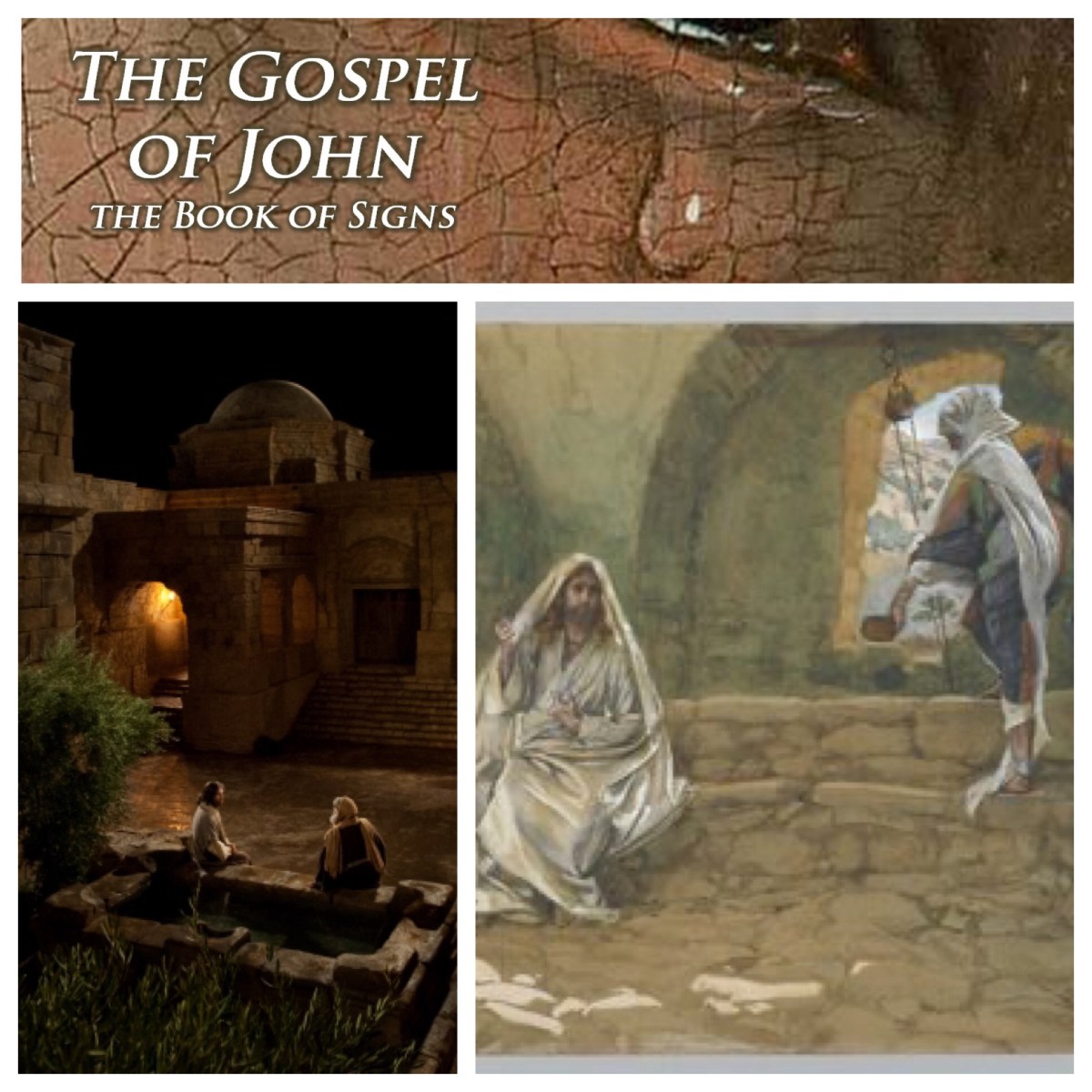
We meet four such characters over the coming four Sundays, as the revised common lectionary provides us with accounts of the interaction that took place between Jesus and the Pharisee, Nicodemus (John 3), an unnamed woman beside a well in Samaria (John 4), a resident of Jerusalem who had been born blind, and his parents (John 9), and then Lazarus of Bethany, whom Jesus is said to have raised back to life after his death (John 11). This last story includes two characters who, it is thought, appear also in the Synoptic Gospels—Mary and Martha of Bethany, the sisters of Lazarus (Luke 10:38-42).

The accounts of these four characters are located in the first half of the Gospel (John 1-12), before the second half of the Gospel is devoted to an extended scene, where Jesus farewells his closest followers (John 13-17), before moving into an account of a sequence of event told also in the Synoptic Gospels: the arrest, trials, sentencing, crucifixion, burial, and then resurrection appearances of Jesus (John 18-21).

The first half of the Gospel, then, provides collection of public events in the life of the adult Jesus, some of which touch on events recounted n other Gospels, many of which are distinctive to this book. They are narrated in a long section often called the Book of Signs (2:1–12:50).

This terminology is drawn from the descriptions provided by the author (2:11, 3:2, 4:5411:4712:37, and 20:30). What was most likely the original conclusion to this book notes that Jesus did many other signs … which are not written in this book (20:30), which leads me to use the description the book of signs when referring to this Gospel.

However, these chapters contain more than simply “signs” (miracles) performed by Jesus. For instance, this “book” begins with a miracle in Galilee (2:1–11), an incident in Jerusalem (2:13–22), an encounter with a Pharisee in Jerusalem (3:1–10), another encounter with a Samaritan woman in Sychar (4:1–26), and a second miracle in Cana (4:46–54).

Relevant teachings of Jesus are interspersed amongst these happenings. The pattern of alternating encounters, teachings and miracles continues, with the addition of a sequence of controversies as Jesus engages in increasingly tense debates with Jewish leaders (5:10–186:41–50; 7:14–52; 8:12–59; 10:19–39).

Sometimes Jesus delivers his teachings in lengthy monologues (for example, 3:11–215:19–47; 9:41–10:18); more often, his teachings are punctuated by questions and responses from others. On his final visit to Jerusalem (from 12:9 onwards), Jesus summarises his teachings in a pivotal public address (12:23–28; 12:44–50).

It is important to note how this Gospel firmly locates the story of Jesus within the within the framework of his religion—that is, first century Palestinian Judaism. Jesus visits Jerusalem on a number of occasions (2:13; 5:1; 7:1011:55). This is already in contrast to the Synoptic Gospels, in which the adult Jesus stays in Galilee and visits Jerusalem only once (on the occasion leading to his crucifixion—Mark 11 and parallels).

In John’s Gospel, each of his visits to Jerusalem is located within the Jewish calendar—a feature which is also unique to this Gospel amongst the four canonical Gospels.  The first visit, during the Passover festival (2:13), is the occasion when Jesus undertook his “cleansing of the Temple”.

The second visit was during an unnamed feast (5:1; possibly Pentecost, as it was some time before the Passover at 6:4). This leads to a discussion of the story of manna in the wilderness (an integral part of the Passover story). Jesus’ next visit(7:10) takes place during the feast of Tabernacles (7:2, 11, 14).

His last Passover visit, after the raising of Lazarus from the dead (11:55), equates with the one Synoptic visit, for this is when Jesus is brought into direct conflict with the Jerusalem authorities. In addition to these festivals, the Feast of Dedication is also noted in the narrative (10:22). 

The activity of Jesus in this Gospel is firmly grounded within traditional Jewish religious observances. He keeps the conventional Jewish feasts. Jesus is acknowledged as a Jew explicitly by the Samaritan woman (4:9) and implicitly by Pilate (18:35), as well as by the inscription placed on his cross, “King of the Jews” (19:19–22). It is a story which is incarnate, enfleshed, grounded in earthly realities—because, in Jesus “the Word became flesh and lived among us” (1:14). 

The whole account thus provides us with encouragement to live out our faith in the realities of life in our own times. Although Jesus was a Jew, living in a different time, within a different culture, in a different location form where we are now living, nevertheless, his story indicates that God’s love is for the whole world, that the Gospel reaches out over place and time and culture, to engage each of us precisely where we are.

It is with that encouragement that we enter into the hearing and thinking about the interactions that Jesus had, with a Pharisee, a Samaritan woman, a blind Jerusalem man and the family of the deceased man, Lazarus. We hear these stories because they can inform the ways that we live out our faith today.

******

See also https://johntsquires.com/2020/01/16/john-the-baptizer-and-jesus-the-anointed-in-the-book-of-signs-the-gospel-of-john/

https://johntsquires.com/2019/06/07/the-paraclete-in-john-15-exploring-the-array-of-translation-options/

https://johntsquires.com/2019/04/23/in-defence-of-thomas-a-doubting-sceptic-or-a-passionate-firebrand/

Giving up? Or going deep? The opportunity of Lent

Our lives are lived in a regular cycle of seasons. The heat of summer gives way to the coolness of autumn, then to the cold of winter, before the warmth of spring rejuvenates and refreshes, and we find ourselves back in the baking heat of summer, once more.

And so, too, does the Christian year move between seasons, following an ancient pattern which was shaped to provide a focus on the central story of our faith—the story of Jesus Christ. Each December, in the season of Advent, we prepare to celebrate his birth. That is the celebrated in the season of Christmas (which largely been taken over by commercial interests) and the ensuing season of Epiphany.

In the northern hemisphere, where this cycle originated, the days at this time of year start to lengthen, and that process gave the name of the next season: Lent. It comes from the Old English word lencten, which was the old way that the season of spring was named.

Lent has been celebrated for at least 1500 years. It is typically seen as a time of self-examination and repentance, a hard season which is characterised by discipline and sacrifice, a time for giving up, a period of penitence and abstinence.

What are you giving up for Lent this year? If you have not yet decided, the pressure is on. What are you giving up?

More often, now, Lent presented as a time of “preparation” for Easter, celebrating the death and resurrection of Jesus. Then follows Pentecost, a longer season focussed on growth, lasting almost half of the year, before Advent comes around again.

This ancient pattern offers us an annual opportunity to pause, reflect, and recommit our lives of discipleship and service. For myself, I do not see this as an archaic custom which we can readily abandon; rather, I view Lent as a time for regrouping and rebuilding my walk of faith. In the southern hemisphere, where I live, the days are not lengthening (in fact, the daylight hours are becoming shorter)—but the opportunity to pause, reflect, and recommit, is still valid.

Each year, Lent begins on Ash Wednesday. This year, that will fall on 26 February. It will run until Good Friday, which this year is on 10 April, and lead into the celebrations of Easter Sunday, on 12 April.

Technically, there are 40 days in Lent, but it actually runs for 46 full days. The six Sundays during the weeks of Lent don’t actually count as part of Lent, as they remain The Lord’s Day, when the resurrection is celebrated. The other 40 days are more sombre, more reflective.

(So, technically, you can indulge to your heart’s content on those Sundays, but maintain your Lenten discipline on the other days of the week. Six days of stringent abstinence, one day of unfettered indulgence, and repeat the pattern six times. That’s the way that Lent rolls, it would seem!)

How will you spend this season of Lent? Many of the regular activities of life will still need to be attended to: shopping, cleaning, working, travelling, preparing meals, gathering with family, visiting friends, reading, gardening, listening to music … and a host of other things that fill the regular pattern of our lives, day by day, week by week. We won’t, or can’t, give up these aspects of life.

So the challenge that sits before us at this time of the year, is this: how, and when, will I find time to dedicate to nurturing my spiritual life, to strengthening my life of discipleship? Instead of giving something up, could we think about Lent as a time for going deep? That is the opportunity, and the challenge, that Lent presents.

In the midst of all the regular activities, a special focus on going deep into our spiritual life and strengthening our discipleship would be beneficial to each of us. To nurture our spiritual lives, my church (along with many others) make use of the Revised Common Lectionary—a modern version of an ancient church practice, to read systematically and listen carefully to the range of scripture passages that can nourish us in our walk of faith.

The lectionary provides four scripture passages each Sunday, drawn from the Old Testament, the Psalms, the Epistles and the Gospels. And each year, a particular Gospel is in focus (this year, it is the Gospel of Matthew)—although during Lent, the Gospel passages are most often drawn from the Gospel of John. The schedule of passages offered for Lent 2020 can be seen at

https://lectionary.library.vanderbilt.edu//lections.php?year=A&season=Lent

There is a wonderful website called The Text This Week, which collates links to an abundance of resources relating to the seasons of the church year, and the readings set in the Revised Common Lectionary each week.

The page for Lent 2020 is at http://www.textweek.com/lent.htm

And for personal use in reading a daily passage of scripture and reflecting on what it offers to us in terms of our faith, I can recommend an Australian resource (with which I have had a connection over four decades, and to which I regularly contribute), called With Love to the World.

This is a daily devotional guide that provides a reflection on a Bible passage for each day of the year, with questions for discussion, guidance for prayer, and suggestions for hymns and songs to sing. With Love to the World is published four times a year.

You can read about it at http://www.withlovetotheworld.org.au/

Lent is an ancient practice which can be utterly relevant in the modern world. In this period of 40 days, or six weeks, leading up to Easter, we have the opportunity to take time to reflect seriously on our faith, to deepen our understanding and strengthen our discipleship.