“You have established equity; you have executed justice and righteousness in Jacob” (Ps 99:4). So the psalmist sings, in the psalm offered by the lectionary for this coming Sunday. Noting that leaders of the past have called out to God and been answered—Moses, Aaron, and Samuel (99:6)—the psalmist praises God, “you answered them; you were a forgiving God to them, but an avenger of their wrongdoings” (99:8).
In this psalm it is the king, the “Mighty King, lover of justice [who has] established equity” (99:4), whose “royal scepter is a scepter of equity” (Ps 45:6), modelled on the Lord God himself, who “judges the world with righteousness [and] judges the peoples with equity” (Ps 9:8; see also 67:4; 75:2; 96:10; 98:9). Accordingly, King David is remembered as the one who “administered justice and equity to all his people” (2 Sam 8:15; 1 Chron 18:14), and the opening words of the book of wisdom attributed to King Solomon are “love righteousness, you rulers of the earth, think of the Lord in goodness and seek him with sincerity of heart” (Wisd Sol 1:1).
Divine justice is regularly noted in tandem with God’s mercy forgiveness. “Great is your mercy, O Lord; give me life according to your justice” (Ps 119:156); and “in your steadfast love hear my voice; O Lord, in your justice preserve my life” (Ps 119:149). The prophet Isaiah tells the rebellious people of his day, “the Lord waits to be gracious to you; therefore he will rise up to show mercy to you—for the Lord is a God of justice; blessed are all those who wait for him” (Isa 30:18).
Likewise, through the prophet Hosea, the Lord God promises to Israel, “I will take you for my wife in righteousness and in justice, in steadfast love, and in mercy” (Hos 2:19), whilst centuries later, Ezekiel reminds the exiles of God’s pledge: “I say to the righteous that they shall surely live, yet if they trust in their righteousness and commit iniquity, none of their righteous deeds shall be remembered; but in the iniquity that they have committed they shall die” (Ezek 33:13). Justice and mercy belong hand-in-hand, as yet another prophetic voice declares as the exiles are returning to the land: “in my wrath I struck you down, but in my favour I have had mercy on you” (Isa 60:10).
God’s mercy sat at the heart of the covenant made with Israel; the Lord affirms to Moses, “I will be gracious to whom I will be gracious, and will show mercy on whom I will show mercy” (Exod 33:19). So in the longest psalm, declaring persistent praise of the Law, the psalmist offers the petition, “let your mercy come to me, that I may live, for your law is my delight” (Ps 119:77). A number of other psalms likewise contain petitions God to show mercy (Ps 25:6; 40:11; 51:1; 69:16; 123:3).
Jesus, centuries later, brings together mercy and justice when he accuses the scribes and the Pharisees of hypocrisy, as they “neglect the weightier matters of the law: justice and mercy and faith” (Matt 23:23).
Justice, of course, is at the heart of the covenant that God made with Israel. Moses is said to have instructed, “justice, and only justice, you shall pursue” (Deut 16:20), the king is charged with exhibiting justice (Ps 72:1–2; Isa 32:1), whilst many prophets advocate for justice (Isa 1:17; 5:7; 30:18; 42:1–4; 51:4; 56:1; Jer 9:24; 22:3; 23:5; 33:15; Ezek 18:5–9; 34:16; Dan 4:37; Hos 12:6; Amos 5:15, 24; Mic 3:1–8; 6:8).
That God is righteous is likewise declared in scripture (Deut 32:4; Ps 145:7; Job 34:17). The psalmists regularly thank God for God’s righteousness (Ps 5:8; 7:17; 9:8; 33:5; 35:24, 28; 36:6; 50:6; etc) and note the importance of humans living in that same way of righteousness (Ps 18:20, 24; 85:10–13; 106:3, 31; 112:1–3, 9).
The book of Proverbs advises that the wisdom it offers is “for gaining instruction in wise dealing, righteousness, justice, and equity” (Prov 1:3) and the prophets consistently advocated for Israel to live in accordance with righteousness (Hos 10:12; Amos 5:24; Isa 1:22; 5:7; 28:17; 32:16–17; 54:14; Jer 22:3; Ezek 18:19–29; Dan 9:24; 12:3; Zeph 2:3; Mal 4:1–3; Hab 2:1–4).
This psalm thus focusses some important elements in the Israelite understanding of God, summarising notes from many places elsewhere in Hebrew Scriptures. These recurring notes of the nature of God then form the basis for a Christian understanding of Jesus, who affirms mercy (Matt 23:23), teaches righteousness (Matt 5:6, 10, 20; 6:33), offers forgiveness (Mark 2:10; Luke 23:34; 1 John 1:9), and exudes grace (John 1:14–18). The affirmation made in this ancient Jewish psalm is one that we Christians can joyfully sing and affirm!
*****
Since I wrote this blog post, the situation in the Middle East has erupted once again. My reflections in the early stages of the present inflammation of that conflict is at
In the movement that Jesus initiated, women exercised leadership equally with men; think of Mary Magdalene, Priscilla and Phoebe, Junia the apostle, Mary of Jerusalem, Euodia and Syntyche of Philippi, Tryphosa, Julia and Olympus of Rome, and many more unnamed. The continuing prominence of women leadership in subsequent decades (much to the consternation of some prominent male leaders!) attests to the valuing of female leadership in the movement that became Christianity.
Paul demonstrated, time and time again, that he was able to work constructively with female colleagues. He commends to the Romans the leader of the church in Cenchreae, Phoebe (Rom 16:1), whom he recognises as both diakonos—the same term he uses for Timothy and himself (Phil 1:1) as well as Apollos and himself (1 Cor 3:5, 9; 4:1)—and prostatis, a term indicating leadership exercised as a patron (cf. Rom 12:8 and 1 Thess 5:12).
Paul affirms as equally important the ministries of Prisca and Aquila, (Rom 16:3; 1 Cor 16:19; also 2 Tim 4:19), affirming that they “work[ed] with me in Christ Jesus, and risked their necks for my life” (Rom 16:4)—high praise indeed. Indeed, Paul strikingly named Prisca ahead of Aquila in two of these references, an unusual order which draws particular attention to his female co-worker.
In sending greetings to the believers in Rome (where he had not yet visited), Paul affirms the leadership of “Mary, who has worked very hard among you” (Rom 16:6) and Junia, who along with Andronicus is described as “my relatives who were in prison with me; they are prominent among the apostles, and they were in Christ before I was” (Rom 16:7).
Paul also notes with approval the mother of Rufus, “a mother to me also” (Rom 16:13) and a number of other females, named amd unnamed—Tryphaena and Tryphosa (Rom 16:12), “Julia, Nereus and his sister, and Olympas, and all the saints who are with them” (Rom 16:15) and “the brothers and sisters who are with them” (Rom 16:14).
So in writing to the Philippians, Paul values his colleagues Euodia (a name meaning “sweet fragrance”) and Syntyche (a name meaning “with fate”—perhaps, blessed by fortune?). They are loyal (a fine quality); they have worked alongside Paul (and that would have been no mean feat!). Their names are “in the book of life”, an ancient Israelite idea (Mal 3:16; Isa 4:3; Ps 69:28) which continues on into Christianity (see the many references in Revelation).
There appears to have been some dissension between these two women—but they are not alone on that score! Think of the “sharp disagreement” (paroxysm in Greek) that occurred between Barnabas and Paul in Antioch (Acts 15:36–39); or the antagonism from “those who unsettle you” in Galatia—the ones of whom Paul wrote, “I wish [they] would castrate themselves” (Gal 5:12); or indeed the aggression that Paul shows towards “the dogs … the evil workers … those who mutilate the flesh!” (Phil 3:2). Paul himself is no role model of irenic collegial co-operation!
In this passage, Paul prays for joy, gentleness, and peace amongst the community in Philippi (4:5–7), and then exhorts them all to model in their lives “what you have learned and received and heard and seen” (4:9). Wise words for all of us, indeed.
*****
Years ago, when I was immersed in studying the letters of Paul, in the original Greek and in the context of relevant Hellenistic literature of the time, I came across a fine Greek word, parrhesia. This noun, and its related verb, appear 40 times in the New Testament (most often in the Gospel attributed to John). I studied it. It was an intriguing word.
Ten of these New Testament occurrences of parrhesia are in letters written by, or attributed to, Paul, and most of these are places where Paul refers to this concept with great admiration. Indeed, he explicitly applies it to his own way of operating (1 Thess 2:2; 2 Cor 3:12, 7:4; Phil 1:20).
Parrhesia seems a most suitable and fitting word for Paul to use to describe his modus operandi. It is variously translated as boldness, frankness, courage, assurance, a fearless freedom in expression, an unreserved style of speaking … or, perhaps most simply, “plain speaking”.
Sound like Paul? Yep, I reckon it does. A common picture of Paul is just this: he told it like it was, he stood tall and let it rip, proclaiming for all to hear exactly what he thought, how he saw things. Paul made regular use of parrhesia. And rightly so, for it was a quality in public speaking which had been valued, long before his time, and would continue to be valued, after his own lifetime.
Parrhesia—boldness, frankness, sheer unvarnished honesty—was a moral virtue, prized amongst philosophers and rhetoricians, and regularly used by Jewish and Christian orators. Even into our own time. Christian preachers who are famous in history are revered and honoured for their fine public speaking skills—Jonathan Edwards, Charles Spurgeon, William Wilberforce, Martin Luther King, Billy Graham, Nelson Mandela all spring to mind.
(Yikes, all men … shows my bias and the bias of public speaking throughout history … with apologies. Then again, such boldness and frankness has long been a very masculine characteristic in public discourse.)
No doubt you have encountered a preacher or pastor who exemplifies parrhesia. Who tells it like it is. Who does not hold back. Indeed, I have encountered such people, right throughout my adult life. Even up into the present. Even in the last few days. Even as my church continues to debate and argue about how we understand marriage and how we might (or should) ((or must!!)) practice it. My goodness, there have been instances of this very recently.
*****
But in the midst of this noisy discussion, I came across a comment by a colleague about another verse in one of Paul’s letters … another word, another late praised by Paul, another quality which had long been valued and honoured and promoted within the Hellenistic literature.
The verse is a short one in this passage in Philippians 4, where Paul is addressing the believers in the Roman colony of Philippi in Macedonia. There had been some tensions amongst this group of believers; Paul exhorts them to express unity of purpose, to support one another, and to live in a way that honours the faith they share together. He explicitly encourages them to support two women, Eudoia and Synthche, who are especially beloved of Paul.
He instructs them to “rejoice in the Lord”. Then, he says, “let your gentleness be known to everyone” (Phil 4:5). That instruction is striking for two reasons. First, it is oriented towards “everyone” … perhaps a more literal translation would be, “to every human being”. Not just within the community of faith, but to everyone whom they encounter and engage with, anywhere in society.
The second, even more striking, feature, is Paul’s use of the Greek word epieikes, which the NRSV translates as “gentleness”. This is almost the polar opposite of parrhesia. Instead of boldness, frankness, and the tub-thumping directness of a hard-hitting public argument, Paul encourages gentleness, mildness, a sense of fairness, in the way that believers are to engage with others. To be reasonable. To offer generosity in attending carefully to the other. To offer forbearance and patience.
But there is more. That word epieikes, and related words, are found in various places in Hellenistic literature, in writings which encourage an honest and thoughtful engagement between people. It is used by rhetoricians, philosophers, and historians, to indicate a way of engaging constructively, respectfully, openly, with other people. Indeed, the word has, at its root, the short verb eiko, which means, to yield, to give way to, to surrender.
So, Paul instructs the Philippians, at this point, to engage in respectful conversations with each other, in which one party yields to the other party—one party steps back, steps aside, pulls back from their boldness and frankness, stops and listens, ponders and reflects, allows the other party to express their view and to have it heard and registered.
And the same word pops up in a couple of other places in New Testament letters, where it appears in contrast to “quarrelling” in 1 Tim 3:3 and Titus 3:2, and in connection with being “peaceable” and “open to reason” in James 3:17. So these verses urge those who are fighting within the church to settle their dispute and focus on more important issues in the gospel. To do this would a provide a positive testimony, in a context where disputes about honour and reputation were common and all too unhelpful.
It seems to me that this is surely “a word of the Lord” for our time. For our place. For our current discussion. For our church, rent by divergent and disputing views. For our society, plunged into the morass of fake news and false accusations and incessant tweeting. And for the Uniting Church in Australia, continuing to grapple with its prophetic commitment to diversity, inclusivism, and an affirming welcome to all.
Let’s just demonstrate some epieikes. Let’s yield. Let’s be gentle. Let’s live the Gospel of abundant grace and liberating hope. May it be so.
The psalm which is offered for this coming Sunday (an excerpt from Psalm 106) was surely chosen to complement the reading from Exodus offered by the lectionary. The first cluster of verses from this psalm (Ps 106:1–6) invite us to praise the Lord, for God’s “steadfast love endures forever” (v.1). The Lord is one who is able to show favour to people, to deliver them, and to grant prosperity to “his chosen ones” (vv.4–5).
The final verse of this selection offers a contrast, noting that “both we and our ancestors have sinned; we have committed iniquity, have done wickedly” (v.6), before the second selection of verses (vv.19–23) recounts the famous episode of sinful behaviour by Israel, known popularly as “the Golden Calf episode”—which is what is told in the narrative of Exodus 32, the Hebrew Scripture reading for this coming Sunday (Exod 32:1–14).
This story most likely relates to the god who was regarded as the head of the gods amongst the Canaanites—El, who was often depicted as a bull. The bull was the strongest animal in the ancient farmyard, and thus a fitting symbol for a powerful god. The Israelites chose to imitate that god through their golden construction. The story told in Exodus 32 and summarised in Ps 106:19–23 mocks the Canaanite god, depicting him as more like a calf.
By adopting a Canaanite symbol, the Israelites had turned from God (v.21). It seems they would deserve their fate—although Moses interceded and saved them from divine wrath (v.23). Moses is the hero who stands in the breach, to convince God to change God’s mind. This is a difficult statement, worth pondering further. What sort of god wishes to wreak savage wrath on people? And also, what kind of god is one who changes their mind in response to human petition? Both aspects challenge elements of classic theological understandings of God.
The language of the wrath of God “burning hot” (vv.10, 11, 22) resonates with the constant prophetic warning that God will use fire to destroy people and places because of their sinfulness (Isa 1:7; 5:24; 30:27–28, 30, 33 18–19; Jer 4:4; 6:27–30; 20:47–48; Hos 8:14; Joel 2:1–3; Amos 1:4—2:5; Nah 1:15). Zephaniah portrays utter devastation through divine judgement: “neither their silver nor their gold will be able to save them on the day of the Lord’s wrath; in the fire of his passion the whole earth shall be consumed” (Zeph 1:18). That is an intense fire indeed!
However, the final prophet in the Christian Old Testament, Malachi, reworks this imagery, offering some hope; God’s messenger on The Day of the Lord “is like a refiner’s fire and like fullers’ soap; he will sit as a refiner and purifier of silver, and he will purify the descendants of Levi and refine them like gold and silver, until they present offerings to the Lord in righteousness” (Mal 3:1–4).
The references to good and silver in these prophetic oracles sits interestingly in juxtaposition to the Exodus story, in which Aaron “took the gold [from the ears of the people], formed it in a mold, and cast an image of a calf” (Exod 32:4), before he “built an altar before it” and proclaimed, “Tomorrow shall be a festival to the Lord” (v.5).
So the people gladly “offered burnt offerings and brought sacrifices of well-being” on that altar. The burnt offerings mimick the daily burnt offerings (Exod 29:42), where the Lord God promises “I will meet with you, to speak to you there; I will meet with the Israelites there, and it shall be sanctified by my glory” (Exod 29:42–43). The sacrifices of well-being recall “the burnt offerings and sacrificed oxen as offerings of well-being to the Lord” made during the ceremony to ratify the covenant (Exod 24:5).
The people, under the leadership of Aaron, are deliberately imitating key components of the worship of the Lord God, but in this instance, they are worshipping an idol made with their own hands—in direct disobedience to the commandment “not [to] make for yourself an idol, whether in the form of anything that is in heaven above, or that is on the earth beneath, or that is in the water under the earth” (Exod 20:4).
And so, having offered their sacrifices, “the people sat down to eat and drink, and rose up to revel” (v.6). But not so God, for as he had warned the people, “I the Lord your God am a jealous God, punishing children for the iniquity of parents, to the third and the fourth generation of those who reject me” (Exod 20:5). God will not let this transgression pass; as he says to Moses, “I have seen this people, how stiff-necked they are; now let me alone, so that my wrath may burn hot against them and I may consume them” (Exod 32:10).
A number of psalms reflect the desire for God to punish evildoers severely; “pour out your indignation upon them, and let your burning anger overtake them” is the cry of one psalm (Ps 69:24). Another psalm notes the vengeance of God—“in your hearts you devise wrongs; your hands deal out violence on earth” (Ps 58:2)—and suggests that “the righteous will rejoice when they see vengeance done; they will bathe their feet in the blood of the wicked” (Ps 58:10). The graphic picture of a furious God intent on wreaking damage raises difficult theological questions for us as we read such passages.
The image of fiery punishment comes from the story of Daniel (Dan 3:1–30) and appears again in the last book of the New Testament, where the prophet describes his visions of “the lake of fire that burns with sulfur” (Rev 19:20; 20:10, 14–15), also described as “the second death” (Rev 20:14; 21:8). It is there that the devil, the beast, and the false prophet “will be tormented day and night forever and ever” (Rev 20:10).
In the Gospel of Matthew, in particular, eternal punishment in a fiery furnace features also in the words of Jesus, as he threatens sinners with “the furnace of fire” (Matt 13:43, 50; 25:41), a place of “eternal fire” (Matt 18:8; 25:41), “the hell of fire” (Matt 5:22; 18:9). This builds on the warnings found in Mark’s Gospel about the punishment in store for those who put stumbling blocks in the way of “these little ones”—they will be condemned to “the unquenchable fire” (Mark 9:42–48). These warnings are repeated by Jesus in Matt 18:6–9.
So Jesus follows the prophetic and narrative insistence, in Hebrew Scripture, on the judgement of God being rightly expressed when sinfulness abounds. And the story of Aaron and the golden calf is a clear demonstration of God’s intent to exact punishment.
*****
But the story takes a turn, when Moses mounts a passionate plea to God, asking for the divine fury to be turned away from the sinful people. Invoking the covenant made with Abraham, Isaac, and Jacob, Moses implores, “turn from your fierce wrath; change your mind and do not bring disaster on your people” (Exod 32:12–13).
In this week’s commentaries in With Love to the World, my friend Jione Havea has offered an incisive insight into this story as recounted in Exodus 32. He writes as follows:
The plot is straightforward: Israel complained to Aaron that Moses has disappeared for too long, Aaron organized a golden calf as their God, the Lord became angry and decided to wipe Israel off, Moses appealed for Israel’s sake, and “the Lord changed his mind about the disaster that he planned to bring on his people” (32:14). The Lord reconsidered, and changed their mind.
Previously, in Exodus 2:23–25, God had changed their mind and re-membered the covenant with Abraham, Isaac, and Jacob. In that instance, God responded to the groans and cries of the people. There is a comparable event in Nineveh: “When God saw what they did, how they turned from their evil ways, God changed his mind about the calamity that he had said he would bring upon them” (Jonah 3:10).
In the case of Nineveh, the people changed God’s mind on the basis of their own actions (Jonah 3:5) and agenda (Jonah 3:9); in the golden calf episode, Moses interceded on behalf of Israel. The story line is the same: God changed their mind. Change of mind (read: repentance) is not evidence of weakness in the character of God. Rather, it is evidence of being present, and of honouring the Tongan quality of va (relationship) over against immutable doctrines. We are called to do likewise.
And so, in the story, as he saw the golden calf at base camp, Moses burned in anger—because of the people, and because his own brother Aaron played a key role in their going astray. He was so angry that he broke the tablets of the covenant that the Lord godself wrote. The Lord repented (v.14) but Moses revenged (vv.19–20). He burned and grounded the golden calf into water, and made the people drink it. And he ordered the sons of Levi to kill people—whether “your brother, your friend, and[or] your neighbour”—who were NOT on the Lord’s side (v.27).
The Lord changed their mind—but to the opposite effect. This time, the Lord decided to blot out the people who sinned against the Lord (v.33). Because of the golden calf sinners, the Lord sent a plague (v.35). This time, divine repentance led to destruction—echoing the divine repentance that led to the flood (see Gen 6:5–7).
These stories show that the Lord’s book may have been written (cf. Exod 32:33), but it has not been closed. The Lord may still change their mind, and there is no guarantee that it will be for the reparation of covenant or for the destruction of people. Caveat emptor.
I am watching the events in Israel with deep sadness and high apprehension. The simmering hotspot of the Middle East has erupted, yet again, in a vicious and worrying way.
I am not a political expert, although I have watched the sequence of events in that region for decades, reading a lot at different times about what has been going on. I don’t really have any connection with Palestinians, but have had quite a lot to do with Jews in Australia over the decades of my ministry, from local contacts with rabbis in neighbouring synagogues through to membership of my church’s national dialogue group with the Jewish People.
I have also been a member of working groups that prepared resources for the national Assembly to consider as they reflected on the relationship that the Uniting Church has with Jewish people, including a paper presented to the 1997 Assembly and then further work which resulted in the Statement on Jews and Judaism which the 2009 Assembly adopted.
That 2009 Statement included an affirmation “that the State of Israel and a Palestinian State each have the right to live side by side in peace and security” (#15), and an encouragement to the members and councils of the UC “to pray and work for a just and lasting peace for both Israelis and Palestinians” (#24). Both of these clauses hold good in the current situation.
Just over a decade ago, the then Assembly President, the Rev. Alistair Macrae, launched a set of resources, Prayer for Peace, which provided practical and prayerful ways of working for peace in the Middel East. He said, “The pursuit of peace is at the core of what it means to be a disciple of Jesus Christ. We echo his words when we share the greeting ‘peace be with you’ with members of our worshipping congregations each week. Jesus expresses the centrality of peacemaking in the Beatitudes; he preaches that peacemakers will be the children of God (Matt 5:9).”
The President continued, “Our commitment to being peacemakers takes us down many paths to peace. It’s our responsibility and imperative to explore all options that could bring about peace in our hearts, our homes, our communities and in our world.”
I think that many of the suggestions in this resource also hold good today, including the Prayer For Peace In Palestine which was provided by a National Working Group set up at that time:
“God of peace, we pray for peace in Palestine, the land where the Prince of Peace walked long ago; Let there be an end to the cycle of violence and vengeance that has prevailed there for so long; Let there be an end to the frequent killing and maiming of people, victims of hate and prejudice; Let there be an end to all political agendas that justify and prolong the conflict. God of peace, hear our prayer.
“Bring justice for all the people of Palestine regardless of race, culture or religion; Sustain the courage and determination of all those who work for peace and keep them strong in the face of threats and persecution; Establish such mutual respect and harmony between Christians and Muslims that they will live and work together for the sake of all. God of peace, hear our prayer.
“Keep our own hearts and minds free from fear and prejudice; Help us to be instruments of your peace where we are. God of peace, hear our prayer.”
That is one thing that we can do, at this time: pray for peace.
There’s another dimension to the current situation that I think bears some consideration. That is the reality of the current political situation, that the lands in the region currently claimed as the modern state of Israel are contested lands, with both Palestinians and Jews laying claim to that area as their ancient ancestral lands.
Whilst there is contention about these claims, there is one matter that I believe merits thoughtful consideration. The claim made by the hard-line right in Israel—reflected in the boundaries of the current state of Israel, including the occupied territories of the West Bank, Gaza, and the Golan Heights—rests on certain biblical texts which, with an ideologically-based orientation, indicate that “God gave this land to the people of Israel”.
In particular, the large extent of land in view under this claim rests on the biblical description of the territory ruled under Solomon, the much-venerated and highly-valorised king of the United Kingdom of Israel around three millennia ago, in a number of texts in the so-called historical narratives of Hebrew Scripture. Whilst those books might look in many ways like historical narratives, we should take care not to assume that contemporary understandings of history can be easily applied to those passages from antiquity.
The land that the biblical texts claim was ruled by King Solomon, from Egypt to the Euphrates
In considering these texts, we should begin by noting that the way that Solomon is presented in the Hebrew Scriptures can only be characterised by the term “hyperbolic exaggeration”. It is not an authentic historical depiction of the man; it is a hagiography. Indeed, the actual existence of Solomon in historical reality (in contrast to being a literary character in the Bible) is highly questionable. Israel Finkelstein and Neil Asher Silberman, writing in The Bible Unearthed: Archaeology’s New Vision of Ancient Israel and the Origin of Its Sacred Texts (Simon and Schuster, 2001), claim that “The glorious epic of the united monarchy was — like the stories of the patriarchs and the sagas of the Exodus and conquest — a brilliant composition that wove together ancient heroic tales and legends into a coherent and persuasive prophecy for the people of Israel in the seventh century BCE.”
In the story told in the biblical text, King Solomon was said to have “excelled all the kings of the earth in riches and in wisdom. And all the kings of the earth sought the presence of Solomon to hear his wisdom, which God had put into his mind. Every one of [those kings] brought silver and gold, so much, year by year.” (2 Chron 9:22–24). That’s quite a claim!
This wonderfully wise, insightful, discerning man, Solomon—bearing a name derived from the Hebrew for peace, “shalom”—became a powerhouse in the ancient world, we are told. But he did not always live as a “man of peace”. Indeed, the narrative indicates that he used his 4,000 horses and chariots and 12,000 horsemen to good effect; we read that “he ruled over all the kings from the Euphrates to the land of the Philistines and to the border of Egypt.” (2 Chron 9:26; also 1 Ki 4:21). This was the extent of land that had been promised to Abraham (Gen 15:18), and it was more than any other ruler of Israel, before or after him.
So Solomon was remembered as king over the greatest expanse of land claimed by Israel in all of history. Solomon was a warrior. And warrior-kings were powerful, tyrannical in their exercise of power, ruthless in the way that they disposed of rivals for the throne and enemies on the battlefield alike. Think Alexander the Great. Think Charlemagne. Think Genghis Khan. Think William the Conqueror. This is an integral part of the heritage that the story of Solomon bequeathed to Israel: the memory of an aggressive, dominating ruler, lording it over the region. Even though the modern state of Israel doesn’t have a king, this is an image that is being acted out today, in the politics of the region.
Solomon reigned for 40 years—a long, wealthy, successful time—although “forty years” in the biblical narrative should not be understood to be a precise time, but more a statement that this was “a long, extended time”. Solomon exemplifies the model of kingship which survives through into the modern era. We expect kings to rule. We expect them to invade and enforce and dominate, for that is the heritage passed on. (And I won’t comment on Solomon’s marital relationships; I will leave 1 Kings 11:3 to speak for itself!)
This exaggerated, idealised view of things is evident in so many ways in the portrayal of Solomon, who was seen to be filled with “wisdom and knowledge”, and granted “riches, possessions, and honour, such as none of the kings had who were before you, and none after you shall have the like” (2 Chron 1:7–12, especially verses 10 and 12).
It is also worth noting that the large reach of land that Solomon ruled over, even more extensive than the oft-cited phrase “from Dan to Beersheba” (Judg 20:1; 1 Sam 3:20; 2 Sam 3:10; 17:11; 24:2, 15; 1 Ki 4:25; 1 Chron 21:2; 2 Chron 30:5), did not continue past his death. The hagiographical exaggeration of territory under Solomon is not noted in the period after his death. The narrative books that recount the stories of the kingdoms of Israel, in the north, and Judah, in the south, in the centuries after Solomon, indicate that the scope of those kingdoms was more constrained.
In the light of this, I don’t think it is responsible to lay claim to the whole, extended territory of the land, from the biblical passages noted, as the scope for the modern state of Israel which was created in 1948. I therefore have sympathy for Palestinians who have lived on the land for thousands of years prior to 1948, as they understand this to be their ancestral land.
I also have sympathy for Jews, both those living in the land of Israel today, as well as those living in diaspora, for whom the land of Israel has a powerful symbolic significance—especially since the Shoah of 1933—1945 and the terrible genocide perpetrated by the Nazis against Jews in so many countries during that period. Granting them land in the area where their ancestors long ago had lived, a homeland that gives them security in the modern world, is important and necessary.
That said, I don’t agree that Palestinians should take matters into their own hands to seek vengeance against people in Israel in the way that they have done, once again, in recent days. In the same manner, nor do I think that the Israeli forces should respond in the aggressive and violent manner that they have done, once again, in recent days. Too many people are dying and being injured, making any possible progress towards peace with justice even more difficult each day.
We need to seek once more the peace of these peoples. And we need to find that peace on the basis of justice. Neither terrorist attacks nor military crackdowns will achieve this. They will simply exacerbate a dangerous situation.
“Depart from evil, and do good; seek peace, and pursue it.” (Psalm 34:14). “Blessed are the peacemakers, for they will be called children of God.” (Matt 5:9). “Justice, and only justice, you shall pursue, so that you may live and occupy the land that the Lord your God is giving you.” (Deut 16:20). “… the weightier matters of the law: justice and mercy and faith. It is these you ought to have practiced …” (Mat 23:23).
In this blog, I am focussing on an extrapolation from that basis, into an area that is of vital concern for the contemporary church—developing disciples who are well-equipped to engage in the mission of God.
Underlying this paper is an observation that my friend and colleague Craig Mitchell made last year: “When the ‘missional turn’ began to take hold in the UCA, we somehow made an either/or choice to resource mission instead of discipleship. We stopped resourcing local faith formation and education. Today most churches lack a plan for these, yet discipleship is one of the key aims of most councils. It’s like bemoaning the quality of preaching while cutting homiletics or biblical scholarship.”
Craig’s comment is undergirded by the important research he undertook in the course of completing his PhD, written up as (Re)forming Christian Education in Congregations as the Praxis of Growing Disciples for a Missional Church, PhD Thesis, Flinders University, 2018. See https://theses.flinders.edu.au/view/3da42e12-260f-4d92-b78a-51a9d193ee60/1
In this work, Craig explored a number of “intentional learning communities” within the Uniting Church. (The context where I was involved in team ministry with my wife, the Rev. Elizabeth Raine, was one of the “intentional learning communities” that Craig explored.) Craig has made available his conclusions and many resources relating to this research through his website; see https://craigmitchell.com.au/forming-disciples-in-mission/
I begin my own reflections with our current context. It is widely recognised that we are in a changing context for the church. The Christian Church now occupies a new position within society; no longer do we find that the church is considered to be at the centre of society. The old Christendom model of the village church in the centre of the marketplace, where people were to be found each day of the week, where the priest or vicar was the most educated person in the village, is no longer who we are as church.
Indeed, the view of church held by many in society is changing. There are various reasons for this. Certainly, the media has played a role, especially in the years when the Royal Commission has been in the spotlight, and many people in society have lumped all denominations together and tarred us all with the same brush as certain Roman Catholic and Anglican Dioceses and individuals. That’s not fair, to be sure, but it is a reality, unfortunately.
Such stereotyping is easy to do and proves to be the first port of call in many situations. Further steps have been taken by individuals and groups in society, who move from seeing the church as irrelevant, to taking a more antagonistic view of religion, and the church in particular. So we find ourselves in a changed and changing context.
The key questions for many congregations at this time, then, are these: what is the most faithful and most effective form of mission, today, in this changed and changing context?what is the way that we are being called, as the church, to demonstrate that God loves the world—the whole world—and that we are here to serve others at their points of need?
During the years that I served as Presbytery Minister—Wellbeing in the Canberra Region Presbytery, I worked to a set of five key commitments which the Presbytery had identified as key goals. The first two of these were Resourcing Congregations to function in healthy ways and Working with Congregations to discover new futures. Both of these proved to be important for developing a robust understanding and an effective practice of mission.
A fundamental element in the process of strengthening the mission of the church, is to encourage the development of a missional imagination amongst the leadership of each congregation. Such an imagination will approach the life of the congregation in two ways; it will enhance the existing missional commitments of congregations, but will also be working to ensure that local leadership pushes into new areas and adopts new methods of missional engagement.
To have missional imagination means to see, at every step, how the church can be on mission: in the traditional ways, in fresh expressions and new initiatives. This takes some work; I have found that I needed structured experiences to prompt me along the pathway of “developing a missional imagination”.
So I have learnt much about this by taking part in the Mission Shaped Ministry Course, developed in the UK but now widely applied in Australia. And I learnt more about God’s mission and fresh expressions of church as I prepared and led sessions designed to inform, challenge, and develop the missional imagination of those taking part in the course.
This course encourages the learning of new skills (community engagement, community development, creative missional activities). It also requires congregations to consider a re-prioritising away from the established paradigm of “being church”. In the current paradigm that is practised by many churches, Sunday worship and aged care worship enjoy high priority; maintaining established church groups and activities has a medium-high priority; and developing new initiatives is regularly perceived as too difficult and too threatening. This course challenges and invites people to re-order those priorities, and focus on developing new initiatives.
Teaching, they say, is the best way of learning. As a teacher, in tertiary contexts as well as with lay leaders of Congregations, I know that I have learnt much from all those times when I have undertaken preparation for, and then facilitation of, learning experiences for others. And the Uniting Church’s commitment for its ministers to be “lifelong learners” feeds directly into those experiences. I know that I learnt by teaching!
Experiencing, also, is a key element in learning. Reflective practice works best when a person is immersed in a experience, and then steps “outside” of that experience to consider what took place; to reflect on how they felt, how they acted, how they responded to others, what they did that was helpful, what they did that they might do differently next time.
I am grateful that I was taught long ago to be a “reflective practitioner”, and that I have been encouraged—and required—to practise those skills throughout my ministry. Regular supervision with a qualified professional supervisor is a great discipline for developing and extending those skills!
Alongside the importance of teaching and experiencing for the learning process, then, I want to place a further dimension, which encompasses both structured learning opportunities and reflection on experience. That dimension is one that ought to be familiar to anyone who listens regularly to the stories about Jesus that are collected in our Gospels: it is the matter of discipleship.
I fear, however, that the church today has “dropped the ball” with regard to discipleship. Worried about our declining numbers, our ageing buildings, our lack of outreach, our fixation on certain matters of doctrine and church practice, we have overlooked the fundamental element of being a follower of Jesus—a disciple.
The earliest written account of the life of Jesus, which we know as Mark’s Gospel, emphasises the necessity of following Jesus; “follow me” is an important refrain from the beginning of Mark’s story. In three early scenes, the command of Jesus, “follow me”, is met each time with an immediate response: Simon and Andrew follow him (1:17), then James and John follow him (1:19), and then Levi the tax collector follows him (2:14). Each leave what they are doing and follow Jesus.
What is involved in this “following”? The Gospel narratives make it clear that it involved walking along the dusty roadways alongside Jesus; sleeping in the homes offered to the wandering group by sympathetic villagers; eating at table with whomever happened to be present; witnessing the “deeds of power” that Jesus was equipped to undertake; and listening carefully as he taught in parables, offered succinct, pithy sayings, and gave extended discourses as opportunity presented.
“Have you understand all this?”, Jesus asked his followers, impertinently confronting them after having offered a series of parables (Matt 13:51). It’s my favourite question, amongst all the questions that Jesus asked. The response of the disciples (“Yes”) needs surely to be heard with a grain (or more) of salt. Clearly, there was more work for Jesus to do (see Matt 14:26; 15:23; 16:5–12, for subsequent examples of times when the disciples clearly did not understand).
How do we understand all that Jesus offers? The words he speaks after asking that impertinent question (Matt 13:51) contain a vital clue. He speaks about “every scribe who has been trained for the kingdom of heaven” in these words (Matt 13:52). The Greek word translated “trained” is mathēteutheis, from the root word manthanō, meaning “to be a disciple, to be a learner”. And that root word also morphs into the noun, mathētēs, which is regularly translated as “disciple”.
At the heart of discipleship is learning. This is why the first disciples were to follow Jesus—to learn. They learnt by listening (but we know that most learning doesn’t happen from simply listening). They learnt by watching (which has a better success rate—but is still not optimal). They learnt by being involved (which brings an even better result). And then, they learnt by doing, as Jesus sent them out, two by two, “to proclaim the kingdom of God and to heal” (Luke 9:2)—to do, for themselves, precisely those things that he had been doing, and they had been observing.
And, of course, after they returned from this practical experience, “they told Jesus all they had done, and he took them with him and withdrew privately to a city called Bethsaida” (Luke 9:10). I imagine that this was a very vigorous debriefing session as they recounted and reflected on their varied experiences during this period. This is precisely what we now recognise to be excellent pedagogical practice: some orientation, an immersion experience, and then in-depth reflection on what was learnt in that experience. (And then, repeat, and repeat, and repeat!)
Last year, I co-authored an article on mission with my wife, Elizabeth Raine (Minister at Tuggeranong Uniting Church in Canberra). The article was published in Uniting Church Studies vol.24 no.2, pp.43–51, and is available online at
“We believe that mission is something that anyone can do, but it is not something that comes easily and naturally to most people. Training in mission is essential. Being prepared to step outside the familiar and comfortable “box” of church is an essential element—so the right mindset is the first step.
“After that, training can inspire, encourage, refine, and develop missional sensitivities and lead to strong missional practices. But without that commitment to do something different, to reach out of the predictable, to experiment and explore, no mission will occur. Business as usual is a big temptation to many church people; and business as usual can quickly stifle mission (unless mission itself is the “business as usual”).
“So, training in the “how-to” of Messy Church, Godly Play, Fresh Expressions, GodSend, and Mission Shaped Ministry, can indeed inspire and equip people to become missional in their orientation. These courses don’t provide any guarantee, but they do each offer a set of stimuli, challenges, and resources for people to consider how to “do church differently” and hopefully also “engage in mission”.
“There is a clear principle that is often articulated, with which we agree, and which we feel should be stated again and gain. Mission is about the world, not the church. Mission means knowing the community we live in, the society of which we are a part, and the culture(s) that shape(s) us, the expectations and patterns and customs of people.
“Mission means shaping and reshaping the way we “do church” in the light of these matters. The Mission of God is God doing things in the world, and we, as the people of God, joining with that activity. It means going out to others, not expecting others to come in to us. A missional church is not simply a church that opens the doors and expects people to flock in to the wonderful programmes that are on offer. A missional church is one that is always oriented outwards, a church whose people are dispersed, engaged in communities, actively involved in the various needs of people across these communities.”
In the context of the ACT-2 processes, and also in the light of what I have earlier written regarding the “culture of an informed faith”, I think it is imperative that we incorporate within our thinking and planning the essential element that each Congregation (re)commits to being an intentional learning community in which “the continuing witness and service of evangelist, of scholar, of prophet and of martyr” is valued, explores, and acted upon.
Learning from the voices of experience, alongside times of learning from being immersed into experiences and then reflecting on them, provide a rich way to develop discipleship and foster a missional imagination. May it be that one of the outcomes of the ACT-2 process is just such an outcome—a network of intentional learning communities in which missional imagination fostered, from which fresh expressions of church emerge, and through which the kingdom of God is proclaimed and enacted in contemporary Australian society.
The Hebrew Scripture reading for this coming Sunday contains a set of well-known words—the Ten Commandments (Exod 20:1–20), given to Moses on Mount Sinai, for him to take down to the people of Israel as their set of guidelines for faithful living within the covenant. That covenant was sealed by God and Moses in the previous chapter (19:1–8).
These words set the pattern for life that the Israelites are to follow. They accept and commit to this way of life, declaring “everything the Lord has spoken we will do” (19:8). Those Ten Commandments are then followed by multiple other commands for living (20:22—23:19). It is these commands that the people are instructed to live by, to which they again make their commitment: “all the words that the Lord has spoken we will do” (24:3).
Moses then confirms this in a very public way: he arranged for “burnt offerings and sacrificed oxen [to be] offerings of well-being to the Lord”, as well as dashing half of the blood from those offerings against the altar he had constructed (24:5–6).
Then we read that Moses “took the book of the covenant, and read it in the hearing of the people; and they said, ‘All that the Lord has spoken we will do, and we will be obedient’” (24:7)—and the remaining half of the blood from the offerings was dashed on the people, who are told “see, the blood of the covenant that the Lord has made with you in accordance with all these words” (24:8).
What do we make of these familiar words? The Ten Commandments are probably one of the most well-known passages in Hebrew Scripture—even if most people would struggle to identify the specific requirements of all ten of the commandments. It’s more “the vibe of the thing” that we recall, rather than the precise words.
Here are ten things about these Ten Commandments that help us to understand and appreciate their significance—both in Judaism, the religion that developed from ancient Israelite practices, as well as in Christianity, which appropriated the stories, songs, oracles, and teachings of Judaism as the foundation for its own development.
1. The description of these commandments. In Judaism, this collection of ten commands is known as the Aseret ha-Dibrot, a Hebrew phrase often translated by Jews today as “Ten Statements” or “Ten Declarations”. This is how this collection of “the words of the covenant” are described at Exod 34:28 (and again at Deut 4:13; 10:4). The second word in that phrase is simply “word”—so we might well think of these ten statements as “Ten Words” spoken by God to provide guidance and instruction to the Israelites.
2. The two versions of these Ten Words. The first version of these words is what we have in Exodus 20. (The lectionary edits the selection offered, omitting verses 5–6 and 10–11, to shorten some of the longer parts.) The second version appears in Deuteronomy 5. There are many similarities between the two versions, although the Deut 5 version is longer. One noteworthy difference is the instruction relating to the sabbath; “remember the sabbath day” (Exod 20:8), contrasted with “observe the sabbath day” (Deut 5:12). The difference in the verb is a just slight nuance of difference.
3. Two tablets of stone. Moses is given “two tablets of stone” by God, who informs him that they contain “the law (torah) and the commandment (mitsvah), which I have written for their instruction (horotam, from yara)” (24:12). The Hebrew words used here are part of a larger group of terms which describe all the instructions given throughout the first five books of scripture, the Torah. These tablets are later described as having been written “by the finger of God” (31:8), noting also that “the tablets were the work of God, and the writing was the writing of God, engraved upon the tablets” (32:6).
These two tablets are the ones that are notoriously broken by Moses in his anger when he discovers that the Israelites, in his absence, had made an image of a golden calf (32:19). This leads to the production of a replacement set of stone tablets, which Moses himself wrote under God’s instructions (34:1–4, 28).
These two tablets have most likely influenced the interpretation of the Ten Words as comprising one set of words in which the orientation is towards God (“you shall have no other gods … you shall not make an idol … you shall not make wrongful use of the name of the Lord your God … remember the sabbath day”, 20:2–11) and a second set oriented towards other humans (“honour your father and your mother, you shall not murder, you shall not commit adultery, you shall not steal, you shall not bear false witness against your neighbour, [and] you shall not covet”, 10:12–17). This, in turn, may have been an influence on the later rabbinic exposition (taken up by Jesus) of the Law as requiring love of God and love of neighbour (see Mark 12:28–31 and parallels).
4. How many laws do we have to remember? The natural desire to summarise and synthesise long lists into shorter, more readily remembered lists, may well account for the desire, in this encounter between Jesus and the scribe, to reduce all the commands to two. But there were other aspects involved in this process.
The Rabbis observed that the Torah, the first five books of scripture, actually contain 613 commandments (mitzvoth). There are 248 positive commands (“you shall …”) and 365 negative commands, or prohibitions (“you shall not …”). Collectively, these are known as mitzvoth, commandments; they comprise the Torah, the Law. In strict Jewish households, every one of them must be carefully observed.
However, the Babylonian Talmud (b. Makkoth 23b—24a) reports a rabbinic sermon in which various texts were cited in an attempt to make it easier to remember the central principles of the Torah. Rabbi Simlai declared that David reduced the 613 laws to eleven, citing Psalm 15. After him, Isaiah came, and found the basis in six commandments, quoting Isaiah 35:15-16.
Then the famous Micah triplet is cited, involving just three laws, “do justice, love kindness, walk humbly with your God” (Micah 6:8); before a later section of Isaiah is cited, noting that it proposed just two laws, “maintain justice, and do what is right” (Isa 56:1). Finally, Rabbi Simlai said there was an even shorter way to remember all the laws, and he cited Amos 5:4 as a single command: “seek me and live”.
Rabbi Nahman bar Isaac, however, proposed another prophetic text which provides one statement that summarises the Torah: “the righteous person lives by their faith” (Hab 2:4). This verse, of course, is familiar to Christians from Paul’s citation of it at Rom 1:17 and Gal 3:11.
Another way to summarise the Law is offered by the story of Rabbi Hillel, who is approached by a Gentiles seeking to convert to Judaism. Hillel says to the enquirer, “What is hateful to you, do not do to your neighbor. That is the whole Torah; the rest is the explanation of this—go and study it!” (b.Shabbat 31a). In like manner, when he was asked “which commandment is the most important of all?” (Mark 12:28), Jesus replies by citing two simple words: to love God (Deut 6:5) and to love neighbour (Lev 19:18).
5. Reading these words regularly. The Ten Words are read in full three times each year in Jewish synagogues. Jews follow a one-year lectionary, in which every verse in the first five books of scripture (the Torah, or the Five Books of Moses) is read in sabbath service during the course of the year. The weekly readings (called parashot, or “portions”) begin with Gen 1 and conclude with Deut 34. (The Jewish calendar follows the lunar cycle, and so it has 12 months of 29 or 30 days each, with an extra month added seven times every nineteen years. It’s complicated!)
So the Exodus passage is heard in the week when Exod 18:1—20:23 is read; and later in the year, the Deuteronomy version is heard, when Deut 3:23—7:11 is read. The Ten Words are also read at the Feast of Shavuot, which in the Jewish cycle of festivals is when the giving of the Law (the Ten Words) is remembered.
6. Quoted in the New Testament. The various commandments of these Ten Words are quoted in assorted New Testament passages. Jesus, in Matthew’s Gospel, affirms that all of the Law holds good; he comes to fulfil, not abolish, the Law (Matt 5:17). In the Sermon on the Mount, he specifically interprets—and intensifies—commands relating to murder and adultery, as well as not using God’s name in vain (Matt 5: 21–37).
Elsewhere in this Gospel, Jesus reinforces the importance of honouring parents (Matt 15:14) and of keeping this and further Words (murder, adultery, stealing, and lying, Matt 19:18). Paul likewise affirms that “the one who loves another has fulfilled the law” and “love is the fulfilling of the law” (Rom 13:8–10). In that passage, he cites four of the Ten Words (those relating to adultery, murder, stealing, and covetousness).
Earlier in the letter, he has referred to those words relating to stealing, adultery, and idol worship (Rom 2:21–22). Worshipping God, the first Word, is commended at Matt 4:10 and Luke 4:8; avoiding idol worship is advocated in the letter of the Jerusalem Church (Acts 15:20) and by Paul (1 Cor 6:9–10). The Sabbath is kept by Jesus (Luke 4:16) and Paul (Acts 17:2), as well as at Heb 4:9. Covetousness is condemned by Jesus (Luke 12:15) and Paul (Rom 7:7–11). So all ten of these Ten Words are affirmed in the New Testament—some on a number of occasions.
7. Numbering the list of ten. Judaism, unlike Catholicism and Protestantism, considers “I am the Lord, your God” to be the first “commandment”. Catholicism, unlike Judaism and Protestantism, considers coveting property to be separate from coveting a spouse. Protestantism, unlike Judaism and Catholicism, considers the prohibition against idolatry to be separate from the prohibition against worshipping other gods. No two religions agree on a single way to divide this stream of words into a list of ten distinct commands. So whose list should we follow?
8. Torah as a gift. To the Israelites of the past, as well as to Jews of today, the Torah is experienced as a gift which enriches their lives, not as a crass demand which weighs them down. The relationship that the people of Israel had with God was signalled in the Covenant that is offered to them. Exodus reports that the Lord spoke to Moses, “if you obey my voice and keep my covenant, you shall be my treasured possession out of all the peoples—indeed, the whole earth is mine, but you shall be for me a priestly kingdom and a holy nation” (Exod 19:5–6).
The Covenant is an outworking of this deep and abiding relationship between God and God’s people. That Covenant was not an idealised or abstract idea; it was known and expressed in each of the 613 laws contained within the Hebrew Scriptures. So the Law was considered to be a gift to the people, to be celebrated and valued as much as to be kept (Ps 19:7–11, 40:8, 119:97–104, 169–176). These Ten Words thus play a vital role in the shaping of society so that we live in ways that keep us in covenant relationship with God.
9. The basis of ethics. The Ten Words have formed a solid foundation for ethical principles, not just in Judaism and Christianity, but in wider societies more generally. During the early centuries of the church, these commandments are referenced in various documents, including the second century Didache, and they came to occupy their place in the developing catechism of the church, as Augustine of Hippo indicates in his Questions on Exodus.
The medieval scholastic, Thomas Aquinas, declared in his Summa Theologiae that these commandments provided “the primary precepts of justice and all law, and natural reason gives immediate assent to them as being plainly evident principles”. In his Institutes of the Christian Faith, Jean Calvin provides a detailed consideration of the Ten Commandments. He writes that “God has so depicted his character in the law that if any man [sic.] carries out in deeds whatever is enjoined there, he will express the image of God, as it were in his own life … it would be therefore a mistake for anyone to believe that the law teaches nothing but some rudiments and preliminaries of righteousness by which men [sic.] begin their apprenticeship, and does not also guide them to the true goal, good works.”
Their influence continues into 21st century societies across the globe. Writing in the Desert News (a conservative LDS publication), Paul Edwards proposes that “as long as people yearn for a cohesive and cooperative society that supports familial ties, secures the integrity of personhood and property, shuns petty jealousies and violence, and seeks to treat all alike in the eyes of social authority and before God, then the Ten Commandments — which accomplish these and much more — will continue to be inescapably relevant.”
10. The last word on the Ten Words relates to the last of these ten commandments. It is a curiosity not often commented on—but this last command indicates that these words are directed towards the males in the community, not to everyone, males and females alike. The final command specifies that a person “shall not covet your neighbour’s wife”, and the wording used clearly indicates that these words are directed towards males. It doesn’t say, “you shall not covet your neighbor’s husband”—which is the first indication that the instruction is directed towards men.
Further, we might note that Hebrew is a language in which gender can be indicated in the choice of words; and in this instance, every time the possessive pronoun “your” appears in this commandment, each of those possessive pronouns are masculine. It is your (male) neighbour’s house, your (male) neighbour’s wife, your (male) neighbour’s slave or ox or donkey, or anything that belongs to your (male) neighbour.
And it is noteworthy that there are feminine words used in this commandment (wife and maidservant), so the distinction is being drawn with intention and care. It is the male who possesses house and male slave and ox and donkey, as well as female slave and wife—all are possessions of the male. Which is only to be expected in the patriarchal culture in which these commandments were articulated.
And so, as we hear these Ten Words this coming Sunday, there are many things for us to reflect on!
The psalm that is offered by the lectionary for this coming Sunday (Psalm 19) contains some very well-known phrases. It deals with the way that we know God, and know about God—through creation, and through scripture. Those two “ways of knowing” form the basis for the later theological development of the notions of “natural revelation” (that we can know about God by observing the world around us) and “scriptural revelation” (that we can know about God by reading and studying the scriptures).
However, in this psalm, although there are two clearly delineated sections (verses 1–6 and 7–13) with a concluding verse 14, there are overlaps and connections between those two sections. Howard Wallace notes that “there are certain connections between the [two] parts of the psalm: word connections (e.g. ‘hid’ and ‘hide’ in vv. 6 and 12; ‘heart’ in vv. 8 and 14) … also the theme of ‘speech’ ties the psalm together (e.g. in vv. 1, 2, and 14, and presumed in the words ‘precepts’ and ‘commandments’)”. He concludes that “these connections invite us to consider the psalm as a unity with the meaning of the whole greater than the sum of the parts.”
Creation is the focus in the first six verses. The psalmist’s view is fixed on “the heavens”, which are “telling the glory of God” (v.1). In those heavens the Lord “has set a tent for the sun, which comes out like a bridegroom from his wedding canopy, and like a strong man runs its course with joy” (v.4–5)—clearly a description of the daily movement of the sun across the sky (from our perspective), from east to west, as verse 6 then elucidates.
In other psalms, the psalmist praises God for the heavens as the place where “you have set your glory above the heavens” (Ps 8:1); as a consequence, “the Lord has established his throne in the heavens” (Ps 103:19). By contrast with earthly idols—deaf, dumb, blind, immobile, mute—“God is in the heavens” (Ps 115:3–7; 123:1), from where he blesses the house of Israel (Ps 115:12–13).
So a recurrent refrain is, “your steadfast love is higher than the heavens, and your faithfulness reaches to the clouds” (Ps 36:5; 57:10; 108:4). “Be exalted, O God, above the heavens; let your glory be over all the earth” is another repeated prayer (Ps 57:5, 11; 108:5). In the same mode, another psalm rejoices that “your power and your righteousness, O God, reach the high heavens” (Ps 71:19).
However, another psalm declares that God “thundered in the heavens, and the Most High uttered his voice; and he sent out his arrows, and scattered them; he flashed forth lightnings, and routed them” (Ps 18:13–14). These natural elements, in the view of this psalmist, reflect the righteous judgement of the Lord—a view that we would distance ourselves from, today. (See also Ps 50:4–6; 76:7–9.)
By contrast, the rain that poured forth from the heavens when the people of Israel were in the wilderness “restored your heritage when it languished … in your goodness, O God, you provided for the needy” (Ps 68:7–10). So the heavens can be the source of nourishment and refreshment, as another psalm affirms: “he commanded the skies above, and opened the doors of heaven; he rained down on them manna to eat, and gave them the grain of heaven” (Ps 78:23–29).
Along with “the moon and the stars that you have established”, the heavens are seen to be “the work of your fingers” (Ps 8:3). “The Lord made the heavens” (Ps 96:5), “the heavens are yours, the earth also is yours”, other psalms offer, declaring that “the world and all that is in it—you have founded them” (Ps 89:11). It is “by the word of the Lord the heavens were made”, the psalmists sing (Ps 33:6; 102:25; 136:5), providing a bridge which connects both the heavens and the Law of the Lord, as in Psalm 19. Both the creation and the scriptures are the Lord God speaking to humanity.
The Law of the Lord is what shapes the second part of the psalm (verses 7–14). Those verses contain a ringing affirmation of the Torah as “perfect, reviving the soul … sure, making wise the simple … right, rejoicing the heart … clear enlightening the eyes … pure, enduring forever … true and righteous altogether … more to be desired than gold … sweeter also than honey” (Ps 19:7–14).
The terms used here in parallel to describe Torah (law, decrees, precepts, commandment, fear, ordinances) are found regularly in the narrative books to describe the collection of laws (Deut 8:11; 11:1; 1 Ki 2:3; 6:12; 8:58; 2 Ki 17:34–37; 1 Chron 22:13; 28:17; Neh 9:13; 10:29) as well as right throughout Psalm 119. See
Such affirmations of Torah sound out insistently throughout the majestically grand doublets of the 176 verses which are artistically-arranged into acrostic stanzas of Psalm 119 (“happy are those … who walk in the way of the Lord … I long for your salvation, O Lord, and your law is my delight”, vv.1, 174). This psalm indicates that the Law shapes the way that the covenant is kept; and the covenant gives expression to the steadfast love and grace of God.
So much is Torah valued, that it apparently offers perfection: “the law of the Lord is perfect” (Ps 19:7), which we might compare with “I have seen a limit to all perfection, but your commandment is exceedingly broad” (Ps 119:96). In this regard, the psalmist’s appreciation for Torah as perfection seems to reflect the priestly desire for people to offer perfect sacrifices, without blemish (Lev 22:21), and Solomon’s desire to build the Temple as a perfect house for God (1 Ki 6:22).
Indeed, such a conception of perfect Torah also resembles the sage’s musings regarding Wisdom: “to fix one’s thought on her is perfect understanding” (Wisdom 6:15), and thoughts found in a prayer attributed to Solomon: “even one who is perfect among human beings will be regarded as nothing without the wisdom that comes from you” (Wisdom 9:6).
Much value is accorded to these words of Torah. As well as calling the law “perfect”, we hear that “the decrees of the Lord are sure” (Ps 19:7), a claim echoed in another psalm (Ps 93:5). The precepts of the Lord that are right (Ps 19:8; see also 119:75, 137, 172) means that one who is faithful and obedient will be led “in right paths” (Ps 23:3) as they pray “put a new and right spirit within me” (Ps 51:10). “The commandment of the Lord is clear” (Ps 19:8) is a claim that informs the later portrayal of those who trace the course of Wisdom “from the beginning of creation … [who] make knowledge of her clear” (Wisd Sol 6:22).
The psalmist extends the adoration of the Law, declaring that “the fear of the Lord is pure” (Ps 19:9), a claim extended in another statement found in wisdom texts, “the fear of the Lord is the beginning of wisdom” (Ps 111:10; Prov 1:7; 9:10; 15:33; Sir 1:18, 27; 19:20). A further elaboration, “the ordinances of the Lord are true and righteous altogether” (Ps 19:9), is the way that Ezra describes the laws given to Moses on Mount Sinai (Neh 9:13). They are righteous (Ps 119:7, 62, 106, 160, 164), good (119:39), the basis of hope (119:43) and comfort (119:52).
The closing affirmation, “more to be desired are they than gold,
even much fine gold; sweeter also than honey, and drippings of the honeycomb” (Ps 19:10), is echoed in “how sweet are your words to my taste, sweeter than honey to my mouth!” (Ps 119:103). By contrast, when Job asks, “where shall wisdom be found? and where is the place of understanding?”, he proposes that “gold and glass cannot equal it, nor can it be exchanged for jewels of fine gold” (Job 28:12–19), and concludes, “the fear of the Lord, that is wisdom; and to depart from evil is understanding” (Job 28:28).
Meditation and prayer is then affirmed in the final verse which brings the psalm to a close: “let the words of my mouth and the meditation of my heart be acceptable to you, O Lord, my rock and my redeemer” (v.14). They echo the plea of another psalm, “hear my prayer, O God; give ear to the words of my mouth” (Ps 54:2).
Yet another psalm affirms that “all the kings of the earth shall praise you, O Lord, for they have heard the words of your mouth” (Ps 138:4), while in another psalm the prayer is, “may my meditation be pleasing to him, for I rejoice in the Lord” (Ps 104:34). Finally, the closing verse of Psalm 19 resonates with a similar affirmation in Psalm 49, “my mouth shall speak wisdom; the meditation of my heart shall be understanding” (Ps 49:3).
Two weeks ago, in following along with the excerpts from the Gospel of Matthew which the Revised Common Lectionary has been offering us this year, we heard a parable that threatened that God would torture a person until they forgave a person who owed them a modest debt (18:23–35). Where is the compassion in that? Is this really what we understand God to be like? Should this story really be in our scriptures?
Last week, we heard a parable in which people who laboured in a vineyard for quite different lengths of time were given the same pay at the end of the day (20:1–16). Where is the justice in that? The rationale for this is that “the last will be first, and the first will be last” (20:16)—a saying that Jesus utters on other occasions, as well. Is this really what we understand the kingdom will be like? Does this unjust story really deserve a place in our scriptures?
This week, we will be confronted with a parable in which two sons each say one thing, but do the opposite (21:28–30). Where is the honesty in that? Be a person of your word—do what you say, say what you mean to do! But there is even more, as Jesus continues on after having spoken this parable with words that are even more confronting: “the tax collectors and the prostitutes are going into the kingdom of God ahead of you” (21: 31). Is this really what we have to look forward to? It makes me want to cry out, “Hey! there’s a queue here—just wait your turn!”
Parables, according to Tim Mackie and Jon Collins of the Bible Project, were used by Jesus as “a means of indirect communication to critique and dismantle his listener’s views of the world to show them the true nature of God’s Kingdom.” See https://bibleproject.com/podcast/parables-subversive-critique/
And so that is the case in each of these parables. There’s a good amount of critiquing and dismantling going on; and a fair bit, also, of reconstructing a picture of what that kingdom might well be like. Whilst we might expect—indeed, we might yearn—to have stories which reinforce our view that God is loving, kind, and compassionate to all, the fact is that the parable of the unjust steward—and other sayings of Jesus—insist that God exercises vengeance in the course of ensuring justice.
We might well hope to have stories that communicate that God’s justice means equity and fairness for everyone; yet the parable of the labourers in the vineyard—and other sayings of Jesus—insist that God operates in ways that are counter-cultural and in opposition to the expected norms of fairness in society.
And certainly we might anticipate that Jesus will tell stories that assure us of the claim that a life of faithful obedience and careful adherence to stringent ethical standards will lead to our experiencing the welcoming arms of God, perhaps a prioritised means of entry into the loving embrace of God; yet the conclusion that Jesus offers to the parable of the two sons is completely different, with a shocking declaration that those entering the kingdom ahead of us will be precisely the people that we would expect to be debarred from entry!
What is going on? And in particular, why does Jesus assert that “the tax collectors and the prostitutes are going into the kingdom of God ahead of you” (21:31)?
*****
In the three Synoptic Gospels, Jesus is presented as one who “eats with tax collectors and sinners” (Mark 2:15–16; Matt 9:10–11; Luke 5:30–31). Jesus clearly declares, “I have come to call not the righteous but sinners” (Mark 2:17; Matt 9:13; Luke 5:32). Two of those Gospels also report that he was known as “a glutton and a drunkard, a friend of tax collectors and sinners” (Matt 11:19; Luke 7:34).
Indeed, Matthew, one of the twelve men initially called to be a disciple, was a tax collector (Matt 9:9; 10:3), although in Luke’s narrative he is named as Levi (Luke 5:27). This man, Levi, does not appear amongst the twelve named disciples (Luke 6:13–16; Acts 1:13), and the Matthew named in these Lukan lists is not identified as a tax collector.
In a striking parable reported only by Luke, a tax collector is presented favourably, in contrast to a Pharisee (Luke 18:9–14); that story resonates with the affirmation of tax collectors given at Matt 21:31–32. Soon after that parable is told, Luke reports an encounter that Jesus had with a rich chief tax collector named Zacchaeus (Luke 19:1–10). In this passage, the tax collector acts above and beyond the call,of duty, announcing that “half of my possessions, Lord, I will give to the poor; and if I have defrauded anyone of anything, I will pay back four times as much” (Luke 19:8).
By contrast, in a teaching passage found only in Matthew’s Gospel, tax collectors are linked with Gentiles in a declaration that a recalcitrant sinner who refuses to repent after being given multiple opportunities should be considered “as a Gentile and a tax collector” (Matt 18:17), clearly indicating that they are to be expelled from the community.
That statement appears to be in direct contradiction to the later declaration of the Matthean Jesus that we hear in this coming Sunday’s passage—a declaration that “the tax collectors and the prostitutes are going into the kingdom of God” ahead of the (presumably) faithful disciples, because “John came to you in the way of righteousness and you did not believe him, but the tax collectors and the prostitutes believed him; and even after you saw it, you did not change your minds and believe him” (Matt 21:31–32).
These words seem to correlate with the earlier aphorism of Jesus, “the last will be first, and the first will be last” (Matt 20:16), a saying that recurs in other contexts, when Jesus points to a child as a sign of the kingdom (Mark 9:35) and in response to a declaration of fidelity made by Peter (Mark 10:31; Matt 19:30). Indeed, this latter occurrence in Matthew’s Gospel not only concludes a sequence of incidents set in Judea (Matt 19:1–30), but also introduces the parable we heard last Sunday (20:1–16)—a parable which ends with the very same saying.
“The last will be first, and the first will be last” thus bookends that parable, indicating that it has a programmatic significance. And it is that claim from which Jesus then launches, in this coming Sunday’s reading, into the parable that drives home this upside-down character of the coming kingdom, noting that “the tax collectors and the prostitutes are going into the kingdom” ahead of the disciples, which he then drives home the point with intensity: “even after you saw it, you did not change your minds and believe him” (21:32).
That’s fair warning: Jesus is giving plenty of opportunity for his disciples to hear, understand, and respond to his message. And if we don’t, then he won’t pull any punches! Perhaps that’s actually the point of this parable. So it seems we are back to judgement—a motif that I have noted is intensified and amplified in Matthew’s account of Jesus, when compared with the Gospels of either Mark or Luke. See
It’s a good question: “is the Lord among us, or not?” It’s a question posed by the Israelites in the story that the lectionary presents for our consideration this coming Sunday (Exod 17:1–7). It’s a question that people of faith have asked, time and time again, throughout history. It’s a question that is still asked, in our own time, by people experiencing difficulties in their lives.
The people of Israel have been travelling in the wilderness. They entered the wilderness of Shur after crossing the Red Sea (15:22), and continued on into the wilderness of Sin (16:1). We are not told how long they had been in this desert wandering, when they arrived at Rephidim; the whole “wilderness wandering” saga of the Israelites is quite blurred, not only in terms of time, but also in terms of places. It is, after all, a story—not a history, as I have noted in previous blogs. So the teller of this story deems these details unimportant. What is important, by contrast, is what the storyteller chooses to highlight: complaints, leadership, and provision.
The people had already raised a complaint against Moses and Aaron when they had no food to eat (Exod 16:2–3). God had responded by providing food—quails and manna (16:13–14). That precedent, surely, must have meant that, when confronted with another lack—this time, of water—they might immediately have turned to God in prayer, requesting that God supply water. We might have thought this. But no—once again, they turned on their leaders: “the people quarreled with Moses, and said, ‘Give us water to drink’” (17:2A). “Is the Lord among us, or not?”, they wonder.
Moses, understandably, pushes back, saying, “why do you quarrel with me? why do you test the Lord?” (17:2b). Perhaps another line of response—following on from the observations I made in my post last week about the incident in the wilderness of Sin (ch.16)—might have been to show some understanding that the people had been through a series of traumatic events—oppressive slavery, a number of plagues, a hurried escape from Egypt, and then witnessing the mass drowning of the Egyptian army.
The cumulative experience of these traumas could well explain the attitude of the Israelites; suffering piled upon suffering, distress multiplying distress, and an acting-out of bad behaviour, as the text indicates. (Bearing in mind that this is a story, not an actual historical event, so it portrays characters as created by the narrator, and is not reporting on real historical people; and noting also that contemporary psychological insights should be applied with great caution—if at all—to stories from antiquity!)
But the story indicates that the people did not cave under the pressure from Moses. In response to his accusatory questions—“why? why?”—we are told, “the people thirsted there for water; and the people complained against Moses and said, ‘Why did you bring us out of Egypt, to kill us and our children and livestock with thirst?’” (17:3). It’s an unreasonable accusation. Moses most certainly was not leading them out of their state of slavery to kill them—he was seeking to save them, to rescue them and bring them into a new state of refuge and safety.
However, their state has led them to make unreasonable accusations. So Moses then intercedes with God: “what shall I do with this people?”, noting that “they are almost ready to stone me” (17:4). The crisis has not been averted! “Is the Lord among us, or not?” remains a key question.
*****
The response of God is not to equip Moses with words to speak to the Israelites (which is what he did when calling Moses, initially, in Exod 3:15–22), but to encourage Moses to act in a way that will persuade the Israelites (as he did when Moses pushed the point, earlier on, in Exod 4:1–9). “Is the Lord among us, or not?” Moses is going to ensure that they sense that he is, indeed, present.
The prophet, in ancient Israel, was called and commissioned to speak words to the people—to be the mouthpiece of the Lord God—and also to enact the justice and mercy that God shows towards the people, in deeds. That dual role is integral to the calling of Moses (Exod 3:1—4:17), who serves as the role model supreme for prophets in Israel (Deut 18:15; 34:10) and serves also as the template for Jesus, as Peter declares (Acts 3:20–26).
So Moses leads the people by acting in a way that directly meets the ends of the people. “Give us water”, they cry; so Moses struck the rock, confident that “water will come out of it, so that the people may drink” (Exod 17:6)—and indeed, the water did flow, and the people did drink. “Is the Lord among us, or not?” Moses is hoping to demonstrate that this is a question that invites—indeed, requires—the answer, Yes!
That place, like many other places in the narratives of Genesis and Exodus, is named for what takes place there. However, the place is not named in a way that highlights “the people drank”. Rather, it is named Massah and Meribah, “because the Israelites quarreled and tested the Lord, saying, “Is the Lord among us or not?” (17:7). Massah means “testing” and Meribah means “quarrelling”. That’s quite a name for this place to be known by!
The place is to be remembered for the difficulties that took place there—not for the miracle of providing water at that place. The larger narrative of the dramatic Exodus from Egypt and the lengthy wilderness wanderings does not shy away from the difficulties and conflicts of that part of the story. Those tensions and conflicts need to be told, and remembered. The wilderness was not an easy place to be. “Forty years” in the wilderness (that is, a heals-long time, indeed) was not an enjoyable experience to have.
Elsewhere in Hebrew Scripture, the forty years in the wilderness are remembered and described in ways that overlook or remove any reference to those difficulties and conflicts. Jeremiah, at his calling, is charged to declare the word of the Lord: “I remember the devotion of your youth, your love as a bride, how you followed me in the wilderness, in a land not sown” (Jer 2:2). One psalm retells the saga of the Exodus from Egypt and the time in the wilderness (Ps 136:10–16) and inserts a repeating refrain of gratitude to God after each statement, “his steadfast love endures forever”. This psalm makes it seem like it was a wonderful experience to have had!
Similarly, Hosea remembers fondly how the Lord God loved Israel and “led them with cords of human kindness, with bands of love; I was to them like those who lift infants to their cheeks; I bent down to them and fed them” (Hos 11:1,4)—although he does note that, sadly, “the more I called them, the more they went from me; they kept sacrificing to the Baals, and offering incense to idols—yet it was I who taught Ephraim to walk, I took them up in my arms; but they did not know that I healed them” (Hos 11:2–3). That’s a realistic recollection of the time.
So various psalms, likewise, remember this time as a difficult period of time. One psalmist recalls this very incident as a time “when your ancestors tested me, and put me to the proof, thought they had seen my work; forty years I loathed that generation and said, ‘They are a people whose hearts go astray, and they do not regard my ways’” (Ps 95:10).
Another psalm remembers the strong faith evident through the Exodus, but goes on to lament that “they believed his words; they sang his praise; but they soon forgot his works; they did not wait for his counsel … they had a wanton craving in the wilderness, and put God to the test in the desert … they were jealous of Moses in the camp, and of Aaron, the holy one of the Lord” (Ps 106:12–16). In Deuteronomy, this time is remembered as “the great and terrible wilderness, an arid wasteland with poisonous snakes and scorpions” (Deut 8:15).
Two ways of remembering those years: a time of great blessing from God; a time of great testing for Israel. “Is the Lord among us, or not?” is a key question—one worth remembering and pondering in any time of difficulty or challenge. We might well ask ourselves, then: how do these two very strong memories—these two vivid expressions of the drama of Israel—relate to one another, inform one another, enrich one another?
This past weekend has provided a “triple treat” for the people of the Tuggeranong Uniting Church and the community of the Tuggeranong Valley, in the south of Canberra.
The first “treat” was the emergence of beautiful tulips in the garden beds at the entry to the church. The colourful flowers are part of Floriade Reimagined, a community initiative that that ACT Government put in place in 2020 when the COVID pandemic meant that the annual Floriade display in Commonwealth Park could not be held.
Floriade Reimagined tulips at Tuggeranong Uniting Church
The government provided bulbs to churches and community organisations, to be planted on their properties, and thus enable a reimagined form for Floriade to take place. During the period of lockdown, Canberrans were able to drive around the city and admire colourful displays at many dispersed sights. Tuggeranong Uniting Church was one of those, and since Floriade Reimagined has continued each year since 2020, the annual display of tulips was on again this year.
The second “treat” was the annual SpringFest, held on the grounds and in the building of the Tuggeranong Uniting Church (TUC). A fruitful partnership with local environmental advocacy group SEE-Change has led to SpringFest being a combination of a typical church Spring Fair and a community day with a focus on sustainability and environmental responsibility.
The carpark was filled with stalls, with the SEE-Change stall providing information on many ways to reduce our carbon footprint. Another stall provided a recycling drop-off point for a range of household items. Other stall holders offered demonstrations of how to make beeswax wraps, a Trash to Treasure Art Competition, an Indigenous Art collection of items, a Repurposed Art stall, garden tools sharpening and repairs, rock painting for the kids, and head and neck massages for stressed adults.
Information about Eco-Sustainability was provided by Suburb Zero (transitioning Canberra to fully-electric), ACT No Waste (a part of the ACT Government City Services Directorate), and the Southern ACT Catchment Group (an umbrella group for active environmental groups in the areas of Woden, Weston Creek, Tuggeranong and Tharwa).
In the Erindale Neighbourhood Centre on one side of the church, Spider-Man led a comic-drawing workshop—much to the delight of the children attending—and Elizabeth Raine explained how to reduce plastic by using alternatives in everyday household items that are more environmentally friendly. In the Erindale Community Garden on the other side of the church, workshops were offered on Composting and Worm Farms and Keeping Backyard Chickens, as well as an Introduction to Permaculture.
The results of the Spider-Man comic drawing workshop
The church building had a cake stall run by the Girls Brigade, clothing from the Red Dove Op Shop, books galore, crafts from church members and community members alike, a stall for clothes and repairs, a nature photography stall, and a comfortable space to sit and enjoy the cakes and slices made by TUC members, while drinking coffee or tea, and enjoying the live music provided throughout the day.
Over 400 people came to SpringFest, making it one of the highlight events for the church each year. All who came were greeted on entry by the Mad Hatter—aka the Rev. Sharon Jacobs, Growth and Relationships Minister at TUC. When people entered the church building, the Spring Fairy—aka the Rev. Elizabeth Raine, TUC Minister—beguiled them with her sparkling wings and enticed people to buy monkeys made by vulnerable Cambodian women, to support their micro-enterprise.
The third “treat” was a gathering on the Sunday after SpringFest, to celebrate the ministry of Elizabeth Raine, as she concluded her time in ministry at Tuggeranong and moved into retirement. Colleagues and friends from around the Presbytery joined TUC members to give thanks for the energy, dynamism, plain speaking, and strong leadership that Elizabeth has provided throughout the past five years. The church has changed and transformed during the pandemic, but has held all its members and has been gaining new participants in the worship and mission of the congregation. It is a growing, lively, inclusive community of faith.
The Rev. Jane Fry, Synod Secretary, with Ms Janet Kay, Canberra Region Presbytery Chairperson, and colleague ministers from the Presbytery, with the Rev. Elizabeth Raine at her Closure of Ministry service
The Synod Secretary, the Rev. Jane Fry, has been a good friend of Elizabeth since their time together in theological college 30 years ago. Jane preached during the service, reflecting on the “grumbling” of the Israelites in the wilderness, and pondering how we might “grumble” constructively in today’s world. A collection of friends from years past and recent provided lively musical leadership for the Congregation.
Local Federal Member for Bean, David Smith MP, spoke warmly about Elizabeth, noting her “deep personal faith and firm commitment to working for the common good in society … her passion in standing for justice and her compassion in serving people at their particular point of need.” David noted that, “as minister of the Tuggeranong Uniting Church in the electorate of Bean, she has worked collaboratively and energetically with the people of this church to extend its mission to be inclusive, community-oriented, rainbow-friendly, an advocate for climate justice, a support for people facing economic stress, and a strong advocate for the Voice to Parliament.”
David Smith MP present a gift to Elizabeth Raine
Elizabeth returned the symbols of her ministry—baptismal jug, communion cup and plate, Bible, TUC Directory, Rainbow banner, and her fairy’s wand—to members of the Tuggeranong Congregation, before Church Council Chairperson thanked Elizabeth for keeping the promises she had made in her initial conversation with the church—she promised to challenge people, to test them in their discipleship and commitment, and to change the way that they were church. He noted that “she did—and we did!”
Presbytery Chairperson Janet Kay then led the group in praying for Elizabeth, blessing her for her retirement. Elizabeth has served in a rich variety of ministry placements—as school chaplain and SRE teacher, a tenancy advocate, a congregational minister, an Intentional Interim Minister in four congregations, in a Presbytery Minister role in two Presbyteries, and then as Minister at Tuggeranong, where she preached and led worship, offered Bible Studies and pastoral care, participated in Presbytery committees, and strengthened the missional outreach of the church through multiple community connections.
The Tuggeranong Uniting Church Congregation with the recently-painted mural on the western wall of the church building
Elizabeth will move with husband John to the Hunter Valley, to rest and wind down after a very active time at TUC. That should be a treat for them. But to end the series of “treats” at TUC on the weekend, the whole gathering enjoyed a typically delicious Tuggeranong afternoon tea!






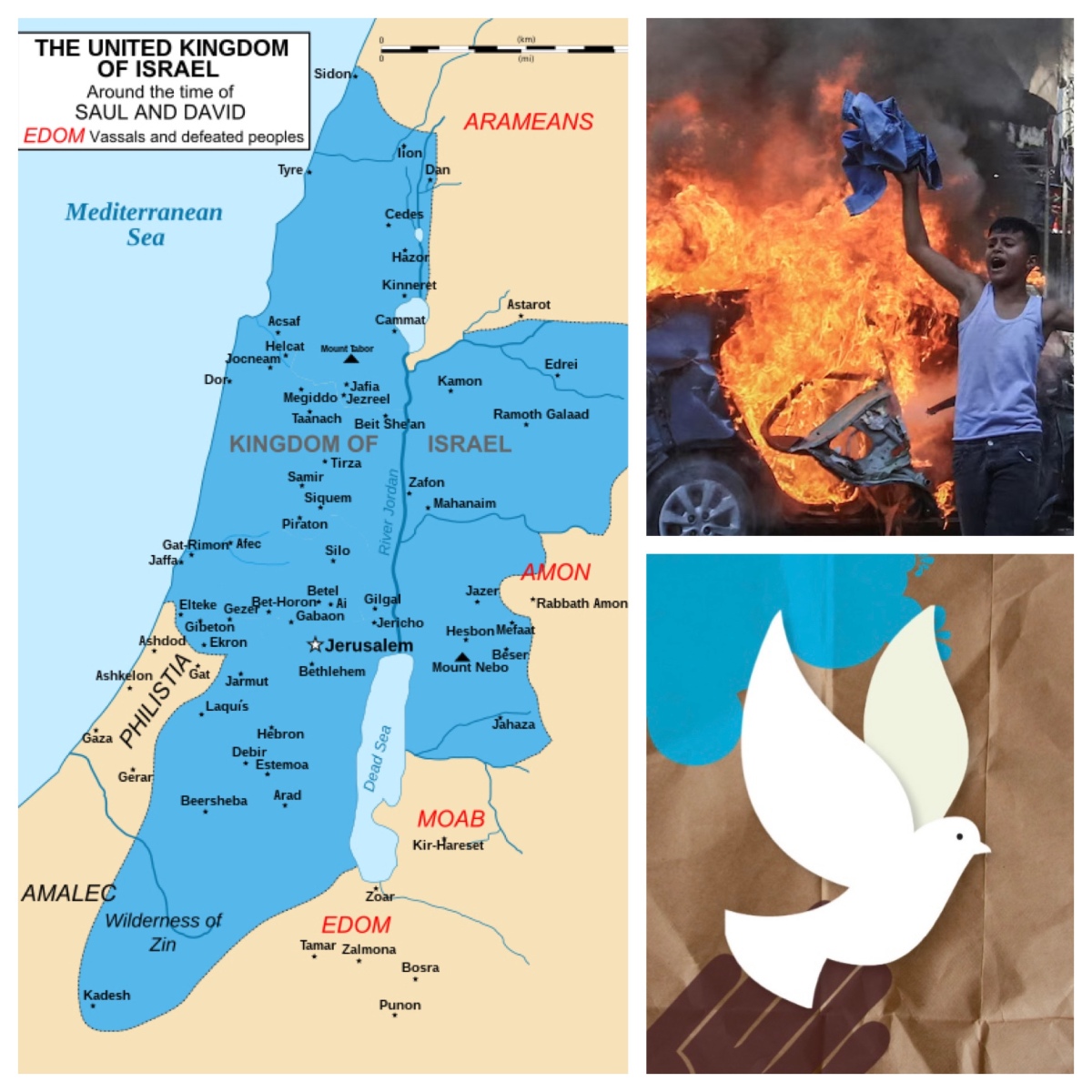



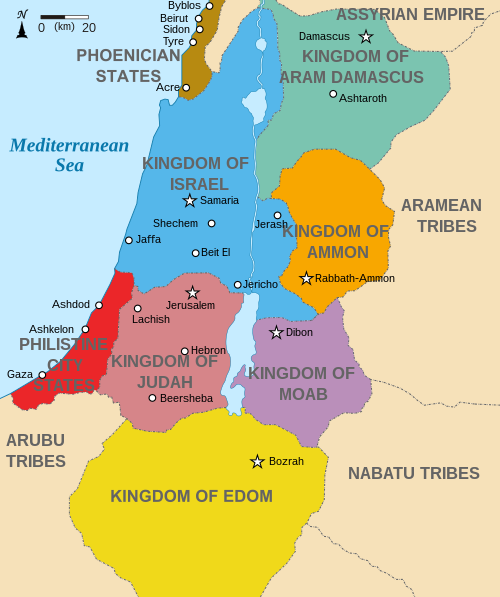
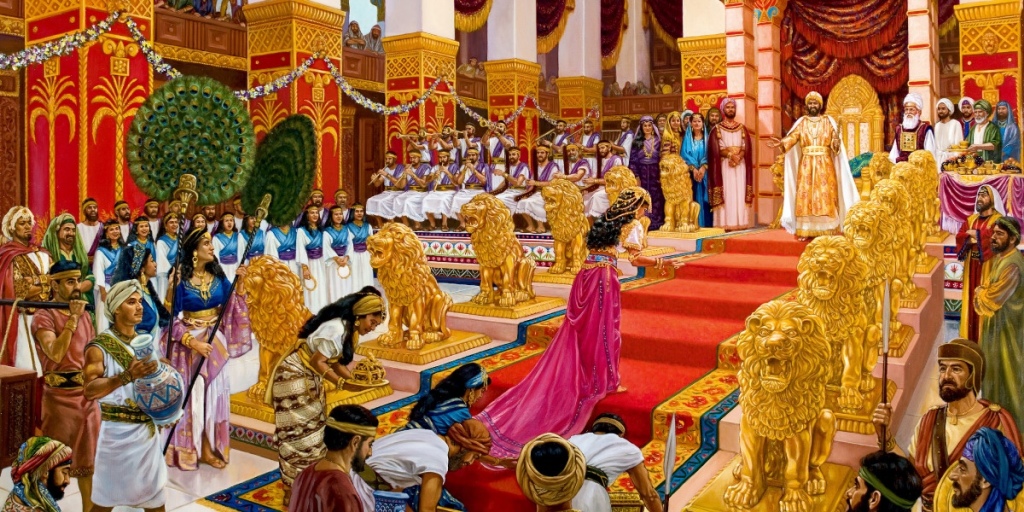
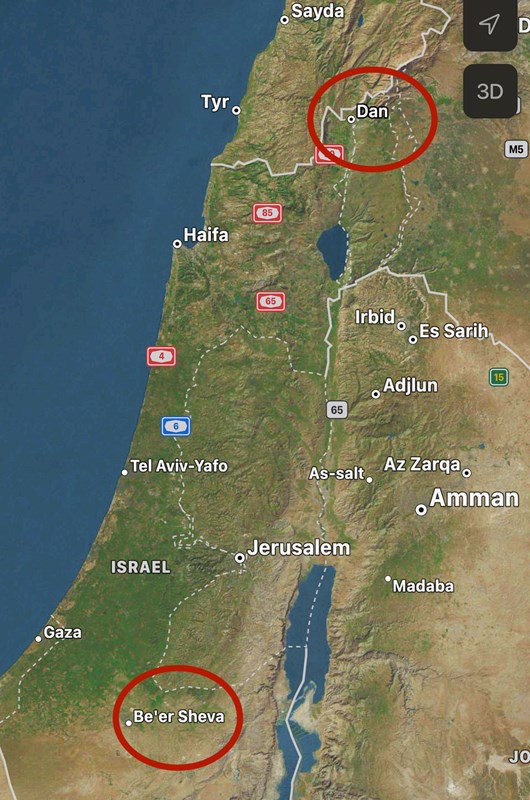

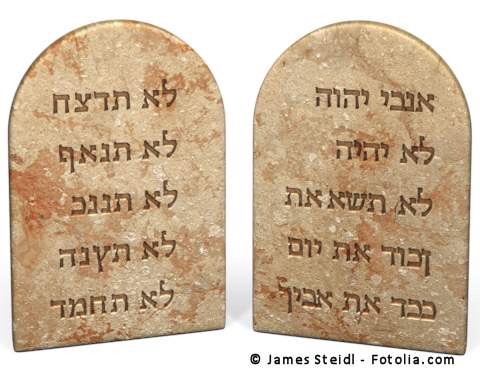

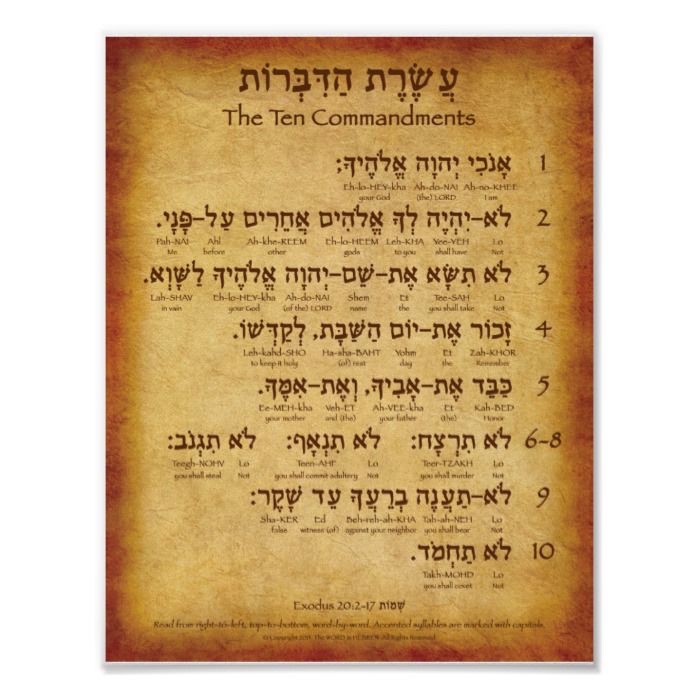
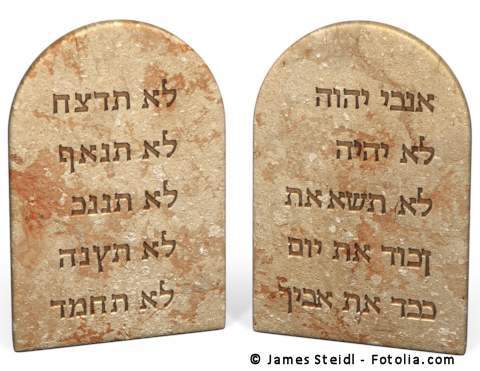




 An Informed Faith