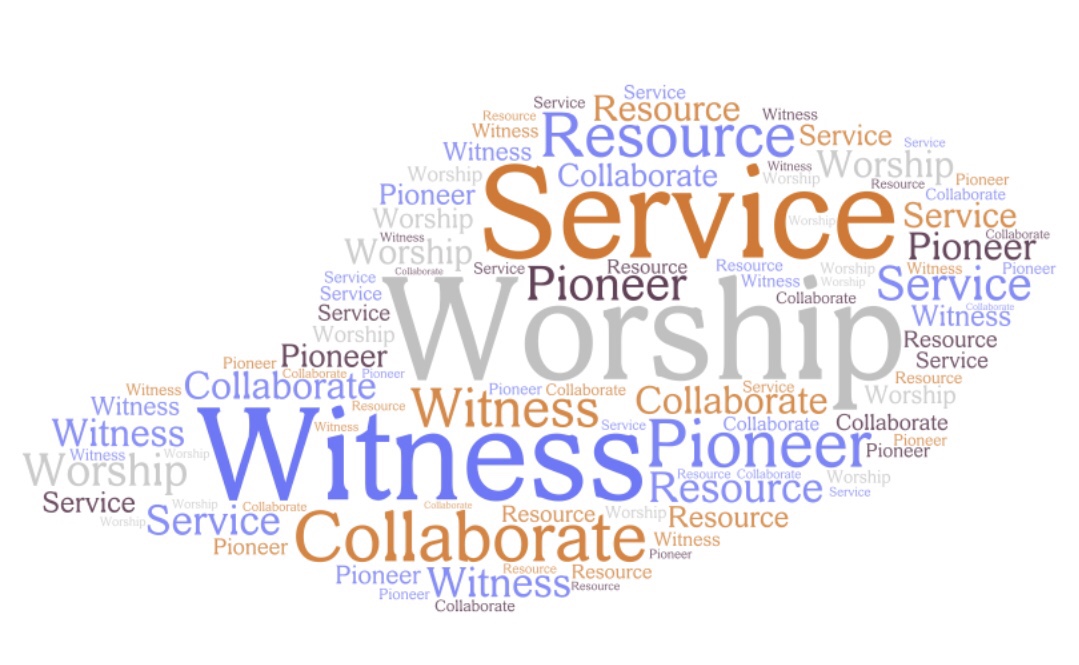
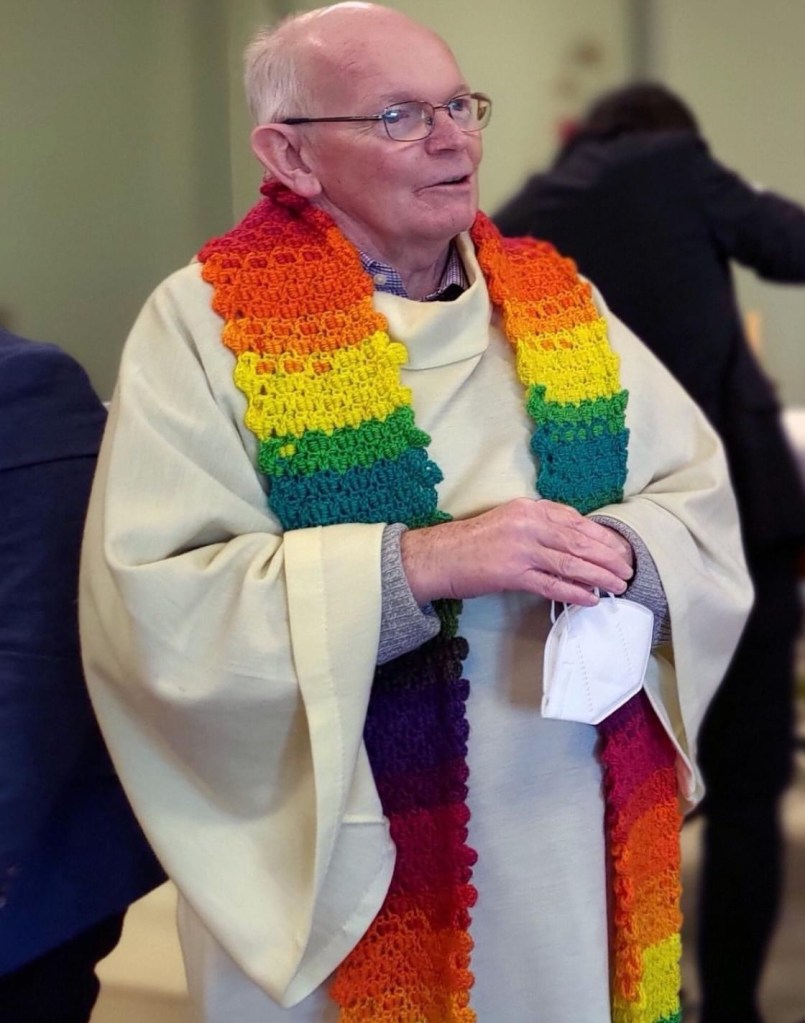
Priorities in ministry: an ordination anniversary reflection

“Well, you only really work one day a week, don’t you?” After decades in ministry, I am not sure I can count how many times I have heard this comment—sometime flippant, but often rather serious.

Of course, ministers do not work only one day a week! That stereotype is based on the perception that the weekly sermon is the sum total of the work of ministry. Whilst it is true that many of my Protestant colleagues see the sermon as the most important, or critically significant, element of their weekly work, it is definitely the case that the work of ministry stretches far and wide beyond the weekly sermon.

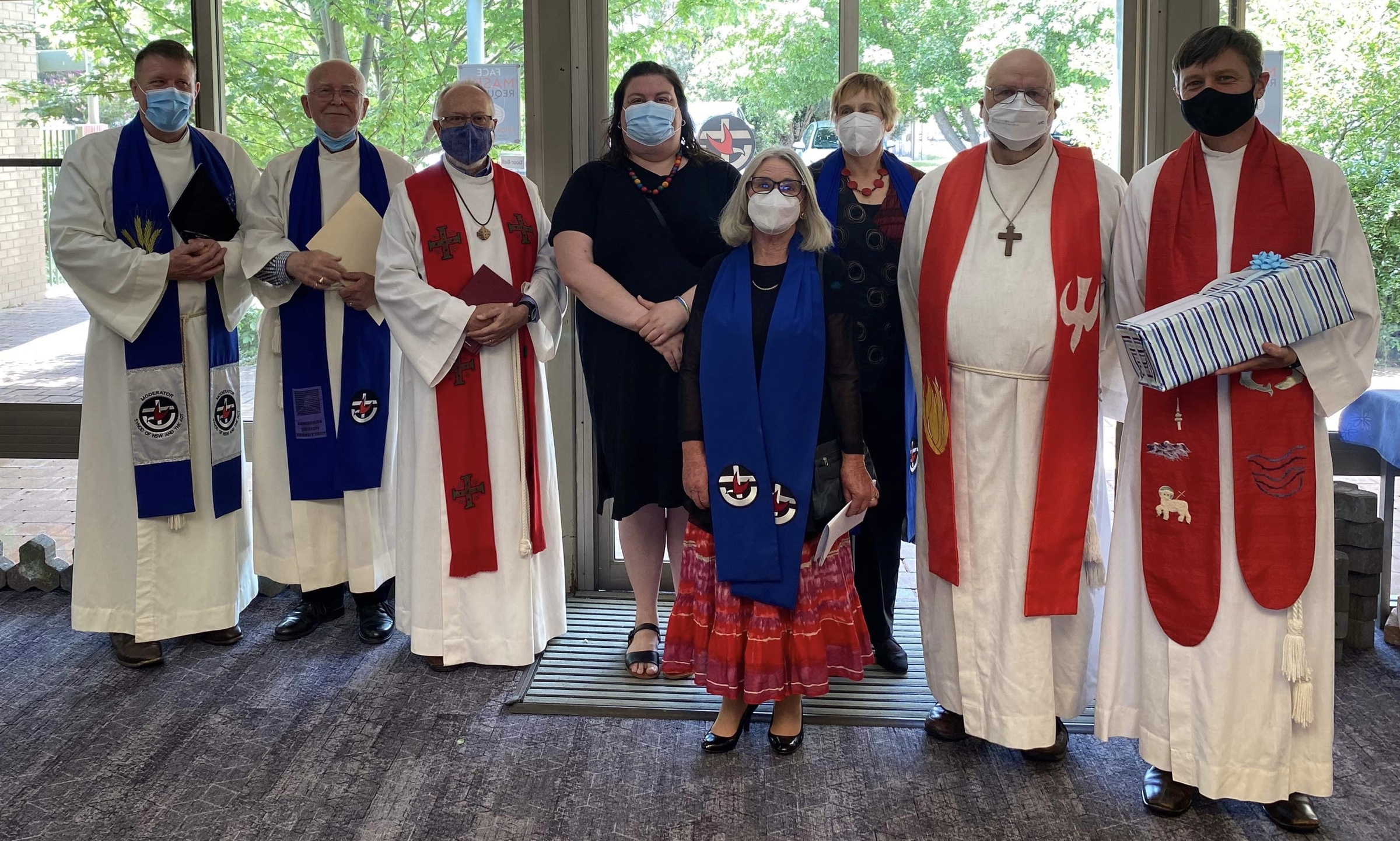
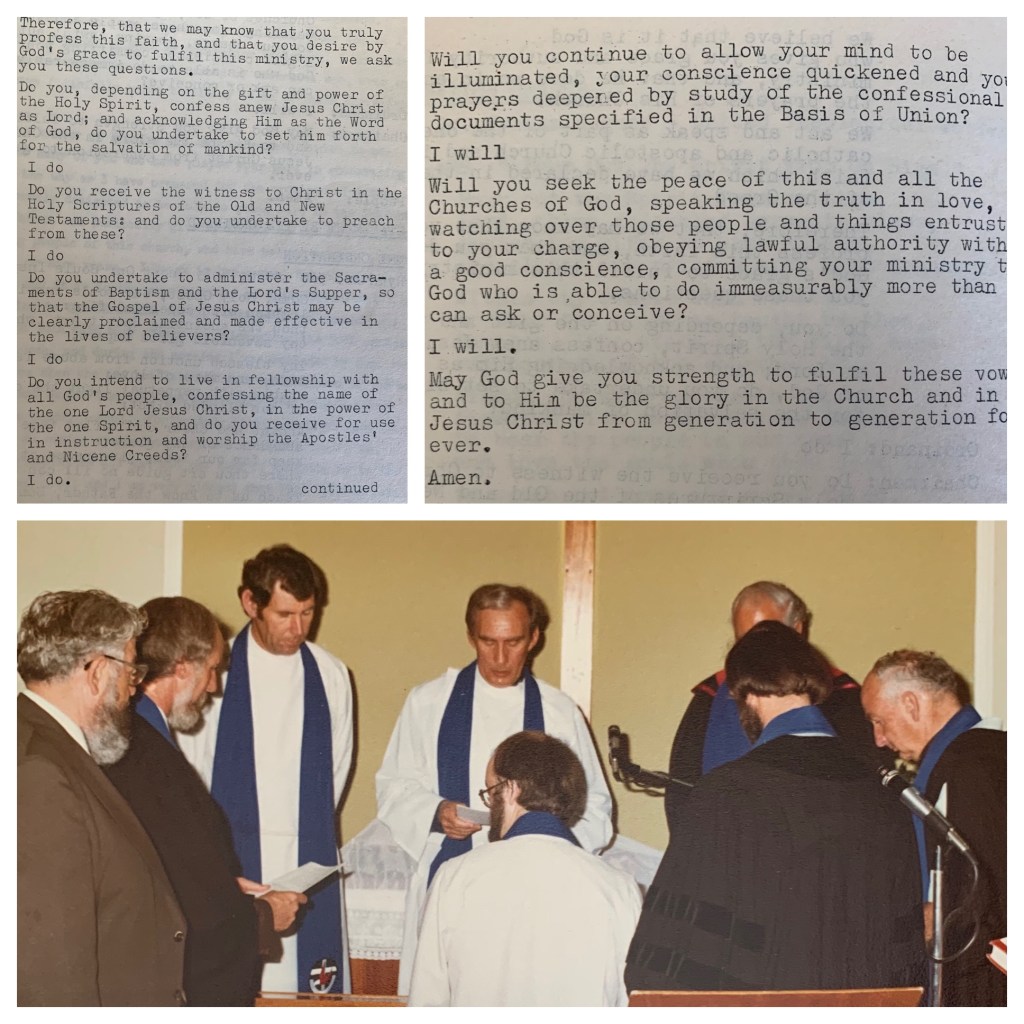
Today is the 42nd anniversary of my ordination; I was set aside to the Ministry of the Word in the Uniting Church in Australia in a service that took place on 3 December 1980 in my home Congregation of Seaforth, amongst the cloud of witnesses that had surrounded me in my early decades.

I have been privileged to have spent time in congregational ministry in two rural areas and one urban location, in regional roles in two presbyteries, in educational roles in two synods, and to have served the Assembly on a number of committees, as well as multiple committees in synod and presbytery roles over the years.

I have worked with some fine colleagues in each of these placements. And in each place, I have sought to live out those vows that I took at ordination, in the exercise of my ministry at Southern Illawarra and Waverley, in years of study at New Haven and two decades of teaching at North Parramatta, in sabbatical periods at Durham and Cambridge, back in ministry at Wauchope and the Mid North Coast Presbytery, in the venture overwest to Perth, and then at Queanbeyan and in this most recent Presbytery role.

In each of these placements, I have been comforted (and challenged) by the way that the Uniting Church articulates the various responsibilities of a minister. They are set out in section 2.2.1 of the national Regulations. The expression of those responsibilities has changed somewhat over time, although the basic shape of these responsibilities remains consistent in its focus. But there have been some interesting refinements over time.

(The current version of the Regulations is cited at the end of this blog.)

To start, we can note that preaching is given the first place in the list. Is this significant? Certainly, in the history of Protestant churches, the priority accorded to preaching is clear. And I know of colleagues today, who insist that, whatever else is happening, preparation of the weekly sermon is their first priority each week. That is central to our tradition.

Of course, preaching is not held exclusively to the ordained ministers. The Methodist Church contributed the ministry of lay people as preachers to the Uniting Church when it was formed, and Lay Preachers are now one of four specified ministries within the UCA, alongside the lay ministry of Pastor and the two ordained ministries of Deacon and Minister of the Word.

Second, presiding is noted. That sits hand in hand with the role of preaching; these are two of the key aspects in leading worship within the gathered community of faithful people. Leading prayers, reading scripture, explaining and expounding the message, baptising new members of the community, and gathering people around the table of the Lord at communion, are key aspects of leading worship on a regular basis.

Once again, presiding at the sacraments, within current Uniting Church understanding, is not limited exclusively to ordained people; in situations where access to an ordained minister is not regularly available, authorised lay people can preside, after having completed a training course and being recommended by their Church Council.

In fact, the third clause places conditions around the way that a minister exercises the roles of presider and preacher. The leading of worship is to be a shared, collaborative, team-based enterprise. All ministers should, in their practice, cultivate a team of people who can not only read scripture and lead prayers, but also preach and, if need be, preside at baptisms and communion within the placement. Certainly, neither the pulpit nor the table is the exclusive preserve of ordained ministers, as we have noted.

Clauses 3, 5 and 6 each indicate that a key function of ministry is to prepare others: prepare people to lead worship, prepare people to be baptised or confirmed within the church, prepare people to be faithful and more effective disciples, and prepare people to engage in the mission to which the church is committed. Each minister within the UCA is to exercise a ministry of education, training, equipping, resourcing. All ministers are educators; all ministers are called to build up the body of Christ by enabling others to exercise their gifts for ministry and carry out their roles in mission.

The classic understanding of ministry, which is even articulated at points in the Basis of Union, is that the minister the threefold role of preacher, presider, and pastor. Clause 7 addresses the matter of pastoring. Is it significant that this function is quite some way down the list? If the order is in any way significant, we should pause at this point and ponder the traditional expectation that the minister provides pastoral care to all members of the congregation. This is not what the Regulations specify.

And is it also significant, that pastoring the people is (like preaching and leading worship) not the preserve of the ordained alone? That is, all people are called to show care and concern for others. The role of pastor is exercised by those in ministry as an oversight role, ensuring that a team of pastoral careers or elders provide regular and personalised pastoral care. The clause is also made conditional by the phrase “wherever needed”, which suggests that what is in view is a responsive form of pastoring, on a needs basis, rather than a regular “visit the flock every three months” prescription simply because “that is what the minister does”.

Are ministers called to be prophets? Some colleagues that I know place a high value on this role. Nothing explicitly identifies this role, however. Yet understanding how the Bible relates to contemporary situations, and articulating the way that the Gospel speaks into our context, has a dynamic that is very similar to the dynamic that the prophets of old knew very well.

What is “the word of the Lord” for this situation? How do we do just that, in our preaching and teaching? What are the words that best identify prejudices and expose injustices, that advocate for the poor and speak for the voiceless or disempowered? That’s functioning as a prophet.

Practising faith, as a committed disciple, is indicated by a number of clauses. Clause 4 prescribes that ministers bear witness to their faith, while clauses 8, on serving, and 11, on being a committed lifelong learner, also relate to this important dimension of ministry. We need to live, and model, exactly what we say to others, in our own lives.

The final clause addresses the mission of the church. It specifies that Ministers will find ways to be effective in fulfilling that mission. Maintenance is not adequate. Missionary impetus is essential. And “pioneering new expressions of the Gospel” is integral to that process.

This final clause envisages that all ministers will be equally pioneers in mission, as much as they are preachers and presiders, or practising their faith and preparing others for leadership roles in their discipleship. Pioneering is closely linked to “fulfilling the mission of the church”. Over the centuries, the church has regularly reinvented itself, finding new forms for worship, for service, for witness, for fellowship. We need to keep doing that in our own times, to continue being effective in mission.

And might the last clause (following a familiar scriptural dictate) be made first? What would our ministry, and our mission, look like, if each minister made the task of “pioneering new expressions of faith” as their first priority—and, by implication, relegated preaching to a lower spot, maybe even the last spot, on the list? It is a challenge—but I think this might be an important clue for the way ahead.

See further at https://johntsquires.com/2022/12/04/reimagining-ministry-in-these-different-times/

*****

UCA Regulations 2.2.1

Within the ministry of the whole Church, Jesus Christ calls men and women to proclamation of the gospel in word and deed through the ministry of the Word and the ministry of Deacon. This calling is exercised by:

(i) preaching of the Word;

(ii) presiding at the celebration of the sacraments;

(iii) providing for other persons to preside at worship and/or preach within the pastoral charge in which the Minister is in placement;

(iv) witnessing in the community to the gospel of Jesus Christ;

(v) guiding and instructing the members of the Church and equipping them for their ministry in the community;

(vi) nurturing candidates for baptism and confirmation;

(vii) pastoral oversight and counsel wherever needed;

(viii) serving in the community, especially among those who are hurt, disadvantaged, oppressed or marginalized;

(ix) careful attention to administrative responsibilities;

(x) due observance of the discipline of the Church;

(xi) the enhancement of the Minister‘s own gifts for the work of ministry;

(xii) pioneering new expressions of the gospel and encouraging effective ways of fulfilling the mission of the Church.

The achievements of the Whitlam Government, 50 years later

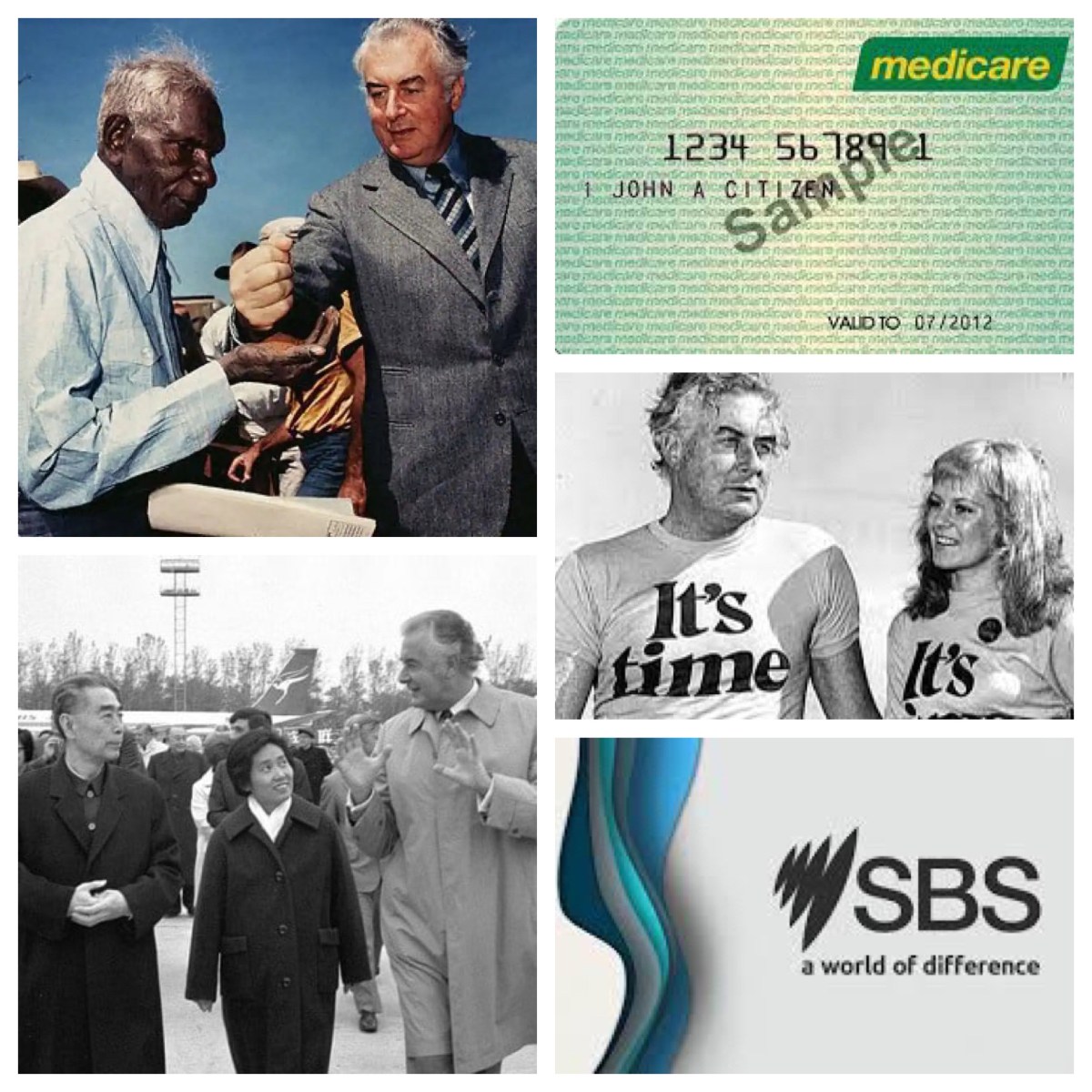
It was fifty years ago today (2 December 1972) that the Australian electorate came to its senses after 23 years of stodgy, backward-looking conservative coalition governments. Gough Whitlam led the Labor Party to a victory over a shrivelled and useless McMahon—Anthony coalition.

In three dynamic years, the Whitlam Government effected many overdue and very welcome changes, in so many areas:

Race relationships: the White Australia Policy was abolished, the Racial Discrimination Act began the move into multiculturalism for Australia

Land rights: returning land to the Gurindiji people in the Northern Territory began the process that led to the Mabo and Wik judgements; free Aboriginal legal services were also established

Education: free higher education was introduced, making hundreds and thousands of Australians the first in their family able to go to university

Civil rights: both conscription into the armed forces and the death penalty were abolished

Healthcare: Medicare brought universal healthcare for all Australians, providing access to GPs and hospitals at minimal cost

Rights for women: no-fault divorce meant that women could chose to leave an unhappy marriage without being financially burdened; removing the tax on contraceptives meant the Pill was made affordable and accessible; the equal pay case meant women would be more fairly compensated in employment

Foreign affairs: Whitlam was the first Western leader to visit China, reorienting our focus to Asia, leading to a flourishing trade with the region

The Arts: funding to the arts was doubled, the National Gallery, the Australian Council for the Arts, and SBS were all established

All of this, and more, to be thankful for!

See more at https://www.whitlam.org/studying-whitlam

and https://johntsquires.com/2022/05/26/fifty-years-of-naidoc-week-1/

Doing mission locally: an imperative for discipleship in the 2020s

In many Congregations around the country—in rural towns, in city suburbs, in regional centres, in inner city areas—members of the church are also members of local community groups. In many cases these relationships have a long history; it has always been seen to be important for people of faith to be active in their local communities, engaging alongside people of other faiths or no faith with those community groups—CWA, service groups like Lions and Rotary, Masonic groups, climate groups, organisations to feed the homeless or the lonely, refugee justice groups, craft groups, hobby groups, playgroups, and so many more.

In many cases, however, there is no clear understanding of how these relationships can provide a base for deepening the discipleship of these people and extending the mission of their local Congregation. The missional understanding or commitment within such Congregations was often shaped by an ethos of a past era in which the local church was the de facto “community hub”; and perhaps with a sense that mission is really about inviting people to “come and be with us”. Open the door, advertise the event, and folks will come; that was certainly the experience of a (now, rather distant) past.

Today, by contrast, there has been a significant development in our understanding of mission—that it is more, now, about “go and be with others” rather than “come and join us”. Mission, after all, is about “being sent”, rather than about “bringing in”. Indeed, the very word missio comes from a Latin word which means “sent”.

In my Presbytery, the Canberra Region Presbytery, there has been a year-long process of developing a mission plan for the next few years. It has been driven by my colleague, Andrew Smith, who has offered the following insightful reflection on how mission might be understood and expressed in such contexts, in ways that give expression to the developing understanding of mission that has been underway for some time now. He writes:

From “come and join us” to “go and be with others”

The references to a change from “come and join us” to “go and be with others” aim to describe a shift in mission focus for the church over time. Previously church mission could largely rely on a “come and join us” approach. This was a time when churches were highly respected and were at the centre of the wider community life, and being a good citizen entailed church attendance. That era was some of the heydays for the church when the church could expect people would come and join us. All we really needed to do was put on a church service, and people would come. The patterns of conventional church life (with its worship styles and times and models of discipleship) were well accepted, and people willingly obliged.

However, with changes in society, the church no longer enjoys the respect it once had, and people are less likely to be interested in making the changes needed for them to assimilate into the patterns of conventional church life. This means that the “come and join us” approach to mission no longer serves us as well as it once did for calling and forming disciples.

Now, our approach to mission needs to be more along the lines of “go and be with others”. We can no longer expect the wider community to come to us and assimilate into conventional church life to become and grow as disciples of Jesus Christ. Rather, the church needs to change to accommodate to the wider society to find fresh ways of calling people to discipleship. We need to be accommodating. We need to “go and be with others” to build trusting relationships on their turf and on their terms, and look for how the Holy Spirit is working in their lives, and respond appropriately to create fresh pathways aligning with the Spirit’s work toward discipleship.

Example from playgroups

Perhaps an example, growing out of the life of the congregations, might be helpful to illustrate the above intended meaning of mission being more, now, about “go and be with others” rather than “come and join us”.

Playgroups are often very well received acts of loving service by congregations, and a lovely and much appreciated community grows among the families who attend. However, it is not unusual for some individuals in congregations with playgroups to view their playgroup as a something like a funnel that would channel playgroup families to the church’s existing Sunday morning worship service. Such an attitude fits neatly with the “come and join us” approach to mission where the families are expected to assimilate into the patterns of conventional church for their growth as disciples.

However, “a go and be with others” approach to mission would take a very different journey with the families. A congregation with a playgroup has already listened to the needs of the young families in the wider community and has sought to be accommodating by setting up and running the playgroup. This is an act of loving service in which folk from the church are with folk from the wider community, and it is part of the mission of God. We hope and trust that the Holy Spirit is at work in the lives of the families, and we are aware of folk from the congregation praying for the families along these lines. A next key step in discerning the work of the Spirit could be to tell the families that folk from the congregation do indeed pray for them, and to ask the families for any matters that they would like the church folk to include in their prayers.

Such an initiative around prayer is likely to be well received as generally people do not find an offer of prayer to be confronting, rather they find it comforting. Such praying will also build the community among the group as people share what is important to be prayed about, and will also offer some clues about how God is working in their lives.

This is a fresh pathway into discipleship. It may even be that down the track one or two of the parents or grandparents find themselves drawn by the Spirit even more toward the God of this prayer, and may give off signs of seeking more about faith. Then one of the church folk involved in the play group might be able to meet up with them in a local café at a time that suits them to hear and respond to what they are seeking. If others have a similar interest, perhaps a small group could form.

Who knows where all this might lead, but one of the important points is that it is all based around being accommodating to the parents or grandparents – going and being with them on their terms, rather than them being required to come and join us by assimilating into the patterns of conventional church.

Presbytery Mission Plan

The account in Scripture of Philip and the Ethiopian Eunuch in Acts 8 is inspirational in this approach to mission. Read the passage to see how much is on the turf and terms, and at the initiative, of the Eunuch – Philip comes to the chariot where the Eunuch is; Philip gets into the chariot and sits beside the Eunuch at his invitation; Philip starts with the passage that the Eunuch is reading; Philip responds to Eunuch’s request for baptism. Notice as well how the angel of the Lord and the Spirit are at work.

The draft Presbytery Mission Plan gives expression to this approach to mission. It affirms:

  1. God is always present, preparing the way and calling us into mission
  2. God is doing new things in us and through us in unexpected, surprising, and amazing ways
  3. God is calling us outward to be present and engaged in our communities.
  4. God’s faithfulness leads us to share and grow our faith, calling and forming new disciples.

Perhaps the example above about playgroups could be the beginning of discerning and creating a new community of faith that fits with some of the playgroup families.

It is this fullness of God’s mission, and this approach to mission, that we are called to explore and implement.

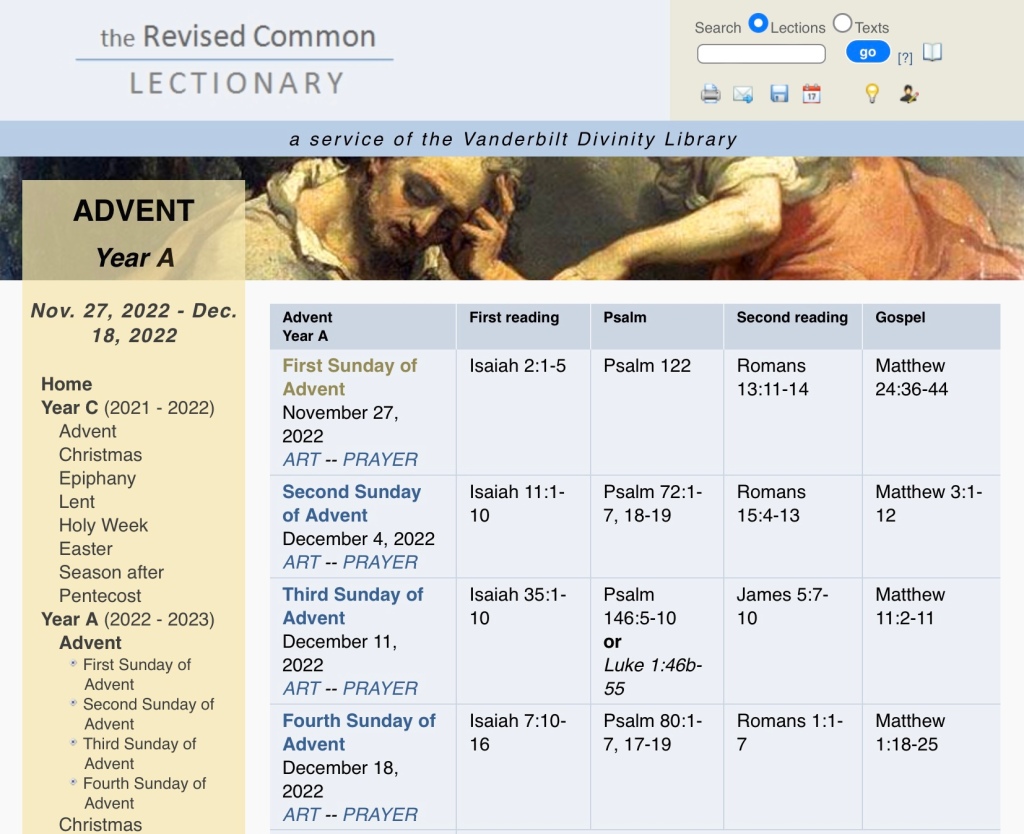
Reading the prophetic texts during Advent (Isaiah 11; Advent 2A)

For much of the year, the lectionary presents us with a First Reading taken from the Hebrew Scriptures. (The exception is during Easter, when a reading from Acts stands as the First Reading.) I am regularly asked, “why has this reading been chosen?” In Epiphany and the “ordinary” season of the Sundays Epiphany after Pentecost, the reading is consecutive—or almost consecutive—following the narrative of a designated book, or set of books, in order. So there is not necessarily any obvious, or intentional, link between the Hebrew Scripture, Epistle, and Gospel readings.

For the seasons of Lent and Advent, however, the selection of each Sunday’s First Reading and Epistle is made with a deliberate intention to connect with the Gospel for that Sunday. So the way the lectionary is built itself includes a bias towards seeing the Gospel reading as the primary focus, and the other readings as feeding into that focus. Nevertheless, the immediate connection with the Gospel for this Sunday—an account of the fiery apocalyptic preaching of John the baptiser (Matt 3:1–12)—is not immediately evident.

The First Reading offered for this coming Sunday is an oracle from Isaiah (Isa 11:1–10, Advent 2A) in which a vision of universal harmony is expressed: “the wolf shall live with the lamb, the leopard shall lie down with the kid … the nursing child shall play over the hole of the asp, and the weaned child shall put its hand on the adder’s den” (Isa 11:6–8).. It follows from the earlier reading last Sunday (Isa 2:1–5, Advent 1A) in which a similar vision is expressed: the nations “shall beat their swords into plowshares, and their spears into pruning hooks” (Isa 2:4).

In last week’s passage, the peoples of the nations stream in to Jerusalem, where they ascend to “the mountain of the LORD, to the house of the God of Jacob”. There, in the Temple, they will receive instruction in “the ways of the Lord” so that they will “walk in his paths” (2:3). Presumably this instruction will come from the priests of the Temple, for they were the authority figures who would “teach my people the difference between the holy and the common, and show them how to distinguish between the unclean and the clean” (Ezek 44:23; see also Mal 2:7). In disputes between people where the understanding of the law is at stake, “they shall act as judges, and they shall decide it according to my judgments” (Ezek 44:24).

In this week’s passage, we are told of a promised figure, who will arise to lead the nations into that time of peace: “a shoot shall come out from the stump of Jesse, and a branch shall grow out of his roots” (11:1). That figure will exude “the spirit of wisdom and understanding, the spirit of counsel and might, the spirit of knowledge and the fear of the Lord” (11:2); he will judge with tsedeqah, righteous-justice, and mishor, equity (11:4). The proposing of this promised figure is a significant development from the prophetic word we heard last week.

This “shoot” from Jesse will advocate for “the poor” and “the meek”, and stand firmly against “the wicked” (11:4). This is precisely the stance that the prophets had previously advocated (Amos 27; 4:1; 5:11; 8:4–6; Isa 3:14–15; 10:2; 25:4; 26:6; 29:19) and would subsequently express (Isa 41:17: 58:7; Jer 22:16; Ezek 18:11–13; 22:29–31; Zech 7:9–10). It is consistent with teachings in The Law about justice for the poor and punishment for the wicked.

This “shoot” will be girded with righteous-justice, for which the prophets have consistently advocated (Hos 10:12; Amos 5:24; Isa 1:22; 5:7; 28:17; 32:16–17; 54:14; Jer 22:3; Ezek 18:19–29; Dan 9:24; 12:3; Zeph 2:3; Mal 4:1–3; Hab 2:1–4). The “shoot” will also exhibit faithfulness, a quality that the prophets have valued (Hos 2:20; 4:1; 14:8; Isa 16:5), because its presence amongst the people reflects its centrality in God’s own nature (Isa 38:19; 65:16; Jer 31:3; 32:41; Zech 8:8).

Thus the “shoot from Jesse” will demonstrate two qualities that feature strongly in Hebrew Scriptures: fidelity to “the fear of the Lord” (11:3; see Job 28:28; Ps 19:9; 34:11; 111:10; Prov 1:7, 29; 9:10; 14:27; 15:33; 19:23; 23:17; Isa 33:6) and the “knowledge of the Lord” (11:9; see Gen 2:9, 17; Exod 31:3; 35:31; Num 24:16; Ps 94:10; 119:66; Prov 1:7; 2:5; 5:2; 8:10; 9:10; 10:14; Hos 6:6; Hab 2:14; Mal 2:7).

*****

This oracle thus sits firmly within the stream of prophetic speech about what God desires amongst the people of Israel, calling them to be faithful to the Law and walk in its oaths. Yet its presence in the Christian lectionary at this time of the year directs our attention to a way of reading it as a prophecy that foretells the coming of Jesus. Indeed, each of the Hebrew Scripture readings during Advent and at Christmas offer us a similar invitation to understand them as saying, “this is what the prophet of old said, and we can see that these words are fulfilled in the coming of Jesus”.

How are we to deal with this hermeneutical invitation, guiding us to interpret words spoken 800 years before Jesus as clear and direct statements about what Jesus himself will be like, and what he will do? I started pondering this question in my blog on last week’s passage from Isaiah; see https://johntsquires.com/2022/11/22/on-reading-scripture-during-advent-drawing-from-the-ancient-prophecies-isaiah-2-advent-1a/

After reading this blog, one person responded to me by quoting scripture and posing a rhetorical question that appears to resolve the matter. “‘And beginning with Moses and all the Prophets, (Jesus) explained to them what was said in all the Scriptures concerning himself.’ — Luke 24:27 As followers of Jesus, is this not our interpretation of the Bible?”

Well, yes. And, no. So, let me explain.

I think that we need to be careful in the way that we say that “this passage is about Jesus”. There is one way of saying this that drives us towards claiming that “when the prophet said these words, he was looking forward in the future to the coming of Jesus and predicting him”. That is to say, prophecy is understood as foretelling; looking into the distant future and predicting what God will be doing at that time. And so, these words are about Jesus.

I think that this way of reading texts actually does violence to them. It runs roughshod over the original context in which the words were spoken. It ignores, and perhaps even obliterates, the original context (in the time of Israel) for the sake of highlighting the later context (in the time of Jesus). And in the course of doing this, it actually wrenches the passage out of its earlier Israelite context—within the society that developed into Judaism—and forces it into a later Christian context.

This can actually lead to a form of supercessionism; a way of claiming that the Jewish texts, and the Jewish way of life and faith, are superceded by Christian faith and understanding; that Judaism is “old” and no longer relevant, because Christianity is “new” and now the way that God relates to us.

I don’t subscribe to this interpretive approach; Judaism is a living faith in its own right, with its own sacred texts. Those texts maintain an integrity in their own right, within that faith context, and should not be forced into a different, dogmatic Christian framework. My church does not hold to this way of reading things, either. See https://johntsquires.com/2020/10/01/producing-the-fruits-of-the-kingdom-matt-21/

Nor do I subscribe to the notion that prophecy is always and only about foretelling. The ancient prophets were not just fixated on “what would happen with Jesus”. Prophecy may be about foretelling—and not always centuries into the future, but also about the time soon to come as the prophet spoke. But prophecy is also (and perhaps primarily) about forthtelling; speaking the word of God into the immediate context, addressing issues of concern in the political and social life of the people.

That is to say, prophecy is multilayered, multivalent, open to a range of interpretative options. It is not to be reduced to one line of sight, but should remain open to the richness of interpretive possibilities it offers.

Another person who respond to my blog said, “God can accomplish two things at once. He can send a prophet that speaks words that the people in a specific time and place need to hear, while at the same time those words can speak to us now.” Not exactly how I would say it; but I agree that any passage in scripture, and any communication from God, can indeed convey meanings at different levels of understanding.

(And one thing I have learnt from my years in dialogue with the Jewish community, representing my church in that dialogue, is that Jewish interpreters are open to a wide range of meanings, and the process of exploring those meanings raises questions and possibilities that invite even wider understandings!)

So I would say that Isaiah 11:1–10, and the other Hebrew Scripture texts offered during Advent, need, firstly, to be understood in their own right, in their original historical and religious context; but secondly, are able to be understood as setting out features which we find, much later, with the benefit of hindsight, are manifested by Jesus. In that sense, the ancient forthtelling for the society of the day also is capable of being understood as foretelling into the time of Jesus.

The prophet of old was looking for someone to act in ways that would be faithful to God’s way and helpful for society of the day, holding to the standard of righteous-justice that God desired. That way of acting is indeed the way that Jesus behaved; he was faithful to God’s way, demonstrating righteous-justice in his own actions, and calling his followers to live in accordance with that same righteous-justice. The words of the prophet tell us significant things about Jesus. But let’s not make it “all about Jesus”. It’s not.

On reading scripture during Advent: drawing from the ancient prophecies (Isaiah 2; Advent 1A)

“Many peoples shall come and say, ‘Come, let us go up to the mountain of the Lord, to the house of the God of Jacob; that he may teach us his ways and that we may walk in his paths’” (Isa 2:3). These are words in the section from Hebrew Scripture that are offered by the lectionary for this coming Sunday, the first day of Advent (Isa 2:1–5). How do we deal with the words of a prophet, speaking eight centuries before Jesus, when they are set for the season in which we look forward, with expectation and hope, to the coming (again) of Jesus, at Christmas?

Perhaps these words sit here, at the start of Advent, because they express a vision of the universal relevance and impact of faith in God, grown amongst the people of Israel, and brought to a fuller expression in the person of Jesus? The claim that “many peoples” will come to Jesus points to his universal impact. The notion that these “many people” will seek to learn the ways of the Lord and walk in his paths is a comforting and inspiring statement by the prophet.

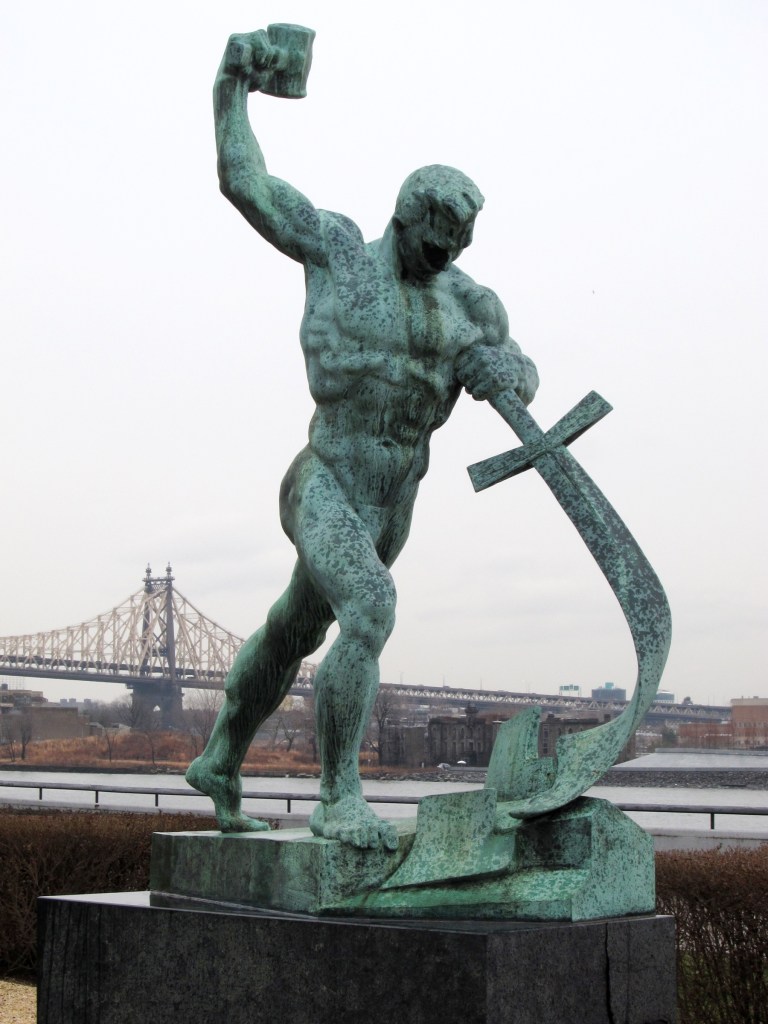
This passage, too, is well-known for the prophet’s vision that divine judgement will take place “between the nations … for many peoples” (2:4a); as a result, those people “shall beat their swords into ploughshares and their spears into pruning hooks” (2:4b). This oracle, shared with the contemporary prophet Micah (Mic 4:1–4), foresees that these nations “shall not learn war any more” (2:4c). It’s a wonderful vision—sadly, one that is still awaiting fulfilment, even 28 centuries later.

Let Us Beat Swords into Plowshares,
a sculpture by Evgeniy Vuchetich
in the United Nations Art Collection

*****

In the coming weeks, we will be hearing and considering other words from this prophet who lived eight hundred years before Jesus; words that the church has heard, and taken, and restated, and declared that they speak about Jesus—predictive prophecy, enabled by the Spirit, spoken well in advance of the time of their fulfilment. After the vision of universal peace this coming Sunday (Isa 2:1–5, Advent 1A), the following Sunday we will hear a similar oracle from Isaiah (Isa 11:1–10, Advent 2A), in which another vision of universal harmony is expressed.

The two passages sit curiously alongside the Gospel passages of the prediction of apocalyptic turmoil by Jesus (Matt 24:36–44, Advent 1A) and the fierce apocalyptic preaching of John (Matt 3:1–12, Advent 2A). Whilst the Gospel passages foresee disastrous events, the Hebrew Scripture passages look to universal peace.

The other two Sundays in Advent contain further oracles spoken eight centuries before Jesus by the prophet Isaiah. One comes from the later part of the long opening section of Isaiah (chapters 1–39), and once again offers a vision of restitution and harmony; a period of time with abundant blossoming (35:1–2), divine salvation (35:3–4), restoration of full health (35:5–6), an a highway, “the Holy Way”, where “no lion shall be there, nor shall any ravenous beast come upon it” (35:9). The whole vision is framed with joy and singing (35:2, 10; see Isa 35:1–10, Advent 3A).

This passage sits, more easily, alongside the Gospel reading for that Sunday, recounting an incident in which Jesus was asked about John the baptiser (Matt 11:2–11; Advent 3C), in which he talks about events taking place even in their midst: “the blind receive their sight, the lame walk, the lepers are cleansed, the deaf hear, the dead are raised, and the poor have good news brought to them” (11:5).

Finally, on the fourth Sunday of Advent, the lectionary takes us to the very familiar prophetic words, “the Lord himself will give you a sign; look, the young woman is with child and shall bear a son, and shall name him Immanuel” (Isa 7:14), a part of a longer prophecy that Isaiah speaks directly to King Ahaz (Isa 7:10–16), Advent 4A).

Alongside this, of course, is the Gospel passage where this famous prophetic utterance is cited (Matt 1:18–28, Advent 4A)—albeit, in a version that clearly mistranslates the Hebrew ‘almah (young woman) as the Greek parthenos (virgin)—a rendering that has become firmly fixed into the Christian traditions about the birth of Jesus.

*****

A brief footnote: two of these passages (Isa 7 and Isa 11) come from the famous three passages early in Isaiah that are regularly connected, in Christian tradition, with the birth of Jesus. The third passage (Isa 9) is designated by the lectionary as the first reading for “the Nativity of the Lord” on Christmas Eve or Christmas Day (Isa 9:2–7). Together, the “young woman shall conceive” (Isa 7), “a child has been born for us, a son is given” (Isa 9), and “a shoot shall come out from the stump of Jesse” (Isa 11) provide a natural collection of ancient words pointing to the good news of the Christmas story.

*****

That said: we need to be very careful in how we speak about these passages. Whilst they seem, to us Christians, to fit naturally within the context of our Advent expectation about the coming of Jesus, we need to remember that we are taking passages from scriptures that are sacred to people of another faith, which existed long before the Christian faith came into being as a system of belief; indeed, long before Jesus himself was born.

We know “in our heads” that Christianity emerged from the Jewish faith—but often we act as if this newly-formed religious system now stands in the place of Judaism, as the body of belief to which the Lord God, the ancient of days, now relates and responds; and that Judaism itself is now obsolete, no longer relevant, superseded. Presenting readings from Hebrew Scripture as if they speak directly and clearly about Jesus, continues such an attitude.

Judaism is not, of course obsolete; there are still millions of people holding the beliefs of Judaism and keeping the practices of Judaism around the world—in Israel, in the United States, in Australia, and in any other countries. The Jewish faith has not ended; Christian believers have not superceded Jews as God’s chosen people. God’s covenant with Jewish people continues; as Paul declared so clearly, “God has not rejected God’s people” (Rom 11:1), “the gifts and the calling of God [to Israel] are irrevocable” (Rom 11:29). “Salvation has come to the Gentiles” (Rom 11:11), but even so, “all Israel will be saved” (Rom 11:26), for “as regards election, they are beloved” (Rom 11:28).

See more at https://johntsquires.com/2020/08/10/god-has-not-rejected-his-people-all-israel-will-be-saved-rom-11/

Indeed, there is much in common amongst these two faith. Jews and Christians each orient our belief towards the same God, the God of Abraham and Sarah, of Isaac and Rebekah, the God of Moses, Aaron, and Miriam. Christians believe that this God is the same as the God of Mary and Jesus, of Peter and Paul, of Priscilla and Phoebe, and the God in whom we believe. We need to give due acknowledgement of that reality in our worship and preaching.

Supersessionism is a term used to describe the way that the Church, through the centuries, has simply taken over Jewish elements (such as scripture, the covenant, the Ten Commandments, Pentecost, the Passover Seder—and these “Advent texts” from Isaiah). We have “baptised” them so that believers have the view that these are Christian elements, without any sense of their Jewish origins—and their continuing place in contemporary Jewish life.

The Assembly of the Uniting Church issued a statement in 2009 regarding our relationship with Jews and Judaism. It affirmed the integrity of Judaism as a living faith, and made a commitment to engage in constructive relationships with Jews. It encouraged members of the Uniting Church to value Judaism as a living faith, and not to engage in acts or demonstrate actions that indicate a belief that Judaism has been superceded. See https://assembly.uca.org.au/rof/resources/learn-more/item/download/1109_09f709cccf49d83607c92e31d650d581

We should not therefore speak, sing, pray, or act in ways that are disrespectful to Jewish practice and beliefs, and in contravention of our strong commitment as a church to work constructively with our Jewish sisters and brothers. That should be an important guideline in the way we approach these “Advent texts”, even as we have our eyes firmly fixed on “the coming of Jesus”, which we celebrate at Christmas.

See also

On reading scripture during Advent: starting with the end (Matt 24; Advent 1A)

Last Sunday, we drew to a close the series of readings that we have been following from “the orderly account of the events that have been fulfilled among us”, for our weekly Gospel passages. This orderly account, offered to a person named “lover of God” (in Greek, Theophilus), we are told, was written so that this Theophilus might “know the certainty concerning the things about which you have been instructed” (Luke 1:1–4).

In this narrative, Jesus has been positioned as “a light for revelation to the Gentiles and for glory to [the] people Israel” (2:32), through whom “all flesh shall see the salvation of God” (3:6). His final words to his followers charge them with proclaiming “repentance and forgiveness of sins … to all nations” (24:47)—indeed, “to the ends of the earth” (Acts 1:8). It’s the strongest biblical expression of the universal, scope of the Gospel.

Now we turn to the narrative entitled the origins of Jesus, chosen one, the son of David, the son of Abraham. This Gospel, by contrast, focuses intently on the Jewish origins of the Gospel. The opening chapters signal the Jewishness of Jesus (Matt 1:1), presents his Jewish genealogy (1:2–18), and locates him as the chosen ruler “who is to shepherd [God’s] people Israel” (2:6) and fulfil Isaiah’s words for “the people who sat in darkness have seen a great light” (4:16).

In this Gospel, Jesus affirms that he did not come “to abolish the law and the prophets”, but rather to fulfil them (5:17); he instructs his followers to “strive first for the kingdom of God and God’s righteousness” (6:33), is portrayed as one proclaiming justice (12:18–21), advocating what is central to the life of Israel—God’s justice and righteousness (Amos 5:24; Ps 33:4; 72:1–2; Prov 21:3; Isa 1:21; 5:7; 28:17; 32:16; Jer 22:3; 33:15).

In the Matthean narrative, Jesus becomes the teacher supreme, the sole instructor, of the people (23:8, 10); his final instructions to his followers are that they are to “teach all nations … to obey everything that I have commanded you” (28:20). So this Gospel invites us (indeed, it leads us) into the heart of Jewish faith, for it is there that Jesus takes his stand, calling for repentance, the enacting of righteous-justice, through a deeper, more radical commitment to the covenant that Israel has with the Lord God. See

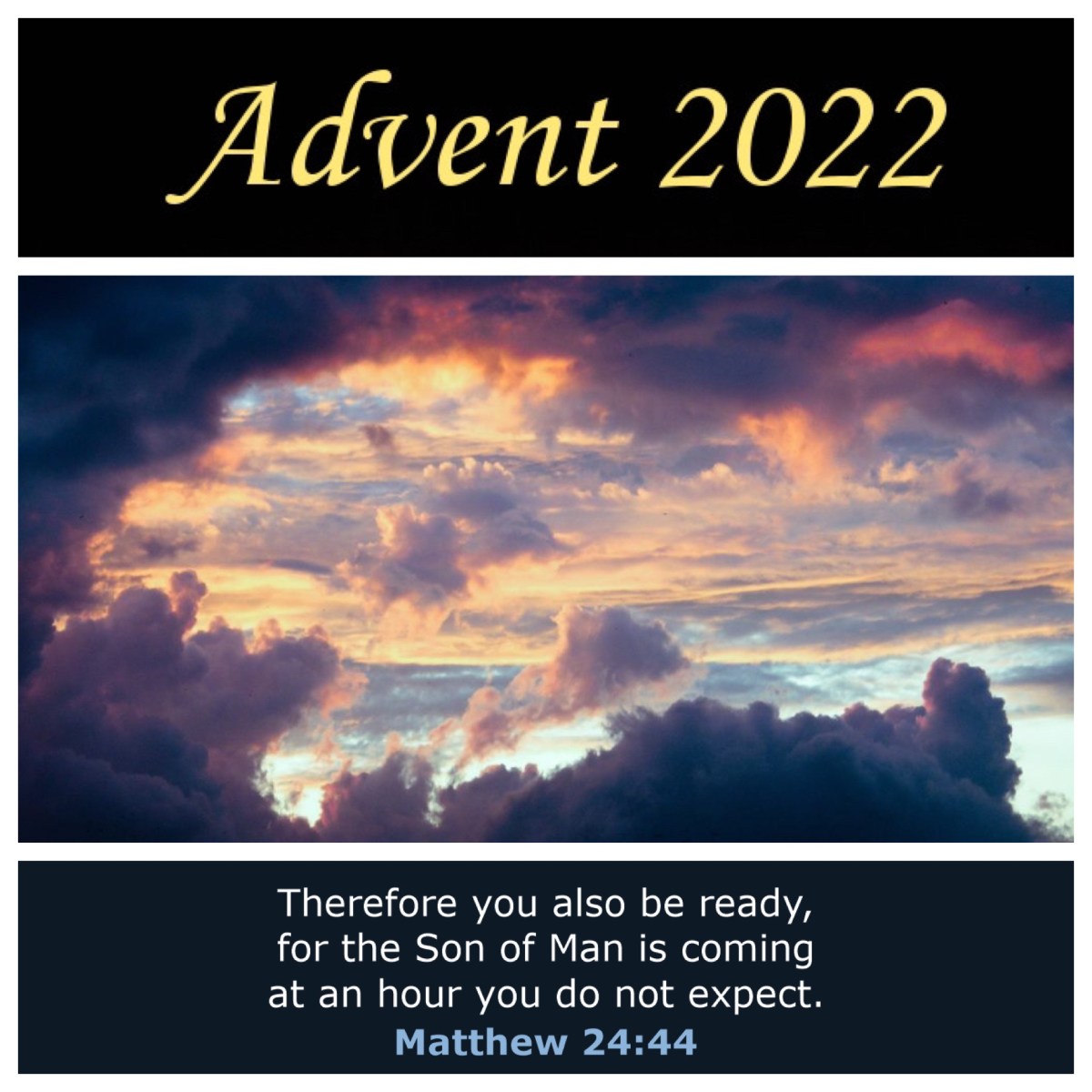
All of that lies ahead of us in the coming twelve months. Yet this Sunday, the first Sunday in Advent, we start with a confronting word from the latter part of the story: “two will be in the field; one will be taken and one will be left; two women will be grinding meal together; one will be taken and one will be left” (Matt 24:40–41). This striking declaration sits alongside exhortations to “keep awake, for you do not know on what day your Lord is coming” (24:42) and “you also must be ready, for the Son of Man is coming at an unexpected hour” (24:44).

These exhortations are characteristic elements in apocalyptic literature of the time; and they crystallise the sense of an imminent catastrophic event which is set out in a longer speech which is vivid and explicit in its dramatic apocalyptic imagery (24:3–44). Immediately after these exhortations, Jesus tells a series of four parables (24:45–25:46) which further dramatise the message that “the end is near”, “you do not know when”, “make yourself ready”, “be prepared”.

The section offered by the lectionary for the first Sunday in Advent (24:36–44) seems a strange place to start a year of Matthean stories about Jesus. Why begin Advent with an apocalyptic passage? And yet, the injunctions of this passage seem to sit neatly with the opening words of Jesus in this Gospel: “repent, for the kingdom of heaven has come near” (4:17). See

These words echo exactly the message of John the baptiser (3:2) and point forward also to the demands that Jesus makes throughout his public ministry, culminating in the calls to “keep awake” and “be ready”, because “you do not know on what day your Lord is coming”. The opening message of Jesus is clearly echoed in this later apocalyptic speech.

David Cassian Cole is the founder and executive director of Waymark Ministries CIC. He is known as Brother Cassian. He writes about a custom in the early centuries of the Celtic church, for Advent to stretch for 40 days (mirroring Lent, the 40 days of preparation prior to Easter).

Cole writes, “It is believed that the 40 days of Advent were split into three sections, colloquially termed the three comings of Christ. The first is the incarnation, what we all focus upon at this time of year; the second is Christ coming into our lives; the third is the coming of Christ at the end of all things, as depicted in the book of Revelation. The third coming of Christ is that which comes at the end of all things, and through this period the Celtic Christians examine their own lives, not in a self-judgmental way, but in a positive self-reflection to see whether they are ready and prepared, in the way they are living, for Christ to return at any moment.” See more at

So we are offered these words from the final long sermon of Jesus as the introduction to the year of Matthew: a reminder of the claim that God holds authority of the creation as the one who will determine “the time”, and that “about that day and hour no one knows, neither the angels of heaven, nor the Son, but only the Father” (24:36), a call to “keep awake, for you do not know on what day your Lord is coming” (24:42), an exhortation to “be ready, for the Son of Man is coming at an unexpected hour” (24:44).

Those phrases set forth the attitude that is required, in being open to the coming of Jesus—an attitude that is quite appropriate for Advent, that is essential for personal faith in Jesus, and that is fitting for the whole year of reading and pondering stories about Jesus, in this “book of origins”.

The gender agenda: a multiplicity of matters

Over the past week, I’ve been aware of a number of happenings that point to the continuing shifts within the Christian church relating to the matter of gender. Some of these events have been encouraging. Some have been disappointing. Some raise serious questions. Others offer occasion for great joy. Together, they point to the gender agenda, which continues to agitate the churches. It’s something that involves a multiplicity of matters.

This week has been Transgender Awareness Week. On Sunday evening, the Rainbow Christian Alliance met at Tuggeranong Uniting Church in Canberra. There was sharing, as there is always is, but with a particular focus at this meeting on the stories of transgender members of the group. It was a rich time, celebrating the way that people have been able to be “true to themselves” and express that inner reality in the ways that they dress, relate, and function within society—and, indeed, undertake the daunting process of hormone replacement therapy and even surgery to fully assume the actual gender identity as a manifestation of their inner, real person.

I have reflected on the week in my blog, at

On the same weekend, the Baptist Union of NSW and the ACT held one of their regular gathering of representatives from across the state and territory, at which the issue of gender was to the fore. Specifically, discussion was held and then a decision was made, that Baptist pastors and churches which were agreeable to marrying couples of the same gender would be asked to affirm “the traditional understanding of marriage”—that is, that marriage involves always a male and a female—or that they leave the association of Baptist churches.

There is a blog by one Baptist pastor who feels that he is unable to affirm that “traditional understanding of marriage”; he has described the experience of that all-day meeting as being akin to “a casual crucifixion”—a searingly potent, and deeply saddening, description.

The blog by Will Small is at https://www.willsmall.com.au/words/a-casual-crucifixion-i-never-gave-a-shite-about-being-a-baptist-until-someone-else-decided-i-couldnt-be

There is also a fine article by Erin Martine Sessions, another member of the gathering, at https://www.abc.net.au/religion/have-baptists-just-sold-their-soul-over-same-sex-marriage/

The Baptists, sadly, have taken an approach to this particular issue of same-gender marriage that has recently led to a split in the United Methodist Church; see my reflections at

I have also written a series of blogs exploring how such an aggressive approach to the gender agenda has been prosecuted—unsuccessfully, fortunately—within the Uniting Church in Australia.

My posts on these various groups are at

and

It is sad to see the same divisive development taking place within the Baptist fellowship.

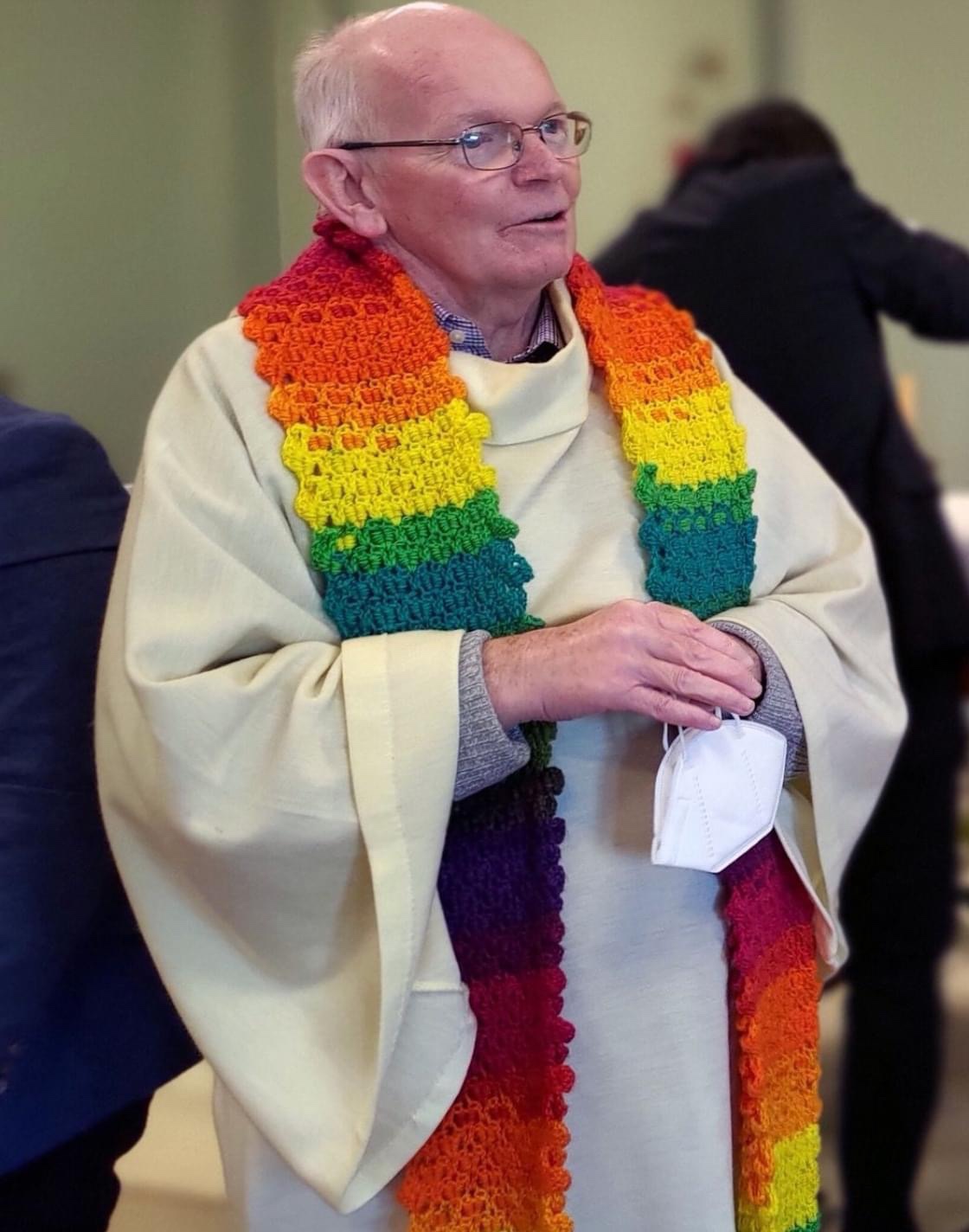
An event that took place during the week was the funeral of a Roman Catholic priest, Father Peter Maher. This was noteable for various reasons; for a start, there were three bishops and many priests in attendance. I’ve known Peter for five decades, and can attest to his valued ministry and important contribution to the consideration of the gender agenda within the Roman Catholic Church in Australia.

Peter was a strong advocate, throughout his ministry, for “the least and the lost”, and especially, in recent decades, for members of the LGBTIQA+ community. His weekly Mass for rainbow people, held at St Joseph’s Church in Newtown, attracted people and was the basis for the formation of a wonderfully extensive community of people of faith who identify with sexual or gender diversity.

Peter’s funeral signalled the lifetime of work devoted, in various ways, to the gender agenda—affirming, supporting, counselling, encouraging, and advocating for, the many people of faith (and of no faith) within the broad LGBTIQA+ community. There have been many tributes to Peter posted online, which I have canvassed in a blog post at

A fine tribute to Peter is at https://www.misacor.org.au/item/28929-rip-peter-maher-vigorous-priest-sydney-longtime-editor-of-the-swag

And then, on Friday night, a celebration of 30 years since the Anglican Church ordained women as priests was held in St John’s Anglican Cathedral in Brisbane. The issue of the ordination of women was a focus of intense debate and discussion throughout the Anglican Church for many years. Most dioceses throughout Australia came to a view that this was a most reasonable course of action; a few renegades, spurred on by the sectarian leadership in Sydney, dug their toes in and resisted at every step of the way.

But the truth of the Gospel shone through, and women were ordained in Goulburn—Canberra, Brisbane, and Perth Dioceses, in 1992, and the in many other places in the ensuing years. The celebration in Brisbane recognised an important step forward in addressing the gender agenda in the Anglican Church. An exhibition marking this step forward can be seen at

It would be tempting of me to end this review of recent events with a smug, self-satisfied comment about the ways that the Uniting Church in Australia (and, indeed, its three predecessor denominations) has been a trailblazer in many ways relating to the overarching gender agenda—ordaining women, female quotas to ensure diversity, ordaining gay and lesbian ministers, marrying same-gender couples, and so on.

However, just this past week, I was part of a conversation in which I observed that the particular Uniting Church Congregation, throughout the whole 45 years of its existence, had had a string of white male ministers in placement with them. In that conversation, I was told that before the current minister was called, one key person in leadership in that Congregation advised the Presbytery, “we won’t accept any minister other than a white male”.

So we, too, have work still to be done. The gender agenda remains a live concern. The gender question remains firmly on our agenda in the Uniting Church. There is still much work to be done.

See also

“Impishly uncomplicated, lightly subversive”: remembering Father Peter Maher

During the last week, the funeral of a Roman Catholic priest, Father Peter Maher, took place. I have known Peter for five decades, and was very sorry to learn that he was unwell earlier this year. I met him when he was training as a priest; in those early years, Peter and I were in a Christian musical together for a while (organised by the Anglican Youth Dept—very ecumenical!!).

I attended Peter’s ordination at St Mary’s Cathedral in the mid 1970s—and in an early act of quiet defiance of the established doctrines of his Church, he gave me, a Proddy, communion!. Peter then attended my ordination in 1980–and I gave him communion (with no angst in terms of Uniting Church polity). Peter and his brother Chris visited us while I was studying in the USA. We caught up from time to time over meals—Peter was a superb cook and delighted in offering hospitality through good food and even better conversation!

Years later, Peter spent a year as my professional supervisor when my previous supervisor took a sabbatical year. His gentle approach and incisive commentary was invaluable, especially as that was a time of heightened stress and intense emotional pressure because of an ugly and unhappy situation in my church environment at the time.

I heard Peter’s stories about his run-ins with George Pell, always told with a lightness of tone despite the cost that this brought to his own ministry. I was chatting to him a couple of months ago about an LGBTIQA+ initiative here in Canberra. There are lots of rich memories, even though we weren’t in regular communication over the last few decades.

Peter was a strong advocate, throughout his ministry, for “the least and the lost”, and especially, in recent decades, for members of the LGBTIQA+ community. His weekly Mass for rainbow people, held at St Joseph’s Church in Newtown, attracted people and was the basis for the formation of a wonderfully extensive community of people of faith who identify with sexual or gender diversity. Peter lived a lifetime of work devoted, in various ways, to the gender agenda—affirming, supporting, counselling, encouraging, and advocating for, the many people of faith (and of no faith) within the broad LGBTIQA+ community.

The former Executive Director of Uniting in the NSW.ACT Synod of the Uniting Church, Peter Worland, described Peter as “A mighty man. Small physically but massive heart … for others”. My Uniting Church colleague Rod Pattenden captured the very essence of Peter’s modus operandi: “impishly uncomplicated in attitude and lightly subversive”. The Roman Catholic media commentator, Noel Debien, referred to Peter’s “generous and inclusive ministry [which] he carried out at great cost to himself. He suffered significantly because of his compassion for others, but that was far, far outweighed by the blessing of his ministry. He made a huge pastoral difference” in the ArchDiocese of Sydney.

Noel recalls that “few (very few) priests I have ever known have had so much integrity, humour, compassion and determination to live the Gospel every day.” He continues, “I find it odd that in Sydney, we have gay bishops, archbishops with gay and lesbian siblings, clergy who are gay (and celibate) as well as huge numbers of Catholics with LGBTQIA kids, uncles, aunts and friends—and at a funeral like this, the church is not adequately able to fully recognise the real nature of LGBTQI ministry in our city.”

Another friend of Peter noted “This constant presence. This smile. Peter taught us about patience. About relationship. About being open to the most unlikely of allies. Planting seeds. And slowly waiting. And now we must wait to meet him again.” I saw a comment that described “the delight and mischief in his eyes”—how true! Another person noted, quite poignantly, “Peter was always encouraging and welcoming to me, even though I felt pretty unworthy.” That, there, is the Gospel, lived in all aspects of life.

Yet another wrote, “Peter always did the best he could and made the best of things. If something didn’t go as hoped for he’d say “that’s okay we can…”. “Well I’m glad because…”. A shrug, a twinkle of his nose and a “whatever”. He didn’t let what anyone else thought stop him from doing the right thing. He celebrated the smallest of wins and smallest of changes. An excited ‘Yes!’ fistpumped in the air. Always enthusiasm and heartfelt sincerity and seriousness in the one package.”

Others noted his “steadfast commitment to solidarity and equality”, his “warmth, kindness and affection … generosity, tenacity, laughter and good humour”. One wrote “Thank you for being a prophet. And teaching others to be too. Thank you for making mischief. Making change. With a twinkle of delight and hope in your eyes. Thank you for being a protector for people you will never meet. Doing justice.” Another, “Thank you for the healing. For the deep hearing. For the liturgy. For nourishing weary souls.” More Gospel qualities, so clearly evident!

These are wonderful testimonies to a man whose life was given in devoted service to the God who offers the grace of inclusivity, a celebration of God’s abiding love.

The songs and readings that Peter chose for his funeral are at

https://docs.google.com/document/u/0/d/1sRxct-DbuSVy-J_HafzxKiJw17rRIP63ew7wa0qFbis/mobilebasic

A fine tribute to Peter is at https://www.misacor.org.au/item/28929-rip-peter-maher-vigorous-priest-sydney-longtime-editor-of-the-swag

*****

See also

On fantasy, mythology, and mental health (part II)

I have recently blogged about a most interesting series of conversations that I have participated in. I’ve been one of three members of the “Moon Knight Panel”, discussing the six episodes of this show, Moon Knight, which was released earlier this year on Disney Plus. The three of us—Will in Melbourne, Praxis in Hobart, and myself in Canberra—have recorded a series of seven podcasts that explore the issues that arise in each of the six episodes of Moon Knight. (Seven podcasts for six episodes, as the first podcast is an introduction to the panel members.) See https://open.spotify.com/episode/6acg2hENWopVtWundPpMbM?si=sLPWrMtUQVuLj2VC4M2HlA

In that blog, I noted that it was not only the opportunity to discuss the condition of DID with others, through the medium of commentary on the Moon Knight series, that was what I appreciated about this recent experience. It was also the opportunity to talk at depth about the place of fantasy in our lives, and to explore matters of theology and mythology, the relationship of the divine to humanity, that was valuable.

Integral to the storyline of Moon Knight is the interplay between the divine realm—here expressed through the gods and goddesses of ancient Egypt—and the humans in the story. Indeed, Marc Spector is engaged as the avatar for the Egyptian moon god Konshu. Whilst “avatar” is in popular use as the electronic representation of a person in online games, in the Hindu religion it is used to refer to an incarnation, or manifestation in human form, of one of the deities. That’s how it should be understood in Moon Knight.

Konshu, as portrayed in Moon Knight

In this series, as Spector is the human manifestation of the divine Konshu, the moon god, he is known as Moon Knight. His wife, Layla, becomes the avatar of the goddess Tawaret, the goddess of childbirth and fertility, and thus also of determining the onward progression of souls in the afterlife. Tawaret appears to perform this function in episode 5, when she takes the hearts of both Marc and Steven and weighs them to see if they are “in balance”.

Layla as the avatar of Tawaret

Some scenes are set in the “council of the gods”, where the deities debate the actions of avatars and discuss what needs to happen amongst human beings. In theory, the human characters in the story have no choice but to implement the will of their god or goddess; in Moon Knight, the relationship is portrayed in a more complex manner. These scenes provide dramatic tension; the out working of “the will of the gods” amongst humans provides action drama, with some great special effects amongst the conflict and violence that ensues.

National Geographic was apparently consulted with regard to the Egyptian gods and goddesses, and the mythology that has developed around them, as they appear in the Moon Knight series; see https://www.ign.com/videos/marvel-studios-moon-knight-world-builders-featurette

*****

The relationship of the gods to human beings is heightened by the work of the avatar of the goddess Ammit, whose role is to execute justice by examining the souls of people and assessing whether they are good or evil. Those who are evil are instantly put to death, to avoid them carrying out any future unjust actions.

That, in itself, raises some central ethical concerns; is it in any way right to take a person’s life on the basis of what evil it is believed that person will commit? On the other hand, if you have the power to know how a person is going to harm others, do you not have a duty to interfere with their capacity to do so, to prevent that harm being inflicted on other people? A difficult cluster of dilemmas, indeed.

Arthur Harrow with a portrayal of Ammit on his staff,
which he uses to adjudge the goodness or evil of people

The avatar of Ammit is Arthur Harrow, who behaves very much like a cult leader; in later scenes, however, he appears as Dr Harrow, the psychiatrist who is working with Marc Spector in a mental hospital to help him come to grips with his dissociative identity disorder. Now that’s an intriguing plot twist!

Since Will and I (two of the three-member panel) are both Uniting Church Ministers, the discussion in our podcasts inevitably canvasses the notion of divine judgement, as well as the relationship between humans and the divine, that we both experience in our lives and know about from our reading in Christian (and Jewish) theological traditions. Moon Knight invites its audience to explore how fantasy—storytelling, spinning a yarn, depicting a dramatic plot—helps them to explore the complexities of the human—divine relationship.

This bears many similarities with the way that Christian scriptures employ mythology—storytelling, narrating ancient sagas, recounting dramatic encounters and events—to convey attitudes of faith. Scripture, in my view, is not propositional or mechanical, conveying truth in a direct way through dogma or assertion. Rather, Scripture is a collation of stories which convey truths indirectly, through the art and creativity of myths. So there are many resonances between “interpreting the Bible” and “understanding Moon Knight”!

(On understanding the Bible as a collection of myths, see https://johntsquires.com/2021/05/27/how-can-we-preach-on-passages-in-the-bible-that-are-myths/; on the Christmas story as a myth, see https://johntsquires.com/2020/12/21/christmas-not-actual-history-but-powerful-myth/)

Connected with this understanding of the nature of much of the Bible is the observation that DID itself is a “fantasy-like” way of dealing with trauma and the associated difficulties. The identities that are formed by dissociation from “the self” in DID are the result of the mind of the person, playing at the edges of reality, creating characters—who then, often take on a life of their own and become a “reality” within “the system” of the host person.

So the Bible, Marvel superheroes, Egyptian mythology, and Dissociative Identity Disorder form a neat cluster of areas in which fantasy, mythology, creativity, and story-telling combine, leaving us with the fundamental existential question in itself: what is real? what is unreal? and how do we make the distinction? Or, even: should we make such a distinction?

*****

The link to the podcast on Episode Two is at https://open.spotify.com/episode/6acg2hENWopVtWundPpMbM?si=sLPWrMtUQVuLj2VC4M2HlA

For Episode One, see https://open.spotify.com/episode/6acg2hENWopVtWundPpMbM?si=sLPWrMtUQVuLj2VC4M2HlA

For an introduction to the Moon Knight Panel, see https://open.spotify.com/episode/5feSJb2qyVAhzBEfoeHj1x?si=29983b58d694477d

I invite you to have a listen and explore these fascinating (and challenging) issues.

Good information about DID can be found at https://www.sane.org/information-and-resources/facts-and-guides/dissociative-identity-disorder