Voting on 21 May (7): Contributing to a Just and Peaceful World

Australian citizens go to the polls to elect a federal government on 21 May. The 17 million people eligible to vote will be electing both a local member to sit in the House of Representatives for the next three years; and a number of senators, to sit in the Senate for the next six years.

To assist voters in considering how they might vote, the Uniting Church has prepared a resource that identifies a number of issues, in seven key areas, that should inform the way that we vote, if we take seriously how the Gospel. calls us to live.

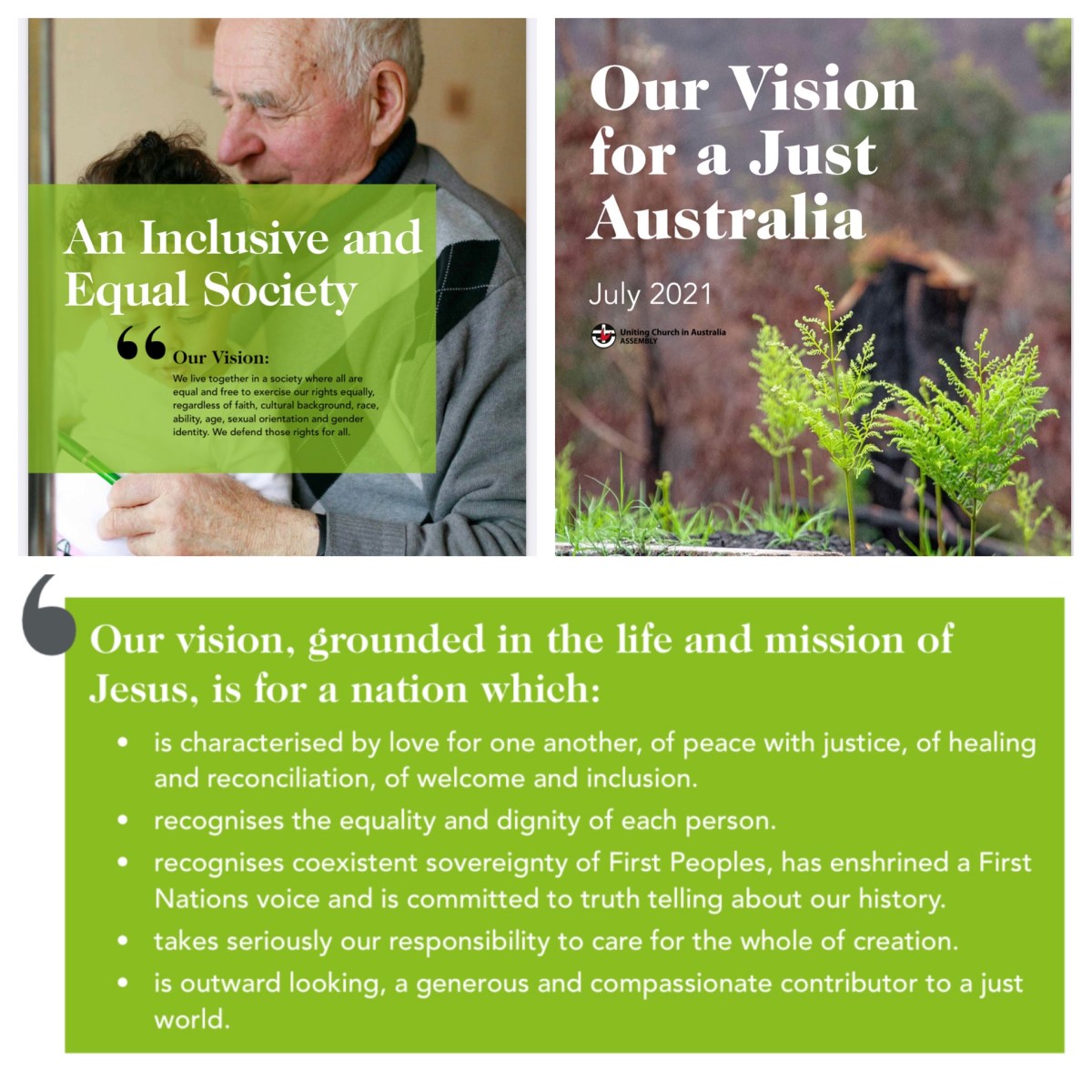
The seven areas are drawn from Our Vision for a Just Australia, a 40-page document expressing the Uniting Church vision for a just Australia and why our Christian faith calls us to work towards its fulfilment. It can be read in full at https://uniting.church/wp-content/uploads/2021/07/Our-Vision-For-a-Just-Australia_July2021.pdf

The Assembly has prepared a shorter 8-page document as a Federal Election Resource, in which key matters in each of the seven areas are identified. That document is found at https://uniting.church/wp-content/uploads/2022/04/Federal-Election-Resources-2022_11-April.pdf

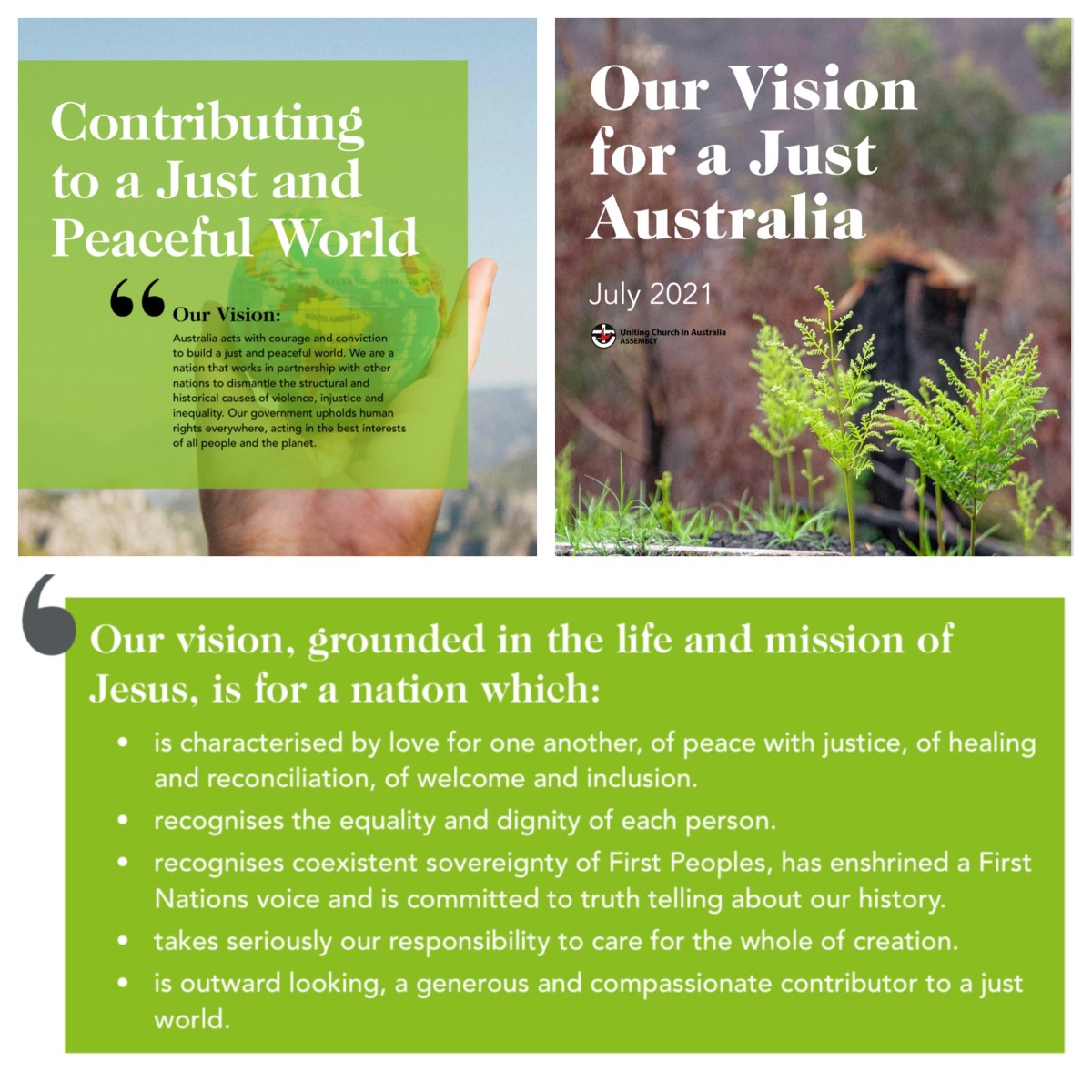
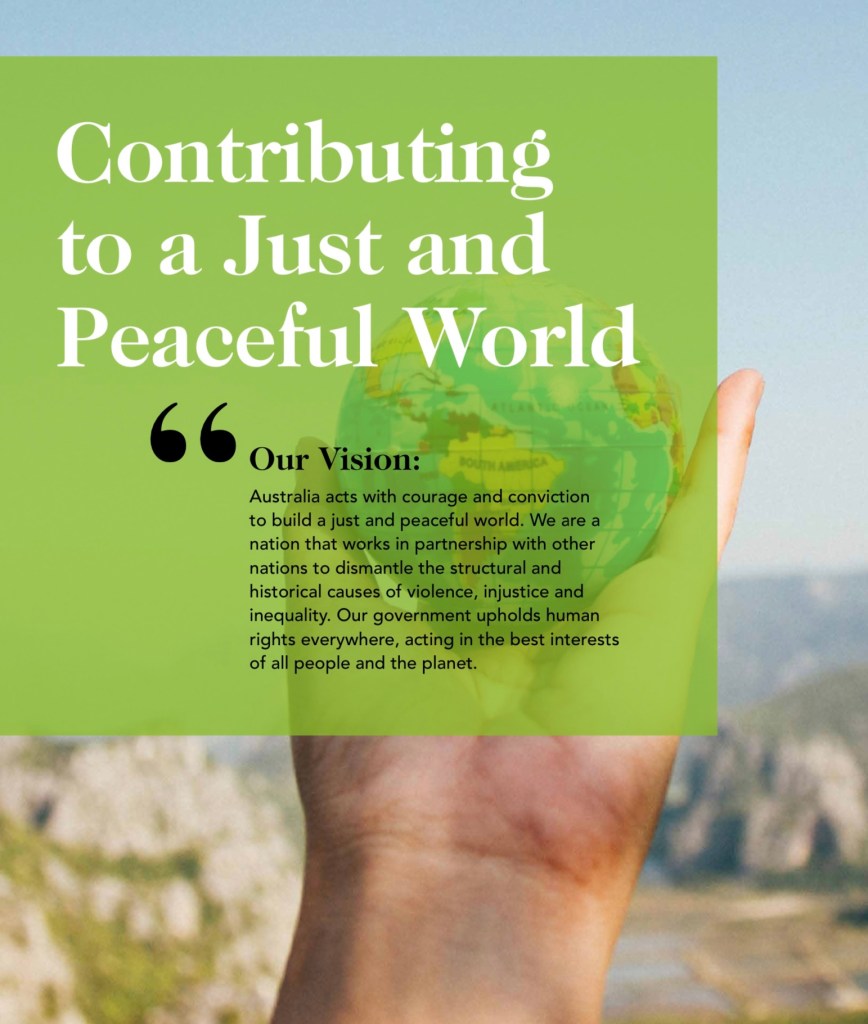
The final area reflects the vision of the Uniting Church for Contributing to a Just and Peaceful World.

The UCA resource notes that “we are a nation that works in partnership with other nations to dismantle the structural and historical causes of violence, injustice and inequality. Our government upholds human rights everywhere, acting in the best interests of all people and the planet.”

It further notes that we remain one of the wealthiest countries in the world, with the highest median wealth per adult, and fourth highest average wealth per adult. “Historically, we played a significant part in reducing world poverty and making significant gains in human flourishing. COVID-19 has made the world poorer, less equal and less secure.”

“Climate change and increased geopolitical competition is destabilising democracies and increasing the number of refugees in the world. In 2020, Australia boosted aid to our local region to support pandemic response, however, the current government has capped ongoing aid to pre-COVID levels, the lowest since 1961.”

“Despite our relative wealth, we are ranked an ungenerous 21st on the global list of overseas development aid as a percentage of gross national income. The recent and ongoing conflict in Ukraine reminds us again of the urgent need to rid the world of weapons capable of catastrophic, widespread destruction.”

The key issues to inform our voting in this regard are what each candidate or their party says about:

• Centering Australia’s foreign policy on a commitment to justice and peace; collaborating internationally to deliver community development and human rights.

• Legislate Australian Aid to reach 0.5% GNI by 2026 and 0.7% GNI by 2030.

• Increase support to fight COVID globally.

• Sign on to the global treaty banning nuclear weapons.

• Increase support to vulnerable nations to help address the impact of climate change.

For the full series of seven posts, see:

Splitting a church, maintaining a prejudice: the sad case of the (un)United Methodist Church

A new church was formed this month. The so-called Global Methodist Church (GNC) was launched as a new denomination—in effect, a sectarian schismatic movement, splitting from the United Methodist Church (UMC)—on the basis of, you guessed it, sexuality.

The GMC has placed to the fore a belief that marriage is between one man and one woman, and clergy must adhere to this in their ministry. This has been a point of persistent debate, dissension, and division in the UMC for decades. Many efforts have been made to hold the different points of view together under the one umbrella of the UMC. That fragile union cracked with a decision last year, and now the moment has been seized by the breakaway group, acting unilaterally, to set up its own structures.

Rev. Keith Boyette, chairman of the new denomination’s Transitional Leadership Council and until now a United Methodist minister in Virginia, complained that “some bishops are intentionally blocking churches from using certain processes for exiting the denomination”—a reference to the fact that the UMC’s Council of Bishops has twice delayed holding a General Conference that would enable a friendly parting of the church.

The COVID pandemic had been the reason for delaying the General Conference first set for 2020, and then for 2021; this year, the delay has been credited to the delays being experienced in the US of the processing of visa applications. The United Methodist Church currently claims 6.3 million members in the U.S. and 6.5 million overseas, so half the representatives would have been travelling into the US and would have needed visas.

Bishop Thomas Bickerton, who recently became the President of the UMC Council of Bishops, said that the continuing United Methodist Church was “not interested in continuing sexism, racism, homophobia, irrelevancy and decline … what we are interested in is a discovery of what God has in mind for us on the horizon as the next expression of who we are as United Methodists.”

I have taken this information from an article at https://www.columbian.com/news/2022/apr/30/united-methodist-church-split-official-as-of-today/. It’s important to note that the trigger words used here—sexism, racism, homophobia—are Bishop Bickerton’s words; I am simply quoting him.

Sadly, it seems to me that this is just another instance of people within a Christian church perpetuating actions that will impinge in negative ways on people in society—and, indeed, within the church. The discriminatory actions of the new schismatic denomination will have a negative impact on a small, but significant, minority group within society.

It’s simply a fact that the majority of the population identify as heterosexual (experiencing sexual attraction to people of the opposite gender) and cis-gender (the gender assigned to them at birth correlates with their sense of personal identity and gender). LGBTIQA+ people do not identify as either cis-gender, or as heterosexual, or as both. So whilst it is true that they are a minority in society, that should not affect the way that they are treated in society, and by churches.

However, the key plank in the formation of the GMC is a perpetuation of a discriminatory attitude towards same-gender attracted people who are seeking to be married in a service of Christian marriage. The GMC will not allow its ministers to marry such people. There are many denominations around the world who, sadly, share that attitude.

Up until 2018, my own denomination, the Uniting Church in Australia was one. All of this changed with a decision taken by the National Assembly in 2018, which meant that ministers now do have discretion to marry people of the same gender. That is part of a continuing trajectory within the Uniting Church, affirming and valuing the place of LGBTIQA+ people within the life of the church, and, indeed, within society.

See https://johntsquires.com/2018/07/31/a-diversity-of-religious-beliefs-and-ethical-understandings/ and the various links included in that blogpost.

For the various affirmations that the Assembly has made that have led the church to this latest decision, see https://johntsquires.com/2018/10/20/seven-affirmations/

It’s my hope that we can continue along that trajectory, continue to marry people regardless of their gender identity, and hopefully in due course issue an Apology to LGBTIQA+ people for how the church has treated such people in past years.

See also

*****

For an exploration of the forces that worked for so long against this, and earlier, enlightened moves relating to sexuality within the UCA, see my series of posts that are linked below.

For my series of blogs on the failed strategy of conservatives in the Uniting Church over the decades, see

Voting on 21 May (6): Flourishing Communities, Regional, Remote, and Urban

Australian citizens go to the polls to elect a federal government on 21 May. The 17 million people eligible to vote will be electing both a local member to sit in the House of Representatives for the next three years; and a number of senators, to sit in the Senate for the next six years.

To assist voters in considering how they might vote, the Uniting Church has prepared a resource that identifies a number of issues, in seven key areas, that should inform the way that we vote, if we take seriously how the Gospel. calls us to live.

The seven areas are drawn from Our Vision for a Just Australia, a 40-page document expressing the Uniting Church vision for a just Australia and why our Christian faith calls us to work towards its fulfilment. It can be read in full at https://uniting.church/wp-content/uploads/2021/07/Our-Vision-For-a-Just-Australia_July2021.pdf

The Assembly has prepared a shorter 8-page document as a Federal Election Resource, in which key matters in each of the seven areas are identified. That document is found at https://uniting.church/wp-content/uploads/2022/04/Federal-Election-Resources-2022_11-April.pdf

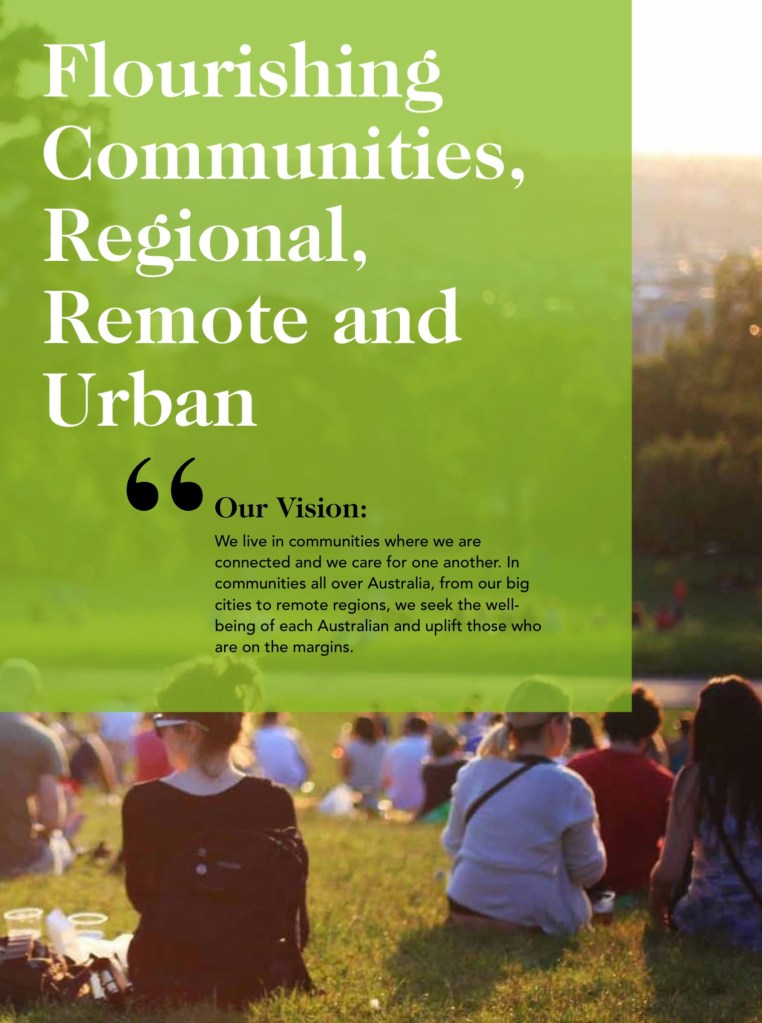
The sixth area reflects the vision of the Uniting Church for Flourishing Communities, Regional, Remote, and Urban—with particular reference to issues of housing and mental health in rural and remote areas.

We live in communities where we are connected and we care for one another. In communities all over Australia, from our big cities to remote regions, we seek the well-being of each Australian and uplift those who are on the margins.

People in Australia living in rural and remote areas tend to have shorter lives, higher levels of disease and injury and poorer access to and use of health services, including mental health care, compared to people living in metropolitan areas. The housing crisis and mental health crisis are converging in regional Australia as rental vacancy rates in some regions fall below 1%.

Regional towns have experienced a significant reduction in available properties and rental affordability, particularly since the onset of the pandemic. The Queensland Alliance for Mental Health, the state’s peak body for community mental health said the situation was “pushing people experiencing mental distress into homelessness”

The key issues to inform our voting in this regard are what each candidate or their party says about these two major areas:

(1) Improved mental health support for people in rural and remote Australia that is adequately funded, able to be flexibly used and well managed locally.

(2) Governments to do more to provide affordable housing in the regions – to boost housing for vulnerable people and strengthen local economies.

For the full series of seven posts, see:

Love one another: by this everyone will know (John 13; Easter 5C)

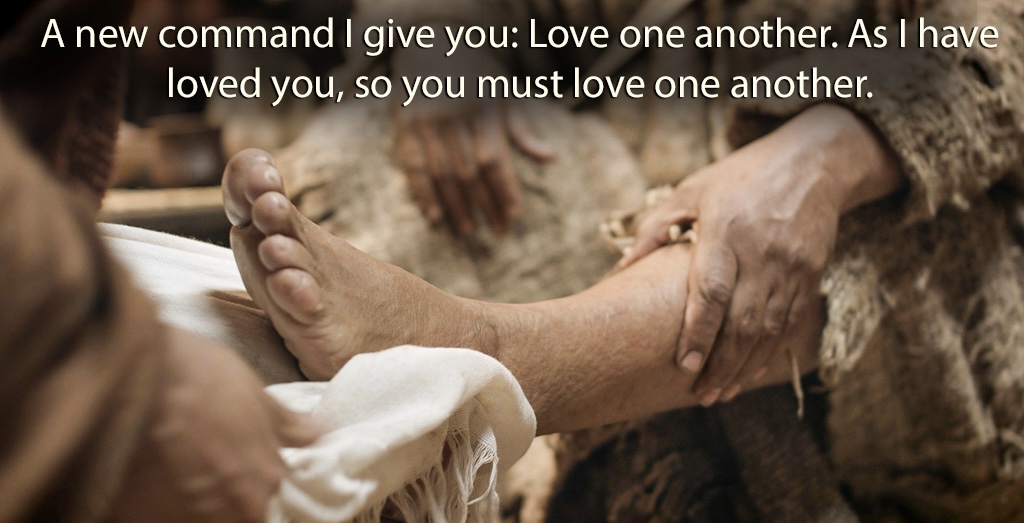
The Gospel reading for this coming Sunday contains a well-known saying of Jesus: “I give you a new commandment, that you love one another. Just as I have loved you, you also should love one another. By this everyone will know that you are my disciples, if you have love for one another.” (John 13:34–35).

The command to “love one another” is a striking element in this Gospel. Unlike what we find in the Synoptic Gospels, in this Gospel there is very little in the way of explicit ethical instruction in John’s Gospel. The focus is much more on the revelatory task that Jesus undertakes, as “the one who comes from heaven” (3:31; 6:38) to declare “the truth” (8:45; 14:6; 18:37), to “speak plainly of the Father” (16:25), to “make known everything that I have heard from my Father” (15:15), to glorify the Father (17:1–5).

His task is to teach the people (7:14–16; 8:2) and so he is regularly addressed as Teacher (1:38; 3:2; 8:4; 11:28; 13:13–14; 20:16). Indeed, in this Gospel, Jesus is no less than the authoritative teacher, revealing God to those who have already been chosen (13:18; 15:19).

Consequently, the basic position with regard to ethics is that those who know Jesus, will do as God wills (13:35; 14:7). As for those who do not know him, they are condemned to the darkness (3:19; 12:35). As a result, there is no urgency about instructing believers how to behave; for they will surely know what to do.

Rather than providing believers with guidelines and resources for living faithfully in the world, the Johannine Jesus assures his followers, “I have chosen you out of the world” (15:19).

Following Jesus is not a pathway to faithful living in the world, but rather a journey towards the cosmic Christ, who leads believers into mystical unity with God.

Nevertheless there are some pointers, in this Gospel, to what is required of believers. The Synoptic Gospels report that Jesus commanded his disciples to perform various actions, including those which subsequently became sacramental (communion, Luke 22:19; baptism, Matt 28:19).

In John’s Gospel, at his last meal, Jesus commands his disciples to wash one another’s feet, following his own example (John 13:14–15). The ethics of the Johannine Jesus are summed up in similar fashion: “just as I have loved you, so you should love one another” (13:34b). This “new commandment” sits at the centre of this Gospel (13:34–35; 15:12–17) and will inspire subsequent literature in the Johannine tradition (1 Jn 2:7–11; 3:11, 23; 4:7–11, 16–21; 5:3; 2 Jn 5–6).

Yet in contrast to the scriptural commands to love God and neighbour, cited by the Synoptic Jesus (Mark 12:28–31) and Paul (Rom 13:8–10), the command of the Johannine Jesus focuses on love of God and love of “one another”. It is limited to those within the faith community, and does not include “neighbours” (let alone love of “enemies”, as in Luke 6:27).

Another Synoptic instruction which is echoed in this Gospel is the command to serve, but once again with a narrower scope. Jesus instructs his disciples to follow his example and serve one another (Mark 10:42–45; Luke 22:24–27), but the Johannine Jesus exhorts them simply to serve him (John 12:26). Later, he informs them that they are no longer to be called servants, but friends, for they know all that God intends them to know (15:15). Even this ethical category is now obsolete.

In John’s Gospel, there appears to be little need for specific instruction about particular ethical situations, such as we find in the letters of Paul, James, Peter, and the teachings of the Synoptic Jesus (Matt 5–7; Luke 6; and so on). Rather, belief in Jesus brings with it an inherent sense of what must be done for the good.

This is expounded, not through ethical instructions, but by means of images which offer glimpses into how the central quality of love is made possible. In the image of the vine and the branches (15:1–11), Jesus portrays the foundations of ethical awareness; because believers abide in the Son, he is then able to bear fruit in their lives and “become my disciples” (15:8). So, love is made possible for those who believe, because they abide in the love of Jesus (15:10).

Employing another image, Jesus declares that he comes as “the light of the world” (9:5), inviting those who believe in him to follow the light (8:12), walk in the light (11:9–10), and thus become “children of light” (12:36).

A third image with potential for much ethical exposition is the statement by Jesus that “I am the way” (14:5). This image has been developed in other New Testament books, and in the Dead Sea Scrolls, in this direction. However, the Johannine Jesus appears to see “the way” simply as the way to intimacy with God (14:6–7).

Each of these images provides a sense of certainty for the believer—who abides in Jesus, who walks in his light, who follows his way—without having to spell out particular attitudes or behaviours which must be followed. In the end, the Jesus of this Gospel invites his followers to walk into unity with him, and thus unity with the Father. Right behaviour, it is assumed, will simply follow on.

Voting on 21 May (5): An Inclusive and Equal Society

Australian citizens go to the polls to elect a federal government on 21 May. The 17 million people eligible to vote will be electing both a local member to sit in the House of Representatives for the next three years; and a number of senators, to sit in the Senate for the next six years.

To assist voters in considering how they might vote, the Uniting Church has prepared a resource that identifies a number of issues, in seven key areas, that should inform the way that we vote, if we take seriously how the Gospel. calls us to live.

The seven areas are drawn from Our Vision for a Just Australia, a 40-page document expressing the Uniting Church vision for a just Australia and why our Christian faith calls us to work towards its fulfilment. It can be read in full at https://uniting.church/wp-content/uploads/2021/07/Our-Vision-For-a-Just-Australia_July2021.pdf

The Assembly has prepared a shorter 8-page document as a Federal Election Resource, in which key matters in each of the seven areas are identified. That document is found at https://uniting.church/wp-content/uploads/2022/04/Federal-Election-Resources-2022_11-April.pdf

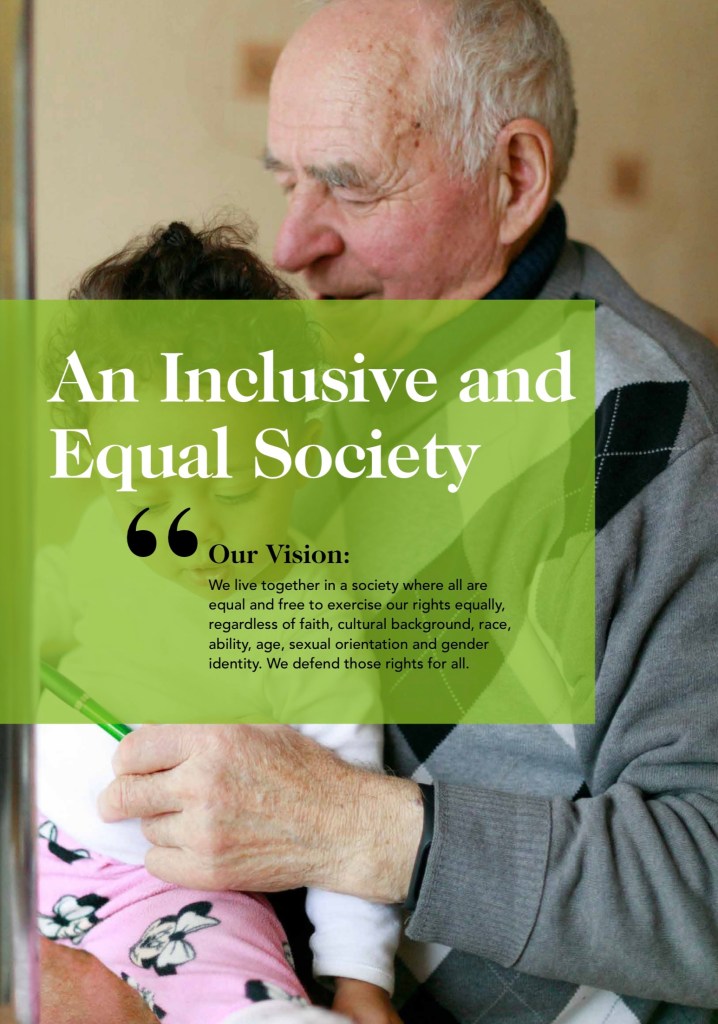
The fifth area reflects the vision of the Uniting Church for An Inclusive and Equal Society, with particular reference to how we age well within contemporary society.

The Uniting Church seeks a fairer Australia where wellbeing in older years is protected and defended, and is also committed to appreciating and recognising the value of care work undertaken in Australia. This vision is based on the dignity of all human beings created in the image of a loving God. “We believe in a world-class aged care system. Older Australians should have access to the appropriate and affordable support and care services that they need, when they need them”, the resource notes.

It further notes that “the Royal Commission into Aged Care Quality and Safety identified many barriers to providing universal access to high quality aged care. Over the past two years in particular, the aged care crisis has escalated significantly and threatens the continued operations of the sector. A key component of that threat is the capacity to attract and retain enough workers; aged care workers are the lowest paid caring workforce and yet are doing some of the most important work in the nation, supporting our ageing and aged citizens.”

The key issues to inform our voting in this regard are what each candidate or their party says about a clear commitment to makes sure all parts of the aged care system have adequate funding, and to fair wages for aged care workers.

For the full series of seven posts, see:

Voting on 21 May (4): An Economy for Life

Australian citizens go to the polls to elect a federal government on 21 May. The 17 million people eligible to vote will be electing both a local member to sit in the House of Representatives for the next three years; and a number of senators, to sit in the Senate for the next six years.

To assist voters in considering how they might vote, the Uniting Church has prepared a resource that identifies a number of issues, in seven key areas, that should inform the way that we vote, if we take seriously how the Gospel. calls us to live.

The seven areas are drawn from Our Vision for a Just Australia, a 40-page document expressing the Uniting Church vision for a just Australia and why our Christian faith calls us to work towards its fulfilment. It can be read in full at https://uniting.church/wp-content/uploads/2021/07/Our-Vision-For-a-Just-Australia_July2021.pdf

The Assembly has prepared a shorter 8-page document as a Federal Election Resource, in which key matters in each of the seven areas are identified. That document is found at https://uniting.church/wp-content/uploads/2022/04/Federal-Election-Resources-2022_11-April.pdf

The fourth area reflects the vision of the Uniting Church for An Economy of Life. This was the title of an extensive document on economic policy which the Twelfth Assembly adopted in 2009. See https://ucaassembly.recollect.net.au/nodes/view/17

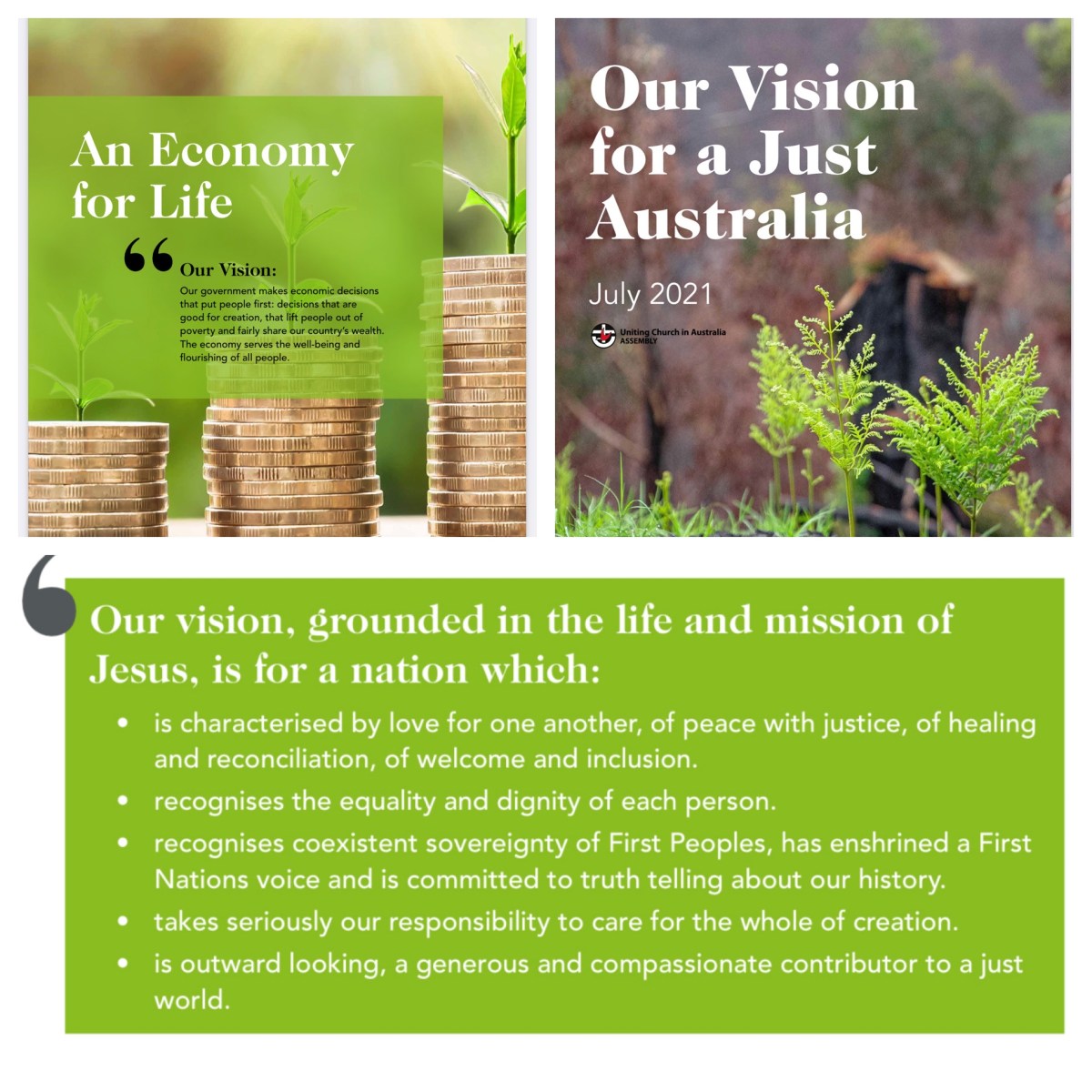
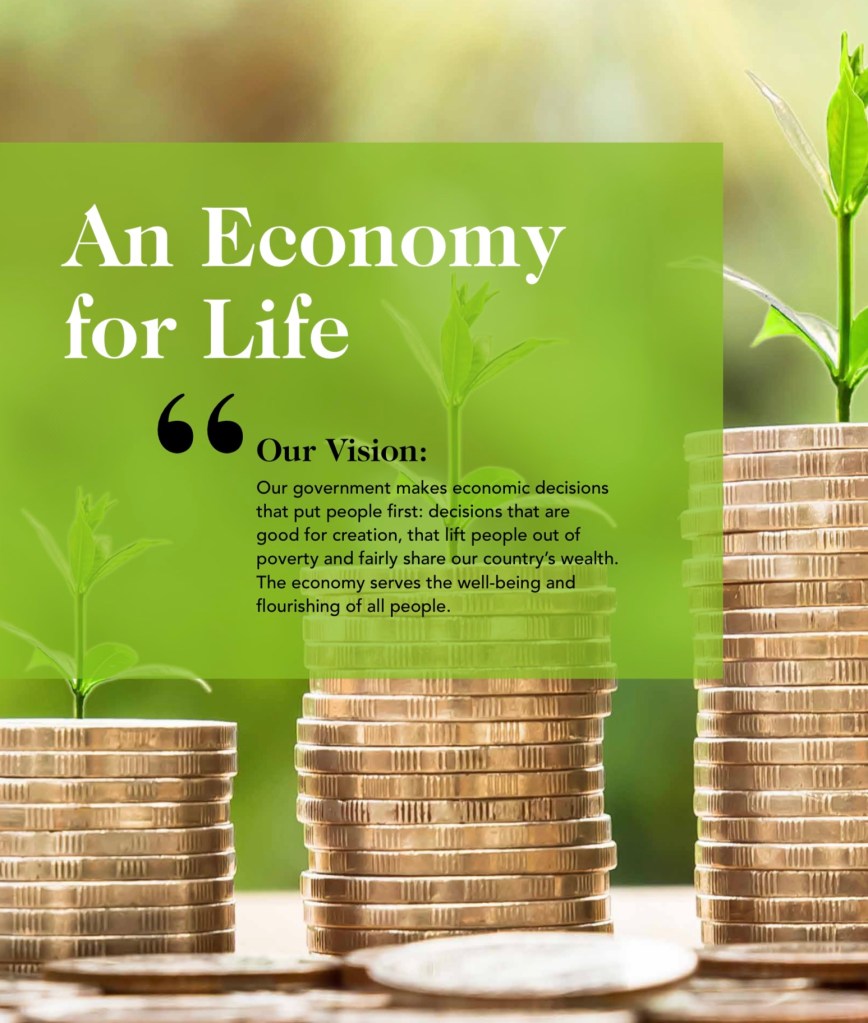
The resource notes that our “government makes economic decisions that put people first: decisions that are good for creation, that lift people out of poverty and fairly share our country’s wealth. The economy serves the well-being and flourishing of all people. We believe in an Australia where prosperity is shared fairly, embracing all people regardless of their privilege or upbringing.”

The resource makes these observations: “Aspirations for shared prosperity in Australia are unravelling under the sustained, twin trends of weak wage growth and rising asset prices. Over the past 10 years wage growth has limped under 2.5 per cent annually. Over the same period share portfolio and real estate values have grown around 10 per cent annually.”

“These settings deliver economic gains toward those with assets and away from those doing it tough, resulting in a greater and growing gap between the haves and the have-nots. Greater inequality strongly tracks with stress, hunger, poor physical health, poor mental health, homelessness and social exclusion, and has a negative impact on economic growth.”

“Older women are more at risk of reduced financial security after a lifelong gender pay-gap, interruptions to employment for care and reduced superannuation. The retirement savings gap between males and females in 2019 was almost one quarter. The result is that 34 percent of single women in Australia live in poverty.”

The key issues to inform our voting in this regard are what each candidate or their party says about:

• A clear commitment to undertake a review into the past decade of low-income growth.

• An increase in social security payments, especially Jobseeker.

• Tax reforms to increase the progressive nature of the Australian tax system to address unhealthy inequality.

• A clear commitment to make superannuation contributions on top of the government Parental Leave Pay.

For the full series of seven posts, see

Voting on 21 May (3): A Welcoming, Compassionate, and Diverse Nation

Australian citizens go to the polls to elect a federal government on 21 May. The 17 million people eligible to vote will be electing both a local member to sit in the House of Representatives for the next three years; and a number of senators, to sit in the Senate for the next six years.

To assist voters in considering how they might vote, the Uniting Church has prepared a resource that identifies a number of issues, in seven key areas, that should inform the way that we vote, if we take seriously how the Gospel. calls us to live.

The seven areas are drawn from Our Vision for a Just Australia, a 40-page document expressing the Uniting Church vision for a just Australia and why our Christian faith calls us to work towards its fulfilment. It can be read in full at https://uniting.church/wp-content/uploads/2021/07/Our-Vision-For-a-Just-Australia_July2021.pdf

The Assembly has prepared a shorter 8-page document as a Federal Election Resource, in which key matters in each of the seven areas are identified. That document is found at https://uniting.church/wp-content/uploads/2022/04/Federal-Election-Resources-2022_11-April.pdf

*****

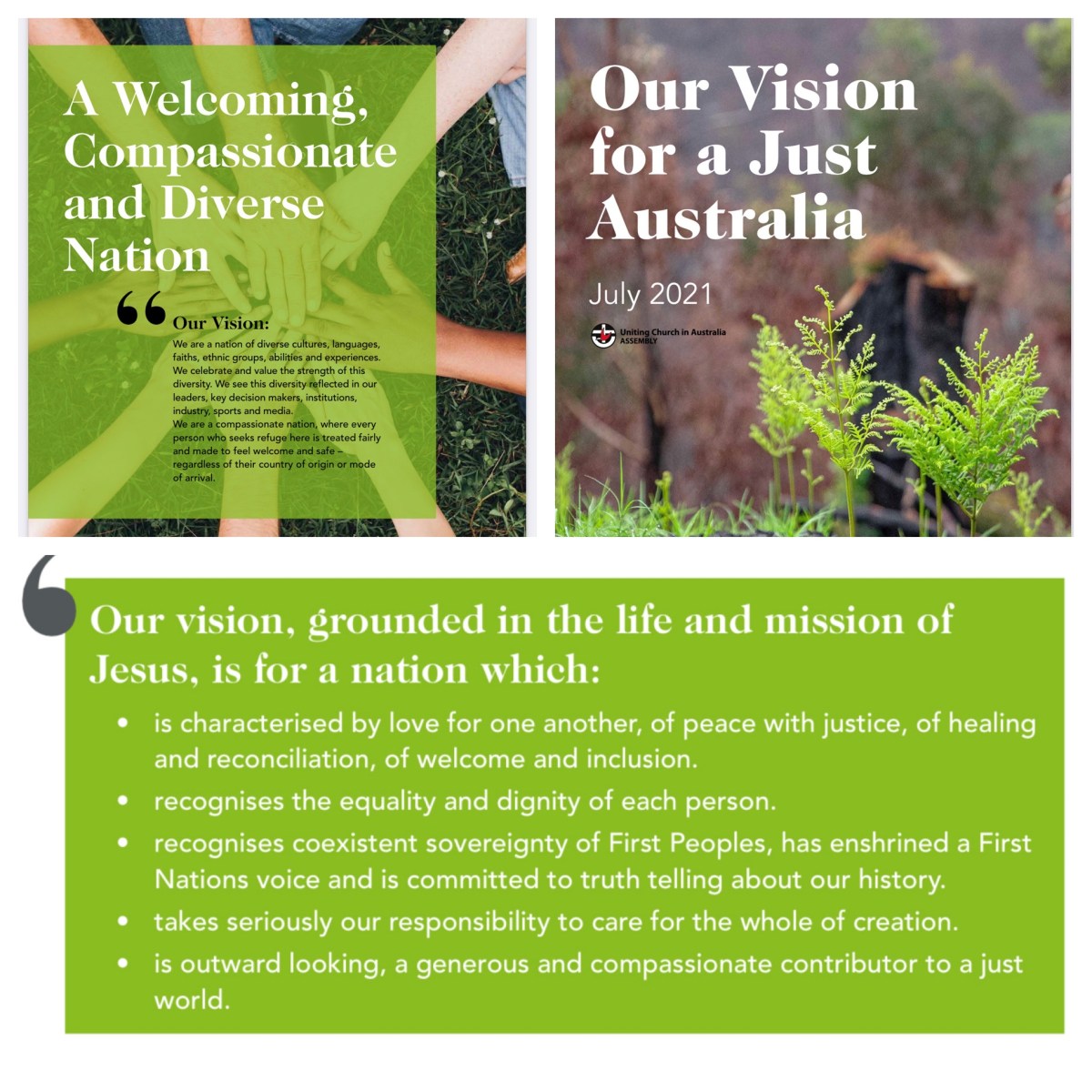
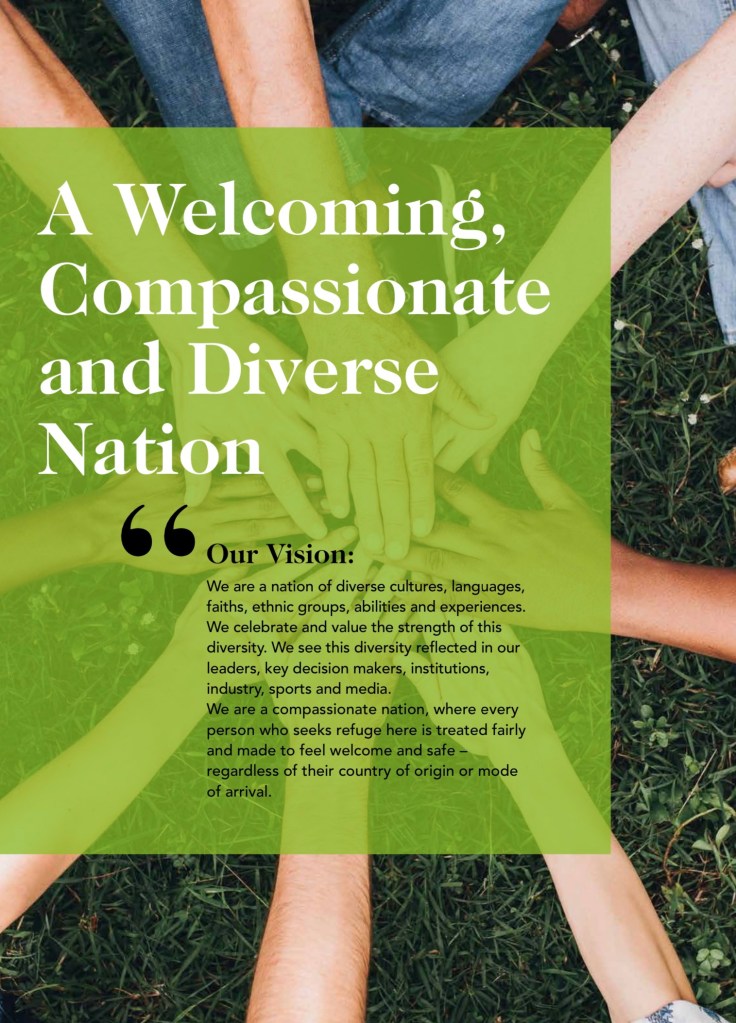
The third area reflects the vision of the Uniting Church for A Welcoming, Compassionate, and Diverse Nation. The election resource acknowledges that we are a nation of diverse cultures, languages, faiths, ethnic groups and experiences, and affirms: “We celebrate and value the strength of this diversity. We see this diversity reflected in our leaders, key decision makers, institutions, industry, sports and media. We are a compassionate nation, where every person who seeks refuge here is treated fairly and made to feel welcome and safe – regardless of their country of origin or mode of arrival.”

Australia’s immigration policies continue to leave some people in indefinite detention. Some refugees and asylum seekers in Melbourne’s Park Hotel have been in offshore and onshore detention for up to nine years. Across the country, it is estimated more than 70 people are being held in hotel detention, and, as of 31 December 2021, 105 people remained in PNG and 114 on Nauru. In response to the Afghanistan crisis, the Australian Government has committed to 10,000 humanitarian and 5,000 family reunion places over four years.

However, the 10,000 places will be taken from Australia’s current refugee and humanitarian program, which was cut by 5,000 places a year from 2020. Australia has received applications from more than 145,000 Afghan nationals and very few of those people have any hope of building a life of safety in Australia1. In addition, the recent and ongoing conflict in Ukraine will see more people fleeing their homes in fear, seeking refuge in other countries.

The key issues to inform our voting in this regard are what each candidate or their party says about:

• An end to mandatory and indefinite off-shore and on-shore detention either in Alternative Places of Detention (hotels) or detention centres.

• Community detention of refugees and asylum seekers must allow access to education, work and housing support.

• A target for Afghan and Ukrainian refugee resettlement much higher and appropriate to the magnitude of the problem.

• Permanent protection for Afghan people already in Australia but on temporary visas.

• Enhance safeguards for people on temporary visas including including overseas students andmigrant workers.

For the full series of seven posts, see:

Voting on 21 May (2): the Renewal of the Whole Creation

Australian citizens go to the polls to elect a federal government on 21 May. The 17 million people eligible to vote will be electing both a local member to sit in the House of Representatives for the next three years; and a number of senators, to sit in the Senate for the next six years.

To assist voters in considering how they might vote, the Uniting Church has prepared a resource that identifies a number of issues, in seven key areas, that should inform the way that we vote, if we take seriously how the Gospel. calls us to live.

The seven areas are drawn Our Vision for a Just Australia, a 40-page document expressing the Uniting Church vision for a just Australia and why our Christian faith calls us to work towards its fulfilment. It can be read in full at https://uniting.church/wp-content/uploads/2021/07/Our-Vision-For-a-Just-Australia_July2021.pdf

The Assembly has prepared a shorter 8-page document as a Federal Election Resource, in which key matters in each of the seven areas are identified. That document is found at https://uniting.church/wp-content/uploads/2022/04/Federal-Election-Resources-2022_11-April.pdf

*****

The second area reflects the vision of the Uniting Church for living sustainably and responsibly as an integral part of the global environment. The Renewal of the Whole Creation is a vision and a commitment that was articulated in the Uniting Church’s Basis of Union, adopted in 1977, and which has continued to inform policies and practices over the ensuing decades.

The church seeks the flourishing of the whole of God’s Creation and all its creatures, in which “we act to renew the earth from the damage done and stand in solidarity with people most impacted by human-induced climate change”. To achieve this, government, churches, businesses and the wider community need to work together for a sustainable future.

The UCA resource acknowledges the current Government commitment to net zero carbon emissions by 2050, but notes that “we need to do more, and sooner. Global temperatures are rising as human activity continues to pollute the atmosphere with greenhouse gases. Australia faces significant climate change impacts: rising sea levels, extreme heat and flooding, longer droughts and bushfire seasons and the loss of coral reef. Our neighbours in the Pacific and elsewhere are suffering the impacts of climate change, to their lands and waters, their livelihoods, their culture and identity.”

The key issues to inform our voting in this regard are what each candidate or their party says about:


• Setting more ambitious targets for 2030 – committing to a 45-50% carbon reduction as a minimum but working towards a target closer to 70%.
• A strong renewables target – which embraces the potential for Australia as a global leader.
• Just transitions for impacted communities currently dependent on fossil fuels.
• Australia must play a significant role in our region and globally in addressing the causes and
impacts of climate change, responding to the call from Pacific countries, including the Pacific Conference of Churches, for our country to act more decisively to reduce carbon emissions.

For the UCA national climate action plan, see https://uniting.church/wp-content/uploads/2020/09/Assembly-National-Climate-Action-Plan.pdf

For the full series of seven posts, see:

Voting on 21 May (1): Putting First Peoples First

Australian citizens go to the polls to elect a federal government on 21 May. The media, in true form, has dumbed things down, making us think that it’s about voting directly for a Prime Minister, and that it’s all about the mistakes the candidates make and the economic impact of their policies.

Our system, of course, is not simply a two- person contest; the 17 million people eligible to vote will be electing both a local member to sit in the House of Representatives for the next three years; and a number of senators, to sit in the Senate for the next six years.

And it’s not just about personalities; it’s actually about policies. We need to think about each party is promising to do, in relation to a wide array of policy areas—not just economics, but a whole array of matters.

To assist voters in considering how they might vote, the Uniting Church has prepared a resource that identifies a number of issues, in seven key areas, that should inform the way that we vote, if we take seriously how the Gospel. calls us to live.

The seven areas are drawn from a fine 40-page document that was prepared and published last year, Our Vision for a Just Australia, expressing the Uniting Church vision for a just Australia and why our Christian faith calls us to work towards its fulfilment. It can be read in full at https://uniting.church/wp-content/uploads/2021/07/Our-Vision-For-a-Just-Australia_July2021.pdf

The Assembly has prepared a shorter 8-page document as a Federal Election Resource, in which key matters in each of the seven areas are identified. That document is found at https://uniting.church/wp-content/uploads/2022/04/Federal-Election-Resources-2022_11-April.pdf

*****

The first area featured in this resource reflects the vision of the Uniting Church for Aboriginal and Torres Strait Islander Peoples. It acknowledges that these people were nurtured and sustained by God before invasion, and so are to be celebrated at the very heart of what it means to be Australian.

The Uniting Church affirms First Peoples’ sovereignty, and believes that First Peoples have a voice in the decision making of our country and in how they live out their right to self-determination. “As First and Second Peoples”, the resource states, “we walk together, creating socially just and culturally safe relationships, listening and learning from one another”.

The Statement from the Heart developed at Uluru has been given to us by First Peoples as the basis for how we can work together to build a better future, but governments have not followed their lead. First Peoples communities, whether remote, regional or urban, experience heightened levels of disadvantage, including a lower life expectancy and worse health, education and employment outcomes than other people in Australia.

The key issues to inform our voting in this regard are what each candidate or their party says about:

• Constitutional change to enshrine a First Nations Voice to Federal Parliament.

• Recognising the sovereignty of First Nations People and establish a commission for treaty making, truth telling, justice and reconciliation.

• Sufficient funding to achieve the Closing the Gap targets, prioritising Aboriginal and Torres Strait Islander community-controlled organisations to deliver services wherever possible.

Subsequent posts are at: