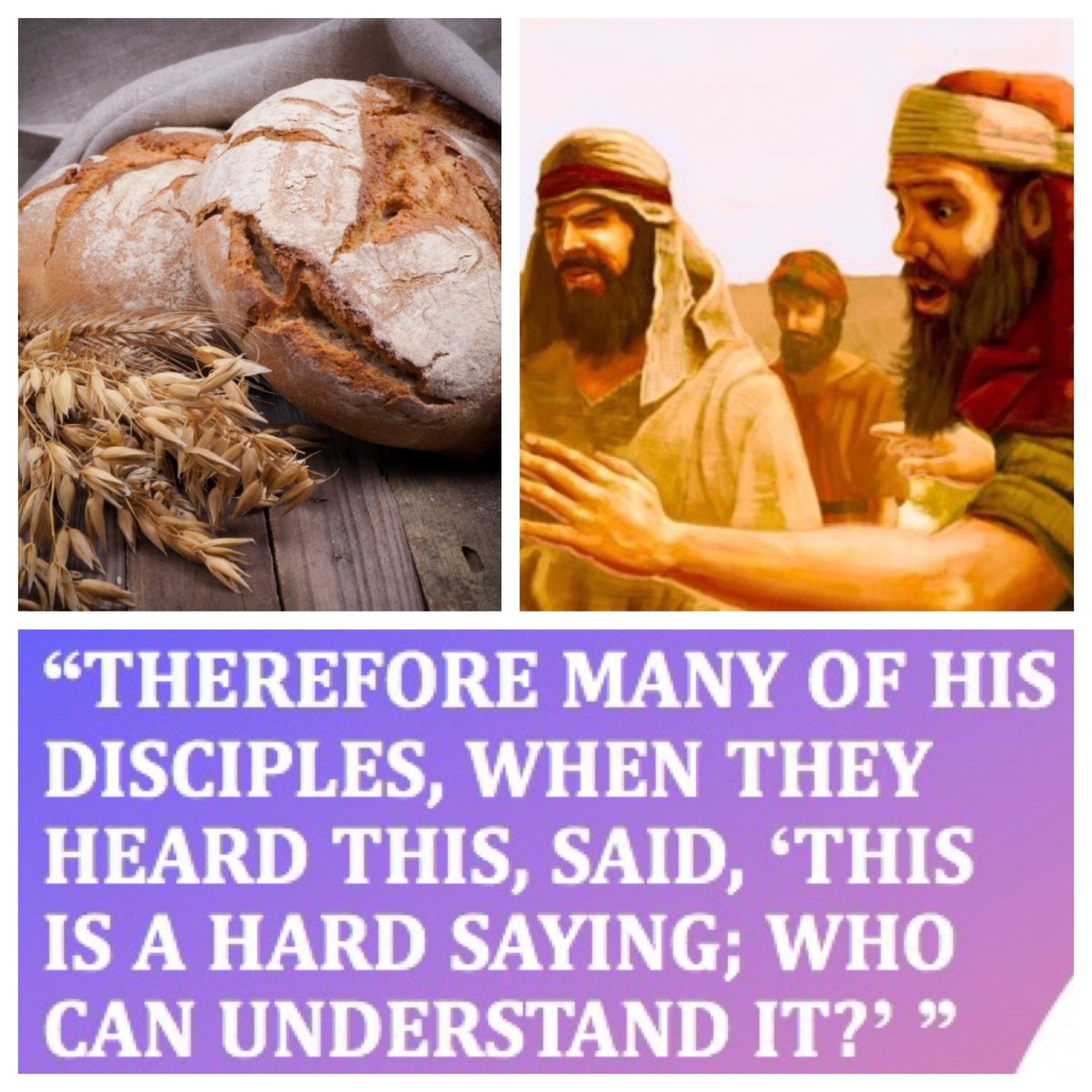
This is a hard saying; who can listen to it? (John 6; Pentecost 9B—13B)

John’s Gospel, it is often said, is the place to go in the New Testament if you want to find “proof texts” in support of antisemitism. In this Gospel, “the Jews” are labelled as children of the devil, accused of rejecting the belief that Jesus is God, tarred with the claim that they plotted against Jesus, and blamed with bringing about his death.
However, the passage that is providing the basis for the lectionary Gospel at this time of the year (John 6, Pentecost 9B—13B) does not feed into this negative perspective about “the Jews”. As we read it carefully, we see a different relationship unfolding between the Jew Jesus, his Jewish followers, and the crowd of Jews that interact with him throughout the chapter.

(And let me be clear—I am neither advocating antisemitism nor tarring John’s Gospel as being unredeemingly antisemitic.)

Whilst the terrible claim that “the Jews killed God” was not uttered until some centuries later—from the lips of John “the golden-mouthed”, Bishop of Antioch, in one of his Homilies Against the Jews—there is enough within the way that the author of the book of signs tells the story to apparently vindicate the claim that “the Jews killed Jesus”—at least in the eyes of many interpreters throughout Christian history.

1 Jewish opposition to Jesus

Jewish opposition to the message and activities of Jesus is evident from early in the book of signs. Jesus has identified himself with “the Jews” in his conversation with the woman by the well in Samaria (4:19–22).

However, he becomes caught in a dispute with “the Jews” while he was in Jerusalem, before travelling to the Sea of Galilee (6:1) and then to Capernaum (6:17). This dispute arose because these Jews in Jerusalem interpreted Jesus’ healing of the lame man on a Sabbath as being a breach of Torah (5:10). They seek to kill him, accusing him of making a blasphemous claim (5:18).
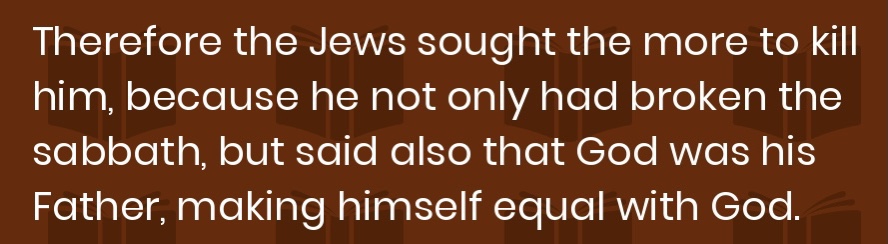
A footnote for verse 10 in my electronic copy of the NRSV helpfully clarifies that “the Greek word Ioudaioi refers specifically here to Jewish religious leaders, and others under their influence, who opposed Jesus in that time; also verses 15, 16, 18”. We will return to that notion later.

Jesus disputes the interpretation of the crowd, claiming that by healing on the Sabbath he continues to do “the works which the Father has granted me” (5:36). This is language which recurs in the conversation that takes place in chapter 6, where a crowd of Jews in Capernaum enquire of Jesus, “what must we do, to be doing the works of God?” (6:29).

Dissension continues to haunt Jesus, however; once he is back in Jerusalem, the crowd accuses him of having a demon (7:20; 10:20). This is later repeated by “the Jews” in Jerusalem at 8:48–52, and again at 10:20, with the added insult that he is a Samaritan (8:48). A third criticism levelled against Jesus is the inference that he was born illegitimate (8:41).

The words of “the Jews” represent a tense argument which was taking place within the Judaism of the first century, as Jewish followers of Jesus debated with the authorities in their synagogues about the status of Jesus of Nazareth. Indeed, Jesus later predicts that his fate will set the pattern for the fate of his followers; “if they persecuted me, they will persecute you also” (15:20). The tensions within Judaism are clearly reflected in references to followers of Jesus being excluded from the synagogue (9:22; 12:42: 16:2–3).

It is true that “the Jews” of Jerusalem prepared to stone Jesus twice (first at 8:59, again at 10:31). This seems to validate the claim made earlier by Jesus, that his fate is to be hated by the world (7:7); as well as the prediction in the Prologue pointing to the rejection of the Word (1:10–11).

2 The role of Jewish leadership

It is not, however, “the Jews” as a whole who plot to arrest Jesus. It was the chief priests who first made plans to put Lazarus to death (12:10), just six days after those same priests had conspired with the Pharisees, making plans to arrest Jesus so they could put him to death (11:47–53). The text makes it clear that this was done despite the fact that “many of the Jews who had come with Mary and had seen what he did [in raising Lazarus] believed in him” (11:45).
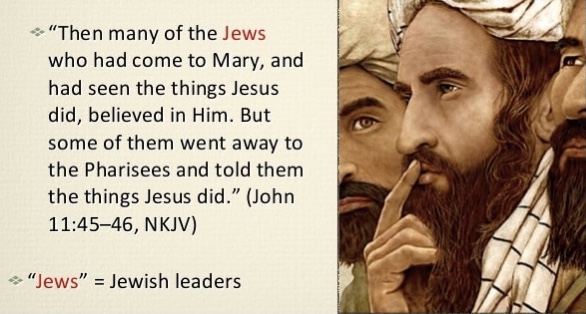
It was clearly the leadership of the Jews involved in the plotting against Jesus. Was it not likely, then, that the same group had been conspiring throughout the whole story, planning his demise? That is clearly what is intended in the earlier account we attribute to Mark, which notes early in the Gospel that, immediately after a healing by Jesus, “the Pharisees went out and … held counsel with the Herodians against him, how to destroy him” (Mark 3:6).

We read that “a band of soldiers and some officers from the chief priests and the Pharisees” come to seize Jesus in the garden (18:3). When Jesus appears before Pilate, the governor notes, “your own nation and the chief priests have delivered you over to me” (18:35). When Jesus is sent out of the governor’s praetorium, it is “the chief priests and the officers” who cry out, “Crucify him, crucify him!” (19:6a).

This leads to Pilate saying to them, “Take him yourselves and crucify him, for I find no guilt in him” (19:6b). This is one of the key texts that shifts the blame for the death of Jesus from Roman to Jewish leadership—a factor that is included in all four canonical Gospels (Mark 15:6–14; Matt 27:11–26; Luke 23:4, 13–14, 18–25; John 19:12–16).

The Passion Narrative in John’s Gospel continues to press the blame for the crucifixion of Jesus directly onto the chief priests. When Pilate asks, “shall I crucify your King?”, the chief priests answer, “We have no king but Caesar” (19:15). When Pilate orders an inscription to be prepared for Jesus, the chief priests say to Pilate, “Do not write, ‘The King of the Jews,’ but rather, ‘This man said, I am King of the Jews’” (19:21).

Both of these incidents appear to be quite implausible historically, given what we know of Jewish nationalism under Roman rule. Likewise, the scene where the Jewish crowd bays for the blood of Jesus rather than Barabbas could not have occurred—there is no evidence for the release of a prisoner at Passover, as the Gospels suggest.

These factors underline the strong likelihood that the author of the book of signs—along with the other authors of the Synoptic Gospels—has placed more of the blame for the death of Jesus onto the shoulders of the Jewish authorities, rather than the Romans. The charge of antisemitism in these Gospels needs to be considered and dealt with.

3 “The Jews” in John 6

Nevertheless, a more careful reading of the book of signs as a whole points to a more nuanced understanding, one that makes space for sympathetic readings of the role of “the Jews” in this document. We have already noted the important distinction between “the Jews” as a whole, and specific Jewish leadership in Jerusalem.

The passage that provides the basis for the lectionary Gospel at this time of the year (John 6) pushes us in this more nuanced interpretive direction. In this story, Jesus and the disciples—who, let us remember, were all Jews—are engaged with a large crowd—who also were Jews, as the scene is clearly set in Jewish territory near Capernaum (6:24).
The interaction between Jesus and the crowd begins “when the crowd saw that Jesus was not there, nor his disciples, they themselves got into the boats and went to Capernaum, seeking Jesus” (6:24). In the scene that plays out over the ensuing fifteen verses, the crowd of “the Jews” behave, in my view, quite responsibly and respectfully towards Jesus. They are seeking him—looking to engage further with him, be with him, learn from him.

The first interaction comes “when they found him on the other side of the sea, they said to him, ‘Rabbi, when did you come here?’” (6:25). This is a genuine enquiry, which evokes an explanation from Jesus. It’s a straightforward conversation, with no hidden agendas at play.

The crowd then said to Jesus, “What must we do, to be doing the works of God?” (6:29). This, too, is simply an enquiry soliciting information. “Doing the works of God” references a standard biblical phrase. It usually describes the work that God did in bringing the whole creation into being (Heb 4:4; see Job 37:14; 40:19; Ps 73:28), although in Psalm 78, “not forgetting the works of God” (78:7) is set into the context of teaching the law and keeping the commandments (78:5–8).

Could the Jewish crowd in Capernaum be asking Jesus about how they might join with him in living as co—creators with God, in harmony with the created order, in obedience to the covenant promises they have made, through keeping the commandments of the Law?

In true Johannine style, however, Jesus in this story reduces the whole covenant relationship to one simple factor: “this is the work of God, that you believe in him whom he has sent” (6:29), to which they reply, “Then what sign do you do, that we may see and believe you? What work do you perform? Our fathers ate the manna in the wilderness; as it is written, He gave them bread from heaven to eat.’” (6:30-31).
The interaction taking place here is not antagonistic or accusatory. The crowd is pressing Jesus on what they have seen, and exploring what he meant to do when he fed the crowd, as reported earlier in the chapter. The crowd refers to scripture to interpret their experience; this was a normal part of Jewish discipleship. They know very well the story about Moses leading the people of Israel through the wilderness, and the provision of manna from heaven for them to eat (Exod 16:27–36; Num 11:4–9).

The response from Jesus provides an explanation to the crowd in terms of the scripture story to which they have referred—the manna given to Israel in the wilderness (6:32–33). That was a gift, not from Moses, but from God.

The crowd responds to the teaching of Jesus in a way that is enquiring and appreciative. They do not respond in anger, or in disagreement, or with a mocking tone. They simply say to Jesus, “Sir, give us this bread always” (6:34). The crowd remains open to what Jesus is teaching, keen to learn more of what he speaks, engaged with the lesson that Jesus is providing. This crowd of Jews is not at all like the groups who “seek all the more to kill him” (5:18), who press Jesus antagonistically (7:20; 8:48–52; 10:20).

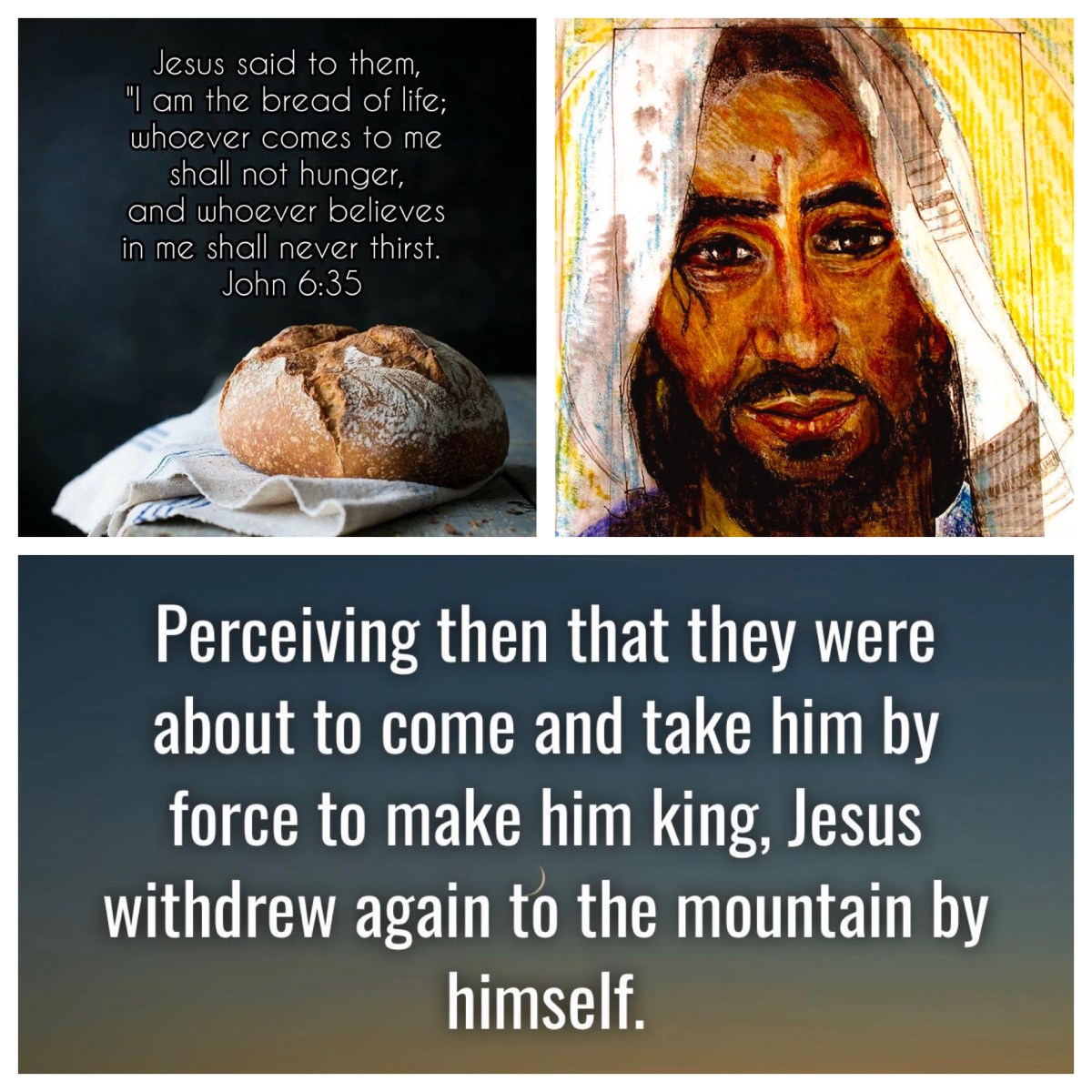
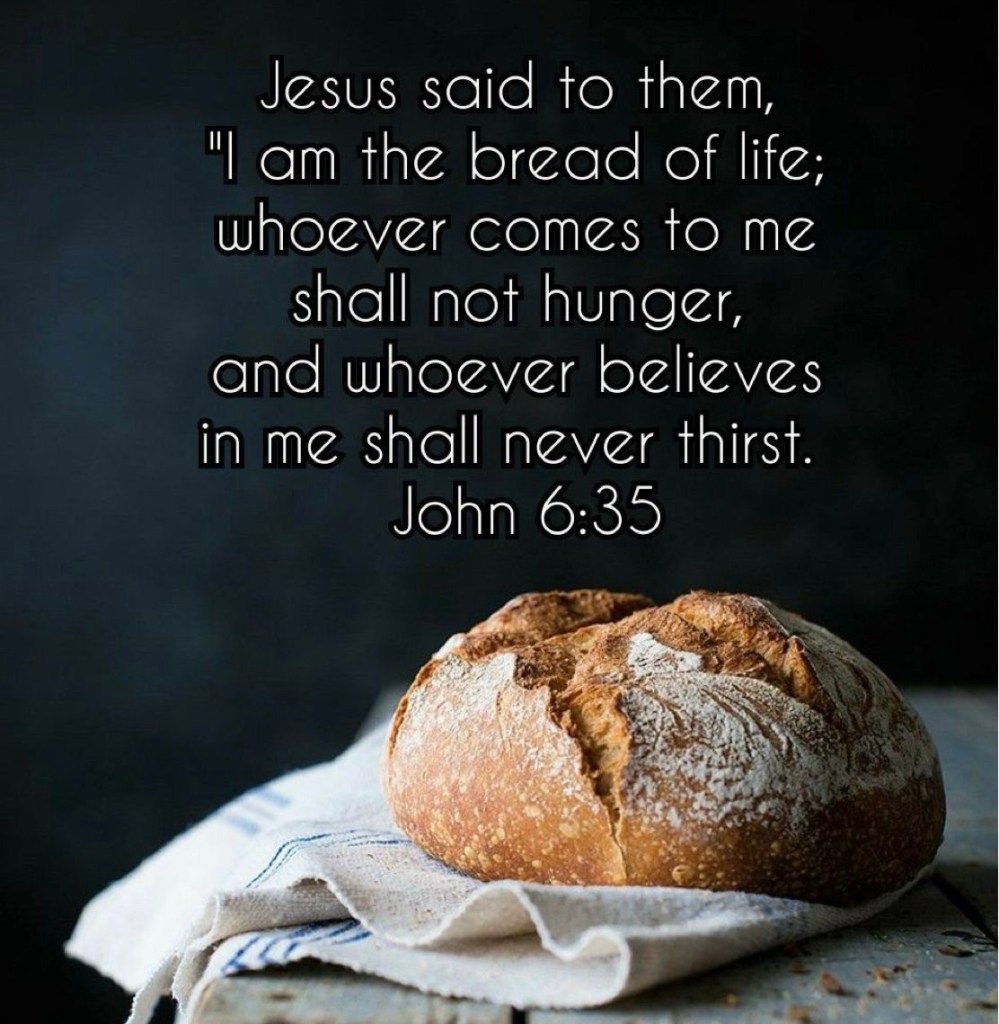
Of course, we as the readers can see how the author of this Gospel is, typically, running a narrative at two levels—the surface level of discussion about bread, and the deeper level of discussion pointing to “the living bread which came down from heaven”. But this is typical Johannine style. There is nothing negative to be said about the crowd to this point. The explanation from Jesus, “I am the bread of life; whoever comes to me shall not hunger, and whoever believes in me shall never thirst” (6:35), then draws together both the levels at which the narrative has been running.

Rustic bread

4 Questioning Jesus about “bread from heaven”

From this point on, the interaction becomes more complex. First, we read that “the Jews grumbled about him, because he said, ‘I am the bread that came down from heaven’” (6:41). The reference to the Jews “grumbling” also evokes the wilderness stories from Jewish tradition. The people of Israel grumbled against Moses (Exod 15:24; 17:3) or against Moses and Aaron (Exod 16:2; Num 14:2, 29; 16:41), resenting their leadership when things became tough for them as they continued their way through the wilderness. They had no water, no food, no comfort, in their wilderness wanderings.
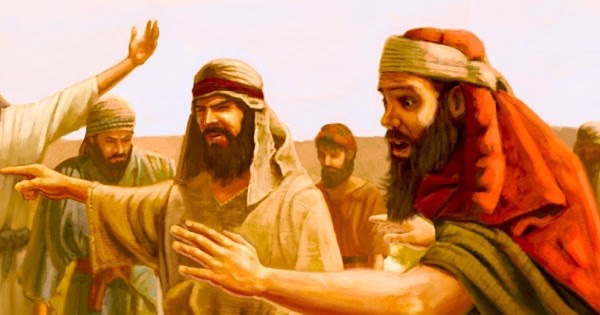
The grumbling of the people in this scene, however, does not relate to lack of provisions—after all, the crowd had earlier been fed with abundance (John 6:5–13). The crowd focuses on the identity of Jesus. The crowd said, “Is not this Jesus, the son of Joseph, whose father and mother we know? How does he now say, ‘I have come down from heaven’?” (6:42). Jesus is described as “son of Joseph” only in the book of signs (1:45, and here). Luke introduces him as “the son (as was supposed) of Joseph” (Luke 3:23), whilst Mark identifies him as “the son of Mary” (Mark 6:3), and Matthew has the crowd in Nazareth asking, “is not this the carpenter’s son? is not his mother called Mary?” (Matt 13:55).

Whatever was thought about the parentage of Jesus, the question of the crowd here has to do with the contrast between his earthly and heavenly origins. Jesus was known to his contemporaries, quite understandably, through his family of origin; claims about his heavenly origin sit uncomfortably with this understanding.

Yet for the author of the Gospel, the heavenly origins of Jesus are indisputable: “you are from below, I am from above”, he later tells the crowd (8:23; see also 3:31). The people in the story act as we might reasonably expect; the people outside the story, hearing it from the perspective of the narrator, know of the deeper level of meaning that is so typical of the Johannine narrative.

The answer provided by Jesus reinforces his central claim, “I am the bread of life” (6:48), “I am the living bread” (6:51), and extends it by noting “this is the bread that comes down from heaven” (6:50). Belief in this leads to eternal life—a claim that is a regular refrain in this Gospel (6:47; see also 3:15, 16, 36; 4:14, 36; 5:24; 6:27, 40, 54, 60; 10:28; 12:25, 50; 17:2–3). And, more shockingly, Jesus ends this section with the word that will provoke, at long last, a dispute amongst “the Jews” listening to him.

The Greek word translated as “dispute” is schisma, from which we get schism and schismatic. The same dynamic of division is reported amongst the Pharisees when confronted with the healing of the man born blind (9:16) and again amongst the crowd in Jerusalem as they hear Jesus teaching that he is “the good shepherd” who has authority from the Father (10:19). The response is a typical pattern amongst those who listen intently to the teachings of Jesus.

Jesus concludes with another short burst of teaching which presses the final point of the last section into an even harder claim. The bread Jesus gives is his flesh. He sharpens the point, however, by referring directly to the eating of his flesh and the drinking of his blood—actions utterly anathema to faithful Jews. It is as if the author is deliberately placing Jesus in dangle of total rejection by the crowd.

Jesus concludes by reasserting his earlier polemic, “This is the bread that came down from heaven, not like the bread the fathers ate, and died. Whoever feeds on this bread will live forever” (6:58). He will not step back from the dissension he has produced.

5 The response of the disciples

The last section of the chapter provides a most intriguing resolution to the narrative. The immediate response of “many of his disciples” is sharp: “this is a hard saying; who can listen to it?” (6:60). It is not the crowd that responds in this way; it is a group within the disciples that react.
It is interesting that, at this point, the narrator observes that “many of his disciples turned back and no longer walked with him” (6:66). If anyone is to be seen as the opposition in this chapter, the ones turning their back on Jesus, it is surely this group of “many of his disciples”. We rarely hear about the failures of Jesus. This chapter reports a clear instance. Not every disciple of Jesus stuck with him all the way.

In fact, Jesus reassess the point, saying to the twelve, “Do you want to go away as well?” (6:67). Apart from the description of Thomas as “one of the twelve” (20:24), this is the only place in this Gospel where the inner group of twelve disciples is explicitly identified (6:70, 71). Jesus takes the key issue right to the heart of his followers.

The answer of Simon Peter is noteworthy. “Lord, to whom shall we go? You have the words of eternal life, and we have believed, and have come to know, that you are the Holy One of God.” (6:68-69).
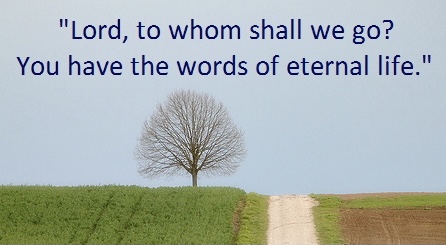
This is a climactic moment, a high point of confession of the true identity of Jesus. It evokes the Caesarea Philippi confession of Peter in the Synoptics (Mark 8:29; Matt 16:16; Luke 9:20)—although in the book of origins, it is actually Martha, not one of the male disciples, who mirrors this confession as she makes the ultimate confession, “you are the Christ, the Son of God” (11:27).

Jesus presses the point with his disciples, seeking to make sure that they are, indeed, committed to continue following him. “Did I not choose you, the twelve?” he asks, continuing, “yet one of you is a devil” (6:70). Another “hard saying” from Jesus, for his followers to hear.

The narrator then explains, “he spoke of Judas the son of Simon Iscariot, for he, one of the twelve, was going to betray him” (6:71). At precisely the moment when the remaining disciples seem to be firmly committed to their following of Jesus, he punctures their assurance, demonising one of their number with these incisive words. Even this group of faithful followers will be fractured.

See also https://johntsquires.com/2021/08/02/claims-about-the-christ-affirming-the-centrality-of-jesus-john-6-pentecost-9b-13b/ and https://johntsquires.com/2021/07/20/misunderstanding-jesus-they-came-to-make-him-a-king-john-6-pentecost-9b/
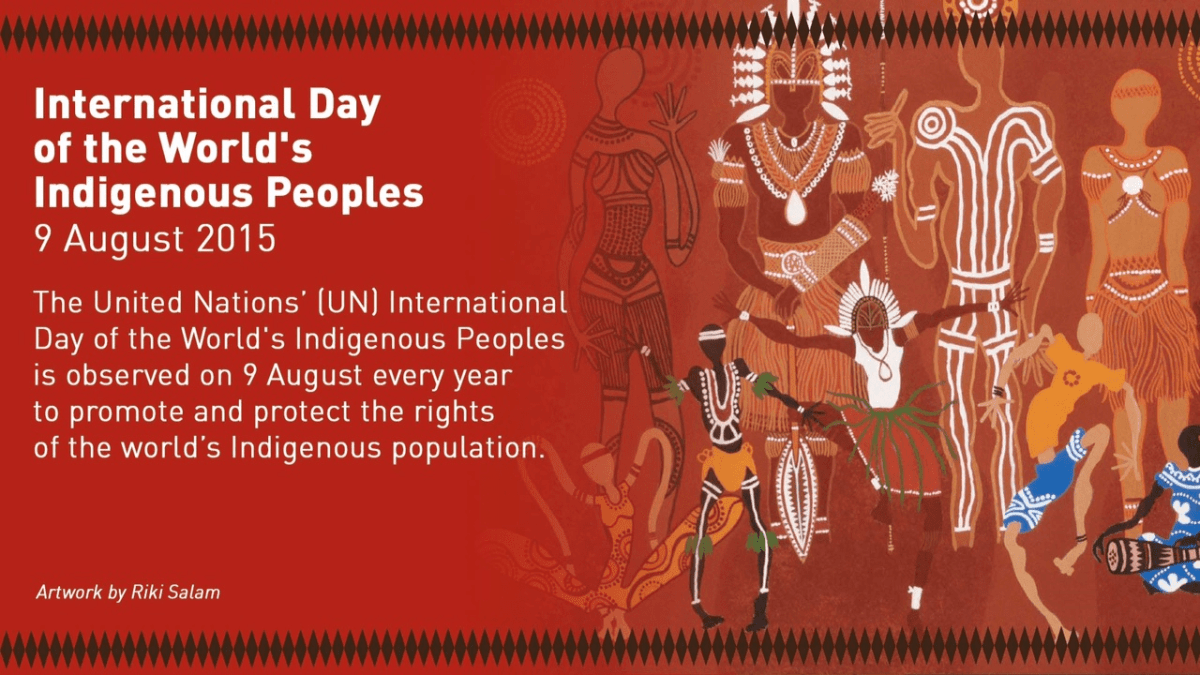

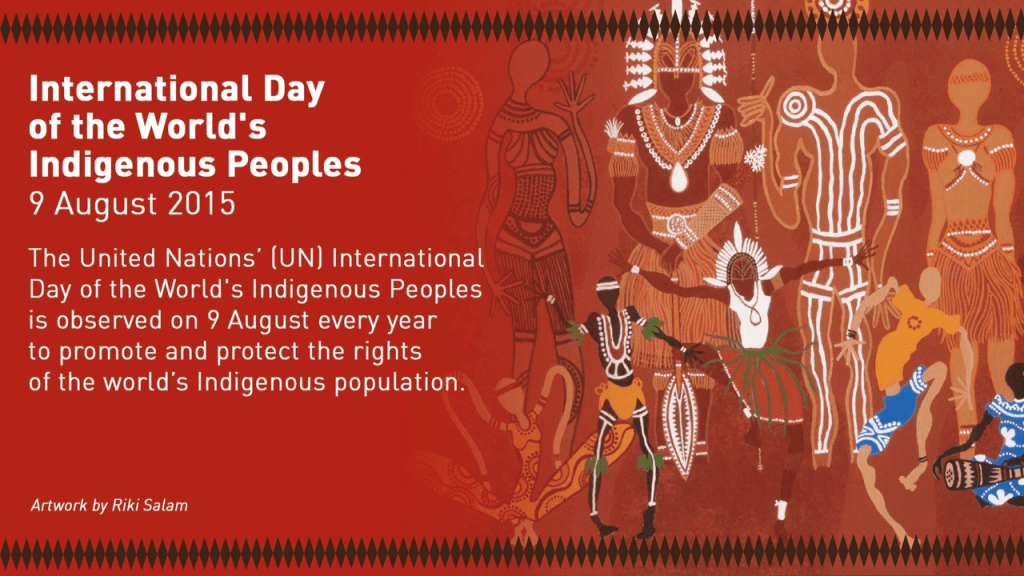
International Day of Indigenous Peoples

Today (9 August) is International Day of Indigenous Peoples. Last Wednesday (4 August) was National Aboriginal and Torres Strait Islander Children’s Day.

The theme for National Aboriginal and Torres Strait Islander Children’s Day 2021 is proud in culture, strong in spirit.

Aboriginal and Torres Strait Islander families and communities have provided love and care for their children, growing them up strong and safe in their cultural traditions, for thousands of generations.

For our children, safety, wellbeing and development are closely linked to the strengths of their connections with family, community, culture, language, and Country.

The continent of Australia and its surrounding 8,222 islands have been cared for since time immemorial by the indigenous peoples of these lands. When the British began their colonising invasion and settlement of the continent, it is estimated that there were over 400 nations across the continent and its islands, with about 250 languages being used at this time.

The land was not terra nullius (nobody’s land), despite the action of “claiming” the continent for Great Britain.

See https://johntsquires.com/2021/05/31/whats-in-a-name-reconciliation-ruminations/

The situation of our First Peoples merits particular and ongoing attention. In Australia, we have NAIDOC WEEK in July to celebrate the survival and continuing culture and language. We have National Reconciliation Week, running from 27 May, the anniversary of the 1967 referendum which recognised the indigenous peoples of Australia and gave them the right to vote, through until 3 June, the day in 1992 that the legal case brought by Eddie (Koiki) Mabo was decided and the lie of terra nullius was laid bare by Koiki in the Australian High Court.

We also have Sorry Day, a time to pay respect and acknowledge the many thousands of Aboriginal and Torries Strait Islander children who were taken away from their homes, whom we now know as The Stolen Generation. And for indigenous peoples, 26 January is commemorated as Invasion Day, or Survival Day, as they remember the invasion that led to countless massacres and their systemic marginalisation as the imported European culture grew and dominated the land.

See https://johntsquires.com/2020/05/26/saying-sorry-seeking-justice-walking-together-working-for-reconciliation/

These occasions are very important for focussing our attention on the wonderfully rich heritage of the First Peoples of Australia. They also help us to remember the ways that we can work together with our First Peoples, to ensure a better future for the present and future generations of Aboriginal and Torres Strait Islander peoples.

This year, the theme for International Day of Indigenous Peoples is Leaving No One Behind: Indigenous peoples and the call for a new social contract. That is particularly relevant in Australia, where the call for a Treaty (or Makarratta) with the First Nations of this continent has been growing in strength in recent years.

See https://johntsquires.com/2019/07/07/giving-voice-telling-truth-talking-treaty-naidoc-2019/

I recently participated in a workshop on advocating for First Peoples, led by Nathan Tyson, an Aboriginal man, of Anaiwon and Gomeroi heritage in North Western NSW. (This was part of the excellent Out Of The Box mission conference held in July.) Nathan is currently working as Manager, First Peoples Strategy and Engagement, with the Synod of NSW and the ACT of the Uniting Church.

The workshop had two parts. In the first part, Nathan offered us a series of insights into the experience of the First People’s of Australia, drawing on what we know about the history, customs, and current situation of indigenous peoples across the continent, and in the associated islands linked to this continent.

The five areas were: the impact of invasion and colonisation — the many massacres that occurred, and the almost complete absence of calling British settlers to account for these massacres — the Doctrine of Discovery and the resulting claim of terra nullius about Australia — the Stolen Generations — and the current push to tell the truth, listen to the Voice of First Peoples, and establish Treaties with the various nations of the First Peoples.

You can read my reflections on this part of the workshop at https://johntsquires.com/2021/08/04/working-with-first-peoples-and-advocating-for-them/. On the Doctrine of Discovery, see https://johntsquires.com/2018/08/13/affirming-the-sovereignty-of-first-peoples-undoing-the-doctrine-of-discovery/

In the second part, Nathan then provided a comprehensive set of practical pointers for us to consider. Given what we know about the situation and perspective of our First Peoples, what can we do to support, collaborate with, and advocate for these peoples? Here are the practical steps that Nathan provided for us to consider and adopt:

Learn about First Peoples, their history, their realities, their aspirations, with an open mind, with a compassionate heart

Put yourself in the shoes of First Peoples and try to walk the journey with them as they experience it

Talk with family and friends about the issues that you hear about, encourage truth telling, stand up against racism

Develop relationships, listen deeply to the needs and aspirations of First Peoples

Respect the right of self-determination of Aboriginal Peoples

Undertake simple advocacy activities to support the needs and aspirations of First Peoples (synod, assembly, Common Grace, ANTAR, Amnesty all have resources)

Join rallies and marches to show solidarity with First Peoples

Pay to undertake a Walking on Country experience with a local Aboriginal organisation

Employ First Peoples in your business, purchase goods from Aboriginal businesses, collaborate in social enterprises and community initiatives

Make your church space available for use by the Aboriginal Community, for elders, community, social gatherings

Help with fundraising to support Aboriginal community initiatives

Use the system: help a person to lodge a complaint with agencies such as NSW Ombudsman’s Office, Anti-Discrimination NSW, NSW Office of Fair Trading, Ombudsman for Telecommunication Industry, Energy Industry, Community Legal Services (for civil matters)

There are links to many resources relating to First Peoples at https://nswact.uca.org.au/first-nations-resources/

The UCA Assembly has produced a study guide based on the UCA Covenant with Congress, available at https://assembly.uca.org.au/walkingtogether/item/download/881_c020cd5241975ded067ba11194535b24

Clobbering the clobber passages

There are a number of passages in scripture which appear to address the matter of sexual relationships between people of the same gender. They have often been (mis)used to “clobber” LGBTIQA+ people by Christians.

This small handful of scripture passages have exercised an inordinately huge influence on the church—and, indeed, on society as a whole—in relation to various matters associated with same-gender relationships and the range of gender identities which exist amongst humanity.

Over the past 25 years, Elizabeth and I have regularly taught about these passages, providing a constructive way of understanding each of them. In keeping with the Basis of Union of the Uniting Church in Australia, the way we approach these biblical texts is to draw on the insights of critical scholarship in order to develop a clear understanding of what is, and what is not, referred to in these passages.

This is consistent with the commitment of the church to “sharpen its understanding of the will and purpose of God by contact with contemporary thought”, through drawing on “the inheritance of literary, historical and scientific enquiry which has characterised recent centuries”, which leads to the articulation of “an informed faith” (para 15). There are many insights about gender identity and sexual relationships that have been gained over the past decades, from work undertaken in medical, psychological, sociological, and biological arenas.

In surveying these passages, it is to be noted that none of them must, by necessity, be seen as weapons to be used to “clobber” LGBTIQ people. Each passage needs to be understood within its context. Careful scholarly work has been undertaken to indicate just how this interpretative process illuminates these texts, and does not provide any warrant for their earlier negative, hurtful, and harmful use, by the church, against LGBIQ people.

Language. The first thing to note is that the Bible was written in Hebrew and Greek languages, so there are questions about how particular words should be translated, whether there are exact equivalences in English, and so on. A key observation is that many translations use the word “homosexual” where the original language actually requires more nuance in translation.

Culture. A second factor is that we need to reflect on the cultural customs of the societies within which the Bible came to be written. It is important to consider how these cultural customs have shaped the way in which the words were written. “Homosexuality” is a modern concept, which was not known to the writers of the biblical texts in the way that we understand it. Scripture does not show awareness of the loving, committed, lifelong relationship of two people of the same gender. There is a clear cultural difference between the world of the texts of scripture, and the 21st century world.

Leviticus 18 and 20: Neither the oft-quoted verse about same-gender sex (Leviticus 18:22), nor a similar statement two chapters later (Leviticus 20:13), are dealing primarily with same gender relationships, but about cultural shaming practices, using power to create inequality in relationship. This text occurs in a section of Leviticus called “The Holiness Code” which has as its main purpose to set out laws to keep Israel different from the surrounding cultures.

The rules in this section of Leviticus were meant to set the Israelites apart from the Canaanites and Egyptians, who at that time participated in fertility rites in their temples that involved different forms of sex, including homosexual sex. Male-to-male sex was seen to mix the roles of man and woman and such “mixing of kinds” during ancient times was defined as an “abomination,” in the same way that mixing different kinds of seeds in a field was an abomination.

These verses critique the practice in which a stronger male seeks to subordinate and demean a weaker male, through sexual activity. This is what is declared to be an “abomination”. This abusive and shaming action is not what we are talking about when we refer to same gender relationships today: committed, loving, long-term relationships between two equal people.

Genesis 19:1–29: The same applies to the story of Sodom and Gomorrah (told in Genesis 19). This story is an example of what happens when God’s people do not live up to God’s expectations. It provides a lesson about the importance of hospitality to the stranger—a key value in ancient Israelite society. The cruel men of the town were planning to rape the visitors and were definitely not homosexuals. The prophet Ezekiel, inspired by the spirit (Ezekiel 16:49-50), declares that this is not about sexual sin, but about the sin of not providing hospitality.

Judges 19:1–30: The terrible story of the Levite’s concubine (Judges 19) also deals with hospitality. It is clear that hostile men used a breach of hospitality protocols as a weapon against other men, seeking to shame the strangers in this way. Like the story of Sodom (Gen 19), this account shows the extremely inhospitable behaviour of the town. Some mistakenly interpret the townsmen’s behaviour to be somehow related to homosexuality, but this was an example of the brutality of one group of men toward a group of visitors. This, again, is not about a same-gender relationship where equality and mutuality are paramount. It is about violating a cultural norm in an abusive and violent manner.

Genesis 1:1–2:4a: This passage is not part of the “clobber passages”, but is included because it provides a clear affirmation that God made a good creation, and encouraged human beings to enter into positive relationships with each other within that good creation (Genesis 1–2). Our human expression of sexuality is one way of expressing the goodness of that creation. We ought not to exclude people who are attracted to people of the same gender from this understanding.

Romans 1:18–27: The behaviour which Paul was addressing here is explicitly associated with idol worship (probably temple prostitution). It is directed towards heterosexual people who searched for pleasure and broke away from their natural sexual orientation or their natural ways of having sex (both male and female) and participated in promiscuous sex with anyone available or used methods not culturally accepted.

In the surrounding culture, it was common for men of a higher status to take sexual advantage of male slaves or male prostitutes. Here Paul is instructing his readers to keep pure and honour God. Paul is talking about the use and misuse of power and authority and how that impacts one’s relationship with God. Paul didn’t have in mind specifically prohibiting consensual same-sex relationships, because they were never considered in his cultural context.

1 Corinthians 6:9–10: In Paul’s vice-list he identifies a list of sinners whom he declares will not be granted entry into the kingdom of God. Amongst the thieves and robbers, drunkards and “revilers” we find a number of sexual transgressions mentioned. This includes two critical words: malakoi and arsenokoites.

The term malakoi means “soft” and is also interpreted as male prostitutes. The word arsenokoites is difficult to translate, but it probably refers to a male using his superiority to take sexual advantage of another male. Paul is right to condemn these sexual activities, but this has nothing to do with a consensual homosexual relationship.

References to sexual sins in Paul’s letters (in both Romans 1 and 1 Corinthians 6) sit alongside a range of other sins, which are equally condemned, and equally challenging to our discipleship. It is quite legitimate to ask, why single one particular sin out?

Paul related all of these sins to idolatry, which, for him, was the fundamental sin. A loving relationship between people of the same gender is not idolatrous, but rather it can strengthen a sense of the value of human life which God desires for us. Paul was writing about the abuse of relationships, which is quite different from the expression of a loving, faithful relationship.

1 Timothy 1:8–11: This passage is similar to 1 Cor 6, above. This time it is a list of sins (as opposed to sinners) and includes the words pornos, arsenokoites and andrapodistes. Each term needs to be clearly understood. The word pornos most likely refers to a male having sex outside of marriage, presumably with a female (but also, feasibly, with a male); the second term, arsenokoites (found also in 1 Cor 6) can probably be defined as male same-sex relationships that involved some level of exploitation, inequality or abuse. Finally, andrapodistes can be translated as “slave traders.”

Scholars believe that the three terms were used together in that slave dealers (andrapodistes) would be acting as pimps for captured boys (pornos) who would be taken advantage of by powerful men (arsenokoites). These are sins that certainly need to be addressed, but this particular passage does not relate to homosexuals in a committed relationship.

Jesus: In all four Gospels, Jesus rarely discusses sexuality; when he does, there is very little detail. This topic rates as of only tiny significance for him, alongside the greatest focus which Jesus had—on wealth and poverty, and the importance of serving those on the edge, those who are in need. There is no saying or parable of Jesus that directly addresses the situation of LGBTIQ people in particular—apart from the fact that such people are part of the whole of humanity who are addresses in the same way by Jesus in all of his teachings.

From this very brief survey of key passages, we are able to affirm that the most important conclusion to draw from the scholarly explorations of relevant biblical texts, is this: what God wants from human beings, is a commitment to loving, respectful relationships, a commitment to long-term, hopefully lifelong, relationships. In short, the specific genders of people in relationships is less important than the quality of relationship shown between individuals in relationship with each other.

In the Church, we affirm that God is faithful—that those who diligently seek to know the will of God, will be upheld and loved by God. God is not disturbed by differences of opinion; God made a diverse creation, and God honours our search for truth within that creation.

In Jesus, we see the key attributes of God, lived out in a human life. The Uniting Church’s Basis of Union declares that “in his life and in his death, he made a response of humility, obedience and trust” (para 3). These are the key qualities of a faithful life. These qualities are the controlling lenses through which we should read the biblical texts, and develop our understanding of sexuality and marriage.

A heterosexual relationship, at its best, will exhibit mutual respect, deep love, faithful commitment, and personal humility in placing the other as first. So too can a same genderrelationship. Medical, psychological, and social explorations show that a relationship between two people of the same gender, can itself exhibit the best of human qualities, and demonstrate the finest moral values in human relationship. It can certainly exhibit mutual respect, deep love, faithful commitment, and personal humility in placing the other as first. 

Reinterpretation for the present age. Throughout the New Testament, we can see places where NT writers offer radical reinterpretations of the norms of their cultural and religious practices. The accounts of the ministry of Jesus tell us of Jesus’ affirmation of women, his willingness to break religious law by healing on the Sabbath, and his redefining of aspects of Jewish law in the light of his message of the coming kingdom.

The accounts of the early Church include instances where redefinition and breakthrough took place: most strikingly, in Acts 10, as we have already noted. This chapter tells the story of Peter, who was a faithful adherent to a long-established pattern of eating in the manner that was set forth in the laws of Leviticus. He was told that what he did not eat—because it was “unclean”—he was now free to eat—because God had declared such food “clean”.

This opened the way, in the early church, to a new way of inclusive table fellowship where Jews and Gentiles are welcome to eat and share together. Who is to say that the spirit, which once moved in this way, is now not able to move in a similar way, and to declare what some consider “unclean” to be “clean”—and that we can rejoice in this!

In Ephesians, a standard Hellenistic pattern (a “household table”) is adapted to instruct husbands and wives. Eph 5:21–33, while appearing on the surface to reinforce patriarchal norms of wives submitting to husbands, actually instructs husbands to love their wives with self-sacrificing love (“as Christ gave himself for the Church”) and encompasses all marriage relationships under the heading, “submit yourselves to one another”. This was a radical reinterpretation of the marriage relationship itself, even within the first few decades of the life of the church.

The biblical account shows that the spirit comes to faithful people, offers a vision of a new way, and opens hearts and minds to a greater vision which broadens the impact of the good news and reinvigorates missional activity. In the Uniting Church, we seek to walk in that new way, faithful to the witness of scripture, and open to the guidance of the Spirit, accepting of new insights and welcoming to all.

*****

This post formed the basis for a presentation by Elizabeth and myself at the Rainbow Christian Alliance on 8 August 2021. A follow-up presentation on passages from scripture that support an inclusive and affirming attitude on 14 November 2021; see https://johntsquires.com/2021/09/30/affirming-and-inclusive-passages-from-scripture/

A Safe Place for Rainbow Christians

A post from guest blogger Delia Quigley

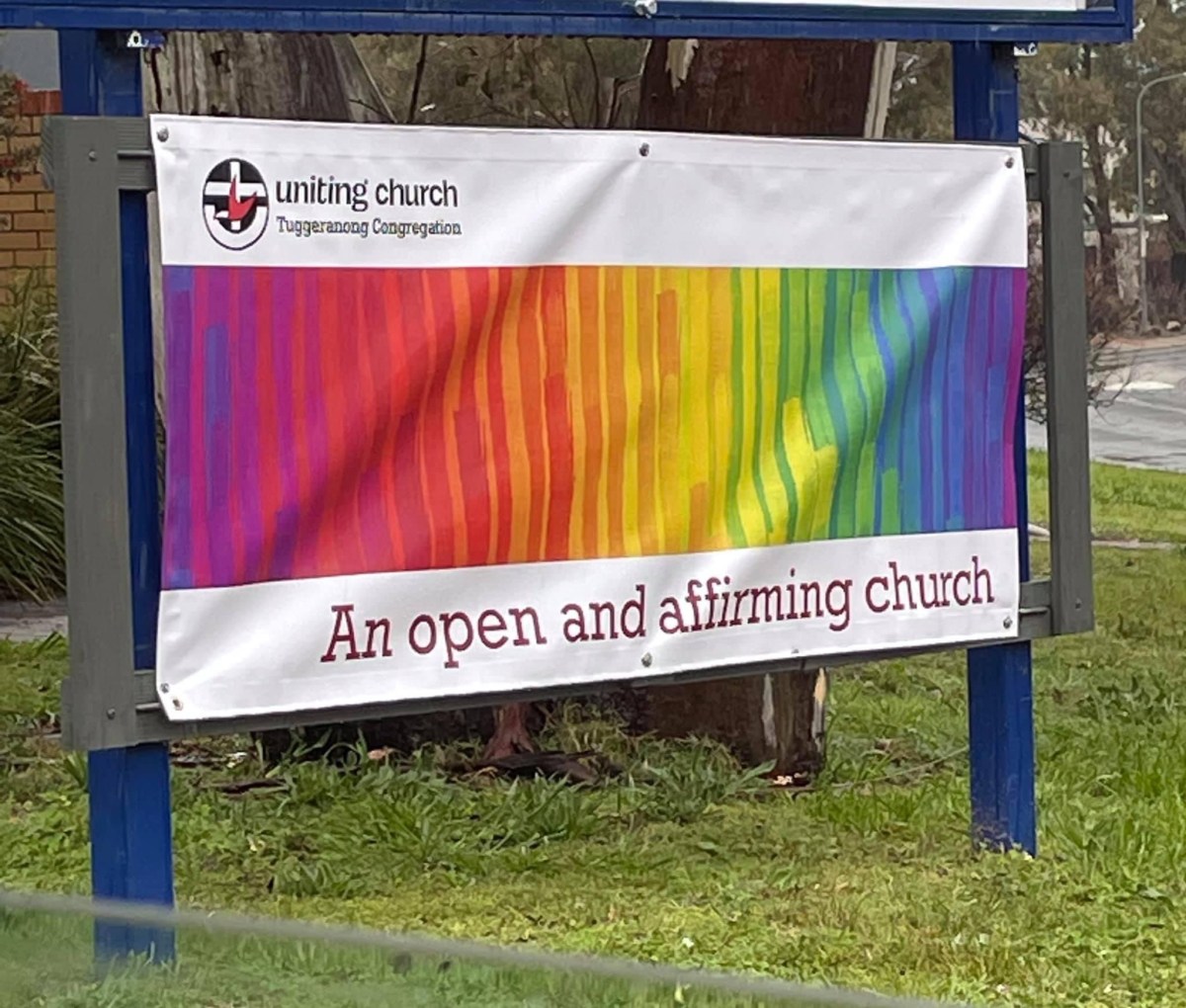
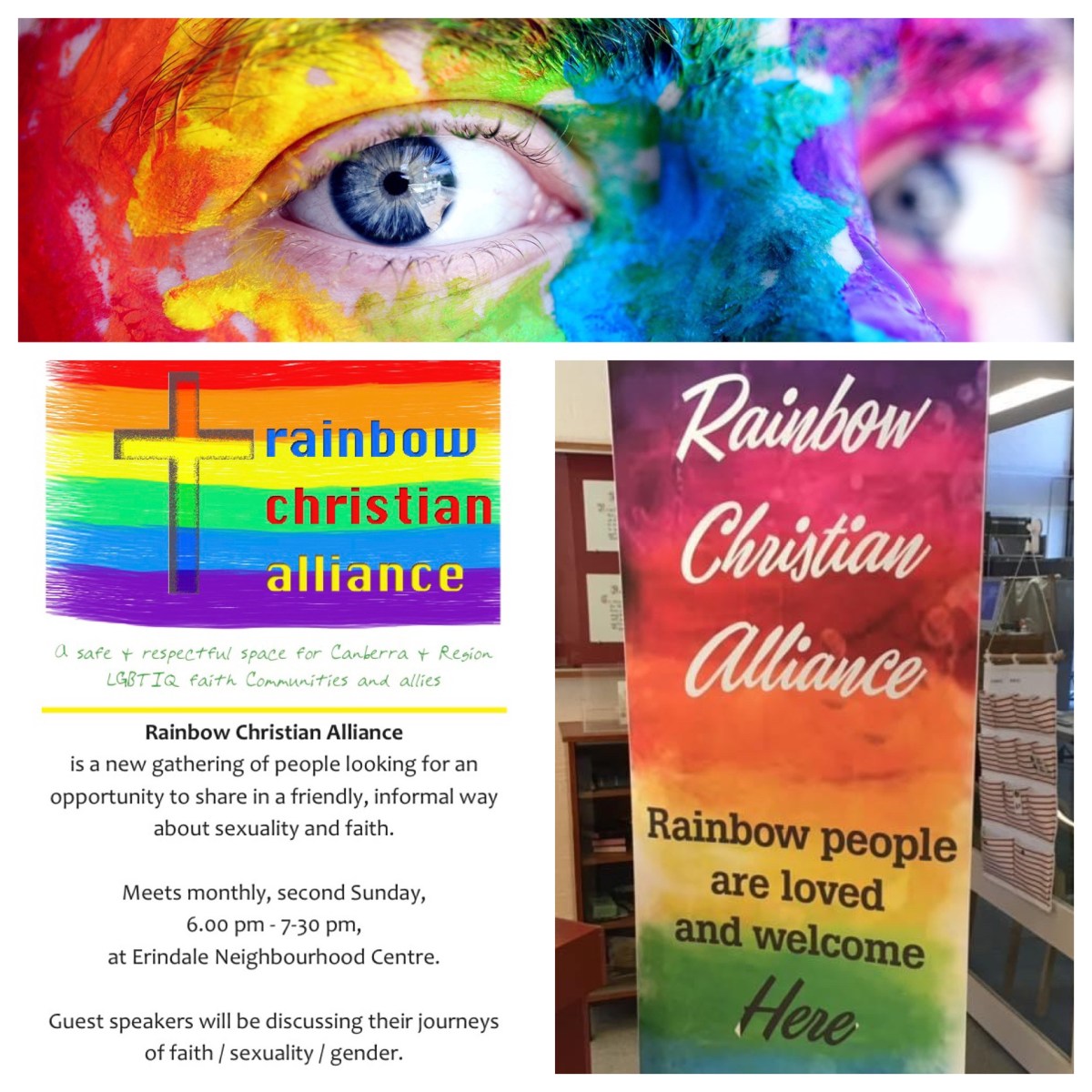
July 2015 saw the beginning of  Rainbow Christian Alliance (RCA) as a joint program run in partnership between Tuggeranong Uniting Church (TUC) and Diversity ACT community services. RCA was initiated to provide a Safe Place for LGBTIQA+ people of faith, their families and friends who wanted to be able to get together in fellowship in an environment away from the judgement, hurt and pain often caused by Christian Churches and other faiths to the LGBTIQA+ community.

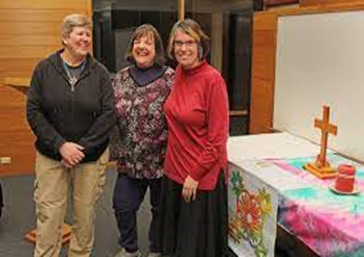
See the source image

RCA  gathers  on the second Sunday of each month with a dinner church format, meeting with LGBTIQA+ people of faith and their allies; gathering, chatting, eating, then sharing in a variety of worship styles including modified liturgy, readers theatre, discussion groups, guest speakers and the evening is usually wrapped up with dessert and much more chatting!

Initially RCA was led by Delia Quigley, Rev Anne Ryan and  Megan Watts

Initially the RCA project was set up utilising the space in the Erindale Neighbourhood Centre, next door to TUC, but since the arrival of COVID-19 and the requirements for modifications including increased space for those gathered, RCA has been meeting in the TUC auditorium.

Following the commencement of RCA in July 2015, an invitation was extended by Rev Aimee Kent and a partnership was also created with Goulburn Grace Community. Dare Café commenced in Goulburn in February 2016, meeting monthly, and later incorporating a Bible Study group. The Dare Café and Grace Community has been impacted by COVID-19, but Pastor Amy Junor is now keen to work with the Dare Café group and keep things moving where possible.

See the source image

Over its six years, RCA has provided support to many people, including Ministers or Pastors who lost their congregation or Church because of their own sexuality, as well as people who faced exorcism, conversion therapies or even had lobotomies performed on them to cure their sexuality!

RCA also provided information to other congregations on LGBTIQA+ education and issues, including at the very stressful time of the Marriage Plebiscite. Following the June 2016 Orlando shooting at the Pulse night club in the USA, where 49 patrons were killed and 53 were wounded, RCA partnered with Canberra City Church to hold a Blue service for Orlando which was catered for with heart warming soups and fresh bread rolls by the City Church Congregation.

In more recent times RCA has had increasing support from TUC Congregation members, who provide a core support group to assist with set up, catering and running of RCA, giving more space for the leadership team of Rev. Miriam Parker-Lacey, James Ellis and Rev. Elizabeth Raine to concentrate on working with the group activities.

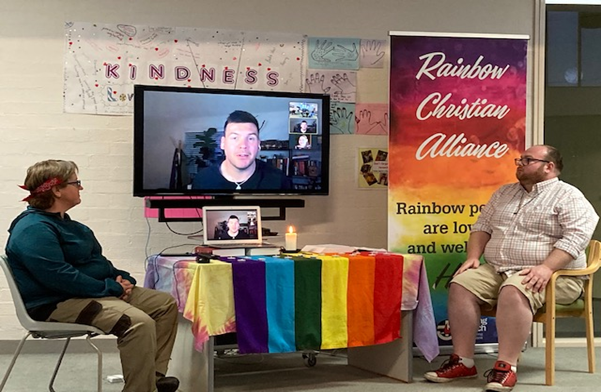
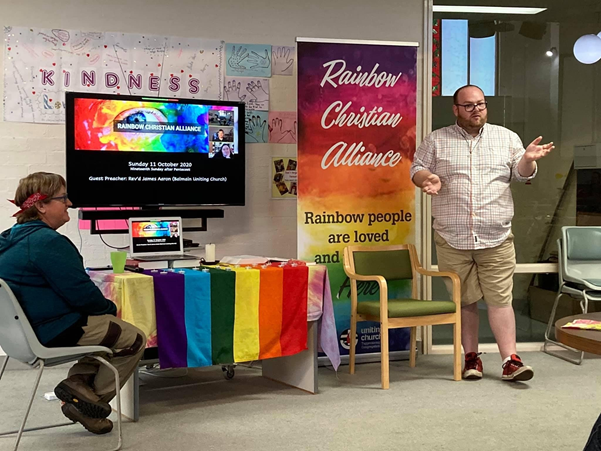
Rev Aaron James pictured speaking online to the RCA gathering in October 2020
with Rev Miriam Parker-Lacey and James Ellis 

RCA has provided a safe place for many and has had steady numbers of attendees of approximately 20-22 people at each gathering over the past 6 years.  Obviously there has been changes as to who attends, but the numbers have remained steady and in recent months there has been an increase in LGBTIQA+ youthful attendees. These younger attendees may not face some of the issues older generation LGBTIQA+ people faced but there are still many  ongoing issues for LGBTIQA+ plus Christians.

6th Birthday gluten-free chocolate mud cake 

Sadly, since the Marriage Plebiscite, there has been an increased push from certain quarters to demonise Transgender or Non-Binary people, and the current Olympics has been used to push fears that Trans people are stealing women’s rights and your children! (The “protect your children” fears was also previously used to push the falsehood that homosexuality equalled paedophilia.)

There are ongoing pushes for legislative changes being introduced by Mark Latham in NSW to prevent even mentioning LGBTIQA+ issues in classrooms.  LGBTIQA+ people are also faced with possible legislation to be tabled by the current Federal Government on ‘Religious Freedom’. Initially the Prime Minister promised to look at legislation to keep LGBTIQA+ young people safe, but there is much cynicism as to what may be introduced and many LGBTIQA+ people fear exclusion or even loss of employment because of their sexuality or gender identity

The Rainbow Christian Alliance continues to provide a Safe Space for people who have been hurt or marginalised within society–even by the church–to gather, relax in each other’s company, and share their faith.

More information on RCA can be found at  https://tuc.org.au/worship/rainbow-christian-alliance/ or on Facebook at https://www.facebook.com/groups/1025029234182558

See also https://www.abc.net.au/news/2017-08-17/what-is-it-like-to-be-christian-and-in-the-lgbtiq-rainbow-family/8808584

Working with First Peoples and advocating for them

I recently participated in a workshop on Advocating for First Peoples, led by Nathan Tyson, an Aboriginal man, of Anaiwon and Gomeroi heritage in North Western NSW. (This was part of the excellent Out Of The Box mission conference held in July.) Nathan is currently working as Manager, First Peoples Strategy and Engagement, in the Synod of NSW and the ACT of the Uniting Church.

The workshop had two parts. In the first part, we explored what we know about the history and current situation of First Peoples. In the second part, we considered what actions we might take to work with and advocate for First Peoples.

What do we know?

In the first part, Nathan offered us a series of insights into the experience of the First Peoples of Australia, drawing on what we know about the history, customs, and current situation of Aboriginals and Torres Strait Islanders across the continent, and in the associated islands linked to this continent.

The five areas were: the impact of invasion and colonisation — the many massacres that occurred, and the almost complete absence of calling British settlers to account for these massacres — the Doctrine of Discovery and the resulting claim of terra nullius about Australia — the Stolen Generations — and the current push to tell the Truth, listen to the Voice of First Peoples, and establish Treaties with the various nations of the First Peoples.

First, there is the story—now becoming well-known and widespread— of the impact on First Peoples from the invasion and colonization that took place from 1788 onwards. (I use these terms deliberately; describing the British colony as a settlement is far too benign; it ignores much of the harsh reality of what took place.)

The period of invasion and colonisation saw innumerable massacres take place. As well as the thousands of Aboriginal deaths that occurred through these massacres, British invasion also led to the deliberate marginalising of people in many of the Aboriginal nations that existed at that time.

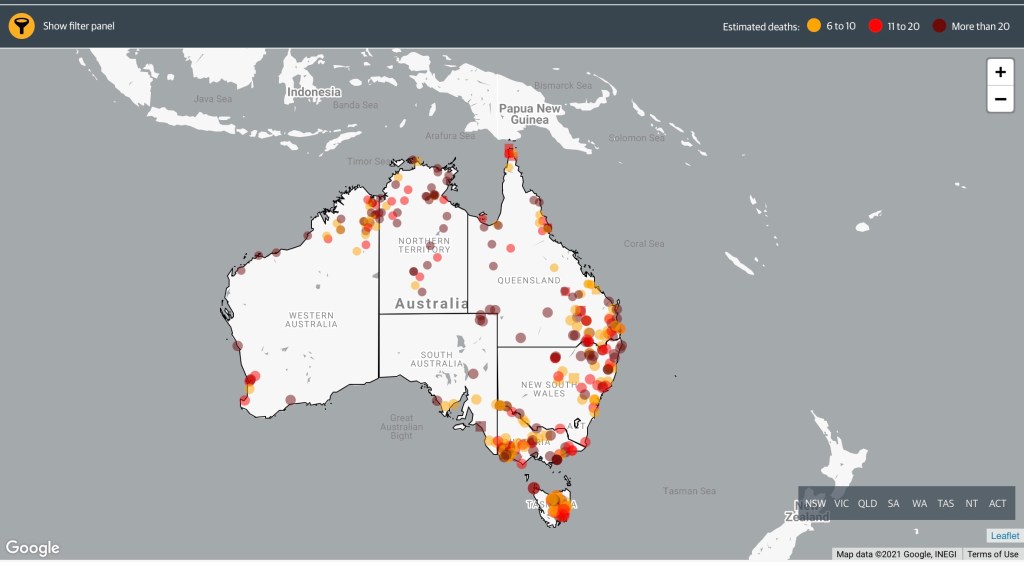
There is a powerful visual symbol of these massacres at The killing times: a massacre map of Australia’s frontier wars | Australia news | The Guardian

The map is interactive. The number of massacres that were perpetrated by ordinary people—not soldiers, not government officials—is truly horrifying.

Associated with this is an observation that provides a second area worthy of note. It is the case that virtually no white persons were charged for the acts of violence and murder that they perpetrated. (The Myall Creek Massacre provides one of the rare exceptions to this claim. See https://www.creativespirits.info/aboriginalculture/history/myall-creek-massacre-1838)

Third, Nathan referred to the rationale that was driving both the colonisation of the continent and the massacre of First Peoples—the Doctrine of Discovery, promulgated in medieval times and driving the expansionary colonisation policies of many European nations, including Britain. It was this Doctrine which formed the foundation of the claim of terra nullius—the notion that the there were no people in the land who were settled in the land.

The Uniting Church in Australia has joined with other churches around the world in repudiating the Doctrine of Discovery. See https://johntsquires.com/2018/08/13/affirming-the-sovereignty-of-first-peoples-undoing-the-doctrine-of-discovery/

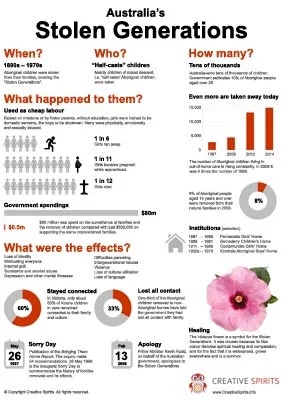
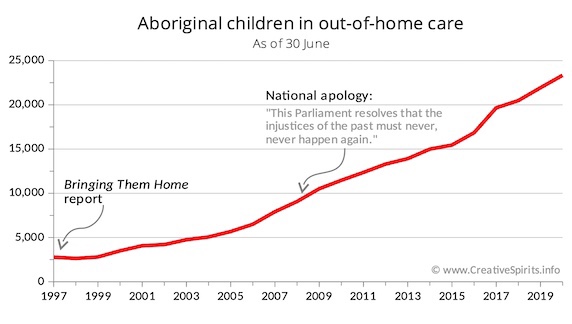
Fourth, Nathan noted the issue of the Stole Generations, a blight on the history of Australia since the nineteenth century. This matter was addressed in Bringing Them Home, a highly important report issued in 1997. The commission that produced this report was led by Sir Ron Wilson, a High Court judge who had served as UCA Moderator in Western Australia and then as the fifth national President (1988–1991).

See https://humanrights.gov.au/our-work/aboriginal-and-torres-strait-islander-social-justice/publications/bringing-them-home

The continuing saga of Aboriginal children being taken from their homes remains with us today, to our national shame. Even in the 21st century, indigenous children continue to be taken from their families. In fact, there are far more Aboriginal children in out-or-home care now, than there were in 1997 when the Bringing Them Home report exposed countless stories of terror and tragedy amongst the Stolen Generations.

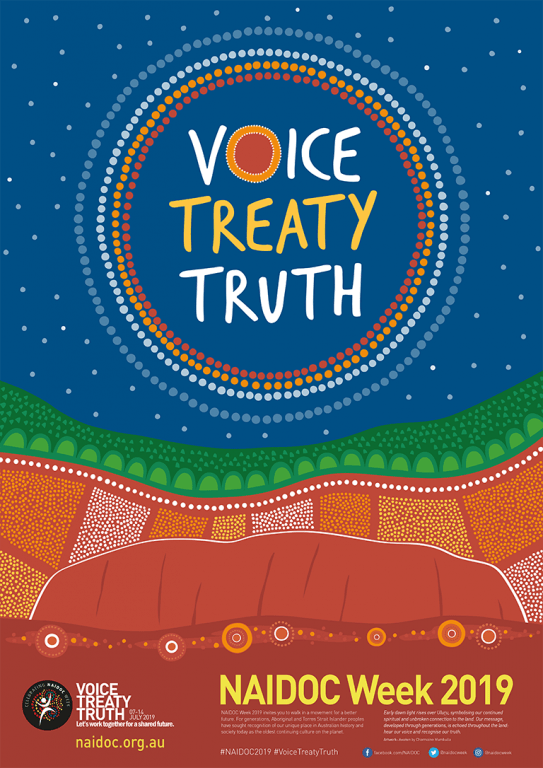
The final area canvassed in the first part of the workshop focussed on the theme of Voice. Treaty. Truth. This was the theme for NAIDOC Week 2019. It consists of a call to give Voice to the First Peoples of Australia by establishing a representative body to advise federal law makers; to establish a Treaty with each of the nations that were in the land before the British sent their invading colonisers; and to tell Truth about the history and the present situation of Aboriginal and Torres Strait Islander peoples.

See https://johntsquires.com/2019/07/07/giving-voice-telling-truth-talking-treaty-naidoc-2019/

Nathan encouraged all of the workshop participants to learn about First Peoples, their history, their realities, and their aspirations, and to approach First Peoples with an open mind and with a compassionate heart.

What can be done?

In the second part, Nathan then provided a comprehensive set of practical pointers for us to consider. Given what we know about the situation and perspective of our First Peoples, what can we do to support, collaborate with, and advocate for these peoples? Here are the practical steps that Nathan provided for us to consider and adopt:

Put yourself in the shoes of First Peoples and try to walk the journey with them as they experience it

Talk with family and friends about the issues that you hear about, encourage truth telling, stand up against racism

Develop relationships, listen deeply to the needs and aspirations of First Peoples

Respect the right of self-determination of Aboriginal Peoples

Undertake simple advocacy activities to support the needs and aspirations of First People’s (synod, assembly, Common Grace, ANTAR, Amnesty)

Join rallies and marches to show solidarity with First Peoples, eg those advertised by FISTT (Fighting In Solidarity Towards Treaties, a Facebook group)

Pay to undertake a Walking on Country experience with a local organisation

Employ First Peoples in your business, purchase goods from Aboriginal businesses, collaborate in social enterprises and community initiatives

Make your church space available for use by Aboriginal Community, for elders, community, social gatherings

Help with fundraising to support Aboriginal community initiatives

Use the system: help a person to lodge a complaint with agencies such as NSW Ombudsman’s Office, Anti-Discrimination NSW, NSW Office of Fair Trading, Ombudsman for Telecommunication Industry, Energy Industry, Community Legal Services (for civil matters)

There are plenty of practical suggestions in this list. It is worth the effort to start implementing some of them!

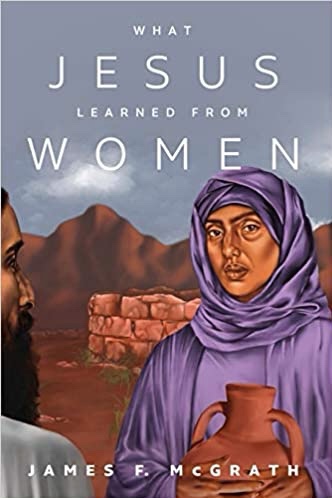
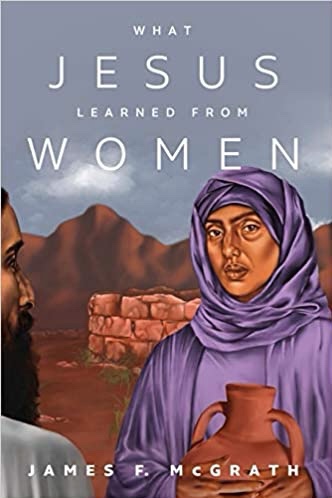
Jesus, growing, learning: a review of ‘What Jesus Learned from Women’

Jesus, fully divine, was yet also fully human. So we affirm: in creeds, in songs, in sermons and prayers. As fully human as each one of us, Jesus—like us—grew and developed, broadening in his understanding and deepening in his maturity over the years. This growth into maturity took place as Jesus learnt. He was exposed to new experiences, offered different perspectives, given fresh insights, and so, as he learnt, he grew.

Indeed, we read this claim quite explicitly in scripture, in the only place in our canonical Gospels that explicitly deals with Jesus as a growing child: “the child grew and became strong, filled with wisdom” (Luke 2:40), and then, “Jesus increased in wisdom and in stature” (Luke 2:52).

If we accept this claim—consistent with the creeds and articulated in scripture—then it is quite legitimate to ask, “from whom did Jesus learn?” Perhaps from scribes in his local synagogue, as he grows and develops in his understanding of Torah. Perhaps from others of his age in that setting, as they delve deeper together, sharing insights about their customs and scriptures. And perhaps from members of his own family, as a young child, encountering new things each day as he grows.

In all of this, Jesus is “one who in every respect … [is] as we are” (Heb 4:15). He was fully one of “the children [who] share in flesh and blood, [who] himself likewise partook of the same things” (Heb 2:14), who “in the days of his flesh … offered up prayers and supplications, with loud cries and tears, to him who was able to save him from death” (Heb 5:7). His full humanity must surely also mean that he learnt from his interactions with all manner of people in his life.

Including women. Including his mother, and perhaps his grandmother, if she was still alive during his childhood. Including the feisty Syrophoenician woman he encountered near Tyre, as well as the sisters of Lazarus whose home he visited in Bethany; and including Joanna and Mary of Magdala who followed him faithfully, as well as other women whom he encountered at various times during his travels in Galilee and Jerusalem. Jesus learnt from each of these women.

This is the thesis that is proposed, explored, and advocated in detail by North American biblical scholar, James McGrath, in his most recent book, What Jesus Learned from Women (Cascade Books, Oregon, 2021). The book has twelve chapters, and deals with the interactions between Jesus and a dozen women, with conclusions drawn about what Jesus learned in each instance.

If the notion of Jesus, the human being, needing to learn and grow, is problematic for a reader with a strong theology of Jesus as “fully divine”, then the claim that this learning was from women is sure to antagonise those who lay claim to the (unbiblical) notion that women ought not to teach men. But of course Jesus developed, of course Jesus learnt, and of course he learned from women.

In the 16 page Introduction to this book, matters of method in interpreting biblical texts are canvassed. In the 10 page Conclusion, a summary is provided as to “what Jesus learned from women”, and some pointers for other possibilities to explore are offered. If you don’t want to read the whole book, dip into these bookends. But the book is most certainly worth reading in full!

Each of the intervening chapters begin with a creative monologue, from the perspective of the woman in the encounter or another woman closely involved. These creative monologues draw heavily on what we know, from decades of scholarship, about the cultural customs and religious practices of Judaism at the time when Jesus lived in Galilee.

What follows, in each chapter, is a careful discussion of the key issues identified in those monologues. The chapters show thoughtful interaction with contemporary scholarship, with judicious use of footnotes enabling Dr McGrath to engage in the more technical interactions with other scholars. Indeed, there is a comprehensive bibliography of 26 pages at the end of the book, signalling that the author has canvassed other scholarly views most thoroughly.

This book is readable and engaging. The scholarly foundations of James McGrath’s thinking are evident, but these do not, for the most part, impair the flow of the writing or the stimulus of ideas canvassed. Indeed, because I’ve known James in person for many years, I feel confident to say that the book is equally as engaging and enjoyable as the enthusiastic and energetic author is, himself.

That’s not to say that every detail is amenable to my own predilections and beliefs about various aspects of the biblical texts that are explored. I don’t think that chapter 3, that pins a lot on what a fanciful second century document claims about Jesus’s family (Joseph and Mary, and her parents Joachim and Anna), really works–at least, not for me. Nor am I taken by the harmonising down into one incident of the various accounts of the woman who anointed Jesus, dealt with in chapter 7—although I do quite like the notion that the woman, in this incident, functions as a divinely-inspired prophet, foreseeing with clarity the fate of Jesus.

In the longest chapter, treating perhaps the most well-known woman in the life of Jesus (apart from his mother), my willingness to run with the creativity of the opening monologue and the claims that then followed in the ensuing 30 pages, was severely tested. I was minimally persuaded by reliance on abstracted explanations and hypothetical extrapolations from some isolated sections of the late second-century Valentinian gnostic work, the Gospel of Philip.

The kiss that Jesus gave Mary of Magdala, referred to in that work, must be read, I believe, not as a physical act, but as a spiritual claim: Mary was loved more than the one identified as “the disciple whom Jesus loved” in John’s Gospel. The distinctive connections of salt and Jonah with Magdala seem too far fetched to me; was not salt, for instance, widely-used in the ancient world? And yet, the proposal about the relative ages of Jesus and Mary, the economic context of Mary, and the explanation of how the demons left her, have some attraction.

When I arrived at the final substantive chapter of the book, dealing with Joanna, wife of Chuza and one of the witnesses to the empty tomb, I was well-schooled in the McGrath style of beginning with a creative, dramatic-style monologue (in italics) followed by a careful, academic-style analysis of what the ancient texts (biblical and others) report. By the end of the chapter, I was thinking: why was not all of this in italics? That is to say: this whole chapter felt like a free-wheeling historical drama set in the ancient world, not a closely-argued forensic analysis of the character.

I’m a confirmed sceptic about the identification of Joanna with Junia (the apostle named in Rom 16:7). It comes from the work of one scholar, known for his dramatic hypotheses, and not substantiated by other scholarly work. The Nabatean origins of the name Chuza seem to rest simply on one inscription noted in an 1898 archaeological work. The possible relationship of Paul to the family of Chuza and Joanna (perhaps Andronicus and Junia?) does not seem to be demonstrated, at least to my thinking. It’s a creative chapter, but it’s relationship to history is tenuous (like the Star Wars saga that McGrath alludes to at the end of the chapter).

However, a number of the other chapters have strong persuasive power, at least to me. It is clear that the Mary who is depicted in Luke’s Gospel expresses views strongly consistent with key teachings of Jesus (compare Luke 1:46–55 with 4:16–21 and 6:20–26). Was this because the same person authored these passages? (as is most often assumed by scholars). Or was it because Mary in fact taught her son Jesus these central scriptural insights when he was a young child? (as James McGrath advocates in chapter 2). The possibility is enticing, and plausible.

I am also persuaded by the chapters which explain what Jesus learnt from the woman he encountered beside a well in Samaria (chapter 4) and the Syrophoenician woman in the region of Tyre (chapter 5). The way that each of these encounters is reported in the Gospel narratives (the former in John, the latter in Mark and Matthew) provides clear validation for the claim that Jesus did, in fact, learn significant things from each of these women. It seems to me that the discussion in these chapters does a fine job of amplifying what is in the text. And the encounter by the well in Samaria gave the inspiration for the wonderful artwork on the cover of the book, by Indianapolis artist Macey Dickerson. (See https://www.maceydickersonarts.com/)

And, despite my earlier comments about the historical implausibility of the chapter on Joanna, I found the brief discussion of the “intersectional” nature of life for people such as Saul/Paul and Joanna/Junia, living with two names that signify their two cultures, two languages, two places of being. That dynamic is so important for contemporary living in the global society.

The “thickest” chapter, in my view, is the chapter dealing with the young woman who was “presumed innocent”. We know her in Christian tradition as “the woman caught in adultery”—a story told in a section of text that is missing from the earliest manuscripts of John’s Gospel, and also floats into Luke’s Gospel in other manuscripts. The chapter draws from passages in Hebrew Scriptures and rabbinic texts to shed light on the scene. Who knew that dust on the mosaic floor in the Temple could be such a vital clue to this reconstruction?

Dr McGrath reconstructs the scene develops a thesis about what took place in a detailed, well-researched argument which is quite rabbinic in style and character. In the end, the chapter offers a creative interpretation that I find at once persuasive in many aspects—yet enticingly unresolved. Did Jesus learn from this woman the importance of not judging, and the imperative of not assuming one person is any more “without sin” than any other person?

Perhaps the most interesting claim that is made in this book is nestled into a footnote in the consideration of “two suffering daughters” in chapter six, relating to the woman who had bled for 12 years and the twelve year old daughter of Jairus, the synagogue leader (Mark 5:21–43). Noting that the world of the time was a strongly oral society, Dr McGrath proposes that the written Gospels “may well have served as memory aids for those who reflect stories about Jesus in Christian communities”.

Functioning in this way, those who used these written narratives may well have elaborated and expanded on them, drawing from what they knew as people of the time, and responding to questions from those hearing the stories. This fits very well into what we know of ancient (and, indeed, modern!) Jewish practices of storytelling.

We know that the Pharisees (and Jesus), and the rabbis in later centuries into the modern era, were masterful storytellers, using exaggeration, expansion, elaboration, and dramatic techniques to “get the point across”. And ancient synagogue congregations were not at all like the sedate, restrained congregations of contemporary Protestantism—schooled not to interrupt or ask questions! Synagogue gatherings were hectic, bustling, noisy events.

So what does this mean, then, for the whole enterprise that has developed, of careful, meticulous, written scholarly examination of each and every word in the biblical texts? Are we overegging the enterprise in our zealous focus on minute details, given the hypothesis that the texts were simply the springboards for more expansive and creative storytelling? As someone who thrives on that scholarly enterprise, I am stunned by this possibility. But it bears further consideration.

Yet the suggestion that the written text formed the basis for a more extempore, elaborated account of each story involved, is an enticing prospect. And we know that it can work, since the book itself shows how the biblical text can generate a fuller story, offered in the creative monologues at the start of each chapter (and at the end of some).

That’s one of the great gifts of this book—along with the theological affirmations that Jesus was human, and thus did learn from other human beings; and that, in fact, he did learn from women at multiple points throughout his life. For establishing the reality of these insights, through this book, we are most grateful to James McGrath.

*****

Postscript: I have read this book in company with a group of friends, from three continents, meeting once a week online to discuss a chapter at a time. It’s one of the gifts of the pandemic—we have learnt to be agile in the way we function online. It’s meant we can draw together people who are geographically dispersed—including, in this case, the author himself! It’s been a great way to explore a whole host of ideas that have emerged within the book, or during our conversations about it.

See also https://www.insights.uca.org.au/new-book-to-explore-what-jesus-learned-from-women/ and https://www.patheos.com/blogs/religionprof/2021/03/what-jesus-learned-from-women-insights.html where James McGrath engages in conversation with Jonathan Foye about the book.

The book can be ordered from https://wipfandstock.com/9781532680601/what-jesus-learned-from-women/

Claims about the Christ: affirming the centrality of Jesus (John 6; Pentecost 9B—13B)

“I am the bread of life” (John 6:48), says Jesus, in the passage set as the Gospel selection in this coming Sunday’s lectionary offerings. “I am the bread of life; whoever comes to me will never be hungry, and whoever believes in me will never be thirsty” (6:35), he had said, in the final verse of the section offered as last Sunday’s lectionary Gospel.

This claim about Jesus is a major element in the way that he is presented in the book of signs. This work not only contains a sequence of seven signs, or miracles, that give the name to the whole Gospel: “Jesus did many other signs in the presence of the disciples … these [signs] are written so that you may believe” (John 20:30–31).

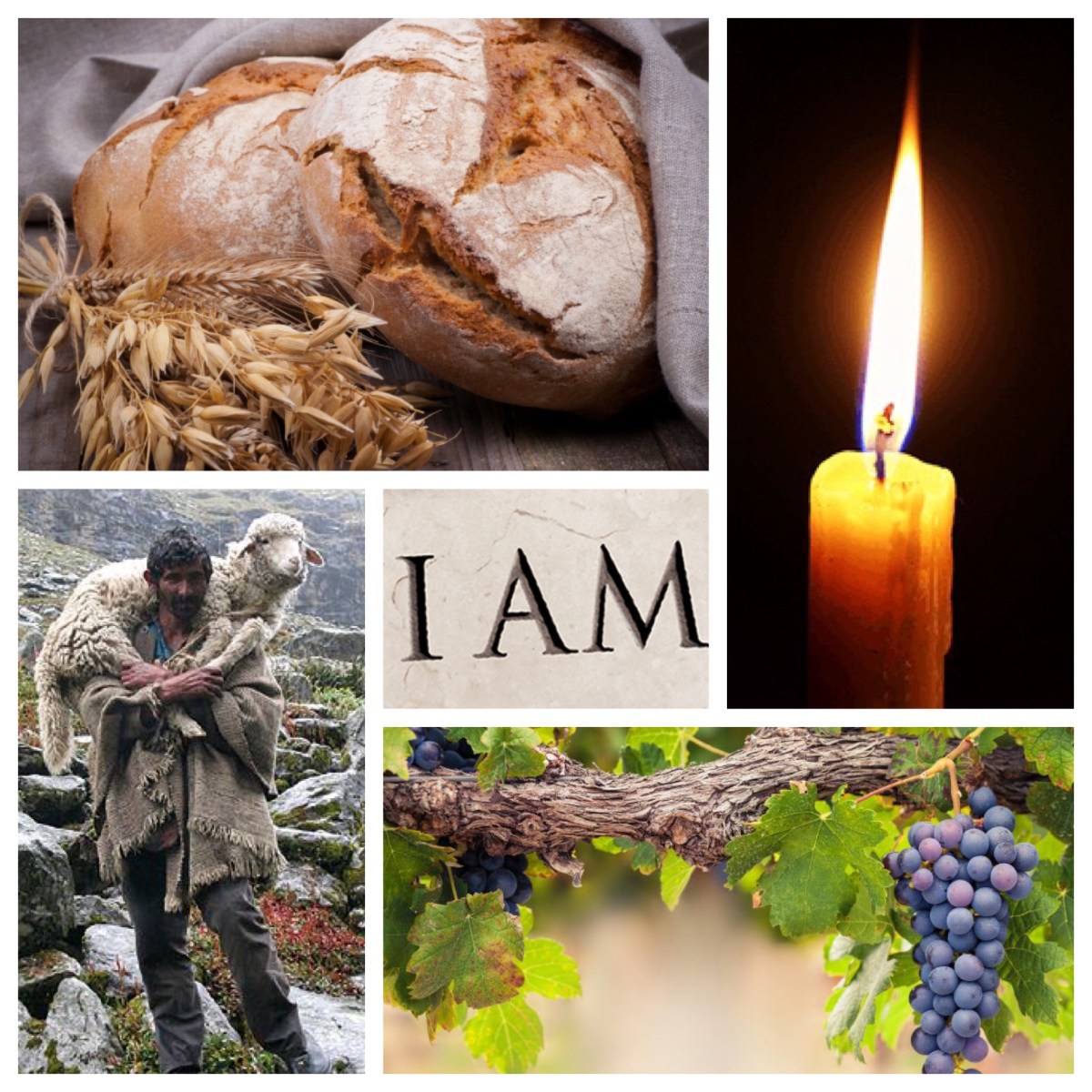
It is also the Gospel in which significant statements about Jesus are offered, particularly in the series of seven I AM statements that it contains. “I am the bread of life” (6:48) is the first such instance in this series. The others are “the light of the world” (8:12), “the door of the sheep” (10:7, 9), “the good shepherd” (10:11, 14), “the resurrection and the life” (11:25), “the way, the truth, and the life” (14:6), and “the true vine” (16:1).

“I am the living bread that came down from heaven; whoever eats of this bread will live forever; and the bread that I will give for the life of the world is my flesh” (6:51), Jesus declares, in the opening verse of the reading for Sunday week. “This is the bread that came down from heaven, not like that which your ancestors ate, and they died; but the one who eats this bread will live forever” (6:58), he says again in the passage for the Sunday after that.

Get the picture? Week after week, following the various sections of this long chapter within the book of signs, the lectionary presents us with insistent reminders of this central Johannine teaching of Jesus. Jesus is “the bread of life” (6:35, 41, 48, 50, 51, 58).

The context in which Jesus makes these claims is instructive. The scene at the beginning of the chapter introduces this motif, when the narrator writes: “Lifting up his eyes, then, and seeing that a large crowd was coming toward him, Jesus said to Philip, ‘Where are we to buy bread, so that these people may eat?'” (6:5).

The motif of bread is thus established through this rhetorical question. The narrator explains, in 6:6–7, that this was said to test Philip; it opens the door for Andrew to report, “There is a boy here who has five barley loaves and two fish” (6:9). So begins the account of the feeding of the multitude (6:10-14).

And so, this incident is used by the narrator to form the basis for some significant teaching by Jesus–a technique familiar in other chapters. Think of the encounter with Nicodemus (3:1–14), leading into a teaching about salvation and judgement (3:15–21), and the encounter with the unnamed woman in Samaria (4:5–26), the basis for another section focussing on salvation (4:27–42). These two scenes make use of a literary technique which is employed to good advantage by the author of the book of signs in subsequent chapters.

We might also think of the healing of the invalid man in Jerusalem (5:1–9) which leads into teaching about the work of the Son (5:10–47), and the multi-scene drama later in Jerusalem (9:41), in which the healing of the man born blind (9:1–7) leads to a dramatic playing out of the teaching provided earlier (8:12; repeated at 9:5), that Jesus is “the light of the world”.

A further example of the literary skills of the author of the book of signs is found in the series of scenes in and near Bethany (11:1–44), in which the narrative of raising of Lazarus from the dead contains teachings on the claim that Jesus is “the resurrection and the life ” (11:25).

Indeed, each of these scenes contain a climactic moment in which a significant Christological affirmation is uttered. Jesus is “God’s only Son”, given to the world in love (3:16). He is “the Saviour of the world” (4:42), confessed in a Samaritan township. He is the Son of Man with “authority to execute judgment” (5:27), the Holy One of God (6:69), a prophet (9:17) who is, by inference, the Messiah (9:22). And Martha makes the ultimate confession of faith in Jesus: “Yes, Lord; I believe that you are the Christ, the Son of God, who is coming into the world” (11:27).

For the author of the book of signs, affirming the identity of Jesus shapes the whole narrative of this Gospel. Each sign points to the significance of Jesus: manifesting his glory (2:12), fostering belief (4:48), identifying him as “the Prophet who is to come into the world!” (6:14), the Son of Man (9:35), the Son of God and Messiah (11:27). And each interpersonal encounter illuminates his signal identity, as we have noted.

Then, each I AM claim undergirds the central role of Jesus in the plan being worked out in this Gospel. A number of these statements draw on scriptural terms and imagery in presenting Jesus in this way.

When Jesus describes himself as “the true vine” (John 15:1–11), he is drawing on a standard scriptural symbol for Israel (Ps 80:8; Hos 10:1; Isa 5:7; Jer 6:9; Ezek 15:1–6; 17:5–10; 19:10–14).

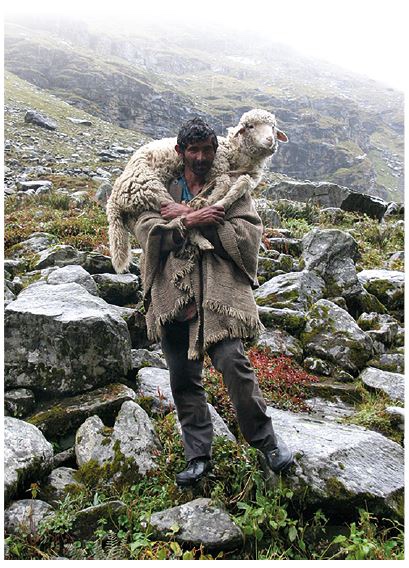
When Jesus calls himself “the good shepherd” (10:1–18), he evokes the imagery of the good shepherd as the true and faithful leader in Israel (Num 21:16–17; Ezek 34:1–31; Jer 23:4), and the people as the sheep who are cared for (Pss 95, 100; Ezek 34:31).

When Jesus calls himself “the bread of heaven” (6:25–59), he makes it clear that he is referring to the scriptural account of the manna in the wilderness (Ex 16:1–36; Num 11:1–35; Pss 78:23–25; 105:40). The discourse which develops from this saying includes explicit quotations of scripture, as well as midrashic discussions of its meaning.

Jesus, “the light of the world” (8:12; 9:1–5), evokes the story of the creation of light (Gen 1:3–5) and the light which the divine presence shone over Israel (Exod 13:21–22). The Psalmist uses the imagery of light to indicate obedience to God’s ways (Pss 27:1; 43:3; 56:13; 119:105, 130; etc.), and it is a common prophetic motif as well (Isa 2:5; 42:6; 49:6; Dan 2:20–22; Hos 6:5; Mic 7:8; Zech 14:7; cf. the reversal of the imagery at Jer 13:16; Amos 5:18–20).

The claim that Jesus is “the way” (14:6) may also owe its origins to scriptural usage. The term describes God’s activity in many Psalms 5:8; 18:30; 25:9; 27:11; 37:34; 50:23; 67:2, and so on. In Isa 40:3-5 (cited at Luke 3:4-6), the return from exile in Babylon is marked as a preparing of the way by the Lord, leading the exiled people back to their homeland.

The term is also appropriated in the Dead Sea Scrolls as a means of defining the Qumran community (1QS 9.17–18,21; 10:21; CD 1:13; 2:6). This most likely reflects competing claims for being the authentic keepers of Torah amongst Jewish sects. Jesus, in the book of signs, is clearly honoured as the Teacher supreme for the community of Jesus followers for whom this work was compiled.

And although it is not part of an “I am” statement, the description of the Spirit as “living waters” which flow from Jesus (4:7–15; 7:37–39) are reminiscent of the water which were expected to flow from the eschatological temple (Ezek 47:1; Joel 3:18; Zech 14:8), and, more directly, refer to the description of God used by the prophet Jeremiah (Jer 2:13).

Of course, the very phrase I AM resonates directly with the name that the Lord God revealed in Exodus. When Moses asks, “What is his name?’ what shall I say to them?”, God replied, “I AM WHO I AM. Say this to the people of Israel: ‘I AM has sent me to you.’” (Exod 3:13-14).

In addition, biblical scholars have noted that rabbinic symbolism has affinities with Johannine symbols; for example, the terms bread, light, water and wine are all used by the rabbis in connection with the Torah.

Thus, the distinctive set of Christological claims made for Jesus in the book of signs, the Gospel according to John, are both thoroughly grounded in scriptural images and familiar from the ongoing traditions taught by the rabbis. The role that Jesus plays is in fulfilment of scriptural ideas.

This is a key factor in the way that the author of the book of signs has shaped his distinctive narrative. And it is highlighted in the middle of the extended narrative that occurs in John 6, when Jesus declares: “it was not Moses who gave you the bread from heaven, but my Father gives you the true bread from heaven” (6:32). This is the role that Jesus fulfils in the book of signs; he has been sent by the Father, a gift of living bread, for those who hunger.

*****

See also https://johntsquires.com/2020/05/06/i-am-the-way-john-14-from-elitist-exclusivism-to-gracious-friendship/

“The exercise by men and women of the gifts God bestows upon them”: celebrating women in leadership in the Uniting Church

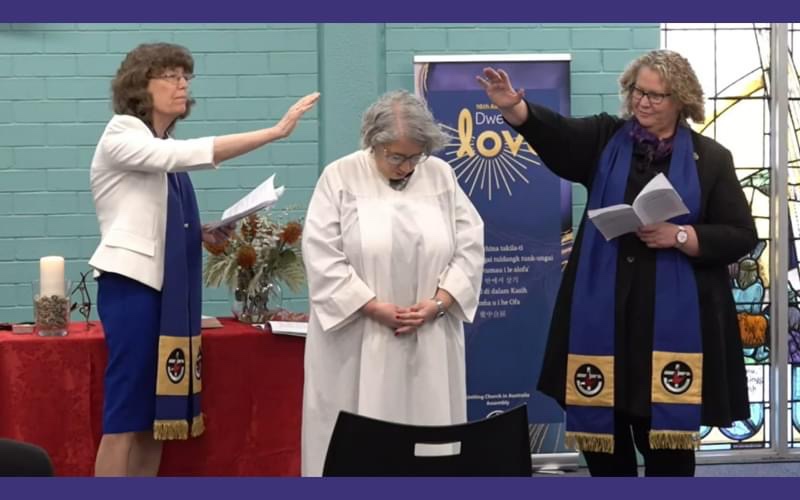
The National Assembly of the Uniting Church in Australia has just installed the Rev. Sharon Hollis as President of the Assembly for the next three years (2021–24).

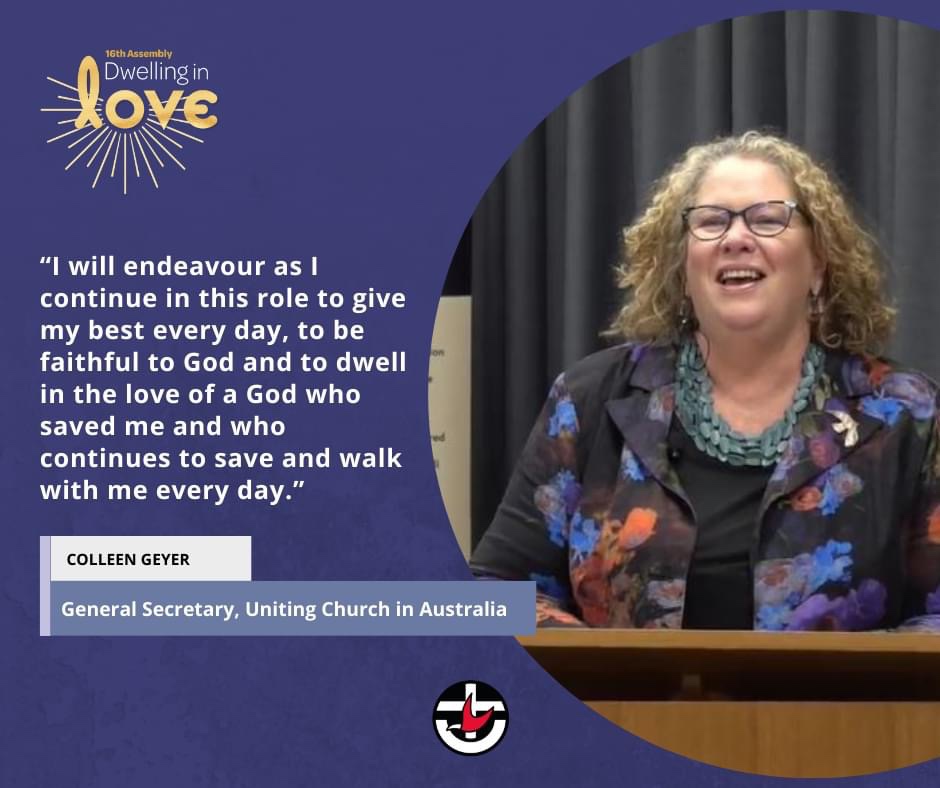
15th President Dr Deidre Palmer and General Secretary Colleen Geyer
pray over the Rev. Sharon Hollis as she is installed as the 16th President

At the same meeting (being held online because of the COVID pandemic), members of the Assembly have elected a female President-Elect, the Rev. Charissa Suli. She will serve as President-Elect for three years, and then take up the position of President in July 2024.

President-Elect, the Rev. Charissa Suli

The UCA employs a system where the current President, the immediate former President, and the President-Elect all serve as ex officio members of the Assembly Standing Committee, the body that oversees the church during the three years in between National Assembly meetings.

For the next three years, the President, the Past President, and the President-Elect will all be females: the Rev. Sharon Hollis, Dr Deidre Palmer, and the Rev. Charissa Suli, respectively. In addition, the current General Secretary of the Assembly is also female: Colleen Geyer. Her term has just been extended by the current Assembly. It is a striking symbol, when considering the national leadership of Christian churches across Australia. All of our key leadership are female.

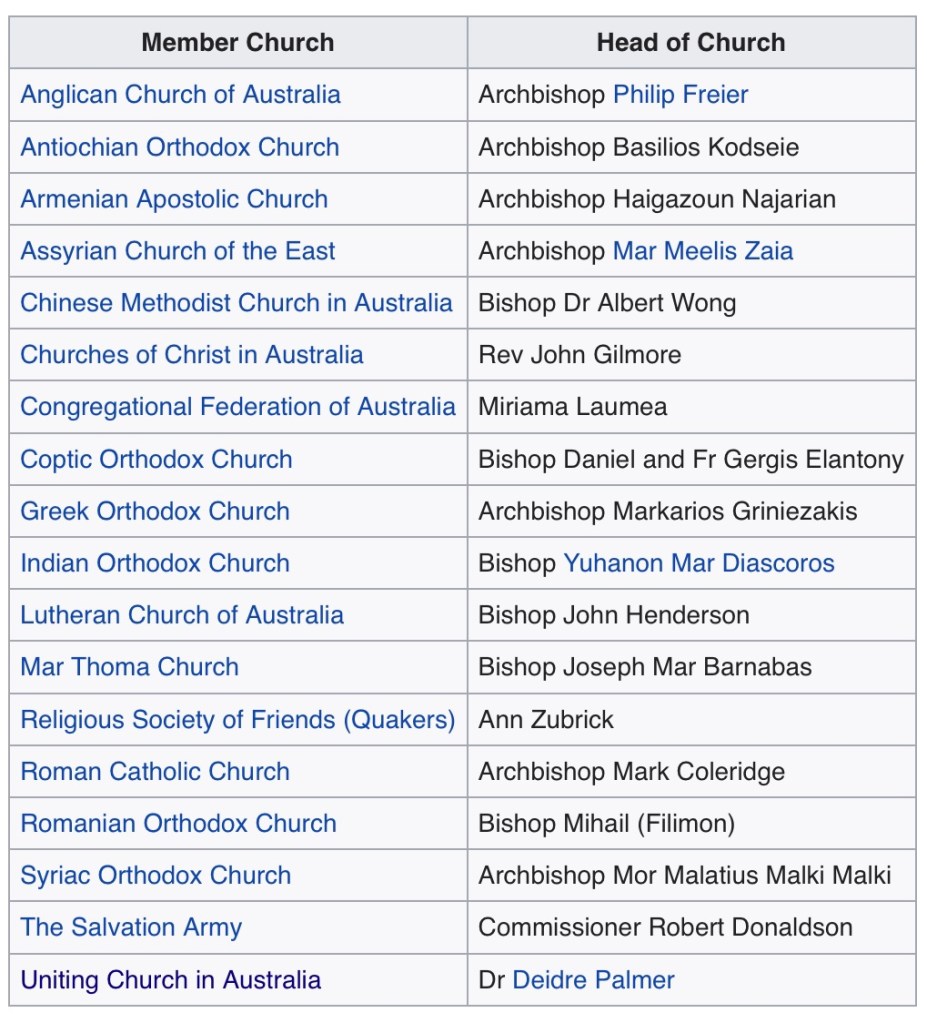
The symbolism is potent, when Heads of Churches gather: women in such ranks have, to this point, been somewhat rare. The Uniting Church contribution has been, and will continue to be, a reminder, of the importance of providing a female perspective when issues of national social and political importance are being considered. (It’s a message that our national political leadership seems incapable of hearing and implementing—despite the power of the #EnoughIsEnough movement from earlier this year.)

Women in leadership is not an unusual thing for the UCA. To be sure, women have served in leadership roles in a number of denominations. But amongst the historic mainstream denominations, the Uniting Church stands out from Roman Catholic and Anglican Churches, with many more women stepping forward in leadership.

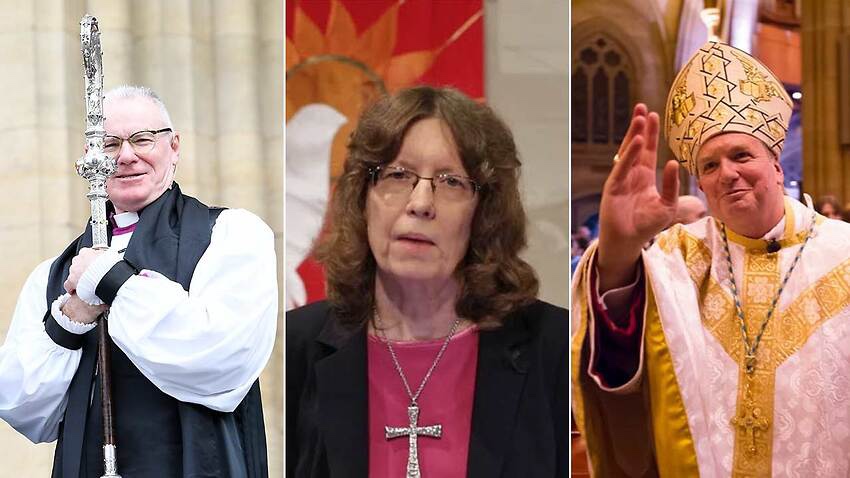
Heads of Churches in 2018:
Melbourne’s Anglican Archbishop Philip Freier,
President of the Uniting Church Dr Deidre Palmer,
and Sydney’s Catholic Archbishop, Anthony Fisher.

The same comparisons can be drawn with Baptist, Church of Christ, and Pentecostal churches over the past half century. (And a number of women in leadership in Pentecostal or other conservative churches have been in married teams, where their role has been “covered” by the “headship” of their husband—partner).

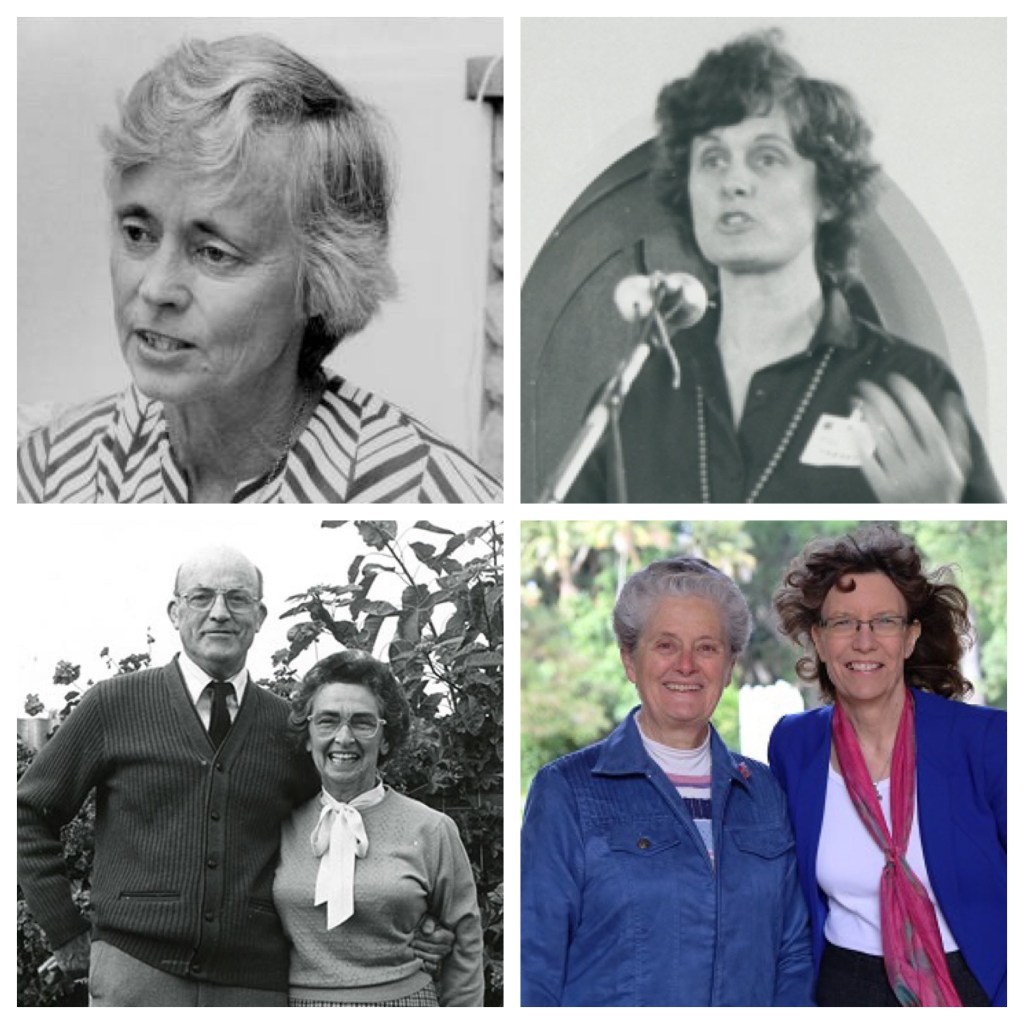
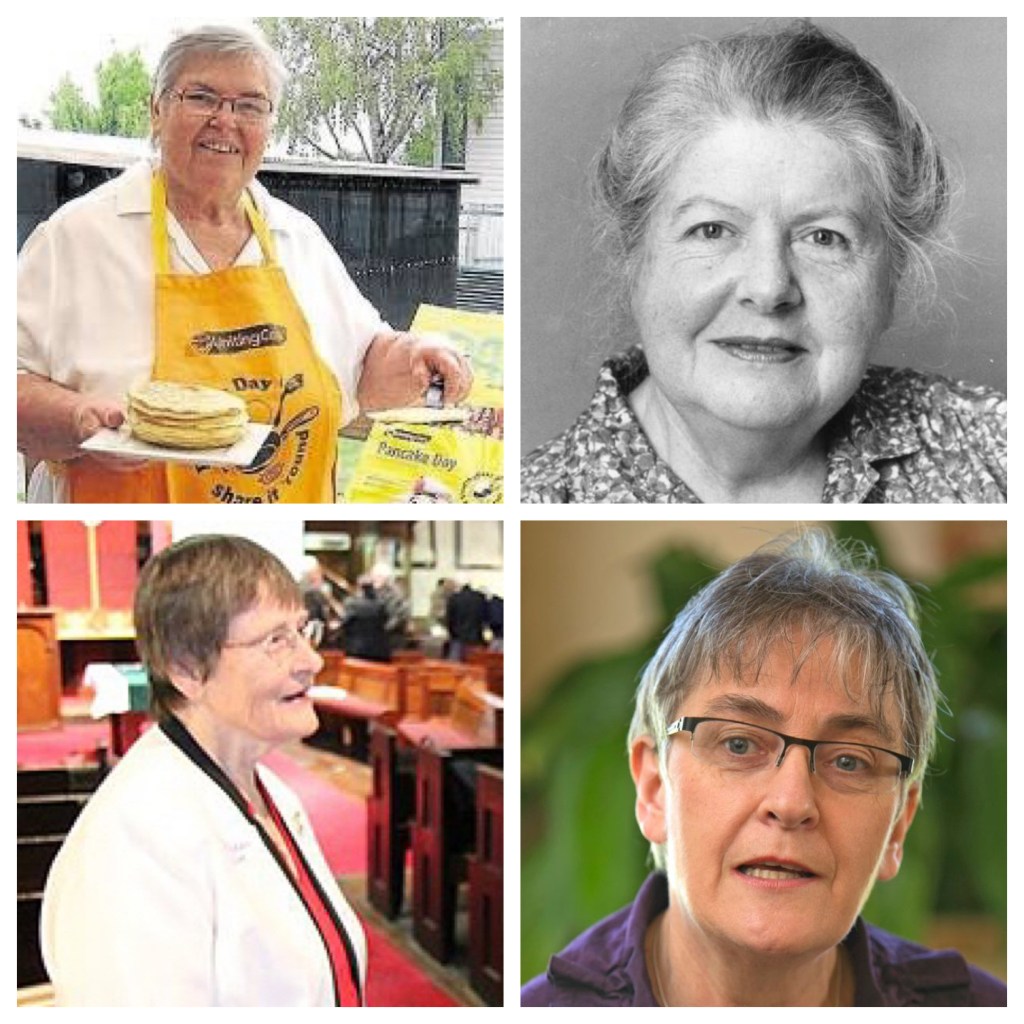
The first Moderator of the NSW Synod was Mrs Lilian Wells (1977–78) and the second Moderator of the Victorian Synod was Mrs Ethel Mitchell (1978–79). The South Australian Synod elected Mrs Elizabeth Finnegan as the sixth Moderator (1987–89) and then the Rev. Margaret Polkinghorne as the tenth Moderator (1995–97) in that Synod. The seventh Moderator of the Tasmanian Synod was Dr Jill Tabart (1984–85). Dr Tabart went on to be elected as the seventh President, serving 1994–97 in that role. She was the first female President.

Top: Moderators Lilian Wells (NSW) and Dr Jill Tabart (Tas)
Bottom: Moderator Elizabeth Finnegan (SA) with husband Paddy;
Presidents Dr Jill Tabart and Dr Deidre Palmer in 2015

This is completely consistent with the affirmation made in the Basis of Union—the document on which the formation of the Uniting Church was based. Paragraph 13 of the Basis, after recognising the existing ministries in the three participating denominations at the time of union, states, “The Uniting Church will thereafter provide for the exercise by men and women of the gifts God bestows upon them, and will order its life in response to God’s call to enter more fully into mission” (para. 13).

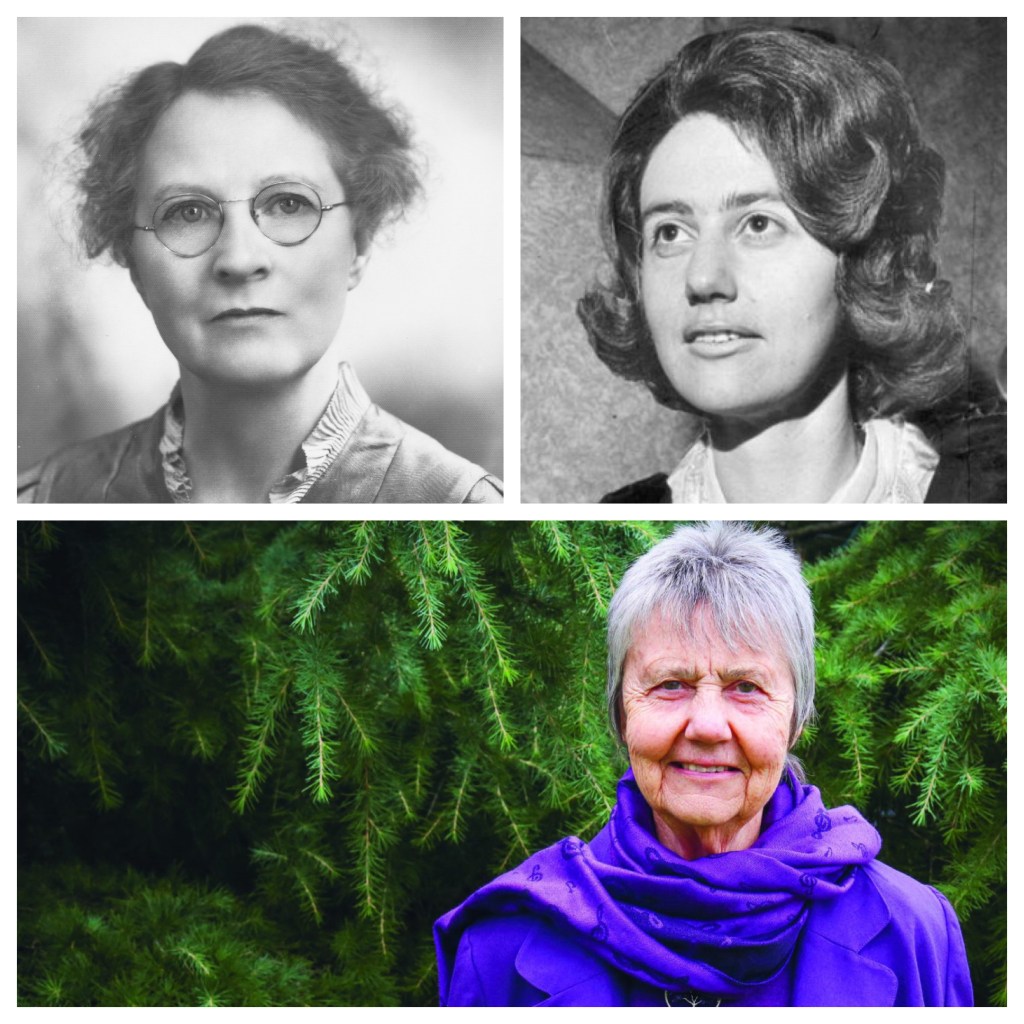
This was consistent with the practice of those three earlier denominations, which each had ordained women to serve in ministry: the Congregational Church had ordained Rev Winifred Kiek in 1927; Rev Dr Coralie Ling, a deaconess, became the first woman to be ordained in the Methodist Church in 1969; and Rev Marlene (Polly) Thalheimer was ordained as the first female minister in the Presbyterian Church in 1974. You can read about these women, and more, in a fine article by Rev Dr Avril Hannah-Jones, at https://revdocgeek.com/2013/06/22/women-in-the-uniting-church-by-a-partial-prejudiced-ignorant-historian-to-quote-the-immortal-jane/

Top left: the Rev. Winifried Kirk.
Top right: the Rev. Coralie Ling, in 1969,
and (below) in 2018.

Indeed, this practice is also consistent with the fundamental theological affirmation made earlier in paragraph 13 of the Basis, declaring that the church “acknowledges with thanksgiving that the one Spirit has endowed the members of Christ’s Church with a diversity of gifts, and that there is no gift without its corresponding service: all ministries have a part in the ministry of Christ.” This, of course, derives from the crystal clear affirmations about the gifting of the Spirit that Paul makes in 1 Corinthians 12. The Spirit knows no limits of gender in gracing individuals with gifts for ministry.

And Paul (despite the inaccurate ways in which his letters are portrayed) was completely accepting and affirming of women in ministry leadership as partners with him in the work they were undertaking. See my considerations of this matter at https://johntsquires.com/2020/11/19/women-in-the-new-testament-1-the-positive-practices-of-jesus-and-the-early-church/ and https://johntsquires.com/2020/11/19/women-in-the-new-testament-2-six-problem-passages/

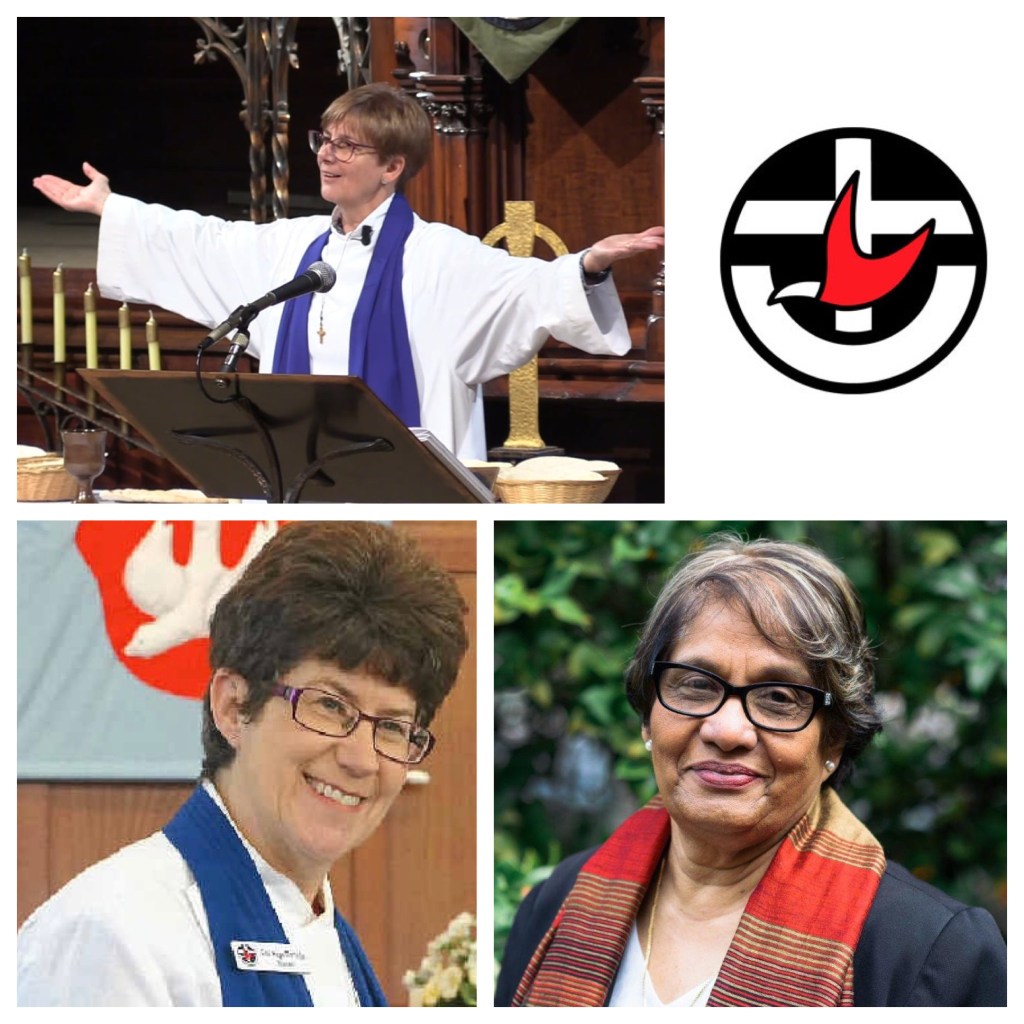
So, women in key leadership roles is a practice consistent with scripture and in accord with the central values and practices of the Uniting Church. Along with the women already noted in the opening paragraphs above, a number of the Synods have had female Moderators, Queensland being the last to elect a female in Kaye Ronalds, who was the first female in that role in that Synod, serving 2011–14 (pictured below).

Moderators Denise Liersch (VicTas),
Kaye Ronalds (Qld), and Susy Thomas (WA)

Five years ago, there were four female Moderators around the country: Myung Hwa Park (NSW.ACT, 2014–17), Sharon Hollis (VicTas, 2016–19), Thresi Mauboy Wohangara (Northern Synod, 2015–21), and Sue Ellis (SA, 2016–19) (pictured below).

Moderators Sue Ellis (SA), Sharon Hollis (VicTas)
Myung Hwa Park (NSW.ACT),
and Thresi Mauboy Wohangara (Northern Synod)
in 2016

Currently, there are three female Moderators: Thresi Mauboy Wohangara in the Northern Synod, Denise Liersch in VicTas, and Susy Thomas, in WA.

Whilst the Assembly has elected two lay women to the top leadership role—Dr Jill Tabart (1994–97) and Dr Deidre Palmer (2018–21)—lay female Moderators have been more scarce. In two Synods, lay women were elected as Moderator early in the life of the Uniting Church—in Victoria, Mrs E.A. Mitchell was the second Moderator (1979), whilst in NSW, Lilian Wells was the first Moderator (1977).

NSW subsequently elected Freda Whitlam (1985–86) and Margaret Reeson (2000–02) as Moderators. Tasmania elected Isabel Thomas Dobson (1997–99) and then the VicTas Synod elected her as Moderator for a second term (2009–13). The last Moderator for the Synod of Tasmania, before it joined with Victoria, was Colleen Grieve (2001–02).

Top: Moderators Colleen Grieve (Tas) and Freda Whitlam (NSW)
Bottom: Moderators Margaret Reeson (NSW.ACT)
and Isabel Thomas Dobson (Tas, and then VicTas)

South Australia elected Jan Trengove as Moderator (2001–03) and Dr Deidre Palmer (2013–16). In the Northern Synod, Ros McMillan served as Moderator (1996–2000)—her husband, Stuart McMillan, served as both Moderator (2010–15) and then as President (2015–18). In Western Australia, three lay women have served as Moderator: Beryl Grant (1985–87), Lillian Hadley (1993–95), and Elizabeth Burns (1999–2001).

Top: Moderators Beryl Grant (WA)
and Ros McMillan (Northern Synod)
Bottom: Moderators Jan Trengove (SA)
and Dr Deidre Palmer (SA)

Lay men have served in Western Australia (Ron Wilson, 1977–79, then Robert Watson, 2005–08), Tasmania (Neville Marsh, 1979–80, Dr Peter Gunn, 1991–93, and Don Hall, 1995–97), NSW.ACT (Bruce Irvine, 1989–92, and Jim Mein, 2004–07), Queensland (Dr John Roulston, 1990–91), South Australia (Dr Don Hopgood, 1997–99), and VicTas (Charles Lavender, 1982–83, Alex Kilgour, 1985–86, and Dan Wootton, 2013–16). In South Australia, the current Moderator is layman Bronte Wilson (2019-22).

The Rev. Charissa Suli, a second-generation Australian of Tongan heritage, is the first person of non-Anglo origins to serve in the National leadership role, although some Synods have elected non-Anglos as Moderators: Tongan Jason Kioa in VicTas (2006–09); Chinese Dr Tony Chi (1992–93) and Korean Myung Hwa Park (2014–17) in NSW.ACT. In the Northern Synod, indigenous leader Djiniyini Gondarra served as Moderator (1985–87) and now Thresi Mauboy Wohangara is Moderator. All of these leaders have been ordained people.

Top: Moderator Djiniyini Gondarra (Northern Synod),
President-Elect Charissa Suli.
Bottom: Moderators Myung Hwa Park (NSW.ACT)
and Jason Kioa (VicTas)

And the age of Charissa Suli is striking: she is a “young person” by church reckoning, having been ordained for just seven years, and still being in her thirties. That must surely be something not often seen in church leadership.

Of course, all of this recounting of females in prominent leadership roles hasn’t yet taken into account the numerous females who have served as Chairperson of Presbyteries, Church Councils, and Congregations—to say nothing of the thousands upon thousands of females serving as active members of Congregations and Fellowship Groups and living out their discipleship in community groups right around the country. Females outnumber males within the church by a factor of at least 2:1, so it is way beyond time that our leadership reflects this!

As we look back on 44 years of the Uniting Church, it is clear that we have sought to reflect the affirmations made in the Basis of Union, in undertaking the discernment about who would provide the leadership required in the various councils of the church. It might have looked better if the ratio of male/female, and ordained/lay, and even Anglo/CALD had been more evenly balanced. (The names of other leaders not noted in my survey above were all, like me, ordained males, usually “of mature age”.)

Nevertheless, the array of leadership we can point to provides a sign of our commitment as a church, to be open to the moving of the Spirit. We have seen that in the gifted leadership of Dr Tabart (who signed the Covenant relationship with the United Aboriginal and Islander Christian Congress in 1985) and Dr Palmer (who has steered the church through the difficulties of the 2018 decision about marriage, and who has been key to the development of a fine resource on domestic violence in 2021).

May that be what transpires under the leadership of Sharon Hollis, our first ordained female President, and then Charissa Suli, our first Pacific Islander female President.

*****

Confession: I haven’t done an exhaustive search into the names of all the Moderators. Those noted in the blog are those whose names I found in online resources (largely Wikipedia). Not every Synod has provided a full list of Moderators online. If there are other females, or lay people, who should be included amongst those I have noted, please let me know, and I will add them in!

*****

Footnote: a month later, the NSW.ACT Synod elected the Rev. Mata Havea Hiliau as Moderator-Elect, to take office for three years commencing in early 2023. Gender, generational change, and CALD leadership all in one go.

*****

See https://uniting.church/installation-of-rev-sharon-hollis/ and https://uniting.church/rev-charissa-suli-announced-as-president-elect/

See also https://johntsquires.com/2021/05/02/the-identity-of-the-uniting-church/ and https://johntsquires.com/2019/06/20/providing-for-the-exercise-by-men-and-women-of-the-gifts-god-bestows-upon-them-lay-people-presiding-at-the-sacraments-in-the-uniting-church/

See also https://johntsquires.com/2018/08/15/what-i-really-like-about-the-basis-of-union/ and https://johntsquires.com/2018/08/20/alongside-the-basis-of-union-there-was-the-statement-to-the-nation/

Looking into the mirror: what does the Uniting Church look like?

This month, the 16th National Assembly meeting of the Uniting Church is being held. Assembly meets every three years, rotating around state capitals. This year, the plan was to meet in Brisbane—but last year the decision was made to meet online.

The papers for the July 2021 meeting of Assembly are available to read online at https://uniting.church/16thassemblyresources/

Each Synod reports to the Assembly. The report of the Synod of NSW and the ACT includes a section that provides a description of “who we are” as the Uniting Church in this Synod.

That description uses data from the 2016 NCLS results and also a single respondent Census of Congregations (2019) which included an estimate of average worship attendance and an actual headcount.

I thought it was worth extracting this part of the Synod report and hinting it a wider airing. So, when we look into the mirror of these surveys, what do we see? What is the Uniting Church like, right across Australia.

The 2019 Congregational Census reported that the NSW—ACT Synod has 23570 worship attenders each week, including 2896 children under 15 and 2556 youth and young adults aged 15-30. There are 533 local churches oversighted by 375 church councils and 85% of congregations participated in the census.

80% of our churches were monocultural (more than 80% one group), 14% multicultural with one group making up 50-80% and there were 6% of churches where the largest ethnic group made up less than 50% of the population.

In 2019, just 14% of congregations had direct relationship with Aboriginal or Torres Strait Islander people, although we know from the 2016 NCLS that 26% of churches conduct an acknowledgement of country in worship.

Just 12 churches had a weekly average of more than 150 people in worship.

31% of churches had no children, 34% had less than 5 children, but there were also 29 congregations had more than 20 children involved in congregational life, 6 of which had more than 50. 40% of churches had no young adults, 30% had less than 5, but 36 congregations had more than 20 young adults and 3 had more than 50.

As reported to the previous Assembly, the 2016 National Church Life Survey (NCLS) surveyed 10,183 adults and 392 children (8 to 14) from 275 local Churches across the Synod. The 2021 NCLS will be conducted in August-September this year.

The average age of UCA members was 66, compared to the average age 38 for the Australian population at the same time. In 2016 70% of NSW-ACT UCA attenders were over 60, compared to 21% of the wider population. 63% of NSW-ACT UCA attenders were women and 37% were men.

That’s who we are, according to these surveys. Ask yourself, as you look into the mirror: do you recognise yourself?

Misunderstanding Jesus: “they came to make him a king” (John 6; Pentecost 9B)

At this time of the year, every Year B, the lectionary offers us five weeks of readings from John 6, revolving around the motif of Jesus as “the living bread which came down from heaven”. The story of the feeding of the crowd of “men … about 5,000 in all” (John 6:1–14) replicates the story omitted from the last week by the lectionary, where the crowd also comprises “5,000 men” (Mark 6:44).

The Gospel offering provided by the lectionary last week omitted the feeding narrative (Mark 6:35–44) and provided only the surrounding sections (Mark 6:30–34, 53–56). It also omitted the account of Jesus walking on the water (Mark 6:45–52)—a story paralleled in Matt 14:22-33 as well as John 6:16–21.

In doing this, the lectionary had excised the important reference to Jesus crossing over “to the other side”, from the Decapolis across to Bethsaida (Mark 6:45). In this Gospel, Jesus had left Jewish territory earlier, when he crossed “to the other side of the sea, to the country of the Gerasenes” (5:1), then returned “to the other side” (5:21), where he visited “his own country” (6:1) before venturing again across “to the other side” (6:45–52). See https://johntsquires.com/2021/07/14/whats-in-and-whats-out-mark-6-pentecost-8b/
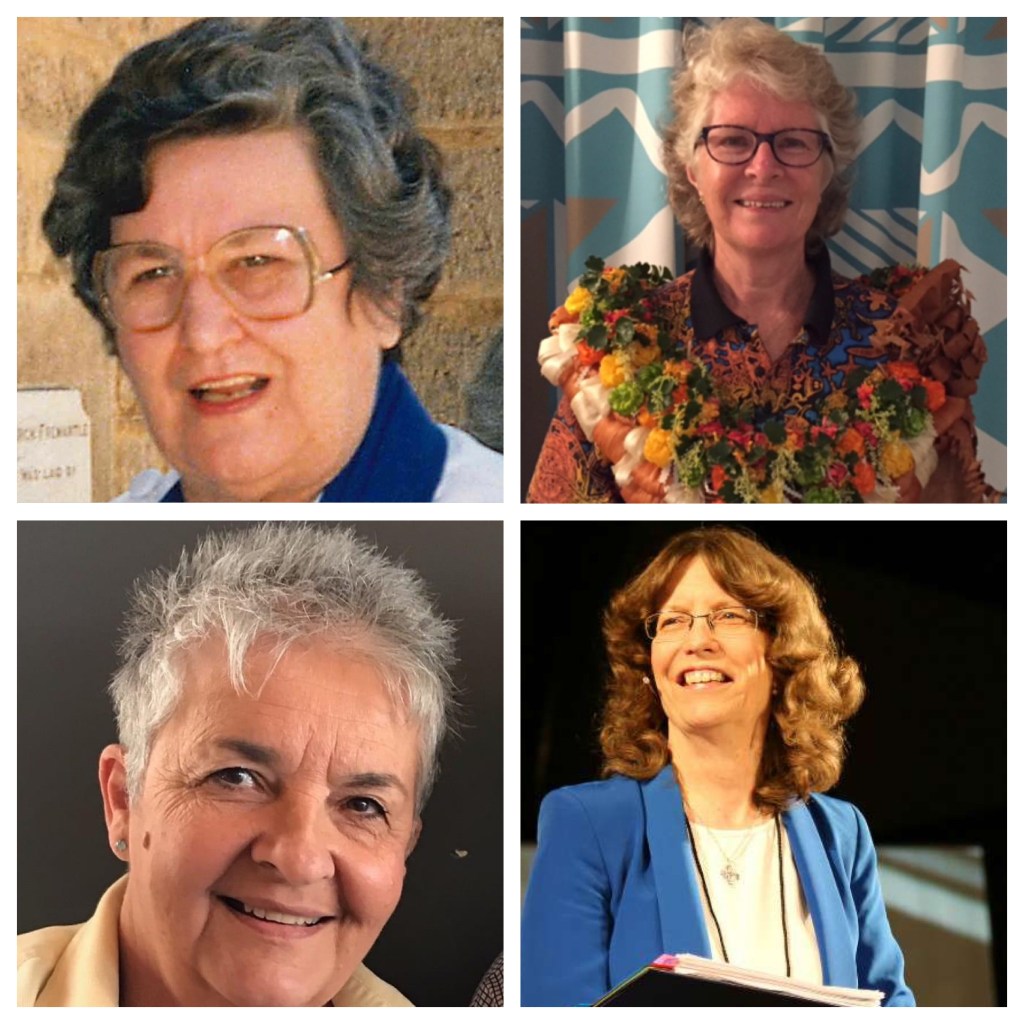
In the book of signs, the Gospel of John, Jesus moves freely between Galilee and Judea, a number of times; but there is no indication that he visited Gentile territory, despite the question of people in Jerusalem, “does he intend to go to the Dispersion among the Greeks and teach the Greeks?” (John 7:35).

The story of feeding the crowd is also retold by the other two evangelists. In the book of origins (Matt 14:15–21), the crowd comprises “about five thousand men, besides women and children (Matt 14:21). In the orderly account of things fulfilled (Luke 9:12–17), the crowd is recorded, as in the Markan source, as being “about 5,000 men” (Luke 9:14). The Johannine version, as we have seen, also estimates the total number of men present as being “about 5,000” (John 6:11).

So the early sections of John chapter 6 tell of incidents that are told also by the authors of the Synoptic Gospels: feeding a crowd (6:1–14) and walking on the water (6:16–21).

Woven through this long chapter, however, are a series of encounters that Jesus had with people around him—the crowds in Galilee (6:2, 22), his own disciples (6:3, 16, 60, 66-67), and a group of leaders who had come north from Judea into Galilee, to hear and see him (6:41, 52).

Note: Most translations describe this latter group simply as “the Jews”. The Greek word used, however, can equally be translated as “the Judeans”. There is a good case that has been mounted that the way the word is used in the fourth Gospel means that it should be translated as “a group of Jewish leaders who exercise great authority among their compatriots and are especially hostile to Jesus and his disciples … it refers to certain authorities rather than to the people as a whole.” See D. Moody Smith, “Judaism and the Gospel of John”, accessible at https://www.bc.edu/content/dam/files/research_sites/cjl/sites/partners/cbaa_seminar/Smith.htm

The sixth chapter of John’s Gospel thus offers a series of encounters that reveal misunderstanding, antagonism, and conflict in the ways that people relate to Jesus, even whilst he sets forth this significant teaching that he is “the bread of life” (6:35, 48).

*****

The first of these encounters takes place in the opening scene of this chapter, near to Passover, when Jesus and his disciples are gathered with “a large crowd” beside the Sea of Galilee (6:1-15). The issue, of course, is how to feed the large crowd; the scene thus provides the pressing situation which enables Jesus to speak, at length, about the gift of living bread that he offers.

The scene, as we have noted, is reminiscent of the Synoptic scene of feeding recounted at Mark 6:32-44, Matt 14:13-21, and Luke 9:10-17; and also the parallel scene of feeding “4,000 men” recounted at Mark 8:1-10 and also at Matt 15:32-39; although Matthew indicates that there were “4,000 men, besides women and children”.

In each of those cases, the accounts provide the opportunity for Jesus to model the traditional pattern of a Jewish meal, as he “looked up to heaven, and blessed, and broke the loaves, and gave them to the disciples to set before the people” (Mark 6:41; Matt 14:19; Luke 9:16; and again at Mark 8:6 and Matt 15:36), prefiguring the familiar pattern from the last supper (Mark 14:22; Matt 26:26; Luke 22:19; 1 Cor 11:24; and see also Acts 20:7, 27:35).

In John’s Gospel, the last supper (13:1 onwards) does not contain any such remembrance of bread (and wine); whatever Eucharistic overtones are contained in the book of signs appear later in chapter 6, with references to “feeding on my flesh and drinking my blood” (6:63-58).

In the opening scene, nevertheless, there is an allusion to this pattern in the description of Jesus as he “took the loaves, and when he had given thanks, he distributed them to those who were seated” (6:11)—although this is immediately followed, not by drinking wine, but by distributing fish (6:11b).

The miracle that is experienced by “the large crowd”—five barley loaves and two fish (6:9), which not only feeds the crowd (6:12) but also provides twelve baskets of left-overs (6:13)—is, understandably, interpreted by the people as a prophetic sign (6:14).

Jesus is this described as “the Prophet who is to come into the world”, alluding to the eschatological expectation of “the prophet to come” (Deut 18:15–18; Mal 4:4–6). Prophets were know to be capable of performing signs, following the model set by Moses (Acts 7:36; Exodus 4:1–17; Deut 34:10–12).

*****

The insight that Jesus was a prophet has already been expressed by the woman of Samaria, beside the well (John 4:19). In that encounter, the woman moves from a recognition of Jesus as prophet, to an awareness that he is Messiah (4:25-26, 29), and then to her testimony that he was the saviour of the world (4:39-42). So the initial response of the crowd is positive, affirming Jesus as “the Prophet who is to come into the world!” (6:14)

Immediately, however, it turns sour: “when Jesus realized that they were about to come and take him by force to make him king, he withdrew again to the mountain by himself” (6:15).

To make him king: this is the first misunderstanding of Jesus that can be identified in this chapter. (There are a number of other misunderstandings that can be noted in the remainder of this chapter.)

The appointment of a king in Israel was contested, according to the narratives included in 1 Samuel. The prophet Samuel did not wish to anoint a king (1 Sam 8:6) and argued against this before the people (1 Sam 8:10–18). But the voice of the people (1 Sam 8:5, 19–20) prevailed; Samuel duly anointed the first king, Saul (1 Sam 10:1) and begrudgingly declared him to be king (1 Sam 10:17–24). So Israel had kings, and they ruled for some centuries.

Of course, by the time of Jesus, the institution of the monarchy had been well established, and had flourished under David and Solomon, Omri and Josiah. Then the monarchy had been dismantled through the violence of foreign invasion and the upheaval of large scale movements into exile, from 721 BCE in the northern kingdom, then from 587 BCE in the southern kingdom.

The accounts that we have of the role of kings in Israel (in 1–2 Kings, and 1–2 Chronicles) comes from later, after the return from exile on the 6th century BCE. The vision of the king in these documents was highly romanticised; the tradition about David and Solomon in particular had minimised their numerous faults and strongly valorised their virtues (1 Chr 18:14; 2 Chr 9:13–28).

In Christian tradition, this trajectory continues. Jesus is acknowledged as King of the Jews (Mark 15:2 and parallels) and even has a feast day in the liturgical cycle named after this: Christ the King. The author of the book of signs knows the irony of the fact that this is where Jesus will come undone: from the moment when Pilate put to Jesus the notion that he might be “the King of the Jews” (18:33). The very claim was enough to ensure that he would be scorned and ultimately crucified (19:3, 19-21).

To the Romans, a king was not a position to be valued. The terrible experience they had with Julius Caesar, the one-man ruler called rex, was enough to turn them away from having a king for centuries. There was a political naïveté in the Jewish crowd’s actions in acclaiming Jesus as king, at least in terms of how the Romans would have viewed him.

And to a pious Jew like Jesus, it was clear beyond doubt that only God was king over Israel (Ps 72)—indeed, over the whole earth (Ps 47). Jesus definitely wants to avoid such an acclamation about him at this point. The crowd are misunderstanding him. So he withdraws.

The author includes this clear indication, dripping (as is typical in this Gospel) with irony. The one whom the crowds excitedly wanted to crown as king, will be savagely put to death by the Romans as “King of the Jews”, pretender and aggravant.