Acknowledgement of Country: the importance of country and connection to law and culture


This post is written by a guest blogger, Nathan Tyson. Nathan is of Anaiwon and Gomeroi descent who has lived in Gadigal land all his adult life. He is a lawyer who worked for government for years before being employed by the Uniting Church as Director of First Peoples Strategy and Engagement, implementing the state-wide strategy that the UCA Synod of NSW.ACT approved about a decade ago.
I acknowledge the custodians of the country we are on today. Of course, when I say “country” I’m talking about Aboriginal “country” not Australia.

For over 60,000 years this continent was cared for by Aboriginal peoples. Aboriginal peoples assumed the role and responsibilities of custodians, and took these responsibilities very seriously as part of long-established law and cultural protocols.

The continent was divided up into territories, which in the modern vernacular we describe as Nations—much like the European continent. The difference being it was many nations of dark skinned Aboriginal peoples, not many nations of white people—but otherwise a similar situation. There were borders, trade, gatherings for ceremonial purposes including weddings and funerals, and occasionally conflicts.

However contrary to popular myth, Aboriginal people didn’t spend all day everyday warring with other Aboriginal people. If we had, we wouldn’t have survived for so long with so many different groups or nations on the continent at the time of British colonisation. If Aboriginal peoples were about conquest and land acquisition for power and profit, history and logic suggest is likely there would have only been 4 or 5 large groups left, the more powerful groups having conquered or killed smaller groups that refused to cede their lands and join the larger group. But we know that is not the case.

The reality is that Aboriginal peoples knew their country. They knew their boundaries and their significant sites. People knew where to go, and where not to go. I have been reliably informed by a senior law person, that by the time an Aboriginal child was around 9 years old they were completely proficient at surviving in the bush—which would have included knowledge of the boundaries of their country, and who was on the other side.

As Aboriginal peoples had everything they needed within the bounds of their country—food, water, ceremonial and religious sites, and so on, there was usually no need to seek to invade or otherwise take somebody else’s country. Each mob had their special places of ceremony—men’s sites and women’s sites, and community spaces for corroboree and celebration. Each country was a self-contained living environment.

Country held all that was needed to sustain life and community. Law maintained social relationships and guided behaviours. Law was about care and respect for the land and its creatures, and about care for each other. Interestingly, I’ve been told that no Aboriginal language had a word for “hate”. We know through various dreaming stories, like Tiddalick the Frog, that greed was frowned upon and there can be serious consequences for the greedy.

Aboriginal stories and oral traditions are deeply rooted in values of reciprocity, kinship, and looking after one another, often connecting these human actions to the care of the land (Caring for Country. These stories highlight the importance of sharing, cooperation, and the responsibilities family members have toward each other.

I will share some examples of Aboriginal stories and themes that focus on caring for each other:

  • The Cockatoo Sisters and the Magic Digging Stick: Told by Nyikina Warrwa woman Dr. Anne Poelina, this story follows two sisters, Walibun and Yaranari, who have the responsibility of caring for their grandfather. It highlights the importance of responsibility and the consequences of selfish actions.
  • The Koala Brothers (Dunggirr Gagu): A Gumbaynggirr story from the mid-North Coast of NSW, this narrative tells of brothers who used their long intestines to create a bridge, reuniting their people after rising seas separated them.
  • How the Kangaroo Got its Pouch: When a dingo chased a baby joey, an Ancestor Being gifted the mother kangaroo a pouch to protect her young, demonstrating a theme of providing care and safety for family.
  • The Seven Sisters: This Dreamtime story, while covering themes of pursuit, also emphasizes strong family bonds and the necessity of following traditional lore to maintain balance. (link to “3 Sisters” of the Blue Mountains – there are actually 7 sisters, with this story being told across the continent by many mobs.).
  • The Emu and the Jabiru: A story that emphasizes the necessity of cooperation and the negative repercussions of selfishness, teaching the value of sharing.
  • The Lyrebird and the Frog (Joolah and Googarty): A story about a creator who corrects a frog for inciting arguments among animals, teaching that caring for one another involves harmony and not spreading discord

These stories contain the following themes:

  • Charina and Community: Stories often emphasize that taking only what vou need and sharing resources such as water, fire, and food ensures that there is enough for everyone.
  • Intergenerational Care: Stories often feature Elders passing down knowledge to children to ensure their safety and the continuation of culture.
  • Kinship and Protection: The concept of “kinship” means looking after family and community, which is often depicted through stories of protecting one another, especially children.
  • Caring for Country: The belief that all things are connected means that caring for the land is directly linked to caring for people and keeping everything in
    balance.

When I read or hear these stories, and wisdom from Elders, it strikes me that Aboriginal peoples lived in a manner that both honoured the Creator (through ceremony, and through honouring and caring for creation), and also ensured that the least were well cared for. Everybody was included, everyone had a meaningful role in community, and everyone was cared for.

Does that sound familiar? Yep, it sounds a lot like the way Jesus taught us we should live – in right relationship with the Creator, and right relationship with each other.

Yes, sometimes conflicts would arise, either within a mob, or between mobs. Humans are still humans, and poor decisions can sometimes be made. However conflicts were resolved according to law, usually through discussion and agreement on punishment and/or restitution. Discussions could take days, weeks or longer if necessary. Aboriginal peoples were perhaps the first to contemplate a formal process of alternative dispute resolution! In any event, physical conflict would usually only occur if discussions failed to resolve the disagreement. Fortunately, there was only infrequent physical conflict between groups due to the effectiveness of the law and recognised importance of relationships.

To be clear, Aboriginal communities were inclusive, and caring. Everyone was looked after. Everyone had a role and everyone had responsibilities. Our culture tends to be focussed on “obligations”, not “rights”. Because if everyone took care of their obligations, everyone was cared for, safe and healthy… people didn’t need to demand their “rights” as they were already being cared for, included and loved.

When we look at the Western world, and the impact of capitalism and currency, and the lust for wealth and power they create, we can see that we are heading in a direction where humans will be lucky to exist on this planet in a few hundred years, let alone in 60,000 years time.

But rather than seek and value the wisdom of the oldest continuing culture on the planet, in the hope of caring for the planet and living sustainably, wealthy non-Indigenous people tend to focus on building spaceships on the assumption we will need to leave this planet at some point – I suspect to find a whole new planet to exploit for power and profit.

So when we acknowledge country, we are acknowledging both the people of that place, as well as the complex system of law and relationships that is intrinsically connected to the particular country we are on. Being on somebody else’s country is a privilege, and we should be respectful of the law and protocols of that place.
Renaming Ben Boyd National Park

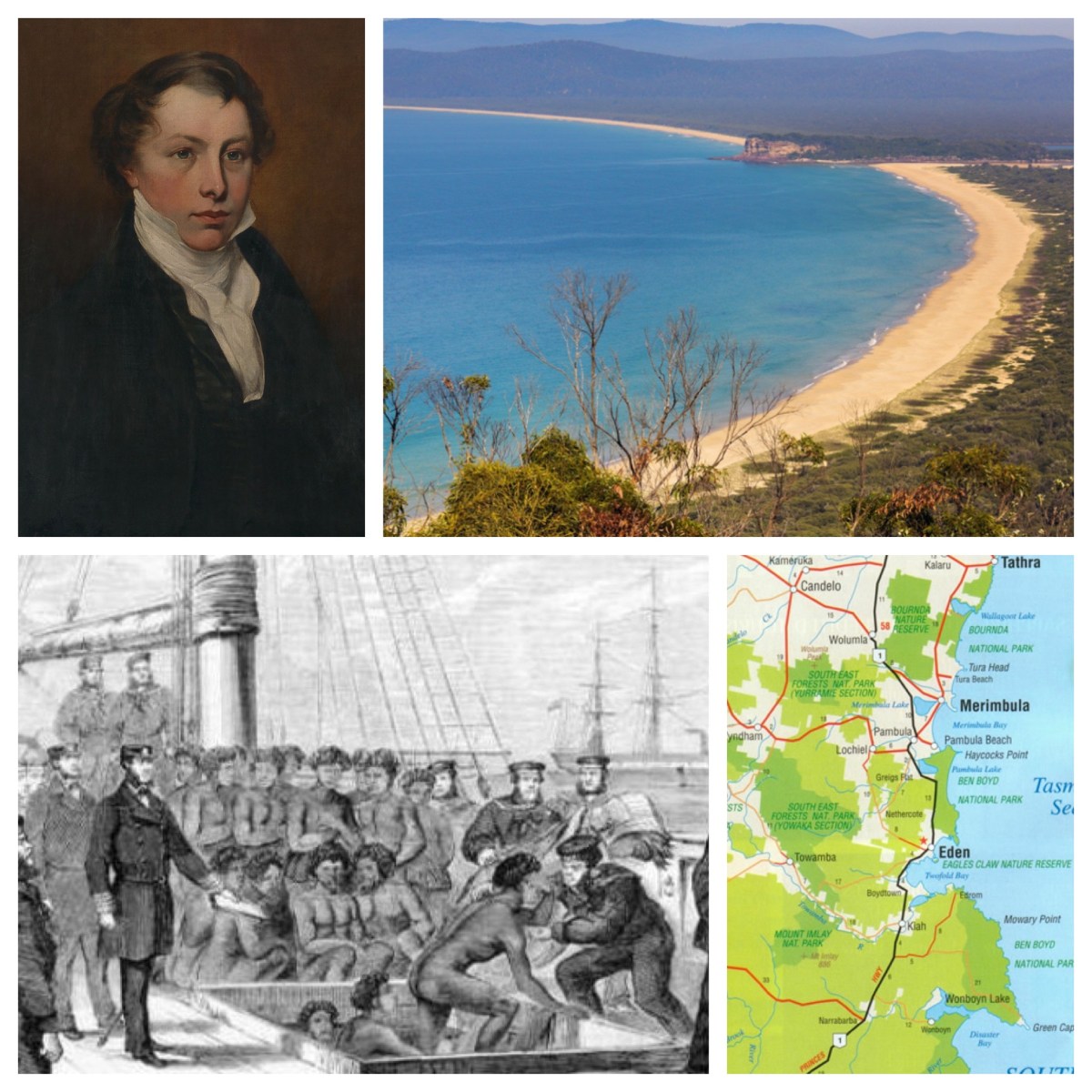
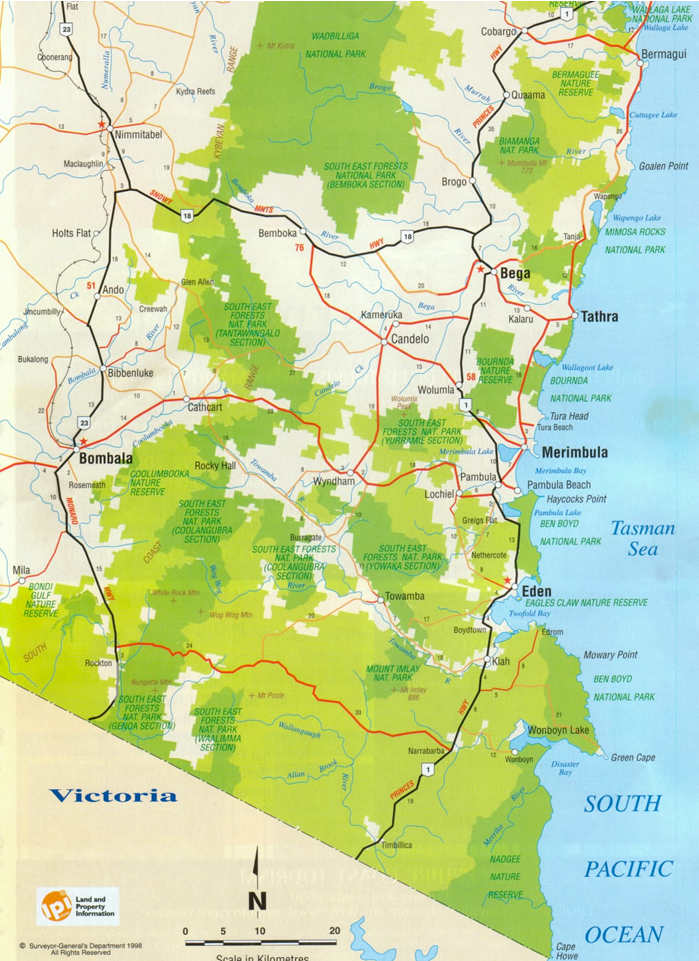
The Canberra Region Presbytery of the Uniting Church in Australia covers country, capital, and coastal regions, as our logo tells. In the coastal area, it stretches southwards, right to the border of NSW and Victoria, where the congregations of Sapphire Coast (Merimbula) and St George’s (Eden) are serving the community of the far south coast. Stretching from Lake Pambula to Twofold Bay, and then onwards south from Boydtown to the state border, along about 50km of rocky coastline and sheltered inlets, is a wonderful natural area, designated as a national park. The area has been under the stewardship of the NSW National Parks and Wildlife Service since 1971.

The park is known as Ben Boyd National Park, remembering a Scottish entrepreneur of the middle decades of the 19th century, who squatted on quite a number of sites in the south east of the continent, obtaining four landholdings in the Port Phillip district and another fourteen in the Monaro plateau, south of Cooma.

Boyd was an extravagant entrepreneur. He floated a bank in 1839, raising an amount of £200,000; but then, quite unscrupulously, he used those funds to finance his pastoral, shipping and whaling activities. The bank was liquidated in 1846 with heavy losses. Georgina McCrae, who once entertained Boyd at dinner, wrote of him in her diary, “he had the sanguine temperament, exuberant vitality and daring enterprise of the typical adventurer; according to his friend Brierly, he was ‘always devising some plan of pleasure or business’.” (Quoted in the article on Boyd by G.P. Walsh in the Australian Dictionary of Biography; see https://adb.anu.edu.au/biography/boyd-benjamin-ben-1815)

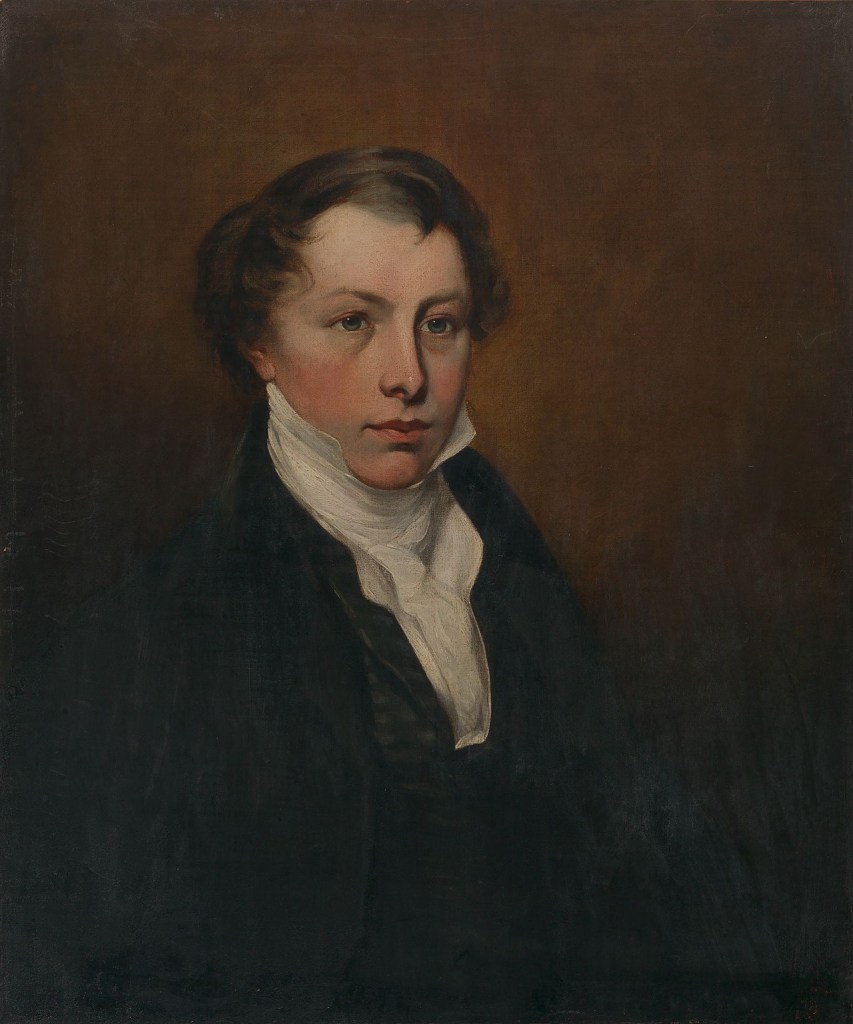
This portrait of Ben Boyd is held by the Mitchell Library,
State Library of New South Wales. The artist is unknown.

Boyd had squatted on land surrounding Nalluccer, the original Aboriginal name for Twofold Bay, at the southern end of the land cared for by the Yuin people. He invested heavily in the establishment of a port at the location we know as Boydtown, just south of Eden, to provide a base for the whaling industry that he established.

Over the course of seven months during 1847, Boyd brought three shiploads of Melanesian men (with 65, 70, and 57 men respectively on each ship) to provide him with labour for his extensive landholdings. Boyd’s care for those men was poor; alongside the fact that they were brought to the colony as slaves, a number of them escaped their properties and were found destitute, living in poverty on the streets of Sydney.

This was the first time that men from the Pacific Islands had been imported into Australia as labourers, although some individuals had earlier arrived in Sydney as crews for ships. So concerned was the New South Wales Legislative Council about what was taking place, that it amended the Masters and Servants Act to ban importation of “the Natives of any Savage or uncivilized tribe inhabiting any Island or Country in the Pacific”.

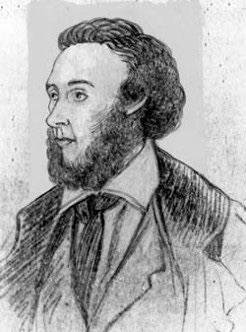
This drawing of Ben Boyd is held in the State Library of Victoria.
No artist is attributed.

Boyd himself left the colony in 1849, to search for gold in California, and then returned to the Solomon Islands, where he lobbied local leaders to form a “Papuan Confederation”. It is thought that Boyd was actually looking to get his hands on local resources to boost his finances. Relationships with indigenous locals were fraught.

In October 1851, whilst on a game shooting expedition on the island of Guadalcanal in the Solomon Islanders, Boyd went missing. A search party later found Boyd’s boat and belt, and an expended firearm cartridge. Some years later, a later British expedition found that Boyd’s head had been cut off and his skull kept in a ceremonial house. The skull was purchased and taken to Sydney. (The Sydney Morning Herald reported this on page 5 of its issue dated 4 December 1854; see https://trove.nla.gov.au/newspaper/article/12963055)

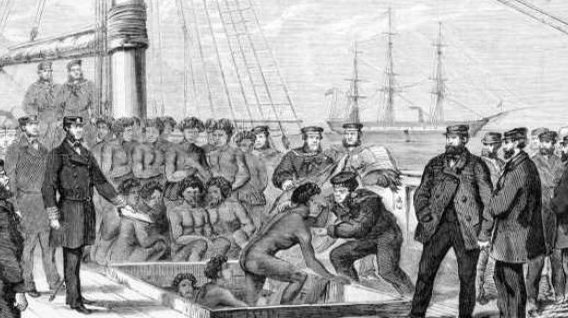
Recent perspectives on Boyd have identified that his unethical practices involved “blackbirding”–that is, using coercion and deception to kidnap people known as “South Sea Islanders”, so that they could provide “cheap labour” for landowners in the colony. See https://www.sydneycriminallawyers.com.au/blog/sugar-slaves-australias-history-of-blackbirding/

A drawing of the practice of “blackbirding”

Recently, a decision has been made to rename Ben Boyd National Park, following requests from Aboriginal communities in the region. National Parks and Wildlife Service has advised that “the new name for the park will reflect traditional language and be decided through discussions with local Elders, Aboriginal community representatives, Australian South Sea Islander representatives and Bega Valley Shire Council”. See

This re-assessment of Boyd, and the decision to remove his name from the national park because of the unacceptable ethics of his business practices, resonates well with the Uniting Church’s commitment to justice. Continuing to commemorate a figure who appears to have been unscrupulous, self-serving, and thoroughly racist, is not a good thing to do. Out of respect to those men who were unjustly enslaved in the “blackbirding” process, the name needs to be changed.

Added to that, we have widespread recognition in Australian society that imposing the names of British colonisers on the natural features of this continent, is also disrespectful—in this instance, to the First Peoples of this land, who have cared for country since time immemorial. Adopting indigenous names from the traditions of the local people is an important element in how we give recognition to these First Peoples.

Referring to Gulaga rather than Mount Dromedary, for instance, or Jungagita in place of Little Dromedary, are examples from the south coast, in the land of the Yuin.

For more on the Yuin people, see https://johntsquires.com/2020/04/23/they-appeard-to-be-of-a-very-dark-or-black-colour-cook-hms-endeavour-and-the-yuin-people-and-country/

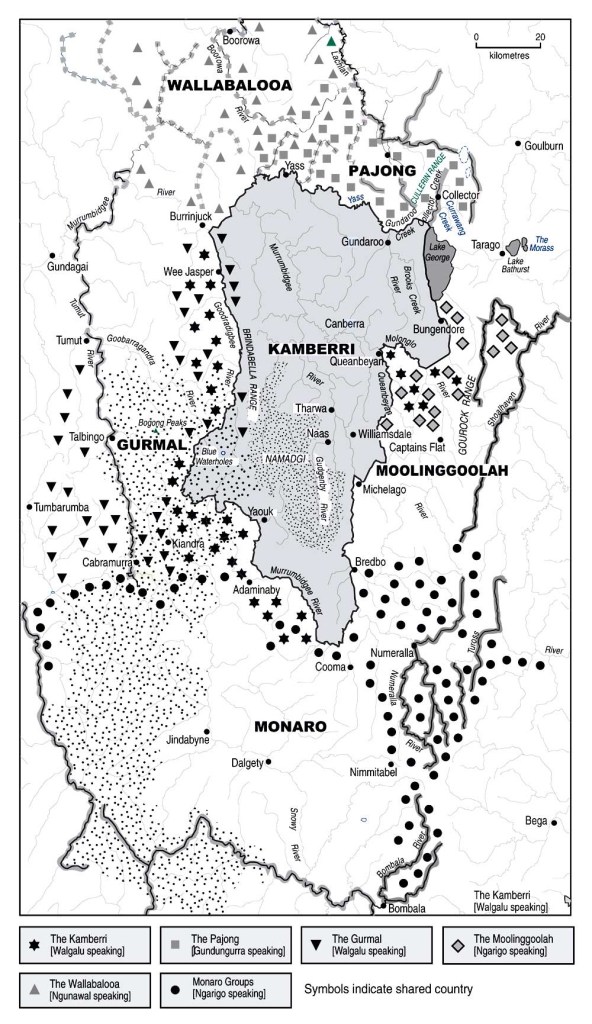
Or in Canberra, recognising that the name of the city derives from the Ngunnawal name for “meeting place”—for long before politicians flew in to gather at Parliament House, the peoples of Ngunnawal, Ngambri, Ngarigo, and Wiradjuri nations would gather each year, meeting to yarn, to eat, to celebrate, and to trade. Certainly, removing the names of foreign colonisers with unjust practices is another way we can acknowledge the longstanding custodianship of the First Peoples of our land.

A map showing core Ngambri (Kamberri) country with surrounding frontiers of the 1820s-1880s. Symbols show shared country. It was compiled by Ann Jackson-Nakano from contemporary historical resources and reproduced here from The Kamberri, by Ann Jackson-Nakano, 2001.
http://www.ngambri.org/about.html

*****

Clive Moore, of the University of Queensland, writes about the initial group of Islanders whom Boyd brought to the colony:

“Clearly they had no idea of what they were doing in Australia, and the local magistrate refused to counter-sign the documents. Regardless, some of Boyd’s employees began to take the party inland on foot. Some of them bolted and made their way back to Eden. The first one died on 2 May and as winter approached more became ill.

“Sixteen Lifu Islanders refused to work and began to try to walk back to Lifu along the coast. Some managed to reach Sydney and seven or eight entered a shop from the rear and began to help themselves to food. Those that remained at work were shepherds on far off Boyd stations on the Edward and Murray Rivers.”

Moore continues, “Boyd refused to admit that the trail shipment was a failure, sending for more Islanders. By this time colonial society was beginning to realise what he had done and was feeling uneasy. The Legislative Council amended the Masters and Servants Act to ban importation of “the Natives of any Savage or uncivilized tribe inhabiting any Island or Country in the Pacific”. When Boyd’s next group of 54 men and 3 women arrived in Sydney on 17 October, they could not be indentured and once Boyd found this out he refused to take any further responsibility.

“The same conditions also applied to Boyd’s Islander labourers from the first trip and they left the stations and set off to walk to Sydney to find alternative work and to find a way home to the islands. The foreman tried to stop them but the local magistrate ruled that no one had the right to detain them. Their progress from the Riverina was followed by the press as they began their long march to Sydney. The press described them as cannibals on their way to eat Boyd, and the issue as depicted in the media was extremely racist.

“The whole matter was raised again in the Legislative Council and Boyd showed no remorse or sense of responsibility. Boyd justified himself with reference to the African slave trade and there was much discussion in the colony about the issue to introducing slaves from the Pacific Islands. The recruiters were accused of kidnapping, a charge with they denied.”

See http://www.assipj.com.au/southsea/wp-content/uploads/docs/10_benjamin_boyd_importation_of_ssi_into_nsw.pdf

*****

The Uniting Church is committed to telling truth about our society. This truth is confronting and challenging. In the revised Preamble which was adopted a decade ago by the Uniting Church, we sought to tell the truth.

Drawing on the voices of Indigenous Peoples, we have named the settlement of this continent as a colonising movement, generated by foreign imperialism, manifesting in violent invasion and genocidal massacres, spread from north to south, from east to west, of this continent. We must continue to prioritise this commitment to tell the truth.

See https://johntsquires.com/2019/01/16/the-profound-effect-of-invasion-and-colonisations/

Likewise, at the 14th Assembly, meeting in Perth in 2015, we decided to repudiate the Doctrine of Discovery, that medieval theological foundation upon which the worldwide invasion and colonisation of lands was based—including the invasion and colonisation of Terra Australis. This has been part of our commitment to tell the truth.

See https://johntsquires.com/2018/08/13/affirming-the-sovereignty-of-first-peoples-undoing-the-doctrine-of-discovery/

As a result of this, the Uniting Church is committed to talking treaty. We are supportive of the formalisation of treaties with the various nations of Peoples who have inhabited, nurtured and cared for this land since time immemorial. This commitment is based on a recognition of the Sovereignty of each of those nations, sovereignty over the land that the people have inhabited, nurtured, and cared for over those many millennia.

See https://www.insights.uca.org.au/hear-the-statement-from-the-heart/

Sovereignty, as articulated in the Statement from the Heart of 2017, is understood by the First Peoples as a spiritual notion, reflecting the ancestral tie between the land and the First Peoples

See https://johntsquires.wordpress.com/2018/10/13/on-covenant-reconciliation-and-sovereignty/ and https://johntsquires.wordpress.com/2018/10/13/on-covenant-reconciliation-and-sovereignty/