Greater honour to the inferior member (1 Cor 12; Epiphany 3C)

We continue this week hearing from a well-known section of the letter that Paul and Sosthenes wrote to the believers in Corinth. In the chapter proposed in the lectionary passages last Sunday and this coming Sunday (1 Cor 12:1–31), Paul and Sosthenes address the nature of the community that has been formed by those who formerly were “pagans … led astray to idols” (12:2). They have now have come to believe that “Jesus is Lord” (v.3) and desire to follow his way in their lives through offering their gifts in service (vv.4–7).
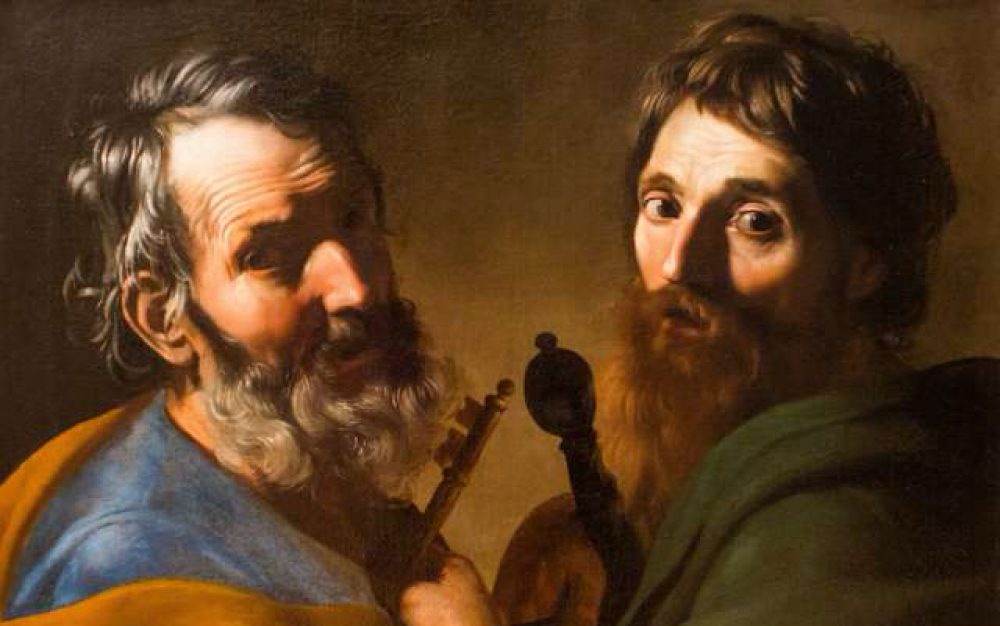
Paul and Sosthenes

In Corinth, however, the gifting of the Spirit has been claimed by some as a basis for unedifying behaviour, which as Paul and Sosthenes say,  tears apart, rather than builds up, the community. This is manifested in various ways, including (as we noted last week) in the worship of the Corinthian community, where, fuelled by their sense of being “the spiritual ones”, some people unleash chaos in the gathering. This is in contrast to the desire of the letter writers that in this gathering “all things should be done decently and in order” (14:40), as befits the God who is “a God not of disorder but of peace” (14:33).

In the passage from 1 Cor 12 proposed as the Epistle for this coming Sunday (1 Cor 12:12–31), Paul and Sosthenes offer a strong affirmation to the Corinthians about the wide reach and inclusive invitation that characterises the work of the spirit: “For in the one Spirit we were all baptized into one body—Jews or Greeks, slaves or free—and we were all made to drink of one Spirit.” (1 Cor 12:13).
I rejoice that these words have been taken up in my church, the Uniting Church in Australia, as the basis for fostering a broad community of faith, across multiple social factors which could divide rather than unite (in paragraph 13 of the Basis of Union). Ministry is enabled by the gift of the spirit. To anyone. To everyone. It is a fine ideal.

That paragraph of the Basis affirms that “every member of the Church is engaged to confess the faith of Christ crucified and to be his faithful servant”. It continues with a declaration, grounded in the scriptural witness (1 Cor 12) that “the one Spirit has endowed the members of Christ’s Church with a diversity of gifts”. 

In writing to the Corinthians, Paul and Sosthenes first identified a range of gifts (1 Cor 12:8–10), and then emphasised the claim that “the body does not consist of one member, but of many” (1 Cor 12:14). As a result, each and every member plays an integral role in the whole. From this, they deduce that “the members of the body that seem to be weaker are indispensable … God has so arranged the body, giving the greater honour to the inferior member” (1 Cor 12:22–25). The context in Corinth has shaped the direction into which Paul develops this image.

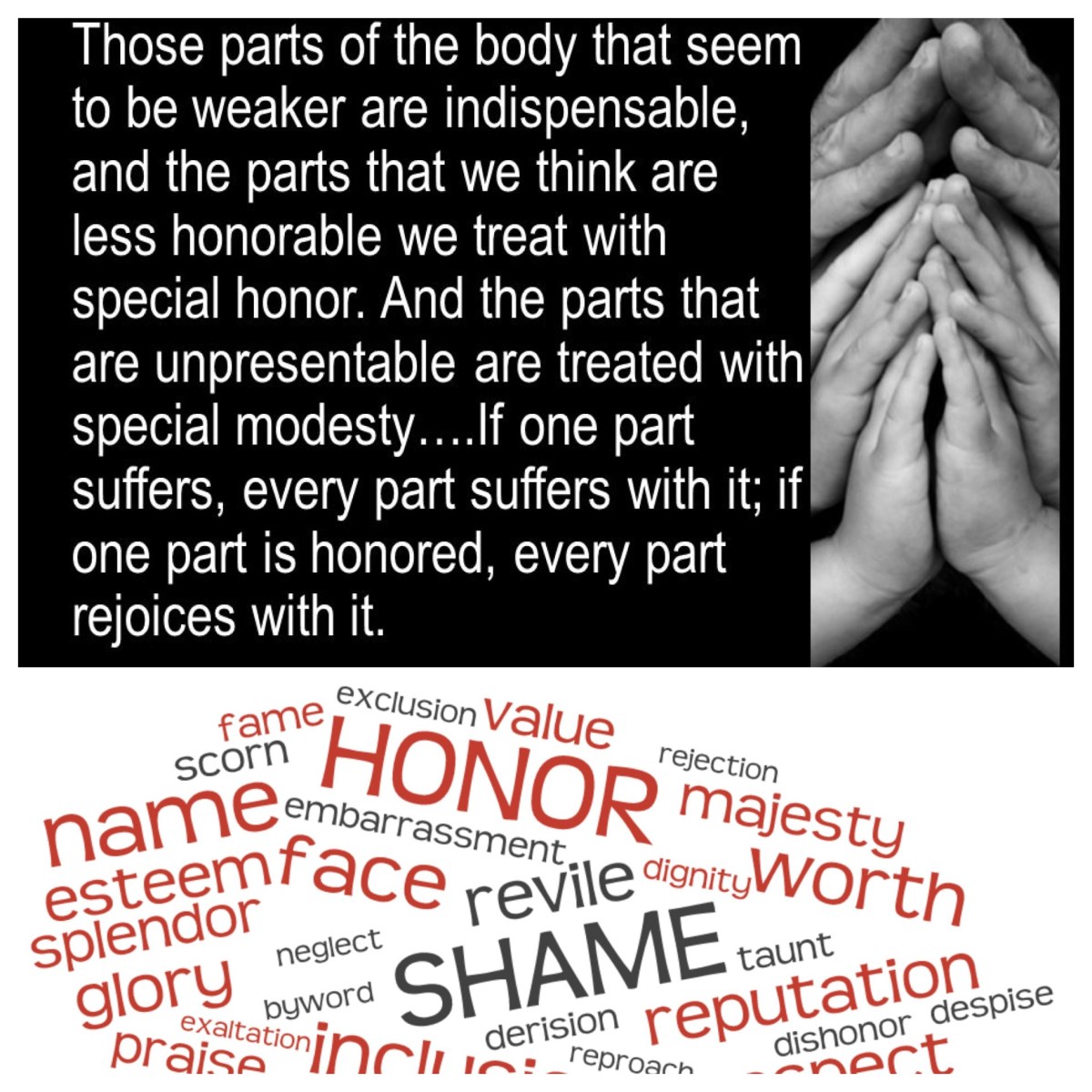
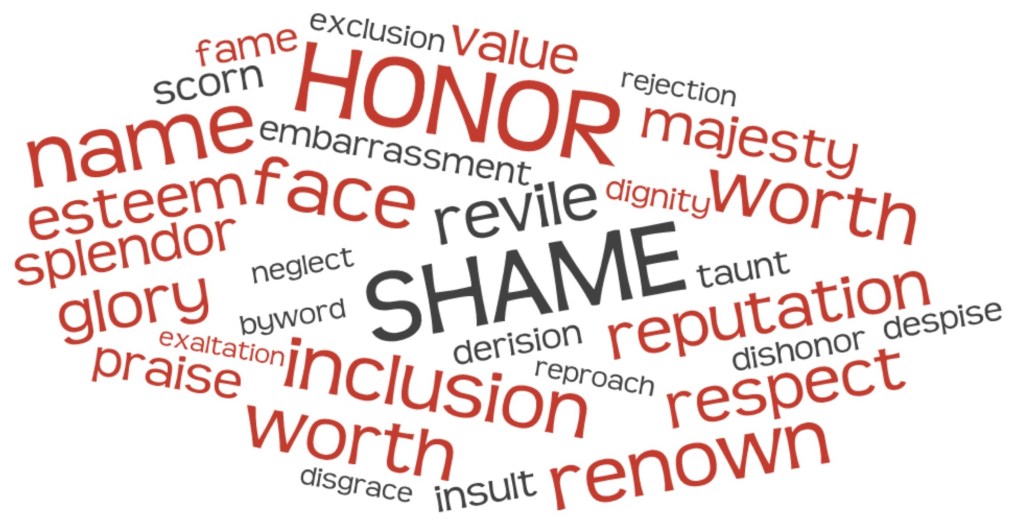
Honour and shame were central features of ancient Mediterranean societies. Possessing much honour reflected a high social status; gathering much shame reflected low social status. Public debate amongst males was a key way in which honour was demonstrated; besting another person in such a debate was a means by which an increase in honour could be attained. Acting in a way that brought shame upon oneself meant that the amount of honour attributed to you would diminish. Women acting in ways that were not in accord with the patriarchal structures of the time would also be considered as shameful. A woman’s place was, literally, in the home.
Jesus did not shy away from the challenge to his honour and authority that public debating posed. He engaged in many debates, responding with confidence to challenges to his honour as various questions were posed to him, as is reported in Mark’s Gospel: “why does this fellow speak in this way? it is blasphemy! who can forgive sins but God alone?” (Mark 2:7); “why does he eat with tax collectors and sinners?” (2:16); “why do your disciples do not fast?” (2:18); “by what authority are you doing these things?” (11:28); “is it lawful to pay taxes to the emperor, or not?” (12:14). According to Mark, he bested his opponents on each of these occasions; he was a public debater of the first order. 

Honour was praised by the Greek philosopher Aristotle as “the greatest of all external goods” (Aristotle, Nic. Eth. 1), whilst Xenophon considered that honour was what differentiated humans from animals (Hiero 7.3). Philo of Alexandria, bridging both Jewish and Hellenistic worlds, affirmed that “fame and honour are a most precarious possession, tossed about on the reckless tempers and flighty words of careless men” (Abraham 264).

The honour—shame culture runs through the Hebrew Scriptures. The ancient Hebrews affirmed that honour belongs primarily to God (1 Chron 16:27), so that God could bestow honour on those who were faithful to his ways (Ps 92:14-15). The same idea is expressed in the version of Isa 28:16 which is cited at 1 Pet 2:6, which  modifies the ending to provide explicit reference to the claim that God will not shame believers. God can thus honour human beings (Ps 8:5), even those regarded as shameful (Zeph 3:19); and conversely, God could shame those accorded honour by humans (Isa 23:9). Paul later reflects this early in his first letter to Corinth (1 Cor 1:27).

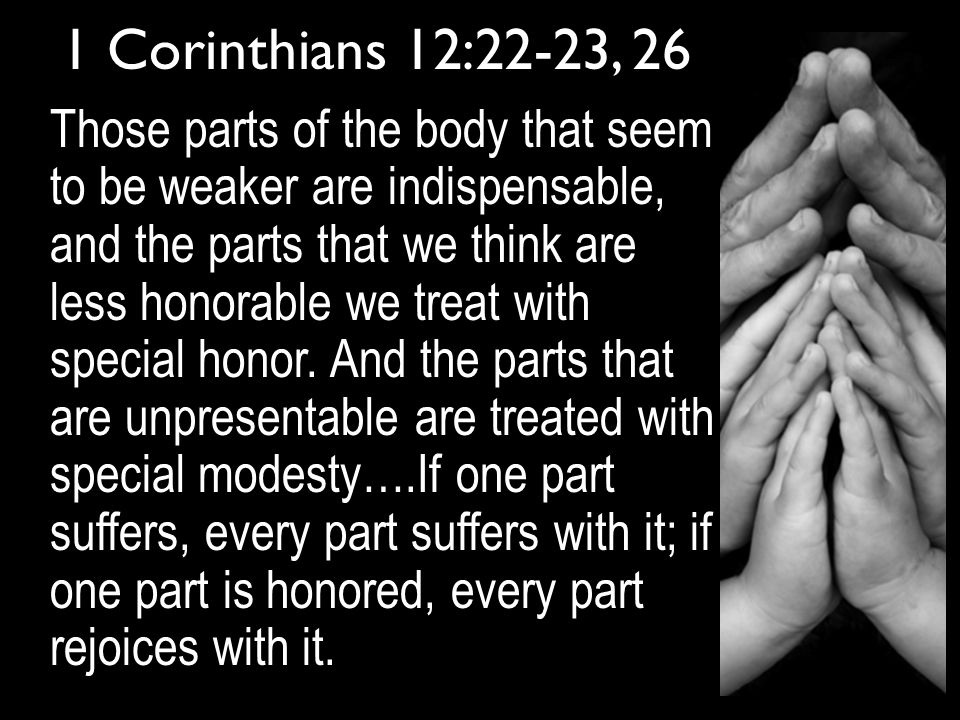
And later in that letter, Paul and Sosthenes addressed the hierarchical ranking that is integral to the honour—shame culture, and offered a completely counter—cultural perspective. “The members of the body that seem to be weaker are indispensable”, he asserts; and so too, “those members of the body that we think less honourable we clothe with greater honour” (1 Cor 12:22–23). Accordingly, he advocates that “our less respectable members” should be “treated with greater respect; whereas our more respectable members do not need this” (12:23:—24). This is how this part of the letter upends the conventions of his time.

Then Paul and Sosthenes provide the theological rational that undergirds this perspective; “God has so arranged the body, giving the greater honour to the inferior member, that there may be no dissension within the body, but the members may have the same care for one another” (12:24–25). The pastoral conclusion that they draw from this—reinforcing the sense of equality that should mark the community of followers of Jesus—is that “if one member suffers, all suffer together with it; if one member is honoured, all rejoice together with it” (12:26). It is the fundamental lesson in standing firm against the culture because of the demands that the Gospel places on believers.
All are activated by the same Spirit (1 Cor 12; Epiphany 2C)

This coming Sunday and the following Sunday, the lectionary suggests that we read and hear a well-known section of Paul’s letter to the believers in Corinth. In this chapter (1 Cor 12:1–31), Paul addresses the nature of the community that has been formed by those who formerly were “pagans … led astray to idols” (12:2) and have now have come to believe that “Jesus is Lord” (v.3) and desire to follow his way in their lives through offering their gifts in service (vv.4–7). 

What follows in this chapter—and in the subsequent ones that the lectionary proposes on the Sundays ahead—provides a good basis for considering fundamental matters of faith and discipleship throughout the season of Epiphany. It is, after all, a season focussed on revelation; and Paul’s words are quite revealing!

Actually, they are not just Paul’s words (although that is how we usually refer to them). Paul collaborated in the writing of many of his letters—of the seven agreed authentic letters, only two are written by Paul alone. The others are written in association with Timothy (2 Cor, Phil, 1 Thess and Phlm), Silvanus (1 Thess), and Sosthenes (1 Cor). So it is words from this last letter, co-written with Sosthenes, that the creators of the lectionary are offering us during the season of Epiphany. 

A depiction of Paul and Sosthenes

In opening this letter, Sosthenes and Paul tell the Corinthians that they write to “give thanks” (1:4) and also to “appeal to you” (1:10); and later, to “admonish you as my beloved children” (4:14). The constructive approach that they bring is made clear in the opening prayer of thanksgiving (1:4–9). Writing in chapter four, the author (here, presumably Paul) exhorts the Corinthians: “I appeal to you, then, be imitators of me” (1 Cor 4:16; see also 1 Thess 1:6). The letter contains many points of appeal, exhortation, encouragement—and also challenge, correction, and criticism!

This coming Sunday we focus on verses 1–11 of chapter 12. This is an instance of exhortation and encouragement (in the later part of the chapter, which we read and hear on the following Sunday, challenge and correction will occur). In these verses, Paul considers the diversity of expressions of faith that can be found in the faith community in Corinth—as, indeed, there are in many other communities of faith. He notes the diversity of gifts, the various ways of providing service, and the range of activities undertaken by “those who are sanctified in Christ Jesus, called to be saints” (1 Cor 1:2). 

Each gift, service, or activity, however, has a common origin. It is “the same Spirit” who grants the diversity of gifts evident in the community (12:4), “the same Lord” who is the motivator for the array of offering service by those believers (v.5), and “the same God” who activates all of the activities that is evident in Corinth (v.6).

It is worth noting that an alternative way to translate this might be “the same God who energizes all of the expressions of energy”. The Greek words being translated as “activate” and “activities” relate to the central idea of energy; indeed, the foundational word is ἐνεργήμα, which when transliterated letter-for-letter results in “energēma”, from which we get the English word “energy”. So the Spirit is presented as an active, dynamic force, which is at work in a lively, tireless, and vital fashion. 

In this passage, Paul places a particular emphasis on the unity that is—or at least, should be—a key feature of the group of people who are joined together by the common affirmation, “Jesus is Lord” (v.3). He affirms that the gifts, acts of service, and activities expressed by those people “are activated by one and the same Spirit” (v.11a). It is that Spirit who “allots to each one individually just as the Spirit chooses” (v.11b).

The irony, however, is that in the eleven chapters preceding this passage, there have been multiple signs of the many ways in which disagreement, conflict, division, and factionalism mark the community of believers in Corinth. There have been ethical breaches, instances of sexual misbehaviour, diverse views regarding marriage and related issues, and mistreatment of fellow members of the community who are seen as “weak” by some who perhaps regard themselves as “strong”. Has the Spirit be so energizing that the disruptions caused by the Spirit’s activity have promulgated all of these problems?

Further, the critical issues which Paul addresses in the chapters immediately following, in the later part of the letter (1 Cor 12–14), arise out of the highly spontaneous, seemingly chaotic situation that characterised worship in Corinth. How the Spirit was active—energizing—those who worship in this gathering! It was anything but a reverent gathering of people unified by their faith; it was a chaotic frenzy of activity and words, if Paul’s severe wording is to be believed.

Such worship had more the nature of a dialogue between conversation partners, rather than a monologue delivered by one person to a group of silent listeners. We can see this in a simple way, with the references to “interpreters” in what Paul writes to the Corinthians. Whilst there are people who contribute words of prophecy, pray in tongues, or speak in tongues (1 Cor 14), in each case there is the need for someone to interpret these phenomena. It seems that many things were happening simultaneously, creating a frenzied cacophony during worship. If we see the energizing of the Spirit as a disruptive force, then much disruption has occurred!

For my reflections on the disruptive work of the Spirit in Corinth, see

So in 1 Cor 12, Paul adapts an image which was extensively used in political discussions about the city state (“the body is one and has many members”, 12:12) as well as what may be a reference to a developing baptismal liturgy within the early church (“we were all baptised into one body”, 12:13) and a very early creedal statement (“Jesus is Lord”, 12:3).

The work of the Spirit was supposed to provide a range of gifts for the mutual benefit of all involved in the community. Paul provides a list of just such gifts in verses 8–10. He notes wisdom, knowledge, faith, healing, miracles, prophecy, discernment, tongues, and interpretation of tongues. This should not be taken as an exhaustive list; in other places, Paul refers to other gifts, such as teaching, exhorting, giving,leading, and offering compassion (Rom 12:7–8), as well as power and assistance later in this chapter (1 Cor 12:28). 

He also identifies some offices exercised by people alongside gifts already noted, as he concludes this same discussion of gifts: “Are all apostles? Are all prophets? Are all teachers? Do all work miracles? Do all possess gifts of healing? Do all speak in tongues? Do all interpret?” (1 Cor 12:29–30). Similar offices are noted in a later letter written in the name of Paul: “apostles … prophets … evangelists … pastors … teachers”, all,of which are said to be “to equip the saints for the work of ministry” (Eph 4:11–12).

Nor should this list of 1 Cor 12:8–10 be regarded as a prioritising of such gifts by the order in which they are listed. In fact, the concluding comment of v.11 specifically places all of the gifts noted on the same level, each equally “activated by the one and the same Spirit” and “allocated … just as the Spirit chooses”. We should affirm that today; all gifts for service come from the same source.

Carols for the Season of Christmas (9) The Ninth Day of Christmas, 2 January

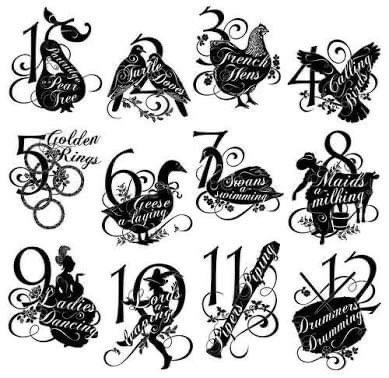
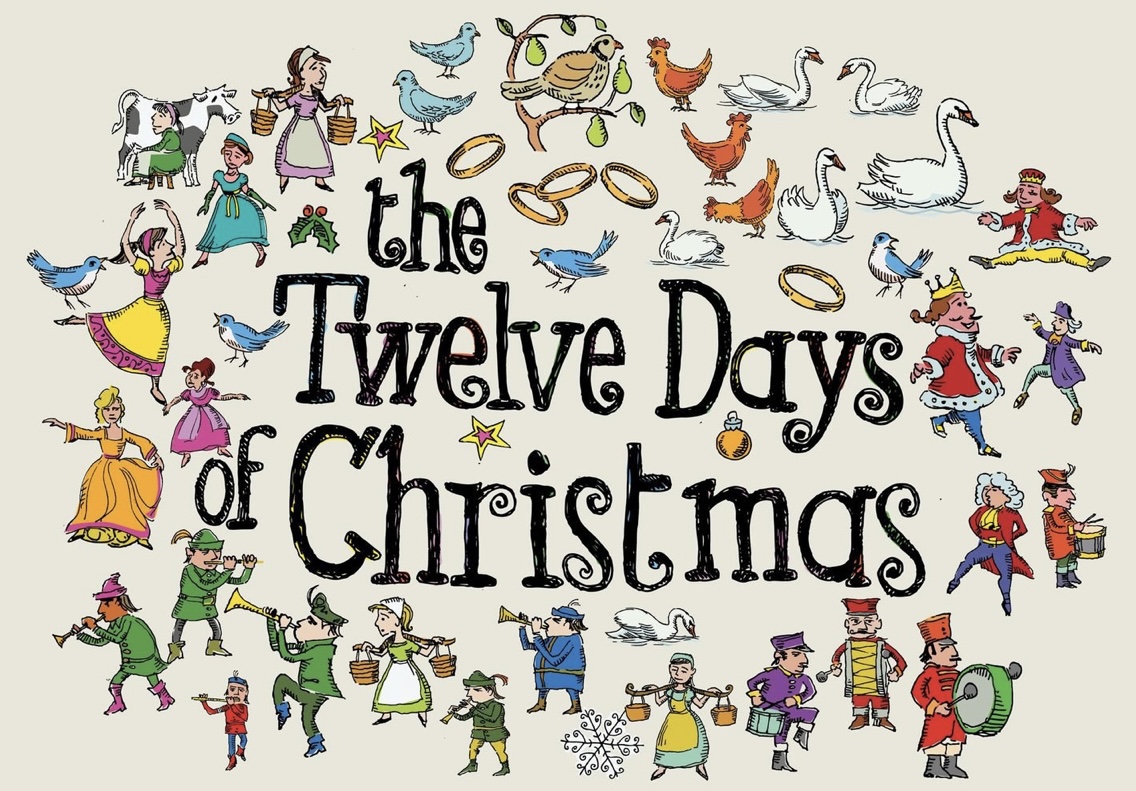
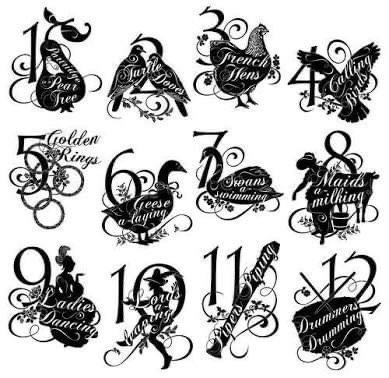
While we are looking into carols for the season of Christmas: what about The Twelve Days of Christmas? This English Christmas Carol, some have claimed, had a pietistic purpose: a kind of sung catechism about the central features of the Christian Faith, put into code by Roman Catholics in England when their faith was outlawed. (One is Jesus, two symbolises the two testaments, three indicates faith, hope and love, four refers to the Gospels, five to the Books of Moses, and so on …)

Nice theory, but there is no evidence at all that this was the case … and the origins of the theory go back no further than a speculation by a Canadian hymn writer in an article published in 1979. (And snopes.com agrees; you can read the detailed rebuttal at http://www.snopes.com/holidays/christmas/music/12days.asp )

The Twelve Days of the #twelvedaysofchristmas technically refer to the days from Christmas Day, the first day of Christmas, through to Epiphany, Twelfth Night. So the song should be sung from Christmas Day onwards. And the gifts that are given each day accumulate until the twelfth night, the evening before Epiphany, when gifts were given to Jesus by the Magi visiting from the east. 

Professor Bruce Forbes writes that “In 567 the Council of Tours proclaimed that the entire period between Christmas and Epiphany should be considered part of the celebration, creating what became known as the twelve days of Christmas, or what the English, called Christmastide. On the last of the twelve days, called Twelfth Night, various cultures developed a wide range of additional special festivities. The variation extends even to the issue of how to count the days.” (Christmas: A Candid History, 2008, p.27).

Forbes also notes that there are divergent chronologies at work in different parts of the church: “If Christmas Day is the first of the twelve days, then Twelfth Night would be on January 5, the eve of Epiphany. If December 26, the day after Christmas, is the first day, then Twelfth Night falls on January 6, the evening of Epiphany itself.”

There’s a suggestion that The Twelve Days of Christmas song was originally sung in French . . . or, at least, that the line for the First Day originally included both French and English terms for the bird; thus, “partridge” (in English, and then in French, “perdrix” (pronounced per-dree) . . . which makes no sense, really; but this is a Christmas Carol, and such songs don’t really have to make sense, do they?

On the Second Day, two turtledoves are to be given. But for what purpose? Since this song relates to Christmas, can we assume that there is some religious or spiritual significance with this gift??

Turtle doves could be offered as a sin-offering (Lev 5:7). Is this why they were given? Or perhaps, as the alternate offering for a poor woman, seeking  purification after giving birth (Lev 12:8)? This at least links in to the Christmas story (at Luke 2:24), which is what the song is supposed to be about! But it does seem like a long shot …

So, what about as a guilt-offering when cleansing a leper (Lev 14:22)? Or maybe for a Nazirite who has touched a corpse (Num 6:9)? Or as a means of cleansing after sexual discharge (Lev 15:14)? Or maybe the text is multivalent, and we are supposed to bring all of these allusions to mind. Because we know our Bible so well. And we know this is meant to be symbolic. Eh?

Next, on Day Three, the gift to be given is three French hens. Some suggest they are Faith, Hope and Charity, the key Theological Virtues. But only three? There are actually four types of French Hens (Faverolles, La Fleche, Crevecoeurs and Marans). So do we know which one of the four missed out on its moment of glory in this Christmas carol? It’s a worry.

On Day Four, four birds form the gift. Ah, but what type of birds? Calling birds? So you might think. But older versions of the song identify them as Colly Birds. Which are … …??? A colly bird is a black bird. A coal mine is called a colliery, so ‘colly’ or ‘collie’ is a derivation of this and means black like coal. So, no  more whitewashing, let’s sing “four black birds”, and be clear about it, eh?

And … while we are at it … Day Five: Five Golden Rings? But they are surrounded by flocks of birds (swans, geese, colly birds, hens de la France, turtle doves, and a partridge). Rings are out of place.  So, it is believed that this verse originally referred not to jewellery but to ring-necked birds such as the ring-necked pheasant. So, let’s now sing: “five ring-necked birds”! Context is everything!

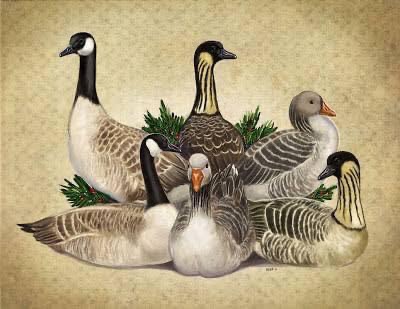
The sixth of the #twelvedaysofchristmas is the midpoint of the 12 days, when we can look back on the story of Christmas (the birth and the shepherds), and forward to the story of Epiphany (the visit of the Magi). The gift for the Sixth Day focusses on new life: six geese a-laying.

It is said that, while chickens lay eggs regularly (usually each day ), geese only lay 30-50 eggs a year. This means they are a less productive bird to keep. It takes longer to increase the size of the flock for meat production. And their eggs are very high in cholesterol. Was this a wise gift? (Of course, you may well score the goose that lays the golden egg.)

On Day Seven, the gift is seven swans a-swimming. Well, yes; that’s what swans do.  But who in their right might give this as a gift? Where would they all be put so that they could keep swimming? In a huge bathtub? This is quite unrealistic. Anyway, I guess it proves that the carol was not written by a football-mad fanatic. (They would have had swans kicking goals.)

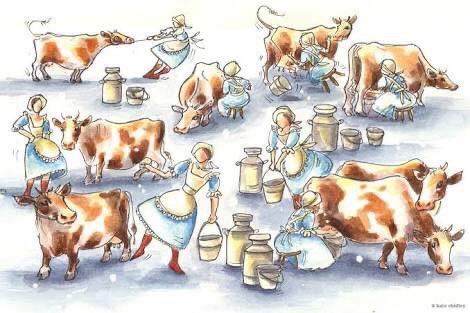
On Day Eight, we are exhorted to give eight maids a-milking. In older English, to “go a-milking” could mean to ask a woman for her hand in marriage; OR to ask a woman to go “for a roll in the hay”, as it were. Is this Christmas carol concealing a reference to illicit sexual encounters? And does that make it more interesting than just getting some milk in order to make some cheese?

Today is Day Nine. The gift is nine ladies dancing. Liturgical dances, I presume? In explore the significance of these ladies, I am somewhat stumped. Any clues, anyone?

Meanwhile, I am starting to compile my list of ‘not relevant downunder’ secular Christmas carols. Because here, in Australia, we are in the midst of summer—not winter, as all the upover northern hemisphere Christmas songs assume. So, not relevant to downunder would include: Anything with snow, for a start.  And bells.  And holly.  And fir trees. And … well, the possibilities are endless.

Tomorrow, on Day Ten, the gift is to be ten Lords a-leaping.  Alliteration, indeed; but why leaping? Perhaps there is a textual transmission problem here. Maybe it should be: Lords a-leasing? (what to do with their huge old castles and manors)? Or Lords a-sleeping? (in the upper chamber of the British parliament)? Or perhaps Lords a-weeping? (at the decline of their much- loved aristocratic powers). Who knows?

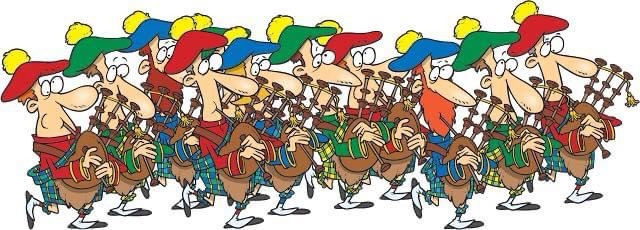
Then comes the eleventh day of (the season of) Christmas. With eleven pipers piping. So perhaps this comes from a Scottish variant (like day one comes from the French version). Perhaps the Scots packed their song full of food? In this, the gifts would include twelve alka seltsers, eleven Blue Lagoons, ten creme de menthe, nine vodka and limes, eight nips of whisky, seven rum and cokes, six Carlsberg specials…you get the picture? (Yes, I know, this is becoming quite speculative!!)

Or — does the Scottish reference (bagpipes) mean that I should refer to the crackpot theory that this whole carol was a coded reference to the right of Bonny Prince Charlie to regain the British throne? Yegods … … 

But I do note that, in other versions, there are eleven ladies spinning, eleven ladies dancing, eleven lads a-louping, eleven bulls a-beating, and eleven badgers baiting!! Make of them, what you will. 

Finally, we will arrive at the ultimate (last) of the #twelvedaysofchristmas. Day Twelve. Twelve drummers drumming. Since the gifts are cumulative, and repeated on each day, on Day Twelve we actually have drummers drumming, along with piping pipers, leaping lords, bleating cows, tapping toes, shuffling shoes, a horde of aviary escapees, and the whole schemozzle. It’s all too loud, I think — and the incessant fights amongst all those squawking birds! Oh dear; time for a doze, instead.  

The evening of this twelfth day will, quite obviously, be Twelfth Night. What follows that is Epiphany, a day to celebrate the coming of the magi to the infant Jesus. Time, indeed, to rest.

The twelfth day of Christmas

And so we come to the twelfth day of Christmas, 5 January—the day that ends with Twelfth Night, the Eve before Epiphany. And what a gift-giving bonanza it has been! Birds of various kinds, jewellery, milkmaids, dancing ladies, leaping lords, and a bunch of pipers, have been marshalled and then gifted by “my true live” to a deserving recipient. And celebrated in song! It has been quite an extravaganza.

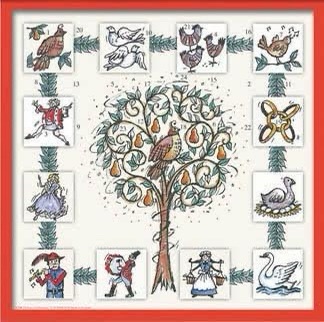
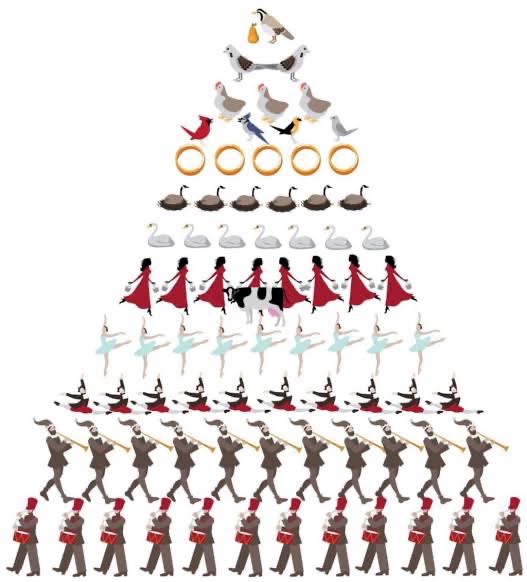
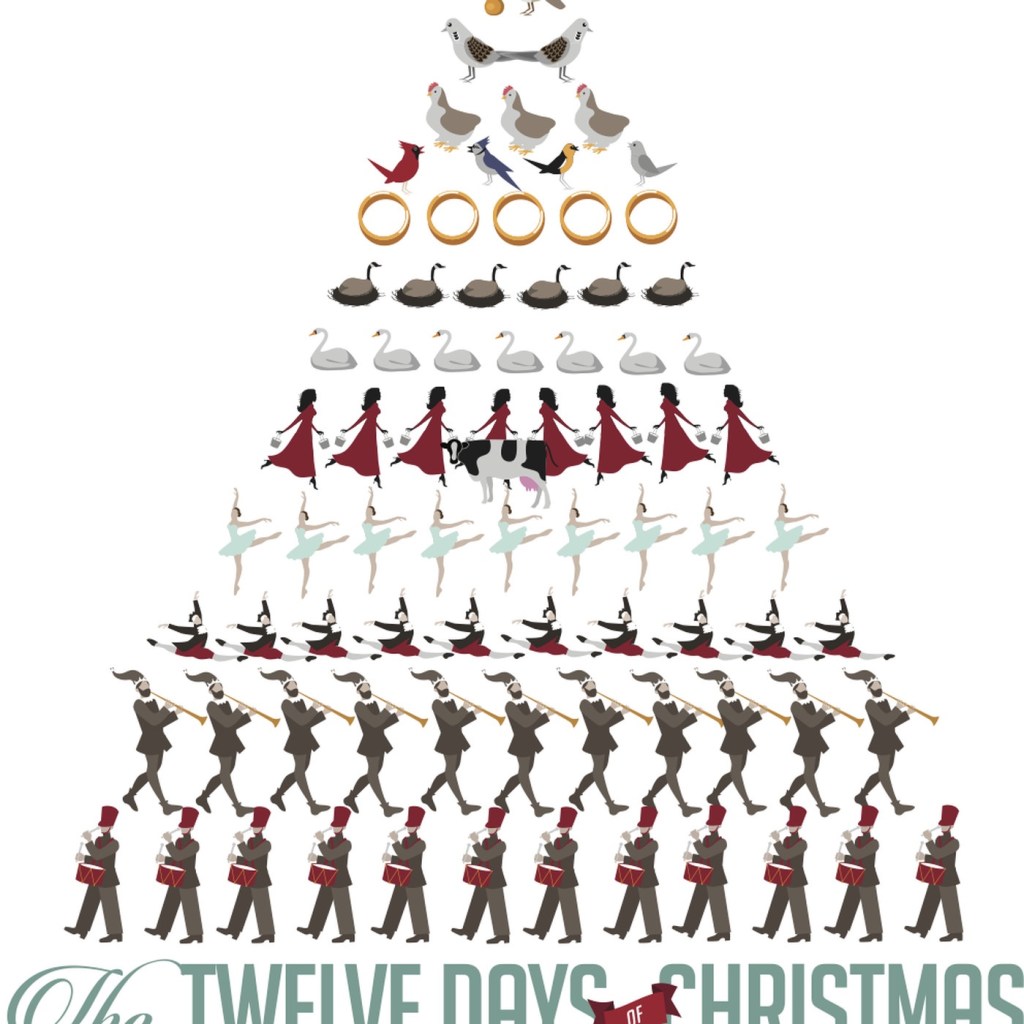
We sing about this every year in “The Twelve Days of Christmas”. That popular song itemises the giving of gifts over those twelve days, mounting cumulatively day by day. The total number of gifts given is quite amazing—it actually totals 364! Each day’s gift is given, not only on that day, but on each of the subsequent days.

To calculate the total number of gifts, we need to multiply each gift by the number of times it recurs in a full round of the song. If we do this, we will soon realise that the gifts’ recipient would have to rent a storage unit and gain access to a lake, to contain the bounty, including 12 partridges (one each day for 12 days), 22 turtledoves (2each day for 11 days), 30 French hens (3 each day for 10 days), 36 colly birds, 40 gold rings, 42 laying geese, 42 swimming swans, 40 milking maids, 36 dancing ladies, 30 leaping lords, 22 pipers piping, and 12 drummers drumming.

And just think, how much all of this would cost! In fact, the cost each year has been calculated by the Christmas Price Index, published by the US bank PNC Wealth Management (only in America would a bank be called a “wealth management” company 😳). See https://en.wikipedia.org/wiki/Christmas_Price_Index

The Christmas Price Index chose the items in this popular Christmas carol as its market basket, calculating their cost by using local sources of information—purchasing the pear tree from a local Philadelphia nursery, assessing the costs of the partridge, turtle dove, and French hen prices as determined by the Cincinnati Zoo and Botanical Garden.

The price for the gold rings was guided initially by Gordon Jewelers (subsequently taken over by the Zale Corporation), and an assumption was made that the maids were unskilled laborers earning the federal minimum wage. The ten “lords a-leaping” are valued by using the cost of hiring male ballet dancers instead of real lords, since “lordships are a title of nobility not recognised in the United States”!

In 2012, the “true love” would have to spend $107,300 to buy all 364 presents. PNC Wealth Management has calculated the cost of the gifts every year since 1984–in that year, the same gift assortment would have cost $61,300. Those determinedly mobile swans were the most expensive item, at $1,000 each in 2012.

By 2019, the total cost would have been $38,993.59, but the next year, the cost dipped, because of the pandemic and associated restrictions. In 2020, the index did not include nine Ladies Dancing, ten Lords-A-Leaping, eleven Pipers Piping, or twelve Drummers Drumming due to COVID-19 restrictions on live performances. The total cost was $16,168.14. But in 2021, with performances in the USA once again possible, it rose to $41,205.50, and then to $45,523.27 in 2022.

So: as well as being a noisy enterprise (all those birds squawking, pipers piping, and drummers drumming) requiring large storage facilities, it’s an expensive business for the “true love” to keep this up, each and every year!

See also