Practising righteous-justice: alms, prayer, and fasting (Ash Wednesday)

In the Gospel reading provided for Ash Wednesday each year (Matt 6:1–6, 16–21), the lectionary offers us a part of the long discourse that Jesus gave, on top of a mountain, to his disciples (5:1–7:29). The text infers that he was seeking to avoid “the crowds” (5:1), although by the end of the discourse (known popularly as The Sermon on the Mount) it is clear that this escape had not worked, for “when Jesus had finished saying these things, the crowds were astounded at his teaching” (7:28).

In the middle section of this long discourse, the section from which this reading comes, the Matthean Jesus instructs his listeners on righteous-justice (6:1–18). The Greek word used in the first verse is dikaiosunē, which some contemporary English translations render as “piety”. The Greek word is rich in meaning (it is a key word both for Jesus and for Paul); in the Septuagint, it often translates tzedakah, a Hebrew word used to describe the quality of God’s just and fair dealings with human beings.

The prophets, for instance, consistently advocated for righteous-justice. “Let justice roll down like waters, and righteousness like an ever-flowing stream”, Amos declares (Amos 5:24). Isaiah laments the state of the city: “How the faithful city has become a whore! She that was full of justice, righteousness lodged in her—but now murderers” (Isa 1:21), and tells a parable ending with the despairing words that God “expected justice, but saw bloodshed; righteousness, but heard a cry!” (Isa 5:7).

Jeremiah reiterates the instruction of the Lord, “act with justice and righteousness, and deliver from the hand of the oppressor anyone who has been robbed” (Jer 22:3) and Ezekiel warns, “the righteous turn away from their righteousness and commit iniquity, they shall die for it” (Ezek 18:26). In a vision in which Gabriel appears to Daniel, a period of seventy weeks are given for the people “to finish the transgression, to put an end to sin, to atone for iniquity, to bring in everlasting righteousness” (Dan 9:24).

In his final vision (in the last chapter of the Old Testament, in the order in which it appears in Christian scriptures), Malachi prophesies that “for those who revere my name the sun of righteousness shall rise … and you shall tread down the wicked” Mal 4:2). An emphasis on righteous-justice is also found in other prophetic works (Hos 10:12; Isa 28:17; 32:16–17; 54:14; Ezek 18:19–29; Dan 9:24; 12:3; Zeph 2:3; Mal 4:1–3; Hab 2:1–4). Righteous-justice was a key factor for the prophets. See also

Many psalms evoke the righteous-justice of God (for instance, Ps 5:8; 7:17; 9:8; 17:15; 33:5; 50:6; 72:1–3; 89:14, 16; 103:17; 119:142; 145:7). Some psalms note that God “watches over the way of the righteous” (Ps 1:6), and “blesses the righteous” (Ps 5:12), and “upholds the righteous” (Ps 37:17). Those who practise righteous-justice “shall be kept safe forever” (Ps 37:28), they “shall inherit the land” (Ps 37:29).

Because “the salvation of the righteous is from the Lord” (Ps 37:39), the psalmist calls for celebration: “rejoice in the Lord, O you righteous, praise befits the upright” (Ps 33:1). “Surely the righteous shall give thanks to your name; the upright shall live in your presence” (Ps 140:13; likewise, 64:10; 68:3; 119:7, 62, 164). And so, the psalmist prays that the righteous-justice of God might be evident in the lives of the people: “judge me, O Lord, according to my righteousness, and according to the integrity that is in me” (Ps 7:8).

In a psalm that looks hopefully to a time when God will withdraw his wrath and bring salvation (Ps 85:1–9), we hear the words, “steadfast love and faithfulness will meet; righteousness and peace will kiss each other; faithfulness will spring up from the ground, and righteousness will look down from the sky” (Ps 85:10–11). These are the qualities of God, which the psalmist yearns to see exhibited also in the lives of the faithful: “righteousness will go before him [the Lord] and will make a path for his steps” (Ps 85:13).

“The Lord rewarded me according to my righteousness” (Ps 18:20, 24); amongst “those who fear the Lord”, “righteousness ensures forever” (112:3, 19). So, “happy are those who observe justice, who do righteousness at all times” (Ps 106:3); “let your priests be clothed with righteousness and let your faithful sing for joy” (Ps 132:9). The psalms overflow with celebrating the righteous-justice of God and calling for actions of righteous-justice to be undertaken by the people.

*****

In the context it is being used in Matt 6, this word indicates the means by which human beings might give expression to the righteousness which is inherent in God’s being. How do we live in the world in a way that shows we are committed to being the people of God? So its use here refers to how faithful followers of Jesus are to undertake just actions in their lives, not just in performing “acts of piety”. I’m going to use the translation “doing acts of righteous-justice” to convey that sense.

Jesus has already given a strong statement advocating for the importance and priority of doing acts of righteous-justice in the lives of his followers. He declares that God seeks a righteous-justice which “exceeds that of the scribes and Pharisees” (5:20)—a passage which we read just a few weeks back. See

The term also appears in the teachings of Jesus in the Matthean version of two beatitudes about those who “hunger and thirst for righteousness” (5:6) and those who are “persecuted for righteousness’ sake” (5:10); the parallel beatitudes in Luke have no reference to righteous-justice. The term also appears in the well-known exhortation to “strive first for the kingdom of God and his righteousness” (6:33), and in the comment concluding the parable of the two sons, that John “came to you in the way of righteousness and you did not believe him” (21:32). (The “you” in question here must be those Jewish leaders referred to at 21:23.)

Here, in these instructions, the emphasis that Jesus brings is to reinforce that such deeds of righteous-justice are to be undertaken without any expectation of reward or admiration. “Beware of practicing your piety before others in order to be seen by them; for then you have no reward from your Father in heaven” (6:1); and then, “when you give alms, do not let your left hand know what your right hand is doing, so that your alms may be done in secret” (6:3–4).

This followed by “whenever you pray, go into your room and shut the door and pray to your Father who is in secret” (6:6), and finally “when you fast, put oil on your head and wash your face, so that your fasting may be seen not by others but by your Father who is in secret” (6:17–18). These deeds have value in and of themselves, for they show a person’s inner commitment to the way that Jesus teaches. There is no need of external acknowledgement or reward, for in each case, “your Father who sees in secret will reward you” (6:4, 6, 18).

By focussing on alms (6:2–4), prayer, (6:5–15), and fasting (6:16–18), Jesus does no less than instruct on three forms of traditional Jewish righteous-justice. Texts from the hellenistic period indicate the importance of these actions. Tobit 12:8 states, “Prayer with fasting is good, but better than both is almsgiving with righteousness”. Jesus, as always in Matthew’s book of origins, maintains steadfast and intense commitment to Torah. He is a deeply faithful Jew.

In the Letter of Aristeas, also from the hellenistic period, we find the observation that “nothing has been enacted in the Scripture thoughtlessly or without due reason, but its purpose is to enable us throughout our whole life and in all our actions to practice righteousness before all people, being mindful of Almighty God … the whole system aims at righteousness and righteous relationships between human beings” (Ep. Arist. 168–169). We shall see that this scriptural basis is the case for each of the three forms of doing righteous-justice that Jesus instructs.

*****

Alms. The first expression of righteous-justice is to give alms (6:2–4). Whilst the precise terminology that we find here appears only in later, hellenistic texts, the fundamental concept involved in giving alms to the poor is very clearly expressed in the Hebrew Bible. “If there is anyone in need among you”, the Deuteronomist has Moses declare, “do not be hard-hearted or tight-fisted toward your needy neighbour; you should rather open your hand, willingly lending enough to meet the need, whatever it may be” (Deut 15:7–8; likewise, 24:14–15). The law of gleaning made secure provision for feeding the poor of the land (Lev 19:10; 23:22; Deut 24:21; and see Ruth 2 and the later rabbinic discussion in tractate Pe’ah of the Mishnah).

The psalmist affirms, “it is well with those who deal generously and lend, who conduct their affairs with justice; for the righteous will never be moved; they will be remembered forever” (Ps 112:5–6), whilst the sage declares in a proverb, “whoever is kind to the poor lends to the Lord, and will be repaid in full” (Prov 19:17).

And Job declares his commitment to giving alms, helping to poor, when he says, albeit with a rhetorically exaggerated style, “if I have withheld anything that the poor desired, or have caused the eyes of the widow to fail, or have eaten my morsel alone, and the orphan has not eaten from it … if I have seen anyone perish for lack of clothing, or a poor person without covering, whose loins have not blessed me … then let my shoulder blade fall from my shoulder, and let my arm be broken from its socket” (Job 31:16–22).

Prayer. The second way that righteous-justice can be expressed is prayer (6:5–15). This section is perhaps best known because, whilst instructing his disciples how to pray, the Matthean Jesus offers a distinctive formula for prayer (6:9–13). Although this prayer has become known as the distinctive Christian prayer, a close study of Hebrew Scriptures shows that the concept in each clause (and in almost every case, the precise terminology of each clause) has originated in Jewish thought.

Prayer, of course, was a regular and central practice amongst the Israelites over the centuries. One tractate of the Mishnah, Berakhot (meaning “blessing”) was devoted to instructions for prayer. Hebrew Scripture contains many instances of prayers offered by key figures in Israel. In the wilderness, people ask Moses to pray to the Lord (Num 21:7). When her son in born, Hannah prays with praise and thanksgiving (1 Sam 2:1–10), and then at Mizpah, her son Samuel (now an adult) prays to God on behalf of the people (1 Sam 7:5), and the people ask him to pray to God on their behalf (1 Sam 12:19, 23).

David finds “courage to pray [a] prayer” to God after having been chosen “to build a house” for God (2 Sam 7:27; 1 Chron 17:16–27), and then when the Temple had been built, Solomon prays a long, extended prayer to dedicate the building (1 Kings 8:22–53). Prayer is integral to the life of the people of Israel. At the end of the Exile, Nehemiah fasts and prays for the people (Neh 1:4–11). The prophet Daniel prayed three times a day whilst he was in Babylon, despite orders to the contrary (Dan 6:10–13)—a practice that appears to have been kept by Peter (Acts 3:1; 10:3, 30).

The section on prayer is omitted from the lectionary selection for Ash Wednesday. (Neither does it appear anywhere else in the Revised Common Lectionary.) Why might this be? Perhaps to ensure the focus on this day of penitence stays on almsgiving and fasting—actions which require specific external activity, not simply the internal activity of prayer?

Fasting. The third way of acting with righteous-justice that Jesus teaches is fasting (6:16–21). A fast was a way to signal fidelity to the covenant with God, in the face of personal distress (2 Sam 12:22–23) or when the nation was under attack (2 Chron 20:1–4). Jezebel called for fasting in her scheming to obtain the vineyard of Naboth (1 Ki 21:9–12) and Ezra decreed a fast whilst still in exile, prior to returning to the land (Ezra 8:21–23).

In exile, Queen Esther ordered fasting, which Mordecai carried out (Esther 4:15–17); before he is sent into exile, Jeremiah reported that King Jehoiakim proclaimed a fast for “all the people in Jerusalem and all the people who came from the towns of Judah to Jerusalem” as preparation for hearing the scroll read by Baruch (Jer 36:9–10).

When the people of Nineveh repented in response to the preaching of Jonah, they held a fast (Jonah 3:1–5), while the prophet Joel calls the priests to put on sackcloth and “sanctify a fast” (Joel 1:13–14) and then for all the people to “sanctify a fast” (Joel 2:15–16). These fasts were intended to recall the people to the covenant that they had with the Lord God, and lead them to focus on his they might best live in accordance with lives of righteous-justice that were expected from that covenant.

The call which we hear on Ash Wednesday in the Gospel that is offered (Matt 6:1–6, 16–21) is thus a call that Jesus draws from deep within the wells of his Jewish faith and tradition: a call to be intentional, focussed, and committed in acting in ways that demonstrate the righteous-justice of God, lived out in the lives of faithful believers, especially care for the needy and focussing on our relationship with God. It is a call that sounds with clarity for us at the start of this Lenten season.

*****

See also
To delight in the commandments (Psalm 112; Epiphany 5A)

The psalm which is offered by the lectionary for this coming Sunday (Psalm 112:1–10) portrays “those who fear the Lord” (verses 1–9) in contrast to “the wicked” (verse 10). I suspect that this psalm was chosen as a fitting companion to the Gospel reading, in which Jesus strongly affirms the Law: “do not think that I have come to abolish the law or the prophets; I have come not to abolish but to fulfill” (Matt 5:17).

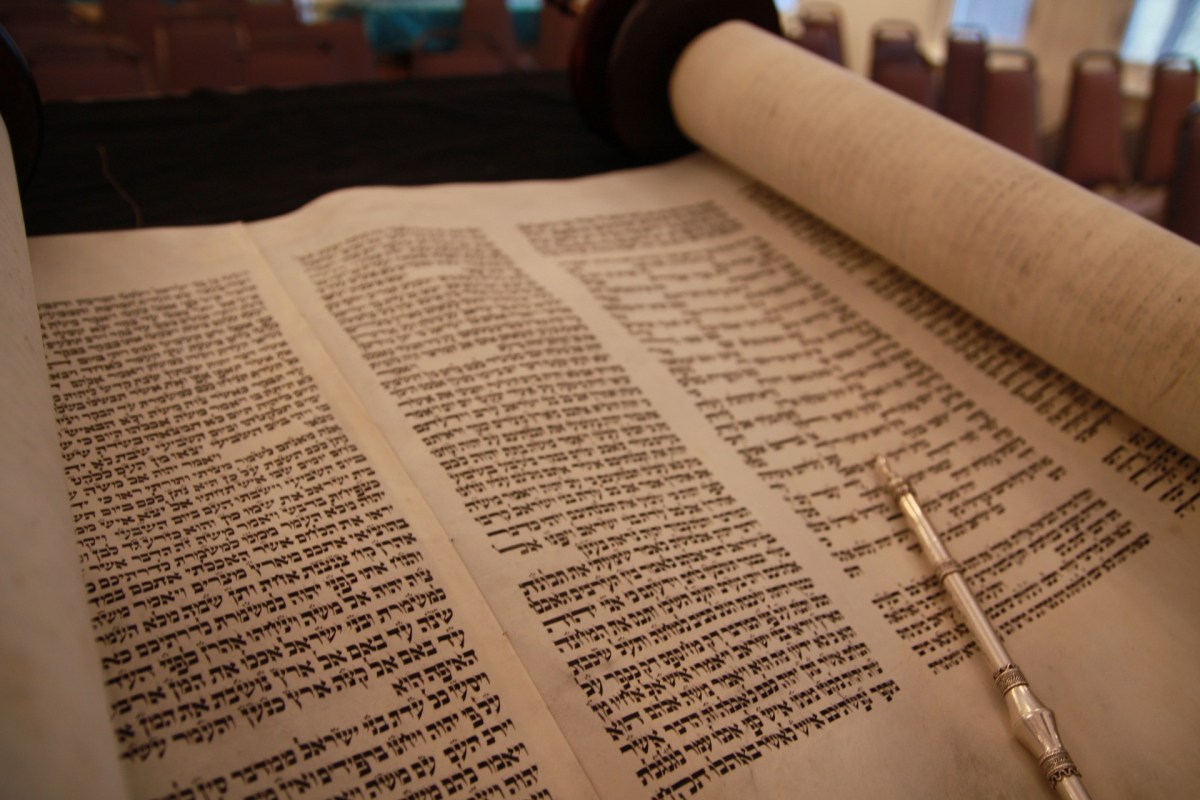
This affirmation of the Law (in Hebrew, תּוֹרָה, transliterated as Torah) is a distinctive characteristic of the book of origins which we attribute, by tradition, to the disciple Matthew. In this Gospel, Jesus holds consistently to the requirements of Torah, advocating strongly for the righteous-justice that is at its heart, debating strenuously the interpretations offered by the scribes and Pharisees, and claiming his role as the authorised Teacher of Torah: “you have one teacher, and you are all students … nor are you to be called instructors, for you have one instructor, the Messiah” (Matt 23:8, 10).

[As a side note: the last verse of Psalm 112—which should not be omitted, despite the suggestion that is possible by the lectionary itself—also resonates with the words of Jesus in Matthew’s Gospel. It is largely in this Gospel that Jesus speaks of evildoers being thrown into “outer darkness” where there will be “weeping and gnashing of teeth” (Matt 8:12; 13:42, 50; 22:13; 24:51; 25:30; cf. Luke 3:28). That phrase, of course, is used by the psalmist to characterise the fate of “the wicked”, who, when they see the blessings of the righteous, “are angry; they gnash their teeth and melt away” (Ps 112:10).]

The strong affirmation of Torah which is expressed in Matthew’s Gospel is ubiquitous throughout Hebrew Scripture. The Law is God’s gift to Israel; in Exodus, God tells Moses, “I will give you the tablets of stone, with the law and the commandment, which I have written for their instructions (Exod 24:12).

In a later retelling the story of Moses, the Deuteronomist has Moses, speaking on behalf of God, telling the Israelites, “take to heart all the words that I am giving in witness against you today; give them as a command to your children, so that they may diligently observe all the words of this law” (Deut 32:46). Indeed, he intensifies this in the next sentence: “this is no trifling matter for you, but rather your very life” (Deut 32:47). The Torah is the very heart of the matter.

Some of the great figures in Israel (at least in the historical sagas that were collected) are remembered as those who were faithful to Torah. On Josiah, the great reformer who recalled a faithless Israel to the covenant, we are told “before him there was no king like him, who turned to the Lord with all his heart, with all his soul, and with all his might, according to all the law of Moses; nor did any like him arise after him” (2 Kings 23:25).

On Hezekiah, who had the neglected Temple cleansed and sanctified and then restored the right worship of the Lord in the Temple (2 Chron 30:8–9), we read that “every work that he undertook in the service of the house of God, and in accordance with the law and the commandments, to seek his God, he did with all his heart; and he prospered” (2 Chron 31:21). And during the restoration of Jerusalem, we are told that Ezra “had set his heart to study the law of the LORD, and to do it, and to teach the statutes and ordinances in Israel” (Ezra 7:10).

*****

Each of these leaders manifested in their life what this Sunday’s psalm states; they are “those who fear the Lord, who greatly delight in his commandments” (Ps 112:1). Elsewhere in the psalms, this same piety is clearly evident. The opening psalm affirms that for the righteous, “their delight is in the law of the Lord, and on his law they meditate day and night” (Ps 1:2). A later psalm declares that “I delight to do your will, O my God; your law is within my heart” (Ps 40:8).

The longest psalm of all, Psalm 119, is an acrostic series of 22 eight-verse stanzas (arranged alphabetically) in which the author(s) consistently affirm this. “I will delight in your statutes; I will not forget your word” (Ps 119:16). By contrast to “the arrogant”, whose “hearts are fat and gross”, the psalmist declares, “I delight in your law” (Ps 119:70).

Again, we hear, “let your mercy come to me, that I may live, for your law is my delight” (Ps 119:77); “if your law had not been my delight, I would have perished in my misery” (Ps 119:92); and “I long for your salvation, O Lord, and your law is my delight” (Ps 119:74). Echoing these words many centuries later, Paul, in the midst of his agonising about Torah in Romans 7, is able to affirm, “I delight in the law of God in my inmost self” (Rom 7:22). Delight for the Law runs through Jewish history.

So this longest of all psalms, a series of 22 meditations on Torah, contains regular affirmations of its place in personal and communal piety: “give me understanding, that I may keep your law and observe it with my whole heart” (v.34); “Oh, how I love your law! It is my meditation all day long” (v.97); “I hate the double-minded, but I love your law” (v.113); “I hate and abhor falsehood, but I love your law” (v.163); and, “great peace have those who love your law; nothing can make them stumble” (v.165).

In the long speech attributed to Moses (but actually crafted many centuries later during the time of a renewal of the covenant), the lawgiver distills the essence of Torah: “now, O Israel, what does the Lord your God require of you? Only to fear the Lord your God, to walk in all his ways, to love him, to serve the Lord your God with all your heart and with all your soul” (Deut 10:12). Love is at the heart of the Law, as later faithful Jews would affirm. the Preacher, writing as Hellenism comes to the ascendancy, declares that “those who fear the Lord seek to please him, and those who love him are filled with his law” (Sirach 2:16).

Just a few centuries later the Pharisee-turned-evangelist Paul declares that “the one who loves another has fulfilled the law” and, citing a number of commandments, emphasises that “love is the fulfilling of the law” (Rom 13:8–10); and again, citing a verse from the Torah, he affirms that “the whole law is summed up in a single commandment, ‘You shall love your neighbour as yourself’” (Gal 5:14, quoting Lev 19:18).

*****

The terms used in Psalm 112 to describe “those who fear the Lord” and “delight in his commandments” are striking. Most strikingly, they are characterised by their “righteousness” (112:3), which is at the heart of Torah. The psalmist places these two concepts in poetic parallelism in the song, “your righteousness is an everlasting righteousness, and your law is the truth” (Ps 119:142).

They are depicted as “upright” (112:2, 4) and they “conduct their affairs with justice” (112:5). This is a central claim of Torah on the people: “justice, only justice you shall follow” (Deut 16:20), “with justice you shall judge your neighbour” (Lev 19:15)—with the corollary that “anyone who deprives the alien, the orphan, and the widow of justice” is to be cursed (Deut 27:19). The call for justice is, likewise, a regular refrain amongst the prophets, calling the people to act justly (Amos 5:18–24; Micah 6:6–8; Isa 5:1–7; 42:1–4; 56:1–2; Jer 21:12; 22:3; 33:15; Ezek 18:5–9; 34:11–16; Zeph 3:5; Zech 7:9, to name just some of the many key passages on justice).

These people are “blessed” (112:2), a word which resounds through the stories and songs of the ancient Israelites. God’s blessings are given in the story of the creation of the world, where God blessed “living creatures of every kind” (Gen 1:22), and then humankind, made “in the image of God” and blessed to “be fruitful and multiply, and fill the earth” (Gen 1:26–28). God blesses Noah and his sons, with the same charge to “be fruitful and multiply, and fill the earth” (Gen 9:1), and Abram (Gen 12:2), and through Abram promises to bless “all the families of the earth” (Gen 12:3; the b,easing is on “all the nations of the earth” at Gen 22:18).

An early prayer, later attributed to the priests, began, “the Lord bless you and keep you” (Num 6:23); these words are picked up in a later psalm, praying “may God be gracious to us and bless us” (Ps 67:1–7). God’s blessing is indeed realised by those who are faithful to God’s way, as expressed in Torah, with each of the patriarchs blessed: Abraham (Gen 22:15–18), Isaac (Gen 26:24), Jacob (Gen 28:1–4), and Joseph (Gen 49:22–26).

God blessed the people in the land (Deut 30:16), Elkanah and Hannah, parents of Samuel (1 Sam 2:18–20), David (2 Sam 7:28–29), and on through the ahead the blessing continued for the faithful people of Israel (Psalms 3:8; 5:12; 24:5; 29:11; 63:4; 107:38; 115:12–13; 133:3; Isa 44:1–5; Jer 31:23; Ezek 34:25–31; 37:26; Hag 2:19; Joel 2:14; Mal 3:10).

These blessed people, righteous and upright, thus are said to have exhibited the character of God, for they are “gracious, merciful and righteous” (Ps 112:4). This description echoes the refrain heard many times through the Hebrew Scriptures, affirming that the Lord God is “gracious and merciful, slow to anger and abounding in steadfast love” (Exod 34:6; 2 Chron 30:8–9; Neh 9:17, 32; Jonah 4:2; Joel 2:13; Ps 86:15; 103:8, 11; 111:4; 145:8–9). This is the Lord God who enters into covenant, time and time and again, with the people of Israel; they, in turn, exemplify the qualities of God in their daily lives. They are “gracious, merciful, and righteous” (Ps 112:4).

Such a strong affirmation and deep appreciation for Torah, as we find in this psalm—and, indeed, in a number of other psalms—underlies the portrayal of Jesus in Matthew’s Gospel that we will encounter, week by week, throughout this Year A of the liturgical cycle. This is the emphasis that Matthew offers, for he wants to heighten the fidelity of Jesus as a Torah-abiding Jew, and encourage his hearers and readers to follow that same pathway of faithfulness to the Torah. Jesus stands firmly in the tradition of the psalms, grateful to God for his covenant relationship with God, and seeking to live with justice and steadfast love in all the ways that God expects and requires; and he beckons us to follow in that same pathway in our lives of faith.

*****

See also

Justice, kindness, and humility (Micah 6; Epiphany 4A)

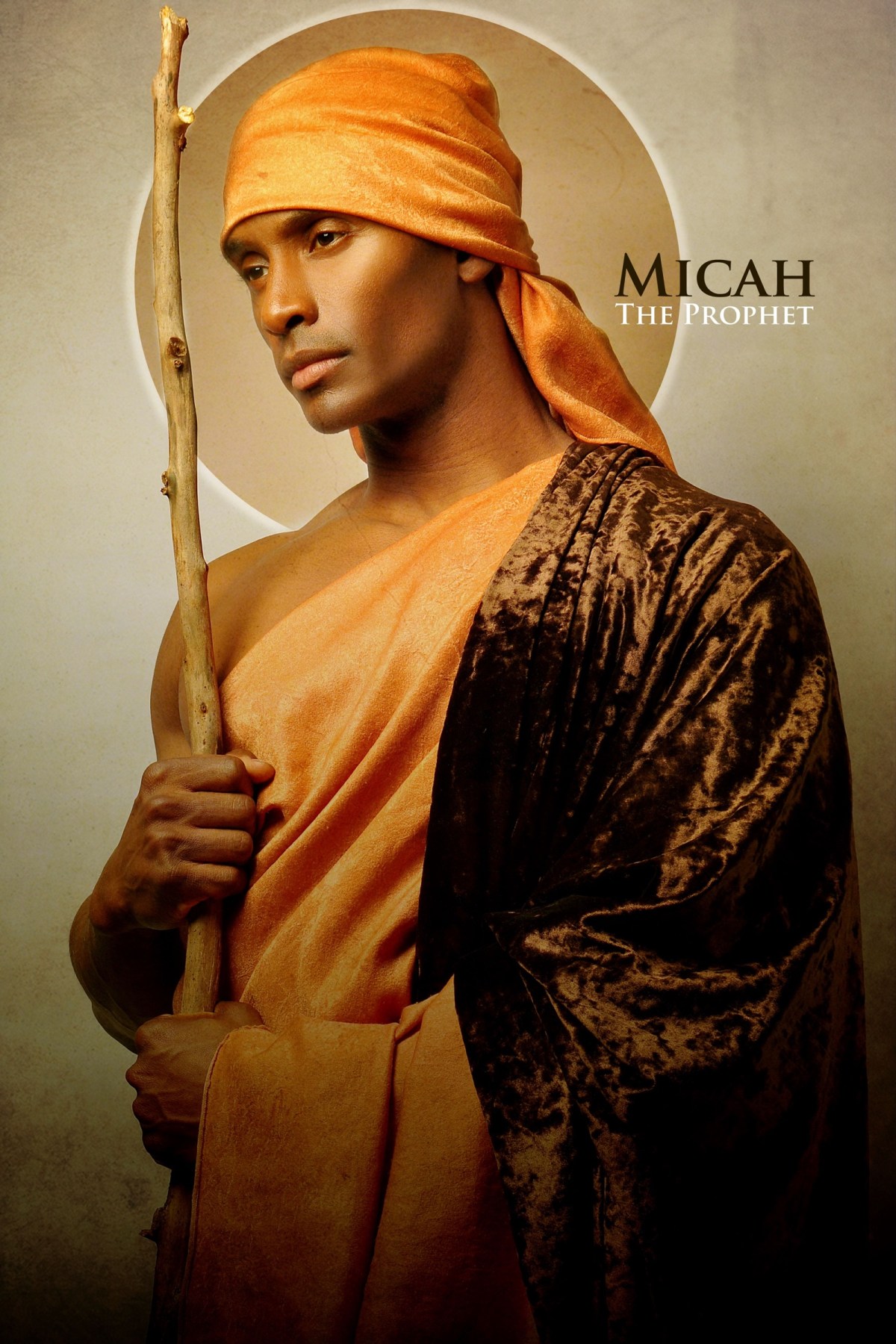
This Sunday, the selection of Hebrew Scripture that is offered by the lectionary comes from the book of the prophet Micah (Mic 6:1–8). This book is best known for a number of oracles, including a verse (6:8) that is included in this Sunday’s reading.

The first well-known oracle is the the vision of universal peace that Micah utters: “many nations shall come and say, come, let us go up to the mountain of the Lord … they shall beat their swords into plowshares, and their spears into pruning hooks” (4:1–4).

Second, there is an oracle best known because it is quoted in Matthew’s Gospel: “you, O Bethlehem of Ephrathah, who are one of the little clans of Judah, from you shall come forth for me one who is to rule in Israel” (5:2–6; see Matt 2:6). In the context in which Micah speaks these words, they refer to a coming ruler of Judah. In Matthew’s narrative, the prophetic word provides support for the notion that the Messiah was to be born in Bethlehem (Matt 2:3–5; also John 7:42), which then means that the story of the birth of Jesus needs to take place in Bethlehem. Two evangelists work independently to tell stories that, in quite different ways, adhere to this requirement (Matt 2:1; Luke 2:4).

The third oracle of Micah which is well known—the one offered in this Sunday’s lectionary—appears within an extended scene that reads like a lawsuit being prosecuted in court. It begins with the charge: “rise, plead your case before the mountains, and let the hills hear your voice … for the Lord has a controversy with his people, and he will contend with Israel” (6:1–2). Then it moves through some argumentation, before the famous rhetorical question is posed: “what does the Lord require of you, but to do justice, and to love kindness, and to walk humbly with your God?” (6:8).

In its immediate literary context, the verse stands as a climax to the case being mounted by the prophet, as he instructs the people,of a Israel what they are to do: to do justice, offer kindness, and live with humility. This verse has gained a life of its own; it is regularly quoted to support people of faith undertaking acts of social justice, and it adorns a multitude of t-shirts as a succinct “quotable quote”.

This verse has been the inspiration for many organisations bearing the prophet’s name—locally, there is Micah Australia (“empowering Australian Christians to advocate for global justice”; see https://www.micahaustralia.org), which is part of the Micah Challenge International (birthed by the World Evangelical Alliance and Micah Network; see https://lausanne.org/content/lga/2015-03/micah-challenge-international).

The historical context for this verse is instructive. The prophet Micah is introduced in the opening chapter of the book bearing his name, as “Micah of Moresheth in the days of Kings Jotham, Ahaz, and Hezekiah of Judah” (Mic 1:1). This places him in the second half of the 8th century BCE. As he was active in the southern kingdom, he did not directly experience the conquest and exile of people in the northern kingdom in 721 BCE, although he must have been aware of the disasters falling his countrymen to the north. His prophetic activity is thus a couple of decades after Amos and Hosea.

Indeed, the southern kingdom of Judah directly experienced a military attack from the Assyrian king Sennacherib in 701, attacking several towns in Judah (see 2 Kings 18–19; Micah 1:10–16) before retreating from Jerusalem. As Micah says, “the sins of the house of Israel” (1:5) have reached down and infected the house of Judah; “her wound is incurable; it has come to Judah; it has reached to the gate of my people, to Jerusalem” (1:9, 12).

Under Hezekiah, the economic patterns in Judah changed from a reliance on barter, to an international trading society. Literacy rates rose, and the size of Jerusalem grew to be a city with a population of around 25,000—which is considered to be about five times larger than the population of Jerusalem under Solomon!

Associated with this growth was the development of corrupt practices and the rise of hypocrisy amongst the people. The rulers in Jerusalem “give judgment for a bribe, its priests teach for a price, its prophets give oracles for money; yet they lean upon the Lord and say, ‘Surely the Lord is with us! No harm shall come upon us’” (3:11).  

Micah, like many other prophets, conveys God’s deep concern about the way that some in society were profiting unjustly from their mistreatment of the poor. He rails against those who “covet fields, and seize them; houses, and take them away; they oppress householder and house, people and their inheritance” (2:2). Their haughty demeanour will swiftly turn to lamenting, as they cry out “we are utterly ruined; the Lord alters the inheritance of my people; how he removes it from me!” (2:4).

In another oracle, he dramatises the state of the people, attacking the heads and rulers of the people as those “who tear the skin off my people, and the flesh off their bones; who eat the flesh of my people, flay their skin off them, break their bones in pieces, and chop them up like meat in a kettle, like flesh in a cauldron” (3:1–3). He decries their selfish actions in very specific terms: “its rulers give judgment for a bribe, its priests teach for a price, its prophets give oracles for money” (3:11).

Still later, Micah remonstrates with the people for “the treasures of wickedness in the house of the wicked, and the scant measure that is accursed” (6:10). He conveys God’s displeasure: “Can I tolerate wicked scales and a bag of dishonest weights? Your wealthy are full of violence; your inhabitants speak lies, with tongues of deceit in their mouths.” (6:11–12). He laments that “the faithful have disappeared from the land” (7:2); of those who are left, he says, “their hands are skilled to do evil; the official and the judge ask for a bribe, and the powerful dictate what they desire; thus they pervert justice” (7:3).

The people are accused of following “the statutes of Omri and all the works of the house of Ahab” (6:16)—two kings who are condemned for their idolatrous and evil ways (on Omri, see 1 Ki 16:25–26; on his son Ahab, see 1 Ki 16:30, 22:37–39).

Micah, like Amos before him, declares that punishment will come on the people in a time of deep darkness: “it shall be night to you, without vision, and darkness to you, without revelation; the sun shall go down upon the prophets, and the day shall be black over them” (2:6; cf. Amos 5:18–20). Because of the evil deeds of the heads and rulers, “Zion shall be plowed as a field; Jerusalem shall become a heap of ruins, and the mountain of the house a wooded height” (3:12).

In a future time of anger and wrath, says the prophet, God will wreak vengeance: “I will cut off your horses from among you and will destroy your chariots; and I will cut off the cities of your land and throw down all your strongholds; and I will cut off sorceries from your hand, and you shall have no more soothsayers; and I will cut off your images and your pillars from among you” (5:10–15). The disdain with which the people have treated their covenant with the Lord, described in some detail here by the prophet, will merit this savage punishment.

The passage that appears in this Sunday’s lectionary offering thus provides the key to behaviour for the people of Israel in their situation of turmoil and upheaval. The prophet calls them back to fidelity to the covenant. His words stand also as a clarion call to people of faith in subsequent times who stand in the heritage and tradition of Micah: “do justice, love kindness, and walk humbly with your God”. May this be how we live!

Restore us, O God; let your face shine, that we may be saved (Psalm 80; Advent 4)

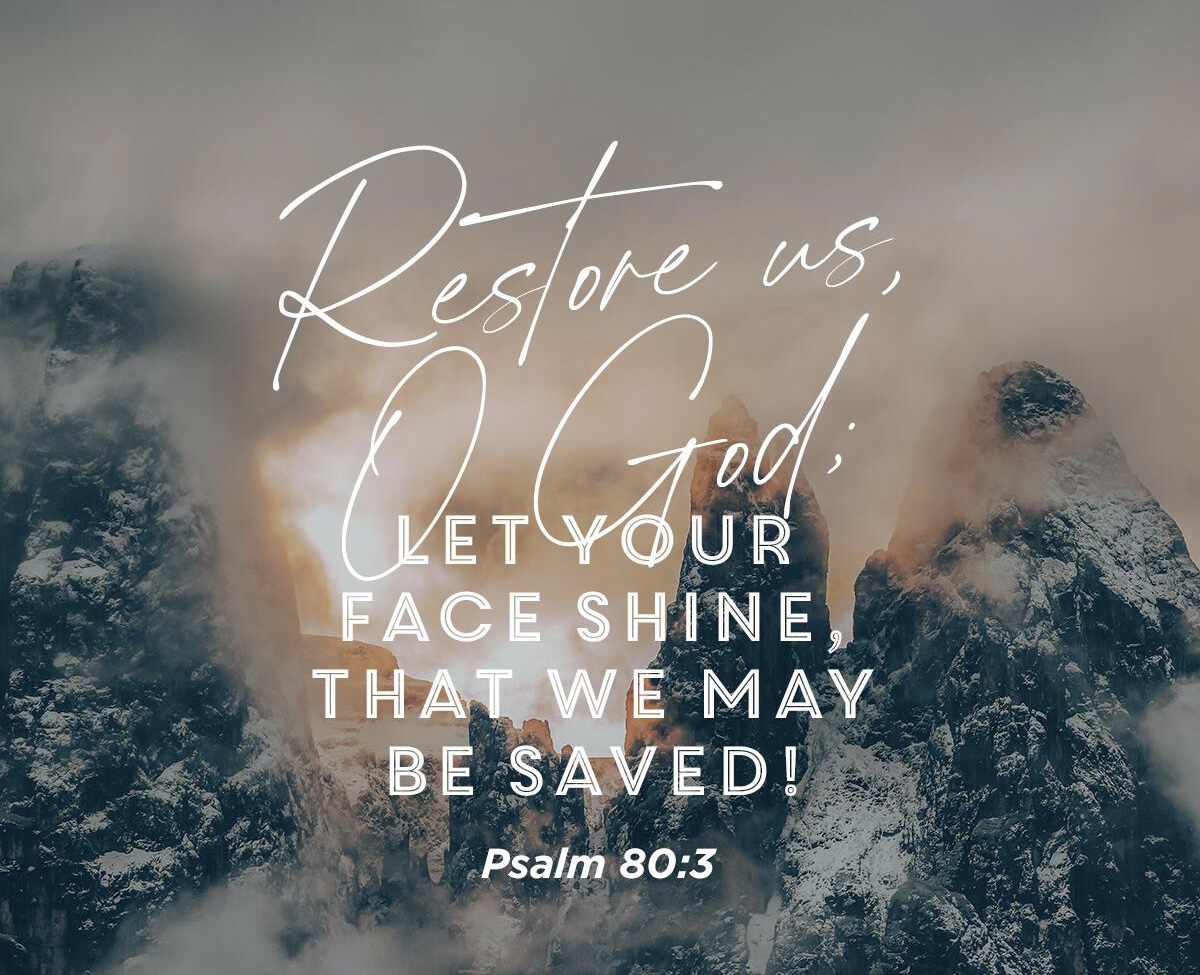
“Restore us, O God; let your face shine, that we may be saved.” So pleads the psalmist, in a psalm that is offered by the lectionary this coming Sunday, Advent 4. The verses chosen (Psalm 80:1–7, 17–19) contain a plea to God, to act in defence of Israel at a time of deep distress. Perhaps this psalm is chosen for this particular Sunday, a week before Christmas, because it refers to “the one at your right hand, the one whom you made strong for yourself” (80:17).

The section of the psalm that is omitted by the lectionary recounts the story of Israel, using the familiar image of a vine (80:8–10) which grew and spread (80:11), but now is ravaged by passers-by (80:12–13), before lamenting the destruction that has taken place amongst the people (80:14–16). The setting seems clearly to reflect the experience of exile in Babylon, after the devastation of the city of Jerusalem by the Babylonian army.

In this psalm, the writer prays for God to act. However, this is not just a single prayer; rather, the writer pleads with God to restore Israel to her former glory. “Restore us” is the persistent plea (80:3, 7, 19), along with calls to “give ear” (80:1), “stir up your might” (80:2), “turn again” (80:14), “come to save us” (80:2), and “give us life” (80:18).

This recurring refrain of petitions is accompanied by the request for God to “let your face shine” (80:3, 7, 19); the prayers accumulate in intensity, reflected in the wording that builds throughout the psalm: “restore us, O God” (80:3); “restore us, O God of hosts” (80:7); “turn again, O God of hosts” (80:14); “restore us, O LORD God of hosts” (80:19).

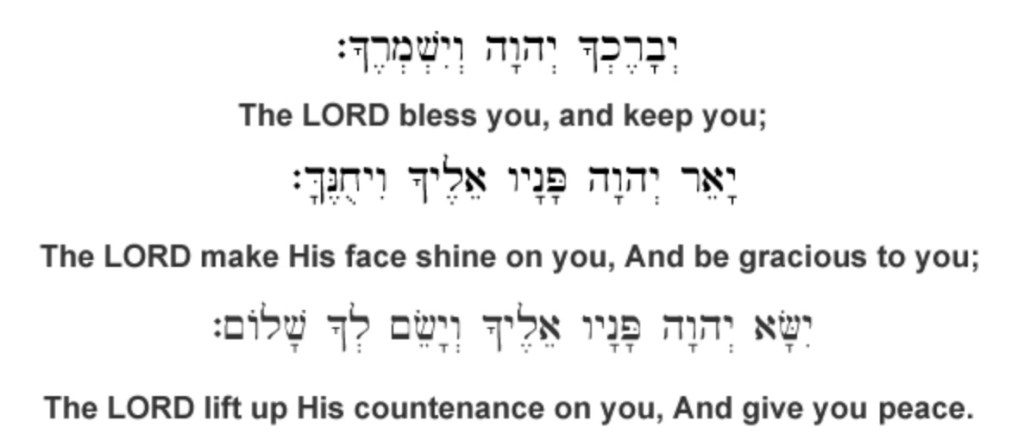
The request for God to let God’s face shine reflects the ancient priestly blessing recorded in Num 6:24–26: “The LORD bless you and keep you; the LORD make his face to shine upon you, and be gracious to you; the LORD lift up his countenance upon you, and give you peace.”

In this three-line prayer, the second line includes the phrase, “the LORD make his face to shine upon you”. The simple parallelism in this blessing indicates that for God to “make his face shine” (v.25) is equivalent to blessing (v.24) and lifting up his countenance (v.26). The second verb in each phrase is, likewise, in parallel: the psalmist asks God to keep (v.24), be gracious (v.25), and grant peace (v.26). These words offer a prayer seeking God’s gracious presence for the people of Israel.

The face of God was a matter of some significance in the ancestral story of Jacob, who becomes Israel. Estranged for decades from his twin, Esau, when they meet up again, Jacob has just spent the night wrestling with a man (Gen 32:22–32). Jacob’s hip is struck, and he walks with a limp; yet he describes the place where this happened as Peniel, “the face of God”, and characterises the encounter as a time when “I have seen God face to face, and yet my life is preserved” (32:30). To see God face-to-face was a rare and intense experience. Jacob was, indeed, blessed.

When Esau then appears and informs Jacob that he now accepts that the birthright which Jacob stole years ago from Esau should rightly remain with him (33:9), Jacob marvels at the favour which Esau shows him, saying, “truly to see your face is like seeing the face of God—since you have received me with such favour” (33:10). God’s face, evident in Esau, is a face that bestows grace and favour.

So the Psalmist sings, “My soul thirsts for God, for the living God. When shall I come and behold the face of God?” (Ps 42:2). And after the incident involving the idolatry of the golden bull (Exod 32:1–35), Moses yearns to know that he has found favour with God: “if I have found favour in your sight”, he prays, “show me your ways, so that I may know you and find favour in your sight” (33:13). God promises that “my presence will go with you, and I will give you rest” (33:14), but Moses presses his case: “show me your glory, I pray” (33:18).

God holds fast, saying that “I will make all my goodness pass before you, and will proclaim before you the name, ‘The LORD’; and I will be gracious to whom I will be gracious, and will show mercy on whom I will show mercy” (33:19), but then stops short of full self-revelation, declaring, “you cannot see my face; for no one shall see me and live” (33:20). Moses is granted a view of God’s “back”, but is not able to see the face of God (33:23).

(The Hebrew word here translated as “back” refers to the “hindquarters”—a polite way of saying that Moses saw only God’s exposed buttocks, rather than his smiling face. Almost every translation chooses the polite wording, “my back”. The King James Version comes closest to an honest translation with “my back parts”.)

Yet the request for God’s face to shine upon people is pressed in a number of other psalms. “There are many”, says the psalmist, “who say, ‘O that we might see some good! Let the light of your face shine on us, O LORD!’” (Ps 4:6). In Psalm 31, the psalmist sings, “Let your face shine upon your servant; save me in your steadfast love” (Ps 31:16). Again in Psalm 67, the psalmist echoes more,explicitly the Aaronic Blessing, praying, “May God be gracious to us and bless us and make his face to shine upon us—Selah—that your way may be known upon earth, your saving power among all nations” (Ps 67:1–3).

In the seventeenth section of the longest of all psalms, Psalm 119, a prayer asking for God to help the psalmist keep the Law culminates with the request for God’s face to shine: “Turn to me and be gracious to me, as is your custom toward those who love your name. Keep my steps steady according to your promise, and never let iniquity have dominion over me. Redeem me from human oppression, that I may keep your precepts. Make your face shine upon your servant, and teach me your statutes.” (Ps 119:132–135).

Another psalm indicates that human faces can shine: “you [God] cause the grass to grow for the cattle, and plants for people to use, to bring forth food from the earth, and wine to gladden the human heart, oil to make the face shine, and bread to strengthen the human heart” (Ps 104:14–15). The Preacher, Qohelet, links a shining human face with Sophia, Wisdom. In response to the question, “who is like the wise man? and who knows the interpretation of a thing?”, the Preacher proposes: “Wisdom makes one’s face shine, and the hardness of one’s countenance is changed” (Eccles 8:1). A shining face is a sign of being imbued with Wisdom!

This idea is then picked up in apocalyptic writings, such as 2 Esdras, writing about “the sixth order, when it is shown them how their face is to shine like the sun, and how they are to be made like the light of the stars, being incorruptible from then on” (2 Esd 7:97). In a later chapter, as Ezra encounters a weeping woman, he reports, “While I was talking to her, her face suddenly began to shine exceedingly; her countenance flashed like lightning, so that I was too frightened to approach her, and my heart was terrified” (2 Esd 10:25).

The trajectory flows on into the New Testament, as Paul in writes to the believers in Corinth, applying the language of a shining face to Jesus: “it is the God who said, “Let light shine out of darkness,” who has shone in our hearts to give the light of the knowledge of the glory of God in the face of Jesus Christ” (2 Cor 4:6).

The culmination of this trajectory is reached in the accounts of the Transfiguration of Jesus, on a mountain, when Jesus was transfigured (Mark 9:2), “the appearance of his face changed” (Luke 9:29), and “his face shone like the sun” (Matt 17:2). And so, the brightly shining face of Jesus, God’s chosen one, points to the enduring steadfast love and covenant faithfulness of God, which is what is remembered and celebrated with such clarity each Christmas.

And so it is that these verses from Psalm 80 stand on the fourth Sunday in Advent as a pointer to the coming Christmas celebrations. (And the divine glow, of course, is there to see in so many of the classic Christmas images that adorn Christmas cards and shop windows!)

New heavens and a new earth (Isaiah 65; Pentecost 23C)

The Hebrew Scripture passage offered by the lectionary this coming Sunday comes from the third main section of the book of Isaiah (chapters 56–66). This section of the book differs from the two main sections that precede it—the pre-exilic section (chapters 1–39) and the section as the exile itself is drawing to an end (chapters 40–55).

The prophet begins this third section with a familiar prophetic announcement which sets forth the classic prophetic programme, with the classic divine assurance: “maintain justice, and do what is right, for soon my salvation will come, and my deliverance be revealed” (Isa 56:1). The section offered by the lectionary (Isa 65:17–25) sets out how that justice will come to be, through the vision of “new heavens and a new earth”.

Written during the period when the people of Judah were returning to their land, to the city of Jerusalem (from the 520s BCE), this section of Isaiah sets out what this justice will look like through a series of powerful oracles. The prophet sounds a vivid counter-cultural note in the midst of the events of his time. He begins with the promise to foreigners and eunuchs that “I will give, in my house and within my walls, a monument and a name better than sons and daughters; I will give them an everlasting name that shall not be cut off” (Isa 56:5).

This is a striking contrast to the narrative provided in the books of Ezra and Nehemiah, which tell of the return to the city, the rebuilding of the walls, the renewal of the covenant and the public reading of the Law, the rededication of the Temple—and actions designed to remove foreigners (especially women) from within Israel (see Ezra 10; Neh 13).

Ezra and Nehemiah exhibited a zealous fervour to restore the Law to its central place in the life of Israel. Ezra, learning that “the holy seed has mixed itself with the peoples of the lands” (Ezra 9:2), worked with “the elders and judges of every town” to determine who had married foreign women; the men identified “pledged themselves to send away their wives, and their guilt offering was a ram of the flock for their guilt” (Ezra 10:19). (So much for the importance of families!)

Nehemiah considered that this project to “cleanse [the people] from everything foreign” (Neh 13:30) was in adherence to the command that “no Ammonite or Moabite should ever enter the assembly of God, because they did not meet the Israelites with bread and water, but hired Balaam against them to curse them” (Neh 13:1–2; see Num 22—24). The restoration of Israel as a holy nation meant that foreigners would be barred from the nation.

The oracle at the start of the third section of Isaiah stands in direct opposition to this point of view; “the foreigners who join themselves to the Lord … and hold fast my covenant—these I will bring to my holy mountain, and make them joyful in my house of prayer; their burnt offerings and their sacrifices will be accepted on my altar; for my house shall be called a house of prayer for all peoples” (Isa 56:6–7). This is what God’s justice looks like!

Jesus, of course, quoted this last phrase (“a house of prayer for all people”) in the action he undertook in the outer court of the Temple (Mark 11:17). Later, the welcome offered to the Ethiopian court official by Philip, who talked with him about scripture and baptised him, a eunuch (Acts 8:26–38), is consistent with the prophetic words, “to the eunuchs who keep my sabbaths, who choose the things that please me and hold fast my covenant, I will give them an everlasting name that shall not be cut off” (Isa 56:4–5).

From the earliest days, the church practised an inclusive welcoming of diversity that was consistent with this prophetic declaration. What went wrong, we may ponder, for the church to dig itself into the corner of exclusivism and judgementalism that unfortunately has characterised too many manifestation of church?

The particular passage that is provided for this coming Sunday is almost at the end of the book. It offers a wonderfully climactic vision to this section of the book—and indeed to the whole of Isaiah. The prophet has continued to explain what it means to adhere to the way of justice, practising the fast that the Lord desires.

The promise is that Israel will have a new name: “you shall no more be termed Forsaken, and your land shall no more be termed Desolate; but you shall be called My Delight Is in Her, and your land Married; for the Lord delights in you, and your land shall be married” (Isa 62:4). We can see the symbolic significance of names in considering the prophet Hosea and in Isaiah 8, for example.

By contrast, vengeance will be the experience of Edom; using the image of trampling down the grapes in the wine press, the prophet reports the intention of God: “I trampled down peoples in my anger, I crushed them in my wrath, and I poured out their lifeblood on the earth” (63:1–6). So vigorously does God undertake this task, that he is attired in “garments stained crimson” because “their juice spattered on my garments and stained all my robes” (63:1–3).

Once again, the prophet speaks in graphic terms. Edom is a symbolic portrayal of the Babylonian Empire, which had been dominant in the middle eastern world of the day for some time—yet it had recently been subsumed by the Persian Empire (under whom the people of Judah were able to return home). The punishment was on the horizon, either the horizon immediately in view, or the horizon that had just passed. Edom (Babylon) had been conquered—a happening interpreted by the anonymous prophet as divine retribution.

Confronted with this display of wrath and vengeance, the prophet adopts an attitude of penitence, yearning for God to “look down from heaven and see, from your holy and glorious habitation” (63:15). His plea for the Lord to “tear open the heavens and come down, so that the mountains would quake at your presence—to make your name known to your adversaries, so that the nations might tremble at your presence!” (64:1–2) must surely have been in the mind of the evangelists as the reported the baptism of Jesus, when he “saw the heavens torn apart and the Spirit descending like a dove on him” (Mark 1:10).

The book ends with a sequence in which the prophet reports the words of the Lord which indicate that Israel will be restored (65:1–16), followed by the statement that the Lord is “about to create new heavens and a new earth” (65:17–25; 66:22–23)—the passage provided by the lectionary this week. It is a wonderfully climactic, all-encompassing vision. Not only will Jerusalem enjoy prosperity, but “the wealth of the nations [shall be] like an overflowing stream” (66:12).

The vision of this penultimate chapter is global; it is for “all people” (picking up the hope of Isa 40:5), for “all the nations of the earth”, as both Jeremiah (Jer 33:9) and Haggai foresee (Hag 2:6–9), for “all flesh” as Joel predicts (Joel 2:28–29), for “every living creature”, as the final vision of Ezekiel portrays (Ezek 47:7–12). The “new heavens and new earth” (Isa 65:17) are for everyone of Israel (Isa 65:18–19), indeed, even for all creatures, “wolf and lamb, lion and ox” (Isa 65:25).

This vision is, of course, taken up and expanded in the closing chapters of the final book of the New Testament (Rev 21:1–22:7). That provides a globally wondrous vision to end the writings of the renewed covenant. The closing vision of Trito-Isaiah, the foundation for the vision of the seer at Patmos, has incorporated a number of references to earlier prophetic words: building houses and planting vineyards (65:21) recalls the words of Jeremiah (Jer 29:5–7); the image of wolves lying with lambs and lions “eating straw like the ox” recalls the vision of Isaiah (Isa 11:6–7).

The promise that “they shall not hurt or destroy all on my holy mountain” (65:25) recalls that same vision of Isaiah (Isa 11:9), whilst the next promise about not labouring in vain nor bearing children for calamity (65:23) reverses the curse of Gen 3:16–19. The story of creation from the beginning of Genesis is evoked when the Lord asserts that “heaven is my throne and the earth is my footstool … all these things my hand has made” (66:1–2); these are the words which Stephen will quote back to the council in Jerusalem (Acts 7:48–50) and will lead to his death at their hands. All the allusions together make this a fine conclusion to the visionary prophetic stream of the first covenant.

And yet, even to the very end of this book, the judgement of the Lord is evident; the prophet declares that “the Lord will come in fire, and his chariots like the whirlwind, to pay back his anger in fury, and his rebuke in flames of fire; for by fire will the Lord execute judgment, and by his sword, on all flesh; and those slain by the Lord shall be many” (66:15–16).

Nevertheless, the glory of the Lord shall be declared “among the nations” (66:19) and “they shall bring all your kindred from all the nations as an offering to the Lord” (66:20). The universalising inclusivism that was sounded in the oracle at the start of this prophet’s work (in chapter 56) is maintained through into this closing oracle. In “the new heavens and the new earth which I will make … all flesh shall come to worship before me, says the Lord” (66:22–23). The vision lives strong! It’s a good way to end the series of readings from the prophets we have followed during the past few months.

The righteous live by their faith (Habakkuk 2; Pentecost 21C)

This Sunday, the lectionary invites us to hear two sections of the prophet Habakkuk (Hab 1:1–4, 2:1–4). Habakkuk is a shadowy figure, known, really, for only one statement—just half of one verse. That short statement, “the righteous live by their faith [or faithfulness]” (2:4b), stands as the text upon which Paul developed his important theological statement in Romans: “in it [the gospel] the righteousness of God is revealed through faith for faith; as it is written, ‘the one who is righteous will live by faith’” (Rom 1:17). As well, Paul quotes this verse in his letter to the Galatians (Gal 3:11) and the verse is cited in the “word of exhortation” sent to the Hebrews (Heb 10:38). So it appears in significant writings if the early Christian movement.

From an ancient Israelite figure about whom very little is known, this one short phrase has played such a foundational role in articulating a central tenet of Christian faith. It runs from Paul’s assertion that “the righteous live by their faith”, through Augustine’s affirmation that we are justified by grace through faith, to Luther’s central claim of “sola fide, sola scriptura, solus Christus, sola gratia”, into the contemporary evangelical doctrine of “justification by faith alone”.

Habakkuk was one of a number of Israelite prophets who were active in the few decades leading up to the conquering of the southern kingdom by Babylon in 587 BCE, and the removal into exile of the people as a result of that event. In this context, Habakkuk declares, “I will stand at my watch post, and station myself at the rampart” (Hab 2:1). From his watch post, he declaims the words of judgement given to him by God: the wealthy will be called to account by their creditors, violent terrors will arise, and “the cup in the Lord’s right hand will come around to you, and shame will come upon your glory” (Hab 2:15).

Amidst these thundering pronouncements, Habakkuk does offer hope, declaring that “the earth will be filled with the knowledge of the glory of the Lord, as the waters cover the sea” (2:14), and imploring the people, “the Lord is in his holy temple; let all the earth keep silence before him!” (2:20). He affirms that God’s “glory covered the heavens, and the earth was full of his praise” (3:3)—but that glory will swiftly lead to “the days of calamity” (3:16). The threat of Exile looms large for this prophet.

In the context of Habakkuk’s prophetic activity, the affirmation that “the righteous live by their faith [or faithfulness]” (2:4b) is the word that God gives to the prophet, responding to his complaints about what sufferings are taking place. God is “rousing the Chaldeans, that fierce and impetuous nation, who march through the breadth of the earth to seize dwellings not their own” (1:6), and through their dreadful and fearsome activities, God is “destroying nations without mercy” (1:17).

That God is using foreigners to deal with Israel is a striking theological development—one that is at odds with the traditions that emphasise Israel as a chosen nation, holy and set apart, dedicated to the Lord; the nation alone through whom the Lord God works. That this God will use foreigners is a theme found also in the later writings of Deutero-Isaiah (Isa 40–55), where Cyrus, the Persian ruler, is acclaimed as the one chosen by God, the Messiah, to allow the people of Judah to return to their land (Isa 44:24–45:13).

Habakkuk laments and complains; God instructs him to “look at the proud—their spirit is not right in them”, and to be assured that “the righteous live by their faith” (2:4). The theme of righteousness that is signalled here by the prophet is a central motif in Hebrew Scriptures. It appears in the ancestral stories concerning the key figures of Abraham (Gen 15:6), Saul (1 Sam 26:23), David (2 Sam 22:21–26; 1 Ki 3:6), and Solomon (1 Ki 10:9).

Further, Job exults in his righteousness (Job 27:6; 29:14) and the psalmists petition God on the basis of their righteousness (Ps 5:8; 7:8; 112:1–10). Righteousness is praised in assorted proverbs (Prov 1:3; 8:20; 11:4–6; 12:28; 15:9; 16:8; 21:3, 21) and figures in numerous prophetic oracles (Isa 1:22; 5:7; 28:17; 32:16–17; 54:14; Jer 22:3; Ezek 18:19–29; Dan 9:24; 12:3; Hos 10:12; Amos 5:24; Zeph 2:3; Mal 4:1–3). The message given to Habakkuk holds strong throughout Israelite history, and then continues to sound out, as we have seen, throughout the 20 centuries of Christian history.

I will pour out my spirit on all flesh (Joel 2; Pentecost 20C)

This Sunday, the lectionary invites us to hear a section of the prophet Joel. It is a passage which contains words well known to Christians, as the words about dreams and visions and prophesies (Joel 2:28–32) are quoted by Peter when speaking on the Day of Pentecost (Acts 2:14–21).

The words that Joel speaks to the people of his day begins with lament; he calls for repentance amongst the people of Judah as the day oft he Lord approaches. Nothing in this book provides any clues as to the time when Joel was active. The identification of the prophet as “son of Pethuel” (Joel 1:1) gives no clue, as Pethuel appears nowhere else in the Hebrew Scriptures—indeed, the name Joel, itself appears nowhere else. The name appears to combine the divine names of Jah and El, suggesting that it may be a symbolic creation. Was Joel an historical person?

Lament, as we have noted, is the opening note sounded by Joel, as he calls on the “ministers of God” to “put on sackcloth and lament” (1:13). This call reminds us of the response of the pagans in Nineveh (Jonah 3), whilst his remonstrations that “the day of the Lord is near” (1:15) echoes the motif of “the day” already sounded by other prophets (Amos 5:18–20; Isa 2:12, 17; 13:6–8; 34:8; Zeph 1:7, 14–15; Jer 35:32–33; 46:10).

This day forms the centrepiece of Joel’s undated prophecies, as he describes that day as “a day of darkness and gloom, a day of clouds and thick darkness!” (Joel 2:2), when “the earth quakes before them, the heavens tremble, the sun and the moon are darkened, and the stars withdraw their shining” (2:10). He describes the response of the people “in anguish, all faces grow pale” (2:6).

However, Joel adheres to the constant thread running through Hebrew Scriptures, that the Lord is “gracious and merciful, slow to anger, and abounding in steadfast love, and relents from punishing” (2:13). Because of this, he yearns for the people to “turn with all your heart, with fasting, with weeping, and with mourning” (2:12), sensing that there might be hope of restitution for the people.

Joel calls for the people to gather (2:15–16); the oracle that follows paints a picture of abundance and blessing (2:18–27), affirming that “my people shall never again be put to shame” (2:27).

The prophet then speaks the words which are offered to us in this Sunday’s first reading; words which have been given a central place in the later story of the Christian church. Here, the prophet foreshadows that the blessings of God will be manifest through the outpouring of the spirit: “your sons and your daughters shall prophesy, your old men shall dream dreams, and your young men shall see visions; even on the male and female slaves, in those days, I will pour out my spirit” (2:28–29).

This promise is specifically for “all flesh”; this universal vision informs the whole outward impulse of the movement of followers of Jesus, after the day of Pentecost, which Peter interprets as being a fulfilment of this prophecy (Acts 2:14–21). Events following on from that day, as recorded in Acts, show how those words come to be fulfilled in the movement initiated by Jesus and his followers. And in the early days of this movement, in a letter written by Paul, the promise that “everyone who calls on the name of the Lord shall be saved” is reiterated (Rom 10:13, quoting Joel 2:32; and note a different version quoted at 2 Tim 2:19).

The day of the Lord that is envisaged by Joel (2:31) will signal a significant reversal for Israel. The Lord laughs at other nations (3:1–8), a reversal that pivots on a turn from despair to hope, from the threats of judgement to a glorious future (3:9–21). Joel repeats the irenic vision of swords being beaten into ploughshares (3:10; see Isa 2:4; Mic 4:3); he sees a ripe harvest (3:13), the land will drip with sweet wine, and there will be milk and water in abundance (3:18). The voice of the Lord “roars from Zion, and utters his voice from Jerusalem, and the heavens and the earth shake” (3:16; cf the similar pronouncement of Amos at Am 1:2; 3:8).

The last word of this book, “the Lord dwells on Zion” (3:21), provides assurance and certainty for the future. These words of hope promises a peaceful future for the nation. When Joel might have been speaking these words cannot be definitively determined; it could have been under the Assyrian threat, during the Babylonian dominance, in the time of exile, or after the return to the land.

Whenever the prophet spoke these words, the promise of hope holds good in each of these scenarios. And that promise of hope has been taken up in the movement that was initiated by Jesus, in Peter’s Pentecost speech—which provides a programmatic announcement of what then takes place as the good news spreads from Jerusalem and Judea, into Samaria, and out to the ends of the earth. God’s Spirit continues to be active. And so, “everyone who calls on the name of the Lord shall be saved”.

God, merciful and gracious: themes in The Prophets

That God’s grace is central to who God is and how God relates to human beings, is a fundamental claim in the writings of Paul. This affirmation is key to the extended theological,discussion we find in Romans, Paul’s longest letter, where Paul affirms that those who believe “are now justified by his grace as a gift, through the redemption that is in Christ Jesus” (Rom 3:24).

After citing the example of Abraham, justified by “the righteousness of faith” (4:13), which means that the promise rests on grace (4:16), Paul explains that, “since we are justified by faith, we have peace with God through our Lord Jesus Christ, through whom we have obtained access to this grace in which we stand” (5:1–2).

So Paul rejoices that “the grace of God and the free gift in the grace of the one man, Jesus Christ, [has] abounded for the many” (5:15), and he tells the Romans that “sin will have no dominion over you, since you are not under law but under grace” (6:14). It is God’s grace which marks the life of those who believe in Jesus as Messiah—the Messiah who, in an act of supreme graciousness, “while we were still weak, at the right time [this Messiah] died for the ungodly” (5:6).

Even when considering his unbelieving brothers and sisters in Israel, Paul insists that “God has not rejected his people” (11:1), for “the gifts and the calling of God are irrevocable” (11:29); accordingly, “there is a remnant, chosen by grace” (11:5), demonstrating that God remains persistently faithful to God’s people, for “if it is by grace, it is no longer on the basis of works, otherwise grace would no longer be grace” (11:6). God’s grace is the key.

This key theological motif is signalled in the standard greeting that we find at the start of every one of Paul’s seven authentic letters—“Grace to you and peace”, or some minor variant (Rom 1:7; 1 Cor 1:3; 2 Cor 1:2; Gal 1:3; Phil 1:2; 1 Thess 1:1; and Phlm 3). The greeting appears as well in many of the other letters collected in the New Testament (Col 1:2; Eph 1:2; 2 Thess 1:2; 1 Tim Q:2; 2 Tim 1:2; Tit 1:4; 1 Pet 1:2; 2 Pet 1:2; 2 John 3; Rev 1:4).

A blessing of grace also closes each of Paul’s authentic letters (Rom 16:20; 1 Cor 16:23; 2 Cor 13:13; Gal 6:18; Phil 4:23; 1 Thess 5:28; Phlm 25) as well as a number of other letters (Col 4:18; Eph 6:24; 2 Thess 3:18; 1 Tim 6:21; 2 Tim 4:22; Tit 3:5; Heb 13:25; 2 Pet 3:18) as well as the very last book of the New Testament (Rev 22:21). Each time, it reminds us of this central theological claim about God: God is a god of grace.

In reporting on the activities of Paul, the writer of Acts notes that his preaching told of the grace of God (Acts 13:43; 14:3; 20:24, 32). Indeed, in a rare moment of theological concordance, Peter is said to have concluded his speech to the council in Jerusalem with a characteristically Pauline flourish, affirming that “we believe that we will be saved through the grace of the Lord Jesus, just as they [the Gentiles] will” (Acts 15:11).

So God’s grace is central to early Christian understandings of God—and the fourth evangelist places it front and centre in his portrayal of Jesus, “the Word [who] became flesh and lived among us”, known to us as being “full of grace and truth” (John 1:14). (None of the Synoptic Gospels employ the precise term; many commentators, however, influenced by the predominance of grace in Pauline theology, interpret the way that Jesus offers forgiveness of sins—Mark 2:10 and parallels; Luke 23:34; Acts 5:31; 10:43; 13:38—to be an expression of God’s grace.)

The letter to the Hebrews describes Jesus as being seated on “the throne of grace”, which we are to approach “with boldness, so that we may receive mercy and find grace to help in time of need” (Heb 4:16). The letter attributed to James affirms that God “gives all the more grace”, citing the text that “God opposes the proud, but gives grace to the humble” (Jas 4:6, quoting Ps 138:6), whilst 1 Peter closes with a claim that was is contained in that letter reveals something of “the true grace of God” (1 Pet 5:12). That God is gracious is a fundamental theological claim in the New Testament.

*****

This is not a new insight into the nature of God, however. Centuries before, faithful Israelite people had grasped the same insight and expressed it in clear and unambiguous ways. The prophet Joel attests that God is “gracious and merciful, slow to anger, and abounding in steadfast love, and relents from punishing” (Joel 2:13).

The same note is sounded by another prophet, Jonah; in his prayer to God, begging that God take his life, he affirms that “I knew that you are a gracious God and merciful, slow to anger, and abounding in steadfast love, and ready to relent from punishing” (Jonah 4:2).

It is the very same affirmation about God which an explicit priestly writer placed on the lips of Moses, after the account of the Golden Calf and the smashing of the first set of tablets containing The Ten Words. Here, Moses is instructed to cut two new tablets of stone, in preparation for renewing the covenant. The Lord then passed before him, declaring, “The Lord, the Lord, a God merciful and gracious, slow to anger, and abounding in steadfast love and faithfulness, keeping steadfast love for the thousandth generation, forgiving iniquity and transgression and sin” (Exod 34:6).

During the time of King Hezeziah (king of the southern kingdom from 715 to 686 BCE, after the reign of Ahaz), once the neglected Temple had been cleansed and sanctified, Hezekiah restored the worship of the Lord in the Temple, informing the people that “the Lord your God is gracious and merciful, and will not turn away his face from you, if you return to him” (2 Chron 30:8–9).

Still later, after the southern kingdom had been exiled to Babylon, the prophet Jeremiah affirmed that God pledges to the exiled people, “I will be the God of all the families of Israel, and they shall be my people”, and then affirms that “the people who survived the sword found grace in the wilderness”, and continues by restating that “I have loved you with an everlasting love; therefore I have continued my faithfulness to you” (Jer 31:1–3).

These are the opening words of the chapter that contains Jeremiah’s most famous oracle, in which God promises, “I will make a new covenant with the house of Israel and the house of Judah … I will put my law within them, and I will write it on their hearts; and I will be their God, and they shall be my people … I will forgive their iniquity, and remember their sin no more” (Jer 31:31–34). That is deep, deep covenant love, expressing God’s thoroughly grace-filled character.

Later still, as the people returned to the land and the city, after Ezra had reinstated the Law in Jerusalem and the people had celebrated the Festival of Booths, Ezra prayed at a ceremony to recommit to the covenant, praising God as “a God ready to forgive, gracious and merciful, slow to anger and abounding in steadfast love, and you did not forsake them.” (Neh 9:17). Again, we hear that central affirmation about God, who is also described as “the great and mighty and awesome God, keeping covenant and steadfast love” (Neh 9:32).

It’s a mantra that appears in a number of Psalms. In one, a cry for divine help, we hear, “you, O Lord, are a God merciful and gracious, slow to anger and abounding in steadfast love and faithfulness” (Ps 86:15). Here, the psalmist pleads, “turn to me and be gracious to me; give your strength to your servant; save the child of your serving girl; show me a sign of your favour, so that those who hate me may see it and be put to shame, because you, Lord, have helped me and comforted me” (Ps 86:16–17).

In another psalm, a thanksgiving in praise of God’s steadfast love, we hear the familiar refrain, that “the Lord is merciful and gracious, slow to anger and abounding in steadfast love” (Ps 103:8). This psalm continues, “He will not always accuse, nor will he keep his anger forever. He does not deal with us according to our sins, nor repay us according to our iniquities. For as the heavens are high above the earth, so great is his steadfast love toward those who fear him; as far as the east is from the west, so far he removes our transgressions from us. As a father has compassion for his children, so the Lord has compassion for those who fear him.” (Ps 103:9–13).

In another psalm of praise, the psalmist exults, “Great are the works of the Lord, studied by all who delight in them. Full of honour and majesty is his work, and his righteousness endures forever. He has gained renown by his wonderful deeds; the Lord is gracious and merciful. He provides food for those who fear him; he is ever mindful of his covenant.” (Ps 111:2–5).

And in yet another psalm of praise, the psalmist affirms, “the Lord is gracious and merciful, slow to anger and abounding in steadfast love; the Lord is good to all, and his compassion is over all that he has made.” (Ps 145:8–9). It is this God, gracious and merciful, abounding in steadfast love, to whom people of faith turn in regular prayers of supplication and petition.

So we need to let go of the archaic and inaccurate claim that “the God of the Old Testament is a god of wrath, the God of the New Testament is a god of love”. God, in both testaments, with equal intensity and equal integrity, is a God of love, abounding in steadfast love—a God of grace, indeed!

*****

Alongside this strong prophetic affirmation of the grace of God, there is a similarly-strong thread that insists that God will judge the people of God in accordance with their faithfulness, or infidelity, to the covenant that God has made with them. Thus, alongside the God of grace in texts of the Hebrew prophets, stand many texts about the wrath of God, to be delivered on The Day of the Lord. See https://johntsquires.com/2022/09/12/the-day-the-end-themes-in-the-prophets/

How are we to reconcile these two aspects of God? That is the task that our biblical witness invites us to undertake for ourselves!

See also https://johntsquires.com/2021/08/16/justice-and-only-justice-you-shall-follow/

The Day, The End: themes in The Prophets

Eight centuries before Jesus, the prophet Amos had declared, “the LORD said to me, ‘the end has come upon my people Israel; I will never again pass them by’” (Amos 8:2). Amos continues, declaring that God has decreed that “on that day … I will make the sun go down at noon, and darken the earth in broad daylight. I will turn your feasts into mourning, and all your songs into lamentation; I will bring sackcloth on all loins, and baldness on every head; I will make it like the mourning for an only son, and the end of it like a bitter day” (Amos 8:9–10).

That image of The Day when the Lord enacts justice and brings punishment upon the earth, because of the evil being committed by people on the earth, enters into the vocabulary of prophet after prophet. Amos himself declares that it is “darkness, not light; as if someone fled from a lion, and was met by a bear; or went into the house and rested a hand against the wall, and was bitten by a snake. Is not the day of the LORD darkness, not light, and gloom with no brightness in it?” (Amos 5:18–20).

Isaiah, just a few decades after Amos, joined his voice: “the Lord of hosts has a day against all that is proud and lofty, against all that is lifted up and high … the haughtiness of people shall be humbled, and the pride of everyone shall be brought low; and the Lord alone will be exalted on that day” (Isa 2:12, 17). He warns the people, “Wail, for the day of the Lord is near; it will come like destruction from the Almighty!” (Isa 13:6).

Isaiah uses a potent image to describe this day: “pangs and agony will seize them; they will be in anguish like a woman in labour” (Isa 13:7). He continues, “the day of the Lord comes, cruel, with wrath and fierce anger, to make the earth a desolation, and to destroy its sinners from it” (Isa 13:8), and later he portrays that day as “a day of vengeance” (Isa 34:8).

Zephaniah, who was active at the time when Josiah was king (640–609 BCE) declares that “the day of the Lord is at hand; the Lord has prepared a sacrifice, he has consecrated his guests” (Zeph 1:7); “the great day of the Lord is near, near and hastening fast; the sound of the day of the Lord is bitter, the warrior cries aloud there; that day will be a day of wrath, a day of distress and anguish, a day of ruin and devastation, a day of darkness and gloom, a day of clouds and thick darkness ” (Zeph 1:14–15).

Habakkuk, active in the years just before the Babylonian invasion of 587 BCE, declares that “there is still a vision for the appointed time; it speaks of the end, and does not lie” (Hab 2:3); it is a vision of “human bloodshed and violence to the earth, to cities and all who live in them” (Hab 2:17).

Later, during the Exile, Jeremiah foresees that “disaster is spreading from nation to nation, and a great tempest is stirring from the farthest parts of the earth!” (Jer 35:32); he can see only that “those slain by the Lord on that day shall extend from one end of the earth to the other. They shall not be lamented, or gathered, or buried; they shall become dung on the surface of the ground” (Jer 35:33). He also depicts this day as “the day of the Lord God of hosts, a day of retribution, to gain vindication from his foes” (Jer 46:10).

And still later (most likely after the Exile), the prophet Joel paints a grisly picture of that day: “the day of the Lord is coming, it is near—a day of darkness and gloom, a day of clouds and thick darkness! Like blackness spread upon the mountains, a great and powerful army comes; their like has never been from of old, nor will be again after them in ages to come. Fire devours in front of them, and behind them a flame burns. Before them the land is like the garden of Eden, but after them a desolate wilderness, and nothing escapes them.” (Joel 2:1-3).

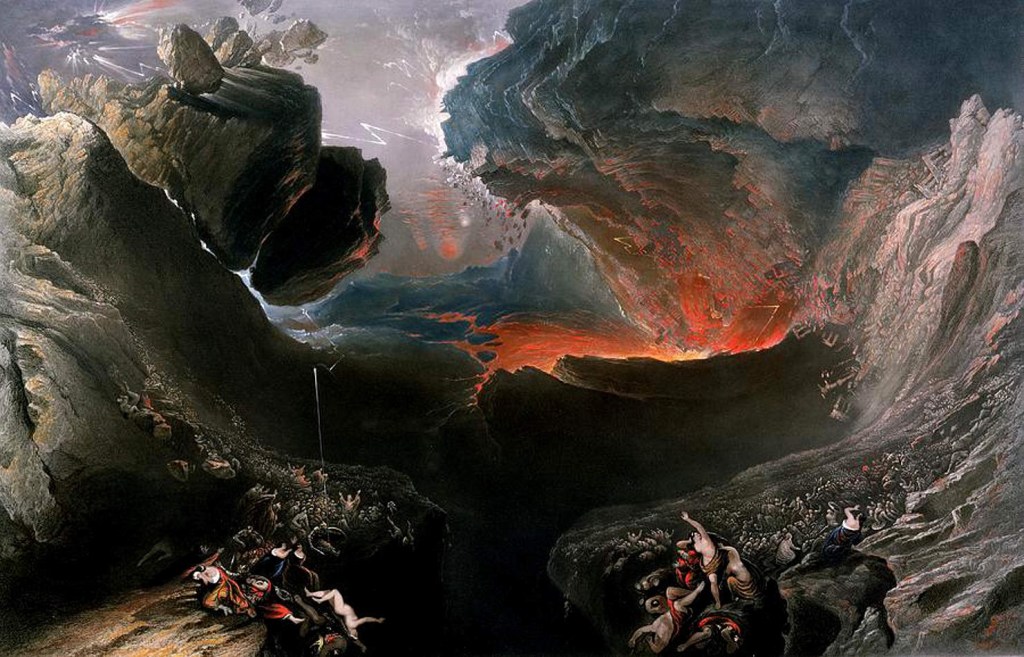
Later in the same oracle, he describes the time when the Lord will “show portents in the heavens and on the earth, blood and fire and columns of smoke; the sun shall be turned to darkness, and the moon to blood, before the great and terrible day of the Lord comes” (Joel 2:30–31). Joel also asserts that “the day of the Lord is near in the valley of decision; the sun and the moon are darkened, and the stars withdraw their shining” (Joel 3:14–15).

*****

The language of The Day is translated, however, into references to The End, in some later prophetic works. In the sixth century BCE, the priest-prophet Ezekiel, writing in exile in Babylon, spoke about the end that was coming: “An end! The end has come upon the four corners of the land. Now the end is upon you, I will let loose my anger upon you; I will judge you according to your ways, I will punish you for all your abominations.” (Ezek 7:2–3).

And again, Ezekiel declares, “Disaster after disaster! See, it comes. An end has come, the end has come. It has awakened against you; see, it comes! Your doom has come to you, O inhabitant of the land. The time has come, the day is near—of tumult, not of reveling on the mountains. Soon now I will pour out my wrath upon you; I will spend my anger against you. I will judge you according to your ways, and punish you for all your abominations.” (Ezek 7:5–8). This day, he insists, will be “a day of clouds, a time of doom for the nations” (Ezek 30:3; the damage to be done to Egypt is described many details that follow in the remainder of this chapter).

Obadiah refers to “the day of the Lord” (Ob 1:15), while Malachi asserts that “the day is coming, burning like an oven, when all the arrogant and all evildoers will be stubble; the day that comes shall burn them up, says the Lord of hosts, so that it will leave them neither root nor branch” (Mal 4:1).

Malachi ends his prophecy with God’s promise that “I will send you the prophet Elijah before the great and terrible day of the Lord comes; he will turn the hearts of parents to their children and the hearts of children to their parents, so that I will not come and strike the land with a curse” (Mal 4:5–6). This particular word is the final verse in the Old Testament as it appears in the order of books in the Christian scriptures; it provides a natural hinge for turning, then, to the story of John the baptiser, reminiscent of Elijah, who prepares the way for the coming of Jesus, evocative of Moses.

Another prophet, Daniel, declares that “there is a God in heaven who reveals mysteries, and he has disclosed to King Nebuchadnezzar what will happen at the end of days” (Dan 2:28), namely, that “the God of heaven will set up a kingdom that shall never be destroyed, nor shall this kingdom be left to another people. It shall crush all these kingdoms and bring them to an end, and it shall stand forever” (Dan 2:44).

Whilst the story of Daniel is set in the time of exile in Babylon—the same time as when Ezekiel was active—there is clear evidence that the story as we have it was shaped and written at a much later period, in the 2nd century BCE; the rhetoric of revenge is directed squarely at the actions of Antiochus IV Epiphanes, who had invaded and taken control of Israel and begun to persecute the Jews from the year 175BCE onwards.

The angel Gabriel subsequently interprets another vision to Daniel, “what will take place later in the period of wrath; for it refers to the appointed time of the end” (Dan 8:19), when “at the end of their rule, when the transgressions have reached their full measure, a king of bold countenance shall arise, skilled in intrigue. He shall grow strong in power, shall cause fearful destruction, and shall succeed in what he does. He shall destroy the powerful and the people of the holy ones.” (Dan 8:23–24). This seems to be a clear reference to Antiochus IV.

Still later in his book, Daniel sees a further vision, of seventy weeks (9:20–27), culminating in the time of “the end” (9:26). In turn, this vision is itself spelled out in great detail in yet another vision (11:1–39), with particular regard given to the catastrophes taking place at “the time of the end” (11:1–12:13; see especially 11:25, 40; 12:4, 6, 9, 13).

This final vision makes it clear that there will be “a time of anguish, such as has never occurred since nations first came into existence” (12:1), when “evil shall increase” (12:3) and “the wicked shall continue to act wickedly” (12:10). The visions appear to lift beyond the immediate context of the Seleucid oppression, and paint a picture of an “end of times” still to come, after yet worse tribulations have occurred.

Attention to The Day which will bring The End continues in Jewish literature that was written in the Diaspora, amongst Jews that remained in the lands outside Israel, as well as by Jews whose ancestors had returned to Israel from the late 6th century onwards. Jews continued to write apocalypses (3 Enoch; Apocalypse of Abraham; Genesis Apocryphon; and a number of works in the Dead Sea Scrolls).

Interest in “the end times” appears also in Christian literature, both in words attributed to Jesus (Mark 13; Matt 25–25; Luke 17 and 21) as well as statements in various letters written by leaders in the movement initiated by Jesus (1 Thess 4:13–5:11; 1 Cor 7:29–31; 15:21–28; and all of 2 Thess) and in the seven letters found early in the book of Revelation. This interest continues on into other documents from the first few centuries that are not canonical (Didache 16; Barnabas 15; Apocalypse of Peter).

To pluck up and pull down, to destroy and to build (Jeremiah 1–25)

Continuing my series of blogs on the prophets: today, Jeremiah, who was called to be a prophet at an early age (Jer 1:4–10). Some commentators consider him to be in his early 20s, while others note that the distinctive Hebrew word used in this passage indicates he was in his teens. When he heard God declare to him, “I appointed you a prophet to the nations”, the NRSV translation says that the young man replied, “Ah, Lord God! Truly I do not know how to speak, for I am only a boy” (1:6).

Actually, when they say he replied, “Ah”, he was using a Hebrew word that actually means “alas” or “woe is me” (see also 4:10; 14:13: 32:17; and also Joel 1:15). Strong’s Concordance says this is “a primitive word expressing pain”—so, more like “ouch!!!” So perhaps it’s better to think of his response as more like “oh no, oh no, oh nooooo—I couldn’t possibly do that! no way at all!!”. Jeremiah just did not want this gig at all. See my sermon on this passage at

Yet Jeremiah faithfully carried out the task committed to him; it is thought that he was active from the mid-620s in Judah, through into the time of exile in Babylon, from 587 BCE onwards—that is, over four decades—although Jeremiah himself was exiled, not into Babylon, but into Egypt (Jer 43:1–7).

The task he was given when called to be a prophet was to declare the coming judgment of God on the people of Israel, for continuing to ignore their covenant commitments. The Lord tells him, “I will utter my judgments against them, for all their wickedness in forsaking me; they have made offerings to other gods, and worshiped the works of their own hands” (1:16). As encouragement, he urges the young man to “gird up your loins; stand up and tell them everything that I command you” (1:17).

Jeremiah proclaims both God’s judgement and God’s hope for repentance by the people. This dual focus appears in God’s instructions to Jeremiah “to pluck up and to pull down, to destroy and to overthrow” but also “to build and to plant” (1:10). In his later years, in solidarity with the people who have been “plucked up” into exile in Babylon, Jeremiah urges his people to make the best of their time in exile: “build houses and live in them; plant gardens and eat what they produce … seek the welfare of the city” (29:5, 7). Many centuries later, a clear allusion to that same oracle is made by Simeon as he meets the infant Jesus: “this child is destined for the falling and the rising of many in Israel” (Luke 2:34).

*****

The overall progression of the book is chronological, as it be­gins with the call of Jeremiah (ch.1) and ends with an account of the destruction of Jerusalem (ch.52). Nevertheless, the arrangement of the book is more topical overall, rather than chronological, since oracles on the same topic are grouped together even though they may have been delivered at different times. There are various theories as to how the book was put together; most scholars believe that someone after the lifetime of Jeremiah has brought together material from collections that were originally separate.

Indeed, A.R. Pete Diamond concludes that “like it or not, we have no direct access to the historical figure of Jeremiah or his cultural matrix”; we have “interpretative representations rather than raw cultural transcripts”, and thus he argues that the way we read this book should be informed by insights from contemporary literary theory, and especially by reading this book alongside the book of Deuteronomy, as it offers a counterpoint to the Deuteronomic view of “the myth of Israel and its patron deity, Yahweh” (Jeremiah, pp. 544–545 in the Eerdman’s Commentary on the Bible, 2003). Whereas Deuteronomy advocates a nationalistic God, Jeremiah conceives of an international involvement of Israel’s God.

The chronological disjunctures can be seen when we trace the references to various kings of Judah: in order, we have Josiah in 627 BCE (Jer 1:2), jumping later to Zedekiah in 587 BCE (21:1), then back earlier to Shallum (i.e. Jehoahaz) in 609 BCE (22:11), Jehoiakim from 609 to 598 BCE (22:18), and Jeconiah in 597 BCE (22:24), before returning to Zedekiah in 597 BCE (24:8) then back even earlier to Jehoiakim in April 604 BCE, “the first year of King Nebuchadrezzar of Babylon” (25:1)—and then further haphazard leaps between Zedekiah (chs. 27, 32-34, 37–38, and 51:59) and Jehoiakim (chs. 26, 35, 45) as well as the period in 587 after the fall of Jerusalem when Gedaliah was Governor (chs. 40–44). It is certainly an erratic trajectory if we plot the historical landmarks!

*****

The topical arrangement is easier to trace: 25 chapters of prophecies in poetic form about Israel, 20 chapters of narrative prose, and six chapters of prophecies against foreign nations. Early in the opening chapters, as Jeremiah prophesies against Israel, he reports that God muses, “you have played the whore with many lovers; and would you return to me?” (3:1). The idolatry and injustices practised by the people of Israel have caused God concern. Throughout the poetry of the prophetic oracles in chapters 1—25, God cajoles, encourages, warns, and threatens the people.

“I will not look on you in anger, for I am merciful” (3:13), the Lord says; then Jeremiah instructs the people, “put on sackcloth, lament and wail: ‘the fierce anger of the Lord has not turned away from us’” (4:8). Next, God says, “I am now making my words in your mouth a fire, and this people wood, and the fire shall devour them” (5:14), and then, “take warning, O Jerusalem, or I shall turn from you in disgust, and make you a desolation, an uninhabited land” (6:8), and so on, for 25 chapters.

Whilst God laments the “perpetual backsliding” of the people, who “have held fast to deceit, they have refused to return” (8:5), the prophet laments, “my joy is gone, grief is upon me, my heart is sick … is there no balm in Gilead? Is there no physician there? why then has the health of my poor people not been restored?” (8:18–22). As Jeremiah denounces their worship of idols (10:1–16) and breaches of the covenant (11:1–17), his life is placed in danger: “I was like a gentle lamb led to the slaughter, and I did not know it was against me that they devised schemes” (11:18–20).

Others prophesying are condemned by God; “they are prophesying lies in my name; I did not send them, nor did I command them or speak to them; they are prophesying to you a lying vision, worthless divination, and the deceit of their own minds” (14:13–18). The prophet dramatises his message of divine judgement on the people with reference to the familiar image of the potter, shaping and moulding the clay (18:1–11), a broken earthenware jug (19:1–15), two baskets of figs (one bunch good, the other inedible; 24:1–10), and “the cup of the wine of wrath” which, when “all the nations to whom I send you drink it, they shall drink and stagger and go out of their minds because of the sword that I am sending among them” (25:15–38).

*****

The punishment that is coming to Israel is a cause of great grief for Jeremiah, and so he is sometimes known as “the weeping prophet” (see 9:1; 13:17; 22:10). He doesn’t sit easy with the terrors associated with the execution of God’s justice in the nation—perhaps we can resonate with the angst of this ancient figure?

The most common criticism that I hear of Old Testament passages is about the terrible violence of the vengeful God—an element of Israelite religion that seems quite at odds with so much of modern sensibilities. Jeremiah gives a clear and potent expression to this image, when he has Jeremiah report that God says, “I myself will fight against you with outstretched hand and mighty arm, in anger, in fury, and in great wrath. And I will strike down the inhabitants of this city, both human beings and animals; they shall die of a great pestilence” (21:5–6).

A number of passages in the first main section of this book are seen to reflect this angst about a powerful, vengeful God—they are often called “Jeremiah’s confessions”, as he confesses his pain and grief to God, and prays for a release from his condition (see 11:18–23; 12:1–6; 15:10–14; 15:15–21; 17:14–18; 18:18–23; 20:7–12; 20:14–18). These “confessions” share stylistic and thematic similarities with the “psalms of lament”, such as Pss 44, 60, 74, 79, 80, 85, 86, and 90 (psalms of communal lament), and Pss 3, 6, 13, 22, 25, 31, 71, 77, 86, and 142 (psalms of individual lament).

“Woe is me”, or “woe to us”, is a common phrase in Jeremiah’s oracles (4:13; 4:31; 6:4; 10:19; 13:27; 15:10; 22:13; 23:1; 45:3; 48:46). It is the same term that we found in Isaiah’s call (Isa 6:5) and oracles (Isa 24:16), Hosea’s declarations (7:13; 9:12), Micah’s prophecies (Mic 7:1), and Ezekiel’s utterances (Ezek 13:18; 16:23; 24:6, 9). All lament the imposition of divine justice in ways that wreak havoc amongst the people.

*****

Jeremiah conveys the specific timetable of God’s judgement in explicit announcements: first, “the whole land shall become a ruin and a waste, and these nations shall serve the king of Babylon seventy years” (25:11); then, “after seventy years are completed, I will punish the king of Babylon and that nation, the land of the Chaldeans, for their iniquity, making the land an everlasting waste” (25:12).

The result of this is conveyed in another oracle, when God declares, “I myself will gather the remnant of my flock out of all the lands where I have driven them, and I will bring them back to their fold, and they shall be fruitful and multiply” (23:3). The end result, it seems, will be positive; but the process of journeying to that desired end will be difficult, to say the least.

The seventy years noted in these prophecies (25:11–12) has occasioned some debate amongst the scholars: was this a prediction of exact years, an approximation of the length of time of the exile, or a symbolic statement, typical of biblical numbers, which should not be taken literally? (such as, 40 years means “a long time”, 1,000 means “very many”, seven means “complete” or “fulfilled”, and so on).

Many conservative commentators (and especially Seven Day Adventists) who take biblical texts literally, spend much time and ink in wrestling with this issue! One such commentary or, for instance, notes that, if this is an exact period of 70 years, it could be: (a) from the initial attack of Nebuchadnezzar II of Babylon against Jerusalem in 605 BCE, to the return of the Jews under Cyrus of Persia in 536 BCE; or (b) from the destruction of Jerusalem in 586 BCE to the completion of the rebuilding of the temple in Jerusalem in 516 BCE.

He continues by noting that some scholars claim that “these years were in actuality shortened by God’s mercy, since when one works backwards from 539 B.C. (the occasion of the capture of Babylon), it is obvious that none of the traditional starting dates—605 B.C., 597 B.C., or 587/86 B.C.—provides a time period of exactly seventy years”. Some other suggestions include that “these years represent a lifetime, since Ps 90:10 presents seventy years as a normal human lifespan”, or that “the expression [is] simply a term that referred to the period of desolation for a nation”, as it is used in that way in an Esarhaddon inscription concerning Babylon. (Ross E. Winkle, in an article in Andrews University Seminary Studies, 1987, vol. 25 no. 2, pp. 201–202)

Jeremiah invites our consideration in a number of ways. He continues the prophetic tradition of speaking truth to power. He begins a development which sees the role of Israel’s God as stretching beyond the bounds of Israel. He expresses personal emotional angst with regard to the aggressive, power-based actions of God. And, as we shall see next week,

*****

See also