A Reflection for the Day of Mourning (19 January 2025)

Since 2019 the Uniting Church has marked a Day of Mourning on the Sunday before 26 January to reflect on the dispossession and ongoing injustices faced by Australia’s First Peoples, acknowledge our shared history and renew our commitment to justice and healing. The Uniting Church has acknowledged our nation’s history through its Preamble to the Constitution, Covenanting Statements, and at many other times through its covenanting journey.

I will be giving this reflection on Sunday 19 January 2025 at the Dungog Uniting Church.

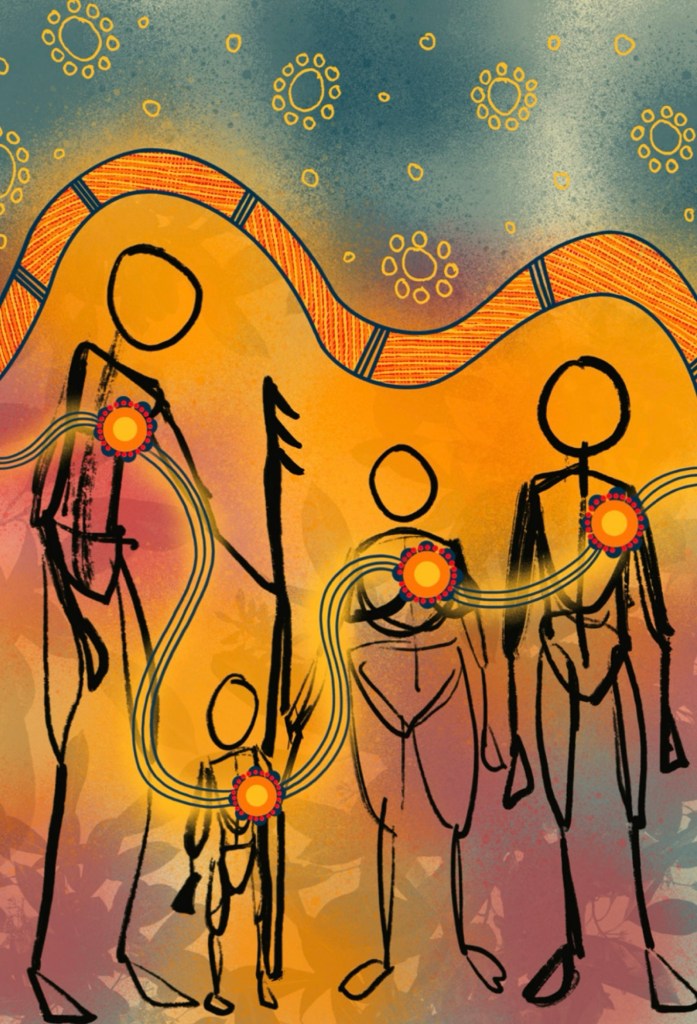
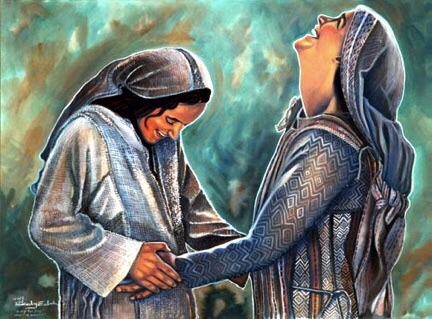
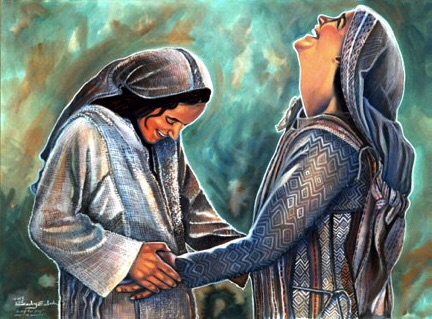
Artwork by Zoe Belle, Guwa Koa and Kuku Yalanji woman

Prayer of Confession

Merciful God, as Second Peoples of this land, whose ancestors travelled and settled in Australia, we acknowledge with sorrow the injustice and abuse that has so often marked the treatment of the First Peoples of this land.

We acknowledge with sorrow the way in which their land was taken from them; the way their their language, culture and spirituality was suppressed.

We acknowledge with sorrow that the Christian church was so often not only complicit in this process but actively involved in it.
We acknowledge with sorrow that in our own time the injustice and abuse has continued.

We have been indifferent when we should have been outraged, we have been apathetic when we should have been active, we have been silent when we should have spoken out.

Gracious God, forgive us for our failures, past and present. By your Spirit, transform our minds and hearts so that we may boldly speak your truth and courageously do your will. Through Jesus Christ our Lord. Amen.

Reading Isaiah 62:1–5

For Zion’s sake I will not keep silent,
and for Jerusalem’s sake I will not rest,
until her vindication shines out like the dawn,
and her salvation like a burning torch.
The nations shall see your vindication,
and all the kings your glory;
and you shall be called by a new name
that the mouth of the LORD will give.
You shall be a crown of beauty in the hand of the LORD,
and a royal diadem in the hand of your God.
You shall no more be termed Forsaken,
and your land shall no more be termed Desolate;
but you shall be called My Delight Is in Her,
and your land Married;
for the LORD delights in you,
and your land shall be married.
For as a young man marries a young woman,
so shall your builder marry you,
and as the bridegroom rejoices over the bride,
so shall your God rejoice over you.

Reflection

We all know, I expect, what it feels like to be deeply disappointed; let down, betrayed, forsaken, abandoned. The emotions felt at such a time—emotions of despair and desolation—are named in the reading from Isaiah 62 which we have heard today. 

This part of Isaiah comes from the time when the exiles from Israel were returning to their land, leaving behind the difficulties they experienced during their five decades of exile in the foreign land of Babylon. They had returned to a devastated city; it probably looked like the images we have seen on our TVs, from bombed residential areas in Syria and Gaza, to the devastation of mass destruction of buildings from tornadoes in Florida and Louisiana and fires in Los Angeles. 

In just such a setting, as the people laboured day and night to rebuild and restore their beloved city, an unnamed prophet speaks out, bringing a word of hope: “You shall no more be termed Forsaken, and your land shall no more be termed Desolate, but you shall be called My Delight Is in Her and your land Married.” The hope that the prophet offers is of a time when desolation is left behind, when the sense of being forsaken has been replaced by loving acceptance and care and belonging; the language of a marriage provides a good analogy.

There are people in our midst, in this town, across this country, who know that sense of desolation and being forsaken. Today we remember them, especially, on a day which the Uniting Church now names as the annual Day of Mourning. On this day, we remember that First Peoples, custodians of this land since time immemorial, caring for creation in their respectful lifestyle and customs, were invaded, colonised, massacred, marginalised, and demonised.

The massacres across the country that took place from the early years of British settlement into the second decade of the 20th century, and the shattering of families by the removal of the stolen children, which lasted well into the 1960s, have given the Gringai, Worimi, Biripi, Wonnarua, and many other peoples cause for ongoing lament and despair. Many still alive today remember what was done to them or to their parents and grandparents. The pain is live.

So on this Day of Mourning, we commit to standing with the First Peoples, acknowledging their pain, sharing their distress (to the extent that we can), treating them respectfully, and committing to work for justice for the First Peoples today. We should know that their pain is still real, present, and powerful. 

The referendum held last year offered a ray of hope across the country; fuelled by a campaign of disinformation that played on fears and prejudices, that hope was shattered. The Uniting Church had joined with many other Christian denominations, and leaders of a number of faith communities, to advocate a Yes vote. We have shared in the disappointment of First Peoples, and the sense that this is yet another hurt that they have to bear.

On Australia Day in 1938, a large group of protestors marched through the streets of Sydney, followed by a congress attended by over a thousand people. One of the first major civil rights gatherings in the world—decades before Martin Luther King Jr led massive rallies in the USA—it was known as the Day of Mourning. Following the congress, a deputation led by William Cooper presented Prime Minister Joseph Lyons with a proposed national policy for Aboriginal people. Unfortunately, this was rejected because the Government did not hold constitutional powers in relation to Aboriginal people. That changed in 1967.

From 1940 until 1955, the Day of Mourning was held annually on the Sunday before Australia Day and was known as Aborigines Day. In 1955 Aborigines Day was shifted to the first Sunday in July after it was decided the day should become not simply a protest day but also a celebration of Aboriginal culture. This led to the formation of the National Aborigines Day Observance Committee (NADOC), which later then became NAIDOC, the week in July focussed on remembering Aboriginal people and their heritage.

In 2018, At the Uniting Church Assembly in Melbourne—which Elizabeth and I attended—it was decided to reinstate an annual Day of Mounring on the Sunday before Australia Day. So we stand in a grand tradition, and we stand in solidarity with our brothers and sisters, people who have cared for this land over millennia—many, many thousands of years. 

This year, President Charissa Suli and Congress chairperson Mark Kickett invite us “to listen deeply and learn humbly, and bear one another’s burdens; to receive the outstretched hand of friendship offered in grace and hope, and to trust in Jesus, whose reconciling love continues to mend the brokenness within and among us.”

They remind us that “the same ancient Spirit of God which has always been present in these lands has given us ‘a destiny together’ as the body of Christ in this time and place”, and so invite us “to celebrate the immense gift we have in each other [as First and Second Peoples], giving thanks for the transformative and boundless love of Christ which holds us.”

Let us pray.

Gracious God, we know that reconciliation between First and Second Peoples is a challenge. We sense that this must begin with reconciling ourselves in truth and humility with you, our God.

We know that is then that we can do the work of being peacemakers and justice seekers.

So help us to act responsibly and respectfully, to care for one another and to support one another. Amen.

We sing The Aboriginal Lord’s Prayer

Artwork by Zoe Belle, Guwa Koa and Kuku Yalanji woman

Prayers adapted from the resources for the Day of Mourning 2025, https://uniting.church/wp-content/uploads/2024/12/Day-of-Mourning-2025_Final.pdf

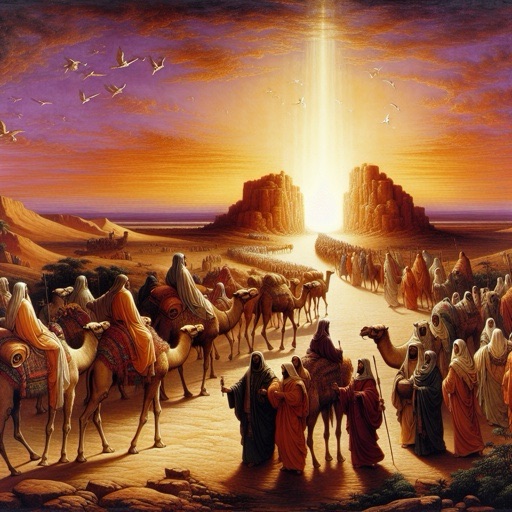
Artwork by Zoe Belle, Guwa Koa and Kuku Yalanji woman. “The artworks depict the story of Christ’s presence being amongst First Peoples of these lands of his creation for generations. His teachings have long been displayed within the stories, songs, dances and ceremony First Peoples have used them to connect with God as great Creator and teacher for our communities.”

Carols for the Season of Christmas (5) The Fifth Day of Christmas, 29 December

Yesterday, we focussed on “the slaughter of the innocents” which is commemorated in the Western Church on 28 December. Today, 29 December, is the day when this commemoration takes place in the Eastern Church.

This this potent story, full of pathos, is so resonant with events in the world in which we live today: people dying in invasions and wars; people fleeing, seeking refuge, in a safe place. Sadly, this part of the story has all but faded from view in “the Christmas story” that is recounted each Christmas. So here are some more thoughts—largely from the words written by contemporary hymn writers that tell this story.

There are clear words in these carols which show how the story challenges political values and policies and how it connects with the deepest feelings of human existence.

One contemporary hymn writer who has turned his attention to the story of Herod’s tyrannical rampage against the male children in Bethlehem, is the British Methodist, the Rev. Dr Andrew Pratt. Here is a powerful hymn which he has written about this story.

Herod waiting, Herod watching,

Herod grasping, holding power,

Herod fearful for the future,

Herod counting every hour.

Now the thing that he was fearing:

love and justice, peace and health,

here embodied in a person,

God incarnate, heaven’s wealth.

This was more than he could stomach,

human wine skins tear and rend.

Herod’s dream had been confounded,

human power had met its end.

Many children now were crying,

temper triumphed, babies dead.

Mary, Joseph made an exit,

every step was filled with dread.

Into exile they were driven,

fear would ripple through each life:

Jesus challenged vested interests.

Gracious love fuelled hate and strife.

And the children still are crying,

forced to war and harmed by hate.

Still our world is deaf to hear them,

still our loving comes too late.

© Andrew Pratt 18/11/2010. For the First after Christmas, Matthew 2: 13 – 23; Herod, Holy Innocents, the flight into Egypt.

See https://www.umcdiscipleship.org/resources/herod-waiting-herod-watching

Another person who has worked well with words over many decades is the late Shirley Erena Murray, a Presbyterian from Aotearoa New Zealand. She was right on the money when she highlighted the violence and fear at the heart of the story, claiming that the infant in the story has “come to plead war’s counter-case”, and articulating the hope that “goodness will outclass the gun, evil has no tooth that can kill the truth.” Here’s her words:

Summer sun or winter skies, Christmas comes —

shepherds, angels, lullabies, words recorded by the wise:

read it in the book — take another look . . . .

Shadows track the hawk in flight, Christmas now —

children born in fire and fight, silent night a violent night,

hawks are in control of a nation’s soul.

There where terror plies its trade, Christmas now —

children learn to be afraid, minefields of distrust are laid,

evil is in force on a winning course.

Child of peace, God’s human face, Christmas now —

come to plead war’s counter-case, bring the dove a nesting place,

though her wings are torn, though her blood is drawn.

Winter skies or summer sun, Christmas comes —

still the threads of hope are spun, goodness will outclass the gun,

evil has no tooth that can kill the truth.

This ancient story resonates so strongly with our situation today, not because “it really happened, exactly like this”, but because (like a good myth does) it takes us to the centre of our humanity and reveals the depth of God’s presence in our midst. We ought to sing more about it!

See http://www.hopepublishing.com/html/main.isx?sitesec=40.2.1.0&hymnID=430

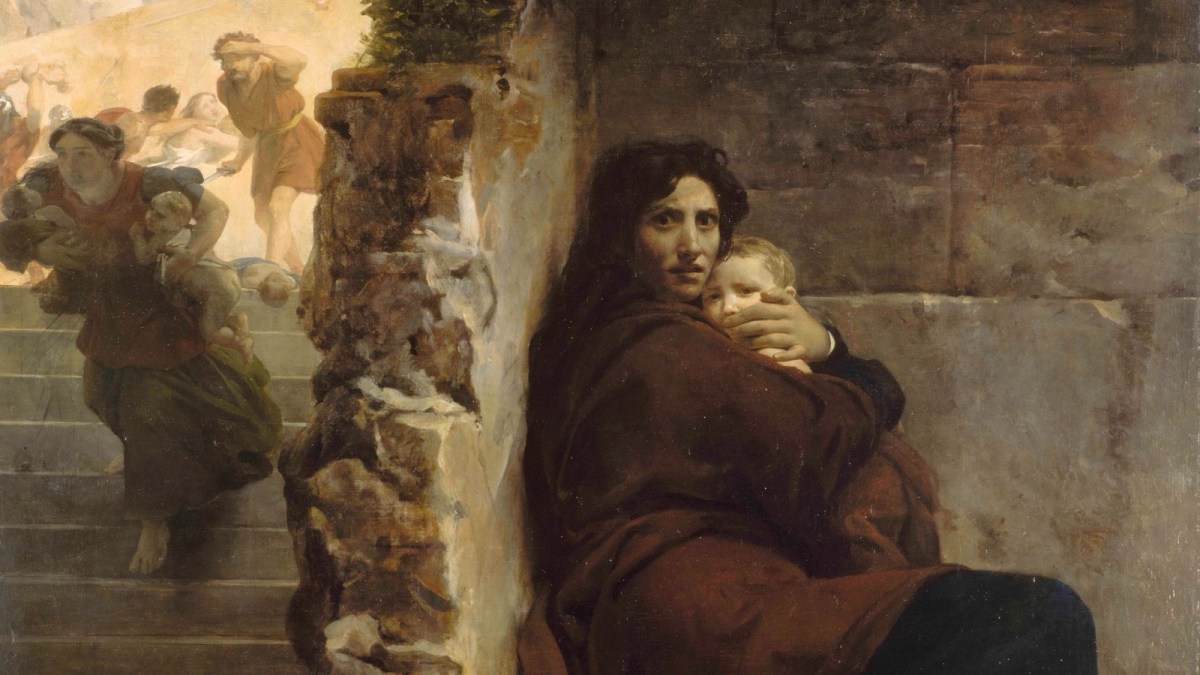
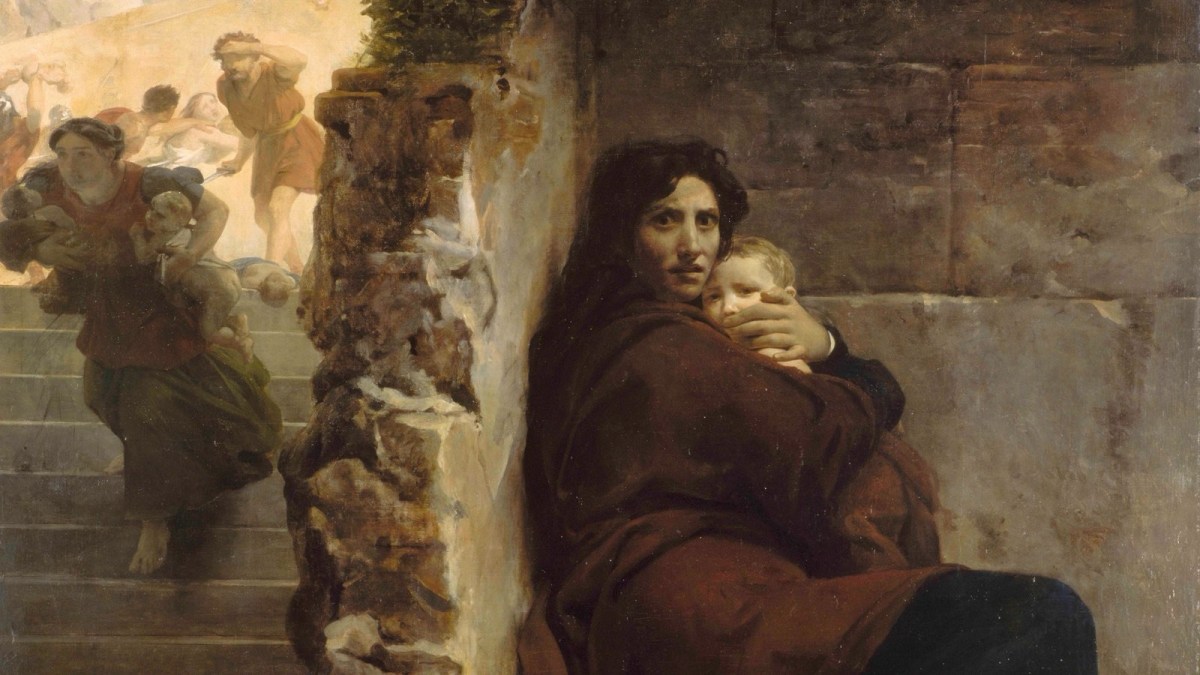
“The Massacre of the Innocents,” an 1824 painting
by Léon Cogniet, held in the Musée des Beaux-Arts

Carols for the Season of Christmas (4) The Fourth Day of Christmas, 28 December

Today (in the Western Church) is designated as the Feast of the Holy Innocents. (It is celebrated tomorrow in the Eastern Church.) This festival day commemorates a tradition known as “the slaughter of the Innocents”,  reportedly ordered by King Herod. It’s a gruesome attachment to the story that is told in the Gospel of Matthew that begins, “now the birth of Jesus the Messiah took place in this way” (Matt 1:18). 

The tradition is that when Herod learnt of the birth of “the King of the Jews”, he feared that this king would pose a threat to his own rule (as a client king under the Roman Empire) over the Jewish people. Herod, it is said, ordered that all male children under two years of age should be killed, to ensure that this rival king was safely despatched (Matt 2:16). Jesus survived this because after visitors “from the east” came from the court of Herod to pay tribute to him (2:11), his parents were advised of the imminent pogrom by an angelic visitation (2:13).

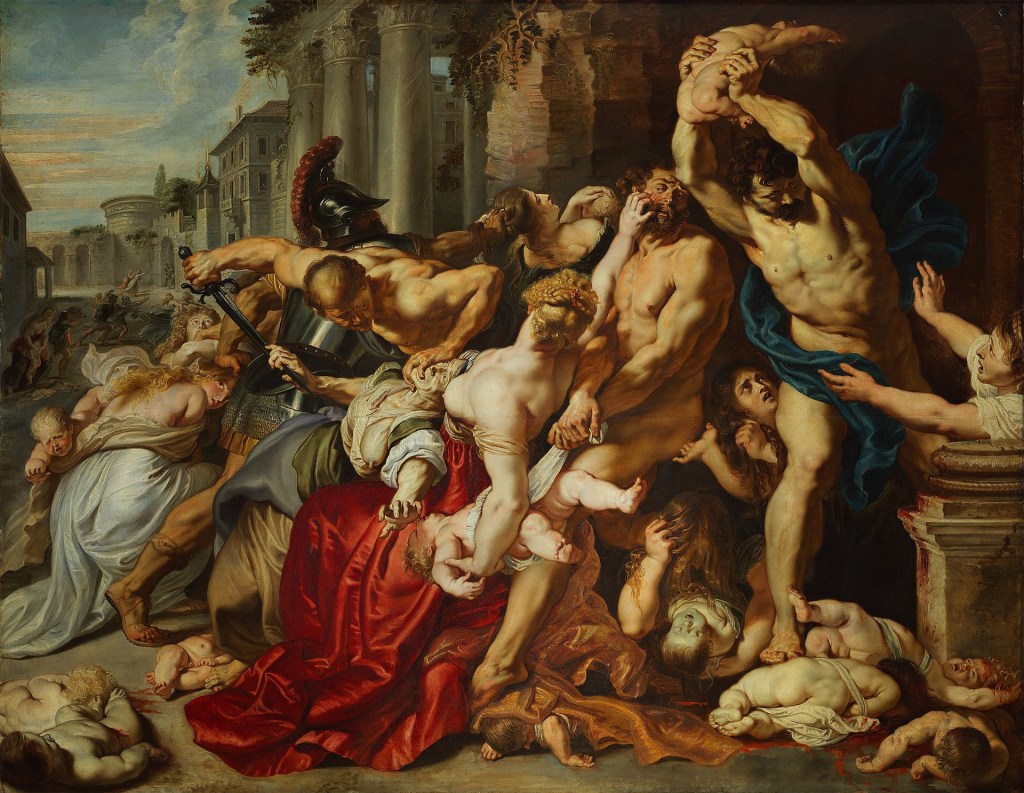
“The Massacre of the Innocents,” an 1824 painting
by Léon Cogniet, held in the Musée des Beaux-Arts

The story is told only in Matthew’s Gospel. It is highly unlikely that the events reported by Matthew actually took place. First, his is the only account of such an event in any piece of literature from that time. An event with so many deaths would surely have been noted by other writers. It is true that Herod was a tyrannical ruler; but amongst the various accounts of his murderous deeds, there is nothing which correlates to the events reported in Matthew’s Gospel.

Second, the story is embedded in the opening section of the Gospel, which uses typical Jewish typology and scripture-fulfilment to present the story of Jesus as a re-enactment of the story of Moses. The author of Matthew’s Gospel, a follower of Jesus who had been raised as a faithful Jew, was especially partial in the opening chapters of his work  to quoting scripture and claiming that events that he reports “took place to fulfill what had been spoken by the Lord through the prophet” (1:22–23). 

The chief priests and scribes in the royal court, says this author, told Herod that Jesus had been born in Bethlehem, “for so it has been written by the prophet” (2:4–6); the flight into Egypt of Joseph, Mary, and their newborn child was “to fulfill what had been spoken by the Lord through the prophets (2:15); the slaughter of the children itself “fulfilled what had been spoken through the prophet Jeremiah” (2:17–18); and the return of the family some time later and their settling in Nazareth was “so that what had been spoken through the prophets might be fulfilled” (2:21–23). 

Aiding and abetting these notes of scripture fulfilment are other typical elements in the Jewish traditions of storytelling, namely, that the events as they take place are guided by the appearance of an angel in the dreams of Joseph (1:20–21; 2:13; 2:19) as well as direct guidance mediated by a dream of the visitors “from the east” (2:12) and again in a further dream of Joseph (2:22). The story that appears in Matt 1:18–2:23 would readily have been recognised by Jewish listeners as employing the typical elements and patterns of Jewish haggadic midrash.

See https://jwa.org/encyclopedia/article/midrash-and-aggadah-terminology

The book of Exodus also employed these elements and patterns. It opens in the time when “a new king arose over Egypt, who did not know Joseph” (Exod 1:8). This king, unnamed except for the designation of “Pharaoh”, feared the increasing numbers and growing power of the Israelites who been enslaved in Egypt for hundreds of years, determined that he would slow the rate of increase and lessen the power of the Israelites by decreeing, “every boy that is born to the Hebrews you shall throw into the Nile, but you shall let every girl live” (Exod 1:22). 

It is in this context that Moses is born; he is hidden “among the reeds on the bank of the river” (Exod 2:1–4), and then taken home by the daughter of Pharaoh (Exod 2:5–9), adopted by her, and raised as a member of the royal household (Exod 2:10). The origin of the child is revealed to the readers (but presumably not to the Pharaoh) by his being named Moses, because, as Pharaoh’s daughter said, “I drew him out of the water” (Exod 2:10b). 

The fact that a name conveys a deeper meaning has been found again and again in the traditional tales collated to form the narrative of Genesis: Adam reflects his creation “from the dust of the ground” (Gen 2:7), Eve’s name indicates that she is “the mother of all living” (3:20), Cain means “acquired” and is reflected in Eve’s comment that “I have produced [or acquired, qanah] a man with the help of the Lord” (4:1), and Abel is related to the Hebrew word for “emptiness” (havel). 

Abram’s name is changed to Abraham, which means “leader [ab] of multitudes [raham]”, to signal the covenantal promise of the Lord God that “I will make you exceedingly fruitful; and I will make nations of you, and kings shall come from you … for an everlasting covenant, to be God to you and to your offspring after you” (17:4–6).  The name of the aged, barren Sarai is changed to Sarah, meaning “she laughed” (17:15),  to signal her incredulous response to the news that she will bear a child (18:9–15). The name of Ishmael literally means “God listens” (16:11) and that of Jacob means “he who supplants” (25:24–26); after his all-night struggle with a man at the ford of Jabbok (32:22–24), his name was changed to Israel, meaning “the one who strives with God” (32:28). Names are deeply significant!

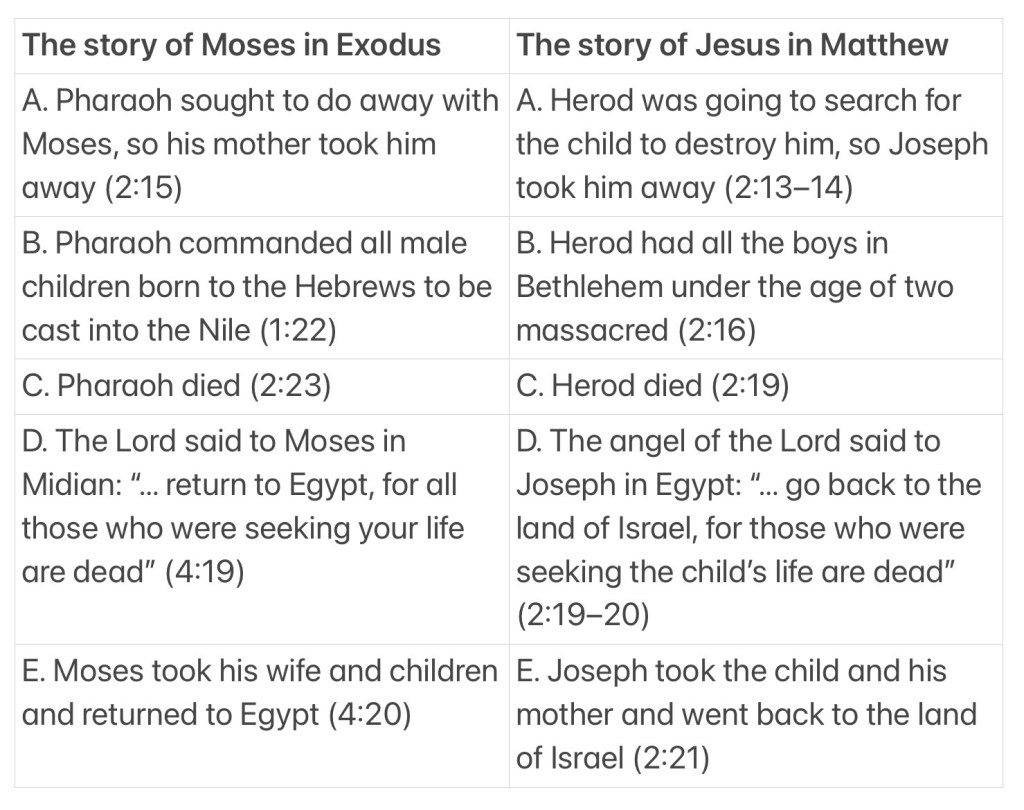
So Moses means “drawn from water”, and Jospeh is given the message that his son is to be given the name that signifies his role, Jesus: “for he will save his people from their sins” (Matt 1:21). And the ancient tale of the slaughter of infants at the time of the birth of Moses is replicated at many points in Matthew’s account of the slaughter of infants at the time of the birth of Jesus (Matt 2:1–18). This later account simply fits the pattern of the earlier account, as this chart shows:

The parallels are very clear!

And just as the literary structure of each story runs in the same pattern, so also the “historical” similarities are clear. Just as there is no historical evidence beyond Exodus to corroborate that the story of the pogrom at the time of Moses took place, neither is there evidence beyond the Gospel of Matthew to corroborate the account found there. Both patterns of events were stories, tales told, not history recorded.

But these non-historical stories are important for theological reasons. The Moses story is part of the whole Exodus complex that provides the fundamental explanation for the identity of Israel. The Jesus story as Matthew presents it is part of the foundational myth of the Christian faith. The writer of Matthew’s Gospel wants to make strong correlations between Jesus and Moses, as the two key figures in their respective stories—and religious systems. This starts in the mythological account found in the opening chapters, and continues throughout the following chapters of the Gospel.

As myth, the tradition found in Matt 1—2 points to important truths. The Slaughter of the Innocents grounds the story of Jesus in the historical, political, and cultural life of the day. It provides a dreadful realism to a story which, all too often in the developing Christian Tradition, has become etherealised, spiritualised, and romanticised.

So we remember this story as an important pointer to the counter-cultural, alternative-narrative impact of the person of Jesus. It is not history, but it offers a powerful myth.

A traditional hymn which remembers this tradition is the Coventry Carol. This dates from the 16th century, when it was performed in Coventry, England, as a part of a mystery play entitled The Pageant of the Shearman and Tailors.

The single surviving text of this pageant (including the words of this carol) was published by one Robert Croo, who dated his manuscript 14 March 1534. The carol is in the form of a lullaby, sung as a poignant remembrance by the mother of a child who is doomed to die in the pogrom.

Lully, lullay, thou little tiny child,

Bye bye, lully, lullay.

Lully, lullay, thou little tiny child,

Bye bye, lully, lullay.

O sisters too, how may we do

For to preserve this day

This poor youngling for whom we sing,

“Bye bye, lully, lullay”?

Herod the king, in his raging,

Charged he hath this day

His men of might in his own sight

All young children to slay.

That woe is me, poor child, for thee

And ever mourn and may

For thy parting neither say nor sing,

“Bye bye, lully, lullay.”

Good news to the oppressed, liberty to the captives: a message of hope (Isaiah 61; Narrative Lectionary for Advent 3C)

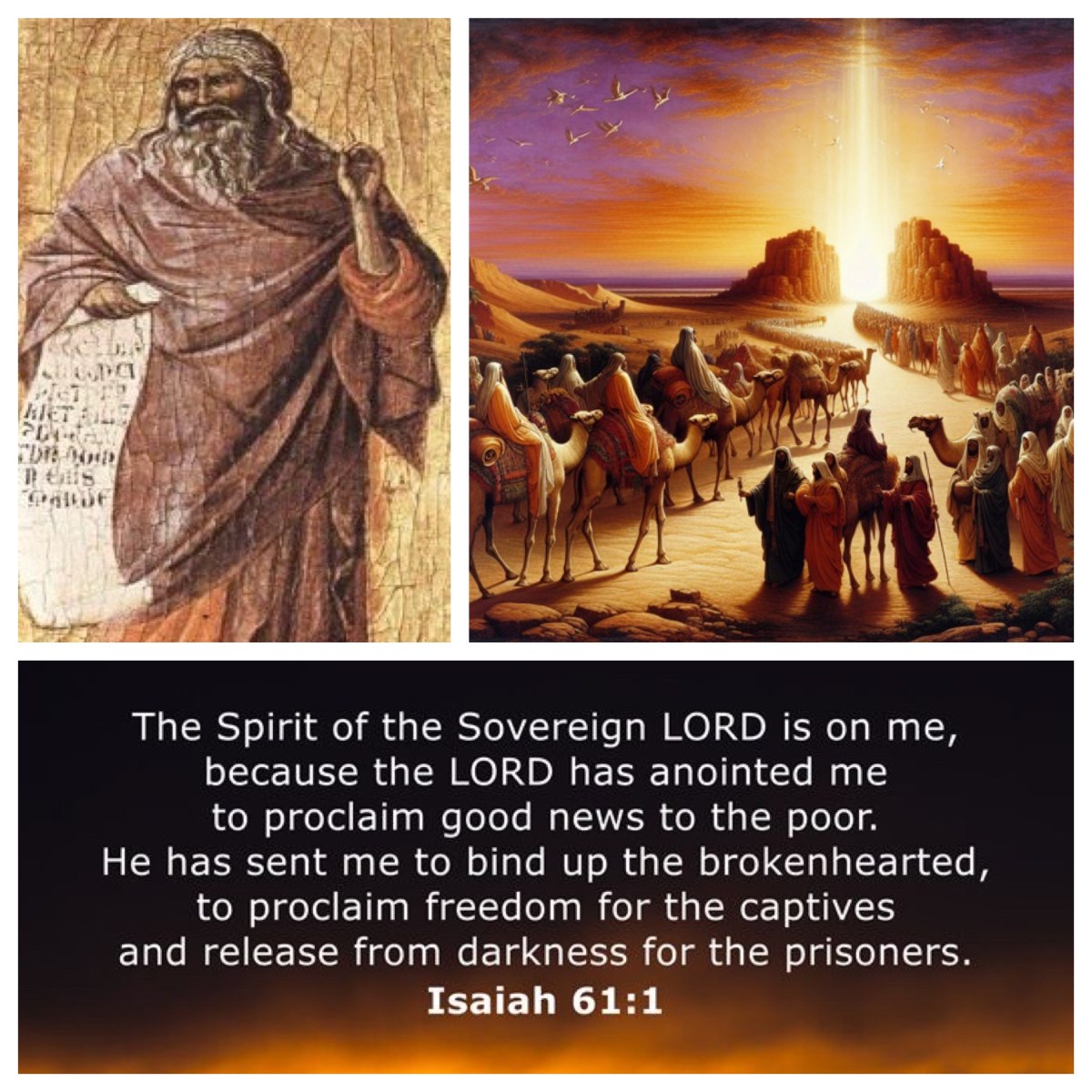
For this coming Sunday, the Narrative Lectionary is offering a very familiar passage from Third Isaiah, that part of the long book of Isaiah that is usually dated to a time when the exiles were returning from Babylon and re-establishing life in Jerusalem and the surrounding area. The passage (Isa 61:1–11) is best known within Christianity as providing the key elements for the manifesto that Jesus—at least in Luke’s Gospel—sets out to follow. 

Luke reports that Jesus quotes the opening verse of this oracle when he attends the synagogue in his hometown of Nazareth and was invited to read from the scroll of Isaiah (Luke 4:16–20). Most famously, Luke places the opening verse of the prophet on the lips of Jesus, and the first line of verse 2—but then stops short of quoting what follows, regarding “the day of vengeance of our God” and the mourning that will be associated with the mixed emotions of returning to a devastated city and engaging in the rebuilding programme: “they shall build up the ancient ruins, they shall raise up the former devastations; they shall repair the ruined cities, the devastations of many generations” (Isa 61:4).

The passage offered by the lectionary needs to be seen, primarily, within the context in which it was first spoken. The third section of the book of Isaiah (chapters 56–66) has begun with a familiar prophetic announcement: “maintain justice, and do what is right, for soon my salvation will come, and my deliverance be revealed” (Isa 56:1). As the people of Judah were returning to their land, to the city of Jerusalem (from the 520s BCE), the book sets out what this justice will look like through a series of powerful oracles.

The prophet sounds a vivid counter-cultural note in the midst of the events of his time. He begins with the promise to foreigners and eunuchs that “I will give, in my house and within my walls, a monument and a name better than sons and daughters; I will give them an everlasting name that shall not be cut off” (Isa 56:5). This is a striking contrast to the narrative provided in the books of Ezra and Nehemiah, which tell of the return to the city, the rebuilding of the walls, the renewal of the covenant and the public reading of the Law, the rededication of the Temple—and actions designed to remove foreigners (especially women) from within Israel (see Ezra 10; Neh 13). 

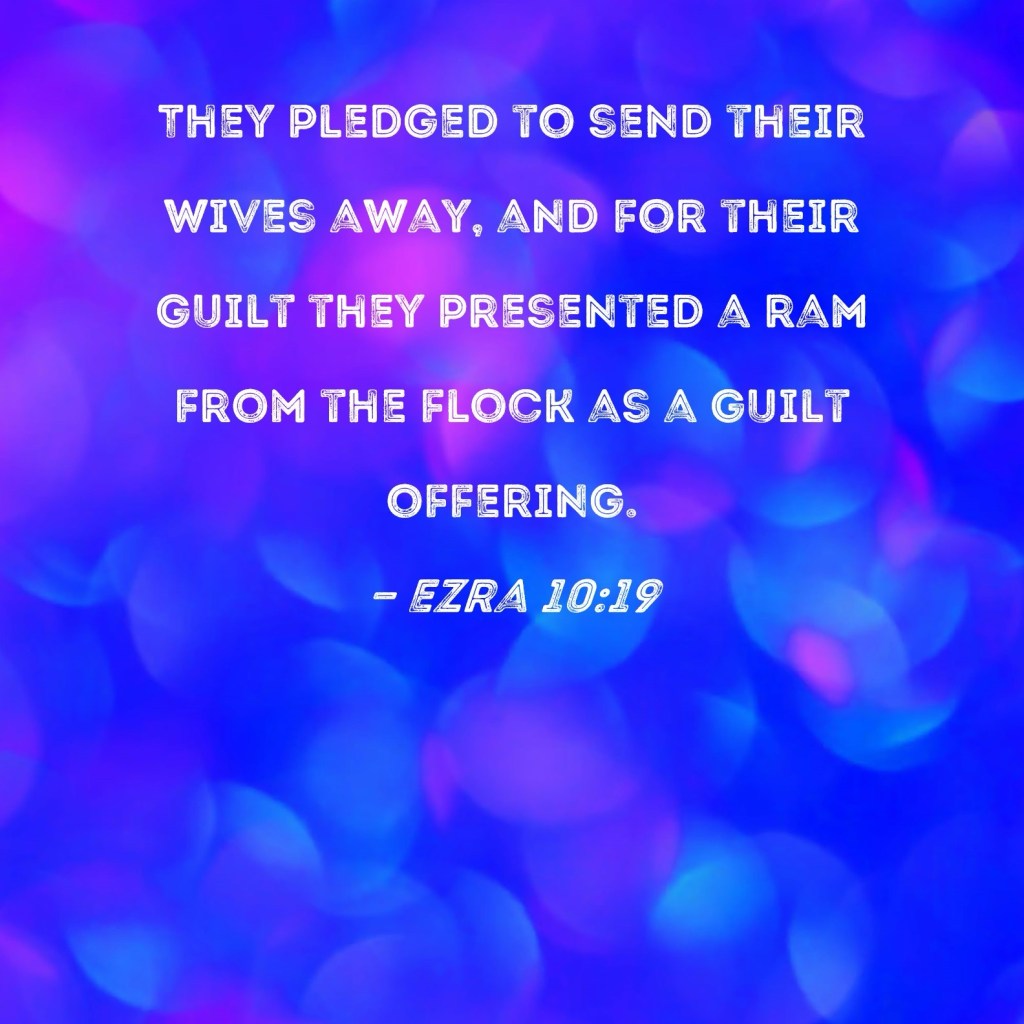
Ezra and Nehemiah exhibited a zealous fervour to restore the Law to its central place in the life of Israel. Ezra, learning that “the holy seed has mixed itself with the peoples of the lands” (Ezra 9:2), worked with “the elders and judges of every town” to determine who had married foreign women; the men identified “pledged themselves to send away their wives, and their guilt offering was a ram of the flock for their guilt” (Ezra 10:19). (So much for the importance of families!)

 Nehemiah considered that this project to “cleanse [the people] from everything foreign” (Neh 13:30) was in adherence to the command that “no Ammonite or Moabite should ever enter the assembly of God, because they did not meet the Israelites with bread and water, but hired Balaam against them to curse them” (Neh 13:1–2; see Num 22—24). The restoration of Israel as a holy nation meant that foreigners would be barred from the nation.

The oracle at the start of the third section of Isaiah stands in direct opposition to this point of view; “the foreigners who join themselves to the Lord … and hold fast my covenant—these I will bring to my holy mountain, and make them joyful in my house of prayer; their burnt offerings and their sacrifices will be accepted on my altar; for my house shall be called a house of prayer for all peoples” (Isa 56:6–7). 

Jesus, of course, quoted this last phrase in the action he undertook in the outer court of the Temple (Mark 11:17). Later, the welcome offered to the Ethiopian court official by Philip, who talked with him about scripture and baptised him, a eunuch (Acts 8:26–38), is consistent with the prophetic words, “to the eunuchs who keep my sabbaths, who choose the things that please me and hold fast my covenant, I will give them an everlasting name that shall not be cut off” (Isa 56:4–5). (From the earliest days, the church practised an inclusive welcoming of diversity that was consistent with this prophetic declaration.)

Other words in this last section of Isaiah also resonate strongly with texts in the New Testament. The ingathering of the outcasts (56:8) and the flocking of all the nations to Zion (60:1–18) together are reflected in the prediction of Jesus that “this good news of the kingdom will be proclaimed throughout the world, as a testimony to all the nations; and then the end will come” (Matt 24:14). 

The statement that those coming from Sheba “shall bring gold and frankincense, and shall proclaim the praise of the Lord” (60:6) most likely informed the story that Matthew created, concerning the wise ones from the east who came to see the infant Jesus and “offered him gifts of gold, frankincense, and myrrh” (Matt 2:11).

Further oracles set out exactly what the justice that God desires (56:1; 61:8) looks like. The extensive worship of idols (57:1–13) will bring God’s wrath on the people; “there is no peace, says my God, for the wicked” (57:13). Rather, “the high and lofty one who inhabits eternity, whose name is Holy” chooses “to revive the spirit of the humble and to revive the heart of the contrite” (57:15). 

Because God indicates that “I will not continually accuse, nor will I always be angry” (57:16), the prophet conveys what the Lord sees as the fast that is required; not a fast when “you serve your own interest on your fast day, and oppress all your workers” (58:3), but rather, a fast “to loose the bonds of injustice, to undo the thongs of the yoke, to let the oppressed go free, and to break every yoke … to share your bread with the hungry, and bring the homeless poor into your house; when you see the naked, to cover them, and not to hide yourself from your own kin” (58:6–7). These words resonate with the actions of “the righteous” in the well-known parable of Jesus, as they gave food, water, a welcome, clothing, and care to those sick or imprisoned (Matt 25:31–46).

The prophet laments that “there is no justice … justice is far from us … we wait for justice, but there is none … justice is turned back … the Lord saw it, and it displeased him” (59:8–15); he declares that, as a consequence, God “put on righteousness like a breastplate, and a helmet of salvation on his head; he put on garments of vengeance for clothing, and wrapped himself in fury as in a mantle” (59:17)—a description that underlines the later exhortations to the followers of Jesus to “put on the whole armour of God, so that you may be able to stand against the wiles of the devil” (Eph 6:10–17).

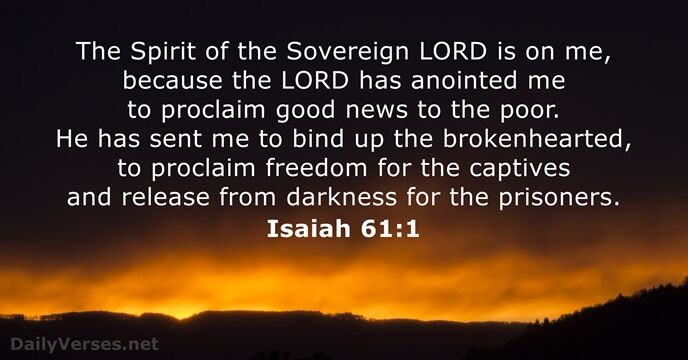
Because the Lord “loves justice” (61:8), the prophet has been anointed “to bring good news to the oppressed, to bind up the brokenhearted, to proclaim liberty to the captives, and release to the prisoners; to proclaim the year of the Lord’s favour, and the day of vengeance of our God” (61:1–2)—words which are appropriated by Jesus when he visits his hometown and reads from the scroll of Isaiah (Luke 4:18–19); “today this scripture has been fulfilled in your hearing”, Jesus declares (Luke 4:21).

Adhering to this way of justice, practising the fast that the Lord desires, means that he will give Israel a new name: “you shall no more be termed Forsaken, and your land shall no more be termed Desolate; but you shall be called My Delight Is in Her, and your land Married; for the Lord delights in you, and your land shall be married” (Isa 62:4). We have already seen the symbolic significance of names in considering the prophet Hosea and in Isaiah 8.

By contrast, vengeance will be the experience of Edom; using the image of trampling down the grapes in the wine press, the prophet reports the intention of God: “I trampled down peoples in my anger, I crushed them in my wrath, and I poured out their lifeblood on the earth” (63:1–6). So vigorously does God undertake this task, that he is attired in “garments stained crimson” because “their juice spattered on my garments and stained all my robes” (63:1–3). Once again, the prophet speaks in graphic terms.

Confronted with this display of wrath and vengeance, the prophet adopts an attitude of penitence, yearning for God to “look down from heaven and see, from your holy and glorious habitation” (63:15). His plea for the Lord to “tear open the heavens and come down, so that the mountains would quake at your presence—to make your name known to your adversaries, so that the nations might tremble at your presence!” (64:1–2) must surely have been in the mind of the evangelists as the reported the baptism of Jesus, when he “saw the heavens torn apart and the Spirit descending like a dove on him” (Mark 1:10).

The book ends with a sequence in which the prophet reports the words of the Lord which indicate that Israel will be restored (65:1–16), followed by the statement that the Lord is “about to create new heavens and a new earth” (65:17–25; 66:22–23).

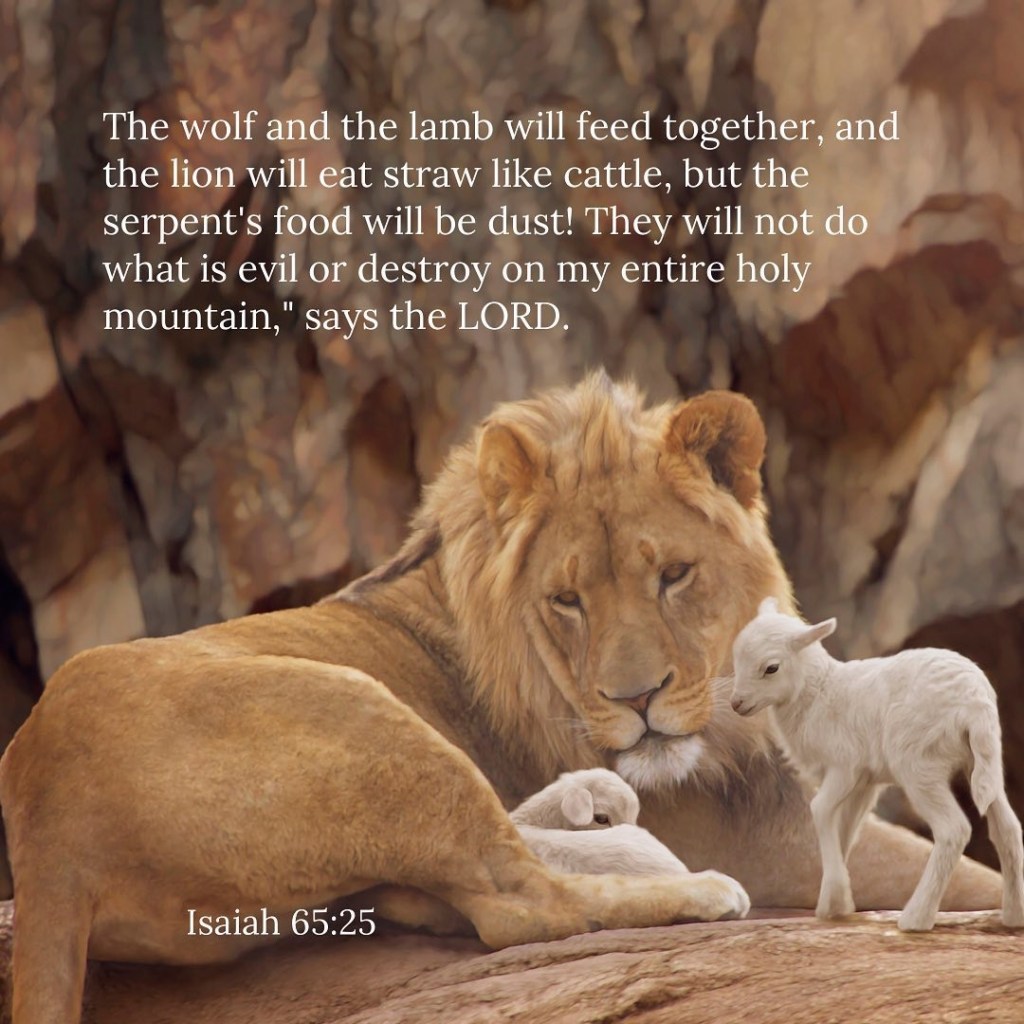
This vision is taken up and expanded in the closing chapters of the final book of the New Testament (Rev 21:1–22:7). The closing vision of Trito-Isaiah incorporates a number of references to earlier prophetic words: building houses and planting vineyards (65:21) recalls the words of Jeremiah (Jer 29:5–7); the image of wolves lying with lambs and lions “eating straw like the ox” recalls the vision of Isaiah (Isa 11:6–7). 

The promise that “they shall not hurt or destroy all on my holy mountain” (65:25) recalls that same vision of Isaiah (Isa 11:9), whilst the next promise about not labouring in vain nor bearing children for calamity (65:23) reverses the curse of Gen 3:16–19. The story of creation from the beginning of Genesis is evoked when the Lord asserts that “heaven is my throne and the earth is my footstool … all these things my hand has made” (66:1–2); these are the words which Stephen will quote back to the council in Jerusalem (Acts 7:48–50) and will lead to his death at their hands.

Even to the very end of this book, the judgement of the Lord is evident; the prophet declares that “the Lord will come in fire, and his chariots like the whirlwind, to pay back his anger in fury, and his rebuke in flames of fire; for by fire will the Lord execute judgment, and by his sword, on all flesh; and those slain by the Lord shall be many” (66:15–16). 

Nevertheless, the glory of the Lord shall be declared “among the nations” (66:19) and “they shall bring all your kindred from all the nations as an offering to the Lord” (66:20). The universalising inclusivism that was sounded at the start of this prophet’s work is maintained through into this closing oracle. In “the new heavens and the new earth which I will make … all flesh shall come to worship before me, says the Lord” (66:22–23). The vision lives strong!

I am sending my messenger to prepare the way (Mal 3; Advent 2C)

This coming Sunday, the lectionary offers two choices for the First Reading. One option, following on from the First Reading last Sunday (from Jeremiah 33) is the last chapter in the book of Baruch, a short book bearing the name of the Baruch who served as a scribe to Jeremiah. The book is included in the canon in Roman Catholic and Orthodox churches, but not in Reformed churches—and also not in Judaism.

The passage (Bar 5:1–9) invites the exiles from Jerusalem to “put off the garment of your sorrow and affliction … and put on forever the beauty of the glory from God” (Bar 5:1), to celebrate that “God will lead Israel with joy, in the light of his glory, with the mercy and righteousness that come from him” (Bar 5:9). It’s a joyful song that is quite appropriate for the season of Advent, as we prepare for the joyous celebrations—both sacred and secular—of the Christmas season.

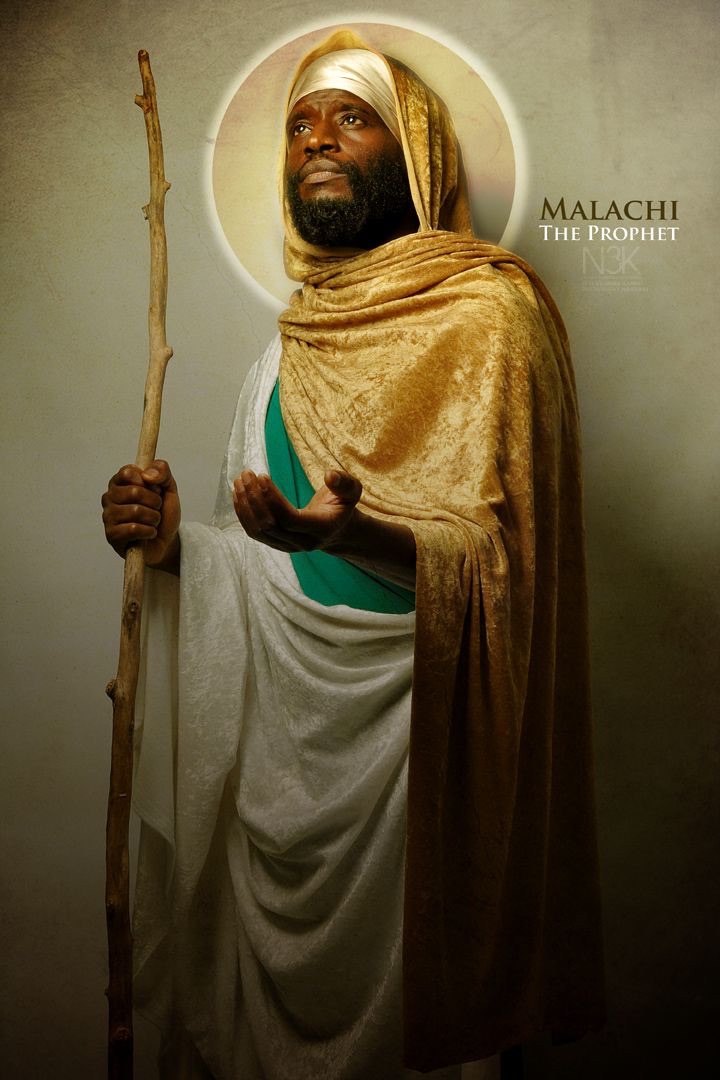
The alternative offering comes from the book of the prophet Malachi (3:1–4). The passage is obviously proposed because of correlates with the Gospel passage, in which John the Baptist declares that he comes to prepare for the coming of Jesus. “See, I am sending my messenger to prepare the way before me”, Malachi quotes the Lord as saying. “He is like a refiner’s fire and like fullers’ soap; he will sit as a refiner and purifier of silver, and he will purify the descendants of Levi and refine them like gold and silver”, Malachi declaims, providing a description that correlates well with the fiery declarations made by John.

Malachi was active after the Babylonian Exile; the  city and temple had been fully restored and worship was now active in the temple. In this context, Malachi called the people to repentance, starting with the priests, whom he attacks for their corruption (1:6–2:9); “the lips of a priest should guard knowledge, and people should seek instruction from his mouth, for he is the messenger of the Lord of hosts; but you have turned aside from the way; you have caused many to stumble by your instruction; you have corrupted the covenant of Levi, says the Lord of hosts” (2:8–9).

He then turns to the religious profanity of the people; “Judah has been faithless, and abomination has been committed in Israel and in Jerusalem; for Judah has profaned the sanctuary of the Lord, which he loves, and has married the daughter of a foreign god” (2:11), and instructs them to “take heed to yourselves and do not be faithless” (2:16). God threatens punishment in graphic terms: “I will rebuke your offspring, and spread dung on your faces, the dung of your offerings, and I will put you out of my presence” (2:3).

In the passage that is proposed for this coming Sunday, Malachi then looks to the coming of a messenger from God (3:1) who will bring judgment “like a refiner’s fire and like fullers’ soap; he will sit as a refiner and purifier of silver, and he will purify the descendants of Levi and refine them like gold and silver, until they present offerings to the Lord in righteousness” (3:2–3). 

He then identifies a range of ways by which social inequities are practised; God threatens, “I will be swift to bear witness against the sorcerers, against the adulterers, against those who swear falsely, against those who oppress the hired workers in their wages, the widow and the orphan, against those who thrust aside the alien, and do not fear me, says the Lord of hosts” (3:5). He notes that people regularly shortchange the Lord with incomplete tithes (3:8–15); rectifying this will result in blessings from God (3:10–12). 

The fierce imagery continues with a description of “the day [which] is coming, burning like an oven, when all the arrogant and all evildoers will be stubble; the day that comes shall burn them up, says the Lord of hosts, so that it will leave them neither root nor branch” (4:1). The motif of “the day” has run through the prophets, from before the exile (Amos 5:18–20; Isa 2:12, 17; 13:6–8; 34:8; Zeph 1:7, 14–15), during the years of exile (Jer 35:32–33; 46:10), and on into the years after the return from exile (Joel 2:1–3, 30–31).

What is required of the people is clear: “remember the teaching of my servant Moses, the statutes and ordinances that I commanded him at Horeb for all Israel” (4:4). Adherence to the covenant undergirds the claims of this prophet, as indeed it does with each prophet in Israel.

This short book ends with a memorable prophecy from Malachi: “Lo, I will send you the prophet Elijah before the great and terrible day of the Lord comes. He will turn the hearts of parents to their children and the hearts of children to their parents, so that I will not come and strike the land with a curse.” (4:5–6). These words are explicitly picked up in the Gospel portrayals of John the Baptist as the returning Elijah (Matt 17:9–13; Luke 1:17), turning the hearts of people so that they might receive the promise offers by Jesus. 

Whether Malachi himself understood these words to point to John and Jesus, of course, is somewhat dubious. But in the context of our Gospel passage for Advent 2, this passage is a timely offering—of a different nature from the Baruch passage, but relevant, nevertheless.