Appropriating the words of an Israelite prophet for a Christian doctrine (Isaiah 6; Trinity B)

Trinity Sunday is one of the very few times in the Christian calendar that a Sunday is named for a doctrine, rather than for a biblical story (Easter, Pentecost, Christmas, and the like). The passages are chosen to encourage us to reflect on the doctrine of the Trinity, as a doctrine that is central to our faith, through selected biblical passages; this year, sections of Isaiah, John, and Romans (with a Psalm chosen to complement these selections).

So this Sunday we are being asked to approach scripture in a way quite different from many other Sundays, when biblical texts are offered for us to consider in their own right. Trinity Sunday, by contrast, pays scant attention to the historical and literary contexts of the chosen texts. Rather, they are selected as isolated “bites” that can be woven together to provide “a biblical basis” for a doctrine that was developed and expressed a number of centuries later.

In this regard, it has similarities with the way that we are encouraged to read selections from the prophets of ancient Israel—taking particular passages which are placed alongside certain Gospel stories because they “illuminate” or “complement” these later texts. The birth of Jesus at Christmas and the death of Jesus at Easter—and the weeks leading up to these days, in the seasons of Advent and Lent, respectively—are the times when this process is most evident.

So the choice of Isaiah 6:1–8 as the First Reading for this coming Sunday, Trinity Sunday, has both of those pressures running in parallel. First, this text is intended to speak from six centuries before Jesus about what people four centuries after Jesus thought about him, God, and the Spirit. That’s a leapfrog over a whole millennium!!

And second, this text is intended to focus our thoughts on the threefold nature of God—Father, Son, and Holy Spirit—through the somewhat fortuitous chanting of “holy, holy, holy” by seraphim in the smoke-filled temple atop Mount Zion (Isa 6:3). The only other place in scripture where this threefold acclamation of divine holiness appears is in the extravagantly symbolic visions of the spirit-infused prophet of Revelation, as he “sees things” in his old age (Rev 4:8).

The chanting of the seraphim in the former book, Isaiah, is the first articulation of a chant which, millennia later, became associated with the triune God, worshipped in Christian liturgies. In my own church, after the presiding minster prompts with the words: “And so we praise you with the faithful of every time and place, joining with the choirs of angels and the whole creation in the eternal hymn”, the people respond, “Holy, holy, holy Lord, God of power and might, heaven and earth are full of your glory. Hosanna in the highest. Blessed is he who comes in the name of the Lord. Hosanna in the highest.” (quoted from The Service of the Lord’s Day in Uniting in Worship 2; Assembly of the Uniting Church in Australia, 2005).

This song has an integral place in the liturgy, not just of the Uniting Church, but of numerous liturgical denominations around the world. It is sung or spoken in the Great Prayer of Thanksgiving, as people offer thanks to God and prepare to receive the sacrament. Its location within the Christian liturgy means that, in the minds of many believers, it is thoroughly Christianised.

And I suspect that the threefold expression, “holy, holy, holy”, is intended to evoke the three-in-one nature of God, as understood in classic Christian theology. Perhaps it is intended to be a subconscious evocation of “Holy God, Holy Son, Holy Spirit” — even though the song itself says nothing about the unity of those three elements?

The author of the latter book, Revelation, quotes this chant in the long sequence of visions that he reports in this book. He says that he was “in the spirit” (1:10; 4:2; 17:3; 21:10), hearing “the voice of many angels” (5:11–12), as four living creatures sing without ceasing, “Holy, holy, holy, the Lord God the Almighty, who was and is and is to come” (4:8). That’s a multiplying of the threefold aspect of God—three times holy, over three eras of time.

The creatures singing this song are “full of eyes in front and behind”, and they variously appear like a lion, an ox, a creature with a face like a human face, and a flying eagle (4:6–7). These strange creatures appear before the prophet then sees “a lamb standing as if it had been slaughtered, having seven horns and seven eyes” (5:6). The scene is quite fantastical.

There follows further, increasingly bizarre, visions: “the lamb” opens a series of seals with associated dramatic events (6:1–17; 8:1), angels are seen to be hold back nature (7:1), one angel speaks forth (7:2–3) and then seven angels each blow their trumpets (8:6—9:14) before another four angels who were “bound at the great river Euphrates” are released in order to wreak vengeance on the earth and on humanity (9:15–21). We are well and truly into the vividly creative inner mind of the prophet, surely.

After all of this, the prophet is offered a scroll by an angel “wrapped in a cloud, with a rainbow over his head; his face was like the sun, and his legs like pillars of fire” (10:1–2). The prophet takes the scroll and eats it (10:8–10); “it was sweet as honey in my mouth, but when I had eaten it, my stomach was made bitter” (10:10). That should hardly have been a surprise; the human digestive system is not intended for such a diet!

Then the prophet is instructed to “prophesy again about many peoples and nations and languages and kings” (10:11)—and he does so in a series of increasingly dramatic, vivid, and bizarre prophecies (chs. 11—22). It’s hardly the stuff that encourages me to think that the vision which included the threefold acclamation of God (4:8) was being considered in a rational way and employed in a constructive process of building a doctrine that would serve the church well over time!

Quite surprisingly, in the midst of this extravagant revelatory exotica, there is a little scene that is strongly reminiscent of the scene in the temple on Mount Zion that Isaiah had described centuries beforehand. An angel with a golden censer “came and stood at the altar; he was given a great quantity of incense to offer with the prayers of all the saints on the golden altar that is before the throne” (Rev 8:3). After this, “the smoke of the incense, with the prayers of the saints, rose before God from the hand of the angel” (8:4) before the angel took the censer and filled it with fire from the altar and “threw it on the earth; and there were peals of thunder, rumblings, flashes of lightning, and an earthquake” (8:5).

The scene that is narrated in Revelation, therefore, might have certain resonances with the scene when the thresholds of the doorway to the Temple building “shook at the voices of those who called, and the house filled with smoke” (Isa 6:4). However, the creative imagination of the later prophet on Patmos (Rev 1:9) has taken him far, far away from the scene of the earlier prophet, Isaiah, in Jerusalem. And he ends up even further away from the process of vigorous debate and philosophical disputation which was the context within which the doctrine of the Trinity was formulated.
Isaiah locates the moment when he sensed his calling to be a prophet precisely when those seraphs sang their song, “holy, holy, holy” (Isa 6:3). “Woe is me”, he cries, explaining that “I am lost, for I am a man of unclean lips, and I live among a people of unclean lips” (6:5a). An intense sense of personal and communal inadequacy grips the prophet.

“Yet”, he continues, “my eyes have seen the King, the Lord of hosts!” (6:5b). This is far from an exposition of the inner nature of God; there is nothing to provide a hint of the doctrine of the Trinity, to be sure. In fact, this vision is similar to that seen by the prophets Amos during the time of Uzziah of Judah and Jeroboam of Israel (Amos 9:1) and Micaiah during the time of Jehoshaphat of Judah and Ahab of Israel (1 Ki 22:19; 2 Chron 18:18), when “coals of fire flamed forth” from the brightness before the Lord God.

In what Isaiah sees in this vision of “the King, the Lord of hosts”, he reports that “one of the seraphs flew to me, holding a live coal that had been taken from the altar with a pair of tongs; the seraph touched my mouth with it” (6:7) and uttered words of cleansing and forgiveness (6:8), followed by a word of commissioning (6:8). The coals are reminiscent of David’s vision of the Lord in his prayer calling for help, as “smoke went up from his nostrils, and devouring fire from his mouth; glowing coals flamed forth from him” (Ps 18:8, 12; 2 Sam 22:9, 13).

This moment during the visionary experience in the smoke-filled Temple grounds the prophet in the realities of his earthly life. The seraphs fly from the envisioned presence of the Lord God to touch the prophet directly in his physical state. There is nothing speculative or metaphysical involved in this sixth century BCE experience, such as we find in the expressions of Trinity that have been formulated since the fourth century CE.

It is noteworthy that the content of the commissioning that Isaiah then hears (6:9–13) is omitted from the verses suggested by the lectionary for Trinity Sunday. This severs the scene in the middle; the charge given to Isaiah is integral to the scene, and should not be omitted! Granted, the words which Isaiah hears are challenging and complex, for he is to “listen, but not comprehend; keep looking, but not understand” (6:9); indeed, he is to “make the mind of this people dull, and stop their ears, and shut their eyes, so that they may not look with their eyes, and listen with their ears, and comprehend with their minds, and turn and be healed” (6:10).

This is sobering. It is also material which could have been considered—indeed, should have been considered—in the process of exploring the essence of God, and articulating the nature of the divine—which is precisely what the doctrine of the Trinity is attempting to do. The God who cleanses and calls (6:7–8) is the same God who challenges and convicts (6:9–10), and who then judges with a ferocious intensity which is born out of a deep integrity (6:11–13).

How long is Isaiah to prophesy his words of challenge? “Until cities lie waste without inhabitant, and houses without people”, the answer comes (6:11); until “vast is the emptiness in the midst of the land” (6:12). For better or worse, we need to reckon with this dimension of God’s nature—and this coming Sunday would have been as good a time as any to ponder it!

So on Sunday during worship, ignore the lectionary, don’t stop at verse 8, and keep reading to the end of the chapter; and then reflect on who this God whom we worship really is.

See also
I will put my spirit within you … I will place you on your own soil (Ezekiel 37; Pentecost B)

In the alternate reading that the Revised Common Lectionary proposes for the festival of Pentecost, this coming Sunday, we find a section from the exilic prophet Ezekiel (Ezek 37:1–14). This is the famous prophecy covering the dead bones, to which the Lord (through Ezekiel) declares, “I will cause breath to enter you, and you shall live. I will lay sinews on you, and will cause flesh to come upon you, and cover you with skin, and put breath in you, and you shall live; and you shall know that I am the Lord” (Ezek 37:5–6).

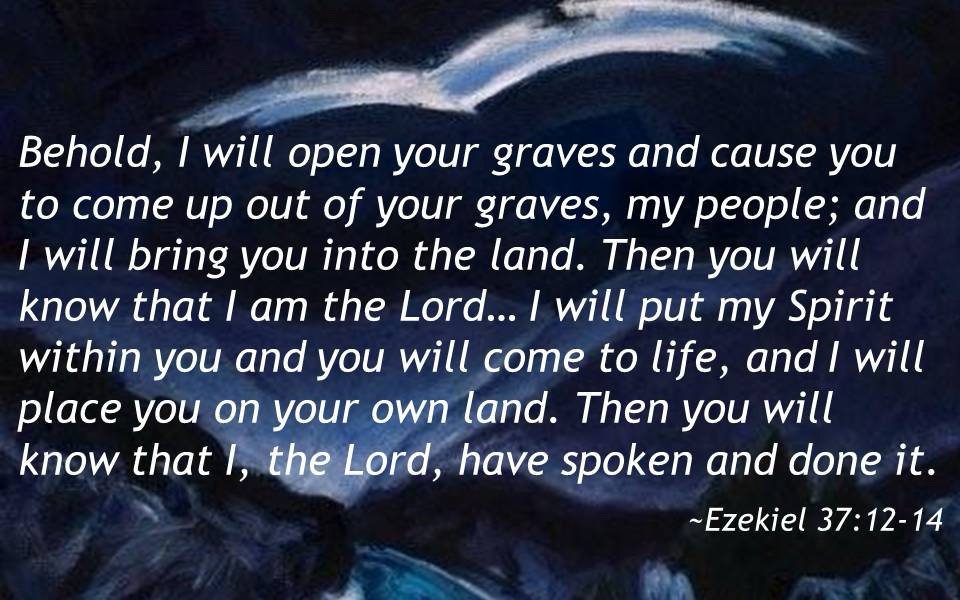
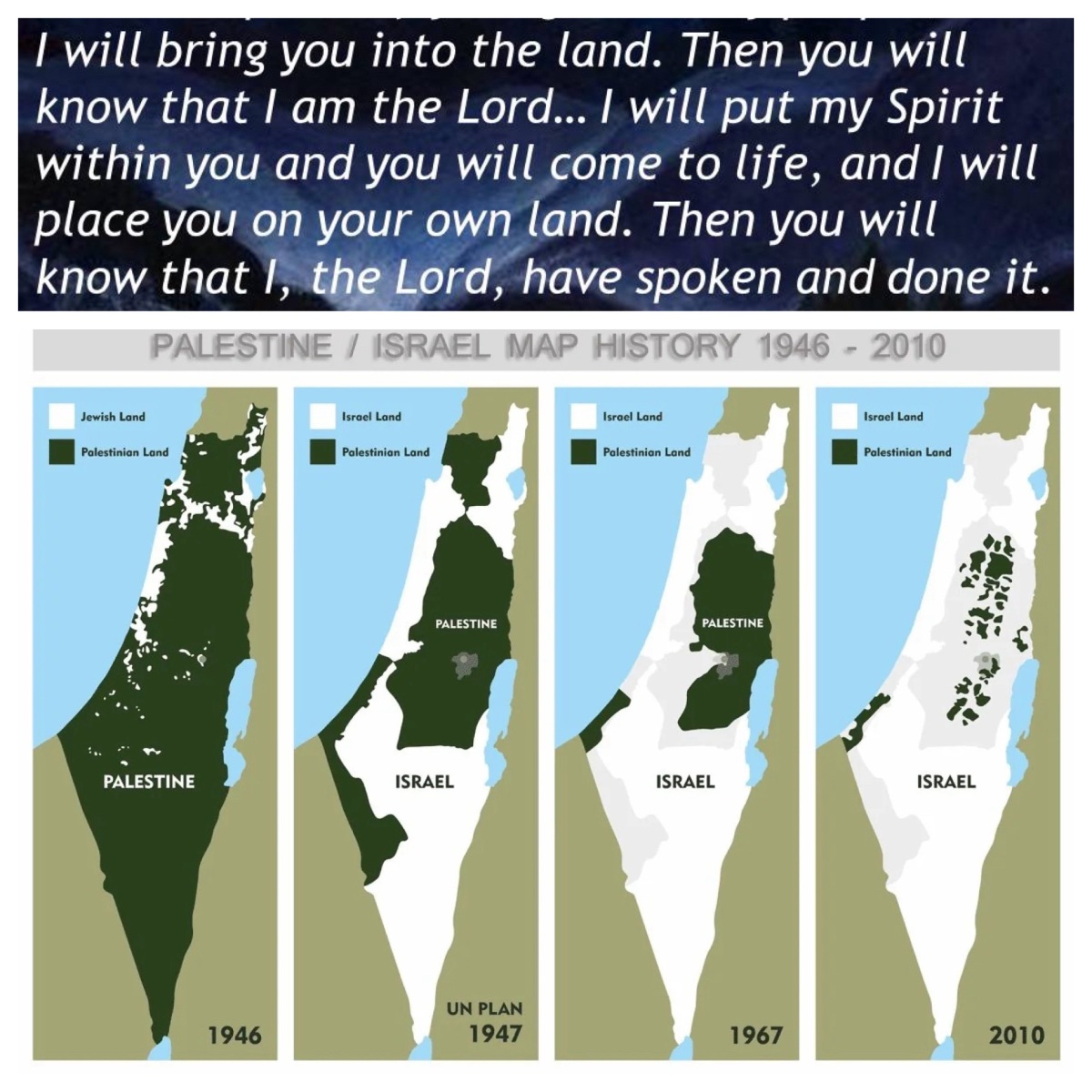
However, this passage also contains words which were filled with hope for the exiled people—but which, in the light of current events in the Middle East, and especially since the eruption of conflict on 7 October last year, are fraught with difficulties. God instructs Ezekiel, “prophesy, and say to them, Thus says the Lord God: I am going to open your graves, and bring you up from your graves, O my people; and I will bring you back to the land of Israel. … I will put my spirit within you, and you shall live, and I will place you on your own soil; then you shall know that I, the Lord, have spoken” (Ezek 37:12,14).

However, this passage also contains words which were filled with hope for the exiled people—but which, in the light of current events in the Middle East, and especially since the eruption of conflict on 7 October last year, are fraught with difficulties. God instructs Ezekiel, “prophesy, and say to them, Thus says the Lord God: I am going to open your graves, and bring you up from your graves, O my people; and I will bring you back to the land of Israel. … I will put my spirit within you, and you shall live, and I will place you on your own soil; then you shall know that I, the Lord, have spoken” (Ezek 37:12,14).

These words are fraught because of the long history of conflict relating to “the land of Israel”—the land to which the exiles would return under the decree of Cyrus of Persia; the land which today is the focus of such controversy and conflicted claims.

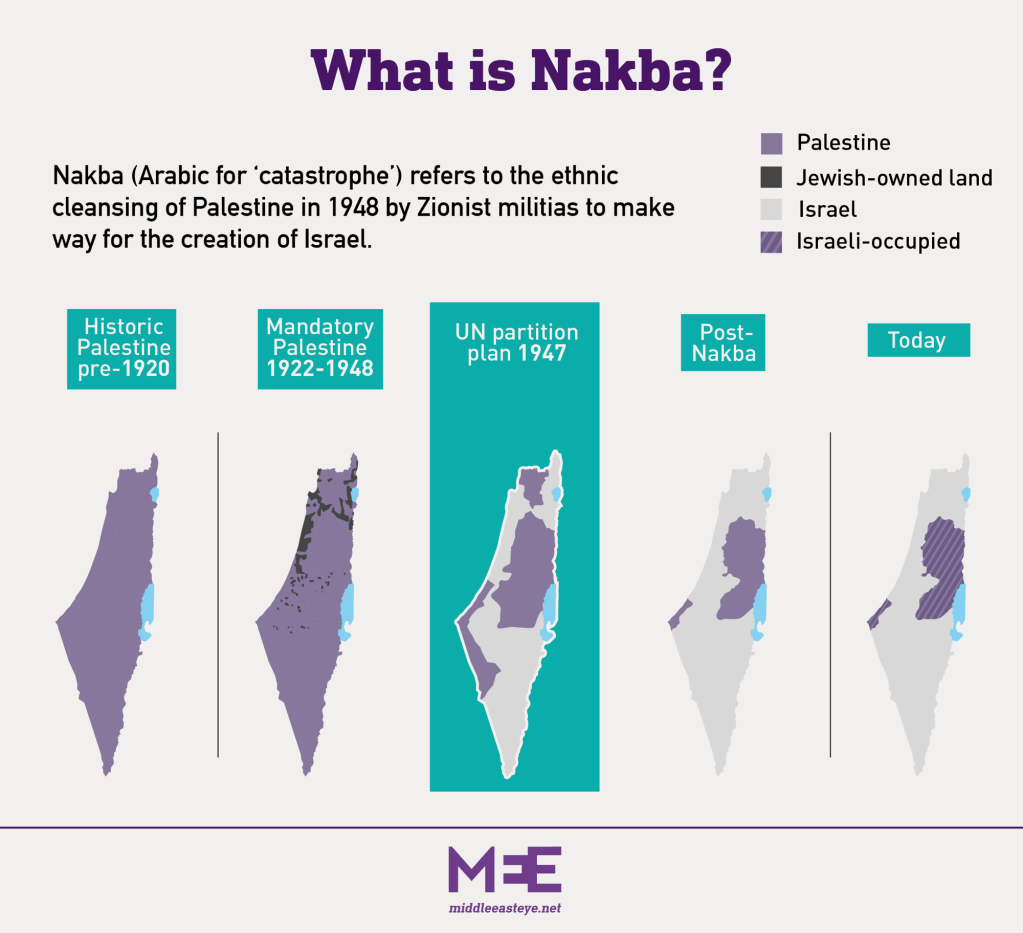
The land marked out for Israel was based on the historical reality that in ancient times Israelites/Jews had lived on that land for centuries until the scattering of all Jews under Roman rule first and second centuries of the Common Era. But since then, Arabs of various origins had held control of the land (see below), and those living there came to be known as Palestinians.

In the early 20th century, the place where Arabs who identified as Palestinians were living was decreed to be the British Mandate of Palestine (1920–1948). The ancient conflicts, it was hoped, would be well in the past. A place for Palestinians in the modern world was, it was thought, now settled. But this was not to be, as we well know today.

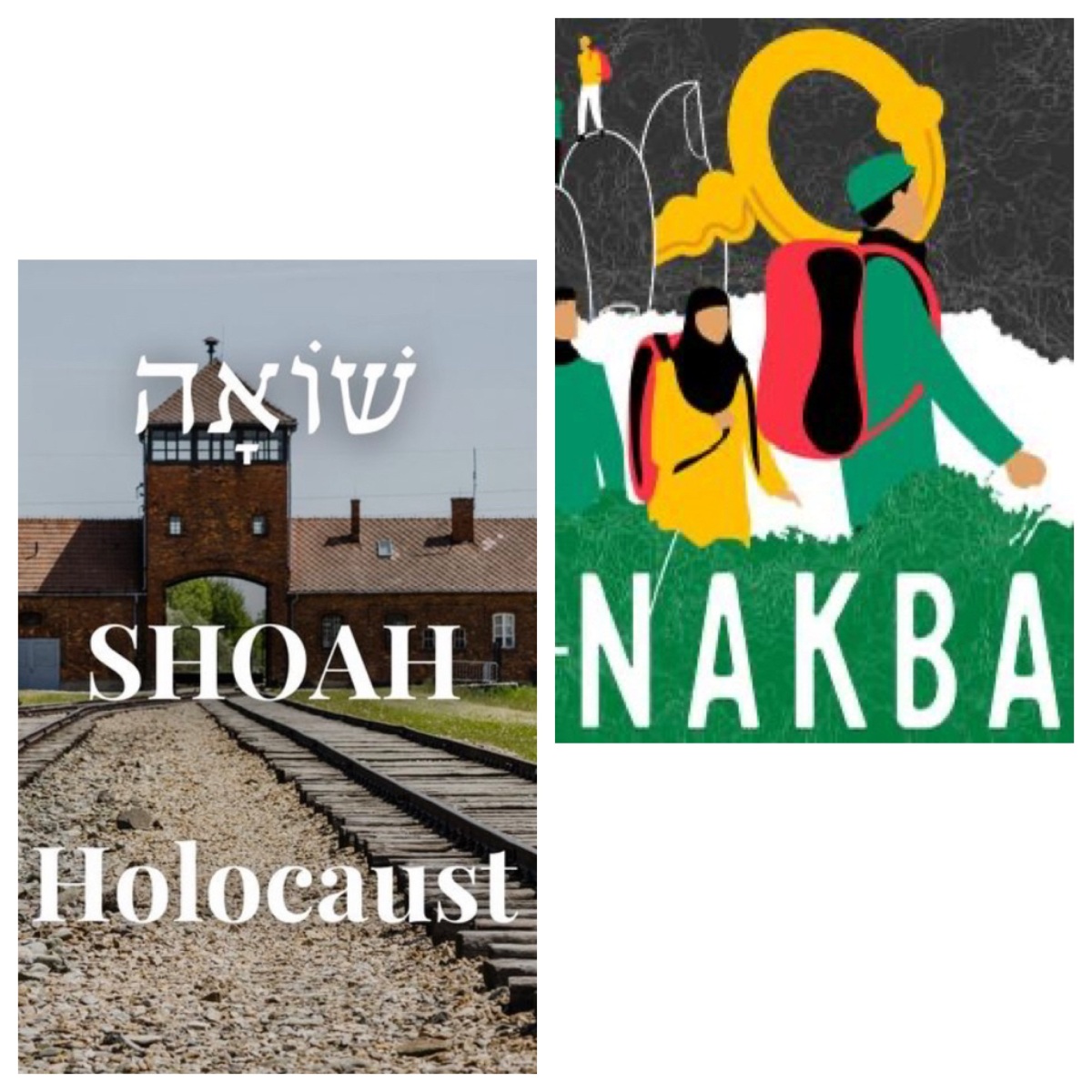
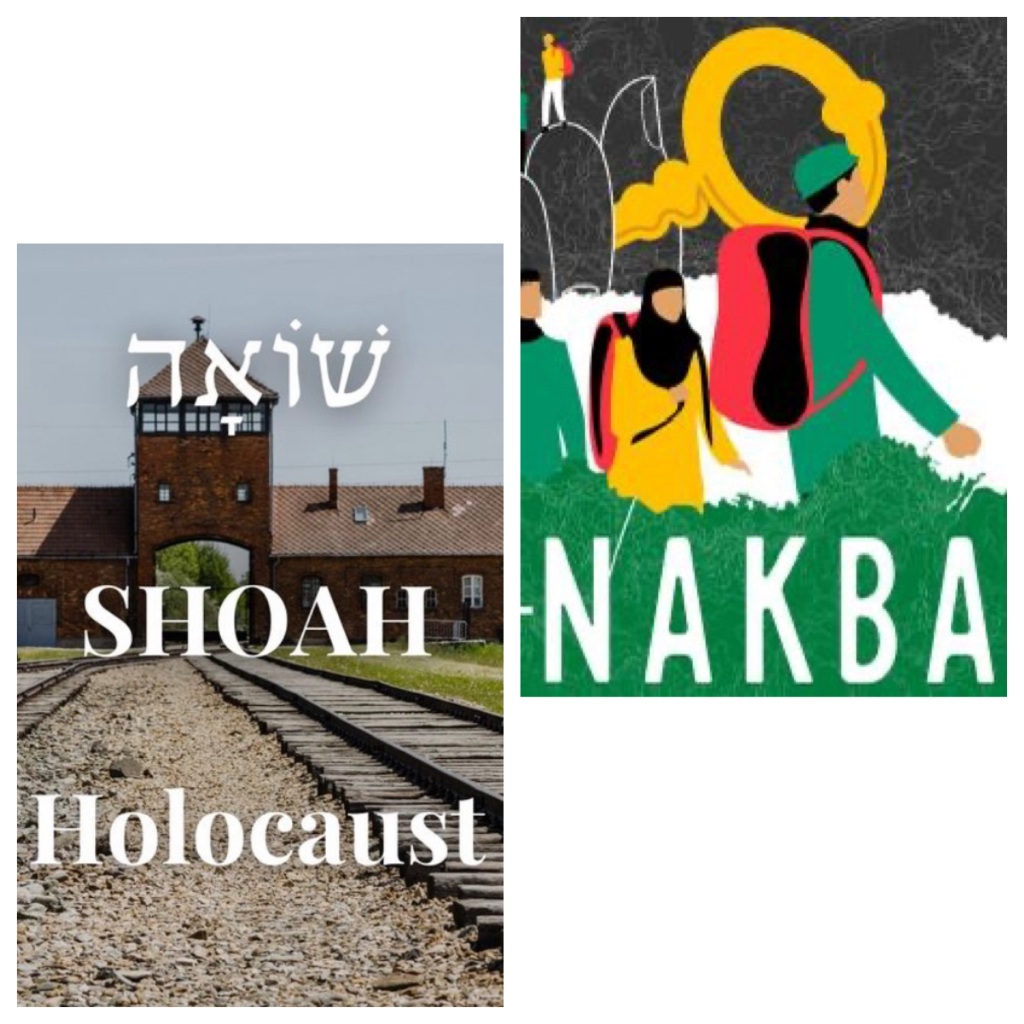
In part in response to the horrors of the Shoah, exposed by the ending of World War Two, the modern state of Israel was created in 1948. This was a hugely important, completely justified step to take, give the atrocities of genocide that had been inflicted on Jews in Europe by the Nazi regime of Germany.

The new nation of Israel took 78% of the area which had been provided for Palestinians in the British Mandate. That this was now Jewish territory was a blessing for Jews, but it was a huge and continuing irritant to Palestinian sensibilities, which is why the period from 1948 onwards is known as the Nakba, the Palestinian Catastrophe. A significant number of Palestinians fled the area declared as Israel, as (in one estimate) over 500 Palestinian villages were repopulated by Jews, becoming refugees with no national identity. That was indeed a catastrophe for those inhabitants.

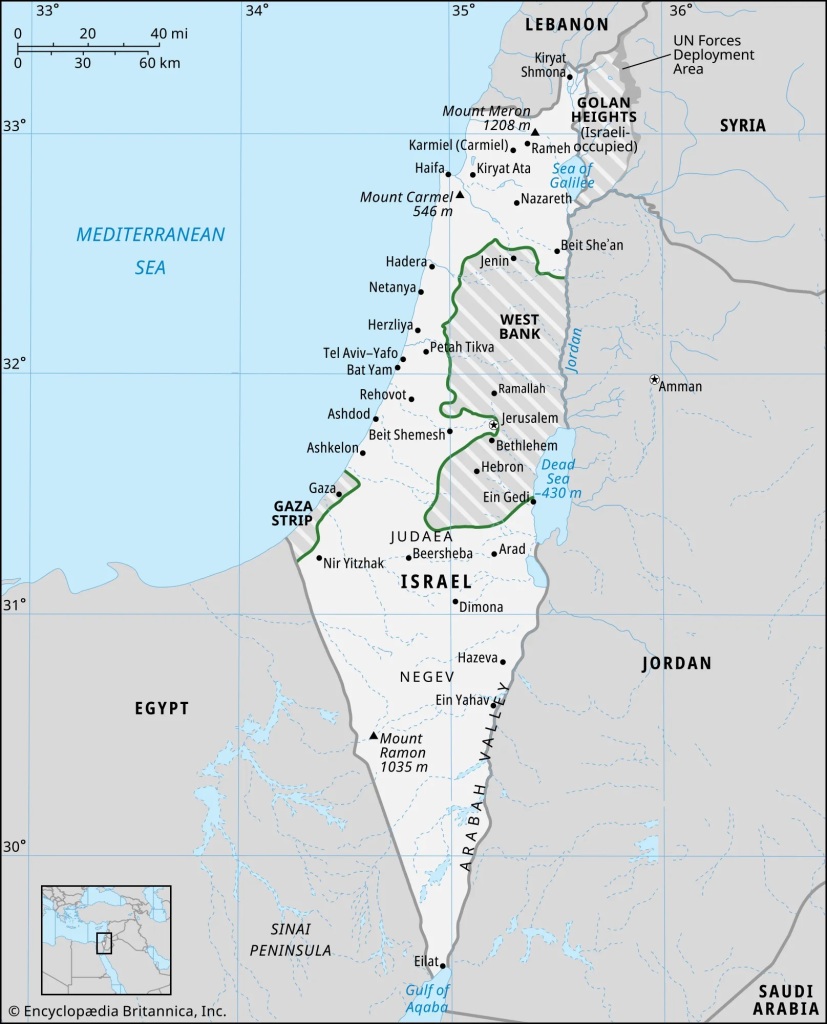
The contested regions of the Gaza Strip (along the east coastline of the Mediterranean Sea) and the West Bank (land immediately to the west of the River Jordan) became known as the Palestinian Territories. They have been disputed territories ever since they were occupied by Israel, two decades later, in the Six-Day War of 1967. In the decades since then, continuing and increasingly aggressive expansion of Israeli settlements into areas where Palestinians were living has greatly exacerbated the situation.

And so those who were dispossessed—and offered the hope of return to “their land”—become the dispossessors of others, to whom that same land was also “their land”; and so the tragic cycle continues.

The biblical texts which claim that God gave land to a chosen people so long ago are not verbatim accounts of “what God said” long ago, nor are they historical reports of actual events. They were written by priests returning from Exile, trying to recapture the period when Israel had some autonomy, because of the strength of its army under various tribal leaders (presented as “kings”). The texts form aetiological tales—that is, they are written as stories at a point in time, purporting to be ancient records, laying the foundation for a claim such as “this is our land, God gave it to us”.

That same land, promised to Abraham, claimed by Moses, is in contention today. It has had a chequered history. The ancient land of Cana an eventually became the land of Israel, then (along with Judaea) part of the Roman province of Syria Palaestina (132–390), and then of the Diocese of the East in the Roman Empire (to 536). What followed the fall of the Roman Empire was a millennium and a half of Muslim rule of this land, first as a part of Bilad al-Sham, the Greater Syria region, under various Caliphates.

The region continued to be part of various organisational configurations under successive Muslim rule, on into the Ottoman Caliphate (from 1517) and then into the modern era, as already noted. (I am not an expert, by any means, of this ancient and medieval history; for this summary, I am dependent on what I read in what I consider to be reputable sources.)

An exaggerated, idealised view of the extent of the land claimed by modern-day Israelis is evident in so many ways in the portrayal of Solomon, who was seen to be filled with “wisdom and knowledge”, and granted “riches, possessions, and honour, such as none of the kings had who were before you, and none after you shall have the like” (2 Chron 1:7–12, especially verses 10 and 12). The biblical figure of Solomon is an exaggerated caricature, a description of an idealised ruler whose existence is actually still a matter of debate amongst ancient historians.

It is also worth noting that the large reach of land that Solomon ruled over, even more extensive than the oft-cited phrase “from Dan to Beersheba” (Judg 20:1; 1 Sam 3:20; 2 Sam 3:10; 17:11; 24:2, 15; 1 Ki 4:25; 1 Chron 21:2; 2 Chron 30:5), did not continue past his death. The hagiographical exaggeration of territory under Solomon is not noted in the period after his death. The narrative books that recount the stories of the kingdoms of Israel, in the north, and Judah, in the south, in the centuries after Solomon, indicate that the scope of those kingdoms was more constrained.

*****

In the light of this, we need to take care when we come across texts in the Hebrew Scriptures which dogmatically and definitively declare that this land belongs to the people of Israel. Indeed, even scripture itself tells the story of the invading colonisers who claimed this land for their own (in the book of Joshua).

So I don’t think it is responsible, today, to lay claim to the whole, extended territory of the land, from the biblical passages noted, as the scope for the modern state of Israel which was created in 1948. There is no justification for the continued aggressive expansion of Israeli settlements in Palestinian areas. So I have sympathy for Palestinians who have lived on the land for thousands of years prior to 1948, as they understand this to be their ancestral land. It has been a continuing Nakba, a catastrophe, for Palestinians over these decades.

I also have sympathy for Jews, both those living in the land of Israel today, as well as those living in diaspora, for whom the land of Israel has a powerful symbolic significance—especially since the Shoah of 1933—1945 and the terrible genocide perpetrated by the Nazis against Jews in so many countries during that period. Granting them land in the area where their ancestors long ago had lived, a homeland that gives them security in the modern world, is important and necessary.

That said, I don’t agree that Palestinians should take matters into their own hands to seek vengeance against people in Israel in the way that they have done, once again, in recent months. In the same manner, nor do I think that the Israeli forces should respond in the aggressive and violent manner that they have done, once again, in recent times, with deaths of women and children, and aid workers, noted on the news with dreadful persistence. Too many people—innocent people—are dying and being injured, making any possible progress towards peace with justice even more difficult each day.

We need to seek once more the peace of these peoples. And we need to find that peace on the basis of justice. Neither terrorist attacks nor military crackdowns will achieve this. They will simply exacerbate a dangerous situation.

How do we deal, today, with the promises of God made long ago? “I will bring you back to the land of Israel. … I will place you on your own soil” (Ezek 37:12,14). We need to tread with care. Perhaps some other texts from both Jewish scripture Christian scripture provide guidance.

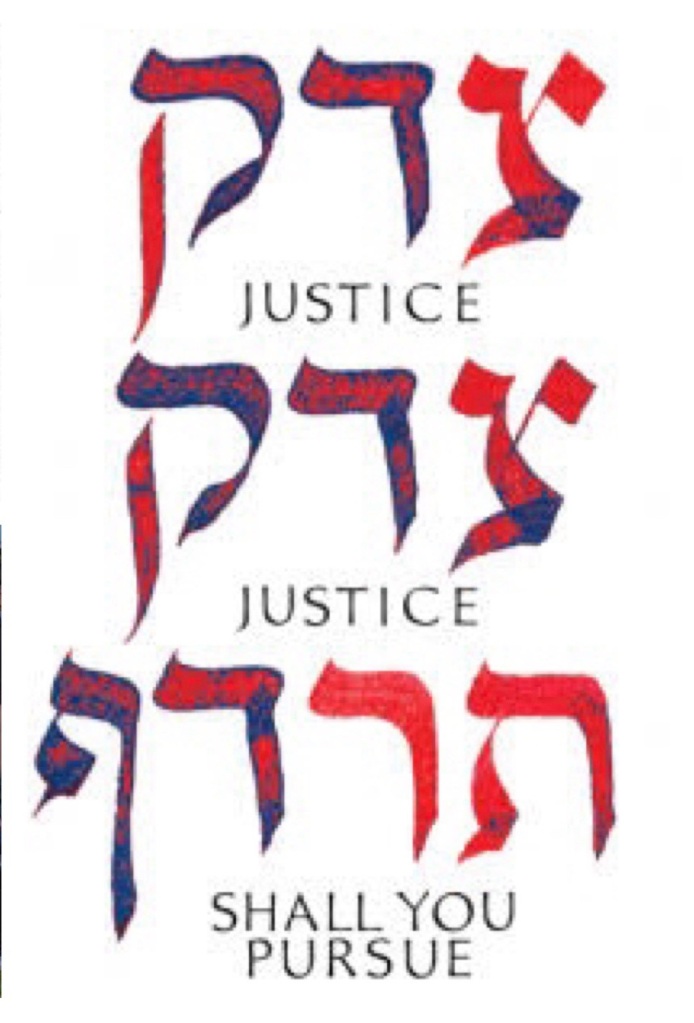
“Depart from evil, and do good; seek peace, and pursue it.” (Psalm 34:14). “Blessed are the peacemakers, for they will be called children of God.” (Matt 5:9). “Justice, and only justice, you shall pursue, so that you may live and occupy the land that the Lord your God is giving you.” (Deut 16:20). “… the weightier matters of the law: justice and mercy and faith. It is these you ought to have practiced …” (Mat 23:23). May these be the principles that guide the leaders of the warring groups in Israel and Palestine today.

Significant days, reflecting Shoah, Independence, Nakba, and 7 October.

This week there are two significant days happening in the Middle East. Yesterday, 14 May, was Yom Ha’atzmaut, Israel Independence Day, the national day for the modern state of Israel. And today, 15 May, is Dhikra an-Nakba (meaning “Memory of the Catastrophe”), a day of great significance for Palestinians, as it commemorates the Nakba, the Palestinian Catastrophe. These days are particularly poignant this year, as the ongoing conflict in Gaza which began on 7 October 2023 has exploded and escalated into a terrible state of entrenched warfare, with far too many unwarranted deaths (overwhelmingly of Palestinians) taking place each day since then.

These two days remember, from different perspectives, that moment when the modern state of Israel was created in 1948. This was achieved by mapping out an area for Jewish settlers to live in, and the simultaneous destruction of Palestinian society and homeland, with the permanent displacement of a majority of Arabs who identified as Palestinians and who had lived in this area for centuries.

The land marked out for Israel was based on the historical reality that in ancient times Israelites/Jews had lived on that land for centuries until the scattering of all Jews under Roman rule first and second centuries of the Common Era. But since then, Arabs of various origins had held control of the land (see below), and those living there came to be known as Palestinians.

In the early 20th century, the place where Arabs who identified as Palestinians were living was decreed to be the British Mandate of Palestine (1920–1948). The ancient conflicts, it was hoped, would be well in the past. A place for Palestinians in the modern world was, it was thought, now settled. But this was not to be, as we well know today.

British Mandate of Palestine, from Britannica.com

In part in response to the horrors of the Shoah, exposed by the ending of World War Two, the modern state of Israel was created in 1948. This was a hugely important, completely justified step to take, give the atrocities of genocide that had been inflicted on Jews in Europe by the Nazi regime of Germany.

The new nation of Israel took 78% of the area which had been provided for Palestinians in the British Mandate. That this was now Jewish territory was a blessing for Jews, but it was a huge and continuing irritant to Palestinian sensibilities, which is why the period from 1948 onwards is known as the Nakba, the Palestinian Catastrophe. A significant number of Palestinians fled the area declared as Israel, as (in one estimate) over 500 Palestinian villages were repopulated by Jews, becoming refugees with no national identity. That was indeed a catastrophe for those inhabitants.

The contested regions of the Gaza Strip (along the east coastline of the Mediterranean Sea) and the West Bank (land immediately to the west of the River Jordan) became known as the Palestinian Territories. They have been disputed territories ever since they were occupied by Israel, two decades later, in the Six-Day War of 1967. In the decades since then, continuing and increasingly aggressive expansion of Israeli settlements into areas where Palestinians were living has greatly exacerbated the situation. And so those who were dispossessed become the dispossessors of others, and the cycle continues.

Map showing Gaza and the West Bank, from Britannica.com

The biblical texts which claim that God gave land to a chosen people so long ago are not verbatim accounts of “what God said” long ago, nor are they historical reports of actual events. They were written by priests returning from Exile, trying to recapture the period when Israel had some autonomy, because of the strength of its army under various tribal leaders (presented as “kings”). The texts form aetiological tales—that is, they are written as stories at a point in time, purporting to be ancient records, laying the foundation for a claim such as “this is our land, God gave it to us”.

That same land, promised to Abraham, claimed by Moses, is in contention today. It has had a chequered history. The ancient land of Canaan eventually became the land of Israel, then (along with Judaea) part of the Roman province of Syria Palaestina (132–390), and then of the Diocese of the East in the Roman Empire (to 536). What followed the fall of the Roman Empire was a millennium and a half of Muslim rule of this land, first as a part of Bilad al-Sham, the Greater Syria region, under various Caliphates.

The region continued to be part of various organisational configurations under successive Muslim rule, on into the Ottoman Caliphate (from 1517) and then into the modern era, as already noted. (I am not an expert, by any means, of this ancient and medieval history; for this summary, I am dependent on what I read in what I consider to be reputable sources.)

An exaggerated, idealised view of the extent of the land claimed by modern-day Israelis is evident in so many ways in the portrayal of Solomon, who was seen to be filled with “wisdom and knowledge”, and granted “riches, possessions, and honour, such as none of the kings had who were before you, and none after you shall have the like” (2 Chron 1:7–12, especially verses 10 and 12). The biblical figure of Solomon is an exaggerated caricature, a description of an idealised ruler whose existence is actually still a matter of debate amongst ancient historians.

It is also worth noting that the large reach of land that Solomon ruled over, even more extensive than the oft-cited phrase “from Dan to Beersheba” (Judg 20:1; 1 Sam 3:20; 2 Sam 3:10; 17:11; 24:2, 15; 1 Ki 4:25; 1 Chron 21:2; 2 Chron 30:5), did not continue past his death. The hagiographical exaggeration of territory under Solomon is not noted in the period after his death. The narrative books that recount the stories of the kingdoms of Israel, in the north, and Judah, in the south, in the centuries after Solomon, indicate that the scope of those kingdoms was more constrained.

Solomon’s reputed empire, based on the exaggerated biblical texts

In the light of this, I don’t think it is responsible to lay claim to the whole, extended territory of the land, from the biblical passages noted, as the scope for the modern state of Israel which was created in 1948. There is no justification for the continued aggressive expansion of Israeli settlements in Palestinian areas. So I have sympathy for Palestinians who have lived on the land for thousands of years prior to 1948, as they understand this to be their ancestral land.

I also have sympathy for Jews, both those living in the land of Israel today, as well as those living in diaspora, for whom the land of Israel has a powerful symbolic significance—especially since the Shoah of 1933—1945 and the terrible genocide perpetrated by the Nazis against Jews in so many countries during that period. Granting them land in the area where their ancestors long ago had lived, a homeland that gives them security in the modern world, is important and necessary.

That said, I don’t agree that Palestinians should take matters into their own hands to seek vengeance against people in Israel in the way that they have done, once again, in recent months. In the same manner, nor do I think that the Israeli forces should respond in the aggressive and violent manner that they have done, once again, in recent times, with deaths of women and children, and aid workers, noted on the news with dreadful persistence. Too many people—innocent people—are dying and being injured, making any possible progress towards peace with justice even more difficult each day.

As John Hanscombe writes in The Echidna, “Just as there are no excuses for Hamas’s October 7 massacres, rapes and hostage-taking, using starvation as a weapon is also abhorrent. Turning a blind eye to attacks on aid convoys, as the Israeli police reportedly did, only pushes the country further into isolation. Two wrongs never make a right.”

See https://www.theechidna.com.au/

We need to seek once more the peace of these peoples. And we need to find that peace on the basis of justice. Neither terrorist attacks nor military crackdowns will achieve this. They will simply exacerbate a dangerous situation.

“Depart from evil, and do good; seek peace, and pursue it.” (Psalm 34:14). “Blessed are the peacemakers, for they will be called children of God.” (Matt 5:9). “Justice, and only justice, you shall pursue, so that you may live and occupy the land that the Lord your God is giving you.” (Deut 16:20). “… the weightier matters of the law: justice and mercy and faith. It is these you ought to have practiced …” (Mat 23:23). May these be the principles that guide the leaders of the warring groups in Israel and Palestine today.

See also

You send forth your spirit, you renew the face of the earth (Psalm 104; Pentecost)

Each year for the Festival of Pentecost, alongside the story from Acts 2, the lectionary places a section from the latter part of Psalm 104 (Ps 104:24–34, 35b). The whole psalm is a stirring poem on the beauty and grandeur of God’s creation, worth reading in full for the grand sweep over earth and seas and sky that it offers.

The section proposed for Pentecost has been chosen, it seems clear, for the two references to the spirit that are included. The first links the spirit with God’s creative work: “you send forth your spirit, they [God’s creatures] are created; and you renew the face of the ground” (v.30).

The second reference (v.29) is less obvious in many English translations. The same word, ruach, is used in this verse as in the following verse. In v.29, God is said to “take away their breath [ruach], [so] they die and return to their dust”. In v.30, at the other end of life, God is said to “send forth your spirit [ruach], [so] they are created”. God’s spirit is given at birth and taken away at death. The same word, ruach, indicates the same divine spirit which imbues all human beings. Rendering it differently in these two consecutive verses is mischievous!

The section of the psalm offered for Pentecost affirms that the many works of God (quaintly translated as “manifold” in the NRSV and the NIV, following the earlier KJV) are created “in wisdom” (v.24). What has come before this verse, as well as what immediately follows it, is all encompassed within this overarching claim that these many works are the fruit of divine wisdom.

The psalm has already identified, as part of God’s creativity, the heavens (vv.2–4) and the earth, with its mountains (vv.5–9); it continues with descriptions of rivers, streams, and rain (vv.10–13; and see more at vv.25–26), noting the various classes of creatures—wild animals (v.11), birds of the air (v.12), cattle and plants (v.14), as well as sea creatures (vv.25–26), leading on to the production of food to nourish humanity—wine, oil, and bread (v.15; and see more at vv.27–28).

The threefold classification of creatures evident in this psalm is found elsewhere in Hebrew Scriptures. In Psalm 8, another psalm which offers praise to God (“how majestic is your name in all the earth”, vv.1,8), those who are placed “under the feet” of human beings are “all sheep and oxen, and also the beasts of the field, the birds of the air, and the fish of the sea, whatever passes along the paths of the seas” (Ps 8:7–8).

This echoes the declaration of God found in the priestly account of creation, after humanity is made “in the image of God”, that humans will have “dominion over the fish of the sea, and over the birds of the air, and over the cattle, and over all the wild animals of the earth, and over every creeping thing that creeps upon the earth” (Gen 1:26, 28). It also resonates with the commitment of God to Noah and his sons, after the great flood, that “the fear and dread of you shall rest on every animal of the earth, and on every bird of the air, on everything that creeps on the ground, and on all the fish of the sea; into your hand they are delivered” (Gen 9:2). The same classification is noted in the prohibitions of idols that Moses delivers to the people of Israel (Deut 4:15–18) and an early speech of Job in response to Zophar (Job 12:7–8).

After the food produced to nourish humanity (v.15), there follows mention of trees, birds, and wild animals (vv.16–18) including lions (vv.21–22); interpersed between these are the sun and the moon (vv.19–20), and concluding with the daily labour of human beings (v.23). All of these are wrapped into the inclusive statement, “O Lord, how many are your works! In wisdom you have made them all; the earth is full of your creatures” (v.24).

All of these elements—heaven and earth, sea and land and sky, birds and animals both domesticated and wild—are included in this listing of God’s creation, made in wisdom, all created by the breath of God (v.30) and all returning to dust when their breath is taken from them (v.29). The psalm draws to a close with a typical stanza of praise (vv.31–34), in which the psalmist sings with joy: “I will sing praise to my God while I have being; may my meditation be pleasing to him” (vv.33b—34a).

It is worth noting that the lectionary—typically—omits the main part of the final verse, in which the psalmist prays, “let sinners be consumed from the earth, and let the wicked be no more” (v.35a). This is a typical petition which is found in a number of psalms (Ps 1:5–6; 9:5, 17; 11:6; 21:9; 28:3–5; 34:21; 37:9, 20; 58:3–10; 59:13; 68:2; 71:13; 75:8–10; 90:7; 101:7–8; 119:119; 129:4; 139:19; 145:20; 146:9; 147:6), so it should not surprise us; the judgement of God was always seen to exist alongside the steadfast love of the Lord in the songs of the psalmists.

Including this verse in the excerpt that we read and hear on Pentecost Sunday both maintains the integrity of the text, and invites the preacher to address the full picture of the deity that is found in the texts of Hebrew Scriptures.

I did not hide my face from insult and spitting (Isa 50 and the Passion Narrative; Lent 6B)

The passage of Hebrew Scripture we hear this coming Sunday (Isa 50:4–9a) is a significant passage. It comes from the second section of this long book (Isa 40—55), which opens with the familiar song, “comfort, comfort all my people” (Isa 40:1). Widely considered to be written in a period later than the earlier section (Isa 1—39), this section of Isaiah is called Second Isaiah. (The third main section, chapters 56—66, is called Third Isaiah.)

The comfort sung about by the prophet speaks to the situation of the people: their forebears had been taken into exile by the Babylonians in 587 BCE, and now a new generation (perhaps four to five decades later) yearns to return to the land of Israel, given to the people in ancient times, as recounted in the foundational myth—story of the Exodus. Other parts of the Hebrew Bible reflect the anguish of the people during their time of Exile (Ps 137 is the most famous instance). Deutero-Isaiah, however, focuses consistently on the hope of return to the land of Israel.

Looking to the new power of Persia to permit this return, the prophet of this later period speaks with hope and joy, to the people living in exile, using vivid imagery and dramatic scenes of promise and confidence. A joyous, positive tone runs right through the oracles in this section of Isaiah. “I am about to do a new thing”, says the Lord; “I will make a way in the wilderness and rivers in the desert” (43:19). “I will pour water on the thirsty land and streams on the dry ground”, the Lord continues; “I will pour my spirit upon your descendants, and my blessing on your offspring” (44:3).

Deutero-Isaiah is fundamental for the theological developments that we find in the New Testament. Scattered through this section, we find four Songs of the Servant—three relatively brief (42:1–9; 49:1–7; 50:4–11); and the fourth, best-known within Christian circles, a longer description of the servant who “was despised and rejected by others; a man of suffering and acquainted with infirmity” (Isa 52:13–53:12).

The resonances that this longer song has with the passion narrative of Jesus are crystal clear. The song is explicitly linked with Jesus six times in the New Testament (Matt 8:14–17; Luke 22:35–38; John 12:37–41; Acts 8:26–35; Romans 10:11–21; 1 Pet 2:19–25); furthermore, so many of the details of the passion narrative are shaped in the light of this song, along with a number of psalms of the righteous sufferer. (See

The third of these songs, which we hear this coming Passion Sunday, portrays the speaker as a Teacher. The resonances of this song with the story of Jesus are also clear. The punishment experienced by the Teacher—his back is struck, his beard is pulled, he is insulted, people spit on his face (Isa 50:6)—is echoed in the punishments inflicted on Jesus by Roman soldiers and Jewish passers-by. He is struck with a reed by Roman soldiers and spat upon (Mark 15:19). He is insulted by passers-by and the Jewish authorities (Mark 15:29–32).

The lectionary offers us this passage for Passion Sunday, a time when we reflect at some length on the passion of Jesus, which we recall also each Good Friday. The lectionary also offers the full story of the fate of Jesus after he entered Jerusalem at Passover. This part of the Gospel story (chapters 14–15 in Mark) is known as the passion narrative, because it tells about what Jesus suffered in his final days. (“Passion” comes from the Latin word passio, meaning suffering.)

The author of the beginning of the good news, which we know as Mark’s Gospel, seems to have been the first person (as far as we know from the evidence) who drew together a number of expressions about the way of Jesus, and worked them into a single, cohesive whole, in a continuous narrative style.

This narrative recounts the death of Jesus by relating it to the figure of righteous person who suffers injustice, who appears in various Hebrew Scripture passages. The author of this Gospel takes great pains to show that Jesus remains faithful to his calling despite the pressures he faces, just as the righteous sufferer of old also held to their faith.

The Gethsemane scene (Mark 14:32–42) draws on imagery from Hebrew Scripture to underline this. The narrative evokes the suffering of the faithful righteous person, referring especially to some phrases found in the Psalms. The Golgotha scene (Mark 15:21–41) also contains this orientation. What takes place is interpreted with reference to scripture; here, the allusions are both subtle, and more direct. The cry which Jesus utters at the ninth hour, Eloi, Eloi, lama sabachthani (15:34), is a clear reference to Psalm 22, by quoting its first verse. See more at

The offering of Isa 50:4–9a thus “fits” with the way that the author of the Markan passion narrative presents to story of the final hours of Jesus. His intense feeling of the agony inflicted on him, and yet his steadfast grappling with the faith he holds, is to the fore. The story invites us into sombre meditation as we approach the annual return of Easter.

A new and right spirit (Ps 51; Lent 5B)

“Put a new and right spirit within me”, the psalmist sings (Ps 51:10), in the psalm that is offered by the lectionary for this coming Sunday, the Fifth Sunday in Lent, as a companion piece for the well-known Hebrew Scripture passage for this Sunday about the “new covenant” to be given to Israel and Judah (Jer 31:31–34).

Perhaps the key to this passage comes in the prophet’s words from God, “this is the covenant that I will make with the house of Israel; I will put my law within them, and I will write it on their hearts; and I will be their God, and they shall be my people.” (Jer 31:33). For more on this passage, see

The prophet indicates that the promise God offers is that “I will forgive their iniquity, and remember their sin no more” (Jer 31:34b), which is perhaps why the psalmist is confident to pray for God to have mercy: “blot out my transgressions, wash me thoroughly from my iniquity, and cleanse me from my sin” (v.2), then “purge me with hyssop, and I shall be clean; wash me, and I shall be whiter than snow” (v.7), and still more, “hide your face from my sins, and blot out all my iniquities” (v.9).

Forgiveness of sin has been a characteristic of the Lord God throughout the narrative books which tell the saga of Israel. Abraham bargains with God about forgiving Sodom (Gen 18:22–33). Moses likewise pleads with God, after the people had built a Golden Calf, to forgive them—“but if not, blot me out of the book that you have written” (Exod 32:32).

Yet these narratives also make it clear that God’s forgiving nature needs to be balanced by an understanding of the vengeance that upholds divine justice. In the wilderness of Paran, after spies returned from Canaan and stirred up discontent amongst the people, Moses recognises this capacity for vengeance; he implores the Lord not to kill the people in retaliation, praying, “forgive the iniquity of this people according to the greatness of your steadfast love, just as you have pardoned this people, from Egypt even until now”—to which the Lord God replied, “I have forgiven them, just as you have asked” (Num 14:19–20).

This story also indicates that divine forgiveness was conditional, for God immediately declared, “none of the people who have seen my glory and the signs that I did in Egypt and in the wilderness, and yet have tested me these ten times and have not obeyed my voice, shall see the land that I swore to give to their ancestors; none of those who despised me shall see it” (Num 14:22–23).

Later in this same book, note is made that “the Lord will forgive” a woman who makes a vow that displeases her father (Num 30:5) or her husband (Num 30:8, 12). God clearly sided with the male who had positional authority in the patriarchal structures of society!

At the renewal of the covenant when the people are in the land of Canaan, Joshua reminds the people that “you cannot serve the Lord, for he is a holy God. He is a jealous God; he will not forgive your transgressions or your sins. If you forsake the Lord and serve foreign gods, then he will turn and do you harm, and consume you, after having done you good” (Josh 24:19–20).

When Solomon dedicates the temple, he recounts the saga of Israel and five times asks for God to “hear in heaven” and “forgive your people who have sinned against you, and all their transgressions that they have committed against you” (1 Kings 8:30, 34, 36, 39, 50). And when Ezra leads a ceremony of rededication for the people as they return to the land after exile, in his extended prayer he reminds God, “you are a God ready to forgive, gracious and merciful, slow to anger and abounding in steadfast love, and you did not forsake them” (Neh 9:17).

So the psalmists pray for God to forgive sins (Ps 25:18; 65:3; 79:9), confident that “there is forgiveness with you, so that you may be revered” (Ps 130:4). Amos prays to God, “O Lord God, forgive, I beg you!How can Jacob stand? He is so small!” (Amos 7:2), Daniel likewise pleads, “O Lord, hear; O Lord, forgive; O Lord, listen and act and do not delay!” (Dan 9:19).

Both Jeremiah (Jer 33:8; 36:3) and Ezekiel (Ezek 16:63) envisage that God will forgive, although Hosea reports the strident command of God when his wife bore a daughter: “name her Lo-ruhamah, for I will no longer have pity on the house of Israel or forgive them” (Hos 1:6). This is what we have come to expect from the prophetic word, which consistently berates the people and warns them of the judgement that God will bring upon them because of their sinfulness. See

By contrast, God continues, “I will have pity on the house of Judah, and I will save them by the Lord their God” (Hos 1:7). So forgiveness—limited, directed by divine decree—is indeed possible. Accordingly, we see in the psalm for this Sunday (Psalm 51:1–12) that the psalmist is confident to seek divine forgiveness, declaring “I know my transgressions, and my sin is ever before me” (v.3), even going so far as to say “I was born guilty, a sinner when my mother conceived me” (v.5).

That’s a serious claim. Augustine would certainly agree, no doubt. Personally, I find this a hard view to agree with, however; see

It is in the spirit of seeking divine compassion for the sinfulness of humanity that the psalmist ends this section of the psalm with another petition for forgiveness: “restore to me the joy of your salvation, and sustain in me a willing spirit” (v.12). In forgiveness, there is joy at what God does and a willingness to continue to work with God into the future.

These ancient words, we can be confident, stand as relevant and nourishing for people of faith today, deep into this Lenten season. And so we hear this psalm this coming Sunday.

A steadfast love that endures forever (Psalm 107; Lent 4B)

“O give thanks to the Lord, for he is good; for his steadfast love endures forever” (Ps 107:1) is the opening sentence of the psalm that is proposed by the lectionary for this coming Sunday, the Fourth Sunday in Lent. The reference to “steadfast love” recurs in verses 8, 15, 21, and 31, as the psalmist recounts key moments in the long story of the people of Israel and invites those hearing their words, “let them thank the Lord for his steadfast love”, before the psalm concludes, “let those who are wise give heed to these things, and consider the steadfast love of the Lord” (v.43).

Elsewhere throughout the psalms there are many references to God’s steadfast love: an affirmation that “with the Lord there is steadfast love, and with him is great power to redeem” (Ps 130:7); a plea, “let your face shine upon your servant; save me in your steadfast love” (Ps 31:16); a note of praise that “steadfast love and faithfulness will meet; righteousness and peace will kiss each other” (Ps 85:10); and the recurring phrase, “his steadfast love endures forever”, throughout the song recalling the acts of God in Ps 136. (The phrase occurs in each of the 26 verses of this psalm, and then around 100 times in the other psalms.)

The English phrase “steadfast love” translates an important Hebrew word, חֶ֫סֶד (hesed). It signifies a love that is loyal, faithful, dependable, and on many occasions, unconditional. The word is applied both to human beings, as they exhibit “steadfast love” to one another, but also—and more often—to God, who shows “steadfast love” to the people of Israel, with whom God was bound in covenant. This is clear from the use of the word in the final verse of Micah’s prophetic words, affirming that God “will show faithfulness to Jacob and unswerving loyalty (hesed) to Abraham, as you have sworn to our ancestors from the days of old” (Mic 7:20).

Moses is reported as having told Israel that “the Lord your God is God, the faithful God who maintains covenant loyalty (hesed) with those who love him and keep his commandments, to a thousand generations” (Deut 7:9). God, speaking through the prophet Nathan, offers assurance that “I will not take my steadfast love (hesed) from him [David], as I took it from Saul, whom I put away from before you” (2 Sam 7:15).

The unnamed prophet (by tradition, Jeremiah) who laments the destruction of Jerusalem and the ravaging of her people includes at the heart of their extended poems the ringing affirmation that “the steadfast love (hesed) of the Lord never ceases, his mercies never come to an end” (Lam 3:22). And then Nehemiah, when he hears about the damage in the city to which the exiles are returning, prays to the Lord, “God of heaven, the great and awesome God who keeps covenant and steadfast love (hesed) with those who love him and keep his commandments” (Neh 1:5; also 9:32).

So the steadfast love of the Lord is celebrated in the foundational sagas of the Israelite people, where it is found in words attributed to key characters such as Jacob (Gen 32:9–10), Moses (Exod 15:13; Num 14:18–19), David (2 Sam 2:6; 15:19–20; 22:51; 1 Chron 16:34), Solomon (1 Ki 3:6; 8:23-24; 2 Chron 1:8; 6:14–15, 42), Ezra (Ezra 7:27–28; 9:9; Neh 9:32) and Nehemiah (Neh 1:5; 13:22).

The Chronicler reports that under David, a specific group was engaged in the Temple “to render thanks to the Lord, for his steadfast love endures forever” (1 Chron 16:41); this continues under Solomon (2 Chron 7:4-6) and is reinstated after the Exile under Nehemiah (Ezra 3:10-11). So there is recurrent noting of the song which is regularly offered to God, “O give thanks to the Lord, for he is good; for his steadfast love endures forever” (1 Chron 16:34; 2 Chron 5:13; 7:3; 20:21; Ezra 3:11; Jer 33:10-11; in Ps 136 and in a number of other psalms).

Furthermore, God is affirmed as being “merciful and gracious, slow to anger, and abounding in steadfast love and faithfulness, keeping steadfast love for the thousandth generation” in a number of books (Exod 34:6; 2 Chron 30:8–9; Neh 9:17, 32; Jonah 4:2; Joel 2:13; Ps 86:15; 103:8, 11; 111:4; 145:8–9).

The compilers of the Revised Common Lectionary have selected a psalm for each Sunday of the year, noting that this has normally been in order to provide a passage that complements the First Reading, which is most often a passage from Hebrew Scripture. In this instance, the portion of the psalm chosen (Ps 107:17-22) appears to match a story told in Numbers, when poisonous serpents are sent by God to punish the complaining Israelites (Num 21:4–9).

The psalm summarises the incident as a time when “some were sick through their sinful ways” (v.17) and “loathed any kind of food” (v.18); this only generally approximates the account of Numbers, in which the people complain that “there is no food and no water, and we detest this miserable food” (Num 21:5). There is no mention in the psalm of the “poisonous [or fiery] serpents” sent by God to punish the people (Num 21:6), simply that “they drew near to the gates of death” (v.18), presumably because they did not eat the “miserable food”, whereas in the narrative of Numbers “many Israelites died” from being bitten by the serpents (Num 21:6).

Certainly, in both the poetry of the psalm and the prose of the narrative account, the people seek relief from the Lord God. The psalmist reports that “they cried to the Lord in their trouble, and he saved them from their distress … he healed them, and delivered them from destruction” (v.19-20). The prayer has been effective, so the song continues with the refrain, “let them thank the Lord for his steadfast love, for his wonderful works to humankind” (v.21) and an encouragement to the people to offer sacrifices and joyful songs (v.21).

In Numbers, it is Moses who offers prayer (Num 21:7), but an additional element is included: the Lord instructs Moses to “make a poisonous [or fiery] serpent, and set it on a pole; and everyone who is bitten shall look at it and live” (Num 21:8). Moses does as instructed, and so “whenever a serpent bit someone, that person would look at the serpent of bronze and live” (Num 21:9). Simply looking at the bronze figure was sufficient to effect healing! (And the narrative gives no indication of the response of the people to such healing, in contrast to the extended joyful response of the psalmist.)

On the language for “poisonous [or fiery] serpent” used in the story told in Numbers, see

As we hear this psalm this coming Sunday, we would do well to recall the joyful response to the way that God has acted, with a steadfast love that endures forever, that the psalmist reports. May this be our experience and our practice as we encounter difficulties in our lives and, through faith and persistence, surmount them and thrive.

The priority of the Torah: love God, love neighbour (Mark 12; Narrative Lectionary for Lent 4)

“You shall love the Lord your God with all your heart, and with all your soul, and with all your strength, and with all your mind” (Deuteronomy 6:5). “You shall love your neighbour as yourself” (Leviticus 19:8). These two commandments are cited in a story about Jesus engaging in a discussion with a scribe, a teacher of the Law, which ends with Jesus saying, “there is no commandment greater than these” (Mark 12:31).

The Narrative Lectionary includes this story (Mark 12:28–34) as the opening section of a longer Gospel passage that is proposed for worship this coming Sunday (12:28–44). It’s a passage that takes us deep into the heart of Torah—those guidelines for living all of life in covenant faithfulness with God. Torah sits at the centre of Judaism. See more on this at

Of course, Jesus hasn’t answered the question precisely in the terms that it was asked; he doesn’t indicate what is “the first” commandment, but which two are “greatest”. It’s like a dead heat in an Olympic race: a race when even a finely-tuned system can’t differentiate between the two winners, even down to one thousandth of a second. Both love of God and love of neighbour are equally important. Joint winners—like that high jump competition a year or two back where the two leading jumpers just decided to share the gold medal, rather than keep competing—and risk not getting gold.

Both commands are biblical commands, found within the foundational books of scripture within Judaism. They were texts that Jewish people, such as Jesus and his earliest followers would have known very well. Each command appears in a significant place within the books of Torah, the first five books of Hebrew Scriptures.

The command to “love God” sits at the head of a long section in Deuteronomy, which reports a speech by Moses allegedly given to the people of Israel (Deut 5:1–26:19). The speech rehearses many of the laws that are reported in Exodus and Leviticus, framing them in terms of the repeated phrases, “the statutes and ordinances for you to observe” (4:1,5,14; 5:1; 6:1; 12:1; 26:16–17), “the statutes and ordinances that the Lord your God has commanded you” (6:20; 7:11; 8:11).

After proclaiming the Ten Commandments which God gave to Israel through Moses (Deut 5:1–21; cf. Exod 20:1–17) and rehearsing the scene on Mount Sinai and amongst the people below (5:22–33; cf. Exod 19:1–25; 20:18–21). Moses then delivers the word which sits at the head of all that follows: “Hear, O Israel: The LORD is our God, the LORD alone. You shall love the LORD your God with all your heart, and with all your soul, and with all your might. Keep these words that I am commanding you today in your heart” (Deut 6:4–6). This, it would seem, is the key commandment amongst all the statutes and ordinances.

These words are known in Jewish tradition as the Shema, a Hebrew word literally meaning “hear” or “listen”. It’s the first word in this key commandment; and more broadly than simply “hear” or “listen”, it caries a sense of “obey”. These words are important to Jews as the daily prayer, to be prayed twice a day—in keeping with the instruction to recite them “when you lie down and when you rise” (Deut 6:7). As these daily words, “love the Lord your God” with all of your being are said, they reinforce the centrality of God and the importance of commitment to God within the covenant people.

The command to “love your neighbour” in Leviticus 19 culminates a series of instructions regarding the way a person is to relate to their neighbours: “you shall not defraud your neighbour … with justice you shall judge your neighbour … you shall not profit by the blood of your neighbour … you shall not reprove your neighbour … you shall love your neighbour” (Lev 19:13–18).

These instructions sit within the section of the book which is often called The Holiness Code—a section which emphasises the word to Israel, that “you shall be holy, for I the Lord your God am holy” (Lev 19:2; also 20:7, 26). Being holy means treating others with respect. Loving your neighbour is a clear manifestation of that ethos. Loving your neighbour exemplifies the way to be a faithful person in covenant relationship with God.

So it is for very good reasons that Jesus extracts these two commandments from amongst the 613 commandments that are to be found within the pages of the Torah. (The rabbis counted them all up—there are 248 “positive commandments”, giving instructions to perform a particular act, and 365 “negative commandments”, requiring people to abstain from certain acts.)

Jesus, of course, was a Jew, instructed in the way of Torah. He knew his scriptures—he argued intensely with the teachers of the Law over a number of different issues. He frequented the synagogue, read from the scroll, prayed to God, and went on pilgrimage to Jerusalem and into the Temple—where, once again, he offered a critique of the practices that were taking place in the courtyard of the Temple (11:15–17).

Then he engaged in debate and disputation with scribes and priests (11:27), Pharisees and Herodians (12:13), and Sadducees (12:18). Each of those groups came to Jesus with a trick question, which they expected would trap Jesus (12:13). Jesus inevitably bests them with his responses (11:33; 12:12, 17, 27). It was at this point that the particular scribe in our passage approached Jesus, perhaps intending to set yet another trap for him (12:28).

So Jesus, good Jew that he was, is well able to reach into his knowledge of Torah in his answer to the scribe. The commandments that he selects have been chosen with a purpose. They contain the essence of the Torah. His answer draws forth the agreement of the scribe—there will be no robust debate now! In fact, in affirming Jesus, the scribe reflects the prophetic perspective, that keeping the covenant in daily life is more important that following the liturgical rituals of sacrifice in the Temple (see Amos 5:21–24; Micah 6:6–8; Isaiah 1:10–17).

The scene is similar to a Jewish tale that is reported in the Babylonian Talmud, a 6th century CE work. In Shabbat 31a, within a tractate on the sabbath, we read: “It happened that a certain non-Jew came before Shammai and said to him, ‘Make me a convert, on condition that you teach me the whole Torah while I stand on one foot.’ Thereupon he repulsed him with the builder’s cubit that was in his hand. When he went before Hillel, he said to him, ‘What is hateful to you, do not to your neighbour: that is the whole Torah, the rest is the commentary; go and learn it.’”

Hillel, of course, had provided the enquiring convert, not with one of the 613 commandments, but with one that summarised the intent of many of those commandments. We know it as the Golden Rule, and it appears in the Synoptic Gospels as a teaching of Jesus (Matt 7:12; Luke 6:31).

Some Jewish teachers claim that the full text of Lev 19:18 is actually an expression of this rule: “You shall not take vengeance or bear a grudge against any of your people, but you shall love your neighbour as yourself: I am the LORD.” Later Jewish writings closer to the time of Jesus reflect the Golden Rule in its negative form: “do to no one what you yourself dislike” (Tobit 4:15), and “recognise that your neighbour feels as you do, and keep in mind your own dislikes” (Sirach 31:15).

Paul clearly knows the command to love neighbours, for he quotes it to the Galatians: “the whole law is summed up in a single commandment, ‘You shall love your neighbour as yourself’” (Gal 5:14), and James also cites it: “you do well if you really fulfill the royal law according to the scripture, ‘You shall love your neighbour as yourself’” (James 2:8). Both writers reflect the fact that this was an instruction that stuck in people’s minds!

And I wonder … perhaps there’s a hint, in these two letters, that the greater of these two equally-important commandments is actually the instruction to “love your neighbour”?

*****

I have provided a more detailed technical discussion of the words used in this passage, and its Synoptic parallels, in this blog:

On the Pharisees and Torah, see

Reading Hebrew Scripture throughout Lent (Exodus 20 and other passages)

We are in the season of Lent, a 40-day season in the Christian calendar when the focus is firmly on the pathway that Jesus trod as he walked towards Jerusalem, where he would meet his fate. The Gospel passages offered by the lectionary include the baptism and testing of Jesus at the start of his ministry (Mark 1), his prediction about what awaits him in Jerusalem (Mark 8), the incident in the temple (in the version told in John 2), his saying about a grain of wheat falling into the ground and dying (John 12), and ultimately his entry into the city to the acclamation of the crowd (Mark 11).

These passages, rightly, attract the attention of preachers during the season of Lent. And each Sunday, a psalm is offered to accompany and often complement the particular Gospel reading for that Sunday. These psalms offer reflections on the nature of God and God’s covenant relationship with the people of God. I have been offering weekly blogposts reflecting on the Gospel and the Psalm for each Sunday.

However, the sequence of Hebrew Scripture passages proposed by the lectionary during Lent also merit our consideration. At this midpoint of the season, it is appropriate to pause and reflect somewhat on the passages that are designated by the lectionary. For this past Sunday, the Ten Words that God gave to Moses (Exodus 20:1–17) were the Hebrew Scriptures passage. These words set out the requirements of the people as they commit to the covenant with the Lord God. I have reflected on this when the passage occurred last year during the season after Pentecost; see

This sequence of passages began with two excerpts from Genesis, in which that covenant is described in passages. In the first passage (Gen 9:8–17), the covenant is made with Noah, “with you and your descendants after you, and with every living creature that is with you, the birds, the domestic animals, and every animal of the earth with you, as many as came out of the ark” (Gen 9:9–10). It is striking that this is not just a covenant with a select group of human beings, but a covenant with the whole of creation—humans and other creatures, “every living creature of all flesh” (Gen 9:15–17).

The Hebrew word translated as “creature” is nephesh, which is a highly significant word. being. In Hebrew, nephesh has a unified, whole-of-person reference, quite separate from the dualism that dominates a Greek way of thinking. It is used to refer to the whole of a human being.

Nephesh appears in the second creation story, where it describes how God formed a man from the dust of the earth and breathed the breath of life into him, and “the man became a living being (nephesh hayah)” (Gen 2:7). It appears also a number of times in the first creation story in Hebrew scripture, where it refers to “living creatures” in the seas (Gen 1:20, 21), on the earth (Gen 1:24), and to “every beast of the earth, and to every bird of the air, and to everything that creeps on the earth, everything that has the breath of life (nephesh hayah)” (Gen 1:30).

The claim that each living creature is a nephesh is reiterated in the Holiness Code (Lev 11:10, 46; 17:11). The fact that all living creatures are nephesh signals the inherent interconnectedness of all creation. The covenant forged in Gen 9 is one that has a cosmic scope.

In the second passage (Gen 17:1–7, 15–16), the covenant is made, or perhaps renewed, with Abraham as “the ancestor of a multitude of nations” (Gen 17:4). The Lord God declares that this covenant relationship is “between me and you, and your offspring after you throughout their generations, for an everlasting covenant, to be God to you and to your offspring after you” (Gen 17:7).

The means for sealing this covenant is circumcision (Gen 17:10–14). The lectionary skips over these verses, which have been critical for Israelites and Jews through the centuries, as circumcision has been one of the central identity markers for those who adhere to the Torah given by God through Moses.

The covenant had been made with Abraham after his meeting with Melchizedek (Gen 15:18), with the cutting of animals to signify this covenant (Gen 15:9–10). In this passage, however, it is the circumcising of all males which confirms this covenant relationship. And the passage makes it clear that it is not Ishmael, the son of Abraham through Hagar (Gen 16:15–16) who will provide the line through which the covenant continues; it will be a son born to Sarai who will provide that continuity (Gen 17:16).

That same covenant is then renewed with that son, Isaac (Gen 17:19, 21) and then with Jacob (Israel) (Gen 35), and later is extended to Moses and the whole people (Exod 19), which is where the Ten Words are given, articulating the terms and conditions of that covenant. Later still, the promise that this covenant is to be renewed with the people again is articulated by Jeremiah (Jer 31).

For my consideration of the covenant with Abraham, see

The passages that follow after this Sunday’s focus on the Ten Words (Exod 20:1–17) continue the theme of covenant. The story of the impatience of the people, in the wilderness after they had left Mount Hor (Num 21:4–9), offers both a warning to those who would breach the covenant—they will die (v.6)—and also a reaffirmation of the centrality of the covenant relationship between Israel and God.

The people recognise that they have sinned (v.7) and thus the punishment has been merited. However, Moses stands as intermediary between the people and the Lord God (v.7), and a reminder of the commitments that the people had made is raised before them (vv.8–9). And as the psalmist sings, it is because of the steadfast love of the Lord (Ps 107:1, 21) that they are healed and saved (vv.19–20). This is the love that undergirds the covenant and drives the relationship of the Lord God with regard to Israel. See

On the following Sunday, the lectionary offers a visit to a familiar and widely-cited passage from the prophet Jeremiah, in which the “new covenant” is canvassed (Jer 31:31–34). In this covenant, God promises that “I will put my law within them, and I will write it on their hearts” (v.33); the blessings continue to be that “I will forgive their iniquity, and remember their sin no more” (v.34).

These terms and conditions reflects the initial covenant, the words of which the people are to “write on the doorposts of your house and on your gates” (Deut 6:9), and which likewise promised that God will forgive iniquity (Num 14:18–20). It seems that what Jeremiah is speaking about is not a new covenant, per se, but a renewal of the covenant made earlier with Noah, Abraham, and then Moses. See

Finally, the Hebrew Scripture passage for the sixth Sunday in Lent (Isa 50:4–9a) is one of the well-known Servant Songs from the second main section of Isaiah (Isa 40—55). There are four Songs of the Servant—three relatively brief (42:1–9; 49:1–7; 50:4–11); and the fourth, best-known within Christian circles, a longer description of the servant who “was despised and rejected by others; a man of suffering and acquainted with infirmity” (Isa 52:13–53:12).

In the second of these songs, Isaiah had looked for “my servant … my chosen … [who] will bring forth justice to the nations … he will faithfully bring forth justice … [he will] establish justice in the earth” (Isa 42:1–4). In this third song, the Servant is described as a teacher, “that I may know how to sustain the weary with a word” (v.4), who would stand up to his adversaries (v.8). So he declares, “I have set my face like flint, and I know that I shall not be put to shame” (v.7), exuding confidence because “he who vindicates me is near” (v.8).

The song provides a firm assurance that the justice for which the Servant is working will, indeed, eventuate. That Servant fulfils the word announced at the start of this prophet’s work; of “the voice … crying in the wilderness” (40:4, 6), the prophet poses the rhetorical,question, “who. did he consult for his enlightenment, and who taught him the path of justice? who taught him knowledge, and showed him the way of understanding?” (40:14).

It is, of course, the Lord God who so instructs the voice in the wilderness (40:9–11, 22–23). And it is the Servant who brings to fulfilment the promises articulated by the prophet, and whom Christians see as being brought to fruition in Jesus of Nazareth—which makes this a most appropriate Hebrew Scripture passage to conclude this sequence of passages offered throughout Lent.

As we look over these passages, we need to remember that we are to be very careful in how we speak about these passages. We do well to remember that we are taking passages from scriptures that are sacred to people of another faith, which existed long before the Christian faith came into being as a system of belief; indeed, long before Jesus himself was born.

We know “in our heads” that Christianity emerged from the Jewish faith—but often we act as if this newly-formed religious system now stands in the place of Judaism, as the body of belief to which the Lord God, the ancient of days, now relates and responds; and that Judaism itself is now obsolete, no longer relevant, superseded. Presenting readings from Hebrew Scripture as if they speak directly and clearly about Jesus, and about us as followers of Jesus, without any reference to what came before him, continues such an attitude.

Judaism is not, of course obsolete; there are still millions of people holding the beliefs of Judaism and keeping the practices of Judaism around the world—in Israel, in the United States, in Australia, and in any other countries. The Jewish faith has not ended; Christian believers have not superceded Jews as God’s chosen people.

God’s covenant with Jewish people continues; as Paul declared so clearly, “God has not rejected God’s people” (Rom 11:1), “the gifts and the calling of God [to Israel] are irrevocable” (Rom 11:29). The covenant traced through these Lenten passages flows on, into the story of Jesus and then of his followers. And whilst “salvation has come to the Gentiles” (Rom 11:11), even so, Paul asserts, “all Israel will be saved” (Rom 11:26), for “as regards election, they are beloved” (Rom 11:28). See more at

https://johntsquires.com/2020/08/10/god-has-not-rejected-his-people-all-israel-will-be-saved-rom-11/

Indeed, there is much in common amongst these two faith. Jews and Christians each orient our belief towards the same God, the God of Abraham and Sarah, of Isaac and Rebekah, the God of Moses, Aaron, and Miriam—those who first entered into covenant with the Lord God. Christians believe that this God is the same as the God of Mary and Jesus, of Peter and Paul, of Priscilla and Phoebe, and the God in whom we believe; and so, that ancient covenant continues on today, not only amongst Jews, but also amongst Christian’s. We need to give due acknowledgement of that reality in our worship and preaching.

Supersessionism is a term used to describe the way that the Church, through the centuries, has simply taken over Jewish elements (such as scripture, the covenant, the Ten Commandments, Pentecost, the Passover Seder—and these specific passages that we are hearing this Lent). We have “baptised” them so that believers have the view that these are Christian elements, without any sense of their Jewish origins—and their continuing place in contemporary Jewish life.

The church to which I belong, the Uniting Church in Australia, adopted a Statement on Jews and Judaism in 2009 (I was on the working group that developed initial material for this) which offered guidance about our theology, exegesis, and preaching. It is in the same vein as many other statements issued by various enlightened denominations around the world, ever since the lead was taken by the Roman Catholic Church in promulgating Nostra Aetate in 1965.

This document repudiated the centuries-old “deicide” charge against all Jews, stressed the religious bond shared by Jews and Catholics, reaffirmed the eternal covenant between God and the People of Israel, and dismissed church interest in trying to baptize Jews. It called for Catholics and Jews to engage in friendly dialogue and biblical and theological discussions to better understand each other’s faith.

The 2009 Uniting Church Statement declares that “The Uniting Church acknowledges with repentance a history of interpretation of New Testament texts which has often failed to appreciate the context from which these texts emerged, viz. the growing separation of Christianity and Judaism with attendant bitterness and antagonism, resulting in deeply rooted anti-Jewish misunderstandings” (para. 9). See https://assembly.uca.org.au/resources/key-papers-reports/item/1704-jews-and-judaism

That’s a key guiding principle for me, as I read and interpret the Gospels—particularly those attributed to John and Matthew, for these books contain texts which have been grossly and inventively distorted and misused by the Church over many centuries, to fuel the false doctrine of supersessionism and thus the hatred of antisemitism. They do provide evidence for the growing separation between Judaism and Christianity, but they should not be used in a supersessionism way or to fuel antisemitism.

The Uniting Church Statement offers concise definitions of supersessionism (“the belief that Christians have replaced Jews in the love and purpose of God”) and antisemitism (“a term coined in imperial Germany during the 1870s by propagandists who did not wish Jews to enjoy equal rights with Christians. Its true political meaning is ‘I am against the Jews’.”). We should take care not to reflect either of these in our interpretation of scripture, during this Lent, or at any time.

In praise of Torah (Psalm 19; Lent 3B)

The compilers of the Revised Common Lectionary have selected a psalm for each Sunday of the year, noting that this has normally been in order to provide a passage that complements the First Reading, which is most often a passage from Hebrew Scripture.

The psalm for this coming Sunday, Psalm 19, was obviously chosen as a companion reading alongside the Hebrew Scripture passage from Exodus 20, which recounts The Ten Words given to Israel, through Moses, when he met with the Lord on Mount Sinai (Exod 20:1–17). For that passage, see

Creation is the focus in the first six verses of the psalm, where the psalmist’s view is fixed on “the heavens”, which are “telling the glory of God” (v.1). In those heavens the Lord “has set a tent for the sun, which comes out like a bridegroom from his wedding canopy, and like a strong man runs its course with joy” (v.4–5)—clearly a description of the daily movement of the sun across the sky (from our perspective), from east to west, as verse 6 then elucidates.

However, at this point the focus changes to Torah. The psalmist expresses a consistently positive attitude towards Torah in verses 7–14. Those verses contain a ringing affirmation of the Torah as “perfect, reviving the soul … sure, making wise the simple … right, rejoicing the heart … clear enlightening the eyes … pure, enduring forever … true and righteous altogether … more to be desired than gold … sweeter also than honey” (Ps 19:7–14).

The terms used here in parallel to describe Torah (law, decrees, precepts, commandment, fear, ordinances) are found regularly in the narrative books to describe the collection of laws (Deut 8:11; 11:1; 1 Ki 2:3; 6:12; 8:58; 2 Ki 17:34–37; 1 Chron 22:13; 28:17; Neh 9:13; 10:29) as well as right throughout Psalm 119. See

Such affirmations of Torah sound out insistently throughout the majestically grand doublets of the longest psalm, Psalm 119. The 176 verses of this psalm, artistically arranged into acrostic stanzas of eight verses at a time, are bracketed by delight and confidence (“happy are those … who walk in the way of the Lord … I long for your salvation, O Lord, and your law is my delight”, vv.1, 174). This psalm indicates that the Law shapes the way that the covenant is kept; and the covenant gives expression to the steadfast love and grace of God.

*****

So much is Torah valued, that it apparently offers perfection: “the law of the Lord is perfect” (Ps 19:7), which we might compare with “I have seen a limit to all perfection, but your commandment is exceedingly broad” (Ps 119:96). In this regard, the psalmist’s appreciation for Torah as perfection seems to reflect the priestly desire for people to offer perfect sacrifices, without blemish (Lev 22:21), and Solomon’s desire to build the Temple as a perfect house for God (1 Ki 6:22).

Indeed, such a conception of perfect Torah also resembles the sage’s musings regarding Wisdom: “to fix one’s thought on her is perfect understanding” (Wisdom 6:15), and thoughts found in a prayer attributed to Solomon: “even one who is perfect among human beings will be regarded as nothing without the wisdom that comes from you” (Wisdom 9:6).

Much value is accorded to these words of Torah. As well as calling the law “perfect”, we hear that “the decrees of the Lord are sure” (Ps 19:7), a claim echoed in another psalm (Ps 93:5). The precepts of the Lord that are right (Ps 19:8; see also 119:75, 137, 172) means that one who is faithful and obedient will be led “in right paths” (Ps 23:3) as they pray “put a new and right spirit within me” (Ps 51:10). “The commandment of the Lord is clear” (Ps 19:8) is a claim that informs the later portrayal of those who trace the course of Wisdom “from the beginning of creation … [who] make knowledge of her clear” (Wisd Sol 6:22).
The psalmist extends the adoration of the Law, declaring that “the fear of the Lord is pure” (Ps 19:9), a claim extended in another statement found in wisdom texts, “the fear of the Lord is the beginning of wisdom” (Ps 111:10; Prov 1:7; 9:10; 15:33; Sir 1:18, 27; 19:20). A further elaboration, “the ordinances of the Lord are true and righteous altogether” (Ps 19:9), is the way that Ezra describes the laws given to Moses on Mount Sinai (Neh 9:13). They are righteous (Ps 119:7, 62, 106, 160, 164), good (119:39), the basis of hope (119:43) and comfort (119:52).

The closing affirmation in this shorter psalm, “more to be desired are they than gold, even much fine gold; sweeter also than honey, and drippings of the honeycomb” (Ps 19:10), is echoed in the longest psalms, “how sweet are your words to my taste, sweeter than honey to my mouth!” (Ps 119:103).
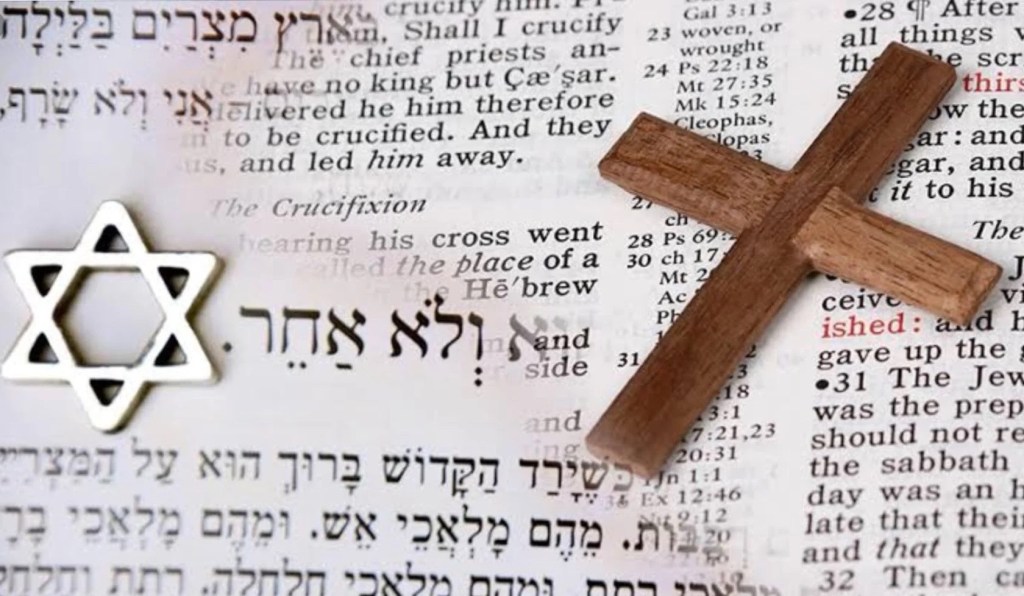
By contrast, when Job asks, “where shall wisdom be found? and where is the place of understanding?”, he proposes that “gold and glass cannot equal it, nor can it be exchanged for jewels of fine gold” (Job 28:12–19), and concludes, “the fear of the Lord, that is wisdom; and to depart from evil is understanding” (Job 28:28).

Wisdom, love, the fear of the Lord, enlightenment, and rejoicing—these are the fruits of Torah, as the psalmist sings. These are the benefits of the law which are to be valued even into our own times, as this Sunday we hear again the words of this ancient psalm and affirm its relevance and importance in the contemporary world.