The Voice to Parliament is not a partisan political issue; it is a national matter that draws together a wide range of Australian society in support of the First Nations people of this continent and its surrounding islands.
In early 2023, Common Grace launched the national Listen to the Heart campaign, calling Christians to vote yes in the referendum for a constitutionally enshrined Indigenous Voice to Parliament.
Common Grace describes itself as “a movement of individuals, churches and communities pursuing Jesus and justice together for the flourishing of all people and all creation”. Its campaign, Listen to the Heart, is led by Aboriginal and Torres Strait Islander Christian Leaders, including Aunty Jean Phillips, Uncle Ray Minniecon, Uncle Vince Ross, Adam Gowan, Sabina Stewart, Bianca Manning, and Aunty Sue Hodges.
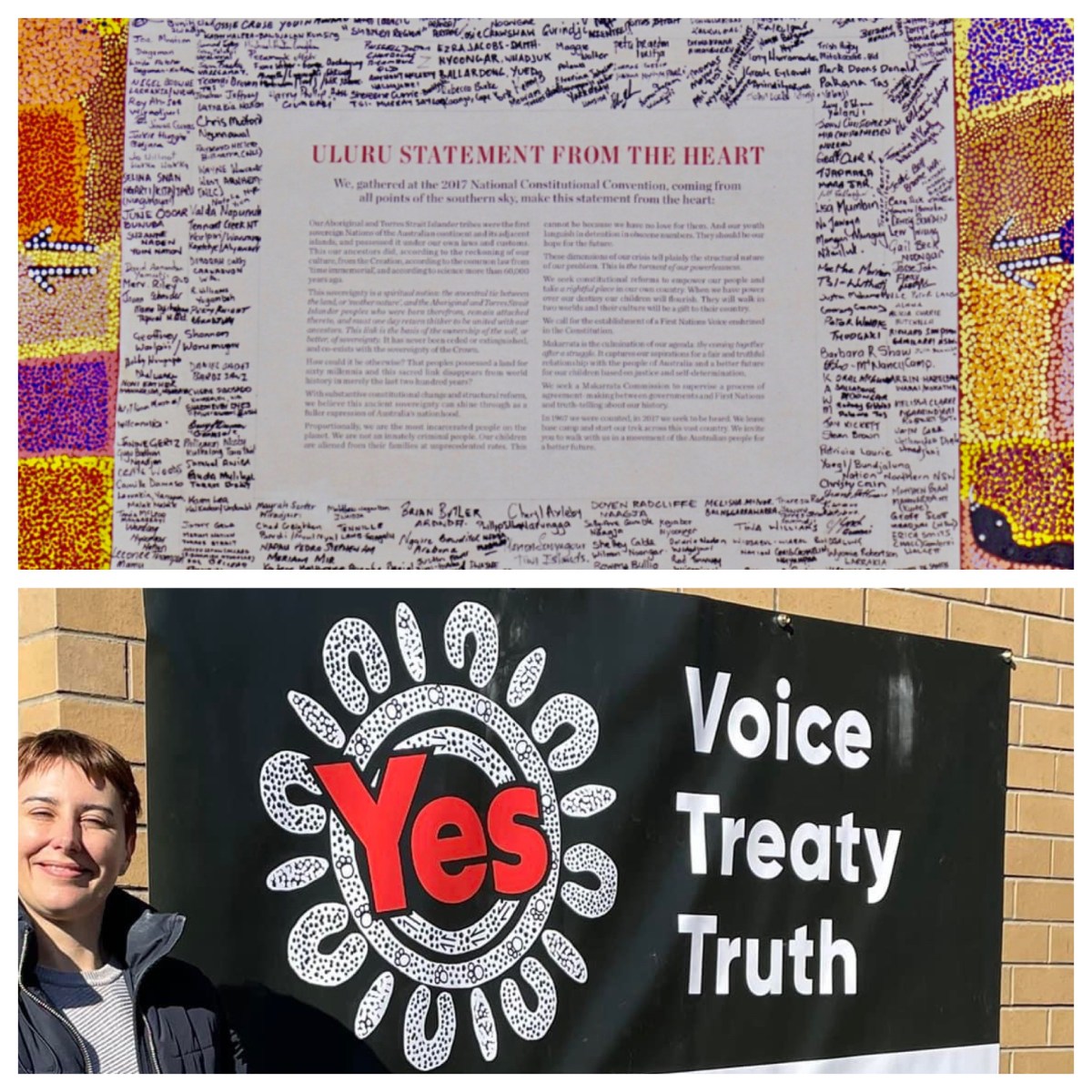
The campaign invites Christians across Australia to deeply listen to the calls of Indigenous peoples for justice, through Voice, together with Treaty and Truth-Telling, reflecting the three key commitments sought by the Statement from the Heart. See https://www.listentotheheart.org.au
The Voice to Parliament will be Voice structured to allow local, regional, state and territory voices to be heard through this National Voice.
*****
In 2015, the Social Justice Committee of The Hunter Presbytery made a submission to the Joint Parliamentary Inquiry into Constitutional Recognition in 2015. The three key elements in their submission still hold good some eight years later:
1. Australian people are ready for change; there is agreement the Constitution should be changed as soon as possible.
2. Practical Recognition is required, not just Symbolic Recognition. One way to implement practical recognition in the Constitution is through a Voice to Parliament.
3. The recognition of Aboriginal and Torres Strait Islander people in the Australian Constitution is important and long overdue.
For people in the Uniting Church, voting YES in the proposed referendum is a clear way to express our long-held and enduring commitment to our covenant relationship with First Peoples. Voting in this way to support the referendum would be one more step along a pathway that has been clear for many decades, that the UCA stands in solidarity with First Peoples in Australia. In 1980, at Noonkanbah in Western Australia, Uniting Church members stood in solidarity with the traditional owners, the Yungngora people, against the mining of their land.
The Uniting Aboriginal and Islander Christian Congress was established in 1985, and a Covenant between the UAICC and the UCA was formalised in 1994. This Covenant recognises that working for reconciliation amongst people is central to the Gospel. In 2009, the Preamble to the UCA Constitution was revised to recognise the difficult history of relationships between the First Peoples and the later arrivals, as Second Peoples. Our present relationship is one which seeks to ensure that we commit to the destiny together which we share as Australians.
Supporting a vote for an Indigenous Voice to Parliament is yet another step along that pathway of sharing a destiny together. It’s an expression of our central commitment to justice for First Peoples. It is an act that sits at the very heart of the Gospel.
*****
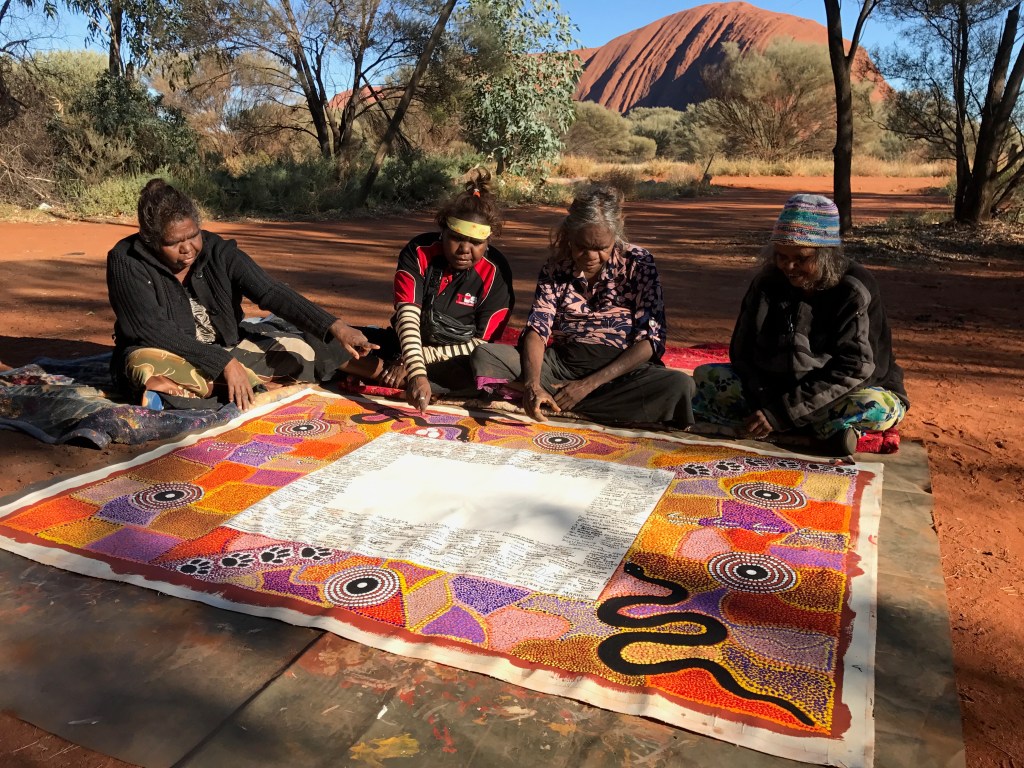
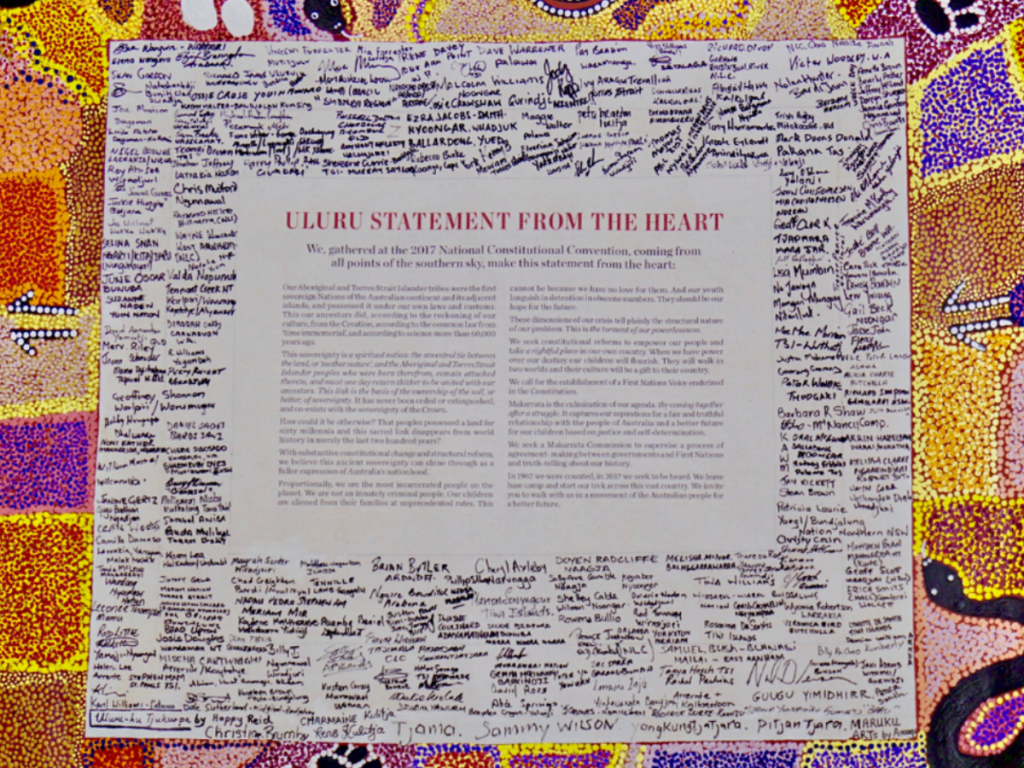
The Statement from the Heart is a consensus statement which was born out of extensive discussions across the nation and finalised at a Constitutional Convention at Uluru in May 2017. The Statement offers a way forward for Australia that is practical, not merely symbolic. It advocates for the three key elements: Treaty, Truth, and Voice.
Last year, a number of Australian religious leaders declared their support of the Uluru Statement from the Heart, which includes the request for just such a Voice to Parliament. There are Anglicans, Catholics, Buddhists, Jews, Muslims, Quakers, Baptists, and others who support this, along with the Uniting Church.
Aboriginal and Torres Strait Islander Christian Leaders, including Aunty Jean Phillips, Uncle Ray Minniecon, Uncle Vince Ross, Adam Gowan, Sabina Stewart, Bianca Manning, and Aunty Sue Hodges, are supporting the YES campaign for the Voice to Parliament.
A Joint Resolution of Australian religious leaders in support of the Uluru Statement from the Heart, which includes the request for just such a Voice to Parliament, was signed in May 2022, on the fifth anniversary of the Statement from the Heart. Anglicans, Catholics, Buddhists, Jews, Muslims, Quakers, Baptists, and others support this, along with the Uniting Church.
Last month, representatives of another batch of “religious” organisations have come out in support, as the peak bodies of many sporting organisations joined together to advocate a YES vote in the coming referendum: the AFL, NRL, Rugby Union, Cricket Australia, Baseball Australia, Deaf Sport Australia, Football Australia, Basketball, Taekwondo, Golf, and more.
All of which means, it makes sense for people of faith to Vote YES!!!
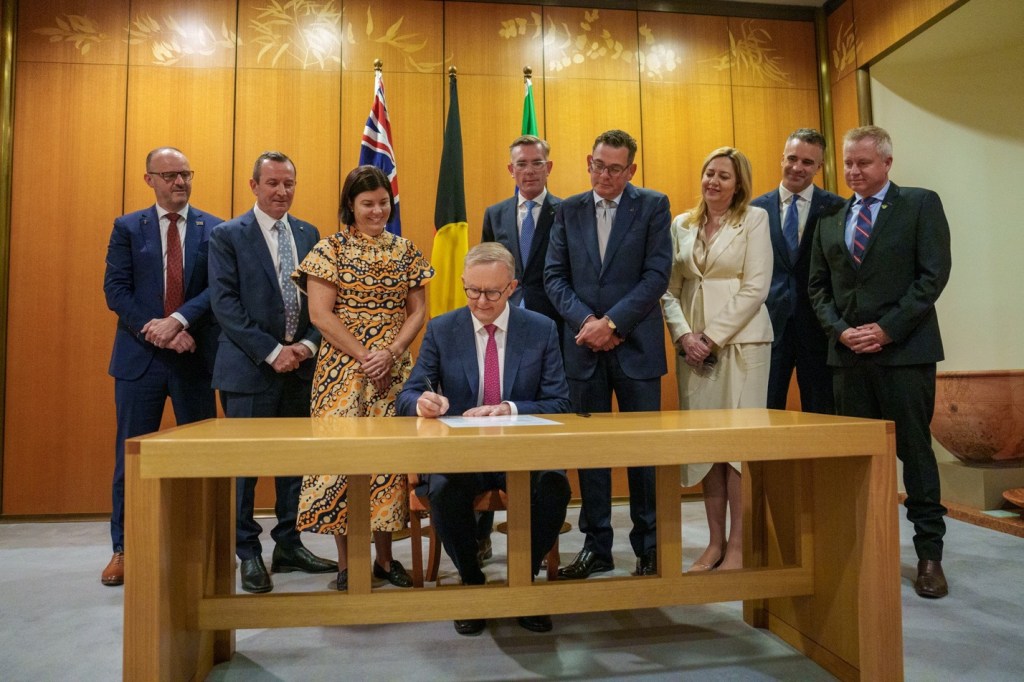
When they met in early February this year, every First Minister in Australia—territory, state, and federal—agreed to support the Voice to Parliament. This is a highly significant bi-partisan step by a group of informed leaders who recognise the importance of taking this step. It is only one step—there is still the matter of Truth Telling to be implemented, as well as Treaty (or, more accurately, Treaties) to be concluded. But the Voice is a key step forward.
The Prime Minister said that “the Voice will recognise Aboriginal and Torres Strait Islander people in our constitution, and consult on matters affecting them”. The statement from the joint meeting indicated that the Voice “provides independent advice … is accountable and transparent, does not have a program delivery function, and does not have a veto power”. These are all important details that the Australian electorate should consider, when making a decision on this matter in the proposed referendum later this year.
*****
The structure of the proposed Voice to Parliament was set out in a report issued in 2021, co-authored by University of Canberra chancellor and now Senior Australian of the Year Professor Tom Calma and University of Melbourne Professor Marcia Langton. This report envisages a network of local and regional Voice bodies covering 35 areas Australia-wide, which would deal with issues raised by local communities and contribute members to form the national Voice.
Under the Calma–Langton proposal – the result of extensive consultation – each local region would determine for itself how it should be formed. The national body would have 24 members. They would comprise 18 base members, two each from every state and territory and two from Torres Strait. Another five members would represent different remote regions and one would represent Torres Strait Islanders living on the mainland.
The membership would be gender-balanced, with an option to include two more with specialist skills as required, jointly appointed by the federal government and the Voice itself. Members would serve no more than two four-year terms and two of them, of different genders, would be selected to serve full time as co-chairs.
*****
A few months before the First Ministers had signed their declaration of support for the Voice to Parliament, earlier this year, the Uniting Church had joined with many other religious organisations in Australia to sign a Joint Resolution of Australian religious leaders in support of the Uluru Statement from the Heart, which includes the request for just such a Voice to Parliament.
The Joint Resolution was signed in May 2022, on the fifth anniversary of the Statement from the Heart, by representatives of nine Australian religious bodies. They called for immediate bipartisan action to hold a referendum on a First Nations voice to Parliament. Uniting Church President Rev Sharon Hollis was the signatory to the Joint Resolution on behalf of the Uniting Church Assembly. See https://uniting.church/supporting-uluru-statement/
The Statement from the Heart is a consensus statement which was born out of extensive discussions across the nation and finalised at a Constitutional Convention at Uluru in May 2017. The Statement offers a way forward for Australia that is practical, not merely symbolic. It advocates for the three key elements: Treaty, Truth, and Voice.
Aboriginal and Torres Strait Islander peoples have long struggled for constitutional recognition. As far back as YortaYorta elder William Cooper’s letter to King George VI (1937), the Yirrkala Bark Petitions (1963), the Larrakia Petition (1972) and the Barunga Statement (1988), First Peoples have sought a fair place in our country.
All Prime Ministers of the modern era were conscious of the original omission of First Peoples from our constitutional arrangements. Prime Minister the Hon Gough Whitlam spoke of the need for Aboriginal and Torres Strait Islander peoples to take “their rightful place in this nation”. Prime Minister the Rt Hon Malcolm Fraser established a Senate inquiry whose report, 200 Years Later: Report by the Senate Standing Committee on Constitutional and Legal Affairs on the Feasibility of a Compact or ‘Makarrata’ between the Commonwealth and Aboriginal People, was delivered after the 1983 election.
Prime Minister the Hon Bob Hawke sought to respond to the BarungaStatement with his commitment for a treaty or compact at the bicentenary of 1988. In his Redfern Speech in 1991, Prime Minister the Hon Paul Keating said, How well we recognise the fact that, complex as our contemporary identity is, it cannot be separated from Aboriginal Australia.
Prime Minister the Hon John Howard committed to a referendum on the eve of the 2007 federal election, saying: I believe we must find room in our national life to formally recognise the special status of Aboriginal and Torres Strait Islanders as the first peoples of our nation.
In 2010 Prime Minister the Hon Julia Gillard established the Expert Panel on the Recognition of Aboriginal and Torres Strait Islander Peoples in the Constitution, co-chaired by Patrick Dodson and Mark Leibler, which reported in 2012.
Prime Minister the Hon Tony Abbott established a Joint Select Committee on Constitutional Recognition of Aboriginal and Torres Strait Islander Peoples, co-chaired by Senator Ken Wyatt and Senator Nova Peris, which reported in June 2015.
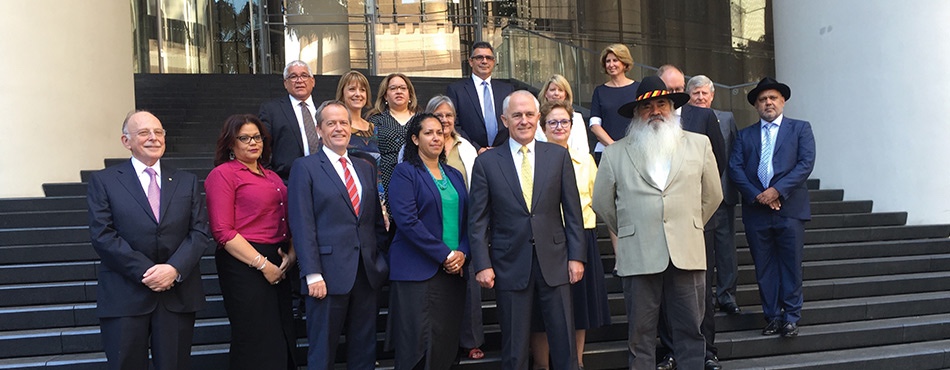
Prime Minister the Hon Malcolm Turnbull and Opposition Leader the Hon Bill Shorten then established the Referendum Council in December 2015. The Council worked to build on the work of the Expert Panel and the Joint Select Committee. It reported in 2017, taking into account the political and legal responses to the earlier reports, as well as the views of Aboriginal and Torres Strait Islander peoples and the general public.
This is the first time in Australia’s history that such a process has been undertaken. It is a significant response to the historical exclusion of First Peoples from the original process that led to the adoption of the Australian Constitution. The outcomes of the First Nations Regional Dialogues and the National Constitutional Convention are articulated in the Uluru Statement from the Heart.
The findings of our broader community consultation supported the findings of the First Nations Regional Dialogues. This strengthens our conviction that the Voice to the Parliament proposal and an extra-constitutional Declaration of Recognition will be acceptable to Aboriginal and Torres Strait Islander peoples and to the broader Australian community.
In their Final Report, the Co-Chairs of the Referendum Council, Pat Anderson AO and Mark Leibler AC, say, “We propose these reforms because they conform to the weight of views of First Peoples expressed in the First Nations Regional Dialogues as well as those of the wider community. With focussed political leadership and continued multiparty support for meaningful recognition, the Voice to the Parliament proposal can succeed at a referendum.
“The consensus view of the Referendum Council is that these recommendations for constitutional and extra-constitutional recognition are modest, reasonable, unifying and capable of attracting the necessary support of the Australian people.”
This is the work that lies behind the request to Vote YES in the proposed 2023 referendum. It has been a long process, with bipartisan political support, and there is a lot of information that is available.
from the Foreword from the Co-Chairs of the Final Report of the Referendum Council, 2017
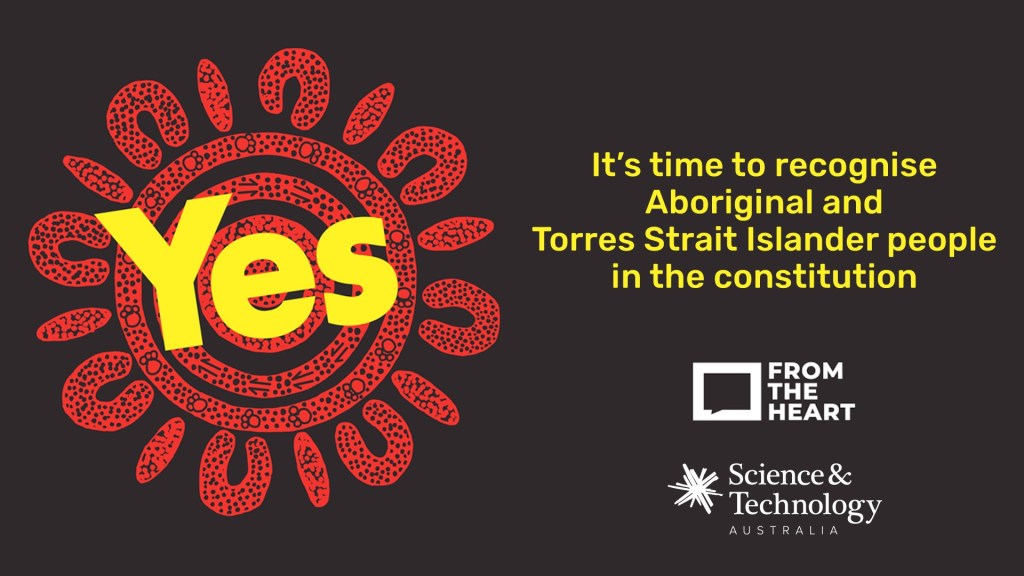
I have been thinking about the upcoming referendum,,now announced for 14 October, for quite some time. I was recently asked why I planned to vote YES, and after giving this some consideration, I decided that there are eight key reasons to Vote YES:
1. There has been a long period of preparation leading to this present moment. Many Prime Ministers, each one since Gough Whitlam, have spoken in support of according a special place for First Peoples (yes—even John Howard!) In the last decade, our federal leadership has acted by setting up an Expert Panel in 2010 (Gillard), and then a Joint Select Committee in 2012 (Abbott), and then the Referendum Council in 2015 (Turnbull). This has been a bi-partisan political trajectory, culminating in the decision to go to a referendum in 2023 (Albanese).
2. As a result, Indigenous consultations have taken place, led by intelligent, compassionate, informed Elders, leading to the 2017 Consultation at Uluṟu. The Uluṟu Statement provides a clear Indigenous voice which speaks clearly about what is required: recognition in the Australian Constitution, a permanent Voice to Parliament, the telling of truth about our national history, and a Makarrata Commission to oversee the formalisation of treaties with the various First Nations. This is what the Elders of the First Nations are now asking of us.
3. Reputable polling shows that a vast majority of Aboriginal and Torres Strait Islander people support the request of the Statement from the Heart, which forms the basis for the proposed referendum. We all need to listen, acknowledge, and respond to that clear request. Voting YES will not solve everything, but it will be a very important basis for future action in this regard.
4. Many community groups and organisations are supporting a YES vote. This proposal has seized the imagination of people around the country. Sporting organisations, religious organisations, members of all major political parties, leaders of many ethnic and cultural community groups, leaders of many businesses, first ministers of every state and territory as well as our Prime Minister, each have joined their voice to the call for a YES vote. Support cuts across all distinctions and divisions in our society to unify in a strong call to vote YES.
5. Regular advice from the Indigenous-elected Voice will shape future policies of the national government in ways that will provide practical support to First Peoples, and help move us closer towards Closing the Gap in all areas. There is much work to be done. Governments in recent years have said that they want to Close the Gap, but progress has been slow. Regular, informed advice from the people most impacted will surely help us to move forward in this regard.
6. A resounding YES vote, akin to what took place in the 1967 referendum, will give a clear indication of how we have, at last, matured as a nation, moving beyond the xenophobic fear of the white Australia era and its continuation into the “white blindfold” years in the “history wars” of the late 20th and early 21st centuries. In recent decades in our society, we have taken a number of important steps in this regard, and this vote invites us to take a very important leap forward.
7. A YES vote will not be a divisive decision. Recognising First Peoples in the Constitution will not drive a wedge between “us” and “them”, nor will it give any privilege to these people. It will simply be a formal, legal recognition of the reality of the fact that when British colonisers invaded and settled on this continent, claiming it is their land, that land had in fact been cared for over millennia by the people already living on that land. In fact, a YES vote will provide good grounds for coming together in a more cohesive way in our society. It will speak truth about our past. Any future progress towards real reconciliation within our society depends on our taking this step, now.
8. A strong YES vote will provide a solid foundation for positive, constructive, hope-giving actions in the coming years, that will ensure we address the situation and redress the disadvantages of Aboriginal and Islander peoples. We recognise them with flags, we acknowledge them when we are on country, we encourage their languages and nurture their community groups; now we need to recognise them within our Constitution and ensure that there is a permanent Voice which can speak clearly on their behalf into the public arena.
I think that for the sake of First Nations peoples and for the health of the country as a whole, it is imperative that we vote YES!!!
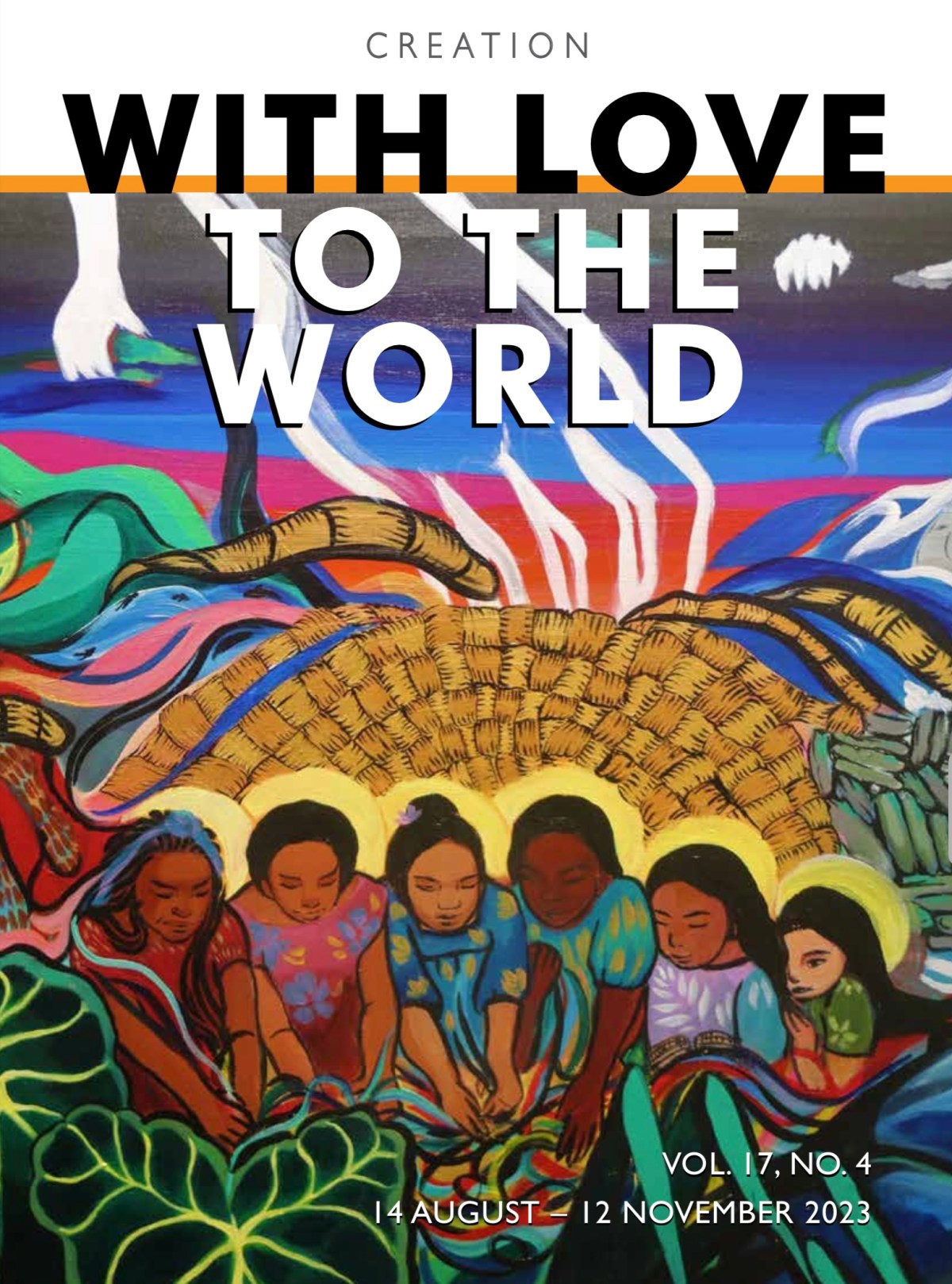
The next issue of With Love to the World is currently being distributed. The issue covers the second half of the season of Pentecost, from mid-August through until mid-November. There are commentaries on biblical passages for each day (with the four “lectionary passages” included), along with a prayer, a song, a psalm, and a discussion question for each passage. During September and October, to help focus on the Season of Creation, a creation psalm begins the readings each week.
The resource is published by the Uniting Church in Australia, but is used by people of many denominations in a number of countries. As always, the resource exhibits a core commitment of the Uniting Church: to present “an informed faith”.
This commitment was articulated in the Basis of Union for the UCA. Each contributor offers a reflection on the daily passage which is informed by their theological training as well as their engagement in pastoral ministry. The resource seeks to assist worshippers to come to Sunday worship with an awareness of the Bible passages they will hear read and proclaimed.
With Love to the World also seeks to be faithful to the UCA commitment to shape “a destiny together” with the First Nations Peoples of Australia. The period covered in this issue includes a week of commentaries by Nathan Tyson, an Aboriginal man of Anaiwon/Gomeroi descent, who has lived most of his life in Sydney. Nathan currently serves as First Nations Strategy and Engagement Manager for the NSW.ACT Synod of the Uniting Church in Australia.
The other commentaries in this issue of the resource are provided largely by Australian Uniting Church people with Pasifika heritage, who know at first hand the complexities of living as a Christian in Australia with awareness of their own heritage. There are Tongan, Fijian, Samoan, Rotuman, and Niuean voices which can be heard and considered in this issue. This reflects the commitment made by the Uniting Church in 1985, to be “a multicultural church”.
The striking cover of the issue on the front of this post) is a painting by Malia Patricia Akanisi Vaurasi, from the island of Rotuma, near Fiji. This painting, Hands of Resistance, was created as a way to portray the vast ocean of struggles that Pacific people bravely navigate.
Malia explains, “those struggles relate to our nuclear legacies, the climate crisis and growing food insecurity, the continuous struggle for self-determination by our brothers and sisters in West Papua, Maohi Nui, and Kanaky, the neo-colonialist hands of greed and exploitation that reach out to pillage the abundance of our lands and oceans to enrich their empires—and in this process our people are displaced and our natural environment is destroyed.” It is a brilliantly colourful depiction of the life of Pasifika peoples.
You will be sure to find commentaries that probe the depths of the biblical passages, questions that challenge your own discipleship, and,prayers that nurture your spirit, as you read through this daily resource.
With Love to the World can be ordered as a printed resource for just $28 for a year’s subscription (email Trevor at wlwuca@bigpond.com or phone +61 (2) 9747-1369). It can also be accessed on phones and iPads via an App, for a subscription of $24.49 per year (go to the App Store or Google Play).
I recently came across a fascinating thread on Twitter, from Dr Jeremy Walker, of the University of Technology Sydney. Dr Walker researches across the disciplines of political economy, geography, and science and technology studies. His current research focuses on “the history of neoliberal economic theory and government in relation to energy transition and climate justice”.
He had some very revealing things to say about the links between opposition to the Voice to Parliament and the fossil fuel industry. Those who are behind the scenes, funding the public opposition to the Voice, are right wing characters who have been active for many decades, now, in defending the industries of, first tobacco, and then fossil fuels, and in promoting climate denialism. They are a most unsavoury bunch; unfortunately, they are well-connected with regard to money, media, and conservatives with high public profiles.
They are precisely the sort of people that I do not wish to pay attention to, or to give any credence to what they say, coming from their own vested personal interest. But what Dr Walker has written, about those supporting the public advocates of the No cause, is disturbing. It is worth reading. With his permission, I have extracted and summarised from his postings on Twitter, in what follows:
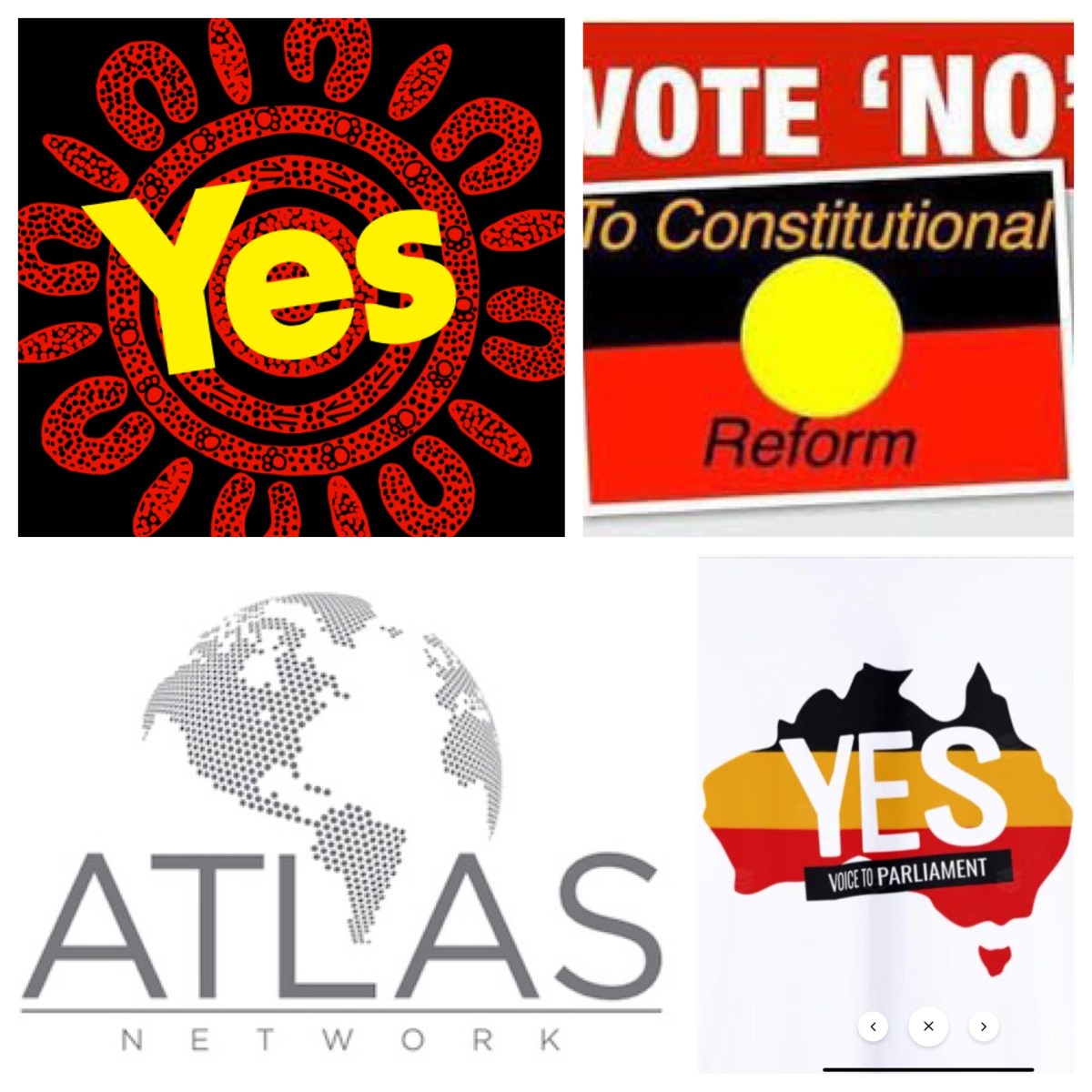
“The anti-Voice campaign is being run by the Australian branch of the global Atlas Network, comprised of 500+ neoliberal ‘research institutes’. One notable member of this Atlas Network is the “Centre for Independent Studies” (CIS), which fosters the careers of Warren Mundine and Jacinta Nampijinpa Price. Evidence suggests they speak not with the authority of any First Nations community but for fossil fuel/mining corporates.
“Big Oil ‘think thanks’ which are funded by the Atlas Network are usually run by the elite members of the invitation-only Mont Pelerin Society. John Howard is one such member. A key Australian Atlas organiser, and central to climate science denial and policy defeat in recent years in Australia, was mining lobbyist Hugh Morgan, who begins meetings “acknowledging the traditional owners of this country: King George III, his heirs and assigns.”
“The Atlas-affiliated “Institute of Public Affairs” (IPA) was established in 1943 by Keith Murdoch, with funding from RioTinto and BHP. Since then, the IPA, funded by Rupert and coal baron Gina, has had many oil, gas and mining execs on its board, and it also runs anti-climate & anti-Voice campaigns.
“In Canada, Atlas units defeated laws to recognise First Nations rights established under the United Nations Declaration on the Rights of Indigenous Peoples (UNDRIP), to protect their oils and their corporate profits. Very similar tactics are now in play in Australia. Atlas has also been implicated in the election of far-right, neofascist anti-Indigenous govts in South America—for instance, Balsonaro in Brazil.
“In the UK, climate protestors now face major jail sentences, which was unheard of only a year or two back. Apparently activists are forbidden from even saying in court why they protest—that is, there is to be no mention of a climate emergency allowed as a defence. This authoritarian turn in policing by the UK Tory government was prompted by an Exxon funded Atlas-linked unit called Policy Exchange.
“Listed among the registered owners of Policy Exchange are Howard’s foreign minister Alexander Downer, and David Frum, George W. Bush speechwriter. Another Atlas-linked organisation in the UK is the science denial and anti-climate policy unit, the Global Warming Policy Foundation. Look who is the new board director: ex-Australian PM Tony Abbott.”
These are the people and the organisations that are pushing people to vote No in the forthcoming referendum. It is outrageous! There have been decades of conspiracy and underhand dealings in relation to protecting fossil fuel. It is a shameful and tragic story which is continuing now in the anti-Voice agitation. All the more reason why we need to Vote YES!
Dr Jeremy Walker is acting director of the Climate, Society and Environment Research Centre (C-SERC) based in the Faculty of Arts and Social Sciences at UTS, and a member of the international Climate Social Science Network (CSSN) based at Brown University (USA). He is the author of More Heat than Life: the Tangled Roots of Ecology, Energy and Economics (2020, Palgrave).
*****
There is a comprehensive exposé of the Atlas Network at
A Sermon preached by the Rev. Dr John Squires at Tuggeranong UCA on 9 July 2023, the last day of NAIDOC WEEK 2023
Readings: Deuteronomy 30:11–16 and Matthew 11:16–19, 25–30
Note: this blog post contains images of Indigenous people who have passed away.
Today, the second Sunday in July, is the Sunday which, each year, brings to a close NAIDOC Week. This is a week which has a focus on the First Peoples of this continent and its surrounding islands. It has been held for over 50 years, under the auspices of the National Aborigines and Islanders Day Observance Committee (which forms the acronym NAIDOC).
NAIDOC Week itself continues on from National Aborigines Day, which was held from 1955 onwards; that day, in turn, was a development from the Day of Mourning, which first took place on Australia Day in 1938, when protestors marched through the streets of Sydney, followed by a congress attended by over a thousand people. After the congress, a deputation led by William Cooper presented Prime Minister Joseph Lyons with a proposed national policy for Aboriginal people. Needless to say, the Prime Minister received these representations, and then ignored them.
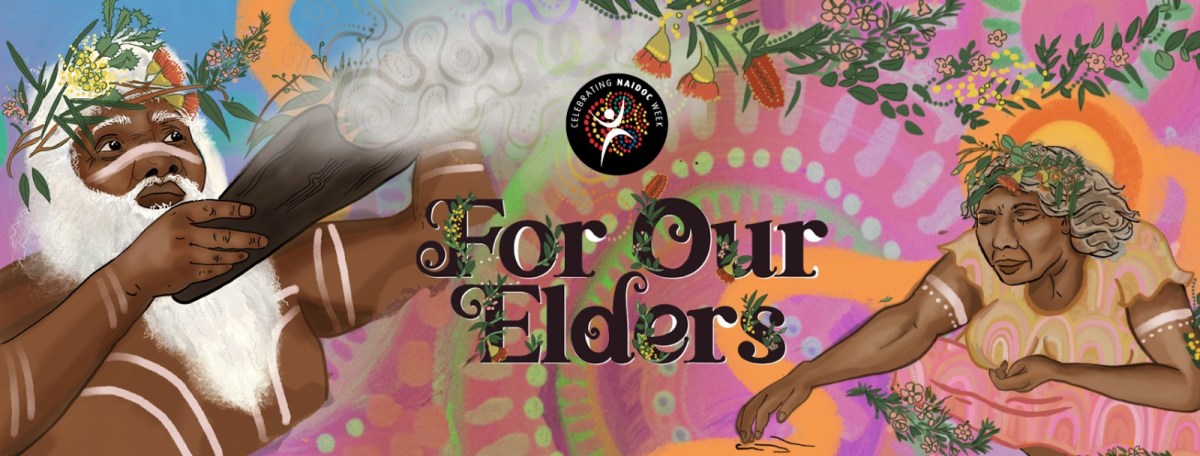
So NAIDOC Week continues a tradition, now 85 years old, of placing a focus on our Indigenous people. The theme for NAIDOC Week this year is For Our Elders; and that is a most relevant theme, given what has been taking place in our national life for some time now. We have been guided and led by a group of resilient, intelligent, and compassionate Elders from many First Nations communities; and this year, we stand at a very significant moment in that journey with those Elders.
Almost a decade ago, in 2015, the then Prime Minister Malcolm Turnbull and the then Opposition Leader the Hon Bill Shorten worked together to establish a Referendum Council. That Council worked to build on the work of bodies established by previous governments: the Expert Panel, in 2010, established by Julia Gillard; and then the Joint Select Committee, established by Tony Abbott in 2012. (In true public servant style, of course, there had to be multiple committees, reports, proposals, and processes!!)
The Referendum Council reported in 2017, taking into account the political and legal responses to the earlier reports, as well as the views of Aboriginal and Torres Strait Islander peoples and the general public.
What resulted from that report was a series of First Nations Regional Dialogues, which were Indigenous designed and led consultations right across the country. Indigenous members of the Council formed an Indigenous Steering Group. Together, in consultation with Indigenous community stakeholders and with advice from constitutional experts, they designed the Indigenous consultation process called the First Nations Regional Dialogues.
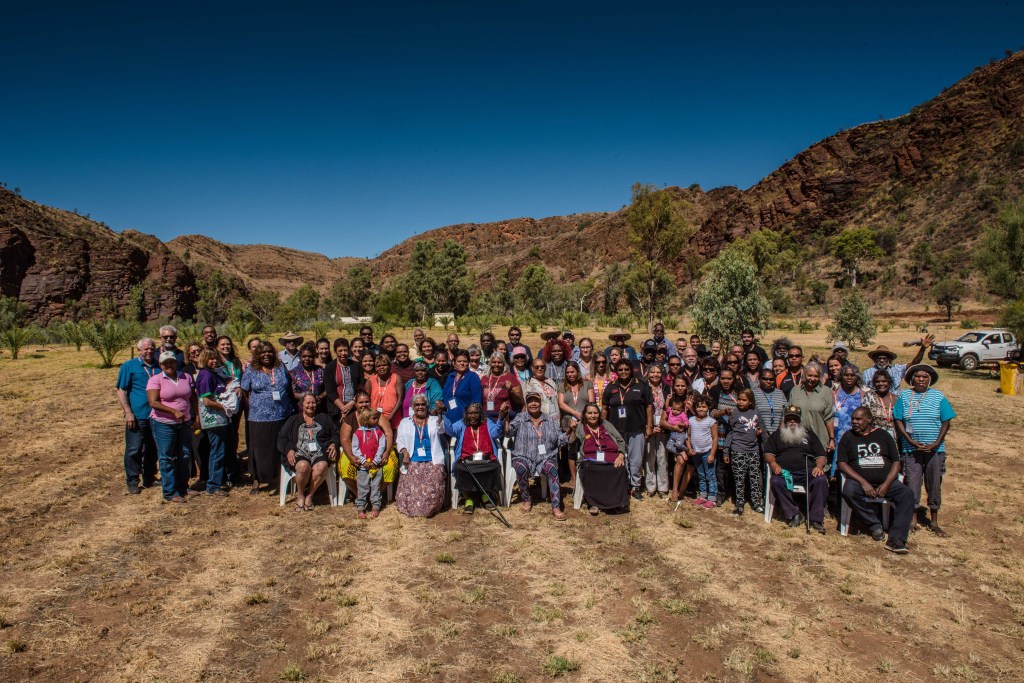
The Regional Dialogue held in Ross River, QLD, in 2017
As a result, thirteen Regional Dialogues were held across the country—in capital cities, regional towns, and with remote communities such as Broome in WA, Ross River in Queensland, and Thursday Island in the NT. In each case, local Elders were involved in the planning and running of the consultation.
Each Regional Dialogue then chose Elders to send to a nation-wide Indigenous Constitutional Convention, which was held at Uluru in May 2017. That is the convention that, after three full days of discussion, produced the Statement from the Heart. This Statement has been the result of a long, careful process of consultation and discussion, under indigenous leadership, with bi-partisan political support.
It is this Statement which is asking for two things from the Australian people: for recognition of the First Peoples in the Australian Constitution, with a permanent Voice to Parliament, and for a Makarrata Commission to oversee the process of making treaties with Elders from the various First Nations of this continent. And that first request is what the referendum, to take place later this year, will be asking us to decide.
What I am talking about today, some will say is political. That is true, in the sense that it is about how we shape the life of our society—which is what politics is about. Governments make laws and oversee processes that ensure the way we live together in society is respectful and considerate of one another. That is the business of politics.
But what I am talking about is not partisan political, in the sense that there are people of all political parties who are supporting the YES case in a coming referendum. Whilst Labor and Green politicians, and many independent politicians, have spoken in support of a YES vote in the referendum, there are many people in the Liberal Party who are also supportive of a YES vote. Whilst the Federal leadership of the Liberal Party is indicating doubts about the proposal, most state Liberal parties are supportive, and a group called Liberals for YES are speaking out in support.
Indeed, in February this year, every First Minister in Australia—territory, state, and federal—agreed to support the Voice to Parliament. This was a highly significant bi-partisan step by a group of informed leaders who recognised the importance of taking this step.
Before that, in the middle of last year, a number of Australian religious leaders declared their support of the Uluru Statement from the Heart, which includes the request for just such a Voice to Parliament. There are Anglicans, Catholics, Buddhists, Jews, Muslims, Sikh, Quakers, Baptists, and others who support this, along with the Uniting Church. Our national President, the Rev. Sharon Hollis, was one of the signatories of this document.
In May this year, representatives of the peak bodies of many sporting organisations joined together to advocate a YES vote in the voting referendum: the AFL, the NRL, Rugby Union, Cricket Australia, Baseball Australia, Deaf Sport Australia, Football Australia, Basketball, Taekwondo, Golf, and more. There were 20 sporting organisation in all which signed a common statement of support.
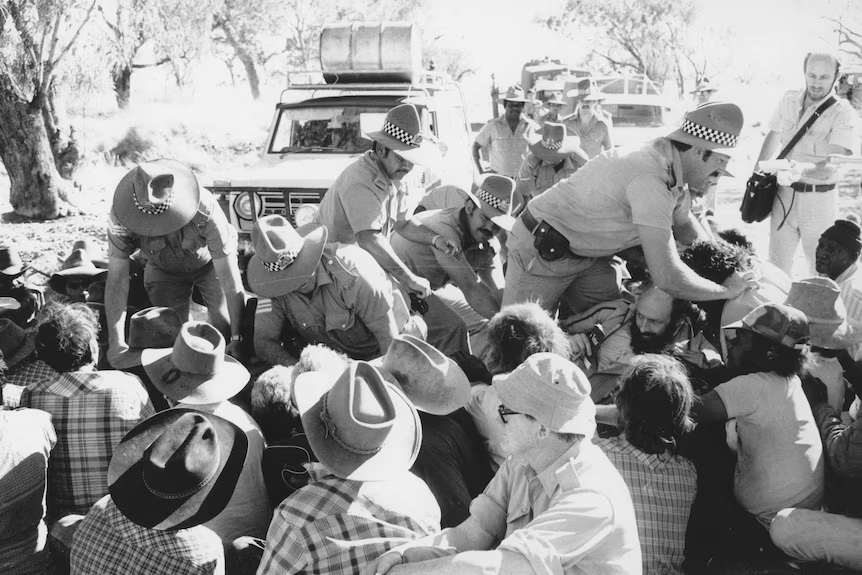
For people in the Uniting Church, voting YES in the proposed referendum is a clear way to express our long-held and enduring commitment to our covenant relationship with First Peoples. Voting in this way to support the referendum would be one more step along a pathway that has been clear for many decades, that the UCA stands in solidarity with First Peoples in Australia. In 1980, at Noonkanbah in Western Australia, Uniting Church members stood in solidarity with the traditional owners, the Yungngora people, against the mining of their land. (You can see the Rev. Robert Stringer in the bottom right of the photo—he is bald, with a beard.)
Noonkanbah land rights protest in 1980
The Uniting Aboriginal and Islander Christian Congress was established in 1985, and a Covenant between the UAICC and the UCA was formalised in 1994. This Covenant recognises that working for reconciliation amongst people is central to the Gospel. In 2009, the Preamble to the UCA Constitution was revised to recognise the difficult history of relationships between the First Peoples and the later arrivals, as Second Peoples. Our present relationship is one which seeks to ensure that we commit to the destiny together which we share as Australians.
Many of the various ethnic and cultural groups in our society have also spoken in support of the proposal that will be put to us in the referendum, including a number of Indian and Chinese community organisations, along with Sri Lankan, Italian, Irish, Iranian, Greek, Vietnamese, Filipino, and Pacific Islander community groups – to name just a few.
Leaders of Australian Muslim communities have expressed their strong support of the YES vote in the coming referendum. Indigenous Australian peoples have a long relationship with Muslims, dating back centuries before British colonisation, as Yolngu and other Indigenous peoples in the north of Australia traded and engaged in cultural exchanges with Makassans from Indonesia.
Kate Carnell, the national convenor of Liberals for YES, has said that “An Indigenous voice would be a standing body aimed at practical outcomes, with its existence mandated by the Australian people because they support recognition of Aboriginal and Torres Strait Islander as the original inhabitants of our continent. So it is fair, it is practical, it is workable and constitutionally safe.”
Many leaders in the Uniting Church have spoken in support of a YES vote. Supporting a vote for an Indigenous Voice to Parliament is yet another step along the pathway that the Uniting Church has been walking for over 40 years, of sharing a destiny together. It’s an expression of our central commitment to justice for First Peoples. It is an act that sits at the very heart of the Gospel.
So my advocacy, today, is for a YES vote in the referendum: not as a partisan political vote, but as an expression of the Gospel to which we are all committed. You would each have received the resource that the Assembly has prepared explaining why the Uniting Church is advocating for a YES vote. That provides helpful commentary on this important decision.
Alongside that, let us consider the words from scripture that we have heard today. Moses tells the people that what God requires of us is not “too hard”; for “that word is very near to you; it is in your mouth and in your heart for you to observe” (Deut 30:14).
Jesus tells us to “take my yoke upon you, and learn from me; for I am gentle and humble in heart, and you will find rest for your souls” (Matt 11:29). The word is near; the Voice calls to us. Today, the yoke that we are to take upon ourselves as a nation, is to ensure that First Peoples do have a Voice in our national life. That yoke, I am confident, will be constructive and productive.
The Anglican priest and hymn writer Elizabeth Smith, whose hymns we often sing (as we shall, to close this service today), has written a prayer about the forthcoming referendum. She has shared I online, offering it so that others could pray it too. So let us pray.
“God bless Linda Burney, Minister for Indigenous Australians, and all the Aboriginal and Torres Strait Islander leaders who are working towards a “Yes” vote in the coming Referendum.
Give them the words and the wisdom to make the case warmly. Give them perseverance in the face of hostility or indifference. Give them courage and resilience when they are met with casual, structural, or overt racism.
Give us the grace, in our own communities, to be the allies they need, by our listening, our learning, and our encouragement.
Confirm them in their vocation to lead all Australians towards a future where First Nations people are heard, seen, honoured and treasured across this land.
We pray through the Spirit who calls us to new ways of living together with justice and truth. Amen.”
Note: this blog post contains images of Indigenous people who have passed away.
Giving a Voice to Aboriginal and Torres Strait Islander peoples is in the news. Recently we learnt that a referendum about this matter will be held (the talk is that mid-October is the preferred time). The Uniting Church Assembly has already indicated its strong support for a YES vote in this referendum, and our Presbytery decided this earlier this year at the March meeting at Melba.
But did you know that, within the Uniting Church, we have been giving a Voice to Aboriginal and Torres Strait Islander peoples for almost four decades? That Aboriginal and Torres Strait Islander peoples are guaranteed places as members of Synods and Assemblies whenever they meet? That an Aboriginal or Islander person will often sit beside the Moderator of a Synod or President of the Assembly, and serve as co-chair of that meeting? That Aboriginal and Islander voices have a permanent pathway to speak to the whole church, through the Uniting Aboriginal and Islander Christian Conference (Congress)?
That Statement noted that “the movements of history have brought together here in one nation … people of many cultures and races, both Aboriginal and migrant”, and affirmed that within the Uniting Church, “Aboriginal and newer Australians have determined to stand together”. The Church was committing to a co-operative partnership with First Peoples—in 1988.
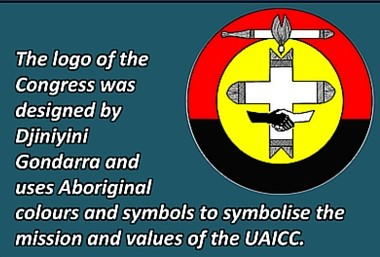
Before that Statement, in 1985, the Uniting Church had formed the Uniting Aboriginal and Islander Christian Conference (UAICC). The logo of the UAICC is depicted here. The Congress (as it is usually known) gave Aboriginal and Islander people a voice within the structures of the church—they are consulted about decisions and have a guaranteed number of members in the Synods and Assembly meetings of the church. The vision of the UAICC, in their own words, is:
We determine our own goals and objectives and decide policies and priorities;
We run our own programs and institutions;
We aim, in collaboration with other people, to bring to an end the injustices which hold Aboriginal and Islander people at the fringes of Australian society and to help Aboriginal and Islander people achieve spiritual, economic, social and cultural independence.
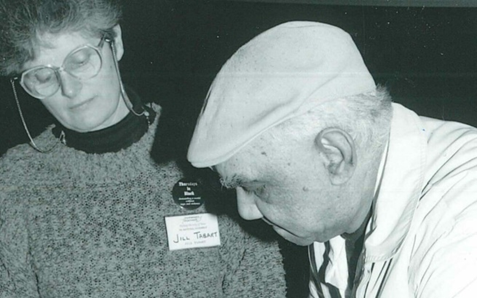
A decade later, in 1994, the President of the Uniting Church, Dr Jill Tabart, signed a Covenant Agreement with the Chairperson of the UAICC, Pastor Bill Hollingworth (pictured above). The Covenant expressed “our desire to work in solidarity … for the advancement of God’s kingdom of justice and righteousness in this land”. Since then, the church has really worked hard at putting this into practice.
Then, in 2014, people from all over Australia travelled to Canberra to hold a prayer vigil for Our Destiny Together in front of Parliament House. Rev. Rronang Garrawurra, Chairperson of the Uniting Aboriginal and Islander Christian Congress (UAICC) and Assembly President, Rev. Prof. Andrew Dutney, led a service of worship. From remote communities in places like Arnhem Land and the Anangu Pitjantjatjara Yankunytjatjara (APY) Lands and from the centres of our big cities, people gathered to pray, pass the peace, and share in Holy Communion.
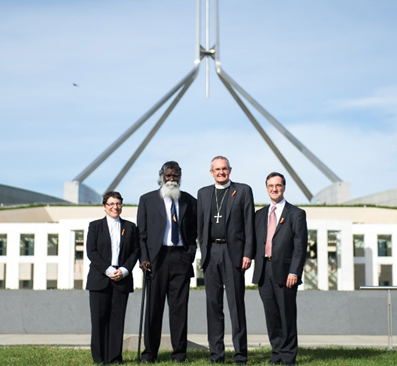
From left: the Rev. Elenie Poulus (Social Justice Director), the Rev. Rronang Garrawurra, Chairperson of the Uniting Aboriginal and Islander Christian Congress (UAICC), the Rev. Prof. Andrew Dutney, President of the Assembly, and the Rev. Terence Corkin, General Secretary of the Assembly, at Parliament House in 2014 for the A Destiny Together pilgrimage.
“It is enough for the disciple to be like the teacher”, Jesus says as he instructs his disciples about their mission (Matt 10:25). These developments within the Uniting Church show how we are striving to be like Jesus, sharing together with all people—especially the First Peoples of this continent (Aboriginal and Torres Strait Islander people).
And we know that it is possible—and, indeed, that it brings good value—for First Peoples to have a place in the councils of the church, discussing and deciding policy, and for their Voice, through the Congress, to be heard and responded to in appropriate ways.
That’s another good reason why we need to Vote YES in the referendum, surely. We need to ensure that, as well as recognising First Peoples in the Australian Constitution, we have a permanent Voice to Parliament in our ongoing structures.
The referendum that will take place later this year is a response to the 2017 Statement from the Heart, which asked for recognition of First Nations people in the Constitution and a process of Makarrata, or treaty. The Statement was a result of a careful process of consultation amongst First Peoples for quite some time.
The Government established a Referendum Council, which set up a series of First Nations Regional Dialogues, which were Indigenous designed and led consultations across the country. Indigenous members of the Council formed an Indigenous Steering Group. Together, in consultation with Indigenous community stakeholders and with advice from constitutional experts, they designed an Indigenous consultation process called the First Nations Regional Dialogues.
After an initial Trial Dialogue at Melbourne University to ensure the proposed format worked well, 13 Regional Dialogues were held across the country, culminating in an Indigenous Constitutional Convention at Uluru in May 2017. Each was hosted by a regional Indigenous organisation:
Hobart, hosted by Tasmanian Aboriginal Corporation (9–11 December 2016)
Broome, hosted by the Kimberley Land Council (10–12 February 2017)
Dubbo, hosted by the New South Wales Aboriginal Land Council (17–19 February 2017)
Darwin, hosted by the Northern Land Council (22–24 February 2017)
Perth, hosted by the South West Aboriginal Land and Sea Council (3–5 March 2017)
Sydney, hosted by the New South Wales Aboriginal Land Council (10–12 March 2017)
Melbourne, hosted by the Federation of Victorian Traditional Owners Corporation (17–19 March 2017)
Cairns, hosted by the North Queensland Land Council (24–27 March 2017)
Ross River, hosted by the Central Land Council (31 March – 2 April 2017)
Adelaide, hosted by the Aboriginal Legal Rights Movement Inc (7–9 April 2017)
Brisbane (21–23 April 2017)
Thursday Island, hosted by Torres Shire Council and a number of Torres Strait regional organisations (5–7 May 2017).
An information session hosted by the United Ngunnawal Elders Council was held in Canberra on 10 May 2017.
Then, a final national Indigenous Constitutional Convention was held at Uluru on 23–26 May 2017. This Convention gave rise to a national Indigenous consensus position on how Indigenous people want to be constitutionally recognised. This was an unprecedented breakthrough.
Although seven out of 250 delegates dissented, it was still an extraordinary consensus and a historic moment in Indigenous peoples’ struggle for constitutional recognition. Most the of the Indigenous advocacy of the past tended to emanate from particular regions. Never before had a national Indigenous consensus position been achieved. The majority position was powerfully expressed in the poetic Statement from the Heart.
This Statement asked for two things: a constitutionally guaranteed First Nations voice (a constitutionally enshrined Indigenous body to enable Indigenous people a fairer say in decision- making with respect to their rights) and a Makarrata Commission to oversee agreement-making and truth-telling about history.
It is this long, careful process, culminating in the Statement from the Heart, that lies behind the proposal that will be put to the Australian public in a referendum later this year.
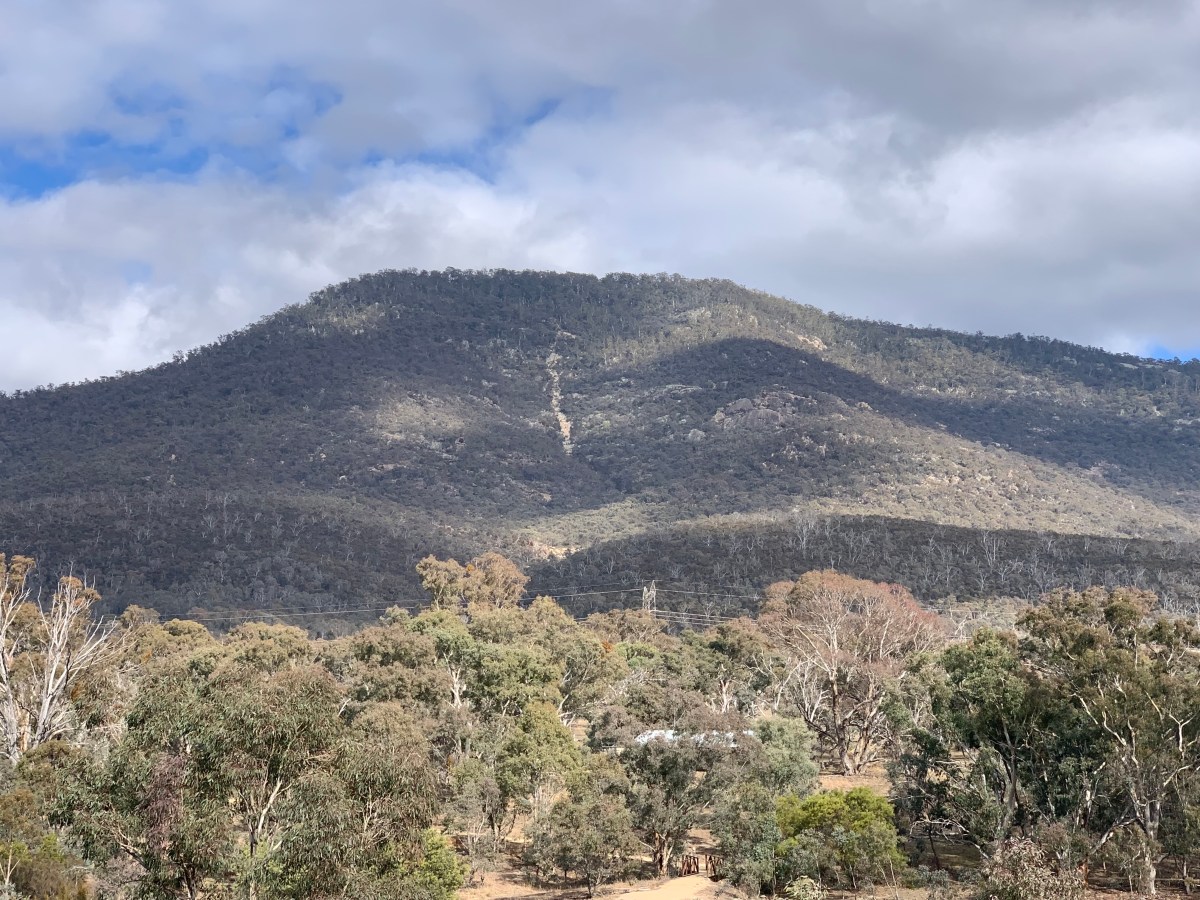
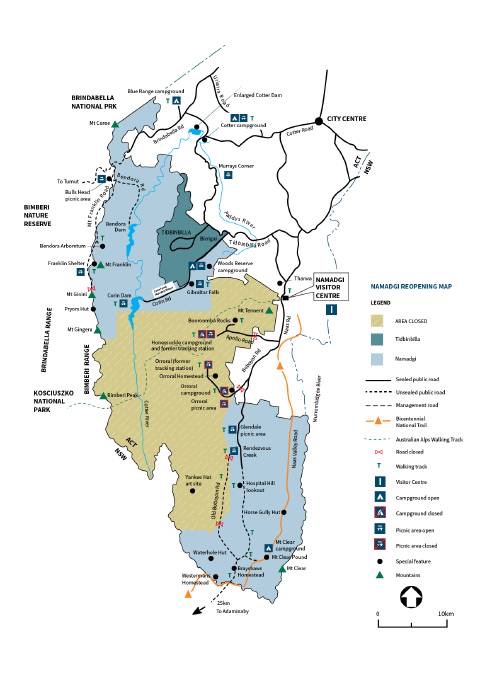
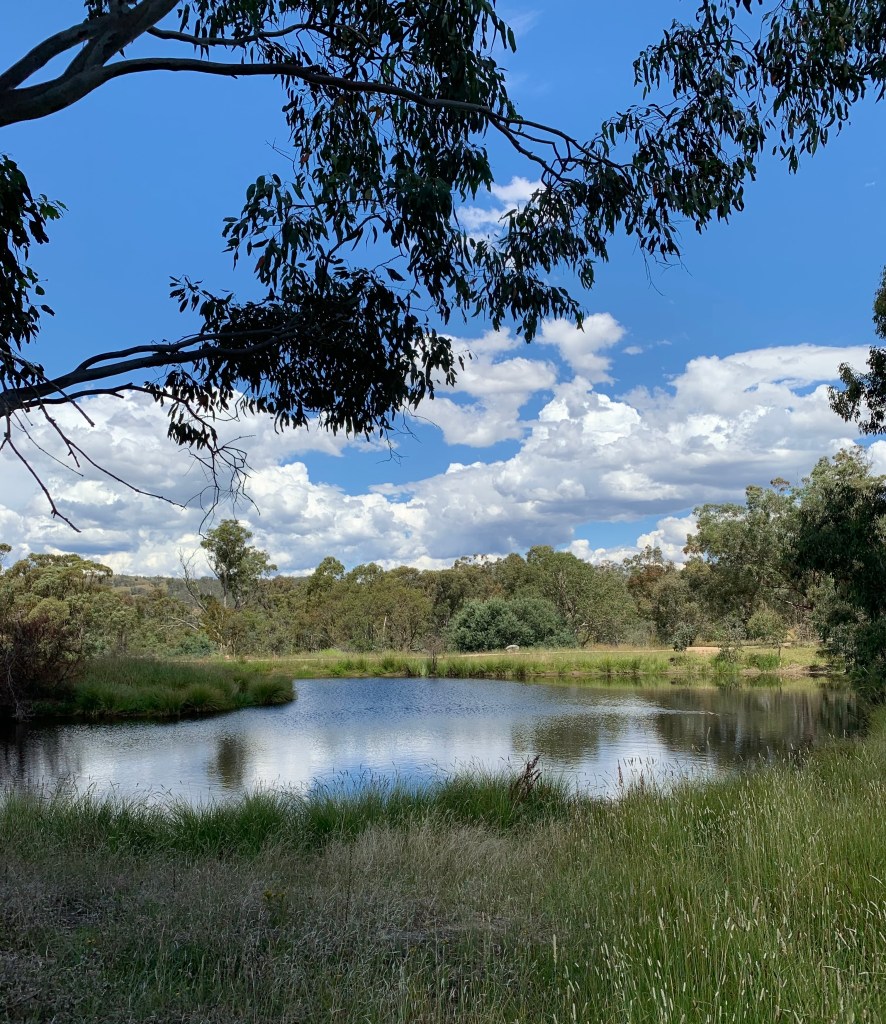
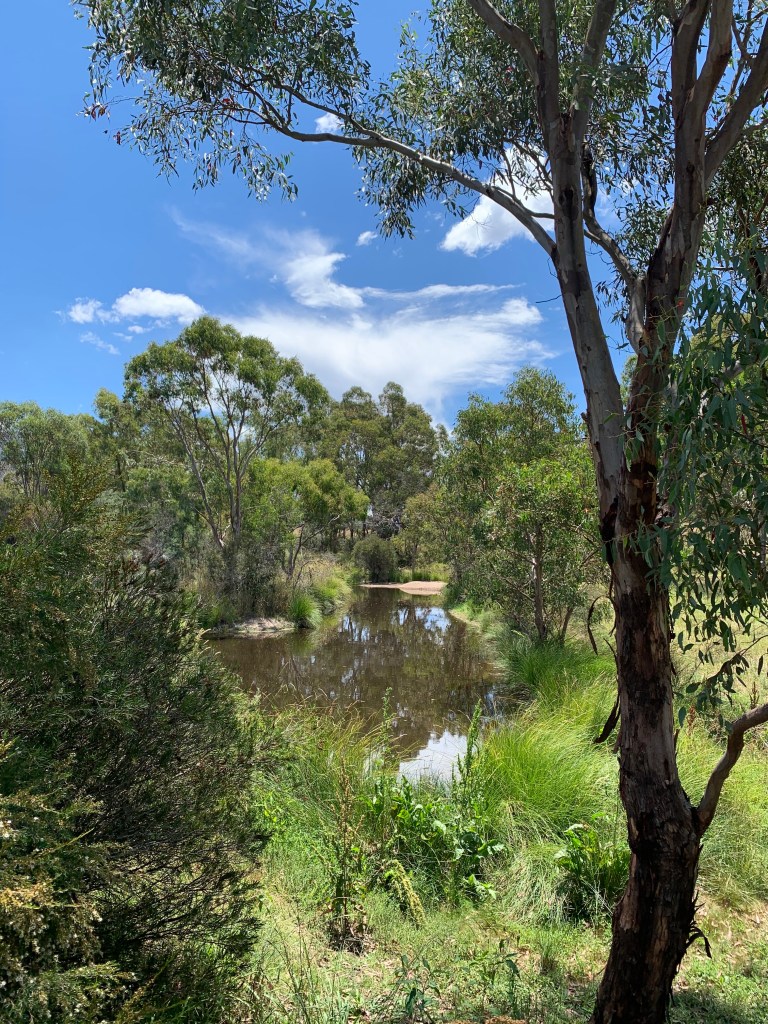
Not far from where we live, to the southwest in what is known as the Brindabella Ranges, there is a large swathe of national park. The Namadgi National Park actually stretches for almost 100 kilometres and it covers just over 100,000 hectares. It is a beautiful “natural” landscape with just a few roads running through it, quite a number of walking trails, and many features of significance.
Because it is so close (the entry point is just a 10km drive from where Elizabeth and I live), we have often ventured into the park for a Sunday afternoon drive; or, as was the case during the pandemic lockdown, for a once-a-week escape from the confines of home and the demands of the ZOOM screen!
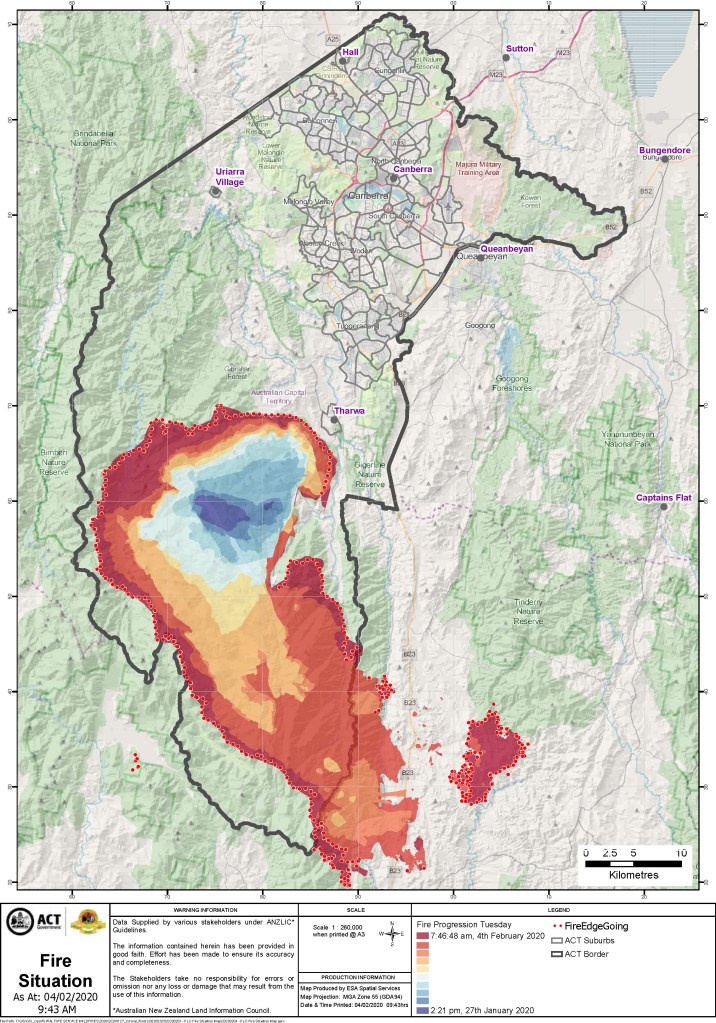
In early 2020, the Orroral Valley bushfire burnt over 80% of Namadgi National Park, or about 86,562 hectares. The fire came perilously close to the urban area where we love, at the southern edge of Canberra. Maps were published showing the danger of embers falling on the suburbs of Gordon and Banks. Plans to evacuate were publicised. We had packed our essentials into a couple of boxes, ready to whisk them away at an early opportunity.
One night, we stood with half of the residents of our street, watching the tops of the Brindabella range mountains that could be seen from our street. There were a number of fires, burning bright in the night. The darkness meant there was no real perspective; the flames, actually 5–6km away, looked like they were just across in the next street. The overhead buzz of planes and copters indicated that the Emergency Services were doing their very best to stop the spread of the fire—as they had been doing for weeks prior to this night.
The fire did not run down the mountain, into the urban area, as it had done in 2003, when a number of suburbs in the south-western area of Canberra were devastated. The memories of that event, scarred deep into the memories of people who had lived in the city longer than we had, were brought back to life in striking and vivid ways, for many we knew.
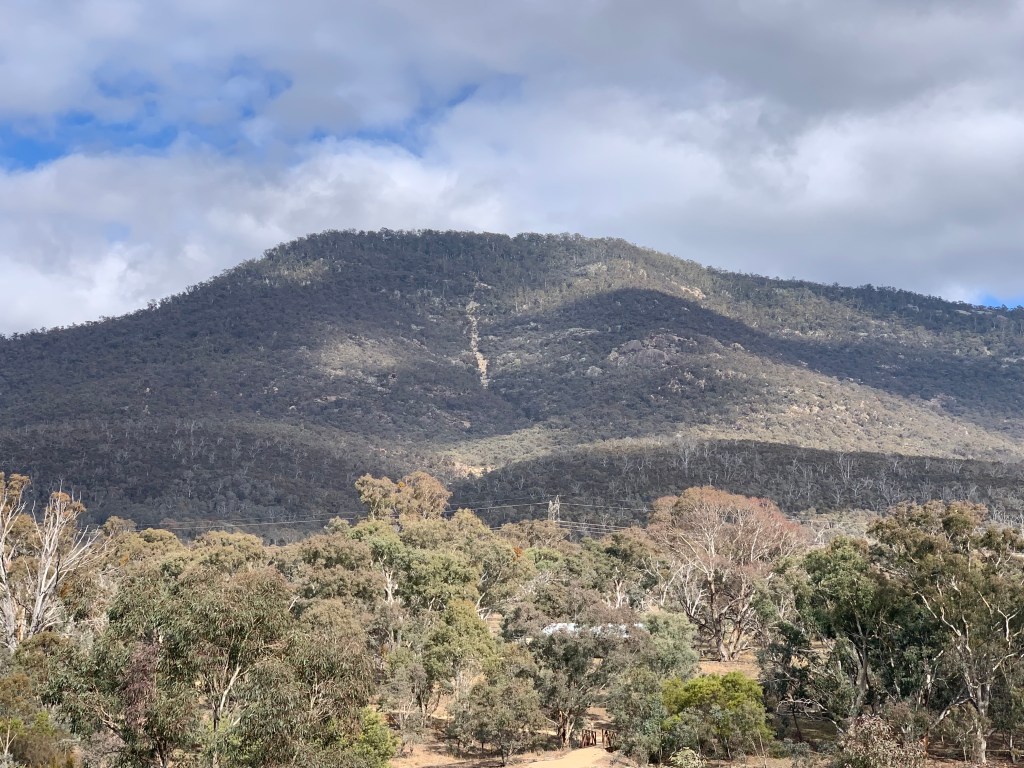
Just past the entry to the national park, the mountain of Tharwa stands high. It was given the name of Mount Tennent early in the colonial period, when British colonisation began. It was named after John Tennant, a bush ranger who lived in a hideout on the mountain behind Tharwa.
Tennant absconded from his assigned landholder in 1826 and with some others formed a gang which raided local homesteads in the years 1827 and 1828. Eventually he was arrested and transported to Norfolk Island. Tennant was 29 years old when he had been sentenced to transportation to Australia for life in 1823. He arrived in Sydney on 12 July 1824 on the ‘Prince Regent’. Old habits died hard, it would seem. He died in 1837, a year after coming back to Sydney.
Soon after the 2020 bushfire, flooding to the fireground caused significant and widespread damage. The road that ran deep into the national park was closed. Added to the risk of burnt trees falling was the damage done to roads and infrastructure in the floods that occurred some months after the fires. Eventually, the road into the park was opened. We were able to venture back into the bush—to see at close quarters the scarred landscape, the swathes of burnt trees, and the bursts of vibrant green leaves now decorating those burnt trunks.
The savage brutality of what had taken place was evident, from a distance, to those of us who paid attention. Now, at close range, we were able to see just how severe the damage was, as well as how resilient the Australian bush is. New life is bursting forth in so many ways—sadly, not everywhere, as some areas will take much longer to recover—but overall, a picture of verdant health is evident.
******
Archaeological excavation and carbon dating of sites in Tidbinbilla Nature Reserve and Namadgi National Park has confirmed an Aboriginal presence in the ACT region 25,000 years ago. Temperatures in the region would have been several degrees lower 25,000 years ago—similar to the conditions on the summit of Mount Kosciuszko today. In other words, seriously cold!!
Bogong Moths would pass through the area in October on their way from breeding grounds on the plains, up to the mountains to hibernate for the summer. The moths are highly nutritious, easy to collect and were in sufficient numbers to warrant large gatherings. Many Aboriginal people from different clan groups and neighbouring nations gathered here for initiation ceremonies, marriage, corroborees and trade.
In fact Jedbinbilla, which means ‘a place where boys become men’ in Ngunnawal language, is situated adjacent to Tidbinbilla and we are told that it was an important place for young boys to learn the first of three stages of man-hood (gatherer, hunter, warrior).
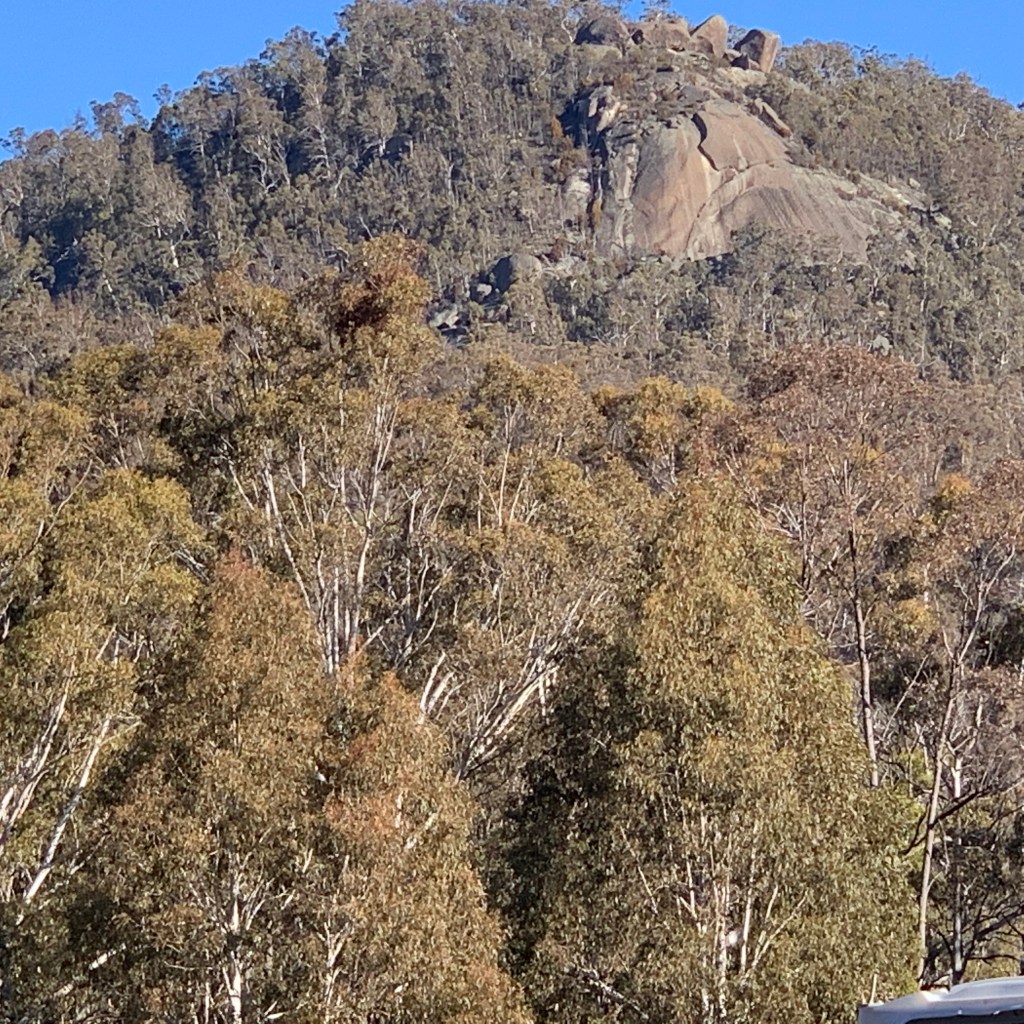
Archaeological surveys of two of the main access routes to the valley area, the Fishing Gap Trail and the path over Devil’s Gap, have found clear evidence of frequent Aboriginal passage. Gibraltar Rocks is a highly significant spiritual site and a corroboree site has been found near the headwaters of Sheedy’s Creek.
Researchers believe the Tidbinbilla valley floor was the focus of a territorial group that survived on the plentiful supply of possum, ducks, wild turkeys, emus, platypus, kangaroo, fish, yabbies and a range of plants, tubers, seeds and fruit.
When Europeans first arrived in the area in the early 1820s hundreds of Aboriginal people lived here. The population of Aboriginal people increased at various times during the year when people travelled to the region for social gatherings, ceremonies and seasonal food collecting. European settlement had the same impact on Aboriginal communities in the ACT as it did in other parts of Australia. It brought displacement from the land and exposed people to new diseases such as influenza, smallpox and tuberculosis, from which many died. That, to our shame, is an enduring legacy that we forced into the First Peoples.
Aboriginal heritage sites found in this region include burial places, campsites, rock shelters (with or without ochre paintings), stone arrangements, scarred trees, ceremonial grounds, grinding grooves, quarries and sacred places. At times, Aboriginal occupation is also evident at early European sites such as historic homesteads, cemeteries, reserves and old bridle tracks and coach roads. There is lots of information at https://www.tidbinbilla.act.gov.au/learn/tidbinbilla?a=396477
*****
Men’s sites were often found in the higher peaks of the valley. One of the rock shelters is home to ancient rock art found along a pathway to the Gibraltar rock peak, which is a men’s site. While the mountains in Tidbinbilla are also important to Ngunnawal women, women’s sites were found closer to the river system that twisted through the valley. In some women’s places grinding grooves can still be found on the river’s edge.
Often grand geological formations would be significant to the story of place. Many formations can still be seen today which visually reflect the dreaming story of the valley and its important relationship to the people that have survived and thrived within it for thousands of years. An example of this is the shape of a pregnant woman seen through the contours in the western slopes of the valley and found in the centre of the Tidbinbilla valley is a rock that looks like a perched eagle (Maliyan) the creator spirit of the Tidbinbilla dreaming story.
Tidbinbilla was a key place for Ngunnawal ceremonies, with groups from surrounding areas entering through key points such as Gibraltar Peak, where an elder would light a fire to guide people into the valley. Neighbouring language groups travelled to Ngunnawal Country for the purpose of ceremony, lore, marriage arrangements, trade, sharing of seasonal foods and cultural knowledge.
Tidbinbilla was also a place where young men learnt traditional lore/law, and where they were taken into the mountains as they learnt to become men in the traditional way. Similarly, Ngunnawal women carried out their customary ceremonies in the lower areas of the landscape preparing young girls for womanhood. And as we have noted, the mountains surrounding the valley were home in spring to the migrating bogong moths, which were gathered by Ngunnawal people as a source of food. See










 An Informed Faith