Celebrating Fifty Years of a unique Australian resource

Celebrating 50 years of With Love to the World, a unique Australian-produced daily Bible reading resource

A celebratory service of worship was held on Sunday 8 March in the Carrington Ave Uniting Church in Strathfield, to recognise that With Love to the World (WLW) has been in existence for 50 years. It is a unique Australian resource—written and produced by people within the Uniting Church in Australia, for people of faith in Australia and surrounding countries. It reflects a “southern hemisphere” take on matters of faith and life.

The first issue of WLW was printed in March 1976. It was written by Bob Maddox and Gordon Dicker, two lecturers at Leigh College, Enfield, the Methodist Church theological college, then printed, collated, and distributed by volunteers from seven local churches in the Strathfield—Homebush area. 

The college soon became part of United Theological College, while the seven churches (Methodist, Congregational, and Presbyterian) formed the Strathfield—Homebush Parish of the Uniting Church in 1977. Since then, WLW has been operated by a partnership of UTC and the Strathfield—Homebush UCA, under the auspices of the Synod of NSW.ACT.
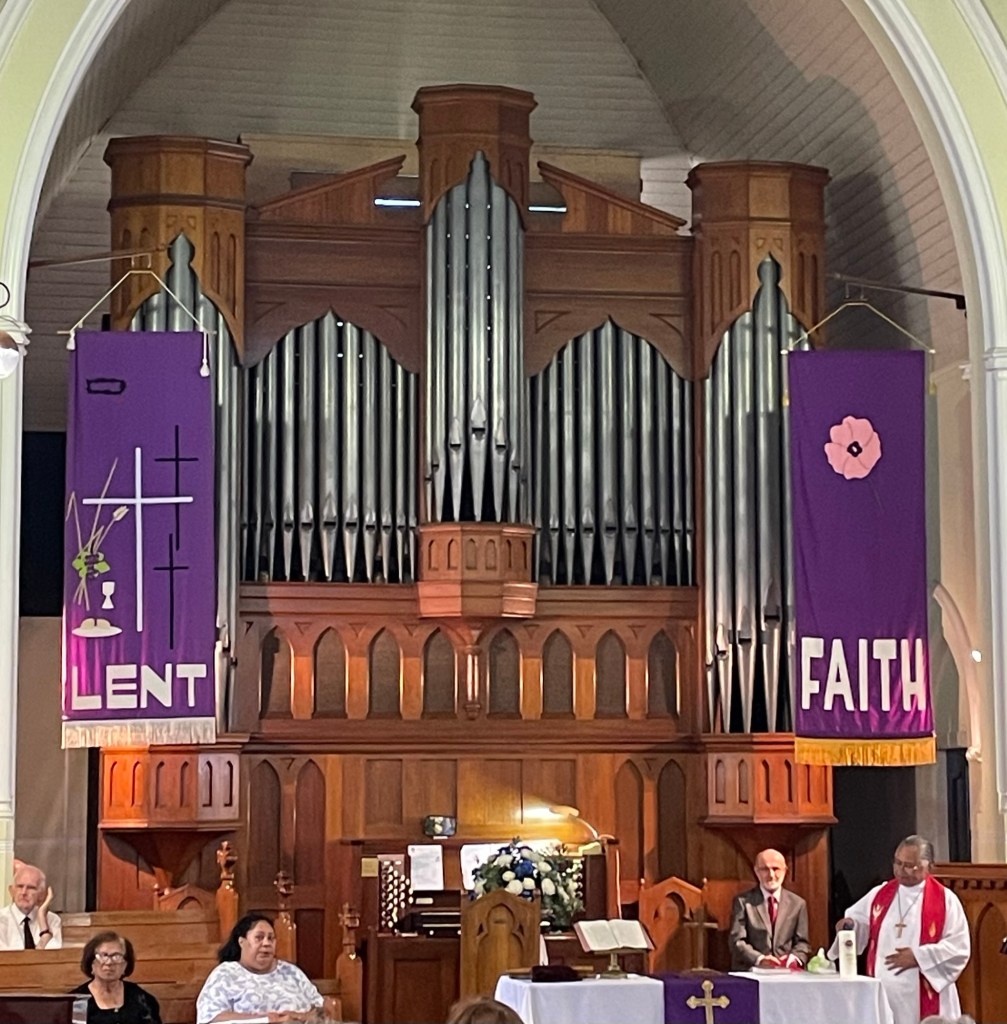
The service of worship was conducted by the Rev. Fololeni Tafokitau, minister of the Strathfield—Homebush Uniting Church. After an Acknowledgement of Country, a Welcome was given by William Emilsen, who reminded those present of the twofold purpose of WLW: (i) to produce a high quality and accessible commentary on the lectionary passages for the coming Sunday; and (ii) to support the research and writing of Uniting Church postgraduate students. It has done the former since 1976, and the latter since the first scholarship was granted in 1982. Since then, 65 people have received scholarship support.

The congregation then joined in a responsive version of Psalm 95, adapted for the occasion, and joyfully sang the Doxology. Music remained a feature of the service as people sang a number of favourite hymns, and the Tongan Choir led in a characteristically rich presentation of a song highlighting the importance of our scriptures.

Words from scripture were read by Seneti Katoa (Secretary of the WLW Committee) and the Rev. Dr Peter Walker (Secretary of the Synod of NSW.ACT). Peter had, until recently, been the Principal of United Theological College; the two readers represent the two bodies who have been in partnership since the beginning of WLW in 1976.
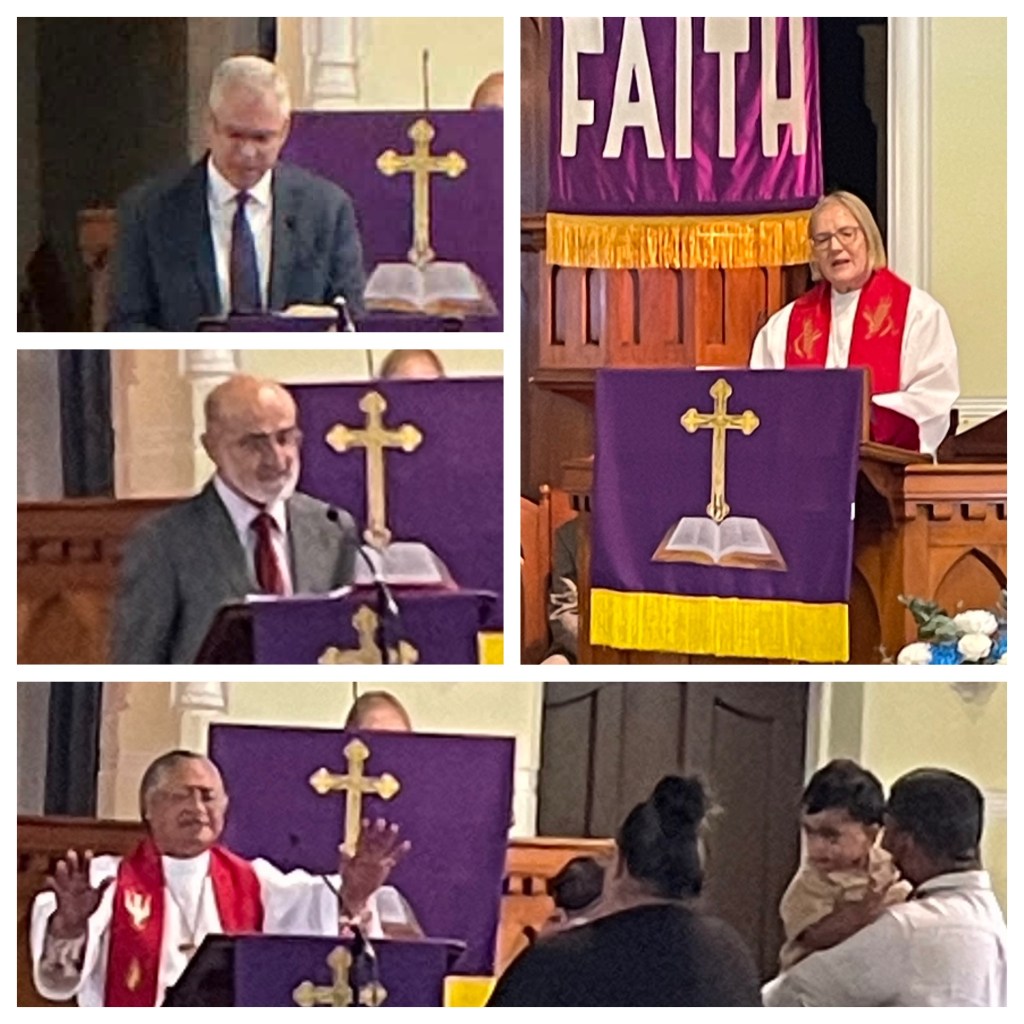
On the left: Peter Walker, William Emilsen, Fololeni Tafokitau.
On the right: Vicky Balabanski.

The guest preacher for this occasion was the Rev. Professor Vicky Balabanski, Principal of the Uniting College of Leadership and Theology in Adelaide, SA. Vicky (like William, Peter, and current Editor John Squires) had received scholarship support from WLW to undertake doctoral research. Indeed, the very first recipient of a scholarship, the Rev. Professor Howard Wallace, was in attendance on the day., as were a number of other scholarship recipients.

Vicky set the lectionary passage from John 4 into the context of today’s world, beset by warfare, famine, and distress. She noted that we had on the screen at the front of the church a depiction of “the woman of Samaria”—known in the Orthodox tradition as Photini, “the enlightened one”. Vicky then went on to reflect on three themes found in the story: living, flowing water; worship in Spirit and truth; and a fruitful harvest. Each, she observed, relates well to the purposes of WLW.
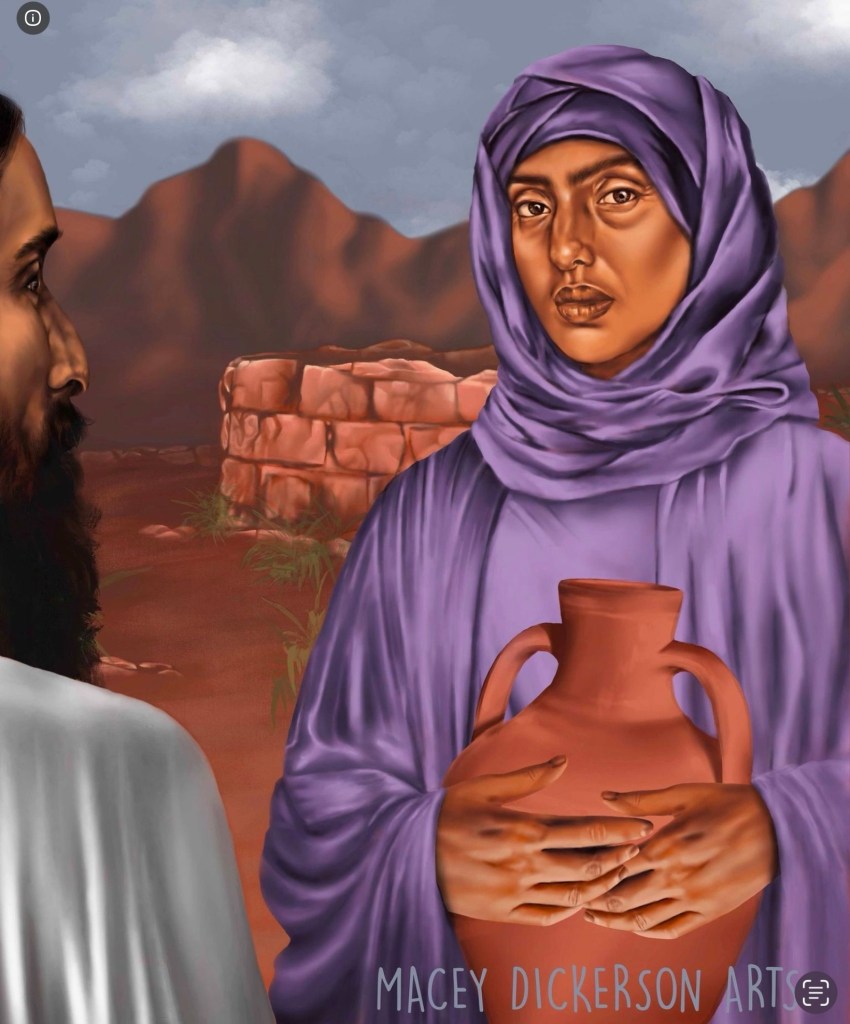
A depiction of “the woman of Samaria” by American artist
Macey Dickerson. Image reproduced by permission.
https://maceydickerson.com

Water runs (as it were) right through John’s Gospel, as it is found in many of the stories recorded in it: from the water in which Jesus was baptised (ch.1), through the streams of living water (ch.7), the water with which Jesus washed the feet of his disciples (ch.13), the water that flowed from the side of the crucified Jesus (ch19), to the water of the sea where the risen Jesus appeared to the disciples (ch.21). 

Jesus expresses his need for water—living, flowing water. Such water rises up from the shaft of Jacob’s well, a cistern storing water, bubbling up and flowing out as a spring of living water in the encounter between Jesus and the woman. The water in this encounter reflects the changes taking place in how the woman understands Jesus—from suspicion (4:9) to recognition (4:19) to ultimate confession (4:25–26, 29) and bearing testimony about him (4:39–42). The imagery of this living, transformative water also symbolises how writers in WLW takes words of scripture and reflect on their relevance and significance in today’s world.
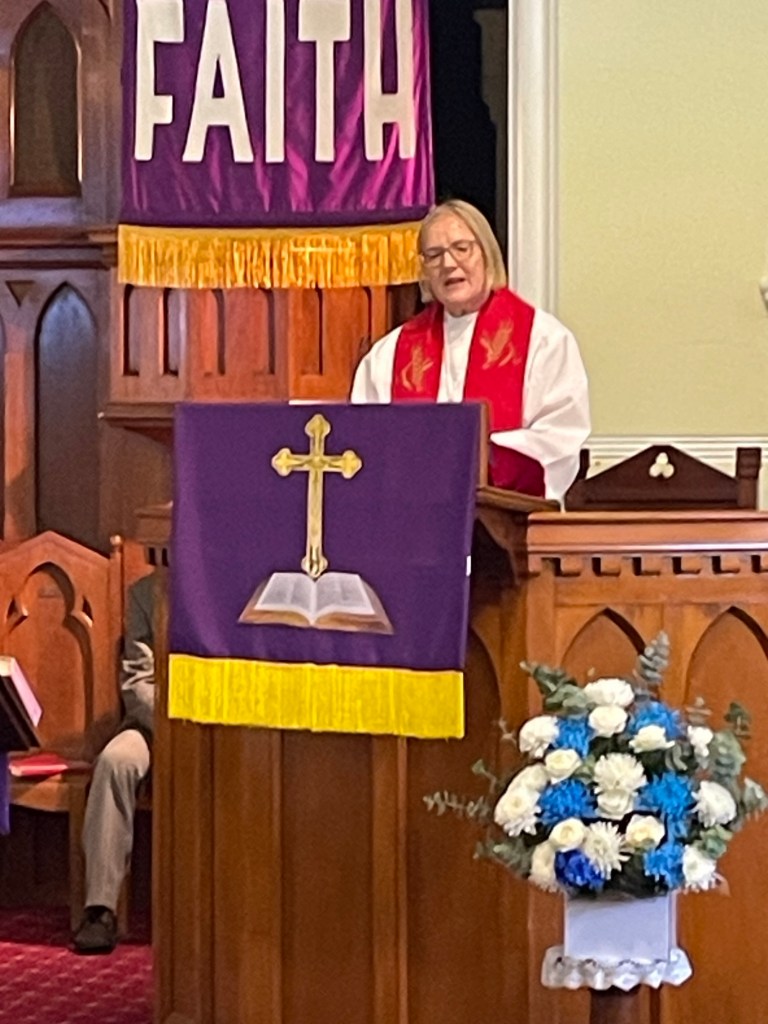
Vicky Balabanski, speaking on John 4

Worship is also a theme receiving attention in the story told by John. Ancient rivalries about the appropriate site for worship—a conflicted, but typical human question—are less significant. What matters more is how God is at work in the world, and especially how worshippers are spiritually attuned to what God is doing. The identity of the Samaritan woman had been shaped by the conflict over the sacred site; it is transformed into an openness to the ways that God’s Spirit is alive and active in the world. 

That is expressed also in the title of the resource; as Vicky noted, it is not With Love to the Church, nor With Love to the Believing Christian—but With Love to the World. It is truthful, prayerful, and reflective, leading towards openness in worship.

Then, the story tells that the sowers and reapers of the harvest rejoice at the fruits they have found in the teaching of the woman amongst them. There is a big picture that we are invited to imagine, and indeed to enter. We are part of a much larger whole reflecting God’s enterprise. So today, WLW sows the seed and encourages participation in the harvesting process. “We have heard, and we know”, the villagers say; may that be the experience of those we encounter today as we share the good news. 

Three of the Editors of WLW

After another rousing hymn, William Emilsen acknowledged the three people who have been Editors of the resource over 47 of the past 50 years: Shirley Maddox (1979–2006), Peter Butler (2006–2021), and John Squires (since 2021). Fololeni then presented bouquets of flowers to Shirley Maddox and Ruth Dicker. As the spouses of the foundation editors, Rev. Dr Bob Maddox and Rev. Dr Gordon Dicker, and as two people always actively involved in WLW over the decades, they represent the “apostolic tradition” that continues with WLW.
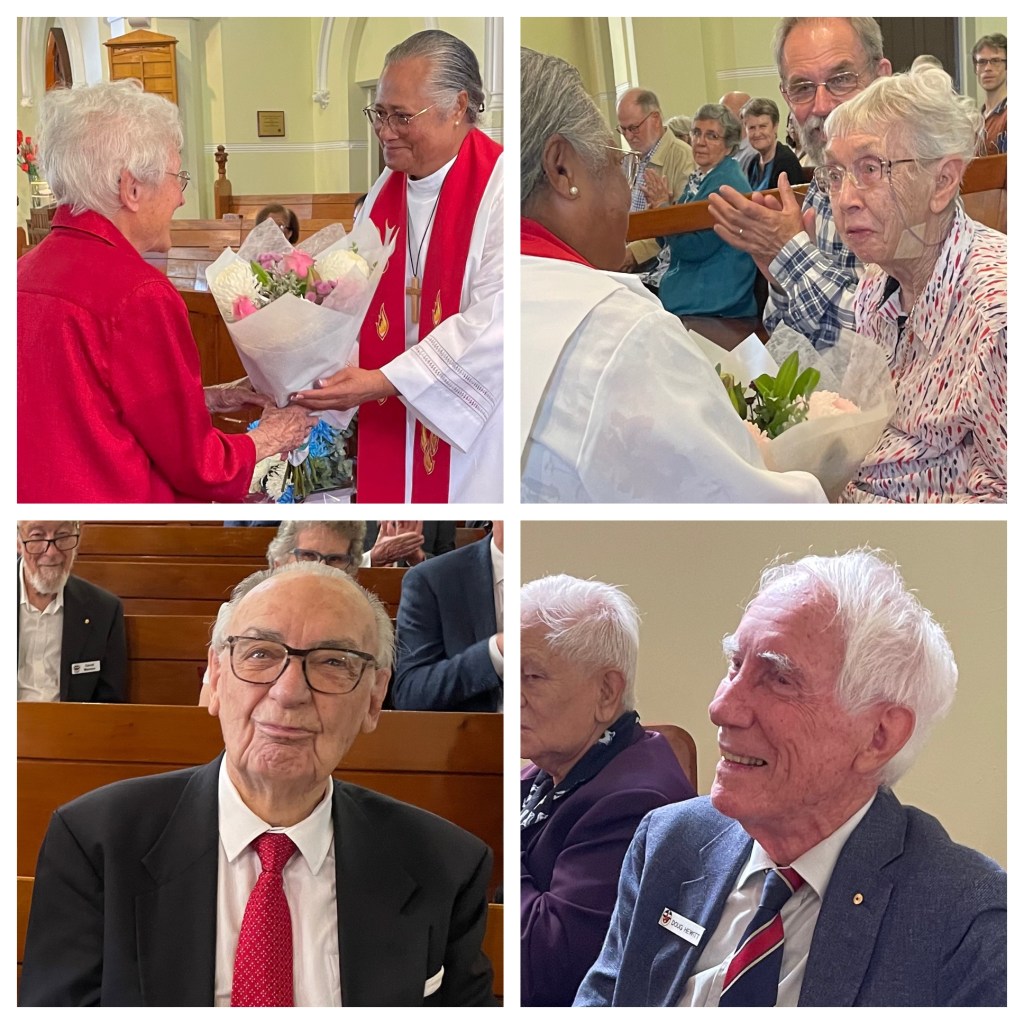
Flowers for Ruth Dicker (top left) and Shirley Maddox (top right). Bottom row shows longtime supporters and subscribers to WLW, Bill Ives (left) and Doug Hewitt (right).

Ruth then led the Prayers of the People, offering thanks for all involved in the writing and distribution of WLW, before then praying earnestly for the peace and justice we so desperate need in the world today. The service ended with a closing hymn and benediction, followed by a postlude played by the fine organist, Hugh Knight.

The congregation then moved to the hall, where a fine morning tea was enjoyed. Doug Hewitt, a member of the Strathfield church in 1976, reminisced about the very beginnings of WLW. He remembered especially the Sunday evening conversation about the lectionary passages that Bob Maddox and Gordon Dicker offered each week in “the early days”.

Shirley Maddox and Peter Butler (top);
the gathering in the hall (centre);
Doug Hewitt and John Squires (bottom).

Two previous Editors then spoke. Shirley Maddox gave her greetings to the people; then Peter Butler explained his commitment to ensure that WLW always spoke to the everyday needs of people. Every day, he noted, someone reading WLW will be grieving, another will be hurting, another will be hoping, and yet another will be joyfully celebrating. WLW, he noted, needs to be connecting with all such people every day.
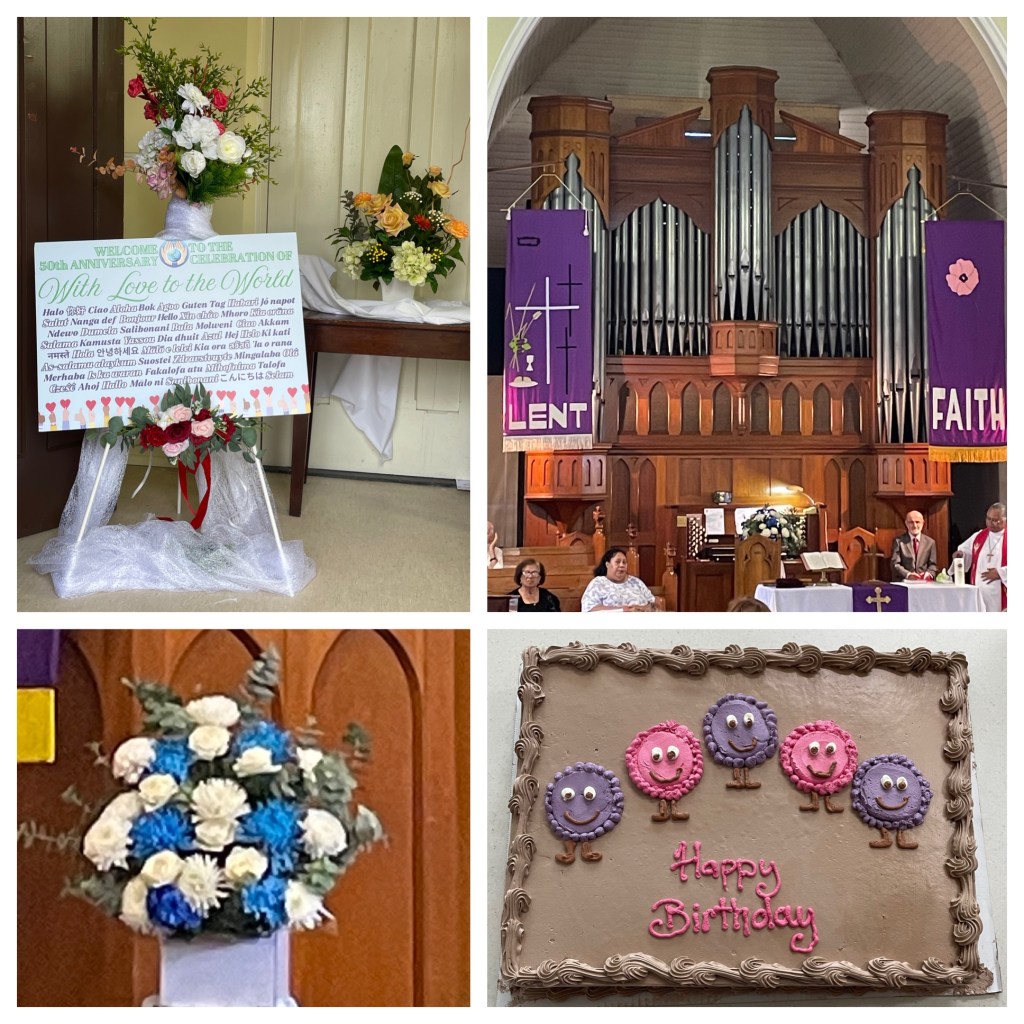
A large birthday cake was then presented; as Shirley Maddox blew out the candles, the people sang “happy birthday”—first to WLW, then again to Ruth Dicker, whose 93rd birthday occurs in the coming week. Current Editor John Squires drew the proceedings to a close with a thanks to those who had provided the sumptuous morning tea, and a reminder of his three-word commitment to ensure that With Love to the World is Inclusive—Collaborative— Diverse. And so the celebrations ended.

A WLW subscription is $28 per year. To subscribe to the hard copy booklet of With Love to the World, contact Trevor Naylor at the WLW Office on (02) 9747 1369, or email him at wlwuca@bigpond.com. To subscribe to the electronic version, download the App on your device from the App Store or Google Play.


Expectations: a key theme for Advent

What follows is a piece that I wrote a few weeks back for Ruminations, the quarterly journal of Saltbush, which is a ministry that resources rural and regional Uniting Churches in the Synod of NSW and the ACT. I wrote it just at the time when “expectations” were swirling around the church; I’m publishing it now as the theme of Expectations seems to be most appropriate for the season of Advent.

*****

The Synod of NSW.ACT has recently met, and given consideration to “The Presbytery Project”, which has the subtitle “Future Directions for the People of God on the Way”. The expectations surrounding the move to the Three Presbyteries Model are no doubt clear: sharing of resources, mobilising of personnel, collaboration of teams, hope for the future.

Just after that meeting, the Synod of Victoria and Tasmania met and adopted their vision for the future, entitled the “Faithful Futures Project”. It is setting expectations in that Synod; it aims “to prepare the Uniting Church in Victoria and Tasmania for the next 10 to 15 years”. And, of course, right across Australia, the church has been pondering the outcomes of the 2024 Assembly, when the Act2 Project was received and its proposals adopted. Already newly-constituted Commissions are meeting, planning the steps ahead in their respective areas. No doubt they have expectations about what they will achieve.

Indeed, even in my small rural church, we have had a recent process in which people have shared “what I hope for this church”, learning about better ways to be welcoming, and setting out steps for mission in the local community. And the Presbytery in which I live has a neat slogan on its website, declaring that it seeks to “Live by Faith, be Known by Love, and be a Voice of Hope”.

Expectations abound at every level!

Jesus was no stranger to the basic human element of “expectations”. He didn’t know about the anticipatory joy of an expectant parent, looking to the birth of their child. He presumably was a stranger to the bubbling internal expectations that mount when you have just two months before you start that “dream job” that you have just been offered. And I am not sure that he ever took part in a day-long, facilitated workshop of setting forth the “purpose, mission, and values” of a faith community!

But Jesus knew about expectations. The earliest account of his adult life tells us that his first words in public were words of expectation: “the time is fulfilled, and the kingdom of God has come near” (Mark 1:15). In another account of his life, he is reported as saying “the kingdom of God is not coming with things that can be observed; … in fact, the kingdom of God is among you” ( Luke 17:20-21). That surely must have set his followers agog as they scurried to determine just how this expectation of the coming kingdom was, in fact, now present among them.

Indeed, Jesus lived at a time when expectations were running high amongst his people. This was not a new thing. In the foundational story of the Exodus from Egypt, it is said that Moses offered words of expectation to the people: “Do not be afraid, stand firm, and see the deliverance that the Lord will accomplish for you today; for the Egyptians whom you see today you shall never see again” (Exod 14:13).

The scrolls containing the words of the prophets, which faithful Jews would have known quite well, were full of words of expectation: “the days are coming when all that is in your house will be carried off to Babylon”, announced Isaiah (Isa 39:16); “the days are surely coming, says the Lord, when I will make a new covenant with the house of Israel and the house of Judah”, said Jeremiah, during that exile (Jer 31:31); “I am coming to gather all nations and tongues”, declared an anonymous prophet after the people had returned from Babylon (Isa 66:18). Each important step in the story of Israel had been prophetically signalled by a word of expectation. 

And by the time of Jesus, after centuries of continuing foreign rule, and after a series of uprisings, defeats, compromises, and plots to regain control, expectations continued to run amok amongst the Jewish population. For some, the expectation was that they would someday regain political control of their land (the zealots and political revolutionaries of the day). For others, the expectation took shape in a vision of “the sons of light” waging a final cataclysmic battle against “the sons of darkness” (as in one of the Dead Sea Scrolls). Still others held to the word of the Lord, “I am sending my messenger to prepare the way before me, and the Lord whom you seek will suddenly come to his temple” (Mal 3:1). 

It was this latter expectation that had gripped John, as he carried out his programme of calling people to repentance and baptising them in the river. And as he did so, the man from Nazareth came and submitted himself for baptism. “Behold the Lamb of God, who takes away the sin of the world!” one later writer claimed that he said (John 1:20).  His expectations had come to pass in ways that perhaps even he had not thought possible.

The followers of Jesus certainly had expectations about him. “Are you the one who is to come?”—the question that John had sent his followers to ask of Jesus (Matt 11:3; Luke 7:19)—soon became their question. Expectations about what Jesus would achieve abounded. “We had hoped that he was the one to redeem Israel”, two of his followers mused, soon after he had been put to death (Luke 24:21). That was some expectation, to be sure! 

Some of those not as enchanted by the way of Jesus also had expectations about him. “How long will you keep us in suspense? If you are the Messiah, tell us plainly”, they taunted him (John 10:24). Hovering somewhere around Jesus was the expectation that he might in fact be the figure long hoped-for, come to redeem Israel. And even as he hung in the cross, he was again mocked and taunted: “He saved others; he cannot save himself. Let the Messiah, the King of Israel, come down from the cross now, so that we may see and believe” (Mark 15:31–32). Again, that expectation that he was someone significant—or that he thought he was someone significant—is in play. Just what might we expect from this Galilean stirrer? 

The path that Jesus trod both met expectations, but also failed to meet expectations. He did achieve something significant; but he did not do so in the way that was most surely expected. He would redeem Israel; but only by giving his life. He would be shown to be Messiah; but not on the clouds of glory—rather, on a rough wooden cross. “Truly this man was God’s Son!”, the Roman soldier is claimed to have said as he witnessed this cruel death (Mark 15:39).

Perhaps Judas had unreasonably  high expectations about Jesus; he was one of the inner group that travelled with him, ate with him, learnt from him, and began to carry out the mission that Jesus had given them (Luke 9:1–6). And yet his expectations took a sharp turn; we don’t know what drove him to betray Jesus with a kiss, nor do we know what expectations he had about what would eventuate from that. His sad end (Matt 27:3–6; compare Acts 1:18–19) perhaps reflects his recognition—tragically, too late—that his expectations regarding Jesus were doomed to fail.

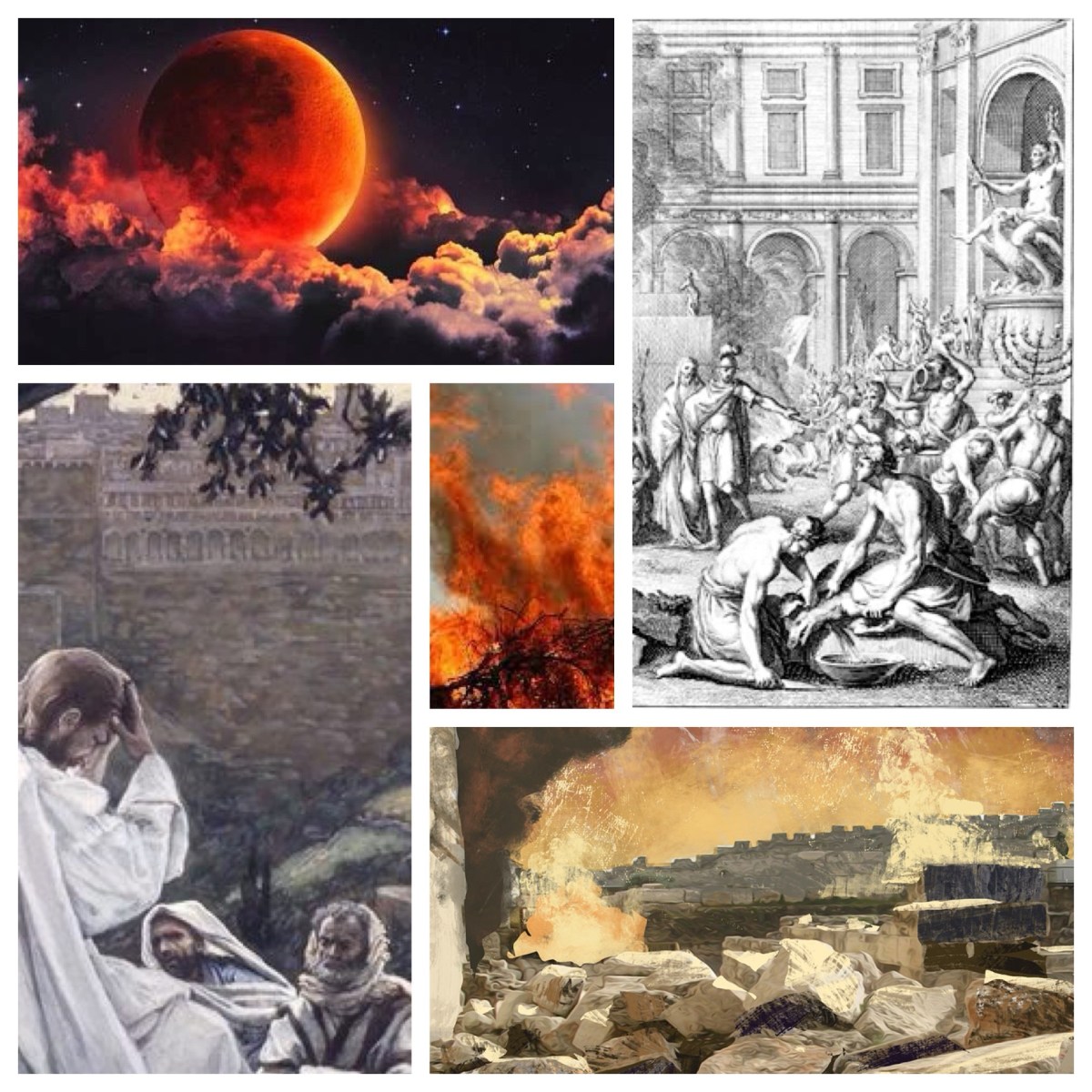
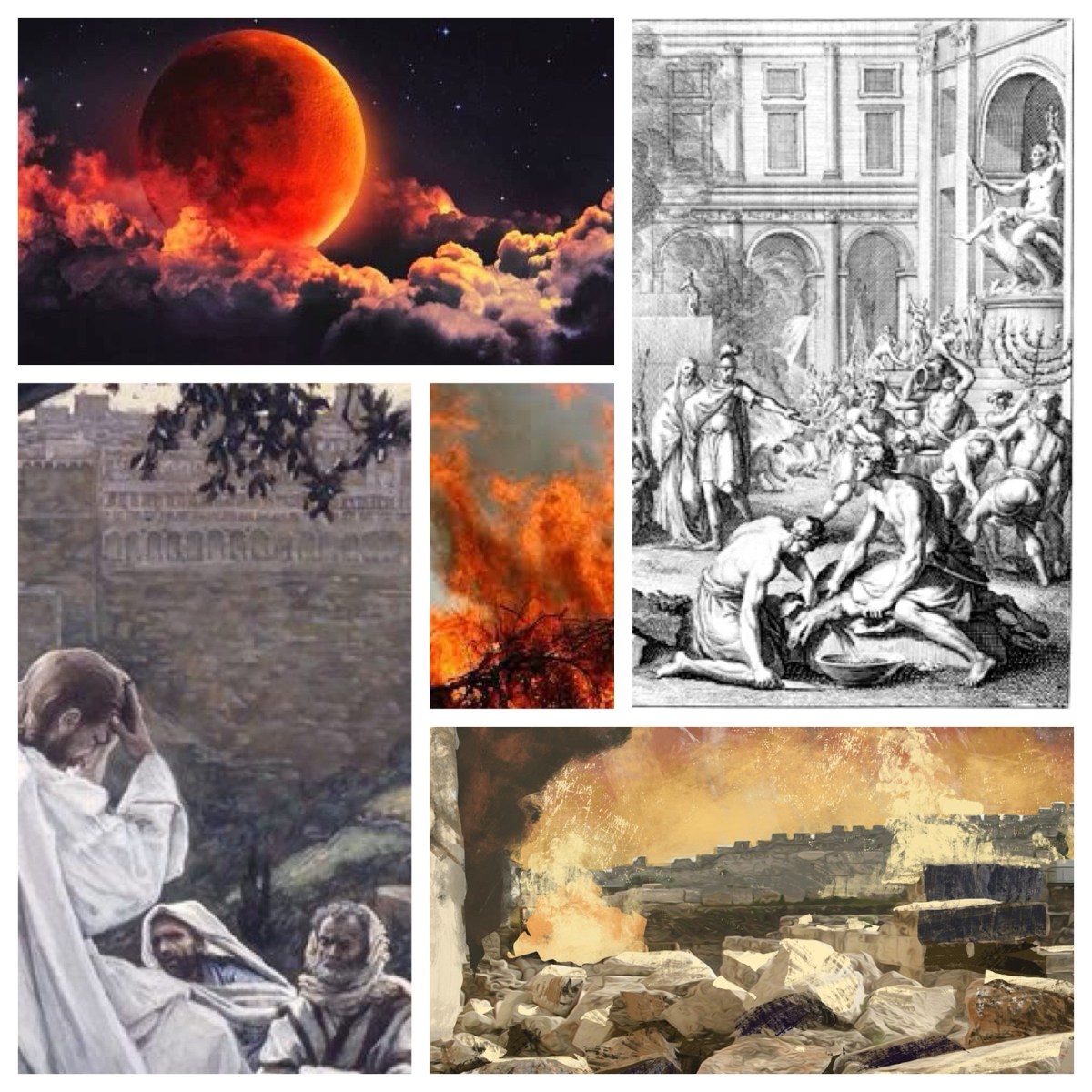
And let’s not get too caught up in the complexities of the apocalyptic expectations that swirled around at the time—expectations that Jesus addressed, and redefined, in one of his longer teaching sessions (Mark 13:5–37). On the one hand, he is clear that something unexpected and yet long yearned-for will indeed take place (“they will see ‘the Son of Man coming in clouds’ with great power”, Mark 13:26). The expectations people held in relation to him were justified, it would seem.

And yet, he warns his followers to “beware that no one leads you astray” with specific timetables (13:5), advising them that chaotic times of cosmic upheaval are nothing “but the beginning of the birth pangs” (13:8), there will be suffering that will need to be faced and endured (13:19), and insisting that “about that day or hour no one knows” (13:32), that “you do not know when the time will come” (13:33, 35). Expectations may be raised, hopes may be high; but resolution is not easily attained.

So how do we deal with expectations? “Managing expectations” has entered the language both of business practice and of personal psychology. We need to be wary of setting expectations too high. Thinking about how all nations will flock to Jerusalem is setting expectations too high. They didn’t, and they won’t (especially today, in the fiery political landscape of Israel and Palestine). So too is expecting that everyone will see clearly that Jesus, the Messiah, is the Son of God who is the one to perform miracles at will and the one to redeem all of Israel and all of the nations—that, too, is unrealistic. We haven’t seen this, and he hasn’t redeemed everyone at all. Life continues on despite the failure to meet such high expectations.

And in similar fashion, setting expectations too low is something we should avoid. The young adult comes home from their first attempt at sitting for a drivers license, and proudly announces “I got it!” Dad looks up, amazed, and responds, “Wow! I really didn’t think you’d get it this time”. The expectation was set low, the triumph evaporates all-so-quickly. We need to manage our expectations: not too high, not too low.

And what of expectations we might have for our church community? Have you talked together in your congregation or faith community about what you hope for? what you would love to see happen? what you could work together to try to achieve? what you can pray for, bringing reason and knowledge into your words of hope and expectation to God? 

We should have expectations; we should talk about our expectations; and most importantly, we should be working together to see how we might achieve those expectations, and make them become a reality. Sometimes that can be a hard thing to do. Nevertheless, it is central to our life together.

As for expectations in our own personal spiritual life: that’s another area to consider carefully. We all have our familiar daily or weekly practices. They may be shaped by years of loving care and devoted repetition; we may be growing into a particular spiritual practice as we return to it consistently over time; or we may be now just “trying something new” in our spiritual life. Whatever the case may be, we have expectations about what that spiritual practice will do for us, and how it will help nurture our life of discipleship. We should identify our personal expectations and see how we are moving towards achieving them.

At the end of three of the Gospels, there are words that Jesus is reported as saying as he appeared, after his resurrection, to his followers. These words set the expectations for his followers. Matthew reports his words, “make disciples of all nations, baptizing them in the name of the Father and of the Son and of the Holy Spirit, and teaching them to obey everything that I have commanded you” (Matt 28:19–20). In these words, Jesus offers a clear set of expectations. 

Luke reports that he said “you are witnesses of these things”, of all that he has told them, so he offers them a command which contains an expectation: “stay here in the city until you have been clothed with power from on high” (Luke 24:48–49). In the subsequent volume written by Luke, the expectation and the charge is clear: “you will receive power when the Holy Spirit has come upon you; and you will be my witnesses in Jerusalem, in all Judea and Samaria, and to the ends of the earth” (Acts 1:8).

Most simply of all, John has Jesus say to the disciples, “peace be with you … as the Father has sent me, so I send you … receive the Holy Spirit” (John 20:21–22). Whichever Gospel account we prioritise for ourselves, the charge is clear—and the sense of expectation is strong. And so may it be for us,  day after day, as we walk the way of Jesus, full of expectation!

Ominous clouds overshadowing a joyous celebration (John 2; Epiphany 2C)

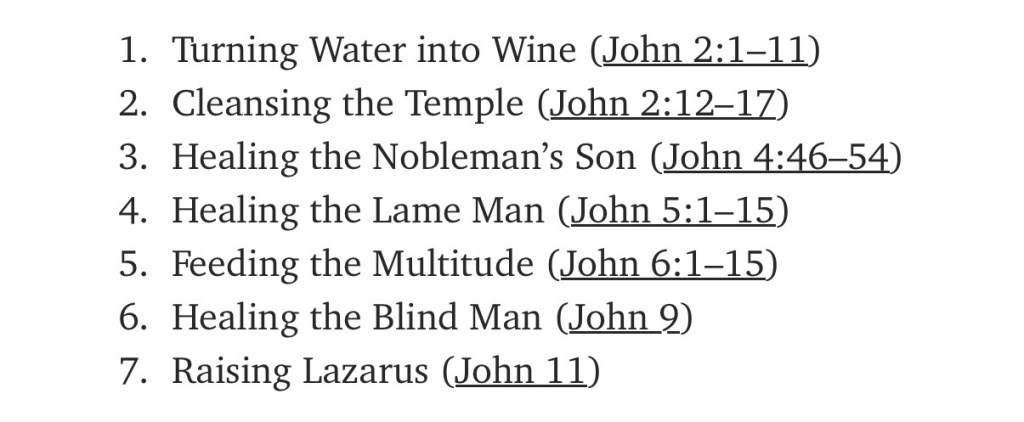
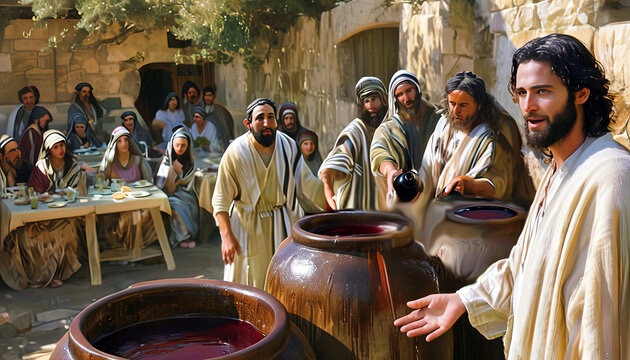
For the second Sunday in Epiphany, we are offered a passage from early in the book of signs—the work that we know as the Gospel according to John. It is the first sign performed by Jesus, when he was attending a wedding in the town of Cana in Galilee (John 2:1–11).

I call this Gospel the book of signs because it includes seven clearly narrated signs, or miracles, performed by Jesus. Most of them are inserted in the midst of an evolving narrative, in which followers of Jesus grow in their understanding of who he is, whilst at the same time a movement of those opposed to Jesus gains strength. Both of those features are evident in this first sign.

The author of this Gospel makes it clear that there were more signs performed by Jesus than what is narrated (20:30), and that the signs actually narrated are told in order to strengthen the faith of those hearing or reading them (20:31).

The first and second signs take place in Galilee (2:1–11, 4:46–54). Subsequent signs are located in Jerusalem (5:2–9), the Sea of Galilee (6:1–14), on the Sea of Galilee near Capernaum (6:16–21), back in Jerusalem (9:1–7) and then, for the seventh, and final, sign of those narrated, in Bethany, where Lazarus had recently died (11:17–44).

This final sign provides a clear climax to the Book of Signs, the first half of the whole Gospel. This is the miracle supreme—raising a dead person back to life takes some beating! It is told at some length, with many details, leading to the climactic moment of the appearance of the once-dead man, now alive. “The dead man came out, his hands and feet bound with strips of cloth, and his face wrapped in a cloth. Jesus said to them, “Unbind him, and let him go.” (11:44).

In the literary framework of the whole Gospel, however, this building to a climax through the seven signs is paralleled by the growing tension as leaders in the Jewish community marshal forces in plotting against Jesus. Initially, there were positive responses to Jesus (2:23, 4:42, 4:45). Then, an engagement in debate and controversy with “the Jews” (5:13) quickly escalated into persecution (5:16) and indeed an attempt to kill Jesus (5:18).

This early opposition then continues unchecked throughout the narrative. Whilst Jesus remained popular in Galilee (6:14, 34) and amongst some in Jerusalem (7:31, 40-41a, 46: 8:30; 9:17, 38; 10:21, 41) and Bethany (11:27, 45), hostility towards Jesus continued, being expressed both in verbal aggression (6:41, 52; 7:15, 20; 8:48; 9:18-19; 10:20), threats of his arrest (7:32, 44; 11:57), direct physical threats (stoning at 8:49, expulsion from the synagogue at 9:22, and stoning once more at 10:31) and threats against his life (7:1, 25, 32).

Then, at the climactic moment, after Lazarus appears, the Jewish leadership plans a strategy to put Jesus to death (11:45-53). The plot is hatched, the fate of Jesus is sealed. That section of the narrative also includes the famous, yet ironic, comment by Caiaphas: “it is better for you to have one man die for the people than to have the whole nation destroyed” (11:50). And so the inevitable process begins, moving towards the death of Jesus (11:53, 57). 

For the author of the book of signs, affirming the identity of Jesus shapes the whole narrative of this Gospel. Each sign points to the significance of Jesus. The first sign, in Cana of Galilee, manifests his glory (2:12); the next sign, also in Cana, fosters belief in Jesus (4:48, 53). What Jesus does beside the Sea of Galilee identifies him as “the Prophet who is to come into the world!” (6:14), whilst the sign performed in Jerusalem signal that he is  the Son of Man (9:35–38). Later, in Bethany, Jesus raises Lazarus from death, and Martha articulates the faith of others when she confesses Jesus to be Son of God and Messiah (11:27). Alongside these seven signs, the various interpersonal encounters that are narrated illuminate the identity of Jesus.

I read the whole sequence of scenes in this Gospel, from the wedding in Cana, with its implicit criticism of “the Jewish rites of purification” (2:1–11), through the heated debates of chs. 5—8, the high drama of the multi-scene conflict with Jewish leaders and “expulsion from the synagogue” in ch.9, on into the plot of ch.11, as a story that reflects the position of the followers of Jesus who comprised the community in which this book was eventually written. 

This group of people (what Raymond Brown called “the community of the beloved disciple”) had been rejected by their fellows, expelled from their community of faith, because of their views about Jesus. They had become yet another sectarian group in the mixture of late Second Temple Judaism, which then bled into early Rabbinic Judaism. 

It is this “Johannine sectarianism”, as Wayne Meeks called it, which explains the bruising debates in this Gospel; Jesus is being remembered as “standing up for the truth” by a group of people who had been pillaged and persecuted for standing up for what they say as “the truth”. They had become outsiders; some of them had met death for the stand they took. This was what it meant for them to be faithful to Jesus. 

This tragic development is a natural development, at least as the author tells it, from that initial sign, where Jesus is already portrayed as being in tension with others of his own faith. Although it was a wedding—a time of joyous celebration—there were ominous clouds overshadowing what transpired in Cana that day.
Wayne Meeks, “The Man from Heaven in Johannine Sectarianism”, JBL 91 (1972) 44–72)

Raymond E. Brown, The Community of the Beloved Disciple (Paulist, 1978)