This week, the lectionary starts a series, for the Epistle reading, of selections from the book known as 1 John. By tradition, this work is called a letter (or epistle)—a communication from a specific individual to another individual or to a community of people. But the form of this book raises immediate questions.
There is neither the kind of opening address expected in a letter, nor any form of epistolary conclusion at its end. The opening verses, instead of providing information about the context in which the document came into being, present with urgent rhetorical force the importance of the message which follows. The letter ends quite abruptly, with a stark admonition (5:21)— no discussion of travel plans or the sending of an emissary, no greetings, no final blessing. Is it a book, a letter, or a sermon?
The book clearly has the ethos of a letter, as found in the first person plural of the opening verses (“we declare…we declare…we are writing…”, 1:1–4), the direct address to “little children” (2:1; 3:18; 5:21) and “beloved” (2:7; 4:1, 7), and the repeated assertion that “I write these things” (2:1, 7, 12–14, 26; 5:13). Moral exhortation and doctrinal teaching, elements regarded as being classic component parts of early Christian letters, are interwoven throughout the book without clear distinction.
Yet there appears to be no marshalling of a case and no logical development of thought, such as is found in the carefully-shaped rhetoric of the letters of Paul. At first reading, the letter’s structure is somewhat circular and repetitive, more an extended meditation on “love” (the term appears around fifty times) than a tightly-argued instruction. The tone is often reflective—although there are moments of contention and dispute.
The author of the letter is never named, but the opening verse makes the claim that the letter comes from one who has “heard…seen…looked at and touched” for himself, the very “word of life” (1:1). The inference is that the author has had personal contact with Jesus himself; in the third century, Irenaeus made the definitive claim that the letter was written by “John, the disciple of the Lord” (Against Heresies 3.16.5).
This claim goes beyond any direct assertion within the letter itself; although such a claim might be reinforced by the author’s reiteration of his privileged status as eyewitness (and earwitness): “we have seen it” (1:2), “what we have seen and heard” (1:3), “the message we have heard from him” (1:5), as well as a later reminder: “just as he has commanded us” (3:23).
The frequent use of “from the beginning” (1:1; 2:7, 13, 14, 24; 3:11) might also be taken as a reference back to the teachings of Jesus, mediated through the writing of this author.
Likewise, from the text of the letter itself, its recipients cannot be specifically identified in any meaningful way. There are references to “little children…fathers…young people” (2:12–14) which are formulaic and generalised. They already know the message about Jesus, for they “know him who is from the beginning” (2:13, 14) and have already heard his commandment to “love one another” (2:7; 3:11).
Their situation involves a controversy about how to live in obedience to Jesus; the contrast between darkness and light, love and hate is marked throughout the work (1:5–10; 2:9–11; 3:11–15; 4:20–21). A key idea in this regard is the way that love reaches “perfection” (2:5; 4:12, 17–18) in the lives of believers. This is what the recipients of the letter are to set as their aim.
Set in stark contrast to the believers is “the world”, which is both personified and portrayed as a negative character. The world is full of desire (2:16); those in it do not help a person who is in need (3:17); it hates the believers (3:13) and does not know God (3:1; 4:3–6). The letter ends with the strong assertion that “the whole world lies under the power of the evil one” (5:20). This suggests high tension, even outright conflict, between the people addressed in this letter, and some indeterminate “opponents”.
The sectarian tendencies, already seen in John’s Gospel, appear to have intensified in the situation addressed in this letter. Yet, in the end, “the world” is only temporary (2:17); victory over the world is assured, for it has already come (4:4; 5:3–5). Indeed, the author of this document insists that God’s intention is to save the whole world (2:1–2; 4:9, 14).
We are offered an abundance of richness in the scripture passages that the lectionary proposes for our use during the coming week. The passages in the opening days of Holy Week help us to prepare for what follows over the Easter weekend. As well as passages for each day in Holy Week, there is a collection of four important passages that are offered for Good Friday: Isaiah 52–53, Psalm 22, Hebrews 4–5, and the full passion narrative of John’s Gospel.
Unlike the majority of Sundays throughout the year, when the selections in each category (First Reading, Epistle, Gospel) run largely in parallel and do not regularly correlate with one another—except for the choice of Psalm on many Sundays—these four readings have been chosen deliberately to focus in on a common theme, as befits the day, Good Friday.
The first passage comes from prophetic words within the second main section of Isaiah (chs. 40—55), known as Deutero-Isaiah. These chapters are fundamental for the theological developments that we find in the New Testament. In these chapters, Israel,is addressed as “my servant, Jacob, whom I have chosen,the offspring of Abraham, my friend; you whom I took from the ends of the earth, and called from its farthest corners” (Isa 41:8–9; see also 42:1; 43:10; 44:1–2, 21; 45:4; 48:20; 49:3, 5–6; 52:13; 53:11).
Scattered through this section, we find four oracles known as the Songs of the Servant—three relatively brief (42:1–9; 49:1–7; 50:4–11); and the fourth, best-known within Christian circles, a longer description of the servant who “was despised and rejected by others; a man of suffering and acquainted with infirmity” (Isa 52:13–53:12).
The resonances that this longer song has with the passion narrative of Jesus are crystal clear. The song is explicitly linked with Jesus six times in the New Testament (Matt 8:14–17; Luke 22:35–38; John 12:37–41; Acts 8:26–35; Romans 10:11–21; 1 Pet 2:19–25); furthermore, so many of the details of the passion narrative are shaped in the light of this song, along with a number of psalms of the righteous sufferer. (See https://johntsquires.com/2021/03/22/3-mark-placing-suffering-and-death-at-the-heart-of-the-gospel/)
The prophet describes the marred appearance of the Servant (52:14); he is despised, rejected, and suffering (53:3), bearing our infirmities (53:4), and wounded for our transgressions (53:5). The Servant is led like a lamb to the slaughter (53:7), suffering “a perversion of justice” (53:8). We can hear clear prefigurings of the passion of Jesus.
Furthermore, the Servant does not act with violence nor speak deceit (53:9). He is buried with the rich (53:9); the song declares that he gives his life as “an offering for sin” (53:10), carrying the iniquities of many (53:11), making them righteous (53:11), bearing the sin of many (53:12), making “intercession for the transgressors” (53:12). The resonances with the way that the death of Jesus is understood in later Christian theology are strong.
The narrative of the death of Jesus that Mark narrates in his passion narrative (and which was offered for last Sunday’s Passion Sunday) relates Jesus to the figure of the righteous person who suffers injustice, who appears in various Hebrew Scripture passages beyond this fourth, and longest, Servant Song. The author of this Gospel takes great pains to show that Jesus sought to remain faithful to his calling despite the pressures he faced, just as the righteous sufferers of old also held to their faith.
The Gethsemane scene draws on imagery from Hebrew Scripture to underline this. The narrative evokes the suffering of the faithful righteous person, referring especially to some phrases found in the Psalms. The Golgotha scene also contains this orientation. What takes place is interpreted with reference to scripture; here, the allusions are both subtle, and more direct.
However, at the end, Jesus appears to lament that God has abandoned him; yet the cry which Jesus utters at the ninth hour, Eloi, Eloi, lama sabachthani (15:34), is a clear reference to Psalm 22, one of the psalms of the righteous sufferer, as he quotes its first verse.
Psalm 22:1-8 in the St. Albans Psalter. The first words of the Psalm in the LatinVulgate are Deus, Deus meus, abbreviated here as DS DS MS.
This is the Psalm, unsurprisingly, which the lectionary offers for Good Friday. It is a psalm of individual lament, as the psalmist reflects the wretched condition of a person who is suffering unjustly, crying out, “why are you so far from helping me, from the words of my groaning? … I am a worm, and not a human … all who see me mock at me; they make mouths at me, they shake their heads …. I am poured out like water, and all my bones are out of joint; my heart is like wax; it is melted within my breast; my mouth is dried up like a potsherd, and my tongue sticks to my jaws; you lay me in the dust of death.” (Ps 22:1, 6, 14–15). It is a psalm most suitable to,shape our reflection as we hear the narrative of crucifixion and death on Good Friday.
Two passages from Hebrews are suggested by the lectionary for this day. The “word of encouragement” to the Hebrews is best known for its thoroughly theological explanation of the death of Jesus as both the new high priest and also the sacrifice supreme. It is strongly supercessionist in its dismissal of the Jewish sacrifical system that was practised in the Temple; it posits that Jesus and his sacrifice replaces all of that. We need to take great care as we preach on such passages!
The first section of Hebrews that is offered for Good Friday (Heb 10:16–25) affirms “the confession of our faith” which is offered by the writer in response to God’s fidelity to the covenant in which “I will put my laws in their hearts, and I will write them on their minds” (10:16, quoting Jer 31:33b). This covenant provides “confidence” as it assures believers that “our hearts [are] sprinkled clean from an evil conscience and our bodies [are] washed with pure water” (10:22).
The writer affirms that “he who has promised is faithfully (10:23), for God asserts “I will remember their sins and their lawless deeds no more” (10:17, quoting Jer 31:34b). This understanding of the significance of the death of Jesus, as God’s chosen victim who effects redemption, plays a key role in the development of an understanding of the atonement in later generations. The writer rejoices with his audience that they have “our hearts sprinkled clean from an evil conscience and our bodies washed with pure water” (10:22).
The other excerpt from Hebrews (4:14–16; 5:7–9) provides two brief snapshots of Jesus. These two excerpts focus more on the humanity of Jesus, helping us to enter more fully into the Good Friday story. Jesus is tested as we are, yet has the strength of character not to submit to sin (4:15). The effect of the story of his passion in light of this would therefore be to provide the exemplar supreme for faithful people, holding fast in the midst of suffering.
This letter also indicates that Jesus knew the anguish and despair of human tragedy, as he prayed “with loud cries and tears” (5:7). Submission, suffering, and obedience lead, for Jesus, to perfection (5:9), making him “the source of eternal salvation for all who obey him” (5:10). As we reflect on this story from centuries ago, may we know the same dynamic, moving us from our sufferings into a sense of God’s salvation.
Last week, the lectionary offered Mark’s account of the passion of Jesus, in preparation for Passion Sunday. On Good Friday the whole story is offered again for our reflection on those events, from John’s account, which has some distinctive features. As we consider the significance of the death of Jesus, the comment in 18:14 (hearking back to 11:50) provides a classic political (and theological) insight. Jesus then asserts that “I have always taught in synagogues and in the temple … I have said nothing in secret” (18:20). His words and life are for all.
When he is before Pilate, rather than being silent (Mark 15:5), Jesus here engages in a quasi-philosophical debate about kingship and truth which is reported only in John’s Gospel (John 18:33–38; 19:8–12). Mocked by the Roman soldiers as a king (19:1–3), Jesus is sentenced by the Roman Governor under the ironic accusation, “King of the Jews” (19:15, 19–22). The irony in this title is made clear by the Johannine author’s observation that “the chief priests of the Jews said to Pilate, “Do not write, ‘The King of the Jews,’ but, ‘This man said, I am King of the Jews.’ ” (19:21).
Distinctive to John’s account is the presence of the mother of Jesus and the beloved disciple (19:25–27), witnessing a majestic final moment for Jesus. “It is finished” (19:30), the final word of Jesus in this Gospel, is better translated, “It now comes to complete fulfilment”, a recognition that now “the hour has come for the Son of Man to be glorified” (12:23).
The whole sequence of events recounted in this narrative (John 18–19) is understood as fulfilment of scripture (19:24, 28, 36, 37). God’s will is done. That is the ultimate perspective that this particular narrative offers each Good Friday.
“Follow me”. We most likely know these words of Jesus as the words that he spoke to Peter and his brother Andrew, as they were fishing in the Sea of Galilee (Mark 1:16–17). This was also, presumably, what Jesus said to the brothers James and John, soon after (Mark 1:20), as well as to Levi the tax collector (Mark 2:14), and then, later on, to the crowd that was following him through Galilee (Mark 8:34) and, quite poignantly, to the rich man who felt unable to follow (Mark 10:21–22).
We encounter these words in the Synoptic parallels to these incidents; but as well, we hear them spoken by Jesus in the book of signs which we know as the Gospel according to John. The resurrected Jesus tells Peter, “follow me” (John 21:19), and soon after, speaks the same words to the beloved disciple (John 21:22). At the last meal he shared with his followers, he had warned them, “where I am going, you cannot follow me now; but you will follow afterward” (John 13:36), and a little before that, he had said to Philip and Andrew, “whoever serves me must follow me, and where I am, there will my servant be also; whoever serves me, the Father will honour” (John 12:26).
The first time these words occur in the book of signs is in the scene when Jesus first meets Philip (1:43–51). This is the passage which is offered by the lectionary for this coming Sunday, the second Sunday after Epiphany. The scene also involves Nathaniel, who poses the sceptical question to Philip concerning Jesus: “can anything good come out of Nazareth?” (1:46). The following interaction with Jesus leads to Nathaniel making a high claim about Jesus: “Rabbi, you are the Son of God! You are the King of Israel!” (1:49). The scene itself ends with another description of Jesus, from his own lips, as “the Son of Man”, upon whom the very angels of heaven are resting (1:51).
This scene concludes the extended prose narrative (1:19–51) that follows the majestic poetic prologue which opens this opening chapter (1:1–18). Throughout the various scenes in this prose narrative (which I call the Prelude to the Gospel), a series of revelations of the identity and significance of Jesus are made.
It is noteworthy that there are a number of Jewish titles which are embedded in this prose narrative, as key characters confess the significance of Jesus throughout this extended preface (1:19–51). Jesus is addressed as “Rabbi” (1:38, 49), “Messiah” (1:41), “King of Israel” (1:49), and “Son of God” (1:49). It is worth noting that these claims about Jesus are each made also within the Synoptic traditions. Indeed, the Johannine Jesus himself refers, in the allusive synoptic fashion, to the “Son of Man” (thirteen times, from 1:51 to 13:31), which we must presume to be a self–reference.
In later scenes in the book of origins, Jesus is also addressed by these Jewish terms, when he is called “prophet” (4:19), “Messiah” (4:29; 11:27), and “Rabbouni” (my teacher, 20:16). Then, the ultimate Christological confession of the Gospel is uttered by Thomas, when he moves beyond this viewpoint in the phrase, “my Lord and my God” (20:28), echoing the perception of the Jews, that Jesus was “making himself equal to God” (5:18).
Perhaps we tend to remember the fourth Gospel as the one which reveals the extensive cosmic significance of Jesus—the Word made flesh (1:14), the one closest to the heart of the Father who has “made the Father known” (1:18), and most famously, the one through whom God shows that “God so loved the world” (3:16). This Gospel seems to offer much in terms of a Saviour for the whole world (4:42), a sign for Greeks (that is, Gentiles) from beyond Judaism (12:20).
Yet, for the most part of this Gospel, Jesus is presented in terms drawn from within a Jewish context. Indeed, even the final, climactic confession by Thomas can be understood within a particular stream of Jewish tradition, for the hellenistic Jewish author Philo uses the terms “Lord” and “God” to designate the two major divine powers of creation (signified by “God”) and eschatological judgement (signified by “Lord”). In light of this usage of the terms by Philo, Jerome Neyrey wisely concludes that “Jesus is correctly called ‘God’ because he exercises creative power, and ‘Lord’ because he has full eschatological power”; see https://www3.nd.edu/~jneyrey1/MyLord.God.htm
So an important clue to a central motif running throughout this Gospel is placed in the mouth of Philip, when he says to Nathanael, “We have found him about whom Moses in the law and also the prophets wrote, Jesus son of Joseph from Nazareth” (1:45). The Jewish terms point to this reality about how Jesus was understood in the community within which the book of signs was written: Jesus is to be regarded as the fulfilment of scripture.
Notice that the author of this Gospel takes Philip, an almost anonymous figure in the Synoptic Gospels, and places in his mouth these key sayings, about the fulfilment of the scriptures (1:45), and the relevance of Jesus to Gentiles (12:20–26), and, indeed, the fundamental request, “Lord, show us the Father” (14:8). Philip articulates what the author of the book of signs seeks.
Now, it is true that the affirmation that Jesus fulfils scripture is common to all four canonical Gospels. It is very clear in the Synoptic accounts; we should not, however, diminish its significance on the fourth Gospel. This interpretive stance is hinted at as early as the Prologue, in the comparison between Jesus and Moses (1:17).
This perspective is stated explicitly, as we have noted, in the claim put on the mouth of Philip, “we have found him of whom Moses and the prophets wrote” (1:45), and later in the words attributed to Jesus, “You search the scriptures, because you think that in them you have eternal life; and it is they that bear witness to me” (5:39).
There are fifteen clear quotations from Hebrew Scriptures in this Gospel. There are eight explicit references to scripture in the early chapters (1:23; 2:17; 6:31; 6:45; 7:38; 7:42; 10:34; 12:13–15), while a “fulfilment formula” is used in later chapters, to introduce seven such scriptural quotations (12:38–40; 13:18; 15:25; 18:9; 19:24, 28, 36–37). There is also a passing note that Judas died after betraying Jesus “so that the scripture might be fulfilled” (17:12).
However, the total significance of the Hebrew Scriptures in this Gospel is much greater than these sixteen occurrences, as the Gospel contains numerous allusions to specific scripture passages, such as references to Jacob’s ladder (1:51) and the sacrificial lamb (1:29, 36), as well as more generalised allusions to scripture. These allusions are much freer in their form and indicate that, for the author of this Gospel, the Hebrew Scriptures had become an integral part of his mind and heart, for he treats them with a freedom born from intimate familiarity. (For this last phrase, I am indebted to an unpublished paper on this topic by my first New Testament teacher, the late Rev. Dr Robert Maddox.)
So this Gospel passage for the second Sunday in Epiphany reminds us of the Jewish origins of Jesus and also the continuing appreciation of Jesus in Jewish terms, throughout the early decades of the movement that was initiated by his proclamation and action in Galilee and (especially in John’s account) in Jerusalem, over some years. In our Christian appropriation of the figure of Jesus, we would do well to remember his Jewish origins, and the strongly Jewish nature of early Christian interpretation of Jesus. We owe much to Judaism, both as our ancient heritage and indeed as an enduring living faith which continues to proclaim faith in the God whom Jesus knew, and loved, and revealed.
The fourteenth chapter of John’s Gospel contains some lines spoken by Jesus that are widely known in today’s society—courtesy of the fact that they appear in many of the funeral services that are conducted each week. For people with a distant relationship with the Christian faith (as in, “I believe in God, but I don’t go to church”), this chapter is often the go-to when faced with the option of having a reading from the Bible in the funeral service of a recently-deceased relative.
“In my Father’s house there are many dwelling places” (John 14:2, in last week’s lectionary Gospel passage for the Fifth Sunday in Easter) often appears, as this is a comforting statement for people worrying about what the afterlife will be like. Or “I will not leave you orphaned; I am coming to you” (14:18, in this week’s lectionary Gospel offering for the Sixth Sunday in Easter), as a further note of reassurance about what lies ahead.
Or, indeed, “peace I leave with you; my peace I give to you. I do not give to you as the world gives. Do not let your hearts be troubled, and do not let them be afraid” (14:27, in the lectionary Gospel for the Sixth Sunday in Easter in Year C), as a comforting affirmation for mourners to hear at the time of parting. All quite appropriate and pastorally helpful.
The Gospel passage for this Sunday, however, contains more than this note of reassurance. It also offers one of the rare references, in this fourth Gospel, to the Holy Spirit, here identified as “another Advocate … the Spirit of truth” (14:16–17). The word translated by the NRSV as Advocate appears here, and at John 14:26; 15:26; 16:7—but nowhere else in this Gospel, nor indeed does it feature in any other canonical Gospel.
The word used is a Greek word that is capable of various English translations: Advocate, Counsellor, Helper, Comforter, or Friend; or it can simply be transliterated, as the New Jerusalem Bible does, as Paraclete. See my explorations of this word at
As well as this relatively rare Johannine reference to the Spirit, this Gospel passage has Jesus speak words that are characteristic of how the unknown author of the book of signs understands the relationship of Jesus, the Son, to the Father: “I am in my Father, and you in me, and I in you” (14:20). These words express the mystical relationship of mutual in dwelling that characterises the way that this Gospel depicts the Father—Son relationship: I in him, you in me, I in you.
“If I am not doing the works of my Father, then do not believe me; but if I do them, even though you do not believe me, believe the works, so that you may know and understand that the Father is in me and I am in the Father”, says Jesus, during an extended debate in Jerusalem (10:37–38), provoking the Jewish authorities to attempt to arrest him.
In the conflict that is reported throughout chapters 8–11, Jesus debates these Jewish authorities with quite some vehemence. At the end of his disputation, he makes a bold assertion: “The Father and I are one” (10:30). The mutual indwelling of Father and Son has merged into an essential unity of being, a complete coherence of identity—at least, in the words of the Jesus we encounter in this Gospel. (It is quite different in the Synoptic Gospels.)
Wayne Meeks (in his classic article, “The Man from Heaven in Johannine Sectarianism”, JBL 91 (1972) 44–72) notes that the claims made about Jesus in the fourth Gospel function as reinforcements of the sectarian identity of the community. As this community had come into existence because of the claims that it had made about Jesus, so the reinforcement of the life of the new community took place, to a large degree, through the strengthening and refining of its initial claim concerning Jesus. What is said about Jesus can also be said about his followers.
Claims made about Jesus, the Messiah (Christ) thus function as markers of the emerging self–identity of the new community, over against the inadequate understandings of Jesus which continue to be held in the old community (the synagogue), still under the sway of the Pharisees. See
Some time after the conflict that took place in Jerusalem, Jesus responds to a request from Philip to “show us the Father” (14:8), saying, “Do you not believe that I am in the Father and the Father is in me? The words that I say to you I do not speak on my own; but the Father who dwells in me does his works. Believe me that I am in the Father and the Father is in me” (14:10–11).
This mutual indwelling is reaffirmed in the words that Jesus prays before his arrest: “you, Father are in me and I am in you” (17:21). In that prayer, he goes on to extend the scope of his mutual in dwelling; he dwells, not only in the Father, but also in his disciples, and they dwell in him. “As you, Father, are in me and I am in you, may they also be in us, so that the world may believe that you have sent me … [may they] be one, as we are one, I in them and you in me, that they may become completely one” (17:21–23).
The mutual indwelling of the Son with the disciples is developed particularly in the teachings that Jesus gives concerning the vine: “Abide in me as I abide in you. Just as the branch cannot bear fruit by itself unless it abides in the vine, neither can you unless you abide in me. I am the vine, you are the branches.” (15:4–5).
The vine, of course, was a standard image for Israel (Ps 80:8–10; Jos 10:1) featuring in this way in assorted prophetic parables (Isa 5:1–7; Jer 2:21; 8:13; Ezek 15:1–8; 17:3–19; 18:10–14). In developing this parabolic image, Jesus applies it to his followers: “Those who abide in me and I in them bear much fruit, because apart from me you can do nothing. Whoever does not abide in me is thrown away like a branch and withers; such branches are gathered, thrown into the fire, and burned. If you abide in me, and my words abide in you, ask for whatever you wish, and it will be done for you.” (John 15:5–7).
The sense of “abiding in” is a mysterious inner connection that binds followers to their master; but because that master has likewise been bound with the Father, the intimacy of connection between Father, Son, and disciples is clear. Thus, “you will know that I am in my Father, and you in me, and I in you” (14:20), as we hear this coming Sunday. Those who are linked inextricably with the Son are linked through his intimate connection with the Father. Father, Son, and Disciples: the Johannine version of the trinity!
On my view of the way that this three-part unity is developed in John’s Gospel, see more detail at
Each year, in the Sundays which are early in the season of Easter, a similar pattern occurs in the lectionary. On the evening of Easter Sunday each year, the lectionary presents us with the well-known and much beloved Emmaus Road story (Luke 24:13–49). In this story, two followers of Jesus walk towards the village of Emmaus in conversation with a stranger, discussing the events of recent days. The identity of the stranger is revealed to them only when they share a meal at table—and immediately Jesus disappears from their midst!
For the Second Sunday in Easter each year, the lectionary offers the same scene, of the time when Jesus appears to his followers in Jerusalem, meeting behind closed doors “for fear of the Jewish authorities” (John 20:19–31). Although the narrator reports that Jesus appeared to “the disciples”, we subsequently learn that Thomas had not been present, so a second scene, a week later, is reported.
This second scene in Jerusalem is when Thomas expresses his doubt about the appearance of Jesus, and to his astonishment, Jesus appears again, to show him his wounds. Thomas then expresses his firm belief: “My Lord and my God!” (20:28). The importance of this scene, as with the Emmaus Road scene, is indicated by its appearance in each of the three years of the lectionary.
On the Third Sunday in Easter, three different scenes are offered across the three year cycle of the lectionary; each scene reports on a situation when the risen Jesus appeared to his followers. The appearance to two disciples on the Emmaus Road (Luke 24) is offered again in year A, the final Lukan scene of appearance and departure (Luke 24) in year B, and the scene beside the Sea of Tiberias, which includes the restoration of Peter (John 21), in year C. Each of these scenes extends the resurrection narrative into the life of the early church.
*****
That brings us to the Fourth Sunday in Easter—this coming Sunday. The lectionary offers much of John 10, where Jesus speaks at length about “the good shepherd”, spread over the three years: John 10:1–10 in year A, 10:11–18 in year B, and 10:22–30 in year C. It omits those parts of this chapter where the antagonism against Jesus is explicit (10:19–21 and 10:31–39), as well as the concluding observation that “many believed in him” (10:40–42). After this Sunday, parts of the farewell discourses of Jesus reported in John 13–16 occur in following weeks over all three years.
The overall construction of the season of Easter across all three years can be seen with this overview, but the pattern is not evident in the week-by-week progression of each Easter season. Nor is it evident that the full teaching of Jesus about “the good shepherd” is offered over the three years of the cycle.
John’s Gospel is known for its series of I AM statements. In the first offering from John 10 (verses 1–10), we encounter one such claim by Jesus—but it is not quite what we expect. We expect him to say “I am the good shepherd”; and he does (but in v.11, which we will hear at this time next year!). Instead, he says, “I am the gate” (v.9)—the avenue for entry into the sheepfold, which was a place of care and protection for the sheep.
But “I am the gate” makes sense only because of what goes before it; the shepherd of the sheep is the one who knows the sheep, calls them by name, and guides them in the paths that they should follow.
In Hebrew Scripture, of course, God is identified as a shepherd; the best-known such reference is the opening phrase of Psalm 23, “The Lord is my shepherd”. As he was dying, with his sons gathered around him, Jacob spoke to his son Joseph, praying, “the God before whom my ancestors Abraham and Isaac walked, the God who has been my shepherd all my life to this day … bless the boys [Ephraim and Manasseh]” (Gen 48:15–16), amd later indicated that Joseph’s strength came “by the hands of the Mighty One of Jacob, by the name of the Shepherd, the Rock of Israel, by the God of your father, who will help you, by the Almighty who will bless you” (Gen 49:24–25).
When David was anointed as king, however, Samuel said to him “it is you who shall be shepherd of my people Israel, you who shall be ruler over Israel” (2 Sam 5:2; 1 Chron 11:2). Subsequent rulers in Israel were accorded this title; yet key prophets during the exile lamented that there had been “stupid shepherds” with “no understanding” (Jer 10:21; Isa 56:11) and had done evil (Jer 12:10–13; 23:1–2; 50:6–7; Ezek 34:1–10).
Second Isaiah declared that Cyrus, king of Persia, would be anointed as God’s shepherd, to carry out God’s purpose (Isa 44:28–45:1). Jeremiah looked to the time when God would restore “shepherds after my own heart” in their midst (Jer 3:15) and Ezekiel prophesied God’s intentions: “I myself will search for my sheep, and will seek them out. As shepherds seek out their flocks when they are among their scattered sheep, so I will seek out my sheep. I will rescue them from all the places to which they have been scattered on a day of clouds and thick darkness.” (Ezek 34:12).
The famous statement by Jesus, “I am the good shepherd” does not appear in the section of John 10 offered by the lectionary for this coming Sunday (10:1–10). It occurs twice in the second section (10:11–18) at verses 11 and 14, and Jesus refers to the “one shepherd” at 10:16. He refers to “the sheep” 13 times throughout the chapter. In the first section, by contrast, we find the striking statement that Jesus is “the gate for the sheep” (10:7). Sheep, of course, was a common description of the people of Israel as a whole in a number of psalms (see Ps 44:11, 22; 74:1; 78:52; 95:7; 100:3).
The implication of Jesus’s words in John 10:7 is that when Jesus refers to himself as “the gate for the sheep”, he has in mind the role of protecting the flock of sheep from those who would harm the sheep—thieves and wolves. If we interpret the sheep as being the disciples of Jesus (as in v.14), then they would have been in danger from persecuting Romans, hostile Pharisees, and bandits and robbers.
Gates were the means of protection for people within towns and cities, keeping at bay those who might attempt to attack from the outside (Deut 3:5; Ps 146:12–14); they were also the route by which faithful people could access the holy place of the Temple (Ps 24:9; 87:2; 100:4; 118:19; 122:2.
Certainly, there is a strand of antagonism coming towards Jesus (and his followers) from the Jewish authorities throughout the first half of the Gospel; in his farewell discourse, he warns his followers that “you do not belong to the world, but I have chosen you out of the world—therefore the world hates you” (John 15:19), and that “they will put you out of the synagogues. Indeed, an hour is coming when those who kill you will think that by doing so they are offering worship to God” (John 16:2).
Jesus performs the function of the good shepherds that were promised; by guarding the gate, he offers security, for he saves the sheep; indeed, he offers “life in abundance” (John 10:10) to those who follow him. As we follow Jesus today, we might well reflect, what does it mean to be offered ‘life in abundance’? What does it mean to be ‘saved’ by the good shepherd?
“Unless I see the mark of the nails in his hands, and put my finger in the mark of the nails and my hand in his side, I will not believe” (John 20:25). So Thomas says to the other disciples, gathered in Jerusalem after Jesus had been crucified and buried. In two Gospels, we have a report of Jesus appearing to the disciples (Luke 24:36–49; John 20:19–23).
In Luke’s account, Jesus had invited the disciples to “look at my hands and my feet; see that it is I myself. Touch me and see; for a ghost does not have flesh and bones as you see that I have” (Luke 24:39). In some manuscripts, it is then reported that “when he had said this, he showed them his hands and his feet” (Luke 24:40). That may be the same incident that John reports, although only he notes that “Thomas (who was called the Twin), one of the twelve, was not with them when Jesus came” (John 20:24).
It is later, when the other disciples tell him of the appearance of Jesus to them, that Thomas expresses the doubt for which he is infamous. A week later, he responds to the invitation from Jesus to “put your finger here and see my hands; reach out your hand and put it in my side; do not doubt but believe”, with the words, “my Lord and my God!” (John 20:27–28). From the swirl of doubt emerges the clarity of belief.
Those hands which bore “the mark of the nails” merit some consideration. Bruised and bloodied, scarred forever by the barbarity of crucifixion—what had those hands done? Where had they touched others? How had they been instrumental in the ministry of Jesus?
The one story that specifically reports Jesus using his finger is the “floating” narrative concerning a woman caught in adultery, a group of scribes and Pharisees, and Jesus. (It is a “floating” story because it appears in some version of John’s Gospel, but not in others; and in yet more ancient manuscripts, at three different places in Luke’s Gospel.) The text reports that, when the scribes and Pharisees made their accusation against the woman, “Jesus bent down and wrote with his finger on the ground” (John 8:6).
Whilst “the dust of the ground” was the source for God’s creation of humanity (Gen 2:7), the ground on which Jesus, the woman, and those bringing her to be stoned would have been a dusty, dirty ground. That ground had endured the tramping of feet, in sandals, or unshod, and the tramping of animals. That ground would have been the receptacle for excreta from those animals, and perhaps also from humans. It would not necessarily be a clean, swept, healthy environment like we might imagine. And yet, Jesus places his finger in that ground, and writes, amidst the detritus of the earth. A small parable of incarnation?
*****
Not only the fingers of Jesus, but also the hands of Jesus would also come into contact with a number of individuals deemed unclean, or at least regarded as “on the edge” within the Jewish purity system that held sway in his culture. When Jesus encountered a leper in Galilee, he “stretched out his hand and touched him” (Mark 1:41; Matt 8:3; Luke 5:13). According to Lev 13:45–46, the leper should have remained outside the town, at a distance from, and not in contact with, the general population.
When Jesus approaches Jericho, in Luke’s narrative, he is asked by a blind man to heal him (Luke 18:38–39). Jesus does so, although there is no mention of direct physical contact in this account. In Matthew’s reworking of this story, it is two blind men outside Jericho who beg Jesus, “Lord, let our eyes be opened”, and we are told that “moved with compassion, Jesus touched their eyes” and they were healed (Matt 20:33–33). Likewise, in Luke’s distinctive journey narrative (Luke 9–19), Jesus encounters a bent-over woman in a synagogue; “when he laid his hands on her, immediately she stood up straight and began praising God” (Luke 13:13).
In the Decapolis, the disciples of Jesus brought to him “a deaf man who had an impediment in his speech; and they begged him to lay his hand on him” (Mark 7:32). Mark reports that Jesus “took him aside in private, away from the crowd, and put his fingers into his ears, and he spat and touched his tongue; then looking up to heaven, he sighed and said to him, ‘Ephphatha’, that is, ‘be opened’” (Mark 7:33–34). This was the typical way of operating for healers in the ancient world; Mark reports that Jesus followed this pattern, and “immediately his ears were opened, his tongue was released, and he spoke plainly” (Mark 7:35). Matthew and Luke have no reference to this incident; the thought of Jesus operating like a commonplace healer was not amenable to them (you might say, they couldn’t handle that).
In an incident told only in Mark’s Gospel, a similar way of operating is in evidence. At Bethsaida, “some people brought a blind man to [Jesus] and begged him to touch him” (Mark 8:22). In this encounter, we are told that Jesus “took the blind man by the hand and led him out of the village … put saliva on his eyes and laid his hands on him” (Mark 8:23). Jesus does not shy away from touching the man, and even from placing his saliva on his hand to rub onto the blind man’s eyes, as was the custom of healers. Touch was important.
The same action occurs in a story told only in John’s Gospel, set in Jerusalem; a blind man is healed by Jesus as he “spat on the ground and made mud with the saliva and spread the mud on the man’s eyes” (John 9:6). Jesus was not afraid to breach the boundaries that had been set in place to distinguish clean from unclean. (Saliva, as a bodily discharge, would render a person unclean, according to Lev 22:4–6, 22; and by analogy with the far more detailed prescriptions in Lev 15.) Following the pattern of the healers of the day meant also that the perception of what is clean and what is unclean that Jesus held presented a challenge to these clear boundaries.
The fingers, and hands, of Jesus move across those boundaries, to connect, reassure, and heal. The Lukan Jesus regards his work as being of God; “if it is by the finger of God that I cast out the demons, then the kingdom of God has come to you” (Luke 11:20). The finger of God was the means by which the plague of gnats took place in Egypt (Exod 8:19), and also the means by which the two tablets of the covenant, tablets of stone, given to Moses on Mount Sinai, had been written (Exod 31:18; Deut 9:10). Jesus claims divine power through the finger of God, as he works to bring in the kingdom of God.
*****
The use of the image of “the finger of God” in the saying of Jesus brings to mind the role that the finger of the priest played in the rituals that took place in the Temple. The priest was to “take some of its blood with his finger and sprinkle it seven times towards the front of the tent of meeting” (Num 19:4; the same instruction is given at Exod 29:12; Lev 4:30, 34; 8:15; 9:9; 14:16, 27; 16:14, 19). The finger of the priest was used to ensure the offering of blood, conveyed directly through touch, that would secure the forgiveness being sought from God.
Whilst Jesus was in the synagogue in his home town of Nazareth, Mark reports that many listening to him were exclaiming, “Where did this man get all this? What is this wisdom that has been given to him? What deeds of power are being done by his hands!” (Mark 6:2). Just as the hands of the priest mediated forgiveness, so the hands of Jesus were instrumental in his healing ministry.
A pattern of regular and direct physical contact with those who were ill was evident: “wherever he went, into villages or cities or farms, they laid the sick in the marketplaces, and begged him that they might touch even the fringe of his cloak; and all who touched it were healed” (Mark 6:56). Matthew changes this observation, noting that “they brought all who were sick to him, and begged him that they might touch even the fringe of his cloak; and all who touched it were healed” (Matt 14:35–36). The initiative in reaching out to touch is reversed in this narrative; Matthew generally preserves a more orthodox Jesus, adhering more carefully to Torah, avoiding direct touch where he can.
Not so for Luke. Early on in his narrative, Luke reports that whilst in Capernaum, as the sun was setting, “all those who had any who were sick with various kinds of diseases brought them to [Jesus]; and he laid his hands on each of them and cured them” (Luke 4:40); and then, a little later, in Galilee, he notes that “a great multitude of people … had come to hear [Jesus] and to be healed of their diseases; and those who were troubled with unclean spirits were cured; and all in the crowd were trying to touch him, for power came out from him and healed all of them” (Luke 6:18–19).
In one incident, Luke claims that “Pharisees and teachers of the law were sitting near by (they had come from every village of Galilee and Judea and from Jerusalem); and the power of the Lord was with him to heal” (Luke 5:17). That explains the transactional significance of direct touch in stories about Jesus as healer; this was the means by which healing power was transmitted between people. Even in Nazareth, where the crowd noted “deeds of power are being done by his hands” (Mark 6:2), and despite their unbelief and offence, “he laid his hands on a few sick people and cured them” (Mark 6:5).
The hands which Thomas later saw—battered and bruised, bloodied by nails being driven through them—were the very hands which mediated the power of God through healings. They were also the hands that were laid on children, as they were brought to Jesus and he blessed them (Mark 10:16, Matt 19:13; Luke 18:15). They were the hands that blessed the disciples, gathered at Bethany after the risen Jesus had been seen, just before “he withdrew from them and was carried up into heaven” (Luke 24:50–51). And these same hands were the hands that were grabbed and bound at his arrest and, later, savagely nailed in preparation for his crucifixion.
*****
There are other hands in the Gospel narratives: the hands of those who attempt to seize Jesus (Luke 20:19; John 7:30, 44; 10:39); the hands of the betrayer and then those who arrest Jesus (Mark 14:41, 46; Matt 26:45, 50; Luke 22:53); the hands of the council members who struck Jesus (Mark 14:65; Matt 26:67; 27:31); the hands of the soldiers who whipped and scourged Jesus (Mark 15:15; Matt 27:26; Luke 22:63; 23:16, 22; John 19:1); the hands of the soldiers who stripped Jesus of his cloak (Mark 15:20; Matt 27:31) and divided his garments, rolling the dice to decide who took which piece (Mark 15:24; Matt 27:35). And the hands of Pilate, blood-soaked, but washed to declare his innocence of that blood (Matt 27:24).
But the focus is on the hands of Jesus in the stories told in the Gospels. The author of the fourth Gospel attests that “the Father loves the Son and has placed all things in his hands” (John 3:35). Later in this Gospel, Jesus says that “the sheep hear my voice; I know them, and they follow me; I give them eternal life, and they will never perish—no one will snatch them out of my hand” (John 10:27–28). The climax to the story in this Gospel is foreshadowed when Jesus, “knowing that the Father had given all things into his hands, and that he had come from God and was going to God” (John 13:3), gathers his disciples for their last meal together.
The author of Luke’s Gospel ends his account of Jesus dying on the cross with Jesus crying out, “Father, into your hands I commend my spirit”, quoting from Psalm 31. Those hands are the ones that the psalmist praises, “long ago you laid the foundation of the earth, and the heavens are the work of your hands” (Ps 102:25, quoted at Heb 1:10; see also Ps 95:4–5); they are the same hands that the psalmist also notes “have made and fashioned me” (Ps 119:73).
The story has traced the full circle, from the hands of God which created all creatures, sent his son into the world, and placed all things into his hands; to the dying son, with hands arms spread wide and his bloodied hands extended, handing back his spirit to God. As Graham Kendrick writes in The Servant King, “hands that flung stars into space, to cruel nails surrendered”.
These hands: reaching out and blessing, touching and healing, wounded and bloodied, scarred, yet offering love; these hands are what Thomas sees.
The Gospel reading for this coming Sunday provides the name by which this Sunday is often known in church tradition: it is Thomas Sunday. (The reading is John 20:19-31.)
We all know about Thomas: he had to have proof … had to see with his own eyes … had to touch to know it was real … did not have faith without tangible proof. Thomas often gets a bad rap: oh he of little faith! … why did he not believe straight away, like the others who followed Jesus? … why was he in the thrall of doubt at precisely the time that faith was called for?
Thomas wants to pin the matter down, to have the evidence produced, to know without question what has taken place. We remember him from this story, as the doubting sceptic.
Let us reflect a little on this: Thomas was not alone. All the other early witnesses, followers, and writers, in the movement of people clustered around Jesus, had the same need to pin the matter down. There were many sceptics in this movement. They needed some form of proof. They looked for evidence. They sought signs that would validate the new way that Jesus was in their midst.
Subsequent compilers of the narrative about Jesus could not live with the uncertainty of an open-ended story, with an absent Jesus who would appear only in a distant, remote, unimportant location (Galilee). No; they had to have him come to the women, the travellers, even the inner core of disciples, in or near to Jerusalem. Indeed, Luke explicitly reports that the risen Jesus provided them with “many convincing proofs” after his resurrection (Acts 1:3).
Thomas, of course, is the disciple whom we most closely associate with doubt, not with faith, derived from this very report of his encounter with the risen Jesus. “Unless I see, I will not believe”, the sceptic Thomas says, in John 20. “Unless I can put my finger in the mark in the side of my master, I will not believe that he has risen”, declares Thomas.
And in the modern scientific era, where we operate by testing, questioning, doubting, and seeking to prove hypotheses, this kind of approach has a certain attractiveness. For some Christians in the present time, in the period of probing scientific hypotheses and seeking historical certainties, Thomas has become a kind of patron saint—a saint of doubting, questioning, and proving. “Unless I see, I will not believe” is the mantra of such a saint.
But Thomas appears in two other places in John’s Gospel. One is at the last meal that Jesus shared with his followers, when Thomas asks Jesus a question: “Lord, we do not know where you are going. How can we know the way?” This question provokes one of the most well-known sayings of Jesus: “I am the way, and the truth, and the life. No one comes to the Father except through me. If you know me, you will know my Father also. From now on you do know him and have seen him.” (John 14:5-7). It is thanks to Thomas that we have this saying of Jesus!
The other time that Thomas is mentioned in this Gospel provides us with another insight into the character of Thomas. He appears early on, in the story of the raising of Lazarus from the dead, as told in chapter 11 of John’s Gospel. In that story, we encounter a rather different Thomas. In that incident, Thomas was a man on a mission who was filled with faith. He spoke with Jesus with the intensity of a fervent believer. He declared that he was prepared to follow Jesus, whatever it cost him.
Faced with a request to travel to Bethany, near Jerusalem, because of the death of Lazarus, Jesus and his followers discuss whether they should make this trip. John’s Gospel tells us that the message of Jesus was so provocative to the southerners in Judea, that they had already mounted a number of attempts to stone him (John 8:59, 10:31).
So the disciples were convinced that if Jesus travelled close to Jerusalem, he would be walking to his death. What to do, they wonder, when this urgent message comes from friends in Bethany: “Lazarus is dead; please come; we need you here!” (John 11:1-8).
At that moment, Thomas springs into action. There is no doubt about it, he declares: Jesus needs to go there; and the disciples need to go with him. “We need to get moving! Come on, why are we waiting?” And from the mouth of Thomas come these incredible words: “We should go too, and die with him” (John 11:16).
Thomas utters the excitable words of a zealous follower of Jesus; he gives a fervent declaration of commitment and trust in the one who had been his guide for many months now. Thomas was not paralysed by fear, not distressed by doubt; here, Thomas was fired up by faith, and committed to a journey that could well lead to death. If Jesus, our master, is going to die—then we, too, should be prepared to die with him! (See https://johntsquires.com/2020/03/23/yes-lord-i-believe-even-in-the-midst-of-all-of-this-john-11/)
This portrayal of Thomas as a committed follower, as a passionate firebrand, is not how we normally remember him, because the story from chapter 20 of the Gospel holds sway. Yet in this earlier story in chapter 11 of the Gospel, it is clear that Thomas has faith, even if it is somewhat unusual, and it is abundantly clear that he is prepared to put his life on the line for what he believes.
So, perhaps we should place this Thomas, the passionate firebrand of John 11, alongside the hesitating, doubting figure that we imagine him to be like, courtesy of John 20. Where are the signs of this passionate, committed, fervent, zealous man of faith, in this encounter? Where was the fiery partisan Thomas living out his faith in the risen Jesus?
I like to imagine (and it is only an imagination … a speculation … as the biblical txt is silent on this point) … I like to imagine that, as the disciples gather behind locked doors, paralysed by their fear, Thomas was not to be found in their midst, because he was back into his regular life, living out his faith in the public arena.
Even after Jesus had been raised from the dead, the transformation of Easter, as we know it, had not really kicked in for the disciples. They were locked into their fear. Where were the disciples living out their faith? It seems they took the line of least resistance, and shared their faith only in the safety of their own group, hidden away, safe in the seclusion of a private home.
And where was Thomas? He was not there. He was out beyond the locked doors, out in the community, in the full gaze of the antagonistic authorities. What was he doing? We are not told; we have to imagine.
Is it feasible to imagine that Thomas was back into his regular routine, going about his business, attending to his daily tasks? That he was seeking to live out his faith, not cowed by the threat of persecution, but firmly holding fast to his belief in Jesus in public? That he was continuing to live as that fiery, fanatical believer who was still willing to put his faith on the line? It is a tempting, enticing way to imagine him.
If Thomas was really the passionately committed believer whom we met in the Lazarus story, then it is quite plausible that this is why he was not with the other disciples, behind locked doors, hiding out of fear.
Perhaps Thomas was wanting to demonstrate his faith to those who did not yet believe. Something had happened to Jesus—the tomb was empty, believers were testifying that he was risen—so he was wanting to show others that his faith had not been shattered.
Where was Thomas living out his faith? In his everyday life, amidst acquaintances and friends—and even enemies. Now that is a model that we would do well to ponder, and imitate, in our lives!
(The image is of Saint Thomas, by Georges de La Tour, a French painter of the 17th century.)
A sermon written by the Rev. Elizabeth Raine for the celebration of Easter Sunday, 9 April 2023, at the Tuggeranong Uniting Church
*****
All four Gospels tell of women, coming to the tomb where Jesus had been lain, early in the morning. In this more intimate narrative of John’s Gospel (John 20:1–18), Mary Magdalene comes alone to the tomb in the dark, not bearing myrrh, not expecting anything. The presence she encounters in the garden is not what she has previously experienced or understood.
When Mary realises that it is Jesus she sees in the garden, she instinctively reaches out to him, only to be rebuffed by the words ‘Do not hold on to me’.
It is both a tender and painful moment that sits between intimacy and distance, love and loss. It reminds us of how it was at the beginning of the pandemic, where the normal, natural instinct to reach out to touch and hold one another became a potential source of danger.
But there was no pandemic in Jerusalem when Mary heard her name being spoken in the unmistakable tones of her beloved teacher and friend, whom she had thought was lost to her forever. Mary’s seeking to touch Jesus would have been the most natural form of greeting in any circumstances, never mind in this extraordinary moment. So why does Jesus respond with what must have felt like a hurtful rejection?
We have the sense that the Gospel is picking up that Mary had a hard time letting go of the physical Jesus. It is no wonder. We all feel like this in our grief. Yet, Jesus is pointing to the broader context of God’s liberating power at work in the Easter story.
John is making the point that the risen Jesus is not a return to the ‘old normal’ but the start of something new. Life is not going to continue as before, whatever Mary’s initial hopes may have been.
The ‘new normal’, which John’s readers were already having to live, did not include Jesus’ physical presence in a recognisable, huggable human body. For a short time, resurrection appearances would convince the disciples that he was, indeed, alive, but the message was that they must not become dependent on him.
*****
“Do not hold onto to me”. Like much of John’s gospel, there is a deeper meaning to the words. John is advising us. Do not cling to the holy as you once knew the holy. The time is here for you to learn, see, hear and perceive anew. Open your consciousness and awake to the dawn of something entirely transformed and transforming.
We can also pick out the events of Simon Peter’s dash towards the tomb with the ‘other disciple’, and the events that unfolded there, as worthy of thinking about. When they entered the space, only the linen was there. We are told that the other disciple “saw and believed”. This is an interesting comment. What did he believe? What exactly did he see that turned his heart from despair to hope? What belief exactly did he come to?
We are told that the disciples still did not understand the scriptures in relation to Jesus’resurrection, yet something clearly happened in their understanding as they left transformed by the encounter.
Surely transformation sits at the core of the mystery of resurrection. It is not a magical replacement of the old with something new, but an innovating change from deep within. We are reminded in this story of the first Easter that God’s action often takes place in the liminal spaces—on the edges of things, at the boundary points between ‘this and that’: despair and hope, hate and love, death and life.
William Brodrick, in a thoughtful reflection used by the Northumbria community, notes that the faithful have to be like candles, “burning between hope and despair, faith and doubt, life and death” and that this is the “disquieting place where people must always find us.”
We need people like Mary who will blunder through the garden blinded by tears but also with a willingness to be curious and open to the impossible. We need people like the male disciples to wonder out loud, stay present in the moment and take risks rather than living life in fear. We need people who somehow generate more hope than we believed could be possible.
While Easter morning brings joy and hope, and a fresh start after grief and brokenness, it also encourages us to be those candles shining brightly between hope and despair in our world. It encourages us to transform and to recognise that the world cannot be the same either in a post-covid era or indeed, a post-resurrection one.
May we not cling on to things that we imagine will keep us safe: may we learn instead to let go in order to findour true selves; and die in order to rise to newness of life.
The lectionary has offered us a series of readings during Lent which show Jesus encountering and conversing with others (John 3, 4, 9, and 11). The anonymous author of the Gospel of John had high-level literary and dramatic skills. The lectionary has very clearly demonstrated this in the series of readings offered in weeks 2–5 of Lent.
The Pharisee in Jerusalem (Ch.3) is really a foil who asks leading questions which offer Jesus the opportunity to speak forth at some length for the first time in the Gospel (3:11–21). The woman in Samaria is a genuine dialogue partner for Jesus who learns through the back-and-forth of their conversation about a number of matters (4:7–26). The story of the man born blind (9:1–41) is presented as a seven-part comedic drama, illustrating the “light of the world” claim of Jesus (8:12; 9:5) and showing how people respond in varied ways to that.
Then, the story of Lazarus (11:1–45) is a complex dramatic moment, a story with its own integrity and form, with a range of characters and varied dramatic moments. This story also serves as the seventh and final sign in the Gospel; these signs commenced at 2:1–11 and are interspersed throughout the ensuing narrative (4:46–54; 5:1–9; 6:1–15; 6:16–21; 9:1–7; and 11:38–44). This sign, like others before, has lead many to believe (11:45), but it serves also to confirm the plot of the Sanhedrin leaders to arrest and kill Jesus: the reason for the crucifixion, in this author’s eyes (11:46–53; 11:57; 18:1–12).
All of this is a masterly dramatic development through the first half of this “book of signs”. These stories are certainly worth hearing in full every three years!
These encounters, however, are told in the context of an emerging story which places Jesus into a position of antagonist, arguing and dissenting, disputing and disagreeing, with some regularity. This thread comes to a head in the story of Martha and Mary, their recently-deceased brother Lazarus, and Jesus (John 11:1–45).
The emergence of Lazarus from the tomb marks a climactic moment, for the family in Bethany and many of their neighbours (11:44–45), but also for the chief priests and Pharisees, who together determine to put Jesus to death (11:53). The seventh sign recounted in this Gospel is the most significant miracle of Jesus, but also the deed that determines the fate of Jesus, for it leads immediately to the plot to arrest Jesus (11:53) and then inevitably to his death at the hands of the Romans (19:30).
Soon after he has raised Lazarus back to life in Bethany, Jesus says, “I have come to this hour” (12:27), the hour when “I am lifted up from the earth, [when I] will draw all people to myself” (12:32), the hour when the Father will “glorify your Son so that the Son may glorify you” (17:1). The death of Jesus is to be, paradoxically, the complete fulfilment of his mission (19:30). Its inevitability has been flagged since early in the Gospel narrative.
Antagonism begins early in that narrative. It is initially signalled by “the incident in the Temple” (John 2:13–22). In his conversation with Nicodemus, Jesus tells the Pharisee, “we speak of what we know and testify to what we have seen; yet you do not receive our testimony. If I have told you about earthly things and you do not believe, how can you believe if I tell you about heavenly things?” (3:11–12). The plural form of the Greek word translated “you” makes it clear that the “you” being addressed is at least the collective Sanhedrin Council, if not the whole population of Judea. It is an oppositional, confrontational encounter at this point.
In talking with the Samaritan woman, Jesus reflects the historical antagonism between the Judeans of the south and those of the north. “Our ancestors worshiped on this mountain, but you say that the place where people must worship is in Jerusalem”, the woman says to Jesus (4:20). Jesus replies, pugnacious oh, “you worship what you do not know; we worship what we know, for salvation is from the Jews” (4:22). The use of the plural “you” once again in these verses makes clear the antagonism between the peoples, especially if we translate that final phrase, “salvation is from the Judeans”.
When Jesus heals a man born blind, the Jewish authorities function as the chorus reflecting on, and reacting to, the events taking place in Jerusalem. First, some Pharisees declare, “This man is not from God, for he does not observe the sabbath” (9:16). Then, they declare to the healed man, “we know that God has spoken to Moses, but as for this man, we do not know where he comes from” (9:29).
Their view of Jesus is quite negative— in an earlier debate with him, they had called him “a Samaritan and have a demon” (8:48), and that encounter ends, “they picked up stones to throw at him” (8:59). Mind you, Jesus had said to them, “you are from your father the devil, and you choose to do your father’s desires” (8:44), so it was a vigorous two-way argument!
So Jesus responds to the negativity of the Jewish authorities who questioned his credentials after learning of the healing of the man born blind, with a statement, “I came into this world for judgment so that those who do not see may see, and those who do see may become blind” (9:39), followed by, “if you were blind, you would not have sin; but now that you say, ‘We see,’ your sin remains” (9:41). This encounter ends, yet again, on a negative note.
Then, after Jesus has raised Lazarus back to life, the Jewish authorities decide to make their move. Worried that, “if we let him go on like this, everyone will believe in him, and the Romans will come and destroy both our holy place and our nation” (11:48), Caiaphas leads with these prophetic words: “it is better for you to have one man die for the people than to have the whole nation destroyed” (11:50). And so, “from that day on they planned to put him to death” (11:53).
Jesus is clearly aware of this antagonism; he later warns his disciples, “the world hates you” (15:19), and then, “they will put you out of the synagogues; indeed, an hour is coming when those who kill you will think that by doing so they are offering worship to God” (16:2). And of course, the narrative of the Gospel ends with Jesus handed over to die by crucifixion (18:28). We need to think carefully about how we interpret this antagonism.
*****
Was the world an evil place, in the sway of the devil, which would inevitably turn against Jesus? But what, then, of the claim that God sent Jesus because he “so loved the world” (3:16)? How are we to see the relationship between Jesus and “the world”?
Of course, it needs to be said that none of these scenes offered by the lectionary—nor any of the intervening scenes in this Gospel—come as eyewitness (or rather, earwitness) accounts of what actually happened in a real, historical encounter. Of none of the scenes can we say with certainty that they actually occurred, let alone that the dialogue recorded by the author of the book of signs was what was actually said. These scenes are all literary creations, perhaps based on a report of an encounter that took place, but most certainly elaborated and developed over a period of time, worked into a narrative that catches attention, invites reflection, and has a life all of its own.
“John” wrote his book of signs some 50 to 80 years after the lifetime of Jesus. The account of each of these conversations—at night with Nicodemus, at noon with the woman, in Jerusalem with the authorities, and then the encounter in Bethany and the council meeting in Jerusalem—are thus far removed from each of these events. (How could we possibly claim to know verbatim what was said in a Sanhedrin meeting in the early 30s CE? — especially since the High Priest articulates a central tenet of later Christian doctrine!).
I recently read a comment that said, “The television show MASH was set during the Korean War but was about the Vietnan War. While the framework was faithful to the earlier conflict with regard to combatants, equipment, etc., the issues selected reflected Vietnam: distrust of authority, questioning blind patriotism, the need to get around the rules, the effort to ‘get out of this place’, the cynicism-based humor.”
Similarly, John tells a story set in the the time of Jesus; but this period is seen through the lens of the division of Christians and Jews that has eventuated and the heartache that comes when there’s a separation. I think that’s a helpful analogy. The later situation, when the work is created, is reflected in so many ways, even though the story is set decades earlier. As with MASH, so with John’s Gospel.
The depictions of these encounter scenes in the first half of John’s Gospel are shaped by the events that have taken place over those intervening decades—particularly, the rising antagonism between “messianic Jews” following Jesus, and “rabbinic Jews” adhering to the teachings of their teachers. The antagonism reflects the situation.
John’s Gospel indicates, three times, that followers of Jesus were expelled from the synagogue (9:22; 12:42; 16:1–2). That’s quite a schism! So any negative comments or portrayals of people from years back may well have as much to do with what has transpired in those intervening years, as with the actual event—probably, I think, much more to do with those intervening years than with the conversations and encounters as reported in the book of signs. All of this is basic Gospel interpretation.
The church to which I belong, the Uniting Church in Australia, adopted a Statement on Jews and Judaism in 2009 (I was on the working group that developed initial material for this) which offered guidance about our theology, exegesis, and preaching. It is in the same vein as many other statements issued by various enlightened denominations around the world, ever since the lead was taken by the Roman Catholic Church in promulgating NostraAetate in 1965.
(I published an analysis of these statements as “Christians relating to Jews: key issues in public statements”, Journal of Ecumenical Studies 44/2, 2009, 180–202.)
Nostra Aetate covered important new ground: it repudiated the centuries-old “deicide” charge against all Jews, stressed the religious bond shared by Jews and Catholics, reaffirmed the eternal covenant between God and the People of Israel, and dismissed church interest in trying to baptize Jews. It called for Catholics and Jews to engage in friendly dialogue and biblical and theological discussions to better understand each other’s faith. Many other Christian denominations have followed suit in the decades since.
The 2009 Uniting Church Statement declares that “The Uniting Church acknowledges with repentance a history of interpretation of New Testament texts which has often failed to appreciate the context from which these texts emerged, viz. the growing separation of Christianity and Judaism with attendant bitterness and antagonism, resulting in deeply rooted anti-Jewish misunderstandings” (para. 9).
That’s a key guiding principle for me, as I read and interpret the Gospels—particularly those attributed to John and Matthew, for these books contain texts which have been grossly and inventively distorted and misused by the Church over many centuries, to fuel the false doctrine of supersessionism and thus the hatred of antisemitism. They do provide evidence for the growing separation between Judaism and Christianity, but they should not be used in a supersessionist way or to fuel antisemitism.
The Uniting Church Statement offers concise definitions of supersessionism (“the belief that Christians have replaced Jews in the love and purpose of God”) and antisemitism (“a term coined in imperial Germany during the 1870s by propagandists who did not wish Jews to enjoy equal rights with Christians. Its true political meaning is ‘I am against the Jews’.”). We should take care not to reflect either of these in our interpretation of scripture. Passages from John’s Gospel, especially, present us with the temptation to be negative about “the Jews”. We need to resist these temptations with all our heart!
On the Fifth Sunday in Lent, the scripture passages offered by the lectionary revolve around a central theme: life in contrast to death. It’s not every Sunday that all four passages line up to provide a clear and obvious focus on a single theme. For more than half of the Sundays in the year, the Hebrew Scripture, Epistle, and Gospel each follow their own course, and any overlap of theme is accidental, not planned. For Sundays in Advent, Christmas, and Lent, as well as key days like Pentecost, Trinity, and the Reign of Christ, the thematic overlap is intentional. This week we have just such a Sunday!
Death is at the heart of the story of Lazarus that forms the Gospel passage for Sunday (John 11:1–45). Initially, Jesus is told “he whom you love is ill” (John 11:3), but when he arrives in Bethany, Martha accosts him with “Lord, if you had been here, my brother would not have died” (11:21)—an accusation repeated by her sister Mary (11:31); and then comes a graphic description provided by Martha as they draw near to the tomb: “already there is a stench because he has been dead four days” (11:39).
The emergence of Lazarus from the tomb marks a climactic moment, for the family in Bethany and many of their neighbours (11:44–45), but also for the chief priests and Pharisees, who together determine to put Jesus to death (11:53). The seventh sign recounted in this Gospel is the most significant miracle of Jesus, but also the deed that determines the fate of Jesus. Soon after this event in Bethany, he says, “I have come to this hour” (12:27), the hour when “I am lifted up from the earth, [when I] will draw all people to myself” (12:32), the hour when the Father will “glorify your Son so that the Son may glorify you” (17:1). The death of Jesus is to be, paradoxically, the complete fulfilment of his mission (19:30)—the pathway into life eternal (3:16; 10:28; 17:3).
This climactic movement, of death moving to life in Bethany, resonates with the words of the prophet Ezekiel and also the writings of the apostle Paul that are offered for this coming Sunday. Ezekiel confronts the signs of death: “The Lord set me down in the middle of a valley; it was full of bones. He led me all around them; there were very many lying in the valley, and they were very dry” (Ezek 37:1–2). Paul considers the state of humanity: “to set the mind on the flesh is death … the mind that is set on the flesh is hostile to God; it does not submit to God’s law—indeed it cannot, and those who are in the flesh cannot please God” (Rom 8:6–8).
So, death is in view in these three readings. It is no wonder that the psalm we are offered alongside them speaks a cry of deep despair: “out of the depths I cry to you, O Lord” (Ps 130:1). The depths of the earth were the place where sinful people went (Ps 63:9; Isa 14:15), following the lead of the Egyptians who pursued the Israelites and “went down into the depths like a stone” (Exod 5:4–5; Neh 9:11; Isa 63:11–13). There, in the depths, God’s anger burned (Deut 32:22).
However, those banished to the depths were able to be brought back from the depths by God’s decree (Ps 68:22; 71:20; 86:13), so the cry of the psalmist from the depths is followed by the plea, “Lord, hear my voice! Let your ears be attentive to the voice of my supplications!” (Ps 103:2). As the prophet Micah affirms, God’s steadfast love will rescue those who “lick dust like a snake,
like the crawling things of the earth”, and will indeed “cast all our sins into the depths of the sea” (Mic 7:17, 19). So the psalmist affirms, “I wait for the Lord, my soul waits, and in his word I hope” (Ps 103:5).
Just as Lazarus emerges from the tomb where his dead body was laid, so Ezekiel foresees a wondrous revival amongst the dead bones of the people of Israel: “I will put my spirit within you, and you shall live, and I will place you on your own soil; then you shall know that I, the Lord, have spoken and will act,” says the Lord” (Ezek 37:11). The vision he sees emac s that dramatically. Likewise, Paul glimpses that same hope: “if the Spirit of him who raised Jesus from the dead dwells in you, he who raised Christ from the dead will give life to your mortal bodies also through his Spirit that dwells in you” (Rom 8:11).
Both prophet and apostle hold to the hope enacted in the Gospel and articulated by the psalmist: “Israel, hope in the Lord! For with the Lord there is steadfast love, and with him is great power to redeem. It is he who will redeem Israel from all its iniquities” (Ps 103:7–8).
*****
Ezekiel was both a prophet and a priest (Ezek 1:3). He had been exiled to Babylon during the siege of Jerusalem by King Nebuchadnezzar II of Babylon (599 BCE; see 2 Kings 24:10–17). His prophetic activity was thus undertaken entirely in exile. He addresses both those in exile with him in Babylon, and also those left behind in Judah. His prophecies continue through the period when the people in Judah were conquered and taken to join Ezekiel in exile (587 BCE; see 2 Ki 25:1–21), and then for some time after that.
A dramatic vision opens the book, in which “the glory of God” appears in the form of a fiery, flaming chariot (1:4–28). Priestly attention to detail marks the account of this vision, whilst contains multiple allusions to other scriptural stories. The bright cloud and flashing fire evokes the scene on Mount Sinai, when God gave Moses the Law (Exod 19:16–19); the “burning coals of fire” (1:13) remind us of the burning coals in the scene of the call of Isaiah (Isa 6:6); and “the bow in the cloud on a rainy day” evokes the sign of the covenant made with Noah (Gen 9:12–17). In seeing this vision, Ezekiel has had a life-transforming experience!
Ezekiel is impelled to play his role as a prophet by “the hand of the Lord” (1:3; 3:22; 8:1; etc); indeed, he says, “the spirit lifted me up” (3:12). That same spirit continues to lift him up with regularity (8:3; 11:1, 24; 37:1; 43:5) to show him vision after vision. More than this, Ezekiel declares that “the spirit entered me” (3:24), a process which he promises will be experienced by Israel as a whole (36:26–28)—for the Lord says he will “pour out my spirit upon the house of Israel” (39:29).
This emphasis on the renewing spirit of God is seen, most dramatically, by Ezekiel when he is taken by the spirit into “the middle of a valley … full of bones” (37:1) and sees a vision that he conveys in what must be his most famous oracle. What Ezekiel sees in this valley of dry bones is the work of God, as God puts sinews and flesh and skin on the bones, and breathes into the bodies so created, so that they live (37:5–6, 8, 10).
The vision indicates what God will do: “I will put my spirit within you, and you shall live, and I will place you on your own soil” (37:14). The end of the exile, it seems, is in sight. This passage is often interpreted in a Christian context as a pointer both to the resurrection of Jesus, and also to the general resurrection; indeed, its appearance on the Fifth Sunday in Lent means that it complements, and indeed illuminates, the dramatic story of Jesus bringing Lazarus back to life, as he approaches the tomb, and cries in a loud voice, “Lazarus, come out!” (John 11:38–44).
For Ezekiel, however, this vision is not a far-into-the-future prediction (foretelling), but a word of hope to the people in their immediate situation (forthtelling). Indeed, the very next section of this chapter reports a proclamation of Ezekiel which is quite directly forthtelling. The two sticks that he takes (37:16) stand for Judah and Israel; as he joins the sticks, so he points to the return of these peoples from their exile, their return “to their own land”, and a cleansing which will mean “they shall be my people, and I will be their God” (37:21–23, 27).
That final phrase is a common covenantal affirmation made by God (Lev 26:12; Ruth 1:16; Jer 7:23; 11:4; 24:7; 30:22; 31:1, 33; 32:38; Ezek 11:20; 14:11; 36:28; Zech 2:11; and Hos 1:10–11, overturning Hos 1:9). The reunited people shall have one king (37:24) and they will observe “an everlasting covenant” (37:26).
So the dramatic story that the prophet Ezekiel reports from his vision set in the middle of a valley full of dry bones is intended to speak directly into the life of the covenant people of God, the people of Israel, offering them hope despite their current circumstances.
*****
Paul also was commissioned for his task through a vision—reported in graphic terms by Luke, who makes the moment into a grand call-and-commissioning scene (Acts 9:3–8; 22:6–11; 26:12–18), but mentioned only briefly, in general terms, in passing by Paul himself (1 Cor 9:1; and perhaps Gal 1:1, 12). Of course, Luke was not present for this event, so he shaped in along the lines of classic call-and-commissioning narratives that existed in earlier Jewish writings. (I have explored this in detail in my commentary on Acts in the Eerdman’s Commentary on the Bible, 2003).
That vision turned Paul from persecutor of the followers of Jesus to an apostle fervently declaring “the good news of Jesus Christ” as far as possible, “from Jerusalem and as far around as Illyricum” (Rom 15:19). (Illyricum was a Roman province that covered the coastal area of the Balkans, northwest of Macedonia stretching towards Italy.) Paul delivers this good news in person to many communities, but he sets it out at length in his letter to believers in Rome, which he had not yet visited.
Paul is embued with the same hope that the psalmist and the prophet demonstrate. He rejoices with the Thessalonians that they share with him in “hope in our Lord Jesus Christ” (1 Thess 1:3), tells the Galatians that “through the Spirit, by faith, we eagerly waits for the hope of righteousness” (Gal 5:5), and reminds the Corinthians that “faith, hope and love abide” (1 Cor 13:13). In a subsequent letter to believers in Corinth, he asserts that “he who rescued us from so deadly a peril will continue to secure us; on him we have set our hope that he will rescue us again” (2 Cor 1:10)
Paul reports to the Romans that “we boast in our hope of sharing the glory of God” (Rom 4:2) and that it is “in hope that we were saved” (Rom 8:24). He affirms that it is “by steadfastness and the encouragement of the scriptures, we might have hope” (Rom 15:4), notes that scripture promises that “the root of Jesses shall come … in him the Gentiles shall hope” (Rom 15:12), and so characterises God as “the God of hope” (Rom 15:13). He shares in that strong hope which is sung by the psalmist and spoken by the prophet, and which is acted out in the Gospel reading for this Sunday.

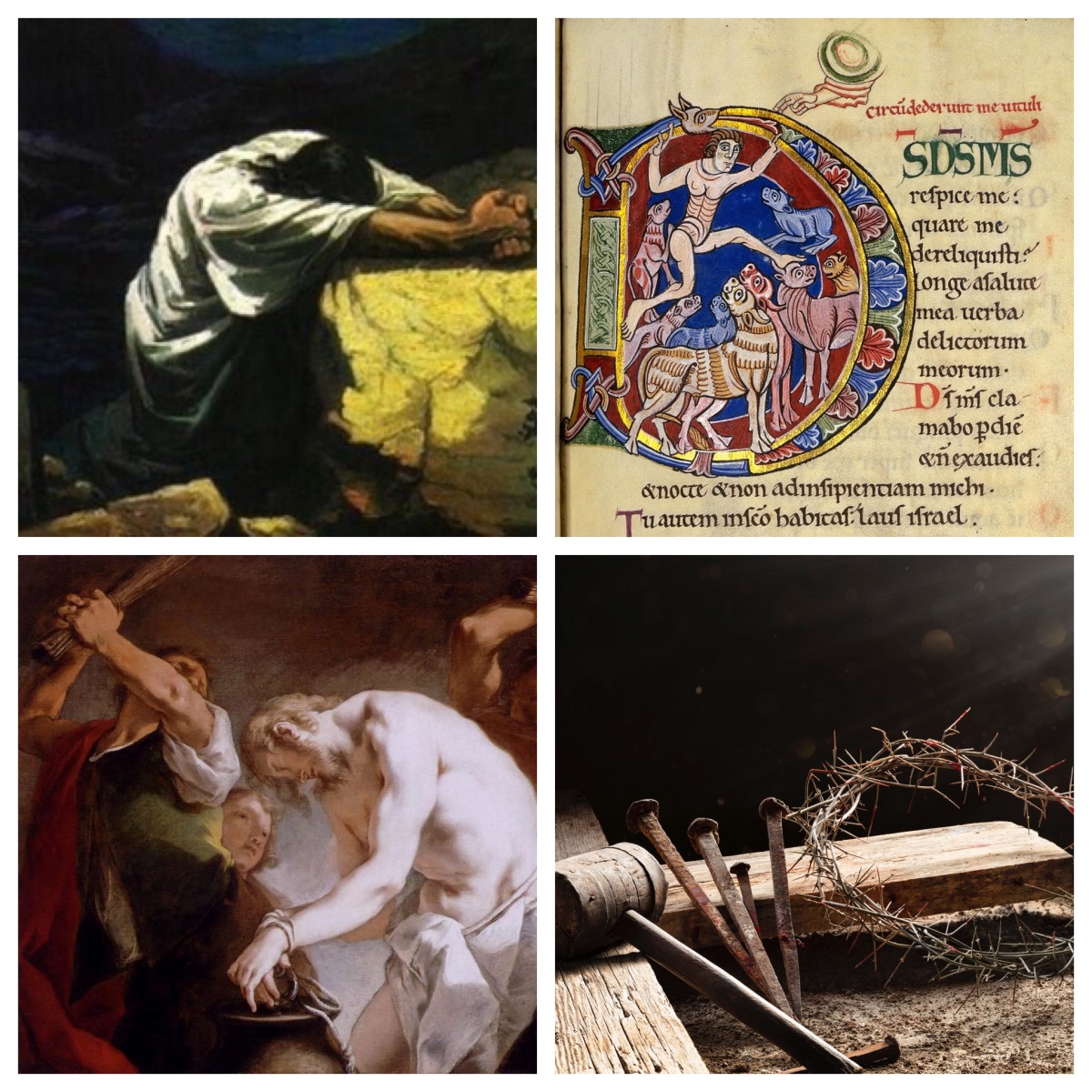


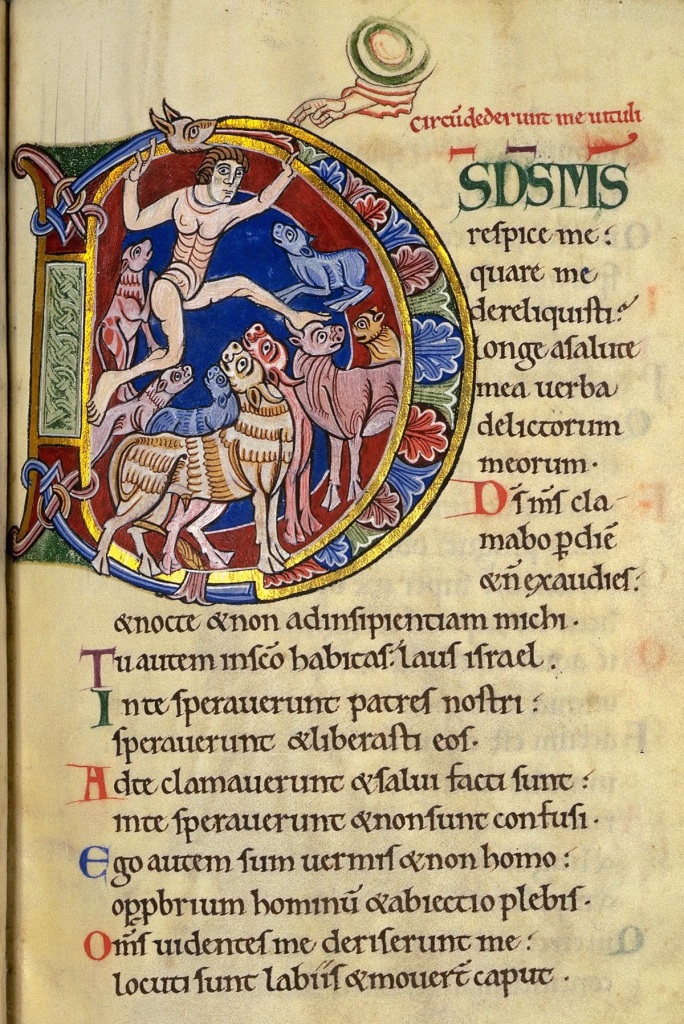




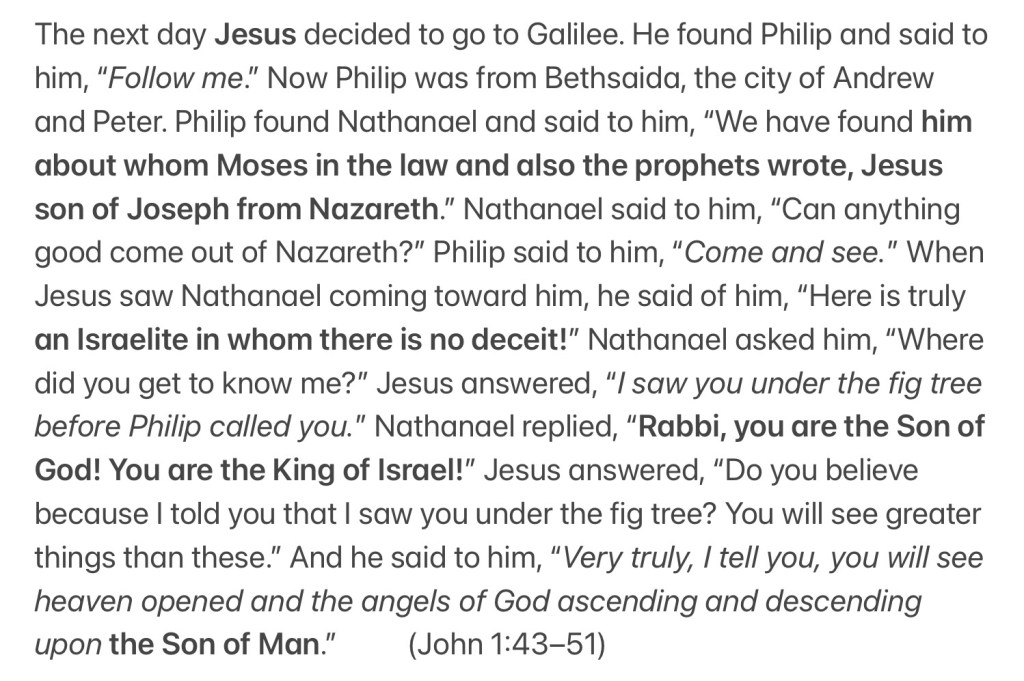


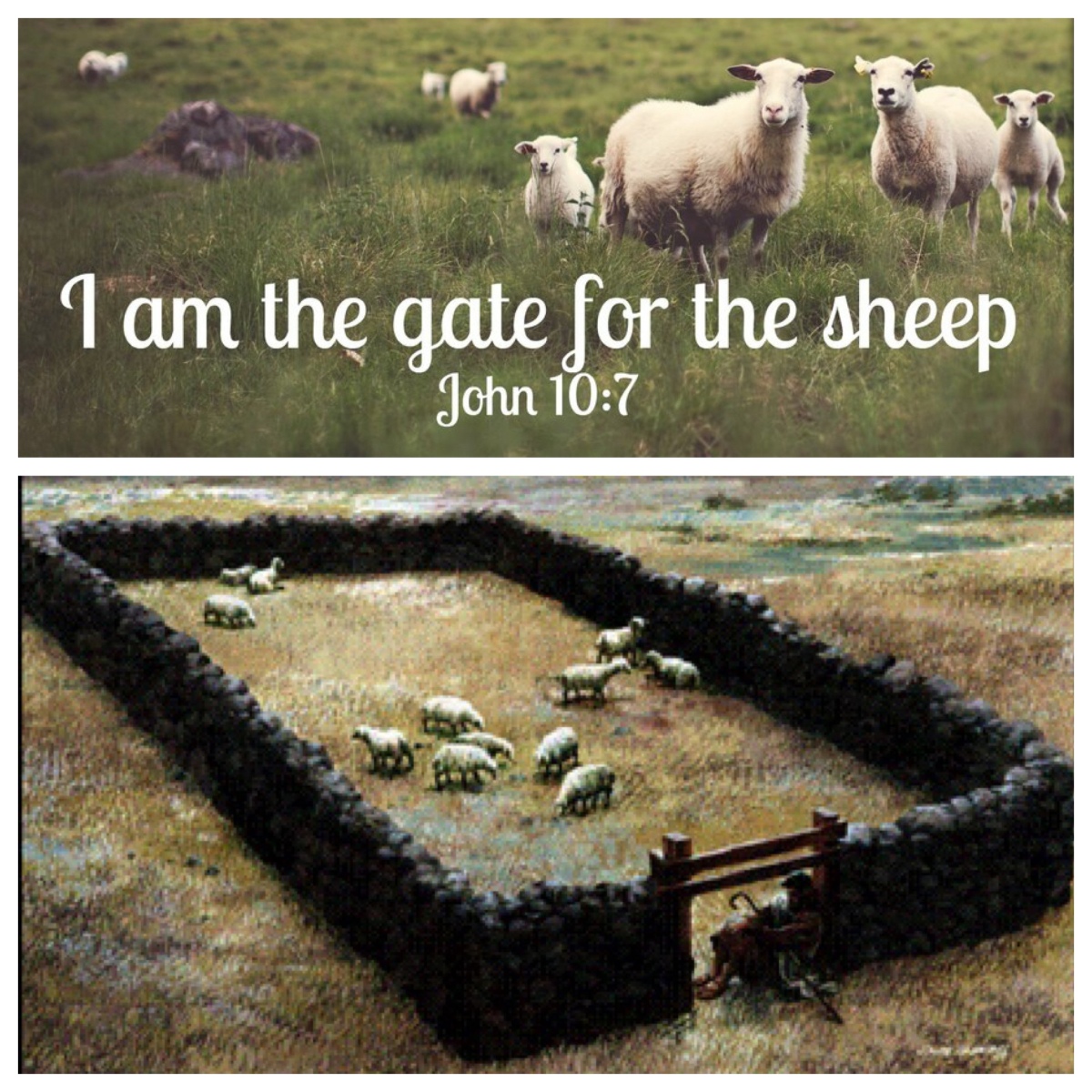
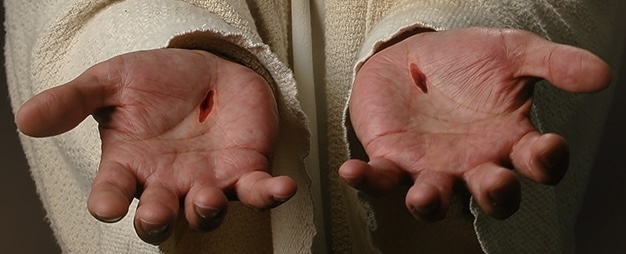


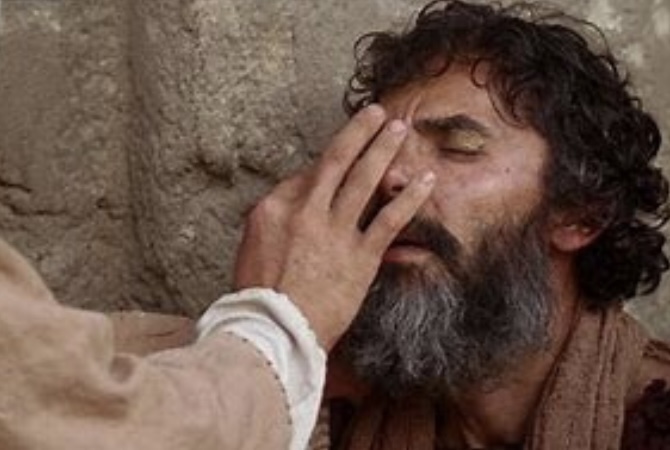
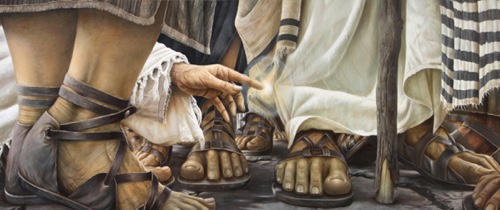




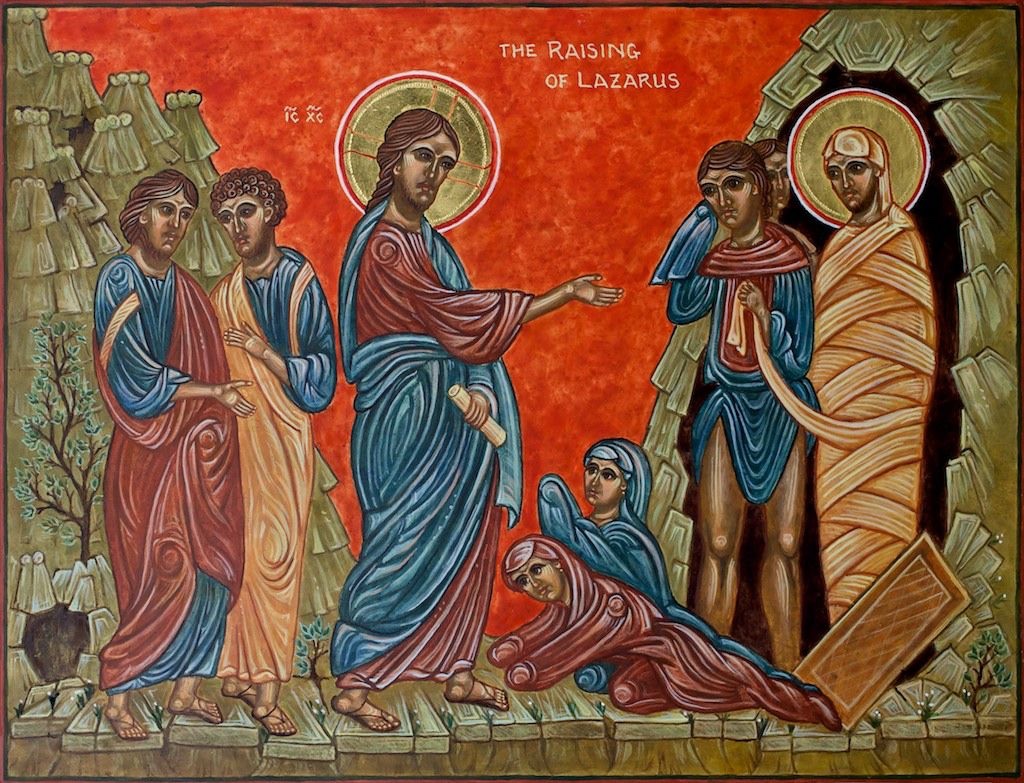

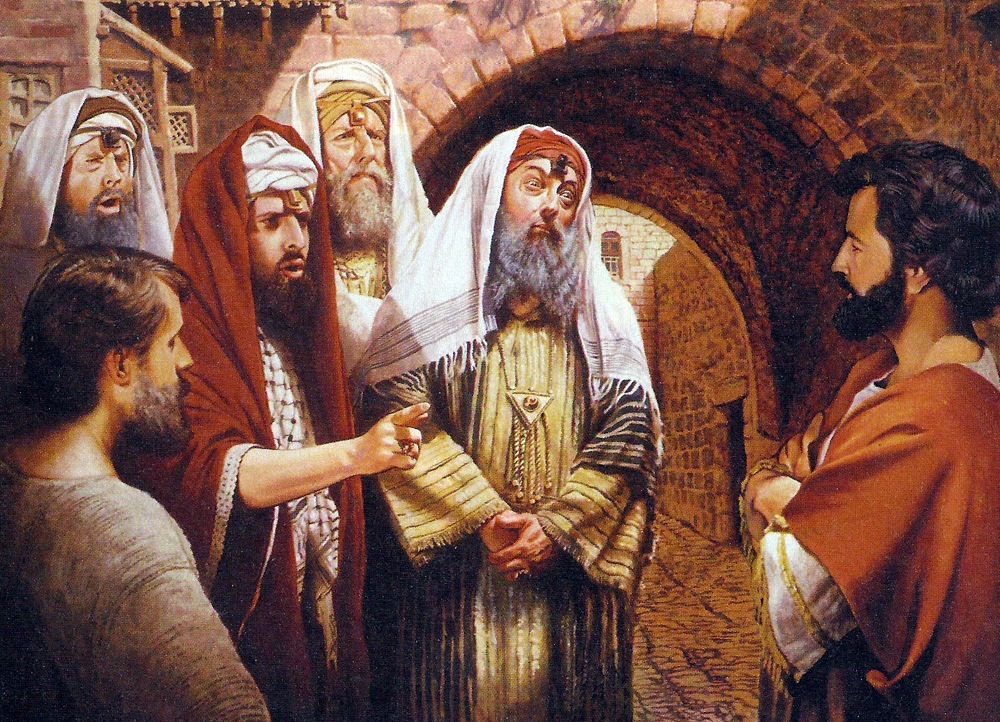


 An Informed Faith