Justice rolling down like waters, righteousness like an ever-flowing stream (Amos 1, 5; Narrative Lectionary for Pentecost 22)

Discussion of the Narrative Lectionary passage from Amos

The prophet Amos lived in the northern kingdom of Israel during the reign of Jeroboam II, the thirteenth king of Israel, who reigned for four decades (786–746 BCE; see Amos 7:10). It was a time of prosperity, built on the trading of olive oil and wine with the neighbouring nations of Assyria to the north and Egypt to the south. Jeroboam, however, is remembered as a king who oversaw multiple acts of sinfulness during his years on the throne. 
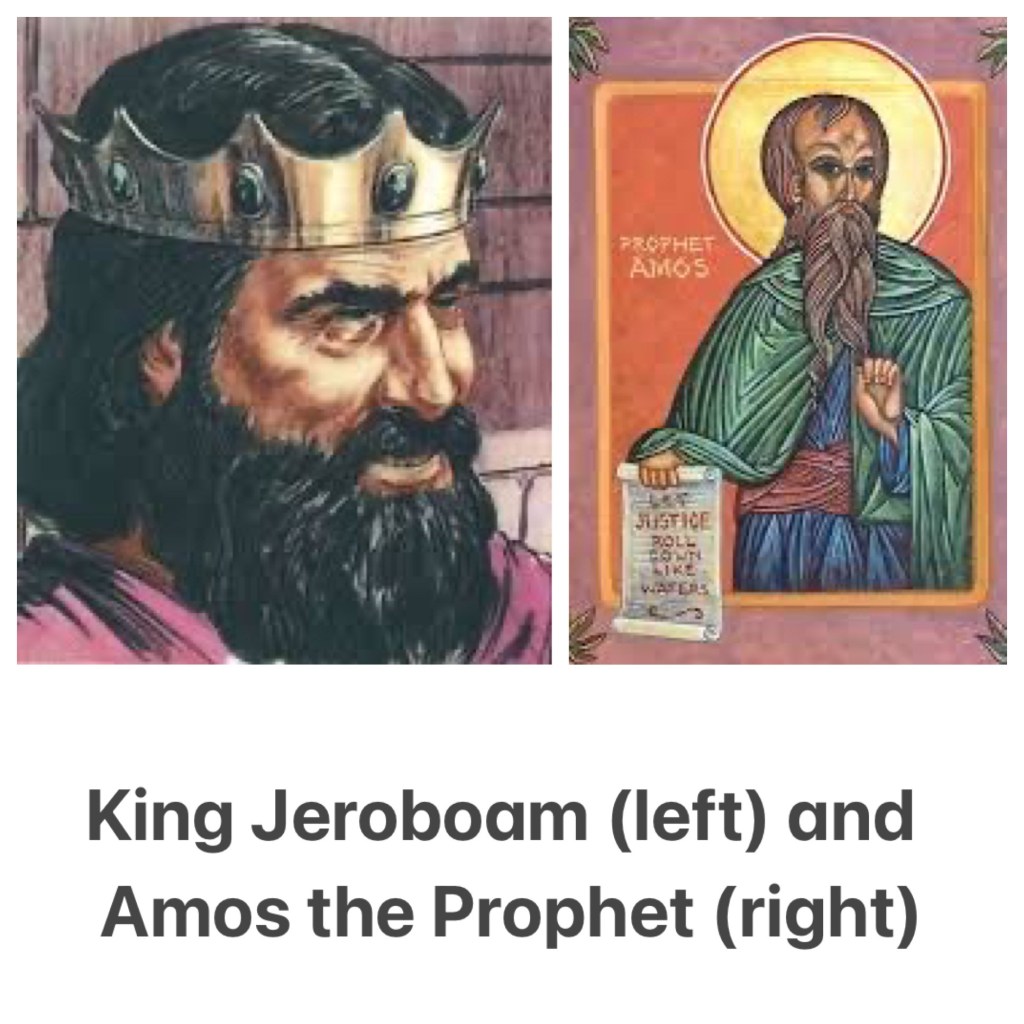
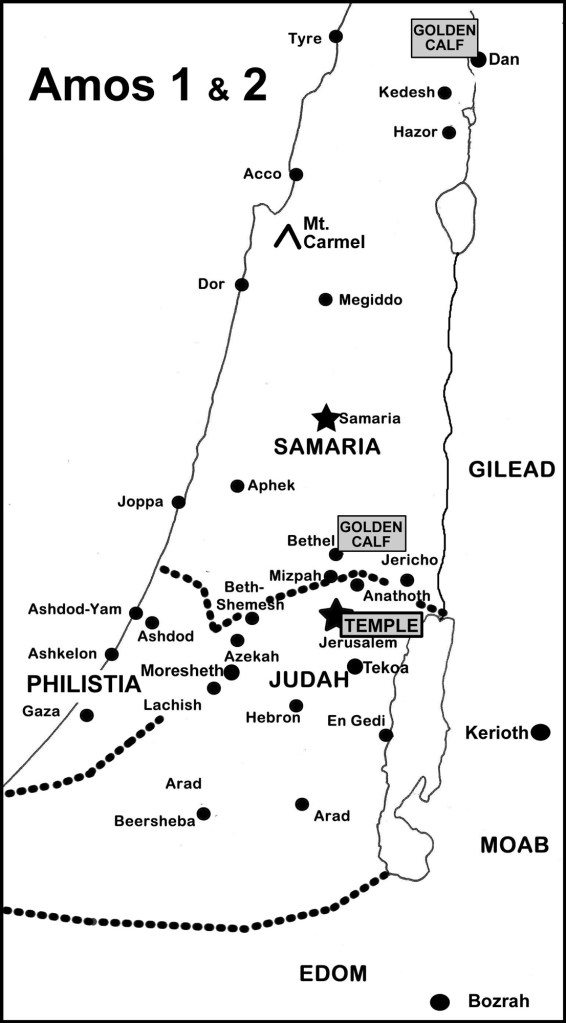
Most infamously, he replicated the sin of Aaron, who oversaw the creation of a golden calf during the time that the people of Israel were awaiting the return of Moses from his time on the top of Mount Sinai (Exod 32). Jeroboam had the city of Shechem built, as a direct challenge to the centrality of Jerusalem; and he had two golden claves built and installed, one at Bethel, the other at Dan (1 Ki 12:25–30). 

For these and other persistent sins during his 22 years as king, reported at 1 Ki 12:31–33 and 13:33–34, Jerobaom incurred the divine wrath, such that God determined that “ the house of Jeroboam [was to be] cut it off and destroyed from the face of the earth” (1 Ki 13:34). Later passages in this book refer to “the sins of Jeroboam” (1 Ki 14:16; 15:30; 16:2, 19, 31; 2 Ki 10:29, 31; 13:2, 6, 11; 14:24; 15:9, 18, 24, 28; 17:22) and “the way of Jeroboam … and the sins that he caused Israel to commit, provoking the Lord, the God of Israel, to anger by their idols” (1 Ki 16:26).

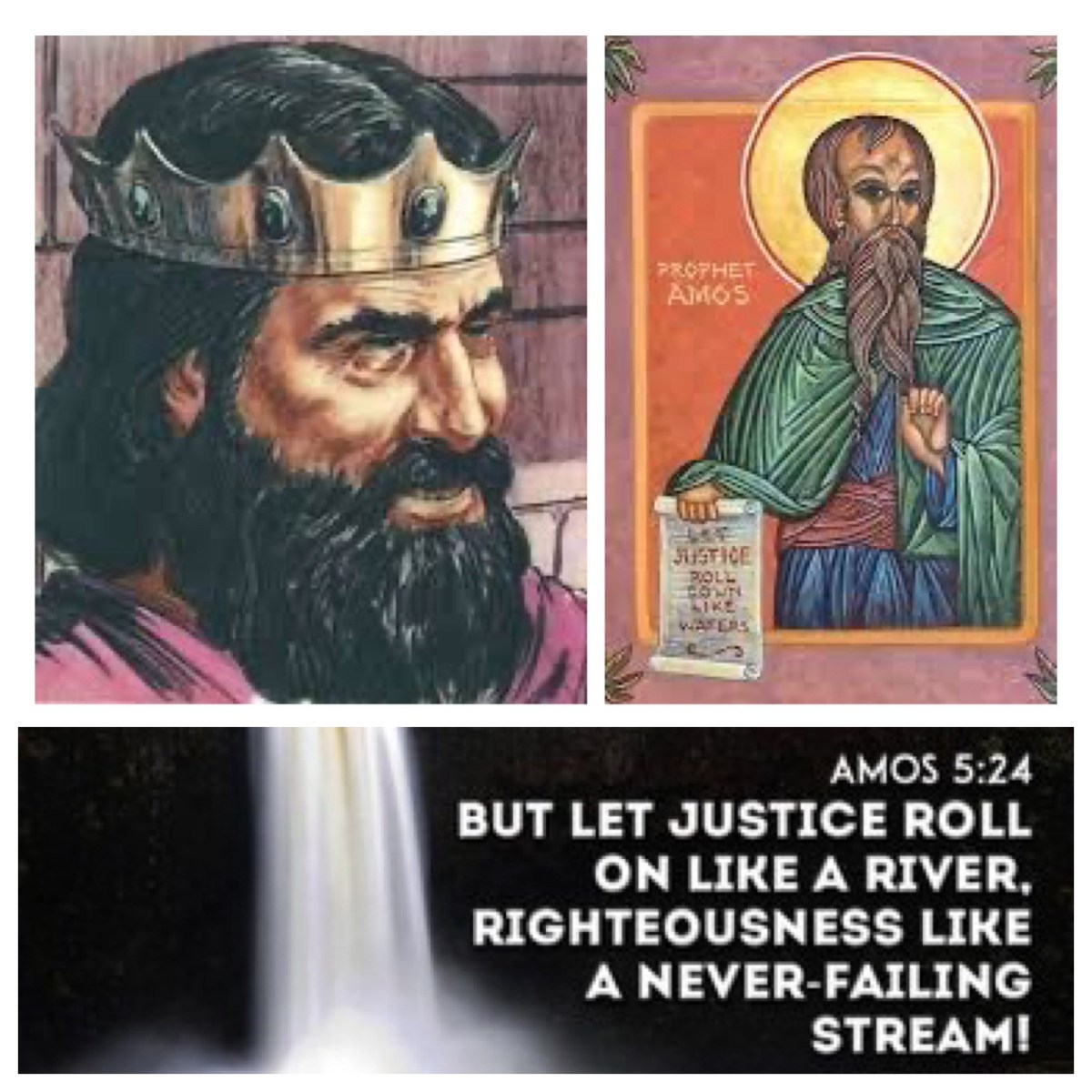
So although the Temple in Jerusalem was the focus for religious activity in the southern kingdom (Judah), Jeroboam had established a number of religious sites in the northern kingdom. Amos warns about the sites at Dan, Bethel, Gilgal and Beersheba (Amos 5:5; 8:14). At these places, not only was the Lord God worshipped, but idolatrous images were used in worship services (5:26). Amos is trenchant in his criticism of the worship that the people offer (5:21–27); embedded in this crisis is a doublet of poetry, words most often associated with Amos: “let justice roll down like waters, and righteousness like an ever-flowing stream” (5:24).
Indeed, it is the perpetration of social inequity within Israel that most causes him to convey the anger of divine displeasure. He admonishes the rich for the way that they mistreat the poor: “they sell the righteous for silver, and the needy for a pair of sandals—they who trample the head of the poor into the dust of the earth and push the afflicted out of the way” (2:6–7); “you trample on the poor and take from them levies of grain” (5:11). 

Again, Amos rails: “you trample on the needy and bring to ruin the poor of the land … buying the poor for silver and the needy for a pair of sandals, and selling the sweepings of the wheat” (8:4, 6). In a biting oracle, he criticises the “cows of Bashan who are on Mount Samaria” for the way they “oppress the poor, crush the needy” (4:1). 

Bashan was the mountainous area to the northeast of Israel (Ps 68:15), which rejoiced in majestic oaks (Isa 2:13) and extensive pasture lands (1 Chron 5:16). The luxurious lifestyle of these people can well be imagined. The reference to “winter houses … summer houses … houses of ivory … and great houses” (3:15) is telling. Luxury and opulence is evident amongst the wealthy.

So,  too, is the description of “those who lie on beds of ivory, and lounge on their couches, and eat lambs from the flock, and calves from the stall; who sing idle songs to the sound of the harp, and like David improvise on instruments of music; who drink wine from bowls, and anoint themselves with the finest oils” (6:4–6). The extravagance of the wealthy is obvious, juxtaposed against the plight of the poor, as we have noted.

Amos indicates that God had given Israel a number of opportunities to repent, “yet you did not return to me” (4:6, 8, 9, 10, 11). God pleads for Israel to “seek me and live” (5:4), “seek the Lord and live” (5:6), “seek good and not evil, that you may live” (5:14).
But this is all in vain; ultimately, the prophet insists, the Lord God will bring on the day of the Lord—a day of “darkness, not light, and gloom with no brightness in it” (5:18–20). God is determined; “the great house shall be shattered to bits, and the little house to pieces” (6:11); later, he insists again, “the dead bodies shall be many, cast out in every place” (8:3). 

In so many reports of prophetic activity, it is justice which is the heart of their message—God’s justice; the justice which God desires for the people of God; the justice which God speaks through the voice of the prophets; the justice that God calls for in Israel; the justice that provides the measure against which Israel will be judged, and saved, or condemned.

Moses himself was charged with ensuring that justice was in place in Israelite society. One story told of the time after the Israelites had escaped from Egypt places Moses as a judge. Whilst in the wilderness of Sin, being visited by his father-in-law Jethro, we learn that “Moses sat as judge for the people, while the people stood around him from morning until evening” (Exod 18:13). 

Noticing that Moses was overwhelmed by the volume of matters requiring adjudgment, Jethro suggested—and Moses adopted—a system whereby appointed men who “judged the people at all times; hard cases they brought to Moses, but any minor case they decided themselves” (Exod 18:14–16). The charge given to these men is clear: they are to give a fair hearing to every member of the community, and they “must not be partial in judging: hear out the small and the great alike; [do] not be intimidated by anyone, for the judgment is God’s” (Deut 1:16–17). 

Prophets coming after Moses thus inherited this responsibility to ensure that justice was upheld within society. The most famous prophetic word of Amos is, as we have noted, his call for “justice and righteousness” (Amos 5:22). Micah asks the question, “what does the Lord require of you but to do justice?” (Mic 6:8), while through the prophet Hosea, the Lord God promises to Israel, “I will take you for my wife in righteousness and in justice, in steadfast love, and in mercy” (Hos 2:19).

Isaiah ends his famous love-song of of the vineyard by declaring that God “expected justice” (Isa 5:7) and he tells the rebellious people of his day, “the Lord is a God of justice; blessed are all those who wait for him” (Isa 30:18). He proclaims God’s judgement on those who “turn aside the needy from justice … and rob the poor of my people, that widows may be your spoil, and that you may make the orphans your prey!” (Isa 10:1–2). 

Other prophets join their voices to Isaiah’s declaration. Ezekiel laments that “the sojourner suffers extortion in your midst; the fatherless and the widow are wronged in you” (Ezek 22:7). Jeremiah encourages the people of Jerusalem with a promise that God will allow them to continue to dwell in their land if they “do not oppress the sojourner, the fatherless, or the widow” (Jer 7:5–7). 

Second Isaiah foresees that the coming Servant “will bring forth justice to the nations” (Isa 42:1) and knows that God’s justice will be “a light to the peoples” (Isa 51:4). The words of Third Isaiah continue in this prophetic stream, for this anonymous prophet begins his words with a direct declaration, “maintain justice, and do what is right” (Isa 56:1). He goes on to articulate his mission as being “to bring good news to the oppressed, to bind up the brokenhearted, to proclaim liberty to the captives, and release to the prisoners” (Isa 61:1), thereby demonstrating that “I the Lord love justice” (Isa 62:8).

This commitment of Amos and many of the prophets resonates also with the psalmist, who praises “the God of Jacob … who executes justice for the oppressed; who gives food to the hungry … [who] sets the prisoners free, [who] opens the eyes of the blind, [who] lifts up those who are bowed down [and] loves the righteous, [who] watches over the strangers [and] upholds the orphan and the widow” (Ps 146:5, 7–9). See 

https://johntsquires.com/2023/05/14/father-of-orphans-and-protector-of-widows-psalm-68-easter-7a/
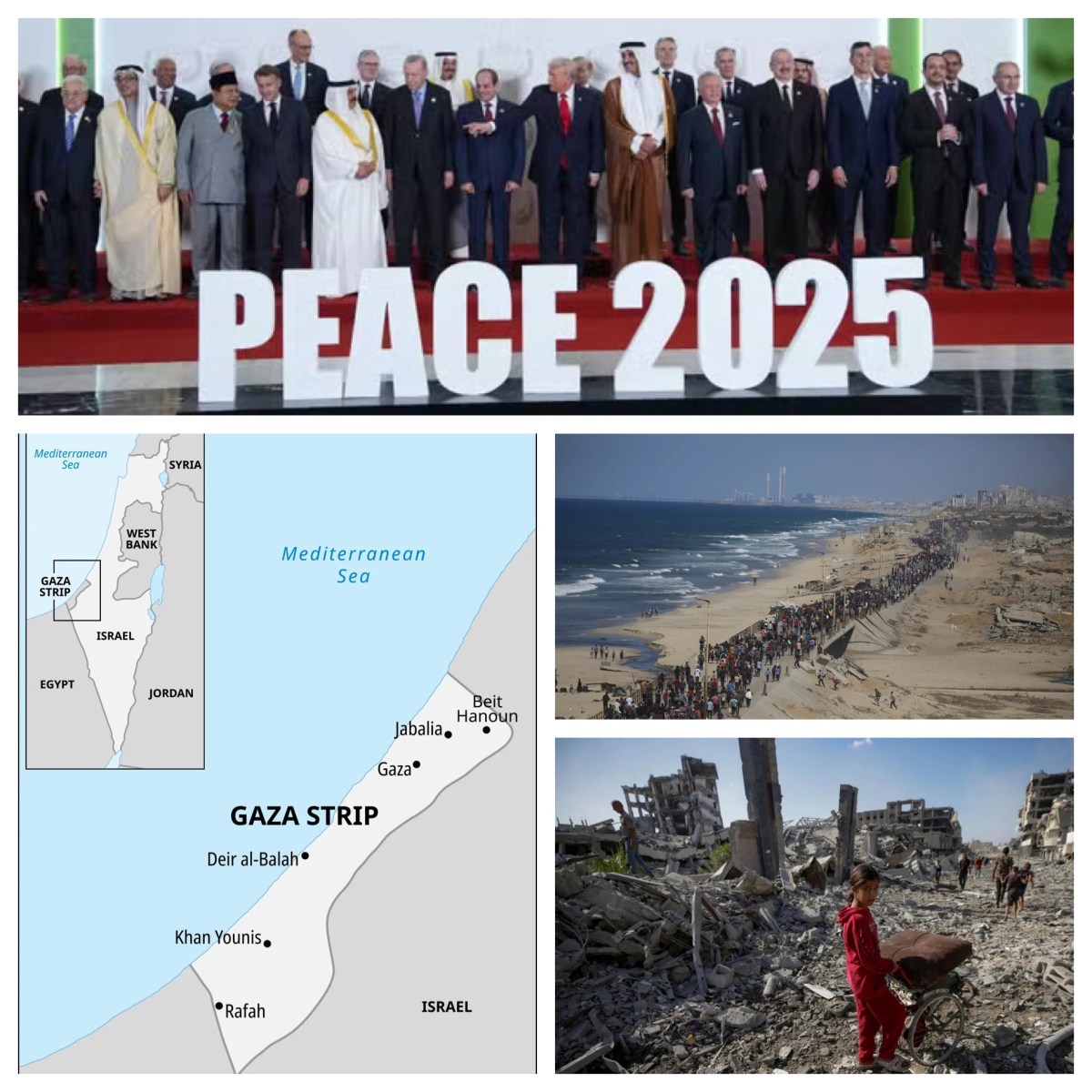
Will “the peace” hold in Gaza?

There is intense emotion in Israel and in Gaza. Hundreds of Israeli families are mourning the deaths of the 1200 people killed on 7 October 2024, the deaths of scores (perhaps even hundreds) of the 251 hostages taken on that day, the 468 Israeli soldiers who have died since that day.

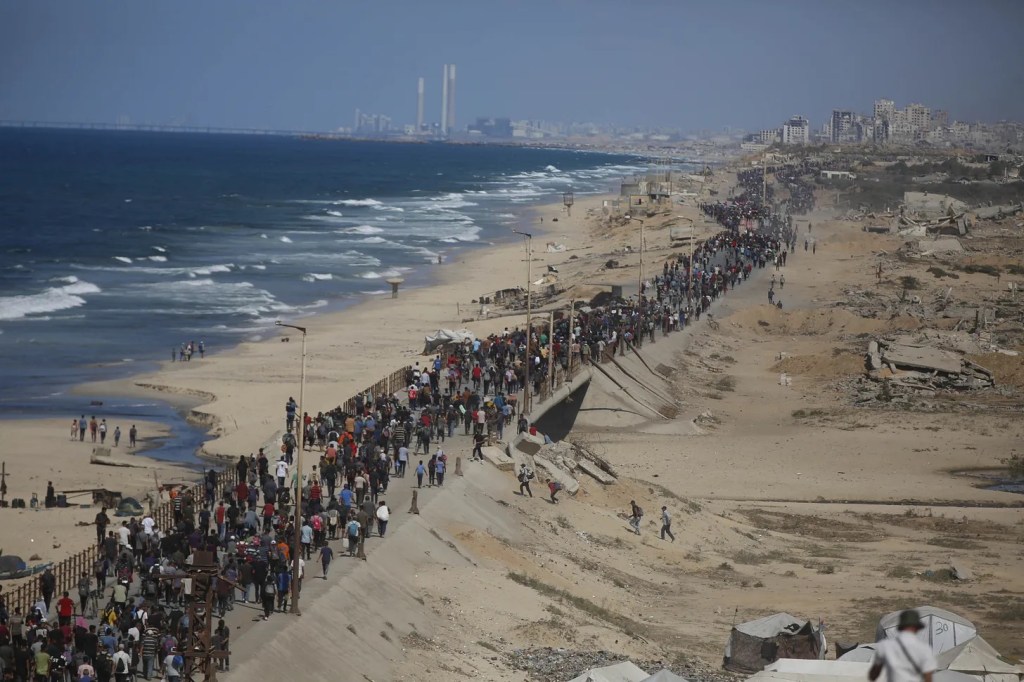
At the same time, the families and friends of the nearly 68,000 Palestinians killed in Gaza over the same timeframe, and especially the 20,179 of them who were children, are experiencing a similarly intense sense of grief.

It’s a region bubbling with all that unrequited grief brings: sorrow, despair, anger, a festering hatred, a resolve to “never forget”. It’s hardly a fertile ground for peace to flourish. Will the “peace agreement” hold? Will the “peace plan” prove to be effective?

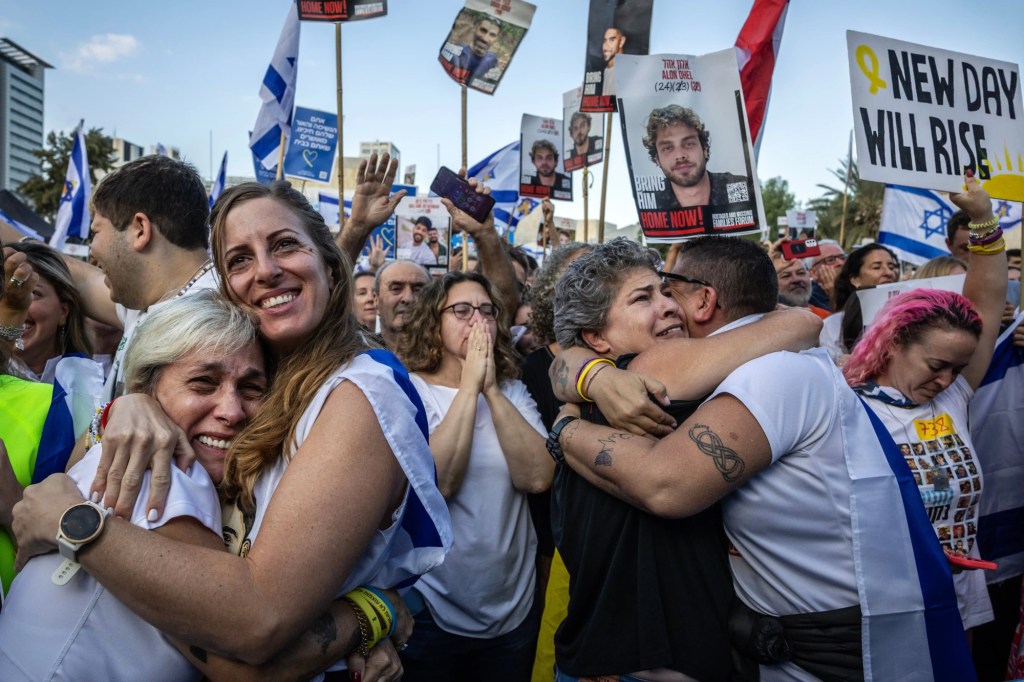
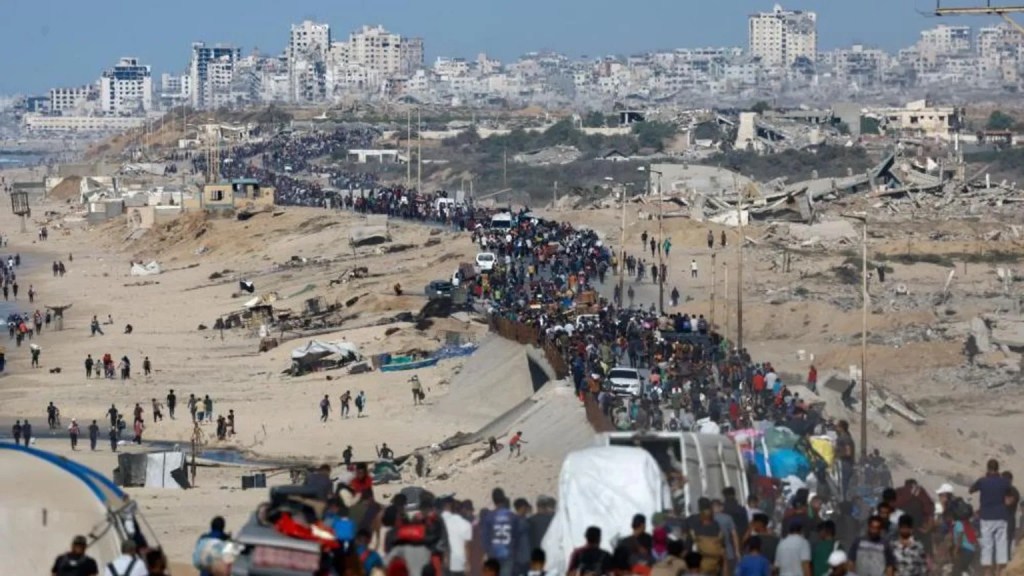
As the latest group of hostages return to Israel, giving understandable joy to their families and friends, and hope for an enduring peace in the region, let us not forget that the displaced Gazans returning to the homes will find 78% of the structures in Gaza are damaged or destroyed; 22 of the 36 hospitals in Gaza have been destroyed, and some of the remaining 14 hospitals are only partially functional; and 1.5% of the viable cropland in Gaza is able now to be used for cultivation. They are not simply “coming back home”; they are returning to scenes of devastation and destruction that will surely intensify their despair.

This is the third ceasefire since the events of 7 October 2023. Will it last? Relations between many (not all) Israelis and Palestinians are incredibly complex, and an enduring peace amidst the aggressive antagonism and intensifying hatred that has marked recent years (indeed, decades) does not give me confidence. 

The US has provided $21.7 billion of military aid to Israel since 7 Oct 2023. If Trump really wants peace, he could cease all future military aid and divert funds to the needs in aid supplies, health, and restoration of infrastructure in Gaza.

I’ve taken these figures from an article by NPR, a media organisation in the USA that is “an independent, nonprofit media organization … founded on a mission to create a more informed public”. (Thanks to Megan Powell du Toit for the link.)

https://www.npr.org/2025/10/13/g-s1-92205/ceasefire-gaza-war-key-figures?

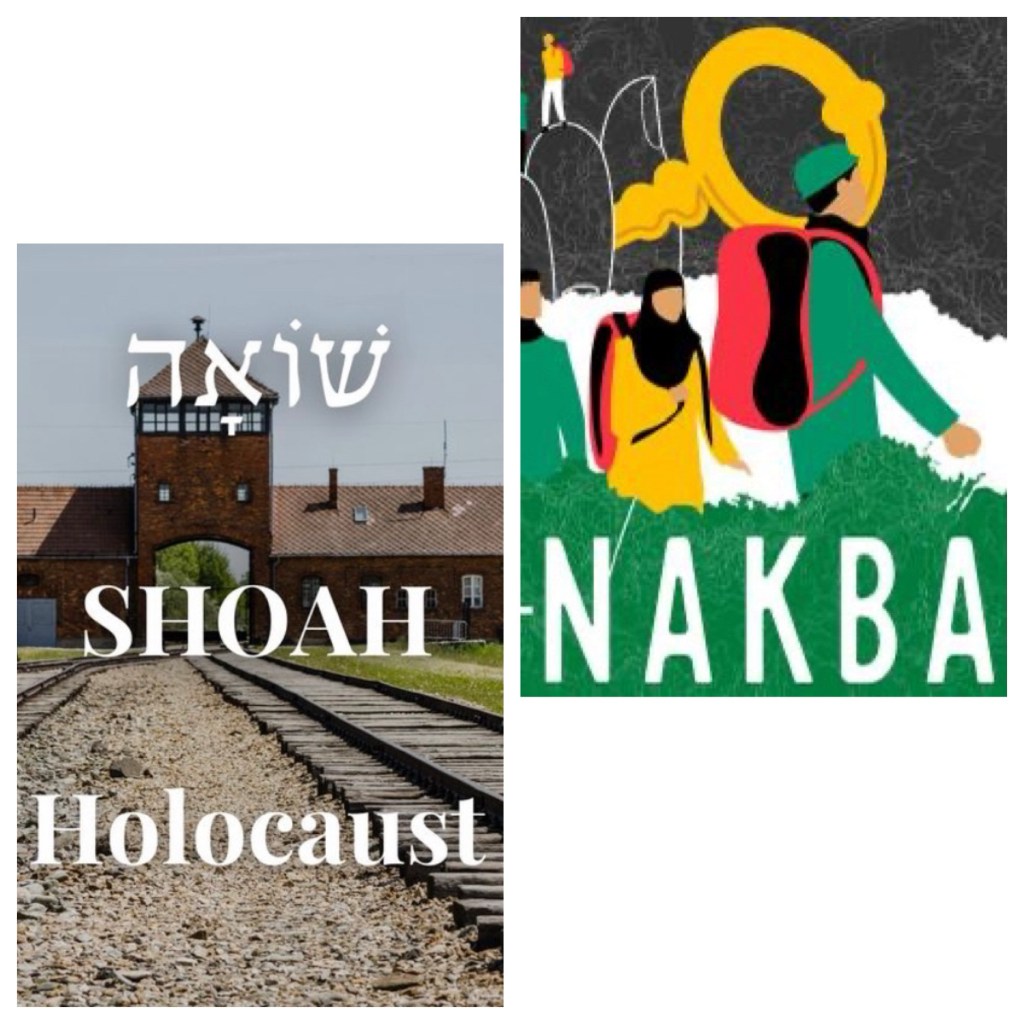
The history of “the peace” in this region over the past 50 years does not give grounds for hope. The establishment of Israel in 1948, as important and necessary as that was after the horrors of the Shoah (a Hebrew word meaning “desolation, sudden destruction, catastrophe”), caused the expulsion of hundreds of thousands of inhabitants of that area, in a catastrophe called by Palestinians the Nakbah (an Arabic word which also means “catastrophe”). 

The Camp David Accords (1978) ultimately led to an agreement in which Israel agreed to “resolve the Palestinian question” and permit Palestinian self-governance in the West Bank and Gaza within five years. It never happened. 

The Oslo Accords (1993) included a pledge to end hostilities, and the second Accords (1995) provided that Israel would accept Palestinian claims to national sovereignty. As an interim measure, a Palestinian Authority was established, to govern designated areas (see the map) in a phased process leading towards Palestinian self-determination. The Palestine Authority still exists today, and the goal of the Accords has never been reached.

See https://www.aljazeera.com/news/2023/9/13/what-were-oslo-accords-israel-palestinians

Indeed, from 1993 onwards, Israel increased its building of settlements in the West Bank, leaving that area utterly fragmented between Israeli and Palestinian areas—a process deemed illegal under international law. Families who had lived on their historic lands were expelled so that new Israeli settlements could be built. It’s been an utterly unjust process.

When PLO leader Yasser Arafat gave up the right for Palestinian refugees to return to their historic lands which Jewish settlers had seized from them in 1948 when Israel was created, many Palestinians became disenchanted with him. The ground was fertile for dissent and revolt; Hamas emerged out of this situation as the leading organisation advocating for—and acting to gain—a Palestinian right to return. Peace was never possible while such an ideology was the key driving force.

Chris Hedges, an American journalist, author, and commentator (and also an ordained Presbyterian minister, as of 2014) writes that the current “peace” is simply “a commercial break … a moment when the condemned man is allowed to smoke a cigarette before being gunned down in a fusillade of bullets”. He foresees the crumbling of the current ceasefire, on the basis of the history of these recent decades.

“Once Israeli hostages are released, the genocide will continue”, he writes. “A pause in the genocide is the best we can anticipate. Israel is on the cusp of emptying Gaza, which has been all but obliterated under two years of relentless bombing. It is not about to be stopped. This is the culmination of the Zionist dream.”

He notes the staggeringly obscene amount of military aid that the USA has given Israel, and observes that the US “will not shut down its pipeline, the only tool that might halt the genocide”. He then goes on to argue that “of the myriads of peace plans over the decades, the current one is the least serious”. He details all the flaws and inadequacies in the much-trumpeted 20-point “peace plan” that has been advocated recently and claims that “there will be no peace in Gaza; only the temporary absence of war”.

Hedges notes that this “peace plan” fails to mention Palestinians’ right to self-determination; it ignores the advice of the International Court of Justice that Israeli settlements are illegal; it places no brakes on Israel’s continuing military power; it does not provide for Israel to provide anything in the way of reparations for Gaza, the area which it has mercilessly bombed; and many provisions are vague to the point of being unenforceable. You can read his scathing analysis at https://chrishedges.substack.com/p/trumps-sham-peace-plan?

Eric Tlozek, the ABC’s Middle East correspondent, observes that “Israel gets to keep troops in Gaza instead of having to withdraw, but that only signifies that the key issues in this conflict — disarmament, security, governance — are far from being resolved”. What will change once the thousands of displaced Gazans return?

He continues, “Hamas still refuses to disarm and remains in control of large parts of the [Gaza] strip. The US may claim the war is over, but Israel’s defence minister has already flagged plans to attack Hamas, and Israeli fire and air strikes continue in Gaza. The violence has not ended, it has only decreased in intensity.”  Tlozek’s pessimism is, nevertheless grounded in reality.

See https://www.abc.net.au/news/2025-10-15/donald-trump-should-not-be-thanked-for-the-gaza-ceasefire/
Will the current “peace” last? How long will it last? How long before the genocide of Palestinians resumes and continues to its inexorable end? As a person of faith, I can join with people of faith around the globe, to pray and to hope. As a citizen of the world in 2025, however, I think that, sadly, we must temper this with realism about the situation and the prospects of an enduring peace. 

*****

See my other, earlier, ruminations at

Peace with Justice: end the genocide in Gaza

It’s hard not to look at what has been happening in the Middle East—and particularly in Gaza—over recent years, and make some very harsh decisions from afar. For a start, after the series of attacks that Hamas and some other Palestinian groups made two years ago yesterday, on 7 October 2023, it seems easy to condemn the violence of terrorists fighting for Palestinian rights. The firing of 4,300 rockets, the slaughter of 1,195 Israelis, mostly civilians, and the taking of around 250 hostages, some still held today, all deserve to be condemned.

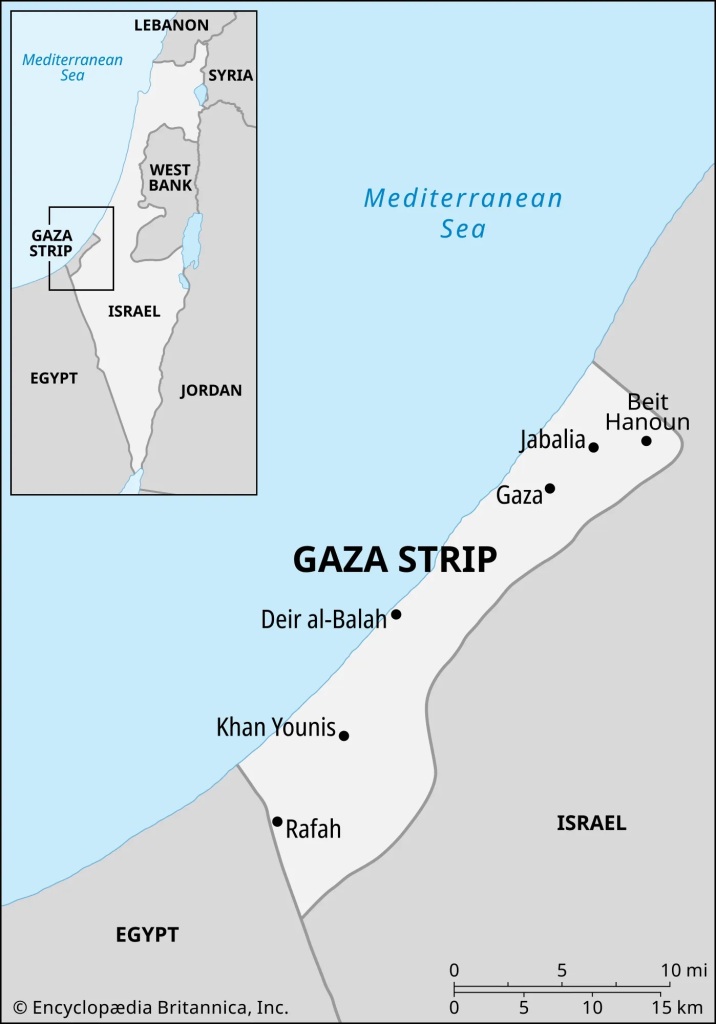
The Gaza Strip and the national state of Israel,
from a map in the Encyclopedia Britannica

But it is also hard not to decide that all Israelis should be condemned for the aggressive militaristic actions taken in response to the 7 Oct attacks. On 8 Oct, the Israeli government declared that the nation was “in a state of war”. That “war” has continued each day since then, with consistent attacks across Gaza. 

Current estimates by the Hamas-run Gaza Ministry of Health are that around 67,000 residents in Gaza have been killed, including 18,000 children; 170,000 people have been injured, and 1.9 million people displaced. Amongst the deaths, Al-Jazeera estimates that around 300 journalists and media workers have been killed. They say that across Gaza, the destruction includes 92% of all residential buildings, 88% of all commercial facilities, and more than 2,300 educational buildings have been destroyed.

The clearest accusation that has been made for some time now is that Israel is committing genocide. The World Council of Churches asserts that “the Government of Israel’s military campaign in Gaza has entailed grave breaches of the Fourth Geneva Convention which may constitute genocide and/or other crimes under the Rome Statute of the International Criminal Court (ICC)”. This council has denounced “the system of apartheid imposed by Israel on the Palestinian people, in violation of international law and moral conscience”. It’s clear that Israel,is acting outside the agreed international laws and customs. Yet the USA and other countries continue to provide Israel with all manner of materials and products to sustain their genocidal aggression.

However, it’s important not to not tag all Israelis with the one brush. The Israeli Defence Forces are carrying out the policies implemented by the right wing Prime Minister and his far right fundamentalist coalition of parties. They are committed to the Zionist ideal of ensuring the security of Israel, and of removing all opposition to this nation within the region. They are prosecuting this with vigorous zeal. The bombs and buckets continue each day. But as they oversee this policy, we should remember that they are not representative of everyone in Israel.

Elizabeth and I have a friend in Israel who is faithful and deeply committed to justice; they have been working with others for peace in their country for decades, and they are currently most distressed by their government’s callous fundamentalist actions. And we have a friend in Australia who served in the IDF who is now campaigning vigorously to stop the genocide, lobbying our government to push this message internationally. 

They are not all “the same”—what the army is implementing is a government policy that is incredibly divisive within Israel. Not all Israelis support what has been happening; many disagree with the genocide happening in Gaza. Jeremy Bowen, of the BBC, reports that “Israelis are war-weary and polls show that a majority want a deal that returns the hostages and ends the war. Hundreds of thousands of reservists in the armed forces, the IDF, want to get back to their lives after many months in uniform on active service.”

In like fashion, it’s not fair to label all Palestinians as terrorists. Some are, but many are not. Good Palestinians of integrity do not support the actions of organisations like Hamas.

It’s a complex situation which is not helped when people adopt the simplistic media language that paints all XXs as evil people or all YYs as good people. Indeed, the actions of warfare, terrorism, and genocide that we see playing out each day are held in disdain by millions of people in the region. Like them, we should hope for, yearn for, and pray for peace.

I wrote this blog on what happened two years ago today:

In today’s blog, I have drawn on the following sources:

https://abcnews.go.com/International/israel-hamas-wars-devastating-human-toll-after-2/story?id=126252242

https://www.aljazeera.com/news/liveblog/2025/10/7/live-israels-genocide-continues-across-gaza-two-years-since-start-of-war

https://www.bbc.com/news/articles/cvgqyj268ljo

https://www.oikoumene.org/resources/documents/statement-on-palestine-and-israel-a-call-to-end-apartheid-occupation-and-impunity-in-palestine-and-israel

For other related blogs, see

Peace within creation: a sermon for the Season of Creation 2025

A sermon preached during the 2025 Season of Creation

Today, 4 October, is the day when many churches of various denominations in numerous countries around the world remember two important saints, Francis and Clare of Assisi. Many believers pray to them, or rather ask them to make intercession with God for them. This blog post is in honour of them and the discipleship that they modelled. It is a sermon that I preached in the Dungog Uniting Church on 21 September 2025, during the Season of Creation.

*****

The sequence of Bible readings that we follow in this church throughout the year comes from a resource called the Revised Common Lectionary. A lectionary is a collection of passages from the Bible, arranged in a particular way, and intended for use in Christian worship. The word “lection” simply means “reading”, so a lectionary is just that: an arrangement of readings.

The readings are arranged by season. We all know that the season of Spring has begun; it started on 1 September, at the change of month. Although my nose and eyes had already alerted me, some time before that day, to this turn-of-the-seasons. But as from 1 September, it’s officially Spring.

Of course, there’s are many other signs of the coming of Spring downunder. The days are lengthening, the warming sun is strengthening its heat, the grass and flowers—and weeds!—are returning from their wintry hibernation.

Here in Dungog where I live there is a string of local community events that are planned for these pleasantly warm weeks. We have already had Run Dungog and Sculpture on the Farm, and the Dungog Tea Party. There is also Ride Dungog social bike rides, a new art exhibition in one of the local galleries, the Dungog Rumble for hot rod cars, and then the Dungog Show early in November.

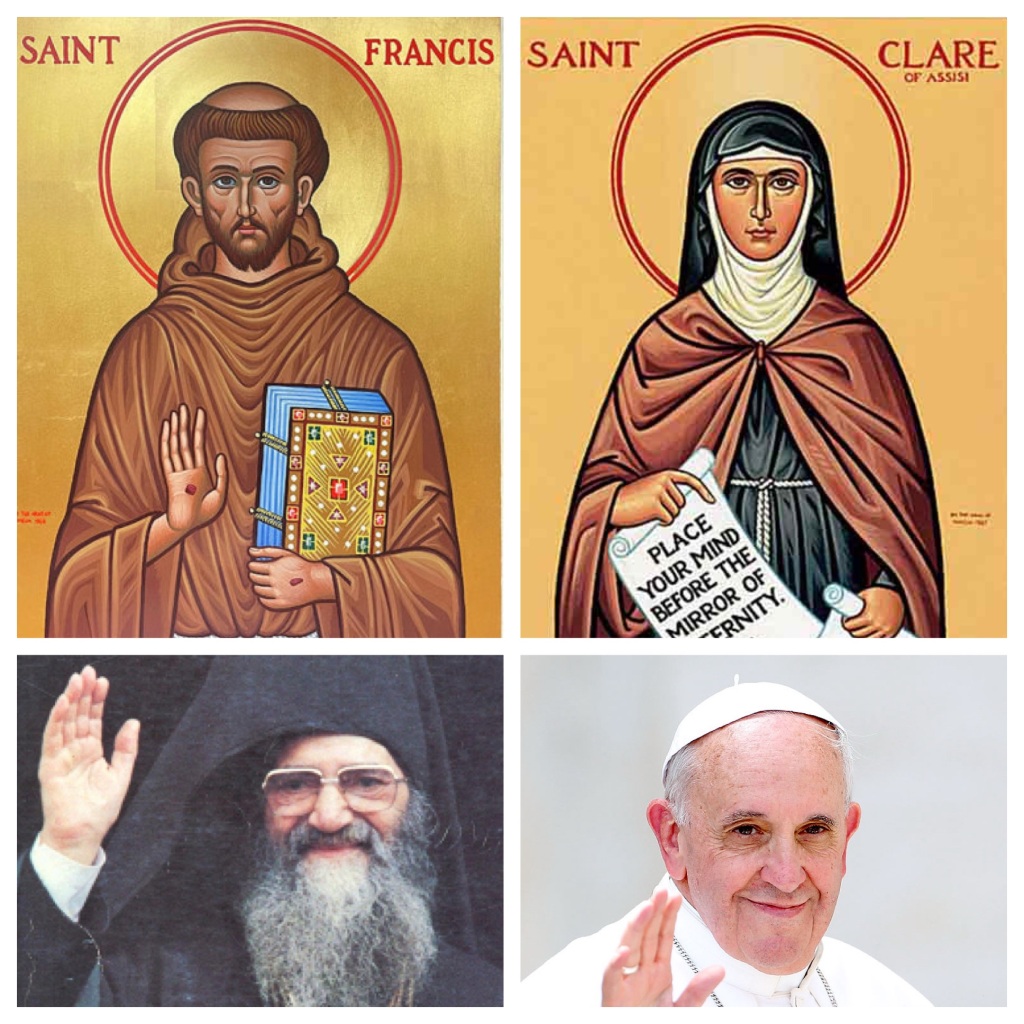
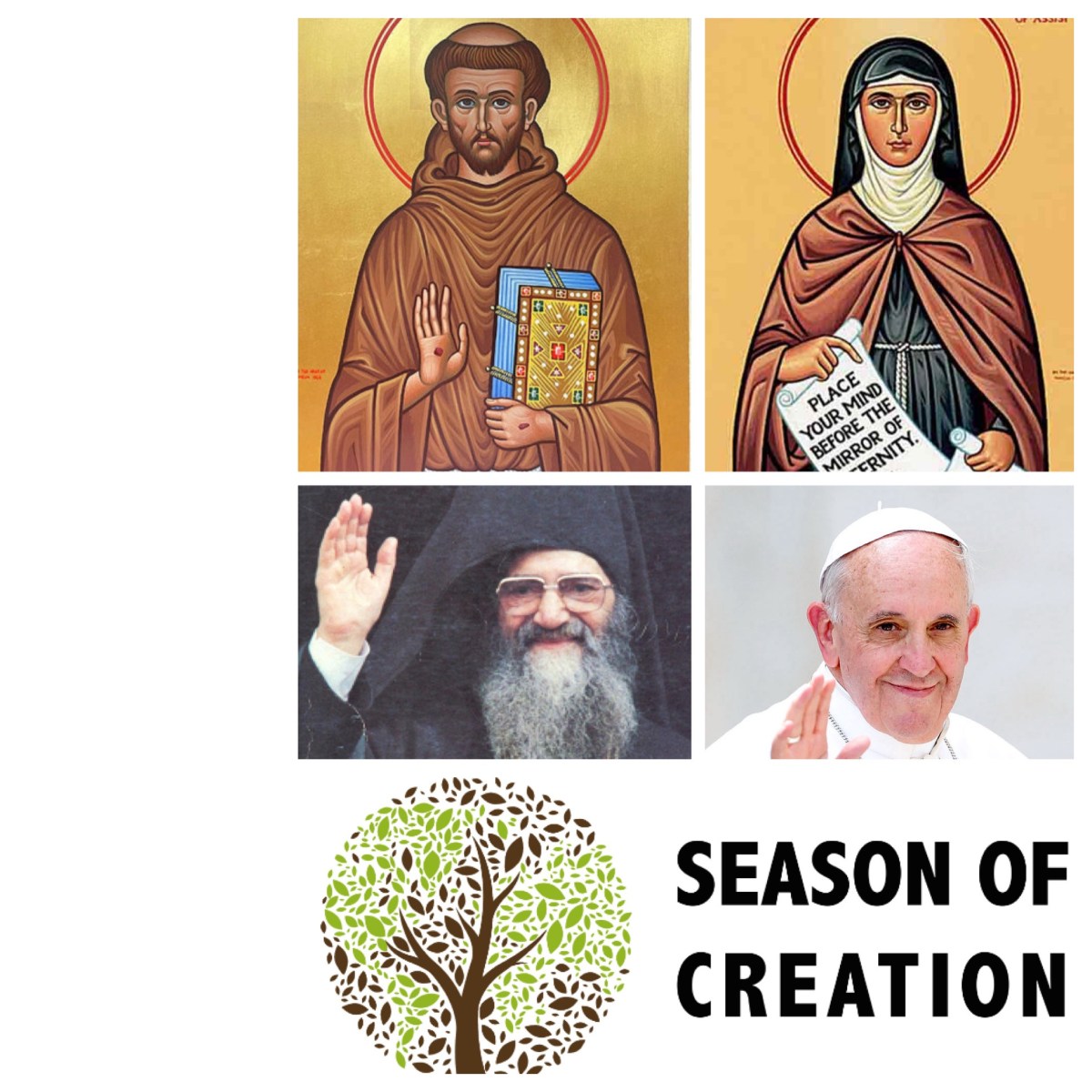
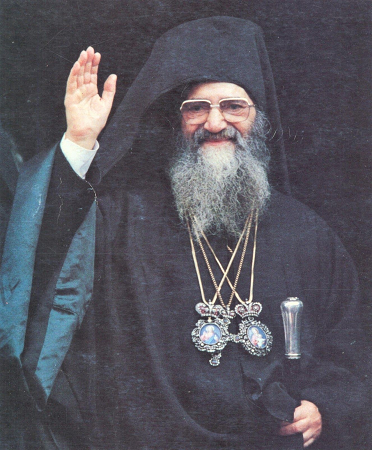
However, alongside the seasonal change, there’s also an ecclesial significance to the change-of-season taking place. In 1989, the Ecumenical Patriarch Dimitrios I (bottom left), the head of the Eastern Orthodox Church, declared 1 September to be a day of prayer for the natural environment. I guess it’s somewhat overshadowed by the fact that in Australia, this day is Wattle Day, honouring the national floral emblem of our nation. But in the church calendar, 1 September was the Day of Prayer for the Environment.

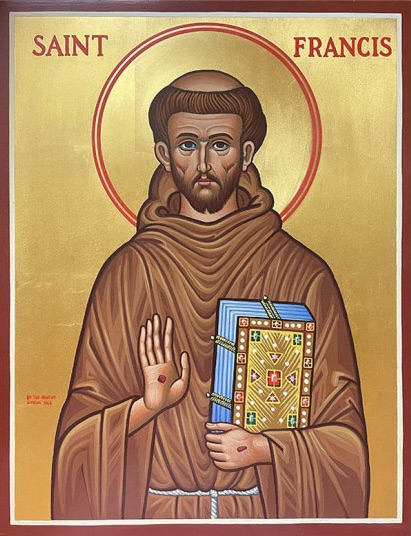
In 2008, the World Council of Churches made a decision to extend this focus beyond one day. It invited all churches to observe a Time for Creation from 1 September to 4 October—the day which had long been kept as the feast day for St Francis of Assisi (top left).

Francis, of course, is probably the most popular Catholic saint in the world. He is the one who preached to the birds; blessed fish that had been caught, releasing them back into the water; communicated with wolves, brokering an agreement between one famous ferocious wolf and the citizens of a town that were terrified of it; and used real animals when he created the very first, live, Christmas nativity scene. As a result of these, Francis is the patron saint of animals and the environment. And he is the inventor of the familiar nativity scene. 

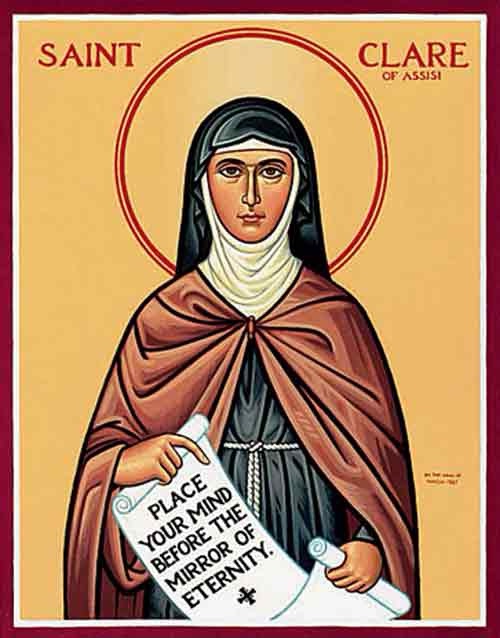
Every 4 October, Francis of Assisi is remembered in churches around the world—along with St Clare of Assisi (top right) who, like Francis, came from a noble family, but decided to renounce it all to live a life of simplicity with Francis and his brothers. Unlike Francis, who was a mendicant, a wandering friar, Clare lived an enclosed life of poverty and prayer, leading a community of women who shared the same vision.

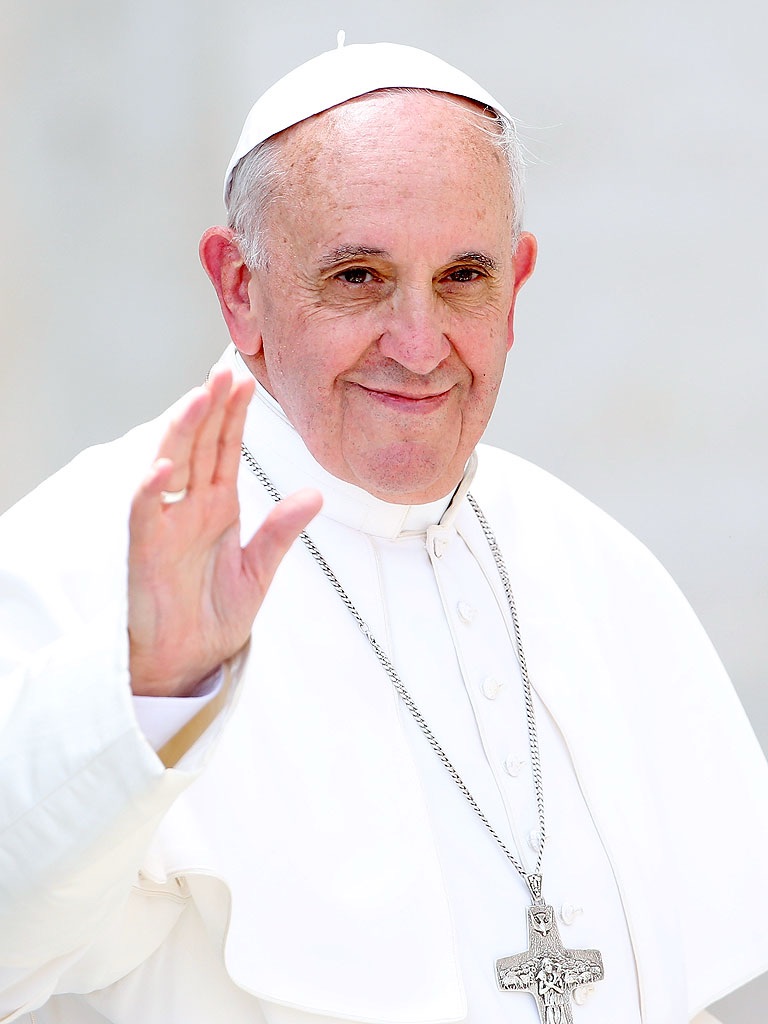
In 2019, the Pope who had taken the name of Francis for his time as Pontiff (bottom right) adopted the Season of Creation for Roman Catholic worship. It runs from 1 September to 4 October. And so, in many churches around the world, the whole of September is now designated as a time to focus on Creation—a truly ecumenical festive season, involving Eastern Orthodox, Roman Catholic, Anglican, Lutheran, and many Protestant churches alike.

The Rev. Dr Elizabeth Smith is an Anglican priest living in Western Australia and a well-known hymn writer; she wrote the words for “God gives us a future”, for instance, and for “Where wide skies roll down”, which we will sing in a few minutes. Dr Smith recently attended an internal colloquium which was exploring the adoption of a Season of Creation by all mainstream denominations. 

She described the impetus for such a gathering in this way: “Christians have joined the growing chorus lamenting the climate crisis and its effects on nature and on vulnerable humanity, especially the poor. Energy is coalescing around liturgical acknowledgement of the value of ‘creation’—both God’s creative action and the universe it produces.” 

She then noted that “Ecumenical efforts are pressing toward a feast or season that raises both the act and fact of creation to the praise and thanksgiving of assemblies across denominations, from the Orthodox and Catholics where the initiatives began, to Anglican, Reformed, Lutheran, Methodist, and Pentecostal fellowships and associations.”

We can only hope that this initiative moves from “a good idea” to “a practical implementation” of that good idea! It will be good to have a regular formal liturgical accompaniment, ecumenical and international, to the signs of the change of season that is all around us.

In the meantime, we have opportunity today to give some attention to the environment; to celebrate the wonderful achievements of God’s  creative work all around us; to lament the ways that human beings have ignored, exploited, and destroyed elements of that creation; and to commit to living in ways that honour the creation, ensure its continued viability, and plant seeds of hope for the future.

The theme for the Season of Creation this year is Peace with Creation. It’s a theme that is inspired by the example of Francis and c,are, but is taken directly from words in the passage we heard in Isaiah 32, in which the prophet offers words of hope after the time of exile and despair has taken place. Isaiah foresees that “a spirit from on high is poured out on us, and the wilderness becomes a fruitful field, and the fruitful field is deemed a forest” (Isa 32:15).

In these words, the prophet offers a fine, bountiful expression of the abundance that exists in creation; an abundance which came into being, as the priests would describe in their story telling of the act of creation, when the spirit of God, in the form of a mighty wind, “swept over the face of the waters” and energised the creation of earth and sky, seas and trees, fish and birds, land creatures—and human beings (Gen 1).

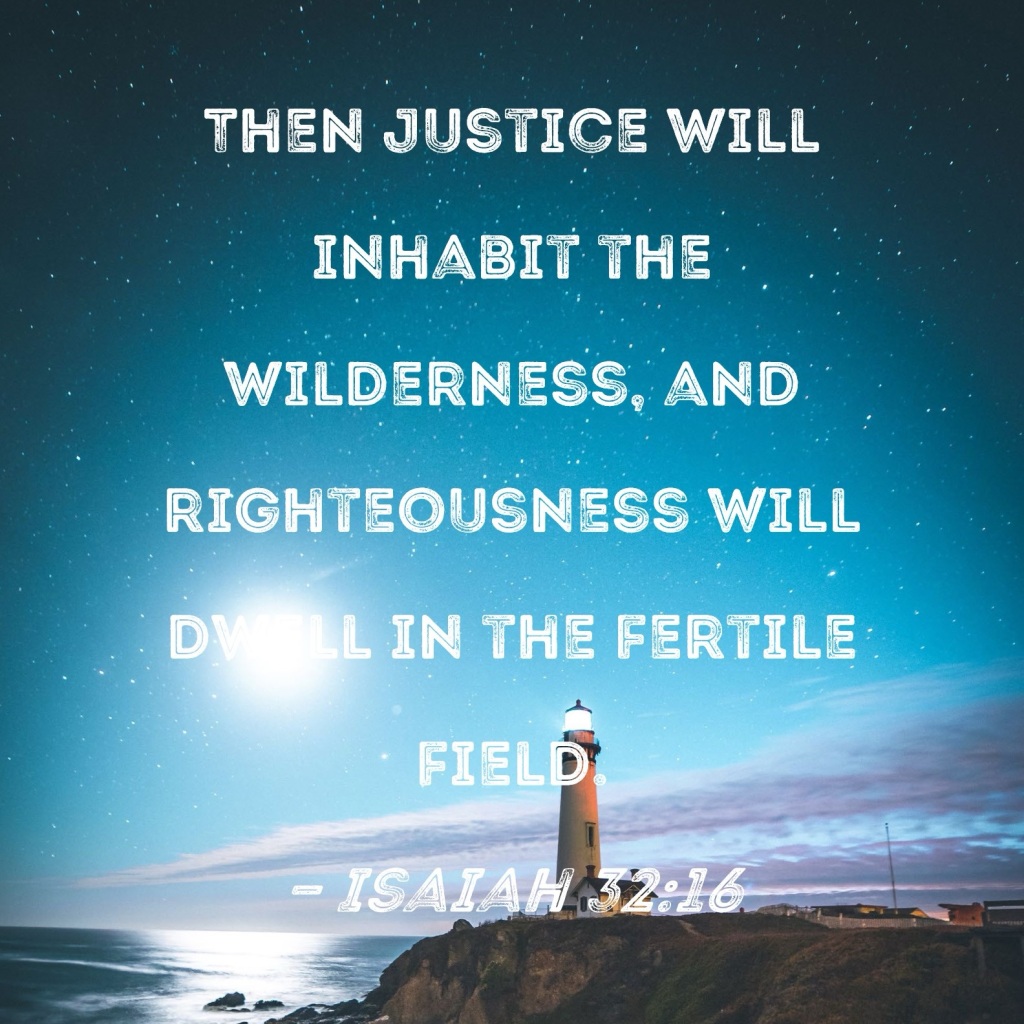
Isaiah draws from this priestly story, which we know from Genesis 1, and then continues, describing this coming time as a period when “justice will dwell in the wilderness, and righteousness abide in the fruitful field” (Isa 32:16). These are the two central qualities that God desires amongst human beings—justice and righteousness. 

“Happy are those who observe justice, who do righteousness at all times”, one of the psalmists sings (Ps 106:3). As king, Solomon is told that “the Lord has made you king to execute justice and righteousness” (1 Ki 10:9). The prophet Amos most famously declared, “let justice roll down like waters, and righteousness like an ever-flowing stream” (Amos 5:24). 

And in the time of exile, Jeremiah prophesies about what lies ahead, stating that God has said to him, “I will cause a righteous Branch to spring up for David; and he shall execute justice and righteousness in the land” (Jer 33:15). For Christians, of course, this righteous branch, executing justice and righteousness, is considered to be Jesus, the chosen servant, upon whom God pours out the spirit, so that “he will proclaim justice to the Gentiles” (Matt 12:18).

The vision that Isaiah has shares elements, also, with an earlier passage, in which he looks to the child to be born, who is “named Wonderful Counselor, Mighty God, Everlasting Father, Prince of Peace” (Isa 9:6). This passage, also, we Christians appropriate and claim that it gives us insight into the nature of the child born in Bethlehem,raised in Nazareth, and crucified in Jerusalem. “His authority”, Isaiah declares, “shall grow continually, and there shall be endless peace” (Is 9:7).

So in chapter 32, Isaiah continues, declaring that “the effect of righteousness will be peace, and the result of righteousness, quietness and trust forever. My people will abide in a peaceful habitation, in secure dwellings, and in quiet resting places” (Isa 32:16–18). The global vision of how the environment will operate is that it will be a time of abundance, a time of justice and righteousness, a time of peace.

How will God achieve such a wonderful time? What role do human beings have in helping the divine to shepherd this time of environmental peace into being? What do we have to do to bring abundance, justice, and peace into being across the world? What do we have to do give up to ensure there is plenty for all, equity for all, and peaceful co-existence amongst human beings, amongst all creatures, across all the ecosystems and environments existing in this world? 

And especially, how do we convince our leaders to act so that there is peace in the world: peace in Gaza, peace in the Ukraine, peace in Sudan, peace in the Yemen, peace in the many places where conflicts still continue.

The Season of Creation stands as a time when we can consider what we do that harms the planet … what we do that contributes to the destruction of forests, the endangerment of species, the futile warfare amongst human beings. This Season calls us to walk lightly on the earth, recycle and reuse in every way, decline plastic in our shopping, buy local food and minimise the mileage travelled by ships and trucks transporting food across large distances. 

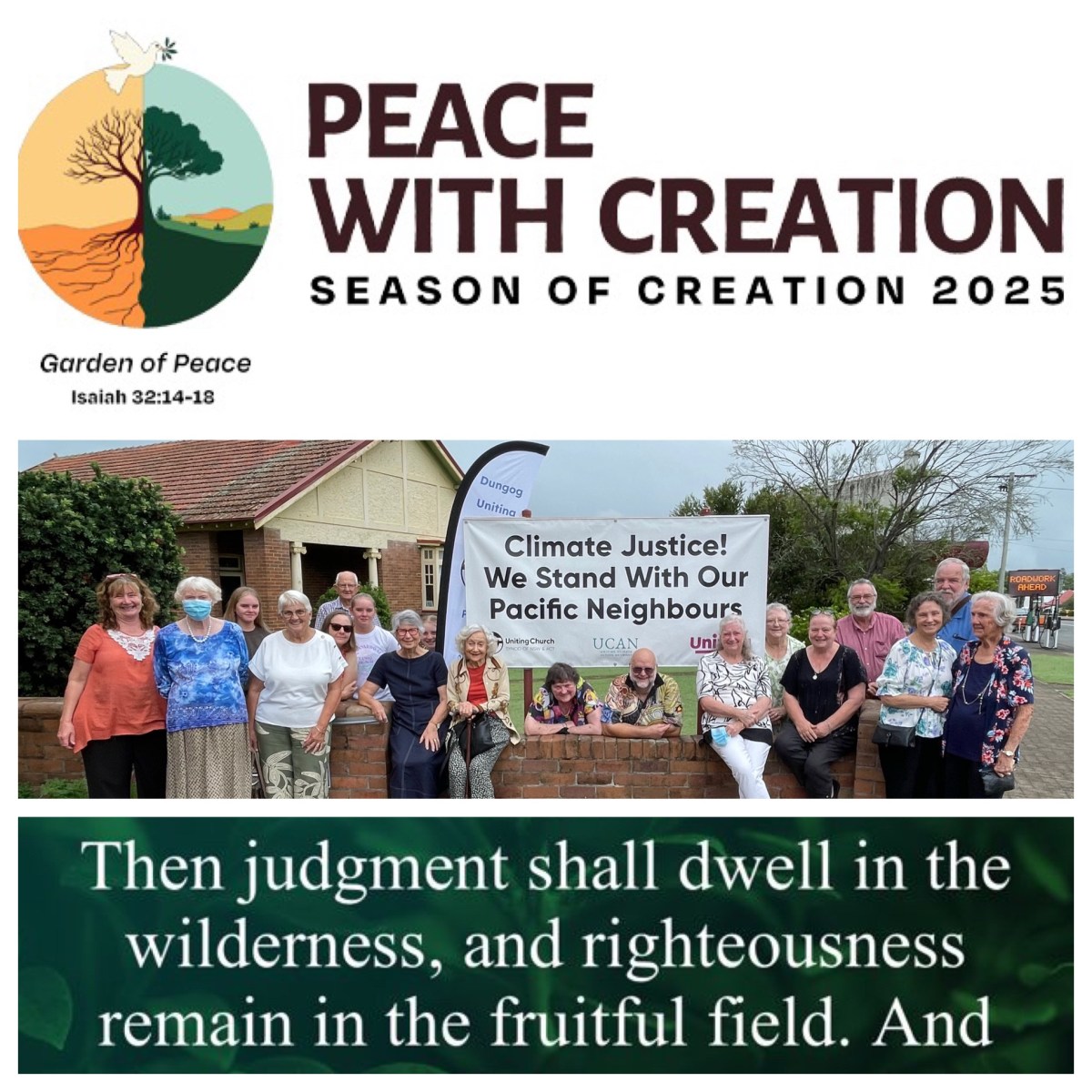
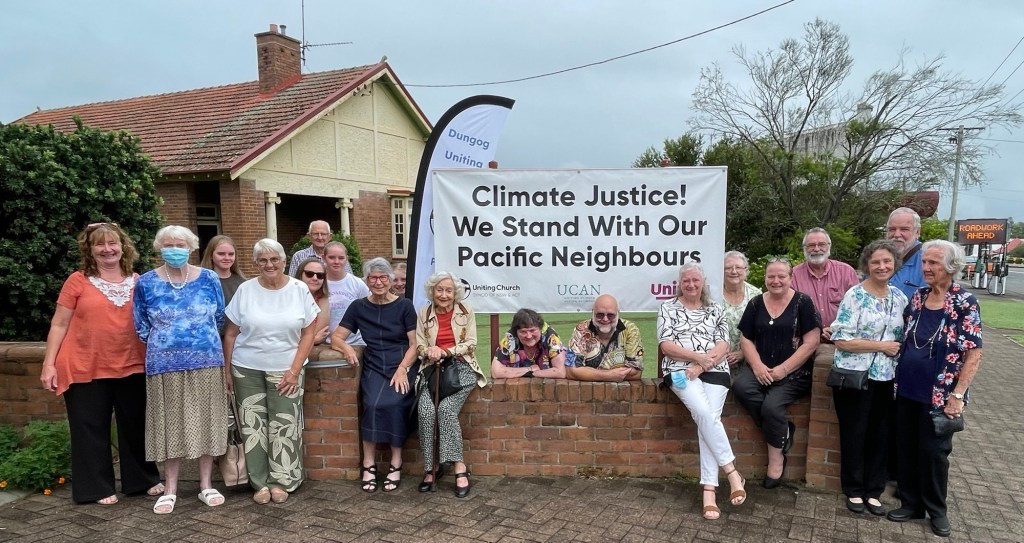
The sign on display at the front our our church in Dungog declares our commitment to such a way of living, as individuals and families, and as a church. And hopefully, as a nation, as our leaders consider the latest report on what needs to be done to ensure the growth of renewable industries and the closure of coal mines—with appropriate retraining for all those employed in mines at the present. This sign is an expression of solidarity with friends in the Pacific region whose countries are slowly being swamped by rising sea levels; it is an expression of our care for the whole creation.

Can you see the vision of fruitful abundance, security and peacefulness, for the whole of creation that Isaiah sets forth? And in seeing that vision, can you commit to small, achievable, daily actions that contribute to ensuring this vision can become a reality? May this be the path we see ahead of us; may this be the path we walk in the days ahead.

Act Now for a Peaceful World: the International Day of Peace 2025

A post for the International Day of Peace, 21 September 2025

Over its lifetime, the United Nations has been proactive in identifying issues of concern in the world and designating specific “days of” and “weeks of”: World Environment Day, World AIDS Day, World Mental Health Day, World Diabetes Day, World Poetry Day,  Day for the Elimination of Violence  against Women, Interfaith Harmony Week, World Immunization Week, World Space Week, and more … 

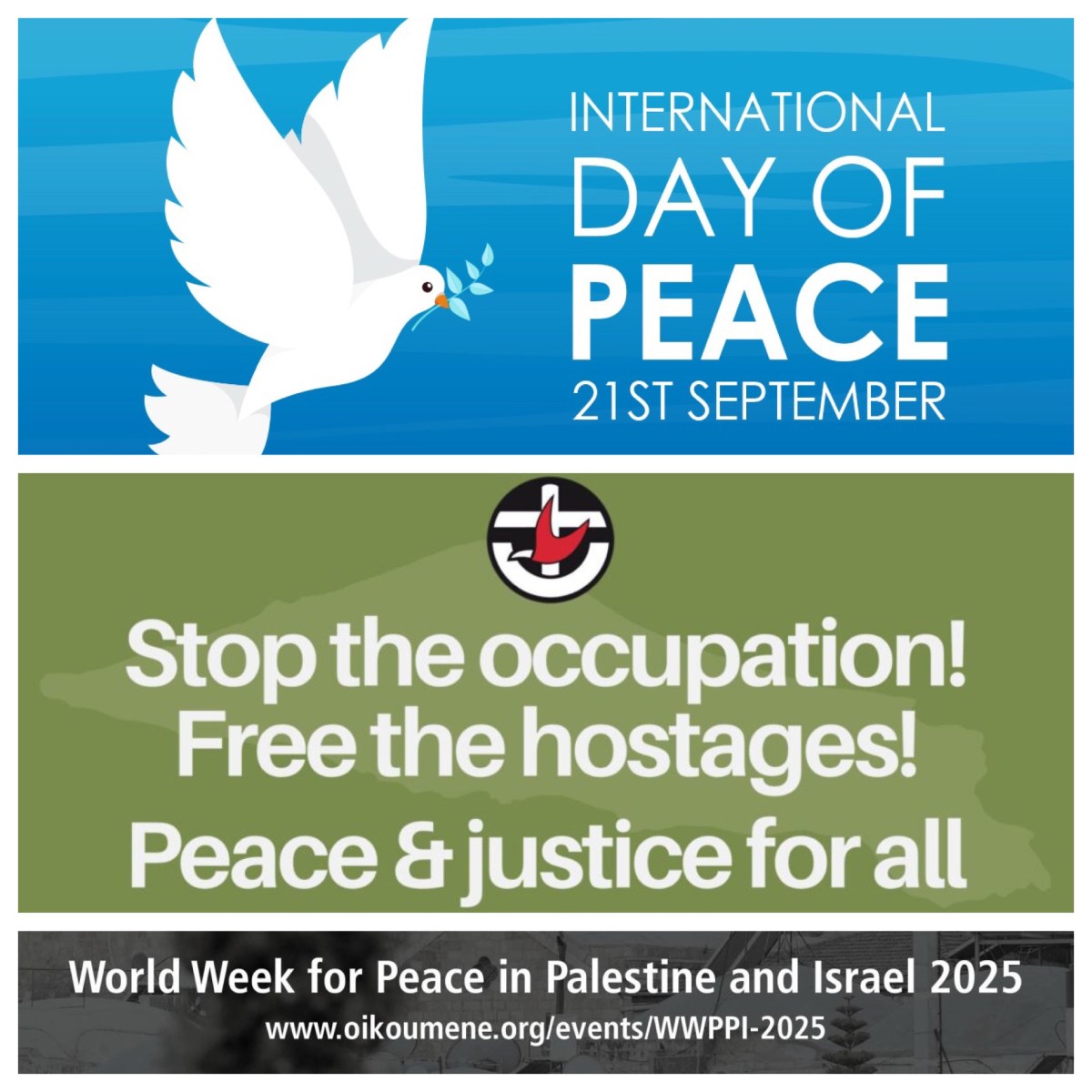
Today, 21 September, is one of those days: it is the International Day of Peace (Peace Day). This day was established in 1981 by a resolution of the United Nations resolution, supported unanimously by all representatives who voted. So Peace Day is a globally-shared date for all humanity to commit to Peace above all differences and work to ensure that Peace predominates over the conflicts raging in the world.

There is perhaps no more acute time, in 2025, for such a day to be highlighted. Our world today is beset by conflict, aggression, and devastating warfare. Mass starvation and the killing of civilians in Gaza; a genocide, many now (rightly) say. Decades of terrorist activity and the exercise of military power in Israel, the West Bank, Gaza, and surrounding nations. An entrenched military battle on many fronts in the Ukraine, bogged down in the ego of a long-term tyrant. Ethnic violence and long-enduring civil warfare in the Sudan. Armed uprisings in the Congo. A civil war in Myanmar following the 2021 military coup. The list could go on to cover many—far too many—places.

One of the myths of the 20th century is that there were two great wars (the two “World Wars”). That puts the focus on conflicts that involved many nations around the world, coalescing together in alliances to fight “the other side”. However, the terrible reality is that in every year of the 20th century, in country after country, Peace was absent. Civil wars, border disputes, regional conflicts, and terrorist insurgencies against unjust dictatorships, all attest to the continuing reality of the Lack of Peace around the world. 

And at the moment, we really need some signs of Peace in our world.  Where is Peace? When will it ever come? It is more important than ever that we recommit to seeking Peace in our world, and press our leaders to work towards peace in national life and International relations. 

The theme for the 2025 International Day of Peace is Act Now for a Peaceful World. UN Secretary-General António Guterres has rightly said, “Around the world lives are being ripped apart, childhoods extinguished, and basic human dignity discarded, amidst the cruelty and degradations of war.”  

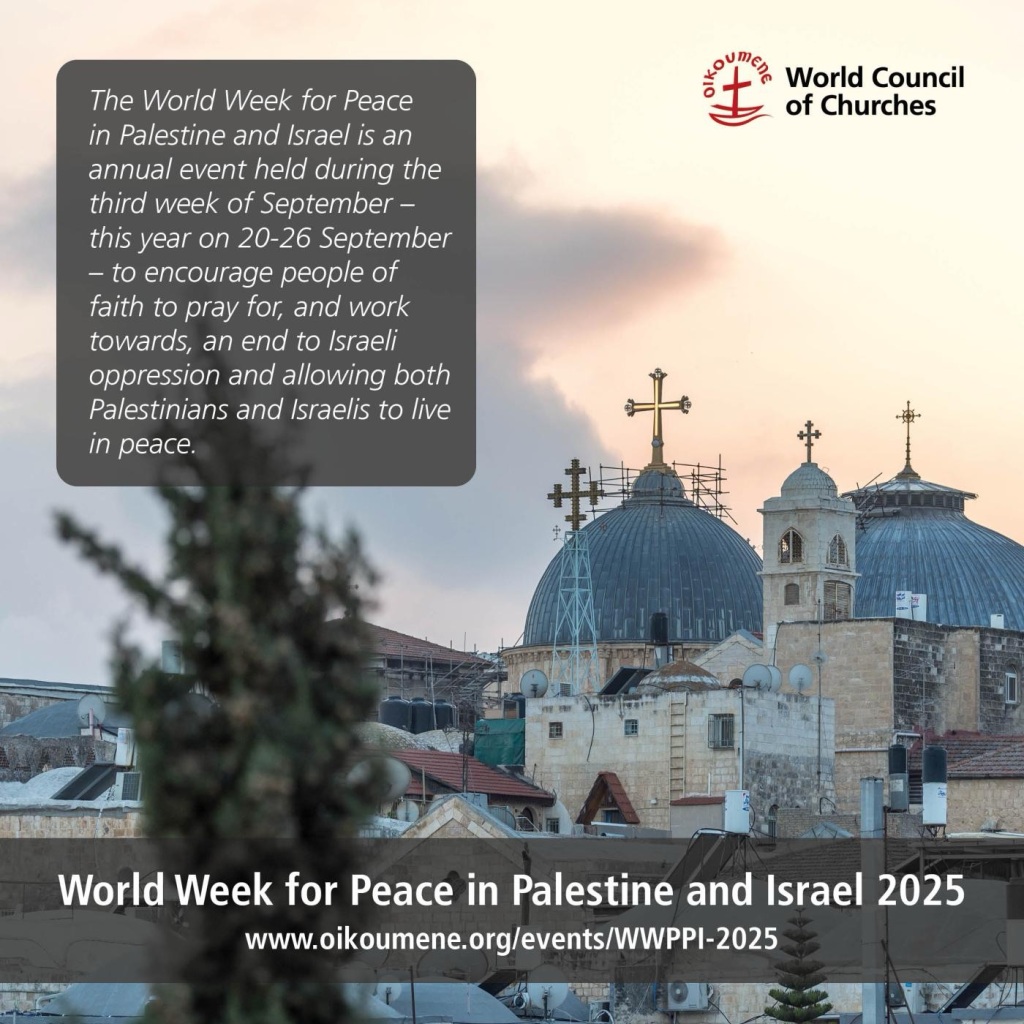
Coinciding with the UN’s International Day of Peace is the World Week for Peace in Palestine and Israel, an event established by the World Council of Churches (WCC) and held each year during the third week of September. This year that week runs from Saturday 20 to Friday 26 September.

The week aims to encourage people of faith to pray for, and work towards, an end to Israeli oppression and allowing both Palestinians and Israelis to live in peace. A fine set of resources has been prepared by the WCC, containing testimonies, a Christian liturgy, a reflective poem, and a “concept note” that sets out the situation in Gaza, the focus of the week, and a set of steps that can be taken locally. See

https://www.oikoumene.org/events/WWPPI-2025?

The Uniting Church has long been a strong supporter of initiatives building towards Peace. Early in the life of the Uniting Church, the National Assembly made a clear and unequivocal commitment, on behalf of the whole church, to support peace-building and reject the idea that the world can be made a better place by killing people.

In 1982, that Assembly declared “that God came in the crucified and risen Christ to make peace; that he calls all Christians to be peacemakers, to save life, to heal and to love their neighbours. The call of Christ to make peace is the norm, and the onus of proof rests on any who resort to military force as a means of solving international disputes.” 

It called for action “to interact and collaborate with local communities, secular movements, and people of other living faiths towards cultivating a culture of peace” and to work to “empower people who are systemically oppressed by violence, and to act in solidarity with all struggling for justice, peace, and the integrity of creation”. It also identified the need “to repent together for our complicity in violence, and to engage in theological reflection to overcome the spirit, logic, and practice of violence”. 

Since the horrific attack on Israel by Hamas militants on 7 October 2023, and the devastating military retaliation by Israel in Gaza, the Uniting Church in Australia Assembly has sought to respond to a worsening conflict situation with a commitment to justice and peace. It has published a number of statements, which can be read at https://uniting.church/palestine-and-israel/

At the moment, the church is encouraging Uniting Church communities to take practical action on Palestine and engage with the World Council of Churches Statement on Palestine and Israel: A Call to End Apartheid, Occupation, and Impunity in Palestine and Israel. This statement has recently been affirmed and adopted by the Uniting Church Assembly.

In the statement, the WCC has declared that “the Government of Israel’s military campaign in Gaza has entailed grave breaches of the Fourth Geneva Convention which may constitute genocide and/or other crimes under the Rome Statute of the International Criminal Court (ICC)”. The WCC calls for churches “to witness, to speak out, and to act” in this matter.

See https://www.oikoumene.org/resources/documents/statement-on-palestine-and-israel-a-call-to-end-apartheid-occupation-and-impunity-in-palestine-and-israel

*****

For more of my blogs on Peace, see

and see also

https://unitingforpeacewa.org/2018/11/28/perth-peacemaking-conference-statement/

1 September: as the seasons change

Today, 1 September, is the day (in the southern hemisphere) which marks the beginning of Spring. My nose and eyes had already alerted me, some time ago, to this turn-of-the-seasons. But now, it’s official. And to further reinforce this moment, today in Australia is Wattle Day, in celebration of the golden wattle (Acacia pycnantha), whose bright yellows flowers are prolific from August through to January.

Of course, there’s are many other signs of the coming of Spring downunder. The days are lengthening, the warming sun is strengthening its heat, the grass and flowers—and weeds!—are returning from their wintry hibernation, and (at least in the town where I live) there is a string of local community events that are planned for these pleasantly warm weeks. We have already had Run Dungog and Sculpture on the Farm. Ahead, there lies the Dungog Tea Party, Ride Dungog social bike rides, a new art exhibition in one of the local galleries, the Dungog Rumble for hot rod cars, and then the Dungog Show early in November.

However, alongside the seasonal change, there’s also an ecclesial significance to today. In 1989, the Ecumenical Patriarch Dimitrios I (then head of the Eastern Orthodox Church, pictured) declared 1 September to be a day of prayer for the natural environment. In 2008, the World Council of Churches invited all churches to observe a Time for Creation from 1 September to 4 October—the day which had long been kept as the feast day for St Francis of Assisi

Francis, of course, is probably the most popular Catholic saint in the world. He is the one who preached to the birds; blessed fish that had been caught, releasing them back into the water; communicated with wolves, brokering an agreement between one famous ferocious wolf and the citizens of a town that were terrified of it; and used real animals when he created the very first, live, Christmas nativity scene. As a result of these, Francis is the patron saint of animals and the environment. And he is the inventor of the familiar nativity scene. 

Every 4 October, Francis of Assisi is remembered in churches around the world—along with Clare of Assisi who, like Francis, came from a noble family, but decided to renounce it all to live a life of simplicity with Francis and his brothers. Unlike Francis, who was a mendicant, Clare lived an enclosed life of poverty and prayer, leading a community of women who shared the same vision.

In 2019, Pope Francis (pictured) adopted the Season of Creation for Roman Catholic worship. It runs from 1 September to 4 October. And so, in many churches around the world, the whole of September is now designated as a time to focus on Creation—a truly ecumenical festive season, involving Eastern Orthodox, Roman Catholic, Anglican, and Protestant churches alike.

Recently the Rev. Dr Elizabeth Smith (Anglican priest and well-known hymn writer) attended an internal colloquium which was exploring the adoption of a Season of Creation by all mainstream denominations. She described the impetus for such a gathering in this way: “Christians have joined the growing chorus lamenting the climate crisis and its effects on nature and on vulnerable humanity, especially the poor. Energy is coalescing around liturgical acknowledgement of the value of ‘creation’—both God’s creative action and the universe it produces.” 

She then noted that “Ecumenical efforts are pressing toward a feast or season that raises both the act and fact of creation to the praise and thanksgiving of assemblies across denominations, from the Orthodox and Catholics where the initiatives began, to Anglican, Reformed, Lutheran, Methodist, and Pentecostal fellowships and associations.”

Let us hope that this initiative moves from “a good idea” to “a practical implementation” of that good idea! It will be good to have a formal liturgical accompaniment, ecumenical and international, to the signs of the change of season that is all around us.

The Uniting Church in Australia has produced resources to assist in the celebration of the Season of Creation at https://uniting.church/season-of-creation-2025/

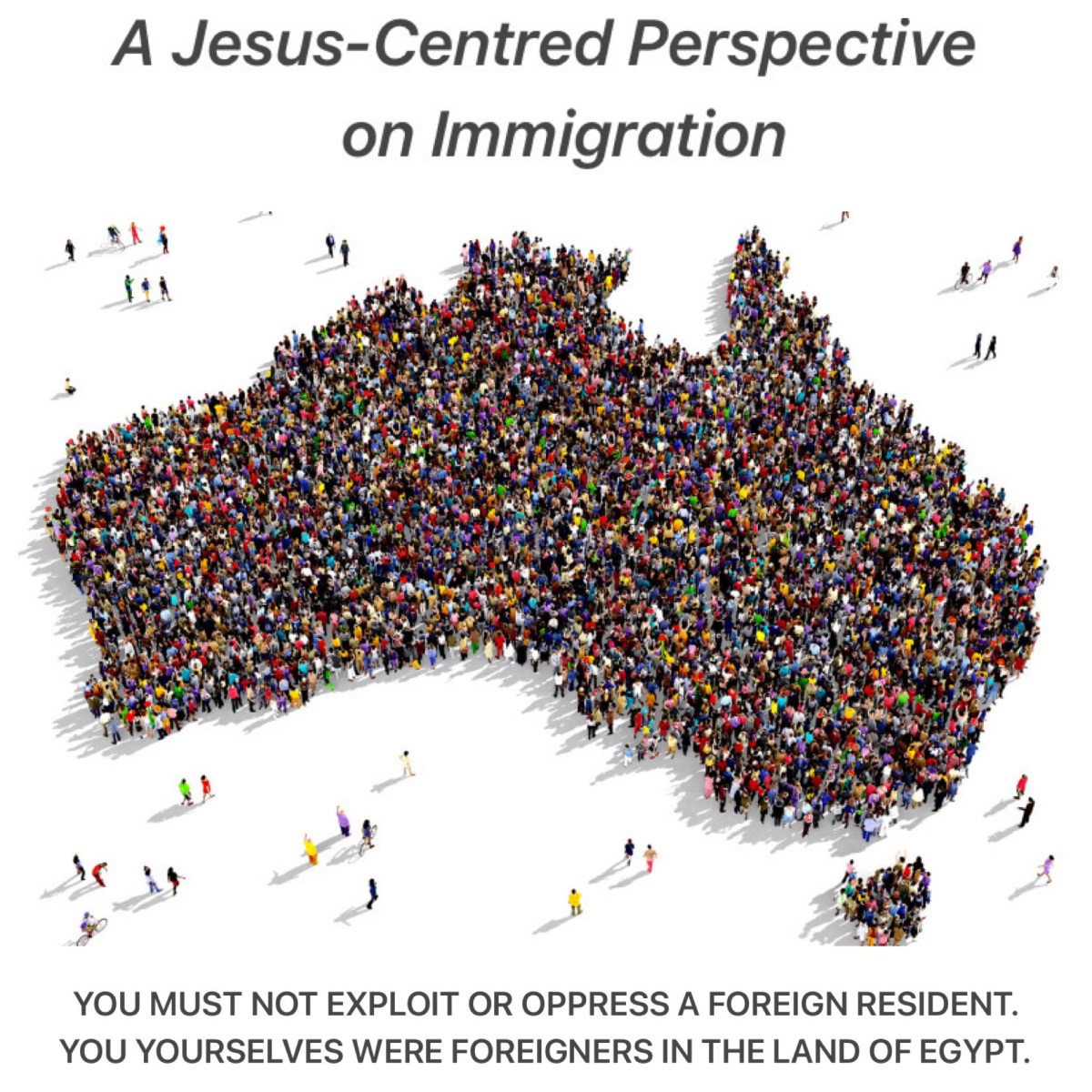
A Jesus-Centred Perspective on Immigration

This is a blog written by a guest blogger, the Rev. Pablo Nunez. Pablo is minister of the Ballina Uniting Church and Moderator-Elect of the NSW.ACT Synod of the Uniting Church in Australia. It is particularly pertinent for today, when xenophobic fascists are trying to mobilise people to “protest against immigration” in Australia. Thanks to Pablo for permission to reproduce his words here.

If you pause for a moment and look around Australia, what do you see? Beaches that take your breath away. Red dirt that stains your shoes and stretches your imagination. Cities alive with languages, smells, and flavours from all over the world. And at the heart of it all, the world’s oldest continuous culture, Aboriginal and Torres Strait Islander peoples, who have lived here, cared for this land, and told its stories for thousands of years.

That’s the starting point. Before we speak about immigration, we need to say out loud: every single non-Indigenous person in Australia is here because of migration. Some of us came by ship generations ago, some by plane more recently. Some came fleeing war, some chasing opportunity, some brought by chains, others by choice. But none of us, apart from our First Nations brothers and sisters, can truly call ourselves original to this land.

And if that’s true, then the way we talk about migration in Australia has to begin with humility.

*****

Jesus Was a Migrant

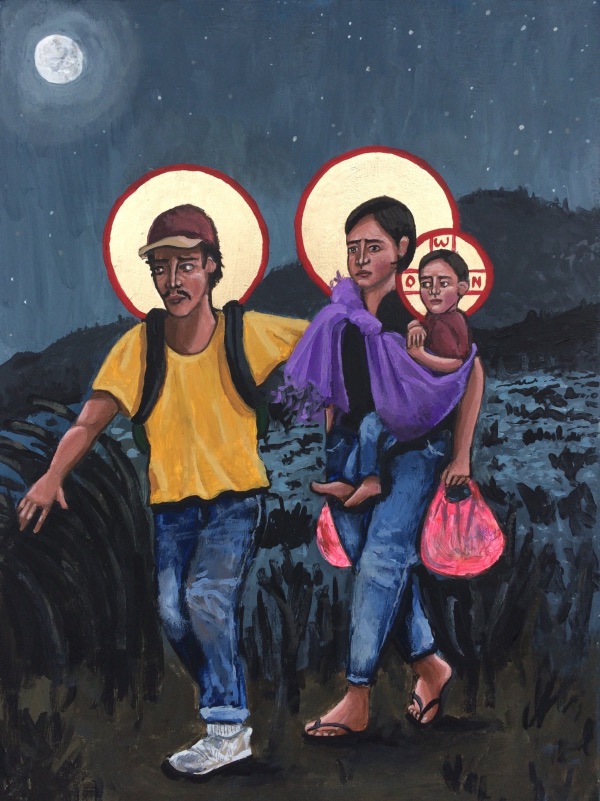
The story of Jesus is not a neat, polished tale of a man who lived in one safe place his whole life. From the beginning, his life was marked by displacement. Born in Bethlehem, raised in Nazareth, taken as a refugee to Egypt because a violent ruler wanted him dead. Jesus knew what it meant to live in a strange land. He knew what it was to flee under the cover of night, to live with uncertainty, to depend on the hospitality of others.


La Sagrada Familia by Kelly Latimore

Later, as an adult, Jesus would walk dusty roads from village to village, never truly at home, saying: “Foxes have dens and birds have nests, but the Son of Man has no place to lay his head” (Luke 9:58). He was, in every sense, a migrant—on the move, without fixed security, dependent on God and others.

So when Christians think about immigration, we don’t start with politics or economics. We start with Jesus. And Jesus says something radical: when you welcome the stranger, you welcome me (Matthew 25:35).

*****

Migration Is in Our Blood

Sometimes in Australia we talk about immigration as if it’s something unusual or threatening. But migration is the story of us all. Think about it:

  • The Irish came during the potato famine.
  • The Chinese came during the gold rush.
  • Italians and Greeks came after the war, bringing pasta, olives, and coffee that changed our food culture forever.
  • Pacific Islanders have brought love for family, music, faith and more than a few sports’ stars.
  • Vietnamese families arrived in the 1970s, rebuilding their lives after war and giving us the joy of pho and banh mi.
  • More recently, African communities have brought strength, music, and resilience born from hard journeys.
  • Latin Americans, like myself, came in different waves, some fleeing dictatorships, some chasing new opportunities, and we bring rhythms, faith, and fire for life.

Australia today is richer—economically, socially, culturally, spiritually—because of migrants. We wouldn’t be who we are without them. And the truth is, most of our favourite things—our food, our music, our sport—carry a migrant story. Even Vegemite was invented by a man whose parents came from Switzerland.

Migration is not an interruption to the Australian story—it is an essential part of the Australian story.

*****

The Gift of the Stranger

Here’s the thing about migrants: they don’t just bring their skills, their recipes, and their music. They also bring gifts we desperately need but often overlook.

Migrants remind us of courage—because leaving your homeland is never easy. They remind us of resilience—because starting again from scratch takes grit. They remind us of generosity—because most migrants know what it’s like to have little, and so they share what they have.

And, most profoundly, migrants remind us of God. Over and over in Scripture, God appears through the stranger. Abraham entertains three mysterious travellers and realises he’s been hosting God (Genesis 18). The Israelites are told: “Do not oppress the foreigner, because you yourselves were foreigners in Egypt” (Exodus 22:21). And then Jesus himself comes as the refugee child.

To welcome the stranger is to make room for God.

*****

A Personal Word

I carry this personally. I wasn’t born in Australia. My family story, like many of yours, is one of packing up, crossing borders, learning a new language, and trying to fit into a place where you don’t always feel you belong.

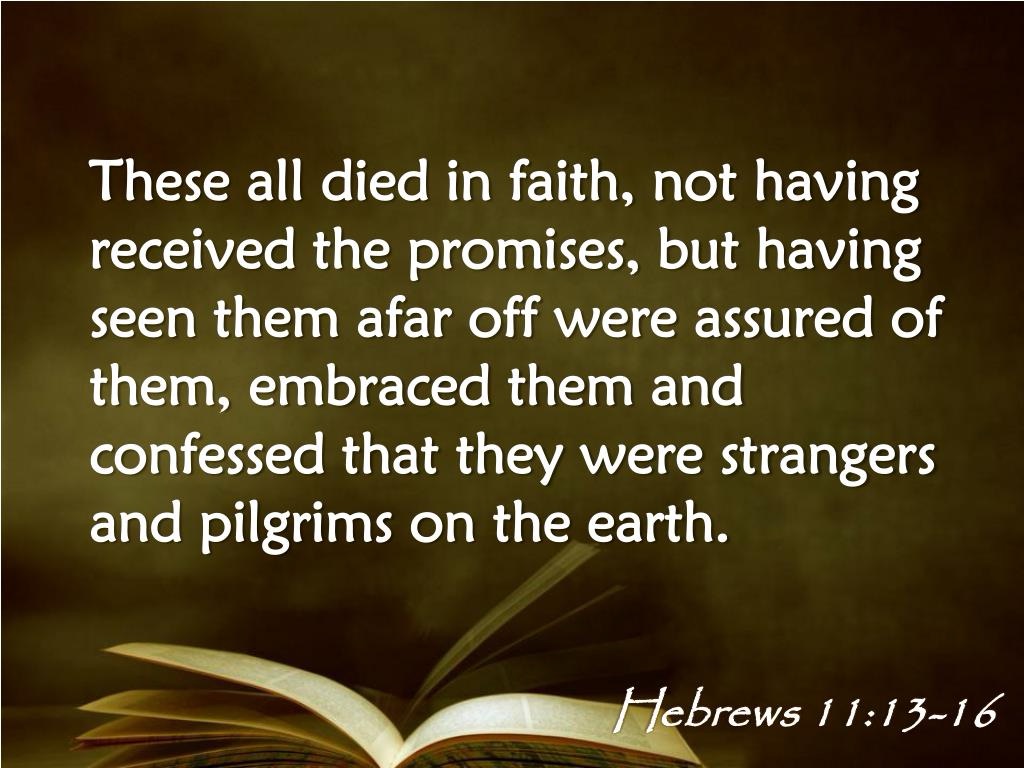
And yet, what I’ve discovered is that this tension—this experience of not quite belonging—actually brings me closer to the heart of God. Because faith is, at its core, a migrant journey. Hebrews 11 describes all the great heroes of faith as “foreigners and strangers on earth, longing for a better country—a heavenly one.”

In that sense, migration is not only Australia’s story, it’s the Christian story. We are all on the move, walking toward God’s promised future.

*****

A Challenge for the Church

But here’s the challenge: in Australia, conversations about immigration often get reduced to fear. Fear of boats. Fear of “the other.” Fear that there won’t be enough jobs or houses or space.

Jesus calls us to a different way. If every person is made in the image of God, then every migrant is not a threat but a gift. If Jesus himself was a refugee, then to reject the refugee is, in some sense, to reject Jesus. And if the Spirit of God is at work in every culture, then immigration is not about us “helping them,” but about recognising the Spirit who comes to us through them.

This means the Church in Australia has a prophetic role: to remind our nation of its migrant story, to model hospitality, and to show that love is bigger than fear.

What if every church treated migrants not as projects, but as partners? What if we saw multicultural worship not as a challenge, but as a glimpse of Revelation 7:9—a great multitude from every nation, tribe, people, and language worshipping before the throne? What if we stopped seeing immigration as a “problem” and started seeing it as a mirror of the kingdom of God?

*****

Building Our Legacy

Friends, Australia is at its best when it remembers its migrant heart. Our legacy will not be built on shutting doors, but on opening tables. On meals shared. On friendships made. On seeing the image of God in one another.

And the Church must lead the way. Because when we welcome the migrant, we are not only welcoming a neighbour—we are welcoming Christ into our lives in new perspectives and possibilities. A new life. A better life.
So let’s be people who celebrate our heritage, acknowledge our debt to First Nations peoples, and embrace the truth that every migrant—past, present, and future—brings a gift from God.

Australia’s modern story is migration. The Church’s story is migration. The Gospel’s story is migration. And in all of it, Jesus is the one who walks with us, the migrant Messiah, calling us to follow him into a kingdom where every tribe and tongue has a place at the table.

The Rev. Pablo Nunez, Moderator-Elect,
Synod of NSW.ACT, Uniting Church in Australia

Saying Sorry—beginning the process of Telling Truth

Today is National Sorry Day. It begins National Reconciliation Week, which runs from 27 May to 3 June each year. This week was initiated in 1996 by Reconciliation Australia, to celebrate Indigenous history and culture in Australia and promote discussions and activities which would foster reconciliation.

The dates of National Reconciliation Week hold special historical significance. On 26 May 1997, the Bringing Them Home report was tabled in Federal Parliament. This report addressed them impacts of the fact that in the late 19th century and throughout the 20th century, Australian government policies resulted in many Stolen Generations, in which thousands of Indigenous children were separated, often forcibly, from their families, with the aim of removing them from their culture and turning them into “white Australians”.

Because of this, the date 26 May carries great significance for the Stolen Generations, as well as for Aboriginal and Torres Strait Islander communities, and its supporters among non-indigenous Australians. The word sorry is used in First Nations cultures in relation to the rituals surrounding death—the process of grieving is often call Sorry Business. So sorry indicates an acknowledgement of loss and offers empathic understanding to those who grieve.

Sorry Day is an annual event that has been held around the continent on 26 May since 1998, to remember and commemorate the mistreatment of the country’s Aboriginal and Torres Strait Islander People.

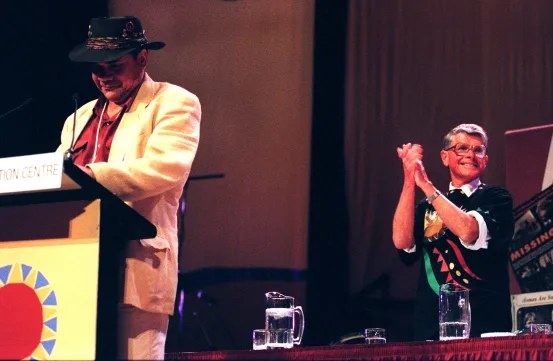
Mick Dodson and Ronald Wilson,
Commissioners of the Bringing Them Home Report
at its launch date on 26 May 1997

27 May marks the anniversary of the 1967 referendum in Australia, which gave the vote to Aboriginal and Torres Strait Islander people, while 3 June marks the anniversary of the 1992 judgement by the High Court on the Mabo v Queensland case.

Sorry Day (26 May) and the National Apology (made in Federal Parliament on 13 February 2008), the 1967 referendum, the 1992 Mabo decision, along with the Wik decision on native title (delivered by the High Court on 23 December 1996), are considered to be key events in addressing the historic mistreatment of indigenous Australians, and in taking steps towards reconciliation and restorative justice.

But these were only steps. The path still lies ahead. We need to take more steps, walking together, to foster deeper relationships, advocate for a more embedded restoration of justice, work for wider and more lasting reconciliation within our communities. The current discussion is focussed on a process that will lead to a referendum on the proposal that the Australian Constitution recognise the First Peoples as custodians of the land from millennia before the British Invasion and colonisation of 1788, and the establishment of a permanent Voice to the federal parliament.

This step is but one on a pathway that stretches ahead of us, well into the succeeding generations still to come in Australia. We need to hear and understand the Truth that was set forth in the 1997 Report, and indeed to listen to the Truth that is being stated by First Peoples leaders in our own time, and be willing to respond with sorry and with actions that lead to justice for the First Peoples of this continent and it’s surrounding islands.

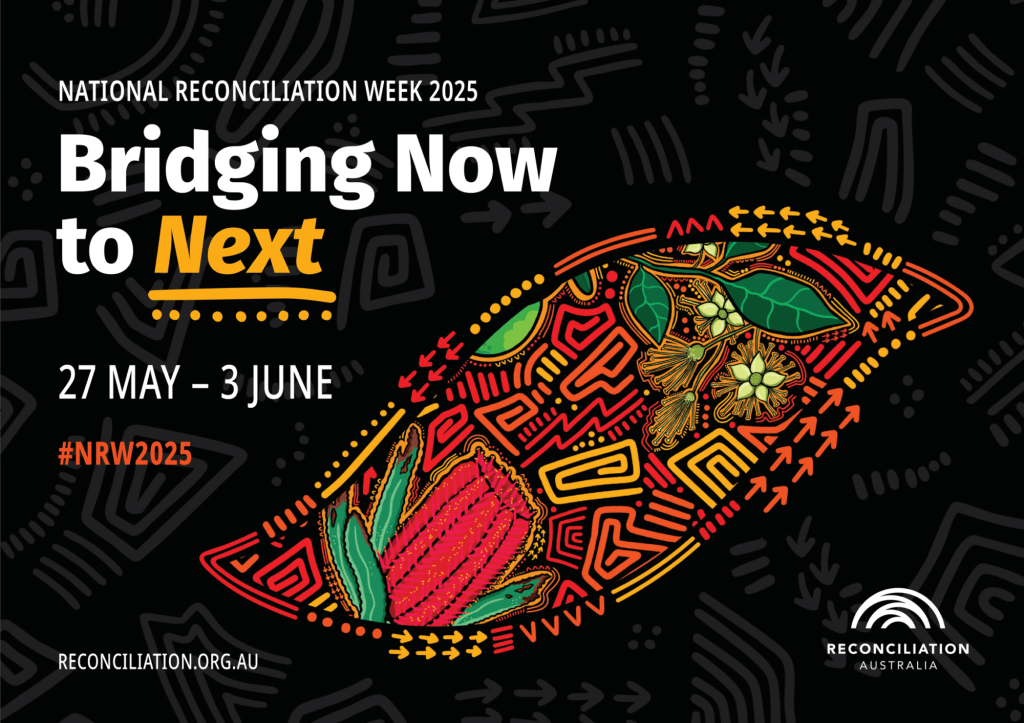
The theme for National Reconciliation Week 2025 is Bridging Now to Next. This theme reflects the ongoing connection between past, present, and future, urging us to look ahead and continue the push forward as past lessons guide us.

To seek reconciliation, we need to speak together, commit together, and act together. We are all in this together. May we tread that pathway with compassion and intent.

See https://www.reconciliation.org.au/national-reconciliation-week/

Click to access 150520-Sorry-Day.pdf

https://australianstogether.org.au/discover/australian-history/1967-referendum/

https://australianstogether.org.au/discover/australian-history/mabo-native-title/

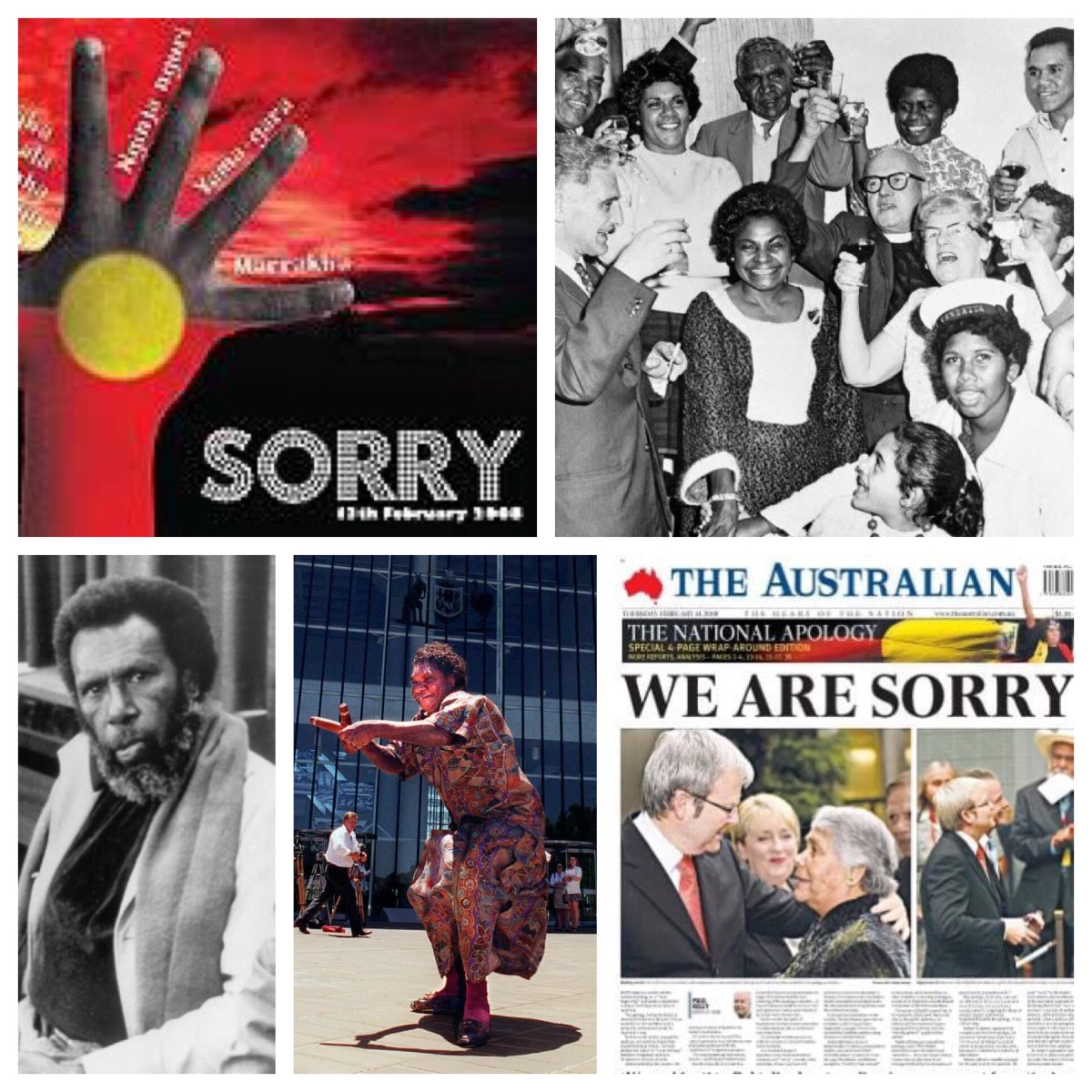
The picture montage shows a Sorry Day poster, celebrations after the 1967 referendum, Eddie Mabo who brought the High Court case that was resolved in 1992, Gladys Tybingoompa dancing outside the high court in Canberra on 23 December 1996 following the Wik people’s native title win, and the front page of a national newspaper reporting the National Apology in 2008.

Executing justice and righteousness: the glory of the holy God (Ps 99; Transfiguration)

“You have established equity; you have executed justice and righteousness in Jacob” (Ps 99:4). So the psalmist sings, in the psalm offered by the lectionary for this coming Sunday, The Feast of the Transfiguration. Perhaps it has been selected for this festival because it depicts the Lord sitting “enthroned upon the cherubim” as the earth quakes (v.1), that he spoke to Israel “in the pillar of cloud” (v.7)—images that resonate with the stories of Moses and Jesusnthatnwe have heard this week.

Noting that leaders of the past have called out to God and been answered—Moses, Aaron, and Samuel (99:6)—the psalmist praises God, “you answered them; you were a forgiving God to them, but an avenger of their wrongdoings” (99:8).

In this psalm it is the king, the “Mighty King, lover of justice [who has] established equity” (99:4), whose “royal scepter is a scepter of equity” (Ps 45:6), modelled on the Lord God himself, who “judges the world with righteousness [and] judges the peoples with equity” (Ps 9:8; see also 67:4; 75:2; 96:10; 98:9). Accordingly, King David is remembered as the one who “administered justice and equity to all his people” (2 Sam 8:15; 1 Chron 18:14), and the opening words of the book of wisdom attributed to King Solomon are “love righteousness, you rulers of the earth, think of the Lord in goodness and seek him with sincerity of heart” (Wisd Sol 1:1).

Divine justice is regularly noted in tandem with God’s mercy forgiveness. “Great is your mercy, O Lord; give me life according to your justice” (Ps 119:156); and “in your steadfast love hear my voice; O Lord, in your justice preserve my life” (Ps 119:149). The prophet Isaiah tells the rebellious people of his day, “the Lord waits to be gracious to you; therefore he will rise up to show mercy to you—for the Lord is a God of justice; blessed are all those who wait for him” (Isa 30:18).

Likewise, through the prophet Hosea, the Lord God promises to Israel, “I will take you for my wife in righteousness and in justice, in steadfast love, and in mercy” (Hos 2:19), whilst centuries later, Ezekiel reminds the exiles of God’s pledge: “I say to the righteous that they shall surely live, yet if they trust in their righteousness and commit iniquity, none of their righteous deeds shall be remembered; but in the iniquity that they have committed they shall die” (Ezek 33:13). Justice and mercy belong hand-in-hand, as yet another prophetic voice declares as the exiles are returning to the land: “in my wrath I struck you down, but in my favour I have had mercy on you” (Isa 60:10).

God’s mercy sat at the heart of the covenant made with Israel; the Lord affirms to Moses, “I will be gracious to whom I will be gracious, and will show mercy on whom I will show mercy” (Exod 33:19). So in the longest psalm, declaring persistent praise of the Law, the psalmist offers the petition, “let your mercy come to me, that I may live, for your law is my delight” (Ps 119:77). A number of other psalms likewise contain petitions God to show mercy (Ps 25:6; 40:11; 51:1; 69:16; 123:3).

Jesus, centuries later, brings together mercy and justice when he accuses the scribes and the Pharisees of hypocrisy, as they “neglect the weightier matters of the law: justice and mercy and faith” (Matt 23:23).

Justice, of course, is at the heart of the covenant that God made with Israel. Moses is said to have instructed, “justice, and only justice, you shall pursue” (Deut 16:20), the king is charged with exhibiting justice (Ps 72:1–2; Isa 32:1), whilst many prophets advocate for justice (Isa 1:17; 5:7; 30:18; 42:1–4; 51:4; 56:1; Jer 9:24; 22:3; 23:5; 33:15; Ezek 18:5–9; 34:16; Dan 4:37; Hos 12:6; Amos 5:15, 24; Mic 3:1–8; 6:8).

That God is righteous is likewise declared in scripture (Deut 32:4; Ps 145:7; Job 34:17). The psalmists regularly thank God for God’s righteousness (Ps 5:8; 7:17; 9:8; 33:5; 35:24, 28; 36:6; 50:6; etc) and note the importance of humans living in that same way of righteousness (Ps 18:20, 24; 85:10–13; 106:3, 31; 112:1–3, 9).

The book of Proverbs advises that the wisdom it offers is “for gaining instruction in wise dealing, righteousness, justice, and equity” (Prov 1:3) and the prophets consistently advocated for Israel to live in accordance with righteousness (Hos 10:12; Amos 5:24; Isa 1:22; 5:7; 28:17; 32:16–17; 54:14; Jer 22:3; Ezek 18:19–29; Dan 9:24; 12:3; Zeph 2:3; Mal 4:1–3; Hab 2:1–4).

This psalm thus focusses some important elements in the Israelite understanding of God, summarising notes from many places elsewhere in Hebrew Scriptures. These recurring notes of the nature of God then form the basis for a Christian understanding of Jesus, who affirms mercy (Matt 23:23), teaches righteousness (Matt 5:6, 10, 20; 6:33), offers forgiveness (Mark 2:10; Luke 23:34; 1 John 1:9), and exudes grace (John 1:14–18). The affirmation made in this ancient Jewish psalm is one that we Christians can joyfully sing and affirm this Transfiguration!

*****

The situation in the Middle East continues to be volatile. My reflections in the early stages of the present inflammation of that conflict is at