
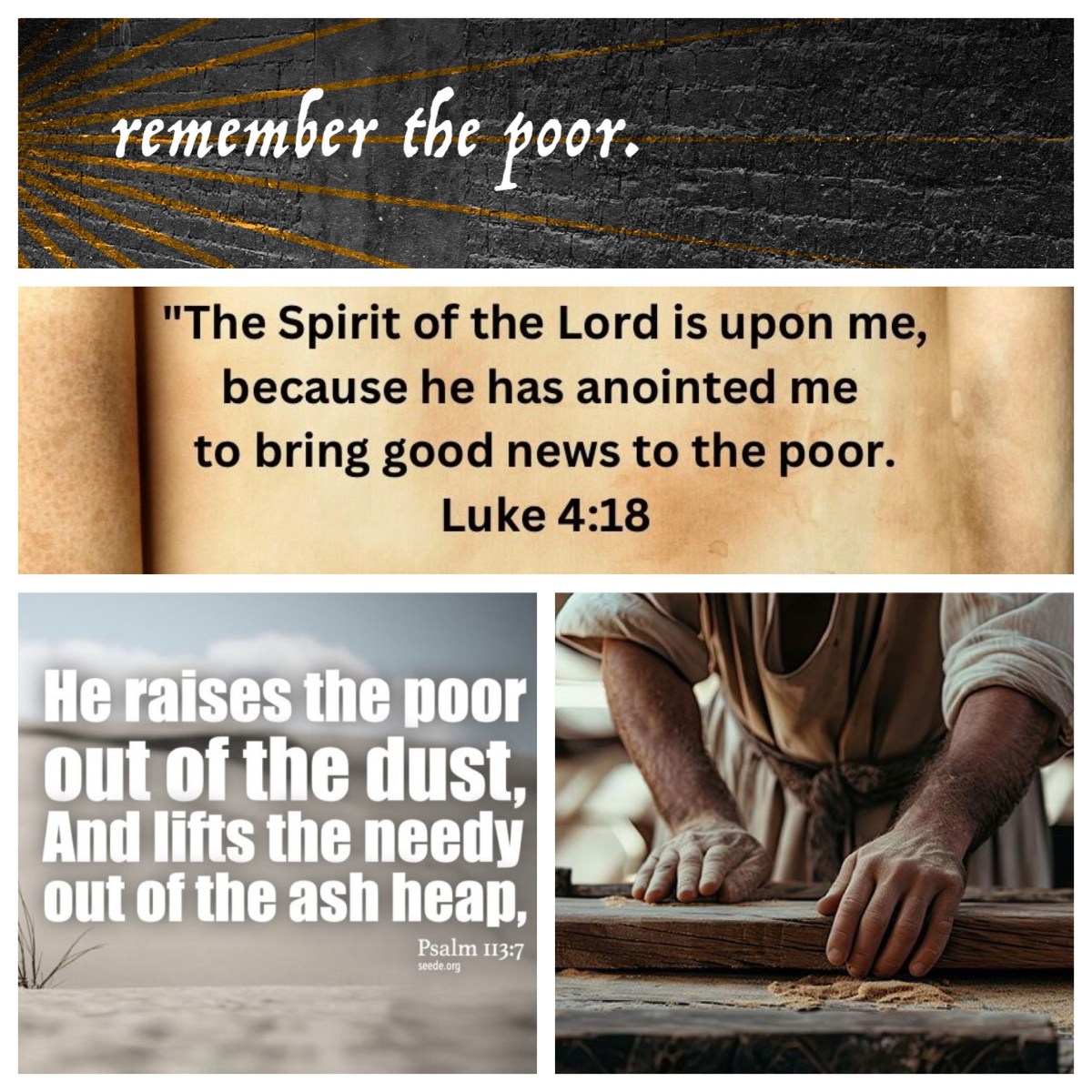
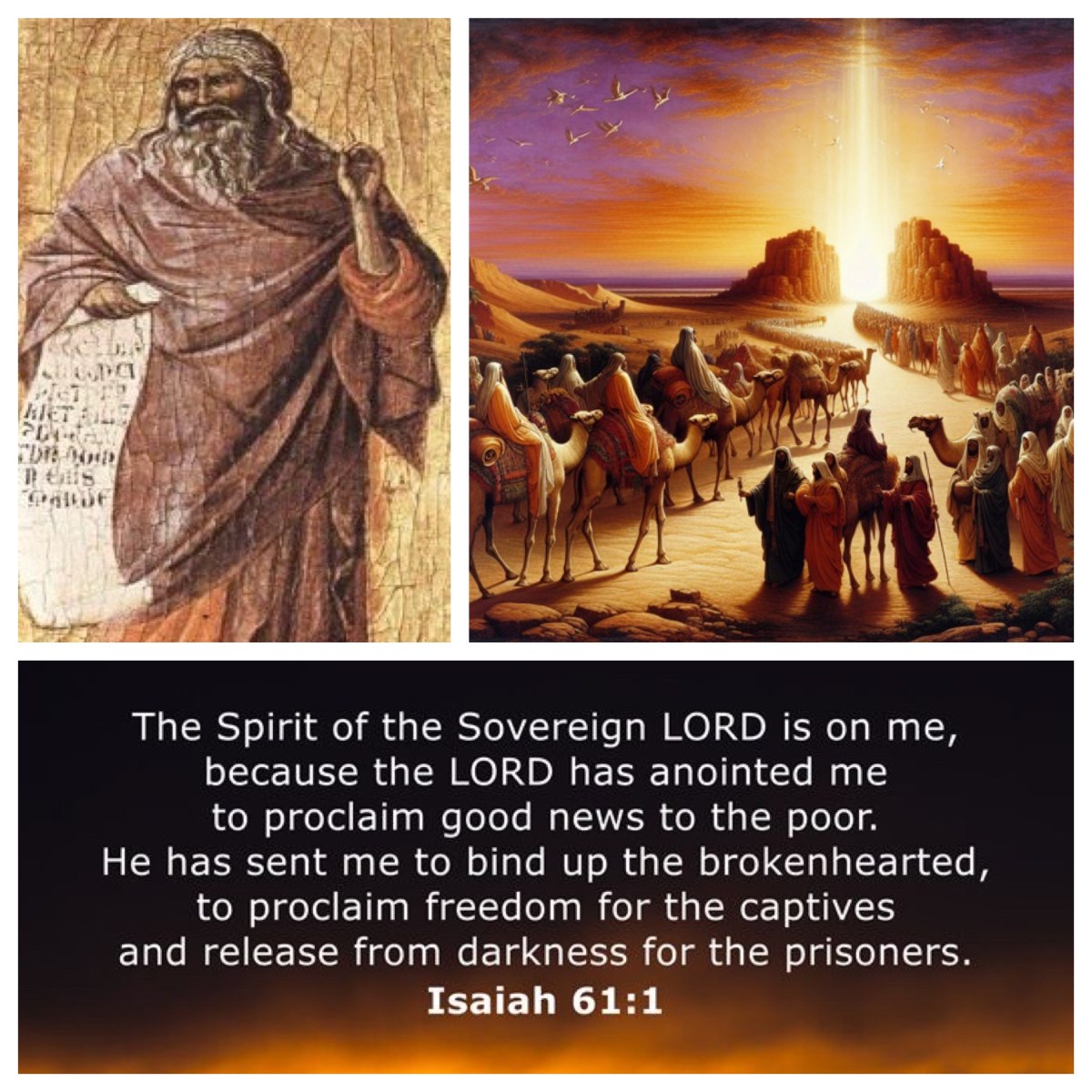
As we work our way this year through the Gospel of Luke, we will encounter a number of references to “the poor”. Early in his public activity as an adult, Jesus declares that he intends to fulfil the ancient prophetic words to “bring good news to the poor” (Luke 4:18, citing Isa 61:1). Addressing his disciples, he speaks words of blessing on “you who are poor, for yours is the kingdom of God” (6:20), and then tells messengers from John to “go and tell John what you have seen and heard: … the poor have good news brought to them” (7:22). And at the very end of this public activity, he praises a poor widow placing her gift in the Temple treasury, for “out of her poverty [she] has put in all she had to live on” (21:3–4). Concern for the poor is a theme running throughout the Gospel.

Performing acts which assist “the poor” is in the teaching that Jesus gives in the earliest version of his life, the Gospel of Mark (Mark 10:21). It is intensified in Luke’s later account. “Give to everyone who begs from you”, he teaches (6:30), while on another occasion he exhorts his followers to “sell your possessions, and give alms” (12:33). This word is then repeated with a deeper intensity when Jesus tells them, “none of you can become my disciple if you do not give up all your possessions” (14:33).
On one occasion while he was eating “in the house of a leader of the Pharisees … on the sabbath” (14:1), Jesus instructs his host, “when you give a banquet, invite the poor, the crippled, the lame, and the blind” (14:13). He then tells a parable in which a person giving “a great dinner” instructs his slave to “go out at once into the streets and lanes of the town and bring in the poor, the crippled, the blind, and the lame” (14:21).
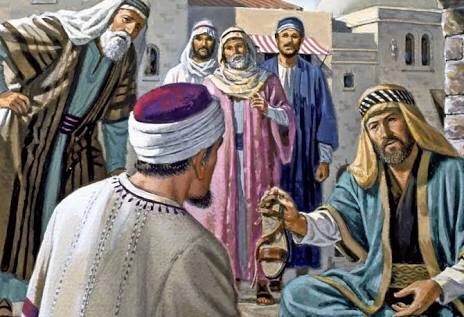
He also tells a story in a parable about a rich man who ignored a poor man lying at his gate; the rich man dies and is sent to be tormented in Hades (16:19–23). Sometime after that, Jesus meets a rich man, commending him for his obedience to Torah, but then commanding him to “sell all that you own and distribute the money to the poor” (18:22). As he approaches Jerusalem, Jesus encounters Zacchaeus of Jericho and visits his home for a meal; Zacchaeus, taken by this act of grace, promises to change by pledging to Jesus that “half of my possessions, Lord, I will give to the poor; and if I have defrauded anyone of anything, I will pay back four times as much” (19:8).
In fact, Luke would have us understand that the followers of Jesus attended to these words with serious diligence. Peter, speaking for all the disciples, declares that “we have left our homes and followed you” (18:28). Later, Luke characterises the community of believers that formed in Jerusalem after Jesus had been crucified, and then raised from the dead, as one in which “they had all things in common” (Acts 2:44), “they would sell their possessions and goods and distribute the proceeds to all, as any had need” (2:45), “no one claimed private ownership of any possessions, but everything they owned was held in common” (4:32).
Although Luke declares that “there was not a needy person among them, for as many as owned lands or houses sold them and brought the proceeds of what was sold” (4:34), we might reasonably assess that this is a “gilding of the lily” which romanticises the fidelity of the early community in a text written at least half a century later. The purpose was to encourage those who had means and possessions to be generous with what they had, to share with “the poor”.
One matter that merits attention in considering this theme is the question about the socio-economic level of Jesus and of the disciples to whom he was delivering these instructions. Was he one of “the poor”, advocating for their rights? Or did his family have some means at their disposal? Were his disciples “poor” or (in our terms) “middle class”?
After all, in his letter to the Corinthians, Paul wrote that “not many [of you] were of noble birth” and that “God chose what is low and despised in the world, things that are not, to reduce to nothing things that are” (1 Cor 1:26, 28). And in writing to the Galatians, Paul talked about the “acknowledged pillars” asking that Paul and Barnabas “remember the poor, which was actually what I was eager to do” (Gal 2:9–10). Such references might well suggest that the early Jesus movement was a movement amongst “the poor”.
Some interpreters have claimed that Jesus was born in poverty, deriving this from the “born in a manger … no room at the inn” element of “the Christmas story” (Luke 2:7), as well as Luke’s later comment that when Mary brought the offering for her purification (Luke 2:22), it was the lesser option prescribed for one who could not afford to offer a sheep (Lev 12:8). Further, that he was known as “the carpenter” (Mark 6:3) or as “the carpenter’s son” (Matt 13:55) is seen to be evidence of his lowly status.

More careful analysis, however, indicates that this is too simplistic. British Anglican scholar Ian Paul has posted a detailed consideration of this matter, in which he draws on very helpful research by historians and economists who have turned their attention to the ancient world. (Ian Paul can be aggressively dismissive of arguments that do not align with his clear-cut conservative-evangelical-Anglican perspective, especially when it comes to the debate about sexuality and gender in the. Church of England; but in this post—as in many others on his page—his careful scholarly analysis is most helpful.)
Paul notes what others before have observed—that a tiny minority of people in the Hellenistic world had power and wealth, but a substantial proportion of people were at the other end of the social stratum. At the very bottom, in the most precarious position, were those who were desperately poor: orphans, widows, unskilled workers, beggars, prisoners, and disabled people—perhaps 25 to 30% of the population. Above them were those who were dependent on their labour to meet their day-by-day needs—perhaps 30 to 40% of the population; and then above them, a further 20 to 25% of the population who generally lived just above the minimum level required to sustain a reasonable life: most merchants and traders, skilled artisans, freedpersons (formerly slaves), and families living on larger farms.
This breakdown is based on estimates by biblical scholar Bruce Longenecker in his analysis of social levels in Pauline churches (Remember the Poor, Eerdmans, 2010). Longenecker in turn draws on the work of historian Peter Oakes, who had undertaken careful analysis of demography and housing in Pompeii (Reading Romans in Pompeii, SPCK, 2009).
The Gospels provide a number of clues as to where the disciples might have fitted into this schema. The toll collector Matthew (or Levi) was a small business man operating to collect tolls from travellers along the roads (Mark 2:14; Matt 9:9); the four Galilean fisherman ran their own fishing businesses with their “hired men” (Mark 1:20). As for Jesus, Paul observes that “as a tekton, a general builder (Matt 13:55; Mark 6:3) working with stone and wood (though not metal), it is more than likely that Joseph (and therefore Jesus) … was above either 55% or 82% of the population not including slaves, across the Empire as a whole”.
See https://www.psephizo.com/biblical-studies/was-jesus-actually-born-into-a-poor-family/
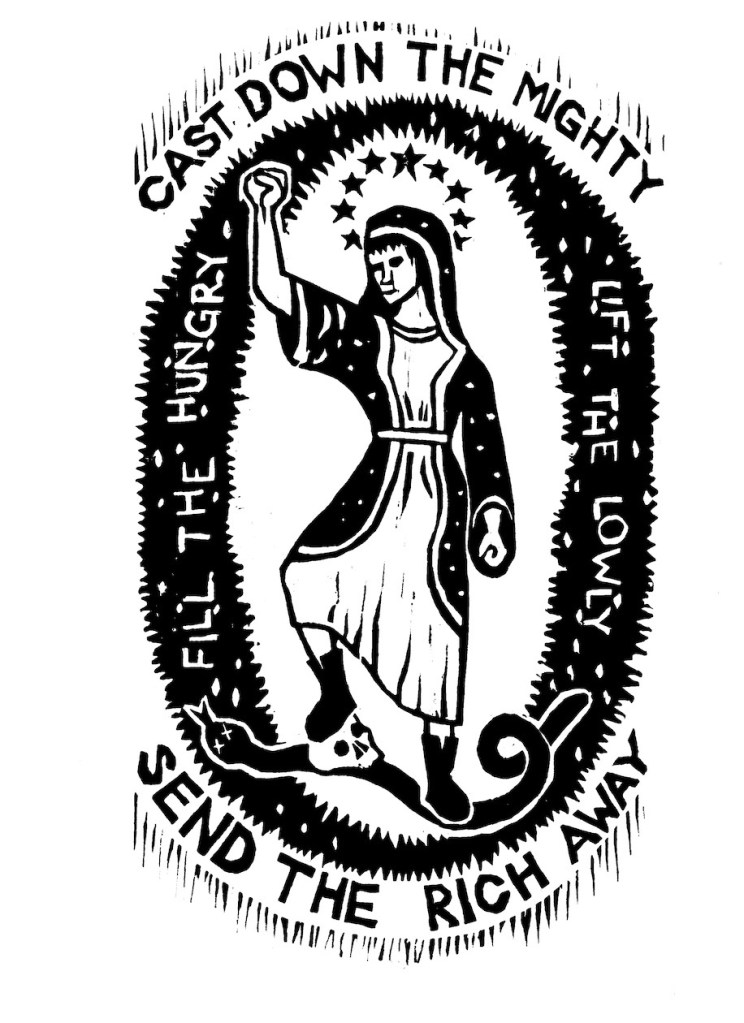
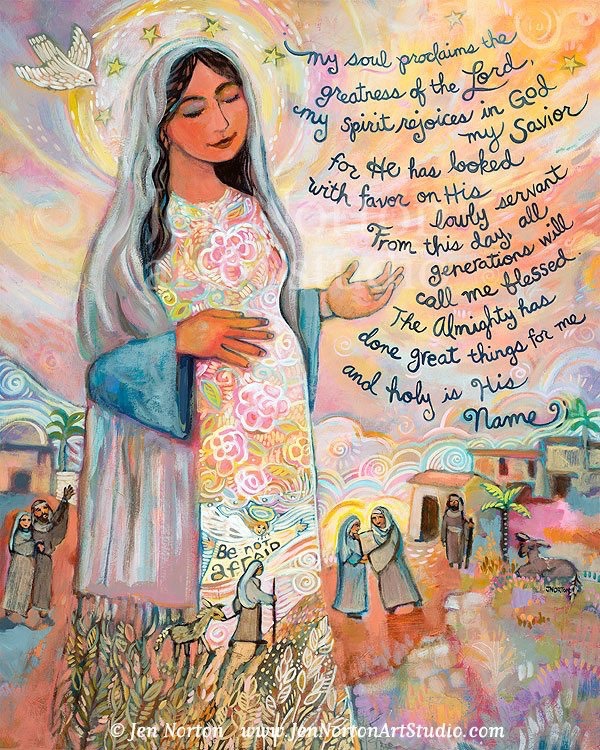
So we can see that the teachings of Jesus that instruct his followers on the matter of wealth and possessions are designed to stimulate the consciences of his followers, who were not beggardly poor, to alert them to their responsibilities towards those in the lowest socio-economic levels of society. They are to act towards them remembering that God has long had good news for the the poor and liberty for the oppressed (Isa 61:1–2, quoted at Luke 4:18), knowing that Jesus blesses those who are poor, hungry, and weeping (Luke 6:20–21), and recalling how Mary sang that God has “lifted up the lowly [and] filled the hungry with good things” (Luke 1:52–53), which itself evoked the ancient song of Hannah that God “raises up the poor from the dust [and] lifts the needy from the ash heap” (1 Sam 2:8, repeated at Ps 113:7).

In order to make sense of this thread running throughout the Gospel—and into the early chapters of Acts—we need to remember key elements of life in ancient times. First, that society was not individualist (like modern Western society), but thoroughly communal (as many cultures around the world still are today). Second, that the fundamental economic dynamic at work was that of patronage; everyone had their place in society, and they related “up” to people with greater means and power than they had, as well as “down” to those with less power and means.
Third, that society was an honour—shame culture, in which everyone knew what was appropriate and what was not, and which acts performed out of place would damage the honour of a man, or the shame of a woman. Such acts of care and support for those lowly and impoverished would gain honour in the public sphere.

And finally, within ancient societies there was an acceptance that there were limited goods in society. Unlike the modern idea that “progress” could create more )more goods, more wealth, more power) in ancient societies it was accepted that what there was needed to do for everyone; there’s no “more” to be made.
So these dynamics shape the way that these teachings of Jesus functioned in his society; and they agitate us to live in socially responsible ways in our society today. Christians have a responsibility to ensure the material wellbeing of all in society, including (and especially!) a commitment to support and advocate for those most at risk and most impacted.
Indeed, my own denomination, the Uniting Church in Australia, published a Statement to the Nation when it was formed in 1977, which made clear this responsibility and affirmed this commitment in very clear terms. This Statement declares that the Gospel cannot be reduced simply to personal piety or sexual morality or doctrinal disputation or practical ethics. The Church is most fully on mission when its people are engaged in society, not only tending to the needs of vulnerable and impoverished members of society, but also advocating for their rights, lobbying for changes in the law, pressing for justice in daily life. See






































 An Informed Faith