You are that man! (2 Sam 11–12; Pentecost 11B)

Last Sunday we heard the story of David’s adultery with Bathsheba (2 Sam 11:1–15). It’s a story that has been known and remembered through the ages—although it has often been badly misinterpreted, in explanations that “blame the woman” for what, in the text, is clearly a series of actions undertaken explicitly by the man who has power, the man who decides to “take” the woman.

As we have seen in previous blogs, the person who emerges with most integrity from the story of David’s adultery and murder is Bathsheba. In the custom of the day, she had no choice but to obey the King and allow him to “lie with her” and make her pregnant (11:4–5). Bathsheba fittingly mourns for her husband (11:26). She will remain faithful to David, as king, over the years, as well as to her child, Solomon, who later becomes king (from 2 Sam 11:27 through until 1 Kings 2).

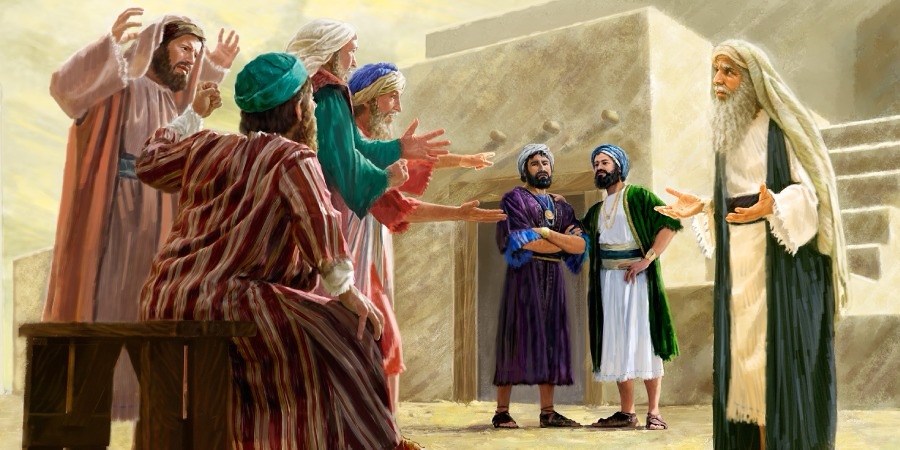
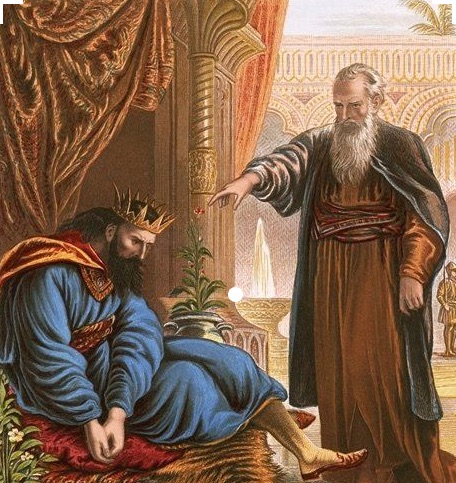
David, by contrast, continues his unseemly behaviour. In the passage that we hear this Sunday (2 Sam 11:26—12:13), the prophet Nathan regales him with a tale of a rich man with “very many flocks and herds” and a poor man with “nothing but one little ewe lamb” who was much loved and was “like a daughter to him” (12:1–3). Nathan’s story ends with a powerful punchline: “he took the poor man’s lamb, and prepared that for the guest who had come to him” (12:4). The point is clear; the rich man has acted unjustly.
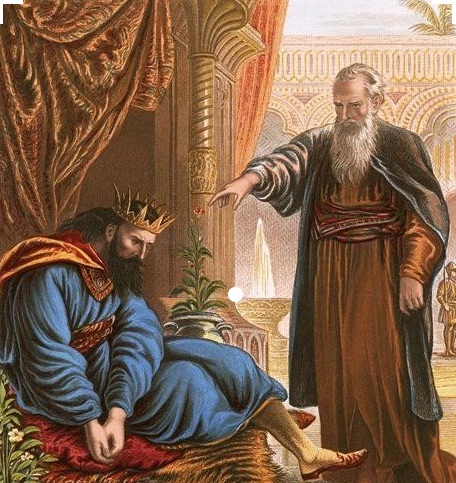
David immediately erupts in anger at the selfish acts of the rich man. “As the Lord lives”, he exclaims, “the man who has done this deserves to die” (12:5). As was to be expected of the king—who was execute justice in Israel (Ps 72:1; 99:4; 1 Ki 10:9)—punishment for this selfish deed was rightly to be implemented.

What provoked this strong response? The prophet has told the king a story which cut right to his heart. We recognise this story as a parable, perhaps the best-known of all parables in the Hebrew Scriptures. Jesus, we know, used parables as the chief means of his story-telling. A parable is a story told in a specific way, often to make a single clear point. Parables are conundrums. They contain unresolved tensions. They invite multiple understandings. They press for exploration and investigation.

The parable form used by Jesus has deep roots in Hebrew traditions. In Hebrew Scripture, there are examples of the short, sharp, pithy parables, often identified as a ḥidah, or riddle. A classic short, simple riddle is that spoken by Samson, “out of the eater came something to eat; out of the strong came something sweet” (Judg 14:14). The narrative comment that follows is delightful: “for three days they could not explain the riddle”!

Another example is the proverb quoted by two prophets, about the impact of the Exile: “the parents have eaten sour grapes, and the children’s teeth are set on edge” (Jer 31:29; Ezek 18:2). The point of this saying is clear and telling. Likewise, the point is conveyed directly when Hosea laments the rebellion of the people, describing them as “like a dove, silly and without sense”, and noting how the Lord will discipline them; “I will cast my net over them; I will bring them down like birds of the air” (Hos 7:11–12).

This is the classic form of a comparison, a mashal, in which one item is compared with another item. A parable, at its heart, is a comparison: “this is like that”.

There are also more extended parables, with multiple characters and an extended storyline, such as in the parable that Nathan tells David in 2 Sam 12. Often, the simple comparison that is intended is developed into an allegorical tale. In an allegory, particular individual features can play an independently figurative role, so that the story told becomes a kind of riddle which invites a response from the listener. “What do you think?” becomes the implied way that the allegory-riddle ends. Listening to the story is not enough—the listener needs to engage, enter the conundrum, make up their mind!

In Hebrew Scripture, the allegory of the Eagles and the Vine (Ezek 17:3–10) is described as both ḥidah (“riddle”) and mashal. The parable first describes “a great eagle, with great wings and long pinions”, who carried seed far away where it took root and became a vine (a classic symbol of Israel). It then offers a further description of “another great eagle, with great wings and much plumage”, which the teller of the parable fears may seek to uproot the vine. “When it is transplanted, will it thrive”, the parable ends (v.10)—will Israel, transplanted into exile, manage to survive that experience?

Further parable-riddles occur in subsequent chapters in Ezekiel. There is the Lamenting of the Lioness (Ezek 19:2–9) and the Transplanted Vine (Ezek 19:10–14), and the stories of the Harlot Sisters (ibid. 23:2–21). There is also one of my favourites, the very vivid—and gruesome—parable of the Cooking-Pot (Ezek 24:3b—5).

In this parable, the prophet warns the people of judgement: “set on the pot … pour in water … put in the pieces, the thigh and the shoulder … fill it with choice bones” (that is, the meat and bones of the Israelites being punished). The prophet concludes with a booming denunciation: “woe to the bloody city … the blood is shed inside it … to rouse my wrath, I have placed the blood she shed on on a bare rock” (Ezek 24:6–8, and then the metaphor extended still further in 24:9–14).

Each of these parables are clearly allegorical, in that the overall point is clear, and yet also the details in the story invite connection with specific people or events. Ezekiel is a powerful speaker, who utilises this dramatic story-form with great flair, and effect. So, too, is Nathan, in the passage we hear this Sunday; the simple comparison is advanced through the story, in which various elements correlate with the situation involving David and Bathsheba.

For more on parables, see the links at the end of this post.

Nathan’s confronting story cuts to the heart of David. As the prophet declares, the king has acted in exactly the way that the man in the story has acted. He is privileged and well-to-do, and yet he seeks more through his selfish actions; there is pure evil in what he has done. Nathan berates David at length (2 Sam 12:7–10), climaxing with the warning of the Lord, “I will raise up trouble against you from within your own house” (12:11–12).

So David retreats from his anger and backs down in repentance: “I have sinned against the Lord”, he says to Nathan, who then reassures him, “now the Lord has put away your sin; you shall not die” (12:13). Nathan has executed his prophetic role with power: he speaks forth the word of the Lord into the immediate situation, calling David to account. At least the king recognises his sin and repents. God both punishes and forgives him.

Writing in With Love to the World, Sarah Williamson characterises this as “a classic revenge tale”. She notes that “David has ruined a family by killing Uriah and taking Bathsheba as his wife” and that “the prophet Nathan helps David see what he has done and as he comes to face his actions, he is told that his first born child will suffer the consequences.”

“This reflects the punitive nature of ancient Israelite thinking”, Sarah writes; and yet, “it is possible to understand this story with a different angle”. She explains: “It shows that, even though we may be ‘forgiven’, as was David for his actions, so our choices are not without consequence.”

This then raises questions to consider: “Could God deliberately harm a child for the actions of a parent? What sort of understanding do we have about the forgiveness of God? Is forgiveness free or does a price need to be paid?” Her reflection is that “our poor judgments can have a generational power; that which the parents do can affect the children and generations to come”.

And so she concludes that this reading may be “an invitation to reflect on our own theology of forgiveness and the consequences of our actions. Perhaps we may invite the notion of grace into this space and ask, what sort of a God do I see in this story, and how does it fit with my own faith?”

With Love to the World is a daily Bible reading resource, written and produced within the Uniting Church in Australia, following the Revised Common Lectionary. It offers Sunday worshippers the opportunity to prepare for hearing passages of scripture in the week leading to that day of worship. It seeks to foster “an informed faith” amongst the people of God.

You can subscribe on your phone or iPad via an App, for a subscription of $28 per year. Search for With Love to the World on the App Store, or UCA—With Love to the World on Google Play. For the hard copy resource, for just $28 for a year’s subscription, email Trevor at wlwuca@bigpond.com or phone +61 (2) 9747-1369.
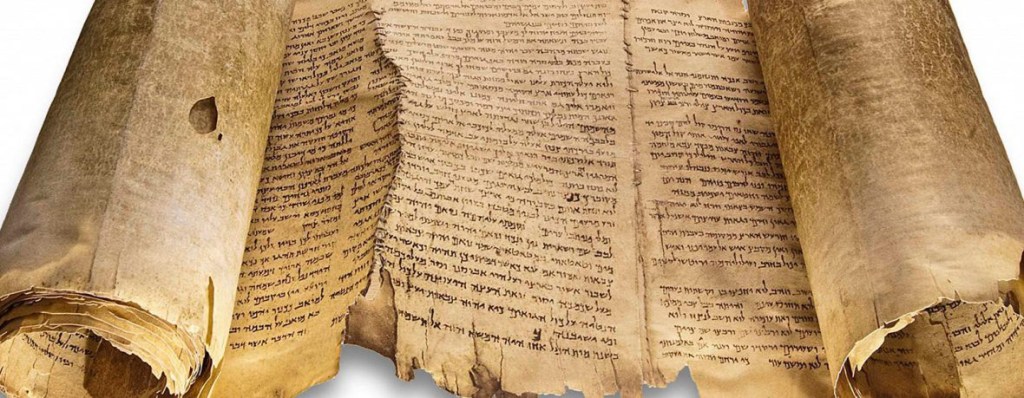
The Jewish Virtual Library article on “Parable” can be found at https://www.jewishvirtuallibrary.org/parable

For further reading on parables in the rabbinic tradition, see

Click to access rabinnic-parables.pdf

https://www.jewishencyclopedia.com/articles/11898-parable

https://www.jerusalemperspective.com/2721/

See also
The kingdom, God’s justice, an invitation to all (Mark 4; Pentecost 4B)

In following the Revised Common Lectionary, we’ve just returned to passages from the beginning of the good news of Jesus, chosen one, after many months away in other gospel accounts of Jesus and his activity. See https://johntsquires.com/2021/03/19/1-where-has-mark-gone/

The work we know as “the Gospel according to Mark” is the shortest and earliest of the extant accounts that we have. It is a story-telling narrative, moving from one incident to the next in short order. It’s a dramatic and vivid account. See https://johntsquires.com/2021/03/20/2-mark-collector-of-stories-author-of-the-passion-narrative/

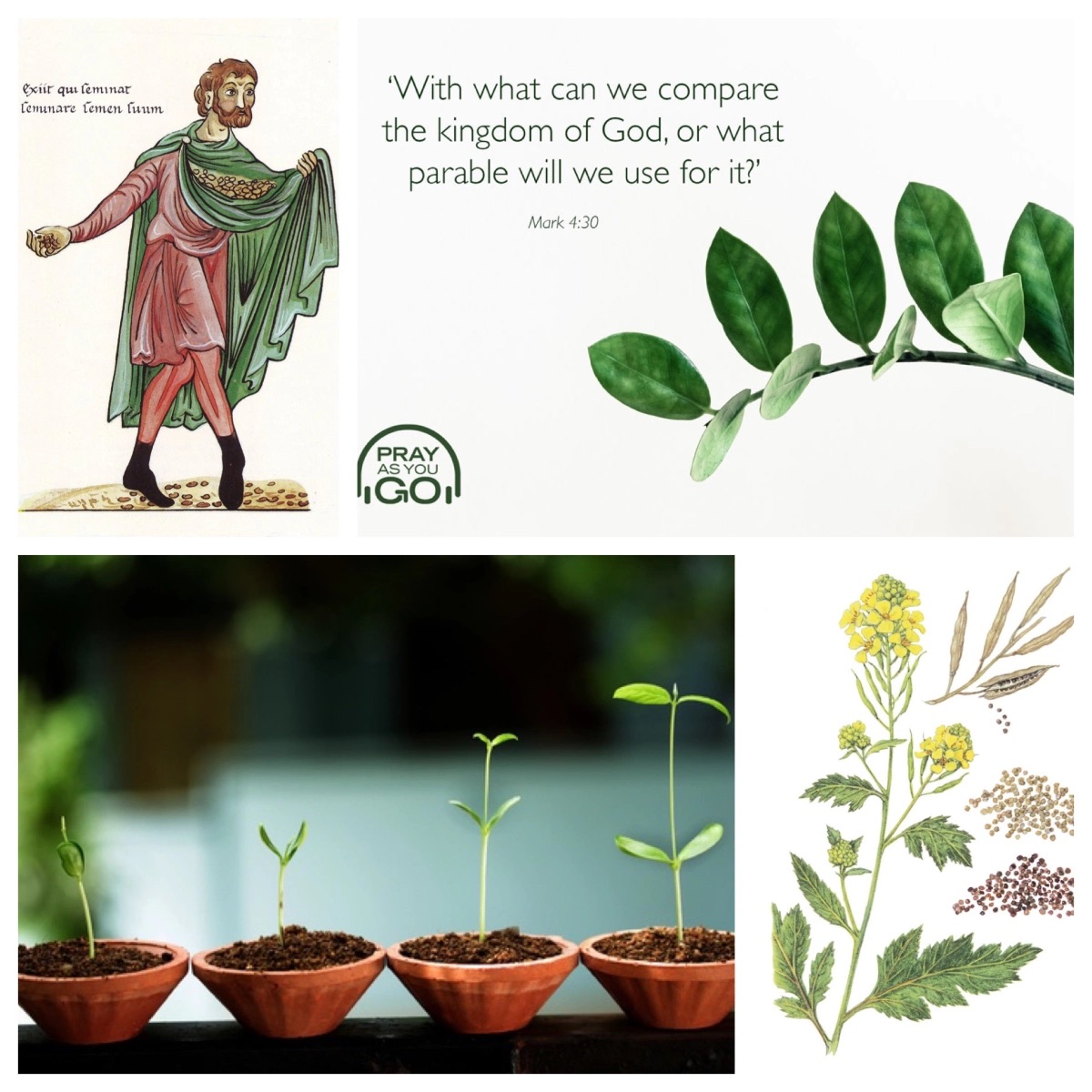
It’s fitting, therefore, that we hear today two of the really short stories that Jesus told. We know these short stories as parables. There is the parable of seed, scattered in the ground, that grows of its own accord (Mark 4:26–29). Then there’s the parable of the smallest seed that grows to a large shrub (4:30–32). These two short stories each reveal something about the way that God wants things to be, the kingdom of God. Such parables were typical of the way that Jesus taught his followers (4:33–34).

Parables were quite widespread in the society of Jesus’ day. They were evocative and effective means for telling stories. The most common means of entertainment in the ancient world was telling stories. This was done by word of mouth, from one person to another, or in small groups gathered in market places, courtyards or houses. Education also relied on the voice. Children were taught by word of mouth. Adults also learned by listening, discussing, debating.

Written materials were costly and only a small percentage of the population was literate. The natural tendency to tell stories was widely accepted in Jewish society, so that the most familiar pattern was that learning took place through the passing on of stories. So oral story telling was commonplace in the synagogues where Jews gathered for worship and instruction.

We can see the dominance of the oral medium most clearly in the literature which tells about the rabbis of Judaism. The story was the foundational building block for all the rabbis’ teaching activities. Beyond Judaism, we see it in the popularity of written biographies, romances, histories and adventure stories, throughout the ancient world.

Indeed, a second century Christian (Papias, the Bishop of Hierapolis) is reported as having stated that stories spoken by teachers are to be preferred as more reliable than written works (such as the Gospels)—an attitude that sounds incredible to our modern ears! See https://johntsquires.com/2020/10/15/what-do-we-know-about-who-wrote-the-new-testament-gospels-2/

A parable is an important type of story-telling. A parable is a story told in a specific way to make a single clear point. Parables are found in Jewish literature; the most famous examples in the Hebrew Bible are Samuel’s parable comparing David with a callous rich herdsman in 2 Samuel 12 and the prophet’s parable comparing Israel with an unfruitful vineyard in Isaiah 5.

Rabbis at the time of Jesus, and later, have used parables to make their point in their teachings. The Hebrew word for this form was mashal, a word meaning “to be like” or “a comparison”. Parables were told to make a point about something that may not be easily understood, by drawing a comparison with something else that was well-known or easily understood.

The mashal also opens up the possibility of a more developed form of comparison, the similitude, of which the best example is Nathan’s parable to David concerning the stolen lamb (2 Sam 12:1–4). This form flourishes in later Judaism, both in rabbinic literature, and in the Gospel accounts of Jesus’ parables (“the kingdom of heaven is like…”). In fact, the parables told by Jesus follow the patterns and customs of the rabbinic mashal.

Both the parable of the seed growing in secret (4:26–29) and the parable of the mustard seed (4:30–32) are examples of a simple parable with a short plot development. The first parable moves quickly to the key point, when the farmer “goes in with the sickle, for the harvest has come”.

Judgement is integral to the message that Jesus preached. His vision of the kingdom involves standards that God imposes and that God judges. The seeds growing in secret will face this reckoning at the harvest. Our lives of discipleship will be measured by the righteous-justice of God that Jesus proclaimed. The harvest was an image of divine judgement for some of the prophets (Hosea 6:1–11, 8:1–10; Joel 3:9–16; and see Ps 126:1–6; Prov 22:8).

The second parable has a similar focus on the climax: “it becomes the greatest of shrubs”. The mustard seed grown into a shrub with branches in which the birds nest, indicates the inclusivity that is offered in the kingdom. It seems that Jesus May have been referencing the oracle of Ezekiel, about a sprig of cedar that grows so big that “under the shade of its branches birds of every sort will nest” (Ezek 17:22–24).

Measured by the standards of the righteous-justice of God, the kingdom is open to those who adhere to this measure, regardless of their status or origins. This was the message of Jesus, offering hope to all who followed in his way.

This pair of parables contain two key elements of the message of Jesus: justice, and inclusivity. We find these themes in the stories told and the guidance taught by Jesus throughout his ministry. The parables convey these messages in short, sharp, dramatic style.

Give us a King, like other nations (1 Sam 8–10; Pentecost 3B)

1 Samuel 8:4–20 is the passage offered by the lectionary for this coming Sunday. It is the second in the sequence of Hebrew Scripture passages that we are reading through the first half of the long “season after Pentecost”, from May to August. The passage addresses an issue that was important in ancient Israel; that is important in modern-day Israel/Palestine; and that is important, also, in all nations around the world today.

This Sunday we will hear the beginning of a process—debate about having a king as a ruler—that culminates, at the end of August, with an account of Solomon, the wisest, most powerful, and perhaps most damaging king of all. That makes this ancient text potent in the contemporary situation, where Israel is engaged in a life- and-death struggle with Hamas, where megalomania amongst leaders in Russia, North Korea, China, and even the USA predominates, and where too many countries around the globe suffer under dictatorial, repressive regimes.

The passages selected today focus on the issue of power. Precisely: what kind of power in leadership is acceptable in Israel? should Israel be ruled by a king? For centuries, judges had led the people, determining what was right and what was wrong. The book of Judges tells of a string of such judges, men who worked hard to recall the people to their covenant with the Lord God: Othniel (Judg 3:9), Ehud (3:15), Shamgar (3:31), an unnamed prophet (6:8), Gideon (6:11–18), Tola (10:1), Jair (10:3), Jephthah (11:1; 12:7), Ibzan, Elon, and Abdon (12:8–15), and Samson (13:24–25; 16:28–31).

And, of course, it most famously tells of Deborah, “a prophetess, wife of Lappidoth, [who] was judging Israel; she used to sit under the palm of Deborah between Ramah and Bethel in the hill country of Ephraim; and the Israelites came up to her for judgment” (Judg 4:4–5).

However, the impact of the efforts of these various judges was merely transitory; the people returned again and again to their sinful, idolatrous ways. “The Israelites did what was evil in the sight of the Lord” (initially at 2:11, repeated at 3:7) is a recurring refrain throughout the book of Judges. It signals that the people reverted to their evil ways after Othniel (3:12), Shamgar (4:1), Deborah (6:1), Jair (9:6), and Abdon (13:1).

As a result, we are told that the people were “given into the hands” of their enemies on each of these occasions (3:8; 4:2; 6:1, 13; 10:7; 13:1). The horror perpetrated by Jephthah, offering his own daughter as a burnt offering (11:29–40), and the deceit and arrogance of Samson (16:1–31) exemplify this sinful streak.

In the final chapters of the book, details are given of the evil deeds of various people: the mother of Micah, who made an idol of cast metal (17:1–6); the men of Gibeah, who raped the Levite’s concubine (19:22–25); the Levite himself, who cut his concubine into twelve pieces (19:27–30); and then the attacks on the Bejaminites by the other tribes of Israel (20:1–48). The book draws to its end with the mournful conclusion, “in those days there was no king in Israel; all the people did what was right in their own eyes” (21:25).

So it is made clear in the narrative constructed in the book of Judges, that Israel’s downfall was that it was not ruled by a king, as other nations surrounding Israel were. A king could maintain justice and ensure equity within the society of Israel. And a king could marshal the forces needed to repel invaders and stand resolute against the sinful ways that would be imposed upon the nation by those who did not fear the Lord God.

So the elders of Israel press for change; we can understand why. However, the prophet who has been called by God, Samuel, is attuned to God’s voice on this matter, and so he rejects this request. But the people persist with their request—their demand, even. And so it is that God, in a striking reversal of opinion, decides to have a change of mind about kingship. God pushes Samuel to accept this change.

The lectionary this coming Sunday offers us excerpts from the lengthy section of 1 Samuel where this matter is considered (1 Sam 8—11). The matter is first raised in the request made of Samuel by the people: “appoint for us, then, a king to govern us, like other nations” (1 Sam 8:5). The revolution comes, chapters later, after various points of view have been canvassed.

The lectionary selection for this Sunday offers us “A Dummies Guide to Kings in Israel”—that is, a series of “bites” [1 Samuel 8:4-11, (12-15), 16-20, (11:14-15)], some of which are optional (placed in parentheses). After the initial request, it includes the resistance of Samuel to this proposal (8:12–18) and the persistence of the people in pressing their request: “the people refused to listen to the voice of Samuel; they said “No! but we are determined to have a king over us” (8:19–20).

The full text of 1 Samuel provides reports of the back-and-forth that transpires, which the lectionary omits. It skips to a final optional reading of a further short section (11:14–15) which reports the outcome: “all the people went to Gilgal, and there they made Saul king before the Lord in Gilgal”.

The appointment of a king was obviously a matter of some controversy in ancient Israel; the compiler of the Deuteronomistic History (of which 1 Samuel is a part) devoted a significant amount of space to it, taking pains to include conflicting views about this matter. And, as we read these texts with the benefit of hindsight, we know that a king was ultimately appointed. This led to the later establishment of the Davidic dynasty, which became important in the claims later made about Jesus of Nazareth, recognised as Son of David.

So, of course, the person (or persons) chronicling the history of Israel in what scholars now call the Deuteronomistic history will tell the story with this outcome in view. The end result shapes how the story is told.

Writing in With Love to the World, Elizabeth Raine observes that “Israel looks for a leader to win battles and guarantee their security. It is a black-and-white understanding of the King; a figure military strength and political power. This is not the same as the way the prophet saw the role of King”. The people want power. The prophet warns of corruption. The people want victory. The prophet warns of failing to ensure justice.

And a clear thread in Hebrew Scripture would come to be that the king was called by God and anointed by God’s prophet to ensure that justice and righteousness were found in the land of Israel (Ps 72:1; 99:4; 1 Ki 3:28, 10:9; Isa 11:1–9; 32:1). That, at least, became the ideology for kingship in Israel; the reality, as we see in the stories selected for future weeks, was often different.

Elizabeth continues, “The story calls us to examine where we are placing our allegiances, and move to transformation, that process of repentance and renewal in which we turn back to God in every area. Whilst such self-examination is no doubt painful, it is also the only way to ensure we remain connected with God’s life-giving Spirit. As more and more people make the shift to a faithful allegiance that ensures that God’s Kingdom will be realised here on earth, we will hopefully see the reality of justice, peace, and love spreading in our world.”

To close, I offer two reflections on how this ancient story might speak to us today. The first perspective is that this story, about the desire for a powerful leader, and the dangers of pushing an agenda of power over all other matters, is a direct challenge to the way that the leaders of the modern state of Israel are conducting themselves in the long-enduring conflict with the Palestinians, who share an equally just claim to the land that was bequeathed to Jews in 1948. I have reflected at more length on this matter at

and my colleague Chris Budden has offered good insights into this conflict at

The second perspective is that this story is the first in a series of stories from ancient days which address a pressing contemporary issue: how to bring about effective change within the community of faith. It is something we all know about today, as society changes and the church occupies a different place in that society. How do we listen for God’s voice in this context? How do we advocate for effective change? I have written further on this dynamic at

and

With Love to the World is a daily Bible reading resource, written and produced within the Uniting Church in Australia, following the Revised Common Lectionary. It offers Sunday worshippers the opportunity to prepare for hearing passages of scripture in the week leading to that day of worship. It seeks to foster “an informed faith” amongst the people of God.

I will put my spirit within you … I will place you on your own soil (Ezekiel 37; Pentecost B)

In the alternate reading that the Revised Common Lectionary proposes for the festival of Pentecost, this coming Sunday, we find a section from the exilic prophet Ezekiel (Ezek 37:1–14). This is the famous prophecy covering the dead bones, to which the Lord (through Ezekiel) declares, “I will cause breath to enter you, and you shall live. I will lay sinews on you, and will cause flesh to come upon you, and cover you with skin, and put breath in you, and you shall live; and you shall know that I am the Lord” (Ezek 37:5–6).

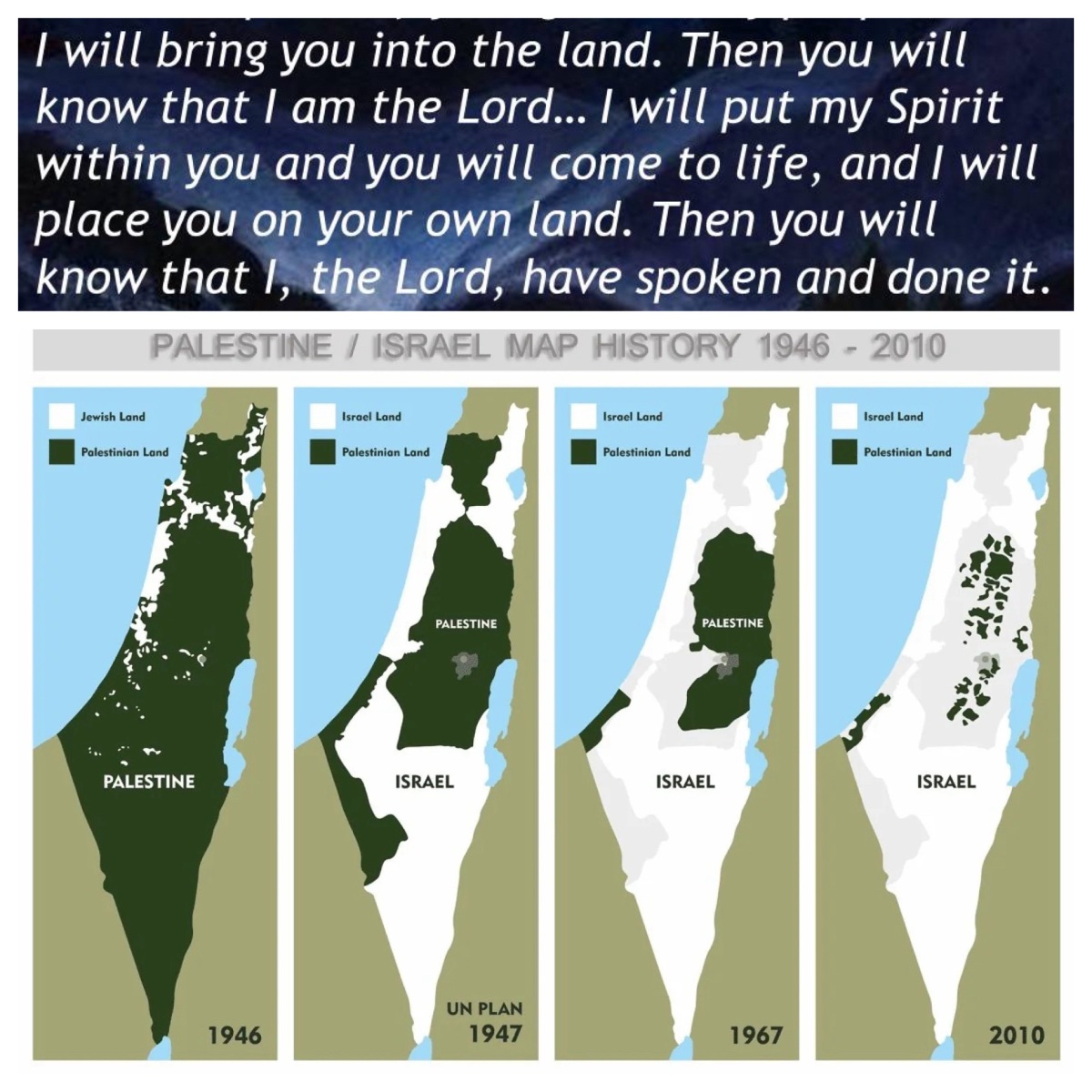
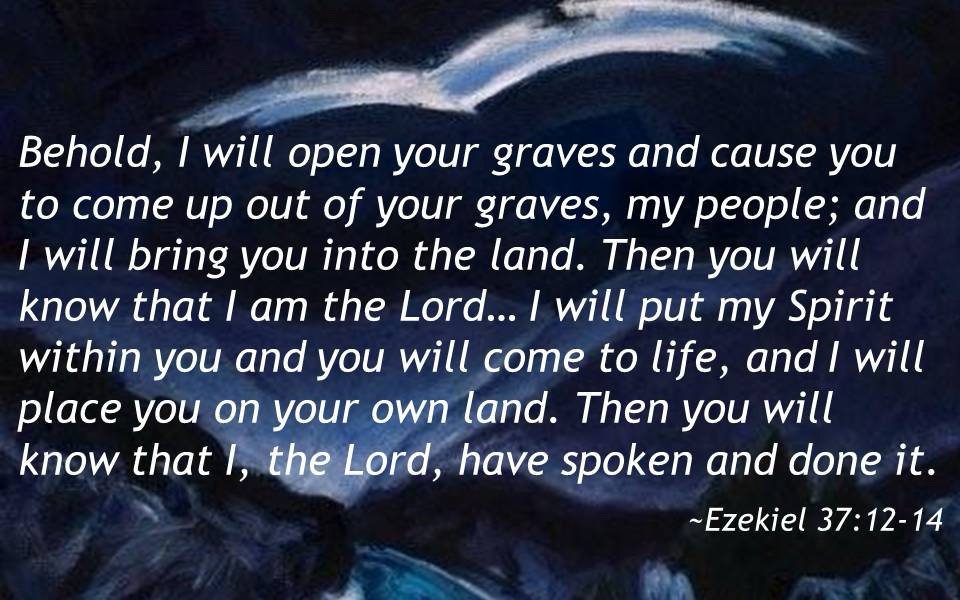
However, this passage also contains words which were filled with hope for the exiled people—but which, in the light of current events in the Middle East, and especially since the eruption of conflict on 7 October last year, are fraught with difficulties. God instructs Ezekiel, “prophesy, and say to them, Thus says the Lord God: I am going to open your graves, and bring you up from your graves, O my people; and I will bring you back to the land of Israel. … I will put my spirit within you, and you shall live, and I will place you on your own soil; then you shall know that I, the Lord, have spoken” (Ezek 37:12,14).

However, this passage also contains words which were filled with hope for the exiled people—but which, in the light of current events in the Middle East, and especially since the eruption of conflict on 7 October last year, are fraught with difficulties. God instructs Ezekiel, “prophesy, and say to them, Thus says the Lord God: I am going to open your graves, and bring you up from your graves, O my people; and I will bring you back to the land of Israel. … I will put my spirit within you, and you shall live, and I will place you on your own soil; then you shall know that I, the Lord, have spoken” (Ezek 37:12,14).

These words are fraught because of the long history of conflict relating to “the land of Israel”—the land to which the exiles would return under the decree of Cyrus of Persia; the land which today is the focus of such controversy and conflicted claims.

The land marked out for Israel was based on the historical reality that in ancient times Israelites/Jews had lived on that land for centuries until the scattering of all Jews under Roman rule first and second centuries of the Common Era. But since then, Arabs of various origins had held control of the land (see below), and those living there came to be known as Palestinians.

In the early 20th century, the place where Arabs who identified as Palestinians were living was decreed to be the British Mandate of Palestine (1920–1948). The ancient conflicts, it was hoped, would be well in the past. A place for Palestinians in the modern world was, it was thought, now settled. But this was not to be, as we well know today.

In part in response to the horrors of the Shoah, exposed by the ending of World War Two, the modern state of Israel was created in 1948. This was a hugely important, completely justified step to take, give the atrocities of genocide that had been inflicted on Jews in Europe by the Nazi regime of Germany.

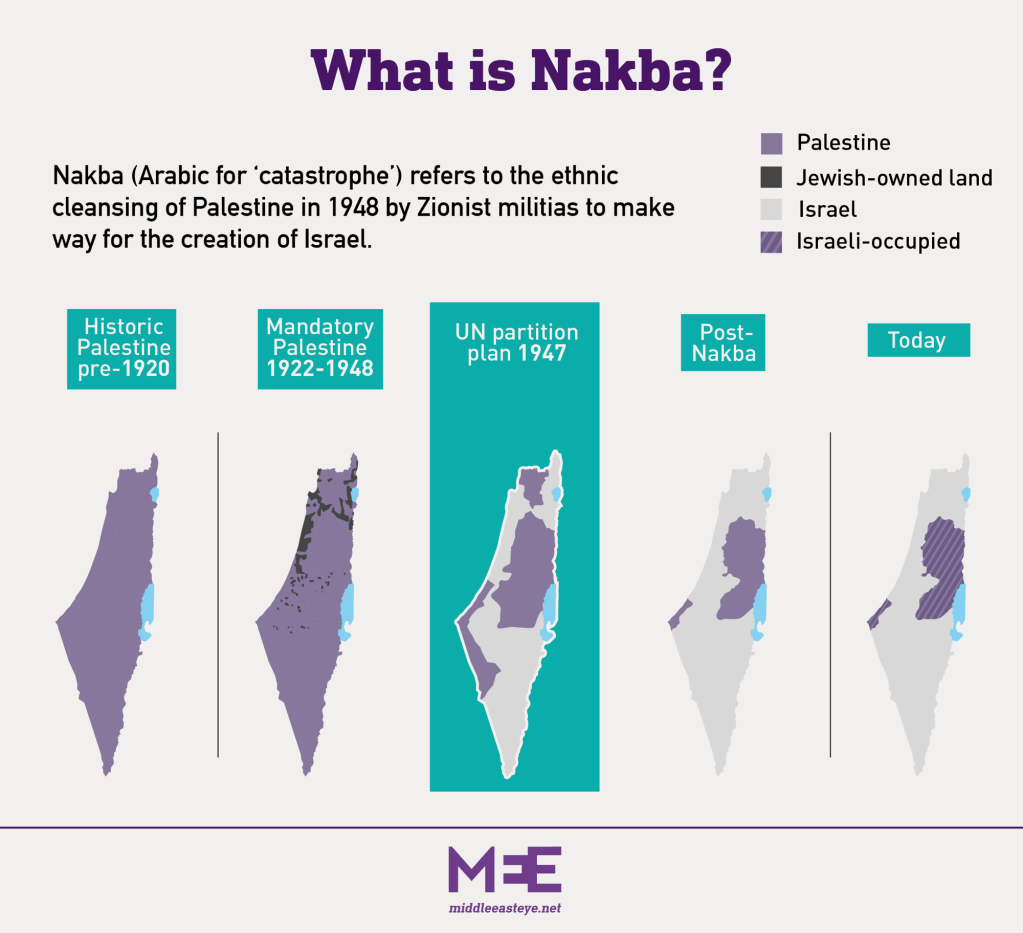
The new nation of Israel took 78% of the area which had been provided for Palestinians in the British Mandate. That this was now Jewish territory was a blessing for Jews, but it was a huge and continuing irritant to Palestinian sensibilities, which is why the period from 1948 onwards is known as the Nakba, the Palestinian Catastrophe. A significant number of Palestinians fled the area declared as Israel, as (in one estimate) over 500 Palestinian villages were repopulated by Jews, becoming refugees with no national identity. That was indeed a catastrophe for those inhabitants.

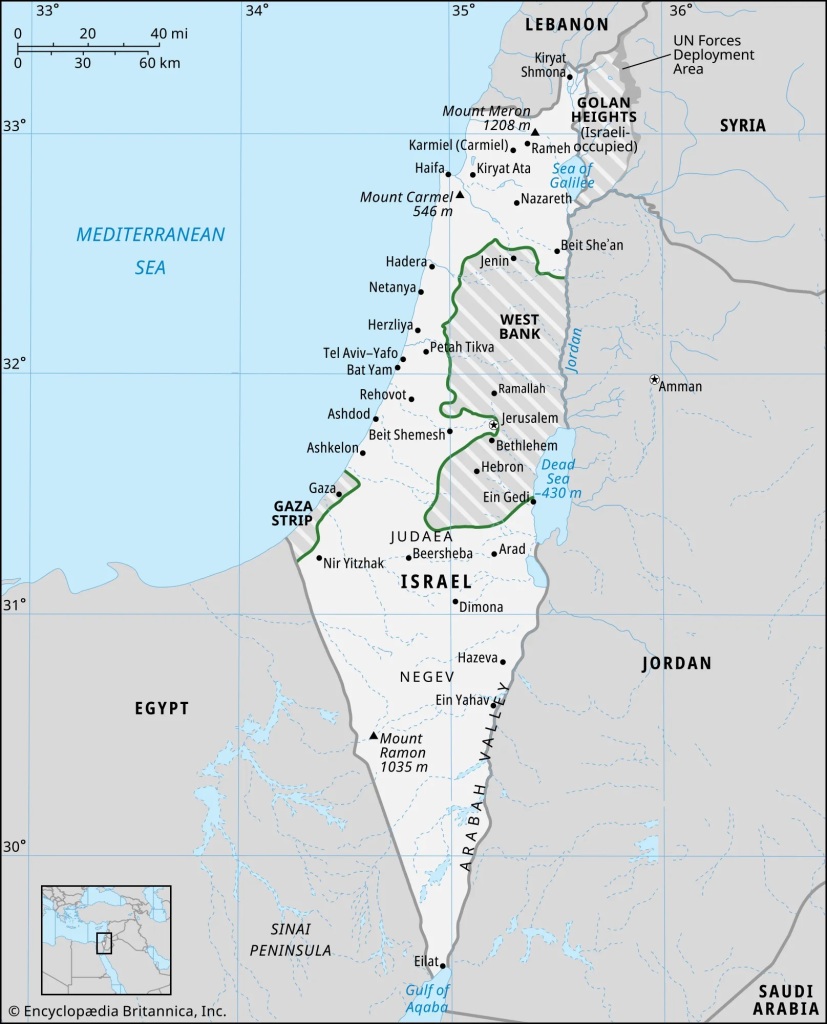
The contested regions of the Gaza Strip (along the east coastline of the Mediterranean Sea) and the West Bank (land immediately to the west of the River Jordan) became known as the Palestinian Territories. They have been disputed territories ever since they were occupied by Israel, two decades later, in the Six-Day War of 1967. In the decades since then, continuing and increasingly aggressive expansion of Israeli settlements into areas where Palestinians were living has greatly exacerbated the situation.

And so those who were dispossessed—and offered the hope of return to “their land”—become the dispossessors of others, to whom that same land was also “their land”; and so the tragic cycle continues.

The biblical texts which claim that God gave land to a chosen people so long ago are not verbatim accounts of “what God said” long ago, nor are they historical reports of actual events. They were written by priests returning from Exile, trying to recapture the period when Israel had some autonomy, because of the strength of its army under various tribal leaders (presented as “kings”). The texts form aetiological tales—that is, they are written as stories at a point in time, purporting to be ancient records, laying the foundation for a claim such as “this is our land, God gave it to us”.

That same land, promised to Abraham, claimed by Moses, is in contention today. It has had a chequered history. The ancient land of Cana an eventually became the land of Israel, then (along with Judaea) part of the Roman province of Syria Palaestina (132–390), and then of the Diocese of the East in the Roman Empire (to 536). What followed the fall of the Roman Empire was a millennium and a half of Muslim rule of this land, first as a part of Bilad al-Sham, the Greater Syria region, under various Caliphates.

The region continued to be part of various organisational configurations under successive Muslim rule, on into the Ottoman Caliphate (from 1517) and then into the modern era, as already noted. (I am not an expert, by any means, of this ancient and medieval history; for this summary, I am dependent on what I read in what I consider to be reputable sources.)

An exaggerated, idealised view of the extent of the land claimed by modern-day Israelis is evident in so many ways in the portrayal of Solomon, who was seen to be filled with “wisdom and knowledge”, and granted “riches, possessions, and honour, such as none of the kings had who were before you, and none after you shall have the like” (2 Chron 1:7–12, especially verses 10 and 12). The biblical figure of Solomon is an exaggerated caricature, a description of an idealised ruler whose existence is actually still a matter of debate amongst ancient historians.

It is also worth noting that the large reach of land that Solomon ruled over, even more extensive than the oft-cited phrase “from Dan to Beersheba” (Judg 20:1; 1 Sam 3:20; 2 Sam 3:10; 17:11; 24:2, 15; 1 Ki 4:25; 1 Chron 21:2; 2 Chron 30:5), did not continue past his death. The hagiographical exaggeration of territory under Solomon is not noted in the period after his death. The narrative books that recount the stories of the kingdoms of Israel, in the north, and Judah, in the south, in the centuries after Solomon, indicate that the scope of those kingdoms was more constrained.

*****

In the light of this, we need to take care when we come across texts in the Hebrew Scriptures which dogmatically and definitively declare that this land belongs to the people of Israel. Indeed, even scripture itself tells the story of the invading colonisers who claimed this land for their own (in the book of Joshua).

So I don’t think it is responsible, today, to lay claim to the whole, extended territory of the land, from the biblical passages noted, as the scope for the modern state of Israel which was created in 1948. There is no justification for the continued aggressive expansion of Israeli settlements in Palestinian areas. So I have sympathy for Palestinians who have lived on the land for thousands of years prior to 1948, as they understand this to be their ancestral land. It has been a continuing Nakba, a catastrophe, for Palestinians over these decades.

I also have sympathy for Jews, both those living in the land of Israel today, as well as those living in diaspora, for whom the land of Israel has a powerful symbolic significance—especially since the Shoah of 1933—1945 and the terrible genocide perpetrated by the Nazis against Jews in so many countries during that period. Granting them land in the area where their ancestors long ago had lived, a homeland that gives them security in the modern world, is important and necessary.

That said, I don’t agree that Palestinians should take matters into their own hands to seek vengeance against people in Israel in the way that they have done, once again, in recent months. In the same manner, nor do I think that the Israeli forces should respond in the aggressive and violent manner that they have done, once again, in recent times, with deaths of women and children, and aid workers, noted on the news with dreadful persistence. Too many people—innocent people—are dying and being injured, making any possible progress towards peace with justice even more difficult each day.

We need to seek once more the peace of these peoples. And we need to find that peace on the basis of justice. Neither terrorist attacks nor military crackdowns will achieve this. They will simply exacerbate a dangerous situation.

How do we deal, today, with the promises of God made long ago? “I will bring you back to the land of Israel. … I will place you on your own soil” (Ezek 37:12,14). We need to tread with care. Perhaps some other texts from both Jewish scripture Christian scripture provide guidance.

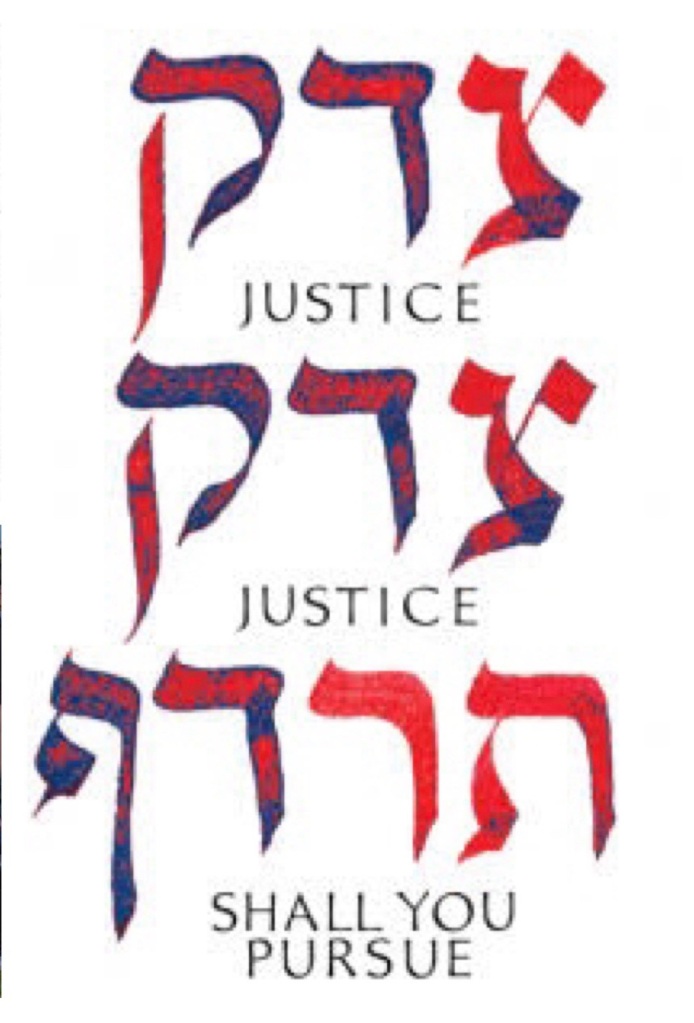
“Depart from evil, and do good; seek peace, and pursue it.” (Psalm 34:14). “Blessed are the peacemakers, for they will be called children of God.” (Matt 5:9). “Justice, and only justice, you shall pursue, so that you may live and occupy the land that the Lord your God is giving you.” (Deut 16:20). “… the weightier matters of the law: justice and mercy and faith. It is these you ought to have practiced …” (Mat 23:23). May these be the principles that guide the leaders of the warring groups in Israel and Palestine today.

Significant days, reflecting Shoah, Independence, Nakba, and 7 October.

This week there are two significant days happening in the Middle East. Yesterday, 14 May, was Yom Ha’atzmaut, Israel Independence Day, the national day for the modern state of Israel. And today, 15 May, is Dhikra an-Nakba (meaning “Memory of the Catastrophe”), a day of great significance for Palestinians, as it commemorates the Nakba, the Palestinian Catastrophe. These days are particularly poignant this year, as the ongoing conflict in Gaza which began on 7 October 2023 has exploded and escalated into a terrible state of entrenched warfare, with far too many unwarranted deaths (overwhelmingly of Palestinians) taking place each day since then.

These two days remember, from different perspectives, that moment when the modern state of Israel was created in 1948. This was achieved by mapping out an area for Jewish settlers to live in, and the simultaneous destruction of Palestinian society and homeland, with the permanent displacement of a majority of Arabs who identified as Palestinians and who had lived in this area for centuries.

The land marked out for Israel was based on the historical reality that in ancient times Israelites/Jews had lived on that land for centuries until the scattering of all Jews under Roman rule first and second centuries of the Common Era. But since then, Arabs of various origins had held control of the land (see below), and those living there came to be known as Palestinians.

In the early 20th century, the place where Arabs who identified as Palestinians were living was decreed to be the British Mandate of Palestine (1920–1948). The ancient conflicts, it was hoped, would be well in the past. A place for Palestinians in the modern world was, it was thought, now settled. But this was not to be, as we well know today.

British Mandate of Palestine, from Britannica.com

In part in response to the horrors of the Shoah, exposed by the ending of World War Two, the modern state of Israel was created in 1948. This was a hugely important, completely justified step to take, give the atrocities of genocide that had been inflicted on Jews in Europe by the Nazi regime of Germany.

The new nation of Israel took 78% of the area which had been provided for Palestinians in the British Mandate. That this was now Jewish territory was a blessing for Jews, but it was a huge and continuing irritant to Palestinian sensibilities, which is why the period from 1948 onwards is known as the Nakba, the Palestinian Catastrophe. A significant number of Palestinians fled the area declared as Israel, as (in one estimate) over 500 Palestinian villages were repopulated by Jews, becoming refugees with no national identity. That was indeed a catastrophe for those inhabitants.

The contested regions of the Gaza Strip (along the east coastline of the Mediterranean Sea) and the West Bank (land immediately to the west of the River Jordan) became known as the Palestinian Territories. They have been disputed territories ever since they were occupied by Israel, two decades later, in the Six-Day War of 1967. In the decades since then, continuing and increasingly aggressive expansion of Israeli settlements into areas where Palestinians were living has greatly exacerbated the situation. And so those who were dispossessed become the dispossessors of others, and the cycle continues.

Map showing Gaza and the West Bank, from Britannica.com

The biblical texts which claim that God gave land to a chosen people so long ago are not verbatim accounts of “what God said” long ago, nor are they historical reports of actual events. They were written by priests returning from Exile, trying to recapture the period when Israel had some autonomy, because of the strength of its army under various tribal leaders (presented as “kings”). The texts form aetiological tales—that is, they are written as stories at a point in time, purporting to be ancient records, laying the foundation for a claim such as “this is our land, God gave it to us”.

That same land, promised to Abraham, claimed by Moses, is in contention today. It has had a chequered history. The ancient land of Canaan eventually became the land of Israel, then (along with Judaea) part of the Roman province of Syria Palaestina (132–390), and then of the Diocese of the East in the Roman Empire (to 536). What followed the fall of the Roman Empire was a millennium and a half of Muslim rule of this land, first as a part of Bilad al-Sham, the Greater Syria region, under various Caliphates.

The region continued to be part of various organisational configurations under successive Muslim rule, on into the Ottoman Caliphate (from 1517) and then into the modern era, as already noted. (I am not an expert, by any means, of this ancient and medieval history; for this summary, I am dependent on what I read in what I consider to be reputable sources.)

An exaggerated, idealised view of the extent of the land claimed by modern-day Israelis is evident in so many ways in the portrayal of Solomon, who was seen to be filled with “wisdom and knowledge”, and granted “riches, possessions, and honour, such as none of the kings had who were before you, and none after you shall have the like” (2 Chron 1:7–12, especially verses 10 and 12). The biblical figure of Solomon is an exaggerated caricature, a description of an idealised ruler whose existence is actually still a matter of debate amongst ancient historians.

It is also worth noting that the large reach of land that Solomon ruled over, even more extensive than the oft-cited phrase “from Dan to Beersheba” (Judg 20:1; 1 Sam 3:20; 2 Sam 3:10; 17:11; 24:2, 15; 1 Ki 4:25; 1 Chron 21:2; 2 Chron 30:5), did not continue past his death. The hagiographical exaggeration of territory under Solomon is not noted in the period after his death. The narrative books that recount the stories of the kingdoms of Israel, in the north, and Judah, in the south, in the centuries after Solomon, indicate that the scope of those kingdoms was more constrained.

Solomon’s reputed empire, based on the exaggerated biblical texts

In the light of this, I don’t think it is responsible to lay claim to the whole, extended territory of the land, from the biblical passages noted, as the scope for the modern state of Israel which was created in 1948. There is no justification for the continued aggressive expansion of Israeli settlements in Palestinian areas. So I have sympathy for Palestinians who have lived on the land for thousands of years prior to 1948, as they understand this to be their ancestral land.

I also have sympathy for Jews, both those living in the land of Israel today, as well as those living in diaspora, for whom the land of Israel has a powerful symbolic significance—especially since the Shoah of 1933—1945 and the terrible genocide perpetrated by the Nazis against Jews in so many countries during that period. Granting them land in the area where their ancestors long ago had lived, a homeland that gives them security in the modern world, is important and necessary.

That said, I don’t agree that Palestinians should take matters into their own hands to seek vengeance against people in Israel in the way that they have done, once again, in recent months. In the same manner, nor do I think that the Israeli forces should respond in the aggressive and violent manner that they have done, once again, in recent times, with deaths of women and children, and aid workers, noted on the news with dreadful persistence. Too many people—innocent people—are dying and being injured, making any possible progress towards peace with justice even more difficult each day.

As John Hanscombe writes in The Echidna, “Just as there are no excuses for Hamas’s October 7 massacres, rapes and hostage-taking, using starvation as a weapon is also abhorrent. Turning a blind eye to attacks on aid convoys, as the Israeli police reportedly did, only pushes the country further into isolation. Two wrongs never make a right.”

See https://www.theechidna.com.au/

We need to seek once more the peace of these peoples. And we need to find that peace on the basis of justice. Neither terrorist attacks nor military crackdowns will achieve this. They will simply exacerbate a dangerous situation.

“Depart from evil, and do good; seek peace, and pursue it.” (Psalm 34:14). “Blessed are the peacemakers, for they will be called children of God.” (Matt 5:9). “Justice, and only justice, you shall pursue, so that you may live and occupy the land that the Lord your God is giving you.” (Deut 16:20). “… the weightier matters of the law: justice and mercy and faith. It is these you ought to have practiced …” (Mat 23:23). May these be the principles that guide the leaders of the warring groups in Israel and Palestine today.

See also

A new and right spirit (Ps 51; Lent 5B)

“Put a new and right spirit within me”, the psalmist sings (Ps 51:10), in the psalm that is offered by the lectionary for this coming Sunday, the Fifth Sunday in Lent, as a companion piece for the well-known Hebrew Scripture passage for this Sunday about the “new covenant” to be given to Israel and Judah (Jer 31:31–34).

Perhaps the key to this passage comes in the prophet’s words from God, “this is the covenant that I will make with the house of Israel; I will put my law within them, and I will write it on their hearts; and I will be their God, and they shall be my people.” (Jer 31:33). For more on this passage, see

The prophet indicates that the promise God offers is that “I will forgive their iniquity, and remember their sin no more” (Jer 31:34b), which is perhaps why the psalmist is confident to pray for God to have mercy: “blot out my transgressions, wash me thoroughly from my iniquity, and cleanse me from my sin” (v.2), then “purge me with hyssop, and I shall be clean; wash me, and I shall be whiter than snow” (v.7), and still more, “hide your face from my sins, and blot out all my iniquities” (v.9).

Forgiveness of sin has been a characteristic of the Lord God throughout the narrative books which tell the saga of Israel. Abraham bargains with God about forgiving Sodom (Gen 18:22–33). Moses likewise pleads with God, after the people had built a Golden Calf, to forgive them—“but if not, blot me out of the book that you have written” (Exod 32:32).

Yet these narratives also make it clear that God’s forgiving nature needs to be balanced by an understanding of the vengeance that upholds divine justice. In the wilderness of Paran, after spies returned from Canaan and stirred up discontent amongst the people, Moses recognises this capacity for vengeance; he implores the Lord not to kill the people in retaliation, praying, “forgive the iniquity of this people according to the greatness of your steadfast love, just as you have pardoned this people, from Egypt even until now”—to which the Lord God replied, “I have forgiven them, just as you have asked” (Num 14:19–20).

This story also indicates that divine forgiveness was conditional, for God immediately declared, “none of the people who have seen my glory and the signs that I did in Egypt and in the wilderness, and yet have tested me these ten times and have not obeyed my voice, shall see the land that I swore to give to their ancestors; none of those who despised me shall see it” (Num 14:22–23).

Later in this same book, note is made that “the Lord will forgive” a woman who makes a vow that displeases her father (Num 30:5) or her husband (Num 30:8, 12). God clearly sided with the male who had positional authority in the patriarchal structures of society!

At the renewal of the covenant when the people are in the land of Canaan, Joshua reminds the people that “you cannot serve the Lord, for he is a holy God. He is a jealous God; he will not forgive your transgressions or your sins. If you forsake the Lord and serve foreign gods, then he will turn and do you harm, and consume you, after having done you good” (Josh 24:19–20).

When Solomon dedicates the temple, he recounts the saga of Israel and five times asks for God to “hear in heaven” and “forgive your people who have sinned against you, and all their transgressions that they have committed against you” (1 Kings 8:30, 34, 36, 39, 50). And when Ezra leads a ceremony of rededication for the people as they return to the land after exile, in his extended prayer he reminds God, “you are a God ready to forgive, gracious and merciful, slow to anger and abounding in steadfast love, and you did not forsake them” (Neh 9:17).

So the psalmists pray for God to forgive sins (Ps 25:18; 65:3; 79:9), confident that “there is forgiveness with you, so that you may be revered” (Ps 130:4). Amos prays to God, “O Lord God, forgive, I beg you!How can Jacob stand? He is so small!” (Amos 7:2), Daniel likewise pleads, “O Lord, hear; O Lord, forgive; O Lord, listen and act and do not delay!” (Dan 9:19).

Both Jeremiah (Jer 33:8; 36:3) and Ezekiel (Ezek 16:63) envisage that God will forgive, although Hosea reports the strident command of God when his wife bore a daughter: “name her Lo-ruhamah, for I will no longer have pity on the house of Israel or forgive them” (Hos 1:6). This is what we have come to expect from the prophetic word, which consistently berates the people and warns them of the judgement that God will bring upon them because of their sinfulness. See

By contrast, God continues, “I will have pity on the house of Judah, and I will save them by the Lord their God” (Hos 1:7). So forgiveness—limited, directed by divine decree—is indeed possible. Accordingly, we see in the psalm for this Sunday (Psalm 51:1–12) that the psalmist is confident to seek divine forgiveness, declaring “I know my transgressions, and my sin is ever before me” (v.3), even going so far as to say “I was born guilty, a sinner when my mother conceived me” (v.5).

That’s a serious claim. Augustine would certainly agree, no doubt. Personally, I find this a hard view to agree with, however; see

It is in the spirit of seeking divine compassion for the sinfulness of humanity that the psalmist ends this section of the psalm with another petition for forgiveness: “restore to me the joy of your salvation, and sustain in me a willing spirit” (v.12). In forgiveness, there is joy at what God does and a willingness to continue to work with God into the future.

These ancient words, we can be confident, stand as relevant and nourishing for people of faith today, deep into this Lenten season. And so we hear this psalm this coming Sunday.

Fairly sourced, fairly traded: a Lenten discipline

It’s the beginning of Lent, a 40-day season in the Christian calendar. In Ash Wednesday services around the world, believers have lined up for the “imposition of ashes” after they joined in prayers confessing their sin and seeking divine forgiveness.

The words of Jesus about “true righteousness” have been read and imbibed: “whenever you give alms, do not sound a trumpet before you … whenever you pray, go into your room and shut the door and pray … when you fast, put oil on your head and wash your face” (Matt 6:1–6, 16–21).

These worshippers may well have listened to the strident call of the prophet Joel, conveying his message from the Lord: “return to me with all your heart, with fasting, with weeping, and with mourning; rend your hearts and not your clothing” (Joel 2:1–2, 12–17), as this is the Hebrew Scriptures passage proposed by the lectionary.

And they have joined with fervent intensity, on this Ash Wednesday, as on every Ash Wednesday, in the words attributed to the shepherd-king, David, after his infamous episode of the murder (of Uriah) and adultery (with Bathsheba), “have mercy on me, O God, according to your steadfast love; according to your abundant mercy blot out my transgressions, wash me thoroughly from my iniquity, and cleanse me from my sin” (Ps 51:1–17). The day begins a period of intense self-reflection and, for many, a time of abstinence from designated items of food or drink.

Perhaps they also heard the exhortation of the apostle Paul: “we urge you also not to accept the grace of God in vain … see, now is the acceptable time; see, now is the day of salvation!” (2 Cor 5:20—6:10). It is the grace of God which undergirds this day, and the Lenten season that follows.

After this intense time of self-reflection, of opening up a life to the forgiveness and grace of God, and of being sent forth with a blessing for the days that lie ahead, one would think that there would be a marked change in the practices of many people of faith, cleansed and renewed, forgiven and restored, in the days of Lent which lie ahead.

And Lent, after all, is a discipline offered by the church to continue that process of self-reflection and of clarifying what is most important: what is “is true, honourable, just, pure, pleasing, commendable”, as Paul elsewhere writes (Phil 4:4). Lent is the season of forty days of personal, and perhaps also social, negation of the desires that impede and damage the inner goodness of who we are as human beings.

Yet I wonder how many of those who have had ashes imposed and prayers heard, have left those Ash Wednesday services and are walking through the season of Lent without really seeking to abandon what is harmful, transform what is questionable, and adopt what is commendable, in their lives? Only they will know, each person, one by one, whether they are doing good this, and how they are doing this.

And I wonder how many of those Ash Wednesday worshippers turn their thoughts during Lent to the great festival which comes at the end of Lent: the celebration of Easter, Christ risen, joyful songs, hallelujahs! And how many start the process of buying the goods that are needed for that celebration, even during the period of self-reflection during Lent? And how many start to scour the shops for bargain chocolate eggs for their children or grandchildren (or great-grandchildren) for Easter Sunday?

Chocolate is one of the (many) places where deep injustice continues to be felt. It is one of the (relatively few) places where decisions made by individuals can have a positive effect. We know that there are great imbalances in the world, with poverty widespread across all countries, with a concentration in Africa (19 of the 20 poorest countries are all located in Africa) and with some of the island nations who are near neighbours of Australia also high on the list.

And, indeed, even in many of the wealthiest of countries (the USA, China, Japan, Germany, the UK, Singapore, even Australia) there are noteable pockets of poverty and disadvantage. And although collectively we might well have the economic capacity to rectify this situation, emotionally there is little if any movement towards such a resolution of the gross inequities that exist.

So chocolate is one of the places we can start, personally, individually, to act with justice. Every small step taken to ameliorate the problems of one small group of people is a step in the right direction, and helps to move us all towards global equity. Knowing where the chocolate we buy comes from, what wages are paid to those who harvest, transport, and process it, is something that we all can do.

Fairtrade is a way to support those who are most vulnerable, those who are most exposed to the impacts of climate change. There are more than 1.9 million farmers and workers in Fairtrade certified producer organisations, in 71 countries in Asia, South America, and Africa—some of the countries that are most at risk because of rising sea levels, the spread of drier desert climates, the increasing number of catastrophic weather events such as floods or bushfires, and other effects of climate change.

47% of all Fairtrade farmers produce coffee, and 41% of all Fairtrade workers produce flowers. But many other products are produced in ways that ensure they are fairly produced and fairly traded: tea, chocolate, sugar, bananas, rice, honey, nuts, vanilla wine—but also textiles and cotton, used in our clothing. There is even, now, a Fairtrade Carbon Credit scheme operating under the auspices of Fairtrade International.

An easily-recognised symbol on products marks them as Fairtrade. This symbol that designates products certified in accordance with Fairtrade Standards.

These Fairtrade Standards require producers to meet minimum social, economic and environmental requirements. In addition, participating organisations are encouraged to provide an ongoing improvement of farmers’ employment conditions or the situation of estate workers. 

In the Fair Trade Lent 2024 resources, we read:

“In a Fair Trade Lent we ask ourselves about an aspect of how we spend our money. We all purchase goods: food, clothes, household products, motorcars etc. Mostly we look for a bargain, pleased with ourselves when we save a dollar or two.

“Fair Trade Lent encourages us to think, not only of our selves when we buy things, but those who produced the goods: miners, farmers, artisans, and factory workers. Were they paid a living wage? Did they work in healthy conditions? Was the means of production environmentally sustainable?”

For more information about Fair Trade, see https://fairtradeanz.org/what-is-fairtrade

For resources relating to a range of areas, see http://www.fta.org.au/resources

For the 2024 Fair Trade Lent resources, see

https://www.canva.com/design/DAF7gUse8uA/xJvCIdE6JD-b48DON6KfSw/edit

The year of the Lord’s favour (Isa 61; Advent 3B)

As we move on in the new year in the church’s calendar, this coming Sunday we celebrate the third Sunday in the season of Advent, and continue our preparations for Christmas—the coming of Jesus, Saviour, chosen one, and Lord (Luke 2:11). During Advent, the lectionary offers a selection of biblical passages designed to help us in our preparations, building to the climactic moment of Christmas Day, when we remember that “the Word became flesh and lived among us, and we have seen his glory, the glory as of a father’s only son, full of grace and truth” (John 1:14).

These scripture passages include a sequence of excerpts from the Hebrew Scriptures—largely from the book of Isaiah—which orient us to the saving work of God, experienced by faithful people in Israel through the ages. These scripture passages inform us to sense how God was at work in the story of Jesus.

The passage proposed by the lectionary for this third Sunday in Advent (Isa 61:1–11) is another very well-known one. It comes from the third main section of Isaiah (chs.56—66), recording the words spoken by an unnamed during the return to the land after exile in Babylon. This prophet is often called Third Isaiah.

This passage is best known because the opening few verses are the words read by Jesus when he was handed the scroll to read in his hometown synagogue (Luke 4:16–19). Following that story offered by Luke, we read that Jesus “rolled up the scroll, gave it back to the attendant, and sat down, and the declared, “Today this scripture has been fulfilled in your hearing” (Luke 4:20–21). That statement shapes the interpretive approach of Christians to the words in Isaiah 61; we are guided to read them as a prophetic declaration about Jesus.

However, we need to take care not to override and exclude the intention of the message (to the extent that we can assess it) of the original speaker and the faithful scribe in that ancient post-exilic context. To do so would be to perpetuate a supersessionist reading of scripture, which claims that “the old” is no longer relevant because “the new” has superseded it. This is poor interpretive practice and bad theology.

How might we best understand this passage? Understanding the dynamics at play at the time the words were spoken and then written down is instructive. For the returning exiles, preparing to re-establish their distinctive society in their much-loved land, the call of the prophet, through the gifting of the Spirit, was orienting them clearly to face the ethical issues of that society. Oppression and captivity had been the experience of past decades; liberty and joyful encouragement were now to be the markers of life in the land.

So central to the task of rebuilding society was the age-old commitment of care for the vulnerable and support for the needy. Prophets of times past had expressed this in terms of care for the widow, the orphan, and the foreigner in the land. Isaiah proclaims God’s judgement on those who “turn aside the needy from justice … and rob the poor of my people, that widows may be your spoil, and that you may make the orphans your prey!” (Isa 10:1–2).

Other prophets join their voices to Isaiah’s declaration. Ezekiel laments that “the sojourner suffers extortion in your midst; the fatherless and the widow are wronged in you” (Ezek 22:7). Jeremiah encourages the people of Jerusalem with a promise that God will allow them to continue to dwell in their land if they “do not oppress the sojourner, the fatherless, or the widow” (Jer 7:5–7).

The words of Third Isaiah continue in this prophetic stream. They also resonate with the psalmist, who praises “the God of Jacob … who executes justice for the oppressed; who gives food to the hungry … [who] sets the prisoners free, [who] opens the eyes of the blind, [who] lifts up those who are bowed down [and] loves the righteous, [who] watches over the strangers [and] upholds the orphan and the widow” (Ps 146:5, 7–9). See

https://johntsquires.com/2023/05/14/father-of-orphans-and-protector-of-widows-psalm-68-easter-7a/

The distinctive contribution of this particular prophet is to frame the task through the story of the Jubilee, “the year of the Lord’s favour” (v.2). That Jubilee year had, as its flip side, the ominous “day of vengeance of our God” for those who failed to follow the way of Jubilee justice. The Jubilee entailed the release of slaves and the cancelling of debts; it was meant to be practised in society every fifty years during the year of Jubilee (Lev 25:8–17; see esp. v.13).

Whilst these levitical prescriptions appear to be the ideal that the priests hoped for, actual evidence that this was ever implemented in Israelite society is lacking. Indeed, it is suggested that while the people were in Exile, the land of Israel would “lie desolate”, and “enjoy its sabbath years” (Lev 26:34), providing recompense for all those years when “it did not have on your sabbaths when you were living in it” (Lev 26:35).

The return to the land, as far as Third Isaiah is concerned, meant that these levitical prescriptions should indeed be adhered to, as the people promised “to walk in God’s law, which was given by Moses the servant of God, and to observe and do all the commandments of the Lord our Lord and his ordinances and his statutes” (Neh 10:29). In the way that Jesus cited this prophetic passage in his hometown synagogue (Luke 4:16), implementing the Jubilee prescriptions in his own time was also what he envisaged.

The prophet lays claim to the work of the Spirit in setting forth this programme for the people. “The spirit of the Lord is upon me”, he declares (Isa 61:1), placing himself in a long line of spirit- inspired leaders in Israel. The Spirit had guided Moses and was then gifted to chosen elders (Num 11:16–25). That Spirit was subsequently imparted to Joshua (Num 27:18; Deut 34:9) and then to a string of Judges: Othniel (Judg 3:10), Gideon (6:34), Jephthah (11:29), and Samson (13:24–25; 14:6,19; 15:14).

In later years, the Spirit guides Saul (1 Sam 10:6–7), David (2 Sam 23:2), Solomon (Wisd Sol 7:7), the line of prophets (Neh 9:30), the servant of the Lord (Isa 42:1), Ezekiel (Ezek 3:12, 14; 8:3; and many subsequent references), Daniel (Dan 5:12), Micah (Mic 3:8), and Zechariah (Zech 4:6). The activity that the Spirit undertook in these instances was invariably to provide guidance regarding the conduct of Israelite society, through these anointed leaders and inspired prophetic voices.

The oracle of the post-exilic prophet thus blends notes of celebration and justice, such that “righteousness and praise [will] spring up before all the nations” (v.11). There will be “a garland instead of ashes, the oil of gladness instead of mourning” (v.3), “everlasting joy” (v.7), with rejoicing and exultation akin to a wedding celebration (v.10). Society will be marked by righteousness (vv.3, 10, 11), to demonstrate that “I the Lord love justice, I hate robbery and wrongdoing” (v.8).

Jesus stands firmly in this line. His connection of Spirit with justice in society is drawn directly from Third Isaiah. The Jubilee he announces in his hometown (Luke 4:19) is explained in his series of blessing and woes (Luke 6:20–26), his welcome of and advocacy for poor and outsiders (Luke 7:34; 10:8–9; 15:1–2), and in a number of parables which prefigure reversals in society (for instance, 14:7–24; 16:19–31).

Alongside these sounds of justice, a note of joy runs through the public activities of Jesus (Luke 6:23; 8:13; 10:17; 15:6, 7, 9, 10, 32). It is in this sense that we can affirm that Jesus has “fulfilled this scripture”, and that this prophetic passage is a helpful guide for us during Advent.

The outer darkness, the eternal fire, and the threat of Hell (Matt 25; Pentecost 25A) part two

There have been a number of posts on my Facebook feed in recent weeks, on the matter of Hell. A number of them have made the claim that Hell does not appear in the New Testament. It’s a common claim made by hardline “progressive” Christians. I have started to address this in an earlier post; see

The Gospel passage proposed by the Revised Common Lectionary for this coming Sunday (Matt 25:14–30) raises this matter quite directly. This passage offers a parable of Jesus (found here and, in another version, in Luke 19), in which two slaves are commended for their shrewd stewardship of a huge amount of money that was entrusted to them, whilst one slave is punished for not improving the amount he was given.

That slave is called “wicked and lazy” (Matt 25:26) as well as “worthless”, and his punishment is far more severe: he is to be thrown “into the outer darkness” (25:30). That is often interpreted, with some justification, as being thrown into Hell.

I know about the way that Hell can be used in Christian rhetoric. In the past, I have been labelled, by a fellow-member of my church, with derogatory and insulting labels regarding my marital status. I have been condemned for “worshipping Satan” and being “doomed to hell”. I have been called out, publically, as an “apostate” who “has been deceived”, and told that I am “hell-bound without repentance”.

Graphic descriptions of my fate, as being condemned to “the eternal lake of burning sulphur” (Rev 20:7–10 and 21:8), have been provided for me to ruminate over. And worse, this particular individual has justified this way of responding by maintaining that there is “nothing unchristian about warning demonically inspired LGBTI advocates against Hell and the Lake of Fire”. How charmingly pastoral!

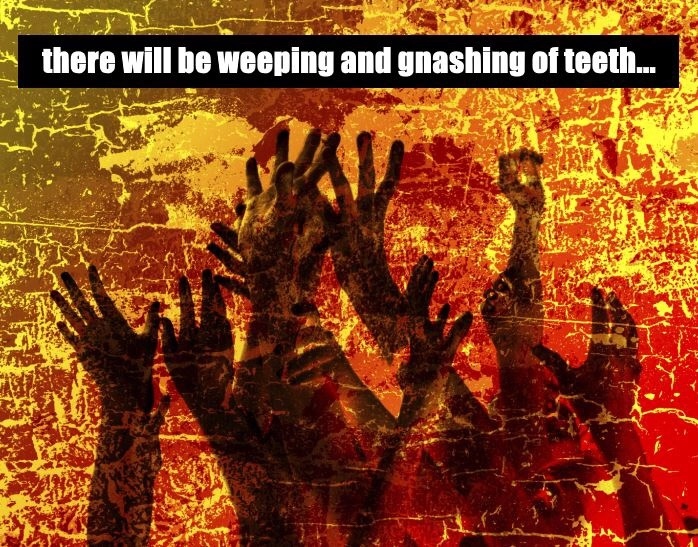
The slave who was not prepared for the return of his master—in the first of four parables (24:45–51) which conclude the final teaching discourse of Jesus—faces this clear punishment: “put him with the hypocrites, where there will be weeping and gnashing of teeth” (24:51). Where was that place, where the hypocrites are to be found? Jesus does not specify that here.

Jesus had earlier spoken a similar instruction to “throw him into the outer darkness, where there will be weeping and gnashing of teeth” in the parable where a person came to a wedding inappropriately dressed (22:13). This is a recurrent motif in Matthew’s Gospel; but this passage gives no further description of where that outer darkness with its weeping and gnashing of teeth is located.

Elsewhere in this Gospel, Jesus has pointed to the same punishment for lawless and disobedient people: such weeping and gnashing of teeth is cited in his words of judgement spoken in Capernaum, where he encounters a distressed centurion (8:12); in his explanation of the parable of the weeds and the wheat (13:42); in the parable of the good and bad fish (13:50); and in the parable of the talents (25:30). But where is the outer darkness where this experience located?

The gnashing of teeth is a punishment that is taken from Hebrew Scripture texts: “the wicked plot against the righteous and gnash their teeth at them (Ps 37:12); “the wicked gnash their teeth and melt away; the desire of the wicked comes to nothing” (Ps 112:10); “malicious witnesses … impiously mocked more and more, gnashing at me with their teeth” (Ps 35:11,16). The prophet laments that when Jerusalem is ransacked, “all your enemies open their mouths against you, they hiss, they gnash their teeth, they cry ‘we have devoured her!’” (Lam 2:16). It is a well-known form of torment and punishment.

The Matthean parable of the unprepared servant also has this apparently savage instruction: he will cut him in pieces (24:51). In a similar version, found in Luke’s Gospel (Luke 12:42–48), the master similarly “will cut him in pieces, and put him with the unfaithful” (Luke 12:46), but again the location of the unfaithful is not specified.

In a number of places in Hebrew Scripture, cutting a body into pieces was an action used in sacrificing animals (1 Kings 18:23, 33) and as a warning of judgement against sinners—in the terrible story of the Levite’s concubine (Judges 19:29), after Saul defeated the Ammonites (1 Sam 11:7), and also in direct prophetic warnings (Isa 45:2; 51:9; Ezek 16:40; Dan 2:34; also Judith 5:22). This is the fate decreed for the unprepared slave—a terrible end, indeed!

Throughout Matthew’s Gospel, Jesus declares that sinners are destined for the judgement of fire (Matt 5:22; 7:19; 13:40, 42, 50; 18:8–9; 25:41). This gives a clearer indication of the location where punishment will be meted out to the unfaithful, the hypocrites, and those who disobey the law. The reference to the judgement of fire picks up from the warning of John the baptiser, which Matthew has added to his Markan source: “You brood of vipers! who warned you to flee from the wrath to come? … even now the ax is lying at the root of the trees; every tree therefore that does not bear good fruit is cut down and thrown into the fire” (Matt 3:7, 10).

That place is described by Jesus, in parables unique to Matthew, as “the furnace of fire” (Matt 13:43, 50; 25:41). Sinners will be sent to a place of “eternal fire” (18:8; 25:41), “the hell of fire” (5:22; 18:9), the “unquenchable fire” threatened by John, as he baptised repentant sinners and warned that “the chaff he will burn with unquenchable fire” (3:12). This builds on the warnings found in Mark’s Gospel about the punishment in store for those who put stumbling blocks in the way of “these little ones”—they will be condemned to “the unquenchable fire” (Mark 9:42–48). These warnings are repeated by Jesus in Matt 18:6–9.

Matthew’s portrayal of Jesus is consistent in reporting that he warns his followers, again and again, of the fiery fate that awaits evildoers. Once again, this picks up on Hebrew Scripture passages in which various prophets declare that God will use fire to destroy people and places because of their sinfulness (Isa 1:7; 5:24; 30:27–28, 30, 33 18–19; Jer 4:4; 6:27–30; 20:47–48; Hos 8:14; Joel 2:1–3; Amos 1:4—2:5; Nah 1:15).

Amongst those prophetic oracles, Zephaniah, for instance, portrays utter devastation through divine judgement: “neither their silver nor their gold will be able to save them on the day of the Lord’s wrath; in the fire of his passion the whole earth shall be consumed” (Zeph 1:18).

However, the final prophet in the Christian Old Testament, Malachi, reworks this imagery, offering some hope; God’s messenger on The Day of the Lord “is like a refiner’s fire and like fullers’ soap; he will sit as a refiner and purifier of silver, and he will purify the descendants of Levi and refine them like gold and silver, until they present offerings to the Lord in righteousness” (Mal 3:1–4).

A number of psalms reflect a desire for God to punish evildoers severely; “pour out your indignation upon them, and let your burning anger overtake them” is the cry of one psalm (Ps 69:24). Another psalm notes the vengeance of God—“in your hearts you devise wrongs; your hands deal out violence on earth” (Ps 58:2)—and suggests that “the righteous will rejoice when they see vengeance done; they will bathe their feet in the blood of the wicked” (Ps 58:10). We must wonder: did Jesus pray these psalms? did he concur with their ideas? did he pray for God to act with vengeance? The words that Matthew attribute to Jesus in his Gospel would suggest that he did.

The image of fiery punishment is often noted by the psalmists: “on the wicked [God] will rain coals of fire and sulfur; a scorching wind shall be the portion of their cup” (Ps 11:6); “the voice of the Lord flashes forth flames of fire; the voice of the Lord shakes the wilderness” (Ps 29:6-7); and again, “your hand will find out all your enemies; your right hand will find out those who hate you; you will make them like a fiery furnace when you appear; the Lord will swallow them up in his wrath, and fire will consume them.” (Ps 21:8-9).

Indeed, one psalmist prays to God, “as fire consumes the forest, as the flame sets the mountains ablaze, so pursue them with your tempest and terrify them with your hurricane” (Ps 83:14-15). After one such prayer, other psalmists must have been astounded as “smoke went up from his nostrils, and devouring fire from his mouth; glowing coals flamed forth from him” (Ps 18:8; see also 18:12; 46:9; 68:2; 78:21, 63; 97:3; 104:4; 106:18). And so the psalmist laments, “how long, O Lord? will you be angry forever? will your jealous wrath burn like fire?” (Ps 79:5; 89:46).

This imagery is picked up and placed into the story of Daniel (Dan 3:1–30) and appears again in the last book of the New Testament, where the prophet describes his visions of “the lake of fire that burns with sulfur” (Rev 19:20; 20:10, 14–15), also described as “the second death” (Rev 20:14; 21:8). It is there that the devil, the beast, and the false prophet “will be tormented day and night forever and ever” (Rev 20:10). Matthew appears to share some similarities with the writer of this book, for as we have noted, eternal punishment in a fiery furnace features also in the words of Jesus in Matthew’s Gospel.

So we can’t simply brush aside the closing words of the parable which is in focus this coming Sunday—the Heavenly Father, we are told, will follow the example of the unforgiving servant, who will be “tortured until he would pay his entire debt” (18:34–35), in the service of ensuring that faithful people do indeed forgive one another! (How he will be able to pay off his debt while he is being tortured in prison, I do not know!)

Such punishment is consistent with the way that God’s justice will be implemented, according to the various teachings and parables of Jesus in Matthew’s Gospel that we have already noted. It will be incredibly hard to be let off the hook by this fierce, punitive God!! We are left in no doubt whatsoever, that Jesus believed in a place where divine wrath would visit punishment and wreak revenge on evildoers.

So as we read and hear and interpret this parable, today, and as we reflect on the matter of punishment, Hell, and the afterlife, we are left to ponder for ourselves: do we still hold to this place, Hell, as a place of eternal torment for sinners? or can we move on in our understanding and reshape our theology to form a belief system that offers a different way of addressing injustice and rewarding faithfulness? (I would like to think we can.)

Certainly, the survey of passages above reveals a clear development in various Hebrew Scripture passages, on through into New Testament textswhich raises the question, why, then, do we need to stop our thinking about these ideas—our conceptualisation of how God deals with sin—with late first century texts? And let’s note that understandings of these ancient texts have been mediated especially through interpreters of late antiquity and the medieval period, and their more recent followers. Is it not legitimate for us, today, to continue that development and for us to articulate new understandings?

We are also left with the conundrum: what are we to make of this aggressively violent, retributive God, condemning sinners to the misery of “hell”? Is this the last word about God? or can we legitimately form a different, more nuanced understanding of the divine? (Again, this is the direction I would like to move.)

These questions focus the the challenge of preaching and interpreting this parable of Jesus, and these ancient texts as a whole, in our contemporary world.

************

Material in this and the previous blogs is drawn in part from the research of Elizabeth Raine and from MESSIAH, MOUNTAINS, AND MISSION: an exploration of the Gospel for Year A, by Elizabeth Raine and John Squires (self-published 2012)

See also