The outer darkness, the eternal fire, and the threat of Hell (Matt 25; Pentecost 25A) part one

There have been a number of posts on my Facebook feed in recent weeks, on the matter of Hell. A number of them have made the claim that Hell does not appear in the New Testament. It’s a common claim made by hardline “progressive” Christians. The Gospel passage proposed by the Revised Common Lectionary for this coming Sunday (Matt 25:14–30) would suggest otherwise, however.

This passage offers a parable of Jesus (found here and, in another version, in Luke 19), in which two slaves are commended for their shrewd stewardship of a huge amount of money that was entrusted to them, whilst one slave is punished for not improving the amount he was given.

In Luke’s version, the third slave is called “wicked” (Luke 19:22) and the money he was given is taken from him and given to the first slave, to illustrate the saying, “to all those who have, more will be given; but from those who have nothing, even what they have will be taken away” (Luke 19:24–26). In Matthew’s version of this this parable, the slave is called “wicked and lazy” Matt 25:26) as well as “worthless”, and his punishment is far more severe: he is to be thrown “into the outer darkness” (25:30).

This is the third reference by the Matthean Jesus to “outer darkness” (8:12; 22:13; 25:30). As the parable that follows refers to “the eternal fire prepared for the devil and his angels” (25:41)—to which Jesus had earlier referred (18:8)—it does seem that Jesus is referring to a place that we know by the term “hell”. Indeed, words spoken by Jesus in Matt 18:9 are rendered explicitly as “the hell of fire” in the NRSV, while the NIV renders this “the fire of hell”. They are both translating a Hebrew word, here transliterated into Greek, Gehenna (on which, see more, below).

Over the years I have had a number of interesting conversations about these passages, and others, and about “hell” in biblical texts, with my wife, Elizabeth Raine, as she has studied both Matthew’s Gospel (where there is a preponderance of passages referring, in one way or another, to “hell”), as well as the relevant Hebrew Scripture passages often linked with “hell”, so what follows is strongly informed by those conversations.

Now, my search of the NRSV indicates that the word “hell” does appear 13 times in this translation of the New Testament. 11 of these are in the Synoptic Gospels, each time in words attributed to Jesus (the other two are in James and 2 Peter). The NIV has the same 13 occurrences of the word “hell”; but in the 17th century translation authorised by King James, the word appears 23 times in the New Testament (15 of these in the Synoptics) as well as 31 times in the Old Testament. Clearly, the reticence to use this word in translating relevant Hebrew or Greek words grew between the 17th and the 20th century. Why might that have been?

I think that this reticence might relate, in part, to a developing clarity about what the various words in Hebrew and Greek actually described. Rather than lumping them all together under the catch-all term “hell”, more recent translators take care to provide more distinctive descriptors.

There are a number of concepts which need to be considered. This takes us into the strange world of ancient Hebrew cosmology—the world, heavens and earth, what was above and what was below, was understood in a different way from the way that 21st century people understand such things.

In Hebrew Scripture, there are references to the Deep, the Pit, and Sheol. These three words appear to describe the state of being of human beings after they have died. In the King James Version, the word “hell” is used to translate these Hebrew words on quite a number of occasions. But we need to explore them more carefully.

Sheol is the opposite of heaven in spatial terms; as heaven is in the heights, so Sheol is in the depths. (Gen 49:25). Isaiah says that God invited King Ahaz to “ask a sign of the Lord your God; let it be deep as Sheol or high as heaven” (Isa 7:11; the sign that is then given is the famous child, to be named Immanuel, 7:14). Ezekiel describes the demise of “Assyria, a cedar of Lebanon … [that] towered high and set its top among the clouds” in these words from God: “on the day it went down to Sheol I closed the deep over it and covered it” (Ezek 31:15). In this fate, it shared with those who “are handed over to death, to the world below … with those who go down to the Pit” (Ezek 31:14).

The terms found here—Sheol, the Deep, the Pit, the world below—are part of a cluster of terms which appear throughout Hebrew Scripture. Technically, The Deep describes the waters of chaos, outside the Dome, which can rise up to flood the world, as in the story of Noah, when in one version “all the fountains of the great deep burst forth, and the windows of the heavens were opened” (Gen 7:11) and, after 150 days, “God made a wind blow over the earth, and the waters subsided; the fountains of the deep and the windows of the heavens were closed, the rain from the heavens was restrained, and the waters gradually receded from the earth” (Gen 8:2).

Sheol and The Pit each describe the state of the nephesh (the essence of being) of those whose bodies have died. In Psalm 88, when the psalmist laments “my soul is full of troubles”, they use these and other terms in poetic parallelism to describe their fate: “my life draws near to Sheol; I am counted among those who go down to the Pit; I am like those who have no help, like those forsaken among the dead, like the slain that lie in the grave, like those whom you remember no more, for they are cut off from your hand; you have put me in the depths of the Pit, in the regions dark and deep” (Ps 88:3–6). Another psalm describes this as “the land of silence” (Ps 94:17), while the prophet Ezekiel imagines it as the place where the dead, the “people of long ago” lie “among primeval ruins” (Ezek 26:20)

In this state, people simply lie in darkness, not living, with no future in view, no hope in store. Job laments, “if I look for Sheol as my house, if I spread my couch in darkness, if I say to the Pit, ‘You are my father,’ and to the worm, ‘My mother,’ or ‘My sister,’ where then is my hope?” (Job 17:13-15). Job also equates entering the Pit with “traversing the River” (Job 33:18), in words that seem to reflect the River Hubur (in Sumerian cosmology) or the River Styx (in Greek cosmology), the place where the souls of the dead cross over into the netherworld.

Other words for Sheol in Hebrew Scripture include Abaddon, meaning ruin (Ps 88:11; Job 28:22; Prov 15:11) and Shakhat, meaning corruption (Isa 38:17; Ezek 28:8). These terms indicate the forlorn, lost, irretrievable nature of this state of being. This is the fate in store for all human beings, whether righteous or wicked; there is no sense of judgement or punishment associated with this state. It is simply a state of non-being.

By the time of the New Testament, however, there had been quite some development in this direction within Jewish thinking. In the apocalyptic visions of 2 Esdras, Ezra is depicted as foreseeing that “the pit of torment shall appear, and opposite it shall be the place of rest; and the furnace of hell shall be disclosed, and opposite it the paradise of delight” (2 Esd 7:36).

Likewise, the seven Maccabean brothers tell “the tyrant Antiochus” that “justice has laid up for you intense and eternal fire and tortures, and these throughout all time will never let you go” (4 Macc 9:9; also 12:12). In the teaching contained in the Wisdom of Solomon, however, a complementary element is noted, as Solomon is said to declare “the souls of the righteous are in the hand of God, and no torment will ever touch them” (Wisd Sol 3:1).

The New Testament—largely in the Synoptic Gospels, but also in Revelation—reflects these developments in the way that it portrays the afterlife, with a number of sayings portraying a place of punishment for sinners after death, as well as the promise of eternal life for the righteous with God in the kingdom of heaven.

There are three Greek words that are relevant at this point: Gehenna, Hades, and Tartarus. The first, Gehenna, was a geographical term, referring to the Valley of Hinnom, to the southwest of Jerusalem, where in periods of sinfulness before the Exile, children had been sacrificed to Molech (2 Ki 23:10; 2 Chron 28:3; 33:6; Jer 7:31-32; 32:35). This practice was the cause of punishments experienced by the people for their sinful behaviour.

Gehenna appears twelve times in the New Testament—eleven of those being in words attributed to Jesus (Mark 9:43, 45, 47, paralleled in Matt 18:9; Matt 5:22, 29, 30; 10:28; 23:15, 33; and Luke 12:5). In some of these occurrences, Gehenna is placed into parallel with other ideas which suggest it is no longer the simple geographical reference of Hebrew Scripture texts, but it has become a place of punishment for sinners in the afterlife (see further below).

The potency of Gehenna is noted when James warns those who misuse their tongue as “a restless evil, full of deadly poison” (James 3:8) that “the tongue is placed among our members as a world of iniquity; it stains the whole body, sets on fire the cycle of nature, and is itself set on fire by hell [translating the Greek Gehenna]” (James 3:6).

A second word, found ten times in the New Testament, is Hades; a word adopted from older Greek literature, where it appears from Homer onwards as the name of the God of the lower regions (Hades, later Pluto, the brother of Zeus and Poseidon) and of the realm of the dead. This was where all people went after their death; leaving Hades was not possible (with the exception of a few heroic figures in the myths of the Greeks).

Jesus speaks of going down to Hades (Matt 11:23; Luke 10:15); perhaps he himself went there? (1 Pet 3:19 may allude to this). The deceased rich man in Hades looks up to heaven to see the poor man, Lazarus, with Abraham (Luke 16:22–23). Hades in this parable is a place of torment (Luke 16:23, 25); the rich man endures punishment which apparently cannot be revoked (Luke 16:26).

In Acts, Peter is said to have quoted Ps 16:10, referring to the soul being abandoned in Hades, in his speech at Pentecost (Acts 2:27, 31), and four times in Revelation Hades is linked with death (Rev 1:18; 6:8; 20:13–14). The Matthean Jesus informs Peter that “the gates of Hades will not prevail” against the church, founded in Peter, the rock (Matt 16:18). Hades has gates, presumably to ensure its inhabitants cannot escape the fate determined for them.

It is interesting that for a number of verses in the Septuagint, the Greek word Hades translates Sheol, thereby turning it from a Hebrew idea into a Greek concept for the hellenised Jewish readers of the Septuagint.

The introduction of punitive elements into the way that Gehenna and Hades are described leads to a third Greek word which is relevant to our considerations. The Greek noun is Tartarus, which the Encyclopedia Britannica explains in this way: “the name was originally used for the deepest region of the world, the lower of the two parts of the underworld, where the gods locked up their enemies. It gradually came to mean the entire underworld. As such it was the opposite of Elysium, where happy souls lived after death.” See https://www.britannica.com/topic/Tartarus

Whilst that name itself does not appear in the New Testament, the cognate verb tartaróō is found once, in the very late and pseudonymous epistle, 2 Pet 2:4. It is translated as “to cast down to hell” in the KJV and in most recent modern translations, where it describes what God did to sinful angels, demonstrating that “the Lord knows how to rescue the godly from trial, and to keep the unrighteous under punishment until the day of judgment —especially those who indulge their flesh in depraved lust, and who despise authority” (2 Pet 2:9–10). So be warned!

All of which indicates that notions of Hell as a place in the afterlife where sinful people are sent, to experience divine punishment, are alive and well at the time the various New Testament books were written.

And so: what of the parable that Jesus tells (Matt 25:14–30) ??

… to be continued …

*****

With thanks to Elizabeth Raine for insights about relevant texts at many places through this discussion.


Re-reading the story of Palestine and Israel

This blog comes from a guest blogger, the Rev. Dr Chris Budden. It relates to the current explosion of the conflict in Gaza and Israel. Chris is a retired Uniting Church Minister who is actively engaged with First Peoples; amongst other things, he teaches a course on reconciliation at United Theological College in Sydney, Australia. He has a long interest in ways to find peace in Palestine-Israel. His present research interest is the Preamble to the Constitutional of the Uniting Church in Australia.

There are, in my opinion, three contributing factors to both poor analysis and inadequate responses to the conflict between Palestine and Israel, and the particular role of Hamas.

Let me be very clear from the beginning. Hamas’ actions in Israel were wrong, profoundly and horribly wrong.

First, however, the response and analysis has sought to ignore history. There is a pretence that Hamas simply attacked Israel out of the blue in an act of irrationality. They are mad people who must be eliminated, regardless of the cost to the civilian population. Consider the reality:

  • In 1917 the British Government issued the Balfour Declaration supporting the establishment in Palestine of a home for Jewish people. The aim was not to protect Jewish people, but to get rid of them out of Britain.
  • Prior to World War 2, there were relatively small numbers of Jewish people in Palestine, which was controlled as a British Protectorate.
  • At the end of the war, and with the guilt of the near annihilation of the Jewish people in Germany, support was given to finally enact the Balfour Declaration. People entered Palestine, often illegally, and began to push Palestinians off their land.
  • By 1948 there was significant occupation. The UN declared that the land should be partitioned, and two states established. Israel was established, but a Palestinian state has never gained proper support. Israel is opposed to such a state, believing it would threaten their security.
  • The State of Israel is a settler-colonial state, and has done exactly what such states have done in Australia, New Zealand, USA and Canada. That is, they have stolen land, and justified that theft with the claim that the place was largely unoccupied. Where it was, the people did not use the land properly. People can be dispossessed because they are lesser people – it is a racist narrative, that has been imbedded in apartheid.
  • Palestinians have been pushed into smaller and smaller enclaves, reducing any chance of a proper state. They have had walls built around them, their movements are controlled. Witnesses say that they live in a virtual prison.
  • In the last 10 years, 3500 Palestinians have been killed by the IDF, including large numbers of children.

One of the things we learned from the struggle against apartheid in South Africa was that we should asked those who are oppressed to tell the story of their oppression, and not to ask the oppressors. People should tell their own story, and not have it told by those who continue to harm them.

Second, the clear narrative across the world is that some people are of more value than others. The latest deaths in Israel quite rightly bring forth international condemnation. But the deaths of Palestinians rarely cause a protest. And because people are not seen as equal, then it is okay to seek revenge that is completely disproportionate. Many more Palestinians must die to make up for the death of citizens of Israel.

Third, the US and its allies like Australia must take some blame for what is happening because we have failed to uphold international law; we have failed to insist that the law applies to Israel. The settlements on Palestinian land are illegal, yet they keep expanding. The state of Palestine has been declared by the UN, but no-one does anything to make it happen. It is illegal to attack civilians, but civilians in Palestine are attacked and killed all the time, and no-one is held accountable. It is illegal to punish civilians for what their military do, which is exactly what Israel is doing, but the US and its allies will not tell them to stop.

Let me say it again, this is not a defence of Hamas. Which, by the way, was supported by Israel for years as a way of dividing the Palestinian opposition.

This is a claim that we will not have peace in the area until people are treated as of equal value, until international law is respected, and until people stop stealing land. The alternative is a never-ending spiral of violence.

The response to this argument is often to label it and me as antisemitic. This is about the actions of the State of Israel. To name the ways a state breaks international laws, and oppresses other people is not antisemitic or aimed at Jewish people at all. I hope opponents will not throw labels that obscure the debate but will actually respond to the arguments I have made.

Chris Budden, 31 October 2023

*****

This piece was first posted on UC Forum at https://ucforum.unitingchurch.org.au/?p=5286

For my own earlier reflections on this situation, see

and for a comprehensive overview of the history of this region over the last 100 years, from Al-Jazeera, see

https://www.aljazeera.com/news/2023/10/9/whats-the-israel-palestine-conflict-about-a-simple-guide

Plotting Pharisees: a public confrontation in the honour-shame culture (Matt 22; Pentecost 21A)

The dynamic at work in the Gospel passage which is offered by the lectionary this coming Sunday (Matt 22:15–22) is compelling. Some people might worry about the way that the Pharisees—strong advocates for the importance of Torah in everyday life—are collaborating with the Herodians—presumed to be more hellenised Jews sympathetic to (or even employed in the court of) Herod and his successors.

It’s a strange alliance, to be sure, but Matthew has inherited this story from Mark, who placed the two groups side-by-side (Mark 12:13–17), and he chooses not to alter that.

Others might be excited by the coin presented to Jesus for his adjucation—said to be a δηνάριον (a denarius), the standard Roman coin in use at the time, and reputed to be “the usual daily wage” for a labourer (so the NRSV translates the word at Matt 20:2, 9, 10, 13). The fact that staunch Jews were carrying such a coin has engaged some interpreters—although I reckon that they simply needed to, in order to survive in daily life in Roman-occupied Palestine.

What interests me more in this story is the dynamic at work in the interaction between Jesus and the people of these two Jewish groups. The passage begins, “the Pharisees went and plotted to entrap him in what he said” (v.15). In league with the Herodians, they approach Jesus with flattery (v.16) before posing a simple question: “is it lawful to pay taxes to the emperor, or not?” (v.17). So the story is set up as a trap: a public confrontation designed to bring Jesus down.

The narrator notes that Jesus is “aware of their malice”, responding to their question with one of his own: “why are you putting me to the test, you hypocrites?” (v.18). There is then an interaction relating to a coin which is produced at the request of Jesus (vv.19–20), before Jesus makes a concluding statement (v.21), which leads to the narrator’s summation of the scene: “when they heard this, they were amazed; and they left him and went away” (v.22).

The dynamic in this back-and-forth can best be understood by reference to the honour-shame culture which was the foundational culture of ancient Mediterranean societies. Malina and Rohrbaugh describe the process of challenge and riposte, in which “a challenge … that seeks to undermine the honour of another person” must be met with “a response that answers in equal measure or ups the ante and thereby challenges in return … to avoid a serious loss of face” (Social Scientific Commentary, p.307).

Such challenge-riposte encounters typically involved the challenger setting forth a claim, through either words or actions; a response to the challenge by the persons who was challenged; then, after further back-and-forth amongst the participants, once the challenge and riposte has run its course, the verdict is declared by the public who was watching the encounter. (See a clear description of this process, as it applies in Mark 11:27–12:34, using the analysis of Jerome Neyrey and Bruce Malina, at https://www.etsjets.org/files/JETS-PDFs/43/43-2/43-2-pp213-228_JETS.pdf)

The challenge that the Pharisees and Herodians raise to Jesus in this passage is one in which he bests the authorities with his responses; he maintains his place of honour within society. Had that not been the case, he would have been publically shamed. And a public shaming for a male in that society was a very demeaning experience.

The incident narrated in this passage (Matt 22:15–22) is one of a series of public confrontations that Jesus had whilst he was teaching in the temple (21:23 through to 22:46). Prior to this debate about the coin that was used to pay tax to the Emperor, Jesus had defended his authority to teach (21:23–27), before telling three parables which provoked his listeners to think out of the box about how God was at work (21:28–32; 21:33–44; 22:1–14).

Jesus, of course, was a Jew, instructed in the way of Torah. He knew his scriptures—he argued intensely with the teachers of the Law over a number of different issues. He frequented the synagogue, read from the scroll, prayed to God, told parables, and went on pilgrimage to Jerusalem and into the Temple—all typically Jewish activities.

Immediately prior to this encounter with Herodians and Pharisees, Jesus had offered a scathing critique of the practices that were taking place in the courtyard of the Temple (21:12–17). It was the response of the children to his actions, echoing the earlier son of the crowd by singing out “Hosanna to the Son of David” (21:9) had angered the chief priests and the scribes (21:15). The way that he resolved this situation (at least temporarily) was to quote scripture (21:16, citing Psalm 8:2)—a very Pharisaic-rabbinic way of operating!

Earlier in his narrative, Matthew has reported a number of tense encounters between Jesus and his disciples on the one hand, and the scribes and Pharisees on the other (9:2–8, 10–13; 12:38–42; 15:1–20; 16:1–4; 19:3–9; 21:15–16). Those encounters inevitably revolved around differing interpretations of Torah prescriptions and included regular references to (Hebrew) scriptural passages.

Whilst teaching in the Temple, Jesus engaged in debate and disputation with various Jewish authorities: chief priests and elders (21:23), Pharisees and Herodians (22:15–16), Sadducees (22:23), and then Pharisees once more (22:34, 41). Each of those groups came to Jesus with a trick question, which they expected would trap Jesus (22:15). Jesus inevitably bests them with his responses (21:27; 22:22, 33, 46).

Each of the parables that Jesus told ends with a twist that snares the opponents of Jesus more intensely. The short parables of the two sons (21:28–32) ends with a barb: “John came to you in the way of righteousness and you did not believe him, but the tax collectors and the prostitutes believed him; and even after you saw it, you did not change your minds and believe him” (21:32).

The third parable, of the wedding banquet (22:1–14) ends with words that are surely intended to put the Pharisees well and truly in their place: “many are called, but few are chosen” (22:14). Are they the ones who will be “[bound] hand and foot, and [thrown] into the outer darkness, where there will be weeping and gnashing of teeth” (22:13)?

In the middle parable (21:33–44), the conclusion is equally damning: “the kingdom of God will be taken away from you and given to a people that produces the fruits of the kingdom” (21:43). Recognising that they were the targets of this teaching, the chief priests and Pharisees “realized that he was speaking about them; they wanted to arrest him, but they feared the crowds, because they regarded him as a prophet” (21:46).

Indeed, this whole sequence of conflicted encounters—public disputations, challenge-riposte displays—ends with a recognition of the fact that Jesus has retained (and perhaps even increased) his share of honour: “no one was able to give him an answer, nor from that day did anyone dare to ask him any more questions” (22:46).

As Matthew had noted earlier, in the passage for this Sunday, the Pharisees and Herodians “were amazed; and they left him and went away” (22:22); and then, after dialogue with the Sadducees, “when the crowd heard it, they were astounded at his teaching” (22:33). To the crowd, it is clear: Jesus is the man of honour, who has publically shamed Pharisees, Sadducees, priests, and Herodians.

Pharisees plotting with malice; that is a sharply negative portrayal of these characters in this encounter. Elsewhere in Matthew’s Gospel, the Pharisees are the subject of similar invective, placed on the lips of Matthew. Although Jesus affirms “the scribes and the Pharisees” as those who “sit on Moses’ seat” and teach well, he criticises them as failing to live by that teaching in their lives (23:1–3).

What follows this affirmation is an incessant string of criticisms, each introduced with the uncompromising invective, “woe to you, scribes and Pharisees, hypocrites!” Jesus accuses them of “lock[ing] people out of the kingdom of heaven” (23:13), “tith[ing] mint, dill, and cummin, and neglect[ing] the weightier matters of the law: justice and mercy and faith” (23:23), and acting in ways that are “full of greed and self-indulgence” (23:25).

He accuses them directly, noting that they are “child[ren] of hell” (23:15), that “inside you are full of hypocrisy and lawlessness” (23:28), and that they are “descendants of those who murdered the prophets” (23:31). The punishment due to them is the fate in store for all who are lawless—to depart from Jesus, who never knew them (7:23), to be “throw[n] into the furnace of fire, where there will be weeping and gnashing of teeth” (13:42), to be “sentenced to hell” (23:33) as they “fill up the measure of your ancestors” (23:32).

And so, in the face of the abandonment of the Law by the very teachers of the Law, Jesus teaches how to live by the Law, with a ferocious intensity that exceeds anything that the Pharisees and scribes might offer (5:21–48), for “unless your righteousness exceeds that of the scribes and Pharisees, you will never enter the kingdom of heaven” (5:20). He is positioned in a way that places him as the supreme teacher of Torah, over and above the Pharisees.

Judaism was in a state of flux after the destruction of the Temple in 70 CE. Evidence indicates that there were a number of sectarian groups contesting with each other for recognition and influence. During this period, the Pharisees became increasingly important as an alternative to the Temple cult, and in time they emerged as the dominant Jewish religious movement. Their power base was moved from Jerusalem and spread throughout the area.

Josephus comments that the Pharisees lived in the towns and villages with and alongside the people. He wrote that “they live meanly, and despise delicacies in diet; and they follow the contract of reasons” (Antiquities of the Jews, 18.3), so presumably they lived without the ostentation and wealth that Josephus ascribes to the Sadducees.

Josephus also comments that the Pharisees were usually held in high regard by the ordinary people of the day. Since nine out of every ten persons could not read, the importance of scribes—literate, educated, and sympathetic—could not be underestimated. Whilst the Pharisees clustered around towns in Judea, the scribes were to be found in the synagogues of villages throughout greater Israel, and indeed in any place where Jews were settled. Their task was to educate the people as to the ways of holiness that were commanded in the Torah. It was possible, they argued, to live as God’s holy people at every point of one’s life, quite apart from any pilgrimages made to the Temple in Jerusalem.

The way that Jesus is portrayed in the Gospels–especially the three Synoptic Gospels–places him in opposition to the Pharisees, as the authoritative teacher of Torah. In Matthew’s Gospel, as we have noted, this opposition is further intensified, for Jesus is seen as the only one able to interpret and apply the laws for them in their lives.

So there is a clear reason for the negative language used in the incident about the coin: “the Pharisees went and plotted to entrap him” (22:15), and Jesus was “aware of their malice” (22:18). In the context of the latter part of the first century, in which Matthew’s Gospel was written, this antagonism can be understood. The intensity of conflict heightened the sharpness of antagonism that the author of this Gospel has drawn.

****(

For those of us reading, hearing, and preaching on this passage in the 21st century, we need to be very careful not to use negative, derogatory, or judgemental language about the Pharisees of the first century, or about Jewish people in our own times. Judaism is a living faith with its own integrity, and Jews today should be recognised and valued as people of faith and not valued in terms of conflicts from centuries ago.

In 2009, my own church, the Uniting Church, adopted a Statement on Jews and Judaism in which we resolved to:

acknowledge that many of the early Christian writings collected in the New Testament were written in a context of controversy and polemic between the Church and Synagogue;

not accept Christian teaching that is derogatory towards Jews and Judaism;

and encourage its members and councils to be vigilant in resisting antisemitism and anti-Judaism in church and society.

The full statement can be read at https://assembly.uca.org.au/resources/key-papers-reports/item/download/1022_7d707d6a8cd8a2fe2188af65d6f04548

You can read about how the Uniting Church has sought to engage the Jewish Community in constructive dialogue for many years, now, at https://uniting.church/an-introduction-to-the-uca-jewish-dialogue/

and learn about an excellent resource it has produced entitled Light Eternal at https://assembly.uca.org.au/rof/rof-news/item/1986-light-eternal

On the UCA commitment to interfaith relations, see https://johntsquires.com/2019/05/04/friendship-in-the-presence-of-difference-a-gospel-call-in-a-world-of-intolerance-and-hatred/

Executing justice and righteousness (Ps 99; Pentecost 21A)

“You have established equity; you have executed justice and righteousness in Jacob” (Ps 99:4). So the psalmist sings, in the psalm offered by the lectionary for this coming Sunday. Noting that leaders of the past have called out to God and been answered—Moses, Aaron, and Samuel (99:6)—the psalmist praises God, “you answered them; you were a forgiving God to them, but an avenger of their wrongdoings” (99:8).

In this psalm it is the king, the “Mighty King, lover of justice [who has] established equity” (99:4), whose “royal scepter is a scepter of equity” (Ps 45:6), modelled on the Lord God himself, who “judges the world with righteousness [and] judges the peoples with equity” (Ps 9:8; see also 67:4; 75:2; 96:10; 98:9). Accordingly, King David is remembered as the one who “administered justice and equity to all his people” (2 Sam 8:15; 1 Chron 18:14), and the opening words of the book of wisdom attributed to King Solomon are “love righteousness, you rulers of the earth, think of the Lord in goodness and seek him with sincerity of heart” (Wisd Sol 1:1).

Divine justice is regularly noted in tandem with God’s mercy forgiveness. “Great is your mercy, O Lord; give me life according to your justice” (Ps 119:156); and “in your steadfast love hear my voice; O Lord, in your justice preserve my life” (Ps 119:149). The prophet Isaiah tells the rebellious people of his day, “the Lord waits to be gracious to you; therefore he will rise up to show mercy to you—for the Lord is a God of justice; blessed are all those who wait for him” (Isa 30:18).

Likewise, through the prophet Hosea, the Lord God promises to Israel, “I will take you for my wife in righteousness and in justice, in steadfast love, and in mercy” (Hos 2:19), whilst centuries later, Ezekiel reminds the exiles of God’s pledge: “I say to the righteous that they shall surely live, yet if they trust in their righteousness and commit iniquity, none of their righteous deeds shall be remembered; but in the iniquity that they have committed they shall die” (Ezek 33:13). Justice and mercy belong hand-in-hand, as yet another prophetic voice declares as the exiles are returning to the land: “in my wrath I struck you down, but in my favour I have had mercy on you” (Isa 60:10).

God’s mercy sat at the heart of the covenant made with Israel; the Lord affirms to Moses, “I will be gracious to whom I will be gracious, and will show mercy on whom I will show mercy” (Exod 33:19). So in the longest psalm, declaring persistent praise of the Law, the psalmist offers the petition, “let your mercy come to me, that I may live, for your law is my delight” (Ps 119:77). A number of other psalms likewise contain petitions God to show mercy (Ps 25:6; 40:11; 51:1; 69:16; 123:3).

Jesus, centuries later, brings together mercy and justice when he accuses the scribes and the Pharisees of hypocrisy, as they “neglect the weightier matters of the law: justice and mercy and faith” (Matt 23:23).

Justice, of course, is at the heart of the covenant that God made with Israel. Moses is said to have instructed, “justice, and only justice, you shall pursue” (Deut 16:20), the king is charged with exhibiting justice (Ps 72:1–2; Isa 32:1), whilst many prophets advocate for justice (Isa 1:17; 5:7; 30:18; 42:1–4; 51:4; 56:1; Jer 9:24; 22:3; 23:5; 33:15; Ezek 18:5–9; 34:16; Dan 4:37; Hos 12:6; Amos 5:15, 24; Mic 3:1–8; 6:8).

That God is righteous is likewise declared in scripture (Deut 32:4; Ps 145:7; Job 34:17). The psalmists regularly thank God for God’s righteousness (Ps 5:8; 7:17; 9:8; 33:5; 35:24, 28; 36:6; 50:6; etc) and note the importance of humans living in that same way of righteousness (Ps 18:20, 24; 85:10–13; 106:3, 31; 112:1–3, 9).

The book of Proverbs advises that the wisdom it offers is “for gaining instruction in wise dealing, righteousness, justice, and equity” (Prov 1:3) and the prophets consistently advocated for Israel to live in accordance with righteousness (Hos 10:12; Amos 5:24; Isa 1:22; 5:7; 28:17; 32:16–17; 54:14; Jer 22:3; Ezek 18:19–29; Dan 9:24; 12:3; Zeph 2:3; Mal 4:1–3; Hab 2:1–4).

This psalm thus focusses some important elements in the Israelite understanding of God, summarising notes from many places elsewhere in Hebrew Scriptures. These recurring notes of the nature of God then form the basis for a Christian understanding of Jesus, who affirms mercy (Matt 23:23), teaches righteousness (Matt 5:6, 10, 20; 6:33), offers forgiveness (Mark 2:10; Luke 23:34; 1 John 1:9), and exudes grace (John 1:14–18). The affirmation made in this ancient Jewish psalm is one that we Christians can joyfully sing and affirm!

*****

Since I wrote this blog post, the situation in the Middle East has erupted once again. My reflections in the early stages of the present inflammation of that conflict is at

Israel, the West Bank, and Hamas: a prayer for peace, and a yearning for justice

I am watching the events in Israel with deep sadness and high apprehension. The simmering hotspot of the Middle East has erupted, yet again, in a vicious and worrying way.

I am not a political expert, although I have watched the sequence of events in that region for decades, reading a lot at different times about what has been going on. I don’t really have any connection with Palestinians, but have had quite a lot to do with Jews in Australia over the decades of my ministry, from local contacts with rabbis in neighbouring synagogues through to membership of my church’s national dialogue group with the Jewish People.

I have also been a member of working groups that prepared resources for the national Assembly to consider as they reflected on the relationship that the Uniting Church has with Jewish people, including a paper presented to the 1997 Assembly and then further work which resulted in the Statement on Jews and Judaism which the 2009 Assembly adopted.

That 2009 Statement included an affirmation “that the State of Israel and a Palestinian State each have the right to live side by side in peace and security” (#15), and an encouragement to the members and councils of the UC “to pray and work for a just and lasting peace for both Israelis and Palestinians” (#24). Both of these clauses hold good in the current situation.

See https://ucaassembly.recollect.net.au/nodes/view/374?keywords=Jews%20judaism&highlights=eyIwIjoiamV3cyIsIjEiOiJqdWRhaXNtOiIsIjMiOiJqdWRhaXNtOyIsIjUiOiJqdWRhaXNtLCIsIjciOiJqdWRpYWlzbSIsIjkiOiJqdWRhaXNtIiwiMTIiOiJqZXdzLiIsIjEzIjoiamV3LCIsIjE5IjoiKGp1ZGFpc20ifQ==&lsk=ff2123f0fd56a80e39107599b0b2fbb7

Just over a decade ago, the then Assembly President, the Rev. Alistair Macrae, launched a set of resources, Prayer for Peace, which provided practical and prayerful ways of working for peace in the Middel East. He said, “The pursuit of peace is at the core of what it means to be a disciple of Jesus Christ. We echo his words when we share the greeting ‘peace be with you’ with members of our worshipping congregations each week. Jesus expresses the centrality of peacemaking in the Beatitudes; he preaches that peacemakers will be the children of God (Matt 5:9).”

The President continued, “Our commitment to being peacemakers takes us down many paths to peace. It’s our responsibility and imperative to explore all options that could bring about peace in our hearts, our homes, our communities and in our world.”

See https://ucaassembly.recollect.net.au/nodes/view/216?keywords=Prayer%20for%20peace&type=all&highlights=eyIwIjoicGVhY2UuIiwiMSI6InByYXllci4iLCIyIjoicHJheWVyIiwiMyI6InBlYWNlIiwiNCI6InByYXllcnMiLCIxMyI6InBlYWNlLCIsIjE3IjoicHJheSJ9&lsk=afa2a1ce65cd901b7aa99df5ad6a35ec

I think that many of the suggestions in this resource also hold good today, including the Prayer For Peace In Palestine which was provided by a National Working Group set up at that time:

“God of peace, we pray for peace in Palestine, the land where the Prince of Peace walked long ago; Let there be an end to the cycle of violence and vengeance that has prevailed there for so long; Let there be an end to the frequent killing and maiming of people, victims of hate and prejudice; Let there be an end to all political agendas that justify and prolong the conflict. God of peace, hear our prayer.

“Bring justice for all the people of Palestine regardless of race, culture or religion; Sustain the courage and determination of all those who work for peace and keep them strong in the face of threats and persecution; Establish such mutual respect and harmony between Christians and Muslims that they will live and work together for the sake of all. God of peace, hear our prayer.

“Keep our own hearts and minds free from fear and prejudice; Help us to be instruments of your peace where we are. God of peace, hear our prayer.

That is one thing that we can do, at this time: pray for peace.

There’s another dimension to the current situation that I think bears some consideration. That is the reality of the current political situation, that the lands in the region currently claimed as the modern state of Israel are contested lands, with both Palestinians and Jews laying claim to that area as their ancient ancestral lands.

Whilst there is contention about these claims, there is one matter that I believe merits thoughtful consideration. The claim made by the hard-line right in Israel—reflected in the boundaries of the current state of Israel, including the occupied territories of the West Bank, Gaza, and the Golan Heights—rests on certain biblical texts which, with an ideologically-based orientation, indicate that “God gave this land to the people of Israel”.

In particular, the large extent of land in view under this claim rests on the biblical description of the territory ruled under Solomon, the much-venerated and highly-valorised king of the United Kingdom of Israel around three millennia ago, in a number of texts in the so-called historical narratives of Hebrew Scripture. Whilst those books might look in many ways like historical narratives, we should take care not to assume that contemporary understandings of history can be easily applied to those passages from antiquity.

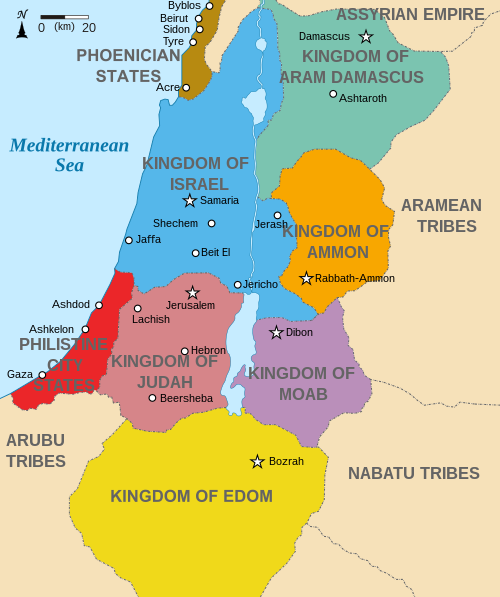
The land that the biblical texts claim was ruled by King Solomon,
from Egypt to the Euphrates

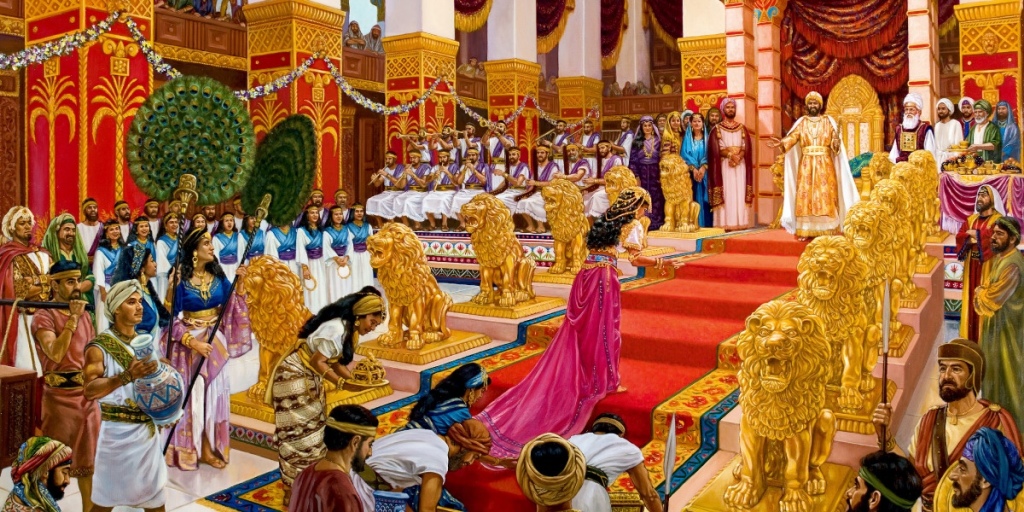
In considering these texts, we should begin by noting that the way that Solomon is presented in the Hebrew Scriptures can only be characterised by the term “hyperbolic exaggeration”. It is not an authentic historical depiction of the man; it is a hagiography. Indeed, the actual existence of Solomon in historical reality (in contrast to being a literary character in the Bible) is highly questionable. Israel Finkelstein and Neil Asher Silberman, writing in The Bible Unearthed: Archaeology’s New Vision of Ancient Israel and the Origin of Its Sacred Texts (Simon and Schuster, 2001), claim that “The glorious epic of the united monarchy was — like the stories of the patriarchs and the sagas of the Exodus and conquest — a brilliant composition that wove together ancient heroic tales and legends into a coherent and persuasive prophecy for the people of Israel in the seventh century BCE.” 

See https://www.thenotsoinnocentsabroad.com/blog/did-king-david-and-king-solomon-really-exist

In the story told in the biblical text, King Solomon was said to have “excelled all the kings of the earth in riches and in wisdom. And all the kings of the earth sought the presence of Solomon to hear his wisdom, which God had put into his mind. Every one of [those kings] brought silver and gold, so much, year by year.” (2 Chron 9:22–24). That’s quite a claim!

This wonderfully wise, insightful, discerning man, Solomon—bearing a name derived from the Hebrew for peace, “shalom”—became a powerhouse in the ancient world, we are told. But he did not always live as a “man of peace”. Indeed, the narrative indicates that he used his 4,000 horses and chariots and 12,000 horsemen to good effect; we read that “he ruled over all the kings from the Euphrates to the land of the Philistines and to the border of Egypt.” (2 Chron 9:26; also 1 Ki 4:21). This was the extent of land that had been promised to Abraham (Gen 15:18), and it was more than any other ruler of Israel, before or after him.

So Solomon was remembered as king over the greatest expanse of land claimed by Israel in all of history. Solomon was a warrior. And warrior-kings were powerful, tyrannical in their exercise of power, ruthless in the way that they disposed of rivals for the throne and enemies on the battlefield alike. Think Alexander the Great. Think Charlemagne. Think Genghis Khan. Think William the Conqueror. This is an integral part of the heritage that the story of Solomon bequeathed to Israel: the memory of an aggressive, dominating ruler, lording it over the region. Even though the modern state of Israel doesn’t have a king, this is an image that is being acted out today, in the politics of the region.

Solomon reigned for 40 years—a long, wealthy, successful time—although “forty years” in the biblical narrative should not be understood to be a precise time, but more a statement that this was “a long, extended time”. Solomon exemplifies the model of kingship which survives through into the modern era. We expect kings to rule. We expect them to invade and enforce and dominate, for that is the heritage passed on. (And I won’t comment on Solomon’s marital relationships; I will leave 1 Kings 11:3 to speak for itself!)

This exaggerated, idealised view of things is evident in so many ways in the portrayal of Solomon, who was seen to be filled with “wisdom and knowledge”, and granted “riches, possessions, and honour, such as none of the kings had who were before you, and none after you shall have the like” (2 Chron 1:7–12, especially verses 10 and 12).

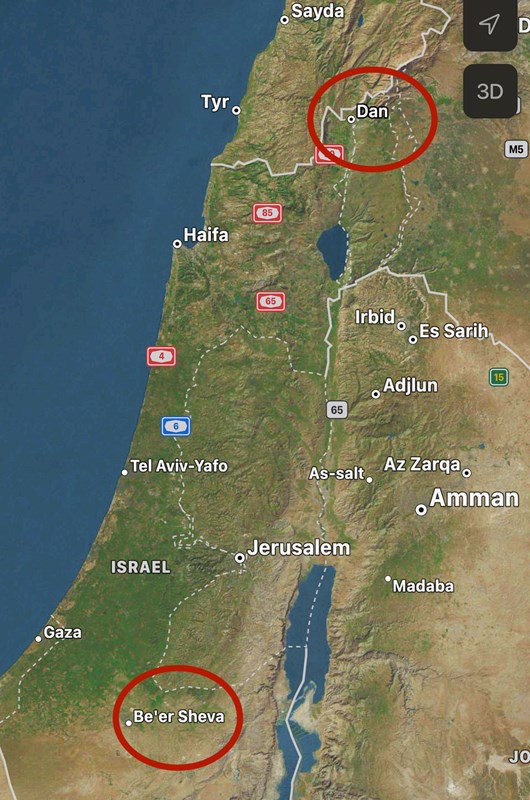
It is also worth noting that the large reach of land that Solomon ruled over, even more extensive than the oft-cited phrase “from Dan to Beersheba” (Judg 20:1; 1 Sam 3:20; 2 Sam 3:10; 17:11; 24:2, 15; 1 Ki 4:25; 1 Chron 21:2; 2 Chron 30:5), did not continue past his death. The hagiographical exaggeration of territory under Solomon is not noted in the period after his death. The narrative books that recount the stories of the kingdoms of Israel, in the north, and Judah, in the south, in the centuries after Solomon, indicate that the scope of those kingdoms was more constrained.

In the light of this, I don’t think it is responsible to lay claim to the whole, extended territory of the land, from the biblical passages noted, as the scope for the modern state of Israel which was created in 1948. I therefore have sympathy for Palestinians who have lived on the land for thousands of years prior to 1948, as they understand this to be their ancestral land.

I also have sympathy for Jews, both those living in the land of Israel today, as well as those living in diaspora, for whom the land of Israel has a powerful symbolic significance—especially since the Shoah of 1933—1945 and the terrible genocide perpetrated by the Nazis against Jews in so many countries during that period. Granting them land in the area where their ancestors long ago had lived, a homeland that gives them security in the modern world, is important and necessary.

That said, I don’t agree that Palestinians should take matters into their own hands to seek vengeance against people in Israel in the way that they have done, once again, in recent days. In the same manner, nor do I think that the Israeli forces should respond in the aggressive and violent manner that they have done, once again, in recent days. Too many people are dying and being injured, making any possible progress towards peace with justice even more difficult each day.

We need to seek once more the peace of these peoples. And we need to find that peace on the basis of justice. Neither terrorist attacks nor military crackdowns will achieve this. They will simply exacerbate a dangerous situation.

“Depart from evil, and do good; seek peace, and pursue it.” (Psalm 34:14). “Blessed are the peacemakers, for they will be called children of God.” (Matt 5:9). “Justice, and only justice, you shall pursue, so that you may live and occupy the land that the Lord your God is giving you.” (Deut 16:20). “… the weightier matters of the law: justice and mercy and faith. It is these you ought to have practiced …” (Mat 23:23).

Going into the kingdom of God ahead of you (Matt 21; Pentecost 18A)

Two weeks ago, in following along with the excerpts from the Gospel of Matthew which the Revised Common Lectionary has been offering us this year, we heard a parable that threatened that God would torture a person until they forgave a person who owed them a modest debt (18:23–35). Where is the compassion in that? Is this really what we understand God to be like? Should this story really be in our scriptures?

Last week, we heard a parable in which people who laboured in a vineyard for quite different lengths of time were given the same pay at the end of the day (20:1–16). Where is the justice in that? The rationale for this is that “the last will be first, and the first will be last” (20:16)—a saying that Jesus utters on other occasions, as well. Is this really what we understand the kingdom will be like? Does this unjust story really deserve a place in our scriptures?

This week, we will be confronted with a parable in which two sons each say one thing, but do the opposite (21:28–30). Where is the honesty in that? Be a person of your word—do what you say, say what you mean to do! But there is even more, as Jesus continues on after having spoken this parable with words that are even more confronting: “the tax collectors and the prostitutes are going into the kingdom of God ahead of you” (21: 31). Is this really what we have to look forward to? It makes me want to cry out, “Hey! there’s a queue here—just wait your turn!”

Parables, according to Tim Mackie and Jon Collins of the Bible Project, were used by Jesus as “a means of indirect communication to critique and dismantle his listener’s views of the world to show them the true nature of God’s Kingdom.” See https://bibleproject.com/podcast/parables-subversive-critique/

And so that is the case in each of these parables. There’s a good amount of critiquing and dismantling going on; and a fair bit, also, of reconstructing a picture of what that kingdom might well be like. Whilst we might expect—indeed, we might yearn—to have stories which reinforce our view that God is loving, kind, and compassionate to all, the fact is that the parable of the unjust steward—and other sayings of Jesus—insist that God exercises vengeance in the course of ensuring justice.

We might well hope to have stories that communicate that God’s justice means equity and fairness for everyone; yet the parable of the labourers in the vineyard—and other sayings of Jesus—insist that God operates in ways that are counter-cultural and in opposition to the expected norms of fairness in society.

And certainly we might anticipate that Jesus will tell stories that assure us of the claim that a life of faithful obedience and careful adherence to stringent ethical standards will lead to our experiencing the welcoming arms of God, perhaps a prioritised means of entry into the loving embrace of God; yet the conclusion that Jesus offers to the parable of the two sons is completely different, with a shocking declaration that those entering the kingdom ahead of us will be precisely the people that we would expect to be debarred from entry!

What is going on? And in particular, why does Jesus assert that “the tax collectors and the prostitutes are going into the kingdom of God ahead of you” (21:31)?

*****

In the three Synoptic Gospels, Jesus is presented as one who “eats with tax collectors and sinners” (Mark 2:15–16; Matt 9:10–11; Luke 5:30–31). Jesus clearly declares, “I have come to call not the righteous but sinners” (Mark 2:17; Matt 9:13; Luke 5:32). Two of those Gospels also report that he was known as “a glutton and a drunkard, a friend of tax collectors and sinners” (Matt 11:19; Luke 7:34).

Indeed, Matthew, one of the twelve men initially called to be a disciple, was a tax collector (Matt 9:9; 10:3), although in Luke’s narrative he is named as Levi (Luke 5:27). This man, Levi, does not appear amongst the twelve named disciples (Luke 6:13–16; Acts 1:13), and the Matthew named in these Lukan lists is not identified as a tax collector.

In a striking parable reported only by Luke, a tax collector is presented favourably, in contrast to a Pharisee (Luke 18:9–14); that story resonates with the affirmation of tax collectors given at Matt 21:31–32. Soon after that parable is told, Luke reports an encounter that Jesus had with a rich chief tax collector named Zacchaeus (Luke 19:1–10). In this passage, the tax collector acts above and beyond the call,of duty, announcing that “half of my possessions, Lord, I will give to the poor; and if I have defrauded anyone of anything, I will pay back four times as much” (Luke 19:8).

By contrast, in a teaching passage found only in Matthew’s Gospel, tax collectors are linked with Gentiles in a declaration that a recalcitrant sinner who refuses to repent after being given multiple opportunities should be considered “as a Gentile and a tax collector” (Matt 18:17), clearly indicating that they are to be expelled from the community.

That statement appears to be in direct contradiction to the later declaration of the Matthean Jesus that we hear in this coming Sunday’s passage—a declaration that “the tax collectors and the prostitutes are going into the kingdom of God” ahead of the (presumably) faithful disciples, because “John came to you in the way of righteousness and you did not believe him, but the tax collectors and the prostitutes believed him; and even after you saw it, you did not change your minds and believe him” (Matt 21:31–32).

These words seem to correlate with the earlier aphorism of Jesus, “the last will be first, and the first will be last” (Matt 20:16), a saying that recurs in other contexts, when Jesus points to a child as a sign of the kingdom (Mark 9:35) and in response to a declaration of fidelity made by Peter (Mark 10:31; Matt 19:30). Indeed, this latter occurrence in Matthew’s Gospel not only concludes a sequence of incidents set in Judea (Matt 19:1–30), but also introduces the parable we heard last Sunday (20:1–16)—a parable which ends with the very same saying.

“The last will be first, and the first will be last” thus bookends that parable, indicating that it has a programmatic significance. And it is that claim from which Jesus then launches, in this coming Sunday’s reading, into the parable that drives home this upside-down character of the coming kingdom, noting that “the tax collectors and the prostitutes are going into the kingdom” ahead of the disciples, which he then drives home the point with intensity: “even after you saw it, you did not change your minds and believe him” (21:32).

That’s fair warning: Jesus is giving plenty of opportunity for his disciples to hear, understand, and respond to his message. And if we don’t, then he won’t pull any punches! Perhaps that’s actually the point of this parable. So it seems we are back to judgement—a motif that I have noted is intensified and amplified in Matthew’s account of Jesus, when compared with the Gospels of either Mark or Luke. See

Darkness, weeping, and gnashing of teeth: the scene of judgement (Matt 22; Pentecost 20A)

A final parable from the book of origins: on sheep and goats, on judgement and righteous-justice (Matt 25; Pentecost 26A)

We have been given fair warning!!

Put Pokies in their place!

Along with around 20 people from the Canberra Region Presbytery, I attended the recent meeting of the Uniting Church Synod of New South Wales and the Australian Capital Territory, held in Katoomba from 15 to 17 September. During that meeting, an important proposal was adopted, relating to the campaign to support urgent reform of the poker machine industry in NSW and the ACT.

In the rationale for the proposal, members of Synod were told that Australians lose more than $12 billion to poker machines every year. This is approximately half of the total amount lost through gambling—a disturbing $24 billion dollars each year! Through 2022 an astonishing $8.1 billion was lost in NSW alone, which equates to around $1000 per person in the state—the highest rate of per capita losses anywhere in the world.

Research shows that the direct and indirect harm caused by the poker machines is devastating and far reaching. Gambling on poker machines has an impact on between 900 thousand and 1.7 million people across NSW. Gambling harm caused by poker machines directly correlates with increased rates of suicidality, domestic and family violence, financial stress,,as well as other profoundly negative social outcomes.

Wesley Mission Sydney provides gambling and financial counsellors, as well as other frontline staff; these people hear heartbreaking stories every day of lives traumatised by addiction wrought by poker machines.

Last October Wesley Mission launched the Put Pokies in Their Place coalition to work in relation to the NSW Government. The coalition now includes a growing number of faith and community groups, including the NSW.ACT Synod, NSW Council of Social Service (NCOSS), National Council of Women NSW, NSW Council of Churches, Ethnic Communities Council NSW, Wayside Chapel, The Salvation Army and many others.

This campaign is focussed on the pursuit of five key reform measures:

• Implementation of universal cashless gambling with harm reduction measures built in

• Power down poker machines between Midnight and 10am

• Fund an independent State-wide self-exclusion register

• Let communities have a say about poker machines licences through their Local Councils

• Greater transparency around poker machine venue data

The presenters of this proposal, the Revs Stu Cameron and Rick Dacey, from Wesley Mission Sydney, noted that “the campaign gained significant traction and momentum leading into the March [NSW] state election … [and] the community appetite for real reform is palpable and continues post-election, confirmed by community research that Wesley Mission commissioned.”

The proposal was adopted by consensus. One way we can join this campaign is for each congregation to make contact with their local NSW state or ACT territory member of parliament, and encourage them to agree to the five key reforms being promoted by this campaign. So it is now over to us all!

There is more information about this campaign at https://www.wesleymission.org.au/get-involved/advocacy/gambling-reform/put-pokies-in-their-place/

A parable of grace—and a story of grace (Matt 20 and Matt 27; Pentecost 17A)

A sermon on Matthew 20:1–16, written and preached by the Rev. Elizabeth Raine

The Gospel of Matthew was the subject of my PhD research, and I so enjoy teaching that Gospel to groups of people, especially when it comes around in the lectionary (as it has this year). And this might well lead you to think that I look forward to being able to share something of my interest in that gospel in weekly sermons.

However, I have found that as much as I like teaching Matthew, I actually don’t like preaching Matthew—at least not the passages that have fallen to my lot in recent months. You may have noticed that in most of the gospel readings we have heard over the few months, there is almost always a line or two about judgment, eternal punishment, and wailing and gnashing of teeth. Last week’s reading was no exception, with the unforgiving slave finding himself not only unforgiven, but also condemned to be tortured.

Matthew is very fond of predicting a harsh judgment and eternal punishment for his enemies. His gospel contains more references to hell and eternal punishment that most of the New Testament put together, with the possible exception of the book of Revelation. He sneaks these references into his material wherever possible, changing his Markan source to reflect his own interests in God’s wrath.

Now while this is interesting to teach, it is not very helpful when trying to construct a sermon that is meant to give food for thought and help folk reflect on their faith. Not all of us want our enemies to be gnashing teeth and wailing in hell. When I teach and research Matthew, I find myself often asking this question of Matthew’s gospel: what are its redeeming features as far as nurturing faith goes?

This is actually tricky to answer. Even last week’s teaching on forgiveness was undermined by the harsh punishment of the slave. And Matthew is actually a grace-free gospel, in that the Greek word for grace, charis, is never used by the author. Many of the stories in Matthew have a pronounced down side. Matthew often includes things such as alienation from family, name-calling, murder, impossible ethical demands and eternal damnation in his gospel.

However, Matthew does have one unique and I think, extraordinary act of redemption in his gospel, apart from Jesus’ death.

I will start with explaining what this is by using this week’s reading. The parable we encounter in this passage (Matt 20:1–16) is unique to Matthew’s Gospel. As such, it may be considered an insight into the special focus of the Gospel, and reflect something of the writer’s understanding of life around him in first century Palestine.

This story of the vineyard workers may well be taken straight from agricultural life in a Palestinian village. Like many of Jesus’ parables, it draws on images and practices familiar to the lifestyle of the crowds who gathered around Jesus to listen to him. Such familiarity would have caught the crowd’s attention and helped them understand the religious teaching that Jesus wanted to convey.

Like many of Jesus’ parables, though, the story has an unexpected twist. Even in first century Palestine, the concept of equal work for equal pay was an established principle. But here we find the vineyard owner paying the same wage to the labourers, regardless of how much or how little time they worked during the day. Such an uneconomical practice must have taken the crowd by surprise. What lord or owner would make such a foolishly generous offer?

The clue is in the last verse of the story, in a saying that Jesus has used a number of times, and one that was no doubt familiar to his disciples and regular followers: “the last shall be first and the first shall be last”.

With this phrase, the vineyard is revealed as the kingdom of heaven, and the owner is, of course, God – the God who is as generous to those who seek his kingdom at the last minute as he is to those who found it much earlier.

The verses which follow after this parable show that it must have been difficult for the disciples to hear, especially James and John! The request of the mother of James and John made it clear that they and the other disciples had given up everything they had to follow Jesus, with the expectation of heavenly reward. Now those who would join the movement later, who have not given up so much or suffered as long, would be greeted by God as equals.

Most scholars think that Matthew may have included this story to defend Jesus’ inclusion of sinners in the kingdom as well as the righteous, though this doesn’t explain why the emphasis is on those who come to the kingdom later. Maybe Jesus meant the story to be understood symbolically, with the ‘last’ being the same as the ‘least’, and thus servanthood and humbleness are being emphasised.

I have another take on this. In a swift segue, I am now jumping into another story in Matthew that does not make it into the lectionary. And that is the story of Judas.

What do we remember Judas for? What is his story? Does anyone remember how Judas died?

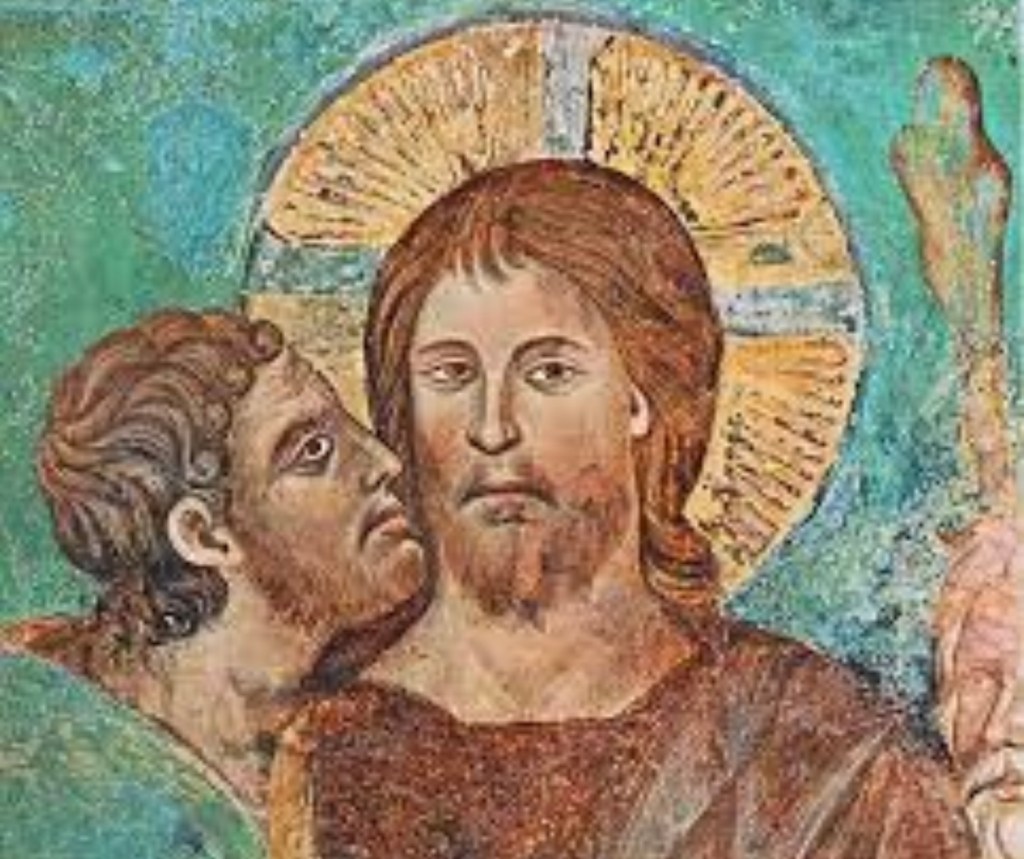
All the gospels state that Judas goes to the chief priests and asks for money to betray Jesus. Luke and John both state that Satan entered into Judas. John also calls him a devil and a thief. All the gospels have Judas arrive in the Garden of Gethsemane to betray Jesus with a kiss. It is what happens after this that is unique to Matthew.

Judas, as befitting his actions, meets with an untimely end. There is one version of Judas’ death in Acts: this man acquired a field with the reward of his wickedness; and falling headlong, he burst open in the middle and all his bowels gushed out. This became known to all the residents of Jerusalem, so that the field was called in their language Hakeldama, that is, Field of Blood. (Acts 1:18).

Another less familiar version of Judas’ death is found in the second century church father Papias. Papias obviously had a colourful imagination. A fourth century bishop named Apollonius cites what a second century bishop named Papias apparently claimed about Judas: Judas did not die by hanging, but lived on, having been cut down before choking. And this the Acts of the Apostles makes clear, that falling headlong his middle burst and his bowels poured forth.

Apollonius goes on to say that Papias the disciple of John records this most clearly, saying thus in the fourth of the Exegeses of the Words of the Lord: Judas walked about as an example of godlessness in this world, having been bloated so much in the flesh that he could not go through where a chariot goes easily, indeed not even his swollen head by itself. For the lids of his eyes, they say, were so puffed up that he could not see the light, and his own eyes could not be seen, not even by a physician with optics, such depth had they from the outer apparent surface. And his genitalia appeared more disgusting and greater than all formlessness, and he bore through them from his whole body flowing pus and worms, and to his shame these things alone were forced [out]. And after many tortures and torments, they say, when he had come to his end in his own place, from the place became deserted and uninhabited until now from the stench, but not even to this day can anyone go by that place unless they pinch their nostrils with their hands, so great did the outflow from his body spread out upon the earth.

One of the exercises we do in introduction to New Testament Studies is to examine which, or indeed, any account of the death of Judas could be historical. Most of the students find these two versions to be fiction. But we do have another account in the gospel of Matthew.

Matthew treats Judas differently from the beginning. For a start, only Matthew mentions the sum of 30 pieces of silver being Judas’ fee for the betrayal. The sum of 30 shekels of silver was the value put on the Lord by the corrupt leaders of Israel in the book of Zechariah.

Only in Matthew does Judas ask the question “Is it I, Rabbi?” when Jesus states that one of them will betray him. Just as an aside here, in Matthew’s gospel, Jesus is only called rabbi twice, and both times it is by Judas.

At the moment of the betrayal, only in Matthew does Jesus refer to Judas as ‘friend’, and he also tells him “may that for which you are here be done”. This is rather different to the question of Luke’s Jesus: “Judas, do you betray me with a kiss?” The Jesus of Mark and John says nothing to Judas at this point.

Whilst the account found in Luke—Acts indicates that Judas goes off to enjoy his ill-gotten gains, and is only cut short in this aim by some judicious punishment on God’s part, the story is very different in Matthew.

In a passage unique to this gospel, the Judas of Matthew is overcome with remorse when he sees Jesus is condemned. He repents, returns the thirty pieces of silver to the chief priests and elders, and states that he has “sinned by betraying innocent blood”. Met with disinterest and no compassion by the priests, Judas throws the money down in the temple, then leaves, to hang himself. The Greek in Matthew leaves us in no doubt as to Judas’ self-inflicted fate, despite Papias’ attempts to resurrect him so he can then unrepent, and go off and buy his field as per the account in Acts.

Judas, through Christian history, has been demonized for his actions. One can see this beginning in the later gospels of Luke and John, who insist that Judas was a sinner possessed by the devil or Satan, and of course in the later Papias, whose Judas is a very caricature of evil. Matthew does not join in this demonisation of Judas. Not only that though, Matthew goes even further, in that Matthew offers to Judas one of the greatest acts of salvation in our New Testament – he actually redeems Judas.

How can you be sure of that?, I hear you cry. Firstly, note that Judas repents. Repent is a word used sparingly in this gospel. It first appears with John the Baptist, he cries to people to ‘repent for the kingdom of heaven draws near”. John also tells them to ‘bear fruit worthy of repentance’. Jesus echoes the cry of ‘Repent, for the kingdom has drawn near’ in the next chapter.

In chapter 11, Jesus upbraids the cities of Chorazin and Bethsaida for not repenting, despite having many miracles carried out in them. In chapter 12, he reminds the unrepentant that the city of Ninevah repented when hearing Jonah’s proclamation about God. Where does Judas’ repentance fit with this?

The depiction of Judas throughout Christian history as infamy embodied has led most exegetes to the conclusion that this repentance in Matthew is merely regret, and not genuine repentance.

I have two things to say to this view. Firstly, it would seem that suicide is a rather drastic reaction to mere regret. Suicide speaks of deep remorse and repentance to me. Secondly, Matthew does not use ‘repent’ unless he means it. In fact, in the parable that follows this one in chapter 22, Matthew uses this very word to describe the actions of the son that initially refused to work in the vineyard, then changed his mind (or repented) and went. Jesus makes the point it is this son who did the will of the father.

So we should assume that Judas’ repentance is genuine. This is underscored by Judas not keeping the money but returning it.

Last of all, we need to consider Judas’ motivation in his act of betrayal. In looking at this, we should note firstly that Jesus goes to his death obedient to the will of God. Judas, therefore, becomes part of enacting the will of God. So the question is raised, “Does Judas have a choice”? I am sure that Matthew doesn’t think so, despite Jesus saying earlier ‘woe to the one who betrays the son of man’. The eventual fate of Judas bears out Jesus words, but does not damn him eternally.

The next surprise is that Jesus calls Judas ‘friend’ at the moment of betrayal, and makes the thoughtful statement “may that for which you are here be done” to Judas, implying some sort of foreordained action. 

The knock down argument is the scriptural fulfillment that follows hard on the telling of Judas’ demise, when the priests decide to purchase a field with the money:

Then was fulfilled what had been spoken through the prophet Jeremiah, “And they took the thirty pieces of silver, the price of the one on whom a price had been set, on whom some of the people of Israel had set a price, and they gave them for the potter’s field, as the Lord commanded me.” (Matt 27:9–10)

And Judas’ actions in betraying Jesus for 30 pieces of silver, is from the prophet Zechariah, another scriptural fulfillment allusion to the betrayal and sale of the Lord.

Now Matthew’s God is somewhat wrathful in his judgments, but is always just. If Judas had no choice, how can he then be condemned?

Judas’ suicide resembles that of Ahithophel, the man who had assisted Absalom in his rebellion against King David, and was thus the betrayer of David. Like Judas, Ahithophel hangs himself, yet is still described by many of the rabbis as having entered the world to come, or heaven as this world was known.

Judas not only shows regret and remorse, he repents, and in doing so, makes a confession to the priests of his guilt. He returns his ill-gotten gains. When the priests refuse to take the money, Judas throws it into the temple. When they do not reconsider his crime for the shedding of innocent blood, Judas enacts the appropriate punishment on himself. He seeks to make atonement through his own death.

Christians have always given lip service to the notion that even in the last days of life, true repentance is possible. However, the tradition in regard to Judas has consistently and systematically denied him this.

Not so Matthew. His parable of the workers in the vineyard insists that all who come to the right understanding of Jesus and God, even if it be very late in the day, will be welcome in the kingdom. Surely, in accord with the story he tells, this must include Judas.

Matthew, this grace-free, most judgmental of gospels, is also the gospel that extends the most mercy to one of Christianity’s most hated characters. Whatever Matthew’s exact reasons for his version of events, the parable – and its corollary in the story of Judas – surely must remind us of God’s overwhelming grace, a grace that is inclusive of all who would seek God.

Dealing with divine violence (Matt 18; Pentecost 16A)

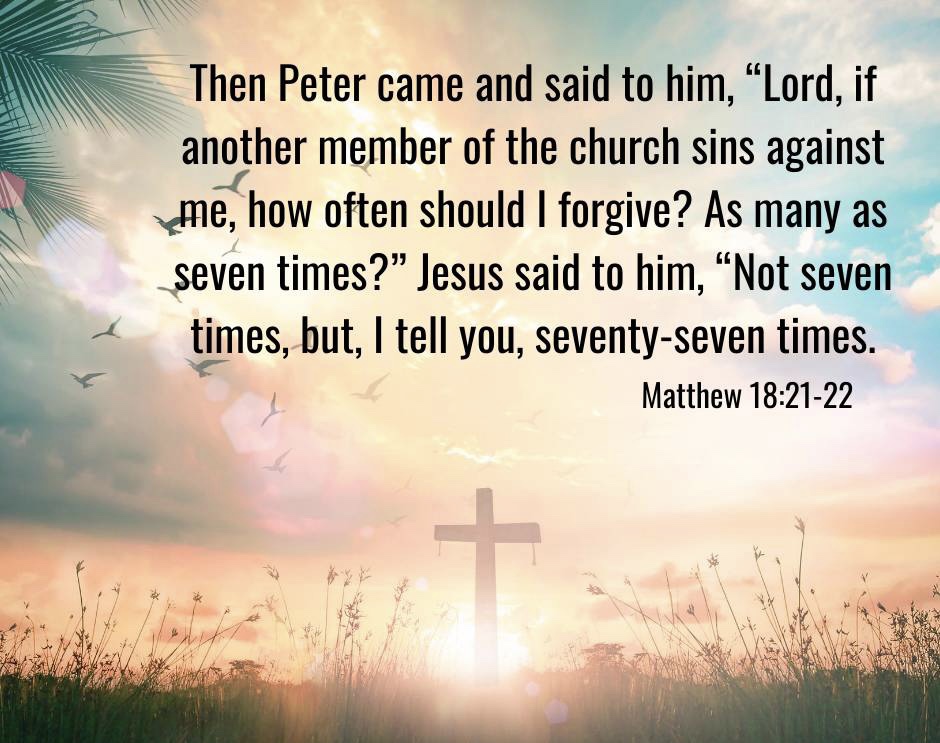
“Lord, if another member of the church sins against me, how often should I forgive? As many as seven times?” (Matt 18:21). We know the question—and we know the answer. “If a person sins against you seven times a day, and turns back to you seven times and says, ‘I repent,’ you must forgive”, Jesus says, at least according to Luke’s Gospel (Luke 17:4).

Not so in Matthew’s Gospel. Forgiving seven times, as demanding as that is, is not enough—at least according to the Jesus of Matthew’s Gospel. “Not seven times”, says this Jesus, “but, I tell you, seventy-seven times” (Matt 18:22).

We hear this conversation, and an ensuing parable, on this coming Sunday, as it is the Gospel passage proposed by the lectionary. It follows on from last week’s passage dealing with conflict within the community (18:15–20).

And so, this particular Matthean representation of Jesus appears, on the face of it, to be a more generous, accepting, grace-filled version, than even the Jesus of Luke’s Gospel! Forgiveness is important—so important that it needs to be offered, over and over again, we might assume.

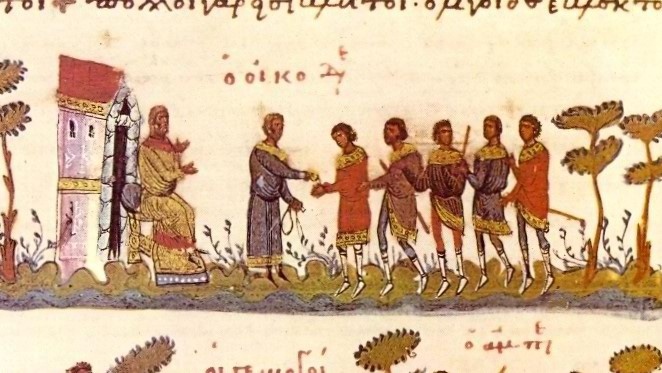
Well, hold on—not so fast. Because immediately after reporting this word of Jesus, the author of Matthew’s Gospel reports him offering a parable which contains a number of difficult—indeed, troublesome—elements. He sets a scene involving a king and a number of slaves. How those characters behave is interesting. The end result is that one slave is thrown into prison “to be tortured until he would pay his entire debt” (18:34).

Slaves, of course, were present in the world in which Jesus lives. Their presence is noted in scenes, such as when we see mention of the sick slave of a centurion (Matt 8:5–13; Luke 7:1–10) and a slave of the high priest (Mark 14:47; Matt 26:51; Luke 22:50; John 18:10). They are recurrent characters in the parables of Jesus (Mark 12:1–12 and parallels; Matt 24:45–51; Luke 12:35–40, 42–48; 14:15–24; 19:11–27; 20:9–19). Slaves are also referred to in a number of the sayings of Jesus (Mark 10:44; Matt 6:24; 10:24–25; 20:27; Luke 16:13; 17:7–10; John 8:34–36).

The character of a king appears in a number of parables of Jesus, in both the Gospel of Luke (Luke 14:31–32; and see also 19:27) and that of Matthew (Matt 18:23–35; 22:1–14; 25:31–46). In this last parable, the final scene of judgement of the nations (25:31–46), the king functions as God’s representative, delivering his commendation of those who acted correctly, but judgement on those who failed to do so.

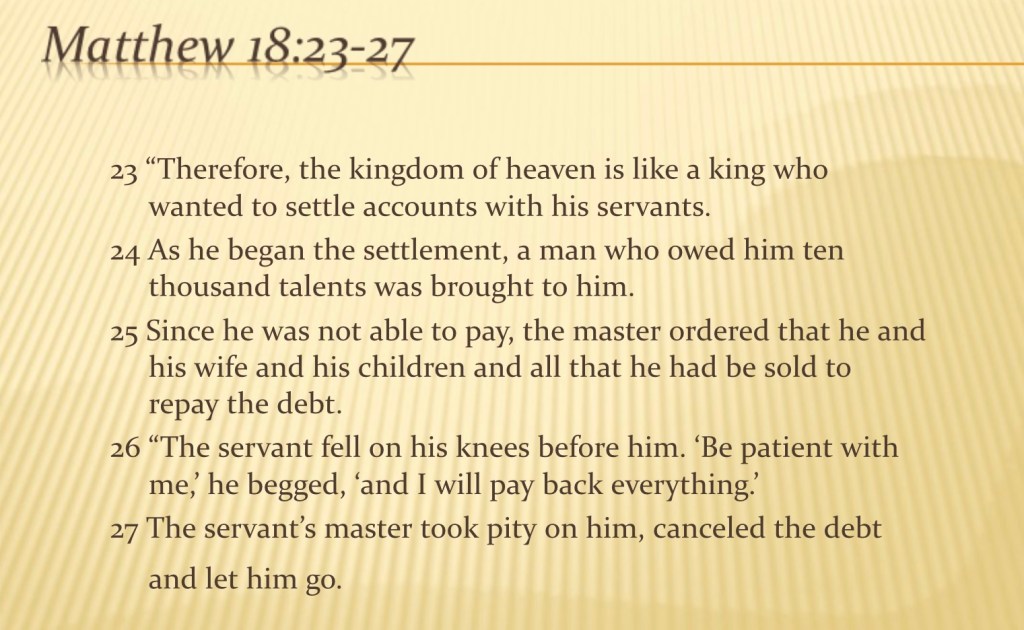
In the parable we will hear this coming Sunday (18:21–35), the king initially demands repayment of a large debt owed to him by one of his slaves. When the slave cannot pay, he plans to sell him and all his goods and family. However, after being begged by the slave, the king remits the debt (18:27). This part of the parable clearly illustrates the instruction of Jesus concerning forgiveness (18:22).

In the next parable found in Matthew’s Gospel (22:1–14), whilst dealing with guests who turn down his invitation to attend a wedding feast and murder the slaves he had sent to them, the king does not act so graciously; we are told that he “was enraged; he sent his troops, destroyed those murderers, and burned their city” (22:7).

Then, when a guest does enter dressed without his wedding robe, the king was initially rendered speechless, before ordering his attendants, “Bind him hand and foot, and throw him into the outer darkness, where there will be weeping and gnashing of teeth” (22:13). This is hardly the action of a leader who is following the exhortation to “forgive seventy times seven”!

This destructive rampage by the king fits alongside the reaction of the slave in the earlier parable. Although himself forgiven of his massive debt of “ten thousand talents” (18:27)—an impossible huge debt, completely unrealistic—he refuses to forgive his fellow-slave who owes him much less, “a hundred denarii” (18:28–30)—a more realistic amount to owe. He has this slave thrown into prison—but on hearing of this, his master, the king, who had earlier practised forgiveness (18:25–27), turns on his slave, now seen as “you wicked slave”, and condemns him “to be tortured until he would pay his entire debt” (18:34).

So I am somewhat bemused by the inclusion of this parable. Had Jesus stopped at verse 27 (“out of pity for him, the lord of that slave released him and forgave him the debt”), the parable would have been a fine example of the principle of “forgive seventy times seven”. But it doesn’t stop there. It continues on for another eight verses, and those verses tell of the complete opposite of gracious forgiveness.

The idea of forgiving someone who himself had failed to show forgiveness is thus doomed to failure. And not only that—it is not simply the king in the parable who acts with vengeance, it is the “heavenly Father” who will act in this way towards anybody who “does not forgive your brother or sister from your heart” (18:35). It seems that God is fundamentally a God of vengeance, not of grace.

This should not surprise us if we look elsewhere in this Gospel, to see how Jesus portrays God. Whilst God feeds the birds of the air (6:24), “clothes the grass of the field” (6:30), casts out demons through the Spirit (12:28), commands the honouring of parents (15:4), joins together man and woman to be come “one flesh” (19:4–6), and is able to deliver “the one who trusts in him” (27:43), there are more ominous actions of the divine being that Jesus reflects in his teachings.

Whilst Jesus teaches that the kingdom of heaven will be characterised by being like a child (18:1–5), a number of parables indicate that what transpires in the kingdom will vary, depending on how a person has behaved in life. Those who commit to the righteous-justice that Jesus teaches (5:20; 6:33; 21:32) “will shine like the sun in the kingdom of their Father” (13:53) and will hear gracious words of welcome: “come, inherit the kingdom prepared for you from the foundation of the world” (25:34). Their fate is to enter into “eternal life” (25:46).

However, those who fail to live in accord with this way of righteous-justice will encounter a different message: “you that are accursed, depart from me into the eternal fire prepared for the devil and his angels” (25:41). Their fate is terrible; the “eternal punishment” that is noted at the conclusion of this parable (25:46) is variously described in other places within this Gospel.

The slave who was not prepared for the return of his master—in the first of four parables (24:45–51) which conclude the final teaching discourse of Jesus—ends with clear punishment: “put him with the hypocrites, where there will be weeping and gnashing of teeth” (24:51). Jesus had spoken the instruction to “throw him into the outer darkness, where there will be weeping and gnashing of teeth” in the parable where a person came to a wedding inappropriately dressed (22:14). This is a recurrent motif in Matthew’s Gospel.

He has also pointed to the same punishment for lawless and disobedient people in other places: in his words of judgement spoken in Capernaum, where he encounters a distressed centurion (8:12); in his explanation of the parable of the weeds and the wheat (13:42); in the parable of the good and bad fish (13:50); and in the parable of the talents (25:30).

It is a punishment that is taken from Hebrew Scripture texts: “the wicked plot against the righteous and gnash their teeth at them (Ps 37:12); “the wicked gnash their teeth and melt away; the desire of the wicked comes to nothing” (Ps 112:10); “malicious witnesses … impiously mocked more and more, gnashing at me with their teeth” (Ps 35:11,16). The prophet laments that when Jerusalem is ransacked, “all your enemies open their mouths against you, they hiss, they gnash their teeth, they cry ‘we have devoured her!’” (Lam 2:16). It is a well-known form of torment and punishment.

The parable of the unprepared servant also has this apparently savage instruction: “he will cut him in pieces” (24:51). We find that in Hebrew Scripture, this was an action used in sacrificing animals (1 Kings 18:23, 33) and as a warning of judgement against sinners—in the terrible story of the Levite’s concubine (Judges 19:29), after Saul defeated the Ammonites (1 Sam 11:7), and also in direct prophetic warnings (Isa 45:2; 51:9; Ezek 16:40; Dan 2:34; also Judith 5:22). This is the fate decreed for the unprepared slave—a terrible end, indeed!

Throughout this Gospel, Jesus declares that sinners are destined for “the judgement of fire” (Matt 5:22; 7:19; 13:40, 42, 50; 18:8–9; 25:41). This picks up from the warning of John the baptiser, which Matthew has added to his Markan source: “You brood of vipers! who warned you to flee from the wrath to come? … even now the ax is lying at the root of the trees; every tree therefore that does not bear good fruit is cut down and thrown into the fire” (Matt 3:7, 10).

That place is described by Jesus, in parables unique to Matthew, as “the furnace of fire” (Matt 13:43, 50; 25:41). Sinners will be sent to a place of “eternal fire” (18:8; 25:41), “the hell of fire” (5:22; 18:9), the “unquenchable fire” threatened by John: “the chaff he will burn with unquenchable fire” (3:12). This builds on the warnings found in Mark’s Gospel about the punishment in store for those who put stumbling blocks in the way of “these little ones”—they will be condemned to “the unquenchable fire” (Mark 9:42–48). These warnings are repeated by Jesus in Matt 18:6–9.

Matthew’s portrayal of Jesus is consistent in reporting that he warns his followers, again and again, of the fiery fate that awaits evildoers. Once again, this picks up on Hebrew Scripture passages in which various prophets declare that God will use fire to destroy people and places because of their sinfulness (Isa 1:7; 5:24; 30:27–28, 30, 33 18–19; Jer 4:4; 6:27–30; 20:47–48; Hos 8:14; Joel 2:1–3; Amos 1:4—2:5; Nah 1:15).

Amongst those prophetic oracles, Zephaniah, for instance, portrays utter devastation through divine judgement: “neither their silver nor their gold will be able to save them on the day of the Lord’s wrath; in the fire of his passion the whole earth shall be consumed” (Zeph 1:18).

However, the final prophet in the Christian Old Testament, Malachi, reworks this imagery, offering some hope; God’s messenger on The Day of the Lord “is like a refiner’s fire and like fullers’ soap; he will sit as a refiner and purifier of silver, and he will purify the descendants of Levi and refine them like gold and silver, until they present offerings to the Lord in righteousness” (Mal 3:1–4).

A number of psalms reflect the desire for God to punish evildoers severely; “pour out your indignation upon them, and let your burning anger overtake them” is the cry of one psalm (Ps 69:24). Another psalm notes the vengeance of God—“in your hearts you devise wrongs; your hands deal out violence on earth” (Ps 58:2)—and suggests that “the righteous will rejoice when they see vengeance done; they will bathe their feet in the blood of the wicked” (Ps 58:10). We must wonder: did Jesus pray these psalms? did he concur with their ideas? did he pray for God to act with vengeance?

The image of fiery punishment comes from the story of Daniel (Dan 3:1–30) and appears again in the last book of the New Testament, where the prophet describes his visions of “the lake of fire that burns with sulfur” (Rev 19:20; 20:10, 14–15), also described as “the second death” (Rev 20:14; 21:8). It is there that the devil, the beast, and the false prophet “will be tormented day and night forever and ever” (Rev 20:10). Matthew appears to share some similarities with the writer of this book, for as we have noted, eternal punishment in a fiery furnace features also in the words of Jesus in Matthew’s Gospel.

So we can’t simply brush aside the closing words of the parable which is in focus this coming Sunday—the Heavenly Father, we are told, will follow the example of the unforgiving servant, who will be “tortured until he would pay his entire debt” (18:34–35), in the service of ensuring that faithful people do indeed forgive one another! (How he will be able to pay off his debt while he is being tortured in prison, I do not know!)

Such punishment is consistent with the way that God’s justice will be implemented, according to the various teachings and parables of Jesus in Matthew’s Gospel that we have already noted. It will be incredibly hard to be let off the hook by this fierce, punitive God!! We are left with the conundrum: what are we to make of this aggressively violent, retributive God?

*****

I have had a go at addressing this conundrum in terms of how it is presented in Hebrew Scripture, at

and

Let such a one be to you as a Gentile and a tax collector (Matt 18; Pentecost 15A)

The Gospel we ascribe to the authorship of Matthew the tax collector, the first of the four in the canon of the New Testament, is distinctive for a number of reasons. One of those is that it contains a collection of the sayings of Jesus which relate to life in the community of faith—a kind of a miniature “community rule” for the people for whom the author was writing.

Those sayings are collected together in chapter 18, which is the fourth of five teaching blocks in the arrangement made by the author of this Gospel. We will hear and read some of those words this coming Sunday (Matt 18:15–20, Pentecost 15A), and then a parable relating to these teachings next week (Matt 18:21–35, Pentecost 16A). And this week’s reading contains some stridently harsh words from Jesus: if a person who has “sinned against” refuses to be reconciled, then “let such a one be to you as a Gentile and a tax collectors” (18:17)!

These five teaching blocks canvass ethical imperatives (5:1–7:29), missional guidelines (10:5–11:1), parables of the kingdom (13:1–53), relationships within the community of faith (18:1–19:1), and apocalyptic predictions about the coming kingdom along with strengthened indications of what righteousness is required in that kingdom (23:1–26:2). These teachings are demanding and comprehensive.

In each block of material, the author has drawn together teachings of Jesus that have been assembled from various sources, and arranged in a manner that presents these collected sayings and teachings as a cohesive, sermon-like presentation. The hand of the author is clear, just as the voice of Jesus is strong.

So the first fourteen verses of this chapter comprise words which are found at various places in the Gospel of Mark, one of Matthew’s sources, as well as in the sayings material which is believed to have been collected earlier, in the hypothetical source known as Q. (Material in Q, according to this theory, was known to and used by both Matthew and Luke, but in different ways and in different places in their works.)

The first five verses (18:1–5) report the words of Jesus about the child and the kingdom of heaven, which are included in all three Synoptic Gospels. When a child is placed before him, Jesus declares that “unless you change and become like children, you will never enter the kingdom of heaven; whoever becomes humble like this child is the greatest in the kingdom of heaven” (18:3–4). The same saying is found in slightly varied forms at Mark 10:14–15 and Luke 18:16–17.

The conclusion to this short scene, “whoever welcomes one such child in my name welcomes me” (Matt 18:5), is a variant on an earlier Matthean saying, “whoever welcomes you welcomes me, and whoever welcomes me welcomes the one who sent me” (Matt 10:40; and the subsequent variations, 10:41–42).

This, in turn, is derived from Mark’s own earlier account of when Jesus “took a little child and put it among them; and taking it in his arms, he said to them, ‘Whoever welcomes one such child in my name welcomes me, and whoever welcomes me welcomes not me but the one who sent me’” (Mark 9:36–37). Luke replicates this at Luke 9:47–48.

So the first section of this chapter already shows the dependence of the author on an earlier source, and his willingness to appropriate and reshape the material for his own purposes.

The next four verses (18:6–9) deal with skandala, a group of sayings that Mark reports in his account: “if any of you put a stumbling block [a skandalon] before one of these little ones who believe in me, it would be better for you if a great millstone were hung around your neck and you were thrown into the sea” (Mark 9:42). Mark himself then extends this saying with reference to having a hand or foot cut off, if it is a skandalon, as well as an eye plucked out if it, also, is a skandalon (Mark 9:43–48).

Matthew includes all the material that he finds in his Markan source—the little ones, the errant hand and foot, and the eye—and expands it, adding some words that intensify the warning: “Woe to the world because of stumbling blocks! Occasions for stumbling are bound to come, but woe to the one by whom the stumbling block comes!” (Matt 18:7).

Luke reports the initial words of Jesus (Luke 17:1–2), but then places the word about forgiving another member of the community (Luke 17:3) and the command to “forgive seven times seven” (Luke 17:4)—a word which provides the basis for the last section in Matthew’s fourth teaching block (Matt 18:15–35). So Luke and Matthew have each collated diverse words of Jesus, but in different combinations.

Before that, however, Matthew has Jesus tell the parable of the lost sheep (Matt 18:10–14), which is found also in Luke 15. In Luke’s recounting of the story, it is the first of three parables focussed on seeking the lost and welcoming them home with joy.: a list sheep, a list coin, and then two sons, each list for very different reasons

In Matthew’s narrative, however, the parable stands on its own, as a hinge between the warnings about skandala and instructions about dealing with conflict. The orientation is clear: stumbling blocks present problems, but the Gospel includes a call to seek reconciliation and embrace the return of a repentant one—for “it is not the will of your Father in heaven that one of these little ones should be lost” (18:14).

So the theme is set for passage which is offered by the lectionary this Sunday (18:15–20), which deals with conflict within the community. There is a short and direct statement about such a situation that is made by Jesus in Luke’s account: “if another disciple sins, you must rebuke the offender, and if there is repentance, you must forgive; and if the same person sins against you seven times a day, and turns back to you seven times and says, ‘I repent,’ you must forgive” (Luke 17:2–3).

It seems that this word comprises a reflection that sits neatly alongside an independent Markan saying: “whenever you stand praying, forgive, if you have anything against anyone; so that your Father in heaven may also forgive you your trespasses” (Mark 11:25). That word provides the undergirding for the instruction to forgive: God offers forgiveness.

Divine forgiveness is a theme that the Hebrew prophets of old surely knew (see Isa 33:24; Jer 31:34; 33:8; 36:3; Ezek 16:62–63; Dan 9:9, 17–19; Amos 7:1–3; Hos 4:4–7) and which the psalmists regularly sought (Ps 25:18; 32:1; 65:3; 79:9). They know that, “if you, O Lord, should mark iniquities, Lord, who could stand? But there is forgiveness with you, so that you may be revered” (Ps 130:3–4). And so Jesus instructs his disciples, when praying, to ask God to “forgive us our sins, for we ourselves forgive everyone indebted to us” (Luke 11:4; and compare Matt 6:12).

In Matthew’s reworking of this Q material, it takes no less than twenty verses to get from the presenting problem—“if another member of the community sins against you” (18:15)—to the final resolution, that we are to show mercy and forgive—for “if you do not forgive your brother or sister from your heart”, neither will God forgive you (18:35). Matthew does this through some direct instructions (18:15–20), which we hear in this week’s lectionary readings, and then an extended parable (18:21–35), which we will hear in the following week’s lectionary offerings.

The construction of this instructional section is clear and informative. There are four “if” clauses, setting out a hypothetical situation: “if another member sins” (v.15a), “if the member listens” (v.15b), “if you are not listened to” (v.16), and “if the member refuses to listen” (v.17). We know that this is a hypothetical situation, because the syntax of the Greek at this point does not use the simple construction for a “real present condition”, ei followed by the verb in the indicative mood, with a resolution also in the indicative.

Here, the syntax is ean followed by the verb in the subjunctive mood, followed by a resolution in the indicative. That pattern appears four times in these three verses. Jesus (via Matthew) is setting out a possible scenario, with clear guidance as to what course of action is to be taken in that scenario.

For the first three times, the response is clear and compassionate. If a sin occurs, “go and point out the fault” (v.15a). If the person listens, “you have regained that person” (v.15b). If the person does not listen, “take one or two others with you” (v.16). And as the situation increases, the inclusion of others in the process broadens the responsibility for possible resolution.

It is thought that the “one or two others” in the third step reflects the need for “two or three witnesses” in the prescriptions of Torah (Deut 17:6, and especially 19:15). Indeed, the author of this Gospel, as a pious Jew immersed in the details of Torah, would have known well the process that is outlined in Deut 19:15–21, which provides that “a single witness shall not suffice to convict a person of any crime or wrongdoing” (Deut 19:15).

It is this passage, famously, that proceeds through a process of clarification—particularly in relation to identifying a false witness (Deut 19:16–19)—before the culminating sentence is pronounced: “so you shall purge the evil from your midst … show no pity: life for life, eye for eye, tooth for tooth, hand for hand, foot for foot” (Deut 19:19, 21). Justice is clear; justice is hard; justice is demanded.

Seen in the light of this Torah provision, we can therefore understand the sequence that Jesus, via Matthew, envisages: a private conversation, then a conversation with witnesses , and then, if required, a full, public declaration of the sin—and the punishment, “let such a one be to you as a Gentile and a tax collector” (Matt 18:17).

The process that Matthew envisages is oriented towards “regaining” the one who has sinned. The Greek word in verse 15 which is translated in this way was used by Paul to indicate success as he seeks to convince people to follow Jesus as Messiah (1 Cor 9:19–23; notice the reacting “so that I might win”). It may be that Matthew has this in mind in his use of the word in verse 15; the aim is to “win” or “regain” a person back into the community, through a process of intensified persuasion.

I confess that I once wrote a detailed exegesis of this passage which argued that this word provided the key to the passage: the aim was to regain a person, to have reconciliation. I even went on to claim that “like a Gentile or a tax collector” in verse 17 did not mean, banish this person from the community, but consider them to be providing a new opportunity for them to be “converted”, persuaded of the value of the Gospel. My professor said it was very well argued, even though he did not agree with my somewhat optimistic conclusion. (I got a good grade, though!)

In the decades since then, a number of conversations with my wife Elizabeth—who has spent more time focussing on Matthew’s Gospel than I have, even though I have taught courses on Matthew for 20 years now—convinced me that the clue lies in the words used in verse 17. After all, neither a Gentile nor a tax collector is highly regarded in this Torah-informed Gospel.

Jesus, in Matthew’s account, instructs his disciples “do not heap up empty phrases as the Gentiles do” (6:7), noting that “if you greet only your brothers and sisters, what more are you doing than others? do not even the Gentiles do the same.” (5:47), and also that “it is the Gentiles who strive for these things” that are of passing value—food and drink, the length of life and our clothing—on contrast to “the kingdom of God and God’s righteous-justice” (Matt 6:32–33). The Gentiles do not get a good rap from the Matthean Jesus.

Indeed, in this Gospel, Jesus quite distinctively commands his disciples, “go nowhere among the Gentiles, and enter no town of the Samaritans, but go rather to the lost sheep of the house of Israel” (10:5-6), and dismissively informs a Canaanite woman, “I was sent only to the lost sheep of the house of Israel”, and so “it is not fair to take the children’s food and throw it to the dogs” (15:24, 26). Keep away from the Gentiles is his persistent message! (Until that is reversed by the risen Jesus, in a great turnaround, at 28:19–20).

And as for tax collectors: the first thing to say ist hat whilst the traditional understanding is that this Gospel was written by a tax collector (the one identified at 9:9), scholarly interpreters regularly dismiss this as later tradition, and note that working from the text leads us to conclude that the author was more likely a fervent, pious Jew, Torah-abiding and also deeply committed to regarding Jesus as rabbi, teacher, and Messiah.

Of course, Jesus was known for eating with tax collectors (Mark 2:15–16 and parallels)—but not so much with Gentiles (especially in Matthew’s Gospel!). Here, however, the tax collectors to whom the errant community member are to be dispatched (18:17) are those linked with sinners (9:10–11; 11:19) and with prostitutes (21:32), those who, rather than loving their enemies (5:44), “love those who love you”. “Do not even the tax collectors do the same?”, Jesus asks (5:46), placing them on par with the Gentiles, as we have already noted (5:47). So in this Gospel, it seems that to be with tax collectors and Gentiles is to be amongst those, outcast from God, who are determined to live in a way that does not reflect how Jesus understands God wants his people to live.

So the Matthew passage results in the Sam end as the Deuteronomy passage” “purge the evil from your midst” (Deut 19:19), let the sinful one “be to you as a Gentile and a tax collector” (Matt 18:17). In both cases, the need for a clear boundary, marking off the faithful from the evil ones who surrounded them, was paramount. No gentle Jesus, meek and mild, here!!

The decision is undergirded by words about binding and loosing which harken back to the authority given to Peter (16:19). It is a decision reinforced by divine authority—what is decided on earth “will have been bound (or loosed) in heaven”.