The Voice to Parliament is not a partisan political issue; it is a national matter that draws together a wide range of Australian society in support of the First Nations people of this continent and its surrounding islands.
Over 110 ethnic and cultural community organisations have committed their “steadfast support” for a YES vote in the upcoming Voice referendum. Signatories includes multiple Indian and Chinese community organisations, along with Sri Lankan, Italian, Irish, Iranian, Greek, Vietnamese, Filipino, Sikh, Islamic, Hindu, Buddhist and Pacific Islander community groups – to name just a few.
The Joint Resolution describes a constitutionally guaranteed Voice as “modest, practical and fair”. In their press release, multicultural community leaders say, “as leaders of diverse multicultural community organisations, we endorse the Uluru Statement and its call for a First Nations voice guaranteed by the Constitution”. They further say, “We commit our steadfast support, and urge all Australians to work together to ensure referendum success. Let us co-operate across differences of politics and diversities of culture and faith, to heal our country and unify the nation.”
*****
Leaders of Australian Muslim communities have expressed their strong support of the YES vote in the coming referendum. Indigenous Australian peoples have a long relationship with Muslims, dating back centuries before British colonisation.
Yolngu and other Indigenous peoples in the north of Australia traded and engaged in cultural exchanges with Makassans from Indonesia. Islamic references identified in Yolngu mythology and ritual include “the ‘Dreaming’ creation figure, Walitha’walitha, also known as Allah.”
Many Indigenous Australian women married Afghan cameleers who were brought to Australia in the 1800s to help traverse the country’s interior arid and desert regions. Others intermarried with early Muslim Australians, particularly Indian ‘hawkers’, also who came to Australia as ‘guest’ workers in the late 1800s.
The Islam in Australia survey conducted in 2019 found 94 percent agree or strongly agree that Indigenous Australians should be recognised in Australia’s Constitution.
*****
Australian Jewish community leader Mark Leibler thinks an Indigenous Voice to Parliament is important. Whilst he recognises there will always be a diversity of views within any community, he believes that the Australian Jewish community broadly supports the Voice as a just and reasonable step towards righting past wrongs.
He refers to a famous quote from the prophet Jeremiah that references a voice, and it comes to mind as we contemplate this step: “A voice is heard, crying, weeping. It is a mother, Rachel, crying about her children; inconsolable because her children are gone.” The Aboriginal and Torres Strait Islander Voice needs to be heard because our Indigenous children are suffering also, says Mark Leibler. And the words of the prophet tell us why: calm your weeping – as there is hope for your future.
He wisely notes that “we are privileged as Australians that our history encompasses the most ancient, enduring culture on earth. Surely, our founding document should recognise and celebrate this richness.”
He also notes that “while Australians of today are not responsible for past wrongs, we are responsible for recognising the impact of intergenerational trauma and for supporting Indigenous fellow citizens to heal from this trauma so that it doesn’t negatively impact generations to come.”
*****
Not all members of the Liberal Party are reluctant to support the YES vote in the proposed referendum. Liberals for Yes is a group of Liberals from around Australia, from branch members to federal politicians, who support a yes vote on the Indigenous voice to parliament.
Kate Carnell is national convener of Liberals for Yes. She is a serving member of the board of BeyondBlue, a former CEO of the Australian Chamber of Commerce and Industry, and a former chief minister of the ACT.
She says, “We want to ensure that Liberals across Australia feel empowered and comfortable to vote yes and even advocate for it in their communities. We acknowledge that our federal parliamentary leadership has chosen to oppose the proposed constitutional amendment. But the Liberal party’s greatest tradition is that it is a broad church that accommodates a diverse range of views.
“An Indigenous voice would be a standing body aimed at practical outcomes, with its existence mandated by the Australian people because they support recognition of Aboriginal and Torres Strait Islander as the original inhabitants of our continent.
So it is fair, it is practical, it is workable and constitutionally safe; this makes it well aligned with Liberal values.”
The Voice to Parliament is not a partisan political issue; it is a national matter that draws together a wide range of Australian society in support of the First Nations people of this continent and its surrounding islands.
In early 2023, Common Grace launched the national Listen to the Heart campaign, calling Christians to vote yes in the referendum for a constitutionally enshrined Indigenous Voice to Parliament.
Common Grace describes itself as “a movement of individuals, churches and communities pursuing Jesus and justice together for the flourishing of all people and all creation”. Its campaign, Listen to the Heart, is led by Aboriginal and Torres Strait Islander Christian Leaders, including Aunty Jean Phillips, Uncle Ray Minniecon, Uncle Vince Ross, Adam Gowan, Sabina Stewart, Bianca Manning, and Aunty Sue Hodges.
The campaign invites Christians across Australia to deeply listen to the calls of Indigenous peoples for justice, through Voice, together with Treaty and Truth-Telling, reflecting the three key commitments sought by the Statement from the Heart. See https://www.listentotheheart.org.au
The Voice to Parliament will be Voice structured to allow local, regional, state and territory voices to be heard through this National Voice.
*****
In 2015, the Social Justice Committee of The Hunter Presbytery made a submission to the Joint Parliamentary Inquiry into Constitutional Recognition in 2015. The three key elements in their submission still hold good some eight years later:
1. Australian people are ready for change; there is agreement the Constitution should be changed as soon as possible.
2. Practical Recognition is required, not just Symbolic Recognition. One way to implement practical recognition in the Constitution is through a Voice to Parliament.
3. The recognition of Aboriginal and Torres Strait Islander people in the Australian Constitution is important and long overdue.
For people in the Uniting Church, voting YES in the proposed referendum is a clear way to express our long-held and enduring commitment to our covenant relationship with First Peoples. Voting in this way to support the referendum would be one more step along a pathway that has been clear for many decades, that the UCA stands in solidarity with First Peoples in Australia. In 1980, at Noonkanbah in Western Australia, Uniting Church members stood in solidarity with the traditional owners, the Yungngora people, against the mining of their land.
The Uniting Aboriginal and Islander Christian Congress was established in 1985, and a Covenant between the UAICC and the UCA was formalised in 1994. This Covenant recognises that working for reconciliation amongst people is central to the Gospel. In 2009, the Preamble to the UCA Constitution was revised to recognise the difficult history of relationships between the First Peoples and the later arrivals, as Second Peoples. Our present relationship is one which seeks to ensure that we commit to the destiny together which we share as Australians.
Supporting a vote for an Indigenous Voice to Parliament is yet another step along that pathway of sharing a destiny together. It’s an expression of our central commitment to justice for First Peoples. It is an act that sits at the very heart of the Gospel.
*****
The Statement from the Heart is a consensus statement which was born out of extensive discussions across the nation and finalised at a Constitutional Convention at Uluru in May 2017. The Statement offers a way forward for Australia that is practical, not merely symbolic. It advocates for the three key elements: Treaty, Truth, and Voice.
Last year, a number of Australian religious leaders declared their support of the Uluru Statement from the Heart, which includes the request for just such a Voice to Parliament. There are Anglicans, Catholics, Buddhists, Jews, Muslims, Quakers, Baptists, and others who support this, along with the Uniting Church.
Aboriginal and Torres Strait Islander Christian Leaders, including Aunty Jean Phillips, Uncle Ray Minniecon, Uncle Vince Ross, Adam Gowan, Sabina Stewart, Bianca Manning, and Aunty Sue Hodges, are supporting the YES campaign for the Voice to Parliament.
A Joint Resolution of Australian religious leaders in support of the Uluru Statement from the Heart, which includes the request for just such a Voice to Parliament, was signed in May 2022, on the fifth anniversary of the Statement from the Heart. Anglicans, Catholics, Buddhists, Jews, Muslims, Quakers, Baptists, and others support this, along with the Uniting Church.
Last month, representatives of another batch of “religious” organisations have come out in support, as the peak bodies of many sporting organisations joined together to advocate a YES vote in the coming referendum: the AFL, NRL, Rugby Union, Cricket Australia, Baseball Australia, Deaf Sport Australia, Football Australia, Basketball, Taekwondo, Golf, and more.
All of which means, it makes sense for people of faith to Vote YES!!!
When they met in early February this year, every First Minister in Australia—territory, state, and federal—agreed to support the Voice to Parliament. This is a highly significant bi-partisan step by a group of informed leaders who recognise the importance of taking this step. It is only one step—there is still the matter of Truth Telling to be implemented, as well as Treaty (or, more accurately, Treaties) to be concluded. But the Voice is a key step forward.
The Prime Minister said that “the Voice will recognise Aboriginal and Torres Strait Islander people in our constitution, and consult on matters affecting them”. The statement from the joint meeting indicated that the Voice “provides independent advice … is accountable and transparent, does not have a program delivery function, and does not have a veto power”. These are all important details that the Australian electorate should consider, when making a decision on this matter in the proposed referendum later this year.
*****
The structure of the proposed Voice to Parliament was set out in a report issued in 2021, co-authored by University of Canberra chancellor and now Senior Australian of the Year Professor Tom Calma and University of Melbourne Professor Marcia Langton. This report envisages a network of local and regional Voice bodies covering 35 areas Australia-wide, which would deal with issues raised by local communities and contribute members to form the national Voice.
Under the Calma–Langton proposal – the result of extensive consultation – each local region would determine for itself how it should be formed. The national body would have 24 members. They would comprise 18 base members, two each from every state and territory and two from Torres Strait. Another five members would represent different remote regions and one would represent Torres Strait Islanders living on the mainland.
The membership would be gender-balanced, with an option to include two more with specialist skills as required, jointly appointed by the federal government and the Voice itself. Members would serve no more than two four-year terms and two of them, of different genders, would be selected to serve full time as co-chairs.
*****
A few months before the First Ministers had signed their declaration of support for the Voice to Parliament, earlier this year, the Uniting Church had joined with many other religious organisations in Australia to sign a Joint Resolution of Australian religious leaders in support of the Uluru Statement from the Heart, which includes the request for just such a Voice to Parliament.
The Joint Resolution was signed in May 2022, on the fifth anniversary of the Statement from the Heart, by representatives of nine Australian religious bodies. They called for immediate bipartisan action to hold a referendum on a First Nations voice to Parliament. Uniting Church President Rev Sharon Hollis was the signatory to the Joint Resolution on behalf of the Uniting Church Assembly. See https://uniting.church/supporting-uluru-statement/
The Statement from the Heart is a consensus statement which was born out of extensive discussions across the nation and finalised at a Constitutional Convention at Uluru in May 2017. The Statement offers a way forward for Australia that is practical, not merely symbolic. It advocates for the three key elements: Treaty, Truth, and Voice.
“Hear a just cause, O Lord; attend to my cry”, the psalmist cries (Ps 17:1). The expectation that God will act with justice is crystal clear in this psalm; the psalmist expects vindication from God (v.2), who will “show your steadfast love” (v.7), who will “rise up, confront [and] overthrow” the wicked (v.13). “As for me”, the psalmist concludes, “I shall behold your face in righteousness; when I awake I shall be satisfied, beholding your likeness” (v.15).
Other psalms make it clear that justice is integral to God’s being. “The word of the Lord is upright … he loves righteousness and justice” (Ps 33:4–5). “The Lord works vindication and justice for all who are oppressed” (Ps 103:6); “the Lord loves justice, he will not forsake his faithful ones” (Ps 37:28); “the Lord maintains the cause of the needy and executes justice for the poor” (Ps 140:12).
One psalmist provides a fulsome description of how this works in society, declaring that they place their trust in “the God of Jacob … who keeps faith forever, who executes justice for the oppressed, who gives food to the hungry … who sets the prisoners free [and] opens the eyes of the blind … [who] lifts up those who are bowed down … [who] watches over the strangers, upholds the orphan and the widow” (Ps 146:5–9). This resonates with other prophetic texts and with the mission that Jesus later undertook.
That God will act with justice is an expectation that is found again and again throughout the pages of Hebrew Scripture. The prophet Amos places justice and righteousness at the heart of God’s intentions for Israel, prioritising them over any ritual actions of worship (Amos 5:21–23). In like manner, the prophet Hosea declares that God “desires steadfast love and not sacrifice, the knowledge of God rather than burnt offerings” (Hos 6:6).
According to the narrative books recounting earlier stories, justice had been the key quality of the prophetic messages given to Israel over a number of centuries before these prophets. Moses and the elders he appointed had a responsibility to judge the people (Exod 18:13–27). This was continued by men and women designated as judges in the book of Judges.
Over time, the role of the prophet arose, as judges gave way to kings; the prophet was called to hold the king to account (for instance, Nathan at 2 Sam 12). This then expands so that the prophetic voice speaks truth to all the people, persistently calling out for justice. Amos sounds this central motif: “let justice roll down like waters, and righteousness like an ever-flowing stream” (Amos 5:24). Micah repeats and expands it in his powerful rhetorical question, “what does the Lord require of you but to do justice, and to love kindness, and to walk humbly with your God?” (Micah 6:8).
Praying that God’s ways of justice and righteousness may be evident in the king is a repeated motif in the psalms. “Give the king your justice, O God, and your righteousness to a king’s son; may he judge your people with righteousness and your poor with justice” (Ps 72:1–2). “Mighty King, lover of justice, you have established equity, you have executed justice and righteousness in Jacob” (Ps 99:4).
“Righteousness and justice are the foundation of your throne”, another psalmist sings (Ps 89:14); “happy are the people … who walk, O Lord, in the light of your countenance … who extol your righteousness” (Ps 86:15–16). Prayers for justice to be lived out in the society of the time are also found at Ps 10:17–18; 37:5–6; 106:3; and the whole of Psalm 112 offers a song in praise of “those who conduct their affairs with justice”, who exude the best of the character of God: “they are gracious, merciful, and righteous” (Ps 112:4).
The oracles placed at the start of the book of Isaiah sounds the importance of living with justice: “wash yourselves, make yourselves clean … cease to do good, learn to do good, seek justice, rescue the oppressed, defend the orphan, plead for the widow” (Isa 1:16–17). The powerful “song of the vineyard” (Isa 5:1–7) concludes with the wonderful Hebrew wordplay, which reinforces this theme: so, “he expected justice (mishpat) but saw bloodshed (mispach); righteousness (tsedakah) but heard a cry (seakah)” (5:7).
What follows is a searing prophetic denunciation of the ills of society: the excesses of a debaucherous elite, the oppressive state of the lowly (5:8–23). The prophet yearns for the coming of a royal child who will rule the nation “with justice and with righteousness from this time onward and forevermore” (Isa 9:6–7). A later prophet whose oracles are collected with those of Isaiah likewise looks for “my servant … my chosen … [who] will bring forth justice to the nations … he will faithfully bring forth justice … [he will] establish justice in the earth” (Isa 42:1–4). Again, the resonances with the later story of Jesus are evident to Christian readers.
A little later than Isaiah, the prophet Zephaniah declares that “the Lord is righteous, he does no wrong; every morning he renders his judgement, each dawn without fail” (Zeph 3:5). Prophets in exile repeat this vision. Jeremiah instructs the nation to “execute justice in the morning and deliver from the hand of the oppressor anyone who has been robbed” (Jer 21:12; 22:3; 33:15). Ezekiel advises that “if a man is righteous and does what is lawful and right … he shall surely live” (Ezek 18:5–9; 34:11–16). Zeph 3:5).
And in the last prophetic book (in the order familiar to Christians), the prophet Malachi asks, “where is the God of justice?”, and answers his own question with a description of “the messenger of the covenant” who will execute justice “like a refiner’s fore and like fuller’s soap … he will purify the descendants of Levi … until they present offerings to the Lord in righteousness” (Mal 2:17—3:4).
This prophetic cry continues into the New Testament, as justice is placed at the centre. Jesus calls for justice (Matt 23:23; Luke 11:42, 18:1–8)—at times, we find it rendered as “righteousness” in his sayings (Matt 5:1–12, 20; 6:33, 21:28–32). This, of course, is the way that it appears in the letters of Paul, where the righteousness of God is the action that we experience when God implements justice in our lives (Rom 3:21–26, 4:1–25; 2 Cor 5:16–21).
Both the manifesto for mission that Luke highlights at the start of the public activity of Jesus (Luke 4:18–21) and the climactic parable of the sheep and the goats that Matthew places at the end of the public teaching of Jesus (Matt 25:31–46) draw strongly from Old Testament insights. Both demonstrate the priority that Jesus gave to practical actions of support, care, and advocacy within ordinary life—precisely what justice is!
Jesus highlights the judgement executed by God (Matt 8:10–12; Luke 13:28–30) and told a number of parables of judgement—particularly those collected in Matthew’s Gospel (Matt 13:36–43, 47–50, 22:1–14, 24:44–25:46). These stories use the threat of divine judgement as a warning against sinful injustice and as a spur to righteous living. Underlying these warnings is the fundamental principle that God’s justice undergirds all (Matt 12:17–20; Luke 18:1–8).
“Hear a just cause, O Lord; attend to my cry”, the psalmist cries (Ps 17:1). The expectation that God will act with justice saturates the books of Hebrew Scriptures and flows on into the books of the New Covenant. Justice is at the heart of what we believe about God; justice is to mark the lives that we live by faith. May it be so.
A sermon preached by the Rev. Elizabeth Raine in Sunday worship of the Tuggeranong Uniting Church on Sunday 18 June, the Sunday before the 46th Anniversary of the UCA (22 June). (Passages in italics are taken from the 1977 Statement to the Nation issued by the First Assembly.)
In a few days time it will be the 46th birthday of the Uniting Church in Australia. At the time, it was certainly a risky and brave adventure, combining three denominations to make one uniquely Australian church.
It seemed to me that the journey of the Uniting church reflected our readings this week – like Abraham, this church stepped out in faith on a journey where a lot was unknown but also where faith in God committed people to the journey. Like the disciples in Matthew, this church sought to go into the communities surrounding them with the good news to make the world a better place.
At the time of the UCA inauguration, a statement was issued to all of the Australian nation, unsurprisingly called the Statement to the Nation. How many of you know it exists? Have read it? Know what’s in it?
After 46 years, sometimes we need to be reminded of the vision of the Uniting Church in Australia, and to recognise that witnessing to this vision is still vital and attainable. This vision called the church to act with love, live with hope, witness in faith, and work for justice.
Today as we celebrate the UCA’s birthday, we are going to read this statement as I think it is one of the greatest and most enlightened documents ever produced by a church.
People of the Congregational, Methodist and Presbyterian Churches have united. A new church has been born. We, who are members of the first Assembly of the Uniting Church in Australia address the people of Australia in this historic moment. The path to unity has been long and at times difficult, but we believe this unity is a sign of the reconciliation we seek for the whole human race.
We acknowledge with gratitude that the churches from which we have come have contributed in various ways to the life and development of this nation. A Christian responsibility to society has always been regarded as fundamental to the mission of the Church. In the Uniting Church our response to the Christian gospel will continue to involve us in social and national affairs.
We are conscious of our responsibilities within and beyond this country. We particularly acknowledge our responsibilities as one branch of the Christian church within the region of South-East Asia and the Pacific. In these contexts we make certain affirmations at the time of our inauguration.
We affirm our eagerness to uphold basic Christian values and principles, such as the importance of every human being, the need for integrity in public life, the proclamation of truth and justice, the rights for each citizen to participate in decision-making in the community, religious liberty and personal dignity, and a concern for the welfare of the whole human race.
Assembly General Secretary, Colleen Geyer (bottom right), along with Past President Dr Deidre Palmer (top left), President (2022–2024) the Rev. Sharon Hollis (top right), and President-Elect the Rev. Charissa Suli (bottom left)
Our Assembly General Secretary, Collen Geyer, has stated that every time [she] read[s] these words, she “feel[s] proud that, as a church, we had the guts to say these things, were courageous enough to set the bar high, and wanted there to be no doubt about what Australia could expect of us. Read these words and you will know how we’re intending to be true to who we are. Our unity, which is a sign of the reconciliation we seek for the whole human race, will look like this.”
What a wonderful aim for a church, to be an entity that embodies basic Christian values and principles, the importance of every human being, integrity in public life, truth and justice, democracy for all, religious freedom and personal dignity, and a concern for the welfare of the whole human race. Have we lived up to this? What do we need to do to make sure we do?
Did we realise as a church how extraordinary these words were? Did we understand what we were saying? These words tell of the great courage it took to make this announcement and embark on this journey of faith and justice. And since that time, we have seen that courage played out in the 46 years since Union as the Uniting church continues to stand with the voiceless, the marginalised and the poor, and continue to be activists for climate change reform. The Statement to the Nation commits us to acting in ways that are often considered political.
An Economy for Life is a later statement by the UCA Assembly which develops key themes that were articulated in the Statement to the Nation
We can see that such activities are built into the DNA in this church, yet sometimes we hesitate in implementing them. We lack the confidence in ourhomegrown models of mission and in ourselves. We can baulk at stepping out on new journeys. We have more trouble engaging around faith with our communities in an increasingly secular world. We shy away from being ‘political’ forgetting that Jesus also stood with the voiceless, the marginalised and the poor and was incredibly political.
We will challenge values which emphasise acquisitiveness and greed in disregard of the needs of others and which encourage a higher standard of living for the privileged in the face of the daily widening gap between the rich and poor.
In many churches, Western culture has created a culture of consumerism that permeates our congregations. Faith dwindles to “what’s in it for me” rather than homothumadon, discerning the common good. This leads to a reduced willingness to engage beyond the immediate and ourselves and look at ways in which various parts of the church can partner with others around us or how we can become the church of the future, a church still relevant, vital and life-giving not only to ourselves, but to the communities around us.
We are concerned with the basic human rights of future generations and will urge the wise use of energy, the protection of the environment and the replenishment of the earth’s resources for their use and enjoyment.
This small but direct statement let Australia know that as a church we weren’t just focused on the here and now but that we aim to be a future-focused church. We don’t want just to make a difference for the generations now, but we want to implement actions now that are “concerned with the basic human rights of future generations”. God’s love and commitment to humanity is not limited by time, space or matter and nor should ours be.
Renewal of the Whole Creation is a later statement by the UCA Assembly which develops the brief sentence about the environment that is found in the Statement to the Nation
This whole statement calls us to look now to identify injustices and at how we can influence change for the better and have improved outcomes for the future. It also acknowledges the impact of our actions for the future, particularly on our environment, God’s good creation that we are meant to be stewards of. Climate Change is a looming threat to most life on the planet, loss of biodiversity and loss of species are accelerating. This statement calls us into action now to prevent what may well be a very bleak future.
Finally we affirm that the first allegiance of Christians is God, under whose judgment the policies and actions of all nations must pass. We realise that sometimes this allegiance may bring us into conflict with the rulers of our day.
But our Uniting Church, as an institution within the nation, must constantly stress the universal values which must find expression in national policies if humanity is to survive.
We are clear about who we belong to – “the first allegiance of Christians is God”. As the Uniting Church, this is our foundation. It defines who we are and why we speak and act the way we do. Because of this belonging, we acknowledge that this may mean we could come into “conflict with the rulers of our day”, not because we want it, but because we will be speaking out for “the universal values which must find expression in national policies if humanity is to survive.” This isn’t a statement that holds back, and we should be proud of it as it leads us to live in the way of Jesus.
We pledge ourselves to hope and work for a nation whose goals are not guided by self-interest alone, but by concern for the welfare of all persons everywhere — the family of the One God — the God made known in Jesus of Nazareth the One who gave His life for others.In the spirit of His self-giving love we seek to go forward.
We pledge ourselves to hope … Can you think of anything better to pledge yourself to? Because of this hope, we pledge ourselves to work for our nation – a strong commitment which calls us to action. Our work however, is for a nation “whose goals are not guided by self-interest alone”. Everything that has come prior to this in the statement has been about being God’s church for others. Here, “all persons everywhere” are identified as “the family of the One God, through Jesus who “gave His life for others”. In this statement, we are called to be part of the work of God’s church in Australia.
In 2021, the National Assembly of the UCA issued Our Vision for a Just Australia, which develops and applies many of the core commitments made in the Statement to the Nation
Today, how can we be more purposeful and intentional about how we achieve this vision? This is a question to ponder. We could start by reclaiming this statement, andbeing deliberate in our efforts to live into it.
As the Uniting Church, we can’t make these commitments and then be silent. Our voice has had to be loud and strong at points of justice, fairness and what is best for the common good. At times our voice has had to be a lone voice, a voice that isn’t popular, even amongst our own members and among other Christians.
I suggest this should remind you of someone, who also wasn’t popular within his own religion and who voice often howled across the wilderness of the white noise of religious self-interest and disregard for how others were treated, and championed the notion that the future kingdom embodied a place of justice and equity for all.
The Statement to the Nation draws us back to our foundations. It reminds us that like Abraham and the disciples, we too are sent by God in the now to prepare the futurefor all. To help us in this quest, I am closing with a prayer by the Rev. Dorothy McRae-McMahon.
Gracious God, we believe in the wonder of life in you. In every moment, we know that you call us on towards creativity and hope, never giving up on us, your church.
Christ Jesus, we celebrate that you have journeyed with us over these last 46 years together, never leaving us alone in our humanness and inviting us towards fullness of life together.
Holy Spirit of Wisdom, we believe that you will be discovered in unexpected places around us, your shining life emerging before us and inspiring us to believe that we can share in your power to change the world towards your goodness and grace. This we believe, O God. Amen.
(Source: Dorothy McRae-McMahon, slightly adapted from a prayer for the WCC 70th anniversary)
The psalm that is offered by the lectionary for this coming Sunday, the Seventh Sunday in Easter, is a song in which the psalmist prays for the enemies of Israel to be scattered (v.1) and the wicked to perish (v.2), celebrating that God has restored the languishing heritage of the people (v.9) and praying for God to give “power and strength to his people” (v.35).
It is a psalm most clearly marked by celebration and praise, with exhortations to “be joyful … exult before God … be jubilant with joy … sing praises to God’s name, and lift up a song to the Lord (verses 3–4, 32). It would seem that it comes from a time and a place of stability and prosperity for Israel.
Of particular importance are two verses which set out some central tenets of Israelite faith for the society of the day. Just as God takes care of orphans and protects widows (v.5), so are people of faith to do likewise. Just as God gives the desolate a home to live in (v.6a), so in Israelite society those on the edge are to be cared for. And just as God releases prisoners into prosperity (v.6b), so the Jubilee release was meant to be practised in society, as a time every fifty years during which debts are to be remitted (Lev 25:8–17; see esp. v.13).
The practice of the Jubilee is, however, dubious. The levitical prescriptions appear to be the ideal that the priests hoped for; actual evidence that this was ever implemented in Israelite society is lacking. Indeed, it is suggested that while the people were in Exile, the land of Israel would “lie desolate”, and “enjoy its sabbath years” (Lev 26:34), providing recompense for all those years when “it did not have on your sabbaths when you were living in it” (Lev 26:35).
A similar claim concludes the work of the Chronicler; the land was to keep sabbath, to “make up for its sabbaths”, in order “to fulfil the word of the Lord by the mouth of Jeremiah“ (2 Chron 36:20–21). After the return to the land, under Nehemiah, the law of sabbath rest was to be followed, it was decreed (Neh 10:31); whether this was the case is not clear from this or any other biblical text.
Likewise, the only evidence before the Exile for the release of slaves, as the levitical text prescribed, comes in the time of Zedekiah, spurred on by a prophetic word from Jeremiah (Jer 34:8–9). After initial compliance, the officials reneged and “took back the make and female slaves they had set free, and brought them again into subjection as slaves” (Jer 34:10–11).
Jeremiah accordingly predicts, in very graphic terms, the disaster that will ensure. “I will make you a horror to all the kingdoms of the earth”, he declares; the bodies of those handed over to the enemy “shall become food for the birds of the air and the wild animals of the earth” and the Babylonian forces will capture and burn Jerusalem and make the towns of Judah “a desolation without inhabitant” (Jer 34:12–22).
On the other hand, the statement regarding widows and orphans does reflect an ethos which was both advocated and implemented in society. The evidence for this claim is prolific.
Widows in ancient Hebrew society were in a perilous position. In a strongly patriarchal society, the patronage of a man was vital: a man as husband and provider, a man as father and protector, a man as the household head. Children without fathers—orphans—as well as women without husbands—widows—were in equally perilous situations. They were vulnerable people, often at risk of being mistreated and exploited, of being pushed to the edge of society and being forgotten. They could well be the desolate who needed housing (Ps 68:6).
In our time, we require those in leadership in the church to have obtained a Working With Vulnerable People card, to signal that they are aware of the power imbalances present in situations where they minister. In the ancient world, no such system existed; but we do find in the Hebrew Scriptures that there are regular exhortations and instructions to the people to take care of widows and orphans, the key classes of vulnerable people in that society.
In the Torah, we find the command, “you shall not mistreat any widow or fatherless child” (Exod 22:22) and the instruction to gather a tithe of produce and invite “the Levite, the foreigner, the fatherless, and the widow to come and eat and be filled” (Deut 14:28–29). Even in ancient society, vulnerable people needed protection.
More that this, the Torah provides that the widow and the fatherless child were to included along with the sojourner in celebratory moments in Israel, at the Feast of Weeks (Deut 16:9–12) and the Feast of Booths (Deut 16:13–15). This was also to be the practice when the men were in the field harvesting; they were to leave some for gleaning by ”the alien, the orphan, and the widow” (Deut 24:19–22); and similar prescriptions govern the time when tithing (Deut 26:12–13; also 14:28–29).
A widower’s brother was expected to marry a widow (Deut 25:5–10), for it was the duty of a widower’s kin to provide a widow with children if she didn’t have any. If it was not possible for a widow to remarry, it was the duty of the community to care for her (Exod 22:22–23; Deut 10:18; 24:17; Isa 1:17). Beyond the biblical period, in the Diaspora, a portion of the offering collected in the synagogues was be given to the widows and poor, on the analogy of the gleaning provision whilst living in the land.
Not everyone adhered to these prescriptions. Among the prophets, Isaiah proclaims God’s judgement on those who “turn aside the needy from justice … and rob the poor of my people”, including the way that they exploit the fatherless and widows (Isa 10:1–2). Likewise, Ezekiel includes those who “have made many widows” in Israel amongst those who will experience the full force of God’s vengeance (Ezek 22, see verse 25). He observes that “the sojourner suffers extortion in your midst; the fatherless and the widow are wronged in you” (Ezek 22:7).
Jeremiah assures the people of Edom, to the south of Israel, of God’s care for them: “leave your fatherless children; I will keep them alive; and let your widows trust in me” (Jer 49:11). He encourages the people of Jerusalem with a promise that God will allow them to continue to dwell in their land if they “do not oppress the sojourner, the fatherless, or the widow, or shed innocent blood in this place … or go after other gods” (Jer 7:5–7).
In a later chapter, Jeremiah is instructed to tell the King of Judah, “do no wrong or violence to the resident alien, the fatherless, and the widow, nor shed innocent blood in this place” (Jer 22:1–3). The prophet Zechariah speaks similarly: “do not oppress the widow, the fatherless, the sojourner, or the poor, and let none of you devise evil against another in your heart” (Zech 7:10).
Accordingly, the people of Israel would regularly have sung, in the words of the psalmist, “the Lord watches over the sojourners; he upholds the widow and the fatherless, but the way of the wicked he brings to ruin” (Ps 146:9). Care for widows was central to the life of holiness required amongst the covenant people. This psalm reminds them of that claim on their lives.
This reflected the standard set by God; “Father of orphans and protector of widows is God in his holy habitation” (Ps 68:5); this God is the one who “executes justice for the fatherless and the widow” (Deut 10:18). At the very heart of the holiness of God, the holy people are to exhibit this just and compassionate care for the vulnerable.
So the curses of Deuteronomy 27 include the declaration, “Cursed be anyone who perverts the justice due to the sojourner, the fatherless, and the widow” (Deut 27:19). The book of Psalms includes a prayer for God to rise up against the wicked, who “kill the widow and the sojourner, and murder the fatherless” (Ps 94:6). That psalm ends with an assurance that “the Lord … wipe them out for their wickedness; the Lord our God will wipe them out” (Ps 94:23).
The prophet Malachi includes this in his vision of the coming day of the Lord: “I will draw near to you for judgment. I will be a swift witness … against those who oppress the hired worker in his wages, the widow and the fatherless, against those who thrust aside the sojourner, and do not fear me” (Mal 3:4).
What is wished for the wicked who persecute the faithful is expressed with vitriol in Psalm 109: “May his children be fatherless and his wife a widow” (Ps 109:9). Another psalm expresses similar hopes, but in a less aggressive manner: “The Lord watches over the sojourners; he upholds the widow and the fatherless, but the way of the wicked he brings to ruin” (Ps 146:9). Who would be so foolish as to act differently? Yet people did; and prophets called, again and again, for justice.
And so we read that “religion that is pure and undefiled before God, the Father, is this: to care for orphans and widows in their distress, and to keep oneself unstained by the world” (James 1:27). This is what the brother of Jesus, James, affirms in the letter attributed to him, summing up a strong thread running through Israelite religion and on into Second Temple Judaism.
It is no wonder that Jesus himself had positive words to say about widows (Mark 12:41–44; Luke 18:1–8) and children (Mark 10:13–16), and that the early church cared for widows (Acts 6:1–6) and honoured those who were of this status (1 Tim 5:3–16). This is, after all, the way of God, “father of orphans and protector of widows”, who houses the desolate and releases the prisoners (Ps 68:5–6).
The season of Epiphany is marked by an emphasis on light, a symbol of the manifestation or revelation of God in Jesus. (Epiphany is from the Greek word for “shine forth”—thus, a manifestation, a revelation.)
The note of revelation through light was sounded in the announcement of an unnamed post-exilic prophet found in the Hebrew Scripture reading for The Feast of the Epiphany: “arise, shine; for your light has come, and the glory of the Lord has risen upon you … nations shall come to your light, and kings to the brightness of your dawn” (Isa 60:1, 3).
It was continued in the words of another, earlier, unnamed prophet in the Hebrew Scripture reading for Epiphany 1, the Feast of the Baptism of Jesus, in words sung to The Servant: “I have given you as a covenant to the people, a light to the nations, to open the eyes that are blind, to bring out the prisoners from the dungeon, from the prison those who sit in darkness” (Is 42:6–7).
Then, for Epiphany 2, we heard a repetition and extension of that imagery of light, in the second song sung to The Servant: “I will give you as a light to the nations, that my salvation may reach to the end of the earth” (Isa 49:6). There was also a repeated indication of the worship that kings will bring: “Kings shall see and stand up, princes, and they shall prostrate themselves, because of the Lord, who is faithful, the Holy One of Israel, who has chosen you” (Isa 49:7).
The motif of illumination continued on Epiphany 3, as the prophet Isaiah, some centuries earlier, foresaw the significance of the birth of a child in the royal line: “the people who walked in darkness have seen a great light; those who lived in a land of deep darkness on them light has shined” (Isa 9:2).
For Epiphany 4, the focus shifted to the way that people were to respond to the revelation of God’s ways, made known in the words of the prophets, through the testimony of The Servant, and even through the birth of a child. So, Micah proclaimed, “the Lord … has told you, O mortal, what is good; and what does the Lord require of you but to do justice, and to love kindness, and to walk humbly with your God?” (Mic 6:8).
Then followed, on Epiphany 5, the advice of the anonymous post-exilic prophet whose words are collected in the last section of the book of Isaiah. Ne advises the people to enact the fast that the Lord chooses: “to loose the bonds of injustice, to undo the thongs of the yoke, to let the oppressed go free, and to break every yoke … to share your bread with the hungry, and bring the homeless poor into your house; when you see the naked, to cover them, and not to hide yourself from your own kin” (Isa 58:6–7).
Immediately following this, the prophet returns to the Epiphany theme of illumination: “your light shall break forth like the dawn, and your healing shall spring up quickly; your vindicator shall go before you, the glory of the Lord shall be your rear guard” (Isa 58:8). These ways of acting are, as I have explored, central to the covenant between God and Israel; the prophet itemises a series of practical behaviours that would signal that Israelite society was founded on the justice and righteousness that God required through the covenant. That is how they were to respond to the illumination of the light, given to them time and time again. See
So each week, an excerpt from a prophetic text has undergirded the key feature of the ongoing season of Epiphany. Of course, the prophets weren’t speaking about our Christian season of Epiphany; but the compilers of the lectionary have chosen these passages, quite deliberately, to provide an ongoing focus each Sunday throughout this season.
*****
This coming Sunday, by contrast, there is no mention of light, or dark. However, the passage chosen from Hebrew Scripture (Deut 30:15–20) does continue the motif of justice, as articulated by prophets before the Exile (Micah 6) and on return to the land, after exile (Isaiah 58). We are offered an excerpt from the final speech of Moses, the great prophet, as it was attributed to him by a writer many centuries later from the time he is alleged to have lived—the unknown author of the book of Deuteronomy.
When Josiah was King of Judah (from 640 to 609 BCE), he instituted a series of reforms (probably during the late 620’s). What drove the reforms was the discovery, in the midst of the restoration of the Temple, of an ancient book of the Law, at the bottom of a money chest that had recently been raided to pay for renovations to the Temple (2 Ki 22:8–10).
This book set out the requirements of the Law; when it was discovered, Josiah realises that the nation has not been faithful to the covenant, and that God will punish them. He consults the prophet Huldah, who advised King Josiah to undertake the thoroughgoing reforms of religion in Judah that characterised his reign. “Josiah took away all the abominations from all the territory that belonged to the people of Israel, and made all who were in Israel worship the Lord their God. All his days they did not turn away from following the Lord the God of their ancestors” (2 Chron 24:33).
It is thought by some scholars that the book found in the money chest was Deuternonomy, or perhaps an earlier version of the book we now have. (The name, Deuteronomy, comes from two Greek words, meaning “second law”—perhaps a reference to the fact that in this book so many of the laws stated in Exodus and Leviticus are restated a second time.) There is no doubt that this book sounds a single, insistent theme, requiring that the people of Israel listen to the words that God gave Moses to speak to them, that they listen and obey, putting the instructions and commands into practice in every element of their daily lives.
Indeed, a key statement in this book is recited to this day by faithful Jews, reminding them of their obligation to respond to God’s gift: “Hear, O Israel: The Lord is our God, the Lord alone; you shall love the Lord your God with all your heart, and with all your soul, and with all your might” (Deut 6:4–5, known for the first word of these verses, the Shema).
So this passage continues: “Keep these words that I am commanding you today in your heart. Recite them to your children and talk about them when you are at home and when you are away, when you lie down and when you rise. Bind them as a sign on your hand, fix them as an emblem on your forehead, and write them on the doorposts of your house and on your gates.” (Deut 6:6–9; see also 11:18–21).
This central commandment is to be remembered and enacted at every time of the day, in every situation and place. Throughout this book, the people are regularly reminded to “keep” the commandments (4:2, 40; 5:10, 12, 15, 29; 6:2, 6, 17, 24; 7:9; 8:2, 6, 11; 10:13; 11:1, 8; 13:4; 16:10, 13, 15; 26:17–18; 27:1, 9; 28:9). They are told to “obey the voice of the Lord God” (8:20; 13:4, 18), the Lord who speaks through the commandments (11:27–28; 12:28; 15:5; 26:17; 27:10; 28:1–2, 13, 15; 30:2, 8, 10, 16). Loving the Lord God is at the heart of these commandments (6:5; 7:9; 10:12; 11:1, 13, 22; 13:3; 19:9; 30:6, 16, 20). In this way, the people “hold fast” to God (10:20; 11:22; 13:4; 30:20).
*****
In the passage offered for this coming Sunday, this requirement of diligent listening and faithful obedience is sounded for the final time in this long book; the people are instructed to “choose life, so that you and your descendants may live, loving the Lord your God, obeying him, and holding fast to him” (Deut 30:19–20).
And so, the benefits of such listening, obeying, and holding fast are set forth: “if you obey the commandments of the Lord your God that I am commanding you today, by loving the Lord your God, walking in his ways, and observing his commandments, decrees, and ordinances, then you shall live and become numerous, and the Lord your God will bless you in the land that you are entering to possess” (Deut 30:16).
We have already discussed how Torah (the Law) was widely appreciated and deeply valued amongst the people of Israel, such that psalms and prophetic voices could exclaim, “happy are those who fear the Lord, who greatly delight in his commandments” (Ps 112:1). See
It is worth noting that, in Hebrew, the same word (Shema) is translated into English by two key terms—most often, as “hear” (as in Deut 6:4), but on occasions, as “obey” (as in Deut 11:27–28, and other places in this book). The sense of obey, then, is to hear, register, and put into practice what has been heard—thus, to obey. Hearing is not simply an act of the ear; it is an act of the whole being, moving from what the ear registers to what the mouth says, the hands do, the heart shows. That is the full sense of the instructions that are given in this speech by Moses at the end of his life (according to the narrative setting of the whole book; see Deut 31:14; 32:48–52; 34:1–8).
In the verse prior to this section, the people are reminded of how they are to relate to God: “the word is very near to you; it is in your mouth and in your heart for you to observe” (30:14). Hearing God, obeying the commandments that God has given, and living God’s way, are all immediately at hand—indeed, they are within the people. This is much like Jeremiah’s vision of the new covenant, when “I will put my law within them, and I will write it on their hearts” (Jer 31:33), or Ezekiel’s vision of the valley of dry bones, when God promises, “I will put my spirit within you, and you shall live” (Ezek 37:14).
Indeed, this positive appreciation of the Law is picked up well in the Psalm offered for this Sunday, namely, the first stanza (verses 1–8) of the longest psalm in the Bible, Psalm 119. This psalm offers lavish and continued praise for Torah—identified variously as “the law of the Lord” (v.1), “his decrees” (v.2), “his ways” (v.3), “your precepts” (v.4), “your statutes” (v.5), “your commandments” (v.6), “your righteous ordinances” (v.7), and once again “your statutes” (v.8). These terms recur in each stanza of this lengthy, extended psalm of 178 verses, along with the familiar “your word” (vv.9, 11, 16).
The blessings of hearing and obeying this law are also set forth in this opening stanza of Psalm 119: those who hear and obey are blameless (v.1), blessed (vv.1,2), they do no wrong (v.3), keep the precepts diligently (v.4), have steadfast ways (v.5), will not be opus to shame (v.6), praise God with an upright heart (v.7) and are not forsaken by God (v.8). Similarly appreciative phrases recur through all 22 stanzas of this psalm.
“Choose life, that you may live; loving the Lord your God, obeying him, and holding fast to him” (Deut 30:19–20). “Happy are those whose way is blameless, who walk in the law of the Lord” (Ps 119:1). Or, as Jesus declares, “whoever breaks one of the least of these commandments, and teaches others to do the same, will be called least in the kingdom of heaven; but whoever does them and teaches them will be called great in the kingdom of heaven” (Matt 5:19).
The passage of Hebrew Scripture which is offered by the lectionary for this coming Sunday, Isaiah 58:1–12, comes from the third section of the book of Isaiah (chapters 56–66). This section of the book was written during the period when the people of Judah were returning to their land, to the city of Jerusalem (from the 520s BCE).
The section begins with a familiar prophetic announcement: “maintain justice, and do what is right, for soon my salvation will come, and my deliverance be revealed” (Isa 56:1). In the following chapters, the unnamed prophet demonstrates what justice will look like through a series of powerful oracles. The extensive worship of idols (57:1–13) will bring God’s wrath on the people; “there is no peace, says my God, for the wicked” (57:13). Rather, “the high and lofty one who inhabits eternity, whose name is Holy” chooses “to revive the spirit of the humble and to revive the heart of the contrite” (57:15).
Because God indicates that “I will not continually accuse, nor will I always be angry” (57:16), the prophet conveys what the Lord sees as the fast that is required; not a fast when “you serve your own interest on your fast day, and oppress all your workers” (58:3), not a fast when “you quarrel and to fight and to strike with a wicked fist” (58:4). The sad reality is that the lives of the people demonstrate their rebellion and sin (58:1). Caring actions, actions of compassion, acts which adhere to God’s justice and righteousness, are what is required.
So the prophet declares that God chooses a fast “to loose the bonds of injustice, to undo the thongs of the yoke, to let the oppressed go free, and to break every yoke … to share your bread with the hungry, and bring the homeless poor into your house; when you see the naked, to cover them, and not to hide yourself from your own kin” (58:6–7).
The words of this post-exilic prophet resonate with the actions of “the righteous” in the well-known parable of Jesus, as they gave food, water, a welcome, clothing, and care to those sick or imprisoned (Matt 25:31–46). “I was hungry and you gave me food”, says the Son of Man; “I was thirsty and you gave me something to drink, I was a stranger and you welcomed me, I was naked and you gave me clothing, I was sick and you took care of me, I was in prison and you visited me” (Matt 25:35–36). It is because of these caring acts that the invitation is extended to these righteous ones: “come, you that are blessed by my Father, inherit the kingdom prepared for you from the foundation of the world” (Matt 25:34).
Throughout Hebrew scripture, these acts of the righteous—deeds of justice—are consistently affirmed as what God requires. The Psalmist praises “the God of Jacob … who executes justice for the oppressed; who gives food to the hungry … [who] sets the prisoners free, [who] opens the eyes of the blind, [who] lifts up those who are bowed down [and] loves the righteous, [who] watches over the strangers [and] upholds the orphan and the widow” (Ps 146:5, 7–9).
The people of God are regularly enjoined to emulate these actions in their lives. The Law is clear that “you must not distort justice; you must not show partiality; and you must not accept bribes … justice, and only justice, you shall pursue” (Deut 16:19–20), while Isaiah proclaims God’s judgement on those who “turn aside the needy from justice … and rob the poor of my people” (Isa 10:1–2).
Regarding feeding the hungry, the sages advise, “if your enemies are hungry, give them bread to eat; and if they are thirsty, give them water to drink” (Prov 25:21), and “if you close your ear to the cry of the poor, you will cry out and not be heard” (Prov 21:23). The law relating to gleaning (Lev 19:9–10) indicates that provision for the poor was integral to the way that society was to function in ancient Israel.
Housing those in need of shelter was expected in Israel. Strangers from other nations who came to Israel, with no homes to live in, were to be welcomed (Deut 10:19) and regarded “as the citizen among you; you shall love the alien as yourself” (Lev 19:34). The law concerning “any of your kin [who] fall into difficulty” instructs that “you shall support them; they shall live with you as though resident aliens” (Lev 25:35), and the people are to allot land “as an inheritance … for the aliens who reside amongst you”, for “they shall be to you as citizens of Israel” (Ezek 47:22)
Nakedness was a sign of shame in ancient Israelite society, first articulated in the second creation story (Gen 3:7–11) and then in the story of Noah’s drunken state (Gen 9:20–23) and David’s frenzied dancing before the ark of the Lord (2 Sam 6:16, 20–22). Job comments disapprovingly of those who, amongst other sinful actions, “cause the poor to go about naked without clothing” (Job 24:2–10). Many prophets rail against nakedness as a symbol of Israel’s sinfulness (Isa 20:3; 47:3; 57:8; Ezek 16:36–38; 23:18; Nah 3:5) and indicate the importance of “covering one’s nakedness” (Ezek 16:8; Hos 2:9–10).
The story is told of how “certain chiefs of the Ephraimites”, in obedience to the words of the prophet Obed (2 Chron 28:9–11), covered nakedness of the captured southerners, “and with the booty they clothed all that were naked among them; they clothed them, gave them sandals, provided them with food and drink, and anointed them”, and then returned them as freed men to Jericho (2 Chron 28:15).
So the “fast that [God] chooses” which the prophet describes is a thread of justice and equity running through the story of Israel, and on into the Jesus movement. Feeding the hungry, housing the homeless, and clothing the naked were all practical ways to signal that the society was founded on the justice and righteousness that God required through the covenant. This is what provides “a fast, a day acceptable to the Lord” (58:5).
Yet the prophet decries the state of the nation, as they return from Exile, and laments that “there is no justice … justice is far from us … we wait for justice, but there is none … justice is turned back … the Lord saw it, and it displeased him” (59:8–15); he declares that, as a consequence, God “put on righteousness like a breastplate, and a helmet of salvation on his head; he put on garments of vengeance for clothing, and wrapped himself in fury as in a mantle” (59:17)—a description that underlines the later exhortations to the followers of Jesus to “put on the whole armour of God, so that you may be able to stand against the wiles of the devil” (Eph 6:10–17).
Because the Lord “loves justice” (61:8), the prophet has been anointed “to bring good news to the oppressed, to bind up the brokenhearted, to proclaim liberty to the captives, and release to the prisoners; to proclaim the year of the Lord’s favour, and the day of vengeance of our God” (61:1–2)—words which are appropriated by Jesus when he visits his hometown and reads from the scroll of Isaiah (Luke 4:18–19); “today this scripture has been fulfilled in your hearing”, Jesus declares (Luke 4:21).
Adhering to this way of justice, practising the fast that the Lord desires, means that he will give Israel a new name; as the prophet declares, “you shall no more be termed Forsaken, and your land shall no more be termed Desolate; but you shall be called My Delight Is in Her, and your land Married; for the Lord delights in you, and your land shall be married” (Isa 62:4).
To secure this promised future, the prophet adopts an attitude of penitence, yearning for God to “look down from heaven and see, from your holy and glorious habitation” (63:15). His plea for the Lord to “tear open the heavens and come down, so that the mountains would quake at your presence—to make your name known to your adversaries, so that the nations might tremble at your presence!” (64:1–2) must surely have been in the mind of the evangelists as the reported the baptism of Jesus, when he “saw the heavens torn apart and the Spirit descending like a dove on him” (Mark 1:10).
The book of Isaiah ends with a sequence in which the prophet reports the words of the Lord which indicate that Israel will be restored (65:1–16), followed by the statement that the Lord is “about to create new heavens and a new earth” (65:17–25; 66:22–23). This vision is taken up and expanded in the closing chapters of the final book of the New Testament (Rev 21:1–22:7). It is a hopefully positive way to end the whole book, as well as the oracles of the anonymous post-exilic prophet whose words are collected in the latter part of this long book of Isaiah.
Within that envisaged new creation, “no more shall the sound of weeping be heard in it, or the cry of distress” (65:19). There will be houses for shelter and vineyards for sustenance, and a just and equitable distribution of resources (65:21–22), with blissful peace marking all relationships (65:25) and a wonderful inclusiveness of the peoples of “all nations and tongues” (66:18–21). The prosperity of the people (66:12–13) reflects the absence of inequity and the diligent practice of justice—a fine fulfilment of the prophecy about “the true fast” that we will read, and hear, this coming Sunday.
The psalm which is offered by the lectionary for this coming Sunday (Psalm 112:1–10) portrays “those who fear the Lord” (verses 1–9) in contrast to “the wicked” (verse 10). I suspect that this psalm was chosen as a fitting companion to the Gospel reading, in which Jesus strongly affirms the Law: “do not think that I have come to abolish the law or the prophets; I have come not to abolish but to fulfill” (Matt 5:17).
This affirmation of the Law (in Hebrew, תּוֹרָה, transliterated as Torah) is a distinctive characteristic of the book of origins which we attribute, by tradition, to the disciple Matthew. In this Gospel, Jesus holds consistently to the requirements of Torah, advocating strongly for the righteous-justice that is at its heart, debating strenuously the interpretations offered by the scribes and Pharisees, and claiming his role as the authorised Teacher of Torah: “you have one teacher, and you are all students … nor are you to be called instructors, for you have one instructor, the Messiah” (Matt 23:8, 10).
[As a side note: the last verse of Psalm 112—which should not be omitted, despite the suggestion that is possible by the lectionary itself—also resonates with the words of Jesus in Matthew’s Gospel. It is largely in this Gospel that Jesus speaks of evildoers being thrown into “outer darkness” where there will be “weeping and gnashing of teeth” (Matt 8:12; 13:42, 50; 22:13; 24:51; 25:30; cf. Luke 3:28). That phrase, of course, is used by the psalmist to characterise the fate of “the wicked”, who, when they see the blessings of the righteous, “are angry; they gnash their teeth and melt away” (Ps 112:10).]
The strong affirmation of Torah which is expressed in Matthew’s Gospel is ubiquitous throughout Hebrew Scripture. The Law is God’s gift to Israel; in Exodus, God tells Moses, “I will give you the tablets of stone, with the law and the commandment, which I have written for their instructions (Exod 24:12).
In a later retelling the story of Moses, the Deuteronomist has Moses, speaking on behalf of God, telling the Israelites, “take to heart all the words that I am giving in witness against you today; give them as a command to your children, so that they may diligently observe all the words of this law” (Deut 32:46). Indeed, he intensifies this in the next sentence: “this is no trifling matter for you, but rather your very life” (Deut 32:47). The Torah is the very heart of the matter.
Some of the great figures in Israel (at least in the historical sagas that were collected) are remembered as those who were faithful to Torah. On Josiah, the great reformer who recalled a faithless Israel to the covenant, we are told “before him there was no king like him, who turned to the Lord with all his heart, with all his soul, and with all his might, according to all the law of Moses; nor did any like him arise after him” (2 Kings 23:25).
On Hezekiah, who had the neglected Temple cleansed and sanctified and then restored the right worship of the Lord in the Temple (2 Chron 30:8–9), we read that “every work that he undertook in the service of the house of God, and in accordance with the law and the commandments, to seek his God, he did with all his heart; and he prospered” (2 Chron 31:21). And during the restoration of Jerusalem, we are told that Ezra “had set his heart to study the law of the LORD, and to do it, and to teach the statutes and ordinances in Israel” (Ezra 7:10).
*****
Each of these leaders manifested in their life what this Sunday’s psalm states; they are “those who fear the Lord, who greatly delight in his commandments” (Ps 112:1). Elsewhere in the psalms, this same piety is clearly evident. The opening psalm affirms that for the righteous, “their delight is in the law of the Lord, and on his law they meditate day and night” (Ps 1:2). A later psalm declares that “I delight to do your will, O my God; your law is within my heart” (Ps 40:8).
The longest psalm of all, Psalm 119, is an acrostic series of 22 eight-verse stanzas (arranged alphabetically) in which the author(s) consistently affirm this. “I will delight in your statutes; I will not forget your word” (Ps 119:16). By contrast to “the arrogant”, whose “hearts are fat and gross”, the psalmist declares, “I delight in your law” (Ps 119:70).
Again, we hear, “let your mercy come to me, that I may live, for your law is my delight” (Ps 119:77); “if your law had not been my delight, I would have perished in my misery” (Ps 119:92); and “I long for your salvation, O Lord, and your law is my delight” (Ps 119:74). Echoing these words many centuries later, Paul, in the midst of his agonising about Torah in Romans 7, is able to affirm, “I delight in the law of God in my inmost self” (Rom 7:22). Delight for the Law runs through Jewish history.
So this longest of all psalms, a series of 22 meditations on Torah, contains regular affirmations of its place in personal and communal piety: “give me understanding, that I may keep your law and observe it with my whole heart” (v.34); “Oh, how I love your law! It is my meditation all day long” (v.97); “I hate the double-minded, but I love your law” (v.113); “I hate and abhor falsehood, but I love your law” (v.163); and, “great peace have those who love your law; nothing can make them stumble” (v.165).
In the long speech attributed to Moses (but actually crafted many centuries later during the time of a renewal of the covenant), the lawgiver distills the essence of Torah: “now, O Israel, what does the Lord your God require of you? Only to fear the Lord your God, to walk in all his ways, to love him, to serve the Lord your God with all your heart and with all your soul” (Deut 10:12). Love is at the heart of the Law, as later faithful Jews would affirm. the Preacher, writing as Hellenism comes to the ascendancy, declares that “those who fear the Lord seek to please him, and those who love him are filled with his law” (Sirach 2:16).
Just a few centuries later the Pharisee-turned-evangelist Paul declares that “the one who loves another has fulfilled the law” and, citing a number of commandments, emphasises that “love is the fulfilling of the law” (Rom 13:8–10); and again, citing a verse from the Torah, he affirms that “the whole law is summed up in a single commandment, ‘You shall love your neighbour as yourself’” (Gal 5:14, quoting Lev 19:18).
*****
The terms used in Psalm 112 to describe “those who fear the Lord” and “delight in his commandments” are striking. Most strikingly, they are characterised by their “righteousness” (112:3), which is at the heart of Torah. The psalmist places these two concepts in poetic parallelism in the song, “your righteousness is an everlasting righteousness, and your law is the truth” (Ps 119:142).
They are depicted as “upright” (112:2, 4) and they “conduct their affairs with justice” (112:5). This is a central claim of Torah on the people: “justice, only justice you shall follow” (Deut 16:20), “with justice you shall judge your neighbour” (Lev 19:15)—with the corollary that “anyone who deprives the alien, the orphan, and the widow of justice” is to be cursed (Deut 27:19). The call for justice is, likewise, a regular refrain amongst the prophets, calling the people to act justly (Amos 5:18–24; Micah 6:6–8; Isa 5:1–7; 42:1–4; 56:1–2; Jer 21:12; 22:3; 33:15; Ezek 18:5–9; 34:11–16; Zeph 3:5; Zech 7:9, to name just some of the many key passages on justice).
These people are “blessed” (112:2), a word which resounds through the stories and songs of the ancient Israelites. God’s blessings are given in the story of the creation of the world, where God blessed “living creatures of every kind” (Gen 1:22), and then humankind, made “in the image of God” and blessed to “be fruitful and multiply, and fill the earth” (Gen 1:26–28). God blesses Noah and his sons, with the same charge to “be fruitful and multiply, and fill the earth” (Gen 9:1), and Abram (Gen 12:2), and through Abram promises to bless “all the families of the earth” (Gen 12:3; the b,easing is on “all the nations of the earth” at Gen 22:18).
An early prayer, later attributed to the priests, began, “the Lord bless you and keep you” (Num 6:23); these words are picked up in a later psalm, praying “may God be gracious to us and bless us” (Ps 67:1–7). God’s blessing is indeed realised by those who are faithful to God’s way, as expressed in Torah, with each of the patriarchs blessed: Abraham (Gen 22:15–18), Isaac (Gen 26:24), Jacob (Gen 28:1–4), and Joseph (Gen 49:22–26).
God blessed the people in the land (Deut 30:16), Elkanah and Hannah, parents of Samuel (1 Sam 2:18–20), David (2 Sam 7:28–29), and on through the ahead the blessing continued for the faithful people of Israel (Psalms 3:8; 5:12; 24:5; 29:11; 63:4; 107:38; 115:12–13; 133:3; Isa 44:1–5; Jer 31:23; Ezek 34:25–31; 37:26; Hag 2:19; Joel 2:14; Mal 3:10).
These blessed people, righteous and upright, thus are said to have exhibited the character of God, for they are “gracious, merciful and righteous” (Ps 112:4). This description echoes the refrain heard many times through the Hebrew Scriptures, affirming that the Lord God is “gracious and merciful, slow to anger and abounding in steadfast love” (Exod 34:6; 2 Chron 30:8–9; Neh 9:17, 32; Jonah 4:2; Joel 2:13; Ps 86:15; 103:8, 11; 111:4; 145:8–9). This is the Lord God who enters into covenant, time and time and again, with the people of Israel; they, in turn, exemplify the qualities of God in their daily lives. They are “gracious, merciful, and righteous” (Ps 112:4).
Such a strong affirmation and deep appreciation for Torah, as we find in this psalm—and, indeed, in a number of other psalms—underlies the portrayal of Jesus in Matthew’s Gospel that we will encounter, week by week, throughout this Year A of the liturgical cycle. This is the emphasis that Matthew offers, for he wants to heighten the fidelity of Jesus as a Torah-abiding Jew, and encourage his hearers and readers to follow that same pathway of faithfulness to the Torah. Jesus stands firmly in the tradition of the psalms, grateful to God for his covenant relationship with God, and seeking to live with justice and steadfast love in all the ways that God expects and requires; and he beckons us to follow in that same pathway in our lives of faith.
This Sunday, the selection of Hebrew Scripture that is offered by the lectionary comes from the book of the prophet Micah (Mic 6:1–8). This book is best known for a number of oracles, including a verse (6:8) that is included in this Sunday’s reading.
The first well-known oracle is the the vision of universal peace that Micah utters: “many nations shall come and say, come, let us go up to the mountain of the Lord … they shall beat their swords into plowshares, and their spears into pruning hooks” (4:1–4).
Second, there is an oracle best known because it is quoted in Matthew’s Gospel: “you, O Bethlehem of Ephrathah, who are one of the little clans of Judah, from you shall come forth for me one who is to rule in Israel” (5:2–6; see Matt 2:6). In the context in which Micah speaks these words, they refer to a coming ruler of Judah. In Matthew’s narrative, the prophetic word provides support for the notion that the Messiah was to be born in Bethlehem (Matt 2:3–5; also John 7:42), which then means that the story of the birth of Jesus needs to take place in Bethlehem. Two evangelists work independently to tell stories that, in quite different ways, adhere to this requirement (Matt 2:1; Luke 2:4).
The third oracle of Micah which is well known—the one offered in this Sunday’s lectionary—appears within an extended scene that reads like a lawsuit being prosecuted in court. It begins with the charge: “rise, plead your case before the mountains, and let the hills hear your voice … for the Lord has a controversy with his people, and he will contend with Israel” (6:1–2). Then it moves through some argumentation, before the famous rhetorical question is posed: “what does the Lord require of you, but to do justice, and to love kindness, and to walk humbly with your God?” (6:8).
In its immediate literary context, the verse stands as a climax to the case being mounted by the prophet, as he instructs the people,of a Israel what they are to do: to do justice, offer kindness, and live with humility. This verse has gained a life of its own; it is regularly quoted to support people of faith undertaking acts of social justice, and it adorns a multitude of t-shirts as a succinct “quotable quote”.
This verse has been the inspiration for many organisations bearing the prophet’s name—locally, there is Micah Australia (“empowering Australian Christians to advocate for global justice”; see https://www.micahaustralia.org), which is part of the Micah Challenge International (birthed by the World Evangelical Alliance and Micah Network; see https://lausanne.org/content/lga/2015-03/micah-challenge-international).
The historical context for this verse is instructive. The prophet Micah is introduced in the opening chapter of the book bearing his name, as “Micah of Moresheth in the days of Kings Jotham, Ahaz, and Hezekiah of Judah” (Mic 1:1). This places him in the second half of the 8th century BCE. As he was active in the southern kingdom, he did not directly experience the conquest and exile of people in the northern kingdom in 721 BCE, although he must have been aware of the disasters falling his countrymen to the north. His prophetic activity is thus a couple of decades after Amos and Hosea.
Indeed, the southern kingdom of Judah directly experienced a military attack from the Assyrian king Sennacherib in 701, attacking several towns in Judah (see 2 Kings 18–19; Micah 1:10–16) before retreating from Jerusalem. As Micah says, “the sins of the house of Israel” (1:5) have reached down and infected the house of Judah; “her wound is incurable; it has come to Judah; it has reached to the gate of my people, to Jerusalem” (1:9, 12).
Under Hezekiah, the economic patterns in Judah changed from a reliance on barter, to an international trading society. Literacy rates rose, and the size of Jerusalem grew to be a city with a population of around 25,000—which is considered to be about five times larger than the population of Jerusalem under Solomon!
Associated with this growth was the development of corrupt practices and the rise of hypocrisy amongst the people. The rulers in Jerusalem “give judgment for a bribe, its priests teach for a price, its prophets give oracles for money; yet they lean upon the Lord and say, ‘Surely the Lord is with us! No harm shall come upon us’” (3:11).
Micah, like many other prophets, conveys God’s deep concern about the way that some in society were profiting unjustly from their mistreatment of the poor. He rails against those who “covet fields, and seize them; houses, and take them away; they oppress householder and house, people and their inheritance” (2:2). Their haughty demeanour will swiftly turn to lamenting, as they cry out “we are utterly ruined; the Lord alters the inheritance of my people; how he removes it from me!” (2:4).
In another oracle, he dramatises the state of the people, attacking the heads and rulers of the people as those “who tear the skin off my people, and the flesh off their bones; who eat the flesh of my people, flay their skin off them, break their bones in pieces, and chop them up like meat in a kettle, like flesh in a cauldron” (3:1–3). He decries their selfish actions in very specific terms: “its rulers give judgment for a bribe, its priests teach for a price, its prophets give oracles for money” (3:11).
Still later, Micah remonstrates with the people for “the treasures of wickedness in the house of the wicked, and the scant measure that is accursed” (6:10). He conveys God’s displeasure: “Can I tolerate wicked scales and a bag of dishonest weights? Your wealthy are full of violence; your inhabitants speak lies, with tongues of deceit in their mouths.” (6:11–12). He laments that “the faithful have disappeared from the land” (7:2); of those who are left, he says, “their hands are skilled to do evil; the official and the judge ask for a bribe, and the powerful dictate what they desire; thus they pervert justice” (7:3).
The people are accused of following “the statutes of Omri and all the works of the house of Ahab” (6:16)—two kings who are condemned for their idolatrous and evil ways (on Omri, see 1 Ki 16:25–26; on his son Ahab, see 1 Ki 16:30, 22:37–39).
Micah, like Amos before him, declares that punishment will come on the people in a time of deep darkness: “it shall be night to you, without vision, and darkness to you, without revelation; the sun shall go down upon the prophets, and the day shall be black over them” (2:6; cf. Amos 5:18–20). Because of the evil deeds of the heads and rulers, “Zion shall be plowed as a field; Jerusalem shall become a heap of ruins, and the mountain of the house a wooded height” (3:12).
In a future time of anger and wrath, says the prophet, God will wreak vengeance: “I will cut off your horses from among you and will destroy your chariots; and I will cut off the cities of your land and throw down all your strongholds; and I will cut off sorceries from your hand, and you shall have no more soothsayers; and I will cut off your images and your pillars from among you” (5:10–15). The disdain with which the people have treated their covenant with the Lord, described in some detail here by the prophet, will merit this savage punishment.
The passage that appears in this Sunday’s lectionary offering thus provides the key to behaviour for the people of Israel in their situation of turmoil and upheaval. The prophet calls them back to fidelity to the covenant. His words stand also as a clarion call to people of faith in subsequent times who stand in the heritage and tradition of Micah: “do justice, love kindness, and walk humbly with your God”. May this be how we live!






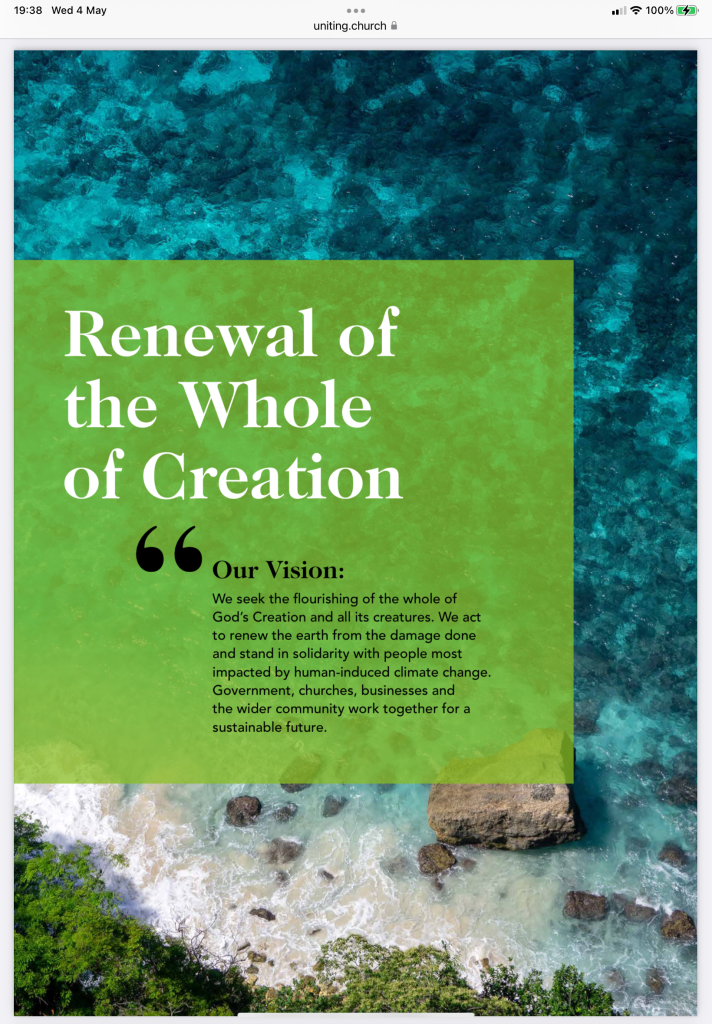
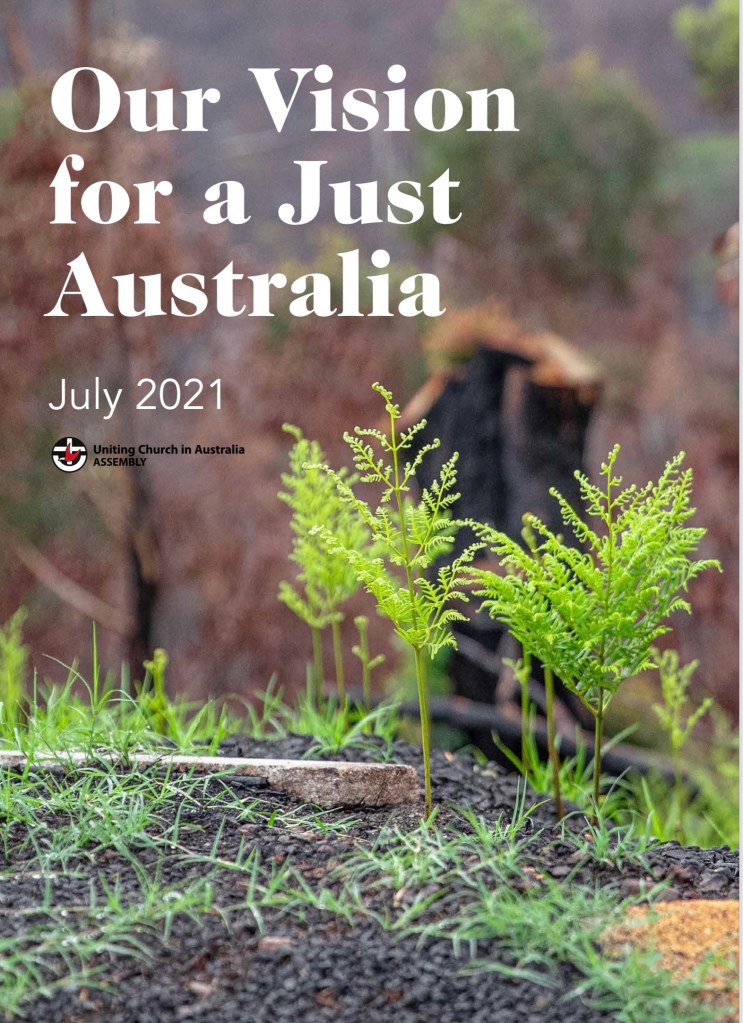

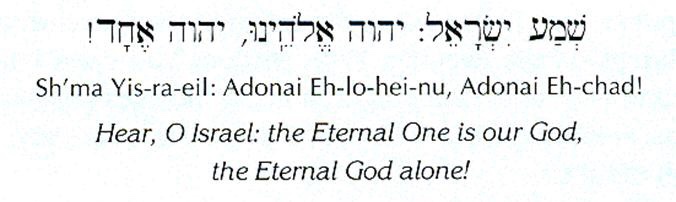

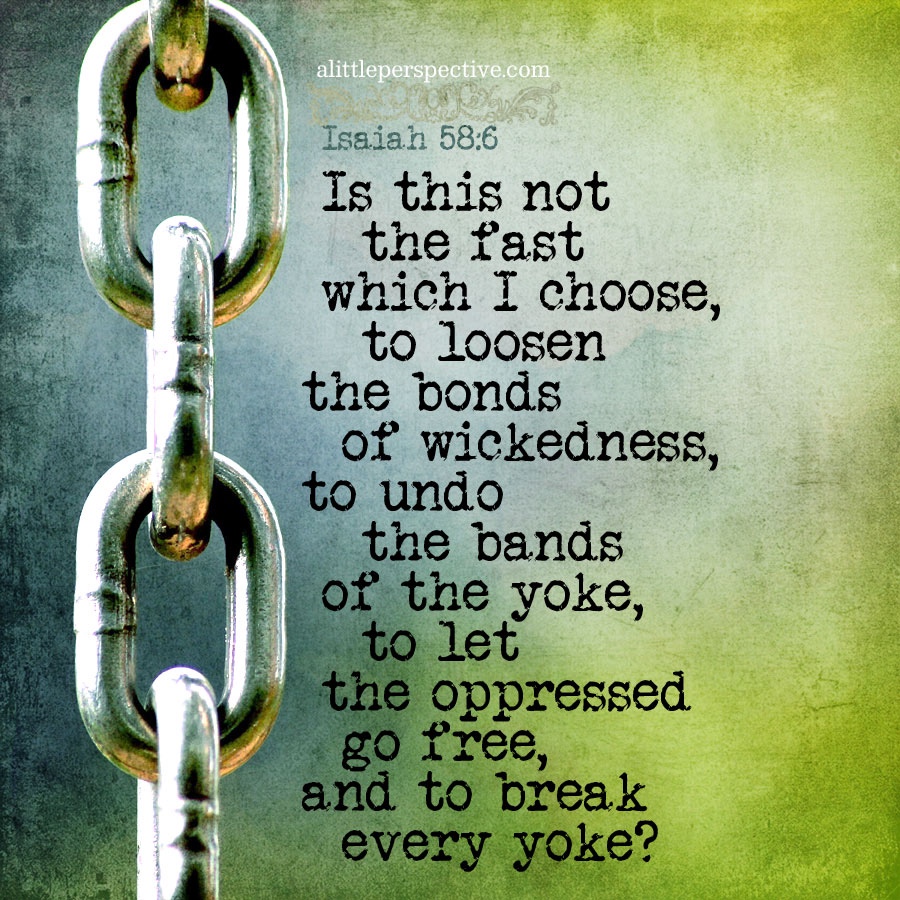
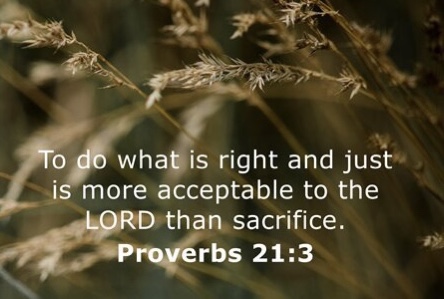
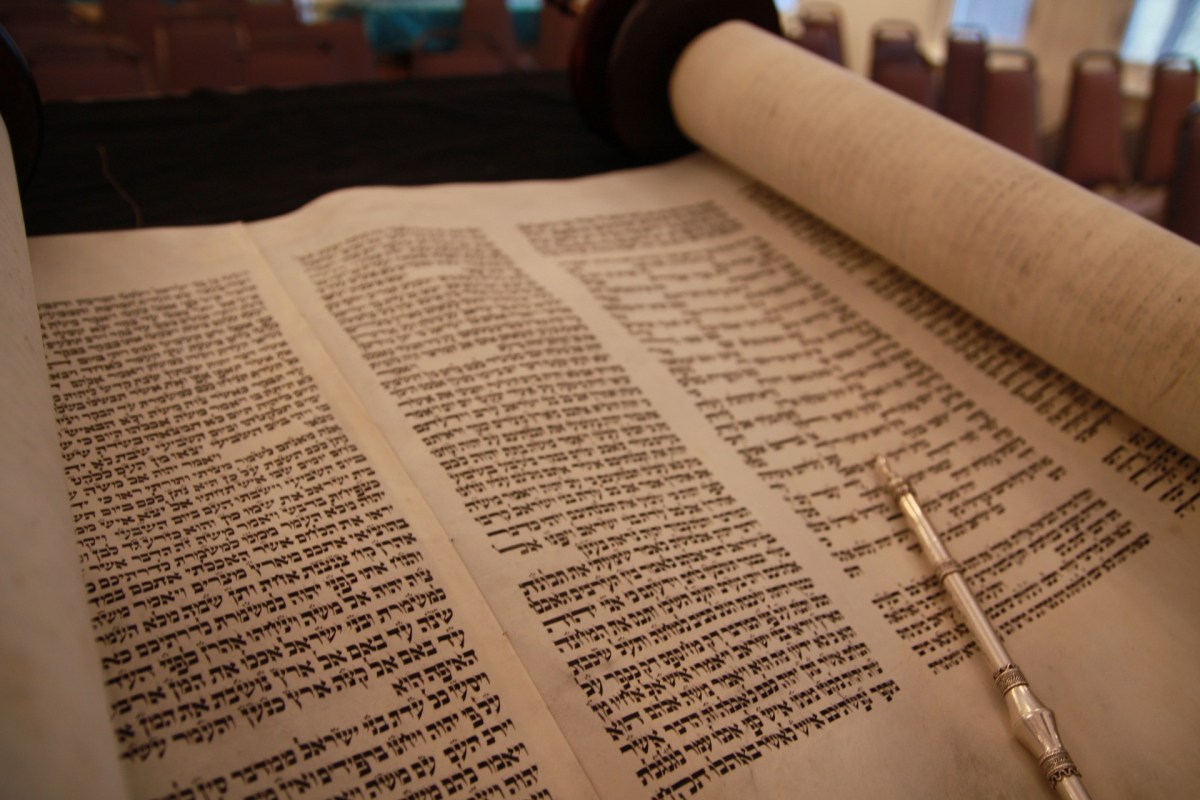
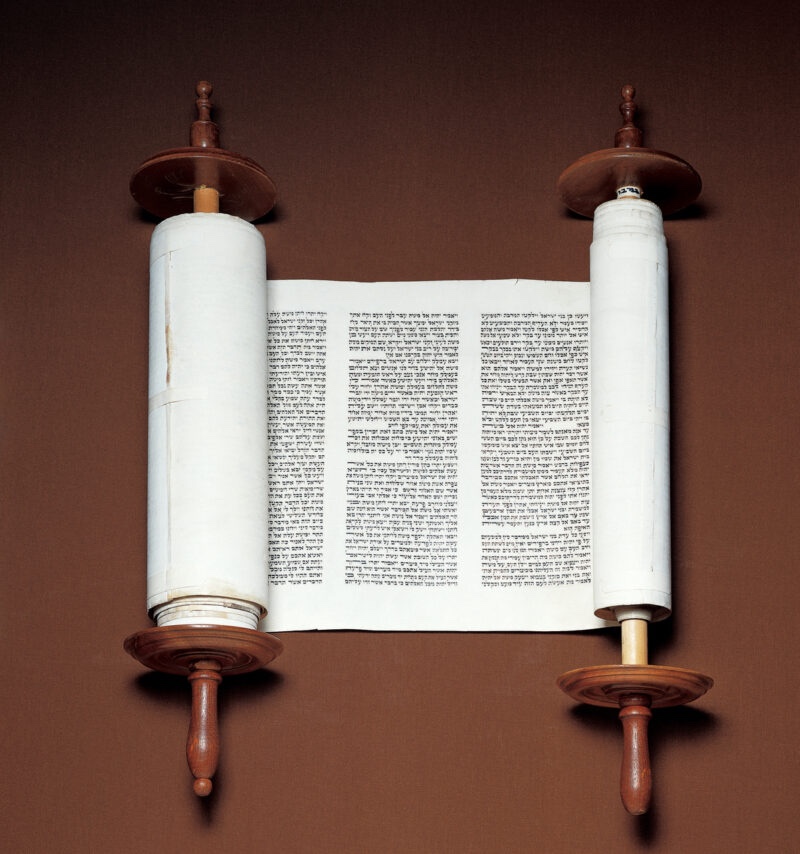
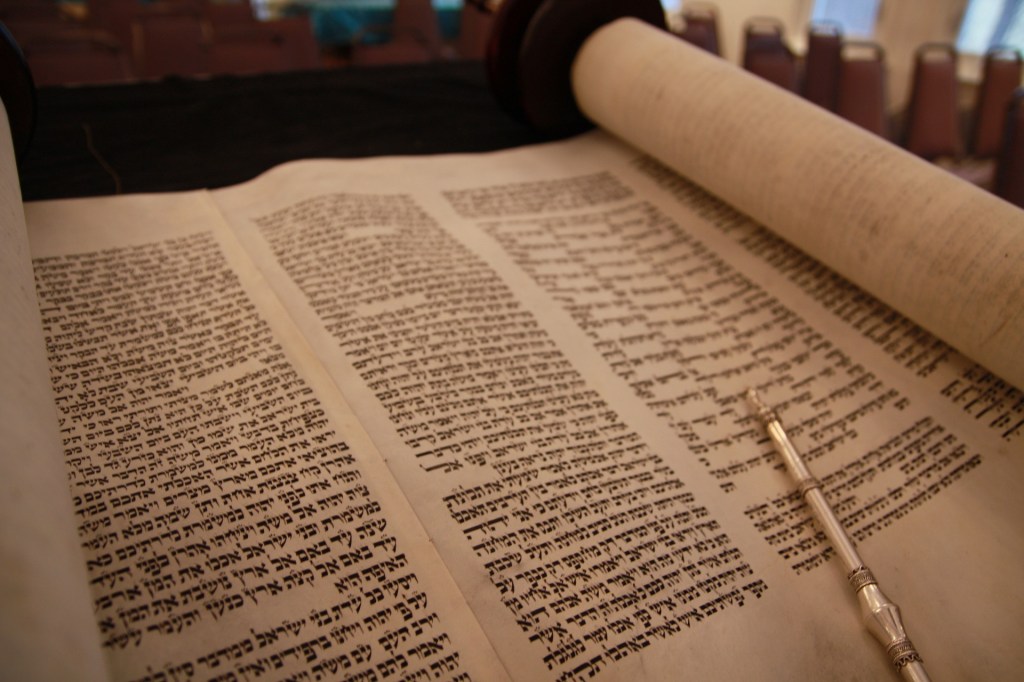
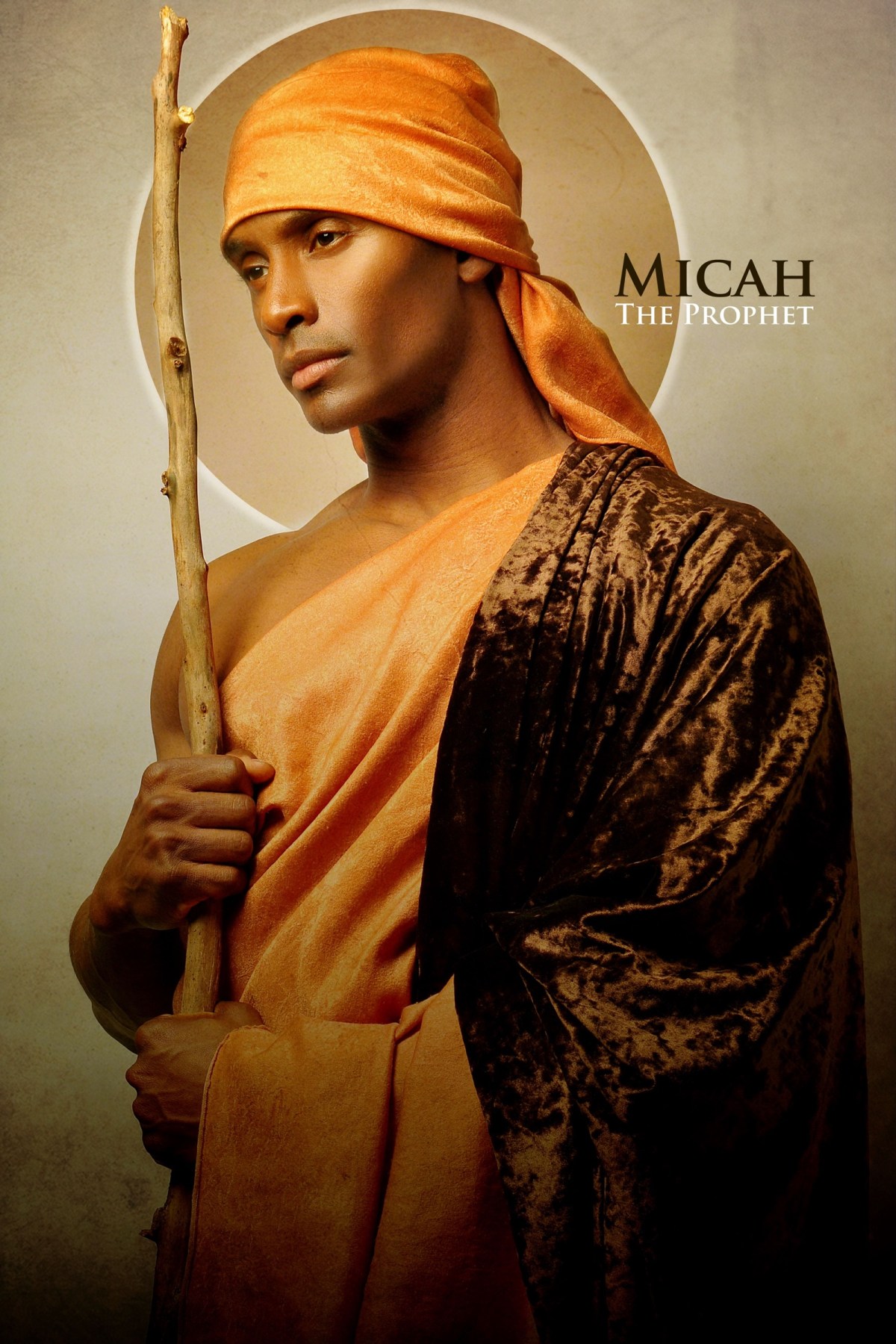

 An Informed Faith