For the passage to be read and heard this coming Sunday, the Lectionary has proposed what is perhaps the most well-known part of the first letter to the Corinthians that Paul wrote together with Sosthenes: the chapter on love (1 Cor 13:1–13). Paul and Sosthenes wax lyrical about love, telling the Corinthians that love “bears all things, believes all things, hopes all things, endures all things; love never ends” (13:7–8), and builds to a wonderful rhetorical climax in which he affirms that “faith, hope, and love abide, these three; and the greatest of these is love” (13:13).
As well as being a rhetorical tour de force, and the most beloved part of this letter of Paul, this chapter is also, in my view, the most misunderstood and misused chapter of this letter—as I will attempt to explain below.
It is clear from the description that is offered by Sosthenes and Paul that, when the community in Corinth gathered for worship, there was a high degree of disorder manifested. They devote four chapters of their letter to this issue (11:1—14:40). Throughout this section of the letter, Paul and Sosthenes write with a single focus in mind; they write to bring order and decency to this situation (14:40).
The two letter writers begin their consideration of the disorder evident in the community by asserting the importance of maintaining “the traditions just as I handed them on to you” (11:2), reminding them of words that “I received from the Lord” and duly “handed on to you” (11:23). They instruct the Corinthians to seek to speak to others in worship “for their upbuilding and encouragement and consolation” (14:3).
They advise them to exercise their spiritual gifts appropriately; to “strive to excel in them for building up the church” (14:12), to “not be children in your thinking … but in thinking be adults” (14:20). They continue, “let all things be done for building up” (14:26), noting that “all things should be done decently and in order” (14:40), for “God is a God not of disorder but of peace” (14:33).
The hymn in chapter 13 is an integral part of that overarching purpose. As well as his reminder of “the traditions just as I handed them on to you” (11:1), Sosthenes and Paul assert that they must acknowledge that “what I am writing to you is a command of the Lord” (14:37). Drawing from various authorities, they allude to scriptural ideas (11:3, 7–9, 10; 14:4), directly cite Hebrew scripture (14:21, 25), refer to the words of Jesus (11:24–25), claim the precedent of nature (11:14) and church custom (11:16), and in a controversial passage, they refer to what takes place “in all the churches of the saints” (14:33b–34).
Chapter 12 contains an adaptation of an image which was extensively used in political discussions about the city state (“the body is one and has many members”, 12:12) as well as what may be a reference to a developing baptismal liturgy within the early church (“we were all baptised into one body”, 12:13) and a very early creedal statement (“Jesus is Lord”, 12:3).
Throughout these chapters, those who are inclined to diverge from the commands given by Sosthenes and Paul are portrayed in negative terms: they are “contentious” (11:16), showing “contempt” (11:22), acting “in an unworthy manner” (11:27) and with “dissension” (12:25); their behaviour conveys dishonour (12:22–26) and shame (14:35).
The selfish behaviour of some at the common meal warrants their condemnation (11:32) and justifies the illness and death that has occurred within the community (11:30). The individualistic participation of others in communal worship builds up themselves, but not others (14:4, 17); they are not intelligible in speech (14:9), but are unproductive in their minds (14:14) and childish in their thinking (14:20), leaving themselves open to the risk, “will they not say that you are out of your mind? (14:23).
In the centre of this section stands the famous “hymn to love” (12:31–13:13), now often treated in isolation and over-romanticised. In context, the passage provides a sharp, pointed polemic against the Corinthian community. The qualities they possess are consistently inadequate when measured against love.
The speech of the Corinthians is like “a noisy gong or a clanging cymbal” (13:1), an allusion to the mayhem brought about by speaking in tongues in worship (1:5; 12:10, 28–30; 14:6–8). Whilst they readily express their “prophetic powers” in worship (11:4–5; 12:10, 28–30; 14:1, 4–5, 23–24, 29–32, 37, 39), for Paul and Sosthenes, these abilities are nothing without love (13:2).
Likewise, they claim that they are able to understand mysteries (2:7; 4:1; 14:2, 23) and have knowledge (1:5; 8:1–3, 7, 10, 11; 12:8; 14:6) as well as faith (2:5; 12:9; 15:14, 17; 16:13); but Paul and Sosthenes insist that all of these are nothing in isolation from love (13:2).
Elsewhere in this letter there are direct accusations to the Corinthians that they are precisely what love is not. Love does not boast (13:4), but the Corinthians are regarded as being boastful (1:29; 3:21; 4:7; 5:6). Love is not arrogant (13:4), but in the eyes of Sosthenes and Paul the Corinthians are arrogant or “puffed up” (translating the same Greek word in 4:6, 18–19; 5:2; 8:1).
Love does not rejoice in wrongdoing (13:6), but Paul and Sosthenes berate the Corinthians for taking fellow-believers to court to seek redress for wrongs; indeed, “you yourselves wrong and defraud—and believers at that” (6:7–8). Love means that people do not insist on their own way (13:5), but they consider that the way that some behave in relation to meat offered to idols in the marketplace advantage; “do not seek your own advantage”, they advise them, “but that of the other” (10:24).
In like manner, when they gather to celebrate the supper of the Lord, “when the time comes to eat, each of you goes ahead with your own supper, and one goes hungry and another becomes drunk” (11:21). Selfishness and acting without regard for the other characterises their common life.
Love “hopes all things” (13:7), but some in the community at Corinth are accused of failing to share in the hope of the resurrection (15:12–19). The assertion that “we know only in part” (13:9–10) is directed squarely against the Corinthian claim to have full knowledge (8:1, 10–12) whilst the image of the child, not yet adult (13:11), reflects criticism levelled by Sosthenes and Paul against the Corinthians, whom they see as infants, not yet ready for solid food (3:1–2; 14:20).
So the hymn alleged to be in praise of love is, more accurately, a polemical censure of the Corinthians’ shortcomings, in which every word used and every phrase shaped by Paul and his co-writer Sosthenes cuts to the heart of the inadequacies of the Corinthian community. Try preaching that at a wedding!!
The Gospel reading for this coming Sunday contains some very well-known words of Jesus, which we remember as “the greatest commandment” (Mark 12:28–34). Here are ten things worth knowing about these words.
ONE. The greatest commandment identified by Jesus comes from Hebrew Scripture. When Jesus says that the greatest commandment is to “love the Lord your God”, he is repeating words from the start of a long section in Deuteronomy, which reports a speech by Moses allegedly given to the people of Israel (Deut 5:1–26:19). The speech retells many of the laws that are reported in Exodus and Leviticus, framing them in terms of the repeated phrases, “the statutes and ordinances for you to observe” (4:1,5,14; 5:1; 6:1; 12:1; 26:16–17), “the statutes and ordinances that the Lord your God has commanded you” (6:20; 7:11; 8:11).
After proclaiming the Ten Commandments which God gave to Israel through Moses (Deut 5:1–21; cf. Exod 20:1–17) and rehearsing the scene on Mount Sinai and amongst the people below (5:22–33; cf. Exod 19:1–25; 20:18–21), Moses then delivers the word which provides the heading of all that follows: “Hear, O Israel: The Lord is our God, the Lord alone. You shall love the Lord your God with all your heart, and with all your soul, and with all your might. Keep these words that I am commanding you today in your heart” (Deut 6:4–6). Love, it would seem, is the key commandment amongst all the statutes and ordinances found in this book.
These words are known in Jewish tradition as the Shema, a Hebrew word literally meaning “hear” or “listen”. It’s the first word in this key commandment; and more broadly than simply “hear” or “listen”, it carries a sense of “obey”. These words are important to Jews as the daily prayer, to be prayed twice a day—in keeping with the instruction to recite them “when you lie down and when you rise” (Deut 6:7). As these daily words, “love the Lord your God” with all of your being are said, they reinforce the centrality of God and the importance of commitment to God within the covenant people.
TWO. The original version of this commandment in Deuteronomy 6 has three parts: “with all your heart, and with all your soul, and with all your might” (Deut 6:4). This is typical of Jewish speech; repetition, using different words which are related to the same concept, expressing the importance of what is being said; and especially, repetition in groups of three. So, the prophet Micah urges people to “do justice, love kindness, and walk humbly with God” ( Mic 6:8). Second Isaiah praises those messengers who proclaim peace, bring good news, and announce salvation (Isa 52:7).
The psalmist exhorts the people to “tell of his salvation … declare his glory … his marvelous works among all the peoples” (Ps 96:2-3). And the priestly authors of the creation story identifies all living creatures created by God in the threefold “fish of the sea … birds of the air … and every living thing that moves upon the earth” (Gen 1:28). That’s kind of like an ancient version of our “animal—mineral—vegetable” classification, I guess.
So the prayer of Deut 6:4 adheres to a widespread and longstanding literary feature in ancient Hebrew, of using three words in parallel. Just how parallel they are, we will now explore.
THREE. With all your heart: The Hebrew word translated as heart is לֵבָב, lebab. It’s a common word in Hebrew Scripture, and is understood to refer to the mind, will, or heart of a person—words which seek to describe the essence of the person. It is sometimes described as referring to “the inner person”. The word appears 248 times in the scriptures, of which well over half (185) are translated as “heart”.
Many of those occurrences are in verses which contrast heart with flesh—that is, “the inner person” alongside “the outer person”. For example, the psalmists declare that “my flesh and my heart may fail, but God is the strength of my heart and my portion forever” (Ps 73:26), and “my heart and my flesh sing for joy to the living God” (Ps 84:2b), whilst the prophet Ezekiel refers to “foreigners, uncircumcised in heart and flesh” (Ezek 44:7,9). When used together, these two terms (heart and flesh) thus often refer to the whole person, the complete being.
The Hebrew word lebab, heart, is rendered by the Greek word, kardia, in Mark 12:30. That word can refer directly to the organ which circulates blood through the body; but it also has a sense of the central part of a being—which is variously rendered as will, character, understanding, mind, and even soul. These English translations are attempting to grasp the fundamental and all-encompassing. It seems that this correlates well with the Hebrew word lebab, which indicates the seat of all emotions for the person.
FOUR. With all your soul: The second Hebrew word in the commandment articulated in Deut 6:4 is נֶפֶשׁ, nephesh. This is another common Hebrew word, appearing 688 times in Hebrew Scripture, of which the most common translation (238 times) is “soul”; the next most common translation is “life” (180 times). The word is thus a common descriptor for a human being, as a whole.
However, to use the English word “soul” to translate nephesh does it a disservice. We have become acclimatised to regarding the soul as but one part of the whole human being—that is the influence of dualistic Platonic thinking, where “body and soul” refer to the two complementary parts of a human being. In Hebrew, nephesh has a unified, whole-of-person reference, quite separate from the dualism that dominates a Greek way of thinking.
Nephesh appears a number of times in the first creation story in Hebrew scripture, where it refers to “living creatures” in the seas (Gen 1:20, 21), on the earth (Gen 1:24), and to “every beast of the earth, and to every bird of the air, and to everything that creeps on the earth, everything that has the breath of life (nepheshhayah)” (Gen 1:30). It is found also in the second creation story, where it likewise describes how God formed a man from the dust of the earth and breathed the breath of life into him, and “the man became a living being (nepheshhayah)” (Gen 2:7). The claim that each living creature is a nephesh is reiterated in the Holiness Code (Lev 11:10, 46; 17:11).
The two words, nephesh and lebab, appear linked together many times. One psalmist exults, “my ‘heart’ is glad, and my ‘soul’ rejoices” (Ps 16:9a), whilst another psalmist laments, “how long must I bear pain in my ‘soul’, and have sorrow in my ‘heart’ all day long?” (Ps 13:2). Proverbs places these words in parallel in sayings such as “wisdom will come into your ‘heart’, and knowledge will be pleasant to your ‘soul’” (Prov 2:10), and “does not he who weighs the ‘heart’ perceive it? does not he who keeps watch over your ‘soul’ know it?” (Prov 24:12). In Deuteronomy itself, the combination of “heart and soul” appears a number of times (Deut 4:29; 10:12; 11:13, 18; 13:3; 26:16; 30:2, 6, 10), where it references the whole human being.
In each of these instances, rather than taking a dualistic Greek approach (seeing “heart” and “soul” as two separate components of a human being), we should adopt the integrated Hebraic understanding. Both “heart” and “soul” refer to the totality of a human being. The repetition is a typical Hebraic style, using two different words to refer to the same entity (the whole human being). The repetition underlines and emphasises the sense of totality of being.
FIVE. With all your might: The third Hebrew word to note in Deut 6:5 is מְאֹד, meod, which is usually translated as “might” or “strength”. Its basic sense in Hebrew is abundance or magnitude; it is often rendered as an adverb, as “very”, “greatly”, “exceedingly”, or as an adjective, “great”, “more”, “much”. The function of this word, “might” or “strength”, in Deut 6:5 is to reinforce the totality of being that is required to love God.
In light of this, we could, perhaps, paraphrase the command of Deuteronomy as love God with all that you are—heart and soul, completely and entirely. Love God with “your everythingness” (to coin a word). There’s a cumulative sense that builds as the commandment unfurls—love God with all your emotions, all your being, all of this, your entire being.
We find the same threefold pattern in the description of King Josiah, who reigned in the eighth century (640–609 BCE): “before him there was no king like him, who turned to the Lord with all his heart, with all his soul, and with all his might, according to all the law of Moses; nor did any like him arise after him” (2 Kings 23:25). Most often, however, it is used as an intensifier, attached directly to another term, providing what we today would do in our computer typing by underlining, italicising, and bolding a key word or phrase.
Rendering this Hebrew word in Greek—as the translators of the Septuagint did—means making a choice as to what Greek word best explicated the intensifying sense of the Hebrew word, meod. The LXX settled on the word δύναμις, usually translated as power (the word from which we get, in English, dynamic, and dynamite). Dynamis often has a sense of physical strength and capacity, and that resonates well with the sense of the Hebrew term as it is used in Deut 6:5. So the LXX has dynamis as the third element in the Shema commandment.
SIX. In the version we find at Mark 12, Jesus adds a fourth element: with all your mind. Where does this addition come from? Centuries before Jesus, an ancient scribe wrote an account of events in his society in a time long before his life. He reports the instruction that King David spoke to his chosen successor, his son, Solomon: “set your mind and heart to seek the Lord your God” (1 Chron 22:19). He reinforces that in a later address, telling Solomon to “know God and serve [the Lord] with single mind and willing heart” (1 Chron 28:9). The book of Proverbs (attributed by tradition to Solomon) then advocates both attending to the mind (Prov 22:17; 23:12, 19) and “inclining your heart” towards God (Prov 2:2; 3:1–6; 4:4, 20–23; 6:21; 7:3) as integral parts of the life of faith.
The injunction of David is echoed in the way that Jesus extends the traditional commandment to “love the Lord your God with all your heart, and with all your soul, and with all your might” (Deut 6:5), adding “and with all your mind” (Mark 12:30). There are scriptural resonances underpinning this addition made by Jesus.
SEVEN. The combined effect of these four phrases in the version of the command that Jesus speaks in Mark 12 is telling: Jesus instructs his followers that life with him requires a complete, total, fully-immersed commitment. He conveys this quite directly in other sayings: to a grieving person, “follow me, and let the dead bury their own dead” (Matt 8:22; Luke 9:60); to a farmer, “no one who puts a hand to the plow and looks back is fit for the kingdom of God” (Luke 9:62); and to a rich man, “go, sell what you own, and give the money to the poor, and you will have treasure in heaven; then come, follow me” (Mark 10:21 a d parallels).
Jesus also declares that “whoever loves father or mother more than me is not worthy of me; and whoever loves son or daughter more than me is not worthy of me; and whoever does not take up the cross and follow me is not worthy of me” (Matt 10:37–38; Luke 14:26–27), leading to his claim that those who have left “house or brothers or sisters or mother or father or children or fields, for my sake and for the sake of the good news” will indeed receive “eternal life in the age to come” (Mark 10:29–30). Discipleship is full-on!
EIGHT. Jesus then adds a second ”great commandment”, which also comes from Hebrew Scripture. As a good Jew, Jesus was well able to reach into his knowledge of Torah in his answer to the scribe who had asked him “which commandment is the first of all?”. The commandments that he selects have been chosen with a purpose. They contain the essence of the Torah: love God, love your neighbour. His answer draws forth the agreement of the scribe; in affirming Jesus, the scribe reflects the prophetic perspective, that keeping the covenant in daily life is more important that following the liturgical rituals of sacrifice in the Temple (see Amos 5:21–24; Micah 6:6–8; Isaiah 1:10–17).
The scene is similar to a Jewish tale that is reported in the Babylonian Talmud, a 6th century CE work. In Shabbat 31a, within a tractate on the sabbath, we read: “It happened that a certain non-Jew came before Shammai and said to him, ‘Make me a convert, on condition that you teach me the whole Torah while I stand on one foot.’ Thereupon he repulsed him with the builder’s cubit that was in his hand. When he went before Hillel, he said to him, ‘What is hateful to you, do not to your neighbour: that is the whole Torah, the rest is the commentary; go and learn it.’”
Hillel, of course, had provided the enquiring convert, not with one of the 613 commandments, but with one that summarised the intent of many of those commandments. We know it as the Golden Rule, and it appears in the Synoptic Gospels as a teaching of Jesus (Matt 7:12; Luke 6:31).
Some Jewish teachers claim that the full text of Lev 19:18 is actually an expression of this rule: “You shall not take vengeance or bear a grudge against any of your people, but you shall love your neighbour as yourself: I am the Lord”. Later Jewish writings closer to the time of Jesus reflect the Golden Rule in its negative form: “do to no one what you yourself dislike” (Tobit 4:15), and “recognise that your neighbour feels as you do, and keep in mind your own dislikes” (Sirach 31:15).
NINE. Love of God is a thread running right through both testaments of scripture. The command is repeated in later chapters of Deuteronomy (10:12; 11:1; 13:3; 30:6) and in Joshua (22:5; 23:11). It is then picked up in all three Synoptic Gospels (Mark 12:30; Matt 22:37; Luke 10:27; 11:42) and echoed by Paul (Rom 8:28 and perhaps 2 Thess 3:5).
Finally, this claim is developed by the author of 1 John, who focusses on love as integral to the nature of God, declaring that “God is love” (1 John 4:16) and “love is from God” (4:7); and then explains that such love is expressed in the way that believers “love one another [for] if we love one another, God lives in us, and his love is perfected in us” (4:11–12), or that “the love of God is this, that we obey his commandments” (5:3); and that “those who do not love their brothers and sisters” are “not from God” (3:10; see also 4:19–20).
And so, the bold declarations are made that “whoever obeys [Christ’s] word, truly in this person the love of God has reached perfection” (2:5), and that “those who love God must love their brothers and sisters also” (4:21). In this way, the two commands to love are knitted together most completely.
TEN. Love of neighbour is also a consistent theme throughout scripture. After the command to “love your neighbor as yourself” (Lev 19:18), the Torah specifies that “the alien who resides with you shall be to you as the citizen among you; you shall love the alien as yourself” (19:34). Israelites are commanded not to defraud a neighbour (19:13), judge a neighbour “with justice” (19:15), not profit “by the blood of your neighbour” (19:16) and to deal justly with the neighbour in matters of commerce (25:14–15). The word of Moses in Deuteronomy is clear in the command to “open your hand to the poor and needy neighbour in your land” (Deut 15:11).
The book of Proverbs likewise counsels “do not plan harm against your neighbour who lives trustingly beside you” (Prov 3:29), “do not be a witness against your neighbor without cause, and do not deceive with your lips” (24:28), and warns that “like a war club, a sword, or a sharp arrow is one who bears false witness against a neighbour” (25:18). Its advice is, “better is a neighbour who is nearby than kindred who are far away” (27:10b).
Paul clearly knows the command to love one’s neighbour, for he quotes it to the Galatians: “the whole law is summed up in a single commandment, ‘You shall love your neighbour as yourself’” (Gal 5:14), and to the Romans: “the commandments … are summed up in this word, ‘Love your neighbor as yourself.’ Love does no wrong to a neighbor; therefore, love is the fulfilling of the law.” (Rom 13:9–10).
James also cites it: “you do well if you really fulfill the royal law according to the scripture, ‘You shall love your neighbour as yourself’” (James 2:8). Both writers reflect the fact that this was an instruction that stuck in people’s minds! And I wonder … perhaps there’s a hint, in these two letters, that the greater of these two equally-important commandments is actually the instruction to “love your neighbour”?
So it is for very good reasons that Jesus extracts these two commandments from amongst the 613 commandments that are to be found within the pages of the Torah. (The rabbis counted them all up—there are 248 “positive commandments”, giving instructions to perform a particular act, and 365 “negative commandments”, requiring people to abstain from certain acts.)
Jesus, of course, was a Jew, instructed in the way of Torah. He knew his scriptures—he argued intensely with the teachers of the Law over a number of different issues. He frequented the synagogue, read from the scroll, prayed to God, and went on pilgrimage to Jerusalem and into the Temple—where, once again, he offered a critique of the practices that were taking place in the courtyard of the Temple (11:15–17).
Then he engaged in debate and disputation with scribes and priests (11:27), Pharisees and Herodians (12:13), and Sadducees (12:18). Each of those groups came to Jesus with a trick question, which they expected would trap Jesus (12:13). Jesus inevitably bests them with his responses (11:33; 12:12, 17, 27). It was at this point that the particular scribe in our passage approached Jesus, perhaps intending to set yet another trap for him (12:28). We have seen how masterful Jesus was, in engaging with—and besting in debate—this scribe in the way he responded to him. These two “greatest commandments” have endured for centuries!
In the days leading up to this Sunday, we are thinking of the lament which opens the book we know as 2 Samuel, where David sings of his love for both King Saul and his son Jonathan (2 Sam 1:1, 17–27). As the lectionary has jumped from the rollicking yarn of how David killed Goliath (1 Sam 17), to this sorrowful lament that David sings (2 Sam 1), it has leapt over some important stories.
Jonathan as depicted by photographer James C. Lewis
We have had little opportunity to consider Jonathan, who had been in an intense and intimate relationship with David; he features in the battles of 1 Sam 13—14, but the lectionary has omitted all of these scenes. Nor have we had opportunity to consider Michal, the sister of Jonathan, who was married to David as his first wife—of eight: for after her came Ahinoam the Yizre’elite; Abigail, the widow of Nabal the Carmelite; Maacah, the daughter of Talmay, king of Geshur; Haggith; Abigail; and Eglah.
A list in 1 Chron 3:1–8 identifies eighteen of David’s sons, before concluding “these were David’s sons, besides the sons of the concubines”, and then adding the tag- line, “and Tamar was their sister” (1 Chron 3:9).
David’s relationship with Jonathan was, as we have seen, intense and intimate: “the soul of Jonathan was bound to the soul of David, and Jonathan loved him as his own soul. Saul took him that day and would not let him return to his father’s house. Then Jonathan made a covenant with David, because he loved him as his own soul.” (1 Sam 18:1–3).
The verb used here is אָהַב (ahab), the same used throughout the ancestral narratives for the love of a man for a woman (Gen 24:67; 25:28; 29:18, 20, 30, 32; 34:3; Judg 16:4; 1 Sam 1:5; 2 Sam 13:1, 4, 15; 1 Ki 11:1; 2 Chron 11:21). It is also used for God’s love for Israel (Deut 7:8; 1 Ki 10,9; 2 Chron 2:11; 9:8)—and, of course, God is understood as the husband (masculine) of Israel (feminine) (Hos 2:16; Isa 54:5–7; Jer 31:32; Ezek 16:8–14; and see Eph 5:31–32; Rev 21:2).
David’s relationship with Michal comes after her father, Saul, had offered David his daughter Merab as his wife—an offer which David politely declined (1 Sam 18:17–19). The first we know of Michal is the stark comment, “Saul’s daughter Michal loved David” (18:20, repeated at v.28). The verb used is אָהַב (ahab), the same used of David’s love for Jonathan (1 Sam 20:17; 2 Sam 1:16). Michal’s love for David had the same quality, the same character, as Jonathan’s love for David, and David’s love for Jonathan.
Perhaps we might reflect more on what David says when he compares Jonathan’s love for him with the love of women for him (2 Sam 1:26). Remember, he had no less than eight wives, who bore him at least nineteen children! So David knew a lot, we might assume about “the love of women”.
In his lament, David remembers that Jonathan’s love for him was “wonderful” (2 Sam 1:27). This is one possible translation of the word used here, פָלָא (pala), which has the sense of something extraordinary, something surpassing normal phenomena. It is used on occasion to refer to the miraculous “signs” that God performed in redeeming Israel from slavery in Egypt (Exod 3:20; Judg 6:13; 1 Chron 16:9–12; Neh 9:17) and that are promised to Israel in future years (Exod 34:10; Josh 3:5). David’s praise for Jonathan’s love is high indeed!
It is worth pondering these two forms of love that revolve around David in the early stages of his kingship. My wife, Elizabeth Raine, has undertaken a careful analysis of how these two relationships are described, and has noted a striking set of comparisons that are drawn between the way that David experienced his living relationship with Jonathan, and his relationship with his first wife, Michal.
David had married Michal (1 Sam 18:20–27) soon after he had entered into the covenant with Jonathan (1 Sam 18:3–5). Michal and Jonathan are both children of Saul, but they show more loyalty to Saul’s competitor (David) than to Saul. Their stories are told side-by-side side in 1 Samuel 18—20. What follows is Elizabeth’s analysis.
When we make careful comparisons, the results are surprising: traditional Hebrew male traits are attached to Michal, the female; whilst traditional Hebrew feminine traits are linked with Jonathan, the male. David relates to Michal as a man relates to a man, whilst David relates to Jonathan as a man relates to a woman.
David and Michal
We are told that Michal loved David and made it known (1 Sam 18:20, 18:28). This is the only time in 1—2 Samuel when a woman chooses her husband; usually the man chooses his wife. We note that it is never said that David married Michal for love, unlike the feelings that he appears to have had for Bathsheba (2 Sam 12:24; so also at the end of his life, in 1 Ki 1–2). Rather, David marries Michal for political reasons; he wants to be the son-in-law of King Saul.
Michal’s masculinity is contrasted with effeminate nature of her husband, Paltiel, who runs along crying when David forcibly reclaims Michal (2 Sam 3:16). Michal’s masculine traits are on show when she takes assertive physical action, unlike the typical Hebrew female (with just a few exceptions, like Jael and Deborah). First, Michal saves David by physically lowering him out a window (1 Sam 19:12). Then, she arranges her bed to make it appear that David is there (1 Sam 19:13), she lies to messengers, and then she lies to Saul (1 Sam 19:14–15).
Finally, Michal never bore a child to David; she does not fulfil the primary female role for women. And Michal is never described as beautiful, as other biblical women are: Abigail (1 Sam 25:3), Bathsheba (2 Sam 11:2), Tamar (2 Sam 13:1; 14:27), the queen of Ophir (Ps 45:11), and Esther (Esther 2:7)—and, over and over, the woman, “black and beautiful”, of the Song of Solomon.
Thus, Michal is cast in a most unfeminine role.
David and Jonathan
By contrast, David’s love and tenderness are reserved for Jonathan (2 Sam 1:26). On a number of occasions, as we have noted, Jonathan makes known his warm feelings for David (1 Sam 18:1; 19:1; 20:17). When Jonathan declares his feelings for David, David meets him and reciprocates with extravagant actions: “he prostrated himself with his face to the ground, bowed three times, and they kissed each other, and wept with each other; David wept the more” (1 Sam 20:41).
David and Jonathan kissed and wept with intensity until David ends their encounter with words pregnant with meaning: “the Lord shall be between me and you, and between my descendants and your descendants, forever” (1 Sam 20:42). These words evoke the covenantal commitment made by Jacob with Laban at Galeed—the Mizpah blessing, “the Lord watch between you and me, when we are absent one from the other” (Gen 31:49). The intensity of David’s covenantal promise is unparalleled elsewhere in the Hebrew Bible.
The narrative is clear that Jonathan assumes a role exactly like David’s women. Saul condemns Jonathan for choosing “the son of Jesse”—he won’t even name him (1 Sam 20:30–31)—and says it “to your own shame and the shame of your mother’s nakedness”, a polite way of referring to her genitalia (1 Sam 20:30). Saul is angered at his public shaming by Jonathan’s choice, and he wants to put David to death (1 Sam 20:31). When the tables turn later, David refuses to kill Saul (1 Sam 24:8–15), turning around Saul’s view of him (1 Sam 24:17–21).
David and Jonathan contract a covenant which is analogous to a marriage agreement (1 Sam 18:3) and the text, as we have seen, stresses a number of times that Jonathon had love for David. Jonathan, in turn, is prepared to give up his kingdom for David (1 Sam 18:3). Then, in David’s lament after he learns of Jonathan’s death, he declares that his love for Jonathan was greater than his love for any woman (2 Sam 1:26).
Although Jonathan saves the life of David, he never uses physical means; it is not by action, but by talk, that he does this—exhibiting much more of the characteristic feminine traits in this regard (1 Sam 20:26—29). When David concocts a lie for Jonathan to tell the messengers, Jonathan remains passive (1 Sam 20:4—11); in this, Jonathan acts in the way that Abigail later does (1 Sam 25). Then, David later adopts Mephibosheth, the son of Jonathan (2 Sam 4:4; 9:6–13).
Finally, we might well deduce that, as David presumably had sexual relations with each of his wives, resulting in children from most of them, we can reasonably assume that the love which “passes the love of women” that David expresses for Jonathon (2 Sam 1:26) may well have included sexual relations.
Thus, Jonathan is cast in a most unmasculine role.
When we look at the whole story that is told in this section of 1–2 Samuel, it is very important that we note Jonathan was part of God’s divine plan. His love for David is never condemned by God or by others in the narrative, with the exception of his father, Saul, who had been cursed by God. The love that David had for Jonathan, and that Jonathan reciprocated, was expressed in a fully-formed, deep, mature relationship, about which the text gives many affirming indications.
For earlier posts on the David—Jonathan—Saul relationships, see
For the Hebrew Scripture passage this coming Sunday, the lectionary offers a controversial passage (2 Sam 1:1, 17–27). The controversy revolves around the nature of the relationship between David and Jonathan. That relationship has an interesting history, and comes to a full expression in this passage.
In recent decades, a critical question that has been the focus of interpretation of the relationship between Jonathan and David has been, was this a loving same-gender relationship? Quite a number of scholars have argued that this was, indeed, the case.
Of course, more conservative and fundamentalist interpreters steadfastly refute this. They offer a number of arguments in support of their claims. The way that Jonathan’s love for David (1 Sam 18:3; 20:17) and the way that David describes his love for Jonathan (2 Sam 1:26) did not have sexual connotations, they claim. Alongside this, David is never said to have “known” Jonathan, which is a way that sexual intercourse is elsewhere described (Gen 4:1, 17, 25; 1 Sam 1:19).
These conservative scholars do not see the forming of a covenant (1 Sam 18:3) as signalling a loving relationship, as it was a political mechanism, as we noted in the previous blog on this passage. They claim that the “knitting” or “binding” of Jonathan’s soul to David (1 Sam 18:1) was more akin to the love of a father for his son; they also claim that Jonathan’s shedding of his clothes (1 Sam 18:4) was not in order to make love, but done as a political gesture.
However, I think that such arguments swim against the strong current that flows through the story of Jonathan and David. Writing thirty years ago, the biblical scholars Danna Nolan Fewell and David M. Gunn observed that “few commentators afford serious consideration to reading a homosexual dimension in the story of David and Jonathan”.
Fewell and Gunn note that “this is hardly surprising, given that until recently, most have been writing out of a strongly homophobic tradition… [but] far from stretching probability, a homosexual reading … finds many anchor points in the text.” (Fewell and Gunn, Gender, Power and Promise: The Subject of the Bible’s First Story [Nashville: Abingdon Press, 1993], 148-49.) we need to explore this claim in more detail.
The key feature of the relationship that is anchored in the text is conveyed in the word אַהֲבָה (ahabah), which is translated “love”. It is a word which appears 40 times throughout the Hebrew Scriptures, describing the relationship that God has with Israel (Deut 7:8; 1 Ki 10:9; 2 Chron 2:11; 9:8), as well as that between husband and wife (Prov 5:19; Eccl 9:9), and most specifically the sexually-passionate love expressed in the Song of Songs (Song 2:5–7; 3:5, 10). In these latter places, there are strong romantic and sexual dimensions to its meaning.
Certainly, love defines the relationship between Jonathan and David; the word is used three times in this regard, as we have noted above (1 Sam 18:3; 20:17; 2 Sam 1:26 ). Joel Baden, in a fine article “Understanding David and Jonathan”, notes that “over and over again we are told that Jonathan loved David”. He observes that while the most common sense of the term is “a non-romantic meaning of ‘covenant loyalty’ … the use of the word in the case of Jonathan seems to go beyond that.”
Baden lists the accumulation of evidence in a series of key verses. First, “Jonathan does not just ‘love’ David. ‘Jonathan’s soul became bound up with the soul of David’ (18:1).
Second, when we read that “Jonathan ‘delighted greatly in David’ (19:1)”, Baden notes that “the same Hebrew word used in Genesis to describe Shechem’s desire for Jacob’s daughter Dinah (Gen 34:19).”
Third, Baden observes that when Jonathan dies, “David laments for him in these words: ‘More wonderful was your love for me than the love of women’ (2 Sam 1:26)”. That is a very strong statement indeed; as Baden notes, “the comparison to the love of women can hardly have a political valence; this is as close to an expression of romantic attachment between two men as we find in the Bible.”
Representations of Jonathan and David by photographer James C. Lewis
Indeed, we might reflect more on David’s comparison of Jonathan’s love for him with the love of women for him. Remember, he had no less than eight wives, who bore him at least eighteen children! So David knew a lot, we might assume about “the love of women”. It is worth pondering the comparisons that are drawn between the way that David experienced his living relationship with Jonathan, and his relationship with his first wife, Michal, whom he had married soon after he had entered into the covenant with Jonathan (1 Sam 18:20–27)—thereby incurring the wrath of Saul (18:28–29). I will explore this in a subsequent blog.
I think there are two important factors to consider as we think further about the relationship that David had with Jonathan. The first has to do with the function of the Jonathan—David relationship in the whole Samuel—Kings narrative. The second has to do without understanding of same gender sexual attraction.
With regard to the first matter: is it satisfactory simply to read the story of David and Jonathan as entirely political? Or, by contrast, as entirely personal? In a fine recent article, Nila Hiraeth offers a thoughtful and detailed consideration of the issues, drawing on a range of recent scholarly discussions of the story of David and Jonathan.
Hiraeth proposes that the whole Samuel tradition (from his birth at 1 Sam 1 through to his death at 1 Sam 25) “has something to say about post exilic attitudes toward Israel’s transition to monarchy; specifically, a whispering undercurrent weighs the human cost of political pursuits and power-plays”. That is, the whole narrative has a politico-religious edge to it; the particular relationships within the narrative each contribute to that overarching purpose.
Hiraeth therefore does not discount the political dimension of the David—Jonathan relationship; she maintains that it is indeed present, but considers that this does not override the personal dimension of the story. In other words, it is not a binary, either-or, black-or-white scenario. Both political and personal aspects are integral to the story. “In Jonathan’s love we find personal attachment overlaid with political consequence”, she writes, and “in David’s lament we find political gain overlaid with personal loss”.
In terms of what this means, then, for a “queer reading” of the story of David and Jonathan, Hiraeth proposes that the story addresses the age-old tension between love and power. She notes that “the ultimate example for the prioritizing of the personal over the political in the David-Jonathan material is Jonathan, who chooses love over power. The text goes on to suggest that such an ordering of priorities can save lives, bestow dignity, shame kings into right action and move gods to mercy. Beauty for ashes; the government of heaven.”
And so, she concludes that “the David-Jonathan material of the Samuel tradition speaks most helpfully to contemporary discussions around Scripture and sexual identity, where the saving of lives and the bestowing of dignity are central concerns, and where the Christian traditions’ prioritising of power over love continues to carry a terrible human cost.”
David and Jonathan. “La Somme le Roi”, AD 1290; French illuminated ms (detail); British Museum
A second factor that is important to consider in reading this story—as, indeed, with every story within these ancient narratives that includes elements of same gender attraction or activity—is to recognise the significant difference between ancient understandings and contemporary conceptions of sexual identity and attraction. We need to take care with how we use the terms “homosexual” and “heterosexual”. What we today understand by these terms is, most likely, not what the ancient thought about sexual identity and attraction.
Hiraeth observes that “the Bible clearly presupposes certain attitudes about sex and gender that are rooted in the socio-sexual mores of the ancient Mediterranean world and are foreign to the views likely to be defended openly by most adherents of Christianity and Judaism.” In undertaking a thorough and detailed literary-critical analysis of the texts, Hiraeth observes that “the privileging of a political or theological-political reading of Jonathan’s love over and against a personal and potentially erotic and/or sexual reading arguably has less to do with the text itself and more to do with the imposition of heteronormative values upon the text.” See https://thecooperativehub.com/the-opinions/the-opinions/jonathan-s-love-and-david-s-lament-part-3
The most detailed and helpful recent scholarly work that has been done with regard to ancient and modern conceptualisings of sexuality has been the research of Prof. Bill Loader, who over the past decade has published a number of full-length books as well as more focussed articles. See https://billloader.com
Prof. Loader has stated an important principle of interpretation when it comes to dealing with “homosexuality” in the Bible. He notes that biblical texts reflect a worldview quite different from what contemporary scientific research reveals. He proposes that “we need to respect what these texts are and neither read into them our modern scientific understandings nor for dogmatic reasons assert that they are inerrant or adequate accounts of reality.” See https://www.billloader.com/LoaderSameSex.pdf
Citing the matter that generated great controversy in the 19th century—evolution—he observes that “mostly we have no hesitation in recognising the distance between our understandings and theirs [in antiquity] about creation’s age and evolution”. So when we think about sexuality and gender, it should be possible that just as “new information enables us to see that creation is much older and complex”, so we can see that “reducing humankind to simply male and female in an exclusive sense and denying the fact that the matter is much more complex and includes variation and fluidity, at least around the edges, or suggesting this all changed with the first human sin, is inadequate.”
In other words, when we today recognise that people can quite readily identify as “gay” or “lesbian” or “bisexual” or “asexual”, we are a world away from the ancient world in which the biblical texts were written, in which it was assumed that all people were heterosexual but some took part from time to time in sexual activity with people of the same gender. That is radically different from the committed, loving, lifelong same gender relationships that we know exist in the world today.
So let us read this passage recounting David’s love for Saul and particularly Jonathan with care. Let’s not “assume” what we think is the reality; let’s not “condemn” what we find abhorrent; let’s not “dismiss” what does not align with our personal commitments. Let’s be open to the strong possibility that the relationship between David and Jonathan was a mutually-fulfilling, deeply personal, committed and loving relationship between two adult men who had a deep-seated attraction to one another. It’s a passage that challenges us in multiple ways!
For the Hebrew Scripture passage this coming Sunday, the lectionary offers a passage (2 Sam 1:1, 17–27) that has been the subject of controversy. The passage is a lament, sung by David on the death of Jonathan, the son of Saul. The controversy revolves around the nature of the relationship between David and Jonathan. That relationship has an interesting history, and comes to a full expression in this passage.
Depiction of Jonathan by photographer Samuel C. Lewis
We first meet Jonathan, son of Saul, when he led a thousand troops, defeating the Philistines in a battle at Gibeah (1 Sam 13:2–3). He was successful in a number of subsequent battles; Jonathan was renowned for his skill with bow and sword (2 Sam 1:22). David had met him after he had slain the Philistine giant, Goliath (1 Sam 17); the narrator of this book observes that “the soul of Jonathan was bound to the soul of David, and Jonathan loved him as his own soul” (1 Sam 18:1).
What Jonathan does is striking, as he “stripped himself of the robe that he was wearing, and gave it to David, and his armour, and even his sword and his bow and his belt” (1 Sam 18:4). As Saul’s firstborn son, Jonathan might have expected to have inherited the crown from his father; instead, he divests himself of all the royal trappings and places them on the one anointed as king, his friend David. The imagery has political significance. But does it also have a personal dimension?
The friendship between David and Jonathan continued through various battles until, eventually, “the Philistines overtook Saul and his sons; and the Philistines killed Jonathan and Abinadab and Malchishua, the sons of Saul” (1 Sam 31:2). Saul himself was wounded (1 Sam 31:3) but then, sensing the inevitable, he “took his own sword and fell upon it” (1 Sam 31:4).
With the death of Saul and the earlier death of Samuel (1 Sam 25:1), a new era was beginning. David, previously anointed as king over Israel by Samuel (1 Sam 16:13), was now also anointed as king over Judah (2 Sam 2:4). A united monarchy would continue for decades.
Depiction of Saul by photographer Samuel C. Lewis
The relationship between Jonathan and David has been the cause of renewed enquiry in recent decades. Was the love expressed by these two men for one another simply “bruvver love”, as best mates; or was it deeper and more controversial than this? Loving relationships between people of the same gender are increasingly accepted in today’s world, at least in Western societies. Was that what was happening between the king and the former king’s son?
The “great delight” that Jonathan had for David (1 Sam 19:1) and his complete trust in him (1 Sam 20:4) leads them to form a covenant together on the basis that Jonathan loved David “as he loved his own life” (1 Sam 20:16–17).
Entering into a covenant with another person is a serious undertaking. Abraham and Abimelech covenant together at Beersheba, so that Abraham can live peaceably amongst the Philistines (Gen 21:22–34).
Laban and Jacob covenant together at Galeed to consolidate the two-decades-long relationship between the two men (Gen 31:43–55). David made a covenant with the elders of Israel at Hebron when he was anointed as king over Israel (2 Sam 5:1–5). Jehoida made a covenant with the captains of the Carites and of the guards, so that his son Joash would be protected and ultimately proclaimed king (2 Ki 11:4–12).
And, of course, the Lord God made a covenant with Noah and the whole of creation (Gen 9), and then renewed that covenant a number of times—with Abram (Gen 17), with Isaac and with Jacob (Lev 26:42), with all Israel through Moses (Exod 19, 24), under Joshua (John 24), and then with David (2 Sam 7) and various of his descendants. All major exilic prophets look to a time when God will renew the covenant with the people back in the land (Isa 55–56; Jer 31:31–35; Ezek 16:59–63; 37:24–28). The people of Israel were bound to the Lord God in covenant; the steadfast love that God shows towards Israel is an expression of that covenant.
Human-to-human covenants were political tools, creating alliances amongst the leaders of various tribes or nations of people in the ancient world. The covenant formed between Jonathan and David clearly has political implications. Jonathan, the son of Saul and rightful heir to the throne, hands over his armour to David (1 Sam 18:4) to signal that he is ceding power to David as the next king. The scene is infused with the political freight of an ancient covenant.
The poem in this week’s reading (2 Sam 1:19–27) offers a clear and loving acknowledgement by David of his respect and love for Saul. Despite the many difficulties encountered in their relationship, at the end of Saul’s life, David is able to acknowledge the virtue of the first King of Israel, and his son. “Saul and Jonathan, beloved and lovely!”, he sings; “in life and in death they were not divided; they were swifter than eagles, they were stronger than lions” (2 Sam 1:23).
Writing in With Love to the World, Kyounghee Cho reflects on the character of David seen in this passage. She writes, “David means “beloved”. David was tremendously loved by God. He was loved by the people of Israel, and now he is cherished and praised as an exemplary figure of faith by Christians worldwide. Today’s passage shows why God loved him and gives a lesson for believers of God. King Saul, David’s enemy, who had been chasing him for 10 years to kill him, died. While Saul’s demise might have been welcome news to David, he understood it not from his personal standpoint but from the perspective of the nation and its people.”
Kyounghee continues, “David paid tribute to Saul as the chosen leader of God and his soldiers as the army of the Lord of Hosts. He composed an elegy and instructed the people of Judah to learn it and sing it.” The song is a wonderful testimony to the king whose name came to characterise most strongly the chosen people, in covenant with the Lord God.
The story of David dominates the quasi-historical narrative of the early decades of the monarchy in Israel, stretching from his initial appearance at 1 Samuel 16 to his death at 1 Kings 2. The covenant people who come in following centuries are regularly identified as “the house of David” (2 Sam 3:1–6; 1 Ki 12:19–20, 26; 13:2; 14:8; 2 Ki 17:21; 2 Chron 10:19; 21:7; Neh 12:37; Ps 122:5; Isa 7:2, 13; 22:22; Jer 21:12; Zech 12:7–14; 13:1; Tobit 1:4; Sirach 48:15; 51:12; and see Luke 1:27).
This identification, of course, is highlighted many times in the New Testament, where Jesus is identified as “Son of David” in the Synoptic Gospels (Mark 10:47–48; 12:35; Luke 3:31; 18:38–39; and especially in Matt 1:1, 20; 9:27; 12:23; 15:22; 20:30–31; 21:9, 15; 22:42). This claim is also noted at John 7:42; Rom 1:3; 2 Tim 2:8; Rev 3:7; 5:5; 22:16). The heritage of David lives on in these stories.
The lament sung by David in 2 Sam 1 also provides a beautiful acknowledgement of the depth and strength of the love that undergirds this covenant between Jonathan and David. Peppering his song with the refrain “how the mighty have fallen” (vv. 19, 25, 27), David laments over his friend: “greatly beloved were you to me; your love to me was wonderful, passing the love of women” (2 Sam 1:26).
Could it be that, even in ancient Israel, such love between two men was valued and accepted? That will form the focus of the next blog that I will offer on this passage.
As we continue through narrative passages from the Hebrew Scriptures, this Sunday, we come to David’s poetic lament for his friend, Jonathan (2 Sam 1). This passage invites us to consider the depth of love that David expressed for Jonathan: “your love to me was wonderful, passing the love of women”. Just what can we make of this relationship? (This is the second of three posts this week on this topic.)
With Love to the World is a daily Bible reading resource, written and produced within the Uniting Church in Australia, following the Revised Common Lectionary. It offers Sunday worshippers the opportunity to prepare for hearing passages of scripture in the week leading to that day of worship. It seeks to foster “an informed faith” amongst the people of God.
You can subscribe on your phone or iPad via an App, for a subscription of $28 per year. Search for With Love to the World on the App Store, or UCA—With Love to the World on Google Play. For the hard copy resource, for just $28 for a year’s subscription, email Trevor at wlwuca@bigpond.com or phone +61 (2) 9747-1369.
“I write these things to you who believe in the name of the Son of God, so that you may know that you have eternal life” (1 Joh. 5:13). That’s how the author of the work we know as the first letter of John begins the final section of this work, drawing to a close the extended reflection that has been offered in the previous sections, regarding belief in Jesus and what it means for believers.
Of course, as I have already noted, although this work is described as a letter by John, it does not show many characteristics at all of the classic letter style, nor does it anywhere explicitly identify its author as John. The closest we get to an indication that this could have been a letter is in the phrases “little children, I am writing these things” (2:1), “beloved, I am writing you” (2:7), and the immediately-repeated “I am writing to you” (2:8, 12, 13). And the closest we get to any sense of Johannine authorship is the claim for eyewitness status, “what we have seen and heard”, in the opening lines (1:1–4). See more at
The verses that come immediately before this statement are proposed by the lectionary as the Epistle reading for this coming Sunday (1 John 5:9–13). This is the final selection from this letter, which we have been following during the season of Easter. It begins with a reference to “the testimony of God” and continues by declaring that, for believers, this this testimony in “in their hearts” (5:10). Then, the content of the testimony is given: “this is the testimony: God gave us eternal life, and this life is in his Son” (5:11).
The Gospel attributed to the author with the same name that is applied to this letter—John—refers a number of times to the testimony that was given concerning the Son. That testimony begins with John, who “came as a witness to testify to the light, so that all might believe through him; he himself was not the light, but he came to testify to the light” (John 1:7–8). It continues in the words and actions of Jesus himself, as he regularly states (John 3:11, 33; 5:31–36; 8:14, 18; 10:25;18:37).
Testimony comes also through scripture (John 5:39), from the crowd that witnessed the final sign involving Lazarus (12:17), from the work of the Spirit (15:26), by the disciples themselves (15:27)—and by the author of this Gospel himself: “he who saw this has testified so that you also may believe; his testimony is true, and he knows that he tells the truth” (19:35).
This statement towards the end of John’s Gospel is echoed in two statements in the first letter of John. The letter begins with the author’s claim to eyewitness status: “we declare to you what was from the beginning, what we have heard, what we have seen with our eyes, what we have looked at and touched with our hands, concerning the word of life— this life was revealed, and we have seen it and testify to it, and declare to you the eternal life that was with the Father and was revealed to us— we declare to you what we have seen and heard so that you also may have fellowship with us” (1 John 1:1–3).
A second such claim is made in the discussion about God’s love being revealed in the Son; “we have seen and do testify that the Father has sent his Son as the Saviour of the world”, the author maintains (1 John 4:14). This is followed, some verses later, with the statement that “there are three that testify: the Spirit and the water and the blood, and these three agree” (5:7). This is a passage which has been the focus of controversy amongst interpreters, for two reasons.
The first is that it seems to come from nowhere, and lacks consistency with the rest of this letter. The Spirit as witness does echo John 15:26, noted above; as for the other two elements being witnesses, there are no such indications elsewhere in the letter (or the Gospel). And in the letter itself, the affirmation is made just a few sentences later, that the testimony is actually that “God gave us eternal life, and this life is in his Son” (5:11).
The second reason is that there is an extension to this verse that does not appear in many manuscripts; it is very clear that this is a later scribal addition designed to make the initial claim consistent, at least, with the developing orthodox theology of the church. The “three that testify in heaven, the Father, the Word, and the Holy Spirit, and these three are one”, clearly aligns this letter with the theology that is articulated by the Council of Nicea (in 325 CE); the parallelism is signalled in the final phrase, “and there are three that testify on earth”.
The final verse in the selection proposed by the lectionary (5:13) introduced the epilogue for the whole letter (5:13–21), in which key themes of the letter are reprised. This verse itself includes three key Johannine words, which figure prominently in both Gospel and letter: belief, knowledge, and life.
The author addresses those who “believe in the name of the Son of God”, echoing earlier injunctions to “believe in the name of [God’s] Son Jesus Christ and love one another, just as he has commanded us” (3:23), the affirmation that “we have known and believe the love that God has for us” (4:16), and the statement already noted in 5:10.
The author also indicates that they write so that those receiving this letter “may know that you have eternal life”. Knowledge figures earlier in the letter (2:3–4, 13–14, 18, 21, 29; 3:2, 5, 14–16, 19, 24; 4:2, 6, 8, 13; 5:2).
It is also prominent at key moments in the Gospel, when the woman in Samaria convinces the people of her city to know that Jesus “truly is the Saviour of the world” (John 4:42), Peter confesses on behalf of the twelve that “we have come to believe and know that you are the Son of God” (6:69), and Martha affirms that she knows that Lazarus will rise “in the resurrection on the last day”, which leads Jesus to push her further so that she can affirm to him, “I believe you are the Messiah, the Son of God, the one coming into the world” (11:23–27).
Life, eternal life, is what is known (3:14; see also 1:2; 2:25), as the words immediately prior to this affirm: “this is the testimony: God gave us eternal life, and this life is in his Son. Whoever has the Son has life; whoever does not have the Son of God does not have life” (3:11–12).
Life, eternal life, is what Jesus promises and delivers in the Gospel, as is stated in the most famous verse of the Gospel (3:16) and in the two great affirmations by Jesus, “I am the resurrection and the life” (11:25) and “I am the way, the truth, and the life” (14:6), and at many other places (1:4; 3:15, 36; 4:14, 36; 5:21, 24, 26, 29, 39–40; 6:27, 33, 35, 40, 47–48, 51–54, 60–68; 8:12; 10:10–17, 28; 12:50; 17:2–3).
It is also noteworthy that this statement of purpose by the author of the letter closely parallels a statement of purpose made by the author of the Gospel. In the Gospel, the author writes “so that you may come to believe that Jesus is the Messiah, the Son of God, and that through believing you may have life in his name” (John 20:31).
In the letter, the author says, “I write these things to you who believe in the name of the Son of God, so that you may know that you have eternal life” (1 John 5:13). It is a most fitting conclusion to the sequence of passages that we have read from this letter throughout Easter.
For the passage to be read and heard this coming Sunday, the Narrative Lectionary has proposed what is perhaps the most well-known part of Paul’s first letter to the Corinthians: the chapter on love (1 Cor 13:1–13). Paul waxes lyrical about love, telling the Corinthians that love “bears all things, believes all things, hopes all things, endures all things; love never ends” (13:7–8), and builds to a wonderful rhetorical climax in which he affirms that “faith, hope, and love abide, these three; and the greatest of these is love” (13:13).
As well as being a rhetorical tour de force, and the most beloved part of this letter of Paul, this chapter is also, in my view, the most misunderstood and misused chapter of this letter—as I will attempt to explain below.
It is clear from Paul’s description that, when the community in Corinth gathered for worship, there was a high degree of disorder manifested. Paul devotes four chapters to this issue (11:1—14:40). Throughout this section of the letter, Paul writes with a single focus in mind; he writes to bring order and decency to this situation (14:40).
He begins his consideration of the disorder evident in the community by asserting the importance of maintaining “the traditions just as I handed them on to you” (11:2), reminding them of words that “I received from the Lord” and duly “handed on to you” (11:23). He instructs the Corinthians to seek to speak to others in worship “for their upbuilding and encouragement and consolation” (14:3).
He advises them to exercise their spiritual gifts appropriately; to “strive to excel in them for building up the church” (14:12), to “not be children in your thinking … but in thinking be adults” (14:20). He advises them, “let all things be done for building up” (14:26), noting that “all things should be done decently and in order” (14:40), for “God is a God not of disorder but of peace” (14:33).
The hymn in chapter 13 is an integral part of that overarching purpose. As well as his reminder of “the traditions just as I handed them on to you” (11:1), Paul asserts that they must acknowledge that “what I am writing to you is a command of the Lord” (14:37). He happily draws from various authorities; he alludes to scriptural ideas (11:3, 7–9, 10; 14:4), directly cites Hebrew scripture (14:21, 25), refers to the words of Jesus (11:24–25), claims the precedent of nature (11:14) and church custom (11:16), and in a controversial passage, refers to what takes place “in all the churches of the saints” (14:33b–34).
Chapter 12 contains an adaptation of an image which was extensively used in political discussions about the city state (“the body is one and has many members”, 12:12) as well as what may be a reference to a developing baptismal liturgy within the early church (“we were all baptised into one body”, 12:13) and a very early creedal statement (“Jesus is Lord”, 12:3).
Throughout these chapters, those who are inclined to diverge from Paul’s commands are portrayed in negative terms: they are “contentious” (11:16), showing “contempt” (11:22), acting “in an unworthy manner” (11:27) and with “dissension” (12:25); their behaviour conveys dishonour (12:22–26) and shame (14:35).
The selfish behaviour of some at the common meal warrants their condemnation (11:32) and justifies the illness and death that has occurred within the community (11:30). The individualistic participation of others in communal worship builds up themselves, but not others (14:4, 17); they are not intelligible in speech (14:9), but are unproductive in their minds (14:14) and childish in their thinking (14:20), leaving themselves open to the risk, “will they not say that you are out of your mind? (14:23).
In the centre of this section stands the famous “hymn to love” (12:31–13:13), now often treated in isolation and over-romanticised. In context, the passage provides a sharp, pointed polemic against the Corinthian community. The qualities they possess are consistently inadequate when measured against love.
The speech of the Corinthians is like “a noisy gong or a clanging cymbal” (13:1), an allusion to the mayhem brought about by speaking in tongues in worship (1:5; 12:10, 28–30; 14:6–8). Whilst they readily express their “prophetic powers” in worship (11:4–5; 12:10, 28–30; 14:1, 4–5, 23–24, 29–32, 37, 39), for Paul, these abilities are nothing without love (13:2).
Likewise, they claim that they are able to understand mysteries (2:7; 4:1; 14:2, 23) and have knowledge (1:5; 8:1–3, 7, 10, 11; 12:8; 14:6) as well as faith (2:5; 12:9; 15:14, 17; 16:13); but Paul insists that all of these are nothing in isolation from love (13:2).
Elsewhere in his letter, Paul directly accuses the Corinthians that they are precisely what love is not. Love does not boast (13:4), but Paul regards the the Corinthians as being boastful (1:29; 3:21; 4:7; 5:6). Love is not arrogant (13:4), but in Paul’s eyes the Corinthians are arrogant or “puffed up” (translating the same Greek word in 4:6, 18–19; 5:2; 8:1).
Love does not rejoice in wrongdoing (13:6), but Paul berates the Corinthians for taking fellow-believers to court to seek redress for wrongs; indeed, “you yourselves wrong and defraud—and believers at that” (6:7–8). Love means that people do not insist on their own way (13:5), but Paul considers that the way that some behave in relation to meat offered to idols in the marketplace advantage; “do not seek your own advantage”, he advises them, “but that of the other” (10:24).
In like manner, when they gather to celebrate the supper of the Lord, “when the time comes to eat, each of you goes ahead with your own supper, and one goes hungry and another becomes drunk” (11:21). Selfishness and acting without regard for the other characterises their common life.
Love “hopes all things” (13:7), but some in the community at Corinth are accused of failing to share in the hope of the resurrection (15:12–19). The assertion that “we know only in part” (13:9–10) is directed squarely against the Corinthian claim to have full knowledge (8:1, 10–12) whilst the image of the child, not yet adult (13:11), reflects Paul’s criticism of the Corinthians as infants, not yet ready for solid food (3:1–2; 14:20).
So the hymn alleged to be in praise of love is, more accurately, a polemical censure of the Corinthians’ shortcomings, in which every word used and every phrase shaped by Paul cuts to the heart of the inadequacies of the Corinthian community. Try preaching that at a wedding!!
“You shall love the Lord your God with all your heart, and with all your soul, and with all your strength, and with all your mind” (Deuteronomy 6:5). “You shall love your neighbour as yourself” (Leviticus 19:8). These two commandments are cited in a story about Jesus engaging in a discussion with a scribe, a teacher of the Law, which ends with Jesus saying, “there is no commandment greater than these” (Mark 12:31).
The Narrative Lectionary includes this story (Mark 12:28–34) as the opening section of a longer Gospel passage that is proposed for worship this coming Sunday (12:28–44). It’s a passage that takes us deep into the heart of Torah—those guidelines for living all of life in covenant faithfulness with God. Torah sits at the centre of Judaism. See more on this at
Of course, Jesus hasn’t answered the question precisely in the terms that it was asked; he doesn’t indicate what is “the first” commandment, but which two are “greatest”. It’s like a dead heat in an Olympic race: a race when even a finely-tuned system can’t differentiate between the two winners, even down to one thousandth of a second. Both love of God and love of neighbour are equally important. Joint winners—like that high jump competition a year or two back where the two leading jumpers just decided to share the gold medal, rather than keep competing—and risk not getting gold.
Both commands are biblical commands, found within the foundational books of scripture within Judaism. They were texts that Jewish people, such as Jesus and his earliest followers would have known very well. Each command appears in a significant place within the books of Torah, the first five books of Hebrew Scriptures.
The command to “love God” sits at the head of a long section in Deuteronomy, which reports a speech by Moses allegedly given to the people of Israel (Deut 5:1–26:19). The speech rehearses many of the laws that are reported in Exodus and Leviticus, framing them in terms of the repeated phrases, “the statutes and ordinances for you to observe” (4:1,5,14; 5:1; 6:1; 12:1; 26:16–17), “the statutes and ordinances that the Lord your God has commanded you” (6:20; 7:11; 8:11).
After proclaiming the Ten Commandments which God gave to Israel through Moses (Deut 5:1–21; cf. Exod 20:1–17) and rehearsing the scene on Mount Sinai and amongst the people below (5:22–33; cf. Exod 19:1–25; 20:18–21). Moses then delivers the word which sits at the head of all that follows: “Hear, O Israel: The LORD is our God, the LORD alone. You shall love the LORD your God with all your heart, and with all your soul, and with all your might. Keep these words that I am commanding you today in your heart” (Deut 6:4–6). This, it would seem, is the key commandment amongst all the statutes and ordinances.
These words are known in Jewish tradition as the Shema, a Hebrew word literally meaning “hear” or “listen”. It’s the first word in this key commandment; and more broadly than simply “hear” or “listen”, it caries a sense of “obey”. These words are important to Jews as the daily prayer, to be prayed twice a day—in keeping with the instruction to recite them “when you lie down and when you rise” (Deut 6:7). As these daily words, “love the Lord your God” with all of your being are said, they reinforce the centrality of God and the importance of commitment to God within the covenant people.
The command to “love your neighbour” in Leviticus 19 culminates a series of instructions regarding the way a person is to relate to their neighbours: “you shall not defraud your neighbour … with justice you shall judge your neighbour … you shall not profit by the blood of your neighbour … you shall not reprove your neighbour … you shall love your neighbour” (Lev 19:13–18).
These instructions sit within the section of the book which is often called The Holiness Code—a section which emphasises the word to Israel, that “you shall be holy, for I the Lord your God am holy” (Lev 19:2; also 20:7, 26). Being holy means treating others with respect. Loving your neighbour is a clear manifestation of that ethos. Loving your neighbour exemplifies the way to be a faithful person in covenant relationship with God.
So it is for very good reasons that Jesus extracts these two commandments from amongst the 613 commandments that are to be found within the pages of the Torah. (The rabbis counted them all up—there are 248 “positive commandments”, giving instructions to perform a particular act, and 365 “negative commandments”, requiring people to abstain from certain acts.)
Jesus, of course, was a Jew, instructed in the way of Torah. He knew his scriptures—he argued intensely with the teachers of the Law over a number of different issues. He frequented the synagogue, read from the scroll, prayed to God, and went on pilgrimage to Jerusalem and into the Temple—where, once again, he offered a critique of the practices that were taking place in the courtyard of the Temple (11:15–17).
Then he engaged in debate and disputation with scribes and priests (11:27), Pharisees and Herodians (12:13), and Sadducees (12:18). Each of those groups came to Jesus with a trick question, which they expected would trap Jesus (12:13). Jesus inevitably bests them with his responses (11:33; 12:12, 17, 27). It was at this point that the particular scribe in our passage approached Jesus, perhaps intending to set yet another trap for him (12:28).
So Jesus, good Jew that he was, is well able to reach into his knowledge of Torah in his answer to the scribe. The commandments that he selects have been chosen with a purpose. They contain the essence of the Torah. His answer draws forth the agreement of the scribe—there will be no robust debate now! In fact, in affirming Jesus, the scribe reflects the prophetic perspective, that keeping the covenant in daily life is more important that following the liturgical rituals of sacrifice in the Temple (see Amos 5:21–24; Micah 6:6–8; Isaiah 1:10–17).
The scene is similar to a Jewish tale that is reported in the Babylonian Talmud, a 6th century CE work. In Shabbat 31a, within a tractate on the sabbath, we read: “It happened that a certain non-Jew came before Shammai and said to him, ‘Make me a convert, on condition that you teach me the whole Torah while I stand on one foot.’ Thereupon he repulsed him with the builder’s cubit that was in his hand. When he went before Hillel, he said to him, ‘What is hateful to you, do not to your neighbour: that is the whole Torah, the rest is the commentary; go and learn it.’”
Hillel, of course, had provided the enquiring convert, not with one of the 613 commandments, but with one that summarised the intent of many of those commandments. We know it as the Golden Rule, and it appears in the Synoptic Gospels as a teaching of Jesus (Matt 7:12; Luke 6:31).
Some Jewish teachers claim that the full text of Lev 19:18 is actually an expression of this rule: “You shall not take vengeance or bear a grudge against any of your people, but you shall love your neighbour as yourself: I am the LORD.” Later Jewish writings closer to the time of Jesus reflect the Golden Rule in its negative form: “do to no one what you yourself dislike” (Tobit 4:15), and “recognise that your neighbour feels as you do, and keep in mind your own dislikes” (Sirach 31:15).
Paul clearly knows the command to love neighbours, for he quotes it to the Galatians: “the whole law is summed up in a single commandment, ‘You shall love your neighbour as yourself’” (Gal 5:14), and James also cites it: “you do well if you really fulfill the royal law according to the scripture, ‘You shall love your neighbour as yourself’” (James 2:8). Both writers reflect the fact that this was an instruction that stuck in people’s minds!
And I wonder … perhaps there’s a hint, in these two letters, that the greater of these two equally-important commandments is actually the instruction to “love your neighbour”?
*****
I have provided a more detailed technical discussion of the words used in this passage, and its Synoptic parallels, in this blog:
Last week we saw Paul pivoting from complex theological argumentation into encouraging ethical instruction (Rom 12:1–8). This week, the lectionary offers us a section of Romans (12:9–21) in which all of the convoluted syntactical constructions and flowery rhetorical declarations of those preceding 11 chapters have faded into the distance. In this passage, we have a sequence of twenty-one short, precise, punchy phrases through which Paul offers advice and guidance to the believers in Rome.
Paul never lost an opportunity to provide advice and instruction to people in the churches to whom he wrote letters. In many of those letters, there are sections where he peppers his communications with short, sharp, direct instructions. In 1 Thess 5:12–22, he shoots off a string of seventeen mostly staccato-short instructions: “admonish the idlers, encourage the fainthearted, help the weak, be patient …”.
In Phil 4:8–9 he encourages the Philippians to “think about” the eight qualities that he lists in rapid-fire order: “whatever is true, whatever is honorable, whatever is just, whatever is pure, whatever is pleasing, whatever is commendable, if there is any excellence, if there is anything worthy of praise”.
In his letter to the believers in Galatia, he gives both a list of fifteen “works of the flesh” and then of nine qualities that comprise “the fruit of the Spirit” (Gal 5:16–26), while near the end of his first letter to the Corinthians, he provides a more modest list of five commands: “keep alert, stand firm, be courageous, be strong, let all you do be done in love” (1 Cor 16:13–14).
Here in Romans 12, he excels himself, with a sequence of twenty commands, the first of which (“let love be genuine”, v.9) stands as a heading for the section; and the last of which (“never avenge yourselves”, v.19) is extended into a brief excursus about “the wrath of God”, before a final two-part concluding instruction, “do not be overcome by evil, but overcome evil with good” (v.21).
The go-to commentaries on my bookshelf which deal with Romans are the two-volume (976 pages) Word Commentary by James D.G. Dunn, and the even larger (1140 pages) Hermeneia Commentary by Robert Jewett. I had the privilege of spending a sabbatical year at Durham in the UK while Jimmy Dunn was Professor there (he was supervising the doctoral research into Matthew’s Gospel being undertaken by my wife, Elizabeth Raine) and also of being one of the respondents to the commentary of Jewett when he was a visiting scholar at Macquarie University in Sydney, Australia.
Dunn follows the typical scholarly description of this passage as “the most loosely constructed of all the paragraphs, consisting mainly of individual exhortations (stringing pearls) held together in part by particular words and thematic links (especially love … bad … and good)” (Romans, Word, p.737). Jewett demurs, arguing that this passage “is artfully constructed for rhetorical impact and closely related to the tensions between Christian groups in Rome” (Romans, Hermeneia, p.756).
I can see that the links suggested by Jewett are evident in the words that Dunn has suggested. “Let love be genuine” (v.9) functions as a heading; the motif is repeated with “love one another with mutual affection” (v.10) and then explained in a series of practical instructions: “contribute to the needs of the saints; extend hospitality to strangers; bless those who persecute you; bless and do not curse them; rejoice with those who rejoice, weep with those who weep; live in harmony with one another; do not be haughty, but associate with the lowly; do not claim to be wiser than you are” (vv.12–16).
These words apply directly, it would seem, to the situation in Rome, where tensions between groups are evident. The points of view that are reflected in the phrases “those who are weak in faith” (14:1) and those who “believe in eating anything” (14:2), for instance, appear to reflect the same disagreement that is dealt with in more detail in 1 Cor 8—10.
In that context, “the weak” is regularly interpreted to be a Gentile portrayal of Jews within the Roman conglomerate of faith communities, who refrain from eating meat that had previously been offered to idols and then sold on in the marketplace. “The strong” would thus be the Gentile self-description of those who are not troubled by this, since they know that “no idol in the world really exists” since “there is no God but one” (1 Cor 8:4).
*****
Could a similar dynamic be at work regarding the same issue in Rome? It seems to me to be a reasonable line of interpretation—in which case, the exhortations grouped together under the heading of love (Rom 12:9–10, 13–17) would undergird the later teachings about love as “the fulfilling of the law” (13:8–10) and the direct command to “welcome one another” (15:7). They would also,seem to relate to the specific directions that the believers “no longer pass judgement on one another” (14:13, drawing together all of 14:1–23) and the clear admonition that “each of us must please our neighbour for the good purpose of building up the neighbour” (15:2, summing up 15:1–13).
Indeed, I find myself strongly persuaded by a line of scholarship which Jewett summarises and develops in his hugely-detailed Hermeneia commentary, which sees the list of names to whom Paul sends greetings in Rom 16:3–16 offers clear indications of different “house church” groups which were meeting in Rome. Phrases such as “the church in their house” (v.5), “the family of Aristobulus” (v.10), “those in the Lord who belong to the family of Narcissus” (v.11), “the brothers and sisters who are with them” (v.14), and “all the saints who are with them” (v.15) indicate various potential groupings.
Jewett distinguishes three types of people being addressed—close personal friends and coworkers of Paul, leaders of house churches known only by hearsay (since Paul had not yet visited Rome when he wrote this letter), and five house or tenement churches (identified by some of those phrases already noted in the previous paragraph). The rhetorical function of this closing section of the letter is, in part, to strengthen “emotional and affectional bonds … across barriers erected by previous conflicts”. (See Jewett, Romans, Hermeneia, pp.952–954).
In similar fashion, the instructions “hate what is evil, hold fast to what is good” (v.9) and “do not be overcome by evil, but overcome evil with good” (v.21) enclose the passage as markers of a related key theme, in which the opposites of evil (bad) and good are in view. In this regard, the instruction, “do not repay anyone evil for evil, but take thought for what is noble in the sight of all” (v.17) is also related, and it shows the connection with the “love” motif already noted. It is yet another indication that the cohesiveness of the community is what Paul has in mind as he writes.
What follows immediately after that instruction adds to this theme: “if it is possible, so far as it depends on you, live peaceably with all” (v.18) is clearly aimed at ensuring mutual respect amongst those drawn together by their common faith in Jesus as “the righteousness of God”. And perhaps, then, the mention of God’s wrath (v.19a) and the following instructions (vv.19b—20) fit within this framework. God’s vengeance (noted in the short quote from Deut 32:25) requires behaviour that is ethical and other-oriented. That is how to live as those who have been “transformed by the renewing of your minds” (Rom 12:2).
That behaviour—feeding the hungry, giving a drink to the thirsty—points quite directly to the teaching of Jesus, which we find expressed in the succinct word, “whoever gives you a cup of water to drink because you bear the name of Christ will by no means lose the reward” (Mark 10:41) and embedded in the more extended parable of the final judgement (Matt 25:31–46).
In like fashion, the exhortation to “bless those who persecute you; bless and do not curse them; rejoice with those who rejoice, weep with those who weep” (Rom 12:14–15) resonates with the blessing offered by Jesus to those who weep (Luke 6:21b) and the subsequent exhortation to “do good to those who hate you, bless those who curse you, pray for those who abuse you” (Luke 6:27b—28).
*****
That Paul was aware of the ethical stance of Jesus, and indeed of some of his specific teachings, may well be indicated by his clear referencing of them in these words at this point in his letter to the Romans. Dunn certainly believes this to be the case; “the probability that the Pauline paraenesis does reflect the exhortation of Jesus must be judged to be very strong” (Dunn, Romans, Word, p.745).
Jewett takes a broader view, noting “close Hebraic parallels to this exhortation concerning emotional responsiveness”, citing Sir 7:34 (“do not withdraw yourself from weepers—mourn with the weepers”) as well Testament of Joseph 17:7–8 (“their life was my life, all their suffering was my suffering, all their sickness was my infirmity … my land was all their land, and their counsel my counsel”).
Jewett also references a Greek maxim by Menander (“return grief for grief, and more than love for love”, Sent. Byz. 448), and a dictum by Epictetus (“where a man rejoices with good reason, there others may rejoice with him”, Diss. 2.5.23). (See Jewett, Romans, Hermeneia, p.767.)
So the wider existence of this ethical stance needs to be noted; Paul—and indeed Jesus—was not alone in recognising the virtue of fostering a sympathetic understanding of others, and of working collaboratively towards a cohesive and cordial communal life. Indeed, it can be no accident that this string of ethical exhortations which Paul collected in 12:9–21 follows immediately after his use of the image of the body as a metaphor for the interconnected and interdependent life of the community, in 12:3–8.
So the various injunctions collected in this passage—“live in harmony with one another”, “contribute to the needs of the saints”, even “extend hospitality to strangers” and indeed “live peaceably with all”—stand as important guides for the communities of faith in Rome, and indeed prove to be wise guides for life in any community, at any time, through into the present day. Faith calls us into relationship with others, and those relationships are to be marked by respect and integrity. May it be so!
In this second post on the story of “the Good Samaritan” (the story set as the Gospel passage for this coming Sunday), we give consideration to where this story takes place—and whether than matters for how we hear and understand the story. Was Jesus telling this story in Galilee? Or in Jerusalem? Or somewhere else? And how might this matter?
Much of the activities of Jesus take place in Galilee, in both Mark’s earliest account (Mark 1–9), and in Matthew’s later reworking of his narrative (Matt 4–18). Those activities, in Luke’s orderly account, are compressed into a much shorter narrative (Luke 4–9). At a crucial turning point, Jesus “set his face to go to Jerusalem” (9:51). Galilee was behind him; Jerusalem was before him.
However, to get from Galilee in the north to Judea in the south, it was necessary to pass through Samaria. Matthew, following Mark, skips over this essential component of this trip; Jesus leaves Galilee and arrives in “the region of Judea beyond the Jordan” in the space of just one verse (Matt 19:1, following Mark 10:1a). For the Matthean Jesus, who insisted that he had nothing to do with Samaritans (Matt 10:5), the avoidance of any comment about this geographical necessity in this Gospel is quite understandable.
Not so for Luke. Jesus quite explicitly travels through the region of Samaria, as we have noted in exploring previous sections of this Gospel. He journeys in Samaria in 9:52–56. He is “on the way” to Jerusalem (10:38; 13:22, 31–35), but is apparently still in Samaria many chapters later. Curiously, Luke reports that, after a full seven and a half chapters, Jesus was still “going through the region between Samaria and Galilee” (17:11). He heals ten lepers and sends them to the priests to be “made clean” (17:14); and the one who returned to thank Jesus was a Samaritan (17:16).
We should note that when Luke tells of the meal that Jesus and with Martha and Mary (10:38–42), we might well expect that he was in Bethany, far to the south, near to Jerusalem—for this is where John locates the sisters (John 11:1; 12:1–2). However, Luke simply says that this meal was in “a certain village” (10:38), and it is clear that Jerusalem is still some way in the distance (13:33–35).
We know from other sources that there was entrenched, longterm distrust, even hatred, between the Jews and the Samaritans. John reflects this in his account of Jesus’s encounter with a Samaritan woman by the well of Jacob (“Jews do not share things in common with Samaritans”, John 4:9).
The Samaritans were regarded as being the descendants of the people who committed idolatry after the Assyrians had conquered the northern kingdom (2 Kings 17:5–6) and resettled the northern region with people from other locations in their empire (2 Kings 17:24), from “every nation [who] still made gods of its own and put them in the shrines of the high places that the people of Samaria had made, every nation in the cities in which they lived” (2 Kings 17:29).
Flavius Josephus, a late 1st century CE historian, retells the sequence of events we read in 2 Kings, indicating that the Samaritans descended from this hybrid, unfaithful group of people (Antiquities 11.297–347). He also recounts an incident which entrenched the antagonism of southern Judeans towards the northern Samaritans (Antiquities 11.297–347).
The Samaritans attempted to undermine the returning exiled Judeans with their Persian rulers and slowed the rebuilding of Jerusalem and its temple (Ezra 4:6–24). Josephus notes disagreement about which site should be the location for the temple (Josephus, Antiquities 12.9-10); the same issue is reflected at John 4:20-22.
Samaritans had built a temple on Mount Gerizim, one of the ancient holy sites in the northern kingdom (Deut 27:12; Josh 8:33–34; Judg 9:7). That temple was destroyed in 107BCE, when John Hyrcanus destroyed the temple and the capital city of Samaria.
Josephus recounts a later time when some Samaritans scattered bones of dead people in the in portico of the Jerusalem Temple, thus rendering it unclean (Antiquities 18.29-30), and he gives a graphic description of the time when Cumanus (governor of Judea 48-52 CE) was bribed by some Samaritans, leading some Judean brigands to mount an uprising. Cumanus ordered the Romans to join with the Samaritans in battling the Judeans; many were killed, many more taken captive (Antiquities 20.118-123).
References to the Samaritans in the 3rd century CE Mishnah may reflect views current at the time of Jesus: “Rabbi Eliezer used to say, ‘He that eats of the bread of Samaritans is as one who eats the flesh of swine’” (m. Seb. 8.10); “the daughters of Cutheans [Samaritans] are menstruants from their cradle” (m. Nid. 4.1).
The Lukan Jesus takes a clear stance on the Samaritans; he is deliberate in his acceptance of those most hated of outsiders, the Samaritans. He stops his disciples from bringing harm on the Samaritans (9:52–56); he uses a Samaritan as an example of neighbourliness (10:29–37); and he commends a Samaritan leper for his faith after he had offered thanks to Jesus for being healed (17:15–19).
The Samaritan motif continues into the story of the early faith communities; it was the people of Samaria who first accepted the Gospel when it was preached outside of Judea (Acts 8:5–25). Indeed, Samaria figures in the programmatic statement that Jesus makes when he appears, resurrected, to his followers, and instructs them, “you will receive power when the Holy Spirit has come upon you; and you will be my witnesses in Jerusalem, in all Judea and Samaria, and to the ends of the earth” (Acts 1:8).
These Samaritans bear witness to the ways that Jesus and the earliest followers of Jesus would welcome outcasts into their midst. The community of the faithful would reflect diversity in this way, that both respectable and disreputable would be given a place.
That Jesus was, according to Luke’s erratic geography during the journey narrative of chapters 9–19, still in Samaria when he tells a story about who is “a good neighbour”, is telling. That it is a Samaritan who is that good neighbour, adds power to the story he tells. In this story, no Jew exhibits the behaviour that the Torah mandates, of loving your neighbour; it is a Samaritan who lives this way. The power of the story is intensified by where it is being told.










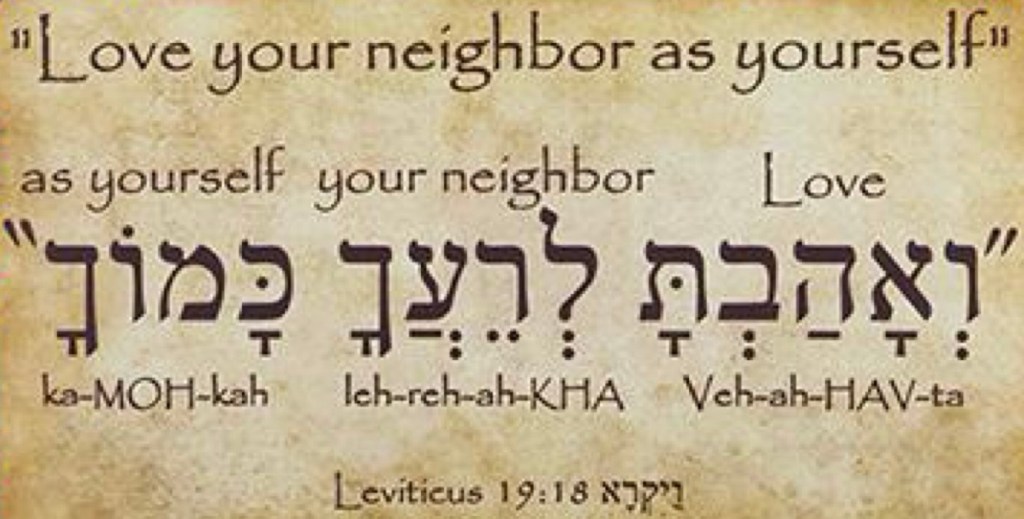



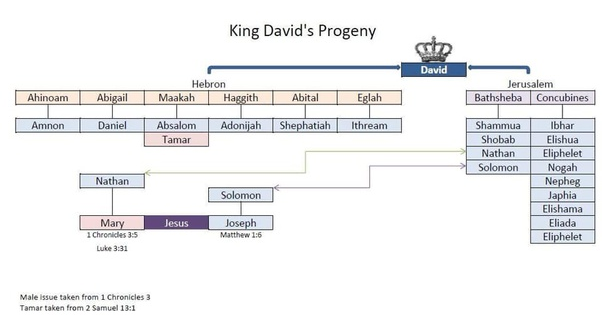










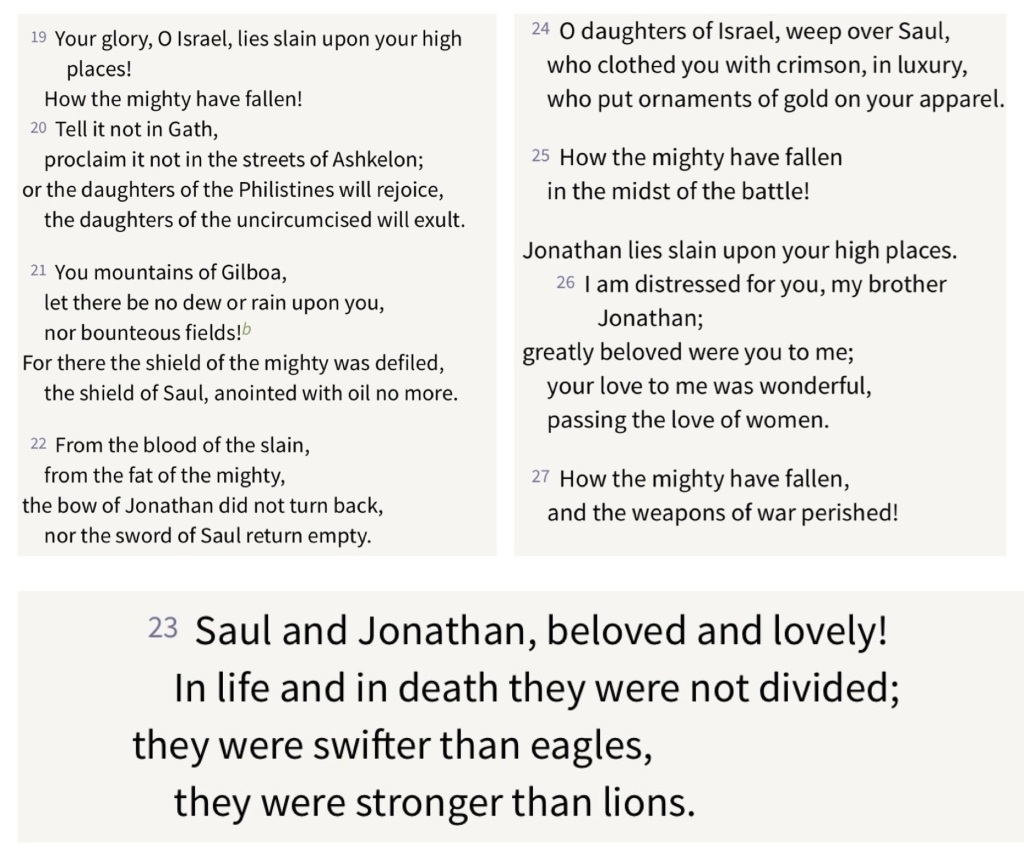







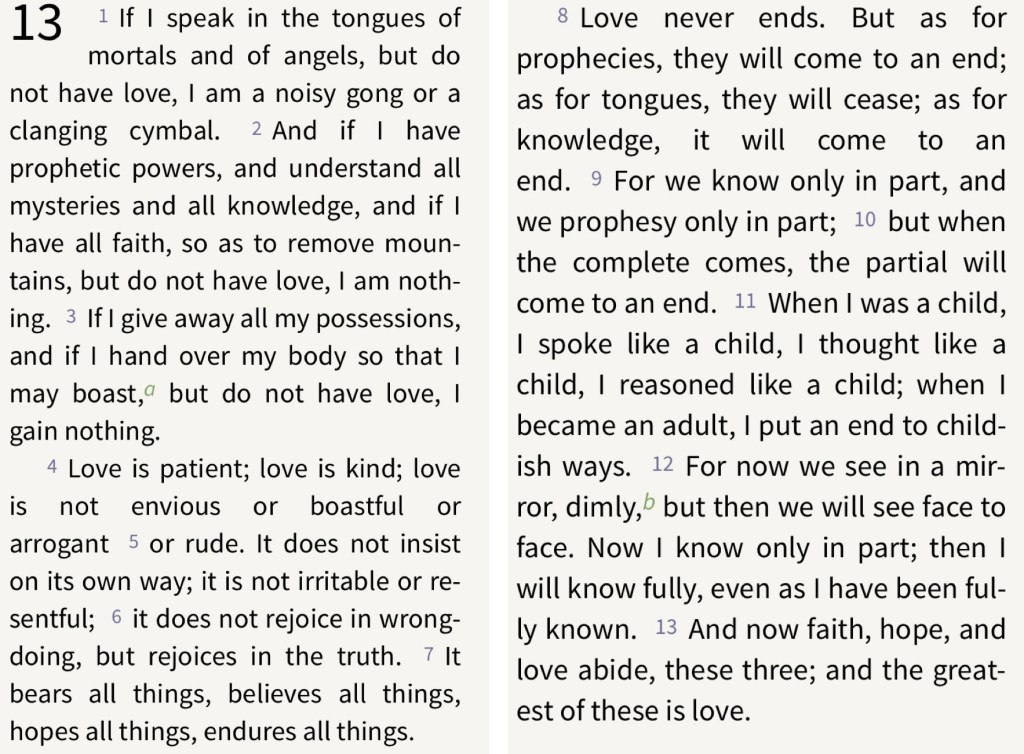




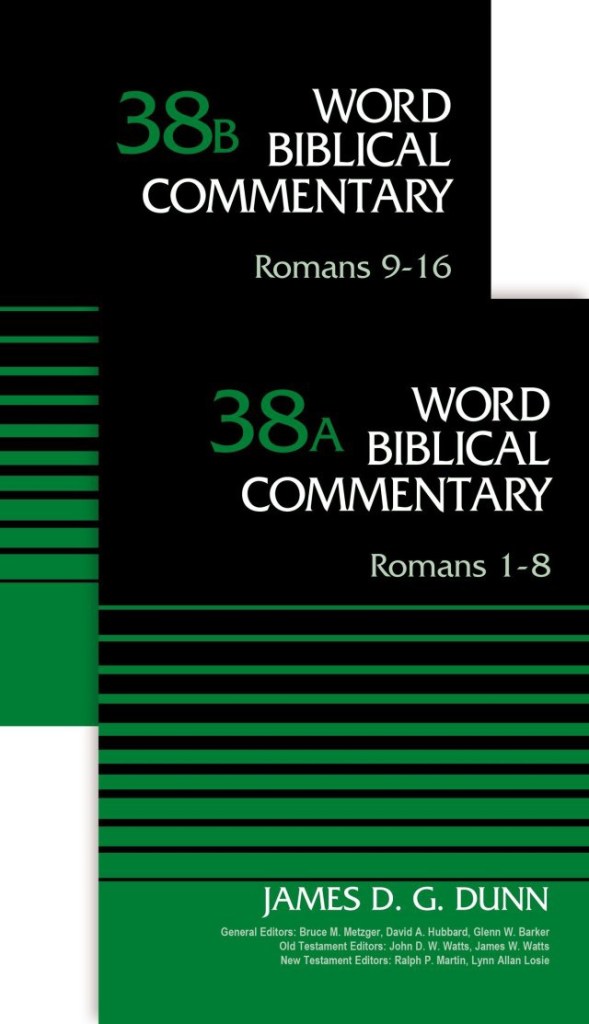




 An Informed Faith