Why Jesus never was, and never should be called, “meek and mild” (Lent 6; Palm Sunday)

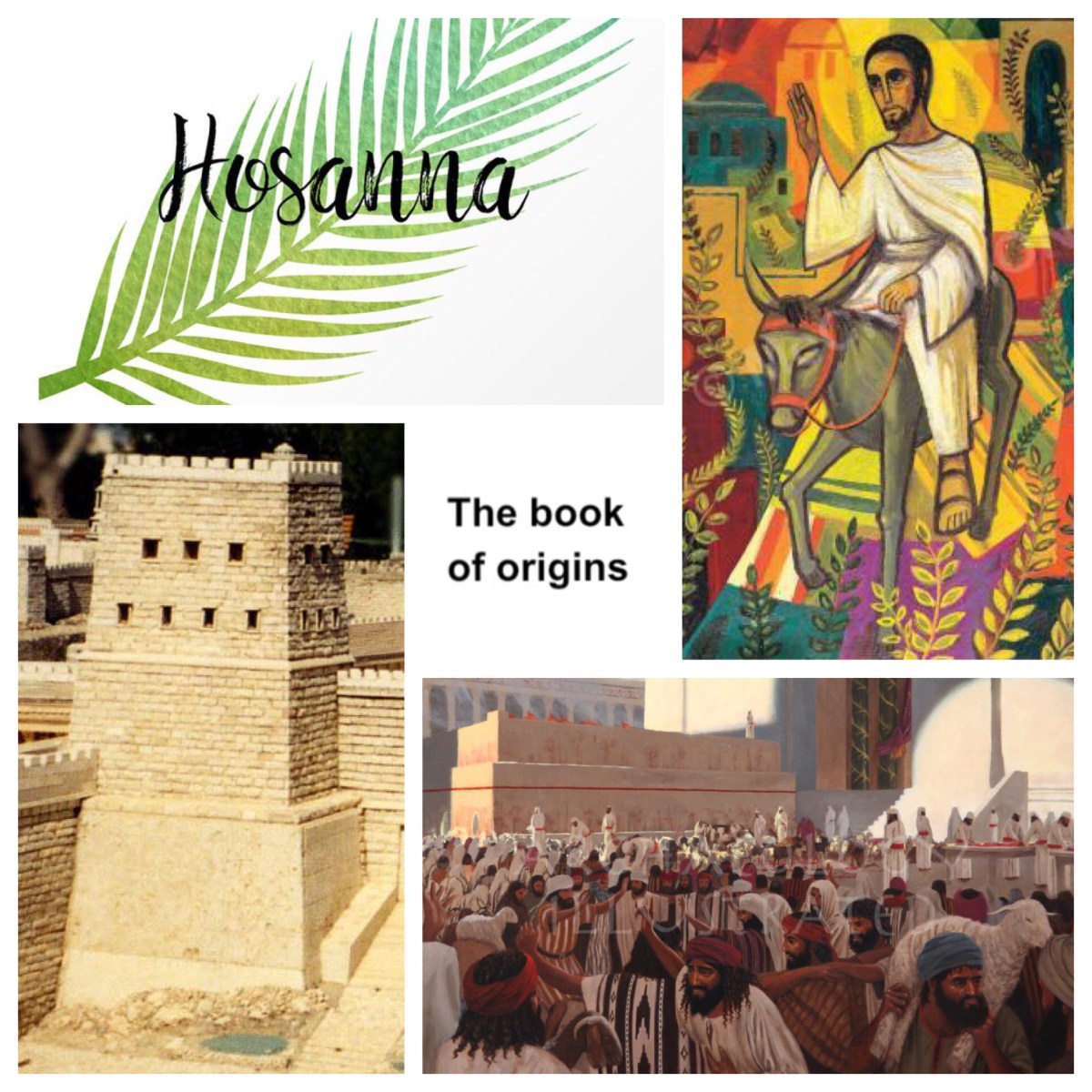
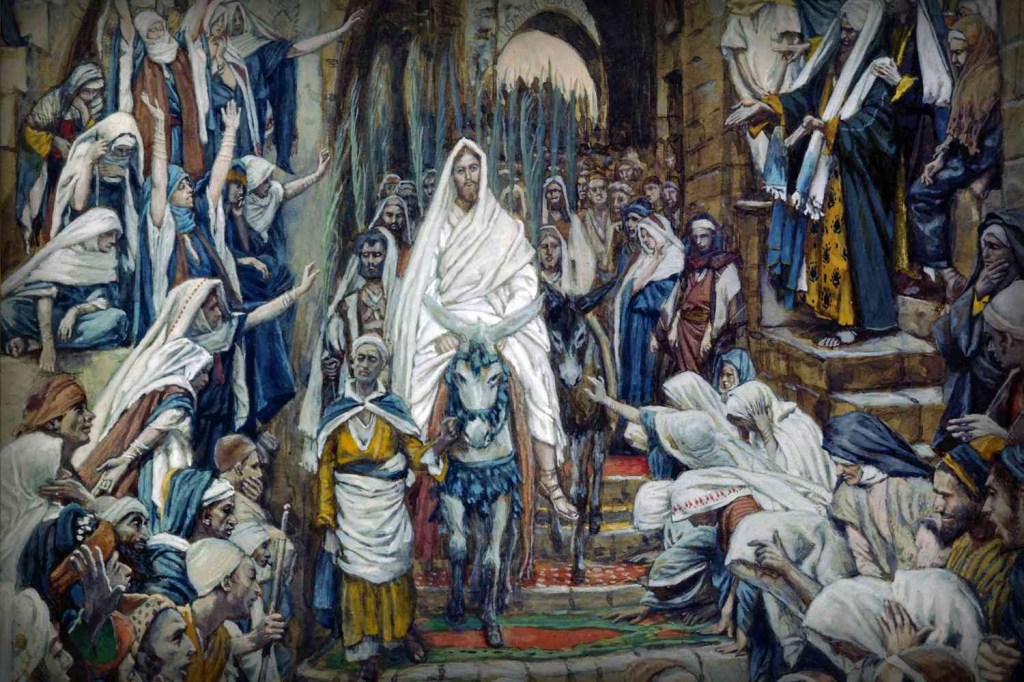
This coming Sunday, known as Palm Sunday, we will hear the story of Jesus, riding into Jerusalem, acclaimed by the crowds, for the festival of Passover. This year, we hear the story as it is told by Mark (Mark 11:1–11). It is a story which is well-known across the church, and is often re-enacted by children waving branches, adults singing songs—and sometimes a co-opted donkey—at this time of the year. It is a story which is often misinterpreted as portraying the gentle Jesus, meek and mild, receiving the accolades of the crowd with a beatific smile as he gently trots in to the city amidst the cheering crowd of pilgrims.

The actual story is far from that, however. If we read it carefully, we will find a number of indications that point us in quite a different direction entirely. There is no “gentle Jesus, meek and mild” in this story. Instead, we find a politically acute Jesus, provocatively and deliberately entering the city at the start of the important festival of Passover, with a clear message to the people of Israel and to the powers of Rome.

(The interpretation that follows is the result of careful exploration of the text in the context of Jewish and Roman history, that my wife Elizabeth and I have undertaken. See the end of the blog for more details.)

The political focus of Passover

The festival of Passover recalls the story that is told in the Hebrew Scriptures, about the exodus of Israel out of Egypt. This is a story of the liberation of an oppressed people, suffering under the burdens of forced labour. Every year throughout the centuries, Jews have recounted the sequence of events that led to the miraculous escape from slavery of their ancestors, crossing through the Sea of Reeds, travelling unhindered through the wilderness, towards a land which the story claims was promised by God—a promised land, gifted to a chosen people by a holy God (Exod 13–15).

Passover is therefore a political festival, recalling a central event in which the leader of a group of enslaved people confronted the leader of an oppressive power and gained liberation through divine intervention. In the time of Jesus, Jews from around the ancient world flocked to Jerusalem for this high moment of celebration, and the story was retold each year with notes of jubilation and joy.

During feast days, especially at each Passover, tensions reached fever pitch. Fervent Jews known as Zealots would use the opportunity of the many pilgrims in the city to mingle in the crowd with daggers hidden under their tunic—and take the opportunity to cause a commotion in the crowd, hoping that they could stab Roman soldiers, their dreaded enemy. The Romans increased their military presence to prevent open revolt. (See Josephus, Jewish War 2:255; Jewish Antiquities 20:186.)

So the Roman soldiers charged with keeping the peace in Jerusalem at Passover would therefore have been on high alert as the pilgrims entered the city. It is in this context that the story of Mark 11 takes place.

Riding on a donkey shows messianic intention

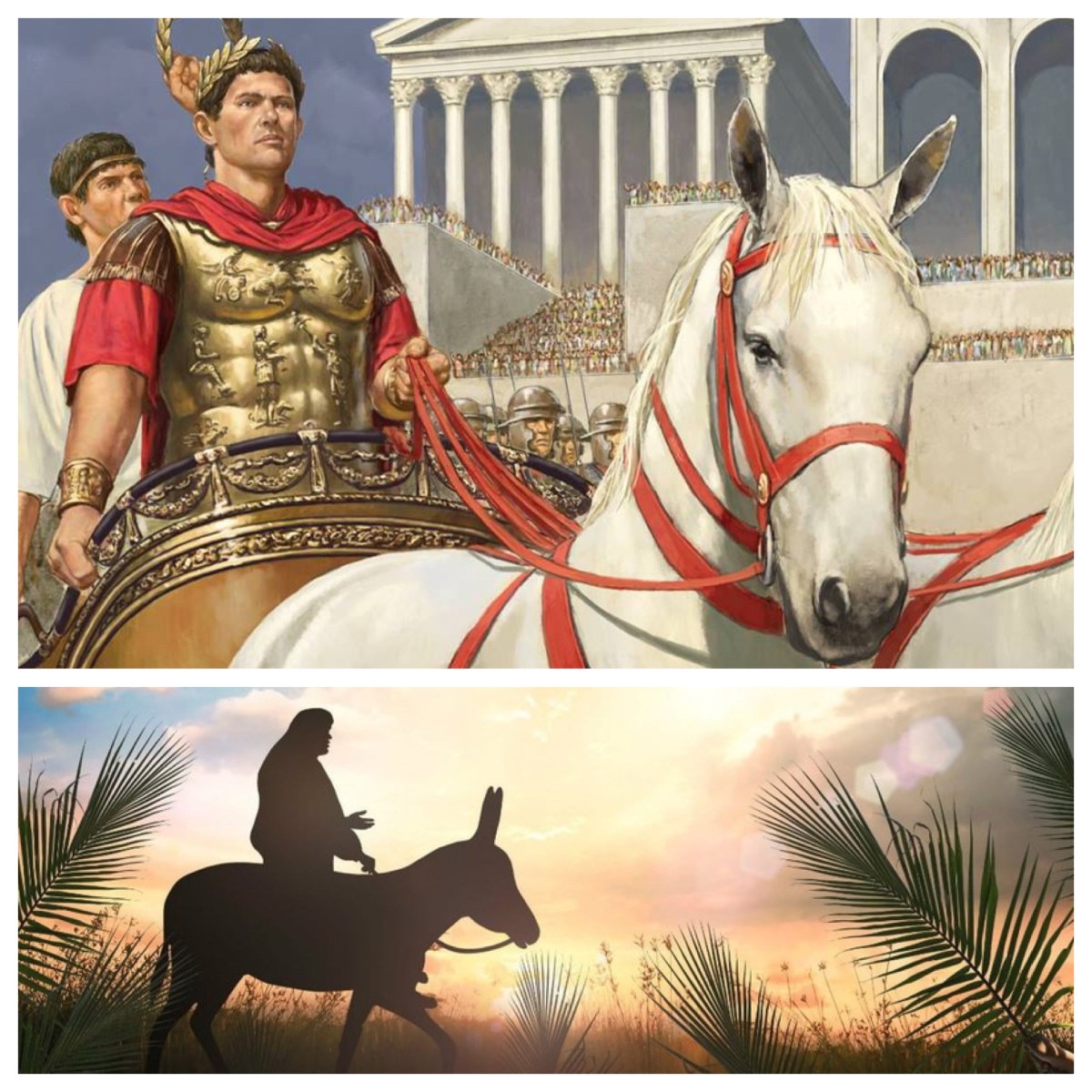
Jesus, seated on the colt, riding on a donkey, was the centre of attention—at least for his own followers (Mark 11:7). Those in the crowd who knew their scriptures, would have immediately recognised the allusion. What did this mean for observant Jews? First, Jesus was on a donkey, not a horse. Indeed, Jesus, as a faithful Jew, would never ride in triumph on a horse! See more at

The account of this story that we find in Matthew’s Gospel actually specifies the verse that interprets the significance of the donkey (Matt 21:4-5). Matthew refers to Zechariah 9:9, where a clear vision is offered: “your king comes to you, triumphant and victorious, humble and riding on a donkey”. And Zechariah himself may well have been referencing the moment when the young Solomon is summonsed to his father, the old king, David, and instructed to “ride on my own mule, and bring him down to Gihon” (1 Ki 1:33)—which Solomon duly does (1 Ki 1:38).

On his arrival, “the priest Zadok took the horn of oil from the tent and anointed Solomon. Then they blew the trumpet, and all the people said, “Long live King Solomon!” And all the people went up following him, playing on pipes and rejoicing with great joy, so that the earth quaked at their noise.” (1 Ki 1:39–40). Solomon’s journey on a mule is the journey to his accession to the throne. The resonances in the story about Jesus are clear.

That is what the reference to the words of the prophet evokes. In this story of Passover pilgrims, Jesus can be seen to be bringing the prophetic vision to fruition, as the fulfilment of the role that kingship plays in Israel. Zechariah’s vision declares that this coming ruler “shall command peace to the nations, and his dominion will be from sea to sea, from the river to the ends of the earth” (Zech 9:10). That is the vision that Jesus evokes as he rides into Jerusalem on this donkey.

The cries of the crowd evoke political resistance to Rome

The crowd sings out, “Hosanna! Blessed is the one who comes in the name of the Lord” (Mark 11:9). The words were familiar words to observant Jews; they clearly evoke a well-known and oft-sung psalm, Psalm 118: “Save us, we beseech you, O Lord! Blessed is the one who comes in the name of the Lord” (Ps 118:25–26).

Why were they singing this psalm? Psalm 118 was one of the Hallel Psalms, the Praise Psalms, which were associated with celebrations on each of the three great festival days—the Feast of Tabernacles, or Booths; the Feast of Weeks, or Pentecost; and the Feast of Passover. These psalms of praise became particularly associated with the celebrations of the rebuilding of the Temple.

Rebuilding the Temple was an inherently political action. It was the foreign invasion of Palestine by the Hellenistic Seleucids some two centuries before Jesus which had led to the destruction of the Temple. It was the political activity of the Jewish Maccabees which had led to the reclaiming of the Temple two decades later.

The Hallel Psalms had become Psalms of Praise for liberating political activity. When the people cried out “hosanna”, a word from their native Hebrew language, they were crying “save us”. It is a cry for salvation; a yearning for deliverance. This is what the people were singing out; so the people singing this at the festival of Passover as Jesus entered the city was a strong political statement. See more at

The (palm) branches recall a political victory

This Sunday in the church year is traditionally called Palm Sunday. However, no palms are mentioned in the reading we have heard from Mark’s version of the story (nor in Matthew or Luke). That the branches are from palm trees is noted only in John’s version (John 12:13). Both Mark (11:8) and Matthew (21:8) refer to branches that the people cut and placed on the ground, even though they don’t specify that they are palm branches. (Nevertheless, waving palm branches has come to define this day—Palm Sunday—in contemporary re-enactments.)

This waving of palm branches was an activity intimately associated with the actions of the Maccabees, who were men from a priestly family who took up arms to fight back the Seleucid overlords and reclaim the Temple. The instructions in one of the Jewish books (2 Maccabees 10) direct the people to “carry ivy-wreathed wands and beautiful branches and fronds of palms, and offer hymns of thanksgiving to [God] who had given success to the purifying of their own holy place”. So the palms that are noted in John’s Gospel, at least, evoke the famous military campaign of centuries earlier.

The cloaks on the ground recall political leadership

Some people threw their cloaks over the donkey before Jesus sat on it—but Mark also notes that “many people spread their cloaks on the ground” (Mark 11:8). This is a curious detail; what can this mean? Perhaps the more astute of the Jews along the side of the road, would have had some insight; perhaps they recalled the story of the time when a young prophet from Ramoth-gilead declared that God was anointing Jehu, the son of Jehoshaphat, as the next king of Israel.

The story is recounted in 2 Kings 9, and it contains this striking detail, as the prophet decreed, “Thus says the Lord, ‘I anoint you king over Israel’”, and so they took their cloaks and spread them for him on the bare steps, and blew the trumpet, and proclaimed, ‘Jehu is King’” (2 Kings 9:13). There are clear resonances with the story of the Passover pilgrims. The cloaks on the steps, when Jehu is King … the cloaks on the wayside, when Jesus comes as King.

So Jesus, the prophet from Nazareth in Galilee, entered the city in the midst of the pilgrims, for the festival of Passover. Did he come as King, in the minds of the crowd? The festival of Passover was a most appropriate time for him to enter the city and make his mark as God’s chosen King. The donkey and the songs, the branches and the cloaks, all point to the immediate political significance of this event.

The incident in the temple sets the ball rolling

Once in the city, Jesus goes to the temple, where another famous incident occurs. Jesus, as he is portrayed in the striking account of this incident, demonstrates very little gracious, self-effacing humility. There is no “gentle Jesus, meek and mild” here, to be sure! Rather, Jesus is acting out his righteous anger, embodying zealous piety.

Jesus enters the temple precincts, overturning the tables of the money changers (Mark 11:15; Matt 21:12) and driving them out of the temple area (Mark 11:15; Matt 21:12; Luke 19:45). In John’s account, Jesus also tips out the coins of those money changers and knits together cords to form a whip (John 2:15), by which he drives out the moment changers. (Of course, John has completely relocated this scene to the beginning of the public activity of Jesus, rather than near its end, as in the Synoptic accounts of this scene).

Jesus was entering the area with intention and purpose. What was taking place there was, in his eyes, contrary to God’s will. So he performs a prophetic action designed to convey his message to those present (and to those of us in later times who hear and read the account of this incident).

James McGrath notes that “both the selling of animals for sacrifices and the payment of the temple tax were activities required by Jewish law and central to the temple’s functions” (see https://www.bibleodyssey.org/en/passages/main-articles/jesus-and-the-moneychangers). What Jesus does is therefore not an incidental act of anger; it is part of a deliberate plan of action.

McGrath suggests that the reference to the Temple as a marketplace might be an allusion to the eschatological prophecy of Zechariah, that “there shall no longer be traders in the house of the Lord of hosts on that day” (Zech 14:21). Is Jesus enacting this prophecy through his actions in the Temple forecourt?

Certainly, the actions of Jesus when “he would not allow anyone to carry anything through the temple” was confronting. He accuses the money changers of making the temple “a den of robbers” (Mark 11:17, Matt 21:13, and Luke 19:46). That most likely references the rhetorical question of the prophet Jeremiah: “Has this house, which is called by my name, become a den of robbers in your sight?” (Jer 7:11).

Gail O’Day considers that “by going to the Jerusalem temple and disrupting the practices that were necessary for the celebration of Passover, Jesus places himself in a long line of Israel’s prophets who go to Jerusalem, the center of religious and political power, and announce and enact the word of God.” (see https://www.bibleodyssey.org/en/passages/related-articles/cleansing-or-cursing)

In this dramatic prophetic action, Jesus acts and speaks carefully, deliberately, with “righteous anger”. He makes it clear what he is standing against, and what he is working towards—and he knows what the cost will be for him. After his dramatic entry into the city (Mark 11:1–11), he then presses on relentlessly into the temple (Mark 11:15–17), even symbolising his message in what he says to the fig tree: “may no one ever eat fruit from you again” (Mark 11:12–14).

Jesus knows exactly what he is doing. He has set in motion the events that will lead to his death: “when the chief priests and the scribes heard it, they kept looking for a way to kill him; for they were afraid of him” (Mark 11:18). His actions in the temple precincts were just as political as his entry into the city.

This is no “gentle Jesus, meek and mild”. This is a leader acting with a clear, focussed intent, regardless of the cost to himself and his followers. So this Palm Sunday, let us banish the Sunday School stereotype of Jesus, and acknowledge him in his full and fierce expression of his faith.

This blog on the Palm Sunday story is based on research by Elizabeth Raine and John Squires, published in Validating Violence—Violating Faith? Religion, Scripture and Violence. Edited by W. Emilsen & J.T. Squires, ATF Press, Adelaide 2008. See https://assembly.uca.org.au/rof/images/stories/interfaithsep/25sept.pdf

A version of this dialogue is also accessible at https://ruralreverend.blogspot.com/2019/04/palm-sunday-ps-1181-2-19-29-luke-1928.html
Save us, we beseech you: singing a Hallel psalm (Psalm 118; Lent 6A, Palm Sunday)

“Save us, we beseech you, O Lord!” This is the cry we hear in the psalm which is offered by the lectionary for this coming Sunday, Palm Sunday, the Sunday in Lent. Psalm 118 is one of the Hallel Psalms—six psalms (113 to 118) which are sung or recited on high festival days, such as Passover (Pesach), the Festival of Weeks (Shavuot), and the Festival of Booths (Sukkot), as well as Hanukkah and the beginning of each new month. This final Hallel Psalm, like the other five, is intended to be an uplifting, celebratory song, suitable for the congregation to hear and to sing as a way to inspire and rejoice.

See

It is no surprise that this psalm is offered by the lectionary for this coming Sunday, Palm Sunday—because the Gospel story for this day, of Jesus entering the city of Jerusalem to the acclaim of the crowd (Matt 21:1–11), is certainly one of celebration and joy. It is also, equally unsurprisingly, offered as the psalm for a week later, on Easter Sunday, which celebrates something much greater and more enduring: the raising of Jesus from the dead (Matt 28:1–10).

But clearly the psalm has a good fit with the Palm Sunday story that we will hear on Sunday; indeed, the Gospel writers report that the crowd cheering Jesus was singing, “Blessed is the one who comes in the name of the Lord”—which is, of course, a verse from the final Hallel Psalm (Ps 118:26).

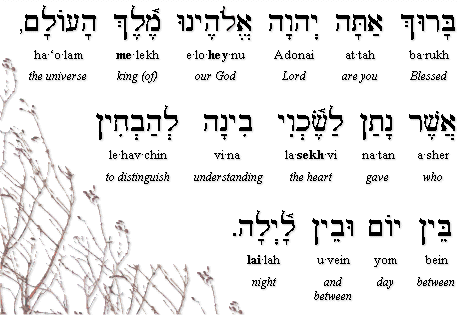
Blessing God is a favourite Jewish activity—indeed, so many prayers still used by Jews today begin with a phrase of blessing: “Blessed are you, O Lord our God …”. Blessed are You, O Lord our God, Ruler of the universe, Who brings forth bread from the earth is prayed before a meal. Blessed are You, O Lord our God, Ruler of the universe, who creates the fruit of the vine is prayed before drinking wine. And a favourite blessing which I learnt from Jews is Blessed are you, O Lord our God, Ruler of the Universe, who has kept us alive, sustained us, and brought us to this moment. It’s a prayer to mark momentous occasions in life.

All of these prayers of blessing begin with the Hebrew words, Baruch atah Adonai Elohenu melekh ha’olam, the same formula of approaching, acknowledging, and blessing God.

We can see that formula used in blessings spoken by David (1 Chron 29:19 and the psalmist (Ps 119:12), as well as in later Jewish texts such as Tobit 3:11; 8:5, 15–17; Judith 13:17; 14:7; the Prayer of Azariah (six times), and 1 Maccabees 4:20. It appears also in New Testament texts such as Luke 1:68; Rom 9:5; 2 Cor 1:3; Eph 1:3; and 1 Pet 1:3.

More familiar, perhaps, is when Jesus uses a prayer of blessing, but speaks it to human beings; “blessed are you, Simon son of Jonah” (Matt 16:17), or “blessed are the eyes that see what you see”, to his disciples (Luke 10:23), or “blessed are those who have not seen and yet have come to believe” (John 20:29), and most famously of all, in a set of blessings spoken to a crowd on a level place (Luke 6:20–22) or to his disciples on a mountain top (Matt 5:3–12).

So the cry of the crowd as Jesus enters Jerusalem, “Blessed is the one who comes in the name of the Lord” (Ps 118:26) is a typical Jewish exclamation at a moment of joyful celebration.

*****

A further reason for linking this psalm with the Gospel narrative might well be that the cry of the crowd, “Hosanna!” (Mark 11:9–10; Matt 21:9; John 12:13). The word transliterated as “Hosanna” might actually be better translated as “save us”—another quote from the previous verse in that same psalm (Ps 118:25). The Hebrew comprises two words: hosha, which is from the verb “to save”, and then the word na, meaning “us”. Hosanna is not, in the first instance, a cry of celebration; rather, it is a cry of help, reaching out to God, pleading for assistance—and yet with the underlying confidence that God will, indeed, save, for “his steadfast love endures forever” (vv.1, 29).

See

Whilst the psalm, overall, sounds thanks for a victory that has been achieved, the petition, “save us” (v. 25) lies behind the first substantial section of this psalm (vv.5–14), which is largely omitted by the lectionary offering for this coming Sunday (which is Ps 118:1–2, 14–24). That section begins “out of my distress I called on the Lord” (v.5), claims that “the Lord is on my side to help me” (v.7), and concludes with rejoicing, “I was pushed hard, so that I was falling, but the Lord helped me; the Lord is my strength and my might; he has become my salvation” (vv.13–14).

Save us” is a prayer offered in other psalms (Ps 54:1; 80:2; 106:47); the petition appears more often in the singular, “save me” (Ps 7:1; 22:21; 31:16; 54:1; 55:16; 59:2; 69:1; 71:2; 109:26; 119:94, 146; 142:6; 143:9). “Save us” when faced with danger is the prayer of the elders of Israel as they faced the Philistine army (1 Sam 4:3) and the all the people a little later (1 Sam 7:8), David when the ark was put in place in Jerusalem (1 Chron 16:35), Hezekiah when Judah was being threatened by the Assyrians (2 Ki 19:19), as well as the prophet Isaiah at the same time (Isa 25:9; 33:22; 37:20).

This prayer in the context of festive celebrations—the context for which Psalm 118 appears to have been written—expresses the firm confidence of the people, trusting in the power of their God. That viewpoint is perfectly applicable to the Palm Sunday story (and even more so to the Easter Sunday narrative!).

But this psalm is not only a prayer of celebration; it is also a strong statement about the resilience and trust of the people, expressing their belief that God will give them redemption, even in the face of their Roman overlords, who had held political and military power for many decades. If this is what the crowd intended with their cry as Jesus enters the city—and I have no reason to see otherwise—then this is a striking, courageous political cry embedded in the story! It is a cry that affirms that salvation is at hand.

*****

Salvation is what is in the mind of the people as they cry, “save us” (v.25) and the earlier affirmation, “I thank you that you have answered me and have become my salvation” (v.21). As we have noted, “save us” was a recurring cry amongst the Israelites. In the song sung after the Exodus, the people acclaim God, singing “the Lord is my strength and my might, and he has become my salvation” (Exod 15:2). In his song of thanksgiving after battles with the Philistines, David praises God as “my rock, my shield and the horn of my salvation” (2 Sam 22:3; also vv.36, 47, 51; and 1 Chron 16:23, 35).

The same language, of salvation, appears in the psalms (Ps 13:5; 18:2, 35, 46; 24:5; 25:5; and another 40 times) and the prophets (Isa 12:2–3; 25:9; 33:2, 6; 45:8, 17; 46:13; 51:5–6; 52:7, 10; 56:1; 59:11; 61:10; 62:11; Mer 3:23; Mic 7:7; Hab 3:18). From the psalms, we remember “the Lord is my light and my salvation” (Ps 27:1); from Isaiah, “I will give you as a light to the nations, that my salvation may reach to the end of the earth” (Is 49:6).

There are a dozen occasions in Hebrew Scripture when God is identified as Saviour (2 Sam 22:3; Ps 17:7; 106:21; Isa 43:3, 11; 45:15, 21; 49:26; 60:16; 63:8; Jer 14:8); as the Lord God declares through Hosea, “I have been the Lord your God ever since the land of Egypt; you know no God but me, and besides me there is no Saviour” (Hos 14:4).

Salvation is linked with righteousness; “the salvation of the righteous is from the Lord … he rescues them from the wicked and saves them” (Ps 37:39–40). Being righteous is a quality of the Lord God (Ps 11:7; 35:28; 50:6; 71:16; 85:10; 89:16; 97:2, 6; 103:17; 111:3; 116:5; 119:137, 152; 129:4; Isa 45:21; Jer 23:6; 33:16; Dan 9:16; Zeph 3:5) which is thus desired of those in covenant with God (Gen 18:19; 1 Sam 26:23; 2 Sam 22:21, 25; 1 Ki 10:9; 2 Chron 9:8; Job 29:14; Ps 5:8; 9:8; 11:7; 33:5; Prov 1:3; Isa 1:27; 5:7; 28:17; 42:6; 61:11; Jer 22:3; Ezek 18:5–9; Hos 10:12; Amos 5:24; Zeph 2:3; Mal 3:3).

It is no surprise, then, that this psalm celebrates that “[God] has become my salvation” (Ps 118:21) by holding a “festal procession with branches” (v.27), entering through “the gates of righteousness” (v.19) and proceeding all the way “up to the horns of the altar” (v.27), singing “save us, Lord” (v.25) and “blessed is the one who comes in the name of the Lord” (v.26). This is a high celebratory moment!

So the closing verses take us back to the opening refrain, “O give thanks to the Lord, for he is good, for his steadfast love endures forever” (v.29; see also vv.1–4). The celebration is lifted to the highest level, with praise and thanksgiving abounding. And that makes this a perfect psalm for Palm Sunday!

****(

On the indications of the political nature of the Palm Sunday scene, see

Holy Week: a week set apart, in a time set apart.

Today we begin Holy Week. This is the final part of a longer period leading up to Easter, called Lent. We do this every year, as part of the annual cycle. It is a familiar and comforting ritual for many people of Christian faith.

This year, however, will be different. In the middle of a viral pandemic, with restrictions prohibiting gathering for worship, Christian people will be walking through Holy Week in their own homes, not in gatherings at church. This is a week set apart, for people of faith, in a time set apart, for all of society.

We are not able to gather together. This year, people of faith are not gathering together. Instead, we are gathering-apart, through virtual worship, online. (See https://johntsquires.com/2020/03/15/when-you-come-together-reflections-on-community-in-the-midst-of-a-pandemic/)

Holy Week culminates the season of Lent, which is an ancient practice for a Christian people. It lasts for 40 days, serving as a time of preparation for Easter. But whereas Lent is an ancient tradition, Holy Week is a more recent development. Designating the week leading up to Easter as Holy Week most probably comes from the narration of chapters 11 and 12 of Mark’s Gospel, in which Jesus is understood as being in Jerusalem from a Sunday until his last meal on a Thursday.

The week starts with Palm Sunday when Christians remember Jesus entering Jerusalem and the crowds waving palm leaves as he enters the city. Jesus stays near to the city for the remainder of the week. This year, we have not remembered that event with festive processions and cheerful hymns. Many of my colleagues have provided resources for Virtual Worship, Church At Home, Postcards for Reflection, and the like. People are gathering-apart.

On Maundy Thursday, Christians remember Jesus washing his disciples’ feet. His words are recorded in John 13:34, “A new command I give you: Love one another. As I have loved you, so you must love one another.” This gives rise to the name for the day. The Latin for “commandment” is mandatum—hence the name of the day, Maundy.

Some people believe that Lent officially ends at sundown on Maundy Thursday, so they celebrate that with Holy Communion, or with a meal known as an agapé or a “love feast”. It is a remembrance of the last meal that Jesus shared with his followers. Others maintain that Lent continues through into Easter Saturday, until the end of the day just before the empty tomb is discovered.

After Maundy Thursday comes Good Friday, remembering when Jesus was crucified. Why is this day called Good? It comes from the theological evaluation that, on this Friday, Jesus died on the cross “for our sins”, thereby securing our redemption. This is the basis for the “good news” which the Church has proclaimed for centuries.

Churches all around the world normally hold various rituals for people to attend. Roman Catholics have the Adoration of the Cross, the Mass of the Pre-Sanctified, the Stations of the Cross, and Evening Prayers. Anglicans have a three-hour service with reflections on the Last Words of Christ. Many people come for these times of gathering together. But not this year—we have to gather-apart.

The Stations of the Cross are focused around the events of Good Friday, recalling the various events which took place as Jesus made his way from his trial to his death on the cross. These Stations have been appropriated, in art or through personal creative responses, as ways of moving attention from the story as a singular ‘history’, to the significance of the story and the resonance of the events with universal human experiences.

This year, gathering together is not possible. As we gather-apart, there is the opportunity for personal reflection; perhaps, for instance, using this exhibition of contemporary art work that was specifically commissioned in 2015: https://www.youtube.com/playlist?list=UUDH-6NVr6aj6X6DAmzSKLvg

Next comes Holy Saturday or Easter Eve—a day of vigil, when believers watch, wait and pray. This is an in-between time, a day when time can be spent reflecting back on the traumatic events that have just taken place, and looking forward with hope to the new possibilities that might emerge from those event.

(I will make a post about Holy Saturday on that day.)

After Holy Saturday, the celebration of Easter Sunday bursts through the gloom and despair with a vibrant message: Jesus is risen, Jesus has conquered death. Counting inclusively, as was done at the time, beginning from Friday, means that Sunday is the third day. So the traditional affirmation is that Jesus rose “on the third day”. This leads into an expression of joy, that the trauma and grief, the uncertainty and fear, are now passed. Life is different; hope is renewed; the future, even if it looks different, will still be viable.

For the next period of time, the Church moves into a new season—the season of Easter, 40 days when the celebration of resurrection continues. And so the cycle continues, death turning into life, despair breaking out into hope, frustration moving into promise.

See also https://johntsquires.com/2020/04/03/towards-palm-sunday-matt-21-acclaiming-the-king-anticipating-the-kingdom/

It was on that night that everything came to a head. Maundy Thursday Reflections.

Sacrificial Death: to give his life. Good Friday Reflections

Liminal Space: waiting and not knowing. Holy Saturday Reflections

Liberating Life: a new way of being. Easter Sunday Reflections

Towards Palm Sunday (Matt 21): Acclaiming the king, anticipating the kingdom

Next Sunday is Palm Sunday. As we approach the day, we have opportunity (during this period of enforced social distancing and self-isolation), to survey the scene of the first Palm Sunday, and reflect on its significance. What do you see? What do you hear? How is God revealed to you in this story? How does God speak to you in this story? What is the word of God, the vision of the Lord, for you, today, from this well-known story from so long ago?

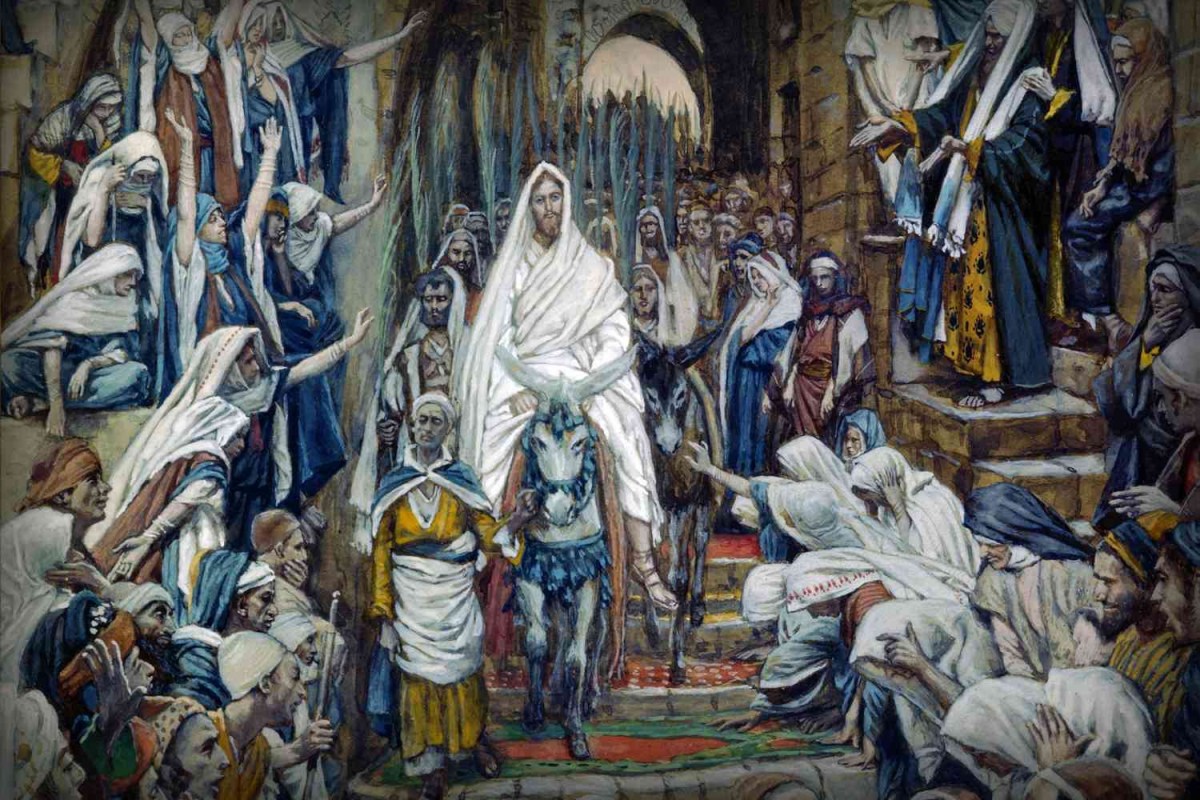
As you read the account in Matt 21, ask yourself: What do you see? What do you hear? We see pilgrims travelling the winding route to Jerusalem, and Jesus amongst them. We hear the crowd singing Hosanna! and we see them spreading their cloaks along the way, to honour him. And we hear their cries in the ancient hymn, “Blessed is the coming king, the one who comes in the name of the Lord, the one bringing the peace of heaven into this city here on earth”.

So the people cry, singing words from Psalm 118 about the king who comes to implement the kingdom willed by God—a psalm which is echoed in the song of the angels from early in Luke’s Gospel, declaring that, in Jesus, God is bringing “peace on earth, among those whom he favours” (Luke 2:14)

What do you see? What do you hear? Can you see the thoroughly political nature of the activity of Jesus? Can you hear the thoroughly political nature of the cries of the crowd? Hosanna—Save us! Blessed is the King—not Caesar, not ruler of the Romans, but Jesus, King of the Jews, the one Chosen by God to proclaim the kingdom. Can you hear these cries?

In this story, as throughout all of the Gospel accounts, the actions of Jesus have clear and strong resonances from the scriptures that he knew so well. He does not enter Jerusalem with a fatalistic acceptance of what lies ahead; instead, they are a call to this-worldly involvement, to action in our own time, serving the people amongst whom we live.

So it is in this story of the Passover pilgrims. The cries of the crowd, the actions of the people, the anticipation of the Roman soldiers and the symbolic statement made by Jesus as he rides into the city on a donkey—all of this points to the inherently political, thoroughly this-worldly orientation of the ministry of Jesus.

The kingdom is coming, the future kingdom is here and now in our midst, and the kingdom will overturn the expectations and practices of the political powers within this world. The Romans did well to notice, and anticipate, and respond to such a message. The Jewish leaders, so it seems, were anxious, also, about what was taking place.

Matthew ends his report by noting that “the whole city was in turmoil, asking, ‘Who is this?’” That was the critical question, for all four authors of the Gospels in the New Testament. The stories they tell are focussed on answering that question: ‘Who is this?’ Matthew has this questioned answered immediately, as the crowds were telling one another, “This is the prophet Jesus from Nazareth in Galilee.” His name and reputation were known. Certainly they perceived the significance of the way that he chose to enter the capital city. He was calling people to follow him in a clear, direct, and challenging way.

On the following Friday, we will remember that Jesus, ultimately, was condemned to death with a sign that declared that he was “the King of the Jews” (John 19:19–20). We see, very clearly, in the inscription nailed to the cross, the political nature of the message of Jesus. From the perspective of the Roman rulers, articulated by Pilate, Jesus was given a drastic political punishment, death by crucifixion, for the political insurgency that he was seen as undertaking, in claiming to be the King of the Jews.

That King is the one whom we follow. This is the path that he calls us to walk. When we pray, as Jesus instructed us, your kingdom come, your will be done, on earth as in heaven, we are praying that what we hope for, in heaven, is to be lived out, here, on earth, every day, in our life of discipleship. Our faith calls us to be faithful disciples of Jesus. It calls us to compassionate engagement with others in our society. It is a costly call, but a compelling call.

For us, today, that is the challenge: how do we show the merciful love and righteous-justice that Jesus spoke about and lived for in his life? Jesus ultimately was crushed by Roman imperial power; as he died, however, he showed that there was another way. A way of faithfulness to God’s calling. A way that truly leads to peace, to peace with righteous-justice.

And so, as we look to that time with hope and anticipation, we pray, as we always do: your kingdom come, your will be done, on earth as in heaven … and we wait, patiently, and work, persistently, with that end in view.

This series of blogs on Palm Sunday is based on research by Elizabeth Raine and John Squires, published in Validating Violence – Violating Faith? Religion, Scripture and Violence. Edited by W. Emilsen & J.T. Squires, ATF Press, Adelaide 2008. See https://assembly.uca.org.au/rof/images/stories/interfaithsep/25sept.pdf

See also https://johntsquires.com/2020/03/31/towards-palm-sunday-matt-21-passover-and-politics/ and https://johntsquires.com/2020/04/01/towards-palm-sunday-matt-21-riding-on-a-donkey-or-two-as-the-crowd-shouts-hosanna/ and https://johntsquires.com/2020/04/02/towards-palm-sunday-matt-21-waving-branches-spreading-cloaks/

and https://johntsquires.com/2023/03/27/why-jesus-never-did-and-never-would-ride-a-horse-for-palm-sunday-lent-6/

See more on righteous-justice at https://johntsquires.com/2020/02/06/an-excess-of-righteous-justice-matt-5/ and https://johntsquires.com/2020/02/13/you-have-heard-it-said-but-i-say-to-you-matt-5/

We have also turned it into a creative dialogue, which you can read at https://ruralreverend.blogspot.com/2019/04/palm-sunday-ps-1181-2-19-29-luke-1928.html

Towards Palm Sunday (Matt 21): Waving branches, spreading cloaks

Next Sunday is Palm Sunday. As we approach the day, we have opportunity (during this period of enforced social distancing and self-isolation), to survey the scene of the first Palm Sunday, and reflect on its significance. What do you see? What do you hear? How is God revealed to you in this story? How does God speak to you in this story? What is the word of God, the vision of the Lord, for you, today, from this well-known story from so long ago.

As you read the account in Matt 21, ask yourself: What do you see? What do you hear? We see pilgrims travelling the winding route to Jerusalem, and Jesus amongst them. We hear the crowd singing Hosanna! and we see them spreading their cloaks along the way, to honour him.

What do you see? What do you hear? Can you see the people, waving branches? Of course, this Sunday in the church year is traditionally called Palm Sunday. However, no palms are mentioned in the reading we have heard from Matthew’s version of the story, nor in Mark or Luke. That the branches are from palm trees is noted only in John’s version. Both Mark and Matthew refer to branches that the people cut and waved, even though they don’t specify that they are palm branches. Nevertheless, we see the palm branches, because they are front and centre in the tradition of today—it is Palm Sunday, as we call it!

This waving of palm branches was an activity intimately associated with the actions of the Maccabees, who were men from a priestly family who took up arms to fight back the Seleucid overlords and reclaim the Temple. The waving of palm branches became closely associated with this event; we can read the instructions in one of the Jewish books (2 Maccabees 10), which directs the people to “carry ivy-wreathed wands and beautiful branches and fronds of palms, and offer hymns of thanksgiving to [God] who had given success to the purifying of their own holy place”. So the palms evoke the famous military campaign of centuries earlier.

What do you see? What do you hear? Do you see the cloaks, spread on the ground, by those along the side of the road? A curious detail. What can this mean? Perhaps the more astute of the Jews along the side of the road, would have had some insight; perhaps they recalled the story of the time when a young prophet from Ramoth-gilead declared that God was anointing Jehu, the son of Jehoshaphat, as the next king of Israel.

The story is recounted in 2 Kings 9, and it contains this striking detail, as the prophet decreed, “Thus says the Lord, ‘I anoint you king over Israel’”, and so they took their cloaks and spread them for him on the bare steps, and blew the trumpet, and proclaimed, ‘Jehu is King’” (2 Kings 9:13). Can you hear the resonances in the story of the Passover pilgrims? The cloaks on the steps, when Jehu is King … the cloaks on the wayside, when Jesus comes as King.

So Jesus, the prophet from Nazareth in Galilee, entered the city in the midst of the pilgrims, for the festival of Passover. Did he come as King, in the minds of the crowd? He came preaching the coming kingdom of God—a kingdom to be marked by righteous-justice (Matt 6:33). He blessed those who sought that righteous-justice (Matt 5:6, 10). He urged people to walk the way that led to justice for all (Matt 12:18-21).

Jesus came into the city filled with zeal for God’s righteous-justice kingdom (Matt 23:23). The festival of Passover was a most appropriate time for him to enter the city and make his mark as God’s chosen King. The branches and the cloaks both point to the immediate political significance of this event.

This series of blogs on Palm Sunday is based on research by Elizabeth Raine and John Squires, published in Validating Violence – Violating Faith? Religion, Scripture and Violence. Edited by W. Emilsen & J.T. Squires, ATF Press, Adelaide 2008. See https://assembly.uca.org.au/rof/images/stories/interfaithsep/25sept.pdf

See also https://johntsquires.com/2020/03/31/towards-palm-sunday-matt-21-passover-and-politics/ and https://johntsquires.com/2020/04/01/towards-palm-sunday-matt-21-riding-on-a-donkey-or-two-as-the-crowd-shouts-hosanna/ and https://johntsquires.com/2023/03/27/why-jesus-never-did-and-never-would-ride-a-horse-for-palm-sunday-lent-6/

See more on righteous-justice at https://johntsquires.com/2020/02/06/an-excess-of-righteous-justice-matt-5/ and https://johntsquires.com/2020/02/13/you-have-heard-it-said-but-i-say-to-you-matt-5/

Tomorrow: Acclaiming the king, anticipating the kingdom

Towards Palm Sunday (Matt 21): Riding on a donkey (or two) as the crowd shouts ‘Hosanna’

Next Sunday is Palm Sunday. As we approach the day, we have opportunity (during this period of enforced social distancing and self-isolation), to survey the scene of the first Palm Sunday, and reflect on its significance. As you read the account in Matt 21, ask yourself: What do you see? What do you hear? How is God revealed to you in this story? How does God speak to you in this story? What is the word of God, the vision of the Lord, for you, today, from this well-known story from so long ago?

What do you see? What do you hear? We see pilgrims travelling the winding route to Jerusalem, climbing the hills outside the city as they make their way to the capital of ancient Israel. And in their midst, can you see the figure of Jesus, surrounded by his followers, approaching the city?

Jesus, seated on the colt, riding on a donkey, was the centre of attention—at least for his own followers. Those in the crowd who knew their scriptures, would have immediately recognised the allusion. The account of this story that we find in Matthew’s Gospel and that we hear this Sunday, actually specifies the verse that interprets the significance of the donkey (Matt 21:4-5).

In Zechariah 9:9, the vision is clear: “your king comes to you, triumphant and victorious, humble and riding on a donkey”. That is what the prophet declares; in this story of Passover pilgrims, Jesus can be seen to be bringing that vision to fruition. And that vision declares that this coming ruler “shall command peace to the nations, and his dominion will be from sea to sea, from the river to the ends of the earth”. That is the vision that Jesus evokes as he rides into Jerusalem on this donkey.

What do you see? What do you hear? Can you hear the cries of the crowd: “Hosanna, hosanna!” they cry. What were they calling out? Hosanna is a foreign term, a word from the Hebrew language, not a common word in our English usage. The best way to translate Hosanna, is “save us”. It is a cry for salvation; a yearning for deliverance. The word appears in the Psalm we have heard today, in Psalm 118:25, where they people cry out, “save us, we beseech you, O Lord!” Save us, redeem us, liberate us.

Psalm 118 was one of the Hallel Psalms, the Praise Psalms, which were associated with celebrations on each of the three great festival days—the Feast of Tabernacles, or Booths; the Feast of Weeks, or Pentecost; and the Feast of Passover. These psalms of praise became particularly associated with the celebrations of the rebuilding of the Temple.

Rebuilding the Temple was an inherently political action. It was the foreign invasion of Palestine by the Hellenistic Seleucids some two centuries before Jesus which had led to the destruction of the Temple. It was the political activity of the Jewish Maccabees which had led to the reclaiming of the Temple two decades later.

“Praise you, O God, for we have our Temple, rebuilt, restored, renewed”. So the prayer might well have gone. And it was the political activity of the Maccabees which had brought this about. The Hallel Psalms had become Psalms of Praise for liberating political activity. And this is what the people were singing out!

They expected Jesus, the prophet from Nazareth in Galilee. He entered the city in the midst of the pilgrims, for the festival of Passover. He came preaching the coming kingdom of God—a kingdom to be marked by righteous-justice (Matt 6:33). He blessed those who sought that righteous-justice (Matt 5:6, 10). He urged people to walk the way that led to justice for all (Matt 12:18-21). He came into the city filled with zeal for God’s righteous-justice kingdom (Matt 23:23). The festival of Passover was a most appropriate time for him to enter the city and make his mark.

This series of blogs on Palm Sunday is based on research by Elizabeth Raine and John Squires, published in Validating Violence—Violating Faith? Religion, Scripture and Violence. Edited by W. Emilsen & J.T. Squires, ATF Press, Adelaide 2008. See https://assembly.uca.org.au/rof/images/stories/interfaithsep/25sept.pdf

See also https://johntsquires.com/2020/03/31/towards-palm-sunday-matt-21-passover-and-politics/ and https://johntsquires.com/2023/03/27/why-jesus-never-did-and-never-would-ride-a-horse-for-palm-sunday-lent-6/

See more on righteous-justice at https://johntsquires.com/2020/02/06/an-excess-of-righteous-justice-matt-5/ and https://johntsquires.com/2020/02/13/you-have-heard-it-said-but-i-say-to-you-matt-5/

We have also turned it into a creative dialogue, which you can read at https://ruralreverend.blogspot.com/2019/04/palm-sunday-ps-1181-2-19-29-luke-1928.html
Tomorrow: Waving branches, spreading cloaks

Towards Palm Sunday (Matt 21): Passover and politics

Next Sunday is Palm Sunday. To hear the story, we are turning back to the book of origins (better known as the Gospel according to Matthew), after a month during Lent of healing stories from the book of signs (the Gospel according to John), where there is an account of what took place as Jesus entered Jerusalem (Matt 21:1-11).

As we approach the day, we have opportunity (during this period of enforced social distancing and self-isolation), to survey the scene of the first Palm Sunday, and reflect on these questions: What do you see? What do you hear? How is God revealed to you in this story? How does God speak to you in this story? What is the word of God, the vision of the Lord, for you, today, from this well-known story from so long ago?

What do you see? What do you hear? I see pilgrims travelling the winding route to Jerusalem, climbing the hills outside the city as they make their way to the capital of ancient Israel, to the city where the Lord God, so it was believed, was residing in the Holy of Holies, the inner court of the Temple. I hear the noisy, bustling sounds of these pilgrims, excited with anticipation as they make their way along the same routes, up the same hills, year after year, at this time of the year.

It was Passover; one of the three high festivals of the year for good religious Jewish people. It was Passover, the festival of unleavened bread, which recalled the hurried departure of the people, long ago, from captivity in Egypt (Exodus 13). It was Passover, a celebration of the foundational myth at the heart of Jewish identity; the story that tells of the liberating actions of God, in the face of the military might of the Egyptians, the liberation of the people from their time of enforced slavery, as they set out, across the wilderness, to the land they had been promised (Exodus 14–17 and beyond).

Passover was a central religious celebration. But also, it was a thoroughly politicised procession of pilgrims, wending their way to the holy city, the city of peace. Passover was when bread was eaten without leaven, to signify the haste with which the departure from Egypt took place. Passover was when lambs were roasted and eaten as a sign of that liberation, when bitter herbs were sprinkled eaten as a reminder of the bitterness of slavery. Passover was when the intervention of the divine into the social and political situation of those ancient Israelites was to the fore in the minds of those later pilgrims.

So, we see a scene of Passover pilgrims, celebrating this ancient political action of God which they hold before themselves as the fundamental paradigm for what their faith means for them. “Yes, God is for us! Yes, God will save us!”

The story is told in each of the three synoptic Gospels, Mark, Matthew, and Luke. In each account, the disciples arrive in the city, seek out lodgings, and at the appointed time, they recline at table to eat the Passover meal, the annual family celebration when the story of that first Passover is told. A time when the actions of God in confronting and overturning the political rulers is remembered, retold, and celebrated.

What do you see? What do you hear? Can you see the Roman soldiers, on the edges, behind the crowds, looking out from the Antonia Fortress? The Roman soldiers, strategically deployed, watching with care the every move that was taking place in the approaches to the city. They knew, from many years’ experience, that the city swelled with the influx of pilgrims each year at this time, as the Passover pilgrims made their way towards Jerusalem.

They knew, from years of monitoring the crowds, of the potential for dispute and conflict that simmered underneath the crowds. They knew that this was a high point in the Jewish year, and that any Jew with finely-attuned attention to the history of their people, would know of the charged political consequences of this festival.

Passover was a celebration of that time when God intervened, overturning the despotic ruler, liberating the faithful people. As it was long ago in Egypt … so it now could well be, in Jerusalem under Roman rule. A political celebration, wrapped around with religious significance, a celebration of political victory.

That is the context for the entry into the city of the prophet from Nazareth in Galilee. He came preaching the coming kingdom of God—a kingdom to be marked by righteous-justice (Matt 6:33). He blessed those who sought that righteous-justice (Matt 5:6, 10). He urged people to walk the way that led to justice for all (Matt 12:18-21). He came into the city filled with zeal for God’s righteous-justice kingdom (Matt 23:23). The festival of Passover was a most appropriate time for him to enter the city and make his mark.

See more on righteous-justice at https://johntsquires.com/2020/02/06/an-excess-of-righteous-justice-matt-5/ and https://johntsquires.com/2020/02/13/you-have-heard-it-said-but-i-say-to-you-matt-5/

Tomorrow: riding on a donkey (or two) as the crowd shouts ‘Hosanna’

This series of blogs on Palm Sunday is based on research by Elizabeth Raine and John Squires, published in Validating Violence – Violating Faith? Religion, Scripture and Violence. Edited by Emilsen & J.T. Squires , ATF Press, Adelaide 2008. See https://assembly.uca.org.au/rof/images/stories/interfaithsep/25sept.pdf

We have also turned it into a creative dialogue, which you can read at https://ruralreverend.blogspot.com/2019/04/palm-sunday-ps-1181-2-19-29-luke-1928.html
See also https://johntsquires.com/2023/03/27/why-jesus-never-did-and-never-would-ride-a-horse-for-palm-sunday-lent-6/