Let your gentleness be known to everyone (Philippians 4; Pentecost 20A)

In the movement that Jesus initiated, women exercised leadership equally with men; think of Mary Magdalene, Priscilla and Phoebe, Junia the apostle, Mary of Jerusalem, Euodia and Syntyche of Philippi, Tryphosa, Julia and Olympus of Rome, and many more unnamed. The continuing prominence of women leadership in subsequent decades (much to the consternation of some prominent male leaders!) attests to the valuing of female leadership in the movement that became Christianity.

Paul demonstrated, time and time again, that he was able to work constructively with female colleagues. He commends to the Romans the leader of the church in Cenchreae, Phoebe (Rom 16:1), whom he recognises as both diakonos—the same term he uses for Timothy and himself (Phil 1:1) as well as Apollos and himself (1 Cor 3:5, 9; 4:1)—and prostatis, a term indicating leadership exercised as a patron (cf. Rom 12:8 and 1 Thess 5:12).

Paul affirms as equally important the ministries of Prisca and Aquila, (Rom 16:3; 1 Cor 16:19; also 2 Tim 4:19), affirming that they “work[ed] with me in Christ Jesus, and risked their necks for my life” (Rom 16:4)—high praise indeed. Indeed, Paul strikingly named Prisca ahead of Aquila in two of these references, an unusual order which draws particular attention to his female co-worker.

In sending greetings to the believers in Rome (where he had not yet visited), Paul affirms the leadership of “Mary, who has worked very hard among you” (Rom 16:6) and Junia, who along with Andronicus is described as “my relatives who were in prison with me; they are prominent among the apostles, and they were in Christ before I was” (Rom 16:7).

Paul also notes with approval the mother of Rufus, “a mother to me also” (Rom 16:13) and a number of other females, named amd unnamed—Tryphaena and Tryphosa (Rom 16:12), “Julia, Nereus and his sister, and Olympas, and all the saints who are with them” (Rom 16:15) and “the brothers and sisters who are with them” (Rom 16:14).

See more at

Women in the New Testament (1): the positive practices of Jesus and the early church

So in writing to the Philippians, Paul values his colleagues Euodia (a name meaning “sweet fragrance”) and Syntyche (a name meaning “with fate”—perhaps, blessed by fortune?). They are loyal (a fine quality); they have worked alongside Paul (and that would have been no mean feat!). Their names are “in the book of life”, an ancient Israelite idea (Mal 3:16; Isa 4:3; Ps 69:28) which continues on into Christianity (see the many references in Revelation).

There appears to have been some dissension between these two women—but they are not alone on that score! Think of the “sharp disagreement” (paroxysm in Greek) that occurred between Barnabas and Paul in Antioch (Acts 15:36–39); or the antagonism from “those who unsettle you” in Galatia—the ones of whom Paul wrote, “I wish [they] would castrate themselves” (Gal 5:12); or indeed the aggression that Paul shows towards “the dogs … the evil workers … those who mutilate the flesh!” (Phil 3:2). Paul himself is no role model of irenic collegial co-operation!

In this passage, Paul prays for joy, gentleness, and peace amongst the community in Philippi (4:5–7), and then exhorts them all to model in their lives “what you have learned and received and heard and seen” (4:9). Wise words for all of us, indeed.

*****

Years ago, when I was immersed in studying the letters of Paul, in the original Greek and in the context of relevant Hellenistic literature of the time, I came across a fine Greek word, parrhesia. This noun, and its related verb, appear 40 times in the New Testament (most often in the Gospel attributed to John). I studied it. It was an intriguing word.

Ten of these New Testament occurrences of parrhesia are in letters written by, or attributed to, Paul, and most of these are places where Paul refers to this concept with great admiration. Indeed, he explicitly applies it to his own way of operating (1 Thess 2:2; 2 Cor 3:12, 7:4; Phil 1:20).

Parrhesia seems a most suitable and fitting word for Paul to use to describe his modus operandi. It is variously translated as boldness, frankness, courage, assurance, a fearless freedom in expression, an unreserved style of speaking … or, perhaps most simply, “plain speaking”.

Sound like Paul? Yep, I reckon it does. A common picture of Paul is just this: he told it like it was, he stood tall and let it rip, proclaiming for all to hear exactly what he thought, how he saw things. Paul made regular use of parrhesia. And rightly so, for it was a quality in public speaking which had been valued, long before his time, and would continue to be valued, after his own lifetime.

Parrhesia—boldness, frankness, sheer unvarnished honesty—was a moral virtue, prized amongst philosophers and rhetoricians, and regularly used by Jewish and Christian orators. Even into our own time. Christian preachers who are famous in history are revered and honoured for their fine public speaking skills—Jonathan Edwards, Charles Spurgeon, William Wilberforce, Martin Luther King, Billy Graham, Nelson Mandela all spring to mind.

(Yikes, all men … shows my bias and the bias of public speaking throughout history … with apologies. Then again, such boldness and frankness has long been a very masculine characteristic in public discourse.)

No doubt you have encountered a preacher or pastor who exemplifies parrhesia. Who tells it like it is. Who does not hold back. Indeed, I have encountered such people, right throughout my adult life. Even up into the present. Even in the last few days. Even as my church continues to debate and argue about how we understand marriage and how we might (or should) ((or must!!)) practice it. My goodness, there have been instances of this very recently.

*****

But in the midst of this noisy discussion, I came across a comment by a colleague about another verse in one of Paul’s letters … another word, another late praised by Paul, another quality which had long been valued and honoured and promoted within the Hellenistic literature.

The verse is a short one in this passage in Philippians 4, where Paul is addressing the believers in the Roman colony of Philippi in Macedonia. There had been some tensions amongst this group of believers; Paul exhorts them to express unity of purpose, to support one another, and to live in a way that honours the faith they share together. He explicitly encourages them to support two women, Eudoia and Synthche, who are especially beloved of Paul.

He instructs them to “rejoice in the Lord”. Then, he says, “let your gentleness be known to everyone” (Phil 4:5). That instruction is striking for two reasons. First, it is oriented towards “everyone” … perhaps a more literal translation would be, “to every human being”. Not just within the community of faith, but to everyone whom they encounter and engage with, anywhere in society.

The second, even more striking, feature, is Paul’s use of the Greek word epieikes, which the NRSV translates as “gentleness”. This is almost the polar opposite of parrhesia. Instead of boldness, frankness, and the tub-thumping directness of a hard-hitting public argument, Paul encourages gentleness, mildness, a sense of fairness, in the way that believers are to engage with others. To be reasonable. To offer generosity in attending carefully to the other. To offer forbearance and patience.

But there is more. That word epieikes, and related words, are found in various places in Hellenistic literature, in writings which encourage an honest and thoughtful engagement between people. It is used by rhetoricians, philosophers, and historians, to indicate a way of engaging constructively, respectfully, openly, with other people. Indeed, the word has, at its root, the short verb eiko, which means, to yield, to give way to, to surrender.

So, Paul instructs the Philippians, at this point, to engage in respectful conversations with each other, in which one party yields to the other party—one party steps back, steps aside, pulls back from their boldness and frankness, stops and listens, ponders and reflects, allows the other party to express their view and to have it heard and registered.

And the same word pops up in a couple of other places in New Testament letters, where it appears in contrast to “quarrelling” in 1 Tim 3:3 and Titus 3:2, and in connection with being “peaceable” and “open to reason” in James 3:17. So these verses urge those who are fighting within the church to settle their dispute and focus on more important issues in the gospel. To do this would a provide a positive testimony, in a context where disputes about honour and reputation were common and all too unhelpful.

It seems to me that this is surely “a word of the Lord” for our time. For our place. For our current discussion. For our church, rent by divergent and disputing views. For our society, plunged into the morass of fake news and false accusations and incessant tweeting. And for the Uniting Church in Australia, continuing to grapple with its prophetic commitment to diversity, inclusivism, and an affirming welcome to all.

Let’s just demonstrate some epieikes. Let’s yield. Let’s be gentle. Let’s live the Gospel of abundant grace and liberating hope. May it be so.

See also

Turning to Philippians (Pentecost 17A)

At the completion of the long sequence of Epistle texts that the lectionary has offered from Romans 4–14 (Pentecost 2A to 16A), we now turn our attention to a letter that had been written to “all the saints in Christ Jesus who are in Philippi, with the bishops and deacons” (Phil 1:1). The section that is offered for this coming Sunday (Pentecost 17A) is Phil 1:21–30, which begins with the assertion, “for me, living is Christ and dying is gain” (1:21), and then goes on to offer a sympathetic identification with the Philippians in their struggles—“since you are having the same struggle that you saw I had and now hear that I still have” (1:30).

This means that we miss the opening section of this letter, where some important foundational factors are set forth. The opening verse indicates that the authors are “Paul and Timothy, servants of Christ Jesus”, which means that this letter, like three other authentic letters of Paul (2 Corinthians, 1 Thessalonians, and Philemon), has input from Timothy, whom Paul describes as “my beloved and faithful child in the Lord” (1 Cor 4:17), “our brother and co-worker for God in proclaiming the gospel of Christ” (1 Thess 3:2).

Timothy is claimed as co-author in two further letters written after the lifetime of Paul (Colossians and 2 Thessalonians), whilst another two letter, most likely from an even later time, towards the end of the first century, are written to Timothy, to encourage Timothy in his later role as “a good servant of Christ Jesus, nourished on the words of faith and of the sound teaching that you have followed” (1 Tim 4:6), and to “guard what has been entrusted to you” (1 Tim 6:20; 2 Tim 1:14).

In this letter, however, Timothy has matured from the young apprentice who has accompanied Paul in his activities in Philippi, Thessalonica, Beroea (Acts 16:1—17:14), and then in Corinth, Ephesus, Macedonia, and Troas (Acts 18:5—20:6). He has experienced much as he travels with Paul during this critical period. His faith, like Paul’s, had been tested, and strengthened by these experiences.

And perhaps Timothy continued with Paul, and others, in the journey beyond Troas. Was Timothy part of the “we” who are said to have made the journey from Troas to Miletus, then Cyprus, Ptolemais, Caesarea, and into Jerusalem (Acts 20:7—21:26)? If so, he was witness to many significant events in the latter part of the public activities of Paul, right up to the time of his arrest (Acts 21:27–36) and his very public defence in Jerusalem (Acts 21:37—22:21). Assuming, of course, that the account in Acts has a level of historical plausibility and accuracy (an assumption that needs to be tested at each stage along the way.)

The recipients of this letter are “all the saints in Christ Jesus who are in Philippi, with the bishops and deacons” (1:1). Philippi, like Thessalonica, was also located on the major transport link of the Egnatian Way. The site had first been colonized in the fourth century BCE, probably because of its abundant water supplies and fertile land. The discovery of gold nearby led Philip, the father of Alexander the Great, to establish a Macedonian garrison there in 356 BCE and fortify the city.

This Macedonian colony grew in size over time and became a Roman colony after the Battle of Philippi in 42 BCE, when Mark Antony and Octavius defeated Brutus and Cassius, the assassins of Julius Caesar.

A community of believers was established in the city during Paul’s visit, as reported in Acts 16:11–40; Paul himself refers briefly to this visit (1 Thess 2:2) and a subsequent visit to the city is mentioned in Acts 20:5. Later evidence for an ongoing Christian presence comes from a letter of Polycarp to the church in Philippi (about 160 CE).

This letter to the Philippians follows the typical letter structure in general terms only. There is a long main section (1:12–4:7, the body of the letter), introduced by a standard address and thanksgiving (1:1–11) and concluded by exhortations and greetings (4:8–23). The body of the letter is an extended encouragement to unity, initially signalled in the key term koinonia (“sharing”, or “fellowship”) which appears twice in the opening thanksgiving (1:5, 7).

We might well assume that the personal,references in this letter relate directly to Paul—certainly, that is the assumption of most interpreters. So it is Paul who states that he is writing this letter during one of his numerous periods of imprisonment. He refers directly to his imprisonment (1:7, 12–14, 17) and links that with his experience of suffering (1:17, 29–30). Later in the letter he develops a theological understanding of his situation by linking his suffering to that experienced by Jesus in his crucifixion, as a precursor to his resurrection (3:7–11).

However, attempts to specify his precise historical situation cause puzzlement. References to “the whole imperial guard” (1:13)—using the Latin term praetorium—and to “the emperor’s household” (4:22) might suggest that Paul and Timothy were writing to the Philippians when Paul was under imperial arrest in Rome, in the early 60s (as reported in Acts 28), but these terms were also used to describe the Roman military presence and civil serviced in provincial centres away from Rome. So the letter could have originated in any Roman-controlled city.

Other suggestions are that the letter was written when Paul was under arrest either in Caesarea (Acts 24–26), or in Ephesus (on the basis that 2 Cor 1:8–9 refers to a time in prison in that city). The latter claim is made because Caesarea and Rome are further away from Philippi, whereas there seems to have been a relatively short distance between Paul and the Philippians, enabling visitors to move back and forth in prompt fashion (2:19–30; 4:10–18). Ephesus would fit better because it was closer to Philippi. This places the letter near the end of the time that Paul was active in his evangelising mission.

The instruction that sits within the passage we hear this coming Sunday, “live your life in a manner worthy of the gospel of Christ” (1:27), is an instruction that signals a key concern in this letter. Indeed, in the following chapter, Paul and Timothy intensify this with an encouragement to “let the same mind be in you that was in Christ Jesus” (2:5), before citing an early Christian hymn (2:6–11), that we will read on the following Sunday.

Later in the letter, the Philippians are urged to “rejoice in the Lord” (3:1), to “stand firm in the Lord” (4:1), and to “keep on doing the things that you have learned and received and heard and seen in me, and the God of peace will be with you’ll (4:9). The tone of sensitive encouragement to follow the example offered by Jesus runs throughout the letter, which has a markedly friendly tone in most sections of the letter.

In later weeks, the lectionary omits the one section of the letter, 3:2–4, which is the clear exception to this! Perhaps the antagonism to which this short section points (in the reference to “dogs” and “evil workers”) underlies the brief comment in the section that we read this Sunday, when Paul and Timothy indicate that they wish to know “that you are standing firm in one spirit, striving side by side with one mind for the faith of the gospel, and are in no way intimidated by your opponents” (1:27–28). Apart from these fleeting notes, the tone of this letter is positive, encouraging, and affirming.

Leaving Romans — or not (Pentecost 17A)

After a long stretch of passages taken from Paul’s long and complex letter to the Romans, the Revised Common Lectionary now leads us into shorter letters by Paul. First, we will spend four weeks considering passages from Philippians (Pentecost 17A to 20A), followed by five weeks focussed on the first letter to the Thessalonians (Pentecost 21A to 25A). After that, we have the Festival of the Reign of Christ, before we head into Advent, and there we stop the continuous pattern of the long season after Pentecost.

But before we leave Romans, it might be timely to look back, and consider the impact that this letter has had on Christianity. Romans is often seen as expressing the central paradox of the Gospel: God, being righteous, requires righteousness from people; God gives the Law to define that righteousness; yet in Jesus Christ, God has acted to make people righteous apart from this Law. In short, we are “justified” (made righteous) by the grace of God alone, not through any work that we ourselves do.

This, of course, was a doctrine that was born in controversy. Paul first articulates this paradox in a polemical argument in Galatia, where it seems that fervent advocates for the Gospel were maintaining that it was only by full and complete adherence to the Law that a person was able to be made righteous. Paul is incredibly snarky about this; he says such people are not “of God” (Gal 1:11–12), they are preaching “another Gospel” (1:6), that nobody is ever made righteous by the Law (3:11), and that relying on the Law is akin to being accursed (3:10).

This polemic continues in the later letter to the Romans, although in this letter Paul seeks to argue the case step by step, rather than simply call his opponents names. He sets out the theme of God’s righteousness (Rom 1:16–19), explains how this process is not dependent on the Law (3:21–26), calls on Abraham as a key example for the process of being made righteous apart from the Law (4:1–25), argues that Christ fulfils the Law (10:4; 13:8–10), and deals in detail with how the people who do depend on the Law are still integral to God’s plan of salvation (9:1—11:32). See more at

The significance of this letter can be seen in the fact that it is placed first in the collection of letters by Paul—in a sense declaring that “this exposition of the argument is the lens through which all other letters should be read and understood”. Its significance was recognised, in the 2nd century, by Marcion of Sinope, who recognised Paul as THE Apostle and excised all other letters from his version of the New Testament (as well as three of the four Gospels).

In response, Jewish Christians rejected Paul and his letters. Another form of marginalising his letters took place amongst eastern believers, leading to an emphasis in Orthodoxy on John’s Gospel—it was only the “mystical” aspects of Pauline theology which they utilised in their theological schema.

Paul’s letter to the Romans was a strong influence on Augustine, both in leading to his conversion, and in providing the foundations for developing his theological position, especially in relation to “original sin”. Rom 13:11–14 was the passage that led the young libertine Augustine to adopt an ascent in lifestyle and embrace Christ: “let us walk decently, as in the daytime, not in partying and drunkenness, not in sexual immorality and sensual indulgence, not in fighting and jealousy, but put on the Lord Jesus Christ and make no provision for the desires of the flesh”. (See Augustine, Confessions, 8:29.)

Augustine of Hippo

It was Augustine’s distinctive interpretation of just one small phrase in Rom 5:12 that undergirded his view on the original sin of all human beings, born into depravity and needing the grace of God to be saved. Pelagius remonstrated with him, saying “you undermine the moral law by preaching grace”; Augustine countered with detailed exposition of Pauline theology, grounded in his understanding of Romans. See my discussion of this at

In the preface to his (unfinished) commentary on Romans, Augustine wrote that God’s grace “is not something that is paid in justice like a debt contracted. No, it’s a free gift … Paul preached that [the Jews] should believe in Christ, and that there was no need to submit to the yoke of carnal circumcision.”

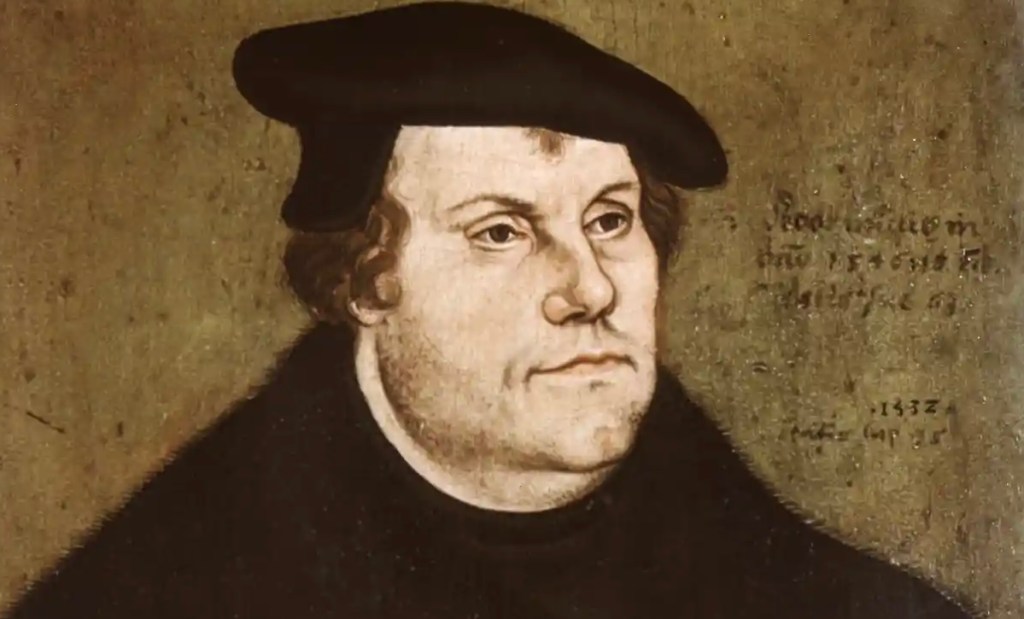
Paul’s letter to the Romans, along with his letter to the Galatians, was a key element in the argument that Martin Luther mounted against the church of his day, as he criticised the doctrines and practices of medieval Catholicism and paved the way for the German Reformation of the church.

When Luther was teaching on Paul’s letter to the Romans in 1513–1516, he had a dramatic experience: “‘I felt that I was altogether born again and had entered paradise itself through open gates.’ This new understanding of this one verse—Rom 1:17— changed everything; it became in a real sense the doorway to the Reformation. ‘Thus that place in Paul was for me truly the gate to paradise,’ says Luther (Latin Writings, 336–337).”

Luther’s argument that righteousness is a gift which God gives by grace from faith in Jesus Christ, and not something earned or merited through human religious and moral performance, has influenced both how Paul has been viewed throughout the ensuing centuries, and also how many Protestant theologians viewed Catholicism. It led to the development of what has been called the “introspective conscience” of modernity, in distinction from the strongly collectivist understandings that more recent interpreters see at work in Paul’s writing.

Portrait of Martin Luther by Lucas Cranach the Elder, 1530.
Photograph: Ullstein Bild/Getty

In his commentary on Romans, Luther wrote, “It [Romans] is the true masterpiece of the New Testament, and the very purest Gospel, which is well worthy and deserving that a Christian man should not only learn it by heart, word for word, but also that he should daily deal with it as the daily bread of men’s souls. For it can never be too much or too well read or studied; and the more it is handled the more precious it becomes, and the better it tastes.”

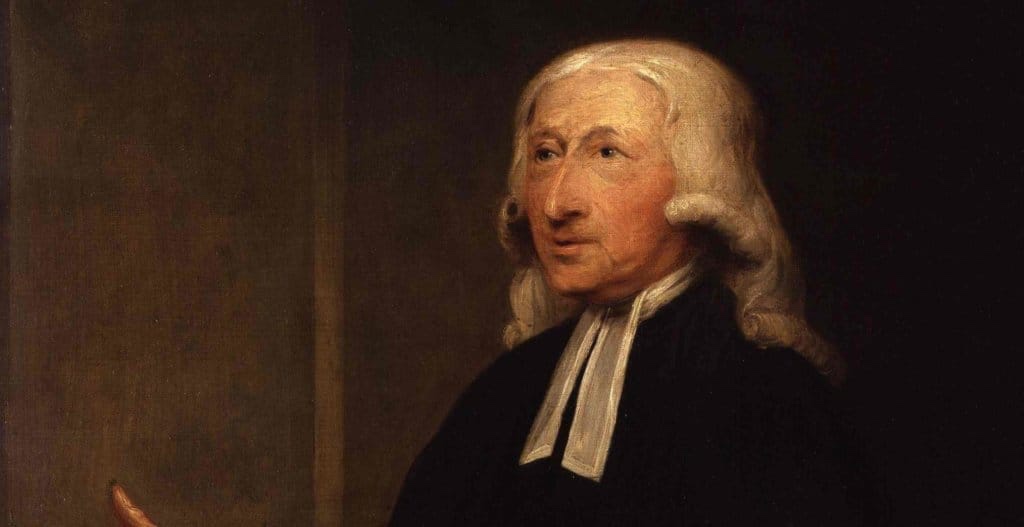
Two centuries later, on May 24, 1738, John Wesley was attending an evening service at Aldersgate Street in London. Part of Martin Luther’s commentary on Romans was read aloud. Wesley remembers, “He was describing the change which God works in the heart through faith in Christ. I felt my heart strangely warmed. I felt I did trust in Christ, Christ alone, for my salvation; and an assurance was given me that he had taken my sins away, even mine; and saved me from the law of sin and death” (John Wesley, Works (1872), volume 1).

John Wesley

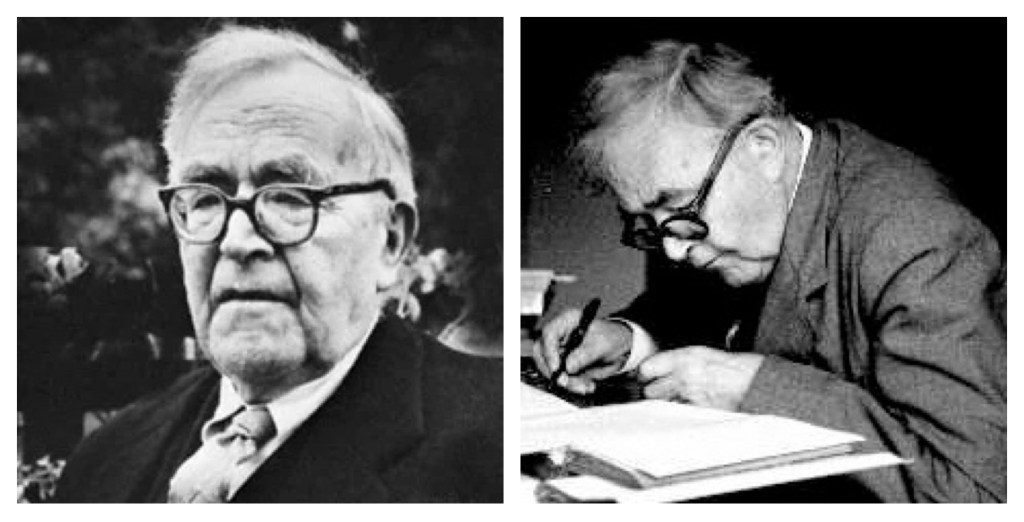
The letter to the Romans has also played a key role in the theological development of Karl Barth, the most prolific and probably most influential theologian of the 20th century. In the summer of 1916, Barth decided to write a commentary on Paul’s Epistle to the Romans as a way of rethinking his theological inheritance. The work was published in 1919; a second edition, with many revisions, followed in 1922.

This work, like many of his others, emphasizes the saving grace of God and the complete inability of human beings to know God outside of God’s revelation in Christ. Specifically, Barth argued that “the God who is revealed in the cross of Jesus challenges and overthrows any attempt to ally God with human cultures, achievements, or possessions”.

Karl Barth

Barth led the attack on Protestant Liberalism, which in his view had held an impossibly optimistic view of the human condition and of the possibility of universal salvation. Romans was key to Barth’s creation of Neo-Orthodoxy and his insistence that Christianity was not a human religion, but a divine revelation. And that set the parameters for a key theological debate throughout the 20th century.

Phew! That’s an awful lot of influence for just one letter! We might be leaving Romans behind in the weekly lectionary offerings; but it is certain that the influence of Paul’s letter to the Romans continues apace, influencing our theology—whether we are aware of that, or not!

(And, yes, I know that this is a string of men interpreting what men have written and said … perhaps someone needs to explore and discover how a number of women have received and understood and used this letter?)

*****

For my string of exegetical posts about Romans that I have posted throughout Year A, see https://johntsquires.com/2023/09/18/ruminating-on-romans/

Ruminating on Romans

Now that we have finished the sequence of passages from Romans, as the Epistle reading offered each week by the lectionary, I thought it might be helpful to post this collection of posts about this letter.

The righteous-justice of God, a gift to all humanity (Romans; Year A)

The best theology is contextual: learning from Paul’s letter to the Romans (Year A)

Descended from David according to the flesh (Rom 1; Advent 4A)

Reckoning what is right (Romans 4; Lent 2A) part one

Reckoning what is right (Romans 4; Lent 2A) part two

https://johntsquires.com/2023/06/14/we-have-obtained-access-to-this-grace-romans-5-pentecost-3a/

https://johntsquires.com/2023/03/09/righteous-by-faith-and-at-peace-with-god-rom-5-lent-3a/

https://johntsquires.com/2023/04/26/christ-died-for-us-reflections-on-sacrifice-and-atonement/

https://johntsquires.com/2023/06/21/dead-to-sin-and-alive-to-god-romans-6-pentecost-4a/

https://johntsquires.com/2023/07/06/paul-and-the-law-sin-and-the-self-rom-7-pentecost-6a/

https://johntsquires.com/2023/07/11/paul-the-law-of-the-spirit-and-life-in-the-spirit-rom-8-pentecost-7a/

https://johntsquires.com/2023/07/18/paul-the-spirit-of-adoption-and-the-abba-father-prayer-rom-8-pentecost-8a/

Sighs too deep for words: Spirit and Scripture in Romans (Rom 8; Pentecost 9A)

Praying to be cursed: Paul, the passionate partisan for the cause (Rom 9:3; Pentecost 10A)

A deeper understanding of God, through dialogue with “the other” (Romans 10; Pentecost 11A)

God has not rejected his people. All Israel will be saved. (Rom 11; Pentecost 12A)

https://johntsquires.com/2023/08/22/present-your-bodies-as-a-living-sacrifice-romans-12-pentecost-13a/

https://johntsquires.com/2023/08/30/love-and-hope-hospitality-and-harmony-overcoming-evil-with-good-romans-12-pentecost-14a/

https://johntsquires.com/2023/09/04/love-is-the-fulfilling-of-the-law-romans-13-pentecost-15a/

https://johntsquires.com/2023/09/12/each-of-us-will-be-accountable-to-god-romans-14-pentecost-16a/

For our instruction … that we might have hope (Rom 15, Isa 11, Matt 3; Advent 2A)

Each of us will be accountable to God (Romans 14; Pentecost 16A)

Back in the days when I regularly taught “Exegesis of Paul’s Letters” in a theological college (seminary), I would begin the section on Romans in chapter 1, as might reasonably be expected. In characteristically Pauline style, the qualities for which he gives thanks in his opening prayer (1:8–14), as well as the way in which he introduces himself to the believers in Rome (1:1–7), signal a number of the key matters to which he will address himself later in this letter. So that seemed a logical place to start.

However, once we got to 1:16–17, the apparent “theme of the letter”, I would jump over to 15:14–33, and explore what Paul wrote about the intentions that he had, to visit “God’s beloved in Rome, who are called to be saints” (1:7), before pressing on to Spain. Why did he tell them this? It seems to be relevant to what was in Paul’s mind as he wrote his longest, and most theologically complex, letter.

But then, we would continue on, to look at chapter 16, which provides a long list of names of people in Rome to whom Paul sent greetings, as well as those who were with him, who added their greetings to those of Paul. More grist for the mill for understanding Paul’s circumstances, and thus also feeding into his rationale for writing. But also helpful, I believe, for getting an understanding of the situation in Rome, to which Paul was addressing his words. What he indicates about “God’s beloved in Rome, who are called to be saints” in that final chapter, is entirely relevant to our understanding of the letter as a whole.

After that, we would revert to chapter 1, and trace through the theological argumentation of this rhetorically-effusive, doctrinally-loaded stream of words, from 1:16, the thematic declaration of the gospel, which Paul describes as “the power of God for salvation to everyone who has faith, to the Jew first and also to the Greek”, in which “the righteousness of God is revealed through faith for faith”, all the way through to 15:33, the closing blessing, “the God of peace be with all of you. Amen.”

Had I been even braver, before we looked at chapters 1–11, I would have made the class work through the so-called “ethical section” of the letter (12:1–15:33), for what Paul says there has direct and immediate application to the situation in Rome which he sketches in those opening and closing sections. The “ethical exhortations” in this section do reveal more of the dynamics at play within that community, as I have argued over the last two weeks. Understanding that brings even more appreciation of the specific theological argument that is advanced and developed in “the body of the letter” (1:18—11:36).

However, I wasn’t quite brave enough to do that. And besides, the lectionary we are now using in worship has followed the letter through in the order in which it appears in our Bibles, beginning with chapter 1 back in Epiphany, then picking up from chapter 4 after Trinity Sunday. So it is only now, after many weeks of excerpts throughout Pentecost, that we have arrived at the final part of that ethical section. (And sadly, chapter 16 does not get a look-in in the lectionary offerings.)

And so, here we are in chapter 14 of Romans, with a passage that will be our last chance to consider this letter (Rom 14:1–12). Clearly, the quarrels that Paul had heard about in Rome (13:13) and which he here describes (14:1–3) had resulted in some judging others (14:4). The difficulties that this would have created in the community can be imagined; and I have already explored how some earlier teaching of Paul (12:9–21) could be seen to be a corrective to this problematic situation. I have also written about how the Gentile perception of Jews and the relevance, or otherwise, of the Jewish law for followers of Jesus might have exacerbated this situation (13:8–10).

In this section of Romans, Paul provides ethical instruction which is undergirded by his understanding of what Jesus has done for those who believe, and what this means in terms of how to behave. “We do not live to ourselves”, Paul asserts (14:7), and then immediately asserts in the same breath, ““we do not die to ourselves”. The reason he gives for this is straightforward: “whether we live or whether we die, we are the Lord’s—for to this end Christ died and lived again, so that he might be Lord of both the dead and the living” (14:9).

Paul draws no distinction between the living and the dead, insofar as he considers that the death and resurrection of Jesus took place for all people, whether alive or dead. Because he affirms that “we will all stand before the judgment seat of God” (14:10), he then asserts that “each of us will be accountable to God” (14:12). The level of accountability is consistent across all people. And that accountability is, first and foremost, to God.

The situation that has drawn this statement from Paul is one of “quarrelling over opinions” (14:1). Some—later identified as “we who are strong” (15:1)—are those who “believe in eating anything”, while others—here labelled as “the weak” will be more discriminatory, and “eat only vegetables” (14:2). This terminology appears to reflect the same disagreement that is dealt with in more detail in 1 Cor 8—10.

In that context, “the weak” is regularly interpreted to be how Gentile believers perceived the Jews within the Corinthian faith community–they are weak because they refrain from eating meat that had previously been offered to idols and then sold on in the marketplace. “The strong” would thus be the Gentile self-description of those who are not troubled by this, since they know that “no idol in the world really exists” since “there is no God but one” (1 Cor 8:4).

If that is how these terms are to be understood in the context of the various communities of faith that existed in Rome, then the dynamic at work parallels that which Paul knew well in Corinth. In that letter, he admonishes the Corinthians to “build up the church” (1 Cor 14:4), to “strive to excel in [spiritual gifts] for building up the church” (14:12), and to “let all things be done for building up” (14:26).

In writing to the Romans, he offers similar advice: “welcome those who are weak in faith” (Rom 14:1), to “no longer pass judgment on one another, but resolve instead never to put a stumbling block or hindrance in the way of another” (14:13), to “pursue what makes for peace and for mutual upbuilding” (14:19), and to “welcome one another, therefore, just as Christ has welcomed you, for the glory of God” (15:7).

These exhortations are firmly grounded on Paul’s understanding of what God has already done in Jesus. In the extended discussion that follows the passage in view this coming Sunday, he makes it clear that his instruction to the Romans, “each of us must please our neighbour for the good purpose of building up the neighbour”, is based on the understanding that “Christ did not please himself” (15:2–3). This, in turn, is grounded in the word of the psalmist which he cites, “the I nsults of those who insult you have fallen on me” (Ps 69:9b).

The behaviour of believers is to be modelled on the example of Jesus, whose sacrificial offering paved the way for the inclusive community that Paul desires to see in Rome, and elsewhere: “Christ has become a servant of the circumcised on behalf of the truth of God in order that he might confirm the promises given to the patriarchs, and in order that the Gentiles might glorify God for his mercy” (15:8–9).

Once again, this is grounded in ancient scriptural affirmations. To undergird this view, Paul cites a string of texts, each making reference to the goyim (the nations, or the Gentiles): v.9 cites Ps 18:49, v.10 quotes Deut 32:42, v.11 draws on Ps 117:1, and v.12 draws on the statement about “the root of Jesse” in Isa 11:10.

So the pattern of behaviour that is required in Rome is clear: “if your brother or sister is being injured by what you eat, you are no longer walking in love”, leading to the direct practical application into the Roman situation, “do not let what you eat cause the ruin of one for whom Christ died” (14:15).

And in in the section of Romans that we will hear this Sunday, Paul has undergirded this advocacy of mutual care and concern with a deeper theological rationale, again based on the example of Jesus: “if we live, we live to the Lord, and if we die, we die to the Lord; so then, whether we live or whether we die, we are the Lord’s” (14:8).

Paul concludes this affirmation with the use of a phrase that came to be used by other early Christian writers, pointing to the universal dominion of God: “for to this end Christ died and lived again, so that he might be Lord of both the dead and the living” (14:9; compare “the God of the living and the dead” at Acts 10:42; 2 Tim 4:1; 1 Pet 4:5; and perhaps Rev 1:18).

And so it is that Paul asserts that “we will all stand before the judgment seat of Gods (14:10), a conclusion that he once again supports with reference to scripture—lit is written, ‘As I live, says the Lord, every knee shall bow to me, and every tongue shall give praise to God’” (14:11, quoting Isa 45:23). So then, he concludes, “each of us will be accountable to God” (Rom 14:12).

The Disruptive, Transforming Spirit (part three): the Spirit in Corinth

Whenever Christians think about the Spirit—and specifically about the dynamic force that is displayed by the Holy Spirit—our attention goes most immediately to the story of the Day of Pentecost in Acts 2. That’s when the coming of the Spirit was experienced as “a sound like the rush of a violent wind [which] filled the entire house where they were sitting”, followed by “tongues, as of fire … resting on each of them” (vv.2–3). A disruptive and transformative experience, to be sure!

But that’s not all there is to say about the Holy Spirit. As I explored in my previous blogs on this topic, the Holy Spirit was already integral to the faith of the ancient Israelites; and then that same Spirit continued to play a key role for the early Christians. So the Spirit remains a force to be reckoned with in our own times, today.

Beyond the accounts of Jesus and of the first Pentecost, when the Spirit is in mind, we might immediately think of Corinth—the port city, renowned for its trade and for its promiscuity, the city where Paul founded a community of Jesus-followers, where he stayed teaching for what was, for Paul, a long time; the city where relationships in the growing faith community needed ongoing attention, encouragement—and even, because this is Paul we are taking about—correction.

Paul says much about the Spirit in his first letter to the Corinthians. He says that the Spirit searches “the depths of God” (1 Cor 2:10) and gives gifts “to those who are spiritual” (2:13). Those gifts are summarised under the term “spiritual things” (2:13). Accordingly, “those who are spiritual” are able to discern “all things” (2:15), such that they can be confident that they have “the mind of Christ” (2:16).

So confident were some of the Corinthians, that they mistreated others within that same faith community. Small as it was, divisions erupted within the community, and bad behaviour ensued. “All things are lawful”, some of the members maintained (10:23), claiming that they had carte blanche to behave as they wished.

Furthermore, because they maintained that “all of us possess knowledge” (8:1), when it came to the scruples about food shown by some members of the community (presumably Jewish members, reflecting their commitment to kosher food), the very diets of the members (and the source of the food they eat) became a highly contentious issue (8:4–13; 10:23–33). The claim, and the behaviour, of those who were assured that they had the Spirit, leads Paul to explode: “some of you, thinking that I am not coming to you, have become arrogant” (4:18; also 5:2; and compare 13:2).

Squashed by the arrogance of these claims, and the dominating behaviour that resulted, those in the community who felt marginalised were unable to take part in the same way in the community gatherings (11:17–21). Paul strengthens his criticism of those who behave with arrogance, accusing them directly through his characteristically blunt rhetorical questions: “what! do you not have homes to eat and drink in? or do you show contempt for the church of God and humiliat[ing] those who have nothing?” (11:22).

In Corinth, then, the gifting of the Spirit is claimed by some as a basis for unedifying behaviour which tears apart, rather than builds up, the community. This is manifested in another way in the worship of the Corinthian community, where, fuelled by their sense of being “the spiritual ones”, some people unleash chaos in the gathering, in contrast to Paul’s sense that in the gathering “all things should be done decently and in order” (14:40), as befits the God who is “a God not of disorder but of peace” (14:33).

Paul does affirm that tongues and prophecies, and other phenomena, are indeed gifts of the Spirit (12:7–11; 14:1, 5, 13, 18). Nevertheless, he observes that “in a gathering I would rather speak five words with my mind, in order to instruct others also, than ten thousand words in a tongue” (14:19). Paul’s discernment leads him to be critical of the way that these gifts of the Spirit have been utilised in this community.

Is the Spirit here disruptive? Yes, it is most certainly clear that the gifting of the Spirit has disrupted and disturbed the gatherings of the community. The firm assurance of spiritual leading, that has developed into arrogance amongst some, has ensured that there is a distinct lack of “good order and unhindered devotion to the Lord” (7:35).

Yet Paul himself will advise the Corinthians in a later communication, “the Lord is the Spirit, and where the Spirit of the Lord is, there is freedom” (2 Cor 3:17). In that freedom, the Spirit is able to work significant change; “all of us … are being transformed into the same image from one degree of glory to another; for this comes from the Lord, the Spirit” (2 Cor 3:18).

The only problem is, as we have seen, some within the community in Corinth appear to have been quite unaware of “the glory … that comes from the Lord”, to the extent that they inflicted damage—in worship, and in relationships—on others. The disruptive Spirit had not led to a positive transformative experience, but had a very negative impact on the community.

Be wary of how you utilise what the Spirit gives you, Paul advises; measure it, and temper it, against the primary importance of “building up the gathering” (1 Cor 14:4, 12). “Let all things be done for building up”, he advises (1 Cor 14:26). The Spirit needs to be harnessed, focussed, and channelled, so that it is not destructive disorder, but constructive progress, which results.

Love is the fulfilling of the law (Romans 13; Pentecost 15A)

“Love is the fulfilling of the law”, Paul asserts in the passage that we are offered by the lectionary for consideration this coming Sunday (Rom 13:8–14). “Christ is the end of the law”, he has boldly asserted in an early part of the letter (Rom 10:4). How do these two seemingly contradictory statements stand alongside each other? What is the status of the law—the Torah, the foundation of Jewish life and faith—for Christians?

In making his statement about Christ and the Law (10:4), Paul has used an important Greek word: telos. This is regularly translated as “Christ is the end of the Law”; but we might well ask, what is the sense of the word “end” in this verse? On the one hand, this word might does infer a meaning of “the end as and abolition”, doing away with the Law. Apart from the fact that this directly contradicts what Jesus said about his intention not to abolish any single part of the Law (Matt 5:17–18), it is a most an unsatisfactory supercessionist reading, which completely does away with all the Old Testament.

On the other hand, there is the sense (which I prefer) that this means “the end as in bringing to the height of fulfilment”. In which case, Christ is bringing the Law to its logical and natural end, or goal: the complete expression of the Law through love. In other places where the word telos is used, it has this sense of bringing to fulfilment or bringing to perfection.

Indeed, this latter sense accords with the use of the term in other Pauline texts, where it is used to refer to those with spiritual maturity. He encourages the Corinthians, “in your thinking, be adult (teleioi)” (1 Cor 14:20). He confesses to the Philippians, “not that I have already obtained this or have already reached the goal (teteleiōmenoi)” (Phil 3:12) and exhorts “those of us then who are mature [to] be of the same mind” (Phil 3:15).

In later letter claiming Paul as author, the term signifies those “mature in Christ (teleioi en Christō)” (Col 1:28; see also Eph 4:13). It is perhaps similar to the meaning in Hebrews, which makes the claim that Jesus is the means of offering a perfect sacrifice (Heb 2:10; 5:9) through which “by a single offering he has perfected (teteleiōken)for all time those who are sanctified” (Heb 10:14).
Of course, the idea of being perfect is integral to the appreciation of God that is expressed at various places in Hebrew Scripture. “This God—his way is perfect”, the psalmist sings (Ps 18:30; echoed also at Deut 32:4; 2 Sam 22:31; Job 37:16), and in another psalm, “the law of the Lord is perfect, reviving the soul” (Ps 19:7).

So the temple that Solomon built was to be perfect (1 Ki 6:22), the sacrifice of wellbeing to be offered there, “to be acceptable it must be perfect, there shall be no blemish in it” (Lev 22:21), and no person with a blemish is able to serve as a priest (Lev 21:16–24).

Perhaps this is the sense of telos, perfection, complete fulfillment, that sits underneath the use of this word by Paul at Rom 10:4? That would mean that he is proposing that Christ brings the Law to a state of perfection in which it is filled to overflowing with God’s goodness.

Certainly, this would explain why Paul is able to affirm that “the whole law is summed up in a single commandment, ‘You shall love your neighbour as yourself’” (Gal 5:14). Law and love are here seen in close interrelationship with one another, not in opposition to one another. Love is the essence of the Law, bringing fulfillment what the Law set forth.

And that would also explain the words we have in this coming Sunday’s reading from Rom 13, that “the one who loves another has fulfilled the law” and so “love is the fulfilling of the law” (Rom 13:8, 10).

The key words used in Rom 13:8–10 are equally strong with regard to the ongoing validity and relevance of the Law, for Paul. He uses two words derived from the verb plēroō, meaning “to fill up”, and thus, “to fulfill”. In 13:8, he says that “love has fulfilled the law”, using the perfect form of the verb, peplērōken. The perfect has the sense of an action completed in the past which has consequences which continue on into the present time. So the fulfilling of the Law in the past by deeds of love has ongoing consequences—that Law, those acts of love, impinge on the present time.

Then, in 13:10, Paul reiterates that “love is the fulfilling of the law”, using a noun formed from this verb, plērōma. That conveys the idea that the Law has been filled right up to overflowing, fully and completely, by acts of love. The Law remains relevant and potent, because of those fulfilling acts of love.

Alongside these two words, Paul uses another word to make a similarly strong statement. Quoting for of the Ten Commandments, he affirms that these laws are “summed up” in another set of words, taken from Hebrew Scripture itself: “love your neighbour as yourself” (13:9, quoting Lev 19:18). The verb translated “summed up” is anakephalaioutai, a compound word combining the idea of “the head” (kephalē) and “brought up to” (the preposition ana).

This word contains the sense, then, that everything is gathered together and taken up into the head; obedience to each and every one of the commandments of the Law is gathered together and taken up into the head, that is, in the act of loving the neighbour.

Paul could not be clearer, and could not be stating things more strongly: the Law is filled to overflowing in love. The Law continues to have power. It is not abandoned as irrelevant or outdated.

Paul’s attitude to the Law, however, is quite complex. He trained as a Pharisee, and he notes at he was “far more zealous for the traditions of my ancestors” (Gal 1:14), and so he has a “delight in the law of God in my inmost self” (Rom 7:22). He affirms that he upholds the Law (Rom 3:31), alluding to various commands in The Ten Words which he insists are worth obeying (2:17–22), and affirming that, in its essential character, “the law is holy, and the commandment is holy and just and good” (7:12).

Yet his calling to be “apostle to the Gentiles” (Rom 11:23; Gal 2:8) led to his experience of eating at table with Jews and Gentiles together, in breach of kosher food laws (Gal 2:11–13)—an issue that is clearly in view decades later, as Luke writes his account of the early years of the Jesus movement, siding with Paul in the view that God has set aside the requirement for separate foods and separate tables (Acts 10:1–11:18; 15:19–20, 28–29).

This, in turn, leads Paul to his missionary goal of bridging the gap between Jews and Gentiles in practical ways (Rom 15:25–27), undergirded by the message that he preaches, affirming that salvation is offered “to everyone who has faith, to the Jew first and also to the Greek” (Rom 1:16; see also 2:10; 10:12; Gal 3:28; and the post-Pauline development in Eph 2:11–22). He is driven by the scriptural claim that “God shows no partiality” (Rom 2:11; Deut 16:19–20; 2 Chron 19:7; Sir 35:15–16).

So his letter to the Romans is a long and complex argument in which he explains how he understands that the good news is that “the righteous-justice of God [is] through faith in Jesus Christ for all who believe” (3:22), that there is “justification and life for all” (5:18). The argument builds and develops, demonstrating how God has chosen to make righteous-justice available to all human beings, through Abraham as through Jesus, by means of the indwelling Spirit.

So this leads Paul to write in negative terms about the Law. Although he maintains that having faith in Jesus does not “overthrow the law”, and he insists that “we uphold the law” (3:31), he goes on to note that “the law brings wrath” (4:14), for where “the law came in … the trespass multiplied” (5:20). “If it had not been for the law”, he asserts, “I would not have known sin” (7:7), and so “I am a slave to the law of sin” (7:25), and in Jesus, “God has done what the law, weakened by the flesh, could not do” (8:3).

Accordingly, “Israel, who did strive for the righteousness that is based on the law, did not succeed in fulfilling that law” (9:31). Or, as he portrays things in writing to the Galatians, “a person is justified not by the works of the law but through faith in Jesus Christ” (Gal 2:16), “through the law I died to the law” (2:19), “if justification comes through the law, then Christ died for nothing” (2:21), “no one is justified before God by the law” (3:11), and even, “if you are led by the Spirit, you are not subject to the law” (5:18).

However, to the proposition that he poses, “Is the law then opposed to the promises of God?”, Paul immediately replies, “Certainly not!” (3:21), and then argues that “the law was our disciplinarian until Christ came, so that we might be justified by faith” (3:24). This looks like Paul is ready to contend that the Law is superseded, and should be put aside. But not so fast; “I testify to every man who lets himself be circumcised that he is obliged to obey the entire law” (5:3). He is not prepared to let it go entirely. The Law still stands for Jews—but not for Gentiles.

Indeed, in the most complex midrashic section of his letter to the Romans, Paul plunges into a complex reading of scriptural texts in order to sanction the claim that God’s sovereign mercy offers a universal righteous-justice, both to Jews and to Gentiles alike (Rom 9:1–11:32).

This section of the letter contains the greatest concentration of scripture citations and allusions of the whole of this letter to the Romans—and, indeed, of all of the seven authentic letters of Paul. In the argument that is advanced by a Paul, whilst he signals the limits and inadequacies of the Law, he holds fast with the view that the Law is not rendered obsolete, but rather is brought to fulfilment (10:4; see the discussion above).

Paul,asks pointed questions: “does this mean that “the word of God had failed”? (9:6) and “has God rejected his people?” (11:1). “By no means!” is once again the Pauline riposte. “Through the stumbling [of Israel] salvation has come to the Gentiles, so as to make Israel jealous” (11:11), yet “as regards election they are beloved, for the sake of their ancestors; for the gifts and the calling of God are irrevocable” (11:28–29).

The complex midrashic argumentation of these three chapters comes to a climax in a string of joyously prayerful affirmations concerning God’s “riches and wisdom and knowledge”, leading to the attribution of glory to God forever (11:33–36). This is the ultimate response to the singular grace of God’s gift of righteous-justice to all human beings. And that gracious gift fulfils, or brings to culmination, the Law that Israel was given.

Love and hope, hospitality and harmony, overcoming evil with good (Romans 12; Pentecost 14A)

Last week we saw Paul pivoting from complex theological argumentation into encouraging ethical instruction (Rom 12:1–8). This week, the lectionary offers us a section of Romans (12:9–21) in which all of the convoluted syntactical constructions and flowery rhetorical declarations of those preceding 11 chapters have faded into the distance. In this passage, we have a sequence of twenty-one short, precise, punchy phrases through which Paul offers advice and guidance to the believers in Rome.

Paul never lost an opportunity to provide advice and instruction to people in the churches to whom he wrote letters. In many of those letters, there are sections where he peppers his communications with short, sharp, direct instructions. In 1 Thess 5:12–22, he shoots off a string of seventeen mostly staccato-short instructions: “admonish the idlers, encourage the fainthearted, help the weak, be patient …”.

In Phil 4:8–9 he encourages the Philippians to “think about” the eight qualities that he lists in rapid-fire order: “whatever is true, whatever is honorable, whatever is just, whatever is pure, whatever is pleasing, whatever is commendable, if there is any excellence, if there is anything worthy of praise”.

In his letter to the believers in Galatia, he gives both a list of fifteen “works of the flesh” and then of nine qualities that comprise “the fruit of the Spirit” (Gal 5:16–26), while near the end of his first letter to the Corinthians, he provides a more modest list of five commands: “keep alert, stand firm, be courageous, be strong, let all you do be done in love” (1 Cor 16:13–14).

Here in Romans 12, he excels himself, with a sequence of twenty commands, the first of which (“let love be genuine”, v.9) stands as a heading for the section; and the last of which (“never avenge yourselves”, v.19) is extended into a brief excursus about “the wrath of God”, before a final two-part concluding instruction, “do not be overcome by evil, but overcome evil with good” (v.21).

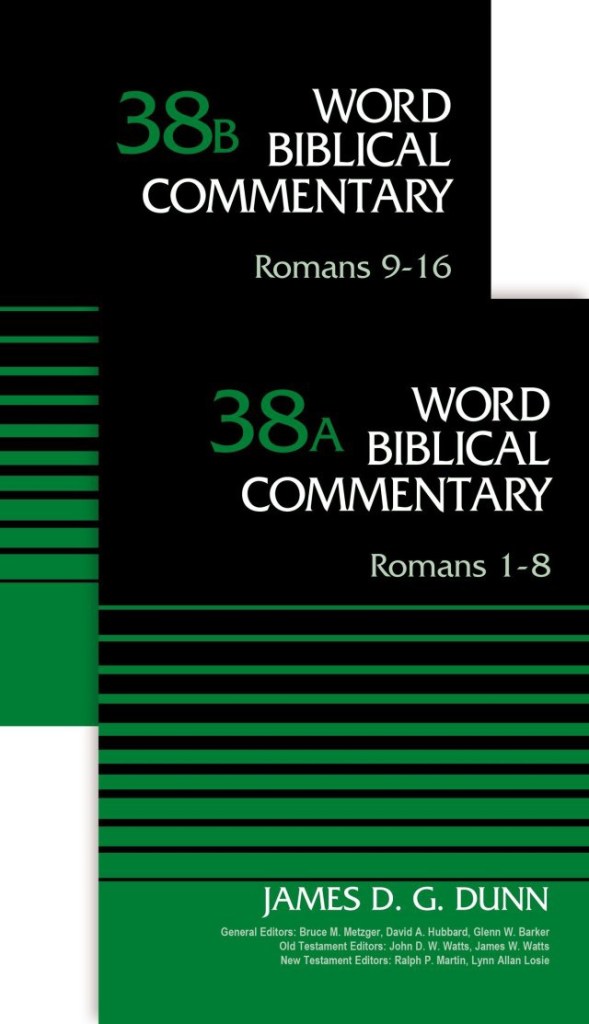
The go-to commentaries on my bookshelf which deal with Romans are the two-volume (976 pages) Word Commentary by James D.G. Dunn, and the even larger (1140 pages) Hermeneia Commentary by Robert Jewett. I had the privilege of spending a sabbatical year at Durham in the UK while Jimmy Dunn was Professor there (he was supervising the doctoral research into Matthew’s Gospel being undertaken by my wife, Elizabeth Raine) and also of being one of the respondents to the commentary of Jewett when he was a visiting scholar at Macquarie University in Sydney, Australia.
Dunn follows the typical scholarly description of this passage as “the most loosely constructed of all the paragraphs, consisting mainly of individual exhortations (stringing pearls) held together in part by particular words and thematic links (especially love … bad … and good)” (Romans, Word, p.737). Jewett demurs, arguing that this passage “is artfully constructed for rhetorical impact and closely related to the tensions between Christian groups in Rome” (Romans, Hermeneia, p.756).

I can see that the links suggested by Jewett are evident in the words that Dunn has suggested. “Let love be genuine” (v.9) functions as a heading; the motif is repeated with “love one another with mutual affection” (v.10) and then explained in a series of practical instructions: “contribute to the needs of the saints; extend hospitality to strangers; bless those who persecute you; bless and do not curse them; rejoice with those who rejoice, weep with those who weep; live in harmony with one another; do not be haughty, but associate with the lowly; do not claim to be wiser than you are” (vv.12–16).

These words apply directly, it would seem, to the situation in Rome, where tensions between groups are evident. The points of view that are reflected in the phrases “those who are weak in faith” (14:1) and those who “believe in eating anything” (14:2), for instance, appear to reflect the same disagreement that is dealt with in more detail in 1 Cor 8—10.

In that context, “the weak” is regularly interpreted to be a Gentile portrayal of Jews within the Roman conglomerate of faith communities, who refrain from eating meat that had previously been offered to idols and then sold on in the marketplace. “The strong” would thus be the Gentile self-description of those who are not troubled by this, since they know that “no idol in the world really exists” since “there is no God but one” (1 Cor 8:4).

*****

Could a similar dynamic be at work regarding the same issue in Rome? It seems to me to be a reasonable line of interpretation—in which case, the exhortations grouped together under the heading of love (Rom 12:9–10, 13–17) would undergird the later teachings about love as “the fulfilling of the law” (13:8–10) and the direct command to “welcome one another” (15:7). They would also,seem to relate to the specific directions that the believers “no longer pass judgement on one another” (14:13, drawing together all of 14:1–23) and the clear admonition that “each of us must please our neighbour for the good purpose of building up the neighbour” (15:2, summing up 15:1–13).

Indeed, I find myself strongly persuaded by a line of scholarship which Jewett summarises and develops in his hugely-detailed Hermeneia commentary, which sees the list of names to whom Paul sends greetings in Rom 16:3–16 offers clear indications of different “house church” groups which were meeting in Rome. Phrases such as “the church in their house” (v.5), “the family of Aristobulus” (v.10), “those in the Lord who belong to the family of Narcissus” (v.11), “the brothers and sisters who are with them” (v.14), and “all the saints who are with them” (v.15) indicate various potential groupings.

Jewett distinguishes three types of people being addressed—close personal friends and coworkers of Paul, leaders of house churches known only by hearsay (since Paul had not yet visited Rome when he wrote this letter), and five house or tenement churches (identified by some of those phrases already noted in the previous paragraph). The rhetorical function of this closing section of the letter is, in part, to strengthen “emotional and affectional bonds … across barriers erected by previous conflicts”. (See Jewett, Romans, Hermeneia, pp.952–954).

In similar fashion, the instructions “hate what is evil, hold fast to what is good” (v.9) and “do not be overcome by evil, but overcome evil with good” (v.21) enclose the passage as markers of a related key theme, in which the opposites of evil (bad) and good are in view. In this regard, the instruction, “do not repay anyone evil for evil, but take thought for what is noble in the sight of all” (v.17) is also related, and it shows the connection with the “love” motif already noted. It is yet another indication that the cohesiveness of the community is what Paul has in mind as he writes.

What follows immediately after that instruction adds to this theme: “if it is possible, so far as it depends on you, live peaceably with all” (v.18) is clearly aimed at ensuring mutual respect amongst those drawn together by their common faith in Jesus as “the righteousness of God”. And perhaps, then, the mention of God’s wrath (v.19a) and the following instructions (vv.19b—20) fit within this framework. God’s vengeance (noted in the short quote from Deut 32:25) requires behaviour that is ethical and other-oriented. That is how to live as those who have been “transformed by the renewing of your minds” (Rom 12:2).

That behaviour—feeding the hungry, giving a drink to the thirsty—points quite directly to the teaching of Jesus, which we find expressed in the succinct word, “whoever gives you a cup of water to drink because you bear the name of Christ will by no means lose the reward” (Mark 10:41) and embedded in the more extended parable of the final judgement (Matt 25:31–46).

In like fashion, the exhortation to “bless those who persecute you; bless and do not curse them; rejoice with those who rejoice, weep with those who weep” (Rom 12:14–15) resonates with the blessing offered by Jesus to those who weep (Luke 6:21b) and the subsequent exhortation to “do good to those who hate you, bless those who curse you, pray for those who abuse you” (Luke 6:27b—28).

*****

That Paul was aware of the ethical stance of Jesus, and indeed of some of his specific teachings, may well be indicated by his clear referencing of them in these words at this point in his letter to the Romans. Dunn certainly believes this to be the case; “the probability that the Pauline paraenesis does reflect the exhortation of Jesus must be judged to be very strong” (Dunn, Romans, Word, p.745).

Jewett takes a broader view, noting “close Hebraic parallels to this exhortation concerning emotional responsiveness”, citing Sir 7:34 (“do not withdraw yourself from weepers—mourn with the weepers”) as well Testament of Joseph 17:7–8 (“their life was my life, all their suffering was my suffering, all their sickness was my infirmity … my land was all their land, and their counsel my counsel”).

Jewett also references a Greek maxim by Menander (“return grief for grief, and more than love for love”, Sent. Byz. 448), and a dictum by Epictetus (“where a man rejoices with good reason, there others may rejoice with him”, Diss. 2.5.23). (See Jewett, Romans, Hermeneia, p.767.)

So the wider existence of this ethical stance needs to be noted; Paul—and indeed Jesus—was not alone in recognising the virtue of fostering a sympathetic understanding of others, and of working collaboratively towards a cohesive and cordial communal life. Indeed, it can be no accident that this string of ethical exhortations which Paul collected in 12:9–21 follows immediately after his use of the image of the body as a metaphor for the interconnected and interdependent life of the community, in 12:3–8.

So the various injunctions collected in this passage—“live in harmony with one another”, “contribute to the needs of the saints”, even “extend hospitality to strangers” and indeed “live peaceably with all”—stand as important guides for the communities of faith in Rome, and indeed prove to be wise guides for life in any community, at any time, through into the present day. Faith calls us into relationship with others, and those relationships are to be marked by respect and integrity. May it be so!

Present your bodies as a living sacrifice (Romans 12; Pentecost 13A)

There are a number of well-known, oft quoted verses in Romans. “All have sinned and fall short of the glory of God” (Rom 3:23). “I know that nothing good dwells within me, that is, in my flesh” (Rom 7:18)—expressing the innate sinfulness of humanity that perhaps Paul was seeking to explain at 5:12–21, and which Augustine sought to leverage through his interpretation of two small words in 5:12.

There is also the succinct “Christ is the end of the law” (10:4), which seems clear it—although a number of interpreters (myself included) maintain has been taken out of context and misinterpreted in ways that Paul did not intend. And, on the other side of the equation, “the one who is righteous will live by faith” (Rom 1:17)—although here Paul is quoting a prophet from within Israelite tradition itself(Hab 2:4).

Also, there is “since we are justified by faith, we have peace with God through our Lord Jesus Christ, through whom we have obtained access to this grace in which we stand” (Rom 5:1–2)—made famous by Luther’s sola gratia, sola fide. Paul returns to this motif when he affirms that “there is now no condemnation for those who are in Christ Jesus, for the law of the Spirit of life in Christ Jesus has set you free from the law of sin and of death” (Rom 8:1–2). All rich, juicy statements about the Gospel.

So from the passage offered by the lectionary for this coming Sunday, Pentecost 13A (Rom 12:1–8), we hear this familiar injunction, to “present your bodies as a living sacrifice, holy and acceptable to God, which is your spiritual worship. Do not be conformed to this world, but be transformed by the renewing of your minds” (Rom 12:1–2). It’s a familiar command that has a clear place within the context of the communities of faith in Rome to whom Paul was writing, and which has been applied time and time and again over the centuries, to believers in vastly different cultures and contexts.

With these verses, we leave the complex theological argumentation that we have been exploring in the passages that the lectionary has offered from Romans 4–11 (Pentecost 2A to 12A), where Paul teases out all of the factors that are involved in his proclaiming the gospel which is “the power of God for salvation to everyone who has faith, to the Jew first and also to the Greek”, in which he demonstrates that “the righteousness of God is revealed through faith for faith” (1:16–17).

Paul has made the exuberant affirmation that “neither death, nor life, nor angels, nor rulers, nor things present, nor things to come, nor powers, nor height, nor depth, nor anything else in all creation, will be able to separate us from the love of God in Christ Jesus our Lord” (8:31–39).

He has then sung with joy, celebrating “the depth of the riches and wisdom and knowledge of God! How unsearchable are his judgments and how inscrutable his ways! ‘For who has known the mind of the Lord? Or who has been his counselor?’ ‘Or who has given a gift to him, to receive a gift in return?’ For from him and through him and to him are all things. To him be the glory forever. Amen.” (11:33–36).

It sounds like he has completed the work that he set out to do in writing this letter. A big full stop (Amen), underlined by a shout of praise (to him be the glory forever)!! But not so fast—there is more to come, as Paul immediately pivots from his theological exposition, into a section where he provides a string of ethical exhortations and instructions to the community in Rome. The pivot happens with a simple phrase: “I appeal to you therefore, brothers and sisters” (12:1).

The words which Paul uses here deserve careful attention. First, we should note that this is a word of exhortation; Paul begins his sentence, “I appeal to you” (NRSV), “I urge you” (NIV), “I encourage you” (CEB), even “I beg you” (Phillips), or the more antiquated “I beseech you” (KJV). Paul seems to be hoping to instruct the believers in Rome, without coming across as dominating—although he has been consistently forceful in the first eleven chapters, as he set out his understanding of the Gospel.

In fact, the Greek phrase used here, Παρακαλῶ οὖν ὑμᾶς, is a common way of turning the attention of his listeners from more abstract (or doctrinal) matters, to direct ethical matters of behaviour. We see this at 1 Cor 4:16 and 2 Cor 10:1, each time signalling a new section, as well as at 1 Cor 1:10 and Phlm 9, where the primary issue of each letter is described. It is a familiar rhetorical turn of phrase designed to draw the attention of those hearing, or reading, the letter, to a new topic of instruction.

Indeed, this phrase itself draws from the practice of Greek moral philosophisers in antiquity, of providing “moral exhortation in which someone is advised to pursue or abstain from something”. That’s a quote from one of my teachers, Prof. Abraham Malherbe, who spent decades researching and writing about these philosophers; see Malherbe, “Styles of Exhortation”, in Moral Exhortation; Westminster John Knox Press, 1986 pp. 121–127.

So Paul utilises this technique from Greek literature—just like he also makes extensive use of many elements of a diatribe in his letter to the Romans. However, although he is writing in Greek, some of the language which follows is drawn from Jewish traditions. Paul exemplifies the richness of the multicultural society of the day, where Jewish and hellenistic Greek customs, traditions, and religions intermingled, along with distinctively local practices in each place of the Roman Empire where the traditional deities, language, and culture survived.

“Present your bodies as a living sacrifice”, Paul advises the Romans (12:1). However, he is not specifically instructing them to offer their loves as martyrs. The language is more subtle than this. The offering of sacrifices to the deities was known within ancient Greece and in the Roman Empire. Writing on religion in Ancient Greece, Colette and Séan Hemingway state that “the central ritual act in ancient Greece was animal sacrifice, especially of oxen, goats, and sheep. Sacrifices took place within the sanctuary, usually at an altar in front of the temple, with the assembled participants consuming the entrails and meat of the victim.” See

https://www.metmuseum.org/toah/hd/grlg/hd_grlg.htm#:~:text=The%20central%20ritual%20act%20in,offerings%2C%20or%20libations%20(1979.11.

Paul himself asserts that “what pagans sacrifice, they sacrifice to demons and not to God” (1 Cor 10:20), and so, when believers share in meals involving meat which has been bought at the meat market, “if someone says to you, ‘This has been offered in sacrifice,’ then do not eat it” (1 Cor 10:28). The offering of meat as a sacrifice which was subsequently sold on to the market by the pagan priests was obviously still happening in Corinth.

However, sacrifice was also at the heart of Israelite faith; the Temple was not simply the holy place where the God of Israel resided, but it was also the place to which offerings and sacrifices were brought in order to give thanks to God and to seek forgiveness from God. As the psalmist sings, “lift up your hands to the holy place and bless the Lord” (Ps 134:2).

Since “the Lord is in his holy temple” (Ps 11:4) the psalmist also promises, “I will offer to you a thanksgiving sacrifice and call on the name of the Lord; I will pay my vows to the Lord in the presence of all his people, in the courts of the house of the Lord, in your midst, O Jerusalem” (Ps 116:18–19). Sacrifice was integral to the ancient faith of the Israelites, continued on by Jewish people into the first century CE.

But sacrifice was not just the slaughter of animals and birds. Interpreting the death of Jesus in terms of his sacrifice was a logical move for the Jews who were the first followers of Jesus. In doing that, they “spiritualised” the concept of sacrifice. It was a small step from that, to apply the language of sacrifice to the lives of believers.

Jewish writers had already taken this step: the psalmist sings that “the sacrifice acceptable to God is a broken spirit; a broken and contrite heart, O God, you will not despise” (Ps 51:17), and “those who bring thanksgiving as their sacrifice honour me; to those who go the right way I will show the salvation of God” (Ps 50:23).

So to “present your bodies as a living sacrifice” (Rom 12:1) was not, therefore, a call to martyrdom, but a call to humble, selfless living. The bodies of believers are to be presented to God as holy. Holiness was at the heart of Israelite religion, the faith into which Paul, and Jesus, were born.

Paul also notes that the “living sacrifice” presented to God should be “acceptable”. There’s a strong emphasis throughout Leviticus on the need to bring an offering or sacrifice that is “acceptable” (Lev 1:4; 7:18; 19:5–8; 22:17–21, 26–30); for a sacrifice of wellbeing “to be acceptable it must be perfect; there shall be no blemish in it” (Lev 22:21). That was the role of the priests: to examine carefully the animals being brought for sacrifice, to ensure that they were “perfect”.

The next phrase, often rendered as “spiritual worship”, also needs careful consideration. Paul has earlier referred to “some spiritual gift” that he wished to share with the Roman believers (Rom 1:11), and talked to the Jews about “real circumcision” being “a matter of the heart—it is spiritual and not literal” (2:29). However, the Greek word used in both instance is derived from the root word for spirit (πνευματικὸν at 1:11; ἐν πνεύματι at 2:29).

Not so at Romans 12:1–the phrase in question is τὴν λογικὴν λατρείαν ὑμῶν, which the NASB translates as “your spiritual act of worship”, the NCV as “the spiritual way for you to worship”, the WEB as “your spiritual service”. The use of the word “spiritual” here is misleading; more accurate translations are offered by the NRSV as “your reasonable act of worship”, the NIV as “your true and proper worship”.

The kind of worship for which Paul is advocating is worship which is grounded in the logos, the reason, the rational capacity of human beings. He is not encouraging the Romans to waft off into the ether of “spiritual gifts” that he had found manifest, causing such problems, within the community in Corinth. He is, rather, advocating for a careful, reasoned approach to the worship of God. The sacrifice to be offered should be considered and well thought-out, much in the same way that priests in the Temple would scrutinise and assess potential sacrifices.

There are clues, then, as to what would typify this kind of “worship”. Paul refers to the grace which was “given to me” (12:3)—grace at work in Paul’s life (1:5), and grace lavished on believers (3:24; 5:2, 15–21; 6:15–15). That grace has been a significant motif throughout the theological exposition that Paul has undertaken in the complex argumentation he sets out in the chapters prior to chapter 12.

The ethic that is inculcated by this grace is to think first of the other: “not to think of yourself more highly than you ought to think, but to think with sober judgment, each according to the measure of faith that God has assigned” (12:3). Again, the Greek term translated as “sober judgement” (σωφρονεῖν) has the sense of what is sensible or reasonable. Mark employs this word when he reports that the Gadarene demoniac, after being exorcised by Jesus, was “sitting there, clothed and in his right mind” (Mark 5:15).

This leads smoothly into a discussion of the community of faith as the body—an image which he had already used in his first letter to the Corinthians (1 Cor 12:12–31). There, Paul first identified a range of gifts (1 Cor 12:8–10), and then emphasised the claim that “the body does not consist of one member, but of many” (1 Cor 12:14). As a result, each and every member plays an integral role in the whole.

From this, Paul deduces that “the members of the body that seem to be weaker are indispensable … God has so arranged the body, giving the greater honour to the inferior member” (1 Cor 12:22–25). The context in Corinth shapes the direction into which Paul develops this image.

Here, in writing to the Romans, Paul begins with the same affirmation that “in one body we have many members” (Rom 12:4), but then heads firmly in the direction of identifying the gifts that God has given: “we have gifts that differ according to the grace given to us”, before naming seven such gifts (Rom 12:6–8).

The list of gifts in these verses overlaps with, but differs at key points from, the lists found in 1 Cor 12:8–10 and 12:28. The specifics of the particular gifts are not the point at hand; of more significance in this letter is to press the point that the Romans are “not to think of yourself more highly than you ought to think” (Rom 12:3).

This is a central ethical exhortation to which Paul will return in later chapters when he instructs the believers in Rome to “extend hospitality to strangers” (12:13), “live in harmony with one another” (12:16), and “love your neighbour as yourself” (13:9, quoting Lev 19:18). He directs them to “welcome those who are weak in faith” (14:1), urging them, “let us no longer pass judgement on one another” (14:13) and “let us pursue what makes for peace and for mutual upbuilding” (14:19)

As he draws towards the close of his long letter, Paul advocates for “the good purpose of building up the neighbour” (15:2), and so the believers in Rome are to “welcome one another just as Christ has welcomed you” (15:7). This is the mode for which he has advocated in chapter 12, when he has urged them, “do not be conformed to this world, but be transformed by the renewing of your minds” (12:2). The transformation that Paul seeks is to develop a perspective that is fully oriented to the other, “not to please ourselves” (15:1), but to “please our neighbour” (15:2).

His prayer for the Roman believers is that God will “grant you to live in harmony with one another … so that together you may with one voice glorify the God and Father of our Lord Jesus Christ” (15:5–6). His words in 12:1–8 (which the lectionary offers us this coming Sunday) have set a strong foundation for this trajectory of teaching about mutual responsibility and accountability.

Paul, the spirit of adoption, and the “Abba, Father” prayer (Rom 8; Pentecost 8A)

Two weeks ago, we considered the section of Paul’s letter to the Romans which the lectionary offered: Paul grappling within “the sin that lives within me” (Rom 7:14–25a). The following week, the lectionary continued following the argument developed by Paul, as he rejoices that “there is now no condemnation for those who are in Christ Jesus” (8:1–11). This week, we read the next passage in this letter, which reflects on “being led by the Spirit” and praying the prayer, “Abba, Father” (8:12–25).

In earlier weeks, we have been tracing the progression of Paul’s argument in this letter, as he sets out how he understudy the Gospel is “the power of God for salvation to everyone who has faith, to the Jew first and also to the Greek” (1:16). He has set out the way that “the righteousness of God is revealed, through faith for faith” (1:17), the way that “this righteousness of God has been disclosed, and is attested by the law and the prophets” (3:21).

He has noted that this has been effected through “the redemption that is in Christ Jesus, whom God put forward as a sacrifice of atonement by his blood, effective through faith” (3:24–25), and that this is consistent with the way that God had already acted, when “faith was reckoned to Abraham as righteousness” (4:9). This means, says Paul, that this same righteousness “will be reckoned to us who believe in him who raised Jesus our Lord from the dead” (4:24).

Accordingly, Paul tells the Romans that, “since we are justified by faith, we have peace with God through our Lord Jesus Christ, through whom we have obtained access to this grace in which we stand; and we boast in our hope of sharing the glory of God” (5:1–2). What follows is a detailed exploration of what this theologically rich affirmation entails: understanding the significance of the death of Jesus for believers (5:6–11); exploring the origin of sin and the parallel offering of being declared to be righteous (5:12–21); the life of faith with the risen Christ (6:1–11); the relationship between sin and grace (6:12–23); the place of sin, the law, and death in the life of faith (7:1–25); and life in the Spirit (8:1–11).

This is heavy going: Paul is entering into difficult areas for consideration—but he plunges in head-first, deploying the familiar techniques he has used in some of his earlier letters: vigorous debate using the techniques of diatribe, question-and-answer dialogues, with scriptural citation and exposition in the style of the rabbis (see especially Galatians and both letters to the Corinthians). This shows the complex, cross-cultural nature of Paul’s life, and the sophisticated way that he operated.

In the section of this letter that is offered this coming Sunday, then (8:12–17), Paul pauses the vigorous debating style of earlier sections, and here operates more by offering pastoral exhortation in the manner of moral philosophers, as he does especially in 1 Thessalonians and Philippians. In this instance, the focus is to offer encouragement regarding the present state of believers, reiterated in these words: “all who are led by the Sprit of God are children of God” (8:14), “you have received a spirit of adoption” (8:15), “we are children of God” (8:16).

Paul continues his dualistic perspective, here, by contrasting “to love according to the flesh” with being “led by the Spirit of God”, which means to “put to death the deeds of the body” (8:13–14). This dualism, from the strong Greek influence on Paul (and, indeed, on many of his hellenised Jewish contemporaries) drives his thoughts away from the integrated Hebraic view of the whole person, the nephesh, which is at the heart of how the Hebrew Scriptures regard humanity.

Those scriptures had clearly indicated that God created nephesh hayah, “living creatures”, in the seas (Gen 1:20, 21) and on the earth (Gen 1:24); indeed, in “every beast of the earth … every bird of the air … everything that creeps on the earth, everything that has the breath of life (nephesh hayah)” (Gen 1:30). The same phrase occurs in the second creation story, describing how God formed a man from the dust of the earth and breathed the breath of life into him, and “the man became a living being (nephesh hayah)” (Gen 2:7). The claim that each living creature is a nephesh is reiterated in the Holiness Code (Lev 11:10, 46; 17:11).

For Paul, however, flesh and spirit compete with one another within the same person; he has stated this conflict clearly at Rom 7:5–6, and developed his thinking further at 8:3–9. In an earlier letter, Paul has taken this flesh/spirit dichotomy as a primary lens for viewing the various conflicts and problems within the gatherings in Corinth (1 Cor 3:1–4; 6:16–17); a similar dynamic can be seen in the extended allegory of Sarah and Hagar (Gal 4:21–31; see esp. v.29). Concerning the dissension in Philippi, he is clear: “we who worship in the Spirit of God … have no confidence in the flesh” (Phil 3:3).

It is a shame that this adoption of Hellenistic dualism has overshadowed and then overwhelmed the rigorously wholistic approach to the human condition that is the gift of the Hebraic tradition. Paul’s words occupy much less space in our scriptures than do the material from the ancient scrolls of Israel, but we have allowed the writings of Paul (the seven authentic letters, as well as the later pseudonymous works) to take up so much more space than those earlier works—and, indeed, more space than the Gospels in the New Testament—in the thinking, writing, and doctrinal exposition of Christianity.

This dualistic dynamic that Paul has adopted and integrated into his way of thinking spills out into the further imagery that is used in Rom 8, where the flesh is entangled in “a spirit of slavery” which leads people to “fall back into fear”, but believers “have received a spirit of adoption” which attests that they are “children of God” (8:15–16).

That people can be considered to be “children of God” is a common point of view today; it is a way of recognising that we are all created by God and share the same characteristics as human beings. It is perhaps a point of view that has developed from the observation that Paul occasionally refers to “the children of God”.

He assures the Galatians that “in Christ Jesus you are all children of God through faith” (Gal 3:26), and encourages the Philippians to “do all things without murmuring and arguing, so that you may be blameless and innocent, children of God without blemish in the midst of a crooked and perverse generation, in which you shine like stars in the world” (Phil 2:14–15).

The term occurs five times in this immediate section of Romans (Rom 8:14, 16, 19, 21; 9:8), where Paul makes it clear that “all who are led by the Spirit of God are children of God” (8:14) and “it is not the children of the flesh who are the children of God, but the children of the promise are counted as descendants” (9:8). This usage is different from the contemporary sense that “we are all children of God because God has created us all”—for Paul, the children of God are birthed into that state by virtue of their faith, being led by the Spirit and finding themselves to be “in Christ”.

The phrase is used by the author of 1 John in a similar manner, comparing “the children of God and the children of the devil”—although in the rigorous view taken by this writer, the former “have been born of God [and] do not sin, because God’s seed abides in them” whilst the latter “do not do what is right [and] are not from God”, and indeed they “do not love their brothers and sisters” (1 John 3:9–10; see also 3:1; 5:2).

The phrase appears also in two sayings attributed to Jesus: a blessing of “the peacemakers” (Matt 5:9), and a discussion of those in “the age to come” who “cannot die anymore, because they are like angels and are children of God, being children of the resurrection” (Luke 20:36).

The phrase is also found in two narrative comments by the author of John’s Gospel, affirming that Jesus “gave power to become children of God” to “all who received him” (John 1:14), and in a summation of a high priestly prophecy that Jesus was “about to die for the nation, and not for the nation only, but to gather into one the dispersed children of God” (John 11:52). So this usage is diverse and generalised, rather than conveying a specific focus, which is what Paul clearly has in mind in Rom 8:12–25.

Those described as “children of God”, we have noted, are also described by Paul as having a “spirit of adoption”. This language appears as Paul encourages the Galatians, explaining the significance of Jesus in the short saying: “when the fullness of time had come, God sent his Son, born of a woman, born under the law, in order to redeem those who were under the law, so that we might receive adoption as children” (Gal 4:4–5). He continues that, “because you are children, God has sent the Spirit of his Son into our hearts, crying, ‘Abba! Father!’” (Gal 4:6), the very same prayer that he references in Rom 8.

The concept of adoption is taken up in the language of a post-Pauline letter, which declares that God “destined us for adoption as his children through Jesus Christ, according to the good pleasure of his will, to the praise of his glorious grace that he freely bestowed on us in the Beloved” (Eph 1:5).

In his letter to the Romans, Paul equates this adoption with “the redemption of our bodies” (Rom 8:23), indicating that the concept fits neatly, in Paul’s thinking, within his adopted hellenistic dualistic worldview. The Spirit which gifts this adoption to believers as “children of God” is the Spirit which makes us to be “heirs, heirs of God and joint heirs with Christ” (8:17). The end result of this process is, as Paul then declares, that “we suffer with him [Christ] so that we may also be glorified with him” (8:17).

The idea that we are glorified with Christ is then reiterated later in this chapter, where Paul writes about the overarching providence of God, stating that “those whom he foreknew he also predestined to be conformed to the image of his Son”, using once again a family image to explain what this means: “in order that he might be the firstborn within a large family” (8:29). This process drives inexorably towards the moment of glorification: “those whom he predestined he also called; and those whom he called he also justified; and those whom he justified he also glorified” (8:30).

This is an unusual portrayal of what this means for believers. To “be glorified” in scriptural usage normally applies to God (Lev 10:3; 1 Chron 22:5; Isa 26:15; 44:23; 49:3; 60:21; 66:5; Sir 3:20; 38:6; 45:3; Mark 2:12; Matt 9:8; Luke 5:26; 7:16; John 12:28; 13:31–32; 14:13; 15:28; 17:4) or to Jesus (John 11:4; 12:16, 23; 13:31), although there are some late references to Israel being glorified (Isa 55:3–5), Moses being glorified (Sir 44:25–45:3), and then to David also being glorified (Sir 47:2–6). Paul is placing believers in Christ within that same stream of being glorified by their strong faith and good works.

As he writes to the Romans, Paul refers to a prayer that we find on the lips of Jesus: “Abba! Father!” (Rom 8:15; Mark 14:36). Jesus prays this way in the Garden of Gethsemane, when he was “distressed and agitated” (Mark 4:33) as he grapples with what he now knows is in store for him: “the hour has come; the Son of Man is betrayed into the hands of sinners” (Mark 14:41). It is a reflexive prayer, coming almost automatically from within the depths of Jesus’ inner life, in his very being that is “deeply grieved, even to death” (Mark 14:34).

Paul has also referenced this prayer in a similar moment of encouragement in his letter to the Galatians, when he reminds them that Jesus had come “in order to redeem those who were under the law, so that we might receive adoption as children” (4:4–5). It is because of this state, as children of God, that “God has sent the Spirit into our hearts, crying ‘Abba! Father!’” (Gal 6:6).

Quite tellingly, Paul notes that this is a prayer that we “cry” (Rom 8:15), using the Greek word, kradzein, which is used both in Gospel accounts of casting out demons (Mark 1:23), but, more significantly, 40 times in the LXX translation of Psalms (Ps 3:4; 4:3; 8:6; 22:2, 5; etc). It indicates an intensity of focus in what is being said.

The psalmist “cries aloud to the Lord” (Ps 3:4; 27:7; 77:1) and the response is clear, for the Lord “fulfils the desire of all who fear him [and] hears their cry and saves them” (Ps 145:19), “he gives to the animals their food, and to the young ravens when they cry” (Ps 147:9), and as “I waited patiently for the Lord, he inclined to me and heard my cry” (Ps 40:1).

The Abba Prayer has come to have a life all of its own in contemporary spirituality. It is offered in scripture, both as words that Jesus prayed, and as words which Paul offers to believers for our prayers. It is a good foundation to foster our relationship with God in prayer.

In the final section of the reading that the lectionary offers us for this coming Sunday, Paul makes much of the promise that, since believers are “children of God” and thus “joint-heirs with Christ”, so they will “be glorified with him” (8:17). This theme continues on in the consideration that Paul gives to “the glory about to be revealed to us” (8:18), when “the creation will be set free from its bondage to decay and will obtain the freedom of the glory of the children of God” (8:21), and when “those whom he called he also justified”, such that “those whom he justified he also glorified” (8:30).

Earlier in this same chapter, Paul has reported to the Romans that “we boast in our hope of sharing the glory of God” (5:2). This boastful praise for the promised, soon-to-be realised glory, draws on a strong theme in Hebrew scripture. The glory of God is present in the stories that recount the formation of Israel, through the years in the wilderness (Exod 16:6–10; Num 14:22), on Mount Sinai (Exod 24:16–17; Deut 5:22–24), in the Tabernacle (Exod 40:34–35; Lev 9:23; Num 14:10; 16:19, 42; 20:16), and in the temple (1 Ki 8:1–11; 2 Chron 7:1–4).

The psalmists reinforce the notion that the glory resides in the sanctuary (Ps 26:8; 63:2; 102:16; Hag 2:3) and in the land of Israel (Ps 85:9). In some psalms the realm of God’s glory is extended to be “over the waters” (Ps 29:1–4), “over all the earth” (Ps 57:5; 72:19; 97:6; 102:15; 108:5; also Isa 6:3; 24:15–16; 60:1–2; Hab 2:14) and even to “the heavens” (Ps 19:1; 113:4; 148:13; and Hab 3:3).

This concept of God’s glory plays an important role in Paul’s argument in Romans. “All have sinned and fallen short of the glory of God”, Paul brazenly declares (Rom 3:23); some who claim to know God “exchanged the glory of the immortal God for images resembling a mortal human being” (1:23), in contrast to “those who by patiently doing good seek for glory and honour”, to whom “glory and honour and peace” will be given (2:7, 10).

To Abraham, who “grew strong in his faith as he gave glory to God”, his faith would be “reckoned as righteousness” (4:20–22). In God’s time, “the freedom of the glory of the children of God” will given to the creation (8:21). Within the communities of faith in Rome, the imperative of “welcoming one another” is to be done “for the glory of God” (15:7). This glory is God’s gift to people of faith, and indeed to the whole creation. It is this which Paul here yearns for and anticipates with confident hope.

However, it is imperative that we notice that when Paul writes about being glorified with Christ, he prefaces that with an important condition—“if, in fact, we suffer with him” (8:17). Sharing fully in the fruits of God’s glory, as joint-heirs with Christ, means sharing completely in the suffering that Christ experienced, in his betrayal, arrest, trials, and crucifixion.

It is, as Paul famously writes to the Philippians, to “suffer the loss of all things, and regard them as rubbish” (Phil 3:8); and to the Galatians, that “I have been crucified with Christ; it is no longer I who live, but Christ who lives in me” (Gal 2:19–20); and again, as he has written to the Romans, “we have been buried with Christ by baptism into his death, so that … we might walk in newness of life” (Rom 6:4), and accordingly, “you must consider yourselves dead to sin and alive to God in Christ Jesus” (Rom 6:11).

There is no easy path to that much-anticipated glory; rather, it requires that we enter completely into the passion, the sufferings, of Christ. And that is the challenge that stands before us from these words of Paul.

Next week, the lectionary brings to a close the sequence of passages from chapter 5 through to chapter 8, moving inexorably to Paul’s rhetorical climax of great power: “If God is for us, who is against us? … Who will separate us from the love of Christ? … [nothing] will be able to separate us from the love of God in Christ Jesus our Lord.” (8:31–39). It then thrusts us into chapters 9 to 11, where Paul sets out his complex arguments concerning Jews and Gentiles—which may, in fact, be the central purpose of the whole letter! (so, more blogs are coming …)