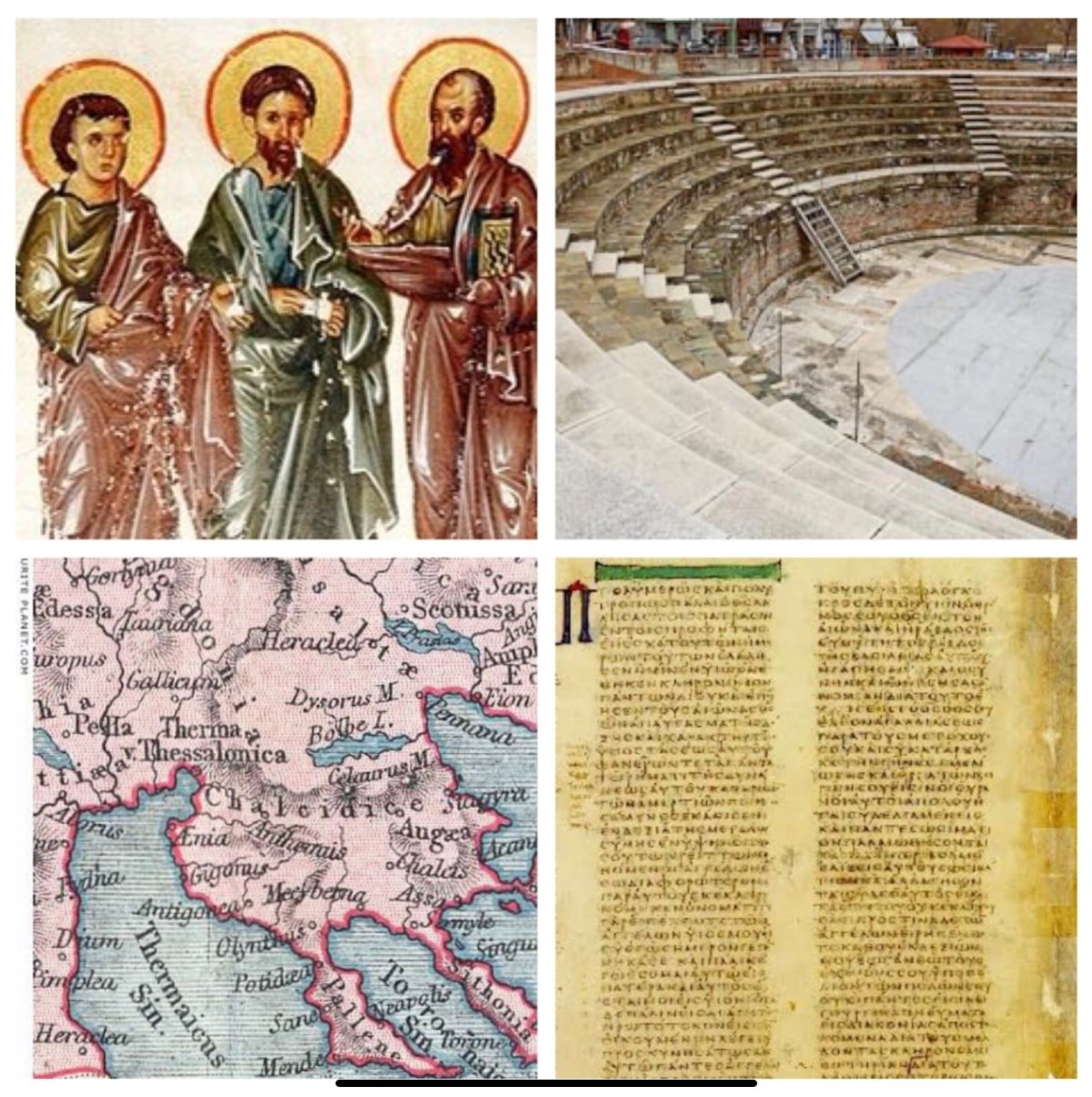
Brothers and sisters, do not be weary in doing what is right (2 Thess 2 and 3; Pentecost 22C and 23C)

The closing words in the passage from 2 Thessalonians that appear in this Sunday’s lectionary offerings (2 Thess 3:6–13) exhort the believers in Thessaloniki to “do what is right”. It concludes a section telling them not to be idle, but to “do their work quietly and to earn their own living” (3:12), which itself has picked up the direction given in the earlier letter to Thessaloniki, “to aspire to live quietly, to mind your own affairs, and to work with your hands, as we directed you, so that you may behave properly toward outsiders and be dependent on no one” (1 Thess 4:11–12).

This could well be another instance in 2 Thess where a later writer, a follower of Paul, has mined the earlier letter of 1 Thess, authentic to Paul, to shape a letter drawing on the apostle’s authority to reinforce teachings for his own time. A clear way in which the letter deviates from Paul’s authentic thought is its apocalyptic content.

Paul himself (like Jesus) did have an apocalyptic view of the world. He affirms that “the appointed time has grown short” (1 Cor 7:29), “the night is far gone, the day is near” (Rom 13:12), and looks to the coming “day of the Lord” (1 Cor 1:8; Phil 1:10; 1 Thess 5:2), the “the day of wrath, when God’s righteous judgment will be revealed” (Rom 2:6; 1 Cor 3:13).

He foresees that “the trumpet will sound, and the dead will be raised imperishable, and we will be changed” (1 Cor 15:52) and asserts that “the Lord himself, with a cry of command, with the archangel’s call and with the sound of God’s trumpet, will descend from heaven, and the dead in Christ will rise first; then we who are alive, who are left, will be caught up in the clouds together with them to meet the Lord in the air; and so we will be with the Lord forever” (1 Thess 4:16–17).

However, this letter develops from those views in ways most uncharacteristic of Paul—more like the kind of hardline developments that we find in Jewish apocalypses of the general time. The “righteous judgment of God” (2 Thess 1:5) will be “when the Lord Jesus is revealed from heaven with his mighty angels in flaming fire, inflicting vengeance on those who do not know God and on those who do not obey the gospel of our Lord Jesus” (1:7–8), bringing “the punishment of eternal destruction” (1:9). This is an extreme position, beyond the hope for a return of Jesus to reconcile believers with God; this presses the notion of divine judgement into callous retribution.

Further consideration of that day of judgement is given in chapter 2; we had excerpts from this chapter in last week’s lectionary—but the critical verses, 2:6–12, were omitted in that offering! There, we read that this day “will not come unless the rebellion comes first and the lawless one is revealed, the one destined for destruction” (2:3). The Greek word translated as “rebellion” is apostasies, from which we get apostasy. It was used to describe those who wandered from the keeping of the Torah (1 Mac 2:15).

The writer continues, declaring that “the lawless one” (2:8) who brings “a powerful delusion” (2:11) will result in “all who have not believed the truth but took pleasure in unrighteousness will be condemned” (2:12). This portrayal resonates strongly with scenes in Jewish apocalyptic literature of the late Second Temple period, or soon thereafter, attributed to (but not actually written by) great luminaries in the history of Israel; see 4 Ezra 4:27–5:13; 2 Baruch 27; 1 Enoch 91; and also, in the Dea Sea Scrolls, 1QpHab 2:1–10.

On other ways that the letter indicates a later, non-Pauline authorship which goes well beyond Paul’s thinking—see

*****

To return to chapter 3; here we find a set of instructions, buttressed by Paul’s authority, in which the Thessalonians are encouraged to maintain “the tradition” they received from Paul (3:6), the “command” which he had given them (3:10), and are admonished to “have nothing to do with … those who do not obey what we say in this letter” (3:14).

A key verse in this section (3:13) draws strongly on a theme running through Hebrew Scripture, to “not be weary in doing what is right”. The Psalmist, for instance, sings that those who may abide on God’s holy hill are “those who walk blamelessly, and do what is right, and speak the truth from their heart” (Ps 15:2), and in a later psalm, sings that “I have done what is just and right; do not leave me to my oppressors” (Ps 119:131). Yet another psalm questions the gods: “do you indeed decree what is right, you gods? do you judge people fairly?” and immediately provides the answer, “no, in your hearts you devise wrongs; your hands deal out violence on earth” (Ps 58:1–2). The alignment of doing what is right with the Lord God of Israel is clear.

Accordingly, that deity is depicted in some of the foundational stories of Israel as requiring people to do what is right. At Marah in the wilderness, the Lord God tells the people, “if you will listen carefully to the voice of the Lord your God, and do what is right in his sight, and give heed to his commandments and keep all his statutes, I will not bring upon you any of the diseases that I brought upon the Egyptians; for I am the Lord who heals you” (Exod 15:26).

Likewise, when reminding the people “not to put the Lord your God to the test, as you tested him at Massah” (referring to Exod 17:1–7), Moses instructs them to “do what is right and good in the sight of the LORD, so that it may go well with you, and so that you may go in and occupy the good land that the LORD swore to your ancestors to give you” (Deut 6:18). That message is reinforced later in the long speech of Moses, when he gives instructions relating to the discovery of a murder whose perpetrator is unknown, concluding that “you shall purge the guilt of innocent blood from your midst, because you must do what is right in the sight of the Lord” (Deut 21:9).

The same instruction that is attributed to Moses is given by the prophet Ahijah the Shilonite, when Jeroboam led a rebellion against King Solomon: “if you will listen to all that I command you, walk in my ways, and do what is right in my sight by keeping my statutes and my commandments, as David my servant did, I will be with you, and will build you an enduring house, as I built for David, and I will give Israel to you” (1 Kings 11:38). The equation of “doing what is right “ with “keeping [God’s] statutes and commandments” in this passage, as also in the account of the incident at Marah (Exod 15:26), indicates the centrality of this command within the life of Israel.

Two prophets reinforce the importance of this command. Ezekiel declares that, “if the wicked turn away from all their sins that they have committed and keep all my statutes and do what is lawful and right, they shall surely live; they shall not die” (Ezek 18:21; see also 18:27; 33:14, 19; 45:9). Likewise, the opening oracle of the unnamed post-exiled prophet whose words are collected at the end of the scroll of Isaiah begins with the declaration, “maintain justice, and do what is right, for soon my salvation will come, and my deliverance be revealed” (Isa 56:1). This important text equates “do what is right” with divine justice; the two prophetic texts indicate that “doing what is right” is the prerequisite for life (Ezekiel) and salvation (Trito-Isaiah).

Finally, we note that the story of Tobit ends with his prayer of blessing to God (Tob 13:1–17), including the admonition, “turn back, you sinners, and do what is right before him; perhaps he may look with favor upon you and show you mercy” (Tob 13:6); followed by his farewell words to his son, Tobias, and the seven sons of Tobias, in which he declares, “so now, my children, I command you, serve God faithfully and do what is pleasing in his sight; your children are also to be commanded to do what is right and to give alms, and to be mindful of God and to bless his name at all times with sincerity and with all their strengths (Tob 14:9). This final passage explains that “doing what is right” includes both central religious activities (bless God) and helpful social activities (give alms).

To Jewish listeners, the simple instruction, “do not be weary in doing what is right” (2 Thess 3:13) evokes central aspects of faith: obedience, following God’s way, keeping the commandments, speaking the right words, enacting the required behaviours, receiving the gift of life, being assured of salvation, and doing justice. Beyond the authority of Paul, reinforced a number of times in this chapter, the resonances of Hebrew Scripture voices sound loudly.
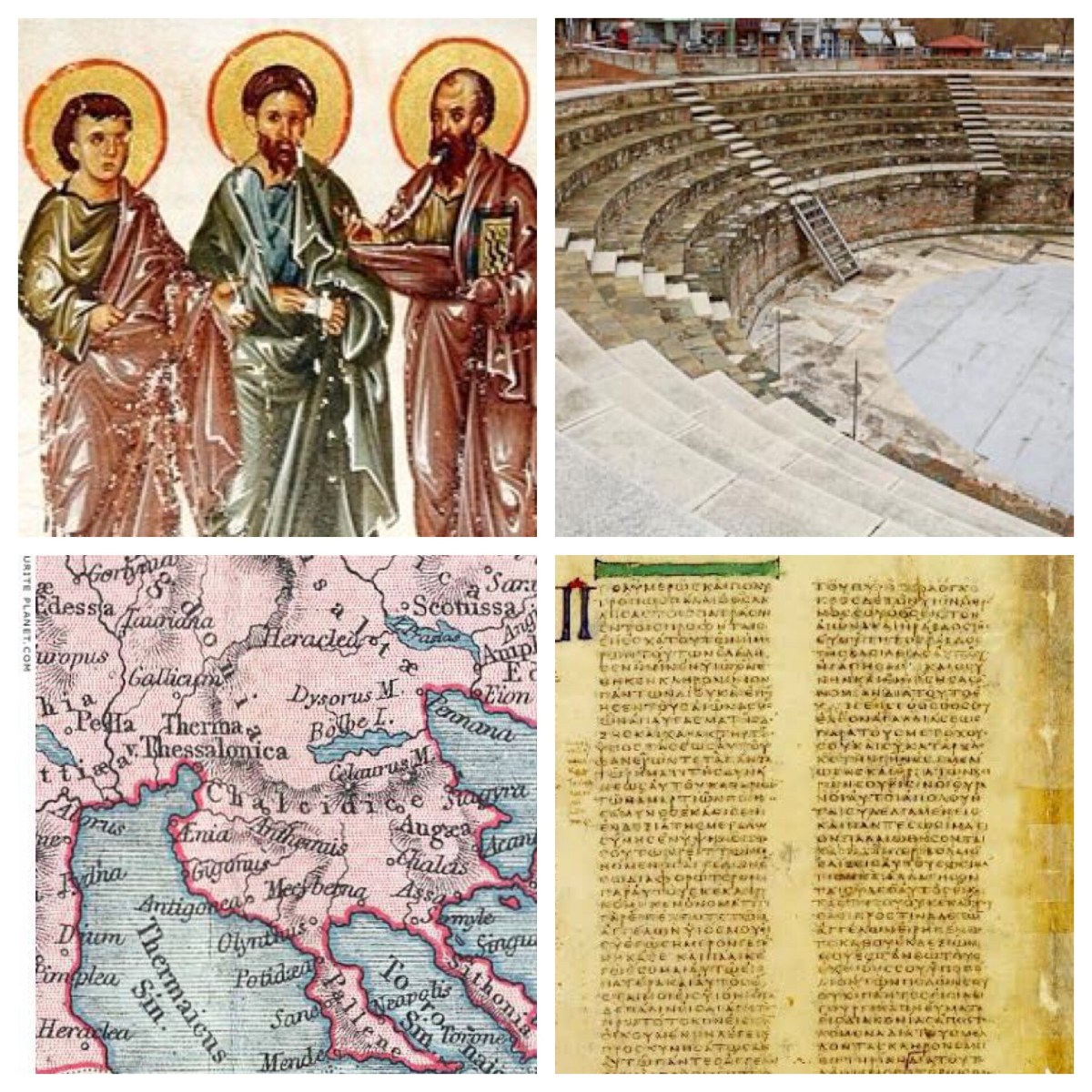
The sincerest form of flattery? Or a later, imperfect imitation? (2 Thessalonians; Pentecost 21C to 23C)

Paul, Silas and Timothy arrived in Thessalonika in the year 50 CE. Acts indicates that they went to the synagogue, where Paul declared that the Jewish scriptures pointed to Jesus as Messiah (Acts 17:2–3). This stirred up antagonism amongst the Jews of the city (Acts 17:5).

Those who accepted Paul’s message, realising that he was just recovering from the experience of prison in Philippi (Acts 16:19–24), sent him and Silas on to their next stop in Beroea after only three weeks in Thessalonica (Acts 17:2). Paul then travelled to Athens (Acts 17:15) and Corinth (Acts 18:1).

Little of this is reflected in Paul’s letters to the Thessalonians, apart from a direct comment about his difficulties in Philippi (1 Thess 2:2) and some generalised references to the persecution he was suffering (1 Thess 3:4, 7). Although it is likely that Paul wrote letters before he had visited Thessalonica, none of them are known to us.

1 Thessalonians, dating from the same year (50 CE) as his visit to Thessalonica, is the earliest example of Paul’s letter writing that we have. The letter itself contains no explicit indication of the time or place of its writing; tradition has it that Paul wrote from Athens, although it is more likely that he penned it in Corinth just months after his departure from Thessalonica. His visit was still fresh in Paul’s mind, and he writes with love and concern for the community of believers that he left behind in Thessalonica.

It is obvious that Paul had developed a strong bond with this community, and he is anxious to keep in touch with them (3:5). The letter was in reply to what he had learned from Timothy about their recent progress (3:6).

The letter known as 2 Thessalonians appears in the lectionary this Sunday and in the two following weeks. It seems to run in parallel to 1 Thessalonians in a number of ways. Some of the themes from the first letter are replicated, and varied, in the second letter to the Thessalonians. Both letters present Paul as a role model (1 Thess 1:6; 2 Thess 3:7); both criticise the Thessalonians for the idleness evident in their community (1 Thess 5:14; 2 Thess 3:6–12); and both letters contain reminders about Paul’s teachings (1 Thess 2:5–7, 12; 4:1–2; 5:1–2; 2 Thess 2:15). The general eschatological orientation is present in both letters (1 Thess 4:13–5:11; 2 Thess 1:5–2:16), but there are significant developments–a hardening of the apocalyptic mindset–in 2 Thessalonians.

The commonality of both general themes and specific words and phrases leads to a question about the relationship between these two letters: is this stylistic variation on common themes written by the same author, or a deliberate attempt to copy the first letter by another scribe at a later date?

Scholars answer the question differently; there are different views on the authorship of 2 Thessalonians. The opening and closing sections of 2 Thessalonians are revealing.

The letter concludes with an insistence that it was written by Paul: “I, Paul, write this greeting with my own hand” (3:17). At first glance, this looks similar to the reference to Paul’s “large letters” in his “own hand” at Gal 6:11; but this is a brief passing comment, whereas the claim is laboured in 2 Thessalonians by the addition of extra phrases, so that we start to have a sense of “methinks he doth protest too much”.

The first twenty words of the opening address of 1 Thess 1:1 are repeated exactly in 2 Thess 1:1–2a; this is unusual amongst the seven authentic letters of Paul, for in every other case there are variations of both minor and major significance in this opening section. (See Rom 1:2–6; 1 Cor 1:2b; 2 Cor 1:b; Gal 1:1 and 1:4; Phil 1:1b; Phlmn 2.)

In the thanksgiving (2 Thess 1:3–4), a string of key words evokes themes from 1 Thessalonians. There is virtually nothing in the thanksgiving of 2 Thessalonians which is not present, in some way, in 1 Thessalonians. This is unparalleled amongst the authentic letters of Paul; his usual practice was to contextualise this section of the letter by indicating key issues which will be dealt with in the body of the letter.

There are differences in content in the bodies of the two letters. The friendly relationship evident throughout the first letter differs from the highly critical attitude towards the community in 2 Thessalonians. The eschatological orientation of 1 Thessalonians is present in general terms in 2 Thessalonians, but the difference is that the second letter is marked by a much stronger apocalyptic character. And twice in 2 Thessalonians (2:15 and 3:6), claims are made that Paul taught the Thessalonians material which is not found in 1 Thessalonians.

In my assessment, then, these differences mark 2 Thessalonians as coming from a different hand, in a situation where different issues were at stake. It appears to be a later imitation of 1 Thessalonians. We still read it in the cycle of readings provided by the Revised Common Lectionary–it is still an integral part of Christian scripture–but we read it with a critical lens, aware of the way that this particular writer is developing the earlier thought of Paul.

See also https://johntsquires.com/2019/06/17/harness-the-passion-but-restrain-the-rhetoric-musing-on-the-role-model-which-paul-offers-in-galatians/

https://johntsquires.com/2018/11/17/let-your-gentleness-be-known-to-everyone/

https://johntsquires.com/2019/10/01/in-the-name-of-the-apostle/

Personal notes from Paul (II): Luke and John Mark (2 Tim 4; Pentecost 20C)

The second letter in the New Testament that is addressed to Timothy presents a scenario that sees Paul in prison (1:8; 2:9), where he is in contact with a group otherwise unknown from his letters—Phygelus and Hermogenes (1:15), Crescens (4:10), Carpus (4:13), Eubulus, Pudens, Linus and Claudia (4:21)—as well as with others known from letters of Paul and/or that narrative of Acts—Onesiphorus (1:16), Demas and Titus (4:10), Luke and Mark (4:11), Tychicus (4:12), Prisca and Aquila (4:19), Erastus (4:20), Trophimus (4:20), and Timothy himself (1:2).

We have already considered a number of these people connected with Paul; see https://johntsquires.com/2022/10/19/personal-notes-from-paul-i-timothy-and-titus-demas-and-crescens-2-tim-4-pentecost-20c/

In this post, we encounter two figures who are well-known in Christian history—because their names have been attached to two of the four Gospels that are included in the New Testament.

Luke

The author appears to have been a part of a larger group of co-workers, now somewhat diminished; “only Luke is with me” (4:11). There are two other mentions of Luke in Pauline material. One comes at the end of the personal letter to Philemon: “Epaphras, my fellow prisoner in Christ Jesus, sends greetings to you, and so do Mark, Aristarchus, Demas, and Luke, my fellow workers” (Phlm 23–24). So Luke was a real historical figure, and a fellow worker alongside Paul at some stage.

The other is in the letter to the Colossians, where the writer reports that “Luke, the beloved physician, and Demas greet you” (Col 4:14). This short note appears in a longer concluding section (Col 4:10–18) which shares many qualities with 2 Tim 4:9–22, since a number of individuals are identified as a way of strengthening relationships across the communities of faith as a way to conclude the letter.

The Colossians description of Luke as “the beloved physician” was swiftly adopted in the developing second century apologetic which sought to identify each of the four canonical Gospels with figures in the apostolic age. Matthew and John were attributed to individuals named within “the twelve”, whilst Mark was associated with Peter, another of “the twelve”. (Outside the canon, the same apologetic move is undertaken in relation to the Letter of Barnabas; similar apologetic claims are placed in opening verse of the Gospel of Thomas.)

The third Gospel was linked with Paul through the purported author, “Luke, the beloved physician, companion of Paul”—a description which collates the mentions of Luke in Philemon, Colossians, and 2 Timothy, into one person, claimed (with no supporting evidence in the actual manuscript texts) to have been the author of “the orderly account of the things being fulfilled” which was addressed to “most excellent Theophilus” (Luke 1:1–4).

The authorship of Colossians is debated; I see this as a letter written by a student of Paul after his life, evoking many of his ideas and using much of his familiar language, although reworked for the different context that was in view in that letter. (Others claim it as an authentic letter of the historical Paul). The description of Luke as a physician is thus, in my view, later than Paul’s time. Likewise, the notion that Luke, the companion of Paul, is reflected in the “we passages” in Acts, is based on a misreading of the purpose of those passages.

John Mark

Alongside Luke, the letter mentions Mark: “get Mark and bring him with you, for he is useful in my ministry” (4:11). The figure of Mark appears at various places in other New Testament documents. In Acts, where he is introduced as John Mark, he is accompanying Barnabas and Saul (as he was then known) as they return to Jerusalem (Acts 12:25) after the year they have spent in Antioch (Acts 11:25–26).

Some time later, we are told, after a meeting in Jerusalem concerning preaching activity amongst the Gentiles (Acts 15:1–36), as Paul invites Barnabas to revisit the places they had been previously, “Barnabas wanted to take with them John called Mark” (15:37), but Paul disagreed. “Paul decided not to take with them one who had deserted them in Pamphylia and had not accompanied them in the work” (15:38). This refers to the fact that John Mark left them in Perga, before they went on to Antioch in Pisidia (13:13–14).

“The disagreement became so sharp”, the author of Acts reports, “that they parted company; Barnabas took Mark with him and sailed away to Cyprus; Paul chose Silas and set out” through Syria and Cilicia (15:41), and eventually across into Macedonia (16:9-10). Why John Mark had decided to leave the group in Perga is never explained. Presumably Barnabas and Mark were active in Cyprus and other places, not reported in Acts.

Two documents dated to the 5th and 6th centuries respectively, the Acts of Barnabas and the Encomium of the Apostle St. Barnabas, do pick up from Acts 13:14, recounting the missionary journey and indeed the martyrdom of Barnabas in Cyprus. In the Encomium, John Mark continues on from Cyprus to Ephesus, and eventually writes the second Gospel. But none of this is evident in any New Testament text.

In both Philemon (1:24) and Colossians (4:10), Mark is mentioned along with Aristarchus; the latter reference identifies Aristarchus as “my fellow prisoner” and Mark as “the cousin of Barnabas” (4:10). Whatever breach had occurred between Paul and Mark appears not to have been enduring, as the directive to the Colossians concerning Mark is, “if he comes to you, welcome him”.

Mark is also mentioned at the end of the first letter attributed to Peter, where greetings are sent to “the exiles of the dispersion” from “your sister church in Babylon … and my son Mark” (1 Pet 5:13). The relationship evident here between Peter and Mark seems to have contributed to the second century perception, attributed to Papias of Heirapolis, who in turn claimed that “John the Elder … in his capacity as Peter’s interpreter, wrote down accurately as many things as he recalled from memory—though not in an ordered form—of the things either said or done by the Lord” (quoted by Eusebius of Caesarea in his Ecclestiastical History 3.39).

*****

still more to come … … …

Personal notes from Paul (I): Timothy and Titus, Demas and Crescens (2 Tim 4; Pentecost 20C)

The second letter in the New Testament that is addressed to Timothy presents a scenario that sees Paul in prison (1:8; 2:9), where he is in contact with a group otherwise unknown from his letters—Phygelus and Hermogenes (1:15), Crescens (4:10), Carpus (4:13), Eubulus, Pudens, Linus and Claudia (4:21)—as well as with others known from letters of Paul and/or that narrative of Acts—Onesiphorus (1:16), Demas and Titus (4:10), Luke and Mark (4:11), Tychicus (4:12), Prisca and Aquila (4:19), Erastus (4:20), Trophimus (4:20), and Timothy himself (1:2).

The letter suggests that the writer was previously in Corinth and Miletus (4:20) and is in Rome as he writes (1:17); the posture within the letter suggests a mature believer, imparting wisdom to a younger co-worker, writing at a time near the end of his life. This some commentators date this to the latter stage of Paul’s life, while he was under house arrest in Rome (Acts 28:16).

The excerpt from 2 Timothy which is offered by the lectionary this coming Sunday includes reference to quite a number of named individuals. Careful study of this group can reveal quite a lot about the activities of Paul and those who were involved with him. This section of the letter is one of the parts of this letter that seem to reflect, very strongly, the historical figure of Paul.

The options for interpreting this are (1) the whole letter was actually written by Paul (a view that I don’t hold, for reasons explained elsewhere); (2) that the letter as a whole was written after the lifetime of Paul, but a scrap of papyrus with specific names and details from Paul’s lifetime was known to the writer, who skilfully integrated into the letter to give it the feel of an authentic letter; or (3) the late first century letter writer crafted this letter on the basis of his knowledge of Paul, drawing on letters that we know as well as other material no longer extant. My own choice is the middle option.

Timothy

We know from the authentic letters of Paul that he regarded Timothy as his “co-worker” (Rom 16:21) and fellow-preacher (2 Cor 1:19). Timothy provided an invaluable role as a regular intermediary between Paul and believers in Thessalonica (1 Thess 3:1–6), Corinth (1 Cor 4:17; 16:10) and Philippi (Phil 2:19–24). Timothy is described as the co-writer, with Paul, of three authentic letters (2 Cor 1:1; Phil 1:1; 1 Thess 1:1) as well as two debated letters (Col 1:1; 2 Thess 1:1). In Acts, he appears regularly as an associate of Paul (Acts 16:1–2, 14–15; 17:5; 19:22; 20:5).

The letter as a whole is addressed to Timothy, but he seems to stand as a cipher for those in leadership roles in the church, most likely later in the first century. The passage in this Sunday’s lectionary begins with a direct construction to Timothy: “do your best to come to me soon” (6:9), and later in the passage (just after the lectionary selection ends) there is a reiteration of this instruction with a timeframe added: “do your best to come before winter” (6:21).

Demas

The reference to Demas is not flattering; he is “in love with this present world, has deserted me and gone to Thessalonica” (4:10). Demas is mentioned also in a group of four men in the letter to Philemon, when Paul notes that “Mark, Aristarchus, Demas, and Luke, my fellow workers” send their greetings (Phlm 24). He is mentioned again in Col 4:14, sending greetings along with “Luke the beloved physician”. The negative description of Demas in 2 Tim 4:10 indicates that Paul did not have universal success in his missionary efforts. Demas appears to have parted ways from Paul and others in unhappy circumstances.

Crescens and Titus

The neutral note that “Crescens has gone to Galatia” (4:10) reveals little other than the fact of the mobility of the circle of believers associated with Paul. That is strengthened by the next clause, “Titus [has gone] to Dalmatia”. Titus, like Timothy, accompanied Paul during his ministry. He went with Paul and Barnabas to Jerusalem (Gal 2:1, 3) and was a fellow-worker with Paul in ministry to the Corinthians (2 Cor 2:13; 7:6, 13–15; 8:6, 16, 23; 12:18). The capacity for mobility, evidenced in these notes of Titus and Crescens, is reflected in the constant travels of Paul across his letters and Acts.

…..

more to come … see

Guard the good treasure entrusted to you (2 Tim 1; Pentecost 17C)

This week, the lectionary takes us to the second letter addressed to Timothy (2 Timothy). This letter, one of three known collectively as the Pastoral Epistles, comes closest in form to the authentic letters of Paul amongst those three letters.

2 Timothy has an opening address (1:1–2) and thanksgiving (1:3–7) and closing greetings (4:19– 21) and benediction (4:22) which follow the pattern found in the letters that are widely accepted as authentic to the historical Paul. The body of the letter (1:8–4:18) contains exhortations to Timothy to follow the example of Paul (1:8–14; 3:10–4:5) and to carry out his role as a teacher (2:1–13), and warnings regarding false teachers (2:14–3:9).

There are personal notes from Paul (1:15–18; 3:10–11; 4:9–18), including a most notable mediation on his achievements and expression of hope regarding his future beyond death (4:6–8). These sections give the letter much more of an “authentic” feel than 1 Timothy and Titus, although there is debate about their origin and purpose.

Some scholars claim they were fragments of earlier authentic letters inserted into this framework late in the first century; others assert that they prove that Paul himself wrote this letter. See

Some features give the letter the quality of a “farewell testament”, in which the life and achievements of Paul are summarised for his followers. Compared with the other two “pastoral” letters, there are no instructions regarding church order, a greater frequency of personal comments, and a more personal tone throughout the letter.

The opening section of this letter, which forms the second reading in next Sunday’s lectionary offerings (1:1–14), exhorts Timothy to “hold to the standard of sound teaching that you have heard from me, in the faith and love that are in Christ Jesus” (1:13), and “guard the good treasure entrusted to you, with the help of the Holy Spirit living in us” (1:14). Sound teaching refers back to the reference in the earlier letter to Timothy, “the sound teaching that conforms to the glorious gospel of the blessed God” (1:Tim 1:10–11; also 4:6), as well as to “the word that is trustworthy in accordance with the teaching” that Titus is told will ensure “sound doctrine” (Tit 1:9).

Those other two letters advocate such “sound teaching” in polemical contexts. In 1 Timothy, it is to counter the influence of “the lawless and disobedient, the godless and sinful, the unholy and profane” (1 Tim 1:9); in Titus, it is to contradict “many rebellious people, idle talkers and deceivers, especially those of the circumcision” (Tit 1:9). In 2 Timothy, those being combatted by “sound teaching” are “those in Asia [who] have turned away from from me” (2 Tim 1:15), including two specifically named, Phygelus and Hermogenes; later in the letter, there is mention of “people of corrupt mind and counterfeit faith” who “oppose the truth” (3:8).

Each letter indicates that churches were involved in entrenched contested and argumentative situations; the need for “sound teaching” is clear in such situations. The articulation of formulaic statements, as well as the development of a more structured leadership, makes sense in these times.

It points to the way that the church will develop in the future, with more clearly defined leadership and authority structures, as well as clearly-articulated statements of doctrine which mark “what is right” and can then be used to exclude “those who are wrong”—what scholars have called the development of “ early Catholicism”.

So it is that the initial inclusive community ethos that Paul reflects (“all are one in Christ”) shifts to communities with increasingly demarcated boundaries. This is evidenced throughout 2 Timothy: “guard the good treasure” (1:14); “have nothing to do with stupid and senseless controversies” (2:23); beware of those who “can never arrive at a knowledge of the truth” and thus “oppose the truth” (3:7–8); shun those with “itching ears [who] will accumulate for themselves teachers to suit their own desires” (4:3).

So knowing who is inside, and thus who is outside, becomes increasingly important—in contrast to Paul’s own encouragement to his converts to engage with outsiders at every opportunity (1 Thess 4:9–12; 1 Cor 14:20–25; Col 4:5–6).

See also

On godliness, dignity, and purity: the life of faith in 1 Timothy (Epiphany 16C)

This Sunday we are offered an excerpt from the final chapter of the first letter to Timothy (1 Tim 6:6–19). The letter is attributed by tradition to Paul, but more likely, I believe, it was written by a student of Paul some decades after his life. The author draws on the authority of Paul to lend weight to the teachings that he provides in this letter.

We have seen that the central concern of this letter appears to be to ensure obedience and pass on the essential teachings of the faith in order to refute the false teachers. This ideal is very different from the one Paul reflected in 2 Cor 11: the dangers of life, the centrality of suffering. Paul lived in the tension between this world and the next, full of expectation that Jesus will return soon (1 Thess 1:9–10; 1 Cor 7:26–31; Rom 8:18–25).

Here, however, the belief in an imminent return of Jesus has passed (6:14–15); the demands for unqualified and unquestioning adherence to “the truth” are based in obedience to the resplendent figure of Jesus, in the heavenly realm, who “alone has immortality, and dwells in unapproachable light” (6:15–16).

Paul had enthusiastically testified to the post-resurrection appearances of Jesus; but this letter asserts, “no one has ever seen or can see” him (6:16).

This picture of Jesus offers a pointer to how the theology of the early church was developing. The groundwork for disputes over correct doctrine and heresy was here being laid for the debates of the early church councils in subsequent centuries.

Associated with this emphasis on right belief is an intensifying of ethical demands on the believers; what is important is to teach moderation, prudence and order. The instruction to Timothy to “keep yourself pure” (5:22; see also 1:5; 4:12) reflects Paul’s criticism of impurity (Rom 1:24; 6:19; 2 Cor 12:21; Gal 5:19; 1 Thess 4:7) and advocacy of purity (Phil 1:10; 4:8; 1 Thess 2:10). The offering of prayers “so that we might lead a quiet and peaceable life in all godliness and dignity” (2:2) also evokes Paul (compare 1 Thess 4:11).

Yet a number of terms point to significant differences from Paul’s authentic letters: the use of the term “godliness”; the inclusion of numerous moral qualities required of leaders which are either unique to the Pastorals (temperate, sensible, serious, manage, double-tongued) or found only rarely in other Pauline letters (noble, hospitable, above reproach); the emphasis on financial responsibility; the way that “conscience” is used (1 Tim 3:9) and the striking phrase, “fight the good fight” (1:18; 6:12). The letter takes strides beyond the teachings set out in Paul’s authentic letters.

Most controversial of all is the section of this letter instructing women (2:8–15). Almost every element of the passage stands in contradiction to what Paul has stated. The “dress code” (2:9) is not something that would be written by Paul, as is the emphasis on “good works” (2:10). The demand for silence and submission (2:11) is reminiscent of 1 Cor 14:34 (which may well not have been written by Paul) but is counter to the guidelines for women when speaking in worship (1 Cor 11:2–16), as is the directive that women not teach (2:12).

The interpretation of the Genesis narrative (2:13–14) is strikingly different from the way that Paul treats it at 1 Cor 11:8–12 and Rom 5:12–21. The assertion that a woman “will be saved through childbirth” (2:15) is likewise contrary to Paul’s emphasis on faith and grace as the means by which salvation is granted. For more on the difficult passages in letters attributed to Paul where female subjugation appears to be in view, see https://johntsquires.com/2020/11/19/women-in-the-new-testament-2-six-problem-passages/

The passage in 1 Tim 2:8–15 appears to be attacking excesses within the community of faith, but it does so by insisting upon good order, obedience and submission—qualities which are held in high regard throughout this letter.

The author instructs Timothy to “pursue righteousness, godliness, faith, love, endurance, gentleness” (6:11). The list is slightly evocative of the list of “gifts of the Spirit” that Paul provides at Gal 5:22–23, “love, joy, peace, patience, kindness, generosity, faithfulness, gentleness, and self-control”, although the list in 1 Tim 6 is not linked in any way with the Spirit. That is typical of this and other letters which came from later in the first century, some decades after Paul himself was writing letters.

In Paul’s authentic letters, the Spirit is an important element. Paul retains from his Jewish upbringing a sense of the Spirit as a manifestation of divine energy; the Spirit is God’s gift to believers (Rom 5:5) and thus the source of life and peace (Rom 7:6; 8:2, 5–6). In Hebrew Scripture, the Spirit is seen to breathe over the waters of chaos as God’s primary agent in creation, to gift the elders appointed by Moses, to anoint the prophets and to inspire their pointed words of warning. In Paul’s understanding, the Spirit gifts believers with a multitude of gifts (1 Cor 12:4–11).

Paul also imbues the Spirit with an eschatological role—first, the Spirit acts by raising Jesus from the dead (Rom 1:4; 8:11) and then by adopting believers as “children of God” (Rom 8:14–23). The Spirit is a marker of life in the kingdom of God (Rom 14:17). The kingdom, for Paul, remains a future promise, to become a reality within the eschatological timetable (1 Cor 15:23-26).

Paul speaks with passion about how the creation groans in the present time of distress (Rom 8:18–23), as believers hold fast to their hope in the renewal of creation (Rom 8:17, 21, 24–25; see also 1 Cor 7:28–31). The role of the Spirit in this period is to strengthen believers by interceding for them (Rom 8:26–27).

Paul reminds the Romans that they are “in the Spirit” (Rom 8:9); this is reminiscent of his guidance to the Galatians to live “by the Spirit” (Gal 5:16, 22–25) and his exposition to the Corinthians of the gifts which are given “through the Spirit” (1 Cor 12:1, 4–11). The understanding of the gifting of believers by the Spirit, articulated in the first letter to the Corinthians, has played a significant role throughout the history of the church over the centuries.

The life of faith, lived “in the Spirit”, is therefore to be characterised by “spiritual worship” (Rom 12:1). Paul immediately explains that this requires believers to be “transformed by the renewing of your minds” (Rom 12:2). After making this bold programmatic statement, Paul devotes significant time (in Rom 12–15) to spelling out some of the ways in which this transformation might take place. The Spirit effects transformation, which then governs the behaviour as well as the words of believers. The dynamic, pervasive role,of the Spirit is evident at many places in Paul’s authentic letters.

In the first letter to Timothy, by contrast, the almost total absence of the Spirit is striking. Only two explicit references to the spirit occur. The first is completely formulaic; the claim that Jesus was “vindicated in spirit” sits second in a series of six clauses which set out some key aspects of “the truth” to which Timothy is to be bound: “the mystery of our religion is great: He was revealed in flesh, vindicated in spirit, seen by angels, proclaimed among Gentiles, believed in throughout the world, taken up in glory” (1 Tim 3:16). The Spirit is not an active, energising force in this formula; rather, the spirit is the static realm in which Jesus was “vindicated”.

This formula is followed immediately by the claim that “the Spirit expressly says that in later times some will renounce the faith” (4:1). Once again, the context and the terminology drives incessantly towards the affirmation of “the truth”; those revealed as renouncing the faith are condemned for “paying attention to deceitful spirits and teachings of demons, through the hypocrisy of liars whose consciences are seared with a hot iron” as well as their teachings that “forbid marriage and demand abstinence from foods, which God created to be received with thanksgiving by those who believe and know the truth” (4:1–3). The revelation by the Spirit points away from these doctrines and practices and orients decisively towards “the truth”.

For discussion: What do you make of the discussion above, setting out the differences between the authentic letters of Paul, and the first letter to Timothy? Do you think that there was a different author for this letter?

*****

See also

No longer as a slave: Paul, to Philemon, about Onesimus (Pentecost 13C)

There can be no doubt that Paul functioned in a leadership role within many of the early communities of faith. He presented himself—and was accepted and recognised by others—as a father-figure within that movement.

In his shortest letter, addressed to Philemon—which is offered by the lectionary this coming Sunday—he explicitly styles himself as “father” of the runaway slave, Onesimus (Phlm 10). This is obviously not a physical claim; rather, Paul is laying claim to the role that he played in converting Onesimus; and perhaps also to the role which he wishes to play, in guiding the community of faith which meets in the house of Philemon and Apphia.

This letter reveals something of the cultural context in which Paul operates; and something of his own expectations regarding his role within the Jesus movement. It is Paul’s shortest letter; it largely follows the pattern of a first-century letter in most respects. There is an opening set of greetings, encompassing Philemon, Apphia, Archippus and the church gathered in their house (Phlm 1–3), followed by an expression of thanksgiving for the love and faith of this group of believers (4– 7).

The letter omits the traditional conveying of news in order to come straight to the point with Paul’s central petition: “for this reason…I appeal to you… welcome him” (8–22). Paul is sending the slave Onesimus with an expectation that he will be received by Philemon and company in the spirit of the gospel: “not as a slave, but as a beloved brother” (15–16).

The letter does not address the structural issues inherent in a society in which slavery is a reality. Paul simply accepts that Onesimus is, and will remain, a slave; but he exhorts Philemon to treat him with equity, as a brother. Modern sensibilities about the injustice of one human being “owning” another human being, as a piece of property, are far from the awareness of Paul, Philemon, and all slave-owning people in the society of that day.

The letter ends in typical style, with Paul’s farewell by the sending of greeting from others with him, and pronouncement of a blessing upon those who hear the letter read to them (23–25).

The situation of writing appears to overlap with Paul’s situation as portrayed in Col 4:7–18. Paul himself is a prisoner (Phlm 1, 9, 23; Col 4:18) in the company of Epaphras (Phlm 23; Col 4:12); the precise location of his imprisonment is not revealed. Close by are Mark and Aristarchus (Phlm 24; Col 4:10) as well as Demas and Luke (Phlm 24; Col 4:14). Onesimus and Tychicus are Paul’s emissaries to Colossae (Col 4:7–9); this appears to place Philemon and his fellow believers in or very near to that city, as Paul sends Onesimus to them (Phlm 12).

The letter functions as a personal commendation of Onesimus. Paul sends him to Philemon with his strong support; he is “my child” (10), “my own heart” (12), “a beloved brother” (16). When he arrives, Paul exhorts Philemon to “welcome him as you would welcome me” (17). Paul undergirds these words with the declaration that he will personally rectify any wrong caused or repay any debt owed to Philemon by Onesimus (18). The stance he takes is that of a benefactor, acting to ensure the best interests of Onesimus.

This is just a short letter, and it lends itself really well to an exercise in reading (that I used each time I taught Paul) that exposes the way that the presuppositions we bring to a text can really influence the way that we understand that text.

First, read the the letter as the character of Philemon. How do you receive the letter? What are the most important things that Paul says in this letter? What does it inspire you to want to do?

Now read the letter as the character of Onesimus. How do you receive the letter? What are the most important things that Paul says in this letter? If you were the runaway slave, what would you do?

Then, compare how you responded to the letter as each character. What, in the light of all of this, do you want to say back to Paul?

Making (some) sense of the death of Jesus (Colossians 2; Pentecost 7C)

The section of the letter to the Colossians that appears in the lectionary for this coming Sunday (Col 2:6–15) contains some intriguing phrases. It offers a portrayal of Jesus that stretches beyond what we find in the earlier, authentic letters of Paul. There, Jesus is a Jewish man, chosen by God, designated as God’s Son, raised from the dead, and designated as Lord (see, for instance, Gal 4:4 and Rom 1:1–4).

In this letter, Jesus becomes the one “in whom the fullness of deity dwells” (2:9; also 1:19). There is no evident sense of the humanity of Jesus; he is swept up into the mystical-philosophical world of “elemental spirits” (2:8) and deals with the “rulers and authorities” of that dimension (2:15). Indeed, in the previous chapter, the writer of this letter (whom I don’t believe was Paul) praises Jesus in full blown terms: “he is the image of the invisible God, the firstborn of all creation; for in him all things in heaven and on earth were created, things visible and invisible, whether thrones or dominions or rulers or powers—all things have been created through him and for him” (1:15–16).

(For my thoughts on the authorship of this letter, see https://johntsquires.com/2022/07/08/the-word-of-truth-according-to-colossians-1-pentecost-5c/)

In contrast to the expressions that Paul provides about the community of believers being “the body of Christ” (1 Cor 12:12, 27), in this letter, the mystical speculation grows; “he himself is before all things, and in him all things hold together” (1:17); and indeed, rather than the whole body being Christ, here Christ is “the head of the body, the church; he is the beginning, the firstborn from the dead, so that he might come to have first place in everything (1:18).

So when we see the figure of Christ placed into this mystical-speculative-philosophical context, we know that we have moved quite a way from the thoughts about Jesus that the apostle Paul dictated in his letters; we have entered a world that scholars call proto-Gnosticism. Gnostics were those who—to put it very simply—believed that salvation came, not through faith, but by means of knowledge. The one who knows is the one who is saved.

Thus, in this letter written to “the saints and faithful ones in Colossae” (1:1), knowledge is emphasised (1:9–10; 2:2–3; 3:10). The author sends this letter to the Colossians to encourage and strengthen them in their knowledge. Paul, by contrast, commends those to whom he writes for their faith (Rom 1:5, 8; Phil 1:25; 1 Thess 1:2–3).

To be sure, the anonymous writer of this letter, drawing from Paul’s practices, does commend the Colossians for their faith (Col 1:4), but it is his prayer “that you may be filled with the knowledge of God’s will in all spiritual wisdom and understanding” (1:9), that they may “grow in the knowledge of God” (1:10), that they may “have all the riches of assured understanding and have the knowledge of God’s mystery, that is, Christ himself, in whom are hidden all the treasures of wisdom and knowledge” (2:2–3).

*****

So, this letter is somewhat different from the style and theology of the seven letters authentically written by Paul. Another way in which is is different from the thoughts set out in those letters, can be seen in verses 3–15 of chapter 2.

First, let’s note that the verses immediately before this do seem to correlate with Paul’s way of thinking. The notion of “spiritual circumcision” (2:11) bears similarities with the claim that “it is we who are the circumcision, who worship in the Spirit of God and boast in Christ Jesus and have no confidence in the flesh” (Phil 2:3), or “real circumcision is a matter of the heart—it is spiritual and not literal” (Rom 2:29). Although, Paul does also dismiss circumcision as being “nothing” (1 Cor 7:19), “for neither circumcision nor uncircumcision is anything” (Gal 6:15). Perhaps in those verses he is dismissing physical circumcision as it gets in the way of “spiritual circumcision” ?

And the description of being “buried with [Christ] in baptism” (Col 2:12) does seem similar to the statements that “all of us who have been baptized into Christ Jesus were baptized into his death … we have been buried with him by baptism into death … we have been united with him in a death like his” (Rom 6: 3–5).

Although, once again, it has to be noted that the sequence in Romans 6 looks to a future union with Christ in his resurrection, whereas in Colossians that union is now present, having been achieved by a (perhaps recent) past event: “when you were buried with him in baptism, you were also raised with him through faith in the power of God, who raised him from the dead” (Col 2:12). So there is a subtle difference; a development in thinking beyond that of the authentic Paul.

It is in what follows, however, that a striking difference emerges. In verses 13–15 the letter writer considers exactly what was achieved by Jesus when he was crucified. In Paul’s authentic letters, he draws on what many consider to be a very early, pre-existing formulation which seeks to convey just what Jesus did when he submitted to death on the cross, when he gave up his life.

In those letters, Paul notes that “Christ died for us”. That’s a short and simple way to describe the significance of the death of Jesus; we find it at Rom 5:6,8, 14:15; 1 Cor 8:11, 15:3; 2 Cor 5:14-15; Gal 2:21; and 1 Thess 5:10. That’s five of the seven authentic letters; the matter of the death of Jesus does not figure at all in what is being discussed in Philemon; and in Philippians, the death of Jesus serves to emphasise his humility and obedience (Phil 2:8), and Paul’s main interest is in his this death serves to effect a transformation in believers (Phil 3:21).

This affirmation, “Christ died for us”, forms the foundation for an intricate and complex system of sacrificial atonement theology which is developed beyond the time of the New Testament. These eight times when Paul says, “Christ died for us”, join with a number of other passing comments elsewhere in New Testament texts, to provide the basis for what would become, over time, a detailed understanding of the death of Jesus as a death made on behalf of, and in the place of, believers. An explanation is developed, drawing especially on the Jewish sacrificial system, in which the sacrifices of animals were understood to be the way by which the sins of people were forgiven.

But not in the letter to the Colossians. A different understanding of the significance of the death of Jesus is offered. A different way to explain how God forgives us our sins, how we have atonement made for our transgressions, how we are reconciled with God. The language used, and the concepts referenced, are quite different. And this opens the door to a different way of understanding and appreciating the death of Jesus.

*****

This area of Christian theology—how to understand the death of Jesus—is known as soteriology (relating to “how we are saved”), with a strong emphasis being placed on atonement (that is, what is the mechanism for bringing us back into reconciled relationship with God). The atonement has become a debated and disputed arena. How do we understand this today?

One concern that is often expressed concerns the way that a religious system has a focus on a violent action at the centre of its belief system. Can it be a good thing to celebrate the way that God causes, or at least approves of, the putting to death of Jesus? We have every right to ask critical and penetrating questions about this aspect of our faith.

Another element of the debate is the claim that can be paraphrased as “Jesus died in my place, he was sacrificed for my sins, to save me from hell”. This is the classic way that I hear this view expressed, and it is often described as the substitutionary atonement theory. It depends on, but moves well beyond, the understanding that was inherent in the Jewish sacrificial system.

Certainly, dealing with the sinful manifestations of human nature is at the heart of Christian doctrine, and theories of atonement regularly grapple with how this is effected. However, I can’t see that the New Testament, anywhere, sets forth such a fully-developed theory of atonement. In true systematic theology style, verses have been plucked from various places in the New Testament, and woven together, with little regard for their original context or intention, to form a developed theory that owes more to rationalist deductive argumentation, than it does to biblical texts.

*****

The explanation in Col 2:13–15 is quite different. Here, the author sees the scene of the crucifixion in his mind’s eye; but rather than relating what was happening there to the Jewish sacrificial system, the vision of the author draws on other imagery. The scene envisaged is much more like a triumphal procession, as seen in the Roman Empire, when captured slaves were paraded through the city streets as captives, and the people celebrated another great victory of the Empire.

The cross, the place where Jesus was nailed and hung until he died (most usually from suffocation), is not envisaged as similar to the place in the Temple where the sacrificial animals were burnt, or even where the blood of the slain animals was smeared (the language of Rom 3:25 draws on on this quite explicitly). It is seen as a public place where “legal demands” (dogmata, 2:14) are nailed for all to see; a public place where those “legal demands” are erased. The language here is about “stripping bare” so that the inequity of those demands is revealed for all to see.

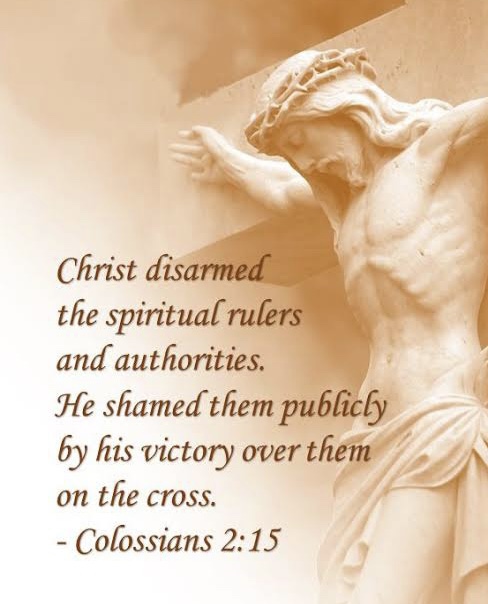
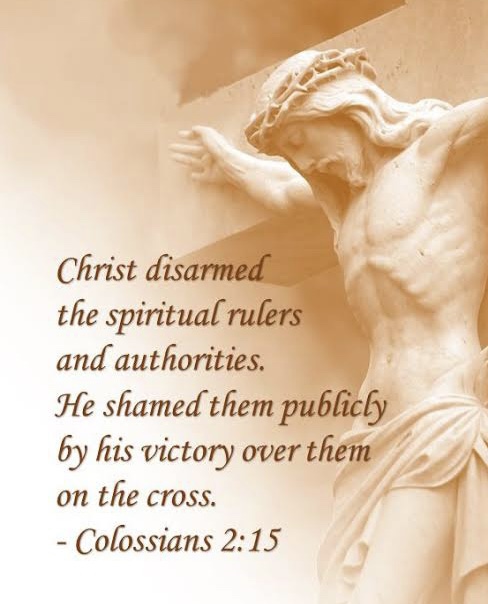
As a result of this, what Jesus is doing on the cross is “disarm[ing] the rulers and authorities”, removing their power, rendering them ineffective (2:15). The Greek word translated as “make a public example of” in this verse, points to a scene of public shaming. The only other place it is used in the New Testament is Matt 1:19, where it refers to the “public disgrace” of Mary being revealed as pregnant without a husband. It would be a moment of intense shaming for her, such that “Joseph, being a righteous man and unwilling to expose her” in this way was planning to “dismiss her quietly”, in accordance with custom—until an angel of the Lord intervened!

So the “legal demands” have been “disarmed” or (in another possibility) “divested”, in a process of “making a public example”. As a consequence, what the author sees as Jesus hangs, naked, whipped, gasping for water, dying on the cross, is nothing other than a celebratory triumphal match (“he made a public example … triumphing over them” (2:15).

Who does Jesus triumph over? The “rulers and authorities”—most likely the same as the “thrones, dominions, rulers, powers” referred to earlier (1:16), or the “elemental spirits of the universe” (2:10). The crucifixion has been the location for God’s cosmic battle— remembering that Hod is the subject of the whole clause of 2:13–15.

These “rulers and authorities” are most likely the same entities referred to in Colossian’s companion letter, Ephesians; “all rule and authority and power and dominion” (Eph 1:21), “the rulers and authorities in the heavenly places” (Eph 3:10); “the rulers … the authorities … the cosmic powers of this present darkness … the spiritual forces of evil in the heavenly places” (Eph 6:12), that are best combatted by “tak[ing] up the whole armour of God” (Eph 6:13–17).

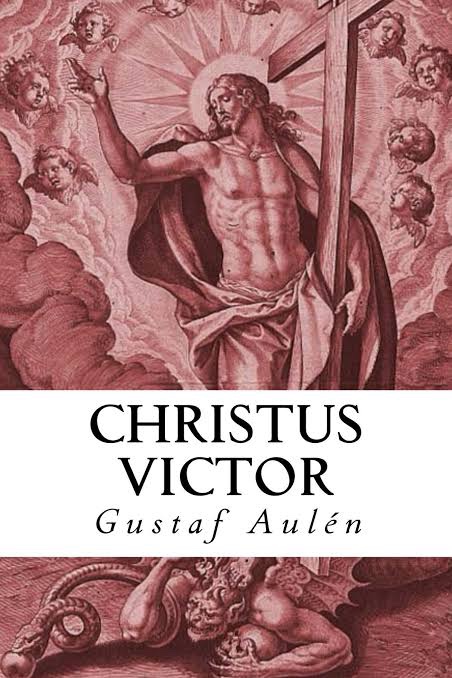
Almost a century ago, a theologian named Gustav Aulen wrote a hugely-influential book, Christos Victor, in which he put forward a theory of atonement quite different from the sacrificial-victim, ransom-theory, penal-substitutionary-atonement line of thought. This passage fuelled his argument. The crucifixion, Aulen proposed, declared the liberation of humanity from the bondage of sinfulness and death; it was the way that God declared victory over demonic forces.

Later, an American biblical scholar named Walter Wink took this theory, re-engaged with the relevant biblical texts, and proposed that the victory won by God was not simply over spiritual beings in a heavenly realm, but actually a gritty, this-earthly battle with the systems and forces within society that embedded sinfulness in our very way of living. Wink wrote an influential series, Naming the Powers (1984), Unmasking the Powers (1986), Engaging the Powers (1992), When the Powers Fall (1998), and The Powers that Be (1999), in which he wrote about the myth of “redemptive violence”.

So this short passage in Colossians is very important. It opens the door to a different way of thinking about the crucifixion. It invites us to take seriously our earthly context, and to consider how we are engaged, along with Jesus, in executing the work of God, to disarm the rulers and authorities, publically expose them, and triumph over their evil force.

*****

For more discussion of the atonement and the way that the New Testament writers understood this, see