The ‘word of truth’, according to Colossians 1 (Pentecost 5C)

This coming Sunday, we turn from a letter written in the name of Paul, which few interpreters doubt is an authentic letter of Paul, to a slightly shorter letter which also claims to be written by Paul—but about which there is quite some debate as to whether Paul did write it. We will hear the opening section of the letter this Sunday (Col 1:1–14).

The letter begins with a clear claim to be a letter from “Paul, an apostle of Christ Jesus by the will of God, and Timothy our brother, to the saints and faithful brothers and sisters in Christ in Colossae” (Col 1:1-2). Despite this claim, there are signs that Paul may not be the author.

A more complex grammatical structure at some points, and some unusual vocabulary when compared with the vocabulary of the authentic letters of Paul, suggest a different hand in the creation of this letter. Some theological motifs are developed further than is found in the authentic letters of Paul, while the situation addressed appears to be different from—and probably later than—any situation envisaged in the lifetime of Paul.

(On the authorship of the various letters attributed to Paul, see https://johntsquires.com/2020/11/18/what-do-we-know-about-who-wrote-the-letters-attributed-to-paul-3/)

It is typical of Paul’s letters that the opening “prayer of thanksgiving” sets out some of the key contenders which will be addressed in the body of the letter. (This is the case in many other letters from the time that survive to today; whether Christian, or Jewish, or pagan, letters invariably flag key issues in the opening sentences.) Here, the key concerns seem to be about “the knowledge of God’s will in all spiritual wisdom and understanding” which will enable the readers and hearers of this letter to “lead lives worthy of the Lord” and “be prepared to endure everything with patience”.

The letter refers to Onesimus (Col 4:9), the slave about whom Paul wrote to Philemon (Phlm 10), as well as one of the addressees of that letter, Archippus (Col 4:17; Phlm 1). The greetings at the end of the letter contain a number of names also found in the greetings of Philemon 23–24: Epaphras (Col 4:12), Mark and Aristarchus (Col 4:10), and Demas and Luke (Col 4:14).

This suggests that the two letters might have originated at the same time in the ministry of Paul—when he was in prison (Col 4:3, 8; Phlm 10, 13), perhaps in Rome towards the end of his life. However, there is little else to connect Colossians with Philemon. The content of each letter is quite different.

Alternatively, the Colossian references to Paul’s imprisonment might link the letter with Philippians, written similarly during an imprisonment (Phil 1:7, 12– 14, 17). This would be so if Epaphroditus in Philippians (2:25; 4:18) was the same person as Paul’s associate, Epaphras, noted in Colossians (1:7–8; 4:12– 13). That possibility suggests a common origin; but no further links between these letters are evident.

A more fruitful connection is found between Colossians and Ephesians, where there are a number of similarities in theological development as well as a significant overlap of text. Eph 6:21b–22 replicates almost exactly the underlined phrases in Col 4:7–9. The most persuasive theory is that Ephesians, written well after the death of Paul by a follower of Paul’s teachings, drew on that section of Colossians, believing it to be the words of Paul.

Returning to Colossians itself, we note that it follows the traditional form of a letter, with opening greetings (1:1–2) and thanksgiving (1:3–8) leading into a further prayer for the Colossians (1:9–14) before the body of the letter (1:15–2:23) and a series of exhortations (3:1–4:6). The closing greetings (4:7–17) and grace (4:18) bring the letter to a close in conventional fashion.

There are a number of indications of the distinctive situation to which the letter is addressed, although these insights are mediated through the perspective of the writer of the letter. The Colossians, although believers in Christ, continue to recognise the “elemental spirits of the universe” (2:8, 20). They are “deceived with plausible arguments” (2:4) and thus are captive to a “philosophy and empty deceit” (2:8) which is contradictory to Christian belief. They take part in “festivals … new moons … sabbaths” (2:16), engage in “self-abasement and worship of angels” (2:18) and adhere to strict regulations (2:20–22).

These terms seem to be describing people who are Gentiles (elemental spirits) who have adopted some Jewish practices (new moons, sabbaths, worship of angels) yet have an ascetic flavour (self-a basement) with rhetorical interests (plausible arguments) mediated through their philosophical interests. That’s quite a thick description of the presumed recipients, and not like others who received authentic letters from Paul.

Along with clear evidence for syncretism amongst the Colossians, there is a thought that the believers in Colossae were proto-Gnostics—that is, precursors of the kind of Christianity that emerged fully in the second century onwards, and which we know about most directly through the documents collected in the Nag Hammadi library (discovered in Egypt in 1945). See http://gnosis.org/naghamm/nhl.html

Over against this cluster of beliefs, the letter-writer advocates the gospel, which is described as “the word of truth” (1:5) and “the faith” (1:23; 2:7), and exhorts the readers to be “mature in Christ” (1:28; 4:12). The opening thanksgiving (1:9–10) contains key terms which express the writer’s hopes for the readers: understanding (2:2) and growth (2:19), and especially wisdom (1:28; 2:3, 23; 3:16; 4:5) and knowledge (2:2, 3; 3:10). These last terms, particularly, point in the direction of the developing Gnostic movement which held sway in some parts of the developing Jesus movement.

Some of these terms do appear in Paul’s authentic letters; some others appear less frequently, if at all. They do appear, however, in the Pastoral Epistles (written “in the name of Paul” some decades after his death) and then in various documents, not part of the New Testament, which demonstrate the growing Gnostic and speculative-philosophical tendencies in some parts of Christianity in the late first century and on into the second and third centuries.

The positive qualities which are highlighted in this letter, noted above, are especially related to Christ, in whom “the whole fullness of deity dwells” (2:9–10), a doctrine which sits at the core of a distinctive hymn in which Christ is portrayed as an all-encompassing cosmic figure (1:15–20). This is one key point where the letter moves beyond what is found in Paul’s authentic letters to the formulation of a post-Pauline doctrine. This, it seems, is central to “the word of truth” that is highlighted from the start of the letter.

My own conclusion is that Colossians was most likely written by a follower of Paul, writing in his teacher’s name in order to claim his authority as he addressed a situation different from, and some time after, Paul’s own time. Paul’s theological and ethical positions are known by the author. However, the problematic situation addressed, the theological ideas expressed, and the ethical instructions offered, each point to an origin after the lifetime of Paul.


For freedom Christ has set us free (Galatians, Pentecost 2C, 3C, 4C)

As the epistle is the lectionary for this Sunday and the following two Sundays comes from Paul’s letter to the Galatians, here is an Introduction to Galatians.

Paul’s letter to the Galatians begins in a dramatic, striking fashion. Almost all of Paul’s letters begin with a prayer of thanksgiving, designed to strengthen the relationship between Paul and those to whom he writes.

Not so in Galatians: in place of a friendly thanksgiving, Paul launches straight into a devastating criticism of the Galatians (1:6–9). In quick succession, he criticizes their activities, attacks the beliefs they have adopted from their teachers, and invokes a curse on their heads. What do we make of this language used by Paul?

Strong language is not uncommon in Paul’s letters. It was also widespread amongst the educated class of the day, who had been taught how to mount a strong and effective criticism by the careful use of rhetorical techniques. Rhetoric was taught to privileged young (male) members of Graeco-Roman society—which would have included Paul.  

So Paul uses familiar rhetorical techniques to address the situation in Galatia. Other teachers had visited the Galatian community, and had taught the Christians there things that were at odds with what Paul was teaching. Paul uses rhetoric to persuade the Galatians to dissociate themselves from the teachings that apparently had been so effective amongst them.

If we knew precisely who the Galatians were, what group of teachers had been active amongst them, or what specific matters caused Paul to write this letter, we might be better placed to adjudicate on this matter. Unfortunately, we don’t have this kind of information.

The letter is sent to communities of faith in a whole region (Galatians 1:2), not a single city or town. Acts indicates that Paul visited there with Barnabas: he visited Pisidian Antioch (Acts 13:14–14:23) and later with Timothy (18.23). But we learn no further specifics of the Galatian churches from Acts. (There is a similar vagueness about the date of the letter: “late 40s or early 50s” is most often cited.)

The key themes of this letter relate to the Law, freedom, and unity.

The gospel that Paul proclaims makes believers “one in Christ”. This unity overshadows all divisions: as the most famous words in this letter declare, “there is no longer Jew or Greek, there is no longer slave or free, there is no longer male and female” (3:28).

The threat against this unity has arisen through the insistence of other teachers that true faith requires, first, circumcision (2:12; see Acts 15:1, 5). Paul asserts that these other teachers want their followers to be circumcised—although surprisingly, he notes, they themselves “do not obey the law” (6:13).

Paul claims that the “circumcision faction” were preaching “another gospel” (1:6) in which they actually “pervert the gospel” (1:7). He calls them “false believers” (2:4) who have “bewitched” the Galatians (3:1). His vehemence at one point is such that he exclaims, “I wish those who unsettle you would castrate themselves!” (5:12).

Paul’s problem, of course, is that he himself is circumcised, as he mentions at Philippans 3:5 (a fact that he omits when he rehearses his past at Galatians 1:13–14). How can he advocate the opening of the faith to those who are not circumcised, when he himself bears this sign of the covenant?

He insists that the Galatians “become as I am” (4:12), and yet threatens that “if you let yourselves be circumcised, Christ will be of no benefit to you” (5:2). What applies to Gentile converts must be different from what is the case amongst Jewish converts.

Circumcision was the pre-eminent sign of the Law for Jewish believers. Paul wants to move the Galatians away from their understanding of the Law. He re-interprets the scriptural passage that lies behind this Jewish custom. Galatians 3:1–5:1 thus contains a tightly-argued, complex argument concerning the Law.

Paul uses the story of Abraham, the patriarch to whom the requirement of circumcision was first commanded, as a sign of the covenant (Genesis 17). He interprets this story without once mentioning circumcision (3:6–18). It is the faith of Abraham, in believing God’s promise, that secured him righteousness (3:6–7) and opens the promise to Gentiles (3:8–9). It is that promise which is now fulfilled in Christ (3:13–14, 16, 29). This is the pathway to freedom in faith.

This letter demonstrates that freedom is at the heart of the Gospel. Paul offers this freedom anew to the believers in Galatia. The Gospel frees them from the complex web of duties and responsibilities under the Law.

The call to freedom (5:1, 13) becomes a platform for ethical guidance, grounded in love (5:13–14), manifested in living by the spirit (5:22–26), not by the flesh (5:16–21). This ethic requires believers to “bear one another’s burdens” (6:2) and to “work for the good of all” (6:10). In this way, they will become “a new creation” (6:15). The gospel, which brings liberation in community (3:28), will also lead to liberation for the creation (6:15).

Galatians is important because of the central theme of freedom that it articulates. In what ways does your faith provide you with a sense of freedom?

A new creation: the promise articulated by Paul (2 Cor 5; Pentecost 6B)

This Sunday, the epistle reading comes from 2 Corinthians. As indicated last week, this is actually Paul’s fourth letter to the believers in Corinth, even though we label it as 2 Corinthians (see https://johntsquires.com/2021/06/05/we-do-not-lose-hope-2-corinthians-pentecost-3b-6b/)

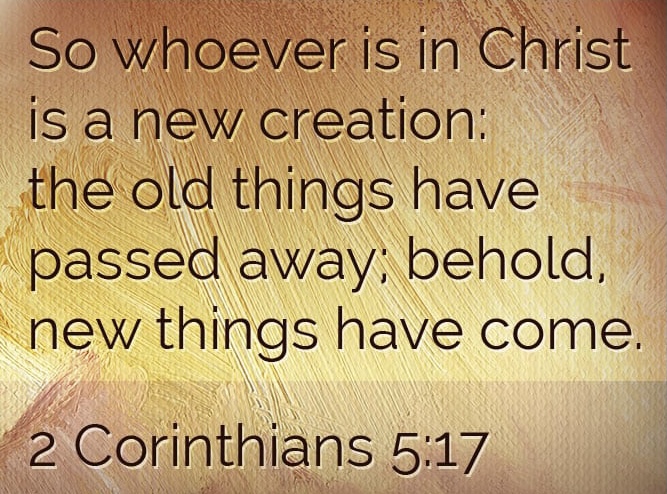
The passage offered by the lectionary contains one of Paul’s best-loved and well-known sayings: “so whoever is in Christ, is a new creation. The old has passed away; behold, the new has come” (2 Cor 5:17). In this blog, I want to set that verse in its context within the flow of the letter.

The first section of 2 Corinthians (1:1–7:16) is really a letter in its own right. In this letter, Paul offers the believers in Corinth consolation through a message of hope. Instead of a thanksgiving section, this letter opens with a traditional Jewish-style blessing, in which God is praised for being “the God of all consolation” (1:3). In the five verses of this blessing, the terms “consolation” or “console” appear ten times, whilst “suffering” and “affliction” combined appear seven times.

The same terms cluster towards the end of this section of 2 Corinthians: in 7:2–16, we find “consolation” or “console” seven times (including twice in 7:13), “affliction” twice, and the term “grief” is also used seven times. The orientation of the letter is very clear; Paul’s hope for the Corinthians is that they might attain consolation (1:3–7; 7:2–4).

At the start of the letter, then, Paul has provided a strong identification between himself and the Corinthians; rather than calling the Corinthians to imitate him (as in 1 Corinthians), in this letter Paul wishes to empathise with them in order to strengthen their sense of identity with him. He affirms that “the one who raised the Lord Jesus…will bring us with you into his presence. Yes, everything is for your sake” (4:14–15) and concludes, “you are in our hearts, to die together and to live together” (7:3). 

The central similarity between his situation and that of the Corinthians is that they suffer, like he suffers (1:6). And this suffering, in turn, he relates to the passion of Christ (1:5; 4:10–12). So the theological insights which Paul offers in this section of the letter emerge out of the tension, struggle, and difficulty of his own situation, as well as his awareness of the pain being experienced by the Corinthians. (This has always been the way that good theology is developed—thrashing out the issues in honest, robust debate ensures that the heart of God is unveiled in the process.)

A tense interpersonal encounter is then noted, which Paul characterises as a “painful visit” (2:1) which appears to lie behind this letter. He writes, not to intensify this pain (2:3–4), but to test the obedience of the Corinthians (2:9). However, he advances his argument always with reference to his own actions in relation to the Corinthians.

Fundamental to his argument throughout this section of the letter is Paul’s attempt to validate his activity as a “minister of a new covenant” (3:6). He describes his activity as being a “ministry of reconciliation” (5:18), which is characterised by numerous afflictions and sufferings (4:7–10; 6:4–10) in order to bring consolation and hope to others. This is the process by which the signs of the “new creation” (5:17) emerge.

Paul also argues that his own life demonstrates how God has been able to work through suffering to bring hope (4:7–12). The afflictions and persecutions which Paul has experienced manifest the death of Jesus in his (Paul’s) own body, “so that the life of Jesus may also be made visible in our bodies” (4:11). What Paul writes both emerges out of his personal experience, and is consistent with his developed self-understanding as an apostle, called by God, commissioned to serve.

In the course of presenting his self-validation (“are we beginning to commend ourselves again?”, 3:1), Paul launches into a somewhat tortured criticism of his Jewish heritage (3:1–4:15). Can it be that the judaising opponents of chapters 10–13 are already somewhat active in Corinth? As he does in Gal 3:1–5:1, when he wishes to engage seriously with a so-called judaising point of view, he undertakes his own interpretation of Hebrew scripture texts in order to support his more inclusive viewpoint.

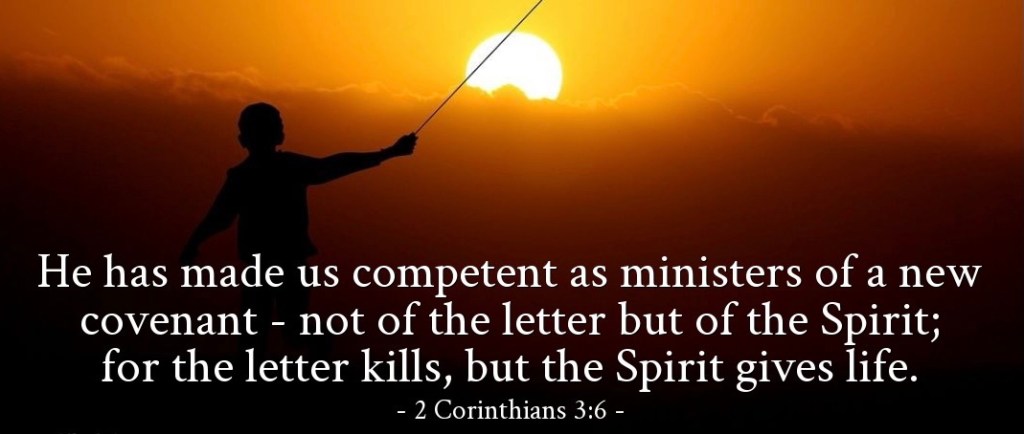
Referring to the biblical account of Exodus 34, Paul infers that the letters written on “tablets of stone” (the Law) lead to a “ministry of death” (3:7). He depicts Moses as having undertaken a “ministry of condemnation” (3:9) and declares that he was veiled in order to keep God’s glory from the people of Israel (3:13). Of that people, he says “their minds were hardened” (3:14), “to this very day…that same veil lies over their minds” (3:15), and “the god of this world has blinded the minds of the unbelievers” (4:3).

This is difficult language; it is strikingly different from the way that he speaks of his hopes and prayers for Israel in Rom 9:1–11:32, a passage which culminates with the assertion that “all Israel will be saved” (Rom 11:26) and the declaration that God will be “merciful to all” (Rom 11:32). Had he perhaps been more afflicted in his sufferings than he wanted to admit?

The vehemence of his language in 2 Cor 3–4 sits oddly in his overarching purpose, to bring consolation and hope to the Corinthians. The subtle interplay of suffering and hope which he poses in much of this letter appear to have deserted him at this point; the rhetorical structure of this part of the argument juxtaposition of two apparently opposed entities. So tablets of stone are contrasted with tablets of human hearts; while the letter kills, the Spirit gives life. Moses’ ministry of death and condemnation is contrasted with the ministry of the Spirit and of justification; the veil which lies over the minds of his people can now be removed.

Most strikingly, Paul juxtaposes these two acts: “whenever Moses is read” there is a veiling of understanding; “when one turns to the Lord” (3:15), there is an unveiling. The central problem in this argument is that Paul, a Jew, is contrasting Moses with the Lord, since the widespread Jewish understanding would have been that the Lord (that is, Yahweh) would be present and revealed when the Law of Moses was read. The polemical intention is thus clear.

We can see this rhetorical structure in 1 Cor 1–2 and 1 Cor 15; it was a technique familiar to Paul from his Pharisaic training. Here, the rhetorical structure of contrasting entities appears to be made for the ultimate purpose of drawing a clear distinction between the freedom which he asserts comes through the Spirit (3:17), and the condemnation and death which is a result of the Law of Moses. Can it be that Paul’s rhetorical purpose has led him far from his initial Pharisaic understanding of scripture? Certainly, this scriptural interpretation shows no nuances in the manner that Paul elsewhere conveys.

Within a few verses, he has recaptured his fundamental theological intention, which is to relate present afflictions to the promise of resurrection hope (4:7–12; see also 4:17–18; 5:4; 5:14–15). This hope is most clearly seen in “the glory of God in the face of Jesus Christ” (4:6), and is to be lived out by the followers of Jesus through their offering of the ministry of reconciliation (5:16–21). It is this promise, this hope, which is fully manifest in “the new creation” in which “the old has passed away; behold, the new has come” (5:17).

Although Paul concludes his argument in this letter with an even longer list of his tribulations as a “servant of God” (6:4–10), some additional emotive pleas to the Corinthians (6:11–13; 7:2–4) and a recapitulation of the basic theme of consolation (7:5–16), he finally closes this letter on a note of joy (7:13) and confidence: “I rejoice, because I have complete confidence in you” (7:16). In Corinth, he believes, there are those who have become that “new creation” in Christ.

*****

The above blog was adapted from my contribution to Witness the glory of God in the face of Jesus Christ, a Festschrift in honour of Dean Drayton (edited by Christopher C. Walker; Mediacom, SA, 2014), pages 112-122).

“We do not lose hope” (2 Corinthians; Pentecost 3B—6B)

At the moment, the lectionary is offering us selections from the second of two letters included in the New Testament, written from Paul to the believers in Corinth. This week, we have an excerpt that affirms, “we do not lose hope” (2 Cor 4:16), and encourages the Corinthians, “we know that if the earthly tent we live in is destroyed, we have a building from God, a house not made with hands, eternal in the heavens” (2 Cor 5:1). Next week, we encounter the affirmation, “if anyone is in Christ, there is a new creation: everything old has passed away; see, everything has become new!” (2 Cor 5:17).

These words are positive and affirming. Paul is in a good frame of mind about the Corinthians. He offers them phrases which build them up in faith, consistent with his words in his first letter to these believers about what should be done as a community (1 Cor 14:4, 12, 26; and see also Rom 15:2; 1 Thess 5:11).

Paul’s first letter indicates that he concentrated his mission in Corinth on Gentiles, non-Jews (1 Cor 12:2; 16:15–18), and it would seem that he had significant success there (see also Acts 18:1–18). He stayed in Corinth for some time, earning his own living and working with other people in the early Christian movement, such as Peter, Apollos, and the tentmakers, Aquila and his wife Priscilla, two of the Jews expelled from Rome by Emperor Claudius in a general expulsion a few years earlier.

Paul was successful in establishing a new Christian community in Corinth. This undoubtedly caused tension with the local synagogue, as Paul was preaching that Jesus was the Messiah, whom Jews were expecting to come (Acts 18:4). This success may have led to his being dragged before Gallio, the Roman proconsul, by the local Jews, charged with heresy.

Gallio dismissed the charge as a matter of concern to the Jews alone; it was not a matter for the Roman authorities to be involved with (Acts 18:12–17). Gallio was proconsul in Corinth in the years 50–51, so this provides the date for Paul’s visit there. Soon afterwards, Paul left Corinth, accompanied by Aquila and Pricilla, bound for Antioch, but on the way they stopped over in Ephesus (Acts 18:18–21).

*****

After Paul left Corinth, he remained in contact with the community of believers there, as the two letters of Paul to the Corinthians attest. He indicates that he wrote the first one whilst in Ephesus (1 Cor 16:8). Yet in that letter, Paul refers to his “previous letter” to Corinth (1 Cor 5:9); so it seems that 1 Corinthians was probably the second of his letters to Corinth, and what we know as 2 Corinthians might actually be 3 Corinthians!

But then, our letter of 2 Corinthians refers to a second visit which Paul made to Corinth—the “painful visit” (2 Cor 2:1)—followed by another letter from Paul to the Corinthians—the “tearful letter” (2 Cor 2:4; 7:8). So what we know as 2 Corinthians was probably the fourth letter that Paul wrote to the Corinthians!

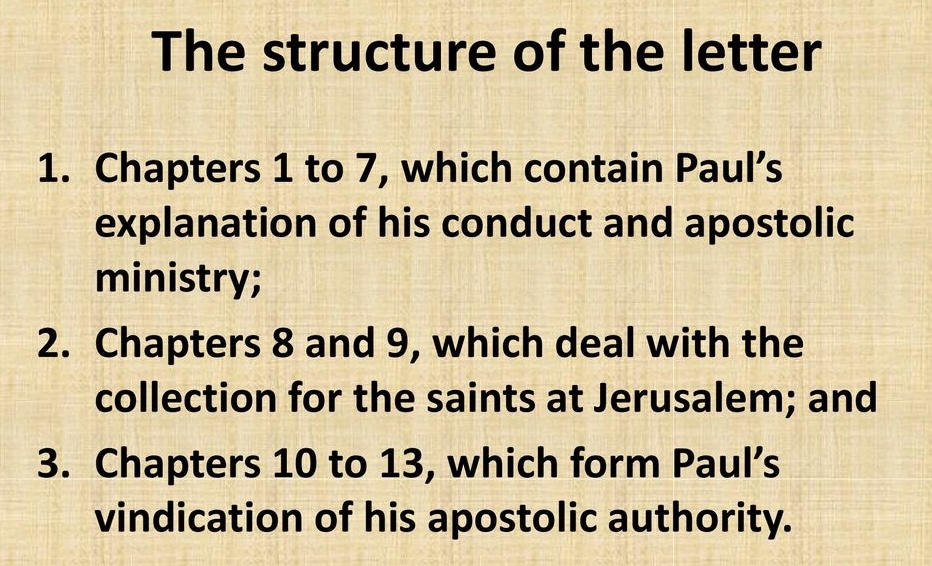
Indeed, the integrity of 2 Corinthians as we know it has been questioned, and scholarly scrutiny of the form and contents of the letter even suggests that it may be a composite of two, three, or even four letters which were originally separate communications. So Paul’s fourth letter to Corinth, which we call 2 Corinthians, is comprised of a number of main sections, each of which has its own distinctive focus.

*****

In the first section of the letter (1:1–7:16), Paul writes to offer consolation and hope to his converts in Corinth. It is clear that members of the community have undergone some difficult times; Paul empathises with them, drawing on his own experiences, as a way of offering a message of hope to the believers in Corinth. The excerpts we heard in worship last Sunday (Pentecost 3), and will hear this Sunday (Pentecost 4), come from this part of the letter—warm, encouraging, affirming.

This first section contains a brief excursus (6:14–7:1), which is of a markedly different character—leading many scholars to the conclusion that Paul himself did not write these verses. (How they came to be included in the final letter, then, poses something of a mystery requiring more detailed attention than we can give it here.)

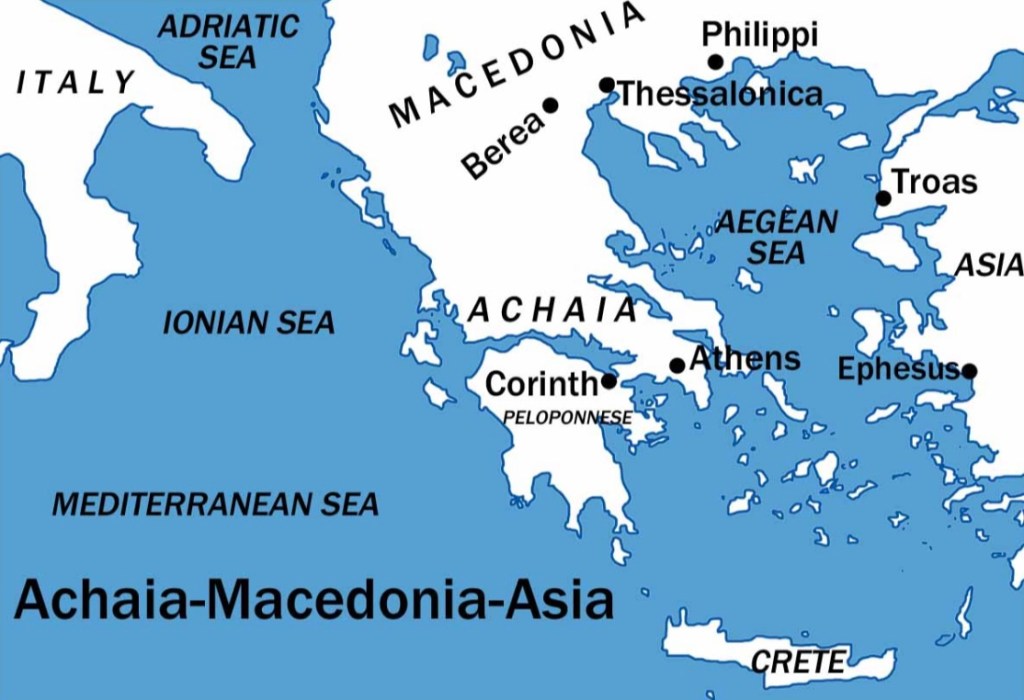
In a second main section (8:1–9:15), Paul addresses a very practical matter—the collection of money which he was making amongst the churches of Achaia and Macedonia, which he was planning to take to Jerusalem for the benefit of the believers there who had been experiencing difficulties. In this section, Paul focuses on the need for unity among the churches, both Gentile and Jewish, which lies at the heart of this enterprise. The lectionary selects one paragraph from this section for Pentecost 5.

In the third main section (10:1–13:13), Paul’s tone is markedly apologetic, as he writes in severe tones to defend himself in the face of criticisms which have been levelled against him in Corinth. Here, the issue is how to discern true and false teachers amongst the leadership active within the churches. That’s the section that provides one of the readings for Pentecost 6, which ends with Paul’s famous declaration, “whenever I am weak, then I am strong” (12:10).

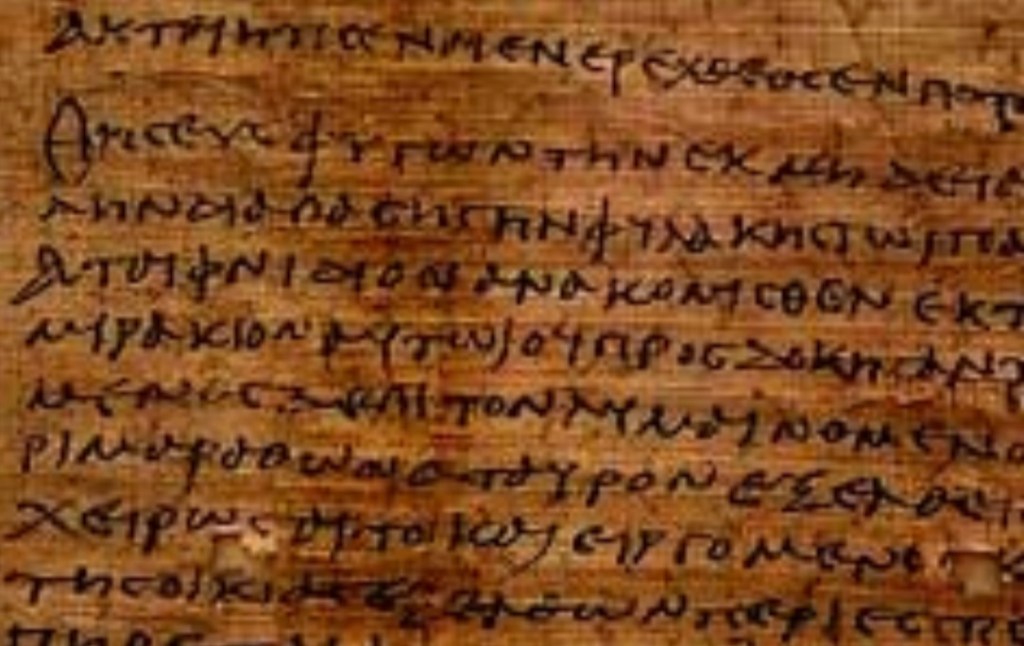
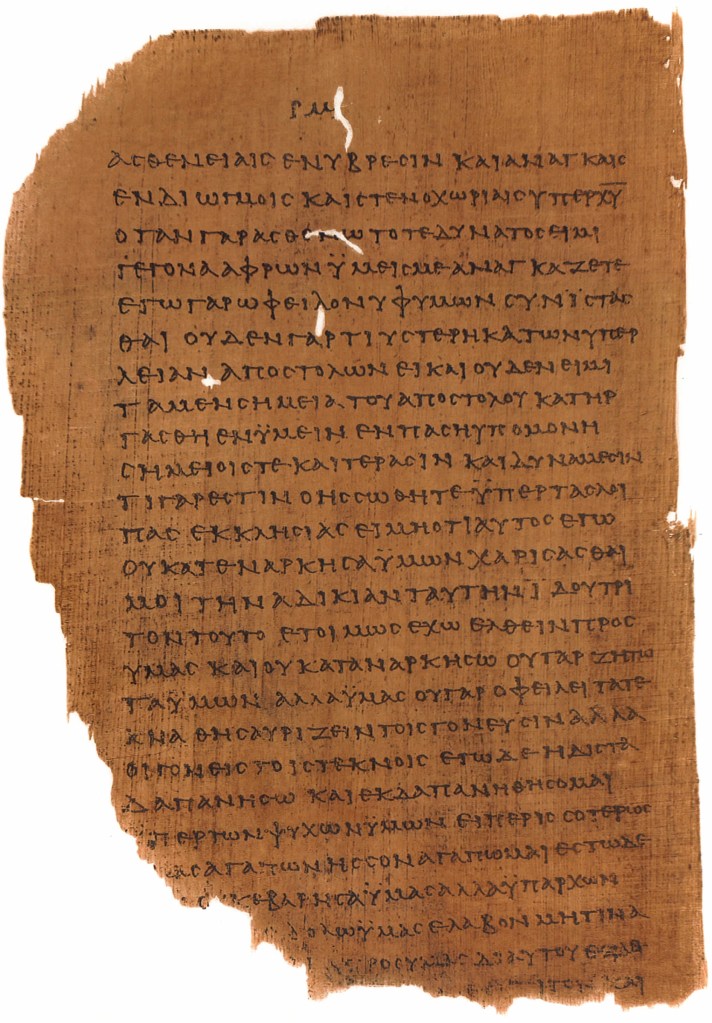
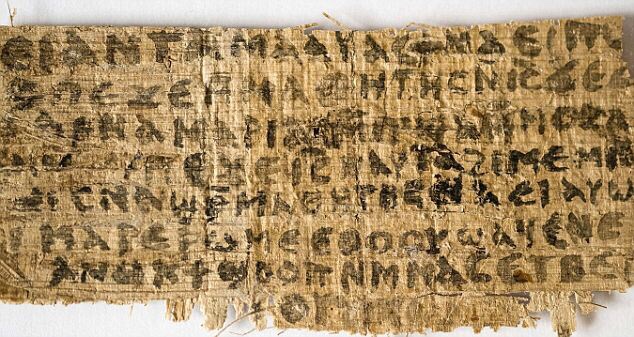
A page from Papyrus 46 (P46) with the text of 1 Cor 12:10–18

******

As was the case in a number of churches where Paul was active, a group of traditional Jewish believers had become active and were persuading the Corinthians to adopt beliefs and practices different from those advocated by Paul. The task which Paul undertakes in these chapters is to validate his own authority over and against this other group, and encourage the Corinthians to remain faithful to the good news which he first brought to them.

Paul’s theology of the cross, clearly articulated in 1 Cor 1–4, provides the basis for the approach that he takes in 2 Cor 10–13. He emphasises his frailty (10:10) and reiterates the catalogue of sufferings that he has experienced (11:23–29; 12:10; cf. 6:4–10) but argues that this is the sign of his true calling as an apostle, for “power is made perfect in weakness” (12:9).

So Paul asserts that his authority comes not from self-validation, but because he bears the Lord’s commendation (10:18), and his sufferings demonstrate that “whenever I am weak, then I am strong” (12:10), in accordance with the pattern established in the crucifixion of Jesus himself (13:3–4).

Women in the New Testament (2): six problem passages


This post continues the discussion begun in https://johntsquires.com/2020/11/19/women-in-the-new-testament-1-the-positive-practices-of-jesus-and-the-early-church/

There are six passages in the New Testament which traditional (patriarchal) interpreters have considered to be warrant for the view that women hold an inferior, subordinate position in the church and in society.

In many cases, however, the constraints placed upon women in these passages might be said to be due to the particular circumstances in which the letter was written. They do not provide prescriptive commands that apply at all times and in all places to all women.

In what follows below, I offer some very general comments about each passage, and some links to more detailed discussion of the issues involved in interpreting these passages in the contemporary context (many are from the wonderful blog of Marg Mowczko).

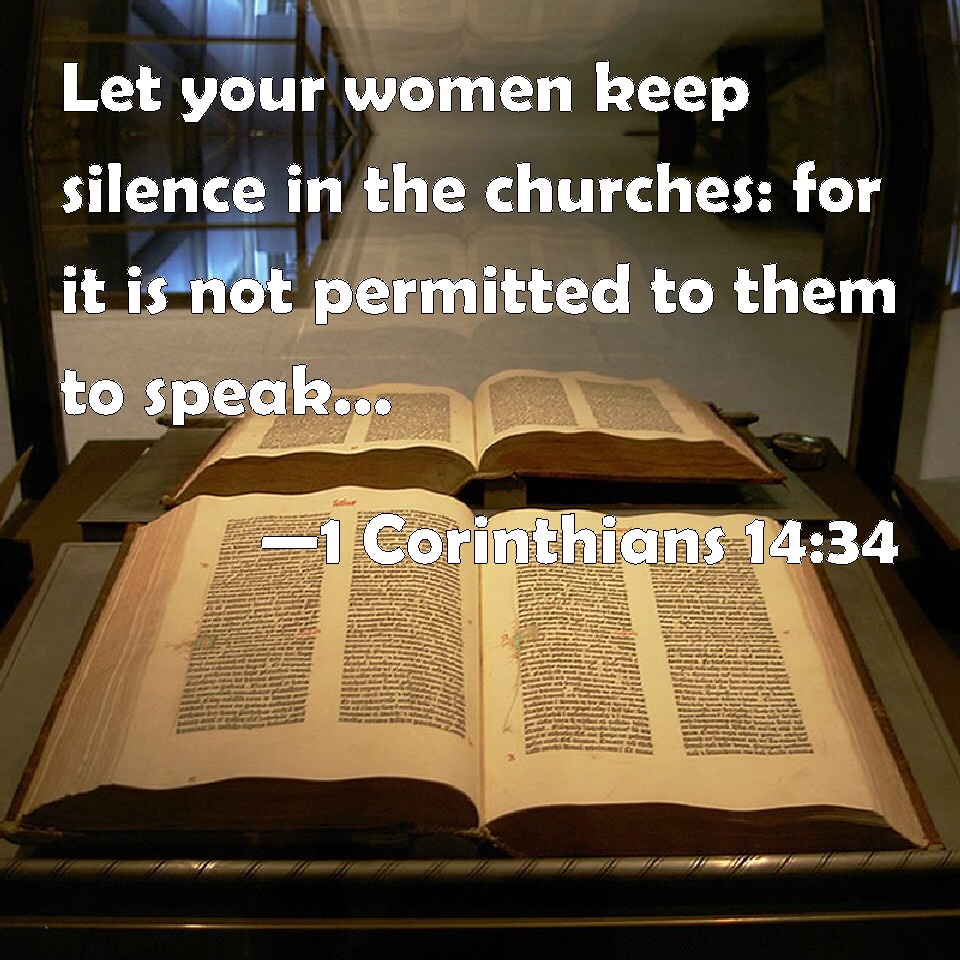
1 Corinthians 14:33b-35. The invocations to women to be silent in church most likely form part of an interpolation into the text by a later writer, and were not written by Paul. However, even if this is not the case, the specific context of the letter suggests that there was a need for Paul to reign in the excesses of at least some of the women believers in Corinth.

He exhorts them to keep silent, as he also instructs others – presumably males as well as females – to keep silent at the appropriate times, when they prophesy, or when they speak in tongues, so that worship may be seemly and orderly. The primary concern is not the role accorded by gender, but the proper conduct of worship.

There’s a more detailed discussion at https://margmowczko.com/interpretations-applications-1-cor-14_34-35/

1 Corinthians 11:2-16. Paul informs women that head coverings were compulsory when they gathered in worship. Again, this instruction may relate to the particular situation in Corinth, where certain pagan religions allowed women almost unbridled freedoms and brought them into contempt of “mainstream” Corinthian society.

Perhaps Paul wrote as he did because he did not want Christian women to be dismissed as extremists in this same manner. An interpretation of his words about “headship” which differs from the traditional view, hinges on a linguistic argument that the Greek word may also mean “source”, and the fact that some of the other statements in this passage seem to support the claim of mutuality and equality which Paul elsewhere upholds.

On head coverings in this passage, see https://margmowczko.com/head-coverings-1-corinthians-11/

On the image and glory of God, see https://margmowczko.com/man-woman-image-glory-god-1-corinthians-11-7/

On what “head” means, see https://margmowczko.com/head-kephale-does-not-mean-leader-1-corinthians-11_3/

And there are more links collected at https://margmowczko.com/category/equality-and-gender-issues/1-corinthians-11-2-16/

1 Timothy 2:8-12. This passage further commands to women to keep silent in church may also be interpreted in the light of the specific context which is addressed in the letter. It appears that those addressed in this letter were under threat from a rather disruptive group of “heretics”, including some prominent women.

Grammatical analysis may suggest that the command is not a universal injunction with universal applicability, but a specific command to a particular situation.

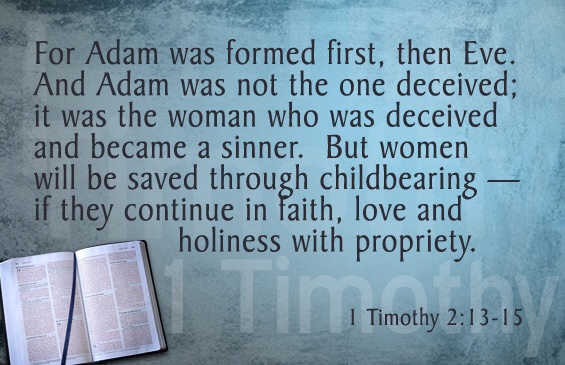
The traditional interpretation of the words in 1 Timothy 2:13-15, that salvation comes to women only by childbirth, may also be debated in the light of linguistic and grammatical argumentation. This is not the only way the phrase can be translated.

For detailed discussions, see https://earlychristiantexts.com/what-1-timothy-says-about-women/, https://margmowczko.com/1-timothy-212-in-a-nutshell/, and https://margmowczko.com/a-woman-not-all-women-1-timothy-212/

There are more articles collected at https://margmowczko.com/category/equality-and-gender-issues/1-timothy-212/

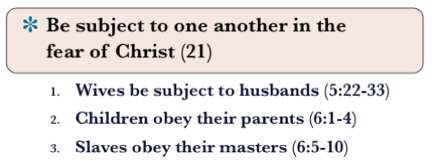
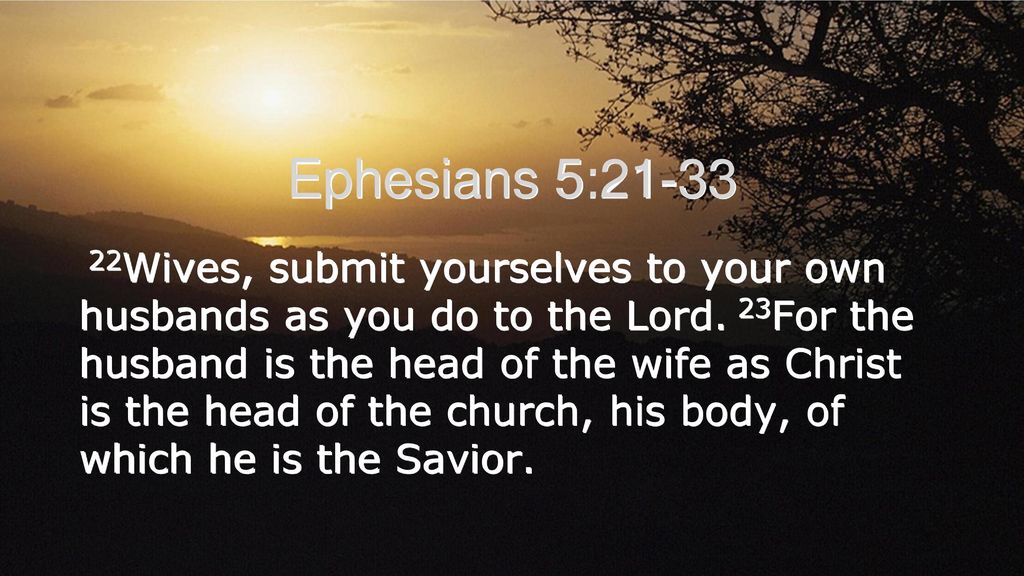
Ephesians 5:21-33. The exhortation to wives to submit to their husbands has traditionally been taken in isolation as a principle valid for all times and places. However, the precise form which is employed in this text (the “household table”) was widely known in the ancient world. It was a way of keeping social order by establishing the superior and the inferior in any relationship.

The three “tables” in the household table of 1 Peter:
husbands and wives, parents and children, masters and slaves

What is quite significant in Ephesians 5 is the way that such a traditional form is modified by the writer of this letter. Indeed, the key to interpreting the passage is sounded in 5:21, with the command to practice mutual submission in marriage (and in other relationships). The typical ancient pattern of inferior/superior is transformed by the Gospel, resulting in a radical equality and mutuality in relationship.

See also https://margmowczko.com/pauls-main-point-in-eph-5_22-33/ and https://www.patheos.com/blogs/allsetfree/2018/12/no-ephesians-5-doesnt-argue-in-favor-of-complementarianism/

Similar matters are to be brought to bear in an interpretation of 1 Peter 3:1-7, where the “household code” is used in a particular rhetorical manner (“apologetic”). The teaching of submission in marriage has a specific function related to the overall purpose of this letter, and need not be seen in isolation as a universalised teaching.

On “the weaker vessel”, see https://margmowczko.com/weaker-vessel-gender-justice-1-peter-3_7/

There are more articles on 1 Peter at https://margmowczko.com/category/equality-and-gender-issues/1-peter-31-7/

In these ways, then, long-standing interpretations of these passages can be challenged as patriarchal, and alternative feminist readings can be proposed from within a reform paradigm. The debate is not concluded, but has opened up important issues for further consideration. Responsible biblical interpretation can no longer avoid confronting the inherent biases and presuppositions of past generations of interpreters – and also of present interpreters.

What do we know about who wrote the letters attributed to Paul? (3)

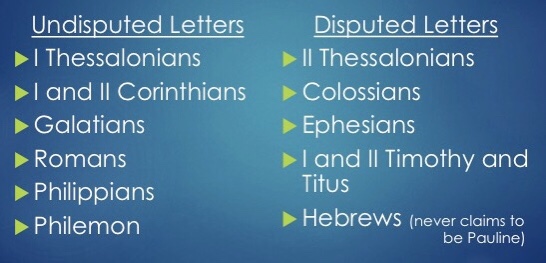
There are thirteen letters in the New Testament which begin by naming Paul as the person (or one of the people) responsible for writing the letter. A fourteenth letter, written “to the Hebrews”, was long considered to have been written by Paul, even though he was nowhere explicitly identified in this letter. The opinion of the overwhelming majority of scholars, for some time now, has been that Hebrews was not written by Paul. What about the other thirteen letters? Did all of those thirteen letters attributed to Paul actually originate with him?

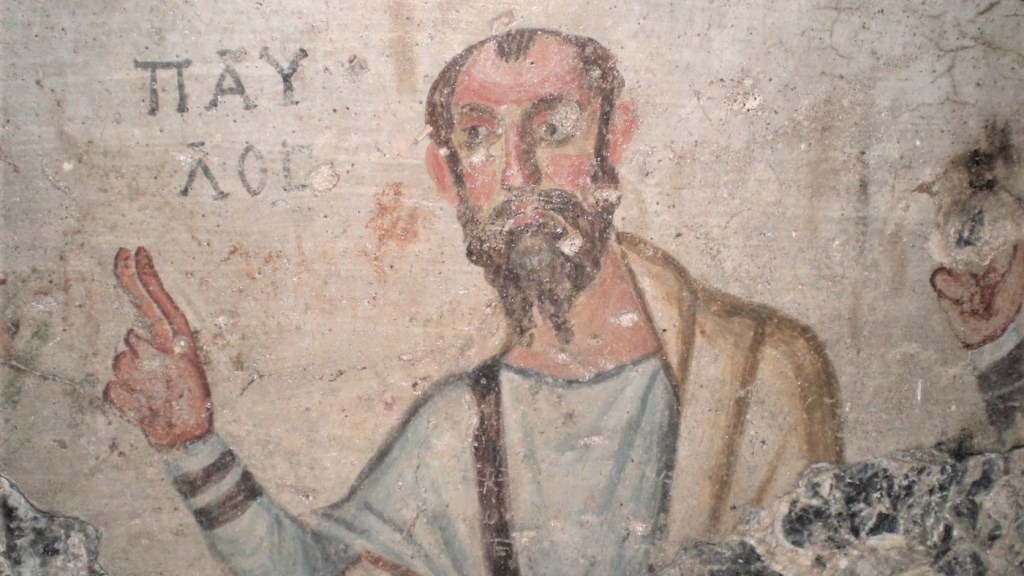
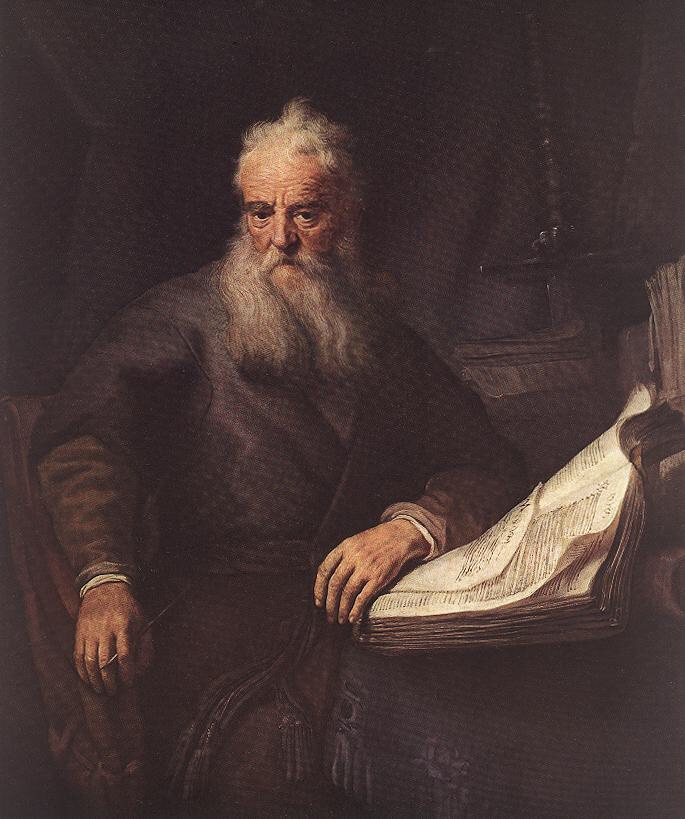
An ancient depiction of Paul.

Authentic Letters from Paul. There are seven letters which virtually all scholars say were written by Paul. But look carefully! The earliest letter, 1 Thessalonians, declares at the start that it was written by Paul, Silvanus, and Timothy (1 Thess 1:1). A latter letter to the Philippians, states that it was written by Paul and Timothy, servants of Christ Jesus (Phil 1:1), and so does the letter to Philemon (Paul, a prisoner of Christ Jesus, and Timothy our brother, Phlm 1:1).

Of the two letters to Corinth, 1 Corinthians is identified as coming from Paul … and our brother Sosthenes (1 Cor 1:1), whilst 2 Corinthians comes from Paul .. and Timothy our brother (2 Cor 1:1). So joint authorship of letters was a common practice.

Only Galatians and Romans actually claim to have been written solely by Paul (“Paul an apostle”, Gal 1:1; “Paul, a servant of Jesus Christ, called to be an apostle, set apart for the gospel of God …”, Rom 1:1). To underline that, the author of Galatians declares near the end, “see what large letters I make when I am writing with my own hand!” (Gal 6:11).

By contrast, in the last chapter of Romans, as Paul is sending his characteristic greetings (from Timothy, Lucius, Jason and Sosipater, Rom 16:21), his words are abruptly interrupted: “I, Tertius, the writer of this letter, greet you in the Lord” (Rom 16:22). Clearly, Paul was using a scribe to write down this lengthy letter, which he most likely was dictating (and, if the state of his Greek sentences are any indicator, at times he was speaking with great rapidity!).

Disputed Letters, written in the name of Paul. Many scholars have come to doubt that all of the thirteen letters were authentic letters of Paul. They have been able to come to this view because of what is known about the widespread practice, in the ancient world, of circulating letters and other documents in the name of an eminent person from an earlier age—a great scholar, or philosopher, or religious leader, or teacher. This was done by a writer who wished to “borrow” the authority of the older figure, believing that this would give greater weight to the views and teachings included in their work.

The suggestion is that members of the church in the later decades of the first century did this, using the name of Paul, because they regarded him as a teacher of note and an apostle of the church. There were already many works like this in Jewish circles, and a number amongst the gentiles also; so this was a well-known practice. And the ancient world did not have the strict laws of copyright and intellectual property which characterise the twenty-first century!

Colossians begins with a claim to be a letter from “Paul, an apostle of Christ Jesus by the will of God, and Timothy our brother, to the saints and faithful brothers and sisters in Christ in Colossae” (Col 1:1-2).

However, it was most likely written by a follower of Paul, writing in his teacher’s name in order to claim his authority as he addressed a situation different from, and some time after, Paul’s own time. Paul’s theological and ethical positions are known by the author. However, the problematic situation addressed, the theological ideas expressed, and the ethical instructions offered, each point to an origin after the lifetime of Paul.
The situation envisaged in Ephesians is quite different from that of Colossians; we know little, if anything, about it. The letter does begin in the expected manner, “Paul, an apostle of Christ Jesus by the will of God, to the saints who are in Ephesus and are faithful in Christ Jesus” (Eph 1:1). However, the phrase “who are in Ephesus” is missing from some significant manuscripts of this letter, raising the possibility that it was more of a general circular letter for early churches, than a letter to a specific community.

This is supported by various observations. The letter does not move immediately to a thanksgiving to identify the key characteristics of the community to which the letter is sent, as Paul’s letters inevitably do. Instead, there is a lengthy blessing in which a grand theological statement is developed (1:3–14), before a brief thanksgiving is offered for the faith and love of the (unspecified) recipients (1:15–16).

These are generic qualities, and the prayer veers off almost immediately into further theological exposition (1:17–23). The end of the letter simply replicates some of the greetings of Colossians in shortened form, suggesting a later writer imitating the style of an earlier letter. The body of the letter indicates only that Paul is a prisoner (3:1; 4:1) and that the recipients are Gentiles (2:11; 3:2), while the final prayer and grace (6:23–24) is likewise entirely generic.

For all these reasons, it is unlikely that Paul himself wrote this letter.

2 Thessalonians concludes with an insistence that it was written by Paul: “I, Paul, write this greeting with my own hand” (2 Thess 3:17). At first glance, this looks similar to the reference to Paul’s “large letters” in his “own hand” at Gal 6:11; but this is a brief passing comment, whereas the claim is laboured in 2 Thessalonians by the addition of extra phrases (“this is the mark in every letter of mine; it is the way I write”). So much so, that I start to have a sense of “methinks he doth protest too much”.

The first twenty words of the opening address of 1 Thess 1:1 are repeated exactly in 2 Thess 1:1–2a; this is unusual amongst the seven authentic letters of Paul, for in every other case there are variations of both minor and major significance in this opening section. (See Rom 1:2–6; 1 Cor 1:2b; 2 Cor 1:b; Gal 1:1 and 1:4; Phil 1:1b; Phlmn 2.) So 2 Thessalonians bears many marks of being a rather unsubtle “copy” of 1 Thessalonians.

Whilst Paul’s authentic letters reflect the dynamic nature of the community of faith, the three Pastoral Letters (1 Timothy, 2 Timothy and Titus) reflect a move towards a more developed organisational structure. They point towards the institutionalised church of the second century and beyond, in which the way of Jesus would become determined by the authority of the apostle and his local representative, the bishop.

Each of these letters follows the standard formula for a letter from Paul, and they each identify only Paul as the author (1 Tim 1:1; 2 Tim 1:1; Tit 1:1). And yet, the format of the letters and the distinctive vocabulary used throws doubt on the claim that Paul was the author. Whilst they each have a traditional framework for a letter, the body of the letters often read more like a sermon or a moral treatise. Over one third of the words found in these three letters are not found in the authentic letters of Paul. Many words found frequently in the authentic letters do not appear anywhere in these three letters.

In addition, the situations addressed, the theology of the letters and the ecclesial structures envisaged reflect many differences between each of these three letters and the seven authentic letters of Paul.

Together, all of these elements point to the conclusion that the author wrote these letters after the lifetime of Paul. He reaches back in time to the figure of Paul in order to validate the teachings given to the community of faith in his own time. The figures of Timothy and Titus represent the leaders in the communities of faith in this later period.
For posts on the authorship of the Gospels, see https://johntsquires.com/2020/10/15/what-do-we-know-about-who-wrote-the-new-testament-gospels-1/ and https://johntsquires.com/2020/10/15/what-do-we-know-about-who-wrote-the-new-testament-gospels-2/

Paul the travelling philosopher (1 Thessalonians; Pentecost 21–25A)

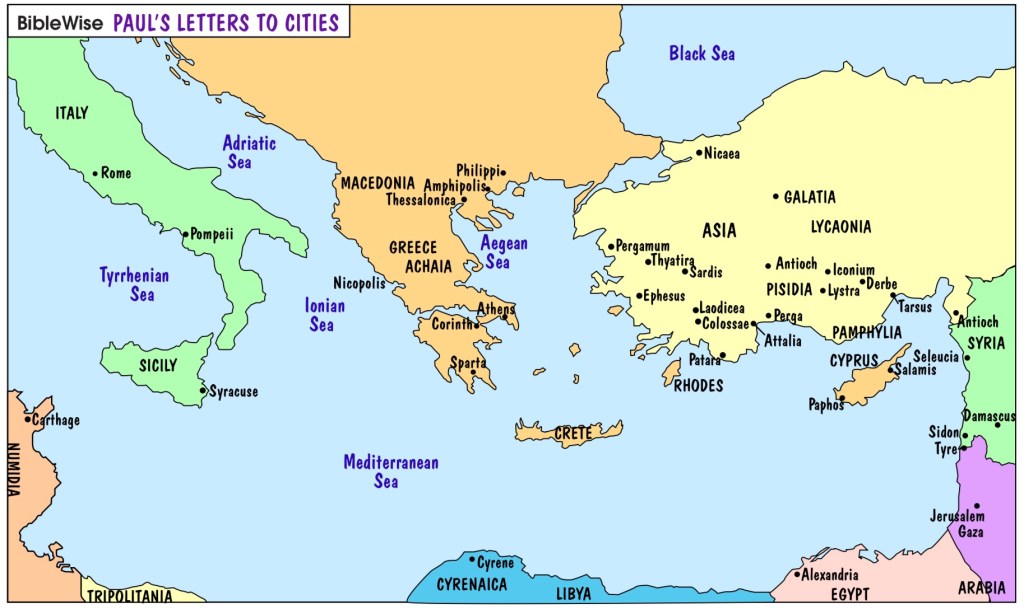
Thessalonika, the capital of the Roman province of Macedonia, was a port city strategically situated on the Egnatian Way, the main transport link between Rome and the eastern part of the empire. It was an important trading post in Greece, second only to Corinth.

Evidence of its cosmopolitan nature includes an Egyptian settlement, a strong Jewish presence, and a Samaritan community in the city. Religion was a part of everyday life, and so worship of all manner of gods and goddesses thrived. There were also schools to learn philosophy, travelling preachers, and synagogues for worshipping Yahweh.

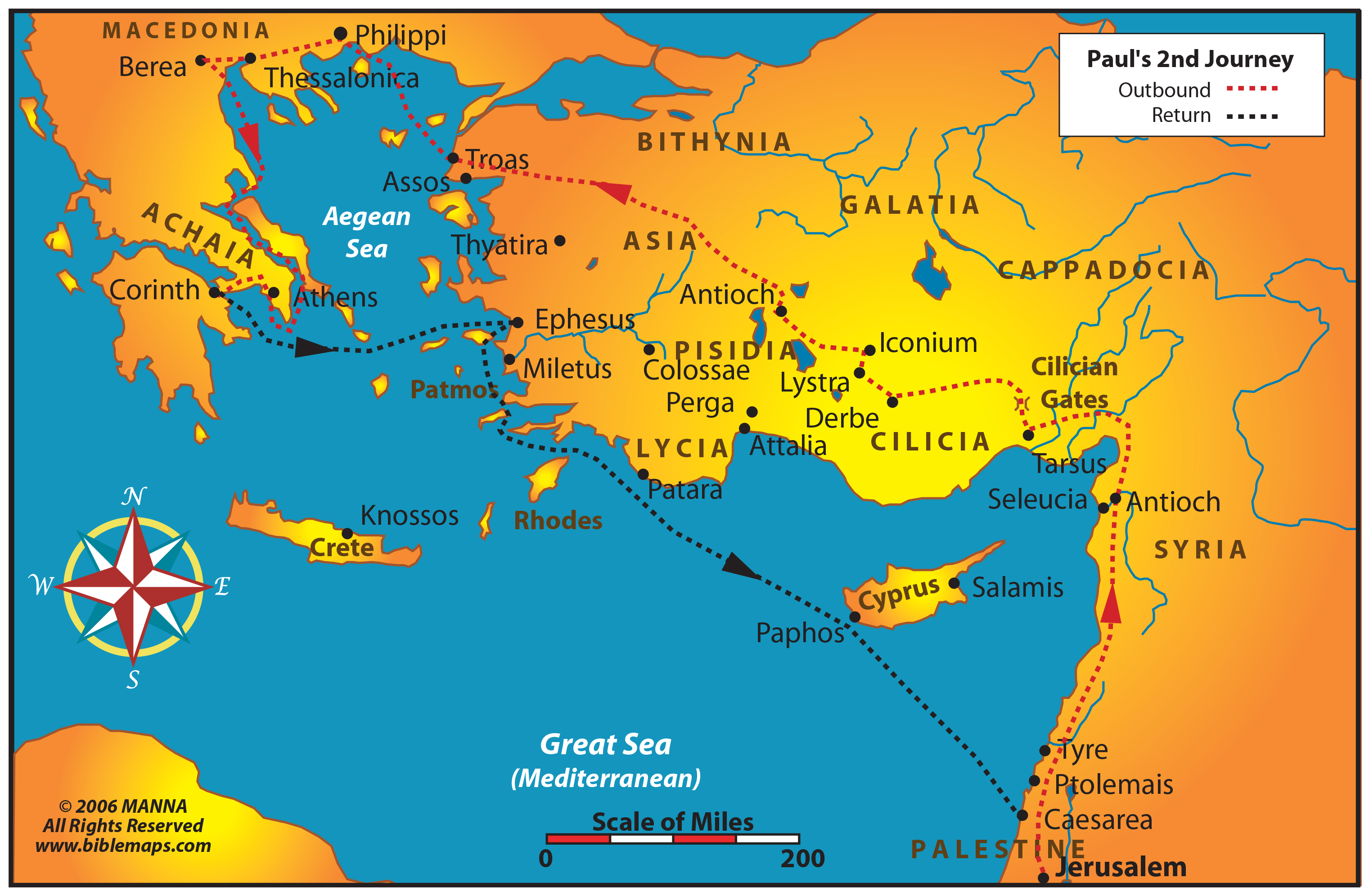
Paul, Silas and Timothy arrived in Thessalonika in the year 50 CE. The account in Acts 17 indicates that they went to the synagogue, where Paul declared that the Jewish scriptures pointed to Jesus as Messiah (Acts 17:2–3). This stirred up antagonism amongst the Jews of the city (Acts 17:5).

Those who accepted Paul’s message, realising that he was just recovering from the experience of prison in Philippi (Acts 16:19–24), sent him and Silas on to their next stop in Beroea after only three weeks in Thessalonica (Acts 17:2). Paul then travelled to Athens (Acts 17:15) and Corinth (Acts 18:1).

See the source image

Little of this is reflected in Paul’s letters to the Thessalonians, apart from a direct comment about his difficulties in Philippi (1 Thess 2:2) and some generalised references to the persecution he was suffering (1 Thess 3:4, 7). Although it is likely that Paul wrote letters before he had visited Thessalonica, none of them are known to us.

1 Thessalonians, dating from the same year (50 CE) as his visit to Thessalonica, is the earliest example of Paul’s letter writing that we have. The letter itself contains no explicit indication of the time or place of its writing; tradition has it that Paul wrote from Athens, although it is more likely that he penned it in Corinth just months after his departure from Thessalonica. His visit was still fresh in Paul’s mind, and he writes with love and concern for the community of believers that he left behind in Thessalonica.

It is obvious that Paul had developed a strong bond with this community, and he is anxious to keep in touch with them (3:5). The letter was in reply to what he had learned from Timothy about their recent progress (3:6).

In the opening thanksgiving of this letter (1:1-8), Paul characterizes the Thessalonians as undertaking a “work of faith and labour of love and steadfastness of hope in our Lord Jesus Christ” (1 Thess 1:8). These terms summarise the key issues to be addressed later in that letter; all three return at 1 Thess 5:8.

Paul writes more about the faith of the Thessalonians at 3:1–10; he commends them for their love at 3:6 and 4:9–10, and prays for it to increase at 3:12. He strengthens them in their hope at 2:19 and 4:13–18. Also in the thanksgiving, he affirmed them for being “imitators of us and of the Lord” (1:6)—a central motif in Paul’s theology.

At the point in the letter where we would expect the body of the letter to begin (2:1), Paul turns his attention to his way of operating whilst he had been with the Thessalonians (2:1–12). He feels the need to defend himself, pointing out that his motivation was not based on “deceit or impure motives or trickery” (2:3), nor did he speak “with words of flattery or with a pretext for greed” (2:5).

Rather, Paul undertook his task with deep-seated care (2:8) and purity of motive (2:10). He invokes the divine no less than nine times in twelve verses, proclaiming that his methods were “approved by God” and that he spoke “to please God” (2:4).

See the source image
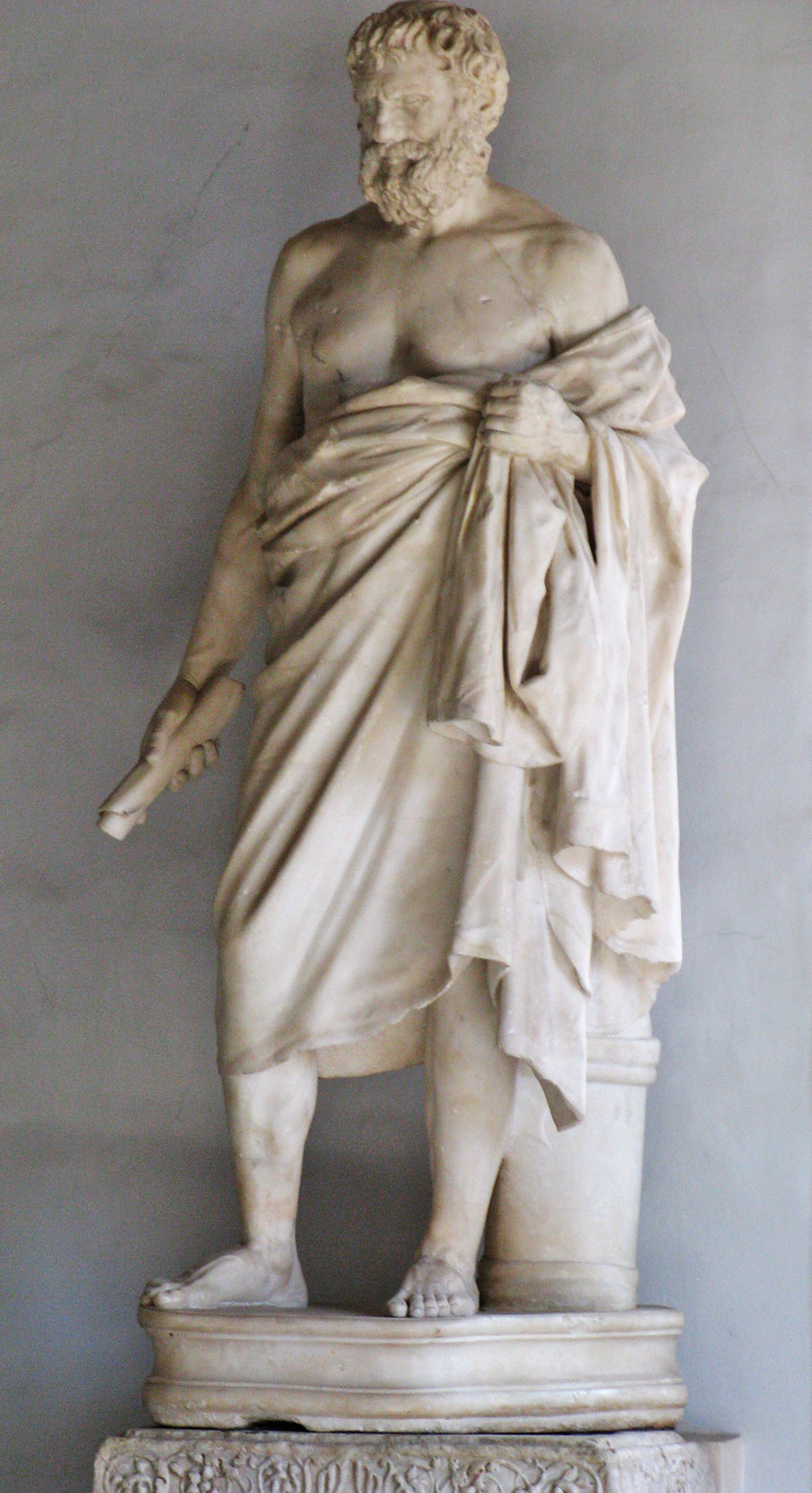
A statue depicting a Cynic, one of the popular
wandering philosophers of the time.

The language which Paul uses in this part of the letter is reminiscent of discussions of rhetoricians and philosophers of the time, a number of whom were accused of having base motives, an interest in self-promotion and a desire for immediate financial rewards! His itinerant way of life could easily leave him open to such a criticism. How Paul defends himself is similar to the way that the better class of philosophers and rhetoricians of the day tried to defend themselves.

See a good summary of Abraham Malherbe’s analysis of 1 Thess 2 in this vein, at http://www.religion.emory.edu/faculty/robbins/SRI/Examples/textures/inter/echo2.cfm

An invitation that you just cannot … accept! (Pentecost 19A)

We are all used to receiving invitations. Sometimes, those invitations come as an invitation that you just cannot refuse—the special performance that is a must-see, the party that you don’t want to miss, the occasion with a special friend that wouldn’t be the same without you being there.

This week, the lectionary provides us with a series of invitations. Do you want to refuse them? Are you going to say, “this is an invitation that I just cannot refuse” ? I hope not. Because I want to convince you, that you do have to refuse those invitations. In fact, you need to be clear that you are not going to accept any of these invitations.

The invitations are shaped by the way that the Christian Church has approached and interpreted its scriptures. The invitations are subtle and pervasive; they simply invite us to read and understand the passages in this week’s lectionary in the way that so many interpreters, throughout the history of the church, have interpreted these passages. The invitations invite us to adopt an anti-Israel, anti-Jewish, antisemitic way of reading these texts.

My exhortation this week is: don’t accept those invitations. Don’t get drawn into traditional ways of interpreting scripture that lead down the pathway of negative stereotyping of Jews. Don’t get caught in the traditions of antisemitism that grew and flourished across the many centuries of the existence of the church. Don’t judge negatively, don’t demean or deride, don’t open the door for destructive depictions and careless caricatures of our Jewish sisters and brothers.

The first invitation comes in the reading from Hebrew Scripture that is set in the lectionary this week (Exodus 20:1-20). It is an invitation to reflect on the heavy burden of the Law, the weight of demands that were placed on the people of Israel through the giving of the Law. It is a recounting of the Ten Commandments, and the importance of following them to the letter—to have “the fear of God” instilled in us to obey them and not sin (Ex 20:20).

The second invitation comes in the section of the letter which Paul wrote to the Philippians (Phil 3:4-14). It is an invitation to cast the whole of Jewish scripture and tradition as being of no value whatsoever. In this part of his letter, Paul reflects on his upbringing, and has a very colourful description for what he learnt, as a member of Israel, a Pharisee devoted to living a blameless life under the Law. Of all that he learnt as he was raised in this way, Paul writes, “I regard them as rubbish”—the ultra-polite way that the NRSV translates what, in Greek, reads literally as “I consider them all to be bullshit!” (Phil 3:8).

And the third invitation comes in the parable of Jesus which is included in ‘the book of origins’, and which its author (by tradition, the evangelist Matthew) interpreted as a polemic against the Jewish authorities (Matt 21:33-46). The parable is set in a vineyard. That’s an age-old symbol for the people of Israel—indeed, the lectionary offers us two passages from Hebrew Scripture (Isaiah 5:1-7 and Psalm 80:7-15) which show how old and enduring this imagery was.

The parable that Jesus tells recounts the hard-hearted way in which the tenants in the vineyard (a traditional symbol for the people of Israel) reject the messengers sent to them by the landowner (seen as a symbol for God), culminating in the atrocious treatment meted out to the landowner’s son (whom we presumably are meant to identify as Jesus, son of God), who is put to death. The punchline that Jesus crafts for this parable is potent: “the kingdom will be taken away from you” (Matt 21:43), he tells “the chief priests and the Pharisees” (Matt 21:45).

Do not be taken in by these three invitations! Do not succumb to even the merest whisper of anti-Jewish sentiment as you reflect on these passages! Do not be shy to decline these “invitations you cannot refuse”!

Why?

First: because the Law was given, not to be a burden, a heavy weight, a set of endless demands; the Law was given as a gift. In the Law, Israel was given a way of strengthening the Covenant relationship with God, of providing practical means for remaining in covenant relationship with God. No Jew regards the Law as a burden; universally, the Law is celebrated as a gift, and valued as a way to ensure a healthy and vibrant relationship with God.

The Ten Commandments need to be read in the context of the story as it transpired over time. The giving of the Law (Exodus 20) sits in the midst of the stories about Moses ascending the mountain, encountering God, and formalising the covenant relationship with God (Ex 19:16-25; and Ex 24:1-18). Before the Law is given (Ex 20), the Covenant is formalised (Ex 19). The requirements of Law follow on from the gift of Covenant. In this way, the Law itself becomes a gift—a way to ensure the strength of the Covenant.

And these scenes of Moses making the covenant with God and then ratifying it with all the people, need to be seen in the context of the still larger scope of the storyline, which tells of a series of covenants: with Noah, with Abraham, with Isaac, with Jacob (and on into future centuries, with David, with Solomon, through Jeremiah).

It is the covenant which is the primary context: the means by which God chooses, nurtures, and remains in relationship with Israel. The Law comes as the consequence of the gift of the Covenant; the Law provides a clear set of guidelines for maintaining that covenant and continuing in relationship with God.

That Law is embraced, valued, and celebrated in Jewish tradition and scripture. Just look at how it is described in the Psalm offered in this week’s lectionary selection, where the commandments and precepts of the Law are praised as “perfect, reviving the soul … sure, making wise …right, rejoicing the heart … clear, enlightening the eyes … true and righteous altogether … more to be desired are they than gold .. sweeter also than honey” (Ps 19:7-10).

Second: because the Jewish upbringing and Pharisaic practices that Paul had, were never totally jettisoned, even though this one colourful comment seems to suggest this. Paul has many ways by which he demonstrates that his Jewish upbringing, his years of study as a Pharisee, his intense dedication to the Law, all still continue to shape his life, his words, his actions, his very being, right through the years that he was a faithful follower of Jesus.

Paul had an extensive knowledge of Hebrew scripture; we see this demonstrated at many place in his letters (Rom 1:16–17; 3:9–20; 4:1–25; 9:6–11:12; 11:25–27; 1 Cor 1:19–25; 2:6–16; 2 Cor 8:15, 9:9; Gal 4:21–31) as well as in the reports of his preaching in Acts (Acts 13:32–41; 17:2–3; 26:22–23; 28:25–28). The whole argument that is developed in his letter to the Romans is an exposition of a key affirmation, made at Rom 1:16-17, which itself quotes and draws from the words of Habakkuk, a late 7th century Israelite prophet (Hab 2:4). That argument engages consistently and in complex ways with the Hebraic traditions and understandings that were so central to Paul’s spiritual life. He uses pearl-stringing, argument by analogy, diatribal argumentation, midrashic storytelling, and other techniques which he undoubtedly learnt from his Pharisaic teachers.

(See also https://johntsquires.com/2020/07/20/spirit-and-scripture-in-romans-rom-8/)

In writing to the Galatians, Paul asserts that the Law serves as a paidagogos (3:21–24)—a position in Greek society in which a tutor both instructs and disciplines a young man until he reaches his maturity. So Paul does not portray the Law as obsolete and completely irrelevant and; rather, he insists that “the Law is not opposed to the promises of God” (3:21). In fact, he supports his position with an argument drawn from “the Law”, that is, Hebrew scripture—the accounts of the two children of Abraham (found in Gen 16 and 21) provides an allegory for the two covenants made by God (4:21–31). And in Romans he affirms that “the Law is holy, and the commandment is holy and just and good” (Rom 7:12).

There are many other examples of how Paul uses the debating techniques and reflects the theological insights that he learnt during his formative years, right through into his mature years, even when he was the most intense and most passionate follower of Jesus. So let’s not get caught into the trap of adopting an anti-Jewish attitude and claiming that we are simply following the lead of the Apostle Paul. His understanding was far deeper than that, and his engagement with the issue much more complex. (We might well say that his claim that his Jewish past was “bullshit” to him, is itself a claim that is, well, “bullshit”!)
Third: because the parable of Jesus is not intended to be simply an anti-Jewish polemic without any further refinement of understanding. It is true that, in the Gospel of Matthew, we find Jesus making some strident accusations and engaging in some vigorous debate with the Jewish authorities. But does he really believe that no faithful Jew will ever again enter the kingdom of heaven?

We need to read in context the rhetoric that Matthew places on the lips of Jesus in this Gospel. Judaism was in a state of flux as people lived under the continuing oppression of Roman rule. Guerilla groups initiated battles with the Romans on and off throughout the first century. These encounters intensified from 66 CE onwards. The destruction of the Temple in 70 CE was a pivotal moment. Evidence indicates that, during this time, there were various sectarian groups within Judaism who were contesting with each other for recognition and influence. Vigorous polemic and robust debate were not uncommon.
During this period, the Pharisees were becoming increasingly important as an alternative to the Temple cult, and emerging as the dominant Jewish religious movement. Their power base was moved from Jerusalem and spread throughout the area. When the Temple was destroyed, they moved the vacuum that was created, and became even more dominant. (From this time on, Pharisees evolved into the “Rabbis”, and they developed the kind of Judaism that became dominant through to the present time.)

The kind of debates that we see in the Gospels—debates where Jesus goes head-on with the Pharisees—need to be understood in this context. Jesus was not “cutting the cord” of his connection with Judaism. He was advocating, vigorously and persistently, for the kind of faith that he firmly believed in—and attacking the Pharisees for their failure, in his eyes, to adhere to all that they taught. And the accounts that we have of these debates come from years later than when they actually occurred; years that had been strongly shaped by the polemic and antagonism of the intervening decades.

Older academic Christian scholarship and popular Christian tradition both contain a preponderance of the stereotype that the Judaism of the time of Jesus was a harsh, legalistic, rigid religion—precisely because of the claimed “hardness of heart” of the Pharisees in their debates with Jesus. This stereotype was heightened by an unquestioning acceptance of the New Testament caricature of the Pharisees as hypocritical legalists who made heavy demands but had no soul commitment to their faith. It was claimed that they were the leaders of a static, dying religion.

This stereotype has been completely demolished in recent decades—both through the growing interaction between Christian and Jewish scholarship, and also through a more critical reading of the relevant primary texts. I am very pleased that my own church, the Uniting Church in Australia, has made it very clear that we do not adhere to these inaccurate and hurtful stereotypes.

(See https://assembly.uca.org.au/resources/key-papers-reports/item/1704-jews-and-judaism and the Statement linked at that page.)

Indeed, in Matthew’s Gospel, Jesus does nothing to overturn the Law or to encourage his followers to disregard the Law; he is portrayed as a Jew who keeps Torah to the full. Virtually all of his criticisms of the Pharisees can be understood within the framework of first century debates over the meaning and application of Law. The memory of Jesus in this Gospel is as a Torah-abiding Jew, who nevertheless stakes out a distinctive position within the context of those contemporary debates.

(See also https://johntsquires.com/2020/02/06/an-excess-of-righteous-justice-matt-5/)

Later written accounts of Jesus reflect the intensity of fervent debate as he encountered the scribes and Pharisees (see especially Luke 11:37-54; Matt 23:1-36). We should not interpret the parable of Jesus in Matt 21 as an outright condemnation of Judaism as a whole. As he debates the Jewish leadership of his day, he makes strong statements. But let’s not claim that Jesus validates any sense of anti-Jewish or antisemitic attitude.

(See https://johntsquires.com/2020/10/01/producing-the-fruits-of-the-kingdom-matt-21/)

(See also https://johntsquires.com/2019/04/18/easter-in-christian-tradition-and-its-relation-to-jewish-tradition/)

God has not rejected his people. All Israel will be saved. (Rom 11; Pentecost 12A)

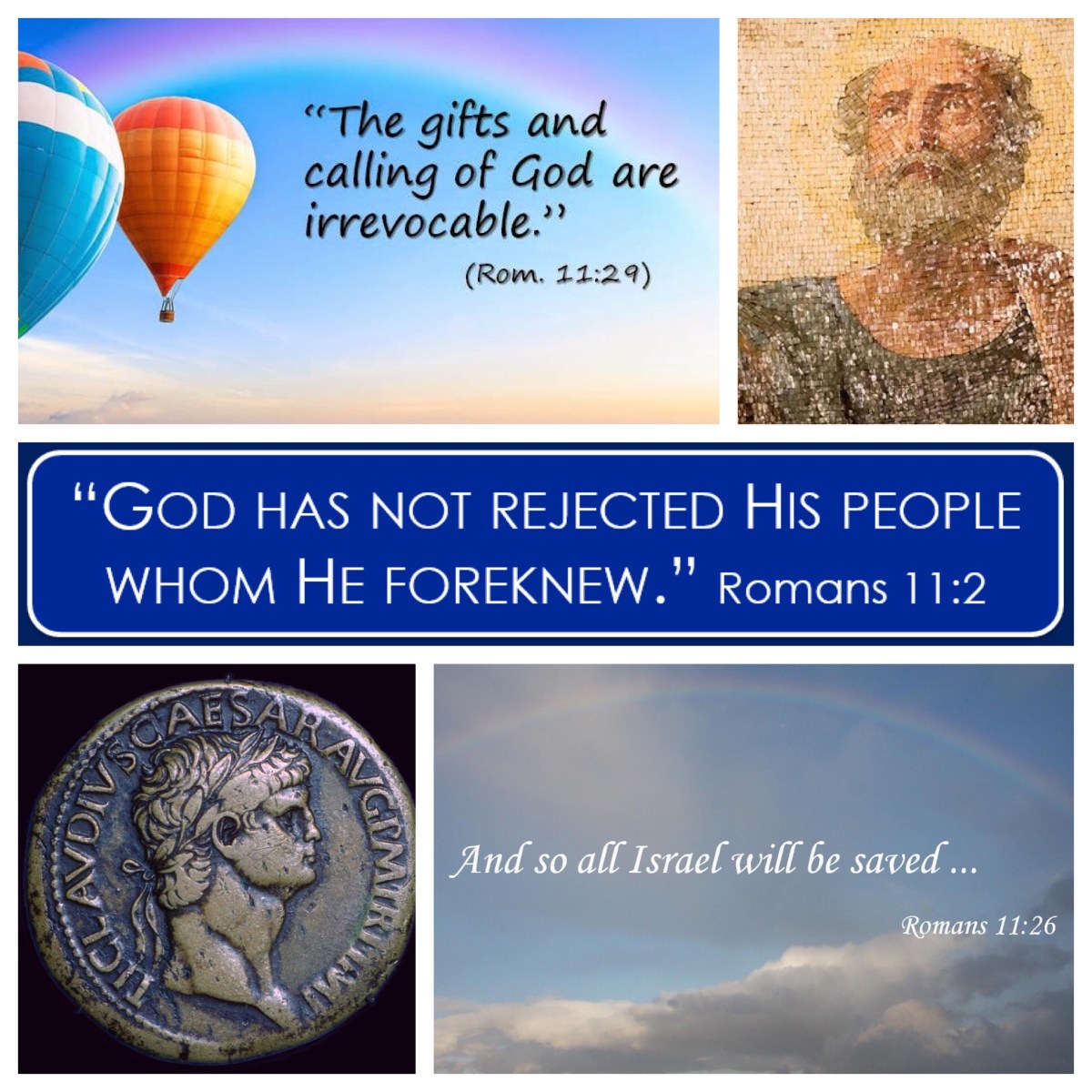
Has God rejected his people? By no means! I myself am an Israelite, a descendant of Abraham, a member of the tribe of Benjamin. God has not rejected his people whom he foreknew. For the gifts and the calling of God are irrevocable. (Rom 11:1-2a, 29)

This coming Sunday, we read two short sections of chapter 11, from Paul’s longest, and most influential letter: the letter he addressed to “all God’s beloved in Rome, who are called to be saints” (Rom 1:7). This section of the letter is hugely important.

It hasn’t always been seen in this light. An earlier line of interpretation highlighted Paul’s words about “the righteousness of God” in Rom 3:21-26, or other affirmations in later chapters, as the key to understanding the argument of the letter as a whole.

Such interpreters usually saw the wonderful doxological exclamation of Romans 8:31-39 as the climactic moment of the letter (“[nothing] will be able to separate us from the love of God in Christ Jesus our Lord”). And some interpreters explicitly asserted that what followed after chapter 8 was really in the manner of an appendix, and not part of the main argument.

Today, however, many interpreters would agree that it is this part of the letter, chapters 9–11, which really provide the grand climax to the argument that has been advanced and developed since the first quotation from scripture, at 1:17, where Paul cites the prophet Malachi in support of his argument concerning “the righteous-justice of God”.

In this view, the climax of Paul’s argument to the community of messianic believers in Rome, comes not in the assertion that, “since we are justified by faith, we have peace with God through our Lord Jesus Christ” (5:1); nor in the claim that “now you have been freed from sin and enslaved to God, the advantage you get is sanctification” (6:22).

The climax does not come in the exultation that “there is therefore no condemnation for those who are in Christ Jesus” (8:1); nor in the doxological outburst that “[nothing] will be able to separate us from the love of God in Christ Jesus our Lord” (8:39).

In fact, none of these—nor any of the many other theologically-rich, doctrinally-foundation phrases found in Romans 5-8, bring to a close the argument which Paul mounts from 1:16 onwards.

The true climax to the argument is in Romans 9-11, summarised in the following choice quotations, which have featured in the lectionary selections in recent weeks: “it is not as though the word of God has failed” (9:6) … “there is no distinction between Jew and Greek; the same Lord is Lord of all” (10:12) …“the gifts and the calling of God are irrevocable” (11:29).

The point of the letter is articulated in the sharp question that Paul poses: “has God rejected his people?” (11:1), which he immediately answers: “God has not rejected his people” (11:2). All of the argument in this section of the letter (chs. 9-11) and, indeed, of the whole letter to this point (from 1:17 onwards), can be summed up in one succinct phrase: “[and] so all Israel will be saved” (11:26).

*****

So that you may not claim to be wiser than you are, brothers and sisters, I want you to understand this mystery: a hardening has come upon part of Israel, until the full number of the Gentiles has come in. And so all Israel will be saved; as it is written, “Out of Zion will come the Deliverer; he will banish ungodliness from Jacob.” “And this is my covenant with them, when I take away their sins.” (Rom 11:25-27).

“All Israel will be saved” (Rom 11:26). Paul is insistent on this claim. The people of Israel, the Jews, have a valued place within the kingdom of God. They are vitally important in the scheme of things, to God. Faith in Jesus does not mean abandoning the sense that the people of Israel are loved, chosen, and saved, by God. “All Israel will be saved”

This claim plays an important role in how we approach and interpret the letter to the Romans. All the component parts needs to be seen in the light of this overarching framework. Paul was writing to a community where Gentiles had come to believe that Jesus was chosen of God. They had joined with Jews who had already come to the view that Jesus was, indeed, the very Messiah, anointed one, chosen by God from amongst their people, the people of Israel.

Jews and Gentiles coexisted alongside each other in the house churches that had been established in Rome. (All the early churches were house churches; there were no designated ecclesial buildings, so their gatherings took place in the homes of wealthy people, sympathetic to the ethos of the growing movement.) That, it seems, had been the case for some years before Paul dictates this letter to them.

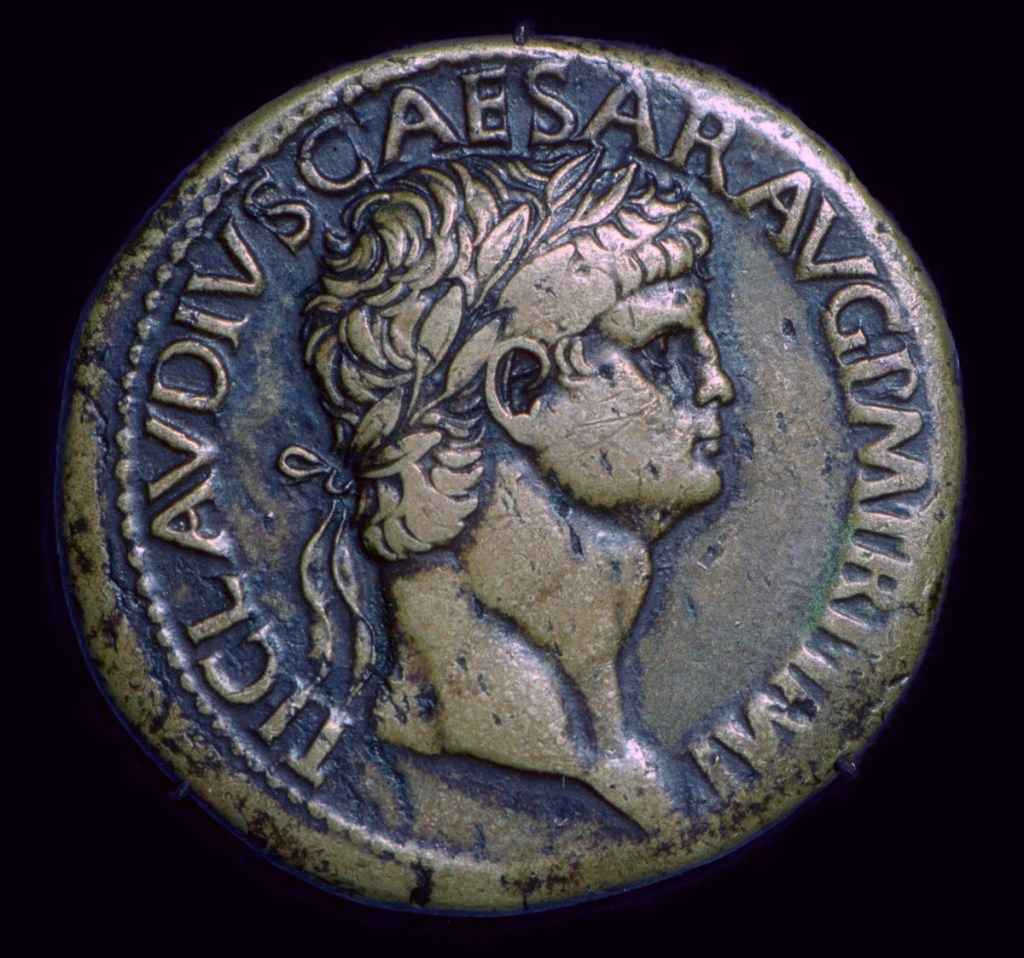
However, a few years earlier, the Emperor Claudius had commanded the expulsion of Jews in the city of Rome—just one of the countless times throughout their history that the people of Israel were rendered homeless, stateless, sent into exile. It would seem that many Jews left Rome, in or around the year 49 by our reckoning. But five or six years later, as Paul dictated his letter, it would seem that Jews had returned to the city.

A coin from the time of
Tiberius Claudius Caesar Augustus Germanicus
(Emperor 41-54 CE)

And amongst those returning Jews, there were Jews who held firm to the conviction that Jesus was Messiah. These Jewish Messianists joined in the fellowship meals and social gatherings and worship experiences where Gentile believers were also to be found.

These gatherings of the followers of Jesus in Rome reflected the all-inclusive nature of the Gospel. God is God of both Jews and Gentiles, as Paul affirmed. Salvation is available to Jews as well as Gentiles, as he clearly states. Paul knows of this rich diversity; he addresses by name 29 people in Rome (in chapter 16 of his letter to the Romans), and there are both Jewish names and Gentile names included amongst those 29 names. (And a good number of women, alongside the men!)

The church in Rome (or, to be precise, the churches in Rome) exemplified the message that Paul consistently articulates throughout this letter: “all have sinned, yet all are justified by God’s grace as a gift” (3:23-24); “is not God the God of Jews, and the God of Gentiles also?” (3:29); the promise is “not only to the aherents of the law, but also to those who share the faith of Abraham” (4:16); God has called people, “not only from the Jews, but also from the Gentiles” (9:24); “there is no distinction between Jew and Greek; the same Lord is Lord of all and is generous to all who call on him” (10:12); “salvation has come to the Gentiles” (11:11); and so, “all Israel will be saved” (11:26), for “God has mercy on all” (11:32).

Paul sounds this consistent theme throughout Romans: God is for all, God has mercy on all, both Jew and Gentile may participate in the full knowledge of God. The church in Rome lives out that message in the daily life of its members. The church in the place where we each are engaged is called, today, to live out that message in the daily lives of all its members.

See also

https://johntsquires.com/2020/08/04/a-deeper-understanding-of-god-through-dialogue-with-the-other-romans-10/

https://johntsquires.com/2020/07/27/praying-to-be-cursed-paul-the-passionate-partisan-for-the-cause-rom-93/

https://johntsquires.com/2020/07/11/the-best-theology-is-contextual-learning-from-pauls-letter-to-the-romans/

https://johntsquires.com/2020/07/11/the-righteous-justice-of-god-a-gift-to-all-humanity-romans/

https://johntsquires.com/2019/12/19/descended-from-david-according-to-the-flesh-rom-1/

https://johntsquires.com/2019/12/04/for-our-instruction-that-we-might-have-hope-rom-15-isa-11-matt-3/