“You have established equity; you have executed justice and righteousness in Jacob” (Ps 99:4). So the psalmist sings, in the psalm offered by the lectionary for this coming Sunday, The Feast of the Transfiguration. Perhaps it has been selected for this festival because it depicts the Lord sitting “enthroned upon the cherubim” as the earth quakes (v.1), that he spoke to Israel “in the pillar of cloud” (v.7)—images that resonate with the stories of Moses and Jesusnthatnwe have heard this week.
Noting that leaders of the past have called out to God and been answered—Moses, Aaron, and Samuel (99:6)—the psalmist praises God, “you answered them; you were a forgiving God to them, but an avenger of their wrongdoings” (99:8).
In this psalm it is the king, the “Mighty King, lover of justice [who has] established equity” (99:4), whose “royal scepter is a scepter of equity” (Ps 45:6), modelled on the Lord God himself, who “judges the world with righteousness [and] judges the peoples with equity” (Ps 9:8; see also 67:4; 75:2; 96:10; 98:9). Accordingly, King David is remembered as the one who “administered justice and equity to all his people” (2 Sam 8:15; 1 Chron 18:14), and the opening words of the book of wisdom attributed to King Solomon are “love righteousness, you rulers of the earth, think of the Lord in goodness and seek him with sincerity of heart” (Wisd Sol 1:1).
Divine justice is regularly noted in tandem with God’s mercy forgiveness. “Great is your mercy, O Lord; give me life according to your justice” (Ps 119:156); and “in your steadfast love hear my voice; O Lord, in your justice preserve my life” (Ps 119:149). The prophet Isaiah tells the rebellious people of his day, “the Lord waits to be gracious to you; therefore he will rise up to show mercy to you—for the Lord is a God of justice; blessed are all those who wait for him” (Isa 30:18).
Likewise, through the prophet Hosea, the Lord God promises to Israel, “I will take you for my wife in righteousness and in justice, in steadfast love, and in mercy” (Hos 2:19), whilst centuries later, Ezekiel reminds the exiles of God’s pledge: “I say to the righteous that they shall surely live, yet if they trust in their righteousness and commit iniquity, none of their righteous deeds shall be remembered; but in the iniquity that they have committed they shall die” (Ezek 33:13). Justice and mercy belong hand-in-hand, as yet another prophetic voice declares as the exiles are returning to the land: “in my wrath I struck you down, but in my favour I have had mercy on you” (Isa 60:10).
God’s mercy sat at the heart of the covenant made with Israel; the Lord affirms to Moses, “I will be gracious to whom I will be gracious, and will show mercy on whom I will show mercy” (Exod 33:19). So in the longest psalm, declaring persistent praise of the Law, the psalmist offers the petition, “let your mercy come to me, that I may live, for your law is my delight” (Ps 119:77). A number of other psalms likewise contain petitions God to show mercy (Ps 25:6; 40:11; 51:1; 69:16; 123:3).
Jesus, centuries later, brings together mercy and justice when he accuses the scribes and the Pharisees of hypocrisy, as they “neglect the weightier matters of the law: justice and mercy and faith” (Matt 23:23).
Justice, of course, is at the heart of the covenant that God made with Israel. Moses is said to have instructed, “justice, and only justice, you shall pursue” (Deut 16:20), the king is charged with exhibiting justice (Ps 72:1–2; Isa 32:1), whilst many prophets advocate for justice (Isa 1:17; 5:7; 30:18; 42:1–4; 51:4; 56:1; Jer 9:24; 22:3; 23:5; 33:15; Ezek 18:5–9; 34:16; Dan 4:37; Hos 12:6; Amos 5:15, 24; Mic 3:1–8; 6:8).
That God is righteous is likewise declared in scripture (Deut 32:4; Ps 145:7; Job 34:17). The psalmists regularly thank God for God’s righteousness (Ps 5:8; 7:17; 9:8; 33:5; 35:24, 28; 36:6; 50:6; etc) and note the importance of humans living in that same way of righteousness (Ps 18:20, 24; 85:10–13; 106:3, 31; 112:1–3, 9).
The book of Proverbs advises that the wisdom it offers is “for gaining instruction in wise dealing, righteousness, justice, and equity” (Prov 1:3) and the prophets consistently advocated for Israel to live in accordance with righteousness (Hos 10:12; Amos 5:24; Isa 1:22; 5:7; 28:17; 32:16–17; 54:14; Jer 22:3; Ezek 18:19–29; Dan 9:24; 12:3; Zeph 2:3; Mal 4:1–3; Hab 2:1–4).
This psalm thus focusses some important elements in the Israelite understanding of God, summarising notes from many places elsewhere in Hebrew Scriptures. These recurring notes of the nature of God then form the basis for a Christian understanding of Jesus, who affirms mercy (Matt 23:23), teaches righteousness (Matt 5:6, 10, 20; 6:33), offers forgiveness (Mark 2:10; Luke 23:34; 1 John 1:9), and exudes grace (John 1:14–18). The affirmation made in this ancient Jewish psalm is one that we Christians can joyfully sing and affirm this Transfiguration!
*****
The situation in the Middle East continues to be volatile. My reflections in the early stages of the present inflammation of that conflict is at
This coming Sunday is the first day in a new year-at least, as the church marks the years. Rather beginning on the first day of January (for the calendar month) or of July (for the financial year), the church year begins with the season of Advent. The season stretches over four weeks and serves as preparation for the joyous celebration of Christmas, marking the birth of Jesus. So this coming Sunday in worship, it would be quite appropriate to wish other people a happy new year!
It is the custom more generally in society to make “New Year resolutions”—even if such resolutions rarely last weeks, or even days, into the new year. In keeping with that custom, perhaps it could be appropriate for people of faith to use the words of the psalm proposed by the lectionary for this coming Sunday, the First Sunday in Advent.
In Psalm 25, the psalmist sets out a clear view of what it is that God expects of people of faith. First, the psalmist begins by offering their “soul” to God, declaring “O my God, in you I trust” (vv.1–2). The Hebrew word translated as “soul” in v.1 is nephesh. This is a common Hebrew word, appearing 688 times in Hebrew Scripture, of which the most common translation (238 times) is “soul”; the next most common translation is “life” (180 times). The word is thus a common descriptor for a human being, as a whole.
However, to use the English word “soul” to translate nephesh does it a disservice. We have become acclimatised to regarding the soul as but one part of the whole human being—that is the influence of dualistic Platonic thinking, where “body and soul” refer to the two complementary parts of a human being. In Hebrew, nephesh has a unified, whole-of-person reference, quite separate from the dualism that dominates a Greek way of thinking.
Nephesh appears a number of times in the first creation story in Hebrew scripture, where it refers to “living creatures” in the seas (Gen 1:20, 21), on the earth (Gen 1:24), and to “every beast of the earth, and to every bird of the air, and to everything that creeps on the earth, everything that has the breath of life (nepheshhayah)” (Gen 1:30). It is found also in the second creation story, where it likewise describes how God formed a man from the dust of the earth and breathed the breath of life into him, and “the man became a living being (nepheshhayah)” (Gen 2:7). The claim that each living creature is a nephesh is reiterated in the Holiness Code (Lev 11:10, 46; 17:11).
The concept of nephesh is a foundational understanding in Hebraic thought: the nephesh is the totality of existence for every creature, including humans. In our psalm for this Sunday, then, the psalmist offers their whole being to God, placing trust in God. This is a fine model for us to consider and emulate throughout the whole of the year: discipleship is a whole-of-being thing.
An attitude of trust towards God permeates the psalms. “Those who know your name put their trust in you”, one psalmist affirms, “for you, O Lord, have not forsaken those who seek you” (Ps 9:10). Another psalmist sings “I trust in you, O Lord; I say, ‘You are my God’; my times are in your hand” (Ps 31:14–15). A third psalmist affirms, “I am like a green olive tree in the house of God; I trust in the steadfast love of God forever and ever” (Ps 52:8). In yet another psalm, the writer sings “when I am afraid, I put my trust in you … in God I trust; I am not afraid” (Ps 52:3–4, 10–11).
One psalmist evokes the remembrance of trusting people in the past: “in you our ancestors trusted; they trusted, and you delivered them; to you they cried, and were saved; in you they trusted, and were not put to shame” (Ps 22:4–5). Another declares that they “trusted in your steadfast love; my heart shall rejoice in your salvation” (Ps 13:5), while yet another states “I have walked in my integrity, and I have trusted in the Lord without wavering” (Ps 26:1). Trust is a foundational element in our faith.
Then, the author of Psalm 25 prays for the ways in which they might know God’s ways: “make me to know your ways, O Lord; teach me your paths; lead me in your truth, and teach me” (vv.4–5). The paths of the Lord are probably best-known from the much-beloved Psalm 23, in the opening sequence of affirmations that the Lord “makes me lie down in green pastures … leads me beside still waters … restores my soul … [and] leads me in right paths” (Ps 23:2–3).
This psalmist later explains that “the paths of the Lord are steadfast love and faithfulness for those who keep his covenant and his decrees” (Ps 25:10). Another psalmist affirms, “my steps have held fast to your paths; my feet have not slipped” (Ps 17:5); yet another, in a well-known refrain, sings “word is a lamp to my feet and a light to my path” (Ps 119:195). In like manner, another psalm rejoices that “you show me the path of life; in your presence there is fullness of joy” (Ps 16:11).
Keeping to the path of the Lord requires knowing, and adhering to, the commandments of Torah, so one psalmist prays, “teach me to do your will, for you are my God; let your good spirit lead me on a level path” (Ps 143:10). In the longest psalm of all—an extended song of praise for Torah—the psalmist sings, “give me understanding, that I may keep your law and observe it with my whole heart; lead me in the path of your commandments, for I delight in it” (Ps 119:34–35). The prayer of Psalm 25, “make me to know your ways, O Lord; teach me your paths” reinforces the centrality of Torah obedience in the psalms.
Third, the psalm includes a short prayer seeking forgiveness: “do not remember the sins of my youth or my transgressions; according to your steadfast love remember me, for your goodness’ sake, O Lord!” (v.7). The petition is repeated a few verses later: “for your name’s sake, O Lord, pardon my guilt, for it is great” (v.11). Some psalms contain verses which echo this prayer: “consider my affliction and my trouble, and forgive all my sins” (Ps 25:8); “help us, O God of our salvation, for the glory of your name; deliver us, and forgive our sins, for your name’s sake” (Ps 79:9).
Other psalms offer an affirmation that God does, indeed, forgive: “when deeds of iniquity overwhelm us, you forgive our transgressions” (Ps 65:3); “if you, O Lord, should mark iniquities, Lord, who could stand? but there is forgiveness with you, so that you may be revered” (Ps 130:3–4); “bless the Lord, O my soul, and do not forget all his benefits—who forgives all your iniquity, who heals all your diseases” (Ps 103:2–3); “happy are those whose transgression is forgiven, whose sin is covered” (Ps 32:1).
Forgiveness is of the essence of the Lord God, who is “is slow to anger, and abounding in steadfast love, forgiving iniquity and transgression” (Exod 34:6–8; Num 14:18; Neh 9:17b; Ps 145:8–9; Joel 2:13; Jonah 4:2; see also 2 Kings 13:23; 2 Chron 30:9). In one of the central episodes in the life of the Israelites, after they had made a golden calf, Moses pleads with God for forgiveness (Exod 32:32); after God had punished those who sinned in this episode by sending a plague (Exod 32:35), God is declared to be “abounding in steadfast love and faithfulness, keeping steadfast love for the thousandth generation, forgiving iniquity and transgression and sin”, and the covenant is renewed (Exod 34:6–10).
Seeking forgiveness was central to the life of ancient Israelites, and continued on to be important in Second Temple Judaism. Indeed, it is this prayer for forgiveness which is taken up in the prayer that Jesus taught his disciples: “forgive us our sins, for we ourselves forgive everyone indebted to us” (Luke 11:4), or in what was likely an earlier version: “forgive us our debts, as we also have forgiven our debtors” (Matt 6:12).
Finally, towards the end of the psalm, the psalmist prays, “may integrity and uprightness preserve me, for I wait for you” (v.21). Integrity and uprightness figure in other psalms. “I will walk with integrity of heart within my house”, one psalmist sings, “I will not set before my eyes anything that is base” (Ps 101:2–3), while another declares, “I have walked in my integrity, and I have trusted in the Lord without wavering” (Ps 26:1).
So one psalmist prays, “judge me, O Lord, according to my righteousness and according to the integrity that is in me” (Ps 7:8), while another affirms that the precepts of the Lord “are established forever and ever, to be performed with faithfulness and uprightness” (Ps 111:8). In another psalm we learn that “the Lord is righteous; he loves righteous deeds; the upright shall behold his face” (Ps 11:7), while another psalm declares that “justice will return to the righteous and all the upright in heart will follow it” (Ps 94:15). The motif of uprightness permeates these songs of faith.
When the psalmist sings, “for you I wait all day long” (Ps 25:5), they are reflecting a common attitude across many psalms, waiting for the Lord: “I wait for the Lord, my soul waits” (Ps 130:5–6), “it is for you, O Lord, that I wait; it is you, O Lord my God, who will answer” (Ps 38:15); “for God alone my soul waits in silence, for my hope is from him” (Ps 62:5). So the psalmist encourages others, “be strong, and let your heart take courage, all you who wait for the Lord” (Ps 31:24) and affirms that “those who wait for the Lord shall inherit the land” (Ps 37:9).
Such waiting is in no way a passive statement being, for such waiting, as we have seen, involves the whole being (the nephesh) in active obedience to Torah and a deliberate intention to live in an upright way. This same attitude could well inform the way that we, today, live as people of faith.
I think this is a great psalm to read and hear at the start of the (church) year. It offers us a number of ways to ground our faith and live as faithful disciples in today’s world. If you don’t regularly include a reading of a psalm in your worship liturgy, this Sunday is a really good day to do that!
“My God, my God, why have you forsaken me?”, the psalmist laments, in words familiar to us from their strategic occurrence in the foundational Christian story, as Jesus hangs, dying, upon the cross (Mark 15:34). “Why are you so far from helping me, from the words of my groaning?”, they continue, in their resentful tone (Psalm 22:1).
The lectionary offers us the first 15 verses of this psalm for this coming Sunday—no doubt to stand as a companion piece alongside the equally resentful and accusatory words of Job, “today also my complaint is bitter” (Job 23:2). Job, as we know, was “blameless and upright, one who feared God and turned away from evil” (Job 1:2). Even after adversity struck him, he maintained his faith in God—and his integrity, as his wife observes (2:9).
Last week, the psalmist offered by the lectionary to stand alongside the opening scenes in the story of Job was Psalm 26, in which the psalmist assures God that “I have walked in my integrity, and I have trusted in the Lord without wavering” (Ps 26:1, 11), listing the ways in which he has lived this out: “I walk in faithfulness to you; I do not sit with the worthless, nor do I consort with hypocrites; I hate the company of evildoers and will not sit with the wicked; I wash my hands in innocence and go around your altar, O Lord, singing aloud a song of thanksgiving and telling all your wondrous deeds” (Ps 26:3–7).
Accordingly, the psalmist beseeches God to vindicate them (26:1), to “redeem me and be gracious to me” (26:11), asking God “not sweep me away with sinners nor my life with the bloodthirsty” (26:9), and assuring God that “in the great congregation I will bless the Lord” (26:12).
Job maintains his integrity throughout his adversities, matching the psalmist as a person of integrity. Of course, Job is simply a character in the story that is being told; the opening words, “there once was a man” are the ancient equivalent of our “once upon a time”, and “the land of Uz” is an imaginary land. This story is a fable, and those who originally heard it would know this from the opening salvo.
But that doesn’t mean that it is all make-believe and of consequence; for the story is told to tap into some deep human experiences and emotions. The figure of Job is a representative figure; his story is told to represent those of us who, like Job, know the experience of deep pain and great personal loss, when all of his family, servants, and animals were lost, and when his body was covered with boils. Job lived in great pain, physical and psychological. In all this, we are told, “Job did not sin or charge God with wrongdoing” (Job 1:22).
Ilya Repin, Job and His Friends, 1869
Job’s three friends try to turn his thoughts away from his personal suffering, by proposing that this was just how God worked, and Job simply had to accept the situation. One friend, Eliphaz, has been waxing lyrical about God in the previous chapter; “if you return to the Almighty, you will be restored”, he assures Job, piously advising this righteous and upright man, “if you remove unrighteousness from your tents … then you will delight yourself in the Almighty, and lift up your face to God” (Job 22:23–26).
In response, Job laments, “his hand is heavy despite my groaning” (Job 23:2). Blaming God for the sufferings being experienced is a common human trait. How can a person believe in a God who inflicts such suffering—or, at least, allows it to happen unchecked? So, in a clever doubling back on a beloved psalm, Job declares his case against this deity: “I go forward, he is not there; or backward, I cannot perceive him; on the left he hides, and I cannot behold him; I turn to the right, but I cannot see him” (Job 23:8–9; cf. Ps 139:7–12).
These two Hebrew Scripture passages, from the neighbouring books of Job and Psalms, do not inspire hope and engender a light, optimistic feeling. Rather, they take us deep into the pit of human disenchantment with life. Although they both face the same issue of suffering, each one of them deals with this situation in a different way.
The psalm is one of the psalms of individual lament, as the psalmist reflects the wretched condition of a person who is suffering unjustly, crying out, “why are you so far from helping me, from the words of my groaning? … I am a worm, and not a human … all who see me mock at me; they make mouths at me, they shake their heads …. I am poured out like water, and all my bones are out of joint; my heart is like wax; it is melted within my breast; my mouth is dried up like a potsherd, and my tongue sticks to my jaws; you lay me in the dust of death.” (Ps 22:1, 6, 14–15).
In other songs included in the Book of Psalms, various psalmists lament on behalf of the people, in “psalms of communal lament”, such as Psalms 44, 60, 74, 79, 80, 85, 86, and 90; or they bemoan their own personal situation, in the psalms of individual lament, such as this psalm, as well as Psalms 3, 6, 13, 25, 31, 71, 77, 86, and 142. In the face of God’s seeming inaction and unresponsiveness to pleading prayers, the psalmists seem to say, what is there to do, other than to lament?
Why? Why? Why? is Job’s constant question.
Later, Elihu will rebuke Job, turning his incessant questioning back on him: “God is greater than any mortal. Why do you contend against him, saying, ‘He will answer none of my words’? For God speaks in one way, and in two, though people do not perceive it.” (33:12–14). “Far be it from God that he should do wickedness, and from the Almighty that he should do wrong”, Elihu contends (34:10). “Surely God does not hear an empty cry, nor does the Almighty regard it”, he maintains (35:13).
The claim that God is not just is an outrage to Elihu. He turns to the inscrutable nature of God: “Surely God is great, and we do not know him; the number of his years is unsearchable” (36:26). “The Almighty—we cannot find him”, Elihu maintains; “he is great in power and justice, and abundant righteousness he will not violate” (37:23).
Yet Job will not budge. Finally, after a blistering speech from the Lord himself, out of the whirlwind (38:1–41:34), in which the deity makes it clear that Job cannot pretend to have any comprehension of the ways that God operates, Job backs down. He responds, sarcastically: “I know that you can do all things, and that no purpose of yours can be thwarted” (42:2), and then delivers his coup-de-grace: “therefore I despise myself, and repent of dust and ashes” (42:6). Job throws in the towel; it is all hopeless; he can never win.
The psalmist does not, however, follow the same trajectory. As is so often the case in psalms of lament, what begins with accusations, wailings, and despair, eventually turns to promise, and then to hope, and faith. Before that—in the fifteen verses that the lectionary allocates for this Sunday—the psalmist rattles off a list of hurts and difficulties: they are scorned, mocked, and despised (vv.6–8), feeling trapped and monstered by the baying dogs (v.16) and the encircling “strong bulls of Bashan” (vv.12–13; perhaps the accusations of Amos 4:1 and Jer 22:20–23 are evoked here?).
With a series of striking metaphors, the psalmist details their personal distress, manifested in physical ways: “I am poured out like water, and all my bones are out of joint; my heart is like wax; it is melted within my breast; my mouth is dried up like a potsherd, and my tongue sticks to my jaws; you lay me in the dust of death … my hands and feet have shriveled; I can count all my bones” (Ps 22:14–17).
Yet this psalmist moves to express a firm assurance that God is “holy, enthroned on the praises of Israel”; in times past, “in you our ancestors trusted; they trusted, and you delivered them; to you they cried, and were saved; in you they trusted, and were not put to shame” (v.3–5). “Do not be far from me”, they plead, “for trouble is near and there is no one to help” (v.11). And then, in the part of the psalm not included in what the lectionary offers for this Sunday, they plead, “deliver my soul from the sword, my life from the power of the dog! save me from the mouth of the lion!” (vv.20–21).
Confident that God will indeed respond, the psalmist exhorts his companions to praise God, stand in awe of him, and pay their vows to God (vv.23–25). So the psalm ends with verses that are strongly evocative of the great prayers of praise and thanksgiving (vv.25–31; cf. PSs 95–100 and 145–150). The psalmist is embued with confidence and trust in the one who has dominion over all, ruling over the nations (v.28). Such confidence differentiates the psalmist from Job; it is almost as if the singer of this song has joined forces with the friends of Job who, in the face of his persistently mournful complaints, defends the Lord God and exalts God.
Bildad had assured Job, “God will not reject a blameless person, nor take the hand of evildoers. He will yet fill your mouth with laughter, and your lips with shouts of joy” (8:20–21). Yet that is not Job’s experience. When Zophar considered the limits of God, he found there are none. “Can you find out the deep things of God?” he asks; “Can you find out the limit of the Almighty? It is higher than heaven—what can you do? Deeper than Sheol—what can you know? Its measure is longer than the earth, and broader than the sea” (Job 11:7–9). Job will not accept this affirmation of faith, either. Eliphaz had assured Job, “Is not God high in the heavens? See the highest stars, how lofty they are!” (Job 22:12). Once again, Job will demur; that is not his experience.
So Job will not be persuaded. “My foot has held fast to his steps”, he asserts; “I have kept his way and have not turned aside; I have not departed from the commandment of his lips; I have treasured in my bosom the words of his mouth” (Job 23:11–12). Yet this faithful, upright, righteous man is frustrated by the supreme and unfettered sovereignty of God: “he stands alone and who can dissuade him? what he desires, that he does” (Job 23:13). All he has left is to complain and accuse, to bewail and lament. He will not accept the blandishments of his friends; he will not follow the path taken by the psalmist.
If we sit simply with the accusatory speech of Job and the lamentations of the psalmist—and do not try to “rescue” the situation with a closing word of hope—then we are sitting with Job, and with countless human beings, in despair, without hope. That is the existential situation. That is where these passages call us to be: in solidarity with the suffering, with empathy for the hurting, offering compassion to the wounded, not offering an excuse or seeking an easy way out. That is of the essence of ministry, of pastoral ministry. Can we sit with Job and the psalmist, and do that, I wonder?
In her sermon on Job 23 (preached in the midst of the pandemic), my wife Elizabeth Raine said:
“We need to sit as long as we can with those who have suffered and are suffering from injustice and immense suffering. And perhaps, as we ponder our own tragedies, and the fate of the uncounted and unnamed men, women and children who have died in war or ethnic violence, or pray for the current victims of poverty, famine and disease in our world, we might find our thoughts connecting with experiences and the suffering of Job.”
The compilers of the Revised Common Lectionary have selected a psalm for each Sunday of the year. That chosen for this coming Sunday, Psalm 19, has two main parts; we will concentrate on the second part in this blog.
Creation is the focus in the first six verses of the psalm, where the psalmist’s view is fixed on “the heavens”, which are “telling the glory of God” (v.1). In those heavens the Lord “has set a tent for the sun, which comes out like a bridegroom from his wedding canopy, and like a strong man runs its course with joy” (v.4–5)—clearly a description of the daily movement of the sun across the sky (from our perspective), from east to west, as verse 6 then elucidates.
However, at this point the focus changes to Torah. The psalmist expresses a consistently positive attitude towards Torah in verses 7–14. Those verses contain a ringing affirmation of the Torah as “perfect, reviving the soul … sure, making wise the simple … right, rejoicing the heart … clear enlightening the eyes … pure, enduring forever … true and righteous altogether … more to be desired than gold … sweeter also than honey” (Ps 19:7–14).
The terms used here in parallel to describe Torah (law, decrees, precepts, commandment, fear, ordinances) are found regularly in the narrative books to describe the collection of laws (Deut 8:11; 11:1; 1 Ki 2:3; 6:12; 8:58; 2 Ki 17:34–37; 1 Chron 22:13; 28:17; Neh 9:13; 10:29) as well as right throughout Psalm 119. See
Such affirmations of Torah sound out insistently throughout the majestically grand doublets of the longest psalm, Psalm 119. The 176 verses of this psalm, artistically arranged into acrostic stanzas of eight verses at a time, are bracketed by delight and confidence (“happy are those … who walk in the way of the Lord … I long for your salvation, O Lord, and your law is my delight”, vv.1, 174). This psalm indicates that the Law shapes the way that the covenant is kept; and the covenant gives expression to the steadfast love and grace of God.
*****
So much is Torah valued, that it apparently offers perfection: “the law of the Lord is perfect” (Ps 19:7), which we might compare with “I have seen a limit to all perfection, but your commandment is exceedingly broad” (Ps 119:96). In this regard, the psalmist’s appreciation for Torah as perfection seems to reflect the priestly desire for people to offer perfect sacrifices, without blemish (Lev 22:21), and Solomon’s desire to build the Temple as a perfect house for God (1 Ki 6:22).
Indeed, such a conception of perfect Torah also resembles the sage’s musings regarding Wisdom: “to fix one’s thought on her is perfect understanding” (Wisdom 6:15), and thoughts found in a prayer attributed to Solomon: “even one who is perfect among human beings will be regarded as nothing without the wisdom that comes from you” (Wisdom 9:6).
Much value is accorded to these words of Torah. As well as calling the law “perfect”, we hear that “the decrees of the Lord are sure” (Ps 19:7), a claim echoed in another psalm (Ps 93:5). The precepts of the Lord that are right (Ps 19:8; see also 119:75, 137, 172) means that one who is faithful and obedient will be led “in right paths” (Ps 23:3) as they pray “put a new and right spirit within me” (Ps 51:10). “The commandment of the Lord is clear” (Ps 19:8) is a claim that informs the later portrayal of those who trace the course of Wisdom “from the beginning of creation … [who] make knowledge of her clear” (Wisd Sol 6:22).
The psalmist extends the adoration of the Law, declaring that “the fear of the Lord is pure” (Ps 19:9), a claim extended in another statement found in wisdom texts, “the fear of the Lord is the beginning of wisdom” (Ps 111:10; Prov 1:7; 9:10; 15:33; Sir 1:18, 27; 19:20). A further elaboration, “the ordinances of the Lord are true and righteous altogether” (Ps 19:9), is the way that Ezra describes the laws given to Moses on Mount Sinai (Neh 9:13). They are righteous (Ps 119:7, 62, 106, 160, 164), good (119:39), the basis of hope (119:43) and comfort (119:52).
The closing affirmation in this shorter psalm, “more to be desired are they than gold, even much fine gold; sweeter also than honey, and drippings of the honeycomb” (Ps 19:10), is echoed in the longest psalms, “how sweet are your words to my taste, sweeter than honey to my mouth!” (Ps 119:103).
By contrast, when Job asks, “where shall wisdom be found? and where is the place of understanding?”, he proposes that “gold and glass cannot equal it, nor can it be exchanged for jewels of fine gold” (Job 28:12–19), and concludes, “the fear of the Lord, that is wisdom; and to depart from evil is understanding” (Job 28:28).
Wisdom, love, the fear of the Lord, enlightenment, and rejoicing—these are the fruits of Torah, as the psalmist sings. These are the benefits of the law which are to be valued even into our own times, as this Sunday we hear again the words of this ancient psalm and affirm its relevance and importance in the contemporary world.
Last Sunday we heard the story of David’s adultery with Bathsheba (2 Sam 11:1–15). In the passage that we hear this Sunday (2 Sam 11:26—12:13), the prophet Nathan regales him with a tale of a rich man with “very many flocks and herds” and a poor man with “nothing but one little ewe lamb” who was much loved and was “like a daughter to him” (12:1–3).
See
Nathan’s story ends with a powerful punchline: “he took the poor man’s lamb, and prepared that for the guest who had come to him” (12:4). The point is clear; the rich man has acted unjustly. David immediately erupts in anger at the selfish acts of the rich man. “As the Lord lives”, he exclaims, “the man who has done this deserves to die” (12:5). And yet, after a lengthy diatribe from the prophet, speaking forth the word of the Lord to the king (12:7–14), David changes his tune.
Nathan confronts David
“I have sinned against the Lord”, David says to Nathan, who then reassures him, “now the Lord has put away your sin; you shall not die” (12:13). Nathan has executed his prophetic role with power: calling David to account. At least the king recognises his sin and repents. God both punishes and forgives him.
Reflecting on the nature of repentance, and forgiveness, we are led to ponder Psalm 51: “have mercy on me, O God, according to your steadfast love; according to your abundant mercy blot out my transgressions”, the psalmist sings. The first half of this song (Ps 51:1–12) is offered by the lectionary as the Psalm for this coming Sunday.
The ascription at the head of this psalm makes the traditional connection with David (as is also the case with 72 other psalms in the book), and provides a specific occasion for the writing of this psalm: “when the prophet Nathan came to him, after he had gone in to Bathsheba”. It would seem that the psalm first this occasion quite neatly.
This is one of a dozen psalms that each has an ascription which relates the particular song to an incident in David’s life: “when he fled from his son Absalom” (Ps 3; 2 Sam 15); “when the Lord delivered him from the hand of all his enemies and from the hand of Saul” (Ps 18; 2 Sam 22); “when he pretended to be insane before Abimelech, who drove him away, and he left” (Ps 34; 1 Sam 21); “when Doeg the Edomite had gone to Saul and told him, ‘David has gone to the house of Ahimelech’” (Ps 52; 1 Sam 22); “when the Ziphites had gone to Saul and said, ‘Is not David hiding among us?’” (Ps 54; 1 Sam 23); “when the Philistines had seized him in Gath” (Ps 56; 1 Sam 21); “when he had fled from Saul into the cave” (Ps 57; 1 Sam 22); “when he fought Aram Naharaim and Aram Zobah, and when Joab returned and struck down twelve thousand Edomites in the Valley of Salt” (Ps 60; 2 Sam 8); “when he was in the Desert of Judah” (Ps 63; 1 Sam 22–23); and “when he was in the cave” (Ps 142; 1 Sam 22).
Whether any of these ascriptions do report the actual incident that motivated the psalm—or whether the historical note was added subsequently by a later person, on the basis that “this seems to fit”—we cannot definitively say. So whether this particular ascription for Ps 51 is historically accurate or not, it does provide an appropriate insight into the emotions that the writer presents, on an occasion when deep grief and profound contrition appears to have been stirred up.
If this psalm was written by David after he had raped Bathsheba, it could well indicate a profound transformation, from the all-powerful monarch to the humbly repentant sinner. If it is (as many scholars believe, on the basis of language and style) a later exilic creation, it still expresses the inner this formation that can come to a person of faith when they understand the extent of their sin and seek the loving forgiveness of the Lord. In this latter case, it is a psalm for all of us, when confronted with our sinfulness, and challenged to repent. It is a song that envisages a thoroughgoing moral transformation.
Personally, I am sceptical about the historical value of this ascription. Aside from the specific linguistic criticisms that have been advanced, it does not sit well with the character of David as revealed elsewhere in the historical narratives of 1–2 Samuel. The scheming of the king and the aggression of David’s men in battle after battle, both before and after this incident, do not indicate someone with a deep reflective capacity or a totally transformed personality.
David rose to power, maintained his power, and consolidated his kingdom through brute military force in many battles over the years. His kingship was a reign of sheer power; he was a warrior king. I have surveyed the battles that David was engaged in throughout his time as king in an earlier blog; see
After his confrontation with Nathan, David continues in this vein; he goes on to conclude his war against the Ammonites (2 Sam 12:26–31), refuses to punish Amnon for his rape of Tamar (ch.13), did battle against Absalom when he usurped the throne (chs. 15—18), put down an uprising led by Sheba son of Bichri (ch.20), and fought various battles against the Gibeonites and the Philistines (ch.21) before he dies (1 Ki 2:10). His character as warrior king remains unabated.
It is true that after his confrontation with Nathan, David does show mercy to various men: first, to his third son, Absalom (ch.14), and then to Shimei son of Gera, Mephibosheth the grandson of Saul, and Barzillai the Gileadite (ch.19).
However, it is quite telling that the final remembrance of King David is the list of “the warriors of David” with recounting of some of their exploits (ch.23) and then the census that he ordered (24:1–9)—although this latter act was something that he immediately regretted (24:10). Nevertheless, it seems that his character remains consistent with the warrior king David who raped Bathsheba and ordered the death of Uriah the Hittite.
So is Psalm 51 an authentically Davidic expression of remorse and repentance? J. Richard Middleton believes that, whilst there are some indications that do link this psalm with the narrative of 2 Sam 11–12, there are a number of disjunctures. He outlines his case in a carefully-argued article that compares the two passages of scripture.
First, Middleton notes that the psalmist pleads to be delivered from death (Ps 51:16), yet David is explicitly told he will not die (2 Sam 12:13). Second, the psalmist envisages that the process of forgiveness will be lengthy and repetitive (Ps 51:1–2, 7, 9), whilst David receives immediate forgiveness (2 Sam 12:13).
Third, the psalmist offers petitions for many different things, but David only “pleaded with God for [his] child; David fasted, and went in and lay all night on the ground” (2 Sam 12:16). Finally, whilst the psalmist confesses “against you, you alone, have I sinned, and done what is evil in your sight” (Ps 51:4), David’s sins (as I have noted in previous blogs) are against Bathsheba and Uriah, as well as “against the Lord” (2 Sam 12:13).
Middleton adds to this the observation that there is a noticeable dissonance between the prose narrative and the poetic song in terms of the extent of moral reformation that follows on from the confession of sin. The psalmist prays “in verse 10 for a pure heart and a steadfast spirit and in verse 12 for a willing spirit—a request that is related to God’s desire for faithfulness in the inner person (which was articulated in verse 6)”.
In contrast to this, Middleton argues (on p.39) that “not only is this request never voiced by the David of the Samuel narrative, it is (more importantly) never fulfilled in David’s life”. He notes that “the David of the narrative certainly has the broken spirit and broken and crushed heart that the psalmist says is a true, godly sacrifice in verse 17”, he nevertheless “does not get beyond this to the moral reformation of character presupposed in the psalm”.
Middleton deduces from this that “while the psalmist is broken and crushed in spirit prior to receiving forgiveness, and so pleads desperately for cleansing and restoration, the David of 2 Samuel is broken and crushed in spirit after receiving forgiveness and remains an ambivalent character for the rest of the Samuel” (p.40). So what the narrator has conveyed in the account of David’s rather knee-jerk (and perhaps superficial) response to Nathan’s confronting words indicates that he falls far short of the personal angst that led the author of Psalm 51 to a deep personal transformation.
Which means both, that we treat with caution the way that David is so lauded and exalted and painted in such a positive way in much of the 1–2 Samuel narrative; and that we appreciate the profound nature of the thoughts and feelings expressed by the psalmist (most likely NOT King David) in Psalm 51. It could well be a psalm that each one of us could pray, at an appropriate occasion.
The psalm offered by the lectionary for this coming Sunday, Psalm 130, is one of a series of 15 psalms (Psalms 120—134), each of which is each identified as shir hammalowt, “a song of ascents”. They are so called because it is believed they were sung by faithful Israelites as they made their pilgrimage, ascending to Jerusalem, on one of the three annual festivals—the Feast of Unleavened Bread (Passover), the Feast of Weeks (Pentecost), and the Feast of Tabernacles (as listed in Deut 16:16).
The series of Songs of Ascent begins with “in my distress I cry to the Lord” (Ps 120:1), moving on to “I lift up my eyes to the hills” (Ps 121:1). I like to imagine that this was being sung as the outline of the city built on and around Mount Zion appeared in the far distance. We can imagine the pilgrims drawing closer to the walls of the city as the psalmist sings, “I was glad when they said to me, ‘Let us go to the house of the Lord!’” (Ps 122:1), then sings of lifting up their eyes to “you who are enthroned in the heavens” (Ps 123:1).
Next, the pilgrims offer expressions of trust in God (Ps 124:8; 125:1–2), celebrating “when the Lord restored the fortunes of Zion” (Ps 126:1), and yearn that the Lord God might “restore our fortunes … like the watercourses in the Negeb” (Ps 126:4).
By this time, I imagine the pilgrims viewing both the city from outside its walls and the Temple on its highest point, singing “unless the Lord builds the house, those who build it labor in vain; unless the Lord guards the city, the guard keeps watch in vain” (Ps 127:1). This psalm then celebrates the gift of sons (Ps 127:4–5) and the following psalm celebrates “your wife [who] will be like a fruitful vine within your house; your children will be like olive shoots around your table”, concluding “thus shall the man be blessed who fears the Lord” (Ps 128:3–4).
I also like to imagine that, as the pilgrims were entering the city, the pilgrims sang to celebrate, “the Lord is righteous; he has cut the cords of the wicked” (Ps 129:4), followed by a heartfelt cry to God from “out of the depths” (Ps 130:1) and an affirmation that “with the Lord there is steadfast love, and with him is great power to redeem” (Ps 130:7).
Next, the psalmist simply observes, “I have calmed and quieted my soul” (Ps 131:2); and then, as the Temple is immediately before them, the pilgrims sing, “Let us go to his dwelling place, let us worship at his footstool” (Ps 132:7).
Then follows the two shortest of all the Songs of Ascent, to bring the series to a close. One song celebrates the unity of the people, with oil running down the head “like the dew of Hermon, which falls on the mountains of Zion” (Ps 133:3), and then in the final song the pilgrims are “stand[ing] by night in the house of the Lord”, concluding with the prayer, “may the Lord, maker of heaven and earth, bless you from Zion” (Ps 134:3). It is a beautiful blessing to conclude the whole sequence.
In Psalm 130, the psalmist utters a cry of deep despair: “out of the depths I cry to you, O Lord” (Ps 130:1), picking up the opening prayer of the first song of ascent, “in my distress I cry to the Lord, that he may answer me” (Ps 120:1). The depths of the earth were the place where sinful people went (Ps 63:9; Isa 14:15), following the lead of the Egyptians who pursued the Israelites and “went down into the depths like a stone” (Exod 5:4–5; Neh 9:11; Isa 63:11–13). There, in the depths, God’s anger burned (Deut 32:22). It would indeed be a place causing distress, as the psalmist’s prayer recognises.
However, those banished to the depths were able to be brought back from the depths by God’s decree (Ps 68:22; 71:20; 86:13), so in this psalm the cry of the psalmist from the depths is followed by the plea, “Lord, hear my voice! Let your ears be attentive to the voice of my supplications!” (Ps 130:2).
This plea, “hear my voice”, is uttered in three other psalms (Ps 28:2; 64:1; 119:49), and twice the psalmist affirms that God does indeed listen: “O Lord, in the morning you hear my voice” (Ps 5:3) and “evening and morning and at noon I utter my complaint and moan, and he will hear my voice” (Ps 55:17).
Supplication is regularly made by the psalmist (Ps 28:2; 30:8; 55:1; 86:6; 119:170; 142:1) and the affirmation is clear: “the Lord has heard my supplication; the Lord accepts my prayer” (Ps 6:9). The psalmist’s confidence in God’s trustworthy response to prayer is undergirded by three qualities attributed to God in this short psalm: forgiveness (v.4), steadfast love (v.7a), and power to redeem (vv.7b—8).
The psalmist prays for forgiveness from God (Ps 25:18: 79:9) and affirms that “Praise is due to you, O God, in Zion; and to you shall vows be performed, O you who answer prayer!”, for “when deeds of iniquity overwhelm us, you forgive our transgressions” (Ps 65:1–3). In another psalm, we hear the song, “happy are those whose transgression is forgiven, whose sin is covered” (Ps 32:1), which thus undergirds the affirmation in this psalm, “there is forgiveness with you, so that you may be revered” (Ps 130:4).
With this trusting attitude, the psalmist sings, “I wait for the Lord, my soul waits” (Ps 130:5–6), reflecting a common attitude across many psalms, waiting for the Lord: “you are the God of my salvation; for you I wait all day long” (Ps 25:5); “it is for you, O Lord, that I wait; it is you, O Lord my God, who will answer” (Ps 38:15); “for God alone my soul waits in silence, for my hope is from him” (Ps 62:5). So the psalmist encourages others, “be strong, and let your heart take courage, all you who wait for the Lord” (Ps 31:24) and affirms that “those who wait for the Lord shall inherit the land” (Ps 37:9).
As the psalmist waits, it is trust in the steadfast love of God which is envisaged and yearned for (Ps 130:7). Elsewhere, the psalmist addresses God as “a God merciful and gracious, slow to anger and abounding in steadfast love and faithfulness” (Ps 86:15) and sings of how “steadfast love and faithfulness will meet; righteousness and peace will kiss each other” (Ps 85:10). The refrain which praises God’s steadfast love and faithfulness is found in many places in the Hebrew Scriptures (Exod 34:6; 2 Chron 30:8–9; Neh 9:17, 32; Jonah 4:2; Joel 2:13; Ps 86:15; 103:8, 11; 111:4; 145:8–9).
Accordingly, the prophet Micah affirms that God’s steadfast love will rescue those who “lick dust like a snake, like the crawling things of the earth”, and will indeed “cast all our sins into the depths of the sea” (Mic 7:17, 19). This may be a vivid description of the state in which the psalmist finds themself, as they cry “out of the depths” (v.1); there, the steadfast love of the Lord will indeed meet them (v.7). So the psalmist confidently affirms, “I wait for the Lord, my soul waits, and in his word I hope” (Ps 130:5).
In that waiting, the psalmist believes, the redemption of the Lord will surely be experienced: “Israel, hope in the Lord! For with the Lord there is steadfast love, and with him is great power to redeem. It is he who will redeem Israel from all its iniquities” (Ps 103:7–8). Through the establishment of the covenant and the giving of Torah, God “sent redemption to his people;” (Ps 111:9), and so prayers seeking redemption are regularly offered: “rise up, come to our help; redeem us for the sake of your steadfast love” (Ps 44:26); “redeem me from human oppression, that I may keep your precepts” (Ps 119:134); “as for me, I walk in my integrity; redeem me, and be gracious to me” (Ps 26:11).
The psalmist is confident, also, about God’s redemptive activity: “I call upon God, and the Lord will save me … he will redeem me unharmed from the battle that I wage, for many are arrayed against me” (Ps 55:16, 18). The foundational story of the Exodus, the primal myth of the people of Israel, assures the psalmist of the promise of abode that “I will free you from the burdens of the Egyptians and deliver you from slavery to them; I will redeem you with an outstretched arm and with mighty acts of judgment” (Exod 6:6).
That same divine redemption continued to bring the people into the land promised to them; as David asked of God, “is there another nation on earth whose God went to redeem it as a people, and to make a name for himself, doing great and awesome things for them, by driving out before his people nations and their gods?” (2 Sam 7:23; 1 Chron 17:21). So as the psalmist prays out of the depths, confidently waiting for God to act, they know that “it is [the Lord] who will redeem Israel from all its iniquities” (Ps 130:8).
This psalm resonates with me, from its opening plea, “out of the depths I cry”, to its closing affirmation that, through “the steadfast love” of the Lord, “he will redeem”. In my own moments of deep distress, I have experienced comfort and assurance that I am not unvalued. The love and care of people, grounded in their own faith and expressed in specifically acts of support for and encouragement towards me, have brought the transforming, redeeming presence of the loving God into my life at those moments of distress. I am grateful for this; my own faith has been deepened and strengthened in this way.
My favourite musical setting of the psalm is that by contemporary Estonian composer Arvo Pärt, a setting for a four-part male choir, with organ and percussion. In this short seven- minute piece, Pärt employs his distinctive style of a slowly-moving ostinato in the deep notes of the organ as a foundation, over which the choir moves slowly, building in volume to a climactic moment in unison, just before the music dies away at the end, returning to silence, the ending marked by a single note from a tubular bell.
This is the artwork that Elizabeth purchased for me on my 70th birthday. It is a piece which we saw at the “Urban Narratives” exhibition last year in Newcastle, held by Timeless Textiles. It is called De Profundis, Latin for “Out of the Depths”, which is how Psalm 130 begins. This psalm contains the affirmation of hope, “my soul waits for the Lord, more than those who watch for the morning”.
The artwork was made by ESZTER BORNEMISZA, an artist based in Budapest, Hungary. She works with waste newspaper, vintage cloth, and other soft materials that she finds “discarded”. Her basic process of creation is machine stitching and paper casting with additional elements of printing, dyeing and painting.
She writes, “From the beginning I have worked with various used textiles, which I have inherited and received from friends. I feel more conscious of environmental issues when I recycle material trying to draw attention to the environmental impact of waste; while tons of garments end up in the dump, we still keep the same level of consumption. I also like to experiment with used materials that I up-cycle to give them new connotations: spoilt X-ray films, computer keyboard integrated circuit films and buttons, discarded electric and chicken-wires and plastic covering sheets from constructions wastes.
“Recently I have mainly used newsprints that play a central role in my work as they provide further visual experiences by their ephemeral character. They are fragile; the content is obsolete sometimes already at the hour of appearance while still bearing fragments of important details from the recent past. They deliver deluges of information from which we must sift out the true from the fake. I use them in my recent translucent works capturing the play of opaque and open elements that play an important role: the shadow behind the work adds another layer of complexity.”
This explains something of why I really love this striking piece of art—combining wonderful artistic creativity with social commentary and environmental responsibility!
Each year for the Festival of Pentecost, alongside the story from Acts 2, the lectionary places a section from the latter part of Psalm 104 (Ps 104:24–34, 35b). The whole psalm is a stirring poem on the beauty and grandeur of God’s creation, worth reading in full for the grand sweep over earth and seas and sky that it offers.
The section proposed for Pentecost has been chosen, it seems clear, for the two references to the spirit that are included. The first links the spirit with God’s creative work: “you send forth your spirit, they [God’s creatures] are created; and you renew the face of the ground” (v.30).
The second reference (v.29) is less obvious in many English translations. The same word, ruach, is used in this verse as in the following verse. In v.29, God is said to “take away their breath [ruach], [so] they die and return to their dust”. In v.30, at the other end of life, God is said to “send forth your spirit [ruach], [so] they are created”. God’s spirit is given at birth and taken away at death. The same word, ruach, indicates the same divine spirit which imbues all human beings. Rendering it differently in these two consecutive verses is mischievous!
The section of the psalm offered for Pentecost affirms that the many works of God (quaintly translated as “manifold” in the NRSV and the NIV, following the earlier KJV) are created “in wisdom” (v.24). What has come before this verse, as well as what immediately follows it, is all encompassed within this overarching claim that these many works are the fruit of divine wisdom.
The psalm has already identified, as part of God’s creativity, the heavens (vv.2–4) and the earth, with its mountains (vv.5–9); it continues with descriptions of rivers, streams, and rain (vv.10–13; and see more at vv.25–26), noting the various classes of creatures—wild animals (v.11), birds of the air (v.12), cattle and plants (v.14), as well as sea creatures (vv.25–26), leading on to the production of food to nourish humanity—wine, oil, and bread (v.15; and see more at vv.27–28).
The threefold classification of creatures evident in this psalm is found elsewhere in Hebrew Scriptures. In Psalm 8, another psalm which offers praise to God (“how majestic is your name in all the earth”, vv.1,8), those who are placed “under the feet” of human beings are “all sheep and oxen, and also the beasts of the field, the birds of the air, and the fish of the sea, whatever passes along the paths of the seas” (Ps 8:7–8).
This echoes the declaration of God found in the priestly account of creation, after humanity is made “in the image of God”, that humans will have “dominion over the fish of the sea, and over the birds of the air, and over the cattle, and over all the wild animals of the earth, and over every creeping thing that creeps upon the earth” (Gen 1:26, 28). It also resonates with the commitment of God to Noah and his sons, after the great flood, that “the fear and dread of you shall rest on every animal of the earth, and on every bird of the air, on everything that creeps on the ground, and on all the fish of the sea; into your hand they are delivered” (Gen 9:2). The same classification is noted in the prohibitions of idols that Moses delivers to the people of Israel (Deut 4:15–18) and an early speech of Job in response to Zophar (Job 12:7–8).
After the food produced to nourish humanity (v.15), there follows mention of trees, birds, and wild animals (vv.16–18) including lions (vv.21–22); interpersed between these are the sun and the moon (vv.19–20), and concluding with the daily labour of human beings (v.23). All of these are wrapped into the inclusive statement, “O Lord, how many are your works! In wisdom you have made them all; the earth is full of your creatures” (v.24).
All of these elements—heaven and earth, sea and land and sky, birds and animals both domesticated and wild—are included in this listing of God’s creation, made in wisdom, all created by the breath of God (v.30) and all returning to dust when their breath is taken from them (v.29). The psalm draws to a close with a typical stanza of praise (vv.31–34), in which the psalmist sings with joy: “I will sing praise to my God while I have being; may my meditation be pleasing to him” (vv.33b—34a).
It is worth noting that the lectionary—typically—omits the main part of the final verse, in which the psalmist prays, “let sinners be consumed from the earth, and let the wicked be no more” (v.35a). This is a typical petition which is found in a number of psalms (Ps 1:5–6; 9:5, 17; 11:6; 21:9; 28:3–5; 34:21; 37:9, 20; 58:3–10; 59:13; 68:2; 71:13; 75:8–10; 90:7; 101:7–8; 119:119; 129:4; 139:19; 145:20; 146:9; 147:6), so it should not surprise us; the judgement of God was always seen to exist alongside the steadfast love of the Lord in the songs of the psalmists.
Including this verse in the excerpt that we read and hear on Pentecost Sunday both maintains the integrity of the text, and invites the preacher to address the full picture of the deity that is found in the texts of Hebrew Scriptures.
The season of Easter stretches over seven weeks, from Easter Sunday to Pentecost Sunday. It takes those of us in the southern hemisphere from the balmy days of autumn into the time when the icy winds arrive and the temperatures drop. During this season, the lectionary replaces the stories from Hebrew Scriptures, and provides us with a diet of stories that tell of the church—stories taken from the Acts of the Apostles.
One explanation for replacing Hebrew Scripture passages with excerpts from Acts is that it reminds us that the risen Jesus, whom we celebrate on Easter Sunday, was at work in those early days amongst the first group of believers in Jerusalem, as they formed community together, and that Jesus was proclaimed and attested as people from that community travelled beyond Jewish territory, into the wider Hellenistic (Greek-speaking) world.
So this coming Sunday, the Second Sunday in Easter, we turn to an early chapter of Acts to hear a summary description of the early community of believers in Jerusalem (Acts 4:32–35). The community was still actively involved in Jewish religious life and was continuing to participate in temple rituals (2:46; 3:1; 5:20-21, 42).
The term “Christian” is not used for these people in Acts until Antioch in Syria (11:26). The were originally known as people of “The Way” (9:2; 19:9, 23; 24:14,22). They had formed a messianic Jewish community, since the central affirmation for the believers was that “the Messiah, he is Jesus” (2:36; 3:19–20; 5:42).
This passage provides a reminder of key elements in the life of this messianic Jewish community: unity of purpose (4:32; see 2:42,46), powerful testimony to the resurrection (4:33; see 2:24,32; 3:15; 4:2), and the manifestation of grace (4:33b; see 2:47). The major focus in this summary description is on the first feature, which is introduced with a striking phrase: the believers were “one in heart and soul”, to which is added a repetition of the earlier comment that “for them all things were common” (4:32; see 2:44).
Being “one in heart and soul” is a phrase which evokes the traditional Greek proverbs, “friends have one soul” and “the goods of friends are common property”, which were known since the time of Aristotle (Aristotle, Nicomedian Ethics 9.8.2; Cicero, De officiis 1.16.51; Plutarch, On Brotherly Love 490E, How to Tell a Flatterer 65A and De amic. mult. 96E; Iamblichus, Life of Pythagoras 65A; Dio Chrysostom Oration 34.20; Diogenes Laertius 5.20, 8.10).
The Jewish monastic community of Essenes were described in a similar way by Philo, Every Good Man is Free 85, and Josephus, J.W. 2 §122. It was a common trope, known to hellenised Jews. The first phrase is also reminiscent of the common Deuteronomic reference to “heart and soul” in the exhortation, “the Lord your God is commanding you to observe these statutes and ordinances; so observe them diligently with all your heart and with all your soul” (Deut 26:16; and see also 6:5; 10:12; 11:13; 13:4; 26:16; 30:2,6,10).
Luke, as a hellenised Jew, draws on this tradition to make a strong point about the community in Jerusalem: their unity was their strength. He is writing for Theophilus—a Greek name, meaning “lover of God”—who may indeed have been a real person, a patron who engaged Luke to undertake the collection of sources and careful analysis to which he refers at the start of his work (Luke 1:1–4).
So Luke, writing in Greek, draws both on the Hebrew Scriptures and on Greek ideas as he describes this Jewish messianic community. He writes a number of decades after the time on which he is reporting; he writes with an eye to his patron and an audience of educated Hellenistic readers. It is an idealised picture of the early Jerusalem community; certainly, we know from other sources—letters by Paul and John, especially—that the early communities formed of followers of Jesus had (more than?) their fair share of tension and conflict. They were, after all, only human.
Of course, unity of purpose was not simply a hellenistic ideal; it was also valued in Israelite society. To demonstrate this, the psalm which is proposed by the lectionary for this coming Sunday, Psalm 133, focusses strongly on this theme. It is presumably chosen by the lectionary as a complement to the passage from Acts 4 because of this very theme.
In this short psalm, the central thought concerns “when kindred [brothers and sisters] live together in unity” (v.1). Two images are used to indicate how much this unity is valued. The first image, “like the precious oil on the head, running down upon the beard” (v.2), perhaps evokes the “precious oil” stored in the treasure house of Hezekiah (2 Ki 20:13; Isa 39:2). This is something of immense value.
The second image, “like the dew of Hermon, which falls on the mountains of Zion” (v.3a), references one of the the prominent mountains in the north of Israel, on the border with Syria and modern. Lebanon. Today, it is part of the contested Golan Heights territory. Some scholars consider Mount Hermon to be the site where Jesus was transfigured, in company with Moses and Elijah (Mark 9 and parallels).
In later Jewish tradition, Hermon was said to be the place where the “watchers” amongst the fallen angels descended to earth to take wives amongst human beings. The story appears at Gen 6:1–4 without reference to location; Hermon is specified when the story is retold and developed within “The Book of the Watchers”, in 1 Enoch 6–11 (see 6:6 for the reference to Hermon).
Richard Clifford, in his commentary on the psalms, says: “Though the Mediterranean climate of Palestine had no rainfall from May or June to September, it had dew. Dew was important in the summer and a supplement to rain. Zion was therefore a place of fertility which even in the rainless season has an abundance of dew” (Psalms 73-50; Abingdon, 2003, pp.263-64). The majority of the water supplying modern Israel flows from the melting snow on Mount Hermon down into the River Jordan. See https://www.sciencedirect.com/science/article/abs/pii/0022169490900726
Hermon was a long way from Zion; so the dew of Hermon would not literally fall on Zion. This is a symbol of the unity of the whole nation of Israel. But the mention of Zion in Psalm 133 provides the opportunity for an affirmation that it was on Zion that “the Lord ordained his blessing”, which is immediately specified as “life forevermore” (v.3b). Blessings that last “forevermore” are celebrated in other psalms: “pleasures forevermore” (Ps 16:11), the Lord watching over his people (Ps 121:8) and surrounding them (Ps 125:2), the reign of the faithful sons of David (Ps 132:12), and the holiness of the Lord’s house (Ps 93:5).
The language of “ordaining” is usually applied to the priests (Exod 28:40-41; 29:9, 35; Lev 8:31-36; Num 3:1-3). However, in this psalm, perhaps the allusion is more directly to Solomon’s affirmation that “I am now about to build a house for the name of the Lord my God and dedicate it to him [for various offerings which are listed] … on the sabbaths and the new moons and the appointed festivals of the Lord our God, as ordained forever for Israel” (2 Chron 2:4). The pi almost, like the Chronicler, certainly valued the long term stability that was envisaged for Israel through God’s faithfulness.
During the season of Easter, it is worthwhile to give consideration of the nature of the community of faith to which we belong. What are the key values in this community? How do members of the community demonstrate these values in practical ways? How much is unity of purpose valued? What is done to ensure that diverse voices are valued, even as this focus on unity is maintained? These are good questions which these lectionary passages might invite us to consider this Easter.
We are offered an abundance of richness in the scripture passages that the lectionary proposes for our use during the coming week. The passages in the opening days of Holy Week help us to prepare for what follows over the Easter weekend. As well as passages for each day in Holy Week, there is a collection of four important passages that are offered for Good Friday: Isaiah 52–53, Psalm 22, Hebrews 4–5, and the full passion narrative of John’s Gospel.
Unlike the majority of Sundays throughout the year, when the selections in each category (First Reading, Epistle, Gospel) run largely in parallel and do not regularly correlate with one another—except for the choice of Psalm on many Sundays—these four readings have been chosen deliberately to focus in on a common theme, as befits the day, Good Friday.
The first passage comes from prophetic words within the second main section of Isaiah (chs. 40—55), known as Deutero-Isaiah. These chapters are fundamental for the theological developments that we find in the New Testament. In these chapters, Israel,is addressed as “my servant, Jacob, whom I have chosen,the offspring of Abraham, my friend; you whom I took from the ends of the earth, and called from its farthest corners” (Isa 41:8–9; see also 42:1; 43:10; 44:1–2, 21; 45:4; 48:20; 49:3, 5–6; 52:13; 53:11).
Scattered through this section, we find four oracles known as the Songs of the Servant—three relatively brief (42:1–9; 49:1–7; 50:4–11); and the fourth, best-known within Christian circles, a longer description of the servant who “was despised and rejected by others; a man of suffering and acquainted with infirmity” (Isa 52:13–53:12).
The resonances that this longer song has with the passion narrative of Jesus are crystal clear. The song is explicitly linked with Jesus six times in the New Testament (Matt 8:14–17; Luke 22:35–38; John 12:37–41; Acts 8:26–35; Romans 10:11–21; 1 Pet 2:19–25); furthermore, so many of the details of the passion narrative are shaped in the light of this song, along with a number of psalms of the righteous sufferer. (See https://johntsquires.com/2021/03/22/3-mark-placing-suffering-and-death-at-the-heart-of-the-gospel/)
The prophet describes the marred appearance of the Servant (52:14); he is despised, rejected, and suffering (53:3), bearing our infirmities (53:4), and wounded for our transgressions (53:5). The Servant is led like a lamb to the slaughter (53:7), suffering “a perversion of justice” (53:8). We can hear clear prefigurings of the passion of Jesus.
Furthermore, the Servant does not act with violence nor speak deceit (53:9). He is buried with the rich (53:9); the song declares that he gives his life as “an offering for sin” (53:10), carrying the iniquities of many (53:11), making them righteous (53:11), bearing the sin of many (53:12), making “intercession for the transgressors” (53:12). The resonances with the way that the death of Jesus is understood in later Christian theology are strong.
The narrative of the death of Jesus that Mark narrates in his passion narrative (and which was offered for last Sunday’s Passion Sunday) relates Jesus to the figure of the righteous person who suffers injustice, who appears in various Hebrew Scripture passages beyond this fourth, and longest, Servant Song. The author of this Gospel takes great pains to show that Jesus sought to remain faithful to his calling despite the pressures he faced, just as the righteous sufferers of old also held to their faith.
The Gethsemane scene draws on imagery from Hebrew Scripture to underline this. The narrative evokes the suffering of the faithful righteous person, referring especially to some phrases found in the Psalms. The Golgotha scene also contains this orientation. What takes place is interpreted with reference to scripture; here, the allusions are both subtle, and more direct.
However, at the end, Jesus appears to lament that God has abandoned him; yet the cry which Jesus utters at the ninth hour, Eloi, Eloi, lama sabachthani (15:34), is a clear reference to Psalm 22, one of the psalms of the righteous sufferer, as he quotes its first verse.
Psalm 22:1-8 in the St. Albans Psalter. The first words of the Psalm in the LatinVulgate are Deus, Deus meus, abbreviated here as DS DS MS.
This is the Psalm, unsurprisingly, which the lectionary offers for Good Friday. It is a psalm of individual lament, as the psalmist reflects the wretched condition of a person who is suffering unjustly, crying out, “why are you so far from helping me, from the words of my groaning? … I am a worm, and not a human … all who see me mock at me; they make mouths at me, they shake their heads …. I am poured out like water, and all my bones are out of joint; my heart is like wax; it is melted within my breast; my mouth is dried up like a potsherd, and my tongue sticks to my jaws; you lay me in the dust of death.” (Ps 22:1, 6, 14–15). It is a psalm most suitable to,shape our reflection as we hear the narrative of crucifixion and death on Good Friday.
Two passages from Hebrews are suggested by the lectionary for this day. The “word of encouragement” to the Hebrews is best known for its thoroughly theological explanation of the death of Jesus as both the new high priest and also the sacrifice supreme. It is strongly supercessionist in its dismissal of the Jewish sacrifical system that was practised in the Temple; it posits that Jesus and his sacrifice replaces all of that. We need to take great care as we preach on such passages!
The first section of Hebrews that is offered for Good Friday (Heb 10:16–25) affirms “the confession of our faith” which is offered by the writer in response to God’s fidelity to the covenant in which “I will put my laws in their hearts, and I will write them on their minds” (10:16, quoting Jer 31:33b). This covenant provides “confidence” as it assures believers that “our hearts [are] sprinkled clean from an evil conscience and our bodies [are] washed with pure water” (10:22).
The writer affirms that “he who has promised is faithfully (10:23), for God asserts “I will remember their sins and their lawless deeds no more” (10:17, quoting Jer 31:34b). This understanding of the significance of the death of Jesus, as God’s chosen victim who effects redemption, plays a key role in the development of an understanding of the atonement in later generations. The writer rejoices with his audience that they have “our hearts sprinkled clean from an evil conscience and our bodies washed with pure water” (10:22).
The other excerpt from Hebrews (4:14–16; 5:7–9) provides two brief snapshots of Jesus. These two excerpts focus more on the humanity of Jesus, helping us to enter more fully into the Good Friday story. Jesus is tested as we are, yet has the strength of character not to submit to sin (4:15). The effect of the story of his passion in light of this would therefore be to provide the exemplar supreme for faithful people, holding fast in the midst of suffering.
This letter also indicates that Jesus knew the anguish and despair of human tragedy, as he prayed “with loud cries and tears” (5:7). Submission, suffering, and obedience lead, for Jesus, to perfection (5:9), making him “the source of eternal salvation for all who obey him” (5:10). As we reflect on this story from centuries ago, may we know the same dynamic, moving us from our sufferings into a sense of God’s salvation.
Last week, the lectionary offered Mark’s account of the passion of Jesus, in preparation for Passion Sunday. On Good Friday the whole story is offered again for our reflection on those events, from John’s account, which has some distinctive features. As we consider the significance of the death of Jesus, the comment in 18:14 (hearking back to 11:50) provides a classic political (and theological) insight. Jesus then asserts that “I have always taught in synagogues and in the temple … I have said nothing in secret” (18:20). His words and life are for all.
When he is before Pilate, rather than being silent (Mark 15:5), Jesus here engages in a quasi-philosophical debate about kingship and truth which is reported only in John’s Gospel (John 18:33–38; 19:8–12). Mocked by the Roman soldiers as a king (19:1–3), Jesus is sentenced by the Roman Governor under the ironic accusation, “King of the Jews” (19:15, 19–22). The irony in this title is made clear by the Johannine author’s observation that “the chief priests of the Jews said to Pilate, “Do not write, ‘The King of the Jews,’ but, ‘This man said, I am King of the Jews.’ ” (19:21).
Distinctive to John’s account is the presence of the mother of Jesus and the beloved disciple (19:25–27), witnessing a majestic final moment for Jesus. “It is finished” (19:30), the final word of Jesus in this Gospel, is better translated, “It now comes to complete fulfilment”, a recognition that now “the hour has come for the Son of Man to be glorified” (12:23).
The whole sequence of events recounted in this narrative (John 18–19) is understood as fulfilment of scripture (19:24, 28, 36, 37). God’s will is done. That is the ultimate perspective that this particular narrative offers each Good Friday.
“Put a new and right spirit within me”, the psalmist sings (Ps 51:10), in the psalm that is offered by the lectionary for this coming Sunday, the Fifth Sunday in Lent, as a companion piece for the well-known Hebrew Scripture passage for this Sunday about the “new covenant” to be given to Israel and Judah (Jer 31:31–34).
Perhaps the key to this passage comes in the prophet’s words from God, “this is the covenant that I will make with the house of Israel; I will put my law within them, and I will write it on their hearts; and I will be their God, and they shall be my people.” (Jer 31:33). For more on this passage, see
The prophet indicates that the promise God offers is that “I will forgive their iniquity, and remember their sin no more” (Jer 31:34b), which is perhaps why the psalmist is confident to pray for God to have mercy: “blot out my transgressions, wash me thoroughly from my iniquity, and cleanse me from my sin” (v.2), then “purge me with hyssop, and I shall be clean; wash me, and I shall be whiter than snow” (v.7), and still more, “hide your face from my sins, and blot out all my iniquities” (v.9).
Forgiveness of sin has been a characteristic of the Lord God throughout the narrative books which tell the saga of Israel. Abraham bargains with God about forgiving Sodom (Gen 18:22–33). Moses likewise pleads with God, after the people had built a Golden Calf, to forgive them—“but if not, blot me out of the book that you have written” (Exod 32:32).
Yet these narratives also make it clear that God’s forgiving nature needs to be balanced by an understanding of the vengeance that upholds divine justice. In the wilderness of Paran, after spies returned from Canaan and stirred up discontent amongst the people, Moses recognises this capacity for vengeance; he implores the Lord not to kill the people in retaliation, praying, “forgive the iniquity of this people according to the greatness of your steadfast love, just as you have pardoned this people, from Egypt even until now”—to which the Lord God replied, “I have forgiven them, just as you have asked” (Num 14:19–20).
This story also indicates that divine forgiveness was conditional, for God immediately declared, “none of the people who have seen my glory and the signs that I did in Egypt and in the wilderness, and yet have tested me these ten times and have not obeyed my voice, shall see the land that I swore to give to their ancestors; none of those who despised me shall see it” (Num 14:22–23).
Later in this same book, note is made that “the Lord will forgive” a woman who makes a vow that displeases her father (Num 30:5) or her husband (Num 30:8, 12). God clearly sided with the male who had positional authority in the patriarchal structures of society!
At the renewal of the covenant when the people are in the land of Canaan, Joshua reminds the people that “you cannot serve the Lord, for he is a holy God. He is a jealous God; he will not forgive your transgressions or your sins. If you forsake the Lord and serve foreign gods, then he will turn and do you harm, and consume you, after having done you good” (Josh 24:19–20).
When Solomon dedicates the temple, he recounts the saga of Israel and five times asks for God to “hear in heaven” and “forgive your people who have sinned against you, and all their transgressions that they have committed against you” (1 Kings 8:30, 34, 36, 39, 50). And when Ezra leads a ceremony of rededication for the people as they return to the land after exile, in his extended prayer he reminds God, “you are a God ready to forgive, gracious and merciful, slow to anger and abounding in steadfast love, and you did not forsake them” (Neh 9:17).
So the psalmists pray for God to forgive sins (Ps 25:18; 65:3; 79:9), confident that “there is forgiveness with you, so that you may be revered” (Ps 130:4). Amos prays to God, “O Lord God, forgive, I beg you!How can Jacob stand? He is so small!” (Amos 7:2), Daniel likewise pleads, “O Lord, hear; O Lord, forgive; O Lord, listen and act and do not delay!” (Dan 9:19).
Both Jeremiah (Jer 33:8; 36:3) and Ezekiel (Ezek 16:63) envisage that God will forgive, although Hosea reports the strident command of God when his wife bore a daughter: “name her Lo-ruhamah, for I will no longer have pity on the house of Israel or forgive them” (Hos 1:6). This is what we have come to expect from the prophetic word, which consistently berates the people and warns them of the judgement that God will bring upon them because of their sinfulness. See
By contrast, God continues, “I will have pity on the house of Judah, and I will save them by the Lord their God” (Hos 1:7). So forgiveness—limited, directed by divine decree—is indeed possible. Accordingly, we see in the psalm for this Sunday (Psalm 51:1–12) that the psalmist is confident to seek divine forgiveness, declaring “I know my transgressions, and my sin is ever before me” (v.3), even going so far as to say “I was born guilty, a sinner when my mother conceived me” (v.5).
That’s a serious claim. Augustine would certainly agree, no doubt. Personally, I find this a hard view to agree with, however; see
It is in the spirit of seeking divine compassion for the sinfulness of humanity that the psalmist ends this section of the psalm with another petition for forgiveness: “restore to me the joy of your salvation, and sustain in me a willing spirit” (v.12). In forgiveness, there is joy at what God does and a willingness to continue to work with God into the future.
These ancient words, we can be confident, stand as relevant and nourishing for people of faith today, deep into this Lenten season. And so we hear this psalm this coming Sunday.


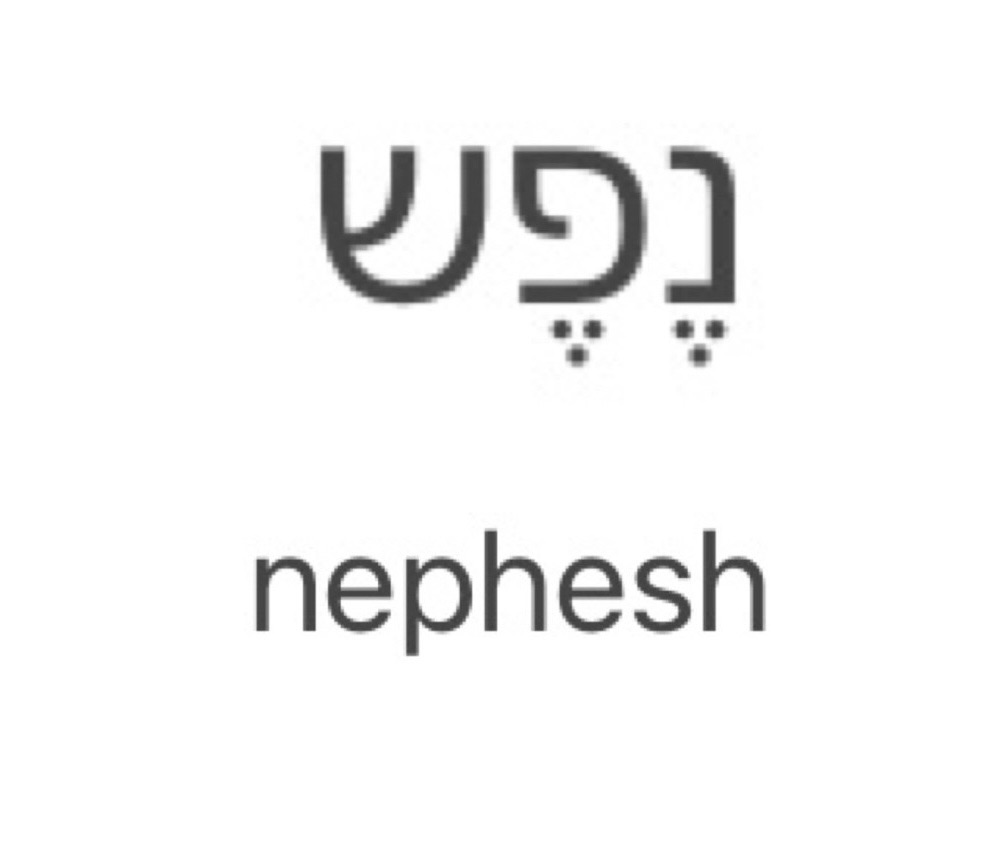



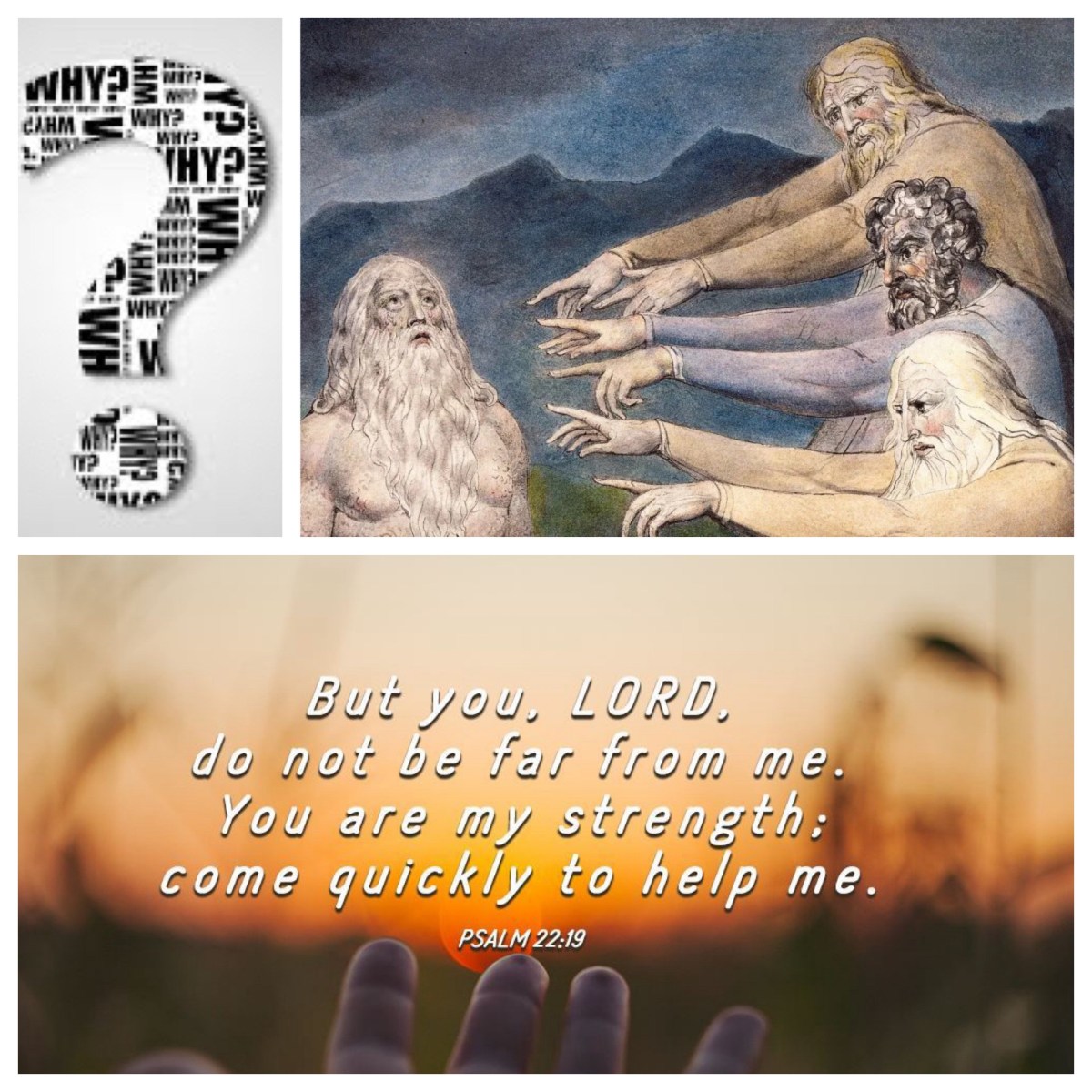



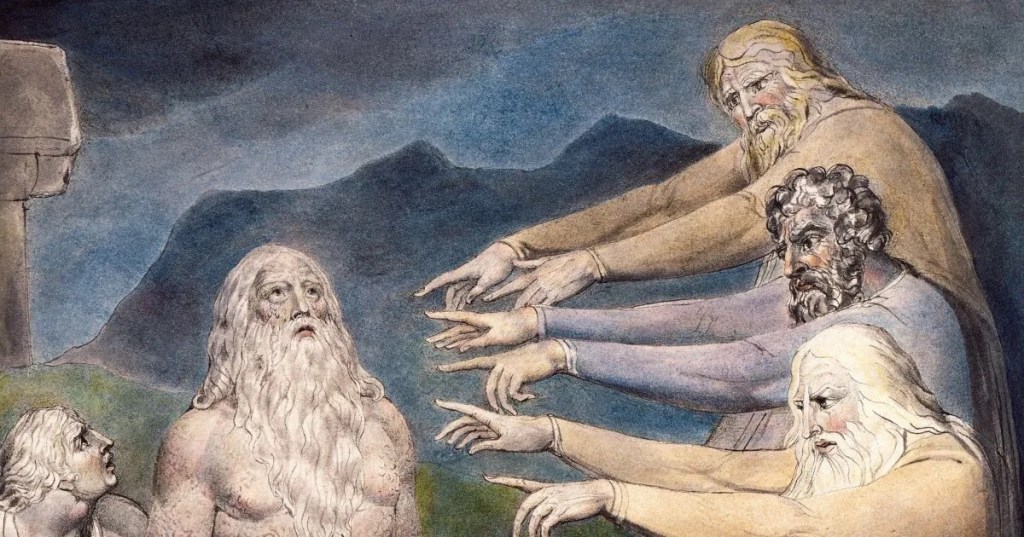
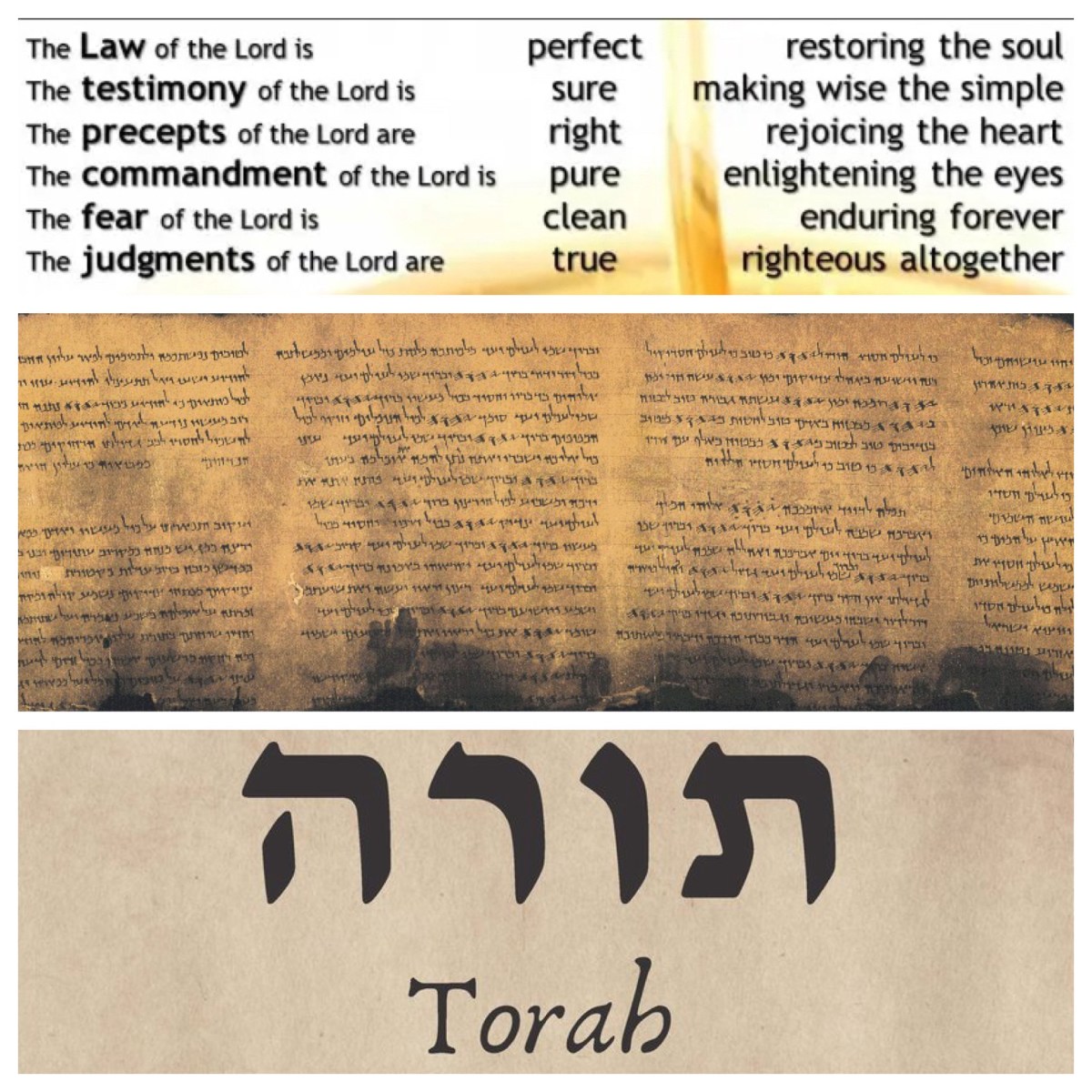



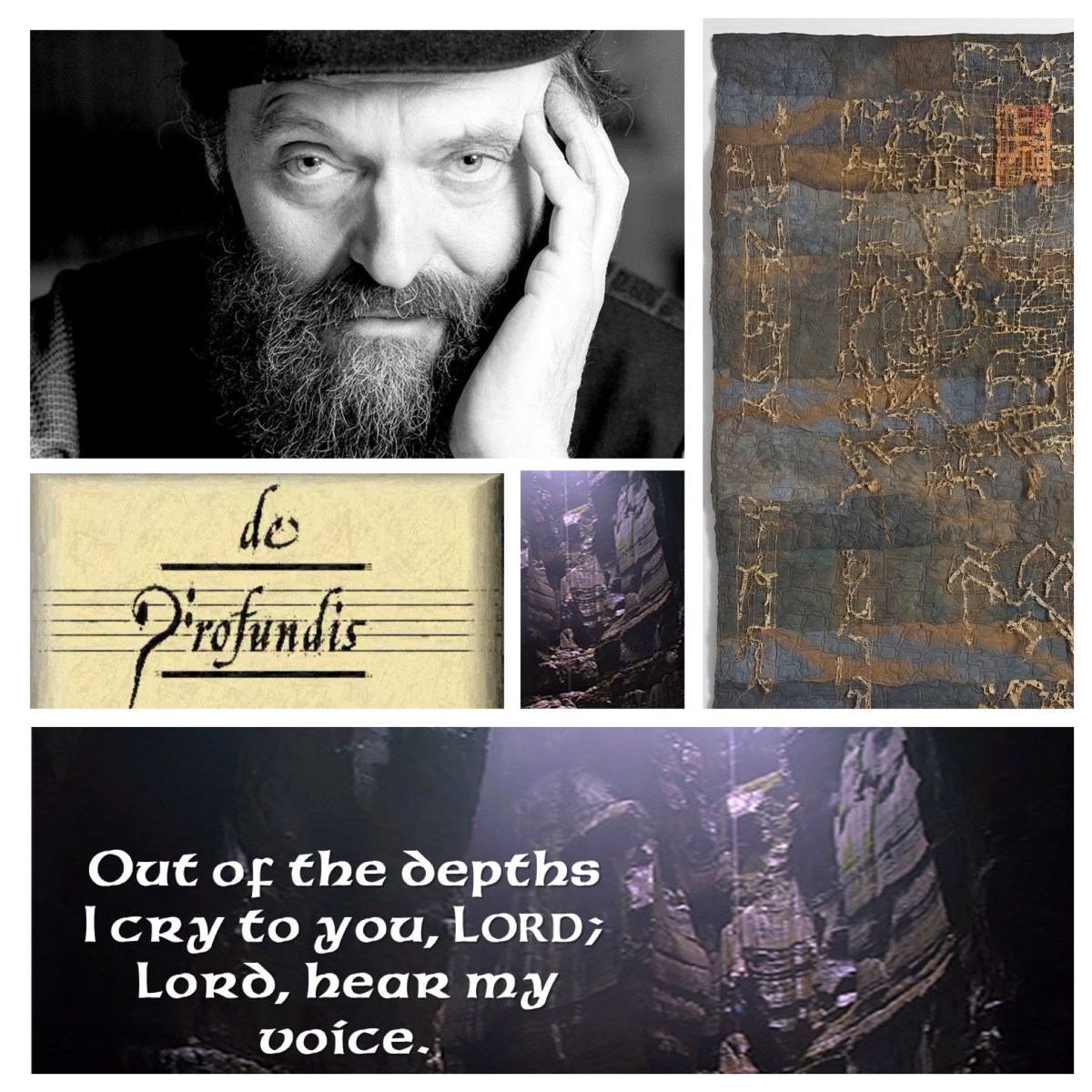


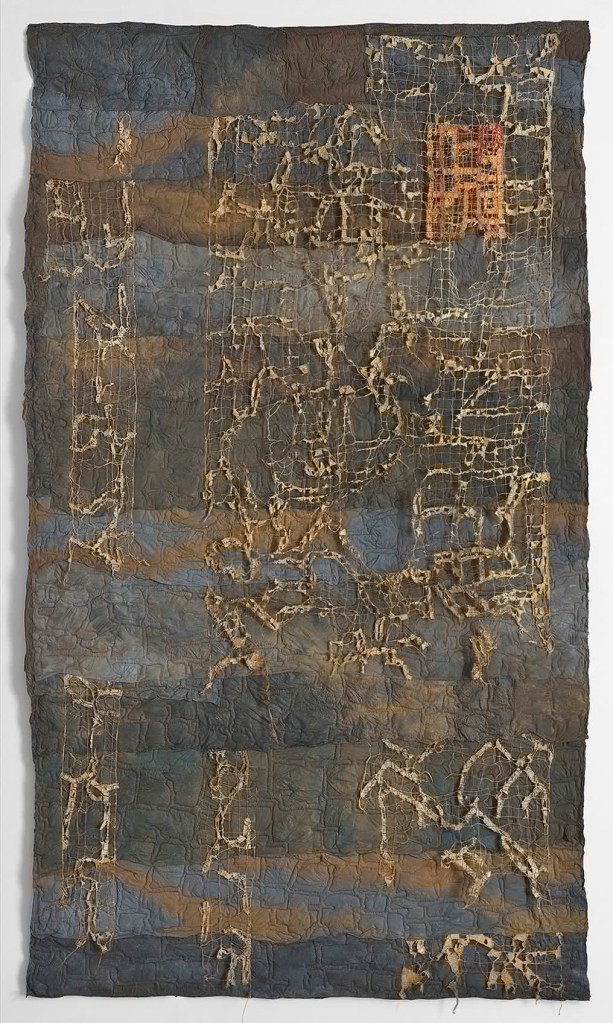





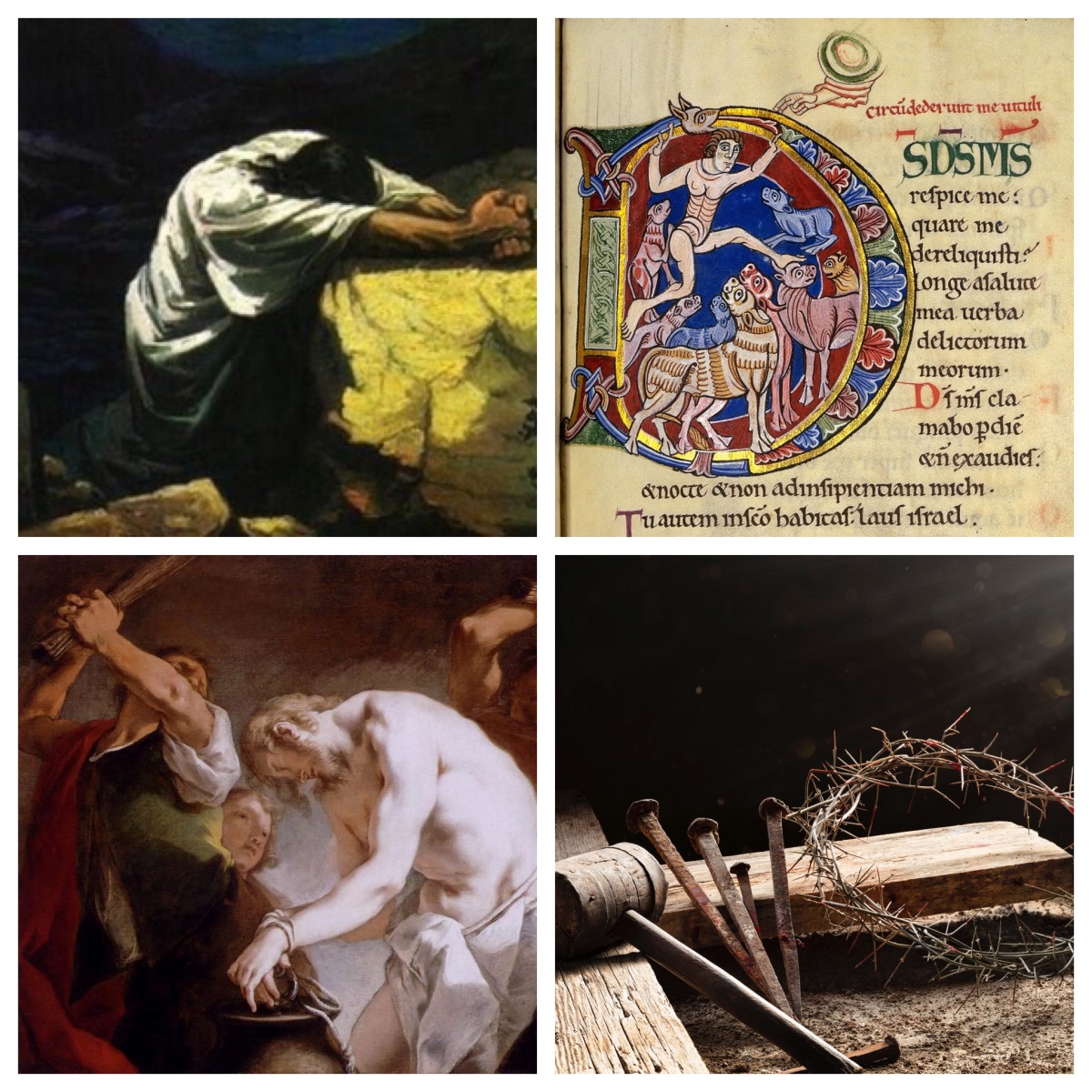
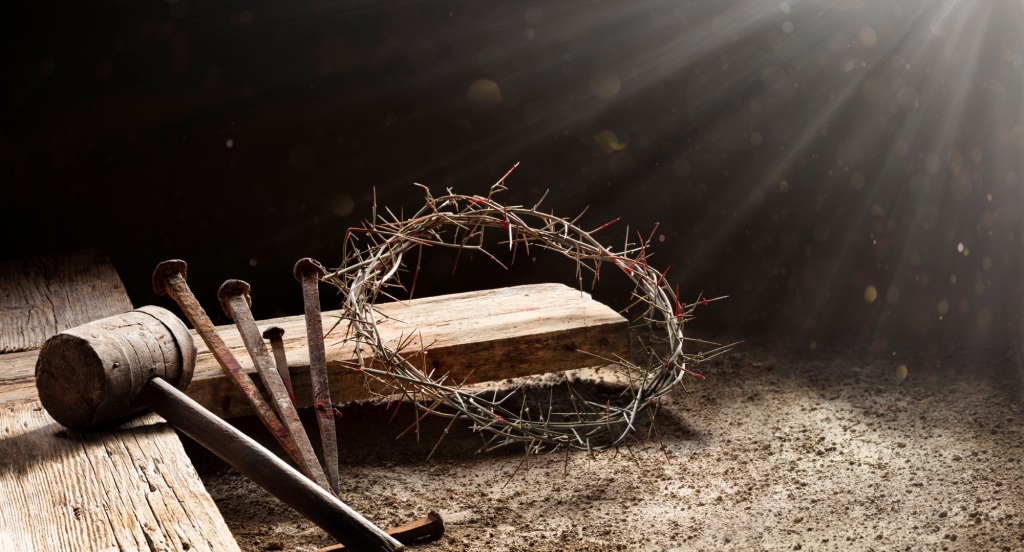


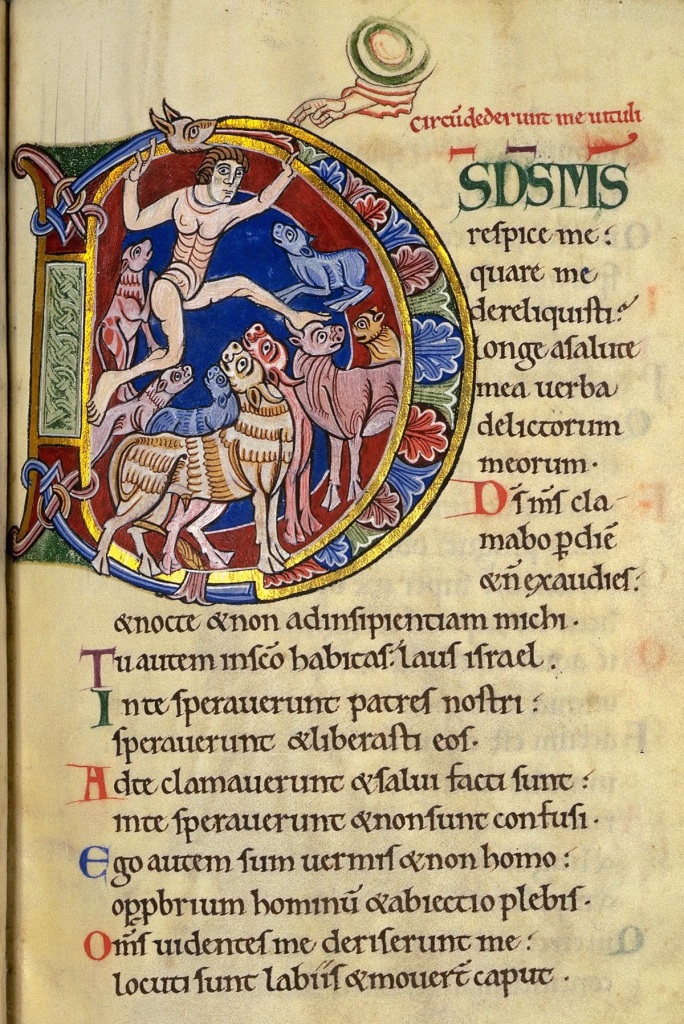




 An Informed Faith